
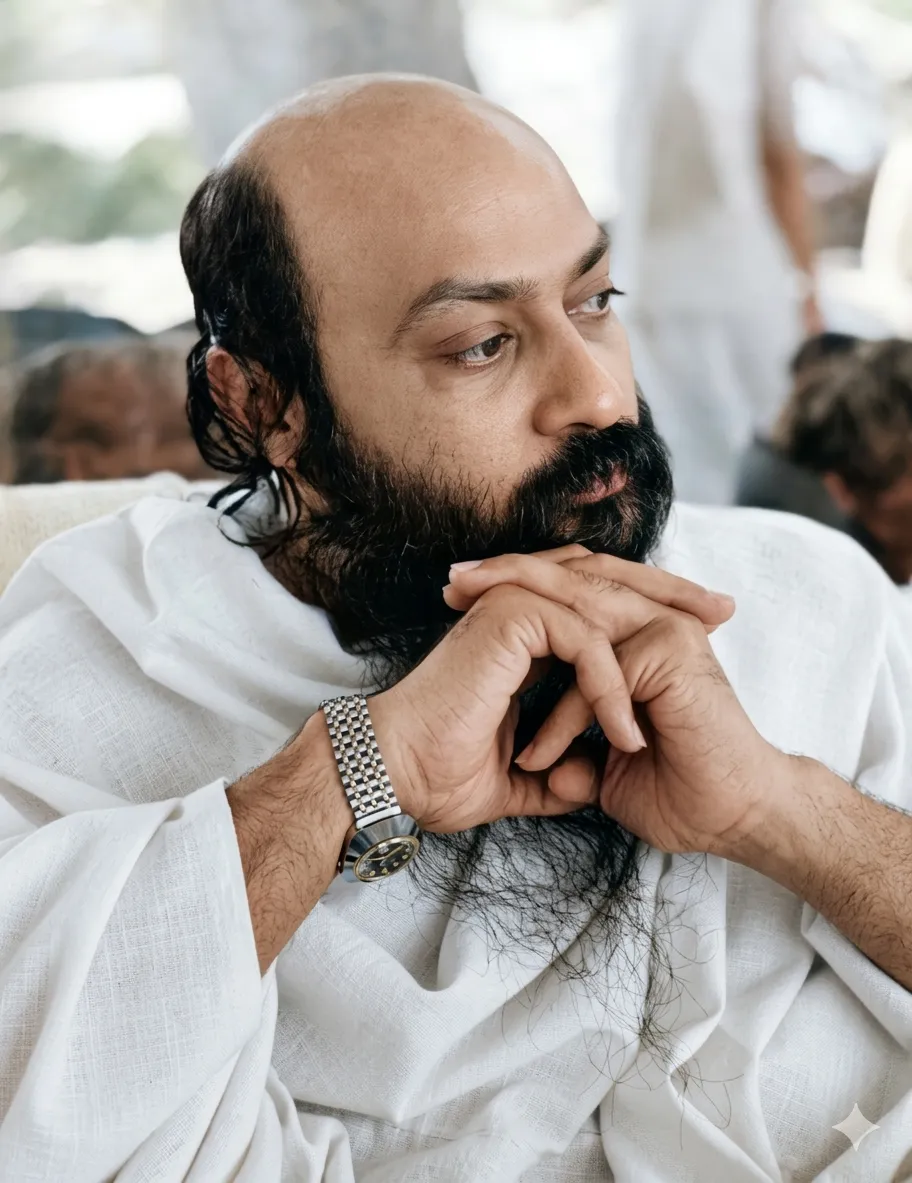
If loving these teachings feels like a stubborn habit, keep it—it helps you stay on the path until it changes you.
From the Discourses
Passages where Osho speaks to this question — each links to the complete discourse.
You are the best whiskey-coke I have ever had. I stumble out of your lectures every day my head spinning. Should I give you up as a bad habit?
It is very difficult to give up bad habits. Good habits are very easy to drop. Who has ever heard of any man or woman capable enough to give up a bad habit? And if religion has become your bad habit, or sannyas, you are blessed, you are fortunate. If I am your bad habit then you are fortunate. I would never like to become a good habit to you, no, because a good habit can be dropped very easily! Let me tell you an anecdote. St. Peter, concerned about the state of affairs in America, sent his most dependable and conservative disciple, St. Theresa, to look over the situation and give him a personal report. She stopped first in New York and phoned at the end of three days to say that things were even worse than they had feared. 'Let me come home,' she begged. 'No,' said St.…
Question: Second question: Osho, can lifelong habits be dropped easily? ... First, be sure what your ‘habit’ is. Ninety-nine out of a hundred are utterly harmless. Needlessly the sadhus and mahatmas make a fuss about them. Someone drinks tea and thinks he’s committing a great sin. ... What sin? ... You sip your tea—who is harmed? Tea is thoroughly vegetarian. No harm at all. A little nicotine—no sin in that either. It warms the body a bit, gives a little zest—nothing wrong; a bit of zest is good, it helps you engage in work. ... But no! ... In Mahatma Gandhi’s ashram, tea was sin—except for one person: Rajaji alone had the right to tea, being the in-law. Rules cannot apply to the in-law; one must keep in-lawly courtesy—so he had an exemption. For the rest, tea was sin. Once a young man was caught making tea in secret. A scandal in the ashram.
पहले तो पक्का होना चाहिए कि आदत क्या है तुम्हारी? सौ में निन्यानबे आदतें तो बिलकुल ही निर्दोष हैं। जिनको नाहक साधुओं ने, महात्माओं ने शोरगुल मचा रखा है। कोई चाय पी रहा है, वह बेचारा समझ रहा है कि बड़ा पाप कर रहे हैं। क्या खाक पाप कर रहे हो! अपनी चाय की चुस्कियां ले रहे हो, किसी का कुछ बिगाड़ रहो हो? और वह बिलकुल शाकाहारी है चाय। इसमें कुछ हर्जा नहीं, जरा भी। थोड़ा सा निकोटिन है इसमें, उसमें भी कोई पाप नहीं। थोड़ा शरीर में गर्मी आ जाती है, थोड़ा जोश आ जाता है, सो कुछ बुराई नहीं है, थोड़ा जोश रहे तो कुछ अच्छा ही है; थोड़ा काम-धाम में तबीयत लगती है। मगर नहीं, महात्मा गांधी के आश्रम में चाय पाप थी--सिर्फ एक व्यक्ति को छोड़ कर, राजा जी को भर चाय पीने का हक था। क्योंकि वह समधी थे। अब समधी पर तो नियम लागू हो नहीं सकते। समधी के साथ तो समधियाना निभाना पड़ता है। सो उनके लिए छुट्टी थी। बाकी सबके लिए चाय पाप थी।
Osho, I have dropped all my attachments; but still subtle attachments remain. I am even attached to non-attachment, to no-mind, to no no-mind. I am aware of the subtle ego. How should we go beyond this vicious circle?
Why start it in the first place? I am not telling you to drop attachments, I am telling you to just understand them. That's enough. Just see what your attachments are with no effort to drop them, with no judgment, no evaluation. Just see what they are. Whatsoever they are, they are there. What can you do? -- Just as you have eyes and hands and legs and a certain color of hair and skin, so your attachments are there. Accept them! In that acceptance the revolution begins. The moment you accept your attachments and you start understanding them, with NO idea to drop them... Remember, if there is the idea to drop them behind your understanding, your understanding cannot be profound and total; that idea will be a hindrance. Why drop attachments? God has not dropped the attachment to his world -- why should you drop your attachments to…
Osho, the samskaras of the previous life become habits in this one. The habits of this life will again become samskaras in the next. Then where is the end?
Yes, preserving yourself, you can play as many games as you like. When the Divine himself is at play, why should you be troubled? But God is the master; and when you too become master of your habits and samskaras, then in your small world you too become divine. Buddha called this “awareness”: do everything, but do it consciously. Even to lift a foot, lift it with awareness. Getting up, sitting down, lying down—with awareness. Do not do anything in a stupor. If you go on cultivating awareness, habits will still form and you will use them, but behind the habit a current of awareness will be flowing. The lamp of consciousness will be burning. That too will be taking shape, its intensity increasing, its light deepening. If in life there remain only habits and more habits, the soul is lost. Be there behind the habits as well—separate, distinct. And…
चौथा प्रश्न: ओशो, पिछले जन्म के संस्कार इस जन्म में आदत बन जाते हैं। इस जन्म की आदतें अगले जन्म में फिर संस्कार बन जाएंगी। फिर अंत कहां है?
हां, अपने को बचाकर जितना खेल खेलना हो खेल ले सकते हो। जब परमात्मा ही लीला कर रहा है, तो तुम क्यों परेशान हो? लेकिन परमात्मा मालिक है और जब तुम भी अपनी आदतों और संस्कारों के मालिक हो जाओगे तब तुम भी अपने छोटे से संसार में परमात्मा हो जाते हो। बुद्ध ने इसी को होश कहा है, कि सब करना लेकिन होशपूर्वक करना। कदम भी उठाना तो होशपूर्वक उठाना। उठना, बैठना, लेटना--होशपूर्वक। कोई भी चीज बेहोशी में मत करना। अगर तुम होश को साधते रहो तो आदत तो बनती रहेगी, आदत का तुम उपयोग करते रहोगे, लेकिन आदत के पीछे होश की धारा भी बह रही है। चैतन्य का दीया भी जल रहा है। वह भी निर्मित हो रहा है, उसकी भी सघनता बढ़ रही है। उसका भी प्रकाश गहन होता जा रहा है।
Osho, it is difficult to practice what you say. Please tell us, in meditation whom should one remember?
There is a story in the Jain scriptures. A young man returned after listening to Mahavira. He was sitting in his bath pavilion; his wife was rubbing ubtan on him, bathing him—an old story; now no wife bathes her husband. Even if the husband is bathing, she knocks at the door: “Come out—how long will you sit in there? There are other things to do than bathe!” Those were earlier days. She was rubbing ubtan, cleaning his body. They began to talk. The wife said, “You’ve returned from listening to Mahavira; my brother also goes to listen. He’s so impressed that he says, ‘In two or four years I’ll take sannyas.’” Her husband laughed. He said, “Sannyas—‘in two or four years’! There is no certainty of tomorrow, no certainty of the next moment!” The wife said, “I know—he’s practicing at home right now. When his practice is complete, he’ll leave…
दूसरा प्रश्न: ओशो, आपकी बातों का अभ्यास करना कठिन है। बताएं कि ध्यान में किसका स्मरण करना चाहिए?
जैन-शास्त्रों में एक कथा है। एक युवक महावीर को सुन कर लौटा। वह अपने स्नान-गृह में बैठा है, उसकी पत्नी उबटन लगा कर उसको नहला रही है--पुरानी कहानी है, अब तो कोई पत्नी किसी पति को नहलाती नहीं। पति नहा भी रहे हों तो दरवाजा खटखटाती रहती हैं कि निकलो, कब तक बाथरूम में घुसे रहोगे? और भी काम हैं दुनिया में कि बस नहा रहे हो! वे दिन पुराने थे। उबटन लगा रही थी। शरीर को साफ करके नहला रही थी। दोनों की बात होने लगी। पत्नी ने कहा कि महावीर को सुन कर लौटे हो, मेरे भाई भी सुनने जाते हैं; मेरे भाई तो इतने प्रभावित हुए हैं कि वे कहते हैं कि दो-चार साल में संन्यस्त हो जाऊंगा। उसका पति हंसने लगा। उसने कहा: संन्यास और दो-चार साल में! कल का भरोसा नहीं है, क्षण का भरोसा नहीं है! पत्नी ने कहा कि मुझे मालूम है, वे अभी घर में ही रह कर अभ्यास कर रहे हैं। जब अभ्यास पूरा हो जाएगा तो सब छोड़ देंगे। पर पति ने कहा: मौत पहले आ सकती है, सब अभ्यास पड़ा रह जाएगा। और अभ्यास क्या करना है! …