
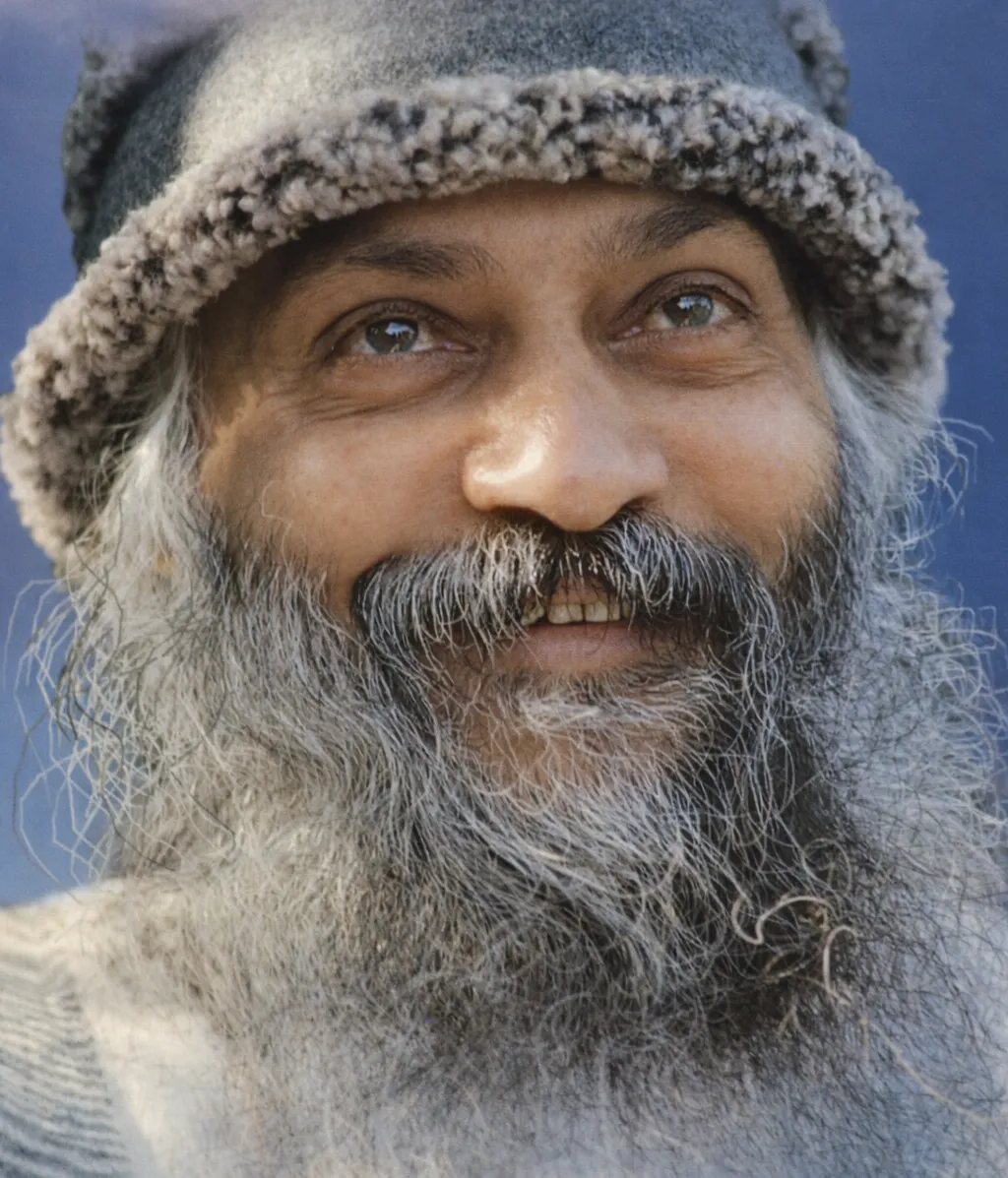
You can live and work, but it’s like life is doing everything through you—like the wind playing a flute—so you relax and let it happen.
From the Discourses
Passages where Osho speaks to this question — each links to the complete discourse.
Can one live and function in the world in a state of enlightenment or no-mind? Is an enlightened person self-sufficient in the world?
In a single moment he was no more Jesus, he was Christ. In a single moment he was no more human, he was superhuman. The gap is very small. That's why Buddha says, 'Miss it by a single inch, or by a single moment and you are thrown millions of miles away.' Just a single inch was the difference between these two sentences -- there was not much gap, maybe a single breath. But he was just ordinary when he shouted against god -- human, weak. Just a moment later on he was reconciled; there was no problem then. If this is the way god wants it to happen, then this is the way it has to happen. He accepted. A smile must have come to his face, and not only to his face but to his heart also. In that moment he must have expanded. Now there was nothing…
Osho, you said... then you will find that the devotee is God. The question arises: if one devotee prefers to be God and another wants to remain only a devotee, then which of the two is superior?
The one who wants to be God will not be able to be. And the one who wants to remain a devotee will become God. The question of superior or inferior does not arise, because only one of the two will happen. The one who does not want to be will be. The one who wants to be will be deprived. That very wanting is of the ego. But the matter is a little delicate. Sometimes humility too belongs to the ego. Beware that your humility may not be of the ego. Perhaps you are saying, “No, I don’t want to be,” because you know that those who refuse are the ones who attain. Then you are clever. Then your humility is adulterous. Your humility is not pure, not sacred, not virginal—it is like a prostitute. The one who wants to be God, whose ego says, “I must become God,”…
Anyone who gives up the transcendent for the mundane, in any of its myriad forms, is a mortal. A buddha is someone who finds freedom in good fortune and bad. Such is his power, karma can't hold him. No matter what kind of karma, a buddha transforms it. Heaven and hell are nothing to him. ...if you're not sure, don't act. Once you act, you wander through birth and death and regret having no refuge ..... To understand this mind, you have to act without acting. Only then will you see things from a tathagata's perspective.
BUT WHEN YOU FIRST EMBARK ON THE PATH, YOUR AWARENESS WON'T BE FOCUSED. YOU'RE LIKELY TO SEE ALL SORTS OF STRANGE, DREAMLIKE SCENES. BUT YOU SHOULDN'T DOUBT THAT ALL SUCH SCENES COME FROM YOUR OWN MIND AND NOWHERE ELSE. IF YOU SEE A LIGHT BRIGHTER THAN THE SUN, YOUR REMAINING ATTACHMENTS WILL SUDDENLY COME TO AN END, AND THE NATURE OF REALITY WILL BE REVEALED. SUCH AN OCCURRENCE SERVES AS THE BASIS FOR ENLIGHTENMENT. BUT THIS IS SOMETHING ONLY YOU KNOW. YOU CAN'T EXPLAIN IT TO OTHERS. ...OR IF, WHILE YOU'RE WALKING, STANDING, SITTING OR LYING IN THE STILLNESS AND DARKNESS OF NIGHT, EVERYTHING APPEARS AS THOUGH IN DAYLIGHT, DON'T BE STARTLED. IT'S YOUR OWN MIND ABOUT TO REVEAL ITSELF. ...IF YOU SEE YOUR NATURE, YOU DON'T NEED TO READ SUTRAS OR INVOKE BUDDHAS. ERUDITION AND KNOWLEDGE ARE NOT ONLY USELESS, THEY CLOUD YOUR AWARENESS. DOCTRINES ARE ONLY FOR POINTING…
When one becomes empty of all thoughts, empty of all plannings, empty of all desires, what transformation will happen in one's outer life and one's inner life? How will he behave? How will he see things? How will he live in the world? Please say.
IT depends, it depends on the individual. There cannot be any dogmatic statement about it because each individual is so unique. When Basho becomes enlightened he starts singing poetry, poems; Buddha has never done that. When Krishna becomes enlightened he starts dancing, singing; Mahavir has never done that. When Mahavir becomes enlightened he keeps silence for many years, remains absolutely silent, not a ripple is allowed; Meera has not done that. When she becomes enlightened, she dances from village to village, she sings the glory of God. It is very difficult to make a dogmatic statement. There have been people who renounced life when they became enlightened and went to the Himalayas, moved as far away from the society as possible. There have been people who became enlightened and came back to the world, even if they had been in the Himalayas, and started living with people again. There have…
“Is it possible to live one’s whole life in that state? Just as a lake is sometimes calm, sometimes playful, sometimes stormy, is the self-realized likewise not affected by worldly circumstances?”
When the inner emptiness begins to be realized, storms may come—certainly the body will tremble, vibrations will pass—but within that void nothing happens. How can anything happen to what has disappeared? That is why we call the knower one who died while living; one who lives as if dead; within whom nothing remains now. Ashtavakra has a sutra: “The talkative become silent; the great doers appear lazy.” To this you may add: the living become as if dead, inert-like. Outside, everything goes on as before. The difference is only this: outside it is now a play, an acting. Within you know that what is happening outwardly is a performance—you are not the doer. There is a part to be completed. Actors come to me and ask, “Tell us how our art can become more skillful.” I tell them: I have a single key. If you are an actor, act in…