
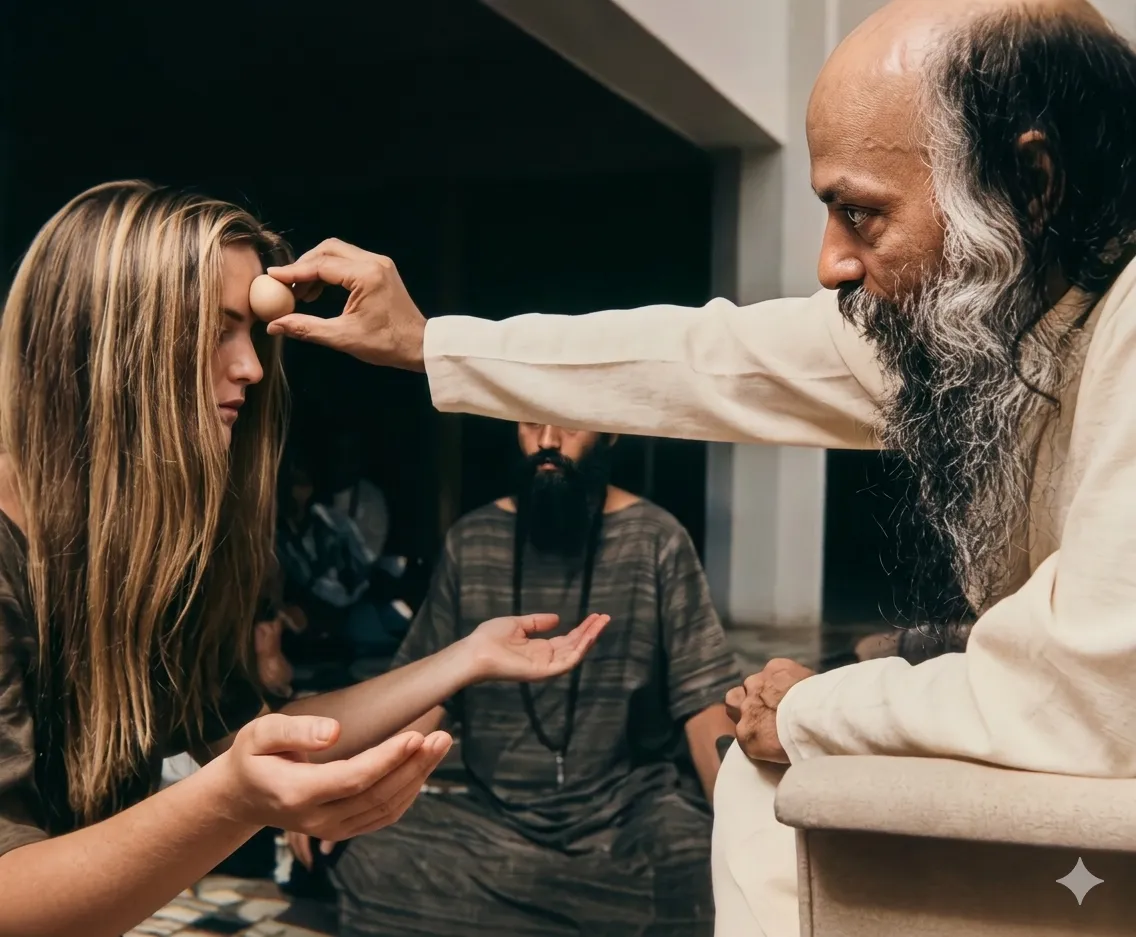
Yes—an awakened person plays pretend in life without forgetting it’s a play, and does it to help others.
From the Discourses
Passages where Osho speaks to this question — each links to the complete discourse.
Osho, I find your words very full of rasa, very delightful. But as a stage actor I want to go deep into the art of acting. So I am not yet ready for sannyas. Nor do I want to be limited to a single ochre color. I am interested in colorful clothes, because life too is colorful, rainbow-like. Can I come from time to time for your darshan without becoming your sannyasin?
But I had to choose some symbol. And I chose saffron deliberately. Deliberately—because for some five thousand years saffron has been in the wrong hands. It must be taken back from them. This lovely color has become a symbol of the denial of life. Yet it is the color of life, of spring. Hence its other name: basanti—the color of spring, when all flowers bloom. I don’t know how this spring-color fell into the hands of the wrong people—enemies of flowers, lovers of thorns—people who lay thorn-beds and sleep upon them, who long for thorns, who torment themselves in every way, who are filled with violence. Since there is risk in doing violence to others—for others will answer back—they do violence to themselves. No one can answer that, no one can defend against it. It became the symbol of the self-violent. It became the symbol of hypocrites—those who say one…
Beloved master, you once said that acting is the most spiritual of professions, and now we have a theater group. Can you say something about acting?
In fact, this man had always loved the woman who was acting as Sita, deep down in his heart. He completely forgot the play; he became utterly identified. It became a reality. He rose... now it was not Shiva's real bow, just one a village carpenter had made. He broke it into many pieces and threw it away before anybody could prevent him. Then he said to Janaka, "Now, where is Sita?" Now, what to do with such a man? And the whole audience was simply shocked. He was finishing the whole story, because now there could be no more to it. The whole story depends on Ravana being avoided, Rama getting married, and then the struggle when Ravana steals Sita, and the war and the whole thing happens. But if Ravana marries Sita, then it is all finished within two minutes -- and it is just the beginning, the…
I don't see that there can be any better profession for witnessing than acting. Actors can move into meditation better than other people because their whole art consists of just creating a dream and being someone, knowing you are not that person. You are playing the role of Rama. You know you are not Rama; you are acting it. The witnessing remains there spontaneously. So whatsoever you are doing on stage, bring the same quality into the world also. When you come home, then too remember that this is acting. Be a husband and remember that this too is acting. Be a father and remember that this too is acting. If the twenty-four hours of your day become an acting, your quality as an actor will become superb and your witnessing will increase. Have you heard about one actor who looked like Abraham Lincoln?
Osho, you say: live life as if it were acting. In that case, what more than acting would spiritual practice, religion, and the search for liberation be?
Someone laughs; you may also laugh. But you know there is nothing now truly to laugh at, and nothing now truly to weep about. The world goes on. For you it has become a dream, but that does not make it disappear. Trees will bloom, birds will sing, people will fall in love, deaths will occur, births will occur, bands will play, weddings will be celebrated, the shehnai will sound, someone will die and the chant “Ram naam satya hai” will be recited—this all will continue. For you it has ended. For you it ending means only this: you are no longer possessed by it. For you all has become acting. But everything continues. Where is there to run? What use is running? Because if you run, you again become the doer. That is why Krishna insists: do not run—otherwise running too is doership. And running also means that you…
“Is it possible to live one’s whole life in that state? Just as a lake is sometimes calm, sometimes playful, sometimes stormy, is the self-realized likewise not affected by worldly circumstances?”
When the inner emptiness begins to be realized, storms may come—certainly the body will tremble, vibrations will pass—but within that void nothing happens. How can anything happen to what has disappeared? That is why we call the knower one who died while living; one who lives as if dead; within whom nothing remains now. Ashtavakra has a sutra: “The talkative become silent; the great doers appear lazy.” To this you may add: the living become as if dead, inert-like. Outside, everything goes on as before. The difference is only this: outside it is now a play, an acting. Within you know that what is happening outwardly is a performance—you are not the doer. There is a part to be completed. Actors come to me and ask, “Tell us how our art can become more skillful.” I tell them: I have a single key. If you are an actor, act in…