
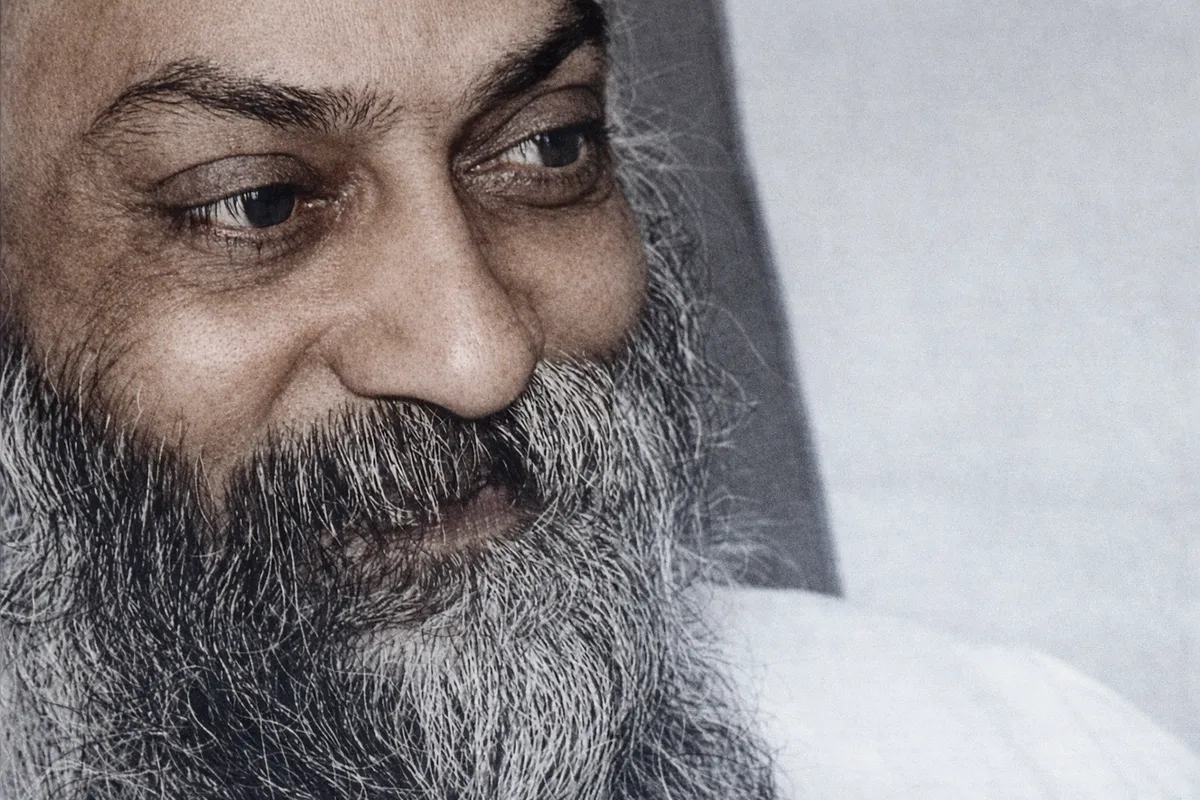
Don’t hold a fixed stance; stay open and meet each moment new so life can show you what it is.
From the Discourses
Passages where Osho speaks to this question — each links to the complete discourse.
Osho, is it important to have some kind of attitude towards life?
Margrit, the best way to miss life is to have a certain attitude towards it. Attitudes originate in the mind, and life is beyond mind. Attitudes are our fabrications, our prejudices, our inventions. Life is not our fabrication; on the contrary, we are just ripples in the lake of life. What kind of attitude can a ripple in the ocean have towards the ocean? What kind of attitude can a grass leaf have towards the earth, the moon, the sun, the stars? All attitudes are egoistic, all attitudes are stupid. Life is not a philosophy, it is not a problem; it is a mystery. You have to live it not according to a certain pattern, not according to a conditioning -- what you have been told about it -- you have to start afresh, from the very scratch. Each human individual should think as if he is the first on…
Question: OSHO, IS THERE ANY POINT IN LIVING? ... I said, "You forget all that. Close the door and do what I say. He did, because he had to do it; otherwise I would have thrown him out, saying, "And being my guest, you cannot even do this simple thing for me? Then don't bother me at all, just get lost. So he tied both my hands to two pillars, and he asked me a question. I tried in every possible way, but my hands were tied; I could not say anything to him. I simply said, "Please untie my hands. He said, "But I cannot understand what this is all about. I said, "It is simply that I was trying to see whether I could speak without my hands. ... I cannot. ... What to say about hands...
Osho, how should life be lived, and what is its purpose?
Enter life—stay awake and experiment; try waking and observe; try sleeping and observe; try eating; try lying and truth-telling; try anger and forgiveness; try love and enmity—taste all. In all of it, wherever depth increases, where peace increases, where joy increases, where a glimpse of the divine comes—recognize that as the rule forming for your life. And do not make even that rule so rigid that there is no possibility of change tomorrow. No one knows what life will bring tomorrow. The straight path may suddenly need a turn. What was pleasurable may become painful. Keep an opening for tomorrow. Hence the second thing: discover life’s rules from within. And also: do not consider your discovered rule absolute. Do not regard it as perfect. It must have the flexibility to change tomorrow. Life flowers fully only in one who can change each moment. But we are “consistent” people. We insist:…
ओशो, जीवन को कैसे जीया जाए, उसका प्रयोजन क्या है?
जिंदगी में उतरें--जाग कर देखें, उठ कर देखें, भोजन करके देखें, झूठ बोल कर देखें, सच बोल कर देखें, क्रोध करके देखें, क्षमा करके देखें, प्रेम करके देखें, दुश्मनी करके देखें--सारे अनुभव लें। जिंदगी में उतरें। और उन सारे अनुभवों में कि जहां से गहराई ब़ढ़े, जहां से शांति बढ़े, जहां से आनंद बढ़े, जहां से प्रभु की झलक मिले, समझें कि वह मेरे जीवन का नियम बनना शुरू हुआ। और उस नियम को भी इतनी सख्ती से न बना लें कि कल उसमें बदलाहट का उपाय न रह जाए, क्योंकि कोई भी नहीं जानता कि कल जिंदगी क्या लाए। कोई भी नहीं जानता कि कल तक जो सपाट रास्ता था, कल उसे बदलना पड़े, मोड़ आ जाए। कोई भी नहीं जानता कि कल तक जो बहुत सुखद था, आने वाले कल में दुखद हो जाए। कल के लिए ओपनिंग चाहिए। इसलिए दूसरी बात आपसे कहता हूं, अपने भीतर से जीवन के नियम खोजें। और दूसरी बात कहता हूं, अपने खोजे नियम को भी एब्सोल्यूट, परिपूर्ण न मान लें। अपने खोजे नियम को भी पूर्णता न समझ लें। वह भी कल बदलने की लोच, फ्लैक्सिबिलिटी उसमें होनी चाहिए। …
Question: how should life be lived?
Life is to be lived as if it were a mirror. Welcome everybody and every thing, but hold on to nothing. That life is pure in which the mind does not cling to influences and impressions. Let bygones be bygones; and worry not for what is yet to come. This is the path of 'sadhna', wherein the individual associates himself with the present, and his what is yet to come. This is the path of 'sadhna', wherein roots are anchored firmly in his true being. The past and the future are the domains of the mind; he who is engrossed in, or engulfed by the past and the future, can not know life. Life is, alter all, here and now; not there and then. He who seeks life not in 'here and now' is wasting time. Like trees, be rooted in the same place, be steady. But live like birds…
Osho, that was about interpretation. What is your positive philosophy of life?
In fact, in fact, you have asked a very good question. As I see it, religion is a negative philosophy of life. Religion simply does not have a positive philosophy. In truth, the religious mind is a negative mind. What do I mean? Imagine a man in chains who says, “I want to break these chains and be free.” Someone asks him, “What is the positive meaning of your freedom? What do you mean by positive freedom?” He will say, “If my chains are broken—if all the chains fall away—I will be free.” But that is a negative statement. Freedom, in its essence, has no positive content. Freedom means the absence of bondage. And religion is liberation—the search for absolute freedom, where we are utterly free: no limits, no bonds, no obstacles. So religion is basically negative: wherever there is bondage, break it. I hold that orthodoxy is a bondage;…
प्रश्न: ओशो, आपकी यह तो हुई इंटरप्रिटेशन का सवाल, आपकी पाजिटिव फिलॉसफी ऑफ लाइफ जो है वह क्या है?
असल में, असल में, यह बहुत अच्छा सवाल आपने पूछा। मेरी समझ ही यह है कि रिलीजन जो है, वह निगेटिव फिलॉसफी ऑफ लाइफ है। पाजिटिव फिलॉसफी रिलीजन के पास होती ही नहीं। असल में निगेटिव माइंड ही रिलीजियस माइंड है। इसका मतलब यह है कि जैसे एक आदमी जंजीरों में बंधा हुआ है। और वह कहता है कि मैं जंजीरें तोड़ कर स्वतंत्र होना चाहता हूं। और कोई उससे पूछे कि तेरी पाजिटिव स्वतंत्रता का, तेरी पाजिटिव स्वतंत्रता का मतलब क्या है? पाजिटिव फ्रीडम से तेरा मतलब क्या है? वह कहेगा कि मेरी जंजीर टूटे, मेरे ऊपर से सारी जंजीर टूट जाएं तो मुझे स्वतंत्रता मिल जाए। मगर यह निगेटिव बात है। सारी जंजीरें टूट जाएं तो मैं स्वतंत्र हो जाता हूं।