
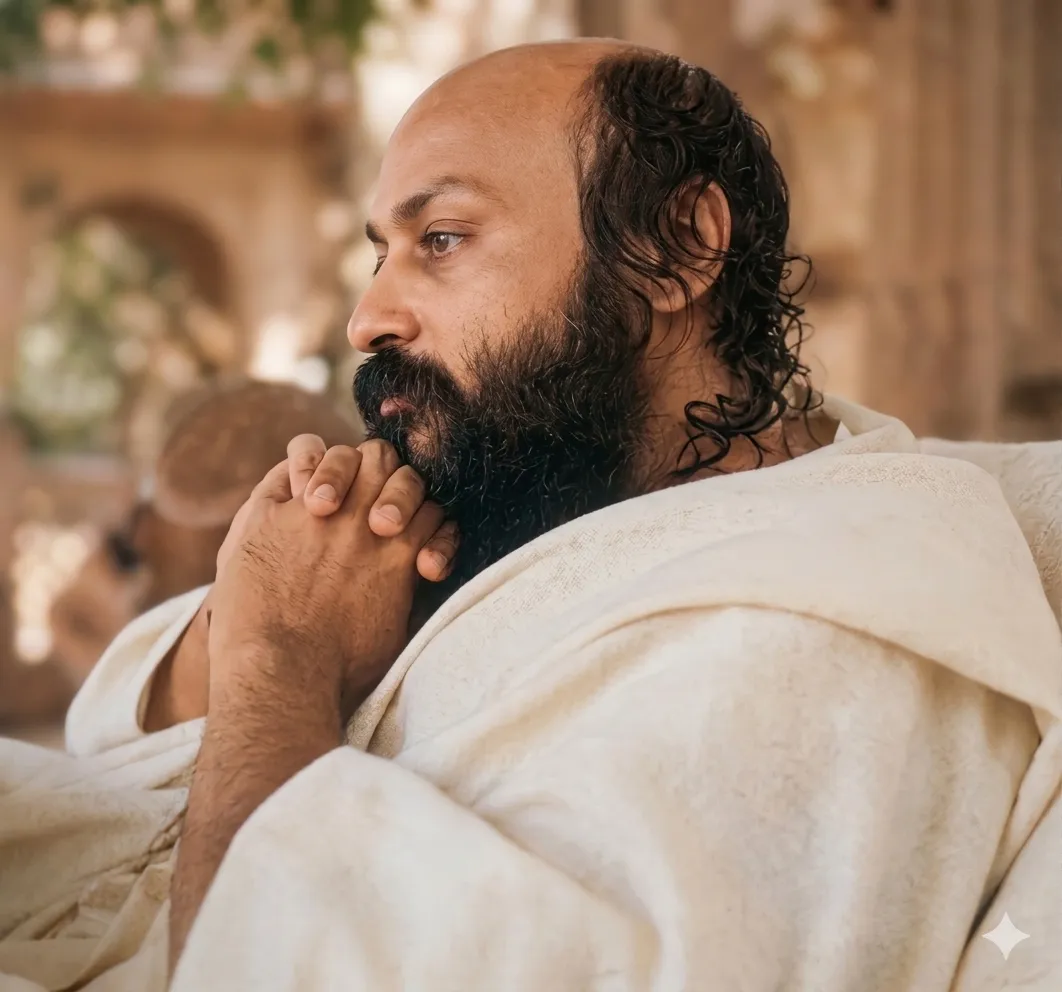
When you stop wanting to get or become anything, your busy thoughts quiet down and a calm, warm feeling fills your heart.
From the Discourses
Passages where Osho speaks to this question — each links to the complete discourse.
Osho, how does the energy of thought transform into feeling?
Therefore I am not teaching you religious thoughts. I am initiating you into no-thought. Generally, what goes on in temples and mosques is just this: people full of worldly thoughts are stuffed instead with spiritual thoughts—nothing more. But what difference does it make? You have given the disease a pious, pretty name; what changes? So long as you want to be anything, so long as you harbor the ambition to become something in the future, so long as you are eager for tomorrow, you will remain unquiet. The stream of thought will keep flowing. And as long as the stream of thought flows, you will remain cut off from God. I am telling you that religious thoughts are just as great an obstacle between you and God as worldly thoughts. Thought is the barrier; no-thought is union. Gorakh has said: See the Unseen, ponder what is seen, seat the Invisible…
पहला प्रश्न: ओशो, विचार की ऊर्जा भाव में कैसे रूपांतरित होती है?
इसलिए मैं तुम्हें धार्मिक विचार नहीं सिखा रहा हूं। मैं तुम्हें निर्विचार की दीक्षा दे रहा हूं। आमतौर से यही चल रहा है मंदिर-मस्जिदों में: जो लोग सांसारिक विचारों से भरे हैं, उन्हें हम कैसे आध्यात्मिक विचारों से भर दें, बस...। मगर क्या फर्क पड़ता है? रोग का नाम धार्मिक रख लिया, अच्छा-प्यारा नाम रख लिया, इससे क्या फर्क पड़ता है? जब तक तुम कुछ भी होना चाहते हो, जब तक तुम भविष्य में कुछ होने की आकांक्षा रखते हो, जब तक तुम कल के प्रति आतुर हो, आकांक्षी हो, अभीप्सु हो, तब तक तुम अशांत रहोगे। विचार की धारा बहती रहेगी। और विचार की धारा बहती रहेगी, तुम परमात्मा से टूटे रहोगे। मैं तुमसे यह कह रहा हूं कि धार्मिक विचार भी परमात्मा के और तुम्हारे बीच उतनी ही बड़ी बाधा है जितनी सांसारिक विचार की। विचार बाधा है, निर्विचार मिलन है।
How can the energy of thinking be transformed into being?
How can an ambitious man be connected to the kingdom of god? He has made his connection with hell. Then after a whole life in the rat race, after drinking the dirty water of who knows how many streams, after getting covered by the dust of who knows how many roads, when the sun of life starts to set and when it feels you have nothing in your hands, just as empty as ever. You have run much, but reached nowhere -- then repentance engulfs you. Now the mind thinks how to attain samadhi, how to attain god. And again the mind has deceived you. This same language of attaining... Now you will have new ambitions. The form of this ambition will be religious, its flavor will be religious, but its soul is the same as ever. Whether you want money or religion, power or god, as long as there…
A friend has asked: Osho, you said about a wayward son that one should let him pass through his experiences, and he will learn on his own. But even after experiencing, he still prefers the same thing—someone is asking about his wayward son—no matter how much suffering he has to endure, even if death itself should come, still he does the same. After stumbling again and again, he repeats it. What can be done? How to reform him?
You will not be able to reform him. If life cannot reform him, if even death cannot reform him, what will you be able to do? If what you say is true—that again and again, even after suffering, he does the same thing; even if death comes, he will still do the same thing, and he does not change—then take your hands off. You will not be able to reform him. You cannot be stronger than death. And one who does not learn from suffering—what will he learn from you? Do not call him a wayward son. You have found yourself a Jadabharata. Because those whom suffering does not reform, whom even death does not reform—these are great, arrived masters; they are in the ultimate state. Do not even try to reform such a one. And why are you so eager to reform another? It is enough to reform yourself.…
एक मित्र ने पूछा है कि ओशो, आपने कुपुत्र के बारे में बताया कि उसको अनुभवों में से गुजरने देना चाहिए, तो वह खुद सीख जाएगा। लेकिन अनुभव लेने के बाद भी वह वही पसंद करता है--कोई अपने कुपुत्र के संबंध में पूछ रहे हैं--चाहे कितना ही दुख झेलना पड़े, चाहे मौत भी क्यों न आ जाए, फिर भी वह वही करता है। बार-बार ठोकर खाकर भी वही दोहराता है। उसका क्या उपाय किया जाए? उसको सुधारने का क्या तरीका है?
आप न सुधार पाएंगे। जिसको जिंदगी नहीं सुधार पा रही, मौत नहीं सुधार पा रही, उसको आप क्या सुधार पाएंगे? अगर आपकी बात सच है कि बार-बार दुख पाकर भी वह वही करता है, मौत भी आ जाए तो भी वही करता है, और सुधरता नहीं, तो आप हाथ अलग कर लें। आपसे नहीं सुधर पाएगा। आप मौत से ज्यादा मजबूत नहीं हो सकते। और जो दुख से नहीं सीख पा रहा है, वह आपसे क्या सीख पाएगा? कुपुत्र मत कहिए उसको। आपको कोई जड़भरत मिल गया है। क्योंकि जिसको दुख नहीं सुधारते, मौत नहीं सुधारती, वे तो बड़े पहुंचे हुए महात्मा हैं, वे तो परम अवस्था में हैं। उनको आप सुधारने की कोशिश ही मत करिए।
Feel: my thought, I-ness, internal organs -- me.
BEFORE DESIRE AND BEFORE KNOWING, HOW CAN I SAY I AM? CONSIDER. DISSOLVE IN THE BEAUTY. ... If you feel the presence of thoughts, the crowd, you can feel this also -- that they are not yours. The crowd has come to you, it has gathered around you, but it doesn't belong to you. And if this can be felt -- that no thought is mine -- only then you can throw the mind. If they are yours, you will defend them. And the very feeling that `this thought is mine' is the attachment. Then I give it roots in myself. Then I become the soil and the thought can remain rooted in me. If anything that I can see is not mine is uprooted, then I am not attached to it. The feeling of `mine' creates attachment. You can fight for your thoughts, you can even become a martyr for
Osho, I too have begun to feel that it is not valuable.
If you decide to do social service—uplift the “Harijan,” redistribute land, do this and that—and you think self-realization will result, you are mistaken. Self-realization will not come from that. You may become a good and popular person; you will taste a subtle pleasure of ego—and nothing more. You will enjoy the pleasure of being “a servant,” but you will not taste the joy of service. The pleasure of the role of “servant” is one thing; the joy of service is entirely another. But if you enter religious practice, which is utterly personal, then a day will come when that sadhana will transform your life into service. Now life is self-interest; then life will be service. In self-ignorance, life is self-centered; whatever you do, some form of self-interest is present. In self-knowledge, life is service; whatever you do, self-interest cannot remain. For me, religion is fundamental; its result will surely come.…
प्रश्न: ओशो, क्योंकि मुझे भी ऐसा लगने लगा है कि मूल्यवान नहीं है।
इसलिए अगर आपने सोचा कि समाज-सेवा करेंगे--कहीं हरिजन-उद्धार करेंगे, कहीं जमीन बंटवाएंगे, कहीं कुछ और करेंगे--अगर आपने यह सोचा और आपने सोचा इससे आत्मा की उपलब्धि होगी, तो आप बिलकुल गलती में हैं। इससे कुछ आत्मा की उपलब्धि नहीं होगी। इससे आप एक अच्छे आदमी, एक सज्जन आदमी बन जाएंगे। आप लोकप्रिय होंगे, आपमें एक सूक्ष्म अहंकार का रस और मजा होगा, और कुछ नहीं होगा। सेवक होने का सुख आप लेंगे, सेवा का सुख न ले पाएंगे। सेवक होने का सुख एक है, सेवा का सुख बिलकुल दूसरा है। लेकिन अगर आप धर्म-साधना में प्रविष्ट होते हैं, जो कि नितांत वैयक्तिक है, तो एक दिन ऐसा आएगा कि वह साधना आपके जीवन को सेवा में परिणत कर देगी। अभी वह जीवन स्वार्थ है, तब वह जीवन सेवा हो जाएगा। आत्म-अज्ञान में जीवन स्वार्थ होता है, आप जो भी करें वहां स्वार्थ किसी न किसी रूप में मौजूद रहेगा। और आत्म-ज्ञान में जीवन सेवा होता है, आप कुछ भी करें वहां स्वार्थ मौजूद नहीं रह सकता है।