
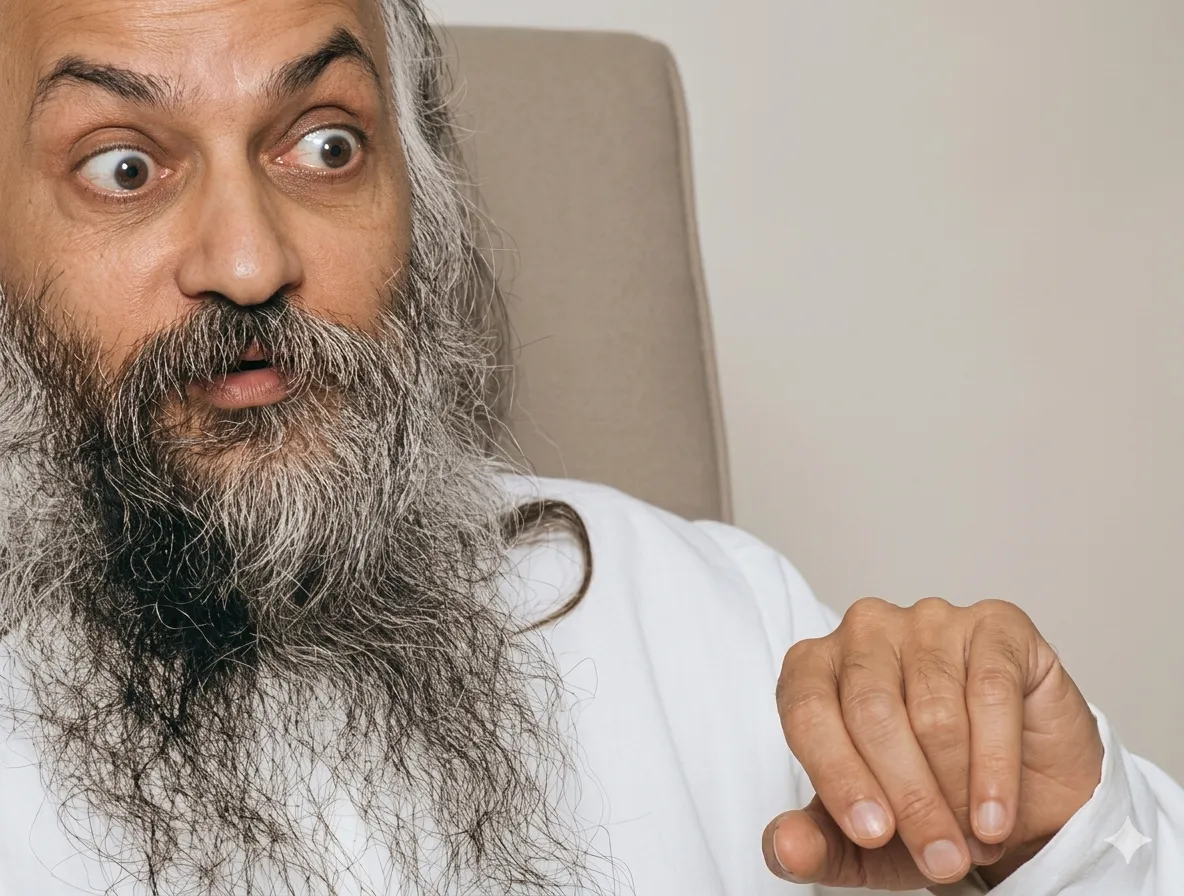
Don’t try to reprogram your inside; relax, stop forcing, and let your natural flow guide you.
From the Discourses
Passages where Osho speaks to this question — each links to the complete discourse.
Where does educating the subconsciousness conflict or harmonise with tao, as it implies discipline with self-effort from an external expression?
Once upon a time, the Duke of Lu went forward to meet a sea bird that had made its appearance in the confines of that country, and escorted it to his ancestral hall. This is a Taoist parable. There, an ox, a sheep and a pig were slaughtered, and a feast was spread before the sea bird, while the band was playing the celebrated music composed under the supervision of the Emperor Shuen. The bird, however, merely looked on, sad and doleful, refusing to relish a morsel of meat or drink a single cup. Thus it died of hunger after three days. The duke fed the bird as he would feed himself, and he failed to see that it should have been treated as a bird and not as a king. The music is meaningless to the bird, and the ox and the sheep and the pig are not his…
Do taoists agree with the happening of sudden enlightenment or the gradual one?
THEY DON'T BOTHER. Lao Tzu does not bother, because he says: Just to be ordinary is to be enlightened. It is not something special that one has to achieve, it is not an achievement, it is not something that one has to reach. It is you -- in your absolute ordinariness it flowers. To be extraordinary is the disease of the ego. The ego always wants to be extraordinary, someone special, unique, incomparable -- that is the hankering desire of the ego. If you can become a Rockefeller, good; if you can become a Hitler, good; or if you cannot become a Rockefeller or a Hitler, then renounce the world and think of becoming a Buddha. But become someone, someone special, a historic phenomenon. Lao Tzu is not bothered about enlightenment and all that nonsense. He says: Just be ordinary. Eat when you feel hungry, drink when you feel thirsty…
When the deep meaning of things is not understood the mind's essential peace is disturbed to no avail.
THE WAY IS PERFECT LIKE VAST SPACE WHERE NOTHING IS LACKING AND NOTHING IS IN EXCESS. INDEED, IT IS DUE TO OUR CHOOSING TO ACCEPT OR REJECT THAT WE DO NOT SEE THE TRUE NATURE OF THINGS. LIVE NEITHER IN THE ENTANGLEMENTS OF OUTER THINGS, NOR IN INNER FEELINGS OF EMPTINESS. BE SERENE WITHOUT STRIVING ACTIVITY IN THE ONENESS OF THINGS AND SUCH ERRONEOUS VIEWS WILL DISAPPEAR BY THEMSELVES. WHEN YOU TRY TO STOP ACTIVITY TO ACHIEVE PASSIVITY YOUR VERY EFFORT FILLS YOU WITH ACTIVITY. AS LONG AS YOU REMAIN IN ONE EXTREME OR THE OTHER YOU WILL NEVER KNOW ONENESS. THOSE WHO DO NOT LIVE IN THE SINGLE WAY FAIL IN BOTH ACTIVITY AND PASSIVITY, ASSERTION AND DENIAL. ... Logic will say something absolutely different. Logic will say, "Practice rest the whole day, so in the night you can rest beautifully. Mulla Nasruddin went to his doctor. Coughing, he entered.
Osho, in Lao Tzu’s vision of life, what place is there for sadhana (spiritual practice)? And one who relies only on drifting, not on swimming—how can he reach his goal? Is effort not necessary to reach the goal? Lao Tzu’s “doing nothing,” being inactive, also seems like a kind of goal. To abandon oneself to unknowing, unknown currents—is that wisdom, a mark of the wise, or is it ignorance and the mark of the ignorant?
No: for those who do not understand and can only understand doing, something must be made for them to do. And they must be made to do so much that by doing and doing they become exhausted and drop it. But the event happens only when they drop. Remember this: the event will not happen before that point of letting go which Lao Tzu speaks of. They must be tired out by doing. They must be made to do so much that they come to such a pitch of tension that there remains no way to maintain it, and the tension falls away. Tension has its laws. Either you drop tension right now—through understanding. One way is to drop tension through understanding. My fist is clenched. One way is that you tell me: “Clenched is not the fist’s nature; therefore you will get tired. Clenched is not the fist’s nature;…
प्रश्न: ओशो, लाओत्से के ऐसे जीवन-दर्शन में साधना का क्या स्थान होगा? और जो केवल बहने पर निर्भर होता है, तैरने पर नहीं, वह अपने लक्ष्य तक कैसे पहुंच सकता है? क्या लक्ष्य तक पहुंचने के लिए भी यत्न की आवश्यकता नहीं है? लाओत्से का कुछ न करना, निष्क्रिय होना भी एक प्रकार का लक्ष्य जान पड़ता है। अबोध, अनजान धाराओं पर अपने आपको छोड़ देना ज्ञान है, ज्ञानी का लक्षण है? अथवा अज्ञान और अज्ञानी का?
नहीं, बाकी जो लोग नहीं समझ पाते हैं, करना ही समझ पाते हैं, उनसे कुछ करवाना पड़ता है। और उनसे इतना करवाना पड़ता है कि वे कर-करके थक जाएं और छोड़ दें। लेकिन घटना तभी घटती है, जब वे छोड़ते हैं। ध्यान रखें, घटना लाओत्से के पहले घटने वाली नहीं है। उनको कर-करके थकाना होता है। उनसे इतना करवाना होता है कि वे इतने तनाव में आ जाएं कि और तनाव का उपाय न रह जाए और तनाव छूट जाए। तनाव के नियम हैं। या तो आप तनाव को छोड़ दें इसी वक्त--समझपूर्वक। एक तो रास्ता है, समझपूर्वक तनाव का छोड़ देना। मेरी यह मुट्ठी बंधी है। एक रास्ता तो यह है कि आपने मुझसे कहा कि बंधा होना मुट्ठी का स्वभाव नहीं है, इसलिए तुम थक जाओगे। आपने मुझसे कहा, बंधा होना मुट्ठी का स्वभाव नहीं है, इसलिए तुम नाहक थक जाओगे। क्योंकि बांधने में तुम्हें शक्ति लगानी पड़ रही है और व्यर्थ तुम कष्ट पा रहे हो। तो मैं आपसे पूछूं कि मुट्ठी को कैसे खोलूं? क्या उपाय करूं? क्या साधना करूं कि मुट्ठी खोलूं? तो आप कहेंगे, फिर समझे नहीं। …
Osho, please tell us: are not all of Lao Tzu’s teachings the teachings of a defeated, beaten man? At their root, isn’t there a negative attitude, a kind of escapism? Won’t this policy of tathata—of acceptance—end up encouraging exploitative systems? And finally, can we not call these teachings mere theoretical idealism? They are not practical, nor do they show any way to be free of doing or to be de-hypnotized.
No. If we understand life rightly, Lao Tzu is not running away from life; he is only stepping away from stupidity—from the fire, from the disease. He is going deeper into life. And we, thinking we are advancing in life, go on advancing into sheer stupidity and are deprived of life. What is the final criterion? Compare Lao Tzu’s face with ours. Lao Tzu, untroubled even while dying; we, anxious even while living. Lao Tzu joyously embraces death; we have never embraced life with joy. Lao Tzu laughs even in illness; we keep weeping even in health. What is the measure? Put thorns in Lao Tzu’s hands and he is grateful; put a flower in our hands and no gratitude arises. By what path shall we recognize? What standard? Lao Tzu is no escapist. And if he is, then everyone should be an escapist—then escapism is religion. Because by escaping…
प्रश्न: ओशो, कृपया यह बतलाएं कि क्या लाओत्से के ये सारे उपदेश पराजित जीवन के हारे हुए व्यक्ति के उपदेश नहीं हैं? क्या इन उपदेशों के मूल में एक प्रकार की निषेधात्मक अभिवृत्ति या पलायनवादिता नहीं है? तथाता या स्वीकृति की इस नीति से शोषण के तंत्र को प्रोत्साहन नहीं मिलेगा? और अंत में, क्या इन उपदेशों को केवल कोरी सैद्धांतिक आदर्शवादिता नहीं कह सकते? ये व्यावहारिक नहीं हैं, और न इनमें काम से मुक्त होने का या अमूर्च्छित होने का उपाय बताया गया है।
नहीं, अगर हम जीवन की स्थिति को ठीक से समझें, तो लाओत्से जीवन से नहीं भाग रहा है; लाओत्से सिर्फ मूढ़ता से हट रहा है। लाओत्से सिर्फ आग से हट रहा है, बीमारी से हट रहा है। जीवन में तो गहरे जा रहा है। और हम जो समझ रहे हैं कि हम जीवन में आगे बढ़ रहे हैं, हम सिर्फ निपट मूढ़ता में आगे बढ़ते चले जाते हैं और जीवन से वंचित होते चले जाते हैं। अंतिम कसौटी क्या है? लाओत्से की शक्ल और हमारी शक्ल को मिलाना चाहिए। लाओत्से मरते वक्त भी चिंतित नहीं है, हम जीते वक्त भी चिंतित हैं। लाओत्से मौत को भी आलिंगन करने में आनंदित है, हम जीवन को भी कभी आनंद से आलिंगन नहीं कर पाए। लाओत्से बीमारी में भी हंसता है, हम स्वस्थ होकर भी रोते रहते हैं। कसौटी क्या है? लाओत्से के हाथों में कांटे भी रख दो तो अनुगृहीत हो जाएगा, हमारे हाथों में कोई फूल भी रख जाए तो धन्यवाद का भाव नहीं उठता। नहीं, क्या है मार्ग जिससे हम पहचानें? कौन सा मापदंड है?