
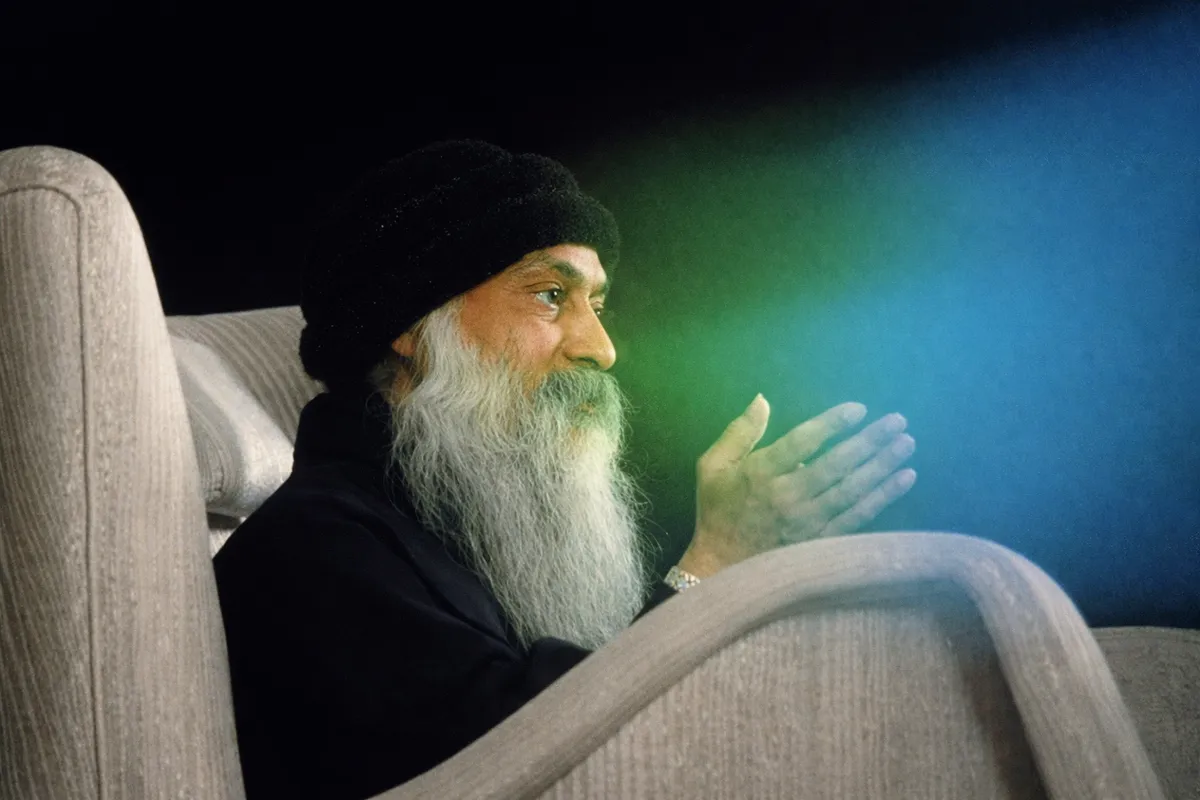
You can’t force someone to quit; be kind and stop nagging—when they see it clearly themselves, they’ll let it go.
From the Discourses
Passages where Osho speaks to this question — each links to the complete discourse.
Osho, my husband has the habit of chewing tobacco. How can he give it up? Asked by Geeta. First of all, trying to make someone else drop their habits is not a mark of decency. Let the other person understand for themselves. Acknowledge at least that your husband has intelligence. If there is to be a question, let your husband be the one to ask.
The weak always finds a tactic that appears right. Being weak, they must play a kind of politics that looks proper and cannot be easily refused. What will you say? The wife isn’t saying something bad. She says, “Your lungs will be ruined; if you smoke you’ll get TB.” She says it for your own good. The weak will always devise ways to torment you “for your own good.” And she isn’t factually wrong, so you cannot even argue. Husbands begin to enter their homes in fear. The home starts to feel like school for little children—that is how husbands feel about home: a classroom. Lessons are given there—where to take off the shoes, where to put the clothes, don’t smoke, don’t play the radio so loud—thousands of lessons. Slowly the wife becomes a schoolmistress and with her own hands breaks the delicate threads of love. The threads of love…
पांचवां प्रश्न: ओशो, मेरे पति को तमाखू खाने की आदत है। वे उसे कैसे छोड़ें? पूछा है गीता ने।
कमजोर हमेशा ऐसी तरकीब खोजता है जो ठीक मालूम पड़े। क्योंकि कमजोर है, तो कमजोर को ऐसी राजनीति करनी पड़ती है कि ठीक भी मालूम पड़े, तुम उसको इनकार भी न कर सको। अब क्या कहोगे तुम! पत्नी बुरा तो नहीं कहती। वह कहती है, फेफड़े खराब हो जाएंगे, सिगरेट पीओगे टी.बी. हो जाएगी। तो तुम्हारे हित में ही कह रही है। कमजोर हमेशा तुम्हारे हित में ही तुमको सताने के उपाय खोजता है। और गलत तो वह कह ही नहीं रही है, इसलिए तुम विवाद तो कर ही नहीं सकते। तो पति घरों में डरते हुए घुसते हैं। घर से भय लगने लगता है। मुल्ला नसरुद्दीन एक दिन शराबखाने में बैठा था। उसके पास एक और आदमी बैठा था, दोनों गपशप कर रहे थे। मुल्ला नसरुद्दीन ने उससे पूछा कि तुम्हारा विवाह हुए कितने दिन हुए? उसने कहा, विवाह! हुआ ही नहीं! मुल्ला ने कहा, बड़ी हैरानी, तो फिर यहां क्या कर रहे हो? उसने कहा, मतलब? उसने कहा कि हम तो पत्नी से बचने के लिए यहां आते हैं, मगर तुम यहां क्या कर रहे हो? इसीलिए मैंने पूछा। …
Osho, I am ignorant. All around me there is nothing but darkness. What is the path for me?
Music! Darkness is only proof that light can be. Darkness is only evidence that light is possible. So do not look at darkness with a negative outlook. Do not look with the eyes of an atheist; look with the eyes of a theist. Then even in darkness you will sense light hidden within it. Darkness is the womb of light. Do not be alarmed by darkness, nor afraid, nor anxious—be blissful, for the morning must be coming! And the denser the darkness, the nearer the dawn. Deep is this darkness; by the veils of selfishness we have been plundered. A wall of dead matter stands encircling, people speak as if turning their faces away; in this sky there is no sun, no moon, no star. An infinite ocean of imagination this, roaring as it girds the body, fierce— nothing is understood; where is the dusky shore? Beloved, give me that…
आखिरी प्रश्न: ओशो, मैं अज्ञानी हूं। मेरे चारों ओर अंधकार ही अंधकार है। मेरे लिए क्या मार्ग है?
संगीत! अंधकार केवल एक बात का प्रमाण है कि आलोक हो सकता है। अंधकार केवल एक चीज का सबूत है कि आलोक संभव है। इसलिए अंधकार को नकारात्मक दृष्टि से मत देखो। नास्तिक की दृष्टि से मत देखो। आस्तिक की दृष्टि से देखो। तो फिर तुम्हें अंधकार में भी रोशनी छिपी मालूम पड़ेगी। अंधकार तो गर्भ है रोशनी का। अंधकार से घबड़ा न जाओ, न भयभीत, न चिंतित--आनंदमग्न, क्योंकि आती होगी सुबह! और जितना अंधकार घना होता है, भोर उतनी ही करीब होती है। गहन है यह अंध कारा; स्वार्थ के अवगुंठनों से हुआ है लुंठन हमारा। खड़ी है दीवार जड़ की घेर कर, बोलते हैं लोग ज्यों मुंह फेर कर, इस गगन में नहीं दिनकर, नहीं शशधर, नहीं तारा।
Question: Second question: Osho, can lifelong habits be dropped easily? ... First, be sure what your ‘habit’ is. Ninety-nine out of a hundred are utterly harmless. Needlessly the sadhus and mahatmas make a fuss about them. Someone drinks tea and thinks he’s committing a great sin. ... What sin? ... You sip your tea—who is harmed? Tea is thoroughly vegetarian. No harm at all. A little nicotine—no sin in that either. It warms the body a bit, gives a little zest—nothing wrong; a bit of zest is good, it helps you engage in work. ... But no! ... In Mahatma Gandhi’s ashram, tea was sin—except for one person: Rajaji alone had the right to tea, being the in-law. Rules cannot apply to the in-law; one must keep in-lawly courtesy—so he had an exemption. For the rest, tea was sin. Once a young man was caught making tea in secret. A scandal in the ashram.
पहले तो पक्का होना चाहिए कि आदत क्या है तुम्हारी? सौ में निन्यानबे आदतें तो बिलकुल ही निर्दोष हैं। जिनको नाहक साधुओं ने, महात्माओं ने शोरगुल मचा रखा है। कोई चाय पी रहा है, वह बेचारा समझ रहा है कि बड़ा पाप कर रहे हैं। क्या खाक पाप कर रहे हो! अपनी चाय की चुस्कियां ले रहे हो, किसी का कुछ बिगाड़ रहो हो? और वह बिलकुल शाकाहारी है चाय। इसमें कुछ हर्जा नहीं, जरा भी। थोड़ा सा निकोटिन है इसमें, उसमें भी कोई पाप नहीं। थोड़ा शरीर में गर्मी आ जाती है, थोड़ा जोश आ जाता है, सो कुछ बुराई नहीं है, थोड़ा जोश रहे तो कुछ अच्छा ही है; थोड़ा काम-धाम में तबीयत लगती है। मगर नहीं, महात्मा गांधी के आश्रम में चाय पाप थी--सिर्फ एक व्यक्ति को छोड़ कर, राजा जी को भर चाय पीने का हक था। क्योंकि वह समधी थे। अब समधी पर तो नियम लागू हो नहीं सकते। समधी के साथ तो समधियाना निभाना पड़ता है। सो उनके लिए छुट्टी थी। बाकी सबके लिए चाय पाप थी।
Osho, I keep turning back to look at the past. It’s futile, yet the habit doesn’t drop. What could be the reason?
Even to a dry tree the vine clings. Support! No other support seems visible. Ahead, only darkness; within, only darkness. The one bright thing seems to be the line of the past along which you have come—this path that is over, that will never be again, that has already happened. You sit arranging these preserved blossoms, these dried flowers. You cling to them. The creeper has twined round a lifeless tree— how much the past coddles the unborn It’s all dead, a corpse. Sometimes it happens: a she-monkey goes on carrying her baby pressed to her chest. Even when the baby dies, she keeps carrying it. It takes days—only when it rots and starts to stink does she drop it in a fright. Otherwise she goes on clutching the corpse—old habit. The past is a corpse—gone, done. Dust. Ash; the ember is out. Don’t keep lying on this ash, don’t…
तीसरा प्रश्न: ओशो, मैं लौट-लौट कर अतीत की ओर देखता रहता हूं। यह व्यर्थ है, फिर भी आदत छूटती नहीं। इसका क्या कारण हो सकता है?
सूखे वृक्ष से भी लता लिपटी रहती है। सहारा! अब और कोई सहारा तो दिखायी नहीं पड़ता। आगे तो सिर्फ अंधकार है। भीतर अंधकार है। अब तो एक ही रोशन बात मालूम पड़ती है, यह अतीत की लकीर जिस पर तुम गुजर आए, यह रास्ता जो बीत चुका, जो अब कभी होगा नहीं, जो हो चुका। अब इन्हीं संजोयी स्मृतियों के फूलों को, सूखे फूलों को सजाकर बैठे हो। इन्हीं को पकड़े हो।
Why is it that the habits I judge bad for me -- smoking, overeating etc, are the most persistent?
That will be. If you judge them bad they will be persistent because you are creating a relationship with them. To call anything bad is to create a relationship with it. And whenever you call a thing bad, why do you call it bad? You call it bad because it defeats you. It is powerful. You call it bad because you are impotent before it; and by name-calling nobody is helped. So the first thing to do is: stop judging! If you want to smoke -- smoke! Smoke meditatively, forget what others say about it. Smoking can be such a beautiful meditation. Don't fight with it, smoke meditatively, create perfect rings, and enjoy the whole thing. And suddenly one day you will find the need has disappeared. The whole thing looks so foolish. Not that you judge, because when you judge then it is either good or bad. When you…