
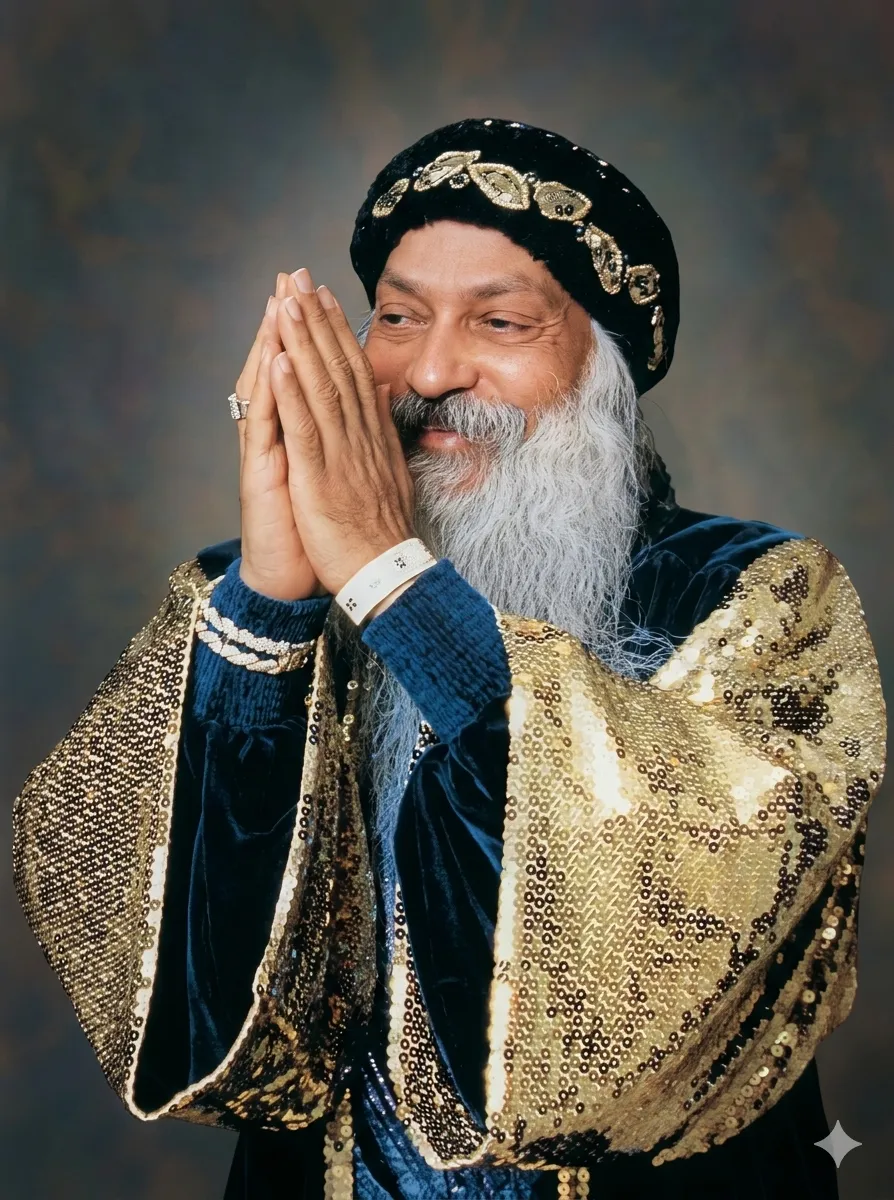
Don’t judge or worship sadhus; real ones are the same everywhere, while pretenders act holy only when watched.
From the Discourses
Passages where Osho speaks to this question — each links to the complete discourse.
Then how can one tell if a sadhu is authentic or not?
There is no need. If someone becomes a sadhu, it is his own private affair. There is no need to pay any attention to him. Whether he is fake or authentic, it is his affair. His belief is a private affair, his being a sadhu is a private thing. Once it becomes public, there will always be fakes, there will always be false people who will exploit. If one is a poet it is his own affair, if one is a dancer it is his own affair, if one is a sadhu it is his own affair. He should not be worshipped -- not even if he is authentic. If the authentic is worshipped, then the false will follow automatically and there will be those who exploit the phenomenon. The need to recognize who is an authentic sadhu arises only when you want to worship someone. If you want to…
You say that seeing a sadhu stirs compassion. Then is there no sadhu who truly seeks the Self? By putting all sadhus in the same line, are you not insulting saintliness?
It is not a question of insulting a sadhu. I am speaking about what is going on under the label “sadhu.” I speak of it precisely so that a genuine respect for real saintliness may arise in us, so that we learn to know and recognize it. To know and recognize it, other things are needed—not a change of clothes. What is needed is a revolution of the whole of life. A revolution of the whole of life—and a natural, unforced way of living. When someone becomes a sadhu, life becomes utterly simple. All the complexity of life dissolves. Gain and loss become zero for him. The ones you call sadhus think in the language of profit and loss twenty-four hours a day. Even if they have left home, it is with the idea that in exchange they will gain heaven or liberation. They are the same old shopkeepers. Their…
पूछा है कि ओशो, आप कहते हैं कि साधु को देखने से दया आती है। तो क्या कोई आत्मार्थी साधु नहीं है? सब साधु को एक ही लाइन में रखने से क्या साधुत्व का आप अपमान नहीं करते हैं?
… और इसीलिए उसके लिए कह रहा हूं कि ताकि वास्तविक साधुता के प्रति हमारे मन में एक सम्मान पैदा हो, हम उसे पहचानना और जानना सीख सकें। उसे जानने और पहचानने के लिए कुछ और बातेें जरूरी हैं, कपड़े का परिवर्तन नहीं। तो सारे जीवन की क्रांति जरूरी है। सारे जीवन की क्रांति। और जीवन की सहजचर्या जरूरी है। जब कोई साधु हो जाता है तो जीवन अत्यंत सहज हो जाता है। उसके जीवन की सारी जटिलता विलीन हो जाती है। उसके जीवन में लाभ-हानि शून्य हो जाते हैं। इनको आप साधु कह रहे हैं, ये चौबीस घंटे लाभ-हानि की भाषा में सोच रहे हैं। इन्होंने अगर घर भी छोड़ा है तो इस खयाल में कि इसके बदले में स्वर्ग मिलेगा या मोक्ष मिलेगा। ये पुराने दुकानदार ही हैं। इनके सोचने के ढंग वही प्रॉफिट के हैं। …
Kailash has asked a question: Sannyas? A question mark attached—and then the buts and howevers.
Sannyas—then what place is there for “but” and “however”? “But” and “however” are a man’s tricks. Either yes or no—where do buts fit in? Either you feel something is right and you do it, or you don’t feel it is right and you don’t do it. But man is dishonest. He wants to persuade himself: “The thing does seem right to me; I am so intelligent—how could it not seem right? Only, the circumstances aren’t suitable yet for me to take sannyas.” So he tacks on a but. Understand: whenever someone adds a “but,” politics has entered. “But–however” is the language of politics. The language of religion is straight and clear—yes or no. People are afraid of the company of a saint; they are frightened. They find many excuses. But they don’t want to look at the real thing. The real thing is one fear: “If I go there, I…
Osho, just seeing sadhus and saints makes me bristle, even angry. I see nothing in them but hypocrisy. But with you—God knows what you’ve done—reverence wells up! What is the secret of your influence?
Buddha asked, “What are you doing?” They said, “This is not killing; not violence. The souls of these animals will go to heaven.” Buddha joked, “Then why not kill your parents? Send them to heaven. The door is open—why send animals? Send your parents, your wife, your children. Send everyone—and then go yourself! But don’t send these animals. They don’t want to go—they’re writhing, they want to run. They are pleading for mercy. They cannot speak—look into their eyes, they are beseeching. They are bleating: ‘Let us go.’ They don’t want heaven—and you are sending them. The yajman who is funding this sacrifice wants heaven—send him!” Clever folks have always been around. Tricks kept running; we kept bearing them. Sin and merit are difficult to determine. On one side are people along the Amazon who eat humans—and it is no sin to them. On the other side are the Quakers…
दूसरा प्रश्न: ओशो, साधु-संतों को देख कर ही मुझे चिढ़ होती है और क्रोध भी आता है। मैं तो उनमें सिवाय पाखंड के और कुछ भी नहीं देखता हूं। पर आपने न मालूम क्या कर दिया है कि श्रद्धा उमड़ती है! आपके प्रभाव का रहस्य क्या है?
तो बुद्ध ने कहा कि यह तुम क्या कर रहे हो? तो उन्होंने कहा कि यह कोई हत्या नहीं है, हिंसा नहीं है। ये जो पशु-पक्षी काटे जाएंगे, इन सबकी आत्माएं स्वर्ग चली जाएंगी। तो बुद्ध ने बड़ा मजाक किया है! और बुद्ध ने कहा: तो फिर अपने माता-पिता को क्यों नहीं काटते? स्वर्ग ही भेज दो। यह अवसर मिला, स्वर्ग भेजने का द्वार खुला और तुम इन पशु-पक्षियों को भेज रहे हो? माता-पिता को भेज दो! पत्नी-बच्चों को भेज दो! फिर सबको भेज कर खुद भी चले जाना! मगर इन पशु-पक्षियों को तो न भेजो। ये तो जाना भी नहीं चाहते। ये तो तड़प रहे हैं। ये तो भागना चाहते हैं। ये तो कहते हैं कि क्षमा करो! बोल नहीं सकते। जरा इनकी आंखें तो देखो, गिड़गिड़ा रही हैं। मिमिया रहे हैं; ये कह रहे हैं कि हमें जाने दो। ये तो स्वर्ग जाना नहीं चाहते, इनको तुम भेज रहे हो। और जो जाना चाहते हैं...। जिस यजमान ने यह करवाया है यज्ञ, वह स्वर्ग जाना चाहता है, उसी को भेज दो। खूब चालबाज लोग दुनिया में थे। चालबाजियां चलती रहीं। चालबाजियां हम सहते रहे। …
I.98. Sadho, sahajai kaya sodho
O SADHU! PURIFY YOUR BODY IN THE SIMPLE WAY. AS THE SEED IS WITHIN THE BANYAN TREE, AND WITHIN THE SEED ARE THE FLOWERS, THE FRUITS, AND THE SHADE; SO THE GERM IS WITHIN THE BODY, AND WITHIN THAT GERM IS THE BODY AGAIN. THE FIRE, THE AIR, THE WATER, THE EARTH, AND THE AETHER; YOU CANNOT HAVE THESE OUTSIDE OF HIM. O KAZI, O PUNDIT, CONSIDER IT WELL: WHAT IS THERE THAT IS NOT THE SOUL? THE WATER-FILLED PITCHER IS PLACED UPON WATER, IT HAS WATER WITHIN AND WATER WITHOUT. IT SHOULD NOT BE GIVEN A NAME, LEST IT CALL FORTH THE ERROR OF DUALISM. KABIR SAYS: LISTEN TO THE WORD, THE TRUTH, WHICH IS YOUR ESSENCE. HE SPEAKS THE WORD OF HIMSELF; AND HE HIMSELF IS THE CREATOR! I.102. tarvar ak mul bin thada THERE IS A STRANGE TREE WHICH STANDS WITHOUT ROOTS AND BEARS FRUITS WITHOUT BLOSSOMING;…