
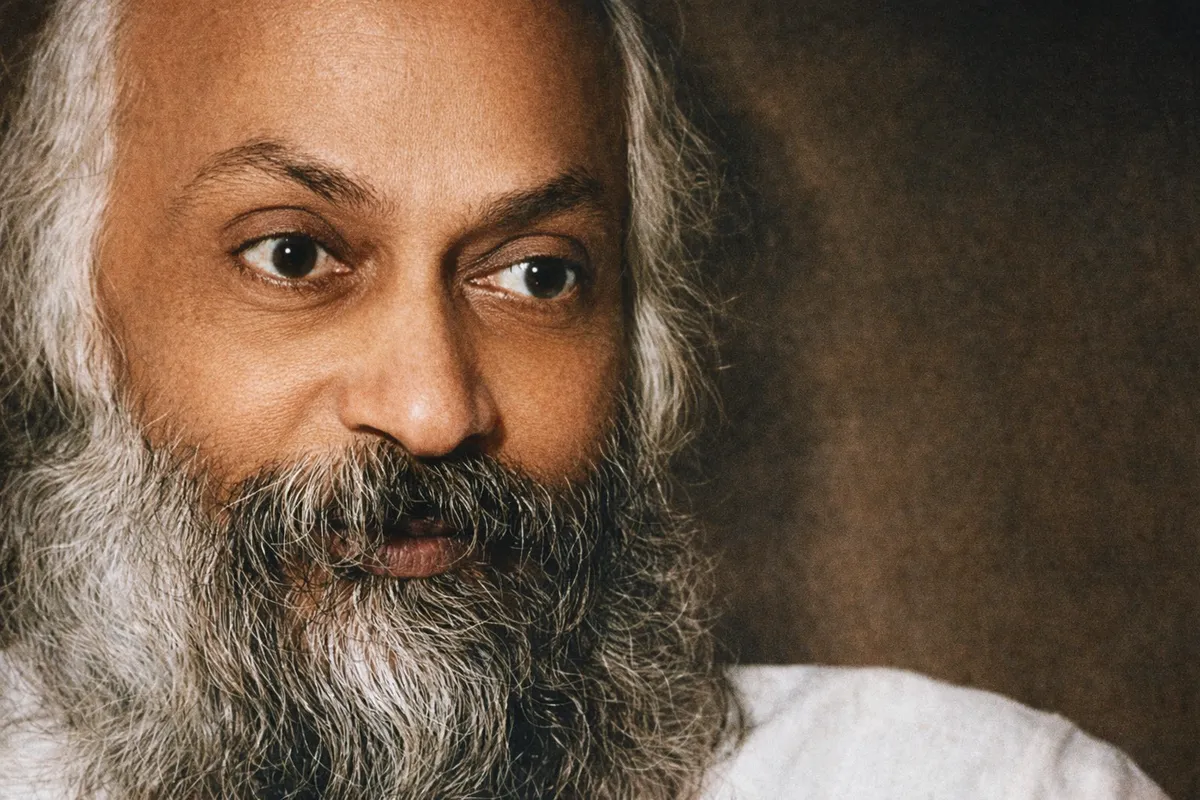
Go toward zero by sitting quietly, staying awake, letting go of labels and crutches, and not using drugs to escape—just be brave and present.
From the Discourses
Passages where Osho speaks to this question — each links to the complete discourse.
Meditation means not a repetitive mantra but a constant awareness, a remembrance 'Who am I?' 'I am not the body -- if you can remember this, that is meditation. If you can remember 'I am not the mind,' that is meditation. If you can remember 'I am not the feeling and the moods.' that is meditation. This three-dimensional meditation is the right way to reach to the ultimate goal of bliss. And the moment you have found bliss you have found the kingdom of god. Anand means bliss. Shunya means zeroness, to be absolutely spacious. Bliss is vast. It needs your whole inner being to be absolutely empty, only then it can enter. You have to remove the whole furniture -- and there is much furniture inside, all rotten; it is sheer junk but people go on accumulating it.
Question: Osho, in what we discussed the other day, the central question that arose for us—and about which we want to learn from you—is this: the influence of “nihilism” that we seem to find in Buddhism and Jainism… Perhaps the interpretation of shunya can be made as positive as one likes, yet the very word, through usage, creates a general interpretation in people’s minds. You can’t give everyone a new formula for an old word; but perhaps a more proper word could be used. From this perspective it appears—many people feel this too—that “shunya is the only word which can describe your approach to truth. Or is there some other term, path, or way of speaking so that the general public does not get the impression that you have a tendency toward negativism? So there is no misunderstanding. ... Even the painter cannot say what it is that he has painted.
वह पेंटर भी पेंट करके यह नहीं कह सकता कि क्या है यह। यह उसने जो पेंट किया है यह क्या है। पाजिटिव होता तो वह कहता कि यह भगवान कृष्ण मुरली बजाते हुए खड़े हैं। वही पेंट किया था उसने कल तक, सब साफ-सुथरा था, चीजों की रेखाएं थीं, कहीं सब गड्ड-मड्ड नहीं हो जाता था। अब सब गड्ड-मड्ड हो गया है। अब सिर्फ उसकी फ्रेम भर साफ रह गई है, बाकी भीतर फ्रेम के जो है वह सब गड़बड़ हो गया है। और इसलिए फ्रेम खो जाएगी, बहुत ज्यादा दिन तक पेंटिंग पर फ्रेम नहीं चल सकती है। क्योंकि वह जो अंदर बनाया जा रहा है वह फ्रेम में बैठने वाला नहीं है। फ्रेम पुरानी है। फ्रेम पुरानी है, जहां सब ढांचे में बैठता था उसके चारों तरफ फ्रेम थी। पेंटिंग कहीं शुरू होती थी, कहीं खत्म होती थी। अब वह न कहीं शुरू होती है, न वह कहीं खत्म होती है। अब वह एक अनंत शून्य के साथ साक्षात्कार कर रही है। और उस साक्षात्कार में कुछ हो रहा है जो कभी नहीं हुआ था।
For example, it brings you the experience that not the body, so clearly, so solidly, so categorically, that even if the whole world denies it, it cannot make any difference: you know from your innermost core you are not the body. It brings you the experience that you are not the mind either. And the moment you know you are neither the body nor the mind, suddenly a door opens. You have never been born and you are never going to die because only that which is born can die. The body was born, the mind was born -- they will die -- but you were before your birth and you will be after your death. Once this reality is revealed to you all fears and all miseries disappear. You become part of eternity. Only one thing remains and that is pure consciousness. And pure consciousness is nothing but godliness.
I am with you. That is the whole meaning of sannyas: in life, in death, I am with you! I will take care.... Next time simply relax and go into it. This is the very door we are seeking. This is the very door through which I am trying to bring as many people as possible. I am persuading as many people as possible to enter into this door. It is natural to be afraid so I am not condemning; it is natural. Everybody becomes afraid for the first time but there is no need to be afraid. Though the fear is natural, it is unwanted -- drop it! Shunyadeva -- it means god of the zero. And shunya or zero is not a negative concept in the East; it is the most positive.
Buddha savors shunya—before number. “Why enter the entanglement of numbers at all?” he asks. His relish is in the before. So he uses the word emptiness. Shankara uses fullness. He says: after number. But those who know, know that Shankara and Buddha are saying the same thing. Thus Ramanuja, in his critique of Shankara, used the phrase “a crypto-Buddhist.” There is no harsher critic of Buddha than Shankara; his critique is deep. Shankara insists upon fullness; the language of emptiness does not appeal to him. “Emptiness is negation,” he says. “And the Supreme? The Supreme is not a negation; it is fullness. It is all-that-is. Do not call it Nothing; call it All. It is omniscient, omnipotent, omnipresent—not empty, but full.” So Shankara criticizes Buddha; yet Ramanuja says, “Shankara is a hidden Buddhist.” And rightly so—there is not a jot of difference.
बुद्ध शून्य में रस लेते हैं--संख्या के पहले। वे कहते हैं--संख्या की उलझन में ही क्यों जाना? संख्या के पहले जो है, उसी में उनका रस है। तो वे शून्य का प्रयोग करते हैं। शंकर पूर्ण का प्रयोग करते हैं। वे कहते हैं--संख्या के बाद। लेकिन जो लोग जानते हैं, वे जानते हैं कि शंकर और बुद्ध एक ही बात कह रहे हैं। इसलिए रामानुज ने शंकर की आलोचना में एक शब्द उपयोग किया है, वह है: ‘प्रच्छन्न बौद्ध’--छिपा हुआ बौद्ध। शंकर से बड़ा आलोचक खोजना मुश्किल है--बुद्ध का। शंकर ने बड़ी गहरी आलोचना की है। क्योंकि शंकर पूर्ण के आग्रही हैं। शून्य की भाषा उन्हें जंचती नहीं। वे कहते हैं: शून्य तो नकार है; और परमात्मा? परमात्मा नकार नहीं है, वह पूर्ण है। वह सब-कुछ है। उसे मत कहो--कुछ भी नहीं। उसे कहो--सब कुछ। वह सर्वज्ञ है, सर्वशक्तिमान है, सर्वव्यापक है। शून्य नहीं है, पूर्ण है। तो शंकर आलोचना करते हैं बुद्ध की, लेकिन रामानुज ने कहा है कि शंकर छिपे हुए बौद्ध हैं। इनमें जरा भी भेद नहीं है--बुद्ध में और इनमें। है भी नहीं। …