
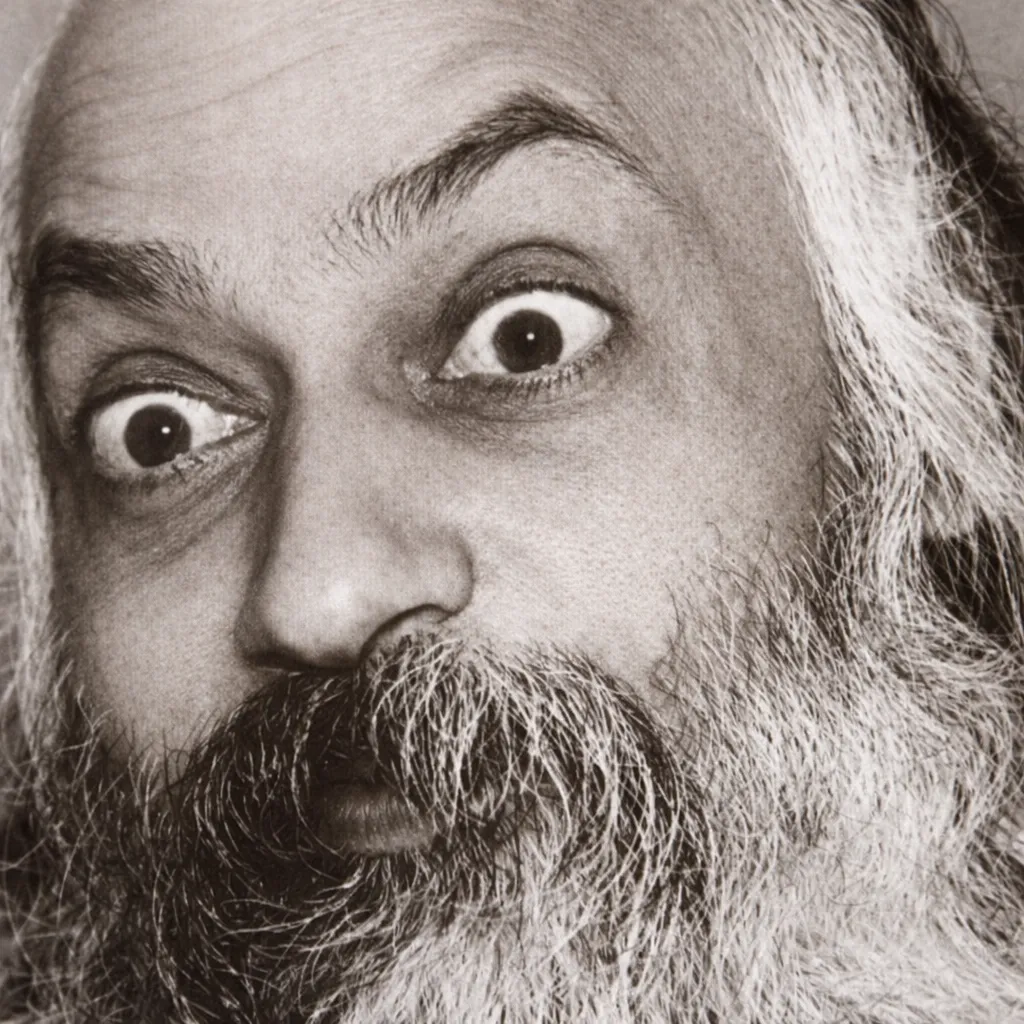
Don't force happy thoughts; quietly watch whatever you feel until the bad stuff passes on its own.
From the Discourses
Passages where Osho speaks to this question — each links to the complete discourse.
Beloved Osho, in america, many people -- from meditators to managers -- are using a technique called "positive thinking." they are trying to change destructive thoughts and conditionings about themselves, others, and existence, into positive ones, and in this way hope to be more successful on the level of their lives that they are concerned with. Picturing their minds as a cage, I wonder whether this technique is just like painting the cage golden. Osho, is the technique of positive thinking helpful for awakening? Or does it dull the awareness of being imprisoned and the desire to become free?
He found out that this was Napoleon Hill, a great writer, and his new book was just published. "He will be very happy to be introduced to you." So Henry Ford went to him. The publisher introduced Napoleon Hill, saying, "He has written this book, THINK AND GROW RICH." Henry Ford looked at the cover, at the title, and asked Napoleon Hill, "Have you come in your own car, or in a public bus?" It seemed so irrelevant, but when Henry Ford was asking, Napoleon Hill had to say, "Yes, I have come in a public bus." Henry Ford returned the book and told him, "When you have thought enough about a beautiful car and it appears in your porch, then bring this book to me. I am Henry Ford -- I don't need this book. I know you cannot grow rich by thinking. You can cheat poor people by…
Osho, is there any practical process for being in the realm of existence beyond thoughts, in the void?
The way to thin them out is non-cooperation. Right now we are their makers—that is, we are the ones maintaining them. When we sit idle, some thought or other is running, because without our cooperation they cannot run. Withdraw your cooperation from whatever thoughts are running, and do nothing else; regard just this as samayik, as meditation. If all thoughts dissolve, you will feel no ego and no person within. You will know only being—only being will be known, in which the distinction “I am an individual” or “I am the whole” will not be felt. Only pure being will remain—pure existence. In truth, because of the thoughts accumulated upon that pure existence, we appear to be a person. This sense that I am “A,” you are “B,” you are “C”—the A, B, C we have pasted on—is our thought-power. We commonly say, “I will become liberated”—this is not quite…
ओशो, क्या विचारों के पार अस्तित्व के जगत में, शून्य में होने की कोई व्यावहारिक प्रक्रिया है?
… जब खाली बैठते हैं तो कुछ न कुछ विचार चल रहे हैं। क्योंकि हमारे बिना सहयोग के वे चल नहीं सकते हैं। जो-जो विचार चल रहे हैं, उनसे सहयोग को खींच लें और कुछ न करें, बस इसी को सामायिक, इसी को ध्यान समझें। अगर सारे विचार विलीन हो जाएं तो आप में कोई ईगो, और कोई व्यक्ति नहीं मालूम होगा। आपको मालूम होगा केवल होना। केवल बीइंग मालूम होगा, जिसमें यह भेद मालूम नहीं होगा कि मैं व्यक्ति हूं या समष्टि हूं। केवल होना मात्र रह जाएगा। प्योर एक्झिस्टेंस मात्र होगा। वास्तव में उस प्योर एक्झिस्टेंस में जो विचार हमारे इकट्ठे हैं उन विचारों के कारण हम एक व्यक्ति मालूम होते हैं।
Do positive thoughts bring happenings too? -- like wishing for enlightenment.
Because from the positive where you will move? -- you know only two possibilities: positive or negative. If you drop the positive, you move to the negative. That's why negative has to be dropped first so there is nothing to move to the negative. Otherwise, if you drop the positive, immediately the negative enters. If you are not happy, then what you will be? -- unhappy! If you are not silent, what you will be? -- a chatterbox! Hence, drop the negative first so one alternative is closed -- you cannot move that way. Otherwise energy has a routine movement from positive to negative, from negative to positive. If the negative exists, there is every possibility the moment you drop the positive you will become the negative. When you are not happy, you will be unhappy. You don't know that there is a third possibility also. That third possibility opens…
"last night you said that one should always see life in its positive dimensions and one should not give emphasis to the negative. Is this not a choice? And is this not against encountering the total reality -- that which is?"
It is a choice, but one who is negative cannot take a jump towards choicelessness. If he can take it, it is good, but it is impossible. From the negative, it is impossible to take a jump towards choicelessness because the negative mind means that you can see only the ugly, you can see only death, you can see only misery. You cannot see any positive elements in life. And, remember, it is difficult to lose misery. It may look very strange when I say this, but it is difficult to take a jump from misery; it is easier to take a jump from happiness. It is easier to take a jump when you are happy because with happiness courage comes, with happiness the possibility of a higher bliss opens, with happiness the whole world looks like a home. With misery the world is like a hell, and there is…
Beloved Osho, sometimes, sitting with you is pure delight. My whole body is flooded with a strange and lovely feeling, like a silent orgasm that has no top or bottom. But more often I feel so busy with my aches and pains and thoughts that I can't be here, I can't seem to relax into myself, or let anything be. Then I get really worried that there is some unconscious resistance. Can you tell me if I'm fighting or what? And if I am fighting, what for?
Coming back home there was a long silence. Finally, as they were parting, the archbishop could not resist the temptation. He asked, "What is the matter with you? Are you sick or something? -- because I did not see a single emotion on your face. If the sermon was not good, then there should have been some emotion; if it was good, then too... But you remained almost like a stone statue. When people were laughing you did not even smile; when people were crying I did not see that your eyes were wet with tears. You behaved strangely, and I had prepared the best sermon of my life." Edmund Burke said, "You created such contradictory statements that it is enough that I did not hit you then and there. I was holding myself back; that's why I looked like a stone statue. If I had been relaxed I would…