
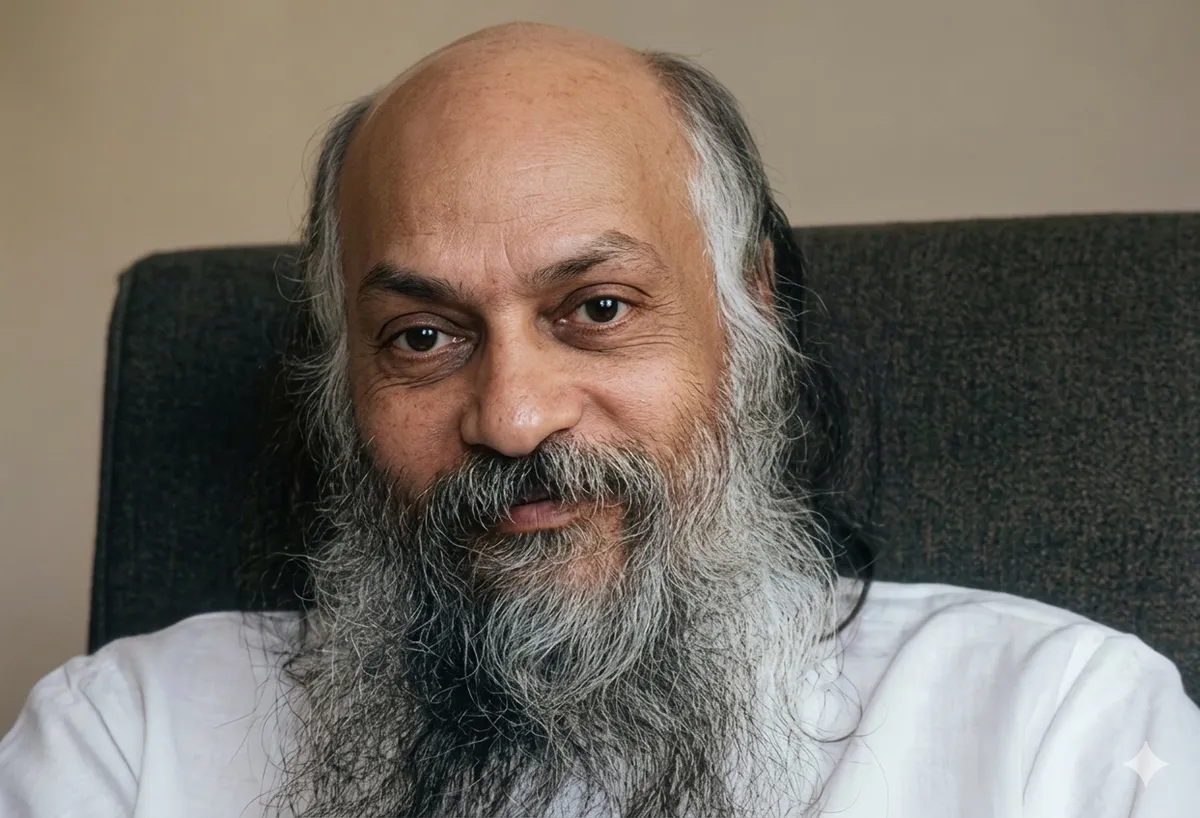
Wake yourself up first; then your calm presence naturally helps others without trying.
From the Discourses
Passages where Osho speaks to this question — each links to the complete discourse.
If one has no desire for one's own enlightenment, but only for that of others -- does one have a problem?
The disciple thinks the Master has helped, the Master knows that he has done nothing. The disciple thinks much has been done to him -- and he is right also because much has happened to him, but his understanding is not clear because he thinks, How can something happen if it has not been done? That is the problem for the disciple. He thinks, The Master is doing so much for me. Because the disciple cannot understand how things can happen, such great things, without anybody doing them: I am not doing them so the Master must be doing them to me. The Master is also not doing. The disciple is opening himself to the Master and the Master is available, that's all. He is a catalytic agent -- his presence DOES. And the disciple feels tremendously grateful -- and his gratefulness has meaning because alone he could not achieve…
Osho, I want to bring light to the world. And you have also said this is your message. How should I begin this great work?
Jagdish! Have you found the light? Have you become illumined? If you had become illumined, you wouldn’t ask this question. Because one who is illumined doesn’t have to ask how to show light. Light begins to pour from him. When a lamp is lit, the lamp does not ask, “Now how should I light up the room?” The lamp is lit—there is light. The lamp is lit—light begins to fall on people’s paths. The lamp is lit—and even those wandering in distant darkness begin to see. Someone lost in a far-off forest can also see the lamp in someone’s hut. Once the lamp is lit, light flows of its own nature. You simply do not ask. Your lamp has not yet been lit. Yes, you want the pleasure of showing light! And such a delusion arises because your so‑called sadhus and saints keep telling you: Serve! Work for people’s welfare!…
I certainly want to become enlightened. But if I do, what difference does it make for the rest of the world?
But why are you worried about the rest of the world? Let the world worry about itself. And you are not worried about what will happen to the rest of the world if you remain ignorant.... If you are ignorant, what happens to the rest of the world? You create misery. Not that you knowingly do it, you are misery -- so whatsoever you do, you sow seeds of misery all around. Your hopes are meaningless; your being is significant. You may think you are helping others -- you hinder them. You may think you love others -- you may be simply killing them and murdering them. You may think you are teaching others, but you may be simply helping them to remain ignorant forever -- because what you hope, what you think, what you wish, is not significant. What you are is significant. Every day I see people around…
Beloved master, will you please talk about the desire to help people, its differences and similarities to other forms of desire?
Veet Aikagro, desire is desire; there is no difference at all. Whether you want to help people or you want to harm people, the nature of desire remains the same. A buddha does not desire to help people. He helps people, but there is no desire in it; it is spontaneous. It is just the fragrance of a flower that has bloomed. The flower is not desiring that the fragrance should be released, should reach to the winds, to people. Whether it reaches or not is not the concern of the flower at all. If it reaches, that is accidental; if it does not reach, that too is accidental. The flower is spontaneously releasing its fragrance. The sun rises: there is no desire to wake up people, no desire to open the flowers, no desire to help the birds to sing. It all happens on its own accord. A buddha…
Beloved Osho, I wonder whether as your disciple I can be utterly selfish, to find my way to enlightenment whatever I am doing, or do I have to fulfill a certain function for you to spread your vision?
It has to be understood very clearly that nobody has a duty to spread my vision, my message to the people. I hate the very word `missionary'. These are the ugliest creatures on the earth. I don't want to create missionaries. You have to be utterly selfish, concentrated on only one aim: becoming enlightened. Of course, as you become enlightened, your light will start reaching to others. My message will start vibrating through you, through your love, without any effort on your part. It has never been said: "Be utterly selfish." All the religions of the world have been teaching, "Be altruistic," and they all have failed, because their very foundation was wrong. You don't know what truth is, and you start spreading the message about truth. You are lying. I have asked Christian missionaries, "What is your experience?" They don't have any experience. What they have is degrees from…