
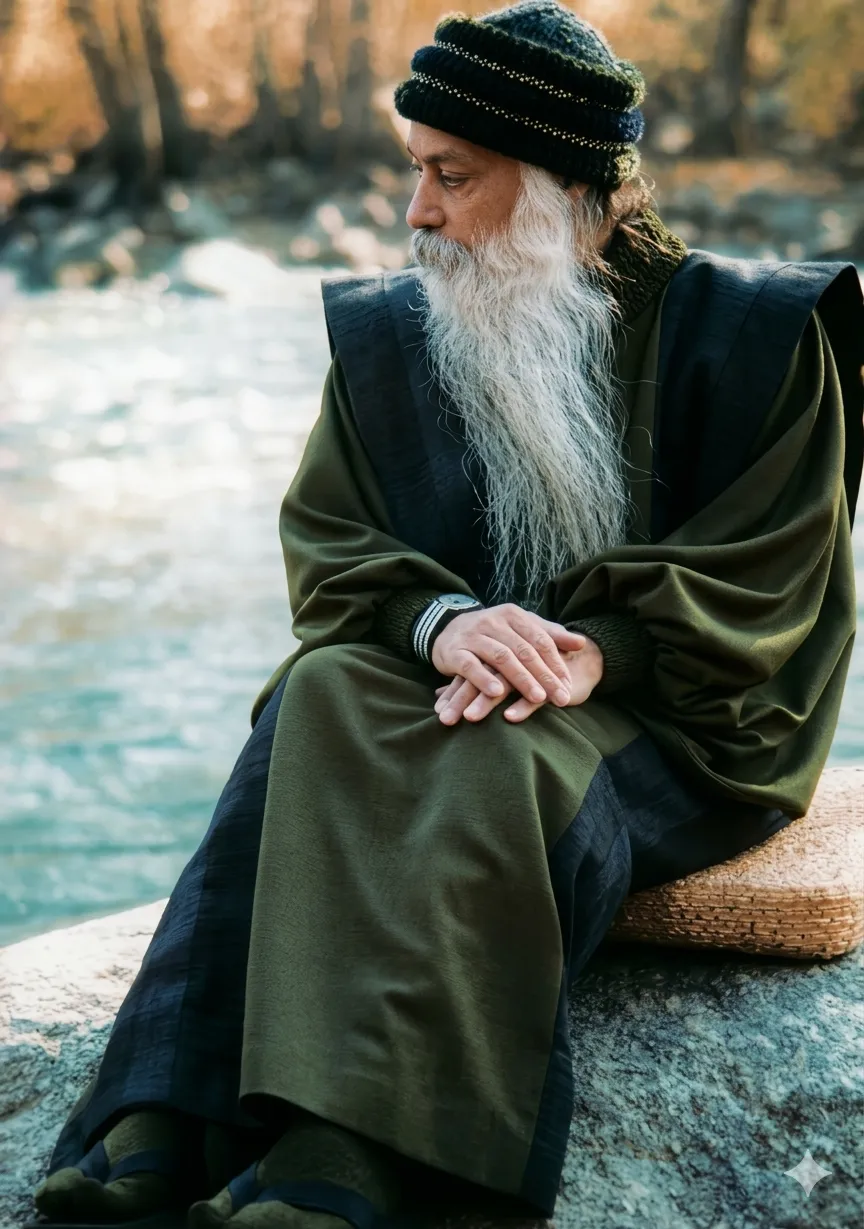
Osho says Zarathustra likely laughed because he instantly saw how silly and mixed-up the world is, so he greeted it with humor instead of crying.
From the Discourses
Passages where Osho speaks to this question — each links to the complete discourse.
Osho, it is said that zarathustra had loudly laughed when he was born. Is it true?
In fact, there is a Sufi story about Jesus, not related by the Christians in their scriptures They must have all avoided it The Bible is not exactly true; much has been edited out of it Anything that was going to create a trouble for the theologians, for the priests, for the popes, has been edited out, left out But there are always few people who will not miss such an opportunity; they will collect all those rejected parts -- because they are far more important than the accepted ones. This story is a rejected story by the Christians, but the Sufis have preserved it, and they have done a great service to humanity. Jesus enters a town and he comes across a man who is lying in the gutter shouting ugly words, completely drunk. Jesus comes close to him to help him, looks at his face and recognizes that…
Question: BELOVED OSHO, OF LAUGHTER AND DANCE WHAT HAS BEEN THE GREATEST SIN HERE ON EARTH? WAS IT NOT THE SAYING OF HIM WHO SAID: `WOE TO THOSE WHO LAUGH!' DID HE HIMSELF FIND ON EARTH NO REASON FOR LAUGHTER? IF SO, HE SOUGHT BADLY. EVEN A CHILD COULD FIND REASONS. HE -- DID NOT LOVE SUFFICIENTLY: OTHERWISE HE WOULD ALSO HAVE LOVED US, THE LAUGHERS! BUT HE HATED AND JEERED AT US, HE PROMISED US WAILING AND GNASHING OF TEETH. DOES ONE THEN STRAIGHTWAY HAVE TO CURSE WHERE ONE DOES NOT LOVE? THAT -- SEEMS TO ME BAD TASTE. BUT THAT IS WHAT HE DID, THIS UNCOMPROMISING MAN. HE SPRANG FROM THE MOB. AND HE HIMSELF DID NOT LOVE SUFFICIENTLY: OTHERWISE HE WOULD NOT HAVE BEEN SO ANGRY THAT HE WAS NOT LOVED. GREAT LOVE DOES NOT DESIRE LOVE -- IT DESIRES MORE. AVOID ALL SUCH UNCOMPROMISING MEN!
Osho, as you were stepping down from the stage after today’s discourse, the moment you said, “Sohan!” it was as if a wave swept through the entire Buddha Hall. With that one word you seemed to pluck the veena of many hearts. A strange scene descended. There was a smile on our lips and tears in our eyes. The state of Ma Sohan and Manik Babu was a sight to behold! Even with so bitter a topic as Dattabal before us, what is the magic you work, Osho, that even that is transformed into nectar?
Satya Niranjan! Even poison, too, is elixir—veiled, covered, concealed. As a rose grows among thorns. If you look rightly, poison also turns to nectar. It is all the art of seeing. It is all a matter of vision. The whole secret lies in the gaze. Nowhere is anything truly bitter. Everything is to be made lovable, made sweet. And I am preparing the veena of your heart. Every day this preparation is going on. When the veena is ready, any excuse can set it resonating. Even a gust of wind can make its strings tingle. The veena is ready; that is why such an incident happens. There is no crowd here. This is not a path for everyone. This is a settlement of madmen. This is a fair of moths to the flame. And so, you say there was a smile on our lips and tears in our eyes. Both…
दूसरा प्रश्न: ओशो, आज के प्रवचन के पश्चात मंच की सीढ़ियां उतरते समय जैसे ही आपने कहा, ‘सोहन!’ मानो पूरे बुद्ध हाल में लहर-सी दौड़ गई। उस एक शब्द से कई के हृदय की वीणा जैसे आपने छेड़ दी। एक अजीब-सा दृश्य छा गया। हमारे ओंठों पर हंसी और आंखों में आंसू थे। मा सोहन व माणिक बाबू की स्थिति तो देखते ही बनती थी! दत्ताबाल जैसा कटु विषय सामने होते हुए भी आप क्या जादू कर देते हो ओशो कि उसका भी अमृत में रूपांतरण हो जाता है?
सत्य निरंजन! जहर भी है तो अमृत ही--ढंका-ढंका, आवृत, आच्छादित। जैसे गुलाब का फूल कांटों के बीच ऊगा। ठीक से देखोगे तो जहर भी अमृत हो जाता है। सारी बात देखने की कला की है। सारी बात नजर की है। सारा राज नजर का है। कहीं कुछ कटु नहीं है। और सभी कुछ को प्रीतिकर कर लेना है, मीठा कर लेना है। और तुम्हारी हृदय की वीणा तैयार तो कर रहा हूं। रोज उसी की तैयारी चल रही है। वीणा तैयार हो तो कोई भी बहाना उसे छेड़ दे सकता है। हवा का झोंका भी उसके तारों को झनझना दे सकता है। वीणा तैयार है, इसलिए ऐसी घटना घट जाती है। यहां कोई भीड़ तो नहीं है। यहां हर कोई के लिए तो मार्ग नहीं है। यह तो दीवानों की बस्ती है। यह तो परवानों का मेला है। …
Question: BELOVED OSHO, PROLOGUE PART 1 WHEN ZARATHUSTRA WAS THIRTY YEARS OLD, HE LEFT HIS HOME AND THE LAKE OF HIS HOME AND WENT INTO THE MOUNTAINS. HERE HE HAD THE ENJOYMENT OF HIS SPIRIT AND HIS SOLITUDE AND HE DID NOT WEARY OF IT FOR TEN YEARS. BUT AT LAST HIS HEART TURNED -- AND ONE MORNING HE ROSE WITH THE DAWN, STEPPED BEFORE THE SUN AND SPOKE TO IT THUS: GREAT STAR! WHAT WOULD YOUR HAPPINESS BE, IF YOU HAD NOT THOSE FOR WHOM YOU SHINE! YOU HAVE COME UP HERE TO MY CAVE FOR TEN YEARS: YOU WOULD HAVE GROWN WEARY OF YOUR LIGHT AND OF THIS JOURNEY, WITHOUT ME, MY EAGLE AND MY SERPENT. BUT WE WAITED FOR YOU EVERY MORNING, TOOK FROM YOU YOUR SUPERFLUITY AND BLESSED YOU FOR IT. BEHOLD!
Beloved Osho, according to gurdjieff, a normal man needs laughter as a means to discharge an excess of energy. Whereas, for a man like gautam buddha, laughter is simply no longer possible. Please comment.
The boy said, "You know I'm not a wrestler. I have not even had a fight with anybody. In fact, I am a Christian. If somebody slaps one of my cheeks, I will give him the other and go home -- I believe Christ is right. And I don't even know the ABC of Indian wrestling, and it is an art, an ancient art." I said, "Nobody else is willing -- but the difference between you and the others is, they are all serious so they cannot be persuaded. You are the only man who is not serious. You can even accept defeat with laughter." He said, "That's true, because what is the harm? If I am defeated I don't see that there has been any harm to the world. So okay, I am ready." I said, "Okay. Remember, you will be in the finals and you will get the…