
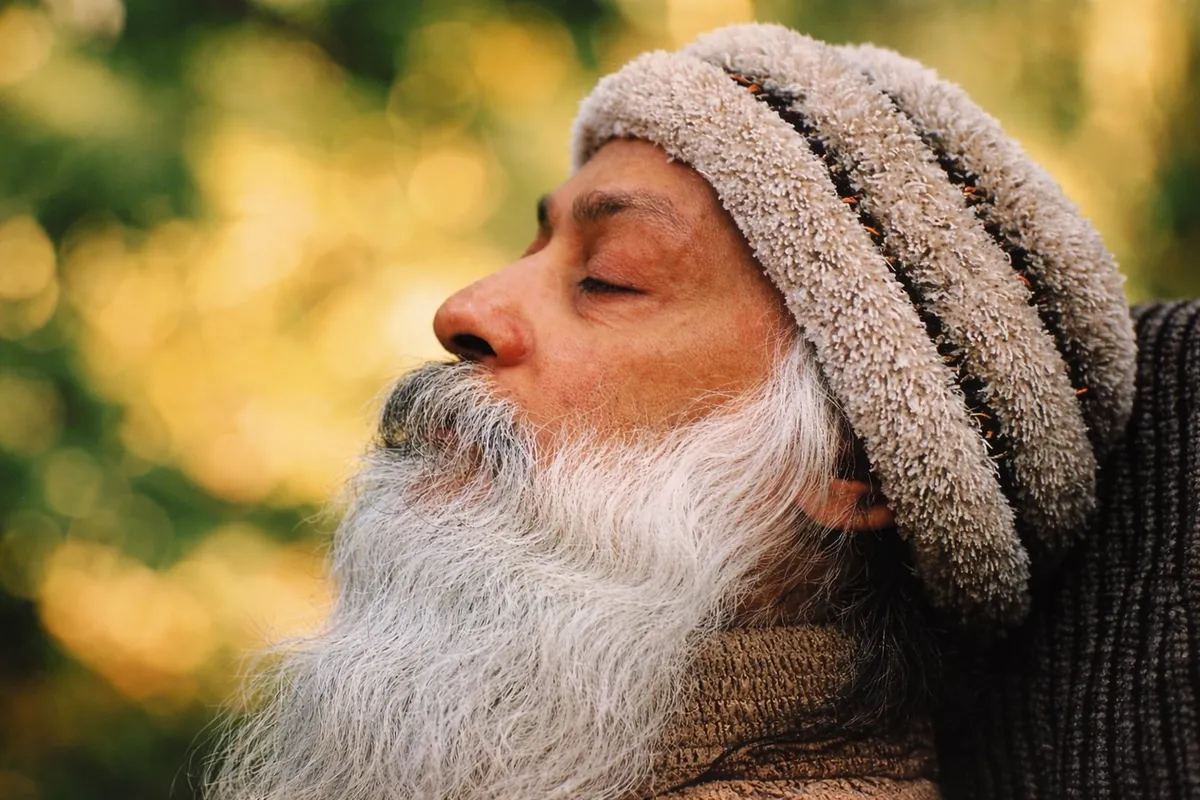
You don’t transform by forcing yourself; you transform when you relax wanting and let the bigger life move through you.
From the Discourses
Passages where Osho speaks to this question — each links to the complete discourse.
Can this happen through will power?
Will is power; energy. There is no such thing as 'will power'. Will is power, will is energy. But by 'will' I mean the whole: Those who use the term 'will power' use it in a psychic sense. They use it to mean the power of concentration. I am not using the term in that sense. To me, 'will' means the whole. So only God is will. We are never will; we are just desires. Will is power, without desire. It is power with no movement or, with an inner movement. It is power without direction: directionless, dimensionless. When we say, "God is power," it does not mean that God is powerful. It means: God-power. God is the energY of the whole, the power of the whole. So when I say 'will power', it does not mean that will has power. Will is power -- it is energy. You can…
Osho, into what should the power of the ego be transformed?
So those three experiments I have spoken of for the purification of life—purification of the body, of thought, and of feeling—if these three experiments continue, in doing them you will find the ego has dissolved. Anger will not dissolve in that sense; ego will dissolve. The energy of anger will continue in new forms. No “energy of ego” will remain. When ego dissolves, nothing is left behind—no residue. Anger or sex do not dissolve in that sense; they are transformed. They remain present in other forms. The energy of anger remains; it functions in another way. It may become compassion, but the energy is the same. And in this world, those who are very angry—if their energy is transformed—they can be filled with just that much compassion, because the energy takes a new form. Energy is not destroyed; it takes new forms. As I said, those who are very sexual…
ओशो, अहंकार की शक्ति को किस में परिणत किया जाए?
तो जिसको मैंने जीवन-शुद्धि के लिए तीन प्रयोग कहे हैं, अगर वे तीन प्रयोग चलें-- शरीर-शुद्धि का, विचार-शुद्धि का और भाव-शुद्धि का--तो उन तीनों प्रयोगों को करते-करते पता चलेगा, अहंकार विलीन हो गया। क्रोध विलीन नहीं होगा इस अर्थों में, अहंकार विलीन हो जाएगा। क्रोध की शक्ति नये रूपों में मौजूद रहेगी। अहंकार की कोई शक्ति मौजूद नहीं रह जाएगी। जब अहंकार विलीन होगा, तो कुछ पीछे, रेसिड्यू जिसको कहें, पीछे कुछ बचा हुआ कुछ भी नहीं रहेगा। क्रोध या सेक्स विलीन नहीं होते इस अर्थों में, ट्रांसफार्म होते हैं। दूसरी शक्ल में वे मौजूद रहेंगे। क्रोध की शक्ति कायम रहेगी। दूसरा प्रयोग करती रहेगी। हो सकता है, करुणा बन जाए, लेकिन शक्ति वही रहेगी। और इस जगत में जो बहुत क्रोधी हैं, अगर उनकी शक्ति परिवर्तित हो, तो उतनी ही करुणा से भर सकते हैं, क्योंकि शक्ति नया रूप ले लेगी। शक्ति नष्ट नहीं होती, नये रूप ले लेती है। जैसा मैंने कहा कि जो बहुत कामुक हैं, बहुत सेक्सुअल हैं, वे ही लोग ब्रह्मचर्य को उपलब्ध हो जाते हैं। …
Osho, just as you distinguish between thought and the power of thought, isn’t there the same distinction between desire and willpower?
Certainly. As long as there are thoughts, you do not have the power of thought. There is a crowd of thoughts, not the power of thought. The power of thought arises only when the crowd of thoughts has departed. Then within you there is the pure energy of thought—uncovered by thoughts, laid bare; a burning fire of thought-power, with no ashes of thoughts upon it, only the glowing ember. Exactly the same holds for desires and willpower. The more the desires, the less the willpower. The fewer the desires, the greater the willpower. If you drop all desires, then whatever you will, the very moment you will it, it will be fulfilled. Your willpower will become that immense. When you do not desire, you have such vast energy that the very act of willing brings fulfillment. This is the secret of life: those who are eager to have their desires…
आखिरी प्रश्न: ओशो, आप विचार और विचारशक्ति में जैसा भेद करते हैं, क्या वैसा ही भेद इच्छा और इच्छाशक्ति में भी तो नहीं है?
निश्चित है। जब तक विचार हैं, तब तक तुम्हारे पास विचार की शक्ति नहीं। विचारों की भीड़ है, विचार की शक्ति नहीं। क्योंकि विचार की शक्ति तो तभी पैदा होती है, जब विचारों की भीड़ विदा हो जाती है। तब तुम्हारे भीतर शुद्ध ऊर्जा होती है विचार की। विचारों से ढंकी नहीं होती, उघड़ी होती है; जलती हुई आग होती है विचारशक्ति की; राख विचारों की ऊपर नहीं होती, अंगारा दमकता है। ठीक वैसा ही इच्छाओं के और इच्छाशक्ति के संबंध में भी है। जितनी ज्यादा इच्छाएं, उतनी कम इच्छाशक्ति। जितनी कम इच्छाएं, उतनी ज्यादा इच्छाशक्ति। अगर तुमने सारी इच्छाएं छोड़ दीं तो तुम जो इच्छा करोगे, वह इच्छा करते ही पूरी हो जाएगी। इच्छाशक्ति इतनी बड़ी हो जाएगी। जब तुम इच्छा न करोगे, तब तुम्हारे पास इतनी विराट ऊर्जा होगी कि करते ही पूरी हो जाएगी।
Osho, is there any method to increase willpower?
So do not take a very big resolve all at once, one that you already know is beyond you—and this is what often happens: those who set out on the journey of resolve take resolves beyond their limits. Your own mind counsels you, “Yes, take it.” And then you get stuck, and you fall. Then the same mind says, “Now drop it. You’re not anyone’s slave; you took it yourself, now leave it.” Why does the mind do this? Because the greater your resolve becomes, the smaller your mind becomes. The day a resolve is fulfilled, the mind dies; it cannot survive. Mind and resolve are opposing forces. Mind is the name of your weakness; resolve is the name of your soul. Mind is your disease; resolve is your health. Therefore the mind will keep putting you in difficulties. It will say, “Take a big one.” When you take it,…
प्रश्न: ओशो, संकल्प शक्ति को बढ़ाने के लिए कोई...
तो बहुत बड़ा संकल्प मत ले लेना एकदम से, जिसको तुम पहले से ही जानते हो...और अक्सर यह होता है, जो लोग भी संकल्प की यात्रा पर निकलते हैं, अपनी सीमा के बाहर संकल्प ले लेते हैं। तुम्हारा मन ही तुम्हें समझाता है कि हां, ले लो। और लेकर फिर तुम फंसते हो, फिर गिरता है। फिर तुम्हारा मन ही कहता है कि अब छोड़ो, कोई किसी की गुलामी थोड़े ही है, अपना ही लिए हुआ है, अब छोड़ो। और मन ऐसा क्यों करता है? मन ऐसा इसलिए करता है कि जितना तुम्हारा संकल्प बड़ा होगा, मन तुम्हारा उतना ही छोटा हो जाएगा। जिस दिन संकल्प पूर्ण होगा, मन मर जाएगा, मन बच नहीं सकता। मन और संकल्प विरोधी चीजें हैं। मन तुम्हारी कमजोरी का नाम है और संकल्प तुम्हारी आत्मा का नाम है। मन तुम्हारी बीमारी है, संकल्प तुम्हारा स्वास्थ्य है।
When you try by willpower, you start forcing somewhere. So Kabir remains there -- you never say good-bye to him -- and you start becoming Pujari. Then there is a conflict, and of course Kabir starts fighting, resisting. You are divided, tense, and anguish arises. No, that is not the way. Willpower is not the way for anything. Auto-hypnosis is the way. Auto-hypnosis means simply suggesting, that's all; not trying to do anything. It is so easy; the suggestion works. Emile Coue, one of the most penetrating thinkers and scientists in the world of hypnosis, found a law. He called it 'the law of reverse effect'. If you will something, the opposite will be the result. If you try to become something with effort, with strain, just the opposite will be the result. You will not be able to become that. Have you watched somebody learning cycling?