
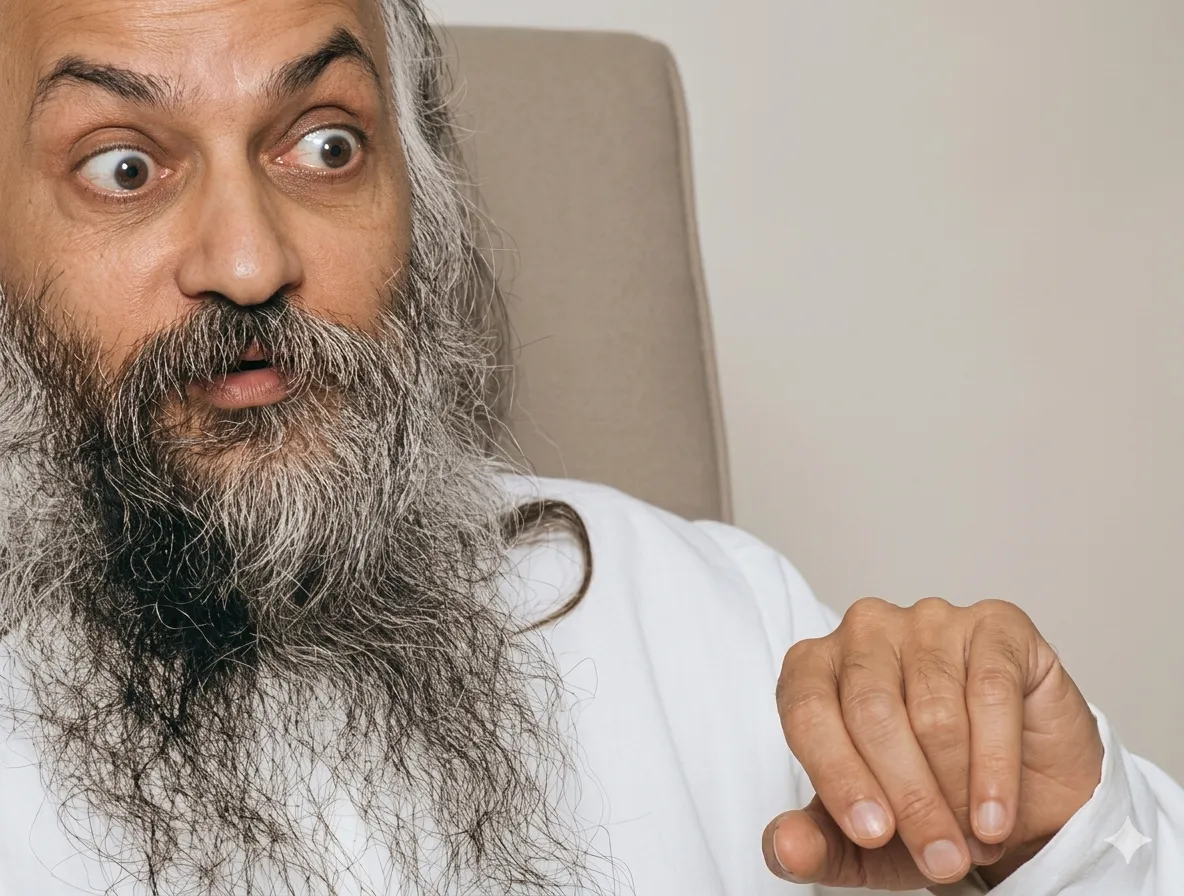
Real joy comes from knowing Brahman (God), not from chasing small pleasures; when you are awake inside, you drop the fake sweets and taste the real one.
From the Discourses
Passages where Osho speaks to this question — each links to the complete discourse.
Osho, can one who revels in Brahman truly be engrossed in enjoyment, or is he merely acting?
Only one who revels in Brahman is truly engrossed in enjoyment. He alone partakes of the supreme bliss. He enjoys; the rest are merely under the illusion that they are enjoying. The rest are carrying counterfeit coins; in the name of enjoyment they are suffering. If your enjoyment were to be summed up in a single word, it would be: suffering. That is what you have tasted—what else have you tasted? You say you are enjoying happiness; in fact, you enjoy suffering. Only the knower of Brahman truly enjoys. Tena tyaktena bhunjīthāḥ! Those who have renounced are the ones who have enjoyed. He enjoys the Divine. You are enjoying the trivial, and by consuming the trivial you reap great sorrow. One day a man came to Ramakrishna and placed a heap of money at his feet. Ramakrishna said, “Take it back, brother.” The man said, “You are a great renunciate—here…
आखिरी प्रश्न: ओशो, ब्रह्म में रमण करने वाला क्या सचमुच भोग में रत हो सकता है, अथवा वह उसका अभिनय करता है?
ब्रह्म में रमण करने वाला ही केवल भोग में रत होता है। वही केवल भोगता है परम आनंद को। वही भोगता है, बाकी सिर्फ धोखे में हैं कि भोग रहे हैं। बाकी तो खोटे सिक्के ढो रहे हैं; भोग के नाम पर दुख भोग रहे हैं। तुम्हारे भोग को अगर सार-संक्षिप्त में कहा जाए तो दुख। वही तुमने भोगा है, और क्या भोगा है? कहते तुम हो कि हम सुख भोग रहे हैं। भोगते तुम दुख हो। ब्रह्मज्ञानी ही केवल भोगता है। तेन त्यक्तेन भुंजीथाः! जिन्होंने त्यागा, उन्होंने ही भोगा। वह परमात्मा को भोगता है। …
Beloved Osho, can a person who has cosmic consciousness really enjoy pleasures or does he just act as though doing so?
Only a person who has cosmic consciousness can really enjoy. Only he can enjoy the ultimate bliss. Only he enjoys -- the rest of the people are under the false notion of enjoying. They are carrying false coins; actually, they are suffering. Your happiness and pleasures are nothing but the misery and agony which you have experienced. You say and you think that you are experiencing happiness, but in reality you are experiencing misery. Only the enlightened one enjoys. Ten tyakten bhunjithan -- those who renounced, only they enjoyed. He enjoys the divine. You are enjoying trivia, and the so-called enjoyment of the trivial is causing you great misery. One day a man came and put a lot of money at Ramakrishna's feet. Ramakrishna said, "Please take it away." That man said, "This is another proof of your being a great renouncer." Ramakrishna said, "You are a great renouncer, not…
Osho, you support the Upanishadic utterance “tena tyaktena bhunjīthāh”—first enjoyment, then renunciation. If one has to renounce anyway, why enjoy? Why bring in enjoyment at all?
But if you get hasty, half-baked, and say, “If one has to renounce, why enjoy?”—then how did it occur to you that you “have to” renounce? The thorn has not pricked you, so why think of removing it? You must have heard the words of one whose foot was pierced by a thorn—one who knew the pain, removed it, and knew the relief—some awakened one. You heard a Paltu, a Kabir, a Nanak, and borrowed their words. The thorn had pricked them, so there was pain; they removed it and found ease. You have not been pricked and you begin to remove a thorn that is not there—what will you remove? You will deceive yourself that there must be a thorn! A sick man takes medicine and becomes well; you, hearing of a sick man’s recovery, buy the medicine—being healthy, you will become ill. And this is what happened here.…
But man seeks devices. He sins, then seeks some excuse so the burden of sin doesn’t remain. He dips in the Ganga, then rests easy. Then he returns ready to sin again. Now he will sin again; then he will bathe again. The Ganga has not freed you of sin; she has made you more efficient at sinning—because you found a trick: whenever you sin, bathe in the Ganga. It’s cheap; the ticket is not costly. And often pilgrims go without a ticket anyway. When Ganga is absolving so many sins, what’s the need for tickets? That, too, will be absolved. “Whether he travels to the Ganga, whether he observes many vows, or gives in charity—without knowledge, the consensus is that even in a hundred births there will be no liberation. Therefore, O fool, ever sing of Govind.
लेकिन आदमी बहाने खोजता है। आदमी करता है पाप, फिर कोई बहाने खोजता है, ताकि पाप का बोझ न रह जाए। तो गंगा में डुबकी लगा आता है, फिर निश्चिंत हो जाता है। फिर पाप करने को तैयार होकर आ गए वे। अब वे फिर पाप करेंगे; फिर गंगा में स्नान कर आएंगे। गंगा ने तुम्हें पाप से मुक्त करवाया, ऐसा नहीं; तुम्हें और भी पाप करने में कुशल बना दिया। क्योंकि तुम्हें एक तरकीब मिल गई कि जब भी पाप होगा, गंगा में स्नान कर आएंगे। सस्ता है मामला; कोई टिकट बहुत मंहगी नहीं है। और बिना टिकट ही जाते हैं अक्सर तीर्थयात्री। क्योंकि जब इतने पाप ही गंगा छुड़ा रही है तो और टिकट की झंझट क्या करनी, वह भी छूट जाएगी। ‘चाहे वह गंगा की यात्रा करे, चाहे अनेक व्रतों का पालन करे, अथवा दान करे; लेकिन यदि ज्ञान नहीं है, तो सर्वमत यह है कि सौ जन्मों में भी मुक्ति न हो सकेगी। अतः हे मूढ़, सदा गोविन्द को भजो।’
I tell you: renunciation is the path to supreme enjoyment. The Upanishads say: tena tyaktena bhuñjitha—only those enjoy who renounce. Or: only those renounce who have enjoyed. Both readings are true. For enjoyment as you think it is not for you—you only think of enjoyment; you do not live it. Only those who live in the present truly enjoy. Those who have dropped the mind and desire, who have returned within, who have related to their own being—music of supreme enjoyment arises in their lives. I found cities where I thought there were wastelands. “Who renounces the fruits of action, renounces actions too, and then, having renounced all, becomes free of all dualities.” ...He goes beyond the three gunas; leaves acquiring and preserving; renounces the fruits of action and action itself; and, having left all, becomes without duality. This is the definition of the devotee. Let’s take each point.
मैं तुमसे कहता हूं: त्याग परम भोग का मार्ग है। उपनिषद कहते हैं: ‘तेन त्यक्तेन भुंजीथाः। उन्होंने ही भोगा जिन्होंने त्यागा। या उन्होंने ही त्यागा जिन्होंने भोगा।’ यह वचन बड़ा अदभुत है। इसके दोनों अर्थ हो सकते हैं, और दोनों सही हैं। क्योंकि भोग तुम्हारे लिए है ही नहीं; तुम सिर्फ भोग की सोचते हो, करते कहां हो! भोग तो सिर्फ उनके लिए है जो वर्तमान में जीते हैं। जिन्होंने मन को छोड़ा, वासना को छोड़ा, जो अपने भीतर लौटे, जिन्होंने अपने से संबंध जोड़ा, उनके जीवन में परम भोग के स्वर उठते हैं।