
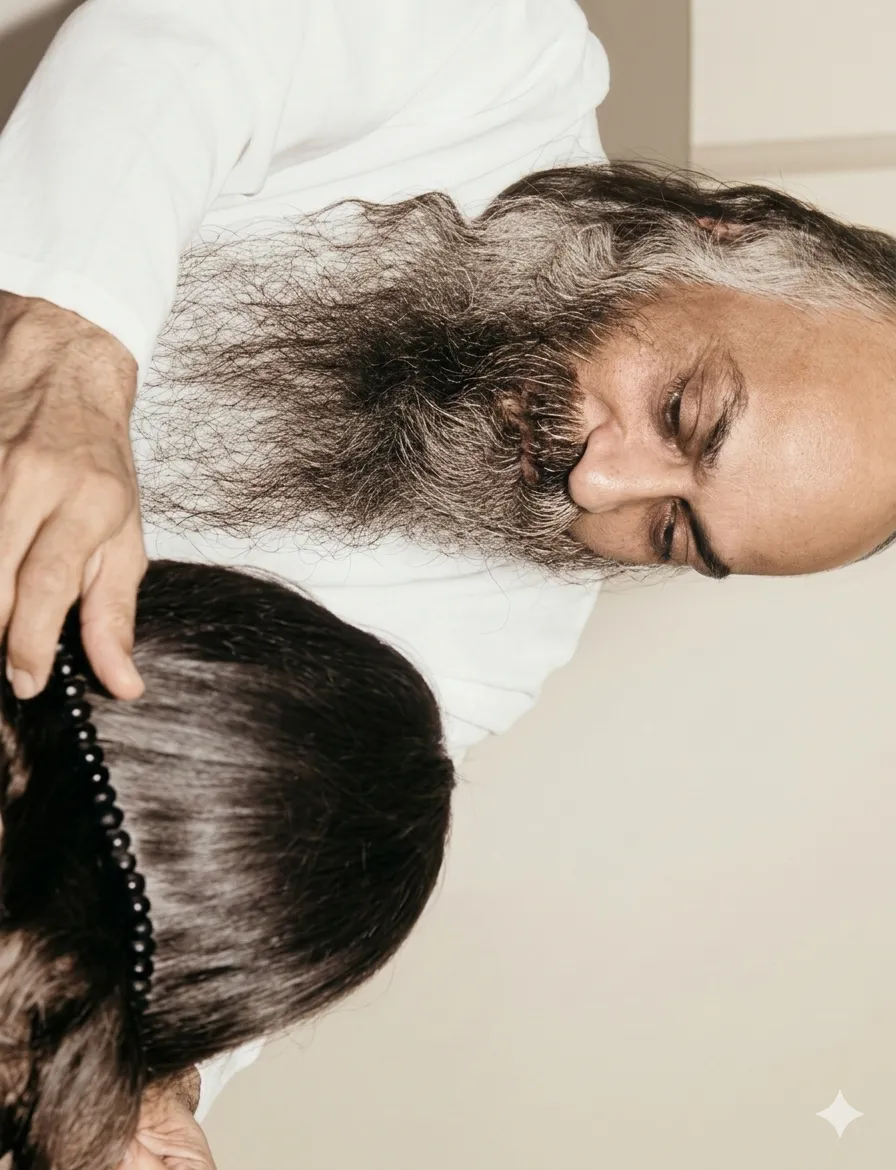
Even if you’re very sick, you can still feel deep happiness by knowing you’re not the body—just the one watching it.
From the Discourses
Passages where Osho speaks to this question — each links to the complete discourse.
The body is quickly affected. If the body has some disease, some affliction—if someone is gravely ill, a lifelong patient—can he still experience self-bliss or not?
Yes. About what you ask—“one who can experience self-bliss”—such a person has no awareness at all that “the body is mine.” Whether your body is healthy or ill, whether the pain is noticed by you or not, it has nothing to do with self-bliss. If even a little taste of self-bliss happens, that very little taste will make it clear to you that you are not the body. Then your notions about this body will become like the notions you have about someone else’s body. Your relation to this body will be almost like an actor’s relation to his role in a play. Just as when Sita of Rama was abducted—that was one thing. Valmiki writes that he went from tree to tree, weeping, asking, “Where is my Sita?” Even today in the theater, Sita of Rama is carried off, and this stage-Rama too goes from tree to tree asking,…
प्रश्न: जल्दी असर करता शरीर के ऊपर। शरीर का कोई रोग होता है, शरीर में कोई तकलीफ होती है, और कोई बड़ा रोगी, जिंदगी भर का रोगी होता है, तो वह आत्मानंद ले सकता है कि नहीं?
हां, आप जो पूछते हैं न: ‘आत्मानंद जो ले सके।’ तो शरीर मेरा है, यह उसे बोध ही नहीं होता है। आपका शरीर स्वस्थ हो और चाहे बीमार हो, चाहे तकलीफ आपको पता चलती हो और चाहे तकलीफ पता न चलती हो, उसका आत्मानंद से कोई संबंध नहीं है। आत्मानंद अगर आदमी को हो सके, अनुभव हो सके उसका थोड़ा सा भी, तो वह थोड़ा सा भी अनुभव आपके सामने यह स्पष्ट कर जाएगा कि आप शरीर नहीं हो। तब इस शरीर के बाबत आपकी धारणाएं वैसी हो जाएंगी, जैसे किसी और के शरीर के बाबत हैं। इस शरीर के बाबत आपकी धारणा करीब-करीब वैसी हो जाएगी, जैसे नाटक में अभिनेता की अपने अभिनय के प्रति होती है। जैसे कि राम की सीता चोरी गई होगी, वह एक बात रही होगी। वाल्मीक ने लिखा कि वे वृक्ष-वृक्ष से पूछते हैं, रोते हैं कि मेरी सीता कहां है? अब भी नाटक होता है, उसमें भी राम की सीता चोरी चली जाती है और वह भी वृक्ष-वृक्ष से पूछता है कि मेरी सीता कहां है? लेकिन इसके पूछने में और राम के पूछने में कुछ फर्क है! यह पूछ रहा है कि मेरी सीता कहां है? …
I start with bliss. The old religious approach was to start with contentment, and they used to say -- and it has been said in many scriptures of the world -- that the contented person is blissful. I say just the opposite is true, the blissful person is contented. And one who is not blissful, his contentment is bogus. So start by being blissful. And it will not be very difficult for you. It will be very simple and very easy. You are almost ready to take the jump! How long will you be here? -- One month. -- Be here. Good. (As Paritosh rises to leave Osho says:) Haridas, help him so he does not take the jump too soon! (much laughter) In India we make small earthen lamps. The poor people use those earthen lamps, they are the cheapest.
Verse (Sanskrit): योगेनसदानंदस्वरूप दर्शनम्। आनंद भिक्षाशी। महाश्मशानेऽप्यानंद वने वासः। एकांतस्थान मठम्। उनमन्यवस्था शारदा चेष्टा। उन्मनी गतिः। निर्मलगात्रम् निरालंब पीठम्। अमृतकल्लोलानंद क्रिया। Transliteration: yogenasadānaṃdasvarūpa darśanam| ānaṃda bhikṣāśī| mahāśmaśāne'pyānaṃda vane vāsaḥ| ekāṃtasthāna maṭham| unamanyavasthā śāradā ceṣṭā| unmanī gatiḥ| nirmalagātram nirālaṃba pīṭham| amṛtakallolānaṃda kriyā| Translation: By Yoga, they behold the ever-blissful Self. They feed on the alms of Bliss. Even in the great cremation ground, they dwell as in a forest of joy. Seclusion is their monastery. For the lucid state, autumn-bright is their striving. Their course is no-mind. Their body spotless, their seat unsupported. Their action is the surge of ambrosial bliss. Through Yoga they ever behold the form of Bliss. They partake of the alms of Bliss. Even in the great cremation ground they dwell as in a grove of delight. Solitude alone is their monastery. For the state of radiance they make ever-new efforts. Only in no-mind do they move.
महाश्मशान में भी वे ऐसे विचरण करते हैं, जैसे आनंद-वन में हों।
Osho, the presence of a person seems indispensable for the experience of bliss. But if all around is only the expansion of me, then who will experience bliss? Just as sannyas seems essential for life to become blissful, isn’t the person equally essential for the experience of bliss?
It is precisely because of the person that bliss is not happening. The person is necessary for the expectation of bliss; for the experience of bliss, he is a barrier. For the longing and the craving for bliss, the person is needed; for the realization of bliss, the person is not needed at all. When bliss happens, you are scarcely there. In fact, only when you are not, bliss is. You yourself have tasted this, at least in unpremeditated moments: whenever you were not, a glimpse flashed. Your beloved comes home; you sit hand in hand. For a moment the presence of the beloved absorbs you so totally that you disappear—no thought of yourself remains. A drop slips in, the nectar begins to flow. Have you ever watched the sun rise? You sit on the riverbank. The sun begins to climb. This morning breeze, the coolness of the water, the…
पांचवां प्रश्न: ओशो, आनंद के अनुभव के लिए व्यक्ति का होना अनिवार्य-सा लगता है। लेकिन अगर सब तरफ मेरा ही विस्तार है तो फिर आनंद को अनुभव कौन करेगा? जीवन आनंदित हो सके, इसके लिए जैसे संन्यास अनिवार्य है वैसे ही आनंद के अनुभव के लिए व्यक्ति अनिवार्य नहीं है क्या?
व्यक्ति के कारण ही आनंद नहीं हो पा रहा है। आनंद की अपेक्षा के लिए व्यक्ति अनिवार्य है; आनंद के अनुभव के लिए बाधा है। आनंद की आकांक्षा के लिए व्यक्ति की जरूरत है, आनंद की वासना के लिए व्यक्ति की जरूरत है; लेकिन आनंद की अनुभूति के लिए व्यक्ति की कोई भी जरूरत नहीं है। जब आनंद होता है तो तुम थोड़े ही होते हो! तुम नहीं होते हो तभी आनंद होता है। और इसे तुमने भी कभी-कभी किन्हीं अनायास क्षणों में पाया होगा: जब तुम नहीं होते तब थोड़ी-सी झलक मिलती है। प्रेमी घर आ गया है तुम्हारा, तुम हाथ में हाथ ले कर बैठ गये हो। एक क्षण को प्रेमी की उपस्थिति तुम्हें इतना लीन कर देती है कि तुम मिट जाते, कुछ खयाल नहीं रह जाता अपना। एक बूंद सरक जाती है। रस झरता है। कभी सूरज को उगते देखा है? बैठ गये नदी तट पर, उठने लगा सूरज। यह सुबह की हवा, यह नदी की शीतलता, यह शांति, यह खुला आकाश, यह सूरज का उठना, यह सूरज की किरणों का फैलता हुआ सौंदर्य का जाल--क्षण भर को तुम ठगे रह गये! भूल गये कि तुम हो। …
Osho, a rain of bliss is pouring over me; I feel the urge to thank you for it. But I don’t know whether bliss is truly raining, or I am imagining it, or exaggerating!
The human mind is very troublesome. When there is suffering it believes; when there is joy it doubts. No one ever suspects suffering, wondering, “Perhaps this is only imagination!” Suffering you accept straight away—with great conviction and faith. I have never met a person who says, “I am very miserable, but I doubt whether I truly am or am just imagining it! Perhaps I am exaggerating my suffering!” No one says that. We accept suffering. We have great faith in it. But when the wave of bliss arrives, doubts begin to rise: maybe it’s imagination, maybe a dream, maybe self-hypnosis. Perhaps I have fallen into some delusion! Am I exaggerating? Am I going mad? A thousand such questions arise. This needs to be looked into. You accept suffering because suffering is the nature of the mind. You cannot accept bliss because bliss is not the nature of the mind. Bliss…
पहला प्रश्न: ओशो, मुझ पर आनंद की वर्षा हो रही है, उसके लिए आपको धन्यवाद देने की इच्छा होती है। लेकिन पता नहीं है कि सच में आनंद बरसता है या मैं कल्पना कर रहा हूं या अतिशयोक्ति कर रहा हूं!
मनुष्य का मन बड़ा उपद्रवी है। दुख हो तो भरोसा करता है और आनंद हो तो संदेह करता है। दुख पर कभी संदेह नहीं आता कि कहीं यह कल्पना तो नहीं है! दुख को तो तुम एकदम मान लेते हो--बड़ी निष्ठा और बड़ी श्रद्धा से। मैंने आदमी ही नहीं देखा जो दुख पर संदेह करता आता हो कि मैं बहुत दुखी हूं, मुझे संदेह होता है कि सच में मैं दुखी हूं कि मैं कल्पना कर रहा हूं! कोई ऐसा कहता नहीं कि कहीं मैं दुख के संबंध में अतिशयोक्ति तो नहीं कर रहा! दुख को हम मान लेते हैं। दुख में हमारी बड़ी आस्था है। लेकिन जब आनंद की लहर आती है तो संदेह उठने शुरू होते हैं कि कहीं कल्पना न हो, कि कहीं सपना न हो, कि कहीं आत्म-सम्मोहन न कर लिया हो। किसी भ्रांति में तो नहीं पड़ गया हूं! अतिशयोक्ति तो नहीं हो रही! पागल तो नहीं हो गया हूं! ऐसे हजार प्रश्र्न खड़े हो जाते हैं। इसमें झांकने की जरूरत है।