
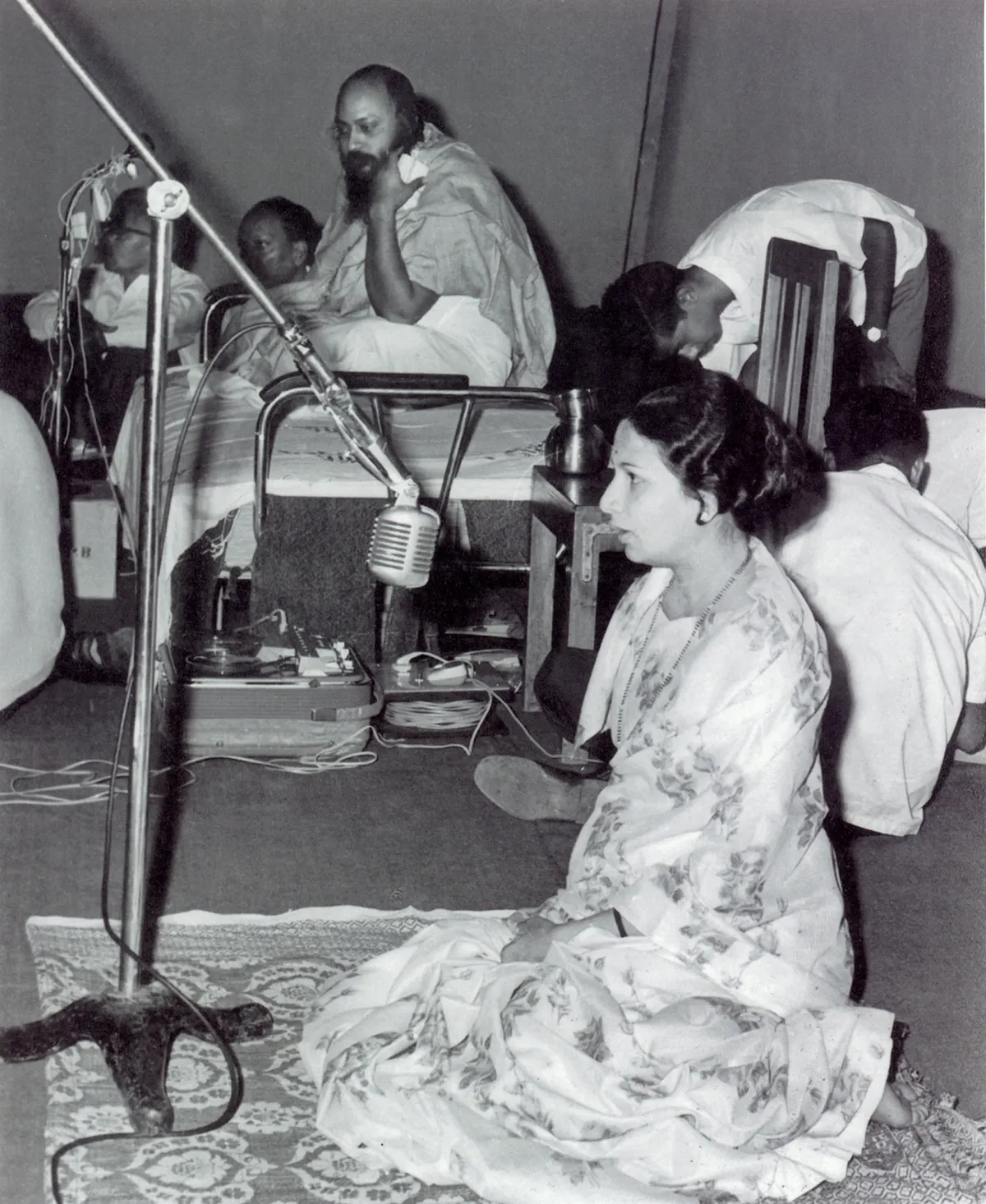
Your thoughts are like natural waves; don’t battle them—just watch, and they’ll calm down.
From the Discourses
Passages where Osho speaks to this question — each links to the complete discourse.
So the wave rises on the surface, and beneath it there is peace.
Completely natural. It should rise. When the wind pushes, a wave will rise on the surface. When you sit to work at the shop and someone comes and creates a disturbance, a thought will arise. That thought is a wave on the surface of the mind. But if you shut this down, you are as good as dead—because then you cannot do anything. And that is why the sannyasin becomes like a dead man: he runs away from wherever there is wind. Wherever the wind comes, vibrations begin. He says: stay away from money, away from woman, away from house, away from son, away from society—run off somewhere. He says this because if we stay near these, vibrations will be produced. And having kept himself aside from vibrations, he ends up in difficulty. What I say is: let the vibrations arise. That is the very meaning of life—that vibrations will…
प्रश्न: तो ऊपर लहर उठती है, नीचे शांति है।
बिलकुल स्वाभाविक है। उठना चाहिए। जब हवा का धक्का लगेगा तो ऊपर लहर उठेगी। जब आप दुकान पर काम करने बैठेंगे और एक आदमी आकर गड़बड़ करेगा तो विचार उठेगा। यह विचार जो है मन की ऊपर की सतह पर लहर है। लेकिन इसको बंद कर देंगे तो आप मर गए। क्योंकि फिर तो आप कुछ कर ही नहीं सकते। और संन्यासी इसीलिए मरा हुआ आदमी हो जाता है, क्योंकि वह वहां-वहां से भागता है जहां-जहां हवा है। क्योंकि जहां हवा आई, कंपन शुरू हुए। वह कहता है: धन से दूर रहो, स्त्री से दूर रहो, मकान से दूर रहो, बेटे से दूर रहो, समाज से दूर रहो, भाग जाओ कहीं। वह इसीलिए कहता है कि हम इनके पास रहेंगे तो कंपन पैदा होंगे। और उसने अपने को कंपन से एक तरफ ही रखा है, इसलिए दिक्कत में पड़ा हुआ है।
A friend has asked: Osho, it is said that not even a leaf moves without God’s will. If that is true, then our whole life runs according to His will. Then the good and bad thoughts that arise in us, the good and bad actions that happen—are they also according to His will?! Then what is the purpose of sadhana? What meaning is there in changing oneself?
If this point truly lands, then sadhana has no further purpose. Sadhana has begun. If only this much occurs to you—that whatever is being done, God is doing it—then my sense of doership is finished. All of sadhana is only this: that my ego dissolve. Then He is doing the good, He is doing the bad. Then there is no question of good and bad at all. He is doing it—both are His doing. He gives suffering; He gives joy. Birth is His, death is His. Bondage His, liberation His. Then there is no question of me. There is no need for me to come in between. Then there is no need for sadhana—because sadhana has happened; it has begun. This very understanding becomes the supreme sadhana. This very insight cuts the root of life’s disease. For the whole disease is the ego, the notion that “I am doing.” This…
एक मित्र ने पूछा है कि ओशो, ऐसा कहा जाता है कि भगवान की इच्छा के बिना पत्ता भी नहीं हिलता। यदि यह बात सच है, तो हमारा सारा जीवन उनकी इच्छा के अनुसार ही चलता है। तो फिर हमें जो भले-बुरे विचार आते हैं, अच्छे-बुरे काम बनते हैं, वह भी उनकी ही इच्छा के अनुसार होता है! फिर तो साधना का भी क्या प्रयोजन है? फिर तो स्वयं को बदलने का भी क्या अर्थ है?
… अगर इतनी ही बात खयाल में आ जाए कि जो भी कर रहा है, वह भगवान कर रहा है, तो मेरा कर्तापन समाप्त हो गया। सारी साधना इतनी ही है कि मेरा अहंकार समाप्त हो जाए। फिर अच्छा भी वही कर रहा है, बुरा भी वही कर रहा है। फिर अच्छे-बुरे का कोई सवाल ही नहीं रहा। वही कर रहा है, दोनों वही कर रहा है। दुख वही दे रहा है, सुख वही दे रहा है। जन्म उसका, मृत्यु उसकी। बंधन उसका, मुक्ति उसकी। फिर मेरा कोई सवाल न रहा। मुझे बीच में आने की कोई जरूरत न रही। फिर साधना की कोई भी जरूरत नहीं है। क्योंकि साधना हो गई। शुरू हो गई। यह विचार ही परम साधना बन जाएगा। …
Question: Third question: Osho, how can one control thoughts? What is the need for control? To become a controller is the ego itself. Thoughts are not yours; why do you want to be their master? Thoughts come and go. They pause in you for a moment and depart. You are an inn; thoughts are guests. You are the host. What is the need to grab your guests by the throat and control them? It is in the very effort to control that people go mad. You will never become the master of thought. Yes, a certain mastery does arise—but it is not mastery over thought. It arises from knowing this truth: what have I to do with thought? They come—they go. It’s a crowd passing on the road.
विचार के तुम मालिक न बन सकोगे। हां, एक मालकियत आती है जरूर, लेकिन वह विचार की मालकियत नहीं है। वह मालकियत इस सत्य को जान लेने से पैदा होती है कि विचार से मेरा क्या लेना-देना। आए--गए। राह पर चलती हुई भीड़ है। यह ट्रेन की आवाज, यह उड़ता हवाई जहाज, यह रास्ते पर कार का हॉर्न, यह बच्चे का चिल्लाना, यह कुत्ते का भौंकना, जैसे ये सारी चीजें घट रही हैं, वैसा ही विचार भी घट रहा है--मुझसे बाहर।
As waves come with water and flames with fire, so the universal waves with us.
WHEREVER YOUR MIND IS WANDERING, INTERNALLY OR EXTERNALLY, AT THIS VERY PLACE, THIS. WHEN VIVIDLY AWARE THROUGH SOME PARTICULAR SENSE, KEEP IN THE AWARENESS. ... So how does everything become synthetic? Ears hear, eyes see, hands touch, the nose smells, and suddenly somewhere inside you know that this is the same man that you are hearing and seeing and touching and smelling. This knower is different from the senses. Every sense reports to this knower, and in this knower, in the center, everything falls, fits and becomes one. This is miraculous. I am one, outside you. ... I am one! ... My body and body's presence, my body odor, my speaking, are one. Your senses will divide me. Your ears will report if I say something, your nose will report if there is some odor, your eyes will report if I can be seen and am visible. They will divide me into parts.
Osho, how does the energy of thought transform into feeling?
Therefore I am not teaching you religious thoughts. I am initiating you into no-thought. Generally, what goes on in temples and mosques is just this: people full of worldly thoughts are stuffed instead with spiritual thoughts—nothing more. But what difference does it make? You have given the disease a pious, pretty name; what changes? So long as you want to be anything, so long as you harbor the ambition to become something in the future, so long as you are eager for tomorrow, you will remain unquiet. The stream of thought will keep flowing. And as long as the stream of thought flows, you will remain cut off from God. I am telling you that religious thoughts are just as great an obstacle between you and God as worldly thoughts. Thought is the barrier; no-thought is union. Gorakh has said: See the Unseen, ponder what is seen, seat the Invisible…
पहला प्रश्न: ओशो, विचार की ऊर्जा भाव में कैसे रूपांतरित होती है?
इसलिए मैं तुम्हें धार्मिक विचार नहीं सिखा रहा हूं। मैं तुम्हें निर्विचार की दीक्षा दे रहा हूं। आमतौर से यही चल रहा है मंदिर-मस्जिदों में: जो लोग सांसारिक विचारों से भरे हैं, उन्हें हम कैसे आध्यात्मिक विचारों से भर दें, बस...। मगर क्या फर्क पड़ता है? रोग का नाम धार्मिक रख लिया, अच्छा-प्यारा नाम रख लिया, इससे क्या फर्क पड़ता है? जब तक तुम कुछ भी होना चाहते हो, जब तक तुम भविष्य में कुछ होने की आकांक्षा रखते हो, जब तक तुम कल के प्रति आतुर हो, आकांक्षी हो, अभीप्सु हो, तब तक तुम अशांत रहोगे। विचार की धारा बहती रहेगी। और विचार की धारा बहती रहेगी, तुम परमात्मा से टूटे रहोगे। मैं तुमसे यह कह रहा हूं कि धार्मिक विचार भी परमात्मा के और तुम्हारे बीच उतनी ही बड़ी बाधा है जितनी सांसारिक विचार की। विचार बाधा है, निर्विचार मिलन है।