
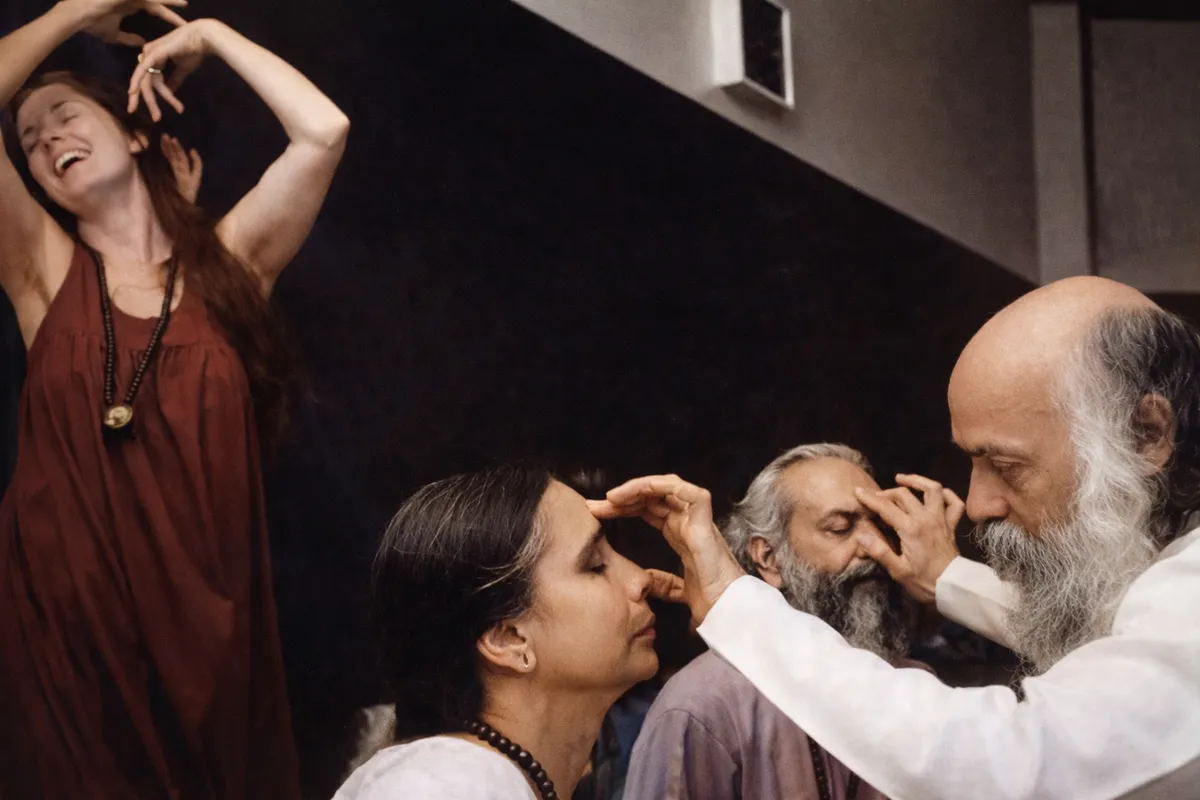
Osho's original Hindi beside Osho Live's English translation, matched passage by passage.
स्वरूप! जो समझ में नहीं आता है, उसी का नाम परमात्मा है। जो समझ में आ जाता है, उसका नाम संसार। जो समझ में नहीं आता, वह भी है। समझ पर ही अस्तित्व की परिसमाप्ति नहीं है, समझ के पार भी अस्तित्व फैला हुआ है, इस बात की उदघोषणा ही परमात्मा है।
Swarup! That which does not fit into your understanding—that is what is called Paramatma. What fits into understanding is called the world. That which does not fit into understanding also is. Existence does not end at the boundary of understanding; it stretches beyond it. The very proclamation that existence extends beyond understanding—that is what “Paramatma” means.
परमात्मा कोई व्यक्ति नहीं है। इसलिए जो परमात्मा को व्यक्ति मान कर खोजने चलेंगे, व्यर्थ ही भटकेंगे, कहीं न पहुंचेंगे। परमात्मा तो अज्ञात का नाम है। अज्ञात का ही नहीं वरन अज्ञेय का। जिसे जानो तो जान न पाओगे। जिसे जितना जानने की चेष्टा करोगे, उतना ही पाओगे कि अनजाना हो गया।
Paramatma is not a person. If you look for God as a person, you will wander in vain and reach nowhere. Paramatma is the name of the unknown—and not only the unknown, but the unknowable. Try to know it and you will not be able to know it; the more you attempt to know, the more unknown it becomes.
लेकिन फिर भी, एक और द्वार से परमात्मा में प्रवेश होता है--उस द्वार का नाम ही प्रेम है। जानने से नहीं जाना जाता, लेकिन प्रीति से जाना जाता है, प्रेम से जाना जाता है। जानना ही अगर जानने का एकमात्र ढंग होता, तो परमात्मा से संबंधित होने का कोई उपाय न था। लेकिन एक और ढंग भी है। बुद्धि ही नहीं है तुम्हारे भीतर सब कुछ, हृदय का भी स्मरण करो। सोच-विचार ही सब कुछ नहीं है तुम्हारे भीतर, भाव की आर्द्रता को भी थोड़ा अनुभव करो। आंखें सिर्फ कंकड़-पत्थर ही नहीं देखती हैं, उनसे प्रीति के आंसू भी झरते हैं। अगर विचार पर ही ठहरे रहे तो परमात्मा नहीं है। इसलिए नहीं कि परमात्मा नहीं है, बल्कि इसलिए कि विचार की क्षमता नहीं है परमात्मा को जानना।
And yet there is another doorway into Paramatma—the name of that doorway is love. It is not known by knowing, but it is known by loving. If knowing were the only way to know, there would be no way to relate to Paramatma. But there is another way. Your intelligence is not all that is within you; remember your heart as well. Thinking is not everything within you; taste a little of the tenderness of feeling. The eyes do not only see stones and pebbles; tears of love also flow from them. If you stop at thought alone, then there is no God—not because God is not, but because thought has no capacity to know God.
यह तो ऐसा ही हुआ कि कोई आदमी आंख से संगीत सुनना चाहे। और फिर संगीत सुनाई न पड़े। और वह कहे कि आंख से जब तक सुनाई न पड़ेगा संगीत, मैं मानूंगा नहीं। तो क्या करेंगे हम? आंख से संगीत सुना नहीं जा सकता। उसकी जिद्द है कि आंख से सुनेगा। कान से सुना जा सकता है, उसकी जिद्द है कि कान खोलेगा नहीं।
It is as if someone wanted to hear music with his eyes and, not hearing it, declared: “Until I can hear music with my eyes, I will not believe.” What can one do then? Music cannot be heard with the eyes. It can be heard with the ears—but he insists he will not open his ears.
प्रत्येक उपकरण की सीमा है। बुद्धि पदार्थ को जान सकती है, परमात्मा को नहीं। हृदय परमात्मा को जान सकता है, पदार्थ को नहीं। कान संगीत सुन सकते हैं, रोशनी नहीं देख सकते। आंखें रोशनी देख सकती हैं, संगीत नहीं सुन सकतीं। हाथ छू सकते हैं, स्पर्श कर सकते हैं, गंध का अनुभव नहीं कर सकते। उसके लिए तो नासापुटों की जरूरत होगी। प्रत्येक अनुभूति का अपना द्वार है। और प्रत्येक अनुभूति केवल अपने ही द्वार से उपलब्ध होती है।
Every instrument has its limits. The intellect can know matter, not God. The heart can know God, not matter. Ears can hear music but cannot see light. Eyes can see light but cannot hear music. Hands can touch and feel but cannot smell; for that you need the nostrils. Every experience has its own door, and it is available only through that door.
तुम पूछते हो, स्वरूप: ‘परमात्मा शब्द मेरी समझ में नहीं आता।’
किसकी समझ में कब आया? किसी की समझ में कभी आया है? समझ से नाता ही नहीं है। यह तो नासमझों के लिए संभावना है। यह तो दीवानों का रास्ता है। यह तो मस्तों का मार्ग है। इसीलिए तो इतना कठिन है प्रेम का पंथ। प्रेम-पंथ ऐसो कठिन!
You ask, Swarup: “The word Paramatma does not make sense to me.” To whom has it ever made sense? Has it ever made sense to anyone? It has nothing to do with “making sense.” It is the possibility for those who are willing to be unknowing. It is the path of the ecstatic, the intoxicated in love. That is why the path of love is so difficult. The path of love is so hard!
क्या कठिनाई है?
कठिनाई यही है कि इस जीवन का सब कुछ तो हम विचार से सुलझा लेते हैं। और इसलिए एक भ्रांति पैदा होती है कि जब विचार से सब सुलझ जाता है--गणित सुलझ जाता है, भाषा सुलझ जाती है, तर्क सुलझ जाता है, दर्शन सुलझ जाता है; भूगोल, इतिहास, राजनीति, विज्ञान, सब बुद्धि से सुलझ जाता है--तो एक आशा बंधती है कि इसी बुद्धि से हम परमात्मा को भी सुलझा लें। और इसी आशा में उपद्रव हो जाता है। इसी आशा में हमारी निराशा के बीज हैं। इसी आशा में हमारी विफलता है। और स्कूल से लेकर विश्वविद्यालय तक तुम्हें बुद्धि की ही शिक्षा दी जाती है। इस जगत में कहीं भी तो कोई स्थान नहीं है जहां हृदय का प्रशिक्षण होता हो। इसलिए मैं कहता हूं, यह जगत मंदिरों, मस्जिदों, गिरजों से भरा है, फिर भी मंदिर इस जगत से समाप्त हो गए हैं। क्योंकि मंदिर है वह जगह, जहां हृदय का प्रशिक्षण मिलता हो।
What is the difficulty? The difficulty is that we manage almost everything in life through thinking. And so an illusion arises: since thinking solves mathematics, language, logic, philosophy—geography, history, politics, science—then perhaps with the same intellect we can solve God as well. In that very hope, trouble begins. In that very hope lie the seeds of our despair and our failure. From school to university you are trained only in intellect. Nowhere in this world is there a place where the heart is trained. That is why I say: though the world is full of temples, mosques, and churches, real temples have disappeared—because a temple should be a place where the heart is trained.
तुम्हारे मंदिर भी बुद्धि से भर गए हैं। वे भी पाठशालाएं हैं। वहां धर्मशास्त्र समझाया जा रहा है। तुम्हारे मंदिर भी मस्तिष्क के ही आवास हो गए हैं। अब वहां हृदय नहीं नाचता, अब वहां प्रेम की बांसुरी नहीं बजती, अब तो वहां भी तर्क के जाल फैलाए जा रहे हैं। हिंदू है, वह मुसलमान के खंडन में लगा है; मुसलमान है, वह हिंदू के खंडन में लगा है। आर्यसमाजी सनातनी का खंडन कर रहा है, सनातनी आर्यसमाजी का खंडन कर रहा है। मंदिरों में भी खंडन-मंडन हो रहा है। प्रीति का फूल खिले तो खिले कहां? मस्जिदों में भी प्रेम की शराब नहीं ढाली जा रही है; वहां भी तर्क और तर्क के सहारे ही जितनी दूर तक जाया जा सकता है, उतनी दूर तक जाने की कोशिश की जा रही है।
Your temples too are full of intellect. They have become schools. Scriptures are being explained there; your temples have become abodes of the head. The heart no longer dances there; the flute of love no longer plays. Nets of argument are being spread even there. A Hindu attacks the Muslim, the Muslim attacks the Hindu. The Arya Samaji refutes the Sanatani; the Sanatani refutes the Arya Samaji. Even in temples it is all refutation and counter-refutation. Where is the flower of love to blossom? In mosques, too, the wine of love is not being poured; even there they try to go only as far as argument can carry them.
तर्क तो ऐसा है जैसे अंधे के हाथ में लकड़ी। थोड़ा टटोल लेता है। और अंधे के हाथ में लकड़ी थोड़े काम भी आती है। एकदम व्यर्थ है, ऐसा मैंने कहा भी नहीं, ऐसा मैं कहूंगा भी नहीं। उसकी अपनी सार्थकता है। अंधा आदमी है तो लकड़ी से टटोल कर अपने घर आ जाता है, दरवाजा खोज लेता है, अपने जूते तलाश कर लेता है, टकराता नहीं। मगर अंधे की लकड़ी उसकी आंख नहीं बनती; न आंख बन सकती है। और आंख अगर मिल जाए तो लकड़ी को तत्क्षण छोड़ देना होगा। फिर कौन चिंता करता है लकड़ी की?
Reason is like a stick in the hands of a blind man. It gropes a little. And the blind man’s stick is of some use; I do not say it is utterly useless. It has its utility. The blind man can find his way home with it, find the door, search for his shoes, avoid bumping into things. But the blind man’s stick does not become his eyes—nor can it. If eyes are found, one must drop the stick at once. Who then cares for the stick?
इसलिए जिन्होंने हृदय को थोड़ा खुलने का अवसर दिया, हृदय की कली को फूल बनने दिया, उन्होंने फिर तर्क की बकवास छोड़ दी। फिर वे परमात्मा में जीने लगे। वे परमात्मा के लिए प्रमाण नहीं देते फिर, वे स्वयं परमात्मा के प्रमाण हो जाते हैं। उनका उठना, उनका बैठना, उनका बोलना, उनका न बोलना--सब परमात्मा की अभिव्यक्ति हो जाती है। उनका सारा जीवन परमात्मा का एक गीत हो जाता है। उनके जीवन से एक सुवास उठती है।
Therefore, those who gave the heart a little space to open, allowed its bud to become a flower, dropped the babble of argument. They began to live in God. They no longer offered proofs of God; they themselves became the proof. Their rising and sitting, their speaking and their silence—everything became an expression of God. Their whole life became a song of God. A fragrance began to rise from their lives.
तुम्हारे जीवन से भी वैसी सुवास उठ सकती है। हकदार तुम भी हो। उतने ही मालिक हो तुम, जितना कोई बुद्ध, जितना कोई कृष्ण, जितना कोई क्राइस्ट। उतने ही मालिक हो तुम, जितने महावीर, जितने मोहम्मद, जितनी मीरा। तुम्हारी मालकियत जरा भी कम नहीं है। मगर अगर तुम दीवाल से निकलने की चेष्टा करोगे और न निकल पाओ, तो अपने भाग्य को कसूर मत देना। दरवाजा है तो दीवाल से निकलने की चेष्टा क्यों कर रहे हो? क्यों दीवाल से सिर मार रहे हो? और सिर से जितने भी काम होते हैं, बस वे दीवाल से सिर मारने जैसे हैं।
Such fragrance can rise from your life too. You are worthy of it. You are as much the owner as any Buddha, any Krishna, any Christ; as much as Mahavira, Mohammed, or Meera. Your ownership is not a whit less. But if you try to pass through a wall and cannot, do not blame your fate. If there is a door, why try to go through the wall? Why bang your head against it? Of all the things you do with the head, they are nothing but banging against a wall.
तुम्हारे भीतर एक और भी अंतरंग जगत है। तुम्हारे भीतर भाव का भी एक लोक है। बहुत कोमल, बहुत नाजुक। और चूंकि कोमल है, नाजुक है, इसलिए बहुत छिपा कर रखा गया है। जितनी बहुमूल्य चीज होती है, उतना ही तो गहरा हम खोद कर जमीन में उसे गड़ा देते हैं कि चोरी न हो जाए। बुद्धि तो ऊपर-ऊपर है, क्योंकि कचरा है। हृदय बहुत गहरे में है, क्योंकि वही तुम्हारी संपदा है। वहीं तुम्हारी समाधि छिपी है। और वहीं तुम्हारे समाधान हैं। बुद्धि कामचलाऊ है; बाजारू है, सस्ती है। हृदय तुम्हारा जीवन का मूल आधार है।
There is another, more intimate world within you—a realm of feeling. Very delicate, very tender. And because it is delicate and tender, it has been kept very hidden. The more precious a thing is, the deeper we bury it so that it is not stolen. The intellect is on the surface, because it is the junk. The heart is very deep, because it is your treasure. Your samadhi is hidden there; your solutions are there. Intellect is makeshift, of the marketplace, cheap. The heart is the very foundation of your life.
समझा तो कोई भी नहीं परमात्मा को कभी; और न कोई कभी समझ सकेगा। जिस दिन परमात्मा समझ में आ जाएगा, उस दिन धर्म का अंत हो जाएगा। उस दिन धर्म की मृत्यु समझ लेना। उस दिन जल जाएंगी होलियां कुरानों की, गीताओं की, वेदों की। उस दिन कुछ नहीं सार रह जाएगा फिर धर्म में, जिस दिन परमात्मा समझ में आ जाएगा।
No one has ever understood God—and no one ever will. The day God becomes understandable, that day religion will end. That day religion will be dead. That day there will be bonfires of Qurans, Gitas, Vedas. Nothing of substance will remain in religion the day God is understood.
कार्ल मार्क्स कहता था कि मैं तब मानूंगा परमात्मा को, जब प्रयोगशाला में वह पकड़ा जाएगा। जब परखनली में प्रयोगशाला की परमात्मा को पकड़ कर और जांच-परख लेंगे। जब उसका विश्लेषण कर लेंगे। जब उसके भीतर झांक कर यंत्रों से देख लेंगे। जब सूक्ष्म यंत्रों की पकड़ और नाप-तौल में आ जाएगा। जिस दिन मापा जा सकेगा, तौला जा सकेगा; जिस दिन उसकी थाह ली जा सकेगी, गणित से, तर्क से, विज्ञान से, उस दिन मैं मानूंगा।
लेकिन अगर किसी दिन परमात्मा को तुमने पकड़ लिया प्रयोगशाला में और जांच-परख कर ली, उस दिन के बाद क्या परमात्मा बचेगा? फिर पूजा किसकी करोगे? परखनलियों में पकड़े गए परमात्मा की पूजा नहीं हो सकती। प्रार्थना किसकी करोगे? प्रयोगशाला में सिद्ध हो गए परमात्मा से प्रार्थना निवेदन नहीं की जा सकती। वह तो तुम्हारा गुलाम हो गया, चाकर हो गया। जैसे बिजली बंधी है आज तुम्हारी गुलाम होकर और बत्ती जलाती है--बटन दबाओ, बत्ती जली; बटन दबाओ, बत्ती बुझी--ऐसा परमात्मा भी तुम्हारे हाथों में होगा। जब आज्ञा दो, तो कहेगा: जी हुजूर! हुकुम! जहां ले जाओ, जाएगा; जो करवाओ, करेगा। फिर तो परमात्मा से तुम बड़े हो जाओगे, जिस दिन तुम समझ लोगे उसे।
Karl Marx said, “I will believe in God when He is caught in the laboratory—when He is trapped in a test tube and examined, analyzed, measured, seen through instruments; when He can be weighed and gauged by mathematics, logic, and science—then I will believe.” But if one day you catch God in the laboratory and finish examining Him, will God remain thereafter? Whom will you worship then? A God caught in test tubes cannot be worshipped. To whom will you pray? A God proven in the lab cannot receive prayer. He would be your slave, your servant—like electricity today, enslaved to you: press a button and the light turns on; press a button and it goes off. Such a God would be in your hands. Command Him and He would say, “Yes, sir! At your service!” He would go where you take Him, do what you make Him do. Then you would become greater than God, the day you understand Him.
नहीं, परमात्मा विराट है, हमारी समझ बड़ी छोटी है। हमारी समझ है चम्मच जैसी और परमात्मा है सागर जैसा। और चम्मच से सागर को नापने बैठे हैं। छोटी सी बुद्धि है, विराट को समझने की चेष्टा चल रही है। देखते हो मूढ़ता? बुद्धि की मूढ़ता है यह। इतने छोटे से चम्मच से इतना बड़ा सागर तुम न नाप सकोगे। कोई नहीं नाप सका।
No. God is vast; our understanding is very small. Our understanding is like a spoon, and God is like the ocean. And you set out to measure the ocean with a spoon! See the folly—the folly of the intellect. With such a tiny spoon you will never measure such an immense ocean. No one ever has.
लेकिन इसका यह अर्थ नहीं है कि सागर नहीं है, क्योंकि तुम नाप नहीं पाते। नापने की जरूरत नहीं है, सागर में डुबकी लो! नहाओ! सागर की लहरों पर तिरो! नौका छोड़ो सागर में! सागर की पुकार है अज्ञात की पुकार। और जितना-जितना तुम समझने लगोगे...और जब मैं समझने शब्द का प्रयोग करता हूं तो मेरा अर्थ है: जितना-जितना तुम्हारा हृदय भावित होने लगेगा; जैसे-जैसे तुम्हारी भावना गहन होने लगेगी, भक्ति सघन होने लगेगी, वैसे-वैसे तुम पाओगे--और भी समझने को शेष है। जितना समझोगे, उतना ही ज्यादा समझने को शेष है। और जो पराकाष्ठा है ज्ञान की, वह जानते हो क्या है? पराकाष्ठा है ज्ञान की इस बात की उदघोषणा कि मैं अज्ञानी हूं और परमात्मा के समक्ष सदा अज्ञानी रहूंगा। क्योंकि परमात्मा अज्ञेय है।
But this does not mean that the ocean is not, because you cannot measure it. There is no need to measure—dive in! Bathe! Float upon its waves! Launch your boat upon it! The ocean’s call is the call of the unknown. And the more you “understand”—and when I use the word “understand,” I mean the more your heart becomes suffused with feeling, the deeper your devotion becomes—the more you will find there is yet to understand. The more you know, the more remains to be known. And do you know what the peak of knowledge is? The peak of knowledge is the declaration: “I am ignorant, and before God I will remain forever ignorant,” because God is unknowable.
इसलिए समझ तो तुम न पाओगे। लेकिन जी सकते हो।
So you will not be able to “understand.” But you can live it.
मैं तुम्हें परमात्मा को जीने का रास्ता बता रहा हूं--समझने का रास्ता नहीं। मैं कोई पंडित नहीं हूं, कोई उपदेशक नहीं हूं, कोई दार्शनिक नहीं हूं। शास्त्रों से मुझे कुछ लेना-देना नहीं है। शास्त्रों का मुझे कुछ ज्यादा पता भी नहीं है। जो मैं तुमसे कह रहा हूं, वह निज की भावना का निवेदन कर रहा हूं। बुद्धि से मैंने भी परमात्मा को पाना चाहा था, नहीं पा सका। बहुत बुद्धि लगाई! जितनी बुद्धि लगाई उतना मैं नास्तिक होता गया। फिर एक दिन यह व्यर्थता दिखाई पड़ी कि बुद्धि जितनी सघनता से प्रयोग करो, उतनी ही नास्तिकता गहन होती जा रही है। तो जरूर मैं कुछ गलत रास्ते पर चल रहा हूं।
I am showing you the way to live God—not to understand God. I am not a scholar, not a preacher, not a philosopher. I have nothing much to do with scriptures, nor do I know much about them. What I am saying to you is the offering of my own heart’s feeling. I too tried to reach God through intellect and could not. I used all the intellect I had; the more I used it, the more I became an atheist. Then one day it became clear: the more intensely I apply the intellect, the deeper atheism grows. Then surely I am walking on the wrong path.
अगर सूरज की तरफ चलेंगे तो आंखों में रोशनी बढ़नी चाहिए। अगर सूरज की तरफ पीठ करके चलेंगे तो अंधेरा बढ़ता जाएगा। अगर बगीचे की तरफ चलेंगे तो हवाएं सुगंधित होने लगेंगी, शीतल होने लगेंगी। अगर पीठ करके चलेंगे तो हवाओं में जो सुगंध थी वह भी खो जाएगी, जो शीतलता थी वह भी खो जाएगी।
If you walk toward the sun, the eyes should see more light; if you walk with your back to the sun, the darkness will increase. If you walk toward the garden, the breezes will become fragrant and cool; if you walk away, even the fragrance and coolness that were there will be lost.
जल्दी ही यह बात मुझे समझ में आनी शुरू हो गई कि जितना ही मैंने विचारा है, जितना ही सोचा है, उतना ही परमात्मा मुश्किल हो गया--मानना ही मुश्किल हो गया; जानना तो दूर, स्वीकार करना मुश्किल हो गया।
Soon it dawned on me that the more I thought and reasoned, the more difficult God became—difficult even to accept, let alone to know.
और मैंने परिपूर्णता से चेष्टा की थी!
विश्वविद्यालय से मुझे निकाल दिया गया था, क्योंकि कोई अध्यापक मुझे अपनी कक्षा में लेने को तैयार नहीं था। अध्यापक कहने लगे कि इतना ज्यादा तर्क, इतना ज्यादा विवाद, कि पढ़ना-लिखना तो कुछ हो ही नहीं पाता। हर चीज पर विवाद है। और उनकी भी तकलीफ मैं समझता हूं। और हर चीज पर विवाद किया जा सकता है। और विवाद से ही मैं खोजने चला था सत्य को।
And I had tried to the utmost! I was expelled from the university because no teacher was willing to have me in their class. They said there was too much argument, too much debate—no study could happen; there was debate about everything. I understand their difficulty. One can argue about everything. And through argument I had set out to seek the truth.
जितना-जितना मैंने विचार और तर्क से सोचना चाहा, उतना ही पाया कि कोई उपाय नहीं है। एक नकारात्मकता गहन होती चली गई। लोग मुझसे बात नहीं करते थे, लोग रास्ता काट जाते थे। क्योंकि मुझसे बात करने का अर्थ था कि उनकी सारी मान्यताएं, उनकी सारी धारणाएं गलत हैं। लेकिन एक बात मुझे जल्दी ही समझ में आने लगी कि ईश्वर हो या न हो, लेकिन ईश्वर को इनकार करके मैं अपने जीवन को पंगु किए ले रहा हूं। मेरा जीवन संकुचित होता जा रहा है।
The more I tried to think and reason, the more I saw there was no way. Negativity deepened. People stopped talking to me; they would take another road to avoid me—because to talk to me meant having all their beliefs and assumptions declared wrong. But soon something else became clear to me: whether God is or is not, by denying God I was crippling my own life. My life was becoming constricted.
नकार से कोई जी नहीं सकता। इनकार में कैसे जीओगे? ‘नहीं’ में जगह ही नहीं है जीने लायक। जीवन तो ‘हां’ में होता है, स्वीकार में होता है। हर चीज को ‘नहीं’ करते जाओगे तो सिकुड़ते जाओगे। परमात्मा भी नहीं है, आत्मा भी नहीं है, तो फिर बचेगा क्या? जो सबको इनकार करेगा, उसको अंततः अपने को भी इनकार करना पड़ेगा--तर्क की वह पराकाष्ठा है। जो तर्क की तलवार से खेलेगा, एक न एक दिन उसे अपनी गर्दन भी काट ही लेनी होगी। उसके संदेह बढ़ते चले जाएंगे। और जितने संदेह होंगे, उतना ही जीवन मुश्किल हो जाएगा। एक-एक कदम उठाना मुश्किल हो जाएगा।
No one can live by negation. How will you live on “no”? There is no room to live in a “no.” Life happens in yes, in acceptance. Keep saying “no” to everything and you will shrink. If there is no God, no soul—what remains then? He who denies everything must, in the end, deny himself—that is the culmination of logic. If you play with the sword of logic, one day you will have to cut off your own head. Doubts keep increasing; and the more doubt there is, the more difficult life becomes—each step becomes hard to take.
जीने के लिए तो श्रद्धा चाहिए। अश्रद्धा से कोई भी नहीं जी सकता। जिसको तुम नास्तिक कहते हो, वह भी जीता है श्रद्धा से। सिर्फ उसकी श्रद्धा उलटी है, शीर्षासन करती हुई है। वह भी असली नास्तिक नहीं है। उसकी श्रद्धा है कि ईश्वर नहीं है। इसी श्रद्धा से वह जीता है। नास्तिकता उसका धर्म है। क्रेमलिन उसका काबा है। दास कैपिटल उसकी कुरान, बाइबिल, वेद है। कार्ल मार्क्स, लेनिन, स्टैलिन, माओ, ये उसके ब्रह्मा, विष्णु, महेश हैं। नास्तिकता नास्तिकता नहीं है उसकी।
कम्युनिस्ट अपने कम्युनिज्म के लिए मरने को तैयार है उतना ही जितना मुसलमान इस्लाम के लिए मरने को तैयार है। भेद कहां है? दास कैपिटल के लिए वह अपनी कुर्बानी देने को तैयार है। किताब के लिए! न कोई ईश्वर है, न कोई आत्मा है; अकेली किताब के लिए, सिद्धांत के लिए! उसने नास्तिकता में से धर्म निकाल लिया। नास्तिकता उसकी आस्तिकता बन गई है। कहता है, ‘नहीं’, लेकिन भीतर ‘हां’ छिपा है।
To live, faith is needed. No one lives on faithlessness. Even the one you call an atheist lives by faith—only his faith stands on its head. He is not a genuine atheist; his faith is that there is no God, and he lives by that faith. Atheism is his religion. The Kremlin is his Kaaba. Das Kapital is his Quran, his Bible, his Veda. Marx, Lenin, Stalin, Mao—these are his Brahma, Vishnu, Mahesh. His atheism is not atheism; it has become a theism in the name of no.
मेरा ‘नहीं’ पूरा-पूरा ‘नहीं’ था। उसमें कहीं कोई ‘हां’ नहीं था।
My “no” was total. There was no hidden “yes” in it.
और इसलिए मैं कहता हूं, जो अगर हिम्मत रखते हो परम नास्तिक होने की तो घबड़ाना मत। लेकिन परम नास्तिकता का अर्थ है कि नास्तिकता में भी सहारा मत खोजना। सब सहारे ही गिरा देना। इतने बेसहारे हो जाओगे कि उसी बेसहारे में तुम्हें पहली दफा याद आएगी कि यह मैंने क्या किया? यह तो मैंने अपने ही हाथ से अपने जीवन की नौका में छेद कर डाले! अब यह नौका डूबने लगी। उसी असहाय अवस्था में तुम्हारे भीतर क्रांति की घटना घट सकती है--कि मस्तिष्क से हृदय की याद आए! कि मेरे पास एक और भी उपाय है: प्रीति का, प्रेम का, भाव का। चलूं उससे भी तलाश लूं! मरता क्या न करता! तिनके का सहारा भी खोज लेता है, खयाल रखना।
That is why I say: if you have the courage to be utterly atheist, then do not be afraid—but utter atheism means do not look for support even in atheism. Drop all supports. Become so supportless that in that very supportlessness you will, for the first time, feel: What have I done? I have bored holes in my own boat! Now it is sinking. In that helplessness a revolution can happen within you: the mind remembers the heart! I have another possibility—of affection, of love, of feeling. Let me try that too. A drowning man will grasp even at a straw—remember this.
तो जब तुम्हारी बुद्धि बिलकुल असफल हो जाए और तुम्हें गहन अमावस में डाल जाए और सब तरफ गहन अंधकार हो कि एक रात में तारा भी न चमके। सुबह की तो बात ही नहीं। सूरज तो है ही नहीं तो ऊगेगा कैसे! प्रभात तो होने वाली नहीं है। जब ऐसी गहन अंधेरी रात हो, तारा भी न चमकता हो, सूरज का भी भरोसा न हो, रोशनी होती है यह भी श्रद्धा न रह गई हो, उस गहन अंधेरी रात में तिनके का सहारा शुरू होगा। उस गहन अंधेरी रात में तुम्हें यह दिखाई पड़ेगा कि एक अंग मेरा अनजीया रहा है। विचार तो मैंने खूब किया, भाव मैंने बिलकुल नहीं किया। तो थोड़ा भाव भी करके देख लूं! मरता क्या न करता! इस दरवाजे से कभी नहीं निकला, इससे भी निकल कर देख लूं। कौन जाने, शायद यही द्वार हो!
When your intellect fails utterly and throws you into an amavasya—a moonless night—when all around there is such darkness that not a single star shines, when even the faith that there is such a thing as light is gone, in that deepest night you will reach for a straw. In that deep night you will see: one limb of mine has remained unlived. I have done much thinking; I have not felt at all. Let me try feeling a little. What does a dying man not try? I have never stepped through this door; let me try this one. Who knows, perhaps this is the door!
और जिस दिन मैं उस दरवाजे से निकला, मैंने देखा कि परमात्मा ही परमात्मा है। पहले मैं पूछता था, परमात्मा कहां है? फिर पूछने लगा कि परमात्मा कहां नहीं है?
And the day I went out through that door, I saw only God—God everywhere. Earlier I used to ask, “Where is God?” Then I began to ask, “Where is He not?”
स्वरूप, तुम पूछते हो: ‘परमात्मा यानी क्या?’
परमात्मा यानी हृदय। परमात्मा यानी भाव। परमात्मा यानी प्रीति।
तुमको समझ न पाया!
Swarup, you ask, “What does Paramatma mean?” Paramatma means heart. Paramatma means feeling. Paramatma means love.
प्यासा अंतर जग के विस्तृत
मरु में भटक-भटक कर हारा,
तुम्हें समझने के प्रयत्न में
बिता दिया निज जीवन सारा!
पर तुम बने रहे जीवन भर मृगतृष्णा की छाया!
तुमको समझ न पाया!
“I could not understand You. My thirsty inner being, wandering the vast desert within, grew weary and defeated; in the effort to understand You I spent my whole life. Yet all my life You remained a shadow of a mirage— I could not understand You.
तुम हो मन के मीत, कहा
व्याकुल विह्वल मानस ने मेरे,
तुम्हें प्राप्त करने के हित
पूजे मानव-पत्थर बहुतेरे!
तुमने किस पर्दे के पीछे निज संसार बसाया!
तुमको समझ न पाया!
‘You are the friend of my heart,’ my restless mind kept saying; to attain You I worshipped many men and many stones. Behind what veil have You set up Your world? I could not understand You.
या तो तुम मुझमें अपने में
भेदभाव-आभास मिटा दो,
या मेरे मन का अपने प्रति
तुम समूल विश्वास मिटा दो।
मैं जीवन भर जग की भूल-भुलैया में भरमाया!
तुमको समझ न पाया!
Either erase the seeming divide between You and me, or uproot entirely my mind’s trust in You. All my life I wandered in the world’s maze— I could not understand You.”
समझ उपाय नहीं। दीवानगी! कहो नासमझी! ज्ञान मार्ग नहीं, कहो अज्ञान, निर्दोष भाव! छोटे बच्चे की भांति आश्चर्य-विमुग्ध होकर देखोगे, तो परमात्मा है। तर्क-विक्षुब्ध होकर देखोगे, परमात्मा नहीं है। तर्क का चश्मा चढ़ाया कि परमात्मा एकदम विदा हो जाता है संसार से। तर्क का चश्मा उतारो, प्रीति की जरा आंख खोलो और तुम पाओगे: चारों तरफ वही-वही!
Understanding is not the way. Madness! Call it unknowingness! Not knowledge, but innocence—undefiled feeling. Look with the wonder of a small child and God is. Look agitated through logic and there is no God. Put on the spectacles of logic and God disappears from the world. Take off those spectacles; open the eye of love a little, and you will find—everywhere, only That!
रवींद्रनाथ ने गीतांजलि लिखी। उस अदभुत गीत-संग्रह पर उन्हें नोबल प्राइज मिली। बड़ा सम्मान हुआ। पहले जो लोग गाली देते थे, उन्होंने भी सम्मान किया। रवींद्रनाथ के बड़े विरोधी थे बंगाल में। कुछ आदमी अजीब ही है! रवींद्रनाथ ने किसी का कुछ बिगाड़ा नहीं था, मगर बड़े विरोधी थे! ईर्ष्या, जलन, हजार उपद्रव खड़े होते। लेकिन नोबल प्राइज मिलते ही बड़े सम्मान होने लगे। जगह-जगह समारोह, आयोजन, फूलमालाएं।
Rabindranath wrote the Gitanjali. For that extraordinary garland of songs he received the Nobel Prize. Great honor followed. Even those who had abused him began to honor him. He had many critics in Bengal—some people are strange that way! Rabindranath had harmed no one, yet there was much jealousy, envy, many troubles. But once the Nobel was awarded, there were ceremonies everywhere, receptions, garlands.
लेकिन एक आदमी रवींद्रनाथ के पड़ोस में रहता था, एक बूढ़ा आदमी। उसने नहीं किया सम्मान। वह तो एक दिन आया--उससे रवींद्रनाथ थोड़े डरते भी थे; उसकी आंखों में कुछ ऐसा था; वह ऐसे देखता था जैसे कि आंख कटार हो, कि भीतर तक भेद जाए; उस आदमी में कुछ बात थी--उसने आकर फिर रवींद्रनाथ की आंखों में देखा और कहा, कुछ नहीं, सब बकवास है! तुमने ईश्वर देखा है? चले ईश्वर की बात करने! मिल गई नोबल प्राइज!...क्योंकि गीतांजलि तो ईश्वर के गीत हैं, और बड़े प्यारे गीत हैं!...तुमने देखा है ईश्वर?
Yet there was an old man living next door who did not honor him. One day he came—Rabindranath was a little afraid of him; there was something in his eyes, a look like a dagger that pierced the heart—and, looking straight into Rabindranath’s eyes, he said, “All this is nonsense! Have you seen God? And you talk of God! You got the Nobel Prize… Gitanjali is full of songs to God, and very lovely ones. But have you seen God?”
रवींद्रनाथ ऐसे व्यक्ति भी न थे कि झूठ बोलें। इसलिए यह भी नहीं कह सकते थे--देखा है। और उस आदमी की आंखों को धोखा देना था भी मुश्किल। वह यह कह कर चला गया कि पहले देखो, फिर लिखना ये गीत! जब देखोगे, तब मैं स्वीकार करूंगा। गीत-वीत लिखने से कुछ भी नहीं होता। यह तो कोई भी लिख लेता है। हां, तुम अच्छे कवि हो, मगर अभी ऋषि नहीं हो। भूल मत जाना! ये सम्मान, समारोह, ये फूलमालाएं, यह जगह-जगह आदर-सत्कार...भूल मत जाना! याद दिलाने आता रहूंगा।
Rabindranath was not one to lie. He could not say, “I have seen.” And it was difficult to deceive that man’s eyes. He left, saying, “First see, then write such songs! When you see, I will accept. Writing songs—anyone can do that. Yes, you are a fine poet, but you are not yet a seer. Do not forget! These honors, ceremonies, garlands, receptions—do not forget. I will keep coming to remind you.”
और वह याद दिलाने आता था। वह याद कोई अच्छी नहीं दिलाता था, रवींद्रनाथ को बुरा लगता था। रास्ते पर मिल जाता तो हाथ पकड़ कर बीच रास्ते पर याद दिला देता था--भूल मत जाना! फूलमालाओं में बहुत भूल गए हैं। देख कर ही रहना! देखो, तब मानूंगा।
And he did keep reminding him. His reminders were not pleasant; they pained Rabindranath. If the man met him on the road, he would grab his hand in the middle of the street and say, “Don’t forget! You are getting lost in garlands. See—and then I will accept.”
उससे रवींद्रनाथ बचने लगे। कहीं जाना होता तो दूसरे रास्ते से जाते, ताकि उसका घर न पड़े। वह आता घर तो इनकार करवा देते कि घर पर नहीं हैं।
Rabindranath began to avoid him, taking other streets so as not to pass his house, telling servants to say he was not at home if the man came.
फिर एक दिन सुबह एक घटना घटी। रात वर्षा हुई थी। और जगह-जगह रास्ते के किनारे पानी के डबरे भर गए थे। और सुबह-सुबह रवींद्रनाथ सागर की तरफ घूमने गए। सागर में सूरज को ऊगते देखा। बड़ा सुंदर प्रभात था। सुबह का सन्नाटा, सागर की नमकीन हवा, रात भर की नींद की ताजगी, पक्षियों का उड़ना, सूरज का ऊगना--एक क्षण को रवींद्रनाथ स्तब्ध बंधे रह गए। उस घड़ी में विचार सरक गए, बुद्धि सरक गई। उस घड़ी में हृदय से कुछ नाता बना। उस घड़ी में सूरज ने जैसे हृदय को छू लिया। जैसे सूरज की किरणों ने हृदय के साथ छेड़खान कर दी। थोड़ा रंग भीतर छिटक गया। आनंदमग्न लौटते थे, कि वही सूरज रास्ते के किनारे भरे डबरों में भी दिखाई पड़ा; और जब-जब जहां-जहां डबरों में सूरज दिखाई पड़ा, फिर-फिर वही भनक, फिर-फिर वही मस्ती आ गई, बार-बार आती रही।
Then one morning something happened. It had rained in the night; puddles stood along the roadside. At dawn Rabindranath went to walk by the sea. He saw the sun rising over the ocean. It was a beautiful morning—the hush of dawn, the salty air, the freshness of sleep, birds taking wing, the sun ascending. For a moment he stood transfixed. In that instant, thought slid aside, the intellect slipped away. Something connected with the heart. It was as if the sun had touched his heart, as if the sun’s rays had teased the strings within. A little color splashed inside. He returned, joy-intoxicated, and the same sun glimmered in the puddles by the road; each time he saw the sun reflected there, the same hint, the same ecstasy returned, again and again.
और तभी अचानक वह आदमी रास्ते पर मिल गया। आज उस आदमी को देख कर मन में कोई विरोध नहीं उठा, तिरस्कार नहीं उठा, बचने का भाव नहीं उठा। खुद पर भरोसा न आया! भाव उठा उसे आलिंगन में लगा लेने का। और जाकर उस आदमी को गले लगा लिया। और उस बूढ़े ने मुस्कुराया, रवींद्रनाथ की आंखों में देखा और कहा कि अब मुझे स्वीकार है। आज कुछ हुआ। आज तुम्हारे भाव आंदोलित हुए हैं। आज तुम्हारी हृदयतंत्री बजी है। स्वागत! धन्यवाद! मैं इस दिन की प्रतीक्षा में था। वह जो तुमने गीतांजलि लिखी है, सब बुद्धि का ही विलास है। मगर आज कुछ हुआ। आज तुम्हारा रंग और, ढंग और। आज तुम्हारी गंध और। आज तुम्हारी तरंग और।
Just then the old man appeared on the path. Today, seeing him, no resistance arose in Rabindranath, no scorn, no urge to avoid. He himself was surprised—he felt to embrace the man. He went and hugged him. The old man smiled, looked into Rabindranath’s eyes, and said, “Now I accept. Today something has happened. Today your feelings have been stirred. Today the strings of your heart have sounded. Welcome! Thank you! I was waiting for this day. That Gitanjali you wrote—it was all the play of intellect. But today something has happened. Today your color is different, your rhythm different. Today your fragrance is different, your wave different.”
और रवींद्रनाथ ने कहा है कि नोबल प्राइज पाकर मुझे जो आनंद न मिला था, उस दिन उस आदमी की इस बात से मुझे आनंद मिला। उसकी आंखों ने मेरे ऊपर अमृत की वर्षा कर दी।
And Rabindranath has said that the joy he did not get from the Nobel Prize he received from those words of that man. From his eyes, a shower of nectar fell upon him.
बुद्धि से ही जीओगे, तो प्रश्न उठता रहेगा--परमात्मा यानी क्या? और उत्तर कभी न पाओगे। बुद्धि के पास कोई उत्तर नहीं है। स्मरण रहे, बुद्धि केवल प्रश्न उठाने में कुशल है, उत्तर देने में बिलकुल नपुंसक है। प्रश्नों में बड़ी निष्णात। और अगर किसी प्रश्न का उत्तर दो, तो उस उत्तर में से भी दस प्रश्न निकाल लेने में कुशल है। बुद्धि की सारी कुशलता प्रश्नों को बढ़ाने की है, उलझाने की है, सुलझाने की उसकी क्षमता नहीं है। हृदय की क्षमता बिलकुल और है। प्रश्न जानता ही नहीं हृदय, उत्तर ही जानता है।
If you live only by intellect, the question will persist: What does Paramatma mean? And you will never get an answer. Intellect has no answers. Remember, the intellect is skilled only at raising questions; it is impotent at giving answers. It is expert at multiplying questions—and even if you give it one answer, it will extract ten fresh questions out of it. All its skill is to increase and entangle questions; it has no capacity to resolve. The heart’s capacity is entirely different—it does not know questions, it knows only answers.
यह बड़े मजे की बात है! बुद्धि में प्रश्न ही प्रश्न और हृदय में उत्तर ही उत्तर। अगर उत्तर चाहते हो, हृदय में डुबकी मारो। अगर प्रश्नों में ही मजा है, तो बुद्धि में अटके रहो, उलझे रहो। अगर दर्शनशास्त्र में तुम्हारी रुचि हो, तो पूछते रहो बुद्धि में ही; दर्शनशास्त्र बढ़ता रहेगा। पुच्छल तारे की तरह उसकी पूंछ है। बढ़ती ही जाएगी। लेकिन अगर उत्तर चाहिए, समाधान चाहिए, समाधि चाहिए, तो बुद्धि से थोड़े हटो, थोड़ी छलांग लो, भाव के जगत में प्रवेश करो। नाचो, गाओ, गुनगुनाओ। इतना प्यारा जगत है, इसके साथ थोड़ा तारतम्य बनाओ। इतना अपूर्व सौंदर्य बरस रहा है चारों तरफ, इस सौंदर्य में नहाओ! चांद-तारों से गुफ्तगू करो। शास्त्रों में मत तलाशो। वहां क्या मिलेगा? कागज हैं, स्याही के धब्बे हैं कागजों पर। आकाश ज्योतिर्मय तारों से भरा है, तुम अपनी किताबों में खोजने में लगे हो? परमात्मा जगह-जगह सघन होकर मौजूद है--वृक्ष में वृक्ष होकर, चट्टान में चट्टान होकर, मनुष्य में मनुष्य होकर। ये सब उसके ही रूप हैं। मगर बुद्धि नहीं इनको पहचान पाएगी। चलो, थोड़ा प्रीति में खोजें। चलो, थोड़ा दूसरा द्वार टटोलें।
It is a strange thing: in the head there are questions, only questions; in the heart there are answers, only answers. If you want answers, dive into the heart. If your delight is in questions, remain entangled in the head. If your interest is philosophy, keep asking in the mind; philosophy will go on growing like a comet’s tail, longer and longer. But if you want an answer, a resolution, samadhi, then step a little away from the head, take a small leap, enter the realm of feeling. Dance, sing, hum. This world is so lovely—come into a little harmony with it. Such incomparable beauty is showering all around—bathe in it! Converse with the moon and the stars. Do not search in scriptures. What will you find there? Paper, with stains of ink upon it. The sky is filled with luminous stars, and you are busy searching your books? God is densely present everywhere—tree as tree, rock as rock, human as human. These are all His forms. But the intellect cannot recognize them. Come, let us seek a little through love; let us try the other door.
यही भेद है दर्शनशास्त्र और धर्म का।
This is the difference between philosophy and religion.
दर्शनशास्त्र बुद्धि का ऊहापोह है और धर्म हृदय में डुबकी है। मिलेगा, मन का मीत जरूर मिलेगा। तुम्हारे भीतर छिपा है, मिलेगा क्यों नहीं? चूकते कैसे हो, यही चमत्कार है! चूकते कैसे हो? जिस दिन जानोगे, उस दिन भरोसा भी न आएगा कि कैसे इतने दिन चूका--कैसे?
Philosophy is the mind’s brooding; religion is a plunge into the heart. You will find Him; the friend of your heart you will surely find. He is hidden within you—why would you not find Him? The real wonder is how you miss Him. The day you know, you will hardly believe how you could miss for so long—how?
लेकिन चट्टान की तरह तुम्हारी बुद्धि और तुम्हारे हृदय में एक दीवाल उठ गई है। मैं तुमसे कहूंगा: शास्त्र की जगह संगीत; ताकि चट्टान टूटे। गद्य की जगह पद्य; ताकि चट्टान टूटे। तर्क की जगह प्रीति; ताकि चट्टान टूटे।
But your intellect stands like a rock, a wall between it and your heart. I say to you: instead of scripture, music—so that the rock cracks. Instead of prose, poetry—so that the rock cracks. Instead of logic, love—so that the rock cracks.
होशियारी छोड़ो! परमात्मा के सामने होशियार होकर जाना चाहते हो? होशियारी परदा है। नादान बनो। नादान बनने का अपना मजा है। उसके पास ऐसे चलो जैसे छोटा सा बच्चा अपनी मां को पुकार उठता है। ऐसे उसे पुकारो। और अगर तुम्हारी पुकार में तुम्हारी प्यास होगी, और तुम्हारी पुकार में तुम्हारे आंसू होंगे, और तुम्हारी पुकार में तुम्हारी अभीप्सा होगी, तो तत्क्षण पुकार पूरी होती है।
Drop cleverness! Do you want to go before God being clever? Cleverness is a veil. Be simple. There is a joy in being guileless. Go to Him as a small child calls out to his mother. Call Him like that. And if your call carries your thirst, your tears, your deep longing, the call is fulfilled instantly.
अद्वैत बोधिसत्व! वसंत का पहला फूल खिलता है तो यह मत समझ लेना कि वसंत आ गया। वसंत का पहला फूल सिर्फ खबर लाता है कि वसंत आ रहा है, आ रहा है, आ रहा है...। अब आया, अब आया, अब आया...। वसंत का पहला फूल तो केवल उदघोषणा है। फिर आते-आते वसंत आएगा। वर्षा के पहले मेघ घिरे, इससे वर्षा नहीं आ गई। लेकिन अषाढ़ के पहले मेघ खबर ले आए कि अब देर नहीं। अब जल्दी ही आते होंगे वर्षा के मेघ। अब जल्दी ही आकाश मेघों से भर जाएगा और खूब वर्षा होगी और पृथ्वी के उत्तप्त प्राण, प्यासे प्राण तृप्त होंगे। कि फिर वृक्ष हरे होंगे। कि फिर पहाड़ों पर नदियों के जल-स्रोत जीवंत हो उठेंगे। कि फिर झरने बहेंगे।
Advait Bodhisattva! When the first flower of spring blossoms, don’t think spring has arrived. The first flower only brings the news that spring is coming, coming, coming... Now it is coming, now it is coming, now it is coming... The first flower is only an announcement. Coming and coming, at last spring will arrive.
When the first clouds gather before the rains, it doesn’t mean the rain has come. But the early clouds of Ashadha carry the news: it won’t be long now. Soon the sky will be filled with rain clouds, the rains will pour, and the earth’s parched, thirsty life will be satisfied. Trees will turn green. On the mountains, springs will come alive. Waterfalls will flow again.
पंद्रह वर्ष कोई लंबा समय नहीं है। पंद्रह वर्ष पहले तुम मिले थे। और तुम कहते हो कि आपकी भगवत्ता का तभी स्पष्टीकरण हो गया था।
पहला फूल खिला था। आज तुम्हें लगता है कि तभी स्पष्टीकरण हो गया था। तब स्पष्टीकरण नहीं हुआ था। पहला फूल खिला था। भनक पड़ी थी। कान में पहली आवाज आई थी। और बड़ी दूर की आवाज थी। और ऐसी अपरिचित थी, अनजानी थी कि तब पहचानना संभव भी नहीं था। जिसके जीवन में वसंत आया ही न हो, वह पहले फूल को देख कर भी, वसंत आ रहा है, इसका भरोसा न कर सकेगा। हां, जब वसंत आ जाएगा, तब लौट कर देखेगा तो उसे याद आएगा कि अरे, जब पहला फूल आया था, तभी क्यों न मैं झुक गया! तभी तो वसंत आ चुका था! मैंने इतनी देर क्यों लगाई? तब तड़फेगा।
Fifteen years is not a long time. You say you met me fifteen years ago, and that even then my godliness had become clear. The first flower had blossomed. Today it seems to you it was already clear then. It wasn’t. It was only the first flower. A hint had reached you. The first whisper had come to the ear—distant, unfamiliar, unknown—so recognition was not really possible. In the life of one who has never known spring, even seeing the first flower, trust won’t arise that spring is on the way. Yes, when spring comes and one looks back, then one remembers: Ah, when that first flower appeared, why didn’t I bow then? Spring had already arrived! Why did I delay so long? Then there is a pang.
ऐसा ही, बोधिसत्व, तुम्हारे साथ भी हुआ। मुझे तुम्हारी आंखों का पता है, कि पहला फूल तुम्हें दिखाई पड़ा था। तुम पंद्रह वर्षों से निरंतर मुझसे जुड़ते ही गए हो। रोज-रोज जुड़ते गए हो। रोज-रोज और-और फूल खिलते गए हैं। लेकिन ये बातें गहरी हैं, और पंद्रह वर्ष कुछ भी नहीं--पंद्रह जन्म भी कुछ नहीं। जल्दी ही तुम आ गए! तुमसे पहले भी जिन्होंने फूल देखा था, वे भी अभी नहीं आ पाए हैं। कई तो जिन्होंने फूल देख लिया था, फूल देख कर भी और दूर चले गए हैं। तुम सौभाग्यशाली हो! तुम दूर नहीं गए, तुम निरंतर पास ही आते गए हो।
So it has been with you, Bodhisattva. I know your eyes: that first flower did reach you. For fifteen years you have been steadily connecting with me, day by day. Every day the connection has deepened; more and more flowers have blossomed. But these are deep matters—and fifteen years is nothing; even fifteen births are nothing. You came quickly! There are those who saw the flower before you and still have not come. Many, even after seeing the flower, wandered farther away. You are fortunate: you did not go far; you kept coming closer.
और तुमने साहस किया है। बोधिसत्व राजस्थान में न्यायाधीश के बड़े पद पर हैं। छोड़-छाड़ दिया सब। छोड़ने में जरा भी झिझक नहीं ली है। तुम्हें तो घूंट लग गया शराब का! और तब चमत्कार होंगे। इतनी तैयारी हो, तो चमत्कार क्यों न होंगे?
And you have shown courage. Bodhisattva holds a high post as a judge in Rajasthan. You dropped everything. You didn’t hesitate at all to leave. You have taken the intoxicating sip! And then miracles are bound to happen. With such readiness, how could they not?
तुम कहते हो कि कुछ-कुछ आश्चर्यजनक घटित हो रहा है।
बहुत कुछ होगा। अभी तो शुरुआत है, आगे-आगे देखिए...। भरोसा नहीं आएगा। क्योंकि भरोसा जिस बुद्धि को आता है, यह अब उस बुद्धि के बस के बाहर की बात है जो होना शुरू हो रही है। अब यह हृदय अपनी मालकियत की घोषणा कर रहा है। अब ये तरंगें, यह आनंदभाव, ये चमत्कृत कर देने वाली अनुभूतियां हृदय से उठ रही हैं। बुद्धि तो भौंचक्की रह जाएगी। और अगर तुम किसी से कहोगे, तो स्वभावतः लोग समझेंगे पागल हो गए हो। कहना भी मत!
You say some surprising things are happening. Much more will happen. This is only the beginning; wait and watch... You won’t be able to believe it. For the mind to which “belief” belongs, what is starting is beyond its grasp. Now the heart is announcing its sovereignty. These waves, this blissful feeling, these wonder-filling experiences are arising from the heart. The mind will be left dumbfounded. And if you tell others, naturally people will think you have gone mad. So don’t say it!
ये तो पागलों की बातें हैं, बस पागलों से कहना। हां, चार दीवाने मिल जाएं तो जरूर इनकी चर्चा करना। जरूर इनकी चर्चा का लाभ है। लेकिन हर किसी से मत कहना। हर किसी से कहोगे, तो भीड़ तो समझदारों की है, वे समझदार सब कहेंगे--तुम पागल हो गए हो। और तुम्हारी बुद्धि अभी भी मर नहीं गई है, जिंदा है। हृदय उठना शुरू हुआ है, मगर बुद्धि मर नहीं गई है। जन्मों-जन्मों की बुद्धि ऐसी आसानी से मर नहीं जाती। और वे जो सैकड़ों लोग हैं, समझदार, वे तुम्हारी बुद्धि को अभी भी राजी कर सकते हैं, तुममें भी शक पैदा कर सकते हैं कि पता नहीं, कहीं मैं ही तो भूल में नहीं हूं!
These are the talks of the mad—tell them only to the mad. Yes, if you find four fellow crazies, then certainly share. There is benefit in that. But don’t tell everyone. Tell the crowd, and the crowd is “sensible”: they will all say you’ve gone mad. And your mind is not dead yet; it is alive. The heart has begun to rise, but the mind has not died. The mind of many lifetimes does not die so easily. And those hundreds of so-called sensible people can still persuade your mind, can sow doubt in you: Who knows, perhaps I am mistaken!
इसलिए एक बात खयाल रहे। संन्यासियों को जब कुछ चमत्कृत करने वाली बातें घटने लगें, कुछ ऐसे अनुभव आने लगें जो बुद्धि की क्षमता के बाहर हैं, तो उनकी बात जहां तक बने करना मत। लेकिन मैं जानता हूं कि बड़ी आकांक्षा उत्पन्न होती है कि किसी से कहें, हलके हो लें। जैसे फूल जब गंध से भर जाता है तो गंध को लुटाता है। ऐसे ही जब तुम्हारे प्राणों में कुछ भाव उठेंगे तो तुम भी चाहोगे। इसीलिए तो संन्यास को जन्म दिया है।
So remember this: when sannyasins begin to have wondrous happenings, experiences beyond the capacity of the mind, then as far as possible, don’t talk about them. I know a great urge arises to tell someone and feel lighter. Just as when a flower is full of fragrance it wants to release it, so when certain feelings arise in your being, you too will want to share. This is precisely why sannyas was born.
लोग मुझसे पूछते हैं, संन्यास की क्या जरूरत?
उसकी जरूरत बहुत हैं। बड़ी से बड़ी जरूरत तो यह है कि जब एक के भीतर कुछ भाव घटने लगे, तो उसे कुछ लोग तो मिल जाएं कहीं जो उसके भाव को समझेंगे, समादर करेंगे, श्रद्धा करेंगे। जो उसके भाव को बढ़ाएंगे, सींचेंगे, सहारा देंगे। जो कहेंगे, ठीक हो रहा है। ऐसा ही तो हमें भी हुआ है। ऐसा ही तो हमें भी हो रहा है। जो कहेंगे कि तुम धन्यभागी हो! इसी की तो हम प्रतीक्षा कर रहे हैं। यही फूल तो हम भी चाहते हैं कि खिलें। यही रोशनी तो हम भी तलाश रहे हैं। तुम आगे निकल गए, हमें भी हाथ का सहारा दो। हमें भी खींच लो। ऐसे लोगों की जमात पैदा करने के लिए ही संन्यास है।
People ask me, why sannyas at all? It is very much needed. Chiefly so that when something begins to happen within one person, there are a few others around who will understand, respect, and revere that inner flowering—who will nourish it, water it, support it; who will say, Good, this is right. This is how it happened to us too, this is how it is happening to us now. They will say, You are blessed! This is what we have been waiting for. These are the very flowers we too long to see blossom. This is the very light we are seeking. You have gone ahead; give us your supporting hand. Pull us along too. It is to create a gathering of such people that sannyas exists.
और तुम कहते हो, बोधिसत्व, कि मेरी गति तो बहुत धीमी है, परंतु मेरी पत्नी कृष्णा को नित नये चमत्कार घट रहे हैं।
तुम्हारी गति थोड़ी धीमी होगी--न्यायाधीश रहे हो! एकदम से इतनी बड़ी छलांग तुमने ली है। बड़ा साहस किया है। दुस्साहस किया है। लेकिन एकदम न्यायाधीश चला नहीं जाएगा। वह छिपा कोने में बैठा देख रहा होगा कि क्या ठीक है, क्या गलत है। कौन सा अनुभव मानने योग्य है, कौन सा अनुभव केवल सपना है। कौन सा अनुभव सम्मोहन है, कौन सा अनुभव मन की कल्पना है, कौन सा अनुभव वास्तविक है। वह न्यायाधीश बैठा है अपनी कसौटी लिए। जैसे सुनार अपनी कसौटी लिए बैठा रहता है, सोना कसता रहता है। मगर सोना कसना तो ठीक है, फूल मत कसने लगना सोने की कसौटी पर। जरा अपने भीतर बैठे सुनार से सावधान रहना!
You say, Bodhisattva, that your progress is very slow, while your wife Krishna is having new miracles every day. Yours will be a little slower—you have been a judge! You have taken a very big leap, a great courage indeed, even a kind of audacity. But the judge will not vanish all at once. He will be hiding in a corner, watching: What is right, what is wrong? Which experience is to be accepted, which is only a dream? Which is hypnosis? Which is the mind’s imagination? Which is real? The judge sits there with his touchstone—like a goldsmith testing gold. But test the gold if you must; don’t start testing flowers on the goldsmith’s stone. Be a little wary of the goldsmith sitting inside!
कृष्णा इससे लाभ में है। तुम्हारी पत्नी न्यायाधीश नहीं है। और न्यायाधीश की पत्नी है, इसलिए न्यायाधीश होने से तो वह बिलकुल ऊब ही गई होगी। उतना उसका लाभ है।
In this Krishna is at an advantage. She is not a judge. And as the wife of a judge, she must be utterly fed up with judging—that’s her further advantage.
फिर कृष्णा स्त्री है, तुम पुरुष हो। पुरुष का सहज झुकाव बुद्धि की ओर होता है। स्त्री का सहज झुकाव भाव की ओर होता है। कृष्णा दीवानी है, आती भी है मीरा के जगत से। सच तो यह है कि कृष्णा ही धीरे-धीरे करके तुम्हें यहां खींच लाई है। हालांकि उसने सीधा-सीधा तुमसे कभी कुछ कहा नहीं है। यहां बहुत से पुरुष हैं, जिनको उनकी पत्नियां धीरे-धीरे करके खींच लाई हैं, फुसला लाई हैं। उसने कभी प्रत्यक्ष रूप से तुम्हें यहां लाने की चेष्टा नहीं की है। लेकिन उसमें जो रूपांतरण होते रहे हैं, उसकी जो मस्ती बढ़ती चली गई है, उसके जो अनुभव गहरे होते चले गए हैं, वे तुम्हारे लिए प्रमाण बनते चले गए हैं। तुम्हें कृष्णा के प्रति आभारी भी होना चाहिए। ऐसी पत्नी पाना धन्यभाग है। वह तुम्हें ठीक मंदिर में ले आई है। शायद अपने से तुम आ भी न सकते। शायद अपने से तुम्हें आने में हजार झंझटें आतीं। लेकिन तुम्हारा प्रेम उसके प्रति इतना है कि तुम उसके प्रेम में बंधे चले आए हो। और उसका प्रेम मेरे प्रति इतना है कि उसे आना ही था।
Then Krishna is a woman, you a man. A man’s natural bent is toward the head; a woman’s natural bent is toward feeling. Krishna is mad in love; she comes from the world of Meera. Truly, it is Krishna who has, slowly, slowly, drawn you here. Though she never said anything to you directly, many men here have been gently drawn and enticed by their wives. She never overtly tried to bring you here, but the transformations happening in her, the deepening intoxication, the deepening of her experiences—they kept becoming living proofs for you. You should also feel grateful to Krishna. To have such a wife is a grace. She has led you to the right temple. Perhaps by yourself you might not have come; perhaps alone you would have faced a thousand entanglements. But your love for her is so much that you came bound by that love—and her love for me is such that she had to come.
तुम्हारे प्रेम में भी मेरे प्रति कोई कमी नहीं है। तुम्हारा प्रेम भी गहन है। लेकिन पुरुष के प्रेम में विचार की छाया पड़ती ही रहती है। वह सोच-विचार करता ही रहता है।
Your love for me too is not lacking; it is deep. But a man’s love is shadowed by thought; he keeps thinking and weighing.
इसलिए चैतन्य भी नाचे--और खूब नाचे--मगर फिर भी कुछ बात है जो मीरा की है और चैतन्य में नहीं है। चैतन्य नाचते हैं तो कुछ अजीब सा लगता है। मृदंग भी बजाते हैं, थोड़ा अजीब सा लगता है। मीरा के लिए नाचना बिलकुल स्वाभाविक मालूम होता है। नाचती न तो और क्या करती! महावीर नाचते तो जरा अड़चन तो मालूम होती। वैसी ही चैतन्य के साथ मालूम होती है। महावीर तो वह जो मौन खड़े हो गए, उसमें ही बिलकुल स्वाभाविक मालूम होते हैं।
That is why Chaitanya too danced—and danced greatly—yet still there is something that belongs to Meera and not to Chaitanya. When Chaitanya dances, it looks a little strange; when he beats the mridang, it looks a little odd. For Meera, dancing is utterly natural. If she did not dance, what else would she do! If Mahavira danced, it would feel somewhat out of place. The same slight awkwardness is felt with Chaitanya. Mahavira standing in silence—that is utterly natural.
फिर, बोधिसत्व, जैन परिवार से आते हो तुम। पुरुष, न्यायाधीश, जैन परिवार! न मालूम कितनी चट्टानें थीं, जिनको तोड़ कर तुम मेरे पास तक आ गए हो। क्योंकि जैन-विचार में भाव की कोई ज्यादा जगह नहीं है। प्रार्थना का कोई उपाय नहीं है। भक्ति की कोई संभावना नहीं है। जैन-विचार तो शुष्क, तार्किक, गणित है।
And then, Bodhisattva, you come from a Jain family. A man, a judge, and Jain to boot! Who knows how many rock layers you had to break through to reach me. In Jain thought there is little place for feeling, no method of prayer, no possibility of devotion. Jain thought is dry, logical, mathematical.
मुझसे अनेक बार लोग कहते हैं कि आप जैन-शास्त्रों पर क्यों नहीं बोलते?
अदभुत शास्त्र हैं! मगर बोलने योग्य नहीं। उनमें रसधार नहीं है। सूखे-साखे हैं। अब मरुस्थलों पर बोलो भी तो क्या बोलो? अपूर्व शास्त्र हैं! जैसे कुंदकुंद का समयसार है। कई बार न मालूम कितने जैन मुझसे आकर कहे हैं: कुंदकुंद पर बोलें। उनकी बात मान कर मैं कभी-कभी कुंदकुंद की किताब उठा कर उलटता-पलटता भी हूं। फिर बंद करके रख देता हूं। क्योंकि गणित ही गणित है, तर्क ही तर्क है, विचार ही विचार है। भाव का कहीं कोई दूर का भी नाता नहीं है। हृदय से बहुत संबंध नहीं है।
People often ask me why I don’t speak on the Jain scriptures. They are wonderful scriptures—but not suited to speak on; they have no rasa, no juice. They are arid. What can one say upon deserts? Exquisite scriptures—like Kundakunda’s Samayasara. Many times Jains have asked me to speak on Kundakunda. Obeying them I sometimes pick up the book, flip through it, then close it again—because it is mathematics upon mathematics, logic upon logic, thought upon thought. Feeling has no place; the heart has little relation there.
इसलिए जैन-विचार इस देश में पनप नहीं सका। सिकुड़ गया। और जो जैन हैं भी, वे भी नाममात्र को ही जैन हैं। क्योंकि गणित से धर्म का कोई संबंध जुड़ नहीं सकता। कभी एकाध का जुड़ जाए--कोई अलबर्ट आइंस्टीन जैसा आदमी गणित के द्वारा भी धार्मिक हो सकता है। और महावीर अलबर्ट आइंस्टीन जैसे आदमी ही रहे होंगे। अलबर्ट आइंस्टीन और महावीर के विचार में तारतम्य भी बहुत है।
That is why Jain thought could not spread in this land; it shrank. And those who remain Jains are so mostly in name only, for mathematics cannot be wedded to religion. Once in a while it can happen—someone like Albert Einstein can become religious even through mathematics. Mahavira must have been of the Einstein type; between Einstein’s and Mahavira’s thinking there is much harmony.
तुम यह जान कर हैरान होओगे, महावीर पहले प्रस्तोता थे सापेक्षवाद के। और उसी सापेक्षवाद का अंतिम प्रस्तोता था आइंस्टीन। थियरी ऑफ रिलेटिविटी जिसको आइंस्टीन ने कहा है, सापेक्षवाद का सिद्धांत, उसी को महावीर ने स्यातवाद कहा है, सप्तभंगि न्याय कहा है। वह महावीर के समय की भाषा है। बस भाषा का भेद है। मगर दोनों कुछ एक जैसे हैं। अलबर्ट आइंस्टीन गणित के ही माध्यम से धीरे-धीरे जीवन के रहस्य की तरफ उन्मुख हो रहा था।
You will be surprised to know, Mahavira was the first proponent of relativism; Einstein the last. What Einstein called the theory of relativity is what Mahavira called syadvad—the sevenfold logic. That was the language of Mahavira’s time; the difference is only linguistic, the spirit is akin. Through mathematics Einstein was slowly turning toward life’s mystery.
लेकिन यह कभी एकाध को हो सकता है कि जिसके लिए गणित ही उसका काव्य हो! गणित से ऐसा प्रेम हो जैसा काव्य से होता है। और गणित में ही जिसे संगीत सुनाई पड़ता हो। ऐसा कभी-कभी हो सकता है। ऐसे ही कुछ जैनाचार्य हुए हैं। कुंदकुंद ऐसे ही अदभुत व्यक्ति रहे होंगे। उमास्वाति ऐसे ही अदभुत व्यक्ति रहे होंगे। मगर उन पर बोलने जैसा कुछ भी नहीं है।
But this only happens for one in a million—for whom mathematics is their poetry; who loves mathematics as others love poetry; who hears music in numbers. Such people have appeared among the Jain acharyas—Kundakunda must have been such a wondrous being, Umasvati too. Yet there is little there to speak on.
उपनिषदों पर बोलना हो तो बोले चले जाओ। घने जंगल हैं। और न मालूम कितने फूल खिलते हैं। एक-एक फूल का वर्णन करो, अंत नहीं आए। संतों पर बोलना हो, बोलते चले जाओ। एक-एक शब्द में इतने दीये जलते हैं। और एक-एक शब्द में ऐसी रस की बूंदें टपकती हैं। और एक-एक शब्द में ऐसे मोतियों के भंडार पड़े हैं। मगर शुष्क गणित हो तो क्या करो!
On the Upanishads one can go on speaking endlessly—dense forests, where countless flowers bloom. You can describe flower after flower and there is no end. On the saints, one can go on speaking; every word holds so many lamps, so many drops of nectar, so many treasures of pearls. But when it is dry mathematics—what to do!
बोधिसत्व का यहां आ जाना जरूर मेरे प्रति गहन प्रेम का परिणाम है। नहीं तो आना संभव नहीं था। चमत्कार है आ जाना! सब छोड़-छाड़ कर आ जाना! बड़ा पद, बड़ी नौकरी, प्रतिष्ठा, सब छोड़-छाड़ कर चले आना। लेकिन कृष्णा को जरूर कुछ ज्यादा हो रहा है। सीखो उससे। भाव सीखो। भाव में डूबो। विचार को भी त्याग दो। जैसे न्यायाधीश होने को त्याग दिया, अब विचार को भी त्याग दो। थोड़े और भी ज्यादा स्त्रैण हो जाओ। क्योंकि जितना ही तुम भावपूर्ण होने लगो, जितनी ही तुम्हारे भीतर स्त्रैण कोमलता आने लगे, ग्राहकता आने लगे, उतने ही चमत्कार तुम्हें भी घटित होने शुरू हो जाएंगे। अभी कृष्णा को जो हो रहा है, कल तुम्हें भी होगा। और होना निश्चित है; क्योंकि तुम्हें कृष्णा पर कोई संदेह नहीं है। यद्यपि चकित तुम होते हो।
That Bodhisattva has come here is certainly the result of deep love toward me—otherwise it would not have been possible. It is a miracle, this coming—leaving everything, a high post, a big job, prestige, all dropped. But Krishna is certainly receiving more. Learn from her. Learn feeling. Dive into feeling. Let thought go too. As you have dropped being a judge, drop thinking as well. Become a little more feminine within. The more you become full of feeling—the more a feminine softness and receptivity arises in you—the more miracles will begin to happen to you too. What is happening to Krishna today will happen to you tomorrow. And it is certain—because you have no doubt about Krishna, though you are astonished.
और किसी से कहोगे तो कोई उन पर विश्वास भी नहीं करेगा। ये बातें अनुभव से ही जानी जाती हैं। किसी दूसरे पर कोई कभी विश्वास नहीं करता। अंधा आदमी कैसे विश्वास करे कि आकाश में इंद्रधनुष निकला है सात रंगों वाला? अंधा आदमी कैसे विश्वास करे कि आकाश अरबों-खरबों तारों के सौंदर्य से भरा है? अंधा आदमी कैसे विश्वास करे कि जगत में प्रकाश है, रंग है, रूप है, सौंदर्य है? आंख खुले तो ही!
And if you tell others, few will believe. These things are known only by experience. No one ever believes another in such matters. How can a blind man believe that in the sky a rainbow with seven colors has appeared? How can a blind man believe that the sky is filled with the beauty of billions of stars? How can a blind man believe that in the world there is light, color, form, beauty? Only when the eyes open!
इसलिए कृष्णा और तुम्हारे बीच जो घटे, यहां इतने दीवाने हैं उनसे बात कर लेना, मगर यहां-वहां किसी से मत कहना। एक बहुत महत्वपूर्ण बात स्मरण रखने जैसी है: जीवन के जो सूक्ष्म अनुभव हैं, बड़े नाजुक होते हैं। उन्हें बनाने में तो बहुत समय लगता है, लेकिन उन्हें तोड़ने में बहुत आसानी है, कोई भी तोड़ सकता है। कोई भी बुद्धू, जिसे कुछ अनुभव नहीं है, इतना ही कह दे--अरे, यह सब बकवास है! इस कहने में क्या लगता है--कि यह सब अंधविश्वास है। कि तुम सम्मोहित हो गए हो। कि तुम कल्पना के जाल में पड़ गए हो। यह कोई भी कह देगा। और बहुत कहेंगे ही। क्योंकि आखिर उन्हें अपनी आत्मरक्षा भी करनी है न!
So let what happens between you and Krishna be shared with the many lovers here—but don’t go telling just anyone. Remember something very important: life’s subtle experiences are very delicate. They take a long time to grow, but it is very easy to break them; anyone can break them. Any fool who has no experience can just say, Ah, it’s all nonsense! That it is all blind belief. That you are hypnotized. That you are caught in imagination. Anyone will say it—and many will. After all, they too must protect themselves!
तुर्गनेव की बड़ी प्रसिद्ध कथा है। एक गांव में एक महामूर्ख था। वह बड़ा पीड़ित था, क्योंकि कहीं भी कुछ कहे, लोग उस पर हंसें। उसकी मूर्खता इतनी प्रसिद्ध थी कि वह बोले ही नहीं। न बोले तो लोग हंसें कि वह मूर्ख है, बोलेगा क्या? अगर बोले तो कुछ गलती निकाल लें। गांव में एक फकीर आया। उस महामूर्ख ने उसके पैर पकड़ लिए और कहा कि मुझे बचाओ! मेरी जिंदगी क्या ऐसे ही जाएगी? बोलता हूं तो लोग समझते हैं मूर्ख हूं। जो भी बोलूं वह गलत। सही भी बोलूं तो लोगों को शक होता है कि गलती होनी ही चाहिए, जब महामूर्ख कह रहा है तो गलत होगा ही। वही बात दूसरे कहते हैं तो कोई नहीं हंसता। वही बात मैं कहता हूं तो लोग हंसते हैं। अगर चुप रहूं तो लोग कहते हैं, चुप न रहेगा तो और क्या करेगा? बोला कि फंसा! तो मेरी बड़ी मौत हो गई, मेरी फांसी लगी है। मुझे बचा लो।
There is a famous story by Turgenev. In a village there lived a great fool. He suffered a lot, because whenever he said anything, people laughed. His stupidity was so well-known that he stopped speaking. If he remained silent, people laughed: Of course he is silent; if he speaks he’ll be exposed. If he spoke, they found fault. One day a fakir came to the village. The great fool fell at his feet: Save me! Must my life go on like this? If I speak, they think I am a fool; whatever I say is wrong. Even when I say something right, people suspect—there must be some mistake; if the great fool says it, it must be wrong. Someone else says the same thing and nobody laughs; I say it and everyone laughs. If I keep silent, they say, What else can he do but keep quiet? I am trapped! Help me.
उस फकीर ने कहा, तू घबड़ा मत। यह ले तरकीब! सात दिन बाद आकर मुझे बता जाना। तरकीब सीधी-सादी है। कोई कुछ भी कह रहा हो, तू खंडन कर। मंडन किसी बात का करना ही मत। क्योंकि मंडन में खतरा है। वह बड़े बलशालियों की बात है। खंडन में कोई खतरा नहीं है।
The fakir said, Don’t be afraid. Here is a trick. Come back in seven days and tell me. The trick is simple: whatever anyone says, you refute it. Never attempt affirmation, for there is danger in affirming—that task belongs to the truly strong. In refutation there is no danger.
उसने पूछा, मतलब?
What do you mean? he asked.
फकीर ने कहा, मतलब, जैसे कोई कहे कि देखो, कितना सुंदर चांद निकला है! तू एकदम कहना: इसमें क्या सौंदर्य है? अरे चांद सदा निकलता रहा है, इसमें कौन सी नई बात है! और मुझे तो कोई सौंदर्य नहीं दिखाई पड़ता। सिद्ध करो कि सौंदर्य कहां है?
कौन सिद्ध कर पाएगा?
The fakir said, For example, someone says, Look, how beautiful the moon is tonight! Immediately say, What beauty is there? The moon is always there; what is new in that? I see no beauty. Prove to me where the beauty is. Who will be able to prove it?
कोई कहे कि देखो, पक्षी पंख मार रहा है आकाश में, कितना प्यारा लग रहा है! फौरन खंडन करना: इसमें क्या प्यारा है? पक्षी सदियों से पंख मारते रहे--फड़फड़-फड़फड़। इसमें क्या कोई सौंदर्य है? सिद्ध करो! कोई कहे कि देखो, शेक्सपियर की कविताएं कितनी प्यारी! बस पकड़ लेना वहीं कि सिद्ध करो! कौन सा काव्य है इनमें? कौन सा सौंदर्य है इनमें? और कोई सिद्ध न कर पाएगा। कोई कहे, ईश्वर है। कहना, नहीं है। प्रमाण लाओ! और सात दिन बाद आकर मुझे बताना।
Someone says, Look, the bird beating its wings in the sky—how lovely! Immediately refute: What is lovely in that? Birds have been flapping their wings for ages—flap, flap. What beauty is there? Prove it! Someone says, Shakespeare’s poetry is so beautiful! Catch him right there: Prove it! What poetry? What beauty? No one will be able to prove it. Someone says, God exists. Say, He doesn’t. Bring evidence! Then come back in seven days.
सात दिन बाद जब वह आदमी आया, उसके साथ दो-तीन सौ आदमी आए। वह फकीर के चरणों पर गिर पड़ा और उसने कहा, खूब कुंजी दी! गांव भर मानता है कि मुझसे बड़ा प्रतिभाशाली कोई नहीं है। अब ये सब मेरे भक्त हो गए हैं। ये जो आप आदमी देख रहे हैं मेरे पीछे खड़े, ये सब मेरे शिष्य हैं। ये कहते हैं, ऐसी प्रतिभा तो हमारे गांव में कभी पैदा हुई ही नहीं। तुम तो लाखों में एक हो! तुम तो हीरों में हीरे हो! क्योंकि मैंने सबकी जबानें बंद कर दीं। जो बोला, उसी की जबान बंद कर दी। गजब की तरकीब दी आपने!
Seven days later he returned with two or three hundred people. He fell at the fakir’s feet: You gave me a wonderful key! The whole village now believes no one is more brilliant than I am. All these standing behind me are my disciples. They say, Such genius has never been born in our village. You are one in a million! I have silenced everyone. Whoever spoke, I cut their tongue, so to speak. Amazing trick!
उस फकीर ने कहा, बस तू खंडन पर ही रहना, मंडन पर मत जाना कभी, तो ही चलेगी यह बात।
The fakir said, Then remain with refutation only. Never go to affirmation, and it will keep working.
क्योंकि खंडन के लिए कोई बुद्धि की आवश्यकता नहीं होती, न प्रतिभा की आवश्यकता होती है। कोई भी मूढ़ कह सकता है: सब बकवास है। कोई भी मूढ़ कह सकता है: न कोई परमात्मा है, न कोई आत्मा है। कोई भी मूढ़ कह सकता है: न कोई सौंदर्य है, न कोई सत्य है। कोई भी मूढ़ कह सकता है: यह सब सपना है, कल्पना है, भ्रमजाल है। और तुम सिद्ध न कर पाओगे। क्योंकि ये बातें भीतर की हैं; बाहर लाओगे कैसे? तुम्हारे भीतर जो हो रहा है, उसे तश्तरी में रख कर लोगों को दिखा तो न सकोगे।
Because for refutation no intelligence is required, no talent either. Any fool can say, It’s all nonsense. Any fool can say, There is no God, no soul. Any fool can say, There is no beauty, no truth. Any fool can say, It’s all dreams, imagination, illusion. And you will not be able to prove otherwise—because these things are inner; how will you bring them out? What is happening within you cannot be placed on a platter and shown to people.
इसलिए खयाल रहे, भीतर के अनुभव बड़ी मुश्किल से उपलब्ध होते हैं। और कोई भी मूढ़ एक जरा सी चोट करके उन्हें तोड़ दे सकता है। इसलिए उनसे ही कहना जो सहारा दें। पुराने समय से यह रिवाज रहा, अपने सदगुरु को जाकर कहना कि वह आशीर्वाद दे; कि वह तुम्हारे ऊपर अमृत की वर्षा कर दे; कि तुम्हारे भीतर जो नई-नई कोंपलें निकल रही हैं, नये-नये अंकुर प्रकट हो रहे हैं, वे मजबूत हो जाएं।
So remember: inner experiences are attained with great difficulty, and any fool can break them with a slight jab. Therefore tell them only to those who will support you. From ancient times the custom has been to go to one’s satguru and say, Bless me—let there be a shower of nectar upon me; let the new shoots and tender sprouts appearing within become strong.
दूरी भी सहयोगी है। जैसे निकटता सहयोगी है। दूरी पकाती है, प्रेम को उमगाती है। दूरी प्यास को जगाती है। दूरी तड़फाती है। तुम आते रहे, तुम जाते रहे--इन पंद्रह वर्षों में न मालूम कितनी बार तुम आए, न मालूम कितनी बार तुम गए--हर बार तुम नया रस लेकर जाते रहे, हर बार नई प्यास लेकर जाते रहे। प्यास घनी होती रही, घनी होती रही, घनी होती रही। जैसे सौ डिग्री पर पानी भाप बनता है न! गरम होते-होते, होते-होते...अट्ठानबे डिग्री पर भाप नहीं बनता, निन्यानबे डिग्री पर भाप नहीं बनता, ठीक सौ डिग्री पर भाप बनता है। ये पंद्रह वर्ष लगे कि तुम्हारी प्यास सौ डिग्री पर पहुंच जाए। उससे पहले नहीं हो सकता था। उससे पहले होता तो कच्चा होता।
Distance, too, is an ally—just as nearness is. Distance ripens; it makes love surge. Distance awakens thirst. Distance makes one ache. You kept coming, you kept going—in these fifteen years who knows how many times you came, how many times you left—each time you carried a new flavor, each time a new thirst. The thirst kept deepening, deepening, deepening. As water turns to steam at a hundred degrees: it keeps heating... at ninety-eight it doesn’t turn to steam, at ninety-nine it doesn’t; exactly at a hundred it becomes steam. These fifteen years were needed for your thirst to reach a hundred degrees. Before that it could not have happened. Had it happened earlier, it would have been unripe.
और कभी-कभी कुछ कच्चे लोग आ जाते हैं। मैं उन्हें मना नहीं करता। क्योंकि कच्चे हों भला, आखिर उनकी प्यास तो है ही! मना नहीं करता, लेकिन मैं जानता हूं वे कच्चे लोग हैं, टिक न पाएंगे। पच्चीस कारण खोज लेंगे और वापस लौट जाएंगे। कोई ऐसा क्षुद्र कारण खोज लेंगे और वापस लौट जाएंगे, जिसकी तुम कल्पना भी नहीं कर सकते। कोई भी छोटी-मोटी अड़चन उनको पर्याप्त हो जाएगी और वे लौट जाएंगे। कभी-कभी जिद्द से आ जाते हैं। मैं मना भी करता रहता हूं कि अभी आने का समय नहीं है, थोड़ी देर और रुको, मगर नहीं मानते। मैं जितना रोकता हूं, उनकी जिद्द बढ़ती है। वे चले ही आते हैं। लेकिन बस महीने, पंद्रह दिन में टूट जाता है मामला। फिर लौटना पड़ता है। और वह लौटना महंगा हो जाता है। क्योंकि फिर और लंबा अंतराल हो गया मेरे और उनके बीच। इससे अच्छा था, वे न आते। दूर थे, याद तो करते थे। दूर थे, आना तो चाहते थे।
And sometimes a few unripe people do come. I don’t refuse them—unripe or not, after all they do have thirst! I don’t refuse, but I know they are unripe; they won’t be able to stay. They will discover twenty-five reasons and go back. They will find some petty reason you couldn’t even imagine. Any little obstacle will be enough and they’ll turn back. Sometimes, out of sheer stubbornness, they come. I keep saying, “It is not yet time to come—wait a little longer,” but they don’t listen. The more I try to stop them, the more their stubbornness grows. They come anyway—and within a month, within a fortnight, the whole matter collapses. Then they have to return. And that returning becomes costly, because then the gap between us grows even longer. Better had they not come then. From afar, at least they remembered; from afar, at least they wanted to come.
हर चीज का समय है। हर चीज के पकने का नियत समय है।
Everything has its own timing. Every fruit has an appointed season to ripen.
इसलिए तुमने कई बार, बोधिसत्व, मुझसे आने को कहा। मैंने कहा कि ठीक है, और थोड़ी देर रुको, और थोड़ी देर रुको। अभी जल्दी क्या है, यह साल गुजार दो, फिर। नया कम्यून बनेगा तब आ जाना, और गुजारो, और गुजारो। मैं टालता ही रहा हूं। तुम आते गए, तुम पूछते गए, मैं टालता गया। अब टालने की कोई जरूरत नहीं है। अब तुम पक गए हो। अब तुम बेशर्त आने को राजी हो। पकने का अर्थ होता है: बेशर्त।
That’s why many times, Bodhisattva, you asked me if you could come. I said, “All right—wait a little more, wait a little more. What’s the hurry? Let this year pass. When the new commune is ready, then come; wait a little more.” I kept postponing. You kept coming, you kept asking; I kept deferring. Now there is no need to defer. Now you are ripe. Now you are ready to come without conditions. Ripeness means: unconditional.
कुछ लोग शर्तें लेकर आते हैं। जो शर्त लेकर आता है वह चूक जाएगा। उसकी शर्त ही मेरे और उसके बीच बाधा रहेगी। जो बेशर्त आता है वही केवल मुझसे जुड़ पाता है।
Some people come with conditions. The one who comes with conditions will miss. His very conditions will remain the barrier between us. Only the one who comes unconditionally is able to be joined to me.
और तुम धन्यभागी हो इसलिए कि तुम, तुम्हारी पत्नी, तुम्हारी बेटी--सब मुझसे जुड़े हैं। एक से भाव से जुड़े हैं। जरा भी कोई बाधा नहीं है।
And you are blessed, because you, your wife, your daughter—all are connected with me, with the same feeling. There is not the slightest obstacle.
जीत मेरी, तुम न मानो हार अपनी,
मैं तुम्हारी हार पर प्रिय! जीत अपनी वारती हूं।
My victory, even if you refuse to call it your defeat— Beloved, on your defeat I pour my victory.
कर रही चित्रित तुम्हीं को आज मैं कंपित करों से।
गीत जिसमें गूंज हो तव, प्यार है उसके स्वरों से।
तुम न अपनाओ अकिंचन गीत मेरा,
किंतु मैं हर गीत में तव रूप सहज संवारती हूं।
मैं तुम्हारी हार पर प्रिय! जीत अपनी वारती हूं!
With trembling hands I paint only you today. If a song resounds with your echo, its notes are filled with love. You may not accept my poor, guileless song, Yet in every song I gently adorn your form. Beloved, on your defeat I pour my victory.
कब चकोरी चांद से मधु प्रीति का वरदान पाती!
पर कभी क्या स्वप्न में भी लक्ष्य को अपने भुलाती!
तुम अपरिचित लक्ष्य ही बन कर रहो पर,
मैं तुम्हारी राह के ध्रुव चिह्न सतत निहारती हूं!
मैं तुम्हारी हार पर प्रिय! जीत अपनी वारती हूं!
When has the chakori ever received a boon of nectar from the moon? Yet has she ever, even in dreams, forgotten her goal? Remain, if you will, the unknown goal— I keep my eyes fixed on the pole-star marks of your path. Beloved, on your defeat I pour my victory.
चाहने से हो सकी कब कामना पूरी किसी की,
नापने से कम हुई क्या राह की दूरी किसी की!
प्रीति मेरी छू न पाए तव चरण पर,
मैं उसी लघु प्रीति पर शत जन्म अपने वारती हूं!
मैं तुम्हारी हार पर प्रिय! जीत अपनी वारती हूं!
Since when has mere wishing ever fulfilled anyone’s longing? Since when has measuring ever shortened anyone’s road? If my love cannot touch your feet, Upon that little love I would lavish a hundred births. Beloved, on your defeat I pour my victory.
कौन बाती को संजोए! कौन पूजा दीप बाले!
कौन चरणों में तुम्हारे नीर लेकर अर्घ्य ढाले!
कौन जाने पहुंच पाती या न तुम तक,
किंतु मैं हर श्वास में गाती तुम्हारी आरती हूं!
मैं तुम्हारी हार पर प्रिय! जीत अपनी वारती हूं!
Who will tend the wick? Who will light the lamp of worship? Who will pour the libation at your feet, holding water in cupped hands? Who knows whether it reaches you or not— But in every breath I sing your aarti. Beloved, on your defeat I pour my victory.
मैं तुम तीनों की आरती सुन रहा हूं। मैं तुम तीनों का गीत समवेत उठ रहा मेरी ओर, उसे अनुभव कर रहा हूं।
I am hearing the aarti of all three of you. The song of all three of you rises together toward me; I am experiencing it.
यह मुश्किल से होता है कि पूरा परिवार एक साथ मुझसे जुड़ जाए। पत्नी जुड़ जाती है तो पति बाधा डालता है; पति जुड़ जाता है तो पत्नी बाधा डालती है। बच्चे आना चाहते हैं तो मां-बाप नहीं आने देना चाहते; मां-बाप आना चाहते हैं तो बच्चे उपद्रव खड़ा करते हैं। तुम सौभाग्यशाली हो कि तुम्हारा पूरा परिवार एक से रस में डूब गया है। इसलिए सुबह ज्यादा दूर नहीं है। डूबो!
It is rare that an entire family joins me together. If the wife joins, the husband obstructs; if the husband joins, the wife obstructs. If the children want to come, the parents won’t allow it; if the parents want to come, the children raise a ruckus. You are fortunate that your whole family is immersed in the same nectar. Therefore the morning is not far. Dive deep!
और वे जो चमत्कृत करने वाली घटनाएं घट रही हैं, उन पर सोच-विचार न करना, उनका विश्लेषण न करना। उनका अनुभव करो, मगर विश्लेषण नहीं। क्यों, ऐसा प्रश्न ही मत उठाओ। जो हो, उसे स्वीकार कर लो, आनंदभाव से, प्रभु का प्रसाद मान कर। तो और-और, और-और घटता जाएगा। नये-नये शिखर चढ़ने हैं अभी, और नये-नये प्रकाश अनुभव करने हैं अभी। नई-नई समाधि के द्वार खुलने हैं अभी। ‘क्यों’ में मत अटक जाना। और ‘क्यों’ उठता है। कोई भी बात नई भीतर घटती है, तो ‘क्यों’ उठता है। कि ऐसा क्यों हो रहा है? मगर अगर तुम ‘क्यों’ में उलझ गए, तो जो ऊर्जा तुम्हें आगे ले जाती वह ‘क्यों’ के चक्कर में पड़ जाती है। और ‘क्यों’ का चक्कर बड़ा है। उससे गुत्थी सुलझती नहीं, उलझती है। ‘क्यों’ को तो विदा कर दो। जो है, है। जैसा है, है। ऐसे सर्व-स्वीकार में जीने का नाम आस्तिकता है।
And about those wondrous events that are happening—do not brood over them, do not analyze them. Experience them, but don’t analyze. Don’t even raise the question “Why?” Whatever is happening, accept it with joy, as grace, as prasad. Then more and more, more and more will happen. New peaks are yet to be climbed; new lights are yet to be experienced; new doors of samadhi are yet to open. Don’t get stuck in “why.” “Why” does arise—whenever something new happens within, the “why” arises: “Why is this happening?” But if you get entangled in “why,” the very energy that would carry you forward becomes caught in the whirlpool of “why.” And the circle of “why” is vast. It doesn’t untie the knot; it tangles it further. Bid farewell to “why.” What is, is. As it is, so it is. To live in such total acceptance is called trust.
और मैं आस्तिकता सिखाता हूं। हिंदू नहीं बनाता तुम्हें, मुसलमान नहीं बनाता तुम्हें, ईसाई नहीं बनाता तुम्हें, तुम्हें सिर्फ आस्तिक बनाता हूं। ‘हां’ कहने की अपूर्व क्षमता का नाम आस्तिक है। और ‘हां’ जब कहना आता है, तो कौन फिक्र करता है ‘क्यों’ की!
And I teach trust. I do not make you a Hindu, I do not make you a Muslim, I do not make you a Christian—I make you only a believer in yes. The rare capacity to say “yes” is trust. And when “yes” is learned, who bothers about “why”?
तुम फर्क समझो।
गुलाब का फूल खिला। तुम पूछो कि क्यों, यह लाल क्यों है? यह आज ही क्यों खिला? यह इतना ही बड़ा क्यों है? तुम हजार ‘क्यों’ पूछ सकते हो। मगर इस सब ‘क्यों’ की उलझन में तुम भूल ही जाओगे कि गुलाब का फूल खिला है। और उसके सौंदर्य का आनंदमग्न होकर जो रसपान हो सकता था, वह नहीं हो पा रहा है। इस ‘क्यों’ की उलझन में तुम नाच न पाओगे गुलाब के फूल के पास। और तुम क्यों ही क्यों करते रहोगे और गुलाब का फूल कुम्हला भी जाएगा, उसकी पंखुड़ियां भी झर जाएंगी और तुम क्यों ही क्यों करते रहोगे। ज्यादा से ज्यादा तुम यह करोगे कि गुलाब के फूल को तोड़ कर, किताब में दबा कर, सुखा कर, सम्हाल कर रख लोगे नाम लिख कर कि किस जाति का गुलाब का फुल है, कब खिला था, कितना बड़ा था।
Understand the difference. A rose has blossomed. You ask: Why? Why is it red? Why did it bloom today? Why is it only this big? You can ask a thousand “whys.” But in that whole entanglement you will forget that a rose has blossomed. The ecstatic savor that could have been drunk in its beauty—that will not be possible. In the mesh of “why,” you won’t be able to dance beside the rose. You’ll go on with “why, why,” and meanwhile the rose will wither, its petals will fall—and you will still go on with “why, why.” At most, you will pluck the rose, press it in a book, dry it, keep it labeled—what species it was, when it bloomed, how big it was.
मगर वे सूखे गुलाब के फूल तुम्हारी किताबों में किसी काम के नहीं हैं। तुम्हारी किताबें सूखे गुलाब के फूलों से ही तो भरी हैं। जब फूल जिंदा है, तब नाच लो, मगन हो लो। जब फूल जिंदा है, तब गीत गा लो। जब फूल जिंदा है, तब तुम भी फूल हो लो।
But those dried roses in your books are of no use. Your books are filled with dried roses. While the flower is alive, dance—become intoxicated. While the flower is alive, sing. While the flower is alive, become a flower yourself.
गोरी-धन धरैं चौमुखी बाती
नेह भरैं सजना
दिपै दूधिया जोति
प्रकासैं घर देहरी अंगना
नवेली बारि धरैं दइनां
A fair maiden tends a four-wicked lamp; the beloved fills it with oil. A milky radiance glows, illuminating threshold and courtyard.
पहलो दिया धर्यो मैया तैं
जागी जोति दिवारी
याके चरन-कमल सब पूजैं
राजा रंक भिखारी
दाता लेय धरम की खातिर
लगी सूम के रतना
दूजो दिया गयो मंदिर पै
The new bride holds the offering-plate; the first lamp Mother sets alight. The Diwali flame awakens— at its lotus feet all bow, king, pauper, beggar alike.
For the sake of dharma the giver takes his vow, stringing pearls on the thread of resolve.
तीजो देविन खेरा
चौथो जरै नगर पनघट पै
पचओं तुलसिन चौरा
पांच दिया पूजा के बारे
चढ़ो जोति पै जुबना
तनिक देर मैं सब चिनि डारे
सूने अटा अटरियां
The second lamp is carried to the temple, the third to the goddess’s shrine, the fourth burns at the town’s waterside, the fifth at the tulsi altar.
Five lamps for the rites of worship— tongues of flame rise to the light.
In a little while, all is recognized: empty attics fill with glow; from courtyard to the town-gate every doorway wakes.
आंगन तै पुरि गए पौर लौं
जागी द्वार दुअरियां
गांव गुजरियां पहने घूमै
बरन-बरन के वसना
लौ पै दीठि दिया आंचर तै
कढ़्यो लाज को घुंघटा
Village women wander, adorned in garments of many colors. Catching sight of the flame, from the edge of their veils they draw out the shyness of modesty.
हौले-हौले चलैं कामिनी
आंगनवा तैं कुअटा
पांव तरत खुनकत पायलिया
हाथ उठत कंगना
मैया बांटै दिआ कुचुरुआ
भरि-भरि खील बताशे
Softly, softly the lovely one walks from courtyard toward the well; anklets tinkle at her feet, bangles lift upon her hands.
भैया मांगे लाल अमिरती
सब दिन रहे उपासे
आवै दौज पेट भरि खइयो
कहै बिरन सौं बहिना
एक जोति सौं जरैं प्रकासैं
कोटि दिया लख बाती
जिनके हिया नेह बिनु सूखे
Mother distributes tiny lamps, hands brimming with puffed grain and sugar drops. Brother asks for red imarti, he who has fasted all these days. “On the second day he’ll come and eat his fill,” says the sister to the messenger.
From a single flame burn and shine a million lamps, a hundred thousand wicks. Those whose hearts are dry without love— in their chests only smoldering.
तिनकी सुलगैं छाती
बुद्धि को सुअना मरम न जानै
कथे प्रीति की मैना
The parrot of intellect knows not the secret; ask the myna of love to speak of love.
एक जोति सौं जरैं प्रकासैं
कोटि दिया लख बाती
ज्योति एक है, लाखों दीयों में जलती है। ध्यान एक है, लाखों अनुभूतियों में प्रकट होता है। समाधि की प्रतीति एक है, लेकिन लाखों चमत्कार बन जाती है।
The light is one, burning in millions of lamps. Meditation is one, manifesting in countless experiences. The taste of samadhi is one, yet it becomes a thousand miracles.
एक जोति सौं जरैं प्रकासैं
कोटि दिया लख बाती
जिनके हिया नेह बिनु सूखे
तिनकी सुलगैं छाती
From a single flame burn and shine a million lamps, a hundred thousand wicks. Those whose hearts are dry without love— in their chests only smoldering.
और अभागे हैं वे लोग, जिनके हृदय नेह से सूखे हैं। क्योंकि उनके हृदय में सिवाय चिता के और कुछ भी नहीं जल रहा है। वहां जीवन नहीं है। जीवन तो वहीं है जहां प्रेम है।
And unfortunate are those whose hearts are dry of love, for in their hearts nothing burns but the funeral pyre. There is no life there. Life is only where love is.
जिनके हिया नेह बिनु सूखे
तिनकी सुलगैं छाती
बुद्धि को सुअना मरम न जानै
कथे प्रीति की मैना
वह जो बुद्धि का तोता है, उसे प्रेम का कोई राज पता नहीं है। प्रेम का राज पूछना हो तो प्रीति की मैना से पूछना।
Those whose hearts are dry without love— in their chests only smoldering. The parrot of intellect knows not the secret; ask the myna of love to speak of love.
इसलिए मैंने कहा, हो जाओ जितने स्त्रैण हो सको, जितने कोमल हो सको। परमात्मा ही एकमात्र पुरुष है। वही एक कृष्ण, बाकी सब गोपी--ऐसा भाव सघन करो। और चमत्कारों पर चमत्कारों की कतारें लग जाएंगी। दीये पर दीये जल जाएंगे। पूरी दीपावली तुम्हारे भीतर उतर आने को तैयार है। द्वार खोलो! प्रीति के द्वार खोलो!
Therefore I say: become as feminine as you can, as soft as you can. The divine alone is the one male. He alone is Krishna; all the rest are gopis—let this feeling become dense. Then miracles upon miracles will line up. Lamps upon lamps will be lit. The entire Diwali is ready to descend within you. Open the doors! Open the doors of love!
संतोष! बला ही है! बड़ी बला है। तुमने जितनी बलाएं जानी हैं, सब बहुत छोटी हैं। किसी को धन नहीं मिला, तो तड़प रहा है। यह तड़पन कुछ भी नहीं। किसी को पद नहीं मिला, जार-जार रो रहा है। ये आंसू कुछ भी नहीं। इनकी उतनी ही कीमत है जितनी धन की और पद की हो सकती है। धन मिल भी जाता तो क्या मिलता? धन नहीं भी मिला तो क्या खोया? पद पाकर भी कौन से पद मिल गए हैं? पद खोने से भी क्या पद खो जाता है? न मिलने से कुछ होता, न खोने से कुछ होता। इस जगत की और सब बलाएं तो बड़ी छोटी हैं। यहां सफलता ही छोटी है तो असफलता तो छोटी होगी ही। यहां जीत भी हार जैसी है तो हार का तो कहना ही क्या! लेकिन विरह की अवस्था निश्चित ही बड़ी बला है। प्रेम-पंथ ऐसो कठिन!
Santosh! An affliction indeed! A great affliction. All the calamities you have known are very small. Someone does not get wealth and writhes—this restlessness is nothing. Someone fails to get a position and weeps bitterly—those tears are nothing. Their worth is only as much as the worth of money and status. Even if you had got the money, what would you have gained? If you didn’t get it, what did you really lose? What posts have ever truly been “gained” by gaining them? And by losing a post, is the true stature lost? In this world success itself is small; then failure must be small. Here even victory is like defeat—so what to say of defeat! But the state of viraha is certainly a great affliction. The path of love is so arduous!
विरह का अर्थ है: बूंद सागर होने की आकांक्षा से भरी। असंभव की आकांक्षा, जो नहीं होता मालूम पड़ता, जो तर्क से लगता है कि हो ही नहीं सकता, सब विचार जिसके विपरीत हैं, सारा जीवन-अनुभव जिसको सहयोग नहीं दे रहा है, ऐसे असीम, असंभव, अरूप को पाने की आकांक्षा विरह है।
Viraha means the drop filled with the longing to become the ocean. A longing for the impossible—what seems it cannot be, what logic says cannot be, what all thought goes against, what all life-experience does not support—to long for that boundless, impossible, formless: that is viraha.
भक्त ही रोता है। भक्त ही जानता है कि रोना क्या है। उसके आंसू साधारण आंसू नहीं हैं। उसके आंसुओं की परीक्षा तुम जाकर किसी वैज्ञानिक से मत करवा लेना। क्योंकि वैज्ञानिक उसके आंसुओं में भी वही पाएगा जो तुम्हारे आंसुओं में पाता है। यही तो विज्ञान की सीमा है। एक आदमी का दस रुपये का नोट खो गया है और वह रो रहा है। और एक आदमी परमात्मा के लिए रो रहा है। दोनों के आंसुओं को ले जाओ वैज्ञानिक के पास, वह कोई फर्क न कर पाएगा। वह दोनों की आंखों के आंसुओं का विश्लेषण करके बता देगा कि दोनों में इतना नमक है--बराबर-बराबर। और इतना पानी है, और इतना यह है, इतना यह है। लेकिन वह यह न बता सकेगा कि कौन आदमी दस रुपये के लिए रो रहा है और कौन आदमी परमात्मा के लिए रो रहा है। यह नहीं बता सकेगा। दोनों के आंसुओं में कोई भेद न होगा। यह विज्ञान की सीमा है कि वह क्षुद्र को ही पकड़ पाता है। विराट चूक जाता है।
Only the devotee truly weeps. Only the devotee knows what it is to weep. His tears are not ordinary tears. Don’t take his tears to a scientist for testing. The scientist will find in them what he finds in yours—that is the limit of science. One man’s ten-rupee note is lost and he weeps; another weeps for God. Take both sets of tears to the scientist—he will not be able to tell the difference. He will analyze and say both have so much salt—equal—so much water, and this and that. But he will not be able to say who is weeping for ten rupees and who is weeping for God. He cannot tell. There will be no difference in the tears. That is the limit of science: it grasps the trivial and misses the vast.
लेकिन तुम जानते हो। क्योंकि तुम भी बहुत तरह से रोए हो। तुम्हारी मां चल बसी और तुम रोए थे। वह भी एक रोना था। तुम असफल हो गए थे किसी दौड़ में और रोए थे। वह भी एक रोना था। लेकिन दोनों रोनों में बहुत फर्क--बहुत-बहुत फर्क, जमीन-आसमान का फर्क।
But you know. Because you too have wept in many ways. Your mother died and you wept—that was one kind of weeping. You failed in some race and you wept—that too was a kind of weeping. Yet the difference between those two weepings is vast—worlds apart.
भक्त इस जगत में सबसे बड़े रोने को जानता है--सबसे गहरे रोने को जानता है। उसके आंसू आंख से नहीं आते, उसके आंसू आत्मा से आते हैं। उसके आंसू उसके प्राणों का निचोड़ हैं। और चूंकि भक्त के आंसू सबसे बड़े हैं, इसलिए भक्त का आनंद भी सबसे बड़ा है। इन्हीं आंसुओं की सीढ़ियों पर चढ़ कर तो वह उस परम आनंद तक पहुंचता है। ये आंसू कीमत हैं जो वह चुकाता है।
The devotee knows the greatest weeping in this world—the deepest weeping. His tears do not come from the eye; they come from the soul. They are the very essence of his life-breath. And since the devotee’s tears are the highest, his bliss too is the highest. Climbing the very steps of these tears he reaches that supreme bliss. These tears are the price he pays.
विरह-अवस्था का अर्थ है कि अहसास होने लगा कि परमात्मा है। पास ही है। तड़प पैदा होने लगी। झंकार उठने लगी। तलाश शुरू हो गई--और मिलता नहीं! पास है और मिलता नहीं!
The state of viraha means it has begun to be felt that God is—He is near. A tremor of yearning arises. A ringing begins. The search starts—and He is not found! He is near, yet not found!
तुमने कभी खयाल किया? किसी आदमी को रास्ते पर देखा, याद आ गया, चेहरा याद आ गया, सब याद आ गया, पहचाना है, जानते रहे, नाम जबान पर रखा है। तुम कहते हो: नाम जबान पर रखा है। मगर आ नहीं रहा। तब तुमने तकलीफ देखी, कैसी बेचैनी होती है! कैसी उमड़-घुमड़ होती है! कैसे भीतर ही भीतर तुम परेशान होते हो! जबान पर रखा है और आ नहीं रहा है। जानते हो कि जानता हूं और फिर भी पकड़ में नहीं आ रहा है।
Have you noticed? You see someone on the road, the face is remembered, everything is remembered—you know him, the name is on the tip of your tongue. You say, “It’s on the tip of my tongue,” but it won’t come. Then see the discomfort—the restlessness, the inner turmoil! You know that you know, and yet it won’t come into your grasp.
ऐसी ही दशा हो जाती है भक्त की, इतने पास और इतने दूर! यह रहा, और छूट-छूट जाता है। जैसे कोई पारे पर मुट्ठी बांधे और पारा छितर-छितर जाए। और जितनी मुट्ठी बांधे उतना छितर-छितर जाए। ऐसी भक्त की दशा है--रोए न तो क्या करे!
Such is the devotee’s condition—so near and yet so far! Here He is—and He keeps slipping away. As if one were to clench a fist over quicksilver and the mercury would scatter. The tighter the fist, the more it scatters. Such is the devotee’s state—if he doesn’t weep, what else can he do!
खूब रोता है। मगर उसका रोना रासायनिक रूपांतरण करता है। जितना रोता है, उतना ही हलका होता है। जितना हलका होता है, उतना परमात्मा के करीब जाने के लिए पंख मिलते हैं। जितना रोता है, उतना निखरता है। जितना निखरता है, उतनी परमात्मा की छवि स्पष्ट बनने लगती है। जितना रोता है, उतनी धूल झड़ जाती है आंखों से।
He weeps deeply. But his weeping creates a chemical transmutation. The more he weeps, the lighter he becomes. The lighter he becomes, the more wings he finds to approach God. The more he weeps, the more he is refined. The more refined, the clearer the image of God becomes. The more he weeps, the more dust is shaken from his eyes.
तुम जाकर आंख के डाक्टर से पूछना कि आंसुओं का असली प्रयोजन क्या है? तो वह तुम्हें आंसुओं का असली प्रयोजन बताएगा--ताकि आंख पर धूल न जम पाए। आंख पर धूल न जमे, इसीलिए आंसू आते हैं। इसलिए जरा सी कंकड़ी आंख में चली गई कि फौरन आंसू आते हैं। क्यों? ताकि कंकड़ी बह जाए आंसुओं में। और तुम दिन भर पलक झपकते हो, पता है क्यों? सिर्फ इसीलिए कि पलक गीली है भीतर आंसू से, बार-बार झपक कर तुम्हारी आंख को पोंछती रहती है, तुम्हारी आंख को गीला करती रहती है, आर्द्र करती रहती है, ताकि धूल न जम पाए।
Ask an eye-doctor the real purpose of tears: he will tell you—the purpose of tears is so that dust may not settle on the eye. The moment a tiny particle enters the eye, tears flow so it may be washed away. And why do you blink all day? Because the eyelid is moistened by tears within, and by blinking again and again it wipes, moistens, softens the eye so dust cannot cling.
यह तो डाक्टर कह देगा तुमसे। यह बाहर की आंख की बात हुई। मगर भीतर की आंख के संबंध में भी यही सच है।
That the doctor will tell you—of the outer eye. But the same is true of the inner eye.
भक्त जैसे ही रोता है, वैसे ही उसकी आत्मा की धूल भी झड़ती है, धूल भी पुंछती है। और जैसे-जैसे उसका रुदन गहरा होता जाता है, उसकी प्रार्थना में प्राण आने लगते हैं। उसकी प्रार्थना सांस लेने लगती है। और जितनी तुम्हारी प्रार्थना श्वासपूर्ण हो जाएगी, उतना ही तुम पाओगे: परमात्मा निकट, और निकट, और निकट। एक ऐसी भी घड़ी आती है, जब भक्त अलग नहीं होता रोने से, रोना ही होता है। विरह की अवस्था नहीं होती, भक्त विरह की अग्नि हो जाता है। बस विरह ही रह जाता है, विरही नहीं बचता। उसी घड़ी मिलन। उसी घड़ी प्राप्ति। उसी घड़ी उपलब्धि।
As soon as the devotee weeps, the dust of his soul is shaken off, wiped away. As his sobbing deepens, breath enters his prayer. His prayer begins to breathe. And the more breath-filled your prayer becomes, the more you find God nearer, and nearer, and nearer. A moment also comes when the devotee is not separate from the weeping—he is the weeping. There is no state of viraha: he is the very fire of viraha. Only viraha remains; the one who longs is no more. In that very moment—union. In that very moment—attainment. In that very moment—arrival.
तुम पूछते हो: ‘संत विरहावस्था की बहुत चर्चा करते हैं। यह विरह क्या बला है?’
तुमने कोई छोटा-मोटा विरह जीवन में जाना या नहीं? किसी से कभी प्रेम किया, संतोष? कि संतोष ही करते रहे?
You ask: “The saints speak a lot of the state of viraha. What kind of affliction is this viraha?” Have you known even a small separation in life, or not? Have you ever loved someone, Santosh? Or have you only been content?
यह शरद की पूर्णिमा की प्यास मेरे पास,
चांदनी का लिपटता अहसास मेरे पास,
याद की यह गंध मेरे साथ सोएगी,
आज तो बस रात भर यह रात रोएगी,
दूर हो तुम!
This thirst of the autumn full moon is with me, the clinging feel of the moonlight is with me, this fragrance of remembrance will sleep by my side, tonight, only this night will weep all night— you are far away!
लो, उधर ढोलक बजी, उमड़े सुरीले गीत,
बांह में ले बांह नाचे, मस्तियों में मीत,
रात भर गाने-नचाने के हुए वादे,
और मेरे गीत सारे रह गए आधे,
दूर हो तुम!
यह जुन्हाई खिड़कियों से झांकती आती,
Listen—over there the drum has sounded, melodious songs surge, arm in arm the beloveds dance in their ecstasies, promises are made to sing and dance the whole night, and all my songs have remained half— you are far away!
और बैठा लिख रहा हूं मैं तुम्हें पाती,
क्या तुम्हारे द्वार पूनम ने न दी थपकी?
सच बताना, एक पल भी आंख क्या झपकी?
पास होतीं, पूछ लेता, लग रहा कैसा?
दूर हो तुम!
This moonbeam peeps in through the windows, and I sit writing a letter to you; did the full moon not give your door a gentle tap? Tell me truly: did your eyelids not close even for a moment? If you were near, I would ask—how does it feel? You are far away!
किसी को प्रेम किया? किसी स्त्री को, किसी पुरुष को, किसी मित्र को, किसी प्रियजन को प्रेम किया? अगर प्रेम किया है, तो थोड़ा सा विरह अनुभव किया होगा--छोटा विरह, संसार का विरह। मगर उसी विरह के आधार से परम विरह को समझा जा सकता है। जिन्होंने परमात्मा को प्रेम किया है, उनके विरह को जानने की तुम्हारे पास और तो कोई सुविधा नहीं है, सिवाय इसके कि तुमने किसी को कभी प्रेम किया हो। तुम्हारा प्रेम बूंद जैसा, उनका प्रेम सागर जैसा। तुम्हारा प्रेम बहुत क्षुद्र, क्षणभंगुर, उनका शाश्वत, सनातन। पर प्रेम तो प्रेम है।
Have you loved someone? A woman, a man, a friend, a dear one? If you have, you will have tasted a little viraha—the small separation of the world. Upon that very basis the supreme viraha can be understood. You have no other way to know the devotee’s viraha for God, except that you have once loved someone. Your love is a drop; theirs is the ocean. Your love is tiny, momentary; theirs is eternal, timeless. Yet love is love.
लो, उधर ढोलक बजी, उमड़े सुरीले गीत,
बांह में ले बांह नाचे, मस्तियों में मीत,
रात भर गाने-नचाने के हुए वादे,
और मेरे गीत सारे रह गए आधे,
दूर हो तुम!
Listen—over there the drum has sounded, melodious songs surge, arm in arm the beloveds dance in their ecstasies, promises are made to sing and dance the whole night, and all my songs have remained half— you are far away!
कभी किसी की दूरी अनुभव हुई है? नहीं हुई हो तो प्रेम करो! तो प्रेम से डरो मत! भयभीत न होओ! क्योंकि वही प्रेम तुम्हें और बड़े प्रेम की तरफ इशारे करेगा। प्रेम में जलो! क्योंकि वही जलन तुम्हें परम विरह-अग्नि की ओर ले चलेगी।
Have you ever felt someone’s absence? If not, then love! Don’t be afraid of love! Do not be frightened—because that very love will point you toward a greater love. Burn in love! It is that burning that will lead you toward the supreme fire of viraha.
रामानुज से किसी ने पूछा कि मैं ईश्वर को पाना चाहता हूं, मैं क्या करूं?
रामानुज ने उस आदमी की तरफ देखा। रामानुज जैसे लोग जब किसी की तरफ देखते हैं तो आर-पार देख लेते हैं। दिख गया होगा वह आदमी कि किस तरह का आदमी है। रामानुज ने पूछा कि मेरे भाई, पहले एक जवाब दे। तूने कभी किसी को प्रेम किया है?
उस आदमी ने कहा, प्रेम-व्रेम की झंझट में मैं पड़ा ही नहीं। मुझे तो ईश्वर चाहिए!
रामानुज ने कहा, मैं फिर पूछता हूं, किसी को तो किया होगा प्रेम? किसी मित्र को, मां को, पिता को, भाई को, बहन को, किसी को तो प्रेम किया होगा?
लेकिन वह आदमी भी एक ही; पक्का त्यागी था। उसने कहा, प्रेम? प्रेम बंधन है। प्रेम मोह है, आसक्ति है। मैंने किसी को प्रेम नहीं किया। और बार-बार यही सवाल क्यों पूछते हैं? मैं तो सिर्फ ईश्वर को पाना चाहता हूं।
कहते हैं, रामानुज की आंखों से आंसू टपके और उन्होंने कहा, फिर मैं असमर्थ हूं। मैं तेरे किसी काम न आ सकूंगा। मैं तुझे कोई सहायता न पहुंचा सकूंगा। तूने प्रेम ही नहीं जाना, तो परमात्मा से तेरा प्रेम कैसे जुड़वा दूं? तूने घूंट भर भी चखा होता, तो सागर भी समझाया जा सकता था। मगर तू घूंट से भी वंचित है।
Someone asked Ramanuja, “I want to attain God—what shall I do?” Ramanuja looked at the man. People like Ramanuja, when they look at someone, see right through. He must have seen what kind of man he was. Ramanuja asked, “Brother, first answer me one thing—have you ever loved anyone?” The man said, “I’ve never gotten entangled in love and such. I want God!” Ramanuja said, “I ask again—surely you must have loved someone? A friend, mother, father, brother, sister—someone?” But the man was of one piece—a dyed-in-the-wool renunciate. He said, “Love? Love is bondage. Love is delusion, attachment. I have loved no one. And why do you keep asking this? I only want to attain God.” It is said tears fell from Ramanuja’s eyes, and he said, “Then I am helpless. I can be of no use to you. I cannot help you. If you have not known love, how can I yoke your love to God? If you had even sipped a mouthful, I could have explained the ocean. But you are deprived even of a sip.”
और तुम्हारे साधु-संत तुम्हें यही समझाते रहे हैं। प्रेम के दुश्मन हैं वे। हर जगह तुम्हें घबड़ा दिया है--मोह, आसक्ति, यह, वह! तुम्हें ऐसा डरा दिया है कि तुम्हारे प्रेम को जगने की संभावना नहीं छोड़ी है। और इस सब से ऊपर मजाक यह है कि वे तुमसे कहते हैं: परमात्मा को प्रेम करो। अब तुम फंसे मुश्किल में। लगी फांसी! प्रेम करने नहीं देते, क्योंकि सब प्रेम आसक्ति, बंधन, संसार। शुद्ध प्रेम करो परमात्मा का! कीचड़ तो सब छीन ली, कहते हैं, कमल खिलाओ!
And your so-called sadhus and saints have taught you just this. They are enemies of love. They have frightened you at every step—attachment, delusion, this, that! They have scared you so thoroughly that they have left no possibility for love to arise in you. And on top of all this, the joke is they tell you: Love God. Now you are trapped—a noose around your neck! They won’t let you love, because all love is attachment, bondage, worldliness; and then they say: Love God with pure love! They take away the mud and ask you to bloom the lotus!
मगर बिना कीचड़ के कमल खिलता नहीं। कमल तो कीचड़ में खिलता है। कमल तो कीचड़ का ही शुद्धतम रूप है। कमल तो कीचड़ में छिपा है। अप्रकट पड़ा है। जिसे सांसारिक प्रेम तुम कहते हो, उसमें ही तुम्हारी भक्ति छिपी है, भक्ति का कमल छिपा है। कीचड़ सही संसार, मगर मैं उस कीचड़ को भी सम्मान देता हूं। क्योंकि उसमें से कमल प्रकट होते हैं। इसी संसार में बुद्ध प्रकट होते हैं। इसी संसार में मीरा, इसी संसार में दरिया, इसी संसार में कबीर, नानक। इतने कमल इस संसार में पैदा होते हैं और फिर भी तुम संसार को गाली दिए जाते हो? कुछ तो संकोच करो। कुछ तो बेशर्मी अनुभव करो।
But without mud, the lotus does not bloom. The lotus blooms in the mud. The lotus is the purest expression of mud. The lotus is hidden in the mud, unmanifest. What you call worldly love—within it your devotion is hidden, the lotus of devotion is hidden. Yes, the world is mud—but I honor that mud, because out of it lotuses arise. In this very world Buddhas arise. In this very world Meera, in this very world Daria, in this very world Kabir, Nanak. So many lotuses blossom in this world—and still you go on abusing the world? Have a little restraint. Feel a little shame.
संसार को गाली मत दो! अगर इस संसार ने एक भी बुद्ध पैदा कर दिया है तो इस संसार ने अपने होने की पर्याप्त प्रामाणिकता दे दी है। अगर इस संसार ने इतने बुद्ध पैदा किए हैं, बुद्धों का सिलसिला पैदा किया है, तो काफी प्रमाण दे दिए हैं कि कीचड़ कीचड़ ही नहीं है, कीचड़ में कमल छिपे हैं। अब यह बात तुम्हारी है कि तुम कीचड़ से कमल खोज पाओगे कि न खोज पाओगे। अपनी अकुशलता को, अपनी बुद्धिहीनता को संसार के लिए गालियां देने में मत लगाओ।
Do not abuse the world! If this world has produced even a single Buddha, it has already proven its worth. If it has produced so many Buddhas—a lineage of Buddhas—it has given enough proof that mud is not merely mud; lotuses are hidden in it. Now it is up to you whether you can discover lotuses in the mud or not. Do not spend your time cursing the world for your own clumsiness and witlessness.
संतोष, प्रेम करो! कैसा भी प्रेम हो, शुभ है। क्योंकि कैसा भी प्रेम हो, उसको निखारा जा सकता है। अगर व्यक्तियों से डरते हो, तो चलो, संगीत से प्रेम करो। प्रकृति से प्रेम करो। चांद-तारों से प्रेम करो। कुछ तो करो! किसी सृजनात्मक आयाम में अपने प्रेम को उंडेल दो। मूर्तियां बनाओ, कि गीत रचो, कि नाचो। मगर किसी दिशा में तुम्हारे प्रेम को प्रवाहित तो होने दो, ताकि थोड़ा प्रेम का अनुभव हो। प्रेम का अनुभव हो, तो उसी के पीछे-पीछे विरह का अनुभव होगा। विरह प्रेम की छाया है।
Santosh, love! Whatever kind of love—auspicious. Because whatever kind it is, it can be refined. If you fear persons, then love music. Love nature. Love the moon and stars. Love something! Pour your love into some creative dimension. Sculpt, or compose songs, or dance. But let your love flow in some direction, so that you may have a little experience of love. When love is experienced, then alongside it the experience of viraha will come. Viraha is the shadow of love.
मलयज रथ के स्वर डोल चले
गुंजार भ्रमर पुट खोल चले
पलकों में क्यों प्लावन मचले
मन में उठती कोई कराह,
रोके न रुके जिसका प्रवाह।
मकरंद मधुर मुख मौन लीन
The Malaya breeze’s chariot-notes begin to sway, bees hum, opening folded wings; why do floods stir upon the eyelids? Some moan rises in the heart, a current none can check or stay.
रह-रह बजती चेतना बीन
स्मृति कादंबिनी अनुराग पीन
छाई ले किसकी छिपी छांह;
लय भाग रही खोजती राह।
रे प्रणय पयोनिधि की लहरी!
क्यों आज बनी इतनी गहरी;
Lips, sweet with nectar, fall into silence, again and again the vina of awareness sounds; the cloud of memory, swollen with love, whose hidden shade has fallen over me? The rhythm runs on, seeking a way.
तू मर्मवती केवल सह री
वेदना बाड़वी कलित दाह;
O wave of the ocean of love! Why are you so deep today? You are all ache—only endure, dear heart; a wildfire of pain, a scorching blaze— I beat my head and find no depth.
सिर पीट लगा पाई न थाह।
संसृति रचती निज सृष्टि पिए
फणियों-सी मणि के दीप लिए
मर-मर कर शत-शत बार जिए
प्राणों में जिसकी पली चाह;
निष्ठुर वह इतना हुआ आह।
World-weaving, creation drinks itself, bearing gem-lamps like serpents with hoods; dying and dying, living a hundred times, the longing nursed in my breath— ah, how pitiless he has become!
प्रेम करोगे तो विरह झेलोगे। क्योंकि जिसे चाहोगे, जब चाहोगे तभी न मिल जाएगा। और जितना चाहोगे, उतना निष्ठुर मालूम होगा। क्योंकि जितना मांगोगे, उतना ही पाओगे कि दूरी अभी और शेष है। प्रेम दूरी बर्दाश्त नहीं करता, इंच भर दूरी बर्दाश्त नहीं करता। प्रेम द्वैत बर्दाश्त नहीं करता। और जब तक द्वैत रहता है, तब तक विरह रहता है। प्रेम तो अद्वैत चाहता है। प्रेम तो चाहता है, एक हो जाऊं, बिलकुल एक हो जाऊं।
If you love, you will endure viraha. Because the one you love will not come just when you want. And the more you love, the more cruel it seems—because the more you ask, the more you find a distance still remains. Love does not tolerate distance—not even an inch. Love does not tolerate duality. As long as duality remains, viraha remains. Love longs for nonduality. Love longs to become one, utterly one.
इस संसार के प्रेम की अगर कोई भूल है तो बस इतनी ही है कि इस संसार का कोई भी प्रेम अद्वैत का अनुभव नहीं देता। और देता भी है तो क्षणभंगुर को, जरा सी देर को, एक झलक। और झलक आई और गई। और झलक जाने के बाद और भी अंधेरा रह जाता है, और भी गड्ढे में गिर जाते हो, और भी विषाद घना हो जाता है। क्योंकि जान ली झलक एकता की, तो अब दुई और खलती है, और अखरती है।
If there is any fault in worldly love, it is only this: no worldly love yields the experience of nonduality. And if it does, it is momentary, just for a little while—a glimpse. The glimpse comes and goes. After it goes, an even deeper darkness remains, you fall into an even deeper pit, a denser melancholy. Because once you have known the glimpse of oneness, then twoness rankles and hurts.
मैं तो तुमसे कहता हूं: इस जगत के प्रेम को जानो। ताकि दुई खले, अखरे। द्वैत छाती में चुभ जाए कटार की भांति। तभी तो तुम अद्वैत की तरफ चलोगे। तभी तो तुम उस परम प्यारे को खोजोगे, जिसके साथ मिलन एक बार हुआ तो हुआ। हुआ तो हुआ। जिसके साथ मिलन होने के बाद फिर कोई बिछुड़न नहीं होती। जिसमें डूबे तो डूबे, फिर निकलना नहीं होता। जहां से वापस आने का कोई उपाय नहीं। उस परम अवस्था को ही हम मोक्ष कहते हैं, जहां से वापस लौटने का कोई उपाय नहीं।
I say to you: know the love of this world—so that duality may chafe, may sting. So that duality may pierce your chest like a dagger. Only then will you move toward nonduality. Only then will you seek that Supreme Beloved, with whom union, once it happens, happens—once and for all. With whom, once united, there is no separation. Into whom, once you drown, you never surface. From where there is no way back. That supreme state we call moksha—where there is no returning.
लेकिन प्रेम के थोड़े अनुभव करने होंगे। और तुम्हारी सड़ी-सड़ाई धारणाओं को छोड़ो! तुम्हारी सदियों-सदियों तक पीटी गई, पुनरुक्त की गई अंधी धारणाओं को त्यागो! उनके कारण ही तुम प्रेम से वंचित हो और विरह का अनुभव भी नहीं हो रहा है। उनके कारण ही तुम सूखे-सूखे हो गए हो। रसधार बहती ही नहीं। और ऐसा भी मत समझना कि तुम किसी प्रेम में हो, तो अनुभव हो जाएगा। तुम्हारा मन इतना विषाक्त हो गया है प्रेम के विपरीत कि जो लोग प्रेम में भी हैं, वे भी अपराधी की तरह प्रेम में हैं। भीतर अपराध-भाव रहता है, कि मैं भी यह क्या गलती कर रहा हूं!
But you will need to have some experiences of love. And drop your rotten notions! Abandon your blind beliefs, pounded into you for centuries upon centuries! Because of them you are deprived of love, and you do not know viraha. Because of them you have become dry—sap does not flow. And don’t suppose that just because you are “in love” you will have the experience: your mind has become so poisoned against love that even those who are in love are in it like criminals. Inside, a sense of guilt remains: “What mistake am I making!”
मेरे पास युवक आ जाते हैं, वे कहते हैं कि क्या करें, मन में बड़े बुरे विचार उठते हैं।
बुरे विचार? मैं पूछता हूं, कौन से बुरे विचार?
वे कहते हैं, एक स्त्री से प्रेम हो गया है। बड़े बुरे विचार उठते हैं। आप हमें छुड़ाओ।
स्त्री से प्रेम हो गया है, इसको वे बड़े बुरे विचार कह रहे हैं। प्रेम और बुरा विचार! लेकिन यह समझाया गया है, यह सिखाया जा रहा है। पंडित-पुरोहितों की जमातें इस जहर को फैला रही हैं।
Young people come to me and say, “What to do? Very bad thoughts arise in the mind.” “Bad thoughts? Which bad thoughts?” I ask. “We have fallen in love with a woman. Very bad thoughts arise. Please free us.” They call falling in love with a woman “very bad thoughts.” Love—a bad thought! But this is what has been explained, this is what is taught. Armies of pundits and priests are spreading this poison.
यह बिलकुल स्वाभाविक है। इसमें कुछ बुरा नहीं है। इसमें कुछ पाप नहीं है, अपराध नहीं है। हां, यह बात जरूर सच है, इतने पर ही रुक मत जाना। कीचड़ को ही समेट कर बैठ मत जाना। कीचड़ में ही बैठे मत रह जाना। कमल भी जन्माने हैं। कमल की याद रहे, कमल की तलाश रहे। मगर कीचड़ में ही पड़े हैं कमल। करो प्रेम! निर्भय होकर प्रेम करो! प्रेम करो जागरूक होकर। सब अपराध-भाव छोड़ कर प्रेम करो।
It is utterly natural. There is nothing bad in it. Nothing sinful or criminal. Yes—one thing is true: do not stop there. Do not gather the mud and sit with it. Do not sit in the mud. Lotuses must be born. Keep the remembrance of the lotus, keep the search for the lotus. But the lotuses are rooted in the mud. Love! Love fearlessly. Love consciously. Love, dropping all guilt.
तो तुम प्रेम भी जानोगे, विरह भी जानोगे और संसार के प्रेम की क्षणभंगुरता भी जानोगे, और संसार के प्रेम की व्यर्थता भी जानोगे, और संसार के प्रेम का विषाद भी जानोगे। और संसार के प्रेम की आशाएं भी जानोगे, निराशाएं भी जानोगे। और उन सारी आशाओं-निराशाओं का जो परिपक्व निचोड़ मनुष्य के हाथ में लगता है, वही उसे परमात्मा की तरफ आंख उठाने के लिए मजबूर करता है। जब इस जगत के सारे प्रेमी असफल हो जाते हैं, जब यहां का सारा प्रेम असफल हो जाता है, तभी आंखें आकाश की तरफ उठती हैं परम-प्रेमी की तलाश में। फिर तुम्हें पता चलेगा विरह क्या है!
Then you will know love, you will know viraha, and you will know the transience of worldly love, the futility of worldly love, the melancholy of worldly love. You will know its hopes, and its disappointments. And the mature extract that falls into the hands of man from all these hopes and disappointments—that alone compels him to lift his eyes toward God, the Supreme Lover. When all the lovers of this world fail, when all the love of this world fails, then the eyes lift to the sky in search of the Supreme Beloved. Then you will know what viraha is!
संत यूं ही विरह की बात नहीं करते। उनके हृदय में छुरी लगी है, तीर बिंधा है, वे बड़ी पीड़ा में हैं। यद्यपि वह पीड़ा मधुर है। बड़ी मीठी। क्योंकि परमात्मा के लिए पीड़ित भी होना सौभाग्य है। उसे बला मत कहो। वह धन्यभाग है! बड़भागी हैं वे जिनके जीवन में परमात्मा को पाने की आकांक्षा उठी है, विरह जगा है, विरह की अग्नि भभकी है, क्योंकि वे ही एक दिन उसे पाने के अधिकारी भी होंगे। वे उसे पाने के अधिकारी हो ही गए हैं।
Saints do not speak of viraha idly. A dagger has struck their heart, an arrow is lodged; they are in great pain—though the pain is sweet, very sweet. For to be pained for God is itself a blessing. Do not call it an affliction. It is blessedness! Blessed are those in whose life the longing to attain God has arisen, viraha has awakened, the fire of viraha has flared—because they alone will one day be worthy to receive Him. They have already become worthy to receive Him.
राजपाल! यह तुम पर निर्भर है कि आंखमिचौनी कब तक चलेगी। मुझ पर निर्भर नहीं है, न परमात्मा पर निर्भर है, बस तुम पर निर्भर है। एक छोटी सी कुंजी खयाल में रखो, आंखमिचौनी आज ही बंद हो सकती है। कुंजी सीधी-सरल है, यद्यपि याद रखना कठिन है।
Rajpal! It depends on you how long the hide-and-seek goes on. It does not depend on me, nor on the Divine; it depends only on you. Keep a small key in mind—the hide-and-seek can stop today. The key is simple and straightforward, though hard to remember.
कुंजी क्या है?
What is the key?
तुम कहते हो: कभी लगता है मंजिल बहुत निकट है, सुबह होने को है। तब मन बहुत आनंदित होता है।
You say: sometimes it feels the goal is very near, dawn is about to break. Then the mind becomes very delighted.
उस समय तुम आनंद के साथ तादात्म्य मत करना। ऐसा मत सोचना कि मैं आनंद हो गया। जागरूक रह कर साक्षी रहना। देखना कि आनंद चारों तरफ घेरे है, मैं पृथक, मैं अलग। मैं देखने वाला, मैं साक्षी, मैं द्रष्टा। आनंद दृश्य है, मैं द्रष्टा। बस यह कुंजी है।
At that time do not identify with the joy. Do not think, “I have become joy.” Remain aware and remain a witness. See that joy surrounds you on all sides; I am separate, I am distinct. I am the watcher, the witness, the seer. Joy is the seen; I am the seer. This is the key.
फिर कभी गहन अंधकार का अनुभव होता है, तब बहुत पीड़ा होती है।
Then sometimes a deep darkness is experienced within; then there is great pain.
तब भी वही कुंजी। कुंजी वही है। जानना: अंधकार है, गहन पीड़ा है, मैं द्रष्टा हूं, मैं साक्षी हूं, मैं सिर्फ देख रहा हूं। न तो मैं आनंद, न मैं दुख। न तो मैं प्रकाश, न मैं अंधकार। न मैं यह, न मैं वह--नेति-नेति।
Even then, the same key. The key is the same. Know: there is darkness, there is deep pain; I am the seer, I am the witness; I am only seeing. I am neither joy nor sorrow. I am neither light nor darkness. I am not this, not that—neti-neti.
तुम इस नेति-नेति की छोटी सी कुंजी को पकड़ लो। तब सुबह होगी। नहीं तो बस सुबह होती लगेगी हमेशा और रात बनी रहेगी। अब आई, अब आई सुबह, और रात बनी रहेगी। आते-आते चूकती रहेगी। क्योंकि तुम तादात्म्य कर लेते हो चित्त की दशाओं से।
Hold on to this small key of neti-neti. Then the morning will come. Otherwise it will only go on seeming like morning forever while the night remains. Now it seems the dawn has come—and the night remains. It will keep missing just as it is about to arrive, because you identify with the states of the mind.
दुख से तो अपने को अलग मानना आसान है, सुख से अलग मानना बहुत कठिन है। और वही असली बात है। इसलिए मैं कहता हूं: शुरू करो आनंद से। जब तुम्हें लगे आनंदित हो रहे हो, प्रफुल्लित हो रहे हो, तब भी जानते रहना कि ठीक है, मैं द्रष्टा हूं। अभी आनंद ने मुझे घेरा; जैसे कल पीड़ा ने घेरा था, आज आनंद ने घेरा, कल फिर पीड़ा घेरेगी; अभी सुबह थी, अब सांझ हो गई; मगर मैं अलग हूं, मैं तो सिर्फ देखने वाला हूं।
It is easy to consider yourself separate from sorrow; to remain separate from happiness is very difficult. And that is the real point. Therefore I say: start with joy. When you feel you are becoming joyful, exhilarated, even then keep knowing: Yes, I am the seer. Yesterday pain surrounded me; today joy surrounds me; tomorrow again pain will surround me. Just now it was morning; now it has turned to evening. But I am separate; I am only the watcher.
तुम द्रष्टा में ठहरते जाओ, ठहरते जाओ, ठहरते जाओ। इसको दरिया ने कहा है: जागे में जागना। ऐसे तुम जागे हुए हो, मगर यह कोई असली जागना नहीं है। जागे में जागना! और फिर तुम चकित हो जाओगे। तब न तो आनंद रह जाता है और न दुख। वही दशा असली आनंद की है। तब न तो दिन रह जाता है, न रात। वही दशा असली दिन की है। तब दो नहीं रह जाते। और जब दो नहीं रह जाते, तो आंखमिचौनी समाप्त हो जाती है।
Settle and settle and settle into the seer. This is what Dariya has called: waking within wakefulness. In the ordinary sense you are awake, but this is not real wakefulness. Waking within wakefulness! And then you will be amazed. Then neither joy remains nor sorrow. That state is the true bliss. Then neither day remains nor night. That state is the true day. Then two do not remain. And when the two do not remain, the hide-and-seek ends.
तुम्हारे हाथ में है। मेरे किए कुछ भी न होगा। परमात्मा भी कुछ नहीं कर सकता। यही तो मनुष्य की गरिमा है, गौरव है, कि उसे पूरी स्वतंत्रता दी है--कि दुख भोगना हो, दुख भोगो; सुख भोगना हो, सुख भोगो; आंखमिचौनी खेलनी हो, आंखमिचौनी खेलो; खेल के बाहर हो जाना हो, खेल के बाहर हो जाओ।
It is in your hands. Nothing will happen by my doing. Even God can do nothing. This is the dignity, the glory of man—that he has been given complete freedom: if you want to suffer, suffer; if you want to enjoy, enjoy; if you want to play hide-and-seek, play hide-and-seek; if you want to step out of the game, step out of the game.
द्रष्टा है खेल के बाहर हो जाने की कला। और वही परम कला है।
The witness is the art of stepping out of the game. And that is the supreme art.
आज इतना ही।
That is all for today.