
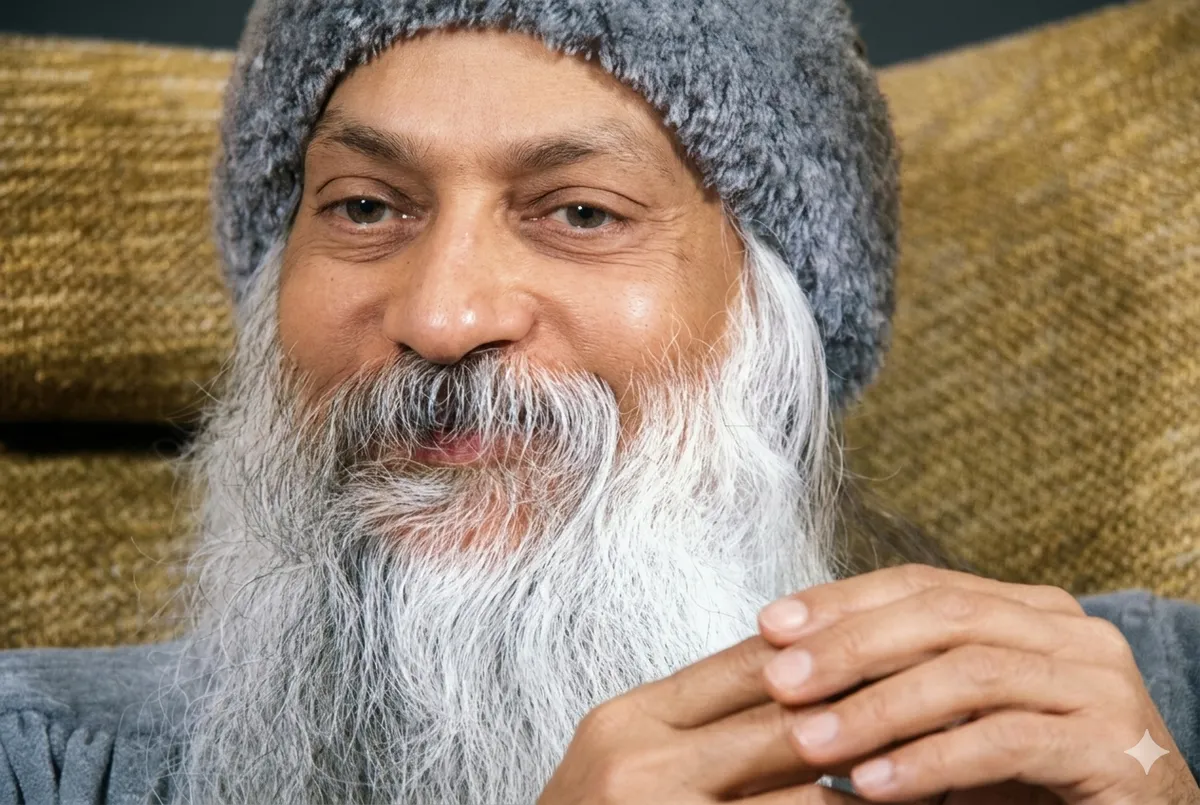
Osho's original Hindi beside Osho Live's English translation, matched passage by passage.
अशोक सत्यार्थी, यह भी खूब रही! सत्संग में बैठे हो और पूछते हो सत्संग क्या है!
Ashok Satyarthi, that’s a fine one! You are sitting in satsang and asking what satsang is!
कबीर ने बहुत से अचंभों की बात कही है, उनमें एक अचंभा यह भी कहा है कि मछली सागर में है और प्यासी है। निश्चित ही, सागर में मछली जल के लिए प्यासी नहीं होगी, मछलियां इतनी नासमझ नहीं। लेकिन एक और प्यास होगी, एक और जिज्ञासा होगी जानने की--यह सागर क्या है? मछली पूछती होगी अपने से, औरों से--क्या है सागर? कहां है सागर? कैसे हुआ जाता है सागर में? और सागर में ही जन्मी है, सागर में ही जीयी है, सागर में है। पर सागर और मछली के बीच फासला नहीं है। इतना नैकट्य है, इतनी समीपता है--इसीलिए सागर का पता नहीं चलता।
Kabir has spoken of many wonders; among them he says one wonder is that the fish is in the ocean and is thirsty. Surely, a fish in the ocean cannot be thirsty for water—fish are not so foolish. But there will be another thirst, another curiosity to know: What is this ocean? The fish must be asking herself, asking others—What is the ocean? Where is the ocean? How does one enter the ocean? And yet she was born in the ocean, has lived in the ocean, is in the ocean. But there is no distance between the ocean and the fish. Such intimacy, such nearness—that is why the ocean is not recognized.
ऐसी ही तुम्हारी दशा है, अशोक। यहां डूबे हो सागर में। जानना चाहते हो सत्संग क्या है, तो एक ही उपाय है--कुछ दिन के लिए पीठ कर लो मेरी तरफ, भाग जाओ जितनी दूर भाग सको। जैसे मछली को कोई निकाल कर डाल दे तट पर, भरी धूप में, दोहपरी में उत्तप्त रेत पर और तत्क्षण मछली को पता चल जाएगा कि सागर क्या है--ऐसा ही अबूझ है जीवन। जो चीज मिली होती है, उसका पता नहीं चलता; जो खो जाती है, उसका पता चलता है। आदमी सच में ही बेबूझ है। और कबीर ने जो अचंभे कहे ऐसे ही नहीं कहे। लोगों को तो लगा कि उलटबांसियां हैं, कि बड़ी उलटी बातें कह रहे हैं।
Such is your condition, Ashok. Here you are immersed in the ocean. If you want to know what satsang is, there is only one way—turn your back on me for a few days, run as far as you can. As when a fish is taken out and thrown onto the shore, in the blazing noonday sun, on the burning sand—and instantly the fish will know what the ocean is—so unfathomable is life. What is given goes unnoticed; what is lost is noticed. Man is indeed obtuse. And Kabir did not speak of those wonders idly. People thought they were paradoxes, topsy-turvy sayings.
कबीर कहते हैं कि मुझे बड़ी हंसी आती है--मछली और सागर में प्यासी है! लेकिन यही हो रहा है।
Kabir says it makes me laugh—the fish is thirsty in the ocean! But that is exactly what is happening.
तुम पूछते हो: ‘सत्संग क्या है?’
You ask: “What is satsang?”
सत्य ही तुम्हारा जीवन है। सत्य में ही तुम जन्मे हो, सत्य से ही जन्में हो। वेद के ऋषि कहते हैं: अमृतस्य पुत्रः! हे अमृत के पुत्रो!
Truth itself is your life. In truth you are born; from truth you are born. The seers of the Vedas say: amritasya putrah—O children of the immortal!
उद्दालक ने अपने बेटे श्वेतकेतु को कहा है--तत्वमसि! श्वेतकेतु ने पूछा था, वह कौन है? वह जिसकी सब खोज करते हैं; वह जिसकी सब तलाश करते हैं, जिज्ञासा करते हैं। वह एक क्या है जिसे जानने से सब जान लिया जाता है?
Uddalaka said to his son Shvetaketu: tat tvam asi. Shvetaketu had asked, Who is that one—the one whom all seek, whom all inquire about? What is that One, by knowing which all is known?
उद्दालक ने ही कहा था श्वेतकेतु को कि खोज उस एक को जिसे जानने से सब जान लिया जाता है। स्वभावतः श्वेतकेतु ने पूछा: वह एक क्या है? कहां है? और ऋषि ने कहा अपने बेटे को--तत्वमसि! वह तू ही है।
It was Uddalaka who said to Shvetaketu: Seek that One, by knowing which all is known. Naturally Shvetaketu asked: What is that One? Where is it? And the rishi said to his son: tat tvam asi—Thou art That.
इस जगत में हम अपने से अपरिचित क्यों रह जाते हैं? औरों से परिचित हो जाते हैं, अपने से अपरिचित! कारण? कारण इतना ही है कि अपने से हमारी कोई दूरी नहीं है। वहां कौन बने जानने वाला और कौन बने ज्ञान का विषय? कौन हो ज्ञाता, कौन हो ज्ञेय? कौन हो द्रष्टा, कौन हो दृश्य? वहां तो दोनों एक हैं। वहां द्रष्टा ही दृश्य है। और इसीलिए मुश्किल है।
Why do we remain strangers to ourselves in this world? We become acquainted with others and remain unacquainted with our own being. The reason? Simply that there is no distance from ourselves. Who will be the knower there and what will be the known? Who will be the subject, who the object? Who the seer, who the seen? There both are one. There the seer is the seen. And that is why it is difficult.
तुम पूछते हो: ‘सत्संग क्या है?’
You ask: “What is satsang?”
इस क्षण जो घट रहा है यह सत्संग है। इधर मेरा शून्य तुमसे बोल रहा है, उधर तुम्हारा शून्य मुझे सुन रहा है। बोलना तो बहाना है। इस निमित्त मेरा शून्य तुम्हारे शून्य से मिल रहा है। इस निमित्त तुम्हारा शून्य मेरे शून्य के साथ नाच रहा है, तरंगायित हो रहा है। बोलना तो एक खूंटी है; उस पर मैंने टांग दिया अपने शून्य को, तुमने टांग दिया अपने शून्य को--दो शून्य मिल कर जहां एक हो जाते हैं वहां सत्संग है। और दो शून्य पास आएं तो एक हो ही जाते हैं। दो शून्य मिल कर दो शून्य नहीं होते, एक शून्य होता है। हजार शून्य मिल कर भी एक ही शून्य होगा, हजार नहीं।
What is happening this very moment is satsang. Here my emptiness is speaking to you; there your emptiness is listening to me. The speaking is just a pretext. On that pretext my emptiness is meeting your emptiness. On that pretext your emptiness is dancing with mine, becoming wave-like. Speaking is only a peg; on it I have hung my emptiness, and you have hung yours—where two emptinesses meet and become one, there is satsang. And when two zeros come close they cannot help but become one. Two zeros together do not make two zeros; they make one zero. Even a thousand zeros together are still one zero, not a thousand.
यहां इतने लोग बैठे हैं। जितने लोग मेरे साथ डूब गए हैं, उनकी गिनती गई, उनका आंकड़ा नहीं बचा, उनका नाम-धाम, पता-ठिकाना गया। उतर गया नमक का पुतला सागर में, हो गया सागर के साथ एक। और एक हुए बिना जानने का कोई उपाय नहीं है।
Here so many people are sitting. Those who have dived with me—their count is gone, their statistics are no more; their name and address, their whereabouts have disappeared. The statue of salt has stepped into the ocean and become one with it. And without becoming one there is no way of knowing.
लेकिन प्रश्न तुम्हारे मन में उठा है--इसीलिए कि हो तो सागर में, मगर अभी भी अपने को बचा रहे हो। छोड़ो बचाना! यह तो मिटने की कला है। यह तो मिटने वालों की जगह है। इसीलिए तो कहता हूं: यह मंदिर नहीं, मैखाना है, मधुशाला है। पीओ और डूबो! ऐसे बेहोश हो जाओ कि फिर कभी होश आए ही न--और बस वही परम होश है! ऐसे मिटो कि फिर दुबारा बन न सको--वही मिटना महानिर्वाण है, समाधि है। लेकिन तुम अपने को बचा रहे हो। तुम किसी तरह अपने को छिपा रहे हो।
But the question has arisen in your mind precisely because, though you are in the ocean, you are still trying to save yourself. Stop saving yourself! This is the art of dissolving. This is a place for those who are ready to disappear. That is why I say: this is not a temple, it is a tavern, a wine-house. Drink and drown! Become so intoxicated that sobriety never returns—and that alone is the supreme sobriety! Disappear in such a way that you can never be made again—that disappearing is the great nirvana, samadhi. But you keep saving yourself. One way or another you keep hiding yourself.
तुम्हें न प्रश्नों से प्रयोजन है, न उत्तरों से। तुम्हें तो इस बात कीफिकर पड़ी है कि मेरे प्रश्न का उत्तर! मेरे का सवाल है। तुम सुनना चाहते हो कि तुम्हारा नाम मैंने लिया। तुम्हारा रस उसमें है। अन्यथा मैं एक का उत्तर नहीं देता हूं, एक के उत्तर में अनेक के प्रश्नों के उत्तर हैं। मैं वे ही प्रश्न चुनता हूं जो बहुतों के प्रश्न हैं। व्यक्तियों के हिसाब से नहीं चुनता, प्रश्नों के हिसाब से चुनता हूं। ऐसे प्रश्न जो पूछे किसी ने भी हों, मगर बहुतों के हृदय में उठ रहे हैं--उनके ही उत्तर देता हूं। किसने पूछा है यह तो गौण है, प्रश्न का महत्व है।
You have no real concern with questions, nor with answers. What you are anxious about is: the answer to my question! The issue is the “my.” You want to hear your name on my lips; that is where your relish lies. Otherwise, I don’t answer an individual’s question—I answer many through one. I choose questions not by persons but by the question itself. I take up those that, though asked by someone, are rising in the hearts of many. Who asked is secondary; the question’s significance is primary.
लेकिन तुम्हें फिकर नहीं है। तुम रोज प्रश्न भेजते जाते हो। तुम्हारी आशा एक ही है कि कभी न कभी तुम्हारे प्रश्न का उत्तर दूं। क्या उत्तर दूंगा, इसकी भी तुम्हें चिंता नहीं है; तुम्हारे प्रश्न का उत्तर दिया जाएगा, उससे अहंकार तृप्त होगा। वही अहंकार तुम्हें सत्संग से बचा रहा है। वहीं तुम अटके हो। उतनी अस्मिता भी काफी है दूरी के लिए, फासला के बनाए रखने के लिए।
But that is not your concern. You keep sending questions every day. Your one hope is that someday I will answer yours. You don’t even care what I might say; if your question is answered, your ego will be gratified. That very ego is keeping you away from satsang. There you are stuck. Even that much I-ness is enough to keep the distance, to maintain the gap.
सत्संग में डूबना है तो क्या मैं, क्या तू! सत्संग में डूबना है तो क्या प्रश्न और क्या उत्तर! सत्संग में डूबना है तो तुम्हें एक और ही कला सीखनी होगी--मेरे साथ छंदबद्ध होने की! मेरे हृदय के साथ तुम्हारा हृदय धड़के, मेरी श्वासों के साथ तुम्हारी श्वासें चलें! मेरे भीतर जो दीया जला है, उस दीये के साथ फिर तुम्हारा दीया भी जल जाएगा। मेरे भीतर जो राग उठा है, वह तुम्हारे भीतर भी अनुगूंजित होगा।
If you want to drown in satsang, then what I, what you! If you want to drown in satsang, then what question and what answer! If you want to drown in satsang, you must learn another art—the art of falling into rhythm with me. Let your heart beat with mine, your breath move with my breath. The lamp that is lit within me will kindle your lamp as well. The melody that has arisen in me will begin to echo within you.
तुमने सुना होगा, कहानियां हैं पुराने संगीतज्ञों की, दीपक राग की--कि कोई संगीतज्ञ ऐसा गीत गाए, कि ऐसी धुन बजाए, कि ऐसा राग उठाए, कि बुझे दीये जल जाएं! मुझे पता नहीं, यह बात संगीतज्ञों के संबध में सच हो या न हो। मैं कोई संगीतज्ञ नहीं हूं। सच हो भी सकती है। ध्वनियों के एक खास आघात से ताप पैदा हो सकता है, अग्नि जल सकती है ध्वनियों की चोट से। अगर दो पत्थरों की रगड़ से आग पैदा हो सकती है, तो दो ध्वनियों की रगड़ से क्यों नहीं! संभावना है।
You must have heard the old tales of musicians and Raga Dipak—that a musician might sing in such a way, play such a strain, awaken such a raga, that extinguished lamps burst into flame. I don’t know whether this is true of musicians or not. I am no musician. It could be true. A particular impact of sound can generate heat; from the strike of sound, fire can be born. If fire can arise from the friction of two stones, why not from the friction of two sounds? It is possible.
मगर मैं कोई संगीतज्ञ नहीं हूं, इसलिए उस संबंध में मैं कुछ प्रामाणिक रूप से नहीं कह सकूंगा। मगर मेरे हिसाब में यह कहानी किन्हीं और संगीतज्ञों के संबंध में है। यह तानसेन और बैजू बावरा के संबंध में नहीं; यह कहानी बुद्ध के संबंध में, कृष्ण के संबंध में, कबीर के संबंध में, रैदास के संबंध में, फरीद के संबंध में, नानक के संबंध में, मोहम्मद के संबंध में, जीसस के संबंध में है। यह परम संगीतज्ञों के संबंध में सही है--एकदम सही है! उस संबंध में मैं गवाही दे सकता हूं। उसका मैं प्रत्यक्ष प्रमाण हूं। वह मेरी आंखों देखी बात है। और जो मेरी आंखों देखी नहीं है वह मैं तुमसे कहता नहीं। बस आंखन देखी ही कहता हूं।
But I am no musician, so I cannot speak with authority about that. In my understanding, this story belongs to other kinds of musicians. It is not about Tansen and Baiju Bawra; it is about Buddha, Krishna, Kabir, Raidas, Farid, Nanak, Mohammed, Jesus. For the supreme musicians, it is exactly true—utterly true! About that I can bear witness. I am direct proof of it. It is something my eyes have seen. And what I have not seen with my own eyes, I do not tell you. I speak only of what I have seen.
ऐसा एक राग है--कालातीत, मनातीत! ऐसी एक धुन है कि अगर तुम, जिसके भीतर वैसा राग जगा है, उसके पास बैठने की कला सीख जाओ, अगर उसके पास तुम खुले मन होकर बैठ जाओ बिना किसी सुरक्षा के, सारा कवच सुरक्षा का उतार कर रख दो, बिना किसी संदेह के, बिना किसी प्रश्न के, सिर्फ बैठने का आनंद हो, किसी के पास बस बैठने का आनंद, केवल बैठने में ही रस हो और धीरे-धीरे दो व्यक्तियों की सीमाएं एक-दूसरे में लीन होने लगें--तो जिसके भीतर राग जगा है, उसका राग तुम्हारे भीतर भी राग को जगा देगा। और यह राग ही ज्योति का है। जिसके भीतर ज्योति जगी है, अगर तुम उसके पास सरकते आए, सरकते आए, सरकते आए, तो एक क्षण उसकी ज्योति से लपट उठेगी और तुम्हारा बुझा दीया भी जल जाएगा।
There is such a raga—beyond time, beyond mind. There is such a melody that if you learn the art of sitting near one in whom that raga has awakened—if you sit by him with an open mind, without any guard, laying aside all armor of protection, without any doubt, without any question—if there is simply the joy of sitting, just sitting, and slowly the boundaries of two persons begin to dissolve into each other—then the raga within him will awaken the raga within you. And this raga is of light. In one whose light is kindled, if you draw near, and nearer, and nearer, a moment will come when a flame will leap from his light, and your extinguished lamp too will catch fire.
इसका नाम सत्संग है। सत्संग वहां है जहां जले दीयों के पास बुझे दीये सरकते-सरकते एक दिन जल उठते हैं। जहां एक दीये से हजारों दीये जल उठते हैं। जिस दीये से हजारों दीये जलते हैं, उस दीये का कुछ खोता नहीं; लेकिन जो जल जाते हैं, उन्हें इस जगत की सबसे बड़ी संपदा मिल जाती है। सत्ंसग का एक ही अर्थ है: सदगुरु के पास बैठने की कला। बैठने की कला का अर्थ है: अहंकार छोड़ो, अपना नाम-पता-ठिकाना छोड़ो, अपने मन की शंका-कुशंकाएं छोड़ो। बहुत कर लिए ऊहापोह, पाया क्या? बहुत सोचा विचारा, कमाया क्या? बहुत दौड़े-धापे, पहुंचे कहां? अब थोड़े निश्चिंत होकर बैठ जाओ मेरे पास--किसी उत्तर की तलाश में नहीं!
This is what is called satsang. Satsang is where, near the lit lamps, the unlit lamps edge closer and, one day, flare into flame. Where from one lamp thousands are lit. The lamp from which thousands are kindled loses nothing; but those that are lit receive the greatest treasure in this world. Satsang has only one meaning: the art of sitting near the Satguru. And the art of sitting means: drop the ego, drop your name-address-identity, drop the mind’s doubts and suspicions. You have debated enough—what did you gain? You have pondered and analyzed enough—what did you earn? You have run and hustled enough—where did you arrive? Now sit a little at ease near me—not in search of an answer!
कोई गुलाब के फूल के पास बैठता है तो कोई उत्तर की तलाश होती है? कोई रात आकाश के तारों को देखता है तो उत्तर की तलाश होती है? कोई सुबह ऊगते सूरज का दर्शन करता है तो कोई उत्तर की तलाश होती है? ऐसा ही तो घटता है कभी किसी सदगुरु में--सारे आकाश के तारे उसमें उतर आते हैं! जो अपनी सीमाएं छोड़ देता है, जो अपना आंगन तोड़ देता है, जो अपनी दीवालों से मुक्त हो जाता है--सारा आकाश उसका है। एक आंगन क्या छोड़ा, सारा आकाश अपना हो जाता है। सारा आकाश अपना आंगन हो जाता है!
When someone sits by a rose, is he looking for an answer? When someone gazes at the night sky, is he looking for an answer? When someone beholds the rising sun, is he looking for an answer? Just so it happens, sometimes, in a Satguru—the stars of the whole sky descend into him! One who drops his boundaries, who breaks down his little courtyard, who becomes free of his walls—the whole sky is his. You let go of a small courtyard, and the whole sky becomes your own. The whole sky becomes your courtyard.
और जिसके भीतर आत्मा का सूर्य उदय हुआ है, जहां प्रभात हो गई, और जिसके भीतर सुबह के पक्षी गीत गाने लगे, पर फड़फड़ाने लगे--बस उसके पास बैठो, रमो! न कुछ पूछने को है, न कुछ कहने को है। डूबने को है, मिटने को है जरूर! और तब तुम जान लोगे, सत्संग क्या है!
And in one within whom the sun of the self has risen, where the dawn has happened, where the birds of morning have begun to sing and their wings to flutter—just sit by him, abide. There is nothing to ask, nothing to say. There is to drown, and to be effaced—yes! And then you will know what satsang is.
मुकेश भारती, यह प्रश्न महत्वपूर्ण है।
Mukesh Bharti, this is an important question.
मेरा धर्म सरल है, ऐसा नहीं--धर्म ही सरल है। और धर्म मेरा-तेरा थोड़े ही होता है। मेरा धर्म यानी क्या? मेरा प्रकाश यानी क्या? मेरी सुगंध यानी क्या? यह तो वही शाश्वत सुगंध है--सनातन। एस धम्मो सनंतनो! सदा-सदा से जिन्होंने जाना है, यही कहा है। भाषा अलग, मगर भाव अलग नहीं। शब्द अलग, मगर शब्दों का सार अलग नहीं। यही गीत गाया है--किसी ने वीणा पर गाया होगा और किसी ने बांसुरी से, किसी ने मृदंग बजाई होगी और किसी ने इकतारा। वाद्य अलग-अलग, राग नहीं है अलग--सरगम वही है।
It is not that my religion is simple—religion itself is simple. And religion is not mine and yours. What does “my religion” mean? What does “my light” mean? “My fragrance”—what could that be? It is that same eternal fragrance—the sanatan. Esa dhammo sanantano! Whoever has known, from age to age, has said this. The language differs, but not the feeling. The words differ, but not their essence. The same song is sung—someone on the vina, someone on the flute, someone beats the mridang, someone plays the ektara. The instruments differ; the raga is not different—the scale is the same.
तो पहली तो बात, मेरा धर्म, ऐसी कोई बात नहीं होती। मेरा-तेरा को धर्म तक खींच लाओगे? धर्म को तो बचने दो! मेरी दुकान ठीक, मेरा मकान ठीक, मेरा धन, मेरी पत्नी, मेरा पति--वहां तक मेरा सार्थक है। मगर कहीं तो एक सीमा आने दो मेरे की, जहां से मेरा और मैं दोनों विदा हो जाएं। उनको अलविदा कहो। कोई जगह तो हो जहां उन्हें छोड़ दो और तुम आगे बढ़ जाओ। जैसे सांप अपनी पुरानी केंचुल को छोड़ कर सरक जाता है, ऐसे कोई स्थल तो होना चाहिए जहां तुम मैं और तेरा और मेरा, इसकी केंचुल से बाहर सरक जाओ।
So first, there is no such thing as “my religion.” Will you drag mine-and-thine even into religion? At least spare religion! “My shop” is fine, “my house,” “my money,” “my wife,” “my husband”—up to there “mine” has some meaning. But let there be some boundary where “mine” and “I” both take leave. Say goodbye to them. Let there be a place where you drop them and move on—like a snake slipping out of its old skin.
यह स्थल मैं--मेरे से मुक्त होने के लिए है। और वही तो तीर्थ है जहां तुम मैं और मेरे से मुक्त हो जाओ। वही तो धर्म है। धर्म स्वभाव है, इसलिए किसी का नहीं हो सकता, किसी की बपौती नहीं हो सकती--न हिंदू का, न मुसलमान का, न ईसाई का, न जैन का, न सिक्ख का, न पारसी का।
Religion is the place to be free of I and mine. That is the pilgrimage: where you are free of I and mine. That is religion. Religion is your nature; therefore it can belong to no one—it can’t be anyone’s inheritance: not a Hindu’s, not a Muslim’s, not a Christian’s, not a Jain’s, not a Sikh’s, not a Parsi’s.
मगर हम ऐसे मूढ़ हैं, हम ऐसे अज्ञानी कि जहां मेरा मिट जाना चाहिए वहां भी मेरे के डंडे और मेरे के झंडे उठाए खड़े रहते हैं। इतना ही नहीं, तलवारें चलती हैं, खून खराबा होता है, मंदिर-मस्जिद जलते हैं। धर्म के नाम पर इतना पाप हुआ है जितना किसी और नाम पर नहीं। वह धर्म के कारण नहीं हुआ, मेरे-तेरे के कारण हुआ है।
But we are such fools, so ignorant, that even where “mine” should disappear we stand waving the staffs and flags of “mine.” Not only that—swords are drawn, blood is spilled, temples and mosques are burned. More sin has been committed in the name of religion than in any other name. It did not happen because of religion, but because of mine-and-thine.
मैं अमृतसर था। स्वर्ण-मंदिर के व्यवस्थापकों ने मुझे निमंत्रित किया तो मैं गया। जो व्यक्ति, दस-पंद्रह व्यक्ति व्यवस्थापक और प्रमुख, और जो खास-खास मंदिर के लोग थे, मुझे लेकर अंदर चले। सीढ़ियों पर ही उन्होंने कहा कि एक बात आपको बता देनी जरूरी है: हमारा यह मंदिर ही एकमात्र ऐसा मंदिर है जहां हम हिंदू-मुसलमान में भेद नहीं करते। मैंने उनसे कहा: पूछा किसने? कहने की जरूरत क्यों आई? भेद करते हो; इसलिए नहीं भेद करते, इसकी अकड़ है!
I was in Amritsar. The managers of the Golden Temple invited me, so I went. As the ten or fifteen prominent people were taking me in, they said on the steps, “There is one thing we must tell you: this is the only temple where we make no distinction between Hindu and Muslim.” I said, “Who asked you? Why did you need to say it? You do discriminate; that’s why there’s pride in saying you don’t!”
मैंने कहा: मेरी तरफ देखो, मैं हिंदू हूं कि मुसलमान? मैं न तो हिंदू हूं, न मुसलमान, न ईसाई, न जैन, न बौद्ध। मैं तो आस्तिक और नास्तिक भी नहीं, मैं तो बस धार्मिक हूं। यह क्या बात कही--और बड़े गौरव से कही! यह भी अहंकार बन गया। इसके पीछे भी मैं खड़ा हो गया।
I said, “Look at me—am I a Hindu or a Muslim? I am neither Hindu nor Muslim nor Christian nor Jain nor Buddhist. I am not even a theist or an atheist; I am simply religious. What a thing to say—and with such pride! This too has become ego. Even behind this the I is standing.”
मैं बड़ा चालबाज है--हिंदू के पीछे खड़ा हो जाए, मुसलमान के पीछे खड़ा हो जाए, हिंदू-मुसलमान की एकता के पीछे खड़ा हो जाए! अल्लाह-ईश्वर तेरे नाम इसके पीछे खड़ा हो जाए! अहंकार इतना चालबाज है कि दिखाई ही नहीं पड़ता कि कब सरक कर आ जाता है और कहां से आ जाता है; उसके बड़े सूक्ष्म रास्ते हैं। बड़ी सजग आंखें हों तो ही उससे बचा जा सकता है।
The I is very cunning—it can stand behind anything: behind Hinduism, behind Islam, behind “Hindu–Muslim unity,” behind “Allah–Ishwar are one!” Ego is so crafty you don’t even see when and from where it slips in; its ways are very subtle. Only very alert eyes can escape it.
उन्होंने कहा कि हम किसी क्रियाकांड में मानते नहीं--न हिंदू के, न मुसलमान के। नानक ने तो सभी क्रियाकांडों से मुक्त कर दिया। मैंने कहा, यह बहुत अच्छा हुआ।
They said, “We don’t believe in any rituals—neither Hindu nor Muslim. Nanak freed us from all rituals.” I said, “Very good.”
लेकिन मैंने देखा कि जैसे ही मैं भीतर चला, वे सब परेशान होने लगे। वे मुझसे कुछ कहना चाहते हैं यह मुझे लगे, लेकिन कह नहीं पाते। फिर आखिर उनमें से एक ने मुझे अलग ले जाकर कान में फुसफुसाया कि क्षमा करें, आप बिना टोपी के अंदर नहीं जा सकते।
But as I went inside I saw them growing uncomfortable. They wanted to tell me something but couldn’t. Finally one took me aside and whispered, “Forgive us, you cannot go inside without a cap.”
मैंने उनसे कहा कि यह टोपी की झंझट तो बड़ी मुश्किल है। इस टोपी के कारण मुझे स्कूल में दिनों बाहर खड़े रहना पड़ा है। आखिर मेरे स्कूल के अध्यापक थक गए मुझे बाहर खड़ा कर-कर के। आखिर उन्होंने कहा कि भाड़ में जाए टोपी, अब हम तुमसे टोपी की बात नहीं करेंगे। मैं उनसे कहता कि मुझे इसकी वैज्ञानिकता बता दो।
I said, “This cap business has been trouble since school. I was made to stand outside for days because of it. My teachers got tired of keeping me out. At last they said, ‘To hell with the cap; we won’t mention it to you again.’ I kept asking them to tell me the scientific basis.
अब टोपी की कोई वैज्ञानिकता है? मेरे जो हेड मास्टर थे, वे विज्ञान के एम.एससी. थे, वे अपना सिर ठोक लें; वे कहें कि मैं एम.एससी. हूं, प्रथम श्रेणी का गोल्डमेडलिस्ट हूं--मगर टोपी की वैज्ञानिकता, तुम भी खूब सवाल...! मैंने कहा: इसका क्या रसायनशास्त्र है? इसका क्या गणित है? टोपी से क्या फायदा होगा? बुद्धि बढ़ेगी कि घटेगी? कुछ इसमें राज हो तो मैं जरूर लगाऊं; एक नहीं दो लगाऊं, दस लगाऊं, टोपी पर टोपी लगा लूं--अगर कोई विज्ञान हो!
“What scientific basis can there be for a cap? My headmaster was an M.Sc., a first-class gold medallist—let him bang his head! He said, ‘I am an M.Sc., but the scientific basis of a cap—what a question!’ I said, ‘What is its chemistry? What is its mathematics? What benefit will a cap bring? Will intelligence increase or decrease? If there is any science behind it, I’ll certainly wear one—two, ten—cap upon cap!’”
मैंने कहा, यह तो बड़ी झंझट हो जाएगी। लगता है मुझे स्वर्ण-मंदिर के भी बाहर ही खड़ा रहना पड़ेगा। न मेरे शिक्षक समझा पाए, आखिर उन्होंने मुझसे क्षमा मांग ली कि तुम बिना टोपी के... हम ध्यान ही नहीं देंगे कि तुम टोपी लगाए हो कि नहीं। मगर कृपा करके औरों को मत बिगाड़ो, क्योंकि तुम बिना टोपी के अंदर आओगे तो दूसरे बिना टोपी के अंदर आएंगे।
I said, “Looks like I’ll have to stand outside the Golden Temple too. My teachers finally apologized and said, ‘We won’t even notice whether you wear a cap—only please don’t spoil others, because if you go in without one, others will follow.’”
और फिर मैंने उन मित्रों को कहा कि आप तो बड़े-बड़े साफे-पग्गड़ बांधे हुए हैं और सरदारों की बुद्धि का क्या हुआ, इसका कुछ पता है? इतनी कस कर बांध ली है खोपड़ी कि बुद्धि की बिलकुल क्षमता ही टूट गई। इतना कस कर बांधोगे तो...आखिर बुद्धि को भी थोड़ा खुलापन चाहिए, हवा आए-जाए, खिड़की-दरवाजे खुले रहें।
Then I said to those friends, “You are all wearing big turbans—what happened to the intelligence of the Sardars? You’ve tied the skull so tight that the very capacity for intelligence has snapped. Even the brain needs some openness, air moving in and out, windows and doors!
और अभी तो वैज्ञानिकों ने इस बात की खोज की तो मैंने उनसे कहा कि जो बच्चे पैदा होते समय मां के संकीर्ण गर्भ से गुजरते हैं--जिस मार्ग से बच्चों को पैदा होना पड़ता है, वह अगर बहुत संकीर्ण हो--तो उनकी बुद्धि को नुकसान होता है, उनके मस्तिष्क को नुकसान हो जाता है। अगर मार्ग संकीर्ण न हो तो उनकी बुद्धि को लाभ होता है, क्योंकि संकीर्ण मार्ग उनके मस्तिष्क को, कोमल मस्तिष्क को बिलकुल दबा देता है।
“And recently scientists have found that when babies pass through a very narrow birth canal, their brain can be harmed. If the passage isn’t too narrow, the brain benefits, because a narrow passage compresses the tender brain.”
उन्होंने कहा: यह तो बड़ी मुसीबत हो गई। और आपको हम अंदर कैसे ले जाएं, कभी कोई बिना टोपी के नहीं गया, आप इतना तो कम से कम करो, हम पर दया करो, रूमाल बांध लो! मगर कुछ सिर पर हो।
They said, “This is a big problem. At least have mercy on us—tie a handkerchief on your head! But let there be something on your head.”
मैंने कहा: सिर पर पूरा आसमान है, तुम्हें रूमाल की पड़ी है! और अभी तुम मुझसे कहते थे कि यहां कोई क्रियाकांड नहीं है, हम सब क्रियाकांड से मुक्त हैं! और यह क्रियाकांड शुरू हो गया।
I said, “The whole sky is on my head, and you’re worried about a handkerchief! And just now you said you had no rituals—yet the ritual begins.”
आदमी एक तरफ से बचता है, दूसरी तरफ से पकड़ जाती है बात; क्योंकि आदमी की मौलिक मूढ़ता वही है, उसमें अंतर नही पड़ता। वह अपनी जड़ आदतों को दोहराए चला जाता है--यंत्रवत।
A man escapes on one side and gets caught on the other; because man’s basic stupidity remains the same. He repeats his root habits mechanically.
चंदूलाल को फिल्मी धुनों का बहुत शौक था, वह हमेशा फिल्मी धुनें ही गाता रहता था। दिन हो या रात, उसकी जबान पर फिल्मी धुनें ही रहती थीं। एक दिन वह साइकिल पर सवार हो अपने लंगोटिया यार ढब्बू से मिलने उसके घर जा रहा था। रात का समय था और उसकी साइकिल में रोशनी नहीं थी। साइकिल में रोशनी न देख कर एक यातायात-विभाग के पुलिस कर्मचारी ने उसे आवाज दी, ऐ चंदूलाल के बच्चे, रुक!
Chandulal was crazy about film tunes; he always sang them—day or night. One night he was bicycling to visit his childhood friend Dhabbu. It was dark and his bicycle had no light. A traffic policeman shouted, “Hey, you Chandulal, stop!”
चंदूलाल ने कहा: मुझको इस रात की तन्हाई में आवाज न दो, आवाज न दो!
Chandulal sang, “Do not call out to me in the loneliness of this night—do not call out!”
पुलिस वाला बोला: अबे सुनता क्यों नहीं? और साइकिल में रोशनी क्यों नहीं है?
The cop shouted, “Why don’t you listen? And why isn’t there a light on your bicycle?”
चंदूलाल बोला: रोशनी हो न सकी, दिल भी जलाया मैंने!
Chandulal sang, “I couldn’t light a lamp—I even burned my heart!”
पुलिसवाला तो आग बबूला हो गया, बोला, अबे क्या पागल हो गया है? यह क्या बकवास लगा रखी है?
The cop got furious: “Are you mad? What nonsense are you babbling?”
चंदूलाल बोला: मैं परेशान हूं, तुम और परेशां न करो! आवाज न दो...मुझको इस रात की तन्हाई में आवाज न दो, आवाज न दो!
Chandulal sang, “I am troubled—don’t trouble me more! Do not call out to me in the loneliness of this night—do not call out!”
आदतें बंध जाती हैं। अहंकार एक आदत है--सदियों-सदियों पुरानी, जन्मों-जन्मों पुरानी। इसलिए मैं हर चीज पर बैठ जाता है। वह तुम्हारी धुन हो गई, अचेतन हो गई प्रक्रिया--मेरा धर्म, मेरा मंदिर, मेरा शास्त्र। नहीं तो कुरान किसी के बाप की है, कि वेद, कि उपनिषद? कम से कम इन्हें तो तुम छोड़ो बपौतियों से! कम से कम मोहम्मद और महावीर के तो ठेकेदार न बनो! कम से कम इन्हें तो क्षमा करो, इन्हें तो मत घसीटो अपनी क्षुद्रताओं में। मगर नहीं, हम तो हर चीज को अपने तल पर खींच लाते हैं, अपनी कीचड़ में गिरा लेते हैं।
Habits bind us. Ego is a habit—ancient, across births. So the I sits on everything—my religion, my temple, my scripture. Is the Quran anyone’s father’s property, or the Vedas, the Upanishads? At least spare these from heirship! At least don’t become the contractors of Mohammed or Mahavira! Have mercy on them—don’t drag them into your pettiness. But no—we pull everything down to our level, into our mud.
तो पहली तो बात मुकेश, यह याद रखो, मत कहो आपका धर्म। मेरा इसमें क्या लेना-देना है? जो भी जागे हैं, सबने यही कहा है, ऐसा ही कहा है। जो भी आगे जागेंगे वे भी यही कहेंगे, ऐसा ही कहेंगे; इससे अन्यथा कभी नहीं होगा।
So first remember, Mukesh: don’t say “your religion.” What have I to do with it? Whoever has awakened has said this; whoever awakens will say the same—there will never be an exception.
धर्म तो धर्म है। धर्म का अर्थ है स्वभाव। जिस दिन तुम जाग कर अपने को पहचान लेते हो, उसी दिन धर्म घटता है। हिंदू घर मे पैदा होने से हिंदू नहीं होते, ईसाई घर में पैदा होने से ईसाई नहीं होते, न हो सकते हो। ये धोखे हैं। जन्म से धर्म का कोई संबंध नहीं है। जन्म से और धर्म मिल जाता तो बड़ी सस्ती बात होती--मुफ्त ही मिल जाता, पैदाइश के साथ ही मिल जाता।
Religion is religion. Religion means one’s nature. The day you awaken and recognize yourself, religion happens. Being born in a Hindu home doesn’t make you a Hindu, nor does being born Christian make you a Christian. These are deceptions. Birth has nothing to do with religion. If religion came with birth it would be very cheap—free, along with your delivery.
धर्म तलाशना होता है, खोजना होता है, अन्वेषण करना होता है; अंतरात्मा में गहरी डुबकी मारनी होती है। जब तुम अपने जीवन के केंद्र को अनुभव कर लेते हो, जब तुम अपने भीतर जीवन के मूल को पकड़ लेते हो, तब तुम्हें पता चलता है कि धर्म क्या है। और तभी तुम जान पाओगे कि धर्म सरल है; क्योंकि स्वभाव है, इसलिए सरल ही हो सकता है। विभाव कठिन होता है। स्वभाव कैसे कठिन होगा?
Religion has to be sought, discovered, explored—a deep dive into the inner being. When you experience the center of your life, when you grasp the root of life within, then you know what religion is. And then you will know that religion is simple; because it is nature, it can only be simple. What is imposed is difficult; how can what is intrinsic be difficult?
गुलाब खिला है। तुम कहोगे गुलाब की झाड़ी से कि बड़ी कठिनाई होती होगी ऐसे सुंदर गुलाब खिलाने में! और कांटों के बीच कैसे यह गुलाब खिला पाती है झाड़ी! कितनी कठिनाइयों से न गुजरती होगी!
कोई कठिनाई नहीं होती। गुलाब की झाड़ी में फूल वैसे ही खिलते हैं--सहजता से। जैसे आग जलाती है, ऐसे गुलाब की झाड़ी में फूल लगते हैं। जैसे आग की लपटें ऊपर की तरफ जाती हैं और पानी की धार नीचे की तरफ जाती है--सहज-स्वाभाविक--वैसा ही धर्म है।
A rose blooms. Would you say to the bush, “It must be very hard to produce such a beautiful flower among thorns! How many difficulties you must go through”? There is no difficulty. Flowers arise on the rosebush naturally—just as fire burns. As flames move upward and water flows downward—naturally—so is religion.
लेकिन इतना जो सरल है उसको पंडित-पुरोहितों ने बहुत कठिन बनाने की कोशिश की है, अथक चेष्टा की है। उनकी चेष्टा का भी कारण है और कारण समझ लेना चाहिए, क्योंकि समझ जाओ तो पंडित-पुरोहितों के जाल के बाहर हो जाओ। पंडित-पुरोहित जी ही तभी सकता है जब वह धर्म को कठिन बताए, नहीं तो उसके जीने का कोई आधार नहीं रह जाता। अगर धर्म सरल है, स्वभाव है और प्रत्येक व्यक्ति अपने भीतर उतर कर उसे पा सकता है, तो फिर पंडित-पुरोहितों का प्रयोजन क्या? फिर मध्यस्थों की जरूरत क्या? फिर परमात्मा और तुम्हारे बीच के दलाल, उनका क्या होगा? उनकी दलाली का क्या होगा?
But what is so simple, the pundits and priests have tried tirelessly to make very difficult. Their effort has a reason, and it should be understood—once you understand, you are outside their net. A priest can survive only if he declares religion difficult; otherwise there’s no basis for his living. If religion is simple, intrinsic, and each person can find it by going within, what is the purpose of priests? Why the need for middlemen between you and the divine? What will happen to their brokerage?
तो दलालों पर दलाल हैं। दलालों की इतनी लंबीं कतार है! उस सारी कतार का धंधा इसलिए चलता है कि उसने धर्म को बहुत कठिन बना दिया है। उसने इतना कठिन बना दिया है कि उसके बिना तुम समझ ही न पाओगे कि धर्म क्या है। उसकी जरूरत है। वह व्याख्या करेगा तो तुम समझोगे। वह परिभाषा देगा तो तुम समझोगे। वह मार्गदर्शन देगा तो तुम समझोगे।
Brokers upon brokers—such a long queue! That whole chain survives because religion has been made very difficult. So difficult that without them you can’t understand what religion is. You need them: they will interpret for you, define for you, guide your path.
और मजा ऐसा है कि खुद अंधा है। अभी खुद भी उसे धर्म का कोई पता नहीं है। और तुम्हें मार्गदर्शन दे रहा है! अंधे अंधों को चला रहे हैं; और अगर सारी दुनिया गड्ढे में गिर गई है तो कोई आश्चर्य तो नहीं। स्वाभाविक है।
आश्चर्य तो तब होता कि अंधे अंधों को चलाते-चलाते मंजिल तक पहुंचा देते। तब असली आश्चर्य होता, चमत्कार घटता! अंधों का हाथ पकड़ कर चलोगे, गिरोगे ही, यह तो बिलकुल सुनिश्चित है। खाई में नहीं गिरोगे तो खड्डे में गिरोगे, खड्डे में नहीं गिरोगे तो कुएं में गिरोगे, कहीं न कहीं गिरोगे। और चारों तरफ खाई-खड्डे हैं।
And the joke is, they are blind themselves. They have no idea what religion is, yet they guide you! The blind lead the blind—and if the whole world falls into pits, it is no surprise. The surprise would be if the blind, leading the blind, reached the goal—that would be the miracle! If you walk holding a blind man’s hand you will fall—into the chasm, or at least into a ditch, or a well. And there are pits everywhere.
और सारे पंडित-पुरोहित तुम्हें बाहर की तरफ ले जाते हैं, वे कहते हैं: जाओ काशी, जाओ काबा। वे कहते हैं: पढ़ो कुरान, पढ़ो वेद। इसमें छिपा है धर्म। और सदगुरु कहते हैं: मुक्त होजाओ शास्त्रों से, क्योंकि स्वयं मे छिपा है धर्म। छोड़ो शब्द। कितने ही प्यारे हों शब्द, फिर भी शब्द कोरे हैं, खाली हैं, चले हुए कारतूस हैं, उनको मत ढोए फिरो। उनका कोई उपयोग नहीं है। छिलके मात्र हैं। उनके भीतर का गूदा तो कभी का खो गया है। खोलें रह गई हैं। और खोलों को तुम ढो रहे हो।
All the pundits and priests send you outside. They say: go to Kashi, go to Kaaba. Read the Quran, read the Vedas—religion is hidden there. And the true master says: be free of scriptures, because religion is hidden within yourself. Drop words. However sweet the words, they are empty—spent cartridges. Don’t carry them; they are shells only. The pulp inside was lost long ago; the husks remain—and you carry husks.
पंडित-पुरोहित की पूरी चेष्टा होती है कि धर्म को जितना जटिल बना सके बना दे। और उसने बहुत जटिल बना दिया है। इसलिए पंडित-पुरोहित संस्कृत को नहीं छोड़ना चाहते, क्योंकि संस्कृत छूटते ही उनके धंधे का नब्बे प्रतिशत एकदम नष्ट हो जाएगा। अगर तुम्हारा पंडित संस्कृत छोड़ कर सीधी-सीधी भाषा में, जो तुम समझते हो, मंत्रों को पढ़े तो तुम भी कहोगे कि क्या पढ़ रहे हो, इन मंत्रों में कुछ है ही नहीं! मंत्र तो बेबूझ होने चाहिए, तो ही तुम प्रभावित होते हो। अगर तुम्हारा पंडित सीधी-सीधी कुरान पढ़े--तुम्हारी ही भाषा में, अरबी में नहीं--तो तुम भी थोड़े चौंकोगे कि ये बातें और कुरान में!
The priest’s entire effort is to make religion as complex as possible. That’s why they won’t give up Sanskrit, because if Sanskrit goes, ninety percent of their trade collapses at once. If your priest read the mantras in plain language you understand, you would say, “What is he reading? There’s nothing in it!” Mantras must be incomprehensible—only then are you impressed. If your mullah read the Quran to you in your own tongue, not Arabic, you would be startled, “These things—and in the Quran!”
मुझे बहुत बार कहा गया कि वेद पर बोलूं और मैंने बहुत बार सोचा कि वेद पर बोलूं, पर जब भी वेद को उलटता हूं, फिर रख देता हूं सरका कर, क्योंकि कूड़ा-करकट बहुत है। हीरे कुछ हैं, छांटने पड़ेंगे। इससे तो ये सीधे-साधे व्यक्ति रैदास जैसे लोग ज्यादा हीरों से भरे हैं। क्योंकि रैदास कूड़ा-करकट बोलते तो कोई भी पकड़ लेता कि क्या बकवास लगा रखी है! रैदास तो लोक भाषा में बोल रहे हैं, कोई भी गर्दन दबा देता कि बस बंद करो। यह तुमने क्या लगा रखा है? सन्निपात में तो नहीं हो? कुछ होश की बातें करो!
तो रैदास को तो वही कहना पड़ेगा जो कहने योग्य है। लेकिन संस्कृत जो तुम नहीं जानते, अरबी जो तुम नहीं जानते, लैटिन और ग्रीक जो तुम नहीं जानते, हिब्रू जो तुम नहीं जानते--उसमें पंडित क्या कह रहा है, तुम बड़े श्रद्धाभाव से सुनते हो, चाहे वह बिलकुल व्यर्थ की बातें कह रहा हो। और व्यर्थ की बातें ही हैं। और मजा यह है कि शायद उसको भी ठीक-ठीक पता न हो कि वह क्या कह रहा है; शायद उसने भी कंठस्थ कर लिया हो।
Many times I have been asked to speak on the Vedas, and many times I have thought to; but whenever I turn the Vedas, I push them aside again—too much trash. There are some diamonds, but you’d have to sift a lot. Better these simple folk like Raidas; they are richer in diamonds. If Raidas spoke rubbish, anyone would catch him at once—“What nonsense are you babbling? Are you delirious? Speak sense!” Because Raidas spoke the people’s language, he had to say only what was worth saying. But in Sanskrit you don’t know, in Arabic you don’t know, in Latin and Greek and Hebrew you don’t know—whatever the priest says, you listen with reverence, even if it’s utterly empty. Often he himself may not know what he is saying—perhaps he has only memorized it.
इसलिए पंडित चाहते हैं कि पुरानी भाषाएं, मर गई भाषाएं--खो न जाएं। उनका सार-सूत्र पंडित के हाथ में बना रहे। जीवंत भाषाओं में तो सिर्फ सदगुरु बोलते हैं।
So priests want old, dead languages not to be lost—so that the key-string remains in their hands. In living languages only the true masters speak.
इसलिए मैं कहता हूं कि महावीर और बुद्ध ने इस देश में बड़ी से बड़ी क्रांति की, क्योंकि वे पहले सदगुरु थे जो संस्कृत में नहीं बोले। बुद्ध ने पाली में बोला, महावीर ने प्राकृत में--जो लोकभाषाएं थीं, जिनको लोग समझते थे। इसलिए महावीर और बुद्ध के वचनों में हीरों की खदानें हैं। एक-एक वचन कोहिनूर है।
That’s why I say Mahavira and Buddha created the greatest revolution in this land: they were the first masters who did not speak Sanskrit. Buddha spoke Pali, Mahavira spoke Prakrit—the people’s tongues. Hence their words are mines of gems—each utterance a Kohinoor.
जीसस ने हिब्रू में नहीं बोला, लोकभाषा में बोला, अरैमेक में बोला, जिसे लोग समझते थे। मगर ईसाइयों ने जल्दी ही अरैमेक से अनुवाद कर लिया हिब्रू में, जिसको लोग नहीं समझते। फिर हिब्रू से अनुवाद कर लिया ग्रीक में। और बात दूर से दूर होती चली गई। और फिर ग्रीक से लैटिन में। बात इतनी दूर हो गई कि किसी की समझ में न आए। समझ में आनी नहीं चाहिए, तो रहस्यपूर्ण मालूम होती है। समझ में आ जाए तो बड़ी मुश्किल हो जाती है।
Jesus didn’t speak Hebrew, he spoke Aramaic—the language people understood. But the Christians soon translated Aramaic into Hebrew, which people didn’t understand; then from Hebrew to Greek; then from Greek to Latin. The message went so far that no one could understand it—and it must not be understood, or the mystery vanishes. If it is understood, trouble begins.
इसलिए तुम्हारे पंडित बड़े-बड़े शब्दों का उपयोग करते हैं, भारी शब्दों का उपयोग करते हैं; बोलचाल के शब्द नहीं; भाषा के, लोगों की भाषा के शब्द नहीं। उनके प्रवचन में, उनके उद्धरणों में इतने-इतने बड़े शब्द होते हैं कि तुम्हें मुश्किल हो जाए।
That’s why your pundits use big, ponderous words—not the words of everyday speech. Their sermons and citations are so inflated that you are overwhelmed.
डॉक्टर रघुवीर ने इस तरह की कोशिश इस देश में की, उसकी वजह से हिंदी की जान ले ली, हिंदी के प्राण ले लिए। यह मैंने डॉक्टर रघुवीर को कहा था कि तुम शायद सोचते हो कि तुम हिंदी के उन्नायक हो, मगर यह भ्रांति है। और चूंकि मैंने उनसे ऐसा कहा था, वे मुझे कभी माफ नहीं कर सके। मैंने कहा, तुम हत्यारे सिद्ध होओगे। तुम सीधी-सादी लोकभाषा को उलटा कर रहे हो।
Dr. Raghuvir attempted this in our country, and in doing so he killed Hindi’s life. I told him, “You may think you are the promoter of Hindi, but that’s an illusion.” And because I said it, he could never forgive me. I said, “You will be proved a murderer. You are twisting a simple people’s language.”
लोग ठीक से समझते हैं रेलगाड़ी का क्या मतलब है। लेकिन रघुवीर, उनको रेलगाड़ी नहीं जंचती। रेलगाड़ी में क्या खराबी है? लोहपथ गामिनी! रेलगाड़ी को समझा जाता है हिमालय से लेकर कन्याकुमारी तक। इसकी कोई हिंदी की बपौती नहीं है रेलगाड़ी पर। रेलगाड़ी सबकी है। उसमें तमिल बैठे, तेलगू बैठे, मलयालम बैठे, बंगाली बैठे--रेलगाड़ी सबकी है। हिंदी का क्या है। लेकिन लोहपथ गामिनी! उसमें तो शायद काशी के पंडित बैठें तो बैठें, और तो कोई न बैठे। बाकी तो डरें कि यह है क्या चीज! इसमें बैठना कि नहीं बैठना!
People know perfectly well what “railgadi” means—train. But Raghuvir didn’t like “railgadi.” What is wrong with it? He wanted “lohapath-gamini” (iron-path-goer)! “Railgadi” is understood from the Himalayas to Kanyakumari; it belongs to no one. Tamils, Telugus, Malayalis, Bengalis—everyone says “railgadi.” But “lohapath-gamini”? Perhaps only the pundits of Kashi would sit in it; everyone else would be afraid—“What is this thing? Should we get in or not?”
उन्होंने सारे शब्द खराब कर दिए। वे सोच रहे थे कि बहुत बड़ी...उन्होंने मेहनत की, ऐसे पूरी जिंदगी उन्होंने अपनी खराब की और अनेकों की और जिंदगी खराब कर गए, क्योंकि उनके साथ और न मालूम कितने पंडित इस काम में लगे थे। एक भारी जत्था इस काम में लगा था कि सारे शब्दों को कैसे शुद्ध संस्कृत में लाया जाए।
भाषा काम के लिए है, संस्कृत से क्या लेना देना है! लोग जो बोलते हैं वही सार्थक है। इसलिए तो मैं तो कहता हूं जब भी भाषा पर ध्यान रखना हो, लोग क्या बोलते हैं, उस पर ध्यान रखो। जो सीधे-सादे लोग बोलते हों वही सम्यक भाषा है। वह चाहे शुद्ध न हो, शुद्ध से करना क्या है? सार्थक होनी चाहिए। जैसे गांव के लोग रिपोर्ट नहीं बोलते; बोलते हैं रपट! मैं राजी हूं इससे। रपट लिखा दी। यह साफ-सुथरी बात हो गई, यह सीधी-सादी बात है।
He spoiled the words. He labored hard—wasted his life and the lives of many others, because a whole battalion of pundits joined him in Sanskritizing every word. Language is for use—what has Sanskrit to do with it? What people actually say—that is meaningful. I always say: if you care about language, care about what people speak. Even if it is “rapat” instead of “report,” I’m fine with it—“He filed a rapat.” It’s clear and simple.
काश, रघुवीर जैसे लोगों के हाथ में यह उपद्रव न पड़ा होता तो पूरा भारत एकभाषी हो जाता। और एकभाषी होता तो एक सौंदर्य पैदा होता है, एक एकता पैदा होती! और धीरे-धीरे भाषा अगर सरल होती जाए तो एक न एक दिन सारी दुनिया की एक भाषा हो सकती है। लेकिन जितनी कठिन होती जाती है उतनी ही पंडितों के हाथ के नीचे शिकंजे में जकड़ जाती है।
Had mischief not fallen into the hands of people like Raghuvir, all of India could have become one-languaged. With one language, a certain beauty and unity arise. And as language becomes simpler, one day the whole world could have a single language. The more complex language becomes, the more tightly it falls into the priest’s vise.
धर्म तो सरल है, लेकिन पंडित सरल नहीं होने देते। धर्म तो सरल होगा ही। धर्म और कठिन हो, यह कैसे हो सकता है!
Religion is simple, but priests won’t let it be. Religion will remain simple—how could it be otherwise?
इसलिए मुकेश, मैं जो कह रहा हूं उसको निश्चित ही पंडित और पुजारी नहीं मानेंगे कि धर्म है। अधर्म कहेंगे वे। उन्हें कहना ही पड़ेगा। उनके स्वार्थों के विपरीत है।
Therefore, Mukesh, what I am saying the pundits and priests will not accept as religion. They will call it irreligion. They must—it goes against their interests.
अभी मेरे एक संन्यासी हरिद्वार गए! तो उन्हें किसी संन्यास-आश्रम में नहीं ठहरने को जगह मिली, क्योंकि वे कहें: यह भ्रष्ट संन्यासी है! मेरा संन्यासी यानी भ्रष्ट संन्यासी! और उनके हिसाब से ठीक है। उनके हिसाब से मैं जो काम कर रहा हूं अगर वह सफल होता है तो उनकी दीवारें हिल जाएंगी, उनकी बुनियादें हिल जाएंगी। मेरी संन्यासी उन्हे भ्रष्ट लगेगा ही, क्योंकि मेरा संन्यासी मस्ती में जी रहा है और उनका संन्यासी उदास बैठा है। मेरा संन्यासी गीत गुनगुना रहा है; उनका संन्यासी, उसका चेहरा देखो तो ऐसा लगता है जैसे कभी का मर चुका हो!
Recently one of my sannyasins went to Haridwar. No sannyas ashram gave him a place to stay, because they said, “He is a corrupt sannyasin!” My sannyasin—that means corrupt to them. And in their view they are right. If what I am doing succeeds, their walls and foundations will shake. My sannyasin will appear corrupt to them, for he lives in joy, while theirs sit in gloom; look at their faces—like they died long ago!
मैंने सुना है, अमरीकी कहानी है। अभी भारत में तो नहीं हो सकती यह कहानी संभव। एक सत्तर साल की बूढी स्त्री एक अस्सी साल के बूढ़े आदमी के प्रेम में पड़ गई। प्रेम इतना आगे बढ़ा कि विवाह कर बैठे। मित्रों ने समझाया, डॉक्टरों ने सलाह दी कि अब क्या विवाह करना! मगर प्रेम तो अंधा होता है, चाहे चालीस साल के आदमी का हो, चाहे बीस साल के आदमी का हो, चाहे अस्सी साल के आदमी का हो। प्रेम तो अंधा ही होता है। अस्सी साल में और ज्यादा अंधा हो जाता है, स्वभावतः जवानी में तो थोड़ी आंखें तेज होती हैं, चश्मा भी नहीं लगता, अस्सी साल में तो चश्मा भी लग जाता है। दिखता ही नहीं, सूझता ही नहीं; और भी चीजें नहीं सूझतीं तो फिर प्रेम तो क्या सूझेगा! फिर गए सुहागरात मनाने पहाड़ पर।
I heard an American story—not yet possible here. A seventy-year-old woman fell in love with an eighty-year-old man. Love went so far they married. Friends advised, doctors warned, “What’s the point now?” But love is blind—whether at twenty, at forty, or at eighty. At eighty it is even blinder—by nature. In youth eyes are sharp, no spectacles; at eighty you wear glasses—nothing is clear; when even other things aren’t clear, will love be? They went off to the mountains for their honeymoon.
फिर वहां से लौटे तो बुढ़िया से किसी ने पूछा: कैसी रही सुहागरात? कहा: और तो सब ठीक रहा, लेकिन बूढ़े को मुझे दो बार चांटा मारना पड़ा। पूछने वालों ने पूछा कि चांटा किसलिए मारना पड़ा? क्या उनको नींद आ गई थी? नहीं, उन्होंने कहा कि मुझे यह जानने के लिए कि जिंदा हैं कि मर गए! चांटा मारूं तब थोड़ी सी उनमें चहल-पहल हो, तो मुझे लगे कि जिंदा हैं।
When they returned someone asked the old woman, “How was the wedding night?” She said, “Everything was fine, but I had to slap the old man twice.” “Why?” “To find out whether he was alive or dead! If I slapped him and there was a little stir, I knew he was alive.”
इस तरह के मुर्दे संन्यासी समझे जाते रहे हैं, जिनको चांटा मारो तो थोड़ी चहल-पहल हो! नहीं तो वे बैठे हैं अपना धूनी रमाए और भभूत लगाए, भूत बने--जिंदा! जीते-जी सड़ रहे हैं, गल रहे हैं, सता रहे हैं अपने को। अपने को जो जितना सताए उसे हम उतना ही बड़ा महात्मा मानते रहे हैं।
Such corpses have been called sannyasins—slap them and perhaps a little stir! Otherwise they sit by their sacred fire, their bodies smeared with ash—living ghosts. Rotting alive, tormenting themselves. And the more a person torments himself, the greater a saint we have considered him.
मेरा संन्यासी दुखवादी नहीं है। न खुद को सताता है, न किसी और को सताता है। खुद भी आनंदमग्न हो जीना चाहता है और चाहता है कि दूसरे भी आनंदमग्न हो जीएं। मगर यही अड़चन है। उसका आनंद-भाव ही उसे भ्रष्ट बना देगा। जिन्होंने उदासी को, उदासीनता को, हताशा को, निराशा को, जड़ता को, मुर्देपन को, जिन्होंने जीवन को मरघट बना डाला हो इन सारी प्रक्रियाओं से, उनको मेरा संन्यासी तो उलटा ही लगेगा; क्योंकि मेरा संन्यासी मरघट नहीं है, उपवन है। उसमें फूल खिलेंगे, पक्षी गीत गाएंगे, वीणा बजेगी।
My sannyasin is not a pain-worshipper. He tortures neither himself nor anyone else. He wants to live in bliss and wants others to live in bliss. But that is precisely the problem—his very joy makes him “corrupt” in their eyes. Those who, through gloom, indifference, frustration, despair, inertia, deadness, have turned life into a cremation ground—my sannyasin will appear the opposite; he is not a cremation ground, he is a garden. Flowers will bloom, birds will sing, the vina will play.
मेरा संन्यास, मेरा धर्म--मेरा नहीं है, स्वाभाविक है। स्वाभाविक है, इसलिए सरल है। सरल है, इसलिए औरों को कठिनाई हो रही है। तुम्हें तो मैं एक सरल जीवन जीने की शैली दे रहा हूं। लेकिन औरों को कठिनाई हो रही है, क्योंकि उनकी महात्मागिरी और उनका संतत्व संदिग्ध होता जा रहा है। जैसे-जैसे मेरी गैरिक आग फैलती जाएगी, जैसे-जैसे यह उत्सव का रंग लोगों पर चढ़ेगा...यह वसंत का रंग है गैरिक रंग! यह फूलों का रंग है! यह सुबह की प्रभात का रंग है! यह प्राची का रंग है जब सूरज उगने-उगने को होता है! ऐसे ही भीतर जब ध्यान का और प्रेम का सूरज उगने-उगने को होता है, उसका प्रतीक है।
My sannyas, my religion—not mine; it is natural. Because it is natural, it is simple. Because it is simple, it troubles others. I am offering you a simple way of living. But it troubles others because their sainthood and holiness are becoming suspect. As my saffron fire spreads, as this color of celebration takes hold of people—this saffron is the color of spring, the color of flowers, the color of morning, the color of the east at sunrise. Likewise, within, when the sun of meditation and love is about to rise—this is its symbol.
और मैं संन्यास को संसार से नहीं तोड़ा हूं। इसलिए उनको लगता है, मैंने बहुत सरल कर दिया। बात बिलकुल और है। संसार से भाग जाना आसान मामला है। भगोड़े होने में कठिनाई नहीं है कोई। यहां सभी कायर भगोड़े होते हैं मगर हम होशियार लोग हैं, हम भगाड़ों को भी अच्छे नाम दे देते हैं। देखते हो न गांव-गांव में जगह-जगह मंदिर हैं जिनका नाम है--श्री रणछोड़दास जी का मंदिर। रणछोड़दास का मतलब समझते हो? जो युद्ध के मैदान से भाग खड़े हुए--रणछोड़दास! जिन्होंने पीठ दिखा दी मैदान में! मगर कितना प्यारा नाम दे दिया--रणछोड़दास जी!
And I have not cut sannyas off from the world. So they feel I have made it too simple. The truth is the opposite. Running away from the world is easy. All cowards run—and we clever folk give them beautiful names. You see temples everywhere named “Sri Ranchhoddasji.” Do you know what Ranchhoddas means? One who fled the battlefield—showed his back! But we decorated the abuse—Ranchhoddasji!
एक वैष्णव साधु मेरे पास आते थे, उनका नाम ही था--महंत रणछोड़दास जी। मैंने उनसे पूछा: आपको आपके नाम का पता है? इसका मतलब तो हुआ कायर। इसका मतलब हुआ भगोड़ा। उन्होंने कहा: अब आप कहते हैं तो मुझे खयाल आता है, बात तो सच है। मगर मैंने यह कभी सोचा ही नहीं। पचास साल से मेरे गुरु ने यह नाम मुझे दिया हुआ है। अब मैं सत्तर साल का हो रहा हूं, यह मुझे कभी खयाल ही नहीं आया कि रणछोड़दास जी का ठीक-ठीक अर्थ तो यही होगा। मगर आपने अब एक झंझट डाल दी। अब जब भी मुझसे कोई कहेगा रणछोड़दास जी, तो मुझे याद आएगी कि यह नाम नहीं, यह तो एक तरह की गाली है।
A Vaishnav sadhu used to visit me; his very name was Mahant Ranchhoddasji. I asked him, “Do you know what your name means? It means coward, deserter.” He said, “Now that you say it, it seems true. But I never thought of it. For fifty years my guru has called me this; now I’m seventy. It never occurred to me that Ranchhoddas would literally mean this. But now you’ve created trouble—whenever someone calls me ‘Ranchhoddasji,’ I’ll remember it’s not a name, it’s a kind of abuse.”
मगर गाली को भी क्या फूल लगा दिए, गजरे पहना दिए--गाली पर गजरे पहना दिए! सुगंध छिड़क दी! और गाली भी प्यारी मालूम होने लगी!
We even garland the abuse, sprinkle it with perfume—until it seems sweet!
मैं नहीं चाहता कि तुम संसार छोड़ो। इसलिए लोग कहते हैं कि मैंने संन्यास को बहुत सरल बना दिया। बात ठीक उलटी है। संसार को छोड़ कर भागना सुगम है, कौन नहीं भागना चाहता! संसार में है क्या? कष्ट ही कष्ट है, उपद्रव ही उपद्रव है। जीवन दुविधाओं से घिरा है, संकटों से घिरा है--चिंताएं, विषाद, संताप! जीना है वह कहां? गर्दनें कसी हुई हैं। लोग मर जाने के लिए उत्सुक दिखाई पड़ते हैं।
I do not want you to leave the world. People say I have made sannyas very simple. The truth is exactly the reverse. To leave the world and run away is easy—who doesn’t want to run? What is there in the world? Troubles upon troubles, disturbances upon disturbances. Life is surrounded by dilemmas, crises—anxieties, sorrows, torment. Where is living? Necks are strangled; people seem eager to die.
एक आदमी को फांसी की सजा हुई। बरसात के दिन, बड़ा अंधड़-तूफान और पानी गिर रहा है धुआंधार आकाश से।
और जेलखाने से जहां फांसी लगनी थी, कोई पांच मील का रास्ता पैदल चल कर सफर करना। तो सिपाही और कप्तान और जल्लाद और सारे लोग, जज, लेकर चले जंगल की तरफ और वह आदमी गीत गुनगुनाता चला। आखिर मजिस्ट्रेट से न रहा गया। उसने कहा कि सुन भाई, और सब तकलीफ हम सह लेंगे, पानी गिर रहा है, बिजली चमक रही है, ठिठुर रहे हैं ठंड में, भीग गए हैं बिलकुल, घर जाकर फ्लू चढ़ेगा कि डेंगू बुखार चढ़ेगा कि एनफ्लूएंजा हो जाएगा--क्या होगा पता नहीं! और ऊपर से तू गाना गा रहा है!
A man was sentenced to hang. Monsoon storms, lashing rain. From the jail to the gallows was a five-mile walk. The guards, the hangman, the magistrate—all marching through the jungle, and the man was humming a tune. The magistrate finally said, “Listen, we’ll endure the rain, the lightning, the cold, we’re drenched—who knows if we’ll catch flu or dengue or influenza—but on top of it you sing!”
उसने कहा: गाना मैं क्यों न गाऊं! क्योंकि मुझे तो सिर्फ वहीं तक जाना है, तुम्हें लौट कर भी आना पड़ेगा। याद रखो बच्चू, मेरा पलड़ा भारी है! हम तो गए और खत्म हुए। अपनी सोचो।
The man said, “Why shouldn’t I sing? I only have to go one way—you have to come back! Remember, my pan is heavier. I go—and I’m finished. You think about yourselves.”
यहां जिंदगी में रखा क्या है? उस कैदी ने कहा: हमें ऐसा कौन सा सुख मिल रहा था जिसके लिए हम रोएं? अरे जंजीरों में पड़े थे, कालकोठरी में पड़े थे, कम से कम खुले आकाश के नीचे तो हैं! और फिर डर क्या, जब मौत ही आ रही तो अब डर क्या? अब न हमें डेंगू का डर है, न फ्लू का डर है, किसी का डर ही नहीं है। अब इस मौके पर तो हम गाना गा लें।
What is there to cling to in this life? The prisoner said, “What happiness was I getting that I should weep for it? I was in chains, in a dark cell—at least now I am under the open sky! And what fear, when death is coming? No fear of dengue or flu—nothing. At least let me sing now!”
जो भाग रहा है जिंदगी से, वह लगता है बहुत कठिन काम कर रहा है--ऐसा तुम्हें समझाया गया है कि वह बड़ा दुर्लभ काम कर रहा है! वह कोई दुर्लभ काम नहीं कर रहा है; सिर्फ कमजोर है, कायर है, भीरु है।
The one running from life seems to be doing something very difficult—that’s what you’ve been taught. He is doing nothing rare; he is merely weak, cowardly, timid.
मैं तुमसे कह रहा हूं: जिंदगी की चुनौतियों से भागना नहीं है--जीना है--यहीं बाजार में, दुकान में; काम करते हुए, पत्नी, बच्चे, पति...। और यहीं इस ढंग से जीना है जैसे जल में कमल।
तो एक अर्थ में मैं जो कह रहा हूं बहुत सरल है और एक अर्थ में जो मैं कह रहा हूं वह बहुत चुनौतीपूर्ण है। यह तो आसान है कि दुनिया छोड़ कर चले गए, न कोइ गाली देगा, न तुम जवाब दोगे। जवाब किसको दोगे, जब कोई गाली ही नहीं देगा! मजा तो तब है जब गालियां बरसती हों और तुम्हारे भीतर गाली न उठे। चारों तरफ लोभ का, क्रोध का वातावरण हो उकसावा हो--और तुम्हारे भीतर तुम अछूते रहो, कुंआरे रहो! चारों तरफ दुर्गंध भरी हो और तुम फिर भी सुगंधित रहो, मजा तब है। जिंदगी को जीने का पूरा रहस्य तब प्रकट होता है।
I say: do not run from life’s challenges—live here, in the marketplace, in the shop, with wife and children, with husband. And live here in such a way as the lotus lives in water.
तो एक अर्थ में तो धर्म सरल है और एक अर्थ में धर्म चुनौती है। मैं तो धर्म को निश्चित ही उत्सव मानता हूं।
स्वामी कृष्णानंद भारती ने यह गीत भेजा है, उससे मेरी बात साफ होगी--
चरण पर चढ़ क र जला ले,
भक्ति की तू आरती।
So in one sense what I say is very simple; and in another, very challenging. It’s easy to go off; no one will abuse you, and you won’t have to answer. Answer whom, when no one abuses? The real joy is when abuses rain and yet no abuse arises within you. When all around is the provocation of greed and anger, and within you remain untouched, virginal. When stench surrounds you and yet you remain fragrant—that’s the joy. Then the whole secret of living is revealed.
So in one sense religion is simple; in another, it is a challenge. I certainly take religion to be a celebration.
Swami Krishnananda Bharti has sent this song—let it clarify my point—
प्रार्थना के गीत झरने दे,
हृदय से भारती।
प्रेम के ये फूल सारे,
भेंट कर दे चरण पर।
रात भर जलती रहो,
बन तू पिया की आरती।
Climb to his feet and light your arati of devotion. Let songs of prayer stream from the heart, O Bharti. Offer all these flowers of love at his feet. Burn through the night— become your beloved’s arati.
पलकों में ही काट लूंगी,
रात पिय के प्यार की।
आज मधुबन में रचेगी,
राम कृष्णा भारती!
I will pass upon my eyelids the night of my beloved’s love. Today in the grove a festival will be woven, Ram Krishna Bharti!
तुम हृदय में बीन छेड़ो,
झूम कर गाऊं पिया!
प्राण में पीयूष भर दो,
झूम कर पीयूं पिया!
Strike the vina in my heart, and I will sway and sing, Beloved! Fill my breath with nectar, and I will drink in ecstasy, Beloved!
कविता की दृष्टि से चाहे यह बहुत महत्वपूर्ण न हो, क्योंकि कृष्णानंद भारती कोई कवि नहीं हैं, मगर भाव भर दिए हैं। गीत उठा है!
From the standpoint of poetry it may not be very significant—Krishnananda Bharti is not a poet—but he has poured feeling into it. The song has risen!
तुम हृदय में बीन छेड़ो,
झूम कर गाऊं पिया!
प्राण में पीयूष भर दो,
झूम कर पीयूं पिया!
Strike the vina in my heart, and I will sway and sing, Beloved! Fill my breath with nectar, and I will drink in ecstasy, Beloved!
यह तो प्रीति का मार्ग है धर्म । यह तो प्रेम की पराकाष्ठा है!
This is the path of love—that is religion. It is the pinnacle of love.
आज मंदिर में तुम्हारी
मैं स्वयं प्रतिमा बनूंगी।
प्रेम के दीपक जला कर,
आरती तेरी करूंगी।
तुम हृदय के देवता हो,
प्राण के श्रृंगार हो तुम।
Today in your temple I myself shall become the image. Lighting the lamps of love, I shall perform your arati. You are the deity of my heart, the adornment of my breath. Laying my tears at your feet, I shall bow to you.
अश्रु चरणों पर चढ़ा कर,
नमन मैं तेरा करूंगी।
तुम मिलो तो जिंदगी
छक कर नहाए, गीत गाए।
प्यार के माणिक, पिया!
अनुराग उर के पद धरूंगी।
If you meet me, life will bathe to the brim, will sing. O Beloved, rubies of love— I shall lay my heart’s devotion at your feet.
मैं बसाऊंगी तुझे दिल में,
जला कर प्रेम-बाती।
कल्पना के पंख लेकर
अब पिया मैं क्या करूंगी?
आस में रो-रो गंवाई,
प्यास बढ़ती जा रही है।
I will house you in my heart, lighting the wick of love. And with the wings of imagination, Beloved—what shall I do now?
I have wept away my days in hope, my thirst keeps on growing. Life, O Lord—placing it at your feet, I will accept you.
जिंदगी प्रभु! सौंप पद पर,
वरण मैं तेरा करूंगी।
शून्य मंदिर में पिया!
प्रतिमा तुम्हारी मैं बनूंगी।
प्रेम के सिंदूर से प्रिय!
मांग अपनी मैं भरूंगी।
In the empty temple, Beloved, I will become your image. With the vermilion of love, dear, I shall fill my parting.
यह तो विवाह है परमात्मा से! यह तो सगाई है! यह तो नाचने और मस्त होने का क्षण है। जीवन उत्सव है, क्योंकि परमात्मा की भेंट है। जीवन उत्सव है, क्योंकि परमात्मा को पाने का अवसर है। जीवन उत्सव है, क्योंकि कितना दिया है उसने और कितना दे रहा है रोज!
This is marriage with the divine! This is the engagement! This is the moment to dance and be intoxicated. Life is a celebration because it is a gift of God. Life is a celebration because it is an opportunity to find God. Life is a celebration because of how much he has given—and how much he gives each day!
जीवन नृत्य बने, गीत बने, तुम्हारी हृदयतंत्री बजे, झनझनाए--तो ही तुम जानना कि सच्चे धर्म के रास्ते पर हो। सब उदास हो जाए और सब राख हो जाए और फूल मुरझा जाएं--तो समझना कि गलत रास्ता ले लिया है; तुमने प्रभु की तरफ पीठ कर ली है; तुम भाग रहे हो; तुम अवसर गंवा रहे हो। तुम्हें बार-बार पैदा होना पड़ेगा। जब तक तुम उत्सवपूर्वक नहीं जीओगे और उत्सवपूर्वक नहीं मरोगे, तुम्हें बार-बार लौटना पड़ेगा, लौटना ही पड़ेगा, क्योंकि तुमने पाठ ही नहीं सीखा! जब तक पाठ न सीख लोगे इस पाठशाला का, तुम्हारा यहां वापस आना अनिवार्य है। जो यहां उत्तीर्ण होता है, जो यहां जीवन का पाठ सीख कर जाता है, फिर वापस नहीं लौटता है। और धर्म कला है वापस न लौटने की।
Let life become a dance, a song; let the strings of your heart ring and shimmer—then know that you are on the path of true religion. If everything turns gloomy and to ash, if flowers wither—know that you have taken a wrong road; you have turned your back on the Lord; you are running away; you are missing the opportunity. You will have to be born again and again. Until you live—and die—in celebration, you will have to return, because you haven’t learned the lesson. Until you learn the lesson of this school, your return here is inevitable. Whoever passes here, whoever learns life’s lesson here, does not return. And religion is the art of not returning.
जीवन बहुत प्यारा है, लेकिन जीवन के पार एक महाजीवन भी है, जो इससे भी ज्यादा प्यारा है। क्योंकि इस जीवन में प्रीति तो है, लेकिन अमिश्रित नहीं है। गीत तो है, लेकिन खंड-खंड है। फूल तो खिलते हैं यहां, लेकिन कांटे भी लगते हैं। दिन तो है, लेकिन रातों के साथ है। जीवन तो है, लेकिन मृत्यु की छाया सदा उसका पीछा करती है। एक महाजीवन भी है, जहां जीवन ही जीवन है और मृत्यु की छाया नहीं! जहां गुलाब के फूल ही फूल खिलते हैं और कांटे जहां असंभव हैं! जहां जीवन है, लेकिन जन्म नहीं, मृत्यु नहीं, जरा नहीं! उस शाश्वत जीवन का नाम ही मोक्ष है, या परमात्मा, या जो नाम तुम्हें प्रिय हो--निर्वाण, समाधि। या कोई भी नाम न दो, चुप ही रहो, सिर्फ इशारे समझो।
Life is very lovely, but beyond life there is a great Life—lovelier still. Because in this life there is love, but it is not unmixed. There is song, but in fragments. Roses bloom here, but there are thorns too. There is day, but with night. There is life, but the shadow of death ever follows. There is a great Life where there is only life and no shadow of death; where only roses bloom and thorns are impossible; where there is life—but no birth, no death, no old age. That eternal life is moksha, or God—or whatever name you like: nirvana, samadhi. Or give it no name at all—just understand the hint.
इस जीवन से पार जाना है, लेकिन इस जीवन से भाग कर कोई कभी पार नहीं गया है। इस जीवन को जो सीढ़ी बनाता है वही पार जाता है।
We have to go beyond this life—but no one has ever gone beyond by running away from it. Only the one who makes this life a ladder goes across.
गोकुल शर्मा, पुरानी कहावत याद करो--दीये तले अंधेरा!
Gokul Sharma, remember the old saying—there is darkness beneath the lamp!
कृष्णानंद, तृष्णा में ही मार्ग छिपा है। तृष्णा का ही रहस्य समझ जाओ तो तृष्णा के पार हो गए। तृष्णा को समझ लो तो तृष्णा गई।
Krishnananda, the path is hidden within craving itself. Understand the very mystery of craving and you are beyond it. Understand craving, and craving disappears.
तृष्णा में और समझ में वही संबंध है जो रोशनी में और अंधेरे में। दीया जला लो और अचानक तुम्हारे कक्ष से अंधेरा समाप्त हो गया! ऐसे ही! तृष्णा से बचने का कोई और मार्ग नहीं है; तृष्णा को समझ लो--तृष्णा क्या है? क्यों है?
The relation between craving and understanding is the same as between light and darkness. Light a lamp and suddenly the darkness in your room vanishes—just so! There is no other way to escape craving; understand craving—what is it? Why is it?
तुम कहते हो:
‘हर एक तृप्ति का दास यहां,
पर एक बात है खास यहां,
पीने से बढ़ती प्यास यहां!’
You say: “Here everyone is a slave to gratification, yet one thing is peculiar here: by drinking, the thirst grows!”
इतना ही तुम्हें समझ में आ जाए तो मार्ग हाथ लग गया, उसका पहला सूत्र हाथ लग गया--पीने से बढ़ती प्यास यहां! जितना ही तृष्णा को पूरा करने चलोगे उतना ही पाओगे--तृष्णा दुष्पूर है। तृष्णा का स्वभाव ही दुष्पूर होना है। उसे भरा जा सकता नहीं।
If even this much becomes clear to you, you have the path in your hands—you have its first sutra: “Here, drinking increases thirst!” The more you try to fulfill craving, the more you will find: craving is insatiable. Its very nature is to be unfillable; it cannot be filled.
एक सूफी फकीर के पास एक युवक आया और उस युवक ने कहा कि क्या आप मुझे जीवन का राज समझाएंगे? मैं बहुत-बहुत गुरुओं के पास गया हूं, बहुत ठोकरें खाई हैं दर-दर की, बहुत धूल फांकी है राहों की; मगर कोई मुझे जीवन का राज नहीं समझा सका। और जिसने जो कहा वही मैंने किया। किसी ने कहा उलटे खड़े होओ तो उलटा खड़ा हुआ। किसी ने कहा यह मत खाओ तो वह नहीं खाया। किसी ने कहा ऐसे सोओ तो ऐसे सोया। पता नहीं कितनी-कितनी कवायदें करके आया हूं, थक गया हूं! आपका किसी ने पता दिया तो आपके पास आ गया। जीवन का राज आप मुझे बताएंगे?
A young man once went to a Sufi fakir and said, “Will you explain to me the secret of life? I have been to many gurus; I’ve stumbled from door to door, eaten much of the road’s dust, but no one has been able to explain the secret of life. And whatever anyone told me, I did. Someone said, ‘Stand on your head,’ and I stood on my head. Someone said, ‘Don’t eat this,’ so I didn’t. Someone said, ‘Sleep in this way,’ so I slept that way. I’ve done who knows how many disciplines; I’m exhausted! Someone gave me your address, so I came. Will you tell me the secret of life?”
उस फकीर ने युवक को गौर से देखा और कहा: बताऊंगा, लेकिन एक शर्त है। पहले मैं कुएं से पानी भरूंगा। युवक थोड़ा हैरान हुआ कि यह भी कोई...कुएं से पानी पहले भरूंगा, तुम भी साथ रहना और जब तक मैं पानी न भर लूं, तुम बीच में बोलना मत--यह शर्त है। जब मैं पानी भर चुकूं, फिर तुम बोल सकते हो। युवक ने कहा: यह भी कोई कठिन बात है, आप मजे से पानी भरो! मगर उसे थोड़ा शक हुआ कि यह आदमी पागल मालूम होता है। हम जीवन का राज पूछ रहे हैं! हम इतना महान प्रश्न और यह कहां की शर्त लगा रहा है! सामने ही कुआं है फकीर के। मजे से भरो पानी, हम बोलेंगे क्यों! हमें बोलने की जरूरत क्या है! तुमने न भी शर्त लगाई होती तो भी हम न बोलते। कोई कुएं से पानी भर रहा हो, इसमें बोलने का सवाल क्या है, भर लो!
The fakir looked closely at the youth and said, “I will tell you, but on one condition. First I will draw water from the well. You stay with me, and until I have finished drawing water, you must not speak—this is the condition. When I am done, you may speak.” The youth was a bit puzzled—what kind of condition was this? But he said, “That’s no difficulty. Draw the water at your leisure!” Still, he suspected the man might be mad. “We’re asking the secret of life, such a great question, and what sort of condition is this? The well is right here—draw the water. Why would I speak? Even without a condition I wouldn’t interrupt. What is there to say while someone draws water?”
युवक ने कहा: बिलकुल तैयार हूं, आप कुएं से पानी भर लें। लेकिन थोड़ा शक तो हुआ ही कि यहां जीवन का राज मिलेगा कि कुछ...यह आदमी कुएं में धक्का-वक्का न मार दे। यह अजीब सा आदमी मालूम होता है। और जब उस फकीर ने बाल्टी उठाई और रस्सी, तब तो उस युवक ने समझ लिया कि गए काम से, यह भी यात्रा बेकार हुई! और जरा कुएं से दूर ही खड़े रहना ठीक है, क्योंकि जो बाल्टी उसने देखी उसमें पेंदी थी ही नहीं। उसने कहा मारे गए! यह कब पानी भरेगा! यह तो इस जिंदगी क्या, अनेक जिंदगी भी बीत जाएं...। यह मैं कहां की शर्त में हां भर दिया!
He agreed. Yet a doubt lingered: “Will I really get the secret of life here, or…? This fellow might even push me into the well. He seems a strange sort.” And when the fakir lifted the bucket and rope, the young man thought, “Now we’re finished! This journey too is wasted!” For the bucket had no bottom. “We’re done for! When will he ever fill water? Not in this lifetime, nor in many others… What have I agreed to!”
मगर सोचा कि चलो थोड़ी देर तो देखो, आना-जाना बेकार तो हो ही गया, अब इतनी दूर आ ही गए हैं, थोड़ी देर देखो, आखिर यह करता क्या है! दूर जरा खड़ा हो गया कुएं से, क्योंकि पास में कहीं हम देखने लगें और यह धक्का मार दे! और जीवन का राज तो एक तरफ रहे, जीवन भी जाए हाथ से! भंगेड़ी है, गंजेड़ी है, या क्या मामला है? यह भी नहीं देख रहा है कि बाल्टी में पेंदी है ही नहीं, पानी भरने चले! और फकीर चला पानी भरने। रस्सी बांधी, कुएं में बाल्टी लटकाई। युवक खड़ा देखता रहा, चुप रहा, बड़ा संयम रखना पड़ा उसको। मन तो बार-बार हो रहा था कि कह दे कि भैया, तुम क्या हमें खाक जीवन का राज बताओगे, हम तुम्हें कम से कम पानी भरने का राज बता दें, जो हमें मालूम है! तुम कम से कम पानी भरना तो सीख लो, बाकी छोड़ो। मगर याद करके कि शर्त है, जरा चुप रहना ठीक है।
Still he thought, “Let me watch a little. The coming and going is wasted anyway; having come so far, let me see what he does.” He kept a little distance from the well—“If I stand close to watch, he might push me in! The secret of life aside, life itself might be lost!” “Is he a bhang- or ganja-intoxicated fellow, or what? He doesn’t even notice the bucket has no bottom, and he’s gone to draw water!”
The fakir set to work. He tied the rope, lowered the bucket into the well. The youth watched silently, with great restraint. Again and again his mind wanted to say, “Brother, never mind telling me the secret of life; at least let me tell you the secret of drawing water—which I do know! First learn to draw water; leave the rest.” But remembering the condition, he kept quiet.
बड़ा संयम रखना पड़ा होगा। तुम सोचते हो ऐसी स्थिति में कैसा संयम रखना पड़ता है। बिलकुल अपने को बांधे खड़ा रहा। जबान और मुंह को बिलकुल जकड़े रहा कि निकल ही न जाए बात। जरा देख तो लूं कि यह करता क्या है। उसने खूब बाल्टी खड़खड़ाई कुएं में, नीचे झांक कर देखा, बाल्टी भरी दिखाई पड़ी, क्योंकि पानी में डूबी थी। फिर खींची। खाली की खाली बाल्टी ऊपर आई। फिर दुबारा डाली, फिर तिबारा डाली। बस जब तीसरी बार डाली तो उस युवक ने कहा कि जय राम जी! अब हम चले! यह तो पूरी जिंदगी में भी पानी भरेगा नहीं।
He must have had to restrain himself a lot. Imagine the effort it takes to keep such silence. He stood there, holding himself in, clamping his tongue and lips shut so nothing would slip out. “Let me see what he does.” The bucket rattled in the well; peering down, it looked full, for it was submerged in water. Then he pulled it up—empty as ever. He lowered it again, and again. When he lowered it the third time, the youth exclaimed, “Jai Ramji! I’m off! He’ll never fill water in his whole life.”
उस फकीर ने कहा कि तुम बीच में ही बोल गए। और राज मैंने बताने का पक्का कर लिया था। तुम्हारी मर्जी। रास्ता लगो।
The fakir said, “You spoke in the middle. And I had firmly decided to tell you the secret. Your wish—be on your way.”
रात भर युवक सो नहीं पाया, क्योंकि जिस ढंग से उस फकीर ने कहा कि तुम्हारी मर्जी, रास्ता लगो। वैसे हमने तय किया था कि जीवन का राज बता ही देंगे। हमारी तरफ से हम जो कर सकते थे हमने किया, भूमिका बना ली थी, मगर तुम बीच में बोल गए, शर्त तुमने तोड़ दी। तुम इतना संयम भी न रख सके, तो जाओ। जिस ढंग से उसने कहा था और उसकी आंखों में जो चमक थी, उसको भूल न सका, रात भर सो न सका। करवटें बदलता रहा कि मैं थोड़ी देर और चुप रह जाता तो मेरा क्या बिगड़ता था! ऐसे भी जिंदगी खराब की, अगर वह दो-चार घंटे खराब भी करवाता तो क्या हर्जा था! हो सकता है इसमें कोई परीक्षा हो, पात्रता की परीक्षा हो, धैर्य की परीक्षा हो, प्रतीक्षा की परीक्षा हो! मैं चूक गया। और उसकी आंखें कहती हैं कि उसे कुछ पता है। उसकी आंखों के जलते दीये कहते हैं। उसके चेहरे पर कुछ बात है, जो मैंने कहीं और नहीं पाई!
The youth could not sleep that night. The way the fakir said, “Your wish—be on your way,” and how he added, “I had decided to tell you the secret of life. I did what I could, I had prepared the ground, but you spoke in between, you broke the condition; you could not keep even that much restraint—go now,” and the glow in his eyes—the youth could not forget it. He tossed and turned. “If only I had remained silent a little longer, what would I have lost? I’ve spoiled my life anyway—if he had made me waste two or four hours more, what harm? Perhaps it was a test, a test of worthiness, of patience, of waiting! I missed. And his eyes say he knows something. The lamps lit in his eyes say so. There is something on his face I have found nowhere else!”
सुबह ही सुबह भागा हुआ आया, पैरों पर गिर पड़ा! कहा, मुझे माफ करो, फिर कुएं पर चलो। और जितना भरना हो भरो, मै बैठा ही रहूंगा।
At dawn he ran back, fell at the fakir’s feet. “Forgive me, take me again to the well. Draw as long as you wish; I will just sit.”
उस फकीर ने कहा कि सच बात तो यह है कि कुएं से पानी भरने में जो राज था वह मैंने तुमसे कह ही दिया है, अब बचा नहीं कुछ कहने को। अगर तुम बाल्टी में और उसकी पेंदी में ज्यादा न उलझे होते तो बात तुम्हारी समझ में आ गई होती। तृष्णा बेपेंदी की बाल्टी है। भरो, खड़खड़ाओ कुएं में खूब, खींचो, जिंदगी नहीं, अनेक जिंदगी खींचते रहो--खाली के खाली रहोगे! जब भी बाल्टी आएगी, खाली हाथ आएगी। कुएं बदल लो, इस कुएं से उस कुएं पर जाओ, उस कुएं से उस कुएं पर जाओ...। यही लोग कर रहे हैं। मगर कुओं का क्या कसूर? बाल्टी वही की वही। तू देख सका कि बाल्टी में पेंदी नहीं है, इसलिए पानी नहीं भरता है; पर तूने देखा कि तृष्णा में पेंदी है? अब जा, इस पर विचार कर। तृष्णा में भी पेंदी नहीं है।
The fakir said, “The truth is, the secret that was in drawing water from the well, I already told you; nothing remains to be said. Had you not gotten so entangled in the bucket and its bottom, you would have understood. Craving is a bottomless bucket. Go on lowering it, rattling it in the well, pulling it up—not just one life, but many lives—still you will remain empty! Whenever the bucket comes up, it will come up empty. Change wells—go from this well to that, from that to another… That’s what people do. But what fault is it of the wells? The bucket is the same. You could see that the bucket had no bottom, hence no water collects; but have you seen whether craving has a bottom? Now go and contemplate this. Craving too is without a bottom.”
इसीलिए--पीने से बढ़ती प्यास यहां! पेंदी ही नहीं है, बल्कि उलटी बात है: जैसे कोई घी डाले आग में आग बुझाने को! जितनी तुम तृष्णा करते हो, जितनी तुम वासना करते हो, जितनी तुम कामना करते हो, उतनी ही कामना और प्रज्वलित होती है, वासना में और आग पकड़ती है, तृष्णा में और नया ईंधन गिर जाता है। इसी को समझ लो बस, और राज समझ गए जीवन के। कृष्णानंद, फिर तुम्हें तृष्णा की व्यर्थता दिखाई पड़ गई तो तृष्णा हाथ से छूट जाएगी। और जहां तृष्णा हाथ से छूट गई, जहां कामना हाथ से छूट गई, वासना हाथ से छूट गई, वहां जो शेष रह जाता है वही आत्मा है। तुम ही बचे। एक सन्नाटा बचा!
That is why—here, drinking increases thirst! There is no bottom; in fact, it is the opposite: like someone pouring ghee on a fire to put it out! The more you crave, the more craving is inflamed; the more you desire, the more the fire catches; new fuel keeps falling into thirst. Understand just this—and you have understood the secret of life.
Krishnananda, once the futility of craving is seen, craving slips from your hands. And where craving drops, where desire drops, where lust drops, what remains is the Self. You remain. A silence remains!
शोरगुल क्या है तुम्हारे भीतर? वासनाओं का ही शोरगुल है। यह कर लूं वह कर लूं, यह हो जाऊं वह हो जाऊं, यह पा लूं वह पा लूं--यही सब तो शोरगुल है तुम्हारे भीतर, यही तो बाजार भरा है! इसी बाजार के कारण तो तुम अपने को भी नहीं देख पा रहे हो। और अपने को ही नहीं देख पा रहे हो, इसलिए किसी को भी नहीं देख पा रहे हो। इसीलिए तो तुम अंधे हो। तुम्हारी आंखों पर धूल ही तुम्हारी तृष्णा की है। कितना दौड़ते हो, कुछ तो मिलता नहीं! अब रुको! अब यह कुएं से पानी भरना बंद करो! यह बाल्टी फेंको!
What is the noise within you? Only the clamor of passions. “Let me do this, let me do that; let me become this, let me become that; let me get this, let me get that”—this is the whole hubbub inside you; this is the marketplace! Because of this marketplace you cannot even see yourself. And not seeing yourself, you cannot truly see anyone. Thus you are blind. The dust on your eyes is the dust of your craving. How much you run—yet you gain nothing! Now stop! Stop drawing water from this well! Throw away this bucket!
इस बाल्टी के फेंक देने का नाम ही ध्यान है। तृष्णारहित चैतन्य का नाम ध्यान है। क्योंकि जहां वासना नहीं है वहां विचार का जन्म ही नहीं होता। वासना के बीज में ही विचार के अंकुर निकलते हैं। विचार तो वासना का सहयोगी है, उसका साथ देने आता है।
The very throwing away of this bucket is called meditation. Meditation is consciousness without craving. For where there is no passion, there is no birth of thought. From the seed of passion the sprouts of thought emerge. Thought is the ally of passion; it comes to support it.
इसलिए जब तुम्हें कोई वासना पकड़ लेती है तभी बहुत विचार तुम्हारे मन में उठने लगते हैं--अंधड़ की तरह! जब वासना कम होती है तो विचार भी कम होते हैं। और जब वासना बिलकुल नहीं होती तो विचार भी बिलकुल नहीं होते। लोग मुझसे पूछते हैं, विचारों से कैसे छूटें? वे प्रश्न ही गलत पूछ रहे हैं। विचार तो पत्तों की तरह हैं। पूछो, वासना से कैसे छूटें?
That is why, when some passion seizes you, many thoughts rise in your mind—like a gale! When passion lessens, thoughts lessen. And when passion is not at all, thoughts too are not at all. People ask me, “How to be free of thoughts?” They are asking the wrong question. Thoughts are like leaves. Ask, “How to be free of passion?”
तृष्णा में ही छिपा है। तृष्णा को देखो, समझो, पहचानो। तृष्णा के बाहर कोई मार्ग नहीं है। और चूंकि बाहर के मार्ग बताए गए हैं, इससे बड़ी उलझन बढ़ गई है। तुम पूछते हो तृष्णा से बाहर जाने का मार्ग, कोई कहता है राम-राम जपो। बस अब तुम फंसे। अब एक नई तृष्णा में फंसे। उसने एक नई बाल्टी पकड़ा दी--फिर बिना पेंदी की। नया माडल सही, अभी-अभी आया फैक्ट्री से, ताजा है, चमकदार है, मगर वही का वही! अब तुम राम-राम जप रहे हो। क्यों जप रहे हो अगर कोई पूछे, क्यों राम-राम जप रहे हो, तो तुम यही कहोगे न कि राम-राम जप रहा हूं ताकि तृष्णा से छूट जाऊं! यह तृष्णा का नया रूप हुआ या नहीं? यह तृष्णा ही है--नया परिधान पहन कर आ गई। पहले धन पाने में लगे थे कि धन पा लूं तो सुख मिलेगा, अब सोचते हो कि राम-राम जप लूं, तृष्णा से छूट जाऊं, तो सुख मिलेगा। दौड़ वही की वही है--वही सुख पाना है।
It is hidden within craving itself. Look at craving, understand it, recognize it. There is no path outside of craving. And because outer paths have been prescribed, even greater confusion has arisen. You ask for a path to go beyond craving; someone says, “Chant Ram-Ram.” Now you’re trapped—trapped in a new craving. They’ve handed you a new bucket—again without a bottom. True, it’s a new model, straight from the factory, fresh and shiny—but it’s the same old thing!
Now you’re chanting Ram-Ram. If someone asks why, you’ll say, “So that I can be free of craving.” Hasn’t craving simply put on a new dress? It’s the same craving—arrived in a new outfit. Earlier you were chasing wealth, thinking, “If I get money, happiness will come.” Now you think, “If I chant Ram-Ram and get free of craving, happiness will come.” The race is the same—the same pursuit of happiness.
नहीं; इसलिए परम बुद्धों ने अलग से मार्ग नहीं दिए हैं।
No; that is why the supremely awakened have not given separate paths.
कोई कहता है जाओ गंगा-स्नान कर आओ। कोई कहता है मंदिर में दान कर आओ। कोई कहता है ब्राह्मणों को भोजन करा दो। कोई कहता है कन्याओं को भोजन करा दो। न मालूम कितनी-कितनी तरकीबें लोगों ने निकाल ली हैं। तरकीबों पर तरकीबें हैं। और तुम तरकीबों में फंस जाते हो। तुम यह भी नहीं सोचते कि तृष्णा जैसी चीज सात कन्याओं को भोजन कराने से छूट जाएगी? कि तृष्णा जैसी चीज गंगा में डुबकी लगाने से छूट जाएगी?
One says, “Go bathe in the Ganges.” Another says, “Make offerings at the temple.” Another, “Feed the Brahmins.” Another, “Feed young maidens.” Who knows how many tricks people have devised—trick upon trick—and you get entangled in them. You don’t even pause to consider: will something like craving fall away by feeding seven maidens? Will something like craving vanish by taking a dip in the Ganges?
तो गंगा के किनारे जो रहते हैं और रोज डुबकी लगाते हैं, उनमें तो तृष्णा होगी ही नहीं। मगर वे भी तृष्णा से उतने ही आतुर हैं। गंगा में ही रहने लगो बिलकुल तो भी तृष्णा से नहीं छूट जाओगे। कोई कहता है हज हो आओ। मगर जो मक्का में रहते हैं, जो मदीना में रहते हैं, उनकी तृष्णा छूट गई है? उनकी नहीं छूटी तो तुम हाजी हो जाओगे, इससे तुम्हारी कैसे छूट जाएगी?
If that were so, those who live on the banks of the Ganges and bathe daily would be free of craving. Yet they are just as feverish with craving. Even if you were to live in the Ganges itself, you wouldn’t be free of craving. Someone says, “Go on the Hajj.” But those who live in Mecca and Medina—has their craving disappeared? If not, how will yours disappear just by becoming a Hajji?
थोड़ी आंख खोल कर तो देखो! ये सस्ते उपाय तुम्हारी तृष्णा के नये परिधान बन जाएंगे, बस। अब तुम्हारी तृष्णा यह है कि तृष्णा कैसे छूट जाए। इसलिए कोई भी सस्ता उपाय बता देगा और तुम उसमें लग जाओगे। जब तक उससे ऊबोगे तब तक कोई दूसरा मिल जाएगा, जो तुम्हें दूसरा उपाय बता देगा। लोग एक गुरु से दूसरे गुरु के पास, एक धर्म से दूसरे धर्म में जाते हैं। बस चल रही है खोज! एक आश्रम से दूसरे आश्रम--तृष्णा कैसे छूटे? और जगह-जगह लोग बैठे हैं जो बता रहे हैं कि ऐसे छूटेगी और दावे से कह रहे हैं कि छूटेगी।
Open your eyes a little! These cheap remedies will only become new garments for your craving. Now your craving itself is: “How can craving be dropped?” So anyone who offers a cheap method—you’ll jump into it. By the time you tire of that, you’ll find another person offering another method. People move from one guru to another, from one religion to another, from one ashram to another. The search goes on: “How to drop craving?” And everywhere there are people sitting, confidently declaring, “This is how it will drop.”
मैं तुमसे कहना चाहता हूं: तृष्णा छोड़ने का और कोई उपाय नहीं है। तृष्णा को ही समझ लो, तृष्णा की व्यर्थता को देख लो, आर-पार देख लो, कि तृष्णा कभी भरी ही नहीं जा सकती।
I want to tell you: there is no other method to drop craving. Just understand craving itself. See its futility. See it through and through—that craving can never be filled.
बुद्ध का वचन है: तृष्णा दुष्पूर है। इस सत्य को तुम अपनी आंखों से देख लो, बस। उस देखने में ही तृष्णा गिर जाती है। उस देखने में ही तुम्हारे हाथ से बाल्टी छूट जाएगी। नई बाल्टी नहीं पकड़ानी है तुम्हें; पुरानी बाल्टी छूट जाए, तुम्हारे हाथ खाली रह जाएं। और तुम चकित होकर पाओगे: जैसे ही तृष्णा छूट जाती है और नई तृष्णा नहीं पकड़ती, ध्यान फल गया, समाधि की सुगंध उड़ने लगी। आनंद की वर्षा तत्क्षण शुरू हो जाती है, आकाश से फूल बरसने लगते हैं।
Buddha has said: “Craving is insatiable.” See this truth with your own eyes—that’s all. In that very seeing, craving falls away. In that seeing, the bucket slips from your hand. Do not pick up a new bucket; let the old one drop, let your hands remain empty. And you will be astonished: the moment craving falls and you don’t grasp a new one, meditation bears fruit, the fragrance of samadhi begins to waft. The rain of bliss begins at once; flowers start showering from the sky.
नारायण, मालूम होता है तुम अनुभवी नहीं। पक्का है कि तुम विवाहित नहीं। विवाहित होते तो ऐसा प्रश्न न पूछते। और लगता है कहीं विवाहित होने की आकांक्षा है अभी।
Narayan, it seems you are inexperienced. Surely you are not married. Had you been married, you wouldn’t ask such a question. And it looks as if somewhere there is still an aspiration to get married.
तुम्हारी मर्जी। समझदार दूसरों को देख कर समझ जाते हैं; नासमझ हजार बार गड्ढों में गिरते हैं, फिर भी नहीं समझते।
As you wish. The wise learn by watching others; the foolish fall into the same pit a thousand times and still don’t learn.
चंदूलाल और ढब्बू जी एक ही साथ मरे, क्योंकि एक ही साइकिल पर सवार थे। और बस से टकरा गई साइकिल और गिर गई नाले में। चंदूलाल आगे बैठे थे, साइकिल चला रहे थे और ढब्बू जी पीछे। सो चंदूलाल एक-दो मिनट पहले पहुंचे स्वर्ग के दरवाजे पर, ढब्बू जी भी भागते हुए एक-दो मिनट पीछे। ढब्बू जी ने सुन लिया जो हुआ। दरवाजा खुला और द्वारपाल ने पूछा चंदूलाल से, विवाहित या अविवाहित? चंदूलाल ने कहा: विवाहित। द्वारपाल ने कहा: भीतर आ जाओ, नरक तुम भोग चुके। अब तुम्हें स्वर्ग मिलेगा।
Chandulal and Dhabboo-ji died together, because they were riding the same bicycle. A bus hit them, the cycle toppled, and they fell into a ditch. Chandulal was sitting in front, riding; Dhabboo-ji was behind. So Chandulal reached the gates of heaven a minute or two earlier; Dhabboo-ji came running a minute or two later. Dhabboo-ji overheard what happened. The gate opened and the gatekeeper asked Chandulal, “Married or unmarried?” Chandulal said, “Married.” The gatekeeper said, “Come in—you have already suffered hell. Now you will get heaven.”
ढब्बू जी ने सुन लिया सब, चले आ रहे थे भागे पीछे-पीछे। फिर द्वार खुला जब ढब्बू जी ने दस्तक दी। द्वारपाल ने फिर पूछा विवाहित या अविवाहित? ढब्बू जी ने कहा: चार बार विवाहित! इस आशा में कि चंदूलाल को हराऊं। इस आशा में कि बच्चू को अगर मिला होगा पहले नंबर का स्वर्ग तो मुझे मिलेगा कम से कम चार मंजिल ऊपर। लेकिन द्वारपाल ने दरवाजा बंद कर लिया और उसने कहा कि दुखी लोगों के लिए तो यहां जगह है, पागलों के लिए नहीं। एक बार माफ किया जा सकता है कि भाई चलो, जानते नहीं थे, तो भूल हो गई। मगर चार बार!
Dhabboo-ji heard it all and came running behind. When he knocked, the door opened and the gatekeeper again asked, “Married or unmarried?” Dhabboo-ji said, “Married—four times!” hoping to outdo Chandulal, hoping that if that fellow got first-class heaven, he himself would get at least four floors higher. But the gatekeeper shut the door and said, “There is room here for the sorrowful, not for the insane. Once you can be forgiven—alright, you didn’t know, it was a mistake. But four times!”
नारायण, विवाह मजाक ही हो गया है। सदियों-सदियों में ऐसा विकृत हुआ है...। सबसे सड़ी-गली संस्था अगर हमारे पास कोई है तो विवाह है। मगर हम ढोए चले जाते हैं। क्योंकि हममें साहस भी नहीं है कि हम कुछ नये प्रयोग कर सकें। हममें साहस भी नहीं है कि पुराने ढर्रे और रवैए से मुक्त हो सकें या विवाह को कोई नया रूप, कोई नया रंग दे सकें। पीटे जाते हैं लकीरें जो सदियों से पीटी गई हैं। हममें नया करने की क्षमता खो गई है। नये के लिए साहस चाहिए।
Narayan, marriage has become a joke. Over centuries it has been distorted... The most rotten institution we have is marriage. Yet we keep dragging it along, because we don’t have the courage to try anything new. We don’t have the courage to free ourselves from the old ruts and patterns or to give marriage a new form, a new color. We keep beating the same old tracks. We have lost the capacity for the new. The new requires courage.
और विवाह निश्चित ही मजाक हो गया है। क्योंकि आशाएं बड़ी और परिणाम बिलकुल विपरीत। विवाह से हम बड़ी आशाएं बंधाते हैं लोगों को और जितनी आशाएं बंधाते हैं उतना ही विषाद हाथ लगता है। हमने जिंदगी को एक लंबा धोखा बनाया है। बच्चों को कहते हैं कि पहले पढ़-लिख जाओ, फिर सुख मिलेगा। फिर वे पढ़-लिख गए, फिर उनसे कहते हैं, अब विवाहित हो जाओ तब सुख मिलेगा। फिर जब वे विवाहित हो गए तो उनसे कहते हैं, अब धंधा करो, नौकरी करो, कमाओ, तब सुख मिलेगा। जब तक वे धंधा करते हैं, नौकरी करते हैं, कमाते हैं, तब तक जिंदगी हाथ से गुजर जाती है। उनके बच्चे उनसे पूछने लगते हैं कि सुख कब मिलेगा? वे कहते हैं, पहले पढ़ो-लिखो तब सुख मिलेगा। फिर विवाह करो तब सुख मिलेगा। फिर नौकरी-धंधा करो, कुछ कमाओ जगत में, कुछ यश-प्रतिष्ठा करो, तब सुख मिलेगा।
And marriage has certainly become a joke because expectations are huge and the results are the very opposite. We tie great hopes to marriage for people, and the greater the hopes we tie, the deeper the gloom we receive. We have turned life into a long deception. We tell children: first study and get educated, then happiness will come. They study, then we tell them: now get married, then happiness will come. When they marry, we say: now do business, take a job, earn; then happiness will come. While they are doing business, working, earning, life slips by. Their children start asking them, “When will happiness come?” They say, “First study—then happiness will come. Then marry—then happiness will come. Then get a job or business, earn something in the world, gain some name and prestige—then happiness will come.”
बस यह सिलसिला जारी है। यहां कोई किसी से नहीं कहता कि न तो पढ़ने-लिखने से सुख का कोई संबंध है, क्योंकि कभी-कभी गैर पढ़े-लिखों को मिल गया--यह रैदास को मिल गया! रैदास चमारा! कहते हैं कि रैदास चमार, मुझको मिल गया! यह कबीर को मिल गया! जो कहते हैं, मसि-कागद छुयो नहीं! कभी कागज छुआ ही नहीं, स्याही जानी ही नहीं! इनको मिल गया! पढ़े-लिखे होने से कुछ सुख का संबंध नहीं है।
This chain just continues. Here no one tells anyone that happiness has no necessary connection with study, because sometimes the uneducated have found it—Ravidas found it! Ravidas, a cobbler! They sing, “Ravidas, the cobbler—he found it!” Kabir found it, who says, “I never touched ink or paper”—never even touched a page, never knew ink! They found it. Education has no necessary link with happiness.
मगर हम टालते हैं। यह बहाने हैं हमारे--कल पर टालो, अभी तो फिलहाल टालो, फिर कल की कल देखी जाएगी। और टालते-टालते ऐसी घड़ी आ जाती है कि फिर आगे टालने को कुछ बचता ही नहीं, मौत सामने खड़ी हो जाती है। तो फिर हम कहते हैं कि अब अगले जन्म में मिलेगा--या परलोक में। संसार में कहां सुख, परलोक में मिलता है! तो भैया पहले ही क्यों नहीं कहा? जब स्कूल धक्का दे-दे कर भेज रहे थे, तभी बता देते कि परलोक में मिलता है। मगर टालना, स्थगित करते जाना...।
But we postpone. These are our excuses—put it off till tomorrow, for now postpone it; then we’ll see about tomorrow. And postponing and postponing, the moment comes when there is nothing left to postpone—death stands before you. Then we say, “We’ll get it in the next birth—or in the other world.” Happiness is not in this world; it is in the hereafter! Then why didn’t you say so in the first place? When you were pushing us to school, you could have told us that happiness is in the other world. But we keep postponing...
और फिर एक घड़ी आ जाती है कि तुम्हें अपने बच्चों को जवाब देना पड़ता है। अब बच्चों के सामने यह कहना कि हमने जिंदगी यूं ही गंवाई, हम कोरे के कोरे रहे, खाली आए खाली जा रहे हैं--तो अहंकार के विपरीत पड़ता है। तो बच्चों के सामने तो अकड़ बतानी पड़ती है कि अरे मैंने इतना पाया! कि अरे मैंने यह कर दिखाया! कि दुनिया को मैंने ऐसे चमत्कार दिखा दिए! जो बच गए हैं, बेटा तू दिखलाना! ऐसा यश-नाम मैंने कमाया! छोड़े जा रहा हूं याददाश्त। दुनिया से उठ जाऊंगा, सदियों तक जगह खाली रहेगी! हालांकि दो दिन कोई याद करता नहीं, इधर तुम उठे कि जगह भरी। लोग तैयार ही बैठे हैं। लोग असल में प्रतीक्षा ही करते हैं कि भइया उठो, अब तुम काफी बैठ लिए, अब दूसरों को भी बैठने दो!
And then the moment comes when you have to answer your children. To say before your children, “We wasted our life; we remained empty; we came empty and we are going empty”—that goes against the ego. So in front of the children one has to strut: “Oh, I achieved so much! I showed such miracles to the world! What remains, son, you show! Such name and fame I earned! I leave behind a memory. I’ll depart from the world and the space will remain empty for centuries!” Although no one remembers even for two days—no sooner do you leave than the place is filled. People are ready and waiting, in fact—“Brother, get up; you’ve sat long enough; let others sit too!”
विवाह तो अत्यंत सड़ी-गली संस्था हो गया है। उसका कारण भी है, क्योंकि हमने विवाह को झुठला दिया है। हम कहते हैं: विवाह पहले, फिर प्रेम। यह विवाह को झुठलाने का उपाय है। प्रेम पहले फिर विवाह--तो सम्यक होता। हालांकि मैं यह नहीं कहता हूं कि उससे सुख मिल जाता है; लेकिन सम्यक होता, इससे ज्यादा सम्यक होता!
Marriage has become a very rotten institution. There is a reason: we have falsified marriage. We say, “Marriage first, then love.” That is a way of denying marriage. Love first, then marriage—that would be right. I am not saying you will get happiness even then; but it would at least be more right than what we do now.
सुख बाहर की किसी चीज से मिलता नहीं। सुख तो आंतरिक दशा है। लेकिन फिर भी बाहर हम ऐसी व्यवस्था कर सकते हैं। कमरे में तुम इस ढंग से भी फर्नीचर जमा सकते हो कि जब भी निकलो तभी गिरो; कि कोई मेहमान आ जाए तो बिना अस्पताल जाए रहे ही नहीं। और ऐसे भी फर्नीचर जमा कर सकते हो कि उस पर बैठा जा सके, आराम किया जा सके। फर्नीचर वही, लेकिन फर्नीचर जमाने की थोड़ी कुशलता हो।
Happiness does not come from anything outside. Happiness is an inner state. Still, outwardly we can arrange things. In a room you can arrange the furniture in such a way that whenever you move you trip; any guest who comes cannot avoid a hospital. And you can also arrange it so one can sit and rest. The furniture is the same, but there is a little skill in how it is placed.
जीवन को व्यवस्थित किया जा सकता है--बस इतना ही कि उसमें चोट कम से कम लगे, कि व्यर्थ चोटें न लगें, कि नाहक फ्रै क्चर न हों, कि व्यर्थ अस्पतालों में न पड़ा रहना पड़े।
Life can be arranged—so that the blows are as few as possible, so that unnecessary wounds are avoided, so that we don’t lie in hospitals for no reason.
विवाह से सुख तो नहीं मिल सकता; लेकिन कम से कम दुख मिले, ऐसा किया जा सकता है। मेरी बात को खयाल में रखना: सुख तो नहीं मिल सकता। सुख तो उनको मिलता है जो भीतर ध्यान में जाते हैं, विवाह का क्या लेना-देना उससे! विवाहित को भी मिल सकता है, अविवाहित को भी मिल सकता है--भीतर जाने से। लेकिन विवाह को इस ढंग से व्यवस्थित किया जा सकता है--यह केवल फर्नीचर कि बात है कि पत्नी कहां बैठे, पति कहां बैठे, कि ऐसा न हो कि चौबीस घंटे मुठभेड़ ही होती रहे।
Happiness cannot be obtained from marriage; but at least we can arrange things so that there is less misery. Keep my point in mind: happiness cannot be had from it. Happiness comes to those who go within, into meditation—what has marriage to do with that! A married person can find it, an unmarried person can find it—by going within. But marriage can be arranged in such a way—it is only a matter of furniture—where the wife sits, where the husband sits—so that it doesn’t happen that they collide twenty-four hours a day.
मगर जैसी हमने व्यवस्था दी है, वह व्यवस्था कम, अव्यवस्था ज्यादा है। चौबीस घंटे मुठभेड़ है। पति-पत्नी--जैसे जानी दुश्मन! जैसे एक-दूसरे के पीछे पड़े हैं! एक मल्लयुद्ध चल रहा है!
But the system we have created is less arrangement, more disarrangement. It is a twenty-four-hour confrontation. Husband and wife—as if sworn enemies! As if after each other! A wrestling match is on!
अरे मुल्ला, आज तुम इतने गुमसुम क्यों बैठे हो? चंदूलाल ने मुल्ला नसरुद्दीन से पूछा।
मेरी प्रेमिका ने शीघ्र ही शादी क रने को कहा है, नसरुद्दीन ने उदास स्वर में कहा।
चंदूलाल बोला: अरे, तो इसमें चिंता और उदासी कि क्या बात है?
अरे जनाब, चिंता की ही तो बात है--मुल्ला नसरुद्दीन बोला--अगर मैंने शादी कर ली तो फिर मैं प्रेम किस से करूंगा?
“Hey Mulla, why are you sitting so silent today?” Chandulal asked Mulla Nasruddin. “My beloved has asked me to marry her soon,” Nasruddin said in a sad tone. Chandulal said, “So what is there to be worried or sad about?” “That is exactly the worry,” said Mulla Nasruddin. “If I get married, then whom will I love?”
शादी और प्रेम में कोई संबंध दिखाई ही नहीं पड़ता। वहां तो झगड़ा, एक-दूसरे पर कब्जा करने की चेष्टा--राजनीति है वहां। बहुत सूक्ष्म राजनीति है। उस राजनीति ने विवाह को सड़ा दिया है।
Marriage and love don’t seem connected at all. There it is quarrel, the attempt to possess each other—politics. Very subtle politics. That politics has made marriage rot.
गुलजान: मैं वादा करती हूं कि मुझे तुम्हारे दुखों में साथ देते हुए बड़ी खुशी होगी।
मुल्ला नसरुद्दीन: लेकिन मुझे तो कोई दुख नहीं है।
गुलजान: अरे मियां, मैं अभी की बात थोड़े ही कर रही हूं, मैं तो शादी के बाद की बात कर रही हूं।
Guljaan: “I promise I will be very happy sharing your sorrows.” Mulla Nasruddin: “But I don’t have any sorrows.” Guljaan: “Oh my dear, I’m not talking about now—I’m talking about after marriage.”
एक युवक ने अपनी मां को आकर कहा कि मुझे एक युवती से प्रेम हो गया है, मैं विवाह करना चाहता हूं। लेकिन वह युवती नास्तिक है। नरक में भी नहीं मानती!
उस युवक की मां ने कहा: बेटा, तू घबड़ा मत। पहले विवाह कर। और मेरे-तेरे बीच में उसको हम ऐेसा पाठ चखाएंगे कि नरक में तो उसे भरोसा करना ही पड़ेगा। मेरे-तेरे रहते और तेरी पत्नी नरक में भरोसा न करे, यह नहीं हो सकता!
A young man came and told his mother, “I have fallen in love with a girl; I want to marry. But she is an atheist. She doesn’t even believe in hell!” His mother said, “Son, don’t worry. First get married. Between you and me we’ll teach her such a lesson that she will have to believe in hell. With you and me around, and your wife still not believing in hell—that cannot happen!”
ढब्बू जी अपनी सुंदर पत्नी गुलाबो से बोले, पता नहीं भगवान ने गुलाबो तुम्हें मूर्ख क्यों बनाया! और मूर्ख बनाया यह तो ठीक, लेकिन फिर इतना सौंदर्य देने की क्या जरूरत थी?
गुलाबो ने कहा: सुंदर इसलिए बनाया ताकि तुम मुझसे शादी कर सको और मूर्ख इसलिए ताकि मैं तुमसे शादी कर सकूं।
Dhabboo-ji said to his beautiful wife, Gulabo, “I don’t know why God made you foolish, Gulabo! And making you foolish—alright; but then what was the need to give you so much beauty?” Gulabo said, “He made me beautiful so that you would marry me, and made me foolish so that I would marry you.”
नारायण, थोड़ी सावधानी से चलना। विवाह भी करना तो सचेत कि यह सब होगा। तैयारी से करना। अपने कवच वगैरह सब लगा लेना। देखा, रामचंद्र जी कैसा धनुषबाण लेकर चलते थे! वह तुम समझ रहे हो किसके लिए? सीता मइया! और तो कोई दिखाई नहीं पड़ता वहां।
Narayan, walk a little carefully. If you marry, do it consciously, knowing this is what will happen. Be prepared. Put on your armor and all. See how Lord Ram used to carry his bow and arrows! Whom do you think they were for? Mother Sita! No one else is visible there.
विवाह पुरानी संस्था है, काफी पुरानी संस्था है। और जितनी पुरानी है उतनी ही सड़ गई है। विवाह भविष्य में बच नहीं सकता; इसके दिन लद गए। इसकी जगह हमें कुछ नये विकल्प खोजने पड़ेंगे। विकल्पों की तलाश भी शुरू हो गई है। लेकिन अभी जो भी विकल्पों की तलाश हो रही है, उसमें एक भ्रांति है। वह भ्रांति यह है कि वे सब सोचते हैं कि विवाह में दुख था और इस विकल्प में दुख नहीं होगा। वह भ्रांति है। हां विकल्पों में कम-ज्यादा दुख हो सकता है, मगर दुख तो होगा ही--जब तक कि तुम अपने में थिर न हो जाओ।
Marriage is an old institution, very old. And the older it is, the more rotten it has become. Marriage cannot survive in the future; its days are over. We will have to find some new alternatives. The search for alternatives has begun. But in the alternatives now being sought there is one fallacy: they think there was suffering in marriage, and in this alternative there will be no suffering. That is a fallacy. Yes, in the alternatives there may be more or less suffering—but suffering will be there until you become steady within yourself.
असल में विवाह की जरूरत ही इसलिए उठती है कि तुम सोचते हो दूसरे से सुख मिल सकता है--और वहीं मूल जड़ है सारे अज्ञान की। दूसरे से सुख नहीं मिल सकता। और जो चाहता है, और सोचता है कि दूसरे से सुख मिल सकता है, वह दुख पाएगा। वह जगह-जगह विफल होगा, हारेगा, टूटेगा, विक्षिप्त होगा।
In fact, the very need for marriage arises because you think happiness can come from another—and there lies the root of all ignorance. Happiness cannot come from the other. The one who desires and thinks that happiness can come from another will get misery. He will fail everywhere, be defeated, broken, deranged.
दूसरे से सुख नहीं मिलता; सुख स्वयं में छिपा है, वहां खोजना है। और तुम्हारे पास सुख हो तो तुम दूसरों को भी बांट सकते हो। अगर मेरा वश चले तो मैं किन्हीं भी व्यक्तियों को विवाह करने के पहले ध्यान को अनिवार्य बना दूं; और कोई शर्त पूरी हो या न हो, जन्म-कुंडली मिले कि न मिले; क्योंकि जिससे तुम जन्म-कुंडली मिलवाने जाते हो, कभी छुप कर उसकी और उसकी पत्नी की हालत तो देखो। और इस देश में तो कम से कम सभी की जन्म-कुंडलियां मिली हुई हैं। जन्म-कुंडलियां तो मिल जाती हैं। वह तो रुपये, दो रुपये में कोई भी पंडित मिला देता है।
Happiness does not come from the other; happiness is hidden within—seek it there. And if you have happiness, you can share it with others too. If I had my way, I would make meditation compulsory for anyone before they marry; let no other condition matter—whether the birth charts match or not. Because the person to whom you go to have your horoscopes matched—just secretly look at his condition and his wife’s! And at least in this country, everyone’s birth charts are “matched.” Birth charts can always be matched—any priest will do it for one or two rupees.
मगर जन्म-कुंडलियां मिलने से क्या होता है! वह कोई अनिवार्य शर्त नहीं। न ही और ऊपरी बातें अनिवार्य हैं। स्त्री सुशिक्षित हो, पुरुष सुशिक्षित हो, कुलीन घर से आते हों--ये सब बातें गौण हैं। मौलिक बात एक है कि दो विवाहित होने वाले व्यक्ति ध्यान की गहराइयों मे गए हैं या नहीं? विवाह के पूर्व वर्ष, दो वर्ष गहन ध्यान की प्रक्रिया से गुजरना जरूरी है। फिर इसके बाद विवाह भी एक अपूर्व अवसर बन जाएगा विकास का।
But what happens by matching horoscopes! That is not a necessary condition. Nor are other outer things necessary—whether the woman is educated, the man is educated, whether they come from respectable families—these are secondary. The fundamental point is one: have the two who are to be married gone into the depths of meditation or not? Before marriage, one or two years of deep meditative process is essential. Then afterward, marriage too will become a unique opportunity for growth.
ध्यान से प्रेम की संभावना प्रकट होती है। ध्यान का दीया जलता है तो प्रेम का प्रकाश फै लता है। और दो व्यक्तियों के भीतर ध्यान का दीया जला हो तो विवाह में एक आनंद है। वह आनंद भी ध्यान से आ रहा है, विवाह से नहीं आ रहा है--यह खयाल रखना। और जब तक ऐसा न हो तब तक विवाह एक मजाक है--और बड़ा कठोर मजाक!
From meditation, the possibility of love arises. When the lamp of meditation is lit, the light of love spreads. And if within both persons the lamp of meditation is lit, there is a joy in marriage. Remember well: that joy too comes from meditation, not from marriage. And until that happens, marriage is a joke—and a very harsh joke.
शोभना, एक छोटी सी कहानी कहता हूं।
ढब्बू जी की पत्नी धन्नो एक दिन उदास स्वर में अपनी सहेली गुलाबो से कह रही थी, बहिन, मैं तो परेशान हो गई हूं अपने पति से, वे मुझे हमेशा ही रामायण की यह चौपाई कि--
ढोल गंवार शूद्र पशु नारी, ये सब ताड़न के अधिकारी।
कह-कह कर प्रताड़ित करते रहते हैं। मैं तो तंग आ गई यह सुन-सुन कर।
Shobhana, let me tell a little story. Dhabbuji’s wife, Dhanno, was saying sadly to her friend Gulabo, “Sister, I’m fed up with my husband. He keeps tormenting me by reciting this couplet from the Ramayana: ‘Drum, boor, Shudra, beast, and woman—these all deserve a beating.’ I’m tired of hearing it again and again.”
गुलाबो बोली: अरे, इसमें इतना परेशान होने की क्या बात है! मैंने कुछ ही दिन पहले एक नई चौपाई बनाई है, तू इसे गाया कर--
ढोल गंवार पुरुष और घोड़ा, जितना पीटो उतना थोड़ा।
इसमें क्या चिंता लेनी है! स्त्रियों को अपनी चौपाइयां बना लेनी चाहिए। अपने शास्त्र बनाओ। शास्त्रों पर किसी की बपौती है? किसी का ठेका है? चौपाई लिखने की कला कोई बाबा तुलसीदास पर खत्म हो गई है? याद कर लो इस चौपाई को--
ढोल गंवार पुरुष और घोड़ा, जितना पीटो उतना थोड़ा।
Gulabo said, “Arre, what’s there to be so upset about! Just a few days ago I composed a new couplet—sing this one: ‘Drum, boor, man, and horse—the more you beat them, the less it is.’ What’s there to worry about! Women should make their own couplets. Create your own scriptures. Who has a monopoly on scriptures? Who’s got the contract? Did the art of writing couplets end with Baba Tulsidas? Memorize this couplet: ‘Drum, boor, man, and horse—the more you beat them, the less it is.’
आज इतना ही।
That’s all for today.”