
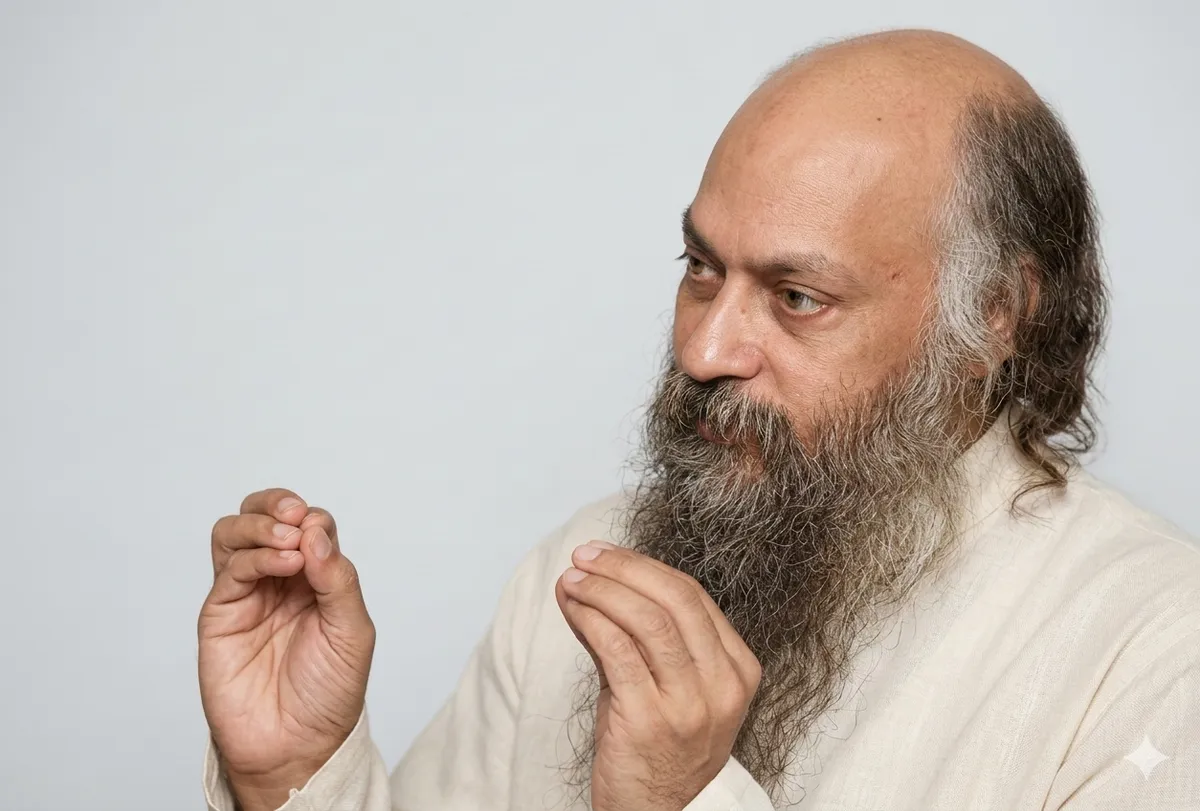
Osho's original Hindi beside Osho Live's English translation, matched passage by passage.
जो जानते हैं, वे वही नहीं कहते--जो जानते हैं। क्योंकि जो जाना जाता है जीवन की आत्यंतिक गहराई में उसे तो सतह पर ला कर शब्द नहीं दिये जा सकते। जो जाना जाता है, वह तो कभी कहा नहीं जाता। उसे कहा ही नहीं जा सकता। शब्द बड़े संकीर्ण और बड़े छोटे हैं। फिर भी जानने वाले कुछ कहते हैं। वे क्या कहते हैं? और जब वे कुछ कहते हैं तो तुम यह मत खयाल करना कि वे सत्य के संबंध में कुछ कहते हैं। वे असल में तुम्हारे और सत्य के संदर्भ में कुछ कहते हैं। इस भेद को समझ लेना।
Those who know do not say what they know—what is known in the ultimate depth of life cannot be brought to the surface and given words. What is known is never said; it cannot be said. Words are cramped and small. Yet the knowers do speak. What do they say? And when they speak, do not think they are speaking about truth itself. In fact, they speak about you in relation to truth. Understand this distinction.
महावीर ने सत्य को जाना, बुद्ध ने सत्य को जाना। अष्टावक्र ने सत्य को जाना। लेकिन जब वे बोलते हैं तो सत्य उतना महत्वपूर्ण नहीं होता जितना सुनने वाला महत्वपूर्ण होता है। वे सुनने वाले से बोलते हैं, अन्यथा बातचीत व्यर्थ हो जाएगी। वे तुम्हारे संदर्भ में बोलते हैं। निश्चित ही जनक अलग तरह का श्रोता है; अर्जुन से बहुत भिन्न है। अगर जनक होता कृष्ण के सामने तो कृष्ण ने भी अष्टावक्र-गीता ही कही होती। और अगर अष्टावक्र के सामने अर्जुन होता तो अर्जुन से भी अष्टावक्र ने जो कहा होता वह कृष्ण की गीता से भिन्न नहीं होता।
Mahavira knew truth, Buddha knew truth, Ashtavakra knew truth. But when they speak, truth as such is less important than the listener. They speak to the listener, otherwise the dialogue would be futile. They speak in reference to you. Naturally, Janaka is a very different kind of listener from Arjuna. Had Janaka stood before Krishna, Krishna too would have spoken the Ashtavakra Gita; and had Arjuna stood before Ashtavakra, what Ashtavakra said to Arjuna would not have been different from Krishna’s Gita.
ऐसा समझो कि तुम बीमार हो और तुम चिकित्सक के पास गए हो, तो चिकित्सक अपना सारा चिकित्साशास्त्र थोड़े ही तुम पर उंड़ेल देता है; तुम्हारी बीमारी के संदर्भ में कुछ कहता है। प्रिसक्रिप्शन तुम्हारी बीमारी के संदर्भ में होता है। वह निश्चित ही उसके चिकित्साशास्त्र के अनुभव से आता है; लेकिन होता तुम्हारे संदर्भ में है। तो तुम यह मत समझ लेना कि तुम जब एक चिकित्सक के पास गए और उसने तुम्हें एक प्रिसक्रिप्शन दे दिया तो तुम यह मत समझ लेना कि यह प्रिसक्रिप्शन उसने हर मरीज के लिए दे दिया, कि अब कोई भी बीमार हो जाए घर में तो डाक्टर के पास जाने की जरूरत नहीं है, प्रिसक्रिप्शन तो अपने पास है। तो तुम खतरनाक हो जाओगे। तो बीमारी तो ठीक शायद ही हो, तुम बीमारों को नष्ट कर डालोगे, मार डालोगे। प्रिसक्रिप्शन तुम्हारे लिए था, तुम्हारे संदर्भ में था।
Consider: you are ill and go to a physician. He does not pour his entire medical science upon you; he speaks in reference to your illness. The prescription is in reference to your disease. Of course it comes from his experience of medicine, but it is addressed to you. So do not think that if a doctor gives you a prescription, it is for every patient—so that now, whenever anyone in the house falls ill, there is no need to go to the doctor: we already have a prescription. You will become dangerous. The illness will hardly be cured; you will destroy the sick, even kill them. That prescription was for you, in reference to you.
ऐसा समझो, जब किसी ज्ञानी पुरुष के सामने कोई खड़ा होता है पूछने, अगर यह व्यक्ति बहुत अहंकारी है तो ज्ञानी पुरुष कहेगा: ऐसे जीओ जैसे भाग्य से सब तय है। क्योंकि इसके अहंकार की बीमारी से यह ग्रसित है। इसे इसके अहंकार से नीचे उतारना है। तो उस ज्ञान की शून्यता से एक आवाज उठेगी: ‘दैव, भाग्य! तुम्हारे किए कुछ भी नहीं होता।’ क्योंकि अहंकारी को तो यह लगता है, मेरे किए ही सब हो रहा है; मैं करने वाला हूं। उसके अहंकार के पीछे कर्ता ही तो छिपा है। तो सदगुरु कर्ता को खिसकाने लगेगा। एक दफा कर्ता हट गया तो अहंकार ऐसे गिर जाता है, जैसे ताश के पत्तों का घर।
Understand then: when someone stands before a knower to ask, if the person is very egoistic, the knower will say, Live as if everything is determined by fate. Because he is afflicted with the disease of ego. He has to be brought down from his ego. From the emptiness of that knowing a voice will arise: “Destiny, fate! Nothing happens by your doing.” For the egoist feels, Everything happens through my doing; I am the doer. The doer hides behind the ego. So the master begins to dislodge the doer. Once the doer is removed, the ego collapses like a house of cards.
लेकिन अगर पूछने वाला आलसी है, तामसी है--अहंकारी नहीं, राजसी नहीं, तामसी है, सुस्त है, अकर्मण्य है और कहता है, जो होना है सो होगा, अपने किये क्या होता; और बैठा रहता है गोबर-गणेश बना--तो ज्ञानी पुरुष उसके संदर्भ में बोलेगा। वह कहेगा: ‘उठो, पुरुषार्थ के बिना कभी कुछ नहीं होता। कुछ करो! ऐसे बैठे-बैठे-बैठे गंवाओ मत! थोड़ा हलन-चलन लाओ जीवन में! थोड़ी ऊर्जा को जगाओ। ऐसे बैठे-बैठे परमात्मा न मिलेगा: यात्रा पर निकलो।’
But if the questioner is lazy—not egoistic and fiery, but inert, sluggish, indolent—and says, Whatever has to happen will happen; what comes of one’s doing? and sits there like a lump, then the knower will speak in reference to him. He will say, “Get up! Without self-effort nothing ever happens. Do something! Don’t waste yourself sitting, sitting, sitting! Bring some movement into life! Awaken some energy. God is not found by sitting idly—set out on the journey.”
क्यों?
अगर भाग्य की बात यह अज्ञानी सुन ले तो उस भाग्य की बात को सुन कर यह तो बड़ा निश्चिंत हो जाएगा। यह तो कहेगा: यही तो हम कहते थे। तो हम तो ज्ञान को उपलब्ध ही हैं। हम तो कुछ करते नहीं, बैठे रहते हैं। घर के लोग पीछे पड़े हैं, नासमझ हैं! कोई कहता है, नौकरी करो; कोई कहता है, धंधा करो; कोई कहता है कुछ करो--मगर हम तो अपने शांत बैठे रहते हैं।
Why? If such an ignorant person hears talk of fate, he will become very easy in his mind. He will say, That is exactly what we have always said. We are already endowed with wisdom: we do nothing, we just sit. The people at home keep nagging us—fools! One says, get a job; another says, start a business; someone says, do something—but we remain quietly seated.
जापान में ऐसा हुआ, एक सम्राट बहुत आलसी था--अति आलसी था। एक दिन पड़े-पड़े बिस्तर पर उसे खयाल आया, मैं तो सम्राट हूं, तो जितना भी आलस्य करूं, करूं, कोई कुछ कह नहीं सकता; लेकिन और आलसियों का क्या हाल होता होगा! बेचारे बड़े मुश्किल में पड़े होंगे।
In Japan this happened: an emperor was very lazy—utterly lazy. One day, lying in bed, it occurred to him: I am the emperor, so I can be as lazy as I like; no one can say anything. But what must be the condition of other lazy people? The poor fellows must be in great trouble.
तो उस सम्राट ने सोचा कि सभी अपनों के लिए कुछ करते हैं, मुझे भी उनके लिए कुछ करना चाहिए। तो उसने डुंडी पिटवा दी सारे राज्य में कि जितने आलसी हों सब आ जाएं राजमहल। सबके रहने-खाने का इंतजाम राज्य की तरफ से होगा।
So the emperor thought, Everyone does something for his own; I too should do something for them. He had it proclaimed throughout the realm: Let all who are lazy come to the palace. The state will provide for their food and lodging.
मंत्रियों ने कहा: महाराज, आप ही काफी हैं! अब यह क्या कर रहे हैं? और अगर ऐसा किया तो पूरा राज्य उमड़ पड़ेगा, रुकेगा कौन! किसको मतलब फिर! फिर तो झूठे-सच्चे का पता लगाना मुश्किल हो जाएगा कि आलसी कौन है।
The ministers said, Your Majesty, you alone are enough! What are you doing now? If you do this, the whole kingdom will pour in—who will stay back? Who will care then? It will be hard to tell the true from the false—who is really lazy.
सम्राट ने कहा: वह तुम चिंता करो पता लगाने की, लेकिन जो-जो आलसी हैं उनको राज्य से शरण मिलेगी। उनका कसूर क्या है? भगवान ने उन्हें आलसी बनाया। वे अपना आलस्य का जीवन जी रहे हैं। उनको सुख-सुविधा होनी चाहिए। और करने वाले तो कर लेते हैं, न करने वाले का कौन है? उसका भी तो कोई होना चाहिए। तो तुम...यह तुम फिक्र कर लो कौन सच्चा, कौन झूठा।
The emperor said, That is for you to worry about; but whoever is lazy will have the state’s protection. What is their fault? God made them lazy. They are living their life of laziness. They should have comfort and care. Those who act, manage somehow; but who belongs to the non-doer? He too should have someone. So you find out who is true and who is false.
वह तो डुंडी पिट गई तो हजारों लोग आने शुरू हो गए। गांव के गांव! मंत्रियों ने व्यवस्था की पता लगाने की। उन्होंने घास की झोपड़ियां बनवा दीं; जो भी आए उनको ठहरा दिया। और आधी रात में आग लगा दी। सब भाग खड़े हुए। लेकिन चार आदमी अपना कंबल ओढ़ कर सो रहे। उनको दूसरों ने खींचा भी तो उन्होंने कहा: भाई अब परेशान न करो आधी रात। लोगों ने कहा: आग लगी है पागलो!
उन्होंने कहा: लगी रहने दो। मगर नींद मत तोड़ो।
The proclamation was made and thousands began to come—whole villages. The ministers arranged a test. They built huts of straw and housed whoever came. And in the middle of the night they set the huts on fire. Everyone ran out. But four men remained sleeping under their blankets. Others tried to drag them out, but they said, Brother, don’t trouble us at midnight. People shouted, The huts are on fire, you fools! They replied, Let them burn—but don’t break our sleep.
उन चार को वजीरों ने कहा कि ये निश्चित पहुंचे हुए सिद्ध पुरुष हैं। इन चार को राज्य-आश्रय मिले, समझ में आता है।
The ministers said, These four are certainly accomplished adepts. These four deserve the state’s shelter—that makes sense.
जब ऐसा कोई व्यक्ति किसी ज्ञानी के सामने आ जाए तो उससे वह क्या कहे? भाग्य की बात कहे? नहीं, वह दर्शन उसके जीवन के काम का नहीं होगा। वह औषधि उसका इलाज नहीं है।
When such a person comes before a knower, what should he be told? Should he be told about fate? No, that philosophy will not serve his life. That medicine does not cure his ailment.
ये जो वक्तव्य हैं, औषधियां हैं। बुद्ध ने तो बार-बार कहा है कि मैं चिकित्सक हूं, दार्शनिक नहीं। नानक ने बहुत बार कहा है कि मैं तो वैद्य हूं, कोई विचारक नहीं। जोर इस बात पर है कि तुम्हारी बीमारी जो है, उसका इलाज...।
These statements are medicines. Buddha said again and again, I am a physician, not a philosopher. Nanak said often, I am a vaidya, not a thinker. The emphasis is on curing the disease you have.
अर्जुन भागना चाहता था, अकर्मण्य होना चाहता था। कृष्ण ने उसे खींचा। भागने न दिया कर्म से। जनक सम्राट है और सम्राट के भीतर स्वभावतः न तो करने का कोई सवाल होता है, न करने की कोई जरूरत होती है। और स्वभावतः सम्राट के भीतर एक गहन अहंकार होता है, सूक्ष्म अहंकार होता है--परिमार्जित, परिष्कृत। सम्राट कुछ करे न भी तो भी जानता यही है कि उसी के किए सारा साम्राज्य चल रहा है। कुछ न भी करे तो भी, वैसी सूक्ष्म धारणा तो बनी ही रहती है! वह माने ही रहता है कि मेरे बिना क्या होगा। जिस दिन मैं न रह जाऊंगा, दुनिया में सूरज अस्त हो जाएगा। तो लोग सोचते हैं, मेरे बाद कौन! कोई भिखारी तो नहीं सोचता ऐसा कि मेरे बाद कौन! लेकिन जिनके पास पद है, शक्ति है, वे सोचते हैं, मेरे बाद कौन! क्यों? तुम्हें इसकी चिंता क्या है? तुम्हारे बाद जो होंगे वे फिक्र कर लेंगे। नहीं, लेकिन वह सोचता है कि मैं कुछ इंतजाम कर जाऊं। मेरे बाद के लिए भी इंतजाम मुझे करना है। व्यवस्था मुझे जुटानी है। वसीयत कर जाऊं। गरीब तो कोई वसीयत नहीं करता, वसीयत करने को भी कुछ नहीं है। अमीर वसीयत करता है--कौन सम्हालेगा!
Arjuna wanted to run away; he wanted inaction. Krishna pulled him—did not let him flee from action. Janaka is a king, and in a king’s heart naturally there is neither the question of having to do, nor the need to do. And naturally in a king there is a subtle ego—refined, polished. Even if the king does nothing, he still believes that the entire kingdom runs through his doing. Even doing nothing, that subtle notion persists. He thinks, Without me what would happen? The day I am gone, the sun will set on the world. People wonder, Who after me? No beggar thinks, Who after me? But those with position and power think, Who after me? Why? Why are you concerned? Those who come after will take care. No, he thinks, I must make arrangements. I must arrange even for after I am gone. I must set things in order. Make a will. The poor do not make wills—there is nothing to bequeath. The rich make wills—who will manage!
जनक में एक सूक्ष्म अस्मिता रही होगी--कहीं बहुत गहरे में पड़ी रही होगी। चिकित्सक की आंख से तो तुम बच नहीं सकते, क्योंकि चिकित्सक की आंख तो एक्स-रे है; वह तो दूर तक देखती है। गुरु की आंख से तुम बच नहीं सकते। वह तो तुम्हारी गहनतम चेतना में प्रवेश करती है। वह तो तुम्हारे अचेतन को उघाड़ती है। वह तो वहां तक देखती है जहां जन्मों-जन्मों के संचित संस्कार पड़े हैं जिनको तुम भूल ही गए हो; जिनकी तुम्हें याद भी नहीं रही है; जहां बीज पड़े हैं, जो कभी फले नहीं, जो कभी फूले नहीं, जिनमें कभी अंकुर नहीं आए, लेकिन कभी भी सुसमय पा कर, ठीक मौसम में वर्षा हो जाने पर अंकुरित हो जाएंगे।
In Janaka there must have been a subtle sense of I-ness, lying very deep. You cannot hide it from the physician’s eye, for the physician’s eye is an X-ray, it sees far. You cannot hide from the guru’s eye. He enters your innermost consciousness. He exposes your unconscious. He sees where the accumulated impressions of many births lie—those you have forgotten, of which you have no memory—where seeds are lying that have not yet borne fruit, not yet blossomed, that have never sprouted, but which at any time, given the right season and a timely rain, will sprout.
तो जब अष्टावक्र ने जनक को ऐसा कहा, तो जनक को ऐसा कहा है, इसे याद रखो। ये वक्तव्य निजी हैं और व्यक्तियों को दिये गए हैं। एक गुरु और एक शिष्य के बीच जो घटा है इसे तुम सार्वजनीन सत्य मत मान लेना। यह सबकी औषधि नहीं है। यह कोई रामबाण-औषधि नहीं है कि कोई भी बीमारी हो, ले लेना और ठीक हो जाओगे। तुम्हारी बीमारी पर निर्भर करेगा। इसलिए कभी-कभी उल्टा भी हो जाता है। अक्सर उल्टा हो जाता है।
So when Ashtavakra spoke thus to Janaka, remember: he spoke to Janaka. These statements are personal, given to individuals. What happens between a master and a disciple—do not mistake it for a universal truth. This is not a panacea. It is not a miracle drug that, whatever the disease, just take it and you will be cured. It will depend on your disease. Therefore sometimes the opposite happens. In fact, it often happens.
अब अष्टावक्र की गीता, अक्सर जो आलसी हों, उनको जंचेगी। वह उल्टा हो गया मामला। जो अकर्मण्य हैं उनको जंचेगी। वे कहेंगे, बिलकुल सत्य! यही तो हम जानते रहे सदा से। तब बजाय जीवन में प्रभु का प्रकाश फैले, उनके जीवन में नर्क का अंधकार फैल जाएगा।
Now Ashtavakra’s Gita will often appeal to the lazy. The matter is turned upside down. It will attract the indolent. They will say, Absolutely true! This is what we have always known. Then, instead of the light of the Lord spreading in their life, the darkness of hell will spread.
यही तो भारत में हुआ। भाग्य का अपूर्व सिद्धांत भारत को दीन और दरिद्र कर गया। लोग काहिल हो गए, लोग सुस्त हो गए। उन्होंने कहा, जो भगवान करेगा, गुलामी दे तो, कोई लूट-पाट ले तो ठीक; भूखा रखे, अकाल पड़े, तो ठीक। लोग बिलकुल ऐसे दीन हो कर बैठ गए कि हमारे किए तो कुछ होगा नहीं।
This is exactly what happened in India. The extraordinary doctrine of fate made India poor and miserable. People became slothful and dull. They said, Whatever God does—if he gives slavery, if someone plunders us, fine; if he keeps us hungry, if there is famine, fine. People sat utterly meek, thinking nothing will happen through our doing.
ये सूत्र तुम्हें अकर्मण्य बनाने को नहीं हैं। ये सूत्र तुम्हें अकर्ता बनाने को हैं, अकर्मण्य बनाने को नहीं हैं। और अकर्ता का अर्थ अकर्मण्यता नहीं होता। अकर्ता तो बड़ा कर्मण्य होता है। सिर्फ कर्म उसका अब अपना नहीं होता है; अब ईश्वर समर्पित होता है। करता तो वह बहुत है, लेकिन करने का श्रेय नहीं लेता। करता सब है और कर्ता नहीं बनता। और यह नहीं कहता कि मैं करने वाला हूं। करता सब है और सब प्रभु-चरणों में समर्पित कर देता है। कहता है, तुमने करवाया, किया!
These sutras are not to make you inactive. These sutras are to make you a non-doer, not inactive. And non-doership does not mean inaction. The non-doer is very active; only the action is no longer his own—it is surrendered to God. He does much, but he does not take the credit. He does everything and yet does not become the doer. He never says, I am the one who does. He does everything and offers it all at the feet of the Divine, saying, You made it happen; you did it.
इस बात को खयाल रखना। अगर भाग्य का परम सिद्धांत तुम्हारे जीवन में अकर्मण्यता और आलस्य लाने लगे तो समझना कि तुमसे चूक हो गई; तुम समझ नहीं पाए। अगर भाग्य का सिद्धांत तुम्हारे जीवन में कर्म का प्रकाश लाए, और कर्ता को विदा कर दो तुम, और सारे कर्म का श्रेय परमात्मा के चरणों में चढ़ता जाए, तो समझना कि तुम बिलकुल, बिलकुल ठीक समझ गए; तीर ठीक जगह लग गया है।
Keep this in mind. If the supreme doctrine of fate begins to bring laziness and inaction into your life, understand that you have erred; you have not understood. If the doctrine of fate brings the light of action into your life, and you dismiss the doer, and the credit for all action is offered at the feet of God, then know that you have understood perfectly—your arrow has hit the mark.
निर्भर करता है--किस व्यक्ति से बात कही जा रही है?
It depends—on whom one is speaking to.
पुरुषार्थ है पल-पल डोलते हुए मन को निस्पंद करना।
पुरुषार्थ है सोचने की प्रक्रिया को बंद करना।
पुरुषार्थ वह है जो मन को समेट कर उसके उत्स पर डाल दे;
मस्तिष्क के महल से सारी स्मृतियों को बुहार कर निकाल दे।
मन का महल जब साफ होगा, तुम अपने-आप के दर्शन पाओगे।
मैं शपथपूर्वक कहता हूं कि सोचना बंद करने से तुम मर नहीं जाओगे।
Purushartha is to still the mind that wavers moment to moment. Purushartha is to stop the process of thinking. Purushartha is to gather the mind and place it back into its source; to sweep all memories out of the palace of the brain. When the mansion of the mind is clean, you will have the vision of your own self. I swear to you: you will not die by stopping thought. Such is the definition of purushartha—the supreme purushartha!
ऐसी है पुरुषार्थ की परिभाषा--परम पुरुषार्थ!
‘पुरुषार्थ’ शब्द को तुमने कभी सोचा? पुरुष और अर्थ! तुम्हारे भीतर जो छिपा हुआ चैतन्य है, उसका नाम है पुरुष। तुम्हारा शरीर तो नगर है, पुर। और उसके भीतर जो छिपा हुआ दीया है चैतन्य का, वह है--पुरुष। तुम एक बस्ती हो। वैज्ञानिक कहते हैं कि कोई सात करोड़ जीवाणु शरीर में रह रहे हैं। सात करोड़! छोटी-मोटी बस्ती नहीं--बड़े नगर हो, महानगर हो। बंबई भी छोटी है; आधा करोड़ लोग ही रहते हैं। तुम्हारे शरीर में सात करोड़, चौदह गुनी क्षमता है! भीड़ है तुम्हारे शरीर में। इन सारे जीवाणुओं के बीच में छिपा हुआ तुम्हारे चैतन्य का दीया है। उसका नाम पुरुष है। पुरुष इसीलिए कि वह इस पूरे पुर के बीच में बसा है। फिर उस पुरुष के अर्थ को जान लेना पुरुषार्थ है। क्या है इस पुरुष का अर्थ? कौन है यह पुरुष? क्या है इसका स्वाद?--उसे जान लेना।
Have you ever pondered the word “purushartha”? Purusha and artha! The consciousness hidden within you is called Purusha. Your body is a city, a pur; and the lamp of consciousness hidden within it is the Purusha. You are a whole township. Scientists say about seventy million microorganisms live in the body. Seventy million! Not a small hamlet—you are a big city, a metropolis. Even Bombay is small; only five million people live there. Your body houses seventy million—fourteen times the capacity! Your body is a crowd. Amidst all these microorganisms, hidden, is the lamp of your consciousness. Its name is Purusha—Purusha, because it dwells in the midst of this entire pur. Then to know the artha, the meaning, of that Purusha is purushartha. What is the meaning of this Purusha? Who is he? What is his taste?—to know that.
तो पुरुषार्थ तो एक ही है स्वयं को जान लेना। और स्वयं को जानने के लिए अहंकार का गिरा देना अत्यंत अनिवार्य है, क्योंकि वही नहीं जानने देता। अहंकार का अर्थ है: तुमने मान लिया कि तुम अपने को जानते हो बिना जाने। अहंकार का अर्थ है: तुमने कुछ झूठी मान्यता बना ली अपने संबंध में कि मैं यह हूं, यह हूं, यह हूं--हिंदू हूं, जैन हूं, ब्राह्मण हूं, शूद्र हूं; धनी हूं, अमीर हूं, गरीब हूं, काला, गोरा, युवा, बूढ़ा--ऐसी तुमने धारणाएं बना लीं। इनमें से तुम कोई भी नहीं हो। जवानी आती है, चली जाती है। बुढ़ापा आता है, ब़ुढापा भी चला जाता है। जीवन आया, जीवन भी चला जाता है। तुम तो वही के वही बने रहते हो। न तुम गोरे, न तुम काले। चमड़ी का रंग पुरुष को नहीं रंगता; चमड़ी बाहर है। पुरुष बहुत गहरे में छिपा है। वहां तक चमड़ी का रंग नहीं पहुंचता है। चमड़ी का रंग तो बड़ी साधारण-सी बात है।
So there is only one purushartha: to know oneself. And to know oneself it is absolutely essential to drop the ego, because it alone does not let you know. Ego means: you have assumed you know yourself without knowing. Ego means: you have formed some false notions about yourself—“I am this, I am that”—Hindu, Jain, Brahmin, Shudra; wealthy, rich, poor; dark, fair; young, old. You have made such identifications. You are none of these. Youth comes and goes. Old age comes, and even old age goes. Life came, and even life goes. You remain the same. You are neither fair nor dark. The color of the skin does not dye the Purusha; the skin is outside. The Purusha is hidden very deep; the color of the skin never reaches there. The color of the skin is a very ordinary matter.
वैज्ञानिक कहते हैं, गोरे और काले में चार आने के रंग का फर्क है। आज नहीं कल वैज्ञानिक इंजेक्शन निकाल ही लेंगे। कि गोरे को नीग्रो होना है, एक इंजेक्शन लगवा लिया। चार आने का पिगमेंट, और सुबह उठे और नीग्रो हो गए। नीग्रो को गोरा होना है, चार आने का इंजेक्शन लगा लिया। चार आने के पीछे कितनी मारा-मारी है!
Scientists say the difference between the fair and the dark is only four annas’ worth of pigment. Today or tomorrow scientists will surely bring out an injection: if the fair-skinned want to become dark, take an injection—four annas’ worth of pigment, and in the morning you wake up dark; if the dark-skinned want to become fair, take a four-anna injection. So much conflict over four annas!
चमड़ी का रंग भीतर नहीं जाता है। तुम बीमार हो तो बीमारी भीतर नहीं जाती। तुम स्वस्थ हो तो स्वास्थ्य भीतर नहीं जाता। भीतर तो तुम उस परम अतिक्रमण की अवस्था में सदा एकरस हो; न बीमारी फर्क लाती, न स्वास्थ्य फर्क लाता। जीओ या मरो, उस भीतर के पुरुष को कोई तरंग नहीं छूती। निस्तरंग! वहां तक कोई लहर नहीं पहुंचती। सागर की सतह पर ही लहरें हैं, गहराई में कहां लहर! और यह तो गहरी से गहरी संभावना है जो तुम्हारे भीतर है। प्रशांत महासागर भी इतना गहरा नहीं, जितनी गहराई पर तुम्हारा पुरुष छिपा है। इस पुरुष के अर्थ को जानने का नाम ही पुरुषार्थ है। और उस जानने के लिए जो भी तुम करो, वह सब पुरुषार्थ है।
The color of the skin does not go within. If you are ill, the illness does not go within. If you are healthy, health does not go within. Within, you are always in that state of supreme transcendence—of one taste; neither illness nor health makes a difference. Whether you live or die, no ripple touches the inner Purusha. Rippless! No wave reaches there. Waves are only on the ocean’s surface; where are waves in the depths? And this is the deepest of the deep possibilities within you. Even the Pacific Ocean is not as deep as the depth at which your Purusha is hidden. To know the meaning of this Purusha is purushartha. And whatever you do for that knowing—that all is purushartha.
भाग्य का केवल इतना ही अर्थ है कि तुम अतिशय रूप से अपने जीवन में तनाव मत ले लेना। चलना जरूर। यात्रा करना, खोजना; लेकिन तनाव मत ले लेना। श्रम-रहित हो तुम्हारा प्रयास। करो तुम खूब, लेकिन करने के कारण उद्विग्न, चिंतित न हो जाना। तुमने फर्क देखा दोनों बातों में--एक चित्रकार चित्र बनाता है, तुम देखो बैठ कर पास, कैसे बनाता है! जैसे छोटा बच्चा खेलता हो। कोई तनाव नहीं। कब पूरा होगा, होगा पूरा कि नहीं होगा--इसकी भी कोई चिंता नहीं है; कोई खरीदेगा, नहीं खरीदेगा; बिकेगा, नहीं बिकेगा--इसकी भी कोई चिंता नहीं है। ऐसा लीन हो जाता है चित्र बनाने में, जैसे बनाना अपने-आप में पूर्ण है। साधन ही साध्य है। कोई फलाकांक्षा नहीं है। लवलीन! डुबकी लग जाती है! चित्रकार तो मिट ही जाता है।
As for fate, its only meaning is: do not take excessive tension into your life. Walk, certainly. Travel, seek; but do not become tense. Let your effort be free of strain. Do much, but do not become agitated or anxious because of the doing. See the difference between the two: a painter paints—sit nearby and watch how he paints! Like a small child at play. No tension. When will it be completed, will it be completed or not—no concern; will anyone buy it or not—no concern. He becomes so absorbed in painting that the doing is complete in itself. The means is the end. There is no hankering for the fruit. Absorbed! A plunge happens! The painter disappears.
इसलिए सभी महाचित्रकारों ने कहा है कि हमें पता नहीं कौन हमारे हाथ में तूलिका सम्हाल लेता है! सभी महाकवियों ने कहा है: हमें पता नहीं, कौन हमारे भीतर गीत को गुनगुनाने लगता है! हम तो केवल वाहक होते हैं। हम तो केवल ले आते हैं उसकी खबर बाहर तक। संदेशवाहक! जैसे कि तुम कलम से लिखते हो तो कलम थोड़े ही लिखती है! लिखने वाले तुम हो; कलम तो सिर्फ तुम्हारे हाथ में सधी होती है। ऐसा ही महाचित्रकार या महाकवि या महानर्तक सिर्फ कलम की तरह हो जाता है परमात्मा के हाथ में। नहीं कि लिखना नहीं होता, लिखना तो खूब होता है अब। अब ही लिखना हो पाता है! लेकिन अब परमात्मा लिखता है! कोई तनाव नहीं रह जाता।
That is why all great painters have said: we do not know who takes hold of the brush in our hand! All great poets have said: we do not know who begins to hum the song within us! We are only carriers. We only bring its news out—messengers! As when you write with a pen, the pen does not write; you write; the pen is only steadied in your hand. Just so, the great painter or great poet or great dancer becomes only a pen in the hand of the Divine. Not that writing does not happen—writing happens profusely now. Only now can writing truly happen! But now God writes. No tension remains.
महाकवि हुआ: कूलरिज। मरा तो चालीस हजार कविताएं अधूरी छोड़ कर मरा। मरने के पहले किसी ने पूछा कि इतना अंबार लगा रखा है, इनको पूरा क्यों नहीं किया? और अदभुत कविताएं हैं! किसी में सिर्फ एक पंक्ति कम रह गई है। पूरी क्यों नहीं की?
तो कूलरिज ने कहा: मैं कैसे पूरी करूं? उसने वहीं तक लिखवाईं। फिर मैं राह देखता रहा। फिर पंक्ति आगे नहीं आई। शुरू-शुरू में जब मैं जवान था, तो मैं जोड़-तोड़ करता था; तीन पंक्तियां उतरीं, एक मैं जोड़ देता था। लेकिन धीरे-धीरे मैंने पाया, मेरी पंक्ति मेल नहीं खाती। वे तीन तो अपूर्व हैं; मेरी बड़ी साधारण! वह तो ऐसा हुआ जैसे सोने में मिट्टी लगा दी, सुगंध में दुर्गंध जोड़ दी। जब मुझमें समझ आई तो फिर मैंने यह काम बंद कर दिया। कभी कविता पूरी उतरी तो उतरी; कभी अधूरी उतरी तो अधूरी उतरी। कभी ऐसा हो गया कि आधी अभी उतरी और आधी साल भर बाद उतरी, तब पूरी हुई। तो मैं सिर्फ प्रतीक्षा करता रहा हूं। मेरा किया इसमें कुछ भी नहीं है। जिसने लिखवाईं हैं, उसी से तुम बात कर लेना।
There was a great poet: Coleridge. He died leaving forty thousand poems incomplete. Before he died someone asked, “You have piled up such a mountain—why did you not complete them? And they are wondrous poems! Some are short by only a single line. Why not finish them?” Coleridge said, “How can I finish them? He had me write only up to there. I waited; the next line did not come. In my youth I used to patch—if three lines descended, I would add the fourth. But gradually I found my line did not match. Those three were incomparable; mine was very ordinary! It was like smearing mud on gold, adding stench to fragrance. When understanding dawned in me, I stopped doing that. If a poem descended complete, it was complete; if it descended incomplete, it remained incomplete. Sometimes half descended now and half a year later, and then it was complete. I have only waited. There is nothing of my doing in this. Speak to the one who had them written.”
एक दूसरे महाकवि इलियट से किसी ने पूछा कि तुम्हारी इस कविता का अर्थ क्या है? मैं शिक्षक हूं विश्वविद्यालय में और विद्यार्थियों को पढ़ाता हूं। और यह कविता मेरा कचूमर निकाल देती है। यह कविता जब पढ़ाने का समय आता है, मेरे हाथ-पैर कंपने लगते हैं। इसका अर्थ क्या है?
इलियट ने कहा कि दो आदमियों को इसका अर्थ मालूम था, अब केवल एक को ही मालूम है। शिक्षक खुश हुआ। उसने कहा कि चलो, कम से कम तुमको तो मालूम है। उसने कहा: मैंने यह कहा नहीं। दो को मालूम था--परमात्मा को और मुझे। मैं तो भूल-भाल गया। अब तो वही जाने। जब उसने गुनगुनाई थी, तब तो मुझे भी पता था। तब तो मैं भरा-भरा था। तब तो जैसे वर्षा आई थी और बाढ़ आ गई थी। मेरा रोआं-रोआं जानता था कि अर्थ क्या है। वह बौद्धिक अर्थ न था। मेरी श्वास-श्वास पहचानती थी कि अर्थ क्या है। अर्थ मुझमें भरा था। अब वर्षों बीत गए, मैं तो बहुत बहा और बदल गया। अब तो सिर्फ परमात्मा जानता है। तुम उसी से प्रार्थना करना। शायद प्रार्थना की किसी घड़ी में जिसने मुझे कविता दी थी, वही अर्थ भी तुम्हें खोल दे।
Someone asked another great poet, Eliot, “What is the meaning of this poem of yours? I am a university teacher and I teach students. This poem pulverizes me. When it is time to teach it, my hands and feet begin to tremble. What is its meaning?” Eliot said, “Two people knew its meaning; now only one knows.” The teacher was pleased: “At least you know it.” Eliot said, “I did not say that. Two knew—God and I. I have forgotten. Now only He knows. When He hummed it in me, then I too knew. Then I was full to the brim. Then it was as if the rains had come and there was a flood. Every pore of me knew what the meaning was. It was not an intellectual meaning. My every breath recognized what the meaning was. The meaning filled me. Now years have passed; I have flowed and changed much. Now only God knows. Pray to Him. Perhaps, in some moment of prayer, He who gave me the poem will open its meaning to you as well.”
महाकाव्य अवतरण है। तो महाकवि के जीवन में कोई तनाव नहीं होता। रवींद्रनाथ के चेहरे पर तुम्हें जो प्रसाद दिखाई पड़ता है, वह प्रसाद इसीलिए है। उनकी वाणी में जो उपनिषदों की गंध है वह इसीलिए है। उनको कवि कहना ठीक नहीं--वे ऋषि हैं। जो उनसे आया है वह उनका नहीं है--कोई और गाया है। किसी और ने वीणा के तार छेड़े हैं। ज्यादा से ज्यादा वे उपकरण हैं, वीणा हैं; लेकिन तार किसी और ने छेड़े हैं; अंगुलियां किसी और अज्ञात की उन पर गूंजी हैं।
A great poem is a descent. So in the life of a great poet there is no tension. The grace you see on Tagore’s face is for this reason. The scent of the Upanishads in his voice is for this reason. To call him a poet is not quite right—he is a rishi. What came through him is not his—someone else sang. Someone else plucked the strings of the veena. At most he is an instrument, a veena; but the strings were plucked by someone else; the fingers of some other Unknown resounded upon them.
तनाव-रहित प्रयास का अर्थ होता है, तुम्हें अब कोई फल का विचार नहीं है। जो इस क्षण हो रहा है, तुम परिपूर्ण रूप से उसे कर रहे हो। परमात्मा पूरा करवाना चाहेगा, पूरा करवा लेगा; अधूरा तो अधूरा। फल आएगा तो ठीक; न आएगा तो ठीक। यह तुम्हारी चिंता नहीं है।
फलाकांक्षा-रहित जो कृत्य है उसमें तनाव चला जाता है। तनाव गया, कर्ता गया; कर्ता गया, अहंकार गिरा।
Effort without tension means: you no longer think of the fruit. Whatever is happening this moment, you are doing it totally. If God wants to bring it to completion, He will; if incomplete, then incomplete. If the fruit comes, fine; if it does not, fine. This is not your concern. When action is free of the hankering for fruit, tension disappears. Tension gone, the doer is gone; the doer gone, ego falls.
भाग्य का ऐसा अर्थ है कि भगवान कर रहा है। तो इसे मैं तुम्हारी कसौटी के लिए कह दूं कि कर्म तो जारी रहे और कर्ता का भाव संगृहीत न हो तो समझना कि अष्टावक्र को तुमने ठीक से समझा। कर्म ही बंद हो जाए और कर्ता का भाव तो बना ही रहे, तो समझ लेना कि तुम चूक गए। और दूसरी बात ज्यादा आसान है, पहली बात बहुत कठिन है।
Such is the meaning of fate: that God is doing. So let me give you a touchstone: if action continues and the sense of doership is not retained, then know that you have understood Ashtavakra rightly. If action itself stops while the sense of doership remains, then know you have missed. And the latter is easier; the former is very difficult.
मेरे पास लोग आते हैं, वे कहते हैं कि जब वही कर रहा है तो हम करें ही क्यों? थोड़ा सोचो, तुम्हारा यह कहना ही कि हम करें ही क्यों? यही बताता है कि तुम्हें अभी भी यह खयाल है कि तुम कर्ता हो। पहले तुम करते थे, अब तुम नहीं करते हो; लेकिन कर्ता हो, यह खयाल तो तुम्हारा मजबूत अभी भी है। तुम कहते हो, अब हम क्यों करें? जैसे कि अब तक तुम करते थे! भ्रांति अभी भी कायम है। जो समझेगा वह कहेगा, करना न करना अपने हाथ में नहीं है; जो होगा, होगा। हम बाधा न डालेंगे। हम साथ हो लेंगे। हम उसकी लहर के साथ बहेंगे।
People come to me and say, “If He is doing, why should we do at all?” Think a little—your very saying “Why should we do?” shows you still cherish the idea that you are the doer. Earlier you used to do; now you say you will not do—but the notion “I am the doer” is still strong. You say, “Why should we do?”—as if until now you were the one who did! The delusion remains intact. One who understands will say, “Doing or not doing is not in our hands; whatever will be, will be. We will not obstruct. We will go along. We will flow with His wave.”
फिर कभी-कभी ऐसा भी होता है कि कोई व्यक्ति ठीक मध्य में होता है, जिसके भीतर पुरुषार्थ और भाग्य संतुलित होते हैं। ऐसा व्यक्ति अगर सदगुरु के पास आए तो वह उससे कहेगा: दोनों ही ठीक हैं; पुरुषार्थ भी ठीक है, भाग्य भी ठीक है। क्योंकि यह व्यक्ति संतुलित है। इससे कहना कि पुरुषार्थ ठीक नहीं, इसका संतुलन तोड़ना है। इससे कहना कि भाग्य ठीक है, इसका संतुलन तोड़ना है। यह संतुलित हो ही रहा है।
And sometimes it also happens that a person is exactly in the middle, with purushartha and fate balanced within. If such a person comes to a true master, he will say to him: both are right; purushartha is right and fate is right. Because this person is becoming balanced. To tell him purushartha is not right would break his balance. To tell him fate is right would break his balance. He is just attaining equilibrium.
एक आदमी ने बुद्ध से पूछा, ईश्वर है? बुद्ध ने कहा: नहीं। उसी दिन दूसरे आदमी ने पूछा, ईश्वर है? बुद्ध ने कहा: निश्चय ही। और उसी सांझ एक तीसरे आदमी ने पूछा और बुद्ध चुप रह गए। रात आनंद उनसे पूछने लगा: मुझे पागल कर दोगे क्या? क्योंकि आनंद तीनों मौकों पर मौजूद था। उसने कहा: मैं आज सो न सकूंगा, आप मुझे समझा दें। यह बात निपटारा ही कर दें। ईश्वर है या नहीं? सुबह आपने कहा, नहीं है। मैंने कहा, चलो ठीक, कोई बात नहीं, उत्तर एक साफ हो गया। दोपहर होते-होते आप बदल गए। कहने लगे, है। सांझ चुप रह गए।
बुद्ध ने कहा: उनमें से कोई भी उत्तर तेरे लिए नहीं दिया था, तूने लिया क्यों? ऐसे बीच-बीच में झपटोगे तो झंझट में पड़ोगे। जो मेरे पास आया था पहले से ही भाव लिए कि ईश्वर नहीं है, उससे मैंने कहा, है। उसे उसकी स्थिति से हटाना जरूरी था। वह नास्तिक था। उसकी नास्तिकता को डांवांडोल करना जरूरी था। उसकी यात्रा बंद हो गई थी। वह मान कर ही बैठ गया था कि ईश्वर नहीं है। बिना जाने मान कर बैठ गया था, ईश्वर नहीं है। बिना कहीं गए मानकर बैठ गया था कि ईश्वर नहीं है। उसको धक्का देना जरूरी था। उसकी जड़ों को हिलाना जरूरी था। उसे राह पर लगाना जरूरी था। तो मैंने कहा कि ईश्वर, ईश्वर है।
वह जो दूसरा आदमी आया था, वह मान कर बैठ गया था, ईश्वर है। बिना खोजे, बिना आविष्कार किए, बिना चेष्टा, बिना साधना, बिना श्रम, बिना ध्यान, बिना मनन, बस मान कर बैठ गया था उधार कि ईश्वर है। उसे भी डगमगाना जरूरी था। उसकी श्रद्धा झूठी थी, उधार थी। उससे मुझे कहना पड़ा, ईश्वर नहीं है।
और जो तीसरा आदमी सांझ आया था, उसकी कोई धारणा न थी, कोई विश्वास न था, वह परम खोजी था। उससे कुछ भी कहना खतरनाक है। कोई भी धारणा उसके भीतर डालनी उसके मन को विकृत करना है, इसलिए मैं चुप रह गया। मैंने उससे कहा: मौन उत्तर है। और वह समझ गया।
A man asked Buddha, “Is there God?” Buddha said, “No.” That very day another man asked, “Is there God?” Buddha said, “Certainly.” And that evening a third man asked, and Buddha fell silent. At night Ananda began to ask him, “Will you drive me mad? I won’t be able to sleep tonight—please explain this to me. Settle it once for all: is there God or not? In the morning you said there is not. I thought, fine—at least we have one clear answer. By noon you changed and said there is. By evening you were silent.” Buddha said, “None of those answers was given for you. Why did you take them? If you snatch things in between, you will get into trouble. The one who came first already carried the notion that there is no God. I told him, ‘There is.’ It was necessary to dislodge him from his position. He was a nihilist. It was necessary to shake his atheism. His journey had stopped. He was sitting fixed in the belief—without knowing—that there is no God. Without going anywhere he had assumed there is no God. So it was necessary to push him, to shake his roots, to set him on the path. Therefore I said, ‘God is.’ The second man had sat down believing that God is—without seeking, without discovering, without effort, without sadhana, without labor, without meditation, without reflection—just a borrowed belief that God is. He too needed to be made to wobble. His faith was false, borrowed. I had to tell him, ‘There is no God.’ And the third man who came in the evening had no notion, no belief; he was a supreme seeker. To say anything to him is dangerous. To plant any notion in him is to distort his mind; therefore I remained silent. I said to him: silence is the answer. And he understood.”
और बुद्ध ने कहा: कुछ घोड़े होते हैं, उनको मारो तो बामुश्किल चलते हैं। कुछ घोड़े होते हैं, उनको सिर्फ कोड़ा फटकारो, चलने लगते हैं। कुछ घोड़े होते हैं, सिर्फ कोड़ा देख लेते हैं, फटकारने की जरूरत नहीं पड़ती और चलते हैं। और ऐसे भी कुछ कुलीन घोड़े होते हैं कि कोड़े की छाया भी काफी है। वह जो तीसरा था उसको कोड़े की छाया काफी थी। शब्द की जरूरत न थी। शब्द का कोड़ा चलाना आवश्यक न था--मौन रह जाना...! उसने मुझे देख लिया। बात उसकी समझ में आ गई। कह दिया मैंने जो कहना था; सुन लिया उसने जो सुनना था। और शब्द बीच में आया नहीं, सिद्धांत बीच में आए नहीं। भाषा का उपयोग नहीं हुआ। हृदय से हृदय मिल गए और साथ-साथ हम हो लिए। वह भी समझ गया, मैं भी समझ गया कि वह समझ गया है। तुम इन तीनों में से कुछ भी उत्तर, आनंद, मत ले लेना। तुम्हें कोई भी उत्तर नहीं दिया गया है।
And Buddha said: “Some horses move only when beaten. Some horses start moving if you merely crack the whip. Some horses begin to move just on seeing the whip; and there are such noble horses that even the shadow of the whip is enough.” For that third man, the shadow of the whip was enough. There was no need to wield the whip of words—just to remain silent… He saw me. The matter was understood. I had said what was to be said; he had heard what was to be heard. No word came in between; no doctrine came in between. Language was not used. Heart met heart, and we flowed together. He understood, and I understood that he had understood. Ananda, do not take any of these three answers for yourself. No answer was given to you.
काश, तुम इस बात को समझ लो तो तुम्हें महापुरुषों के जीवन में जो विरोधाभास दिखाई पड़ते हैं, वे तत्क्षण विदा हो जाएंगे। तब तुम्हें महावीर, बुद्ध, कृष्ण, राम, मुहम्मद, जरथुस्त्र, जीसस में कोई विरोधाभास दिखाई न पड़ेगा। अलग-अलग शिष्यों की अलग-अलग जरूरतें थीं। अलग-अलग रोगियों के लिए अलग-अलग औषधि है।
If only you grasp this, the contradictions you see in the lives of the great ones will vanish at once. Then you will see no contradictions among Mahavira, Buddha, Krishna, Rama, Muhammad, Zarathustra, Jesus. Different disciples had different needs. For different patients, different medicines.
नहीं, जिसके सुख-दुख के अनुभव समाप्त हो गए, वह दूसरे के सुख-दुख से भी प्रभावित नहीं होता। तुम्हें कठिनाई होगी यह बात सोच कर, क्योंकि तुम सोचते हो कि उसे तो बहुत प्रभावित होना चाहिए तुम्हारे सुख-दुख से। नहीं, उसे तो दिखाई पड़ गया कि सुख-सुख होते ही नहीं हैं। तो तुम्हारा सुख-दुख देख कर तुम पर दया आती है, लेकिन सुखी-दुखी नहीं होता। सिर्फ दया आती है कि तुम अभी भी सपने में पड़े हो!
No. One whose experiences of pleasure and pain have ended is not affected by the pleasure and pain of others either. It may be difficult for you to think so, because you imagine he should be deeply affected by your joys and sorrows. No — he has seen that what you call pleasure is not pleasure at all. So, seeing your pleasure and your pain, compassion arises for you, but he does not become happy or unhappy. Only compassion arises — seeing that you are still caught in a dream!
ऐसा समझो कि दो आदमी सोते हैं, एक ही कमरे में, दोनों दुख-स्वप्न में दबे हैं, दोनों बड़ा नारकीय सपना देख रहे हैं। एक जग गया। निश्चित ही जो जग गया अब उसे सपने के सुख-दुख व्यर्थ हो गए। क्या तुम सोचते हो दूसरे को पास में बड़बड़ाता देख कर, चिल्लाता देख कर, उसकी बात सुन कर कि वह कह रहा है, ‘हटो, यह राक्षस मेरी छाती पर बैठा है,’ यह दुखी-सुखी होगा? यह हंसेगा और दया करेगा। यह कहेगा कि पागल! यह अभी भी सपना देख रहा है। यह इसके राक्षस को हटाने की कोशिश करेगा कि इसकी छाती पर राक्षस न हो? राक्षस तो है ही नहीं, हटाओगे कैसे? हटाने के लिए तो होना चाहिए। यह तो देख रहा है कि सज्जन अपनी ही मुट्ठी बांधे छाती पर, पड़े हैं। और गुनगुना रहे हैं कि राक्षस बैठा है, यह रावण बैठा दस सिर वाला मेरे ऊपर! इसको हटाओ!
यह जो जाग गया है, क्या करेगा? यह इस आदमी को भी जगाने की कोशिश करेगा। इसके दुख को हटाने की नहीं--इसको जगाने की। फर्क साफ समझ लेना। जब बुद्ध तुम्हें दुखी देखते हैं, तो तुम्हारे दुख को मान नहीं सकते कि है; क्योंकि वे तो जानते हैं दुख हो ही नहीं सकता, भ्रांति है। तुम्हें जगाने की कोशिश करते हैं। तुम्हें भागते देख कर कि तुम रस्सी को सांप समझ कर भाग रहे हो, वे एक दीया ले आते हैं। वे कहते हैं, जरा रुको तो, जरा इस सांप को गौर से तो देखें, है भी? उस प्रकाश में रस्सी तुम्हें भी दिखाई पड़ जाती है, तुम भी हंसने लगते हो।
Imagine two people sleeping in the same room, both crushed under a dream of suffering, both seeing a hellish nightmare. One wakes up. Naturally, for the one who has awakened, the dream’s pleasures and pains have become meaningless. Do you think that, seeing the other muttering and shouting beside him — hearing him say, “Move away, a demon is sitting on my chest” — he will become happy or unhappy? He will laugh and feel compassion. He will say, “Madman! He is still dreaming.” Will he try to remove the demon from the other’s chest? How can he remove it? The demon isn’t there; for removal it has to exist. He can see the good man lying there with his own fist clenched on his chest, murmuring, “A demon is sitting here — Ravana, the ten‑headed one, is on top of me! Take him away!” What will the one who has awakened do? He will try to wake this man up — not to remove his suffering, but to wake him up. Understand the difference clearly. When the awakened ones see you suffering, they cannot concede that your suffering is; they know suffering cannot be — it is a misperception. They try to awaken you. Seeing you run away, mistaking a rope for a snake, they bring a lamp. They say, “Wait a moment. Let’s look carefully at this snake — is it even there?” In that light the rope becomes visible to you as well, and you too begin to laugh.
ज्ञानी पुरुष तुम्हारे सुख-दुख से जरा भी प्रभावित नहीं होता। और जो प्रभावित होता हो, वह ज्ञानी नहीं है। यद्यपि तुम्हारे सुख-दुख से दया उसे जरूर आती है। कभी-कभी हंसता भी है--देख कर सपने का बल, व्यर्थ का बल; देख कर झूठ का बल!
The enlightened person is not affected in the least by your pleasure and pain. And one who is affected is not enlightened. Yet your joys and sorrows do evoke compassion in him. Sometimes he even laughs — seeing the power of a dream, the power of the false.
ऐसा ही समझो, एक छोटा बच्चा है, और उसकी गुड़िया की टांग टूट गयी और वह रो रहा है। तुम क्या करते हो? रोते हो उसके पास बैठ कर? तुम भी दुखी होते, आंसू झारते हो? तुम उससे कहते हो कि ‘बेटा, नासमझ, यह गुड़िया ही है! टूटने को ही थी। इसमें कोई प्राण थोड़े ही हैं कि तू परेशान हो रहा है? यह टांग कोई असली टांग थोड़े ही है।’ हालांकि तुम्हारी समझ की बातें शायद बेटे को समझ न भी आयें। लेकिन तुम भी जानते हो, यह भी बड़ा होगा कल, थोड़ी प्रौढ़ता आयेगी, गुड्डा-गुड्डी भूल जायेगा। फेंक देगा कहीं फिर, लौट कर देखेगा भी नहीं। अभी बचपना है, तो गुड्डा-गुड्डियों से खेल रहा है।
Think of a small child whose doll’s leg has broken, and he is crying. What do you do? Do you sit and cry with him? Do you too grow sad and shed tears? You say to him, “Son, don’t be foolish — it’s only a doll! It was bound to break. There is no life in it for you to be so upset. That leg isn’t a real leg.” Your wise words may not make sense to the child. But you know that one day he will grow up, gain a little maturity, and forget all about dolls. He will throw them away somewhere and never look back. Right now he is a child, so he plays with dolls.
Seeing you drowned in pleasure and pain, the enlightened one knows you are still asleep, dreaming.
ज्ञानी पुरुष तुम्हें सुख-दुख में डूबा देख कर जानता है कि तुम अभी भी सोये सपना देख रहे हो।
छाया मत छूना मन
होगा दुख दूना मन
यश है न वैभव है
मान है न सरमाया
जितना ही दौड़ा तू
Do not clutch at shadows, mind; Your sorrow will only double, mind. There is neither fame nor splendor, Neither honor nor riches. The more you run, The more you are deluded. Revere what is hard and real. Do not clutch at shadows, mind; Or grief will only double, mind.
उतना ही भरमाया
जो है यथार्थ कठिन
उसका तू कर पूजन
छाया मत छूना मन
होगा दुख दूना मन।
तुम्हारे सब दुख छाया, झूठे हैं, माया! बुद्धपुरुष को, समाधिस्थ पुरुष को जो यथार्थ है, दिखाई पड़ता है। जिसे अपना यथार्थ दिखाई पड़ गया, उसे सबका यथार्थ दिखाई पड़ जाता है। फिर भी तुम पर दया करता है--दया करता है कि तुम अभी भी सोये हो। दया करता है, क्योंकि कभी वह भी सोया था। और जानता है कि तुम्हारी पीड़ा गहन है; झूठी है, फिर भी गहन है। जानता है, तुम तड़प रहे हो; माना कि जिससे तुम तड़प रहे हो वह है नहीं। क्योंकि वह भी तड़पा है। वह भी कभी ऐसा ही रोया है, गिड़गिड़ाया है। वह पहचानता है।
All your sufferings are shadows — false, maya! To the awakened one, the one established in samadhi, what is real is revealed. One who has seen his own reality sees everyone’s reality as well. Even then, he has compassion for you — compassion because you are still asleep; compassion because he too was once asleep. And he knows your pain is intense; false, yet intense. He knows you are writhing — granted that what you writhe over is not. For he too once writhed. He too once cried and pleaded. He recognizes it.
वह भी कभी खेल-खिलौनों से खेला है। कभी गुड़ियाएं टूट गयी हैं, कभी विवाह रचाते-रचाते नहीं रच पाया है तो बड़े दुख हुए हैं। कभी बना-बना कर तैयार किया था ताश का महल, हवा का झोंका आया है और गिरा गया है, तो बच्चे की आंखों से झर-झर आंसू झरे हैं, ऐसे आंसू उसको भी झरे थे। वह जानता है। वह पहचानता है। वह भलीभांति तुम्हारे दुख में सहानुभूति रखता है। लेकिन फिर भी हंसी तो उसे आती है, क्योंकि बात तो झूठी है। है तो सपना ही। भला तुम्हारे सामने हंसे न; सौजन्यतावश, सज्जनतावश तुम्हें थपथपाये भी; तुमसे कहे भी कि बड़ा बुरा हुआ, होना नहीं था--लेकिन भीतर हंसता है।
He too once played with toys. Once dolls broke; once he was arranging a marriage in play and it didn’t happen, and he felt great sorrow. Once he had built a house of cards, a gust of wind came and blew it down, and tears streamed from the child’s eyes — such tears streamed from his eyes too. He knows. He recognizes it. He fully empathizes with your suffering. Yet still, laughter arises in him, because the whole thing is false — it is a dream. Of course he will not laugh to your face; out of courtesy and kindness he may pat you, he may say, “It’s terrible; it shouldn’t have happened” — but inside he is laughing.
जैसे कि तुम छोटे बच्चे को समझाते हो कि ‘घबड़ा मत, टांग भला टूट गयी, गुड़िया की आत्मा अमर है, घबड़ा मत! गुड़िया परमात्मा के घर चली गयी, देख प्रभु की गोद में बैठी है, कैसा मजा कर रही है!’ तुम समझाते हो। तुम कहते हो, ‘दूसरी गुड़िया ले आयेंगे। घबड़ा मत। रो मत। चीख- पुकार मत मचा। कुछ भी नहीं बिगड़ा है। सब ठीक हो जायेगा।’ समझाते हो। थपथपाते हो। फिर भी भीतर तुम जानते हो, एक खेल तुम्हें भी खेलना पड़ रहा है।
Just as you explain to the little child, “Don’t be upset — so what if the leg has broken? The doll’s soul is immortal! Don’t worry. The doll has gone to God’s home; look, she is sitting in the Lord’s lap, having such a good time!” You explain. You say, “We’ll buy another doll. Don’t worry. Don’t cry or scream. Nothing is really lost. Everything will be fine.” You explain; you soothe. Yet inside you know that you too have to play along.
जब बुद्धपुरुष तुम्हारे दुख में तुम्हें सहानुभूति दिखलाते हैं तो एक नाटक है, एक अभिनय है--सौजन्यतावश। तुम्हें बुरा न लगे। तुम्हें पीड़ा न हो। लेकिन साथ-साथ चेष्टा करते रहते हैं कि तुम भी जागो। क्योंकि असली घटना तो तभी घटेगी दुख के बाहर होने की, जब तुम जानोगे कि सब दुख-सुख छाया हैं, माया हैं।
When the enlightened ones show sympathy in your suffering, it is a play, an act — out of courtesy. So that you are not hurt, so that you don’t feel offended. But alongside, they go on trying to help you wake up. Because the real event of going beyond suffering will happen only when you come to know that all pleasures and pains are shadows, maya.
निश्चित ही जैसे-जैसे सजगता बढ़ेगी, संवेदनशीलता भी बढ़ेगी। साधारणतः तो हम एक तरह की धुंध में रहते हैं--बेहोश, मूर्च्छित। जैसे एक आदमी शराब पीए पड़ा है नाली में, तो उसे नाली की बदबू थोड़े ही आती है। तुम्हें लगता है कि नाली में पड़ा है बेचारा। मगर वे तो बड़े मजे से पड़े हैं। हो सकता है कि सपना देख रहे हों, महल में विश्राम कर रहे हैं। कि राष्ट्रपति हो गए हैं, दरबार लगाए बैठे हों!
Certainly, as awareness grows, sensitivity will grow. Ordinarily we live in a kind of fog—unconscious, stupefied. Like a man drunk, lying in a gutter—he doesn’t smell the stench. You think, “Poor fellow, lying in a drain.” But he’s enjoying himself. He may be dreaming he’s resting in a palace, that he’s become president and is holding court!
तुम्हें लगता है कि कीचड़ में, बदबू में पड़ा है। मुंह में कीचड़ चली जा रही है। नाक के पास नाली बह रही है। बड़ी दुर्गंध इसे आती होगी। लेकिन वह बेहोश पड़ा है। दुर्गंध वगैरह आने के लिए थोड़ा होश चाहिए। हां, सुबह जब आंख खुलेगी उसकी और होश आएगा, तो झाड़-झकाड़ कर भागेगा घर; स्नान-ध्यान करके, चंदन-मंदन लगा कर, पूजा-पाठ करके तैयार हो कर बैठकखाने में बैठ जाएगा। तब तुम उससे कहो कि जरा नाली में चल कर लेट जाओ, असंभव हो जाएगा। क्योंकि अब सब इंद्रियां सजग होंगी।
You see mud, filth, the gutter running past his nose. You imagine a terrible stink must be assailing him. But he’s unconscious. For stench to be felt, a little awareness is needed. In the morning when he wakes up and comes to, he’ll dust himself off and run home, bathe, put on sandalwood paste, do his prayers, dress up and sit in the living room. Then if you tell him, “Just go and lie down in that gutter again,” it will be impossible—now all the senses are alert.
ऐसी ही घटना घटती है। जैसे-जैसे सजगता बढ़ती है, तुम्हारे जीवन की बहुत-सी नालियां जिनको तुम अब तक स्वर्ग समझ कर जी रहे थे, दुर्गंधयुक्त हो जाती हैं। बहुत-से सुख जिन्हें तुम अब तक सुख समझते थे, दुख जैसे मालूम होने लगते हैं, चुभने लगते हैं। इसलिए सजगता बढ़ने के साथ एक उपद्रव बढ़ता है। वह उपद्रव है कि आदमी बहुत संवेदनशील, कोमल हो जाता है। एक गहन कोमलता उसे घेर लेती है।
Just so it happens. As awareness increases, many of the gutters in your life—things you were living as if they were heaven—become foul-smelling. Many pleasures you took to be pleasures begin to feel like pains, like pricks. So with growing awareness a certain turmoil grows: one becomes very sensitive, delicate; a deep tenderness surrounds you.
लेकिन यह मार्ग पर ही है बात। जैसे-जैसे सजगता परिपूर्णता पर पहुंचती है, पहले आदमी की जड़ता टूटती है, संवेदनशीलता बढ़ती है। फिर एक ऐसी घड़ी आती है--सजगता की आखिरी छलांग--जब जाग इतनी गहन हो जाती है कि शरीर और मन दूर हो जाते हैं। फिर कोई संवेदनशीलता कष्ट नहीं देती, दुख नहीं देती। बोध तो होता है। अगर बुद्ध को कांटा लगेगा तो तुमसे ज्यादा बोध होता है। क्योंकि बुद्ध का बोध प्रगाढ़ है। तुम्हारा बोध तो कुछ भी नहीं है।
But this is on the way. As awareness moves toward completion, first your dullness breaks and sensitivity increases. Then comes a moment—the final leap of awareness—when wakefulness becomes so deep that body and mind fall away. Then no sensitivity gives torment, no suffering. The knowing is there. If a thorn pricks the Buddha, he is more aware of it than you are, because his awareness is profound. Yours is hardly anything.
देखा कभी हाकी के मैदान पर खेलते-खेलते खिलाड़ी के पैर में चोट लग गई, खून बह रहा है, मगर वह खेलता चला जाता है! उसे पता नहीं। सब देखने वालों को दिखाई पड़ रहा है कि पैर से खून बह रहा है, खून की कतार बन गई है मैदान पर। उसे पता नहीं है। वह खेल में मस्त है, बेहोश है। होश कहां उसे अपने शरीर का! जैसे ही खेल बंद होगा, रेफरी की सीटी बजेगी, तत्क्षण दुख होगा, दर्द होगा, बैठ जाएगा पैर पकड़ कर। कहेगा कि हाय, पता नहीं कब से चोट लगी है! अब उसे दुख होगा। इतनी देर भी दुख तो था, लेकिन बोध नहीं था।
Have you seen it? On a hockey field a player gets hurt, his foot is bleeding, but he goes on playing. He doesn’t know. Everyone else can see the blood, a red trail across the field; he doesn’t. He’s engrossed in the game, unconscious of the body. The moment the game stops, the referee’s whistle blows—instantly there is pain; he sits down, clutching his leg: “Oh! I don’t know when I was hurt.” The pain was there all along, but there was no knowing.
तो पहली दफा जब तुम्हारे जीवन में ध्यान आएगा तो बहुत-सा बोध आएगा। उस बोध के साथ-साथ जो-जो गलत तुम अब तक कर रहे थे, उस सबकी संवेदनशीलता आएगी। जरा-सा तुम क्रोध करोगे और तुम्हारे प्राण कंप जाएंगे। जरा-सी तुम ईर्ष्या करोगे और जहर फैल जाएगा। जरा-सी तुम घृणा करोगे और तुम अनुभव करोगे जैसे अपनी ही छाती में छुरा भोंक लिया। तो कठिन होगा। लेकिन इस कठिनाई से भागना मत और घबराना मत।
So when meditation first comes into your life, a great deal of knowing comes. With that knowing, sensitivity to all the things you’ve been doing wrongly arises. A little anger, and your very life-breath will tremble. A little jealousy, and poison will spread. A little hatred, and you will feel as if you’ve stabbed your own chest. It will be hard. But do not run from this difficulty, do not be afraid.
हृदय छोटा हो तो शोक वहां नहीं समाएगा।
और दर्द दस्तक दिये बिना दरवाजे से लौट जाएगा।
टीस उसे उठती है जिसका भाग्य खुलता है।
वेदना गोद में उठा कर सबको निहाल नहीं करती।
जिसका पुण्य प्रबल होता है, वही अपने आंसुओं से धुलता है।
If the heart is small, grief cannot be contained there, and pain will turn back from the door without knocking. A pang arises only for the one whose destiny opens. Sorrow does not lift everyone into its lap and bless them. Only the one whose virtue is strong is washed by his own tears.
दर्द तो बढ़ेगा, पीड़ा बढ़ेगी, बोध बढ़ेगा। लेकिन यह संक्रमण में होगा। एक घड़ी आएगी, छलांग लगेगी। सौ डिग्री पर जैसे पानी भाप बन जाता है और छलांग लग जाती है--ऐसे सौ डिग्री पर जब होश आता है, एक छलांग लग जाती है। तत्क्षण तुम पाते हो कि तुम्हारा शरीर और मन पीछे छूट गया। सब सुख-दुख वहीं थे, इंद्रियों में थे। अब तुम पार हो गए। तुम दूर हो गए। अब तुम्हारा सारा तादात्म्य समाप्त हो गया।
Pain will increase, anguish will increase, knowing will increase. But this is during the transition. A moment comes, a leap occurs. As at one hundred degrees water becomes steam and takes a jump, so at one hundred degrees of awareness a leap happens. Instantly you find your body and mind left behind. All pleasure and pain were there, in the senses. Now you are beyond. You are at a distance. Your identifications have all fallen away.
लेकिन इस घड़ी के आने के पहले बोध के साथ-साथ दुख भी बढ़ेगा।
But before that moment, along with knowing, sorrow too increases.
संस्कृत में बड़ा प्यारा शब्द है: वेदना। उसके दोनों अर्थ होते हैं: दुख और बोध। ‘वेद’ उसी धातु से बना है जिससे ‘वेदना’। वेद का अर्थ होता है: ज्ञान, बोध। वेदना का अर्थ होता है: ज्ञान, बोध। और दूसरा अर्थ होता है: दुख, पीड़ा।
In Sanskrit there is a beautiful word: vedana. It has both meanings: pain and knowing. Veda comes from the same root as vedana. Veda means knowledge, knowing. Vedana means knowledge, knowing; and it also means pain, suffering.
संस्कृत बहुत अनूठी भाषा है। उसके शब्दों का विश्लेषण बड़ा बहुमूल्य है। क्योंकि जिन्होंने उस भाषा को रचा है, बहुत जीवन की गहन अनुभूतियों के आधार पर रचा है। जैसे-जैसे बोध बढ़ता है, दुख बढ़ता है। अगर दुख के बढ़ने से घबरा गए तो एक ही उपाय है: बोध को छोटा कर लो। वही तो हम करते हैं। सिर में दर्द हुआ, एस्प्रो ले लो! एस्प्रो करेगी क्या? दर्द को थोड़े ही मिटाती है, सिर्फ बोध को क्षीण कर देती है, तंतुओं को शिथिल कर देती है, तो दर्द का पता नहीं चलता। ज्यादा तकलीफ है, पत्नी मर गई, शराब पी लो! दिवाला निकल गया, शराब पी लो। बोध को कम कर लो, तो वेदना कम हो जाएगी।
Sanskrit is a very unique language; analyzing its words is precious, because those who shaped it did so out of deep experiences of life. As knowing increases, pain increases. If, frightened by the increase of pain, you want relief, there is only one way: make the knowing smaller. That’s what we do. You have a headache—take an aspirin. What will aspirin do? It doesn’t remove the pain; it only dulls the knowing, relaxes the nerves so you don’t notice the pain. Greater trouble: your wife dies—drink! You go bankrupt—drink! Lower the knowing, and the pain will lessen.
बहुत-से लोगों ने यही खतरनाक तरकीब सीख ली है। जीवन में दुख बहुत है, उन्होंने बोध को बिलकुल नीचा कर लिया है: न होगा बोध, न होगी पीड़ा। लेकिन यह बड़ा महंगा सौदा है। क्योंकि बोध के बिना तुम्हारा बुद्धत्व कैसे फलेगा, तुम्हारा फूल कैसे खिलेगा? कैसे बनोगे कमल के फूल फिर? यह सहस्रार अनखुला ही रह जाएगा।
Many have learned this dangerous trick. Life has much suffering, so they have pushed their knowing down completely: no knowing, no pain. But it is a very costly bargain. Without knowing, how will your Buddhahood ripen, how will your flower bloom? How will you become a lotus? Your sahasrara will remain unopened.
घबड़ाओ मत, इस पीड़ा को स्वीकार करो। इस पीड़ा की स्वीकृति को ही मैं तपश्चर्या कहता हूं। तपश्चर्या मेरे लिए यह अर्थ नहीं रखती है कि तुम उपवास करो, धूप में खड़े रहो, पानी में खड़े रहो--उन मूढ़ताओं का नाम तपश्चर्या नहीं है। तपश्चर्या का इतना ही अर्थ है: बोध के बढ़ने के साथ वेदना बढ़ेगी, उस वेदना से डरना मत; उसे स्वीकार कर लेना कि ठीक है, यह बोध के साथ बढ़ती है। थोड़े दूर तक बोध के साथ वेदना बढ़ती रहेगी। फिर एक घड़ी आती है, बोध छलांग लगा कर पार हो जाता है, वेदना पीछे पड़ी रह जाती है। जैसे एक दिन सांप अपनी पुरानी केंचुली के बाहर निकल जाता है, ऐेसे एक दिन वेद वेदना की केंचुली के बाहर निकल जाता है। बोध वेदना के पार चला जाता है।
Do not panic; accept this pain. I call this acceptance tapascharya, true austerity. For me, tapascharya does not mean fasting, standing in the sun, standing in water—those foolishnesses are not austerity. Tapascharya simply means: as knowing increases, pain will increase; do not fear it—accept that it grows with knowing. For a little distance, pain will keep pace with knowing. Then a moment comes when knowing leaps beyond and pain is left behind. As a snake one day slips out of its old skin, so one day knowing slips out of the skin of pain. Knowing goes beyond pain.
लेकिन मार्ग पर पीड़ा है। उसे स्वीकार करो। उसे इस तरह स्वीकार करो कि वह भी उपाय है तुम्हारे बोध को जगाने का।
But on the path there is pain. Accept it. Accept it as a device for awakening your knowing.
तुमने कभी खयाल किया, जब तुम सुख में होते हो, भगवान भूल जाता है; जब तुम दुख में होते हो, तब याद आता है! तो दुख का भी कुछ उपयोग है।
Have you noticed? When you are happy, God is forgotten; when you are in pain, you remember. So even suffering has its use.
सूफी फकीर हुआ बायजीद। वह रोज प्रार्थना करता था, वह कहता था, ‘सब करना प्रभु, थोड़ा दुख मुझे दिये रहना। सुख ही सुख में मैं भूल जाऊंगा। तुम्हें मेरा पता नहीं है। सुख ही सुख में मैं निश्चित भूल जाऊंगा। तुम इतना ही सुख मुझे देना जितने में मैं भूल न सकूं, बाकी तुम दुख को देते रहना।’
There was a Sufi mystic, Bayazid. He prayed every day, “Do one thing, Lord: keep a little suffering with me. In sheer happiness I will forget you—you know me. In sheer happiness I will certainly forget. Give me only that much happiness that I do not forget; and keep giving me the rest as suffering.”
यह बायजीद ठीक कह रहा है। यह कह रहा है: दुख रहेगा तो जागरण बना रहेगा। सुख में तो नींद आ जाती है। सुख में तो आदमी सो जाता है।
Bayazid is right. He is saying: if suffering remains, wakefulness remains. In pleasure, sleep comes. In pleasure, man falls asleep.
व्यर्थ कोई भाग जीवन का नहीं है,
व्यर्थ कोई राग जीवन का नहीं है।
बांध दो सबको सुरीली तान में तुम,
बांध दो बिखरे सुरों को गान में तुम।
No part of life is useless, no melody of life is in vain. Bind everything into a single, melodious strain, gather the scattered notes into a song.
दुख भी अर्थपूर्ण है। उसका भी सार है। वह जगाता है। जिस दिन तुमने यह देख लिया कि दुख जगाता है, उस दिन तुम दुख को भी धन्यभाग से स्वीकार करोगे। उस दिन तुम्हारे जीवन में निषेध गिर जायेगा। अब तो तुम कांटों को भी स्वीकार कर लोगे, क्योंकि तुम जानते हो कांटों के बिना फूल होते नहीं। यह गुलाब का फूल कांटों के साथ-साथ है। यह बोध का फूल वेदना के साथ-साथ है।
Sorrow too is meaningful. It also has essence. It awakens. The day you see that sorrow awakens, that day you will gratefully accept sorrow as well. On that day the “no” will drop from your life. You will accept even thorns, because you know there are no roses without thorns. This rose exists along with thorns. This flower of knowing exists along with pain.
एक जगत रूपायित प्रत्यक्ष
एक कल्पना संभाव्य
एक दुनिया सतत मुखर
एक एकांत निस्स्वर
एक अविराम गति उमंग
एक अचल निस्तरंग
दो पाठ, एक ही काव्य।
One world, shaped into the visible. One imagining, merely possible. One world, incessantly eloquent. One solitude, soundless. One unbroken surge of movement. One unmoving, waveless stillness. Two readings, one poem.
दो नहीं है। दो पाठ हैं--काव्य एक ही है।
सत्य तो एक ही है। सोये-सोये देखो तो संसार मालूम पड़ता है। जाग कर देखो, परमात्मा मालूम पड़ता है। संसार और परमात्मा ऐसी दो चीजें नहीं हैं। सोये हुए आदमी ने जब परमात्मा को देखा तो संसार देखा और जागे हुए आदमी ने जब संसार देखा तो परमात्मा को देखा।
There are not two. There are two readings—the poem is one. Truth is one. Look while half-asleep and the world appears. Look awake, and the Divine appears. The world and the Divine are not two different things. The sleeping person, when he looked for the Divine, saw the world; and the awakened person, when he looked at the world, saw the Divine.
जागा हुआ आदमी कहता है: संसार नहीं है, परमात्मा है। सोया हुआ आदमी कहता है: कहां है परमात्मा? संसार ही संसार है।
The awakened one says: the world is not; the Divine is. The sleeping one says: where is the Divine? There is only the world.
ये दो दृष्टियां हैं; सत्य तो एक है। दो पाठ, एक ही काव्य!
These are two perspectives; the truth is one. Two readings, one poem!
चूकने न चूकने की भाषा ही लोभ की भाषा है। लोभ छोड़ो। मेरे साथ उत्सव में सम्मिलित रहो।
The very language of missing or not missing is the language of greed. Drop greed. Join me in celebration.
‘चूक जाऊंगा’--इसका मतलब हुआ कि तुम लोभ की भाषा से देख रहे हो। सब सम्हाल लूं, सब मिल जाए, सब पर मुट्ठी बांध लूं, सब मेरी तिजोरी में हो जाए; धन भी हो वहां, ध्यान भी हो वहां; संसार भी हो, परमात्मा भी हो--ऐसा लोभ तुमने अगर रखा तो निश्चित चूक जाओगे। चूकोगे--लोभ के कारण। यह चूकने न चूकने की भाषा छोड़ो।
“I will miss”—this means you are looking through the lens of greed: Let me secure everything, let everything be mine, let me close my fist on it all, let it all be in my strongbox—money there, meditation there; the world too, and God too. If you keep such greed, you will certainly miss. You will miss—because of greed. Drop this language of missing and not missing.
यहां मैं तुम्हें कुछ दे नहीं रहा हूं। यहां मैं तुमसे कुछ छीन रहा हूं। और यहां मैं तुम्हें कुछ ज्ञान देने नहीं बैठा हूं। तुम मेरे साथ उत्सव में थोड़ी देर सम्मिलित हो जाओ, मेरे साथ गुनगुना लो। तुम थोड़ी दूर मेरे साथ चलो। दो कदम मेरे साथ चल लो, बस इतना काफी है।
Here I am not giving you anything. Here I am taking things away from you. Nor am I sitting here to give you some knowledge. Join me in celebration for a while; hum along with me. Walk a little way with me. Take two steps with me—enough.
तुम्हें एक दफा स्वाद लग जाए परम का, फिर कोई भय नहीं है। फिर मैं यहां रहूं न रहूं--कोई चिंता नहीं है। मेरे रहते तुम्हें थोड़ा-सा स्वाद लग जाए।
If once you get the taste of the Ultimate, then there is no fear. Then whether I am here or not—no worry. While I am here, let you get a little taste.
तो तुम यह चूकने, खोने इत्यादि की बातें छोड़ो। इनमें तुम उलझे रहे तो तुम मेरे उत्सव में सम्मिलित न हो पाओगे। चाह तो ठीक है, लेकिन लोभ से जुड़ी है, इसलिए गलत हुई जा रही है।
So drop this talk of missing, losing, and so on. If you stay entangled in these, you won’t be able to join my celebration. Desire is fine, but it is tied to greed; therefore it goes wrong.
चाहतीं किरणें धरा पर फैल जाना
चाहतीं कलियां चटख कर महमहाना
फूल से हर डाल सजना चाहती है
प्राण की यह बीन बजना चाहती है।
The rays long to spread across the earth, the buds long to burst and be fragrant, each bough longs to be adorned with flowers— this flute of life longs to be played.
चाहतीं चिड़ियां वसंती गीत गाना
पत्तियां संदेश मधु ऋतु का सुनाना
वायु ऋतुपति नाम भजना चाहती है
प्राण की यह बीन बजना चाहती है।
The birds long to sing the springtide song, the leaves to announce the message of the honeyed season, the breeze longs to chant the name of the lord of seasons— this flute of life longs to be played.
ठीक है, भाव तो बिलकुल ठीक है। सिर्फ लोभ की दृष्टि से उसे मुक्त कर लो।
Good—the feeling is perfectly right. Just free it from the perspective of greed.
इसी क्षण मैं यहां हूं, तुम भी मेरे साथ रहो। यह हिसाब-किताब मन में मत बांधो कि सम्हाल लूं, यह पकड़ लूं, यह पकडूं न पकडूं, यह समझ में आया कि नहीं आया। छोड़ो, समझ इत्यादि का कोई सवाल नहीं है। उत्सव, महोत्सव में सम्मिलित हो जाओ! तुम मेरे साथ सिर्फ बैठो। तुम सिर्फ मेरे साथ हो रहो, सत्संग होने दो! थोड़ी देर को तुम मिट जाओ। यहां तो मैं नहीं हूं, अगर वहां तुम थोड़ी देर को मिट जाओ...। वह लोभ न मिटने देगा। वह लोभ खड़ा रहेगा कि कैसे पकडूं, कैसे इकट्ठा करूं। थोड़ी देर को तुम मिट जाओ! तुम कोरे और शून्य हो जाओ। उसी क्षण जो भी मैं हूं, उसका स्वाद तुम्हें लग जाएगा। और वह स्वाद तुम्हारे ही भविष्य का स्वाद है।
In this very moment I am here; you too be here with me. Do not keep accounts in the mind—let me save this, let me grasp that, should I hold this or not, did I understand or not. Drop it. Understanding and such is not the point. Enter the celebration, the festivity! Just sit with me. Just be with me; let satsang happen! Disappear for a little while. Here there is no “I”; if, on your side, you can disappear for a little while… But greed will not allow you to vanish; it will stand guard: how to catch, how to collect. Disappear for a little while! Become blank and empty. In that very instant, whatever I am, its taste will touch you. And that taste is the taste of your own future.
पूरी धरती पर फैला ली बांहें
इन बांहों में आकाश नहीं आया
हर परिचय को आवाज लगा ली है
सुन कर भी कोई पास नहीं आया
मील के पत्थर लगे हैं, किंतु अक्षर मिट गए
कौन से पूछें कि अपना गांव कितनी दूर है!
मील के पत्थर लगे हैं, किंतु अक्षर मिट गए
कौन से पूछें कि अपना गांव कितनी दूर है!
भोर होते ही चले थे, अब दुपहरी हो रही
कौन से पूछें कि शीतल छांव कितनी दूर है!
I spread my arms over the whole earth, yet the sky did not come into these arms. I called out to every acquaintance, yet hearing me, no one came close. Milestones stand, but their letters are erased— whom shall I ask how far my own village is? Milestones stand, but their letters are erased— whom shall I ask how far my own village is? We set out at dawn; now it is turning noon— whom shall I ask how far the cool shade is? Dust clings to the brow, the direction of the goal is found— whom shall I ask how far the holy feet are?
धूल मस्तक से लगा मिलती दिशा गंतव्य की
कौन से पूछें कि पावन पांव कितनी दूर हैं!
मैं यहां मौजूद हूं। तुम्हें किसी से पूछने की कोई जरूरत नहीं है। मुझसे भी पूछने की कोई जरूरत नहीं है। सिर्फ मेरे साथ क्षण भर को गुनगुना लो। मेरे अस्तित्व के साथ थोड़ी देर को रास रचा लो।
I am present here. You need to ask no one. You need not even ask me. Just hum with me for a moment. Enter into a little dance with my being for a while.
नहीं चूकोगे। लेकिन अगर चूकने न चूकने की भाषा में उलझे रहे, तो चूक रहे हो, चूकते रहे हो और निश्चित ही चूक जाने वाले हो।
You will not miss. But if you remain entangled in the language of missing and not missing, you are missing, you have been missing, and you will certainly miss.
हरि ॐ तत्सत्।
Hari Om Tat Sat.