
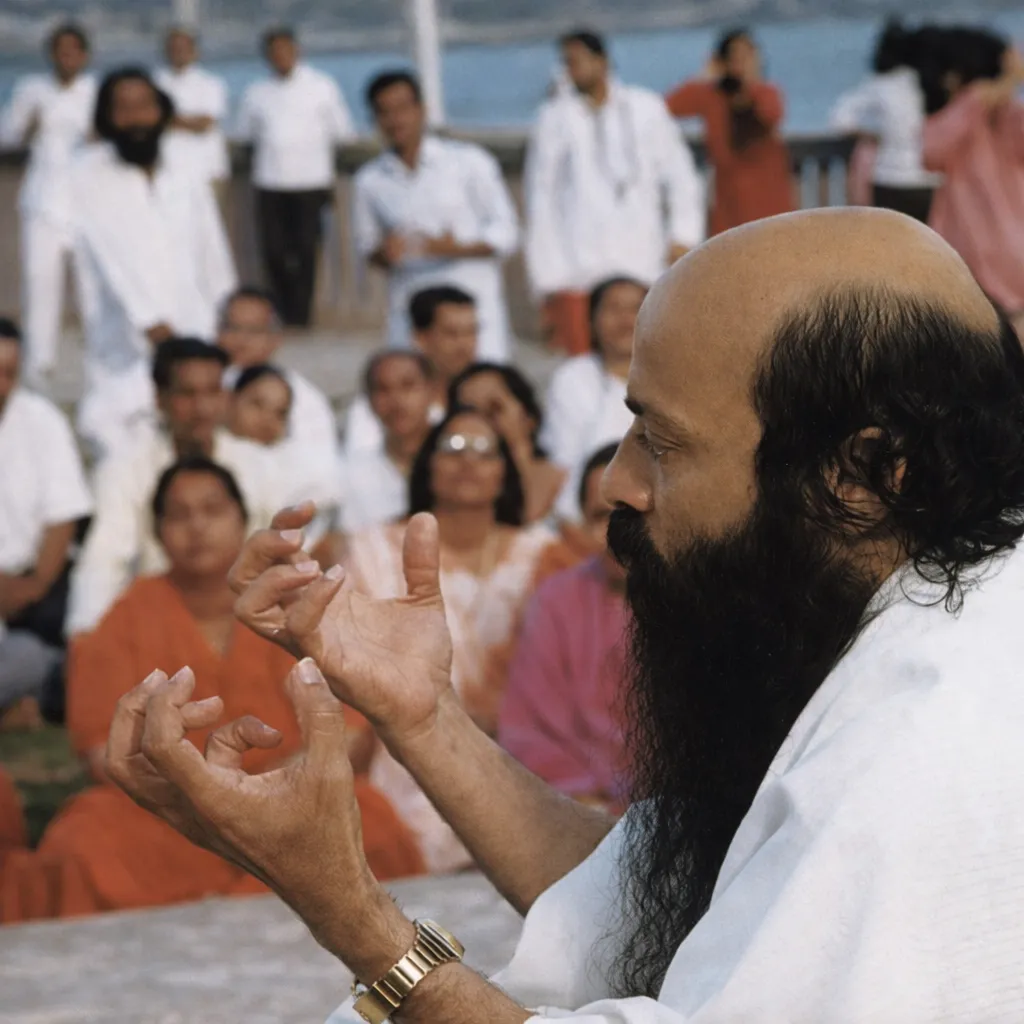
Maha Geeta, an enlightening discourse series by Osho, delves into the profound dualities of existence, exploring the intricate balance between opposing forces that comprise life. At its core, this series examines the juxtaposition of life and death drives inherent within every individual. Drawing on the insights of Freud, Osho presents the revolutionary notion that the life-drive—our innate desire to live—is complemented by an often hidden, but equally potent, death-drive. This duality not only reflects the material and divine dichotomy but also the inevitable interplay between attachment and dispassion. Osho intricately weaves Eastern philosophy with Western thought, shedding light on concepts such as vairagya (dispassion) and nirvana, framing them as manifestations of the death-drive. He suggests that embracing the death-drive is not a morbid fascination but a pathway to ultimate liberation from the cyclical nature of birth and rebirth. This series invites the seeker to transcend conventional understandings of life, urging a profound acceptance of life’s dual nature as a means to achieve supreme rest and freedom. Osho’s discourse offers a transformative perspective, redefining the journey towards spiritual awakening through the embrace of life's inherent polarities.
:अष्टावक्र-संहिता के सूत्रों पर प्रश्नोत्तर सहित पुणे में हुई प्रवचनमाला के अंतर्गत ओशो द्वारा दिए गए 91 प्रवचनों का संग्रह। :अष्टावक्र और राजा जनक के बीच इस अदभुत संवाद की गरिमा को ओशो ने अपनी अमृत वाणी द्वारा उसकी पूर्णता में प्रकट किया है। अष्टावक्र-जनक संवाद एवं प्रश्नोत्तर के माध्यम से ओशो धर्म, साधना, तथा चेतना की अतल गहराई में हमें ले चलते हैं। इस अपूर्व संवाद को महागीता कहकर ओशो ने उसमें अनूठी प्राण-प्रतिष्ठा की है। :The mega-series ''Ashtavakra Mahageeta'' consists of 91 discourses given in Pune on Ashtavakra Gita, aka Ashtavakra Samhita. Mahageeta means "great song." [https://en.wikipedia.org/wiki/Ashtavakra Ashtavakra] was an Indian sage whose precise time on Earth is not known. Guesses range from 500 BCE to 1400 CE. His name means literally "eight bends," referring to the eight
-
Chapter 1
Ashtavakra’s radical call: drop the doer, rest as the witnessing consciousness; liberation, knowledge and non-attachment arise now when you know yourself as Seer.
-
Chapter 2
Ashtavakra's words awaken remembrance: you are the sky, not the body. Be the witness, drop craving and repetition; when the mind rests, uncaused bliss appears.
-
Chapter 3
You are the one witness; freedom lies in knowing the seer, not the seen; drop egoic mirrors of others and taste immediate liberation by recognising pure awareness.
-
Chapter 4
Witnessing is the innermost self; meditation is the method to reach it; tears are strength of feeling; dharma transcends culture and requires inner rebellion.
-
Chapter 5
Cut the noose of body-identification with the sword 'I am Awareness'; proclaim yourself the witness, not the body, and freedom arises instantly.
-
Chapter 6
What you seek is already attained; mere intellectual acceptance of scripture won't awaken you - exhausting desire and inner experience bring self-knowledge.
-
Chapter 7
Awakening depends on readiness: the empty vessel hears. Janaka’s instant realization dissolves the world into the Self; renunciation is inner seeing.
-
Chapter 8
Body is a cage and a sleeping lion of energy awakens—accept bodily upheaval as auspicious; witness without doing and let ego dissolve through surrender.
-
Chapter 9
Religion is experience, not thought; set intellect aside, drink the inner wine of witness consciousness - realize the Self is your own destination.
-
Chapter 10
Enlightenment is causeless and already present; stop seeking, drop rituals and intellect’s reign, let the heart receive grace and taste samadhi.
-
Chapter 11
Seer, seen and seeing are a dream; the stainless witness alone is real. No method or remedy can make it—awakening is simple recognition of innate freedom.
-
Chapter 12
Come to the Master empty and ready to be erased; true discipleship is surrender, effort that earns grace, inner rebirth beyond past identities and habits.
-
Chapter 13
True knowledge frees; hollow learning is an obstacle. Kindle your own lamp—don’t rely on borrowed light. Be the witness, still the chitta, and realise oneness.
-
Chapter 14
Life and death are two legs; transcend both by becoming the witness—Freud's death-drive mirrors vairagya, pointing to vitaraga beyond both and ego's fall.
-
Chapter 15
Ashtavakra tests Janaka: are you truly free or just enchanted by words? Burn the hidden seeds of desire; let lived transformation, not hearing, prove knowing.
-
Chapter 16
Enlightenment is not a need or compulsory; it's purposeless bliss beyond economics, blooming rarely—seek beyond necessity to taste true awakening.
-
Chapter 17
One flower isn't the orchard - partial glimpses deceive; the guru's test makes realization lived, not a word-cage, and exposes the hidden fear of moksha.
-
Chapter 18
Aha versus aho: true realization breaks past frames; preserve childlike wonder against ego’s hunger for acceptance; seek joyfully in patient, playful waiting.
-
Chapter 19
Janaka met Ashtavakra’s harsh test with witness-consciousness: ego erased, life flows by spontaneous sfurana; neither seeking nor avoiding, action without doer.
-
Chapter 20
Humanity hasn't fallen; transformation is individual, not collective—expect no mass renaissance or avatar. Even amid opposition, be your own light and awaken.
-
Chapter 21
Ashtavakra's test shows freedom transcends both indulgence and renunciation: drop body-identity or know 'iti jnanam' - Atman as sky/ocean ends all grasping.
-
Chapter 22
Truth is timeless though expressions vary; use practices to cross the shore, fully meditate then drop methods, and dissolve ego through witnessing or love.
-
Chapter 23
Truth eludes words; become the witnessing silence—accept life’s waves without choice, let words kindle thirst; this is the path Janaka embodies.
-
Chapter 24
All ideals postpone life; destiny is already present - drop the ego's striving, become the witness, and live fully now instead of preparing for a future.
-
Chapter 25
Freedom is the mind's stillness: desire, thought, grasping or renouncing create bondage; true moksha is the witness-state beyond 'I' where no wanting arises.
-
Chapter 26
Absolute freedom (sarva-tantra svatantra) births spontaneous discipline and responsibility: self-knowing lights the heart so duty flows as love, not compulsion.
-
Chapter 27
Thoughts bind as much as acts; become witness—udasin and nirveda—drop vasana and vows; inner Guru frees you from karma, not doctrines or outer rules.
-
Chapter 28
Nirved is reached by fully knowing and passing through atheism and theisms; sharpen the intellect, then surrender—emptiness invites the Master's unasked grace.
-
Chapter 29
Abandon desire, wealth and religion; true freedom is extinction of thirst. Moksha is here when desire falls, sex-energy transcended, ripe renunciation awakens.
-
Chapter 30
Ashtavakra's eight crooked limbs signify Patanjali's eight limbs ruined; truth is innate—remove the speck of ignorance and witness the Self beyond scripture.
-
Chapter 31
This shore is not home: renounce identification with body-mind, become the witness, relinquish doership; the inner shore unveils effortless peace and freedom.
-
Chapter 32
Knowers tailor medicine to the patient's need: destiny or effort serve awakening-true freedom is non-doership while action continues without ego.
-
Chapter 33
Restless life ends when you shift from doer to witness; Janaka shows the Atman is already established and invisible - ask now: who am I, the seer?
-
Chapter 34
Meditation is a necessary bridge until understanding awakens; methods are Gorakh-dhanda yet useful to quiet the fevered mind so witnessing can arise.
-
Chapter 35
Embrace akinchana — radical inward emptiness beyond renunciation or indulgence; knowing nothing brings self-established peace and surrender of the doer.
-
Chapter 36
Love and truth are two facets of one reality; choose the path - jnana or bhakti - that arises in you. Sannyas marks readiness to surrender and merge.
-
Chapter 37
A liberated life is playful leela: inner witness sees life as play, free from craving and compulsion; can one live awake while appearing ordinary?
-
Chapter 38
Recitation must become wakeful witnessing: repeat scripture with alertness so life becomes continuous meditation; individual awakening, not crowd action, heals.
-
Chapter 39
Repetition awakens readiness: truth enters when life ripens; through full experience, dispassion (virasa) and witnessing mind as witness, moksha arises.
-
Chapter 40
Love as meditation: only when love dissolves the separate self does truth dawn. Meditation and love are one path—die to the 'I' and know oneness.
-
Chapter 41
Space vs time: Shraddha - surrender, not striving - reveals you as boundless witness; watch without doing, and karma dissolves into the play of Prakriti.
-
Chapter 42
Trust (shraddha) dissolves doubt and the mind, enabling witnessing; surrender, emptying the 'I' and willingness to burn are prerequisites for true transformation.
-
Chapter 43
The world reflects your own consciousness: first separate seer and seen, then even the seer dissolves into the One; answer to 'observer=observed'.
-
Chapter 44
Be last in surrender: drop the mad race, relinquish ego and craving; only in such silence does boundless truth and bliss unveil firstness now.
-
Chapter 45
Forget scriptures and self-effort; peace and true knowing arise when memory and doer-hood dissolve; surrender, not striving, is the path to health.
-
Chapter 46
Rasa is the ultimate destination, not a stage; transcend self and other through witnessing and heartfelt devotion—tears transform suffering into union.
-
Chapter 47
Thirst - craving for the future - is the root of suffering; seeing it is liberation. Drop thirst, live in the present, and return to childlike, nondual being.
-
Chapter 48
Christ's love is outward service; Buddha's compassion is an inner, objectless mood; Ashtavakra's witnessing is settled nonduality; Osho crowns it with celebration.
-
Chapter 49
Fulfillment arises inwardly: realization cleanses the senses and brings true aloneness; seek 'Who am I?' within—renunciation follows realization.
-
Chapter 50
Desire is the seed of time: when craving falls inner time ends and timelessness arises; total acceptance of 'what is' dissolves anger, attachment and fear.
-
Chapter 51
Why no sect for Ashtavakra? True fulfillment is when even 'I have known' dissolves; the sage makes no claims and invites witnessing that births inner certainty.
-
Chapter 52
Contentment toward the world means nonattachment; discontent for God is a burning thirst—surrender or witness lead inward, and thirst itself becomes fulfilment.
-
Chapter 53
True freedom is being unshaken between life and death: let desire—especially sexual craving—fall, become the witnessing consciousness, and die fearless.
-
Chapter 54
Tao, witness, tathata: principle, method, attainment—surrender the ego, awaken inner witness, close outer eyes; true knowing arises from inner silence
-
Chapter 55
True awakening is the vanishing of the 'I': when pure awareness dawns all delusion evaporates like dew; how can one prepare a vacant mind for its coming?
-
Chapter 56
Abandon doing and stand as the witness; drop the ego’s falsehoods and pilgrimage of seeking. Liberation is remembrance—sannyas awakens you instantly.
-
Chapter 57
Atman is Brahman: direct, silent experience dissolves ego, desire and duality; borrowed belief fails—what does a desireless man then know, say, or do?
-
Chapter 58
Sannyas declares your freedom; liberation is awakening into the witness, not forced change—drop egoic aims and let fear dissolve through mindful witnessing.
-
Chapter 59
Practice is pure presence: act spontaneously without insistence or doership, eat or sleep as a witness; wake up—the door was never closed. Ask 'What is practice?'
-
Chapter 60
Life and liberation must meet now: become a jivan-mukta by awakening in life, not postponing liberation; ripen and surrender the ego so the divine can flow.
-
Chapter 61
Freedom isn't breaking chains but seeing desireless, supportless spontaneity; become svacchhanda—like a dry leaf in the world's wind; awaken and act as witness.
-
Chapter 62
True understanding arises when the intellect is set aside: listen as a mirror, silent and empty, so wisdom (prajna) transforms you rather than mere agreement.
-
Chapter 63
Drop all desire — even for liberation — become Mahashaya: free of doer, distraction and Samadhi; see the world as imagined and abide as Brahman.
-
Chapter 64
Solitude unfolds from loneliness to aloneness to kaivalya; drop crowd-conditioned mind and ego through choiceless surrender and inner thirst to attain bliss.
-
Chapter 65
Happiness is your innate nature; frantic effort or lazy non-effort both fail. Mere certainty of inner awareness awakens freedom—no outer quest needed.
-
Chapter 66
Sannyas means dying to the mind: don't obey or fight it, become the witnessing consciousness; drop beliefs and concepts so the veil lifts and truth appears.
-
Chapter 67
Turn inward to find the seer, not the seen: drop outer supports, witness the mind, know 'Who am I?' and rest in deep effortless Self-realization.
-
Chapter 68
Ego dies yet true life remains: the sage becomes a hollow flute through which God's pulsation flows, so surrender births livingness beyond personal pulse.
-
Chapter 69
Run toward life, not away: awaken inner consciousness so desires lose power; true sannyas is freedom through awareness, not suppression of the mind.
-
Chapter 70
Becoming a non-doer is impossible by effort; the 'I' manufactures the doer—recognize you are the flute, surrender: all decisions arise from the One.
-
Chapter 71
Wake from the dream of the seen: recognize the eternal seer beyond doer and enjoyer, drop craving and duty, abide as witnessing awareness to end suffering.
-
Chapter 72
Masters criticize to point true paths, not to condemn; choose what resonates, awaken awareness rather than fight the ego, and follow the path that suits your nature.
-
Chapter 73
Transformation is inner knowing, not action or renunciation; self-knowing dissolves the world-dream—ask 'Who am I?' and ignorance is ended altogether.
-
Chapter 74
Satguru transcends psychology: a witness beyond the mind who catalyzes love, surrender and disappearance, freeing you from society’s collective madness.
-
Chapter 75
Let actions arise from the Divine: surrender the initiative and ego, become childlike witness so deeds don't bind; then who is the true doer?
-
Chapter 76
Scripture is timeless revolution; tradition preserves yet suffocates—dust it off to reveal Ashtavakra's fresh light, keeping revolution and tradition balanced.
-
Chapter 77
Prapanch is projection; freedom comes when the eye is pure, drop doership, surrender to un-aimed sfurana, live moment to moment and the Divine is seen.
-
Chapter 78
Ashtavakra drinks Time: accept life wholly, drop the chase for security, awaken love from within, meditate into timelessness—God is found inside.
-
Chapter 79
The middle way dissolves ego: awareness not suppression melts karma; seeing ends desire and anger so the doer vanishes and true freedom beyond Moksha dawns.
-
Chapter 80
Enter God's court as you are - no merit required; meeting God brings self-knowledge. Choose love or meditation, call and surrender; God must also incline.
-
Chapter 81
Become the desireless witness: accept reality 'as-it-is', drop praise and condemnation, let love be unconditional, and be free beyond duality and doing.
-
Chapter 82
Mind is thirst; its quenching comes not by more seeking but by the mind’s disappearance in meditation. Freedom is already your nature—reveal it by witnessing, not striving.
-
Chapter 83
When the heart-knot breaks, love freed from possessiveness and rajas-tamas dissolves; attention centers, and one rises into radiant, desireless being.
-
Chapter 84
Drop self-analysis and turn to witnessing: silence, not thought, dissolves the mind; bowing, death-awareness and surrender free you into awakened trust.
-
Chapter 85
Become the ever-awake Witness (Turiya): not asleep in sleep, not dreaming in dream, not lost in waking; freedom arises by watching without identification.
-
Chapter 86
Existence is celebration: devotee dances outwardly, knower inwardly; both dissolve I/Thou into silent joy—let thought go, drop past, live joyfully.
-
Chapter 87
Janaka's awakening: by listening to Ashtavakra the inner thorns are pulled out, revealing the self seated beyond dharma, kama, artha, time and space.
-
Chapter 88
Peaks and valleys vanish when you become the witness; transcend duality, embrace love as the way to know the divine, and accept death without fear.
-
Chapter 89
Recognition of the stainless Self beyond all dualities: become witness, drop predicates and craving, and realize siddhahood—the state beyond doing and attaining.
-
Chapter 90
Immediate awakening is effortless: truth is already present and can dawn by mere hearing; open your eyes and witness, not prepare or seek — accept love too.
-
Chapter 91
Become the undivided witness; by mere hearing the innate knower awakens—Janaka heard and transformed; the vital question: how many have attained is yours alone