
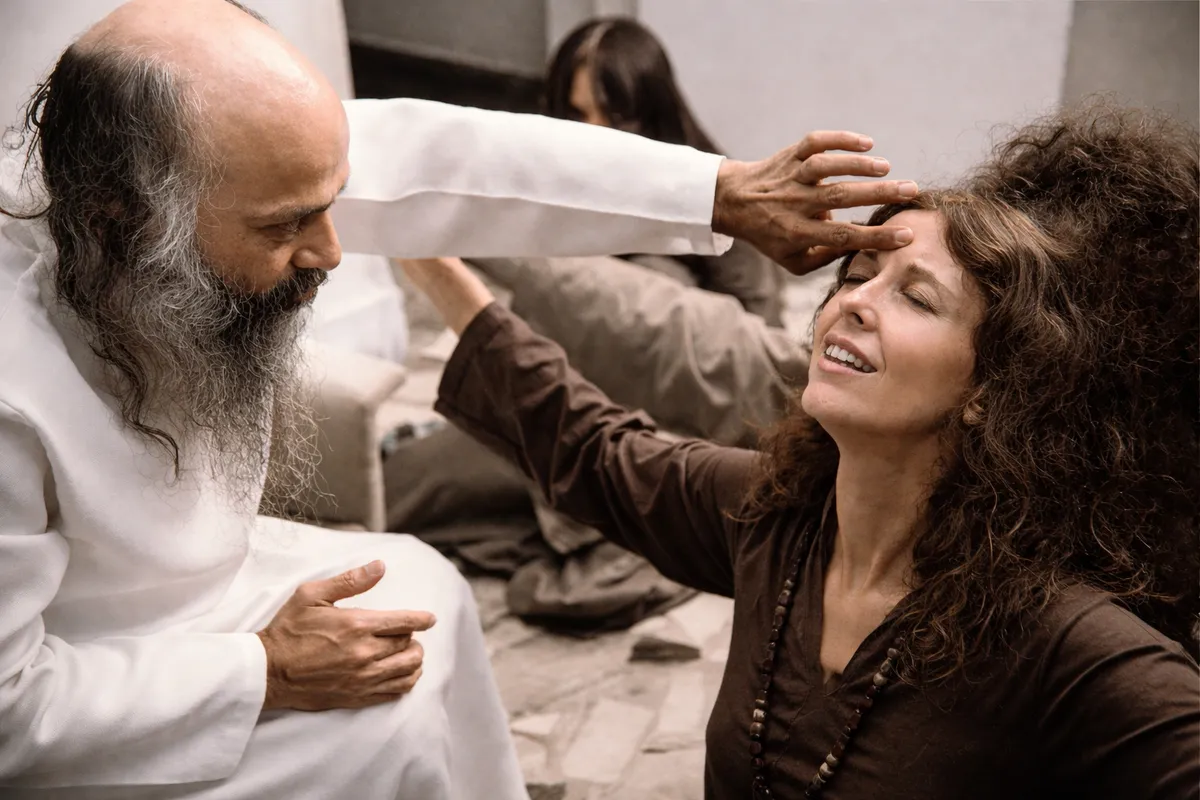
Osho's original Hindi beside Osho Live's English translation, matched passage by passage.
बाबा मलूकदास एक विद्रोही हैं। और विद्रोह धर्म की आत्मा है। विद्रोह का अर्थ है: समाज से, संस्कार से, शास्त्र से, सिद्धांत से, शब्द से मुक्ति।
Baba Malukdas is a rebel. And rebellion is the very soul of religion. Rebellion means: freedom from society, from conditioning, from scripture, from doctrine, from words.
आदमी का मन तो प्याज जैसा है, जिस पर पर्त-पर्त संस्कार जम गए हैं। और इन परतों के भीतर खो गया है--आदमी का स्व। जैसे प्याज को कोई उधेड़ता है, एक-एक पर्त को अलग करता है, ऐसे ही मनुष्य के मन की परतें भी अलग करनी होती हैं।
The human mind is like an onion, layers upon layers of conditioning have gathered upon it. And within these layers the Self is lost. As one peels an onion, removing one layer after another, so too the layers of the human mind have to be parted.
जब तक सारे संस्कारों से छुटकारा न हो जाए, तब तक स्व का कोई साक्षात नहीं है। और संस्कारों से छुटकारा कठिन बात है। कपड़े उतारने जैसा नहीं, चमड़ी छीलने जैसा है। क्योंकि संस्कार बहुत गहरे चले गए हैं। संस्कारों के जोड़ का नाम ही हमारा अहंकार है। संस्कारों के सारे समूह का नाम ही हमारा मन है।
Until there is freedom from all conditioning, there is no direct vision of the Self. And freedom from conditioning is hard. It is not like removing clothes, it is like flaying the skin. Because the conditioning has gone very deep. The sum total of conditioning is what we call the ego. The entire aggregate of conditioning is what we call the mind.
विद्रोह का अर्थ है: मन को तोड़ डालना। मन बना है: समाज से। मन है समाज की देन। तुम तो हो परमात्मा से; तुम्हारा मन है समाज से। और जब तक तुम्हारा मन सब तरह से समाप्त न हो जाए, तब तक तुम्हें उसका कोई पता न चलेगा, जो तुम परमात्मा से हो, जैसे तुम परमात्मा से हो।
Rebellion means: break the mind. The mind is made by society; the mind is society’s donation. You are from the Paramatma; your mind is from society. And until your mind is dissolved in every way, you will have no glimpse of that which you are from the Paramatma, as you are from the Paramatma.
इसलिए विद्रोह--समाज, संस्कार, सभ्यता, संस्कृति--इन सबसे विद्रोह धर्म का मौलिक आधार है।
Hence rebellion—against society, conditioning, civilization, culture—this rebellion is the fundamental base of religion.
धर्म शुद्ध विद्रोह है। याद रहे, विद्रोह से अर्थ क्रांति का नहीं है। क्रांति तो फिर संगठन। विद्रोह वैयक्तिक है। क्रांति में तो फिर संगठन है। क्रांति में तो फिर समाज का नया ढांचा है। पुराना ढांचा बदलेगी क्रांति, लेकिन नये ढांचे को स्थापित कर देगी। पुराना समाज तोड़ेगी, लेकिन नये समाज को बना देगी। क्रांति में तो समाज फिर पीछे के द्वार से वापस आ जाता है।
Religion is pure rebellion. Remember, by rebellion I do not mean revolution. Revolution again means organization. Rebellion is individual. In revolution there is once more organization; in revolution there is again the new structure of society. Revolution will change the old framework, but it will install a new framework. It will break the old society, but it will create a new society. In revolution society returns again through the back door.
परमात्मा के सामने तो अकेले होने का साहस करना होगा; भीड़-भाड़ नहीं चलेगी। परमात्मा के सामने तो नग्न और निपट अकेले खड़े होने का साहस करना होगा। परमात्मा के सामने तो तुम जैसे हो--अकेले, असहाय--वैसा ही अपने को छोड़ देना होगा। कोई लाग-लगाव नहीं, कोई छिपाव नहीं, कोई पाखंड नहीं।
Before the Paramatma you will have to dare to be alone; the crowd will not do. Before the Paramatma you will have to dare to stand naked and utterly alone. Before the Paramatma you will have to let yourself be just as you are—alone, helpless—no embellishment, no hiding, no hypocrisy.
क्रांति समाज को बदलती है, व्यक्ति को नहीं बदलती; व्यक्ति वैसा का वैसा बना रहता है।
Revolution changes society, it does not change the individual; the individual remains as he was.
उन्नीस सौ सत्रह में रूस में बड़ी क्रांति हुई। समाज बदल गया; व्यक्ति वहीं के वहीं हैं। पहले व्यक्ति धर्म को मानता था, क्योंकि जार धर्म को मानता था। अब व्यक्ति धर्म को नहीं मानता, साम्यवाद को मानता है; क्योंकि सरकार साम्यवाद को मानती है। पहले व्यक्ति बाइबिल को पूजता था; अब दास कैपिटल को पूजता है। पहले मूसा और जीसस महत्वपूर्ण थे; अब मार्क्स, एंजिल और लेनिन महत्वपूर्ण हो गए। मगर व्यक्ति वहीं के वहीं हैं, उसके बंधंन वैसे के वैसे हैं, जरा भी अंतर नहीं पड़ा। व्यक्ति उतना ही सोया हुआ है, जितना पहले था। उसकी नींद में कोई भेद नहीं हुआ है। शायद बिस्तर बदल गया--नींद जारी है। कमरा बदल गया--बेहोशी जारी है।
In 1917 there was a great revolution in Russia. Society changed; the individual remained the same. Earlier the individual believed in religion because the Czar believed in religion. Now the individual does not believe in religion, he believes in communism because the government believes in communism. Earlier he worshipped the Bible; now he worships Das Kapital. Earlier Moses and Jesus were important; now Marx, Engels, and Lenin have become important. But the person remains where he was, his bonds remain as they were; not even a slight difference has occurred. He is just as asleep as he was before. His sleep has not changed. Perhaps the bed has changed—the sleep continues. The room has changed—the unconsciousness continues.
क्रांति से व्यक्ति नहीं बदलता; क्रांति से समाज बदलता है। और धर्म व्यक्ति के जीवन में बदलाहट का आधार है।
By revolution the individual does not change; by revolution society changes. And religion is the foundation for change in the life of the individual.
तो धर्म विद्रोह है--वैयक्तिक विद्रोह है।
So religion is rebellion—an individual rebellion.
और एक विरोधाभासी बात याद रख लेना: परमात्मा एक है, इसलिए तुम एक होकर ही उससे मिल सकोगे। परमात्मा दो नहीं है। परमात्माओं की कोई भीड़ नहीं है। इसलिए तुम भी भीड़ की तरह उससे न मिल सकोगे। उस जैसे ही हो जाओगे, तो मिल सकोगे।
And remember a paradox: the Paramatma is one, therefore only by becoming one can you meet Him. The Paramatma is not two. There is no crowd of Paramatmas. Therefore you will not meet Him as a crowd. Become as He is, and you will meet.
यह भी ध्यान रखने के लिए जरूरी है कि परमात्मा समष्टि नहीं है; परमात्मा सार्वभौमता है। समष्टि तो व्यक्तियों के जोड़ का नाम है। परमात्मा निरवैयक्तिक है। परमात्मा में सब समाया है। परमात्मा सबका जोड़ नहीं है। परमात्मा सबका आधार है। तुम्हारा भी उतना ही आधार है जितना मेरा; जितना पहाड़ों का, जितना वृक्षों का। अगर हम अपनी जड़ों में उतर जाएं, तो हम अपने आधार को पा लेंगे। व्यक्ति जब अपनी जड़ों में उतरता है, तो परमात्मा का साक्षात्कार होता है। स्वयं को जान कर ही सत्य जाना जाता है। स्वयं को ही ठीक से पहचान लिया, तो सब पहचान लिया। स्वयं के पहचानते-पहचानते ही स्वयं मिट जाता है और सर्व प्रकट हो जाता है। इसलिए मैंने कहा--विरोधाभास।
This too is to be kept in mind: the Paramatma is not a collective; the Paramatma is the all-encompassing sovereignty. The collective is only the sum of individuals. The Paramatma is impersonal. All is contained in the Paramatma. The Paramatma is not everyone’s addition; the Paramatma is everyone’s base. He is equally your base as He is mine; as He is of the mountains, as of the trees. If we descend into our roots, we will find our base. When a person descends into his roots, there is the direct encounter with the Paramatma. Only by knowing oneself is Truth known. Once oneself is rightly recognized, all is recognized. In the very recognizing of the self, the self dissolves and the All is revealed. Therefore I said—paradoxical.
जो स्वयं को जानते नहीं और भीड़ के साथ अपने संबंध जोड़ते रहते हैं, वे बाहर ही बाहर भटकते रहते हैं। धर्म है--अंतर्यात्रा।
Those who do not know themselves and keep tying their relations with the crowd, they go on wandering outside. Religion is—an inner journey.
सभी संत विद्रोही थे; होना ही होगा। संत हो और विद्रोही न हो, यह संभव नहीं है। क्योंकि धर्म से बचने की कई तरकीबें आदमी ने निकाल ली हैं और उन सब तरकीबों को तोड़ना पड़ेगा।
All the saints were rebels; they had to be. A saint who is not a rebel is impossible. Because man has invented many devices to avoid religion, and all those devices have to be broken.
सबसे बड़ी तरकीब तो आदमी ने यह निकाली है कि उसने झूठे धर्म गढ़ लिए हैं; उसने नकली सिक्के बना लिए हैं। नकली सिक्कों को हाथ में लेकर चलता रहता है, तो असली सिक्कों की याद भी नहीं आती। नकली परिपूरक हो गए हैं।
The biggest device man has invented is that he has fabricated false religions; he has minted counterfeit coins. With fake coins in hand one keeps moving about and the memory of real coins does not arise. The counterfeits have become substitutes.
परमात्मा का तो कोई पता नहीं है, हमने मंदिर में एक प्रतिमा बना ली है। प्रतिमा हमारी बनाई हुई है। हमें, जिन्हें कि परमात्मा का कोई पता नहीं है; हम ही प्रतिमा को गढ़ लिए हैं; हमने ही प्रतिमा के सामने खड़े होने के नियम बना लिए हैं। कैसे प्रार्थना करनी, किन शब्दों में करनी, वे भी हमने गढ़ लिए हैं। हमने ही पुजारी तैनात कर रखा है। हम किस भ्रांति में पड़े हैं! न हमें परमात्मा का पता; न हमें स्तुति का पता। हमें अपना ही पता नहीं है। लेकिन यह जो मंदिर की झूठी प्रतिमा है, इस प्रतिमा के कारण एक भ्रम पैदा होता है कि शायद हमने पूजा कर ली, प्रार्थना कर ली। अब और क्या करें! परमात्मा को जाकर स्तुति कर आए, निवेदन कर आए और हम वैसे के वैसे बने रहते हैं, क्योंकि मिथ्या से कोई रूपांतरण नहीं होता; सत्य से रूपांतरण होता है।
We have no trace of the Paramatma, so we have made an idol in the temple. The idol is our own making. We—who have no idea of the Paramatma—have we ourselves not carved the idol? We have ourselves framed the rules for standing before the idol. How to pray, in what words—we have fabricated those too. We have ourselves appointed the priest. In what delusion are we caught! We do not know the Paramatma, we do not know praise. We do not even know ourselves. But this false idol in the temple creates an illusion that perhaps we have worshipped, prayed. What more is there to do! We went and offered praise to God, made our petitions—and we remain as we were, because falsehood never transforms; Truth transforms.
ऐसा समझो कि अंधेरा कमरा है, और तुम एक दीया जलाओ, तो प्रकाश हो जाएगा। लेकिन तुम दीये की एक तस्वीर ले आओ, तो प्रकाश नहीं होगा। दीये की तस्वीर भला कितनी ही दीये जैसी लगे; दीये की तस्वीर तस्वीर है। मूर्ति मूर्ति है। मूर्ति भगवान नहीं है, तस्वीर है।
Consider this: there is a dark room, and you light a lamp—there will be light. But if you bring in a picture of a lamp, there will be no light. However much a picture may resemble a lamp, it remains a picture. An idol is an idol. An idol is not God; it is a picture.
यह तो ऐसा ही हुआ कि तुम किसी होटल में जाओ और मेनू को ही खाने लगो! मेनू में भोजन के संबंध में जानकारी है; मेनू भोजन नहीं है।
It is like going to a hotel and starting to eat the menu! The menu contains information about food; the menu is not food.
शास्त्र में सत्य के संबंध में जानकारी है। शास्त्र में सत्य नहीं है। शब्दों और सिद्धांतों में तो केवल छाया है; बड़ी दूर की छाया है; उसी को सब-कुछ मत मान लेना।
Scriptures contain information about Truth. Truth is not in the scriptures. In words and doctrines there are only shadows; very distant shadows. Don’t take them for the all.
एक झेन फकीर रिंझाई अपने शिष्यों के साथ बैठा था और एक अजनबी, जो पहली दफा ही उसके दर्शन को आया था, उसने कहा कि मुझे एक सवाल पूछना है। बंधन में पड़ता कौन है? क्योंकि आप सदा कहते हैं: बंधन से छूटो; मुक्त हो जाओ; निर्वाण खोजो, यह बंधन में पड़ा कौन है?
A Zen master, Rinzai, was sitting with his disciples when a stranger, visiting him for the first time, said, I have a question to ask. Who is it that becomes bound? Because you keep saying: free yourself from bondage; be liberated; seek Nirvana—who is it that is in bondage?
रिंझाई ने कहा: दूसरा चांद। वह आदमी कुछ समझा नहीं। दूसरा चांद? उसने कहा: मैं कुछ समझा नहीं। तो रिंझाई ने कहा: तू बाहर जाकर देख।
Rinzai said: The second moon. The man did not understand. The second moon? He said: I don’t understand. So Rinzai said: Go out and see.
रिंझाई का आश्रम एक झील पर है। रात है और चांद निकला है। तू बाहर जाकर देख। एक चांद तो आकाश में है और एक दूसरा चांद झील में है। वह झील में जो चांद है, वही फंसा है। प्रतिबिंब उलझा है। असली तो उलझा ही नहीं है।
Rinzai’s ashram was on a lake. It was night and the moon had risen. Go out and see. One moon is in the sky and another moon is in the lake. The moon in the lake—that one is caught. The reflection is entangled. The real is not entangled at all.
बड़ी अदभुत बात कही--दूसरा चांद!
A wondrous statement—“the second moon!”
तुमने जो, जहां-जहां दूसरे को पकड़ लिया है, वहीं-वहीं उलझन है। सत्य को तो तुमने पकड़ा नहीं है। सत्य को पकड़ो, तो मुक्त हो जाओ। तुमने सत्य की प्रतिध्वनियां पकड़ ली हैं। तुमने परमात्मा को तो नहीं पकड़ा है; तुमने परमात्मा की प्रतिमाएं पकड़ ली हैं। तुमने संतों को तो नहीं पकड़ा; तुमने संतों के शब्द पकड़ लिए हैं; शास्त्र पकड़ लिए हैं। तुम हमेशा नंबर दो को पकड़ लेते हो।
Wherever you have grasped the second, there lies entanglement. You have not grasped the Truth. Grasp Truth, and you are free. You have held onto the echoes of Truth. You have not held the Paramatma; you have held the idols of the Paramatma. You have not held the saints; you have held the saints’ words; you have held the scriptures. You always catch the number two.
वह जो दूसरा चांद है, वही तुम्हारे जीवन में बंधन है। और दूसरे चांद से मुक्त होना होगा, अगर आंखें असली चांद की तरफ उठानी हों।
That second moon—this is the bondage in your life. You must be free of the second moon, if your eyes are to lift toward the real moon.
इसलिए सभी संत तुम्हारे तथाकथित धर्म के विपरीत हैं। तुम्हारे मंदिर, तुम्हारे मस्जिद, तुम्हारी काशी, तुम्हारा केदार, तुम्हारे मक्का-मदीना, तुम्हारे बाइबिल, तुम्हारे वेद, तुम्हारे कुरान--इनके विपरीत हैं। इनके विपरीत होने का कारण है। क्योंकि सभी संत चाहते हैं कि तुम्हें नगद धर्म उपलब्ध हो जाए। ये उधारी की क्या बातें कर रहे हो! और कब से कर रहे हो? और कब तक करते रहोगे? काफी हो चुका। झूठ के साथ काफी गंवा लिया। मूल को खोजो।
Therefore all saints stand opposed to your so-called religion. Your temples, your mosques, your Kashi, your Kedar, your Mecca-Medina, your Bible, your Vedas, your Quran—saints are opposed to these. There is a reason. Because all saints want you to obtain a cash religion. What are you doing with these loans and credits! And since when! And how long will you go on! Enough now. Enough has been wasted with falsehood. Seek the principal.
तो विद्रोह का अर्थ है: उधार धर्म से मुक्ति; नगद धर्म की खोज। विद्रोह का अर्थ है: औपचारिक धर्म से मुक्ति; वास्तविक धर्म की खोज।
So rebellion means: freedom from borrowed religion; the search for a cash religion. Rebellion means: freedom from formal religion; the search for the real.
एक औपचारिक धर्म है। तुम्हारी मां है, तो तुम पैर छूते हो, चाहे पैर छूने का कोई भाव हृदय में उठता न हो; चाहे पैर छूने की कोई भावना न हो। शायद पैर छूना तो दूर, क्रोध हो मन में। शायद मां को क्षमा करने की भी क्षमता तुममें न हो। लेकिन तुम पैर छूते हो। एक औपचारिक, एक व्यावहारिक बात है। छूना चाहिए--मां है।
There is a formal religion. Your mother is there, so you touch her feet—even if no feeling arises in your heart to touch her feet; even if there is no sentiment to touch. Perhaps, far from touching feet, there is anger in the mind. Perhaps you do not even have the capacity to forgive your mother. But you touch her feet. A formality, a social manner. One should touch—she is the mother.
ऐसे ही तुम मंदिर जाते हो। ऐसे ही तुम शास्त्र पढ़ लेते हो। ऐसे ही तुम प्रार्थना कर लेते हो। तुम्हारा हृदय अछूता ही रह जाता है। तुम्हारे हृदय में कोई तरंगें नहीं उठतीं; संगीत नहीं गूंजता; कोई नाद नहीं उठता। तुम्हारी हृदय की वीणा अकंपित ही रह जाती है। बस, औपचारिक; करना था, कर लिया--ऐसे करते जाते हो, जैसे तुम्हें प्रयोजन ही नहीं है।
In the same way you go to the temple. In the same way you read the scriptures. In the same way you do your prayers. Your heart remains untouched. No waves arise in your heart; no music resounds; no soundless sound arises. The vina of your heart remains unstruck. Merely formal—what had to be done, was done—you go on doing as if you have no purpose at all.
तुमने मंदिर जाते लोगों को देखा! तुमने अपने पर खुद विचार किया, जब तुम सुबह उठ कर बैठ कर गीतो पढ़ लेते हो; या पूजा कर लेते हो; घंटी बजा देते हो, पानी ढाल देते हो! सब यंत्रवत! न तो तुम्हें रोमांच होता परमात्मा पर पानी ढालते वक्त: न तुम्हारी आंख से आनंद के अश्रु बहते। न भगवान को भोग लगाते वक्त तुम्हारे हृदय में कोई उत्सव होता; न तुम गीत गुनगुनाते। बस उपचार।
Have you seen people going to temples! Have you looked into yourself—when you wake in the morning, sit and read the Gita; or you perform worship; you ring the bell, you pour water! All mechanical! Neither do you thrill pouring water over the Paramatma, nor do tears of bliss flow from your eyes. Neither is there any festival in your heart when you offer food to God; nor do you hum a song. Mere ritual.
उपचार अगर धर्म है, तो तुम अधर्म को छिपा रहे हो। औपचारिक-धर्म अधर्म को छिपाने की बड़ी कारगर तरकीब है। इस तरह पता भी नहीं चलता कि मैं अधार्मिक हूं और आदमी अधार्मिक बना रहता है।
If ritual is religion, then you are only hiding irreligion. Formal religion is a highly efficient device for hiding irreligion. This way you never even come to know that you are irreligious—and man remains irreligious.
धार्मिक होना हो, तो हार्दिक होना जरूरी है। विद्रोह का अर्थ है: जीवन में हार्दिकता आए। वही करो, जो तुम्हारा हृदय करना चाहता है। रुको; अगर अभी सच्ची प्रार्थना पैदा नहीं हुई है, तो कोई जरूरत नहीं है झूठी प्रार्थना के साथ मन बहलाने का। किसको धोखा दोगे? परमात्मा को तो धोखा नहीं दे सकते। अपने को ही धोखा दे रहे हो। तो व्यर्थ क्यों समय खोते हो?
If you would be religious, you must be heartful. Rebellion means: let heartfulness come into life. Do only that which your heart longs to do. Wait. If true prayer has not yet arisen, there is no need to pass time with false prayer. Whom will you deceive? You cannot deceive the Paramatma. You are deceiving only yourself. Why waste time?
खतरा यह है कि कहीं झूठी प्रार्थना याद हो जाए, कंठस्थ हो जाए, तो फिर ऐसा न हो कि कंठ अवरुद्ध हो जाए झूठी प्रार्थना से और असली प्रार्थना के जन्म का स्रोत ही न खुल सके; असली प्रार्थना को बहने की जगह ही न रहे। कम से कम स्लेट खाली रखो; झूठ तो मत लिखो। झूठ लिखी स्लेट से तो खाली स्लेट बेहतर है। कम से कम सत्य किसी दिन उतरेगा, तो तुम उसको अंगीकार तो कर सकोगे।
The danger is that false prayer may become memorized, may become by heart, and then it may be that your throat gets choked by false prayer and the spring for true prayer never opens; there remains no space through which true prayer can flow. At least keep the slate empty; do not write the false. An empty slate is better than a slate filled with lies. At least when Truth descends some day, you will be able to receive it.
इसलिए मैं कहता हूं कि पंडित परमात्मा को नहीं समझ पाते हैं।
That is why I say the pandit does not understand the Paramatma.
ताहा हुसैन की एक छोटी सी कहानी है कि भगवान ने सब जानवर बनाए, पृथ्वी बनाई, चांद-तारे बनाए, तभी उसने गधा भी बनाया। गधा सीधा-सादा जानवर है; निर्दोष, भोला-भाला। और परमात्मा को गधे से बड़ा प्रेम था। वह उसे अपने पास ही रखता था। उसकी सादगी उसे पसंद थी। और परमात्मा किताब लिख रहा था एक--मनुष्य-जाति को निर्देश भेजने के लिए--कि कैसे आदमी जीए। वृक्ष के पत्तों पर वह किताब लिखता था और पत्तों को सम्हाल कर रखता जा रहा था। गधा यह देखता था: गधे को एक बात खयाल में आई कि अगर मैं ये सारे पत्ते चबा जाऊं, तो मैं परमज्ञानी हो जाऊंगा।
Taha Husain tells a little story. God created all the animals, created the earth, the moon and stars—and then He made the donkey. The donkey is a straightforward animal—innocent, guileless. And God had great love for the donkey. He kept him close by. He liked his simplicity. And God was writing a book—to send directions to humankind—how man should live. He was writing the book on the leaves of a tree, keeping the leaves safe. The donkey watched this. One thought arose in the donkey: If I chew all these leaves, I will become omniscient.
गधा आखिर गधा! परमात्मा एक दिन दोपहर में सोया था थका-मांदा--किताब करीब-करीब पूरी हो गई थी--कि गधा उस किताब को चर गया। जब परमात्मा ने आंख खोली, तो किताब तो नदारद थी और गधा बड़ा प्रसन्न खड़ा था! उसने कहा: आप फिकर मत करो, सब मेरे भीतर है। अब किताब के भेजने की जरूरत नहीं है; मुझे दुनिया में भेज दो।
A donkey is, after all, a donkey! One afternoon, tired, God fell asleep—the book was almost complete—when the donkey ate it. When God opened His eyes, the book had vanished, and the donkey stood there very pleased! He said: Don’t worry, everything is inside me. There is no need to send the book; send me into the world.
वैसे भी परमात्मा नाराज था; उसे स्वर्ग से निकालना तो था ही; उसने कहा: अच्छा तू दुनिया में जा। गधा बड़ा प्रसन्न पृथ्वी पर उतरा। सोचता था कि मेरी पूजा होगी। पूजा हुई--डंडों से हुई। क्योंकि जहां भी गधा गया, उसने समझाने की कोशिश की लोगों को--कि सुनो, मैं धर्म लेकर आया हूं।
God was annoyed anyway; He intended to send him down from heaven. He said: All right, go down to the world. The donkey descended to earth very pleased. He thought, I will be worshipped. He was worshipped—with sticks. Because wherever the donkey went he tried to explain to people—Listen, I have brought religion.
एक तो उसकी आवाज...! उसके रेंकने का स्वर। उसकी भाषा किसी को समझ में न आए। और दूसरा उसका यह दावा! उसने लाख समझाने की कोशिश की कि सब मेरे पेट में पड़ा है; पूरी किताब पी गया हूं पागलो; सुनो तो मेरी। मगर कोई उसकी सुने ना। जिसको भी वह सुलझाने-समझाने की कोशिश करे, वही उसे डंडे मारे। और कहते हैं, तभी से गधे की यह हालत है। तब से वह भोला-भाला भी नहीं समझा जाता। अब तो उसको लोग गधा ही समझते हैं।
First, his voice—its braying tone. His language no one could understand. And then, his claim! He tried hard to explain: everything is in my belly; I drank the whole book, you fools; just listen to me. But no one would listen. Whomever he tried to persuade and set right, that very one beat him with a stick. And they say that ever since then the donkey’s plight is what it is. Since then he is not even considered simple and innocent—now people just call him a donkey.
ताहा हुसैन की इस कहानी का इशारा पंडित की तरफ है। पंडित का अर्थ है: जो किताब पी गया; किताब चबा गया, किताब जिसके पेट में पड़ी है, या जिसकी खोपड़ी में पड़ी है। वह सोचता है, सब मुझे मालूम है और मालूम उसे कुछ भी नहीं है। किताब चबाने से कहीं कुछ मालूम पड़ता है! जीवन को जीने से, अनुभव से, अनुभूति से--शब्दजाल से नहीं, तर्कजाल से नहीं।
Taha Husain’s story points toward the pandit. Pandit means: the one who drank the book; chewed the book; the one in whose belly the book lies, or in whose skull the book lies. He thinks: I know everything—and he knows nothing. Does one know by chewing a book! One knows by living life, by experience, by direct realization—not by webs of words, not by webs of argument.
तो सारे संतों की बगावत किताबी लोगों के खिलाफ है। सारे संतों की बगावत पांडित्य के खिलाफ है, शास्त्रीयता के खिलाफ है। सारे संतों की बगावत बुद्धि से हृदय की तरफ जीवन-ऊर्जा को बदलने की है, विचारमात्र से अनुभव की तरफ ले जाने की है।
So the revolt of all saints is against the bookish. The revolt of all saints is against pedantry, against scripturalism. The revolt of all saints is to move life-energy from the head toward the heart, to lead it from mere thought to experience.
तुम्हारी ऊर्जा खोपड़ी में ही गूंजती रहे, तो तुम परमात्मा तक न पहुंच पाओगे। तुम्हारी ऊर्जा हृदय पर बरसे; तुम्हारा हृदय तुम्हारी जीवन-ऊर्जा का एक सरोवर बन जाए, तो कुछ घटना घट सकती है।
If your energy keeps echoing only in the skull, you will not reach the Paramatma. If your energy rains upon the heart—if your heart becomes a lake of life-energy—then something can happen.
आज के सूत्र अंतिम सूत्र हैं; सीधे-सरल, पर बड़े महत्वपूर्ण।
Today’s aphorisms are the final ones—simple, direct, yet immense.
देवल पूजे कि देवता, कि पूजे पाहाड़।
पूजन को जांता भला, जो पीस खाय संसार।।
“Deval pooje ki devata, ki pooje pahar. Poojan ko janta bhala, jo pees khaye sansar.”
मलूकदास सीधे-सादे आदमी हैं--ग्रामीण, ग्राम्य; पढ़े-लिखे भी नहीं हैं। जो कहते हैं, वह लोक-भाषा है।
Malukdas is a simple man—rustic, rural; not learned. What he says is people’s speech.
देवल पूजे कि देवता,...
कि तुम मंदिर पूजो, कि मंदिर में बैठे देवता को पूजो, इतने से ही कुछ नहीं--तुम चाहो, तो पूरे पहाड़ों को पूज डालो। मंदिर भी पत्थर से बना है; तुम्हारे देवता भी पत्थर से बने हैं; इनसे तो कुछ होगा ही नहीं। तुम चाहो तो पूरे हिमालय को पूजो; पूरे पहाड़ों को पूजो, तो भी कुछ न होगा।
Deval pooje ki devata… Whether you worship the temple or the deity in the temple—nothing will happen. If you wish, worship entire mountains. The temple is made of stone; your deities are made of stone; nothing is going to happen through them. If you wish, worship the whole Himalaya; worship all the mountains—still nothing will happen.
पत्थर की पूजा से खतरा यही है कि कहीं तुम भी पथरीले न हो जाओ। यही हुआ है: पत्थर की पूजा करते-करते लोग पथरीले हो गए हैं। पत्थर की पूजा करते-करते लोग पत्थर हो गए हैं; उनके हृदय पाषाण हो गए हैं। इसीलिए तो हिंदू मुसलमान को काट सकता है; मुसलमान हिंदू को काट सकता है। ईसाई मुसलमान को मार सकते हैं; मुसलमान ईसाई को मार सकते हैं।
The danger in worshipping stone is this: you may yourself become stony. And that is what has happened—worshipping stone, people have become stony. Worshipping stone, people have become stone; their hearts have become rock. That is why a Hindu can cut a Muslim; a Muslim can cut a Hindu. Christians can kill Muslims, Muslims can kill Christians.
मनुष्य-जाति का पूरा इतिहास तुम्हारे तथाकथित धार्मिक आदमियों की कठोरता का इतिहास है; हिंसा और रक्तपात का इतिहास है। धार्मिक आदमी यह कैसे कर सके? पत्थर हो गए होंगे।
The whole history of mankind is the history of the hardness of your so-called religious people; it is a history of violence and bloodshed. How could a religious man do this? He must have become stone.
इसमें कुछ मनोवैज्ञानिक सत्य भी है। हम जिसको पूजेंगे, वैसे ही हो जाएंगे। हमारी पूजा हमें निर्मित करती है। जिसके साथ रहोगे, वैसे हो जाओगे। पत्थरों का बहुत संग-साथ मत करना। पत्थरों पत्थरों में ही रहे, तो धीरे-धीरे तुम भी पत्थर हो जाओगे। क्योंकि हम वैसे ही हो जाते हैं, जिनके हम साथ रहते हैं।
There is also a psychological truth here. What we worship, that we become. Our worship fashions us. With whom you live, you become like. Do not keep too much company with stones. If you live only among stones, slowly you too will become stone. Because we become like those we live with.
अपने से श्रेष्ठ का साथ खोजो। अगर पूजना ही हो, तो कहीं किसी जीवित संत को पूजना। किसी को पूजना, जिसकी तरफ आंखें ऊपर उठानी पड़ती हों। किसी को पूजना, जो तुमसे कहीं ज्यादा ऊंचाई पर हो। चाहे एक कदम ही आगे तुमसे क्यों न हो। किसी को पूजना, जिसकी चेतना तुमसे ज्यादा प्रगाढ़ हो; तुमसे ज्यादा उज्ज्वलतर हो।
Seek the company of one superior to yourself. If you must worship, worship some living saint. Worship someone toward whom your eyes have to be raised upward. Worship someone who stands much higher than you—even if only one step ahead. Worship someone whose consciousness is deeper than yours, more luminous than yours.
पत्थर, जड़--जहां चैतन्य नाममात्र को नहीं है, उसे तुम पूजने चले? तुमने परमात्मा की पूजा के लिए ठीक परमात्मा से विपरीत चीज खोज ली--पत्थर। इससे तो बेहतर था वृक्ष को पूज लेते: कम से कम जीवंत तो था, बढ़ता तो था। लेकिन वह पूजा भी ठीक नहीं है। क्योंकि वृक्ष तुमसे बहुत पीछे है। पूजा करो अपने से आगे की। क्योंकि पूजा तो इशारा है। पूजा तो हम उसकी करते हैं जो हम होना चाहते हैं। तुम पत्थर होना चाहते हो, तो पत्थर की पूजा करो।
Stone, inert—where there is not even a trace of consciousness—you go to worship that? For the worship of the Paramatma you have chosen precisely what is opposite to the Paramatma—stone. Better you worship a tree—it is at least alive, it grows. But even that worship is not right, because the tree is far behind you. Worship what is ahead of you. Because worship is a pointer. We worship that which we long to become. If you wish to become stone, then worship stone.
पूजा का तो अर्थ ही इतना हुआ कि यह हमारी अभिलाषा है; हम भी चाहेंगे कि कभी ऐसे हो जाएं। ठीक है, राम को पूजा, समझ में आया। कृष्ण को पूजा, समझ में आया। बुद्ध को पूजा, महावीर को पूजा, समझ में आया। लेकिन पत्थर की पूजा?
The very meaning of worship is: this is our longing; we would like to become like this. All right, worship Rama—that can be understood. Worship Krishna—that can be understood. Worship Buddha, Mahavira—that can be understood. But worship stone?
कोई बुद्ध मिल जाएं, तो पूज लेना। लेकिन बुद्ध तो कभी-कभी होते हैं। और जब बुद्ध होते हैं, तब हमें पहचान में नहीं आते हैं। और जब बुद्ध होते हैं, तो हमें उनसे डर भी लगता है। क्योंकि बुद्ध के पास जाना, खतरे से खाली नहीं है। बुद्ध के पास जाने का मतलब ही यह हुआ कि बदलना पड़ेगा। गए कि मिटे। बुद्धत्व संक्रामक है। जैसे रोग पकड़ता है, ऐसे अध्यात्म भी पकड़ता है। और रोग का तो इलाज है; अध्यात्म का कोई इलाज नहीं है। बुद्ध के पास जाने का मतलब हुआ कि तुम्हें वह दूर पार की पुकार पकड़ लेगी, प्यास पकड़ लेगी। फिर जब तक तुम पहुंच ही न जाओ उस मंजिल तक, तब तक तुम्हें रोना ही रोना है। विरह की अग्नि पकड़ लेगी। तब तुम जहां हो, वहां सब व्यर्थ दिखाई पड़ने लगेगा और जहां तुम्हें सार्थक दिखाई पड़ेगा, वह बहुत देर है। तब बेचैनी होगी ही। तब तुम रोओगे ही। तुम्हारा सब सुख-चैन छिन जाएगा। तुम्हारे सारे सपने टूट जाएंगे।
If you find a Buddha, then worship him. But Buddhas come only once in a while. And when a Buddha is, we fail to recognize him. And when a Buddha is, we are also afraid of him. Because to go to a Buddha is not without danger. To go near a Buddha means you will have to change. If you go, you will be effaced. Buddhahood is contagious. As disease is caught, so is spirituality caught. And disease has remedies; spirituality has none. To go to a Buddha means that far-away call will seize you; a thirst will seize you. Then until you reach that shore, you will have only weeping. The fire of longing will seize you. Then where you are will appear futile, and where meaning appears to lie is still far away. Then restlessness will be there. Then you will weep. All your comforts and peace will be snatched away. All your dreams will shatter.
Will you be able to understand the storm?
तुम तूफान समझ पाओगे?
गीले बादल, पीले रजकण,
सूखे पत्ते, सूखे तृण घन
लेकर चलता करता ‘हरहर’--इसका गान समझ पाओगे?
Wet clouds, golden dust, Dry leaves, dry grasses— Gathered, he moves, singing “har-har”—will you hear that song? Will you be able to understand the storm?
तुम तूफान समझ पाओगे?
गंध भरा यह मंद पवन था,
लहराता इससे मधुवन था,
सहसा इसका टूट गया जो स्वप्न महान, समझ पाओगे?
तुम तूफान समझ पाओगे?
This breeze fragrant with scent, From it the groves were waving— Suddenly the great dream it held broke—will you understand? Will you be able to understand the storm?
बुद्धों के पास होने का अर्थ है: तूफान के पास होना। और वह जो तुम सपना देख रहे थे: धन का, पद का, प्रतिष्ठा का, मद-मत्सर का--वह सब सपना टूट जाएगा। उस तूफान में तुम्हारी सारी वासनाएं झकझोर कर गिर जाएंगी। उस तूफान में तुम वही न रह जाओगे, जो तुम कल तक थे। तुम्हारे बनाए भवन भूमिसात हो जाएंगे। तुम्हारी तैराई हुई नावें डूब जाएंगी। और तुमने अब तक जो जाना था, वह सब व्यर्थ और झूठा मालूम होगा। इसलिए बुद्धों से तो लोग बचते हैं। हां, बुद्ध जब मर जाते हैं, तो उनकी प्रतिमा बनाते हैं।
To be near Buddhas is to be near a storm. And that dream you were seeing—of wealth, of position, of prestige, of pride and jealousy—that whole dream will collapse. In that storm your passions will be shaken and fall. In that storm you will no longer remain who you were until yesterday. The mansions you built will be leveled to the ground. The boats you floated will sink. And what you knew until now will appear futile and false. Hence people avoid Buddhas. Yes, when Buddhas die, they make their idols.
तुम जान कर चकित होओगे कि अरबी में, उर्दू में प्रतिमा के लिए जो शब्द है बुत, वह बुद्ध का ही रूपांतरण है। बुद्ध की इतनी प्रतिमाएं बनीं, कि जब पहली दफा मध्य एशिया के मुल्क बुद्ध की प्रतिमाओं से परिचित हुए, तो उन्होंने पूछा: यह क्या है? लोगों ने कहा: यह बुद्ध हैं। तो बुद्ध शब्द प्रतिमा का ही प्रतीक हो गया। बुत बुद्ध का ही रूपांतर है।
You will be surprised to know that in Arabic and Urdu the word for idol—“but”—is a transformation of “Buddha.” So many idols of Buddha were made that when the Central Asian lands first became acquainted with Buddha’s idols, they asked: What is this? People said: This is Buddha. And the word “Buddha” itself became the symbol of the idol. “But” is the altered form of “Buddha.”
करोड़ों प्रतिमाएं बनीं बुद्ध की। जिन्होंने कभी बुद्ध को उनके जीते जी नहीं पूजा, वे प्रतिमाओं को पूजने लगे।
Millions of idols of Buddha were made. Those who never worshipped Buddha while he was alive began to worship his idols.
प्रतिमा को पूजने में आसानी है। प्रतिमा तुम्हें नहीं बदलती; तुम्हें बदल नहीं सकती। प्रतिमा के तो तुम ही मालिक होते हो। जब चाहो, पट खोलो मंदिर के; और जब चाहो, तब आराध्य लगाओ। जब चाहो तब अर्चना करो। जब चाहो तब भोग लगाओ; जो लगाना हो लगाओ। न लगाना हो न लगाओ। नहलाना हो नहला दो; न नहलाना हो न नहलाओ। जो तुम्हारी मरजी; तुम्हारी मौज!
It is easy to worship an idol. An idol does not change you; it cannot change you. You are the master of the idol. When you wish, you open the temple doors; when you wish, you offer the food. When you wish, you perform the worship. When you wish, you place the offerings—whatever you want, you place. If you don’t wish, you don’t place. If you wish to bathe it, you bathe it; if not, you don’t. As you please—your whim!
मैं पंजाब जाता था, तो एक घर में ठहरा हुआ था। सुबह उठ कर जब मैं अपने कमरे से बाथरूम की तरफ पीछे उनके आंगन में जा रहा था, तो बीच के कमरे से गुजरा, तो मैंने देखा कि वहां गुरुग्रंथ साहिब को एक प्रतिमा की तरह सजा कर रखा हुआ है। चलो, कोई हर्जा नहीं। लेकिन सामने ही एक लोटा भरा हुआ रखा है और एक दतौन रखी है! तो मैंने पूछा कि यह मामला क्या है! तो उन्होंने कहा कि गुरुग्रंथ साहिब के लिए दतौन।
I used to go to Punjab. In one house where I stayed I saw in the morning, passing through a central room toward the bathroom in the courtyard, that they had set up the Guru Granth Sahib like an idol. All right, no harm. But right in front was a lota full of water and a stick of chew-wood for brushing teeth! I asked: What is this! They said: For the Guru Granth Sahib’s tooth-brushing.
पानी भर के लोटा रख दिया है और दतौन रख दी है। तो मैंने कहा: भलेमानुषो, कम से कम टूथ पेस्ट और टूथब्रश रखा होता! कुछ तो सदव्यवहार करो। अब दतौन कौन करता है? तुम दतौन करते हो? उन्होंने कहा कि नहीं। तो मैंने कहा: तुम जो नहीं करते, कम से कम वह तो मत करवाओ। मगर तुम्हारी मौज है। गुरुग्रंथ से जो करवाना हो करवाओ। चाहे दतौन करवाओ; चाहे टूथब्रश रखो। और न रखो, तो गुरुग्रंथ कुछ कर न लेंगे।
They had placed a pot of water and a twig for brushing. I said: Good people, at least keep toothpaste and a toothbrush! Show some propriety. Who uses a twig now? Do you use it? They said: No. Then at least don’t make Him do what you don’t do. But your whim rules. Make the Guru Granth do whatever you like. Keep a twig, or keep a toothbrush. And if you keep neither, the Guru Granth can do nothing.
अब नानक ने प्रतिमा का विरोध किया है। लेकिन प्रतिमा से क्या होता है? हम किताब को ही प्रतिमा बना लेंगे!
Now Nanak opposed idols. But what does it matter! We will turn even the book into an idol!
अब कोई राम की प्रतिमा के सामने अगर दतौन रखता हो, तो थोड़ी बात समझ में भी आती है; लेकिन किताब के सामने दतौन--तो बात ही बिलकुल मूढ़ता की हो गई। यह तो आखिरी हद्द हो गई। यह तो पंजाबी ही कर सकता है।
If someone were to place a twig before the idol of Rama, that might make some sense; but before a book—a twig! This is sheer stupidity. The last limit. Only a Punjabi could do this.
मगर आदमी कुछ ऐसा है...। प्रतिमा तुम्हारे वश में हो जाती है। तुम जो चाहो करो, जैसा चाहो करो।
But man is such… An idol falls under your control. You do whatever you wish, however you wish.
बुद्ध के पास जाओगे, तो तुम्हें बुद्ध के वश में होना पड़ेगा।
If you go to a Buddha, you will have to fall under the Buddha’s sway.
मगर खयाल रखना: तुम जिसे पूजोगे, जाने-अनजाने, तुम वही होने लगोगे। किताब पूजोगे, तो किताबी हो जाओगे। पत्थर पूजोगे, पथरीले हो जाओगे। अगर पूजना ही हो, तो चैतन्य को पूजो। पूजना ही हो, तो चेतना के नये-नये अवतारों को पूजो। पूजना ही हो, तो उठाओ आंख ऊपर की तरफ। कम से कम इतना तो होगा कि तुम्हारी पूजा तुम्हें ऊपर खींच सकेगी।
But remember: what you worship, knowingly or not, you begin to become. Worship a book, and you become bookish. Worship stone, and you become stony. If you must worship, worship consciousness. If you must worship, worship the new incarnations of awareness. If you must worship, lift your eyes upward. At least your worship will then be able to pull you upward.
कहावत है: संग-साथ सोच कर करना चाहिए। जिनके साथ तुम रहते हो, उन जैसे हो जाते हो।
There is a saying: choose your company thoughtfully. You become like those you live with.
अक्सर ऐसा होता है कि जो लोग मशीनों में ही काम करते हैं, वे मशीनों जैसे हो जाते हैं; यंत्रवत हो जाते हैं। पश्चिम में यह घट रहा है। लोग चूंकि मशीनों के साथ ही दिन भर काम में लगे रहते हैं; कभी एक मशीन, कभी दूसरी मशीन, तो धीरे-धीरे तुम्हारे चित्त का मशीनीकरण हो जाता है।
It often happens that people who work only with machines become like machines; mechanical. In the West this is happening. Because all day people are engaged with machines—sometimes one machine, sometimes another—their consciousness slowly becomes mechanized.
कलकत्ता मैं जाता था, तो एक घर में मेहमान होता था। जिनके घर मेहमान होता था, वे हाईकोर्ट के न्यायाधीश थे। उनकी पत्नी ने मुझे कहा कि मेरे पति आपको इतना मानते हैं, आप कम से कम इनको इतना तो कहो कि कम से कम घर में आकर न्यायाधीशी न किया करें। दफ्तर में इन्हें जो करना हो करें।
I used to go to Calcutta and stayed with a family where the man was a High Court judge. His wife said to me: My husband respects you so much; please at least tell him not to be a judge at home. Let him do whatever he must in the office.
मैंने उनसे पूछा कि क्या ये घर में भी न्यायाधीश बने रहते हैं? उन्होंने कहा: आपसे क्या छिपाना। घर की तो बात छोड़ो, रात बिस्तर पर भी ये न्यायाधीश ही रहते हैं। और हम सब ऐसे डरे रहते हैं, जैसे मुजरिम हैं! हर बात में कानून! और हर बात में वही अकड़, जो न्यायाधीश की अदालत में होती है। हम तंग आ गए हैं। हम घबड़ा गए हैं। बच्चे इनको देख कर भाग जाते हैं बाहर। जब तक ये घर में रहते हैं, कोई बच्चा घर में खेलता नहीं। क्योंकि हर चीज में इनको गलती दिखाई पड़ती है। हर चीज में नियम का उल्लंघन दिखाई पड़ता है।
I asked: Is he a judge at home too? She said: Why hide anything from you. Forget the house—the bed at night too he remains a judge. We all live as if we are criminals! Law in everything! And the same stiffness in everything that he has in his courtroom. We are fed up. We are frightened. The children run outside when they see him. As long as he is home not a single child plays in the house. Because in everything he sees a fault. In everything he sees a breach of the rules.
यह हो जाता है। जो आदमी जाकर आठ घंटे चौराहे पर पुलिस का काम करता है, वह घर भी लौट कर पुलिसवाला ही रहता है। इतना आसान थोड़े ही है; इतनी बुद्धिमत्ता कहां तुममें कि तुम दफ्तर से आओ, दफ्तर को दफ्तर में ही छोड़ आओ। इतना आसान नहीं है। दफ्तर साथ चला आता है! क्लर्क के दिमाग में फाइलें चली आती हैं तैरती। वह घर भी बैठ कर फाइलों की ही सोचता है। भोजन भी करता है, तब भी भीतर फाइलें पलटता रहता है। रात सोता भी है, तो सपने उन्हीं के देखता है।
This happens. A man who stands eight hours at a crossroads as a policeman returns home as a policeman. It is not so easy; where in you is that much intelligence that when you come from office you leave the office there? It is not so easy. The office comes along! Files float in the clerk’s mind. He sits at home and thinks only of files. He eats, and within he continues to turn pages of files. He sleeps at night, and dreams of the same.
हम जिनके साथ रहते हैं, वैसे हो जाते हैं। तो यह तो बड़ा खतरनाक और दुर्भाग्यपूर्ण चुनाव है कि आदमी ने भगवान पत्थर के बना लिए हैं। इससे आदमी पथरीला हो गया है।
We become like those with whom we live. So this is a dangerous and unfortunate choice—that man has made God out of stone. Hence man has become stony.
कहते हैं मलूकदास:
Says Malukdas:
देवल पूजे कि देवता, कि पूजे पाहाड़।
“Deval pooje ki devata, ki pooje pahar.”
तुम चाहो तो पहाड़ पूजने लगो, इससे कुछ भी न होगा।
If you wish, go on worshipping mountains—nothing will happen.
पूजन को जांता भला, जो पीस खाय संसार।।
“Poojan ko janta bhala, jo pees khaye sansar.”
लेकिन अगर पत्थर से बहुत मोह लग गया हो, कि पत्थर के बिना चलता ही न हो, तो फिर तुम चक्की के पत्थर को पूजो। कम से कम इतना तो होगा: ‘पूजन को जांता भला, जो पीस खाय संसार।’ कम से कम पीस तो सकेंगे लोग उससे; कुछ तो हो सकेगा। कुछ काम तो आ जाएंगे।
But if your attachment to stone is too deep, if you cannot do without stone, then worship the grinding-stone. At least this much: “Better the mill for worship, which grinds to feed the world.” At least people can be fed by it; something will happen. It will be of some use.
तुम्हारे भगवान तो बिलकुल बेकाम हैं। बेकाम ही नहीं हैं, खतरनाक भी हैं। मंदिर मस्जिद सिवाय झगड़ाने के और किसी काम आते ही नहीं। मंदिर, मस्जिद का सारा काम ही राजनीति है; उपद्रव है; आदमी आदमी को लड़ाना है।
Your gods are utterly useless. Not just useless—they are dangerous. Temples and mosques serve no purpose except to provoke quarrels. The whole business of temples and mosques is politics; it is mischief; it is to make man fight man.
ठीक कहते हैं मलूक: ‘पूजन को जांता भला।’ जांता यानी चक्की। तो चक्की के दो पाट हैं, वे ही भले हैं। कम से कम इतना तो होगा: जो पीस खाए संसार। अगर पत्थर ही पूजना है, तो चक्की पूजो; किसी काम आ जाएगी, कम से कम लड़ाएगी तो ना; भूखे का पेट भर देगी। शायद चक्की को पीसते-पीसते तुम्हारे मन में भी भूखे के प्रति दया आ जाए। शायद तुम्हारे मन में भी प्रेम का अंकुरण हो। शायद प्यासे और भूखे के प्रति तुम्हारे मन में भी करुणा का आविर्भाव हो।
Maluk is right: “For worship, a mill is better.” The two millstones are good. At least this much: they grind to feed the world. If stone must be worshipped, worship the mill; it will at least serve some purpose, it will not incite fights; it will fill the belly of the hungry. Perhaps in grinding the grain, compassion might arise in your mind toward the hungry. Perhaps a sprout of love might arise. Perhaps toward the thirsty and hungry, compassion might be born.
यह तो व्यंग में कह रहे हैं मलूकदास--कि अब तुम्हें अगर पत्थर से ही मोह लग गया हो, तो चक्की के पत्थर अच्छे।
Malukdas is saying this in irony—that if you are obsessed with stone, then the stones of the mill are better.
मगर आदमी अदभुत है। मैं जबलपुर बहुत वर्षों तक रहा। वहां एक मंदिर है, उसका नाम है, पिसनहारी की मढ़िया। मैं उत्सुक हुआ कि यह पिसनहारी की मढ़िया क्या है? तो मैं गया। किसी पिसनहारी ने कभी पांच सात सौ साल पहले पीस-पीस के पैसे इकट्ठे करके वह मंदिर बनाया। तो लोगों ने उसकी याददाश्त में क्या किया? उस मंदिर के शिखर पर उसकी चक्की लटका दी। अब उसकी पूजा हो रही है।
But man is astonishing. I lived many years in Jabalpur. There is a temple there called Pisanhaari ki Madiya. I was curious: what is this Pisanhaari ki Madiya? I went. Some woman who ground grain, five to seven hundred years ago, collected money by grinding and built that temple. How did people commemorate her? They hung her millstone on the temple spire. Now the mill is being worshipped.
जब मैं पिसनहारी की मढ़िया गया, तो मैंने सोचा कि बाबा मलूकदास, तुमने अगर यह पिसनहारी की मढ़िया देखी होती, तो तुम कभी न कहते: ‘पूजन को जांता भला, जो पीस खाय संसार।’
When I went to Pisanhaari ki Madiya, I thought: Baba Malukdas, had you seen this Pisanhaari ki Madiya, you would never have said even in irony: “Better the mill, which grinds to feed the world.”
लोग चक्की की भी पूजा कर रहे हैं; उसमें फूल चढ़ा रहे हैं! मंदिर में भोग लगता है; पुजारी है। चक्की की भी पूजा चल रही है!
People are worshipping the mill too; they are offering flowers to it! In the temple offerings are made; there is a priest. Worship is being done to the mill!
तो बाबा मलूकदास शायद फिर व्यंग में भी कहने की यह हिम्मत न जुटाते। आदमी ऐसा मूढ़ है कि इस व्यंग को भी शायद ही समझे।
Then perhaps Malukdas would not have dared say it—even as a joke. Man is so foolish that he hardly understands even a joke.
असली बात खयाल में लेने की है कि तुम्हारे भीतर परमात्मा बैठा है। तुम जब भी किसी की पूजा करोगे, तभी तुम अपने भीतर के परमात्मा का अपमान कर रहे हो। जब तक कि तुम्हें परमात्मा ही उपलब्ध न हो जाए, तब तक किसी की भी पूजा का कोई अर्थ नहीं है।
What is to be taken to heart is this: the Paramatma sits within you. Whenever you worship anyone else, you insult the Paramatma within. Until the Paramatma is attained, no worship of anyone has meaning.
फिर अगर बिना पूजा किए चलता ही न हो, तो किन्हीं ऐसे व्यक्तियों का पूजन करना, जिनके भीतर से तुम्हें ज्योतिर्मय का कुछ आविर्भाव होता हुआ मालूम पड़ता हो; जिनके भीतर दीया जलता हुआ मालूम पड़ता हो। इन्हीं को हमने तीर्थंकर कहा, अवतार कहा, भगवान कहा।
If it won’t do without worship, then worship such persons in whom you feel some manifestation of the Light; those in whom a lamp seems to be lit. These we have called tirthankaras, avatars, Bhagwan.
किसी ऐसे व्यक्ति को पूज लेना। मगर यह भी मजबूरी ही हो पूजने की तो। आवश्यक नहीं है। आवश्यक तो इतना ही है कि तुम अपने भीतर ही देखना शुरू कर दो। तुम मंदिर हो। और तुम जिसकी तलाश कर रहे हो, वह तुम्हारे भीतर मौजूद है।
Worship such a person—if worship is a compulsion. It is not necessary. What is necessary is that you begin to look within. You are the temple. And the one you are seeking is present within you.
मक्का, मदिना, द्वारका, बदरी अरु केदार।
बिना दया सब झूठ है, कहै मलूक विचार।।
“Makka, Madina, Dwarka, Badri aru Kedar— Bina daya sab jhooth hai, kahai Maluk vichar.”
तो मलूक कहते हैं: एक सूत्र की बात समझ लो कि दया सूत्र है। तुम्हारी पूजा-प्रार्थना से तुममें दया बढ़े, तो ठीक। तुम्हारे मंदिर-मस्जिद से दया बढ़े, तो ठीक। तुम दया को कसौटी समझो, मापदंड समझो, यह तराजू है; इस पर तौल लेना।
Maluk says: grasp this one aphorism—that compassion is the aphorism. If your worship and prayer increase compassion within you, fine. If your temples and mosques increase compassion, fine. Take compassion as the touchstone, as the measure; this is the scale—weigh upon it.
दुनिया के सभी संतों ने यही कहा। महावीर कहते हैं: अहिंसा। वह दया के लिए उनका नाम है। बुद्ध कहते हैं: करुणा। वह दया के लिए उनका नाम है। जीसस कहते हैं: सेवा। वह दया के लिए उनका नाम है। दया कहो, सेवा कहो, करुणा कहो, अहिंसा कहो, ये नाम भर के भेद हैं। लेकिन एक बात खयाल रखना कि चारों शब्द स्त्रीवाची हैं। दया, करुणा, अहिंसा, सेवा--सब स्त्रैण हैं। यह बात समझने जैसी है।
All the saints of the world have said this. Mahavira says: ahimsa—that is his word for compassion. Buddha says: karuna—that is his word for compassion. Jesus says: service—that is his word for compassion. Call it compassion, call it service, call it karuna, call it ahimsa—these are differences only of name. But note one thing: all four words are feminine. Daya, karuna, ahimsa, seva—all are feminine. This is worth understanding.
भाषा भी अकारण नहीं बनती। भाषा भी धीरे-धीरे किन्हीं कारणों से निर्मित होती है।
Language is not made without cause. Language is formed slowly out of causes.
पुरुष का हृदय कठोर है। इसलिए कठोरता को हम परुषता कहते हैं। परुष का अर्थ होता है--कठोर। वह पुरुष से बना हुआ शब्द है। पुरुष का चित्त आक्रामक है; हिंसात्मक है। पुरुष की सारी आकांक्षा दूसरों पर कब्जा कर लेने की है, मालकियत कर लेने की है। राज्य फैले, साम्राज्य बने।
The male heart is hard. Therefore harshness we call “parushata”—harshness, from “purush,” man. The male mind is aggressive, violent. The male’s whole urge is to seize others, to possess. To extend realms, to build empires.
पुरुष बड़ा मजा लेता है शक्तिशाली होने में। उसकी सारी खोज शक्ति की है। कितनी मेरी सत्ता हो--कि प्रधानमंत्री, कि राष्ट्रपति--कि कितनी मेरी सत्ता हो, कि सारी पृथ्वी पर मेरा राज्य हो जाए--ऐसी पुरुष की आकांक्षा है। स्वभावतः जब तुम दूसरे पर सत्ता करोगे, तो दया न कर सकोगे। सत्ताधिकारी दयावान नहीं हो सकता--हो ही नहीं सकता। सत्ता के आधार ही हिंसा पर खड़े हैं। जब दूसरे की मालकियत करनी हो, तो दूसरे को मिटाना पड़ेगा।
Man takes great delight in being powerful. His entire search is for power. How much power I can have—prime minister, president—how much power I can have, that I might rule the whole earth—such is man’s longing. Naturally, when you exercise power over others, you cannot be compassionate. The holder of power cannot be compassionate—cannot be. Power stands upon violence. When you wish to possess another, you will have to destroy the other.
दुनिया में दो ही बातें हैं: या तो तुम दूसरे के ऊपर चढ़ जाओ, नहीं तो दूसरा तुम्हारे ऊपर चढ़ जाएगा। इसके पहले कि दूसरा तुम्हारे ऊपर चढ़ जाए, तुम दूसरे पर चढ़ जाओ। यही तो मैक्यावेली ने कहा कि है कि अगर तुमने न लूटा तो लूटे जाओगे। इसके पहले कि कोई लूटे, तुम लूट लो: क्योंकि जो पहल लेता है, वही फायदे में रहता है।
In the world there are only two choices: either you climb upon the other, or the other will climb upon you. Before the other climbs upon you, you climb upon the other. That is what Machiavelli said: if you do not plunder, you will be plundered. Before someone robs you, rob him—because whoever takes the initiative gains.
पुरुष का शास्त्र तो मैक्यावेली का शास्त्र है। आक्रमण, हिंसा, बल, सत्ता, शक्ति। पुरुष तो धर्म में भी उत्सुक होता है, तो इसीलिए उत्सुक होता है कि शायद परमात्मा को पाकर सिद्धियां मिल जाएं। शायद ध्यान लग जाए, तो चमत्कार की शक्ति आ जाए; तो जो अभी नहीं कर सकता हूं, कल कर सकूं। लेकिन उसका जोर सदा दुनिया को दिखलाने में है कि मैं कुछ हूं।
The male scripture is Machiavelli’s scripture: aggression, violence, force, power, might. Even in religion the male is interested in order to gain siddhis perhaps—to attain miraculous powers, so that what he cannot do today he might do tomorrow. But his emphasis is always on showing the world that “I am something.”
पुरुष का मौलिक आधार अहंकार है। जितने भी कोमल गुण हैं, वे स्त्री के गुण हैं: दया, ममता, करुणा, अहिंसा, सेवा, वे स्त्रैण गुण हैं। और तुम जान कर चकित होओगे कि हमने इस बात को स्वीकार किया बहुत रूपों में।
The male’s fundamental base is ego. All the tender qualities are feminine qualities: compassion, motherliness, karuna, ahimsa, service—these are feminine.
तुमने बुद्ध के चेहरे पर दाढ़ी-मूंछ देखी? या महावीर के चेहरे पर दाढ़ी-मूंछ देखी? या जैनों के चौबीस तीर्थंकरों में किसी की भी दाढ़ी-मूंछ नहीं है। न राम की, न कृष्ण की। तुमने दढ़ियल राम देखे? कि कृष्ण देखे? क्या, मामला क्या हुआ? इन सबमें कुछ हार्मोन की कमी थी? मुखन्नस थे? क्या बात थी? इनमें कुछ कमी थी! एकाध में होती तो चल जाती। लेकिन ये सबके सब?
You will be surprised: have you seen a beard and moustache on Buddha’s face? Or on Mahavira’s? Or among the twenty-four tirthankaras of the Jains—on any? Not on Rama, not on Krishna. Have you seen a bearded Rama? A bearded Krishna? What is the matter? Did they lack some hormones? Were they effeminate? What was it? Was something lacking? If it were one or two, it might pass. But all of them?
नहीं; इनको भी दाढ़ी थी। इनको भी मूंछें ऊगी थीं। लेकिन हमने एक बात का प्रतीक चुना कि इनका चेहरा पुरुष जैसा हमने नहीं बनाया। क्योंकि इनके भीतर से परुषता समाप्त हो गई थी। इनके भीतर स्त्रैण-तत्व का उदय हुआ था। इस सत्य की घोषणा के लिए हमने दाढ़ी-मूंछ बुद्ध, महावीर, कृष्ण, राम की नहीं बनाई। बहुत सोच कर...। ये यथार्थवादी मूर्तियां नहीं हैं; ये आदर्शवादी मूर्तियां हैं।
No; they too had beards; moustaches grew on them too. But we chose a symbol—we did not fashion their faces like a male’s. Because their manliness had ended within; the feminine principle had arisen. To announce this truth we made no beard and moustache on Buddha, Mahavira, Krishna, Rama. With great deliberation… These are not realistic statues, these are idealistic statues.
यह मत सोचना कि बुद्ध ऐसे लगते थे, जैसी उनकी मूर्ति है, न। ऐसी बुद्ध के भीतर की अवस्था थी। उस भीतर की अवस्था को हमने चित्रित करने की कोशिश की है। ये फोटोग्राफ नहीं हैं। इनका यथार्थ से कोई संबंध नहीं है। इनके भीतर जो घटना घटी थी, उसका इंगित है। इसलिए बुद्ध के चेहरे को देख कर तुम्हें स्त्रैण लगेगा। हाथ-पैर भी गोलाई लिए हुए हैं, जैसे स्त्री के होते हैं। मस्कुलर नहीं हैं जैसे पुरुष का शरीर होता है, ऐसा शरीर नहीं है। क्षत्रिय थे; शरीर तो बलिष्ठ रहा होगा। सभी क्षत्रिय थे--कृष्ण, और राम, और बुद्ध, और महावीर, और सारे तीर्थंकर। तो शरीर तो बलिष्ठ रहा होगा। शरीर तो जैसा पुरुष का शरीर होना चाहिए, वैसा रहा होगा। लेकिन हमने चित्रित किया है इस भांति, जैसे स्त्रैण हो। भीतर की कोमलता को इंगित किया है।
Do not think Buddha looked as his statue looks—no. Such was Buddha’s inner state. We have tried to depict the inner state. These are not photographs. They have no relation with external realism. They are pointers to what happened within. Therefore, looking at Buddha’s face you will sense the feminine. The hands and feet too hold roundness, as in a woman. Not muscular as a male body is—no such body. He was a kshatriya; the body must have been strong. They were all kshatriyas—Krishna, Rama, Buddha, Mahavira, all the tirthankaras. So the body must have been as a male body should be. But we have depicted him as feminine—to indicate the inner tenderness.
बिना दया सब झूठ है, कहै मलूक विचार।
“Bina daya sab jhooth hai,” says Maluk.
तुम्हारे भीतर जितने भी परुष गुण हैं, वे कठोर गुण हैं, वे शांत हो जाएं और जितने स्त्रैण गुण हैं, वे जग जाएं, बस, तो तुम्हारे जीवन में धर्म की शुरुआत हुई।
All your male traits are harsh; let them quiet down. And the feminine traits within—let them awaken. Then the beginning of religion has happened in your life.
तो पत्थर की पूजा की जक्षह तो फूल की पूजा ज्यादा अच्छी होगी। अब तुम देखो, हम उलटा करते हैं। हम फूल तो तोड़ लेते हैं, पत्थर पर चढ़ा देते हैं। करना ऐसा चाहिए कि पत्थर को उठा कर फूल पर चढ़ा दें।
So if worship you must, better to worship a flower than a stone. But look—we do the reverse. We pluck the flower and place it upon the stone. It should be that we lift the stone and place it upon the flower.
फूल कोमल है, उसको जाकर कठोर पर चढ़ा आते हैं। उस दिन बड़े सौभाग्य का दिन होगा, जिस दिन हम पत्थर को उठा कर फूल पर चढ़ा आएंगे। उस दिन हमने कोमल के प्रति ज्यादा सम्मान दिखाया। अभी हम कोमल को तोड़ते रहे हैं।
The flower is tender, yet we place it upon the hard. That day will be of great fortune when we lift the stone and place it upon the flower. That day we will have shown greater respect for the tender. For now, we keep breaking the tender.
दया कसौटी है। तुम हिंदू हो या मुसलमान, कि ईसाई, कि जैन, कि बौद्ध, दो कौड़ी की बात है। दयावान हो--तो बस, सब ठीक है: हिंदू हो तो ठीक; मुसलमान हो तो ठीक; ईसाई हो तो ठीक। और दयावान नहीं हो तो सब व्यर्थ है।
Compassion is the touchstone. Whether you are Hindu or Muslim, Christian or Jain or Buddhist—this is worth two pennies. If you are compassionate, all is well: if you are Hindu, fine; Muslim, fine; Christian, fine. If you are not compassionate, all is futile.
मोहम्मद एक गुफा में छिपने को आए हैं। उनका एक शिष्य उनके साथ है। दुश्मन उनके पीछे लगे हैं। बड़ा खतरनाक है क्षण। घोड़ों की आवाज पीछे से आ रही है। और वे गुफा के भीतर प्रवेश करने को ही हैं कि मोहम्मद ठिठक गए और उन्होंने अपने मित्र को भी कहा कि रुक, भीतर मत जा। उसने कहा: यह रुकने का समय नहीं है। भीतर चलें। किसी तरह छिप जाएं। यह गुफा कारगर है; समय पर आ गई है; भगवान की कृपा है।
Muhammad came to hide in a cave. A disciple was with him. Enemies were chasing them. The moment was dangerous. Horse-hoofs sounded behind. They were about to enter the cave when Muhammad halted and said to his friend: Stop; do not go in. He said: This is not the time to stop. Let’s go in somehow and hide. This cave is useful; it has come at the right time; it is God’s grace.
मोहम्मद ने कहा: वह तो ठीक है। लेकिन देखता है, गुफा के द्वार पर मकड़ी ने अभी-अभी जाला बुना है, ताजा जाला है; मकड़ी अभी बुन ही रही है, उसे तोड़ना उचित नहीं है।
Muhammad said: That is true. But look—the spider has just now woven a web across the cave’s mouth, a fresh web; the spider is still weaving—it is not right to break it.
मित्र तो चकित हुआ। उसने कहा कि मकड़ी के जाले को मैं साफ किए देता हूं। इसमें तोड़ने की क्या बात है! पर मोहम्मद ने कहा: उसने बड़ी मेहनत से बनाया है। देखते हो! हम कोई और गुफा खोज लेंगे। लेकिन मकड़ी के साथ कठोरता करना उचित नहीं है।
The friend was astonished. He said: I will clear the web. What is there to breaking it! But Muhammad said: She has made it with great effort. Do you see? We will find another cave. But it is not right to be harsh with the spider.
यह मुसलमान का लक्षण हुआ। यह ठीक अर्थों में धार्मिक का लक्षण हुआ। कठोरता जहां न रह जाए, जहां हृदय कोमल हो; पत्थर जैसा न हो, नवनीत जैसा हो--कोमल हो, फूल जैसा हो।
This is the mark of a Muslim. This is the mark of a truly religious man. Where harshness does not remain, where the heart is tender—not stone-like but like butter—tender, flower-like.
मक्का, मदिना, द्वारका, बदरी अरु केदार।
बिना दया सब झूठ है, कहै मलूक विचार।।
“Makka, Madina, Dwarka, Badri aru Kedar— Bina daya sab jhooth hai, kahai Maluk vichar.”
मलूक कहते हैं: तुम जाओ बदरी, तुम जाओ केदार, मक्का, मदीना, द्वारका, तुम भटको सारी दुनिया में, कुछ भी न होगा। तुम दया के मंदिर में प्रवेश कर जाओ और सब हो जाएगा।
Maluk says: You go to Badri, you go to Kedar, to Mecca, to Medina, to Dwarka—you wander the whole world; nothing will happen. Enter the temple of compassion, and all will happen.
...कहै मलूक विचार।
…says Maluk—vichar.
खयाल रखना: यहां विचार का वही अर्थ नहीं होता जो तुम्हारे विचार का होता है। तुमने तो कभी विचार किया ही नहीं है। हां, बहुत विचार तुम्हारी खोपड़ी से गुजरते हैं, यह बात सच है। मगर विचार तुमने कभी नहीं किया है। विचार करने के लिए जितना होश चाहिए उतना होश तुममें नहीं है।
Remember: vichar here does not mean what you mean by “thinking.” You have never truly thought. Yes, many thoughts pass through your skull—that is true. But you have never thought. To truly think, as much alertness is needed as you do not have.
तुम्हारे भीतर तो दूसरों के विचार तैरते रहते हैं। किसी ने कुछ कह दिया, वह तुम्हारी खोपड़ी में समा जाता है। कहीं कुछ पढ़ लिया, वह समा गया। फिर इन्हीं के साथ तुम डांवाडोल होते रहते हो। तुमने कभी खुद कुछ विचारा है? तुम्हारे पास एक भी ऐसा विचार है, जो तुम्हारा हो? जो तुम कह सको प्रामाणिक रूप से--मेरा है!
Within you float others’ thoughts. Someone said something—it enters your skull. You read something somewhere—it enters. And with these you go on tottering. Have you ever considered anything yourself? Do you have even a single thought that is your own? One you can say, with authenticity—this is mine!
तुम बड़े हैरान हो जाओगे; अगर तुम अपनी विचार की राशि में खोजने जाओगे, तो तुम्हें शायद ही एकाध विचार मिले जो तुम्हारा है--प्रामाणिक रूप से तुम्हारा है। तुम पाओगे, सब उधार है, सब बासा है, सब किसी और का है। और अगर कभी तुम कोई एकाध विचार ऐसा भी पाओगे, जिसे तुम कह सको: मेरा है, तो वह भी तुम गौर करोगे, तो अनुभव में आ जाएगा कि वह भी दूसरों के विचारों का जोड़-तोड़ है। कहीं से टांग ले ली, कहीं से हाथ ले लिया, कहीं से सिर ले लिया; एक पुतला खड़ा कर दिया।
You will be amazed; if you search within the treasury of your thought, you will hardly find a single thought that is yours—authentically yours. You will find everything borrowed, stale, someone else’s. And even if you find one or two that you can call yours, if you examine closely, you will discover they too are patchworks of others’ thoughts. A leg from here, an arm from there, a head from elsewhere—you set up a scarecrow.
लेकिन मौलिक विचार तो तभी संभव होता है, जब सब विचार रोकने की क्षमता तुममें आ जाती है; सब विचार रोक देने की क्षमता तुममें आ जाती है। जब तुम निर्विचार होने में कुशल हो जाते हो, तब तुम विचार करने में सफल होते हो। यह बात विरोधाभासी है, लेकिन ऐसा ही है।
But original thought is possible only when you gain the capacity to stop all thought; when you gain the capacity to let all thought cease. When you become skilled in being thoughtless, then you succeed in thinking. It is paradoxical, but so it is.
जिस दिन तुम निर्विचार होने में समर्थ हो गए; जिस दिन तुम चाहो, तो समय बीतता जाए और तुम्हारे भीतर विचार की तरंग भी न उठेगी; जिस दिन तुम मालिक हो गए इस बात के...। अभी तो तुम मालिक नहीं हो। अभी तो तुम लाख चाहते हो विचार न उठें, मगर वे उठते चले जाते हैं। तुम बिस्तर पर पड़े हो, तुम चाहते हो नींद आ जाए, मगर विचार चलते चले जाते हैं। तुम उनसे कहते भी हो कि भाई, क्षमा करो; अब जाओ भी; अब जरा मुझे सो लेने दो। मगर वे तुम्हारी सुनते नहीं। वे मालिक बन बैठे हैं; तुम तो गुलाम हो। जब चले जाते हैं, तो ठीक। न जाएं, तो न जाएं; तुम्हारा कोई बस नहीं है। तुम बड़े बेबस हो।
The day you become capable of being without thought, the day you wish and time passes without a ripple of thought arising within—the day you become the master of this. Right now, you are not the master. Right now, however much you wish for thoughts not to arise, they go on arising. You lie in bed and wish sleep would come, but thoughts go on. You say to them: Brother, forgive me; now go; let me sleep a little. But they do not listen. They have become the masters; you are the slave. When they leave, good; when they don’t, they don’t—you have no power. You are helpless.
जब मलूक कहते हैं: ‘कहै मलूक विचार,’ तो वे यह कह रहे हैं कि जब निर्विचार शांत चित्त की दशा में मैंने देखा; जब मैंने अपनी आंख गड़ाईं जीवन के सत्य पर; जब मैंने निर्विचार चित्त के दर्पण में जीवन की झलक पाई, तो मैंने पाया: बिना दया सब झूठ है।
When Maluk says, “says Maluk—vichar,” he is saying this: when, in a thought-free, silent state of mind, I saw; when I fixed my eyes upon the truth of life; when in the mirror of a thoughtless mind I caught a glimpse of life—then I found: without compassion, all is false.
तो तुम्हारे मंदिर-मस्जिद, तुम्हारी पूजा-प्रार्थना-अर्चना सब झूठ हैं; तुम्हारे शास्त्र, तुम्हारे वेद-कुरान, सब झूठ हैं।
So your temples and mosques, your worship, prayer, adoration—all false; your scriptures, your Vedas and Quran—all false.
बिना दया सब झूठ है,...
“Bina daya sab jhooth hai…”
एक दया तुम्हारे भीतर आ जाए, तो परमात्मा का पहला चरण तुम्हारे भीतर पड़ा। एक दया तुम्हारे भीतर जा आए, तो तुम्हारा पहला संबंध परमात्मा से हुआ।
If compassion arises within you, the first step of the Paramatma has entered you. If compassion descends within you, your first relationship with the Paramatma has begun.
दया का अर्थ होता है: इस बात की प्रतीति कि जैसा मैं हूं, वैसे ही दूसरे भी हैं। जितना मूल्यवान मैं हूं, उतने ही मूल्यवान दूसरे भी हैं। अब मैं किसी का साधन की तरह उपयोग न करूंगा। सभी परम साध्य हैं; कोई साधन नहीं है। मैं अपनी पत्नी का उपयोग साधन की तरह अब न करूंगा। मैं अपने पति का उपयोग अब साधन की तरह न करूंगी। मैं अपने बेटे का उपयोग साधन की तरह न करूंगा। क्योंकि जिसका भी हमने साधन की तरह उपयोग किया, हमने उसका अपमान किया। जिसका हमने साधन की तरह उपयोग किया, हमने उसके साथ अनैतिक संबंध जोड़े। जिसका हमने साधन की तरह उपयोग किया, हमने उसके भीतर बैठे हुए परमात्मा की गरिमा स्वीकार नहीं की।
Compassion means the realization that as I am, so is the other. As valuable as I am, so valuable is the other. Now I will not use anyone as a means. All are ultimate ends; no one is a means. I will not use my wife as a means. I will not use my husband as a means. I will not use my son as a means. For whomever we use as a means, we insult them. Whomever we use as a means, we form an immoral relationship with them. Whomever we use as a means, we fail to accept the dignity of the Paramatma seated within them.
इमैनुअल कांट ने नीति की परिभाषा में यह कहा है कि वही कृत्य नैतिक है, जिसमें तुम दूसरे का साधन की तरह व्यवहार नहीं करते; जिसमें दूसरा स्वयं साध्य है--एंड इन इटसेल्फ; जिसमें दूसरा स्वयं साध्य है।
Immanuel Kant, in defining ethics, said: only that act is moral in which you do not treat the other as a means; in which the other is an end in himself—an end in itself.
दया का अर्थ होता है: मैं जितना मूल्यवान, उतने ही मूल्यवान तुम हो--न जरा कम, न जरा ज्यादा। जिस दिन तुम देखते हो कि मेरा मूल्य सारे अस्तित्व का मूल्य है; जो मैं अपने लिए चाहता हूं, वही मैं दूसरे के लिए भी चाहूं।...
Compassion means: as valuable as I am, so valuable are you—not a bit less, not a bit more. The day you see that my worth is the worth of the entire existence; what I desire for myself, I desire the same for the other…
यहूदी फकीर हुआ, हिलेल। एक नास्तिक हिलेल के पास आया और उस नास्तिक ने कहा कि सुनो...। और वह नास्तिक एक पैर पर खड़ा हो गया और उसने कहा कि सुनो। मैंने सुना है कि तुम बड़े ज्ञानी हो। मैं ज्यादा बकवास में नहीं पड़ना चाहता। मैं नास्तिक हूं। मैं संक्षिप्त उत्तर चाहता हूं। मैं जितनी देर एक पैर पर खड़ा रहूं, उतनी देर में तुम उत्तर दे दो कि धर्म का सार क्या है?
There was a Jewish sage, Hillel. An atheist came to Hillel and stood on one leg, saying: Listen. I’ve heard you are very wise. I do not want to get into much verbiage. I am an atheist. I want a brief answer. In the time I can stand on one leg, tell me the essence of religion.
हिलेल ने कहा: धर्म का सार इतना ही है--जैसा तुम अपने साथ व्यवहार करते हो, वैसा दूसरे के साथ करो। बस, इतना ही।
Hillel said: The essence of religion is only this—what you do with yourself, do the same with others. That’s all.
बात तो पूरी हो जाती है। इससे ज्यादा धर्म का कोई सार नहीं है: ‘बिना दया सब झूठ है, कहै मलूक विचार।’ फिर तुम भूल भी जाओ परमात्मा को, तो कोई हर्जा नहीं; परमात्मा तुम्हें नहीं भूलेगा। और अभी तुम लाख परमात्मा को याद करो, तुम्हारी सब याद व्यर्थ है। परमात्मा तुम्हें याद नहीं करेगा। तुम्हारी एक ही पूजा स्वीकृत होगी; वही पूजा जिसमें दया सम्मिलित है। तुम्हारी एक ही पूजा अंगीकार होगी। फूलों के द्वारा नहीं; तुम्हारे हृदय की करुणा के द्वारा। करुणा के फूल तुम चढ़ाओ परमात्मा के चरणों में। तुम्हारा जीवन ऐसा हो कि उससे किसी को चोट न पहुंचे।
That says it all. There is no greater essence of religion than this: “Without compassion, all is false,” says Maluk, in vichar. Then even if you forget the Paramatma, no harm; the Paramatma will not forget you. And right now, even if you remember the Paramatma a lot, all your remembrance is futile; the Paramatma will not remember you. Only one worship of yours will be accepted: that worship in which compassion is included. Only one worship will be received—not through flowers, but through the compassion of your heart. Offer flowers of compassion at the feet of the Paramatma. Let your life be such that no one is hurt by you.
मैं यह नहीं कह रहा हूं कि तुम्हारा जीवन ऐसा हो कि तुम सदा इसका ही खयाल करते रहो कि किसी को चोट न पहुंच जाए। तुम्हारा जीवन ऐसा हो कि किसी को चोट न पहुंचे, तो भी दूसरों को चोट पहुंच सकती है, वह दूसरी बात है।
I am not saying: let your life be such that you constantly worry that someone might be hurt. Let your life be such that you do not hurt anyone—and yet others may still be hurt, that is another matter.
जीसस से बहुत लोगों को चोट पहुंची, नहीं तो वे सूली पर नहीं लटकाए जाते। यद्यपि जीसस ने किसी को चोट नहीं पहुंचानी चाही थी। बुद्ध पर भी लोगों ने पत्थर फेंके हैं, यद्यपि बुद्ध ने किसी को चोट नहीं पहुंचानी चाही थी।
Many were hurt by Jesus, else he would not have been crucified—though Jesus wished to hurt no one. Stones were thrown at Buddha, though Buddha wished to hurt no one.
तुम किसी को चोट न पहुंचाना चाहो, बस, इतना काफी है। तुम इतना ध्यान रखो कि सब का मूल्य आत्यंतिक है। फिर भी किसी को चोट पहुंच सकती है। बहुत बार तो ऐसा होता है: तुम्हारा आनंदित होना ही दूसरों को चोट पहुंचाने के लिए काफी हो जाता है। लोग इतने दुखी हैं कि तुम्हें आनंदित देख कर उनके बरदाश्त के बाहर हो जाता है। लोग इतने अंधेरे में खड़े हैं, और तुम्हारी आंखों में रोशनी? वे तुम्हारी आंखें फोड़ देने को उत्सुक हो जाते हैं। लोग इतने परेशान हैं और तुम निश्चिंत बैठे हो--समाधिस्थ! यह बरदाश्त के बाहर हो जाता है।
You may not wish to hurt anyone—that is enough. Keep only this much awareness: everyone’s worth is absolute. Even then someone may be hurt. Often it happens: your being joyous is enough to hurt others. People are so miserable that seeing your joy is beyond their tolerance. People stand in such darkness—and light in your eyes? They become eager to gouge your eyes out. People are so troubled and you sit carefree—in Samadhi! This goes beyond their tolerance.
लोग नहीं चाहते कि तुम उनकी नींद तोड़ो; वे अपने सपनों में खोए हैं। और तुम चाहते हो, उनके हित में--उनकी नींद टूट जाए। उनके ही हित के लिए तुम प्रयास करते हो!
People do not want you to break their sleep; they are lost in their dreams. And you want—in their interest—that their sleep be broken. For their own good you try!
बुद्ध का एक भिक्षु पूर्ण बुद्धत्व को उपलब्ध हो गया। और बुद्ध ने उसे कहा: अब मेरे पास रहने की तुझे कोई जरूरत नहीं, क्योंकि अब तो तू वही हो गया है जो मैं हूं। अब तू जा। दूर-दूर, जहां-जहां सोए लोग हैं, वहां-वहां जा। जागने की खबर ले जा। यह सुगंध जो तुझे मिली है बिखरा हवाओं में; पहुंचने दे अधिकतम लोगों तक। यह जो ज्योति तेरे भीतर जगी है, इसकी किरणें जितने लोगों को मिल जाएं, उतना अच्छा। जा। तू कहां जाना चाहेगा पूर्ण?
One of Buddha’s monks attained full Buddhahood. And Buddha said to him: There is no need for you to stay with me now, because now you are what I am. Go now. Far and wide, wherever people sleep, go there. Carry the news of awakening. Spread this fragrance that has come to you upon the winds; let it reach as many as possible. This light that is lit within you—let its rays fall upon as many as they may. Go. Where do you wish to go, Purna?
तो उस पूर्ण ने कहा...। बिहार का एक हिस्सा था, जहां कोई भिक्षु जाता नहीं था; दुष्ट लोग थे वहां के। उस हिस्से का नाम था, सूखा। सूखे लोग थे वहां के; जिनके हृदय बिलकुल सूख चुके थे; जिसमें रसधार थी ही नहीं। उसने कहा: मैं सूखा प्रांत जाऊंगा।
Purna said… There was a region in Bihar where no monk would go; the people were wicked. That region was called “Sukha”—dry. They were dry people, whose hearts had utterly dried; in whom there was no stream of juice. He said: I will go to the region of Sukha.
बुद्ध ने कहा: वहां न जा, तो अच्छा। वहां के लोग बड़े दुष्ट हैं; वे तुझे सताएंगे।
Buddha said: Better not go there. The people there are very wicked; they will torment you.
उसने कहा: इसलिए तो उनको मेरी जरूरत है; कोई जाए जो उनको जगाए।
बुद्ध ने कहा: तेरा इरादा तो अच्छा है, लेकिन मैं तीन प्रश्न पूछना चाहता हूं। पहला प्रश्न: तू जाकर उनसे भली बातें कहेगा। लेकिन वे भली बातें उन्हें गालियों जैसी लगेगीं। वे तुझे गालियां देंगे। वे तेरा अपमान करेंगे। वे तेरी दुर्दशा करेंगे। जब वे तुझे गालियां देंगे, तो तुझे क्या होगा पूर्ण? पहले तू मुझे इसका उत्तर दे।
पूर्ण ने कहा: इसमें होने की क्या बात है! आप जानते हैं; उत्तर क्या देना है? वे मुझे गालियां देंगे, तो मैं सोचूंगा: कितने भले लोग हैं, गालियां ही देते हैं, मारते नहीं। मार भी सकते थे।
He said: That is precisely why they need me—someone to awaken them. Buddha said: Your intention is good, but I want to ask three questions. First: you will go and speak good things to them. But your good words will sound like insults to them. They will abuse you, they will insult you, they will mistreat you. When they abuse you, what will happen to you, Purna? First answer me this. Purna said: What is there to happen! You know—what answer is there to give? If they abuse me, I will think: how good these people are—they only abuse me; they don’t beat me. They could even have beaten me.
बुद्ध ने कहा: चल, दूसरा प्रश्न। अगर वे तुझे मारें, फिर?
Buddha said: All right, second question. And if they beat you, then?
उसने कहा: आप भी क्या पूछते हैं! आपको पता है। जब वे मुझे मारेंगे, तो मैं उन्हें धन्यवाद दूंगा कि कितने भले लोग हैं; सिर्फ मारते हैं, मार ही नहीं डालते! मार भी डाल सकते थे।
He said: Why do you even ask! You know. If they beat me, I will thank them—how good they are; they only beat me, they don’t kill me. They could even have killed me.
बुद्ध ने कहा: चल, यह भी जाने दे। अब तीसरा आखिरी सवाल। अगर वे तुझे मार ही डालें, तो मरते-मरते तुझे क्या होगा?
Buddha said: Fine, let that pass too. Now the third and last question. If they actually kill you, then as you are dying, what will happen within you?
पूर्ण ने कहा: आप फिजूल की बातें पूछते हैं। आपको पता है कि मुझे क्या होगा। मरते वक्त मैं सोचूंगा, कितने भले लोग हैं; उस जीवन से छुटकारा दिला दिया, जिसमें कोई भूल-चूक हो सकती थी।
Purna said: You ask pointless things. You know what will happen. As I die, I will think: how good these people are—they have freed me from a life in which some mistake could still be made.
यह दया की आखिरी पराकाष्ठा है।
This is compassion at its ultimate peak.
तो जब मैं तुमसे कहता हूं कि दूसरे को चोट न पहुंचे, तो इसका मतलब यह नहीं है कि दूसरे को चोट नहीं ही पहुंचेगी। तुम मत पहुंचाना। तुम्हारा अभिप्राय न हो। बस, फिर भी पहुंच सकती है। पहुंचेगी ही। सुकरात से पहुंची। जीसस से पहुंची। मंसूर से पहुंची। पहुंचेगी ही।
So when I tell you: do not let another be hurt, it does not mean no one will be hurt. It means: you do not be the one to hurt. Let there be no intention in you to hurt. Even then, hurt may still happen. It will happen. It happened through Socrates. It happened through Jesus. It happened through Mansoor. It will happen.
लोग पागल हैं। और जब किसी व्यक्ति के जीवन में विक्षिप्तता समाप्त होती है, तो वह इतना अजनबी मालूम पड़ने लगता है लोगों को कि उसे बरदाश्त करना मुश्किल हो जाता है। उसकी मौजूदगी खलने लगती है। अगर वह सही है, तो फिर हम सब गलत हैं। यह मुश्किल हो जाता है।
People are mad. And when distraction ends in someone’s life, he begins to seem so alien to others that he becomes hard to tolerate. His very presence begins to jar. If he is right, then the rest of us are wrong. That becomes hard to swallow.
सुकरात को जहर दिलाना पड़ा, क्योंकि सुकरात की मौजूदगी अखरने लगी। सुकरात अगर सच है, तो फिर सारे लोग झूठ हैं। यह बात ही स्वीकार करना बहुत कठिन होती है कि मैं झूठ हूं।
They had to make Socrates drink hemlock because his presence had become intolerable. If Socrates is true, then everyone else is false. To accept “I am false” is very hard.
बिना दया सब झूठ है, कहै मलूक विचार।
“Without compassion all is false,” says Maluk.
तो तुम अपने जीवन में एक कसौटी पकड़ लो: तुम्हारा ध्यान, तुम्हारी पूजा-प्रार्थना, तुम्हारी भक्ति अगर दया बढ़ाती हो, तो समझना कि तुम ठीक मार्ग पर हो, तो इशारा ठीक जगह पड़ रहा है। अगर तुम्हारी दया घटती हो, तो समझना कि गलत हो रहा है।
So take one touchstone in your life: if your mindfulness, your worship-prayer, your devotion increases compassion, know you are on the right path; the indicator falls in the right place. If your compassion decreases, know something is going wrong.
मोहम्मद एक दिन एक युवक को लेकर मस्जिद गए। पहली दफा युवक मस्जिद गया। सुबह की प्रार्थना, नमाज पढ़ने के बाद जब वापस लौटने लगे, तो उस युवक ने कहा: हजरत देखते हैं कि लोग कितने पापी हैं, अभी तक बिस्तरों में पड़े हैं! कई तो अभी तक सो रहे हैं, घुर्रा रहे हैं। इनका क्या होगा हजरत? ये लोग नरक में पड़ेंगे?
One day Mohammed took a young man to the mosque. It was the youth’s first time. After the morning prayer, when they were returning, the youth said: Master, do you see how sinful people are—still lying in their beds! Many are still sleeping, snoring. What will become of them, Master? Will they fall into hell?
मोहम्मद ठिठक कर खड़े हो गए। उन्होंने कहा: मुझसे बड़ी भूल हो गई कि तुझे मैं मस्जिद ले गया। तू रोज सोया रहता था, तो कम से कम ऐसा तो नहीं सोचता था कि लोग पापी हैं। यह तो फायदा न हुआ, नुकसान हो गया। आज तू पहली दफा मस्जिद क्या हो आया, तेरे मन में यह खयाल उठने लगा कि लोग पापी हैं और तू पुण्यात्मा है! उस युवक से कहा: भाई, तू जा और सो जा और भूल जा यह बात, और मैं फिर मस्जिद जाता हूं।
Mohammed stopped short. He said: I made a big mistake bringing you to the mosque. When you used to sleep, at least you did not think people are sinners. This has done no good; it has done harm. Today, after your very first time in the mosque, you have begun to think others are sinners and you are righteous! He said to the youth: Brother, you go and go back to sleep—and forget this whole thing—and I will go back to the mosque.
उसने पूछा: अब आप किसलिए जाते हैं?
He asked: Now why will you go?
उन्होंने कहा: मुझे दुबारा फिर नमाज पढ़नी पड़ेगी और परमात्मा से क्षमा भी मांगनी पड़ेगी कि मुझसे बड़ी भूल हो गई कि इस आदमी को मैं उठा लाया। यह अच्छा भला था, सोता था। कम से कम दूसरों के प्रति अनादर तो न था, कठोरता तो न थी। अब यह उनको नरक में डालने की सोच रहा है! इसने एक प्रार्थना की है और इसके इरादे देखो!
Mohammed said: I must pray again and ask God’s forgiveness, for I made a big mistake bringing this man. He was fine, he used to sleep. At least he had no disrespect or harshness toward others. Now he is planning to throw them into hell! See his intention after one prayer!
जब भी तुम किसी आदमी में ऐसा देखो कि उसका धर्म उसके अहंकार को बढ़ा रहा है, तो समझना, भूल हो गई। जब तुम अपने भीतर ऐसा देखो कि तुम्हारा धर्म तुम्हारी दया को कम कर रहा है, तो समझना कि भूल हो गई। इसलिए मैं कहता हूं कि तुम्हारे सौ तथाकथित महात्माओं में निन्यानबे महात्मा नहीं हैं। उनके इरादे बड़े गहरे हैं तुमको नरक में डालने के। वे बड़े हिसाब लगा रहे हैं कि कैसी-कैसी आग में जलाए जाओगे। कैसे-कैसे कड़ाहों में डाले जाओगे।
Whenever you see in someone that his religion is inflating his ego, know a mistake has happened. When you see within yourself that your religion is reducing your compassion, know a mistake has happened. That is why I say that out of your hundred so-called saints, ninety-nine are not saints. Their hidden intention is to cast you into hell. They are busy calculating the sorts of fires you will be burned in, the kinds of cauldrons you will be thrown into.
जिन्होंने शास्त्रों में नरक के विवरण लिखे हैं, वे भले लोग नहीं हो सकते। उनके भीतर दुष्टता रही होगी। दया उनके भीतर नहीं रही होगी। अगर दया का जरा भी स्वर होता, तो नरक की धारणा ही नहीं बनती। स्वर्ग तो उन्होंने अपने लिए रखा है, और नरक सबके लिए रखा है। नरक उन सबके लिए, जो उनसे राजी नहीं हैं, वे सब नरक में सड़ाए जाएंगे। ये ऊपर से कितने ही महात्मा दिखाई पड़ते हों, भीतर ये शैतान के शिष्य हैं, महात्मा नहीं हैं।
Those who have written elaborate descriptions of hell in the scriptures cannot be good people. There must have been malice in them. Compassion could not have been there. Had there been even a note of compassion, the very notion of hell would not arise. Heaven they keep for themselves—and hell for everyone else. Hell for all who do not agree with them—let them rot in hell! However saintly they look from the outside, inside they are disciples of the devil, not saints.
अब यह दूसरी बात है कि तुम किस भांति लोगों से बदला लेते हो; किस तरह उन्हें सताते हो। नरक में डाल कर सताओगे, मगर सताने की इच्छा कायम है। दया तुम्हारे भीतर जरा भी नहीं है। इसे स्मरण रखना।
Now that is another matter—by what means you take revenge on people; how you torment them. You will torment by throwing them into hell—but the desire to torment remains. There is not even a trace of compassion in you. Remember this.
सब कोउ साहेब बंदते, हिंदू मुसलमान।
साहेब तिसको बंदता, जिसका ठौर इमान।।
“Everyone calls himself the Lord’s servant—Hindu and Muslim. The Lord serves only the one whose faith has found its resting place.”
और कहते मलूक कि जिसके हृदय में दया आ गई, वह फिर परमात्मा को न भी बंदगी करे, तो चलेगा। उसकी बंदगी तो प्रतिक्षण हो रही है। उसकी दया ही उसकी बंदगी है। वही उसकी नमाज है। वह झुका ही है नमाज में।
And Maluk says: One whose heart is filled with compassion, even if he does not explicitly worship God, it is all right. His worship is happening every moment. His compassion is his worship; that is his namaz. He is already bowed in prayer.
और--
साहेब तिसको बंदता,...
“And—the Lord serves only the one…”
और एक अपूर्व घटना घटती है कि फिर भक्त भगवान को नहीं भजता; भगवान भक्त को भजता है।
An extraordinary event happens: then the devotee no longer worships God; God worships the devotee.
साहेब तिसको बंदता,...
जिस दिन तुम्हारे जीवन में दया ही दया होती है, उस दिन परमात्मा तुम्हारी याद करता है।
“The Lord serves only the one…”
The day compassion alone fills your life, that day Existence remembers you.
तुम्हारे याद किए क्या होगा? जब तक वह तुम्हें याद न करे--मिलन नहीं होगा। जब तक यह सारा अस्तित्व तुम्हारे लिए आतुर न हो जाए--स्वागत के लिए, तुमसे मिलन को तत्पर न हो जाए, तब तक कुछ भी न होगा।
What will your remembering do? Until He remembers you—no meeting will happen. Until this whole existence becomes eager for you—to welcome you, to unite with you—nothing will happen.
सब कोउ साहेब बंदते, हिंदू मुसलमान।
यह बंदगी तो चलती है--औपचारिक है।
साहेब तिसको बंदता, जिसका ठौर इमान।
“Everyone calls himself the Lord’s servant—Hindu and Muslim.” That worship goes on—it is formal.
“The Lord serves only the one whose faith has found its resting place.”
इन शब्दों पर ध्यान देना: ‘जिसका ठौर इमान;’ जिसकी श्रद्धा ठहर गई; जिसके चित्त का दर्पण अब विचारों से चंचल नहीं होता; जिसका ईमान कंपित नहीं होता--अकंप हो गया; जिसके भीतर की चेतना निष्कंप जलती है।
...जिसका ठौर इमान।
Attend to these words: “whose faith has found its resting place”—whose trust has settled; the mirror of whose mind no longer quivers with thoughts; whose iman no longer trembles—it has become untrembling; whose inner consciousness burns windlessly.
मन तो चंचल है। मन तो ऐसा है, जैसे हवा के झोंकों में दीये की ज्योति डोलती रहती है--कभी इधर, कभी उधर; डोलती ही रहती है; एक क्षण को भी थिर नहीं। इस अथिर मन के साथ कैसी शांति! इस अथिर मन के साथ कैसा सुख? इस अथिर मन के साथ जो जुड़े हैं, उनके जीवन में कभी भी आनंद का कोई स्वाद संभव नहीं है। दुख ही वे पाएंगे।
“…whose faith has found its resting place.”
The mind is fickle. The mind is like a lamp’s flame wavering in gusts of wind—now here, now there; always wavering; not still even for a moment. With such an unsteady mind what peace can there be? With such a mind what happiness? For those who are bound to such an unsteady mind, the taste of bliss is never possible. They will reap only sorrow.
पर एक ऐसी दशा भी है चैतन्य की, जब चित्त ठहर जाता है। जब कोई तरंगें नहीं उठतीं; झील शांत होती है। एक लहर भी नहीं उठती। झील बिलकुल शांत हो जाती है। उस शांत झील में ही प्रभु का प्रतिबिंब बनता है, प्रभु की छवि बनती, प्रभु की छवि उभरती।
But there is a state of consciousness in which the mind comes to rest. No ripples arise; the lake is still. Not a single wave. The lake becomes utterly calm. Only in that still lake is the reflection of the Lord formed; His image appears.
मंदिरों में नहीं बैठा है प्रभु; तुम्हारी श्रद्धा जब ठहर जाएगी, तब तुम उसे अपने भीतर बैठा हुआ पाओगे।
God does not sit in temples; when your trust settles, you will find Him seated within.
और ठीक कहते हैं मलूकदास: ‘साहेब तिसको बंदता;’ उस दिन तुम पाओगे कि साहब तुम्हारी बंदगी कर रहा है। क्योंकि तुम साहब ही हो। तुम एक क्षण को भी कुछ और नहीं हो। तुम्हें अपना स्मरण भूल गया है अन्यथा तुम परमात्मा हो।
And Malukdas speaks exactly: “The Lord serves only the one…” That day you will find that the Lord is worshiping you—because you are the Lord. Not for a single moment are you anything else. You have forgotten your own remembrance; otherwise you are the Divine.
तुम्हें अपनी याद भूल गई है। तुम भूल ही गए कि तुम कौन हो। और जब तक यह मन कंप रहा है, तब तक तुम पहचान भी न सकोगे कि तुम कौन हो। इस कंपते मन पहचानना बहुत मुश्किल है।
You have forgotten your own memory. You have simply forgotten who you are. And so long as this mind trembles, you will not even be able to recognize who you are. With a trembling mind, to recognize is very difficult.
ऐसा ही समझो कि तुम एक हाथ में कैमरा लेकर यहां तस्वीर उतारने आ जाओ, और तुम्हारे दोनों हाथ कंप रहे हैं, तो तस्वीर तो बनेगी ही नहीं। और जब तुम फिल्म को साफ करके तैयार करोगे, तो तुम पाओगे: कुछ समझ में नहीं आता; रंग ही रंग छितरे हैं। सब खंड-खंड छितरे हैं। कोई तस्वीर साफ नहीं बनती।
Think of it this way: you come here with a camera in hand to take a picture, and both your hands are shaking—the photo won’t come out. And when you develop the film, you find it makes no sense; colors smudged everywhere; fragments scattered. No clear image forms.
मन इतना कंप रहा है, कि सत्य तो सामने खड़ा है, लेकिन तस्वीर कैसे बने! यह मन थोड़ा ठहरे, यह श्रद्धा थोड़ी रुके, थोड़ा शांत हो, तो तस्वीर अभी बन जाए।
The mind trembles so much that even though Truth stands before you, how will the picture form? If the mind rests a little, if trust pauses a little, quiets a little, the image forms at once.
तुमने देखा न, झील पर जब अंधड़ चलता है, और बहुत लहरें होती हैं; आकाश में चांद भी हो, तो भी चांद का प्रतिबिंब नहीं बनता। खंड-खंड चांद बिखर जाता है--पूरी झील पर। पूरी झील पर चांदी हो जाती है। मगर तुम पकड़ न पाओगे कि चांद कहां है। जब झील शांत हो जाएगी, तब सारी चांदी सिकुड़ कर आ जाएगी एक जगह; चांद बन जाएगी।
You have seen, when a storm rakes a lake and waves are many—if the moon is in the sky, even then its reflection does not form. The moon gets broken into fragments—scattered across the lake. The whole lake turns to silver. But you cannot hold where the moon is. When the lake becomes still, all the silver gathers into one place; becomes the moon.
परमात्मा सब तरफ छितरा हुआ मालूम पड़ता है, इसलिए हम उसे देख नहीं पाते हैं; उसकी प्रतिमा बन नहीं पाती।
God seems scattered everywhere; therefore we do not see Him; His image does not form.
परमात्मा को खोजने जाने की कहीं भी जरूरत नहीं है; सिर्फ चित्त की थिरता खोजनी है।
You need not go anywhere to find God; you only need to find the stillness of the mind.
“…whose faith has found its resting place.”
...जिसका ठौर इमान।
कृष्ण ने जिसको स्थितप्रज्ञ कहा है--जिसकी प्रज्ञा ठहर गई, उसी के लिए मलूकदास कहते हैं: ‘जिसका ठौर इमान।’
दया धर्म हिरदे बसै, बोले अमरित बैन।
What Krishna called sthitaprajna—steadfast in wisdom—Malukdas calls “whose faith has found its resting place.”
तेई ऊंचे जानिए, जिसके नीचे नैन।।
दया धर्म हिरदे बसै, बोले अमरित बैन।
और जिसकी वाणी में अमृत है...। लेकिन अमृत होता तभी, जब दया-धर्म हृदय में होते हैं। जब करुणा का सागर हृदय में होता है, तब वाणी में अमृत होता है।
“When compassion and dharma dwell in the heart, one speaks words of nectar. Know as truly high only the one whose eyes are lowered.”
“When compassion and dharma dwell in the heart, one speaks nectarous words.” And whose speech is filled with nectar… But nectar appears only when compassion and dharma dwell in the heart. When an ocean of compassion fills the heart, then words steeped in that compassion become nectar.
‘वाणी का अमृत’ कोई वक्तत्व की कला नहीं है। वाणी के अमृत से अर्थ, कोई बहुत कुशल वक्ता है--ऐसा नहीं है। वाणी में अमृत का अर्थ होता है: जिसके शब्दों में निःशब्द का स्वर है; जिसके शब्द केवल खाली देहमात्र नहीं हैं, जिसके शब्द के भीतर आत्मा भी ज्योतिर्मय है। जिसके शब्द केवल शब्द नहीं हैं, जिसके शब्दों में छिपा शून्य भी है।
“Nectar in speech” is not an orator’s skill. It does not mean someone is a very polished speaker. Nectar in speech means: the sound of the soundless vibrates in the words; the words are not just empty bodies, but a luminous soul glows within them. The words are not mere words; the silence hidden within them is present too.
जैसे तुम्हारी देह है; आज भीतर विराजमान है परमात्मा, तो तुम जीवंत हो। कल श्वास उड़ जाएगी, पखेरू जा चुका होगा, देह यही होगी, लेकिन प्रियजन जल्दी से अर्थी तैयार करने लगेंगे: सब-कुछ वही है; जरा सी बात बदल गई: भीतर जो रहता था, अब नहीं है, तो लाश हो गई। कल तक प्यारी देह थी, आज अरथी पर रखने योग्य हो गई।
As with your body: today the Divine dwells within, so you are alive. Tomorrow when breath flies off, the bird has gone; the body will be the same, but your loved ones will quickly begin to prepare the bier: everything is as it was; a small thing has changed—the one who dwelt inside is no longer there, so it is a corpse. Yesterday this body was dear; today it is fit to be placed on a bier.
शब्दों के साथ भी ऐसा ही है। पंडित बोलता है, तो उसके शब्दों में केवल लाश होती है। उसका अपना अनुभव तो नहीं होता, जिससे वह आत्मा डाल दे। ज्ञानी जब बोलता है, तो उसके शब्द में अमृत होता है। अमृत का अर्थ है: उसके शब्द निष्प्राण नहीं होते, सप्राण होते हैं। उसके शब्द धड़कते हैं। उसके शब्दों में श्वास होती है। उसके शब्दों में जीवन होता है। उसके शब्द को तुम छुओगे, तो तुम्हें पता चलेगा। उसके शब्द मुरदा नहीं हैं।
So it is with words. When a pundit speaks, there is only a corpse in his words. He has no living experience to breathe soul into them. When the knower speaks, his words carry nectar. Nectar means: his words are not lifeless; they are alive. His words pulse. His words breathe. If you touch his words, you will know—they are not dead.
बोले अमरित बैन, दया धर्म हिरदे बसै।
लेकिन यह तभी संभव होता है, जब भीतर करुणा का जन्म हो गया हो। तब उस करुणा में डूब-डूब कर आते हुए शब्द अमृत हो जाते हैं। इन्हीं अमृत वचनों को हमने शास्त्रों में इकट्ठा किया है--उपनिषद में, कुरान में, ताओ-तेह-किंग में, गीता में हमने इन्हीं अमृत वचनों को इकट्ठा किया है। लेकिन मुश्किल यह है कि जैसे ही तुम इकट्ठा करते हो, वह अमृत नहीं रह जाते।
“Nectarous words flow when compassion and dharma dwell in the heart.” But this is possible only when compassion has been born within. Then words that rise, drenched in compassion, become nectar. We have collected such nectarous sayings in the scriptures—in the Upanishads, in the Quran, in the Tao Te Ching, in the Gita. But the difficulty is: as soon as you collect them, they cease to be nectar.
कृष्ण ने जब अर्जुन से बोले, तब अमृत थे; कृष्ण के कारण अमृत थे। कृष्ण की मौजूदगी उन शब्दों में डोल रही थी। कृष्ण का रूप-रंग उन शब्दों को लगा था। कृष्ण के भीतर से अभी आए थे; ताजे थे। अभी कृष्ण की सुगंध उन शब्दों के आस-पास तैर रही थी। अर्जुन ने जब उन्हें सुने, तो वे ताजे थे, जिंदा थे। अब जब तुम गीता में पढ़ते हो, तब मुरदा हैं।
When Krishna spoke to Arjuna, they were nectar—because of Krishna. Krishna’s living presence was trembling in those words. Krishna’s color and form had tinged them. They had just emerged from within Krishna; they were fresh. Krishna’s fragrance was still hovering around those words. When Arjuna heard them, they were fresh, alive. Now when you read the Gita, they are dead.
इसलिए सदा से एक बात महत्वपूर्ण रही है कि अगर तुम जीवित सदगुरु को खोज सको, तो सब शास्त्रों को छोड़ कर जीवित सदगुरु को खोज लेना। क्योंकि वहां अभी शास्त्र जीवित है। सदगुरु का अर्थ इतना ही होता है कि जहां शास्त्र अभी जीवित है। और शास्त्र का इतना ही अर्थ होता है: किसी सदगुरु के वचन, जो अब जीवित नहीं रहे। लकीर रह गई है, सांप चला गया है।
Therefore one thing has always been essential: if you can find a living master, let go of all scriptures and find a living master. Because there the scripture is still alive. A true master means: where the scripture is still alive. And “scripture” means: a master’s words that are no longer alive. The line remains; the snake has slipped away.
दया धर्म हिरदे बसै, बोले अमरित बैन।
“When compassion and dharma dwell in the heart, one speaks words of nectar. Know as truly high only the one whose eyes are lowered.”
तेई ऊंचे जानिए, जिनके नीचे नैन।।
और उन्हीं को समझना कि पहुंच गए, जिनको पहुंचने का दंभ ही न हो। उन्हीं को समझना कि पा लिया जिनका पा लेने का दावा ही न हो। निर-अहंकार में जो जीते हों...। अब इसे समझना। यह थोड़ा जटिल मामला है। क्योंकि आदमी ने इतने झूठे सिक्के पैदा किए हैं, इसलिए बातें बहुत उलझ गई हैं।
And know only such a one to have arrived who has no swagger of arrival. Know only such a one to have attained who has no claim of attainment. One who lives in egolessness… Now understand this. It is a bit intricate—because man has minted so many counterfeit coins that things are very tangled.
तीन शब्द खयाल करना। एक शब्द है: ‘अहंकार;’ दूसरा शब्द है: ‘विनम्रता;’ और तीसरा शब्द है: ‘निर-अहंकार।’ विनम्रता झूठा, थोथा शब्द है। विनम्र आदमी निर-अहंकारी नहीं होता। विनम्र आदमी को विनम्रता का अहंकार होता है। विनम्र आदमी कहता है: मैं ना-कुछ। लेकिन तुम्हारी आंखों की तरफ देखता है कि देखो, मैं ना-कुछ! स्वीकार करो कि मैं ना-कुछ। सुनते हो--कि मैं ना-कुछ। और अगर तुम उससे कहो कि मैं तो आपसे भी बड़ा ना-कुछ, तो वहीं नाराज हो जाता है; वह वहीं परेशान हो जाता है।
Note three words: ego; humility; egolessness. Humility is a false, hollow word. A humble man is not egoless. The humble man has the ego of humility. He says, “I am nothing”—but he looks into your eyes to see if you see that he is nothing. “Acknowledge that I am nothing. Do you hear—that I am nothing?” And if you say, “I am even more nothing than you,” he gets upset right there.
ना-कुछ में भी होड़ लगी है। न होने के दावे में भी अहंकार पीछे के दरवाजे से प्रवेश कर रहा है।
There is competition even in being nothing. Even in the claim of non-being, ego slips in through the back door.
विनम्र आदमी निर-अहंकारी नहीं होता। विनम्रता अहंकार को दबा लेती है, अहंकार की जहर पर खूब मीठी शक्कर की परतें चढ़ा देती है। इसलिए विनम्र आदमी में तुम सदा अहंकार पाओगे--छिपा हुआ, अप्रकट, भूमिगत हो गया, अंडरग्राउंड चला गया; मगर मौजूद है।
A humble man is not egoless. Humility suppresses the ego; it pours sweet sugar-coatings over the poison of ego. Hence in the humble man you will always find ego—hidden, unmanifest, gone underground; but present.
निर-अहंकार का अर्थ होता है: न अहंकार रहा, न विनम्रता रही। क्योंकि अहंकार ही न रहा, तो अहंकार के साथ जुड़ी हुई विनम्रता भी नहीं रह जाएगी।
Egolessness means: neither ego remains nor humility. When the ego is not, the humility attached to it also disappears.
फिर मलूकदास क्यों कहते हैं: ‘जिनके नीचे नैन?’ क्योंकि विनम्रता का आमतौर से हम यही अर्थ करते हैं--जो सदा नीचे देखते हैं, जो नीचा नैन रखते हैं। नीचे नैन अगर तुम इसलिए रखते हो कि चेष्टा कर रहे हो, तो विनम्रता। और नीचे नैन अगर सहज हो गए हैं, तो निर-अहंकार। दोनों में फर्क है।
Then why does Malukdas say, “whose eyes are lowered”? Because ordinarily we take humility to mean this—one who always looks down, who keeps his eyes lowered. If you keep your eyes lowered by effort, that is humility. If the eyes have naturally fallen, that is egolessness. There is a difference.
अगर चेष्टा करके तुम नीचे नैन रख रहे हो, प्रयास करना पड़ रहा है, दबाए बैठे हो किसी चीज को, तो फिर बात झूठ है। अनायास सहज हो गया है...। और रखो भी कहां नैन को! नीचे न रखो तो कहां रखो? जैसे देखा, कभी वृक्ष पर जब फल लग जाते हैं। और फलों से डाल भर जाती है, लद जाती है, तो डाल झुक जाती है। यह झुकना बड़ा और है। ऐसे ही आंख जब भर जाती है--प्रभु के दर्शन से, तो झुक जाती है।
If you are trying to keep your gaze down—making an effort, suppressing something—then it is false. If it has happened uncaused, naturally… And where else will the eyes rest? If not down, where will they rest? Look at a tree when it is laden with fruit—its branches bend. This bending is of another kind. So too when the eyes are filled—with the vision of God—they bend.
जब आंख भरपूर हो जाती है प्रभु से, तो फिर अब क्या आंख उठाने को जगह रही! आंख झुक जाती है। यह झुकाव ऐसा ही है, जैसे वृक्ष की डाली झुक जाती है फलों से लद कर।
When the eyes are filled to the brim with the Divine, where remains any place to lift them? They bend. This bowing is like the branch bending under the weight of fruit.
तेई ऊंचे जानिए, जिसके नीचे नैन।।
जेते सुख संसार के, इकट्ठे किए बटोर।
कन थोरे कांकर घने, देखा फटक पछोर।।
“Know as truly high only the one whose eyes are lowered.”
“All the pleasures of the world, I gathered and piled. When winnowed and sifted, few were grains, the stones were many.”
बड़ा प्यारा सूत्र है:
A very lovely sutra:
जेते सुख संसार के, इकठे किए बटोर।
कहते मलूकदास: सब सुख देख लिए; सब बटोर कर देख लिए--यह बात खयाल रखना। बहुत लोग हैं--इस देश में कम से कम, खास करके--जो सदपुरुषों की वाणी सुन कर भाग खड़े होते हैं संसार से। अभी उन्होंने सब सुख बटोर कर देखे भी नहीं थे। ये जो कच्चे भाग जाते हैं, इनका मन बड़ा तड़फता है--वापस लौट आने को। ये चले जाएं हिमालय पर, लेकिन सोचेंगे बाजार की। ये बैठ जाएं गुफा में, लेकिन सोचेंगे--पत्नी-बच्चों की। ये कहीं भी चले जाएं, कुछ फर्क न पड़ेगा।
“All the pleasures of the world—I gathered them all.” Malukdas says: I saw all pleasures; I gathered them all—remember this. There are many people—at least in this country—who, hearing the words of the good, run away from the world before they have even tasted its pleasures. Those who run away raw like this, their minds ache to return. They may go to the Himalayas, but they will think of the marketplace. They may sit in a cave, but they will think of wife and children. Wherever they go, it makes no difference.
मैं भर्तृहरि के जीवन में एक उल्लेख पढ़ता था। भर्तृहरि सम्राट हुए। सम्राट होते ही उन्होंने अपने वजीरों को बुलाया और एक बड़ी अनूठी आज्ञा दी। आज्ञा यह थी कि जितने भी सुख संभव हों संसार में, मैं सब भोगना चाहता हूं। वजीरों ने सोचा: खूब भोगी--सम्राट हो गया है। पहले दिन ही सिंहासन पर बैठा है और कहता है: जितने सुख हो संसार में, सब भोग लेना है! एक भी छोड़ना नहीं है।
I used to read an incident from the life of Bhartrihari. He became emperor. On ascending the throne he called his ministers and gave a most unusual command. It was this: I want to enjoy all the pleasures possible in the world. The ministers thought: What a voluptuary—has become emperor. On the first day on the throne he says: All pleasures in the world—I must enjoy every one! Not even one to be left out.
उन्होंने कहा: महाराज, जो भी बन सकेगा, हम करेंगे। सब सुख जुटा देंगे। आप मालिक हैं। आज्ञा दें।
They said: Your Majesty, we will do whatever we can. We will gather every pleasure. You are the lord. Command.
दूसरी बात भर्तृहरि ने कही; दूसरी यह कि एक सुख एक ही बार देखना है--दुबारा नहीं, क्योंकि फिर क्या सार है! तो खयाल रहे: जो वस्त्र मुझे एक दफा पहनने दिए जाएं, दुबारा न दिए जाएं। और जो स्त्री एक बार मेरे पास लाई जाए, दुबारा न लाई जाए। और जो भोजन मुझे एक बार परोसा जाए, दुबारा न परोसा जाए।
Bhartrihari said a second thing: a pleasure is to be tasted only once—not twice, for what is the point then! So remember: any garment I wear once should not be given to me again. Any woman brought to me once, should not be brought again. Any dish served to me once, should not be served again.
वजीरों ने कहा: ऐसा ही होगा। थोड़े तो दिक्कत में पड़े। और महीने दो महीने में दिक्कत बहुत साफ हो गई। अब कहां से रोज-रोज नये भोजन लाओ! जो सब्जी एक दफे खा ली--खत्म हो गई। जो फल एक बार चख लिया--समाप्त हो गया।
The ministers said: So be it. They were a little troubled. In a month or two the trouble became very clear. Where to bring new foods every day! The vegetable tasted once—finished. A fruit tasted once—finished.
साल बीतते-बीतते तो वजीर पागल होने लगे कि कहां से इंतजाम करो! लाओ कहां से? सब छान डाले उन्होंने--दूर-दूर प्रांत, जहां-जहां जो मिल सकता था। न मालूम कितनी स्त्रियां लाए; न मालूम कितने वस्त्र लाए; न मालूम कितने भोजन लाए। लेकिन सब चुकने लगा। साल पूरा होते-होते वजीरों ने कहा: महाराज, क्षमा करें। हम पागल हुए जा रहे हैं। रोज-रोज नया कहां से लाएं?
As the year passed, the ministers were going mad: Where to arrange from! Bring from where? They scoured the provinces far and wide—whatever could be found. Who knows how many women they brought; how many garments; how many dishes. But things began to run out. By the end of the year the ministers said: Forgive us, Majesty. We are going insane. Where to find something new every day?
तो भर्तृहरि ने कहा: सब चुक गया? उन्होंने कहा: सब चुक गया। अब हमें कुछ नहीं सूझता। तो भर्तृहरि ने कहा कि बस, ठीक है; बात समाप्त हो गई; अब मैं जंगल जाता हूं।
Bhartrihari said: So it’s all exhausted? They said: It’s exhausted. We see no way. Bhartrihari said: Good; that’s all. The matter is finished. Now I go to the forest.
उन्होंने कहा: क्यों? भर्तृहरि ने कहा: देख लिया। और एक दफा चख लिया; अब दुबारा उसी को चखने से क्या मिलेगा? जब एक बार चखने से नहीं मिला, तो दुबारा उसी को चखने से क्या मिलेगा? जो स्वाद मिलना होता, तो पहली बार में मिल जाता। अब दुबारा मैं वही हूं, चीज भी वही है, अब इसको पुनरुक्त करते रहने से क्या सार है? इस व्यर्थ की दौड़-धूप में कुछ अर्थ नहीं है। अब मैं जंगल जाता हूं।
They asked: Why? Bhartrihari said: I have seen. And once I have tasted, what will I gain by tasting it again? If something was to be found, it would have been in the first taste. To taste the same thing again—where is the sense? There is no meaning in this useless running around. Now I go to the forest.
तब तो बड़े हैरान हुए। वे तो सोचते थे: कहां का भोगी राजा मिल गया! तब उनको पता चला कि इस भोग के पीछे कोई अनूठी त्याग की प्रक्रिया छिपी थी। किसी बड़े सूत्र पर भर्तृहरि काम कर रहा था।
Then they were astonished. They had thought: We have a lustful king! Then they realized that behind this indulgence was hidden an unusual process of renunciation. Bhartrihari had been working on a great sutra.
भर्तृहरि ने दो शास्त्र लिखे हैं। पहला शास्त्र लिखा: श्रृंगार शतक, श्रृंगार के सूत्र। ऐसे सूत्र किसी ने नहीं लिखे, क्योंकि किसी ने ऐसा श्रृंगार जाना नहीं।
Bhartrihari wrote two scriptures. First, the Shringara Shataka—the hundred verses of love and adornment. Such verses none has written, because none has known Shringara as he did.
मलूकदास यही कह रहे हैं:
Malukdas is saying the same:
जेते सुख संसार के, इकठे किए बटोर।
सब बटोर लिया और सब सुख भोग लिए--तो श्रृंगार शतक लिखा। और फिर जब सब छोड़ कर गए, तो दूसरा शास्त्र लिखा: वैराग्य शतक। श्रृंगार से ही वैराग्य का जन्म हुआ। भोग से योग का जन्म हुआ।
“All the pleasures of the world—I gathered them all.” He gathered everything and enjoyed every pleasure—then wrote the Shringara Shataka. And when he left everything, he wrote the second scripture: the Vairagya Shataka—the hundred verses of dispassion. Out of indulgence arose renunciation; out of bhoga was born yoga.
संसार को देखने से ही, पहचानने से ही परमात्मा की स्मृति आनी शुरू होती है। इसलिए मैं तुमसे कहता हूं: भागना मत। मैं अपने संन्यासी को कहता हूं--भाग कर कहीं जाना मत। जहां खड़े हो, वहां जो उपलब्ध है, उसे ठीक-ठीक भोग लो। भोग में ही मुक्ति है; भोग से ही मुक्ति है।
Only by seeing the world, only by recognizing it, does remembrance of God begin. That is why I say: don’t run away. I tell my sannyasins—do not run anywhere. Wherever you stand, whatever is available there—experience it rightly. In experience itself is liberation; out of experience arises liberation.
भोग और योग विपरीत नहीं हैं। योग का जन्म भोग की ही अंतर्तम अवस्था में पैदा होता है। इसलिए भागो मत। भाग कर कहीं कोई सार नहीं है। भगोड़े मत बनो। भागो नहीं--जागो। जो भोग रहे हो--उसे जाग कर भोगो, ताकि पुनरुक्ति न हो; ताकि बार-बार उसी-उसी में न दोहरते रहो। गाड़ी के चाक की तरह मत घूमो। हर अनुभव से बोध ले लो और जल्दी ही तुम पाओगे कि ठीक कहते हैं बाबा मलूकदास:
जेते सुख संसार के, इकठे किए बटोर।
Bhoga and yoga are not opposites. Yoga is born in the innermost depth of bhoga. So do not flee. There is nothing to be gained by running. Do not be fugitives. Don’t run—awaken. Whatever you are experiencing—experience it with awareness, so there is no repetition; so you don’t circle around the same again and again like a cartwheel. Learn understanding from every experience, and soon you will find Malukdas is right:
कन थोरे कांकर घने, देखा फटक पछोर।।
खूब... जैसे स्त्रियां सूप में साफ करती हैं न--चावल, गेहूं--देखा फटक पछोर; ऐसा सूप में--बुद्धि के, होश के सूप में सब फटक पछोर कर देख लिया: ‘कन थोरे कांकर घने।’ कन तो कहीं-कहीं हैं, सुख तो कहीं-कहीं हैं और कंकड़ ही कंकड़ ज्यादा हैं।
“All the pleasures of the world—I gathered them all. After winnowing and sifting, few were grains, the stones were many.”
Exactly so—like women sift rice or wheat in a winnowing-fan—after winnowing and tossing in the fan of intelligence and awareness, it was clear: few are the grains and the stones are many.
कन थोरे कांकर घने,...
सुख तो क्षणभंगुर हैं, दुख की लंबी कतारें लगी हैं।
“Few are the grains, the stones are many…” Pleasures are momentary; long are the lines of suffering.
यह बात भी समझने जैसी है कि मलूकदास की सच्चाई के प्रति ऐसी निष्ठा है कि अतिशयोक्ति नहीं करते। आमतौर से ज्ञानी कहेंगे: संसार में बिलकुल सुख नहीं हैं। मलूक ने यह नहीं कहा। यह एक सच्चे आदमी की परख है।
This too is to be understood: Malukdas has such fidelity to truth that he does not exaggerate. Ordinarily the enlightened will say: There is no pleasure at all in the world. Maluk does not say that. This is the mark of a true man.
आमतौर से महात्मा कहते हैं: संसार में सुख है ही नहीं। अतिशयोक्ति हो गई यह। अगर संसार में सुख बिलकुल न हो, तो इतने लोग कब तक भटके रहें--कैसे भटके रहें! कुछ तो होना ही चाहिए। ‘कन थोरे कांकर घने।’ माना कि कंकड़-पत्थर बहुत हैं, लेकिन यहां थोड़ी-थोड़ी सुख की भी बूंदें पड़ती हैं; ऐसा नहीं कि नहीं पड़तीं। इसको मैं कहता हूं: बड़ी निष्ठा, बड़ी ईमानदारी। नहीं तो सहज यही होता है मन में कि अब क्या रखा है संसार में! सब व्यर्थ; सब दुख।
Typically saints say: There is no pleasure in the world. That is an exaggeration. If there were no pleasure at all, how would people keep wandering so long—how? There must be something. “Few are the grains, the stones are many.” Granted the stones are many, but here and there drops of pleasure do fall; it is not that they do not. I call this great integrity, great honesty. Otherwise the mind finds it easy to say: What’s in the world—everything is useless, all is suffering.
इस दृष्टि से मलूकदास के वचन में बुद्ध के वचनों से भी ज्यादा सच्चाई है। बुद्ध कहते हैं: सब दुख है: जन्म दुख, जरा दुख, जीवन दुख, मरण दुख, सब दुख। यहां दुख ही दुख है।
In this sense, Malukdas’ words hold more factual truth than even Buddha’s. Buddha says: All is suffering—birth is suffering, old age is suffering, life is suffering, death is suffering, all is suffering. Here there is nothing but suffering.
यह अतिशयोक्ति है। यह बात सच नहीं है। शायद उन्होंने करुणावश ही कही है; शायद तुम्हें देख कर कही है--कि तुमसे अगर यह कहा जाए कि थोड़ा भी यहां सुख है तो शायद तुम उस थोड़े के लिए ही अटके रह जाओ। तुम कहो: थोड़ा तो है न! तो फिर ठीक है। चलो, कन थोरे कांकर घने, तो कांकर अलग कर देंगे और कन-कन भोग लेंगे। तो ठीक से फटकेंगे, पछोरेंगे; तो बाबा मलूकदास, दिखता है: आपने ठीक से नहीं फटका-पछोरा! हम बीन लेंगे--ठीक से बीन लेंगे। कंकड़-कंकड़ अलग कर देंगे, कन-कन बीन लेंगे सुख के और मजा कर लेंगे।
That is an exaggeration. It is not literally true. Perhaps he said it out of compassion; perhaps seeing you he said it—if told there is even a little pleasure here, you might cling to that little. You would say: There is a little, isn’t there! Then fine. If it is “few grains and many stones,” we will separate the stones and enjoy the grains. We will winnow properly; we will sift; we will say, Baba Malukdas, it seems you did not winnow and sift well enough! We will pick them clean. We will separate the pebbles, and we will glean the grains of pleasure and have our fun.
तो छोड़ने की क्या जरूरत है?
So why is there any need to renounce?
शायद बुद्ध ने इस करुणावश, इस बात को ध्यान में रख कर कहा होगा: सब दुख है। लेकिन यह बात सच नहीं है। यहां सब दुख नहीं है; थोड़ा-थोड़ा सुख भी है। उसी सुख के सहारे तो दुख चल रहा है। अगर दुख ही दुख हो, तो सभी के सभी आदमी एकदम छलांग लगा कर बाहर हो जाएं।
Perhaps Buddha, mindful of this, said out of compassion: All is suffering. But it is not literally true. Not all here is suffering; there is a little pleasure too. On the strength of that little, suffering keeps going. If there were only suffering, everyone would leap out at once.
यहां कुछ न कुछ सुख की प्रतीति होती है। झलक ही सही, मगर मिलती है। क्षण भर को सही, मगर सुख उतरता है। पूरा सूरज न भी आता हो, तो भी किरण आती है। और उसी किरण की आशा में आदमी बंधा रह जाता है। उसी एक किरण के सहारे सोचता है कि किरण आ गई, तो कल सूरज भी आ जाएगा। कण आया, तो सागर भी आ जाएगा। थोड़ी प्रतीक्षा करो; थोड़ा और श्रम करो; थोड़ा और आयोजन करो।
There is some sense of pleasure—if only a glimpse; but it comes. If not the whole sun, at least a ray comes. And in the hope of the ray, man remains bound. On the strength of that one ray he thinks: If the ray has come, tomorrow the sun will come too. If a drop has come, the ocean will come too. Wait a little; make a little more effort; arrange a little more.
लेकिन मलूकदास का वचन सत्य के प्रति बिलकुल साफ है। वे कहते हैं: ऐसा नहीं है कि नहीं यहां सुख हैं; कन थोरे कांकर घने। लेकिन कंकड़ बहुत हैं; इतने ज्यादा हैं कि इतने थोड़े से कणों के लिए इतने कंकड़ झेलना नासमझी है।
But Malukdas’ statement is utterly clean about truth. He says: It’s not that there are no pleasures here; few grains, many stones. But the stones are so many that to endure so many stones for so few grains is unintelligent.
और फिर अगर इनके जरा ऊपर उठो, तो आनंद ही आनंद है--जहां कंकड़ हैं ही नहीं।
And if you rise just a little above all this, there is only bliss—where there are no stones at all.
एकाध फूल कभी, और हजारों-लाखों कांटे हैं। इस एक फूल के लिए इतने कांटे झेलना बुद्धिमानी नहीं है। फूल है; मगर एकाध और कभी-कभार।
A flower now and then, but thousands upon thousands of thorns. For that one flower to endure so many thorns is not wisdom. The flower is there—but only one here and there, and only sometimes.
तुम जरा सोचो: तुम्हारी जिंदगी में कब सुख आया? पीछे लौट कर देखो। पचास साल जी लिए, चालीस साल जी लिए, कब सुख आया? धोखा मत देना; ऐसा मान मत लेना कि फलां दफा आया था। नहीं गौर से ही देख लेना। क्योंकि आदमी धोखा देने में भी कुशल है। वह सोचता है: देखो, उस बार आया था, इस बार आया था। सिर्फ इसलिए कह लेता है, ताकि अपने सामने कम से कम अपनी बुद्धिमानी तो बनी रहे; नहीं तो बड़े मूरख हो जाएंगे कि पचास साल जीए और सुख आए ही नहीं! तो क्या कर रहे थे? तो क्यों सिर मारते रहे पचास साल?
Think a little: when did happiness come in your life? Look back. You lived fifty years, forty years—when did it come? Do not cheat; do not assume it came once upon a time. Look carefully. Man is skillful at self-deception. He thinks: It came that time, and that time. He says this just to preserve his self-image, otherwise how foolish to have lived fifty years and never been happy! Then what were you doing? Why batter your head fifty years?
मेरे पास लोग आते हैं। कोई कहता है कि मैं बीस साल से संन्यासी हूं। योग साधता, ध्यान साधता। मैं उनसे पूछता हूं: कुछ मिला? वे कहते हैं: हां, कुछ कुछ मिला। मैंने कहा: ईमानदारी से...? क्योंकि बीस साल जिसने योग साधा है, वह यह भी तो नहीं कह सकता कि कुछ नहीं मिला, नहीं तो बीस साल क्या...! क्या बिलकुल जड़बुद्धि हो? क्या कर रहे थे बीस साल?
People come to me. Someone says: I have been a renunciate for twenty years. I have practiced yoga and meditation. I ask: Did you get anything? He says: Yes, a little. I say: Honestly? Because one who has practiced for twenty years cannot say “nothing,” or else—what were you doing twenty years! Are you totally stone-headed? What were you doing?
नहीं, वह कहता है: कुछ-कुछ। और जब मैं उसे कुरेदता हूं, खोदता हूं, तो थोड़ी देर में वह कह देता है कि नहीं, मिला तो कुछ भी नहीं। फिर क्यों कहते हो कि कुछ-कुछ?
He says: A little. When I probe and dig, after a while he says: No, I got nothing. Then why did you say “a little”?
तुम जरा लौट कर देखना अपने पीछे। पचास साल जी लिए कि साठ साल जी लिए, इसमें कितने क्षण आए थे जिनको तुम सुख के कह सकोगे? और जो भी क्षण तुम्हें मालूम पड़े कि सुख के थे, उनकी खूब जांच-परख करना; सब तरफ से घूम कर जांच-परख करना। थे या मान लिए थे? शायद कभी तुम एकाध दो क्षण पाओ। तब तुम्हें बाबा मलूकदास का वचन समझ में आएगा। और उन थोड़े से क्षणों के लिए तुमने कितने कांटे झेले हैं। कितना दुख पाया है! दोनों में कोई अनुपात नहीं है।
Look back over your life. You lived fifty years or sixty—in how many moments could you truly say you were happy? And whatever moments you think were happy, examine them from all sides; inspect them thoroughly. Were they, or were they assumed? Perhaps you will find one or two moments. Then you will understand Malukdas. And for those few moments, how many thorns have you endured! How much sorrow have you borne! There is no proportion between the two.
ऐसा ही समझो कि एक आदमी हजारों मील चले मरुस्थल में और फिर एक घास के पत्ते पर एक ओस की बूंद मिले पीने को। जरा चख भी न पाए कि गई! जीभ से लगी नहीं कि गई। कंठ तक भी न पहुंच पाएगी। एक बूंद कहां कंठ तक पहुंचेगी! बस, जरा सा स्वाद आया, खयाल आया और गया!
It is like a man walking thousands of miles in the desert and then finding a single dewdrop on a blade of grass to drink. Before you taste it, it is gone. It touched the tongue, and gone. It won’t reach the throat. A single drop cannot reach the throat. A slight taste, a thought—and gone!
संभोग में ऐसा ही सुख है। धन-पद-प्रतिष्ठा में ऐसा ही सुख है। श्रम तो बहुत है; श्रम के अनुपात में कुछ भी नहीं मिलता। मगर है। मलूकदास की सत्य के प्रति निष्ठा अपूर्व है। कहते हैं: मगर है।
जेते सुख संसार के, इकठे किए बटोर।
In sex there is such happiness. In wealth, position, prestige there is such happiness. The labor is great; in proportion to the labor, nothing is obtained. But yes—something. Malukdas’ fidelity to truth is unique. He says: There is something.
“All the pleasures of the world—I gathered them all. After winnowing and sifting, few were grains, the stones were many.”
कन थोरे कांकर घने, देखा फटक पछोर।।
मलूक कोटा झांझरा, भीत परी भहराय।
ऐता कोई ना मिला, जो फेर उठावै आय।।
मलूक कोटा झांझरा,...
“Maluk’s house is dilapidated, the walls have begun to crack. I found not a single one who could raise it up again.”
और मलूक कहते हैं: इन सब थोड़े से कणों की खोज में मैं झांझरा हो गया, जर्जर हो गया। ‘मलूक कोटा झांझरा’--यह जो मलूक नाम का मकान था, यह खंडहर हो गया। दौड़ते-धापते आपा-धापी में मिला कुछ भी नहीं, हाथ कुछ भी न लगा। थोड़े सपने थे, कि थोड़ी झलक आई; दुख बहुत भोगा।
मलूक कोटा झांझरा,...
और अब हालत यह है कि मैं सिर्फ एक खंडहर होकर रह गया हूं।
...भीत परी भहराय।
और दीवालें गिरती जाती हैं।
ऐता कोई ना मिला,...
“Maluk’s house is dilapidated…” And Maluk says: In seeking these few grains I have become jhanjhara—worn out, rickety. This house named Maluk has turned to ruins. Running and racing, panting, I found nothing in hand. A few dreams—some glimpse—but the suffering was great.
और इस पूरे संसार में मित्र थे, सगे थे, संबंधी थे, अपने थे--‘ऐता कोई ना मिला, जो फेर उठावै आए।’ और ये जो भीत गिरती जा रही हैं, दीवालें गिरती जा रही हैं, यह जो भवन खंडहर होता जा रहा है, ऐसा कोई भी न मिला, जो इस खंडहर को फिर सहारा दे दे और उठा ले।
“Maluk’s house is dilapidated…” And now the condition is that I am nothing but a ruin.
“…the walls have begun to fall.” The walls keep collapsing.
“I found not a single one who could come and raise it again.”
And in this whole world there were friends, kin, relations, “my own”—yet not one who could prop up this ruin and raise it again.
रूप की इस कांपती लौ के तले
यह हमारा प्यार कितने दिन चलेगा?
नील-सर में नींद को नीली लहर
खोजती है भोर का तट रात भर
किंतु आता प्रात जब जाती उषा
बूंद बन कर हर लहर जाती बिखर
प्राप्ति ही जब मृत्यु है अस्तित्व की
यह हृदय-व्यापार कितने दिन चलेगा?
रूप की इस कांपती लौ के तले
यह हमारा प्यार कितने दिन चलेगा?
विश्व भर में जो सुबह लाती किरण
सांझ देती है वही तम को शरण
“Beneath the flickering lamp of beauty, how long will our love last? In the blue lake, a blue wave hunts all night for the morning’s shore, but when dawn comes and the goddess of dawn arrives, each wave dissolves into a drop. When attainment itself is the death of existence, how long will this heart’s commerce last? Beneath the flickering lamp of beauty, how long will our love last?
ज्योति सत्य, असत्य तम फिर भी सदा
है किया करता दिवस निशि को वरण
सत्य भी जब थिर नहीं निज रूप में
स्वप्न का संसार कितने दिन चलेगा?
रूप की इस कांपती लौ के तले
यह हमारा प्यार कितने दिन चलेगा?
The ray that brings morning to the world gives evening as refuge to the dark. Light is truth—darkness false—yet forever day and night choose each other. If even truth is not steady in its own form, how long will this world of dreams last? Beneath the flickering lamp of beauty, how long will our love last?”
हम सभी जर्जर होते जाते हैं। रोज-रोज मौत करीब आती जाती है। जिनको तुम जन्म-दिन कहते हो, वे तुम्हारे मौत के पड़ाव हैं। एक जन्म-दिन आया, एक साल और रिक्त हो गया; हाथ से और इतना समय जा चुका। रोना चाहिए जन्म-दिन पर; उत्सव मनाते हो! जिंदगी कम हो गई। जीवन बढ़ता नहीं जन्म-दिन पर। उतना और जीवन कम हुआ।
We all grow dilapidated. Each day death comes closer. What you call birthdays are the mileposts of your death. A birthday comes—one more year emptied out; that much more time has gone. One should weep on birthdays—yet you celebrate! Life has decreased. Life does not increase on a birthday. That much of life has been used up.
मौत रोज करीब आती है! प्रतिपल करीब आती है। यहां कुछ मिलने को नहीं है। मिलता है जो, वह बहुत सपने जैसा है; इंद्रधनुषों जैसा है। दूर के ढोल सुहावने लगते हैं; पास जाकर सब व्यर्थ हो जाते हैं। मिलता कुछ भी नहीं, जीवन खोता चला जाता है। और यह कुछ समय ऐसा है कि दुबारा इसे लौटाया न जा सकेगा। और यह जो खंडहर एक बार खंडहर हो गया, तो हो गया!
Death comes close every moment. There is nothing here to be had. That which is obtained is dreamlike—like rainbows. Drums sound sweet from afar; up close, all is useless. Nothing is gained; life slips away. And this time cannot be given back. And once this house has become a ruin, it is a ruin.
इसके पहले कि तुम खंडहर हो जाओ, इस मकान को परमात्मा का मंदिर बना लो। उसके साथ शाश्वत जीवन हो सकता है--उसके साथ ही शाश्वत जीवन हो सकता है। और तो सब जीवन क्षणभंगुर है।
Before you become a ruin, make this house a temple of God. With Him, eternal life is possible—only with Him is it possible. All other life is momentary.
मत करो प्रिय! रूप का अभिमान,
कब्र है धरती, कफन है आसमान।
हर पखेरू का यहां है नीड़ मरघट पर
है बंधी हर एक नैया मृत्यु के तट पर
खुद बखुद चलती हुई यह देह अरथी है
प्राण है प्यासा पथिक संसार-पनघट पर
“Be not proud, beloved, of your beauty; the earth is a grave, the sky a shroud. Every bird nests upon the cremation ground; every boat is moored to the shore of death. This body’s bier moves by itself, the soul is a thirsty traveler at the world’s well. Why then insult thirst? The world lives by sipping thirst. Be not proud, beloved, of your beauty; the earth is a grave, the sky a shroud.
किसलिए फिर प्यास का अपमान?
जी रहा है प्यास पी-पी कर जहान।
मत करो प्रिय! रूप का अभिमान,
कब्र है धरती, कफन है आसमान।
रंक-राजा, मूर्ख-पंडित, रूपवान-कुरूप
सांझ के आधीन सबकी जिंदगी की धूप
आखिरी सबकी यहां पर है चिता ही सेज
धूल ही श्रृंगार अंतिम अंत-रूप अनूप
किसलिए फिर धूप का अपमान?
धूल हम, तुम, धूल है सबकी समान।
Beggar and king, fool and scholar, fair and ugly— the sunlight of everyone’s life falls under evening’s sway. For all, the final bed here is the pyre, the last adornment is dust, the ultimate unmatched form is dust. Why, then, insult the sun? We are dust, you and I, and all are the same dust. Be not proud, beloved, of your beauty; the earth is a grave, the sky a shroud.
मत करो प्रिय! रूप का अभिमान,
कब्र है धरती, कफन है आसमान।
प्राण! जीवन क्या क्षणिक बस सांस का व्यापार
देह की दुकान जिस पर काल का अधिकार
रात को होगा सभी जब लेन-देन समाप्त
तब स्वयं उठ जाएगा यह रूप का बाजार
किसलिए फिर रूप का अभिमान?
फूल के शव पर खड़ा है बागवान।
Life, O life-breath, is but the commerce of a breath, the body a shop over which Time holds rights. When the day’s transactions end at night, this whole marketplace of forms will itself pack up. Why then the pride of form? The gardener stands over the corpse of the flower. Be not proud, beloved, of your beauty; the earth is a grave, the sky a shroud.”
मत करो प्रिय! रूप का अभिमान,
कब्र है धरती, कफन है आसमान।
जीवन को देखो। सुख से भागो मत; सुख के भीतर गहरी आंख डालो, तो तुम पाओगे: दुख बहुत, सुख ना-कुछ। इतने से सुख के लिए इतना दुख झेलना कुछ बुद्धिमानी नहीं है।
Look into life. Do not run from pleasure; look deep into pleasure, and you will find: suffering much, pleasure almost nothing. To endure so much suffering for so little pleasure is not intelligence.
मौत बहुत--जीवन ना-कुछ। जीवन तो ऐसा, जैसी छोटी सी किरण; और मौत ऐसी, जैसी अंधेरी रात। इतनी अंधेरी रात में, इतनी सी किरण के लिए जीने का कोई प्रयोजन नहीं है। यह बहुत मूल्य चुकाना हो रहा है।
Death is great—life is small. Life is like a short ray; death like a long dark night. To live for such a tiny ray in such a dense night makes no sense. The price is too high.
और फिर जब यह देह जर्जर हो जाएगी, और जब कोई सहारा देने वाला न मिलेगा, तब तुम परमात्मा को पुकारोगे भी। लेकिन अक्सर बहुत देर हो गई होती है। क्योंकि परमात्मा को पुकारने के लिए भी जो ऊर्जा चाहिए, वह भी समाप्त हो गई होती है। उस ऊर्जा को तो धन को पुकारने में लगा दिया; पद को पुकारने में लगा दिया; पत्नी और पति को पुकारने में लगा दिया। उस ऊर्जा को तो न्योछावर कर दिया व्यर्थ में। और जब परमात्मा को पुकारने की घड़ी, तुम सोचते हो: आई, तब ऊर्जा नहीं बचती; पंख टूट गए; अब उड़ने की क्षमता नहीं रही।
And when this body has grown decrepit and no one is there to support you, you will call on God. But often it is too late. Because to call upon God, energy is needed—and that too has been spent; spent in calling money; position; husband and wife. You squandered it. When the hour comes to call upon God, you think: Now it has come—but there is no energy left; your wings are broken; the ability to fly is gone.
लोग बूढ़े होकर धर्म की तरफ जाते हैं। तुम मंदिरों और मस्जिदों में बूढ़े और बुढ़ियों को देखोगे। यह आकस्मिक नहीं है। जवान वहां दिखाई नहीं पड़ते। और जहां जवान न दिखाई पड़ें, समझना कि वहां धर्म वास्तविक नहीं हो सकता। जवान ही दिखाई पड़ें जहां, वहीं समझना कि धर्म जीवंत है।
People turn to religion when old. In temples and mosques you will see the elderly. This is not accidental. Youth are not to be seen. And where youth are not to be seen, know that religion there cannot be real. Where youth are attracted, there religion is alive.
जब बुद्ध चले पृथ्वी पर, तो जवानों ने संन्यास लिया। जब महावीर चले पृथ्वी पर, तो युवक आए और संन्यस्त हुए। जो बूढ़े भी आए, वे भी बहुत युवा-मन लोग थे; वे भी बूढ़े नहीं थे। लेकिन बड़ी मात्रा युवकों की थी।
When Buddha walked the earth, youth took sannyas. When Mahavira walked, youths came and renounced. The old who came were youthful of heart; they were not old. But the larger number were the young.
जब भी धर्म जीवंत होता है, तो युवक को आकर्षित करता है। युवक के पास क्षमता है, ऊर्जा है; अभी सब विकृत नहीं हो गया है; अभी कुछ पूंजी बची है। और पूंजी को परमात्मा के लिए दांव पर लगाया जा सकता है।
Whenever religion is alive, it attracts the young. The young have capacity, energy; everything is not yet distorted; there is still some capital. That capital can be staked for God.
एक बात खयाल रखना:
Remember one thing:
जब न तुम ही मिले राह पर तो मुझे
स्वर्ग भी गर धरा पर मिले--व्यर्थ है।
“If I do not find You along the road, even if heaven itself is found on earth—it is in vain.”
एक बात खयाल रखना: परमात्मा न मिला, तो कुछ भी मिल जाए, व्यर्थ है।
Remember: If God is not found, even if you gain everything, it is vain.
जब न तुम ही मिले राह पर तो मुझे
स्वर्ग भी गर धरा पर मिले--व्यर्थ है।
दीप को रात भर जब सुबह मिल गई
चिर कुमारी उषा की किरन-पालकी
सूर्य ने चल दिवस भर अगिन-पंथ पर
रात, लट चूम ली चांद के भाल की
“If I do not find You along the road, even if heaven itself is found on earth—it is in vain. The lamp that searched all night receives dawn; the chaste maiden of dawn arrives in her palanquin of rays. The sun walks the fiery path all day; night comes, and lightly kisses the moon’s brow. In life, everyone ever finds the song of the breath and the charioteer of the road. Only I alone, till today, have not found the support of any arm. When life becomes helpless, even if the whole world walks with me—it is in vain. If I do not find You along the road, even if heaven itself is found on earth—it is in vain.
जिंदगी में सभी को सदा मिल गया
प्राण का गीत औ’ सारथी राह का
एक मैं ही अकेला जिसे आज तक
मिल न पाया सहारा किसी बांह का
बेसहारे हुई अब कि जब जिंदगी
साथ संसार सारा चले--व्यर्थ है।
जब न तुम ही मिले राह पर तो मुझे
स्वर्ग भी गर धरा पर मिले--व्यर्थ है।
जिंदगी भर लोग साथ हैं, और अरथी में भी सब तुम्हारे साथ जाएंगे मरघट तक; विदा कर आएंगे। मगर अक्षर परमात्मा न मिला, तो कुछ भी न मिला। यह सब संग-साथ झूठा है, धोखा है।
All life, people are with you, and even on the bier they will go to the cremation ground; they will bid you farewell. But if the letter of God was never met, nothing was met. All this companionship is false, a deception.
बेसहारे हुई अब कि जब जिंदगी
साथ संसार सारा चले--व्यर्थ है।
जब न तुम ही मिले राह पर तो मुझे
स्वर्ग भी गर धरा पर मिले--व्यर्थ है।
नाश के इस नगर में तुम्हीं एक थे
खोजता जिसे मैं आ गया था यहां
तुम न होते अगर तो मुझे क्या पता
“When life becomes helpless, even if the whole world walks with me—it is in vain. If I do not find You along the road, even if heaven itself is found on earth—it is in vain.
तन भटकता कहां, मन भटकता कहां
वह तुम्हीं हो कि जिसके लिए आज तक
मैं सिसकता रहा, शब्द में गान में
वह तुम्हीं हो कि जिसके बिना शव बना
मैं भटकता रहा रोज शमशान में
पर तुम्हीं अब न मेरी पीओ प्यास तो
In this city of perishing, You alone were the one I came here to seek. Had You not been, how would I know where my body would wander, where my mind would wander? It is You for whom, till today, I have sobbed in word and in song. It is You without whom I became a corpse, wandering daily among cremation grounds. But if You do not now drink my thirst, even with the Himalayas on my lips—it is vain. If I do not find You along the road, even if heaven itself is found on earth—it is in vain.
ओंठ पर भी हिमालय गले--व्यर्थ है
जब न तुम ही मिले राह पर तो मुझे
स्वर्ग भी गर धरा पर मिले--व्यर्थ है।
फूल से भी बहुत दिन किया प्यार पर
दर्द दिल का कभी मुस्कुराया नहीं
चांद से भी बहुत मन लगाया मगर
प्राण को चैन मेरे आया नहीं
I loved the flower for long, but the pain of my heart never smiled. I wooed the moon for long, yet my breath never found rest. But the day You called to me, when I lay upon the pyre, I sang. Some magic—who knows what— in the lap of fire, my tears smiled. And if You do not give me light now, even if all stars burn beside me—it is in vain. If I do not find You along the road, even if heaven itself is found on earth—it is in vain.”
किंतु उस रोज तुमने पुकारा कि जब
मैं पड़ा था चिता पर, मगर गा उठा
एक जादू न जाने किया कौन सा
आग की गोद में अश्रु मुस्का उठा
औ’ मुझे रोशनी अब तुम्हीं दो न तो
पास सारे सितारे जलें--व्यर्थ हैं।
जब न तुम ही मिले राह पर तो मुझे
स्वर्ग भी गर धरा पर मिले--व्यर्थ है।
इस जगत में जिसे हम जीवन कहते हैं, वह अंततः मृत्यु में परिणित हो जाता है। इस जगत में जिसे हम जीवन कहते हैं, वह मृत्यु ही है छिपी हुई; वह मौत का ही विस्तार है। और परमात्मा में जो आदमी प्रविष्ट होने को राजी होता है, उसे करीब-करीब मरने की तैयारी दिखानी पड़ती है।
What we call life in this world ends in death. What we call life here is death veiled; it is the expansion of death. And one who agrees to enter God must show a readiness that is nearly to die.
पुराने दिनों में जब संन्यास देते थे लोगों को तो उन्हें चिता पर लिटाते थे। चिता सजाते थे। सिर मूंड़ देते थे, जैसा कि मुरदे का मूंड़ देते हैं। नये कपड़े पहनाते थे। नाम बदल देते थे। चिता पर लिटाते थे। गुरु चिता में आग लगाता था और कहता था कि तुम्हारा जो पुराना रूप था जल गया; तुम मर गए। और उठाता था नये व्यक्ति को कि अब तुम उठो। अब तुम नये हुए।
In olden days, when they gave sannyas, they would lay the person on a funeral pyre. They would prepare the pyre. They would shave the head as one shaves the dead. They would put on new clothes. They would change the name. They would lay him on the pyre. The master would light the pyre and say: Your old form is burned; you have died. And he would raise up the new person: Now you arise. Now you are new.
इसलिए पुराना संन्यासी...। अगर तुम उससे पूछो: किस गांव के रहने वाले थे संन्यास के पहले, तो नहीं बताएगा। वह कहेगा, वह आदमी मर चुका। पूछो: किस घर से आए; क्या तुम्हारा नाम था! नहीं बताएगा। वह कहेगा; वह आदमी मर चुका।
Therefore an old-time sannyasin… If you asked him: From what village did you come before sannyas? he would not tell you. He would say: That man is dead. Ask: From what home did you come; what was your name? He would not tell you. He would say: That man is dead.
एक जीवन है, जिसे हम जीवन कहते हैं, वह मृत्यु ही सिद्ध होता है। एक मृत्यु है, परमात्मा में मृत्यु, जो परम जीवन का द्वार बन जाती है।
There is a life that we call life, but it proves to be death. And there is a death in God that becomes the gateway to supreme life.
मैं पड़ा था चिता पर, मगर गा उठा
किंतु उस रोज तुमने पुकारा कि जब
एक जादू न जाने किया कौन सा
आग की गोद में अश्रु मुस्का उठा
औ’ रोशनी अब तुम्हीं दो न तो
पास सारे सितारे जलें--व्यर्थ हैं।
जब न तुम ही मिले राह पर तो मुझे
स्वर्ग भी गर धरा पर मिले--व्यर्थ है।
खोजने जब चला मैं तुम्हें विश्व में
“I lay upon the pyre, but I sang— the day You called me. Some magic—who knows what— in the lap of fire, my tears smiled. And if You do not give me light now, even with all stars burning near me—it is vain. If I do not find You along the road, even if heaven itself is found on earth—it is in vain.
मंदिरों ने बहुत कुछ भुलावा दिया
खैर पर यह हुई, उम्र की दौड़ में
खयाल मैंने कुछ न पत्थरों का किया
पर्वतों ने झुका शीश चूमे चरण
बांह डाली कली ने गले में मचल
एक तस्वीर तेरी लिए किंतु मैं
साफ दामन बचा कर गया ही निकल
और फिर भी न यदि तुम मिलो तो कहो
जन्म किस अर्थ है, मृत्यु किस अर्थ है।
जब न तुम ही मिले राह पर तो मुझे
स्वर्ग भी गर धरा पर मिले--व्यर्थ है।
When I went out to seek You in the world, temples misled me a great deal. Yet this good fortune occurred in the race of life: I paid no heed to the stones. Mountains bowed their heads and kissed my feet; a bud flung its arms round my neck in ecstasy. But carrying Your picture, I kept my robe clean and passed on by. And even then, if I do not find You, tell me— what meaning has birth, what meaning has death? If I do not find You along the road, even if heaven itself is found on earth—it is in vain.”
इन पंक्तियों को ध्यान करना:
Attend to these lines:
खोजने जब चला मैं तुम्हें विश्व में
मंदिरों ने बहुत कुछ भुलावा दिया।
“When I went out to seek You in the world, temples misled me a great deal.”
मंदिर भटकाते हैं; मस्जिद भटकाती है।
Temples lead astray; mosques lead astray.
खैर पर यह हुई उम्र की दौड़ में
खयाल मैंने न कुछ पत्थरों का किया।
“Yet this good fortune occurred in the race of life: I paid no heed to the stones.”
अगर तुम पत्थरों से बच गए, तो तुम सौभाग्यशाली हो।
If you are saved from stones, you are fortunate.
पर्वतों ने झुका शीश चूमे चरण
बांह डाली कली ने गले में मचल
एक तस्वीर तेरी लिए किंतु मैं
साफ दामन बचा कर गया ही निकल।
बहुत उलझनें हैं। बहुत धोखे हैं। बहुत भुलावे हैं। तुम एक परमात्मा की याद को अपने हृदय में संजोए हुए बचा कर निकलते रहना।
एक तस्वीर तेरी लिए किंतु मैं
साफ दामन बचा कर गया ही निकल
और फिर भी न यदि तुम मिलो तो कहो
जन्म किस अर्थ है, मृत्यु किस अर्थ है
जब न तुम ही मिले राह पर तो मुझे
“Mountains bowed their heads and kissed my feet; a bud flung its arms round my neck in ecstasy. But carrying Your picture, I kept my robe clean and passed on by. And even then, if I do not find You, tell me— what meaning has birth, what meaning has death? If I do not find You along the road, even if heaven itself is found on earth—it is in vain.”
स्वर्ग भी गर धरा पर मिले--व्यर्थ है।
एक प्रार्थना तुम्हारे भीतर उठती रहे; जलती रहे एक ज्योति; और तुम उस ज्योति में और प्रार्थना में जीवन के अनुभवों को कसते रहो। देखते रहो--क्या कन है, क्या कांकड़? क्या सार है, क्या असार। क्या चिन्मय है, क्या मृण्मय है। क्या व्यर्थ है, क्या अर्थवान।
Let a prayer keep rising within you; let a flame keep burning. And in that flame and prayer, keep testing the experiences of life. Keep seeing—what is grain, what is stone; what is essence, what inessential; what is conscious, what is clay; what is vain, what meaningful.
जेते सुख संसार के, इकठे किए बटोर।
कन थोरे कांकर घने, देखा फटक पछोर।।
मलूक कोटा झांझरा, भीत परी भहराय।
ऐता कोई ना मिला, जो फेर उठावै आय।।
“All the pleasures of the world—I gathered them all. After winnowing and sifting, few were grains, the stones were many. Maluk’s house is dilapidated, the walls have begun to crack. I found not a single one who could raise it up again.”
प्रभुताई को सब मरैं, प्रभु को मरै न कोय।
जो कोई प्रभु को मरै, तो प्रभुता दासी होय।।
“People die for lordship, but none dies for the Lord. Whoever dies for the Lord, lordship becomes his handmaid.”
इस अंतिम सूत्र को हृदय में खूब सम्हाल कर रख लेना।
Keep this last sutra most carefully in your heart.
प्रभुताई को सब मरैं,...
सभी चाहते हैं कि प्रभुता मिले, पद मिले, सत्ता मिले, इसके लिए मरने को भी तैयार हैं, मारने को भी तैयार है।
“People die for lordship…” All want power, rank, authority—for that they are ready to die, ready to kill.
प्रभुताई को सब मरैं, प्रभु को मरै न कोय।
लेकिन प्रभु को पाने के लिए कोई चेष्टा करता हुआ नहीं मालूम पड़ता। और सूत्र ऐसा है: ‘जो कोई प्रभु को मरै, तो प्रभुता दासी होय।’ और जो प्रभु के लिए मरने को तैयार है, प्रभुता उसकी दासी हो जा जाती है।
जो प्रभु को पा लेता, वह सब पा लेता। ‘इक साधे सब सधे।’ जीसस से किसी ने पूछा है: मैं क्या करूं कि धनी हो जाऊं; मैं क्या करूं कि पदवान हो जाऊं? तो जीसस ने कहा कि तू एक काम कर--सीक यी फर्स्ट दि किंगडम ऑफ गॉड, दैन ऑल एल्स शैल बी एडेड अनटु यू। तू प्रभु का राज्य खोज और शेष सब अपने आप चला आएगा, शेष सब अपने आप मिल जाएगा। एक प्रभु को खोज ले, शेष सब अपने से आ जाता है।
उस एक को छोड़ कर हम सब खोजते हैं। सब तो मिलता ही नहीं; वह जो एक अपना था और मिल सकता था, वह भी खो जाता है।
“People die for lordship, but none dies for the Lord.” But no one seems to strive to gain the Lord. And the sutra is this: “Whoever dies for the Lord, lordship becomes his handmaid.” Whoever is ready to die for God, lordship itself becomes his servant. He who attains the Lord attains everything. “Accomplish the One, and all is accomplished.” Someone asked Jesus: What should I do to become wealthy? What should I do to gain position? Jesus said: Do one thing—seek ye first the Kingdom of God; then all else shall be added unto you. Seek the Lord’s kingdom, and the rest will come by itself; the rest will be given on its own. Find the One, and everything else follows by itself. Except for that One, we seek everything else. And we do not get the many; even that One which was truly ours and could have been found is lost.
जीवन को जाग कर जीओ। मलूकदास भगोड़े बनाने के पक्ष में नहीं हैं। इसलिए उन्होंने कहा: घर में रहे उदासी। हृदय में दया हो, धर्म हो। और अपने ही घर में चुपचाप संन्यस्त होकर रहे। किसी को बताने की भी कोई जरूरत नहीं है।
Live life awake. Malukdas is not in favor of turning people into escapees. Therefore he said: remain detached at home. Let there be compassion in the heart, let there be dharma. And in your own home, live quietly as a renunciate. There is no need to tell anyone.
भगवान सब जगह है; तुम्हारे घर में भी उतना ही, जितना काबा और काशी में है। अगर तुमने आंखें खोल कर देखा, तो कहीं भी मिल जाएगा।
God is everywhere; in your home just as much as in Kaaba and Kashi. If you open your eyes and look, you will find him anywhere.
एक ही बात याद रखना कि उसे पाना हो, तो अपने को गंवाने की तैयारी रखनी पड़ती है। जो उसे पाना चाहता है, उसे मिटना होता है।
Remember just one thing: if you want to attain him, be ready to lose yourself. Whoever wants to attain him has to disappear.
प्रभुताई को सब मरैं, प्रभु को मरै न कोय।
जो कोई प्रभु को मरै, तो प्रभुता दासी होय।।
Everyone dies for lordship; none dies for the Lord. Whoever dies for the Lord, lordship becomes his handmaid.
आज इतना ही।
That’s all for today.