
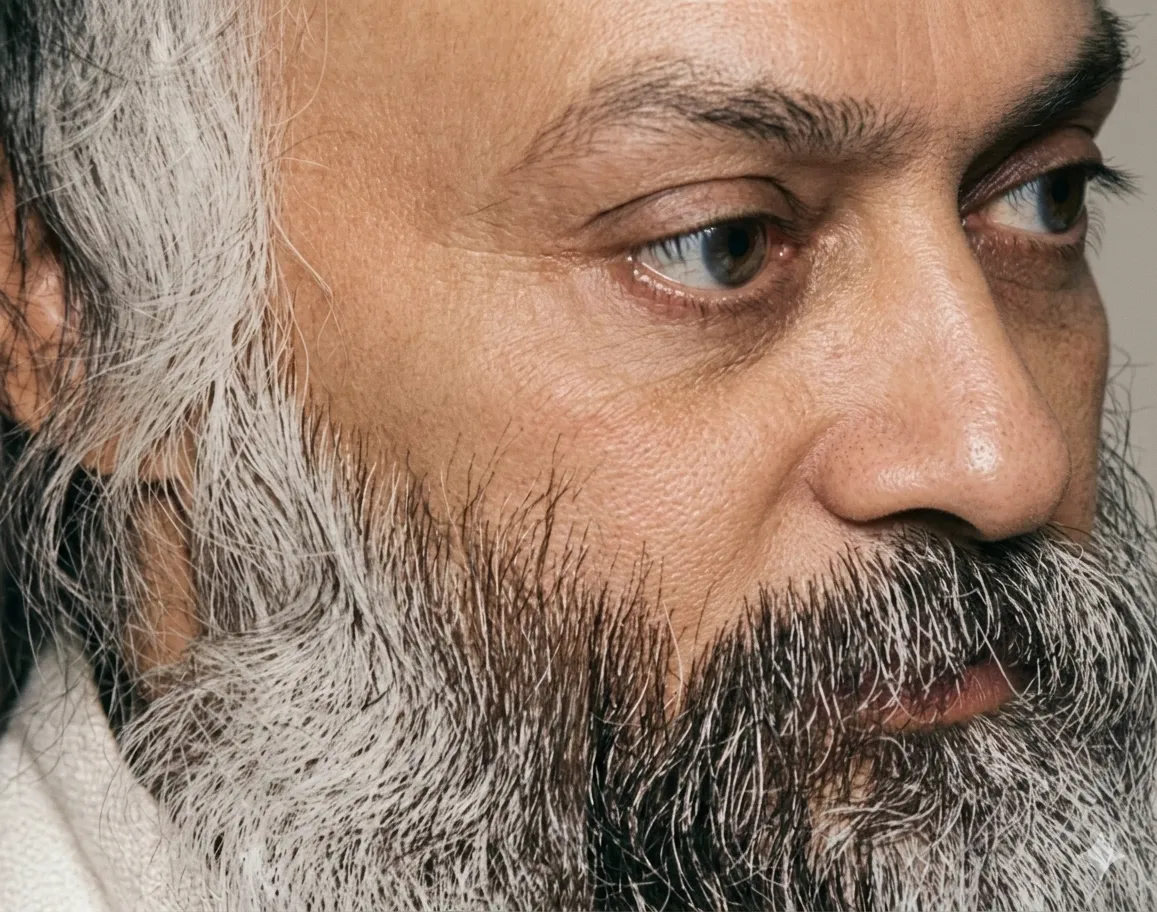
Osho's original Hindi beside Osho Live's English translation, matched passage by passage.
आनंद मैत्रेय! यह सूत्र अत्यंत अर्थगर्भित है। संदेह से सत्य नहीं पाया जा सकता। संदेह से सत्य अकस्मात मिल भी जाए, तो भी तुम चूक जाओगे। संदेह की दृष्टि सत्य को भीतर प्रविष्ट ही न होने देगी। सत्य द्वार भी खटखटाएगा, तो भी तुम द्वार न खोलोगे, संदेह कहेगा: ‘होगा हवा का झोंका।’ संदेह, परमात्मा भी सामने खड़ा हो, तो उस पर भी प्रश्न-चिह्न लगा देगा।
Anand Maitreya! This sutra is profoundly pregnant with meaning. Truth cannot be found through doubt. Even if, by some accident, truth were to come near you while you are doubting, you would still miss it. The eye of doubt never allows truth to enter within. Even if truth knocks at your door, you won’t open it; doubt will say, “It’s only a gust of wind.” Even if God himself were to stand before doubt, doubt would put a question mark upon him.
जहां समस्या नहीं होती वहां संदेह समस्या बना लेता है, निर्मित कर लेता है। संदेह की एक ही कुशलता है: समस्या निर्माण करना। समाधान उसके पास नहीं है। और किसी तरह खींच-तान कर तुम कोई समाधान बना भी लो तो तुम्हारा संदेह पुनः नई समस्याएं निर्मित करता जाएगा।
Where there is no problem, doubt creates one; it manufactures problems. Doubt has only one expertise: creating problems. It has no solutions. And even if you somehow cobble together a solution, your doubt will immediately spin out newer problems.
संदेह में समस्याएं ऐसे ही लगती हैं, जैसे वृक्षों में पत्ते लगते हैं। लाख काटो, फिर-फिर लग जाएंगे। वृक्ष पर और पत्ते घने हो जाएंगे।
In doubt, problems sprout like leaves on a tree. Chop them a hundred times; they will grow back, and the foliage will only become denser.
संदेह का अर्थ होता है कि मैं स्वीकार करने को राजी नहीं हूं; मेरे भीतर स्वीकार-भाव नहीं है; अस्वीकार, इनकार, निषेध। संदेह अर्थात नकार; नहीं। और जो व्यक्ति नहीं में जीता है वह बंद हो जाता है--द्वार-दरवाजे बंद, खिड़कियां बंद। इतना ही नहीं, छोटे-छोटे रंध्र भी रह गए हों कहीं, छोटी-छोटी संधियां भी रह गई हों, उनको भी संदेहशील व्यक्ति बंद कर लेता है। वह जीते-जी कब्र में समा जाता है। वह जीते-जी मर जाता है। संदेह मृत्यु है। यूं चलोगे, उठोगे, काम-धाम करोगे, लेकिन एक अदृश्य कब्र तुम्हें घेरे रहेगी; सूरज से न जुड़ने देगी; हवाओं से न जुड़ने देगी; फूलों से न जुड़ने देगी; तारों से न जुड़ने देगी--जुड़ने ही न देगी। संदेह की प्रक्रिया है तुम्हें तोड़ लेने की।
Doubt means: I am not ready to accept; there is no attitude of acceptance within me—only refusal, rejection, denial. Doubt is negation—no. And the person who lives in “no” becomes closed—doors shut, windows shut. Not only that—if there are tiny cracks or little joints anywhere, a doubter will seal even those. He gets buried in his grave while alive. He dies while living. Doubt is death. You may walk, rise, work, but an invisible tomb will surround you; it won’t let you commune with the sun, with the winds, with the flowers, with the stars—it won’t let you connect at all. The function of doubt is to break your connectedness.
संदेह एक दीवाल है, सेतु नहीं; जोड़ता नहीं, तोड़ता है। जहां संदेह आया, तत्क्षण संबंध विछिन्न हो जाता है, टूट जाता है। संदेह के गृह में तो सत्य अतिथि नहीं हो सकता, असंभव है। प्रवेश ही नहीं मिलेगा। संदेह आतिथेय नहीं बन सकता, मेजबान नहीं बन सकता। वह क्षमता तो श्रद्धा की है।
Doubt is a wall, not a bridge; it doesn’t join, it severs. Wherever doubt appears, the relationship is instantly cut off, broken. In the house of doubt, truth cannot be a guest; it’s impossible. Entry won’t be granted there. Doubt cannot be a host. That capacity belongs to shraddha.
श्रद्धा का अर्थ विश्वास नहीं होता, खयाल रखना। वह पहली बात खयाल रखना, नहीं तो चूक हो जाएगी। विश्वास तो संदेह के विपरीत है और श्रद्धा विश्वास और संदेह दोनों के अतीत है। श्रद्धा बात ही और है। विश्वास तो सिर्फ संदेह को छिपाना है, ढांकना है। जैसे घाव तो है, लेकिन सुंदर वस्त्रों से ढांक लिया है। औरों को दिखाई नहीं पड़ेगा, मगर तुम कैसे भूलोगे? तुम नग्न हो, तुमने वस्त्र ओढ़ लिए; औरों के लिए नग्न न रहे, मगर अपने लिए तो नग्न ही हो। हर व्यक्ति अपने वस्त्रों में नग्न है। कैसे तुम यह बात भुला सकते हो कि तुम वस्त्रों के भीतर नग्न नहीं हो? यह तो असंभव है। हां, औरों के लिए तुम नग्न नहीं हो, क्योंकि तुम्हारे और औरों के बीच वस्त्र आ गए। मगर तुम्हारे स्वयं के लिए तो तुम नग्न ही हो। तुम्हारे लिए तो वस्त्र बाहर हैं। तुम्हारी नग्नता ज्यादा करीब है; वस्त्र नग्नता के बाहर हैं, दूर हैं।
Keep in mind: shraddha does not mean belief. That must be the very first thing to remember, or you will miss. Belief is the opposite of doubt; shraddha is beyond both belief and doubt. Shraddha is altogether a different dimension. Belief merely covers up doubt, hides it—like a wound covered with a beautiful garment. Others may not see it, but how will you forget? You are naked; you have put on clothes. For others you are no longer naked, but for yourself you remain naked. Everyone is naked inside their clothes. How can you forget that beneath the garment you are nude? That’s impossible. Yes, to others you are not naked because a piece of cloth has come between you and them. But for you the nakedness is closer; the garment is outside, far away.
विश्वास वस्त्रों जैसा है। तुम्हारे संदेहों को ढांक लेगा। औरों को लगेगा--तुम बड़े श्रद्धालु!
Belief is like clothing. It will cover your doubts. Others will think, “What a devout soul!”
ये मंदिरों में घंटे बजाते हुए लोग, ये पूजा-पाठ करते हुए लोग, ये मस्जिदों में नमाजें पढ़ते हुए लोग, ये गिरजाघरों में, गुरुद्वारों में जय-जयकार करते हुए लोग--ये सब विश्वासी हैं। काश, पृथ्वी पर इतनी श्रद्धा से भरे लोग होते तो ऐसी विक्षिप्त, ऐसी रुग्ण, ऐसी सड़ी-गली मनुष्यता पैदा होती? इतनी श्रद्धा होती तो इतने सत्य के फूल खिलते! अनंत फूल खिलते। फूलों से ही पृथ्वी भर जाती, सुगंध ही सुगंध से भर जाती। पृथ्वी स्वर्ग हो जाती।
Those who ring temple bells, perform rituals, say their prayers in mosques, raise hallelujahs in churches and gurdwaras—these are believers. If only the earth were that full of shraddha! Then could such a deranged, diseased, rotten humanity have arisen? If there were true shraddha, the flowers of truth would bloom—endlessly. The earth would be filled with fragrance; it would be heaven.
लेकिन देखते हो, नमाज पढ़ने आदमी मस्जिद जाता है और कहावत तो तुमने सुनी है, उसको चरितार्थ करता है--मुंह में राम, बगल में छुरी। मुरादाबाद की इस ईदगाह में जहां अभी-अभी हिंदू मुस्लिम दंगा हुआ और कोई डेढ़ सौ लोग मारे गए, नमाज पढ़ने लोग गए थे ईदगाह में। छुरे और बंदूकें किसलिए ले गए थे? फिर यह नमाज कैसी जो छुरे-बंदूकों के साथ हो रही हो? यह दंगा-फसाद करने की तैयारी थी। नमाज का क्या मूल्य रह गया? ऊपर के वस्त्र बड़े झीने हैं, भीतर की असलियत बहुत गहरी है। हिंदू लड़ते हैं, मस्जिदें जलाते हैं। मुसलमान लड़ते हैं, मंदिर जलाते हैं, मूर्तियां तोड़ते हैं। कुरान जलती है, गीता जलती है, बाइबिल जलती है। सारी पृथ्वी तथाकथित धार्मिक लोगों के कारण इतनी पीड़ित है कि आश्चर्य होता है हम कब जागेंगे, कब पुनर्विचार करेंगे?
But look: people go to the mosque for namaz, and you know the saying they then enact—“Ram on the lips, knife under the arm.” In the Eidgah at Moradabad, where recently Hindu–Muslim riots took place and some one hundred fifty people were killed, people had gone to pray. Why did they carry knives and guns? What kind of prayer is that—performed with knives and guns? That was preparation for rioting. What value remained in the namaz? The upper garment is very thin; the inner reality is deep. Hindus fight, burn mosques. Muslims fight, burn temples, break idols. Qurans burn, the Gita burns, the Bible burns. The earth suffers so much because of so-called religious people that you wonder when we will wake up and rethink.
मनुष्य के इतिहास में जितना पाप धर्मों के नाम पर हुआ है, किसी और चीज के नाम पर नहीं हुआ। राजनीति भी पिछड़ जाती है; धर्म ने वहां भी बाजी मार ली है।
In human history, more sin has been committed in the name of religion than in the name of anything else. Even politics lags behind; religion has outdone it there too.
निश्चित ही ये विश्वासी लोग हैं, लेकिन श्रद्धालु नहीं! श्रद्धालु हिंदू और श्रद्धालु मुसलमान और श्रद्धालु ईसाई और श्रद्धालु जैन में कोई भेद नहीं हो सकता। श्रद्धा का रंग एक, रूप एक, स्वाद एक। श्रद्धा एक ही अमृत है। जिसने पीया, फिर वह कौन है कोई फर्क नहीं पड़ता। उस एक परमात्मा से जोड़ देती है। उस एक सत्य से जोड़ देती है। विश्वास जोड़ते नहीं, तोड़ते हैं। मैंने कहा संदेह तोड़ता है--और विश्वास भी तोड़ते हैं। इसलिए विश्वास केवल संदेह को छिपाने वाले वस्त्र हैं। विश्वास धोखा है। विश्वास को श्रद्धा मत समझ लेना।
Surely, these are believers—not people of shraddha! There can be no difference between a Hindu of shraddha and a Muslim of shraddha, a Christian of shraddha or a Jain of shraddha. Shraddha has one color, one form, one flavor. Shraddha is a single nectar. Whoever drinks of it—what does it matter who he is? Shraddha connects you to the One God, to the One Truth. Beliefs don’t join; they divide. I said doubt divides—and beliefs divide too. Belief is only the garment thrown over doubt. Belief is a deception. Do not mistake belief for shraddha.
वही भूल हो गई है। हमने विश्वास को श्रद्धा समझ लिया है। हम हर बच्चे को विश्वास सिखा रहे हैं। बच्चा पैदा नहीं हुआ कि बस धार्मिक संस्कार शुरू हो जाते हैं। धार्मिक संस्कारों का क्या अर्थ है तुम्हारे? यही कि थोपो इस पर विश्वास--बनाओ इसे हिंदू, बनाओ जैन, बनाओ बौद्ध। इसे कुछ बना कर रहो। तुम जो हो वही इसको बना कर रहो। और कैसा आश्चर्य है, तुमने कभी यह भी न सोचा कि तुम जिंदगी भर हिंदू थे, जैन थे, बौद्ध थे, तुमने क्या खाक पा लिया है! तुम्हारे हाथों में क्या है? तुम्हारे प्राणों में क्या है? नहीं कोई दीया जलता दिखाई पड़ता। नहीं तुम्हारे जीवन में कोई उत्सव है। कम से कम इस बच्चे को तो न बिगाड़ो, इसे तो सावधान करो। इसे तो कहो कि मैंने जिंदगी भर एक विश्वासी की तरह जीया, कुछ भी पाया नहीं। तू विश्वासी की तरह मत जीना। तू श्रद्धा की तलाश कर। हम तो न पा सके। हमने तो जिंदगी गंवाई, मगर तू मत गंवा देना।
That is the mistake we have made. We have taken belief to be shraddha. We teach every child belief. No sooner is a child born than religious conditioning begins. What does your “religious samskara” mean? It means: impose beliefs upon him—make him a Hindu, a Jain, a Buddhist. Make him into something. Whatever you are, make him that. And what a wonder—you never pause to ask what you yourself have gained by being a Hindu, a Jain, a Buddhist all your life! What do you have in your hands? What is in your life-breath? No lamp is seen lit within you. There is no celebration in your life. At least don’t ruin this child; warn him. Tell him: I lived as a believer and gained nothing. Don’t live as a believer. Seek shraddha. I could not find it; I wasted my life—do not waste yours.
मगर उलटा मजा है, मां-बाप थोपते हैं आपने आग्रह को बच्चों के ऊपर। धार्मिक शिक्षा के लिए बड़ी आतुरता रहती है कि जल्दी से धार्मिक शिक्षा हो जाए। मुसलमान बच्चा पैदा होता है, यहूदी बच्चा पैदा होता है--खतना करो इसका, जल्दी खतना करो! क्योंकि कहीं जवान यह हो जाए और इनकार करने लगे। और जवान होगा तो इनकार करेगा ही, कि अगर परमात्मा को खतना ही करके भेजना था तो उसने खतना कर ही दिया होता। तुम्हारे हाथ में खतना छोड़ा होता? जो भी जरूरी था शरीर के लिए, उसने करके भेजा है। जैसा उसने शरीर बनाया है, इसमें काट-पीट करने का तुम्हें क्या हक है? जवान हो जाएगा तो इनकार करेगा। जल्दी से खतना कर दो, देर न करो। जल्दी से जनेऊ पहना दो, यज्ञोपवीत संस्कार कर दो। क्योंकि बड़ा हो जाएगा तो संदेह उठाने लगेगा, प्रश्न खड़े करने लगेगा। फिर सुलझाना मुश्किल होगा। अभी ठूंस दो। अभी इसको कुछ होश नहीं है। अभी इसके सामने सवाल नहीं हैं। अभी यह असहाय है, तुम पर निर्भर है। अभी तुम जिलाओ तो जीएगा, तुम मारो तो मर जाएगा। अभी तुम्हारी मुट्ठी में है। कहीं अपने पैरों पर खड़ा हो गया और कहने लगे कि क्यों बांधूं यह रस्सी, नहीं बांधता, मुझे इसमें कुछ दिखाई नहीं पड़ता। क्यों तुम्हारे मंदिरों में जाकर सिर झुकाऊं? मुझे पत्थर दिखाई पड़ते हैं। फिर मुश्किल हो जाएगी।
But the opposite happens. Parents force their biases onto their children. They are eager for “religious education”—let it happen fast. A Muslim child is born, a Jewish child is born—“Perform the circumcision quickly!” Why quickly? Because he may grow up and refuse. And he will refuse when grown: “If God wanted me circumcised, he would have sent me circumcised. Would he leave such a thing to your hands? Whatever was necessary for the body, he has already done. What right have you to cut and carve the body?” So do it quickly; don’t delay. Quickly put on the sacred thread, perform the initiation. Because once he grows, he will begin to doubt, to question—then it will be hard to manage. Now, stuff it in. He has no awareness; no questions stand before him. He is helpless, dependent on you. If you keep him, he lives; if you kill him, he dies. He is in your fist. Once he stands on his own and says, “Why should I tie this cord? I won’t. I don’t see any meaning in it. Why should I bow in your temples? I see only stones.” Then you’ll be in trouble.
इसलिए सारे लोग बड़े आतुर होते हैं--जल्दी से धर्म की शिक्षा दो! और धर्म की शिक्षा पर क्या शिक्षा देते हैं? शिक्षा यही कि कुछ अंधविश्वास थोप दो--ऐसे थोप दो कि वे खून में मिल जाएं, मांस-मज्जा में सम्मिलित हो जाएं। बच्चा उनके साथ ही बड़ा हो, उसको याद भी न रहे कि कब किस घड़ी में ये विश्वास उसके भीतर डाल दिए गए। जब वह बड़ा हो, तो पाए कि ये विश्वासों के साथ ही बड़ा हुआ है। जैसे ये विश्वास वह लेकर ही आया हो परमात्मा के यहां से।
That’s why people are so eager: hurry up with religious education! And what does “religious education” mean? It means thrusting superstitions in so deeply that they mingle with his blood and bone. Let him grow with them, so that he does not even remember when they were planted. When he becomes an adult, he finds he has grown with these beliefs—as if he brought them from God’s house.
अगर विश्वास और संदेह में चुनना हो तो मैं कहूंगा: संदेह चुनना। क्योंकि संदेह स्वाभाविक है, विश्वास अस्वाभाविक है। और मेरा यह भी अनुभव है कि अगर कोई व्यक्ति ईमानदारी से संदेह चुने तो आज नहीं कल श्रद्धा को खोजना ही पड़ेगा, क्योंकि संदेह के साथ जीना असंभव है। संदेह यूं है जैसे छाती में तीर चुभा हो। उसे निकालना ही होगा। लेकिन विश्वास मलहम-पट्टी कर देता है। विश्वास खतरनाक है--संदेह से भी ज्यादा खतरनाक है। विश्वास से सावधान। विश्वास, तीर भी चुभा रहता है, मलहम-पट्टी भी कर देता है। क्लोरोफार्म की तरह है विश्वास। तुम सड़ते रहते हो और तुम्हें बेहोश रखता है। तुम्हें भरोसा दिलाए रखता है कि सब ठीक है, कुछ गलत नहीं है, सब ठीक है। इस सब ठीक होने की भ्रांति में, जो गलत है तुम उसके भी आदी हो जाते हो। धीरे-धीरे तुम घावों के भी आदी हो जाते हो। तुम उन्हें जीवन का अनिवार्य अंग मान लेते हो।
If the choice is only between belief and doubt, I say: choose doubt. Because doubt is natural; belief is unnatural. And my experience is that if someone honestly chooses doubt, then today or tomorrow he will have to seek shraddha—because living with doubt is impossible. Doubt is like an arrow lodged in your chest—you will have to pull it out. But belief puts on ointments and bandages. Belief is more dangerous than doubt. Beware of belief. With belief, the arrow remains embedded and the ointment is smeared over it. Belief is like chloroform: you go on rotting while you are kept unconscious. You’re reassured that all is well. In that illusion, you become accustomed even to what is wrong. Slowly you become used to your wounds; you take them as an inevitable part of life.
मैं चाहता हूं संदेह को चुनना, अगर विश्वास और संदेह में चुनना हो। क्योंकि संदेह कम से कम परमात्मा का दिया हुआ है। और परमात्मा जो भी देता है, तुम जो भी जन्म के साथ लेकर आए हो, उसकी जरूर कोई सार्थकता है। संदेह से सत्य तो कभी नहीं मिलेगा, लेकिन संदेह में कोई जी नहीं सकता। संदेह में फांसी लग जाती है। और फांसी का फंदा कौन नहीं तोड़ना चाहेगा? फांसी का फंदा तोड़ा तुमने और श्रद्धा का आविर्भाव हुआ। संदेह के नीचे दबी है श्रद्धा और तुम संदेह के ऊपर थोप रहे हो विश्वास। खयाल रखना, तुम श्रद्धा से और भी दूर हो गए। एक पर्त तो संदेह की थी, एक चट्टान तो संदेह की थी, तुमने एक चट्टान और रख ली--विश्वास की। अब श्रद्धा और भी दूर हो गई। अब खुदाई और भी करनी पड़ेगी।
So, if the only options are belief or doubt, I say choose doubt. At least doubt is God-given. Whatever you have brought with birth has some significance. You won’t find truth through doubt—but no one can live in doubt. Doubt is a noose around the neck—and who wouldn’t want to cut the noose? Break the noose, and shraddha appears. Shraddha lies buried beneath the doubt—while you are piling belief on top of the doubt. Remember, you go even farther from shraddha. There was already one rock of doubt; then you placed another rock—belief. Shraddha recedes even more. Now more digging will be needed.
एक बहुत बड़े संगीतज्ञ वेगनर के पास जब भी कोई संगीत सीखने आता था, वह पहली बात यही पूछता था कि तुमने कहीं और तो संगीत नहीं सीखा? अगर सीखा हो तो मेरी फीस दुगनी होगी। अगर बिलकुल नहीं सीखा है कहीं, क ख ग से शुरू करना है, तो फिर कोई बात नहीं। फिर उतनी ही फीस लूंगा जितनी मैं सभी से लेता हूं। फिर दुगनी नहीं होगी। स्वभावतः किसी ने आठ साल, दस साल संगीत का अभ्यास किया था, तो वह कहता, आप उलटी बातें कर रहे हैं। हम दस साल मेहनत करके आए हैं, संगीत सीख कर आए हैं। हमसे आपको कम फीस लेनी चाहिए। जो क ख ग से शुरू करेंगे उनसे ज्यादा फीस लेनी चाहिए।
A great musician, Wagner, whenever someone came to learn from him, would first ask, “Have you learned music anywhere else?” If the answer was yes, he would say, “Then my fee will be double. If you haven’t learned at all and we must start from ABC, it’s fine—my normal fee. But if you’ve learned elsewhere, it will be double.” Naturally, those who had practiced for eight or ten years would protest, “You are speaking the wrong way. We have worked for ten years! You should charge us less. Those who begin with ABC should pay more.”
वेगनर कहता कि मेरा अनुभव कुछ और है। मेरा अनुभव यह है कि तुम जो सीख कर आए हो पहले मुझे वह भुलाना पड़ेगा। तब काम शुरू होगा। काम तो क ख ग से ही शुरू होगा। पहले तुम्हारी स्लेट की सफाई करनी पड़ेगी, फिर लिखावट हो सकेगी।
Wagner would say, “My experience is otherwise. What you have learned, I will first have to unlearn for you. Only then can we begin. The work will begin from the ABC anyway. First I must clean your slate; only then can I write.”
यह मेरा भी अनुभव है। मैं वेगनर से राजी हूं। वह ठीक कहता था। वह पश्चिम के बहुत बड़े संगीतज्ञों में से एक था। उसने बात पते की कही है, गहरी कही है। मेरा भी यह अनुभव है। जो विश्वासी मेरे पास आ जाते हैं उनके साथ ज्यादा मेहनत करनी पड़ती है। जो संदेहशील व्यक्ति आते हैं उनके साथ उतनी मेहनत नहीं करनी पड़ती, क्योंकि उनके पास एक ही चट्टान है जिसको तोड़ना है। विश्वासी के पास दोहरी चट्टानें हैं। पहले उसका विश्वास तोड़ो और विश्वास से वह चिपटता है, क्योंकि विश्वास में सांत्वना है। संदेह में तो कोई सांत्वना है ही नहीं। प्रत्येक व्यक्ति संदेह से मुक्त होना चाहता है। संदेह स्वाभाविक है, संदेह से मुक्त होने की आकांक्षा स्वाभाविक है। विश्वास अस्वाभाविक है, आरोपित है। और इसलिए विश्वास से मुक्त होने की कोई आकांक्षा भी नहीं है। क्योंकि कभी परमात्मा ने सोचा भी नहीं था कि तुम विश्वास में पड़ जाओगे। विश्वास पंडितों की, पुरोहितों की ईजाद है, बेईमानों की ईजाद है, शोषकों की ईजाद है, जो तुम्हारा लहू चूस रहे हैं उनकी ईजाद है।
That is my experience too. I agree with Wagner—he spoke to the point. The “believers” who come to me demand far more work. With doubters, less work is needed—only one rock to break. With believers there are two rocks. First break their belief—and they cling to belief, because belief comforts. Doubt offers no comfort. Everyone wants to be free of doubt. Doubt is natural; so is the desire to be free of it. Belief is unnatural, imposed; hence there is no deep desire to be free of belief—God never intended you to fall into belief. Belief is the invention of priests and pundits, the invention of exploiters who suck your blood.
विश्वास झूठा सिक्का है; श्रद्धा के नाम से चलता है, लेकिन झूठा सिक्का है। विश्वास का अर्थ होता है: उधार, बासा। और सत्य कभी बासा हो सकता है, उधार हो सकता है? विश्वास तो ऐसे है जैसे कभी-कभी किताबों में दबे हुए गुलाब के फूल मिल जाते हैं--सूखे, मुर्दा। न उनमें गुलाब ही गंध होती है, न रंग होता है। विश्वास ऐसा है--किताबों में दबा हुआ फूल। और श्रद्धा ऐसी है--अभी झाड़ी पर खिला हुआ फूल। अभी रसधार बह रही है उसमें। अभी जीवंत है। अभी प्राण है उसमें। अभी सूरज की किरणें उसमें प्रवेश करती हैं। अभी हवाएं उसे दुलराती हैं। अभी वह श्वास लेता है। अभी उसके हृदय में धड़कन है। अभी परमात्मा उसके भीतर विराजमान है।
Belief is counterfeit currency; it passes in the name of shraddha, but it is fake. Belief means borrowed, stale. Can truth ever be stale or borrowed? Belief is like the dried rose you sometimes find pressed in a book—dead, without fragrance or color. Shraddha is like a blossom on the bush right now—sap flowing, alive, breathing, sunbeams entering it, winds caressing it, a heartbeat within it. God resides in it now.
श्रद्धा और विश्वास में वैसा ही फर्क है जैसे कागजी फूलों में और असली फूलों में; झूठे सिक्कों में और असली सिक्कों में। विश्वास में मत पड़ जाना। इसलिए मैं चाहता हूं: सौभाग्य का दिन होगा वह, जिस दिन हम अपने बच्चों को विश्वास देना बंद कर देंगे। हमें वस्तुतः अपने बच्चों को संदेह पर धार रखना सिखाना चाहिए। संदेह की तलवार पर धार रखो। संदेह का उपयोग करो, ताकि कोई विश्वास तुम्हें पकड़ न सके। संदेह को सजग रखो, ताकि किसी विश्वास के जाल में तुम उलझ न जाओ।
The difference between shraddha and belief is like the difference between paper flowers and living flowers; between counterfeit coins and real coins. Don’t fall into belief. That’s why I long for the day when we stop giving belief to our children. In fact, we should teach them how to keep an edge on doubt—sharpen the sword of doubt—so that no belief can capture them, keep doubt alert so they don’t get caught in the net of belief.
और संदेह की एक खूबी है। खूबी यह है कि संदेह तुम्हें बैचेनी में रखेगा, अशांत रखेगा, परेशान रखेगा। उसमें कोई सांत्वना नहीं है। उसमें कोई सुरक्षा नहीं है। कांटे ही कांटे पर जैसे कोई सोया हो, करवट भी नहीं बदल सकते।
And doubt has one great quality: it will keep you restless, unquiet, disturbed. There is no consolation in it, no safety. It is like sleeping on thorns—you can’t even turn over.
विश्वास तो बड़ी सुखद शय्या दे देता है। जीभर कर सोओ। घोड़े बेच कर सोओ, जागने का कोई सवाल ही नहीं है। विश्वास मूर्च्छित करता है। संदेह सजग रखता है। लेकिन संदेह से सत्य नहीं मिलता, पर संदेह से एक काम होता है, वह काम है कि संदेह तुम्हें अपने से मुक्त करने के लिए सदा उत्प्रेरित करता है। संदेह कहता है कि मेरे पार जाओ। संदेह के पार जाना ही होगा।
Belief gives you a very comfortable bed. Sleep to your heart’s content; sell the horses and sleep! Waking up never arises. Belief narcotizes; doubt keeps you alert. Doubt does not give truth, but it does one great thing: it constantly prods you to be free of itself; it says, “Go beyond me.” You will have to go beyond doubt.
तुम जरा सोचो तो, तुम मान कर बैठ गए हो कि आत्मा अमर है; जाना नहीं। यह तुम्हारा मानना है कि आत्मा अमर है। बस आत्मा को अमर मान लिया तो अब आत्मा का अनुभव करने की क्या जरूरत रही! मान लिया सो बात खत्म हो गई। जब मान ही लिया तो अब खोजना क्या है? हटा दो इस विश्वास को और तब प्राणों में एक तड़फ उठेगी, एक बैचेनी, एक तूफान, एक आंधी, एक झंझावात। सब कंप जाएगा। मौत द्वार पर दस्तक दे रही है, हर पल आ सकती है, कभी भी आ सकती है। और आत्मा है या नहीं, यह भी पता नहीं, अमरता की तो बात दूर। मौत के बाद होगी या नहीं, यह तो सवाल नहीं; अभी भी है या नहीं यह भी संदिग्ध है। कैसे तुम बैठे रहोगे इस अंगारे पर। इस ज्वालामुखी पर, धधकते ज्वालामुखी पर ज्यादा देर नहीं बैठ सकोगे। यह संदेह तुम्हें अन्वेषण में ले जाएगा। यह संदेह ही तुम्हें खोज में गतिमान करेगा। और उसी खोज का अंतिम फल श्रद्धा है।
Just consider: you’ve assumed that the soul is immortal; you’ve not known it. This “assuming” that the soul is immortal—once you accept it, what need remains to experience the soul? Assumed—finished. Drop that belief, and a throbbing will arise in your being, a restlessness, a storm, a cyclone. Everything will tremble. Death is knocking at the door—any moment it can come. And whether there is a soul or not, even that is uncertain—let alone immortality. Is there anything after death? That’s not the only question—does it even exist now? How will you sit on such embers? You cannot sit long atop a smoldering volcano. This doubt will take you into inquiry; it will set you in motion in the search. And the final fruit of that search is shraddha.
श्रद्धा है जानना; मानना नहीं। श्रद्धा है अनुभव। श्रद्धा है ध्यान; ज्ञान नहीं। ज्ञान विश्वास पैदा कर देता है। संदेह है अज्ञान। विश्वास है ज्ञान--उधार, बासा, शास्त्रीय, तोतारटंत। और श्रद्धा है स्वानुभव, साक्षात्कार, सत्य के साथ मिलन।
Shraddha is knowing, not assuming. Shraddha is experience. Shraddha is meditation, not borrowed knowledge. Doubt is ignorance; belief is knowledge—borrowed, stale, secondhand, parroted. Shraddha is one’s own experience—seeing, union with truth.
संदेह से श्रद्धा को खोजो। श्रद्धा तुम्हें सत्य से मिला देगी। यह सम्यक सूत्र है। संदेह को सीढ़ी बनाओ--श्रद्धा के मंदिर तक पहुंचने के लिए। तलवार की धार पर चलना है। मगर कोई और उपाय नहीं है, कोई और सस्ता मार्ग नहीं है। चलना ही होगा तलवार की धार पर। यूं ही निखार आता है। यूं ही जीवन में गत्यात्मकता आती है, प्रवाह आता है। यूं ही जीवन में ऊर्जा का आविर्भाव होता है। चुनौतियों में ही तो तुम जागते हो। संदेह चुनौतियां देता है।
Seek shraddha through doubt; shraddha will unite you with truth. This is a right sutra. Make doubt into a ladder to reach the temple of shraddha. Yes, you have to walk on the razor’s edge; there is no other way, no cheaper path. Only thus comes polish, movement, flow, energy. You wake under challenges. Doubt challenges you.
संदेह का उपयोग करना सीखो। संदेह को दबाओ मत। मैं चाहता हूं कि तुम संदेह से जरूर मुक्त होओ, लेकिन दबा कर कोई कभी मुक्त नहीं हुआ है। जिसको तुम दबा लोगे, उसे बार-बार दबाना पड़ेगा। उससे कभी मुक्ति नहीं होगी। वह भीतर बैठा रहेगा, वह भीतर पड़ा रहेगा। लाख दबाओ, फिर अवसर पाकर निकल आएगा। जैसे कोई बीज को जमीन में दबा दे, वर्षा आएगी, फिर अंकुरण हो जाएगा। लाख दबाए चले जाओ, फिर-फिर अंकुर आएंगे। फिर-फिर अवसर आएंगे। संदेह फिर खड़ा हो जाएगा।
Learn to use doubt; don’t suppress it. I want you to be free of doubt, but no one ever became free by repression. What you repress must be repressed again and again—there is never freedom from it. It remains inside; given a chance, it sprouts again, like a seed pressed into the soil that sprouts with the rains. Keep pressing; shoots will come again. Doubt will stand up again.
संदेह दबाया नहीं जा सकता। हां, संदेह मिटाया जा सकता है। और मिटाने का उपाय है: संदेह को जीओ। संदेह को उसकी समग्रता से जीओ। डरना क्या है? भय क्या है? संदेह की सीढ़ी से पूरी तरह चलो। और तुम चकित होओगे यह जान कर कि संदेह श्रद्धा तक ले आता है। लोगों ने तुमसे उलटी बात कही है। तुम्हें अब तक यही समझाया गया है कि संदेह से तुम कभी श्रद्धा तक नहीं पहुंचोगे। यह बात गलत है। मैं पहुंचा हूं संदेह से ही श्रद्धा तक। इसलिए अपने अनुभव से कहता हूं कि यह बात बुनियादी रूप से गलत है। संदेह के अतिरिक्त कोई कभी श्रद्धा तक नहीं पहुंचा है। हां, यह जरूर सच है कि संदेह से कोई सत्य तक नहीं पहुंचता है। संदेह श्रद्धा तक ले आता है, बस। और जो श्रद्धा पर आ गया उसकी भूमिका तैयार है। सत्य तक जाना ही नहीं होता, सत्य खुद आता है। तुम्हारा काम है संदेह से श्रद्धा तक आ जाओ, फिर प्रतीक्षा करो। फिर धैर्यपूर्वक प्रतीक्षा करो। सत्य खुद आएगा।
Doubt cannot be suppressed; it can be dissolved. And the method is: live it—live doubt in its totality. What is the fear? Walk the entire staircase of doubt. You will be amazed: doubt leads to shraddha. People told you the opposite—that you will never reach shraddha through doubt. That is false. I have reached shraddha through doubt; from my experience I say this is fundamentally true. No one has ever reached shraddha except through doubt. Yes, it is true that doubt does not lead to truth; doubt leads to shraddha. And once you arrive at shraddha, the ground is ready. You don’t have to “go” to truth—truth comes on its own. Your task is to come from doubt to shraddha, and then wait—patiently. Truth itself will arrive.
कबीर ने कहा है: मैं खोज-खोज थक गया परमात्मा को, नहीं मिला नहीं मिला। परमात्मा तुम्हारी खोज से नहीं मिलता। तुम खोजोगे भी कहां? किस दिशा में? काबा में कि काशी में कि कैलाश में, कहां खोजोगे? उसका कोई पता भी तो नहीं, उसका कोई ठिकाना भी तो नहीं। नाम-धाम भी तो नहीं। जाओगे कहां? कहां खोजोगे, क्या करोगे? शास्त्रों में भटकोगे और शास्त्रों में भटकना बीहड़ जंगलों में भटकना है, जहां भटक गए तो निकलना मुश्किल हो जाता है। गीता में खोजोगे, कुरान में खोजोगे, बाइबिल में खोजोगे और भटक जाओगे, अटक जाओगे। सत्य को खोजा नहीं जा सकता।
Kabir says: I searched and searched for God, and did not find him. God is not found by your searching. Where will you search? In which direction? In Kaba, in Kashi, or on Kailash—where? He has no address. Will you wander in scriptures? That is wandering in trackless jungles; once lost there, it is hard to get out. You will search in the Gita, the Quran, the Bible—and get stuck. Truth cannot be “searched out.”
कबीर ठीक कहते हैं कि मैंने बहुत खोजा, नहीं पाया। मगर खोजते-खोजते एक बात घट गई: मैं खो गया। उसे तो नहीं पाया, लेकिन मैं खो गया। और जिस दिन मैं खो गया, एक अपूर्व घटना घटी। उस दिन से परमात्मा मेरे पीछे लगा फिरता है। हरि लागे पाछे फिरत कहत कबीर कबीर! हरि लागे पाछे फिरत. पीछे-पीछे हरि घूमते हैं और मेरे और कहते हैं--कबीर, कबीर, कहां जाते! अरे सुनो भी, रुको भी! अब मुझे कुछ पड़ी नहीं--कबीर कहते हैं। अब मैं जानता हूं कि मैं मिट गया। भूमिका तैयार हो गई।
Kabir is right: I searched much, I did not find—but something happened while I searched: I was lost. I did not find him, but I got lost. And the day I was lost, an extraordinary thing happened: from that day, God began to chase me. Hari lāge pache phirat—kehat Kabir, Kabir! “God keeps following me, saying, ‘Kabir, Kabir—where are you going? Listen! Stop!’” Now I care for nothing, says Kabir. Now I know—I have disappeared. The ground is ready.
जिस दिन संदेह मिटता है उसी दिन मैं भी मिट जाता है। संदेह और मैं का संग-साथ है। श्रद्धा और मैं का कोई संग-साथ नहीं है। संदेह है अहंकार, श्रद्धा है निर-अहंकारिता। जहां श्रद्धा आई, भूमिका बन गई। फिर परमात्मा स्वयं आता है, सत्य स्वयं आता है।
The day doubt disappears, the “I” disappears too. Doubt and ego go together. Shraddha and ego have no companionship. Where shraddha arrives, the ground is set—and God himself comes; truth itself comes.
इसलिए यह ऐतरेय ब्राह्मण का सूत्र बड़ा प्यारा है: ‘श्रद्धा पत्नी सत्यं यजमानः।’
Hence the Aitareya Brahmana’s sutra is lovely: “Shraddhā patnī satyam yajamānaḥ.”
श्रद्धा को स्त्री कहा। ठीक ही कहा। ये काव्यात्मक प्रतीक हैं। सत्य तो है पुरुष, श्रद्धा है स्त्री। इसलिए सत्य को यजमान कहा, अतिथि कहा। और मेजबान तो कोई स्त्री ही हो सकती है; पुरुष की वह क्षमता नहीं, क्योंकि पुरुष की वह प्रेम की पात्रता नहीं। श्रद्धा है प्रेम की पराकाष्ठा। श्रद्धा स्त्रैण है। इसलिए जब कभी पुरुष में भी घटती है तो उसके व्यक्तित्व में भी स्त्रैण कोमलता आ जाती है।
Shraddha is called the woman—the wife. Rightly so. These are poetic symbols. Truth is male; shraddha is female. So truth is called the yajamāna—the sacrificer, the guest. And who can be a host but the feminine? Man lacks that capacity; he lacks that receptivity of love. Shraddha is the consummation of love. Shraddha is feminine. When it flowers even in a man, a feminine softness enters his being.
तुम देखते हो, बुद्ध, महावीर, जैनों के चौबीस तीर्थंकर, राम, कृष्ण, इनमें से किसी की हमने दाढ़ी-मूंछ नहीं बनाई है। तुमने कोई प्रतिमा देखी जिसमें राम और कृष्ण की दाढ़ी-मूंछ हों? या बुद्ध की, या महावीर की? और क्या तुम सोचते हो, सब मुखन्नस थे, कि किसी को दाढ़ी-मूंछ थी ही नहीं? एकाध हो भी सकता है कि मुखन्नस हो, मगर चौबीस के चौबीस जैनों के तीर्थंकर--बुद्ध भी, राम भी, कृष्ण भी, सारे अवतार! इनकी दाढ़ी-मूंछ क्या हुई? और यूं भी नहीं कि सबके बचपन की तस्वीरें हैं ये। बुद्ध बयासी वर्ष जीए, महावीर अस्सी वर्ष जीए। अस्सी वर्ष तक कम से कम दाढ़ी-मूंछ तो निकल ही आई होगी। मगर क्या हुआ? हुआ यह कि हमने दाढ़ी-मूंछ अंकित नहीं की। हम इतिहास का उतना भरोसा नहीं करते। इतिहास दो कौड़ी की चीज है। हम समय का ही भरोसा नहीं करते, इतिहास का क्या भरोसा करें? हम कालातीत पर दृष्टि रखते हैं। हम, इतिहास से भी बड़ा कुछ सत्य है, उस पर हमारी नजर है। इतिहास में तथ्य होते हैं, सत्य नहीं होते। सत्य तो बड़ी और बात है। सत्य तो काव्य में होता है।
You see it in the statues of Buddha, Mahavira, the twenty-four Jain tirthankaras, Rama, Krishna—have you ever seen a statue of any of them with beard and mustache? Do you think they were all eunuchs, that none sprouted whiskers? Perhaps one or two could be exceptions, but all twenty-four tirthankaras—Buddha, Rama, Krishna, all the avatars—what happened to their beards and mustaches? And it’s not as if those are childhood portraits. Buddha lived to eighty-two, Mahavira to eighty. At least by eighty, a beard should have grown! What happened? We simply did not carve facial hair into their images. We do not trust history that much. History is worth two pennies. We do not even trust time; why trust history? Our gaze is on the timeless. There is something greater than history: truth. History contains facts, not truth. Truth is found in poetry.
ये काव्यात्मक प्रतिमाएं हैं। यह दाढ़ी-मूंछ हमने हटा दी। दाढ़ी-मूंछ तो रही, निश्चित रही, इसमें कोई शक-शुबहा का कारण नहीं है। लेकिन हमने मूर्तियों से हटा दी। हटा दी इसलिए कि जब ये व्यक्ति परम श्रद्धा को उपलब्ध हुए तो इनके व्यक्तित्व में एक तरह की स्त्रैणता आ गई। उस स्त्रैणता को कैसे हम सांकेतिक करें, किस तरह संकेत दें? पत्थर की प्रतिमा में कैसे लिखें इस बात को कि इनके व्यक्तित्व में स्त्रैण कोमलता आ गई थी, श्रद्धा पराकाष्ठा को पहुंच गई थी? दाढ़ी-मूंछ हटा कर हमने वह काम किया है।
These are poetic images. We removed the beard-and-mustache. They surely had them—no doubt. But we removed them from the icons to indicate that when these beings attained ultimate shraddha, a feminine quality arose in them. How to symbolize that? How to write it in stone—that a feminine tenderness had blossomed, that shraddha had reached its peak? By removing the beard and mustache, we did it.
फ्रेड्रिक नीत्शे ने अपनी बहुत सी महत्वपूर्ण बातों में एक बात यह भी कही है. हालांकि उसने तो आलोचना के लिए कही है, खंडन के लिए कही है। वह कोई धार्मिक व्यक्ति नहीं था, नास्तिक था। उसने ही यह प्रसिद्ध सूत्र दिया है इस सदी को कि ‘ईश्वर मर चुका है।’ यद्यपि उसने आलोचना में यह बात कही है, लेकिन मैं मानता हूं इसमें थोड़ी सच्चाई है। मैं तो प्रशंसा में मानता हूं इस बात को। मेरी व्याख्या और है। उसने कहा है कि बुद्ध और जीसस स्त्रैण हैं और उन्होंने सारी मनुष्यता को स्त्रैण कर दिया। उसने तो निंदा के लिए कहा है। वह तो उसी तरह कहा है, जैसे तुम किसी को कह देते हो--नामर्द, स्त्रैण। तुम तो निंदा के लिए, किसी को गाली देना चाहते हो, तब यह कहते हो। ऐसा ही उसने कहा है, क्योंकि उसके लिए पुरुष की जो परुषता है, जो कठोरता है, उसके प्रति बड़ा समादर है।
Among many sharp observations of Friedrich Nietzsche—though he spoke critically, being an atheist who popularized the dictum “God is dead”—there is one I affirm in praise. He said: Buddha and Jesus are “feminine,” and they have made humanity feminine. He meant it as abuse—like calling someone effeminate. For him, masculine hardness and aggressiveness were ideals.
उसने लिखा है: मैंने अपने जीवन में जो सबसे सुंदरतम अनुभव किया है, जो सबसे सुंदर मैंने दृश्य देखा है, वह सूर्योदय का नहीं है, सूर्यास्त का नहीं है, चांद-तारों का नहीं है, किसी सुंदर स्त्री का नहीं है, गुलाब के फूलों का नहीं है, कमल के फूलों का नहीं है--वह सुंदर दृश्य क्या है? वह सुंदर दृश्य है--उसने कहा--एक सुबह सैनिकों की एक टुकड़ी अपनी चमकती हुई संगीनें लेकर कवायद कर रही थी। सूरज की धूप में संगीनों की चमक, जूतों की खटाखट आवाज, लयबद्ध, सैनिकों का वह प्रखर रूप! वह मेरे मन को भा गया है। उससे ज्यादा सुंदर दृश्य मैंने कभी दूसरा नहीं देखा है। अब जिस आदमी के लिए यह सौंदर्य है--संगीनों ही धूप में चमक, सिपाहियों के बूटों की खनक, सिपाहियों के अकड़े हुए शरीर और उनकी कवायद में जिसको संगीत सुनाई पड़ रहा है, वीणा में नहीं, सितार में नहीं, पिआनो में नहीं, बांसुरी में नहीं--जूतों की आवाज में जिसे संगीत सुनाई पड़ रहा है, लयबद्धता जिसे पहली दफा अनुभव हुई है--उस आदमी के लिए जीसस और बुद्ध को स्त्रैण कहने का मतलब साफ है। वह यह कह रहा है कि इन्होंने मनुष्य को बर्बाद कर दिया। इन्होंने पुरुष-जाति को नपुंसक कर दिया। इन्होंने प्रेम की शिक्षा दे-दे कर--अहिंसा, प्रेम, क्षमा, अक्रोध, अपरिग्रह--आदमी को मार ही डाला। उसकी सारी जीवन-ऊर्जा नष्ट कर दी। उसका सारा अभियान खंडित कर दिया।
He wrote: the most beautiful sight I have ever seen is not sunrise or sunset or the moon and stars, not a beautiful woman, not roses or lotuses—the most beautiful sight was one morning when a regiment of soldiers drilled with shining bayonets; the glitter of steel in the sun, the rhythmic clatter of boots, their taut bodies—that thrilled me like nothing else. Now, for a man whose sense of beauty is the gleam of bayonets and the beat of boots, whose first experience of rhythm is in marching, not in the veena, sitar, piano or flute—such a man will obviously call Jesus and Buddha feminine. He means: they have ruined manhood—teaching love, nonviolence, forgiveness, non-anger, nonpossessiveness—they have destroyed life-energy, broken the adventure.
नीत्शे तो यह निंदा के लिए कह रहा है, लेकिन मैं इसमें सत्य का एक कण पाता हूं। वह कण यह है कि जरूर जीसस और बुद्ध के व्यक्तित्व में एक स्त्रैणता है, एक नाजुकता है, फूलों जैसी नाजुकता। वह अपरिहार्य है। जब श्रद्धा पूर्ण होती है तो पुरुष मिट जाता है, क्योंकि परुषता मिट जाती है, कठोरता मिट जाती है, आक्रमक भाव चला जाता है। ग्राहक भाव पैदा होता है, ग्रहणशीलता पैदा होती है। स्त्रैण भी एक प्रतीक है।
Nietzsche intends insult, but there is a grain of truth: one does sense a feminine delicacy in Jesus and Buddha—a flower-like tenderness. That is inevitable. When shraddha is complete, maleness dissolves—harshness ends, aggression disappears. Receptivity is born. The “feminine” is symbolic.
तुमने खयाल किया, कोई स्त्री किसी पुरुष के पीछे नहीं भागती। और अगर भागे तो फिर पुरुष बिलकुल ही भाग खड़ा होगा। उस स्त्री से कोई भी पुरुष बचेगा जो उसका पीछा करे। स्त्री कभी किसी पुरुष से प्रेम का निवेदन भी नहीं करती। पूरी मनुष्य-जाति के इतिहास में किसी स्त्री ने कभी किसी पुरुष से प्रेम-निवेदन नहीं किया। ऐसा नहीं कि स्त्री को प्रेम अनुभव नहीं होता; पुरुष से ज्यादा अनुभव होता है। पुरुष का अनुभव प्रेम का बहुत छोटा है, आंशिक है। स्त्री का अनुभव प्रेम का बहुत बड़ा है और बहुत समग्र है। मगर निवेदन नहीं करती, क्योंकि निवेदन में थोड़ा आक्रमण है। ‘मैं तुमसे प्रेम करता हूं’--यह कहना भी आक्रमण है। यह एक तरह का आरोपण है। यह एक तरह की जबर्दस्ती है। यह काम पुरुष ही कर सकता है। यह पुरुष को ही करना पड़ता है। यह निवेदन पुरुष को ही करना पड़ता है।
इसलिए हर स्त्री अपने पति को कहती सुनी जाती है कि ‘कोई मैं तुम्हारे पीछे नहीं पड़ी थी, तुम ही मेरे पीछे पड़े थे। तुम्हीं लिखते थे प्रेम-पत्र।’ वह सम्हाल कर रखती है प्रेम-पत्र, वक्त आने पर दिखा देती है कि ये देख लो, क्या-क्या तुमने लिखा था। और तुम ही मेरे बाप के चरण छूते थे आ-आ कर। और तुमने ही चाहा था, कोई मैं तुम्हारे पीछे नहीं पड़ी थी।
Have you noticed? No woman chases after a man. If she did, the man would run for his life! No woman proposes love—history records none. Not because women don’t feel love; they feel it more, and more wholly. But proposing already contains an aggression: “I love you” imposes something, a subtle compulsion—man’s kind of act. So every wife is heard saying, “I didn’t chase you; you chased me. You wrote the love letters.” She keeps the letters safe to show them when needed: “Look what you wrote! You touched my father’s feet, you begged. You wanted it; I wasn’t after you.”
ऐसे ही मुल्ला नसरुद्दीन से उसकी पत्नी एक सुबह ही सुबह कह रही थी। बस चाय की टेबल पर शुरू हो जाती है कथा। चाय क्या है--श्रीगणेशाय नमः! बस फिर कथा शुरू। वहीं से झगड़ा शुरू हो गया। और मुल्ला के मुंह से निकल गया कि तूने मेरी जिंदगी बर्बाद कर दी। बस स्त्री तुनक गई। उसने कहा कि मैं तुम्हारे पीछे नहीं पड़ी थी। मैं तुम्हारे घर नहीं आई थी। मैंने तुम्हारे बाप की खुशामद नहीं की थी। तुम्हीं मेरे बाप के पास आए थे। तुम्हीं हाथ जोड़े फिरते थे। तुम्हीं चिट्ठियां लिखते थे। तुम्हीं संदेश भेजते थे। तुम्हीं रास्ते में खड़े हो-हो कर सीटियां बजाते थे। किसने गाए थे वे गीत मेरी खिड़की के पास?
Mulla Nasruddin’s wife started in on him one morning over tea—the tea cup is “Shri Ganesh,” the auspicious beginning, and the story starts—he blurted, “You’ve ruined my life!” She flared up: “I didn’t come after you; I didn’t come to your house; I didn’t flatter your father. You came to my father, hands folded. You wrote the letters; you sent messages; you whistled under my window. Who sang those songs outside my window?”
मुल्ला ने कहा: ठीक है। मैं भी स्वीकार करता हूं कि यह बात सच है। मगर यह उसी तरह सच है जैसे कि चूहे को पकड़ने के लिए चूहेदानी तो बैठी रहती है, कोई चूहों के पीछे नहीं दौड़ती। चूहे खुद ही मूरख उसमें फंस जाते हैं। मैं ही फंसा, यह सच है।
Mulla said, “All right, I admit it. But it’s like the mousetrap—it doesn’t run after mice; it just sits and waits. The fools get caught. I got caught—that’s true.”
मगर चूहेदानी बैठी रहती है, रस्ता देखती रहती है कि आओ। इंतजाम सब कर देती है चूहेदानी। रोटी के टुकड़े पड़े हैं, मक्खन पड़ा है, ची़ज पड़ा है, मिठाई रखी है। सब इंतजाम है। आओ। और तुमने देखा, चूहेदानी की एक खूबी होती है, उसमें भीतर आने का उपाय होता है, बाहर जाने का उपाय नहीं होता है। आ गए कि आ गए। आए तो आए ही क्यों? अब वह जो भीतर आ गया, इस ख्याल में था कि बाहर जाने का रास्ता भी होगा। बाहर जाने का रास्ता ही नहीं होता।
The mousetrap lies in wait, the bread and cheese are set, the sweets arranged. And you know, a mousetrap has a specialty: there is a way to get in, but none to get out. Once in, you are in—why did you come? The mouse thought there would be an exit; there isn’t.
मजाक एक तरफ, लेकिन पुरुष आक्रमक होता है, वह हमला करता है। प्रेम भी करे तो भी उस प्रेम में उसकी आक्रमकता होती है। यह पुरुष का स्वभाव है। इसमें कुछ कसूर नहीं है। स्त्री अनाक्रमक होती है, ग्रहणशील होती है, स्वागत करती है, अंगीकार करती है। लेकिन उसका बुलावा भी आवाज में नहीं दिया जाता है--चुपचाप, मौन में, इशारों में। सच तो यह है कि वह नहीं-नहीं ही कहे चली जाती है।
Jokes aside: man is aggressive; even in love, his aggressiveness shows—this is his nature. The woman is nonaggressive, receptive, welcoming, embracing. But even her invitation is silent, wordless, gestural. Truly, she keeps saying “no.”
सारी दुनिया के प्रेमियों का अनुभव है कि स्त्री के नहीं पर भरोसा मत करना। उसकी नहीं में हां छिपी होती है। जरा गौर से खोदना, कुरेदना। तुम उसकी नहीं में हां पाओगे।
The experience of all lovers worldwide is: don’t trust a woman’s “no”—there is a “yes” hidden in it. Probe gently, and you’ll find the yes in the no.
सेठ चंदूलाल मारवाड़ी एक स्त्री के प्रेम में थे। एक दिन बहुत उदास बैठे थे। मुल्ला नसरुद्दीन, उनके मित्र ने पूछा, क्या हो गया, इतने क्यों विषाद में पड़े हो? क्या लुट गया?
चंदूलाल ने कहा कि मैं जिस स्त्री के प्रति आशा लगाए बैठा था, वह सब खंडित हो गई।
मुल्ला ने कहा: अरे इतनी जल्दी निर्णय न लो। स्त्री लाख नहीं कहे, उसका मतलब हां होता है। तुम घबड़ाओ मत। तुम तो पूछे ही चले जाओ, कहे ही चले जाओ।
चंदूलाल ने कहा: नहीं कहती तो ठीक था। उसने नहीं नहीं कहा।
तो मुल्ला नसरुद्दीन कहा: उसने ऐसा क्या कह दिया फिर? या तो नहीं कहेगी या हां कहेगी।
अरे--उसने कहा--न उसने नहीं कहा न हां कहा। कहने लगी: अरे मर्दुए, जाकर अपनी शक्ल आईने में देख! अब इसमें से मैं क्या समझूं? तुम तो कहते हो नहीं कहे तो हां समझो, नहीं कहती तो मैं भी हां समझता। हां कहती तो भी हां समझता। लेकिन न नहीं कहा न हां कहा। कहने लगी कि जा और अपनी शक्ल आईने में देख। अब इसमें से मैं क्या समझूं? नहीं कहती तब तो कुछ बात थी, तो उसमें से हां निकाल लेते।
Seth Chandulal, a Marwari, fell in love with a woman and one day sat dejected. His friend Mulla Nasruddin asked, “What’s wrong? Lost everything?” Chandulal said, “All my hopes have collapsed.” Mulla said, “Don’t decide so quickly. Even if she says no a hundred times, it means yes. Keep asking.” Chandulal said, “If she had said only ‘no,’ it would be fine. She didn’t say no.” “Then what did she say?” “She said: ‘Hey, you wretch, go look at your face in the mirror!’ Now what am I to make of that? If she had said no, I could take it as yes; if she had said yes, that’s yes. But this—go look at your face in the mirror—what to understand?”
स्त्री नहीं कहती है तो वह भी स्वीकार है। अनाक्रमकता इतनी होती है कि वह हां भी भरे तो भी अशोभन मालूम होता है। उसकी लाज, उसकी लज्जा, उसका संकोच हां भी नहीं भरने देता। वह भी थोड़ा अभद्र मालूम होता है। वह नहीं ही कहती है, लेकिन इशारों से हां कहती है। स्वीकार है उसे। तुम उसके चेहरे पर, उसकी भाव-भंगिमा में पढ़ सकते हो कि हां। लेकिन ओंठों से नहीं ही कहेगी। हां कहना भी थोड़ा सा आक्रमण है, जल्दी है।
A woman’s “no” too can be acceptance. Her nonaggressiveness is so deep that even saying “yes” seems a little improper; modesty, shyness won’t allow it. She will say “no,” but with gestures says yes. You can read it in her face, her expressions. Her lips say no; to say yes feels too forward.
सत्य के प्रति व्यक्ति को स्त्रैण होना होता है--ग्राहक, ग्रहणशील। द्वार खुले हैं। बंदनवार लगा है। स्वागतम लिखा है। हार्दिक स्वागतम है। सत्य आए तो प्राणों में ले लेने की तैयारी है। न आए तो प्रतीक्षा की तैयारी है। धैर्य होता है, प्रतीक्षा होती है। और एक मौन निमंत्रण होता है।
Toward truth one must be feminine—receptive, welcoming. The doors are open; festoons hang; “Welcome” is written—“Hearty Welcome!” If truth comes, one is ready to take it into one’s breath. If it doesn’t, one is ready to wait—patiently, silently inviting.
इसलिए ठीक कहा ऐतरेय ब्राह्मण ने कि ‘श्रद्धा पत्नी, सत्यं यजमानः। जीवन-यज्ञ में श्रद्धा पत्नी है और सत्य यजमान।’
Thus the Aitareya Brahmana is right: “Shraddhā patnī, satyam yajamānah.” In the life-yajna, shraddha is the wife, truth the sacrificer.
और यह जीवन यज्ञ है। यह पूरा जीवन यज्ञ है। यह आग जला कर और घी फेंकना और गेहूं फेंकना और चावल फेंकना, यह पागलपन है। यह जीवन-यज्ञ की जगह थोथे यज्ञ पैदा करना है। यह पूरा जीवन ही यज्ञ है। इसमें अगर कुछ आग में डालना है तो अहंकार डालना है। और अहंकार तुमने डाला कि तुम्हारे जीवन में तत्क्षण श्रद्धा पैदा हुई। तुम गए कि फिर संदेह करने वाला ही न बचा, तो संदेह कैसे बचेगा? जड़ से ही बात कट गई। न रहा बांस, न बजेगी बांसुरी। श्रद्धा को मैंने कहा प्रेम की पराकाष्ठा। उस पराकाष्ठा पर व्यक्तित्व चाहे पुरुष का हो चाहे स्त्री का, स्त्रैण हो जाता है। एक नाजुकता आ जाती है, एक कोमलता आ जाती है। फूलों की कोमलता। तितलियों के पंखों की कोमलता। इंद्रधनुषों की कोमलता।
And this life is the yajna. This whole life is the sacrifice. Lighting a fire and tossing ghee, wheat, rice into it—that is madness—making a sham in place of the life-yajna. Life itself is the yajna. What should be cast into the fire? The ego. Throw the ego in, and shraddha arises instantly. When you go—when the doubter is gone—how will doubt remain? The root is cut. No bamboo, no flute. I call shraddha the consummation of love; at that peak, whether the personality is male or female, it becomes feminine—delicate as flowers, like butterfly wings, like a rainbow.
और सत्य है पुरुष। इसलिए पुराना प्रतीक है कि सिवाय परमात्मा के और कोई पुरुष नहीं है।
Truth is male. That is why the ancient symbol says: except for God, there is no “male.”
मीरा के जीवन में यह कथा है। मीरा मथुरा गई, वृंदावन गई। कृष्ण के प्रेम में दीवानी थी। सो जहां कृष्ण के चरण पड़े थे, जहां कृष्ण की बांसुरी बजी थी, जिन बंसीवटों में, जिस यमुना-तट पर, वह सब उसके लिए तीर्थ था, महातीर्थ था। उन-उन जगहों पर जाना चाहती थी, वहां की मिट्टी भी पवित्र हो गई थी। वहां की मिट्टी सोना थी उसके लिए। लेकिन वृंदावन में एक मंदिर था कृष्ण का, बड़ा मंदिर, जिसका पुजारी स्त्रियों को नहीं देखता था।
There is this story in Meera’s life. Meera went to Mathura, to Vrindavan. Mad in love with Krishna, every place where his feet had touched, where his flute had sounded—the banks of the Yamuna, the groves—those were great pilgrimage places to her; even the dust was gold. But there was a large Krishna temple in Vrindavan whose priest would not look upon women.
यह पागलपन कुछ स्वामी नारायण संप्रदाय में ही नहीं है! यह पागलपन बड़ा पुराना है। स्वामी नारायण संप्रदाय के जो महंत हैं, प्रमुखजी महाराज, वे स्त्री को नहीं देखते। हवाई जहाज में भी यात्रा करते हैं तो उनकी सीट के चारों तरफ पर्दा बांध दिया जाता है--बुर्के के भीतर। वे अकेले ही आदमी हैं जमीन पर, जो बुर्के में चलते हैं। क्या मजा है! हाथी पर जुलूस निकलता है, मगर छाता ऐसा उनके ऊपर लगाया जाता है कि उनकी आंखें छाते की छाया में रहें, कोई स्त्री दिखाई न पड़ जाए। स्त्री से ऐसा भय है, ऐसी घबड़ाहट!
This madness is not only in the Swaminarayan sect—this is ancient! Their head, Pramukhji Maharaj, does not look at women. Even in an airplane, a curtain is hung around his seat—like a burqa. He’s the only man on earth who goes about in a burqa! Processions on elephants are held for him, with a parasol arranged so his eyes remain in its shadow, lest a woman be seen. Such fear! Such panic about women!
ऐसा ही वह पुजारी रहा होगा। या यही प्रमुखजी महाराज पिछले जन्म में रहे हों, क्योंकि ऐसे लोग तो भटकते ही रहते हैं। ऐसे लोगों की मुक्ति का तो कोई उपाय है नहीं! ये तो यहीं-यहीं चक्कर मारते हैं। ये जाएंगे भी कहां! जो स्त्री से बचेगा, स्त्री की कोख से फिर पैदा होगा, क्योंकि उसके चौबीस घंटे स्त्री ही खोपड़ी में समाई रहेगी। इधर मरा नहीं कि उसने स्त्री खोजी नहीं, कि गया स्त्री के गर्भ में, फिर गिरा गर्त में!
The Vrindavan priest was like that—or perhaps Pramukhji Maharaj in his past life; such people keep wandering, for there’s no path to their liberation. If you avoid women, you will be born again from a woman’s womb—because your brain is full of women. No sooner do you die than you go seeking a woman’s womb.
मीरा जब उस मंदिर पर पहुंची तो मीरा के आने की खबर तो पहुंच गई थी, उसके गीतों की, उसकी वीणा की लहर तो पहुंच गई थी। पुजारी सावधान था। तीस साल से उस मंदिर में कोई स्त्री प्रवेश नहीं कर सकी थी। उसने द्वार पर पहरेदार लगा रखे थे कि देखो, मीरा को भीतर मत घुसने देना। मगर मीरा जब आई और द्वार पर नाचने लगी तो पहरेदार उसके नाच में खो गए। कौन नहीं खो जाएगा--मीरा नाचे! ‘पद घुंघरू बांध मीरा नाची रे!’ कौन मीरा के नृत्य में न खो जाएगा! ‘मैं तो प्रेम दीवानी!’ वह किसको दीवाना न कर देगी! वह स्वयं तो दीवानी थी ही, लेकिन उसके आस-पास भी दीवानेपन का एक माहौल चलता था। वह खुद तो मस्त थी, मस्ती लुटाती भी थी। वे भी झूमने लगे। पहरेदार भी झूमने लगे। वे भूल ही गए कि इसको रोकना है। पहले तो वह वहीं गीत गाती रही द्वार पर ही मस्त होकर, तो अभी सवाल ही न उठा था रोकने का। और जब वे बिलकुल डूब गए, मस्त हो गए और डोलने लगे, तो मीरा नाचती हुई मंदिर में प्रवेश कर गई। रोकें रोकें कि वह तो भीतर थी। मीरा तो बिजली की चमक थी। कहां पकड़ पाओगे? जब तक उन्हें होश आया तब तक बात ही खत्म हो चुकी थी, वह तो भीतर पहुंच गई थी। और पुजारी प्रार्थना कर रहा था, आरती उतार रहा था। उसने स्त्री को देखा। उसके हाथ से आरती छूट कर गिर पड़ी। यह तीस साल की पूजा और तीस साल की आरती! और कृष्ण के सामने होते हुए मीरा दिखाई पड़ गई और कृष्ण दिखाई क्या खाक पड़े होंगे इसको तीस साल में! यह नाहक ही मेहनत कर रहा था, नाहक कवायद कर रहा था। थाली गिर गई, थाल गिर गया। और क्रोधित हो उठा। और कहा कि ऐ स्त्री, क्या तुझे द्वारपालों ने नहीं रोका? क्या तुझे मालूम नहीं है? सारी दुनिया जानती है, वृदांवन का बच्चा-बच्चा जानता है कि इस मंदिर में स्त्री का प्रवेश निषिद्ध है। द्वार पर बड़े-बड़े अक्षरों में लिखा है कि स्त्री-प्रवेश निषिद्ध है। तूने प्रवेश कैसे किया? मैं स्त्री को नहीं देखता हूं। तूने मेरी तीस साल की तपश्चर्या नष्ट कर दी।
When Meera reached that temple, her songs and veena had already sent a fragrance ahead; the priest was alert. For thirty years no woman had entered. He had posted guards at the gate: do not let Meera come in. But when Meera arrived and began to dance at the door, the guards were lost in her dance—who wouldn’t be? “Padd ghunghroo baandh Meera nache re!” Who wouldn’t be intoxicated by Meera’s dance! “I am mad with love!” She made others mad too. The guards began to sway; they forgot they were to stop her. At first she sang and danced outside, so there was no question of stopping her. When they were completely absorbed, Meera danced straight into the temple. By the time they regained their senses, it was over—she was inside. The priest was offering the arati. He saw a woman; the plate fell from his hands—thirty years of worship and arati! Standing before Krishna, he saw Meera; in those thirty years, had he ever seen Krishna? He was only going through drill. He shouted, “Woman! Didn’t the gatekeepers stop you? Don’t you know? All of Vrindavan knows—no woman may enter this temple. It’s written in big letters at the door. How did you enter? I do not look upon women. You have destroyed my thirty years of tapas!”
मीरा ने चुपचाप सुना और कहा कि मैं तो सोचती थी कि तुम कृष्ण के भक्त हो, लेकिन मैं गलती में थी। क्योंकि कृष्ण का भक्त तो मानता है एक ही पुरुष है--वह परमात्मा, वह कृष्ण। बाकी तो हम सब गोपियां हैं। तो तुम सोचते हो दुनिया में दो पुरुष हैं--एक कृष्ण और एक तुम? और क्या खाक तुम पुरुष हो। कृष्ण तो स्त्रियों से नहीं डरे। स्त्रियां नाचती रहीं उनके चारों तरफ। राधा की कमर में हाथ डाल कर वे बांसुरी बजाते रहे। उनके तुम भक्त हो, जरा मूर्ति तो देखो! वहां भी राधा खड़ी थी मूर्ति में कृष्ण के बगल में ही। बांसुरी बज रही है, राधा नाच रही है। कृष्ण के तुम भक्त हो और स्त्रियों से ऐसा भय! यह क्या खाक भक्ति हुई? चलो, अच्छा हुआ मैं आ गई। यह तो पता चल गया कि दुनिया में दो पुरुष हैं--एक परमात्मा और एक तुम।
Meera listened and said, “I thought you were a devotee of Krishna—but I was mistaken. A devotee of Krishna knows there is only one man—God, Krishna. The rest of us are gopis. You think there are two men in the world—Krishna and you? What sort of ‘man’ are you? Krishna was not afraid of women. They danced all around him. With his arm around Radha’s waist, he played the flute. You the devotee of Krishna—and such fear of women? What devotion is this? Look at the idol—Radha is standing right there by Krishna! The flute plays and Radha dances. You, a devotee of Krishna—and afraid of women? Good that I came; now I see there are two ‘men’—God and you.”
बड़ी चोट पहुंची पुजारी को। गिर पड़ा पैरों पर। माफी मांगी कि मुझे क्षमा कर दो। यह तो मुझे खयाल ही न रहा कि पुरुष तो एक ही है।
The priest was pierced to the core. He fell at her feet and begged forgiveness: “Pardon me. It slipped my mind that there is only one male.”
भक्ति के शास्त्र का यह सार-सूत्र है कि परमात्मा पुरुष है। वह आएगा। हम सिर्फ द्वार खोल कर प्रतीक्षा करें। वह मेहमान होगा। हम मेजबान बनें। हम आतिथ्य के लिए तैयार हो जाएं। अतिथि जरूर आएगा। कभी ऐसा नहीं हुआ कि न आया हो। जब भी किसी का हृदय आतिथ्य के लिए तैयार हुआ है, वह जरूर आया है।
This is the heart of the path of devotion: God is the male; he will come. We open the door and wait. He is the guest; we become the host. Prepare for hospitality; the Guest has always come—whenever a heart is ready for hosting, he comes.
तो जैसा मैंने कहा, श्रद्धा प्रेम की पराकाष्ठा है, स्त्रैणता की पराकाष्ठा है--वैसे ही सत्य ध्यान की पराकाष्ठा है। श्रद्धा प्रेम की पराकाष्ठा है और सत्य ध्यान की पराकाष्ठा है। तुम श्रद्धा पैदा कर लो और तुम्हारे जीवन में तत्क्षण सत्य उतर आएगा, ध्यान उतर आएगा, समाधि उतर आएगी।
So, as I said, shraddha is the consummation of love, the peak of the feminine; truth is the consummation of meditation. Shraddha is the peak of love; truth is the peak of meditation. Cultivate shraddha and truth, meditation, samadhi will descend.
यह सूत्र भक्ति का है। इस सूत्र में सारी भक्ति का शास्त्र समा गया।
This sutra is the scripture of bhakti. In it the whole of devotion is contained.
‘श्रद्धा और सत्य की उत्तम जोड़ी है।’
इससे उत्तम जोड़ी तो कुछ हो भी नहीं सकती। संस्कृत का सूत्र और भी अदभुत है। हिंदी में अनुवाद में कुछ खो गया। जिसने अनुवाद किया होगा हिंदी में, भय के कारण कुछ बात छोड़ गया। संस्कृत का सूत्र है: ‘श्रद्धा सत्यं तदित्युत्त्
ाम मिथुनम्।’ यह सिर्फ जोड़ी की ही बात नहीं है; इन दोनों के बीच जो संभोग होता है, जो मिथुन होता है, उसको छोड़ दिया है हिंदी सूत्र में। अक्सर मैंने देखा है कि संस्कृत के बहुमूल्य सूत्र हिंदी में अनुवादित होते-होते खराब हो जाते हैं, क्योंकि हिंदी अब कमजोरों की भाषा है। संस्कृत बलशाली लोगों की भाषा थी। उन्होंने हिम्मत से सत्य कहे थे--जैसे थे वैसे कहे थे। उन्हें कुछ कहने में कठिनाई न थी, कि इन दोनों के संभोग से.। मिथुन का अर्थ: संभोग। इन दोनों का संभोग, परम संभोग है, क्योंकि वही समाधि है। जहां श्रद्धा और सत्य का संभोग होता है, उस संभोग से ही मोक्ष का जन्म होता है, कैवल्य का जन्म होता है, निर्वाण का जन्म होता है।
“The pairing of shraddha and truth is supreme.” Nothing can surpass this union. The original Sanskrit is even more wondrous; in the Hindi translation something was lost—perhaps out of timidity. The Sanskrit says: “Shraddhā satyam tad ity uttamam mithunam.” Not merely “pair”—mithuna means sexual union. The translator omitted “union.” I have often seen priceless Sanskrit sutras become pale in Hindi because Hindi has become the language of the timid; Sanskrit was the language of the strong—they said truth boldly, as it is. “The union, the intercourse, of these two”—mithuna means union, consummation—“is supreme,” because that is samadhi. Where shraddha and truth unite, from their union is born moksha, kaivalya, nirvana.
लेकिन हिंदी में सूत्र जरा साधारण हो गया: ‘श्रद्धा और सत्य की उत्तम जोड़ी है।’ जोड़ी में वह मजा न रहा। जोड़ी में बात खो गई। जोड़ी बड़ी साधारण बात हो गई। यह वैसी हो गई जैसे राम मिलाई जोड़ी, कोई अंधा कोई कोढ़ी! राम भी क्या-क्या जोड़ियां मिलाता है! जब मिलाता है, गलत ही मिलाता है। असल में राम को तुम मिलाने ही नहीं देते, तुम तो ज्योतिषियों से मिलवा आते हो! कहते हो--राम मिलाई जोड़ी! मिलाते ज्योतिषी हैं। राम को मिलाने दो तो एक जोड़ी गलत न हो। मगर ज्योतिषियों से मिलवाते हो, सब गलत हो जाता है। इनकी खुद की जोड़ी तो देखो। जरा इनकी देवीजी को तो देख लो। फिर तुम समझ जाना, फिर इनसे जोड़ी मिलवाना। अपनी मिला न पाए, तुम्हारी मिला रहे हैं। और चार-चार आठ-आठ आने में, रुपये-दो रुपये में मिला रहे हैं। जोड़ी मिला रहे हैं। जीवन भर का निर्णय दो रुपये में करवा लेते हैं!
But the Hindi reduces it to “a fine pair.” “Pair” lacks the juice; it becomes ordinary—like “a match made by Rama,” often one blind, one leprous! You say, “Rama makes the matches”—but it is astrologers who do it; poor Rama is not allowed. If Rama made them, no match would be wrong.
मैं जबलपुर में था तो मेरे पड़ोस में एक ज्योतिषी रहते थे। उनके पास बड़ी भीड़ लगी रहती थी, बहुत भीड़। साथ-साथ हम घूमने जाते थे सुबह, तो उनसे धीरे-धीरे पहचान हो गई। मैंने पूछा: आपके पास बड़ी भीड़ लगी रहती है। और भी ज्योतिषी हैं, मगर उनके पास इतनी भीड़ नहीं रहती। उन्होंने कहा: इसका कारण है। अरे जिसकी लग्न-कुंडली, जन्म-कुंडली कोई न मिला सके उसकी मैं मिला देता हूं। अरे मिलाना अपने हाथ में है। सो जिनकी नहीं मिला पाता कोई, वे सब यहां आते हैं। और सस्ते में मिला देता हूं। एक रुपये में। दूसरे ज्योतिषी कोई दस मांगते हैं, कोई पंद्रह मांगते हैं, मैं तो एक रुपये में, मेरी तो निश्चित फीस है। मोल-तोल करना ही नहीं। इधर एक रुपया रखो, इधर मिलाओ। और हमेशा मिलाता हूं, आज तक मैंने कभी ऐसा कुछ किया ही नहीं कि न मिलाया हो। जो भी आ जाए उसकी मिला देता हूं। अरे अपने हाथ में है। इधर का खाना उधर बिठाया, इधर की बात उधर समझाई, मिला-मिलू के निपटाया। एक रुपये में और चाहते भी क्या हो? और जो आदमी एक रुपया दे रहा है, उसको एक रुपये का फल भी मिलना चाहिए। सो मिलता है फल।
We fix matches by the rupee—life decisions for a rupee or two! When I lived in Jabalpur, an astrologer lived next door, always crowded. On morning walks we became acquainted. I asked, “So many clients—why you more than others?” He said, “Because I make the horoscopes match that no one else can match. Matching is in our hands. Those who can’t find a match elsewhere come to me. I do it cheaply—one rupee. Others charge ten or fifteen; I charge a fixed rupee—no bargaining. Put a rupee here, and I’ll match there—and I always match. I’ve never not matched. It’s in our hands—shift this house to that sign, that sign to this, and it’s done. For a rupee, what more do they expect? And the man who spends a rupee should get a rupee’s worth!”
रुपये दो रुपये में जोड़ी मिलवा रहे हो! फिर अंधे कोढ़ियों को मिलवा देते हैं वे। राम से जोड़ी तो प्रेम के द्वारा मिलती है, ज्योतिषी के द्वारा नहीं मिलती। मगर प्रेम को तो हम होने नहीं देते। सो हमें ईजाद करनी पड़ी हैं नकलें--ज्योतिषी से मिलवाओ, मां-बाप मिलाते हैं। प्रेम से तो हम मिलने नहीं देते। पता नहीं क्यों प्रेम से कैसी दुश्मनी है! प्रेम भर से सब दुश्मन हैं। और सब तरह से राजी हैं। धन पैसे का हिसाब करेंगे, कुलीनता का हिसाब करेंगे, धर्म का, जाति का, वर्ण का, सब विचार कर लेंगे। जन्म के समय तारे कहां थे, क्या थे, इस सबका भी हिसाब लगा लेंगे। मगर दो हृदयों से नहीं पूछेंगे कि तुम्हें मिलना भी है भाई कि नहीं! सारी दुनिया मिला लेंगे, इन दो को भर छोड़ देंगे। इनसे नहीं पूछना है।
और राम से मिलवाना हो तो इनसे पूछो। राम इनके भीतर से बोलेगा। और तो उसके पास बोलने का कोई उपाय नहीं है। इनके हृदय में धड़केगा।
You have astrologers arranging marriages, while love is not allowed to happen. Who knows why there is so much enmity toward love! People will weigh money, caste, status, religion, lineage, even the position of the stars at birth—but they will not ask the two hearts whether they want to unite. They ask the whole world—except the two concerned. If you want Rama to make the match, ask these two; Rama will speak from within their hearts.
इसलिए जब प्रेम होता है तो तुम किसी ज्योतिषी के कारण प्रेम में नहीं पड़ते, कि फलां ज्योतिषी ने कहा कि स्त्री के प्रेम में पड़ जाओ, तो पड़ गए। कि फलां ज्योतिषी ने कहा, क्या करें, प्रेम करना ही पड़ेगा! प्रेम जब होता है तो तुम्हें पता ही नहीं चलता कि क्यों। तुम जवाब भी नहीं दे पाते कि क्यों। तुम कहते हो, पता नहीं, कंधे बिचकाते हो--हो गया! यह है राम मिलाई जोड़ी!
When love happens, it is not because some astrologer told you, “Fall in love.” You can’t even say why—you shrug: “It happened.” That is Rama’s match.
सूत्र में तो है कि इन दोनों का मिथुन, इन दोनों का संभोग--श्रद्धा का और सत्य का। सत्य है पुरुष, श्रद्धा है स्त्री। श्रद्धा है स्त्रैणता की पराकाष्ठा। सत्य है पुरुष की पराकाष्ठा। और जहां इन दोनों का मिथुन होता है, जहां इन दोनों का संयोग होता है, जहां इन दोनों का प्रेम होता है, जहां इन दोनों का ऐसा मिलन हो जाता है कि द्वैत समाप्त हो जाता है--मिथुन का वही अर्थ है जहां द्वैत समाप्त हो जाए, अद्वैत रह जाए; जहां दोनों मिल कर एक हो जाते हैं, एक साथ हृदय धड़कता है जहां--बस वहीं निर्वाण है, महापरिनिर्वाण है।
The sutra says: the mithuna, the union of shraddha and truth. Truth is male; shraddha is female. Shraddha is the peak of femininity; truth is the peak of masculinity. Where the two unite—where their love becomes so total that duality dissolves—that is the meaning of mithuna: when duality ends and nonduality remains, when two beat as one heart—that is nirvana, the great paranirvana.
‘श्रद्धा और सत्य की जोड़ी से मनुष्य दिव्य लोकों को प्राप्त करता है।’
दिव्य लोक अर्थात समाधि, समाधान--जहां कोई समस्या न रही; जहां जीवन एक उल्लास है।
“Through the pairing of shraddha and truth, man attains the divine realms.” Divine realms mean samadhi—solution—where no problems remain; life is sheer jubilation.
संस्कृत का सूत्र फिर समझ लेने जैसा है: ‘श्रद्धया सत्येन मिथुने।’ दुबारा दोहराया है कि कहीं चूक न जाओ। ‘श्रद्धया सत्येन मिथुने न स्वर्गोल्लोकान् जयतीति।’ बिना इनके मिथुन के स्वर्ग का जो आलोक है, जो उल्लास है, स्वर्ग का जो आनंद है, उसकी उपलब्धि नहीं।
Again the Sanskrit is to be noted: “Shraddhayā satyena mithune na svargol lokān jayati iti.” It repeats “in their union”—lest you miss—“without their union, the light, the joy of heaven, cannot be attained.”
श्रद्धा की तैयारी करो, सत्य आएगा। श्रद्धा के बीज बोओ, सत्य के फूल लगेंगे। श्रद्धा के द्वार खोलो, सत्य का सूरज तुम्हारे भीतर प्रवेश कर जाएगा। और जहां श्रद्धा और सत्य का मिथुन होगा, संभोग होगा. मेरी किताब ‘संभोग से समाधि की ओर’ को बहुत गालियां दी गई हैं। शब्द से ही गालियां दी गई हैं, किताब तो कोई पढ़ता ही नहीं। बस शीर्षक लोगों को खटक गया। शीर्षक ही पढ़ कर लोग समझ जाते हैं कि बस रुक जाओ। इन सब बुद्धुओं को मैं कहता हूं, जरा अपने शास्त्रों को देखो। ये हिम्मतवर लोग थे। यह ऐतरेय ब्राह्मण का ऋषि हिम्मतवर व्यक्ति रहा होगा। सीधी-सीधी बात कह दी कि सत्य और श्रद्धा का संभोग हो तो समाधि पैदा होती है। तो स्वर्ग है। तो मुक्ति है, कैवल्य है।
Prepare shraddha—and truth will come. Sow shraddha—and flowers of truth will bloom. Open the door of shraddha—and the sun of truth will enter you. And where shraddha and truth unite—“From Sex to Superconsciousness”—for that title I’ve been abused. People read only the title and are offended; they never read the book. I say to such fools: look into your scriptures. Those rishis were courageous. The Aitareya Brahmana’s seer must have been brave. He said plainly: from the union of shraddha and truth, samadhi is born; heaven, liberation, kaivalya.
वेद के ऋषि की एक प्रार्थना है:
यत्रानंदाश्चय मोदाश्च मुदः प्रमुद आस्ते।
कामस्य यत्राप्ताः कामाः तत्र माममृतं कुरु।।
‘हे प्रभु, मुझे वह अमृतत्व दे, जिसमें मोद-प्रमोद प्राप्त होता है, जहां कामनाएं स्वयं पूर्ण तृप्त हो जाती हैं।’
There is a Vedic prayer: Yatrānandāś ca ya modāś ca mudaḥ pramuda āste, Kāmasya yatrāptāḥ kāmāḥ, tatra mām amṛtaṃ kuru.
ये हिम्मतवर लोग थे। ये डरपोक, कायर, तुम्हारे तथाकथित साधु-संत और महात्माओं जैसे नहीं थे। सीधी प्रार्थना है कि हे प्रभु, मुझे वह अमृत दे, दे मुझे वह राज, वह कीमिया, कि जिसे पीकर मोद-प्रमोद को प्राप्त हो जाऊं। मोद-प्रमोद का क्या अर्थ होता है? तुम तो गाली देते हो। तुम तो मोद-प्रमोद करने वाले लोगों को संसारी कहते हो। और यह ऋषि प्रार्थना कर रहा है: ‘मोद-प्रमोद को प्राप्त हो जाऊं।’
“O Lord, grant me that immortality wherein delight and exultation abide; where desires are fulfilled of themselves.”
They were courageous—not like your timid, cowardly so-called saints. A straightforward prayer: “Give me the nectar that brings me to joy and exultation.” You deride those who rejoice as “worldly,” yet the rishi prays, “Grant me delight.”
मेरे संन्यासियों को सारे जगत में गालियां पड़ती हैं। कहा जाता है कि ये तो अधर्म फैला रहे हैं। संन्यासी को तपस्वी होना चाहिए, त्यागी होना चाहिए, भूखा मरना चाहिए, उपवास करना चाहिए, शरीर को गलाना चाहिए, कांटों पर लेटना चाहिए, धूप-ताप में खड़ा होना चाहिए, शीर्षासन, सिर के बल खड़ा होना चाहिए। ऐसे कुछ उलटे-सीधे उपद्रव करने चाहिए। मोद-प्रमोद!
मोद-प्रमोद तो वही हुआ, जिसके कारण हमने चार्वाकों को गाली दी है, कि चार्वाक मानते हैं: खाओ-पीओ मौज करो। मोद-प्रमोद का अर्थ यही हुआ: खाओ-पीओ मौज करो। तथाकथित धार्मिक आदमी इसको गाली ही देता है। और तब मैं चकित होता हूं कि जो वेदों की पूजा भी करते हैं, वे भी वेदों को उठा कर देखते हैं या नहीं देखते! नहीं तो मेरा संन्यासी उपनिषद और वेदों की अंतर्दृष्टि के ज्यादा करीब है, बजाय तुम्हारे तथाकथित त्रिदंडी साधुओं के, शंकराचार्य के शिष्यों के, तुम्हारे जैन मुनियों के। क्योंकि मैं उत्सव सिखा रहा हूं। नाचो! गाओ! यह जीवन परमात्मा की इतनी बड़ी भेंट, इसे यूं न गंवाओ। इसे अहोभाव से स्वीकार करो। इसके ऊपर और भी आनंद हैं, पर इसे जो पाएगा वही इसके ऊपर के आनंद को पाने का हकदार होता है।
My sannyasins are abused—people say they spread irreligion. They think a sannyasin must be austere, renouncing, fasting, mortifying the body, sleeping on thorns, standing in the sun, doing headstands—some such disturbances. “Joy and exultation”—they call that Charvaka’s creed: eat, drink, be merry. The so-called religious man abuses this. And I wonder: those who worship the Vedas—do they even open them? My sannyasins are closer to the heart of the Vedas and Upanishads than your tridandi monks or Shankaracharyas’ disciples or Jain munis. I teach celebration. Dance! Sing! Life is such a great gift of God—don’t waste it. Receive it with gratitude. There are higher joys—but only the one who knows this joy becomes eligible for the higher.
उमर खय्याम का एक वचन है। कुरान कहती है कि स्वर्ग में शराब के चश्मे हैं। उसी को आधार मान कर उमर खय्याम ने कहा है: अगर स्वर्ग में शराब के चश्मे हैं तो हमें यहां पीने दो, थोड़ा अभ्यास तो करने दो। नहीं तो वहां पीएंगे एकदम से चश्मों में से, तो खतरा होगा, बिलकुल बहक जाएंगे। थोड़ा अभ्यास तो करने दो, थोड़ी तैयारी तो करने दो जन्नत में आने की। यहां तो कुल्हड़ से पी जाती है। यहां कोई नदियां तो नहीं बह रही हैं। और जिन्होंने जिंदगी भर अपने को दबाया और दमन किया, कभी पीआ नहीं, वे एकदम जन्नत में पहुंच कर क्या करेंगे? जैसे मोरार जी देसाई क्या करेंगे? एकदम पीने में लग जाएंगे। जिंदगी भर तो खुद भी नहीं पीआ, दूसरों को भी नहीं पीने दिया। और पीआ भी तो क्या पीआ--जीवन-जल पीआ! एक बात तो पक्की है स्वर्ग में इनको जीवन-जल नहीं पीने दिया जाएगा। कौन घुसने देगा इनको जीवन-जल पीने के लिए स्वर्ग में? लोग खदेड़ कर बाहर कर देंगे कि अगर जीवन-जल पीना है तो वापस भारत में जाओ, यह काम वहीं चल सकता है।
वहां तो शराब के चश्मे हैं। उमर खय्याम एक सूफी फकीर है। उमर खय्याम कोई शराबी नहीं, जैसा कि लोगों ने समझ लिया है। उमर खय्याम एक सूफी फकीर है, एक सिद्धपुरुष है--उसी कोटि का जिसमें बुद्ध और महावीर; उसी कोटि का जिसमें उपनिषद के ऋषि। मगर उसके प्रतीकों के कारण गलती हो गई। उसके प्रतीक सूफी प्रतीक हैं। सूफियों के लिए शराब का अर्थ है: उल्लास, आनंद, मस्ती। वह सिर्फ प्रतीक है। वह यह नहीं कह रहा है कि शराब पीओ। वह यह कह रहा है: लेकिन आनंदित होना है, इसका थोड़ा अभ्यास तो करो। वे स्वर्ग में जो शराब के झरने बहते हैं, उसका भी मतलब यही है कि वहां आनंद के झरने बह रहे हैं। और तुम्हारे साधु-संत, उनकी शक्लें तो देखो--उदास, मुर्दा.। ये अगर पहुंच भी गए वहां तो करेंगे क्या? आनंद उल्लास के उस जगत में, जहां अप्सराएं नाचती होंगी, श्री प्रमुखजी महाराज क्या करेंगे? एकदम बुर्का ओढ़ कर बैठ रहेंगे। स्वर्ग भी गए और बुर्का ओढ़े रहे। क्या खाक दीदार होगा! और कहीं भूल-चूक से परमात्मा स्त्री हुआ तो बड़ी मुश्किल हो जाएगी। और इस बात का पूरा खतरा है कि हो। क्या पता! अरे परमात्मा का क्या भरोसा! अगर न भी हो तो कम से कम प्रमुखजी महाराज के सामने तो स्त्री-रूप में प्रकट होगा, यह मैं कहे देता हूं। इनके सामने तो वह स्त्री-रूप में ही प्रकट होगा। इतना व्यंग्य तो परमात्मा भी समझता होगा। इतना मजा तो वह भी लेगा! अब प्रमुखजी आ ही गए तो थोड़ा इतना खेल, इतनी लीला तो वह भी रचाएगा। लीलाधर है। इतनी लीला तो करेगा कि प्रमुखजी को थोड़ा नचाएगा। डमरू थोड़ा बजाएगा कि जमूरे नाच!
Umar Khayyam said—based on the Quran’s statement that in heaven there are streams of wine—“If in heaven there are streams of wine, let us drink here a little—let us get some practice! Otherwise, if we drink for the first time there, we might be swept away.” Umar Khayyam is a Sufi fakir, not a drunkard as people suppose. His symbols are Sufi: “wine” means bliss, ecstasy, intoxication of the divine. He’s not advocating alcohol; he’s saying: learn to rejoice. In heaven the streams of joy flow. And your saints—look at their faces: sad, dead. If they somehow reach heaven, what will they do? Where apsaras dance, what will Pramukhji Maharaj do? He’ll sit veiled! In heaven, too, under a burqa—what vision will he have? And if by chance God appears as female, what a crisis! Who knows? God is unpredictable. At least before Pramukhji, I am sure, he will appear as a woman—God too enjoys a joke! He will make him dance a little: beat the drum—“Dance, my clown!”
स्वर्ग में आनंद है। आनंद का नाम ही स्वर्ग है। मेरे संन्यासियों को कोई अड़चन न आएगी। वे यहीं अभ्यास कर रहे हैं स्वर्ग का। उनके लिए स्वर्ग में कुछ मौलिक भेद नहीं हो जाएगा। हां, गुणात्मक भेद होगा, परिमाणात्मक भेद होगा; मगर कुछ तो बूंदें उन पर यहां भी पड़ गई हैं। बूंदा-बांदी तो यहां हो गई, चलो वहां मूसलाधार वर्षा होगी। मगर उनकी थोड़ी पहचान रहेगी। कुल्हड़ से उन्होंने यहां शराब पी ली, वहां झरनों में तैर लेंगे और झरनों से पी लेंगे। यहां मस्त रहे, वहां भी मस्त रहने की उनको कला आएगी।
Heaven is bliss; bliss is heaven. My sannyasins will have no problem. They practice heaven here. For them, heaven will not be alien; yes, its quality will be vaster, the quantity greater—but drops have fallen on them here; there it will be a downpour. They have sipped from a cup here; there they will swim in the streams. They know how to be drunk with God.
तुम्हारे तथाकथित साधु-संन्यासी तो बड़ी मुश्किल में पड़ जाएंगे। उदासी उनका अभ्यास है। उदासीनता उनकी तपश्चर्या है। अपने को गलाना, सड़ाना, भूखा मारना.। असल में यह सब अत्याचार है--इस निरीह शरीर पर, इस बे-जुबान शरीर पर, इस निहत्थे शरीर पर। ये आत्मघाती प्रवृतियां हैं। पहली तो बात, इनको स्वर्ग में जगह मिल नहीं सकती। और भूल-चूक से ये घुस जाएं तो निकाले जाएंगे। न निकाले जाएं तो इनको स्वर्ग रास न आएगा। इनको लगेगा ये तो सब भ्रष्ट! ये तो वही रजनीशी संन्यासी यहां जमे हुए हैं! वही नाच-गान चल रहा है! हम तो सोचते थे वे ही लोग भ्रष्ट हैं; उन्होंने तो पूरा स्वर्ग भ्रष्ट कर रखा है। इससे तो नरक भला, कम से कम वहां उदासीनता तो बचा सकेंगे अपनी, सिर के बल खड़े हो तो सकेंगे। यहां तो सिर के बल खड़े होंगे, कोई अप्सरा ही धक्का मार देगी, कि यह क्या कर रहे हो? यह कोई ढंग है? स्वर्ग में खड़े होने का यह कोई ढंग है? तुम परमात्मा का अपमान कर रहे हो। वहां उदास बैठेंगे, मुश्किल हो जाएगा। गंधर्व इनके आस-पास वीणा बजाएंगे, बांसुरी बजाएंगे। अप्सराएं इनको गुदगुदाएंगी कि भैया, हंसो, थोड़ा प्रसन्न होओ, थोड़ा अब तो आनंदित होओ!
Your so-called monks will be in great trouble. Their practice is gloom; indifference their austerity; self-torture on this defenseless body—suicidal tendencies. First, they are unlikely to be admitted to heaven. And if by mistake they slip in, they will be expelled—or, if not, heaven won’t suit them. They’ll think, “This is corrupt—these Rajneesh sannyasins are here too! The same dancing and singing! We thought only they were corrupt; they’ve corrupted the whole heaven.” Better hell—they can at least stand on their heads in peace. In heaven, an apsara will give them a nudge: “What are you doing? Is this any way to stand? You insult God.” They will sit sullen; Gandharvas will play the veena and flute; apsaras will tickle them: “Brother, smile a little, be joyful!”
यह ऋषि का वचन सुनो: ‘हे प्रभु, मुझे अमृत दे, जिसमें मोद-प्रमोद प्राप्त होता है।’
Listen to the rishi’s word: “O Lord, grant me the nectar that brings delight and exultation.”
यह जिंदा कौम रही होगी तब। तब इसे मोद-प्रमोद की भाषा में कोई निंदा नहीं मालूम होती थी। तब इसे मोद-प्रमोद में कोई नास्तिकता नहीं मालूम होती थी। इसे जीवन का तब स्वीकार-भाव था। तब इसके लिए जीवन ही परमात्मा था।
This was a living people then; there was no sense of irreligion in such language. Life was accepted; life itself was God.
‘जहां कामनाएं स्वयं पूर्ण तृप्त हो जाती हैं। दे मुझे वह अमृत, जहां सारी कामनाओं की तृप्ति है।’
“Where desires are fulfilled of themselves—grant me that nectar where all desires find satisfaction.”
मेरे अनुभव में, इन दो-ढाई हजार वर्षों में भारत की मनोदशा इतनी विकृत हो गई है कि आज इसे अपने ही सूत्रों को समझना मुश्किल हो गया है। मैं जो कह रहा हूं, वह सनातन धर्म है--एस धम्मो सनंतनो! मगर मेरी बात जहर की तरह लगती है उन लोगों को जो सनातनधर्मी हैं। वे सोचते हैं, मैं धर्म को भ्रष्ट कर रहा हूं, मैं सभ्यता को भ्रष्ट कर रहा हूं, मैं संस्कृति को भ्रष्ट कर रहा हूं। उनको अपने वेद, अपने उपनिषद, अपने ब्राह्मण ग्रंथ उठा कर देख लेने चाहिए। वे बहुत चौंकेंगे। मेरे समर्थन में उन्हें बहुत सूत्र मिलेंगे, उनके समर्थन में उन्हें कोई सूत्र नहीं मिलेगा। लेकिन जाना होगा उन्हें कम से कम ढाई हजार साल के पहले, तब उन्हें मेरे समर्थन में सूत्र मिलने शुरू होंगे। तब उल्लास था एक। तब इस देश ने पहली-पहली बार धर्म का आविष्कार किया था, अनुभव किया था। तब बात ताजी थी। फिर बासी पड़ती गई। फिर उस पर राख जमती चली गई, धूल जमती चली गई। फिर इतनी धूल जम गई व्याख्याओं की कि अब सूत्रों का तो पता ही चलना मुश्किल हो गया है। अब तो व्याख्याओं पर व्याख्याएं हैं और तुम व्याख्याओं में ही भटके रहते हो। और व्याख्याएं तो अपनी-अपनी मर्जी की हैं, जिसको जैसी करनी हों।
In my view, in the last two and a half millennia, India’s psyche has become so distorted that it cannot understand its own sutras. What I am saying is the sanatan dharma—esa dhammo sanantano. Yet my words sound like poison to those who call themselves “sanatani.” They think I am corrupting religion, culture, civilization. They should open their Vedas, Upanishads, Brahmana texts—they will be startled. They will find many sutras supporting me; none supporting them. But they must travel back at least twenty-five centuries; then they will find support for me. There was joy then—the first flowering of religion in this land; things were fresh. Then they became stale; layers of dust—commentaries upon commentaries—accumulated, until the original sutras became unrecognizable. You wander among interpretations; each one suits its author’s convenience.
कृष्ण की एक गीता है। निश्चित ही कृष्ण का एक ही अर्थ रहा होगा। कृष्ण कोई पागल नहीं थे। लेकिन हजारों टीकाएं हैं। और सब टीकाओं में विरोध है। अगर कृष्ण ठीक हैं तो ज्यादा से ज्यादा एक टीका सही हो सकती है। ये हजारों टीकाएं सही नहीं हो सकतीं। लेकिन जिसको जो मतलब निकालना हो.। शंकराचार्य कृष्ण की गीता में से ज्ञानयोग निकाल लेते हैं। और रामनुजाचार्य गीता में से भक्तियोग निकाल लेते हैं। और बालगंगाधर तिलक गीता में से कर्मयोग निकाल लेते हैं। गीता न हुई, भानुमती का पिटारा हो गया। कहीं का ईंट कहीं का रोड़ा, भानुमती ने कुनबा जोड़ा! अब इसमें से तुम जो चाहो निकाल लो। यह तो कोई जादू की पिटारी हो गई, कि रूमाल डालो, कबूतर निकालो; कबूतर डालो, रूमाल निकालो। जो मर्जी।
Krishna’s Gita is one—and must have one meaning; he was not mad. Yet there are thousands of commentaries, contradicting one another. If Krishna is right, at most one commentary can be right—not thousands. But people twist it as they wish. Shankaracharya finds jnana-yoga in the Gita; Ramanujacharya, bhakti-yoga; Bal Gangadhar Tilak, karma-yoga. The Gita becomes Bhanumati’s bag—put in a handkerchief, pull out a pigeon; put in a pigeon, pull out a handkerchief—whatever you like.
इतना असत्य इन ढाई हजार वर्षों में बोला गया है। इसलिए मेरी बात तुम्हें अड़चन की मालूम पड़ रही, क्योंकि ढाई हजार वर्षों की दीवालें बीच में खड़ी हैं। अन्यथा मैं जो कह रहा हूं वह शाश्वत धर्म है, वह ऋत है। मैं जो सूत्रों का अर्थ कर रहा हूं, वह सीधा-साफ है, वह किसी पंडित का अर्थ नहीं है। वह मेरा अनुभव है। मैं तुमसे कहता हूं कि यहां आनंदित होओ तो तुम स्वर्ग के अधिकारी बनोगे। यहां प्रफुल्लित होओ तो आगे भी प्रफुल्लता है। तुम यहां जो हो, वही तुम आगे भी होओगे। हां, बहुत बड़े पैमाने पर होओगे। लेकिन यहां कुछ होना पड़ेगा। आंगन आकाश हो जाएगा, मगर आंगन तो हो। आंगन ही न होगा तो क्या खाक आकाश होगा?
So much untruth has been spoken in these twenty-five centuries that my words seem troublesome to you because those walls stand in between. Otherwise, what I am saying is the eternal dharma, rita. My interpretation of these sutras is plain; it is not a pundit’s gloss, but my experience. I say: rejoice here, and you become worthy of heaven. Bloom here, and there too you will bloom. You will be there what you are here—on a vast scale. But you must become something here first. The courtyard will become the sky—but there must be a courtyard. If there is no courtyard, what sky?
इसलिए मेरे इन सूत्रों के जो अर्थ हैं, बहुत ध्यानपूर्वक सुनना। काश, इन सूत्रों का ठीक-ठीक अर्थ तुम्हारे खयाल में आ जाए तो इस देश का पुनर्जन्म हो सकता है। और इस देश के पुनर्जन्म के साथ सारी मनुष्यता के लिए एक सौभाग्य का उदय हो सकता है, सूर्योदय हो सकता है।
So listen to these meanings with great attention. If the right sense of these sutras awakens in you, this country can be reborn—and with its rebirth, a dawn of good fortune may arise for the whole of humanity.
मेलाराम असरानी! मैं तुम्हारी तकलीफ समझता हूं। तुम्हारी तकलीफ बहुतों की तकलीफ है, इसलिए विचारणीय है, गंभीरतापूर्वक विचारणीय है।
Melaram Asrani! I understand your difficulty. Your difficulty is the difficulty of many; therefore it is worth considering—worth considering seriously.
निश्चित ही, क्योंकि मेरे लिए अध्यात्म इतना विराट है कि उसमें सब समा जाता है। वह अध्यात्म ही क्या जो एकांगी हो? वह अध्यात्म ही क्या, जिसके पास समाज के लिए कोई जीवन-दृष्टि न हो? वह अध्यात्म ही क्या जो राजनीति को भी प्रभावित न कर सके? वह अध्यात्म ही क्या जो विज्ञान को भी अपने रंग में न रंग दे? वह अध्यात्म ही क्या जिससे संगीत का सृजन न हो, काव्य न जन्मे, साहित्य पैदा न हो, सृजनात्मकता के झरने न फूटें?
Certainly—because for me spirituality is so vast that everything is encompassed by it. What kind of spirituality would it be if it were one-eyed, one-dimensional? What kind of spirituality has no vision for society? What kind of spirituality cannot touch politics, bathe science in its color, give birth to music, poetry, literature, and unleash the springs of creativity?
मेरे लिए अध्यात्म जीवन की समग्रता का नाम है। मेरे लिए अध्यात्म सर्वांगीणता है। तुम्हारे लिए अध्यात्म एक आयामी है, मेरे लिए अध्यात्म बहुआयामी है। और तुम्हारा एक आयामी अध्यात्म कभी का मर चुका है, सड़ चुका है। उसे सड़ना ही था, क्योंकि कोई भी चीज इस जगत में एक आयामी नहीं हो सकती। किसी भी चीज को थोड़ा गौर करो। गुलाब का एक फूल खिला है। यह जमीन से रस ले रहा है और सूरज से प्रकाश ले रहा है। सूरज से भी इसको प्राण मिल रहे हैं। बिना सूरज के यह गुलाब मुर्झा जाएगा। न मेरा भरोसा हो, इसे ढांक दो बुर्के में और तुम देखोगे यह मुर्झा गया। जमीन अब भी रस दे रही है, लेकिन सूरज रोशनी नहीं दे रहा। सूरज के ताप के बिना इसका जीवन खो जाएगा। या जमीन से उखाड़ लो और रख दो इसे सूरज में, सूख जाएगा। अकेला सूरज भी काफी नहीं है। जमीन भी रस दे, सूरज भी प्राण दें। और हवाएं भी जरूरी हैं। छीन लो इसे हवाओं से, रोक दो हवाओं को, रख दो इसको एक खाली रिक्त स्थान में जहां हवा न आती हो--यह मर जाएगा। यह भी श्वास लेता है। हवाएं भी इसे जीवन देती हैं। पानी मत दो इसे, यह मुर्झा जाएगा। हवा भी हो, मिट्टी भी हो, सूरज भी हो, पानी न हो। और भी सूक्ष्म आयाम हैं।
For me, spirituality is the name of life’s totality. For me, it is wholeness. For you, spirituality is one-dimensional; for me, it is multidimensional. And your one-dimensional spirituality has long been dead—decayed. It had to decay, because nothing in existence can be one-dimensional. Look carefully at anything. A rose has bloomed. It draws sap from the earth and light from the sun. It receives life-breath from the sun; without the sun, it will wither. Don’t take my word—cover it in a veil and you will see it droop. The earth still gives it nourishment, but no sunlight reaches it. Without the sun’s warmth, its life ebbs away. Or uproot it and leave it in the sun—then it dries up. The sun alone is not enough. The earth must give sap, the sun must give prana, and the winds are also essential. Deprive it of air, keep it in a sealed vacuum where no air can enter— it will die. It breathes too. Air also gives it life. Withhold water and it will wilt, even if air, soil, and sun are present. And there are subtler dimensions as well.
सर जगदीश चंद्र बसु, ने एक खोज की थी आज से पचास-साठ साल पहले। तब तो उन पर बहुत हंसा, सारा वैज्ञानिक जगत हंसा था कि यह भी क्या बात है! मगर लोगों ने कहा: ‘यह भारतीय इसी तरह की बातें करते हैं। ये उलटी-सीधी बातें निकाल लाते हैं।’ क्या बात निकाल ली जगदीश चंद्र ने, कि पौधों में भी प्राण हैं, संवेदनशीलता है, एक किस्म का बोध है। साठ साल लगे पश्चिम के विज्ञान को इस बात को स्वीकार करने में। अब इसे समग्रता से स्वीकार कर लिया गया है। और तुम जान कर चकित होओगे कि पानी, मिट्टी, सूरज, हवा, ये तो प्रत्यक्ष आवश्यकताएं हैं इसकी, ये आयाम तो प्रत्यक्ष हैं, मगर कुछ अप्रत्यक्ष आयाम भी हैं। अगर माली इसको प्रेम करे तो यह जल्दी बढ़ता है, बड़ा फूल आता है। अगर माली इसे प्रेम न करे, उपेक्षा रखे, यह छोटा रह जाता है, इसका फूल भी छोटा रह जाता है, उसमें गंध भी कम होती है। अब इस पर वैज्ञानिक खोजें हो चुकी हैं और अब यह वैज्ञानिक सत्य है।
Sir Jagadish Chandra Bose discovered something some fifty–sixty years ago. The entire scientific world laughed at him then: “These Indians talk such nonsense!” What did Bose show? That plants too have life, sensitivity, a certain awareness. It took Western science sixty years to accept it; now it is fully acknowledged. And you will be astonished to know: soil, sun, air, water—these are the obvious dimensions. But there are also invisible ones. If the gardener loves the plant, it grows faster, with larger blossoms. If the gardener is indifferent, the plant stays stunted; its flowers are smaller and less fragrant. This has now been researched; it is a scientific fact.
कैनेडा के एक विश्वविद्यालय में उन्होंने दो तरफ पौधे लगाए बगीचे में। एक सी जमीन, एक सा सूरज, एक सी हवाएं, एक सा पानी, एक सा खाद; लेकिन मालियों को कहा कि एक तरफ की क्यारी में जितना प्रेम कर सको, जितना प्रेम बरसा सको बरसाना। फूलों को सहलाना, पत्तों को छूना, जितना प्रेमपूर्ण हो सको. और दूसरी तरफ बिलकुल उपेक्षा रखना। पानी देना, खाद देना, कोई भौतिक कमी न हो पाए, बराबर दोनों को मिले, लेकिन उपेक्षा रखना। उतना ही फर्क रखना कि इस तरफ के पौधे वैसे जैसे मां का बच्चा और उस तरफ के पौधे ऐसे जैसे नर्स के लिए बच्चा। ठीक है दूध दे दिया, दवा दे दी और सो जा! इससे ज्यादा कुछ भी नहीं।
और तुम चकित होओगे जान कर, एक तरफ पौधे दुगुने बड़े हुए, जिस तरफ प्रेम दिया गया था। और जिस तरफ प्रेम नहीं दिया गया था, पौधे अधूरे ही बढ़े। बाढ़ रुक गई। एक तरफ फूल दुगुने बढ़े आए और गंध ऐसी फैली.! और दूसरी तरफ फूल भी अधूरे आए और गंध भी ना-कुछ, रंग भी फीके-फीके। फिर इस पर बहुत प्रयोग किए गए और हर बार यही सिद्ध हुआ कि जिन पौधों को प्रेम दिया गया, उन्होंने जल्दी बाढ़ की। मतलब प्रेम भी एक आयाम है।
At a university in Canada they planted two beds of the same plants in the same garden—same soil, same sun, same air, same water, same fertilizer. Gardeners were told to shower as much love as possible on one bed: caress the flowers, touch the leaves, be as loving as you can. With the other bed, show pure neglect—give water and fertilizer so nothing material is lacking, but no love. The only difference: on one side the plants are like a mother’s child; on the other, like a nurse’s case—milk given, medicine given, now sleep! Nothing more. The results were striking: the loved plants grew twice as tall; the neglected ones remained incomplete. Flowers, too, were twice as many and filled the air with fragrance; on the other side the blossoms were fewer, the scent faint, the colors pale. Repeated experiments proved the same: given love, plants grow more quickly. Meaning, love is also a dimension.
एक दूसरे विश्वविद्यालय में एक पौधों की कतार को रविशंकार का सितार सुनवाया गया--टेप पर, रोज, घंटों। और दूसरी तरफ उसी तरह के पौधे, उनको पॉप संगीत, धूम-धड़ाका, हंगामा। और जो परिणाम हुआ वह हैरान करने वाला है। जिस टेप-रिकॉर्डर पर रविशंकर की सितार बजती थी, सारे पौधे उस टेप पर झुक आए। उन्होंने उस टेप को आच्छादित कर लिया। और जहां हंगामा मचा हुआ था, पॉप संगीत, पौधे दूसरी तरफ झुक गए, जैसे अपने कान पर हाथ रख रहे हों कि क्षमा करो भैया, माफ करो! और इस तरफ पौधे यूं झुक आए जैसे आलिंगन करने को आतुर हों। और वही परिणाम हुआ। रविशंकर के संगीत से पौधे बड़े हुए और पॉप संगीत से ठिगने रह गए। अर्थ हुआ कि प्रेम ही नहीं, संगीत भी समझा जाता है, गीत भी समझे जाते हैं।
At another university, one row of plants was played Ravi Shankar’s sitar—on tape, daily, for hours; a similar row was given pop music—noise, din, racket. The results amazed everyone: the plants leaned toward the tape recorder that played Ravi Shankar, even covering it, as if eager to embrace. Where there was a noisy hullabaloo, the plants leaned away, as if covering their ears: “Spare us, brother, forgive us!” And again, the Ravi Shankar plants grew larger; the pop-music plants stayed stunted. So not only love—music, song are understood too.
पौधे का जीवन एकआयामी नहीं है, तो मनुष्य का जीवन कैसे एक आयामी होगा? मनुष्य तो और भी विकसित है, बहुत विकसित है। इस पृथ्वी पर तो कम से कम सर्वश्रेष्ठ चेतना उसके पास है। बहुआयामी होगी। जो धर्म, समाज, राजनीति, साहित्य, विज्ञान, संगीत पर कोई दृष्टि नहीं रखता, वह धर्म एकांगी होगा, अपंग होगा, थोथा होगा, मुर्दा होगा।
If a plant’s life is not one-dimensional, how could a human being’s be? Human beings are even more evolved. On this earth, at least, the most developed consciousness is theirs. It will be multidimensional. A religion that has no vision for society, politics, literature, science, music is one-eyed, crippled, hollow, dead.
इसलिए मेलाराम असरानी, मैं तुम्हारी तकलीफ समझ सकता हूं, लेकिन तुम भी मेरी तकलीफ समझो। मेरी तकलीफ यह है कि मैं धर्म को बहुआयाम देना चाहता हूं। विरोधाभास कहीं भी नहीं है। मैं जो भी कह रहा हूं उसमें कोई विरोधाभास नहीं है। विरोधाभास तुम्हारी मान्यताओं के कारण पैदा होता है। मेरे जो संन्यासी हैं उनको कोई विरोधाभास नहीं मालूम पड़ता। जो मुझे सुन रहे हैं, समझ रहे हैं, जिन्होंने मुझे पीया है, उनसे पूछो। उन्हें कोई विरोधाभास नहीं मालूम पड़ता। उनको तो एक अनुस्यूत धागा दिखाई पड़ता है, चाहे माला में मैंने कहीं गेंदा पिरोया हो और गुलाब पिरोया हो और चाहे जूही और चाहे चंपा। फूल अलग-अलग होंगे, मगर उनको मेरा भीतर पिरोया हुआ धागा दिखाई पड़ता है। और जब फूल पिरो दिए जाते हैं, माला बन जाती है, धागा दिखाई नहीं पड़ता, फूल ही दिखाई पड़ते हैं। अब तुम इसी झंझट में पड़ जाते हो--गेंदे का फूल और गुलाब का फूल, दोनों एक ही माला में लगे हैं, इन दोनों के बीच क्या तालमेल है? वह तालमेल भीतर के धागे में है, जो तुम्हें दिखाई नहीं पड़ता। वह दिखाई श्रद्धा से पड़ेगा। वह मेरे करीब आओगे तो दिखाई पड़ेगा।
So, Melaram Asrani, I understand your discomfort, but please understand mine too. I want to give many dimensions to religion. There is no contradiction in anything I am saying. The contradiction arises from your assumptions. My sannyasins feel no contradiction. Ask those who hear me, understand me, who have drunk of me—they see a single thread running through it all, whether I have strung marigolds or roses, jasmine or champa. The flowers differ, but they glimpse the thread running within. And once the flowers are strung into a garland, the thread is no longer visible—only the flowers are seen. You get stuck: “How can marigold and rose be on the same garland? What is the harmony between them?” The harmony lies in the inner thread you do not see. It is seen through trust—when you come closer to me.
संन्यास मेरे करीब होना ही है, और कुछ भी नहीं। संन्यास का इतना ही अर्थ है: तुम्हारी तरफ से इस बात की सूचना कि मैं राजी हूं साथ होने को। ये गैरिक वस्त्र, इनका कोई और मूल्य नहीं है। यह तो मेरा झक्कीपन है और कुछ भी नहीं। मगर इससे कसौटी हो जाती है। मैं कहता हूं, कम से कम वस्त्र तो बदलो, इससे मैं जांच कर लेता हूं कि जो आदमी वस्त्र बदलने तक को राजी नहीं वह क्या खाक बदलने को राजी होगा! वह आत्मा वगैरह बदलने की तो बात ही छोड़ दो। वह वस्त्र पर ही अटक जाएगा। वह कहता है, वस्त्र क्यों बदलें। तो मैं कहता हूं, तुम अपना रास्ता लो। मुझे अपना काम करने दो। यह वस्त्र बदलने से तो सिर्फ में तुम्हारी अंगुली पकड़ता हूं, उससे मुझे समझ में आ जाता है कि पहुंचा भी पकड़ लूंगा। यह वस्त्र बदलना तो सिर्फ तुम्हारी स्वीकृति का सूचक है। यह तुम्हारी तरफ से यह कहना है कि हम राजी हैं--चलो इस पागलपन के लिए भी राजी हैं।
Sannyas means precisely to come close to me, nothing else. It is simply your way of saying you consent to walk with me. These ochre robes—no other value; they are just my eccentric device. But they are a touchstone. I say: at least change your clothes; then I know if someone won’t even change his clothes, how will he change his soul? Forget the soul—he will get stuck at the clothes. He asks, “Why change clothes?” Then I say, go your way; let me do my work. By changing your clothes I only take your finger; then I know I can hold your hand too. The robe is simply a sign of your consent: “Yes—even to this madness, yes.”
और यह मामला तो पागलपन का है ही। यह परमात्मा की खोज दीवानों की खोज है। इसमें अगर इतनी होशियारी रखी कि हम तो कपड़े अपने हिसाब से पहनेंगे तो फिर मेरे साथ नहीं चल सकोगे। यह तो बात ही रुक गई। यह कपड़े बदलने से कोई तुम्हें मोक्ष नहीं मिल जाएगा, यह मैं भी जानता हूं। सो तुम मेरे कपड़े देख सकते हो। क्या तुम सोचते हो कि तुम मोक्ष जाओगे और मैं नरक जाऊंगा? अगर गैरिक वस्त्रों से मोक्ष मिलता है तो मैं तो वंचित हुआ। इसलिए मैंने गैरिक वस्त्र पहने नहीं, ताकि तुम्हें यह जाहिर रहे कि गैरिक वस्त्रों से मोक्ष का कोई लेना-देना नहीं है। और सफेद वस्त्र तुम्हें पहनाता नहीं, क्योंकि सफेद वस्त्र पहनने में कोई अड़चन नहीं है। वैसे ही तुम पहनते हो। तुम कहोगे, यह ठीक है, सफेद पहन लेंगे। उसमें कोई अड़चन नहीं है। गैरिक वस्त्र तुम पहन कर जहां भी जाओगे वहीं अड़चन है। मैं तुम्हारे लिए अड़चन खड़ी करना चाहता हूं कि जो देखे वह यही कहे कि यह चला जा रहा है पागल! इतना तो मेरे साथ होने को राजी हो जाओ कि पागल होना भी अगर मेरे साथ है, तो आनंद की बात है।
And it is a mad quest. The search for the Divine is the search of the intoxicated. If you insist on being so clever as to say, “I’ll keep wearing clothes of my own choosing,” you won’t be able to walk with me. The very thing is blocked. Changing clothes will not take you to liberation—I know that well. Look at my own clothes. Do you think you’ll go to heaven and I to hell? If ochre robes gave liberation, I would be deprived. I don’t wear ochre so that it remains clear: ochre has nothing to do with moksha. And I don’t prescribe white because there’s no friction in white—you already wear it. You’d say, “Fine, we’ll wear white.” That won’t do. In ochre, wherever you go, there is friction. I want to create that friction for you—so that whoever sees you says, “There goes a madman!” Be willing at least this much—if madness is with me, it is bliss.
माला लटका दी है तुम्हारे गले में, इसमें कुछ परंपरा नहीं है। कुछ खाक परंपरा नहीं है। परंपरागत माला का अर्थ होता है: माला के दाने फेरते रहो, बैठो राम-राम जपो। मेरे संन्यासी कोई माला वगैरह नहीं फेरते। बस गले में लटकाए बैठे हुए हैं। यह तो सिर्फ एक प्रतीक है कि ये मेरे लोग हैं, इनसे जरा सावधान रहना! ये खतरनाक लोग हैं। ये परवाने हैं। यह सिर्फ उसकी सूचना है।
The mala around your neck—there is no tradition in it. None at all. Traditionally, a mala means you turn the beads, muttering Ram-Ram. My sannyasins turn no beads; they just wear it. It’s only a symbol: these are my people; be a little alert. They are dangerous people—moths to the flame. Just information, nothing more.
Neither mala nor ochre robes are intrinsically related to sannyas. But how to win you over? You live on the outside; I must begin from the outside. You live in clothes; I must begin with clothes.
न तो कोई माला से संन्यास का संबंध है, न गैरिक वस्त्रों से। लेकिन तुम्हें कैसे राजी किया जाए? तुम बाहर ही जीते हो, बाहर से ही शुरू करना पड़ेगा। तुम वस्त्रों में ही जीते हो। वस्त्रों से ही शुरू करना पड़ेगा।
मिर्जा गालिब के जीवन में यह उल्लेख है। बहादुर शाह जफर, आखिरी भारत का सम्राट, मुसलमान सम्राट--कवि भी था। ‘जफर’ उसका कवि नाम है। उसका जन्म-दिन था। उसने और सारे दरबारियों को बुलाया, राजाओं को बुलाया, कविओं को भी बुलवाया, गालिब को भी। मिर्जा गालिब उस समय के बड़े कवि, आज भी बड़े कवि। शायद दस-पांच नाम ही हैं जो मिर्जा गालिब का मुकाबला करते हों। गालिब की कुछ खूबी और, अंदाजे-बयां और! ऐसे तो बहुत लोगों ने गाया है, लेकिन गालिब की बात और है। नहीं वह अंदाज कोई और पा सका।. तो गालिब को भी निमंत्रण भेजा। लेकिन फक्कड़ कवि! मित्रों ने कहा कि ये कपड़े पहन कर मत जाओ। ये कपड़े पहन कर गए तो दरबान ही धक्के देकर बाहर कर देगा। ये फटियल जूते, यह तुम्हारी न मालूम किस जमाने की टोपी, इसको देख कर भगा दिए जाओगे, दरबार में कहां जगह मिलेगी?
गालिब ने कहा कि कपड़े देखे जाते हैं कि आदमी देखा जाता है? मैं तो इन्हीं कपड़ों में जाऊंगा। निमंत्रण मुझे मिला है कि कपड़ों को? और फिर निमंत्रण-पत्र मेरे हाथ में है, यह मैं दिखा दूंगा अगर गड़बड़ की दरबान ने।
नहीं माना, गालिब जिद्दी, चला गया और वही हुआ जो होना था। दरबान ने धक्के दिए कि बाहर भाग जा, यहां से बिलकुल भाग जा, आज इस तरफ आओ ही मत। भिखमंगों के लिए आज कोई जगह नहीं। आज सम्राट का जन्म-दिन मनाया जा रहा है।
अरे--गालिब ने कहा--मेरी सुनो तो!
उसने कहा: बकवास बंद, नहीं तो जेल में डाल दूंगा।
There is an episode from Mirza Ghalib’s life. Bahadur Shah Zafar, India’s last Mughal emperor—also a poet under the name “Zafar”—was celebrating his birthday. He invited courtiers, kings, and poets, including Ghalib. Ghalib was a great poet—few can match him even today. Friends warned him, “Don’t go dressed like this. The doorman will throw you out. These ragged shoes, that ancient cap—you’ll be tossed out; the court won’t seat you.” Ghalib said, “Are clothes to be seen or the man? I will go as I am. The invitation is for me, not my clothes. I have the card—if there’s trouble, I’ll show it.” Stubborn, he went—and exactly what was predicted happened. The guard pushed him away: “Get out! No place for beggars today—it’s the emperor’s birthday.” “Listen to me,” Ghalib pleaded. “Shut up, or I’ll throw you in jail,” the guard barked. “Here is the invitation,” Ghalib said. “You must have stolen it. Who would invite you?” Defeated, Ghalib returned. Perhaps his friends were right—this world recognizes clothes. He borrowed clothes—shoes, cap, a fine achkan—washed his face and returned. The same guard bowed low: “Huzoor, please come in!” Ghalib was astonished—“O clothes, what magic you have! I am the same man.”
गालिब ने कहा: यह निमंत्रण-पत्र।
उसने कहा कि निमंत्रण-पत्र किसी का तूने चुराया होगा। तुझे निमंत्रण-पत्र कौन देगा?
गालिब तो बहुत हैरान हुए। वापस लौट आए। मित्र शायद ठीक ही कहते थे। इस दुनिया में कपड़े पहचाने जाते हैं। एक मित्र से कपड़े उधार लिए, जूते उधार लिए, टोपी उधार ली, जल्दी से अपने को संवारा, मुंह वगैरह धो-धा कर फिर पहुंचे। वही दरबान एकदम झुका और कहा: हुजूर, भीतर आइए! गालिब बहुत चकित हुए कि वाह रे कपड़े! मैं वही का वही आदमी!
और जब सम्राट ने देखा उन्हें तो अपने पास बिठाया। सम्राट, और बड़े-बड़े महाराजा उपस्थित थे, उनको नहीं अपने पास बिठाया, गालिब को अपने पास बिठाया। उसके मन में कद्र थी कविता की। लेकिन बहादुर शाह भी बहुत हैरान हुआ, जब उसने इनके रंग-ढंग देखे। सोचा था कि अंदाजे-बयां और यह तो ठीक, मगर यह क्या कर रहा है आदमी! क्योंकि वे उठाएं बर्फी, अपने जूते से लगाएं कि ले बेटा चख! अचकन से लगाएं कि ले-ले चख! अरे ले मजा! कहते भी जाएं। टोपी से लगाएं कि ले, खा ले। लड्डू उठाएं, कोट के इस खीसे में रखें, इस खीसे में रखें, कि खा ले बेटा, फिर मिले न मिले!
थोड़ी देर तो जफर ने सुना, क्योंकि शिष्टाचारी आदमी था, कैसे एकदम से कहे कि यह आप क्या कर रहे हैं? लेकिन फिर बर्दाश्त के बाहर हो गया, बगल में ही बैठा यह आदमी बस यही काम किए जा रहा है। आखिर जफर ने पूछा कि मैं कुछ समझा नहीं, यह क्या रवैया है, यह क्या ढंग है, यह क्या शैली है आपकी? यह आप क्या कर रहे हो? ज्यादा तो नहीं पी गए हो?
गालिब ने कहा: नहीं, ज्यादा नहीं पी गया। पी ही नहीं आज। आज तो आपका निमंत्रण था तो क्या अपने गरीब घर की शराब पीऊं, सोचा आप पिलाएंगे, कुछ शानदार चीज पिलाएंगे, कुछ कीमती चीज पिलाएंगे, इसलिए बिना पीए आया हूं। मगर यह जो मैं कर रहा हूं, इसके पीछे कारण है। मैं नहीं आया। मैं तो आया था, वह तो धक्के देकर लौटा दिया गया। अब तो कपड़े आए हैं। अब यह भोजन मैं नहीं लूंगा। यह भोजन मेरे लिए नहीं है। मैं तो दरवाजे से धक्के देकर कभी का लौटा दिया गया। अब तो जूते आए हैं, टोपी आई है, अचकन आई है, कपड़े आए हैं, यह चूड़ीदार पाजामा आया है, ये बेचारे आए हैं। तो इनको भोजन करवा रहा हूं।
The emperor seated him by his side—over princes and nobles—because he respected poetry. But even Zafar was bewildered by Ghalib’s antics: he would touch a sweet to his shoe—“Here, son, taste!”—to his achkan—“Taste it!”—to his cap—“Eat, enjoy!” He packed laddus into his coat pockets—“Eat, son; who knows if you’ll get more later!” Zafar tolerated it for a while out of courtesy, then could bear it no more. “What are you doing? Have you drunk too much?” “No,” said Ghalib, “not a drop today. I thought you would serve something grand, so I came sober. But I have a reason. I didn’t come in. I did come—but was thrown out at the door. Now only the clothes have been admitted. So this feast is not for me—it’s for the clothes, the shoes, the cap, the achkan, the churidar. I am feeding them.”
तब जफर को पता चला कि मामला क्या है।
Only then did Zafar understand what had happened.
मेलाराम असरानी, तुम अभी कपड़ों में जीते हो। कपड़े से ही शुरुआत करनी पड़ेगी। अभी तुम बाहर जीते हो। तुम जहां हो वहीं से तो यात्रा शुरू करना पड़ेगी, और तो कोई उपाय नहीं। तुम अमृतसर में हो और मैं दिल्ली से यात्रा शुरू करूं तो तुम कैसे सवार हो पाओगे उस गाड़ी में? अमृतसर से ही गाड़ी शुरू करनी पड़ेगी। वहीं से बोलना पड़ेगा: बोले सो निहाल, सत श्री अकाल! वाहे गुरुजी का खालसा, वाहे गुरुजी की फतह! अमृतसर से ही बोलना पड़ेगा, तभी गाड़ी चलेगी। नहीं तो ‘गड्डी’ चलेगी ही नहीं! तो ‘गड्डी’ चल जाए, इसलिए कपड़े से शुरू करता हूं।
Melaram Asrani, you still live in clothes. I must begin with clothes. You live on the outside; I must begin where you are. If you are in Amritsar and I start the journey from Delhi, how will you catch the train? It must start from Amritsar. From there I must call out: Bole so nihal! Sat Sri Akal! Waheguru ji ka Khalsa, Waheguru ji ki Fateh! Only then will the train move. So, to get the “gaddi” going, I begin with clothes.
तुम कहते हो: ‘कभी आप शास्त्रों का समर्थन करते हैं और कभी उनकी होली जलाने की बात करते हैं।’
You say: ‘Sometimes you support the scriptures and sometimes you talk of burning them.’
निश्चित ही, क्योंकि तुम्हारे शास्त्र एक व्यक्ति के द्वारा रचे नहीं गए! तुम्हारे वेदों में हजारों व्यक्तियों के वचन हैं, सैकड़ों ऋषियों की ऋचाएं हैं। उनमें कुछ निपट गधे भी थे। उनमें कुछ प्रबुद्ध पुरुष भी थे। अब मैं क्या करूं? इसमें मेरा क्या कसूर है? मैं पूरे वेद स्वीकार नहीं कर सकता। और जिन्होंने पूरे वेद स्वीकार किए या पूरे वेद इनकार किए, उन्होंने दोनों ने गलती की है। वह गलती मैं नहीं कर सकता। पूरे वेद स्वीकार करने वाले लोग अब तक रहे हैं। वह परंपरागत हिंदू जो है, हिंदू पंडित, हिंदू संन्यासी, वह पूरा वेद स्वीकार करता है। उसको गधों का गधापन दिखाई भी पड़ता है तो मद्देनजर करता है, या लीपा-पोती करता है; अर्थों के कुछ अर्थ बनाता है, नई-नई कलमें लगाता है; किसी तरह छिपाने की कोशिश करता है। मगर लाख उपाय करो, वेदों में निन्यानबे प्रतिशत कचरा है। यह बिलकुल स्वाभाविक है, क्योंकि यही प्रतिशत है समाज में गधों का और समझदारों का। इसमें कोई कर भी क्या सकता है! वेद तो केवल प्रतिफलन हैं, दर्पण हैं। वेद तो उस समय के संग्रह हैं, जैसे कि आज एनसाइक्लोपीडिया ब्रिटानिका, उसमें हजारों लेखकों का संग्रह होता है। वेद उस समय के एनसाइक्लोपीडिया हैं, विश्वकोष हैं। उस समय जो भी उपलब्ध था--अच्छा-बुरा--वह सब संकलित कर लिया गया है। वह उस समय की तस्वीर है।
Certainly—because your scriptures were not composed by a single person! In your Vedas are the utterances of thousands, the hymns of hundreds of rishis. Among them were complete donkeys as well as enlightened ones. What am I to do? It is not my fault. I cannot accept the Vedas wholesale. Those who accept them entire, and those who reject them entire—both are wrong. Traditional Hindus—pandits and sannyasins—accept the whole Veda. When they stumble upon donkey-bray in it, they ignore it or whitewash it, concocting new meanings, grafting fresh interpretations, trying somehow to hide it. But despite all efforts, ninety-nine percent of the Vedas is rubbish. This is natural, because that is roughly the ratio of fools to the intelligent in society. What else could it be? The Vedas are a reflection, a mirror, a compendium of their time—like an Encyclopedia Britannica today with thousands of contributors. The Vedas are the encyclopedias of that era—everything available then, good and bad, collected. A snapshot of the age.
तो एक तो वह वर्ग है जो कहता है कि पूरा वेद हमें स्वीकार है--पूरा वेद! उसको एक अड़चन आती है, तो उसको झूठे अर्थ करने पड़ते हैं। फिर एक दूसरा वर्ग है, जैनों और बौद्धों का, चार्वाकों का, जो कहते हैं हमें बिलकुल वेद स्वीकार नहीं हैं। वे निन्यानबे प्रतिशत के कारण उस एक प्रतिशत को भी इनकार करते हैं, जो बड़ा बहुमूल्य है, हीरे-जवाहरात हैं जहां। ये दोनों बातों को मैं अतिशयोक्तियां मानता हूं। इसलिए तुम मेरी अड़चन समझो। मेरी अड़चन यह है कि एक दिन मैं वेद की प्रशंसा करूंगा और दूसरे दिन निंदा करूंगा। तुम्हारे प्रश्नों पर निर्भर है। अगर तुमने ऐसा सूत्र पूछा, जो गलत है, तो मैं क्या करूं? मेरी कोई वेद के प्रति आस्था नहीं है, न अनास्था है। मैं तो सत्य के प्रति एकमात्र मेरी आस्था है। अगर सत्य होगा उस वचन में तो मैं जरूर समर्थन करूंगा--फिर वह वेद का हो, कुरान का हो, बाइबिल का हो, धम्मपद का हो, कहीं का हो, मुझे कोई अंतर नहीं पड़ता, मेरी निष्ठा सत्य में है, सत्य जहां भी झलकेगा। सागर में झलके, नदी में झलके, तालाब में झलके, झील में झलके, रास्ते के किनारे बन गए बरसात के गड्ढे में झलके, जहां भी सत्य झलकेगा, मैं समर्थन में हूं। शास्त्रों से मुझे कुछ लेना-देना नहीं है, मेरा लेना-देना सत्य से है। मेरा उत्तरदायित्व सत्य के प्रति है, किसी शास्त्र का मैं गुलाम नहीं हूं।
One camp says, “We accept the entire Veda.” Then they face obstacles and must twist meanings that are not there, force things, commit violence upon the text. Another camp—Jains, Buddhists, Charvakas—rejects the Vedas completely. Because of the ninety-nine percent, they throw away the one percent that is precious—diamonds and jewels. I call both extremes exaggerations. Hence my “difficulty”: one day I will praise the Veda, the next day I will condemn it. It depends on the sutra in question. If the aphorism is false, what can I do? I have neither faith nor unfaith in the Veda; my only faith is in truth. If a statement is true, I will support it—whether it is in the Veda, the Quran, the Bible, the Dhammapada—anywhere; it makes no difference to me. My commitment is to truth. Wherever it shimmers—sea, river, lake, pond, even a roadside rain puddle—I stand with it. I owe nothing to scriptures; I owe everything to truth. I am slave to no scripture.
इसलिए जब तुम कोई ऐसा सूत्र उठा लाओगे, जैसे अभी-अभी यह सूत्र आनंद मैत्रेय ने पूछ लिया ऐतरेय ब्राह्मण से। अब मैं कैसे इसको इनकार कर सकता हूं? यह तो मेरे प्राणों की आवाज है। लेकिन तुम ऐसे सूत्र भी पूछ सकते हो जो निपट मूढ़तापूर्ण हैं। तब मैं संकोच न करूंगा कि ये वेद के हैं। तब मैं निःसंकोच उनकी निंदा करूंगा और कहूंगा इनको होली में जला दो।
So when you bring a sutra—like the one Anand Maitreya quoted from the Aitareya Brahmana—how can I deny it? It is the voice of my very being. But you can also bring utterly foolish sutras; then I will not hesitate to say, even if they are Vedic, “Burn them on the Holi fire.”
तुम्हें मेरे वचनों को समझने में अड़चन आएगी, क्योंकि तुमने दो ही तरह के लोग जाने--या तो वैदिक और या अवैदिक। मैं न तो वैदिक हूं, न अवैदिक। मुझे क्या लेना-देना वैदिक होने से, अवैदिक होने से? मेरे पास अपना अनुभव है। मेरा अनुभव मेरी कसौटी है। उस कसौटी पर जो सूत्र कस जाता है, उसे कहता हूं सोना। उस कसौटी पर जो सूत्र नहीं कसता, चाहे सदियों से पूजा गया हो, वह मेरे लिए सोना नहीं है। मैं उसे कैसे सोना कहूं? मैं अपने अनुभव के विपरीत नहीं जा सकता हूं। मैं सबके विपरीत जा सकता हूं, लेकिन अपने साक्षात्कार के विपरीत कैसे जा सकता हूं?
You will find it hard to categorize me because you know only two kinds: Vedic or anti-Vedic. I am neither. What have I to do with such labels? I have my own experience. That is my touchstone. What proves true on it I call gold. What does not—however worshipped for centuries—is not gold to me. How can I call it gold? I can go against the whole world, but not against my own realization.
तो मेरे साथ तुम्हें यह सावधानी तो रखनी ही पड़ेगी। इसलिए अड़चन होती है। कुरान में भी यही हालत है। कुछ वचन बड़े प्यारे, ऐसे प्यारे कि उनकी पर्त से पर्त उघाड़ते आओ तो रहस्यों के रहस्य उघड़ते आएं। लेकिन अधिकतर बातें बिलकुल कचरा। अब मैं क्या करूं? मुसलमान नाराज हो तो हो, हिंदू नाराज हो तो हो, जैन नाराज हो तो हो। इनकी नाराजगी देखूं या जो सत्य है उसे वैसा ही कह दूं जैसा है?
You must grant me this freedom—hence your difficulty. The same holds for the Quran. Some sayings are exquisitely beautiful, layer after layer of mystery unfolding. But most of it is garbage. What am I to do? Let Muslims be upset, Hindus be upset, Jains be upset—should I worry over their anger, or simply speak the truth as it is?
निश्चित ही मैं कभी शास्त्रों का समर्थन करता हूं, कभी उनकी होली जलाने की बात करता हूं। सब इस पर निर्भर करता है कि मेरे अनुभव से, जो चीज सत्य है, वह बचाने योग्य है।
So yes, sometimes I support scriptures; sometimes I say burn them. It all depends on what, in my experience, is true and worth saving.
अंग्रेजी में कहावत है कि जब बच्चे को नहलाओ तो गंदे पानी के साथ बच्चे को मत फेंक देना। दुनिया में दो तरह के लोग हैं। एक वे जो कहते हैं कि जब बच्चे को नहलाया तो गंदे पानी को भी बचाओ। और एक वे कि जो कहते हैं अब पानी को फेंक रहे हो तो बच्चे को क्यों बचाते हो, इसको भी जाने दो। मैं कहता हूं, भैया बच्चे को बचाओ, गंदे पानी को फेंक दो। तुम्हें मेरी बात में अड़चन दिखाई पड़ती है और इन दो अतिशयोक्तियों में अड़चन दिखाई नहीं पड़ी! अति में अड़चन दिखाई पड़नी चाहिए तुम्हें।
There is an English proverb: When you bathe the baby, don’t throw the baby out with the dirty bathwater. In the world there are two types: those who, when the baby is bathed, also want to save the dirty water; and those who, if the water is being thrown out, say, “Why save the baby—let it go too!” I say, brother, save the baby and throw the dirty water away. You find difficulty in my stance but not in these two extremes! Your problem should be with extremes.
शंकराचार्य अंधा समर्थन करते हैं, लेकिन समर्थन करने के लिए उनको फिर बड़े डंड-बैठक लगाने पड़ते हैं, क्योंकि ऐसे वचन हैं जिनका समर्थन नहीं किया जा सकता। तो फिर उनमें से ऐसे-ऐसे अर्थ निकालने पड़ते हैं जो हैं नहीं, या ठूंसने पड़ते हैं, जबर्दस्ती करनी पड़ती है, अर्थ का अनर्थ करना पड़ता है, तोड़-मरोड़ करनी पड़ती है।
मैं किसी शास्त्र के साथ अनाचार करने को राजी नहीं हूं। यह व्यभिचार है। शंकराचार्य ने जो किया यह व्यभिचार है। इसको मैं स्वीकार नहीं करता हूं। मैं तो हीरे को हीरा कहूंगा, मिट्टी को मिट्टी कहूंगा।
Shankaracharya blindly defends everything, and to do so he must perform great contortions—because there are statements that cannot be defended. He is forced to extract meanings that aren’t there, to shove them in, to commit violence on language. I am not willing to do this to any scripture. It is adultery. What Shankaracharya did is adultery; I do not accept it. I will call a diamond a diamond and dirt dirt.
बुद्ध और महावीर ने बिलकुल इनकार कर दिया वेदों को, इनसे भी मैं राजी नहीं हूं। क्योंकि वेदों में हीरे हैं और उन हीरों पर मेरी अपूर्व श्रद्धा है। मुझे हीरों से मतलब है; किस खदान से निकलते हैं, क्या करना है? आम चूसना है कि गुठली गिनना है? मुझे तो जहां आम मिल जाए, वह किस वृक्ष पर लगा है क्या लेना-देना है? अगर रस भरा है, तो जरूर उसकी प्रशंसा में दो शब्द कहूंगा। और अगर जहरीला है, तो तुम्हें सावधान करूंगा कि इसे फेंक दो, इसे कचरे में डाल आओ।
Buddha and Mahavira rejected the Vedas outright—I do not agree with that either, because there are diamonds in them, and my reverence for those diamonds is immense. I care for the jewels, not the mine they came from. Do we want to suck the mango or count its stones? Wherever I find a mango, what do I care which tree it grew on? If it is full of juice, I will praise it. If it is poisonous, I will warn you to toss it away.
इसलिए तुम्हें अड़चन तो आएगी, मगर अड़चन का कारण तुम हो, मैं नहीं।
So your difficulty arises from you, not from me.
तुम कहते हो: ‘इससे कई तरह के विरोधाभास खड़े हो जाते हैं।’
You say: ‘This creates many contradictions.’
तुम खड़े कर लेते हो, मेरी बात तो बिलकुल दो-टूक है। तुम्हें विरोधाभास खड़े हो जाते हैं, क्योंकि या तो तुम वेद को पूरा मानने को राजी हो या पूरा इनकार करने को राजी हो। अगर हिंदू हो तो पूरा मानने को राजी हो। अगर जैन हो तो पूरा इनकार करने को राजी हो। मैं न तो हिंदू हूं, न जैन हूं। अगर मेरे साथ उठना-बैठना है और मेरी बात समझनी है, तो तुम्हें जरा अपने पक्षपात ढीले करने होंगे, थोड़ा तुम्हें तरल होना पड़ेगा, तुम्हें थोड़ा बहाव सीखना होगा। फिर विरोधाभास खड़े नहीं होंगे। तब तुम्हें बात साफ दिखाई पड़ने लगेगी। बात इतनी साफ है, जैसे सूरज निकला हो।
You create them. My statements are quite plain. Your contradictions arise because you are willing either to accept the Vedas wholesale or to reject them wholesale. If you are Hindu, you accept; if Jain, you reject. I am neither Hindu nor Jain. If you wish to sit with me and understand me, loosen your prejudices a little, become fluid, learn to flow. Then contradictions will vanish and things will become clear—clear as daylight.
इसलिए मैं लाओत्सु के शास्त्रों पर बोला हूं, बुद्धों के शास्त्रों पर बोला हूं, जैनों के शास्त्रों पर बोला हूं, हिंदुओं के शास्त्रों पर बोला हूं, मुसलमानों के शास्त्रों पर बोला हूं, यहूदियों के शास्त्रों पर बोला हूं, ईसाइयों के शास्त्रों पर बोला हूं। मैंने करीब-करीब सारे धर्मों. सिक्खों के शास्त्रों पर बोला हूं। सारे धर्मों पर बोला हूं। इसीलिए ताकि तुमसे मैं कह सकूं कि सभी धर्मों में हीरे मौजूद हैं और सभी धर्मों में कचरा भी मौजूद है। कचरे से सावधान! और हीरा जहां भी मिले, अपना है। और कचरा कहीं भी हो, अपने ही शास्त्रों में क्यों न हो, जला देने योग्य है। और जितने जल्दी जला दो उतना अच्छा है। डर यह है कि कहीं कचरे में हीरे न खो जाएं। खो गए हैं।
That is why I have spoken on Lao Tzu’s scriptures, on Buddha’s, on the Jains’, on the Hindus’, on the Muslims’, on the Jews’, on the Christians’—almost all religions, including the Sikhs. So I can show you: every religion has diamonds, and every religion has rubbish. Beware of the rubbish. And wherever you find a diamond, it is yours. And wherever there is trash—even in your own scripture—burn it. The sooner the better. The fear is that diamonds get lost in the garbage—they have been lost.
मेलाराम असरानी, तुम कहते हो: ‘इसलिए आपको समझना मुश्किल हो जाता है।’
Melaram Asrani, you say: ‘Therefore it becomes difficult to understand you.’
नहीं, इसलिए नहीं। तुम्हारी जड़ धारणाएं हैं--उसलिए, उस कारण।
No, not for that reason—because of your fixed, rigid assumptions.
तुम कहते हो: ‘आप क्रांतिकारी भी लगते हैं, पर फिर आपका परंपरागत रूप भी दिखाई पड़ता है।’
You say: ‘You seem revolutionary, yet then you look traditional.’
निश्चित ही। सत्य न तो नया होता है, न पुराना होता है। सत्य पुराने से पुराना है, नये से नया है। अब मैं क्या करूं? सत्य शाश्वत है, तो पुराने से पुराना है। और नये से नया है, ताजा से ताजा है। तो मेरे दोनों रूप हैं। सत्य के साथ हूं मैं। अगर दोष देना हो सत्य को दो, मैं क्या कर सकता हूं? सत्य पुराने से पुराना है, तो मुझे ऋग्वेद में भी सत्य की झलकें मिलती हैं। अब जैसे ऋत के ऊपर जो सूत्र था, कल ही हमने उसकी चर्चा की है, ऋग्वेद का सूत्र है, अब उस सूत्र का कैसे इनकार कर सकता हूं? माना कि पांच हजार साल पुराना या ज्यादा पुराना भी हो सकता है। लोकमान्य तिलक के हिसाब से नब्बे हजार साल पुराना है। हो सकता है। कोई सत्य पर किसी समय की बपौती तो नहीं है। सत्य को जानने वाले सदा हुए हैं, आज भी हैं। लेकिन वहां भी वही झगड़ा है।
Of course. Truth is neither new nor old. It is oldest of the old and newest of the new. What can I do? Truth is eternal—therefore ancient; and it is ever-fresh—therefore new. So both faces are mine. I stand with truth. If you must fault someone, fault truth—what can I do? Truth being ancient, I see its glimmers even in the Rigveda. For instance, yesterday we discussed the sutra on rita—that is Rigvedic. How could I deny it? Perhaps it is five thousand years old, perhaps older. Bal Gangadhar Tilak dated it at ninety thousand years—maybe. Truth is not the property of any time. There have always been knowers of truth; there are today. But the quarrel persists.
कुछ लोग हैं जो मानते हैं कि सत्य को जानने वाले सतयुग में हो चुके, कलियुग में कहां! वे परंपरावादी हैं। उनको क्रांति से घबड़ाहट होती है। और कुछ हैं, जो कहते हैं कि अतीत में तो आदमी आदिम था, जंगली था, उसको क्या सत्य का पता; अब आदमी विकसित हुआ है, अब हम जानते हैं कि सत्य क्या है। वे क्रांतिकारी हैं। उनको परंपरा से चिढ़ है। वे परंपरा को बिलकुल इनकार कर देना चाहते हैं।
Some say the knowers existed only in the Satya Yuga; in the Kali Yuga, how could there be any? They are traditionalists, frightened of revolution. Others say in the past man was primitive—how could he know truth? Only now, as man develops, do we know. They are revolutionaries, irritated with tradition, eager to reject it entirely.
मैं किसी घेरे में बंधा हुआ नहीं हूं, मैं मुक्त हूं। न परंपरा का घेरा मुझ पर है
और न क्रांति का घेरा मुझ पर है। मुक्त पर किसी का घेरा नहीं होता। मैं तो यूं हूं जैसे मधुमक्खी।
I am bound by no circle—neither tradition’s nor revolution’s. I am free. The free are bound by none. I am like a honeybee.
बुद्ध ने अपने भिक्षुओं को कहा है कि तुम भिक्षा ऐसे मांगना जैसे मधुमक्खी। इसलिए बुद्ध के भिक्षुओं की जो भिक्षा है, उसको ‘मधुकरी’ नाम दिया गया है। थोड़ा यहां से ले लेना, थोड़ा वहां से ले लेना, थोड़ा वहां से ले लेना। मधुमक्खी आती है, गुलाब के ऊपर गीत गाती है, गुनगुनाती है, थोड़ा सा रस लेती है, उड़ जाती है। चंपा का भी रस ले लेती है और चमेली का भी। मुक्त है। और मधुमक्खी की एक खूबी है: जिस फूल से भी रस लेती है, उसको नष्ट नहीं करती। सच तो यह है कि मधुमक्खी के आने से फूल प्रफुल्लित होता है, क्योंकि मधुमक्खी ने पहचाना, यह कोई कम सौभाग्य की बात नहीं है। मधुमक्खी कागज के फूलों पर नहीं आती, असली फूलों पर आती है। जिस फूल पर नहीं आती वह बेचारा उदास खड़ा रह जाता है।
Buddha told his monks: beg like the honeybee. Hence Buddhist alms are called madhukari—honeybee-begging. Take a little here, a little there. The bee comes to the rose, hums her song, sips a little nectar, and flies away. She sips from champa and jasmine too. Free. And the bee has another grace: whatever flower she drinks from, she does not destroy it. In fact, the flower rejoices—being recognized by the bee is no small honor. Bees don’t come to paper flowers; only real ones. The flower they don’t visit stands forlorn.
मैं तो मधुमक्खी हूं। मैं तो ऋग्वेद से भी रस लूंगा। जहां-जहां रस है. रसौ वे सः! परमात्मा का स्वरूप रस है!. मैं तो वेद से भी रस लूंगा। परंपरा से भी रस लूंगा और क्रांति से भी रस लूंगा। मेरे लिए कोई इनकार नहीं है। मेरे लिए समय में कोई सीमाएं नहीं हैं। न तो अतीत की मेरे मन में कोई प्रशंसा है वर्तमान के विपरीत में और न वर्तमान की कोई प्रशंसा है अतीत के विपरीत में। सत्य जब भी और जहां जैसा प्रकट हुआ है, मैं उसे पहचानता हूं। मैंने अपने सत्य को जाना, उस दिन से मैंने सारे सत्यों को पहचान लिया है--वे कहीं भी किसी ढंग से कहे गए हों, किसी भाषा में कहे गए हों।
I am a honeybee. I will sip nectar from the Rigveda too—wherever there is rasa. Raso vai sah—the Divine is essence, sap. I will draw from tradition and from revolution both. I have no denials. For me time has no boundaries. I don’t praise the past against the present, nor the present against the past. Whenever and wherever truth has blossomed, I recognize it. Since knowing my truth, I recognize all truths—however, wherever, in whatever language they are said.
एक ईसाई मिशनरी झेन फकीर रिंझाई के पास गया--इस आशा में कि रिंझाई को ईसाई बना ले। क्योंकि रिंझाई के हजारों शिष्य थे, अगर यह ईसाई हो जाए तो हजारों शिष्य ईसाई हो जाएंगे। तो उसने बाइबिल खोली और रिंझाई से कहा कि मेरा यह धर्म-वचन आप जरा सुनें। और बाइबिल में जो अदभुत वचन हैं जीसस के, उनमें से एक वचन कहा: ब्लैसिड आर दि मीक, फॉर देयर्स इ़ज दि किंगडम ऑफ गॉड। धन्य हैं वे जो विनम्र हैं, धन्य हैं वे जो विनीत हैं, क्योंकि प्रभु का राज्य उन्हीं का है।
रिंझाई ने कहा: बस, इतना काफी है। जिसने भी यह कहा हो वह बुद्धपुरुष था।
रिंझाई को यह भी पता नहीं किसने कहा है। रिंझाई को यह भी नहीं पता कि यह बाइबिल है। रिंझाई ने कभी बाइबिल पढ़ी नहीं, रिंझाई को यह भी पता नहीं कि जीसस कौन हैं, पर रिंझाई ने कहा: बस इतना काफी है। जिसने भी कहा हो वह बुद्धपुरुष था। मेरे नमन।
A Christian missionary once went to the Zen master Rinzai—hoping to convert him. Rinzai had thousands of disciples; if he became Christian, thousands would follow. The missionary opened the Bible and read one of Jesus’ wondrous sayings: “Blessed are the meek, for theirs is the kingdom of God.” Rinzai said, “Enough—no more. Whoever said this was an enlightened one.” Rinzai did not know who said it, nor that it was the Bible; he had never read it, did not know who Jesus was. Yet he said, “Enough. Whoever said this was a Buddha. My salutations.”
ईसाई फकीर ने कहा: आपने नाम भी नहीं पूछा!
रिंझाई ने कहा: नाम पूछ कर क्या करना है? अरे मधुमक्खी जब गुलाब का रस पीती है तो नाम पूछती है? रस पहचानती है। चंपा से पूछती कि तेरा नाम क्या है, सर्टिफिकेट कहां है, है भी तू चंपा कि नहीं, सरकारी टेडमार्का कहां है, नकली तो नहीं है, असली है, कोई कैरेक्टर सर्टिफिकेट है? मधुमक्खी को यह नहीं पूछना पड़ता, मधुमक्खी पहचानती है। खुद ही पहचानती है। असल में तो मधुमक्खी जिस फूल पर बैठ जाती है उसी को प्रमाण-पत्र मिल जाता है।
The missionary said, “You didn’t even ask the name!” Rinzai replied, “What do I do with the name? When a bee sips the rose, does she ask its name? She recognizes the nectar. Does she ask for certificates—are you really champa, where is your government seal, aren’t you fake, show your character reference? The bee needs none of that—she knows by herself. In truth, whichever flower the bee sits upon receives the certificate.”
मैं शास्त्रों का अनुगामी नहीं हूं। मैं जिस शास्त्र को समर्थन दे रहा हूं, उसको प्रमाण-पत्र दे रहा हूं। और जिस सूत्र को समर्थन दे रहा हूं, उसको फिर पुनरुज्जीवित कर रहा हूं। इससे कुछ फर्क नहीं पड़ता किसने कहा। अब मुझे पता नहीं यह ऐतरेय ब्राह्मण का वचन किसने कहा। क्या लेना-देना है, किसी ने भी कहा हो। किसी ने कहा होगा। जिसने भी कहा होगा वह बुद्धपुरुष था। उसने जान कर कहा है, क्योंकि ऐसा ही मेरा जानना भी है। कोई समय का ठेका तो नहीं है।
I am not a follower of scriptures. When I support a scripture, I am giving it the certificate. When I support a sutra, I am reviving it. It doesn’t matter who said it. I don’t know who spoke that Aitareya Brahmana line—what difference does it make? Whoever spoke it was an enlightened one—he spoke knowing, for that is my knowing too. Time holds no monopoly.
ये धारणाएं गलत हैं कि सतयुग हो चुका पहले, अब यह कलियुग है। ये मूढ़तापूर्ण धारणाएं हैं। जो सत्य को जानते हैं, उनके लिए सदा सतयुग है और जो सत्य को नहीं जानते उनके लिए सदा कलियुग है। यह मेरी परिभाषा है।
These notions that Satya Yuga came first and now is Kali Yuga—these are foolish beliefs. For those who know truth, it is always Satya Yuga; for those who don’t, it is always Kali Yuga. That is my definition.
तुमने पूछा कि ‘आपका परंपरागत रूप भी दिखाई पड़ता है, क्योंकि आप गेरुए वस्त्रों और माला का आग्रह करते हैं।’
You ask: ‘You also look traditional because you insist on ochre robes and the mala.’
इस आग्रह के पीछे कारण हैं। गेरुए वस्त्र बहुत बदनाम हो गए हैं। ये बड़े प्यारे वस्त्र हैं। मैं इनका ठीक-ठीक रूप पुनः स्थापित करना चाहता हूं। ये बड़े बदनाम हो गए। ये मूढ़ों के हाथ पड़ गए। उन्होंने इन वस्त्रों की गरिमा खो दी, अर्थ खो दिया।
There are reasons behind this insistence. The ochre robe has been much maligned—though it is a beautiful symbol. I want to restore it to its true dignity. It fell into the hands of the foolish; they robbed it of its grace and meaning.
गैरिक रंग कई चीजों का प्रतीक है। सूर्योदय का प्रतीक है। ऐसा ही भीतर तुम्हारे सूर्योदय होता है, तब अंतर-आकाश के क्षितिज पर, प्राची पर, पूरब में सुर्खी फैल जाती है, गैरिक रंग फैल जाता है। संन्यास का गैरिक वस्त्र दीक्षा का प्रतीक है कि तुमने सूर्योदय की तलाश शुरू कर दी। अब रात टूटने का वक्त करीब आ गया। अब तुमने रात को तोड़ने की तैयारी कर ली। अब तुम सूरज को निमंत्रण देने चले। गैरिक वस्त्र वसंत के भी प्रतीक हैं, इसलिए इनका एक नाम वासंती भी है। वसंत का रंग है यह। फूलों का रंग है यह। और संन्यास वसंत है, मधुमास है। संन्यास है जीवन को उसकी समग्रता में जीना, कि सारे फूल खिल जाएं।
Ochre symbolizes many things. It is the color of sunrise. When the inner sun rises, the horizon of your inner sky flushes with that ochre glow. The ochre robe marks initiation: you have set out to seek the dawn; the night’s end is at hand; you are preparing to break the night; you are inviting the sun. Ochre is also the color of spring—vasanti—hence one of its names is vasanti. It is the color of flowers. And sannyas is springtime, the honeyed season. Sannyas means living life in its wholeness—so that all the flowers within bloom.
गैरिक वस्त्र जीवन के प्रतीक हैं, क्योंकि यह लहू का रंग है। यह तुम्हारी नसों में बहती हुई जीवन-धारा है। लेकिन सदियों से गलत लोगों के हाथ में गैरिक वस्त्र रहे हैं, पोंगापंथियों के हाथों में रहे हैं। उनसे इस सुंदर प्रतीक को मैं मुक्त कर लेना चाहता हूं। मैं उनसे सुंदर-सुंदर सूत्रों को भी मुक्त करने में लगा हूं, सुंदर प्रतीकों को भी मुक्त कर लेना चाहता हूं। मैं इस पृथ्वी पर इतने गैरिक संन्यासी कर देना चाहता हूं कि वे जो पुराने ढर्रे के संन्यासी हैं, वे इस सागर में कहां खो जाएं पता ही न चले। मैं इतने गैरिक संन्यासी पैदा कर लेना चाहता हूं--अपने ढंग के, नये ढंग के--कि पुराने ढंग का संन्यासी डरने लगे गैरिक वस्त्र पहनने में, कि कहीं कोई भूल-चूक से यह न समझ ले कि मैं भी पागलों की उसी बस्ती का हिस्सा हो गया हूं।
Ochre is the color of life—of flowing blood, the life-stream in your veins. But for centuries it has been in the hands of the wrong people—ritualists and bigots. I want to free this beautiful symbol from them. I am freeing beautiful sutras; I also want to free beautiful symbols. I want to create so many ochre-clad sannyasins on this earth that the old-style renunciates are lost in this ocean. I want to make so many of my kind—new—in ochre that the old types become afraid to wear it, lest someone mistake them for members of the same mad tribe.
तुम अगर मेरी बात समझो तो जिस दिन लाखों. अभी भी कोई डेढ़-पौने दो लाख व्यक्ति सारी पृथ्वी पर गैरिक वस्त्रों में संन्यासी हैं मेरे। जल्दी ही इनकी संख्या बढ़ती चली जाएगी। अभी इनको अड़चन हो रही है, लेकिन तुम जरा ठहरो। तुम्हारे करपात्री महाराज और तुम्हारे पुरी के जगतगुरु शंकराचार्य, इनको अड़चन खड़ी कर दूंगा। लोग इनसे ही पूछने लगेंगे कि अरे, आप गैरिक वस्त्र पहने हुए हैं! थोड़ा समय लगता है।
Understand me: already there are a hundred and fifty to two hundred thousand sannyasins of mine around the world in ochre. Soon their number will grow. For a while there is friction—but wait a little. I will create a difficulty for your Karpatri Maharaj and the Shankaracharya of Puri—people will ask them, “Why are you wearing ochre? Have you gone astray?” Give me time.
मैं जब विश्वविद्यालय में प्रोफेसर था, तो मुझसे अक्सर जहां भी मैं बोलने जाता, लोग मुझसे पूछते कि आपने दाढ़ी-मूंछ क्यों बढ़ा ली? यह मैंने कभी सोचा ही न था कि इससे अन्यथा भी कोई पूछ सकेगा। लेकिन अमृतसर में सिक्खों की एक सभा में बोल कर नीचे उतरा मंच से और एक सरदार जी ने पूछा.। क्योंकि मैं नानक पर बोला था और वे गदगद हो गए थे, आंसू बह रहे थे उनकी आंखों से और कहने लगे कि सरदार जी, आपने बाल क्यों कटा लिए? इस प्रश्न का तो मेरे पास उत्तर था कि मैंने दाढ़ी और मूंछ क्यों बढ़ा ली है। यह तो मैंने कभी सोचा ही नहीं था, एक क्षण को तो मैं भी ठिठक गया कि यह बात तो कभी मैंने सोची नहीं कि कोई कभी पूछेगा कि आपने बाल क्यों कटा लिए। वह समझा कि है तो सरदार ही यह आदमी, नहीं तो नानक पर ऐसी बात कोई कैसे कहेगा?
When I was a university professor and travelled to speak, people often asked, “Why have you grown a beard and moustache?” I had never imagined that could even be a question. Once in a Sikh gathering in Amritsar, after I spoke on Nanak, a Sardar, tears in his eyes, asked, “Sardarji, why did you cut your hair?” I had my answer ready for why I had grown a beard—never dreamt someone would ask why I had cut my hair! For a moment, I too paused—who would have thought? He assumed, “He must be a Sikh—otherwise who could speak of Nanak like this?”
जल्दी ही तुम देखना, पुरी के शंकराचार्य और करपात्री महाराज से लोग पूछने लगेंगे: आप गैरिक वस्त्र क्यों पहने हुए हैं? आप भी बिगड़ गए? जरा मेरे संन्यासियों की संख्या बढ़ जाने दो। इसके पीछे क्रांति है। परंपरा को मुक्त करना है और क्रांति से ही परंपरा पुनरुज्जीवित हो सकती है। और परंपरा जब पुनरुज्जीवित होती है तो नई होती है, पुरानी नहीं होती।
Soon you will see people asking the Puri Shankaracharya and Karpatri Maharaj, “Why are you in ochre? Have you also gone wrong?” Let my sannyasins multiply. Behind this is revolution—to free tradition. Only revolution can reawaken tradition; and when tradition is renewed, it is new, not old.
अब तुम पूछते हो: ‘क्या व्यक्ति बिना संन्यास के लेबल के स्वस्थ नहीं हो सकता?’
Now you ask: ‘Can a person not be healthy without the label of sannyas?’
तुम मुझसे क्यों पूछते हो? क्या बिना मुझसे पूछे स्वस्थ नहीं हो सकते? मेलाराम असरानी, यूं सोचो--मुझसे बिना पूछे स्वस्थ नहीं हो सकते? अगर मुझसे पूछे बिना स्वस्थ नहीं हो सकते, तो संन्यास और क्या है? यह मेरे पास होनी की, मुझसे पूछने की, जिज्ञासा करने की कला है, और तो कुछ भी नहीं।
Why ask me? Can you not be healthy without asking me? Melaram Asrani, think—can you not? If you cannot be healthy without asking me, then what is sannyas but this very asking, this willingness to be with me, to inquire?
संन्यास को इतना तुम गंभीरता से न लो। मेरे लिए संन्यास बस अभिनय से ज्यादा नहीं है। यह जीवन के रवैए को बदलने की एक घोषणा है। तुम स्वस्थ हो सकते हो बिना संन्यास के, मुझे कोई इनकार नहीं। मुझे स्वास्थ से प्रेम है। तुम स्वस्थ हो जाओ बिना संन्यास के, बिलकुल ठीक। लेकिन तुम मुझसे पूछने आए हो, इससे ही जाहिर होता है कि तुम अपने आप स्वस्थ न हो सकोगे। अपने आप तो तुम प्रश्नों का भी हल नहीं कर सकते, क्या तुम स्वयं को खोज पाओगे? स्वस्थ होने का अर्थ होता है: स्वयं में स्थित हो जाना और स्वयं में स्थित होने के लिए किसी ऐसे व्यक्ति के साथ जुड़ना जरूरी है, जो स्वयं में स्थित हो गया हो।
Don’t take sannyas too solemnly. For me sannyas is no more than a role, an enactment—a declaration of a change of attitude. You can be healthy without sannyas—I have no objection. I love health. Become healthy without it—fine. But that you have come to ask shows that by yourself you may not be able to. If you cannot solve even your questions alone, how will you find yourself? To be healthy means to be established in oneself—and to be established in oneself it helps to link with one who is already established.
गुरु और शिष्य का इतना ही तो भेद है। गुरु का अर्थ है जो स्वयं में स्थित है। और शिष्य का अर्थ है जो अभीप्सु है स्वयं में स्थित होने का। एक का दीया जला है, एक का बुझा है। बुझा हुआ दीया--मेलाराम असरानी--पूछ रहा है कि क्या मैं जले हुए दीये के पास आए बिना जल नहीं सकता हूं? जल सकते हो तो जल जाओ, पूछना क्या है? जल ही जाओ। लेकिन बुझा दीया जले दीये के पास आता जाए तो एक घड़ी ऐसी आती है निकटता की, जब छलांग लगती है। जले दीये से ज्योति बुझे दीये पर चली जाती है। जले दीये का कुछ नुकसान नहीं होता और बुझे दीये को सब-कुछ मिल जाता है। एक का कुछ खोता नहीं और दूसरे को सर्वस्व मिल जाता है।
That is the only difference between guru and disciple. Guru means one who is established in himself. Shishya means one who longs to be established. One lamp is lit; one is unlit. The unlit lamp asks, “Can I be lit without coming near the lit lamp?” If you can, do it—why ask? Just be lit. But when the unlit lamp draws near the lit one, a moment of closeness arrives—and the flame leaps. Nothing is lost from the lit lamp, and the unlit receives everything. One loses nothing, the other gains all.
संन्यास का कुछ और अर्थ नहीं है: बुझे दीये का जले दीये के करीब सरकते आना। इससे ज्यादा कोई अर्थ नहीं। यह शिष्यत्व की उदघोषणा है।
Sannyas means nothing more than this: the unlit lamp draws near the lit one. It is the proclamation of discipleship.
तुम हो सकते हो स्वस्थ तो मुझे कोई एतराज नहीं, जरूर हो जाओ।
If you can be healthy without it, I have no objection—by all means, be so.
तुम कहते हो: ‘क्या मनुष्य होना काफी नहीं है--मात्र मनुष्य।’
You say: ‘Is being merely human not enough—just human?’
नहीं, काफी नहीं है। क्योंकि मनुष्य से और भी ऊपर बहुत कुछ है, परमात्मा है, मनुष्य होना काफी नहीं है। हां, पशु से बेहतर है। ईसाई होने से, हिंदू होने से, मुसलमान होने से, जैन होने से मात्र मनुष्य होना बेहतर है। लेकिन वह इति नहीं है। मनुष्य होना केवल सीढ़ी है, पहुंचना तो भगवत्ता तक है। जब तक भगवान न हो जाओ, तब तक रुकना मत। उसके पहले कैसे स्वस्थ होओगे? उसके पहले कोई स्वास्थ नहीं है।
No, not enough. Because beyond man there is much more—there is godliness. Being human is not enough. Yes, it is better than being an animal. Better than being Christian, Hindu, Muslim, Jain is to be simply human. But that is not the end. Being human is only a step; the destination is godliness. Until you become divine, do not stop. Before that, how will you be healthy? Before that, there is no true health.
उपद्रव करना।
आज इतना ही।
To cause an uproar. That's all for today.