
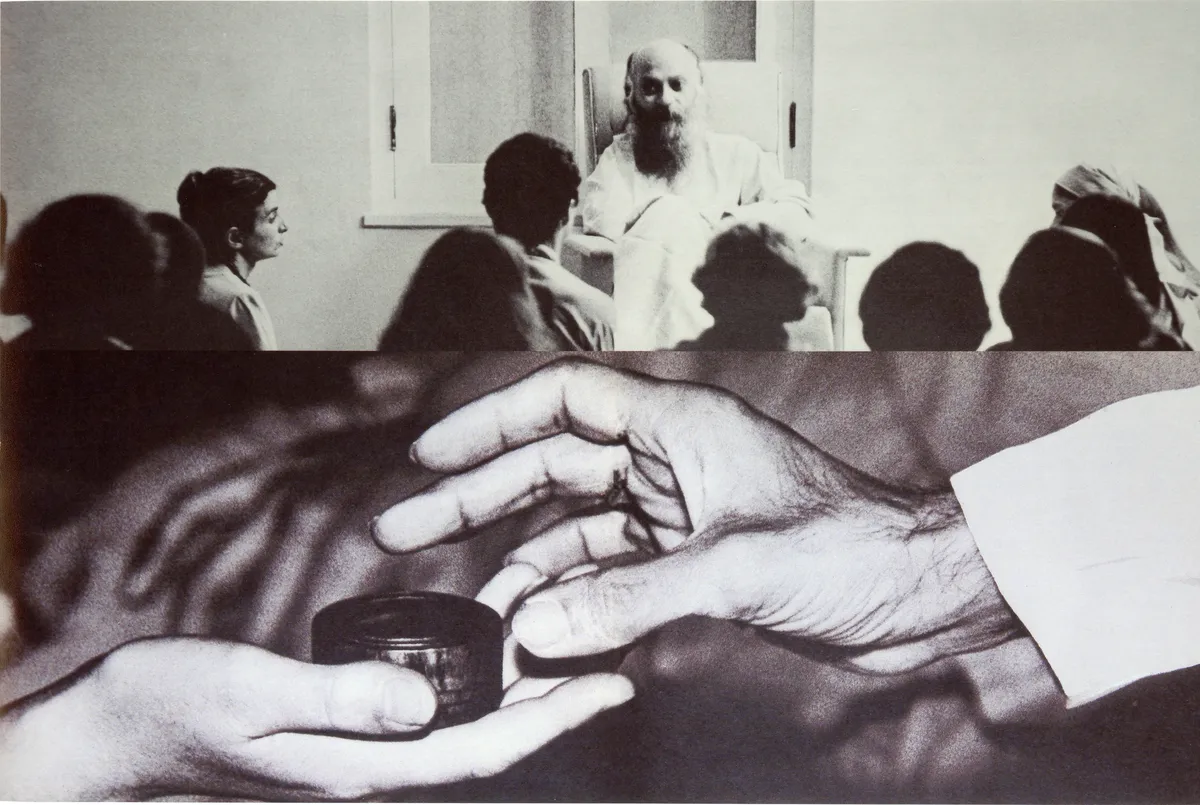
Osho's original Hindi beside Osho Live's English translation, matched passage by passage.
वीणा! प्रेम में भेद गिर जाते हैं--बाहर के, भीतर के; मेरे, तेरे; स्वप्न के, सत्य के। प्रेम अभेद की स्थापना है। प्रेम में दुई मिट जाती है, दोपन मिट जाता है, एकपन ही शेष रह जाता है। प्रेम में न तो कुछ माया है न ब्रह्म, न संसार है न निर्वाण। प्रेम का स्वाद एक है, जैसे सागर का स्वाद एक है।
Veena! In love, distinctions fall—outer and inner; mine and yours; dream and truth. Love establishes non-division. In love duality disappears; twoness vanishes; only oneness remains. In love there is neither maya nor Brahman, neither the world nor nirvana. Love has a single taste, as the ocean has a single taste.
जैसे-जैसे प्रेम गहन होगा, वैसे-वैसे सत्य में और स्वप्न में कोई भेद न रह जाएगा; वैसे-वैसे बाहर और भीतर में अभेद अपने आप निर्मित हो जाता है। सब भेद बुद्धि के हैं, हृदय कोई भेद नहीं जानता। हृदय की पहचान तो बस अभेद की है।
As love deepens, the difference between truth and dream disappears; the distinction between inner and outer dissolves of itself. All divisions belong to the intellect; the heart knows no division. The heart recognizes only non-division.
प्रश्न संगत मालूम होता है--‘स्वप्न सच है या झूठ?’ बुद्धि स्वप्न पर ही प्रश्न नहीं उठाती, बुद्धि तो जिसको हम सच कहते हैं, उस पर भी प्रश्न उठाती है--‘संसार सच है या झूठ?’ बुद्धि तो सभी चीजों पर प्रश्न उठाती है। बुद्धि में प्रश्न ऐसे ही लगते हैं जैसे वृक्षों में पत्ते लगते हैं। बुद्धि की प्रक्रिया प्रश्नों को जन्माने की प्रक्रिया है। निष्प्रश्न होना है, प्रश्नों के पार चलना है।
The question seems reasonable—“Are dreams true or false?” The intellect does not raise questions only about dreams; it raises questions even about what we call reality—“Is the world true or false?” The intellect questions everything. In the intellect, questions sprout like leaves on trees. The very process of the intellect is the generation of questions. To be free of questions is to go beyond the intellect.
प्रेम के अतिरिक्त और कोई द्वार नहीं है प्रश्नों के पार जाने का। प्रेम पूछता ही नहीं--प्रेम जीता है। पूछो मत, जीओ। और कुछ चीजें हैं जो पूछने से नष्ट हो जाती हैं। और कुछ चीजें हैं जिन पर विचार करोगे, विश्लेषण करोगे, छिन्न-भिन्न हो जाएंगी। प्रेम हो तो प्रेम में डूबो; प्रेम का विश्लेषण मत करना। फूल हो तो फूल के सौंदर्य को अनुभव करो; फूल को तोड़-ताड़ कर उसकी पत्तियों को उखाड़ कर, उसकी पंखुड़ियों को बिखेर कर, उसके भीतर झांकने मत लगना कि सौंदर्य कहां छिपा है, अन्यथा जो था वह भी खो जाएगा।
There is no other door beyond questions except love. Love does not ask—love lives. Do not ask, live. There are things that are destroyed by questioning. There are things which, if you think about them and analyze them, will be torn to shreds. If there is love, drown in love; do not analyze love. If there is a flower, experience its beauty; do not pluck it apart, tearing off its leaves and scattering its petals to peer inside to find where beauty hides—otherwise even what was will be lost.
बुद्धि ऐसे ही तो धीरे-धीरे जगत से सारी चीजों को समाप्त कर दी है। परमात्मा खो गया है--बुद्धि के कारण। समाधि खो गई--बुद्धि के कारण। प्रेम भी तिरोहित हो गया है--बुद्धि के कारण। सौंदर्य भी गया। जगत एकदम खाली हो गया है, थोथा हो गया है। प्रेम ने जो मूल्य जगत को दिए थे, बुद्धि ने सब छीन लिए हैं। हृदय ने जो रंग भरे थे, बुद्धि ने सब पोत डाले ।
In just this way, the intellect has slowly erased everything from the world. God is lost—because of the intellect. Samadhi is lost—because of the intellect. Love too has vanished—because of the intellect. Beauty also has gone. The world has become utterly empty, hollow. Whatever value love had given the world, the intellect has snatched away. Whatever colors the heart had filled in, the intellect has whitewashed them all.
परमात्मा की प्रतीति हृदय का रंग है। बुद्धि उसे स्वीकार नहीं करेगी। बुद्धि तो केवल क्षुद्र को स्वीकार कर सकती है, जो उसके विश्लेषण की पकड़ में आ जाए।
The realization of the divine is the hue of the heart. The intellect will not accept it. The intellect can accept only the petty, that which can be grasped by its analysis.
कुछ चीजें हैं जो अविश्लिष्ट हैं और शुभ है कि उनका विश्लेषण नहीं होता। जैसे जड़ें वृक्षों की जमीन में छिपी होती हैं, उन्हें भूल कर भी उखाड़ कर बाहर देखने मत लगना। यह मत सोचना कि वृक्ष को जड़ तो होगी, रस तो मिलता होगा भूमि से, कहां से मिलता है, कैसे मिलता है? वृक्ष को उखाड़ कर मत देख लेना जिज्ञासा के कारण। वृक्ष की जड़ों को धूप में मत ले आना, अन्यथा वृक्ष मर जाएगा। उसकी जड़ें उखड़ जाएंगी। जड़ें तो होती ही अंधेरे में हैं, मौन में, शून्य में, शांति में--जहां सूरज की किरण भी नहीं पहुंचती, वहां।
There are things that are unanalyzable, and it is a blessing that they are not analyzable. The roots of a tree are hidden in the earth—do not, even by mistake, pull them up to look at them. Do not think, “A tree must have roots, it must be receiving sap from the soil—where from, how?” Do not uproot the tree out of curiosity. Do not bring its roots into the sun, otherwise the tree will die. Roots live in darkness, in silence, in emptiness, in peace—where even a sun ray does not reach.
जहां विचार की किरण नहीं पहुंचती, वहीं तुम्हारे जीवन की जड़ें हैं। जहां बुद्धि का कोई व्यापार नहीं पहुंचता, वहीं तुम्हारे सारे रसस्रोत हैं। इसलिए पूछो ही मत। जो हो रहा है उसके अनुभव में उतरो। उसका अनुभव ही सिद्ध करेगा कि यह सच है या झूठ है।
Where the ray of thought does not reach—there lie the roots of your life. Where the commerce of the intellect does not reach—there are all your sources of nectar. So do not ask. Go down into the experience of what is happening. The experience itself will prove whether it is true or false.
प्रेम में और प्रमाण लाने की आवश्यकता नहीं है। प्रेम स्वतः प्रमाण है। प्रेम को किसी और गवाही की जरूरत नहीं है, प्रेम स्वयं ही अपनी गवाही है, और उसके अतिरिक्त कोई गवाही हो भी नहीं सकती। दीया जल रहा हो तो देखने के लिए दीये को, कोई और दूसरा दीया थोड़े ही लाना पड़ता है। दीया स्वतः प्रकाश है, ऐसे ही प्रेम का दीया भी स्वतः प्रमाण है।
In love, no further proof is required. Love is self-evident. Love needs no other witness; love is its own testimony, and beyond it no other testimony is possible. If a lamp is lit, you do not bring another lamp to see it. A lamp is self-luminous; in the same way, the lamp of love is self-proving.
मुल्ला नसरुद्दीन किसी के घर नौकरी करता था, किसी नवाब के घर। सुबह हो गई। मुल्ला सोया पड़ा है। उसके मालिक ने पूछा कि नसरुद्दीन, जरा उठ कर बाहर देख, (सर्दी की मीठी सुबह) सूरज अभी निकला है या नहीं?
नसरुद्दीन बाहर गया। फिर भीतर आया। बिना उत्तर दिए लालटेन जलाने लगा। मालिक ने पूछा: तू क्या कर रहा है? मैं पूछता हूं, सुबह हुई या नहीं? सूरज निकला या नहीं?
नसरुद्दीन ने कहा: वही तो कर रहा हूं। बाहर गया, बहुत अंधेरा है। लालटेन जला कर ले जा रहा हूं, देखने कि सूरज निकला या नहीं।
Mulla Nasruddin worked in a nawab’s household. Morning came. Mulla lay asleep. His master asked, “Nasruddin, get up and look outside—(a sweet winter morning)—has the sun risen or not?” Nasruddin went out, then came back in and, without answering, began lighting the lantern. The master asked: “What are you doing? I’m asking whether it’s morning yet—has the sun risen or not?” Nasruddin said: “That’s exactly what I’m doing. I went out—it’s very dark. I’m taking the lantern to see whether the sun has risen or not.”
सूरज को देखने के लिए लालटेन जला कर ले जानी पड़ेगी? प्रेम को देखने के लिए किसी और दीये की कोई जरूरत नहीं है। प्रेम तो स्वतः अपनी सिद्धि है। रस लो, रस विभोर होओ। और जैसे-जैसे रस गहन होगा, वैसे-वैसे प्रामाणिकता अनुभव में आएगी।
Will you carry a lantern to see the sun? To see love, there is no need for any other lamp. Love is its own proof. Taste it, be intoxicated with its nectar. And as the nectar deepens, authenticity will enter your experience.
प्रेम से रहित संसार भी झूठा है, प्रेम से भरे स्वप्न भी सच हैं।
A world without love is false; dreams full of love are true.
पश्चिम में सिग्मंड फ्रायड ने स्वप्नों पर बहुत बड़ा काम किया है, लेकिन केवल एक तरह के स्वप्नों पर काम किया। उन स्वप्नों को हम कह सकते हैं वासना के स्वप्न--मनुष्य की दमित वासना के स्वप्न, अपूर वासना के स्वप्न, दुष्पूर वासना के स्वप्न। मनुष्य के भीतर नरक पाया है उसने। क्योंकि न मालूम कितनी अपूर्ण वासनाएं मनुष्य के भीतर पड़ी हैं। उन सबका ढेर लगा है। उन्हीं वासनाओं से तुम्हारे स्वप्न उठते हैं।
यह बात आधी सच है। और जहां तक सच है वहां तक बिलकुल सच है। लेकिन एक और तरह के स्वप्न होते हैं, जो वासना के स्वप्न नहीं हैं, जिनको हम कहें--प्रार्थना के स्वप्न। वह दूसरा ही लोक है। अगर वासना के स्वप्न अंधकारपूर्ण हैं तो प्रार्थना के स्वप्न प्रकाशपूर्ण हैं। वासना के स्वप्न उन वासनाओं से पैदा होते हैं जो तुमने जी नहीं और दबा कर रख ली हैं; जिनकी छाती पर तुम चढ़ कर बैठ गए हो; समाज ने, संस्कार ने, सभ्यता ने जिन्हें तुम्हें जीने नहीं दिया; जिनका दमन करने की तुम्हें शिक्षा दी गई है--उन दबाई गई वासनाओं से स्वप्न उठते हैं, एक प्रकार के। फ्रायड ने उनका ही विश्लेषण किया है। एक और तरह का स्वप्न का जगत है, जो उनसे ठीक उलटा है: प्रार्थना के स्वप्न।
In the West, Sigmund Freud did tremendous work on dreams—but only on one kind of dream. We might call them the dreams of desire—dreams of repressed drives, unfulfilled passions, frustrated urges. He found hell inside human beings, because who knows how many unfulfilled cravings are piled within. From these very urges your dreams arise. This is half true. And where it is true, it is utterly true. But there is another kind of dream that is not of desire—we can call them dreams of prayer. That is an altogether different realm. If desire-dreams are dark, prayer-dreams are filled with light. Desire-dreams are born of those desires you did not live and have suppressed—desires upon whose chest you have sat; which society, conditioning, civilization did not allow you to live; which you were taught to repress—from such repressed drives one kind of dream arises. Freud analyzed those. There is another world of dreams, exactly the reverse: prayer-dreams.
जैसे दबाई गई वासनाओं से स्वप्न उठते हैं, वैसे ही उठाई गई प्रार्थनाओं से स्वप्न उठते हैं। जिन प्रार्थनाओं को तुमने उठाया है, जगाया है, उनसे स्वप्नों का एक नया अस्तित्व शुरू होता है। वासना को दबाओ तो स्वप्न पैदा होता है। प्रार्थना को जगाओ तो स्वप्न पैदा होता है। वासना तो सभी को मिली है, जन्म के साथ मिली है। दबाने का काम समाज की शिक्षा करवा देती है। प्रार्थना तो जन्म से नहीं मिली है और जगाने वाले लोग कभी लाखों में एकाध होते हैं। उसी के लिए सुंदरदास ने कहा: समागम करो, संत-समागम करो, जहां प्रार्थना जगे।
Just as dreams arise from suppressed desire, so too dreams arise from awakened prayer. The prayers you have lifted up and enkindled give birth to a new existence of dreams. Suppress desire and a dream is produced. Awaken prayer and a dream is produced. Desire is given to everyone—it comes with birth. Suppression is taught by society’s education. Prayer is not given at birth, and those who awaken it are one among millions. That is why Sundardas said: Seek company—seek the company of saints—where prayer is awakened.
शायद फ्रायड के अनुभव में कोई भक्त कभी आया ही न होगा। आने का कोई कारण भी न था। फ्रायड तो उन्हीं का विश्लेषण करता रहा जो रुग्ण थे, परेशान थे, पीड़ित थे। कोई भक्त अपनी अंतर-दशाओं का विश्लेषण करवाने तो जाएगा नहीं। कोई सुंदरदास तो फ्रायड के सामने अपने अंतर का निवेदन न करेगा। उसे तो निवेदन करना होगा तो अपने गुरु से करेगा। उसका गुरु ही समझेगा, जो प्रार्थना में और भी आगे गया है। जो परमात्मा में गया है, वही प्रार्थना की बात समझ सकेगा।
Perhaps no devotee ever came into Freud’s experience—nor was there any reason to. Freud analyzed those who were sick, troubled, tormented. No devotee will go to have his inner states analyzed. Some Sundardas will not present his inner world before Freud. If he has to present it, he will present it to his master. Only his master will understand—one who has gone even farther in prayer. Only the one who has gone into God can understand prayer.
अब वीणा अगर अपना प्रश्न फ्रायड से पूछे तो वह इस प्रश्न की पूरी की पूरी प्रक्रिया को भ्रष्ट कर देगा। वह कहेगा: यह भी दबी हुई वासना है। वह समझाने की कोशिश करेगा कि यह प्रेम भी वासना का ही विस्तार है। परमात्मा के प्रति जो प्रेम है, वह भी वासना का ही विस्तार है! फ्रायड की सोचने की पद्धति है। तो फिर वासना के अतिरिक्त कुछ बचता ही नहीं। और अगर वासना के अतिरिक्त कुछ भी नहीं बचता तो मनुष्य के जीवन का सार भी कुछ नहीं बचता, अभिप्राय भी कुछ नहीं बचता, अर्थ भी कुछ नहीं बचता। फिर मनुष्य का अतिक्रमण भी नहीं हो सकता। फिर मनुष्य व्यर्थ है। फिर होना न होना बराबर है। अगर मनुष्य अपने से पार नहीं जा सकता तो उसके जीवन में कोई मूल्य नहीं हो सकता। मूल्य का पदार्पण होता है अपने से पार जाने में।
Now, Veena, if you were to ask this question of Freud, he would corrupt the whole process. He would say: this too is repressed desire. He would try to explain that this love is only an extension of sex, that love toward God too is only an extension of sex! That is Freud’s method of thinking. Then nothing remains except sex. And if nothing remains except sex, then nothing remains of the essence of human life—no intention, no meaning. Then there can be no transcendence of man. Then man is futile. Then being or not being is the same. If man cannot go beyond himself, there can be no value in his life. Value dawns when one goes beyond oneself.
प्रार्थना का अर्थ है: अपने से पार जाना। प्रार्थना का अर्थ है: अपने से दूर जाना और परमात्मा के पास जाना। वासना अहं-केंद्रित होती है। प्रार्थना परमात्मा-केंद्रित होती है। वासना कहती है मैं; प्रार्थना कहती है तू। ये दोनों अलग आयाम हैं।
Prayer means: to go beyond oneself. Prayer means: to go away from yourself and go toward God. Desire is ego-centered. Prayer is God-centered. Desire says “I”; prayer says “Thou.” These are two different dimensions.
अभी प्रार्थना के स्वप्नों का विश्लेषण करने वाला फ्रायड पैदा होने को है, अभी पैदा नहीं हुआ। और जब तक पैदा न होगा तब तक स्वप्नों का जो विज्ञान निर्मित हो रहा है, वह अधूरा रहेगा, बुरी तरह अधूरा रहेगा।
The analyst who will study prayer-dreams is yet to be born; he has not been born yet. And until he is, the science of dreams that is being constructed will remain incomplete—badly incomplete.
तुमने पूछा. और यह सच है, वीणा मुझे मिली नौ वर्ष पहले और फिर खो गई। फिर कोई मेरे और उसके बीच संबंध नहीं था। लेकिन फिर भी जुड़ी रही और नहीं खोई। कोई दृश्य संबंध नहीं था, लेकिन अदृश्य में जुड़ी रही, स्वप्नों में जुड़ी रही, चेतना की गहराइयों में जुड़ी रही। उसके प्राण कहीं गहरे में मुझे पुकारते ही रहे। और वह पुकार व्यर्थ नहीं गई। वह पुकार मुझ तक पहुंचती रही। उसी पुकार का परिणाम है कि फिर उसका आना हो गया। अदृश्य में जड़ें फैलती रहीं, अब दृश्य में भी पत्ते आने शुरू हो गए हैं, फूल लगने शुरू हो गए हैं। अदृश्य में तैयारी होती रही। जैसे गर्भ में बच्चा बड़ा होता है, ऐसे प्रार्थना पकती रही, पकती रही, पकती रही। अब प्रार्थना के जन्म का क्षण करीब आ गया है।
You asked. And it is true: I met Veena nine years ago, and then she was lost. Then there was no relationship between us. Yet she remained connected and was never lost. There was no visible link; in the invisible she remained joined—in dreams, in the depths of consciousness. Her life-breath kept calling me from somewhere deep within. And that call was not in vain; it reached me. The result of that call is that her coming has happened again. In the invisible, roots kept spreading; now, in the visible, leaves have begun to appear, flowers to bloom. Preparation continued in the unseen. As a child grows in the womb, so prayer kept ripening, ripening, ripening. Now the moment of prayer’s birth has come near.
ठीक है कि ‘उन नौ सालों में मैं आपसे स्वप्न से ही जुड़ रही हूं, और कोई कड़ी आपसे नहीं जुड़ी थी। और जो भी बातें आपसे करनी होती हैं या आप मुझे कुछ कहना चाहते हैं, वह सब स्वप्नों में ही होता रहता है।’
It is true that “for those nine years I remained connected to you only through dreams; no other link joined me to you. And whatever I had to say to you, or you to me, kept happening in dreams.”
ठीक हो रहा है, शुभ हो रहा है। जरा भी कहीं भूल-चूक नहीं है। इतनी तन्मयता से उसे होने दो कि संदेह की कोई रूपरेखा भी उसके पास न रह जाए और तब स्वप्न भी सत्य के पास लाने का सेतु बन जाते हैं।
It is happening rightly; it is auspicious. There is not the slightest mistake anywhere. Let it happen with such total absorption that not even the outline of doubt remains near it—and then dreams too become a bridge bringing one to truth.
इस जगत में सभी चीजें परमात्मा की तरफ ले जाने के लिए सेतु बनानी हैं, स्वप्न भी! माया को भी उसका ही द्वार बनाना है। है ही उसका द्वार। हम जहां हैं वहीं से हमें उसकी तरफ चल पड़ना है। यही तो मेरा बुनियादी संदेश है तुम्हें कि मैं तुम्हें छोड़ने को कुछ भी नहीं कहता। स्वप्न भी छोड़ने को नहीं कहता हूं, क्योंकि स्वप्न की ऊर्जा को भी उसी को समर्पित करो। स्वप्नों को भी उसी के गीत और गूंज से भर जाने दो। स्वप्न भी उसी से घिर जाएं। स्वप्न में भी उसकी धूप जले, उसकी पूजा उतरे। स्वप्न में भी उसकी आरती उठे। और जो तुम्हारे स्वप्न में उतरने लगेगा, वह तुम्हारे जीवन में भी फैल जाएगा। क्योंकि तुम्हारा जीवन ऐसे ही है जैसे वृक्षों के पत्ते हैं और फूल। और तुम्हारे स्वप्न ऐसे ही हैं जैसे वृक्षों की जड़ें।
In this world, everything has to become a bridge leading toward God—even dreams! Maya, too, has to be made into His doorway. It is already His doorway. From where you are, you must begin walking toward Him. This is my fundamental message to you: I do not tell you to renounce anything. I do not tell you to renounce even dreams, because dedicate even the energy of dreams to Him. Let your dreams be filled with His songs and resonance. Let dreams be surrounded by Him. Let His sunlight burn even in your dreams; let His worship descend there. Let His aarti be lifted even in dream. And what begins to descend into your dream will spread into your waking life as well. For your life is like the leaves and flowers of a tree—and your dreams are like the tree’s roots.
तुम्हारे स्वप्न बस स्वप्न मात्र नहीं हैं, क्योंकि जो तुम सपने में देखते हो, जो तुम सपने में पाते हो, उसकी छाया, उसके परिणाम, तुम्हारे चौबीस घंटे के जीवन पर पड़ते हैं।
Your dreams are not mere dreams, because what you see and receive in dream casts its shadow and consequences upon your twenty-four-hour life.
अब जरा सोचना, किसी रात तुमने स्वप्न देखा कि किसी की हत्या कर दी; सुबह पाया कि हत्या की थी, सपना था; लेकिन उस दिन तुम दिन भर पाओगे कि चित्त खिन्न है। हालांकि हत्या सपने में की थी और कुछ भी हुआ नहीं। कोई मारा नहीं गया है। अदालत तुम्हें पकड़ेगी नहीं। खून की एक बूंद नहीं गिरी है और गवाह कोई नहीं है। मगर चित्त खिन्न रहेगा, उदास रहेगा, अपराध-भाव से भरा रहेगा। हत्या हुई या नहीं, यह सवाल नहीं है; हत्या करने का भाव तो तुममें उठा ही है।
Just consider: one night you dream you have murdered someone. In the morning you discover it was a dream; yet that day you will find your mind heavy. Though the killing happened only in dream and nothing actually occurred—no one was killed, the court will not arrest you, not a drop of blood was spilled, there are no witnesses—still the mind will remain dejected, sad, filled with guilt. Whether a murder occurred is not the point; the impulse to murder did arise in you.
यही तो पाप और अपराध का भेद है। अपराध का अर्थ है: भाव उठा और भाव के अनुसार कृत्य हुआ। लेकिन पाप का अर्थ है: भाव उठा, पाप हो गया। अपराध हुआ हो न हुआ हो, अदालत पकड़ सके न पकड़ सके; लेकिन उस परम ऊर्जा के समक्ष तुम दोषी हो गए।
This is the difference between sin and crime. Crime means: the impulse arose and the deed followed accordingly. Sin means: the impulse arose, and sin happened—whether or not the deed occurred, whether or not the court can seize you; before the Supreme Energy you have become guilty.
जब कोई आदमी किसी की हत्या करता है तो पहले तो भाव ही उठता है न, कृत्य पहले तो नहीं होता। हत्या करने के पहले न मालूम कितनी बार सोचता है! सोच-सोच कर, विचार कर-कर के भाव को सघन करता है। फिर भाव इतना सघन हो जाता है कि हत्या करनी पड़ती है।
When a person murders someone, first the impulse arises; the act does not come first. Before committing murder, who knows how many times he thinks of it! Thinking and thinking, brooding and brooding, he condenses the impulse. Then the impulse becomes so dense that the murder has to be done.
दोस्तोवस्की के प्रसिद्ध उपन्यास ‘क्राइम एंड पनिशमेंट’ में एक विद्यार्थी रासकोल्निकोव. वह जिस मकान के सामने रहता है उस मकान में एक बूढ़ी औरत रहती है। होगी अस्सी साल से ऊपर। दिखाई भी उसे ठीक से नहीं पड़ता, चलना भी बहुत मुश्किल है, उसका धंधा भी बड़ा खतरनाक है। धंधा है उसका, चीजें गिरवी रखना। महाकंजूस है। और जो उसके हाथ में फंस जाता है, उसे चूस ही लेती है। फिर उसकी चीज कभी वापस नहीं लौटती। उसका ब्याज भी इतना है कि वही नहीं चुकता, मूल तो चुकेगा कैसे? यह रासकोल्निकोव उसके सामने ही रहता है, विद्यार्थी है विश्वविद्यालय का। यह अपनी खिड़की से देखता रहता है, रोज लोग फंसते हैं। और जो उसके चक्कर में फंसा, गया! जैसे मकड़ी कोई जाला फैलाए, ऐसे ही वह बुढ़िया अपना जाला फैला रही है।
In Dostoevsky’s famous novel Crime and Punishment there is a student, Raskolnikov. In the building opposite where he lives, an old woman lives—she must be over eighty. She can hardly see, cannot walk properly, and her trade is a dangerous one: she takes things in pawn. She is a great miser. Whoever falls into her hands, she sucks him dry. His things never return. The interest is such that even that cannot be paid—how will the principal be paid? Raskolnikov lives opposite, a university student. From his window he watches—every day people get trapped. Whoever gets caught in her web is finished, as if a spider spreads a web and she spreads hers.
यह रासकोल्निकोव ऐसे ही सोचता है कि इस बुढ़िया को करना क्या है, इसके पास बहुत है! न बेटा है, न बेटी है, न कोई आगे, न कोई पीछे। इसके पास जितना है, काफी है। नगर के आधे मकान इसके हैं। धन भी खूब है। अब यह किसलिए चूस रही है? ऐसा सोचते-सोचते उसके मन में यह विचार उठता है: इसको तो कोई मार ही डाले तो अच्छा है। न इसके होने से दुनिया को कोई लाभ है, न इसकी कोई जरूरत है, न ही यह किसी उपयोग की है, न इसके अपने जीवन में अब कुछ अर्थ रहा है। मौत के कगार पर खड़ी है, एक पैर तो इसका कब्र में ही है। कोई इसको मार ही डाले तो न मालूम कितने लोगों का छुटकारा हो जाए! इसकी मृत्यु पाप नहीं हो सकती। इसको मारा जाना एक तरह का पुण्य-कृत्य होगा।
Raskolnikov thinks: what is to be done with this old woman? She has so much! No son, no daughter, no one before or behind. Half the city’s houses are hers. So much money. Why is she sucking people’s blood? Thinking like this, an idea arises in him: it would be good if someone killed her. Her existence brings no benefit to the world; there is no need for her; she is of no use; there is no meaning left in her own life. She stands on the threshold of death, one foot already in the grave. If someone were to kill her, who knows how many would be freed! Her death could not be a sin; killing her would be a virtuous act of a kind.
सिर्फ सोचता ही है। फिर उसकी परीक्षा के दिन करीब आते हैं। परीक्षा की फीस भरनी है और उसके घर से रुपए नहीं आए तो वह अपनी घड़ी गिरवी रखने उस बुढ़िया के पास जाता है। सांझ का समय है, बुढ़िया को ठीक से दिखाई नहीं पड़ता, वह उसकी घड़ी को गौर से देखती है रोशनी के पास ले जा कर। जब वह रोशनी के पास घड़ी को देख रही है तब कमरे में कोई भी नहीं है। तीसरी मंजिल मकान है। तीसरी मंजिल पर वे हैं। रासकोल्निकोव पीछे खड़ा है, अचानक क्या उसे होता है, पास में पड़ा हुआ जो भी उसे मिल गया, उसने उठा कर उसके सिर पर दे मारा। उसकी पीठ उसकी तरफ है। बुढ़िया तो गिर गई। गिरने को ही थी, जैसे सूखा पत्ता था, कुछ मारने में देर न लगी, कुछ खास चोट भी नहीं थी, जरा सी चोट लगी कि वह गिर गई। तब उसे होश हुआ कि यह मैंने क्या कर दिया! कंप गया, घबड़ा गया! भागा, किसी ने देखा भी नहीं, कोई गवाह भी नहीं। अपने कमरे में आ गया, लेकिन उसे एक बात समझ में नहीं आती कि मैंने इसे मार क्यों डाला? भाव सघन होता रहा, हालांकि कभी उसने ऐसा नहीं सोचा था कि मैं इसे मार डालूं। इतना ही सोचता था कि कोई इसे मार डाले तो अच्छा। और यह भी कभी नहीं सोचा था कि इस तरह सोचना, कृत्य बन जाएगा।
He only thinks like this. Then his exams approach. The fees must be paid, but no money arrives from home, so he goes to pawn his watch with the old woman. It is evening; she cannot see properly. She takes his watch near the light to examine it. While she is looking at the watch in the light, there is no one else in the room; they are on the third floor. Raskolnikov stands behind. Suddenly, something happens to him—he picks up whatever is at hand and strikes her on the head. Her back is toward him. The old woman falls. She was anyway about to fall—like a dry leaf; it did not take long to kill her, nor was any special blow needed—just a slight strike, and she fell. Then he comes to his senses: What have I done! He trembles, panics, runs—no one has seen him, no witnesses. He returns to his room, but he cannot understand: Why did I kill her? The impulse kept condensing, although he had never thought, “I will kill her.” He only thought, “It would be good if someone killed her.” He had never thought that thinking in this way would become an act.
भाव कृत्य बन जाते हैं। पाप बनने की प्रक्रिया पहले है, फिर अपराध। पाप बीज है, अपराध उसकी परिणति है। अपराध न भी हो तो भी पाप हो गया। अपराध सामाजिक कृत्य है, पाप धार्मिक कृत्य है।
Impulses become acts. The process of becoming sin comes first, then crime. Sin is the seed; crime is its culmination. Even if crime does not happen, sin has happened. Crime is a social act; sin is a religious act.
तो अगर तुमने स्वप्न में किसी की हत्या की है तो तुम पाओगे; दिन भर एक उदासी तुम्हें घेरे है। तुम्हारे हाथ खून से भरे हैं। तुम उस दिन दिन में कई बार हाथ धोओगे। और किसी रात अगर तुमने किसी को डूबते नदी में से बचाया है तो तुम दिन भर पाओगे एक प्रफुल्लता, एक भीनी-भीनी महक तुम्हें घेरे हुए है। यद्यपि जिसको बचाया है वह डूबता भी नहीं था, कोई डूबने वाला था भी नहीं--सिर्फ स्वप्न था! स्वप्न की तरंगें भी तुम्हें आंदोलित करती हैं।
So if you have murdered someone in a dream, you will find yourself enveloped in a sadness all day. Your hands feel full of blood; you will wash them many times that day. And if on some night you save someone drowning in a river, you will feel all day a joy, a delicate fragrance surrounding you—even though the person you saved was not drowning, there was no one drowning—it was only a dream! Even the ripples of a dream move and stir you.
स्वप्न के विज्ञान को पूरब ने खूब विकसित किया था। इतना विकसित किया था कि स्वप्न देखने की क्षमता, और जैसा स्वप्न देखना चाहो वैसे स्वप्न देखने की क्षमता के सूत्र भी खोज लिए थे।
The science of dreams was well developed in the East—so much so that the very capacity to dream, and the methods to dream as you wish, were discovered.
जागरण को ही नहीं बदला जा सकता है, स्वप्न भी बदले जा सकते हैं। तुम अपने स्वप्नों के भी सर्जक हो सकते हो। भक्त अनजाने ही अपने स्वप्नों का सर्जक हो जाता है। वह परमात्मा को स्मरण करते ही सोता है। जब नींद उतरने लगती है तब भी परमात्मा का स्मरण गूंजता रहता है। धीमी-धीमी आवाज, धीमी-धीमी आवाज. स्मरण, फिर नींद पकड़ लेती है। लेकिन स्मरण चेतन से अचेतन में उतर जाता है। अगर कृष्ण का भक्त है तो रात कृष्ण को देखता है, उनके साथ रास रचाता है, उनके साथ नाचता है। उनकी बांसुरी सुनाई पड़ती है।
Not only waking can be changed; dreams can be changed too. You can become the creator of your dreams. A devotee, unknowingly, becomes the creator of his dreams. He falls asleep remembering God. As sleep descends, the remembrance continues to resound—a soft, soft sound of remembrance—and then sleep takes hold. But the remembrance slips from the conscious into the unconscious. If he is a devotee of Krishna, he sees Krishna at night, plays the rasa with Him, dances with Him; the flute is heard.
और खयाल रखना, इसका परिणाम होने वाला है जीवन में। यह बांसुरी जो आज स्वप्न में सुनी है, कल जागने में सुनाई पड़ेगी। क्योंकि स्वप्न में जिसके आधार रखे गए हैं, जागने में उसके कलश उठेंगे।
And note this: it will bear fruit in life. The flute you heard today in dream, tomorrow you will hear in waking. For the foundations laid in dream will raise their domes in waking.
स्वप्न और जागरण संयुक्त हैं। क्यों? क्योंकि स्वप्न भी तुम्हारा है, जागरण भी तुम्हारा है, तुम तो दोनों में मौजूद हो। जो स्वप्न देखता है वही जागता है। फिर जैसे स्वप्न देखता है वैसा ही तो जागरण भी होगा। प्रेमी भी अनजाने अपने स्वप्नों का स्रष्टा हो जाता है।
Dream and waking are conjoined. Why? Because the dreamer is you, the waker is you—you are present in both. The one who dreams is the one who wakes. And as one dreams, so will be one’s waking. The lover too, unknowingly, becomes the creator of his dreams.
वीणा, तूने प्रेम किया, गहरा प्रेम किया! तूने प्रार्थना की। उस प्रार्थना के परिणाम होने शुरू हुए हैं। पहले स्वप्न में उतरे, अब तेरे बाहर के जीवन तक फैलने शुरू हो गए हैं। अब तेरा सारा जीवन इससे भरेगा। इसके विश्लेषण में जाने की कोई भी जरूरत नहीं है। इसका रस ले।
Veena, you have loved—a deep love! You have prayed. The results of that prayer have begun. First they descended in dream; now they have begun to spread into your outer life as well. Now your whole life will be filled with it. There is no need to go into analysis. Taste its nectar.
रोज प्रकट होता है भीतर वह
किंतु शांत उस स्वर को सुनते नहीं हमारे कान
रोज प्रकट होता है बाहर वह
किंतु ज्वलंत शिखा के देखे छुप जाते हैं प्राण
किसी कोने में जाकर
रोज-रोज प्रभु लौट रहे हैं
Every day He manifests within— but our ears do not hear that quiet tone. Every day He manifests without— but before the blazing flame our breath hides. Going into some corner, every day the Lord keeps turning back after coming up to us!
हम तक आ कर!
परमात्मा रोज तुम्हारे द्वार पर दस्तक देता है। उसकी दस्तक की आवाज धीमी है। तुम्हारे कान जब सुनने में समर्थ हो जाएंगे, संवेदनशील हो जाएंगे, तुम दस्तक पहचानोगे।
God knocks at your door every day. The sound of His knocking is soft. When your ears become capable of hearing, become sensitive, you will recognize the knock.
रोज परमात्मा भीतर से पुकारता है--तुम्हारे सपनों में भी, तुम्हारी निद्रा में भी! उसका रथ आता है। उसके हाथ तुम तक पहुंचते हैं। वह तुम्हें तलाश रहा है। इस भ्रांति को तो छोड़ ही देना कि तुम्हीं परमात्मा को तलाश रहे हो। तुम्हारी अकेली तलाश से कुछ भी न होगा, यह आग तो दोनों तरफ से लगे तभी परिणाम लाती है। वह भी तलाश रहा है।
Every day God calls from within—in your dreams too, in your sleep! His chariot comes. His hands reach out to you. He is seeking you. Abandon this delusion that only you are seeking God. Your seeking alone will not suffice; the fire must burn from both sides for results to come. He too is seeking.
गीत बन जाते हृदय के भाव
गीत बन जाते
तोड़ बंधन और बाधा
गीत ये फिर-फिर उमड़ते
उड़ स्वरों के पंख पर फिर
वर्ण-भास्वर गगन जाते
The feelings of the heart become song— they become song. Breaking bonds and barriers, again and again these songs surge; rising on the wings of notes, they soar to the word-luminous sky. The feelings of the heart become song— they become song.
गीत बन जाते हृदय के भाव
गीत बन जाते
जब नयन में रूप आता
रंग आता
तब तरंगित हंस
मानस छोड़ उड़ते
When form enters the eyes, when color arrives, then the swan of the mind, fluttering, leaves the lake and flies across the blue firmament— lost, who knows in which direction. The feelings of the heart become song— they become song.
नील नभ को पार करते
किस दिशा में मगन
गीत बन जाते हृदय के भाव
गीत बन जाते
कौन परिचय कौन संचय
जन्म कैसे, किस तरह छय
कौन जाने
किंतु भू के भाव ये
Who is known, what is gathered, how birth, in what way decay— who can know? Yet these feelings of the earth fly to the sky— the feelings of the heart become song, they become song.
उड़ गगन जाते
गीत बन जाते हृदय के भाव
गीत बन जाते
जो भाव तुम्हारे भीतर सघन होते हैं, वे ही तुम्हारे स्वप्न बनते हैं, वे ही तुम्हारे गीत बनते हैं, वे ही तुम्हारे कृत्य बनते हैं। धीरे-धीरे तुम्हारा सारा जीवन आच्छादित हो जाता है। होने दो आच्छादन।
The feelings that grow dense within you become your dreams; they become your songs; they become your deeds. Slowly, your whole life is covered by them. Let the covering happen.
भेद जाने दो--सत्य के और स्वप्न के। वे सब तर्क के भेद हैं, नहीं तो एक ही है। वही स्वप्न है, वही सत्य है। वही संसार है, वही निर्वाण।
धारा ऊंचे से गिरती है तोड़ कर सन्नाटा
Let distinctions dissolve—between truth and dream. Those are differences of logic; otherwise, there is only one. That which is dream is that which is truth. That which is the world is that which is nirvana.
टूटती है तारिका चीर कर आकाश
चुपचाप फैल जाती है धरती भर चांदनी
नेह आंखों का टपक कर चू जाता है प्राणों में
छू जाता है जब आंचल निराकार का
इतना सब एक साथ हो जाता है तब
टूट जाता है सन्नाटा खिंच जाती है लकीर
फैल जाता है प्रकाश
आकाश धरती और मन सब एक हो जाते हैं
A stream falls from a height, breaking the silence; a star shatters, cleaving the sky. The earth fills silently with moonlight. The love in the eyes drips and seeps into the life-breath when the hem of the Formless brushes past. When so much happens at once, the silence breaks, a line is drawn, light spreads. Sky, earth, and mind become one; the difference between stream and star is lost.
धारा के तारा के भेद खो जाते हैं।
फिर वहां कुछ पता नहीं चलता क्या सच है क्या झूठ।
Then nothing can be told—what is true, what is false.
छू जाता है जब आंचल निराकार का
इतना सब एक साथ हो जाता है तब
आकाश और धरती और मन सब एक हो जाते हैं
धारा के तारा के भेद खो जाते हैं।
When the hem of the Formless brushes past, so much happens at once— sky, earth, and mind become one; the difference between stream and star is lost.
प्रेम है अभेद का विज्ञान।
Love is the science of non-division.
तुम्हें जगा रहा हूं--तुम्हारे जागते में भी जगा रहा हूं! और अगर तुम मुझसे जुड़े तो तुम्हारे सोते में भी जगाऊंगा। तुम्हें पुकार रहा हूं, जब तुम खुली आंख बैठे हो। और तुम अगर मुझसे जुड़े तो तब भी पुकारूंगा जब तुम अपनी गहन तंद्रा में हो, निद्रा में हो। तुम्हारे स्वप्न में भी उतरना शुरू हो जाऊंगा, हृदय का द्वार खुला मिलना चाहिए।
उठो आंख खोलो कि पौ फट गई है
I am waking you—waking you even in your waking! And if you are connected with me, I will wake you even in your sleep. I call to you when you sit with open eyes. And if you are connected with me, I will call to you even when you are in deep trance, in sleep. I will begin to descend into your dreams—the door of the heart should be found open.
युगों की अंधेरी निशा कट गई है
नया प्राण लेकर हवा आ रही है
नया गान लेकर सबा आ रही है
कली खिल गई है नया रूप धर कर
नया रंग भर कर किरन छा रही है
कमल के दलों की खुशी कुछ न पूछो
उदासी की छाया सभी हट गई है
उठो आंख खोलो कि पौ फट गई है
युगों की अंधेरी निशा कट गई है।
Rise—open your eyes, the dawn has broken. The dark night of ages is over. The air comes bearing new life, the morning breeze brings a new song. The bud has opened in a new form, a new color spreads with the ray. Ask not of the joy of the lotus petals— the shadow of sadness has vanished from all. Rise—open your eyes, the dawn has broken. The dark night of ages is over.
क्यों मैंने तुम्हें पुकारा है? क्यों तुम्हें रंगने में लगा हूं? इसीलिए! न केवल तुम्हारा जागरण रंग जाए, तुम्हारा स्वप्न भी रंग जाए।
Why have I called to you? Why am I busy coloring you? For this very reason—not only that your waking be colored, but that your dreams be colored too.
मनुष्य के चित्त की चार दशाएं हैं। जाग्रत, जिससे हम परिचित हैं। स्वप्न, जिसकी थोड़ी-थोड़ी झलक हमें सुबह याद रह जाती है। फिर सुषुप्ति, उसकी तो हमें याद भी नहीं रहती, सिर्फ एक आभास होता है कि रात गहरी नींद सोए। बड़ी शांत निद्रा थी, स्वप्न भी नहीं आए! बस इतनी ही याद आती है कि स्वप्न नहीं थे तो नींद गहरी रही होगी, ऐसा नकारात्मक आभास होता है। और फिर एक चौथी दशा है--तुरीय। उस चौथी दशा तक तुम्हें ले चलना है।
The human mind has four states: waking, with which we are familiar; dream, of which faint glimpses remain to us in the morning; then deep sleep, of which we remember nothing—only a sense that “I slept deeply last night; it was very peaceful; even dreams did not come”—a negative aftertaste. And then there is a fourth state—turiya. I have to lead you to that fourth.
गुरु का साथ तीसरी दशा तक होता है। जाग्रत में गुरु जुड़ेगा, स्वप्न में गुरु जुड़ेगा, सुषुप्ति में गुरु जुड़ेगा। जब तक गुरु तुम्हें सुषुप्ति के द्वार से तुरीय में धक्का न दे दे तब तक साथ रहेगा। और तुरीय में धक्का देने पर साथ छूट जाता है, ऐसा कहना ठीक नहीं; तुरीय में धक्का देने पर गुरु गुरु नहीं रह जाता, शिष्य शिष्य नहीं रह जाता, दोनों एक हो जाते हैं। साथ के लिए तो दो का होना जरूरी है। इसलिए सुषुप्ति तक साथ, सुषुप्ति के आगे एकात्म!
वह निशा चली गई
The master’s companionship continues up to the third state. He will be with you in waking, in dream, in deep sleep. Until the master pushes you from the threshold of deep sleep into turiya, he remains with you. And to say that when he pushes you into turiya the companionship drops is not quite right; when he pushes you into turiya, the master is no longer the master, the disciple no longer the disciple—the two become one. For companionship, two are required. Therefore, up to deep sleep there is companionship; beyond deep sleep, there is unity.
जो अब तक
रंग-रंग के सपने देती रही
उड़ो विहग--
जिन किरणों ने
कोमल स्पर्श से
तुमको अपना प्रिय परिचय दिया
उनको अब अपना लो
That night is gone which till now kept giving colored dreams. Fly, O bird— the rays that, with a tender touch, have given you their beloved introduction— now make them your own. Fly, O bird—
उड़ो विहग--
अब प्रकाश ही प्रकाश
भूतल पर नभतल पर
ये प्रकाश की लहरें
उज्जवल से उज्जवलतर
तिरते हैं जड़-चेतन
Now there is only light, light upon the earth, upon the sky; these waves of light, brighter and ever brighter, in which inert and conscious, moving and unmoving— all float. Fly, O bird!
चर-अचर
उड़ो विहग!
वीणा, उड़ने का क्षण आ गया! जुड़ने का क्षण आ गया! मिटने का क्षण आ गया। अब बुद्धि के विचार छोड़ो। अब विश्लेषण की चिंता में मत पड़ो। अब क्या है स्वप्न, क्या है सत्य--जिन्हें कुछ और काम नहीं है, उन्हें इनका विश्लेषण करने दो। तुम तो उतरो, तुम तो डूबो, तुम तो पीओ।
Veena, the moment to fly has come! The moment to unite has come! The moment to dissolve has come. Now drop the thoughts of the intellect. Do not fall into the anxiety of analysis. Now—what is dream, what is truth—leave such analysis to those who have nothing else to do. You—descend, drown, drink.
जैसे प्रेम का अर्थ खुला ऐसे ही वेदांत का भी खुलेगा, जरा धीरज रखो। प्रेम का अर्थ खुला तो वेदांत का अर्थ खुलेगा ही, क्योंकि प्रेम कुंजी है वेदांत की।
Just as the meaning of love has opened, so will the meaning of Vedanta—have a little patience. Once love has opened, Vedanta will open inevitably, because love is the key to Vedanta.
वेदांत बड़ा प्यारा शब्द है; वेदांतियों ने खराब कर दिया, दूसरी बात है। वेदांतियों ने तो अर्थ का अनर्थ कर दिया, वह दूसरी बात है। मगर वेदांत शब्द बड़ा अदभुत है। उसका सार अपूर्व रूप से क्रांतिकारी है। वेदांत शब्द आग्नेय है।
Vedanta is a very lovely word; that Vedantins spoiled it is another matter. They turned its meaning into its opposite—that is another matter. But the word Vedanta is truly wondrous. Its essence is uniquely revolutionary. The word is fiery.
वेदांत का अर्थ होता है: जहां सब शास्त्र समाप्त हो जाते हैं, जहां वेद समाप्त हो जाते हैं, जहां वेदों का अंत आ जाता है। वहीं परमात्मा का प्रारंभ है।
Vedanta means: where all scriptures come to an end, where the Vedas end, where the Vedas reach their limit—there begins the Divine.
वेदांत का अर्थ है: जहां शब्द गए, सिद्धांत गए, शास्त्र गए। वहीं सत्य का प्रारंभ है। कहां जाते हैं शब्द, सिद्धांत और शास्त्र? कब जाते हैं? जब प्रेम का आविर्भाव होता है।
Vedanta means: where words stop, doctrines stop, scriptures stop—there truth begins. Where do words, doctrines, scriptures go? When do they go? When love arises.
इसलिए प्रेम कुंजी है वेदांत की। जिसने प्रेम जाना, वह फिर किसी शास्त्र की चिंता नहीं लेगा। उसे परम शास्त्र हाथ लग गया। अब तो वह प्रेम को ही पढ़ेगा। प्रेम को ही गुनेगा। अब तो प्रेम में डुबकी लगाएगा। अब तो मिल गई उसे मधुशाला, अब मंदिरों से क्या लेना? अब तो हो गया पियक्कड़। अब तो डूबने लगा। परमात्मा ने उसे पुकार ही लिया है।
Hence, love is the key to Vedanta. One who has known love will worry about no other scripture. The supreme scripture is already in his hands. Now he will read only love, chant only love. Now he will dive only into love. Now he has found the tavern—what has he to do with temples? Now he has become a drunkard. Now he begins to drown. The Divine has already called him.
मैं जब तुम्हें नाम देता हूं तो अनेक कारणों से देता हूं। तुम ठीक ही कहते हो कि जब आपने प्रेम वेदांत नाम दिया था तब तो मैं एड़ी से चोटी तक घृणा और द्वेष से लबालब भरा था।
When I give you a name, I give it for many reasons. You are right: when I gave you the name “Prem Vedanta,” you were brimming with hatred and hostility from head to toe.
घृणा और द्वेष उसी ऊर्जा के अंग हैं जिससे प्रेम बनता है। घृणा प्रेम का ही विकृत रूप है। प्रेम नहीं बन पाए, तो वही ऊर्जा घृणा बन जाती है। सृजन का जीवन में आविर्भाव न हो तो वही ऊर्जा विध्वंस बन जाती है। जो बना न पाए वह मिटाने में लग जाता है। ऊर्जा कुछ तो करेगी! ऊर्जा का कुछ तो रूप प्रकट होगा!
Hatred and hostility are expressions of the same energy from which love is made. Hatred is love’s distorted form. If love does not arise, that very energy becomes hate. If creation does not blossom in life, that energy turns to destruction. One who cannot build starts tearing down. Energy will do something—some form of it will manifest.
इसलिए मैं तुमसे घृणा छोड़ने को नहीं कहता। तुम घृणा छोड़ भी न सकोगे। घृणा रोग नहीं है, रोग तो है कि प्रेम नहीं जन्म पा रहा है। प्रेम न जन्मे तो प्रेम की जो तुम संपदा लेकर आए हो, वह सड़ेगी। उसी की सड़ांध घृणा है। प्रेम बहने लगे, तुम अचानक पाओगे: सड़ांध गई!
Therefore I do not tell you to drop hatred. You could not drop it anyway. Hatred is not the disease; the disease is that love has not been born. If love does not arise, the treasure of love you brought with you will rot; its stench is hatred. Let love begin to flow and you will suddenly find the stench gone.
जैसे कोई नदी बहती हो, तो नदी गंदी नहीं होती। कूड़ा-करकट उसमें बहुत गिरता है, सारा कूड़ा-करकट गिरता रहता है। नगरों-नगरों की गंदगी ले जाती है नदी, फिर भी स्वच्छ की स्वच्छ! बहाव उसे स्वच्छ रखता है। फिर एक डबरा होता है। उस डबरे में भी कूड़ा-करकट गिरता है, लेकिन सब सड़ता है। भयंकर दुर्गंध उठनी शुरू हो जाती है।
A flowing river does not become dirty. Much rubbish falls into it—indeed all the filth of cities falls into it—yet it remains pristine. Its current keeps it clean. But there is also a stagnant pool. Rubbish falls into it too, and everything rots. A terrible stench begins to rise.
जिनके जीवन में प्रेम नहीं है उनके जीवन में घृणा की दुर्गंध आएगी, क्योंकि वे डबरे की भांति हैं। जिनके जीवन में प्रेम है उनके जीवन में प्रवाह है। कचरा तो गिरता है, कचरा तो गिरता ही रहेगा, लेकिन प्रवाह कहां सुनता है कचरे की! बहा ले जाता है सब। दूर सागर में जाकर सब फेंक देता है। और सागर विराट है, सबको लीन कर लेता है, सबको आत्मसात कर लेता है।
In the lives of those without love, the stench of hatred will be there; they are like stagnant pools. In the lives of those with love, there is a current. Trash does fall in—it always will—but what does the current care for trash! It carries everything away, throws it into the distant ocean. And the ocean is vast; it absorbs everything, assimilates everything.
तुम घृणा से भरे थे, यह देख कर ही तुम्हें ‘प्रेम’ नाम दिया था। इसी बात की याद दिलाने को कि तुमने संपत्ति को विपत्ति बना लिया है। तुम शीर्षासन कर रहे हो नाहक! पैर के बल खड़े हो जाओ। ऊर्जा को उलटा कर बैठे हो। और तुम कहते हो आपके चरणों में बैठते-बैठते प्रेम के पारस का स्पर्श हुआ है। अब तुम समझे प्रेम का अर्थ, क्यों तुम्हें नाम दिया था। स्वभावतः जिज्ञासा उठी होगी कि वेदांत और क्यों जोड़ दिया था?
Seeing you were full of hatred, I gave you the name “Prem”—to remind you that you had turned your wealth into a calamity. You were doing a headstand for no reason. Stand on your feet. You had inverted your energy. And now you say that, sitting at my feet, you have felt the touch of love’s philosopher’s stone. Now you understand the meaning of “Prem,” why I gave you that name. Naturally the question arises: why did I add “Vedanta” to it?
प्रेम अगर वेदांत से न जुड़ा हो तो एक सीमा तक जा सकता है, लेकिन फिर अटक जाएगा। जैसे नदी को सागर से जुड़ना पड़ता है, ऐसे प्रेम को वेदांत से जुड़ना पड़ता है। नदी की अंतिम परिणति तो सागर है। प्रेम की अंतिम परिणति वेदांत है।
If love is not connected with Vedanta, it can go only so far, and then it will get stuck. Just as a river must join the ocean, love must join Vedanta. The river’s ultimate consummation is the ocean; love’s ultimate consummation is Vedanta.
‘वेदांत’ से मेरा प्रयोजन वेदांतियों वाला नहीं है। वह संप्रदाय वेदांत के नाम से जो चलता है उससे कुछ लेना-देना नहीं है। मैं तो वेदांत का शुद्ध अर्थ इतना ही करता हूं: जहां वेद छूट जाते हैं, शब्द छूट जाते हैं; जहां भाषा मौन हो जाती है; जहां बोलने को कुछ नहीं बचता; जहां अनिर्वचनीय आ जाता है, अव्याख्य के दर्शन होते हैं! नदी चल पड़ी, अब तुम डबरे नहीं हो! सागर भी आएगा। इतना हुआ, उतना भी होगा। अब तो श्रद्धा करो!
By “Vedanta” I do not mean what the Vedantins mean. That sect which goes by the name Vedanta has nothing to do with it. I take Vedanta in its pure sense only as this: where the Vedas drop, where words drop; where language falls silent; where nothing remains to be said; where the ineffable arrives and the inexpressible is beheld! The river has begun to flow—you are no longer a stagnant pool. The ocean too will come. What has happened guarantees what is to happen. Now, trust.
अगर घृणा प्रेम बन सकती है, बड़ा चमत्कार तो हो ही गया कि डबरा नदी बन गया, बहने लगा। गति आ गई अगति में। ठहरा हुआ गतिवान हो गया। अब दूसरी बात तो सहज हो जाएगी। बैठते ही रहे, जैसे अब तक बैठते रहे हो, इस पारस को अगर स्पर्श होने ही दिया, जैसा अब तक होने दिया है. जल्दी भाग मत जाना, क्योंकि कई बार ऐसा हो जाता है कि लोग सोचते हैं कि काफी हो गया, अब चलें। अब तो अपने पैर पर खड़े हो जाएं।
मैं भी चाहता हूं कि तुम अपने पैर पर खड़े हो जाओ। लेकिन प्रतीक्षा करना मेरी, जब मैं कहूं तब। नहीं तो तुम्हें कुछ पता ही नहीं कि कितना और हो सकता था। तुम्हें तो उतना ही पता होगा जितना हुआ है। और कई बार ऐसा होता है, गरीब आदमी को थोड़ा सा भी धन मिल जाए तो वह सोचता है: मिल गया सारा साम्राज्य! तुम्हारे पास कितनी बड़ी संपदा है, कितनी बड़ी संपदा के तुम मालिक हो सकते हो--इसका तुम्हें तब तक पता चलेगा ही नहीं जब तक तुम मालिक हो ही न जाओ।
If hatred can become love, the great miracle has already happened: the pool has become a river and begun to flow; stillness has turned to movement. The next will be easy. Just keep sitting as you have, allow the touch of this philosopher’s stone as you have so far. Do not run away in haste, because it often happens that people think, “Enough—now let’s go. Now let’s stand on our own feet.” I too want you to stand on your own feet—but wait for me to say so. Otherwise you will not know how much more could have been. You will know only as much as has already happened. And often, when a poor man gets a little wealth, he thinks he has gained an entire empire. How immense your treasure is, how great a wealth you can become master of—you will not know until you truly become its master.
चलने दो सत्संग! प्रेम भी आया, वेदांत भी आएगा। शब्द का अर्थ तो साफ है कि तुम्हें एक ऐसी चित्त की दशा में ले चलना है, एक ऐसे चैतन्य में ले चलना है, जहां निर्विकार, निराकार, निर्गुण का वास है। तुम्हें उस मूलस्रोत पर ले चलना है, जहां से हम उठे हैं और जहां हमें जाना है। ताकि वर्तुल पूरा हो जाए।
Let satsang continue. Love has come; Vedanta will come. The very word makes it clear that I am to take you into a state of consciousness, into an awareness where the changeless, formless, qualityless abides. I am to take you back to the source from which we have arisen and to which we must return, so the circle is completed.
प्रेम यात्रा है; वेदांत तीर्थ है, जहां पहुंचना है। प्रेम तीर है; वेदांत लक्ष्य है। तीर चल पड़ा, अब लक्ष्य भी दूर नहीं है। लक्ष्य की चिंता में न पड़ो, सारी ऊर्जा तीर को दे दो, ताकि गति त्वरा से हो, तीव्रता से हो; ताकि तीर अटके नहीं कहीं, भटके नहीं कहीं। रास्ते में बहुत भटकाव आते हैं, बहुत अटकाव आते हैं। उन सबको पार करना है।
Love is the journey; Vedanta is the sacred shore, the destination. Love is the arrow; Vedanta is the target. The arrow has been loosed; now the target is not far. Do not worry about the target; give all your energy to the arrow—let there be swiftness and intensity—so that the arrow neither stalls nor strays. Many distractions come on the way, many obstacles arise; all must be crossed.
और खयाल रखना, जो चल पड़ता है उसी को मुसीबतें आती हैं, जो बैठा रहता है उसको तो मुसीबत का कोई कारण ही नहीं। जो चलता है वही गिर सकता है; जो बैठा ही है वह तो गिरेगा ही क्यों? जो पहाड़ों की ऊंचाई चढ़ते हैं, वे खतरा मोल लेते हैं। गिरेंगे तो बुरी तरह गिरेंगे। इसलिए धर्म को खड़ग की धार कहा है, दुर्गम कहा है।
And remember: only the one who sets out meets difficulties; the one who sits still has no reason for trouble. Only the walker can fall; the sitter—why would he fall? Those who climb mountain heights take risks. If they fall, they fall hard. Hence religion has been called the edge of a sword, arduous and perilous.
तुम चल पड़े। मेरी दृष्टि में तुम्हारे पैरों में गति आ गई। सागर भी दूर नहीं है। चलने वाले से सागर दूर है ही नहीं। एक ही अड़चन है इस जगत में कि लोग डबरे हो जाते हैं। शास्त्रों के डबरे बन गए हैं; हिंदू, मुसलमान, ईसाई के डबरे बन गए हैं। तुम बह चले, अब न तुम हिंदू हो, न मुसलमान हो, न ईसाई हो। अब तुम कोई भी नहीं हो। अब तुम परमात्मा के हो और परमात्मा तुम्हारा है। कहीं, थोड़े-बहुत अटके हुए शास्त्र भी रहे होंगे अभी। वह तुम्हारी गति से मेरी समझ में आता है कि कहीं कुछ थोड़ा अभी अटका होगा। धारा अभी भी धीमे-धीमे जा रही है। अभी कुछ चट्टानें शास्त्रों की पड़ी होंगी। अचेतन में पड़ी होंगी, गहरे में पड़ी होंगी, जन्मों-जन्मों की पड़ी हैं, तुम्हें उनका पता भी न होगा।
You have set out. In my vision, there is movement in your feet. The ocean is not far from the one who walks. The single great impediment in this world is that people become stagnant pools—pools of scriptures: Hindu, Muslim, Christian. You have begun to flow; now you are neither Hindu, nor Muslim, nor Christian. Now you are nobody. Now you belong to God, and God belongs to you. Yet some scraps of scripture may still be snagged. From your pace I sense that something remains a little stuck. The current is still moving slowly. There are still rocks of scripture—lying in the unconscious, deep, accumulated over lifetimes—you may not even be aware of them.
बर्ट्रेंड रसल ने अपने संस्मरणों में लिखा है कि मैं बचपन में ईसाई की तरह पाला-पोसा गया। बड़ा हो गया, तब ईसाइयत से मेरा भरोसा उठ गया। ईसाइयत से ही नहीं, सारे धर्मों से मेरा भरोसा उठ गया।
बर्ट्रेंड रसल ने बहुत प्रसिद्ध किताब लिखी है: वाय आइ एम नॉट ए क्रिश्चियन? मैं ईसाई क्यों नहीं हूं? उसका जवाब अभी भी कोई ईसाई दे नहीं पाया। वर्षों हो गए, अब तो बर्ट्रेंड रसल जा भी चुके दुनिया से, मगर किताब अभी तक बेजवाब है। जो-जो प्रश्न उठाए थे, वे वैसे के वैसे खड़े हैं।
Bertrand Russell wrote in his memoirs: I was raised as a Christian. When I grew up, I lost faith in Christianity—indeed, in all religions. He wrote a very famous book: Why I Am Not a Christian? No Christian has yet been able to answer it. Years have passed—Russell has already left the world—but the book remains unanswered. The questions he raised still stand as they were.
रसल ने लिखा है: सारे धर्मों से भरोसा उठ गया, ईसाइयत से तो बिलकुल उठ गया, तब मैं बुद्ध से परिचित हुआ। यह मनुष्य अपूर्व मालूम हुआ। ऐसा लगा कि इतिहास में इससे ज्यादा शुद्धतम अभिव्यक्ति सत्य की और कभी नहीं हुई है। इससे बड़ा महामानव पृथ्वी पर कोई नहीं चला। यह बात बुद्धि को तो लगे, लेकिन जब भी मैं सोचूं तो कभी भी अपने अंतर्तम में, अपने अचेतन में, बुद्ध को जीसस के ऊपर नहीं रख पाया। ईसाइयत से छुटकारा हो गया। बचपन के सारे संस्कार छूट गए। अब बुद्धि को साफ-साफ प्रमाणित भी हो गया है कि बुद्ध की बात बड़ी प्रगाढ़ है।
और यह सच है, बुद्ध के वचन जितने शुद्ध हैं उतने किसी के वचन नहीं हैं। सत्य को सभी ने कहा है, मगर जैसा बुद्ध ने कहा है, उतने साहस से किसी ने भी नहीं कहा है! सत्य को बहुतों ने कहा है। जीसस ने भी कहा, मोहम्मद ने भी कहा, कृष्ण ने भी कहा, महावीर ने भी कहा; लेकिन जैसा बुद्ध ने कहा है, उतनी परम शुद्धता से किसी ने भी नहीं कहा है। सबने जाना--वही एक सत्य जाना--लेकिन बुद्ध के कहने की क्षमता अपूर्व है!
फिर भी बर्ट्रेंड रसल लिखता है कि अपने गहरे मन में मैं नंबर दो पर ही रख पाता हूं बुद्ध को, नंबर एक पर नहीं रख पाता। नंबर एक पर तो जीसस बैठे हैं सो बैठे हैं। जानता हूं, सोचता हूं, मगर सोचना और जानना काम नहीं कर पाता। संस्कार बहुत गहरे बैठ जाते हैं।
Russell wrote: I lost faith in all religions—certainly in Christianity—then I became acquainted with Buddha. This man seemed extraordinary. It felt as if history has never seen a purer expression of truth. No greater human being has walked the earth. My intellect sees it clearly. But whenever I look within, I have never been able, in my innermost unconscious, to place Buddha above Jesus. I am free of Christianity; the impressions of childhood are gone. My intellect has clearly established that Buddha’s teaching is deeper. And it is true: no one’s words are as pure as Buddha’s. Many have spoken truth—Jesus, Mohammed, Krishna, Mahavira—but none has spoken it with the ultimate purity of Buddha. All realized the same truth—but Buddha’s capacity to express it is unparalleled. Still, Russell writes: in my deep mind I can place Buddha only at number two, not number one. Number one remains Jesus. I know it, I think it—but thinking and knowing do not do the work. Conditionings sit very deep.
तो प्रेम वेदांत, नाम तो मैंने तुम्हें वेदांत दिया, यह मेरी आशा है तुम्हारे लिए, ऐसा कभी हो। लेकिन अभी वेद पड़े हैं। फिर वेद का नाम कुरान है कि बाइबिल, इससे कुछ प्रयोजन नहीं है। वेद पड़े हैं। अभी भी शास्त्र कहीं अटके हैं। तुम्हारी धारा चल पड़ी है, शास्त्रों के बीच में से रास्ता निकाल कर बहने भी लगी है। लेकिन अभी धारा चट्टानों में बह रही है शास्त्रों के; अभी निर्बाध नहीं हो पाई है। बैठते ही रहे अगर, अगर मेरी चोटें खाते ही रहे, सहते ही रहे, अगर गर्दन को कट ही जाने दिया, तो एक दिन धारा निर्बाध होकर बहेगी। उस दिन तुम जानोगे वेदांत क्या है।
So, Prem Vedanta—yes, I gave you Vedanta as a name; it is my hope for you, that it may become your reality. But the Vedas still remain—whether you call them Qur’an or Bible, it makes no difference. Scriptures are still snagged somewhere. Your current has started; it is even flowing by finding its way through the scriptures. But it is still flowing among rocks; it is not yet unobstructed. If you keep sitting, keep taking my blows, keep enduring—if you allow your head to be cut—one day the stream will flow without hindrance. That day you will know what Vedanta is.
वेदांत कहा नहीं जा सकता, लेकिन अनुभव का रास्ता मैंने बता दिया है। कुंजी तुम्हें दे दी है। प्रेम कुंजी है।
Vedanta cannot be said; but I have shown the path of experience. I have given you the key. Love is the key.
अंधे की तरह देखो तो क्षणभंगुर--अभी है, अभी गया!
सुबह घास के पत्ते पर जमी ओस की बूंद हैं; सूरज निकलेगा, उड़ जाएगी।
नाव में बैठ गए यात्री हैं, जैसा सुंदरदास ने कहा। मिल गए घड़ी भर को, उस पार नाव पहुंच जाएगी, सब अपने-अपने रास्तों पर विदा हो जाएंगे।
या सांझ को वृक्ष पर इकट्ठे हो गए पक्षियों का मेला है। सोएंगे रात भर, सूरज उगेगा, सुबह उड़ जाएंगे।
मूर्च्छा से देखो तो जीवन बस ऐसा है—
दिवस की ज्योति हुई सरसों के फूल-सी
सरसों के फूल-सी
लहराया ज्वार में
धरती से आसमान
एक रंग
Look as a blind man looks and it is fleeting—here now, gone now! Morning dew on a blade of grass; the sun will rise, it will vanish. Passengers sitting in a boat, as Sundardas has said: they meet for a moment; when the boat touches the far shore, each departs on their own way. Or like the fair of birds gathered on a tree at dusk: they sleep through the night, the sun will rise, in the morning they will fly away.
भिन्न रूप
धरती से आसमान
Seen in stupor, life is just like this—
सुंदरता छाई है सरसों के फूल-सी
सरसों के फूल-सी
संचित आनंद उड़ा
गीतों के पर खोले
लहरों सा
खेल रहा
गीतों के पर खोले
यह श्री झर जाएगी सरसों के फूल-सी
सरसों के फूल-सी
सरसों का फूल देखा--अब झरा तब झरा! सुबह का डूबता तारा देखा--अब गया तब गया! ऐसा है जीवन, मूर्छा से देखो तो क्षणभंगुर!
The light of day—like mustard blossoms, like mustard blossoms— it ripples in the tide; from earth to sky, one hue, forms diverse; from earth to sky beauty is spread—like mustard blossoms, like mustard blossoms. Stored-up joy takes wing, opening the wings of song, like waves it plays, opening the wings of song; this splendor will shed away—like mustard blossoms, like mustard blossoms.
You look at a mustard bloom—now it withers, now it’s gone! You look at the morning’s sinking star—now gone, in a moment gone! Such is life, seen in stupor—ephemeral!
एक-एक सांस से
जुड़ा हुआ
एक-एक तार से
बुना हुआ
कौन जाने कब टूटे
निश्चय क्या
जीवन का निश्चय क्या
Fastened to each breath, woven of each thread— who knows when it will break? What certainty? What certainty has life?
लहरों पर दीप-दान
होता है
दीपक कब तक प्रकाश
ढोता है
अक्षय रहता प्रकाश
परिचय क्या
जीवन का निश्चय क्या
On the waves, lamps are set afloat; how long can a little lamp carry the light? The light is imperishable— what is its identity? What certainty has life?
हाथों से छूट
छूट जाता है
तारों से टूट
टूट जाता है
बंधन, संबंध, कौन
संचय क्या
जीवन का निश्चय क्या
From the hands it slips— it slips away; from the strings it snaps— it snaps away. Bonds, relations—what? What hoard? What certainty has life?
इस जीवन से तुम परिचित हो--
This life you know—
एक-एक सांस से
जुड़ा हुआ
एक-एक तार से
बुना हुआ
कौन जाने कब टूटे
निश्चय क्या
जीवन का निश्चय क्या
Fastened to each breath, woven of each thread— who knows when it will break? What certainty? What certainty has life?
चमत्कार है यह जीवन। जो श्वास गई शायद वापस न आए! कोई भरोसा नहीं। इस जीवन में जो अपने को उलझा लेता है, इस मूर्च्छा में जो मान लेता है, सब है, वह बुरी तरह भटक जाता है। एक और जीवन है--शाश्वत जीवन। और तुम्हें कठिनाई होगी यह जान कर कि वह जीवन और यह जीवन दो नहीं हैं। भेद मूर्च्छा और जाग्रति का है, जीवन तो एक ही है। मूर्च्छित देखो, क्षणभंगुर मालूम होता है; जाग कर देखो, शाश्वत मालूम होता है। जिन्होंने जाग कर देखा उनके लिए मृत्यु झूठी हो जाती है, जीवन शाश्वत हो जाता है। जिन्होंने सोए-सोए देखा, उनके लिए मृत्यु सच्ची मालूम होती है, जीवन झूठा मालूम होता है।
Life is a marvel. The breath that has gone may perhaps not return. There is no guarantee. Whoever entangles himself in this life, whoever in this stupor takes it to be all, goes badly astray. There is another life—the eternal life. And it will be hard for you to grasp that that life and this life are not two. The difference is between stupor and awakening; life itself is one. See it in stupor, it appears ephemeral; see it awake, it appears eternal. For those who have seen awake, death becomes false, life becomes eternal. For those who see while asleep, death seems true, life seems false.
तुम देखते नहीं, जीवन में सिवाय मृत्यु के और कुछ भी निश्चित नहीं है! और सब अनिश्चित है; निश्चित है एक बात, वह है मृत्यु। यह भी खूब जीवन हुआ, जिसमें मृत्यु के अतिरिक्त और कुछ भी निश्चित नहीं है! पत्नी छोड़ दे, बैंक डूब जाए, सरकार कानून बदल दे, हजार रुपये के नोट बंद हो जाएं, कुछ भी निश्चित नहीं है। लेकिन एक बात निश्चित है कि मृत्यु होगी, मृत्यु निश्चित होगी।
Do you not see—nothing is certain in life except death! Everything else is uncertain; one thing is certain: death. What a life is this, in which nothing is certain except death! A wife may leave, a bank may collapse, the government may change the law, thousand-rupee notes may be withdrawn—nothing is certain. But one thing is certain: death will come.
यह कैसा जीवन हुआ, जिसमें मृत्यु भर निश्चित है! नहीं, कहीं कुछ भूल हो रही है। जिन्होंने जाग कर देखा, उन्होंने जीवन को शाश्वत पाया और मृत्यु को झूठा पाया। बुद्धों से पूछो, जाग्रत पुरुषों से पूछो, तो वे कहेंगे: मृत्यु झूठ है, जीवन सच है। तुमने जैसा जाना है वह तो बस ऐसा है:
What kind of life is this, in which only death is certain! No—some mistake is being made. Those who have seen awake have found life to be eternal and death to be false. Ask the Buddhas, the awakened ones, and they will say: death is false, life is true. What you have known is just this:
बना बना कर चित्र सलोने यह सूना आकाश सजाया
राग दिखाया रंग दिखाया,
क्षण-क्षण छवि से चित्त चुराया
बादल चले गए वे
Crafting lovely pictures, this empty sky adorned itself; it showed melody, it showed color, moment to moment it stole the heart with its visions. The clouds have gone away.
आसमान अब नीला-नीला
एक रंग रस श्याम सजीला
धरती पीली हरी रसीली,
शिशिर प्रभात समुज्ज्वल गीला
बादल चले गए वे
Now the sky is blue—blue, one savor, dark and delightful; the earth yellow-green, juicy, a winter morning, radiant, moist. The clouds have gone away.
दो दिन सुख का दो दिन दुख का
दुख-सुख दोनों संगी जग में
कभी हास है कभी अश्रु है
जीवन नवल-तरंगी जग में
बादल चले गए वे
दो दिन पाहुन जैसे रह कर बादल चले गए वे!
Two days of joy, two days of sorrow— sorrow and joy both are companions in the world; sometimes laughter, sometimes tears, life, ever-new waves, in this world. The clouds have gone away.
Like a guest who stayed for two days, the clouds have gone away!
बस, ‘दो दिन पाहुन जैसे रह कर’.!
Just that—“like a guest who stayed for two days.”
इस जीवन से जागो!
Wake up from this life!
इस जीवन में छिपा हुआ एक तत्व है: तुम्हारा साक्षीभाव। ओस की बूंद ही मत देखो। देख चुके ओस की बूंदें बहुत। और पानी के बनते बबूले ही मत देखो; देख चुके बनते और फूटते भी बहुत। इंद्रधनुषों में मत उलझो; देख चुके इंद्रधनुष बनते और मिटते बहुत। अब जरा उसे भी तो तलाशो, जो देख रहा है; जिसने बूंदों को बनते देखा मिटते देखा; इंद्रधनुष उठते देखे जाते देखे। अतिथि बहुत आए और गए, अब जरा आतिथेय को पहचानो।
Hidden in this life is one element: your witnessing. Do not only look at the dewdrop—you have seen enough dewdrops. Do not only look at bubbles forming on water—you have seen enough forming and bursting. Do not get entangled in rainbows—you have seen enough rise and fade. Now seek the one who sees; the one who saw the drops form and dissolve; who saw the rainbows arise and vanish. Many guests have come and gone; now recognize the host.
झेन फकीर कहते हैं: बहुत दिन उलझे रहे मेहमानों में, अब जरा मेजबान को पहचानो। वह कौन है जो तुम्हारे भीतर सब देखता है? सुख को भी, दुख को भी, सफलता-असफलता को, यश-अपयश को! जीवन को भी, मृत्यु को भी! वह कौन है जो तुम्हारे भीतर देखता है? जिस दिन तुम उसे देखने लगोगे, उस दिन शाश्वत से संबंध जुड़ गया। उस साक्षी को जान कर ही असली जीवन का स्वाद मिलता है
The Zen masters say: long were we entangled with the guests—now recognize the host. Who is it within you that sees everything? Pleasure and pain, success and failure, honor and disgrace; life and death! Who is it within you that sees? The day you begin to see that, that day your link with the Eternal is forged. Only by knowing that witness does the real flavor of life arrive.
मोक्ष को, निर्वाण को, समाधि को पद की भाषा में सोचना ही मत, नहीं तो अहंकार तुम्हारे सिर पर सवार हो जाएगा। पद के पीछे अहंकार अपने को छिपा लेगा। पद उसकी भाषा है। तुम तो इसे शून्य सोचो, मिटना सोचो, मृत्यु सोचो।
Never think of moksha, nirvana, or samadhi in the language of rank or position—otherwise the ego will climb onto your head. Behind “position” the ego will hide itself; that is its language. Think of it as emptiness, as dissolving, as death.
ऐसा मत पूछो कि आप इस पद पर कैसे पहुंचे? ऐसे पूछो कि आप मिटे कैसे? व्यक्ति मिटता है तो परमात्मा होता है। बूंद मिटती है तो सागर हो जाती है। गिरने दो बूंद सागर में। यद्यपि जब बूंद सागर में गिर जाती है तो सागर हो जाती है, लेकिन सागर तो होगी तब जब बूंद की तरह खो जाएगी।
Do not ask, “How did you reach this position?” Ask instead, “How did you disappear?” When the person disappears, the divine is. When the drop disappears, it becomes the ocean. Let the drop fall into the ocean. True, once the drop falls into the ocean it becomes the ocean—but it becomes the ocean only when it is lost as a drop.
पहले से ही पद की भाषा में सोचोगे तो खोने में डरोगे। वही तो अहंकार की दौड़ है--यह हो जाऊं, वह हो जाऊं, धनी हो जाऊं, यशस्वी हो जाऊं! अहंकार महत्वाकांक्षा है।
If from the very beginning you think in the language of position, you will be afraid to lose yourself. That is the race of the ego—let me become this, let me become that, let me be wealthy, let me be famous! Ego is ambition.
कुछ दिनों पहले मैं पढ़ रहा था, सामरसेट मॉम के भतीजे ने, रॉबिन मॉम ने एक किताब लिखी है: कनवरसेशंस विद मॉम। सामरसेट मॉम इस सदी के प्रसिद्ध से प्रसिद्ध लेखकों में एक था और सबसे ज्यादा धनी लेखकों में भी। जब मैं इस अंश पर आया तो बहुत चौंका। उसके भतीजे ने एक दिन सामरसेट मॉम से पूछा: आपके जीवन की सबसे सुखद स्मृति क्या है? मॉम हकलाए और कहा: ऐसा. ऐसा कोई भी क्षण मैं याद नहीं कर पाता हूं। भतीजा चौंका!
Some days ago I was reading Robin Maugham’s book, Conversations with Maugham. Somerset Maugham was among the most famous writers of this century—and among the wealthiest. I was shocked when I came to this passage. One day his nephew asked him, “What is the happiest memory of your life?” Maugham stammered and said, “I… I cannot recall even a single such moment.” The nephew was startled!
मॉम का लंबा जीवन सफलता ही सफलता की कहानी है। यश के एक सोपान से दूसरे सोपान पर चढ़ने की कहानी है। जगत-ख्याति, जैसी किसी दूसरे लेखक की इस पूरी सदी में नहीं! और मॉम कहे कि ‘ऐसा कोई भी क्षण मैं याद नहीं कर पाता हूं जिसे मैं जीवन की सुखद स्मृति कहूं!’
Maugham’s long life is a story of success upon success, climbing from one rung of fame to the next. World renown—such as no other writer in the entire century! And Maugham says, “I cannot recall a single moment I would call a happy memory of my life!”
भतीजे ने लिखा है: मैंने दीवानखाने में चारों ओर सजे हुए कीमती फर्नीचर, सजावटी सामान, कीमती पेंटिंग्स आदि पर नजर डाली, जो मॉम की सफलता के प्रतीक थे। इससे ज्यादा सुंदर सजा हुआ महल शायद पृथ्वी पर दूसरा हो! मुझे याद आया कि भूमध्य सागर के किनारे स्थित उनका यह महल और इसके साथ लगे बगीचे का मूल्य छह लाख पौंड है, करीब एक करोड़ रुपया। मॉम के पास ग्यारह नौकर थे जो सदा चौबीस घंटे उनकी सेवा में तत्पर रहते थे। वे ठोस सोने की रकाबियों में भोजन करते थे। हीरे-जवाहरात जड़ी हुई चीजों का उनके पास अंबार था।
The nephew writes: I looked around the drawing room at the costly furniture, objets d’art, priceless paintings—the very symbols of Maugham’s success. Perhaps there was no more beautifully appointed palace on earth! I remembered that this villa on the Mediterranean and its gardens were worth six hundred thousand pounds—about ten million rupees. Maugham had eleven servants at his constant beck and call. He ate from platters of solid gold. He had a heap of objects studded with diamonds and jewels.
भतीजा भरोसा भी न कर पाया। लेकिन उसने उस दिन बात वहीं छोड़ दी। दूसरे दिन दोपहर को, भतीजे ने लिखा है कि मैंने देखा कि वे सोफे पर अधलेटे हुए, बहुत मोटे टाइप में छपी बाइबिल के पन्ने पर नजर गड़ाए हुए कुछ पढ़ रहे हैं। आंखें उनकी कमजोर हो गई थीं और केवल मोटे-मोटे अक्षरों में छपी हुई किताब ही वे पढ़ सकते थे। और अंतिम दिनों में सिवाय बाइबिल के और वे दूसरी किताब पढ़ते भी नहीं थे। उनका चेहरा बहुत गंभीर था। उन्होंने मुझसे कहा: तुमने यह बाइबिल भेजी थी न, इसमें मैंने यह वाक्य पाया है: मनुष्य समूचा संसार पा ले, मगर अपनी आत्मा गंवा बैठे तो भला उसने हासिल क्या किया? जीसस का प्रसिद्ध वचन है।
The nephew could hardly believe it, but he let the matter rest that day. The next afternoon, he writes, I saw Maugham half-reclining on the sofa, poring over the pages of a Bible printed in very large type. His eyes had grown weak and he could read only books printed in large letters; in his final days he read nothing but the Bible. His face was very grave. He said to me, “You sent this Bible, didn’t you? I found this sentence: ‘What shall it profit a man if he shall gain the whole world, and lose his own soul?’ Jesus’ famous saying.”
और मॉम ने कहा: मेरे प्यारे रॉबिन! मैं तुम्हें बताता हूं कि जब मैं छोटा बच्चा था, यह वाक्य मेरे बिस्तर के पास टंगा रहता था। लेकिन तब मैं इसका अर्थ न समझा और पूरा जीवन गंवा बैठा; जानते हो, जब मैं मरूंगा, ये सारी चीजें मुझसे छिन जाएंगी। ये बगीचे, इस बगीचे का एक-एक पेड़, यह समूचा महल, यह फर्नीचर, यह फर्नीचर का हर हत्था और पाया। मैं तुमसे कहता हूं कि एक मेज भी मैं अपने संग न ले जा सकूंगा; मैं सरासर असफल आदमी रहा हूं, सारे जीवन सब तरह से असफल!
And Maugham said, “My dear Robin! Let me tell you—when I was a small child, this sentence hung beside my bed. But I did not understand it then, and I lost my whole life. You know, when I die, all these things will be snatched away from me—these gardens, every single tree in them, this entire villa, this furniture, every arm and leg of this furniture. I tell you, I will not be able to take even a table with me. I have been an outright failure—failed in every way, all my life!”
वे बोले: मैं गलती पर गलती करता रहा। मैं सब कचरा कर बैठा। और जब मैं छोटा बच्चा था तो मेरे झूले के पास यही वाक्य टंगा हुआ था: मनुष्य समूचा संसार पा ले, मगर अपनी आत्मा गंवा बैठे, तो भला उसने हासिल क्या किया?
He went on, “I kept making mistake after mistake. I messed everything up. And when I was a small child, this very sentence hung beside my cradle: ‘What shall it profit a man if he shall gain the whole world, and lose his own soul?’”
भतीजे ने उन्हें ढाढ़स बंधाने की कोशिश की और कहा: छोड़िए भी, आज आप जिंदा लेखकों में सबसे नामी हैं। आपकी यश-पताकाएं सारी पृथ्वी पर सारी भाषाओं में फहरा रही हैं। ऐसी कोई भाषा नहीं दुनिया की, जिसमें आपकी किताबों के अनुवाद न हुए हों, जहां लोग आपको जानते न हों, जहां आपका सम्मान न हो। इसका कुछ तो अर्थ होगा?
The nephew tried to console him: “Come now, today you are the most renowned of living writers. Your banners of fame fly across the world in every language. There is no language into which your books have not been translated; there is no place where you are not known, where you are not honored. Surely this means something?”
सामरसेट मॉम ने कहा: काश, मैंने एक भी अक्षर न लिखा होता। इस चीज ने बस मुझे दुख ही दुख दिया है। जो भी मेरा परिचित हुआ, अंत में मेरा द्वेषी बन गया। मेरा सारा जीवन विफल रहा है। पर अब बहुत विलंब हो चुका, अब मैं बदल नहीं सकता। अब बहुत देर हो चुकी। और मैं तुमसे फिर कहता हूं कि जब मैं छोटा बच्चा था तो मेरे झूले के पास ही यह वचन टंगा हुआ था: मनुष्य समूचा संसार पा ले, मगर अपनी आत्मा गंवा बैठे तो भला उसने हासिल क्या किया? लेकिन अब बहुत देर हो चुकी, अब बहुत विलंब हो चुका, अब मैं बदल न सकूंगा।
Somerset Maugham replied, “I wish I had not written even a single letter. This thing has brought me nothing but sorrow. Whoever became acquainted with me ended as my enemy. My whole life has been a failure. But now it is far too late; I cannot change. It is too late. And I tell you again: when I was a small child, this saying hung beside my cradle—‘What shall it profit a man if he shall gain the whole world, and lose his own soul?’ But now it is too late, much too late; I will not be able to change.”
इसके कुछ ही दिन, कोई तीन या चार दिन बाद सामरसेट मॉम की मृत्यु हो गई।
Within three or four days, Somerset Maugham died.
ये सफल आदमियों की कहानियां हैं! ये पद पर पहुंचे हुए लोगों की कथाएं हैं!
These are the stories of “successful” men—of those who have “reached the top.”
नहीं, पद की भाषा बोलो ही मत, नहीं तो अहंकार बड़ा चालबाज है। वह ‘पद’ शब्द पर सवारी कर लेगा। वह उसका घोड़ा बना लेगा। चले तुम! अहंकार ने कहा कि ठीक है, समाधि पा कर रहेंगे, सिद्ध होकर रहेंगे, बुद्ध होकर रहेंगे!
No—do not speak the language of position; the ego is very cunning. It will ride the word “position” like a horse. Off you go—and the ego says, “Fine, we’ll attain samadhi, become a siddha, become a Buddha!”
एक युवक ने बुद्ध के चरणों में जाकर सिर रखा और कहा कि मैं कसम लेकर आया हूं कि बुद्ध होकर ही जाऊंगा। बुद्ध ने कहा: मुश्किल हो गई तब, यही बात बाधा बन जाएगी। छोड़ दे, यह बात छोड़ दे। यह कसम किसने खाई है? जिस अहंकार ने यह कसम खाई है, वही तो बाधा है। तू जिस अहंकार से यह संकल्प लिया है, वही तो दीवाल है।
A young man put his head at Buddha’s feet and said, “I have come having sworn an oath: I will leave only after becoming a Buddha.” Buddha said, “Then it has become difficult; that very thing will be the obstacle. Drop it—drop this. Who took this oath? The ego that took this oath is itself the obstacle. The very ego with which you have made this resolve is the wall.”
बुद्धत्व तब आता है, जब कुछ भी मन में बनने का भाव नहीं रह जाता। कुछ भी बनने का भाव नहीं रह जाता! बुद्ध बनने का भाव भी नहीं रह जाता! समाधि तब फलती है जब समाधि तक को पाने की कोई आकांक्षा नहीं रह जाती। जब अभीप्सा मात्र समाप्त हो जाती है। जब जो जहां जैसा है वैसे से ही राजी हो जाता है, परम राजी, संतुष्ट। जब परितोष इतना सघन होता है कि अब कुछ भी करने की जरूरत नहीं, न कुछ होने की जरूरत है।. उसी घड़ी, उसी शुभ घड़ी में परमात्मा उतर आता है।
Buddhahood arrives when there remains no impulse in the mind to become anything—when even the urge to become a Buddha is gone. Samadhi fructifies when not even the desire for samadhi remains—when craving itself has ended. When one is content with what is, where one is—utterly content, fulfilled. When contentment is so dense that there is nothing to do and nothing to become—at that very moment, that blessed moment, the divine descends.
परितोष की घड़ी में परमात्मा का आगमन होता है। पदाकांक्षी--फिर चाहे पद संसार के हों और चाहे परलोक के, भेद नहीं है--पदाकांक्षी कभी नहीं पहुंच पाता। पदाकांक्षी भटकता ही रहता है।
In the moment of contentment the divine arrives. The status-seeker—whether his positions are of this world or the next, it makes no difference—never arrives. The status-seeker only wanders.
तुम पूछते हो: ‘आप इस पद पर कैसे पहुंचे?’
You ask, “How did you reach this position?”
यह पद नहीं है। यहां भीतर मेरे मैं जैसा कुछ नहीं है। पहुंचने वाला समाप्त हो गया तब पहुंचना होता है।
This is not a position. Here within me there is nothing like an “I.” Arrival happens only when the arriver has disappeared.
‘हेरत हेरत हे सखी, रहा कबीर हिराइ।’ खोजते-खोजते जब खोजने वाला भी खो जाता है, तब मिलन है, तब परम मिलन है।
“Searching and searching, O friend, Kabir himself was lost.” When, in searching, even the seeker is lost—then there is union, the ultimate union.
निश्चित ही ध्यान एकाकी यात्रा है, मगर यह तुमसे किसने कहा कि अकेलापन? परमात्मा साथ होगा। संसार की यात्रा में तुम अकेले हो; परमात्मा साथ नहीं है, यह याद रखना। और जिनका तुमने संग-साथ समझा है, नदी-नाव संयोग है। बस अजनबी इकट्ठे हो गए हैं नाव में। कोई पत्नी बन गई है, कोई पति बन गया है, कोई बेटा बन गया है, कोई भाई बन गया, कोई मित्र बन गया. अजनबी इकट्ठे हो गए हैं नाव में। और नाव में थोड़ी देर को हमने कैसे-कैसे खेल रचा लिए हैं--मोह के, आसक्ति के, राग के!
Certainly, meditation is a solitary journey; but who told you it means loneliness? The Divine will be with you. On the journey of the world you are alone; God is not with you—remember this. And those you have taken as companions are just a boat-on-the-river coincidence. Strangers have gathered in a boat. One has become a wife, one a husband, one a son, one a brother, one a friend—strangers collected in a boat. And for a little while we have staged such games in that boat—of infatuation, attachment, passion!
यहां तुम बिलकुल अकेले हो। मगर तुमने भ्रांति यह बना ली है कि सब हैं--भाई है, पत्नी है, बेटा है, मित्र है। सब हैं, परिवार है, प्रियजन हैं। और तुम बिलकुल अकेले हो। जरा सोचो, फिर से सोचो। एक बार फिर से पर्दा उठा कर देखो अपने भीतर, तुम बिलकुल अकेले हो या नहीं? पत्नी बाहर है, पति बाहर है; भीतर तो तुम बिलकुल अकेले हो।
Here you are utterly alone. But you have created the illusion that “all are there—brother, wife, son, friend. The family is there, my loved ones are there.” And you are completely alone. Just think—think again. Lift the curtain and look within once more: are you not absolutely alone? The wife is outside, the husband is outside; within, you are all alone.
तो मैं तुमसे एक बेबूझ सी बात कहना चाहता हूं, एक अटपटी बात कहना चाहता हूं: संसार में लोग बिलकुल अकेले हैं। ध्यान में परमात्मा का साथ मिलता है। लेकिन जो लोग समझते हैं संसार में संग-साथ है, उनसे मुझे कहना पड़ता है कि ध्यान में तुम्हें अकेला होना पड़ेगा। यह संग-साथ, यह झूठा संग-साथ, यह छोड़ना पड़ेगा, तो असली संगी मिले।
So let me say something that sounds odd, even paradoxical: in the world, people are utterly alone; in meditation, you find the company of the Divine. But to those who believe there is companionship in the world, I must say: in meditation you will have to be alone. This companionship—this false companionship—must be dropped, so the real companion can be found.
तुम्हें थोड़ी देर को तो पति-पत्नी, बाल-बच्चे सब भूल ही जाने चाहिए। थोड़ी देर को तो तुम्हें आंख बंद करके बिलकुल अकेले हो जाना चाहिए, जैसे कि तुम वस्तुतः हो--न किसी के पति न किसी की पत्नी, न किसी के पिता न किसी की मां--असंग! असंगता ध्यान है। कम से कम चौबीस घंटे में एक घंटे को तो तुम असंग हो जाओ। भूल ही जाओ कि तुम्हारा किसी से कोई नाता है। सारे खेलों के बाहर हो जाओ। थोड़ी देर को तो ये ताश के खेल बंद करो। ये ताश के राजा-रानी थोड़ी देर को तो इन्हें छोड़ो.। थोड़ी देर को तो आंख बंद कर लो और बिलकुल अकेले रह जाओ।
For a little while you should forget the husband, the wife, the children. For a little while, close your eyes and be utterly alone, as in truth you are—no one’s husband, no one’s wife, no one’s father, no one’s mother—unrelated. Unattachment is meditation. At least for one hour out of twenty-four, become unattached. Forget that you have any ties. Step outside all the games. Put away these card-games for a while. These kings and queens of the deck—leave them for a while. Close your eyes for a little while and be completely alone.
इसलिए मैं कहता हूं कि अकेले रह जाओगे; इसका मतलब यह मत समझना कि तुम अकेले हो गए, अकेले तुम पहले थे। जैसे ही तुम अकेले रह जाओगे, तुम अचानक पाओगे: परमात्मा तुम्हारे साथ मौजूद है। असली संगी, असली साथी तुम्हारे साथ मौजूद है। और उसकी मौजूदगी कुछ ऐसी नहीं है कि वह पराया है। वह तुम्हारा अंतर्तम है। वह तुम्हारे भीतर ही जलता हुआ दीया है।
That is why I say: become alone—but don’t think it means you become lonely; lonely you already were. The moment you become truly alone, you will suddenly find: God is present with you. The real companion, the true friend, is present. And his presence is not that of a stranger; he is your innermost core, the lamp burning within you.
Go on alone If none walks with you upon the pilgrim’s hour, go on alone.
बढ़ अकेला
यदि न कोई संग तेरे पंथ-बेला
बढ़ अकेला
चरण ये तेरे रुके ही यदि रहेंगे
देखने वाले तुझे वे, क्या कहेंगे,
हो न कुंठित, हो न स्तंभित
If these feet of yours simply stand still, what will the onlookers say of you? Do not be cramped, do not be frozen— this sweet hour of the quest: go on alone.
यह मधुर अभियान-बेला
बढ़ अकेला
श्वास ये संगी-तरंगी क्षण प्रति क्षण
और प्रति पद-चिह्न परिचित पंथ के कण
शून्य का श्रृंगार तू
उपहार तू, किस काम मेला
बढ़ अकेला
Breath—your companion, wave upon wave, moment by moment, and at every footprint the familiar grains of the path. You are the adornment of the void, the gift yourself—what need of the fair? Go on alone.
विश्व-जीवन मूक दिन का प्राणमय स्वर
सांद्र पर्वत-श्रृंग पर अभिराम निर्झर
सफल जीवन जो जगत के
खेल भर-उल्लास खेला
बढ़ अकेला
The world-life, the mute day’s life-breathing tone; on compact mountain-crests, the charming waterfall— fulfilled is the life that plays the world’s game as sheer delight: go on alone.
बाहर खेलो, खेल है। बाहर का मेला है, खेलो, जी भर खेलो, उल्लास भर खेलो; मगर याद रखना, भूल मत जाना मेला है और तुम अकेले हो। और उस यात्रा पर भी जाना है।
Play outside—it is a game. The outer is a fair; play it, play it to the full, play with rejoicing—but remember, don’t forget: it is a fair, and you are alone. And there is that other journey, too, to undertake.
शून्य का श्रृंगार तू
उपहार तू, किस काम मेला
बढ़ अकेला
You are the adornment of the void, the gift yourself—what need of the fair? Go on alone.
वहां तो अकेले जाना पड़ेगा। भीतर तो किसको साथ ले जा सकोगे, कैसे ले जा सकोगे? सब बाहर हैं, वे तो बाहर ही छूट जाएंगे। भीतर तो तुम अकेले ही जाओगे न? कैसे पत्नी को निमंत्रित करोगे कि आ, मेरे साथ चल।
There, you will have to go alone. Whom will you take with you inside? How could you? All are outside; they will be left outside. Within, you will go alone, will you not? How will you invite your wife: “Come, come with me”?
लेकिन तुम्हारे प्रश्न की संगति मैं समझता हूं। यह तुम्हारा ही भय नहीं है, अनेक का भय है। इसीलिए तो लोग ध्यान से डरते हैं, बचते हैं। क्योंकि ध्यान का मतलब है: मेले के बाहर जाना। और मेले-ठेले की ऐसी आदत पड़ गई है, जब तक धक्कम-धुक्का न होता रहे, तब तक तुम्हें लगता ही नहीं कि कुछ ठीक चल रहा है। जितना धक्कम-धुक्का हो, जितना रेला-पेली हो, जितना ठेला-ठेली हो, उतना ही तुम्हें लगता है कुछ हो रहा है। जैसे ही तुम अकेले रह जाते हो, प्रश्न उठता है: मैं कौन हूं और क्या कर रहा हूं? भीड़-भाड़ में भूल जाते हैं, विस्मरण हो जाता है। जीवन के वास्तविक प्रश्न भूल जाते हैं, और झूठे प्रश्न महत्वपूर्ण हो जाते हैं।
But I understand the tenor of your question. This is not only your fear; it is the fear of many. That is why people are afraid of meditation, they avoid it—because meditation means going outside the fair. And you have become so habituated to the carnival that unless the pushing and jostling goes on, it doesn’t feel as if things are “going right.” The more the bumping and shoving, the greater the crush and bustle, the more you feel something is happening. The moment you are alone, the question arises: Who am I, and what am I doing? In the crowd you forget; you fall into oblivion. The real questions of life are forgotten, and false questions become important.
किसी ने जोर से धक्का मार दिया, झगड़ा हो गया। कहां याद रही अपनी? और किसी ने भेंट लिया, गले लगा लिया, प्रेम हो गया--कहां याद रही अपनी?
Someone gives you a hard shove—there is a quarrel. Where is there space to remember yourself? Someone embraces you, loves you—where is there space to remember yourself?
तुम्हारे प्रेम, तुम्हारे झगड़े, तुम्हारी दोस्ती, तुम्हारी दुश्मनियां एक ही काम करती हैं--तुम्हें उलझाए रखती हैं, व्यस्त रखती हैं। तुम्हें अवसर नहीं देतीं कि तुम जरा भीतर झांक लो। वहां तो अकेला ही बढ़ना पड़ेगा।
Your loves and your quarrels, your friendships and your enmities—all do one thing: they keep you tangled, they keep you busy. They give you no chance to take a small look within. There, you must move on alone.
बढ़ अकेला
यदि न कोई संग तेरे पंथ-बेला
बढ़ अकेला
Go on alone If none walks with you upon the pilgrim’s hour, go on alone.
डर तो लगता है एकाकी होने में; मगर तभी तक लगता है जब तक तुम हुए नहीं। हुए कि तुम चकित हो जाओगे! शांत, एकांत, मौन. भीतर जब एकाकीपन का अनुभव होता है, तुम चकित हो जाओगे, सारा भय गया! क्योंकि उस एकांत में पता चलता है कि तुम अमृत हो। अमृतस्य पुत्रः! तुम्हारी कोई मृत्यु नहीं, भय कैसे होगा? तुम स्वयं परमात्मा हो--सच्चिदानंदघन! तुम्हें भय क्या? सारा अस्तित्व तुम्हारा है। सब कुछ तुम्हारे साथ है। न तुम कभी अकेले थे, न तुम कभी अकेले हो सकते हो। मगर इस अनुभव के पहले अकेला तो होना पड़ेगा। यह झूठा जो संग-साथ है, इससे तो थोड़ी आंख मोड़नी पड़ेगी, इसकी तरफ थोड़ी पीठ करनी पड़ेगी। इस पीठ करने की प्रक्रिया का नाम ही ध्यान है।
Yes, fear arises in becoming solitary—but only until you truly enter it. Once you do, you will be astonished: peace, aloneness, silence. When the experience of inner solitude dawns, you will be amazed—fear vanishes. Because in that solitude it is known that you are nectar, amrit—“amritasya putrah,” children of immortality! You have no death; how can there be fear? You yourself are the Divine—pure sat-chit-ananda, being-consciousness-bliss. What can frighten you? The whole existence is yours; everything is with you. You were never alone, nor can you ever be alone. But before this experience, you will have to be alone. You must turn your eyes a little away from this false companionship, turn your back on it a little. The process of turning the back is called meditation.
And don’t be afraid. As Sundardas has said again and again: accept it if you can. I too say to you: accept it if you can!
In aloneness, the companionship of God is found. Then no one remains alone. The path has been shown to you; how to descend the stairs within has been told to you. But descending—you will have to do it.
और भय मत खाओ। मैं तुमसे कहता हूं, सुंदरदास ने बार-बार कहा: मान सके तो मान! मैं भी तुमसे कहता हूं: मान सको तो मान!
अकेले होकर परमात्मा का साथ मिलता है। फिर कोई अकेला नहीं रह जाता। राह तुम्हें दिखा दी है। कैसे अपने भीतर की सीढ़ियां उतरो, तुम्हें बता दिया है। उतरना तो तुम्हीं को पड़ेगा।
राह पा गया
अब मैं
चलना है
चलता हूं
दिन हो या रात हो
बाधाएं
आएं
अच्छा तो है साथ हो
समझ-बूझ करके
I have found the path; now I must walk— I walk. Whether it is day or night, let obstacles come; good if there is companionship— all the better— but having understood, I have come this way. Now I have found the path. Now I— what worry? what doubt? What is wrong with aloneness? One must walk. There is the power of movement, the mind a waterfall within the mountain of the body. From sound, from music, I have found my aid— now I have found the path, now I. From sound, from music, I have found my aid.
इस ओर आ गया
अब मैं
राह पा गया
अब मैं
चिंता क्या
शंका क्या
बुरा क्या अकेलापन
चलना है
गति बल है
तन-गिरि में निर्झर मन
स्वर से संगीत से
सहाय पा गया
अब मैं राह पा गया
अब मैं।
स्वर से संगीत से
सहाय पा गया।
जरा भीतर तो चलो, भीतर का अनाहत नाद तो सुनो, वही संगीत संगी हो जाएगा। वही संगीत साथी हो जाएगा। वही संगीत डुबाता चलेगा, डुबाता चलेगा और एक दिन तुम पाओगे तुम नहीं बचे। परमात्मा है, तुम कभी नहीं थे। तुम्हारे संगी-साथी जैसे झूठ थे वैसे ही तुम भी एक झूठ थे।
Just walk a little within; listen to the inner unstruck sound—anahat nad. That very music will become your companion. That very music will carry you deeper and deeper, and one day you will find that you are no more. Only God is—“you” never were. Your companions were false, and in the same way, the “you” was false.
मैं भी झूठ है, तू भी झूठ है। सत्य तो वहां है जहां न मैं बचता है न तू बचता है। सुंदरदास के शब्दों में: ‘न म्हारो न थारो।’
The “I” is false, the “you” is false. Truth is where neither I remains nor you remain. In Sundardas’s words: “Na mharo na tharo”—neither mine nor thine.
इस एकांत का अपूर्व सौंदर्य है। इस एकांत में अपूर्व संगीत है। इस एकांत का अनुभव ही सत्य है।
धूप सुंदर
This solitude has an incomparable beauty. In this solitude there is an incomparable music. The experience of this solitude is truth.
धूप में
जग-रूप सुंदर
सहज सुंदर
व्योम निर्मल
दृश्य जितना
स्पृश्य जितना
भूमि का वैभव
तरंगित रूप सुंदर
सहज सुंदर
तरुण हरियाली
निराली शान शोभा
लाल पीले
और नीले
वर्ण-वर्ण प्रसून सुंदर
धूप सुंदर
धूप में जग-रूप सुंदर
ओस कण के
हार पहने
इंद्रधनुषी
छवि बनाए
शस्य तृण
सर्वत्र सुंदर
धूप सुंदर
धूप में जग-रूप सुंदर
Sunshine—beautiful; in the sun the world’s form—beautiful, natural, beautiful. Sky limpid, as much as can be seen, as much as can be touched, the earth’s splendor— its rippling forms—beautiful, simple, beautiful. Young greenness, its unique pride and grace; red, yellow, and blue— flowers of every hue—beautiful. Sunshine—beautiful; in the sun the world’s form—beautiful. Dew-drops wearing garlands, fashioning a rainbow sheen; the crops, the grasses— everywhere, beautiful. Sunshine—beautiful; in the sun the world’s form—beautiful. In dense golden waves, bloom, greenery, winsome— the swaying mustard, trembling in the breeze— a rare beauty. Sunshine—beautiful. Silent, solitary, I watch the waves, I watch— this ineffability— I only watch. I wonder: will I ever be able to find in this way, so wave-like and pure, the beautiful form of man? Sunshine—beautiful; in the sun the world’s form—beautiful— natural, beautiful.
सघन पीली
ऊर्मियों में
बोर
हरियाली
सलोनी
झूमती सरसों
प्रकंपित वात से
अपरूप सुंदर
It comes—an infinite beauty comes.
धूप सुंदर
मौन एकाकी
तरंगें देखता हूं
देखता हूं
यह अनिर्वचनीयता
बस देखता हूं
सोचता हूं
क्या कभी
मैं पा सकूंगा
इस तरह
इतना तरंगी
और निर्मल
Silent, solitary, I watch the waves, I watch— this ineffability— I only watch.
आदमी का
रूप सुंदर
धूप सुंदर
धूप में जग-रूप सुंदर
सहज सुंदर
मिलता है, अनंत सौंदर्य मिलता है।
मौन एकाकी
तरंगें देखता हूं
देखता हूं
यह अनिर्वचनीयता
बस देखता हूं
तुमने देखा है जगत का सौंदर्य? इससे बहुत बड़ा सौंदर्य तुम्हारे भीतर छिपा पड़ा है। ये फूल सुंदर हैं, यह धूप सुंदर है, यह आकाश सुंदर है, यह रूप सुंदर है; मगर इस सबसे बड़ा रूप तुम्हारे भीतर छिपा पड़ा है। चेतना का फूल इन सारे फूलों को मात कर जाता है। इसलिए तो हमने उसे सहस्रदल कमल कहा है। जैसे हजार-हजार पंखुड़ियों वाला स्वर्णकमल खिला हो, जिसकी आभा अवर्णनीय है और जिसकी सुवास शाश्वत है!
Have you seen the beauty of the world? A far greater beauty lies hidden within you. These flowers are beautiful, this sunlight is beautiful, this sky is beautiful, this form is beautiful; but greater than all these is the form hidden within you. The flower of consciousness puts all these flowers to shame. That is why we have called it the thousand-petaled lotus—the sahasradal kamal—as if a golden lotus with thousands upon thousands of petals has bloomed, whose radiance is indescribable and whose fragrance is eternal.
तुम्हारे भीतर क्या है, इसका तुम्हें पता नहीं। इसलिए डरते हो भीतर जाने में। और बाहर कुछ भी नहीं है और भागे चले जा रहे हो। कब, किसने, क्या पाया है बाहर? दौड़-दौड़ लोग गिरते हैं और मरते हैं। दौड़-दौड़ लोग कब्रों तक पहुंचते हैं, और कहां पहुंचते हैं?
You don’t know what lies within you. Hence you are afraid to go within. And outside—there is nothing—and you go on running. When, who, has found anything outside? Running, people fall and die. Running, people reach only the grave—where else do they reach?
फिर क्या फर्क पड़ता है कि गांव के किसी छोटे-मोटे मरघट पर जलाए गए कि दिल्ली के राजघाट पर, क्या फर्क पड़ता है? अगर बहुत कोशिश की तो राजघाट पहुंच जाओगे; और क्या होगा? और फिर चिता में लकड़ियां साधारण थीं कि चंदन की थीं, क्या फर्क पड़ता है? और फिर चिता की राख ऐसे ही किसी मिट्टी के बर्तन में किसी नदी-सरोवर में डूबो दी गई या स्वर्ण के कलशों में ले जाई गई और गंगा में डाली गई, क्या फर्क पड़ता है?
What difference does it make whether one is cremated at some small village burning ground or at Delhi’s Rajghat—what difference? If you strive greatly, you may reach Rajghat—so what then? And whether the funeral pyre’s wood was ordinary or sandalwood—what difference? And whether the ashes were submerged in a simple clay pot in some pond or carried in golden urns and consigned to the Ganga—what difference?
एक बात निश्चित है कि यहां सब जो हम करते हैं मिट जाता है, मिट्टी हो जाता है। फिर भी तुम निर्भय चले जा रहे हो! जहां सब तरह का भय होना चाहिए, वहां तुम निर्भय जा रहे हो और जहां किसी तरह का भय नहीं होना चाहिए, वहां जाने में तुम डरते हो! अपने भीतर जाने में डरते हो! और वहां बैठा है राजाओं का राजा, मालिकों का मालिक। वहां भीतर बैठा है तुम्हारा अंतर्तम, तुम्हारा अमृत स्वरूप!
One thing is certain: here, all that we do dissolves—turns to dust. Yet there you go fearlessly—where every kind of fear should arise you go without fear, and where there should be no fear, there you are afraid! You are afraid to go within. And there sits the King of kings, the Lord of lords; within sits your innermost being—your immortal essence.
डरो मत, बढ़ो! कोई साथ वहां जाने को नहीं है, एकाकी ही बढ़ो। लेकिन इतना मैं भरोसा दिलाता हूं कि पहुंचते ही पाओगे; अकेले नहीं हो, परमात्मा साथ है। और वही असली साथ है, शेष सब साथ के धोखे हैं।
Do not fear—move on. No one can accompany you there; you must go alone. But this much assurance I give you: the moment you arrive, you will find you are not alone—God is with you. And that is the true companionship; all the rest are illusions of company.
जैसा होना चाहिए वैसा ही हो रहा है। यही उचित है। यही सदा हुआ है। समाज यदि मेरी बातों का विरोध न करे तो मेरी बातें सत्य न होंगी। समाज मेरी बातों का विरोध करे तो ही प्रमाण है कि बातों में कुछ सचाई होगी।
As it should be, that is exactly what is happening. This is proper; it has always been so. If society did not oppose what I say, my words would not be true. Only when society opposes my words is there proof that there is some truth in them.
समाज केवल सत्य का विरोध करता है। झूठ से तो समाज सदा राजी है। झूठ समाज का कुछ भी नहीं बिगाड़ सकता। झूठ को तो समाज पचा लेता है, अपना अंग बना लेता है; सत्य को नहीं पचा पाता। इसलिए जीसस को सूली लगानी पड़ती है। इसलिए सुकरात को जहर पिलाना पड़ता है। इसलिए बुद्ध पर पत्थर मारने पड़ते हैं।
Society only opposes truth. With lies society is always at ease. Lies cannot harm society; society digests them and makes them part of itself. It cannot digest truth. Hence Jesus has to be crucified. Hence Socrates has to be given poison. Hence stones have to be thrown at Buddha.
जो हो रहा है, ठीक हो रहा है। जैसा होना चाहिए, ठीक वैसा ही हो रहा है, नियमानुसार हो रहा है। इससे चिंता न लो। इसमें व्यर्थ समय भी खराब मत करो। मैं जो कह रहा हूं वह ऐसा है कि समाज उसे नहीं सहेगा। उसे तो केवल थोड़े से साहसी व्यक्ति ही सह सकते हैं। समाज तो एक झूठ का समझौता है। समाज की चिंता सत्य की तलाश के लिए नहीं है। समाज सत्य के खोजियों को चाहता भी नहीं, क्योंकि सत्य के खोजी सदा ही समाज के लिए अड़चन पैदा करते हैं; समाज का पाखंड, समाज का झूठ तोड़ने लगते हैं। समाज की सुविधा से चलती हुई जीवन-व्यवस्था को तरंगित कर देते हैं, आंदोलित कर देते हैं।
What is happening is right. It is just as it should be; it is happening according to the law. Do not be anxious about it. Do not waste time in it. What I am saying is of a kind that society will not tolerate. Only a few brave individuals can bear it. Society is a contract of lies. Society has no concern with the search for truth. Society does not even want seekers of truth, because seekers always become a nuisance for society; they begin to shatter society’s hypocrisy and lies. They disturb the comfortable, smoothly running arrangement of life; they send ripples and upheavals through it.
लोग नाराज होते हैं, जब उनकी मान्यताओं को तुम तोड़ते हो। इसलिए नहीं कि उनको मान्यताओं से कोई बड़ा लगाव है। तुमने देखा नहीं है यह?--चाहे हिंदू मंदिर न जाता हो, लेकिन अगर उसके मंदिर के खिलाफ कुछ कहो, वह लड़ने को तैयार है। मंदिर पूजा करने नहीं जाता। मंदिर से प्रेम जैसा कुछ भी नहीं है। मगर अगर मंदिर के खिलाफ कुछ कहो तो लड़ने को जरूर तैयार है। यह बड़े मजे की बात है कि जिसको प्रेम नहीं है, वह मारने-मरने को तैयार है। मुसलमान कुरान पढ़ता हो न पढ़ता हो, कुरान उसे समझ आती हो न आती हो, लेकिन कुरान के विपरीत कोई बात, बस बरदाश्त के बाहर हो जाएगी। क्या कारण होगा? कारण यह है कि जब भी तुम किसी की मान्यताओं पर आघात करते हो तो तुम उसके पैर के नीचे की जमीन खींच रहे हो। इसी के सहारे वह खड़ा है निश्चिंत, कि सब ठीक है। मंदिर आज नहीं जाता हूं, लेकिन जब भी जरूरत होगी तब चला जाऊंगा। मंदिर वहां है, मौजूद है--मैं निश्चिंत हूं। आज नहीं लिया राम का नाम, कोई हर्ज नहीं; मरते वक्त ले लूंगा। आसरा तो है, सहारा तो है, सु निश्चिंतता तो है।
People get angry when you break their beliefs—not because they have some deep love for those beliefs. Haven’t you seen? A Hindu may never go to the temple, but if you say something against his temple, he is ready to fight. He doesn’t go to worship; there is no love for the temple, yet if you speak against it, he will certainly fight. Curious, isn’t it? The very one who has no love is ready to kill and be killed. A Muslim may or may not read the Quran, may or may not understand it, but any word contrary to the Quran becomes intolerable. Why? Because whenever you strike at someone’s beliefs you pull the ground out from under his feet. By leaning on those beliefs he stands reassured that everything is okay. “I’m not going to the temple today, but when needed I’ll go. The temple is there; I’m at ease. I didn’t take the name of Ram today—no harm; I’ll take it at the time of death. There is a refuge, a support; there is a cozy reassurance.”
और तुमने कह दिया कि राम के नाम लेने से कुछ भी नहीं होगा; राम का कोई नाम ही नहीं है। अब तुमने उसको घबड़ा दिया। तुमने उसको बेचैन कर दिया। उसकी एक सुव्यवस्था थी, एक सुरक्षा थी--तुमने छीन ली। इसी के सहारे वह मजे से चला जा रहा था--ले लेंगे कभी नाम। सोचता था कि पाप बहुत हो जाएंगे, कोई फिकर नहीं, चले जाएंगे, गंगा-स्नान कर आएंगे। और तुमने कह दिया--‘पागल’ हुए हो! गंगा में स्नान करने से कहीं पाप धुलते हैं। पानी से हो सकता है देह की मैल, देह की धूल धुल जाए, लेकिन आत्मा से पानी कैसे जुड़ेगा? आत्मा से पानी कैसे पापों को अलग करेगा?’ तुमने उसको दिक्कत में डाल दिया। अभी वह पाप निश्चिंतता से किए जा रहा था, चोरी भी करता था, रिश्वत भी लेता था, रिश्वत भी देता था--सब चल रहा था। एक बात पीछे मन में रखी थी कि कभी हो आऊंगा प्रयाग, कभी कर लूंगा गंगा में स्नान। गंगा कोई बहुत दूर तो नहीं है। सब निपटारा हो जाएगा। तुमने उससे उसका सहारा छीन लिया, उसकी आशा छीन ली, तुमने उसे दुविधा में डाल दिया। अब क्या होगा! तुमने उसे बेचैन कर दिया, वह नाराज न हो तो क्या करे?
And you have said, “Taking the name of Ram will do nothing; Ram has no name.” Now you have frightened him, made him restless. He had a certain order, a security—you snatched it away. With that prop he was moving along happily—“I’ll chant the name sometime.” He thought, “Let sins accumulate, no worry; I’ll go bathe in the Ganges.” And you say, “Are you mad? Does bathing in the Ganges wash away sins? Water may wash the body’s dirt, the dust of the skin, but how will water touch the soul? How will water separate sins from the soul?” You have put him in difficulty. He was committing sins with perfect ease—stealing, taking bribes, giving bribes—everything going on. In the back of his mind there was a plan: someday I’ll go to Prayag, I’ll take a dip in the Ganges. The Ganges is not very far. Everything will be settled. You have taken away his support, his hope; you have put him in a dilemma: now what? You have made him anxious—how can he not be angry?
तो अगर लोग मुझ पर नाराज हैं, तो कसूरवार मैं हूं। वे कसूरवार नहीं हैं। मैं ही जो कह रहा हूं वह उन्हें नाराज कर देता है। मेरी भी मजबूरी है। मैं वही कह सकता हूं जो ठीक है। उनकी भी मजबूरी है, वे ठीक को बर्दाश्त नहीं कर सकते, क्योंकि झूठ के साथ उन्होंने काफी दोस्ती कर रखी है। झूठ के साथ उनके बहुत से न्यस्त स्वार्थ जुड़ गए हैं।
So if people are angry with me, the fault is mine, not theirs. What I am saying makes them angry. I too am helpless: I can only say what is right. They too are helpless: they cannot tolerate what is right, because they have made deep friendships with untruth. Their vested interests are tied to it.
कुछ ही दिन पहले एक जोड़ा मुझे मिलने आया--एक युवक और युवती। वे बड़े आनंदित थे। विवाह में बंधने को आतुर थे। बड़े प्रसन्न थे। एक क्षण तो मुझे भी लगा कि कुछ भी न कहूं उनसे, उनकी प्रसन्नता ऐसी थी, हालांकि प्रसन्नता कोई ज्यादा देर टिकने वाली नहीं थी। दिन, दो-चार दिन में वर्षा के झोंके आएंगे, और सब रंग बह जाएगा। लेकिन उनकी प्रसन्नता देख कर मुझे लगा कि कुछ न कहूं। दो चार दिन ही सही, चलो उनको प्रसन्न रह लेने दो। लेकिन वे जिद्द किए थे, कि आप हमें सच-सच कहें। आप हमें बताएं कि हम विवाह में बंधें या न बंधें। विवाह का सत्य क्या है?
A few days ago a couple came to see me—a young man and woman. They were delighted, eager to get married, very happy. For a moment I felt like saying nothing to them, their joy was such—although it was not going to last; in a day or two, with the first gusts of rain, the color would run. Still, seeing their happiness I thought, let me not say anything. Let them be happy for a few days. But they insisted, “Please tell us the truth. Should we marry or not? What is the truth of marriage?”
मैंने कहा, विवाह का कोई सत्य है ही नहीं। एक खेल है। खेलना हो, खेलो। और खेल खतरनाक है। क्योंकि घुसना आसान है, निकलना मुश्किल है। क्योंकि हर कदम पर जाल बढ़ते जाते हैं। जिम्मेवारियां बढ़ती चली जाती हैं। फिर मुझसे मत कहना। वे दोनों उदास हो गए, वे कहने लगे, हम तो आपका आशीर्वाद लेने आए थे। कहा: आशीर्वाद तो मैं देता हूं। आशीर्वाद तो ऋषि-मुनि सदा से देते रहे, मगर किसी का आशीर्वाद विवाह पर अब तक काम नहीं आया। मेरा भी काम आएगा नहीं--विवाह का मामला ऐसा है। आशीर्वाद क्या करेगा। इसीलिए तो आशीर्वाद मांगने जाते हैं कि शायद आशीर्वाद काम कर जाए। वे दोनों उदास हो गए। उनकी आंखों में मुझे नाराजगी दिखाई पड़ी। मैंने उनसे कहा: विवाह भी करो, मैं आशीर्वाद भी देता हूं। मुझे आशीर्वाद देने में क्या लगता है! लेकिन इतना तुमसे कहे देता हूं, पीछे मुझे दोषी मत ठहराना। क्योंकि यह दो-चार दिन की बात है। यह हवा आई है और चली जाएगी। ये ऐसी हवाएं आती रहती हैं और जाती रहती हैं। अगर कुछ जीवन का दांव ही लगाना हो तो किसी और बड़ी चीज पर लगाओ, किसी और बड़ी खोज पर लगाओ। अगर घर ही बसाना हो, तो असली घर बसाओ; यह घर बसाने का क्या लाभ होगा? इतने लोगों ने बसा रखे हैं और इतने कष्ट में पड़े हुए हैं, तो इन्हें देख कर तुम्हारी आंखें नहीं खुलतीं?
I said, “There is no truth to marriage. It is a game. If you want to play, play. But it is a dangerous game, because getting in is easy, getting out is difficult. At every step the nets grow. Responsibilities keep increasing. Then don’t blame me later.” They both became sad. They said, “We had come for your blessing.” I said, “I give blessings. Rishis and sages have always given blessings—but nobody’s blessing has yet worked on marriage; mine will not work either. Marriage is such a matter—what can a blessing do? This is why people seek blessings: maybe the blessing will make it work.” They grew dejected; I saw annoyance in their eyes. I said, “Go ahead and marry; I’ll bless you too. What does it cost me to bless? But let me tell you this: afterwards, don’t hold me responsible. This is only for a few days. A wind has arisen and it will pass. Such winds come and go. If you must stake your life, stake it on something bigger, on some greater search. If you want to build a home, build the real home. What is the use of this house? So many have built it and are in such misery—do their lives not open your eyes?”
उस युवक ने कहा: जो सबके साथ हुआ है वह हमारे साथ भी हो यह जरूरी तो नहीं है।
The young man said, “What has happened to everyone need not happen to us.”
यही मनुष्य की भ्रांति है। प्रत्येक मनुष्य सोचता है कि मैं अपवाद हूं। सबके साथ हुआ होगा। सब मरते हैं, मैं थोड़े ही मरूंगा! सब दुख में पड़े हैं, मैं थोड़े ही पडूंगा! सब के प्रेम आज नहीं कल फंदे बन जाते हैं, मेरा प्रेम फंदा नहीं बनेगा।
This is man’s delusion. Each person thinks he is the exception. “Others may die; I will not die. Others may suffer; I will not suffer. Others’ love becomes a noose today or tomorrow; my love will not become a noose.”
अब यदि ऐसी बात तुम कहोगे विवाहातुर जोड़े से, तो नाराज तो होगा ही। जो धन की यात्रा पर निकला है उससे अगर तुम कहोगे कि धन कूड़ा-कचरा है, नाराज तो होगा ही।
If you speak such things to a couple eager for marriage, they will naturally be angry. And if you tell a man on the journey for wealth that wealth is trash, he will be angry.
एक राजनेता आ गए थे आशीर्वाद मांगने--चुनाव लड़ना है। मैंने उनसे कहा: अगर मेरे दिल की कहो, अगर मेरा आशीर्वाद चाहते हो.। तो कहा: आपका ही आशीर्वाद लेने आया हूं।
तो मेरे हिसाब से चाहते हो आशीर्वाद कि तुम्हारे हिसाब से?
वे थोड़े चिंता में पड़े। उन्होंने कहा: इसमें क्या फर्क होगा?
फर्क बहुत होगा। मेरा आशीर्वाद तो यह होगा कि तुम चुनाव हारो, क्योंकि यहीं बात खत्म हो। नहीं तो यह लंबा सिलसिला है। अगर जीत गए, एम. एल. ए. हो गए, तो फिर डिप्टी मिनिस्टर होना है, फिर मिनिस्टर होना है, फिर चीफ मिनिस्टर होना है, फिर दिल्ली पहुंचना है--और यह यात्रा लंबी है। इसमें तुम भटक जाओगे। हार जाओ, तो हारे को हरिनाम।
A politician came for a blessing—he was going to contest an election. I asked, “Do you want the blessing of my heart? Do you want my blessing according to my understanding, or according to yours?” He hesitated: “What difference would there be?” “A great difference,” I said. “My blessing would be: may you lose the election—let the matter end here. Otherwise it is a long chain: if you win and become an MLA, then you will want to be deputy minister, then minister, then chief minister, then reach Delhi—and this journey is long. You will be lost in it. If you lose, then ‘losers chant the Lord’s name.’”
वे कहने लगे: आप ठहरें। ऐसा न कहें। यह बात ही आप न कहें। क्योंकि आप जैसे व्यक्तियों के मुंह से निकले वचन सच हो जाते हैं।
He said, “Please stop. Don’t say that. Words from people like you come true.”
मैंने कहा: मेरे.।
I said, “My—”
‘आपको आशीर्वाद न देना हो तो मत दें’, उन्होंने कहा, ‘मगर कम से कम यह तो मत कहें कि हारे को हरिनाम। हरिनाम लूंगा, मगर अभी नहीं।’
“If you don’t want to give a blessing, don’t,” he said, “but at least don’t say, ‘losers chant the Lord’s name.’ I will take the Lord’s name, but not yet.”
लोग हरिनाम को तो टाले चले जाते हैं।
People go on postponing the Lord’s name.
तो तुम पूछते हो: ‘समाज और शासन आपके विरोध में क्यों हैं?’
So you ask, “Why are society and the government against you?”
होगा ही। राजनीति तो सदा ही धर्म के विपरीत है। और जब राजनीति धर्म के विपरीत न हो तो समझ लेना कि वह धर्म धर्म नहीं है, राजनीति का ही हिस्सा है। जब तक धर्म धर्म होता है, जलती आग होता है, तब तक राजनीति उसके विपरीत होती है। क्योंकि ये दो विपरीत यात्राएं हैं। धर्म की यात्रा है अंतर्यात्रा, राजनीति की यात्रा है बहिर्यात्रा। धर्म की यात्रा है निर-अहंकार की यात्रा और राजनीति की यात्रा है अहंकार की यात्रा। सारा खेल ही अहंकार का है वहां। तो राजनीतिज्ञ तो परेशान होगा, नाराज भी होगा। फिर मेरे जैसे व्यक्तियों से तो बहुत नाराज होगा, क्योंकि मैं उसका किसी भी तरह साथ नहीं देता। और किसी का नहीं देता। ऐसा नहीं कि इस तरह के राजनीतिक का नहीं देता हूं, उस तरह के राजनीतिक का नहीं देता हूं--किन्हीं भी रंग-ढंग के हों राजनीतिज्ञ, राजनीतिज्ञ विक्षिप्त हैं। सारी राजनीति विक्षिप्तता है। और मनुष्य-जाति का सौभाग्य का दिन होगा जिस दिन राजनीति से छुटकारा हो जाएगा।
They will be. Politics is always contrary to religion. And when politics is not contrary to religion, know that that religion is not religion at all; it has become a part of politics. As long as religion is religion—as long as it is burning fire—politics will be its opposite. These are two opposite journeys. Religion is an inward journey; politics is an outward journey. Religion is the journey of egolessness; politics is the journey of ego. The whole game there is of ego. So politicians will be disturbed and angry. And with people like me they will be very angry, because I do not support them in any way—any of them. It is not that I support this kind of politician and not that kind; of whatever color or style, politicians are deranged. All politics is a pathology. The fortunate day for humankind will be the day we are free of politics.
.तो स्वभावतः नाराजगी होगी।
So, naturally there will be hostility.
नाराजगी हजार तरह से प्रकट होनी शुरू होती है। ऐसी खबरें आनी शुरू हुई हैं कि सारी दुनिया के राजदूतावासों को खबरें दी गई हैं कि जो व्यक्ति भी मेरे आश्रम आना चाहे, उसको भारत के भीतर न आने दिया जाए। तो जो मित्र जाते हैं वीजा के लिए, अगर उन्होंने मेरा नाम लिया, तत्क्षण सील मार दी जाती है उनके पासपोर्ट पर कि तुम्हें जाने की आज्ञा नहीं है। अब तो मेरे संन्यासियों को आना पड़ रहा है यहां, तो दूसरे नाम ले-ले कर आना पड़ रहा है। कोई कहता है, काशी जा रहे हैं संस्कृत पढ़ने। कोई कहता है, श्री अरविंद आश्रम जा रहे हैं, पांडिचेरी। कोई कहता है, शिवानंद आश्रम जा रहे हैं, ऋषिकेश। तब उनको आज्ञा मिलती है। इतना ही नहीं, अभी एक मित्र ने हालैंड से आकर खबर दी कि जब उसने मेरा नाम लिया और यहां आने की बात की तो एकदम नाराज हो गया अधिकारी। उसने कहा: वहां तो जाना ही मत। वहां तो हम प्रवेश भी नहीं देंगे। लेकिन अगर तुम हमारी सलाह मानो तो ये आश्रम हैं।
उसने आठ आश्रमों के नाम बताए। लिस्ट दी, इनमें से कहीं भी जा सकते हो। उसमें मुक्तानंद का आश्रम भी है! तो मैंने कहा: यह तो ठीक ही है, होना ही चाहिए।
It begins to express itself in a thousand ways. News has begun to come that embassies around the world have been instructed that whoever wants to come to my ashram should not be allowed entry into India. Friends who go for visas—if they speak my name, their passport is stamped at once: no permission to go. Now my sannyasins have to come here under other names. One says, “I am going to Kashi to study Sanskrit.” Another says, “I am going to Sri Aurobindo’s ashram in Pondicherry.” Another says, “I am going to Sivananda Ashram in Rishikesh.” Then they get permission. Not only that: a friend came recently from Holland and reported that when he mentioned my name and his intention to come here, the officer became angry. He said, “Don’t go there at all. We won’t let you in. But if you take our advice, here are some ashrams.” He gave a list of eight ashrams—“You can go to any of these.” Muktananda’s ashram was on the list! I said, “This is exactly as it should be.”
अभी कुछ ही दिन पहले मुक्तानंद मोरार जी का सत्संग करने गए थे। जब कोई संत किसी राजनीतिक का सत्संग करने जाए तो समझ लेना कि मतलब क्या हो सकता है! राजनीतिज्ञ आएं संतों के पास, समझ में आता है; लेकिन संत जब राजनीतिकों के पास जाने लगें तो संत दो कौड़ी के हैं। मुक्तानंद गए मोरार जी का सत्संग करने। सत्संग का लाभ तो होता ही है--यह हुआ। क्या कहा उन्होंने मोरार जी को? मोरार जी को कहा कि यह हमारा धन्यभाग है, हमारे देश का धन्यभाग है, कि हमारे साधुओं के देश में आप जैसा साधु-पुरुष प्रधानमंत्री है!
Just a few days ago Muktananda went to hold satsang for Morarji. When a “saint” goes to hold satsang for a politician, understand what it means! It is understandable if politicians come to saints; but when saints start going to politicians, then the saints are worth two pennies. Muktananda went to conduct satsang for Morarji. Of course satsang brings benefit—that much happened. What did he say to Morarji? He said, “It is our blessed fortune, the blessed fortune of our country, that in the land of our sadhus, a sadhu-like man like you is the prime minister!”
मगरूर जी भाई--और साधु-पुरुष! साधु का क्या अर्थ होता है? साधु--और राजनीति में! साधु और राजनीति का क्या संबंध! तो ठीक है कि राजदूतावासों को खबरें दी गई हों। मुक्तानंद कहते हैं कि मोरार जी साधु हैं, अब मोरारजी कहेंगे कि मुक्तानंद असली साधु हैं। ऐसा पारस्परिक लेन-देन चलता है। मुझसे तो कैसे चल सकता है?
Morarjibhai—and a sadhu! What does “sadhu” mean? A sadhu—and in politics! What has a sadhu to do with politics? So, fine, embassies would be informed. Muktananda says Morarji is a sadhu; now Morarji will say Muktananda is the real sadhu. Such mutual give-and-take goes on. How can it go on with me?
मेरे साथ तो किसी तरह का पारस्परिक लेन-देन नहीं चल सकता। मैं निपट अकेला हूं। और जो मुझे कहना है और जैसा मुझे कहना है वैसा ही मुझे कहना है--उसके जो भी परिणाम हों। भीड़-भाड़ मैं चाहता भी नहीं हूं। यहां कोई मेला थोड़े ही भरना है। मैं चाहता हूं वे ही थोड़े से लोग, जो सच में प्यासे हैं, यहां आ जाएं। उनकी प्यास बुझाने का सारा उपाय है। लेकिन जिनको प्यास ही नहीं है, उनकी भीड़ यहां इकट्ठी नहीं करनी है। उनकी भीड़ के कारण जो प्यासे हैं वे भी प्यासे रह जाएंगे।
With me no mutual give-and-take is possible. I am utterly alone. And I must say what I have to say, as I have to say it—whatever the consequences. I do not want crowds. This is not a fairground to be filled. I want only those few who are truly thirsty to come here. There is every arrangement to quench their thirst. But the crowd of the unthirsty is not to be gathered here; because of their crowd, even the thirsty would remain thirsty.
फिर, मैं जो कह रहा हूं, अपनी गवाही से कह रहा हूं। न तो मैं कहता हूं कि मैं हिंदू हूं, न मुसलमान, न ईसाई, न जैन। तो कौन मेरे साथ हो! मेरे साथ तो वे ही हो सकते हैं जो सिर्फ धार्मिक हैं, या धार्मिक होने की जिनकी क्षमता है, जिन्होंने सारे विशेषण छोड़ दिए हैं।
कदामद हदें खींचती ही रहेंगी
And what I am saying, I say from my own witnessing. I say I am neither Hindu, nor Muslim, nor Christian, nor Jain. So who will be with me? Only those who are simply religious—or who have the capacity to be religious, who have dropped all adjectives—only they can be with me.
कदामद की बुनियाद ढाता चला जा
दकियानूसी बातें तो लकीरें खींचती ही रहती हैं।
कदामद हदें खींचती ही रहेंगी
कदामद की बुनियाद ढाता चला जा
जो परचम उठा ही लिया सरकशी का
इसे आसमां तक उड़ाए चला जा
Traditionalism goes on drawing lines; go on demolishing the very foundations of traditionalism. Traditionalism will keep on marking boundaries; since you have raised the banner of rebellion, fly it to the sky.
तो मैं तो अपने संन्यासियों से कहता हूं कि तुम्हें तो तोड़ना है--परंपरा; तुम्हें तो तोड़ना हैं लकीरें; तुम्हें तो तोड़ना हैं सारी सीमाएं। और तुम्हें सीमाएं तोड़ने के कारण जो कष्ट आएं, जो पीड़ाएं हों--वे अहोभाव से स्वीकार करनी हैं। यही तुम्हारी साधना है।
I tell my sannyasins: you are to break tradition; you are to break the lines; you are to break all boundaries. And whatever suffering and pain comes because you break boundaries—accept it in a mood of benediction. This is your sadhana.
लेकिन किसी के रोके सत्य रुकता नहीं। न तो सुकरात को जहर पिला कर रोका जा सका, न जीसस को सूली पर लटका कर रोका जा सका।
But truth cannot be stopped by anyone’s restraints. Neither could Socrates be stopped by giving him poison, nor Jesus by hanging him on the cross.
और दबाने से उभरेगी गीतों की गुंजार
चलती आंधी रुक नहीं सकती।
उड़ती बदली झुक नहीं सकती
नन्हीं लहरें रोक से बन जाती हैं तीखी धार
और दबाने से उभरेगी गीतों की गुंजार।
कोई कलम को तोड़ भी डाले
A moving storm cannot be halted. A flying cloud cannot bow down. Tiny waves, blocked, become sharp currents; and by suppression the humming of songs will arise. Someone may break the pen, locks may be placed upon the lips, yet the true will be hailed on every side— and by suppression the humming of songs will arise. O you who fear cries, who hold your fingers in your ears: a bird that flies, when caged, creates even more uproar— and by suppression the humming of songs will arise. Destroy them by the hundred thousand, yet they will thrive; songs will always remain free. The anklet may be imprisoned, but not its chime— and by suppression the humming of songs will arise.
ओंठों पर पड़ जाएं ताले
लेकिन फिर भी सांच की होगी, हर सूं जय-जयकार
और दबाने से उभरेगी गीतों की गुंजार।
ओ चीखों से डरने वाले
उंगली कान में धरने वाले
उड़ता पंछी कैदी होकर और मचाए रार
None of this is going to make any difference. Whether society or the government is against me, it makes no difference.
और दबाने से उभरेगी गीतों की गुंजार।
लाख मिटा, आबाद रहेंगे
गीत सदा आजाद रहेंगे
पायल चाहे कैद हो लेकिन कैद नहीं झंकार
और दबाने से उभरेगी गीतों की गुंजार।
The anklet may be imprisoned, but not its chime— and by suppression the humming of songs will arise.
इससे कुछ भेद नहीं पड़ने वाला है। समाज हो विपरीत और शासन हो विपरीत, कुछ भेद नहीं पड़ने वाला।
पायल चाहे कैद हो लेकिन कैद नहीं झंकार
और दबाने से उभरेगी गीतों की गुंजार।
ये सब अच्छे लक्षण हैं। ये खबरें सुंदर हैं। ये नये उगते सूरज की खबरें हैं। यह नये उगते सूरज के सामने सदा ही इस तरह का उपद्रव खड़ा होता है।
These are good signs. These are beautiful tidings—news of a new rising sun. Before a new sun rises, there is always such turmoil.
तुम सौभाग्यशाली हो कि तुम किसी एक ऐसे आदमी के साथ हो जिसे जहर दिया जा सकता है, जिसे सूली पर लटकाया जा सकता है। तुम सौभाग्यशाली हो कि तुम किसी ऐसे आदमी के साथ हो।
You are fortunate to be with someone who can be given poison, who can be crucified. You are fortunate to be with such a man.
आता है सूरज तो जाती है रात
किरणों ने झांका है, होगा प्रभात
नये भाव-पंछी चहकते हैं आज
नये फूल मन में महकते हैं आज
नये बागबां हम नये ढंग से
जगत को रंगेंगे नये रंग से
When the sun arrives, the night departs. The rays have peeped in; dawn will be. New birds of feeling are chirping today; new flowers are fragrant in the heart today. We are new gardeners with new ways; we will color the world with new colors. We will make new leaves and fruits and blossoms bloom. When hundreds of millions of steps crush sorrow, when we surge in waves of joy, then the sun will smile, the breeze will laugh; fire, water, and air will be transformed. Raise your steps, extend your hands. When the sun arrives, the night departs; the rays have peeped in; dawn will be.
खिलाएंगे नये फल-फूल-पात
करोड़ों कदम गम को कुचलेंगे जब
खुशी की तरंगों में मचलेंगे जब
तो सूरज हंसेगा, हंसेगी सबा
बदल जाएंगे आग पानी हवा
बढ़ाओ कदम, चलाओ तो हाथ
आता है सूरज तो जाती है रात
किरणों ने झांका है, होगा प्रभात
मैं तुमसे जो कह रहा हूं, वह एक नई किरण है। उस किरण के साथ जुड़ना चुनौती है। उस किरण के साथ जुड़ना एक संघर्ष है। लेकिन संघर्ष में ही आत्मा पकती है, संघर्ष में ही निखार होता है। और आग में पड़ कर ही स्वर्ण कुंदन बनता है।
What I am telling you is a new ray. To join with that ray is a challenge, a struggle. But only in struggle does the soul temper; only in struggle does it shine. Only by entering the fire does gold become pure.
तो इन क्षुद्र सी बातों की चिंता न लेना और इन व्यर्थ की बातों के विचार में भी न पड़ना। यह जैसा हो रहा है, ठीक जैसा होना चाहिए वैसा ही है।
So do not worry about such petty things; do not even occupy your mind with such useless matters. As it is happening, it is exactly as it should be.
लाओत्सु ने कहा है कि अगर मूढ़ मेरी बातों पर न हंसे, तो मेरी बातों में सचाई न होगी। और अगर जड़ मेरी बातों के विरोध में खड़े न हो जाएं, तो मेरी बातों में चैतन्य न होगा।
Lao Tzu has said: If fools do not laugh at my words, then there is no truth in them. And if the insensate do not stand in opposition to them, then there is no consciousness in them.
सत्य जब भी जन्मता है तब असत्यों की हजारों-हजारों सालों की दीवालें ढहने लगती हैं। वे सब अपनी सुरक्षा का उपाय करती हैं। यह बिलकुल स्वाभाविक है इसलिए इसमें मैं कुछ आकस्मिक नहीं देखता हूं। तुम भी आकस्मिक मत देखना। और अगर आकस्मिक न देखोगे तो तुम्हारे मन में इसका भी एक स्वीकार-भाव होगा। यह ठीक है। तुम हंसे जाओ। तुम गाए जाओ। तुम गुनगुनाए जाओ। तुम नाचे जाओ। इस पृथ्वी को नाचते हुए धर्म की एक झलक देनी है।
Whenever truth is born, the walls of untruth built over thousands of years begin to crumble. They all try to protect themselves. It is entirely natural; I see nothing accidental in it. You also should not see it as accidental. And if you don’t, a sense of acceptance will arise in you toward this too. It is good. Keep laughing. Keep singing. Keep humming. Keep dancing. We have to give this earth a glimpse of religion dancing.
और ध्यान रहे--
पायल चाहे कैद हो लेकिन कैद नहीं झंकार
और दबाने से उभरेगी गीतों की गुंजार।
And remember— The anklet may be imprisoned, but not its chime; by suppression the humming of songs will arise.
आज इतना ही।
That’s all for today.