
Osho's original Hindi beside Osho Live's English translation, matched passage by passage.
मुकेश भारती! धर्म का सम्यक स्वरूप तो सदा राजनीति से उतने ही दूर है, जितने दूर पृथ्वी से आकाश। या शायद उससे भी ज्यादा दूर। पृथ्वी और आकाश के बीच तो शायद सेतु बनाया भी जा सके; धर्म और राजनीति के बीच कोई सेतु नहीं बन सकता है।
Mukesh Bharti! The true form of religion is always as distant from politics as earth is from sky—perhaps even more distant. A bridge might still be built between earth and sky; between religion and politics, no bridge is possible.
धर्म का अर्थ होता है: आत्म-विजय, स्वयं को जानना। राजनीति का अर्थ होता है: दूसरे पर मालकियत कायम करना। इन दोनों में क्या तालमेल हो सकता है? राजनीति में प्रवेश ही वह व्यक्ति करता है, जो अपने भीतर अनुभव करता है कि अपना मालिक तो मैं कभी हो न सकूंगा। उस कमी को कैसे पूरी करूं? उस खड्ड को कैसे भरूं? वह खड्ड काटता है।
Religion means self-conquest, knowing oneself. Politics means establishing ownership over others. How can these two ever harmonize? The one who enters politics is the person who inwardly feels, “I will never be my own master. How can I fill that lack? How can I fill that inner pit?” That pit gnaws at him.
प्रसिद्ध मनोवैज्ञानिक एडलर ने उसे तो मनुष्य-जाति की सारी मानसिक रुग्णताओं का आधार-स्रोत माना है। उसे ‘हीनता की ग्रंथि’ कहा है--इनफीरियारिटी कांप्लेक्स। भीतर लगता है: मैं कुछ भी नहीं, तो कम से कम बाहर ही दिखावा कर लूं! सिद्ध कर दूं बाहर दुनिया में कि मैं महान हूं, कि देखो, मेरी यश की पताका दूर-दिगंत तक उड़ रही है! कि देखो, मेरे धन की राशि; कि मेरे पद की ऊंचाई; कि गौरीशंकर की ऊंचाइयां छोटी हो गईं?
The famous psychologist Adler took that very pit to be the root of all human neuroses—he called it the inferiority complex. Inside one feels, “I am nothing,” so at least let me put on a show outside! Let me prove to the world that I am great: look, my flag of fame flutters to the horizon! Look at the heaps of my wealth! The height of my position—have even the heights of Gaurishankar become small before me?
भीतर की कमी है, बाहर किसी तरह पूरा कर लूं। कम से कम औरों के सामने तो सिद्ध हो जाएगा कि मैं कोई छोटा-मोटा आदमी नहीं! विशिष्ट हूं, साधारण नहीं! असाधारण हूं, सामान्य नहीं! हालांकि भीतर की हीनता ऐसे मिटती नहीं। वरन और भी प्रगाढ़ होकर दिखाई पड़ने लगती है।
There is an inner lack, and one wants to compensate for it outwardly. At least before others it will be established that I am no small man—distinct, not ordinary; extraordinary, not common. Yet inner inferiority is not erased that way; it only becomes more pronounced.
बाहर कितना ही धन इकट्ठा कर लो, भीतर की निर्धनता रत्ती भर कम नहीं होगी। हां, पहले दिखाई न पड़ती रही हो इतनी प्रगाढ़ता से, अब और भी प्रगाढ़ता से दिखाई पड़ेगी।
However much wealth you pile up outside, the inner poverty won’t diminish by a grain. In fact, what earlier may not have been so stark becomes even more glaring.
इसलिए राजनीति की दौड़ का कोई अंत नहीं आता। और आगे, और आगे! और ज्यादा, और ज्यादा! जितना जाओ आगे, उतना ही लगता है: अभी तो बहुत बाकी है। जितना पाओ, उतना ही लगता है: अभी तो मैं बहुत खाली। बाहर ढेर लगते जाते हैं पद के, प्रतिष्ठा के, सम्मान के, अहंकार के--उनके ही अनुपात में भीतर का गड्ढा और भी साफ दिखाई पड़ने लगता है। शिखरों के पास ही तो गड्ढे साफ दिखाई पड़ते हैं!
Hence the race of politics has no end. Farther, farther! More, more! The farther you go, the more it seems: so much is still missing. The more you get, the emptier you feel. As heaps of position, prestige, honor, ego pile up outside, in the same proportion the inner crater stands out more clearly. Only beside the peaks do the ravines show so starkly.
राजनीति की यही दुविधा है। और जब मैं ‘राजनीति’ शब्द का प्रयोग करता हूं, तो खयाल रखना, धन की दौड़ भी राजनीति है--पद की दौड़ ही नहीं। सब दौड़ राजनीति है। ‘और’ की दौड़ राजनीति है। राजनीति के फिर बहुत पहलू हैं। लेकिन जहां ‘और’ की मांग है, वहां राजनीति है।
This is the paradox of politics. And when I use the word “politics,” be aware: the race for money is also politics—not only the race for posts. Every race is politics. The race for “more” is politics. Politics has many faces—but wherever the demand for “more” is, there is politics.
धर्म है संतुष्टि, राजनीति है असंतोष। इनमें क्या तालमेल हो सकता है? कोई तालमेल नहीं हो सकता।
Religion is contentment; politics is discontent. How can there be any accord between them? There cannot.
जो अपने को जानने में लग जाता है, उसकी राजनीति मिटनी शुरू हो जाती है। उसे क्या पड़ी किसी को जीतने की! अपने को जीता, तो सब जीता। अपने को जाना, तो सब जाना। उसे फिर सिकंदर नहीं होना; नेपोलियन नहीं होना; स्टैलिन नहीं होना; माओत्से तुंग नहीं होना। ये सब बचकानी बातें हो जाती हैं।
When a person turns to knowing himself, his politics begins to dissolve. Why would he be concerned to conquer anyone? Conquer yourself and you have conquered all. Know yourself and you have known all. Then he has no desire to be an Alexander, a Napoleon, a Stalin, a Mao. Such things become childish.
जो स्वयं हो गया, वह सब हो गया। जो स्वयं हो गया, वह तो परमात्मरूप हो गया। उसने तो भगवत्ता पहचान ली। अब उससे ऊपर और क्या बचा? अब उसके पार और क्या है? उसके पार और कुछ भी नहीं है। उसने तो आखिरी ऊंचाई छू ली। परम शिखर पर पहुंच गया। इसलिए उसके जीवन में राजनीति नहीं होगी। और जो राजनीति की दौड़ में है, उसके जीवन में धर्म नहीं होगा।
One who becomes himself becomes everything. One who becomes himself becomes divine—he recognizes godliness. Beyond that, what remains? What lies across that? Nothing. He has touched the ultimate peak. Therefore, there will be no politics in his life. And in the life of one who runs after politics, there will be no religion.
लेकिन यह जो मैं कह रहा हूं, सम्यक धर्म के संबंध में ही लागू होता है। तथाकथित धर्मों के संबंध में लागू नहीं होता। तुम दोनों में भेद स्पष्ट कर लो। वहीं तुमसे चूक हो रही है।
But what I am saying applies only to true religion. It does not apply to the so-called religions. Make the distinction clear—that is where you are missing.
तुमने लिखा: ‘अब तक धर्म और राजनीति को परस्पर विरोधी आयाम माना जाता था। लेकिन आज यह साफ हो गया कि धर्म और राजनीति एक ही सिक्के के दो पहलू हैं।’
झूठा धर्म निश्चित ही राजनीति का ही एक अंग है। झूठा धर्म हमेशा राजनीति के साथ सांठ-गांठ करता है। झूठा धर्म उसी षडयंत्र का हिस्सा है, जिसका नाम राजनीति है।
You write: “Until now religion and politics were considered mutually opposed. But today it is clear they are two sides of the same coin.” False religion is certainly a limb of politics. False religion always colludes with politics. False religion is part of the same conspiracy called politics.
राजनीतिज्ञ एक तरह से लोगों पर कब्जा पाता है। तथाकथित झूठा धार्मिक व्यक्ति भी दूसरे ढंग से औरों पर कब्जा पाता है। और जिसने दूसरों पर कब्जा जमा लिया है, उसे बेचैनी तो होगी। उसे बेचैनी इस बात से होगी कि कोई और उसकी भेड़ों को न छीन ले जाए! उसे घबड़ाहट होगी। वह डरा-डरा रहेगा!
The politician grabs people in one way; the so-called religious also grab people in another way. And whoever has managed to seize others will inevitably be anxious—anxious that someone else may not snatch away his sheep! He will be jittery, fearful.
मेरे विरोध में स्वामीनारायण संप्रदाय के महंत हरिस्वरूपदास जी को और क्या कारण हो सकता है! कहीं ऐसा न हो कि स्वामीनारायण संप्रदाय की कुछ भेड़ें मेरी बातों में आ जाएं, बहक जाएं! कुछ भेड़ों को अपना स्वरूप याद आ जाए और सिंह की गर्जना करने लगें! तो महंत की जो प्रतिष्ठा है, जो साख है, उसको चोट पड़ेगी!
What other reason could the Swaminarayan mahant Hariswarupdasji have to oppose me? Lest some sheep of the Swaminarayan fold hear my words and be led astray! Lest a few sheep remember their own real nature and begin to roar like lions! Then the mahant’s prestige, his standing, will be hurt!
इसके पहले जैन मुनि भद्रगुप्त ने वक्तव्य दिया है। सारे जैनियों को आह्वान किया है कि मेरे कच्छ-प्रवेश को रोकना ही होगा। इसके लिए जो भी कुर्बानी करनी पड़े, जैन-समाज को कुर्बानी देने के लिए तैयार हो जाना चाहिए! जैसे मेरे कच्छ-प्रवेश से जैन धर्म को खतरा है!
Earlier, the Jain monk Bhadragupt issued a statement, calling on all Jains to stop my entry into Kutch. “Whatever sacrifice is required, the Jain community must be ready to make it!” As if Jainism were endangered by my setting foot in Kutch!
अब स्वामीनारायण संप्रदाय को खतरा पैदा हो गया! अभी और-और खतरे पैदा होंगे। अभी तो सभी धर्मों के लोगों को खतरे पैदा होंगे। अभी तो वे सभी इकट्ठे होंगे! अभी जैनों के सातों संप्रदायों ने इकट्ठे होकर निर्णय किया है कि हम संघर्ष करेंगे। अभी तुम पाओगे कि जैन, हिंदू, मुसलमान, ईसाई, वे भी सब इकट्ठे हो कर घोषणा करेंगे कि हम संघर्ष करेंगे। क्योंकि सबका भय एक है। उनकी आपसी दुश्मनियां भूल जाएंगे वे। क्योंकि मैं किसी धर्म का नहीं हूं। धर्म मेरा है। मेरे संन्यासी किसी धर्म के नहीं हैं। हालांकि धर्म मेरे संन्यासियों का है। और धर्म बहुत नहीं हैं। बहुत तो राजनीति ने बना दिया है उन्हें। नहीं तो धर्म तो एक ही है। धर्म कैसे बहुत हो सकते हैं?
Now the Swaminarayan sect feels threatened! Soon there will be more “threats.” People of every religion will feel threatened. They will all unite. Already the seven Jain sects have come together and resolved, “We will fight.” Soon you will see Hindus, Muslims, Christians—everyone—joining hands to declare, “We will fight.” Because their fear is one. They will forget their mutual enmities—because I belong to no religion; religion belongs to me. My sannyasins belong to no religion; yet religion belongs to them. And there are not many religions; politics has multiplied them. In truth, religion is one. How can there be many religions?
जब विज्ञान बहुत नहीं होते, तो धर्म कैसे बहुत हो जाएंगे! कोई हिंदुओं की भौतिकी (फिजिक्स) मुसलमानों की भौतिकी से अलग होगी? कि हिंदुओं का रसायनशास्त्र जैनों के रसायनशास्त्र से अलग होगा? यह बात ही मूर्खतापूर्ण मालूम होगी! कोई कहे कि यह जैन-रसायनशास्त्र और यह हिंदू-रसायनशास्त्र!
When there are not many sciences, how can there be many religions? Will Hindu physics be different from Muslim physics? Will Hindu chemistry be different from Jain chemistry? The very idea is absurd! “This is Jain chemistry and that is Hindu chemistry!”
धर्म भी न हिंदू होता, न मुसलमान होता; न ईसाई होता, न जैन होता। धर्म तो एक धार्मिकता की बात है। जीवन को जीने की एक कला है। जीवन को प्रामाणिकता से जीने का विज्ञान है। जीवन को आनंद-उत्सव बनाने का राज है, रहस्य है, कीमिया है। अलग-अलग नहीं है। चाहे हिंदू को आनंदित होना है और चाहे मुसलमान को--आनंद होने का सूत्र एक है।
Religion isn’t Hindu or Muslim, Christian or Jain. Religion is religiosity. It is an art of living. It is the science of living authentically. It is the secret, the alchemy, of turning life into celebration. It is not different for different people. Whether a Hindu is to be blissful or a Muslim—the formula for bliss is one.
Whoever wants contentment must drop the race of politics. Then it makes no difference where he lives, in what corner of the world. Civilizations differ; culture does not and cannot.
जिसको भी संतुष्ट होना है, उसको राजनीति की दौड़ छोड़नी पड़ेगी। फिर वह कहीं भी हो, दुनिया के किसी कोने में हो। सभ्यताएं अलग-अलग होती हैं; संस्कृति अलग-अलग नहीं होती, नहीं हो सकती है। सभ्यता का अर्थ होता है: तुम्हारे कपड़े पहनने का ढंग, तुम्हारे बाल कटाने का ढंग, तुम्हारे खाने बनाने का ढंग, तुम्हारे मकान बनाने का ढंग, मकान को सजाने का ढंग। सभ्यता ऊपरी चीज का नाम है।
स्वभावतः आदिवासी जंगल में रहने वाला एक तरह के मकान बनाता है और बंबई में रहने वाला दूसरे तरह के मकान बनाता है। उनकी जरूरतें अलग। अब कोई आदिवासी को तीस मंजिल मकान थोड़े ही बनाने की जरूरत है! क्या करेगा बना कर तीस मंजिल मकान! चढ़ते-उतरते मर जाएगा! व्यर्थ ही परेशान हो जाएगा! और तीस मंजिल मकान बना कर फिर बस्ती कहां बसेगी? एक ही मकान में बस्ती खत्म हो जाएगी! बस्ती की आबादी ही दो सौ, तीन सौ होती है! एक मकान को भी पूरा नहीं भर पाएगी! और फिर जमीन इतनी पड़ी है आदिवासी के पास। पूरा जंगल उसका है, पहाड़ उसके हैं! क्या जरूरत कि मकान के ऊपर मकान, डब्बे के ऊपर डब्बों को रखता चला जाए! और फिर डब्बों में से लोग झांक रहे हैं, जैसे कबूतरों के लिए हम खोके बना देते हैं। उनमें से वे झांक रहे हैं और गुटर-गूं कर रहे हैं! बंबई और न्यूयार्क में जरूरत है। आदमी थोड़े ही हैं; कबूतरखाने हैं! लेकिन जंगल में जहां जमीन खूब पड़ी है, वहां क्या जरूरत है? तो वहां एक मंजिला मकान काफी है। सीमेंट का भी बनाने की जरूरत नहीं है। घास-फूस का पर्याप्त है। घास-फूस का ही पर्याप्त है और उचित है। क्योंकि वही उसे उपलब्ध है; आसानी से उपलब्ध है। और कोई शाश्वत बनाने की जरूरत है? हर साल घास बदल ले। हर साल नया कर ले। तुम्हें तो बासे मकान में रहना पड़ता है। रहे आओ बासे मकान में जिंदगी भर! एक बासे मकान से दूसरे बासे मकान में चले जाओ। वह मकान भी बदल लेता है हर साल। उसके पास सामान भी थोड़ा है। उतनी उसकी जरूरत है। उससे ज्यादा का उसे प्रयोजन नहीं है। उसकी सभ्यता अलग होगी। उसका काम-धाम, उसका जीवन एक और दुनिया में है।
Civilization means your way of dressing, your way of cutting hair, cooking food, building houses, decorating them—outer things. Naturally, a forest-dwelling tribal builds one kind of house; a resident of Bombay builds another. Their needs differ. Why would a tribal build a thirty-story building? He would die climbing up and down! And if he did, where would the village settle? One building would exhaust the whole settlement; their population is only a couple of hundred! They couldn’t fill even one building. And he has so much land—forest and hills. Why stack box upon box? People peeping from boxes like pigeons from their holes, cooing away! In Bombay and New York, there is such a need; those are pigeonholes. In a jungle with abundant land, a single-story house is enough. No need of cement; thatch is sufficient and fitting—it is available easily. Why make anything permanent? Renew the thatch each year. You have to live in stale houses all your life; he renews his every year. He has little baggage; that is his need. Civilization will differ; his work, his life belong to a different world.
लेकिन संस्कृति तो आंतरिक संस्कार का नाम है।
But culture is the name of inner refinement.
‘सभ्यता’ शब्द का अर्थ समझो। सभ्यता शब्द का अर्थ होता है: सभा में बैठने योग्य। बाहरी बात है। सभ्य उसको कहते हैं, जो सभा में बैठने योग्य हो। जिसे तमीज हो, शिष्टाचार हो। जो चार आदमियों के बीच बैठे, तो इतनी भद्रता हो उसमें कि कैसे बैठना, कैसे उठना। औरों के साथ हमारे जो संबंध हैं, उनका नाम सभ्यता है। वह बाह्य घटना है। स्वभावतः अलग-अलग देश में अलग-अलग होगी। और कई दफे बड़ी भूल हो सकती है।
Understand the word “civilization.” Its literal meaning is: fit to sit in an assembly. It is outer. One who knows how to behave among others is called civilized—manners, etiquette, how to sit and rise among people. Our relations with others are called civilization—an external phenomenon. Naturally, it will differ from country to country; and often it leads to amusing confusions.
जापानी मित्र मुझसे संन्यास लेने आते हैं। धीरे-धीरे मुझे समझ में आया; फिर भी भूल जाता हूं, क्योंकि वे सिर अलग ढंग से हिलाते हैं। जब हमको ‘हां’ कहना होता है, तो हम सिर को ऊपर-नीचे करते हैं। जब उनको हां कहना होता है, तो वे सिर को दाएं-बाएं करते हैं! सारी दुनिया में सिर को दाएं-बाएं करने का मतलब होता है: नहीं। लेकिन जापान में अर्थ होता है: हां! और जब वे सिर को ऊपर-नीचे करें, तो वे ‘नहीं’ कर रहे हैं!
Japanese friends come to take sannyas. Gradually I understood, yet I still forget, because they nod differently. When we say “yes,” we move the head up and down. When they say yes, they move the head side to side. All over the world, side to side means no; in Japan it means yes! And when they move up and down, it means no.
तो पहले पहल तो मुझे बड़ी मुश्किल होती थी। उनसे मैं पूछूं कि रुकोगे कुछ देर! वे बेचारे हां कह रहे हैं, और मैं समझूं कि नहीं! तो मैं उनसे पूछूं कि इतनी क्या जल्दी है? मगर वे मुझसे कहें, जल्दी! साल भर रुकने आए हैं! जापानी सबसे ज्यादा रुकते हैं! जर्मनों का नंबर दो है। जापानियों ने सबको मात किया हुआ है! छह महीने से कम तो कोई जापानी रुकता ही नहीं। नौ महीने, साल भर, दो साल तक रुकने वाला जापानी आता है। कि वह दो साल के लिए आया हो। वह बेचारा दो साल रुकने आया है और मैं समझ रहा हूं--मैं उससे पूछता हूं: इतनी जल्दी क्या है? तो वह स्वभावतः पूछेगा कि जल्दी!
At first I had great difficulty. I would ask, “Will you stay a while?” They were saying yes, and I was taking it as no. I would ask, “What’s the hurry?” and they would say “Hurry!” though they had come to stay a year! The Japanese stay longest; Germans come second. Japanese have outdone everyone—none stays less than six months; many stay nine months, a year, two years. The poor fellow has come for two years and I’m asking, “Why such a hurry?” Naturally he says, “Hurry?”
उसके सिर हिलाने का ढंग अलग है। फिर बाद में मुझे नर्तन ने, मेरा जो अनुवाद करती है, जापानियों और मेरे बीच, उसने मुझे बताया कि यह झंझट बार-बार खड़ी होती है!
Their nodding is different. Later Nartan—the one who interprets between the Japanese and me—told me this confusion kept recurring.
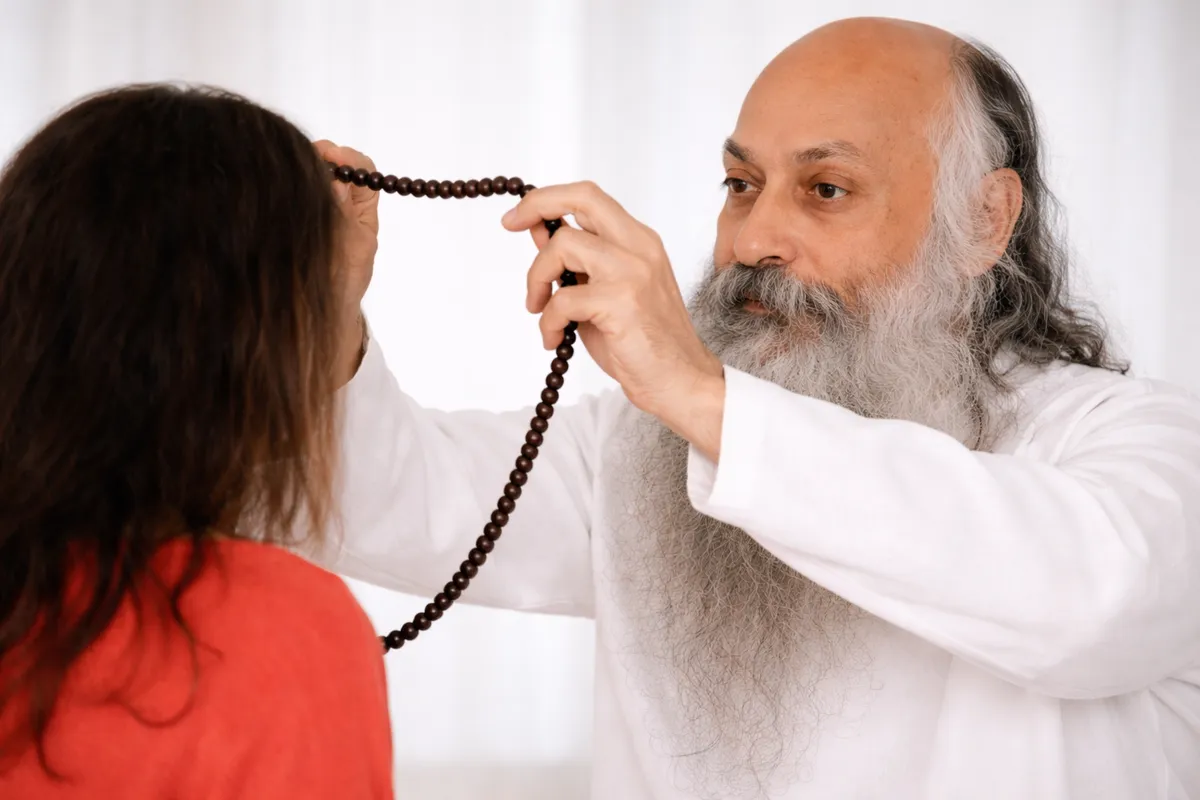
इटैलियन मित्र आते हैं। उनके गले में माला डालता हूं, पूछता हूं, मेरी तरफ देखो, वे फौरन आंख बंद कर लेते हैं! सिर्फ इटैलियन आंख बंद करते हैं, और कोई नहीं बंद करता। मैं बड़ा हैरान कि क्या बात है! मैं जब भी कहता हूं, मेरी तरफ देखो, वे फौरन आंख बंद कर लेते हैं! मैं देखने को कह रहा हूं, वे आंख बंद कर रहे हैं। बात क्या है? कहीं कुछ मेरे और उनके बीच भेद पड़ रहा है। शायद वे ही ठीक हैं। क्योंकि मुझे देखना हो, तो आंख ही बंद करके देखा जा सकता है। वह भी देखने का एक ढंग है। स्त्रियां उसी ढंग से देखती हैं। वह ज्यादा प्रेमपूर्ण ढंग है, और ज्यादा आंतरिक।
Italian friends come. I put a mala around their necks and say, “Look at me,” and they instantly close their eyes! Only Italians do that, no one else. I was surprised: whenever I say, “Look at me,” they close their eyes. I ask them to look; they close their eyes. Something is amiss between us. Perhaps they are right—because to see me, closing the eyes is indeed a way. That is how women look: more loving, more inward.
जब स्त्री किसी को गले लगेगी, तो आंख बंद कर लेगी। इसलिए स्त्रियों को पुरुषों के रंग में, रूप में, आकृति में उतनी उत्सुकता नहीं होती, जितनी उनकी संस्कारशीलता में उत्सुकता होती है। स्त्रियां अलग चीजों से प्रभावित होती हैं, पुरुष अलग चीजों से। पुरुष देखता है कि रंग कैसा है, रूप कैसा है, नक्श कैसा है। नख से शिख तक लेकर वह पूरा का पूरा रूप-रंग-आवरण, सब देखता है। बाल का रंग, चमड़ी का रंग, नाक का ढंग, आंख का ढंग! स्त्री इन चीजों में उतना रस नहीं लेती। उसका रस कुछ और है। वह देखती है: पुरुष में कितना प्रसाद है; कितना विनम्र, कितना सरल है। कितना आनंदित व्यक्ति है, आह्लादित व्यक्ति है! अब आह्लाद का, आनंद का, प्रसाद का नाक की लंबाई से कोई संबंध नहीं है। न रंग से कोई संबंध है।
When a woman embraces someone, she closes her eyes. Therefore, women are not as keen about a man’s color, form, features as they are about his refinement. Women are touched by different things than men. A man looks at complexion, form, features—head to toe, hair color, skin tone, nose, eyes. A woman takes less interest in these; her interest is elsewhere. She sees how graceful the man is, how humble, how simple, how joyous and delighted he is. Joy, grace—what connection do they have with the length of the nose or the color of skin?
और स्त्री को जब तुम आलिंगन करोगे, तो वह आंख बंद कर लेगी, क्योंकि वह तुम्हें भीतर से पकड़ना चाहती है। वह तुम्हारे भीतर डूब जाना चाहती है। वह अंतर्मुखी है। पुरुष बहिर्मुखी है। वह स्त्री को प्रेम भी करना चाहता है, तो बिजली का बल्ब जला कर करना चाहता है। वह देखना चाहता है कि उसके चेहरे पर क्या भाव आते हैं। यहां तक ही नहीं, यहां तक पागल पुरुष हैं कि आईने लगा रखते हैं अपने बिस्तर के ऊपर, कि अगर ठीक से न देख पाएं, तो आईने में दिखाई पड़ता रहे!
When you embrace a woman, she closes her eyes because she wants to hold you from within, to dissolve in you. She is inward; man is outward. Even when loving, man wants the light on; he wants to see what expressions cross her face. There are even such madmen in the West who keep mirrors over their beds, in case they cannot see directly, they can watch in the mirror.
और पश्चिम के मुल्कों में तो मूर्खों ने हद्द कर दी। कैमरे लगा रखे हैं आटोमैटिक, कि फिर बाद में अलबम में देखेंगे कि प्रेम में क्या-क्या घटा! इसलिए पुरुषों के पास इस तरह की किताबें छपती हैं उनके लिए, इस तरह की पत्रिकाएं--जिसमें स्त्रियों के नग्न चित्र होते हैं। पुरुष को रस है उनमें। स्त्रियों को इस बात में बहुत रस नहीं है। बहुत उत्सुकता नहीं है कि वे पुरुषों के नग्न चित्र देखें। उसे पुरुष की आत्मा में रस है, देह में कम।
And in Western countries they have gone to extremes—automatic cameras installed so later they can make an album of what happened in love! Hence there are magazines full of nude images for men; men are titillated by them. Women do not have much interest in seeing male nudes; they are interested in a man’s soul, not his body.
शायद इटैलियन ही ठीक करते हैं कि आंख बंद कर लेते हैं! वे मेरे साथ तल्लीन हो रहे हैं। वे एकरूप हो रहे हैं।
Perhaps the Italians do the right thing by closing their eyes—they merge with me, become one.
ये सभ्यता के भेद हैं। सभ्यता अलग-अलग होगी। लेकिन संस्कृति अलग-अलग नहीं होती। और यहां तो हद्द हो गई! भारतीय संस्कृति का ही मामला नहीं है, अब तो कच्छ की संस्कृति पर हमला है! तब तो गांव-गांव की संस्कृति का अलग हो जाएगा मामला!
These are differences of civilization. Civilization will differ; but culture does not. And here, it has gone to absurd lengths! Not only “Indian culture”—now it is “an attack on Kutch culture”! Soon it will be village-by-village “cultures”!
अभी तो भारतीय संस्कृति की बात थी। अब भारतीय संस्कृति वगैरह तो दूर, महाराष्ट्रियन संस्कृति है और गुजराती संस्कृति है! और गुजरात की संस्कृति भी जाने दो भाड़ में! कहां गुजरात! कच्छ की संस्कृति! थोड़े दिन में मांडवी की संस्कृति और भुज की संस्कृति! फिर मोहल्लों की संस्कृति। फिर हर घर की संस्कृति! फिर अपनी-अपनी संस्कृति!
It used to be about Indian culture; now leave that aside—there is Maharashtrian culture and Gujarati culture! And forget Gujarat—Kutch culture! Next, Mandvi’s culture and Bhuj’s culture! Then the culture of neighborhoods. Then each household’s culture. Then everyone his own “culture”!
‘संस्कृति’ का अर्थ समझो। उसका शाब्दिक अर्थ भी प्यारा है: संस्कारशीलता, परिष्कार होना। जीवन भीतर ऊंचाइयां छूने लगे। तुम्हारे भीतर शिखर उठने लगें चैतन्य के। वह आत्मा को आविष्कृत करने का विज्ञान है। वह कच्छ की, और गुजरात की, और महाराष्ट्र की, और कर्नाटक की नहीं होती। न भारत की होती है, न चीन की होती है, न जापान की होती है।
Understand “culture” (sanskriti). Its very etymology is lovely: being refined, being polished. Life touching inner heights. Peaks of consciousness rising within you. It is the science of manifesting the soul. It is not Kutch’s, or Gujarat’s, or Maharashtra’s, or Karnataka’s. Not India’s, China’s, or Japan’s.
अगर लाओत्सु, बुद्ध, जीसस, मोहम्मद, बहाउद्दीन, कबीर, नानक, एक साथ बैठें, तो उनकी सभ्यताएं तो अलग-अलग होंगी, लेकिन उसकी संस्कृति बिलकुल अलग-अलग नहीं होगी। सभ्यताएं तो अलग-अलग होंगी।
बुद्ध एक ढंग से बैठेंगे--पद्मासन लगा कर। शायद जीसस से पद्मासन न लगे। जिंदगी भर नहीं लगाया, तो लगे कैसे! लाओत्सु जिंदगी भर भैंसे पर सवार होकर चलता था। अब बुद्ध को तुम भैंसे पर बिठाओगे, फौरन गिरेंगे। चारों खाने चित्त पड़ेंगे! भैंसे पर कभी बापदादे नहीं बैठे! और चीन में पुराना रिवाज है भैंसे पर सवार होना। तो कोई अड़चन न थी। लाओत्सु की सवारी ही भैंसा था।
If Lao Tzu, Buddha, Jesus, Mohammed, Bahauddin, Kabir, Nanak sat together, their civilizations would differ, but their culture would not. Civilizations would differ. Buddha would sit in lotus posture; perhaps Jesus could not—he never sat that way in his life. Lao Tzu spent his life riding a water buffalo; if you sat Buddha on a buffalo, he would fall off—his forefathers never rode one! In China, riding a buffalo is an old custom; no problem there. Lao Tzu’s mount was the buffalo.
और जीसस तो गधे पर बैठ कर चलते रहे। अब महावीर ने कितना ही परित्याग कर दिया हो राज्य का, सब छोड़ दिया हो, मगर उनसे भी तुम कहो कि गधे पर बैठो, तो वे भी झिझकेंगे! कि नंग-धड़ंग और गधे पर! क्या और बदनामी करवानी! वैसे ही तो लोग नंगे-लुच्चे समझते हैं! क्योंकि महावीर बाल लोंच कर उखाड़ देते थे, इसलिए लुच्चे! और नंगे रहते थे, इसलिए नंगे। यह ‘नंगा-लुच्चा’ शब्द सबसे पहले महावीर के लिए उपयोग में आया था! अब तो तुम किनको नंगे-लुच्चे कहते हो! कहना ही नहीं चाहिए। यह तो महावीर जैसे व्यक्ति के लिए उपयोग किया गया महान शब्द है! बाल लोंचे कोई, और नग्न रहे।
Jesus rode on a donkey. However much Mahavira renounced—kingdom and all—if you asked him to ride a donkey, he would hesitate: naked—and on a donkey! Why add to the infamy? People already called him “nanga-luchcha”—“naked lout”—because he plucked out his hair and lived nude. That phrase was first used for Mahavira! Nowadays you apply it to anyone; you shouldn’t—once it was used for one such as Mahavira. To pluck out one’s hair and to remain nude!
महावीर भी कहेंगे कि एक तो वैसे ही लोग नंगे-लुच्चे कह रहे हैं--और गधे पर बिठाल दो! मगर जीसस जिंदगी भर गधे पर बैठे। वह जेरुसलम का रिवाज था; कोई अड़चन न थी। सभी गधे पर बैठते थे, उसमें कोई बाधा ही न थी।
Mahavira would say, “People already call me ‘naked lout’—and now seat me on a donkey too?” But Jesus rode donkeys all his life; in Jerusalem it was a custom, no issue at all.
लेकिन संस्कृति अलग-अलग नहीं होगी। अगर ये सारे लोग बैठेंगे, तो एक-दूसरे को तत्क्षण पहचान लेंगे। इनके भीतर का स्वाद एक होगा।
But their culture would not differ. If all these sat together, they would recognize one another instantly. The inner flavor is one.
एक व्यक्ति, एक ईसाई पादरी झेन फकीर रिंझाई के पास बाइबिल लेकर पहुंचा। प्रभावित करने और रिंझाई को ईसाई बनाने। ईसाइयों को एक पागलपन सवार है: सारी दुनिया को ईसाई बनाना है! जैसे इतने ईसाई काफी नहीं! हर तरह के उपाय में लगे रहते हैं! बस ईसाई बन जाओ! वह राजनीति का जाल है। क्योंकि राजनीति रहती है संख्या पर। जितने ज्यादा ईसाई होंगे, उतना ईसाइयों का बल होगा पृथ्वी पर। इसलिए दूसरे भी उत्सुक होते हैं कि हम भी यही धंधा करें।
A Christian priest once went to the Zen master Rinzai with a Bible, to impress him and convert him. Christians are seized by a madness: the whole world must be made Christian—as if there aren’t already enough! They try every means—“Just become Christian!” It is a political net, because politics thrives on numbers. The more Christians there are, the greater Christianity’s worldly power. Hence others also feel tempted to play the same game.
तो आर्य समाजी हैं; उनको कोई ईसाई हो जाए हिंदू, तो उसको फिर से हिंदू बनाना है! अब एक दफे भूल कर ली, तो कर लेने दो। दुबारा तो न करवाओ! चलो, ईसाई हो गया है, ठीक है, होने दो। कुछ हर्जा क्या है! अगर जीसस से इसको कुछ सीख मिल जाए, तो भी ठीक है। नहीं सीख पाया तुम्हारे कृष्ण से, तो जीसस से सीख लेने दो! शायद वहां इसके जीवन का फूल खिल जाए। किसी भूमि में खिले, फूल तो खिलने दो। नहीं, इसको फिर खींच-तान कर हिंदू बनाना है! फिर इसको आर्य समाजी बनाना है!
So Arya Samajis say: if someone has become Christian, make him Hindu again. If he made a mistake once, let it be. Don’t make him do it twice! If he has become Christian—fine; let him be. What harm? If he can learn something from Jesus, what’s wrong? If he couldn’t learn from your Krishna, let him learn from Jesus! Perhaps his flower will bloom there. Wherever it blooms, let it bloom. But no—drag him back into Hinduism, into Arya Samaj!
सबको सवार है भूत--संख्या बढ़ाने का! कि संख्या बढ़ जानी चाहिए। संख्या बढ़ेगी, तो वोट का अधिकार तुम्हारे हाथ में है। वोट का अधिकार तुम्हारे हाथ में है, तो राजनीति तुम्हारी है! राजनीति उनकी है, जिनके पास भीड़ है।
Everyone is possessed by the ghost of numbers: numbers must increase. With numbers come votes; with votes, your politics. Politics belongs to those who have the crowd.
तो यह पादरी गया था। सुना था इसने कि रिंझाई सरल-सीधा आदमी है। सोचा कि चलो, बदल लेंगे! जीसस के प्रसिद्ध वचन हैं, जो उन्होंने पर्वत पर प्रवचन दिया। तो उसने सोचा कि यही सुनाऊं। तो उसने कहा कि क्या आप पसंद करेंगे, मैं कुछ मेरे धर्मग्रंथ के वचन सुनाऊं!
The priest had heard Rinzai was a simple, straightforward man—“I’ll change him.” He opened with Jesus’ famous words from the Sermon on the Mount. “May I read some lines from my scripture?” he asked.
रिंझाई ने कहा: जरूर!
Rinzai said, “Certainly.”
उसने पहला वचन पढ़ा कि धन्य हैं वे, जो सरल हैं, क्योंकि स्वर्ग का राज्य उन्हीं का है।
He read: “Blessed are the simple, for the kingdom of heaven is theirs.”
रिंझाई ने कहा कि बस, और ज्यादा सुनाने की कोई जरूरत नहीं। जिसने भी यह कहा हो, वह व्यक्ति बुद्धत्व को उपलब्ध हो गया था।
Rinzai said, “Enough—no need to read more. Whoever said this attained Buddhahood.”
वह ईसाई पादरी तो बोला: और तो सुनिए!
The priest protested: “But hear the rest!”
उसने कहा: लेकिन बात ही खत्म हो गई। इसके आगे अब कुछ बचा नहीं!
Rinzai said, “The matter is finished. Beyond this, nothing remains.”
उसने पूछा: यह भी तो पूछिए कि ये वचन किसके हैं?
The priest said, “At least ask whose words these are.”
उसने कहा: यह भी क्या करूंगा! नाम कुछ अर्थ रखता है! किसी के भी हों, जिसने भी यह कहा है, वह आदमी बुद्धत्व को उपलब्ध हो गया है।
Rinzai said, “What will I do with the name? Names have no meaning. Whoever said this attained Buddhahood.”
जीसस का नाम भी उसने नहीं पूछा। क्या करना है! जब सामने सागर बह रहा हो, तो चख लिया। पाया कि नमकीन है। कहा कि ठीक है। अब यह सागर अरब सागर हो, कि बंगाल सागर हो, कि हिंद महासागर हो, कि पैसेफिक महासागर हो, कोई भी सागर हो, क्या लेना-देना है! सागर का भी कोई नाम होता है? हमने दे दिए नाम। नमकीन उसका स्वाद चख लिया, उसका रस ले लिया। और एक बूंद ही बता देती है बात!
He didn’t even ask Jesus’ name. What was the need? When the ocean flows before you, you taste a drop and know it is salty—that’s enough. Whether it is the Arabian Sea, the Bay of Bengal, the Indian Ocean, the Pacific—what difference does it make? Does the ocean have a name? We gave names. By tasting the saltiness you know its essence. One drop tells the whole story.
उसने कहा: बस, अब और तुम मेहनत न करो। मैं पूरी तरह राजी। जिसने भी यह कहा, वह आदमी बुद्धत्व को उपलब्ध हो गया।
Rinzai said, “Don’t labor more. I am fully convinced—whoever said this attained Buddhahood.”
वह ईसाई पादरी तो बड़ा हतप्रभ हुआ कि ऐसे आदमी के साथ क्या करना! इसको तो जीसस का नाम भी बताना मुश्किल है; ईसाई बनाना तो बहुत दूर की बात है!
The priest was bewildered: what to do with such a man? He can’t even be told Jesus’ name—converting him is far beyond!
लेकिन उसको समझ में ही नहीं आ रहा है कि ऐसे व्यक्ति को क्या ईसाई बनाना है! यह तो स्वयं ईसा है। यह तो स्वयं बुद्धत्व को उपलब्ध व्यक्ति है, इसलिए तो तत्क्षण पहचान गया।
But he couldn’t understand that such a person needs no converting—he himself is Christlike. He is awakened; that is why he recognized the taste immediately.
महावीर जीसस को पहचान लेंगे। जीसस मोहम्मद को पहचान लेंगे। मोहम्मद बुद्ध को पहचान लेंगे। कबीर नानक को पहचान लेंगे। नानक फरीद को पहचान लेंगे। बात भी न होगी। आंख आंख में बात हो जाएगी। नजर नजर में बात हो जाएगी। खामोशी में बात हो जाएगी। नजर से नजर कह देगी। शब्द भी उपयोग न करने पड़ेंगे।
Mahavira would recognize Jesus; Jesus would recognize Mohammed; Mohammed would recognize Buddha; Kabir would recognize Nanak; Nanak would recognize Farid. No words needed; eyes would speak to eyes. In silence it would happen. A glance would say it all. Words would not be required.
बुद्ध ने कहा है कि दो अज्ञानी मिलें, तो खूब चर्चा होती है। हालांकि उसमें मतलब कुछ नहीं होता; बकवास होती है। दो ज्ञानी मिलें, चर्चा बिलकुल नहीं होती, मतलब बहुत होता है। बात होती ही नहीं, मगर बड़ी ‘बात’ होती है। बात इतनी बड़ी होती है कि बात में अंट नहीं सकती, समा नहीं सकती। आकाश जैसी होती है, कहां शब्दों में समाओगे? कहां शब्दों के छोटे-छोटे आंगन, घरघूले, उसमें कहां विराट आकाश को भरोगे! यूं बात बहुत होती है, मगर नजरों नजरों में हो जाती है। बिन बोले हो जाती है! बिन डोले हो जाती है। हलन-चलन भी नहीं होता। लहर भी नहीं उठती और संदेश यहां से वहां हो जाते हैं। ज्योति ज्योति को तत्क्षण पहचान लेती है। आंख वाला आंख वाले को पहचान लेता है। जागा हुआ आदमी जागे हुए दूसरे आदमी को पहचान लेता है। हां, सोया हुआ आदमी जागे हुए आदमी को नहीं पहचान सकता। और दो सोए आदमी तो बिलकुल ही नहीं पहचान सकते, चाहे रात भर बड़बड़ाएं! और अक्सर सोए हुए आदमी बड़बड़ाते हैं। मगर कौन किसकी सुन रहा है?
Buddha said: when two ignorant men meet, there is much discussion—though it is meaningless, mere babble. When two wise ones meet, there is no discussion—yet there is great meaning. No talk happens, yet there is “talk” so vast it cannot be contained in words. Like the sky—how will you put it into the small courtyards of words? So much is “said,” but eye to eye. Without speaking. Without moving. No ripple arises, and yet the message passes. Light recognizes light. One who has eyes recognizes another who has eyes. One awakened recognizes another awakened. But a sleeping man cannot recognize one who is awake. And two sleepers cannot recognize each other—though they may mutter all night. Often sleepers mutter; who listens to whom?
बुद्ध ने कहा: दो ज्ञानी मिलते हैं, तो बोलते नहीं। बिन बोले बात हो जाती है। दो अज्ञानी मिलते हैं, तो बहुत बकवास होती है! ऐसी होती है कि सिर खुल जाएं! बकवास ही बकवास में सिर खुल जाएं! बात ही बात में बतंगड़ बन जाए। बात में से बात निकल आए। कुछ का कुछ हो जाए!
Buddha said: two wise ones meet and do not speak; without speaking, the matter is done. Two ignorant ones meet and chatter so much your head will split—making mountains out of molehills, getting everything twisted.
एक ज्ञानी और एक अज्ञानी मिल सकते हैं। ये तीन ही तो घटनाएं हो सकती हैं मिलने की। एक ज्ञानी और अज्ञानी मिलता है, तो ज्ञानी कहने की कोशिश करता है उसको, जो कहा नहीं जा सकता। और अज्ञानी उसको अपने अज्ञान से समझने की कोशिश करता है। ज्ञानी उसकी खबर देना चाहता है उसे, जो शब्दों के पार है। और अज्ञानी अपनी मूढ़ताओं के जाल में घिरा हुआ उन्हीं के माध्यम से उसे समझने की कोशिश करता है! तो कुछ का कुछ समझ लेता है! कुछ कहो, कुछ समझ लेता है।
A wise one and an ignorant one can also meet—there are only these three possibilities. When a wise one and an ignorant one meet, the wise tries to say what cannot be said, and the ignorant tries to understand it through his ignorance. The wise wants to tell of that which lies beyond words, and the ignorant, trapped in his own nets of stupidity, tries to understand through them—so he understands something else entirely.
मगर ज्ञानी और अज्ञानी के बीच वार्ता हो सकती है। क्योंकि कम से कम एक तो उसमें जागा हुआ है। वह कोशिश करके, खींच कर अज्ञानी को ला सकता है उस झरोखे पर। समझा-बुझा कर, मना कर, फुसला कर, प्रलोभन देकर उस झरोखे पर ला सकता है, जहां से सूरज दिखाई पड़ जाए। जहां से खुला आकाश, चांद-तारे दिखाई पड़ जाएं।
Yet a dialogue is possible between wise and ignorant, because at least one is awake. By effort, persuasion, enticement, he can bring the ignorant to that window from which the sun can be seen, the open sky, the moon and stars.
यही तो सारी चेष्टा है सत्संग में।
That is the whole endeavor of satsang.
मैं क्या कर रहा हूं? तुम्हें फुसला रहा हूं कि झरोखे पर आ जाओ। मगर तुम अपनी-अपनी जिद्द में बैठे हुए हो! कोई कहता है कि हम तो बजरंगबली पर भरोसा करते हैं। जितने हुड़दंगअली हैं, सब बजरंगबली पर भरोसा करते हैं! ये सिर्फ तुम्हारे हुड़दंगेपन का सबूत है, और कुछ भी नहीं।
What am I doing? Luring you to the window. But you sit in your stubbornness. Someone says, “We rely on Bajrangbali.” As many hooligans as there are all swear by Bajrangbali! This merely proves your own rowdiness—nothing else.
इससे बजरंगबली का कोई कसूर नहीं है। इससे सिर्फ तुम्हारी बुद्धि की जड़ता का पता चलता है। और कुछ भी नहीं।
It isn’t Hanuman’s fault. It only shows the dullness of your own intelligence—nothing else.
मगर बहुत दिन तक बात सुनी हो, तो हम जकड़ जाते हैं।
But when something has been heard for long, we become shackled by it.
कल ही पूछा था न खिलाड़ी राम ने! तीन राम तो यहां मौजूद हैं। एक खयाली राम भी मौजूद हैं! और एक बुलाकी राम मौजूद हैं! तीनों के प्रश्न आ गए। मैं भी थोड़ा सोचने लगा कि असली राम क्या बिलकुल दुनिया से नदारद ही हो गए हैं! खयाली राम--बुलाकी राम--खिलाड़ी राम! यह तो ऐसे ही हुआ, जैसे असली घी नदारद हो गया है। तरह-तरह के घी उपलब्ध हैं! असली डालडा तक नदारद हो गया!
Just yesterday, “Khiladi Ram” asked a question. Three Rams are here—a “Khayali Ram” too, and a “Bulaki Ram.” All three sent questions. I began to wonder whether the real Ram has become completely absent from the world! Khayali Ram, Bulaki Ram, Khiladi Ram—like real ghee having disappeared and all kinds of fake ghees available. Even real Dalda has disappeared!
‘खयाली राम’ मतलब खयाल ही खयाल में राम हैं! और ‘खिलाड़ी राम’ यानी खेल-खेल में राम। मतलब--कोई गंभीरता से मत लेना इनको! शुद्ध राम का पाना भी मुश्किल है! उसमें भी शर्तें जुड़ी हुई हैं!
Khayali Ram—Ram only in fancy. Khiladi Ram—Ram as a plaything: don’t take him seriously! Even pure Ram is hard to find; there are always conditions attached.
और अगर इनको कुछ कहो, तो इनके हृदय को चोट पहुंच जाती है। एकदम आघात हो जाता है कि हमारी अटूट श्रद्धा पर चोट हो गई!
And if you say anything to them, their hearts are hurt: “Our unbreakable faith has been wounded!”
श्रद्धा पर कभी चोट होती ही नहीं। श्रद्धा को कोई चोट पहुंचा सकता ही नहीं। श्रद्धा ज्ञान का नाम है। और श्रद्धा का अर्थ विश्वास नहीं होता। विश्वास तो श्रद्धा का दुश्मन है। जो जितना विश्वास करता है, उतना ही श्रद्धा से दूर है।
Trust is never wounded. No one can injure trust. Trust is the name of knowing. Trust does not mean belief. Belief is the enemy of trust. The more you believe, the farther you are from trust.
विश्वास का अर्थ है: पता तो नहीं है, मान लिया है। श्रद्धा
का अर्थ है: पता है। इसलिए मानें न मानें, तो करें क्या! मानना ही पड़ेगा। विश्वास में चेष्टा है मानने की। श्रद्धा में न मानना भी चाहो, तो कोई उपाय नहीं है।
Belief means: you don’t know, but you have accepted. Trust means: you know—whether you accept or not, what can you do? Acceptance is inevitable. In belief there is effort to accept; in trust, even if you wish not to accept, there is no way.
श्रद्धा अखंड है। और विश्वास कितना ही अटूट तुम्हें मालूम पड़ता हो, जरा में टूट जाएगा।
Trust is indivisible. However unbreakable your belief may seem, it shatters in a moment.
झूठा धर्म विश्वास पर जीता है। झूठी संस्कृति विश्वास पर जीती है। असली संस्कृति, असली धर्म श्रद्धा का आविष्कार है।
False religion and false culture live on belief. True culture, true religion are the discovery of trust.
धर्म है वह नियम, जिसके माध्यम से संस्कृति का जन्म होता है। धर्म है वह पत्थर, जिस पर तुम्हारी प्रतिभा पर धार रखी जाती है। जैसे कोई पत्थर पर घिस-घिस कर तलवार पर धार रखता हो। धर्म है वह पत्थर, जिस पर तुम्हारी प्रतिभा की तलवार पर धार रखी जाती है। और वह जो धार आ जाती है प्रतिभा पर, उसका नाम संस्कृति है।
Religion is the discipline through which culture is born. Religion is the grindstone on which the edge of your intelligence is honed; the sharpness that appears on the blade—that is called culture.
धर्म से संस्कृति पैदा होती है, संस्कार पैदा होता है, परिष्कार पैदा होता है। तुम शुद्धतर होने लगते हो। तुम पवित्रतर होने लगते हो। तुम्हारे जीवन में नये-नये फूल खिलते हैं; नई-नई गंध उड़ती है। नया संगीत उठता है। नये काव्य का आविर्भाव होता है।
From religion, culture, refinement, polish arise. You become more pure, more innocent. New flowers bloom in your life; new fragrances arise; a new music, a new poetry is born.
लेकिन झूठा धर्म और झूठी संस्कृति हमेशा विश्वास पर आधारित होती है। इसलिए हमेशा भयभीत होती है। इस्लाम खतरे में है! यह भी क्या बकवास है! इस्लाम कभी खतरे में नहीं है। और जो खतरे में है, वह इस्लाम नहीं! हिंदू धर्म खतरे में है! पागल हो गए हो! और तुम धर्म को बचाओगे! हद्द हो गई! धर्म तुम्हें बचाता। तुम्हें धर्म को बचाना पड़ रहा है! यह तो यूं हुआ कि--
But false religion and false culture are always based on belief; therefore they are always afraid. “Islam is in danger!” What nonsense! Islam is never in danger—and whatever is in danger is not Islam. “Hinduism is in danger!” Are you mad? And you will save religion? The limit! Religion saves you; you have to save religion? It is like this:
सेठ चंदूलाल घर आए। एकदम पत्नी से बोले कि सौभाग्य की बात है आज, कि यूं तो सब लुट गया, मगर मेरी पिस्तौल बच गई! डाकुओं ने घेर लिया। जेबें खाली कर डालीं। हाथ की घड़ी भी उतार ली। अरे और तो और मेरी टोपी तक ले गए! जूते ले गए। कोट उतार लिया।
Setchandulal came home and said to his wife, “A fortunate day indeed—though everything was looted, my pistol was saved! Dacoits surrounded me; emptied my pockets; took my wristwatch; even my cap! My shoes, my coat—all gone.”
पत्नी ने कहा: लेकिन तुम्हारे पास पिस्तौल थी। तुम करते क्या रहे?
The wife said, “But you had a pistol—what were you doing?”
बोले: मैं पिस्तौल को ही तो बचाता रहा! कि ये हरामजादे कहीं पिस्तौल न ले जाएं! क्योंकि वही महंगी चीज थी। मगर धन्यवाद हो परमात्मा का, कि किसी की नजर ही न पड़ी पिस्तौल पर! मैंने भी ऐसी छिपाई थी बिलकुल अपनी धोती में!
He said, “I was saving the pistol! Lest those rascals take it—it was the most valuable thing. Thank God no one noticed it; I had hidden it well in my dhoti!”
अब पिस्तौल तुम्हारी रक्षा के लिए है, कि तुम पिस्तौल को धोती में छिपा कर बैठे हुए हो! कि मेरी पिस्तौल खतरे में है! तो पिस्तौल है किसलिए?
Is the pistol there to protect you, or are you to sit hiding it in your dhoti—“My pistol is in danger”? Then what is the pistol for?
कौन धर्म को बचाएगा? ये महंत स्वरूपदास जी धर्म को बचाएंगे? ये ही तो हत्यारे हैं! धर्म की हत्या कौन कर रहा है? महंत का मतलब ही यही समझना चाहिए कि जिसने कर दी हत्या। हंता--महंता--महान हंता! मार-मूर कर बैठे हैं बिलकुल! हत्या करके बैठे हैं! लाश पर सवार हैं!
Who will save religion? Will these mahants save it? They are the killers! Who is murdering religion? Take the word “mahant” to mean this: the great slayer—mahan hanta. They have slaughtered it and are sitting upon the corpse!
अब इनको खतरा है कि कोई आकर कह न दे कि यह तुम जिस चीज को पकड़े बैठे हो, यह धर्म नहीं है।
Now they fear that someone may come and say, “What you are clutching is not religion.”
खतरा धर्म को नहीं है। खतरा झूठे धर्म को जो लोग धर्म की तरह चला रहे हैं--उसको है। असली सिक्के को क्या खतरा होता है? नकली सिक्के को खतरा होता है। नकली सिक्का चलाने वाला डरा-डरा जाता है। चुपचाप निकालता है। जल्दी से पकड़ा कर भागता है। दस रुपये का नोट देगा, तुम उसको वापस जो पैसे लौटाओगे, उनकी गिनती भी नहीं करता। क्योंकि गिनती-विनती की, इतने में कहीं तुम दस का नोट पहचान लो! जब कोई आदमी, तुम चिल्लर वापस लौटाओ, गिनती न करे, फौरन गौर करना! हां, कुछ महापुरुष होते हैं, उनकी बात छोड़ दें।
Religion is not in danger. Those who peddle false religion in its name are in danger. What danger is there to a genuine coin? Danger is only to the counterfeit. The one who passes fake coins is always scared—he slips it out stealthily, hands it over quickly, doesn’t even count the change he gets back; if he did, you may notice his ten-rupee note is counterfeit! When someone doesn’t count the change, take note—yes, except for a few “great men.”
चंदूलाल! दस का नोट दिया उन्होंने; एक सिनेमा में जाकर टिकट खरीद रहे थे। और फिर एक-एक रुपये को, जो नौ रुपये फिर वापस मिले, उसको गौर से देख रहे थे।
Chandulal gave a ten-rupee note buying a cinema ticket, and then examined each of the nine rupees in change minutely.
उसने पूछा: भाई क्या बात है? कुछ कमी है?
The clerk asked, “Is something short?”
नहीं-नहीं। कोई बात नहीं। कमी वगैरह कुछ भी नहीं है। मैं तो यही देख रहा था कि कहीं वही हाल तो नहीं है, जो मेरी नोट का था! कहीं तो एक किसी तरह उसको चला कर बचे। अब इनको चलाते फिरो!
“No, nothing short. I was only checking whether they are in the same condition my note was in! Somehow I managed to pass that—now you pass these!”
वह जो नकली पर भरोसा किए बैठा है, या नकली पर लोगों को भरोसा करवा रहा है, उसको खतरा है।
The man who relies on the fake—or makes others rely on it—is afraid.
बड़े मजे की बात है! सारे जैन मुनि हैं कच्छ में। स्वामीनारायण संप्रदाय के स्वामीगण हैं। और हिंदू संन्यासी हैं। मुसलमान हैं, मौलवी हैं, पंडित हैं, इन सबको मुझ एक अकेले आदमी से क्या खतरा हो सकता है? खतरा मुझे हो, क्योंकि इनकी भीड़ है! मुझे तो कोई खतरा दिखाई नहीं पड़ता। खतरा इन सबको हो रहा है, इससे बात जाहिर है कि मामला क्या है।
It is amusing: all the Jain monks in Kutch, the Swaminarayan swamis, Hindu sannyasins, Muslim maulvis, pundits—what danger could they possibly face from one lone man like me? If there is danger, it should be to me—because they have the crowds. I see no danger to myself; that they feel endangered only reveals what the matter is.
जेब काटने की एक घटना पर लंबी-चौड़ी जिरह होने के बाद जिसकी जेब कटी थी, उससे पूछा गया, आपको विश्वास है कि इसी व्यक्ति ने आपकी जेब काटी?
After a long cross-examination in a pickpocket case, the victim was asked, “Are you certain it was this man who picked your pocket?”
उत्तर मिला, विश्वास है नहीं, था। जिरह के बाद तो मुझे शक हो रहा है कि मैंने उस दिन कोट पहना भी था या नहीं!
He said, “I was certain; now, after all this questioning, I’m beginning to doubt whether I even wore a coat that day!”
ये लोग तर्क का जाल फैला कर बैठे हुए हैं। किसी तरह लोगों के सिर पर जबरदस्ती थोप दिए हैं विचार। तो इनको खतरा है कि कहीं उखड़ न जाए यह झूठी पर्त! कहीं यह लीपा-पोती खुल न जाए! कहीं ये झूठी गांठें वक्त पर दगा न दे जाएं। कहीं कोई आकर इनको तोड़ न डाले!
They weave nets of argument. They have imposed ideas on people’s heads by force. They fear that the false veneer may peel off, that the whitewash may crack, that those fake knots may betray them at the crucial moment, that someone might come and undo them.
यही तो मेरी चुनौती है। आखिर उन्हीं लोगों से तुम बात कर रहे हो सदियों से, उन्हीं से मुझे भी बात करनी है--करने दो। तुम भी करो। मैं भी बात करूं। जिसकी बात उनको रुचेगी, जिसकी बात उनको भली लगेगी, उसके साथ हो लेंगे! अब तुम्हारी उनको भली न लगे, तो मैं क्या करूं? अगर मेरी भली लगे, तो मेरा क्या कसूर? निर्णय उनके हाथ में है। लेकिन खतरा क्या है तुमको?
That is precisely my challenge. After all, you have been talking to people for centuries; I, too, must talk to them—let me. You talk; I will talk. Whose words delight them, whose words touch them—they will go with him. If yours don’t appeal, what can I do? If mine do, what is my fault? The decision lies in their hands. Why are you afraid?
खतरा यही है कि तुम्हें खुद ही शक है कि तुम्हारी बात में बल कितना है! न तुम जानते हो, न जिन्होंने तुम्हें समझाया है, वे जानते हैं। न तुम जिनको समझा रहे हो, वे जानते हैं। यह सब अंधेरे में बैठे हुए जो चर्चा चल रही है, यह एक छोटे से दीये के जलने से भी घबड़ाता है अंधेरा। इसके प्राण कंपते हैं कि यह टूट न जाए!
You fear because you yourself suspect how much strength there is in your words. Neither you know, nor those who taught you know, nor those you are teaching know. This whole discussion sits in darkness; even a small lamp makes the darkness tremble with fear that it may be dispelled.
क्या तुमको गवाही देने के लिए किसी ने पहले से ही सिखा-पढ़ा कर भेजा है? जज ने पूछा।
“Has anyone coached you in advance how to testify?” asked the judge.
जी हां, उत्तर मिला।
“Yes,” the boy replied.
प्रतिपक्षी वकील उछला, मैं तो पहले ही कह रहा था कि यह बच्चा सिखा-पढ़ा कर लाया गया है।
The opposing lawyer jumped up: “I said so—the child has been tutored!”
वकील को शांत रहने का आदेश देकर जज ने लड़के से पूछा: किसने सिखाया तुम को?
Ignoring the lawyer, the judge asked, “Who coached you?”
मेरे पिताजी ने।
“My father.”
वकील ने जज का आदेश भूल कर फिर उतावली में कहा: माननीय महोदय, एकदम ठीक कह रहा है यह लड़का। इसके बाप ने इसको सिखा-पढ़ा कर भेजा है।
The lawyer forgot the judge’s warning and blurted out, “Your honor, exactly! His father has tutored him!”
इस बार भी जज ने वकील की ओर ध्यान नहीं दिया और लड़के की ओर मुड़ कर तीसरा प्रश्न किया: क्या सिखाया है तुम्हें?
Again ignoring the lawyer, the judge asked the boy, “What did he teach you?”
लड़ने ने कहा: यही कि अदालत में प्रतिपक्षी वकील तुम्हें तरह-तरह से परेशान करेगा, पर तुम उसका खयाल न करना; सच्ची बात ही कहना।
“He said: in court, the opposing lawyer will try to confuse you in many ways. Don’t bother—just tell the truth.”
मैं लोगों को क्या कह रहा हूं! इतना ही कह रहा हूं कि सच्ची बात कहो, सच्ची बात जीओ। इससे जो झूठ के सौदागर हैं, उनको चिंता हो रही है। फिर उस झूठ के सौदागर में राजनीतिज्ञ भी हैं और धार्मिक भी हैं। उन दोनों को झंझट है। उन दोनों का पुराना षडयंत्र है।
What am I telling people? Only this: speak the truth, live the truth. That is what worries the merchants of falsehood. Among those merchants are politicians and the religious. Both are disturbed. They have an old conspiracy together.
राजनेता और धर्मगुरु सदियों से सांठ-गांठ किए बैठे हैं। एक ने कब्जा कर लिया है आदमी के शरीर पर और दूसरे ने कब्जा कर लिया है आदमी की आत्मा पर। दोनों ने बंटवारा कर लिया है कि हम आत्मा पर कब्जा रखेंगे, तुम शरीर पर कब्जा रखो। तुम हमारे काम में दखलंदाजी मत देना, तुम हमारी प्रशंसा करना; हम तुम्हारे काम में दखलंदाजी नहीं देंगे। तुम्हें जरूरत पड़ेगी, हम तुम्हारी सहायता करेंगे; हमें जरूरत पड़े, तुम हमारी सहायता करना। लेकिन हम एक-दूसरे का साथ देंगे, क्योंकि हमारा धंधा एक है। वे दोनों के दोनों साझीदार हैं एक ही धंधे में। और धंधा क्या है? आदमी के शोषण का धंधा है।
Politicians and religious leaders have been colluding for centuries. One has seized the body, the other the soul. They have divided the spoils: “We will control the soul; you control the body. Don’t interfere in our work; praise us. We will not interfere in yours; when you need help, we will help you; when we need it, you help us. We will stand by each other, because our business is one.” And what is that business? The exploitation of man.
इससे मुझसे दोनों नाराज हैं। नहीं तो राजनीतिज्ञों को और धार्मिक को मेरे विरोध में एक साथ खड़े हो जाने की क्या जरूरत?
Thus both are angry with me. Otherwise, why would politicians and the religious stand together against me?
साधु का मेरा वेश है नहीं। पक्का शिकारी हूं! सिर्फ शिकारी हूं! और शिकार करने के सिवाय मुझे कोई शौक नहीं। वे गलती में हैं। साधुवेश कहां? इतने लोगों को मैंने साधुवेश पहना दिया, मैंने नहीं पहना! मेरा न कोई गुरु है, न मेरा कोई धर्म है। न मेरा कोई शास्त्र है। न मेरा कोई वेश है। मेरी तो मौज है। दिल आ जाता है, तो तुर्की टोपी लगा लेता हूं। सरदार गुरदयालसिंह को भाव आ गया कि एक दिन तो आप सरदारी साफा बांधिए! मैंने कहा: ले आओ। सो वे साफा बांध गए लाकर। तो मुझे कोई अड़चन नहीं है। मुझे क्या तकलीफ है! मेरा कोई वेश वगैरह नहीं है। मुझे कोई आग्रह नहीं है।
A monk’s garb isn’t mine at all. I am a dyed-in-the-wool hunter—only a hunter! And apart from hunting I have no other hobby. They’re mistaken. What monk’s robe? I’ve put so many people into monk’s robes; I myself have not worn one! I have no guru, no religion, no scripture, no fixed attire. I live in my own playfulness. If on a whim my heart is drawn, I’ll put on a Turkish cap. Sardar Gurdayal Singh once felt moved and said, “For one day, please tie a Sikh turban!” I said, “Bring it.” He brought it and tied it on me. I have no problem. Why would I? I have no particular dress. I have no insistence about anything.
मेरी एक संन्यासिनी ने मुझे पत्र लिखा कि एक दिन आप टाई बांध कर आएं! मैंने कहा: मुझे कोई अड़चन नहीं है। मैं तो नंग-धड़ंग और टाई बांध कर आ सकता हूं; तू क्या बातें कर रही है! कि महावीर स्वामी भी सिर पीट लें कि हद्द हो गई! कि कम से कम नंग-धड़ंग हुए, तो टाई नहीं बांधना! टाई बांधने वाले भी सिर पीट लें कि हद्द हो गई! टाई की भी इज्जत गई! इस आदमी के हाथ में जिस चीज की इज्जत न चली जाए, कहना मुश्किल है।
One of my sannyasins wrote to me, “One day please come wearing a tie!” I said, “No problem. I can come stark naked—and in a tie too; what are you talking about!” Even Mahavira would beat his head: “This is too much! If at least you’re naked, don’t wear a tie!” And the tie-wearers would beat their heads too: “This is too much! Even the tie has lost its honor!” Whatever comes into these hands, its prestige is in danger—it’s hard to say what might be spared.
शिकारी हूं। नाहक साधुवेश वगैरह की बात न करो। मैं कोई महात्मा हूं, कि कोई बाबा हूं! कि कोई महंत हूं, कि कोई संत हूं! इन सब टुच्ची-फुच्ची बातों में मुझे कोई रस नहीं है।
I am a hunter. Don’t bring in needless talk of monk’s garb. I’m no mahatma, no baba, no mahant, no saint. I have no taste for such petty trifles.
मैं तो अपनी मौज से जी रहा हूं। जो मेरी मौज। कोई मेरे ऊपर किसी तरह का आग्रह मैंने रखा नहीं है।
I live by my own whim. I place no insistence on anyone, nor do I carry any on myself.
लेकिन इनकी अड़चनें तुम समझो। इन बेचारों की तकलीफ भी समझो। इन पर दया भी खाओ। ये दीन हैं, अत्यंत दीन हैं। ये क्या कह रहे हैं कि कच्छ की संस्कृति पर आक्रमण हो रहा है!
But understand their difficulties. Understand these poor fellows’ troubles. Have pity on them. They are pitiable, utterly. And what are they saying? That there is an attack on the culture of Kutch!
मैं अपने कमरे से बाहर निकलता नहीं। मुझे कोई फर्क नहीं पड़ता कि मैं महाराष्ट्र में हूं, कि गुजरात में हूं, कि हिंदुस्तान में हूं, कि जापान में हूं। मैं अपने कमरे में ही रहूंगा। वही चार दीवालें मेरे कमरे की, कहीं भी रहें। और तुम जान कर हैरान होओगे कि मैं एक सा ही कमरा बनवा लेता हूं, जहां रहता हूं। जबलपुर में था, तो मेरा कमरा ऐसा था। बंबई में था, तो मेरा ऐसा कमरा था। यहां हूं, तो मेरा कमरा वैसा ही है। मुझे सच में पक्का पता ही नहीं चलता कि मैं कहां हूं। कमरा ही एक जैसा रहता है! और चौबीस घंटे उसी में रहना है!
I don’t step out of my room. It makes no difference to me whether I’m in Maharashtra, Gujarat, India, or Japan. I stay in my room. The same four walls, wherever they may be. And you’ll be surprised to know I get a room built to the same design wherever I live. In Jabalpur my room was like this; in Bombay the same; here too it’s the same. Truly, I hardly know where I am—the room remains the same! And I’m in it twenty-four hours a day.
और मुझे कोई रस नहीं है कच्छ वगैरह में! क्या मुझे रस पड़ा हुआ है? तुम सोचते हो, मैं कभी मांडवी जाऊंगा, कि कभी भुज जाऊंगा? कभी नहीं जाऊंगा! मैं तो अपने कमरे में प्रवेश कर जाऊंगा--बात खत्म हो गई! फिर उस कमरे से क्या मुझे निकलना है?
I have no interest in Kutch and such! Why would I? Do you think I’ll ever go to Mandvi or to Bhuj? Never! I enter my room—end of story! Why would I come out of it?
इतना ही रास्ता जो कमरे से यहां तक सुबह तुम्हारे पास आता हूं, यही मैं कुल जमा इतनी यात्रा करता हूं।
The little journey I make from my room to sit here with you in the morning—this is the sum total of my travels.
मुझसे कच्छ की संस्कृति को क्या खतरा है? और आक्रमण! जिनको उत्सुकता हो, उनको मेरे पास आना पड़ेगा। अब जिनको उत्सुकता है, उनको यहां भी आना हो तो आ जाते हैं। यहां भी, आखिर कच्छ से आकर लोग यहां भी संन्यस्त हुए हैं। कच्छ में मेरे संन्यासी हैं। जिनको बिगड़ना ही है, उनको तुम कैसे रोकोगे? वे कच्छ से बेचारे यहां तक आते हैं!
How is Kutch’s culture endangered by me? An “attack”? Those who are curious will have to come to me. And those who are curious do come here as well. Even from Kutch some have taken sannyas here. I have sannyasins in Kutch. Those who are determined to “get spoiled”—how will you stop them? The poor things come all the way from Kutch!
और यूं मुझसे मिलना आसान नहीं है। जिसने बिगड़ने की जिद्द ही कर रखी हो, वही मिल पाता है। जिसने कसम ही खा ली हो कि बिगड़ेंगे ही, वही मिल पाता है। हर किसी से मैं मिलता भी नहीं हूं।
And in any case it isn’t easy to meet me. Only those who have sworn to “get spoiled” manage to meet me. Those who have taken an oath—“We will get spoiled”—only they manage to meet me. I don’t meet just anyone.
ये कोई आक्रमण के ढंग हैं? यह मैं किसी के घर पर जाकर दरवाजे खटखटाता हूं? कि किसी की गर्दन पकड़ता हूं? असल में बहुत मुश्किल है आश्रम में प्रवेश। हिंदुस्तान में है कोई दूसरा तुम्हारा धार्मिक व्यक्ति जिसके आश्रम में प्रवेश के लिए तुम्हें पहले पैसा देना पड़ता हो? अपनी गर्दन कटवाओ और पैसा दो! अब तुम्हारा दिल ही है, तो अब मैं क्या करूं! तो मैं तो अपनी मेहनत का पैसा लूंगा! तुम्हें गर्दन कटवानी है, मैं मुफ्त में ही काटूं!
Is this what an attack looks like? Do I go knocking on people’s doors? Do I grab anyone by the neck? In fact, entering the ashram is quite difficult. Is there any other religious figure in India whose ashram you must pay to enter? “Offer your head—and pay for it too!” If your heart is set, what can I do? I will take payment for my labor. If you want your head cut off, should I do it for free?
तो अब जिसको गर्दन कटवानी है, वह आएगा। मैं कहीं भी रहूं,
वह आएगा। और सच यह है कि कच्छ मैं जा रहा हूं, क्योंकि पूना में जब तक रहूंगा, पूना के कुछ लोग गर्दन कटवाने से बचे हुए हैं, इनके लिए कच्छ जाना पड़ रहा है! क्योंकि जब मैं कच्छ जाऊंगा, तब ये आएंगे! ऐसे बुद्धू हैं!
So whoever wants their head cut off will come. Wherever I live, they will come. And the truth is I’m going to Kutch only because, as long as I remain in Poona, some Poona people will keep dodging the beheading; for their sake, I must go to Kutch! When I go to Kutch, then they will come. They are such fools!
मैं बंबई था, तो कुछ लोग नहीं आए बंबई। पूना आ गया, तो अब आए! जब तक बंबई था, तब तक उन्होंने सोचा कि कभी भी चले जाएंगे! जब पूना आ गया, तो उनने सोचा कि अब चले ही जाना चाहिए। पता नहीं, फिर जाना हो पाए, न हो पाए!
When I was in Bombay, some people never came. Once I moved to Poona, now they came! While I was in Bombay they thought, “We’ll go anytime.” When I shifted to Poona they thought, “We should go now; who knows if we’ll be able to later.”
यह चेतना मेरे सामने बैठी हुई है। इससे पूछो। यह उसी मकान में रहती थी, वुडलैंड में, जिसमें मैं रहता था। मेरी खोपड़ी पर बैठी थी ऊपर! तब न आई! और फिर यहां आई, तो गई ही नहीं! अब वहीं उसी मकान में था मैं, तो सोचती थी कि कभी भी चले जाएंगे! ऐसी जल्दी क्या है! लिफ्ट वहीं मेरे दरवाजे पर से रोज गुजरती रही। आती रही, जाती रही। इसमें ही जाती होगी, आती होगी! मगर मेरी नजर में थी। शिकारी जो ठहरा! इस पर मैं ध्यान लगाए बैठा था! कि तू बच ले कब तक बचती है! मगर तुझको बिगाड़ कर रहूंगा! और बिगाड़ कर ही रहा। और खुद बिगड़ी सो बिगड़ी, पति को भी बिगाड़ दिया! मैं तरकीब जानता हूं। पहले पत्नियों को बिगाड़ लेता हूं, फिर उनके पतियों को बिगाड़ लेता हूं! अरे जब पत्नी बिगड़ गई, तो पति की क्या हैसियत! वे तो बेचारे छाया की तरह अपने आप चले आएंगे!
Chetna is sitting right here in front of me—ask her. She lived in the same building, Woodland, where I lived. She was living right above me! Yet she didn’t come! And once she came here, she never left. When I was in that same building, she thought, “We can go anytime—what’s the hurry?” The lift passed my door every day. She must have gone up and down in it! She was in my sight. I am a hunter, after all! I had her in my sights: “Let’s see how long you can dodge! I will spoil you yet!” And I did. And not only did she “get spoiled,” I spoiled her husband too! I know the trick: first I spoil the wives, then I spoil the husbands. Once the wife is “spoiled,” what chance does the husband have? He will come along like a shadow!
पूना के नालायकों की वजह से कच्छ जा रहा हूं! नहीं तो इनकी गर्दन नहीं कटेगी; ये यूं ही रह जाएंगे। और तुम जान कर हैरान होओगे कि अब कच्छ की खबर जोर पकड़ी, तो आने लगे! यूं नहीं आते थे। और छोटे-मोटे लोग ही नहीं, पूना के उद्योगपति आकर प्रार्थना करने लगे कि मत जाइए! कि हमने तो सुना ही नहीं। हम तो कभी बैठे ही नहीं, आए ही नहीं! और मैं यहां छह साल से क्या कर रहा हूं? अब जब कि उनको पक्का होने लगा कि जा ही रहा हूं, तो अभी पूना के उद्योगपतियों का एक प्रतिनिधि-मंडल महाराष्ट्र के चीफ मिनिस्टर को मिलने जा रहा है कि मुझे रोका जाए! मैं पूना न छोडूं। जब तक पूना में था, तब तक इनमें से कोई न आया! अब ये आए हैं प्रार्थना करने कि मत जाइए! क्यों आप कच्छ जाते हैं! आपको क्या तकलीफ है? आपको पूना में कौन सी सुविधाएं चाहिए?
It’s because of the good-for-nothings of Poona that I’m going to Kutch! Otherwise their heads would never be cut; they would keep lingering as they are. And you’ll be surprised—now that news of Kutch has gained momentum, they’ve started coming! Earlier they didn’t. And not just small fry—Poona’s industrialists have begun coming to beg: “Please don’t go! We never heard, we never sat with you, we never came!” And what have I been doing here for six years? Now that it’s becoming firm that I’m going, a delegation of Poona’s industrialists is going to meet the Chief Minister of Maharashtra to have me stopped—so that I don’t leave Poona. When I was in Poona, none of them came! Now they come pleading, “Don’t go! Why go to Kutch? What inconvenience is there for you? What facilities do you need in Poona?”
कल एक उद्योगपति आए कि दो हजार एकड़ जमीन मैं यहां इंतजाम करता हूं। आप हां भर भर दें! कहीं मत जाएं। महाराष्ट्र को क्यों छोड़ते हैं?
Yesterday an industrialist came and said, “I’ll arrange two thousand acres here. Just say yes! Please don’t go. Why leave Maharashtra?”
मैं जब पहुंच जाऊंगा कच्छ, तब ये वहां आएंगे। तभी ये वहां आएंगे। नहीं तो ये नहीं आने वाले हैं।
When I reach Kutch, then they will come there. Only then will they come. Otherwise they won’t come.
मैं जबलपुर था। जो लोग कभी जबलपुर नहीं आए, मिलने नहीं आए--अब वे यहां आकर दावेदारी करते हैं कि हम तो जबलपुर से हैं! हमें तो मिलने का पहले अधिकार है। और मैं बीस साल जबलपुर में था, तब तुम कहां थे! कभी तुम्हारी शक्ल न देखी।
When I was in Jabalpur, those who never came to meet me there—now they come here and stake a claim: “We are from Jabalpur! We have the first right to meet you.” I lived in Jabalpur twenty years—where were you then? I never even saw your faces.
यह आदमी बड़ा अजीब आदमी है!
This is a very strange species of man!
कच्छ के लोगों को बिलकुल नहीं घबड़ाना चाहिए। ये स्वामी हरिस्वरूपदास जी, इनको तो बिलकुल नहीं घबड़ाना चाहिए। कच्छियों को बचाने का सबसे ज्यादा ठीक उपाय यह है कि मुझको कच्छ में बुला लो! कच्छी निश्चिंत हो जाएंगे कि अब कोई फिकर नहीं है। कभी भी चले जाएंगे! अभी यहां आते हैं कच्छी। संन्यस्त भी होते हैं। और मुझे इन सबकी बकवास रोक नहीं पाएगी। क्योंकि मेरे पास दूसरी तरफ से भी रोज खबरें आ रही हैं। कच्छ के युवकों ने खबर भेजी है कि पंद्रह हजार युवक तैयार हैं। आप जिस दिन आएं, हम स्वागत के लिए तैयार हैं। और देखें, कौन रोकता है!
The people of Kutch need not be alarmed at all. Swami Hariswarupdas-ji, you especially need not be alarmed. The best way to “save” the Kutchis is to invite me to Kutch! Then the Kutchis will relax: “There’s nothing to worry about; we can go anytime!” Even now Kutchis come here and take sannyas. And all this noise won’t stop anyone. Because I get news from the other side every day too. The youth of Kutch have sent word that fifteen thousand young men are ready. “Whenever you come, we are ready to welcome you—and we’ll see who tries to stop it!”
अब ये अपने हाथ से मुसीबत में पड़ेंगे। ये चुपचाप रहें। शांति से अपना भजन-कीर्तन करो। तुम्हें क्या करना है इन बातों में! जिन्हें बिगड़ना है, वे कोई न कोई रास्ता खोज लेंगे। और जिनको मेरा शिकार ही होना है, वे हो ही जाएंगे।
They are inviting trouble with their own hands. Better they keep quiet. Do your bhajan-kirtan in peace. What business do you have in these matters? Those who want to “get spoiled” will find a way. And those who are destined to become my prey will become so.
और तुम्हारे बचाने से बचने वाले नहीं हैं। सिर्फ तुम्हारी घबड़ाहट उनको और भी बता देगी कि अरे, दो कौड़ी के हो! क्या घबड़ाते हो! एक आदमी के आने से पूरा कच्छ इतना घबड़ाया हुआ हो! सारे साधु-महात्मा, सारे राजनेता इतने घबड़ाए हों, ऐसी क्या घबड़ाहट है? कोई मैं जादू कर दूंगा सारे लोगों को जाकर!
And no one you try to “save” will be saved. Your panic only announces to them that you are worth two pennies: “Why are you so scared? One man comes and the whole of Kutch shakes! All the sadhus, mahatmas, and politicians are so frightened—what’s the need for such panic? Am I going to cast a spell over everyone?”
मगर बेचैनी का कारण यह है कि बुनियादें झूठ पर खड़ी हैं। और मैं तो दो टूक बात कहने का आदी हूं। जैसा है, वैसा ही कह देता हूं। मैंने तो कसम खाई है कि जैसा है वैसा ही कहूंगा, चाहे कोई भी परिणाम हो।
But the reason for their restlessness is that their foundations are built on falsehood. And I am in the habit of speaking plainly. I say it as it is. I have sworn to speak the truth as it is—whatever the consequences.
मेरे पहुंचने से इन सबकी जो ढोल में पोल है, उसके खुल जाने का डर है। मगर वह इनके शोरगुल मचाने से ही खुली जा रही है! मैं अभी पहुंचा ही नहीं हूं, ये अपने हाथ से ही अपनी पोल खोले दे रहे हैं! चुप रहते, तो शायद थोड़ी देर छिपी भी रहती।
My arrival threatens to expose the holes in their drum. And their own commotion is exposing them! I haven’t even arrived yet and they are unveiling themselves with their own hands. Had they kept quiet, perhaps it would have remained hidden a little longer.
और यह कैसा कमजोर हो गया देश! यह कैसा नपुंसक हो गया देश! यहां देश में लोग घूमते थे। बुद्ध पूरे बिहार में घूमे; महावीर घूमे। शंकराचार्य तो पूरे देश में घूमे। नानक ने तो देश के बाहर तक यात्राएं कीं! मक्का और मदीना तक यात्राएं कीं।
What a weakened country this has become! What a eunuch-like country! In this land, men once walked. Buddha wandered all over Bihar; Mahavira wandered. Shankaracharya traversed the whole country. Nanak journeyed even beyond India—to Mecca and Medina.
लोग प्रभावित होते थे, आनंदित होते थे कि शंकराचार्य का गांव में आगमन हो रहा है। निश्चित ही उस गांव के पंडित को अड़चन आने वाली है। लेकिन वे भी हिम्मत के लोग थे।
People were affected and delighted that Shankaracharya was coming to their village. Certainly the village pundit might have difficulties—but they had courage.
जब मंडन मिश्र के गांव मंडला में शंकराचार्य गए, विवाद करने मंडन मिश्र से, तो मंडन मिश्र ने आह्लादित होकर उनका स्वागत किया। ये शानदार लोग थे! क्योंकि यह कहना कि यह तो हम पर हमला हो जाएगा, इस बात का सबूत होगा कि तुम कमजोर हो! तुम्हारे पास बुनियाद नहीं है।
When Shankaracharya went to Mandan Mishra’s village, Mandala, to debate him, Mandan Mishra welcomed him with joy. They were magnificent people! To say, “This will be an attack on us,” is proof that you are weak, that you have no foundation.
मंडन मिश्र ने स्वागत किया कि मैं धन्यभागी हूं कि तुम इतनी दूर से, दक्षिण से, केरल से यात्रा करके आए! मैं तो बूढ़ा हो गया हूं। मैं चाहता तो भी इतनी यात्रा नहीं कर सकता था। (पैदल यात्रा के दिन थे।) तुमने बड़ी कृपा की, जो तुम आए! और मैं गौरवान्वित हूं कि मुझसे विवाद करने तुम इतनी दूर से आए हो!
Mandan Mishra said, “I am blessed that you have come from so far—Kerala in the south. I am old now; even if I wished, I could not travel so far. In those days one traveled on foot. You have been gracious to come, and I feel honored that you have come to debate me.”
विवाद हुआ। लेकिन एक बड़ी अड़चन थी। अड़चन यह थी कि विवाद का निर्णायक कौन हो! क्योंकि कोई भी विवाद का निर्णायक हो, ऐसा व्यक्ति होना चाहिए, जो शंकराचार्य को भी समझ सके, मंडन मिश्र को भी समझ सके, जिसकी प्रतिभा इनसे कम तो होनी नहीं चाहिए, थोड़ी ज्यादा ही हो।
The debate began. But a difficulty arose: who would be the arbiter? The judge must be someone who could understand Shankaracharya and Mandan Mishra—someone whose intellect was not less than theirs, perhaps even a little greater.
मंडन मिश्र ने कहा कि एक व्यक्ति को मैं जानता हूं, लेकिन मैं नहीं कह सकता कि उस व्यक्ति को न्यायाधीश बनाया जाए।
Mandan Mishra said, “I know one person, but I cannot propose that person as judge.”
शंकराचार्य ने कहा: आप कहें या न कहें, मुझे भी उस व्यक्ति का पता है। मैं निवेदन करता हूं कि उस व्यक्ति को.मेरा भी उतना ही भरोसा है, जितना आपका! और वह व्यक्ति कौन था? वह मंडन मिश्र की पत्नी थी, भारती! मंडन मिश्र ने स्वभावतः कहा कि मैं कैसे कहूं कि मेरी पत्नी न्यायाधीश बन कर बैठे! क्योंकि उसमें तो यह हो सकता है कि वह पक्षपात कर जाए! वह मेरे पक्ष में निर्णय दे दे।
Shankaracharya said, “Whether you say it or not, I know whom you mean. I request the same person. I trust that person as much as you do.” And who was that? Mandan Mishra’s wife, Bharti. Naturally Mandan Mishra said, “How can I propose my own wife as judge? She might be partial to me.”
शंकराचार्य ने कहा: मुझे बिलकुल भी चिंता नहीं है। मैंने उसकी बड़ी ख्याति सुनी है। उससे योग्य और कौन निर्णायक होगा! वह निर्णायक हो।
Shankaracharya said, “I have no worry at all. I have heard of her great reputation. Who could be a more qualified judge? Let her be the arbiter.”
पत्नी निर्णायक हुई। छह महीने विवाद चला और पत्नी ने छह महीने बाद निर्णय दिया कि मंडन मिश्र हार गए!
The wife became the judge. The debate lasted six months. After six months she pronounced judgment: Mandan Mishra has lost.
क्या शानदार लोग थे!
What magnificent people!
पत्नी निर्णय दे सकी कि पति हार गया। और हार गया, इसलिए अब पति को एक ही उपाय है कि वह शंकराचार्य का शिष्य हो जाए। इनसे दीक्षित हो।
The wife could declare that her husband had lost. And because he lost, the only proper course for him now was to become Shankaracharya’s disciple—be initiated by him.
शंकराचार्य भी चौंके। इतनी निष्पक्षता! इतनी सरलता! सत्य के प्रति ऐसा अदभुत भाव कि न कोई और नाता-रिश्ता, कुछ नाता-रिश्ता काम नहीं करता। सब नाते-रिश्ते फीके पड़ जाते हैं सत्य के सामने!
Even Shankaracharya was startled—at such impartiality, such simplicity, such astonishing devotion to truth that no other relationship intervened. Before truth, all ties went pale.
लेकिन भारती अदभुत महिला थी। मंडन मिश्र से तो उसने कहा कि तुम्हें शंकराचार्य का शिष्य होना पड़ेगा। लेकिन शंकराचार्य से कहा कि सुनो, अभी विवाद पूरा नहीं हुआ। मंडन मिश्र हारे हैं; मैं उनकी अर्धांगिनी हूं। इसलिए अभी सिर्फ तुमने आधे मंडन मिश्र को जीता। अभी आधा मंडन मिश्र मुझमें जिंदा है। तुम मुझे भी जीत लो। तो ही जीत पूरी होगी, अन्यथा अधूरी है। मंडन मिश्र तो तुम्हारे शिष्य हो जाएंगे, लेकिन मैं नहीं। मैं तुम्हें विवाद के लिए चुनौती देती हूं। और मंडन मिश्र तो हार चुके हैं, वे तुम्हारे शिष्य हैं। इसलिए ये न्यायाधीश हो जाएं।
But Bharti was an extraordinary woman. She told Mandan Mishra, “You must become Shankaracharya’s disciple.” And she told Shankaracharya, “Listen, the debate is not yet complete. Mandan Mishra has been defeated; I am his other half. So you have won only half of Mandan Mishra. The other half lives in me. Defeat me too; only then will your victory be complete, otherwise it remains half. Mandan Mishra will become your disciple, but I will not. I challenge you to debate me. And since Mandan Mishra has lost and is now your disciple, let him be the judge.”
शंकर थोड़े घबड़ाए! घबड़ाए इसलिए कि स्त्री से उन्होंने कभी विवाद नहीं किया था। पहला मौका। और स्त्री से विवाद करना जरा झंझट की बात है! क्योंकि स्त्री के सोचने-विचारने के ढंग और होते हैं! उसकी तर्क-पद्धति और होती है। तर्क से कम जीती है वह; उसकी जीवन की प्रक्रिया अनुभूतिगत होती है, तर्कगत नहीं होती। इसलिए थोड़े झिझके।
Shankaracharya hesitated a little—because he had never debated a woman before. The first time. And debating a woman can be a bit of a tangle, because a woman’s way of thinking is different, her logic different. She lives less by logic and more by experience. So he hesitated.
लेकिन भारती ने कहा कि आप झिझकेंगे तो जीत अधूरी रहेगी। मंडन मिश्र को आप ले जाएं। मगर भूल कर भी कभी मत कहना कि मंडन मिश्र पूरे जीते गए। अभी मैं जिंदा हूं और मुझे हरा दें, तो अच्छा हो, ताकि हम दोनों ही आपके शिष्य हो जाएं!
Bharti said, “If you hesitate, your victory will remain incomplete. Take Mandan Mishra with you, but don’t ever claim you fully defeated him. I am still alive. Defeat me too so that both of us may become your disciples.”
चुनौती स्वीकार करनी पड़ी। और वही हुआ, जो होना था, जिससे घबड़ा रहे थे शंकराचार्य। उसने पहला ही प्रश्न जो पूछा, वह कामशास्त्र के संबंध में था!
He had to accept the challenge. And what he feared is exactly what happened. Her very first question was on erotics—the Kama-shastra.
शंकराचार्य ने कहा कि मुझे मुश्किल में डालती हो! अरे कुछ ब्रह्म की चर्चा करो! मैं ठहरा ब्रह्मचारी; विवाह मैंने किया नहीं, और तुम कामशास्त्र का प्रश्न पूछती हो!
Shankaracharya said, “You put me in difficulty! Talk of Brahman, at least! I am a celibate; I never married, and you ask me questions on erotics!”
भारती ने कहा कि जिसमें मेरी पैठ है, जिसमें मेरी गहरी पैठ है, वही प्रश्न मैं पूछूंगी। ब्रह्म का विवाद तो मैं देख चुकी। उसमें तुम जीत गए। उसमें शायद तुम मुझसे भी जीत जाओगे। मगर उसमें मुझे रस ही नहीं है। हार-जीत उससे निर्णय नहीं होगी। मुझे जिसमें रस है, मुझे प्रेम में रस है--ब्रह्म में नहीं। हां, तुम अगर चाहते हो कि अभी तुम्हारी तैयारी नहीं है, तो तुम समय मांग सकते हो, कि भई छह महीने, साल भर, दो साल मैं अनुभव करके आऊंगा। तो तुम्हें छुट्टी दे सकती हूं। लेकिन विवाद तो तुम्हें जो मैं पूछूंगी, उस संबंध में करना पड़ेगा।
Bharti said, “I will ask what I have plunged into deeply. I have seen your debate on Brahman; you won there. Perhaps you would defeat me there too. But I have no interest in that. There the decision will not be meaningful to me. I am interested in love, not in Brahman. If you feel you’re not prepared, you may ask for time—six months, a year, two years—to gain experience. I can grant you leave. But the debate must be on what I ask.”
और शंकराचार्य ने यही उचित समझा कि छह महीने की छुट्टी ले लें। कहा कि छह महीने की मुझे छुट्टी दो। मैं अनुभव करके लौटूं, तभी मैं उत्तर दे सकता हूं। मुझे कुछ भी पता नहीं है। मैं बाल-ब्रह्मचारी हूं! मैंने कोई प्रेम न किसी से किया, न प्रेम जाना, न प्रेम का मुझे रहस्य पता है, न उसके राज पता हैं। मैं तो ब्रह्म में ही उलझा रहा! मैंने कभी सोचा भी नहीं था कि इस पर विवाद खड़ा होगा!
Shankaracharya thought it wise to request six months. “Give me six months. I will return with experience; only then can I answer. I know nothing of this. I am a celibate from childhood; I have neither loved nor known love, nor do I know its secrets or mysteries. I was entangled in Brahman! I never imagined this would arise!”
तो भारती ने छह महीने की छुट्टी दी। और कहानी बड़ी प्रीतिकर है, कि शंकराचार्य क्या करें! मैं तो मानता हूं कि यह कहानी कल्पित है। और बाद में कमजोर पंडितों ने ईजाद की होगी। मेरे हिसाब से तो शंकराचार्य हिम्मत के आदमी थे, बहुत हिम्मत के आदमी थे। इसलिए मेरे हिसाब में तो यह है कि वे छह महीने जरूर किसी वेश्या के पास जाकर रहे होंगे। और कोई उपाय नहीं है जानने का।
Bharti gave him six months. And the story is charming. What should Shankaracharya do? I believe the story is apocryphal—fabricated later by timid pundits. In my view Shankaracharya was a man of great courage—tremendous courage. So I say he must have lived for six months with some courtesan. There is no other way to know.
लेकिन हिंदू कैसे मानें यह? तो उन्होंने एक कहानी गढ़ी कि एक राजा मर रहा था, तो उस मरते राजा के.वह तो मर ही गया; उसकी आत्मा निकल गई--जल्दी से उसकी देह में घुस गए। उनकी आत्मा राजा की देह में घुस गई! अब क्या-क्या जाल बनाने पड़ते हैं, सीधी-सादी बात को हल करने के लिए! आत्मा उनकी राजा की देह में घुस गई, और अपनी देह को छोड़ गए वे; एक गुफा में रख गए। अपने शिष्यों को बता गए कि इसकी सम्हाल रखना। छह महीने बाद मैं आऊंगा। कहीं देह सड़ न जाए! कीड़े-मकोड़े न लग जाएं! हिफाजत रखना चौबीस घंटे। कोई जानवर जंगली खा न जाएं, नहीं तो मैं लौटूंगा कहां! छह महीने में अनुभव करके लौटता हूं।
But how could the orthodox accept that? So they concocted a tale: a king was dying, and as he died his soul departed; Shankaracharya’s soul hurried into the king’s body. He left his own body in a cave for his disciples to guard: “Keep watch day and night for six months. Don’t let it rot or be eaten by worms or wild animals, or else where will I return? I’m going for six months of experience.”
तो उनकी आत्मा राजा के शरीर में प्रविष्ट हो गई और छह महीने राजा की रानी के साथ उन्होंने भोग किया!
So his soul entered the king’s body, and for six months he enjoyed the company of the queen!
अब इतना जाल फैलाना, सीधी-सादी बात को--झूठ के इर्दगिर्द खड़ा करना सत्य को! और मामले में क्या फर्क पड़ता है! आखिर आत्मा ने छह महीने स्त्री का भोग किया ही। अब देह अपनी थी कि देह दूसरे की थी, इससे क्या फर्क पड़ता है! देह अपनी है ही नहीं। अरे देह तो मिट्टी है। फिर मिट्टी किसकी थी? अपनी थी कि और की थी, इससे क्या फर्क पड़ता है? चलो, कहानी इनकी ही मान लो कि कहानी सही होगी। मगर कहानी मुझे लगता है कि बेईमानी की है। इस बात को छिपाने के लिए कि शंकराचार्य छह महीने तक किसी स्त्री के साथ रहे, ताकि काम-कला की सारी की सारी व्यवस्था को समझ लें। इस बात को अगर सीधा-सीधा कहो, तो उनके ब्रह्मचर्य का क्या हुआ! कमजोर लोग! इनका ब्रह्मचर्य जरा में टूट जाए!
Such an elaborate web to cloak a simple fact—wrapping truth in layers of falsehood! But what difference does it make? In the end, a soul enjoyed a woman’s company for six months. Whether the body was his or another’s—what does it matter? The body isn’t “ours” in any case. The body is earth—then whose earth was it? Yours or another’s—what’s the difference? Fine, accept their story if you like. Still, to me it reeks of dishonesty—devised to hide that Shankaracharya lived with a woman for six months to understand the entire art of love. If you state it plainly, what happens to his celibacy? Weak people! Their celibacy breaks at the slightest touch!
मेरे हिसाब से तो ब्रह्मचारी थे वे; हिम्मतवर ब्रह्मचारी थे। और उनकी ब्रह्मचर्या इतनी प्रतिष्ठित थी कि क्या चिंता थी! छह महीने एक स्त्री के साथ रह लिए होंगे। ऐसे कहीं कुछ टूटता है ब्रह्मचर्य! ब्रह्मचर्य क्या कोई इतना छोटा-मोटा कच्चा मिट्टी का घड़ा है कि जरा वर्षा हो गई कि बह गया! ब्रह्मचर्य तो ध्यान से उपलब्ध होता है। वे अपने ध्यान में तल्लीन रहे होंगे। और इस स्त्री के साथ उन्होंने देह की सारी की सारी संभावनाओं की तलाश की, खोज की। जो आदमी छह जन्मों में कर पाए, वह छह महीने में किया। चौबीस घंटे डूबे रहे होंगे। फिर लौटे। फिर भारती को उन्होंने विवाद में हराया। तो भारती भी उनकी शिष्या हो गई।
In my view he was a true celibate—a courageous one. His celibacy was so well-founded, what was there to fear? So he lived with a woman for six months—does celibacy shatter so easily? Is celibacy a flimsy clay pot that a little rain washes away? Celibacy is attained through meditation. He must have remained rooted in meditation. And with that woman he explored every possibility of the body in depth. What a man might take six lifetimes to explore, he finished in six months—plunged in it twenty-four hours a day. Then he returned and defeated Bharti in debate as well. She too became his disciple.
अदभुत लोग थे। मंडन मिश्र ने निर्णय दिया कि भारती हार गई। भारती ने निर्णय दिया कि मंडन मिश्र हार गए! दोनों बूढ़े थे; शंकराचार्य तो बिलकुल तीस साल के जवान लड़के थे! दोनों उनके चरणों में गिरे और दीक्षित हुए। दोनों ने संन्यास लिया।
Magnificent people they were. Mandan Mishra adjudged that Bharti had lost; Bharti adjudged that Mandan Mishra had lost. Both were old; Shankaracharya was a young man of thirty! Both fell at his feet and were initiated; both took sannyas.
यह हिम्मतवार समय था। ये जानदार लोग थे। और ये आज के लोग हैं! ये जैन मुनि भद्रगुप्त! और ये स्वामी हरिस्वरूप दास! और अभी और आएंगे। अभी तो शुरुआत है। जब तक मैं कच्छ पहुंचूंगा नहीं, तब तक और भी अभी कई प्रतिभाएं प्रकट होंगी! ये सब गोबर-गणेश हैं! एक तो गणेश और फिर गोबर!
That was a time of courage. They were people with spine. And these are today’s people! These Jain muni Bhadragupt! And this Swami Hariswarupdas! And more will come—this is just the beginning. By the time I reach Kutch, many more “talents” will appear! They are all gobar-Ganesh—first Ganesh, and then just cow-dung!
मुकेश, ऐसा मत सोचो कि धर्म और राजनीति विरोधी नहीं हैं। वे तो विरोधी हैं ही। इसलिए तो मेरा विरोध हो रहा है। ये सब राजनैतिक लोग हैं। राजनीतिज्ञ तो राजनीतिज्ञ हैं ही, ये तथाकथित तुम्हारे धर्मगुरु, पंडित-पुरोहित, ये सब राजनीतिज्ञ हैं। यह सब राजनीति का ही जाल है।
Mukesh, don’t imagine religion and politics are not opposed. They are opposed—hence their opposition to me. All these are political people. Politicians are politicians—but so are your so-called religious leaders, pundits, priests. It’s all a web of politics.
मेरा राजनीति से कोई लेना-देना नहीं है। मेरा तो शुद्ध व्यक्ति को कैसे आत्म-ज्ञान हो, बस उतनी ही बात से संबंध है। इसलिए मेरे संन्यासियों को कुछ लेना-देना नहीं है। न मेरे संन्यासी किसी को वोट देने जाते हैं.। पता ही नहीं चलता मेरे संन्यासी को--कब चुनाव आया, कब चुनाव चला गया! कौन जीता, कौन हारा! किसी को कुछ लेना-देना नहीं है। लेकिन उनको बेचैनी है।
I have nothing to do with politics. My concern is purely: how can an individual awaken to self-knowledge? That is all. So my sannyasins have nothing to do with it. They don’t even go to vote. They have no idea when elections come and go, who wins, who loses. But these people are uneasy.
मुझे तो इन लोगों के नाम भी पता नहीं हैं कि कौन हैं स्वरूपदास जी! ये कौन हैं भद्रगुप्त जी! लेकिन इनको इतनी बेचैनी मालूम हो रही है कि जरूर मेरा तीर--मैंने चलाया भी नहीं है और इनकी छाती में चुभ गया है। इसको तो शिकार कहते हैं! यही शिकार है।
I don’t even know their names—who is this Swaroopdas-ji? Who is this Bhadragupt-ji? Yet they are so agitated that it’s certain my arrow—though I’ve not even loosed it—has already lodged in their chests. That is what hunting is!
चीन की प्रसिद्ध कथा है कि एक बहुत बड़ा शिकारी था। उसने अपने सम्राट से कहा कि अब मैं चाहता हूं कि आप घोषणा कर दें कि मैं पूरे चीन का प्रथम शिकारी हूं। मुझसे बड़ा कोई धनुर्विद नहीं है। अगर कोई हो, तो मैं चुनौती लेने को तैयार हूं।
There is a famous Chinese tale. There was a great hunter who told his emperor, “I want you to proclaim me the foremost hunter in all of China. There is no archer greater than I. If there is, I am ready for a challenge.”
सम्राट भी जानता था कि उससे बड़ा कोई धनुर्विद नहीं है। घोषणा करवा दी गई, डुंडी पिटवा दी गई सारे साम्राज्य में कि अगर किसी को चुनौती लेनी हो, तो चुनौती ले ले। नहीं तो घोषणा तय हो जाएगी कि यह व्यक्ति राज्य का सबसे बड़ा धनुर्धर है।
The emperor knew there was no one greater, so the proclamation went out across the empire: if anyone wishes to challenge, speak now; otherwise it will be declared that this man is the greatest archer.
एक बूढ़े फकीर ने आकर कहा कि भई, इसके पहले कि घोषणा करो, मैं एक व्यक्ति को जानता हूं, जो चुनौती तो नहीं लेगा, उसको शायद तुम्हारी घोषणा पता भी नहीं चली, क्योंकि वह दूर पहाड़ों में रहता है। उसको पता ही नहीं चलेगा कि तुम्हारी डुंडी वगैरह पिटी। वहां तक कोई जाएगा भी नहीं। और वह अकेला एकांत में वर्षों से रहता है। मगर मैं लकड़हारा हूं और मैं उस जंगल से लकड़ियां काटता था, जब जवान था। मैं जानता हूं कि उसके मुकाबले कोई धनुर्विद नहीं है। इसलिए इसके पहले कि घोषणा की जाए, इस धनुर्विद को कहो कि जाए, उस फलां-फलां बूढ़े को खोजे। अगर वह बूढ़ा मान जाए कि यह धनुर्विद है, तो ही समझना। नहीं तो यह कुछ भी नहीं है।
An old fakir came and said, “Before the proclamation, I know a person who won’t come to challenge; he may not even hear of your proclamation, as he lives far away in the mountains. No one will reach him, and he has lived alone there for years. But I am a woodcutter; when I was young I used to cut wood in that forest. I know that no archer can compare to him. So before the proclamation, send this archer to seek out that old man. If the old man deems him an archer, then accept it. Otherwise he is nothing.”
वह धनुर्विद गया उस बूढ़े की तलाश में। बड़ी मुश्किल से तो उस पहाड़ पर पहुंच पाया। एक गुफा में वह बूढ़ा था। बहुत वृद्ध था, कोई एक सौ बीस वर्ष उसकी उम्र होगी। कमर उसकी झुक गई थी बिलकुल। झुक कर चलता था। यह क्या धनुर्विद होगा! पर आ गया था इतनी दूर, तो उसने कहा कि महानुभाव, मैं फलां-फलां व्यक्ति की तलाश में आया हूं। निश्चय ही आप वह नहीं हो सकते, क्योंकि आपकी देह देख कर ही लगता है कि आप क्या धनुष उठा भी नहीं सकेंगे! धनुर्विद आप क्या होंगे! आप कमर सीधी कर नहीं सकते। आपकी कमर ही तो प्रत्यंचा हुई जा रही है! तो जरूर कोई और होगा। मगर आपसे पता चल जाए शायद। आप इस पहाड़ पर रहते हैं। कोई जानते हैं आप यहां कोई फलां नाम का धनुर्विद?
The archer went searching. With great difficulty he reached the mountain. In a cave he found a very old man, perhaps one hundred and twenty years old, stooped with age, walking bent over. “This can’t be an archer! He may not even be able to lift a bow!” thought the archer. But since he had come, he said, “Sir, I am looking for such-and-such a master. Surely you cannot be he—the sight of your body suggests you couldn’t even string a bow. Do you know of such a man on this mountain?”
वह बूढ़ा हंसा। उसने कहा कि वह व्यक्ति मैं ही हूं। और तुम चिंता न करो मेरी कमर की। और तुम यह भी चिंता मत करो कि मैं हाथ में धनुष ले सकता हूं या नहीं। धनुष जो लेते हैं, वे तो बच्चे हैं। मैं तो बिना धनुष हाथ में लिए, और शिकार करता हूं।
The old man laughed. “I am that man. Don’t worry about my back. And don’t worry whether I can hold a bow. Those who hold bows are children. I hunt without taking a bow in hand.”
The archer trembled. “Finished! How can one hunt without bow and arrow?” The old man said, “Come with me.”
वह तो आदमी बहुत घबड़ाया। उसने कहा कि मार डाला! बिना धनुषबाण के कैसे शिकार? उसने कहा: आओ मेरे साथ।
वह बूढ़ा उसको लेकर चला। वह गया एक पहाड़ के किनारे जहां एक चट्टान दूर खड्ड में निकली थी, कि उस चट्टान से अगर कोई फिसल जाए, तो हजारों फीट का गड्ढ था, उसका पता ही नहीं चलेगा। उसका कचूमर भी नहीं मिलेगा कहीं खोजे से! हड्डी-हड्डी चूरा-चूरा हो जाएगी। वह बूढ़ा चला उस चट्टान पर, और जाकर बिलकुल किनारे पर खड़ा हो गया। उसकी अंगुलियां चट्टान के बाहर झांक रही हैं पैर की। और कमर उसकी झुकी हुई! और उसने इससे कहा कि तू भी आ जा।
He led him to a cliff that jutted out over a deep ravine—thousands of feet down; fall from there and you would not even be found—bones ground to powder. The old man walked to the very edge, toes hanging out beyond the rock, bent back and all, and stood there as steady as a rock. “Come, stand here too,” he said.
यह तो गिर पड़ा आदमी वहीं! यह तो उस चट्टान पर खड़ा हुआ, तो इसको चक्कर आने लगा। इसने नीचे जो गड्ढा देखा, इसके हाथ-पैर कंपने लगे। और वह बूढ़ा अकंप वहां चट्टान पर सधा हुआ खड़ा है। आधे पैर बाहर झांक रहे हैं! अब गिरा, तब गिरा!
The archer almost fainted. Just standing near the edge made his head spin. Seeing the abyss below, his limbs shook. The old man stood unwavering, half his feet jutting into space. “Now he’ll fall, any moment,” thought the archer.
इसने कहा कि महाराज, वापस लौट आओ! मुझे हत्या का भागीदार न बनाओ!
“Sir, please come back,” he begged. “Don’t make me party to your death!”
उसने कहा: तू फिकर ही मत कर। तू कैसा धनुर्धर है! तुझे अभी मृत्यु का डर है? तो तू क्या खाक धनुर्धर है। और तू कितने पक्षी मार सकता है अपने धनुष से? देख ऊपर आकाश में पक्षी उड़ रहे हैं।
“Don’t worry,” said the old man. “What kind of archer are you? You still fear death? What kind of archer, then? How many birds can you shoot with your bow? Look up—there is a flock flying.”
उसने कहा: अभी मैं कहीं नहीं देख सकता। इस चट्टान पर इधर-उधर देखा कि गए! इधर मैं धनुष भी नहीं उठा सकता। और निशाना वगैरह लगाना तो बात ही दूर है! मेरी प्रार्थना है कि कृपा करके वापस लौट आइए।
“Right now I can’t look anywhere,” the archer said. “Here I can’t even lift my bow, let alone take aim. Please, let’s go back.”
यह तो गया भी नहीं उतनी दूर तक!
He couldn’t even come that far.
उस बूढ़े ने कहा कि देख, मैं न तो धनुष हाथ लेता हूं, न बाण; लेकिन यह पूरी पक्षियों की कतार मेरे देखने से नीचे गिर जाएगी। और उसने पक्षियों की तरफ देखा और पक्षी गिरने लगे।
The old man said, “Watch. I neither take bow nor arrow, yet this entire flock will fall by my gaze.” He looked at the birds—and they began to fall.
यह धनुर्विद उसके चरणों में गिर पड़ा और कहा कि मुझे यह कला सिखाओ। यह क्या माजरा है! तुमने देखा और पक्षी गिरने लगे!
The archer fell at his feet: “Teach me this art! What is this? You looked—and birds fell!”
उसने कहा: इतना विचार काफी है। अगर निर्विचार होओ, तो इतना विचार काफी है। इतना कह देना कि गिर जा, बहुत है। पक्षी की क्या हैसियत कि भाग जाए! भाग कर जाएगा कहां?
The old man said, “A single thought is enough—if there is only thoughtlessness. Saying ‘Fall!’ is enough. Where can the bird escape to?”
वर्षों वह धुनर्विद उसके पास रहा। निर्विचार होने की कला सीखी। भूल ही गया धनुषबाण। यहां धनुषबाण का कोई काम ही न था। और जब निर्विचार हो गया, तो उसने धनुषबाण तोड़ कर फेंक दिया। सम्राट से जाकर कहा कि बात ही छोड़ दो। जिस आदमी के पास मैं होकर आया हूं, उसको पार करना असंभव है। हालांकि थोड़ी सी झलक मुझे मिली। बस, उतनी मिल गई, वह भी बहुत है। धनुषबाण, मेरे गुरु ने कहा है, कि बच्चों का काम है। जब कोई सचमुच धनुर्धर हो जाता है, तो धनुषबाण तोड़ देता है। और जब कोई सचमुच संगीतज्ञ हो जाता है, तो वीणा तोड़ देता है। फिर क्या वीणा पर संगीत उठाना, जब भीतर का संगीत उठे!
For years the archer stayed with him and learned the art of thoughtlessness. He forgot all about bow and arrow—there was no need for them there. When he became thought-free, he broke his bow and threw it away. He went to the emperor and said, “Give up the whole idea. The man I’ve been with is impossible to surpass. I’ve had only a glimpse—and that is much. Bow and arrow, my master says, are children’s toys. When someone becomes a true archer, he breaks his bow. And when someone becomes a true musician, he breaks his veena—why pluck strings when music arises from within?”
मुकेश भारती, मैं शिकारी ही हूं। मगर कोई धनुषबाण लेकर नहीं चलता। और तुम देख रहे हो--पक्षी गिरने लगे! कहां कच्छ में गिर रहे हैं! अभी मैंने नजर भी नहीं उठाई। अभी दरवाजे के बाहर भी नहीं गया--और कच्छ में पक्षी गिर रहे हैं!
Mukesh Bharti, I am indeed a hunter—but I carry no bow and arrow. And you can see—birds have started to fall! They are falling in Kutch! I haven’t even raised my gaze, haven’t even stepped outside the door—and birds are falling in Kutch!
राजनीतिज्ञ और धर्मगुरु और सब तरह के लोगों को एकदम तहलका मच गया है! कच्छ में भूकंप आ गया है! अभी मैं गया नहीं हूं। जब जाऊंगा, तब तुम देखना! तुम सब साक्षी रहोगे कि इसको ही शिकार करने की कला कहते हैं।
Politicians, religious leaders—people of every sort are in a tizzy. There is an earthquake in Kutch! And I haven’t even gone yet. When I go, you will see—you all will witness—that this is what the art of hunting is.
मगर स्मरण रखना कि धर्म और राजनीति परस्पर विरोधी आयाम हैं। लेकिन तथाकथित धर्म जो तुम्हें दिखाई पड़ते हैं दुनिया में, वे धर्म नहीं हैं।
धर्म तो किसी सदगुरु के जीवन में होता है। मस्जिदों में नहीं, मंदिरों में नहीं। शास्त्रों में नहीं। सिद्धांतों में नहीं। जब बुद्ध श्वास लेते हैं, उसमें धर्म होता है। महावीर चलते हैं, उसमें धर्म होता है। कृष्ण बांसुरी बजाते हैं, उसमें धर्म होता है। जीसस सूली पर प्रभु से प्रार्थना करते हैं: ‘इन सबको क्षमा कर देना, क्योंकि ये नहीं जानते, ये क्या कर रहे हैं’--उसमें धर्म होता है।
But remember: religion and politics are mutually opposed dimensions. The so-called religions you see in the world are not religion. Religion happens in the life of a true master—not in mosques, not in temples; not in scriptures, not in doctrines. When Buddha breathes, there is religion. When Mahavira walks, there is religion. When Krishna plays the flute, there is religion. When Jesus prays on the cross, “Father, forgive them, for they know not what they do,” there is religion.
धर्म तो जीवित व्यक्ति में होता है--मुर्दा शास्त्रों में नहीं, मुर्दा मूर्तियों में नहीं। और ये सब मंदिर मुर्दा हैं। इनमें पत्थर पूजे जा रहे हैं। और जो पत्थरों को पूजते हैं, वे पत्थरों से गए-बीते हो जाते हैं। उनकी खोपड़ी में सिर्फ कंकड़-पत्थर ही होते हैं और कुछ भी नहीं। उन्हें हीरों का कुछ पता नहीं है।
Religion lives in a living person—not in dead scriptures, not in dead idols. And these temples are dead; they worship stones. Those who worship stones become worse than stones. Their skulls are filled with pebbles, nothing more. They know nothing of diamonds.
चलेंगे कच्छ। उनको हीरों की खबर तो देनी ही होगी। कुछ पक्षी तो मारने ही होंगे। और यह मारना कुछ ऐसा है कि इधर मारते हैं और उधर जिलाते हैं। यूं मारा और यूं जिलाया! तभी यह कला पूरी होती है।
We will go to Kutch. They must be given news of diamonds. A few birds must be felled. And this killing is such that, as I kill here, I revive there: in one breath, slain—and in the next, revived. Only then is the art complete.
धर्म मृत्यु भी है और पुनर्जीवन भी। अहंकार मरे, तो आत्मा का अभ्युदय होता है। और ये सब अहंकार हैं, जो पीड़ित हो गए हैं। चलेंगे। इन अहंकारों को मिटाना होगा। इन अहंकारों को मिटाना ही इन व्यक्तियों के ऊपर करुणा है।
Religion is both death and rebirth. When the ego dies, the soul rises. All these egos are what are being hurt. We shall go. These egos must be erased. To erase these egos is compassion upon these persons.
प्रेमतीर्थ! मूल रोग अलग-अलग नहीं होते। मूल रोग तो एक ही है। और जो रोग अलग-अलग होते हैं, वे मूल नहीं होते। हमारे भेद पत्तों के होते हैं, जड़ों के नहीं होते। कोई इस तरह से बीमार है, कोई उस तरह से बीमार है। किसी की छाती पर कुरान का वजन है; किसी की छाती पर गीता का वजन है। किसी की छाती पर हनुमान जी बैठे हैं; किसी की छाती पर गणेश जी बैठे हैं! वजन अलग-अलग हैं, मगर छाती दबी है। और दबाव ऐसे हैं कि तुम बौद्धिक रूप से तो मेरी बातें समझ लेते हो.।
Premtirth! Fundamental diseases are not many. The fundamental disease is only one. And the diseases that look different are not fundamental. Our differences are in the leaves, not in the roots. One person is sick in this way, another in that way. Someone’s chest carries the weight of the Koran; another’s the weight of the Gita. Someone has Hanuman sitting on his chest; someone has Ganesh sitting there! The weights differ, but the chest is pressed down. And such pressures are there that you can grasp my words intellectually...
मैं तुम्हारे प्रेम को जानता; तुम्हारे मेरे प्रति लगाव को जानता। और तुमने बड़े समर्पण से मेरी बातों को सुना है। मगर सदियों के संस्कार गहरे चले जाते हैं, बहुत गहरे चले जाते हैं। वे तुमसे कहीं ज्यादा गहरे हो जाते हैं।
I know your love; I know your attachment to me. And you have listened to me with great surrender. But centuries-old conditionings run deep, very deep. They go deeper than you.
तुम्हारा चैतन्य का जगत बहुत छोटा है। मनोविज्ञान के हिसाब से अगर हमारे चेतना के दस खंड किए जाएं, तो एक खंड मात्र चेतन है और नौ खंड अचेतन हैं। तुम सुनते हो मुझे, वह चेतन खंड से। वे नौ खंड जो अचेतन हैं, उनमें इतना कूड़ा-करकट भरा है! और तुम्हारे ही नहीं, सबके अचेतन खंडों में वैसा ही भरा हुआ है। उसका तुम्हें पता भी नहीं होता। लेकिन इतना भी कुछ कम नहीं है; धन्यभागी समझो अपने को कि तुम्हें स्पष्ट हो रहा है कि ‘मुझे स्पष्ट बोध नहीं है कि माजरा क्या है? मामला क्या है? मैं पूरा खुला हुआ और खिला हुआ क्यों अनुभव नहीं कर रहा हूं! यह शुरुआत है।
Your world of consciousness is very small. Psychologically, if we divide our awareness into ten parts, only one part is conscious and nine parts are unconscious. You hear me with that one conscious part. But those nine unconscious parts are stuffed with so much junk! And not only yours—everyone’s unconscious is filled the same way. You don’t even know it’s there. Still, this is no small thing; count yourself fortunate that it is becoming clear to you: “I don’t have a clear grasp of what’s going on. What’s the matter? Why don’t I feel fully open and blossomed?” This is the beginning.
जिसको यह अनुभव शुरू हो गया कि कहीं घुटन है, वह शीघ्र ही खोज लेगा द्वार-दरवाजे, जिनको खोल लेगा और खुली हवा आने लगेगी। मगर अभागे तो वे लोग हैं, जिनको यह भी पता नहीं है कि वे घुट रहे हैं, कि सड़ रहे हैं! उन्होंने अपनी सड़ांध को भी सुगंध समझ लिया है! अभागे तो वे लोग हैं, जो अपनी मूढ़ता को अपना ज्ञान समझे बैठे हैं। बदकिस्मती तो उनकी है कि जो अपनी जंजीरों को आभूषण समझे हैं। और अगर तुम उनकी जंजीरें तोड़ो, तो लड़ने को, मरने को तैयार हैं! जो बासे और उधार को छाती से लगाए बैठे हैं! मुर्दा लाशों को ढो रहे हैं! और सोच रहे हैं: इससे मुक्ति मिल जाएगी! अगर तुम उनसे कहो कि लाश ढो रहे हो, तो वे मरने-मारने को उतारू हैं! वे यह सुनना नहीं चाहते। उन्हें डर लगता है कि कहीं यह बात सच ही न हो! कहीं हम लाश ही न ढो रहे हों।
The one in whom the feeling begins, “There is a suffocation somewhere,” will soon find the doors and windows to open and let the fresh air in. The unfortunate are those who don’t even know they are suffocating, rotting! They have come to mistake their stench for fragrance! Unfortunate are those who take their stupidity to be their knowledge. Their bad luck is that they think their chains are ornaments. And if you try to break their chains, they are ready to fight, even to die! Clutching stale and borrowed things to their chest! Carrying dead corpses! And thinking: this will bring liberation! If you tell them, “You’re carrying a corpse,” they’re ready to kill or be killed! They don’t want to hear it. They fear it might be true—that they might indeed be hauling a corpse.
अगर तुम उनसे कहो कि तुम्हारा धर्म झूठा है, फौरन वे तलवार खींचने को तैयार हैं! कृपाणें निकल आती हैं। अगर तुम उनसे कहो, तुम्हारा प्रेम झूठा है, तो वे दुश्मन हो जाते हैं सदा के लिए तुम्हारे।
Tell them their religion is false—immediately they pull out swords! The kirpans flash. Tell them their love is false—they become your enemies for life.
और मजा यह है कि साधारणतः आम आदमी का सब-कुछ झूठा है। होगा ही। नहीं तो क्यों इतनी पीड़ा? क्यों इतना संताप? क्यों इतनी चिंता? क्यों इतनी उदासी? क्यों यह अमावस की रात? जीवन पूर्णिमा क्यों नहीं बनता?
And the irony is that ordinarily, in the common person, almost everything is false. It has to be—otherwise why so much pain? So much anguish? So much anxiety? So much gloom? Why this night of no-moon? Why doesn’t life become a full-moon night?
आइए प्यार करें!
एक अदद लहराती साड़ी
एक किलो नमकीन चेहरा
पांच सौ ग्राम मदमाती चाल
पाव भर नाज-नखरे
चार आने की मुस्कुराहट
Come, let’s make love! One single fluttering sari One kilo of a salty face Five hundred grams of a swaying, tipsy gait A quarter-pound of coy affectations A four-anna smile Mix all this into a khichri Come, let’s make love!
इन सबकी खिचड़ी पका कर
आइए प्यार करें!
दोस्त से मांगा गया एक सूट
उधार से हासिल एक स्कूटर
थोड़ी सी दादा टाइप बुलंदी
चंद फिल्मी गाने
A suit borrowed from a friend A scooter acquired on credit A little big-brother bluster A few filmi songs Two or four couplets memorized by staying up all night Mash all this into a bhurta Come, let’s make love!
रात भर जाग कर रटी गई
दो-चार शायरी
इन सबका भुरता बना कर
आइए प्यार करें!
ऐसा चल रहा है! सब उधार। सब बासा। सब कचरा।
This is how it goes! All borrowed. All stale. All trash.
मगर तुम्हें दिखाई पड़ना शुरू हो गया कि ‘घुटन है। खिलापन नहीं, खुलापन नहीं; स्पष्ट बोध भी नहीं है’--यह अच्छा लक्षण। यह पहली किरण। यह जानना कि मैं अज्ञान में हूं--ज्ञान की तरफ पहला कदम।
But you have begun to see: “There is suffocation. No blossoming, no openness; no clear understanding either.” That’s a good sign. It is the first ray. To know “I am ignorant” is the first step toward wisdom.
सिर्फ अज्ञानी ही मानते हैं कि वे ज्ञानी हैं। अज्ञानी तो अखंड श्रद्धा रखते हैं अपने ज्ञान पर! वे तो टस से मस नहीं होते! वे तो कस कर अपने को बांध कर रखते हैं; वे ऐसी बात ही नहीं सुनना चाहते, जिससे उनकी श्रद्धा डगमगा जाए। और क्या खाक वह श्रद्धा है, जो डगमगाती हो? श्रद्धा ही नहीं।
Only the ignorant believe they are wise. The ignorant have unshakeable faith in their knowledge! They won’t budge an inch! They bind themselves tight; they don’t even want to hear anything that might shake their faith. And what kind of faith is it that wobbles? It’s not faith at all.
तुम्हारे चेतन मन से तो अवरोध छंटा है, धारणाएं गिरी हैं, लेकिन तुम्हारे अचेतन मन में बहुत सा कचरा भरा पड़ा है! जैसा सबके मन में भरा पड़ा है। अब उस कचरे को भी निकालना होगा। मगर उसमें डर लगता है। उसमें डर लगता है, क्योंकि वही हमारा भराव है। ऐसा लगता है कि कहीं उस सबको निकाल दिया, तो बिलकुल गड्ढा ही न हो जाए भीतर! भीतर सब खाली न हो जाए!
In your conscious mind the obstacles have cleared, beliefs have fallen; but your unconscious is still crammed with junk—as everyone’s is. Now that junk too will have to be taken out. And that is frightening. It’s frightening because that’s our only “filling.” It feels as if, if all that is removed, there will be a pit inside, a total emptiness within!
हमारा गणित ऐसा है, हमें सिखाया यह गया है कि कुछ न हो, इससे तो कुछ भी हो, वह अच्छा! ना-कुछ से तो कुछ भी अच्छा! शून्य से हमें बहुत डराया गया है। रिक्तता से बहुत घबड़ाया गया है।
Our arithmetic goes like this; we’ve been taught: if nothing is there, then anything is better than nothing! Anything is better than zero! We’ve been thoroughly frightened of emptiness, terrified of the void.
मुझे मेरे कमरे में कुछ भी रखना पसंद नहीं। जो मजबूरी में रखना पड़ता है--अब एक बिस्तरा रखना पड़ता है, एक कुर्सी रखनी पड़ती है! अन्यथा मेरा कमरा बिलकुल खाली होता है। जब कभी कोई पहली दफे मेरे कमरे में आता है, तो चौंक कर देखता है। वह कहता है, अरे, कमरे में कुछ भी नहीं! उसे ऐसा सदमा लगता है! मैं उससे कहता हूं, कमरे का मतलब ही यह होता है कि जहां खालीपन हो, नहीं तो रहोगे कैसे! अंग्रेजी में ‘रूम’ शब्द का अर्थ ही खालीपन होता है। कमरे का मतलब ही यह है कि जो खाली हो।
In my room I prefer to keep nothing. What I have to keep out of compulsion—a bed, a chair! Otherwise my room is completely empty. Whenever someone comes to my room for the first time, they are startled. They say, “Oh! There’s nothing in here!” They feel shocked. I tell them, the very meaning of “room” is that there is emptiness; otherwise how will you live there? In English the word “room” means space—emptiness. A room is by definition that which is empty.
मैं एक धनपति के घर में सागर में रुका करता था। बीड़ी के भारत के बड़े से बड़े उद्योगपतियों में वे एक हैं। अब तुम समझ सकते हो कि बीड़ी बेच-बेच कर जिसने धन कमाया हो, उसकी अक्ल क्या होगी! बीड़ी बनवा-बनवा कर जिसने धन इकट्ठा किया हो, उसका संस्कार कितना होगा! सो बीड़ी-भांज के संस्कार हैं उनके। धन तो बहुत है, अटूट है, जरूरत से ज्यादा। समझ में नहीं आता कि क्या करें उसका।
I used to stay with a wealthy man in Sagar—among the biggest industrialists in India in the beedi trade. Now you can imagine: one who has made money selling beedis—what kind of intelligence will he have! One who gathered wealth by rolling beedis—what sort of sensibility! Beedi-peddler samskaras! He has oceans of money, endless, more than needed. He doesn’t know what to do with it.
उन्होंने मुझे उनके महल में जो सबसे सुंदर कमरा है, उसमें ठहराया। मैंने कहा कि पहले इसका सब कचरा बाहर करो।
He put me in the most beautiful room of his palace. I said, first take all this junk out.
उन्होंने कहा: मतलब! कचरा कह रहे हैं आप!
He said: What do you mean! You’re calling this junk?
उस कमरे में रहने की जगह ही नहीं। उसमें चलना-फिरना मुश्किल! इतना फर्नीचर! तरह-तरह का फर्नीचर! क्योंकि बाजार में जो भी फर्नीचर आ गया, नई फैशन जिसकी आई, वही खरीद कर आ गया! पुराना तो हटता ही नहीं, वह तो जमा ही है, नया भी चला आता है! और वे बंबई, कलकत्ता और दिल्ली और लंदन और न्यूयार्क जाते हैं, तो जहां जो मिला, वह सब भरता जाता है। रेडियो भी, टेलीविजन भी। रेडियो भी तीन-चार!
There was hardly any room to live. It was hard to even move! So much furniture! All sorts of furniture! Whatever was the latest in the market, the new fashion—he bought it! The old never leaves; it accumulates, and the new keeps coming in! He travels to Bombay, Calcutta, Delhi, London, New York—wherever he goes, whatever he finds, he brings it and piles it up. Radios, televisions. Three or four radios!
मैंने कहा: कोई मेरी खोपड़ी को खराब करना है! ये तीन-चार रेडियो का क्या करना है यहां? फोन--कमरे में ही नहीं--बाथरूम में!
I said: Do you want to scramble my brains? What’s the point of three or four radios here? The phone—not only in the room—in the bathroom too!
मैंने कहा: हटाओ, बेवकूफी! मुझे नहाने भी दोगे कि नहीं!
I said: Remove this stupidity! Will you let me bathe or not?
उन्होंने कहा कि अरे, यहां तो मेरे घर जो भी आते हैं, वे बड़े प्रसन्न होते हैं कि आपने भी गजब का इंतजाम कर रखा है! फोन बाथरूम में भी! कि वहीं बाथरूम में ही, संडास में बैठे-बैठे फोन कर रहे हैं!
He said, “Everyone who comes to my house is delighted—you’ve made such an arrangement! A phone in the bathroom too! So you can make calls right there, sitting on the toilet!”
मैंने कहा: मैं एक काम एक ही बार में करता हूं। यह दो-दो काम मैं एक साथ नहीं कर सकता। तुम यह हटाओ यहां से। कोई की घंटी बजे यह मुझे बरदाश्त नहीं। कि मैं बाथरूम में लेटा हूं, स्नान कर रहा हूं और कोई घंटी बजाने लगे! मैंने कहा: मुझे कमरे में भी नहीं चाहिए। मैं किसी का फोन वगैरह लेता ही नहीं।
I said: I do one thing at a time. I can’t do two things together. Take it out of here. I can’t tolerate any bells ringing. I’m lying in the bath, bathing, and some bell starts ringing! I said: I don’t want a phone in the room either. I don’t take calls at all.
मैंने कहा: तुम यह सब हटाओ, तो ही मैं कमरे में घुसूंगा। और मुझे टेलीविजन बिलकुल पसंद नहीं है। यहां से तुम हटा ही दो। मुझे कोई अपनी आंखें खराब करनी हैं! कोई मुझे कैंसर.!
I said: Move all this out, only then will I enter the room. And I don’t like television at all. Remove it from here. I don’t want to ruin my eyes! I don’t want any cancer...
अरे, उन्होंने कहा: आप भी क्या बातें कर रहे हैं! टेलीविजन और कैंसर!
He said: What are you saying! Television and cancer!
मैंने कहा: टेलीविजन कैंसर के मूल कारणों में से एक है। क्योंकि टेलीविजन ने पहली दफा एक उपद्रव खड़ा कर दिया है कि तुम प्रकाश के स्रोत में सीधा देखते हो। इससे तो फिल्म देखना बुरा नहीं है। फिल्म बहुत से बहुत तुम्हारी आंख खराब कर सकती है। और ज्यादा नहीं। क्योंकि फिल्म में प्रकाश का स्रोत पीछे होता है। पर्दे पर प्रकाश नहीं होता है; प्रकाश की केवल छाया मात्र होती है। टेलीविजन में तो.तुम टेलीविजन में प्रकाश के स्रोत में देखते हो, जहां से बिजली सीधी तुम्हारी आंखों में आ रही है। वह बिजली तुमको मार डालती है। और लोग पांच-पांच, छह-छह घंटे टेलीविजन देख रहे हैं! उनकी आंखों के रेशे जल जाते हैं, जो कि कैंसर का कारण बनते हैं। आंख का कैंसर आज अमरीका में जोर से फैल रहा है। छोटे-छोटे बच्चों को कैंसर हो रहा है। और कारण टेलीविजन है। ऐसा आग में जैसे अपने को जला रहे हो व्यर्थ।
I said: Television is among the root causes of cancer. Because for the first time television has created the mischief of making you look straight into the source of light. Watching a movie isn’t as bad. At worst a film can harm your eyes, not much more. In film the source of light is behind; the screen itself is not the source—it only reflects the light’s shadow. But television... in television you look straight at the source of light; electricity is coming directly into your eyes. That current kills you. And people watch TV five, six hours! The fibers of their eyes burn; that becomes a cause of cancer. Eye cancer is spreading rapidly in America. Little children are getting cancer. And the cause is television. As if you are burning yourself in fire for no reason.
और मैंने कहा: इतना फर्नीचर! कोई मेरे हाथ-पैर तुड़वाओगे! कि अगर रात को उठ कर मुझे जाना भी हो बाथरूम, तो बिना बिजली जलाए नहीं जा सकता। अपने ही कमरे में ऐसे चलना पड़े, जैसे कोई चोर चल रहा हो किसी और दूसरे के कमरे में! चुकता चीजें हटा दो। मुझे चाहिए सिर्फ.एक बिस्तर और एक कुर्सी बहुत है।
And I said: So much furniture! You’ll have me break my arms and legs! If at night I have to get up to go to the bathroom, I can’t go without switching on the light. In my own room I have to move like a thief in someone else’s! Remove the clutter. I need only... one bed and one chair is enough.
वे कहने लगे, जो भी आता है, वही इस फर्नीचर की प्रशंसा करता है। इसमें कई तो एंटीक चीजें हैं। यह रानी एलिजाबेथ के जमाने का टेबल है। यह फलाने जमाने का, यह विक्टोरिया के जमाने का.!
He said, “Whoever comes praises this furniture. Some of these are antique pieces. This table is from Queen Elizabeth’s time. This one from such-and-such era, that one from Queen Victoria’s time...”
मैंने कहा: मुझे न विक्टोरिया से कुछ लेना-देना है, न एलिजाबेथ से। सब मर-मरा गए। यह फर्नीचर भी सब मुर्दा है। इसको हटाओ। मुझे तो सिर्फ एक ढंग की कुर्सी दे दो जो आरामदायक हो। मुझे एंटीक से क्या लेना-देना है!
I said: I have nothing to do with Victoria or Elizabeth. They’re all dead and gone. This furniture is dead too. Take it away. Just give me one proper chair that’s comfortable. What have I to do with antiques!
लोगों के कमरे ही कचरे से नहीं भरे हुए हैं। इसी तरह उनका भीतर का चित्त भी कचरे से भरा हुआ है। खालीपन से उनको डर लगता है। रिक्तता से घबड़ाहट पैदा होती है।
People’s rooms aren’t the only things filled with junk. Their inner consciousness is filled the same way. Emptiness frightens them. The void causes panic.
और प्रेमतीर्थ! वही अड़चन हो रही है। तुम्हें रिक्त होना सीखना पड़ेगा। तुम्हें शून्य होना सीखना पड़ेगा।
And, Premtirth, that is exactly the hitch. You will have to learn to be empty. You will have to learn to be zero.
तुमने मुझे प्रेम किया। अब मेरे प्रेम में इतनी हिम्मत भी करो कि शून्य हो जाओ। अब ध्यान में उतरो।
You have loved me. Now have the courage in that love to become a zero. Now step into meditation.
एक आदमी अपनी पत्नी से बोला: श्रीमती जी, मेरे मित्र घर आ रहे हैं। तुम जल्दी से यह गुलदान, टाइम पीस और अन्य सामान ड्राइंग रूम में से उठा लो।
A man said to his wife: Madam, my friend is coming over. Quickly remove this flower vase, the timepiece, and the other items from the drawing room.
पत्नी ने हैरान होकर कहा: अरे, वह क्यों? क्या आपके मित्र कोई चोर हैं?
The wife, surprised, said: Why? Is your friend a thief?
नहीं, पति ने कहा: नहीं, बिलकुल नहीं। वे चोर नहीं हैं। मगर वे अपनी चीजें पहचान लेंगे!
No, the husband said, not at all. He isn’t a thief. But he will recognize his belongings!
तुम भरे हो क्या-क्या! कहीं गीता भरी, कहीं कुरान भरा, कहीं वेद भरे। जमाने भर का कूड़ा-करकट, जिससे तुम्हें कुछ लाभ नहीं हुआ, लेकिन भीतर भरा हुआ है। बस, इतना अच्छा लगता है कि सामान है; खाली नहीं है।
What all you are filled with! Somewhere the Gita stuffed in, somewhere the Koran, somewhere the Vedas. The world’s junk, from which you have gained nothing, yet it sits inside. It only feels good that there is “stuff”—that it isn’t empty.
संन्यासी को पहली कला सीखनी पड़ती है--खाली होने की, रिक्त होने की, शून्य होने की। तुम शून्य हो जाओ और तुम खिल जाओगे। जो शून्य हुआ, वह पूर्ण हुआ। और जो शून्य होने को राजी है, उसके भीतर परमात्मा उतर आता है।
The first art a sannyasin has to learn is the art of being empty, of being vacant, of being zero. Become zero—and you will blossom. The one who becomes zero becomes whole. And the one who agrees to be zero—God descends within him.
लेकिन लोग शून्य होने को राजी नहीं हैं। हर तरह के उपद्रव करने को राजी हैं! जो भी चीज भर दे, उसके लिए ही राजी हैं! खाली नहीं बैठ सकते। खाली घड़ी भर नहीं बैठ सकते। कुछ न कुछ खटर-पटर करते रहेंगे। खिड़की खोलेंगे, बंद करेंगे। अखबार उठाएंगे, रखेंगे। रेडियो खोलेंगे, पंखा चलाएंगे--फिर बंद कर देंगे। कुछ न कुछ करते रहेंगे।
But people are not willing to be zero. They are willing to engage in every kind of mischief! Anything that fills them—they are ready for that! They cannot sit empty. They cannot sit empty even for a moment. They will keep doing some fussing about—opening and closing windows, picking up the newspaper and putting it down, switching on the radio, turning the fan on—and then off again. They will keep doing something or other.
मैं ट्रेन में सफर करता था, बीस वर्षों तक सफर करता रहा, तो मुझे बड़े-बड़े अनूठे अनुभव हुए। कभी छत्तीस घंटे सफर करनी पड़ती मुझे, तो किसी सज्जन को मेरे कमरे में और मेरे साथ रहना पड़ता। मैं उन्हें पहले से ही हताश करता, ताकि वे बातचीत न करें, क्योंकि छत्तीस घंटे कौन सिर पचाएगा! तो हां-हूं करके जवाब देता। वे एक पूछते, मैं और भी जवाब दे देता, ताकि आगे के भी आप ये उत्तर ले लो! जैसे वे पूछते कि आप किस गांव में रहते हो। तो मैं गांव का पता देता। जिला बता देता। प्रदेश बता देता। और मेरे पास ये-ये और गांव हैं!
I used to travel by train; for twenty years I traveled, and had strange experiences. Sometimes I had to travel thirty-six hours; then some gentleman would have to share the compartment with me. I would dishearten him in advance so he wouldn’t chat, because who wants their head pecked for thirty-six hours! So I would answer with a yes or a hmm. He would ask one thing; I would answer even more, so that he could take the answers to all his next questions at once! For instance, he would ask: “Which village do you live in?” I’d give the village address, the district, the state—and the other villages I have!
वे कहते, हम आपसे सिर्फ आपके गांव की पूछ रहे हैं!
He’d say, “We only asked for your village!”
भैया, तुम आगे यह भी पूछोगे.। मेरे पिताजी का यह नाम है। घर में यह धंधा होता है। इतने भाई-बहन हैं। मैं सब बताए देता हूं, ताकि झंझट खत्म! एक दफे छत्तीस घंटे का मामला निपटा लो तुम अभी!
Brother, you are going to ask the rest too... My father’s name is this. At home this is our work. I have this many brothers and sisters. I’ll tell you everything and end the hassle now! Once and for all let’s settle this thirty-six-hour business!
सब उत्तर दे देता। वे एक पूछते कि आप कहां जा रहे हो! मैं उनको सब बता देता: कहां से आ रहा हूं, कहां जा रहा हूं। पूरी जिंदगी का उनको संक्षिप्त-सार दे देता कि आप निश्चिंत हो जाओ। अब दुबारा आप न पूछना। अब छत्तीस घंटे शांति से हम रह सकते हैं!
I’d answer everything. He’d ask, “Where are you going?” I would tell him everything: where I’m coming from, where I’m going. I’d give him the condensed summary of my entire life so he could relax. Now don’t ask again. Now we can spend thirty-six hours in peace!
वे कहते, हम तो सोचे थे, प्रसन्न हुए थे कि चलो भई, कोई यात्री, सहयात्री मिल गया! तो मतलब छत्तीस घंटे अब हमको ऐसी चुप्पी में गुजारना पड़ेंगे!
He’d say, “We thought—we were pleased—that we found a fellow traveler! So we have to pass thirty-six hours in such silence?”
मैंने कहा: आपको जो करना है, आप कर सकते हैं!
I said: You can do whatever you like!
थोड़ी बहुत देर तो वे संकोच रखते कि कैसे कुछ भी करें, अंट-शंट करें। सामने आदमी बैठा हो.! कोई न हो तो आदमी देखते अपने बाथरूम में फिल्मी गाना गुनगुनाएंगे; मुंह बिचकाएंगे आईने के सामने खड़े होकर! क्योंकि कोई है ही नहीं, तो डर क्या! मगर जब कोई सामने ही बैठा हो.! तो मैं अक्सर आंख बंद करके लेट जाता, ताकि इनको जो भी करना हो करें। ऐसा बीच-बीच में आंख खोल कर देख लेता! जब कभी बीच में आंख खोल कर देखता, वे जल्दी सम्हल कर.!
For a little while he’d be embarrassed about doing anything odd. If no one’s there, people hum film songs in their bathroom; they make faces, standing before the mirror! Because no one’s there—so what’s there to fear! But when someone is sitting right in front... I would often lie down with eyes closed, so he could do whatever he wanted. Occasionally I’d open an eye and look! When I looked, he’d quickly pull himself together...
छत्तीस घंटे में क्या-क्या तमाशा नहीं देखना पड़ा मुझे! खिड़की खोलेंगे, बंद करेंगे। सूटकेस खोलेंगे, कपड़े फिर से जमा लेंगे। वही अखबार फिर पढ़ने लगेंगे! फिर रख देंगे! फिर नौकर को घंटी बजा कर बुलाएंगे कि चाय ले आओ। सोडा ले आओ। फलाना करो, ढिकाना करो! मगर छत्तीस घंटे--गुजारे नहीं गुजर रहे हैं! छत्तीस जन्म जैसे लगे जा रहे हैं! प्राण निकले जा रहे हैं उनके!
In thirty-six hours, what spectacles I have had to see! He would open and close the window. Open the suitcase, then fold the clothes again. Pick up the same newspaper and start reading! Put it down again! Ring the bell for the porter: “Bring tea. Bring soda. Do this, do that!” But those thirty-six hours—they just wouldn’t pass! They seemed like thirty-six births! Life seemed to be slipping out of him!
और मुझे उन पर दया भी आती, हंसी भी आती। और उनको मुझ पर क्रोध आता! क्योंकि मैं मस्ती से लेटा हूं, शांति से! और उनका तमाशा देख रहा हूं।
I would feel compassion for him—and laughter too. And he would feel anger toward me! Because I’m lying there blissfully, peacefully, watching his show.
वे कहते, आपको घबड़ाहट नहीं होती?
He’d say, “Don’t you feel restless?”
मैंने कहा: घबड़ाहट क्या हो! मुफ्त का खेल देख रहा हूं, घबड़ाहट क्या हो! अरे, सर्कस में भी ऐसे करतब देखने को नहीं मिलते, जो आप दिखा रहे हैं! और आपको भी मालूम कि यह सूटकेस आप बीस दफे खोल चुके! काहे के लिए बीस दफे खोले? निकाल लो एक दफे जो निकालना हो! या खोल कर ही रख लो इसको अपने पास! सो देखते रहे। बार-बार क्या खोलना, बंद करना! और यह खिड़की क्यों आप बार-बार खोल रहे हैं, बंद कर रहे हैं? अखबार कितनी दफे पढ़ चुके? और ठेठ शुरू से! ब्रुकबांड-टी का जहां ऊपर विज्ञापन होता है, वहां से लेकर आखिर तक कि संपादक कौन है, वहां तक कितनी दफे पढ़ चुके! फिर-फिर उठा लेते हो इसी अखबार को! तो तमाशा देख रहा हूं। मुझे तो मजा आ रहा है, कि आदमी की यह क्या गति है!
I said: Restless for what! I’m watching a free performance—why would I be restless! Even in a circus you don’t see such feats as you are performing! And you know you’ve opened that suitcase twenty times already! Why open it twenty times? Take out what you need once—and if you must, keep it open by your side! What’s the point of opening and shutting it again and again! And why are you opening and closing this window over and over? How many times have you read that newspaper? From the very beginning! From the Brook Bond Tea advertisement at the top all the way to the end, where it says who the editor is—how many times have you read it! And yet you pick up the same newspaper again! So I’m watching the show. I’m enjoying it—what a condition man is in!
खाली होना सीखो प्रेमतीर्थ! खटपट कम करो। जितनी देर मौका मिल सके, उतनी देर सन्नाटे में बैठो।
Learn to be empty, Premtirth! Cut down the fussing. Sit in silence as long as you get the chance.
और तैयारी कर लो, क्योंकि जल्दी ही तुम्हें आना पड़ेगा कम्यून में। नये कम्यून में तुम्हें आना ही पड़ेगा, क्योंकि तुम्हारी पत्नी आ ही चुकी समझो!
And get ready, because you will soon have to come to the commune. You will have to come to the new commune, because you can take it that your wife has already come!
प्रेमतीर्थ हैं नीलम के पति। नीलम तो आ ही चुकी है। वह सिर्फ राह देख रही है कि मैं कहूं कि बस, अब जाना नहीं! और अब ज्यादा देर नहीं है, किसी भी दिन उससे कहूंगा कि अब जाना नहीं। तो तैयारी कर लो। क्योंकि कम्यून में आनंदित तभी हो सकोगे, जब पूरे खिले होओगे।
Premtirth is Neelam’s husband. Neelam has already come. She is only waiting for me to say, “That’s it, now don’t go back.” And it won’t be long—any day I will tell her, “Now don’t go.” So get ready. Because you will be able to rejoice in the commune only when you are fully blossomed.
और भारतीय मन जरूर बहुत कुंठाओं से ग्रस्त है। अजीब-अजीब कुंठाओं से ग्रस्त है! अजीब-अजीब ज्ञान से परेशान है! तुम सब लुधियाना में ही छोड़ आओ। सब कूड़ा-करकट वहीं रख आना। यहां तो बिलकुल मेरे पास खाली आ जाने की तैयारी करो। उसके पहले थोड़ा अभ्यास कर लो, तो अच्छा लगेगा। क्योंकि जिस नई जगह में मैं कम्यून बनाना चाह रहा हूं, जहां बनेगा कम्यून, वहां सन्नाटा होगा, जंगल होगा, झील होगी, और लंबा विस्तार होगा कि दूर-दूर तक, तुम मीलों तक किसी को देख न पाओ।
And the Indian mind is certainly full of many repressions. Strange repressions! Tormented by all kinds of odd “knowledge”! Leave it all in Ludhiana. Leave all that junk there. Come here to me prepared to come absolutely empty. If you practice a little beforehand, you’ll like it even more. Because where I want to create the new commune—where it will be—there will be silence, forest, a lake, and a vast expanse, such that for miles you may not see a single person.
तो उसकी तैयारी करके आ जाओ।
So prepare yourself and come.
खिलोगे। कोई बाधा नहीं है। जैसे मैं खिला हूं, तो मैं जानता हूं कि कैसे कोई और खिलेगा। सूत्र तो वही है: शून्य होना। और कोई अड़चन नहीं है।
You will blossom. There is no obstacle. As I have blossomed, I know how another can blossom. The key is the same: become zero. There is no other hindrance.
रतनसिंह भारती! सिंह होकर जब तुम्हारी यह हालत हो रही है.! तुम बीवी को मेरे पास ले आओ। उसके द्वारा मैं तुमको भी बचा लूंगा। मगर तुम चाहो कि तुम्हारी बीवी से तुम्हें बचाऊं, तो जरा मुश्किल मामला है! तुम्हारी बीवी को बचा कर उसके द्वारा तुमको भी बचवा लूंगा। बीवी बची, तो तुम भी बच जाओगे। लेकिन तुम चाह रहे हो कि तुम बच जाओ--और बीवी से बच जाओ! ऐसा असंभव कार्य न तो कभी हुआ है, न हो सकता है!
Ratan Singh Bharti! And you’re a Singh—a lion—yet look at the state you’re in! Bring your wife to me. Through her I’ll save you too. But if you want me to save you from your wife, that’s a tricky business! If I can save your wife, then through her you’ll be saved as well. If the wife is saved, you’ll be saved. But you want to be saved—and be saved from your wife! Such an impossible feat has never happened, nor can it!
दूसरे शहर से चिड़ियाघर देखने आया एक दल ज्यों ही शेर के पिंजड़े के पास पहुंचा, शेर ने एक खौफनाक दहाड़ लगाई। दहाड़ इतनी जोरदार थी कि एक व्यक्ति को छोड़ कर सारा दल बेहोश हो गया। चिड़ियाघर का एक अधिकारी उस व्यक्ति की ओर प्रशंसा भरी दृष्टि से देखता हुआ बोला: लगता है आप बहुत निडर हैं!
वह व्यक्ति बोला: जी नहीं। दरअसल में तो रोज-रोज ऐसी दहाड़ें सुनने का अभ्यस्त हो चुका हूं।
क्या आप भी किसी चिड़ियाघर में काम करते हैं? अधिकारी ने पूछा।
जी नहीं, मैं शादीशुदा हूं, उस आदमी ने कहा।
A group visiting the zoo from another city reached the lion’s cage. The lion let out a terrifying roar—so loud that everyone fainted except one man. A zoo official looked at him admiringly and said, “You seem very fearless!” The man replied, “Not at all. Actually, I’ve grown used to such roars every day.” “Do you work in a zoo too?” the official asked. “No,” the man said, “I’m married.”
लेकिन बीवी से बचना मुश्किल मामला है। एक बीवी से बचा लो, तो तुम दूसरी बीवी के चक्कर में पड़ जाओगे। क्योंकि तुम तो तुम ही रहोगे। बीमारी बदल जाएगी, और कुछ फर्क नहीं पड़ेगा। बीमारी जारी रहेगी। तुम कितनी देर अकेले रह सकोगे?
But escaping a wife is a difficult affair. Save a man from one wife and he’ll fall into the trap of another—because you will still be you. The disease changes its name, that’s all; the sickness continues. How long can you even remain alone?
अक्सर लोग विवाह करके सोचते हैं कि ‘करके विवाह, हुआ तबाह।’ मगर जरा उनको विवाह से मुक्त करवा दो.। अब पश्चिम में तो सुविधा बहुत हो गई है, तलाक देकर लोग मुक्त हो जाते हैं। मगर चार-छह महीने भी मुक्त नहीं रहते! फिर विवाह! एक-एक आदमी एक-एक जिंदगी में आठ-आठ, दस-दस बार विवाह कर रहा है!
Often people marry and then think, “Married—and ruined.” But free them from marriage—now in the West it’s easy, divorce frees people—and within four or six months they’re not free anymore! Another marriage! One person marrying eight, ten times in a single lifetime!
कई बार टूटे हैं, एक बार और सही!
यदि कोई मोह-पाश काम नहीं आए तो
रेशे-रेशे होकर बिखर-बिखर जाए तो
बेवजह हवाओं में गाले मंदारों के
Many times we’ve broken—once more, all right! If no bond of attachment can hold, if we fray into threads and scatter, if, for no reason, the winds sing of coral blooms, we’ve burst many times—once more, all right!
कई बार फूटे हैं, एक बार और सही!
परिचय आकर्षण की, स्नेह की, समर्पण की
कितनी मुद्राएं हैं छोटे से दर्पण की
निष्ठुर हैं चंचल छायाएं तो कई प्यार
कई बार झूठे हैं, एकबार और सही!
So many poses the small mirror knows— of attraction, of affection, of surrender; if fickle shadows are cruel, then many loves have been false many times—once more, all right!
कुछ ट्रेनें ऐसी भी, द्रुतगामी होती हैं
जो शहरों से शहरों के रिश्ते ढोती हैं
जिनके आगे हम हैं स्टेशन छोटे तो
कई बार छूटे हैं, एक बार और सही!
There are express trains too that haul relationships from city to city; and before them, we are tiny stations— we’ve been left behind many times—once more, all right!
आदमी एक झंझट से बचता नहीं कि तत्काल दूसरी झंझट ले लेता है। तुम यूं ही नहीं फंस गए हो। अपने आप फंसे हो। क्योंकि अकेले नहीं रह सकते हो। वही तो प्रेमतीर्थ से मैं कह रहा था, वही मैं तुमसे कहता हूं। वही सबसे कहता हूं।
A man dodges one entanglement only to grab another immediately. You didn’t get trapped by accident—you trapped yourself, because you can’t be alone. That is what I was saying at Premteerth, and that is what I say to you, to everyone.
एकांत, मौन, शून्य होने की कला में निष्णात होओ। नहीं तो यह जाल तो जन्मों से चल रहे हैं। यह कोई पहला जन्म है तुम्हारा? जन्म-जन्म हो गए, यही धंधा, गोरखधंधा करते-करते!
Become skilled in the art of aloneness, of silence, of being a spacious emptiness. Otherwise these nets have been cast for lifetimes. Is this your first birth? Birth after birth, the same business, the same hocus-pocus!
नर्स का इंटरव्यू था। डाक्टर ने जिस नर्स का चुनाव किया, उस नर्स से पूछा: आप तनख्वाह क्या लेंगी?
नर्स बोली: यही कोई तीन सौ रुपये।
डाक्टर बोला: अजी तीन सौ रुपये तो मैं आपको आनंद के साथ दूंगा।
नर्स बोली: महाशय, आनंद के साथ तो मैं पांच सौ रुपये से एक पैसा कम नहीं लूंगी!
A nurse was being interviewed. The doctor, having selected her, asked, “What salary will you take?” The nurse said, “About three hundred rupees.” The doctor said, “Ah, three hundred rupees—I will give you that with pleasure.” The nurse said, “Sir, for pleasure I won’t take a paisa less than five hundred!”
कौन फंसा रहा हैं तुम्हें? नर्स तो तीन सौ में ही राजी थी। मगर तुम आनंद के साथ.! तो फिर तो महंगा पड़ ही जाएगा सौदा!
Who keeps getting you into trouble? The nurse was content with three hundred. But you—“with pleasure”! Then of course the deal gets expensive!
आनंद की झोली फैला रहे हो दूसरों के सामने कि दे दे कोई आनंद! कि है कोई देने वाला आनंद! तो फिर जो भी तुम्हें आनंद देगा, वह उसका बदला भी लेगा। वह तुम्हें उसका मजा भी चखाएगा, उसका पाठ भी पढ़ाएगा।
If you go about holding out your begging bowl for joy before others—“Someone, please give me bliss!”—then whoever gives you joy will also exact payment. They will make you taste it and also make you pay the price.
और मजा ऐसा है कि पति आनंद की झोली फैलाए हैं पत्नियों के सामने, और पत्नियां आनंद के लिए झोली फैलाई हैं पतियों के सामने। भिखमंगे भिखमंगों से भीख मांग रहे हैं! फिर क्रोध आता है। क्योंकि न उसको मिलती, न इसको मिलती। मिले कहां से? पास किसी के कुछ हो, तो कोई दे दे। और जब नहीं मिलता, तो विषाद पकड़ता है।
And the joke is that husbands are holding out their begging bowls to their wives for joy, and wives are holding out their bowls to their husbands. Beggars begging from beggars! Then comes anger—because neither one gets it. How could they? One must possess something in order to give. And when it doesn’t come, dejection grabs hold.
और इस देश में और बुरी तरह पकड़ता है। क्योंकि यहां छूटने का भी उपाय नहीं है। नहीं तो थोड़े दिन में यह भी अक्ल आ जाती है कि इसमें दूसरा कोई जिम्मेवार नहीं है, हम ही मूरख हैं! एक स्त्री से बचे कि दूसरी स्त्री के चक्कर में पड़ेंगे!
In this country it grabs you even worse—because here there is hardly any way to get out. Otherwise, after a while, a little intelligence dawns: no one else is responsible; we are the fools! Save yourself from one woman, and you’ll get entangled with another!
असल में यह है सचाई कि एक से बचने के पहले ही आदमी दूसरे चक्कर में पड़ जाता है। दूसरे के चक्कर पड़ता है, तभी एक से बच पाता है!
The truth is, before a man has even escaped one, he’s already fallen for another. It’s only because he’s fallen for the second that he manages to “escape” the first!
मुल्ला नसरुद्दीन का बेटा फजलू उससे पूछ रहा था कि पापा! सरकार आदमियों को एक ही विवाह करने के लिए क्यों मजबूर करती है?
नसरुद्दीन ने कहा: बेटा, जब बड़ा होगा, तू समझ जाएगा। आदमी बड़ा कमजोर है। अगर उसको एक ही विवाह के लिए मजबूर न किया जाए, तो वह अपनी आत्मरक्षा नहीं कर पाएगा! इतनी स्त्रियां हैं, वह ऐसी ठोकरें खाएगा इधर से उधर--इस घर से उस घर--न घर का, न घाट का; धोबी का गधा हो जाएगा। उसको एक स्त्री चाहिए, जो उसकी रक्षा करे!
Mulla Nasruddin’s son, Fazlu, asked him, “Papa, why does the government force people to marry only once?” Nasruddin said, “Son, when you grow up you’ll understand. Man is very weak. If he weren’t forced to marry just one, he wouldn’t be able to protect himself! There are so many women—he’d be knocked about from here to there, from this house to that—belonging neither to home nor shore; he’d become the washerman’s donkey. He needs one woman to protect him!”
तुम्हारी पत्नी तुम्हें और स्त्रियों से रक्षा करती है। और फिर स्वभावतः जो रक्षा करेगा, वह फिर मालकियत भी दिखाएगा। वह उसी डंडे से तुम्हारी रक्षा करती है दूसरों से, उसी डंडे से फिर तुमको भी ठीक करती है!
Your wife protects you from other women. And naturally, the one who protects will also show ownership. With the same stick with which she protects you from others, with that very stick she sets you straight!
और वह भी तुमसे नाराज है। वह भी कुछ प्रसन्न नहीं है। वह भी अपना सिर ठोकती रहती है, कि किस दुर्भाग्य के क्षण में इस दुष्ट से बंधन हो गया! क्योंकि उसके भी सब सुख के सपने टूट गए हैं।
And she too is upset with you. She’s not particularly happy either. She too keeps banging her head, “In what ill-starred moment did I get bound to this wretch!” Her dreams of happiness have also shattered.
लेकिन दूसरे से सुख के सपने पूरे हो ही नहीं सकते, इस सत्य को समझो। तब फिर कोई नाराजगी नहीं है। फिर बचने का भी कोई सवाल नहीं है। पत्नी अपनी जगह, तुम अपनी जगह। क्या लेती-देती है! थोड़ा शोरगुल भी मचाती होगी, तो उसको भी ध्यान बनाओ। सुने प्रसन्नता से। समभाव रखे। डांवाडोल न हुआ करे। ध्यान को खंडित न होने दिया करे। हंस कर सुन लिए। पत्नी खुद ही चौंकेगी, जब तुम हंस कर सुनोगे, कि तुम्हें हो क्या गया है! मैं बेलन लिए खड़ी हूं और तुम हंस रहे हो!
Understand this truth: the dream of fulfillment through another cannot be fulfilled. Then there is no resentment—and no question of “escape.” The wife is in her place, you in yours. What’s the big deal! If she makes a little noise, make that your meditation too. Listen with cheerfulness. Keep equanimity. Don’t get shaken. Don’t let your attention be broken. Listen with a smile. She herself will be startled when you listen smilingly: “What’s happened to you? I’m standing here with the rolling pin and you’re laughing!”
तुम अपनी प्रसन्नता में खंडन न पड़ने दो किसी चीज से। अगर तुम प्रसन्न हो सको, आनंदित हो सको, भीतर से, तो पत्नी खुद ही तुमसे पूछने लगेगी कि राज सीखा कहां से! प्रसन्न उसे भी होना है, आनंदित उसे होना है। दुखी तुम भी हो, दुखी वह भी है। दया करो उस पर भी। उसे भी यहां लाओ। तुमने संन्यास का रस लिया है, उसको भी पीने दो।
Don’t let anything fracture your inner joy. If you can be cheerful, blissful, from within, then your wife herself will ask you, “Where did you learn this secret?” She also has to be cheerful, blissful. You are miserable; she is miserable. Have compassion on her as well. Bring her here too. You’ve tasted the flavor of sannyas; let her taste it too.
क्या तुम सुरक्षित उस रात अपने घर पहुंच गए थे?
दूसरे ने उत्तर दिया: नहीं यार। उस रात बड़ी गड़बड़ हो गई। मैं नशे में चूर चला जा रहा था कि रास्ते में पुलिसवालों ने मुझे पकड़ लिया और मुझे सारी रात हवालात में बंद रहना पड़ा!
पहला बोला: यार, तुम तो बड़े भाग्यशाली रहे। मैं तो अभागा ऐसा कि पार्टी से निकल कर सीधा अपने घर पहुंच गया था! फिर मुझ पर जो गुजरी वह मैं जानता हूं!
“Did you get home safely that night?” “No, man. That night it all went wrong. I was reeling drunk when the police caught me on the way. I spent the whole night in lockup.” “You’re lucky,” the first said. “Unlucky me—I walked straight home from the party! Only I know what I went through!”
मुल्ला नसरुद्दीन की पत्नी एक दिन बिगड़ पड़ी उस पर, तो वह भाग गया घर से। सब जगह जाकर उसने खोजा: जहां-जहां उसके अड्डे थे। कहीं न मिला। रात भर आया भी नहीं, तो पत्नी भी चिंतित हुई। सुबह से फिर निकली खोजने, तो किसी ने बताया कि हमने उसे वह गांव में जो सर्कस आया हुआ है, उस तरफ जाते देखा था रात को।
तो वह सर्कस की तरफ गई। सर्कस तो रात को होता है। दिन में सब बंद था। उसने देखा, तो देख कर चमत्कृत हो गई। बरसात के दिन थे, तो छाता लगाई हुई थी। सो छाते से उसने क्या किया--हुद्दा मारा नसरुद्दीन को। वह सो रहा था, जो सिंह का पिंजड़ा था, उसके भीतर! सिंह भी सो रहा था, और नसरुद्दीन उसका तकिया बनाए सो रहे थे! सो उसने सींकचों के भीतर छाता डाल कर नसरुद्दीन को हुद्दा दिया और कहा कि अरे कायर, बाहर निकल! घर चल, फिर तुझे बताऊं!
अब यह नसरुद्दीन एक देखो तो एक तरफ तो बहादुर यूं कि सिंह का तकिया बना कर लेटे हैं! रात और इन्हें कोई जगह मिली नहीं बेचारे को, सो वह सिंह का जो कटघरा था, उसमें घुस कर सो गए! यूं सिंह से नहीं डरते, और पत्नी इनसे कह रही है: अरे कायर! बाहर निकल! घर चल, फिर तुझे मजा चखाऊं!
One day Mulla Nasruddin’s wife flew at him, and he ran away from home. She searched all his usual haunts—no sign. He didn’t come home all night; she too grew worried. In the morning someone told her they’d seen him heading toward the circus that had come to the village. She went to the circus. Daytime, it was all shut. She looked—and was astonished. It was the rainy season; she had an umbrella. With the umbrella she poked Nasruddin, who was asleep—inside the lion’s cage! The lion too was sleeping, and Nasruddin was using him as a pillow! She slid the umbrella’s tip through the bars and jabbed him: “Hey coward, come out! Come home, then I’ll show you!” Now look at Nasruddin—on the one hand, brave enough to use a lion for a pillow! Poor fellow found nowhere else to sleep at night and slipped into the lion’s enclosure. He doesn’t fear the lion, yet his wife calls him a coward! “Get out! Come home—then I’ll teach you a lesson!”
नसरुद्दीन क्या बोले: नहीं जाता? अपना मालिक हूं! जहां रहना है, वहां रहेंगे! तेरी हो हिम्मत तो भीतर आ जा। वह भीतर न आए, क्योंकि सिंह! और नसरुद्दीन बोले: देखा! कौन मालिक है, यह आज तय ही हो जाना चाहिए। बोल चीं, तो घर चलूं! नहीं तो हम नहीं निकलेंगे। अरे यहीं मर जाएंगे। सिंह ने खाया कि तूने खाया, यहीं मर जाएंगे! और रात भर जिस शांति से आज सोए हैं, जिंदगी में नहीं सोए।
Nasruddin said, “I’m not going. I’m my own master! I’ll live where I choose! If you have the courage, come inside.” She wouldn’t enter—there’s a lion! And Nasruddin said, “See! Today let it be decided who’s the master. Say just one little yes, and I’ll come home. Otherwise I’m not coming out. I’ll die right here—whether the lion eats me or you do, I’ll die here! And I’ve never slept as peacefully as I slept tonight.”
तुम्हारी तकलीफ क्या है? तुम्हारी तकलीफ यही है न कि तुमने अपेक्षाएं की थीं, वे पूरी नहीं हुईं। अपेक्षाएं की थीं, वह तुम्हारी भूल थी। पत्नी ने भी अपेक्षाएं की होंगी। पत्नी भी दुखी होगी, तुम ही थोड़े दुखी हो। जब एक व्यक्ति दुखी होता है; तो दूसरा भी दूसरे पहलू पर दुखी होता है।
What’s your trouble? Exactly this: you had expectations, and they weren’t met. To expect was your mistake. Your wife too had expectations. She too is miserable; you’re not the only one. When one person is miserable, the other is miserable from another angle.
तुम्हारी पत्नी क्या कहती है, मुझे पता नहीं। उसे ले आओ। उसकी भी सुन लूं। क्योंकि यह एक तरफा बात हुई। दूसरी तरफ की बात भी मुझे पता चलनी चाहिए। तुम्हें पता भी नहीं होगा कि तुम पत्नी के साथ क्या कर रहे हो!
I don’t know what your wife would say. Bring her. I’ll hear her too. Because this is one-sided. I need to hear the other side as well. You don’t even know what you’re doing to your wife!
एक साहब ने शाम को अपनी पत्नी से कहा: प्यारी, मैं बहुत जरूरी काम से एक मीटिंग में जा रहा हूं। शायद एक घंटे ही में वापस आ जाऊं; क्योंकि तुम जानती हो, तुम्हारे बिना एक क्षण गुजारना भी मुझ पर भारी होता है। लेकिन अब शाम हो गई है, और अगर मीटिंग में बहुत देर हो गई, तो मैं वहीं मीटिंग रूम में सो जाऊंगा। इस सूरत में किसी चपरासी के हाथ तुम्हें एक चिट्ठी लिख कर भेज दूंगा, ताकि तुम परेशान न होओ।
पत्नी बोली: चिट्ठी भेजने की आवश्यकता नहीं, उसे मैंने पहले ही आपकी जेब में से निकाल लिया है!
One gentleman said to his wife in the evening, “Darling, I have to go to a very important meeting. I should be back within an hour—you know, I can’t bear even a moment without you. But if it gets very late, I’ll sleep in the meeting room. In that case I’ll send a note through a peon so you won’t worry.” The wife said, “No need to send a note—I’ve already taken it out of your pocket!”
वे चिट्ठी लिख कर रखे ही हुए हैं! और कह रहे हैं, प्यारी, तुम्हारे बिना एक क्षण गुजारने का मन नहीं होता। तुम्हारे बिना जीने में कोई सार ही नहीं!
They write the note in advance—and say, “Darling, I can’t bear a moment without you. There’s no meaning in life without you!”
तुम क्या कर रहे हो पत्नी के साथ, पता नहीं!
You don’t know what you’re doing to your wife!
न पति भला व्यवहार कर रहे हैं, न पत्नियां भला व्यवहार कर रही हैं। और उसका कुल जाल यह है कि विवाह ही एक रोग है। विवाह का मतलब ही होता है, अपेक्षा से भरे हुए एक-दूसरे के साथ बंध जाना। निरपेक्ष भाव से एक-दूसरे से मैत्री होनी चाहिए, बस। मांग नहीं; दान। तुम जो दे सकते हो, दे दो। मांगो मत।
Neither husbands are behaving well, nor wives. And the whole mesh is this: marriage itself is a disease. Marriage means binding two people together stuffed with expectations. Relationship should be friendship in a spirit of non-demand—gift, not asking. Give what you can. Don’t beg.
प्रेम बेशर्त होना चाहिए। और जब भी प्रेम में कोई शर्त आती है, प्रेम गंदा हो जाता है। और जहां गंदगी आई, सड़ांध आई, वहां दुर्गंध उठेगी, वहां जीवन विषाक्त होगा।
Love must be unconditional. The moment a condition enters, love becomes dirty. And where there’s filth and stench, life becomes poisoned.
विवाह ने सारी पृथ्वी को विषाक्त कर दिया है। मेरी विवाह के संबंध में अलग ही धारणा है। मैं उसे गठबंधन नहीं मानता। अभी तुम यही कहते हो कि प्रेम-गठबंधन, विवाह-गठबंधन--कि मेरा बेटा और बेटी प्रणय-सूत्र में बंध रहे हैं!
Marriage has poisoned the whole earth. My view of marriage is different. I don’t consider it an “alliance.” You keep talking of “love-alliance,” “marriage-alliance”—my son and daughter are being tied in the bond of love!
प्रेम मुक्ति होना चाहिए; बंधन नहीं।
विवाह को हम बंधन मानते हैं! विवाह मुक्ति होनी चाहिए। लेकिन यह तभी हो सकता है, जब तुम्हारा प्रेम ध्यान में परिष्कृत होकर आए, तो फिर मिट्टी सोना हो जाती है।
Love should be freedom, not bondage. We take marriage to be a bond—marriage should be liberation. But this is possible only when your love has been refined through meditation—then mud turns to gold.
दो ध्यानी व्यक्ति ही केवल प्रेम कर सकते हैं और आनंदित हो सकते हैं। क्यों? क्योंकि वे वैसे ही आनंदित हैं; अकेले भी आनंदित है। न दूसरा हो, तो भी आनंदित हैं।
जो व्यक्ति अपने एकांत में आनंदित है, वह दूसरे के साथ जुड़ कर आनंद को हजार गुना कर लेता है। दोनों का आनंद गुणनफल हो जाता है। कई गुना हो जाता है।
Only two meditative people can truly love and be blissful. Why? Because they are already blissful; they are blissful even alone. Even without the other, they are blissful. One who is joyous in his aloneness, when joined with another, multiplies joy a thousandfold. Their joys become a product—many times over.
लेकिन तुम भी दुखी, तुम्हारी पत्नी भी दुखी; तो फिर दुख का गुणनफल हो जाता है। जो भी तुम लेकर आते हो, उसी का गुणनफल हो जाता है।
But if you are miserable and your wife is miserable, then misery is what multiplies. Whatever you bring, that is what multiplies.
तुम पूछ रहे हो कि ‘मुझे मेरी बीवी से बचाओ!’
तुम्हारी बीवी से तुम्हें बचाना तो बहुत कठिन नहीं है। संन्यासी सदियों से यही करते रहे हैं। बीवियों से भागते रहें। बचने का और क्या उपाय? भाग गए! अब यह कोई नसरुद्दीन ही थोड़े सिंह से जाकर पीठ लगा कर सोया। तुम्हारे साधु-संन्यासी जो हिमालय की गुफाओं में बैठे हैं, वे भी यही किए हैं। हिमालय की गुफा में बैठ गए हैं, वहां नहीं डर रहे हैं--घर में डर गए थे! और हिमालय की गुफा में आस-पास सिंह दहाड़ मार रहे हैं। यह तो सर्कस का सिंह था। इसके दांत वैसे ही टूटे हुए होंगे। इससे कोई खतरा भी नहीं था ज्यादा। यह तो देखने का ही सिंह था। मगर असली सिंह जहां दहाड़ रहे हैं, वहां भी साधु-संन्यासी धूनी रमाए बैठे हैं--डर नहीं! और वहीं पत्नी आ जाए, कि बस, इनका जीवन-जल निकल जाए--वहीं! एकदम पत्नी को देख कर बस इनके होश-हवास खो जाएं! एकदम घबड़ा कर उठा लें अपना दंड-कमंडल और भागने लगें! कि ऐ बाई, तू यहां क्यों आ रही है! हे चंडीगढ़ वासिनी चंडी, तू यहां क्यों आ रही है! माई, मैं तो सोचता था कि इतने दूर निकल आया! तुझे किसने पता दिया--किस दुश्मन ने तुझे मेरा पता दे दिया?
You ask, “Save me from my wife!” Saving you from your wife is not so difficult. Sannyasins have been doing only this for centuries—running away from wives. What other way to be saved? They ran! It’s not as if only Nasruddin lies down with a lion as a pillow. Your monks in Himalayan caves have done the same. They sit in caves while lions roar around them. That circus lion’s teeth were probably worn—no real danger there. But where real lions roar, monks sit tending their fires—not afraid! Yet let the wife appear there, and their life-juice drains away on the spot! At the sight of the wife, their wits desert them; they snatch up their staff and pot and run! “O you, why have you come here! O Chandi of Chandigarh, why have you come here! Mother, I thought I’d come so far! Who told you—what enemy gave you my address?”
पत्नियों से ऐसा डर क्या है? डर है, क्योंकि अपेक्षा है। मांगा था, मिला नहीं। देने का वायदा किया था, दिया नहीं। झूठे साबित हो गए हो। पत्नी के सामने आंख उठाने लायक नहीं रहे हो, इसलिए उसका कब्जा है।
Why such fear of wives? Because there are expectations. You had asked; it was not given. You promised to give; you didn’t. You’ve been exposed. You can’t even lift your eyes before your wife; hence her hold over you.
और फिर तुम पत्नी पर जो कब्जा बांधे हुए हो, कि किसी और से मिलना नहीं, किसी और से बात करना नहीं, किसी और के साथ हंसना नहीं, कहीं और जाना नहीं! तो स्वभावतः तुम पर भी उसने कब्जा किया हुआ है। तुम जो पत्नी के साथ करोगे, वही वह तुम्हारे साथ कर रही है। अगर तुम चाहते हो मुक्ति--उसे भी मुक्त करो।
And then you, too, hold your wife in a grip: don’t meet anyone else, don’t speak to anyone else, don’t laugh with anyone else, don’t go anywhere else! Naturally she has a grip on you too. What you do to her, she does to you. If you want freedom—give her freedom.
तुम चाहते हो, वह तुम पर भरोसा करे, तुम भी उस पर भरोसा करो। तुम चाहते हो, वह तुम्हारे साथ आदमी जैसा व्यवहार करे, तो तुम भी उसके साथ आदमी जैसा व्यवहार करो। तुम पशुओं जैसा व्यवहार कर रहे हो! तुम्हारे बाबा तुलसीदास जैसे आदमी क्या-क्या कह जाते हैं! क्या-क्या व्यर्थ की बातें! और फिर भी स्त्रियां हैं कि पढ़े जा रही हैं रामचरितमानस! बाबा तुलसीदास का! स्त्रियां ही ज्यादा उनकी चौपाई रटे बैठी है! जला भी नहीं देतीं, कि जला दें आग में। क्योंकि जो आदमी इस तरह की बातें लिख रहा हो कि ‘ढोल गंवार शूद्र पशु नारी, ये सब ताड़न के अधिकारी!’
कम से कम स्त्रियों को तो तुलसीदास के खिलाफ खड़ा हो ही जाना चाहिए। कि इस आदमी को कहीं न टिकने देंगे; किसी घर में न टिकने देंगे! मगर नहीं। तुलसीदास बाबा उन्हीं पर सवार हैं। उन्हीं के मुंह से बोल रहे हैं! स्त्रियां खुद इन वचनों को पढ़ती हैं और डोलती हैं--चौपाई पढ़-पढ़ कर। प्रसन्न होती हैं कि वाह, बाबाक्या बात कह गए! क्या पते की बात कह गए! इससे राजी हैं। राजी हो गई हैं बिलकुल कि अगर पति नहीं मारता-पीटता उनको, तो सोचती हैं: प्रेम खत्म! क्योंकि ‘ढोल गंवार शूद्र पशु नारी, ये सब ताड़न के अधिकारी!’ जब तक पति इनको ताड़ता है, तब तक समझो कि प्रेम करता है! गांव, देहातों में स्त्रियां यह मानती हैं कि जब तक पति मार-पीट करता है, तभी तक समझो कि प्रेम करता है। जब उसने मार-पीट करनी बंद कर दी, मतलब कहीं और मार-पीट करने लगा यह! अब इसको रस नहीं है।
You want her to trust you—trust her. You want her to treat you like a human being—treat her like one. You behave like animals! Your Baba Tulsidas-types—what things they say, such nonsense! And still women keep reciting the Ramcharitmanas! Women especially memorize his couplets. They don’t even burn them to ashes—though they should—because anyone who writes things like, “Drum, rustic, Shudra, animal, and woman—these all deserve to be beaten!” At the very least, women should stand up against Tulsidas. “We won’t let this man be honored; not in any house!” But no. Baba Tulsidas is mounted on their very shoulders; he speaks through their mouths! Women themselves read these words and sway, reciting the couplets; pleased—“What a thing Baba has said! How apt!” They approve. They have become so conditioned that if the husband doesn’t beat them, they think, “Love is over!” Because “Drum, rustic, Shudra, animal, and woman—these all deserve to be beaten!” As long as the husband beats, they think he loves. When he stops beating, they think, “He must be beating someone else now! He has no taste for me anymore.”
क्या पागलपन है! इस पागलपन में कैसे आनंद हो सकता है! मुक्ति दो। स्त्री का सम्मान करो। उसे आदर दो। तुम्हारे साधु, संतों, महंतों ने तुम्हें अनादर सिखाया है। स्त्री को बिलकुल जड़ बना कर रख दिया है। स्त्री-संपत्ति कहा है उसको! बाप कन्यादान करता है! क्या पागलपन की बातें हैं! जीवित व्यक्ति दान किए जा रहे हैं! जैसे कन्या न हुई, गौ-माता हुई!
What madness! How can there be bliss in such madness! Give freedom. Honor the woman. Give her respect. Your sadhus, saints, mahants have taught you disrespect. They’ve turned women into mere objects. They’ve called women property! A father “donates” his daughter in marriage! What madness! Living persons are being donated—as if the girl were not a person but a cow!
स्त्री को संपत्ति समझा जा रहा है। धर्मराज जिनको तुम कहते हो युधिष्ठिर, वे स्त्री को जुए पर लगा देते हैं! जब संपत्ति है, तो लगाएंगे। शर्म नहीं, संकोच नहीं। स्त्री को दांव पर लगा दिया, और कोई निंदा भी नहीं! भारत के पांच हजार साल के इतिहास में तुम्हारे किसी संत-महात्मा ने निंदा नहीं की, कि युधिष्ठिर को कहा होता कि यह आदमी आदमी नहीं है। धर्मराज! इस जुआरी को? और यह लंपटता की हद्द हो गई। जुआ भी खेलो, तो भी समझ में आता है। स्त्री को भी दांव पर लगा दिया! और फिर भी धर्मराज के धर्मराज रहे! उसमें कुछ कमी न आई। ज्ञाता के ज्ञाता बने रहे, ज्ञानी बने रहे!
Woman is considered property. Your so-called Dharmaraj, Yudhishthira, stakes a woman in a game of dice! If she is property, of course he will. No shame, no hesitation. He put a woman on the stake—and no one condemns it! In five thousand years of Indian history, not one of your saints condemned it, not one said to Yudhishthira, “This man is no man.” Dharmaraj? This gambler? And what depravity! Even if you must gamble, one can still understand. But to stake a woman! And still he remains Dharmaraj—no blemish! He remains the knower of dharma, the wise one!
इस सब जाल को उखाड़ कर फेंको। स्त्री को सम्मान दो। वह भी वैसी ही, उतने ही मूल्य की आत्मा है, जितने मूल्य के तुम हो। तुमसे रत्ती भर कम नहीं। न ज्यादा, न कम। एक समता का भाव लाओ। मुक्ति दो और मुक्ति पाओ।
Tear up this whole net. Give women respect. She is a soul of exactly the same worth as you— not a whit less. Not more, not less. Bring a sense of equality. Give freedom and receive freedom.
और नाता-रिश्ता सिर्फ प्रेम का होना चाहिए। इससे ज्यादा कोई बंधन नहीं। मगर चूंकि मैं ऐसी बात करता हूं, इसलिए तुम्हारी संस्कृति पर हमला हो जाता है! चूंकि मैं सत्य की ऐसी बात कहता हूं, तुम्हारा धर्म डगमगाता है। तुम्हारा धर्म और संस्कृति इसी तरह के बेहूदे खयालों पर रची गई है। इसलिए तुम्हारे साधु, संत, महात्मा, मेरे खिलाफ खड़े होंगे ही। इनमें उनका कोई कसूर नहीं। मेरा ही कसूर है।
And the only bond should be love. Nothing beyond that. But because I say such things, it sounds like an attack on your culture! Because I speak this truth, your religion wobbles. Your religion and culture are built on such absurd notions. That is why your sadhus, saints, mahants will stand against me. It’s not their fault; it’s mine.
आज इतना ही।
That’s all for today.