
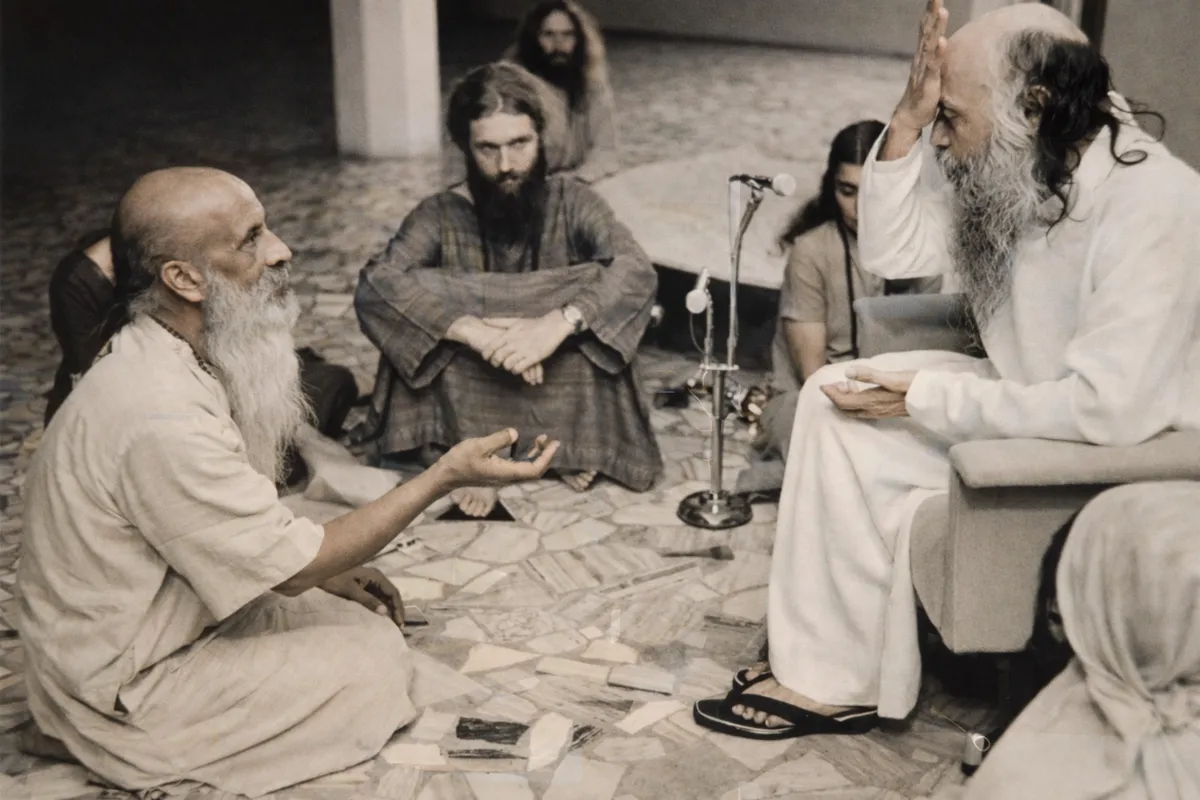
Osho's original Hindi beside Osho Live's English translation, matched passage by passage.
गोशालक का निश्चित ही एक जीवन-दृष्टिकोण था। दर्शन कहना उसे उचित नहीं, क्योंकि शास्त्रबद्ध, सूत्रबद्ध जीवन- प्रणाली बनाने में उसका कोई भरोसा नहीं था। उसकी दृष्टि यही थी कि जीवन इतना बड़ा रहस्य है कि दर्शन में समा सके यह संभव नहीं है; जीवन का कोई दर्शन हो सकता है, यह संभव नहीं है।
Goshalak certainly had a vision of life. It is not right to call it a “philosophy,” because he had no faith in weaving a system, codifying sutras, or building a scripture-bound scheme of living. His vision was that life is too vast a mystery to be contained in any philosophy; it is not possible that there be a philosophy “of” life.
इसलिए सभी दर्शन किसी न किसी रूप में मनुष्य की कल्पनाएं हैं और जबर्दस्ती जीवन के ऊपर आरोपित किए जाते हैं। जीवन बड़ा है, शब्द बड़े छोटे हैं। सत्य बहुत बड़ा है, सिद्धांत बहुत छोटे हैं। सत्य को फांसी लग जाती है सिद्धांतों में डालने से। शब्दों में समाने की चेष्टा में ही विराट सत्य मर जाता है।
Hence, all philosophies are, in one way or another, human imaginings forcibly imposed upon life. Life is immense; words are very small. Truth is vast; doctrines are tiny. Put truth into doctrines and you hang it. In the very effort to pour truth into words the vast dies.
इसलिए मक्खली गोशाल दार्शनिक तो नहीं है। कोई परंपरा बनाने वाला भी नहीं है। पर उसकी एक जीवन-दृष्टि है। दर्शन मैं उस नहीं कहता, सिर्फ जीवन-दृष्टि है। और जीवन-दृष्टि उसकी बड़ी बहुमूल्य है, समझने जैसी है।
So Makkhali Goshal is not a philosopher, nor is he a builder of tradition. But he has a vision of life. I would not call it philosophy; it is simply a way of seeing—and it is very precious, worthy of understanding.
चूंकि उसने कोई दर्शन नहीं बनाया, इसीलिए उसकी कोई परंपरा नहीं बन सकी। लोग तो सुरक्षा चाहते हैं। लोग तो कोई सिद्धांत चाहते हैं। सत्य की किसको चिंता है? लोग चाहते हैं, कोई सिद्धांत हाथ में आ जाए, जिससे हम जीवन के उलझाव को किसी भांति सुलझा लें। सुलझे, न सुलझे, हमें भरोसा आ जाए कि सुलझ गया, तो हम निश्चिंत हो जाएं।
Because he created no philosophy, no lineage could form around him. People crave security. People want a doctrine. Who cares for truth? People want a formula in hand by which to somehow “solve” life’s tangles. Whether it solves anything or not, if they can feel it is solved, they sleep easy.
लोग अपनी चिंता मिटाना चाहते हैं। इसलिए गोशालक जैसे व्यक्ति लोगों को प्रीतिकर नहीं लगते। क्योंकि वे तुम्हारी चिंता मिटाने का कोई उपाय नहीं करते। वे तो तुमसे कहते हैं, तुम्हारी चिंता ही व्यर्थ है। वे कहते हैं, हल कोई नहीं है, चिंतित होना व्यर्थ है, यह समझ लो। बस इतना काफी है।
People want relief from their anxiety. That is why a man like Goshalak does not appeal to the many—because he gives you no device to relieve your anxiety. He tells you instead: your anxiety itself is futile. He says: there is no solution, understand that anxiety is meaningless. That alone is enough.
हम प्रश्न पूछते हैं, हम उत्तर की अपेक्षा करते हैं। हम कहते हैं, संसार किसने बनाया? यह प्रश्न हमारे भीतर कांटे की तरह चुभता है। कोई कह देता है, ईश्वर ने बनाया। यद्यपि कुछ हल नहीं होता। क्या हल होगा? कोई अंतर नहीं पड़ता।
फिर अगर तुम पूछना चाहो तो पूछ सकते हो, ईश्वर को किसने बनाया? लेकिन एक तरह की राहत मिलती है कि चलो.। वह जो एक भीतर कांटे की तरह चुभता प्रश्न था, हल हुआ। ईश्वर ने बनाया।
We ask questions and expect answers. “Who created the world?”—the question pricks within like a thorn. Someone replies, “God created it.” Nothing is solved. What is solved by that? Nothing changes. You could then ask, “Who created God?” Yet there is a certain relief—as if the thorn that pricked within has been pulled: “God created it.”
गोशालक जैसे व्यक्ति, जब तुम उनसे पूछो, जगत किसने बनाया, तो कंधा बिचका देते हैं। वे कहते हैं, हमें नहीं मालूम और किसी को नहीं मालूम। इस फर्क को समझना।
Ask a man like Goshalak who created the world and he will shrug his shoulders. He’ll say, “We don’t know—and no one knows.” Understand the difference.
दुनिया में तीन तरह के लोग हैं। एक, जो कहते हैं, ईश्वर ने बनाया; हमें मालूम है। दूसरे, जो कहते हैं, ईश्वर ने नहीं बनाया; हमें मालूम है। लेकिन उन दोनों में एक बात समान है। दोनों कहते हैं, हमें मालूम है।
गोशालक कहता है, किसको पता? कौन जानता है? कैसे कोई जान सकता है? इतना निश्चित है, कभी अगर बनाया हो किसी ने, तो हम तो मौजूद न थे। क्योंकि हम तो बनाने के बाद ही मौजूद हो सकते हैं। हम तो बनाये गए। हम तो मौजूद न थे, जब बनाया गया होगा। तो अब उपाय कहां है जानने का, कि किसने बनाया? और अगर किसी ने बनाया तो जिसने बनाया वह तो मौजूद ही रहा होगा बनाने के पहले। तो कुछ तो था ही। प्रश्न हल नहीं होता। बनाने वाले को किसने बनाया?
There are three kinds of people in the world: 1) Those who say, “God created it; we know.” 2) Those who say, “God did not create it; we know.” 3) Both claim to know. Goshalak says, “Who knows? How could anyone know? If ever someone created it, we were not present then—we can only exist after creation. We are the created. We were not there when it was made. So how can we know who made it? And if someone did make it, then that maker existed prior to making—so something already was. The question remains. And then, who created the maker?”
गोशालक कहता है, उत्तर नहीं है, प्रश्न व्यर्थ है। प्रश्न निरर्थक है। तुम कृपा करो और प्रश्न को गिर जाने दो। तुम जरा देखो कि तुमने एक ऐसा प्रश्न पूछ लिया है, जिसके कारण तुम झंझट में पड़ोगे। या तो आस्तिक बन जाओगे या नास्तिक बन जाओगे। दोनों हालत में तुम जीवन के विराट को इंकार कर दोगे। दोनों हालत में जीवन का रहस्य टूट जाएगा। तुम बीच में सिद्धांत की एक दीवाल खड़ी कर लोगे। दोनों हालत में तुम अपने अज्ञान को छिपा लोगे।
Goshalak says, “There is no answer; the question is useless—drop it.” Look closely: you have asked a kind of question that will land you in trouble. You will either become theist or atheist. In both cases you will deny the vastness of life. In both, the mystery will be broken. In both, you will erect a wall of doctrine in the middle. In both, you will hide your ignorance.
गोशालक कहता है, कुछ पता नहीं--बनाया, नहीं बनाया! सच तो यह है, यह भी पक्का नहीं है कि है भी? हो सकता है सपना ही हो।
Goshalak says, “Who knows—created, not created? The truth is, it is not even certain that it ‘is.’ It may all be a dream.”
तो गोशालक कोई दर्शन नहीं देता, एक दृष्टि देता है। उत्तर नहीं देता, प्रश्न को देखने की एक समझ देता है। इसलिए परंपरा नहीं बनी। और ऐसे व्यक्ति के पीछे कैसे अनुयायी इकट्ठे हों?
So Goshalak does not give a philosophy; he gives a way of seeing. He does not give answers; he gives an understanding of how to look at questions. That is why no tradition formed. And how would followers gather behind such a man?
हां, कुछ लोग गोशालक जिंदा था तो इकट्ठे हो गए थे। वह उसके व्यक्तित्व की गरिमा रही होगी। उसके उत्तर तो थे ही नहीं कुछ। कुछ हिम्मतवर लोग उसके साथ हो लिए होंगे। लेकिन वह चमत्कार रहा होगा उसके अपने होने का; जिसको करिश्मा कहते हैं। वह उसका प्रसाद रहा होगा।
Yes, while he was alive a few did gather. That must have been the majesty of his presence. He had no answers. A few courageous people must have moved with him. It was the charisma of his being—what we call karishma—his fragrance.
इसलिए जैन शास्त्र विरोध भी करते हैं और उसे विलक्षण भी कहते हैं। विलक्षण तो पुरुष था ही। क्योंकि बिना सिद्धांत के, बिना उत्तर दिए अगर लोग आकर्षित हो गए थे तो आदमी में कुछ जादू तो था ही। वह जादू बौद्धिक नहीं था, वह जादू व्यक्तित्व का था, अस्तित्व का था।
Hence the Jain scriptures both oppose him and call him extraordinary. He was extraordinary. For if people were drawn without a doctrine and without answers, there was certainly a magic in the man. That magic was not intellectual; it was of the person, of the being.
जैन शास्त्र उसके विरोध में हैं, क्योंकि जैन शास्त्र तो जानते हैं कि जानते हैं। जैनों का जो सबसे बड़ा आग्रह है, वह खयाल में रखो। वह है कि जैन साधना-पद्धति से गुजरकर जो व्यक्ति परम स्थिति को पहुंचता है, वह सर्वज्ञ हो जाता है। यह जैनों का सर्वाधिक महत्वपूर्ण सिद्धांत है--सर्वज्ञ।
The Jain scriptures are against him because the Jains “know that they know.” Keep in mind the Jains’ central insistence: by passing through the Jain discipline one who attains the ultimate state becomes omniscient. This is their most important doctrine—sarvajna, the all-knower.
तो गोशालक से ठीक बिलकुल विपरीत हो गई बात। गोशालक कहता है जो जानता है, वह तो जानता है कि कुछ भी नहीं जानता। गोशालक से सुकरात की दोस्ती बन जाती है। गोशालक से सार्त्र और कामू की और काफ्का की दोस्ती भी बन जाती है। नीत्शे भी गोशालक के पास बैठता तो मैत्री अनुभव करता। लेकिन जैन तो कैसे मैत्री अनुभव कर सकते हैं? यह तो उनसे ठीक विपरीत है।
Goshalak is precisely the opposite. He says: one who truly knows, knows that nothing can be known. He would have befriended Socrates. He would have befriended Sartre, Camus, and Kafka. Nietzsche too, sitting with Goshalak, would have felt kinship. But how could the Jains feel kinship? He is their exact opposite.
जैनों का तो आग्रह यही है कि जब कोई व्यक्ति परम जागरूकता को उपलब्ध होता है तो वह सर्वज्ञ हो जाता है। सब जानता है। तीनों काल जानता है। जो हुआ, वह जानता है। जो हो रहा है, वह जानता है। जो होगा, वह जानता है। उसके लिए कुछ भी अज्ञात नहीं रह जाता।
The Jains insist that when a person attains supreme awareness he becomes omniscient—knowing all three times: past, present, future. Nothing remains unknown to him.
इसका अर्थ हुआ कि जो व्यक्ति जैनों के हिसाब से समाधि को उपलब्ध होता है, उसके लिए कुछ रहस्य नहीं रह जाता। सब रहस्य खुल गया। पोथी पूरी खोलकर देख ली, पढ़ ली।
That means that for the Jain’s enlightened one no mystery remains; the whole book is open; every page has been read.
गोशालक कहता है, पोथी का पहला पाठ ही पढ़ना असंभव है। पोथी खुलती ही नहीं। इसमें पहली लकीर क, ख, ग भी समझ में नहीं आते। तो सर्वज्ञ का दावा तो व्यर्थ है। सर्वज्ञता तो हो नहीं सकती। यहां तो हम उसी को जाननेवाला कहेंगे, जिसने जान लिया कि कुछ जानने का उपाय नहीं है।
Goshalak says: even reading the first line is impossible. The book won’t open. One cannot make out even the primer. The claim of omniscience is futile. Omniscience cannot be. Here we will call one a knower only if he has known that there is no way to know.
चूंकि यह सर्वज्ञता से बिलकुल विपरीत दृष्टि थी, जैन बड़े नाराज हुए। जैन जितने नाराज गोशालक से हुए, किसी से भी नहीं हुए।
Because this vision is the very reverse of omniscience, the Jains were very angry. As angry with no one as with Goshalak.
इससे एक बात तो यह भी सिद्ध होती है कि महावीर के सामने, विशेष कर महावीर के अनुयायियों के सामने जो सबसे बड़ा प्रतिद्वंद्वी रहा होगा वह गोशालक था। और भी बड़े विचारक मौजूद थे। बौद्ध ग्रंथों में छह विचारकों के नाम उल्लेख किए गए हैं--अजित केशकंबल, पूर्णकाश्यप, प्रबुद्ध कात्यायन, संजय वेलट्ठीपुत्त, मक्खली गोशाल और निगंठनाथ पुत्त। निगंठनाथ पुत्त महावीर का नाम है। लेकिन इनमें से किसी का भी विरोध जैन शास्त्रों में नहीं है। सिर्फ गोशालक का विरोध है।
This at least proves that, before Mahavira’s followers, Goshalak must have stood as the sharpest rival. Other great thinkers existed. Buddhist texts mention six: - Ajita Kesakambala - Purna Kashyapa - Prabuddha Katyayana - Sanjaya Belatthiputta - Makkhali Goshalak - Nigantha Nataputta (Mahavira) Yet the Jain scriptures do not oppose any of these—only Goshalak.
तो एक बात तो निश्चित है कि गोशालक ठीक विपरीत धु्रव की भांति महावीर के सामने खड़ा हुआ होगा। दावा भी उसका है कि कुछ जाना नहीं जा सकता। अज्ञान का इतना बड़ा समर्थक कभी कोई हुआ ही नहीं। तो जैनों को सबसे ज्यादा कष्ट इस आदमी से रहा होगा। इसको जैन कहते हैं, उद्दंड, कलहप्रिय, विवादी। यह जैनों की व्याख्या है। यह कहलप्रिय जैनों को मालूम हुआ होगा। क्योंकि जैन दावा कर रहे थे कि हमारा गुरु सर्वज्ञ है। और यह आदमी कह रहा था सर्वज्ञ? अल्पज्ञ होना भी संभव नहीं, अज्ञ होना भी संभव नहीं।
So one thing is certain: Goshalak stood as the polar opposite to Mahavira. His claim is: nothing can be known. No one has ever so strongly championed unknowing. So the Jains must have suffered most from this man. They call him obstinate, quarrelsome, contentious—that is their description. He seemed quarrelsome to them because they were claiming, “Our master is omniscient,” and this man was saying, “Omniscient? Not even a little-knower is possible; even ‘being-knowing’ is not possible.”
और इसकी बात में वजन है। इसकी बात में गहराई है। तो यह विवादी मालूम पड़ा होगा। यह उद्दंड मालूम पड़ा होगा। लेकिन साथ-साथ उन्हें स्वीकार तो करना ही पड़ा कि इसके पास विच्रण प्रतिभा है।
And there is weight in his words, depth in his words. So he must have appeared contentious, insolent. Yet they had to concede his extraordinary genius.
प्रतिभा तो थी। बिना सिद्धांत के लोग आकर्षित हुए। और इस आदमी के पास कोई चरित्र भी नहीं था। यह भी थोड़ा सोच लेने जैसा है।
He had genius. People were drawn without any doctrine. And the man had no “respectable” character either—that too is worth noting.
गोशालक के पास कोई लोकमान्य चरित्र नहीं था कि कोई कह सके कि इस आदमी की जीवन-व्यवस्था अनुशासन की है, सत्य की है, अहिंसा की है, योग की है, ध्यान की है; ऐसा कहने का भी कोई कारण नहीं था। जिसको हम चरित्रहीन कहें, ऐसा व्यक्ति है गोशालक।
Goshalak had no socially approved “character” by which someone could say, “This man lives by discipline, by truth, by nonviolence, by yoga, by meditation.” There was no reason to say such a thing. In the conventional sense, he was “characterless.”
लेकिन तुम समझ सकते हो, आधुनिक युग में मनोविज्ञान ने एक बड़ी ऊंची खोज की है, बड़ी गहरी खोज की है कि जो इस जगत में सर्वाधिक चरित्रवान लोग होते हैं, वे साधारण अर्थों में चरित्रहीन होते हैं। जीसस भी चरित्रहीन मालूम पड़े लोगों को। इसीलिए तो सूली लगी। सुकरात पर यही तो जुर्म था कि वह खुद तो भ्रष्ट है ही, दूसरों को भ्रष्ट कर रहा है। उसकी बातें प्रभावशाली हैं और दूसरे लोग भी उसकी बातों में आकर भ्रष्ट हो रहे हैं।
But understand: modern psychology has discovered something high and deep—that those we call the most “charactered” are, in the ordinary sense, characterless. Jesus too appeared characterless to people—hence the crucifixion. The same was Socrates’ crime: he himself is corrupt and he corrupts others. His words are influential; others listen and get corrupted.
इस सदी का एक बहुत बड़ा विचारक विल्हेम रेक अमरीका के कारागृह में मरा। अमरीका में उसे जबर्दस्ती पागल करार दे दिया गया। क्योंकि वह कुछ ऐसी बातें कह रहा था, जो नीतिवादियों के बड़े विपरीत थीं। उसके बुनियादी सिद्धांतों में एक था, जिसका गोशालक से मेल हो सकता है। वह कहता था, चरित्र केवल उन्हीं के पास होता है, जो मुर्दा होते हैं।
A great thinker of this century, Wilhelm Reich, died in an American prison; he was forcibly declared insane in America because he was saying things utterly against moralism. One of his basic points—which resonates with Goshalak—was: character belongs only to the dead.
चरित्र का अर्थ ठीक से समझ लेना। चरित्र का अर्थ होता है: अभ्यासजन्य जीवन की शैली। एक आदमी चेष्टा कर-करके, चेष्टा कर-करके रोज पांच बजे सुबह ब्रह्ममुहूर्त में उठ आता है। अभ्यास बना लेता है। ऐसा जड़ अभ्यास बना लेता है कि किसी दिन अगर पड़ा भी रहना चाहे बिस्तर पर, तो भी पड़ा नहीं रह सकता। पुरानी आदत उसे उठाकर खड़ाकर देती है।
Understand “character” rightly: it means a style of life born of habit. A man, by effort, starts rising at five every morning and makes it a habit so rigid that even if one day he wishes to lie in bed he cannot—the old habit kicks him up.
इसका अर्थ हुआ कि चरित्र केवल अभ्यास है, आदत है। जो व्यक्ति बोधपूर्वक जीता है, वह चरित्र से नहीं जीता, वह बोध से जीता है। आदत से नहीं जीता, सहजता से जीता है। आज सुबह अगर उठने का लगता है उसे, आज का ब्रह्ममुहूर्त अगर उसे जगाता है तो जगता है। लेकिन आज की घड़ी अगर सोने जैसी लगती है तो सोता है।
So character is only habit, conditioning. One who lives with awareness does not live by character; he lives by awareness. Not by habit; by spontaneity. If this morning wants to wake him, he wakes. If this morning is for sleep, he sleeps.
प्रतिपल चीजें बदलती रहती हैं। कभी कोई स्वस्थ है, कभी अस्वस्थ है। कभी वर्षा है, कभी शीत है, कभी ताप है। कभी कोई जवान है, कभी कोई बूढ़ा है। कभी कोई रात देर से सोया है, कभी कोई जल्दी सोया है। कभी दिन में बहुत श्रम किया और ज्यादा सोने की जरूरत है। और कभी दिन में उतना श्रम नहीं किया, कम सोने से चल जाएगा।
तो जो व्यक्ति बोध से जीता है, वह तो प्रतिपल तय करता है कि कैसे जीऊं। जीना प्रतिपल तय होता है। जो व्यक्ति आदत से जीता है, वह प्रतिपल तय नहीं करता। तय तो उसने सदा के लिए कर लिया है। उसने तो लकीर खींच दी है चरित्र की। अब उसका अनुगमन करना है। विल्हेम रेक कहता है कि चरित्रवान व्यक्ति--जिनको हम चरित्रवान कहते हैं--अक्सर मुर्दा व्यक्ति हैं, जो मर चुके। अब तो सिर्फ मरी हुई लाश चल रही है। एक नियम जिंदा हो गया है, आदमी तो मर चुका। आत्मा तो मर चुकी, सिद्धांत जिंदा हो गया है।
Moment to moment things change—health, illness; rain, cold, heat; youth, old age; the hour one fell asleep; how much one worked that day. One who lives by awareness decides each moment how to live. Living is decided moment to moment. One who lives by habit decided once and for all; he drew a line of character and now follows it. Reich says the so-called man of character is often a dead man—the man is dead; a rule goes on living. The soul is gone; the principle remains.
गोशालक का कोई चरित्र नहीं है। विल्हेम रेक गोशालक से मिल जाता तो तत्क्षण सिर झुकाकर नमस्कार करता।
Goshalak had no character. Had Reich met him he would have bowed instantly.
जैन नाराज हैं। क्योंकि जैनों का तो सारा आधार चरित्र है, अभ्यासजन्य। इंच-इंच हिसाब बांधकर चलना है। जरा-सी भूल-चूक न हो जाए। सिद्धांत से यहां-वहां चित्त न हो जाए। सब सम्हालकर लीक पर चलना है। इसलिए जैन मुनि से मुर्दा आदमी तुम दुनिया में दूसरा नहीं खोज सकते। वह बिलकुल मरा हुआ है। उसका कोई भविष्य नहीं है। उसका सिर्फ अतीत है। जो उसने तीस साल पहले तय किया था उसी को दोहरा रहा है। वह पुनरुक्ति है। उसके भीतर नये का कोई आविर्भाव नहीं होता। सुबह होती ही नहीं। एक यांत्रिक पुनरुक्ति है, जो वह दोहराये चला जाता है। रोज वही करता है, जो कल भी किया था, परसों भी किया था। लकीर का फकीर है।
The Jains are annoyed, for their whole base is character—habitual, measured to the inch. Watch every step lest a mistake occur; do not deviate from the rule; walk strictly on the track. That is why, in this world, you cannot find a more dead man than a Jain monk. He is utterly dead. He has no future—only a past. What he decided thirty years ago he is repeating. He is repetition. Nothing new arises within. Morning never comes. A mechanical repetition goes on: every day he does what he did yesterday and the day before. A line-follower.
गोशालक बड़ा स्वतंत्र है। अनुशासनमुक्त, आदतशून्य व्यक्ति था। अनप्रेडिक्टेबल। उसके बाबत कुछ घोषणा नहीं की जा सकती कि गोशालक कल क्या करेगा। कल ही तय होगा। कल आने दो। क्षण-क्षण जीने वाला था।
Goshalak is utterly free—undisciplined, without habits, unpredictable. You cannot announce what he will do tomorrow. Tomorrow will decide. Let tomorrow come. He lives moment to moment.
मेरे लिए तो बहुत मूल्य की बात है यह। गोशालक मेरे लिए तो मील का पत्थर है मनुष्य-जाति के इतिहास में। इसलिए मैं सम्मान से उसका नाम लेता हूं। मेरे लिए तो वह उतना ही मूल्यवान है, जितने मूल्यवान महावीर। उनसे रत्तीभर भी कम मूल्य नहीं है। लेकिन अनुयायी महावीर का है, उसको तो बड़ी अड़चन है।
For me, this is of great value. For me, Goshalak is a milestone in the history of humankind. That is why I take his name with respect. He is as valuable to me as Mahavira—not a jot less. But a follower of Mahavira is in difficulty.
तो जैन शास्त्र गोशालक के संबंध में बड़ी निंदा से भरे हैं। ऐसी गालियों से भरे हैं कि कभी-कभी आश्चर्य होता है कि अहिंसा को मानने वाले लोग इतनी गालियां निकाल कैसे सके? करुणा, प्रेम, अहिंसा की बात करने वाले लोग इतनी क्षुद्रता पर उतर कैसे आए? गोशालक बुरा भी रहा हो तो भी ये भले लोग इतनी गालियां कैसे दे सके? बुरे आदमी को भी इतनी गालियां देना भले आदमी का लक्षण नहीं। अगर विरोध था तो सैद्धांतिक विरोध करके पूरा कर लेते। लेकिन विरोध भावात्मक मालूम पड़ता है, सैद्धांतिक नहीं है। महावीर के मुकाबले, महावीर के अनुयायियों को लगा होगा, एक ही व्यक्ति खड़ा है प्रखर, जो ठीक विपरीत बात कह रहा है: न कोई चरित्र, न कोई ज्ञान।
So the Jain scriptures are filled with denunciation of Goshalak—with such abuse that sometimes one wonders how people who profess nonviolence could utter such things. How could those who talk of compassion, love, nonviolence descend to such pettiness? Even if Goshalak were bad, how could “good” people abuse so? If there was opposition, a principled opposition would have sufficed. But their opposition appears emotional, not doctrinal. In rivalry with Mahavira, his followers must have felt that only one person stood tall and spoke the exact opposite: “No character, no knowledge.”
और इस सबसे भी कठिन बात, पर बड़ी महत्वपूर्ण, गोशालक का जो दृष्टिकोण था वह था, अकर्मण्यतावाद। वह कहता था, किए से कुछ भी नहीं होता। वह कहता किए से न पाप होता है, न किए से पुण्य होता है। वह कहता था, करना नासमझी की बात है। करने से कभी कुछ हुआ ही नहीं है। जो होना है, वही होता है। जो होना था, वही हुआ। जो होना है, वही होगा। वह परम नियतिवादी था। वह कहता था, सब हो रहा है। हमारे किए का कुछ सार नहीं है, इसलिए जीवन से संघर्ष करने का कोई प्रयोजन नहीं है।
Harder still—and very important—was Goshalak’s viewpoint: inactivism (akarmanyata). He said: nothing happens through doing. Neither sin nor merit is created by action. Doing is foolishness. Nothing has ever happened through doing. What happens is what must happen. What was to happen, happened. What will happen, will happen. He was a complete determinist, saying: everything is happening; our doing has no substance, so there is no point in struggle with life.
वह बहने के पक्ष में था, तैरने के पक्ष में नहीं। संघर्ष के पक्ष में नहीं, समर्पण के पक्ष में। अगर गोशालक को क्रोध हो जाए तो वह कहता, क्रोध हुआ। मैं क्या करूं? प्रेम हो जाए तो कहता, प्रेम हुआ। मैं क्या करूं? गोशालक कोई दायित्व स्वीकार नहीं करता था। वह कहता था, इतने विराट में मैं एक छोटा-सा कलपुर्जा हूं। कहां जा रहा है यह विराट, मुझे पता नहीं। कहां से आ रहा है, मुझे पता नहीं। क्यों मेरे भीतर क्रोध होता है इसका भी मुझे पता नहीं।
He was for flowing, not for swimming; not for struggle but for surrender. If anger arose, he would say, “Anger happened—what can I do?” If love arose, “Love happened—what can I do?” He accepted no “responsibility.” “In this vastness I am a tiny cog. Where this vastness is going, I don’t know. Whence it comes, I don’t know. Why anger arises in me—I don’t know.”
इसको थोड़ा खयाल से समझने की कोशिश करना। इसका अर्थ हुआ, आदमी के किए कुछ भी न होगा। पुरुषार्थ कुछ भी नहीं है। कृष्ण की गीता से मेल खाएगी यह बात। कृष्ण भी यही कह रहे हैं, लेकिन जरा और ढंग से। कृष्ण कहते हैं, ईश्वर कर रहा है। गोशालक उतनी बात भी बीच में नहीं लाता। वह कहता है, कहां पता है कि ईश्वर है? कौन कर रहा है यह तो मुझे पता नहीं। इतना पता है कि मेरे किए कुछ भी नहीं हो रहा है। कृष्ण कहते हैं, ईश्वर पर छोड़ दो। गोशालक कहता है, छोड़ दो। ईश्वर है या नहीं, मुझे पता नहीं। लेकिन इसे ढोने की कोई भी जरूरत नहीं है। सब ढोना नासमझी है।
Understand carefully: for him, nothing results from man’s doing. There is no purushartha. This will even harmonize with Krishna’s Gita—but in another tone. Krishna says, “God is doing.” Goshalak does not even bring that in: “Who knows whether there is a God? I don’t know who is doing. I only know nothing happens by my doing. Krishna says, ‘Leave it to God.’ Goshalak says, ‘Leave it.’ Whether there is a God or not, I don’t know—but there is no need to carry the burden. All carrying is foolishness.”
यह गोशालक की दृष्टि अगर सही हो तो अहंकार बिलकुल समाप्त हो जाएगा। बचने का उपाय नहीं बचेगा।
If Goshalak is right, ego drops utterly; it cannot survive.
शायद कृष्ण की गीता का माननेवाला भी किसी पीछे के दरवाजे से अहंकार को बचा ले। वह कहे कि ईश्वर मेरा उपयोग कर रहा है, मैं उपकरण हूं। इससे भी अहंकार बच सकता है। क्योंकि मुझे उपकरण चुना है, तुमको तो नहीं चुना। मैं हूं माध्यम। मैं हूं निमित्त।
कृष्ण की बात सुनकर अर्जुन यह तो समझ भी ले कि चलो, मैं बीच में नहीं आता। लेकिन ईश्वर ने मुझे चुना है धर्म-युद्ध के लिए। तो अहंकार नये रूप में खड़ा होगा। दुर्योधन को तो नहीं चुना है। किसी और को तो नहीं चुना है, अर्जुन को चुना है। परमात्मा का हाथ अर्जुन के कंधे पर है।
A follower of Krishna might still smuggle ego through the back door: “God is using me as an instrument; I am the chosen tool.” Even that can preserve vanity: “I was chosen; you were not. I am the medium, the instrument.” Hearing Krishna, Arjuna might understand, “I step aside,” but then think, “God chose me for the war of dharma.” Ego rises anew: “He did not choose Duryodhana or anyone else; he chose Arjuna. The hand of the Divine rests on Arjuna’s shoulder.”
यह भी खतरनाक हो सकती है बात। इसका मतलब हुआ, मेरी जिम्मेवारी भी न रही, और जो मुझे करना है वह तो मैं करूंगा ही। अब ईश्वर का समर्थन और सैंक्शन भी मिल गया। अब ईश्वर भी मेरे हाथ में है। अब मैं अपनी बात को सही सिद्ध करने के लिए ईश्वर का भी सहारा ले लूंगा। और ईश्वर तो मौन है। वह आकर कभी कहता नहीं कि किसको मैंने चुना।
That can be dangerous. It removes responsibility and gives divine sanction to whatever I want to do. Now God is in my pocket—I can take his name to justify my acts; and God remains silent, never announcing whom he chose.
महात्मा गांधी को यह खयाल था कि ईश्वर ने उन्हें उपकरण की भांति चुना है। वह गीता से ही उनको सनक सवार हुई। गीता पढ़-पढ़कर ही उनको यह खयाल बैठ गया कि ईश्वर ने उनको चुना है; वे माध्यम हैं। लेकिन कौन सिद्ध कर सकता है कि गोडसे को ईश्वर ने नहीं चुना था? गोडसे को भी यही खयाल है कि वह कर क्या सकता है? ईश्वर ने चुना है। और तुम सोचते हो, जिन्ना को यह खयाल नहीं था?
Mahatma Gandhi believed God had chosen him as an instrument; he caught this from the Gita—reading it again and again, the idea possessed him. But who can prove that God did not choose Godse? Godse too thought, “What can I do? God chose me.” And do you think Jinnah did not feel similarly?
कौन निर्णय करेगा कि कौन वस्तुतः चुना गया है? यह तो ईश्वर के बहाने, आदमी जो करना चाह रहा है, उसके लिए ईश्वर की मोहर ले लेता है।
Who will decide who was actually chosen? In God’s name man simply stamps his own will.
गोशालक उतनी भी जगह नहीं छोड़ता। गोशालक कहता है, कोई ईश्वर है, पता नहीं। इतना तय है कि आदमी के पुरुषार्थ से कुछ भी नहीं होता। जो होता है, वही होता है। कभी हो जाता है तो तुम सोचते हो, हम जीत गए। कभी नहीं होता तो तुम सोचते हो, हम हार गए। लेकिन जो होना था, वही होता है। जब हो जाता है, तुम अकड़ जाते हो। जब नहीं होता, तुम सिकु़ड़ जाते हो। तुम नाहक अकड़ते-सिकुड़ते हो। तुम नाहक जीतते-हारते हो। जो होना है वही होता है।
Goshalak leaves not even that gap. “Whether God is or not, I don’t know. What is certain is that nothing happens by man’s effort. What is to be, is. Sometimes it happens and you think you won; sometimes it doesn’t and you think you lost. But what was to be, happens. When it happens, you strut; when it doesn’t, you shrink. You strut and shrink unnecessarily. You win and lose unnecessarily. What is to be, is.”
इसका अर्थ समझना। अगर यह बात खयाल में बैठ जाए कि जो होना है वही होता है, तो तुम तत्क्षण तनाव से मुक्त हो गए। ध्यान फलित हो जाएगा। अहंकार से मुक्त हो गए। जब मेरे किए कुछ होता ही नहीं तो मैं कहां खड़ा हो सकता हूं? कृष्ण तो कहते हैं, कम से कम तुम निमित्त हो सकते हो। गोशालक कहता है, निमित्त भी नहीं हो सकते। तुम हो ही कहां?
Understand: if this sinks in, that what is to be, is, then instantly you are free of tension. Meditation flowers. Ego falls away. If nothing happens by me, where can “I” stand? Krishna still says you can at least be an instrument. Goshalak says, not even an instrument—where are you?
यह तो ऐसा ही है कि एक हाथी निकलता था, एक पुल के ऊपर से। वजनी हाथी, पुराना जीर्ण-शीर्ण पुल! कंपने लगा पुल। एक मक्खी बैठी थी हाथी के ऊपर। जब वे दोनों पुल पार कर गए तो उसने कहा, बेटा! मक्खी ने कहा हाथी से, बेटा! हमने पुल को बुरी तरह हिला दिया।
It’s like this: a heavy elephant crosses an old, rickety bridge; the bridge trembles. A fly sits on the elephant. When they cross, the fly says, “Son!”—she says to the elephant—“Son, look how we shook that bridge!”
हम तो मक्खी से भी छोटे हैं। इस विराट को जरा सोचो तो! इसमें हमारा होना न होना क्या फर्क रखता है? हमारे होने न होने से कितना फर्क पड़ता है! आदमी इस पृथ्वी के मुकाबले ही बहुत छोटा है। पृथ्वी खुद भी बहुत छोटी है। सूरज साठ हजार गुना बड़ा है। और सूरज खुद ही बहुत साधारण है। इससे बड़े-बड़े महासूर्य हैं, जो रात में तारों की तरह दिखाई पड़ते हैं। फासले के कारण छोटे दिखाई पड़ते हैं। हमारे सूरज से करोड़ों गुने बड़े सूरज हैं। और अब तक कोई दो अरब सूर्यों का पता चल चुका है। आगे भी होंगे। यह पृथ्वी हमारी तो कुछ भी नहीं है। इस पृथ्वी पर हम और भी नाकुछ हैं।
We are smaller than the fly. Think of the vastness! What difference does our being or not being make? Man is tiny even before the earth. The earth itself is tiny. The sun is tens of thousands of times bigger. And our sun is ordinary—there are vast suns visible as stars at night; distance makes them look small. There are suns millions of times bigger than ours. So far two billion suns are known—and there must be more. Our earth is nothing; and on this earth we are less than nothing.
गोशालक यह कहता है, जरा अपना अनुपात तो सोचो। फिर तुम जो करते हुए मालूम पड़ते हो, वह भी प्रकृति ही तुमसे करा रही है। एक स्त्री निकली तुम्हारे सामने से और तुम्हारे मन में वासना उठी। यह वासना तुमने उठाई? तुम कैसे उठाओगे? होती न, तो उठती कैसे? प्रकृति ने उठाई। प्रकृति ने दी ही हुई है। तुम पैदा इस वासना के साथ हुए हो।
Goshalak says: consider your ratio. Even what you think you “do,” nature is doing through you. A woman passes and desire arises in your mind. Did you create that desire? How could you? If it were not in you, how would it arise? Nature raised it. You were born with it.
इसलिए गोशालक की दृष्टि परम स्वीकार की है। वह कहता है, जो है, है। बुरा तो बुरा; भला तो भला। न यहां हार का कोई उपाय है, न जीत का कोई उपाय है। गोशालक परम भाग्यवादी है। और मजा यह है कि भगवान भी नहीं है गोशालक के विचार में। मार्क्स भी राजी हो जाता गोशालक से। क्योंकि वह भी परम भाग्यवादी है। वह कहता है, भगवान तो कोई भी नहीं है। लेकिन जगत एक नियम से चल रहा है। उसको मार्क्स कहता है, इतिहास का नियम। नाम कुछ भी दो। गोशालक कहता है, इतना तय है आदमी नहीं चला रहा है, चल रहा है।
So Goshalak’s vision is ultimate acceptance. What is, is. Bad is bad, good is good. There is neither a way to lose nor a way to win. He is a complete fatalist—and the amusing thing is, in his view there is no God. Marx too would have agreed with Goshalak, for he is a complete fatalist: no God, yet the world runs by a law—what Marx calls the law of history. Call it any name. What is certain is: man is not running it; it runs.
यह अकर्मण्यतावाद तो और भी महावीर के विपरीत पड़ता है। क्योंकि महावीर का तो सारा बल इस बात पर है कि पुरुषार्थ; इसीलिए तो नाम महावीर है। करो, तो पा सकोगे। लड़ोगे, तो जीतोगे। बहे, तो गए। तैरो। धारे के विपरीत तैरो। इंच-इंच लड़ोगे तो ही किसी दिन पहुंचोगे। सिद्धि मुफ्त नहीं मिलती। बड़ा गहन संघर्ष करना है।
This inactivism is even more opposite to Mahavira, whose entire emphasis is purushartha; hence his very name, Mahavira—the great hero. Do, and you can attain. Fight, and you will win. If you drift, you’re lost. Swim—swim against the current. Inch by inch fight, only then one day will you arrive. Siddhi is not free; intense struggle is needed.
महावीर गोशालक के विरोध में रहे हों, ऐसा तो मुझे मालूम नहीं होता। महावीर तो गोशालक के विरोध में नहीं हो सकते। लेकिन महावीर का माननेवाला अड़चन में पड़ा होगा। अगर महावीर सही हैं तो गोशालक गलत होना ही चाहिए। अगर गोशालक सही है तो महावीर गलत हो जाएंगे।
I don’t feel Mahavira himself was against Goshalak; he could not be. But a follower of Mahavira would be in a fix: if Mahavira is right, Goshalak must be wrong; if Goshalak is right, Mahavira is wrong.
अनुयायी की बुद्धि तो बड़ी छोटी होती है। वह दो विरोधों के बीच किसी तरह का समन्वय नहीं देख पाता। महावीर के मार्ग से भी आदमी पहुंचता है। गोशालक के मार्ग से भी पहुंच सकता है। महावीर के मार्ग पर संकल्प का आखिरी उपाय करना होता है। इस उपाय को करते-करते ही एक दिन संकल्प टूटकर गिर जाता है। अहंकार को निखारना पड़ता है; पवित्र करना पड़ता है। एक ऐसी घड़ी आती है पवित्र होते-होते ही, जैसे कपूर उड़ जाता है, ऐसा अहंकार उड़ जाता है। शुद्ध अहंकार कपूर की तरह उड़ जाता है।
जैसे तुम रात दीया जलाते हो तो पहले दीये की ज्योति तेल को जलाती है। फिर तेल चुक जाता है तो बाती को जलाती है। फिर बाती भी चुक जाती है, तो फिर ज्योति भी बुझ जाती है। तो ज्योति ने पहले तेल को जलाया, फिर बाती को जलाया, फिर जब सब जल गया तो खुद भी बच नहीं सकती। इतनी शुद्ध हो गई कि खो जाती है।
A follower’s mind is small; he sees no bridge between opposites. One can arrive by Mahavira’s path; one can also arrive by Goshalak’s. On Mahavira’s path you make the ultimate effort of will—doing this, one day the will itself breaks and drops. Ego must be refined and purified; a moment comes when, purified, it evaporates like camphor. As at night when you light a lamp: first the flame consumes the oil; when the oil is gone, it burns the wick; when that too ends, the flame itself goes out. The flame burned the oil, then the wick, and when all was burned it could not continue—it was so pure it disappeared.
महावीर के मार्ग पर अहंकार को शुद्ध करने की प्रक्रिया है। शरीर छूटेगा पहले, फिर मन छूटेगा। फिर एक दिन तुम पाओगे अचानक, तेल भी जल गया, बाती भी जल गई, फिर लपट जो रह गई थी, वह कोरे आकाश में खो गई।
शुद्ध हो-हो कर अहंकार कपूर की भांति उड़ जाता है।
Mahavira’s path is the process of purifying the ego. The body drops first, then the mind; and one day suddenly you find the oil is gone, the wick is gone, and the flame dissolves into empty sky. Purified, the ego flies like camphor.
गोशालक के मार्ग पर शुद्ध करने का कोई सवाल ही नहीं है। शुद्ध करने की चेष्टा को गोशालक कहता है, व्यर्थ है। जो है ही नहीं, उसे शुद्ध क्या करना? इतना जान लेना काफी है कि नहीं है। अभी घट सकती है बात।
On Goshalak’s path there is no question of purification. The attempt to purify, he says, is futile. Why purify that which is not? Merely knowing that, is enough—right now the thing can happen.
तो जैनों को कठिनाई हुई। गोशालक ने बड़ा गहरा विवाद अनुयायियों के लिए खड़ा कर दिया होगा। इसलिए जैन बड़े नाराज हैं। और चूंकि गोशालक के कोई शास्त्र नहीं हैं, इसलिए और सुविधा हो गई।
So the Jains were troubled. Goshalak raised a deep controversy for the followers. Hence their anger. And because Goshalak left no scriptures, it became easier.
तुम ऐसा ही समझो कि अगर हिंदुओं के सब शास्त्र खो जाएं और कृष्ण के संबंध में सिर्फ जैनों के शास्त्र बचें तो कृष्ण के संबंध में क्या स्थिति बनेगी? लोग क्या सोचेंगे? लोग सोचेंगे, आदमी महानारकीय रहा होगा, क्योंकि शास्त्र में लिखा है कि सातवें नरक में गया।
अगर बुद्ध के संबंध में बौद्धों के शास्त्र खो जाएं, सिर्फ हिंदुओं के शास्त्र बचें तो उन शास्त्रों से क्या पता चलेगा? हिंदू शास्त्र कहते हैं कि परमात्मा ने नरक बनाया। लेकिन सदियां बीत गईं, कोई पाप करे ही नहीं। नरक कोई जाए ही नहीं। तो नरक में बैठे थे जो पहरेदार, और व्यवस्थापक, और मैनेजर, वे थक गए। कोई आता ही नहीं! ऊब गए। उन्होंने परमात्मा से प्रार्थना की, यह नरक बनाया किसलिए? न कोई पाप करता, न कोई आता। हमें नाहक अटका रखा है। बंद करो यह दुकान। हमें छुट्टी दो या आदमी भेजो।
तो परमात्मा ने कहा, ठीक है घबड़ाओ मत। मैं जल्दी ही बुद्ध के रूप में अवतार लूंगा और लोगों के मन भ्रष्ट करूंगा। फिर उन्होंने बुद्ध की तरह अवतार लिया, लोगों को भ्रष्ट किया। लोग नरक जाने लगे। अब तो नरक में ऐसी भीड़ है कि वहां जगह ही नहीं बची। लोग क्यू लगाए खड़े हैं सदियों से। जगह नहीं मिल रही है अंदर जाने के लिए, इतना धक्कम-धुक्का है।
Imagine if all Hindu scriptures were lost and only Jain scriptures about Krishna remained—what would people conclude about Krishna? They would think he was a great hell-dweller, for it is written he went to the seventh hell. If Buddhist scriptures about Buddha were lost and only Hindu scriptures remained, what would they say? The Hindu scriptures say God created hell, but for ages no one sinned; no one went. The guards and managers of hell got bored: “Why did God make this? No sinners, and we are stuck here. Close the shop or send people.” God said, “Don’t worry, I will soon incarnate as Buddha and corrupt people’s minds.” He came as Buddha, corrupted people, and now hell is overcrowded—queues for centuries; no place inside.
यह सब बुद्ध की कृपा से हुआ! हिंदू यह भी नहीं कह सके कि बुद्ध भगवान नहीं हैं। यह तो बड़ा झूठ होता। इतने बड़े सत्य को झुठलाना संभव न हुआ। तो मान लिया कि भगवान तो हैं, लेकिन आए हैं पाप करवाने, लोगों को भ्रष्ट करने।
तो तरकीब समझे? तरकीब यह हुई कि बुद्ध को स्वीकार कर लिया कि हैं भगवान के रूप ही। दसवें अवतार हैं। और साथ में बात भी बता दी कि कोई इनकी मानना मत, नहीं तो नरक जाओगे, बुद्ध-धर्म का अनुगमन मत करना। यह भगवान की एक शरारत है। यह भगवान की एक चालबाजी है। यह भगवान का एक षड्यंत्र है। हैं तो भगवत-रूप।
All thanks to Buddha! The Hindus could not say Buddha was not divine; that would be too big a lie. So they accepted: he is divine—but came to induce sin, to corrupt. The device is clear: accept Buddha as divine, but add: “Don’t follow him, or you’ll go to hell. This is God’s prank, God’s trick.” Divine, yes—but beware.
जैनों ने भी कृष्ण को नरक भेजा, सातवें नरक में डाला। लेकिन थोड़ी बेचैनी लगी होगी। क्योंकि इतना प्रतिभाशाली व्यक्ति, इतना महिमावान, ऐसा तेजोद्दीप्त! इसको नरक में डालने में हाथ कंपा होगा। शास्त्र लिखने वाले को भी डर लगा होगा। उसको भी लगा होगा कि यह थोड़ी ज्यादती हुई जा रही है। तो शास्त्रकारों ने जैन शास्त्रों में लिखा है कि अगली सृष्टि में, जब यह प्रलय होकर सब समाप्त हो जाएगा, फिर से सृष्टि का निर्माण होगा, कृष्ण पहले जैन तीर्थंकर होंगे। इससे राहत हो गई। इधर चांटा मारा, इधर पुचकार लिया।
The Jains too sent Krishna to the seventh hell—but their hands must have trembled. Such a brilliant, majestic, radiant being! To consign him to hell—one’s hand would shake. So they wrote: in the next creation, after dissolution and re-creation, Krishna will be the first Jain tirthankara. Relief—slap on one cheek, caress on the other.
अगर विरोधी का ही शास्त्र बचे तो निर्णय करना मुश्किल है। यही असुविधा है गोशालक के लिए। खुद का कोई शास्त्र नहीं है। खुद कुछ लिखा नहीं है। करने को ही जो नहीं मानता था, वह लिखे क्यों? कुछ बोलाचाला होगा। कुछ दिन तक लोगों को याद रही होगी, फिर बिसर गई।
If only the opponent’s scriptures remain, judgment is hard. That is Goshalak’s misfortune. He left no scripture. Why would one who does not believe in doing write anything? Some words must have circulated, some memories remained for a while, then faded.
शास्त्रों में जहां उल्लेख है--या तो बौद्ध शास्त्रों में उल्लेख है। लेकिन बौद्ध शास्त्रों में सम्मानपूर्वक उल्लेख है। उसका कारण भी स्पष्ट है। सब कारण राजनैतिक हैं। बौद्ध शास्त्रों में सम्मानपूर्वक उल्लेख है, क्योंकि बौद्ध शास्त्रों का असली संघर्ष महावीर से है।
गोशालक तो मर चुका। अब बुद्ध और महावीर के बीच तीस साल का अंतर है। गोशालक महावीर से उम्र में बड़ा था। इसलिए जब महावीर जवान रहे होंगे और उनके विचार का प्रभाव फैल रहा होगा, उस समय तक गोशालक की प्रतिष्ठा हो चुकी थी। इसलिए महावीर का संघर्ष तो प्रतिष्ठित गोशालक से रहा। प्रतिष्ठित से संघर्ष होता है।
Where there is mention—there is some in Buddhist texts—and there the tone is respectful. The reasons are political: their real conflict was with Mahavira, not with Goshalak who had died by then. Between Buddha and Mahavira there is a gap of about thirty years; Goshalak was older than Mahavira. When Mahavira was young and his ideas were spreading, Goshalak was already established. So Mahavira’s conflict was with the established Goshalak. One fights with the established.
महावीर ने एक शब्द भी बुद्ध के खिलाफ नहीं बोला। वे बूढ़े थे। जब बुद्ध की प्रतिष्ठा आनी शुरू हुई तब तक महावीर तो पूरी तरह लोकमान्य हो चुके थे। उन्होंने एक शब्द बुद्ध के खिलाफ नहीं बोला। लेकिन महावीर के अनुयायी उल्लेख करते हैं--ऐसा उल्लेख करते हैं कि गोशालक के संबंध में महावीर ने बड़ा विरोध किया है।
बौद्ध ग्रंथों में महावीर का विरोध है। और निश्चित ही जब महावीर का विरोध है तो अपने शत्रु का शत्रु अपना मित्र हो जाता है। तो गोशालक का सम्मानपूर्वक उल्लेख है। महावीर के संबंध में तो बहुत मजाक बौद्ध शास्त्रों में है।
Mahavira never said a word against Buddha; by the time Buddha’s fame arose, Mahavira was already fully acknowledged. He uttered not a word against Buddha. But Mahavira’s followers mention him—so mention that it seems Mahavira strongly opposed Goshalak. Buddhist texts oppose Mahavira; and when you oppose Mahavira, the enemy of your enemy becomes your friend—hence Goshalak is mentioned respectfully in Buddhist texts. They mock Mahavira a lot.
बौद्ध शास्त्र कहते हैं, एक हैं सर्वज्ञ--एक ही थे सर्वज्ञ का दावा करने वाले--एक हैं सर्वज्ञ; वे कहते हैं, उन्हें तीनों काल का पता है। भविष्य, वर्तमान, अतीत, सब उन्हें मालूम है। तीनों लोक उन्हें मालूम हैं, लेकिन ऐसी घड़ियां रही हैं कि सुबह के अंधेरे में कुत्ते की पूंछ पर पैर पड़ गया। जब कुत्ता भौंका तब सर्वज्ञ को पता चला कि अरे! यहां कुत्ता सो रहा है। तीनों लोक के ज्ञाता हैं!’
‘कभी ऐसा भी हुआ है कि ऐसे दरवाजे पर भीख मांगने खड़े हो गए जहां कोई रहता ही नहीं। जब लोगों ने, पास-पड़ोसियों ने कहा, यहां क्या खड़े हैं? इस घर में कोई रहता नहीं; तब पता चला। तीनों काल का ऐसे उन्हें पता है, और यह भी पता नहीं कि सामने घर में कोई रहता है कि नहीं रहता? वहां भीख मांगने खड़े हैं।’
The Buddhists say: there was one who claimed omniscience—only one—who said he knew all three times. Yet sometimes, in the dark of morning, he stepped on a dog’s tail, and only when the dog barked did the omniscient one realize a dog was sleeping there—such is the knower of the three worlds! “Sometimes he stood begging at a door where no one lived; only when neighbors told him did he know. He knows past, present, future—but cannot tell whether anyone lives in the house before him!”
ऐसे बहुत मजाक बौद्ध शास्त्रों में महावीर के लिए हैं। लेकिन गोशालक का कोई विरोध नहीं है। गोशालक का तो सम्मान से उल्लेख है। जैन शास्त्रों में बुद्ध का कोई विरोध नहीं है, क्योंकि महावीर तो प्रतिष्ठित थे। तीस साल फासला था। इस प्रतिष्ठित आदमी को झगड़े अपने समय के प्रतिष्ठित लोगों से रहे होंगे--बुद्ध तो अभी उठ ही रहे थे। बुद्ध की महिमा तो बाद में सिद्ध हुई, जब महावीर जा चुके।
There are many such jokes about Mahavira in Buddhist texts. But they do not oppose Goshalak; they mention him with respect. Jain texts do not oppose Buddha, because Mahavira was already established and Buddha’s glory was recognized after Mahavira had departed.
लेकिन एक बात सदा स्मरण रखना कि महावीर ने ऐसा कहा हो, इसकी कम संभावना है। बुद्ध ने ऐसा मजाक उड़ाया हो महावीर का, इसकी भी कम संभावना है। ये तो अनुयायियों के द्वारा डाले गए शब्द हैं उनके मुंह में। और शास्त्र बहुत बाद में लिखे गए।
बुद्ध के मरने के पांच सौ साल बाद शास्त्र लिखे गए। महावीर के मरने के चार सौ साल बाद शास्त्र लिखे गए। चार सौ साल तक अनुयायियों के मस्तिष्क में रहे शास्त्र। उनकी स्मृति में रहे। उन्होंने खूब कांट-छांट की होगी।
But remember: it is unlikely that Mahavira himself said such things, or that Buddha mocked Mahavira. These are words put into their mouths by followers; scriptures were written long after. Buddhist scriptures were written five hundred years after Buddha’s death; Jain scriptures, four hundred years after Mahavira. For centuries the teachings lived in disciples’ memories—they must have edited heavily.
जैनों का ही एक वर्ग--दिगंबर--मानता है कि सब जैन शास्त्र झूठे हैं। क्योंकि चार सौ साल में सब गड़बड़ हो गया। जिन्होंने याद रखा, उन्होंने अपना हिसाब जोड़ दिया। और ऐसा सच मालूम होता है। कुछ बातें महावीर की रह गई होंगी, कुछ जुड़ गई होंगी, कुछ छूट गई होंगी।
One section of Jains—the Digambaras—hold that all Jain scriptures are false, since in four hundred years everything got mixed up; those who remembered added their own accounts. This rings true. Some things of Mahavira remained, some were added, some lost.
इसलिए मैंने जब महावीर के सूत्रों पर बोलना शुरू किया तो मैं सभी सूत्रों पर नहीं बोल रहा हूं। मैंने वे सब सूत्र अलग कर दिए हैं जो महावीर के योग्य नहीं हैं। छोड़ ही दिए मैंने। वे महावीर के लिए अयोग्य हैं।
So when I speak on Mahavira’s sutras, I do not speak on all. I set aside those unworthy of Mahavira and leave them. They do not befit him.
गोशालक को गाली महावीर ने दी हो, यह बात ही अशोभन है। इसलिए छोड़ ही दी, वह बात ही नहीं उठाई है। कोई कह सकता है कि मैं महावीर के साथ ज्यादती कर रहा हूं। सब सूत्रों पर नहीं बोल रहा हूं। मैंने चुन लिए हैं।
लेकिन मैं कहता हूं, कि मैं ज्यादती नहीं कर रहा हूं। ज्यादती पहले बहुत हो चुकी। मैं गलत को छोड़े दे रहा हूं। जो मुझे लगता है कि महावीर जैसी चेतना को उपलब्ध व्यक्ति के मुंह में शोभा नहीं देगा, वह मैं छोड़ देता हूं। गोशालक के संबंध में जैन शास्त्र क्या कहते हैं, सुनकर तुम हैरान होओगे। जैन शास्त्र निंदा, गर्हित निंदा से भरे हैं। और निंदा भी सज्जन, सांस्कृतिक चेतना की नहीं है--अत्यंत ओछी, गंदी।
That Mahavira abused Goshalak is itself unseemly; so I leave such reports aside. Someone might say I am doing Mahavira an injustice by not speaking on all sutras. I reply: the earlier injustice was greater; I am dropping the wrong. What does not suit the mouth of one of Mahavira’s consciousness, I set aside. You would be shocked to hear how the Jain scriptures speak of Goshalak—condemnation, vile condemnation, and not even cultured condemnation—extremely low and dirty.
एक उल्लेख खयाल में रखने जैसा है। जैन शास्त्र कहते हैं कि जब गोशालक मरा तो मरते वक्त उसे समझ में आया कि मैंने बड़ी भूल की, जो तीर्थंकर महावीर का जीवनभर विरोध किया--मरते वक्त समझ में आया उसको कि मैंने जीवनभर जो तीर्थंकर महावीर का विरोध किया, बड़ी भूल की। पापी को अपना पाप अनुभव हुआ, पश्चात्ताप हुआ।
तो उसने क्या कहा? उसने अपने पास जो दो-चार-दस शिष्य थे, दो-चार-दस! क्योंकि ज्यादा तो जैन मान नहीं सकते कि रहे होंगे। दो-चार-दस जो शिष्य थे, उनसे कहा, सुनो, मैंने जीवन भर जो कहा, वह गलत था। महावीर जो कहते हैं, शत-प्रतिशत ठीक कहते हैं। वही तीर्थंकर हैं। मैं तो एक झूठा, धोखेबाज आदमी था। खैर! मैं मर रहा हूं, लेकिन मेरी बात याद रखना। तुम सब अब महावीर के अनुयायी हो जाना। और मैंने जो पाप किया है जीवनभर में, उसके पश्चात्ताप के लिए तुमसे मैं कहता हूं, कि जब मैं मर जाऊं तो मेरी अरथी मत निकालना, रास्ते पर मुझे खींचना। मेरे ऊपर थूंकना। कुत्तों से मेरे ऊपर पेशाब करवाना। और पूरे नगर में मेरी लाश को सड़क पर खींचते ले जाना, ताकि सारे देश को पता चला जाए कि गोशालक ने पश्चात्ताप कर लिया है।
One such mention is notable. They say: when Goshalak was dying he realized his great mistake—opposing the tirthankara Mahavira all his life. Repentance dawned: “I opposed Mahavira, the tirthankara—my great sin.” And what did he say? To his few disciples—“two, four, ten,” for the Jains cannot admit he had more—he said, “Listen, what I taught all my life was wrong. What Mahavira says is one hundred percent right. He alone is the tirthankara. I was a deceiver. I am dying—remember this. All of you become Mahavira’s followers. And for my life’s sin, do this: when I die, do not carry my bier—drag my body on the road; spit on me; get dogs to urinate on me; drag my corpse through the city so the whole land knows Goshalak repented.”
ये जैन शास्त्र इस तरह की बात करें, यह थोड़ा विचारणीय है।
That Jain scriptures speak like this is, at least, thought-provoking.
गोशालक जैसा व्यक्ति हमारे लिए खो गया है। अब जो उल्लेख रह गए हैं, वे विरोधियों के हैं। विरोधियों से कभी भी निर्णय मत लेना। एक बात पक्की है कि विरोधियों ने जो कहा है, वह तो सही हो ही नहीं सकता। तो बड़ी छानबीन करके तुम्हें खोजना पड़ेगा। बौद्ध और जैन ग्रंथों में देखकर कुछ बातें जो साफ होती हैं, उनमें एक बात सबसे महत्वपूर्ण है, वह है: अकर्मण्यतावाद का सिद्धांत।
A man like Goshalak is lost to us. The mentions that remain are by opponents. Never take a final judgment from opponents. One thing is sure: what opponents say cannot be right. We must sift carefully. Looking through Buddhist and Jain sources, one thing emerges clearly: Goshalak’s doctrine of inaction.
‘प्राणियों में दुख का कोई हेतु नहीं है, न विशुद्धि का कोई हेतु है। पुरुषार्थ और पराक्रम काम नहीं आते। नियति या भाग्य ही सब-कुछ है। जो हुआ, वह होना था। जो होना है, वह होगा। जो हो रहा है, वही हो सकता है। सब-कुछ नपा-तुला है। और कर्म से, पाप या पुण्य से कोई भेद नहीं पड़ता है।’
“There is no cause of suffering among beings, nor any cause of purity. Effort and valor are of no use. Fate alone is everything. What happened had to happen. What will happen will happen. Only what is happening can happen. All is measured and fixed. Action, sin and merit make no difference.”
इसको अगर नकारात्मक दृष्टि से लें तो इसका अर्थ हुआ कि आदमी को अधार्मिक होने की बड़ी सुविधा दे दी। क्योंकि पाप-पुण्य से कोई फर्क नहीं पड़ता, तो करो जो करना है।
Taken negatively, this seems to grant people license to be irreligious: if sin and merit are irrelevant, do whatever you like.
लेकिन यह गोशालक को विरोधी की दृष्टि से देखना होगा। गोशालक को सहानुभूति से देखो। जैसा मैं तुमसे कहता हूं, महावीर को सहानुभूति से देखो, बुद्ध को सहानुभूति से देखो, कृष्ण को सहानुभूति से देखो, क्योंकि और समझने का कोई उपाय नहीं है। वैसे ही कहता हूं, गोशालक को भी सहानुभूति से देखो। नकारात्मक नहीं, विधायक दृष्टि से देखो।
But that would be to see him through opponents’ eyes. Look at him with sympathy—as I say, view Mahavira with sympathy, Buddha with sympathy, Krishna with sympathy, for there is no other way to understand; see Goshalak with the same sympathy. Not negatively, but constructively.
विधायक दृष्टि का यह अर्थ हुआ कि अगर मेरे किए कुछ भी नहीं होता तो तुम्हारी चिंता कहां बचेगी? चिंता तो इसीलिए उठती है कि मेरे किए कुछ हो सकता है। मैं कुछ करूंगा तो कुछ फर्क हो सकता है, इसलिए मन में तनाव पैदा होता है। इसलिए अशांति पैदा होती है, चिंता पैदा होती है।
और कभी-कभी तुम्हारे मंतव्य में और जगत की गति में कभी-कभी संयोगवशात मेल पड़ जाता है तो तुम अहंकार से भर जाते हो। कभी अधिक मौकों पर मेल नहीं पड़ता तो तुम दुख और विषाद से भर जाते हो।
The constructive meaning is this: if nothing happens by my doing, where can worry survive? Worry arises from the idea that my doing can change things—then tension, restlessness, anxiety are born. Sometimes, by coincidence, your intention and the movement of the whole line up; then you are inflated with ego. Most often they do not; then you fill with sadness and despair.
अगर गोशालक की बात सही है तो न दुख का कोई कारण है, न सुख का कोई कारण है। जो होना था, हुआ है। जो हो रहा है, वही होना है। जो होना है, वही होगा। तुम अपने आप शांत हो जाते हो। न कोई तनाव, न कोई चिंता, न कोई दौड़, न कोई संघर्ष, न कोई अकड़, न कोई हार, न कोई जीत, न कोई विषाद, न कोई संताप।
If Goshalak is right, neither sorrow has a cause nor happiness a cause. What was to be, has been. What is, is what had to be. What will be, will be. You become quiet of yourself: no tension, no anxiety, no race, no struggle, no strutting, no losing, no gloom, no grief.
इस संतापशून्य अवस्था में जिसका तुम्हें अनुभव होगा, गोशालक उसी को ध्यान कहता है। वह करने की बात नहीं है; जब करना छूट जाता है, तब जो शेष रह जाता है वही ध्यान है।
In that griefless state which you will taste, Goshalak calls that meditation. It is not something you do; when doing drops, what remains is meditation.
लेकिन गोशालक ध्यान शब्द का भी उपयोग नहीं करता। क्योंकि ध्यान शब्द से भी क्रिया का पता चलता है। हम कहते हैं, ध्यान करने जा रहे हैं। गोशालक कहता है, करने से क्या होगा? और तुमने अगर ध्यान किया होगा तो तुम्हें पता होगा। करने से क्या होता है? उछलो-कूदो, शोरगुल मचाओ, या आंख बंद करके बैठो। करने से होता क्या है? हां, कभी-कभी ऐसा होता है कि हो जाता है। हो सकता है कि करने के समय ही कभी-कभी हो जाए।
Even the word “meditation” he avoids, because it still smells of doing. We say, “We are going to meditate.” Goshalak says, “What will you gain by doing?” And if you have meditated you know: what does doing do? You can jump and shout, or sit with eyes closed—what happens? Yes, sometimes it happens that it happens—by coincidence it flowers while you are “doing.”
गोशालक कहता है, वह संयोग मात्र है। तुम अगर ध्यान न भी कर रहे होते तो उस वक्त होता। वह यह नहीं कह रहा है कि तुम ध्यान मत करो। वह इतना ही कह रहा है, तुम्हारी दृष्टि करने से ऊपर उठे, होने पर जगे। और जिस व्यक्ति को करने का बोझ उतर गया, जिसने सारी चिंता छोड़ दी अस्तित्व पर, उसका ध्यान हो गया।
Goshalak says: that is only coincidence; even had you not been “meditating,” it would have happened at that moment. He is not saying, “Don’t meditate.” He is saying: lift your vision from doing to happening. When the burden of doing drops from a person, when he leaves everything to existence, his meditation happens.
तो मुझे तो गोशालक उतना ही बहुमूल्य है, जितने महावीर। गोशालक एक तीर्थंकर है। सहज-समाधि उसका योग है। सहज-स्वीकार जीवन का उसकी साधना है। नकार नहीं, अस्वीकार नहीं, विरोध नहीं, दमन नहीं। जैसा जीवन आ जाए, उसे वैसा ही आलिंगन कर लेना स्वागत से। यही उसकी जीवन-दृष्टि है।
For me, Goshalak is as precious as Mahavira. Goshalak is a tirthankara. His yoga is effortless samadhi. His discipline is effortless acceptance of life. No negation, no rejection, no opposition, no repression. However life comes, embrace it as it is, in welcome. That is his vision.
अगर तुम गोशालक का विधायक रूप समझो तो कृष्णमूर्ति से बहुत मिलेगा, मेल खाएगा। लेकिन जैन तो उस विधायक रूप को नहीं समझ सकते थे।
If you grasp Goshalak constructively, you will find much resonance with Krishnamurti. But the Jains could not see that constructive side.
विरोधी का हम विधायक रूप देखते ही नहीं। विरोधी में तो हम बुरा-बुरा देखते हैं। अपने में भला-भला देखते हैं, विरोधी में बुरा-बुरा देखते हैं। जब तक हमारे मन में यह भाव है कि हमारी अपनी कोई दर्शन-परंपरा है, शास्त्र है, सिद्धांत है, तब तक हम सम्यक रूप से देख ही नहीं सकते।
We never look for the constructive side of an opponent. In our own we see only the good; in the opponent only the bad. As long as we cling to “our” philosophy, tradition, scripture, doctrine, we cannot see rightly.
एक जैन मित्र राजस्थान से आए। तो मुझसे कहने लगे, एक जैन मुनि ने कहा, कहां जा रहे हो? वह आदमी तो गोशालक है। मैंने कहा, बात तो उन्होंने ठीक कही। मुझमें कोई खोजना चाहे तो गोशालक को बिलकुल खोज ले सकता है। मैंने उनसे कहा, बात तो उन्होंने ठीक कही।
वे बेचारे बड़े परेशान थे। क्योंकि वे भी जैन हैं। और उनको लगा, यह तो बड़ी गाली हो गई। गोशालक कह दिया। मुझसे कहने लगे, आप कुछ कहेंगे नहीं? इसमें आप कोई वक्तव्य दें कि उन्होंने आपको गोशालक कहा।
मैंने कहा, गलत तो कहा नहीं। ठीक ही कहते हैं। मुझमें कुछ गोशालक का हिस्सा है। मैं भी मानता हूं, आदमी के किए कुछ होता नहीं। अगर तुमसे करने को भी कहता हूं तो सिर्फ इसलिए कि कर-कर के ही तुम जानोगे कि करने से कुछ नहीं होता। बिना किए शायद मन में कोई भाव रह जाए कि कर लेते तो शायद हो जाता। तो मैं कहता हूं, कर लो। करके देख लो। चलो, यह खुजलाहट है, यह भी कर लो।
A Jain friend came from Rajasthan. He said, “A Jain monk asked me, ‘Where are you going? That man is a Goshalak.’” I said, “He spoke rightly. In me, if one looks, he can find Goshalak easily.” The poor fellow was upset—being a Jain, to him “Goshalak” sounded like an abuse. He asked, “Won’t you say something? Give a statement?” I said, “He is not wrong. There is something of Goshalak in me. I too say: nothing happens by man’s doing. If I ask you to do, it is only so that by doing you discover that doing brings nothing. Without doing, a feeling might remain that perhaps, had I done, something would have happened. So I say, do—try it out. Scratch that itch too.”
तो तुमसे कहता हूं, ध्यान करो, प्रार्थना करो, पूजा करो। बाकी करने से कभी कुछ हुआ नहीं। कर-कर के ही एक दिन तुम्हें अचानक बुद्धि आएगी--अगर बुद्धि है तो जरूर एक दिन आएगी कि अरे! यह मैं क्या कर रहा हूं? मेरे किए तो कुछ भी नहीं होता।
So I tell you: meditate, pray, worship. Yet nothing ever happens by doing. Doing and doing, one day intelligence dawns—if there is intelligence it will—“What am I doing? Nothing happens by my doing.”
उस दिन तुम्हारे ऊपर सदज्ञान उतरा। उस दिन तुम्हारी समाधि पकी। उस दिन फसल काटने के दिन आए। जिस दिन तुमको लगा, मेरे किए भी नहीं होता, उस दिन समर्पण हुआ। अभी तो तुम समर्पण भी करते हो, तो कहते हो कि मैंने समर्पण किया। अब समर्पण भी कोई कर सकता है? अगर तुमने किया, तो समर्पण हुआ ही नहीं। तुम्हारी किए समर्पण होगा? तो यह तुम्हारा कृत्य रहा। तुम्हारा कृत्य तो तुम किसी भी दिन वापस ले सकते हो। एक दिन तुमने कहा, समर्पण किया, दूसरे दिन तुमने कहा, अच्छा वापस लेते हैं। नहीं करते। तो कोई क्या करेगा?
That day right knowledge descends. That day your samadhi ripens. That day the crop is ready to reap. The day you see “nothing happens by me,” surrender happens. Even now, when you “surrender,” you say, “I surrendered.” Can anyone “do” surrender? If you did it, it hasn’t happened; it is your act, and you can take it back any day: one day you said, “I surrender,” next day, “I’m taking it back.” What can anyone do?
मेरे पास लोग आते हैं, वे कहते हैं, हम आप पर समर्पण करते हैं। मैंने कहा, जब तक करते हो, तब तक तुम अपने पास ही रखो। क्योंकि यह की हुई चीज झंझट है। यह तो अमानत रही। किसी भी दिन तुम आ गए कि लाओ, वापस दो।
People come to me and say, “We surrender to you.” I say, “As long as you are ‘doing’ it, keep it with you—because what is ‘done’ is a nuisance; you’ll return to ask for it back.”
जो किया गया है, वह लौटाना पड़ सकता है। लेकिन जो हुआ है, उसे तुम लौटा नहीं सकते।
What is done can be returned. What happens cannot be returned.
प्रेम होता है। तुम कहते हो, किसी से प्रेम हो गया। तुम्हारे करने जैसा कुछ भी नहीं है। इसलिए जीसस ठीक कहते हैं कि परमात्मा प्रेम जैसा है; होता है, किया नहीं जाता।
Love happens. You say, “I fell in love.” There is nothing of your doing in it. That is why Jesus is right to say God is like love—it happens; it is not done.
ध्यान प्रेम जैसा है; होता है, किया नहीं जाता। लेकिन कर-कर के जब तक थकोगे न, जब तक तुम ठीक से दौड़ाए न जाओगे, तब तक तुम विश्राम कर ही नहीं सकते। तुम जब थक जाओगे दौड़-दौड़ कर, तुम्हारे पैर जब जवाब दे देंगे, तुम्हारा अहंकार जब खुद ही गिर जाएगा, थककर गिर जाएगा कि अब कुछ नहीं होता; तुम बैठ जाओगे, उसी घड़ी कुछ होगा।
Meditation is like love—it happens; it is not done. But until you tire of doing, until you are thoroughly run and exhausted, you do not rest. When your legs give way, when ego falls of its own exhaustion—“Nothing happens by me”—you sit down, and in that very moment something happens.
ऐसा ही बुद्ध को हुआ। शायद बौद्ध शास्त्रों में गोशालक का जो सम्मान से उल्लेख है, इसका एक कारण बुद्ध की समाधि भी रही होगी। क्योंकि बुद्ध ने छह साल तक ऐसा ही किया, जैसा महावीर ने बारह साल तक किया। सब तरह से चेष्टा की। फिर थक गए। कुछ पाया नहीं। तो छह साल के बाद ऊबकर, परेशान होकर छोड़ दिया। और जिस रात छोड़ा, उसी रात समाधि घटी। उसी रात बुद्धत्व उपलब्ध हुआ।
So it was with Buddha. Perhaps the Buddhists’ respectful mention of Goshalak is also because of Buddha’s own enlightenment—he strove for six years as Mahavira strove for twelve, tried everything, found nothing, dropped it, and the very night he dropped, enlightenment happened.
तो शायद गोशालक की बात बुद्ध को समझ में आती रही होगी, कि कहता तो यह आदमी ठीक है। हालांकि बड़ी खतरनाक बात है। अगर नकरात्मक रूप से लें तो बड़ी खतरनाक है। क्योंकि उसका मतलब होगा, तो फिर कुछ करने की जरूरत नहीं। चोर चोरी करे। हत्यारा हत्या करे। बेईमान बेईमान रहे। शराबी शराब पीए। करने से तो कुछ होता नहीं।
तब तुमने गलत अर्थ ले लिया। शराबी से पूछो, कितनी बार छोड़ने की कोशिश नहीं कर चुका है। कहां छूटती? और जिसकी छूट गई हो, उससे पूछो कि क्या तेरी कोशिश से छूटी? अगर वह ईमानदार आदमी हो तो कहेगा, कोशिश तो बहुत की, न छुटी। जब छूटनी थी, छूट गई। एक दिन ऐसा हुआ कि छूट गई। वह जो कोशिश कर रहा है और थकता है और नहीं छूटती.अक्सर तो ऐसा होता है, कोशिश से और पकड़ती है। जिसे तुम भुलाने की कोशिश करते हो, उसकी और याद आती है? भुलाने में भी तो याद ही आती है। करोगे भी क्या?
So Goshalak’s point must have appealed to Buddha: what he says is right, though dangerous if taken negatively—“no need to do anything; let the thief steal, the murderer kill, the cheat cheat, the drunkard drink.” Then you have misunderstood. Ask a drunkard how many times he tried to quit—where does it quit? And if someone has quit, ask honestly: “Did it quit by your effort?” If honest, he will say, “I tried; it didn’t quit. When it was to quit, it quit.” Often effort makes it cling more. What you try to forget you remember more—in “forgetting,” you remember. What will you do?
किसी को भुलाना चाहते हो, उतार देना चाहते हो मन से कि अब याद न आए, तकलीफ होती है, कांटा चुभता है याद का; न आए याद। लेकिन जब भी तुम सोचते हो न आए याद, तभी तो याद कर ली। न याद करने में याद फिर हो गई। तो यह तो याद बढ़ती चली जाएगी। हां, ऐसा कभी होता है एक दिन कि याद बिसर जाती है, नहीं आती।
You want to erase someone from your mind, but whenever you say “Let me not remember,” you remember. So remembrance grows. Yes, sometimes a day comes and it is gone—no longer comes.
गोशालक इतना ही कह रहा है कि जीवन में सब सहज हो रहा है। यहां तुम चेष्टा को बीच में मत लाओ।
Goshalak says only this: in life everything happens naturally; don’t bring effort in.
और उसकी बात सही है। क्योंकि कितनी अदालतें हैं। कितने चोरों को दंड दिए गए, कौन-सी बदलाहट हुई है? चोर बढ़ते गए, जैस-जैसे कानून बढ़े। तुम कानून बनाओ, चोर और वकील बढ़ते हैं और कुछ नहीं होता। ज्यादा कानून बनाओ, और ज्यादा चोर, और ज्यादा वकील। कानून से कुछ रुकता तो नहीं। कारागृह बनाओ, कोई फर्क नहीं पड़ता।
He is right. How many courts are there; how many thieves punished; what change has occurred? As laws have multiplied, thieves multiplied. Make laws and thieves and lawyers multiply. Make more laws—more thieves, more lawyers. Law does not stop crime. Build prisons; it makes no difference.
अब तो मनोवैज्ञानिक पश्चिम में कहने लगे हैं कि कारागृह खतरनाक हैं, क्योंकि इनसे और चोर निष्णात होकर निकलते हैं। नये सिक्खड़ आते हैं, किसी ने किसी की जेब काट ली, पकड़ गया। पहुंच गया जेल, छह महीने की सजा हो गई। वहां मिलते हैं महागुरु। कोई बीस साल से काट रहे हैं, कोई पंद्रह साल से काट रहे हैं। छह महीने सत्संग हो जाता है। उस सत्संग में वह और मजबूत होकर बाहर आ जाता है। वह सब सीखकर आ जाता है कि पकड़ा क्यों गया। कहां भूल हो गई? कहां चूक हो गई? अब कभी न होगी।
ऐसा कभी नहीं होता कि जो आदमी एक दफे जेल गया हो, वह फिर न गया हो। वह जेल से बाहर आते से फिर वही कृत्य करता है। हां, अब पहले से ज्यादा कुशलता से करता है।
Western psychologists now say prisons are dangerous—they turn out more expert criminals. A novice pickpocket lands in jail for six months; there he meets grand masters doing fifteen, twenty years; six months of satsang with masters and he returns stronger, having learned where he slipped—now he won’t be caught there again. It rarely happens that someone who went to jail once never returns; he repeats, now with greater skill.
तो मनोवैज्ञानिक तो कहते हैं, ये तुम्हारे कारागृह लोगों को पाप से रोकते नहीं हैं, पाप का शिक्षण देते हैं। ये विश्वविद्यालय हैं पाप के। और तुम सोचते हो दंड देने से कुछ होता है। कोड़े मारो, भूखा मारो, अंधेरी कोठरियों में बंद करो, इससे कुछ होता है। तुम सोचते हो, शायद इससे रुकावट होगी।
So psychologists say your prisons do not deter crime; they educate—universities of crime. And you think punishment works: flog them, starve them, lock them in darkness. You think perhaps that will stop crime.
इंग्लैंड में ऐसा था सौ साल पहले तक कि जो भी चोर चोरी करता, उसको चौरस्ते पर खड़ा करके कोड़े मारते थे; ताकि पूरा गांव देख ले कि चोर की क्या हालत होती है। फिर उनको वह बंद करनी पड़ी प्रथा। क्योंकि पाया गया कि पूरा गांव इकट्ठा हो जाता और वहीं जेब कट जाती। एक आदमी को चोरी की वजह से कोड़े मारे जा रहे हैं, उसकी चमड़ी उधेड़ी जा रही है, लहूलुहान हो रहा है और भीड़ उत्सुकता से देख रही है। लोग ऐसे तन्मय हो जाते देखने में।
हिंसा जहां हो रही हो, वहां लोगों का बड़ा ध्यान लगता है--जिसको महावीर अधर्म ध्यान कहते हैं। एकदम लोग तत्पर हो जाते हैं। जिनकी कभी एकाग्रता नहीं सधी, वह भी सध जाती है। उसी वक्त जेब कट जाती।
In England a hundred years ago, pickpockets were flogged at crossroads so the whole town could see what happens to a thief. They had to stop the practice—because crowds gathered and pockets were picked there. A man is being flogged for theft—his skin ripped, blood flowing—and the crowd, entranced by violence (what Mahavira calls adharma-dhyana), becomes so absorbed that pickpockets go to work. People who never attained concentration achieve it there.
आखिर समझ में आया कि यह तो कोई सार नहीं। हम सोचते हैं, लोगों को शिक्षा मिलेगी। वहीं जेब काटने वाले मौजूद हैं। वे इस अवसर को भी नहीं चूकते।
They realized such punishments are useless. You think people will learn; instead pickpockets seize the opportunity.
वह अपराध और दंड की अब तक की जो व्यवस्था रही है, वह बिलकुल व्यर्थ है। उससे हो सकता है, समाज को थोड़ा सुख मिल जाता हो कि जिसने हमारा नियम तोड़ा उसको हमने सता लिया। हिंसा का थोड़ा मजा आ जाता हो। है तो मूढ़तापूर्ण। एक आदमी किसी की हत्या करता है, हम उसको फांसी की सजा देते हैं। यह तो बड़े मजे की बात हुई। यही पाप उसने किया। यही पाप हम करते हैं और हम कहते हैं, चूंकि तुमने किसी को मारा इसीलिए हम तुम्हें मारेंगे।
The systems of crime and punishment so far are futile. They may give society some pleasure in hurting the offender—some taste of violence—but they are foolish. A man murders and we sentence him to death: the very sin he committed we commit, and we say, “Because you killed, we will kill you.”
एक छोटे स्कूल में एक शिक्षक अपने बच्चों से पूछ रहा था कि तुम पशुओं को सताते तो नहीं? तुमने कभी किसी पशु को सुरक्षा दी? करुणा की? एक लड़के ने हाथ हिलाया। उसने कहा, हां, एक दफा। एक लड़का कुत्ते को मार रहा था तो मैंने उसकी ऐसी मरम्मत की--लड़के की! कुत्ते पर तो दया हो गई। मगर वस्तुतः कुत्ते पर दया हुई? लड़के की मरम्मत कर दी उसने। वह कुत्ते को मार रहा था, उसने लड़के की मार-पीट कर दी। अब वह सोच रहा है कि बड़ी करुणा हुई।
A schoolteacher asked children, “Do you torment animals? Have you ever protected one?” A boy raised his hand: “Yes, once. A boy was beating a dog, so I gave that boy a good beating.” He thinks he had compassion for the dog! Our courts do the same.
लेकिन तुम्हारी अदालतें भी यही कर रही हैं, कानून भी यही कर रहा है। दंड किसी को अपराध से रोक नहीं पाया, न रोक पाएगा। चेष्टा से कौन बदलता है?
तुम कभी अपने जीवन पर विचार तो करो। चालीस-पचास साल तुम जी लिए हो दुनिया में। कितनी चेष्टा तुमने की है, कोई बदलाहट हुई है या कि तुम ठीक वैसे के वैसे हो? तब तुम्हें गोशालक की अंतर्दृष्टि समझ में आएगी। लेकिन इस बदलने की चेष्टा में तुमने चिंता बहुत उठाई, तनाव बहुत झेला। और गोशालक कहता है, हो सकता है उसी चिंता और तनाव के कारण तुम इतने ज्यादा व्यस्त रहे अपने को बदलने में, कि अगर विश्व की ऊर्जा तुम्हें बदलने भी आयी होगी तो लौट गई होगी। तुम ग्राहक न रहे होओगे।
Punishment does not stop crime—nor will it. Who changes by effort? Reflect on your own life. You’ve lived forty or fifty years. How much effort have you made—what change has occurred? Or are you the same? Then you will understand Goshalak’s insight. In all this striving you have carried enormous anxiety and tension. Goshalak says: perhaps because of that very anxiety and tension you have been so busy trying to change yourself that, even if the energy of the whole had come to change you, it must have returned—you were not available.
छोड़ो चिंता। छोड़ो अस्तित्व पर। जैसा होता है, उसे चुपचाप होने दो। तुम एक दफा प्रयोग करके देखो गोशालक का भी।
Drop worry. Leave it to existence. Let what is happening, happen. Try Goshalak’s experiment once as well.
महावीर, बुद्ध और कृष्ण और पतंजलि तो दुनिया में स्वीकृत तीर्थंकर हैं। गोशालक अस्वीकृत तीर्थंकर है। लेकिन स्वीकृत तीर्थंकारों से दुनिया कुछ अच्छी हुई, ऐसा मालूम पड़ता नहीं।
Mahavira, Buddha, Krishna, Patanjali are the accepted tirthankaras of the world. Goshalak is an unaccepted tirthankara. But the accepted ones have not made the world noticeably better.
इसलिए कभी-कभी मैं सोचता हूं, जो अस्वीकार हो गए हैं उन पर भी ध्यान देना जरूरी है। हो सकता है, उनके पास कुछ कुंजी हो। जिन्हें हमने स्वीकार किया है, हो सकता है हमने उन्हें इसीलिए स्वीकार किया कि हमारे रोग से उनका कुछ तालमेल बैठता था। हमारा रोग है, कर्ता होने का रोग।
So sometimes I think we must attend also to the rejected ones—perhaps they carry a key. Those we accepted we accepted because their remedy suited our disease. Our disease is the itch to be the doer.
महावीर कहते हैं, करो ध्यान, करो तप। जंचती है बात। गोशालक कहता है करने से क्या होगा? बात जंचती नहीं। महावीर जब कहते हैं करो, तो तुम्हें ऐसा लगता है, हां, अपने बल में कुछ है, अपने बस में कुछ है।
गोशालक कहता है, किसी के बस में कुछ नहीं। तुम चाहते हो, यह आदमी चुप रहे। यह न बोले। क्योंकि यह तुम्हारी असलियत खोल रहा है। यह तुम्हारी दीनता जाहिर कर रहा है। महावीर के साथ तो अहंकार बच सकता है, गोशालक के साथ कैसे बचाओगे? महावीर के साथ तो धर्म की आड़ में बच सकता है, गोशालक के साथ तो कोई आड़ न चलेगी।
Mahavira says, “Do meditation; do austerity.” That pleases. Goshalak says, “What will doing do?” That does not please. When Mahavira says “Do,” you feel, “Yes, something is in my hands.” Goshalak says nothing is in anyone’s hands; you want such a man to be quiet—for he exposes your reality, your helplessness. With Mahavira, ego can hide behind religion; with Goshalak, no cover works.
तुम चकित होओगे जानकर कि महावीर नग्न रहे, गोशालक भी नग्न रहा। गोशालक भी दिगंबर था। लेकिन महावीर की नग्नता के पीछे कारण था कि जो भी सभ्यता, संस्कृति, संस्कार समाज ने दिया है उसका त्याग। उस सबको छोड़ देना है। संसार से जो मिला है वह सब छोड़ देना है। वस्त्र भी संसार से मिले हैं। वस्त्रों के साथ बहुत-सी बातें जुड़ी हैं। वे सब छोड़ देनी हैं। आदमी को भीतर जाना है, बाहर का सब छोड़ देना है। शरीर ही छोड़ देना है तो वस्त्र तो और भी शरीर के बाहर हैं। अंतर्मुखी होना है।
You will be surprised to know: Mahavira was naked; so was Goshalak. But the reasons differ. Mahavira’s nakedness: renounce what society gave—culture, civilization, all of it; even clothes are from the world, laden with meanings; drop all, go within—even the body will be dropped, then how much more the clothes. Become inward.
गोशालक भी नग्न था। गोशालक के नग्न होने का कारण बिलकुल दूसरा था। वह कहता था नग्न ही आए हैं, नग्न ही जाना होगा। तो बीच में यह कपड़ों का उपद्रव क्यों? यह चेष्टा क्यों? बच्चे जब पैदा हुए थे तो नग्न थे। तो ठीक है, वही स्वीकार है।
Goshalak’s nakedness: we come naked, we will go naked—so why this fuss in between? Why this effort? Babies are born naked—so fine; that’s acceptance.
महावीर की नग्नता में अनुशासन मालूम होता है, गोशालक की नग्नता में सहजता मालूम होती है। अगर तुम्हें महावीर नग्न मिल जाएं तो तुम नमस्कार करोगे। क्योंकि महावीर की नग्नता में योग मालूम होगा, साधना मालूम होगी, तपश्चर्या मालूम होगी। गोशालक नग्न मिल जाए तो तुम कहोगे, हिप्पी है। क्योंकि गोशालक कहता है, नग्न आए हैं, नग्न जाएंगे।
गोशालक यह भी नहीं कहता, इसमें कुछ गौरव है नग्न होने में। वह कहता है तुम्हें कपड़े पहनना ठीक लगता है, चलो ठीक। हमें नंगा रहना ठीक लगता है, यही ठीक। हमें हम रहने दो, तुम तुम रहो। हम तुम्हें आदेश नहीं देते, तुम कृपा करके हमें आदेश मत दो।
In Mahavira’s nakedness, discipline; in Goshalak’s, spontaneity. If you meet Mahavira naked, you will bow—his nakedness smells of yoga, sadhana, tapas. If you meet Goshalak naked, you’ll say, “A hippie!” For he says: “We like being naked; you like clothes—fine. Let us be; you be you. We don’t command you; kindly do not command us.”
गोशालक इतना ही कहता है, प्रत्येक अपनी प्रकृति के अनुकूल चले, सहज रहे।
Goshalak says only this: each follow his own nature—be natural.
गोशालक न तो स्वर्ग की बात करता है, न नरक की। गोशालक ने बड़ा मजाक किया है। पूरा सिद्धांत तो उल्लिखित नहीं है कहीं, लेकिन महावीर कहते हैं, सात नरक हैं। गोशालक से कोई पूछता है, कितने नरक हैं? वह कहता है, सात सौ। वह सिर्फ मजाक कर रहा है। वह यह नहीं कह रहा कि सात सौ हैं। वह यह कह रहा है, पागल हुए हो? न कोई नरक है, न कोई स्वर्ग है। बस तुम हो और तुम्हारा चैतन्य है। बाकी सब सिद्धांतों के जाल हैं।
वाइजे-सादालोह से कह दो, छोड़ उकबा की बातें
इस दुनिया में क्या रक्खा है, उस दुनिया में क्या होगा?
He neither speaks of heaven nor hell. He even joked—though no full doctrine survives. Mahavira says there are seven hells. Asked how many hells there are, Goshalak says, “Seven hundred.” He is only joking—saying, “Are you mad? There is neither hell nor heaven. There is only you and your consciousness; the rest is the net of doctrines.”
वह भोले-भाले धर्मगुरु से कह दो कि छोड़ परलोक की बातें। इस दुनिया ही में कुछ नहीं रक्खा है तो उस दुनिया में क्या होनेवाला है?
वाइजे-सादालोह से कह दो, छोड़ उकबा की बातें
इस दुनिया में क्या रक्खा है, उस दुनिया में क्या होगा?
Tell that sermonizing moralist to drop talk of the hereafter— What is there in this world, that that world will have any better?
अक्सर जो तुम्हें बताते हैं, उस दुनिया में बहुत कुछ रक्खा है, वे तुम्हें प्रभावित करते हैं क्योंकि तुम्हारे लोभ को जगाते हैं। वे कहते हैं, यहां तो कुछ नहीं है लेकिन वहां है। क्या बाहर भटक रहे हो? क्या कंकड़-पत्थर इकट्ठे कर रहे हो? क्या ठीकरे जोड़ रहे हो? कामिनी-कांचन में कुछ भी नहीं; लेकिन वहां है स्वर्ग में। वे तुम्हारे लोभ को जगाते हैं, तुम्हारे भय को जगाते हैं। वे तुम्हारी बीमारियों को उकसाते हैं।
Those simple-minded preachers—tell them: stop talking of the next life. If there is nothing to treasure here, what will be there?
Often those who promise much in the next world impress you because they inflame your greed. They say: nothing here; there, in heaven, everything. Why collect stones? Why gather potsherds? There is nothing in gold and women—there is joy in heaven! They arouse your greed and fear; they incite your illnesses.
गोशालक जैसे व्यक्ति न तुम्हारे लोभ को उकसाते हैं, न तुम्हारे भय को उकसाते हैं। वे तुम्हें केवल तुम हो जाओ स्वयं, सहज, प्रकृति के साथ चलने लगो, निसर्ग तुम्हारी व्यवस्था हो जाए, इतनी बात कहते हैं। इसलिए बहुत संप्रदाय बन नहीं सकते।
तकदीर कुछ ही, काविसे-तदबीर भी तो है
Men like Goshalak arouse neither greed nor fear. They simply say: become yourself; be simple; move with nature; let the natural order become your order. Such teaching cannot generate many sects.
तखरीब के लिबास में तामीर भी तो है
जुलमात के हिजाब में तनवीर भी तो है
आ मुंतजिर-ए-इस्रते-फर्दे इधर भी आ
तकदीर कुछ ही, काविसे-तदबीर भी तो है
किस्मत तो थोड़ी है; ज्यादा तो पुरुषार्थ है।
तखरीब के लिबास में तामीर भी तो है
और विनाश तो है, लेकिन उसमें छिपा निर्माण भी तो है।
जुलमात के हिजाब में तनवीर भी तो है
अंधेरा है माना, लेकिन बड़ा प्रकाश है। सुबह जल्दी करीब आ रही है। जगत में दुख है माना, लेकिन स्वर्ग में बड़ा सुख भी है।
A popular couplet says: “A little is fate—but the craft of effort is also there. Beneath the garb of ruin there is construction as well. Behind the veil of darkness there is illumination too. O longed-for joys of tomorrow, turn your gaze this way as well!”
आ मुंतजिर-ए-इस्रते-फर्दे इधर भी आ
ओ आगामी कल के सुख! मेरी तरफ भी दृष्टि दे।
आदमी ऐसे जीता है--लोलुपता में, भरोसे में, आशा में। गोशालक जैसे तीर्थंकरों के पास आशा का कोई उपाय नहीं। गोशालक तुम्हें ठीक जैसा है, वैसा ही कह देता है। तुम्हें जरा भी सांत्वना नहीं देता।
People live like this—on greed, trust, hope. With tirthankaras like Goshalak there is no medicine of hope. He tells you exactly as it is. He gives you not a shred of consolation.
तुम पूछो आत्मा अमर है? वह कहेगा, जब तक मरे नहीं, पता कैसे चले? जब मैं मर जाऊं तब पूछना। अभी तो मैं जिंदा हूं। या तुम मरोगे तब जान लेना। अभी पहले से जानकर भी क्या होगा? और पहले जानने का उपाय भी कहां है? जानने के पहले जानने का उपाय कहां है? अभी तो जी लो, फिर मौत भी आएगी, देख लेना। होगी अमरता तो मिल जाएगी, न होगी तो नहीं मिलेगी। इसकी चिंता भी क्या करना?
You ask, “Is the soul immortal?” He says, “How to know until one dies? Ask me when I die. I’m living now. Or you die and find out. What is the point of knowing beforehand? And how could one know beforehand? For now, live; death will come—see then. If there is immortality, you will meet it; if not, you won’t. Why worry now?”
गोशालक ने खूब झकझोर दिया होगा भारत को। इसीलिए जैन शास्त्र बड़े परेशान रहे हैं। उसने सारे सिद्धांतों की बुनियाद उखाड़ दी होगी। उसने आदमी को इतना नैसर्गिक बनने का संदेश दिया कि सिद्धांत, धर्म और शास्त्र और परंपरा का कोई उपाय नहीं रह गया।
Goshalak must have shaken India hard. That is why the Jain scriptures are so disturbed. He must have uprooted the foundations of doctrines. He gave man such a message of naturalness that religion, scripture, tradition had no foothold left.
कल मैं एक गीत पढ़ता था:
हवा हूं हवा मैं वासंती हवा हूं
चढ़ी पेड़ महुआ थपाथप मचाया
गिरी धम्म से फिर चढ़ी आम ऊपर
उसे भी झकोरा किया कान में कू
उतरकर भगी मैं हरे खेत पहुंची
Yesterday I was reading a song: “I am the spring wind, I am the wind! I climbed the mahua tree and patted it soundly, Fell with a thump and climbed the mango again, Shook its ears and whispered, Ran down to the green fields And lashed the waving wheat For hours and hours on end...”
वहां गेहुंओं में लहर खूब मारी
पहर दोपहर क्या अनेकों पहर तक
ऐसे व्यक्ति--गोशालक जैसे व्यक्ति--तेज आंधी की तरह आते हैं।
हवा हूं हवा मैं वासंती हवा हूं
चढ़ी पेड़ महुआ थपाथप मचाया
वे आदमी की चेतना को खूब थपथपाते हैं, झकझोर देते हैं।
Such men—like Goshalak—come like a gale. They slap human consciousness awake and shake it.
गिरी धम्म से फिर चढ़ी आम ऊपर
उसे भी झकोरा किया कान में कू
उतरकर भगी मैं हरे खेत पहुंची
वहां गेहुओं में लहर खूब मारी
पहर दोपहर क्या अनेकों पहर तक
ऐसे व्यक्ति धूल-धवांस झाड़ जाते हैं चेतना की। ऐसे व्यक्ति संप्रदाय निर्मित नहीं करते। ऐसे व्यक्तियों का धर्म बड़ा शुद्ध है। ऐसे व्यक्ति ऐसे हैं, जैसे शुद्ध सोना। आभूषण बनाने हों तो कुछ मिलाना पड़ता है सोने में। चौबीस कैरेट सोने के आभूषण नहीं बनते। फिर बीस कैरेट, अठारह कैरेट--कुछ मिलाना पड़ता है--तांबा, कुछ और। नहीं तो सोना बहुत नर्म है। जैसे-जैसे संप्रदाय बनता है, सोने के आभूषण बनते हैं, वैसे-वैसे अशुद्धि मिलती है। जितना व्यवस्थित संप्रदाय बनता है, उतना ही विकृत संप्रदाय हो जाता है।
They shed the dust and grime from awareness. Such men do not found sects. Their religion is very pure. They are like pure gold. To make ornaments you must alloy gold; twenty-four carat cannot be shaped—gold is too soft. As sects are crafted—gold ornaments made—adulteration enters. The more organized a sect, the more deformed it becomes.
जैन संप्रदाय बहुत व्यवस्थित है। छोटा है, लेकिन बहुत नियोजित है, व्यवस्थित है। एक-एक रेखा साफ है, सीमा पर बंधी है। द्वार, दरवाजे, आंगन, बागुड़, सब साफ है। जैन संप्रदाय गणित जैसा सुस्पष्ट है। और गोशालक जैसे व्यक्ति काव्य जैसे हैं--अस्पष्ट, धुंधले, रहस्यपूर्ण।
The Jain sect is highly organized: small, but planned, arranged; every boundary line clear—doors, thresholds, courtyards, fences all exact. The Jain sect is precise like mathematics. Men like Goshalak are like poetry—vague, misty, mysterious.
फिर हम यहां रास्ता खोज रहे हैं। हम चाहते हैं कोई रास्ता बता दे। हमें रास्ता पता नहीं है। गोशालक रास्ते पर मिल जाए तो वह कहता है, रास्ता है ही नहीं। क्या खोज रहे हो? इससे हमें चैन नहीं होता। हम कहते हैं हटो। हमें रास्ता पूछना है। हम बेचैन हैं बिना रास्ते के। हम चाहते हैं, जीवन का लक्ष्य क्या है? गोशालक मिल जाए, वह कहता है कोई लक्ष्य है ही नहीं। अलक्ष्य जीवन चल रहा है। कहीं पहुंचना थोड़े ही है!
We are here seeking a path; we want someone to tell us the way. Goshalak meets us on the road and says, “There is no path—what are you seeking?” That gives us no peace. “Move aside,” we say, “we want to ask the way.” We are restless without a path. “What is the goal of life?” If we meet Goshalak, he says, “There is no goal. Life moves goal-less. There is nowhere to arrive.”
जीवन नृत्य जैसा है, यात्रा जैसा नहीं। इसमें कोई अंतिम पड़ाव नहीं है। हां, बीच में बहुत पड़ाव हैं, वे विश्राम के लिए हैं। सुबह उठे फिर चल पड़ना है। यह अनंत यात्रा है।
Life is like a dance, not a journey. There is no final halt. Yes, there are halts on the way, to rest; morning rises and you move again. It is an endless pilgrimage.
मगर इससे हमारे मन में भरोसा नहीं आता। कोई चाहिए, जो हमें बता दे स्पष्ट कि कहां हम जा रहे हैं? क्यों जा रहे हैं? तो निश्चिंतता हो जाए, भय मिटे। हिसाब बैठ जाए। तो हम क्या करें और क्या न करें। तो क्या करने से रास्ते पर रहेंगे और क्या करने से रास्ते से बिछुड़ जाएंगे!
But that brings no reassurance. We want someone to tell us clearly where we are going, why we are going—so fear ends, accounts balance; what to do and not do; what keeps us on the path and what takes us off.
मेरे पास लोग आते हैं, वे कहते हैं, आप कुछ मर्यादा क्यों नहीं देते? साफ-साफ अनुशासन क्यों नहीं देते? आप हमें ठीक-ठीक बता दें क्या हम करें और क्या हम न करें? बस, फिर हम निपट लेंगे। मगर आप कुछ कहें तो! साफ-साफ सूत्र दे दें।
वे मुझसे चाहते हैं कि मैं उन्हें आश्वासन दे दूं कि इतनी बातें तुम पूरी करते रहोगे, पानी छानकर पीओगे तो मोक्ष निश्चित है। मांसाहार न करोगे, मोक्ष निश्चित है। खेती-बाड़ी न करोगे, मोक्ष निश्चित है। तो फिर वे इतने काम करना शुरू कर दें। ये काम बंद करे दें। यह कोई बहुत कठिन तो नहीं है। ये काम बंद किए जा सकते हैं।
People come to me and ask: “Why don’t you give us a code, a clear discipline? Tell us exactly what to do and not do—then we will manage.” They want me to assure them: “If you strain your water before drinking, liberation is guaranteed. If you eat no meat, liberation is guaranteed. If you do not farm, liberation is guaranteed.” Then they can start doing these little things—easy enough.
लेकिन मैं उनसे कहता हूं, मोक्ष इतना सस्ता नहीं है कि पानी छानने से मिल जाए। मोक्ष इतना सस्ता नहीं है, यह शुभ है। नहीं तो जितने लोग पानी छानकर पी रहे हैं, ये मोक्ष में रहेंगे। तुम थोड़ा सोचो। उस मोक्ष में तुम रहना पसंद करोगे, जहां सब पानी छानने वाले पहुंच गए? वह बड़ा बेरौनक होगा। वह बड़ा उदास होगा। वहां कोई जीवन का उल्लास, आनंद न होगा।
But I tell them: liberation is not so cheap as to be had by straining water. If it were, all who strain water would be in moksha. Think a little: would you like to live in a heaven where all the water-strainers have gathered? It will be drab, dull—no celebration of life there.
गोशालक बहुत मस्त आदमी था। मस्त फकीर! नाचता-गाता आदमी था। जैन शास्त्रों में इसलिए भी बड़ा विरोध है। क्योंकि कभी-कभी ऐसा हो जाता कि गोशालक के पास महफिल जमी है, नाच रहे लोग। एक गांव में वेश्या ने निमंत्रण दे दिया, और गोशालक वहीं चला गया नाचते हुए। अब जैन शास्त्रों में उसका विरोध होना स्वाभाविक है।
कहते हैं वह मरा--जैन शास्त्र कहते हैं--तो एक वेश्या के घर ही टिका हुआ था। पता नहीं, यह सच हो या न हो। क्योंकि जैन शास्त्रों की बात मानने का कोई भी कारण नहीं है। मगर यह हो भी सकता है। क्योंकि गोशालक जैसे व्यक्ति को पापी में और पुण्यात्मा में कोई फर्क नहीं है। गोशालक जैसे व्यक्ति को वेश्या में भी वही परमात्मा नजर आता है--वही शुद्ध, जो पुण्यात्मा में है; कोई भेद नहीं है।
भेद ओछी दृष्टियों के हैं। भेद नासमझों के हैं। गोशालक निश्चित अभेद में रहा होगा। परमहंस था।
Goshalak was a mast fakir—ecstatic, singing, dancing. Jain scriptures oppose him also because, at times, gatherings were held around him—people dancing. In one town a courtesan invited him; Goshalak went, dancing. In Jain scriptures, opposition is natural. They say he died in a prostitute’s house. Who knows if true? There is no reason to trust Jain accounts. Yet it could be true, for to a man like Goshalak there is no difference between sinner and saint; he sees the same divine in the harlot as in the holy—no distinction.
Distinctions belong to small minds, to the unwise. Goshalak lived in non-division. He was a paramahansa.
दिखती विरोधी हैं; हैं नहीं। और इस जगत में जो भी सत्पुरुष हुए हैं, वे हमेशा विरोधाभासी दिखाई पड़ेंगे। जीवन विरोधाभासी है। तो जो भी इस जीवन को झलकाएगा इसकी सचाई में, वह भी विरोधाभासी होगा।
They look contradictory; they are not. And whoever has been a truly awakened being in this world will always appear paradoxical. Life is paradoxical, so whoever mirrors life in its suchness will also appear paradoxical.
सिर्फ पंडित विरोधाभासी नहीं होते। ज्ञानी सदा विरोधाभासी होंगे। क्योंकि ज्ञानी छांटता नहीं। वह जिंदगी पर कोई ढांचा नहीं रोकता। उसके लिए जिंदगी जैसी है, स्वीकार है। वह सिर्फ जिंदगी को झलका देता है। फिर जो भी जिंदगी में है, वह सब उसमें झलक जाता है। वह दर्पण का काम करता है।
Only the pundit is not paradoxical. The knower will always be paradoxical, because the knower does not prune life, he does not force a framework onto it. For him, life as it is, is accepted. He simply reflects life, and whatever is in life gets reflected in him. He functions as a mirror.
अब यह बात महावीर कहते हैं, अशरण। किसी की शरण मत जाओ। लेकिन महावीर के पास शिष्य आते हैं। शिष्य कहते हैं, ‘सिद्धे शरणं पवज्झामि।’ हे सिद्ध पुरुष! हम तुम्हारी शरण आते हैं। ‘अरिहंते शरणं पवज्झामि।’ हे पहुंचे हुए पुरुष! हम तुम्हारी शरण आते हैं।
Now Mahavira says, asharan—seek no refuge. Do not go into anyone’s shelter. Yet disciples come to Mahavira and say, “Siddhe sharanam pavajjhami.” O perfected one! We come to your refuge. “Arihante sharanam pavajjhami.” O victorious, realized one! We come to your refuge.
महावीर इनको स्वीकार भी करते हैं। तब तो बड़ी उलटी बात मालूम पड़ती है। महावीर कहते हैं अशरण! और ये शरण आने वाले लोग भी स्वीकार हो जाते हैं। इनकी भी महावीर दीक्षा करते हैं। इनको संन्यस्त करते हैं। इनको सत्य के मार्ग का इंगित करते हैं।
Mahavira accepts them too. Then it seems all upside down: Mahavira says, “No refuge,” and yet those who seek refuge are accepted; he initiates them, ordains them into sannyas, points them to the path of truth.
तो विरोध दिखाई पड़ता है, लेकिन सिर्फ दिखाई पड़ता है। जब महावीर शिष्य बनाते हैं तो वे इतना ही कह रहे हैं कि मैं तुमसे जरा ऊंचाई पर खड़ा हूं। तुम वृक्ष के नीचे हो, मैं वृक्ष पर खड़ा हूं। यहां से मुझे जरा दूर तक दिखाई पड़ता है। जैसे मैं इस वृक्ष पर चढ़ आया हूं, उतने दूर तक तुम मेरे सूचन का उपयोग कर सकते हो। तुम भी इस वृक्ष पर चढ़ आ सकते हो।
So a contradiction appears—but it only appears. When Mahavira makes disciples he is saying only this: “I stand a little higher than you. You are under the tree; I am up in the tree. From here I can see a bit farther. So long as I am up in this tree, you can make use of my directions. You too can climb this tree.”
तुम रास्ते पर किसी से पूछते हो, नदी का रास्ता कहां है? कोई आदमी बता देता है, तो क्या तुम्हारा गुरु हो गया? क्या तुम उसकी शरणागति हो गए? तुम उसे धन्यवाद देकर नदी की तरफ चले जाते हो। तुम ऐसा थोड़े ही, कि उसके चरण पकड़ लेते हो कि अब मैं तुम्हें कभी भी न छोडूंगा महाराज! क्योंकि आपने नदी का रास्ता बताया। वह कहेगा, अगर नदी का रास्ता बताया तो कोई गलती तो नहीं की। जाओ नदी।
On the road you ask someone, “Which way is the river?” Someone points it out—does he thereby become your guru? Have you taken refuge in him? You thank him and walk toward the river. You don’t fall at his feet, vowing never to leave him because he showed you the way. He would say, “If I showed you the way to the river, I made no mistake—go to the river.”
नदी का रास्ता पूछने में तो हम ऐसी भूल नहीं करते, लेकिन परमात्मा का रास्ता पूछने में अक्सर ऐसी भूल करते हैं। इसलिए महावीर कहते हैं, सुन लो, समझ लो, मैं जो कहता हूं उसे गुन लो। फिर पकड़ो अपनी गैल। जाओ अपनी डगर पर। फिर मेरे पैर पकड़कर मत रुको। मैंने कोई कसूर तो किया नहीं। मुझे क्यों सताते हो? जाओ। जितना मैं जानता हूं, कह दिया। इसका कुछ उपयोग करना हो, कर लो।
We don’t make this mistake when asking the way to a river, but when asking the way to God we often do. That is why Mahavira says: listen, understand, contemplate what I say—then catch your own path. Walk your own road. Don’t cling to my feet and stop. I have committed no offense—why harass me? Go. I’ve told you what I know. If you can use it, use it.
तो एक तरफ महावीर कहते हैं, अशरण। क्योंकि वे जानते हैं, आदमी बड़ा पागल है।
So on one side Mahavira says, “No refuge,” because he knows man is very foolish.
आदमी ऐसा पागल है कि मील के पत्थरों को पकड़कर रुक जाता है। हालांकि मील के पत्थर पर लगा है तीर, कि चलो आगे। जाओ आगे। दिल्ली बहुत दूर है। मगर वह पत्थर पकड़कर छाती से लगाकर बैठा है कि मिल गई दिल्ली। दिल्ली लिखा है पत्थर पर। हालांकि लिखा है, हजार मील दूर कि दो हजार मील दूर। वह उसकी फिकर नहीं कर रहा है।
Man is so foolish he clings to milestones and sits down. Though the milestone bears an arrow: “Go ahead. Delhi is far,” he hugs the stone to his chest and sits as if Delhi has been reached—because “Delhi” is written on the stone. Though it also says “1,000 miles” or “2,000 miles,” he pays no heed.
तुम कभी मील के पत्थर के पास बैठकर यह नहीं कहते कि बड़ा विरोधाभास है, दिल्ली लिखा है और दो हजार मील भी लिखा है! दिल्ली है तो ठीक, पत्थर ठीक। अगर दो हजार मील तो यहां दिल्ली क्यों लिखते हो? फिर दो हजार मील वहीं लिखना दिल्ली।
You never sit by a milestone and say, “What a contradiction! ‘Delhi’ is written here and ‘2,000 miles’ is written too! If it’s Delhi, fine—the stone is Delhi. If it’s 2,000 miles away, why write ‘Delhi’ here? Then write ‘Delhi’ there, 2,000 miles away.”
महावीर कहते हैं, शिष्य बनना एक बात है, शरण जाना दूसरी बात है। शिष्य बनने का अर्थ इतना है, कोई पहुंचा, किसी ने जाना, कोई जागा, उसका लाभ ले लो। कोई बहुत भटका, तब उसे मार्ग मिल गया, तुम उससे थोड़ा समझ लो। मगर रहना अपने पैरों पर। झुको उसके सामने, जो जानता है। लेकिन झुको इसीलिए कि उठकर चलना है। झुके ही मत रह जाना कि फिर पैर पकड़ लिए तो छोड़ेंगे नहीं।
Mahavira says: becoming a disciple is one thing; going into refuge is another. To become a disciple simply means: someone has arrived, someone has known, someone has awakened—take the benefit. Someone wandered long and then found the path—learn a little from him. But stand on your own feet. Bow before the one who knows, but bow so that you may rise and walk. Do not go on bowing, clutching his feet so you will never let go.
तो तुम तो चल ही न पाओगे, तुम किसी चलने वाले को भी रोक लोगे। शिष्य गुरुओं के द्वारा पहुंचते हैं कि नहीं पता नहीं, बहुत से गुरुओं को डुबाते हैं यह पक्का है। इतने जोर से पकड़ लेते हैं कि न तो खुद जाते हैं, न उसे जाने देते हैं।
If you do that, you will not be able to walk, and you will also hinder a walker. Whether disciples reach through gurus or not I don’t know—but that many drown their gurus, this much is certain. They cling so hard that neither do they go, nor do they let him go.
तो महावीर कहते हैं कि जाग्रत पुरुष से सीखो। वह वृक्ष पर बैठा है, उसे दूर का दृश्य दिखाई पड़ता है। तुम नीचे खड़े हो अंधेरे में, घाटी में। वह पर्वत के शिखर पर खड़ा है। उसकी दृष्टि का विस्तार बड़ा है। उसकी सुन लो, समझ लो। सोचो, विचार कर लो। तुम्हारी बुद्धि उससे राजी हो जाए, तुम्हारा हृदय उसके साथ धड़के, तो फिर चलो।
So Mahavira says: learn from the awakened. He sits atop the tree; his view reaches farther. You stand below in the darkness of the valley; he stands on the mountain peak. His vision is vast. Listen to him, understand him. Think, reflect. If your intelligence concurs and your heart beats with his, then walk.
लेकिन ध्यान रखना, चलना तुम्हें ही होगा।
But remember: the walking will have to be done by you.
इसीलिए कहते हैं, अशरण। किसी और के पैर से तुम न चल सकोगे। चलना तुम्हें ही होगा इस बात पर बार-बार जोर देने के लिए कहते हैं कि मार्ग कोई भी बता दे, नक्शा कोई भी तुम्हें दे दे, चलना तुम्हें ही पड़ेगा।
Hence he says asharan—no refuge. You cannot walk with someone else’s feet. The walking will have to be done by you. He keeps emphasizing: someone may show the path, someone may give you a map—but the walking will be yours.
हम साधारण जीवन में सदा सहारा मांगते रहते हैं। कोई पति का सहारा, पत्नी का सहारा, बाप का, बेटे का सहारा, मित्र का सहारा। सहारे के हम आदी हो गए हैं। हम बैसाखियों पर ही चलने के आदी हो गए हैं। तो जब हम धर्म के जीवन में प्रवेश करते हैं, पुरानी आदत कहती है, सहारा! कोई गुरु का सहारा।
In ordinary life we are always asking for support: husband’s support, wife’s support, father’s, son’s, friend’s. We have become addicted to crutches. So when we enter the life of dharma, the old habit says, “Support! A guru’s support.”
यह सहारे की सतत खोज तुम्हें आत्मवान न बनने देगी। तुम अपने सहारे कब बनोगे? अपने पैर कब खड़े होओगे? अपनी आंखों से कब देखोगे? अपने कानों से कब सुनोगे? यह सहारे की खोज तो तुम्हें पंगु बना दी है।
This incessant search for support will not let you become self-anchored. When will you become your own support? When will you stand on your own feet? When will you see with your own eyes, hear with your own ears? This search for support has crippled you.
छोटे बच्चे की मां चलाती है। हाथ पकड़कर चलाती है। लेकिन यह कोई सदा के लिए इंतजाम नहीं है। यह कोई स्थिर व्यवस्था नहीं है। हाथ पकड़कर चलाती है ताकि उसे भरोसा आ जाए कि वह चल सकता है। फिर तो बच्चा खुद ही हाथ छुड़ाने लगता है।
A mother helps a small child to walk, holding his hand. But this is not a permanent arrangement, not a fixed order. She holds his hand so he gains confidence that he can walk. Then the child himself begins to pull his hand away.
तुमने देखो? बच्चा खुद ही कहता है, मत पकड़ो मेरा हाथ। और जो मां बच्चे के हाथ को जोर से पकड़ती है, वह मां नहीं है। और जो बच्चा, जब चलना भी सीख गया तब भी मां का पल्लू पकड़े रहता है, वह कभी प्रौढ़ न हो पाएगा।
Have you noticed? The child himself says, “Don’t hold my hand.” And the mother who keeps clutching the child’s hand tightly is not a true mother. And the child who, even after learning to walk, goes on clinging to his mother’s hem will never become mature.
तो विरोध दिखता है। मां एक दिन कहती है, मेरा हाथ पकड़, चल। फिर धीरे-धीरे हाथ को सरकाती जाती है। फिर हाथ को अलग कर लेती है। फिर बच्चा पकड़ना भी चाहे तो वह दूर हो जाती है। वह कहती है, अब तू चल। थोड़ी दूर खड़ी हो जाती है जाकर; कहती है, आ। बच्चा उसकी तरफ आना शुरू करता है। एक दफा बच्चे को भरोसा आ जाए कि मेरे पास पैर हैं, मेरे पैर हैं, तो प्रौढ़ता आनी शुरू होती है।
So a contradiction appears: one day the mother says, “Take my hand, walk.” Then slowly she loosens her hold, then removes her hand. If the child tries to grab, she moves away: “Now you walk.” She goes a little distance and says, “Come.” The child starts coming toward her. Once the child gains confidence—“I have legs; they are my legs”—maturity begins.
सत्य के जगत में भी ऐसा ही है। गुरु थोड़ी दूर तक हाथ पकड़कर चला देता है। क्योंकि तुम जन्मों से चले नहीं। तुम भूल ही गए कि तुम्हारे पास पैर हैं। तुम जन्मों से उड़े नहीं, भूल ही गए कि तुम्हारे पास पंख हैं। थोड़ी देर उड़ा देता है, थोड़े आकाश में तुम्हें पंखों का थोड़ा खयाल आ जाता है। फिर तुमसे कहता है, जाओ। दूर अनंत आकाश है, उड़ो। वह पूरा आकाश तुम्हारा है। दावा करो।
It is the same in the realm of truth. The guru will hold your hand for a little while, because for lifetimes you have not walked. You have forgotten you have legs. For lifetimes you have not flown—you have forgotten you have wings. For a while he lets you fly; for a little while in the sky you remember your wings. Then he says, “Go. The infinite sky is before you—fly. The whole sky is yours. Claim it.”
मैंने सोचा था कि दुश्वार है मंजिल अपनी
एक हंसी बाजू-ए-सीमी का सहारा भी तो है
दश्ते-जुल्मात से आखिर को गुजरना है मुझे
कोई रुख्शंदा और ताबीदा सितारा भी तो है
I had thought my goal was hard to reach— there is, after all, the support of a smiling silver arm. I must, in the end, pass through the desert of darkness— there is, after all, a shining, radiant star.
पहले ठीक है। शुरू-शुरू चलते हैं तो किसी रजत बांह का सहारा हो, अच्छा। कोई चमकता हुआ सितारा हो, अच्छा।
At first it is fine: when you begin to walk, the support of a silver arm—good; a gleaming star—good.
दश्ते-जुल्मात से आखिर को गुजरना है मुझे
लेकिन अंततः तो अंधेरे से खुद ही गुजरना है। वह दूर जो तारा दिखाई पड़ता है उससे आशा ले लो, उससे श्रद्धा ले लो; लेकिन उसके कारण थककर बैठ मत जाना। यह मत कहना, अब मुझे क्या करना! तारा तो है। यह मत कहना महावीर से कि तीर्थंकर तो तुम हो, अब मुझे क्या करना! तुम तो पहुंच गए, अब तुम ही मुझे पहुंचा दोगे।
I must, in the end, pass through the desert of darkness— But ultimately you must pass through the darkness yourself. Take hope from that distant star, take faith from it—but do not sit down exhausted because of it. Do not say, “Now what need have I to do anything? The star is there.” Do not say to Mahavira, “You are a Tirthankara, so what is there for me to do? You have arrived; now you will take me there.”
इसलिए महावीर कहते हैं, शरण मत खोजना। शरण खोजने के कारण धर्म भ्रष्ट हुआ।
Therefore Mahavira says: do not seek refuge. Because of refuge-seeking, religion has been corrupted.
ये जो दुनिया में इतने मंदिर, मस्जिद, इतने गुरुद्वारे, इतनी कलह दिखाई पड़ती है, यह शरण की कलह है।
All these temples, mosques, gurdwaras, all this strife you see in the world—this is the strife of refuge-seeking.
न्याय के हे देवता! कब सिखाओगे मनुष्यों को
कि आप अपनी वे रक्षा करें
त्राण वैसे तो उन्हें हैं मिले लाखों बार
पर हर बार त्राता ने उन्हें बेच डाला है
न्याय के हे देवता! रोक रक्खो रक्षकों को स्वर्ग में
देव, त्राता मानवों का और मत भेजो
O god of justice! When will you teach human beings to protect themselves? Deliverance has been given to them a hundred thousand times, yet every time the savior has sold them out. O god of justice! Keep the protectors confined in heaven; O gods, send no more saviors for mankind. People cry, “We have indeed received salvation, but alas, we are dying of hunger.” And he says: “Many fritters of imagination are cooking in my father’s house. Be patient—then you shall eat your fill.” People say: “Can you not give us a piece of ordinary bread?” He commands: “No. Only upon reaching paradise will you be fed. And why ordinary? It will be wondrous, priceless, unparalleled.” O god of justice! When will you teach human beings that they themselves must protect themselves, that they must protect themselves by their own hands?
लोग रोते, त्राण तो हम पा गए
पर हाय भूखों मर रहे
और वह कहता:
बहुत-सी पक रही हैं कल्पना की पूड़ियां
मेरे पिता के गेह में
धीरज धरो, फिर पेट भर खाना
लोग कहते:
एक टुकड़ा दे सकते नहीं हमें सामान्य रोटी का
हुक्म वह देता:
नहीं, बैकुंठ चलकर ही तुम्हें भोजन मिलेगा
और वह सामान्य क्यों?
अदभुत, अमूल्य, अपूर्व होगा
न्याय के हे देवता! कब सिखाओगे मनुष्यों को
कि आप अपनी रक्षा वे स्वयं करे
.कि अपनी आप वे रक्षा करें।
महावीर त्राता हैं, लेकिन त्राण के आधार पर तुम्हारे प्राणों को नष्ट नहीं करना चाहते। सभी सदगुरु यही कहेंगे।
Mahavira is a savior, but he does not want, on the basis of salvation, to destroy your very life. Every true guru will say the same.
झुको जरूर। झुके बिना कोई सीखता नहीं।
शिष्य बनो जरूर। विनम्र हुए बिना कोई सीखता नहीं।
फैलाओ झोली, लेकिन अपने पैरों का भरोसा मत खो देना। ऐसा मत सोचना कि बस, त्राता के पैर पकड़ लिए तो त्राण हो गया।
Bow—without bowing, no one learns. Become a disciple—without humility, no one learns. Spread your begging bowl—but do not lose trust in your own legs. Do not imagine that since you have grasped the savior’s feet, salvation is done.
ऐसा ईसाइयत मानती है कि जीसस ने सबके पाप हल कर दिए। अब इससे बड़ा झूठ भी कोई हो सकता है? जीसस को गए दो हजार साल हो गए। अगर जीसस ने सभी के पाप समाप्त कर दिए तो दो हजार साल से फिर क्या हो रहा है दुनिया में? पाप नहीं हो रहे? इन दो हजार सालों में जितने पाप हुए हैं, उतने शायद ईसा के पहले कभी भी न हुए हों। ये दो हजार साल आदमी के दुख, पीड़ा, घावों के, पाप के, घृणा के, हिंसा के, युद्धों के साल हैं। आदमी खूंखार से खूंखार होता चला गया। और ईसाइयत फिर भी दोहराए चली जाती है कि ईसा ने सबको मुक्त कर दिया।
Christianity believes that Jesus has dissolved everyone’s sins. Could there be a bigger untruth? Two thousand years have passed since Jesus. If he ended everyone’s sins, what has been happening in the world for two thousand years? Are there no sins? In these two thousand years more sins have occurred than perhaps ever before. These have been years of human sorrow, pain, wounds—of sin, hatred, violence, wars. Man has become more and more ferocious. And still Christianity keeps repeating that Jesus has liberated all.
यह बड़ी झूठी बात है। मगर इस झूठ के पीछे तर्क है। आदम ने पाप किया था सबके लिए, उसकी वजह से सब पापी हो गए थे! अब कोई किसी दूसरे के पाप से कैसे पापी हो सकता है? तो जब आदम ने पाप किया, सब पापी हो गए। जीसस ने सभी के लिए पुण्य कर दिया, सब पुण्यात्मा हो गए। अब इतना ही जरूरी है हर आदमी को कि वह ईसाई हो जाए, बस पर्याप्त।
This is a great falsehood. But there is a logic behind it: Adam sinned for everyone; because of him all became sinners! How can one become a sinner because of another’s sin? Yet if Adam sinned and all became sinners, then Jesus did virtue for all and all became virtuous. Then all that is needed is that each person become a Christian—enough.
यह बड़ी सस्ती बात हो गई। इसलिए महावीर कहते हैं, शरण मत गहना। चरण छू लेना लेकिन शरण मत गहना। झुकना, शिष्य बनना, दीक्षित होना, सीखना, लेकिन यात्रा तुम्हीं को करनी पड़ेगी। तुम त्राता को त्राण मत समझ लेना। त्राता से सिर्फ इशारे मिलते हैं। चलना पड़ेगा।
It becomes too cheap. Therefore Mahavira says: do not take refuge. Touch the feet, but do not take refuge. Bow, become a disciple, be initiated, learn—but the journey will have to be undertaken by you. Do not mistake the savior for salvation. From the savior come only pointers. You will have to walk.
शास्त्र को सत्य मत समझ लेना और शास्ता को मंजिल मत समझ लेना।
Do not take the scripture to be truth itself, and do not take the teacher to be the destination.
इसलिए विरोधी बात कहते मालूम पड़ते हैं। एक तरफ दीक्षा देते हैं, एक तरफ कहते हैं अशरण रहो।
That is why he seems to speak contradictory things: on the one hand he gives initiation; on the other he says, “Remain without refuge.”
समानता भी है, भेद भी है। अशरण होने का अर्थ होता है, अपने पैरों पर खड़े होना। असहाय होने का अर्थ होता है, दूसरों के पैरों की आशा थी, वह छूट गई, लेकिन अपने पैरों पर खड़े होने का बल नहीं आया। असहाय होने का अर्थ होता है, अभी सहारे की आकांक्षा थी, वह नहीं मिल रहा है। असहायता नकारात्मक है। अशरणता विधायक है।
There is similarity, and there is difference. To be refuge-less means to stand on your own feet. To be helpless means you had hoped to stand on someone else’s feet, that hope has slipped away, and the strength to stand on your own has not arisen. Helplessness means you still yearn for a prop, but it is not forthcoming. Helplessness is negative. Refuge-lessness is affirmative.
इसे ऐसा समझो, जैसा मैं निरंतर कहता हूं। एक आदमी अपने कमरे में अकेला बैठा है, अकेलापन अनुभव कर रहा है अकेलेपन का अर्थ हुआ कि वह चाहता है कोई साथ होता। किसी की याद आ रही है। किसी की मौजूदगी चाहिए। किसी की मौजूदगी नहीं है, अनुपस्थिति खल रही है, तो अकेलापन, लोनलीनेस।
Understand it as I often say. A man is sitting alone in his room and feels lonely. Loneliness means he wishes someone were there: someone comes to mind, he wants someone’s presence; the absence hurts—so loneliness.
And then a man sits alone absorbed in meditation. You cannot call it loneliness—it is aloneness. No one comes to his mind; he is brimming with his own pulsation, immersed in his own joy.
और फिर एक आदमी ध्यान में मग्न अकेला बैठा है, उसको अकेलापन नहीं कह सकते--एकांत, अलोननेस। उसे किसी की याद नहीं आ रही है, वह अपनी ही पुलक से भरा है, अपने ही आनंद में लवलीन डूबा है।
दोनों अकेले हैं बाहर से देखने पर। लेकिन एक पर की याद से भरा है और एक स्वयं की स्मृति में जगा है। दोनों बड़े भिन्न हैं।
Both are alone to an outside observer. But one is filled with the memory of the other, and the other is awake to the remembrance of himself. They are vastly different.
ऐसा ही अशरण और असहाय। असहाय का अर्थ है, सहारे की जरूरत है, सहारे की आदत है; और सहारा नहीं मिल रहा है। तो आदमी असहाय मालूम पड़ रहा है। अब डूबा, तब डूबा। क्या करूं, क्या न करूं? कहां जाऊं?
So it is with refuge-less and helpless. Helpless means there is a need for support, a habit of support—and the support is not found. Then a person seems helpless: now he’ll drown, any moment he’ll drown. What to do, what not to do? Where to go?
रास्ते में रुक के दम ले लूं, मेरी आदत नहीं
लौटकर वापस चला जाऊं, मेरी फितरत नहीं
और कोई हमनवा मिल जाए यह किस्मत नहीं
ऐ गमे-दिल क्या करूं?
ऐ वहशते-दिल क्या करूं?
दिल में एक शोला भड़क उठा है आखिर क्या करूं?
Shall I stop on the way and catch my breath? That is not my habit. Shall I turn back? That is not my nature. And that some companion might appear—such is not my fate. O grief of the heart, what shall I do? O wildness of the heart, what shall I do? A flame has leapt up in my heart—what shall I do? My goblet has overflowed—what shall I do? The wound in my chest has begun to give off fragrance—what shall I do? O grief of the heart, what shall I do? O wildness of the heart, what shall I do? Shall I turn back? That is not my nature. Shall I stop on the way to catch my breath? That is not my habit. And that some companion might appear—such is not my fate.
मेरा पैमाना छलक उठा है आखिर क्या करूं?
जख्म सीने में महक उठा है आखिर क्या करूं?
ऐ गमे-दिल क्या करूं, ऐ वहशते-दिल क्या करूं
लौटकर वापिस चला जाऊं मेरी फितरत नहीं
रास्ते में रुक के दम ले लूं मेरी आदत नहीं
और कोई हमनवा मिल जाए यह किस्मत नहीं
लौटकर जा नहीं सकता; जाने का उपाय नहीं। रुक जाऊं, ऐसी आदत नहीं। कोई संगी-साथी मिल जाए ऐसी किस्मत नहीं।
He cannot go back; there is no way to go. To stop—such is not his habit. To find a comrade—such is not his fortune.
ऐ गमे-दिल क्या करूं?
ऐ वहशते-दिल क्या करूं?
O grief of the heart, what shall I do? O wildness of the heart, what shall I do?
तो फिर आदमी बड़ा असहाय मालूम पड़ता है। जैसे कोई सागर में डूब रहा है। तिनके का भी सहारा नहीं। नाव तो दूर, तिनका भी नहीं।
Then a person appears very helpless—like someone drowning in the ocean. Not even a straw to cling to. A boat is far off; not even a straw.
तो असहाय अवस्था तो नकारात्मक है। अशरण अवस्था विधायक है। अशरण का अर्थ कि मेरे पास अपने पैर हैं। अशरण का अर्थ हुआ कि तैरूंगा, नाव चाही ही नहीं, तिनके का कोई सवाल ही नहीं।
So the helpless state is negative. The refuge-less state is affirmative. Refuge-less means: I have my own legs. Refuge-less means: I will swim; I don’t need a boat—let alone a straw.
जो अशरण भाव को उपलब्ध हुआ है, उसे तुम नाव बताओ भी, तो वह कहेगा कि नहीं, क्षमा करें। धन्यवाद! हम तैरकर निकल जाएंगे। क्योंकि कोई बाहर का सहारा क्या लेना! जब तैर सकते हैं तो नाव में क्या बैठना! धन्यवाद! बड़ी कृपा, आपने याद किया। लेकिन हम तैरकर चले जाएंगे।
One who has attained the refuge-less feeling—if you offer him a boat he will say, “No, forgive me. Thank you! Very kind of you to think of me. But I’ll swim across. Why take any outside support? When one can swim, why sit in a boat? Thank you—much obliged—but I’ll swim.”
अशरण का अर्थ है तैरने पर बल।
असहाय का अर्थ है: खोजते थे नाव, मिलता नहीं तिनका। भ्रम रखने को भी कुछ आसरा नहीं रहा। तो असहाय अवस्था में आदमी रोता है, चीखता-चिल्लाता है, पुकारता है। अक्सर असहाय अवस्था में आदमी प्रार्थना करने लगता है, पूजा करने लगता है। भगवान की याद करने लगता है। यह भगवान केवल भय पर आधारित है।
Refuge-less means reliance on one’s own swimming.
Helpless means: I searched for a boat; not even a straw is found. Not even an illusion left to hold on to. In helplessness a person weeps, screams, calls out. Often in helplessness one begins to pray, to worship, to remember God. Such a God is based only on fear.
अशरण भावना में आदमी में ध्यान जगता है। और अशरण भावना में आदमी अपने बल पर इस भांति आश्वस्त हो जाता है, आत्मविश्वास ऐसा सजग हो जाता है, स्वयं पर श्रद्धा ऐसी गहन हो जाती है कि सागर कितना ही बड़ा हो, ये दो हाथ सागर से ज्यादा बड़े मालूम होते हैं। आकाश कितना ही बड़ा हो, ये दो पंख सारे आकाश को पार कर लेंगे, ऐसे भरोसे से भरे होते हैं।
In the refuge-less feeling, meditation awakens. In the refuge-less feeling one becomes so assured of one’s own strength, self-confidence becomes so alert, faith in oneself so deep, that no matter how vast the ocean, these two hands feel bigger than the ocean. No matter how vast the sky, these two wings will cross it—one is filled with such trust.
जो व्यक्ति अशरण को उपलब्ध हुआ उसे तुम प्रसन्न पाओगे, नाचता हुआ पाओगे। असहाय को तुम दुखी, परेशान, तलाश करता हुआ पाओगे। फिर कोई सपना मिल जाए, फिर कोई सहारा मिल जाए।
One who has attained refuge-lessness you will find cheerful, dancing. The helpless you will find sad, disturbed, searching—hoping for another dream, another prop.
महावीर कहते हैं, असहाय मत बनना, अशरण बनना।
Mahavira says: do not become helpless; become refuge-less.
असहाय अवस्था में तो हम हैं। इसीलिए हम कहीं भी सहारे खोजते हैं--मंदिर में, मस्जिद में, शास्त्र में, पुराण में, कुरान में, गुरु में। कोई मिल जाए जो हमें कह दे, कि तुम घबड़ाओ मत। कहीं ताबीज, गंडा मिल जाए, बांध लें और निश्चिंत हो जाएं।
Helpless is what we already are. That is why we search for supports everywhere—temple, mosque, scripture, Purana, Quran, guru. Someone who will tell us, “Don’t be afraid.” If only we could get some amulet or charm to tie on and be at ease.
महावीर कहते हैं, सत्य इतना सस्ता नहीं। खोजना होगा। कीमत चुकानी होगी।
Mahavira says: truth is not so cheap. It must be sought. The price must be paid.
तैरना होगा इस विराट झंझावात से भरे सागर में। लहरें हैं, डूबने का खतरा है। लेकिन उस खतरे और जोखिम से गुजरे बिना कोई परम मंजिल तक पहुंचता नहीं है। तो अशरण।
You will have to swim in this vast, storm-tossed ocean. There are waves; there is the danger of drowning. But without passing through that danger and risk, no one reaches the ultimate shore. So—refuge-less.
अब डर यही है कि अशरण का तुम यह अर्थ मत समझ लेना कि किसी से कुछ सीखना ही नहीं है। तैरना तो सीखना है। वह किसी तैरने वाले से सीख लो। जिसको तुमने सागर में तैरते देखा हो, उससे सीख लो। फिर तैरकर ही जाना। फिर तैरने वाले के कंधे का सहारा मत मांगना।
Now the only fear is that you may take refuge-less to mean “learn nothing from anyone.” You do have to learn to swim. Learn it from someone who knows how to swim—from one you have seen swimming in the ocean. Then go only by swimming. Do not ask for the swimmer’s shoulder to be your support.
इसलिए महावीर कहते हैं, शिष्य तो बनो, लेकिन शरण को मत गहो। शरणागति नहीं। सीखने के लिए तैयारी रखो, मन को बंद मत करो। सीखते ही, जो जान लिया उसका उपयोग करो। जो जान लिया उसके सहारे चलो। और कोई सहारा मत मांगो। अपने सहारे जो चलता है, धीरे-धीरे बलशाली होता जाता है। धीरे-धीरे उसके भीतर से भय गिर जाते हैं, असुरक्षा गिर जाती है, शंकाएं गिर जाती हैं। और एक, जिसको गुरजिएफ ने कहा है, आत्मिक केंद्रीकरण, क्रिस्टलाइजेशन उपलब्ध होता है।
Therefore Mahavira says: be a disciple, but do not take refuge. No taking refuge. Keep yourself ready to learn; do not close your mind. Once you have learned, use what you have known. Walk by the support of what you have known. Ask for no other support. One who walks by his own support, slowly becomes stronger. Slowly, fear drops from within, insecurity drops away, doubts fall off. And what Gurdjieff has called inner centering, crystallization, is attained.
आत्मश्रद्धा ही अंततः आत्मा को पाने का द्वार बनती है। आत्मश्रद्धा पर बल देने के लिए महावीर कहते हैं, अशरण भावना। लेकिन जिन्होंने आत्मा को पा लिया हो उनसे सीखने को बहुत कुछ है। सच तो यह है, जो उनकी शरण गह लेते हैं उनको सीखने को कुछ भी नहीं है। क्योंकि वे कहते हैं, सीखकर क्या करेंगे? अब आप तो हैं।
Self-trust ultimately becomes the doorway to realizing the Self. To emphasize self-trust, Mahavira speaks of the refuge-less feeling. But there is much to learn from those who have realized the Self. In truth, those who take their refuge learn nothing—because they say, “What is the point of learning? Now we have you.”
मैंने सुना है एक आदमी अंधा था। उसके आठ लड़के थे, आठ बहुएं थीं। चिकित्सकों ने कहा कि तुम्हारी आंख ठीक हो सकती है, आपरेशन करना होगा। उसने कहा, क्या करेंगे? फायदा क्या है? मेरी पत्नी के पास दो आंखें हैं, मेरे आठ लड़कों के पास सोलह आंखें हैं, मेरी आठ बहुओं के पास सोलह आंखें हैं। ऐसी चौतीस आंखें मुझे उपलब्ध हैं। दो न हुईं मेरी, क्या फर्क पड़ता है?
I have heard of a man who was blind. He had eight sons and eight daughters-in-law. The doctors said, “Your eyes can be cured—you will need an operation.” He said, “What will I do with it? What is the use? My wife has two eyes, my eight sons have sixteen eyes, my eight daughters-in-law have sixteen eyes. I have thirty-four eyes available to me. If I don’t have two, what difference does it make?”
लेकिन संयोग की बात! जिस दिन उसने यह इंकार किया उसी रात घर में आग लग गई। वे चौतीस आंखें भागकर बाहर निकल गईं। अंधा चिल्लाता रहा, टटोलता रहा रास्ता। लपटों में जल-भुनकर गिरकर मर गया। मरते वक्त एक ही भाव उसके मन में था, अपनी आंख अगर आज होती.! जो बाहर भागकर निकल गए--पत्नी, बेटे, बहुएं, उनको याद आयी उसकी, लेकिन बाहर जाकर याद आयी। जब अपने प्राण संकट में पड़े हों तो किसको किसकी याद आती है?
But as fate would have it, the very night he refused, the house caught fire. Those thirty-four eyes ran out. The blind man kept shouting, groping for the way. He fell amid the flames and died, burnt to ashes. At the time of death there was only one feeling in his mind: if only I had my own eyes today! Those who ran out—wife, sons, daughters-in-law—remembered him, but they remembered only after they had reached outside. When your own life is in danger, who remembers whom?
इसलिए महावीर कहते हैं, अपनी आंख। आंख वालों से सीख लेना, मगर अपनी आंख के अतिरिक्त किसी और की आंख को अपना सहारा मत बनाना।
Therefore Mahavira says: your own eyes. Learn from the seeing, but do not make another’s eyes your support.
अपनी आंख जब तक न मिल जाए, सीखना, साधना; लेकिन चेष्टा यही रखना कि अपनी आंख मिल जाए। अपनी आंख से ही कोई सत्य का दर्शन कर पाता है।
Until you get your own eyes, keep learning, keep practicing—but keep your effort directed toward getting your own eyes. Only with your own eyes can anyone behold truth.
सत्य के साक्षात के लिए स्वयं की आंख के अतिरिक्त और कोई उपाय नहीं है।
For the direct seeing of truth there is no means other than one’s own eyes.
आज इतना ही।
That’s all for today.