
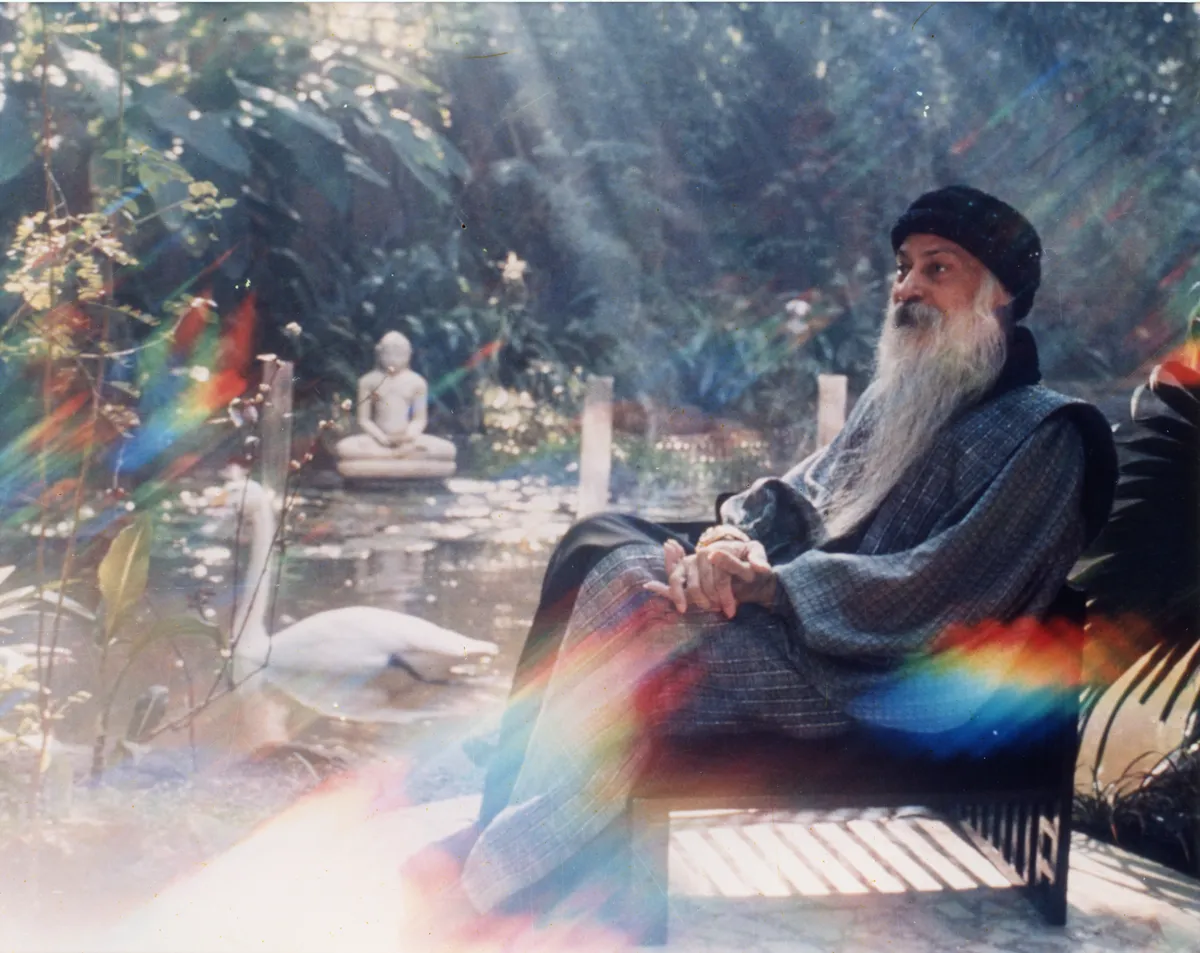
Osho's original Hindi beside Osho Live's English translation, matched passage by passage.
फिर से चली निठुर पुरवाई,
फिर बूंदों ने आग लगाई।
मरुथल में भटकूं एकाकी,
गंध न पाऊं मैं बरखा की;
कभी भूल कर कंठ लगा लूं,
ऐसी कोई छांह न बाकी;
Again the cruel east wind has begun to blow, again the drops have set fire to the earth. Alone I wander the desert wastes, I cannot catch the scent of rain; sometimes by mistake I would clasp a throat— no such shade remains anywhere now; above, an ember-colored sky, my feet wrestling tongues of flame. Where shall I go, where lay down my head, at which threshold make my betrothal? No one of mine is seen anywhere; every dream, cursed, defeated. Why should I scorch another's veil when life is nothing but burning? You gave me courage, with great care you coaxed the mind; what more could you have done— I myself could not make renunciation my way.
ऊपर अंगारों का अंबर,
पग करते लपटों से संगर;
जाऊं किधर कहां सिर टेकूं,
किस चौखट से करूं सगाई!
नजर न आता कोई अपना,
अभिशापित हारा हर सपना;
क्यों कोई आंचल झुलसाऊं,
जब जीवन भर केवल तपना;
तुमने मुझको धीर बंधाया,
बड़े जतन से मन समझाया;
इससे ज्यादा करते भी क्या
मुझको ही यति रास न आई!
हर व्यवधान बढ़ा जाता है,
नूतन सत्य पढ़ा जाता है;
पर पल दो पल का रुकना तो--
और थकान चढ़ा जाता है;
इससे शूलों में पलने दो,
Every obstacle grows, yet new truths are being read; but a pause for a moment or two— and the fatigue climbs back. So let me grow among thorns, let me walk without support; I have far to go still, I must prepare to welcome the Goal. Again the cruel east wind has begun to blow— again the drops have set fire to the earth!
बिना सहारे ही चलने दो;
मुझको अभी दूर तक जाना,
करने मंजिल की पहुनाई!
फिर से चली निठुर पुरवाई,
फिर बूंदों ने आग लगाई!
जीवन हमारा एक मरुस्थल है। एक लंबी अर्थहीन यात्रा है। एक बोझ, जिसे हम जन्म से मृत्यु तक ढोते हैं। बूंद भी नहीं बरसती आनंद की। कैसे समझें गुलाल को, जो कहते हैं--झरत दसहुं दिस मोती! यहां तो कंकड़-पत्थर भी गिरते मालूम नहीं होते, मोतियों की वर्षा तो बहुत दूर! अमृत का तो अनुभव कहां! जहर ही पीआ है, जहर ही हो गए हैं। इसलिए सुन लेते हैं संतों के वचन, मगर प्राणों में कोई वीणा बजती नहीं। वचनों से हमारे जीवन का कोई तालमेल नहीं बैठता। वे करते हैं फूलों की बातें, हम कांटों में उलझे हैं। वे करते हैं सेजों की बातें, हम सूली पर लटके हैं। मीरा ने कहा है: सूली ऊपर सेज पिया की; सुन लेते हैं, होगी, पर हमें तो सूली के अतिरिक्त और कोई सेज दिखाई पड़ती नहीं।
Our life is a desert. A long, meaningless journey. A burden we carry from birth to death. Not even a drop of bliss rains upon it. How would we understand the crimson festival of which the mystics sing—"pearls rain down from all ten directions!" Here, even when stones fall, we scarcely notice; a rain of pearls—far, far away. Nectar we have never known: we have drunk poison, we have become poison. So we listen to the saints' words, yet in our breath no veena begins to sing. Their words do not come into rhythm with our lives. They speak of flowers; we are entangled in thorns. They speak of bridal beds; we hang upon the cross. Meera has said: "Upon the cross, the Beloved's bed"—we hear, we say, perhaps; but to us no bed is visible except the cross.
बुद्धों के वचन हमारे जीवन-अनुभव से कोई संबंध नहीं बना पाते। हमारे और उनके बीच एक खाई रह जाती है, जिस पर सेतु बनता दिखाई नहीं पड़ता। बुद्धपुरुषों ने लाख उपाय किए हैं कि सेतु बने। लेकिन जब तक हम भी उपाय न करें, सेतु बन नहीं सकता। एक किनारे से सेतु नहीं बनता है, स्मरण रखना, दो किनारे चाहिए। हमारा किनारा जब तक सेतु बनाने में संलग्न न हो जाए तब तक उस किनारे से बनाए गए सब सेतु गिर जाते हैं, हम तक पहुंच नहीं पाते।
The words of the awakened do not find a bridge to our life-experience. Between them and us a gulf remains; we do not see a bridge rising. The Buddhas have done all they could to make a bridge, but unless we too make some effort, the bridge cannot be made. Remember: from one bank a bridge is never built; two banks are needed. Until our bank itself engages in the building, all bridges made from the other bank collapse and never reach us.
दुनिया से सदगुरु नहीं खो गए हैं, लेकिन शिष्यत्व खो गया है। धर्म नहीं खो गया है, लेकिन धर्म की अभीप्सा खो गई है। सत्य नहीं खो गया है, लेकिन सत्य को खोजने की आकांक्षा बुझी-बुझी सी, धुआं-धुआं। दीप्त अंगार नहीं है। लोग सत्य के संबंध में भी ऐसे प्रश्न पूछते हैं जैसे और सब चीजों के संबंध में पूछते हैं। जैसे सत्य भी और सब चीजों की फेहरिश्त में एक नाम है।
The world has not lost the True Master, but discipleship has been lost. Religion has not disappeared, but the longing for religion has faded, smoke-like. Truth is not lost, but the desire to seek Truth has grown dim. No bright coal aflame. People ask about Truth as they ask about any other thing—like Truth is one more item on the list.
सत्य जीवन की फेहरिश्त में एक नाम नहीं है, एक नाम मात्र नहीं है, सत्य तो हमारे जीवन का आधार है, हमारे प्राणों का प्राण है। लेकिन हम अपने भीतर जाते भी नहीं। बाहर से फुरसत मिलती नहीं।
Truth is not an item on the list of life, not a mere name. Truth is the foundation of our life, the life of our very life-breath. Yet we never go within; from the outside we never find leisure.
मेरे पास लोग आते हैं, अगर मैं उनसे कहता हूं: ध्यान करो, वे कहते हैं: कब करें? समय कहां है? और यही लोग होटलों में बैठे हैं, गपशप करते हैं। यही लोग सिनेमागृहों में भरे हुए हैं; कतारें लगी हैं, ‘क्यू’ लगे हैं। यही लोग, फुटबॉल का मैच हो तो हजारों की संख्या में इकट्ठे होते हैं। यही घोड़ों की दौड़ देखने जाते हैं। कोई घोड़ा आदमियों की दौड़ देखने नहीं आता! किस घोड़े को पड़ी है! घोड़ों की छोड़ो, गधे भी नहीं आते। और तब इनसे पूछो, तो ये कहते हैं: समय काट रहे हैं। यही लोग ध्यान की कहो तो कहते हैं: समय कहां है? ताश खेलेंगे, शतरंज बिछाएंगे, चौपड़--और पूछो, क्या कर रहो हो? तो कहते हैं: समय काट रहे हैं। समय तुम्हें काट रहा है, पागलो! और तुम सोच रहे हो तुम समय को काट रहे हो! समय प्रतिपल तुम्हें गिराता जा रहा है। प्रतिपल तुम्हारी मौत को करीब लाता जा रहा है। जल्दी ही यह जीवन का स्वर्ण अवसर हाथ से छिटक जाएगा। फिर बहुत पछताओगे। फिर एक क्षण भी इसमें से वापस नहीं पाया जा सकता। और यह सारा समय बचाया जा सकता था, इसमें से कुछ भी न खोता--अगर यह तुमने अपनी अंतर्खोज में लगाया होता; अगर यह तुमने अपने प्राणों के साथ संबंध जोड़ने में लगाया होता; अगर तुमने पूछा होता कि मैं कौन हूं; अगर तुम भीतर गए होते, थोड़ा खोदा होता, तो तुम्हें वे जलस्रोत मिल जाते, जो सदा-सदा के लिए तृप्त कर जाते हैं। तुम्हें वे अमृत के झरने मिल जाते, जिन्हें पीकर फिर कोई मरता नहीं है।
दिवस उनींदे उन्मन बीते!
रात जागरण के प्रण जीते!!
क्यों आगमन गमन बन जाता,
People come to me, and if I say, "Meditate," they say: "When? Where is the time?" And these very people sit in hotels gossiping. These very people pack the cinema halls; there are queues upon queues. Let there be a football match and thousands gather. They go to watch horse races. No horse ever comes to watch men run! What horse would bother! Leave horses aside—even donkeys do not come. And if you ask them then, they say: "We are killing time." These same people, if told to meditate, say: "Where is the time?" They will play cards, set up chess or chaupar; ask, "What are you doing?" and they reply, "Killing time." Time is killing you, you fools! And you think you are killing time. Time is knocking you down each moment, bringing your death closer each moment. Soon this golden opportunity of life will slip from your hands. Then you will repent greatly. Not a single moment of it can be retrieved. And all this time could have been saved, none of it lost—if you had invested it in inner search; if you had connected with your own life-breath; if you had asked, "Who am I?" If you had turned within, dug even a little, you would have found those water-springs that satisfy forever. You would have found those streams of amrit, and drinking of them, no one dies again.
क्यों संहार सृजन बन जाता;
नाश और निर्माण एक क्यों,
क्यों अभिशाप शमन बन जाता;
मरण जन्म या जन्म मरण है,
कहीं न कोई निराकरण है,
ज्ञान-गुमान शेष हो जाते,
Days pass drowsy, dispirited; resolutions of night-vigil win their vows. Why does arrival become departure, why does annihilation become creation? Why are destruction and construction one? Why does the curse turn into soothing? Is death birth, or birth death? Nowhere any final resolution. Pride of knowing remains, while we stitch and stitch beginnings and ends.
आदि-अंत को सीते-सीते!
पल में धूप बनी क्यों छाया,
माया रूप, रूप-रत माया;
जल में उपल, उपल में जल है,
जीव-जीव में जगत समाया;
सरि में लहर, लहर में धारा,
Why did sunlight become shadow in a blink? Maya-form, form-besotted Maya! Water in stone, stone in water; within each life the whole world contained. River in wave, wave in river, stream upon stream—the whole of life. Those who fill drop by drop— why are full oceans empty?
धार-धार में जीवन सारा;
बूंद-बूंद में भरने वाले,
भरे-पुरे सागर क्यों रीते?
कुशल-क्षेम ही कहते-सुनते,
चले गए सब क्यों सिर धुनते;
ब्रह्म सत्य तो जग मिथ्या क्यों,
रवि-कर क्यों स्वप्नाम्बर बुनते;
तम में किरण, किरणतम कारा,
जीत-जीत क्यों जीवन हारा;
हीरा जनम गवाया यों ही,
We ask only of welfare and well-being; why did all depart beating their heads? Brahman true, so why the world false? Why do the sun's rays weave dream-sky? Light in darkness, darkness in light; victory upon victory—yet life lost. We wasted this diamond birth, weeping-singing, eating-drinking!
रोते-गाते, खाते-पीते!
क्षुद्र में गंवा देते हैं... ‘हीरा जनम गंवाया यों ही।’ लेकिन हमें तो पता ही नहीं कि जीवन कोई हीरा है। हमें तो जीवन ऐसा लगता है: दो कौड़ी का भी नहीं। मुफ्त जो मिला है! परमात्मा की भेंट है, इसलिए हमें कीमत का कोई पता नहीं। काश, तुम्हें कीमत चुकानी पड़े और जीवन पाना पड़े, तो तुम इतनी आसानी से न गंवाओ। इतनी व्यर्थता में न उलझाओ।
We waste ourselves on the petty... "We wasted this diamond birth for nothing." But we do not know that life is a diamond. It looks to us not worth even two cowries; free, after all! Because it is a gift of the Divine, we know nothing of its price. If only you had to pay a price to receive life—you would not throw it away so easily, nor entangle it in such futility.
मैंने सुना है, एक फकीर एक नदी के किनारे बैठा था और एक आदमी नदी से कूद कर आत्महत्या करने का उपाय कर रहा था। उस फकीर ने पूछा कि भाई, ऐसी क्या मुसीबत आ गई? क्यों मरे जाते हो? उस आदमी ने कहा: मेरा दीवाला निकल गया; मरूं न तो क्या करूं? फकीर ने कहा: मेरी तरफ देखो, मेरे पास कुछ भी नहीं है। तुम्हारे पास कम से कम कुछ तो था कि दीवाला निकला। मेरा तो दीवाला भी नहीं निकल सकता। फिर भी मस्त हूं! और धन्यवाद दो परमात्मा को। उस आदमी ने कहा: किस बात का धन्यवाद? दीवाला निकलने का? उस फकीर ने कहा: दीवाला निकलने का धन्यवाद नहीं, इस बात का धन्यवाद दो कि तुम्हारा दीवाला निकल रहा है, कम से कम तुम उन लोगों में से तो नहीं हो जो तुम्हारे कर्जदार हैं, इसका धन्यवाद दो।
I have heard: a fakir sat by a riverbank, and a man was about to jump in and take his life. The fakir asked, "Brother, what trouble has come? Why are you dying?" The man said, "I am bankrupt—what else can I do but die?" The fakir said, "Look at me. I have nothing at all. At least you had something to go bankrupt with. I cannot even go bankrupt. Yet I am in bliss! Give thanks to the Divine." The man said, "Thanks—for going bankrupt?" The fakir said, "Not for that—give thanks that it is only you going bankrupt; at least you are not one of those who are your creditors—give thanks for that."
फकीर की बात कुछ बेबूझ भी लगी, कुछ जंची भी, वह आदमी पास बैठ गया। कुछ बात आगे बढ़ी। फकीर ने कहा: इसके पहले कि तुम आत्महत्या करो--तुम तो मरने जा ही रहे हो, थोड़े मेरे काम आ जाओ! उस आदमी ने कहा, क्या काम? मुझे तो मरना ही है। फकीर ने कहा: ऐसा करो, मेरे साथ चलो। सम्राट के पास ले गया। सम्राट से उसने कुछ कान में बातचीत की और सम्राट ने कहा: ठीक है, दो लाख रुपये दूंगा। उस आदमी ने इतना ही सुना सिर्फ कि दो लाख दूंगा। वह आदमी बोला: किस बात का सौदा हो रहा है? उस फकीर ने कहा: तुम्हारी आंखें बेच रहा हूं। सम्राट दो लाख देने को तैयार है दो आंखों के। उस आदमी ने कहा: तुमने मुझे मूरख समझा है? दो लाख में अपनी आंखें बेचूंगा? सम्राट ने कहा: तो तीन लाख ले लेना; चार लाख ले लेना; पांच लाख ले लेना। तू बोल, मुंहमांगे दाम देने को तैयार हूं। उस आदमी ने कहा: बेचना किसको है, जी! वह भूल ही गया कि आत्महत्या करने जा रहा था।
Foolish, yet somehow it struck him. He sat down. More talk followed. The fakir said, "Before you commit suicide—you are going to die anyway—be of some use to me." The man said, "What use? I am going to die." The fakir said, "Come with me." He took him to the emperor. Whispered in the emperor's ear. The emperor said, "All right, I will give two hundred thousand rupees." The man heard only that much: two hundred thousand. He cried, "What is being bargained?" The fakir said, "I am selling your eyes. The emperor is ready to give two hundred thousand for your two eyes." The man said, "Do you take me for a fool? I will sell my eyes for two hundred thousand?" The emperor said, "Then take three hundred; four hundred; five hundred—name your price." The man said, "Sell to whom, sir!" He forgot entirely he was about to kill himself.
उस फकीर ने कहा: और अभी तू नदी में कूद कर मर रहा था, आंख भी चली जाती, सब चला जाता। यह सम्राट हर चीज लेने को तैयार है--आंख भी लेने को तैयार है, तेरी किडनी भी ले लेगा, और सब चीजें लेने को तैयार है। सम्हाल कर रखवा लेगा, वक्त पर काम पड़ेंगी। और तू तो मर ही रहा है, तुझे बेचने में हर्ज क्या है?
The fakir said, "Just now you were to jump in the river—your eyes would have gone, everything would have gone. This emperor is ready to take anything—your eyes, your kidneys—everything. He will store them safely, they will be useful. And you were to die—what harm is there in selling?"
पहली बार उस आदमी को खयाल आया कि मैं पांच लाख रुपये में अपनी आंखें बेचने को राजी नहीं हूं और नदी में कूद कर मरने को राजी था।
For the first time it occurred to the man: I would not part with my eyes for five hundred thousand, yet I was willing to drown.
हमें होश नहीं है कि जो हमारे पास है, वह कितना मूल्यवान है। जिन्हें इस बात का होश आ जाता है, वे ही लोग धार्मिक हैं। उनके जीवन में अनुग्रह का भाव पैदा होता है कि परमात्मा ने कितना दिया है। उनके जीवन से प्रार्थना उठती है, धन्यवाद उठता है। हमारे जीवन से तो केवल शिकायतें और शिकायतें। जो मिला है, उसकी तो हम बात ही नहीं करते। जो नहीं मिला है, उसका रोना रोते हैं। और चाहिए। ‘और’ की ऐसी दौड़ है, कितना ही मिल जाए, वह और मरता नहीं, वह फिर-फिर खड़ा हो जाता है। कितना ही धन हो, और धन चाहिए; कितना ही पद हो, और पद चाहिए; कितनी ही प्रतिष्ठा हो, और प्रतिष्ठा चाहिए। मन ‘और’ में जीता है। यह सत्य अगर तुम्हें समझ में आ जाए कि मन का पूरा का पूरा जाल ‘और’ का जाल है, तो तुम प्रार्थना का सूत्र समझ लोगे। क्योंकि प्रार्थना है ‘और’ के जाल से छूट जाना।
We have no awareness of how precious is what we have. Those who awaken to this are the truly religious. In them arises the feeling of grace—how much the Divine has given. From their life prayer arises, gratitude arises. From our life, only complaints, only complaints. What has been given we never speak of; we cry for what has not been given. The race of "more"—no matter how much you get, that "more" never dies; it stands up again and again. However much wealth—more wealth; however much position—more position; however much prestige—more prestige. The mind lives in "more." If you understand that the entire net of mind is the net of "more," you will understand the essence of prayer, for prayer is release from the net of "more."
एक आदमी ने बहुत दिन तक परमात्मा की पूजा की। फिर परमात्मा का आविर्भाव हुआ। उस आदमी ने कहा कि मुझे कुछ वरदान दे दें। ऐसा वरदान दे दें कि जब भी मैं जो मांगू, मुझे मिल जाए। पास ही शंख रखा था पूजागृह में, परमात्मा ने उठा कर वह शंख दे दिया और कहा कि यह सम्हाल, जो मांगेगा, तत्क्षण मिल जाएगा। इधर परमात्मा तिरोहित हुए, उधर उस आदमी ने तत्क्षण कहा: एक लाख रुपया! एक लाख रुपया मिल गया। घूरे के भाग्य फिरे! उसने महल पर महल बनाए। बहुत धन की वर्षा हुई। मगर बेचैनी जैसी थी वैसी की वैसी रही। दुख जहां का तहां रहा। सच पूछो तो और ज्यादा हो गया। आशाएं सब पूरी होने लगीं, लेकिन निराशा में कोई कमी न आई। हताशा अपनी जगह खड़ी रही। अब जो मांगता, मिलता। मगर क्या जो मांगो वह मिल जाए, उससे हल होता है? मन कहता है: और मांग! एक महल से क्या होगा? दो मांग! दो से क्या होगा? लाख मांगे, मिल गए, ठीक है! रोज उसे जो मांगता मिलता, लेकिन परमात्मा को उसने धन्यवाद नहीं दिया।
A man worshiped the Divine for many days. Then the Divine appeared. The man said, "Grant me a boon—that whenever I ask for anything, I get it." A conch lay there in the shrine; the Divine handed it to him and said, "Keep this: whatever you ask will be given immediately." As soon as the Divine vanished, the man said, "One hundred thousand rupees!" And a hundred thousand were there. The rag-heap's fate turned! He built mansions upon mansions. Wealth rained down. But his restlessness remained as it was. Sorrow where it was stayed where it was. In truth, it increased. Hopes were fulfilled, yet despair did not diminish. Dejection stood where it stood. Now whatever he asked, he got—but does getting what you ask for solve anything? The mind said: Ask for more! What will one mansion do? Ask for two! What will two do? Ask for a million! He got them. Daily he would ask and receive. But he never once thanked the Divine.
एक रात एक संन्यासी उसके घर में मेहमान हुआ। संन्यासी ने यह देखा कि उसके पास शंख है, वह जो मांगता है, मिल जाता है। संन्यासी ने कहा कि यह शंख कुछ भी नहीं, मेरे पास महाशंख है। उस आदमी ने पूछा: महाशंख की क्या खूबी है? कहा: तुम जितना मांगो, उससे दुगना देता है। यह तुम्हारा तो उतना ही देता है; लाख मांगो, लाख देता है; मेरा लाख मांगो, दो लाख देता है। लोभ बढ़ा। उस गृहस्थ ने कहा कि आप तो संन्यासी हैं, त्यागी हैं, व्रती हैं, आपको क्या करना! आप मेरा शंख ले लो, मुझ गरीब को महाशंख दे दो! उस जैसा अब कोई अमीर नहीं था, लेकिन वह कहता है: मुझ गरीब को! महाशंख दे दो!! संन्यासी ने महाशंख दे दिया।
One night a sannyasin was a guest in his house. He saw the conch: whatever he asked, it was given. He said, "Your conch is nothing; I possess the Mahashankha." The man asked, "What is the excellence of the Mahashankha?" "Whatever you ask, it gives double. Yours gives exactly as asked; mine gives twice." Greed rose. The householder said, "You are a renunciate, a vow-taker—what do you need it for? Take my conch; give me the Mahashankha." None richer than he, still he said, "Poor me! Give me the Mahashankha!" The sannyasin gave it.
महाशंख बिलकुल जैसा संन्यासी ने कहा था वैसा ही था। उससे कहो, लाख रुपया दो। वह कहे, लाख क्या करोगे, अरे, दो लाख ले लो! उससे कहो, अच्छा दो लाख दे दो, भैया! वह कहे, दो क्या करोगे, चार लाख ले लो! बस, वह बातें ही करे! लेने-देने का कोई सवाल ही नहीं। लेकिन तब तक संन्यासी जा चुका था। संन्यासी के कमरे में जाकर देखा, संन्यासी तो शंख लेकर नदारद हो गया था। यह महाशंख पकड़ा गया।... महाशंख एक तरह का राजनेता रहा होगा। तुम जितना कहो, उससे दुगना ले लो। लेना-देना कुछ भी नहीं है! लेने-देने की बात ही मत उठाओ! बस, वह दुगना करता ही चला जाए।
Exactly as said, the Mahashankha was. Say to it, "Give me a hundred thousand." It replies, "What will you do with a hundred? Take two hundred!" Say, "All right, give two hundred." It replies, "What will you do with two? Take four hundred!" It only talks on and on; there is no question of receiving or giving; never any delivery! Meanwhile the sannyasin was gone. In his room the conch had vanished; and he was left holding the Mahashankha... Perhaps the Mahashankha was a kind of politician—whatever you ask, it promises double; but as for giving, never bring it up!
तुम्हारा मन शंख भी है और महाशंख भी। तुम जो मांगते हो, वह मिल जाए, तो ‘और’ की दौड़ नहीं मिटती। तुम जो मांगते हो, उससे दुगुना भी मिल जाए, तो भी दौड़ नहीं मिटती। दौड़ मिटती ही नहीं। दौड़ बढ़ती ही चली जाती है। लोग दौड़ते-दौड़ते अपनी कब्रों में गिर जाते हैं। मंजिल आती कहां, कब्र आती! जीवन के लिए धन्यवाद नहीं उठता लेकिन शिकायतें उठती हैं कि इतना क्यों नहीं दिया! यह भी तो हो सकता था, यह क्यों नहीं हुआ? तुम्हें अगर परमात्मा मिल जाए, तो तुम झपट कर उसकी गर्दन पकड़ लोगे कि अब कहां जाते हो, रुको! क्यों मुझे सताया? जो मैंने मांगा, मुझे क्यों न मिला? औरों को सब मिला, मुझे कुछ भी न मिला।
Your mind is both the conch and the Mahashankha. Even if you get what you ask, the race of "more" is not finished; if you get double, still the race will not end. It never ends—it goes on increasing. People run and run and fall into their graves. The goal does not arrive; the grave arrives. No thankfulness arises for life; only complaints: Why was I not given more? This could have been, why did it not happen? If you found the Divine, you would grab Him by the throat: "Where are you going? Stop! Why did you torment me? Why did I not get what I asked? Others were given everything; I got nothing!"
यह मन बड़ा ईर्ष्यालु है। और शायद इसीलिए तो परमात्मा तुम्हें मिलता नहीं, तुम लाख खोजो! ऐसा छिपा है कि तुम खोजते ही रहो, मिलता ही नहीं; क्योंकि जानता है, तुम्हें भलीभांति जानता है--उसके ही बनाए हुए हो, तुम्हें नहीं जानेगा तो किसको जानेगा--तुम्हें भलीभांति जानता है कि मिल जाओगे तो तुम उपद्रव खड़ा करोगे। तुम हजार तरह की शिकायतें करोगे। तुम्हारे जीवन की व्यवस्था शिकायत है। और जब कि इतना मिला है कि काश, तुम उसे देख सको! और तुम्हारी बिना किसी पात्रता के मिला है। बिना किसी योग्यता के। तुमने अर्जित नहीं किया है। काश, तुम उसे देख सको तो आभार उठे--आनंद का, अनुग्रह का; तुम्हारे भीतर संगीत गूंजे; वही प्रार्थना है, वही व्यक्ति को धर्म में डुबा देती है। वही प्रार्थना व्यक्ति के जीवन में अमृत-रस घोल देती है।
This mind is utterly jealous. Perhaps that is why the Divine does not show Himself to you, however much you search. He hides so that you search and still do not find Him; for He knows you through and through—He made you; if He does not know you, who will? He knows well that if He is found, you will create an uproar. You will launch a thousand complaints. Your whole life is arranged around complaint. And yet so much has been given that—if only you could see it—without any worthiness on your part, without any merit of yours, unearned. If only you could see, gratitude would arise—of joy, of grace; music would resound within. That is prayer; it drowns one in religion. That very prayer pours nectar into one's life.
गुलाल कहते हैं:
Gulal says:
करु मन सहज नाम ब्यौपार, छोड़ि सकल ब्यौहार।
Let the mind engage in the commerce of the effortless Name; abandon all other dealings.
धर्म को व्यावहार न समझो। हमने वही समझ रखा है। मंदिर हो आते हैं, एक औपचारिकता है, एक सामाजिक व्यावहार है। और लोग जाते हैं तो हम भी हो आते हैं। बापदादे जाते रहे तो तुम भी जा रहे हो। और तुम जाते हो तो तुम्हारे बच्चे भी जाएंगे। लेकिन सब औपचारिक है, ऊपर-ऊपर है। तुम्हारे प्राणों का कोर्ई संबंध नहीं है। मंदिर में जाकर सिर भी पटक आते हो, राम-नाम भी जप लेते हो; मस्जिद में बैठ कर कुरान की आयतें भी दोहरा लेते हो, मगर बस तोतों की भांति, मुर्दों की भांति। ओंठ हिलते हैं, हृदय नहीं हिलता। शब्द निकलते हैं, लेकिन तुम्हारे निःशब्द प्राणों में कोई नाद नहीं गूंजता। देह मंदिर में चली जाती है, तुम तो बाजार में ही रहे आते हो। देह प्रार्थना भी कर लेती है, पूजा भी कर लेती है, अर्चना भी कर लेती है, फूल भी चढ़ा देती है, आरती भी उतार लेती है--और तुम वहां होते ही नहीं। तुम हजारों जगह होते हो! तुम न मालूम कौन-कौन से व्यवसाय में उलझे होते हो! न मालूम किन योजनाओं में, भविष्य की किन कल्पनाओं में, अतीत की किन स्मृतियों में तुम भटके होते हो! ऐसे व्यावहारिक धर्म से तो अधार्मिक होना बेहतर है। कम से कम सच्चाई तो होगी!
Do not take religion to be a social transaction. We have taken it as such. We go to temples as a formality, a social practice. Others go, so we go. Forefathers went, so you go; and as you go, your children too will go. But it is all formal, superficial. No connection of your life-breath with it. You go, strike your head on the floor, chant the Name; sit in the mosque and repeat the verses of the Quran—but like parrots, like corpses. Lips move, the heart does not move. Words emerge, but in your wordless depths no resonance arises. The body goes to the temple; you remain in the marketplace. The body offers prayer and worship, offers flowers, waves the lamp—while you are not there at all. You are in a thousand places: entangled in various businesses, involved in schemes, fantasies of the future, memories of the past. With such practical religion, being irreligious is better—at least there would be truthfulness!
मैं निरंतर कहता हूं: झूठे आस्तिक होने से सच्चा नास्तिक होना बेहतर है। कम से कम सच्चाई तो होगी! और जहां सच्चाई है, वहां नास्तिकता ज्यादा दिन नहीं टिक सकती। जहां सच्चाई है, वहां नास्तिकता मरेगी, मर कर रहेगी। और जहां झूठ है, वहां आस्तिकता कहां आ सकती है! थोथी रहेगी। बस, ऊपर-ऊपर पोती हुई होगी। जैसे मुर्दे को सुंदर कपड़े पहना दिए। इससे कुछ प्राण आ जाएंगे, कि श्वास चलने लगेगी, कि हृदय धड़केगा?
I say again and again: better a true atheist than a false theist. At least there will be truthfulness! And where there is truthfulness, atheism cannot last long. Where there is truthfulness, atheism will die, it will have to die. But where there is falsity, how can theism enter? It remains hollow, a whitewash over the corpse. Dress a corpse in fine clothes—will breath begin to flow, will the heart start to beat?
झूठी आस्तिकता मनुष्य को डुबा रही है।
False theism is drowning man.
सच्ची नास्तिकता हो तो मनुष्य को एक न एक दिन आस्तिक होना ही पड़ेगा। क्योंकि जिसके प्राणों में ‘नहीं’ कहने की सामर्थ्य है, ईश्वर को भी ‘नहीं’ कहने की सामर्थ्य है, जो कहता है कि जब तक जान न लूंगा तब तक ‘हां’ नहीं भरूंगा, जिसका ऐसा प्रबल प्रामाणिक आग्रह है, उसके लिए परमात्मा के द्वार निश्चित खुलते हैं। लेकिन तुम्हारी ‘हां’ नपुंसक है। तुम्हारी ‘हां’ में कोई बल नहीं है। तुमने ‘हां’ तो यूं ही कह दी कि कौन झंझट करे! कि चलो, सब कहते हैं तो होगा! तुम्हारे ‘हां’ में कोई प्रेम नहीं है, कोई प्रार्थना नहीं है। तुम्हारी ‘हां’ एक सामाजिक शिष्टाचार है। तुम्हारी ‘हां’ ऐसी ही है जैसे कोई पूछता है सुबह-सुबह: कहिए, कैसे हैं? और तुम कहते हो--सब सुंदर है; सब परमात्मा की कृपा है! सब अच्छा है! तुम्हारा चेहरा कुछ और ही कह रहा है। तुम्हारी आंखें कुछ और ही कह रही हैं। मातमी चेहरा लिए हो, रोती आंखें लिए हो, तुम्हारा व्यक्तित्व कुछ और ही कह रहा है। लेकिन शिष्टाचार है कि कहना चाहिए कि सब ठीक है।
If there is true atheism in you, one day or another you will have to become a theist, for he who has the strength to say "no" from his very life-breath—even to God—who says, "Until I know, I will not say yes," whose demand is so intense and authentic—his doors to the Divine will surely open. But your "yes" is impotent; there is no power in it. You say yes just to avoid trouble: "Everyone says so, so it must be so!" Your yes has no love, no prayer. It is a social politeness. It is like when someone asks in the morning, "How are you?" and you reply, "All is beautiful, all by God's grace! All is well!" Your face tells another story, your eyes another. You wear a mourner's face, eyes ready to weep; your whole being says something else; but etiquette dictates that you say, "All is well."
कुछ भी ठीक नहीं है। ठीक ही होता तो फिर कहना क्या था! सभी लोग कह रहे हैं कि सभी कुछ ठीक है; तो यह जिंदगी में स्वर्ग उतर आता। लेकिन सब झूठ बोल रहे हैं। और ऐसा भी नहीं कि झूठ बहुत जान कर बोल रहे हैं। एक औपचारिकता सीख ली है। जो कहना चाहिए, वही कह रहे हैं। एक शिष्टाचार है, उसको निभा रहे हैं, उसका पालन कर रहे हैं। न दूसरा तुम्हें देखता है, न तुम दूसरे को देखते हो। न वह देखता है तुम्हारी दुर्दशा, न तुम देखते हो उसकी दुर्दशा। न उसकी आकांक्षा है जानने की कि तुम्हारी दुर्दशा क्या है, न तुम्हारी आकांक्षा है कि कोई दुख का रोना ले बैठे। ये तो बचने के उपाय हैं कि सब ठीक है; सब चंगा! ये तो भागने के उपाय हैं, कि भैया, तुम अपनी रस्ता जाओ, मैं अपनी रस्ता जाऊं, सब ठीक है; ताकि बात रुके, ताकि यहीं पूर्ण विराम आ जाए। आगे बात न बढ़ जाए।
Nothing is well. If it were, what need to say it? Everyone says, "All is well," and then heaven would descend to earth. But all lie. Not that they lie deliberately—merely a learned formality. You say what should be said. A politeness is observed. Neither does the other see you, nor do you see the other. Neither does he wish to know your state, nor do you wish to hear his lament. These are ways of avoiding—"All is well, all fine"—ways of running away: Brother, you go your way, I go mine. Let there be a full stop here; let the talk not proceed.
ऐसी ही औपचारिकता तुमने धर्म को भी बना लिया है। रास्ते पर कोई मिल जाता है तो कहते हो: जयरामजी। कभी खयाल भी नहीं आता, राम का स्मरण भी नहीं होता उस जयरामजी में, शब्द ही होता है। इतना प्यारा संबोधन कि राम की जय हो, दुनिया की बहुत कम भाषाओं में है। साधारण से संबोधन हैं। जैसे अंग्रेजी में कहते हैं: शुभप्रभात! साधारण संबोधन हुआ। लेकिन इस देश में हम सदियों से कहते हैं: राम की जय हो! मगर कहते ही हैं। हमें खयाल भी नहीं है कि राम की जय का क्या अर्थ है? और राम की जय कैसे हो सकती है? राम की जय तो तभी होगी जब तुम मिटो। तुम्हारा अहंकार गले तो राम की जय हो। लेकिन औपचारिकता निभा रहे हैं। कुछ करने का थोड़े ही सवाल है, कुछ हम करने की आकांक्षा थोड़े ही व्यक्त किए हैं, कह दिया है, शब्द कंठस्थ हो गए हैं, होश में होने की भी जरूरत नहीं है, यंत्रवत, ग्रामोफोन के रिकॉर्ड की तरह हमसे निकल जाते हैं, हाथ जुड़ जाते हैं।
You have made religion into the same kind of formality. On the road you meet someone, you say, "Jai Ramji." Never even a thought occurs; no remembrance of Ram awakens in that Jai Ramji—only the word. Such a lovely salutation—that the victory be Ram's—few languages have it. Most are ordinary: "Good morning." But in this land, for centuries, we have said: "Victory be to Ram!" Yet we merely say it. We have no feeling for what it means—or how the victory of Ram could be. Ram's victory will be only when you disappear. When your ego is sacrificed, then Ram's victory is. But you keep the formality; there is no question of doing anything, no longing expressed. Words have been memorized; there is no need even to be conscious—they come out mechanically, like a gramophone record; hands fold automatically.
दुनिया में कहीं भी हाथ जोड़ कर नमस्कार करने का ढंग नहीं है। कहीं हाथ हिलाते हैं, कहीं हाथ मिलाते हैं, लेकिन हाथ जोड़ कर... हाथ जोड़ना तो प्रतीक है, गहरा प्रतीक है। हाथ जोड़ने का अर्थ है: दो को एक करना, द्वंद्व को निर्द्वंद्व करना, द्वैत से अद्वैत की तरफ इशारा है हाथ जोड़ने में। सारा वेदांत उसमें छिपा हुआ है। जब हम हाथ जोड़ कर कहते हैं जय रामजी की, तो हम यह कह रहे हैं कि जब दो एक हो जाएंगे तो राम की विजय होगी; न मैं बचेगा, न तू बचेगा। और जब हम दूसरे व्यक्ति को देख कर हाथ जोड़ रहे हैं तो हम यह कह रहे हैं कि वह राम तुम्हारे भीतर भी विराजमान है। तुम कोई भी होओ, बुरे कि भले, ईमानदार कि बेईमान, चोर कि साधु, इससे कोई फर्क नहीं पड़ता, राम तुम्हारे भीतर है। और जिस दिन दो जुड़ कर एक हो जाएंगे, तुम्हारे भीतर भी वह प्रज्वलित प्रकाश प्रकट होगा, वह अभिनव सौंदर्य प्रकट होगा, वह शाश्वत सुगंध तुम्हारे भीतर भी उठेगी।
Nowhere else in the world do people greet by joining hands. Some wave, some shake hands; but to join hands... Joining hands is a deep symbol: making two into one, dissolving duality into non-duality; a gesture pointing from dvaita toward advaita—the whole Vedanta hidden within. When we join hands and say, "Jai Ramji ki," we say: When two become one, Ram will be victorious; neither I remain nor you. And when we fold hands before another, we say: That Ram resides in you too—whoever you are, good or bad, honest or dishonest, thief or saint—it makes no difference: Ram is within you. And the day the two become one within you, that blazing light will be revealed, that unprecedented beauty, that eternal fragrance will arise within you too.
मगर कितनी बार तुमने जयराम जी की है, कभी सोचा, क्यों हाथ जोड़े, किसको हाथ जोड़े, क्यों राम का स्मरण किया? क्यों राम की जय की बात की? और राम की जय कैसे होगी जब तक तुम नहीं हारोगे? तुम्हारी हार में उसकी विजय है। और तुम तो जीतने में लगे हो। तुम्हारी हर जीत तुम्हें उससे दूर किए जाती है। हाथ तो तुम दो एक कर लेते हो, मगर जिंदगी भर तुम एक नहीं हो पाते। तुम जिसको देख कर नमस्कार किए हो, नमन किए हो, सिर झुकाया है--सच में झुकाया है? एक क्षण को भी अगर यह सच्चाई हो, औपचारिकता न हो, तो मंदिर जाने की जरूरत है! चारों तरफ चलते-फिरते मंदिर हैं। हर प्राण मंदिर है। जहां भी श्वास चल रही है, वहीं परमात्मा जी रहा है। हर आंख के भीतर विराजमान है। आंख के झरोखों से दिखाई नहीं पड़ता, तुम्हें क्या खाक मंदिर की झांकियों में दिखाई पड़ेगा! जीवंत अनुभव में नहीं आता, मुर्दा मूर्तियों को, पत्थर की मूर्तियों को पूजते हो! वहां पूजा तुम्हारी सच्ची हो सकेगी?
But how many times have you said Jai Ramji—did you ever think why you joined hands, to whom, why you remembered Ram, why you spoke of Ram's victory? And how will Ram be victorious unless you are defeated? His victory lies in your defeat. But you are trying to win; and every win takes you farther from Him. You join hands, yet all your life you never become one. You bow before someone you greet—did you truly bow? If for even a moment it were true and not formal, what need of temples? There are walking temples all around—every life is a temple. Wherever breath is flowing, the Divine is alive there. He inhabits every eye. If He is not seen through the windows of the eyes, what on earth will you see in the peepshow of a temple? If He is not found in living experience, will you truly worship dead idols, stone statues? Will your worship there be true?
ठीक कहते हैं गुलाल:
Gulal speaks rightly:
Let the mind engage in the commerce of the effortless Name... abandon all dealings.
करु मन सहज नाम ब्यौपार,...
कहते हैं, अगर करना ही हो, तो सहज नाम का व्यापार करो।
If you must do something, do the effortless commerce of the Name.
...छोड़ि सकल ब्यौहार।
छोड़ दो सब व्यावहारिकता। धर्म में और व्यावहारिकता के लिए कोई गुंजाइश नहीं है। लेकिन यह व्यापार है। व्यापार का अर्थ होता है: कुछ देना पड़ेगा, तब कुछ मिलेगा। अपने को दोगे, तो उसे पाओगे। अपने को गंवाओगे, तो उसे पाओगे। कुछ दांव पर लगाना पड़ेगा। और यह व्यापार अनूठा व्यापार है। करीब-करीब जुआरीपन है। क्योंकि जिसे लगा रहे हो, वह तो ठोस है, हाथ में है और जिसके लिए लगा रहे हो, अदृश्य है; है भी या नहीं, इसका तब तक कोई निर्णय नहीं हो सकता जब तक तुम दांव पर न लगाओ। और दांव पर लगाने का ढंग क्या है? सहज नाम।
Abandon all practicality. In religion there is no room for practical transactions. But this is commerce—meaning: you will have to give something to receive something. Give yourself, and you will find Him. Lose yourself, and you will find Him. Something must be staked. And this commerce is unique—almost a gambler's play. For what you put at stake is solid, in your hand; and what you stake it for is invisible—whether it exists or not cannot be decided until you risk yourself. And what is the method of risking? The effortless Name.
एक तो असहज साधना पद्धति होती है। कोई सिर के बल खड़ा है और सोच रहा है कि योग साध रहा है। अगर परमात्मा को सिर के बल ही खड़ा करना था, तो सिर के बल ही खड़ा किया होता, तुम्हें पैर के बल किसलिए खड़ा किया होता! तुम्हारे महात्मा परमात्मा से भी ज्यादा समझदार मालूम पड़ते हैं। चलते-फिरते, भले-चंगे आदमी को सिर के बल खड़ा कर देते हैं! और यह मूरख सोचता है कि सिर के बल खड़े होने से कुछ हल हो जाएगा! अरे, वैसे ही तुम उलटी खोपड़ी हो; वैसे ही तुम्हारी जिंदगी उलटी खड़ी है; कुछ का कुछ तो तुम्हें वैसे ही दिखाई पड़ रहा है और सिर के बल खड़े होकर क्या तुम दुनिया को ठीक-ठीक देखने की कोशिश कर रहे हो!
There is the path of forced, unnatural practices. Someone stands on his head and thinks he is doing Yoga. If the Divine wanted you head-down, He would have made you so; why would He set you on your feet? Your great men seem wiser than God—healthy, walking people are turned upside down! And that fool imagines something will be solved by standing on his head! As it is, your head is already inverted; your life is upside down; you see everything awry—and now by standing on your head you are trying to see the world rightly!
मैंने सुना है, जब पंडित जवाहरलाल नेहरू भारत के प्रधानमंत्री थे, एक गधा सुबह-सुबह उनसे मिलने पहुंच गया।... गधों की कुछ न पूछो! और दिल्ली में गधों की कमी क्या? आदमी खोजना मुश्किल है। गधे तो तुम एक खोजो हजार मिलते हैं। खोजो या न खोजो, मिलते ही हैं। जगह-जगह भरे हैं... और यह गधा कोई साधारण गधा नहीं था। यह गधों का नेता था।... दिल्ली में कोई साधारण गधे थोड़े ही रहते, गधों के नेता!... यह सारे गधों का प्रतिनिधि था। और यह गया था पंडित नेहरू से कहने कि अब कुछ करना होगा। हमारी संख्या अठारह करोड़ है और हमारी बहुत सी मांगें हैं, या तो पूरी करो, या हम अपने लिए अलग देश चाहते हैं। अब हमें नहीं रहना है आदमियों के साथ। धमकी देने गया था। पहरेदार झपकी खा रहा था,... जैसे कि पहरेदार झपकी खाते हैं; उनका काम ही यही है।... आदमी होता तो रोकता भी, गधा था तो उसने भी फिकर नहीं की; कि गधा क्या बिगाड़ेगा? घूमने दो! गधा वहां टहल रहा था दरवाजे के सामने, जब पहरेदार झपकी खा गया, गधा भीतर घुस गया।... गधे भी राजनीति में पड़ जाएं तो बड़े होशियार हो जाते हैं। आदमी राजनीति में पड़ जाएं तो गधे हो जाते हैं, गधे पड़ जाएं तो आदमी हो जाते हैं। राजनीति का चक्कर ही बड़ा अजीब है!
I have heard: when Pandit Jawaharlal Nehru was PM of India, one morning a donkey came to see him. Donkeys—what to say of them! In Delhi there is no shortage of donkeys; men are hard to find. You look for one donkey and find a thousand; with or without looking, they are everywhere. And this was no ordinary donkey; it was the leader of donkeys—their representative. It came to demand, "Enough now. Our number is eighteen crores; we have many demands. Either fulfill them or we want a separate nation. We will no longer live with humans." The guard was dozing—as guards do; it is their work. Had it been a man, he would have stopped him; a donkey—what harm could it do? The donkey strolled at the door; when the guard dozed, it slipped inside. Politics turns men into donkeys and donkeys into men—such is its strange circle!
पंडित नेहरू सुबह-सुबह ब्रह्ममुहूर्त में शीर्षासन कर रहे थे। उन्होंने इस गधे को आते देखा, भूल गए एक दम से कि शीर्षासन कर रहे हैं। रोज की आदतवश कर रहे थे--औपचारिकता। नियम, तो पूरा कर रहे थे। एकदम हैरान हो गए और बोले गधे से कि बहुत गधे मैंने देखे, मगर तू उलटा क्यों चल रहा है? गधे ने कहा, पंडित जी, उलटे आप खड़े हैं। मैं उलटा नहीं चल रहा हूं। तब तो और भी बहुत चौंके, क्योंकि गधा बोला, हकबका गए। एक क्षण को किंकर्तव्यविमूढ़ हो गए। बड़े-बड़े नेताओं से मिले, बड़े-बड़े पंडितों से, महात्माओं से मिले, मगर इस गधे ने एक क्षण को उनकी सांसें रुकवा दीं। गधे ने कहा: आप बहुत हैरान न हों; इसमें कुछ आश्चर्य की बात क्या है? क्या आपने बोलते हुए गधे पहले नहीं देखे? पंडित नेहरू को कुछ होश आया। उन्होंने कहा कि बात तो सच कह रहे हो। बहुत से गधे मैंने देखे हैं जो बोलते हैं। इसलिए चौंकने की कोई बात तो नहीं। तुम यहां आए कैसे? उसने कहा: मैं आपसे मिलने आया हूं। आप नाराज न हों, आपका गुस्सा मुझे मालूम है; माना कि मैं एक गधा हूं, लेकिन अखबार पढ़ते-पढ़ते बोलना-लिखना सीख गया हूं। इतने गुस्सा आप न दिखाई पड़ें। आपकी आंखों से एकदम चिनगारियां निकल रही हैं। क्या आप गधे से मिलने में अपना अपमान समझते हैं?
Nehru was doing shirshasana at dawn. Seeing the donkey arrive, he forgot he was inverted—some routine he did as formality. He was startled and said, "I have seen many donkeys, but why are you walking upside down?" The donkey said, "Panditji, it is you who stand upside down; I am not walking upside down." Nehru was more startled still—because the donkey spoke. The donkey said, "Do not be so shocked. What is surprising? Have you not seen speaking donkeys before?" Nehru recovered and said, "True enough. I have seen many donkeys who speak—so no need to be shocked. How did you come here?" "I have come to meet you. Do not be angry; I know your temper. Granted I am a donkey; but reading newspapers I have learned to speak and write. Do not flame at me; sparks are flying from your eyes. Do you feel insulted meeting a donkey?"
नेहरू ने कहा कि गधे से मिलने में अपमान? अरे, गधों के सिवाय मिलने यहां आता ही कौन है! मगर सुबह-सुबह जब मैं शीर्षासन कर रहा हूं, साधना कर रहा हूं, तभी तुम्हें आना था! उस गधे ने कहा कि पंडित जी, अगर परमात्मा को यही पसंद था, तो उसने सभी को सिर के बल खड़ा किया होता। पैर के बल खड़ा किया है। वही सहज है। वही उचित है। हम गधों को ही देखिए, कोई शीर्षासन नहीं करता। हम तो सहज जीवन में विश्वास करते हैं। आदमी अजीब-अजीब बातें निकाल लेते हैं! शरीर को इरछा-तिरछा करेंगे। मयूर आसन। तो मयूर ही क्यों नहीं तुम पैदा हुए? कितने आसन निकाल रखे हैं! उलटे-सीधे, इरछे-तिरछे; शरीर को तोड़ेंगे-मरोड़ेंगे; तुम साधना कर रहे हो कि सर्कस?
Nehru said, "Insulted to meet a donkey? Apart from donkeys, who else comes to meet me! But why did you have to come just when I am doing shirshasana, my practice?" The donkey said, "Panditji, if the Divine liked it this way, He would have made everyone stand on their heads; He set us on our feet—that is the natural way. We donkeys do no headstands. We believe in a simple life. Humans invent strange things—twisting the body into peacock postures; then why were you not born a peacock? How many poses have you invented—upside down, crooked—bending and breaking the body. Are you practicing spirituality or a circus?"
गुलाल सहज के पक्षपाती हैं। वे कहते हैं: व्यर्थ अपने को इरछी-तिरछी बातों में मत उलझाना। परमात्मा की साधना सहज ही हो सकती है। क्योंकि परमात्मा यानी स्वभाव। परमात्मा यानी इस अस्तित्व की सहजता। तुम जितने सहज हो जाओ, जितने सरल हो जाओ, उतने ही उसके निकट हो जाओगे। जितने निर्दोष हो जाओ, जितने बच्चे जैसे भोले-भाले हो जाओ, उतने उसके निकट हो जाओगे। संतत्व की पराकाष्ठा वही है; जब तुम परिपूर्ण सहज हो जाते हो।
Gulal is on the side of the effortless. He says: Do not entangle yourself in crooked tricks. The Divine can be approached only by the simple. For the Divine is svabhava—nature itself. The Divine is the suchness, the spontaneity of this existence. The more natural you become, the more simple, the closer you come. The more innocent, childlike, guileless—you come nearer. The peak of sainthood is when you become utterly effortless.
करु मन सहज नाम ब्यौपार,...
Let the mind engage in the commerce of the effortless Name...
‘सहज’ शब्द का अर्थ होता है: जो अपने से जन्मता है। सहज। ज का अर्थ होता है: जन्मना। जो अपने से जन्मता है। तुम्हारे भीतर कुछ चीजें हैं जो अपने से चल रही हैं। जैसे श्वास। तुम चला नहीं रहे, अपने से चल रही है। तुम सोए रहते हो तब भी चलती रहती है। तुम काम में लगे रहते हो तब भी चलती रहती है--कोई याद थोड़े ही रखनी पड़ती है। अगर याद रखनी पड़े, तो जिंदा रहना मुश्किल है। जरा भूले, जरा किसी काम में ज्यादा उलझ गए, श्वास लेना भूल गए, खात्मा हो गया। रात सो गए, खात्मा हो गया। बेहोश भी तुम पड़े रहो तो भी श्वास चलती रहती है। श्वास तुम्हारे भीतर सहजता की प्रतीक है।
"Sahaj"—effortless—means that which is self-born. Within you there are processes that go on by themselves—like breathing. You do not do it; it does itself. It continues when you sleep; it continues when you work—you need not remember. If remembrance were needed, how would you live? Forget a moment, get absorbed in work, forget to breathe—and it is over. Sleep at night—and finished. Even if you lie unconscious, breathing continues. Breath within you is the symbol of effortless nature.
बुद्ध ने तो श्वास को ही समस्त योग का आधार माना और विपस्सना एकमात्र ध्यान की विधि दी, कि अपनी श्वास के साक्षी हो जाओ, बस काफी है। सिर्फ श्वास भीतर आई, बाहर गई, इसको देखते रहो--कुछ मत करो--जब सुविधा हो तब श्वास का भीतर आना और बाहर जाना देखते रहो। श्वास जब भीतर आती है, तब होश रखो कि भीतर आ रही है। आते-आते-आते भीतर एक गहराई पर आकर श्वास क्षण भर को ठहर जाती है--बस, क्षण भर को--उसी जगह से द्वार है अंतरात्मा में; जहां श्वास ठहरती है, ठिठकती है। फिर श्वास बाहर की तरफ जाती है। फिर श्वास के साथ बाहर जाओ। फिर बाहर जाकर भी एक जगह है जहां जाकर श्वास क्षण भर को ठिठक जाती है, वहां भी द्वार है, वहां द्वार है परमात्मा का।
Buddha made breath the very foundation of all Yoga, and gave vipassana as the sole method of meditation: become the witness of your breath—enough. Simply watch the breath going in, coming out—do nothing—whenever it is convenient, watch the in-breath and the out-breath. When the breath enters, remain aware that it is entering. As it comes in and in, at a certain depth it halts for a brief moment—that moment is the doorway to the inner being. When breath turns outward, go with it; outside also there is a point where breath hesitates for a moment—there too is a doorway, a door of the Divine.
अगर बाहर के द्वार से प्रवेश करोगे, तो परमात्मा के द्वारा अपने में प्रवेश हो जाएगा। और अगर भीतर से प्रवेश करोगे, तो अपने द्वारा परमात्मा में प्रवेश हो जाएगा। दोनों द्वारों में से कोई भी एक चुन लो।
If you enter through the outer door, then the Divine will enter you; if through the inner, then you will enter the Divine. Choose either of the two.
ज्ञानी भीतर का द्वार चुनता है, भक्त बाहर का द्वार चुनता है। मगर वे दोनों द्वार एक ही परमात्मा के द्वार हैं।
The jnani chooses the inner door, the bhakta the outer—but both doors open into the same Divine.
श्वास सहजतम प्रक्रिया है... और ध्यान रखना, प्राणायाम के लिए नहीं कह रहा हूं। कि गहरी श्वास लो, कि एक नाक बंद करके और एक नाक से श्वास लो, फिर इतने समय तक श्वास को भीतर रोको, फिर इतने समय तक बाहर रोको--वह तो असहज हो गया, वह तो कृत्रिम हो गया। नहीं, श्वास जैसे चल रही है अपने आप, प्राकृतिक, बस उसको देखते रहो।
Breath is the most effortless process... and note, I am not speaking of pranayama—breathing deeply, closing one nostril, holding for so many counts—that is forced, artificial. No—let the breath move naturally as it moves; just watch it.
बुद्धों की यह प्रक्रिया अनूठी है।
This process of the Buddhas is unique.
गुलाल इसी को सहज नाम कहते हैं। इसको नाम क्यों कहते हैं? क्योंकि अगर तुम इस श्वास को सुनते रहे, देखते रहे, भीतर आना, बाहर जाना, भीतर आना, बाहर जाना और धीरे-धीरे तुम्हारे भीतर का द्वार तुम्हें अनुभव में आ जाए या बाहर का द्वार अनुभव में आ जाए, तो तुम चकित हो जाओगे: तुम मंदिर के द्वार पर ही बैठे थे। कहीं जाना न था। काबा तुम्हारे भीतर था, काशी तुम्हारे भीतर थी, गिरनार तुम्हारे भीतर था, तुम कहां भागे फिरते थे? और जैसे-जैसे श्वास के साथ तुम्हारा तालमेल बैठेगा, तारतम्य बैठेगा, वैसे-वैसे तुम्हें एक नाद सुनाई पड़ेगा, जिसको संतों ने अनाहत कहा है, अनहद कहा है, उस नाद का नाम ही ‘नाम’ है। वह नाद अगर हम भाषा में उतारने की कोशिश करें, तो करीब-करीब ओंकार जैसा है। करीब-करीब। ठीक ओंकार ही नहीं। ओंकार उसकी निकटतम ध्वनि है। ओम उसकी निकटतम ध्वनि है।
This is what Gulal calls the effortless Name. Why the Name? Because as you keep listening to and seeing the breath going in and out, slowly you will begin to experience the door within or the door without—and you will be astonished: you were sitting at the very gate of the temple. There was nowhere to go. The Kaaba was within you; Kashi within you; Girnar within you—where had you been running? And as your rhythm with breath becomes attuned, a sound will be heard, which the saints have called anahat, the unstruck sound. The name of that sound is the "Name." If we try to transpose it into language, it is very near to Om—near, not exactly Om. Om is its closest verbal approximation.
इसलिए ओम को सारे धर्मों ने स्वीकार किया है।
That is why all religions have accepted Om.
भारत में तीन धर्म पैदा हुए: जैन, बौद्ध, हिंदू। उनका सब मामलों में विरोध है, किसी चीज में उनका मतैक्य नहीं है, लेकिन ओम के संबंध में वे तीनों सहमत हैं। और यहूदी, ईसाई और मुसलमान, तीन धर्म भारत के बाहर पैदा हुए। वे तीन भी ओम के संबंध में सहमत हैं। हालांकि उन्होंने ओम को अलग-अलग नाम दिए हैं। थोड़े से भेद। वे भेद स्वाभाविक हैं। क्योंकि ओम कोई शब्द नहीं है, ध्वनि है। और ध्वनि का तुम कैसा रूपांतर करोगे भाषा में, यह तुम पर निर्भर है। मुसलमान कहते: अमीन। वह ओम का ही रूप है। ईसाई और यहूदी कहते: आमेन। वह ओम का ही रूप है। यह भीतर जब श्वास पर तुम्हारा साक्षीभाव टिक जाता है, तब तुम्हें यह ध्वनि सुनाई पड़नी शुरू होती है। तुम्हें कहना नहीं है ओम, ओम, ओम--तुम कहोगे तो औपचारिक हो गया--यह तुम्हें सुनाई पड़े। तुम तो केवल श्रोता और द्रष्टा रहोगे। यह तुम्हारे भीतर अपने से उपजता हुआ दिखाई पड़े, सहज हो तो ही समझना कि सार्थक है।
Three religions arose in India: Jain, Buddhist, Hindu. They differ on every point, agree on none—but on Om they agree. And Jew, Christian, Muslim—three born outside India—they too agree on Om, though they gave it different names. Those differences are natural, because Om is not a word, it is a sound; how you render that sound into language depends on you. Muslims say Ameen—that is a form of Om. Jews and Christians say Amen—that too is a form of Om. When witnessing becomes steady on the breath, this sound begins to be heard. You are not to chant Om, Om, Om—that becomes a formality; it is to be heard. You remain the listener and the seer. It arises within you of itself; when it arises effortlessly, know that it is authentic.
करु मन सहज नाम ब्यौपार, छोड़ि सकल ब्यौहार।।
निसुबासर दिन रैन ढहतु है, नेक न धरत करार।
Let the mind engage in the commerce of the effortless Name; abandon all dealings.
स्मरण रखो कि यहां तो प्रतिदिन जीवन कम हो रहा है। एक दिन गया, एक रात गई, एक दिन कम हुआ, एक रात कम हुई। इस बहते हुए समय के प्रवाह में कुछ भी ठहरा हुआ नहीं है। यहां अपना घर मत बनाना। यहां घर बनाओगे तो रोओगे, तड़पोगे, पछताओगे।
Night and day crumble away; not for a moment does it hold its place.
Remember: here, each day, life lessens. A day gone, a night gone—one less day, one less night. In the flow of this river of time nothing is fixed. Do not build your home here. If you build here, you will weep, writhe, repent.
निसुबासर दिन रैन ढहतु है,...
Night and day crumble away...
सब ढहा जा रहा है, गिरा जा रहा है। इस गिरते हुए भवन में तुम अपने को ज्यादा आसक्त न रखो। शाश्वत की खोज कर लो। इस भवन में शाश्वत की भी धुन आ रही है--वही ओंकार की ध्वनि है, वही सहज नाम है--अगर तुम उसको पकड़ लो, उस पतले से धागे को पकड़ लो, उस छोटी सी किरण को पकड़ लो, तो उसी के साथ उड़ते हुए सूरज तक पहुंच जाओगे।
Everything is falling, collapsing. Do not be too attached to a house that is falling. Seek the Eternal. In this house the tune of the Eternal is also playing—that very resonance of Om, that effortless Name. If you can catch that slender thread, hold that fine ray—you will fly with it to the sun.
मेरे इस जीवन-मरु में क्यों रूप-सुधा बरसाई,
दो क्षण के प्रभात में ऐसी जीवन-निधि क्यों आई?
मेरे स्वर परिमित हैं जैसे प्रातः नभ के तारे,
किंतु मिलन के भाव न भर सकते हैं सागर सारे।
जीवन का यह बाण चुभा है मुझ में कैसा विषमय,
क्या निकाल सकते हैं अंतिम क्षण के हाथ तुम्हारे?
Why did you pour beauty's nectar into this desert of my life? Why, in a dawn of two moments, was such a treasure of life given? My notes are as finite as the morning stars, but even oceans cannot hold the feelings of union. A barbed arrow of life has pierced me—how deadly! Can your hands pluck it out at the final hour? In this small jar of flesh rose a sea of unsated longing— why did you pour beauty's nectar into this desert of my life?
तन के लघु घट में अतृप्ति सागर की लहर उठाई,
मेरे इस जीवन-मरु में क्यों रूप-सुधा बरसाई?
प्रिय यह रात बहुत छोटी थी, कैसे मैं मिल पाऊं?
मेरा स्वर नश्वर है, कैसे गीत तुम्हारे गाऊं?
सांसों के टुकड़े कर डाले, वे भी नियमित गति में,
कैसे इनमें चिर मिलाप का जीवन आज सजाऊं?
Beloved, this night was too brief; how shall I meet you? My voice is mortal— how shall I sing your song? Breath has been cut into pieces and each moves in fixed rhythm; how shall I, from these, weave today the garland of eternal meeting? Why did a single flower's life receive this springtime's splendor? Why did you pour beauty's nectar into this desert of my life?
एक सुमन के जीवन ने क्यों यह वसंत श्री पाई?
मेरे इस जीवन-मरु में क्यों रूप-सुधा बरसाई?
जीवन तो मरुस्थल है, मगर इसमें रूप की सुधा बरस सकती है। जीवन तो कंकड़-पत्थर है, लेकिन इसमें मोती झर सकते हैं--झरत दसहुं दिस मोती! जीवन तो परिवर्तन है, लेकिन इसमें शाश्वत से मेल हो सकता है, सेतु बन सकता है। जीवन तो मृत्यु है, लेकिन इस जीवन को ही अमृत का द्वार बनाया जा सकता है।
Life is a desert; yet into it beauty's nectar can pour. Life is pebbles and stones; yet pearls can be showered—"pearls raining from all ten directions!" Life is change; yet union with the Eternal is possible, a bridge can be built. Life is death; yet this very life can become the doorway to amrit.
धंधा धोख रहत लपटानो, भ्रमत फिरत संसार।
Entangled in business and deception, we wander the world.
लेकिन हो कैसे? यह हो कैसे? तुम तो धंधे में, धोखे में उलझे हो।
धंधा धोख रहत लपटानो, भ्रमत फिरत संसार।
But how is this to happen? You are caught in business and in deceit.
तुम तो सारे जगत में खोजते फिरते हो, एक अपने को छोड़ कर। तुमने कसम खा रखी है कि एक अपने में नहीं झांकेंगे और सब जगह खोजेंगे। सब खदानें खोजेंगे, एक अपने भीतर की खदान को छोड़ रखा है।
Entangled in business and deception, we wander the world.
You search everywhere—except within yourself. You have sworn to search in every mine, leaving out the mine that is within.
माता पिता सुत बंधू नारी, कुल कुटुंब परिवार।
Mother, father, son, brother, wife, clan, kin, family—
माया-फांसि बांधि मत डूबहु, छिन में होहु संघार।।
Do not weave the noose of maya and drown; in a moment all will be destroyed.
खूब बसा रहे हो परिवर्तन के इस जगत में! नाते, रिश्ते; कैसे-कैसे वायदे, कैसे-कैसे आश्वासन! लेकिन गुलाल कहते हैं: अगर समझो तो तुम जो भी बना रहे हो, वह फांसी बना रहे हो।
You build so much in this world of change—relations, bonds, promises. Gulal says: if you understand, all you are building is a noose to hang yourself with.
माया-फांसि बांधि मत डूबहु,...
Do not weave the noose of maya and drown...
डूबोगे। अपने ही बनाए इस जाल में फंसोगे, उलझोगे, डूबोगे।
...छिन में होहु संघार।
You will drown in your own web.
एक क्षण में मिट जाएगा सब कुछ। इसके पहले कि सब-कुछ मिट जाए, कुछ कर लो। इसके पहले कि सब समाप्त होने लगे, इसके पहले कि आखिरी घड़ी आ जाए, समयातीत से कुछ पहचान कर लो।
...in a moment all will be destroyed.
In a moment all will be gone. Before all dissolves, do something—before the last hour arrives, recognize the Timeless.
हरि की भक्ति करी नहिं कबहीं, संत बचन आगार।
Never once did you do devotion to Hari; you made a treasury of saints' words nowhere in your house.
भाग रहे हो, दौड़ रहे हो--धन-पद-मद--लेकिन कभी परमात्मा को स्मरण नहीं करते। जो स्मरण योग्य है, उसे विस्मरण किया है। जो स्मरण योग्य नहीं है, सतत उसका स्मरण कर रहे हो। कभी अपने विचारों को तो देखना--क्या-क्या सोचते हो? कैसी-कैसी व्यर्थ की बातें सोचते हो? कैसी ऊलजलूल, संगत-असंगत; कैसे सपनों में खोए रहते हो; खुद भी देखोगे तो हंसोगे कि मैं भी कैसा मूढ़! लेकिन फिर-फिर उसी जाल में पड़ जाओगे। फिर-फिर मन लिपटा लेगा।
You run and race—for wealth, position, pride—but never remember the Divine. You forget what is worth remembering; what is not worth remembering, you remember incessantly. Look at your thoughts—what sort of things you think, what nonsense and jumble; what dreams you wander in. Seeing it yourself you will laugh at your own foolishness—yet again you will be caught in the same net; the mind will wrap you again.
हरि की भक्ति करी नहिं कबहीं, संत बचन आगार।
न तो कभी हरि की भक्ति की, न तो कभी राम को स्मरण किया, न कभी संतों के वचन में घर खोजा। धन में खोजा, पद में खोजा, प्रतिष्ठा में खोजा! मगर संतों के सत्संग में कभी घर न खोजा, जहां कि घर मिल सकता था। ऐसा घर जो कभी न गिरे।
Never once did you do devotion to Hari; you never made the saints' words into a home.
You never remembered Ram; nor sought a home in the words of the saints. You sought in wealth, position, prestige—but never in satsang, where a home can be found—a home that never collapses.
Drunk with pride and arrogance, forgetful—you burned your life to ashes.
करि हंकार मद गर्व भुलानो,...
कितना अहंकार किया है! कैसे मदमस्त हो रहे हो अहंकार में! पानी का बबूला है, अभी फूट जाएगा। कैसे भूले हुए हो इसमें? रोज तुम्हारे आस-पास लोगों को टूटते देखते हो, मगर तुम्हें याद ही नहीं आती कि यही गति तुम्हारी भी होनी है। रोज कोई मरता है, रोज कोई अरथी उठती है, लेकिन यह कभी तुम्हें खयाल ही नहीं आता कि यह तुम्हारी अरथी है। देर-अबेर, बस बात समय की है। आज यह उठी, कल तुम्हारी उठ जाएगी। मौत के दरवाजे पर ‘क्यू’ लगा है, रोज लोग हटते जा रहे हैं, ‘क्यू’ छोटा होता जा रहा है, तुम करीब सरकते आ रहे हो। तुम्हें भी टिकट जल्दी ही मिल जाएगी। मगर अजीब बेहोशी है! अदभुत बेहोशी है!
How much ego you have cultivated—how intoxicated you are with it! A bubble on water—ready to burst—and how lost in it you are. Every day people break around you, yet you do not remember that the same will be your fate. Every day someone dies, every day a bier is raised; but it never occurs to you that it is your bier. At the door of death there is a queue; people depart daily, the queue shrinks, you draw nearer. Soon your ticket will be called. But what a stupor—astonishing stupor!
करि हंकार मद गर्व भुलानो, जन्म गयो जरि छार।
तुम्हारे अहंकार में ही तुम्हारा जीवन छार-छार हुआ जा रहा है।
Drunk with pride and arrogance, forgetful—your life has been burning to ash.
अनुभव घर कै सुधियो न जानत,...
You do not even know to take care of the house of Experience— who should I call a fool?
कब लाओगे सुधि? कब करोगे स्मरण? और मालिक तुम्हारे भीतर बसा है!
...कासों कहूं गंवार।
गुलाल कहते हैं: मैं किसको गंवार कहूं, गंवार ही गंवार हैं यहां। गंवारों की भीड़ है। बेहोश लोगों की भीड़ है। अब किसको गंवार कहो? जहां सभी गंवार हों, वहां किसी को भी गंवार कहने का कोई अर्थ नहीं है। यहां तो हालत ऐसी है कि जैसे अंधों की बस्ती में आंख वाला आदमी ही मुश्किल में पड़ जाए। जैसे बहरों की बस्ती में कान वाला आदमी ही मुश्किल में पड़ जाए। जैसे पागलखाने में तुम्हें कोई भरती कर दे और तुम मुश्किल में पड़ जाओ।
When will you bring remembrance? The Master dwells within you— who shall I call a fool? Fools everywhere; a crowd of the unconscious. Whom to call a fool where all are fools? Like in a town of the blind, the man with eyes is in difficulty; in a town of the deaf, the one with ears suffers; in a madhouse, if you are admitted, you are the one in trouble.
इसलिए बुद्धों को जितनी अड़चन झेलनी पड़ी, उतनी अड़चन और किसी को भी नहीं। और कुल कारण इतना है कि बुद्धुओं की भीड़ में बुद्ध जो भी कहते हैं, जैसा भी जीते हैं, वह विकृत हो जाता है। हमारी भाषा और उनकी भाषा अलग हो जाती है। वे बोलते हैं किसी पर्वत-शिखर से और हम सुनते हैं किसी अंधेरी घाटी में। वे बोलते हैं जागरण से, हम सुनते हैं नींद में। हम तक पहुंचते-पहुंचते बात बदल जाती है, कुछ का कुछ हो जाता है।
Hence the awakened have suffered more obstacles than anyone—because among the crowds of the unawakened, whatever they say, the way they live, becomes distorted. Their language and ours diverge. They speak from a mountain peak; we hear from a dark valley. They speak from wakefulness; we hear in sleep. By the time the words reach us, they are changed—turn into something else.
खलील जिब्रान की प्रसिद्ध कहानी है।
Kahlil Gibran's well-known tale:
एक जादूगर आया और उसने गांव के कुएं में एक पुड़िया फेंक दी और कहा कि जो भी इसका पानी पीएगा, वह पागल हो जाएगा। गांव में दो ही कुएं थे। एक गांव का कुआं और एक राजा का कुआं। मजबूरी थी--गांव में खबर तो उड़ गई, लेकिन पानी न पीएं कैसे चलेगा! सांझ होते-होते सारा गांव पागल हो गया। राजा बड़ा खुश था कि मेरे बड़े धन्यभाग कि मैंने महल में अलग कुआं बनवा रखा है। अगर मैं भी गांव के कुएं पर निर्भर होता तो आज मुसीबत हो जाती। राजा ठीक था, रानी ठीक थी, वजीर ठीक था; बस ये तीन बचे। लेकिन जब पूरा गांव पागल हो जाए... तो गांव में एक खबर उठी सांझ होते-होते कि लगता है राजा का दिमाग खराब हो गया है। और लोग चले; भीड़ लग गई महल के चारों तरफ। इसमें राजा के सिपाही भी थे, सेनापति भी थे, पहरेदार भी थे--सभी पागल हो गए थे। राजा बहुत घबड़ाया। उसके शरीर रक्षक भी पागल हो गए थे। अब तो कोई बचाने वाला भी नहीं था। उसने अपने वजीर से कहा: अब क्या करना? यह तो फांसी लग गई। कुआं एक ही होता तो ठीक था। वजीर ने कहा: घबड़ाएं मत, मैं इनको उलझा कर रखता हूं बातचीत में, आप पीछे के दरवाजे से भाग कर जाएं और जल्दी से पानी पी कर लौटें। राजा-रानी भागे।
A sorcerer came and threw a packet into the village well and said, "Whoever drinks will go mad." There were two wells: the village well and the king's well. News spread—but how to live without water? By evening the whole village had gone mad. The king rejoiced: "Blessed my fortune—I had a separate well dug in the palace. Had I been dependent on the village well, today would be trouble." The king, the queen, the minister—only these three remained sane. But when the whole village is mad... By evening a rumor rose: "The king seems to have gone insane." People gathered around the palace—guards, commanders, sentries—all mad. The king trembled; even his bodyguards were mad. "What now?" he asked his minister. "We are trapped." The minister said, "Do not worry; I will keep them busy talking. Slip out the back door—quickly drink and return." The king and queen left.
वजीर लोगों को समझाने लगा कि भाइयो, सुनो, समझो। मगर लोग कौन सुनने वाले थे! लोग चिल्ला रहे थे कि पागल राजा कहां है? उसको निकालो। हम राजा को बदलेंगे; अब पागल राजा नहीं चलेगा; किसी होश वाले को बिठाएंगे। तब तक राजा और रानी वापस लौट आए। गए थे पीछे के दरवाजे से, लौटे नहीं पीछे के दरवाजे से। आए नाचते-कूदते नंग-धड़ंग सामने के दरवाजे से। लोगों ने देखा, उन्होंने कहा: अहा, यह रहा हमारा राजा! धन्य हमारे भाग्य, लगता है होश इसके ठीक हो गए! तुमने भी पानी पीआ? उसने कहा: पीकर चले आ रहे हैं। बड़ा आनंद है। आनंद ही आनंद है। और वह तो नाचने लगा। और लोग भी नाचने लगे। उस रात उस गांव में बड़ा उत्सव हुआ कि हमारे राजा की बुद्धि ठीक हो गई। भगवान की कृपा है!
The minister tried to explain: "Brothers, listen, understand." But who would listen? They cried, "Where is the mad king? Bring him out. We will change the king—no more mad king—we will enthrone someone sane!" By then the king and queen returned—not from the back but from the front door—dancing naked. People rejoiced: "Ah, our king! Blessed our fortune—his mind seems fine now! Did you also drink?" "We just drank and came," the king said. "Such joy—only joy!" He danced; the people danced. A festival was held that night: "God be praised—our king's mind is well again."
ठीक कहते हैं गुलाल: ‘कासों कहूं गंवार।’ गंवार कहने में भी संकोच होता है। किससे कहूं?
कहै गुलाल सबै नर गाफिल,...
सभी बेहोश हैं।
...कौन उतारै पार।
Gulal speaks truly: "Whom should I call a fool?" One hesitates even to use the word—whom to say it to?
यहां सभी बेहोश हैं, कौन उतारेगा पार इस भीड़ को, इन पागलों को, इन गाफिलों को? ये खुद तो उतर नहीं सकते। इनके हाथ में तो नाव देना खतरे से खाली नहीं है। ये तो डुबा कर रहेंगे नाव। और कौन उतारे इन्हें पार? इन्हें तो कोई होश नहीं, और इतना भी इन्हें होश नहीं कि जिसे होश आ जाए, उसकी सुन लें। इतना भी इन्हें होश नहीं कि कोई होश में आ गया, उसे पहचान लें। इसलिए थोड़े से ही लोग बुद्धों का लाभ उठा पाए।
Gulal says: All men are heedless— who will take them across?
All are unconscious—who will ferry this crowd across, these mad ones? They cannot cross themselves. To place the boat in their hands is dangerous; they will surely sink it. And who will take them across? They have no awareness—not even enough to recognize and listen to the one who has become aware. Hence so few have drawn benefit from the Buddhas.
जीसस के कितने थोड़े से शिष्य थे। बारह। और जब जीसस को सूली लगी तो एक लाख आदमी पत्थर फेंकने को, गालियां बकने को, सड़े केले और टमाटर फेंकने को इकट्ठे हो गए थे। सुनने को कोई नहीं आता था। समझने को बारह आदमी केवल राजी हुए थे। लेकिन सूली देखने को एक लाख आदमी इकट्ठे हो गए! यह जमात है पागलों की।
How few disciples Jesus had—twelve. And when Jesus was crucified, one hundred thousand came to throw stones, to hurl abuse, to fling rotten bananas and tomatoes. None came to listen; only twelve consented to understand. But to see the crucifixion a hundred thousand gathered. Such is the crowd of madmen.
मंसूर को गांव-गांव भगाया गया। गांवों में टिकने नहीं दिया गया। क्योंकि वह जो बात कहता था, वह होश की परम बात थी। ‘अनलहक।’ उसने घोषणा कर दी थी: अहं ब्रह्मास्मि। मैं ब्रह्म हूं। और तुम भी ब्रह्म हो। मुसलमानों के बर्दाश्त के बाहर!
Mansoor was hounded from village to village; he was not allowed to settle anywhere, for what he said was the ultimate in wakefulness—Anal Haq, "I am Truth"—Aham Brahmasmi, "I am Brahman," and so are you. Unbearable to the Muslims!
तरह-तरह के अंधे हैं। हिंदू, मुसलमान, जैन, ईसाई, ये अंधों की अलग-अलग जमातें हैं। जमातें ही अंधों की हैं। जमातें ही अंधों की हो सकती हैं। होशवालों की कोई जमात थोड़े ही होती है। होश वाले का कोई संप्रदाय थोड़े ही होता है, कोई धर्म थोड़े ही होता है। होश वाले का कोई देश थोड़े ही होता है, कोई जाति थोड़े ही होती है, कोई वर्ण थोड़े ही होता है। उसका तो होश ही वर्ण है, होश ही जाति है, होश ही धर्म है।
There are many kinds of blind—Hindu, Muslim, Jain, Christian—different sects of the blind. Sects can only be of the blind. The awakened have no sect, no religion. They have no country, no caste, no class—wakefulness alone is their caste, their religion.
गांव-गांव से मंसूर को भगाया गया, कोई टिकने न देता था। कोई छप्पर में नहीं रुकने देता था; कोई भोजन नहीं देता था। लेकिन जब सूली लगी तो लाखों लोग देखने इकट्ठे हुए। अजीब लोग हैं! जो उसे सुनने कभी न आए--अमृत बरसा रहा था--लेकिन उसे जब मारा गया, उसके हाथ-पैर काटे गए, तब उसे देखने आए। उस पर पत्थर फेंकने आए। दूर-दूर से आए, सैकड़ों मील की यात्रा करके आए।
Village to village Mansoor was chased. No one gave him shelter, no one food. But when he was crucified, lakhs came to see; those who never came to hear him when he poured nectar, came to see him being cut, his limbs severed; they came to hurl stones—traveling hundreds of miles.
ठीक ही कहते हैं गुलाल:
Gulal speaks rightly:
अनुभव घर कै सुधियौ न जानत,...
तुम्हारे भीतर बैठा है, जिसकी सुधि आ जाए तो तुम्हें जीवन का अनुभव हो जाए।
You do not even know to take care of the house of Experience— who should I call a fool?
...कासों कहूं गंवार।
कहै गुलाल सबै नर गाफिल, कौन उतारै पार।।
Gulal says: All men are heedless—who will take them across?
बड़ी मुश्किल है। सब बेहोश हैं। कभी कोई अगर होश से भी भर जाता है, तो बेहोश या तो उसे मार डालते हैं, या उसकी पूजा करने लगते हैं। ये दोनों ढंग बचने के हैं। अगर थोड़े उजड्ड हुए तो मार डालते हैं। अगर थोड़े संस्कारी हुए तो पूजा करने लगते हैं। पूजा करने का मतलब है कि महाराज, यह लो पूजा और हमें क्षमा करो! अपनी बातें अपने तक रखो! हम सदियों तक पूजेंगे, फूल चढ़ाएंगे, मंदिर बनाएंगे, मगर हमें सताओ मत! हमसे करने को मत कहो! हम पूजा कर सकते हैं, हम आचरण नहीं कर सकते।
It is a great difficulty—everyone asleep. And if someone becomes awake, the sleepers either kill him or begin to worship him. Both are devices for avoiding him. If they are crude, they kill; if cultured, they worship. Worship means: Sir, accept these flowers and forgive us—keep your teachings to yourself! We will worship for centuries, build temples—but do not harry us; do not ask us to live it. We can worship; we cannot practice.
बुद्ध को नहीं सुना, बुद्ध की मूर्तियां बनाईं। इतनी मूर्तियां बनाईं कि उर्दू में जो शब्द है मूर्ति के लिए, वह है: बुत--बुत बुद्ध का ही अपभ्रंश है। इतनी मूर्तियां बनीं कि बुद्ध और मूर्ति पर्यायवाची हो गए। दुनिया में जितनी बुद्ध की मूर्तियां हैं, किसी की नहीं। और बुद्ध ने कहा था: मेरी मूर्तियां मत बनाना। कुछ करना हो तो अभी कर लो; जब मैं जा चुका, फिर मूर्तियां बनाने से भी क्या होगा? पत्थरों को मत पूजते रहना। लेकिन पत्थरों के साथ हमारा मेल बैठता है। हम भी पत्थर हैं, हमारी दोस्ती बन जाती है। और पत्थर की मूर्तियां हमारे वश में होती हैं। जब चाहो तब पट बंद करो; जब चाहो तब झूले पर लिटा दो; जब चाहो तब झूला झुला दो; जब चाहो तब भोग लगा दो--जो मर्जी हो सो करो, मूर्ति तुम्हारे वश में होती है। लेकिन जीवित बुद्ध तुम्हारे वश में नहीं होते। उनके साथ तो अगर मैत्री बनानी हो तो तुम्हें उनके वश में होना पड़ता है। और वहीं अड़चन है, वहीं कठिनाई है। समर्पित हो तो ही कोई व्यक्ति शिष्य हो सकता है।
Buddha was not heard; Buddha statues were made—so many that the Urdu word for idol, "but," is a corruption of "Buddha." So many were made that Buddha and idol became synonyms. There are more Buddha statues than of anyone else—though Buddha said, "Do not make my statues. If you want to do something, do it now. When I am gone, what will statues do? Do not go on worshiping stones." But with stones we find our match; we are stones too, so a friendship arises. And stone idols are in our control. Close the curtains when you like, put him to sleep when you like, rock him as you like, offer food when you like—the idol is in your hands. But the living Buddha is not in your control. With him, if friendship is to be made, you must come under his control—and there is the difficulty. Only one who can surrender can be a disciple.
लेकिन मिल सकती है राह, मिल सकता है द्वार। द्वार सदा खुला है। पृथ्वी कभी भी खाली नहीं होती बुद्धपुरुषों से। कहीं न कहीं, कोई न कोई दीया जलता ही रहता है। परमात्मा हताश नहीं है, कहीं न कहीं, किसी न किसी प्राण में अवतरित होता ही रहता है।
But a way can be found; there is a door. The door is always open. The earth is never empty of awakened ones; somewhere a lamp is always lit. The Divine is not in despair; He incarnates somewhere in some being.
The nectar of the Name is immortal, brothers—one attains it in the company of a sage.
नामरस अमरा है भाई, कोउ साध-संगति तें पाई।।
वह अमृतरस उपलब्ध है। मगर मिलता है संगति में, किसी साधु की संगति में। जो पहुंच गया, उसके साथ मैत्री बन जाए, तो तुम भी उस पार जा सकते हो।
That amrit-rasa is available—but it is found in the company (sangati) of a sadhu, of one who has arrived. Make friendship with one who has reached, and you too can cross.
नामरस अमरा है भाई,...
अमर करने वाला है नामरस।
The nectar of the Name is immortal, brothers—
it makes one deathless.
—one attains it in the company of a sage.
...कोउ साध-संगति तें पाई।
मगर पाने का ढंग है: साधु की संगति हो।
संगति--सत्संग--धर्म के जगत में सर्वाधिक महत्वपूर्ण शब्द है। यह राज है, यह रहस्य है धर्म की कीमिया का। सत्संग का अर्थ होता है: जो जाग गया है, उसके पास बैठने-उठने की कला। सत्संग का अर्थ होता है: जो जाग गया है, उसके और अपने बीच मन को न आने देने की कला। सत्संग का अर्थ होता है: जो जाग गया है, उसके निमित्त अपने को मिटा देने की कला; विसर्जन की कला। सदगुरु के चरणों में जब शिष्य अपने को मिटा देता है, तो जो गंगा सदगुरु में उतरी है, वही गंगा शिष्य में भी उतरनी शुरू हो जाती है।
नामरस अमरा है भाई, कोउ साध-संगति तें पाई।
Sangati—satsang—is the most significant word in the realm of religion—the secret of the alchemy of religion. Satsang means: the art of sitting and moving with one who is awake; the art of not letting the mind come between oneself and the awakened; the art of dissolving oneself for the sake of the awakened—of immersion. When at the feet of the Sadguru the disciple effaces himself, the same Ganges that has descended into the Master begins to descend into the disciple too.
लेकिन पाने का एक ही ढंग है--बस एक--दूसरा कोई ढंग नहीं, दूसरा कोई उपाय नहीं। न शास्त्र से मिलेगा; लाख सिर पटको शास्त्रों में, तुम उस अमृत को न पा सकोगे। क्योंकि शास्त्रों में तो शब्द हैं। शब्दों का अर्थ कौन करेगा? अर्थ तो तुम करोगे। और तुम क्या अर्थ करोगे! तुम्हारी नींद अर्थ करेगी। और नींद के हिसाब से अर्थ किए गए तो अनर्थ होने वाला है।
The nectar of the Name is immortal, brothers—one attains it in the company of a sage.
There is only one way—only one. No other way. It will not be found in scriptures—bang your head on them for a lifetime and still you will not taste that nectar, for scriptures are words. Who will give them meaning? You will. And what meaning will you give? Your sleep will interpret; and interpreted through sleep, it will be a misinterpretation.
मुल्ला नसरुद्दीन डट कर शराब पीता है। एक दिन एक मित्र ने उससे कहा कि तुम कुरान भी रोज पढ़ते हो और शराब भी रोज पीते हो, ये दोनों बातें जमती नहीं। कुरान तो सख्त खिलाफ है शराब के। तो या तो कुरान छोड़ दो या शराब छोड़ दो। यह कैसा द्वंद्व चला रहे हो!
Mulla Nasruddin drinks heavily. A friend said, "You read the Quran daily and drink daily—these two do not go together. The Quran is strictly against wine. Leave the Quran or leave wine. What contradiction is this?"
मुल्ला ने कहा: तुम समझे नहीं। कुरान रोज पढ़ता हूं, और शराब भी जो पीता हूं वह कुरान के आदेश से ही पीता हूं। वह आदमी सुन कर दंग हुआ, उसने कहा: कुरान में कहां है आदेश?
Mulla said, "You do not understand. I read the Quran daily—and I drink by the Quran's command." The friend was stunned. "Where is that command?"
मुल्ला ने कुरान खोल कर दिखाई कि यह देखो, कुरान में साफ-साफ लिखा है कि पीओ, डट कर पीओ, मगर याद रखो: नरक में सड़ोगे। मुल्ला ने कहा कि अपनी जितनी सामर्थ्य है, अभी आधा ही वाक्य अपन पूरा कर पाते हैं... पीओ, डट कर पीओ, अभी इतना ही अपना वश है। अभी इतनी अपनी सामर्थ्य नहीं कि पूरा वाक्य उपयोग में ला सकें। तो जितनी बने उतनी तो उपयोग में लाओ। है यह कुरान का ही वचन: पीओ, डट कर पीओ; इसमें अपना कुछ नहीं है। रही आधी बात, अभी अपनी सामर्थ्य नहीं है। जब होगी सामर्थ्य तब आधी पर भी ध्यान देंगे।
Mulla opened the Quran: "Look—it is written clearly: 'Drink—drink fully—but remember, you will rot in hell.'" Mulla said, "According to my capacity, I fulfill at least half the verse: 'Drink—drink fully.' I do not yet have the strength to fulfill the second half. So I use what I can. It is the Quran's own word, 'Drink—drink fully'—not mine. As for the other half—I will attend to it when I have the capacity."
नींद में तुम जो अर्थ करोगे, वे अर्थ भी तुम्हारे ही होने वाले हैं। शास्त्रों से तुम्हें छुटकारा नहीं मिल सकता है, मोक्ष नहीं मिल सकता है। क्योंकि शास्त्र का अर्थ तो तुम फौरन विकृत कर लोगे! शास्त्र की तो क्या सामर्थ्य है? क्योंकि शास्त्र मुर्दा है। शास्त्र में कोई जीवन तो है नहीं। फिर क्या उपाय है? एक ही उपाय है कि कहीं तुम्हें कोई जीवित शास्त्र मिल जाए--उसको ही सदगुरु कहते हैं। उपनिषद नहीं, लेकिन कोई व्यक्ति जहां उपनिषद अभी पैदा हो रहे हों।
Meanings you draw in sleep will be yours alone. The scriptures cannot liberate you, for you will distort them instantly. What power has a scripture? It is dead—no life in it. What then is the way? One: find a living scripture—that is the Sadguru; not Upanishads, but one in whom Upanishads are being born now.
शास्त्र तो ऐसे हैं जैसे सूखे हुए गुलाब के फूल। और सदगुरु ऐसा है, अभी झाड़ी पर ऊगा हुआ फूल। अभी ताजा! सदगुरु की मौजूदगी जरूरी है, क्योंकि वह तुम्हें अनर्थ न करने देगा। वह तुम्हें रोकेगा, जहां तुम अनर्थ करने लगोगे। वह तुम्हें बार-बार अर्थ की तरफ खींचेगा। तुम नींद की तरफ ले जाओगे उसके शब्दों को, वह जागरण की तरफ लाएगा। कशमकश होती है गुरु और शिष्य के बीच, रस्साकशी होती है। और निश्चित ही गुरु जीतेगा अगर रस्साकशी शुरू हो गई। गुरु से जीतने का उपाय नहीं है।
गुरु से बचने का उपाय है कि उसके पास ही मत जाना! लेकिन जीतने का उपाय नहीं है। पास गए तो हार निश्चित है। क्योंकि ऐसे नहीं तो वैसे, इधर से नहीं तो उधर से, वह करेगा चोटों पर चोटें, वह तुम्हारे भीतर की चट्टानें तोड़ेगा, तुम्हारे झरने फोड़ेगा, वह तुम्हारे भीतर रसधार बहाएगा। क्योंकि है तो तुम्हारे भीतर छिपी। थोड़ी अड़चनें हैं, वे तोड़ी जा सकती हैं। उसने अपनी तोड़ी हैं। इसलिए उसे पता है वे अड़चनें कहां हैं। उसने अपनी तोड़ी हैं, इसलिए जानता है कैसे वे अड़चनें तोड़ी जा सकती हैं। वह उस पार हो आया है, इसलिए जानता है कैसे तुम्हारी नाव को उस पार ले चले।
Scriptures are like dried rose petals; the Sadguru is a flower fresh upon the bush. His presence is essential because he will not let you commit misinterpretations; he will stop you where you go astray; he will pull you toward meaning while you drag his words toward sleep. There is a tug-of-war between Master and disciple—and if it begins, the Master will certainly win. There is only one way to defeat the Master: never go near him. But there is no way to win—if you come close, defeat is certain. By one means or another he will strike at your hardened places, break your inner rocks, pierce your springs, bring a stream to flow within you—for it is hidden in you. There are a few obstacles; they can be broken. He has broken his; he knows where yours are and how to break them. He has gone to the other shore; he knows how to take your boat across.
नामरस अमरा है भाई, कोउ साध-संगति तें पाई।
The nectar of the Name is immortal, brothers—one attains it in the company of a sage.
यों तो सारा शहर पड़ा है,
पर रहने की जगह नहीं है!
नाप रहे नभ की सीमाएं,
किंतु राह का पता नहीं है,
मनसूबे तो हिमगिरि जैसे,
पर कण भर भी तथा नहीं है;
The whole city lies spread out, but no place to dwell! We measure the sky's frontiers, but know not the road. Our plans are mountain-high, but not a grain is thus. How can anyone reach the goal, how go to the edges? Light is strewn in heaps, but morning is nowhere in sight.
कैसे मंजिल पाए कोई,
सीमांतों तक जाए कोई,
राशि-राशि किरणें बिखरीं पर--
दूर-दूर तक सुबह नहीं है!
धुरीहीन सब घूम रहे हैं,
केवल चलते ही रहना है;
काल-सरित की प्रखरधार में--
Axles lost, all keep spinning, only to keep on moving. In time's fierce current— helpless, we are swept. Where place one's feet, how bow the eager sea? Pile upon pile of waves, but no surface to swim.
पराधीन, परवश बहना है;
कैसे पांव टिकाए कोई
उद्धत जलधि झुकाए कोई,
लहरों के अंबार लगे हैं,
पर तिरने को सतह नहीं है!
जीवन के क्षण भंगुर सपने,
सजने के पहले ही टूटे,
जो भी चले सहारा देने--
Moments of life are fragile dreams, shattered before they form. Whoever came to lend support— those enchanting veils slipped away. How shall anyone calm the mind, how unravel breath? There are a thousand pretexts to die, but no reason to live!
वे मनमोहक आंचल छूटे;
कैसे मन समझाए कोई,
सांसों को सुलझाए कोई;
यहां मौत के लाख बहाने,
पर जीने की वजह नहीं है!
तुम्हारा जीवन तो ऐसा है, मरने के तो उसमें बहुत कारण हैं, जीने के लिए कोई अर्थ नहीं, कोई प्रयोजन नहीं। कहीं कोई जीवंत व्यक्ति मिल जाए, तो साहस करना सत्संग का। फिर मत फिकर करना कि वह हिंदू है कि मुसलमान है। क्योंकि जीवित और जाग्रत व्यक्ति न हिंदू होता है न मुसलमान। फिर मत फिकर करना कि वह कुरान पढ़ता है कि गीता। फिर छोटी-छोटी, ओछी-ओछी बातों में मत उलझना। इन ओछी-ओछी बातों के कारण तुम न मालूम कितनी बार चूके हो। अगर महावीर तुम्हें मिल जाएं तो तुम चूक जाओगे, क्योंकि तुम जैन नहीं हो। औरों की तो बात छोड़ दो, अगर महावीर नग्न मिल जाएं तो श्वेतांबर जैन भी चूक जाएगा, क्योंकि सफेद कपड़े नहीं पहने हुए हैं। और समझो कि ठंड के दिन हैं, महावीर कंबल ओढ़े वगैरह मिल जाएं, तो दिगंबर जैन चूक जाएगा कि नंगे नहीं हैं। अगर बुद्ध तुम्हें मिल जाएं, तुम उनकी वाणी सुनोगे? तुम उनके पास बैठोगे? तुम कहोगे हम हिंदू हैं, हम ईसाई हैं, हम मुसलमान हैं। और अगर मोहम्मद मिल जाएं, तो तुम कहोगे कि हम जैन हैं, हम बौद्ध हैं। अगर तुम्हें गुलाल मिल जाएं तो तुम कहोगे, हम ब्राह्मण हैं। अगर तुम्हें रैदास मिल जाएं, तो तुम कहोगे, इस शूद्र को हम सुनने जाएंगे!
Your life is thus—many reasons to die, no meaning to live. If somewhere you meet a living being, dare to enter satsang. Then do not worry whether he is Hindu or Muslim, for the living and awakened are neither. Do not worry whether he reads the Quran or the Gita. Do not be entangled in petty matters; because of such pettiness, you have missed again and again. If Mahavira meets you, you will miss him because you are not Jain; if he stands naked, even a Shvetambara Jain will miss him—he wears no white. And if on a cold day Mahavira is found wrapped in a blanket, a Digambara Jain will miss him—he is not naked. If Buddha meets you, will you listen? Will you sit with him? You will say, "We are Hindus, Christians, Muslims." If Mohammed meets you, you will say, "We are Jains, Buddhists." If you meet Gulal, you will say, "We are Brahmins." If you meet Raidas, you will say, "Shall we go to hear this shudra?"
मैं जबलपुर में था। कुछ चमार तय किए कि रैदास की जयंती मनाएं। वे गए, नगर में जितने पंडित थे, जितने जाने-माने ज्ञानी थे, सबसे प्रार्थना की, सब बहाने कर गए, सब कन्नी काट गए। किसी ने कहा कि मैं तो उस दिन यहां हूं ही नहीं, किसी ने कहा मेरी तबीयत ठीक नहीं है। किसी ने कहा मैं उस दिन उलझा हुआ हूं। मुझसे आकर उन्होंने कहा कि बड़ी मुश्किल है, कोई बोलने आने को राजी नहीं है; बस, आप आ सकें तो आएं अन्यथा कोई बोलने को आने को राजी नहीं है। मैंने कहा, मैं आऊंगा। वे बड़े खुश हुए। मैं गया भी बोलने। जो लोग मुझे सदा सुनने आते थे और-और सत्संगों में, उनने आशा बांधी थी कि कम से कम वे लोग तो मुझे सुनने आएंगे जो मुझे सदा सुनने आते थे, वे भी कोई सुनने नहीं आए। चमारों की सभा में कौन सुनने जाए! चमारों के साथ बैठे कौन! उन बेचारों ने बड़ी व्यवस्था की थी, मगर बस चमार ही इकट्ठे हुए। कोई पचास-साठ चमार। इंतजाम किया था उन्होंने कोई पांच हजार लोगों के बैठने का। वे मुझसे कहने लगे कि आपको जो सदा सुनते हैं, उनका भी पता नहीं है! मैंने कहा: अब तुम समझो! मुझे प्रेम करते हैं वे, मगर इतना नहीं कि चमारों के साथ बैठ सकें! वह प्रेम भी औपचारिक है।
When I was in Jabalpur, some cobblers decided to celebrate Raidas Jayanti. They requested every known pandit and scholar in town; all made excuses. One said, "I will not be in town." One said, "I am unwell." One said, "I am engaged that day." Finally they came to me: "It is difficult—no one will come to speak; if you can, please come." I said, "I will." They were delighted. I went and spoke. Those who always came to hear me at other gatherings—I hoped they would at least come—none came. Who will go to a cobblers' gathering? Who will sit with cobblers? They had made great arrangements, but only fifty-sixty cobblers gathered; they had arranged for five thousand. They said to me, "Those who always hear you—we don't even know where they went!" I said, "Now you understand: they love me, but not enough to sit with cobblers. Their love is also formal."
मुझे समझाने लोग आए, कहने लोग आए बोलने के पहले कि आप वहां मत जाएं। चमारों की सभा में बोलना शोभा देता है!
People came to advise me beforehand: "Do not go there. It does not befit you to speak at a cobblers' meeting."
तो रैदास अगर जिंदा भी हों, तो तुम सुनने न जा सकोगे। रैदास तो खुद ही चमार हैं। तुम गोरा कुम्हार को सुनने जाओगे? तुम जुलाहे कबीर को सुनने जाओगे। तुम्हारे अहंकार को हजार बाधाएं आ जाएंगी। कोई ब्राह्मण है, कोई वैश्य है, कोई क्षत्रिय है--ऊंची-ऊंची जाति के लोग हैं। बुद्धपुरुषों से तुम इस तरह चूकते रहे हो। आज भी वही गति है जो पहले थी। ‘कासों कहूं गंवार।’ अब भी वही नींद है।
So even if Raidas were alive, you would not go to hear him. He himself was a cobbler. Will you go to hear Gora the potter? Kabir the weaver? Your ego will put up a thousand barriers: Brahmin, Vaishya, Kshatriya—high castes. Thus you have always missed the awakened; today it is as it was. "Whom should I call a fool?"—the same sleep remains.
Gulal says: All men are heedless—who will ferry them across?
कहै गुलाल सबै नर गाफिल, कौन उतारै पार।
पार उतारने वाले माझी हमेशा उपलब्ध हैं; मगर नाव में बैठने वाले लोग नहीं मिलते। क्योंकि सबने तय कर रखा है हम किस की नाव में बैठेंगे। जैन कहते हैं, जब महावीर मिलेंगे माझी की तरह तब बैठेंगे। अब महावीर दुबारा तो आएंगे नहीं! बौद्ध कहते हैं, हम तो बुद्ध की ही नाव में बैठेंगे। बुद्ध दुबारा तो आएंगे नहीं! कृष्ण के मानने वाले कहते हैं, हम कृष्ण की नाव में बैठेंगे। कोई दुबारा नहीं आता है और तुम्हारे आग्रह अतीत के हैं। और जब बुद्ध जिंदा थे तब तुम नाव में बैठे नहीं। और कृष्ण जिंदा थे तब तुम नाव में बैठे नहीं।
Boatmen are always available; but those willing to sit in the boat are not. All have decided in which boat they will sit: the Jains say, "We will sit only if Mahavira himself is the boatman." He will not return again. Buddhists: "Only Buddha." He will not return. The Krishna devotees: "Only Krishna." None returns—and your insistences are upon the past. When Buddha was alive, you did not sit in the boat; when Krishna was alive, you did not sit.
तुम्हारी तो बात और, अर्जुन ने भी इतनी झंझट मचाई नाव में बैठने में! और मुझे शक है कि वह आखिर तक भी बैठा। क्योंकि महाभारत की कथा यह कहती है कि जब महाप्रयाण हुआ और स्वर्ग की यात्रा शुरू हुई, तो सब गल गए, सिर्फ युधिष्ठिर और उनका कुत्ता स्वर्ग के द्वार तक पहुंचे। गल जाने वालों में अर्जुन भी है। अर्जुन भी दिखता है मान नहीं पाया पूरा-पूरा। गीता में हजार प्रतीक हैं इसके कि नहीं मान पा रहा है। संदेह पर संदेह उठाता है। शंकाएं उठाता है। और ऐसा लगता है कि आखिर में जब वह कहता है कि हे कृष्ण, तुमने मेरी सब शंकाओं का निराकरण कर दिया, अब मैं निश्चिंतमना हुआ, तो ऐसा नहीं है कि वह सच में निश्चिंतमना हो गया है। ऐसा लगता है कि थक गया, कि हे भइया, अब चुप होओ! चलो, तुम जो भी कहते हो सो ठीक! देखा कि ये तो मानते ही नहीं। मैं इतनी शंकाएं उठा रहा हूं, ये हर एक का उत्तर निकालते जाते हैं। चुप कर दिया कृष्ण ने ऐसा मालूम होता है--उनके बल ने, उनकी बातों ने--मगर अर्जुन रूपांतरित नहीं हुआ। वहीं का वहीं अटका हुआ है। वही बुद्धिजाल।
उसकी सबसे बड़ी कठिनाई यही है कि कृष्ण उसके मित्र हैं, कैसे इनको सदगुरु माने? इनके साथ उठा, बैठा, खेला। इनके साथ लड़ा-झगड़ा, कुश्तमकुश्ती भी हुई होगी कभी, यह सब हुआ जिसके साथ उसको कैसे सदगुरु माने? उसको अड़चन है। और अभी तो ये मेरे सारथी हैं, उसको लगता होगा। सारथी होकर मुझको ज्ञान दे रहे हैं! मेरे घोड़ों को नहलाते हैं, खुजलाते हैं, साफ करते हैं और मुझको ज्ञान दे रहे हैं! मैं, जो रथ में बैठा हूं, रथ का मालिक हूं! अड़चन हो रही है उसे। और शायद ज्यादा अब बात आगे न बढ़े, तो उसने कहा होगा कि ठीक है, मेरी सब शंकाओं का समाधान हो गया। अब जो होना है सो ठीक है। बजाय तुम से सिर मारने के युद्ध में ही उतर जाना बेहतर है।
Leave you aside—even Arjuna made such fuss about sitting in the boat! And I doubt he ever truly sat. The Mahabharata says that when the Great Departure happened, of all only Yudhishthira and his dog reached heaven's gate; the rest fell on the way—Arjuna too. It seems he did not fully trust. In the Gita there are a thousand signs: he cannot quite believe; questions upon questions. At the end when he says, "You have resolved all my doubts; now I am at peace," it does not seem true—more like he was tired: "Brother, be quiet now! Whatever you say is fine. If I go on raising doubts, he goes on answering; best to be silent and let the war begin."
जो कृष्ण के साथ हुआ, वही बुद्ध के साथ, वही जीसस के साथ, वही मोहम्मद के साथ--सबके साथ वही हुआ है। सत्संग करना जरा महंगा काम है। क्योंकि झुकना पड़ता है। और झुकने में हमें अड़चन आती है। अहंकार को जरा सा भी गलाने में हमारे प्राण कंपते हैं। क्योंकि हमने अहंकार को ही अपना अस्तित्व समझ रखा है। और सत्संग में मांग एक ही है: तोड़ दो अहंकार को; गिरा दो उसे बिलकुल; उससे सारा तादात्म्य छोड़ लो; उसके साथ अपनी एकता के सारे संबंध छिन्न-भिन्न कर डालो; कहो कि मैं अहंकार नहीं हूं; कहो कि मैं मैं नहीं हूं; कहो कि मैं सिर्फ एक शून्य हूं; तब सत्संग घट सकता है।
What happened with Krishna, happened with Buddha, with Jesus, with Mohammed—with all. Satsang is costlier than you think: you must bend; and to bend is hard. To melt the ego even a little makes our very breath tremble, for we have taken ego to be our existence. And satsang demands only this: break the ego; drop it utterly; dis-identify; say, "I am not the ego; I am not the 'I'; I am only a void." Then satsang can happen.
नामरस अमरा है भाई, कोउ साध-संगति तें पाई।।
The nectar of the Name is immortal, brothers—one attains it in the company of a sage.
बिन घोटे बिन छाने पीवै, कौड़ी दाम न लाई।
Without grinding, without straining, if you drink— not even a shell's worth is paid.
और कुछ नहीं चुकाना पड़ता--धन से नहीं मिलता, त्याग से नहीं मिलता, ऐसे तो कौड़ी दाम भी नहीं लगाना पड़ता, लेकिन अहंकार छोड़ने से मिलता है। और अहंकार एक झूठ है। तुमने मान लिया, इसलिए है। है कहीं भी नहीं। तुम अलग नहीं हो अस्तित्व से। यह सिर्फ तुम्हारी भ्रांति है कि मैं अलग हूं; सिर्फ धारणा मात्र है कि मैं अलग हूं। अगर वृक्षों के पत्ते सोच सकें, तो हर पत्ता सोचेगा कि मैं अलग हूं। और अगर सागर की लहरें सोच सकें, तो हर लहर सोचेगी कि मैं सागर से अलग हूं। बस, वही भ्रांति तुम्हारी है। तो तुम गंवा कुछ भी नहीं रहे हो--सिर्फ एक भ्रांति, एक झूठ--ऐसे कौड़ी भी नहीं जा रही है; खो कुछ भी नहीं रहे हो और पा सब-कुछ रहे हो।
Nothing else need be paid—not wealth, not outer renunciation. Not even a cowry's price is asked—only the ego be left. And the ego is a lie. It exists because you agree; it is nowhere in reality. You are not separate from existence; it is only your delusion that you are separate. If the leaves of a tree could think, each would think itself separate; if the ocean's waves could think, each would think itself separate from the sea—exactly your delusion. You lose nothing—only a falsehood; not even a cowry goes; you lose nothing and you gain all.
रंग रंगीले चढ़त रसीले, कबहीं उतरि न जाई।
Colors richly hued, flavors intoxicating rise and never fall.
और गुलाल कहते हैं कि अगर तुम इतना कर सको, जरा अहंकार को हटा सको, तो क्रांति घट जाए।
Gulal says: if you can remove the ego even a little, revolution happens.
रंग रंगीले चढ़त रसीले,...
तुम्हारे जीवन में रंगों की फुहारें छूट जाएं, तुम सतरंगे हो जाओ, तुम इंद्रधनुष हो जाओ।
रंग रंगीले चढ़त रसीले,...
तुम रस से भर जाओ। रस जो कभी चुके नहीं।
...कबहीं उतरि न जाई।
Colors richly hued, flavors intoxicating— you become a rainbow of hues; you are drenched in rasa that never runs dry,
ऐसी रस की बाढ़ आए जो कभी उतरती नहीं। बरसाती बाढ़ नहीं--जो आती, उतर जाती--शाश्वत, सनातन की बाढ़।
...never falling away.
Not a monsoon flood that rises and falls—this is the flood of the Eternal.
छके-छकाये पगे-पगाये, झूमि-झूमि रस लाई।
फिर तुम नाचोगे, झूमोगे, मदमस्त होओगे; रस तुमसे झरेगा, बहेगा। ‘छके-छकाये’,... तुम खुद भी छकोगे, औरों को भी छकाओगे। ‘पगे-पगाये’,... तुम्हारा रोम-रोम उसी रस में पग जाएगा। तुम्हारी आत्मा ही नहीं उस रस में डूबेगी, तुम्हारी देह तक उस रस में डूब जाएगी, सरोबोर हो जाएगी। तुम भीग जाओगे, तुम आर्द्र हो उठोगे; आनंद से रोआं-रोआं नाचेगा, गीत गाएगा, सुबह हो जाएगी, रात कट जाएगी।
Drunk and making others drunk, soaked to the bone, you sway and sway in the nectar.
You will dance, sway, be intoxicated; rasa will flow from you. You will drink, and make others drink. Your every pore will be dyed in that rasa—not only your soul but even your body will be soaked through—you will be moist with joy; every hair will dance and sing; night will end, dawn will break.
Pure, pure words of virtue will be spoken; experience will mount like wine.
बिमल बिमल बानी गुन बोलै,...
और तुम जो बोलोगे, वही सत्य होगा। सत्य तुम्हें बोलना नहीं पड़ेगा, तुम जो बोलोगे, वही सत्य होगा। तुम जो कहोगे, वही गीत बन जाएगा। तुम उठोगे तो नृत्य होगा, तुम बैठोगे तो उत्सव होगा।
Whatever you speak will be Truth—not that you will speak Truth, but whatever you speak will turn into Truth. Stand up—it will be a dance; sit down—it will be a festival.
बिमल बिमल बानी गुन बोलै, अनुभव अमल चढ़ाई।
जब एक दफा अनुभव का नशा चढ़ जाता है, तो सारा जीवन परमात्मा का प्रमाण देने लगता है।
जहं जहं जावै थिर नहिं आवै, खोलि अमल लै धाई।
Wherever you go, you will see none stands steady; you will fling open your flask and run to them.
जहां-जहां जाओगे, किसी को भी पाओगे कि थिर नहीं हो पा रहा है।
...खोलि अमल लै धाई।
अपना नशा उसके सामने कर दोगे कि ले भाई, तू भी पी! उससे भी कहोगे, जी भर कर जीओ, जी भर कर पीओ! खोल दोगे अपने द्वार उसके लिए। भटकतों के लिए तुम राह बन जाओगे। दूर अंधेरे में भटकतों के लिए एक दीया बन जाओगे।
Wherever you go, you will find people not able to stand steady—you will open your wine before them: "Here brother, drink!" You will say, "Live to the brim, drink to the brim!" You will open your doors. For those lost in the dark, you will become a lamp.
जल पत्थल पूजन करि भानत, फोकट गाढ़ बनाई।
Worshiping water and stone, you have built idols in vain.
तुम लोगों को जगाने लगोगे कि क्या पागलपन कर रहे हो! जल पूज रहे हो? पत्थर पूज रहे हो? तोड़ने लगोगे तुम लोगों की ये धारणाएं।
...फोकट गाढ़ बनाई।
यह तुमने मुफ्त में ही मिट्टी की, पत्थर की मूर्तियां बना ली हैं, गढ़-गढ़ कर। परमात्मा तुम नहीं गढ़ सकते। परमात्मा तो वह है जिसने तुम्हें गढ़ा है।
You will shake people awake: What madness is this—worshiping water and stone? You have built idols in vain, over and over—earth and stone. The Divine cannot be sculpted; He is the One who sculpted you.
गुरु परताप कृपा तें पावै,...
लेकिन यह घटना घटती है केवल सदगुरु के संग में।
गुरु परताप कृपा तें पावै, घट भरि प्याल फिराई।
सद्गुरु मिल जाए तो तुम्हें पता चलेगा। सदगुरु तो एक जीवंत मधुशाला है।
...घट भरि प्याल फिराई।
By the Master's grace it is attained— he fills the cups and passes them round.
वहां तो प्यालों पर प्याले भर कर और फिराए जा रहे हैं! जिसको पीना हो पी ले; जिसकी हिम्मत हो पी ले।
This event happens only in the company of the True Master. The Master is a living tavern.
He fills the cups and passes them round.
गुरु परताप कृपा तें पावै, घट भरि प्याल फिराई।
गुरु तो साकी है। सूफियों ने गुरु को साकी कहा है। साकी का अर्थ है: जो पिलाए। जो सुराही से शराब ढाले तुम्हारी प्याली में और तुम्हें चखा दे रस; तुम्हें स्वाद लगा दे परमात्मा का।
He is the sakhi—the cupbearer—who pours from the flask into your cup, and lets you taste the Divine; lets you savor the flavor of Paramatma.
By the Master's grace it is attained— he fills the cups and passes them round.
गुरु परताप कृपा तें पावै, घट भरि प्याल फिराई।
कहै गुलाल मगन ह्वै बैठे, मंगिहै हमरी बलाई।।
गुलाल कहते हैं कि हम तो मगन होकर बैठे हैं। मांगना थोड़े ही पड़ता है गुरु के सत्संग में! हमारी बला मांगे! गुरु तो खुद ही पिलाता है। वह तो खुद ही अपनी सुराही लेकर घूमता है। वह खुद ही सुराही है। और उसके स्रोत तो परमात्मा से जुड़े हैं, इसलिए उसकी सुराही कभी चुकती नहीं।
Gulal says: "We sit here, lost in ecstasy—let our blessing be asked of us!" In the Master's presence there is no need to ask; he himself pours. He himself roams with his flask; indeed, he himself is the flask. His source is joined to the Divine, so his flask never runs dry.
सूफी फकीरों ने इसी शराब की बात की है--और लोग समझे नहीं।
उमर खय्याम इसी शराब की बात कर रहा है--और लोग समझे नहीं। लोगों ने शराबों की दुकानों के नाम रख दिए हैं: उमर खय्याम। उमर खय्याम के साथ बड़ा अन्याय हुआ है। उमर खय्याम एक सूफी संत है। वह वही कह रहा है जो गुलाल कह रहे हैं। वह यही कह रहा है कि परमात्मा शराब है, अलमस्ती है, आनंद का परम अनुभव है, सच्चिदानंद है। और उस सच्चिदानंद को प्रकट करने के लिए शराब से बेहतर कोई प्रतीक नहीं। हां, इतना फर्क है कि साधारण शराब का नशा चढ़ा और उतर जाता है, उसका नशा चढ़ता है तो चढ़ा, फिर चढ़ता ही चला जाता है, और-और ऊंचे, उत्तुंग शिखरों पर चढ़ता चला जाता है, उतरता नहीं।
The Sufi fakirs have spoken of this very wine—and people did not understand. Omar Khayyam speaks of this wine—and people did not understand. They named liquor shops after him—Omar Khayyam. Great injustice has been done to Omar Khayyam. He is a Sufi saint—saying exactly what Gulal is saying: the Divine is wine, divine intoxication, the ultimate experience of bliss—Sat-Chit-Ananda. No symbol is better than wine to express it. Yes, with this difference: ordinary wine rises and falls; his wine rises—and rises ever more—to peaks upon peaks, never falling.
सदगुरु मिल जाए तो झुकना उसके चरणों में, कहना उससे--
If you find the True Master, bow at his feet and say:
मैं तुम्हारी मौन करुणा का सहारा चाहता हूं।
जानता हूं इस जगत में
फूल की है आयु कितनी।
और यौवन की उभरती
सांस में है वायु कितनी।
इसलिए आकाश का विस्तार
I seek the support of your silent compassion. I know in this world how brief the life of a flower, how little air in the swelling breath of youth. Therefore I seek the whole expanse of the sky. I seek the support of your silent compassion.
सारा चाहता हूं।
मैं तुम्हारी मौन करुणा का सहारा चाहता हूं।
प्रश्न-चिह्नों में उठी हैं
भाग्य-सागर की हिलोरें।
आंसुओं से रहित होंगी
क्या नयन की निमित कोरें?
जो तुम्हें कर दे द्रवित
Question-marks are rising from the ocean of fate; will the corners of the eyes be free of tears? I seek that stream of tears which softens you. I seek the support of your silent compassion.
वह अश्रु-धारा चाहता हूं।
मैं तुम्हारी मौन करुणा का सहारा चाहता हूं।
जोड़ कर कण-कण कृपण
आकाश ने तारे सजाए।
जो कि उज्जवल हैं सही,
पर क्या किसी के काम आए?
प्राण! मैं तो एक मार्गदर्शक
एक तारा चाहता हूं।
Hoarding grain by grain, the sky has studded stars— bright they are indeed, but do they serve anyone? Life-breath, I seek a single star— a guide. I seek the support of your silent compassion.
मैं तुम्हारी मौन करुणा का सहारा चाहता हूं।
यह उठा कैसा प्रभंजन!
जुड़ गईं जैसे दिशाएं!
एक तरणी, एक नाविक
और कितनी आपदाएं!
क्या कहूं, मझधार में ही
What a tempest has risen— as if the directions have joined! One boat, one boatman— and how many perils! What shall I say—I seek at midstream the shore. I seek the support of your silent compassion.
मैं किनारा चाहता हूं!
मैं तुम्हारी मौन करुणा का सहारा चाहता हूं।
बस इतनी प्रार्थना, इतना समर्पण और जीवन में क्रांति की शुरुआत हो जाती है। कट गई अमावस फिर, हुई सहर, हुई सुबह। और जो घटता है, आश्चर्यों का आश्चर्य यह है, कि वह तुम्हारा ही स्वरूप है, जिससे तुम अपरिचित थे और परिचित हो जाते हो। गुरु तुम्हें कुछ देता नहीं, तुम्हें ही तुम्हारे सामने कर देता है। गुरु तो दर्पण बन जाता है, जिसमें तुम अपनी छवि देख लेते हो। और वही छवि परमात्मा की छवि भी है।
Only so much prayer, so much surrender—and the revolution in life begins. The new moon is cut away; dawn arrives. And what happens is the wonder of wonders: it is your own original face, with which you were unfamiliar and now become acquainted. The Master gives you nothing; he simply brings you before yourself. The Master becomes a mirror in which you see your own image—and that image is the image of the Divine.
समझो गुलाल के इन वचनों को! परमात्मा करे एक दिन तुम भी कह सको: झरत दसहुं दिस मोती!
Understand these words of Gulal. May it be that one day you too can say: "Pearls rain down from all ten directions!"
आज इतना ही।
Enough for today.