
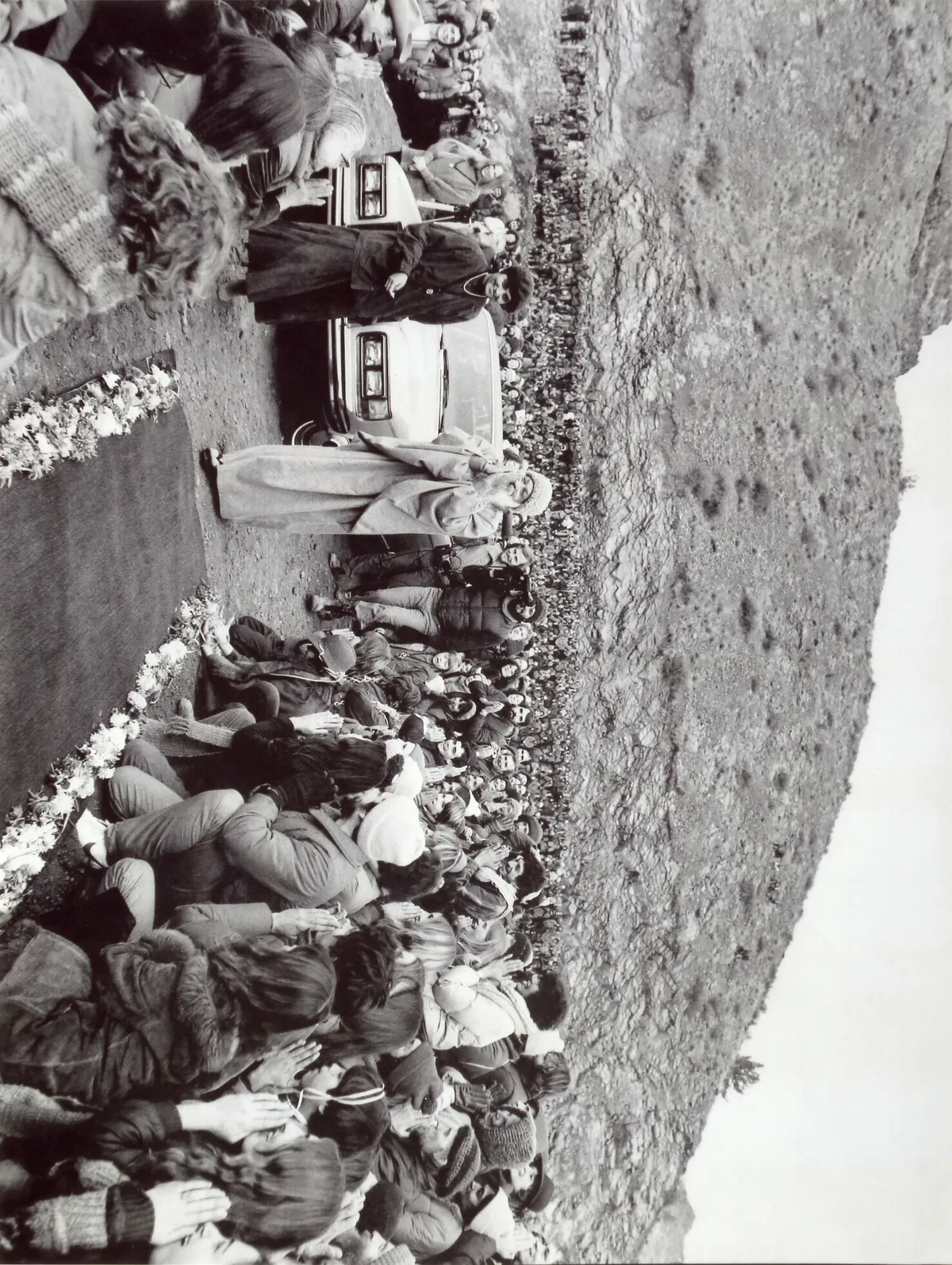
"Jharat Dashahun Dis Moti," a profound series by Osho, delves into the human journey as one traversing the arid landscape of life's existential desert. Osho paints a stark yet insightful picture of life as an onerous trek, void of bliss—the "rain of pearls" mystics speak of—a stark illustration of spiritual desolation. Through evocative imagery and poetic reflections, Osho confronts the inherent struggles of existence, likening life to a thorn-filled path where support often seems absent. The discourses delve into the dichotomy between the spiritual teachings of the enlightened and the barren realities of everyday life. Osho explores how the wisdom of saints and mystics, though aspirational, often feels out of reach, akin to listening to melodies while living among discord. A central theme is the necessity of personal effort—while spiritual guides lay out paths, building a bridge to higher consciousness requires individual labor. Within these teachings, Osho encourages embracing life's thorns as opportunities for growth, cultivating resilience without reliance, and aspiring towards the spiritual "Goal." Osho’s perspective uniquely merges existential acceptance with an urging for personal transformation, symbolizing life as a canvas for spiritual awakening amid its inherent trials.
-
Chapter 1
Does Buddha sleep? Awareness never sleeps while the body rests; true wealth is meditation, not money, status or hollow rituals—catch the inner thief.
-
Chapter 2
Drop the idea of a journey; you are already complete — the mind survives on striving. Restlessness and waiting arise because old habits resist non-doing.
-
Chapter 3
Pearls shower everywhere; turn inward, own your life, drop ego, meet a true master's presence that awakens your knowing—don't expect others to give it.
-
Chapter 4
God is not a person but the experience of unconditional love; know him by surrender—bow, dissolve the ego and awaken longing, not mere intellectual curiosity.
-
Chapter 5
Life is a desert of illusion; awakening comes through effortless remembrance—watch the breath, join satsang with a living Master, surrender the ego, taste amrit.
-
Chapter 6
Sannyas happens, not taken: thinking blocks the leap into the unknown. Trust, taste and love drop habitual chains—engage with the Divine as an inner marriage.
-
Chapter 7
Recognize the impossible, turn inward: surrender to swabhava and the Satguru, drop the ego and paper‑boats of worldly seeking to find the ever‑present Beloved.
-
Chapter 8
Hope breeds disappointment; the world is neutral—drop ego and hope, become a witness to your mind, and bliss and victory arise without striving.
-
Chapter 9
Life is fleeting; true birth arises in awakening - dissolve the ego, surrender into inner consciousness and receive the ever-raining pearls of love and being
-
Chapter 10
Old sannyas renounced life; mine is grace—celebration, creativity and meditation as true sannyas. Fear not taking sannyas; it transforms troubles.
-
Chapter 11
Life squandered in the mind’s tricks and the illusion ‘I am special’ ends in death; awaken as the witness, transcend Maya, and die laughing into true life.
-
Chapter 12
Bliss frightens the ego, so the urge to flee is natural; watch the mind, run inward to true love and awareness, not seek sympathy or forgiveness.
-
Chapter 13
Wake from maya: simplicity, inner seeing and the witness conquer death; true religion is wakefulness. Craving a guru’s suffering only betrays attachment.
-
Chapter 14
Awareness turning inward deserts the inner crowd; awe opens the heart as prayer, freeing you. Do not force kundalini—let energy dance and trust the witness.
-
Chapter 15
Offer the ego: when 'I' and 'mine' vanish, inner spring dawns and the anahata-nada awaken. Surrender, serve, sit in satsang and cling to the feet of saints.
-
Chapter 16
Life starts as unconscious play; sannyas is the final conscious play, drop past and future, embrace darkness and death; accept the master; avoid kundalini.
-
Chapter 17
Life is Paramatma's shadow - don't renounce living but use it to meet God within; awaken inner thirst, seek true satsang, and radically shed social shame.
-
Chapter 18
Ordinary living is mere livelihood; true life begins with a second birth—sannyas and meditation awaken the witnessing consciousness beyond body and mind, beyond death.
-
Chapter 19
Pearls of inner truth are sold: surrender ego, keep remembrance and love for love’s sake; cut nets of desire, and death loses its power forever.
-
Chapter 20
Tears of divine longing purify and open the path but are not meditation; true meditation is witnessing—watch without identification, letting life become sacred.
-
Chapter 21
Facing death ignites dharma: awaken by hearing the inner Shabd, surrendering the ego, living the present and choosing experience over belief for transformation