
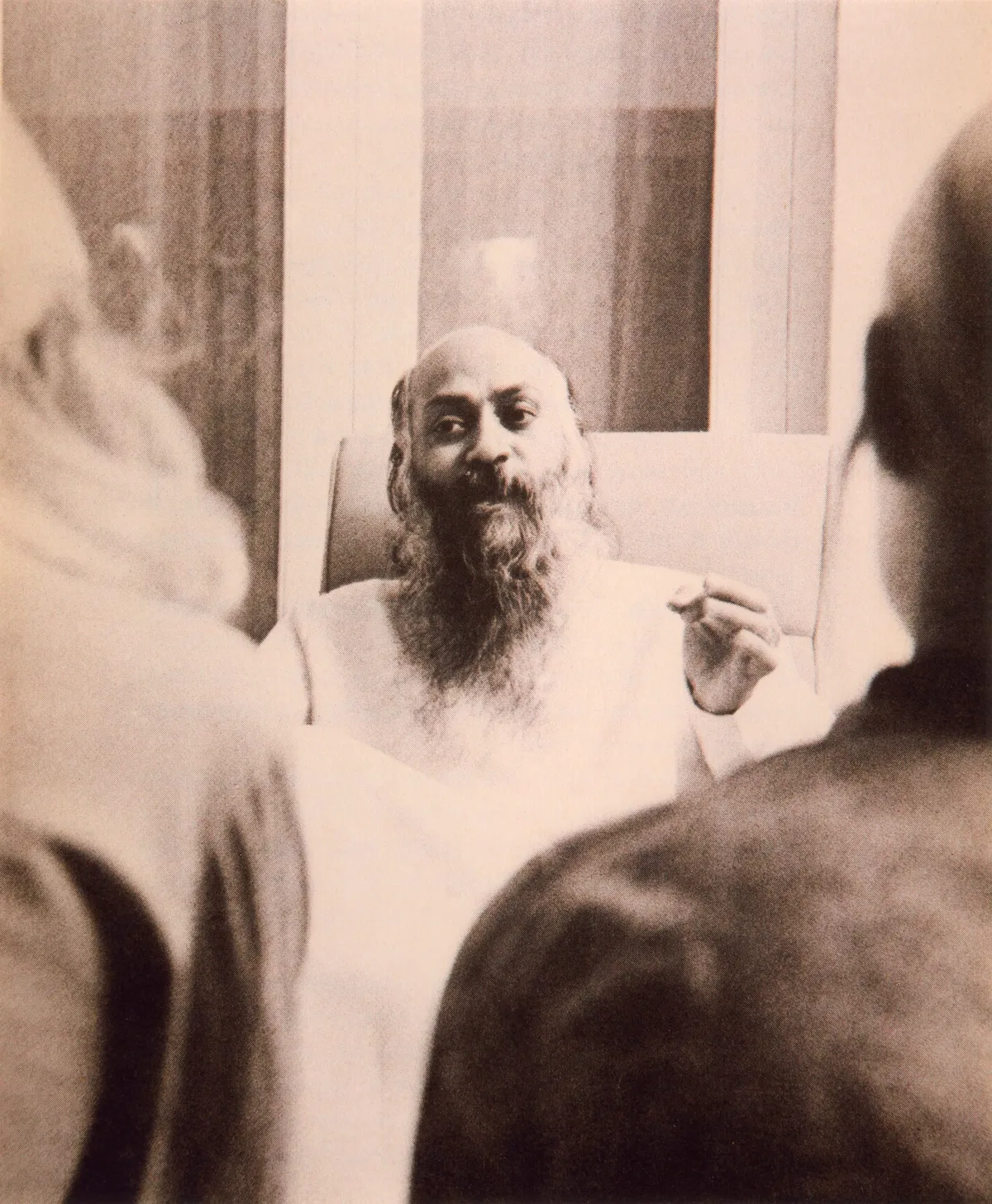
Osho's original Hindi beside Osho Live's English translation, matched passage by passage.
अजित सरस्वती! सत्य तो यही है कि सब यात्राएं झूठी हैं--अंतर्यात्रा भी। सत्य तो यही है कि तुम जो हो, वह पर्याप्त है, वह पूर्णता है। तुम जहां हो, उससे कहीं अन्यथा नहीं होना है। जैसे हो, वैसे ही होने में निर्वाण है। लेकिन इस सत्य को अंगीकार करना निश्चित ही कठिन। कठिन ही नहीं, जैसा तुम कहते हो, असंभव ही है। क्योंकि हमारी सारी शिक्षा-दीक्षा यात्राओं के लिए है। हमारी सारी शिक्षा-दीक्षा का आधार है: आकांक्षा, अभीप्सा, कुछ पाने की दौड़। फिर पाने की दौड़ धन की हो या ध्यान की--भेद नहीं पड़ता। फिर पाने की दौड़ पद की हो या परमात्मा की--भेद नहीं पड़ता। हमारे मन को अड़चन नहीं आती। मन कहता है: कोई फिक्र नहीं, पद नहीं पाना है, परमात्मा तो पाना है!
पाने की भाषा कायम रखो और मन राजी है। पाने की भाषा मन को जंचती है; क्योंकि मन पाने की भाषा के सहारे ही जीता है। मन यानी भविष्य। पाने की आकांक्षा तो भविष्य में ही पूरी हो सकती है, अभी और यहीं तो नहीं। अभी और यहीं, तो मन के लिए कोई अवकाश ही नहीं बचता; मन को गति करने के लिए स्थान नहीं बचता। मन को चाहिए थोड़ी जगह; आपा-धापी करे,भागे-दौड़े, तो मन राजी है। लौकिक लक्ष्य हो तो, अलौकिक लक्ष्य हो तो--मन राजी है, तुम कुछ पाने के लिए दौड़ते रहो। मन इस तक के लिए राजी है कि तुम अ-मन की साधना करो। मन से मुक्त होने की साधना करो, मन इसके लिए भी राजी है। मन कहता है: कुछ करो; कुछ किए चलो! क्योंकि मन जानता है, तुम कुछ भी करोगे तो मन बचेगा।
करने में मन का बचाव है, सुरक्षा है। करने में मन का पोषण है।
Ajit Saraswati! The truth is that all journeys are false—even the inner journey. The truth is that what you are is sufficient; it is completeness. Where you are, there is nowhere else to be. In being exactly as you are, there is nirvana. But to embrace this truth is certainly difficult—not just difficult, as you say, it seems impossible. Because all our conditioning is for journeys. The whole foundation of our training is ambition, aspiration, the race to attain something. Whether the race is for wealth or for meditation—makes no difference. Whether it is for status or for God—makes no difference. The mind is not troubled by that. The mind says, “No problem—if not status, then let it be God! Keep the language of attainment intact and the mind agrees.” The language of acquisition suits the mind; the mind survives only on the language of getting. Mind means future. The hunger to attain can only be fulfilled in the future, not here and now. In the here and now there is no space left for the mind; no room in which to move. The mind needs a little room—to scramble, to run; then it is satisfied. Whether the goal is worldly or otherworldly—the mind is happy so long as you keep running to get something. The mind is even willing that you practice no-mind! Practice freedom from mind—the mind is willing even for that. It says, “Do something; keep doing something!” Because the mind knows: whatever you do, the mind will survive. In doing, the mind finds protection and nourishment.
इसलिए मैं भी तुम जब शुरू-शुरू मेरे पास आते हो, तो अनिवार्यरूपेण मुझे तुम्हारी भाषा बोलनी पड़ती है। तुमसे मैं कहता हूं: पाना है परमात्मा, पाना है आनंद, पाना है मोक्ष, निर्वाण। मगर सच पूछो तो वह केवल तुम्हें टिकाए रखने का उपाय है। वह ऐसा है जैसे कांटे पर आटा लगा देते हैं, मछली को पकड़ रखने को। मछली कांटा तो न लीलेगी, आटे को लील जाएगी; आटे के साथ कांटा भी भीतर पहुंच जाएगा। और कांटा भीतर पहुंच गया तो मछली फंसी।
That is why, when you first come to me, I, too, am compelled to speak your language. I tell you: attain God, attain bliss, attain liberation, nirvana. But frankly, that is only a device to keep you engaged. It is like baiting a hook with dough to catch fish. The fish won’t swallow the hook; it will swallow the dough—and the hook goes in with it; once the hook is in, the fish is caught.
तुम्हारे मन को जरूरत है आटे की। तो सच्चिदानंद की बात करनी होती है; परम निर्वाण की बात करनी होती है; उस अलौकिक महासुख की, जो तुम्हारी प्रतीक्षा कर रहा है; उस सत्य की जो बहुत दूर है--चांद-तारों की भांति--और तुम्हारा मन राजी हो जाता है। तुम्हारा मन कहता है: चलेंगे, इस यात्रा को करेंगे। तुम्हारा मन इस चुनौती को स्वीकार कर लेता है। वस्तुतः धन पाने वाला, पद पाने वाला इतना ज्यादा मन को राजी नहीं कर पाता। क्योंकि मन चारों तरफ तो देखता है: बहुतों को पद मिल गया है, क्या खाक मिला! और बहुतों ने धन पा लिया है, पाया क्या है? आखिर मन अंधा तो नहीं है? चारों तरफ लोगों के जीवन को देखता तो है! इसलिए जब तुम कहते हो धन पाना है, तो मन को वैसी चुनौती नहीं मिलती। क्योंकि चारों तरफ जिनके पास धन है, उनको देख कर ही मन स्वयं ही अधमरी हालत में हो जाता है। पाकर भी क्या करेंगे?
Your mind needs the dough; so one must talk of sat-chit-ananda, of supreme nirvana, of that otherworldly great bliss awaiting you; of that truth far away—like the moon and stars—and your mind is pleased. It says: “We will go; we will undertake this journey.” The mind accepts the challenge. In fact, those who run after money or position cannot satisfy the mind so much, because the mind looks around: many have attained position—but what did they really get? Many have amassed wealth—what did they gain? The mind is not blind; it sees people’s lives all around. So when you say, “I want wealth,” the mind does not feel much challenge. Seeing the rich around, it already feels half dead, “Even if I get it, then what?”
लेकिन जब तुम कहते हो: ध्यान पाना है, तो मन खड़ा हो जाता है; मन में बल आ जाता है; मन में फिर एक ज्योति जगमगा उठती है; मन फिर एक अभियान से भर जाता है। मन कहता है, हां, अब कुछ करने जैसी बात मिली। कोई साधारण बात भी नहीं। मैं कोई साधारण आदमी थोड़े ही हूं--असाधारण हूं! मैं कोई सांसारिक थोड़े ही हूं--धार्मिक हूं। ये सांसारिक लोग तो क्षुद्र चीजों में उलझे हुए हैं; ये क्षुद्र चीजें तो मृत्यु इनसे छीन लेगी; मैं तो पाऊंगा विराट को; मैं तो पाऊंगा शाश्वत को, सनातन को, जिसे मृत्यु भी न छीन पाएगी।
But when you say, “I want meditation,” the mind stands tall; it regains strength; a flame lights up within; it fills with a new mission. “Yes, now there is something worth doing! I am not an ordinary man—I am extraordinary! I am not worldly—I am spiritual. These worldly people are entangled in petty things; death will snatch these away. I will attain the vast, the eternal, what even death cannot take away!”
गौर से देखना, यह लोभ का बड़ा रूप है--बड़ा सूक्ष्म। तुम्हारे साधु-संन्यासी तुम्हें समझाते हैं कि क्या उलझे हो क्षुद्र में! अरे, शाश्वत को खोजो! जिसको न चोर चुरा सकते, न डाकू लूट सकते, न मृत्यु छीन सकती। आग जिसे जलाती नहीं... नैनं दहति पावकः! शस्त्र जिसे छेद नहीं सकते... नैनं छिन्दन्ति शस्त्राणि! कुछ ऐसा खोजो। और तुम सोचते हो कि बड़े अध्यात्म की बात हो रही है! और मन तत्पर हो जाता है। मन इस चुनौती को स्वीकार कर लेता है।
जितना ऊंचा शिखर हो, मन को उतना ही आकर्षक लगता है। जितना दूर का हो, उतना आकर्षक लगता है। क्योंकि काश, पहुंच पाऊं तो मैं अद्वितीय हो जाऊंगा। क्या मजा है धन पा लेने में, मजा है तो बुद्ध होने में! क्या मजा है पद पा लेने में, मजा है तो जिन होने में! क्या मजा है कि चार लोगों ने तुम्हें जाना और फिर मौत आई और सब यूं मिट गया जैसे पानी पर खींची लकीरें मिट जाती हैं, मजा है तो कृष्ण होने में, क्राइस्ट होने में! सदियों-सदियों तक गूंजते रहते नाम! युगों-युगों तक पूजा चढ़ेगी, नैवेद्य चढ़ेगा, फूल चरणों पर गिरेंगे।
Look closely—this is greed in a subtler form, very refined. Your monks tell you, “Why get stuck in the trivial? Seek the eternal—what thieves cannot steal, bandits cannot loot, death cannot snatch; that which fire cannot burn—nainaṁ dahati pāvakaḥ; that which weapons cannot pierce—nainaṁ chindanti śastrāṇi.” And you think, “Ah, this is lofty spirituality!” And the mind becomes eager; it accepts this challenge. The higher the peak, the more the mind is attracted. The farther away, the more alluring. Because, “If I could reach it, I would become unique. What joy is there in getting money? The real joy is in becoming a Buddha! What joy in gaining office? The joy is in becoming a Jina! What joy if a few people know your name, and then death comes and wipes it away like a line drawn on water? The joy is in becoming a Krishna, a Christ! For centuries the name resounds; for ages flowers will be offered at your feet.”
जरा गौर से देखना। मन बड़ा चालबाज है! मन कहता है, यह बात करने जैसी है। इसलिए आध्यात्मिक यात्रा की बात मन को जंच जाती है। मैं भी तुमसे आध्यात्मिक यात्रा की बात करता हूं। मगर मेरे हिसाब में वह सिर्फ आटा है।
Look carefully—the mind is cunning. It says, “This is worth doing.” Hence talk of the spiritual journey appeals to the mind. I too speak to you of the spiritual journey—but in my reckoning, it is only bait.
अजित सरस्वती, एक बार तुम फंस गए, फिर असली बात कहनी ही होगी। और असली बात कठिनाई में डालेगी। असली बात बड़े द्वंद्व से भर देगी। आज नहीं कल, जब मैं देखूंगा अब तुम उस जगह आ गए जहां असली बात कही जा सकती है, फिर भी तुम लौट न सकोगे; तुम उस बिंदु पर आ गए जहां से लौटना असंभव है; तब तो मैं तुमसे कहूंगा ही--कोई यात्रा नहीं है। परमात्मा गंतव्य नहीं है, तुम्हारा अस्तित्व है। परमात्मा को पाना नहीं है, तुमने कभी खोया ही नहीं। परमात्मा को पाने के लिए कोई उपाय, विधियां, साधनाएं नहीं करनी हैं। उपाय, विधियां, साधनाएं तो उसे पाने को करनी होती हैं, जो हमारा स्वभाव न हो; जो हमसे विजातीय हो।
Ajit Saraswati, once you are hooked, then the real thing must be said. And the real thing will put you in difficulty, in great conflict. Today or tomorrow, when I see you have come to the point where the real can be told, and yet you will not be able to turn back—when you have reached the point of no return—then I will tell you: there is no journey. God is not a destination; God is your very being. God is not to be attained—you never lost Him. For attaining God there are no methods, no techniques, no practices. Methods and practices are needed only to get what is not your nature, what is alien to you.
हां, धन को पाने के लिए विधि चाहिए, उपाय चाहिए, तरकीबें चाहिए, मार्ग चाहिए। लेकिन परमात्मा तो तुम्हारी अंतर-अवस्था है, तुम्हारी आंतरिकता है। तुम कभी परमात्मा से भिन्न न रहे हो, न हो, न हो सकते हो। सिर्फ सो गए हो। परमात्मा इतना तुम्हें मिला हुआ है कि भूल गए हो। जब कोई चीज बहुत मिल जाती है तो भूल जाती है। तुम परमात्मा में ही जीए हो, इसलिए भूल गए हो। परमात्मा इतना निकट है, निकट से भी निकटतर, परमात्मा तुम्हारे प्राणों का प्राण है, इसलिए विस्मरण हो गया है। परमात्मा को इसलिए नहीं भूल गए हो कि परमात्मा बहुत दूर है, परमात्मा को इसलिए भूल गए हो क्योंकि परमात्मा दूर नहीं है। दूर के तारे तो दिखाई पड़ते रहते हैं। असल में पास जो है, वह भूल जाता है। पास जो है, वह दिखाई ही नहीं पड़ता। अगर दर्पण में अपनी तस्वीर देखनी हो, तो दर्पण के बहुत पास मत चले जाना। दर्पण से बिलकुल मुंह लगा कर मत खड़े हो जाना, नहीं तो कुछ भी न दिखाई पड़ेगा। जरा दूरी चाहिए, थोड़ा परिप्रेक्ष्य चाहिए, फासला चाहिए, तो ही देख सकोगे।
Yes, for money you need methods, techniques, strategies, a path. But God is your inner state, your interiority. You have never been, are not, and cannot be other than God. You have only fallen asleep. God is given to you so utterly that you have forgotten. What is too present is forgotten. You live in God, hence you forget. God is so near—nearer than the nearest—the life of your life; therefore He is overlooked. Not because He is far, but because He is not far. Distant stars are seen; what is very near is forgotten. If you want to see your face in a mirror, don’t press your face right up against it—you won’t see anything. A little distance, a perspective is needed.
मुल्ला नसरुद्दीन पर एक मुकदमा था अदालत में। उससे पूछा गया कि यह हत्या हुई, उस समय तुम कितनी दूर थे? उसने कहा: सत्रह फीट साढ़े नौ इंच। मजिस्ट्रेट भी चौंका, पूरी अदालत भी चौंकी। मजिस्ट्रेट ने कहा: ऐसा मालूम होता है कि तुम्हें पहले से ही पता था कि हत्या होने वाली है। क्या नाप कर खड़े हुए थे? जिंदगी हो गई मुझे अदालत चलाते, ऐसा कोई उत्तर देने वाला नहीं मिला कि साढ़े नौ इंच! इंच-इंच का हिसाब रखे हो? और अंधेरी रात थी और वहां कोई ज्योति भी नहीं थी, कोई लालटेन भी नहीं थी, अंधेरी रात में तुम्हें साफ-साफ दिखाई पड़ गया? इतना साफ कि तुम इंच-इंच का हिसाब रखे हो! तुम्हें कितनी दूर तक अंधेरे में दिखाई पड़ता है? नसरुद्दीन ने कहा: अब आप यह न पूछें! ऐसे तो मुझे रात के अंधेरे में तारे भी दिखाई पड़ते हैं! दूरी की तो आप पूछें ही मत! अमावस की रात में भी मुझे तारे दिखाई पड़ते हैं। तो यह तो कोई ज्यादा दूर की बात न थी।
Mulla Nasruddin was in court. He was asked, “When this murder took place, how far were you?” He said, “Seventeen feet and nine-and-a-half inches.” The magistrate and the whole court were startled. “You must have known beforehand a murder would happen! Were you standing there with a tape? I’ve run a court for years; never got an answer right down to half an inch! And it was a dark night, no lantern, no light—how did you see so clearly? How far can you see in the dark?” Nasruddin said, “Don’t ask that! Even on a dark night, I can see the stars. So this was not that far!”
तारे दिखाई पड़ सकते हैं। तारे बहुत दूर हैं। दूर हैं, इसलिए दिखाई पड़ सकते हैं। जो बहुत पास है, उसे हम भूल जाते हैं। यह मन का साधारण नियम है: जो तुम्हें मिल जाता है, तुम उसका विस्मरण कर देते हो। जो दूसरों के पास होता है, वह तुम्हें दिखाई पड़ता है; खुद के पास जो होता है, वह नहीं दिखाई पड़ता।
Stars can be seen—they are far. Because they are far, they can be seen. What is very near is forgotten. This is a mind’s simple rule: what you already have, you forget; what others have, you notice; what is in your own house, you don’t.
तुमने अपनी पत्नी को कब से नहीं देखा? वर्षों हो गए होंगे। शायद तुमने भर आंख उसे देखा ही न होगा वर्षों से! घर में ही है, पास ही है। हां, पड़ोसी जब देखते हैं तो टकटकी लगा कर देखते हैं! पति और अपनी पत्नी को टकटकी लगा कर देखे तो पागल समझो!
When did you last truly look at your wife? It might be years! Neighbors stare at her with wide eyes—but a husband looking at his wife that way would be thought mad!
मुल्ला नसरुद्दीन की पत्नी अपने डॉक्टर के पास गई और बोली कि मेरे पति की आंखें मालूम होता है कमजोर हो गई हैं। जरूरत है चश्मे की। वे मानते नहीं, उन्हें मैं भेजना चाहती हूं, बार-बार समझाती हूं, आते नहीं, जिद्दी हैं। आप ही एक दिन आ जाएं घर, जांच-पड़ताल कर के चश्मा जमा दें। डॉक्टर ने कहा कि जब वे नहीं आते, उन्हें कोई तकलीफ न होगी। तुझे कैसे पता चला? तो उसने कहा, अब आप से क्या छिपाना, वे मुझ ही को टकटकी लगा कर देखते हैं! इससे साफ है कि आंखें कमजोर हो गई हैं। नहीं तो अपनी पत्नी को कोई टकटकी लगा कर देखता है। एक दिन तो मैं निकल रही थी तो मुझे देख कर सीटी बजाने लगे। तब तो मुझे पक्का हो गया कि अब इनको दिखाई नहीं पड़ता। नहीं तो ऐसी कोई भूल करे!
Nasruddin’s wife went to the doctor and said, “My husband’s eyesight seems weak; he needs glasses. He won’t admit it. Please come home and fit him with a pair.” The doctor asked, “How do you know he needs them?” She said, “What shall I hide from you—he actually stares at me! It’s clear his eyes have weakened—otherwise what husband stares at his wife? One day I was passing by, and he even whistled at me! Then I was sure he can’t see properly—otherwise would he make such a mistake?”
जो अपना है, जो अपने पास है, वह तो याद ही तब आता है जब छूट जाता है। तुम जब किसी की मृत्यु पर रोते हो तो इसलिए थोड़े ही रोते हो कि मृत्यु हो गई। अगर ठीक विश्लेषण करोगे, अगर ध्यान दोगे इस बात पर, तो तुम कुछ और ही राज पाओगे। जब तुम किसी की मृत्यु पर रोते हो तो इसलिए रोते हो कि अरे, इतने दिन साथ थे, न प्रेम किया, न कभी बैठ के दो घड़ी आनंद में बिताए, और अब कभी मिलना न होगा। जब पास थे, तो दूर-दूर बने रहे और अब सदा के लिए दूर हो गए, अब पास होने का कोई उपाय न रहा। इस बात का पश्चात्ताप रुलाता है। इस बात की पीड़ा सालती है कि अब क्या करें? अब कैसे करें? अब चाहेंगे भी तो अब हाथ के बाहर बात हो गई। अब जो व्यक्ति गया सो गया। अब तो यह सपनों में भी मिलेगा, इसका भी कुछ पक्का नहीं! अब कभी किसी रास्ते पर, जीवन के किसी मोड़ पर इससे मुलाकात होगी, इसकी कोई आशा नहीं बांधी जा सकती। और कितने दिन साथ थे! और कलह की, और विवाद किया; कभी संवाद न हुआ, कभी दो घड़ी आनंद से न बैठे, कभी दो घड़ी संगीतबद्ध न हुए, कभी एक-दूसरे को भर आंख न देखा, कभी एक-दूसरे की आंख में न झांका, कभी एक-दूसरे के अंतस्तल में न टटोला। ऊपर-ऊपर का नाता रहा। जब साथ थे तो साथ नहीं थे, अब साथ टूट गया, अब पीड़ा सताती है; और अब साथ होने का कोई उपाय न रहा।
What is ours, what is close, is remembered only when it is gone. When you weep at someone’s death, you are not really crying because death happened. If you analyze deeply, you will find something else: “We were together so long, and I neither loved nor sat in joy with you—and now we will never meet.” When we were close, we stayed distant; now parted forever, there is no way to be close again. That regret makes you weep; that pain pricks—now what can be done? Now even if you wish, it is beyond reach.
परमात्मा हमारे इतने पास है, इतने पास, सदा से, कि यह बिलकुल स्वाभाविक है कि हम उसे भूल जाएं। बस, हम भूल गए हैं। हमें सिर्फ पुनः स्मरण दिलाना है। खयाल रखना, मैं कह रहा हूं: पुनः स्मरण! हमें सिर्फ झकझोरा जाना है।
God is so close to us—so close, always—that it is quite natural we forget. We have simply forgotten. We need only to be reminded—re-membered. Mind this: I say re-membrance. We only need to be shaken awake.
लेकिन अजित सरस्वती, तुम्हारी कठिनाई भी मैं समझता हूं। तुम कहते हो: अब तक की यात्रा तो सरल थी। मैं भी जानता हूं। यात्रा तो मन के लिए सरल है ही। कठिन से कठिन यात्रा भी सरल है। अड़चन तो तब आती है जब मैं कहता हूं: अब यात्रा नहीं, अब रुको! अब ठहरो! मन दौड़ने में कुशल है। मन तो ऐसा समझो जैसे साइकिल चलाते रहो तो खड़ी रहती है। चलाना बंद किया, पैडल मारने बंद किए कि गिरी। मन तो ऐसा है; भगाते रहो तो जीता है। रोका कि गिरा। पैडल मारते ही रहो; नई-नई आकांक्षाओं के, नई-नई वासनाओं के; इस जगत से चुक जाओ तो परलोक के, मगर पैडल चलाते रहो। कहीं भी जाओ मगर जाते रहो। पूरब तो पूरब, पश्चिम तो पश्चिम। रुकना मत! मन कहता है: रुकना मत; तुम रुके कि मैं मरा! रुकने में मेरी मौत है। और जहां मन की मौत है, वहीं परमात्मा का अनुभव है।
But Ajit Saraswati, I understand your difficulty too. You say: up to now the journey was simple. I know. Any journey is simple for the mind; even the most arduous journey is simple. The obstacle appears when I say: now no journey—stop! Be still! The mind is skilled at running. The mind is like a bicycle that stays upright so long as you pedal. Stop pedaling and it falls. Keep pedaling—new desires, new ambitions; if you’re done with this world, then the next world—just keep the pedals turning. Go anywhere, but go on. East or west—no matter—but don’t stop! The mind says, “Don’t stop; if you stop, I die! In stillness is my death.” And where the mind dies, there God is experienced.
इसलिए पहले तुम्हें फुसलाता हूं। जैसे छोटे बच्चों को हम खिलौने दे देते हैं। ऐसे तुमसे कहता हूं: साधना करो, ध्यान करो, प्रार्थना करो; मिलेगा परमात्मा, आनंद की वर्षा होगी; मोती ही मोती बरसेंगे--‘झरत दसहुं दिस मोती’--प्रलोभन में तुम आ जाते हो। यही बुद्धों की सदा से प्रक्रिया रही। और कोई उपाय नहीं है तुम्हारा हाथ पकड़ लेने का। सत्य तो तुमसे तभी कहा जा सकता है जब यह बात साफ हो जाए कि अब तुम लौट नहीं सकते। पिछले सेतु टूट गए, लौटने का उपाय नहीं, तब सत्य कहा जा सकता है; और तब सत्य फांसी जैसा लगता है। आगे जाने को कुछ है नहीं, पीछे लौटने का उपाय नहीं; अब तो ठहरना ही होगा। ठहरे कि मन गिरा, रुके कि मन गिरा, मन गिरा कि सब-कुछ हुआ। इधर मन गिरा कि उधर तुम्हारे भीतर जो छिपा पड़ा था, वह प्रकट हुआ।
Therefore at first I cajole you—like we give toys to a child. I tell you: practice, meditate, pray; you will attain God; bliss will shower; pearls will rain—“jharat dasahũ dis moti”—and you are enticed. This has always been the method of the Buddhas. There is no other way to take your hand. The truth can be told only when it is certain you can no longer turn back—when the bridges behind are burnt. Then the truth can be told; and then truth feels like a gallows. There is nowhere further to go, and no way back; you must stop. Stop—and the mind falls. When the mind falls, everything happens. As the mind collapses here, the hidden within you reveals itself there.
तुम परमात्मा हो। अमृतस्य पुत्रः। वेद कहते: तुम अमृत के पुत्र हो। कहीं जाना नहीं, कुछ करना नहीं। लगेगा असंभव सा। प्रश्न उठेगा: फिर करें क्या? और मैं यही कह रहा हूं: करना कुछ भी नहीं है। इस जगत में न करने से कठिन और कोई बात नहीं है। आमतौर से तो ऐसा लगता है, न करना सरलतम होना चाहिए। जब कुछ करना ही नहीं, तो इसमें कठिनाई क्या? मगर नहीं, बात उलटी है। करने में कठिनाई नहीं है; कठिन से कठिन काम आदमी कर लेता है। चांद पर जाना हो, जाने को राजी है। मगर कहो कि दो क्षण शांत बैठ जाओ, हिलो-डुलो मत, मन को मत कंपाओ, भीतर कंपन न चलने दो, विचार को छोड़ दो, और वह कहता है: यह नहीं हो सकेगा! चांद पर चले जाओे, वह कहेगा: ठीक। जान खतरे में डालने को राजी है। गौरीशंकर चढ़ना है, चढ़ेंगे। मगर भीतर जाना है, यह मत कहो। क्योंकि भीतर जाने का जो बुनियादी उसूल है, वह आत्महत्या जैसा लगता है मन को। है ही आत्महत्या। वह मन का विसर्जन है। भीतर जाना यात्रा नहीं है, सब यात्राओं का छूट जाना है। बस, सब यात्राएं छूटीं कि तुम भीतर पहुंचे। अंतर्यात्रा और-और यात्राओं में एक यात्रा नहीं है, अंतर्यात्रा केवल कहने की बात है। सब यात्राओं से मुक्ति अंतर्यात्रा है। जब कहीं जाने को नहीं बचता, तब तुम ठहर गए, थिर हो गए। उस थिरता में... कबीर कहते हैं: ज्यों का त्यों ठहराया! तुम जैसे हो वैसे के वैसे ही ठहर गए; बस, सारा राज खुल गया; मंदिर के द्वार खुल गए। ज्यों का त्यों ठहराया!
You are God. Amṛtasya putraḥ—the Vedas say: you are the children of immortality. There is nowhere to go, nothing to do. It will feel impossible. You will ask, “Then what shall I do?” And I am saying: nothing is to be done. In this world, nothing is harder than non-doing. Ordinarily, it seems non-doing should be simplest—when there is nothing to do, what difficulty can there be? But no—the truth is the opposite. Doing is not difficult; man can do the most difficult things. He can even go to the moon. But ask him to sit silently for two moments—don’t move, don’t stir the mind, let no ripple arise within, drop thoughts—and he says, “That I cannot do.” He will put his life at risk to climb Everest—but don’t ask him to go within. Because the fundamental principle of going within feels like suicide to the mind—and indeed it is the death of the mind. The inner is not a journey; it is the dropping of all journeys. When all journeys drop, you have arrived within. The “inner journey” is not one more journey; it is only a way of speaking. Freedom from all journeys is the inner journey. When there is nowhere left to go, you become still. In that stillness… Kabir says: “Jyõ kā tyõ thaharāyā”—just as it is, it stands still. You remain exactly as you are; the whole secret opens, the temple doors swing wide: jyõ kā tyõ thaharāyā.
असंभव भी लगेगा, बात भी समझ में आएगी; क्योंकि अब तुम उस जगह तो आ गए हो जहां बात समझ में आनी ही चाहिए। न आ सकती समझ में तो मैं तुमसे कहता नहीं। तुमसे कह रहा हूं तो इसीलिए कि समझ में आएगी। मगर समझ में आ जाना और समझ में टिक जाना दो बातें हैं। आते-आते छिटक जाती है। आई-आई और गई। क्षण भर को लगता है सब साफ हुआ, जैसे बिजली कौंध गई, और फिर घुप्प अंधेरा हो जाता है। बुद्धि की समझ में बात आ जाती है कि परमात्मा हमारा स्वभाव है, हां, ठीक, जाना कहां, पाना कहां, हम उसी में हैं, वह हमारा जीवन है, यह बात तो समझ में आ जाती है, लेकिन फिर मन है, सदियों-सदियों पुराना, जन्मों-जन्मों पुराना... यह तुम खयाल रखना, हर जीवन में शरीर तो बदल जाता है, मन नहीं बदलता। तुम्हारा एक शरीर जब गिरता है, तब तुम यह मत सोचना कि उस शरीर के भीतर बसा हुआ मन भी गिर जाता है। मन तो उड़ान भरता है, दूसरे शरीर में प्रवेश हो जाता है। मन तुम्हारे पास अति प्राचीन है। शरीर तो बड़ा नया है। किसी के पास पचास साल पुराना, किसी के पास साठ साल पुराना, सत्तर साल पुराना, बस, इससे ज्यादा पुराना तो नहीं है! शरीर तो बड़ा नया है, मन बहुत प्राचीन है, अति प्राचीन है। तुम्हारे मन ने सारा इतिहास देखा है। करोड़ों-करोड़ों वर्ष की यात्रा है। उस यात्रा के लिए प्रतीक शब्द भारतीय संतों ने खोजा है: चौरासी कोटियों में तुम्हारा मन भटका है, भरमा है। शरीर तो बदलता रहा है, मन हमेशा वही का वही। उस पर और-और नई परतें अनुभव की, ज्ञान की, धारणाओं की, लोभ की, भय की, वासनाओं की जमती गयीं, जमती गयीं। मन एक हिमालय जैसा पहाड़ हो गया है।
It will feel impossible, and yet it will make sense—because now you have come to the place where it must make sense. Had it not been possible, I would not have said it to you. If I am saying it to you, it will be understood. But understanding it and remaining established in that understanding are two different things. It comes—and slips away. It comes and goes. For a moment everything seems clear—a lightning flash—and then deep darkness again. The intellect understands: “God is my nature; right—where to go, what to attain? We are already in Him; He is our life.” But then the mind—ancient, ancient, from birth to birth—remember this: in every life the body changes; the mind does not. When one body drops, don’t think the mind inside it also drops. The mind flies on and enters another body. The mind you carry is very ancient; the body is new—fifty, sixty, seventy years old at most. The mind has seen the whole history—countless ages of wandering. Indian seers gave it a symbol: the mind has roamed through the 8.4 million forms. The body kept changing; the mind remained the same, layered deeper and deeper with experiences, beliefs, cravings, fears, desires—until it became a Himalaya of habit.
एक झलक मिलती है तुम्हें कि बात ठीक। लेकिन यह जो पुराना मन है, यह उस झलक को टिकने नहीं देता। यह कहता है, बात ठीक कैसे हो सकती है? मेरा क्या होगा? मैं कहां जाऊं? और यह बात ठीक नहीं हो सकती; क्योंकि अगर तुम परमात्मा ही हो तो फिर धर्म का कोई प्रयोजन नहीं; फिर साधना का कोई अर्थ नहीं। अगर तुम परमात्मा ही हो तो फिर कौन है संत और कौन असंत; कौन पापी, कौन पुण्यात्मा; फिर कौन रावण और कौन राम? फिर मन हजार उपद्रव खड़े करता है। फिर तुम शराबी में और सत्संगी में क्या फर्क करोगे? अगर सभी परमात्मा हैं! और मन के इन प्रश्नों के उत्तर देना मुश्किल होने लगेगा। और सच्चाई यही है कि संत में और असंत में कोई फर्क नहीं है। फर्क ऊपर-ऊपर है, फर्क मन का है, भीतर एक ही विराजमान है। राम और रावण में कोई फर्क नहीं है।
You get a glimpse that the teaching is right; but the ancient mind won’t let the glimpse stay. It protests, “How can this be right? What will happen to me? Where will I go? If you are already God, then what is the point of religion? What meaning has practice? If you are God, then who is saint and who sinner? Who is Ravana and who Rama?” The mind creates a thousand disturbances. “Then what difference between a drunkard and a devotee—if all are God?” It becomes hard to answer such questions. And the truth is: between saint and sinner there is no difference—only on the surface, in the mind; within, the same One resides. Between Rama and Ravana there is no difference.
कभी तुमने रामलीला के मंच के पीछे जाकर देखा? वहां तुम्हें असलियत पता चलेगी। पर्दा उठता है, राम और रावण धनुषबाण एक-दूसरे पर साधे खड़े हैं, युद्ध के लिए तत्पर, एक-दूसरे की हत्या के लिए बिलकुल आतुर। फिर पर्दा गिरता है। फिर जरा पीछे जाकर देखा करें! जब पर्दा गिर जाता है तो पीछे क्या हो रहा है? राम और रावण बैठे चाय पी रहे हैं--साथ-साथ! गपशप कर रहे हैं। सीता मइया दोनों के बीच बैठी गपशप कर रही हैं। न राम से कुछ लेना-देना है, न रावण से कुछ झगड़ा है। हनुमान ने भी पूंछ-वूंछ निकाल कर टांग दी है, मुखौटा उतार दिया है; अपनी असलियत में आ गए हैं। यह जगत एक बड़ी नाट्य-मंच है। यहां सब बाहर-बाहर पर्दे उठते हैं, बड़े भेद हैं; पर्दे गिर जाते हैं, कोई भेद नहीं है। अभिनय है। जीवन अभिनय से ज्यादा नहीं है। मन अभिनेता है। और मन के प्रति जाग जाना, साक्षी हो जाना अभिनय के पीछे झांक लेना है, मंच के पीछे जाकर देख लेना है। वहीं असलियत खुलती है।
Have you ever gone behind the stage of a Ramlila? There the reality is revealed. The curtain lifts: Rama and Ravana stand with bows and arrows aimed, ready for battle, eager to kill each other. Then the curtain drops. Go and look backstage—what’s happening? Rama and Ravana are sitting together, sipping tea, chatting. Mother Sita sits between them, gossiping; Hanuman has hung up his tail and removed his mask—they are all in their real selves. This world is a grand stage. Frontstage, with the curtains up, there are great differences; when the curtains fall, none. It is acting. Life is nothing more than acting. The mind is the actor. To be aware of the mind, to be a witness, is to peep behind the stage, to see what’s real.
तुम वही हो जो तुम्हें होना है; और तुम सदा से वही हो। समझ में बात आएगी, क्योंकि खींच लाया हूं समझ को वहां तक। लेकिन बहुत बार छूटती लगेगी, क्योंकि सदियों-सदियों पुराना मन अपनी दांव-पेंच जारी रखेगा; अपनी दुलत्तियां चलाता रहेगा; आदत से बाज नहीं आ सकता। आदतें बड़ी मुश्किल से मरती हैं। मरते-मरते भी आखिरी उपाय अपने बचाने का करती हैं, चिल्लाती हैं: बचाओ, बचाओ!
You are what you have to be—and you have always been that. The understanding will come, because I have drawn your understanding this far. But often it will seem to slip, because the ancient mind will keep playing its tricks, kicking its heels; habits die hard. Even as they die, they make one last effort to save themselves, crying, “Help, help!”
आदतों का भी अपना जीवन है। और यह मन की आदतें करीब-करीब तुम्हारे भीतर ऐसा कब्जा करके बैठ गई हैं। इनको आज बाहर निकालोगे एकदम, तो ये निकल नहीं जाएंगी। कोई किराएदार ऐसे नहीं निकलते! और दो-चार साल किराएदार रह जाएं तो नहीं निकलते, और ये तो सदियों-सदियों से रह रही हैं आदतें! ये तो मालिक को ही निकाल बाहर करने की कोशिश करेंगी। ये तो कहेंगी कि तुम्हारा मन नहीं लगता तो रास्ता लगो! जाओ, जरा हवाखोरी कर आओ!
Habits have their own life. These mental habits have taken possession of you. If you try to throw them out in one day, they will not go. No tenant leaves so easily! Even if they have stayed two or four years, they won’t leave; and these have lived for ages. They will try to throw out the owner himself. They will say, “If you are uncomfortable, you can leave! Go take some fresh air!”
इन आदतों ने कब्जा कर लिया है पूरा का पूरा! इसलिए ये आदतें आती हुई समझ को छिटका-छिटका देंगी, हटा-हटा देंगी। मगर अब ये आदतें भी जीत नहीं सकतीं। कुछ दिन कशमकश चलेगी, अजित! कुछ दिन ऊहापोह चलेगा! यह द्वंद्व, खींचा-तानी--तुम्हारी आदतों और मेरे बीच। तुम तो देखो अब! देखना यह है कि तुम्हारी आदतें जीतती हैं या मैं जीतता हूं? इतना तुमसे कह सकता हूं कि ये आदतें जीत नहीं सकतीं--समय कितना ही ले लें, देर कितनी ही लग जाए, मगर ये जीत नहीं सकतीं। क्योंकि पीछे लौटने के सेतु टूट गए हैं। उतना आश्वासन तुम्हें देता हूं कि पीछे लौटने का अब कोई उपाय नहीं रहा है। मेरे पास जो आया, मेरे पास जो बैठा, मुझमें जो थोड़ा डूबा, उसको अब कहीं जाने का कोई उपाय नहीं रहा है। बचना हो मुझसे तो मेरे पास आना ही नहीं चाहिए। आ भी जाओ तो बिलकुल बहरे की तरह बैठना चाहिए। सुनना ही मत, कुछ भी मैं कहूं! मैं कुछ भी कहूं, तुम अपने भीतर दूसरी बातें चलाते रहना। और जो यहां से भागो तो फिर दुबारा मत आना!
They have occupied everything. So these habits will keep brushing away the coming understanding. But now they cannot win. For a while there will be tussle, Ajit—a tug-of-war between your habits and me. Now just watch! See whether your habits win or I win. I can tell you this much: they cannot win—however much time they take, however long the delay, they cannot win. The bridges back are gone. I assure you of this: there is no longer any way back. Whoever has come to me, sat with me, dipped a little into me—there is no way for him to go anywhere else. If you want to be safe from me, don’t come near me at all. And if you do come, sit absolutely deaf—don’t listen to a word! Whatever I say, keep other thoughts running inside. And if you run away, don’t ever come back!
अजित, वह समय तो गया! तुम तो डूब गए--आकंठ डूब गए। अब कोई भय नहीं है। थोड़े दिन तक ये आदतें पंख मारेंगी, फड़फड़ाएंगी, चेष्टा करेंगी। इन बेचारी आदतों को क्या पता कि तुम कितने डूब गए हो! इनको अभी भी आशा है कि शायद तुम्हें फिर पुराने ढंग पकड़ाए जा सकें। अब वे ढंग पकड़ाए नहीं जा सकते।
Ajit, that time is gone. You have already drowned—drowned up to your neck. Now there is no fear. For a few days your habits will flap their wings, flutter, try their tricks. Poor habits don’t yet know how deep you have drowned. They still hope to drag you back to the old ways. Those ways can no longer be fastened on you.
तुम पूछते हो: ‘क्या मैं समय के पूर्व असंभव की अपेक्षा कर रहा हूं?’
You ask: “Am I expecting the impossible before its time?”
नहीं, समय आ गया! और यह असंभव की अपेक्षा नहीं है। यह तो स्वाभाविक की अपेक्षा है, यहां कहां असंभव! यह अपेक्षा ही नहीं है, यह तो स्वाभाविक का स्वीकार है। ‘अनलहक।’ इस उदघोष को अब उठने दो। ‘अहं ब्रह्मास्मि।’ यह रोएं-रोएं से गूंजने दो।
No—the time has come! And this is not the impossible; it is the natural. It isn’t even an expectation; it is the acceptance of what is natural. “Anal Haq.” Let this proclamation arise now. “Aham Brahmāsmi.” Let it resound in every fiber of your being.
और तुम पूछते हो: ‘क्या प्रतीक्षा साधना से भी कठिन साधना है?’
You ask: “Is waiting a sadhana harder than sadhana?”
प्रतीक्षा किस बात की! प्रतीक्षा में तो फिर यात्रा शुरू हो गई कि कोई आएगा, कि आने वाला आएगा! कोई आने को नहीं है। कोई गया ही नहीं कभी। जो जहां है, वहीं है। ज्यों का त्यों ठहराया! प्रतीक्षा किसकी करनी है! किसी की कोई प्रतीक्षा नहीं करनी है।
Waiting—for what? In waiting, the journey starts again: that someone will come, that the one-to-come will arrive. No one is coming. No one ever went. Whoever is—already is. “Jyõ kā tyõ thaharāyā.” Whom are you to wait for? No waiting is needed.
यह अस्तित्व पूर्ण है। उपनिषद प्यारी उदघोषणा करते हैं इस अस्तित्व की पूर्णता की। कहते हैं: इस पूर्ण से हम पूर्ण को भी निकाल लें तो भी पीछे पूर्ण ही शेष रहता है। इस पूर्ण में हम पूर्ण को भी जोड़ दें, तो भी पूर्ण उतना का ही उतना रहता है। पूर्ण में कुछ भेद ही नहीं पड़ता। पूर्ण और शून्य की यही खूबियां है। शून्य से कुछ भी निकाल लो, शून्य शून्य ही रहता है। शून्य में कुछ भी जोड़ दो, शून्य शून्य ही रहता है। और इसलिए पूर्ण और शून्य एक ही सत्य के दो नाम हैं, एक ही सिक्के के दो पहलू हैं। वेदांत ने पूर्ण शब्द को चुना, बुद्ध ने शून्य शब्द को चुना। यह सिर्फ चुनाव की बात है। यह अपनी मर्जी, अपनी मौज। जिसको जो रुचिकर लगे। लेकिन ये एक ही सत्य के दो पहलू हैं।
This existence is complete. The Upanishads give a lovely declaration of this completeness: even if from the Whole you take away the whole, the Whole remains; if into the Whole you add the whole, the Whole remains just the same. The Whole is unaffected. Such are the virtues of the Whole and the Void: take anything from zero—zero remains zero; add anything to zero—zero remains zero. Therefore Purna (the Whole) and Shunya (the Void) are two names for the same truth—two faces of one coin. Vedanta chose “Purna”; the Buddha chose “Shunya.” It is only a choice—according to one’s taste. But they point to the same reality.
तुम वही हो। सतत इस स्मरण को अब सम्हालो! यही असली ध्यान है। समाधान मेरे उत्तर से नहीं मिलेगा। समाधान तो समाधि से मिलेगा। और समाधि फलित हो सकती है।
You are That. Now keep this remembrance steady—this is the real meditation. Resolution will not come from my answers; resolution comes from samadhi. And samadhi can flower.
समय के पूर्व तुम नहीं अपेक्षा कर रहे हो। समय तो सदा से आया हुआ है। इसी क्षण घटना घट सकती है। अभी, यहीं। इसको पल भर भी टालने की जरूरत नहीं है। कल की तो बात ही मत लाना। क्योंकि जो कल की बात लाया बीच में, उसने सदा के लिए टाल दिया। कल यानी कभी नहीं। कल का अर्थ होता है: कभी नहीं।
You are not expecting it before time. Time has always already arrived. The happening can occur this very moment—now, here. There is no need to postpone it even for a moment. Don’t bring in tomorrow. Whoever brings in tomorrow postpones forever. Tomorrow means “never.”
इसलिए जिन्होंने जाना उन्होंने कहा:
काल करै सो आज कर, आज करै सौ अब।
पल में परलय होएगी, बहुरि करैगा कब।।
Hence those who knew said: “What you plan for tomorrow, do today; what you plan for today, do now. In a moment the deluge may come—when will you do it then?”
मगर ज्ञानियों की बातें जब अज्ञानियों के हाथ में पहुंचती हैं तो बातें बिगड़ जाती हैं।
But the sayings of the wise, when they reach the ignorant, get spoiled.
चंदूलाल ने जाकर अपने मनोवैज्ञानिक से पूछा कि मैं क्या करूं? कोई काम ही नहीं करता। कोई वक्त पर आता नहीं। आकर लोग टांग पसार कर बैठ जाते हैं। अखबार पढ़ते हैं, चाय पीते हैं, सिगरेट पीते हैं, गपशप उड़ाते हैं। छोटे-छोटे ट्रांजिस्टर रेडियो छिपा रखे हैं टेबल के भीतर, उनको सुनते हैं। चपरासी को भी सम्हाल कर रखा हुआ है कि जैसे ही मैं दफ्तर में आता हूं, वह घंटी बजा देता है। सो सब सजग हो जाते हैं, फाइलें खुल जाती हैं। मैं गया कि फाइलें बंद! काम कुछ होता ही नहीं, क्या करना है! दुकान डूबी जाती है, दिवाला करीब आ रहा है। मनोवैज्ञानिक ने कहा कि तुम यह तख्ती हरेक की टेबल पर लगा दो।
Chandulal went to his psychologist: “What should I do? No one works. No one comes on time. Once in, they stretch their legs, read the paper, drink tea, smoke, gossip. They hide small transistor radios in their desk drawers and listen. I’ve even fixed it with the peon that when I enter the office, he rings a bell—then everyone sits up, files open. The moment I leave, files close! No work gets done; the shop is sinking, bankruptcy near.” The psychologist said, “Put this plaque on everyone’s desk:
काल करै सो आज कर, आज करै सो अब।
पल में परलय होएगी, बहुरि करैगा कब।।
‘Kāl karai so āj kar, āj karai so ab. Pal mẽ pralaya hoegi, bahuri karaiga kab.’
What you would do tomorrow, do today; what you would do today, do now. In a moment may come dissolution—when will you do it again?
इस तख्ती का परिणाम होगा। इसको रोज-रोज देखेंगे, बार-बार देखेंगे, कुछ तो अक्ल आएगी!
चंदूलाल को भी बात जंची। सुंदर तख्तियां बनवा कर सबकी टेबल पर लगवा दीं; जगह-जगह दीवालों पर लगवा दीं; जहां भी जाएं, वहां लगवा दीं--बाथरूम में, यहां-वहां, सब जगह, जहां भी जाओ वहीं वही तख्ती! तीन-चार दिन बाद रास्ते पर मनोवैज्ञानिक मिला, पूछा: चंदूलाल क्या हाल है?
चंदूलाल ने कहा: मत पूछो! हाल तो पूछो ही मत! इससे ज्यादा बुरा हाल कभी भी नहीं था। तुम्हारी तख्ती...! जी होता है कि तुम्हारी गर्दन मरोड़ दूं। मेरा भी जी हो रहा है कि काल करै सो आज कर, आज करै सो अब; पल में परलय होएगी, बहुरि करैगा कब! और उसने तो झपट के जो गर्दन पकड़ी मनोवैज्ञानिक की... मनोवैज्ञानिक ने कहा: भई, ठहरो तो तुम, बात क्या है, बात तो समझने दो! तख्ती में यह बात आती ही नहीं, गर्दन दबाना किसी की! तख्ती में तो नहीं आती, उसने कहा, लेकिन हालत जो हुई वह यह हुई कि मेरा मुनीम तिजोड़ी लेकर भाग गया। और नोट लिख गया कि काल करै सो आज कर! और लिख गया है कि महानुभाव, बहुत दिन से सोचता था कि ले भागूं; मगर सोचता था, चलेंगे, करेंगे। मगर आपकी तख्ती ने इशारा दे दिया कि बच्चू, निकलना हो तो निकल ही जाओ! पल में परलय होएगी, बहुरि करैगा कब! और मेरा हेड क्लर्क मेरी टाइपिस्ट लड़की को ले भागा। और जाते वक्त लिख गया दीवाल पर कि कर लो अपना सूत्र याद! भगाना तो बहुत दिन से चाहता था, मगर यही सोच कर कि क्या जल्दी पड़ी है, कभी भी कर लेंगे। और बात यहीं तक होती तो ठीक थी, वह जो मेरा चपरासी है, वह एकदम भीतर घुस आया और लगा जूते मारने! मैंने पूछा: भई, यह तू क्या करता है? उसने कहा: तख्ती क्यों लगाई? मारना तो सदा से चाहता था कि इस चंदूलाल के बच्चे को ठिकाने लगा दूं... कौन चपरासी अपने मालिक को नहीं मारना चाहता... मगर मैं यही सोच कर कि देखेंगे, कभी देखेंगे, मौका कोई आएगा, अवसर कोई लगेगा, कोई अंधेरे-उजाले में कभी मिल जाएगा, वख्त-बेवख्त, तो ठिकाने लगा देंगे। मगर जब से तख्ती पढ़ी, तब से यह बात समझ में आई कि पल में परलय होएगी, बहुरि करैगा कब! अरे, आए, ऐसा समय आए न आए, जो करना है कर गुजरो!
बर्बाद कर दी मेरी दुकान!
Seeing it daily, something will click.” Chandulal liked the idea, got beautiful plaques made, put them on every desk, on walls everywhere—even in the bathroom—wherever you went, the same plaque. Three or four days later he met the psychologist on the road. “How’s it going?” “Don’t ask! It has never been worse. I feel like wringing your neck! That plaque… My cashier ran away with the safe, leaving a note: ‘What you would do tomorrow, do today.’ He wrote: ‘Sir, I had long thought of running off with it, but kept delaying. Your plaque gave me the signal: if you want to leave, leave now! “In a moment the deluge may come—when will you do it then?”’ And my head clerk ran off with my typist. On the wall he wrote: ‘Keep your maxim in mind! I had wanted to elope for long, but thought, what’s the hurry? Your plaque reminded me.’ And if that were all, my peon barged in and started beating me with his shoe! I asked, ‘What are you doing?’ He said, ‘Why did you put up that plaque? I’ve always wanted to set this Chandulal right—what peon doesn’t want to beat his boss? But I kept thinking: sometime, someday, if the chance comes. Since I read the plaque I realized: “In a moment the deluge may come—when will you do it then?” So do what you have to do!’ He’s ruined my business!”
ज्ञानी कुछ कहते हैं, अज्ञानियों तक पहुंचते-पहुंचते उसके अर्थ बिलकुल बदल जाते हैं। क्योंकि बीच में मन खड़ा है। वह अनर्थ करने में बड़ा कुशल है। मैं जब तुम से कह रहा हूं: कुछ भी नहीं करना है, तो यह मत समझ लेना कि चदरिया तान कर और सो जाना है। जब मैं कहता हूं: कुछ भी नहीं करना है, तो यह मत सोच लेना कि तुम जो कर रहे हो सो फिर ठीक ही कर रहे हो--कुछ और तो करना नहीं है। जब मैं कहता हूं: कुछ भी नहीं करना है, यह जगत तो अभिनय है, तो यह मत सोच लेना कि चोरी कर रहे हो तो तुम क्या करो! कि बेईमानी कर रहे हो तो तुम क्या करो! अरे, परमात्मा जो करवा रहा है सो कर रहे हैं! जो अभिनय उसने दिया। अब बीच में कोई अभिनय को तो बदल नहीं सकते। एक दफा पात्र को दे दिया अभिनय कि तुम यह चोरी का काम करना नाटक में, तो वह चोरी का काम ही करेगा; अब बीच में थोड़े ही बदल सकता है!
तुम्हारा मन बहुत बेईमान है। मन मात्र बेईमान होते हैं। जरा मन से सावधान रहना। मन इस तरह की तरकीबें निकाल लेता है। इस मन के कारण ही इस देश की बड़ी दुर्दशा हुई। इस देश ने बड़े गहरे सूत्र दिए हैं। लेकिन उन सूत्रों का बड़ा दुष्परिणाम हुआ। हमारे हाथ में आते-आते हीरे-जवाहरात कूड़ा-कचरा हो जाते हैं। हमारे हाथ ऐसे चमत्कारी हैं! हमारे हाथ में सोना रख दो, मिट्टी हो जाता है। मलूक ने कहा: अजगर करै न चाकरी, पंछी करै न काम; दास मलूका कह गए, सबके दाता राम! और जितने आलसी हैं, सब ने यह सूत्र याद कर रखा है। वे कहते हैं, मलूकदास जी कह गए हैं कि अजगर करै न चाकरी, पंछी करै न काम! तो जब मलूकदास कह गए तो ठीक ही कह गए। क्यों करें काम? क्यों करें चाकरी? जब सबके दाता राम हैं, तो हमारी भी फिकर लेंगे। सो पूरा देश काहिल हो गया, सुस्त हो गया। कोई काम नहीं करना चाहता। काम की बात ही मत छेड़ो!
परिणाम सामने है। गहन दरिद्रता, गुलामी, भुखमरी, बीमारी। मगर हम उढ़ा देते हैं, अच्छे-अच्छे शब्दों के भीतर सारी बीमारियों को ढांक देते हैं।
The wise say something; by the time it reaches the ignorant, its meaning is utterly altered—because the mind stands in between, skilled at making mischief. When I say “nothing is to be done,” don’t think it means: pull the sheet over your head and sleep. Don’t conclude: whatever you are doing is fine—there is nothing else to do. Don’t think: “If this world is only a play, then if I steal, what can I do? If I cheat, what can I do? God is making me do it! He gave me this role; how can I change it? If the role is of a thief, I must be a thief!” Your mind is very dishonest—the mind as such is dishonest. Be alert to it. It will devise such tricks. Because of this mind, the great sutras of this land have produced terrible side effects. Place gold in our hands—we turn it to dust. Malukdas said, “Ajgar karai na chākari, panchhi karai na kām; dās Malūka kah gaye, sabke dātā Rām!” “The python does no job, the birds do no work; says servant Maluka, the giver of all is Ram!” And every lazy fellow memorized this line: Why work? Why take a job? If Ram provides for all, He will take care of us too. The whole country became sluggish, lethargic. The result is in front of us: deep poverty, slavery, hunger, disease. We cover our illnesses with beautiful words.
मैं जब तुम से कह रहा हूं कि तुम परमात्मा हो, तो इसका अर्थ अनर्थ न कर लेना। मैं तो कह रहा हूं वही, जैसा है, मगर तुम इससे कुछ और मत समझ लेना। और यह जो मैं कह रहा हूं, अजित सरस्वती से कह रहा हूं, यह भी खयाल रखना। क्योंकि यहां बहुत तरह के लोग हैं। कोई बिलकुल नये-नये आए हैं। वे सोचेंगे, अरे! अगर ऐसा है तो फिर क्यों ध्यान करें! अजित सरस्वती कोई दस साल के श्रम के बाद यह पूछ रहे हैं। और अथक श्रम किया है! इसलिए पूछने के हकदार हैं। और यह उत्तर मैं उन्हीं को दे रहा हूं। इसीलिए उत्तर देते वक्त मैं नाम लेता हूं प्रश्नकर्ता का ताकि तुमको स्मरण रहे कि उत्तर किसको दिया जा रहा है। नहीं तो तुम नये-नये आए होओगे, तुम सोचोगे: यह तो बहुत ही अच्छा हुआ; न करना है ध्यान, न प्रार्थना, न पूजा, न अर्चना, न आराधना; यह तो बड़ी मजे की बात कह दी! यही तो हम कर ही रहे थे। न पूजा, न ध्यान, न अर्चना। यही तो अपनी जिंदगी है। तो अपनी जिंदगी तो साधक की ही जिंदगी थी समझो! अगर यही परम सत्य है, तो खूब रही! हम परम सत्य ही जी रहे थे।
इस प्रश्न को पूछने की भी योग्यता चाहिए। और जो उत्तर मैं दे रहा हूं, उसको समझने के लिए तो बहुत योग्यता चाहिए, बहुत पात्रता चाहिए। ध्यान निखार गया हो तुम्हें, ध्यान उस जगह ले आया हो जहां यह सवाल वस्तुतः तुम्हारे प्राणों में उठे, तभी इस उत्तर का तुम्हारे लिए कोई अर्थ है। बहुत तो यहां पहली बार ही आए हैं, जिन्होंने न ध्यान किया है, न सुना है, न समझा है। वे यह खयाल लेकर जाएंगे कि वहां जाने से क्या सार! वे तो कहते हैं कुछ करना ही नहीं है; और हम इलाज के लिए गए थे, और चिकित्सक कहता है इलाज की कोई जरूरत ही नहीं, तो चलो किसी दूसरे चिकित्सक को खोजें; ऐसे चिकित्सक के पास क्या फायदा!
When I tell you “You are God,” don’t turn its meaning into mischief. I am saying it exactly as it is—but don’t misunderstand. And note: I am saying this to Ajit Saraswati. There are many kinds of people here; some are utterly new. They will think: “If it is so, why meditate?” Ajit Saraswati is asking this after ten years of labor—tireless effort—which makes him worthy to ask. And this answer I am giving to him. That is why I take the name of the questioner—so you remember for whom the answer is meant. If you are new, you will think, “This is great—no meditation, no prayer, no worship! That’s exactly how we are living—a perfect spiritual life already!” This question requires qualification; to understand this answer requires great maturity, much preparedness. Meditation must have ripened you, brought you to the place where this question truly arises in your being—only then does this answer have meaning for you. Many here are first-timers; they have neither meditated, nor listened, nor understood. They will go away thinking: “What’s the use of going there? He says nothing needs to be done. We went for treatment, and the physician says no treatment is needed—let’s find another doctor.”
तो यहां बहुत तल के लोग हैं। तरह-तरह के लोग हैं। इसलिए खयाल रखना, कौन सा उत्तर किसके लिए दिया जा रहा है। जिन्होंने पांच-सात वर्ष ध्यान किया हो, और जिनके लिए अब यह स्पष्ट हो गया हो कि पीछे लौटने का कोई उपाय नहीं, और उनके सामने यह सवाल खड़ा हो रहा हो कि यात्रा तो है नहीं तो अब आगे कैसे जाएं? पीछे जाना नहीं, आगे जाना नहीं, फिर कहां जाएं? कहीं नहीं जाना। पीछे और आगे के मध्य में जो बिंदु है, वर्तमान का जो क्षण है, उसमें ही थिर हो जाना है। ज्यों का त्यों ठहराया! वहीं से यथार्थ का अभ्युदय है, वहीं से परमात्मा का अनुभव है। प्रतीक्षा नहीं करनी है। कोई आने वाला नहीं! जिसे आना था, वह तुम्हारे भीतर आकर बैठा हुआ है। वही तो तुम्हारी श्वास है। वही तो तुम्हारे हृदय की धड़कन है। वही तो तुम्हारे रक्त का प्रवाह है। वही तो तुम्हारा जीवन है। तत्वमसि। तुम वही हो।
So be mindful of which answer is for whom. Those who have meditated five to seven years, for whom it is now clear there is no way back, and before whom this question stands: if there is no journey, how to go ahead? No going back, no going forward—then where to go? Nowhere. Exactly at the point between back and forward—the present moment—be still. Jyõ kā tyõ thaharāyā. From there reality dawns; from there God is experienced. No waiting. No one is coming. The One who was to come is already sitting within you—He is your breath, your heartbeat, the flow of your blood, your very life. Tattvamasi. You are That.
कृष्ण चैतन्य! अभिशाप में भी वरदान छिपे हैं। कांटों को ठीक से देखने की कला आ जाए, तो वे फूल हो जाते हैं। आंखें हों, तो अंधेरा रोशन हो जाता है; और मृत्यु में भी परमात्मा का द्वार दिखाई पड़ता है। यह तो हम अंधे हैं। अंधे होने के कारण हमारे लिए द्वार भी दीवाल है और फूल भी कांटे हैं। और जीवन भी मृत्यु से ज्यादा क्या है! इसलिए पहला पाठ सीखो।
Krishna Chaitanya! Even within a curse, blessings are concealed. If you learn the art of seeing thorns rightly, they turn into flowers. If there are eyes, even darkness becomes luminous; even in death, the door of the divine is revealed. It is we who are blind. Because of our blindness, even a door appears as a wall, and a flower as a thorn. And what is life, after all, more than death? So learn the first lesson.
तुम कहते हो:
‘जीवन से जो दुख मैंने पाया न होता,
शरण में तुम्हारी मैं आया न होता।’
You say: “Had I not received the sorrows that life gave me, I would not have come into your refuge.”
इसलिए अब दुख को भी धन्यवाद देना सीखो। और जब दुख आए, तो मित्र की तरह ही स्वागत करना। क्योंकि दुख के पीछे ही सुख छिपा है। काश, तुम स्वागत कर सको दुख का, तो तुम दुख को रूपांतरित करने की कीमिया सीख गए, कला सीख गए। तुम कीमियागीर हो गए, तुम जादूगर हो गए। और मैं अपने संन्यासियों को जादूगर बनाना चाहता हूं, उससे कम नहीं। यही असली जादू है। जहां दुख में भी हम सुख का गीत खोज लें; और पीड़ा में भी फूलों को खिलने का राज पा लें। यही असली जादू है कि मृत्यु भी हमारे लिए मृत्यु न रहे। हम नृत्य से, गीत से, संगीत से, समारोह से आलिंगन को तैयार रहें। मृत्यु के आलिंगन को। और तब मृत्यु भी बदल जाती है। तब मृत्यु में भी परमात्मा का ही मुख दिखाई पड़ता है। और जो मृत्यु को भी बदल ले, उसके लिए जीवन तो महा जीवन हो ही जाएगा! जो कांटों को बदल ले, उसके लिए फूलों में पहली बार शाश्वत की गंध आएगी। क्षणभंगुर में भी उसे अनंत के ही इशारे दिखाई पड़ेंगे। क्षणभंगुर में भी उसे समयातीत की झलक, की महक, की भनक सुनाई पड़ेगी।
So now learn also to thank sorrow. And when sorrow comes, welcome it as a friend. Because hidden behind sorrow is joy. If only you can welcome sorrow, you have learned the alchemy of transforming it, the art of it. You become an alchemist, a magician. And I want to make my sannyasins magicians—nothing less. This is the real magic: to find the song of joy even within sorrow; to discover the secret by which flowers bloom even in pain. The real magic is that even death ceases to be death for us. We are ready—with dance, song, music, celebration—to embrace it: the embrace of death. And then death itself changes. In death too the very face of God is seen. And one who can transform death—what shall life be for him but a great, great life! One who can transform thorns, for him the fragrance of the eternal will for the first time be in flowers. In the fleeting he will glimpse the timeless; in the momentary he will catch the hint, the scent, the whisper of the beyond.
‘दीया बन गईं मेरी नाकामियां ही,
जिन्हें पाकर कुछ भी तो पाया न होता।’
“My failures themselves became lamps; without them, I would have gained nothing at all.”
सीखो! इसको अतीत के संबंध में ही मत समझना। नाकामियां आती ही रहेंगी, दुख आते ही रहेंगे। आगे भी स्मरण रखना, भूल मत जाना। पीछे लौट कर तो कोई भी बुद्धिमान हो जाता है, यह खयाल रखना। अतीत के संबंध में बुद्धिमान होना बहुत कठिन नहीं होता। इसलिए बूढ़े अक्सर बुद्धिमानी की बातें करने लगते हैं। वह कुछ कठिन बात नहीं है, बिलकुल सरल बात है। बूढ़े होकर होशियारी की बातें करना कोई बुद्धिमत्ता का लक्षण नहीं है। सभी बूढ़े इस अर्थ में होशियार हो जाते हैं। क्योंकि देख ली जिंदगी, लौट कर अब शांति से देख सकते हैं अतीत के सब उलझाव। मगर अगर कोई इनसे कहे कि फिर से हम तुम्हें जवान बना देते हैं, तो क्या तुम सोचते हो ये वही भूलें नहीं करेंगे जो इन्होंने पहले की थीं? वही की वही भूलें करेंगे।
Learn this! Do not understand it only with reference to the past. Failures will keep coming, sorrows will keep coming. Remember it ahead too; do not forget. Anyone can appear wise in retrospect—bear this in mind. To be wise about the past is not very difficult. That is why the old so often speak words of wisdom. It isn’t hard; it’s quite simple. Becoming old and then talking cleverness is no sign of intelligence—every old person becomes “clever” in this sense. Having seen life, he can now calmly review its entanglements. But if you told them, “We’ll make you young again,” do you think they would not repeat the same mistakes? They would make exactly the same ones.
मुल्ला नसरुद्दीन मरणशय्या पर पड़ा था। सौ वर्ष का होकर मर रहा था। पत्रकार इकट्ठे हुए थे। लंबी उसने आयु पाई थी। एक पत्रकार ने पूछा: यद्यपि मरण के क्षण में पूछना तो नहीं चाहिए लेकिन फिर आप विदा ही हो जाएंगे और यह प्रश्न मेरे मन में अटका ही रहेगा; मुझे सताएगा, कांटे की तरह चुभेगा। इसलिए नहीं पूछना चाहिए फिर भी पूछता हूं। अगर आपको दुबारा जीवन मिले तो क्या आप वही भूलें फिर से करेंगे जो आपने इस जीवन में कीं? नसरुद्दीन ने आंख खोली और उसने कहा: हां, फिर से करूंगा। थोड़ा जल्दी शुरू करूंगा, बस इतना फर्क होगा। इस बार मैंने कई भूलें कीं, मगर जरा देर से कीं।
Mulla Nasruddin lay on his deathbed, a hundred years old. Reporters gathered—he had lived long. One asked, “Although perhaps I should not ask at such a moment, you are leaving and this question will keep pricking me like a thorn. If you were given life again, would you commit the same mistakes you made in this one?” Nasruddin opened an eye and said, “Yes, I would—only I’d start a little earlier. This time I made many mistakes, but I started them a bit late.”
नसरुद्दीन ठीक कह रहा है। इतने ईमानदार शायद कम बूढ़े होंगे, जो यह कहें। लेकिन अगर बूढ़ा भी अपने मन में सोचे कि अगर मुझे जवानी अभी कोई दे दे, तो मैं क्या करूंगा? वही भूलें करोगे जो तुमने की थीं।
Nasruddin is right. Few old people are that honest, but if any old person looked within and thought, “If I were made young again, what would I do?”—he would do exactly what he did before.
अतीत के संबंध में बुद्धिमान होना बहुत आसान है। बुद्धिमानी होनी चाहिए वर्तमान के संबंध में। दूसरे को सलाह देने से सरल काम इस दुनिया में दूसरा नहीं है।
To be wise about the past is easy. Wisdom is needed in the present. And there is nothing easier than advising others in this world.
दुनिया में दो चीजें हैं, खयाल रखो। एक, दूसरे को सलाह देना सबसे सरल काम और दूसरे की सलाह मानना सबसे कठिन काम। इसलिए सलाहें सबसे ज्यादा दी जाती हैं दुनिया में--मुफ्त देने को लोग तैयार हैं--और कोई नहीं लेता। लाख तुम दो, कोई नहीं लेता। कारण क्या होगा? लोग इतने मुक्त-हस्त दान करते हैं सलाहों का, फिर भी कोई लेने वाला नहीं मिलता! जिनको देते हैं, वे भी बचते हैं। वे भी कहते हैं कि अपनी सलाह अपने पास रखो, हमें नहीं लेनी! और उसका कारण है। तुम जो सलाह दे रहे हो, वह तो तुम्हारे अतीत से आ रही है और जिसको तुम दे रहे हो, उसको वर्तमान में उसे साधनी है। बस, वहीं फर्क पड़ रहा है। वर्तमान में बुद्धिमान होना बड़ी कठिन बात है। उसके लिए बड़ी प्रखर, बड़ी तेजस्विता चाहिए, ध्यान का निखार चाहिए।
Remember two things in the world. First, giving advice to others is the easiest thing there is; second, accepting someone else’s advice is the hardest. So advice is given most freely—people are ready to give it for free—and nobody takes it. You may give a thousand, no one will accept. Why? Because your advice is coming from your past, and the one you are giving it to must apply it in his present. That’s where the difference lies. To be wise in the present is difficult. It needs a keen, sharp flame of awareness, the refinement of meditation.
कृष्ण चैतन्य, अब तुम्हें समझ में आ रहा है कि जो नाकामियां तुम्हें मिलीं, असफलताएं तुम्हें मिलीं, वे तुम्हें यहां ले आईं। तुम आज धन्यवाद दे सकते हो। मगर आज अगर कोई असफलता मिलेगी, तो तुम फिर भूल जाओगे। मैं इसलिए कह रहा हूं, क्योंकि यही मन का स्वभाव है। वह भूलने में बड़ा ही कुशल है। फिर भूल जाओगे; फिर वही भूल करोगे।
Krishna Chaitanya, you now see that the failures you met, the setbacks you suffered, brought you here. Today you can thank them. But if a failure comes tomorrow, you will again forget. I say this because it is the very nature of mind—to forget. You will forget, and repeat the same mistake.
याद रखना इसको, अगर आज कोई असफलता मिले, तो समझे रखना: आती होगी कोई सफलता पीछे। असफलता सफलता का ही आवरण है। और आज जीवन पर कोई दुर्दिन टूट पड़े, तो घबड़ाना मत! जल्दी ही बादल छंटेंगे और सूरज निकलेगा।
Remember this: if a failure comes today, know that some success must be coming behind it. Failure is the veil of success. And if some misfortune breaks upon life today, don’t panic! Soon the clouds will scatter and the sun will rise.
काश! दुख की घड़ी में तुम स्मरण रख सको; असफलता की घड़ी में भूल न जाओ, बेहोश न हो जाओ, तो तुम्हारे जीवन के लिए एक बड़ी कुंजी मिल गई।
If only in the hour of sorrow you can remember; if in the hour of failure you do not forget and do not fall unconscious—then a great key has come into your hands.
तुम कहते हो:
‘दामन में मेरे न ये फूल खिलते,
जो कांटों से दामन छिलाया न होता।’
You say: “These flowers would not have bloomed in the hem of my robe, had its fabric not been torn by thorns.”
अब जब कोई कांटा तुम्हारे दामन में चुभ जाए, तो गाली मत देना; धन्यवाद देना! दे सकोगे धन्यवाद? उस समय स्मरण रख सकोगे इस सत्य को? रख सको स्मरण तो तुम्हारा जीवन रूपांतरित हो गया; तुम नये होकर जा रहे हो फिर! तुम दरिद्र आए थे और समृद्ध होकर जा रहे हो। भिखारी की तरह आए थे और सम्राट होकर जा रहे हो। इतना ही सा तो फर्क है भिखारी और सम्राट में!
So the next time a thorn snags your hem, do not curse it—thank it! Will you be able to? In that moment, can you remember this truth? If you can, your life is transformed; you go on from here new. You came a beggar, you go a king. That is the only difference between a beggar and a king!
‘उठा दिल के तारों में संगीत मेरे,
जिन्हें मैंने ऐसे तो गाया न होता।’
“The strings of my heart have risen in music, which I would never have sung otherwise.”
इस संबंध में कुछ बात खयाल रख लेनी जरूरी है। जरूर गुरु के सान्निध्य में शिष्य की हृदय-तंत्री पर गीत उठते हैं, संगीत जगता है। ऐसा जैसा कि वह सोच भी नहीं सकता कि वह गा सकता था! लेकिन तुम्हें याद दिला दूं: वह गीत तुम्हारा ही है; वह संगीत तुम्हारा ही है। वह तुम्हारे ही सितार में सोया पड़ा था। गुरु तुम्हें गीत नहीं दे सकता, संगीत नहीं दे सकता; गुरु तुम्हारे हृदय की वीणा को भी अपनी अंगुलियों से नहीं छेड़ सकता: गुरु तो केवल इशारे कर सकता है। तुम्हारी अंगुलियों को ही छेड़ना पड़ेगा संगीत। तुम्हारे ही तार हैं, तुम्हारी ही अंगुलियां हैं, तुम्हारा ही संगीत है। बुद्ध ने कहा है: बुद्ध तो केवल मार्ग दिखाते हैं, चलना तुम्हें है।
A few things must be remembered here. Indeed, in the presence of the master, songs rise from the disciple’s heart-strings, a music awakens, such as he could never imagine he could sing. Yet remember: the song is yours; the music is yours. It was asleep in your own sitar. The master cannot give you a song or give you music; he cannot even pluck your heart’s veena with his own fingers. He can only indicate. Your own fingers must strike the strings. The strings are yours, the fingers are yours, the music is yours. The Buddha has said: Buddhas only show the path; you must walk it.
लेकिन तुम्हारी बात मैं समझता हूं। जब पहली दफा संगीत जगता है तो ऐसा ही लगता है--
But I understand your feeling. When, for the first time, music awakens, it feels exactly like this:
‘उठा दिल के तारों में संगीत मेरे,
जिन्हें मैंने ऐसे तो गाया न होता।’
“The strings of my heart have risen in music, which I would never have sung otherwise.”
कि मैं तो कभी ऐसा नहीं गा सकता था। यह कभी मुझसे तो नहीं हो सकता था। लेकिन मैं तुम्हें याद दिलाऊं, यह जो हो रहा है, तुम्हारा ही है। तुम ही गा रहे हो। इसमें मेरा कुछ भी नहीं है। हां, लेकिन अपरिचित पड़ा था। तुम्हारा ही हीरा तुम्हारे ही भीतर कूड़े-करकट में दबा पड़ा था। मैंने सिर्फ इशारा किया है। जो तुमने पाया है, वह तुम्हारा है। क्योंकि वही पाया जा सकता है जो तुम्हारा है। मेरा गीत, तुम यहां से चले जाओगे, यहीं छूट जाएगा। मेरी गंध, तुम यहां से चले जाओगे, यहीं छूट जाएगी।
“I could never have sung this; this could never have happened through me.” Yet let me remind you: whatever is happening, it is yours. You are singing. Nothing of mine is in it. Yes, it was unfamiliar. Your diamond lay buried under the rubbish within you. I merely pointed. Whatever you have found is your own—for only what is yours can be found. My fragrance—when you leave here—will remain here. My song—when you go—will be left here.
इसलिए ऐसी गंध तुम्हें नहीं देता, जो छूट जाए। और ऐसा गीत तुम्हें नहीं देता, जो खो जाए। चाहता हूं कि तुम्हें सिर्फ अपने सितार को बजाने की कला आ जाए। तुम्हें बोध देता हूं कि तुम जहां भी होओ, अपने सितार को छेड़ सको। वहीं यह गीत उठेगा। और जैसे-जैसे तुम कुशल होते जाओगे, इस गीत में और भी गरिमा, महिमा बढ़ती जाएगी। ये गीत और भी समृद्ध होता जाएगा। इस गीत में और नये-नये आयाम जुड़ते जाएंगे। यह संगीत और सुमधुर होगा; यह संगीत और भी समाधि के करीब पहुंचने लगेगा।
Therefore I do not give you a fragrance that can be lost, nor a song that can be misplaced. I want only this: that you learn the art of playing your own sitar. I give you the awareness so that wherever you are, you can pluck your strings—there the song will arise. And as you become more adept, that song will gather ever more dignity and glory; it will grow richer, new dimensions will join it. The music will become sweeter; it will draw ever nearer to samadhi.
लेकिन शिष्य की तरफ से यह भाव स्वाभाविक है। अनुग्रह का भाव। लेकिन गुरु की तरफ से यह याद दिला देनी भी उतनी ही जरूरी है।
From the disciple’s side, gratitude is natural. From the master’s side, this reminder is equally necessary.
शेष तुम जीवन पथ पर कौन
किसी के जड़ पद-चिह्न समान?
समय की सिकता पर मिट रहे
शक्ति से उदासीन अनजान।
कौन सा टूटा वह सुख स्वप्न
कि जिसकी सुधि बन अश्रुप्रवाह
प्रकृति के भी प्रभात में आज
तुम्हारी रोके बैठी राह?
कौन सी मुरझाई वह आस
शून्य पृष्ठों पर जो सोच्छ्वास
निराशा की बन कर लेखनी
लिख रही जन्म-मरण-इतिहास?
लक्ष्य वह कौन, दूर जो फेंक
तुम्हारे कर्तव्यों का भार
डाल पग में विराग का फंद
तुम्हें ले आया है इस पार?
कूक सी कोकिल की कल मंद
सुनी जब मानव ने वह तान
हृदय में गूंज उठा संगीत
चेतना बिखर बन गई गान।
कुतूहल अंजन आंज विमुग्ध
दृष्टि विस्फारित कर पल एक
देखता ही मानव रह गया
बना आकर्षण प्रणय-विवेक।
नील अंचल परिवेष्टित अरुण
शुभ्र पारद-सा ज्योतित गात
श्याम झिलमिल घन घूंघट डाल
आ रही हो ज्यों उषा प्रभात।
एक लेकर शीतल निश्वास
कहा मानव ने ‘हे छविमान!
कौन हूं, क्या बतलाऊं तुम्हें स्वयं से हूं मैं चिर अनजान।’
Who are you, remaining on life’s path, like anyone’s inert footprints? Being erased on the sands of time, indifferent to strength, unknowing— Which happy-dream broke, whose memory, turned into a stream of tears, sits blocking your way today even amid nature’s dawn? Which withered hope is it that, upon empty pages with a deep sigh, becoming the pen of despair, keeps writing the history of birth and death? What goal is that which, throwing far away the burden of your duties, slipping the noose of detachment on your feet, has brought you to this shore? When man heard the cuckoo’s soft, sweet call, music resounded in his heart; consciousness scattered and became song. Anointed with the collyrium of curiosity, spellbound, eyes widened for a moment, man only remained gazing, becoming the discernment of love’s attraction. Blue mantle clasping crimson, a body shining like bright quicksilver, with a shimmering dark-cloud veil— as if dawn herself is arriving. With a cool breath he said, “O embodiment of beauty! Who am I—what can I tell you? I have long been a stranger to myself.”
तुम अपरिचित आए हो मेरे पास...
एक लेकर शीतल निश्वास
कहा मानव ने ‘हे छविमान!
कौन हूं, क्या बतलाऊं तुम्हें
स्वयं से हूं मैं चिर अनजान।’
तुम अपरिचित आते हो। तुम हो तो, लेकिन परिचित नहीं हो। तुम्हें प्रत्यभिज्ञा नहीं कि तुम कौन हो। तुम्हारे हृदय में वीणा पड़ी है, पर तुम्हें विस्मरण हो गया है। बहुत बार ऐसा हो जाता है न! किसी को देखते हो, लगता है जानता हूं, पहचानता हूं; नाम भी आ जाता है जबान पर, कहते हो कि बिलकुल जबान पर रखा है, जबान की नोक पर रखा है--और फिर भी याद नहीं आता। याद है, इतना भी याद है, फिर भी याद नहीं आता। चेहरा पहचाना लगता है, नाम जाना-माना लगता है, लेकिन कहीं कोई बीच में पत्थर की तरह अटका है जो स्मृति को पहुंचने नहीं देता तुम तक। तुम्हारे बोध और तुम्हारे हृदय के बीच में कोई थोड़ी सी चीज बाधा बन रही है।
You come as a stranger. You are—but not acquainted with yourself. You have no recognition of who you are. There is a veena in your heart, but you have forgotten it. This happens, doesn’t it? You see someone and feel, “I know him, I recognize him; the name is right on the tip of my tongue”—and yet it won’t come. You remember that you remember, and still it won’t come. The face feels familiar, the name known, but somewhere, like a stone wedged in between, something prevents memory from reaching you. Between your awareness and your heart something small is obstructing.
सदगुरु का कुल काम इतना है: थोड़े से कंकड़-पत्थर हटा दे, थोड़ी खुदाई कर दे, ताकि तुम जलस्रोत तक पहुंच सको। यह खुदाई कठिन भी है और कभी-कभी शिष्य को दुखद भी लगती है। क्योंकि जिन पत्थरों को उसने हीरे समझ रखा है, सदगुरु उन्हें उठा कर फेंकने लगता है, पत्थरों की तरह। और वह समझता था हीरे हैं; उन्हें सजा के, संवार के रखा था; बचा कर रखा था, कभी वक्त-बेवक्त काम पड़ेंगे।
The whole work of the true master is just this: to remove a few pebbles, to do a little digging, so you can reach the spring. That digging can be hard and sometimes painful to the disciple—because the stones he had taken for diamonds, the master picks up and tosses away like stones. He had thought them diamonds; he had polished and arranged them; he had saved them, thinking someday he would need them.
पश्चिम के बहुत बड़े मनोवैज्ञानिक कार्ल गुस्ताव जुंग ने एक नये सिद्धांत का अनुमोदन किया है। अनुमोदन इसलिए कहता हूं, आविष्कार नहीं, क्योंकि वह सिद्धांत कुछ नया नहीं है। सदियों-सदियों से सत्संग में उसी सिद्धांत का उपयोग होता रहा है। लेकिन पश्चिम में नया है। जुंग ने उसे नाम दिया है: लॉ ऑफ सिन्क्रानिसिटी। विज्ञान कार्य-कारण के सिद्धांत पर खड़ा है। सौ डिग्री तक पानी को गर्म करो, यह कारण; सौ डिग्री पर पानी भाप हो जाता है, यह कार्य। अगर कारण मौजूद हो तो कार्य होकर ही रहेगा। इसमें कोई विघ्न-बाधा नहीं पड़ सकती। निरपवाद रूप से। ऐसा नहीं कि पानी कभी अट्ठानबे डिग्री पर गर्म होकर भाप बन जाए और कभी सत्तानबे पर, कभी सौ पर। यह पानी की कोई अपने ही भाव की बात नहीं है। पानी बिलकुल नियति-आबद्ध है। परवश है। सौ डिग्री पर उसे भाप बनना ही होगा। यह नहीं कह सकता कि आज जरा मेरा मन नहीं है। कि आज जरा मुझे फ्लू हो गया है। कि आज मैं छुट्टी पर हूं। कि आज छुट्टी के दिन काम नहीं करूंगा। कि तुम करते रहो कितना ही गरम, मैं भाप होने वाला नहीं।
Carl Gustav Jung, the great Western psychologist, endorsed a new principle. I say “endorsed,” not “invented,” for it is not new. For centuries it has been used in satsang. But in the West it is new. Jung called it the law of synchronicity. Science stands upon the law of cause and effect: heat water to a hundred degrees—cause—and it becomes steam—effect. If the cause is present, the effect must occur, without exception. Water does not turn to steam at ninety-eight or ninety-seven—there are no personal moods in water. Water is bound by necessity; at a hundred degrees it must become steam. It cannot say, “I’m not in the mood today. I’ve got the flu. It’s my day off. Heat me as much as you like, I won’t become steam.”
पानी परवश है।
विज्ञान परतंत्रता के इसी नियम पर खड़ा हुआ है। इसलिए विज्ञान किसी तरह की स्वतंत्रता को स्वीकार नहीं करता; वह कहता है, मनुष्य भी ऐसा ही परतंत्र है। इसलिए किसी आत्मा-परमात्मा को भी स्वीकार नहीं कर सकता। क्योंकि आत्मा और परमात्मा स्वतंत्रता की उदघोषणाएं हैं। और विज्ञान का आधार ही परतंत्रता है। विज्ञान मानता है: सब नियति-आबद्ध है। कहीं कोई अपवाद नहीं होता।
Science rests upon this rule of determinism. Hence it accepts no freedom—declares that man too is similarly determined. Therefore it cannot accept soul or God, for soul and God are proclamations of freedom. Science holds that all is bound by necessity, with no exceptions.
यह जो जुंग ने सिन्क्रानिसिटी का नियम आविष्कृत किया, यह मनुष्य की स्वतंत्रता की स्वीकृति है इसमें। यह सत्संग में तो हम सदा से मानते रहे। सत्संग का अर्थ यही होता है: सिन्क्रानिसिटी। सत्संग का अर्थ होता है: सदगुरु के भीतर कुछ घटा है। अगर तुम सदगुरु के पास बैठ सको--सत्संग का अर्थ है: पास बैठना। उपनिषद का भी अर्थ है: पास बैठना। उपवास का भी अर्थ है: पास बैठना। उपासना का भी अर्थ है: पास बैठना। इन सब का एक ही अर्थ है--अगर तुम सदगुरु के पास बैठ सको, जिसके भीतर घटना घट गई है, जिसको अनुभव हो गया है कि मैं कौन हूं, तो उसकी मौजूदगी में अगर तुम अपने द्वार-दरवाजे खुले छोड़ दो--जिसको हम श्रद्धा कहते हैं--द्वार-दरवाजे खुले छोड़ना। संदेह का अर्थ है: ताले डाल कर बैठे रहना। संदेह का अर्थ है: डरे-डरे बैठे रहना कि कहीं कुछ छूट न जाए, कोई संपदा लुट न जाए। है कुछ भी पास नहीं मगर कुछ लोग बड़े अजीब होते हैं!
This law of synchronicity that Jung articulated is the acceptance of human freedom. In satsang we have always known it. Satsang means exactly this: synchronicity. Satsang means to sit near the master. Upanishad means to sit near; upavas (fasting) in its root means to stay near; upasana, worship, means to sit near. All these point to one thing: if you can sit near one in whom the happening has happened—who has known “Who am I?”—then in his presence, if you leave your doors and windows open—that openness is what we call trust—the tides of his awakening can enter you. Doubt means: sit with locks fastened. Doubt means: sit afraid that something might be lost, some treasure looted. Though there is nothing to lose, some people are very strange!
एक बार किसी कारणवश दिल्ली में एक राजनैतिक सम्मेलन में एक लूले, एक लंगड़े, एक अंधे, एक बहरे और एक नंगे की मुलाकात आपस में हो गई। और हो भी क्यों न! ऐसे लोग इकट्ठे दिल्ली के अतिरिक्त और कहां मिल सकते हैं! दिल्ली तो अजब तमाशा है! वहां तो तरह-तरह के लोग। तो कुछ आश्चर्य नहीं कि ये सारे लोग वहां मिल गए हों। दिल्ली तो मेला है। पांचों किसी जंगल के रास्ते से वापस अपने-अपने घरों की ओर लौट रहे थे कि तभी उनमें से बहरा बोला कि दोस्तो, सुनते हो, दूर यह घोड़ों के टापों की आवाज? लगता है डाकू दलों ने हमें घेर लिया है। ये बजते हुए बिगुल, यह शोरगुल! उसकी बात सुन कर लंगड़े ने कहा कि अच्छा हो हम कहीं आस-पास भाग कर छिप जाएं। नहीं तो आज तो मौत निश्चित समझो। इस पर लूले ने शेर की तरह गरजते हुए कहा: अरे कायरो, भागने की बात करते हो! और मैं जो हूं! आज तो दो-दो हाथ करके ही रहूंगा। एक-एक डाकू को आज छठी का दूध न याद दिला दिया तो मेरा नाम गीदड़ सिंह नहीं! इन सबकी बातें सुन-सुन कर नंगा बोला: अरे जाहिलो, लगता है तुम ऐसे ही बकवास करते रहोगे। अरे, कुछ करो भी! क्या मुझे लुटवा देने का इरादा है?
Once, in Delhi, at a political conference, a lame man, a cripple, a blind man, a deaf man, and a naked man happened to meet. And why not? Where else would such people gather if not in Delhi! Delhi is a strange carnival—no wonder they all met there. They were returning home by a forest path when the deaf one said, “Friends, do you hear those hoofbeats in the distance? It seems bands of dacoits have surrounded us. Those bugles, that commotion!” Hearing this, the limping one said, “It would be best if we ran and hid somewhere. Otherwise, today death is certain.” The one-legged man roared like a lion, “You cowards! Talk of running? And what about me! Today I’ll have a bout with them—I’ll make each dacoit remember his mother’s milk!” Listening to them, the naked man said, “You fools, will you just keep babbling? Do something! Are you planning to have me looted?”
लोग ऐसे अपने को बंद रखते हैं कि कहीं कोई लूट न ले! है कुछ भी नहीं पास, खिड़की, द्वार-दरवाजे पर पहरा लगा कर रखते हैं कि कोई संपदा न लुट जाए।
People keep themselves so tightly shut lest someone rob them—though they possess nothing! Guards posted at doors and windows lest some treasure be stolen.
सत्संग का अर्थ होता है: खिड़की, द्वार-दरवाजे खुले छोड़ दिए कि मेरे पास तो लुटने को कुछ है नहीं। आ सकेगा कुछ तो भीतर आ आएगा--सूरज की रोशनी, ताजी हवाएं, कि वर्षा का एक झोंका, कि पवन की एक लहर--मेरे पास लुटने को तो कुछ है नहीं।
Satsang means: leaving doors and windows open—“I have nothing to be looted. If something can enter, let it come in—sunlight, fresh air, a gust of rain, a breath of wind—I have nothing to lose.”
मुल्ला नसरुद्दीन के घर में एक चोर घुसा। वह चोर बड़ा सम्हल के चल रहा है--रात अंधेरी--और टटोल रहा है। मुल्ला एकदम से उठा, जल्दी से लालटेन जलाई और चोर के पीछे खड़ा हो गया। उसको लालटेन बताने लगा। चोर भी बड़ा घबड़ाया! चोर ने भी बहुत चोरी की थी जिंदगी में, मगर ऐसा कभी नहीं देखा था कि घर का मालिक एक लालटेन लेकर और लालटेन बताए! चोर ने कहा, क्या करते हो जी? थोड़ा डरा भी कि आदमी पागल है, या होश में है? मुल्ला नसरुद्दीन ने कहा कि क्या करता हूं! अरे, तीस साल हो गए इस घर में मुझे रहते, दिन के भरे उजाले में तो कुछ मिला नहीं, तू रात के अंधेरे में खोज रहा है! अरे भइया, मैं लालटेन जला लाया! अगर कुछ मिल जाए तो आधा-आधा बांट लेंगे। हम तेरे साथ हैं; घबड़ा मत!
A thief entered Mulla Nasruddin’s house at night. He was creeping in the dark, feeling his way. Nasruddin sprang up, quickly lit a lantern, and stood behind him, holding it up to help him look. The thief was aghast. He had stolen all his life, but never had the owner come with a lantern to show him around! He said, “What are you doing? Are you crazy?” Nasruddin said, “What am I doing! I’ve been living in this house thirty years and found nothing in broad daylight; you’re looking in the dark! Brother, I brought a lantern—if you find anything we’ll share it half-and-half. I’m with you—don’t be afraid!”
है कुछ भी नहीं, मगर लोग बड़े शंकित, बड़े सावधान, बड़े सचेत इस मामले में कि कहीं कोई विचार, कहीं कोई विचार की तरंग भीतर प्रवेश न कर जाए। सत्संग का अर्थ होता है: आतुर, कि कोई तरंग प्रवेश कर जाए। सत्संग का अर्थ होता है: पीने को उत्सुक कि कोई बूंदाबांदी हो जाए। और इतनी श्रद्धा से खुला हुआ हृदय जब किसी जाग्रत पुरुष के पास बैठता है, तो उसकी जागृति की तरंगें उसको आंदोलित करने लगती हैं। उसके भीतर बजती वीणा उसे याद दिलाने लगती है अपने भीतर अब तक अनबजी वीणा की। उसके भीतर जगा प्रकाश उसे इस होश से भरने लगता है कि अरे, मैं भी तो ऐसा ही हड्डी-मांस-मज्जा का बना हूं। तो मेरे भीतर भी कहीं प्रकाश पड़ा होगा। और एक बार यह याद आनी शुरू हो जाए तो बात बहुत मुश्किल नहीं। प्रकाश को खोज लेना मुश्किल नहीं है--दीया जल ही रहा है, बिन बाती बिन तेल। और एक बार तुम संगीत सुन लो किसी के व्यक्तित्व का, तो तुम्हारे भीतर का संगीत भी तत्क्षण तुम्हें पुकार देने लगता है कि कब से पड़ा हूं, कब से पुकार रहा हूं।
There is nothing—and yet people are so suspicious, so cautious, so alert, lest any idea, any wave of thought, slip inside. Satsang means: eager that a wave might enter. Thirsty to drink, should a drizzle begin. And when such an open heart sits near an awakened one, the vibrations of his awakening begin to stir you. The veena that plays within him reminds you of your own unplayed veena. The light that has arisen in him fills you with the sense, “I too am made of bone, flesh and marrow—so there must be light within me as well.” Once that remembrance starts, it is not difficult. Finding the light is not hard—the lamp is already burning, without wick and oil. And once you hear the music of someone’s being, immediately your own inner music calls out, “How long I have lain here, calling!”
तुमने देखा नहीं, कोई नर्तक नाचता हो तो तुम्हारे पैर भी थाप देने लगते हैं। यह कोई कार्य-कारण का नियम नहीं है, खयाल रखना। अनिवार्य नहीं है। अगर यहां कोई नर्तक नाचे, तो तुम्हारे सब के पैर थाप देंगे, ऐसा नहीं है; यह कोई वैज्ञानिक नियम नहीं है; यह अनिवार्य नहीं है, जैसे सौ डिग्री पर पानी गरम होता है, कि नाचने वाला नाचा कि सभी के पैर थाप देने लगे; ऐसा कुछ नहीं है। इसमें एक स्वतंत्रता है। तुम अगर राजी हो जाओ, अगर नाचने वाले से तुम्हारा तालमेल बैठ जाए, संगति बैठ जाए तो तुम्हारे पैर थाप देने लगेंगे। कोई ठीक संगीतज्ञ गीत गा रहा हो, तो तुम कुर्सी पर ही अपने हाथ से थाप देने लगते हो, ताल देने लगते हो। चाहे न तुम्हें तबला बजाना आता हो, चाहे न तुम्हें ताल-स्वर का कोई ज्ञान हो, मगर कुछ तुम्हारे भीतर होने लगता है। वही सत्संग में घटता है।
Have you not seen? When a dancer dances, your feet begin to tap. This is not cause and effect, note well. It is not compulsory. If a dancer dances here, it is not necessary that all your feet will begin to beat time; it is not a scientific law like water boiling at a hundred degrees. There is freedom in it. If you consent, if you find rhythm with the dancer, your feet will begin to tap. If a true musician sings, you will begin to keep time on your armrest—though you may know nothing of tabla or tala or swara, something begins within. This is what happens in satsang.
सत्संग का अर्थ केवल इतना ही है कि जो सदगुरु के भीतर घट रहा है, तुम उसके लिए अंगीकार करने को राजी हो। अनिवार्यता नहीं है। इसलिए ऐसा भी हो सकता है कि कोई दूसरा भी तुम्हारे पास ही आकर बैठा हो, वह कहे, भई, हमें तो कुछ भी नहीं हुआ! तो उससे कुछ विवाद मत करना। वह खुला न रहा होगा। वह बंद रहा होगा। उसने श्रद्धा से अपने को तरंगित न किया होगा। उसने खिड़कियां, द्वार-दरवाजे खोले न होंगे। सूरज द्वार पर आकर खड़ा रहा होगा और वह दरवाजा बंद किए भीतर बैठा रहा होगा। संदेह दरवाजे बंद करवा देता है। श्रद्धा दरवाजे खोल देती है।
Satsang means only this: that what is taking place within the master, you are ready to receive. It is not an inevitability. So it may also happen that someone sitting next to you says, “Nothing happened to me!” Do not argue. He did not remain open. He stayed closed. He did not let himself be tuned by reverence. He kept his doors and windows shut. The sun stood at his threshold and he sat inside with the door barred. Doubt closes doors; trust opens them.
दरवाजा खोलने के लिए कुछ भरोसा चाहिए। इस बात का भरोसा चाहिए कि लुट नहीं जाऊंगा। श्रद्धा करने के लिए कुछ साहस चाहिए कि चलो लुट भी गए तो कोई हर्ज नहीं, लुटने को है भी क्या! कोई लूट ही ले, तो यह भी सम्मान समझो। कुछ था तो नहीं लूटने को, लेकिन फिर भी किसी ने इस योग्य माना कि लूटने आया। यह कोई कम सम्मान है!
To open the door needs a little trust—to trust that you will not be looted. To have faith takes courage: “Even if I am looted, what harm? I have nothing to lose. And if someone does rob me—let me take it as an honor. There was nothing to steal, and yet he considered me worthy of being robbed—that itself is an honor!”
झेन फकीर रिंझाई के घर एक चोर घुसा। घर में कुछ था नहीं। रिंझाई एक कंबल ओढ़े सो रहा था। जल्दी से उठा और कंबल चोर को दिया और कहा, भइया, नहीं मत करना! तू कंबल ले जा; और देख, ऐसे मत आया कर। हम गरीब आदमी हैं, तूने सम्मान दिया। आज दिल ही दिल में हमने भी सोचा कि वाह! तो हम भी कुछ हैं! तुझे देख कर हमको भी भरोसा आया कि हम बिलकुल दीन-दरिद्र नहीं हैं। हां, चोर हमारे घर भी आते हैं; कोई सम्राटों के घर ही नहीं जाते।
तूने हमें सम्राट का गौरव दिया। हमारी तरफ से यह छोटी भेंट। और हमारे पास कुछ भी नहीं है। चोर थोड़ा डरा भी। क्योंकि रिंझाई बिलकुल नंगा था, वह सिर्फ कंबल ही लपेटे था, वह कंबल ही उसके पास था--वही उसकी ओढ़नी, वही उसका बिछौना, वही उसका वस्त्र। दिन में उसको ही ओढ़ कर भीख मांग लाता था; रात उसको ही आधा ओढ़ लेता, आधा बिछा लेता; चोर को भी लगा कि लेना कि नहीं लेना! रिंझाई ने कहा कि देख, अगर मना करेगा, बहुत दुख होगा! कि आया इतनी दूर, और हम ऐसे गरीब, और हम ऐसे गए-बीते कि कुछ भी न दे सके! और आगे के लिए एक बात का वचन दे कि अब दुबारा कभी आना हो, जरा दो-तीन दिन पहले खबर कर देना, मांग-तूंग के कुछ न कुछ इकट्ठा कर लेंगे, आएगा तो खाली हाथ नहीं जाएगा।
A Zen fakir, Rinzai, once had a thief enter his hut. There was nothing at home. Rinzai was sleeping wrapped in a blanket. He rose quickly, handed the blanket to the thief, and said, “Brother, please don’t be disappointed! Take this blanket. But don’t come like this—announce yourself a couple of days in advance. I am a poor man. You’ve honored me today. In our hearts we too felt, ‘Ah! So we are somebody! To see you gave us confidence that we are not utterly destitute—thieves come even to our house, not only to emperors’. You’ve given us the dignity of an emperor. This little gift from our side. We truly have nothing else.” The thief hesitated, for Rinzai was naked—the blanket was his only possession: his attire, his bedding. Rinzai said, “If you refuse, I will be very pained: you came so far, and we are so poor, so fallen, that we could not give you anything! And promise this: if you ever come again, send word two or three days ahead; we’ll beg and gather something so you won’t go empty-handed.”
यह तुम रिंझाई का भाव देखते हो! रिंझाई कहता है: तूने हमें सम्मान दिया।
See Rinzai’s feeling! “You have honored us.”
है क्या तुम्हारे पास जो तुम लुट जाओ! या तुम लूटने योग्य समझे जाओ! मगर पहरे लगा रखे हैं। अपनी रिक्तता पर, संदेह के पहरे! सत्संग नहीं हो पाता।
What do you have that can be stolen—or that you might be considered worthy of being robbed? Yet you keep watchmen posted—sentries of doubt—over your emptiness. Thus satsang does not happen.
सत्संग अनिवार्य नहीं है। सदगुरु के पास भी तुम चूक सकते हो। बुद्ध और जीसस और कृष्ण के पास से भी यूं ही निकल जा सकते हो कि तुम्हारे भीतर कुछ भी न हो। और तुम लोगों से कहोगे भी कि भई, हमारे भीतर कुछ नहीं हुआ! तो तुम जरूर सम्मोहित हो गए हो। कि तुम किस पागलपन में पड़े हो, हमें तो कुछ भी नहीं हुआ! हम भी गए थे, हम तो यूं ही लौट आए; हमें तो कुछ बात जंची नहीं। तुम होश में हो? तुम बेहोशी में हो! तुम किस चक्कर में पड़े हो?
अगर कोई तुमसे ऐसा कहे तो उस पर नाराज भी मत होना। उसका भी क्या कसूर? उसकी अगर कोई भ्रांति है तो इतनी ही कि उसने अपने को बंद रखा। और सत्संग कोई कार्य-कारण का नियम नहीं है। सत्संग तो सिन्क्रानिसिटी है। इसमें तो अगर तुम खोलो अपने को, तो तुम्हारे भीतर कुछ बजना शुरू हो जाए। लेकिन खयाल रखना, जो बजता है, वह तुम्हारा ही है। वह सदगुरु तो केवल निमित्त है। जिसको वैज्ञानिक कहते हैं: कैटेलिटिक एजेंट। निमित्त। उसकी मौजूदगी में हुआ, बस इतना। कहीं और भी हो सकता था। ऐसा भी हो सकता था कि तुम जंगल में बैठे होते और दूर-दूर से कोयल की आवाज आती और काश उसको भी तुमने श्रद्धा से सुना होता, तो वहां भी होता। तुमने अगर खिलते फूलों को श्रद्धा से देखा होता, वहां भी होता। तुमने सागर का गर्जन अगर श्रद्धा से सुना होता, तो वहां भी होता।
Satsang is not compulsory. You can even pass by Buddha, Jesus, Krishna—and nothing will happen within you. And you will tell others, “Nothing happened to me! You must be hypnotized. What madness are you in? We went too—we returned just as we were; nothing seemed right to us. Are you in your senses?” If someone says this, do not be annoyed. What is his fault? His only illusion is that he kept himself closed. And satsang is not a law of cause and effect; it is synchronicity. If you open yourself, something will start to resound within you. But remember: what resounds is yours. The master is only a medium, a catalytic agent. It happened in his presence—that’s all. It might have happened elsewhere too—you could have been sitting in a forest and heard the call of a cuckoo; if only you had listened with reverence, it could have happened there. If you had looked at a blooming flower with reverence, it could have happened there. If you had heard the ocean’s roar with reverence, it could have happened there.
मगर तुम्हारी बात भी मैं स्वीकार करता हूं, कृष्ण चैतन्य! शिष्य की तरफ से अनुग्रह का भाव स्वाभाविक है।
Still, I accept your feeling, Krishna Chaitanya. From the disciple’s side, gratitude is natural.
तुम कहते हो:
‘उठा दिल के तारों में संगीत मेरे,
जिन्हें मैंने ऐसे तो गाया न होता।’
You say: “The strings of my heart have risen in music, which I would never have sung otherwise.”
ठीक है तुम्हारा कहना तुम्हारी तरफ से! क्योंकि इतना नया, इतना अनहोना, इतना अपरिचित, कैसे तुम भरोसा करो कि तुम गा सकते थे अपने से! लेकिन मैं तुमसे कहता हूं: तुम गा सकते थे। इसीलिए गा सके हो। यह हो सकता था, इसीलिए हुआ है। यह फूल तुममें खिला है, क्योंकि तुम्हारे बीज में दबा पड़ा था। अन्यथा लाख माली उपाय करे, माली लाख उपाय करे तो भी तो नीम के बीज में से आम के फल नहीं लगा सकता।
From your side, this is right—so new, so unprecedented, so unfamiliar: how to believe you could have sung it yourself? But I tell you: you could; hence you did. It could happen; therefore it has. This flower has bloomed in you because its seed lay in you. Otherwise a gardener may use a thousand devices, yet from the seed of the neem he cannot bring forth the fruit of the mango.
सदगुरु वही कर सकता है जो माली कर रहा है। तुम्हारे बीज को मौका दे सकता, अवसर दे सकता है। ठीक-ठीक तरंग दे सकता है। ठीक-ठीक ऊर्जाक्षेत्र दे सकता है। मगर जो फूल खिलेगा, वह तुम्हारा ही है।
The master can do only what a gardener does: give your seed the right opportunity, the right climate, the right field of energy. But the flower that blooms is yours.
कहते हो तुम:
‘इशारे तुम्हारे कुछ समझने लगा हूं,
बुद्धि से जिनको समझ पाया न होता।’
You say: “I’ve begun to understand some of your hints— things I could never have grasped with intellect.”
यह ठीक है बात! बुद्धि से तुम कुछ भी न समझ पाए होते। कुछ बातें हैं जो बुद्धि से समझी जाती हैं--बाहर की बातें--और कुछ बातें हैं जिनमें बुद्धि बाधा है--भीतर की बातें।
That is true. Some things can be understood by the intellect—outer things. And for some, intellect is itself the obstacle—inner things.
तुम समझ पाए थोड़ा-बहुत--शुरुआत हो गई--क्योंकि तुम बुद्धि को हटा कर रख सके, तुम संन्यास में छलांग ले सके। संन्यास में छलांग लेना बुद्धि को हटाना है, एक तरफ रख देना है। संन्यास एक तरह का पागलपन है, क्योंकि एक तरह का प्रेम है। सभी प्रेम पागल होते हैं। संन्यास एक तरह का दीवानापन है। मगर दीवानों ने इस जगत का बड़ा उपकार किया है। काश, दीवाने न होते तो यह जगत बड़ा दरिद्र रह जाता! अगर दीवाने न होते तो इस जगत में जो भी सुंदर है, घटता ही नहीं। अगर परवाने न होते तो इस जगत में प्रकाश की महिमा को गाने वाला ही कोई न होता। शमा जलती रहती और परवाने आते ही नहीं। परवाने ही न होते तो शमा की क्या गरिमा थी, क्या गौरव था? दीवानों का बड़ा उपकार है--बुद्धिमानों पर! क्योंकि बुद्धिमान तो बुद्धू ही बने रहते अगर दीवाने न होते! बुद्धिमान तो बुद्धू ही हैं, सिर्फ उनको भ्रांति है बुद्धिमान होने की!
You have begun to understand a little—because you could set the intellect aside, because you could take the jump into sannyas. To take sannyas is to put the intellect aside. Sannyas is a kind of madness—because it is a kind of love. All lovers are mad. Sannyas is a kind of divine frenzy. And the mad have done a great service to this world. Had there been no mad lovers, this world would have remained very poor indeed. If there had been no moths, none would have sung the glory of the flame. The lamp would burn and no moths would come—what would be the lamp’s majesty then? The mad have done a great favor—to the “wise”! For the “wise” would remain fools if the mad were not. The “wise” are fools, only deluded about being wise.
एक और भी बुद्धिमत्ता है, जो बुद्धि से बहुत भिन्न है। वह बुद्धिमत्ता प्रेम की है।
There is another wisdom very different from intellect—the wisdom of love.
तुम प्रेम में डूबे, तो कुछ-कुछ समझ में आना शुरू हुआ। और-और डूबो और-और समझ में आएगा। इतने डूब जाओ कि बचो ही न, तो सब समझ में आ जाएगा।
You were immersed in love; a little began to be understood. Immerse yourself more and more, and more will be understood. So deeply that you are no more—and all will be understood.
तुम कहते हो:
‘कैसे मगर मैं तुम्हें भूल जाऊं,
बिना तेरे प्रेम पाया न होता।’
You say: “But how can I forget you, when without you I would never have found love?”
जब तुम्हीं न रहोगे, जब तुम बिलकुल ही डूब जाओगे प्रेम में, तो स्वभावतः जहां मैं गया वहां तू गया। शिष्य की पूर्णता तो तभी है जब शिष्य मिट जाए। लेकिन जब शिष्य मिट जाता है तो गुरु भी मिट जाता है। कौन बचेगा जो गुरु को गुरु कहे? ‘मैं’ और ‘तू’ साथ-साथ जीते हैं। हां, तुम्हारे भुलाने से तुम न भुला सकोगे! मगर तुम अगर मिट गए, तो तुम भी गए, गुरु भी गया। और जहां न शिष्य है न गुरु है, वहीं परमात्मा है। यह भी द्वैत है, आखरी द्वैत। और सब द्वैत छूट जाते हैं। यह अंतिम द्वैत है। यह द्वैत और द्वैतों को छुड़ा देता है, फिर अंत में यह द्वैत भी छूट जाता है। जैसे एक कांटे से हम दूसरा कांटा निकाल लेते हैं, फिर दोनों कांटों को फेंक देते हैं। शिष्य और गुरु का द्वैत एक कांटा है, जो तुम्हारे सब कांटों को निकाल लेगा। और अंत में जब सब कांटे निकल गए, इसका क्या करोगे? उन्हीं कांटों के साथ इसे भी फेंक देना है। तुम भी नहीं बचोगे, प्रेम इतना डुबाएगा, प्रेम इतना गलाएगा, उस घड़ी गुरु भी भूल जाएगा। उस घड़ी कौन-कौन है, साफ नहीं रह जाता। कौन शिष्य है, कौन गुरु है, यह भेद नहीं रह जाता। उस अभेद की अवस्था को ही पाना है। उसके पहले समझना कुछ कमी, कुछ न कुछ कमी रह गई है।
When you are no more—when you are utterly drowned in love—then naturally, where “I” goes, “you” goes. The disciple’s fulfillment is only when the disciple disappears. But when the disciple disappears, the master disappears too. Who remains to call anyone “master”? “I” and “you” live together. By your deliberate forgetting you cannot forget me; but if you dissolve, then you are gone, and the master too. And where neither disciple nor master remains—there is God. This too is duality—the final duality. All other dualities fall away; this one loosens the rest, and at the end it too must be dropped. As with one thorn we remove another, and then throw both away, the duality of disciple and master is a thorn that removes all your other thorns. And when all thorns are out, what will you do with this one? Throw it away with the others. You too will not remain—love will drown you so totally—that in that moment the master will be forgotten as well. Who is who is no longer clear. Who is disciple, who is master—the distinction is gone. That state of non-division is the goal. Until then, some lack remains.
और घबड़ाओ मत!
And do not be anxious!
तुम कहते हो:
‘जा रहा हूं आज महफिल से तेरी’
You say: “Today I am leaving your gathering—”
इस महफिल से अब कहीं जा नहीं सकते। अब जहां रहोगे, यह महफिल जारी रहेगी। यह महफिल कुछ इस स्थान में आबद्ध नहीं है। जहां भी मुझे प्रेम करने वाले हैं, वहीं यह महफिल है। और जहां दो दीवाने मिल बैठेंगे, वहीं यह महफिल शुरू हो जाएगी, वहीं यह गीत उठेगा, वहीं यह संगीत उठेगा। इसकी चिंता मत करो!
कहते हो:
From this gathering you can no longer go anywhere. Wherever you are, this gathering continues. It is not bound to this place. Wherever there are those who love me, there is this assembly. Wherever two lovers sit together, this gathering begins; the song rises, the music arises. Do not worry about that!
‘तुम्हीं खबर रखना भगवान मेरी
क्योंकि
मैं पंख फड़फड़ाता, नहीं उड़ हूं पाता
धारणाओं से अपनी न अभी छूट पाता
उन्हीं में अटका मैं गिर-गिर सा जाता
शरण में तुम्हारी ही मैं विश्राम पाता।’
You say: “keep an eye on me, O God, for I keep fluttering my wings, yet cannot fly. I have not yet been able to free myself from my own notions; caught in them, I stumble and fall. Only in your shelter do I find rest.”
बस शरण-भाव पैदा हो जाए, शेष सब अपने से हो जाएगा। शरणागति! बुद्धं शरणं गच्छामि, संघं शरणं गच्छामि, धम्मं शरणं गच्छामि।
Let the attitude of refuge arise—everything else will happen on its own. Surrender! Buddham sharanam gacchāmi, sangham sharanam gacchāmi, dhammam sharanam gacchāmi.
किसी सदगुरु की शरण जाओ! सदगुरु के सत्संग की शरण जाओ; संघ। सदगुरु के भीतर जलता हुआ जो दीया है, धर्म, उसकी शरण जाओ। फिर चिंता छोड़ो; फिर सब अपने से हो जाएगा। तुम तो अपने को पूरा का पूरा चढ़ा दो। ‘होनी होय सो होय।’ फिर जो होना है, होगा, होता रहेगा। और जब तुम नहीं हो, तब जो भी होता है, वह शुभ है।
Go to the refuge of a true master; go to the refuge of satsang—the sangha. Go to the refuge of the dharma, the lamp burning within the master. Then drop all worry—everything will happen by itself. Offer yourself wholly. What is to be, will be, and keep on happening. And when you are not, whatever happens is auspicious.
चंद्रकांत! विवाह में उपादेयता बड़ी है। सबसे बड़ी उपादेयता तो यह है कि अगर पत्नी रही, तो वह तुम्हारी दूसरी स्त्रियों से रक्षा करेगी। नहीं तो रक्षा कौन करेगा? पगला जाओगे! पत्नी रक्षक है। न देखने देगी इधर, न उधर; न झांकने देगी इधर, न उधर। चौबीस घंटा पहरा रखेगी। सोते में भी हिसाब रखेगी कि क्या सपना देख रहे हो। नहीं तो तुम्हारी क्या हैसियत है! इतनी स्त्रियां हैं संसार में, कैसे बचोगे? बुरे पिटोगे। इसलिए तो बुद्धिमान नियम बना गए कि एक पत्नी तो कम से कम होनी ही चाहिए। मगर खयाल रखना, ज्यादा दवा भी मत ले लेना। थोड़ी दवा तो काम करती है, ज्यादा दवा नुकसान पहुंचा देती है। एक पत्नी की तो उपादेयता है, लेकिन दो में खतरा है। तीन में फांसी लग जाएगी।
Chandrakant! The usefulness of marriage is great. The greatest usefulness is that if you have a wife, she will protect you from other women. Otherwise, who will protect you? You’ll go mad! The wife is a guard. She won’t let you look here or there; won’t let you peep here or there. She’ll keep watch twenty-four hours a day. Even in your sleep she’ll keep accounts of what you’re dreaming. Otherwise, what are you worth! So many women in the world—how will you survive? You’ll be badly thrashed. That’s why the wise made a rule that at least one wife should be there. But be careful—don’t take too much medicine. A little medicine works; too much causes harm. One wife has usefulness, but two are dangerous. With three, you’ll end up on the gallows.
एक चोर एक घर में चोरी करने घुसा और पकड़ा गया। रंगे हाथों पकड़ा गया। मजिस्ट्रेट ने कहा: तुम्हें कुछ अपने बचाव में कहना है? उसने कहा: हुजूर, सिर्फ एक बात कहनी है, और सब सजा देना, मगर दो स्त्रियों से विवाह करने की सजा मत देना। मजिस्ट्रेट ने कहा कि बहुत मैंने लोगों को सजाएं दीं,... इस तरह से तू क्यों डरा हुआ है! उसने कहा कि अगर दो स्त्रियां न होतीं, इस आदमी के, तो मैं पहली तो बात फंसता ही नहीं आज! और इसकी जो मैंने गति देखी...! पहले मुझे नरक पर भरोसा ही नहीं था...! इसकी एक पत्नी नीचे रहती है, दूसरी पत्नी ऊपर रहती है, बीच में जीना है। एक पत्नी इसको नीचे खींचती थी और एक पत्नी इसको ऊपर खींचती थी; इसकी ऐसी खींचा-तान हो रही थी कि मैं तमाशा देखने में लग गया; मैं भूल ही गया कि अपन किसलिए आए हैं! और ऐसे ही ऐसे सुबह हो गई। आप और जो सजा हो दे देना, मगर यह दो पत्नियों की सजा मत देना!
A thief broke into a house to steal and was caught—caught red-handed. The magistrate said, “Do you have anything to say in your defense?” He said, “Your Honor, just one thing: give me any punishment you like, but please don’t give me the punishment of marrying two women.” The magistrate said, “I’ve given many people many punishments… why are you so afraid of this?” He said, “If this man didn’t have two wives, I wouldn’t even have been caught today! And what I saw of his condition… earlier I didn’t believe in hell at all! One wife lives downstairs and the other upstairs, and life has to be lived in between. One wife was pulling him down and one was pulling him up; such a tug-of-war was going on that I got absorbed in watching the spectacle—I forgot why I had come! And just like that, morning arrived. Give me any other punishment, but not the punishment of two wives!”
तो एक पत्नी की उपादेयता औरों से बचाएगी। मगर यह मत समझ लेना कि एक की जब इतनी उपादेयता है, तो दो की कितनी, तीन की कितनी, चार की कितनी! ऐसा गणित मत बिठाना; जिंदगी गणित से नहीं चलती।
So the usefulness of one wife: she will save you from others. But don’t imagine that if one has so much usefulness, then two will have more, three even more, four even more! Don’t do that arithmetic; life does not run on mathematics.
चंदूलाल को उसके पुत्र ने एक पैकेट और एक पत्र भेजा था इंग्लैंड से। पत्र में लिखा था कि इस पैकेट में वे गोलियां हैं, जिन्हें खाने से व्यक्ति की उम्र बीस साल कम हो जाती है।
Chandulal’s son sent him a packet and a letter from England. In the letter it was written that in this packet are pills which, when taken, reduce a person’s age by twenty years.
चंदूलाल की उम्र उन दिनों पैंतालीस और उसकी पत्नी की उम्र चालीस साल थी।
At that time Chandulal was forty-five and his wife forty.
कुछ समय बाद चंदूलाल का बेटा जब विदेश से लौटा तो उसने देखा कि उसकी मां गोद में एक पांच वर्षीय लड़के को लिए बैठी हुई है। उसने बड़े आश्चर्य से पूछा, मम्मी, यह कौन है? तुमने लिखा ही नहीं कि तुम्हें एक लड़का और हो गया है।
Some time later, when the son returned from abroad, he saw his mother sitting with a five-year-old boy in her lap. He asked in astonishment, “Mummy, who is this? You never wrote that you had another son.”
मम्मी बोली: अरे नालायक, चुप रह! ये तेरे पिताजी हैं, और गलती से एक गोली के बजाय दो गोली खा गए हैं।
Mummy said, “You fool, hush! This is your father, and by mistake he took two pills instead of one.”
सो चंद्रकांत, विवाह करना चाहते हो तो भइया करो! बिना गड्ढे में गिरे, अनुभव किए बिना कोई उपाय भी नहीं है। और विवाह के बिना दुनिया में संन्यास होता ही नहीं--इतना खयाल रखना! इसकी बड़ी उपादेयता है! विवाह ही है जिसने संन्यास को जन्म दिया। न होती यशोधरा, गौतम बुद्ध का पता न चलता। सारा श्रेय जाता है यशोधरा को। अब तुम्हारा दिल ही हो गया है, तो रोकना उचित भी नहीं। रोकने से तुम रुकोगे भी नहीं। क्योंकि यह मामले किसी की सलाहों से नहीं चलते। शादी के पहले एक दृश्य होता है, जो खूब लुभावना होता है और शादी के बाद दृश्य बिलकुल बदल जाता है। मगर वह शादी के बाद का दृश्य आता शादी के बाद में ही है! उसका कोई पहले आने का उपाय नहीं है।
शादी से पहले:
जी चाहता है, तुम्हें यों
देखता ही रहूं मैं अपलक
मेरे जीने का सहारा है
बस, तुम्हारी एक झलक
तुम्हारे अधरों की मादक मधुरता
जीवन रस है मेरे लिए
So, Chandrakant, if you want to marry, then by all means do! Without falling into the pit—without experiencing—there is no other way. And without marriage there is no sannyas in the world—remember that! It has great usefulness! It is marriage that gave birth to renunciation. Had there been no Yashodhara, we would never have heard of Gautam Buddha. All the credit goes to Yashodhara. Now that your heart is set, it’s not even appropriate to stop you. And if I try, you won’t stop—because these matters don’t move by advice. Before marriage there is a scene that is very enticing, and after marriage the scene changes completely. But that after-marriage scene appears only after marriage! There is no way for it to arrive beforehand.
तुम्हारे कपोलों की मृदु लालिमा
ऋतु पावस है मेरे लिए
चंचल चितवन, चपल चक्षु
ज्यों चांदनी हो चकोर के लिए
या कि मस्त अलि, कली का
मादक मधुर पराग निरंतर पिए
खुले खुले चिकुर
फैले तुम्हारे मुख पर,
जैसे व्योम में हो श्यामल घटा
अवगुंठन की आड़ में
अर्द्ध छिपा अल्हड़ मुखड़ा
जैसे मेघ आड़ में हो चंद्र छटा
तुम्हारे मुख से मुखरित होने वाला
प्रत्येक शब्द
मेरे कानों में सुधारस घोलता है
किसी भी तरह तुम्हें पा लूं, प्रिये
मेरा अंतर्मन
रह रह कर बस यही बोलता है
यदि कर गहो तुम मेरा
तो अपनी राह बना सकता हूं मैं
संगिनी बन कर साथ चलो--
तो पथ को सुमनों से सजा सकता हूं मैं
शादी के बाद:
Before marriage: My heart longs to keep gazing at you, unblinking, The mere glimpse of you is the support of my living. The intoxicating sweetness of your lips is life’s nectar to me, The soft blush upon your cheeks is the monsoon’s bounty to me. Your playful glance, your lively eyes— like moonlight to the chakor-bird, Or a tipsy bee that forever sips a bud’s intoxicating, honeyed pollen. Your loosened tresses spread across your face like dark rain-clouds in the sky, Your coy face, half-veiled, like the moon hid behind the clouds. Each word that issues from your lips pours ambrosia into my ears, By any means, to make you mine, beloved— this alone my inner heart repeats. If you would take my hand, I could forge my way, Walk with me as my companion— and I can strew our path with flowers.
क्यों मेरी छाती पर बैठी हो तुम,
क्या रसोई में काम नहीं है?
कैसी निष्ठुर पत्नी हो तुम, जिसमें
पति के लिए दया का नाम नहीं है?
हरदम मुझसे चिपकी रह कर,
क्यों मेरा सुख चैन हरती हो?
ना मुझे कुछ करने देती हो
दिन भर, ना तुम कुछ करती हो
नैनों में अनचाहा नीर भर कर
तुम अपनी
हर हठधर्मिता पूरी कर लेती हो,
मैं जब भी कुछ कहने को होता हूं
हथियार बना
झट इनमें पानी भर लेती हो
तुम्हारे बिखरे चिकुर
समस्याओं के घेरे हैं मेरे लिए
After marriage: Why are you sitting on my chest? Is there no work in the kitchen? What a heartless wife you are—no trace of pity for your husband! Clinging to me all the time, why do you steal my peace and rest? You let me do nothing all day, and you yourself do nothing best. With unwanted tears in your eyes you get every stubborn whim fulfilled; Whenever I’m about to say a word, you arm yourself and tears are spilled. Your disheveled tresses are circles of problems for me, Your irritated, lifeless face is a grim, dark future for me. Each word that issues from your mouth is not a word but a piercing dart; O maker of trouble, snatcher of peace, in threads of your mercy my sobbing breaths are caught. Take these children of yours away from here— in tuneless cries they keep braying on, My papers, pen, inkwell, books— all over each other are flung and strewn. I can no longer drink your taunts; Yes, more pain I still can bear, If you would only leave me be, I might live a few more days yet here.
खीज भरा नीरस मुखड़ा
भविष्य का घोर अंधेरा है मेरे लिए
तुम्हारे मुख से मुखरित होने वाला
हर शब्द
शब्द नहीं, शब्दभेदी बाण हैं
ओ क्लेशकर्ता, चैनहर्ता
तेरी दया के धागे में
अटके मेरे सिसकते प्राण हैं
अपने इन बच्चों को ले जाओ यहां से
ये बेसुरे सुर में
लगातार रेंके जा रहे हैं
मेरे कागज, कलम, दवात, किताबें सब
एक दूसरे पर
परस्पर फेंके जा रहे हैं
तुम्हारे ताने अब और नहीं पिए जाते मुझसे
हां, दर्द तो और भी पी सकता हूं मैं,
यदि तुम मेरा पीछा छोड़ो तो
अभी कुछ दिन और जी सकता हूं मैं।
अभी तुम्हारे मन में भाव उठा, चंद्रकांत, कर गुजरो! अभी चंद्रकांत हो, फिर चंदूलाल हो जाओगे।
A feeling has arisen in your mind, Chandrakant—go ahead and do it! For now you are Chandrakant; then you will become Chandulal.
आज इतना ही।
That’s all for today.