
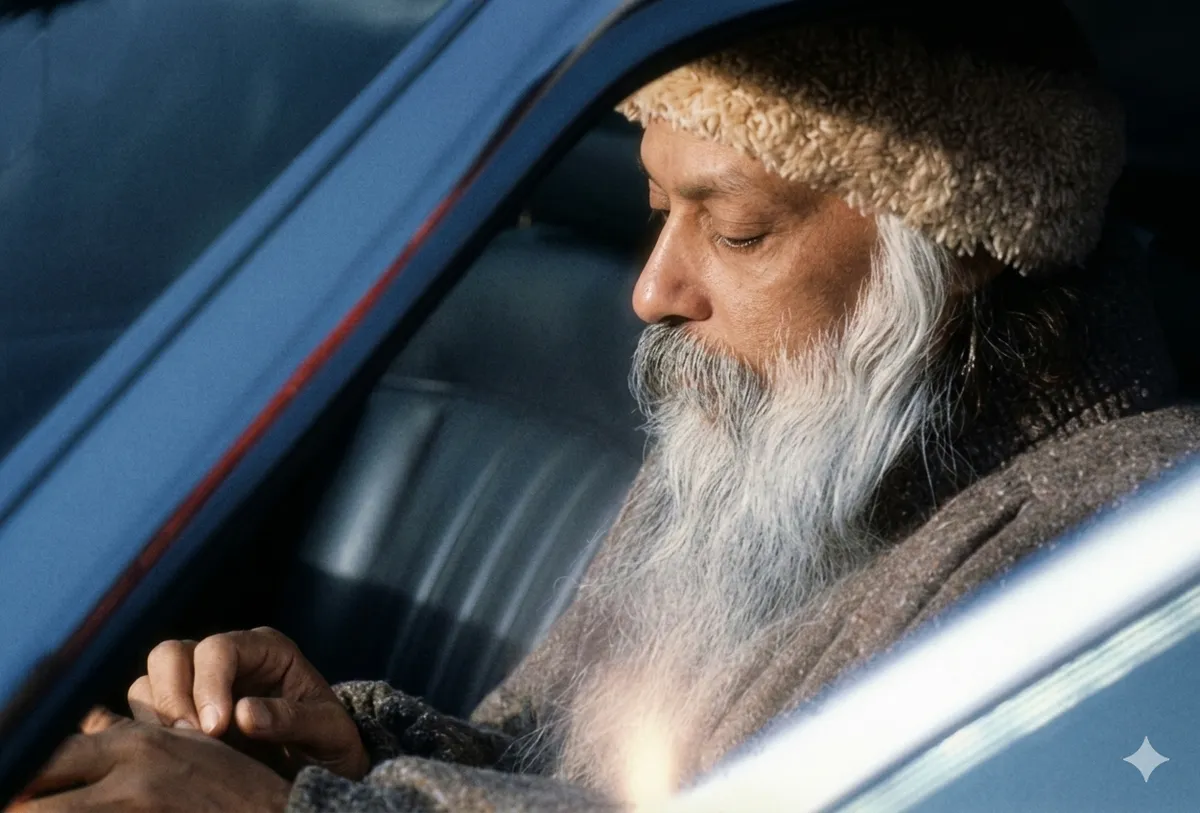
Osho's original Hindi beside Osho Live's English translation, matched passage by passage.
We shall walk even without support, but— How far? We cannot say! How far? We cannot say! Again those same droplets of honey will fall, They will quicken night and day— Again the sweet lord of seasons will grace the earth— He will fill her with flower and fruit; But you—no longer will you heal the sorrow, No longer make the mind-blossom tremble with joy; We shall still live on even in ruin, but— How far? We cannot say!
निराश्रित भी चलेंगे, पर--
कहां तक? कह नहीं सकते!
कहां तक? कह नहीं सकते!
फिर वही मधुकण झरेंगे,
निशि-दिवस पुलकित करेंगे--
फिर सरस ऋतुपति धरा को--
फूल से फल से भरेंगे;
पर न अब तुम दुख हरोगे,
मन-सुमन पुलकित करोगे;
ध्वंस में भी पलेंगे, पर--
कहां तक? कह नहीं सकते!
फिर वही सरगम सजेंगे,
रागमय नूपुर बजेंगे;
फिर सजग हृत्तंत्रियों के--
गीतमय सप्तक मंजेंगे;
पर न अब तुम फिर बजोगे,
Again the same scales will be arrayed, Anklets, musical with rāga, will ring; Again, in the wakeful heart-strings— The sevenfold octave will ripen into song; But you—no longer will you resound, Be adorned, verse upon verse; We shall still melt into silence, but— How far? We cannot say!
श्लोक बन-बन कर सजोगे;
मौन में भी ढलेंगे, पर--
कहां तक? कह नहीं सकते!
फिर वही दीपक जलेंगे,
ज्योति के मेले लगेंगे;
फिर सजीली घाटियों को--
किरण-कंचन कर रंगेंगे;
पर न तुम अब फिर जगोगे,
ज्योति बन जीवन रंगोगे;
धूम्र में भी जलेंगे, पर--
Again the same lamps will be lit, Fairs of light will be gathered; Again the graceful valleys— Will be dyed with golden rays; But you—no longer will you awaken, Coloring life itself as light; We shall still burn even through the smoke, but— How far? We cannot say!
कहां तक? कह नहीं सकते!
हम जिसे जीवन कहते हैं, वह मृत्यु के द्वार पर लगी हुई एक कतार है। कोई आज गया, कोई कल जाएगा। देर-अबेर की बात है। वसंत ऐसा ही आता रहेगा, पृथ्वी ऐसी ही दुल्हन बनती रहेगी, पक्षी ऐसे ही गीत गाएंगे, फूल भी खिलेंगे, सूरज भी ऊगेगा, चांद-तारे भी चलेंगे, लेकिन तुम? तुम नहीं होओगे। तुम धूल में मिल चुके होओगे। खोजे से भी तुम्हारा कोई निशान न मिलेगा। कहीं कोई पग-चिह्न भी नहीं पाए जाएंगे। हम हैं क्या, पानी पर खींची गई लकीरें हैं। बन भी नहीं पाते और मिट जाते हैं।
चाहे कोई सत्तर साल जिए और चाहे सात सौ साल, भेद नहीं पड़ता; मौत तो खड़ी ही है अंत में। और जब मौत अंत में खड़ी है, एक विराट प्रश्न-चिह्न बन-कर, तब तुम्हें जीवन को थोड़ा सोच कर जीना चाहिए। ऐसे जीओ कि मौत को जीत सको। ऐसे जीओ कि मौत तुम्हें मिटा न सके। ऐसे जीओ कि तुम्हारे भीतर कुछ अनुभव में आ जाए जो अमृत है। तो तुम धार्मिक हो। और अगर ऐसे जीए कि जो भी कमाया, मौत ने छीन लिया, जो भी बचाया, मौत ने लूट लिया, तो तुम सांसारिक हो।
लोग मुझसे पूछते हैं: संसारी और संन्यासी की परिभाषा क्या? सीधी-सादी परिभाषा है। संसारी वह है, जिसकी सारी संपदा मृत्यु छीन लेगी। मृत्यु के बाद जिसके पास कुछ भी न बचेगा। और संन्यासी वह है कि मृत्यु कितना ही छीने, जो असली है, मूल्यवान है, उसे नहीं छीन पाएगी। उसने अनुभव कर लिया है अपने भीतर शाश्वत का।
पर हम दौड़ रहे बाहर, भीतर का अनुभव भी हो तो कैसे हो! हम बटोर रहे व्यर्थ, सार्थक की प्रतीति हो तो कैसे हो! हम दबे जा रहे हैं व्यर्थ के पहाड़ से, इसलिए विवेक हमारे भीतर जन्मता नहीं। हम विचार में ही उलझे रह जाते हैं, विवेक को जन्मने का अवसर कहां! हमारी ऊर्जा विचारों में ही खो जाती है, बचती ही नहीं, तो विवेक हमारे भीतर सोया ही पड़ा रह जाता है। और विवेक का जागरण जीवन का वास्तविक प्रारंभ है।
विवेक का अर्थ है: तुम्हारे भीतर चैतन्य का आविर्भाव, इस बात की प्रतीति कि मैं कौन हूं। उपनिषद कहते हैं, वह नहीं; मैं जो कहता हूं, वह नहीं; गुलाल जो कहते हैं, वह नहीं; तुम्हारा अनुभव, निज का अनुभव कि मैं कौन हूं जिस दिन भीतर दीये की तरह जलता है, उस दिन मृत्यु पराजित हो गई। उस दिन तुम्हारी विजययात्रा पूर्ण हो गई। उस दिन तुम पहुंच गए सिंहासन पर, जहां से हटाए नहीं जा सकते।
आज के सूत्र इस अंतर्यात्रा में बड़े सहयोगी हो सकेंगे। एक-एक सूत्र को ध्यानपूर्वक हृदय में उतर जाने देना।
What we call life is a queue standing at the door of death. One goes today, another tomorrow. It is only a matter of sooner or later. Spring will keep coming like this, the earth will keep becoming a bride in the same way, birds will go on singing, flowers will bloom, the sun will rise, the moon and stars will move—but you? You will not be. You will have mingled with dust. Not a trace of you will be found even if one searches. Nowhere will any footprint be discovered. What are we? Lines drawn upon water—hardly made before they are erased. Whether one lives seventy years or seven hundred, it makes no difference; death stands waiting at the end. And when death stands at the end like a vast question mark, you should live life with a little thoughtfulness. Live in such a way that you can conquer death. Live so that death cannot erase you. Live so that something within you comes into experience which is amrita. Then you are religious. But if you live such that whatever you earned, death snatched away; whatever you saved, death plundered—then you are worldly. People ask me: What is the definition of worldly and of sannyasin? It is simple, plain. The worldly is one whose entire wealth death will take away—after death, nothing remains. And a sannyasin is one from whom, however much death may snatch, it cannot seize what is real, what is precious. He has experienced the eternal within. But we are running outward; how then will the inner be experienced! We are gathering the useless; how then will there be a taste of the meaningful! We are being buried under mountains of the trivial, therefore vivek does not take birth within us. We remain entangled in thought; where is the opportunity for discernment to be born! Our energy is lost in the traffic of thoughts; nothing remains over—so vivek lies asleep within us. And the awakening of vivek is the true beginning of life. Vivek means: the arising of consciousness within you—the felt recognition of who I am. The Upanishads say: not that; what I say—no; what Gulal says—no; your own experience, the intimate experience of who I am—on the day that burns within like a lamp, that day death is defeated. On that day your victory-march is complete. On that day you have reached a throne from which you cannot be displaced. Today’s sutras can be great companions on this inner journey. Let each sutra settle attentively into the heart.
निरमल हरि को नाम ताहि नहीं मानहीं।
सरल है परमात्मा की बात, सीधी-साफ है। निर्दोष चित्त को जल्दी ही समझ में आ जाए, ऐसी है। मगर हमारे चित्त बड़े कपटी; हमारे चित्त बड़े जालसाज; हमारे चित्त बड़े उलटे--निर्दोषता तो छू नहीं गई।
जीसस ने कहा है: जब तक तुम एक छोटे बच्चे की भांति न हो जाओगे, तुम्हारा परमात्मा से कोई मिलन न होगा। एक बार पुनः छोटे बच्चे की भांति होना पड़ता है। ऐसा मत समझना कि सभी बच्चों को परमात्मा का अनुभव हो रहा है। किसी बच्चे को नहीं हो रहा है। पुनः जब कोई बच्चा होता है तब अनुभव होता है। बच्चे तो अज्ञानी हैं, अभी तो उन्हें सब भटकावों से गुजरना होगा, अभी तो उन्हें बहुत भूलें करनी होंगी, अभी तो उन्हें मूर्च्छाओं में खोना होगा, अभी तो पद की, प्रतिष्ठा की, महत्वाकांक्षा की दौड़ पर वे जाएंगे, अभी जाना जरूरी है, लेकिन जब कोई इन सबसे थक कर वापस लौटता है पुनः, तब अज्ञानी नहीं होता। तब उसकी सरलता साधुता है। तब एक निर्मल भाव उसमें होता है। चित्त के दर्पण पर कोई धूल नहीं रह जाती। देख लिया संसार को और पाया वहां कुछ भी नहीं है।
बच्चे तो कैसे यह मानें कि वहां कुछ भी नहीं है। बच्चे तो दौड़ेंगे, दौड़ कर ही जानेंगे, गिरेंगे तो जानेंगे, बार-बार गिरेंगे तो जानेंगे--बार-बार गिर कर भी जान लें तो भी सौभाग्य है। कितने तो हैं जो गिरते ही रहते हैं और जानते ही नहीं। वही व्यक्ति ठीक अर्थों में प्रौढ़ होता है जो पुनः बच्चे की भांति सरल हो जाता है। उसके जीवन का वर्तुल पूरा हो गया। बच्चे की तरह शुरू हुई थी यात्रा, बच्चे की तरह ही यात्रा पूर्ण हो गई। जब कोई वृद्ध बच्चे की भांति सरल होता है, तो उस दशा का नाम ही संतत्व है। वही है ऋषि की परम अवस्था। वहीं से बहते हैं उपनिषद, गीता, कुरान--उसी गंगोत्री से, उसी निर्मल जलस्रोत से।
निरमल हरि को नाम...
ईश्वर की बात तो बड़ी सरल है, सरल से सरल को समझ में आ जाती है, लेकिन हम उलटे हैं।
...ताहि नहीं मानहीं।
Nirmal Hari ko naam—tāhi nahin mānahin. The matter of Paramatma is simple, straight, plain. A stainless mind can quickly understand it—it is like that. But our minds are great tricksters; our minds are great counterfeiters; our minds are utterly upside-down—innocence has not even touched us. Jesus said: unless you become like a little child, there will be no meeting with God. Once again, one must become like a little child. Do not suppose that all children are experiencing God—no child is. Only when someone becomes a child again is the experience. Children are ignorant; they still have to pass through all the wanderings, they still have to make many mistakes, they still have to be lost in swoons, they will still run the race of position, prestige, ambition—this going is necessary. But when someone, tired of all this, returns, then he is no longer ignorant. Then his simplicity is saintliness. Then there is a pristine feeling within him. No dust remains on the mirror of consciousness. He has seen the world and found there is nothing there. How will children believe that there is nothing there? They will run; only by running will they know. They will fall; by falling they will know. If they know even after falling again and again—even that is great fortune. How many are there who keep falling and never know! The one who truly comes of age is the one who again becomes simple like a child. The circle of his life is complete. The journey began like a child; the journey is completed like a child. When an old man is simple like a child—that state is called sainthood. That is the supreme state of the rishi. From there flow the Upanishads, the Gita, the Koran—from that very Gangotri, from that crystal spring.
लेकिन हमारा मन उस सरल को मानना नहीं चाहता।
हमारा मन जटिल को मानता है, इस सत्य को ठीक से समझो।
हमारा मन जटिल में बहुत रस लेता है। लोग पहेलियां सुलझाते हैं। तुम्हें कोई पहेली पकड़ा दे, बेकार की पहेली, तो भी तुम सुलझाते रहते हो। जानते भी हो कि सुलझा कर भी क्या होगा, मगर नहीं, तुम्हारी खोपड़ी पहेली सुलझाने में लग जाती है। क्योंकि तुम्हारे अहंकार को चुनौती दे दी उसने। तुम्हारा अहंकार जब तक सुलझा न ले तब तक तुम्हें बेचैनी बनी रहेगी, तुम ठीक से सो न पाओगे, रात नींद में भी पहेली तुम्हारे आस-पास तैरती रहेगी, तुम्हारे सपनों में भी झांकती रहेगी। जितनी कठिन बात हो उतने हम ज्यादा आकर्षित होते हैं। इसीलिए तो पद आकर्षित करते हैं, क्योंकि उनको पाना कठिन है। करोड़ों लोग दौड़ रहे हैं, बड़ी भयंकर प्रतिस्पर्धा है--गलाघोंट--जहां सब एक-दूसरे की गर्दन काटने को तैयार हैं। तुम भी चले, लेकर अपने धनुषबाण! तुम भी तत्पर हुए! तुमने भी बांध ली जिद कि दिखला कर रहेंगे!
साधुता सरल है। ‘साधु’ शब्द का अर्थ ही होता है: सरल। साधु का अर्थ ही होता है: निर्मल। साधुता किसी को आकर्षित नहीं करती। सरल होने में क्या रखा है! अरे, सरल तो पौधे भी हैं, पशु भी हैं, पक्षी भी हैं। मजा तो जटिल होने में है। और तुम अगर अपने मस्तिष्क के भीतर झांकोगे तो तुम पाओगे कितनी जटिलताएं तुमने पाल रखी हैं! कैसी-कैसी जटिलताएं! और कितनी पहेलियां इकट्ठी कर ली हैं, जिनको तुम बूझ नहीं पाए हो। वे सब तुम्हारी छाती पर तीरों की तरह चुभी हैं और घाव बना रही हैं। फिर इस जटिल चित्त से जो सरलतम है उसको सुलझाना मुश्किल हो जाता है। क्योंकि यह जटिल अभ्यासी हो जाता है जटिल को सुलझाने का। सरल से इसकी बात ही नहीं बनती। इसे सीधी-सादी बात दिखाई ही नहीं पड़ती। इसे तो इरछी-तिरछी हो तो ही दिखाई पड़ती है। इसके देखने का ढंग और रवैया ही ऐसा हो जाता है।
मुल्ला नसरुद्दीन को किसी ने बाजार में चलते देखा; एक पैर में काला जूता पहने है, दूसरे में लाल। पूछा कि भैया, कोई नई फैशन निकली है? एक जूता लाल एक काला! मुल्ला ने कहा: नहीं जी, कोई फैशन नहीं निकली, यह उल्लू के पट्ठे उस दुकानदार की हरकत है। दो जोड़ी जूते खरीदे हैं, दोनों डिब्बों में ऐसे ही जूते बांध दिए हैं--एक काला, एक लाल।
सीधी सी बात है। मगर जटिल चित्त को दिखाई पड़नी मुश्किल हो जाती है और मुल्ला नसरुद्दीन को हम क्षमा कर सकते हैं, और यह कहानी शायद कल्पित हो, लेकिन इस तरह की वास्तविक घटनाएं हैं।
बड़ा वैज्ञानिक हुआ, न्यूटन। उसने दो बिल्लियां पाल रखी थीं। बड़ा गणितज्ञ। लेकिन उसे बड़ी दिक्कत होती थी, कभी-कभी रात को बिल्लियां देर से आतीं--बिल्लियां तो बिल्लियां--तो उसको जागना पड़ता, उनकी राह देखनी पड़ती, जब वे आ जातीं, उनको सुला देता, तब सोता। किसी ने सलाह दी कि ऐसा क्यों नहीं करते कि दरवाजे में एक छेद कर दो, जब आएंगी अपने छेद से निकल कर अंदर आकर सो जाएंगी, तुम परेशान होने से बच जाओगे। अब कहां... कभी-कभी आधी रात तक बैठे रहते हो, बिल्ली नहीं आई हैं! उसने कहा, यह बात तो जंची।
दूसरे दिन जब मित्र ने देखा तो बहुत हैरान हुआ, उसने दो छेद बना रखे हैं। पूछा, दो किसलिए? तो न्यूटन ने कहा: एक बड़ी बिल्ली के लिए, एक छोटी बिल्ली के लिए।
अब यह बड़ा गणितज्ञ है। इसको यह ख्याल में ही नहीं आ सका कि एक ही छेद से दोनों निकल सकती हैं। आगे-पीछे निकल सकती हैं। कोई एक ही साथ निकलने की जरूरत है! मगर गणित गणित है। दो बिल्लियां हैं तो दो छेद की जरूरत है। बड़ी के लिए एक बड़ा, छोटी के लिए एक छोटा। मित्र ने तो सिर ठोंक लिया। उसने कहा, खाक तुम गणित समझते हो!
मगर न्यूटन गणित समझता है। गणित समझने के कारण ही यह जीवन की छोटी सी बात समझ में नहीं आ रही है। गणित तो बड़े गंभीर समझता है, बड़े दूर-दूर के समझता है...!
अलबर्ट आइंस्टीन ने इस सदी में गणित के सबसे कठिन सवाल हल किए हैं; मगर जीवन के छोटे-छोटे मामलों में उन्हें बहुत झंझट हो जाती थी। बाथरूम में बैठ जाते तो घंटों न निकलते। छह-छह घंटे! पत्नी परेशान, पूरा घर परेशान। उनसे पूछो तो वे कहते कि मैं समय भूल जाता हूं। और समय के संबंध में जितने बड़े जानकार वे थे, उतना बड़ा जानकार इस सदी में कोई दूसरा नहीं था। उनके सारे जीवन की खोज ही टाइम और स्पेस, समय और आकाश, इसी पर बंधी है।
एक दिन एक मित्र ने उनको बुलाया था अपने घर, भोजन के लिए। रात देर हो गई, मित्र बार-बार घड़ी देखे कि अब वे जाएं, वे जाएं ही न! जम्हाइयां लें, वे भी बार-बार घड़ी देखें, आखिर मित्र के बरदाश्त के बाहर हो गया--बड़े आदमी को ऐसे एकदम कहा भी नहीं जा सकता कि अब आप अपने घर जाइए--आखिर जब बहुत देर हो गई, दो बजने लगे, दो का घंटा बजा जब घंटाघर से, तो मित्र ने कहा कि अब तो कुछ करना ही पड़ेगा नहीं तो यह आदमी रात भर जगाएगा! न कोई बातचीत करने को है--दोनों जम्हाई ले रहे हैं, दोनों घड़ी देखते हैं और बैठे एक-दूसरे की शक्ल देख रहे हैं!
आखिर उस मित्र ने कहा कि आपकी पत्नी राह देखती होगी। अलबर्ट आइंस्टीन ने कहा कि मेरी पत्नी! तो तुम जाते क्यों नहीं अपने घर? उसने कहा: मैं अपने घर जाऊं! मैं अपने घर हूं! अलबर्ट आइंस्टीन ने कहा: तो भले आदमी, पहले क्यों नहीं बताया कि यह तेरा घर है! मैं यही सोच-सोच कर बार-बार घड़ी देखता हूं कि भइया, यह जाए तो मैं सोऊं! और यह जमा ही हुआ है, अब कहते भी ठीक नहीं लगता किसी मेहमान से, इसलिए मैं सोच-सोच कर रह जाता हूं। यह जब घड़ियाल में दो बजे तो मेरी भी बरदाश्त के बाहर हुई जा रही थी बात। अगर तुम न कहते तो मैं कहता, तुमने मेरी जबान से बात छीन ली।
तब उठा जब पक्का हो गया कि मेहमान मैं हूं, मेजबान यह है।
जीवन के बड़े सवाल हल करने में आइंस्टीन की प्रतिभा का कोई मुकाबला नहीं है। लेकिन जीवन के छोटे-छोटे मसले! अक्सर ऐसा हो जाता है, जिस यंत्र से दूर की चीजें दिखाई पड़ती हैं, उस यंत्र से पास की चीजें दिखाई नहीं पड़तीं। जो दूरदर्शी यंत्र होता है, वह खुर्दबीन नहीं है। दूरदर्शी यंत्र लेकर तुम अपनी पत्नी को खोजने घर में मत निकल जाना। मिलेगी ही नहीं। उससे चांद-तारे खोज सकते हो तुम, जो नहीं दिखाई पड़ते खाली आंखों से; पत्नी कहां दिखाई पड़ेगी।
मस्तिष्क के भी दो ढंग हैं। एक है, दूर की बात देखने का ढंग, दूरदर्शी। और एक है, निकट की बात देखने का ढंग। परमात्मा निकट है। परमात्मा चांद-तारों की तरह दूर नहीं है। सब जगह है। और हम पास देखना भूल गए हैं। तुम जाकर आंख के डॉक्टर से पूछना, उसके पास दो तरह के मरीज आते हैं। एक जिनको दूर तो ठीक दिखाई पड़ता है, पास नहीं दिखाई पड़ता। और एक वे जिनको पास तो ठीक दिखाई पड़ता है, दूर...। और कुछ मरीज ऐसे भी होते हैं कि जिनको दोनों तरफ देखने में अड़चन होती है--पास भी दिखाई पड़ना मुश्किल है, दूर भी दिखाई पड़ना मुश्किल है। तो उनका चश्मा दो ढंग का बनाना पड़ता है, उसमें दो ढंग के कांच होते हैं। ऊपर एक तरह का कांच होता है, नीचे दूसरी तरह का कांच होता है। नीचे के कांच से वे पास की तरफ देखते हैं, जब पढ़ते-करते हैं; और जब उन्हें दूर की चीज देखनी होती है, आंख उठाते हैं, तो ऊपर के कांच से देखते हैं। मस्तिष्क की भी ये दो अवस्थाएं हैं। परमात्मा पास है। पास से भी पास। तुमसे भी ज्यादा पास। उसे जानने के लिए कोई बहुत गणित, कोई तर्कशास्त्र, कोई जटिल विचार की प्रक्रिया नहीं चाहिए। उसके लिए सरलता चाहिए, ध्यान चाहिए, निर्मलता चाहिए, निर्विचार भाव चाहिए। उसके लिए छोटे बच्चे की भांति होना जरूरी है।
ठीक कहते हैं गुलाल:
निरमल हरि को नाम ताहि नहीं मानहीं।
लेकिन तुम उसे नहीं मानोगे। क्योंकि बात इतनी सरल है। तुम कहोगे, प्रमाण? तुम कहोगे, तर्क, आधार? और परमात्मा के लिए कोई तर्क नहीं दिया जा सकता। परमात्मा तो सभी तर्कों का आधार है, इसलिए उसके लिए कोई तर्क नहीं हो सकता। परमात्मा तो सारे तर्कों के पार है। इसलिए उसके लिए कोई तर्क नहीं हो सकता। उसके लिए क्या प्रमाण होगा? वही तो है प्रमाण देने वाला, वही तो है प्रमाण मांगने वाला, उसके लिए कैसे प्रमाण होगा? तुम्हारे भीतर जो देखता है, वही तो है परमात्मा, तुम परमात्मा को कैसे देखोगे?
इस बात को जरा खयाल में लेना।
लोग कहते हैं, हमें परमात्मा को देखना है। यात्रा ही गलत शुरू हो गई! पहला ही कदम भ्रांति का उठा लिया--परमात्मा को देखना है। परमात्मा तो वह है, जो तुम्हारे भीतर देखता है। देखने की क्षमता, तुम्हारी दर्शन की क्षमता परमात्मा है। तुम्हारा द्रष्टा-भाव, साक्षीभाव परमात्मा है। तुम साक्षीभाव को कैसे देखोगे? उसे तो देखने का कोई उपाय नहीं है। सब देख सकते हो, स्वयं के देखने को कैसे देखोगे? कोई मार्ग नहीं है।
परमात्मा बाहर होता, हम खोज लेते--कभी का खोज लेते। तारों पर पहुंच सकते हैं, चांद पर पहुंच सकते हैं, गौरीशंकर पर पहुंच सकते हैं, क्या परमात्मा को नहीं खोज लेते? लेकिन परमात्मा बैठा है तुम्हारे हृदय की धकधक में; जहां तुम्हारे प्राणों का प्राण है, वहां। वह इतने पास बैठा है कि तुम्हारी समझ में नहीं आता कि वहां जाएं तो कैसे जाएं! न कोई ट्रेन जाती वहां, न कोई हवाई जहाज जाता वहां; पद-यात्रा तक नहीं कर सकते! नहीं तो चल पड़ते पदयात्रा पर। वहां कोई यात्रा ही संभव नहीं है। वहां तो सब यात्राएं छोड़ कर बैठ जाना पड़ता है।
कुछ चीजें हैं जो दौड़ कर पाई जाती हैं--संसार की सब चीजें दौड़ कर पाई जाती हैं। इसमें जो जितना दौड़ में कुशल है, उतना सफल होगा। लेकिन परमात्मा बैठ कर पाया जाता है, रुक कर पाया जाता है। जो रुक जाने में सफल हैं, जो बैठ जाने की कला सीख लिए हैं...। ध्यान और है क्या? शांत होकर बैठ जाने की कला। थोड़ी देर को दौड़ना नहीं, आपा-धापी नहीं, छोड़ देना सब यात्राएं, थोड़ी देर को ऐसे हो जाना जैसे तुम हो ही नहीं, बस यही निर्मलता है। न हो जाना निर्मलता है। और परमात्मा निर्मल को उपलब्ध होता है।
विचार तो मल है, वह तो कूड़ा-करकट है। जितने तुम विचार से भरे हो, उतने ही व्यर्थ जंजाल से भरे हो।
Nirmal Hari ko naam… The talk of Ishwar is so simple, even the simplest can grasp it—but we are contrary. …tāhi nahin mānahin. But our mind does not want to accept what is simple. Understand this truth well: our mind believes in the complex. Our mind relishes complication. People solve riddles. If someone hands you a riddle—useless—you still go on trying to solve it. You even know that solving it will yield nothing, yet no; your skull gets busy. Because it has challenged your ego. Until your ego has solved it you will remain restless; you won’t sleep well—at night the riddle will float around you, peeping into your dreams. The more difficult a thing, the more it draws us. That is why offices attract—because they are hard to obtain. Millions are running, a fierce competition—throat-cutting—where all are ready to chop one another’s necks. You too set out, bow and arrow in hand! You too became eager! You swore you would show them! Saintliness is simple. The very word sadhu means: simple. Sadhu means: immaculate. Saintliness attracts no one. What is there in being simple! Why, plants are simple, animals are simple, birds are simple. The fun, you think, lies in being complicated. And if you peer into your mind you will find how many tangles you have nurtured—what varieties of complication! And how many riddles you have amassed, which you could not unravel. They are all pricking your chest like arrows and making wounds. Then, with such a complicated mind, solving what is simplest becomes difficult—because it is trained to untie the complex. The simple does not even strike up a conversation with it. It cannot see what is straight. It sees only when things are slanted and crooked; its way of seeing, its stance, has become like that. Someone saw Mulla Nasruddin walking in the market: on one foot a black shoe, on the other a red. “Brother, is this a new fashion? One shoe red, one black!” Mulla said, “No, no fashion—this is that damned shopkeeper’s doing. I bought two pairs and in both boxes he tied them like this—one black, one red.” A plain thing. But for a mind of complexities, hard to see. And we can forgive Mulla; that tale may be imagined—but such things happen. Great scientist—Newton. He kept two cats. Great mathematician. But he was vexed—sometimes the cats would return late at night—cats are cats—so he had to stay awake waiting for them. When they came, he would put them to sleep, then he would sleep. Someone advised, “Why not make a hole in the door? When they come, they’ll slip in through their hole and sleep; you’ll be spared the bother.” “Why yes… sometimes you sit till midnight; the cat hasn’t come!” He said, “That idea fits.” Next day the friend saw something odd: Newton had made two holes. “Two? What for?” “One for the big cat, one for the little.” Now this is a great mathematician. It did not occur to him that both could pass through the same hole—one after the other. There was no need for both at once! But mathematics is mathematics. Two cats—two holes; a larger for the big, a smaller for the little. The friend banged his head: “What mathematics do you understand!” But Newton understands mathematics. For that very reason this tiny matter of life escapes him. Mathematics handles grave distances, far-flung reaches…! Albert Einstein solved the toughest mathematical questions of this century; yet in the small matters of life he got into tangles. He would sit in the bathroom and not come out for hours—six hours! The wife distraught, the whole house upset. Ask him and he would say, “I forget time.” And regarding time, no one in this century knew more than he did. His entire life’s exploration was time and space. One day a friend had invited him to dinner. It got late. The friend kept looking at the clock—now he’ll go, now he’ll go. He wouldn’t go! They yawned; they both kept looking at the clock. Finally it became unbearable for the host—you cannot bluntly say to a great man, “Now go home!” When two o’clock struck, the host thought, something must be done or this man will keep me up all night! There was nothing to talk about—both were yawning, both were watching the clock, and sitting, gazing at each other’s faces! At last the friend said, “Your wife must be waiting.” Einstein said, “My wife? Then why don’t you go home?” “Me? I am at home!” “Then man, why didn’t you say earlier this is your house! I’m the one who kept watching the clock thinking, ‘Brother, when will he go so I can sleep!’ He is glued here; it doesn’t seem proper to tell a guest to leave—so I kept thinking and stayed. When the town clock struck two, my patience too was exhausted. If you hadn’t said it, I would have—I was just about to.” Only when it was certain that he himself was the guest and the other the host, did he get up. In solving the great riddles of life Einstein’s genius has no rival. But small matters! Often it happens: the instrument that sees afar cannot see the near. The telescope is not a microscope. Don’t take a telescope around the house to look for your wife—you won’t find her. With it you can search for the moon and stars that the naked eye cannot see; how will it reveal your wife? The mind too has two modes: one to see the distant, telescopic; the other, to see the near. Paramatma is near. Not distant like moon and stars. He is everywhere. And we have forgotten how to see the near. Go ask an eye-doctor—two kinds of patients come: those who see well at a distance but not near; and those who see near but not far. And some have difficulty with both—near and far—so their glasses are made twofold: different lenses above and below. They read through the lower lens; they look far through the upper. The mind has these two states as well. Paramatma is near—nearer than the near, closer than you are to yourself. To know That, no heavy mathematics, no logic, no complex thought-process is needed. What is needed is simplicity, attention, purity, a state of no-thought. To be like a small child is essential. Gulal says it right: Nirmal Hari ko naam—tāhi nahin mānahin. But you will not accept it—because the matter is so simple. You will demand proof, you will ask for logic, foundation. For Paramatma no logic can be given. Paramatma is the very foundation of all logic, therefore none can be offered for That. Paramatma is beyond all arguments; therefore none apply. What proof will there be—for That which gives the proof, for That which asks for proof? How will there be proof? That within you which sees—that is Paramatma. How will you see Paramatma? Mark this well. People say, “We want to see God.” The journey started wrong! The very first step is a mistake—to see God. Paramatma is that which sees within you. The capacity to see, your power of vision is Paramatma. Your drashta-bhava, your witness-consciousness, is Paramatma. How will you see the witness? There is no way to see It. You can see everything—how will you see your own seeing? There is no means. Had Paramatma been outside, we would have found him—long ago. We can reach the stars, reach the moon, climb Everest—would we not have found God? But Paramatma sits in the heartbeat of your heart; where the life of your life is—there. He sits so close that you cannot figure how to go there. No train goes there, no airplane flies there; not even a foot-journey is possible—else you would go on foot. There no journey is possible at all. There you must drop all journeys and sit. There are things obtained by running—all things of the world are got by running. He who is skilled in running succeeds. But Paramatma is found by sitting, by stopping. Those who know the art of stopping, of just sitting… what is dhyana but this? The art of sitting in quietude for a while: no running, no hustle—dropping all journeys; for a while becoming as if you are not. This is innocence. To be nobody is innocence. And Paramatma is available to the immaculate. Thought is stain, rubbish, litter. The more filled you are with thought, the more you are filled with useless clutter.
निरमल हरि को नाम ताहि नहीं मानहीं।
भरमत फिरैं सब ठांव कपट मन ठानहीं।।
सारी दुनिया में भरमते फिरते हो, बड़े-बड़े कपट ठाने हुए हो, सबको धोखा देने में लगे हो, और एक बात भूल ही गए कि धोखा देने में अपने को तुम सबसे बड़ा धोखा दे रहे हो। सबकी जेबें काट रहे हो और यह भूल ही गए कि इसी बीच तुम्हारी जेब कट गई।
दो जेबकतरे जेलखाने से एक साथ छूटे। सो दोनों बार-बार अपनी जेब टटोल कर देख लें। आखिर एक से न रहा गया, उसने कहा: बार-बार क्या जेब टटोलते हो? उसने कहा: और क्या करें; तुम्हारी मैं टटोल नहीं सकता, क्योंकि तुम भी इस कला में प्रवीण हो; मेरी तुम टटोल नहीं सकते, क्योंकि मैं भी इस कला में प्रवीण हूं; मगर कौन जाने कौन ज्यादा प्रवीण हो! तुम्हारी तो मैं झंझट में पड़ना नहीं चाहता, अपनी बचाना चाहता हूं। मैं तुम्हारी जेब के खयाल में लग जाऊं और मेरी कट जाए! इसलिए बार-बार अपनी जेब देख लेता हूं कि अभी है कि नहीं, बची कि गई?
कभी तुम अपनी जेब तो टटोलो! जेबकतरों के बाजार में हो, जरा संभल कर चलो! मगर तुम्हें अपनी जेब टटोलने की फुरसत कहां? दूसरे की जेबें इतना आकर्षित कर रही हैं कि तुम एक जेब से दूसरे की जेब, दूसरे की जेब से तीसरे की जेब पर चले जाते हो। इस बीच तुम्हारी कब कट जाती है, तुम्हें पता ही नहीं चलता। जब पतंग कट जाती है तब पता चलता है। मगर फिर कुछ हो नहीं सकता। जिंदगी भर दूसरों को धोखा देने में लग जाती है, आखिर में पता चलता है: खुद धोखा खा गए। जो गड्ढे औरों के लिए खोदे थे, उनमें खुद गिर गए। जो फंदे औरों को फांसने के लिए बनाए थे, वे खुद के लिए फांसी बन गए। यह बहुत बाद में पता चलता है, बड़ी देर में पता चलता है, यह आखिरी क्षण में पता चलता है। इसीलिए तो लोग रोते हुए मरते हैं। मृत्यु के डर से नहीं रोते हैं वे। मृत्यु का क्या डर! मृत्यु तो विश्राम की तरह है। चिरनिद्रा है। मृत्यु से कोई नहीं डरता। डरते हैं, रोते हैं इसलिए, भयभीत होते हैं इसलिए कि अरे, यह जिंदगी का अवसर हाथ से गया, हम औरों के पीछे लगे रहे, खुद ही धोखा खा गए--बुरा धोखा खा गए!
Nirmal Hari ko naam—tāhi nahin mānahin. Bharamat phirain sab thāñv—kapaṭ man ṭānahin. All over the world you roam—harboring great deceits—busy deceiving others; and you forget one thing: in deceiving others you are cheating yourself most of all. You are picking everyone’s pocket—and forget that meanwhile your own pocket has been picked. Two pickpockets were released from jail together. So both kept patting their own pockets again and again. At last one could not resist and asked, “Why keep feeling your pocket?” He said, “What else can I do? I cannot check yours—you are skilled in the art; and you cannot check mine—I am skilled in the art; but who knows who is more skilled! I don’t want the hassle with you; I want to save my own. I might start worrying about your pocket and mine gets cut! So I keep checking whether it’s still there or gone.” Feel your own pocket once! You are in a marketplace of pickpockets—walk carefully! But where do you have the leisure to check your own pocket? Other people’s pockets attract you so much that from one pocket you move to another, and another, and in the meantime when yours gets cut, you do not even notice. When the kite is cut, then you know—but by then, nothing can be done. A whole life passes cheating others; in the end it is discovered: you cheated yourself. The pits you dug for others—you fell into them yourself. The snares you set to trap others—became a noose for you. This is discovered very late, at the final moment. That is why people die weeping. Not from fear of death. What fear of death! Death is a rest, a long sleep. No one fears death. They fear and weep because the opportunity of life slipped away; we were busy with others, and we ourselves were deceived—bitterly deceived!
भरमत फिरैं सब ठांव कपट मन ठानहीं।
कहां-कहां नहीं भरमते फिरते हो! पद के पीछे, धन के पीछे, प्रतिष्ठा के पीछे। क्या-क्या नहीं करते हो तुम! तुम कुछ भी करने को राजी हो खुशामद करने को राजी हो। चापलूसी करने को राजी हो--कुछ भी करने को राजी हो। बेईमानी करने को राजी हो, गला काटने को राजी हो, हिंसा करने को राजी हो, लेकिन सीढ़ियां बन जाएं, किसी तरह तुम पद पर पहुंच जाओ, प्रतिष्ठा पर पहुंच जाओ, कुछ ठीकरे तुम्हारे पास इकट्ठे हो जाएं!
Bharamat phirain sab thāñv—kapaṭ man ṭānahin. Wandering everywhere! After office, after wealth, after prestige. What don’t you do! You are ready to do anything—ready to curry favor, to flatter—anything. Ready to be dishonest, to slit throats, to be violent—if only steps can be made, somehow you can reach position, prestige, gather some shards around you!
सूझत नाहीं अंध ढूंढत जग सानहीं।
कुछ सूझता नहीं है तुम्हें, बिलकुल अंधे हो तुम, मगर बड़ी अकड़ में संसार में धन को, पद को, प्रतिष्ठा को खोजने निकले हो! बड़ी शान से।
सूझत नाहीं अंध ढूंढत जग सानहीं।
बड़ी शान से चल पड़े हो, बड़ी अकड़ से, इसकी फिकर ही नहीं कि अंधे हो। जाओगे कहां! पहले आंख तो ठीक कर लो, पहले देखना तो सीख लो पहले द्रष्टा तो बन जाओ, फिर खोजने निकलना! धर्म सीधी सी बात कहता है कि पहले देखना तो सीख लो! अगर तुम्हें सत्य मिल भी गया और तुम्हारे पास देखने की आंखें ही न हुईं, तो क्या करोगे?
तुमने अंधों की कहानी तो सुनी होगी कि पांचों अंधे हाथी को देखने गए। हाथी को तो देखने चले गए, इसकी फिकर ही न की कि हम अंधे हैं, हाथी मिल भी जाएगा तो देखेंगे कैसे? फिर जैसा देखा वैसा अंधे ही केवल देख सकते थे! किसी ने पैर टटोला और समझा कि यह रहा हाथी; और किसी ने कान टटोला और समझा कि यह रहा हाथी; और किसी ने पीठ टटोली और समझा कि यह रहा हाथी! फिर भारी विवाद चला अंधों में, बैठ कर उनमें भारी तर्क-वितर्क हुआ, क्योंकि एक ने कहा कि अंधा मैं नहीं हूं, तुम हो; मैंने तो भलीभांति देखा कि हाथी जो है, वह एक मंदिर के खंबे की तरह है। उसने पैर को छूआ था हाथी के। दूसरे ने कहा: झूठ, बिलकुल झूठ; तुम अंधे हो; आंख वाला मैं हूं। मैंने टटोल कर देखा, दीवाल की तरह था। अनुभव से कहता हूं; अरे, अनुभव की मानो! तीसरे ने कहा: सरासर झूठ, सौ प्रतिशत झूठ। तुम भी अंधे हो। मैंने भी टटोल कर देखा था, खूब टटोल कर देखा, बार-बार टटोल कर देखा--उसने कान टटोला था--उसने कहा, हाथी तो ऐसा है जैसे सूप होता है, जिसमें स्त्रियां चावल-दाल इत्यादि साफ करती हैं।
पांचों एक-दूसरे को अंधा कह रहे हैं। और प्रत्येक अपने को सिद्ध कर रहा है--मैं आंख वाला हूं। इसके पहले कि तुम सत्य की तलाश में निकलो कि आनंद की तलाश में निकलो, कम से कम आंख तो बना लो, कम से कम आंख तो खोल लो!
Sūjhat nāhin—andh, ḍhūñdhat jag sānahin. Nothing dawns on you—you are utterly blind—yet with great swagger you set out to seek wealth, position, prestige! In great style. Sūjhat nāhin—andh, ḍhūñdhat jag sānahin. You set out with great pomp, great arrogance—no concern that you are blind. Where will you go! First fix the eyes, first learn to see—first become a seer, then go to seek! Religion says the simple thing: first learn to see! Even if truth comes to you and you have no eyes to see, what will you do? You have heard the story of the blind men who went to see the elephant. They set out to see the elephant without caring that they were blind. Even if the elephant is found—how will they see? Then, as they “saw,” only the blind can see so! One felt the leg, “Here is the elephant”; another felt the ear, “Here is the elephant”; another stroked the back, “Here is the elephant!” Then a heavy dispute: an argument among the blind. Each said, “I am not blind—you are. I saw clearly: the elephant is like a temple pillar.” He had touched the leg. The second: “Lie—utter lie; you are blind; the eye is mine. I examined it—it was like a wall. Believe experience!” The third: “Pure falsehood, a hundred percent. You are blind too. I too examined, again and again—I felt the ear—an elephant is like a winnowing fan.” The five called one another blind, and each tried to prove, “I am the one with eyes.” Before you set out in search of truth or bliss, at least make an eye—at least open an eye!
सूझत नाहीं अंध ढूंढत जग सानहीं।
कह गुलाल नर मूढ़ सांच नहिं जानहीं।।
ऐसे मूढ़ नर कभी भी सत्य को नहीं जान सकेंगे, क्योंकि उन्होंने बुनियाद ही गलत रख दी, यह मंदिर कभी बनेगा नहीं। बुनियाद रखनी चाहिए दृष्टि की निर्मलता से। देखने की कला पहले सीखनी चाहिए। इसके पहले कि अंधे हाथी के पास जाते, किसी वैद्य के पास जाना था, किसी बुद्ध के पास जाना था। बुद्ध वैद्य ही हैं, जो तुम्हारी भीतर की आंख को निर्मल करते हैं, जो तुम्हारी भीतर की आंख का परदा हटा दें। जाना था किसी वैद्य के पास कि तुम्हारी आंखों की जाली काट दे, कि तुम देख सको, लेकिन चले हाथी के पास!
यह सारा संसार उन अंधों से भरा है जो हाथियों के पास जा रहे हैं। यहां शायद ही कोई कभी इसकी फिकर करता है कि पहले मैं अपनी आंख ठीक कर लूं, फिर जाऊंगा; पहले अपनी लरजती आवाज तो सम्हाल लूं, फिर गीत गाऊंगा; पहले अपने पैर उठाना तो सीख लूं, फिर दौडूंगा। पहले भीतर घटना घट जाने दूं, फिर बाहर तो अपने से घट जाती है।
Sūjhat nāhin—andh, ḍhūñdhat jag sānahin. Kah Gulal: nar mūḍh—sāñch nahin jānahin. Says Gulal: such foolish men will never know truth—because they have laid a wrong foundation. This temple will never rise. The foundation must be laid with the purity of vision. The art of seeing must be learned first. Before the blind went to the elephant, they should have gone to a physician—to a Buddha. A Buddha is a physician—he purifies the inner eye, removes its veil. They should have gone to someone who would cut the film across the eyes so that you can see—but they went to the elephant! This whole world is filled with blind men going to elephants. Rarely does someone care first to heal his eye, then go; to steady the trembling voice, then sing; to learn how to lift his feet, then run. First let the happening happen within—then outside it happens by itself.
माया मोह के साथ सदा नर सोइया।
मनुष्य सोया हुआ है, नींद में है, वही उसका अंधापन है। सोया है माया में, सोया है मोह में।
माया का अर्थ होता है: तुम्हारे द्वारा संसार पर आरोपित कल्पनाएं। माया का यह अर्थ मत समझना जो तुम्हारे तथाकथित महात्मा तुम्हें समझाते हैं कि यह सारा जग माया है। जरा एक चपत लगा कर देखो उनको और फौरन डंडा उठा लेंगे! और तब तुम उनसे कहना कि सब माया है, महात्मा जी! कैसी चपत! यह कैसे आप नाराज हुए जा रहे हैं! लेकिन चपत माया नहीं है, सारा संसार माया है, और डंडा उठा लिया। डंडा माया नहीं है। यह जो बातें कर रहे हैं कि सारा संसार माया है, इनकी जरा तुम परीक्षा तो करो! और तुम्हें पता चल जाएगा कि ये सब बकवास कर रहे हैं। अगर जगत माया है, तो फिर ये त्याग की क्या बातें कर रहे हैं? कि हम सब संसार छोड़ कर चले आए। जब माया ही है तो क्या खाक छोड़ोगे! जब है ही नहीं, तो छोड़ोगे क्या! जब तुम्हारे पास कुछ था ही नहीं पहले से, तो त्यागोगे क्या? कोई अपनी छाया तो नहीं त्यागता।
माया जगत नहीं है। जगत सत्य है, उतना ही जितना परमात्मा, क्योंकि जगत परमात्मा है। लेकिन हां, जगत के परदे पर तुम अपनी कल्पनाओं के बहुत से जाल बुनते हो, वे जाल तुम्हारे हैं, वे तुम बुनते हो। तुम्हारा मन स्रोत है माया का, जगत नहीं।
मुल्ला नसरुद्दीन की जवानी की घटना है--
अंततः मां-बाप और रिश्तेदारों ने खूब सोच-समझ कर शेख नियाज की खूबसूरत बेटी गुलजान से नसरुद्दीन का निकाह करने का निर्णय किया। बाप ने नसरुद्दीन से कहा कि बेटा, लड़की के साथ बैठ कर घड़ी भर बातचीत कर लो। आखिर तुम दोनों को जीवन भर साथ-साथ रहना है, सो अभी एक-दूसरे को अच्छी तरह पहचान लो।
नसरुद्दीन उन दिनों बड़ा नैतिक और धर्मपरायण युवक था। उसने पहला सवाल किया: हे हिरणी सी आंखों और गुलाब की पंखुरी से ओंठों वाली गुलजान, क्या तुम खुदा की कसम खाकर कह सकती हो कि तुमने कभी कोई पाप नहीं किया है?
गुलजान बोली: ऐ सूरज की रोशनी को भी मात कर देने वाले बुद्धिमान युवक, सच कहती हूं, मैंने अपनी इस छोटी सी सत्रह वर्ष की जिंदगी में बस एक ही पाप किया है, वह यह कि मैं घंटों आईने के सामने खड़ी होकर अपनी ही छवि को निहारती रहती हूं। मुझे अपने हुस्न पर नाज है। और मैं मानती हूं कि इस दुनिया में मुझ से ज्यादा खूबसूरत कोई भी नहीं है।
नसरुद्दीन ने गुस्से में कहा कि जो पूछा गया है, उसका जवाब दो, जी! मैंने तुमसे पाप के संबंध में पूछा था और तुम अपने भ्रमों के संबंध में बता रही हो।
दर्पण के सामने खड़े होकर जो तुम देखते हो, वह जरूरी नहीं कि सिर्फ तुम्हारी चेहरे की तस्वीर हो; उसमें बहुत कुछ तुम्हारी धारणाएं मिली होती हैं, कल्पनाएं मिली होती हैं। तुम दर्पण को ही प्रतिफलित नहीं करने देते कि तुम क्या हो, तुम उसमें बहुत कुछ जोड़ देते हो, बहुत रंग डाल देते हो। यहां मूढ़ से मूढ़ आदमी संसार में समझता है: वह ज्ञानी। जितना मूढ़ उतना ज्यादा अपने को ज्ञानी समझता है। ...ज्ञानी तो समझने लगते हैं कि हमें कुछ नहीं आता।
सुकरात ने कहा है कि मैं एक ही बात जानता हूं कि मैं कुछ नहीं जानता। यह तो ज्ञानी का वचन। और मूढ़ों से पूछो! वे सब जानते हैं। तुम जो पूछो, वह जानते हैं। ऐसी कोई चीज ही नहीं जो वे न जानते हों। तुम ऐसा कोई सवाल नहीं पूछ सकते, जिसका जवाब उनके पास न हो। इसके पहले कि तुम सवाल पूछो, जवाब तैयार है। मूढ़ों को भ्रांतियां होती हैं। न उनसे ज्यादा कोई ज्ञानी है, न उनसे ज्यादा कोई सुंदर है, न उनसे ज्यादा कोई मेधावी है, न उनसे ज्यादा कोई योग्य है किसी बात में। कहें, न कहें वे, मगर इन भ्रांतियों को भीतर लेकर चलते हैं। और जीवन के पर्दे पर इन्हीं भ्रांतियों को डालते रहते हैं। इसीलिए तो दुनिया में चापलूसी चलती है। नहीं तो चापलूसी चल नहीं सकती।
दुनिया में इतने चमचे कैसे हैं? कहां से आते हैं? कोई फैक्टरी चमचे नहीं बनाती। चम्मचें बनाती है छोटी-छोटी। ये बड़े-बड़े चमचे, ये एकदम आकाश से आ जाते हैं! नहीं, इसके पीछे कारण है। क्योंकि लोग भ्रांतियों में रहते हैं। लोग भ्रांतियों में रहते हैं, तुम उनकी भ्रांतियों को अगर सहारा दो, वे तुमसे प्रसन्न हो जाते हैं। तुम उनसे झूठ कहो, झूठ से झूठ कहो, तो भी मान लेते हैं। इनकार करना मुश्किल हो जाता है। तुम उनकी भ्रांति का सहारा कर रहे हो।
मुल्ला नसरुद्दीन अपने बगल के सेठ से एक कटोरा मांग लाया कि घर में मेहमान आए हैं, गरीब आदमी हूं, कटोरा नहीं है; सुबह लौटा जाऊंगा। सेठ ऐसे तो कृपण था, लेकिन उसने सोचा कि क्या हर्जा है, सुबह कटोरा लौटा जाएगा, कोई सदा के लिए मांग भी नहीं रहा है। कोई लेकर भाग जाए, ऐसा आदमी भी नहीं है। और एक कटोरे के पीछे घर-द्वार छोड़ कर भागेगा कहां? दे दिया कटोरा।
सुबह नसरुद्दीन लौटा, एक कटोरा भी लाया, साथ में एक छोटी कटोरी भी लाया। सेठ ने पूछा: यह कटोरी कहां से ले आए? यह कटोरी किसलिए? उसने कहा कि रात कटोरे ने कटोरी को जन्म दिया। आपका कटोरा गर्भवान था। सेठ ने कहा कि हद हो गई! मानने का जी तो न हुआ, लेकिन मानने का जी हुआ भी। बात तो सरासर झूठी थी, मगर अब यह कटोरी चांदी की साथ ले आया है, इसको छोड़ना भी उचित नहीं! प्रसन्नता से रख लिया।
पांच-सात दिन बाद नसरुद्दीन आया और उसने कहा कि मेहमान घर में आए हैं, कड़ाही की जरूरत है; खीर बनानी है। सेठ बड़ा खुश हुआ। कहा: जरा सम्हाल कर ले जाना, कड़ाही गर्भवती है। और सेठ रात भर सो नहीं सका कि देखें कल क्या होता है? और कल वही हुआ जो सोचा था सेठ ने। एक छोटी कड़ाही लेकर नसरुद्दीन आ गया। सेठ भी चौंका कि यह भी हद कर रहा है! यह मैंने कभी सोचा ही नहीं था, मगर कुछ न कुछ राज है। नसरुद्दीन ने कहा कि आप ठीक कहते थे कि कड़ाही गर्भवती है; यह छोटी कड़ाही पैदा हुई है। आपकी संपत्ति सम्हालिए। कड़ाही आपकी है, उसका बच्चा भी आपका है। वह भी सम्हाल लिया।
कोई महीना भर बाद नसरुद्दीन आया और कहा कि बड़ी जरूरत पड़ गई है, बहुत से लोगों को दावत दी है, तो कई थालियां चाहिए, कटोरियां चाहिए, पतीलियां चाहिए, कड़ाहियां चाहिए। सेठ ने कहा कि ले जाओ, जो चाहिए ले जाओ, मगर खयाल रखना कि सब गर्भवती हैं। नसरुद्दीन ने कहा कि वह तो मैं दो दफे देख ही चुका हूं, कि आपके यहां के बर्तन कोई साधारण बर्तन नहीं हैं, वह तो अपने अनुभव से देख चुका, आपको कहने की जरूरत नहीं। उस रात तो सेठ सो ही नहीं सका।
लेकिन दूसरे दिन नसरुद्दीन नहीं आया। तो बड़ा चिंतित हुआ। तीसरे दिन नहीं आया तो चौथे दिन उसने आदमी को भेजा। नसरुद्दीन बैठा रो रहा था। आदमी ने कहा क्या हुआ? उसने कहा कि सब मर गए। पता नहीं क्या हुआ, फूड पायजनिंग हो गया या क्या हुआ, मगर सब मर गए। एक नहीं बचा! आज तीन दिन से मातम मना रहा हूं। आज आने की सोच ही रहा था, तीसरा पूरा हो गया, बस आज आता ही था, तुम्हें आने की कोई जरूरत न थी।
नौकर तो भागा, सेठ से बोला कि यह आदमी पागल है। यह कह रहा है, सब बर्तन मर गए। बर्तन कहीं मरते हैं! अब सेठ को समझ आई कि अब खुद फंस गए। भागे हुए गए कि क्यों रे नसरुद्दीन के बच्चे, निकाल बर्तन! नसरुद्दीन ने कहा कि मालिक, सब मर गए! सेठ ने कहा कि कहीं बर्तन मरते हैं! नसरुद्दीन ने कहा कि जब बाल-बच्चे पैदा करते हैं, तो मरेंगे नहीं? मीठा-मीठा गप, कड़वा-कड़वा थू? जब मीठा पी गए, अब कड़वा भी पीओ--अब मैं भी क्या कर सकता हूं! मैं तो दफना भी चुका।
तुमसे जब कोई झूठ कहता है तुम्हारे बाबत, अगर वह प्रीतिकर हो, तो तुम स्वीकार कर लेते हो। अगर तुम्हारे अहंकार को भरता हो, तुम अंगीकार कर लेते हो। इसीलिए तो चापलूसी एक कला है। यह पहचानना कि इस आदमी की क्या भ्रांतियां हैं, कोई छोटी-मोटी बात नहीं और इसकी भ्रांतियों को बढ़ावा देना, इसकी भ्रांतियों को बढ़ा-चढ़ा कर बताना! बिलकुल सींकचा आदमी हो, उससे भी कहो कि अरे क्या मोहम्मद अली तुम्हारे सामने, तो वह भी सीना फुला कर कहता है कि हां, वह क्या मोहम्मद अली क्या करेगा? देख रहे हो कि बिलकुल सींकचा पहलवान है, कि कोई एक तमाचा लगा दे तो फिर उठेगा ही नहीं, फिर कभी उठेगा ही नहीं, मगर उससे भी कहो कि मोहम्मद अली कुछ नहीं तुम्हारे सामने, तो उसका भी अहंकार मानने को राजी हो जाता है। कुरूप से कुरूप स्त्री को कहो कि तुम तो सुंदर हो, तुम से सुंदर कौन, वह भी मानने को राजी हो जाती है।
इसी स्त्री को आखिर मुल्ला नसरुद्दीन विवाह करके ले आया था। मुसलमानों में रिवाज है कि जब पत्नी आती है, तो वह पति से पूछती है कि मैं किसके सामने अपना बुर्का उठा सकती हूं? मुल्ला नसरुद्दीन ने कहा कि मुझे छोड़ कर सबके सामने उठा सकती हो। जिन-जिन को डरवाना हो, डरवा! बस, मुझ पर दया कर! ऐसे भी मैं दिन भर घर आता नहीं। रात आऊंगा सो आते ही से दीया बुझा दूंगा, पहला काम। न रहेगा बांस न बजेगी बांसुरी। जब तू दिखाई ही नहीं पड़ेगी, तो अंधेरे में सभी सुंदर हैं!
लेकिन कुरूप से कुरूप स्त्री भी यह सुनना नहीं चाहेगी। तुम बूढ़ी से बूढ़ी स्त्री को कहो कि होगी आपकी उम्र कोई चालीस के करीब और वह एकदम प्रसन्न होकर मान लेती है--कि तुम मिले पहली दफा!
मुझे एक कॉलेज में भरती होना था। एक कॉलेज से निकाल दिया गया था और कोई दूसरा कॉलेज लेने को तैयार भी नहीं था। अब यह एक ही कॉलेज बचा था। ऐसे गांव में बीस कॉलेज थे जहां मैं था, मगर कोई कॉलेज लेने को राजी नहीं था। क्योंकि वह जो झंझट एक कॉलेज में हो गई थी, उसकी वजह से वे कहते थे, हम झंझट नहीं लेना चाहते। वह झगड़ा यहां भी खड़ा होगा। क्योंकि हर प्रोफेसर से मेरा विवाद हो जाए, उपद्रव हो जाए, बातचीत हो जाए। और जब तक कोई निर्णय न हो जाए तब तक मैं विवाद को जारी रखूं--और निर्णय तो विवादों के होते ही नहीं, सो महीनों बीत जाएं! कभी-कभी तो यह हालत हो जाए कि कक्षा में कोई आए नहीं, मैं और प्रोफेसर अकेले। उसको बेचारे को आना पड़े, क्योंकि उसको अपनी तनख्वाह लेनी है। और मुझे आना ही है, क्योंकि मुझे वह विवाद पूरा, उसका निष्कर्ष निकलवाना है। मुझसे एकांत में प्रोफेसर कहें, हम आपके हाथ जोड़ते हैं, क्या आप शांत नहीं बैठ सकते? मैंने कहा, क्यों शांत बैठें? पढ़ने-लिखने आए हैं, शांत बैठने आए हैं क्या? शांत ही बैठना होता, अपने घर बैठते। पढ़-लिख कर फिर शांत बैठेंगे। अभी तो पढ़ना-लिखना चल रहा है।
अब कोई उपाय न देख कर मुझे उस कॉलेज के प्रिंसिपल के पास जाना पड़ा। सो उनके घर गया। उनके संबंध में कई कहानियां सुन रखी थीं, थोड़े झक्की थे, तो मैंने कहा शायद बन जाए मेल! और घर पहुंचा तो देखा कि हैं पक्के झक्की! एक तो बड़े मोटे-तगड़े, बिलकुल काले रंग के--यमदूत मालूम होते थे। बस, भैंसे की कमी थी! और एक जरा सी लंगोटी बांधे हुए काली की पूजा कर रहे थे जब मैं उनके घर गया--जय काली, जय काली! मैंने कहा: इनसे जमेगा। जब वे बाहर आए तो मैंने भी कहा कि जय काली! उन्होंने मुझे चौंक कर देखा। मैंने कहा: मैंने बहुत महात्मा देखे, मगर आपका कोई मुकाबला नहीं। इस कलयुग में और आप जैसा भक्त! क्या भजन कर रहे थे आप! उन्होंने एकदम मुझे गले लगा लिया। वे बोले कि तुम पहले आदमी हो जो मुझे पहचाने। मेरे मोहल्ले-पड़ोस के लोग तो समझते हैं मैं पागल हूं!
फिर तो उन्होंने कॉलेज में मुझे जगह भी दी, मेरी फीस भी माफ की, स्कॉलरशिप भी दी। और वे कहते फिरते थे कि अगर किसी ने मुझे पहचाना है, इस व्यक्ति ने पहचाना है। बस, वे जहां मुझे मिल जाते, इतना ही करना पड़ता मुझे कि--जय काली! बस इतना सुनते ही से वे प्रसन्न हो जाते थे। उनकी भ्रांति को मैं बल दे रहा हूं, बस, सब ठीक है।
Māyā-moha ke sāth sadā nar soiyā. Man is asleep, in sleep—that is his blindness. He is asleep in māyā, asleep in attachment. Māyā means: the net of projections you throw over the world. Do not take māyā to mean what so-called mahatmas tell you—that the whole world is illusory. Slap one and see—he will at once raise a stick! Then tell him: “All māyā, Mahatmaji! What slap? How are you so angry!” But the slap is not māyā; the whole world is māyā—and the stick is not? Just test those who say such things—you will know they speak nonsense. If the world is māyā, what is this talk of renunciation? “We left the world”—if it is māyā, what will you leave? If it does not exist, what will you renounce? If you had nothing to begin with, what can you give up? No one renounces his shadow. Māyā is not the world. The world is true—just as true as Paramatma—because the world is Paramatma. But yes, upon the screen of the world you weave many webs of imagination—that weaving is yours. Your mind is the source of māyā, not the world. A tale from Mulla Nasruddin’s youth— At last, after much consideration, his parents and relatives decided to marry him to the beautiful Guljaan, daughter of Sheikh Niyaz. Father said, “Son, sit with the girl and talk for an hour. After all, you will live together for life. Get to know each other well now.” Nasruddin in those days was very moral and religious. His first question: “O Guljaan, doe-eyed, with lips like rose petals—can you swear by God that you have never committed any sin?” Guljaan replied, “O youth whose brilliance eclipses the sun’s—truly, in this short life of seventeen years I have committed only one sin—that I stand for hours before the mirror and gaze at my own image. I am proud of my beauty, and I hold that in this world none is more beautiful than I.” Nasruddin, angry: “Answer what I asked! I inquired about sin—and you tell me of your delusions.” When you stand before the mirror, what you see is not necessarily only your face; much of your beliefs and imaginations are mixed in. You do not allow the mirror to reflect simply what you are—you add much, you smear many colors. The stupidest man in the world believes he is wise. The more foolish, the more he takes himself to be wise. The wise begin to understand, “I know nothing.” Socrates said: I know only one thing—that I know nothing. Such is the statement of the wise. Ask the foolish: they know everything. Whatever you ask, they know. There is no thing they do not know. Before you ask, their answers are ready. Fools are full of delusions. None is more knowledgeable than they, more beautiful, more intelligent, more capable—in any field. Whether or not they say it, they carry these delusions within. And they project them upon the screen of life. That is why flattery thrives. Otherwise, flattery could not exist. How are there so many sycophants in the world? From where do they come? No factory makes such big spoons! There is a reason: people live in delusions. If you support their delusions, they are pleased with you. Tell them lies, layer lie upon lie—they accept. To deny becomes difficult. You are propping up their delusion. Nasruddin once borrowed a bowl from the wealthy neighbor: “Guests are at home; I am poor, have no bowl; I’ll return it in the morning.” The seth was miserly but thought, what harm—he’ll return it; he’s not one to run away. He gave the bowl. In the morning Nasruddin returned the bowl—with a small bowl alongside. The seth asked, “And this small bowl? What for?” “At night your bowl gave birth to this little one. Your bowl was pregnant.” “Outrageous!” The seth didn’t feel like believing—but he liked it. The tale was sheer falsehood—but the small bowl was of silver; better not to refuse. He kept it with joy. Five or seven days later, Nasruddin came: “Guests are at home; I need a kadhai to make kheer.” The seth was delighted. “Be careful taking it—the kadhai is pregnant.” “That I have seen twice—your utensils are not ordinary; I know from experience.” That night the seth could not sleep—for tomorrow? And tomorrow it happened: Nasruddin came with a small kadhai. The seth was startled. “This is the limit! I never imagined—but there must be some secret.” “You were right,” said Nasruddin. “The kadhai was pregnant; this is the baby. Your property—take care.” He kept that too. A month later, Nasruddin came: “Great need has arisen; I have invited many—so I need platters, bowls, pots, kadhais.” The seth said, “Take whatever you want—but remember, all are pregnant.” “That I have seen—I need no telling.” That night the seth did not sleep at all. But on the next day Nasruddin did not come. He worried. On the third day—no. On the fourth he sent a servant. Nasruddin was sitting and weeping. “What happened?” “All died. Food poisoning—or who knows what—but all died. For three days I have mourned. Today I was just coming; you needn’t have sent for me.” The servant ran back: “Sahib, the man is mad—he says all the utensils died. Utensils don’t die!” Now the seth understood he was caught. He rushed: “Rascal, hand over my utensils!” “Master, all died!” “Utensils don’t die!” “When they bear children, will they not die? Sweet—sweet we swallow; bitter—bitter we spit? You gulped the sweet, now swallow the bitter too! What can I do? I have buried them.” When someone tells you a lie about yourself that is pleasing, you accept it. If it fattens your ego, you embrace it. Hence flattery is an art: to discern a person’s delusions is no small feat—and to inflate them, to exaggerate them! A reed-thin fellow—tell him, “What is Muhammad Ali before you!” and he will puff his chest, “Yes, what could Muhammad Ali do!” You see he is a reed of a wrestler—one slap and he will never rise again—still tell him, “Muhammad Ali is nothing next to you,” and his ego agrees. Tell the most homely woman, “You are beautiful—who is more beautiful than you?” and she too will agree. This very woman Mulla Nasruddin married. Among Muslims there is a custom: when the wife arrives she asks, “Before whom may I lift my veil?” Nasruddin said, “Before everyone except me. Scare whomever you want—just have mercy on me! I hardly come home in the day; at night, as soon as I arrive, I will put out the lamp—the very first thing. No reed, no flute. If you can’t be seen, then in the dark everyone is beautiful!” But even the homeliest woman will not wish to hear this. Tell the oldest of old women, “Your age must be around forty,” and she instantly, delighted, accepts—“You are the first to say so!” I once had to enroll in a college. I had been expelled from one; no other would take me. Only one was left. In that town there were twenty colleges, but none wanted the hassle. The trouble had happened in one; they feared it would erupt here too. For I would get into disputes with every professor; until a decision came, I would keep the debate alive—and decisions never come—so months would pass! Sometimes it would be such that none came to class—only I and the professor. He had to come to draw his salary; I had to come to bring the argument to its conclusion. In private the professor would plead, “We fold our hands—won’t you just sit quietly?” I said, “Why sit quietly? We came to study, not to sit quietly. If quiet sitting was the point, I would sit at home. We will sit quietly after studying. For now, the study goes on.” Seeing no way, I went to the principal of that college. I had heard stories—slightly eccentric. I thought perhaps we’d get along. At his house I found him thoroughly eccentric: huge, robust, pitch-black—he looked like Yama’s messenger—only the buffalo was missing! Wearing only a small loincloth, he was worshiping Kali—“Jai Kali, Jai Kali!” I thought, “I can work with this one.” When he came out I too said, “Jai Kali!” He stared; I said, “I have seen many mahatmas, but none like you. In this dark age—such a devotee! What chanting you were doing!” He embraced me at once: “You are the first who recognized me. My neighbors think I am mad!” Then he gave me admission, waived my fees, gave me a scholarship; and he went about saying, “If anyone has recognized me, this man has.” Whenever we met, I had only to say, “Jai Kali!”—and he was delighted. I was feeding his delusion—everything was fine. There is no Kali anywhere—nothing—he was cracking his head for nothing! But I told him that later. Since then he has been very angry with me: “Had you said it earlier, I would never have let you step into the college.” I said, “That is precisely why I did not say it earlier. I had to step into the college—somewhere I had to!” The day I left the college I said, “Now I can tell you the secret of this Jai Kali.” “What secret?” I told the whole story: “When I was sitting outside I thought, this man is truly eccentric—worse than people say—doing supremely foolish things; what sort of work is this! From then on, whenever I said ‘Jai Kali’ to you, inwardly I laughed—O world! Support the folly of fools and they are pleased!” He became so angry that if ever we met on the road, he would change his path from afar. I would call out, “Listen—Jai Kali! Where are you going?” One day he said, “Stop saying Jai Kali. Since you have no faith in Kali, why do you say it?” I said, “Only to remind you that I flattered your delusion a little—and you were pleased! When will you wake up?” No one wants to wake up. People sleep and dream. Whether the dream is of Kali or of Ram or of Krishna or of Buddha—what difference does it make? Until you are awake, whatever you see is a dream. Religious or irreligious—no difference; atheist or theist—no difference. Māyā means: the webs of your projected imaginations. The world is only a screen—you can project what you will upon it. Māyā-moha ke sāth—sadā nar soiyā. And moha means: the insistence that the webs you have cast, your imaginative overlays, should not be broken; to preserve them at any cost—even if I myself break, I will save them. People are ready to die, but not ready to abandon their delusions. And all around, people say, “Yes, yes—these are the marks of the brave… on the pyres of martyrs, fairs will gather every year!” Fools are helping fools; “Do not fear—die without worry; there will be a fair upon your pyre.” All his life no fair gathered—he thinks, “Well, at least after death it will—but it must!” The fair must gather. Your mark will remain, your memory will remain—your name will be written in letters of gold in the pages of history! People are ready to die for their delusions. A Muslim is ready to die if Islam is in danger—raise a hue and cry, enough! He has no desire to live Islam—who wants the bother of living! Living is a long affair; dying is easy—done in a moment. A single fit of passion—and death happens. People are ready to die for Hindu dharma. They come to me. Recently a gentleman said, “Your words have struck home; I am ready to die for them.” I said, “Wait. There is no need to die for my words. Say that you are ready to live by them. Many fools may be ready to die. Living is the real issue. Living is a long matter—twenty-four hours of alertness, years of cultivating awareness. What is there in dying? Go lie beneath a train—you will die. Then die shouting, ‘Jai Kali, Jai Kali’—whatever you wish.” Dying is easy—remember. There are people with a bent toward self-destruction—sick people. They are feverish to become martyrs. They must be martyrs—at any cost. Whatever you do, they will find a way to die for a cause. For the nation—what nation? All lines are drawn on maps. They will die for flags—all flags are imaginary, symbolic. Someone breaks an idol—they will die. Someone plays a band in front of the mosque—they will die. Strange people! A band was played before a mosque! I was in a village. A Hindu-Muslim riot broke out. I asked, “What happened?” “Nothing—people passed in front of the mosque playing music.” Let them pass! The mosque is not harmed. And anyway they will play somewhere—and Paramatma is everywhere—no less outside than inside the mosque. If the music disturbs God, He will be disturbed anywhere—they will play anyway! Just stop them ten steps before the mosque—then it’s fine. Otherwise a riot—people were cut down. Fifteen killed; many houses burned. Man is eager—restless—to become a martyr. You do not recognize these pathologies—you do not realize that behind many fine slogans there lurk mental diseases and nothing more.
न कहीं कोई काली है, न कुछ है न कुछ है, नाहक सिर फोड़ रहे हैं! मगर यह तो मैंने उनसे बाद में कहा! तब से मुझसे बहुत नाराज हैं कि अगर तुमने पहले ही कहा होता, तो मैं तुमको कॉलेज में कदम नहीं रखने देता। इसीलिए तो, मैंने कहा, पहले मैंने कहा नहीं। कॉलेज में कदम मुझे रखना ही था--कहीं न कहीं रखना ही था!
जिस दिन कॉलेज छोड़ा, मैंने कहा मैं अब आपको असलियत बता दूं, जय काली का राज समझा दूं। उन्होंने कहा: क्या राज है? तो मैंने पूरी कहानी उनको बता दी कि बात कुल इतनी है, कि जब मैं बाहर बैठा था तो मैंने भी कहा कि है तो यह आदमी बिलकुल झक्की; लोग जो कहते हैं, उससे भी गया-बीता, महा मूढ़ता के काम कर रहा है--अब यह कोई काम है! और तब से जब भी मैं आपको जय काली कहता था, तो दिल ही दिल में हंसता था कि वाह री दुनिया, मूढ़ों की मूढ़ता को सहारा दो और वे प्रसन्न होते हैं!
वे मुझसे इतने नाराज हुए कि अगर कभी रास्ते पर भी मिल जाते थे, दूर से ही देख लेते कि मैं आ रहा हूं, रास्ता बदल देते। मैं कहता: सुनो तो भी, जय काली! कहां जा रहे?
एक दिन मुझसे बोले कि अब यह जय काली कहना बंद कर दो, क्योंकि जब तुम्हें भरोसा ही नहीं है काली में तो तुम क्यों जय काली कहते हो? मैंने कहा, वह तो मैं सिर्फ आपको याद दिलाता हूं कि आपके धोखे को मैंने जरा सा बल दिया और आप प्रसन्न हो गए! कब जागेंगे?
कोई जागना नहीं चाहता। लोग सोए हैं, सपने देख रहे हैं। फिर काली का सपना हो कि राम का हो कि कृष्ण का हो कि बुद्ध का हो, इससे कुछ फर्क नहीं पड़ता। जब तक तुम जागे हुए नहीं हो, तब तक तुम जो भी देख रहे हो वह सपना है। धार्मिक हो, अधार्मिक हो, कोई फर्क नहीं पड़ता। नास्तिक हो, आस्तिक हो, कोई फर्क नहीं पड़ता।
माया का अर्थ होता है: तुम्हारे आरोपित कल्पनाओं के जाल। संसार सिर्फ पर्दा है, उस पर्दे पर तुम जो चाहो, वह आरोपित कर सकते हो।
माया मोह के साथ सदा नर सोइया।
और मोह का अर्थ होता है: वह जो तुमने आरोपित कर दिए हैं अपने कल्पनाओं के जाल, वे कहीं टूट न जाएं, इसका आग्रह, उनको बचाए रखो। चाहे खुद टूट जाऊं, मगर उनको बचाए रखूं। लोग मरने को राजी हैं, मगर अपने भ्रमों को छोड़ने को राजी नहीं हैं। और चारों तरफ लोग हैं जो कहते हैं कि हां, यह तो है ही, यही तो बहादुरों के लक्षण हैं,... शहीदों की चिताओं पर जुड़ेंगे हर बरस मेले! मूढ़ मूढ़ों को और सहायता दे रहे हैं, वे उनको कह रहे हैं, घबड़ाओ मत, मर जाओ, बेफिकरी से मर जाओ, तुम्हारी चिता पर मेला जुड़ेगा। जिंदगी भर मेला नहीं जुड़ा, वह आदमी सोचता है कि चलो, मर कर ही जुड़ेगा मगर जुड़ेगा तो! मेला जुड़ना चाहिए। तुम्हारा निशान रह जाएगा, तुम्हारी स्मृति रह जाएगी, इतिहास के पृष्ठों पर स्वर्ण अक्षरों में तुम्हारा नाम लिखा जाएगा!
लोग राजी हैं अपनी भ्रांतियों पर मरने के लिए। मुसलमान राजी है मरने के लिए, अगर इस्लाम खतरे में है, इसका कोई शोरगुल मचा दे--बस, शोरगुल काफी है! इस मुसलमान को इस्लाम जीने की कोई इच्छा नहीं है,... जीने की झंझट में कौन पड़े? जीना लंबा सिलसिला है, मरना बिलकुल आसान काम है, क्षण में हो जाता है। एक आवेश का क्षण और मौत हो जाती है। लोग हिंदू धर्म के लिए मरने को राजी हैं। मेरे पास आ जाते हैं।
एक सज्जन ने कुछ दिन पहले आकर मुझसे कहा कि बस, मुझे तो आपकी बात जंच गई, मैं तो आपकी बात पर मर मिटने को राजी हूं। मैंने कहा, ठहरो! मेरी बात पर मर मिटने की कोई जरूरत नहीं है। मेरी बात पर जीने को राजी हो कि नहीं, यह कहो? मर मिटने को तो कई मूढ़ राजी हो सकते हैं। जीना असली सवाल है! जीना लंबा मामला है, चौबीस घंटे सजग होना होगा, वर्षों तक सजगता साधनी होगी। मरने में क्या रखा है! जाओ, लेट जाओ ट्रेन के नीचे, मर जाओगे। फिर चाहे जय काली, जय काली कहते मर जाना--जो तुम्हें करना हो, करना।
मरना बहुत आसान है, याद रखना।
और दुनिया में कुछ लोग हैं जिनमें आत्मघात की वृत्ति है। वे रुग्ण लोग हैं। वे शहीद होने के लिए ही दीवाने रहते हैं। उनको शहीद होना ही है। वे शहीद होकर ही रहेंगे। तुम लाख उपाय करो, वे कोई न कोई रास्ता निकाल कर शहीद होंगे। देश के लिए मरेंगे,... कहां का देश! सब रेखाएं नक्शों पर खींची हुई हैं। झंडों के लिए मर जाएंगे! सब झंडे काल्पनिक हैं; प्रतीकात्मक हैं। मूर्ति किसी ने तोड़ दी, उसके लिए मर जाएंगे। मस्जिद के सामने किसी ने बाजा बजा दिया, उसके लिए मर जाएंगे। गजब के लोग हैं! मस्जिद के सामने किसी ने बाजा बजा दिया!
मैं एक गांव में था। वहां हिंदू-मुस्लिम दंगा हो गया। मैंने पूछा कि बात क्या है? कुछ नहीं, मस्जिद के सामने लोग बाजा बजाते निकल गए। निकल जाने दो बाजा बजाते! मस्जिद का कुछ बिगड़ा नहीं। और ये बाजा कहीं तो बजाएंगे ही और परमात्मा सब जगह है--जितना मस्जिद में उतना मस्जिद के बाहर--अगर बाजे से परमात्मा परेशान ही हो रहा है, तो वह कहीं भी परेशान होगा, ये बाजा तो बजाने ही वाले हैं! सिर्फ मस्जिद के सामने दस कदम रोक दें, तो बस, ठीक। नहीं तो हिंदू-मुस्लिम दंगा हो गया। लोग कट गए। कोई पंद्रह आदमी मारे गए। और कई मकान जला दिए गए।
आदमी कुछ शहीद होने को एकदम उत्सुक है, आतुर है। तुम्हें इन रुग्णताओं का पता नहीं है, ख्याल में नहीं है कि अच्छी-अच्छी बातों के पीछे भी कभी-कभी सिर्फ मानसिक रोग होते हैं और कुछ नहीं।
दुश्मन भी मुझे सूली लगाने में उत्सुक हैं और मेरे मित्र भी। मित्रों की अड़चन भी मैं समझता हूं। सूली लग जाए तो उनको निश्चिंतता हो जाए कि हां भाई, था कोई पहुंचा सिद्धपुरुष! अब उनकी तकलीफ यह है कि मैं कुछ अजीब ही किस्म का सिद्धपुरुष हूं! सूली की बात छोड़ो, मैं रहता महल में, चलता रॉल्स रॉयस में! सूली भी लगेगी तो रॉल्स रॉयस में बैठ कर ही जाने वाला हूं, इसका तुम खयाल रखना! तुम्हें बाद में भी लोग सताएंगे कि हां, सूली लगी थी मगर रॉल्स रॉयस में बैठ कर क्यों गए?
My enemies are eager to crucify me—and my friends are too. I understand the friends’ predicament as well. If I were crucified, they would relax: Yes, brother, he was a truly realized man! Their trouble now is that I am a rather unusual kind of realized man! Forget the cross—I live in a palace and ride in a Rolls Royce! And if a crucifixion happens, I’ll go seated in a Rolls Royce—keep that in mind! Even afterwards people will trouble you: Yes, he was crucified, but why did he go sitting in a Rolls Royce?
उससे भी... वह भी उन्होंने लिखा है कि यह क्या मामला है? आप तो कहते हैं, सत्य बोलने वाले को सूली लगती है, आपको सूली तो लगती नहीं, उलटे आप रॉल्स रॉयस में चलते हैं!
More than that… he has also written: What is this? You say the one who speaks the truth gets crucified; you are not crucified—on the contrary, you ride in a Rolls Royce!
दो हजार साल में कुछ तो अकल बढ़ी आदमी की। तुम्हारी नहीं, बुद्धों की अक्ल थोड़ी बढ़ी। अब हम भी समझदार हो गए कि सूली कैसे बचाना और रॉल्स रॉयस में कैसे चलना। तुम क्या समझ रहे हो कि जो तुमने जीसस के साथ किया, वही तुम मेरे साथ कर पाओगे! तो यह दो हजार साल में सब, कुछ हम सीखे ही नहीं! तुम तो वहीं के वहीं हो, लेकिन बुद्ध बहुत आगे निकल गए।
मगर तुम्हारा प्रश्न सूचक है। और जिस एक ने पूछा है, उसका ही सूचक नहीं है, तुममें से अधिकांश के मन में ये ही सवाल उठते रहते हैं। मुझे रहना चाहिए किसी झोपड़े में। तो तुम्हारे चित्त को बड़ी शांति मिले! तकलीफ मुझे हो, शांति तुमको मिले! यह भी खूब रही! मेरी तकलीफ से तुम्हें क्या शांति! लेकिन तुम्हारा चित्त प्रसन्न हो, तुम चारों तरफ पताका लेकर फहराने लगो कि देखो, गुरु इसको कहते हैं, सदगुरु इसको कहते हैं, देखो झोपड़े में रहते हैं, नग्न रहते हैं! और सचाई तुम मुझसे पूछो तो मैं तुमको बता देना चाहता हूं। मैंने गरीब की भांति रह कर भी देख लिया, अमीर की भांति रह कर भी देख लिया, अब तुम मानो या न मानो, अमीर की भांति रहने में जो मजा है, वह गरीब की भांति रहने में नहीं है। तुम्हें न मानना हो न मानो। अमीरी का मजा ही कुछ और है!
लेकिन तुम्हारे भीतर एक रुग्ण चित्तदशा है, सदियों पुरानी। एक रोग है। दुखवादी हो तुम। तुम दुख को गरिमा देते हो, गौरव देते हो, सम्मान देते हो। सूली लगे, शहीद हो जाओ--तुम न हो सको तो कम से कम तुम्हारा गुरु हो जाए! तुम मेरे कंधे पर भी रख कर बंदूक चलाने के इरादे रखते हो। असंभव!
In two thousand years some intelligence has grown in man. Not yours—the Buddhas’ intelligence has grown a bit. Now we too have become wise: how to avoid the cross and how to ride in a Rolls Royce. What do you think—that what you did to Jesus you will be able to do to me as well? So in these two thousand years, did we learn nothing at all? You have remained where you were, but the Buddhas have gone far ahead. But your question is telling. And it is not just telling of the one who asked; the same questions keep arising in most of your minds. That I should live in some hut—so that your minds feel very peaceful! I should suffer so that you feel serene! How convenient! What peace will you get from my suffering? But then your minds would be pleased; you could run around waving flags, declaring, “Look, this is what a guru is, a true master—see, he lives in a hut, he lives naked!” If you ask me for the truth, let me tell you plainly: I have lived like the poor and I have lived like the rich. Believe it or not, the delight of living like the rich is not found in living like the poor. If you don’t want to accept it, don’t. The taste of abundance is something else entirely! But inside you there is a sickly, age-old condition of mind—a disease. You are devotees of suffering. You ascribe dignity to suffering, glory to suffering; you honor it. “Be crucified, be a martyr—if you cannot, at least let your guru be!” You even intend to rest your gun on my shoulder and fire. Impossible!
यह जो हमारा दुखवाद है, यह किस बात का सबूत है? यह एक बात का सबूत है, हम अपने भ्रमों में इतना ज्यादा अपने को जोड़ रखते हैं कि हमारे किसी भ्रम को हम टूटने नहीं देना चाहते। जैसे तुमने सदगुरुओं के संबंध में भी भ्रम बांध रखे हैं, वे पूरे होने चाहिए। तुम्हारे भ्रम पूरे करने को मेरा कोई दायित्व है! तुम पालो भ्रम, पूरे मैं करूं! सदगुरु कैसा होना चाहिए, निर्णय तुम करो--और उस हिसाब से चलूं मैं! लेकिन हर चीज के संबंध में तुम्हारे मोह हैं, माया है; तुम्हारा जाल है, तुम्हारे प्रक्षेपण हैं। तुम फिर उन्हीं के हिसाब को चलते हो मानकर। तुम उन्हीं को पकड़ कर चलते हो। और तुम चाहते हो कि वे पूरे होने चाहिए। उनके पूरे होने का नाम मोह है। पूरे होने की आकांक्षा का नाम मोह है।
What does this love of suffering prove? Only that you are so attached to your delusions that you won’t let a single one of them break. You have woven illusions even about “true masters”—and those must be fulfilled. Am I bound to fulfill your illusions? You nurse the illusions, and I must complete them! You decide what a true master should be, and I should live accordingly! But in everything you are entangled in infatuations, projections, your own nets, your own fantasies—and then you insist they must be fulfilled. That insistence is called attachment. The desire that your projections be completed is attachment.
माया है प्रक्षेपण; तुम्हारे प्रक्षेपण पूरे होने चाहिए, इसका आग्रह, इसकी आसक्ति मोह है। और इन दोनों के बीच तुम्हारी नींद लगी है।
Maya is projection; the clinging that your projections must come true is moha, attachment. And between these two you sleep.
ठीक कहते हैं गुलाल:
माया मोह के साथ सदा नर सोइया।
आखिर खाक निदान सत्त नहिं जोइया।।
फिर इसका परिणाम यही होगा कि मिट्टी में मिल जाओगे सत्य को देखे बिना, सत्य को जाने बिना।
Gulal speaks truly: “With maya and moha, man always sleeps. In the end he returns to dust without ever seeing the Truth.”
The result will be the same—being reduced to dust without seeing Truth, without knowing it.
बिना नाम नहिं मुक्ति अंध सब खोइया।
“Without the Name, there is no liberation; the blind all get lost.”
और जब तक सत्य का अनुभव न हो तब तक सब अंधे खो जाते हैं मृत्यु के अंधकार में।
Until Truth is experienced, all the blind get lost in the darkness of death.
कह गुलाल सत, लोग गाफिल सब सोइया।
गुलाल कहते हैं, मैं तुमसे सच कहता हूं, इसे गांठ बांध लो, इसे भूल मत जाना, इसकी सदा याद रखना कि लोग सब गाफिल हैं और गहरी नींद में सोए हुए हैं। इनसे तुम कुछ कहो भी तो ये अपनी नींद में कुछ का कुछ समझते हैं। इनकी नींद की पर्तें इतनी गहरी हैं कि इन तक सत्य की आवाज भी पहुंचाना चाहो तो विकृत होकर पहुंचती है, कुछ का कुछ अर्थ निकाल लेते हैं।
“Says Gulal: this is the truth—people are heedless, all asleep.”
I tell you this truth: tie it in your knot, don’t forget it—remember it always: people are heedless and deeply asleep. Say something to them, and in their sleep they understand something else entirely. Their layers of sleep are so thick that even if you try to carry the voice of truth to them, it reaches distorted, and they make some other meaning of it.
फेफड़ों के एक विशेषज्ञ ने, जो कि संगीत-प्रेमी भी थे, छात्रों को समझाते हुए कहा: जो व्यक्ति रोज सुबह चार बजे उठ कर ऊंचे स्वरों में राग अडाणा में एक घंटे तक गाना गाएगा, उसे कभी बुढ़ापे में भी फेफड़ों की बीमारी नहीं होगी। एक छात्र बीच में ही बोल उठा कि आप ठीक कहते हैं, सर, ऐसे व्यक्ति के बूढ़े होने की नौबत ही नहीं आएगी, पड़ोसी पहले ही उसे मार-मार कर उसका खात्मा कर देंगे।
A lung specialist, who also loved music, once told his students, “Anyone who gets up daily at four in the morning and sings for an hour in the high register, in raga Adana, will never have lung disease even in old age.” A student interrupted, “You are right, sir—such a person will never live to be old. The neighbors will finish him off long before!”
एक घंटे तक राग अडाणा! जैसे ही तुमने आऽआऽआऽऽ किया कि पड़ोसी दौड़े! वे तुमको चुप करा कर रहेंगे!
An hour of raga Adana! The moment you go, “Aa—aa—aa—aa!” the neighbors will come running. They’ll make you shut up!
एक संगीतज्ञ से उसके पड़ोसी एक दिन कहे कि आपकी पेटी जरा... हारमोनियम चाहिए और तबला भी। संगीतज्ञ तो बड़ा खुश हुआ। उसने कहा कि क्या घर में कोई बैठक हो रही है, संगीत की कोई महफिल हो रही है? उन्होंने कहा, अब आपसे क्या छिपाना, आज रात हम सोना चाहते हैं। आज महीने भर से आप ऐसे राग अलाप रहे हो...।
A musician’s neighbors once said to him, “Please lend us your harmonium and a tabla.” The musician was delighted. “Is there a gathering at your house, a musical soiree?” “What’s the use hiding it now,” they said. “We want to sleep tonight. For a month you’ve been belting out ragas…”
इसी संगीतज्ञ के संबंध में मैंने सुना है कि एक पड़ोसी ने खिड़की खोली और कहा कि भइया, अब बंद करो, रात के चार बज चुके हैं, अब और बरदाश्त नहीं होता! तुमने एक राग और अलापा कि मैं पागल हो जाऊंगा! संगीतज्ञ ने खिड़की खोली और कहा: तुम बातें क्या कर रहे हो, मैं तो घंटे भर पहले कभी का बंद कर चुका!
यह आदमी पागल हो ही चुका है। वे घंटे भर पहले बंद कर ही चुके। राग अलाप ही नहीं रहे हैं अब। मगर इसको सुनाई पड़ रहे हैं। ऐसे-ऐसे संगीतज्ञ पड़े हैं!
About this same musician I heard: a neighbor opened his window and said, “Brother, stop now—it’s four in the morning, we can’t bear it anymore! If you sing one more raga I’ll go mad!” The musician opened his window and said, “What are you talking about? I stopped an hour ago!” The man has already gone mad—he stopped an hour ago, he isn’t singing—but the neighbor still hears him!
मगर संगीत को समझना हो तो संगीत से कुछ तालमेल होना चाहिए, संगीत की कुछ रुचि, संगीत के साथ कुछ संबंध होना चाहिए। नहीं तो नहीं समझ सकोगे। और जितना ऊंचा होगा संगीत, उतना ही मुश्किल हो जाएगा। हां, कोई हिंदी फिल्म का धूम-धड़ाका हो, तो सभी को समझ में आता है। क्योंकि संगीत तो उसमें कुछ भी नहीं है। उछल-कूद है, कवायद है--वर्जिश! एक तरह का योग समझो। कि कुछ लोगों की कुंडलिनी जाग गई, वे एकदम से कूद रहे हैं, उछल रहे हैं, ढोल-ढवांस पीट रहे हैं। यह सबको समझ में आता है। भांगड़ा! यह सबको समझ में आता है। इसमें कोई समझने की जरूरत नहीं है। कुछ न बने तो भांगड़ा तो कर ही सकते हो।
If you want to understand music, you need some attunement, some taste, some connection with it. Otherwise you won’t understand. And the higher the music, the harder it becomes. Yes, if it’s the boom-and-bash of a Hindi film, everyone “understands,” because there is hardly any music there—just hopping and skipping, calisthenics, a kind of aerobics. Kundalini has “awakened,” people jump and prance, beating drums and cymbals—that everyone gets. Bhangra! That everyone gets; there is nothing to understand. If nothing else, you can at least do a bhangra.
लेकिन जितना ही संगीत ऊंचा होगा उतना ही मुश्किल होता जाएगा। और सत्य तो परम संगीत है। उससे पार तो कुछ भी नहीं है। उसे तुम अपनी नींद में न समझ सकोगे। उसे समझने के लिए तो जरूरी होगा कि तुम जागो। सत्य केवल जागरण में ही समझा जा सकता है।
But the higher the music, the more difficult. And Truth is the supreme music—beyond it, there is nothing. You cannot understand it in your sleep. To understand it you must wake up. Truth can be understood only in wakefulness.
बिना नाम नहिं मुक्ति अंध सब खोइया।
कह गुलाल सत, लोग गाफिल सब सोइया।।
सारे लोग गाफिल सोए हुए हैं।
दुनिया बिच हैरान जात नर धावई।
लोग पागल की तरह दौड़े जा रहे हैं। रोज हैरान होते जाते हैं, और हैरानी बढ़ती जाती है, मगर भागे जाते हैं।
दुनिया बिच हैरान जात नर धावई।
चीन्हत नाहीं नाम भरम मन लावई।।
“People run through the world bewildered, They do not recognize the Name, they attach the mind to delusions.”
सत्य को तो पहचानता नहीं जो खोजने योग्य है और न मालूम कहां-कहां के भ्रम पालता है, पोसता है। जिनको पाकर कभी कुछ पाया नहीं जाता, हाथ में सिर्फ धूल लगती है और प्राण हो जाते हैं रिक्त दौड़ने में, भीतर हो जाता है खालीपन, एक रिक्तता, एक सूनापन--सूनापन जैसा मरघट में होता है। मरने के पहले लोग मर जाते हैं, खयाल रखना। मरने तक कहां बचते हैं? मरने के बहुत पहले मर जाते हैं। सड़ जाते हैं। क्योंकि जीवन जिन चीजों से पोषण पा सकता है, आत्मा जहां से पोषण पाती है, ऐसे तो उनके कोई संबंध ही नहीं होते। शरीर भला उनका ठीक-ठाक हो, लेकिन आत्मा सड़ चुकी होती है। भीतर ही सब-कुछ असार हो चुका होता है। ऊपर से चाहे रंगे-पुते ठीक-ठाक दिखाई पड़ते हों, लेकिन भीतर? भीतर उनके कुछ भी नहीं होता। और भीतर ही असली संपदा हो सकती है। बाहर की संपदा तो काम नहीं आती। किसी के काम नहीं आई, तुम्हारे भी काम नहीं आएगी।
You do not recognize the Truth that is worth seeking, and you keep nursing and feeding illusions from who knows where. Achieve them, and you’ve gained nothing—only dust in your hands. In the running, life-breath is emptied out; inside grows a hollowness, a void, like a cremation ground before death. People die long before they die—remember this. Long before death they rot. The body may be in order, but the soul is decayed. On the surface they may look painted and pretty, but inside? Inside there is nothing. And real wealth can only be inside. Outer wealth is of no use. It has served no one; it will not serve you either.
चीन्हत नाहीं नाम भरम मन लावई।
“Not recognizing the Name, the mind clings to illusions.”
जरा भी नहीं चीन्हते कि सत्य क्या है, संपदा क्या है। जिसको तुम संपत्ति कहते हो, वह तो विपत्ति है। संपदा कहते हो, वह विपदा है। एक और संपदा है भीतर की। और ध्यान रखना, मैं बाहर की चीजों का विरोधी नहीं हूं। मैं यह नहीं कह रहा हूं कि बाहर को छोड़-छाड़ कर भाग जाओ। मैं यह कह रहा हूं कि बाहर अभिनय मात्र है। खेलो, अभिनय से ज्यादा मत समझो उसे। उसमें ज्यादा मत डूबो। गंभीर मत बन जाओ। जीवन का असली उपक्रम भीतर है। बाहर अभिनय है, जीवन का सत्य भीतर है।
Not even a little recognizing what Truth is, what wealth is. What you call property is calamity. What you call wealth is misfortune. There is another wealth within. And note this: I am not against outer things. I am not saying, “Abandon the outer and run away.” I am saying: the outer is only a play. Play it—just don’t take it as more than a play. Don’t drown in it. Don’t become serious about it. The real enterprise of life is within. Outside is theatre; the truth of life is within.
सब दोषन लिए संग सो करम सतावई।
कह गुलाल अवधूत दगा सब खावई।।
गुलाल कहते हैं, मैं कहे देता हूं पहले से ही कि दगा खाओगे बहुत, चेत सको तो चेत जाओ!
साहब दायम प्रगट ताहि नहिं मानई।
“Carrying all faults, one’s deeds torment; Says Gulal, O mendicant, all are cheated.”
I tell you in advance: you will be cheated a lot—wake up if you can.
ईश्वर जो कि बिलकुल प्रकट है, हवा के कण-कण में व्याप्त है, सूरज की किरण-किरण में, हर पत्ते पर जिसका हस्ताक्षर है, निकट से भी जो निकट है, वह तुम्हें दिखाई नहीं पड़ रहा। ‘साहब दायम’...हमेशा प्रकट, हमेशा प्रकट है;...‘ताहि नहिं मानई,’ उसे तो तुम मानते नहीं।
“The Lord is ever manifest—yet you do not accept Him.”
God is utterly manifest, present in each particle of air, in every ray of the sun, His signature on every leaf. Closer than the closest—yet you do not see Him. “Ever manifest”—and yet you do not acknowledge Him.
“Always committing misdeeds, the mind clings to delusions.”
हरदम करहि कुकर्म भर्म मन ठानई।
मगर मन में भ्रमों को ठान कर और उनके लिए कोई भी कुकर्म करने को राजी हो।
लोग सोचते हैं कि कुकर्म करने से क्या हर्जा है! नहा लेंगे, गंगा हो आएंगे, कि काबा की यात्रा कर लेंगे, मगर अभी तो जो करना है कर गुजरो; अवसर मिला है, इसको चूको मत। लाख रुपए रास्ते के किनारे पड़े मिल जाएं तो तुम्हारा मन कहेगा कि माना कि यह पाप है, मगर अभी चूकना ठीक नहीं। दस हजार दान कर देंगे, ब्राह्मणों को भोजन करवा देंगे, कन्याओं को खिला देंगे, मंदिर बनवा देंगे एक छोटा-मोटा, पत्थर पर पोत देंगे रंग और हनुमान जी खड़े कर देंगे, कुछ रास्ता निकाल लेंगे सस्ता, या गंगा स्नान कर आएंगे बहुत ही हुआ तो, मगर ये लाख नहीं छोड़े जाते!
And you are ready to do any wrongdoing to protect your illusions. You think, “What’s the harm in a misdeed? I’ll bathe in the Ganges; I’ll go on pilgrimage to the Kaaba. But now that the chance is here, don’t miss it.” If you find a hundred thousand rupees lying by the roadside, your mind will say, “Granted this is sin, but now is not the time to be scrupulous. We’ll donate ten thousand, feed the Brahmins, feed the maidens, build a little temple, paint a stone and install Hanuman-ji—some cheap way out can be found. Or at most a dip in the Ganges. But this hundred thousand—how can we leave it!”
“Always committing misdeeds, the mind clings to delusions.”
हरदम करहि कुकर्म भर्म मन ठानई।
कुकर्म करने को भी राजी है आदमी इस भ्रम में कि कुकर्म से छुटकारा पाने के कोई सस्ते उपाय हैं--सत्यनारायण की कथा करवाएंगे, यज्ञ करवा लेंगे। इतना आसान नहीं है। कुकर्म से छूटने का एक ही उपाय है कि भीतर की मूर्च्छा टूटे। और हर कुकर्म उस मूर्च्छा को बढ़ाता है। और कुकर्म का इतना ही अर्थ है कि जो तुम जानते हो भली-भांति कि नहीं करना चाहिए, वह भी कर लेते हो--क्योंकि अवसर!
Man is ready to do sin under the illusion that there are cheap ways to get rid of it—sponsor a Satyanarayan story, perform a yajna. It is not that easy. There is only one way to be free of misdeeds: the inner stupor must break. Every misdeed thickens that stupor. And what is a misdeed? Very simply: you do what you well know should not be done—because, “opportunity!”
मुल्ला नसरुद्दीन पर अदालत में मुकदमा था। मजिस्ट्रेट ने पूछा कि तुम ठीक-ठीक बताओ नसरुद्दीन कि तुमने पत्नी को बुहारी से क्यों मारा? नसरुद्दीन ने कहा: हुजूर, अवसर की बात है। मजिस्ट्रेट ने कहा: अवसर! इसमें अवसर का क्या सवाल?
मुल्ला ने कहा: आपको मैं पूरी बात बताता हूं और आप भी तो शादीशुदा हैं सो समझ जाएंगे। कौन शादीशुदा ऐसा है जो नहीं समझ जाएगा! सर्दी की सुबह धूप निकली हुई सुंदर, पीछे का दरवाजा खुला हुआ, पत्नी की पीठ दरवाजे की तरफ, और पत्नी के पैर में चोट सो दौड़ सकती नहीं, और हाथ में बच्चा--बच्चे को दूध पिला रही--और बुहारी पड़ी थी! सो मैंने सोचा, क्यों चूकना! सो उठा कर बुहारी मार दी और पीछे के दरवाजे से भाग खड़ा हुआ। देखा कि यह पीछा भी नहीं कर सकती, भाग भी नहीं सकती, इसकी पीठ भी इस तरफ है। सो मैंने सोचा, एक अवसर मिला है मुश्किल से हाथ में, इसको छोड़ना उचित नहीं। अब जो भी आपको सजा देनी हो दे दो!
मजिस्ट्रेट ने बहुत दया से उसे देखा और कहा कि तुम्हारा इस स्त्री से विवाह हुआ, यही काफी सजा है। तुम अपने घर जाओ। यही तुमको ठिकाने लगा देगी। मगर तुम्हारी बात मुझे जंची, कि अवसर मिले तो आदमी को चूकना नहीं चाहिए।
Mulla Nasruddin was in court. The magistrate asked, “Tell the truth, Nasruddin—why did you hit your wife with the broom?” Nasruddin said, “Your honor, it was a matter of opportunity.” “Opportunity? What has that to do with it?” “Let me tell you the whole thing—and you are married, you’ll understand. Who among the married wouldn’t! A wintry morning, beautiful sunshine, the back door open, my wife’s back to the door, a sore in her foot so she couldn’t run, a baby in her arms—she was nursing—and the broom lying there! I thought, why miss it! So I picked up the broom, gave her a whack, and ran out the back door. I saw she cannot chase me, cannot run, and her back is to me. I thought, such a rare opportunity—one must not waste it. Now give whatever punishment you want!” The magistrate looked at him kindly and said, “Your marriage to this woman is punishment enough. Go home—she will set you straight. Still, your point is well taken: when opportunity strikes, a man shouldn’t miss.”
लोगों को अवसर मिल जाए तो किसी चीज से नहीं चूकेंगे। तुम अगर साधु हो, तो सिर्फ इसीलिए कि शायद अवसर न मिल रहे हों। अक्सर यही है कि जिनको हम सच्चरित्र कहते हैं, वे वे लोग हैं जिनको अवसर नहीं मिल रहा।
Give people a chance and they miss nothing. If you are “virtuous,” it may simply be because you don’t have the opportunity. Often those whom we call moral are those who have no opportunity.
महात्मा गांधी के सब शिष्यों का क्या हुआ? बड़े साधु थे। बैठ कर चरखा कातते थे, अपना कपड़ा बुनते थे, जेल जाते थे, उपवास करते थे! फिर जब सत्ता आई, अवसर मिला, फिर उनमें से किसी ने नहीं चूका। फिर अवसर का सबने लाभ उठाया। फिर उन्होंने बिलकुल फिकर नहीं की। फिर चरखा वगैरह उठा कर रख दिए। अब तो सिर्फ एक दिन के लिए उठाते हैं वे--छब्बीस जनवरी को उठा लिया एक दिन चरखा। और वह भी कब जब फोटोग्राफर आता है, तो उसके सामने बैठ कर चरखा काता, फोटो उतरवा ली, बात खतम हो गई। कहां गए ये सारे साधु-संत जो महात्मा गांधी ने पैदा किए थे? अवसर खा गया। साधु-संत थे अवसर न होने की वजह से। अवसर मिलते ही असलियत खुल गई।
What happened to all Gandhi’s disciples? Great ascetics—spinning their wheels, weaving their own cloth, going to jail, fasting. Then power arrived, opportunity knocked—and not one missed. They all took full advantage. The spinning wheels were put away—now only taken out on one day, the 26th of January, when the photographer comes: sit, spin, get the photo, done. Where did all those saints go whom Gandhi produced? Opportunity devoured them. They were saints because there was no opportunity. When it came, the truth was revealed.
अवसर मिलते ही पता चलता है कि तुम्हारा वास्तविक स्वरूप क्या है।
अगर नपुंसक आदमी ब्रह्मचर्य का व्रत ले ले, इसका कोई मूल्य है? इसका कोई मूल्य नहीं है। बूढ़ा आदमी जब मांसाहार पचा न सकता हो, शाकाहारी हो जाए, इसका कोई मूल्य है? इसका कोई भी मूल्य नहीं है। मूल्य तो तब है जब अवसर रहते तुम जागरूकता से व्यवहार करते हो और वही करते हो जो करने योग्य है।
Opportunity reveals your real nature. If a eunuch takes a vow of celibacy, what is its value? None. If an old man, who can no longer digest meat, becomes vegetarian—what is that worth? None. Value is when opportunity is present and you, in awareness, do only what is worth doing.
यह भगोड़ा संन्यास जो पैदा हुआ था, इसीलिए पैदा हुआ था कि अवसर से हट जाओ। भगोड़ेपन का और कोई मतलब न था। अवसर ही नहीं रहेगा तो तुम कैसे पाप करोगे? लेकिन अवसर का न होना पाप का अभाव नहीं है। पाप भीतर बैठा रहेगा, फिर कभी अवसर मिल जाएगा तो निकल कर बाहर आ जाएगा।
This escapist sannyas arose precisely to move away from opportunity. If there is no opportunity, how will you commit sin? But the lack of opportunity is not the absence of sin. Sin sits within—when opportunity returns, it will sprout.
मैंने इसीलिए संन्यासी को अपने कहा है: भागना मत, अवसर के बीच में रहना और अवसर के बीच में ही जागना; अवसर भी हो और अवसर का उपयोग मत करना, तो कुछ तुम्हारे भीतर बल पैदा होगा, आत्मबल पैदा होगा। तुम्हारे भीतर जन्म होगा वस्तुतः एक व्यक्तित्व का--गरिमापूर्ण, संगीतमय।
That is why I tell the sannyasin: don’t run. Live in the very midst of opportunity and awaken there; let opportunity be present, and do not use it. Then a certain strength will arise in you—self-strength. A true person will be born within you—dignified, musical.
“All dealings are false; you do not know the Truth. Says Gulal: the foolish do not accept the Right.”
झूठ करहि व्योहार सत्त नहिं जानई।
सारा व्यवहार तुम्हारा झूठ है। सच पूछा तो हम झूठ को ही अब व्यवहार कहने लगे हैं। हमारा व्यवहार इतना झूठ हो गया कि व्यवहार का मतलब ही होता है कि झूठ।
जैनों में दो नय कहे जाते हैं: निश्चय नय और व्यवहार नय। बड़े पंडित भी क्या-क्या खोजते रहते हैं! निश्चय नय का अर्थ है: सत्य जैसा है वैसा कहना। और व्यवहार नय का अर्थ है: जैसा कहना चाहिए, जैसा रुचे, जंचे लोगों को, वैसा कहना। निश्चय नय की कोई बात नहीं करता। क्योंकि निश्चय नय की बात करनी तो खतरनाक है। निश्चय नय तो यह है कि तुम कभी परतंत्र नहीं थे और न तुम परतंत्र हो और न हो सकते हो--तुम आत्मा हो, तुम परम ब्रह्म हो, यह निश्चय नय है। मगर यह किसी से कहना जैन पंडित उचित नहीं मानता। क्योंकि अगर लोगों से यह कहो कि तुम स्वयं परमात्मा हो, तो फिर पंडित की क्या जरूरत? फिर मंदिर का क्या उपयोग? फिर पूजा-पाठ का क्या होगा? फिर मंतर-जंतर कैसे चलेंगे? तो यह निश्चय नय है, यह कहने की बात नहीं।
व्यवहार नय: मंदिर जाओ, पूजा करो... परमात्मा से पूजा करवा रहे हो! पत्थर की मूर्तियों की!
All your dealings are false. In fact, we now call falsehood “practical.” Among Jains there are two viewpoints: nishchaya-naya (ultimate standpoint) and vyavahara-naya (conventional standpoint). Even great scholars invent such contrivances! Nishchaya-naya means: to speak truth as it is. Vyavahara-naya means: to speak what should be said, what pleases people. No one speaks from the ultimate standpoint—too dangerous. From that standpoint you were never dependent, you are not and cannot be—you are the Self, the Supreme Brahman. But say that to people and what use remains of the priest? What of the temple? What of rituals and spells? So, the ultimate truth is conveniently shelved. Instead: “Go to the temple, perform worship…” and have the deity worshipped by you—stone idols!
शंकराचार्य भी कहते हैं कि एक होता है परमार्थ सत्य और एक होता है व्यवहार सत्य। परमार्थ सत्य: सब ब्रह्म है। और व्यवहार सत्य कि एक शूद्र ने शंकराचार्य को छू दिया तो वे नाराज हो गए और कहा कि तूने मुझे छू कर अपवित्र कर दिया, मुझे फिर स्नान करना पड़ेगा। उस शूद्र ने कहा: महाराज, जब सभी ब्रह्म है और ब्रह्म ब्रह्म को छुए, तो इसमें कैसे अपवित्रता हो जाएगी! मैं भी आत्मा, आप भी आत्मा, आत्मा ने आत्मा को छुआ, इसमें इतने नाराज क्यों हो रहे! मेरे छूने से तो शायद अपवित्र आप नहीं हुए, लेकिन अब क्रोध करके आप जरूर अपवित्र हो रहे हो, यह खयाल रखना।
Shankaracharya also distinguishes paramartha-satya and vyavahara-satya. The ultimate truth: all is Brahman. But conventionally, when a shudra touched Shankaracharya, he got angry: “You have defiled me, I must bathe again!” The shudra said, “Master, if all is Brahman and Brahman touches Brahman, how does impurity arise? I am the Self, you are the Self—the Self has touched the Self—why this anger? Perhaps my touch did not defile you, but now by your anger you are surely defiling yourself—consider that.”
शंकराचार्य, जो कहते हैं सब मिथ्या है, उनके लिए भी शूद्र मिथ्या नहीं है; वह सत्य है। मगर सत्य में दो भेद कर लिए। होशियार लोग इंतजाम कर लेते हैं। सब ब्रह्म है, यह परमार्थ सत्य है, यह अंतिम सत्य; यह तो सिद्धपुरुषों के अनुभव की बात है; रहे तुम जो कि असिद्धपुरुष हो, सिद्ध हो नहीं, तुम्हारे लिए तो अभी केवल व्यवहार सत्य कहा जा सकता है। व्यवहार सत्य में ब्राह्मण भी होता है, शूद्र भी होता है, वैश्य भी होता है! व्यवहार सत्य का अर्थ ही होता है: झूठ सत्य। अब यह हद हो गई। झूठ सत्य, इसका क्या मतलब होगा? जब झूठ है तो सत्य नहीं और सत्य है तो झूठ नहीं। दो में से कुछ एक तय कर लो; एक दफा निर्णय कर लो।
झूठ करहि व्योहार सत्त नहिं जानई।
कह गुलाल नर मूढ़ हक्क नहिं मानई।।
For Shankara, who says “all is illusory,” the shudra is not illusory—he is very real. Clever minds arrange things: “All is Brahman—that is ultimate truth, for realized beings. As for you unrealized folks, we can only talk conventional truth.” In conventional truth there is Brahmin and shudra and vaishya. But “conventional truth” is a fine way of saying “false truth.” If it is false, it is not truth; if it is truth, it is not false. Decide one way or the other.
“Puffed up with pride, man cannot see the Lord.”
ऐसे व्यवहार में उलझे रहोगे, सत्य को मानोगे नहीं, तो यह मूढ़ता टूटेगी कैसे?
गर्व भुलो नर आय सुझत नहिं साइंया।
अहंकार में भूले हो, अकड़े हो अहंकार में, इसीलिए साईं दिखाई पड़ता नहीं, इसीलिए मालिक दिखाई पड़ता नहीं। कोई और बाधा नहीं है सिवाय अहंकार के। यह अकड़ कि मैं कुछ हूं, यही अकड़ तुम्हें परमात्मा से वंचित किए है। जरा अकड़ को छोड़ो, जरा विश्राम में आओ, जरा सरल होओ, जरा निर्दोष होओ--और फिर देखो! अकड़ छोड़ो हिंदू होने की, मुसलमान होने की, जैन होने की; अकड़ छोड़ो ब्राह्मण की, क्षत्रिय की; अकड़ छोड़ो! विराम में, विश्राम में, थोड़ा अनुभव करो और तुम चकित हो जाओगे: परमात्मा ही है और कुछ भी नहीं है। और यह परमार्थ सत्य, व्यवहार सत्य सब बकवास है। सत्य तो सिर्फ परमार्थ ही है।
You are lost in ego; therefore the Beloved is not seen. No obstacle except ego. This stiffness—“I am something”—that alone deprives you of God. Drop the stiffness, relax, be simple, be innocent—and see! Drop the pride of being Hindu, Muslim, Jain; drop the pride of being Brahmin, Kshatriya. Rest a little, taste a little—and you will be astonished: there is only God, nothing else. And all this “ultimate truth/conventional truth” is nonsense. Truth is only the ultimate.
बहुत करत संताप राम नहिं गाइया।
और इस अहंकार के कारण जीवन तुम्हारा संताप से भरा हुआ है। और यही संताप राम का गीत भी बन सकता था। यही ऊर्जा जो सिर्फ गाली-गलौज बन रही है, यही ऊर्जा, यही शब्द, यही शक्ति परमात्मा का गुणगान बन सकती थी।
पूजहिं पत्थल पानि जन्म उन खोइया।
खो रहे हो जन्म पत्थरों को और नदियों को पूज कर।
कह गुलाल नर मूढ़ सभै मिलि रोइया।
एक दिन सब मिल कर रोओगे।
“Doing much penance, you do not sing of Rama. You worship stone and water—and waste your birth. Says Gulal: O foolish men, one day you will weep together.”
भजन करो जिय जानिके प्रेम लगाइया।
प्राणों को लगा कर भजन में डूबो!
हरदम हरि सों प्रीति सिदक तब पाइया।
Sing with your very life; plunge into devotion with your whole heart!
जब परमात्मा से प्रेम जोड़ोगे--और प्रेम के जोड़ने का एक ही रास्ता है: अहंकार को गिर जाने दो। अहंकार अप्रेम की अवस्था है, निर-अहंकारिता प्रेम की अवस्था है।
“Join love with the Lord at all times—then certainty arises.”
When you join in love with God—and there is only one way to love: let ego fall. Ego is lovelessness; egolessness is love.
हरदम हरि सों प्रीति सिदक तब पाइया।
तब तुम्हें सत्य मिलेगा।
“Then truth is attained.”
बहुतक लोग हेवान सुझत नहिं साइंया।
और जब तक परमात्मा नहीं जाना तब तक अपने को आदमी भी मत मानना, तब तक तो हैवान ही समझना। परमात्मा ही नहीं जाना तो पशु में और आदमी में भेद क्या है? वही एक भेद है।
“And until God is known, don’t even consider yourself a man—beast you still are. What is the difference otherwise between beast and man? Only this—knowing God.”
कह गुलाल सठ लोग जन्म जहंड़ाइया।
“Says Gulal: sly people waste their birth.”
लोग खुद धोखा खा रहे हैं, दूसरों को धोखा दे रहे हैं। यहां सब ठग हैं। और सबसे बड़े ठग तुम हो, क्योंकि अपने को ही धोखा दे रहे हो। और किसी को भी दो तो भी ठीक है।
People deceive themselves and deceive others. Everyone is a swindler. And the biggest swindler is you—because you are deceiving yourself. If you deceive others, it is still all right. But yourself?
“Become a lover; woo the Master. Remain ever eager; drink the wine of love. Sing spotless praises; be soaked in the spontaneous nectar.”
आसिक इस्क लगाय साहब सों रीझई।
आशिक बनो! प्रेम सीखो! रीझो इस अस्तित्व पर! यह प्यारा अस्तित्व उसकी अभिव्यक्ति है। यह प्यारा अस्तित्व उसका सृजन है। यह उसका गीत है, उसका संगीत है, उसका नृत्य है, उसका उत्सव है, रीझो इस पर!
हरदम रहि मुस्ताक प्रेमरस पीजई।
एक ही अभीप्सा करो कि पी कर रहूंगा प्रेमरस, कि भरूंगा अपनी प्याली को हृदय की प्रेम के रस से। और प्याली भर जाती है। प्याली तुम्हारी बड़ी छोटी है। सागर का सागर उतर आता है! एक छोटी सी हृदय की प्याली की इतनी सामर्थ्य है कि पूरे सागर को अपने में उतार ले।
बिमल बिमल गुन गाइ सहज रस भीजई।
फिर तुम्हारे जीवन में बड़े गीत होंगे, बड़े फूल खिलेंगे, तुम सहज रस में भीजोगे। तुम्हारा जीवन तब ऊपरी चरित्र नहीं होगा--थोथा, आरोपित; जबरदस्ती बांध-बूंध कर अपने को तुम चरित्रवान नहीं रखोगे। अभी तो जिसको तुम चरित्र कहते हो, वह बांधा-बूंधा है। जबरदस्ती, किसी तरह अपनी छाती पर चढ़े बैठे हो। सहज, जैसे श्वास चलती है, ऐसा ही तुम्हारा चरित्र होना चाहिए, ऐसा ही तुम्हारा आचरण होना चाहिए। तुम्हारी चेतना में और तुम्हारे चरित्र में जरा भी भेद नहीं होना चाहिए। तब रस से भीजोगे। रस परमात्मा का नाम है। रसो वै सः। दुनिया में बहुत परमात्मा की परिभाषाएं की गईं, लेकिन इससे सुंदर कोई परिभाषा नहीं। वह रसरूप है। पीओ!
Then great songs will arise in your life, great flowers will bloom—you will be drenched in the natural rasa. Your life will not be a pasted-on character, an imposed morality. Right now what you call “character” is trussed up, forced—sitting on your own chest. Natural—like breathing—that is how your character should be, how your conduct should be. There should be no gap between your consciousness and your conduct. Then you will be soaked in rasa. Rasa is God’s name. Raso vai sah—He is rasa. Many definitions of God have been offered, but none more beautiful. He is essence, savor. Drink!
कह गुलाल सोइ चार सुरति सों जीजई।
“Says Gulal: only one who lives with the four mindfulnesses truly lives.”
इसके दो अर्थ हो सकते हैं। एक--
कह गुलाल सोइ चार सुरति सों जीजई।
सौ में कोई शायद चार आदमी ऐसे होंगे जो इतनी सुरति, इतने स्मरण से जीते हैं। यह एक अर्थ। यह बहुत ठीक अर्थ नहीं। आमतौर से किया गया अर्थ यही है। यह शाब्दिक अर्थ। यह इसका आध्यात्मिक अर्थ नहीं है। आध्यात्मिक अर्थ थोड़ा गहरा है।
This has two meanings. One—out of a hundred, perhaps four live with such remembering. That is a literal but superficial reading. The spiritual meaning is deeper. There are four mindfulnesses—Buddha’s four:
कह गुलाल सोइ चार सुरति सों जीजई।
चार सुरतियां हैं। चार स्मृतियां हैं। बुद्ध ने चार स्मृतियां कहीं। काया के प्रति जागना, पहली स्मृति। काया के प्रति जागने से पता चलता है कि मैं देह नहीं हूं। फिर विचार के प्रति जागना, दूसरी स्मृति। उससे पता चलता है मैं मन नहीं हूं। फिर भाव के प्रति जागना, तीसरी स्मृति। उससे पता चलता है मैं हृदय नहीं हूं। और फिर अस्मिता के प्रति जागना, चौथी स्मृति। उससे पता चलता है: मैं हूं ही नहीं। जब ये चार स्मृतियां पूरी हो जाती हैं तो जो शेष रह जाता है, वह ब्रह्म है, वह परमात्मा है, वह निर्वाण है।
- Mindfulness of the body—then you see you are not the body. - Mindfulness of thoughts—then you see you are not the mind. - Mindfulness of feelings—then you see you are not the heart. - Mindfulness of the sense of “I am”—then you see: I am not.
When these four are complete, what remains is Brahman—God—nirvana.
आपु न चीन्हहिं और सबै जहंाड़ाइया।
खुद धोखे में पड़े हो और दूसरों को भी डाल रहे हो। यह बड़ी चकित करने वाली बात है। जिन बातों का तुम्हें पता नहीं है, वे तुम दूसरों को भी समझा देते हो। तुम्हें ईश्वर का कोई पता नहीं; जिंदगी मंदिर-मस्जिद में बिताई, कुछ जाना नहीं, कुछ पाया नहीं--अपने बच्चे को भी वहीं ले चले। कुछ तो दया करो! कुछ तो करुणा करो। कुछ तो होश लाओ! जब तुम्हें नहीं मिला इस सबसे, तो इस बच्चे को क्यों भटका रहे हो? इस बच्चे को कहो कि कम से कम मंदिर-मस्जिद तो जाना ही मत, क्योंकि मैंने जाकर देख लिया, नहीं पाया, तू कहीं और खोज! ये दो दरवाजे तो व्यर्थ हैं। कि मैंने गीता में देख लिया, कुरान में देख लिया, सब कंठस्थ कर लिया, मुझे नहीं मिला, अब इस झंझट में तू मत पड़ना!
“You do not know yourself—and you drag others into delusion.”
Astonishing—about matters you know nothing, you instruct others. You have no clue about God; you’ve spent your life in temples and mosques, learned nothing, found nothing—yet you take your child there too. Have some compassion! Some awareness! If you found nothing in all that, why mislead the child? Tell him at least: “Don’t waste time in temples and mosques—I went and found nothing. Look elsewhere! These two doors are futile.” “I studied the Gita, the Quran, learned them by heart—nothing came of it. Don’t get caught in these tangles!”
अगर बेटे से तुम्हें प्रेम है, तो तुम यह कहोगे कि मैंने यहां-यहां खोजा और नहीं पाया। अब तू कम से कम वहां खोज जहां मैंने नहीं खोजा। शायद वहां हो! अगर प्रत्येक बाप अपने बेटे को इतनी शिक्षा देता जाए कि मैं कहां-कहां असफल हुआ हूं, यह दुनिया में अभी क्रांति हो जाए, आज क्रांति हो जाए! अगर बाप अपने बेटे से कह सके कि मैंने धन बहुत खोजा, पाया भी और कुछ पाया भी नहीं; पद पाया और कुछ मिला नहीं: प्रतिष्ठा भी मिली, मगर क्या सार! नहीं लेकिन मरते-मरते भी बाप बेटे को यही समझाए जाता है, आखिरी दम तक!
If you love your son, you will say, “Here and here I failed—now at least search where I did not. Perhaps there it is.” If every father told his son where he failed, there would be a revolution today—now! If a father could say, “I chased wealth and even when I got it, I got nothing; I gained status and found no essence; I gained prestige—so what?”—but even at the last breath the father keeps instructing the son to do the same.
एक मारवाड़ी मर रहा था। मारवाड़ी बड़ी मुश्किल से मरते हैं! मगर मर रहा था। वे जीए ही चले जाते हैं! मर जाते हैं, फिर भी पगड़ी-वगड़ी बांधे चलते ही रहते हैं! मारवाड़ी को मारना भी बहुत मुश्किल। क्योंकि उसकी जान उसकी तिजोरी में होती है, उसको मारना हो तो तिजोरी को गोली मारो। तब मरेगा। नहीं तो वह नहीं मरने वाला। यह मारवाड़ी मर रहा था। मरते वक्त संध्या हो गई है, अंधेरा हो रहा है, वह अपनी पत्नी से पूछता है कि बड़ा बेटा कहां है? पत्नी तो भीग गई प्रेम में, उसने कहा कि देखो, मरते वक्त भी अपनों की याद! तो कहा, बड़ा बेटा तुम्हारे बाएं हाथ पर बैठा हुआ है, निश्चिंत रहो! मझला कहां है? कहा, वह भी तुम्हारे पास बैठा हुआ है, तुम्हारे पैर की तरफ। और सबसे छोटा कहां है? वह भी बैठा हुआ है तुम्हारे पैर के पास। सब यहीं हैं, मत घबड़ाओ! वह उठ कर बैठ गया, उसने कहा कि सब यहीं हैं! तो फिर दुकान कौन चला रहा है?
मर रहा है यह आदमी और उसने कहा कि अरे नालायको, मेरे जिंदा रहते जब यह हालत है कि सब यहीं जमे हो, तो मेरे मरने के बाद क्या करोगे! तुम मुझे लुटवा कर रहोगे! तुम दिवाला निकलवा कर रहोगे!
मरते वक्त भी एक ही स्मरण है कि दुकान चल रही है कि नहीं चल रही।
A Marwari was dying. Marwaris die with difficulty; they keep on living! They die and still go on walking with turbans tied! To kill a Marwari is hard—his life is in his strongbox; to kill him, shoot the safe; otherwise he won’t die. This one was dying. Evening had fallen, darkness gathering. He asked his wife, “Where is the eldest son?” She, melting with love, thought, “Even in dying he remembers his own!” She said, “The eldest is seated at your left hand—be at peace.” “The middle one?” “He too, at your feet.” “And the youngest?” “He too, at your feet. All are here—don’t worry.” He sat bolt upright: “All here! Then who is running the shop?” He was dying, and said, “Fools! If this is the state while I am alive—all of you sitting here—what will happen after I die? You will ruin me! You will bankrupt me!”
काश, मां-बाप अपने बच्चों से कह सकें कि हमारा जीवन व्यर्थ हुआ! अहंकार कहने नहीं देता। कह सकें कि हमने जो खोजा, वह पाया नहीं। पाया तो भी नहीं पाया और नहीं पाया तो तो पाया ही नहीं। अगर कह सकें कि हमने बहुत पूजा-पाठ किया, मगर कोई सार नहीं। हमने बहुत यज्ञ-हवन करवाए, ये पंडित-पुरोहितों के जाल हैं, शोषण के उपाय हैं और कुछ भी नहीं, तुम इन जालों में मत पड़ना। हम हिंदू रहे, मुसलमान रहे, जैन रहे और हमने जिंदगी गंवाई, अब तुम इन भेदों में मत पड़ना। धार्मिक होना काफी है, हिंदू-मुसलमान होने की कोई आवश्यकता नहीं है। काश मां-बाप अपने बच्चों को इतना कहते जाएं तो धीरे-धीरे इस दुनिया में एक नये मनुष्य का अवतरण हो सकता है। कोई बाधा नहीं है। होना ही चाहिए।
Even at death: only the shop. If only parents could tell their children, “Our life was wasted!” But the ego won’t allow it. “We worshiped a lot—no essence. We performed many rites—these are the nets of priests, devices of exploitation. Don’t get caught. We were Hindus, Muslims, Jains—we wasted life. Don’t get into such divisions. Be religious—that’s enough. No need to be Hindu or Muslim.” If parents said just this, a new kind of human being could descend on this earth. There is no barrier; it should happen.
मगर शठ लोग हैं। खुद बेईमान हैं और दूसरों को भी बेईमानी सिखाए जाते हैं।
But people are cunning. Dishonest themselves, they teach dishonesty to others.
आसिक इस्क लगाय साहब सों रीझई।
हरदम रहि मुस्ताक प्रेमरस पीजई।।
बिमल बिमल गुन गाइ सहज रस भीजई।
कह गुलाल सोइ चार सुरति सों जीजई।।
आपु न चीन्हहिं और सबै जहंड़ाइया।
खुद न पहचानते हैं, न दूसरों को पहचानने देते।
काम क्रोध को संगम सबै भुलाइया।
“Become a lover; woo the Master. Remain ever eager; drink the wine of love. Sing spotless praises; be soaked in the spontaneous nectar. Says Gulal: only he lives who lives with the four mindfulnesses. You do not know yourself—and you drag others into delusion.”
बस, काम और क्रोध में उलझे हुए हैं। काम का अर्थ है: मुझे यह मिल जाए। क्रोध का अर्थ है: अगर कोई बाधा डाले; मैं जो पाने चला हूं, उसमें कोई अड़चन डाले, तो क्रोध पैदा होता है। काम और क्रोध सौतेले भाई हैं, संग-साथ है उनका। कहो एक ही सिक्के के दो पहलू हैं। जब तक काम है तब तक क्रोध रहेगा। काम का अर्थ है: तुम्हें धन चाहिए और किसी ने अड़ंगा डाल दिया--अड़ंगे डालने वाले तो मिलेंगे ही, क्योंकि उनको भी धन चाहिए। तुम पा लोगे तो उनको कैसे मिलेगा? तो सब तरफ से लोग अड़चनें, बाधाएं खड़ी करेंगे। इससे तुम्हारे भीतर क्रोध जगेगा। अवरुद्ध काम क्रोध बन जाता है।
You do not recognize yourself, nor do you let others recognize. You are tangled in lust and anger.
“Lost at the confluence of lust and anger, all forget.”
Kama means: “I must have this.” Krodha means: if anyone obstructs what I set out to get, anger arises. Kama and krodha are stepbrothers—two sides of the same coin. As long as there is desire, there will be anger. You want wealth; someone hinders you—and there will be many who hinder, because they too want wealth. If you get it, how will they? So from all sides obstacles rise, and anger ignites. Thwarted desire becomes anger.
क्रोध सिर्फ एक बात का सबूत है कि तुमने जैसा चाहा था वैसा नहीं हो रहा है। क्रोध तो केवल उसका ही जाता है जिसकी चाह ही चली जाती है। जो कहता है, परमात्मा की जो मर्जी, वही मेरी मर्जी। वह जैसा करवाए, वही ठीक। फिर क्रोध असंभव हो जाता है।
Anger only proves one thing: what you wanted is not happening as you wanted. Only one who has no more wanting is free of anger. One who says, “Thy will is my will. As you do, so it is good,”—for him anger is impossible.
अभी तो हालत यह है कि लोग परमात्मा तक पर क्रोध कर गुजरते हैं। अगर तुमने बहुत पूजा-पाठ किया, मूर्ति का सब किया और तुम्हारा काम, तुम्हारी वासना पूरी नहीं हुई, एक दिन आ गए गुस्से में उठा कर मूर्ति-वूर्ति सब डाल दी कुएं में, कि जाओ भाड़ में, सब झूठ है!... ऐसा मैं एक आदमी को जानता हूं, जिसने सारी मूर्ति वगैरह उठा कर कुएं में फेंक दी; कि हो गया, तीस साल हो गए सिर मारते, एक प्रार्थना पूरी नहीं हुई!
Right now people even rage at God. You worship for years, and your desires are not fulfilled—one day, in a fury, you throw the idols into the well: “To hell with it all—lies!” I know a man who did exactly that after thirty years—“Not a single prayer answered!”
तुम तो प्रार्थना भी करते हो तो कामना ही है वह, वासना ही है वह। प्रार्थना का तुम्हें पता ही नहीं। तुम तो प्रेम भी लगाते हो तो उसमें शर्तें कि ऐसा करो, ऐसा करो, ऐसा करोगे तो मेरा प्रेम पाओगे, इससे भिन्न न हो जाए, इससे अतिरिक्त न हो जाए, नहीं तो मेरा क्रोध, मैं भड़क उठूंगा, आग जल उठेगी।
Even your “prayer” is nothing but desire. You know nothing of prayer. Even your “love” comes with conditions: do this, do that, only then you will get my love—don’t go beyond this, nor fall short. Otherwise my anger—I will flare up, fire will blaze.
काम क्रोध को संगम सबै भुलाइया।
इन दो चीजों के संगम में सारे लोग भूले हुए हैं।
“Lost at the confluence of lust and anger, all forget.”
In the confluence of these two, people are lost.
“They chant day and night—stillness never comes.”
They chant “Rama” all day, but they do not become still—because even in chanting, desire is at work; behind “Rama” hides desire, behind “Rama” hides anger. Watch: it is easiest to make a rosary-counter angry.
रटत फिरै दिनरैन थीर नहिं आइया।
इसलिए राम-राम भी रटते रहते हैं मगर थिर नहीं हो पाते। क्योंकि राम-राम रटने में भी काम ही लगा हुआ है। राम के पीछे काम ही छिपा हुआ है। राम के पीछे भी क्रोध ही छिपा हुआ है। तुम देखते हो, माला जपता रहता है आदमी बैठा-बैठा। जितना आसान माला जपने वाले को क्रोधित कर देना है उतना किसी दूसरे को नहीं।
मेरे गांव में एक सज्जन थे। राम के बड़े भक्त। उन्होंने एक मंदिर भी बनवाया हुआ था। राम मंदिर! सुबह ही से वे माला लेकर मंदिर चले जाते, घंटों बैठे माला जपते। ऐसी जगह बैठ कर जपते कि रास्ते से निकलने वाले सब लोग देखें। मैंने एक दिन तय किया कि देखूं कितनी गहरी भक्ति है राम की? सो वे माला जप रहे थे, मैंने कहा जयरामजी! तो उन्होंने कहा: जयरामजी! फिर अपनी माला जपने लगे। मैं थोड़ी देर में फिर लौट कर आया, मैंने कहा: जयरामजी! अब की दफा तो उनकी आंखों में बिलकुल अंगारे आ गए, कहा कि जयरामजी! अपनी माला फिर जपने लगे। मैं फिर थोड़ी देर में घूम कर आया। मुझे दूर से ही देख कर बोले कि क्या बार-बार जयरामजी लगा रखी है? मैंने कहा: भई, इस बार तो मैंने कही नहीं। अभी तो मैं कुछ बोला ही नहीं। और आप राम के भक्त हैं और जयरामजी से नाराज हो रहे हैं! यह क्या खाक राम की भक्ति है! तुम्हें तो खुश होना चाहिए। मैंने कहा: आज से मैं कश्त करता हूं कि तुम जहां भी मुझे मिलोगे, मैं जयरामजी करूंगा। और मैंने सारे स्कूल में खबर करवा दी बच्चों को भी कि जहां भी मिल जाएं--जयरामजी!
पांच-सात दिन बाद उन्होंने मुझे घर में बुलाया। कहने लगे, बेटा, मिठाई खाओ! और क्या करूं तुम्हारे लिए, बोलो! मगर यह तुमने क्या उपद्रव लगा दिया? जहां जाता हूं-- जयरामजी, जयरामजी! अरे, एकाध दफे कोई करे, ठीक है; एक ही आदमी अगर बार-बार करने लगे तो गुस्सा आना स्वाभाविक है।
मैंने कहा, राम से अगर लगाव हो, तो प्रसन्न होना चाहिए कि चलो इस बहाने यह आदमी कित्ती दफे राम-राम कर रहा है, राम का नाम ले रहा है, राम का यश फैल रहा है; तुम काहे के लिए परेशान होते हो! और आजकल तुम मंदिर में सामने बैठते भी नहीं! कहा: क्या खाक बैठें मंदिर में सामने, यही स्कूल का रास्ता, एक हजार लड़कों को निकलना, और एक नहीं चूकता; जयरामजी! जयरामजी! तुम मुझे जीने दोगे कि नहीं?
In my village there was a gentleman, a big devotee of Rama. He had even built a Rama temple. He would go in the morning with a rosary, sit for hours where everyone passing could see him. I decided to test how deep his devotion ran. He was counting; I said, “Jai Ram-ji!” He said, “Jai Ram-ji,” and went on. A little later I returned: “Jai Ram-ji!” Now his eyes flared: “Jai Ram-ji!” and back to the beads. I came again. Seeing me from afar he said, “How many times will you keep saying ‘Jai Ram-ji’?” I said, “This time I didn’t say it. I haven’t even opened my mouth. And you are a devotee of Rama—why are you angry at ‘Jai Ram-ji’? What kind of devotion is that? You should be pleased!” I said, “From today I vow: whenever I see you, I will say ‘Jai Ram-ji.’” I spread the word through the school—every child: whenever you see him, “Jai Ram-ji!” After five or seven days he called me home: “Son, have some sweets! What shall I do for you? But what disturbance you have caused—wherever I go: ‘Jai Ram-ji, Jai Ram-ji!’ If a person says it once or twice, fine—but if one keeps on, anger is natural.” I said, “If you loved Rama, you would be delighted—at least this way people are repeating his name so many times, his glory spreads. Why are you upset? And these days you don’t sit in front of the temple either.” He said, “How can I sit there? This is the road to the school—one thousand boys pass, and not one misses: ‘Jai Ram-ji!’ Will you let me live?”
जितना आसान है भजन-कीर्तन करने वाले को नाराज कर देना, उतना आसान किसी दूसरे को नहीं। क्योंकि वह सोचता है, बड़ा पवित्र कार्य कर रहा हूं, महान कार्य कर रहा हूं--और तुम बाधा डाल रहे हो, व्यवधान खड़ा कर रहे हो मेरी पवित्रता में, मेरे धर्म में! उधर तो आग जल रही है। वह धर्म-वर्म क्या है? पवित्रता कहां है? प्रार्थना कहां है? कामना उबल रही है और कोई बाधा डाल रहा है--बस अड़चन शुरू हो गई।
It is easier to anger the hymn-singers than anyone else—because they think they are engaged in a sacred, great work—and you are obstructing their piety, their religion. Inside the fire is burning—what religion? what purity? what prayer? Desire is boiling, and any obstruction—and the trouble begins.
“They chant day and night—stillness never comes.”
रटत फिरै दिनरैन थीर नहिं आइया।
और ध्यान इस तरह नहीं होता कि राम-राम रटते रहो। ध्यान का अर्थ है: थिर होना, रुक जाना, चित्त की गति का ठहर जाना, चित्त का शून्य हो जाना, मौन हो जाना।
Meditation does not happen by muttering “Rama.” Meditation means becoming still—the stoppage of the mind’s movement, the mind becoming silent, empty.
कह गुलाल हरि हेतु काहे नहिं गाइया।
“Says Gulal: why don’t you sing for the Lord’s sake?”
और ये क्यों क्रोधित हो जाते हैं? ये जो रटत फिरैं दिनरैन ये क्यों थिर नहीं हो पाते? इनको हर छोटी-मोटी चीज क्यों विघ्न-बाधा मालूम होती है? उसका कारण है। हरि हेतु नहिं गाइया। इन्होंने हरि के लिए नहीं गाया है। ये अपने लिए ही हरि-हरि जप रहे हैं। ये प्रभु के प्रेम में दीवाने नहीं हैं, मस्त नहीं हैं; ये मस्ती से नहीं गा रहे हैं; इनके कुछ इरादे हैं, इनकी कुछ वासनाएं हैं जो ये परमात्मा से पूरी करवाना चाहते हैं। ये परमात्मा का भी उपयोग करना चाहते हैं अपनी वासनाओं की तरह। ये परमात्मा से भी सेवा लेना चाहते हैं। ये बड़ी कृपा कर रहे हैं परमात्मा पर कि देखो, हम तुम्हें एक अवसर देते हैं सेवा का, कर सको तो कर लो!
Why do they get angry? Why do they, who chant day and night, never become still? Why does every little thing feel like an obstacle? Because: they do not sing for the Lord’s sake. They are not drunk with love for the Beloved; they are not singing out of ecstasy. They have intentions, desires they want God to fulfill. They even want to use God, to put Him into their service. They are doing God a favor: “We are giving You a chance to serve—do it if You can!”
खोलि देखु नर आंख अंध का सोइया।
आंख खोल कर देखो, गुलाल कहते हैं, ऐ अंधो, कब तक सोए रहोगे?
दिन-दिन होतु है छीन अंत फिर रोइया।
एक-एक दिन जीवन क्षीण होता जा रहा है, अंत दूर नहीं है, फिर रोओगे।
इस्क करहु हरिनाम कर्म सब खोइया।
“Open your eyes, O blind sleeper—how long will you sleep? Day by day life thins away; at the end you will weep.”
“Fall in love with the Name—surrender all doership.”
सब कर्म उसी को दे दो। इसी का नाम प्रेम है।
इस्क करहु हरिनाम कर्म सब खोइया।
कह दो कि तू कर्ता है, मैं तो सिर्फ द्रष्टा हूं। मैं तो सिर्फ अभिनेता हूं, तू जो करवाए, करूंगा। सब कर्म उसको दे दो। कर्ता का भाव गया कि अहंकार गया। और अहंकार गया कि प्रेम का उदभव हो जाता है।
कह गुलाल नर सत्त पाक तब होइया।
Give all doing to Him. That is love. Say: You are the Doer; I am only the witness. I am but an actor; I will do as You have me do. Give all action to Him. When the sense of doership goes, ego goes. When ego goes, love arises.
और जब प्रेम की धारा उठती है तुम्हारे भीतर, तुम जब प्रेम में नहा उठते हो, तो पवित्रता आती है, तब सत्य उतरता है और जीवन को पवित्र कर जाता है।
“Says Gulal: then man becomes pure in Truth.”
When the current of love rises within you, when you bathe in love, purity comes; then Truth descends and sanctifies life.
सत्य की ही एकमात्र सुगंध है। सत्य की ही एकमात्र संपत्ति है। सत्य के ही साथ एकमात्र--केवल एकमात्र द्वार है परमात्मा का। मगर सोए को वह द्वार नहीं मिल सकता। जागो! तो ही मिल सकता है। और जागना कठिन नहीं है, केवल निर्णय की बात है। थोड़ी सी समझ की बात है, थोड़े से विवेक की बात है। थोड़ी सी प्रतिभा का उपयोग करो। और प्रतिभा तुम्हारे भीतर छिपी पड़ी है। जैसे बीज के भीतर फूल छिपे पड़े हैं, ऐसे हर आदमी के भीतर परमात्मा छिपा पड़ा है। पुकारो उसे, जगाओ उसे! उसके जागरण के साथ ही तुम्हारे जीवन में उत्सव का प्रारंभ होगा, महोत्सव शुरू होगा। तब तुम रस भीगोगे। तुम भी कह सकोगे: रसो वै सः।
Truth alone has fragrance. Truth alone is wealth. Only with Truth is there the one and only door to God. But the sleeping cannot find that door. Wake up! Only then can you find it. And waking is not difficult—only a matter of decision. A little understanding, a little discrimination, a little use of the intelligence hidden within you. As flowers are hidden in the seed, so God is hidden in every person. Call Him—awaken Him! With His awakening the festival in your life will begin, the great celebration will start. Then you too will be drenched in rasa. You too will be able to say: Raso vai sah.
आज इतना ही।
That’s all for today.