
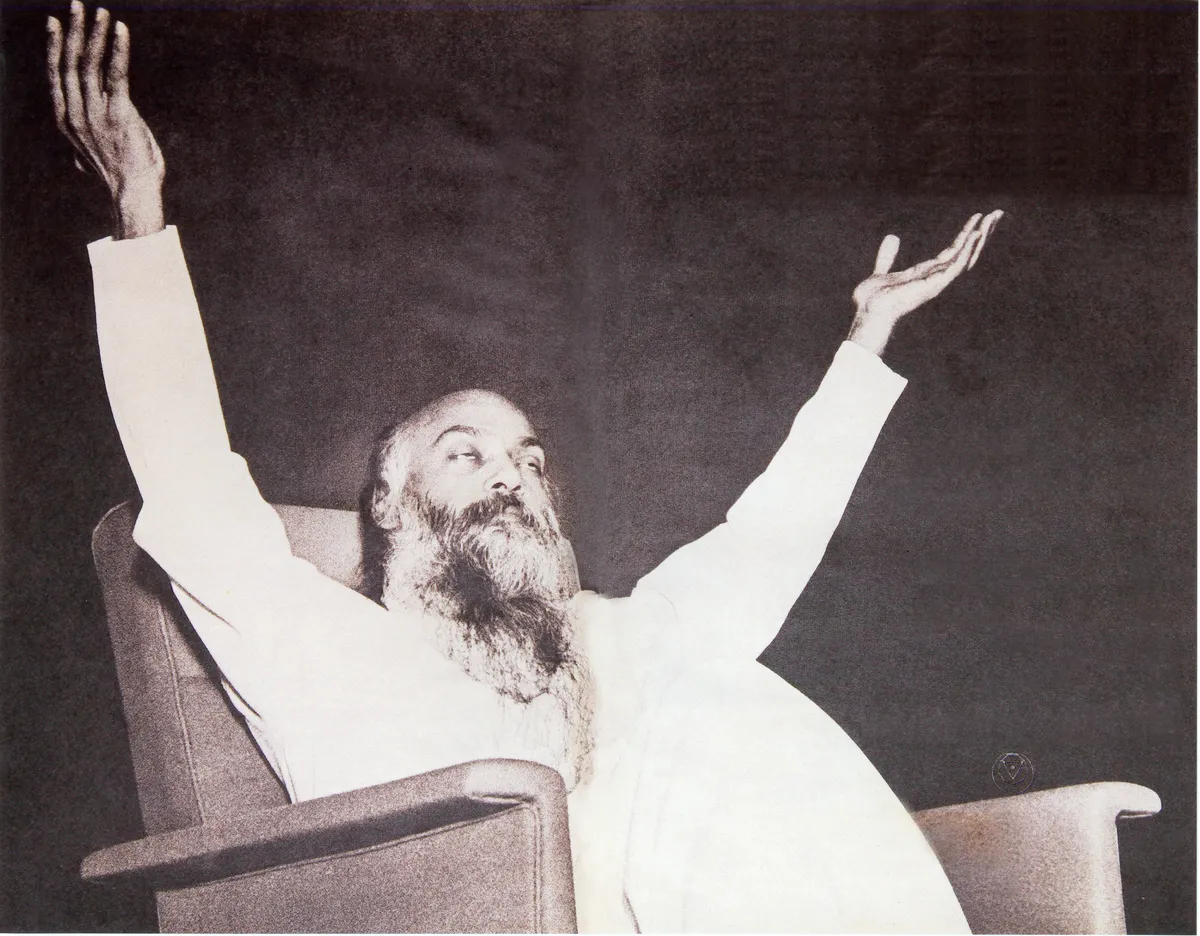
Osho's original Hindi beside Osho Live's English translation, matched passage by passage.
रंग-रास के बिखरे क्षण!
रांगोली रचने के क्षण!!
रंग-रास के बिखरे प्रण!
गंध-विधुर भ्रमर-भीर है,
स्वर-गुलाल भी अधीर है;
सजने के सपने थे, पर--
Scattered moments of color-revelry! Moments for weaving rangoli!! Shattered vows of color-revelry! A bee-swarm bereft of fragrance, even the gulal of sound is impatient; we dreamt of adorning—yet now abeer lies dust-stained and ashen; the water-jet is tears, life is weighted with dull, drained hues; burnt and burnt to cinders the springtime forests of fragrance! Shattered vows of color-revelry! Moments for weaving rangoli!!
धूल-धूसरित अबीर है;
आंसू की पिचकारी है,
जीवन बदरंग भारी है;
जल-जल कर राख हो गए,
वासंती परिमल के वन!
रंग-रास के बिखरे प्रण!
रांगोली रचने के क्षण!!
विजयी परिवाद हो गए,
उलझान-प्रतिवाद बो गए;
शेष बहुत लिखना था, पर--
सार्थक संवाद खो गए;
Slander won the day, we sowed knots of counter-argument; so much still was left to write—yet all meaningful dialogue was lost; with failed constructions in our hands, everyone departs with thirst in hand; unquenched lips upon lips, blades of grass carrying a drop of dew! Shattered vows of color-revelry! Moments for weaving rangoli!!
असफल संरचना लेकर,
जाते सब तृष्णा लेकर;
अधर-अधर पर अतृप्ति है,
शबनम की बूंद लिए तृण!
रंग-रास के बिखरे प्रण!
रांगोली रचने के क्षण!!
विवश, मौन रागिनी हुई,
मसिलेखा दामिनी हुई;
पूनम की वेला थी, पर--
तमसावृत यामिनी हुई;
दृष्टिहीन आंखें लेकर,
उड़ते हतपांखें लेकर;
पीड़ा से बोझिल पलकें,
नयनों में शेष जागरण!
रंग-रास के बिखरे क्षण!
रांगोली रचने के क्षण!!
रंग-रास के बिखरे प्रण!!
जीवन जैसा हम जीते हैं, उसमें असफलता सुनिश्चित है; उसमें विषाद अंतिम परिणाम है। उसमें संताप का ही फल लगेगा। कोई अपवाद नहीं हो सकता। निरपवाद रूप से हमारा जीवन सुगंध को उपलब्ध नहीं होता, दुर्गंध को उपलब्ध होता है। हम सिर्फ मरते हैं, महाजीवन का हमें कोई अनुभव नहीं होता। हम व्यर्थ दो कौड़ी की बातों में उलझे रहते हैं और समय की धार हमारे पास से गुजर जाती है। हम पीठ किए रहते हैं समय की तरफ।
Helpless, the melody fell mute, the ink became a lightning-scratch; it was a full-moon hour—yet night sank under veils of dark; with visionless eyes in sockets, with wings clipped, we flutter; lids burdened with pain, only a remainder of wakefulness in the eyes! Scattered moments of color-revelry! Moments for weaving rangoli!! Shattered vows of color-revelry!!
एक भ्रांति जिसमें प्रत्येक मनुष्य जीता है, वह यह है कि जैसे मुझे मरना नहीं; जैसे सदा दूसरा मरता है। और एक अर्थ में यह बात ठीक भी लगती है। क्योंकि जब भी मरता है, कोई और मरता है। तुम तो जब भी किसी को मरते देखते हो, किसी और को ही मरते देखते हो। तुमने बहुतों को मरते देखा, अपने को तो कोई मरते देखता नहीं--देखेगा भी नहीं--इसलिए यह तर्क मन में बैठता चला जाता है कहीं गहरे में कि मृत्यु औरों पर लागू होती है, मुझ पर नहीं। मैं तो जीऊंगा। मैं तो सदा-सदा जीऊंगा। दम टूटते-टूटते तक आदमी इसी भरोसे में रहता है कि मृत्यु घटने वाली नहीं है; कोई न कोई उपाय मिल जाएगा; कोई न कोई बहाना मिल जाएगा; कोई न कोई औषधि बचा लेगी; कोई चमत्कार होकर ही रहेगा--मैं कोई साधारण व्यक्ति हूं! साधारण व्यक्ति मरते हैं। मैं असाधारण हूं। और यह भ्रांति सबकी है।
The way we live, failure is assured; sorrow is the final outcome. No exception is possible. Without exception, our life does not attain fragrance, it attains stench. We merely die; we know nothing of the Great Life. We remain entangled in two-penny trivialities and the current of time slips past us. We keep our back turned to time.
A delusion in which every person lives is this: as if I will not die; as if only others die. And in one sense it seems right. For whenever death occurs, it happens to someone else. Whenever you see death, you see it happening to another. You have seen many die—no one sees oneself dying, nor will you—and so a logic takes root deep within that death applies to others, not to me. I will live. I will live forever and ever. Even as the breath is breaking, man keeps trusting that death will not happen; somehow a way will be found; some excuse will appear; some medicine will save; a miracle will occur—am I an ordinary person! Ordinary people die. I am extraordinary. And this delusion belongs to all.
सूफियों में एक कहानी है कि परमात्मा बड़ा मजाकी है और जब भी वह किसी को बनाता है और उसे भेजता है दुनिया में, तो आखिरी विदाई के क्षण में उसे पास बुला कर कान में कुछ फुसफुसाता है। हरेक के कान में फुसफुसाता है। एक ही बात फुसफुसाता है। हरेक से एक ही बात कह देता है कि और सब साधारण हैं, तू असाधारण है।
Among the Sufis there is a story: God is given to jokes, and whenever He fashions someone and sends him into the world, at the final moment of farewell He calls him near and whispers in his ear. In every ear He whispers the same thing: Everyone else is ordinary; you are extraordinary.
प्रत्येक व्यक्ति इसी भ्रांति में जीता है। कहे, न कहे; जाहिर करे, न जाहिर करे; मगर गहरे में तुम जानते हो, तुम असाधारण हो, तुम कुछ खास हो। छोड़ो इस भ्रम को! मृत्यु के समक्ष कोई भी विशिष्ट नहीं। और जब मृत्यु के समक्ष ही कोई विशिष्ट नहीं, तो जीवन में कैसे विशिष्ट होगा! यह विशिष्टता की भ्रांति सिर्फ अहंकार है। एक झूठी भावदशा है। इस झूठ से कैसे सुगंध निकले? इस झूठ से तो दुर्गंध ही निकलेगी। इस झूठ में कैसे सफलता के फल लगें? सफल का अर्थ ही वही होता है: फल का लग जाना, फूल का लग जाना। जीवन भर दौड़ते हैं लेकिन पहुंचते कहां? मार्ग ही मार्ग है, मंजिल मिलती ही नहीं। फिर भी तुम्हें यह खयाल नहीं आता कि जिस मार्ग पर मंजिल न मिलती हो, क्या उसे मार्ग कहना उचित है? ऐसे तो कोल्हू का बैल भी सोचता होगा कि मार्ग पर चल रहा है--दिन भर चलता है, चलता ही रहता है। लगता है इतना चल रहा हूं, कहीं न कहीं पहुंच कर रहूंगा! ऐसी ही हमारी जिंदगी है। चलते तो बहुत हैं, कोल्हू के बैल की तरह हमारी गति है, गोल-गोल घूमते हैं, पहुंचते कहीं भी नहीं। वही क्रोध, वही लोभ, वही काम, वही मोह, वही मद, वही मत्सर। कुछ नया है जीवन में? जैसे गाड़ी का चाक घूमता है। वही चाक, कभी एक आरा ऊपर आ जाता है तो दूसरा आरा नीचे चला जाता है, दूसरा आरा ऊपर आ जाता है तो पहला आरा नीचे चला जाता है।
Each person lives under this delusion. Whether you say it or not, show it or not, deep within you know—you are exceptional, you are special. Drop this illusion! Before death no one is distinguished. And if before death no one is distinguished, how will anyone be distinguished in life? This illusion of specialness is only the ego—a falsified inner mood. How can fragrance arise from a lie? From a lie only stench will arise. How will the fruits of success ripen within a lie? Success means exactly that: the fruit setting, the flower setting. We run all life long, but where do we arrive? The path is all path, the destination never arrives. Still it never occurs to you that a way where no destination is ever reached—should that even be called a way? The oil-press bull too must think he is on a road—he walks the whole day, keeps on walking. It seems, walking so much, I will surely reach somewhere! Such is our life. We walk a lot; like the oil-press bull our movement is circular—we go round and round and reach nowhere. The same anger, the same greed, the same lust, the same attachment, the same pride, the same envy. Is there anything new in life? Like a wheel turns—the same rim; one spoke rises, another goes down; then that second rises, the first descends.
क्रोध है, काम है, लोभ है, मोह है, ये सब आरे हैं तुम्हारे जीवन के चाक के। और जीवन का चाक घूमता रहता है। और घूमने से यह भ्रांति बनी रहती है कि कुछ हो रहा है, कुछ घट रहा है, हम कहीं पहुंच रहे हैं! हां, जरूर पहुंचते हो कहीं, कब्र में पहुंचते हो। और कहीं भी नहीं पहुंचते। लेकिन कब्र में पहुंच कर भी वह जो जीवन भर का धोखा है, हम तोड़ना नहीं चाहते। कभी कब्रिस्तान पर जाओ, कब्रों पर लगे पत्थर पढ़ो, तुम चकित होओगे।
Anger, lust, greed, attachment—these are the spokes on your life’s wheel. And the wheel keeps spinning. And from the spinning the delusion persists that something is happening, something is taking place, we are arriving somewhere! Yes, you certainly arrive somewhere—at the grave. Nowhere else. But even upon reaching the grave, the lifelong deception we do not want to break. Go to a cemetery sometime; read the stones upon the graves—you will be astonished.
मुल्ला नसरुद्दीन एक कब्रिस्तान से गुजरता था। उसने संगमरमर का एक पत्थर लगा हुआ देखा। पत्थर पर लिखा था: ‘यहां शेख अब्दुल्ला सोए हुए हैं।’ मरे अभी भी नहीं। सोए हुए हैं! मर गए हैं मगर भ्रांति नहीं तोड़ना चाहते। मुल्ला ने पत्थर को हिला कर कहा कि भैया, शेख अब्दुल्ला, तुम किसको धोखा दे रहे हो? मर चुके मगर अब भी सोच रहे हो कि सो रहे हो?
Mulla Nasruddin was passing by a graveyard. He saw a marble stone, inscribed: “Here Sheikh Abdullah sleeps.” Even now dead, yet not dead—sleeping! Dead yet unwilling to abandon the illusion. Mulla shook the stone and said, Brother, Sheikh Abdullah, whom are you deceiving? You have died, and still you think you are asleep?
मृत्यु के बाद भी हमने कल्पनाएं कर रखी हैं कि हम जीएंगे--स्वर्ग में जीएंगे, परलोक में जीएंगे। मैं नहीं कहता कि परलोक नहीं है, मगर तुम्हारी कल्पनाएं परलोक से कुछ संबंध नहीं रखतीं। तुम्हारी कल्पनाएं तो बस तुम जीओगे, इस भ्रांति का ही विस्तार हैं। तुमने जाना नहीं है कि कोई परलोक है। तुमने इस लोक को भी अभी कहां जाना!
Even after death we have imagined that we will live—we will live in heaven, in the other world. I am not saying there is no other world, but your imaginations have nothing to do with the other world. Your imaginings are only the extension of this same delusion: that you will live. You have not known whether there is any other world. This world you have not known yet!
मेरे पास लोग आते हैं, वे पूछते हैं कि क्या मृत्यु के बाद जीवन होता है? मैं उनसे पूछता हूं, पहले यह तो पूछो कि क्या मृत्यु के पहले जीवन होता है? फिर यह दूसरी बात पूछना। तुम अभी जीवित हो? यह तो पूछो--कि मर चुके कभी के? कि पैदा ही नहीं हुए? सच तो यह है कि पैदा ही नहीं हुए। जब तक कोई ब्रह्म को न जान ले, तब तक क्या खाक जन्म हुआ! इसलिए ब्रह्म को जानने वाले को हम द्विज कहते हैं, ब्राह्मण कहते हैं। ब्राह्मण के घर में कोई ब्राह्मण नहीं होता पैदा, पैदा तो सभी शूद्र होते हैं, हां, जो ब्रह्म को जान लेता है, वह ब्राह्मण हो जाता है। द्विज तो कमाई है, ऐसी मुफ्त मिलती नहीं, पात्रता चाहिए। मगर कुछ भ्रांतियां छोड़ोगे तो ही, नहीं तो समय भागा जा रहा है, समय तुम्हें लूटे लिए जा रहा है। और तुम मजे से लुट रहे हो। तुम इस खयाल में लुट रहे हो कि तुम्हें, और कोई लूट सकता है? तुम दुनिया को लूट रहे हो, तो तुम्हें यह भ्रांति नहीं हो सकती कि तुम्हें कोई लूट सकता है। लेकिन समय अदृश्य है। उसके पैरों की आहट भी सुनाई नहीं पड़ती और एक दिन दरवाजे पर मौत को ले आता है। और जब ले आता है, तब तो बहुत देर हो गई होती है! ‘चिड़िया चुग गई खेत, अब पछताए होत का।’
People come to me; they ask, Is there life after death? I ask them, first ask whether there is life before death. Then ask the second question. Are you alive now? Ask this: have you long since died? Or were you never born? The truth is—you have not yet been born. Until one knows Brahman, what birth has there been! Therefore we call the knower of Brahman dvija, twice-born; we call him Brahmin. No one is born a Brahmin in a Brahmin’s house; all are born Shudras. Yes, the one who comes to know Brahman becomes a Brahmin. Dvija is earned, not got for free—one needs worthiness. But only if you drop a few delusions—otherwise time is running, time is robbing you. And you are happily being robbed. You are robbed in the belief that who can rob you? You are robbing the world; so the illusion arises that no one can rob you. But time is invisible. Even the sound of its feet is not heard, and one day it brings Death to your door. And when it brings her, then it is too late! The bird has eaten the field—now what use repentance?
लोग पछताते हुए मरते हैं।
People die in regret.
मेरे अवलोकन में जो व्यक्ति हंसता हुआ मर सकता है, समझना कि उसने जीवन को जाना था। जो उत्सवपूर्वक मर सकता है, समझना कि उसने जीवन को पहचाना था, वह जीया, उसका जन्म हुआ था, वह द्विज है। जो रोता हुआ मरता है, जो मरते-मरते दम तक भी एक क्षण और जी लूं इसकी चेष्टा करता रहता है, जो मरते-मरते दम भी जीवन को पकड़े रखता है, जीवन के साथ अपने को बांधे रखना चाहता है; छूट गई नाव, किनारे से टूट गए सब बंधन, मगर अभी भी अपने को अटकाए रखना चाहता है--किसी बहाने, कुछ देर और सही, थोड़ी देर और सही! जीवन भर रहे, तब कुछ न किया, थोड़ी देर और रह लोगे तो क्या करोगे?
In my observation, the one who can die laughing—know that he knew life. The one who can die in celebration—know that he recognized life; he lived; he was born; he is dvija. The one who dies weeping, who even in his last breaths keeps trying to live a moment more, who keeps clutching at life as dying happens; the boat has slipped, the bonds to the shore have snapped, yet still he wants to hang on—by some excuse, a little while more! You stayed all life long—what did you do? If you stay a little longer now, what will you do?
कहते हैं, महान सिकंदर जब मर रहा था तो उसने अपने चिकित्सकों से कहा कि मुझे चौबीस घंटे और जिंदा रहना है--सिर्फ चौबीस घंटे--क्योंकि जो मैंने जिंदगी में नहीं किया, सोचता रहा कि अभी तो बहुत जिंदगी पड़ी है, वह कर लूं। उसके चिकित्सकों ने कहा: यह हमारे हाथ के बाहर है, लेकिन एक बात हम आपसे कह सकते हैं कि जब आपने जिंदगी गंवा दी तो आप चौबीस घंटे भी गंवा देंगे। चौबीस घंटे की क्या बिसात!
It is said, when Alexander the Great was dying, he told his physicians, Keep me alive for twenty-four hours—just twenty-four—because what I have not done in life, thinking there was plenty of time, I would now do. The physicians said: That is beyond our hands, but we can say one thing: when you squandered life, you will squander twenty-four hours too. What worth are twenty-four hours!
उपनिषदों में कथा है, ययाति की। वह सौ वर्ष का हो गया, उसकी मौत आई। ययाति घबड़ा गया। सम्राट था, उसने मृत्यु से कहा, दया कर; मैं तो खोया ही रहा, जो कमाने योग्य था, कमाया ही नहीं; जिंदगी कब बीत कई, मैंने ध्यान ही न दिया; मैं तो व्यर्थ में उलझा रहा। मुझे सौ वर्ष और दे। इतनी दया कर! मृत्यु ने कहा कि मैं दे सकती हूं सौ वर्ष, मगर मुझे तब किसी और को ले जाना पड़ेगा। तुम्हारे सौ बेटे हैं--उसकी अनेक रानियां थीं, सौ बेटे थे--तो उनसे पूछ लो, कोई जाने को राजी हो तो मैं उसको ले जाऊं तुम्हारी जगह।
In the Upanishads there is the tale of Yayati. He reached a hundred years; death came. Yayati panicked. He was an emperor; he said to Death, Have pity; I remained lost, what was worth attaining I did not attain; life passed and I took no heed; I remained tangled in futility. Give me a hundred years more. Have such mercy! Death said, I can give you a hundred years, but then I must take another in your place. You have a hundred sons—many queens, a hundred sons—ask them; if anyone agrees to go, I will take him in your stead.
देखते हैं बूढ़े ययाति का अंधापन? वह अपने बेटों से पूछता है; वह बेटों के सामने गिड़गिड़ाता है कि तुम्हें मैंने जन्म दिया, क्या तुम इतना मेरे लिए नहीं कर सकते? उसे शर्म भी नहीं आती, संकोच भी नहीं होता। क्योंकि वह तो सौ साल जी लिया है, उसका कोई बेटा अभी सत्तर साल का है, कोई साठ का है, कोई पचास का है, कोई चालीस का है, ये तो अभी सौ साल भी नहीं जीए हैं। आखिर इनकी भी जीवेषणा है। ये भी जीना चाहते हैं।
See the blindness of the old Yayati? He asks his sons; he pleads before them: I gave you birth—can you not do this much for me? He feels no shame, no hesitation. For he has lived a hundred; some son is seventy, some sixty, some fifty, some forty—not even a hundred yet. They too have the thirst for life. They too want to live.
बड़े बेटे तो इधर-उधर ताक-झांक करने लगे--बूढ़े हो गए थे, चालबाज हो गए थे, होशियार हो गए थे। आमतौर से बुढ़ापा सिर्फ चालबाजी लाता है, बुद्धिमानी नहीं लाता। चालाक बना देता है लोगों को, चतुर बना देता है, प्रज्ञावान नहीं।
The elder sons began looking here and there—grown old, they had grown clever, artful. As a rule, old age brings only cunning, not wisdom. It makes people sly, smart, not wise.
अक्सर बाल धूप में ही पकते हैं। बहुत मुश्किल से कोई मिलेगा जिसके बाल धूप में नहीं पकते।
Most heads turn grey only in the sun. You will rarely find someone whose hair did not whiten merely in the sun.
धूप में पकने का इतना ही अर्थ है कि व्यर्थ ही समय बीत गया, तुम अनभीगे रह गए; जीवन आया और चला गया, तुम डूबे नहीं; मोती बरसे नहीं, तुम्हारे जीवन में वह घड़ी न आई कि गुलाल की तरह कह सकते: झरत दसहुं दिस मोती। कंकड़-पत्थर, कंकड़-पत्थर, उन्हीं को इकट्ठा करते रहे। अब लगा है ढेर और मौत द्वार पर खड़ी है!
To whiten in the sun simply means time passed in vain—you remained unsoaked; life came and went, you did not dive; the pearls did not rain; that moment never came in your life when, like Gulal says, you could say: Pearls shower in all ten directions. Pebbles and stones—those only you kept collecting. The heap has grown, and Death stands at the door!
बड़े तो इधर-उधर ताकने-झांकने लगे; बड़ों ने कहा, इस बूढ़े को देखो--दिल में सोचा--खुद तो सौ साल का हो गया, सब भोग चुका, सौ बेटे हैं, सैकड़ों रानियां हैं, राज्य है, अब और किसलिए जिंदा रहना है? सच तो यह है, बड़े बेटे सोचते थे, कब यह बूढ़ा विदा हो तो हम गद्दी पर बैठें। यह हमको विदा करने की तैयारी कर रहा है! लेकिन सबसे छोटा बेटा खड़ा हो गया। उसकी उम्र तो अभी बहुत कम थी। वह तो कोई अभी पच्चीस साल का ही था। उसने कहा कि मैं तैयार हूं। मौत को भी दया आ गई। मौत ने उस बेटे के कान में फुसफुसाया कि पागल, तू देखता नहीं तेरा सौ साल का बाप भी जाने को राजी नहीं, तेरे बड़े भाई सत्तर साल के, साठ साल के, पचास साल के, वे कोई जाने को राजी नहीं, तू तो सबसे छोटा है, तूने अभी जिंदगी देखी कहां, तू अभी-अभी तो गुरुकुल से वापस लौटा है--पच्चीस वर्ष में तो गुरुकुल से वापस लौटते थे विद्यार्थी--तू अभी जिंदगी में भागीदार भी नहीं हुआ है, तू तो अभी तक बच्चा ही था, अब जवान हुआ है, मुझे तुझ पर दया आती है।
उस युवक ने हंस कर कहा कि मत दया करो, व्यर्थ दया मत करो, जब मेरा पिता सौ साल में कुछ अनुभव न कर सका, तो मैं क्या खाक कर लूंगा! जब मेरे इतने भाई, निन्यानबे भाई, इतने वर्षों में जी कर भी कुछ न पा सके, तो मैं क्या खाक पा लूंगा! मेरे निन्यानबे भाई और मेरे पिता का अनुभव पर्याप्त है, तू मुझे ले चल, दया की कोई जरूरत नहीं, बात खत्म हो गई, यह जिंदगी बेकार है, इस जिंदगी में कुछ पाने योग्य नहीं है।
The elders looked askance; the elders thought inwardly—See this old man: he reached a hundred, enjoyed all; a hundred sons, hundreds of queens, a kingdom—what is there left to live for? Truth is, they were thinking: when will this old man depart so we may sit upon the throne; he is preparing to send us instead! But the youngest son stood up—he was only around twenty-five. He said, I am ready. Even Death felt compassion. Death whispered in the boy’s ear: Fool, do you not see your hundred-year-old father is unwilling to go; your elder brothers, seventy, sixty, fifty, none agree to go; you are the youngest, you have not even seen life—you have just returned from the gurukul; you have not even partaken in life, you were a child, now you are youth; I feel pity for you. The youth laughed and said, Do not pity me, do not waste your pity. When my father, with a hundred years, could learn nothing, what will I learn! When my ninety-nine brothers, living so long, could grasp nothing, what will I grasp! The experience of my ninety-nine brothers and my father is enough—take me. No need for pity. The matter is finished—this life is in vain; in it there is nothing worth attaining.
यद्यपि यह बेटा बूढ़ा नहीं था मगर प्रौढ़ था। इसको प्रौढ़ता कहेंगे। भला इसके बाल सफेद न हों, मगर इसकी आंतरिक उम्र, इसकी मानसिक उम्र इसके बाप से ज्यादा है। इसका बाप बचकाना है। इसके बाप की उम्र बारह-तेरह साल से ज्यादा की नहीं है। उतनी ही मानसिक उम्र है।
Though the son was not old, he was mature. This we call maturity. Let his hair not be white—but inwardly, mentally, his age is more than his father’s. His father is childish; inwardly his age is no more than twelve or thirteen.
औसत आदमी की मानसिक उम्र बारह वर्ष है, यह तुम्हें पता होना चाहिए। शारीरिक उम्र कुछ भी हो, मन से लोग वहीं अटके रहते हैं, बारह-तेरह साल के करीब। उनकी कल्पनाओं में तुम देखो, सपनों में तुम देखो, वही खेल-खिलौने। खेल-खिलौने बड़े होने लगते हैं उम्र बड़ी होने लगती है तो; मगर बड़े खेल-खिलौने से कोई जिंदगी बड़ी नहीं होती। छोटे बच्चे छोटे-छोटे घर बनाते हैं, तुम बड़े-बड़े घर बनाते हो। छोटे बच्चे कागज की छोटी-छोटी नावें बनाते हैं, तुम बड़ी-बड़ी नावें बनाते हो--मगर सब कागज की नावें, सब डूब जाएंगी, सब गल जाएंगी। छोटे बच्चे भी अकड़े फिरते हैं और तुम भी अकड़े फिरते हो। छोटे बच्चों की मूंछें हों तो वे भी ताव दें--बिना मूंछों के भी ताव देते हैं--तुम मूंछों पर ताव देते हो, फर्क क्या है? छोटे बच्चे नकली मूंछें लगा लेते हैं। चार आने की मूंछ खरीद लाते हैं, मूंछ लगा कर अकड़ कर बैठ जाते हैं। तुम्हारी मूंछ भी कुछ बहुत असली नहीं है, नकली ही है। हालांकि तुम्हारे शरीर में ही निकली है, फिर भी नकली है, क्योंकि बाल तो मुर्दा हैं। इसलिए तो काटने से दर्द नहीं होता। जिंदा नहीं है। ये तुम्हारे शरीर के मुर्दा हिस्से हैं जो बाहर फेंके जा रहे हैं। ये मर चुके अंग हैं। इसलिए तो काटते हो तो दर्द नहीं होता। अंगुलियां काटो तो दर्द होगा, सिर्फ नाखून और बाल काटने से दर्द नहीं होता, क्योंकि ये दोनों मुर्दा हैं; ये मर ही चुके हैं, शरीर इनका त्याग कर रहा है, इनको छोड़ रहा है। चाहे बाजार से नकली खरीद लाओ, चाहे जिनको तुम असली समझते हो उन पर ताव दो, सब मूंछें नकली हैं। मगर अकड़ में ही जीते हैं लोग, भ्रांतियों में जीते हैं लोग। और बच्चों को तो माफ भी कर दो, बड़ों को कैसे माफ करोगे!
You should know: the average mental age of man is twelve. The physical age may be anything; mentally people remain stuck around twelve-thirteen. Look into their fantasies and dreams—only toys and games. Toys grow larger as age grows; but large toys do not make life large. Little children build little houses; you build big houses. Little children fold paper boats; you build big ships—but all are paper boats; all will sink, all will rot. Little children swagger—and so do you. If little children had mustaches, they too would twirl them—without mustaches too they twist imaginary ones; you twirl real ones—what difference? Little children paste on a false mustache for a few pennies and sit stiff. Your mustache is not all that real either—it is also false. Though grown from your own body, still false; hair are dead; that’s why cutting them does not hurt; they have no life. These are dead parts your body is discarding, expelling; already dead limbs. Hence no pain in cutting nails and hair—they are dead. Whether you buy false from the market or twirl what you take to be real—all mustaches are false. Yet people live in vanity, in illusions. Children can be forgiven—how will you forgive the grown-ups!
ययाति का बेटा चला गया मौत के साथ। मौत को भी उसकी बात माननी पड़ी। बात तो सच थी। ययाति का बेटा दया योग्य नहीं था, ययाति का बेटा बुद्धिमान था। बुद्धिमान को मृत्यु से दया की भिक्षा नहीं मांगनी पड़ती।
Yayati’s son went with Death. Death had to accept him; his words were true. Yayati’s son was not to be pitied—he was wise. The wise need not beg mercy from Death.
सौ साल फिर बीत गए और ययाति की मौत दुबारा आई और बात वही की वही रही। ययाति ने कहा कि अरे, सौ साल बीत गए, और मैं तो वहीं का वहीं हूं! एक बार और दया करो! ऐसी कहानी चलती है। और हर बार एक बेटा मौत ले जाती है। ऐसे हजार साल ययाति जिंदा रहा।
A hundred years passed again; Death returned—and the same story. Yayati said, A hundred years have passed and I am where I was! Show mercy once more! So the tale goes—and each time a son is taken. Thus Yayati lives a thousand years.
यह ययाति-कथा बड़ी महत्वपूर्ण है। यह तुम्हारी कथा है। यह सबकी कथा है। मौका तुम्हें मिले तो तुम भी यही करोगे। लाख कहते हो कि बेटे के लिए मर जाऊंगा, लेकिन अगर यह मौका मिले कि बेटे की उम्र तुम्हें लग जाए तो तुम बेटे को देने को राजी हो जाओगे।
This Yayati-tale is very significant. It is your tale. It is everyone’s tale. If you got the chance you would do the same. Though you swear you would die for your son—if you got the chance to take your son’s years for yourself, you would accept.
ययाति हजार साल जीआ और हजारवें साल में भी जब मौत आई तब भी उतना ही खाली था, उतना ही कोरा, उतना ही रिक्त--और वही गिड़गिड़ाहट, वही उम्र तेरह साल की, वही उम्र बचकानी। मृत्यु ने कहा: अब बहुत हो गया, अब और नहीं। ययाति ने कहा कि नहीं, अब और मैं मांग भी नहीं रहा हूं। यद्यपि मैं अब भी खाली हूं, मगर एक बात मेरी समझ में आ गई कि मैं कितना ही मांगूं, मैं खाली ही रहूंगा। मैं जैसा मूढ़ हूं, मेरी मूढ़ता जब तक नहीं टूटती, उम्र से क्या होगा, समय से क्या होगा?
Yayati lived a thousand years, and in the thousandth year, when Death came again, he was just as empty, just as blank, just as void—and the same whining, the same childish age of thirteen. Death said: Enough now. No more. Yayati said: Not more years—I am not asking for more. Though I am still empty, one thing I have understood: however much I ask, I will remain empty. Until my foolishness breaks, what will age do, what will time do?
ठीक कहा सिकंदर के चिकित्सकों ने कि तुम चौबीस घंटे और जी कर भी क्या करोगे? ऐसे हम कुछ कर नहीं सकते, जी तुम सकते नहीं, मगर अगर जी भी सकते होते तो भी क्या करोगे? जिंदगी गुजर गई, चौबीस घंटे भी गुजर जाएंगे। तुम सिर्फ भ्रांति में हो कि चौबीस घंटे मिल जाएंगे तो तुम कुछ कर लोगे।
Well said by Alexander’s physicians: even if you had twenty-four hours more, what would you do? As we are, we can do nothing; even if we could live a little longer, what would we do? Life has passed by—twenty-four hours would pass by as well. You are just in the illusion that if twenty-four hours were given, you would do something.
तुम भी सोचो, चौबीस घंटे मिल जाएंगे तो क्या करोगे? शायद एक फिल्म और देख आओगे। कि एक बार और शतरंज की बाजी जमा लोगे। कि एक बार रोटरी-क्लब और हो आओगे। और क्या करोगे? कि रह गया होगा कोई झगड़ा, तो पत्नी से और कर लोगे। मरते दम कुछ और उपद्रव रह गए होंगे तो वे और कर जाओगे--मोहल्ले वालों को सताने का कोई इंतजाम कर जाओगे।
Think yourself: if granted twenty-four hours, what would you do? Perhaps you would see one more film; or play one more game of chess; or one more Rotary Club meeting. What else? Some quarrel left pending—you would have one more with your wife. Dying, if some mischief remains, you will do that too—you will arrange to trouble the neighborhood one last time.
मैंने सुना है, एक आदमी मर रहा था, जिंदगी भर उसने लोगों को सताया और जब मरने लगा, अपने बेटों को पास बुलाया और कहा कि बस एक ही मेरी प्रार्थना है कि जब मैं मर जाऊं--तो मैं तो मर ही गया, अब शरीर को तो गड़ा ही दोगे, इसके पहले इसका उपयोग कर लेना। बेटों ने कहा कि बाप को आज बड़ा दयाभाव हो रहा है! शायद बाप कह रहा है कि मेरी आंखों को दान कर देना अस्पताल में, या मेरे शरीर के और अंग, किडनी इत्यादि को दान कर देना। मगर यह तो बाप का ढंग ही नहीं था! बेटे तो बाप को भलीभांति जानते थे। यह क्या हो गया बाप को? कहीं बुढ़ापे में अंट-संट तो नहीं बक रहा है? सन्निपात में तो नहीं है? बाप सन्निपात में नहीं था। जब उसने कहा तब बेटों को पता चला। उसने कहा, एक काम करना, मैं तो मर ही गया, तुम मेरे हाथ-पैर काट कर मोहल्ले वालों के घर में फेंक देना और पुलिस में रिपोर्ट करवा देना। सब साले बंधे हुए जाएं! बस, मेरी आत्मा को ऐसी शांति मिलेगी! जाते-जाते देख लूं इनको कि चले जा रहे हैं बंधे हुए, तो समझो मैं तृप्त हुआ! तुम समझ लेना कि तुमने अपने पिता के प्रति जो भी ऋण चुकाना था, चुका दिया। इसको कहते हैं आत्मशांति!
I have heard: a man was dying—his whole life he had tormented people. When death came, he called his sons near and said, Only one request: when I die—you will bury the body anyway—before that, make some use of it. The sons thought, compassion has dawned on father! Perhaps he will say, donate my eyes to the hospital, or my organs, kidneys etc. But that was not father’s style! The sons knew their father well. What happened to him? Has he started raving in old age? No, the father was not delirious. He said, Do this: I’ll be dead anyway—cut off my hands and feet and throw them into the neighbors’ houses, and file a police report. Let all the rascals be taken away in chains! My soul will be at peace! If I can see them being led away bound, I will be fulfilled! Consider your debt to your father repaid. This is what they call soul-peace!
मरते दम भी आदमी करेगा तो वही जो उसने जिंदगी भर किया है। लाख तुम कुछ बदलने की कोशिश करो, फर्क नहीं पड़ता। ऐसी सस्ती बदलाहट होती नहीं। जिंदगी हमारी यूं बीत जाती है--इतनी बहुमूल्य जिंदगी है, जिसमें क्या नहीं हो सकता था, जिसमें सब-कुछ संभव था--जिसमें परमात्मा संभव था, जिसमें परमात्मा का फूल लगता।
Even at death a man will do what he did all his life. However much you try to change suddenly, nothing changes. Such cheap change does not happen. Our priceless life passes thus—in which what could not happen? Everything was possible—in which even God was possible, where the blossom of God could have bloomed.
दृष्टि तंद्रिल, श्रवण सोए,
अश्रु-पंकिल नयन खोए;
मन कहां है, क्या हुआ है?
लग रहे कुछ भग्न से हो,
भ्रम-शिला-संलग्न से हो;
कर रहे हो ध्यान किसका,
The gaze is drowsy, the ear asleep, tear-muddied eyes are lost; where is the mind, what has happened? You look somehow broken, glued to stones of delusion; whom are you meditating on, why so sunk within yourself; you look time-fettered, defeated by yourself; Alas, what helplessness is this? What evil planet has touched you?
क्यों स्वयं में मग्न से हो;
लग रहे हो समय-बाधित,
आप अपने से पराजित;
हाय! यह कैसी विवशता है?
किस बुरे ग्रह ने छुआ है?
क्यों हुए उद्विग्न इतने,
पथ-प्रताड़ित विघ्न जितने;
सोच कर देखो तनिक तो--
श्वास है निर्विघ्न कितने;
क्या चरण कोई नहीं है,
Why this much agitation, trampled by obstacles of the path; think a little, just a little— breath is unhindered—how many! Is there any step not swallowed by Time? Everywhere the legacy of dark, fog, and bitter smoke!
काल-कवलित जो नहीं है;
हर तरफ तम की विरासत,
धुंध है, कडुआ धुआं है!
तंतु-प्रेरित गात्र हो तुम;
एक पुतले मात्र हो तुम;
इस जगत की नाटिका के--
क्षणिक भंगुर पात्र हो तुम;
इसलिए हर भूमिका में,
रंग भरो तुम भूमिजा में;
You are a body tugged by threads; merely a puppet you are; in this world’s theater— a fleeting, fragile role you are; therefore in every role, fill color in earth’s play; if you can become unattached—then what blessing, what curse can touch you? Where is the mind, what has happened?
बन सको निरपेक्ष, तो फिर--
क्या दुआ, क्या बददुआ है?
मन कहां है, क्या हुआ है?
इस जीवन में अगर सीखने योग्य कोई कला है तो एक, वह है: साक्षी की कला।
If there is a single art worth learning in this life, it is this: the art of witnessing.
तंतु-प्रेरित गात्र हो तुम,
एक पुतले मात्र हो तुम;
इस जगत की नाटिका के--
क्षणिक भंगुर पात्र हो तुम;
इसलिए हर भूमिका में,
रंग भरो तुम भूमिजा में;
You are a body tugged by threads, merely a puppet you are; in this world’s theater— a fleeting, fragile role you are; therefore in every role, fill color in earth’s play; if you can become unattached—then what blessing, what curse can touch you? Where is the mind, what has happened?
बन सको निरपेक्ष, तो फिर--
क्या दुआ, क्या बददुआ है?
मन कहां है, क्या हुआ है?
बस, निरपेक्ष बन सको, देख सको देह को अपने से भिन्न, देख सको मन को अपने से भिन्न, जाग कर स्वयं के भीतर इस पहचान को कर सको कि मैं सिर्फ चैतन्य मात्र हूं, चिन् मात्र, तो तुम्हारे जीवन में क्रांति घट गई। फिर मृत्यु तुम्हारा कुछ बिगाड़ न पाएगी, तुमसे कुछ भी छीन न पाएगी। और तुम्हारे जीवन में पहली बार परमात्मा का पदार्पण होगा। तुम्हारा नया जन्म होगा। तुम समय के पार उठ जाओगे। कालातीत से तुम्हारा मिलन होगा।
Simply become unattached; see the body as other than yourself; see the mind as other than yourself. Awake within and recognize: I am only consciousness, pure chaitanya, mere awareness. Then revolution has happened in your life. Death will not be able to harm you, will not be able to snatch anything from you. And for the first time the advent of God will happen in your life. Your new birth will be. You will rise beyond time. There will be a meeting with the Timeless.
यह मिलन न हो जाए तो समझना कि तुम जीवन को गंवा रहे हो! और जितने जल्दी सम्हल जाओ उतना अच्छा, क्योंकि कल का क्या भरोसा है!
If this meeting does not happen, know you are squandering life. And the sooner you awaken, the better—for who can trust tomorrow?
संध्या के पट के पीछे ‘निशि’ की नूपुर-ध्वनि आई।
कण-कण में ‘गान’ करुणतम देता है मुझे सुनाई।
इस ‘अंधकार’ में किसने शशि-सी मृदु ‘कोर’ दिखाई?
इस संधि-समय में आंखें क्यों इतना जल भर लाईं?
चुंबन करता है कोई आ-आ ‘अवगुंठन’ मेरा,
पर, देख नहीं पाती हूं, है चारों ओर ‘अंधेरा!’
Behind the curtain of dusk comes the anklet-sound of night. From every particle a most plaintive song reaches my hearing. In this dark who showed a tender lunar crescent? Why do my eyes fill so with water in this hour between?
Someone keeps kissing my veils again and again, yet I cannot see—darkness everywhere!
‘भव’ की ये निधियां सारी बन गईं मुझे क्यों रौरव?
मानो, मैं लुटा चुकी हूं अपना सब वैभव--गौरव!
Why have all these treasures of becoming become a hell to me? It seems I have been looted of my every wealth and glory!
‘नीड़ों’ की ओर विहग-दल उड़ते हैं, करते कलरव।
मैं सूनी आंख निरखती संध्या का ‘मिलन-महोत्सव।’
Bird-flocks fly nest-ward, chirruping. With vacant eye I watch the great wedding of evening.
वह ‘क्षितिज’ रोकता है पथ, ‘उस पार’ ‘बसेरा’ मेरा,
‘माया’ ने डाला मेरे जीवन पर कैसा ‘घेरा?’
The horizon blocks my path—beyond lies my resting-place. What a circle of Maya cast over my life!
जागो! थोड़ा विचार करो, पुनर्विचार करो!
Awaken! Think a little—think afresh!
वह ‘क्षितिज’ रोकता है पथ, ‘उस पार’ ‘बसेरा’ मेरा,
‘माया’ ने डाला मेरे जीवन पर कैसा ‘घेरा?’
The horizon blocks my path—beyond lies my resting-place. What a circle of Maya has been cast over my life!
तुम्हारे जीवन पर माया का बड़ा घेरा है। और माया से मैं किसी बड़े तात्विक, सैद्धांतिक शब्दजाल को नहीं रचना चाहता हूं, माया से अर्थ है: तुम मन की मान कर चल रहे हो तो माया। तुम मन से जाग जाओ और चलो, तो माया का अंत। कोई अद्वैतवाद की बहुत गहरी समीक्षा में जाने की जरूरत नहीं है कि क्या माया, क्या ब्रह्म, कौन सत्य, कौन असत्य? उस तरह के व्यर्थ के ऊहापोह से कुछ सार नहीं निकलता। और तुम जान भी लो कि ब्रह्म सत्य, जगत मिथ्या, तो भी कुछ होगा नहीं। तुम मान भी लो... कितने तो वेदांती हैं। अक्सर दांत गिरते-गिरते लोग वेदांती हो जाते हैं। वेदांत का मतलब होता है: जिनके दांत गिर गए, बे-दांत हो गए, तो वेदांती हो गए। अब करने को भी कुछ न बचा। दांत ही न रहे तो अब और क्या बचा!... लोगों ने बड़े-बड़े सिद्धांत गढ़ लिए हैं, मगर सब बचाव हैं। माया से मेरा तो सीधा-सीधा अर्थ है और वह है: मन की मान कर चलना। मन जो करवाए, वह करना माया और मन से जाग जाना, भिन्न हो जाना और फिर जीना, वह ब्रह्म।
There is a great ring of Maya over your life. By Maya I do not wish to weave some heavy metaphysical net of terms; by Maya I mean simply this: if you follow the mind, it is Maya. If you awaken from the mind and then live, Maya ends. There is no need for a profound critique of Advaita—what is Maya, what is Brahman, what is true, what is false? From that kind of sterile disputation nothing of essence emerges. Even if you come to know that Brahman is truth, the world is false—still, nothing will happen. You may declare it—there are so many Vedantins. Often when teeth begin to fall, people become Vedantins. Vedanta—those without teeth. Now nothing remains to do. No teeth—then what remains! People have forged great doctrines, but all are defenses. My direct meaning of Maya is: to live by the mind’s dictate. Whatever the mind makes you do—that is Maya. To awaken from the mind, become separate, and then live—that is Brahman.
Make the matter practical. Make dharma cash, not credit. Dharma is not a metaphysical system; it is a process of life-transformation. Dharma is an alchemy. It is not about sects and opinions; it is a way to give life a new mode, a new style. If you can do even this, pearls will begin to rain in your life now.
बात को व्यावहारिक बनाओ। धर्म को नगद बनाओ। उधार नहीं। धर्म कोई तत्व-दर्शन नहीं है, धर्म जीवन-रूपांतरण की प्रक्रिया है। धर्म एक कीमिया है। यह कोई मतमतांतर की बात नहीं है, यह तो जीवन को नया ढंग, नई शैली देने की व्यवस्था है। और इतना तुम कर सको तो तुम्हारे जीवन में अभी बरस जाएं मोती।
कल्लोलिनी लहराती है--तट से मृदु क्रीड़ा करती,
ऊपर उस नील गगन की रत्नों से थाली भरती!
माधुरी मुदित अंबर से अवनी पर आज उतरती।
शशि-सुधा-कलश से मद की धारा धरणी पर झरती।
कहते नक्षत्र गगन के तुम नाचो आज परी-सी।
The surging river laughs—plays softly along the shore; above, that blue sky is filling a platter with jewels! Sweetness, joyous, descends from the sky to the earth today. From the nectar-urn of the moon a heady stream is pouring upon the land. The starry sky says, Dance today like a fairy; we shall return to your feet—night is drunk with ecstasy. The cool, soft Malaya breeze wanders free in the groves— why does the life-vine tremble at its very touch?
हम चरणों पर आ लौटें, है निशि उन्माद भरी-सी।
शीतल मृदु मलय पवन है उपवन में मुक्त विचरती।
क्यों स्पर्श-मात्र से उसके यह जीवन-लता सिहरती?
अभी बरसने लगे अमृत, अभी घिर आएं घटाएं, अभी आ जाए आषाढ़, अभी नाचें मोर--एक क्षण की भी देर न हो--तुम साक्षी भर हो जाओ।
Let the nectar begin to rain now, let the clouds gather, let Ashadha arrive now, let the peacocks dance—let there be not even a moment’s delay—only become the witness.
आज के सूत्र:
Today’s sutras:
झरत दसहुं दस मोती! दसों दिशाओं में मोती झर रहे हैं। लेकिन दिशाएं ग्यारह हैं और गुलाल ने केवल दस की बात कही। तुम भी थोड़ा चौंकोगे, क्योंकि तुम भी सोचते हो, मानते हो कि दिशाएं दस हैं। किताबों में दस ही लिखी हैं, भूगोल में दस ही हैं। आमतौर से तो हम चार दिशाएं जानते हैं, फिर चारों दिशाओं के बीच-बीच में एक-एक दिशा, तो आठ; फिर एक दिशा ऊपर, और एक दिशा नीचे, तो दस। मगर एक दिशा भीतर। ये दसों तो बाहर की हैं, ग्यारहवीं दिशा अंतर्यात्रा की है। मगर क्यों गुलाल ने दस की ही बात कही? क्योंकि ग्याहरवीं दिशा में तो तुम देखोगे, वहां तो तुम द्रष्टा होओगे। दसों दिशाओं में मोती झरेंगे, तुम द्रष्टा होओगे। तुम्हारे चारों तरफ झरेंगे--ऊपर से, नीचे से, सब दिशाओं से झरेंगे, लेकिन तुम? तुम तो मात्र द्रष्टा होओगे। तुम पर बूंदाबांदी होगी मोतियों की, अमृत-कलश ढलकेगा, तुम्हारे प्याले में भरा जाएगा जीवन-रस, लेकिन तुम तो द्रष्टा हो। वह ग्यारहवीं दिशा है द्रष्टा की। बाकी दसों दिशाएं दृश्य हैं और ग्यारहवीं दिशा है द्रष्टा की। ग्यारहवीं दिशा में थिर हो जाने का नाम समाधि है।
Pearls shower in all ten directions! Yet directions are eleven, and Gulal spoke only of ten. You too will be startled because you also think, believe, that directions are ten. Books write ten; geography marks ten. Ordinarily we know four; then between each two, one more—so eight; then one up, one down—so ten. But one direction is inward. The ten are outward; the eleventh is the inner journey. Why then did Gulal speak only of ten? Because in the eleventh direction it is you who will see—you will be the Drashta, the seer. In all ten directions the pearls will shower; you will be the witness. All around they will rain—from above, below, from every quarter—but you? You will only be the Seer. A drizzle of pearls will fall upon you, the nectar-urn will tilt, the cup of your being will be filled with the elixir of life—but you will remain the Seer. That eleventh direction is the direction of the witness. The other ten are the seen; the eleventh is the Seer. To be established in the eleventh is called Samadhi.
दीनानाथ अनाथ यह, कछु पार न पावै।
बरनों कवनी जुक्ति से, कछु उक्ति न आवै।।
Din-anath anath yeh, kachhu paar na paavai. Baranon kavani yukti se, kachhu ukti na aavai.
गुलाल कहते हैं कि मैं तो बेपढ़ा-लिखा आदमी हूं, साधारणजन हूं, न कोई पंडित हूं, न कोई ज्ञानी हूं, न कोई शास्त्री हूं, कैसे कहूं जो हो रहा है उसे! ये जो मोती बरस रहे हैं दसों दिशाओं से, यह जो अमृत की झड़ी लगी है, यह जो नाद, अनाहत नाद उठ रहा है, यह जो वीणा बज रही है, यह जो ओंकार गूंज रहा है दसों दिशाओं में, इसे कैसे कहूं! इस आनंद को किन शब्दों में प्रकट करूं? इस अमृत को किन सिद्धांतों में बांधूं, कैसे बांधूं?
Gulal says: I am unlettered, a common man—not a pandit, not a knower, not a shastri. How can I say what is happening! These pearls that are raining from all ten directions; this shower of nectar; this Nada, the Anahat Nada rising; this veena that is playing; this Omkara resounding through all ten directions—how shall I speak it! In what words reveal this bliss? In what doctrines bind this nectar—how bind it?
कबीर कहते हैं: गूंगे केरी सरकरा। जैसे गूंगे ने मिठास चख ली हो, कहे तो कैसे कहे!
Kabir says: It is like the sugar of a mute—he tastes the sweetness, how can he tell?
दीनानाथ अनाथ यह,...
वे कहते हैं कि मैं तो बिलकुल ही दीन-हीन हूं। तुम हो दीनानाथ, मैं हूं अनाथ।
Din-anath anath yeh... He says: I am utterly poor and helpless. Thou art Dinanath; I am orphaned.
...कछु पार न पावै।
मैं लाख कोशिश करता हूं, तुम अनंत हो, तुम्हारे ओर-छोर भी नहीं देख पाता; तुम्हारी अजस्र धारा बह रही है, तुम कहां प्रारंभ होते हो, कहां अंत होते हो, कुछ पता नहीं चलता। तुम्हारा कोई कूल-किनारा नहीं है।
...kachhu paar na paavai. I strive countless ways—You are Infinite. I cannot see your shore; your endless stream flows—I cannot see where You begin, where end. You have no bank and no shore.
बरनों कवनी जुक्ति से,...
ऐसी कोई युक्ति भी मुझे नहीं आती जिससे तुम्हारा वर्णन कर सकूं। और बिना कहे भी रहा नहीं जाता।
Baranon kavani yukti se... No device comes to me by which I could describe You. And yet, without speaking, I cannot endure.
यह अपूर्व घटना प्रत्येक सिद्धपुरुष को घटती है। जो देखता है, वह शब्दातीत। जो अनुभव में आता है, वर्णन में नहीं आता। जिसकी प्रतीति होती है, उसकी व्याख्या नहीं होती। मगर सब जानते हुए कि न व्याख्या हो सकती, न निर्वचन हो सकता, न शब्दों में बांधा जा सकता, न गीतों में गाया जा सकता, फिर भी भीतर एक आंधी उठती है प्रकट करने की, चिल्ला-चिल्ला कर कह देने की, घर की मुंडेरों पर चढ़ जाने की, लोगों को झकझोर-झकझोर कर समझाने की। ये दोनों बातें एक साथ घटती हैं। इसलिए प्रत्येक रहस्यवादी संत बड़ी मुश्किल में पड़ जाता है। एक तरफ अड़चन कि जो अनुभव में है, कहा नहीं जा सकता और दूसरी अड़चन कि बिना कहे रहा नहीं जा सकता। कहना ही पड़ेगा। अनिवार्यरूपेण कहना पड़ेगा। चुप रहा नहीं जा सकता। भीतर जो घुमड़ रहा है, वह फूटना चाहता है, वह विकीर्णित होना चाहता है।
This extraordinary thing befalls every realized one. What is seen is beyond words. What comes in experience cannot be described. What is realized cannot be expounded. And yet, knowing no exposition is possible, no definition, no binding in words, no singing in songs—still within arises a storm to express, to shout it from the rooftops, to shake people awake. Both things happen together. Therefore every mystic saint falls into a great difficulty. One obstacle: what is in experience cannot be said. The other: without saying, one cannot remain. It must be said—inevitably. Silence does not hold. What swells within seeks to burst, to radiate.
दीया जलेगा तो किरणें फैलेंगी। और फूल खिलेगा तो गंध उड़ेगी। और सूरज निकलेगा तो पक्षी गीत गाएंगे ही गाएंगे, और पृथ्वी जागेगी ही जागेगी, और वृक्ष रात भर के सोए पुनः अंगड़ाई लेंगे। जैसे यह स्वाभाविक है, वैसे ही यह भी स्वाभाविक है। जैसे प्यासे आदमी को जल मिल जाए, पी ले, तृप्ति हो, मगर कैसे बताए तृप्ति को? और यह जल कोई साधारण जल तो नहीं। जन्मों-जन्मों से तलाशते थे और मिला नहीं। और इतने पास था, पास से भी पास था, हाथ भी बढ़ाने की जरूरत न थी, सिर्फ साक्षी होने की जरूरत थी।
If a lamp burns, rays will spread. If a flower blooms, fragrance will fly. If the sun rises, birds will sing, and the earth will awaken, and trees asleep all night will stretch. Just as that is natural, so is this. The thirsty meets water, drinks, is fulfilled—but how to tell the fulfillment? And this water is not ordinary water. Through births you had sought and not found. It was so near—nearer than near—no need even to stretch a hand; only the need to be a witness.
और कहना इसलिए भी अनिवार्य हो जाता है, अपरिहार्य हो जाता है कि लोग टटोल रहे हैं, इसी को टटोल रहे हैं; चारों तरफ लाखों-लाखों लोग, करोड़ों-करोड़ों लोग इसी को टटोल रहे हैं जो उनके भीतर है। इसी को खोज रहे हैं, भाग रहे हैं, दौड़ रहे हैं--और वह उनके भीतर पड़ा है। जिस हीरे की तलाश चल रही है, उसकी तलाश करने की जरूरत ही नहीं है, वह खोजने वाले में ही छिपा है। उसकी खोज करना ही भ्रांत है। उसकी खोज में जाना दूर निकल जाना है। अगर उसे पाना हो तो सब खोज छोड़ कर अपने भीतर बैठ जाना जरूरी है। इतने लोगों को इतनी बेचैनी में देख कर, इतनी भाग-दौड़ में देख कर, इतनी आपा-धापी में देख कर कैसे कोई चुप रह जाए! करुणा भी उमगती है।
And speaking becomes inevitable also because people are groping—groping for precisely this; millions around, running, chasing—seeking what lies within them. The diamond they seek need not be sought—it is hidden in the seeker himself. To search for it is already to miss—to go far. If you wish to attain it, drop all searching and sit within. Seeing such restlessness, such hurry-scurry, how can one remain silent! Compassion wells up.
बुद्ध ने कहा है: समाधि का अनिवार्य परिणाम है करुणा। समाधि तो घटेगी भीतर, करुणा बहेगी बाहर। करुणा का पहला कृत्य होगा कि मैं कह दूं लोगों को कि ईश्वर है। और भी एक मुश्किल खड़ी होती है, पहले तो कहना मुश्किल होता है, फिर कहो तो कोई मानता नहीं। कहो तो लोग हंसते हैं। कहो तो लोग कहते हैं कि पागल हो गए हो! अरे, कुछ होश की बातें करो! कहां का ईश्वर, कैसा ईश्वर? अब तुमने गंवाई बुद्धि! सिद्ध करो तर्क से! जिसे कहा नहीं जा सकता, उसको सिद्ध कैसे करोगे? जिसे बताया नहीं जा सकता, उसके लिए प्रमाण क्या हो सकता है? हां, तुम नाच सकते हो, तुम गा सकते हो, तुम इकतारा लेकर गुनगुना सकते हो। तुम्हारे सब उपाय छोटे हैं। मगर करने ही पड़ेंगे। जानते हुए कि छोटे हैं, ओछे हैं, करने ही पड़ेंगे।
Buddha has said: The inescapable outcome of Samadhi is Karuna. Samadhi happens within; compassion flows without. Compassion’s first act is to tell people: God is. Then another difficulty arises: first, it is hard to say; then, upon saying, none believe. Say it and people laugh. They say you have gone mad. Speak sense! What God, what God? You’ve lost your wits! Prove it by logic! That which cannot be said—how to prove? That which cannot be told—what evidence can there be? Yes, you can dance; you can sing; you can hum with a single-stringed ektara. Your means are small. Yet you must use them—knowing they are small, they must be used.
और उचित है कि करने ही पड़ते हैं। लाखों लोग सुनेंगे, शायद कोई एकाध समझने को राजी होगा। मगर उतना ही क्या कम है!
And it is right that they must. Millions will hear; perhaps one or two will be willing to understand. But is even that little too little?
इस पृथ्वी पर एक व्यक्ति भी जब परमात्मा के निकट सरकता है तो सारी पृथ्वी की चेतना परमात्मा के निकट सरक जाती है। पता चले, न चले! जब भी एक व्यक्ति प्रबुद्ध होता है, तो मनुष्य की चेतना एक सीढ़ी ऊपर चढ़ जाती है। पता भी नहीं चलता तुम्हें। तुमने कभी धन्यवाद भी नहीं दिया है महावीर को, बुद्ध को, कृष्ण को, क्राइस्ट को, मोहम्मद को, तुमने कभी धन्यवाद भी नहीं दिया है। लेकिन तुम जो कुछ हो आज, उनकी अनुकंपा से हो। काश, हम ये दस-पंद्रह नाम पृथ्वी के इतिहास से अलग कर दें, तो तुम किसी झाड़ पर बैठे होते! डार्विन को सिद्धांत नहीं खोजना पड़ता कि मनुष्य बंदर से विकसित हुआ है, मनुष्य बंदर ही होता। आखिर तुम्हारे बहुत से पूर्वज अभी भी झाड़ों पर बैठे ही हैं। ये दस-पंद्रह नाम जिनके प्रति तुमने कोई अनुग्रह भी प्रकट नहीं किया है--और किया भी होगा तो औपचारिक भर। जैन घर में पैदा हुए हो तो जाकर महावीर की मूर्ति पर सिर टेक आते हो; न कोई भाव है, न कोई आनंद है, न तुम रसमग्न हो। जाना था, जाना पड़ा है, तो चले गए हो। सब जा रहे हैं, न जाओ तो अच्छा नहीं लगता। धार्मिक कहलाने का भी एक अहंकार है, वह भी तृप्त हो जाता है। बौद्ध घर में पैदा हुए हो तो बुद्ध की मूर्ति को नमस्कार कर लेते हो। और हिंदू घर में पैदा हुए हो तो कृष्ण की मूर्ति को नमस्कार कर लेते हो। लेकिन न तो कृष्ण की बांसुरी तुम्हारे भीतर बजती है, न कृष्ण के आस-पास तुम नाचते, न रास होता। सच तो यह है कि अगर हिंदू से ठीक से पूछो खोजबीन करके, अगर वह ईमानदार हो, तो वह कृष्ण के पूरे जीवन को मानने को राजी भी नहीं होगा। उसमें काट-छांट कर देगा। सबने काट-छांट की है।
Upon this earth, whenever even one person draws near to God, the consciousness of the whole earth draws near. Whether you know it or not, whenever one person becomes enlightened, human consciousness climbs one step. You do not even notice. You have never thanked Mahavira, Buddha, Krishna, Christ, Mohammed—you never offered thanks. Yet whatever you are today is by their grace. If we removed these ten or fifteen names from history, you would still be sitting on trees! Darwin would not need to find a theory that man evolved from the ape—man would still be ape. Many of your forefathers are still on trees. These few names whom you refuse, whom you poisoned, hanged, whose limbs you cut, whom you killed—because of these few men you are human—remember this.
सूरदास कृष्ण के बचपन के ही गीत गाते हैं, उनकी जवानी की बात नहीं करते। क्योंकि जवानी से जरा भयभीत होते होंगे। बचपन तक ठीक है कि कंकड़ी मार दे बच्चा और किसी की गगरी फोड़ दे, यह ठीक है; अब जवान आदमी और झाड़ पर चढ़ जाए और नहाती स्त्रियों के कपड़े ले जाए उठा कर, तो इसकी इत्तला तो पुलिस में करनी होगी। हिंदू से हिंदू मन इस बात को स्वीकार करने में डरता है। इससे बचने के लिए वह कई तरकीबें निकालता है। वह कई व्याख्याएं करता है। पहली तो व्याख्या वह इस तरह की करना शुरू कर देता है कि यह सिर्फ प्रतीकात्मक है, वस्तुतः कोई तथ्य नहीं है कि कृष्ण स्त्रियों के वस्त्रों को लेकर और वृक्ष पर चढ़ गए। यह तो प्रतीक है। स्त्रियां यानी इंद्रियां। अब यह किसने इनको कह दिया कि स्त्रियां यानी इंद्रियां? मगर कुछ रास्ता निकलना पड़ेगा। स्त्रियां यानी इंद्रियां। और स्त्रियों के वस्त्र यानी इंद्रियों को उघाड़ना ताकि तुम इंद्रियों का सत्य देख सको। खूब तरकीब निकाली! तुमने बात ही झुठला दी!
तो कृष्ण की सोलह हजार रानियां? हिंदू से हिंदू मन भी थोड़ा चिंतित होता है, थोड़ा बेचैन होता है, थोड़ी असुविधा अनुभव करता है कि कैसे स्वीकार करो, सोलह हजार रानियां, यह तो जरा बात गड़बड़ होती मालूम होती है। अरे, एक हो, दो हों, ठीक है--और मुसलमान भी रहे होते तो भी चार; मोहम्मद ने भी बहुत हिम्मत की तो नौ, मगर सोलह हजार! तो कुछ रास्ता तो निकालना पड़ेगा। हालांकि यह ऐतिहासिक तथ्य है और घबड़ाने जैसा नहीं है कुछ। निजाम हैदराबाद की पांच सौ स्त्रियां अभी थीं, पचास साल पहले! अगर पचास साल पहले निजाम हैदराबाद की पांच सौ स्त्रियां हो सकती हैं, तो मामला कुछ बहुत बड़ा नहीं है। सोलह हजार मतलब बत्तीस गुनी। सो बत्तीस का गुणा कर दो। और निजाम हैदराबाद की हैसियत से कृष्ण की हैसियत बत्तीस गुनी तो माननी ही पड़ेगी। निजाम हैदराबाद की क्या हैसियत है? उन दिनों जितनी स्त्रियां होतीं तुम्हारी, उससे अंदाज लगता था कि तुम कितने समृद्ध हो। और कोई रास्ता नहीं था समृद्धि के नापने का। स्त्रियां एक तरह के सिक्के थीं, कि तुम्हारे पास कितने सिक्के? अलग-अलग लोगों के अलग-अलग सिक्के होते हैं।
एक देहात में एक आदमी नये-नये खुले बैंक में उधार लेने गया। बैंक के मैनेजर ने पूछा, तुम्हारा काम क्या है? उसने कहा, मैं गाय-बैल बेचने का काम करता हूं। तुम्हारे पास कितने गाय-बैल हैं? उसने कहा: पांच सौ। ठीक है। उसको कोई ज्यादा चाहिए भी नहीं था, केवल दो हजार रुपये उधार मांग रहा था। दो हजार उसने उधार दे दिए। दो महीने बाद वह आकर पैसे चुका गया। जब उसने पैसे चुकाए और थैली खोली, तो उसके पास कम से कम पचास हजार रुपये थे। दो हजार उसने निकाल कर दे दिए नोट और बाकी नोट समेट कर उसने थैली में रख दिए--ऐसे जैसे कागज-पत्थर हों! मैनेजर ने पूछा: इतने रुपये तुम्हारे पास हैं, इनको बैंक में जमा कर दो, ब्याज भी मिलेगा। उसने कहा: ठीक है, तुम्हारे पास कितनी गाय-भैंसें हैं? जब दो हजार उधार दिए तो पांच सौ गाय-बैल, गाय-भैंसें; तो पचास हजार रुपये दे रहा हूं! गाय-भैंसें कहां हैं?
ठीक है, अपनी-अपनी भाषा होती है। गाय-भैंस वाले के पास एक ही भाषा होती है: तुम्हारे पास कितनी?
स्त्री को धन कहा है भारत में। अपमानजनक है यह। गर्हित है, इसकी निंदा होनी चाहिए। लेकिन अगर धन कहा है तो फिर धन मापदंड हो जाता था। तो कितनी स्त्रियां तुम्हारे पास? रही होंगी सोलह हजार, कुछ आश्चर्य की बात नहीं है, कुछ हैरानी की बात नहीं है। और उन दिनों इतने युद्ध होते थे, इतने पुरुष मर जाते थे कि स्त्रियों की संख्या हमेशा ज्यादा हो जाती थी। आजकल के युद्ध एक लिहाज से अच्छे हैं, क्योंकि बम गिरे तो वह कोई पकड़-पकड़ कर पुरुषों को नहीं मारते। कम से कम थोड़े से समाजवादी हैं। स्त्री हो कि पुरुष, बच्चा हो कि बूढ़ा, इसकी कोई फिकर नहीं, बम तो सभी को मार देता है। हिरोशिमा पर गिरा तो सबको खत्म कर दिया। मगर उन दिनों के युद्ध में तो स्वभावतः पुरुष मरता था। स्त्रियों की संख्या बढ़ती जाती थी। इसलिए मोहम्मद ने निर्णय दिया की चार स्त्रियां मुसलमान रख सकते हैं। उसका कुल कारण इतना था कि अरब में उस समय स्त्रियों की संख्या चार गुनी हो गई थी पुरुषों से। कृष्ण के जमाने में संख्या बहुत ज्यादा रही होगी। आए दिन लड़ाई-झगड़े, हत्याएं, पुरुषों का मरना।
मगर हिंदू मन को भी घबड़ाहट होती है कि सोलह हजार! इससे तो बड़ा मुश्किल हो जाएगा, लोग क्या कहेंगे? ये कैसे भगवान? सोलह हजार स्त्रियां! अरे, साधारण आदमी एक से चला लेता है काम। सोलह हजार स्त्रियां! नाम-धाम, पता-ठिकाना रखना भी मुश्किल होता होगा। मुंशी लगा रखे होंगे। दफ्तर खोल रखा होगा। नंबर बांट रखे होंगे। और सोलह हजार रानियों का समझो कि सोलह हजार दिन में एक रानी के लिए एक दिन मिलता होगा। तब तक भूल ही जाते होंगे, कि बाई, तू कौन है? कहां से आई है? क्या काम है? तो कुछ रास्ता निकालना पड़ेगा। तो उन्होंने रास्ता निकाल लिया। वह रास्ता यह है कि यह स्त्रियों की बात नहीं है, मनुष्य के भीतर सोलह हजार नाड़ियां होती हैं। नारियां नहीं, नाड़ियां। ये सोलह हजार नाड़ियों की मालकियत, इनके पति हो जाना, इनके स्वामी हो जाना। सो एक भी न बची नारी! सब नाड़ियां हो गईं। कुछ तो दया करो! कम से कम दो-चार तो नारियां रहने देते। तुमने सभी नाड़ियां कर दीं। तो ये राधा वगैरह, सब नाड़ियां! तो ये सब मूर्तियां वगैरह, मंदिर इत्यादि सब झूठ। मगर स्वीकार करने की कठिनाई, बेचैनी। तो समादर क्या खाक करोगे! स्वीकार करने में ही डरते हो।
श्वेतांबर जैन कहते हैं कि हां, महावीर नग्न थे, मगर वस्तुतः नग्न नहीं थे। क्योंकि नंगा मानना जरा जंचता नहीं, कि अपने स्वामी, अपने भगवान और नंगे! मगर कोई रास्ता निकालना पड़ेगा। थे तो वे नंगे ही--ऐसे नंगे होने में कोई खराबी भी नहीं है। परमात्मा सभी को नग्न ही बनाता है--वे सहज, निर्दोष व्यक्ति हो गए, वस्त्रों की कोई जरूरत न रही, क्योंकि छिपाने को कुछ बचा नहीं; छिपाने योग्य कुछ नहीं बचा, छोड़ दिए होंगे वस्त्र, कोई इसमें हैरानी की बात नहीं है। मगर मन में कचोट होती है। और फिर नग्न को पूजना! फिर बच्चे पूछते हैं कि दद्दू, ये महावीर स्वामी नंगे खड़े हैं और इतनी सर्दी पड़ रही है! कम से कम पायजामा पहनाओ, कोट पहना दो, एक झग्गा तो कम से कम डाल ही दो! ये नंगे क्यों खड़े हैं? तो श्वेतांबरों ने एक तरकीब खोज ली कि वे नग्न नहीं थे, सिर्फ दिखाई पड़ते हैं नग्न।
कैसी खोजी तरकीब उन्होंने यह!
तरकीब उन्होंने यह खोजी कि जब उन्होंने वस्त्र छोड़ दिए तो देवता आकाश से उतरे और उन्होंने उन्हें अदृश्य वस्त्र दिए। तो वे दिखाई नहीं पड़ते वस्त्र--हैं तो, मगर दिखाई नहीं पड़ते। दैवीय वस्त्र हैं। अदृश्य। अब उन्होंने तरकीब खोज ली। अदृश्य हैं, श्वेत हैं। इसलिए वे श्वेतांबर कहलाते हैं।
दिगंबर भी अपनी मूर्तियां बनाते हैं, तो महावीर को इस ढंग से बैठाते हैं पालथी मार कर कि उनकी नग्नता दिखाई न पड़े।
मैं एक दिगंबर घर में मेहमान था। बड़ा सुंदर चित्र महावीर का लगा था। मैंने कहा: चित्र तो बहुत सुंदर है, मगर चालबाजी है इसमें! उन्होंने कहा: क्या चालबाजी है? महावीर को दिखाया है एक वृक्ष की आड़ में खड़ा हुआ और वृक्ष की शाखाएं इस तरह दिखाई हैं कि शाखाओं ने लंगोटी का काम कर दिया। सो महावीर स्वामी नग्न भी खड़े हैं! मैंने कहा कि मगर बड़ी मुश्किल होती होगी, इस वृक्ष को कहां-कहां ले जाते होंगे! यह तो एक झांकी हो गई समझो। कि ट्रक में खड़े हैं और वृक्ष भी लगा है ट्रकमें--और चले जा रहे हैं। ताकि नंगे भी रहें और वृक्ष लंगोटी लगाए रहे। तो लंगोटी ही क्यों नहीं लगा लेते? इतना बड़ा वृक्ष लगाए फिरो...! उन्होंने कहा: हां, यह बात तो है, यह आपने खूब याद दिलाई! मगर यह मुझे कभी खयाल नहीं आई। जो भी आता है, इसको पसंद करता है चित्र को। मैंने कहा: पसंद क्यों नहीं करेगा? तुम्हारे घर आने-जाने वाले लोग होंगे दिगंबर जैन। उन्होंने कहा: हां, वे ही आते-जाते हैं, मैं खुद भी दिगंबर जैन हूं। वे सब पसंद करेंगे। उनको बात जंचेगी।
तुम कैसे सम्मान करोगे, तुम स्वीकार भी नहीं कर सकते! इनके वचनों का भी तुम अर्थ अपने ही हिसाब से निकाल लोगे। इनके जीवन का भी अर्थ तुम अपना करोगे।
महात्मा गांधी को बहुत अड़चन थी महाभारत के युद्ध से। होनी ही चाहिए। क्योंकि अहिंसा! और गीता से उन्हें लगाव! हिंदू होने से वह भी एक झंझट। तो गीता को कहें: माता। मगर माता का जन्म हुआ युद्ध में। इन माई को भी कोई और स्थान न मिला! युद्ध के मैदान में जन्मीं! अब उनको बड़ी अड़चन थी। गांधी के जीवन में जीवन भर अड़चन रही। क्योंकि थे तो वे हिंदू मगर पले जैन प्रभाव में। गुजरात की वह हालत है। गुजरात है तो हिंदू मगर प्रभाव जैन है। भारी प्रभाव जैन है। तो गुजराती घर का न घाट का।... अब बाकी तुम समझ लो!... वह न तो हिंदू है न जैन है। वह दोनों के बीच में अटका है।
अब महात्मा गांधी यह भी नहीं कह सकते कि गीता गलत है, क्योंकि हिंदू हैं। और यह भी नहीं मान सकते कि युद्ध, कृष्ण और युद्ध करवाएं! यह तो बात ही गलत हो जाएगी। हां, सत्याग्रह करवाते, अनशन करते, जेल भरते, घेराव करते--और कुछ भी करते, मगर युद्ध! और बेचारा अर्जुन तो भाग कर जैन मुनि होने की तैयारी कर रहा था। वह यही तो कह रहा था कि महाराज, मारने में क्या सार है? अरे, क्षुद्र वस्तुओं के लिए, धन के लिए, पद के लिए, प्रतिष्ठा के लिए हत्या करनी, हिंसा करनी, पाप करना, इससे तो मैं संन्यासी हुआ जाता हूं! जंगल में बैठेंगे और मंगल करेंगे! इस युद्ध में क्या रखा है? उसके शिथिल गात और उसका गांडीव गिरने लगा। और कृष्ण ने उसे भड़काया, समझाया-बुझाया कि नहीं बेटा, जूझो! परमात्मा की जो मर्जी वह पूरा करो! अब यह कैसे पक्का कि परमात्मा की यही मर्जी है कि जूझो? परमात्मा की मर्जी यही हो कि भागो! यह कौन जिम्मा ले कि परमात्मा की मर्जी क्या है? परमात्मा कृष्ण से बोल रहा है कि अर्जुन से, किसको पता? अगर महात्मा गांधी से पूछो तो उनको तो लगेगा कृष्ण से तो नहीं बोल रहा, बोल रहा है वह अर्जुन से ही। मगर यह कहने की हिम्मत कैसे जुटाएं? तो फिर तरकीब निकालनी पड़ती है।
तो तरकीब यह है कि युद्ध कभी हुआ नहीं, युद्ध तो केवल परिकल्पना है--एक मेटॉफर, एक प्रतीक मात्र। प्रतीक है अच्छाई और बुराई के बीच युद्ध का। कोई ऐतिहासिक युद्ध नहीं। यह तो मनुष्य के अंतर्तम का युद्ध है, जहां बुराई और भलाई में युद्ध हो रहा है।
कौन बुरा है, कौन भला है? गांधी से किसी से पूछा नहीं कि इसमें बुरा-भला कौन है? दुर्योधन और कौरव बुरे हैं? और पांडव अच्छे हैं? ये सब पांडव जुआरी थे। और हरकत पांडवों की तरफ से शुरू हुई।
पांडवों ने एक लाख का भवन बनाया और उसमें दुर्योधन को निमंत्रित किया। वह भवन इतनी कला और कारीगरी से बनाया गया था कि जहां दरवाजे नहीं थे, वहां दरवाजे दिखाई पड़ते थे और जहां दरवाजे थे, वहां दरवाजे नहीं, दीवाल दिखाई पड़ती थी। स्थापत्य कला का एक नमूना रहा होगा! इस तरह बनाया जा सकता है।
अभी मेरे पास किसी ने भेंट भेजी है अमरीका से। एक छोटा सा खिलौने जैसी चीज है, मगर उसे देख कर मुझे तत्क्षण याद आ गई यह जो पांडवों ने भवन बनाया था, उसकी। एक प्याली है। लेकिन प्याली इस तरह से बनाई गई है और प्याली के भीतर वैज्ञानिक ढंग से, गणित के आधार पर इस तरह चांदी का लेप किया गया है कि प्याली के भीतर किसी चीज को तुम रख दो तो वह भीतर नहीं दिखाई पड़ती, वह प्याली के ऊपर दिखाई पड़ती है। प्याली से पड़ती हुई किरणें उस चीज से इस तरह टकराती हैं कि उसका प्रतिबिंब ऊपर बन जाता है। तुम अगर दूर से देखोगे तो तुम बड़े चकित हो जाओगे; चीज ऊपर दिखाई पड़ती है! एक बुद्ध की प्रतिमा उसके भीतर रख दी है, वह प्रतिमा ऊपर दिखाई पड़ती है। जहां नहीं है वहां तुम हाथ फेरो, कुछ भी नहीं है। मगर दिखाई पड़ती है। आंखें गवाही देती हैं कि है। हाथ फेरो, कुछ भी नहीं है। जब तुम पास आकर झांकोगे तब तुमको पता चलेगा कि प्रतिमा अंदर रखी है। लेकिन दिखाई ऊपर पड़ती है।
यह अगर एक छोटी सी प्याली में हो सकता है, तो यह बड़े भवन में भी हो सकता है, इसमें कोई आश्चर्य नहीं है। सिर्फ किरणों का, दर्पणों का ठीक-ठीक आयोजन करने की जरूरत है। और वहां दुर्योधन जब गिरने लगा दीवालों से टकरा कर, तो द्रौपदी हंसी। और उसने कहा कि गिरेगा क्यों नहीं, है अंधे का बेटा! अंधा है, इसलिए गिर रहा है।
यह हंसी अखर गई।
यह कोई भली बात थी? यह कोई शुभ बात थी? आदमी अंधे को भी अंधा नहीं कहता, कहते हैं: सूरदास जी! यह दुर्योधन का इस तरह अपमान करने की क्या जरूरत थी? और फिर अपमान का बदला लिया जाएगा। इसमें बुरा कौन है, भला कौन है? और फिर ये सब जुआरी! धर्मराज सब लगा दिए दांव पर। पत्नी भी लगा दी है। इनमें कौन अच्छा है, कौन बुरा है? गांधी जी से कोई पूछे! लेकिन वे बताते हैं कि शुभ और अशुभ के बीच युद्ध हो रहा है। यह भगवान और शैतान के बीच युद्ध हो रहा है। यह युद्ध वास्तविक नहीं है, ऐतिहासिक नहीं है, प्रतीक मात्र है। इस तरह हम तरकीबें निकालते हैं, हम अपने अर्थ निकालते हैं। हम सम्मान क्या खाक करेंगे! हम स्वीकार भी नहीं कर सकते हैं तथ्यों को। हम तथ्यों को झुठलाते हैं।
लेकिन इन थोड़े से ही लोगों को, जिनको हम झुठलाते हैं, जिनको हमने जहर पिलाया और फांसी दी और जिनके हाथ-पैर काटे और जिन्हें हमने मारा, इन थोड़े से ही लोगों के कारण हम मनुष्य हैं, इसे स्मरण रखना।
बरनों कवनी जुक्ति से, कछु उक्ति न आवै।
गुलाल कहते हैं: मुझे तो कुछ उक्ति आती नहीं, कैसे कहूं, कहे बिना रहा जाता नहीं।
Baranon kavani yukti se, kachhu ukti na aavai. Gulal says: No words come—how can I say? And yet without saying I cannot remain.
यह मन चंचल चोर है,...
इतना ही कह सकता हूं:
यह मन चंचल चोर है, निसुबासर धावै।
Yah man chanchal chor hai... I can at least say this much:
लोगों से में यही कह रहा हूं, यही कह सकता हूं, कि इस चंचल मन से बचो! क्योंकि जब तक मैं इसमें उलझा था, मैंने परमात्मा को नहीं जाना। तब तक यह मोतियों की झड़ी लगी थी, मुझे दिखाई न पड़ी। मैं अंधा रहा, आंख के रहते अंधा रहा। कान के रहते बहरा रहा। हृदय के रहते मैंने प्रेम नहीं जाना, भक्ति नहीं जानी। कारण केवल एक था: यह मन चंचल चोर है।
This mind is a restless thief—day and night it runs.
I say this to people—this is all I can say—beware of this fickle mind! For so long as I was entangled in it, I did not know God. Though pearls rained, I did not see them. I remained blind with eyes; deaf with ears. With a heart intact, I knew neither love nor devotion. The reason was only one: this mind is a restless thief.
...निसुबासर धावै।
यह मन बिलकुल चोर है, बेईमान है, धोखेबाज है। यह चौबीस घंटे हमले कर रहा है। निसुबासर। यह तुम्हें हर तरफ से लपेटे हुए है। और इसके जाल ऐसे हैं, एकदम से समझ में नहीं आते। यह बड़ा तार्किक है। यह अपनी हर चीज के लिए तर्क देता है।
...nisubasar dhaavai. It is a thief—dishonest and deceitful. It assaults twenty-four hours a day—nisubasar. It enfolds you from every side. Its nets are such you do not at once discern them. It is supremely logical; it supplies arguments for all its needs.
मुल्ला नसरुद्दीन की पत्नी ने एक बार अचानक नसरुद्दीन के आफिस में प्रवेश किया। सामने ही देखा कि मुल्ला की खूबसूरत स्टेनो मुल्ला की गोद में बैठी हुई है। पत्नी तो क्रोध से तमतमा उठी। मुल्ला ने देखा कि पत्नी भड़कने ही वाली है, तो जोर से स्टेनो को धक्का देते हुए बोला, सुनो जी, आफिस में स्टूल और चेयर्स की कमी है, ठीक है, मगर इसका यह मतलब तो नहीं कि तुम मेरी गोद में बैठो! अरे, खड़े होकर नोट्स लो!
One day Mulla Nasruddin’s wife burst into his office without warning. Right before her she saw Mulla’s beautiful stenographer sitting in his lap. The wife flared with rage. Mulla saw she was about to explode. He shoved the stenographer off and said, Listen, there is a shortage of stools and chairs in the office—agreed—but that does not mean you sit in my lap! Stand and take notes!
मन तरकीबें निकाल लेता है। तत्क्षण तरकीबें निकाल लेता है। हर हालत में तरकीबें निकाल लेता है। तुम जरा देखना, तुम्हारा मन कैसी-कैसी तरकीबें निकालता है! तुम कैसे-कैसे बहाने खोजते हो!
The mind will devise tricks—instantly. In any state, it will devise tricks. Watch how your mind devises them! What excuses you find!
मैंने सुना है, मुल्ला नसरुद्दीन एक बगीचे में चोरी करने घुस गया। जा रहा था रास्ते से, दरवाजा खुला पड़ा था, पहरेदार था नहीं, पके हुए फल, लार टपक गई उसकी। रोकना भी चाहा कि यह ठीक नहीं है तो भीतर से आवाज आई--क्या ठीक नहीं है? अरे, फल तो परमात्मा के हैं, सबै भूमि गोपाल की, फल किसी के बाप के हैं! फल तो सबके हैं। परमात्मा की भूमि, परमात्मा का आकाश, उसकी हवा, उसकी रोशनी, क्या डरना! इसमें चोरी क्या है? चोर असल में वह है जो दावा कर रहा है कि ये मेरे हैं। मुल्ला ने कहा: बिलकुल ठीक, अंतर्वाणी पर तो विश्वास करना ही पड़ेगा! घुस गया बेधड़क। बाजार जा रहा था सब्जी खरीदने, झोले में उसने भर लिए--जो भी उसको मिला। टमाटर थे तो टमाटर भर लिए, तरबूज-खरबूज भर लिए, और तभी मालिक आ गया! उसने रंगे हाथ उसको पकड़ लिया। पूछा कि यह क्या कर रहे हो? मुल्ला ने कहा कि क्या बताऊं, बड़ी हैरानी की बात हुई। मैं रास्ते से जा रहा था, जोर की आंधी आई, कि आंधी मुझे उड़ा कर भीतर ले आई। और आंधी का जोर ऐसा था...! मैं तो सब्जी खरीदने जा रहा था। तो उसने कहा: ठीक है, चलो यह भी हम मान लेते हैं कि आंधी आई और आंधी बड़ी जोर की थी--हालांकि ऐसी आंधी यहां कभी आई नहीं; मैंने तो अपने जीवन में नहीं देखी, मगर ठीक है, अब तुम कहते हो, बूढ़े आदमी हो, आई होगी आंधी, मगर ये टमाटर तुम्हारे झोले में कैसे पहुंच गए? उसने कहा: वही आंधी की वजह से। झोला मैं हाथ में लिए था, आंधी ने सब उखाड़-पछाड़ मचा दी, कुछ टमाटर मेरे झोले में पड़ गए। उसने कहा: चलो यह भी ठीक है। मगर तरबूज-खरबूज? मुल्ला ने कहा: वही तो मैं सोच रहा हूं कि टमाटर तक तो ठीक है, मगर ये तरबूज-खरबूज कैसे पहुंच गए अंदर? आपने ठीक पूछा, यही मैं सोच रहा हूं। यही मेरी समझ में भी नहीं आ रहा है!
I have heard: Mulla slipped into a garden to steal. Passing by, he saw the gate open, no guard; ripe fruit made his mouth water. He tried to stop himself: This is not right. A voice spoke within: What not right! The fruits belong to God—sabai bhumi Gopal ki—the land is God’s; the fruits everyone’s. Whose father do they belong to? They are for all. God’s land, God’s sky, His air, His light—why fear! What theft is this? The real thief is the one who claims “mine.” Mulla said, Exactly right—one must trust the inner voice! He went in unafraid. He was going to the market to buy vegetables; he filled his bag with whatever he found—tomatoes, melons, watermelons—and just then the owner arrived and caught him red-handed. What are you doing? Mulla said, Strange thing happened. I was walking by—the wind came. Such a storm! It blew me inside. And such a wind! I was going to buy vegetables. The man said, Let us grant even this—that a storm came, though never seen here before. But how did these tomatoes get into your bag? Mulla said, Because of the wind. The bag was in my hand; the storm created such an uproar, a few tomatoes fell into my bag. The owner said, Let us grant even that. But the watermelons and melons? Mulla said, That is what I too am thinking—tomatoes are understandable. How these watermelons and melons got inside—that I do not understand! You asked rightly—this I too cannot figure out!
आदमी खोजता रहता। तुम जैसा भी जीवन जीते हो, उसके लिए ही तर्क खोज लेते हो। और तुम जैसा जीवन जीना चाहते हो, मन तुम्हें वैसे ही जीवन जीने के लिए तर्क देने को राजी होता है। तुम चोर हो, तो मन चोरी के लिए तर्क देने लगता है। तुम बेईमान हो, तो मन कहता है सारी दुनिया बेईमान है; यहां ईमानदार रहे कि लुटोगे, मरोगे, यहां बेईमान मजा कर रहे हैं। तुम किसी की जेब काटना चाहो, मन कहेगा--बेफिकरी से काटो, क्योंकि तुम्हारी भी तो कितनी बार जेब काटी गई है। और जैसे को तैसा, यही तो नियम है।
Man keeps searching—whatever life you want to live, you will find arguments to suit it. If you are a thief, the mind will argue for theft. If you are dishonest, the mind will say the whole world is dishonest; if you remain honest, you will be looted—here the dishonest enjoy. If you want to pick someone’s pocket, the mind will say, Carefree—pick it! How often has your pocket been picked! Tit for tat—that is the rule.
सुना है मैंने कि अकबर बादशाह किसी बात पर नाराज हो गया और उसने बीरबल को एक चांटा मार दिया। भरी सभा में चांटा, बीरबल भी तमतमा गया, हाथ उठा लिया, मगर फिर भीतर से समझ भी आई कि बादशाह को चांटा मारना--फिर महंगा पड़ जाएगा! मगर उठा हाथ नीचे करना भी ठीक नहीं, सो जो आदमी बगल में खड़ा था, उसको उसने चांटा मार दिया। उस आदमी ने कहा: वाह रे वाह! तेरे को सम्राट ने चांटा मारा, तू मुझे क्यों मारता है? बीरबल ने कहा: तू बगल वाले को मार, बात खत्म कर! चलने दे! कभी न कभी बादशाह पर पहुंच जाएगा।
I have heard: Emperor Akbar, in anger, slapped Birbal in open court. Birbal fumed, raised his hand—then wisdom came: to slap the emperor could be costly. But lowering the raised hand would also be awkward. So he slapped the man standing next to him. That man cried, Wonderful! The emperor slapped you—why do you slap me? Birbal said, You slap the man next to you—the matter will resolve! Let it move on! Someday it will reach the emperor.
हम तरकीबें खोज लेते हैं। तुम्हें दफ्तर में मालिक ने बहुत परेशान किया, उससे तुम कुछ नहीं कह सकते, वहां तो तुम कहते हो, जी हुजूर, जी हुजूर, बिलकुल ठीक, मगर घर आकर पत्नी पर टूट पड़ते हो। और तुम कभी नहीं सोचते कि यह बीरबल वाली कहानी दोहर रही है। मगर तुम तरकीब खोज लोगे। रोटी जली हुई मिलेगी आज--रोज वही रोटी मिलती थी, यही पत्नी है--सब्जी में नमक नहीं है; हजार उपद्रव तुम खोज लोगे आज--रोज यही होता था, मगर कभी तुमने इसमें कोई गड़बड़ न देखी थी। आज तुम देखना चाहते हो। आज तुम चाहते हो कि पत्नी को फांस कर इसकी छाती पर चढ़ बैठो। आज जो मालिक से नहीं कर सके हो, वह इसको करके दिखा देना चाहता हो। मगर तुम साफ नहीं कर पाओगे कि तुम्हारा मन एक जाल फैला रहा है। और पत्नी, तुमसे कुछ न कहेगी, पति हो, परमात्मा हो, पतिदेव से क्या कहना, और भारत में तो बिलकुल ही नहीं कुछ कहा जा सकता। पश्चिम में मामला बदल गया है। पतिदेव इतनी आसानी से पत्नी पर नहीं टूट सकते। टूटने की तो बात ही अलग, आत्मरक्षा के लिए जो भी उपाय कर सकते हैं, करते हैं। पत्नी टूटती है। पश्चिम में पत्नियां तकिए मारती हैं, सामान फेंकती हैं। यहां भी कुछ पत्नियां, जो जरा विकसित हो गई हैं... प्रगतिशील जिनको कहें।
We find devices. Your boss tortures you; you cannot say anything; you say, Yes sir, yes sir. At home, you pounce upon your wife. You never see you are repeating Birbal’s tale. But you will find a rationale. The bread is burnt today—the same bread daily, the same wife; the vegetable lacks salt—thousand faults you will find today—the same as always, yet never before did you notice them. Today you want to trap her and sit upon her chest. What you could not do with the boss, you want to do with her. But you will not be able to say plainly that your mind is weaving a net. And the wife, being Indian, will say nothing—how can anything be said to the lord-husband! In the West matters have changed—there it isn’t so easy for the lord-husband to crash upon the wife; for self-defense they do what is needed. The wife attacks; in the West wives throw pillows, toss things. Here too a few wives—“progressive,” as they say—
मुल्ला नसरुद्दीन से मैंने पूछा कि कैसी चल रही है? कहा कि बड़े मजे की चल रही है। हम दोनों ही खुश हैं, पत्नी भी खुश, मैं भी खुश। मैंने कहा कि यह मामला जरा मुश्किल है; सच कह रहे हो? उसने कहा: बिलकुल सच कह रहा हूं। तुम दोनों कैसे खुश हो सकते हो? उसने कहा: बात आपको समझा कर कहूं। वह कभी प्लेट फेंक कर मारती है, कभी डिब्बा फेंक कर मारती है। अगर लग गया तो वह खुश होती है, अगर नहीं लगा तो हम खुश होते हैं। ऐसे हम दोनों ही खुश हैं। कभी-कभी लग जाता है, कभी-कभी नहीं भी लगता। फिफ्टी-फिफ्टी, उन्होंने कहा कि दोनों मजे में हैं। ठीक चल रही है।
I asked Mulla Nasruddin, How goes it? He said, Very well—both of us are happy, my wife and I. I said, That is hard—are you telling the truth? He said, Absolutely. How can both be happy? He said, Let me explain: sometimes she throws a plate at me, sometimes a pan. If it hits, she is happy; if it misses, I am happy. Thus, both of us are happy. Sometimes it hits, sometimes it doesn’t—fifty-fifty; both are content. It goes well.
पत्नी तो पति को नहीं मार पाएगी, तो बच्चे को मारेगी। देखेगी राह, आने दो स्कूल से। ये सब अचेतन प्रक्रियाएं हैं। और बच्चा तो मां को क्या कर सकेगा? जाकर अपनी गुड़िया की टांग तोड़ देगा। कहां बॉस, दफ्तर में, उसकी टांग तोड़नी थी और कहां गुड़िया की टांग टूटी! और गुड़िया का बेचारी का कोई कसूर ही न था। गुड़िया का कुछ लेना-देना न था। मगर आखिर तो कहीं खत्म होगी बात। कहीं तो आकर पूर्णविराम लगेगा। वह गुड़िया पर पूर्णविराम लगा।
The wife cannot hit the husband—so she hits the child. She waits: let him come from school. These are unconscious processes. And what will the child do to his mother? He goes and breaks the leg of his doll. Where the boss’s leg was to be broken, the doll’s leg is broken! The doll had no fault. But somewhere the line must end. The full-stop falls upon the doll.
तुम जरा अपने मन को जाग कर देखने लगो, तो तुम इन सारे तर्कों से सजग हो जाओगे। तुम बड़े हैरान होओगे कि मन बहुत चोर है, बहुत बेईमान है और बहुत चालबाज है--चतुर है, कूटनीतिज्ञ है, राजनीतिज्ञ है।
If you begin to watch your mind, you will grow alert to all these arguments. You will be amazed—the mind is a great thief, a cheat, clever, a master politician.
यह मन चंचल चोर है, निसुबासर धावै।
यह चौबीस घंटे हमले कर रहा है। हर जगह तरकीबें खोज रहा है।
Yah man chanchal chor hai, nisubasar dhaavai. It attacks twenty-four hours, it finds devices everywhere.
टिकट चेकर को देख कर एक व्यक्ति जल्दी से बर्थ के नीचे दुबक गया। टिकट चेकर ने उसे देख लिया। वह जल्दी-जल्दी उस बर्थ के पास पहुंचा और उस व्यक्ति को खींच कर बाहर निकाला, देखा तो चंदूलाल थे। बोला टिकट? चंदूलाल गिड़गिड़ाते हुए बोले, माई-बाप, लड़की की शादी है। शादी की तैयारी में इतना खर्च हो गया कि टिकट के पैसे भी नहीं बचे। चेकर को दया आई, चंदूलाल को छोड़ दिया। और तभी उसने देखा कि सामने की ही बर्थ पर एक दूसरे सज्जन भी नीचे छिपे हुए हैं। उन्हें खींच कर उसने बाहर निकाला और कहा कि क्या तेरी लड़की की भी शादी होने वाली है? वे थे ढब्बूजी, बोले, हुजूर, मैं इस बुड्ढे का दामाद हूं।
Seeing the ticket-checker, a man quickly hid under the berth. The checker saw him, dragged him out—it was Chandulal. Ticket? Chandulal begged, Sir, my daughter’s wedding—so much expense—no money left for the ticket. The checker took pity and let him go. Then he saw on the opposite berth another gentleman hiding under the seat. He pulled him out—Dhabbujee. The checker said, Is your daughter also getting married? Dhabbujee said, Sir, I am this old man’s son-in-law.
कोई न कोई रास्ता तो निकालना ही पड़ेगा!
A way has to be found!
और मन रास्ते निकालने में कुशल है, अति कुशल है। जब तक तुम मन की राजनीति न समझोगे--और मन की राजनीति बड़ी राजनीति है। वे बाहर के राजनीतिज्ञ तो कुछ भी नहीं हैं। यह भीतर जो तुम्हारे बैठा राजनीतिज्ञ है, वह बहुत अदभुत है। यह जन्मों-जन्मों से तुम्हें धोखे दे रहा है, आश्वासन दे रहा है; जन्मों-जन्मों से तुम्हें गड्ढों में गिरा रहा है--उन्हीं-उन्हीं गड्ढों में--मगर इतना कुशल है कि हर बार उसी गड्ढे में गिरने के लिए नये आधार खोज लेता है। उसी गड्ढे में गिरने के लिए नये बहाने बताता है, नये आसार बताता है, नई आशाएं बंधाता है, नये आश्वासन देता है। वही गड्ढा, जिसमें तुम कई बार गिर चुके हो और निर्णय कर चुके हो कि अब नहीं गिरूंगा, बहुत हो गया, आखिर एक सीमा होती है, मगर फिर वही गड्ढा सामने आता है और मन फिर कोई नई तरकीब खोज लेता है और कहता है, एक बार तो और देख लो! पिछली बार चूक गए, मजा नहीं आया, शायद इस बार आए! फिर यह गड्ढा वही गड्ढा थोड़े ही है। अरे, जरा गौर से तो देखो, यह दूसरा ही गड्ढा है!
And the mind is skilled—supremely—in finding ways. Until you understand the politics of the mind—and the politics of the mind is the great politics. Those outer politicians are nothing. The one inside is astonishing. For births he has deceived you, given assurances; for births he has dropped you into the same pits—and is so skillful that each time he finds new grounds for you to fall into the same pit. He gives new excuses for falling into the same hole, shows new prospects, builds fresh hopes, offers fresh assurances. The same pit, into which you fell many times and decided, No more—I am done—yet again the same pit appears and the mind finds a new trick and says, Try once more! Last time you missed; there was no fun; perhaps this time! This pit isn’t the same—look carefully, it is different!
भूलें तुम नई भी कहां करते हो? वही पुरानी भूलें। कसमें कई बार खा चुके मगर किए चले जाते हो। जरूर मन बहुत कुशल होगा। मन कुशल विक्रेता है। वह हर चीज को बेच देता है। वह जो चीज भी चलाना चाहे, चला देता है। तुम्हें खोटे सिक्के पकड़ाए रखता है। और जैसे ही तुम्हें पता चलता है कि ये खोटे हैं तब तक वह दूसरे सिक्के पकड़ा देता है--जो कि उतने ही खोटे हैं। मन के सब सिक्के खोटे हैं। मन के पास सच्चे सिक्के होते ही नहीं। सच्चे सिक्के आत्मा के पास हैं।
Do you ever make new mistakes? Only the old ones. You swore oaths many times, yet you go on. The mind must be very skillful. The mind is a clever salesman; it sells anything it wants to. It palms you counterfeit coins; and as soon as you discover they are counterfeit, it hands you another set—just as false. All the mind’s coins are false. The true coins belong to the Self.
काम क्रोध में मिलि रह्यो, ईहैं मन भावै।
यह तुम्हारा जो मन है, हर चीज में मिल जाता है--काम में, क्रोध में, मद में, मत्सर में; हर एक चीज की आड़ ले लेता है। यह हमेशा आड़ से खेल खेलता है। वही इसकी राजनीति है। दूसरों के कंधों पर बंदूक रख लेता है।
Kaam krodh mein mili rahyo, ihain man bhaavai. Your mind blends with everything—lust, anger, pride, envy; it takes cover behind each. It plays always from behind others’ shoulders—that is its politics.
मुल्ला नसरुद्दीन शिकार खेलने गया। मुझसे भी कहा: आप भी आइए। मैंने कहा: भाई, मैं शिकार नहीं करता। नसरुद्दीन ने कहा: लेकिन मेरा शिकार देखना! तो मैंने कहा कि चलो। बड़े सज-बज कर मुल्ला ने शिकार का आयोजन किया। एक झील के किनारे एक उड़ते हुए हंस को--पंक्ति उड़ रही थी हंसों की--गोली मारी। किसी हंस को गोली लगी नहीं। मुल्ला मेरी तरफ देख कर बोला, देख रहे हैं, चमत्कार देख रहे हैं, मरा हुआ हंस उड़ रहा है! इसके पहले कि मैं कहूं कि गोली लगी ही नहीं, वह मुझसे बोला कि देख रहे हैं चमत्कार, इसको कहते हैं शिकार, हंस मर भी गया और उड़ रहा है!
Mulla Nasruddin went hunting. He invited me too. I said, Brother, I do not hunt. Mulla said, But see my hunting! I went along. He fired at a line of flying geese—no goose was hit. Mulla looked at me: See the miracle—dead goose is flying! Before I could say, The bullet didn’t hit, he said, See the wonder—this is hunting: the goose is dead and still flying!
मन हमेशा हर चीज के बहाने खोज लेगा। जिसको जीवन में क्रांति लानी है, उसे हर बहाने को पहचान लेना होगा। ठीक-ठीक पहचान लेना होगा ताकि दुबारा वही बहाना न खोजा जा सके। मन क्रोध करेगा तो कहेगा, करना जरूरी है। अगर न करें क्रोध तो लुट जाएंगे। मन बेईमानी करेगा, तो कहेगा, करना जरूरी है। और यह कोई बड़ी बेईमानी है! दुनिया में बड़ी-बड़ी बेईमानियां चल रही हैं; यह तो कुछ भी नहीं, यह तो जीवन-व्यवहार है। मन झूठ बोलेगा तो कहेगा कि बोलना जरूरी है। यह तो केवल औपचारिकता है, शिष्टाचार है।
The mind will find excuses for everything. Whoever wants revolution in life must recognize every excuse—clearly—so that the same excuse cannot be used again. If the mind will choose anger, it will say, Necessary; if we do not get angry, we will be looted. If the mind will be dishonest, it will say, Necessary—and this is no great dishonesty; in the world great dishonesties are going on; this is nothing—just daily conduct. If the mind will lie, it will say, Necessary—only etiquette, formality.
काम क्रोध में मिलि रह्यो, ईहैं मन भावै।
हर चीज के पीछे छिपा है मन। और मन को यह बात बहुत भाती है। यह छिपा हुआ खेल है। क्योंकि तुम उसे सीधे पकड़ भी नहीं पाते। तुम उसे एक तरफ से पकड़ते हो, तुम कहते हो, कसम खाता हूं, अब क्रोध नहीं करूंगा, वह सरक कर काम के पीछे हो जाता है। तुमने यह खयाल किया कभी कि जो व्यक्ति कसम खा लेता है कि अब कामवासना में नहीं उतरूंगा, उसका क्रोध बढ़ जाता है। वह क्रोधी हो जाता है। वह दुर्वासा मुनि हो जाता है। वह एकदम भीतर जलने लगता है आग से। क्योंकि वह जो वासना दमित रह गई, जिसके पीछे से मन खेल खेलता था, अब मिलती नहीं उसको, अब वह काम को छोड़ कर क्रोध के पीछे ही पूरा पड़ जाता है।
Kaam krodh mein mili rahyo, ihain man bhaavai. Behind everything the mind is hidden—and it relishes this. It is a game of hiding. Because you cannot grasp it directly. You grab from one side and swear, I will never rage; it slides behind lust. Have you noticed—whoever swears to suppress lust becomes full of anger; he turns wrathful, a Durvasa; he burns within with fire. The libido, driven underground, that energy behind which the mind used to play, now denied, the mind throws itself wholly behind anger.
जो आदमी क्रोध छोड़ देगा, वह लोभी हो जाएगा। उसका सारा क्रोध, ऊर्जा जो क्रोध बनती थी, लोभ बन जाएगी।
Whoever drops anger becomes greedy. The energy that became anger turns into greed.
यह कोई आश्चर्यजनक नहीं है कि जैन समाज लोभी हो गया। वह अहिंसा का परिणाम है। महावीर ने कह दिया कि बिलकुल हिंसा नहीं करनी, तो मन जो हिंसा करने के पीछे छिपा था, उसने दूसरी तरकीब खोज ली, वह धन के पीछे पड़ गया। महावीर ने कहा कि खेती-बाड़ी भी नहीं करनी है, क्योंकि उसमें भी हिंसा होती है--पौधे उखाड़ोगे तो पौधे में भी प्राण होते हैं, फसलें काटोगे तो उसमें भी तो प्राण होते हैं--तो खेती भी मत करो। क्षत्रिय हो नहीं सकते, क्योंकि तलवार उठानी पड़ेगी। कृषक हो नहीं सकते, क्योंकि उसमें हिंसा होती है। शूद्र कौन होना चाहता है? क्योंकि मल-मूत्र कौन ढोएगा? ब्राह्मण घुसने नहीं देंगे तुम्हें कि तुम ब्राह्मण हो जाओ। बहुत मुश्किल मामला है ब्राह्मण होना। वह तो जन्म से ही कोई हो सके। उन्होंने अपना अड्डा जमा रखा है। वे सबके शिखर पर बैठे हैं। ऐसे हर किसी को घुस जाने दें तो सभी लोग ब्राह्मण हो जाएं। फिर तो कोई दूसरा वर्ण बचा ही नहीं, सभी घोषणा कर दें कि हम ब्राह्मण हैं। लोग करते भी रहते हैं।
It is not surprising that the Jain community became greedy—that is the outcome of nonviolence. Mahavira declared: no violence whatsoever. The mind, which hid behind violence, found another trick—money. Mahavira said, Do not farm either—there too is violence; uprooting plants, harvesting crops—life is there! So do not farm. You cannot be Kshatriya—swords must be drawn. Who wants to be Shudra—who will carry filth? The Brahmins will not let you in—to become Brahmin is difficult. Only by birth one can. They have occupied the summit; if everyone is let in, all will become Brahmins; then no other varna will remain—everyone will declare, I am Brahmin. People do it.
मैं एक सज्जन को जानता हूं, पहले वे सिन्हा हुआ करते थे। फिर सक्सेना हो गए। फिर एक दिन मुझे मिले तो शर्मा हो गए। मैंने कहा: मामला क्या है? उन्होंने कहा कि अपने को जो रुचे! अरे किसी ने ठेका लिया है? सक्सेना, सिन्हा, शर्मा! अपने को जो रुचे! अपना नाम है! हमने तो शर्मा कर लिया। मैंने उनसे कहा: तुम्हें मालूम है शर्मा का मतलब क्या होता है? उन्होंने कहा: शर्मा का मतलब ब्राह्मण। मैंने कहा: वह तो ठीक है, शर्मा का अर्थ होता है: महाब्राह्मण। उन्होंने कहा: महाब्राह्मण का क्या मतलब होता है? मैंने कहा: अब तुमको खोज-बीन करनी पड़ेगी। शर्मा उस ब्राह्मण को कहते थे वैदिक काल में जो वेद में वर्णित यज्ञों में पशुओं की बलि देता था। शरमन का अर्थ होता है: काटना, गर्दन काटना। शर्मा का मतलब होता है: गर्दन काटने वाला। मैंने कहा: भैया तुम सक्सेना ही अच्छे थे; सिन्हा भी ठीक थे; शर्मा क्यों हो गए? उन्होंने कहा: तो क्या बिगड़ा, बदल लेंगे। वे अब वर्मा हैं!
I know a man who was first Sinha, then became Saxena; one day I met him—now he was Sharma. I asked, What is this? He said, Whatever pleases oneself! Has anyone taken a contract? Saxena, Sinha, Sharma—our own name! We made it Sharma. I said, Do you know what Sharma means? He said, Brahmin. I said, True—indeed, Maha-Brahmin. He asked, What does Maha-Brahmin mean? I said, You will have to research. In Vedic times Sharma was the Brahmin who performed the animal sacrifices in the Vedas. Sharman means to cut—cut the neck. Sharma—the neck-cutter. I said, Brother, you were fine as Saxena; Sinha too was okay; why become Sharma? He said, Then we will change—now he is Verma!
ब्राह्मण हो नहीं सकते थे, इतना आसान नहीं था, तो महावीर के अनुयायी क्या करते? हिंसा गई तो क्रोध गया। क्रोध करें तो हिंसा आ जाएगी। तो सारी ऊर्जा इकट्ठी हो गई लोभ पर। इसलिए जैन समाज अगर धनी हो गया तो आश्चर्यजनक नहीं है। स्वाभाविक परिणाम है। मगर धन हिंसा का ही एक रूप है। क्योंकि जब तक तुम चूसोगे नहीं तब तक धन इकट्ठा होगा कैसे? पानी छान कर पीओ, खून बिना छाने पी जाओ। खून को कोई छान कर पीता है! धन तो खून है। यह तुम अगर लोगों के चारों तरफ जीवन देखोगे तो तुम पहचान लोगे कि किस तरह मन चालबाजियां करता है। एक तरफ से हटाओ, दूसरे दरवाजे से घुस आता है।
They could not become Brahmin—it was not so easy—so what should Mahavira’s followers do? Violence gone—anger gone. To be angry brings violence. All energy gathered upon greed. Therefore, if the Jains became wealthy, it is not surprising—it is natural. But wealth too is a form of violence. Until you suck others dry, how will wealth accumulate? You filter your water; blood you drink unfiltered. Who filters blood? Money is blood. If you observe life around, you will recognize the mind’s tricks. Shut one door, it comes in by another.
करुनामय किरपा करहु,...
इसलिए गुलाल कहते हैं कि उस परमात्मा से प्रार्थना करना कि हे करुणामय, कृपा कर!
Karunamay kirpa karahu... Hence Gulal says: Pray to that God—O Compassionate One, show mercy!
...चरनन चित लावै।
एक ही क्रांति की संभावना है कि मेरा अहंकार तेरे चरणों में गिर जाए, मेरा मन तेरे चरणों में गिर जाए। मगर तेरी कृपा के बिना यह भी नहीं हो सकता। इसलिए मैं प्रार्थना करता हूं। तेरी अनुकंपा हो तो ही यह हो सकता है, नहीं तो मन बहुत चालबाज है, मुझे तो धोखा देता रहा जन्मों-जन्मों, आगे भी देता रहेगा।
...charanan chit laavai. Only one revolution is possible: let my ego fall at Thy feet; let my mind drop at Thy feet. But even this cannot happen without Thy grace. Therefore I pray. Without Thy compassion, the mind—so cunning—has deceived me through births; it will go on deceiving.
सतसंगति सुख पायकै, निसुबासर गावै।
इतनी ही कृपा कर कि मुझे सत्संग मिल जाए। ऐसे लोगों का साथ मिल जाए जो मन के पार उठ गए हों। या कम से कम पार उठने का प्रयास कर रहे हों। ऐसे लोगों का साथ मिल जाए जो मन के साक्षी हो गए हों, या साक्षी होने की प्रक्रिया में संलग्न हों।
Satsangati sukh paikai, nisubasar gaavai. Grant me at least satsang—the company of those who have gone beyond the mind; or at least those striving to go beyond. The company of those who have become witness to the mind, or are engaged in becoming so.
सतसंगति सुख पायकै, निसुबासर गावै।
तो मैं फिर तेरे गीत गाऊं, दिन-रात गाऊं। अभी तो इस मन के ही जाल में उलझा रहता हूं, गीत गाने की फुरसत कहां! यह मन तो गालियां ही दिलवाता है। गीत तो उठने नहीं देता। यह मन तो कांटे ही कांटे बोता है, फूल तो ऊगने ही नहीं देता।
Satsangati sukh paikai, nisubasar gaavai. Then I will sing Thy songs—day and night. As of now I remain tangled in the mind’s net—when is there leisure to sing? This mind makes me hurl abuses; it does not let songs arise. It sows only thorns; it does not let flowers grow.
अब कि बार यह अंध पर, कछु दाया कीजै।
और कितने जन्म हो गए, इस अंधे पर अब दया करो!
Ab ki bar yah andh par, kachhu daya keejai. How many births have passed? Have mercy on this blind one now!
जन गुलाल बिनती करै, अपनो कर लीजै।
इतनी प्रार्थना कर सकता हूं--और तो करूं भी क्या!--कि अपना कर लो मुझे; मिटा लो अपने में; जैसे नदी सागर में खो जाए, ऐसे मुझे अपने में खो जाने दो।
Jan Gulal binti karai, apno kar leejai. This much I can pray—and what else can I do!—Make me Thine; dissolve me in Thee. As a river is lost in the ocean, let me be lost in Thee.
तुम्हरी, मोरे साहब, क्या लाऊं सेवा।
और मेरे पास कुछ नहीं है--यह मैं तुमसे कह दूं--कि तुम्हारी सेवा में ला सकूं।
Tumhari, more sahib, kya laau seva. And I have nothing—let me tell You—that I can bring to Your service.
अस्थिर काहु न देखऊं, सब फिरत बहेवा।
इस जगत में तो मैं किसी को भी थिर नहीं देखता, स्थिर नहीं देखता, सब बहे जा रहे हैं। एक अंधी दौड़ है, जिसमें दौड़े जा रहे हैं।
Asthir kaho na dekhun, sab phirat baheva. In this world I see nothing steady, nothing stable; all are drifting away. There is a blind rush in which all run.
सुर नर मुनि दुखिया देखों,...
आदमियों की तो बात छोड़ दो, देवता भी दुखी हैं, मुनि भी दुखी हैं, सब दुखी हैं। हिम्मत की बात कही!
Sur nar muni dukhiya dekhoon... Leave aside humans—gods too are unhappy, the sages too unhappy—everyone unhappy. He spoke with courage!
सुर नर मुनि दुखिया देखों,...
तुम्हारे देवता भी सुखी नहीं हैं। हो भी नहीं सकते। तुमने कहानियां तो पढ़ी होंगी पुराणों में कि इंद्र हमेशा ही घबड़ाए रहते हैं, उनका इंद्रासन डोलता रहता है। कोई करने लगा तपश्चर्या, उनका इंद्रासन डोला! उनको घबड़ाहट लगी रहती है कि कोई इंद्रासन पर न चढ़ जाए। तो यहां तो भय और दुख--यह क्या इंद्रासन हुआ! और कितनी चालबाजियां और राजनीतियां देवताओं के लोक में चल रही हैं! सब एक-दूसरे की पत्ती काटने में लगे हुए हैं। सबकी आकांक्षा है कि इंद्र बन जाएं, देवताओं के देवता बन जाएं। तो वहां जहां पद की दौड़ है, लिप्सा है, वहां सब उपद्रव होगा, सब तरह की बेईमानियां होंगी। और इंद्र ने हर तरह की बेईमानियां की हैं। कथाएं कहती हैं कि ऋषि-मुनि बैठते हैं ध्यान करने और इंद्र भेज देता है अप्सराओं को। यह भी कोई बात हुई! ये कोई भले आदमी के लक्षण हुए! कि कोई बेचारा ऋषि-मुनि ध्यान कर रहा है... और वह भी पुराने जमाने के ऋषि-मुनि, आजकल के नहीं! आजकल के ऋषि-मुनि की तो बात अलग।
Sur nar muni dukhiya dekhoon, Thy gods too are not happy—nor can they be. Your Puranas tell: Indra is always anxious—his throne wobbles. If someone begins penance, Indra’s seat shakes! He is fearful someone may seize his throne. There is fear and sorrow—what kind of throne is this! And how many tricks and politics in the realms of gods! Each is cutting another’s leaf; each aspires to be Indra, the king of gods. Where there is a race for position, craving—there will be all kinds of mischief, all kinds of dishonesty. And Indra has done all kinds. The tales say: when rishis sit to meditate, Indra sends apsaras to distract them. Is this conduct of a good man? A poor rishi sits to meditate—of those ancient times, not today’s! Today’s rishis are another matter.
एक मां अपने बेटे को समझा रही थी कि बेटे, ब्रह्ममुहूर्त में उठा कर! ऋषि-मुनि ब्रह्ममुहूर्त में उठते हैं। बेटा ने कहा: तुम बिलकुल गलत कहती हो, मां, तुम्हें कुछ पता ही नहीं है! ऋषि-मुनि नहीं उठते ब्रह्ममुहूर्त में! ऋषि कपूर आठ बजे के पहले नहीं उठता। और दादा मुनि अशोक कुमार दस बजे के पहले नहीं उठते हैं। तुम क्या खाक बातें कर रही हो! कौन से ऋषि-मुनि की बात कर रही हो।
A mother was instructing her son, Rise in the Brahma-muhurta—rishis rise in Brahma-muhurta. The son said, You are completely wrong, mother—you know nothing! Rishi-Muni do not rise in Brahma-muhurta. Rishi Kapoor does not wake before eight; Dada Muni Ashok Kumar does not rise before ten. What are you even saying! Which rishis are you talking about?
अब तो गए ऋषि-मुनि, अब तो ऋषि कपूर और दादा मुनि अशोक कुमार!
Now the rishis are gone—now there is Rishi Kapoor and Dada Muni.
कोई ऋषि-मुनि ब्रह्ममुहूर्त में उठ आए, ध्यान करे बेचारा, नहाए-धोए ठंड में, योगासन करे और इंद्र को घबड़ाहट हो जाती है। भेज देता है स्वर्ग की अप्सराओं को। स्वर्ग की अप्सराएं यानी स्वर्ग की वेश्याएं। यह भी खूब रही! देवता को किसी के ध्यान में सहयोग देना चाहिए कि विघ्न-बाधा खड़ी करनी चाहिए! तो फिर दानव क्या करते हैं और? अगर देवता ही यह कर रहे हैं तो फिर राक्षस और क्या करेंगे? राक्षसों के लिए तो कोई काम ही न बचा। फिर तो यही समझो कि राक्षसों को तो सहायता करनी पड़े मुनियों की, कि खबर कर दी पहले ही से कि भैया, सावधान, आज ब्रह्ममुहूर्त में स्नान करने मत जाना, आज ध्यान करने मत बैठना।
Some rishi rises at dawn, bathes in the cold, does yoga; Indra is threatened, sends the heavenly courtesans. Apsaras—heaven’s prostitutes. Is this befitting a god? Should a god help meditation or place obstacles? Then what will demons do? If gods do this—what remains for demons! Perhaps the demons must help the rishis—warn them beforehand: Brother, beware; today do not go for a dawn-bath; do not sit to meditate.
सूफियों में एक कहानी है।
Among the Sufis there is a tale.
एक फकीर सुबह-सुबह झपकी खा गया। रोज का नियम था उठ कर नमाज पढ़ने का, उस दिन सो गया। किसी ने उसको झकझोर कर उठा दिया। उठा तो उसने पूछा कि भाई, तुम कौन हो? तुमने मुझ पर बड़ी कृपा की! उसने कहा: मैं इबलीस हूं।... इबलीस है मुसलमानों में शैतान का नाम।... वह फकीर तो बहुत हैरान हो गया, उसने कहा: इबलीस! इबलीस का तो काम है लोगों के ध्यान में बाधा डालना। और मैं तो सो गया था, तुमने मुझे उठा कर ध्यान के लिए तैयार कर दिया, ये तुम्हारे ढंग कब से बदल गए! इबलीस ने कहा: पिछली बार तुम सो गए थे, तो मैं बहुत खुश हुआ था। लेकिन फिर जाग कर तुम इतने पछताए, इतने पछताए कि तुम्हारी हजार प्रार्थनाओं से भी तुम परमात्मा के इतने प्यारे नहीं हो सकते थे जितने पछतावे से हो गए। सो मैंने कहा: भैया, बेहतर है जगा दो! मरने दो, करने दो ध्यान! नहीं तो पीछे पछताएगा और परमात्मा का और प्यारा हो जाएगा।
One morning a fakir dozed off. His daily practice was to rise and pray, but that day he slept. Someone shook him awake. He asked, Who are you? You have shown me great kindness! He said, I am Iblis—Satan. The fakir was astonished: Iblis! Your work is to hinder prayer—and I had fallen asleep; you woke me and prepared me for prayer—since when have your ways changed? Iblis said: Last time you slept and I rejoiced. But upon waking you repented so much, so much, that more than by a thousand prayers you became dear to God by your repentance. So I said, Better wake him! Let him pray! Otherwise he will repent and become even dearer to God.
मगर यहां इस देश के पुराणों में देवता बड़े बेचैन हैं, घबड़ाहट से भरे हैं, प्रतिस्पर्धा है, डर है कि ये मुनि देवता हो जाएंगे, तो इंद्रासन न छीन लें। और शायद इन मुनियों के भीतर भी इंद्रासन छीनने की आकांक्षा है। और इनको डांवाडोल करने का प्रयास चल रहा है। यह तो धर्म न हुआ। यह तो दिल्ली का पागलखाना हो गया। यह तो इंद्र न हुए, मोरारजी देसाई हो गए। कि चरणसिंह ने की साधना और दिया पटका एक! और अब चरणसिंह भी चारों खानों चित पड़े हैं--दोनों पड़े हैं!
But in our land’s Puranas the gods are restless, anxious, competing; fear that these sages will become gods and seize the throne. And perhaps these sages too aspire to take Indra’s seat. Tricks are at play. This is not religion; this is Delhi’s madhouse. This is not Indra—it is Morarji Desai; and Charan Singh has practiced austerity and toppled him with one shove—and now Charan Singh too has fallen flat—both have fallen!
सुर नर मुनि दुखिया देखों, सुखिया नहीं केवा।
किसी को यहां मैं सुखी नहीं देखता हूं, सब दुखी दिखाई पड़ रहे हैं।
Sur nar muni dukhiya dekhoon, sukhiyan nahi keva. I see none happy here—everyone appears unhappy.
डंक मारि जम लुटत है, लुटि करत कलेवा।
और हरेक का कलेवा मृत्यु कर रही है। हरेक को मृत्यु खा जाती है।
Dank maari Yam lutat hai, luti karat kaleva. And every man’s meal is devoured by Death’s sting. Death eats all.
अपने-अपने खयाल में सुखिया सब कोई।
हालांकि अपने खयाल में प्रत्येक सोचता है कि मैं सुखी हूं, लेकिन बस वह खयाल है! कल्पना है, वस्तुतः यथार्थ नहीं है। तुम भी सोचते हो कि तुम सुखी हो--नहीं तो अहंकार गिर जाए। अहंकार को सम्हाल कर रखना पड़ता है कि माना कि बहुत सुखी नहीं हूं, लेकिन औरों से तो ज्यादा सुखी हूं। इसलिए लोग दूसरों की निंदा करने में रस लेते हैं। निंदा का रस यही है। उससे पता चलता है कि दूसरे और भी भ्रष्ट, गर्हित, नारकीय, और भी दुख भोग रहे हैं, इनसे तो हम बेहतर। निंदा करने से दूसरों की बुराई का पता चलता है, अपनी भलाई उभर कर दिखाई पड़ने लगती है। जैसे अंधेरी रात में दीया भी खूब चमचमाता है। दिन में तो तारे भी छिप जाते हैं। तो अंधेरी रात खड़ी कर लो अपने चारों तरफ, सबकी निंदा करो, सबकी बुराई करो, सबको दिखाओ दुखी, तो उनकी अंधेरी रात में, अमावस में तुम्हारा छोटा-मोटा दीया भी हुआ, जुगनू भी हुई, तो भी टिमटिमाएगी।
Apne-apne khayaal mein sukhiyan sab koi. Yet in their own notions all think themselves happy. But it is only a notion, a fantasy, not reality. You too think yourself happy—otherwise your ego would collapse. The ego must be maintained: even if not very happy, I am happier than others. So people relish slander—its juice is this. It shows others more corrupt, degraded, hellish, more miserable—at least I am better. With slander the darkness around others deepens; in that darkness your small lamp appears to shine. In daylight the stars hide; hence create a dark night around you—slander everyone, show all as unhappy; then in their moonless night, even your little lamp, even a firefly, will twinkle.
अपने-अपने खयाल में सुखिया सब कोई।
लेकिन सच्चाई नहीं है यह, बस एक कल्पनाजाल है।
Apne-apne khayaal mein sukhiyan sab koi. But it is not truth—only a web of imagination.
मूल मंत्र नहिं जानहीं, दुखिया मैं रोई।
और गुलाल कहते हैं कि मैं इन सब तथाकथित सुखी लोगों को देख कर रोता हूं, क्योंकि इनको मूल-मंत्र ही पता नहीं, इन्हें साक्षीभाव पता नहीं, जहां से सुख का सागर उमड़ता है--और ये अपने को भ्रांतियों में भटकाए हुए हैं।
Mool mantra nahin jaanahin, dukhiya main royi. Gulal says: Seeing all these so-called happy people, I weep—for they do not know the root-mantra; they do not know witnessing—from where the ocean of bliss surges. They wander in delusions.
अब की बार प्रभु बीनती सुनिये दे काना।
हे प्रभु, हे परमात्मा, इस बार मेरी बिनती सुन लो!
Ab ki bar Prabhu beenti suniye de kaana. O Lord, this time, hear my plea!
जन गुलाल बड़ दुखिया, दीजै भक्ती-दाना।
मैं नहीं कहता कि मैं सुखी हूं। सुखी तो यहां प्रत्येक अपने को कह रहा है। मैं तो साफ कहे देता हूं, खोल कर रखे देता हूं अपने को नग्न कि मैं दुखी हूं। तुम मुझे भक्ति का दान दो! और कुछ नहीं मांगता, और कोई धन नहीं मांगता--और कोई धन है भी नहीं जगत में। भक्ति! भक्ति सबसे बड़ा धन है। क्योंकि जिसको भक्ति मिली, उसे भगवान मिला। भक्ति द्वार है भगवान का। भक्ति मंदिर है भगवान का।
Jan Gulal bad dukhiya, deejai bhakti-daana. I do not say I am happy—here everyone claims that. I declare plainly, nakedly, I am unhappy. Grant me the gift of bhakti! I ask no other wealth—for there is none other in this world. Bhakti is the greatest wealth. One who receives bhakti receives God. Bhakti is the doorway to God. Bhakti is the temple of God.
कहते हैं, सिर्फ भक्ति दे दो। मैं प्रेम कर सकूं, बेशर्त प्रेम कर सकूं तुम्हें, तुम्हारे अस्तित्व को; अपने को बिलकुल मिटा सकूं, तिरोहित कर सकूं, विसर्जित कर सकूं, बिलकुल न हो जाऊं, शून्य हो जाऊं, ऐसी मुझ पर अनुकंपा करो, ऐसी मुझ पर कृपा करो!
I ask only this: give me love—unconditional love for You, for Your existence; may I be utterly effaced; dissolved; become nothing; become shunya—shower such compassion upon me!
यह प्रार्थना गुलाल की सुनी गई। यह प्रार्थना एक दिन पूरी भी हुई। जिस दिन पूरी हुई, उस दिन गुलाल कह सके: झरत दसहुं दिस मोती! तुम भी इस प्रार्थना में डूबो, तुम्हारी भी यह पूरी होगी। प्रत्येक व्यक्ति का जन्मसिद्ध अधिकार है कि परमात्मा को पा ले। अगर हम न पाएं, तो हमारे अतिरिक्त और कोई जिम्मेवार नहीं है।
This prayer of Gulal was heard. One day it was fulfilled. The day it was fulfilled, that day Gulal could say: Pearls are raining in all ten directions! You too sink into this prayer—and yours will be fulfilled. It is each person’s birthright to attain God.
आज इतना ही।
Enough for today.