
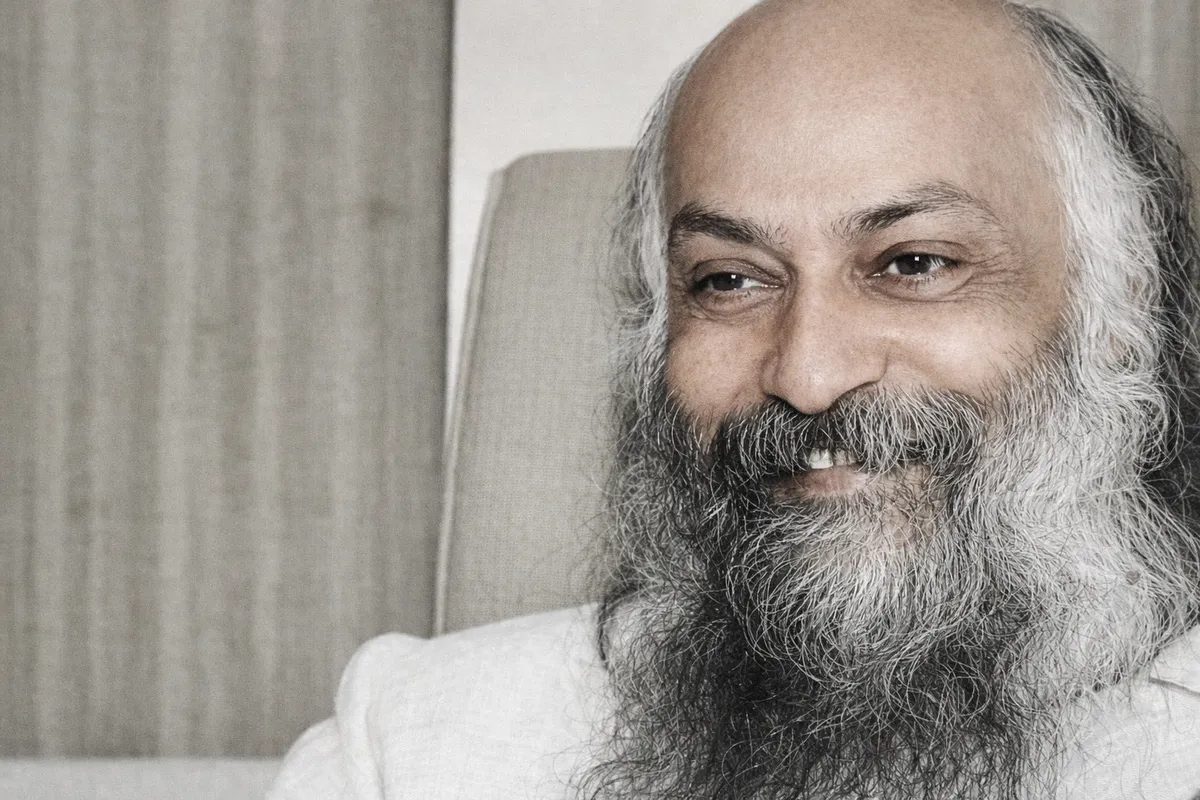
Osho's original Hindi beside Osho Live's English translation, matched passage by passage.
परमात्मा के समक्ष जो भिखारी की तरह जाता है, वही सम्राट की तरह गया। जो सर्वहारा होकर गया, वही विजेता होकर गया। इन दोनों बातों में विरोध नहीं है।
The one who goes before the Divine like a beggar is precisely the one who has gone like an emperor. The one who goes as a have‑not is the very one who goes as a victor. There is no contradiction in these two statements.
परमात्मा के पास सम्राट की तरह जाएगा ही कौन? जिसकी कोई मांग नहीं है। मांग ही इस जगत में भिखारी बनाती है। मांग के कारण ही हम भिखमंगे हैं। परमात्मा के पास वही जाता है जिसकी संसार की सारी मांगें समाप्त हो गईं। जिसको यहां मांगने को कुछ नहीं बचा। जिसने मांग कर भी देख लिया और दुख पाया। पाकर भी देख लिया और दुख पाया। नहीं मिला तो पीड़ा हुई, मिला तो पीड़ा हुई। जिसने जीवन के सब रंग-ढंग देख लिए, जो जीवन से भलीभांति परिचित हो गया, जिसकी मांग खो गई। मांग भिखारी बनाती है। मांग खो गई तो वह सम्राट हो गया।
Who is it that can go to the Divine like an emperor? Only one who has no demands. It is demand that makes us beggars in this world. Because of demand we are mendicants. The one who goes to the Divine is the one whose worldly demands have come to an end—who has nothing left to ask for here, who has tried asking and found suffering, tried getting and still found suffering. When he didn’t get, there was pain; when he did get, there was pain. Having seen all the colors and ways of life, becoming well acquainted with it, his asking drops away. Asking makes a beggar; when asking disappears, one becomes an emperor.
लेकिन जिसकी मांग खो गई, जिसके पास कुछ मांगने को न बचा, स्वभावतः वह परमात्मा से भी कुछ नहीं मांगेगा। मांग ही संसार की होती है। तुम जो भी मांगते हो वही संसार का है। तुम जरा अपनी मांगों का निरीक्षण करना। जिन मांगों को तुम धार्मिक कहते हो, वे भी धार्मिक नहीं हैं। मांग धार्मिक होती ही नहीं। मांग ही संसार है। इसलिए मांग पारलौकिक नहीं होती। तुम जब मोक्ष भी मांगते हो, तब भी तुम सुख ही मांग रहे हो; नाम बदल लिया। जब तुम स्वर्ग मांगते हो, तब भी तुम सफलता ही मांग रहे हो, नाम बदल दिया। तब तुम इंद्रियों की तृप्ति ही मांग रहे हो।
But the one whose asking has disappeared, who has nothing left to ask for, naturally will not ask anything even of the Divine. Asking belongs to the world. Whatever you ask for belongs to the world. Look into your own askings: even what you call “religious” askings are not religious. Asking itself is never religious; asking is the world. Therefore no demand is otherworldly. Even when you ask for liberation, you are asking for pleasure—only the name has changed. When you ask for heaven, you are asking for success—only the label has changed. You are still asking for gratification of the senses.
तुम्हारा स्वर्ग भी तो कल्पवृक्षों से भरा है। वहां सुंदर अप्सराएं हैं, और शराब के चश्मे हैं। तुम्हारा स्वर्ग भी तो तुम्हारी ही मांगों का प्रतिफलन है, तुम्हारे ही मन का बिंब है। तुम अगर रोशनी मांगते हो, तुम अगर अमरत्व मांगते हो, तो भी तुम मांग ही रहे हो। और मांग कैसे अमृत तक ले जाएगी? इसलिए सारी मांगें छूट जाएं तो तुम भिखमंगे नहीं रहे, सम्राट हुए। इस अर्थ में मैंने कहा है कि परमात्मा के सामने सम्राट की तरह जाना, कुछ मांगते हुए मत जाना।
Your heaven, too, is filled with wish‑fulfilling trees—apsaras of exquisite beauty and fountains of wine. Your heaven is merely the reflection of your demands, the projection of your own mind. If you ask for light, if you ask for immortality, you are still asking. And how will asking ever lead to the deathless? So when all demands fall away, you are no longer a beggar—you are an emperor. In this sense I have said: go before the Divine like an emperor—do not go asking for anything.
और मैंने यह भी कहा है कि परमात्मा के सामने भिखारी की तरह जाना; अर्थात शून्य होकर जाना। भिक्षा के पात्र! मांग कुछ भी नहीं। सिर्फ एक शून्य! झोली फैली हो। झोली किस चीज से भरी जाए इसकी कोई आकांक्षा नहीं। झोली भरी जाए इसकी भी आकांक्षा नहीं, लेकिन झोली फैली हो। तुम्हारा हृदय खाली हो। तुम्हारे हृदय में मैं की अकड़ न हो। इस अर्थ में मैंने कहा है, भिखारी होकर जाना। मैं की अकड़ न हो, मैं न हो, मैं भाव न हो। इन दोनों बातों में विरोध नहीं है, ये दोनों बातें एक साथ घटती हैं। जिसकी मांग गई उसका मैं भाव भी गया।
And I have also said: go before the Divine like a beggar—that is, go as emptiness. A begging bowl! No demand whatsoever. Only a pure emptiness. Let the bowl be held out. With no expectation of what it should be filled with. Not even the expectation that it must be filled—only that the bowl be outstretched. Let your heart be empty. Let there be no stiffness of “I” in it. In this sense I have said: go as a beggar. Let there be no conceit of “I,” no “I,” no I‑sense. There is no contradiction here: both happen together. Where asking disappears, the I‑sense also disappears.
इस संसार में हम मांगते इसीलिए हैं ताकि मैं को सिद्ध कर दें। मेरे पास धन होगा तो मेरा मैं बड़ा होगा। मेरे पास पद होगा तो मेरा मैं बड़ा होगा। ये सारी चेष्टाएं मैं को बड़ा करने की चेष्टाएं हैं। जिसने मांग छोड़ी, जिसने मेरा छोड़ा, उसका मैं भी गया। मैं मेरे के भोजन पर जीता है। मेरे का जितना विस्तार हो उतना ही मजबूत मैं हो जाता है। छोटे मकान वाले का छोटा मैं होता है, बड़े मकान वाले का बड़ा मैं होता है। छोटी संपत्ति में छोटा मैं, बड़ी संपत्ति में बड़ा मैं। तुम्हारे पास जितना होगा परिग्रह, उतनी ही मैं की अकड़ होगी। इसलिए तो जब परिग्रह छूटता है या छोड़ना पड़ता है तो ऐसे लगता है जैसे मेरी मृत्यु हुई, जैसे मैं मरा।
दिवाला निकल जाता है किसी का, वह आत्महत्या कर लेता है; जी नहीं सकता अब। क्यों? धन ही उसका मैं था। अब धन ही न रहा तो अब दीन-हीन होकर सड़कों पर से गुजरना शोभा नहीं देता। इससे बेहतर मर ही जाओ। जैसे ही मांग गई, परिग्रह गया, वासना गई, वैसे ही भीतर से मैं भी चला जाता है।
In this world we ask in order to establish the “I.” If I have wealth, my “I” becomes big. If I have position, my “I” becomes big. All these efforts are attempts to enlarge the “I.” When one abandons asking, abandons “mine,” the “I” too goes. The “I” lives on the food of “mine.” The more the expanse of “mine,” the stronger the “I.” The person with the small house has a small “I”; the one with the big mansion has a big “I.” Small possessions, small “I”; great possessions, great “I.” The more clinging you have, the more the arrogance of “I.” That is why, when clinging drops—or has to be dropped—it feels as if “I” has died. Someone goes bankrupt and commits suicide; he cannot bear to live. Why? Because his money was his “I.” Now that the money is gone, how can he bear to pass down the street as a poor, wretched man? Better to die. As soon as demand goes, clinging goes, craving goes, the “I” within also dissolves.
तो एक बड़ी अपूर्व घटना घटती है। एक तरफ से व्यक्ति भिखारी हो जाता है क्योंकि मैं नहीं बचा। शून्य हो गया भिक्षापात्र। और एक तरफ से सम्राट हो जाता है क्योंकि मांग नहीं बची। इसलिए तो बुद्ध ने अपने भिक्षुओं को सम्राट भी कहा और भिक्षु भी कहा। दो ही नाम उपयोग किए गए हैं संन्यासी के लिए--एक भिक्षु और एक स्वामी। यह इन दोनों बातों की वजह से। जिन्होंने इस परम दशा के सम्राट होने पर जोर दिया उन्होंने अपने संन्यासियों को स्वामी कहा। जिन्होंने इस परम दशा की शून्यता पर जोर दिया, निर-अहंकारिता पर जोर दिया, उन्होंने भिक्षु कहा। मगर ये एक ही सिक्के के दो पहलू हैं। जो स्वामी है वह भिक्षु है। जो भिक्षु है वही स्वामी है। उसके दरवाजे पर हार जाना जीत जाना है। जीत और हार वहां भिन्न नहीं है। वहां वही जीतता है जो हारता है।
Then a singular, paradoxical event happens. On the one hand one becomes a beggar, because there is no “I.” The begging bowl is empty. On the other hand one becomes an emperor, because there is no demand. That is why Buddha called his monks both emperors and beggars. Only two names were used for the sannyasin: bhikshu and swami. Those who stressed the sovereign splendor of this ultimate state called their renunciates swami, “master.” Those who emphasized the emptiness of this ultimate state, egolessness, called them bhikshu, “mendicant.” But these are two sides of the same coin. The one who is a master is a beggar; the one who is a beggar is a master. At his door, to lose is to win. There, victory and defeat are not different; the one who loses is the one who wins.
इसलिए इन दोनों बातों में कहीं कोई विरोध नहीं है। दोनों बातें एक साथ साधना। समझो फर्क। अगर दो में से एक साधी तो चूक जाओगे। अगर तुमने कहा कि ठीक है, सम्राट होकर जाएंगे और अकड़ कर गए, अहंकार से भरे गए तो तुम उसके प्रसाद को न पा सकोगे। तुम्हारे भीतर जगह ही न होगी प्रसाद को लेने की। तुम्हारे द्वार ही बंद होंगे। परमात्मा द्वार से प्रवेश भी करना चाहेगा तो न कर पाएगा। स्थान न होगा, अवकाश न होगा, तुम्हारे भीतर आकाश न होगा। अहंकार हो तो कहां आकाश! जगह कहां? प्रवेश का उपाय कहां? परमात्मा चाहेगा तो भी तुम्हारे भीतर आ न सकेगा। सम्राट से तुम यह मतलब मत ले लेना कि बड़े अकड़ कर जाना, बैंड-बाजे के साथ जाना, हाथी-घोड़ों पर सवार होकर जाना, दुदुंभी बजाते हुए जाना, नगाड़े पीटते हुए जाना। सम्राट होने का यह मतलब नहीं है।
So there is no contradiction between these two statements. Practice both together. Understand the distinction. If you practice only one of the two, you will miss. If you say, “Fine, we will go as emperors,” and you go puffed up, full of ego, you will not be able to receive his grace. There will be no space within you to receive it. Your doors will be closed. Even if the Divine wishes to enter, he will not be able to—there will be no place, no openness, no inner sky. Where there is ego, where is the sky? Where is the space? How can there be entry? Even if the Divine wishes, he cannot enter you. Do not take “go as an emperor” to mean go strutting in with pomp, with band and parade, mounted on elephants and horses, blowing trumpets and beating drums. That is not the meaning of being an emperor.
सम्राट होने का इतना ही अर्थ है, वहां वासनाएं लेकर मत जाना। निर्वासना से भरे हुए जाना। और साथ ही भिखारी भी रहना। मैं समझता हूं कि तुम्हें विरोधाभास क्यों दिखता है। क्योंकि सम्राट और भिखारी का शब्दकोश में विपरीत अर्थ है। शब्दकोश में होगा। परमात्मा के सामने सब शब्दकोश व्यर्थ हो जाते हैं। वहां तर्क की सामान्य व्यवस्थाएं नहीं चलतीं। और शब्दों की सामान्य परिभाषाएं काम में नहीं आतीं। वहां नये अर्थ, नई अभिव्यंजनाओं को पकड़ना होता है। वहां शब्दों के पार उठना होता है।
Being an emperor means only this: do not go carrying desires. Go suffused with desirelessness. And at the same time remain a beggar. I understand why you see a contradiction—because in the dictionary “emperor” and “beggar” are opposites. In the dictionary, yes. Before the Divine, all dictionaries are useless. There the ordinary arrangements of logic do not work, and the usual definitions of words do not apply. There one must grasp new meanings, new expressions—one must rise beyond words.
तो तुम भिखारी की तरह जाना--खाली, रिक्त पात्र, भिक्षा-पात्र। कि वह भरना चाहे तो तुम्हारे भीतर जरा भी अड़चन न हो। पूरा का पूरा भरना चाहे तो तुम पूरे के पूरे भरने को राजी रहो। ऐसे जाना जैसे खाई-खड्ड होता है। ऐसे नहीं जैसे पहाड़ होता है। वर्षा तो होती है, पहाड़ पर भी होती है, खाई-खड्ड में भी होती है। पहाड़ वंचित रह जाता है। वर्षा तो होती है लेकिन पहाड़ भरता नहीं। खाई-खड्ड भरते हैं। क्योंकि खाली थे इसलिए भरते हैं। जो खाली है वह भरेगा।
So go like a beggar—empty, a hollow bowl—so that if he wishes to fill you, there is not the slightest obstruction. If he wishes to fill you completely, you are willing to be filled completely. Go like a valley, a hollow—not like a mountain. Rain falls on the mountain as well as into the hollows. But the mountain remains deprived. The rain falls, yet the mountain does not fill; the hollows fill—because they were empty, they become full. What is empty can be filled.
तो जो खाली जाएगा वही परमात्मा से जुड़ेगा। भिखारी की तरह जाना और सम्राट की तरह भी। इन दोनों बातों की अर्थवत्ता को खूब खयाल में ले लेना। और ये दोनों बातें एक साथ सध जाएं तो तुम्हारे जीवन का परम धन्यता का क्षण आ गया। न तो अहंकार हो और न वासना हो।
Therefore, the one who goes empty is the one who is joined to the Divine. Go like a beggar, and go like an emperor as well. Hold both meanings carefully. If both are fulfilled together, the supremely blessed moment of your life has arrived: where there is neither ego nor desire.
ध्यान में झलक मिलती है तो जीवन में क्रांतिकारी अंतर पड़ने शुरू होते हैं। क्योंकि जीवन के आधार बदल जाते हैं। अब तक तो पता ही न था कि ये झरोखे भी हैं। ऐसी हवाएं भी बहती हैं। ऐसी रोशनी भी उतरती है, ऐसे दीये भी जलते हैं। अब तक तो पता नहीं था, ऐसा संगीत भी है।
When a glimpse is had in meditation, revolutionary changes begin to occur in life—because the very foundations of life change. Until now you did not even know those windows existed: that such breezes can blow; that such light can descend; that such lamps can be lit; that such music exists.
जब तक पता नहीं था तब तक एक बात थी; जिंदगी का एक ढंग, एक दौर था, एक शैली थी। जब किसी नये अनुभव का पता चलता है तो जिंदगी की शैली को फिर से व्यवस्थित करना होता है। सब अस्त व्यस्त हो जाता है। जीवन के भवन को फिर से रखना पड़ता है, फिर से निर्माण करना होता है। इस नये को जगह देनी होती है।
As long as it was unknown, it was one thing: life had a certain manner, a routine, a style. When a new experience becomes known, the style of living has to be rearranged. Everything is thrown into disorder. The house of life has to be set up afresh, rebuilt. Space has to be made for the new.
तो ध्यान की झलकें जीवन में निश्चित ही अस्त व्यस्तता लाती हैं। कल तक जो सार्थक मालूम होता था, अब सार्थक नहीं मालूम होता। और कल तक जिसके संबंध में सपना भी नहीं देखा था, वही आज प्राणों को पकड़ लेता है। उसी की पुकार, उसी की प्यास उठने लगती है।
So glimpses of meditation certainly bring a kind of disorder into life. What seemed meaningful yesterday no longer seems meaningful; and what you had not even dreamed of yesterday is what today seizes your very life-breath. Its call, its thirst begins to arise.
तुझसे मिले न थे तो कोई आरजू न थी
देखा तुझे तो तेरे तलबगार हो गए
Before I met you I had no longing; seeing you, I became your seeker.
जिसका हमें अनुभव नहीं हुआ है उसकी आरजू भी नहीं होती। जिसने कभी मिठाई नहीं चखी है उसे मिठाई की आकांक्षा भी नहीं होती है। और जो कभी महलों में नहीं सोया है और महल नहीं देखे हैं उसे महलों का सवाल भी नहीं उठता। जो अनुभव में आ जाता है उसकी आकांक्षा जगती है।
We do not long for what we have not experienced. One who has never tasted sweets does not even desire them. One who has never slept in palaces and never seen them does not even raise the question of palaces. What enters experience awakens longing.
और ध्यान अपूर्व अनुभव है। उसकी एक किरण भी ऐसी संपदा है कि इस जगत की सारी संपदाएं फीकी पड़ जाती हैं। लेकिन सम्हल कर, बहुत होश सम्हाल कर चलना। कहीं ऐसा न हो कि तुम्हारी वासना ध्यान पर इतने जोर से पकड़ जाए कि ध्यान को नष्ट कर दे। इस नियम को खयाल में लेना--ध्यान फलता तभी है जब वासना नहीं होती। ध्यान की वासना भी ध्यान में बाधा बन जाती है।
And meditation is an incomparable experience. Even a single ray of it is such a treasure that all the treasures of this world turn pale. But be careful—walk with great awareness. Lest your craving seize upon meditation so strongly that it destroys it. Keep this rule in mind: meditation bears fruit only when there is no craving. Even the craving for meditation becomes a hindrance to meditation.
इसलिए यह यहां रोज का अनुभव है। यहां जो लोग आते हैं, नये-नये आते हैं, ध्यान में उतरते हैं, तो पहली बार अनुभव बड़ी आसानी से हो जाता है। बस फिर अड़चन शुरू होती है। पहली झलक तो मिल जाती है। क्योंकि पहली झलक के पहले तो कोई वासना नहीं होती। प्रयोगात्मक होता है कि देखें क्या होगा। करके देखें, क्या होगा। उतरें ध्यान में, नाचें, गाएं, कीर्तन करें, नाम स्मरण करें, कि शांत बैठें, कि मौन में उतरें। देखें क्या होता है। कुछ अनुभव तो नहीं है इसलिए वासना नहीं होती।
Therefore this is an everyday occurrence here. People who come here, new people, when they enter meditation, the first experience happens very easily. And then the obstacles begin. The first glimpse is received, because before the first glimpse there is no craving. It is experimental: “Let’s see what happens. Let’s try and see what happens—let’s enter meditation, dance, sing, chant the Name, sit in silence, descend into stillness. Let’s see what happens.” Since there is no prior experience, there is no craving.
तो पहला अनुभव सुगमता से हो जाता है। और दूसरे अनुभव में बड़ी झंझट होती है। क्योंकि पहले अनुभव के बाद वासना जग जाती है। फिर वासना कहती है, अब बार-बार हो। अब ऐसा ही फिर हो, अब ऐसा रोज-रोज हो। जब ध्यान को बैठूं तभी हो। और इतना ही न हो, और आगे, और आगे हो। बस, वासना का जाल फैला।
So the first experience happens smoothly, and the second becomes very troublesome. Because after the first experience, craving is stirred. Then craving says: “Now let it happen again and again. Let it happen like that again; let it happen every day. Let it happen every time I sit in meditation. And not just that—let it go further and further.” Thus the net of craving spreads.
वही वासना जो बाजार में भटकाती थी, वही ध्यान में भी भटका देगी। वही वासना जो धन के पीछे दौड़ाती थी, वही ध्यान के पीछे दौड़ा देगी। वासना का रूप क्या है, रंग क्या है? वासना का रूप और रंग है--और! जो हुआ है यह और हो, फिर-फिर हो, ज्यादा हो। सौ रुपये हैं तो हजार हो जाएं। हजार हैं तो लाख हो जाएं। इतनी प्रतिष्ठा है तो उतनी हो जाए। इतनी ध्यान की झलक मिली तो अब और होनी चाहिए। अब इतने से चित्त राजी नहीं होता। अब तो परमात्मा मिलना चाहिए। नहीं मिलेगा तो हम जीवन ही गंवा देने को राजी हैं। तब तुम विक्षिप्त हुए, तब ध्यान के करीब आते-आते चूक गए।
The very craving that made you wander in the marketplace will make you wander in meditation too. The same craving that made you run after wealth will make you run after meditation. What is the form and color of craving? Its form and color are: more. “What has happened should happen more, happen again and again, happen in greater measure.” If there are a hundred rupees, let them become a thousand; if a thousand, let them become a hundred thousand. If there is this much prestige, let there be that much more. If this much glimpse of meditation has been had, now there should be more. The mind is no longer satisfied with this little. “Now the Divine must be attained. If not, I am ready to throw away my life.” Then you have gone mad; you have missed, coming right up to the door of meditation.
और अक्सर ऐसा हो जाता है कि पहले अनुभव के बाद अनुभव इतना कठिन हो जाता है.। यह रोज का अवलोकन है। और जिसको अनुभव एक दफे हुआ है उसकी बेचैनी भी मैं समझता हूं। क्योंकि वह कहता है, अब क्यों नहीं होता है? और मैं उसे लाख समझाता हूं कि अब इसीलिए नहीं होता है कि अब तू मांग कर रहा है, और पहली दफे जब हुआ था तो कोई मांग न थी। अब मांग का नया तत्व तूने जोड़ दिया जो कि बाधा बन रहा है। कभी चार महीने, कभी छह महीने, कभी साल लग जाते हैं, जब दुबारा अनुभव आता है।
And often it so happens that after the first experience, the next experience becomes very difficult. This is a daily observation. And I also understand the restlessness of the one who has experienced once; he says, “Why doesn’t it happen now?” And I explain to him over and over that precisely now it does not happen because now you are demanding, whereas the first time there was no demand. You have introduced a new element—demand—which is becoming the obstacle. Sometimes it takes four months, sometimes six, sometimes a year before the experience comes again.
दुबारा अनुभव तभी आता है, जब पहला अनुभव भूल चुका होता है। दुबारा अनुभव तभी आता है, जब पहले अनुभव की सतत आकांक्षा कर-कर के आदमी थक जाता है और सोचता है, जाने भी दो! सोचने लगता है शायद कल्पना ही रही होगी। क्योंकि अब क्यों नहीं होता है? शायद किसी सम्मोहन में आ गया था। शायद परिस्थिति, वातावरण ऐसा था। और लोग नाचते थे, मग्न होते थे, मैं भी उनके रौ में बह गया। मैं भी उस धारा में बह गया था। अब नहीं होता है। वह सच बात नहीं थी, जो हुई थी। तब उसकी आकांक्षा फिर गिर गई। और अगर आकांक्षा गिर जाने के बाद प्रयास जारी रहा तो फिर से होगा।
It comes again only when the first experience has been forgotten. It comes again only when, after constantly hankering for the first experience, a person gets tired and thinks, “Let it go!” He begins to think perhaps it was only imagination—“Because why doesn’t it happen now? Perhaps I had fallen under some hypnosis; perhaps the circumstances, the atmosphere was such; others were dancing, ecstatic, and I was swept along in their current, flowed along with that stream. Now it doesn’t happen—what happened then must not have been true.” Then his longing drops. And if, after the longing drops, his effort continues, it happens again.
दुबारा हो जाने के बाद तीसरी बार आसान होता है। क्योंकि तब तुम्हें यह भी समझ में आ जाता है कि मेरी आकांक्षा बाधा बनती है। इसलिए आकांक्षा न करूं। ध्यान तो करूं, आकांक्षा न करूं। ध्यान तो करूं, मांग न करूं। ध्यान में तो जाऊं और प्रतीक्षा करूं, आकांक्षा नहीं। राह देखूं, मांग नहीं। दावेदार न बनूं। यह न कहूं कि आज होना ही चाहिए।
Once it happens again, the third time becomes easier. Because by then you also understand that my craving becomes a hindrance; therefore I should not crave. I should meditate, but not crave. I should meditate, but not demand. I should enter meditation and wait, but not hanker. Keep watch at the gate, but do not claim. Do not say, “It must happen today.”
अब तुम्हारी अड़चन वही हो रही है।
Now this is your very obstacle.
तुम कहते हो: ‘ध्यान में झलक मिली, तबसे एक ही विचार रह-रह कर मन में उठता है कि प्रभु मिलन न हो तो अब मैं जीना भी नहीं चाहता।’
You say: “I have had glimpses in meditation; since then a single thought keeps arising again and again that if union with the Divine does not happen, I no longer want to live.”
अब तुमने प्रभु मिलन को अपने अहंकार की यात्रा बना लिया। अब प्रभु मिलन जो है, वह वैसे ही तुम्हारे अहंकार को पुष्ट करने वाली बात बन रही है, जैसे कोई कहता है जब तक मैं प्रधानमंत्री न हो जाऊं, मैं जीऊं ही न; कि मैं राष्ट्रपति न हो जाऊं तो मेरे जीने में कोई सार नहीं है। मैं तो सारी दुनिया को जीतूंगा तो ही जीऊंगा। मैं तो इस स्त्री को पा लूंगा, तो जीऊंगा। मैं तो यह मकान खरीद लूंगा तो जीऊंगा। नहीं तो जीने में क्या रखा है? तुमने जीने पर शर्त लगा दी।
Now you have turned union with the Divine into a journey of your ego. Now this so-called union is becoming something to bolster your ego in exactly the same way as when someone says, “Until I become prime minister, I will not even live,” or “If I do not become president, there is no meaning in my life. I will live only when I conquer the whole world. I will live only when I possess this woman. I will live only when I buy this house—otherwise what is there in living?” You have put a condition on life.
जीने पर जिसने शर्त लगाई, वही अधार्मिक है। और जो जीवन पर बिना शर्त जीता है, वही धार्मिक है। जो कहता है, जीवन उसकी भेंट है, मेरे हाथ में क्या है? जीना न जीना.कल सुना नहीं, धनी धरमदास ने क्या कहा? डोरा उसके हाथ! हम तो कागज की पुतलियां हैं। डोरा उसके हाथ है। तुम ऐसा कहो ही क्यों कि मैं जीऊंगा नहीं? यह तो फिर मैं की ही घोषणा हुई। यह तो तुम शिकायत करने लगे। यह तो अहंकार ने फिर नई उदघोषणा की।
Whoever puts a condition on life is irreligious. And whoever lives life unconditionally is religious. One who says, “Life is his offering; what is in my hands? To live or not to live...” Did you not hear yesterday what the wealthy Dharamdas said? The string is in his hands! We are only paper puppets. The string is in his hands. Why say such a thing as “I won’t live”? That again is the proclamation of “I.” You are complaining; the ego has made a new declaration.
और ध्यान रखना, अहंकार बहुत चालाक है, बहुत सूक्ष्म है। नये-नये रास्ते खोज लेता है अपनी घोषणा के। एक रास्ता तुम बंद करते हो, वह दूसरा रास्ता खोज लेता है। अब उसने एक नया लक्ष्य बनाया कि परमात्मा को पाकर रहूंगा मैं। मैं जैसा विशिष्ट आदमी, जिसको ध्यान की झलकें भी मिली हैं, परमात्मा को नहीं पाएगा तो कौन पाएगा? और मजा यह है कि यह बात अच्छी भी लगेगी। और तुम इसे किसी से कहोगे तो वह भी कहेगा कि बड़ी धार्मिक बात पैदा हुई है।
And remember: the ego is very cunning, very subtle. It finds new ways to announce itself. You close off one road; it discovers another. It has now made a new goal: “I will attain God.” “A special person like me, who has even had glimpses in meditation—if I don’t attain the Divine, who will?” And the joke is that this will even sound good; if you say it to someone, he too will say, “A very religious feeling has arisen.”
लेकिन मैं तुम्हें सावधान करूं, मैं का कोई दावा धार्मिक नहीं होता। फिर वह ध्यान का ही दावा क्यों न हो, समाधि का ही दावा क्यों न हो! इसलिए तो उपनिषद कहते हैं कि जो कहे, मैंने जान लिया है, उससे सावधान रहना; उसने अभी जाना न होगा। जो कहे, मैं नहीं जानता हूं, उसके पास बैठना। शायद उसे पता हो। क्यों? क्योंकि जहां दावा है वहां अहंकार पीछे खड़ा मजा ले रहा है। मैं तुमसे कहूंगा:
But I would warn you: no claim of the “I” is ever religious—even if it is a claim about meditation or samadhi. That is why the Upanishads say: “Beware of one who says, ‘I have known.’ He will not yet have known. Sit near one who says, ‘I do not know.’ Perhaps he knows.” Why? Because wherever there is a claim, the ego stands behind it, delighting. I would say to you:
लोग जिस हाल में मरने की दुआ करते हैं
मैंने उस हाल में जीने की कसम खाई है
The state in which people pray to die, in that very state I have vowed to live.
तुम कहो कि परमात्मा जैसे रखेगा, जिस हाल में रखेगा, वैसे ही रहूंगा। मैं कौन हूं जो निर्णय करे? मैं कौन हूं जो कहे, ऐसा होना चाहिए, ऐसा नहीं होना चाहिए। जब मेरी पात्रता होगी, वह उतरेगा। और जब तक मेरी पात्रता नहीं है तब तक मेरे चीखने-चिल्लाने से कुछ भी न होगा। इतनी बात सदा खयाल रखो, इसी का नाम श्रद्धा है--कि जब मैं पात्र होऊंगा, तो क्षण भर भी चूक नहीं होगी।
You say, “However the Divine keeps me, in whatever state, I will remain thus. Who am I to decide? Who am I to say, it should be like this, not like that? When I am worthy, he will descend. And until I am worthy, my shouting and crying will do nothing.” Always remember this—that is the meaning of shraddha, trust: that when I am a fit vessel, there will not be a moment’s delay.
श्रद्धा का और क्या अर्थ है? श्रद्धा का इतना ही अर्थ है कि जीवन सदा ही न्याय संगत है। जो जिस चीज को पाने के योग्य होता है वह उसे मिलती ही है। नहीं मिलती तो उसका एक ही अर्थ होता है कि अभी मेरी पात्रता नहीं। पात्रता होते ही मिलती है, तत्क्षण मिलती है।
What else does shraddha mean? It means simply this: that life is always just. Whoever is worthy of receiving something receives it. If it is not received, it only means one thing: that my worthiness is not yet there. The moment worthiness is there, it is received—instantly.
श्रद्धा का यही अर्थ है कि मुझे जीवन पर भरोसा है। कि जब मौसम आ जाएगा तो बीज टूटेगा, अंकुरित होगा। जब वसंत आएगा तो फूल खिलेंगे, हवाएं सुवासित होंगी। जब रात बीत जाएगी तो सूरज निकलेगा। जो जब होना है तब होगा। और तभी होना चाहिए। हर चीज पकने में समय लेती है। और कोई चीज कच्ची घट जाए तो महंगी पड़ती है।
This is the meaning of trust: I have faith in life—that when the season comes, the seed will crack open and sprout; when spring arrives, flowers will bloom and the winds will be fragrant; when night passes, the sun will rise. What has to happen will happen when it must—and only then should it happen. Every thing takes time to ripen, and if anything happens unripe, it proves costly.
जैसे कोई पांच वर्ष का बच्चा यौन-दृष्टि से जवान हो जाए तो अड़चन में पड़ जाएगा। जैसे कोई नब्बे साल का बूढ़ा कामवासना की दृष्टि से जवान रह जाए तो अड़चन में पड़ जाएगा। सब चीजें अपने समय पर। सब चीजें अपने मौसम में, अपनी ऋतु में।
For example, if a five-year-old child becomes sexually mature, he will fall into trouble; if a ninety-year-old man remains sexually youthful, he too will be in trouble. Everything in its time; everything in its season, its proper rhythm.
ऋतु का यह भरोसा ही धर्म का भरोसा है। जगत एक अपूर्व नियम से चल रहा है। वहां अन्याय नहीं है। तुमने कहावत सुनी न! कहते हैं देर हो, अंधेर नहीं है। देर भी नहीं है। हमें देर लगती है क्योंकि हमें बड़ी जल्दी पड़ी है। देर भी नहीं है। छोटे-छोटे बच्चे आम के गुही को जमीन में गड़ा आते हैं। सांझ गड़ा देते हैं, सुबह उखाड़ कर देखते हैं कि अभी तक आम नहीं हुआ? अब तक वृक्ष पैदा नहीं हुआ? अब तक फल नहीं लगे? कहीं पत्ते भी नहीं दिखाई पड़ते, हो क्या रहा है? जमीन में गड़ी गुही को फिर निकाल कर देख लेते हैं, अभी तक कुछ नहीं हुआ; फिर गड़ा देते हैं। ऐसा अगर रोज-रोज उखाड़ कर देखा तो वृक्ष कभी पैदा नहीं होगा। वृक्ष को पैदा होने का मौका ही नहीं मिलेगा।
This trust in the seasons is the trust of religion. The world moves by a wondrous law; there is no injustice there. You have heard the saying: “There may be delay, but there is no darkness.” There is not even delay—it only seems so to us because we are in a great hurry. There is no delay. Little children bury the stone-hard mango seeds in the soil—plant them at dusk and in the morning dig them up: “Still no mangoes? Still no tree? Still no fruit? I don’t even see leaves—what is happening?” They dig up the planted seed and see: “Nothing has happened yet!” and then bury it again. If you dig it up every day to check, the tree will never be born; it will never get the chance.
जरूरत है, भरोसा करो। बीज को जमीन में डाल दिया है, अब प्रतीक्षा करो। ठीक समय पर, ठीक मुहूर्त में अचानक एक दिन जमीन को तोड़ कर अंकुर आ जाएगा। तुम पानी दो, प्रतीक्षा करो। ऐसे आग्रह मत करो कि मैं अब जीना भी नहीं चाहता हूं।
What is needed is trust. The seed has been put into the earth—now wait. At the right time, at the auspicious moment, suddenly one day a sprout will break through the soil. You give water and wait. Do not insist in such a way as “I no longer even want to live.”
कहते हो: ‘मेरा प्रभु से मिलन करवा दें या जीवन से छुटकारा।’
You say: “Either make me meet the Divine, or free me from life.”
मैं से छुटकारा करवाता हूं मैं। जीवन से तो छुटकारा कभी होता ही नहीं। यहां रहोगे, कहीं और रहोगे, रहोगे जरूर। मृत्यु तो एक झूठी बात है, एक भ्रम है। मृत्यु न कभी घटी है और न कभी घटती है। मृत्यु घट ही नहीं सकती है। यह सारा अस्तित्व अमृत से भरा है। अमृतरस-घट है यह अस्तित्व। रसो वै सः। वही बह रहा है। इसमें मृत्यु कहां?
I set you free from the “I.” As for life—there is never any freedom from that. You will be here, or you will be somewhere else—but you will be. Death is a false notion, an illusion; death has never happened, nor does it ever happen. It cannot happen. This entire existence is filled with ambrosia; existence is a jar brimming with the nectar of immortality—raso vai sah. That alone flows. Where is death in this?
जिसको तुम मृत्यु कहते हो वह बहुत से बहुत रूप का परिवर्तन है, देह का बदल लेना है। जैसे कोई आदमी घर बदल लेता है। एक पड़ोस से घर बदल लिया, दूसरे पड़ोस में चले गए। इस पड़ोस के लोग सोचते हैं, शायद सज्जन मर गए। वे कहीं मरते-धरते नहीं, वे किसी दूसरी जगह रहने लगे। यात्रा चलती जाती है, देहें बदलती हैं, वस्त्र बदलते हैं।
What you call death is, at most, a change of form, a change of body—as someone might change houses, moving from one neighborhood to another. People of the previous neighborhood may think, “Perhaps the gentleman has died.” He has not died at all; he has started living elsewhere. The journey goes on; bodies change; garments change.
इसलिए कृष्ण ने कहा है, जैसे जीर्ण वस्त्र बदल जाते हैं, बस ऐसे ही अर्जुन, मृत्यु नहीं है, जीर्ण वस्त्रों का गिर जाना है। और फिर नये वस्त्रों की शुरुआत है। इधर मरे नहीं कि उधर जन्मे नहीं। तुम जब तक मरघट ले जाते हो किसी को, तब तक तो वह पैदा भी हो चुका। तुम्हें जितनी देर मरघट पहुंचने में लगती है.और हो सकता है वहां क्यू लगी हो, बड़ी बस्तियों में क्यू लगी होती है। तुम्हें जब तक मुर्दे को जलाने का मौका आए, तब तक जिन सज्जन को तुम विदा करने गए हो, वह पुनः जीवित हो उठे। उन्होंने कोई गर्भ धारण कर लिया। उन्होंने फिर श्वासें लेनी शुरू कर दीं। उन्होंने नये घर में वास कर लिया है। वे किसी और पड़ोस में बस गए, किसी और रंग में, किसी और ढंग में।
Therefore Krishna has said: just as worn-out clothes are discarded, so, Arjuna, there is no death; it is only the dropping of tattered garments—and then the beginning of new garments. No sooner has one “died” here than one is “born” there. By the time you carry someone to the cremation ground, he has already been born; it may take you some time to reach the cremation ground—and there may even be a queue there. By the time your turn comes to set the corpse on fire, the very person you went to bid farewell to has arisen to life again; he has entered some womb; he has begun breathing again; he has taken up residence in a new house; he has settled in another neighborhood, in another color, in another mode.
जीवन का कोई अंत नहीं है। यही थोड़े ही जीवन है, जो तुम आज जी रहे हो! कल जो तुम जीते थे वह भी जीवन था। जन्म के पहले तुम जीते थे वह भी जीवन था। मृत्यु के बाद तुम जीओगे वह भी जीवन होगा। और ध्यान रखना, जो मुक्त हो गए हैं, जिनको हम जीवन मुक्त कहते हैं, वे भी वस्तुतः जीवन से मुक्त नहीं हो गए हैं, इस तथाकथित जीवन से मुक्त हो गए हैं। बुद्ध अब भी हैं, महावीर अब भी हैं। अब रूप में नहीं हैं, अब रंग में नहीं हैं, अब आकार में नहीं हैं, अब निराकार में हैं। अब विश्वसत्ता के साथ एक हो गए हैं। अब उन्होंने अपना भेद छोड़ दिया है। मिट्टी का घड़ा गल गया है और जल जल से मिल गया है।
Life has no end. Is this little stretch you are living now the whole of life? What you lived yesterday was life; what you lived before birth was also life; what you will live after death will be life too. And remember, those who are liberated—whom we call jivan-mukta—are not truly freed from life; they are freed from this so-called life. Buddha still is; Mahavira still is. Not in form now, not in color, not with shape—they are formless. They have become one with the Universal. They have dropped their separateness: the clay pot has dissolved and the water has merged into water.
जीवन से छुटकारा नहीं है।
There is no release from life.
तुम जीवन हो; छुटकारा कैसे होगा? सिर्फ एक छुटकारा हो सकता है--खयाल रखना, इसे बहुत खयाल में ले लेना, सिर्फ उसी से छुटकारा हो सकता है जो तुम वस्तुतः नहीं हो। झूठ से छुटकारा हो सकता है; सत्य से कोई छुटकारा नहीं हो सकता। इसीलिए तो उसे सत्य कहते हैं जिससे छुटकारा न हो सके, जो शाश्वत हो। उसे झूठ कहते हैं, जो क्षणभंगुर हो। अभी है, अभी नहीं हो जाए। जिससे छुटकारा हो सकता हो, वही झूठ है।
You are life—how can there be release from it? Only one release is possible—note it well, take it deeply to heart: release is possible only from that which you truly are not. One can be free of the false; there is no freedom from the true. That is why we call it Truth—because there can be no release from it; it is eternal. That which is momentary, from which one can be released—that we call false.
इस जगत में दो झूठ हैं, और दोनों जुड़े हैं, एक ही सिक्के के दो पहलू हैं। उन्हें तुम समझ लो। इस जगत के दो झूठ हैं बड़े। एक झूठ है अहंकार--कि मैं हूं; और दूसरा झूठ है मृत्यु। और दोनों संयुक्त हैं। इस मैं के कारण ही मृत्यु का भाव पैदा होता है। यह मैं झूठ है इसलिए एक दिन इसे मरना पड़ता है। इसलिए मैं घबड़ाया रहता है कि मर न जाऊं। मैं सदा कंपा रहता है कि मृत्यु आती है। आती ही होगी। मैं को कभी भरोसा नहीं आता कि मैं जीवित हूं। मैं इतना बड़ा झूठ है!
In this world there are two untruths, and they are connected—two sides of the same coin. Understand them well. The two great untruths are: one, the ego—“I am”; and two, death. And both are joined. Because of this “I,” the feeling of death arises. This “I” is false, therefore it has to die one day; hence the “I” is always anxious that it may die, always trembling that death is coming—it must be coming. The “I” can never be sure that it is alive; the “I” is such a great lie.
मैं का अर्थ होता है, मैं इस विराट अस्तित्व से अलग-थलग हूं। एक क्षण को भी अलग-थलग नहीं हो। श्वास ले रहे हो और देखते नहीं कि अस्तित्व तुम्हारे भीतर जाता है, बाहर जाता है। एक क्षण को अलग नहीं हो। और एक क्षण को अलग होकर देखो और तुम पाओगे कितनी चिंता पैदा हो जाती है।
The meaning of “I” is: I am separate from this vast existence. Not for a single moment are you separate. You are breathing—do you not see that existence is flowing into you and out of you? Not for a single moment are you separate. And separate yourself even for a single moment and you will see how much anxiety arises.
एक युवक मेरे पास आया, उसने पूछा कि मुझे बड़ी चिंता रहती है। मैं क्या करूं? मैंने उससे कहा कि पहले तू यह सोच, कि तू क्या करता है जिसके कारण चिंता रहती है। कुछ कर रहा होगा। क्योंकि वृक्षों को कोई चिंता नहीं है, पौधों को कोई चिंता नहीं है, पक्षियों को कोई चिंता नहीं है, तुझे चिंता है? तू एक छोटा सा काम कर। मैंने उससे कहा कि तू श्वास को, भीतर है उसको भीतर ही रोक ले। उसने कहा: फिर क्या होगा? मैंने कहा: फिर तू आंख बंद करके भीतर देख कि क्या होता है।
A young man came to me and asked, “I am always anxious. What should I do?” I said, “First think: what do you do that causes anxiety? You must be doing something, because trees have no anxiety, plants have none, birds have none—yet you have it. Do one small thing: hold your breath—if it is inside, hold it inside.” He asked, “What will happen then?” I said, “Then close your eyes and look within to see what happens.”
मिनट भी बीतना मुश्किल हो गया। उसने एकदम आंख खोल दी--उसने कहा कि बहुत घबड़ाहट होती है। श्वास को रोकोगे तो घबड़ाहट तो होगी ही। तो मैंने कहा, अब तू श्वास को बाहर रोक दे। भीतर देख लिया, घबड़ाहट होती है, अब बाहर रोक दे। उसने कहा: उससे क्या होगा? मैंने कहा: तू भीतर आंख बंद करके देख। उसने श्वास को बाहर रोक दिया, मिनट भी मुश्किल हो गया, पसीना-पसीना हो गया। आंख खोल दी, कहा कि आप मुझे मार डालेंगे। बड़ी घबड़ाहट पैदा होती है।
A minute was hard to pass. He opened his eyes suddenly: “Great panic arises.” If you stop your breath, panic will of course arise. I said, “Now hold your breath out. You have seen what happens inside; now hold it out.” He asked, “What will happen with that?” I said, “Close your eyes and see within.” He held his breath out; a minute was hard to pass; he was drenched in sweat; he opened his eyes: “You will kill me! Terrible panic arises.”
तो मैंने कहा तूने देखा, चिंता पैदा करने का उपाय क्या है? अस्तित्व से अपने को तोड़ लो और चिंता पैदा हो जाती है। तूने श्वास भीतर रख ली, टूट गया; बाहर रख दी, टूट गया। दोनों के बीच का सेतु टूट गया। चिंता पैदा हो गई। अब तू अपनी चिंताओं को गौर से देख। जहां-जहां तूने अस्तित्व से अपने को तोड़ लिया होगा, वहीं-वहीं चिंता पैदा होती है। इसलिए तो हम धार्मिक व्यक्ति को निश्चिंत पाते हैं। अगर न पाओ निश्चिंत तो वह धार्मिक नहीं है। कहा न मलूकदास ने--
I said, “Now you have seen how to produce anxiety: cut yourself off from existence and anxiety arises. You held the breath inside—you were cut off; you held it outside—you were cut off. The bridge between the two broke; anxiety arose. Now look closely at your anxieties: wherever you have cut yourself off from existence, there anxiety will arise. That is why we find the religious person carefree. If you do not find him carefree, he is not religious.” Did not Malukdas say—
अजगर करै न चाकरी, पंछी करै न काम।
दास मलूका कह गए, सबके दाता राम।।
The python does no service; the bird does no work. Servant Maluka has said: the Giver of all is Ram.
अब मलूक को चिंता नहीं हो सकती। क्या चिंता? सबके दाता राम! डोरा उसके हाथ! अब क्या चिंता है? सब भांति अपने को जोड़ दिया। जिलाए तो जीएंगे, मारे तो मरेंगे। चलाए तो चलेंगे, बिठाए तो बैठेंगे। उठाए तो उठेंगे। अपने को बीच से हटा ही लिया।
Now Maluk has no anxiety. What anxiety could there be? The Giver of all is Ram! The string is in his hands! What anxiety then? He has joined himself in every way. If he keeps me alive, I will live; if he kills me, I will die. If he makes me walk, I will walk; if he makes me sit, I will sit. If he lifts me, I will rise. He has removed himself from the middle.
अब तुम इसे एक और तरह से भी देखो। हर बच्चे के जीवन में एक वक्त आता है। कोई तीन-चार साल, पांच साल की उम्र में, जब बच्चा अचानक आज्ञा का खंडन करना शुरू करता है। और हर बात में नहीं कहने लगता है। तुमने खयाल किया? हर बच्चे की जिंदगी में वह घड़ी आती है। जब वह हां कहना कम कर देता है और न कहना ज्यादा कर देता है। न कहने में रस लेने लगता है। तुम कहो यह काम मत करना तो वह जरूर करेगा। तुम कहो कि उधर मत जाना तो वह जरूर जाएगा। यही तो ईसाइयों की मूल कथा है आदमी के पतन की। कि ईश्वर ने कहा था, ज्ञान के वृक्ष के फल को मत खाना अदम, और अदम ने खाया। यह घटना हर एक के जीवन में घटती है।
See it in another way too. In every child’s life a time comes—around three, four, five years—when the child suddenly begins to disobey and starts saying “no” to everything. Have you noticed? In every child’s life that moment comes. He says “yes” less and “no” more, he begins to relish saying “no.” If you say, “Don’t do this,” he will surely do it; if you say, “Don’t go there,” he will surely go. This is the very root story of Christianity about the fall of man: God said to Adam, “Do not eat the fruit of the tree of knowledge,” and Adam ate. This event happens in everyone’s life.
मनोवैज्ञानिक कहते हैं कि यह बच्चे के अहंकार की शुरुआत है। जिस दिन बच्चा कहता है नहीं, उस दिन बच्चे का अहंकार जन्मा। यह थोड़ा सोचने जैसा मामला है।
Psychologists say this is the beginning of the child’s ego. The day the child says “no,” the ego is born. This is something to ponder.
अहंकार नहीं के साथ जन्मता है। अहंकार का स्वर नकार का है। इसलिए जितना अहंकारी आदमी हो, उतना नास्तिक होता है। वह आखिरी नकार है--कि ईश्वर नहीं है; उससे बड़ा कोई नकार नहीं है। इसलिए जो सदी बहुत अहंकारी होती है वह उतनी ही नास्तिक हो जाती है।
The ego is born with “no”; its tone is one of negation. Therefore the more egoistic a person is, the more he is a negativist; the ultimate negation is, “God is not.” There is no greater “no” than that. Hence a century that is very ego-driven becomes that much atheistic.
अगर अहंकार नहीं के साथ पैदा होता है तो फिर अहंकार के विसर्जन का क्या उपाय है? हां। हां का जन्म--वही आस्तिकता है। आस्तिक का अर्थ यह है, वह कहता है, हां। जैसी मर्जी! प्रभु जैसा रखें, रहेंगे। हर हाल में हां कहेंगे। नहीं निकलेगा ही नहीं। यह जो हां का जन्म है, यही आस्तिकता है। इसका परम रूप है कि ईश्वर है। ईश्वर ही है, उसके अतिरिक्त और कुछ भी नहीं है। मैं नहीं हूं, ईश्वर है, यह आस्तिकता; मैं हूं, ईश्वर नहीं है, यह नास्तिकता।
If the ego is born with “no,” what is the way to dissolve it? “Yes.” The birth of “yes”—that is theism. The meaning of being a theist is: he says “yes.” “As you wish! However the Lord keeps me, I will remain. In every state I will say yes. ‘No’ will not arise at all.” This birth of “yes” is theism. Its supreme form is: “God is—only God is; other than him there is nothing.” “I am not—God is”: that is theism. “I am—God is not”: that is atheism.
नास्तिक अति चिंतित हो जाता है। इसलिए जो देश जितना नास्तिक होता है उतने ही मानसिक रोगों से ग्रस्त होता है। जो देश जितना आस्तिक होता है, उतने ही मानसिक रोगों से मुक्त होता है। और कभी-कभी ऐसा हो जाता है कि जिनको बहुत मानसिक रोग होने चाहिए--भूखे हैं, गरीब हैं, दीन हैं, बीमार हैं, वे मानसिक रूप से बीमार नहीं दिखाई पड़ते। मानसिक रूप से स्वस्थ मालूम होते हैं। और जिनके पास धन है, पद है, प्रतिष्ठा है, सब साधन हैं, सुविधाएं हैं, वे एकदम मानसिक रूप से रुग्ण मालूम पड़ते हैं। मामला क्या है? असल में धन, पद-प्रतिष्ठा पाने वाला आदमी अहंकारी होता है। अहंकारी होता है तभी तो धन, पद-प्रतिष्ठा की दौड़ में दौड़ता है। फिर अहंकार की छायाएं हैं मानसिक रोग।
The atheist becomes extremely anxious; therefore the more atheistic a country is, the more it is afflicted with mental diseases. The more theistic a country is, the more it is free from mental diseases. And sometimes it happens that those who, you would think, should be very mentally ill—hungry, poor, wretched, sick—do not appear mentally ill; they seem mentally healthy. And those who have wealth, position, prestige, all means and comforts, appear mentally sick. What is the matter? In truth, the one who attains wealth and status is egoistic; only the egoistic runs in that race, and the shadow of ego is mental illness.
अगर पश्चिम मानसिक रोगों से बहुत ग्रस्त है तो अकारण नहीं। पश्चिम ने न कह दिया है परमात्मा को। नीत्शे का वचन है: गॉड इज़ डेड एण्ड मैन इज़ फ्री। आदमी ने घोषणा कर दी कि ईश्वर मर चुका है, और मनुष्य स्वतंत्र है। अब मनुष्य की स्वतंत्रता उसे पागल बनाए दे रही है, विक्षिप्त किए दे रही है। इस देश के मनीषियों की क्या घोषणा है? उनकी घोषणा ठीक उलटी है: वे कहते हैं, मैं मर गया, तू है। नीत्शे कहता है, मैं हूं, तू मर गया।
If the West is heavily burdened with mental disease, it is not without cause. The West has said “no” to God. Nietzsche’s dictum is: “God is dead, and man is free.” Man declared that God has died and man is free—and now that very freedom is driving man mad, deranged. What is the declaration of this country’s sages? The exact opposite: they say, “I have died; you are.” Nietzsche says, “I am; you have died.”
मैं को इस विराट के समक्ष खड़ा करना चिंता लेना है। जीवन तो तुम्हारा उसके साथ है, उसमें है। उसकी ही श्वास तुममें आती-जाती है। वही तुममें प्राणों को डालता है। वही फूंकता है। तुम उसकी ही भाव-भंगिमा हो। उसका ही एक ढंग हो।
To stand the “I” before the Vast is to invite anxiety. Your life is with him, in him. It is his breath that comes and goes in you; he himself pours life into you, he himself blows into you. You are his very gesture, one of his modes.
इसलिए यह तो पूछो ही मत कि जीवन से छुटकारा हो जाए; मैं से छुटकारा हो जाए यह पूछो। तुम उलटी बात पूछ रहे हो। तुम मैं को तो बचाना चाहते हो और जीवन से छुटकारा चाहते हो। जीवन को बचाओ, जीवन बचेगा। जीवन ही बचता है। मैं को जाने दो, पिघलो! याद करो उसकी। पुकारो उसे। प्रार्थना करो उसकी।
Therefore, never ask to be freed from life; ask to be freed from the “I.” You are asking the reverse. You want to save the “I” and be free of life. Save life—life is what endures. Let the “I” go; melt. Remember him; call to him; pray to him.
यह बता दे कि तुझे दिल से भुलाऊं कैसे
तेरी यादों के चिरागों को बुझाऊं कैसे
आना तेरा मुहाल है, यह तो मुझे खयाल है
दर पे जमी हुई है यह अपनी नजर को क्या करूं
आना तेरा मुहाल है, यह तो मुझे खयाल है
दर पे जमी हुई है यह अपनी नजर को क्या करूं
Tell me how I can forget you from my heart, how I can extinguish the lamps of your remembrance. Your coming is difficult—I know that well; but what am I to do with these eyes fixed upon your door? Your coming is difficult—I know that well; but what am I to do with these eyes fixed upon your door?
परमात्मा की प्रार्थना में डूबो। प्रतीक्षा करो, द्वार पर नजर को अटकाओ। जानते हुए कि आना तेरा मुहाल है, यह तो मुझे खयाल है! आना तेरा मुश्किल है। मेरी पात्रता कहां?
Sink into prayer to the Divine. Wait—fix your gaze upon the door. Knowing well that “Your coming is difficult—I know that!” Your coming is hard; where is my worthiness?
दर पे जमी हुई है यह अपनी नजर को क्या करूं
लेकिन फिर भी नजर तो लगाए हूं। नजर लगाए रखूंगा। कभी तो पात्रता होगी, कभी तो कृपा होगी, कभी करुणा होगी, कभी मेरे भाग्य भी खुलेंगे। और आस्था रखो। अब तक नहीं आया है तो भी आस्था रखो, आएगा।
“Yet these eyes remain glued to your threshold—what can I do?” Still, I keep my gaze set. I will keep it set. Some day I will be worthy; some day there will be grace, compassion; some day my fortunes will open. And keep faith: even if he has not yet come, still keep faith—he will come.
मैं उसके वादे का अब भी यकीन करता हूं
हजार बार जिसे आजमा लिया मैंने
I still trust his promise— though I have tested it a thousand times.
और तुमने बहुत बार पुकारा है और नहीं आना हुआ। लेकिन यही आस्था धीरे-धीरे तुम्हारी रग-रग में समा जाएगी। जब तुम्हारे भीतर जरा भी अनास्था का कोई कण न बचेगा उसी क्षण क्रांति घटती है; उसी क्षण वह उतर आता है। अभी याद करो, फिर जल्दी ही याद इतनी सघन हो जाएगी कि भुलाए भी न भूलेगी।
And you have called many times and he has not come. But this very trust will, little by little, permeate your every vein. When not even a speck of distrust remains within you, in that very instant the revolution happens; in that very instant he descends. For now, remember him; soon the remembrance will become so dense that even if you try to forget, you will not be able to.
भूलने की जो मैंने कोशिश की
सांस बन-बन के उनका नाम आया।
When I tried to forget, his name returned as breath upon breath.
फिर तो भूल भी न सकोगे। अभी याद करना कठिन, फिर भूलना कठिन हो जाएगा। ये दो कदम हैं प्रार्थना के: पहले याद करना कठिन, फिर भूलना कठिन। फिर उठो-बैठो, चलो-फिरो, मगर याद बनी ही रहती है। जस पनिहार धरे सिर गागर।
Then you will not be able to forget. For now remembrance is hard; then forgetting will be hard. These are the two steps of prayer: at first remembrance is difficult; later forgetting is difficult. Then whether you sit or stand, walk or move about—remembrance remains. Like the water-bearer who balances the pitcher upon her head.
देखा न, पनिहारिन सिर पर गागर रख कर चलती है, हाथ का सहारा भी नहीं देती। सहेलियों से बात भी करती है, राह में कोई मिल जाता है, हंसी-ठिठोली भी कर लेती है, गपशप भी कर लेती है। और सिर पर गागर सम्हली है। और भीतर बोध है गागर का। यह सब चलता है--बातचीत चलती है, गाना-गीत चलता है, सखियों से गुफ्तगू चलती है, हंसी-ठिठोली चलती है, यह सब चलता है। जस पनिहार धरे सिर गागर! लेकिन भीतर मन, सुरति गागर में लगी रहती है। गागर को सम्हाले रखती है। गागर गिर नहीं जाती।
Have you seen? The water-bearer walks with the pot upon her head; she does not even keep a hand to support it. She chats with her friends; along the way she meets someone and laughs and jokes, gossips—and the pot is steady on her head. And within there is an awareness of the pot. All this goes on—talking goes on, singing goes on, banter with companions goes on, laughter and teasing go on—yet within, the mind, the attention, remains on the pot; she keeps it steady; it does not fall.
ऐसे ही धीरे-धीरे तुम्हारी प्रार्थना चौबीस घंटे सम्हली रहेगी। बाजार में बैठोगे, दुकान पर बैठोगे, काम करोगे, धंधा करोगे, घर सम्हालोगे--जस पनिहार धरे सिर गागर।
In just this way, gradually your prayer will be held for twenty-four hours. You will sit in the market, sit at your shop, do your work, run your business, manage your home—like the water-bearer with the pot upon her head.
मगर इस तरह की वासना को जन्म ना दो। हालांकि तुम्हारी बात मैं समझता हूं। तुम्हारी पीड़ा समझता हूं, तुम्हारी प्यास समझता हूं। जानता हूं कि जब झलकें मिलनी शुरू होती हैं तो मन में भाव उठता है कि अब पूरा हो जाए। अब पूरा ही हो जाए। अधूरा-अधूरा क्या! यह बूंद-बूंद आती है तो और तरसाती है। इससे तो प्यासे ही भले थे, जब स्वाद नहीं लगा था। अब यह रस की जो बूंद-बूंद आनी शुरू हुई है, इससे और कठिनाई खड़ी होती है। अब लगता है कि रस है। आशा बंधती है। और पूरे सागर को पाने की आकांक्षा जन्मती है। लेकिन उस आकांक्षा को अगर तुमने वासना बना लिया तो वही वासना ध्यान का खंडन हो जाएगी। वे जो झलकें आनी शुरू हुई थीं, वे भी खो जाएंगी। जल्दी ही तुम भूल जाओगे कि वे झलकें आईं थीं। सावधानी बरतो।
But do not give birth to this kind of craving. Though I understand what you are saying. I understand your pain, your thirst. I know that when glimpses begin to be received, a feeling arises that now it should be completed—now it should be total; why this incompleteness! These drops that come only whet the thirst; it would have been better to have remained thirsty when there was no taste at all. Now that these drops of nectar have begun to fall, it becomes even more difficult; now it is felt that there is a juice; hope is born; the longing arises to have the whole ocean. But if you turn that longing into craving, that very craving will negate meditation. Those glimpses that had begun to come will also be lost; soon you will even forget that they had come. Be careful.
ध्यान को किसी भी स्थिति में वासना मत बनाना। ध्यान चाहा नहीं जा सकता। जब कोई चाह नहीं होती तब घटता है। परमात्मा मांगा नहीं जा सकता। जब कोई मांग नहीं होती तब उतरता है।
Do not, under any circumstances, turn meditation into craving. Meditation cannot be wanted; it happens when there is no wanting. God cannot be demanded; he descends when there is no demand.
ध्यान भी अंतर्यात्रा है, प्रार्थना भी। लेकिन दोनों के यात्रा-पथ भिन्न हैं।
Meditation is an inner journey, and so are prayer and devotion. But their pathways are different.
प्रार्थना, प्रेम या भक्ति, पर से होकर आती है। ध्यान सीधा-सीधा स्वयं में जाता है। जो व्यक्ति अपनी आंख बंद कर लेता है और अपने भीतर डुबकी मार लेता है, जिसको परमात्मा को भी बीच में लेने की जरूरत नहीं पड़ती, जो प्रेम-पात्र को बीच में नहीं लेता डुबकी लगाने के लिए, वह ध्यान कर रहा है। जो प्रेम-पात्र को बीच में लेता है--परमात्मा को, उस परम प्रेमी को, उस परम प्यारे को, और उसके द्वारा डुबकी लगाता है, वह भक्ति कर रहा है। डुबकी तो भीतर ही लगती है, लेकिन एक में सहारा है और एक में सहारा नहीं है। एक में आलंबन है, एक में आलंबन नहीं है। भक्ति आलंबन सहित ध्यान है और ध्यान निरालंब भक्ति है।
Prayer, love, or devotion comes through the Other. Meditation goes straight into oneself. One who closes the eyes and dives within, who does not need even God in between, who does not take a beloved as a prop to dive—he is meditating. One who takes a beloved in between—God, the Supreme Lover, the supremely dear—and through that dives, is doing devotion. In both cases the plunge is within; but one has support and the other has none. One has an alamban, a prop; the other is without prop. Bhakti is meditation with a support; meditation is supportless devotion.
दुनिया में दो तरह के लोग हैं, क्योंकि दुनिया में स्त्रियां हैं और पुरुष हैं। स्त्री से मेरा अर्थ है: जिसका हृदय प्रधान है। हृदय सीधी डुबकी नहीं मार सकता। उसे आलंबन की जरूरत है। हृदय को ऐसे ही आलंबन चाहिए, जैसे तुम्हें अपना चेहरा देखना हो तो दर्पण चाहिए। हृदय प्रेम के संबंध को दर्पण बनाता है और अपने को देखता है। हृदय सीधा नहीं जा सकता। वह मार्ग वर्तुलाकार है। वह दूसरे से होकर जाता है। इसलिए रसपूर्ण भी है।
In the world there are two kinds of people, because there are women and men. By “woman” I mean one whose heart is primary. The heart cannot dive directly; it needs a support. The heart needs a mirror just as you need a mirror to see your face. The heart makes the relationship of love into a mirror and sees itself. The heart cannot go straight; its path is circular. It goes via the other; therefore it is also full of rasa, of flavor.
अकेला व्यक्ति नीरस होता है, इसलिए ध्यानी को तुम नीरस पाओगे। ध्यानी को तुम सूखा-सूखा पाओगे। ध्यानी में तुम्हें फूल खिलते नहीं मालूम पड़ेंगे। और न ध्यानी में नाच उठता दिखाई पड़ेगा। इसलिए बुद्ध नहीं नाचते, मीरा नाचती है। इसलिए महावीर नहीं नाचते, चैतन्य नाचते हैं। क्योंकि महावीर ध्यानी हैं, बुद्ध ध्यानी हैं। उन्होंने दूसरे का आलंबन नहीं लिया। बिना दूसरे के आलंबन के रसधार नहीं बहती। ज्ञान की घटना घट जाती है--रूखी-रूखी, सूखी-सूखी, मरुस्थल जैसी।
A solitary person is tasteless; hence you will find the meditator somewhat insipid. You will find the meditator dry. You won’t see flowers blooming in him; nor will you see him dance. That’s why Buddha does not dance; Meera dances. That’s why Mahavira does not dance; Chaitanya dances. Because Mahavira and Buddha are meditators; they took no support from the Other. Without the Other’s support the stream of rasa does not flow. The happening of knowing takes place—dry, plain, like a desert.
मरुस्थल का भी अपना सौंदर्य है। जिसको पसंद है उसको पसंद है। तुम कभी मरुस्थल गए? विशाल मरुस्थल, दूर-दूर तक एक रेत ही रेत! सन्नाटा ही सन्नाटा! मरुस्थल में रात का सन्नाटा, अपूर्व सुंदर है। मरुस्थल में आकाश के तारे अपूर्व सुंदर हैं। पर मरुस्थल में न तो फूल लगते, न वृक्ष हरे लगते, न जलधार बहती है।
A desert has its own beauty. If you like it, you like it. Have you ever been to a desert? An immense desert: sand to the farthest horizon, only silence upon silence! The silence of the desert night is uniquely beautiful. The stars in a desert sky are uniquely beautiful. But in the desert no flowers bloom, no trees are green, no streams flow.
तुम जान कर यह चकित होओगे कि बहुत से ईसाई फकीरों ने मरुस्थल चुना था ध्यान के लिए। ध्यान के लिए मरुस्थल ही ठीक है। ध्यान और मरुस्थल का मेल है। सूखे पहाड़ ध्यानियों के लिए योग्य मालूम पड़े। तुमने खयाल किया, भारत में जैनों के जितने तीर्थ हैं, वे सब पहाड़ों पर। हिंदुओं के जितने तीर्थ हैं, सब नदियों के किनारे। वह भक्ति और ध्यान का भेद है।
You may be surprised to know that many Christian ascetics chose the desert for meditation. For meditation, a desert is just right. Meditation and the desert harmonize. Bare mountains seem suited to meditators. Have you noticed? In India, almost all Jain pilgrimage places are on mountains, while Hindu pilgrimages are on riverbanks. That is the distinction between devotion and meditation.
ध्यान पत्थर जैसा है। यह आकस्मिक नहीं है कि जैनों और बौद्धों ने ही सबसे पहले पत्थर की मूर्तियां बनाईं। यह आकस्मिक नहीं है। पत्थर में कुछ गुण हैं, जो ध्यान से मेल खाता है। बुद्ध वस्तुतः जैसे बैठे थे उसमें और बुद्ध की संगमरमर की मूर्ति में ज्यादा फर्क नहीं है। लेकिन मीरा की मूर्ति कैसे बनाओगे? नाच की मूर्ति बनाना मुश्किल है। मीरा की मूर्ति बनानी हो तो किसी फव्वारे में बनानी पड़े, पत्थर में नहीं बन सकती। जलधार में बन सकती है शायद। मीरा की मूर्ति में नृत्य तो होना ही चाहिए। अब पत्थर कैसे नाचेगा? नाचता हुआ भी खड़ा कर दो पत्थर को, तो भी पत्थर नाचता नहीं, पत्थर जड़ है।
Meditation is like stone. It is no accident that Jains and Buddhists were the first to make stone images. Stone has qualities that harmonize with meditation. The way Buddha actually sat and a Buddha carved in marble are not very different. But how will you make a statue of Meera? It is hard to sculpt a dance. If you had to make Meera’s image, perhaps you would have to make it in a fountain; it cannot be in stone. Perhaps only in a flowing cascade could it be made. Meera’s image must contain dance. How will stone dance? Even if you carve the stone in a dancing pose, still the stone does not dance; stone is inert.
बुद्ध के साथ तालमेल है पत्थर का! बुद्ध की इतनी मूर्तियां बनीं कि उर्दू में जो शब्द है बुत, वह बुद्ध का ही रूप है। इतनी मूर्तियां बनीं कि बुद्ध का मतलब ही मूर्ति हो गया। सारी दुनिया में बुद्ध की सर्वाधिक मूर्तियां हैं। कारीगरों को आसानी पड़ी। बुद्ध की मूर्ति बनाना सबसे सुगम बात थी। क्योंकि बुद्ध का अंतस्तल और मूर्ति में तालमेल था।
Stone is in tune with Buddha. So many Buddha images were made that in Urdu the word but, meaning idol, is said to have come from Buddha; so many statues were made that Buddha almost came to mean “image.” Nowhere in the world are there more images than of Buddha. Artisans had it easy: to make Buddha’s image was the simplest task, because Buddha’s inner stillness and the statue were in attunement.
मीरा की मूर्ति बनाना मुश्किल। शायद अब बना सकते हैं हम। किसी फव्वारे में या बिजली की कौंध में मूर्ति बन सकती है मीरा की, लेकिन पत्थर में नहीं। पत्थर का तो तालमेल नहीं होगा। पत्थर नाचेगा कैसे? हां, कोई वीणा बजती हो तो स्वर-ताल में शायद मीरा की मौजूदगी अनुभव हो जाए। कोई घूंघर बांध कर नाचता हो तो शायद घूंघर की आवाज में मीरा की मौजूदगी अनुभव हो जाए।
Meera’s image is difficult. Perhaps today we could attempt it—maybe in a fountain, or in a flash of lightning—but not in stone; stone will not be in tune. How will stone dance? Yes, if a veena were playing, perhaps in the rhythm and melody Meera’s presence could be felt; if someone danced with ankle-bells, perhaps in the sound of the bells Meera’s presence could be sensed.
यह प्रेम का मार्ग है। इसमें दूसरा जरूरी है। दो के मिलन से वैविध्य पैदा होता है, रस धार बहती है। पुरुष अकेला बच्चे को जन्म नहीं दे सकता है। स्त्री अकेली बच्चे को जन्म नहीं दे सकती है। बच्चे को जन्म देने के लिए इन दोनों विपरीत का मिलना जरूरी है। हां, पुरुष चाहे तो चित्र बना सकता है, पेंटिंग कर सकता है अकेला, स्त्री चाहे तो मूर्ति बना सकती है अकेली, लेकिन बच्चे को जन्म नहीं दे सकती।
This is the path of love; here the Other is essential. From the union of two arises variety; the stream of rasa flows. A man alone cannot give birth to a child; a woman alone cannot give birth either. For a child to be born, the meeting of these opposites is necessary. Yes, a man can paint alone, a woman can sculpt alone—but they cannot give birth.
भक्ति के लिए दो का होना जरूरी है। भक्ति दो के बीच घटी एकता है। और ज्ञान एक का अनुभव है। दोनों में अंततः एक बचता है इसलिए दोनों अंततः एक ही जगह ले जाते हैं। मगर ज्ञान शुरू से ही एक को मान कर चलता है। ज्ञान अद्वैतवादी है। भक्ति मौलिक रूप से द्वैत को स्वीकार करती है। भक्ति का हृदय बड़ा है। भक्ति कहती है दो को चलो, मानेंगे; फिर मिला लेंगे। भक्ति को भरोसा है मिलन का। दो के बीच सेतु बन सकता है, इस आस्था का नाम भक्ति है।
For devotion, two are needed. Devotion is the unity that happens between two. Knowledge is the experience of the One. In the end, only One remains; thus both, ultimately, lead to the same place. But knowledge assumes the One from the very beginning; knowledge is nondual. Bhakti fundamentally accepts duality. The heart of bhakti is large: it says, let us accept the two; then we will unite them. Bhakti has trust in union. The faith that a bridge can be built between two—that faith is called bhakti.
इसलिए जैनों में भगवान की कोई जगह नहीं है, परमात्मा का कोई अस्तित्व नहीं है। बुद्ध को भी परमात्मा में कुछ लेना-देना नहीं है। पतंजलि ने भी परमात्मा को स्वीकार किया है तो न के बराबर। इतना ही कहा है कि यह भी एक उपाय है। परमात्मा कोई अस्तित्व नहीं है, ध्यान और समाधि को पाने का एक उपाय है। बहुत उपायों से समाधि पाई जा सकती है, परमात्मा का मानना भी उन उपायों में एक उपाय है; एक आलंबन, डिवाइस। उसका कोई सत्य नहीं है परमात्मा का।
Therefore among the Jains there is no place for a personal God, no existence of a Supreme Being. Buddha too has nothing to do with God. Even Patanjali, who does mention God, does so almost not at all—merely saying: this too is a method. God is not an entity; He is a device for attaining meditation and samadhi. By many devices samadhi can be attained; believing in God is one device among others—a support, a device. God, as such, has no independent truth in this approach.
ऐसे ही एक उपाय है जैसे बच्चे को हम सिखाते हैं, ग गणेश का। इसमें कोई सत्य नहीं है; ‘ग’ गधे का भी है। यह तो सिर्फ उपाय है। बच्चे की किताब होती है तो आ आम का; और आम, बड़ा आम--किताब में रखना पड़ता है। क्योंकि बच्चा अभी आम शब्द को नहीं समझ सकता। लेकिन आम चित्र को समझ सकता है। फिर जब समझ जाएगा तो चित्र किताबों से हट जाएंगे। जैसे-जैसे बच्चे की उम्र बड़ी होगी वैसे-वैसे किताबों में चित्र छोटे होते जाएंगे। फिर रंगीन नहीं रह जाएंगे। फिर छोटे होते-होते समाप्त हो जाएंगे। विश्वविद्यालय पहुंचते-पहुंचते किताब में चित्र नहीं रह जाएंगे। लेकिन पहले दिन चित्र ही चित्र थे। शब्द तो बहुत थोड़े थे। उपाय था।
It is like how we teach a child: “ga for Ganesh.” There is no truth in that; ga is also for gadha (donkey). It is only a method. In the child’s primer it says “aa for aam (mango),” and a big mango is pictured—because the child cannot yet grasp the word, but he can grasp the picture. Later, when he understands, the pictures disappear from the books. As the child grows older, the pictures get smaller, then lose their colors, then smaller still—until they vanish. By the time you reach the university, there are no pictures in your books. But on the very first day, there were only pictures; words were very few. It was a device.
पतंजलि कहते हैं, ईश्वर भी एक अवधारणा है, एक उपाय है। इसके माध्यम से भी समाधि पाई जा सकती है। लेकिन इसकी कोई अनिवार्यता नहीं है। इसके बिना भी पाई जा सकती है। समस्त ज्ञानी निरीश्वरवादी हुए हैं। सांख्य निरीश्वरवादी हैं, जैन निरीश्वरवादी हैं, बौद्ध निरीश्वरवादी हैं। क्यों? क्या ईश्वर नहीं है? नहीं, उनके ईश्वर को जानने का ढंग और है। उनके लिए परमात्मा आत्मा की तरह जाना जाता है। वह दूसरे की तरह नहीं, बाहर नहीं, वहां नहीं, यहां। बाहर तो वे कहते हैं, नेति-नेति। यह भी नहीं, यह भी नहीं। बाहर तो वे इनकार करते चले जाते हैं। जब सब इनकार हो जाता है और सिर्फ भीतर की शुद्ध चेतन अवस्था रह जाती है, उसको वे कहते हैं, यही भगवत्ता है।
Patanjali says, Ishvara too is a concept, a device. Through it also samadhi can be attained. But it is not mandatory. Without it also one can attain. All the knowers have been non-theistic: Sankhya is non-theistic, the Jains are non-theistic, the Buddhists are non-theistic. Why? Is there no God? No—their way of knowing God is different. For them, the Divine is known as the Self—not as the Other, not outside, not there, but here. Of the outside they say, neti, neti—this is not it, this is not it. They go on denying the outer. When all is denied and only the pure inner state of consciousness remains, they say: this very suchness is Godness.
इसलिए मजे की बात है, जैन भगवान को नहीं मानते लेकिन महावीर को भगवान कहते हैं। बुद्ध भगवान को नहीं मानते लेकिन बुद्ध को भगवान कहते हैं। आस्तिकों को बड़ी चिंता होती है कि मामला क्या है? जब भगवान है ही नहीं तो फिर बुद्ध भगवान कैसे? बुद्ध फिर भी भगवान हैं। यह भगवान को पाने का ध्यानी का ढंग है। अपने भीतर पाया जाता है। उसकी घोषणा है, अहं ब्रह्मास्मि। मैं ही ब्रह्म हूं। भक्त कहता है, तू ही है, मैं नहीं हूं। ज्ञानी कहता है, मैं ही हूं, तू नहीं है। ये दो रास्ते हैं। मगर दोनों का अंतिम अर्थ तो अंतर्यात्रा ही है।
Hence the amusing thing: Jains do not accept God, yet they call Mahavira “Bhagwan.” Buddhists do not accept God, yet they call Buddha “Bhagwan.” The theists become anxious: what is going on? If there is no God, how is Buddha God? Yet Buddha is God. This is the meditator’s way of attaining the Divine—found within. Its proclamation is: aham brahmasmi—I am Brahman. The devotee says: Thou alone art; I am not. The knower says: I alone am; Thou art not. These are two paths, but their ultimate meaning is the inner journey.
भक्त भगवान के सहारे अपने तक पहुंचता है। आता अपने तक ही है। ज्ञानी भी अपने तक आता है। लेकिन बीच में कोई सहारा नहीं लेता। बेसहारा आता है। तुम्हारी मर्जी। जैसी तुम्हारी इच्छा हो।
The devotee, taking God as support, reaches himself; he comes to himself in the end. The knower also comes to himself, but takes no support—he comes supportless. Your choice, as you wish.
अगर तुम्हारे भीतर पुरुष-चित्त हो तो सहारे की जरूरत नहीं है। लेकिन स्त्री-चित्त बिना सहारे के नहीं चल सकता। कुछ भूल भी नहीं है, कुछ गलती भी नहीं है। वृक्ष बिना सहारे खड़ा हो जाता है, बेलों को सहारे की जरूरत होती है। वह वृक्ष का सहारा लेती है।
If within you there is a male-mind, no support is needed. But the female-mind cannot move without support. There is no mistake here, no fault—just difference. A tree stands without support; a vine needs support. It takes the tree as its support.
और ध्यान रखना, सभी पुरुषों के पास पुरुष-चित्त नहीं होता। और सभी स्त्रियों के पास स्त्री-चित्त नहीं होता। इसलिए विभाजन सिर्फ जैविक नहीं है, बायोलॉजिकल नहीं है। कि हमने देख लिया कि यह स्त्री है तो यह भक्ति के मार्ग से जाएगी और यह पुरुष है तो ज्ञान के मार्ग से जाएगा। इतना सुगम नहीं है मामला। क्योंकि चैतन्य भक्ति के मार्ग से गए और कश्मीर में हुई एक परम ध्यानी--लल्ला, वह ध्यान के मार्ग से गई। लल्ला अकेली स्त्री है दुनिया में जो नग्न होकर रही। महावीर जैसे नग्न रहने वाले तो बहुत पुरुष हुए। लेकिन लल्ला अकेली स्त्री है फकीरों में, जो नग्न होकर रही।
And remember: not all men have a male-mind, and not all women have a female-mind. So the division is not merely biological. It is not as simple as saying: this is a woman, so she will go by devotion; this is a man, so he will go by knowledge. It isn’t that easy. Chaitanya went by the path of devotion; and in Kashmir there was a supreme meditator—Lalla—who went by the path of meditation. Lalla is the only woman in the world who lived naked. Many men like Mahavira lived naked, but Lalla is the only woman among fakirs who lived naked.
साधारणतः स्त्री अपने को छिपाती है। वह स्त्री का गुण है। वह उसका माधुर्य है, लज्जा है, मर्यादा है। वह अपने को अवगुंठन में छिपाती है। घूंघट आकस्मिक नहीं है, स्त्री का स्वभाव है।
Ordinarily, a woman hides herself. That is a feminine quality—her sweetness, modesty, dignity. She hides herself in a veil. The veil (ghoonghat) is not accidental; it is the nature of woman.
स्त्री से घूंघट छीन लो तो कुछ उसका स्वाभाविक गुण नष्ट हो जाता है। इसलिए पश्चिम की स्त्रियां उतनी स्त्रैण नहीं मालूम होतीं जितनी पूरब की स्त्रियां स्त्रैण मालूम होती हैं। पूरब की स्त्री में जो एक प्रसाद है, एक लावण्य है, वह पश्चिम की स्त्री में नहीं होता। पश्चिम की स्त्री पुरुष के बहुत करीब आ गई। उसने पुरुष के रंग-ढंग सीख लिए। वह पुरुष के ढंग से उठती है, बैठती है, चलती है। उसकी देह भी धीरे-धीरे, धीरे-धीरे पुरुष जैसी होती जा रही है। उसके कपड़े भी पुरुष जैसे होते जा रहे हैं। उसका व्यवहार, उसकी भाषा भी पुरुष जैसी हो रही है, होती जा रही है। भेद टूट रहा है।
और भेद टूटने का परिणाम बुरा हो रहा है। जितनी ही स्त्री पुरुष जैसी होती जा रही है उतना ही पुरुष का रस उसमें कम होता जा रहा है। क्योंकि रस विपरीत में होता है। स्त्री का स्वाभाविक भाव है, छिपा ले अपने को। वह इस दुनिया में चल रहे खेल का अंग है। वह छिपा ले तो पुरुष खोजे। पुरुष खोजी है। वह छिपे, तो पुरुष खोजे। यह छिया-छी है।
Take away the veil from a woman and some of her natural quality is lost. That is why Western women do not appear as feminine as Eastern women do. In the Eastern woman there is a certain grace, a certain loveliness, that the Western woman does not have. The Western woman has come very close to the man; she has learned his ways; she rises, sits, walks like a man. Her body too, slowly, is becoming like a man’s. Her clothes are becoming like a man’s. Her behavior, her language too is becoming like a man’s. The distinction is breaking. And the result is unfortunate: the more a woman becomes like a man, the less rasa there is in her for the man—because rasa is in the opposite. The woman’s natural attitude is to hide herself. This is part of the play going on in the world: she hides, so the man may seek. Man is a seeker. She hides, and man searches. It is hide-and-seek.
स्त्री बिना प्रेम-पात्र के सोच ही नहीं सकती कि कोई जीवन में क्रांति घट सकती है। उसका सारा भाव प्रेमी से जुड़ा होता है। अगर परमात्मा भी उसके जीवन में आएगा तो प्रेमी की तरह आएगा। वह परमात्मा के आस-पास नाचेगी, वह परमात्मा की सेवा करेगी, उसके चरण धोएगी, उसके लिए भोजन बनाएगी, उसके लिए भोग लगाएगी। वह परमात्मा के लिए खटोला बनाएगी। उसे सुलाएगी, जगाएगी, उठाएगी। और इसी में डूबेगी। और इसी में डूबते-डूबते अपने भीतर उतर जाएगी। लेकिन इसी बहाने उतरेगी। इस सीढ़ी से उसे गुजरना ही होगा।
A woman cannot even think that a revolution in life can happen without a beloved. Her whole feeling is tied to the lover. If God comes into her life, He will come as a lover. She will dance around God, serve Him, wash His feet, cook for Him, offer Him food. She will make a cradle for Him, put Him to sleep, wake Him, get Him up. And in just this she will become absorbed; and, becoming absorbed, she will descend within. But she will descend by this pretext. She will have to pass by this staircase.
ध्यान भी अंतर्यात्रा है, सीधी-सीधी। भक्ति भी अंतर्यात्रा है, सीधी-सीधी नहीं, परोक्ष। भक्ति का अपना सौंदर्य है, ध्यान का अपना सौंदर्य है। जो जिसको रुचे।
Meditation too is an inner journey—straight and direct. Devotion too is an inner journey—but not straight, indirect. Bhakti has its own beauty; meditation has its own beauty. Choose what resonates with you.
मैंने यह कहा नहीं कि बुद्धपुरुष के पास जाना, किसी और बुद्धपुरुष के पास जाना अपने गुरु में श्रद्धा का अभाव है। यह मैंने कहा नहीं। मैंने सिर्फ इतना ही कहा कि अभी तुम्हें गुरु मिला नहीं। अगर गुरु मिल गया तो फिर कहीं आना-जाना नहीं। फिर अभी गुरु की तलाश चल रही है। श्रद्धा का अभाव तो मैंने कहा ही नहीं। गुरु में श्रद्धा का अभाव तो हो ही नहीं सकता। क्योंकि गुरु बनता ही श्रद्धा के भाव से है। नहीं तो वह संबंध ही नहीं है।
I did not say that going to an enlightened person, going to some other enlightened person, is a lack of faith in your guru. I did not say that. I said only this much: you have not yet found your guru. If the guru has truly been found, then there is no more coming and going. If you are still going here and there, the search for the guru is still going on. I never said there is a lack of faith. There cannot be a lack of faith in the guru, because the guru-disciple relationship is born from the feeling of trust itself. Otherwise, there is no relationship at all.
इसको समझने की कोशिश करना। किसी व्यक्ति के और तुम्हारे बीच गुरु-शिष्य का संबंध बनता कैसे है? वह तो श्रद्धा होती है तो ही बनता है। श्रद्धा न हो तो न वह गुरु है तुम्हारा, न तुम शिष्य हो उसके। इसलिए गुरु-शिष्य में श्रद्धा के अभाव का तो कोई अर्थ ही नहीं होता। संबंध ही न रहा। बात ही खतम हो गई।
Try to understand this. How does the guru–disciple relationship arise between someone and you? Only when there is trust. If there is no trust, then he is not your guru and you are not his disciple. So the phrase “lack of faith in the guru” has no meaning; the relationship itself is absent. The matter ends there.
यही मैंने तुमसे कहा कि अगर तुम्हें तुम्हारा गुरु मिल गया हो तो फिर सब आवागमन छूट जाएगा। फिर कहां जाना है? जाने में कहीं भीतर खोज चल रही है। कृष्णमूर्ति का कोई भक्त मेरे पास आ जाता है तो मैं उससे पूछता ही हूं निश्चित, कि क्यों? क्या जरूरत यहां आने की? कृष्णमूर्ति मिले, सब नहीं मिला?
This is what I said to you: if you have found your guru, then all this wandering drops. Where is there to go then? The fact of going anywhere means an inner search is still continuing. If a devotee of Krishnamurti comes to me, I certainly ask him, “Why? What need is there to come here? If Krishnamurti has been found, hasn’t everything been found?”
पिछले वर्ष कृष्णमूर्ति बोल रहे थे बंबई में। तो मेरे कुछ संन्यासी वहां होंगे। उन्होंने कहा भी इन गैरिक वस्त्रधारियों को देख कर कि तुम्हें तो तुम्हारा गुरु मिल गया है, फिर यहां क्या कर रहे हो?
Last year Krishnamurti was speaking in Bombay. Some of my sannyasins were there. Seeing those in saffron robes, he even said, “You have already found your guru, then what are you doing here?”
उसका सिर्फ एक ही अर्थ होता है कि तुमने कामचलाऊ नाता बना लिया होगा। तुम धोखे में हो। तुम सोचते हो कि तुम गुरु को पा लिए, लेकिन तुम्हें मिला नहीं। तुम अभी तलाश रहे हो। तुम चोरी-छिपे अभी भी देख रहे हो कि शायद इससे बेहतर कोई व्यक्ति मिल जाए। शायद कहीं कोई और भी जल्दी से परमात्मा से मिला देने वाला हो।
That has only one meaning: you must have made a makeshift connection. You are deluded. You think you have found your guru, but you haven’t. You are still searching. Secretly you are still looking around to see if perhaps there is a “better” person somewhere, someone who might get you to God more quickly.
अभी श्रद्धा जन्मी ही नहीं है, अभाव का तो सवाल ही कहां है! अभी पैदा ही नहीं हुई है। और श्रद्धा, ध्यान रखना, कम ज्यादा नहीं होती। होती है या नहीं होती। श्रद्धा के खंड नहीं होते कि बीस परसेंट श्रद्धा है, कि तीस परसेंट है, कि पचास परसेंट है, कि साठ परसेंट है। श्रद्धा होती है तो सौ प्रतिशत या शून्य प्रतिशत। इसमें खंड नहीं होते। तुम यह नहीं कह सकते किसी से कि मुझे आपमें थोड़ी-थोड़ी श्रद्धा है। थोड़ी-थोड़ी श्रद्धा का कोई अर्थ ही नहीं होता। या तो आदमी जिंदा होता है या मरा होता है; थोड़ा-थोड़ा जिंदा नहीं होता कि यह आदमी थोड़ा-थोड़ा जिंदा है। वह जो थोड़ा-थोड़ा जिंदा है वह भी पूरा जिंदा है। ऐसी जिंदगी बंटती नहीं।
Faith hasn’t been born yet—where is the question of lack? It hasn’t yet arisen. And remember, faith is not a matter of more or less. It either is, or it isn’t. Faith has no fractions—twenty percent, thirty percent, fifty or sixty. If it is, it is a hundred percent; otherwise, zero. There are no fragments in it. You cannot say to someone, “I have a little faith in you.” “A little faith” has no meaning. A person is either alive or dead; no one is “a little alive.” The one who seems a little alive is also fully alive. Life doesn’t come in slices.
जिसे गुरु मिल गया उसकी ये सब बेचैनियां मिट जाती हैं। अगर ये बेचैनियां जारी हों तो इतना ही समझना चाहिए कि गुरु नहीं मिला।
When one finds the guru, all these restlessnesses fall away. If such restlessness continues, know simply that the guru has not been found.
और मैंने तुमसे यह नहीं कहा है कि तुम जाओ मत। मैंने तुमसे सिर्फ इतना ही कहा है कि सजग हो जाओ कि तुम्हें गुरु नहीं मिला है। फिर खोजो। मगर खोज फिर सचेतन होनी चाहिए। फिर बेईमानी की नहीं होनी चाहिए, धोखेधड़ी की नहीं होनी चाहिए। ऐसा भी मानते रहो कि मुझे मेरा गुरु मिल गया, फिर भी थोड़ा यहां-वहां देख आते हैं, चले जाते हैं। सिर्फ मैंने तुम्हें स्थिति को स्पष्ट किया है।
And I did not say to you, “Don’t go.” I only said, “Be alert that you have not yet found your guru.” Then search. But let the search be conscious—without dishonesty, without trickery. Don’t keep pretending, “I have found my guru,” and still keep peeking here and there: “Let’s go and have a look.” I only clarified your situation.
मैंने तुमसे कुछ कहा नहीं है, ध्यान रखना, कोई मैंने आदेश नहीं दिया है। मैंने तुमसे कहा नहीं है कि तुम किसी और बुद्धपुरुष के पास मत जाओ। तुम्हें बुद्धुओं के पास जाना हो, वहां जाओ। मुझे क्या लेना-देना है? मगर जानते हुए जाओ। कहीं इस धोखे में मत रहना कि तुम्हें गुरु भी मिल गया है और यहां थोड़े बहुत मनोरंजन के लिए यहां-वहां चले जाते हैं। इस धोखे में मत रहना। तुम्हें गुरु नहीं मिला है। इतना साफ हो तो फिर ठीक से खोजो।
I didn’t tell you to do anything—note this—I gave you no commandment. I did not say to you, “Don’t go to any other enlightened person.” If you want to go to fools, go to them—what have I to do with it? But go knowingly. Don’t be in this self-deception that you have found your guru, and for a little entertainment you wander here and there. Don’t stay in that deception. You haven’t found your guru. If this much is clear, then search rightly.
जिंदगी की सारी उलझन यही है कि हम कुछ का कुछ माने बैठे रहते हैं। तो जो करना चाहिए वह नहीं कर पाते। अगर गुरु नहीं मिला है तो खोजना ही चाहिए। फिर जाना ही चाहिए। फिर एक के पास क्या, जहां कहीं खबर मिले वहां जाना चाहिए। जब तक गुरु न मिल जाए तब तक तो खोज जारी रखनी ही पड़ेगी। लेकिन जब गुरु मिल जाए तो आ गया विश्राम का स्थल। फिर वहां पूरे समर्पित हो जाना चाहिए। जहां तुम्हें मिल जाए।
The whole tangle of life is that we go on assuming one thing for another. Then we cannot do what needs to be done. If you haven’t found a guru, then you should search. Then you should go—why just to one? Go wherever you hear any news. Until the guru is found, the search must continue. But once the guru is found, you have arrived at a resting place. Then surrender completely where you have found.
तुम भूल कर भी यह मत सोचना कि मैं तुमसे यह कह रहा हूं कि तुम यहां समर्पित हो जाओ। मैं तुमसे यह कह रहा हूं कि कहीं भी समर्पित हो जाओ, लेकिन जहां समर्पित हो जाओ फिर वहां समर्पित हो ही जाना। फिर बचाना मत; फिर अपने को थोड़ा-बहुत बचा कर मत रखना कि शायद फिर कभी कोई और बेहतर गुरु मिल जाए।
Do not even by mistake think I am telling you to surrender here. I am saying: surrender anywhere—but once you surrender, then surrender wholly. Don’t keep holding yourself back a little, thinking, “Perhaps someday a better guru will come along.”
गुरु बेहतर और गैर बेहतर होते ही नहीं। यह तो प्रेम का आत्यंतिक संबंध है। यह तो अतुलनीय है। एक गुरु मिल गया कि तुम्हें सब गुरु उसी में मिल गए। उसी में तुम्हारा बुद्ध है, उसी में तुम्हारा महावीर है, उसी में तुम्हारे क्राइस्ट, उसी में तुम्हारे कृष्ण, उसी में तुम्हारा सब कुछ पूरा हो गया। और जब तक ऐसा व्यक्ति न मिल जाए जिसमें तुम्हारी सब आकांक्षाएं प्रकाश को देखने की पूरी हो गईं तब तक समझना, अभी गुरु नहीं मिला। जल्दी क्या है? खोजो।
Gurus are not “better” or “worse.” This is an ultimate relationship of love—it is incomparable. Once you find your guru, you have found all gurus in him. In him is your Buddha, in him your Mahavira, in him your Christ, in him your Krishna—your everything is fulfilled in him. And until you find such a person in whom all your longings to see the light are fulfilled, understand that the guru has not yet been found. What’s the hurry? Search.
और इंदिरा ने कहा है कि हम तो साधारणजन हैं। मजे से साधारणजन रहो। इससे ऊपर उठना है कभी या नहीं? अगर साधारणजन ही रहना है तो मुझे कोई अड़चन नहीं तुम्हारे साधारणजन रहने से। मुझे क्या अड़चन हो सकती है? तुम साधारणजन मजे से रहो। लेकिन आदमी गुरु की तलाश में निकलता इसीलिए है कि यह जो साधारण जीवन है, यह जो दो कौड़ी का जीवन है इससे पार उठ जाए। इससे पार होने के लिए तुम मेरे पास हो। और जब मैं तुमसे पार होने को कहूं तो तुम यह दलील नहीं दे सकते कि हम साधारणजन हैं, हम कैसे उठें पार? हम तो साधारणजन हैं; साधारण ही रहेंगे। तो फिर मेरे पास क्या कर रहे हो? फिर यहां प्रयोजन क्या है? फिर इतनी बड़ी दुनिया है, वहां सब साधारणजन रह रहे हैं, तुम भी वहीं रहो।
And Indira has said we are ordinary people. By all means, remain ordinary if you wish. Do you ever want to rise above, or not? If you only want to remain ordinary, I have no problem with your remaining ordinary. How could I have a problem? Remain ordinary and be happy. But one sets out in search of a guru precisely to rise beyond this ordinary life, this two-bit life. You are with me to go beyond it. And when I ask you to go beyond, you cannot argue, “But we are ordinary people; how can we go beyond? We are ordinary; we will remain ordinary.” Then what are you doing with me? What is the purpose here? The world is vast; countless people remain ordinary—go and remain with them.
यहां कोई अनूठा प्रयोग हो रहा है जिसमें तुम्हें पार ले जाने की चेष्टा चल रही है। जिसमें तुम्हें नाव दी जा रही है कि उस किनारे चले जाओ। नाव को भी पकड़े हो, नाव में सवार भी हो, और जब नाव चलती है तो चिल्लाते हो; कहते हो, हम तो साधारणजन हैं, हम तो इसी किनारे रहेंगे। फिर नाव में किसलिए चढ़े हो?
Here an unusual experiment is happening—a striving to take you across. You are being offered a boat to cross to the other shore. You are holding the boat, you have boarded the boat, and when the boat starts moving you shout, “We are ordinary people; we will stay on this shore.” Then why did you get into the boat?
जिंदगी को साफ-सुथरा करो। जिंदगी के गणित को व्यर्थ उलझाओ मत। वैसे ही बहुत उलझन है। मैं तुमसे कह नहीं रहा कि तुम सिनेमा मत जाओ, नाटक मत देखो, फिल्म में मत जाओ, मैं कुछ कह नहीं रहा। मैं तो तुमसे इतना ही कह रहा हूं कि जो भी तुम करो, सोच-विचार कर करो कि क्या कर रहे हो। वेश्यालय जाओ, शराबघर जाओ, बस समझ कर जाओ कि यह मैं कर रहा हूं। और यही मैंने अपने जीवन को माना है और इससे ऊपर मुझे जाना नहीं है। यहीं मुझे रह जाना है। तुम मालिक हो अपने।
Make life clear and clean. Don’t unnecessarily tangle the arithmetic of life. It’s already tangled enough. I am not telling you, “Don’t go to the cinema, don’t go to a play, don’t go to a film.” I say only this: whatever you do, do it with awareness—know what you are doing. Go to a brothel, go to a tavern—but go knowingly: “This is what I am doing. This is what I take my life to be, and I don’t want to go beyond it. Here I will remain.” You are your own master.
मेरे पास अगर तुम हो तो इसीलिए हो कि तुम इसके ऊपर जाना चाहते हो। गिरोगे बहुत बार, मगर फिर भी ऊपर जाने की चेष्टा, उठने की चेष्टा--फिर-फिर उठोगे, गिर-गिर कर उठोगे। गिरने को तुम स्वीकार न कर लोगे। गिरने को तुम अंगीकार न कर लोगे। तुम कहोगे, चेष्टा जारी रहेगी। कितना ही फिसलूं और कितना ही गिरूं, लेकिन उठने की चेष्टा जारी रहेगी। इस उठने की चेष्टा का नाम ही संन्यास है। उत्तिष्ठित, जाग्रत, वरान्निबोधत। उठो, जागो।
If you are with me, it is because you want to go beyond this. You will fall many times, yet keep the striving to rise; you will rise again and again after falling. Do not accept falling; do not endorse it. Say to yourself: the effort will continue. However much I slip, however much I fall, the effort to rise will continue. The name of this effort to rise is sannyas. Uttishthata, jagrata, varan nibodhata. Arise, awake.
अब सामान्यता का यहां आकर तुम आग्रह करो तो यहां होने की कोई जरूरत नहीं है। और ध्यान रखना, मैं कठोर नहीं हूं। मैं सिर्फ तुमसे यह कह रहा हूं कि तुम्हारी जिंदगी है, उसको व्यर्थ मत उलझाओ। सिनेमा देखना हो तो सिनेमा देखो, मंदिर में मत बैठो। अक्सर लोग यह कर रहे हैं बैठे मंदिर में हैं, देखना सिनेमा चाहते हैं। कुछ लोग मंदिर में न बैठ कर सिनेमा में बैठे हैं, होना चाहते हैं मंदिर में।
If you come here and insist on remaining “ordinary,” there is no need to be here. And remember, I am not being harsh. I am only saying: your life is yours—do not entangle it needlessly. If you want to watch a movie, watch a movie—don’t sit in a temple. Usually people do exactly this: they sit in the temple while wishing to watch a movie. And some don’t sit in the temple—they sit in the movie while wishing to be in the temple.
दो युवक एक सांझ घूमने निकले। राम की कथा चलती थी। एक ने कहा कि भई, राम की कथा सुनें। कहते हैं, कथा के श्रवण से तो आदमी के सब दुख हट जाते हैं। भवसागर से आदमी पार हो जाता है। दूसरे ने कहा: तुम्हारी मर्जी, तुम्हें सुनना हो, सुनो। मैं तो गांव में एक वेश्या आई है, उसका नृत्य देखने जा रहा हूं।
Two youths went out one evening. A recitation of the Ramayana was going on. One said, “Let’s listen to Rama’s story. They say by listening to it all sorrows are removed; one crosses the ocean of existence.” The other said, “Up to you—if you want to listen, go ahead. I’m going to see the dance of a courtesan who has arrived in the village.”
एक वेश्या का नृत्य देखने चला गया, एक राम की कथा सुनने बैठ गया। जिसने वेश्या का नृत्य देखा उसने बार-बार सोचा वेश्या का नृत्य देख कर कि यह भी मैं कहां आ गया! पता नहीं वहां कैसे आनंद की वर्षा हो रही हो--राम-कथा में! प्रभु का स्मरण होता होगा। एक मैं अभागा कि इस बदशक्ल सी औरत के ऊधम को देख रहा हूं। मैं वहीं रुक गया होता तो अच्छा था। और उस युवक ने, जो वहां रुक गया था, उसने सोचा मैं भी क्या यह वही पुरानी पिटी-पिटाई कथा--कि राम और उनकी सीता चोरी चली गईं और रावण, और यही सब--वही मूढ़ता, यह हनुमान! मैं कहां पड़ गया, बैठ गया! मेरा मित्र न मालूम कितने मजे कर रहा होगा! कैसा आनंद न ले रहा होगा! पता नहीं कैसी सुंदर हो स्त्री। पता नहीं कैसा नाच हो रहा हो। मैं भी बुद्धू!
One went to the courtesan’s dance; the other sat to hear the Ram-katha. The one who watched the courtesan’s dance kept thinking again and again, “What have I come to! Who knows what showers of bliss are falling there—in the Ram-katha! The remembrance of the Lord must be happening there. I, unlucky one, am watching the antics of this plain-looking woman. I should have stayed there.” And the youth who stayed at the Ram-katha kept thinking, “What is this same old, hackneyed story—Rama and his Sita stolen away, and Ravana, and all that—the same stupidity! What have I gotten into! Who knows how much fun my friend is having! What delight he must be enjoying! Who knows how beautiful that woman is, what kind of dance she is doing. I’m a fool!”
पहला युवक जो वेश्यालय में बैठा रहा, वहां से लौटा तो बड़ा शांत होकर लौटा। क्योंकि राम का स्मरण चलता रहा पूरे समय। और दूसरा युवक, जो रामकथा सुनता था, बड़ा अशांत होकर लौटा। क्योंकि पूरे वक्त वेश्या का स्मरण चलता रहा।
The first youth, who sat in the brothel, returned very peaceful—because the remembrance of Rama continued the whole time. The second youth, who listened to the Ram-katha, returned very disturbed—because throughout he remembered the courtesan.
ऐसी उलझनें हैं। मैं चाहता हूं तुम सुलझ जाओ। तुम्हारी जिंदगी में एक साफ-साफ दिशा हो। साधारण होना है, साधारण रहो। मेरे पूरे आशीर्वाद। साधारण होने से ऊपर उठना है तो फिर ऊपर उठने के संकल्प में समर्पित हो जाओ। तो फिर कुछ करो ऊपर उठने के लिए। ऊपर उठने की बातें करो और जब मैं ऊपर उठने को कहूं तो नीचे खिसको; कहो कि हम तो साधारणजन हैं, हम कहां ऊपर उठेंगे? तो फिर ऊपर उठने की बात ही मत करो। जीवन में अकारण तनाव पैदा नहीं करने चाहिए। तनाव रहित जीवन सुंदर होता है, स्वाभाविक होता है।
Such are the tangles. I want you to become untangled. Let there be a clear direction in your life. If you want to be ordinary, be ordinary—you have my full blessings. If you want to rise above ordinariness, then commit yourself to that resolve. Then do something to rise. Don’t talk of going higher, and when I ask you to ascend, slip downward and say, “We are ordinary people; how can we rise?” Then don’t talk about rising at all. One should not create unnecessary tensions in life. A life without tension is beautiful, it is natural.
मेरे पास यहां हो तो उसका अर्थ ही यही होता है कि तुमने कुछ असाधारण की खोज की है, आकांक्षा की है कम से कम, जिज्ञासा की है। साधारण तुम हो, लेकिन साधारण नहीं रहना चाहते हो, इस बात का सूत्रपात हुआ है। अब लौट-लौट कर पीछे मत गिरो, और साधारण होने की दुहाई मत दो।
If you are here with me, it means only this: that you have sought something extraordinary—at least you have aspired and inquired. You are ordinary, but you do not want to remain ordinary—this is the beginning. Now don’t keep falling back again and again, and don’t keep pleading ordinariness.
अब इंदिरा ने कहा है कि आपने कहा है कि और किसी बुद्धपुरुष के पास जाना गुरु में श्रद्धा का अभाव है। यह बात समझ में तो आती है--जरा भी समझ में नहीं आती। समझ में आ गई होती तो प्रश्न नहीं उठता। यह समझ झूठी है। यह सिर्फ चालबाजी की समझ है। यह सिर्फ दिखाने वाली समझ है। ये दिखाने के दांत हैं, ये असली दांत नहीं हैं। अगर समझ में बात आ गई तो आ गई समझ में, फिर क्या पूछने को है?
Now Indira has said: you have said that going to some other enlightened person shows lack of faith in one’s guru; this seems understandable. It does not seem understandable at all. If it had been understood, the question would not arise. This “understanding” is false—just cleverness, a show. These are show-teeth, not real teeth. If you had understood, what would there be left to ask?
नहीं, समझ में नहीं आती, लेकिन यह भी मानने की हिम्मत नहीं है कि मैं नासमझ हूं। इसलिए यह भी चलता है साथ-साथ कि समझ में भी आती है और किंतु-परंतु। किंतु-परंतु शुभ लक्षण नहीं हैं। समझ में आ गई बात, समझ में आ गई। फिर कोई किंतु-परंतु नहीं होते। और किंतु-परंतु हों तो समझ में बात आती नहीं।
No—it isn’t understood. But you don’t have the courage to admit, “I am not understanding.” So you carry both together: “I do understand—and yet, but, however.” “But, however” are not auspicious signs. If something is understood, it is understood; there are no ifs and buts. If there are ifs and buts, it has not been understood.
हमेशा साफ रहो। न समझ में आती हो तो जबरदस्ती दिखाओ मत कि समझ में आ गई। साफ-साफ कहो। मेरे पास इसीलिए तो हो कि समझ में आ सके। धोखा किसको देना है? किंतु, परंतु जोड़ो ही मत। साफ कह दो कि यह बात हमारी समझ में नहीं आई। तो मैं तुम्हें फिर से समझाऊं; तो तुम्हें हजार बार समझाऊं। लेकिन तुम यह भी नहीं कहते कि समझ में नहीं आई।
Be clear always. If you don’t understand, don’t pretend that you do. Say it plainly. You are here with me so that you may understand. Whom are you deceiving? Don’t tack on “but” and “however.” Say plainly, “This did not make sense to me.” Then I will explain again; I will explain to you a thousand times. But you don’t even say that you haven’t understood.
तुम कहते हो: ‘बात तो समझ में आ गई है, किंतु.!’
अब यह किंतु बड़ा बेहूदा है। समझ में आ गई तो बात समाप्त हो जानी चाहिए। लेकिन हर किंतु बताता है कि समझ का अहंकार भी नहीं छोड़ा जाता और बात समझ में आई भी नहीं। तो तुम फिर दलीलें खोजते हो कि ऐसा हमने इसलिए किया कि हम तो साधारणजन हैं। ऐसा हमने इसलिए किया कि हमारे भीतर सत्य की जिज्ञासा है। ऐसा हमने इसलिए किया कि आप और वे कहते तो एक ही बात हैं। ऐसा हमने इसलिए किया कि सभी का अंतिम लक्ष्य तो एक ही है।
You say, “I have understood—but!” Now that “but” is absurd. If you have understood, the matter should be finished. Yet every “but” shows that the ego of understanding is not dropped, and the thing is not understood either. So you start searching for arguments: “We did this because we are ordinary people.” Or, “We did this because we have a thirst for truth.” Or, “We did this because you and they say the same thing.” Or, “We did this because everyone’s ultimate goal is the same.”
ये सारी की सारी बातें जो तुम लाते हो, अगर ये समझ में आ गई हों, तो तुम परम ज्ञानी हो गए। फिर तुम्हें शिष्य होने की जरूरत नहीं, तुम गुरु हो गए। लेकिन यह तुम्हें कुछ भी समझ में नहीं है। न तुम्हें यह पता है कि मेरी बात और उनकी बात एक है। तुम्हें क्या पता होगा! तुम्हें अभी यही पता नहीं है कि बात क्या है। दोनों बातें एक हैं यह तो तब पता चलेगा, जब बात क्या है यह पता चल जाए। और वह अनुभव से होगा। अभी तुम मान लेना चाहते हो कि दोनों की बात एक होनी ही चाहिए। मान लेना चाहते हो। क्योंकि तुम इस झंझट में भी नहीं पड़ना चाहते कि दोनों की बातें भिन्न हों तो तुम्हारे भीतर चिंता पैदा होगी।
All these things you bring—if they were truly understood, you would be a supreme knower. Then you would not need to be a disciple; you would be a guru. But you have understood nothing. You don’t even know whether my words and theirs are the same. How could you know? You don’t yet know what the “thing” itself is. That both say the same will be known only when you know what that thing is. And that will be by experience. Right now you want to assume that both must be saying the same. You want to assume it—because you don’t want the hassle that if they are different, anxiety will arise within you.
यहां रोज यह होता है। रोज मेरे पास पत्र आते हैं। जो जिसको मानता है.कोई लिखता है कि आपकी बात तो बिलकुल ठीक रामकृष्ण परमहंस देव जैसी है। मैं उनका भक्त हूं। कोई कहता है, आपकी बात तो ठीक कृष्णमूर्ति जैसी है। मैं उनका भक्त हूं। कोई कहता है, आपकी बात तो ठीक वही है जो कुरान में लिखी है।
This happens here every day. Letters arrive daily. Each projects what he follows: one writes, “What you say is exactly like Sri Ramakrishna Paramhansa. I am his devotee.” Another says, “What you say is exactly like Krishnamurti. I am his devotee.” Another says, “What you say is exactly what is written in the Quran.”
ये लोग क्या कह रहे हैं? न इन्हें कुरान का पता है, न रामकृष्ण का, न कृष्णमूर्ति का, न मेरा। इनकी अड़चन क्या है? इनकी अड़चन यह है, ये यह समझाना चाह रहे हैं अपने को, कि बात अलग नहीं होनी चाहिए, नहीं तो झंझट खड़ी होगी। फिर कौन ठीक है यह सवाल उठेगा। फिर कृष्णमूर्ति ठीक हैं कि रामकृष्ण ठीक हैं कि रमण ठीक हैं? कौन ठीक हैं? ये इतनी झंझट में नहीं पड़ना चाहते। ये इतना महंगा सौदा नहीं करना चाहते। ये कहते हैं, सभी ठीक हैं, इसलिए जो भी पकड़े हो ठीक ही पकड़े हो। अब कुछ फिर विचार करने की, पुनर्विचार करने की कोई जरूरत नहीं है।
What are these people saying? They know neither the Quran, nor Ramakrishna, nor Krishnamurti, nor me. Where is their snag? Their snag is they want to convince themselves that the message should not be different—otherwise trouble will arise: who is right? Krishnamurti, or Ramakrishna, or Ramana—who is right? They don’t want to get into so much trouble. They don’t want to pay such a costly price. They say, “All are right; whatever we have grabbed is fine. No need to consider or reconsider anything.”
तुम्हें दुनिया में जितने समन्वयवादी दिखाई पड़ें उनमें से सौ में से निन्यानबे सिर्फ बेईमान होते हैं, जो कहते हैं, अल्लाह-ईश्वर तेरे नाम, सबको सन्मति दे भगवान। वे सिर्फ यह कर रहे हैं कि कौन झंझट में पड़े! कि उसका नाम अल्लाह है कि ईश्वर है, कि क्या है। जो भी हो ठीक हो, लेना-देना क्या है? होगा, एक ही होगा। वे सिर्फ उपेक्षा कर रहे हैं। वह इतने भी--समादर नहीं है उनके भीतर कि इतनी शक्ति भी लगाएं कि तय कर लें कि क्या ठीक है।
Among the “synthesizers” you see in the world, ninety-nine out of a hundred are simply dishonest—chanting, “Allah–Ishwar, in Your name, may God grant wisdom to all.” They are just avoiding the issue: What does one call Him—Allah or Ishwar, or what? “Whatever—fine. What do we have to do with it? It must be one.” They are indifferent. They do not even have enough respect to put in the effort to determine what is true.
अधिकतर लोग, सब धर्म एक ही बात कहते हैं, इसीलिए कहते हैं ताकि चुनाव करने की झंझट से बचा जा सके। इसलिए नहीं कि उन्हें पता हो गया कि सभी धर्म एक हैं। यह तो पता होता है उसको जिसने धर्म के सार को अनुभव किया; जो पहुंचा उस शिखर पर। यह रामकृष्ण को पता था कि सभी धर्म एक हैं। यह मुझे पता है कि सभी धर्म एक है। यह तुम्हें पता नहीं है। और अगर तुम ऐसा मान कर चले कि सभी धर्म एक हैं तो इसका कुल परिणाम इतना होगा कि तुम किसी धर्म की मान कर चल न सकोगे। तुम कहोगे, सभी एक हैं। चलना क्या है? हमें मालूम ही है। वही तो गीता कहती है, वही कुरान कहता है। न तुमने गीता पढ़ी है, न तुमने कुरान पढ़ा।
Most people say, “All religions say the same thing,” in order to avoid the trouble of choosing—not because they have discovered the oneness of religion. That is known only to one who has experienced the essence of religion, who has reached that peak. Ramakrishna knew all religions are one. I know all religions are one. You do not. And if you proceed by assuming “all religions are one,” the only result will be that you will not be able to follow any religion. You’ll say, “All are one. Why follow?” “We already know—what the Gita says, the Quran says.” You have read neither the Gita nor the Quran.
और गीता, कुरान पढ़ कर भी तुम हो सकता है सोच लो कि दोनों एक हैं। लेकिन तुम्हें उस एक का अभी पता ही नहीं है तो तुम गीता में भी उसे कैसे खोजोगे और कुरान में भी तुम उसे कैसे खोजोगे? मैंने ऐसी किताबें देखी हैं जो सिद्ध करती हैं कि गीता-कुरान एक हैं; हिंदुओं के द्वारा लिखी गईं। और ऐसी किताबें देखी हैं, जो सिद्ध करती हैं कि कुरान और गीता एक हैं; मुसलमानों के द्वारा लिखी गईं। और बड़ा मजा है, उन दोनों की किताबें बिलकुल अलग-अलग हैं।
Even after reading, you might think both are one. But you don’t yet know that One—so how will you find it in the Gita, or in the Quran? I have seen books written to prove that the Gita and the Quran are one—written by Hindus. And books to prove the Quran and the Gita are one—written by Muslims. And the fun is, the two kinds of books are entirely different.
जो आदमी गीता को ठीक मानता है वह कुरान में वे ही बातें खोज लेता है जो गीता में हैं। शेष को छोड़ देता है। उसकी किताब का अलग ही अर्थ निकलता है। जो आदमी कुरान को ठीक मानता है, वह गीता में वही बातें खोज लेता है जो कुरान में हैं। और उनको छोड़ देता है जो गीता में हैं और कुरान में नहीं हैं। उसकी किताब का बिलकुल ही अलग अर्थ निकलता है। वे दोनों बिलकुल भिन्न-भिन्न हो जाते हैं।
The man who holds the Gita as right finds in the Quran only those points that match the Gita; he discards the rest. His book arrives at one meaning. The man who holds the Quran as right finds in the Gita only what matches the Quran; he discards what is in the Gita but not in the Quran. His book produces a completely different meaning. The two are worlds apart.
महात्मा गांधी ने भी यही कहा कि कुरान में वही बात है जो गीता में है; लेकिन कुरान के वे हिस्से उन्होंने बिलकुल छोड़ दिए जो वस्तुतः कुरान है। उन्होंने सिर्फ गीता की प्रतिध्वनियां पकड़ लीं। गीता तो ठीक है यह उनको पता है। अब कुरान में भी जो-जो गीता से मिलता है, ठीक होना चाहिए। होना ही चाहिए क्योंकि गीता ठीक है। मगर जो गीता से नहीं मिलता उसके संबंध में क्या कहोगे? और बहुत सी बातें हैं जो नहीं मिलतीं। और बहुत सी बातें हैं जो न केवल नहीं मिलतीं बल्कि विपरीत जाती हैं, उनके संबंध में क्या कहोगे?
Mahatma Gandhi also said that the Quran contains the same teaching as the Gita. But he left out precisely those portions of the Quran that are essentially the Quran. He only picked up echoes of the Gita. He “knows” the Gita is right; now whatever in the Quran matches the Gita must be right. But what will you say about what does not match? And there are many such points. And there are many points not only unmatched but opposite—what will you say of those?
वहां अड़चन खड़ी हो जाती है। उनके संबंध में तो वही आदमी कह सकता है जिसने सत्य को जाना। और यह जाना कि सत्य के अनेक पहलू हैं। और गीता एक पहलू कहती है और कुरान दूसरा पहलू कहता है। एक ही नहीं हैं। दोनों के दृश्य बड़े अलग-अलग हैं।
There the snag arises. Only one who has known truth can speak there—one who knows truth has many facets; the Gita speaks one facet, the Quran speaks another. They are not the same. Their vistas are very different.
तुमने अपने कमरे की एक खिड़की खोली जो पूरब की तरफ खुलती है। और तुमने सूरज को ऊगते देखा। यह एक दृश्य है। हालांकि उसी सूरज का है, उसी आकाश का है, लेकिन यह एक दृश्य है। फिर तुमने पश्चिम की खिड़की खोली और वहां अभी कोई सूरज नहीं है। वहां तुमने दूसरे दृश्य देखे--पहाड़ देखे, आकाश में उड़ते पक्षी देखे। यह माना कि वही आकाश है, लेकिन यह दृश्य बिलकुल दूसरा है। अब पक्षी और सूरज एक नहीं हैं। पहाड़ और सूरज एक नहीं हैं।
You open one window of your room facing east, and you see the sun rising. That is one view—of the same sun, the same sky, yet a particular view. Then you open the west window—there is no sun yet. You see other sights—mountains, birds flying in the sky. Granted it’s the same sky, but the view is entirely different. Birds are not the sun; mountains are not the sun.
अब जो व्यक्ति गीता और कुरान को एक करने में लगा है, वह सिद्ध करने की कोशिश करेगा कि पहाड़ का मतलब सूरज होता है। अल्लाह-ईश्वर तेरे नाम। कि सूरज का मतलब पहाड़ होता है। होना तो चाहिए एक ही। पूरब की खिड़की पूरब का दृश्य देती है, पश्चिम की खिड़की पश्चिम का दृश्य देती है। दक्षिण की खिड़की दक्षिण का दृश्य देती है। उत्तर की खिड़की उत्तर का दृश्य देती है।
Now the person engaged in making the Gita and the Quran “one” will try to prove that “mountain” means “sun,” Allah–Ishwar, Thy name; or that “sun” means “mountain.” It “must” be one! The east window shows the east, the west window the west; the south shows the south, the north shows the north.
और सत्य के अनेक पहलू हैं। और एक धर्म एक ही पहलू की बात करता है। एक की ही कर सकता है। और सत्य के इतने पहलू हैं कि कुछ पहलू ऐसे हैं जो इस पहलू के ठीक विपरीत पड़ते हैं। वे बातें एक नहीं हैं। एक ही सत्य के संबंध में हैं लेकिन बातें बिलकुल अलग-अलग हैं।
Truth has many facets. One religion speaks of a single facet—indeed can only speak of one. And truth has so many facets that some stand directly opposite another facet. The statements are not identical. They pertain to the same truth, but they are utterly different.
तो कोई मेरे पास पत्र लिख कर भेज देता है कि हम तो सभी को सुनते हैं। आपको भी सुनते हैं, उनको भी सुनते हैं। मेरे को कोई एतराज नहीं है। मुझे भी सुनें, उन्हें भी सुनें। लेकिन चलेंगे कब? सुनते ही रहेंगे? सुनते-सुनते तो तुम्हारे कान वैसे ही पक गए हैं। और कब तक सुनते रहोगे? आदमी सुनता है गुनने के लिए, गुनता है करने के लिए। तुम सिर्फ सुन ही रहे हो। सुनते-सुनते ही तुम सोचते हो कुछ हो जाने वाला है? और फिर इसको भी सुन लिया, उसको भी सुन लिया।
So someone writes to me, “We listen to everyone. We listen to you as well, to them as well.” I have no objection. Listen to me, listen to them too. But when will you walk? Will you only keep listening? Your ears are already worn out from listening. How long will you go on? One listens in order to ponder; one ponders in order to do. You only listen. Do you think something will happen just by listening to this one and that one?
तुम बड़े वणिक हो। तुम सोचते हो, पता नहीं किसके सुनने से मिल जाए! सभी को सुन लो, हर्ज क्या है! आयुर्वेदिक चिकित्सक के पास भी चले गए और दवा ले आए और एलोपैथिक चिकित्सक के पास भी चले गए और दवा ले आए। और हकीम के भी पास चले गए और होम्योपैथ के पास भी चले गए। और सबकी दवाएं घोल-घाल कर पी गए। मरोगे! बीमारी तो मिटेगी नहीं, बीमार मिट जाएगा। और सब दवाएं ठीक हैं। यह मैं नहीं कह रहा हूं कि दवाओं में कुछ गलती है। मगर होम्योपैथी का अपना विश्लेषण है, वह अलग खिड़की है। और एलोपैथी का अपना विश्लेषण है, वह अलग दृश्य है। और जीवन को पकड़ने की उनकी शैली भिन्न है। अल्लाह-ईश्वर तेरे नाम, होम्योपैथी-एलोपैथी तेरे नाम--ऐसा मत करना।
You are a great merchant. You think, “Who knows whose words might work! Listen to everyone—what’s the harm!” You go to the Ayurvedic doctor and take his medicine; you go to the allopathic doctor and take his medicine; you go to the Unani hakīm and the homeopath too—and you mix all the medicines together and drink them. You will die! The disease will not be cured; the patient will be finished. And all the medicines are fine—I am not saying there is anything wrong with them. But homeopathy has its own analysis, its own window; allopathy has its own analysis, its own view; their styles of grasping life differ. Don’t chant, “Allah–Ishwar, Thy name; homeopathy–allopathy, Thy name.” Don’t do that.
अल्लाह का अपना ध्वनि शास्त्र है, राम का अपना ध्वनि शास्त्र है। राम के मंत्र की अलग प्रक्रिया है। अल्लाह के मंत्र की अलग प्रक्रिया है। अल्लाह का मंत्र अलग केंद्र से पैदा होता है तुम्हारे भीतर। राम का मंत्र अलग केंद्र से पैदा होता है। वे नक्शे अलग हैं। और उन नक्शों को मिला मत लेना। नहीं तो तुम राम से भी चूकोगे और अल्लाह से भी चूकोगे। कहीं ऐसा न हो कि बीमार तो मर जाए और बीमारी बनी रहे।
Allah has his own science of sound; Rama has his own science of sound. The process of Rama’s mantra is different; the process of Allah’s mantra is different. The mantra “Allah” arises from a different center within you; “Rama” arises from a different center. Their maps are different. Don’t mix those maps. Otherwise you will miss Rama and miss Allah too. Don’t let it be that the patient dies while the disease remains.
चिकित्सा शास्त्रों का कभी घोलमेल मत करना। ये सब चिकित्सा शास्त्र हैं। बुद्ध ने कहा है कि मैं वैद्य हूं। ये सब चिकित्सा शास्त्र हैं। और प्रत्येक शास्त्र की अपनी पूर्णता है, अपनी निजता है। प्रत्येक शास्त्र का अपना निदान है, अपना व्यक्तित्व है। उसे खराब मत कर देना। और जब तुम एक शास्त्र की मान कर चलो तो सारे शास्त्रों को भूल जाना। तभी तुम निमज्जित हो सकोगे, तभी तुम पूरे उसमें डूब सकोगे। इतना ही मैंने कहा है। तुम्हें जहां रुचि लगे, जहां प्रीति लगे, वहां पूरे डूब जाओ ताकि तुम पहुंच सको।
Never mix medical systems. These are all healing sciences. Buddha said, “I am a physician.” These are all medical sciences. Each discipline has its own completeness, its own uniqueness, its own diagnosis, its own personality. Don’t spoil it. And when you choose to follow one discipline, forget all the others. Only then can you be immersed, only then can you go fully into it. This is all I have said. Wherever you feel a resonance, wherever you feel love, dive in there wholly—so that you can arrive.
स्वतंत्रता तभी संभव है जब स्व का आविर्भाव हो जाए। वही उस शब्द का अर्थ भी है। अभी तो स्व का भी तुम्हें पता नहीं है, स्वतंत्रता तो कैसे संभव होगी? स्व के बिना स्वतंत्रता नहीं हो सकती। अभी बीज नहीं बोया गया, तुम फसल काट रहे हो। पहले बोओ तो, फिर काटना भी। अगर मैं तुमसे कहूं कि अभी तुमने बीज नहीं बोए, तुम फसल काट रहे हो। तुम कहते हो, हमें आप फसल नहीं काटने देते। तुम्हारी मर्जी, काटो! मगर फसल है कहां? फसल होनी भी चाहिए।
Freedom is possible only when the Self has arisen. That is the very meaning of the word. Right now you do not even know the Self—how can freedom be possible? Without the Self there can be no freedom. The seed has not yet been sown, and you are trying to reap the harvest. First sow, then reap. If I say to you, “You haven’t sown the seeds yet and you are harvesting,” you say, “You won’t let us harvest.” As you wish—harvest! But where is the crop? There has to be a crop.
स्वतंत्रता स्व की छाया है। इसलिए तो उसका नाम स्व-तंत्रता। वह स्व का तंत्र है। लेकिन स्व कहां है? अभी तुम स्वयं कहां हो? अभी तुमने जाना कहां उस बात को जो तुम्हारी स्वयं की निजता है? अभी तुमने आत्मा को पहचाना कहां? अभी तुम स्वतंत्रता की बातें करोगे, भटक जाओगे। गड्ढों में गिरोगे। और फिर मैं यह भी नहीं कह रहा हूं, मना भी नहीं कर रहा हूं। तुम्हें अगर स्वतंत्रता में ही रस हो, अभी रस हो बिना स्व के, तो तुम करो। सिर्फ परिणाम तुम्हें सचेत कर देना चाहता हूं। उसके परिणाम घातक होंगे।
Freedom is the shadow of the Self; that is why its very name is sva-tantrata—self-governance, the mechanism of the Self. But where is the Self? Where are you yourself? Where have you known that which is your innermost? Where have you recognized the soul? If you talk of freedom now, you will go astray; you will fall into pits. And still, I am neither denying you nor forbidding you. If just now, without the Self, your taste is only for freedom—go ahead. I only want to make you aware of the outcome. The consequences will be harmful.
यह ऐसा ही होगा जैसे छोटा बच्चा अपनी मां से कहे कि मुझे तो आग की तरफ जाना है। और मेरी स्वतंत्रता है, स्वतंत्रता तो सभी का अधिकार है। तो मैं उस बच्चे से कहूंगा कि तू मजे से जा लेकिन जलने की तैयारी रखना। अगर जल जाए तो फिर मां को दोषी मत ठहराना। लेकिन मजा यह है कि अगर बच्चा जल जाए तो वह मां को दोषी ठहराता है कि तुमने रोका क्यों नहीं? तुम तो जानती थीं कि आग जलाती है। खैर मैं तो अबोध हूं; तुमने क्यों नहीं रोका? और अगर मां रोके तो स्वतंत्रता में बाधा आती है।
It will be like a small child saying to his mother, “I want to go toward the fire. It is my freedom—freedom is everyone’s right.” I would say to that child, “Go by all means, but be prepared to be burned. And if you are burned, don’t blame the mother.” The irony is, if the child is burned, he blames the mother: “Why didn’t you stop me? You knew fire burns. I am innocent—why didn’t you restrain me?” And if the mother restrains him, it is felt as an obstruction to freedom.
मैं अगर तुम्हें रोकूं कुछ गलत करने से तो तुम्हारी स्वतंत्रता में बाधा आ जाती है। अगर मैं न रोकूं तो कल तुम मुझ ही को उत्तरदायी ठहराओगे कि आपने क्यों नहीं रोका? हम तो अंधे थे, आप तो अंधे नहीं थे। अगर हम दीवाल की तरफ जा रहे थे तो आपने कहा क्यों नहीं कि टकराओगे, चोट खाओगे? अगर हम जहर पीते थे तो चौंकाया क्यों नहीं हमें कि यह जहर है, अमृत नहीं?
तुम मेरी मुसीबत समझते हो? अगर तुम्हें रोकूं तो निश्चित तुम्हें लगता है, तुम्हारी स्वतंत्रता में बाधा पड़ी। अगर तुम्हें जाने दूं तो आज नहीं कल तुम कहोगे कि आपने गुरु होने का दायित्व नहीं निभाया। इसलिए मैं तुम्हें सिर्फ स्थिति साफ कर देना चाहता हूं, फिर तुम्हारी मर्जी।
If I stop you from doing something wrong, it appears as a hindrance to your freedom. If I don’t stop you, tomorrow you will hold me responsible: “Why didn’t you stop us? We were blind; you were not. If we were heading toward a wall, why didn’t you say we would crash and be hurt? If we were about to drink poison, why didn’t you warn us that it is poison, not nectar?” Do you understand my predicament? If I restrain you, you feel your freedom is obstructed. If I let you go, sooner or later you will say I did not fulfill the responsibility of being a master. So I simply want to make the situation clear; then it is your choice.
सदा याद रखना कि मैं जो भी तुमसे कहता हूं, उपदेश है, आदेश नहीं। उपदेश आदेश का भेद खयाल में रखना। यह कोई सेना नहीं है, जहां कोई आदेश दिए जा रहे हैं, कि ऐसा करो, बाएं घूमो, दाएं घूमो। सिर्फ तुमसे वही कह रहा हूं जो तुम्हारे काम पड़ जाए। फिर अंततः निर्णय तुम्हारा है। अगर मैं तुमसे कहता हूं कि मत जाओ उस तरफ गड्ढा है, तो मैं यह नहीं कह रहा हूं कि तुम जा नहीं सकते। कि जाओगे तो सजा दूंगा। नहीं, सिर्फ इतना ही कह रहा हूं कि उस तरफ गड्ढा है, जाओगे तो गिरोगे, सजा पाओगे। मैं दूंगा ऐसा नहीं। वह गड्ढे में गिरने से सजा हो जाएगी। फिर भी तुमसे यह नहीं कह रहा हूं कि मत जाओ, इतना ही कह रहा हूं कि जानते हुए जाना। स्वीकार करते हुए जाना। अगर गड्ढे में गिरने की स्थिति को स्वीकार करने की हिम्मत हो तो मजे से जाना। लेकिन फिर लौट कर यह मत कहना कि मुझे रोका क्यों नहीं?
Always remember: whatever I say to you is counsel, not command. Keep in mind the difference between counsel and command. This is not an army where orders are barked—“Do this, left turn, right turn.” I only tell you what may be of use to you; ultimately the decision is yours. If I say, “Don’t go that way, there is a pit,” I am not saying you cannot go, or that if you go I will punish you. No—I am only saying there is a pit; if you go, you will fall and suffer the consequences. Not that I will punish you; the fall itself is the punishment. Even so, I am not saying, “Do not go.” I am only saying, “Go knowingly, go with acceptance.” If you have the courage to accept the possibility of falling into the pit, then go by all means. But do not come back and say, “Why didn’t you stop me?”
प्रेम और स्वतंत्रता के बीच कठिनाई है। वही तो सारे माता-पिताओं की कठिनाई है। वही तो सभी गुरुओं की कठिनाई है। अगर बच्चे को प्रेम करो तो वह स्वतंत्रता मांगता है। अगर उसे स्वतंत्रता दो तो मां-बाप का प्रेम प्रमाणित नहीं होता। अगर पूरी स्वतंत्रता दे दो तो तभी संभव है, जब मां-बाप को कोई प्रेम न हो। तब तुम कहोगे प्रेम खंडित हुआ। मां-बाप अपने बच्चे को पूरी स्वतंत्रता दे सकते हैं--पूरी, बेशर्त, तभी जब प्रेम न हो। तब बच्चा छत से गिर रहा हो तो वे मजे से खड़े देखते रह सकते हैं। यह उसकी स्वतंत्रता है, वह आग में जा रहा हो यह उसकी स्वतंत्रता है। जहर पी रहा हो यह उसकी स्वतंत्रता है। लेकिन इनको तुम मां-बाप कहोगे? इनके पास प्रेम नहीं है। और अगर ये प्रेम का उपयोग करें, और जगह-जगह उसे खींचें और आग में न जाने दें, और छत से न गिरने दें तो तुम कहोगे यह क्या हुआ! ये बच्चे को मार डालेंगे। उनकी स्वतंत्रता नष्ट हो रही है।
Between love and freedom there is a difficulty. That is the difficulty of all parents, and of all masters. If you love the child, he demands freedom. If you grant freedom, the parents’ love does not seem proven. To give total, unconditional freedom is possible only when the parents have no love. Then, if the child is falling from the roof, they can calmly stand and watch: it is his freedom. He is walking into the fire—his freedom. He is drinking poison—his freedom. But will you call such people parents? They have no love. And if, out of love, they pull him back here and there, do not let him go into the fire, do not let him fall from the roof, then you say, “What is this! They will ruin the child; his freedom is being destroyed.”
मां-बाप को देखना पड़ता है कि दोनों के बीच एक संतुलन बना रहे। प्रेम इतना ज्यादा न हो जाए कि बच्चे का जीवन नष्ट हो जाए। स्वतंत्रता इतनी ज्यादा न हो जाए कि बच्चे का जीवन कष्ट में पड़ जाए या नष्ट हो जाए। प्रेम और स्वतंत्रता के बीच एक संतुलन चाहिए। ठीक वैसा ही जैसे तुमने कभी किसी नट को रस्सी पर चलते देखा हो। हाथ में एक लकड़ी लिए रहता है, संतुलन के लिए। जब बाईं तरफ ज्यादा झुक जाता है तो जल्दी से दाईं तरफ झुक जाता है ताकि संतुलन बन जाए। जरा और गया होता कि गिरता। बाईं तरफ गिरने से बचना है तो दाईं तरफ झुक जाता है। और दाईं तरफ थोड़ी दूर तक झुकता है और फिर तत्क्षण बाईं तरफ झुक जाता है, नहीं तो दाईं तरफ गिर जाएगा। तब रस्सी पर चल पाता है। और जीवन रस्सी पर चलने जैसा है। उतना ही कठिन है। उतने ही गिरने की संभावना है। प्रेम और स्वतंत्रता के बीच ऐसी ही व्यवस्था साधनी होती है।
Parents must see that a balance is maintained between the two. Love should not be so much that the child’s life is destroyed; freedom should not be so much that the child’s life falls into misery or is destroyed. A balance between love and freedom is needed. Just as when you have seen an acrobat walking a tightrope—he holds a pole in his hands for balance. When he leans too far to the left, he quickly leans to the right to restore balance. A little more and he would fall. To avoid falling to the left, he leans to the right; after leaning a little to the right, he immediately tilts back to the left, otherwise he would fall to the right. Only then can he walk the rope. And life is like walking a tightrope: just as difficult, with just as much chance of falling. Between love and freedom, the same balance has to be mastered.
गुरु प्रेम भी करेगा और स्वतंत्रता भी देगा। लेकिन जब देखेगा कि प्रेम इतना ज्यादा हुआ जा रहा है कि स्वतंत्रता टूटने लगी, तो स्वतंत्रता की तरफ झुक जाएगा। और जब देखेगा स्वतंत्रता इतनी ज्यादा हुई जा रही है कि अब प्रेम की गर्दन कट जाएगी, तो प्रेम की तरफ झुक जाएगा। वही सदगुरु है, जो न तो प्रेम के लिए स्वतंत्रता को नष्ट होने दे, न स्वतंत्रता के लिए प्रेम को नष्ट होने दे। जो दोनों को साध ले वही सदगुरु।
A master will love, and he will also grant freedom. But when he sees love has become so much that freedom is beginning to break, he will lean toward freedom. And when he sees freedom has become so much that love will be strangled, he will lean toward love. The true master is the one who allows neither freedom to be destroyed for the sake of love, nor love to be destroyed for the sake of freedom—the one who can master both.
उसी की कीमिया से गुजर कर तुम्हारे जीवन में दोनों पंख होंगे--स्वतंत्रता का भी और प्रेम का भी। तुम आकाश की गति कर पाओगे। एक पंख से कोई नहीं उड़ सकता। अकेला स्वतंत्रता का पंख काफी नहीं है। और अकेला प्रेम का पंख भी काफी नहीं है। प्रेमपूर्ण स्वतंत्रता--ये विरोधाभासी शब्द हैं। लेकिन यही जीवन का रसायन है।
Passing through his alchemy, both wings will grow in your life—the wing of freedom and the wing of love. Then you will be able to soar in the sky. No one can fly with one wing. The wing of freedom alone is not enough; the wing of love alone is not enough. Loving freedom—these are contradictory words, but this is the alchemy of life.
प्रेम का सोचने से क्या संबंध? करो! जीओ! जलो! सोचते-सोचते जीवन गंवा दोगे। अक्सर सोचने वाले प्रेम नहीं कर पाते। क्योंकि सोचना होता है मस्तिष्क में और प्रेम होता है हृदय में। वे दोनों अलग केंद्र हैं। उनके अलग आयाम हैं। सोचने वाला धन कमा सकता है, प्रेम गंवा देगा। प्रेम करने वाला प्रेम कमा लेगा, हो सकता है धन गंवा दे। वे दोनों अलग यात्राएं हैं। और व्यक्ति को साफ-साफ निर्णीत हो जाना चाहिए कि उसे प्रेम के मार्ग पर जाना है? जाना है तो सोचो मत।
What has love to do with thinking? Do it! Live it! Burn for it! Thinking and thinking, you will waste your life. People who think too much often cannot love. Thinking happens in the head; love happens in the heart. They are different centers, different dimensions. The thinker may earn money and lose love; the lover will gain love, and may lose money. They are different journeys. One must become clear: do you want to walk the path of love? If yes, then don’t think.
प्रेम भाव है, विचार नहीं। क्या सोचोगे प्रेम के संबंध में? सोच-सोच कर भी क्या सोच पाओगे? यह ऐसा है जैसा अंधा आदमी प्रकाश के संबंध में सोचे.सोचता रहे, सोचता रहे। क्या सोचेगा? आंख की चिकित्सा करवानी होगी, सोचने से कुछ भी न होगा। तुम प्रेम के संबंध में क्या सोचोगे? प्रेम की पीड़ा से गुजरना होगा।
Love is a feeling, not a thought. What will you think about love? Even after thinking and thinking, what will you be able to think? It is like a blind man thinking about light—he can go on thinking. What will he think? His eyes must be treated; thinking will not help. What can you think about love? You will have to pass through the pain of love.
और ध्यान रखना, तुम अगर तथाकथित सांसारिक प्रेम की पीड़ा से न गुजरे, तो तुम ईश्वरीय प्रेम को भी न पा सकोगे। यह संसार सीढ़ी है। इस सीढ़ी पर चढ़ना होगा। इसी संसार के प्रेम में धीरे-धीरे तुम्हें उस प्रेम की भनक सुनाई पड़ती है। मैं इस संसार से भागने को नहीं कह रहा हूं। मैं यह कह रहा हूं, इस संसार का पूरा उपयोग कर लो। यह एक अवसर है, महान अवसर है। यहां प्रेम के बहुत-बहुत मौके हैं। इन सब मौकों को ठीक-ठीक तलाश लो, खोज लो, इनका अनुभव ले लो, निचोड़ लो, इनका इत्र बना लो। यही इत्र तुम्हारी प्रार्थना में काम आएगा। आखिर तुम्हारी प्रार्थना में इन्हीं सबका तो रंग होगा!
And remember, if you do not go through the so‑called worldly love and its pain, you will not attain divine love either. This world is a ladder; you must climb it. In this worldly love, slowly you begin to hear the whisper of that other love. I am not telling you to run away from the world; I am saying, use this world completely. It is an opportunity, a great opportunity. Here there are innumerable chances to love. Seek them rightly, explore them, experience them, squeeze them, distill their fragrance. That very perfume will be useful in your prayer. In the end, it is this very color that will suffuse your prayer!
जिसने कभी अपनी पत्नी को प्रेम नहीं किया उसका परमात्मा से प्रेम भी कुछ अधूरा रहेगा, कुछ कमी रहेगी। जिसने कभी अपने बेटे को नहीं चाहा, जिसने कभी अपने पति को नहीं चाहा, अपने पिता को नहीं चाहा उसके परमात्मा के प्रेम का क्या अर्थ होगा? कैसा होगा वह प्रेम? सोचो!
One who has never loved his wife—his love for God will remain incomplete; something will be missing. One who has never cherished his son, who has never loved her husband, who has never loved her father—what meaning will their love for God have? What kind of love will it be? Think!
जीसस ने परमात्मा को पिता कहा है--अब्बा। अगर जीसस ने अपने पिता को प्रेम न किया हो तो जब वे परमात्मा को अब्बा कहेंगे, उसमें क्या अर्थ होगा? वह अब्बा शब्द कोरा होगा, खाली होगा। उसमें कुछ भी नहीं होगा। विषय वस्तु होगी ही नहीं। मीरा ने कृष्ण को प्रीतम कहा है। अगर अपने पति में, अपने प्रेमी में कभी कोई अनुभव न हुआ हो तो यह प्रीतम शब्द का क्या अर्थ होगा? इसका कुछ भी अर्थ नहीं होगा। यह अर्थहीन शब्द होगा।
Jesus called God “Father”—Abba. If Jesus had never loved his own father, then when he called God Abba, what meaning would that carry? The word would be hollow, empty, devoid of content. Meera called Krishna “Beloved.” If there had been no experience of a beloved—of husband or lover—what meaning would the word “Beloved” have? It would be a meaningless word.
सूफियों ने परमात्मा को अपनी प्रेयसी कहा है, अपनी प्यारी कहा है। लेकिन जिसने किसी स्त्री के प्रेम में आंसू न बहाए हों और जो किसी स्त्री के प्रेम में तड़पा न हो उसको क्या पता होगा? वह कैसे परमात्मा को प्रेयसी कहेगा? कैसे पुकारेगा प्राण प्यारी कह कर? उसके शब्द ओंठों पर होंगे, हृदय में नहीं होंगे। जिसने अपने बच्चे को प्रेम नहीं किया--जैसे सूरदास कृष्ण के बालपन की ऐसी प्यारी-प्यारी, मीठी-मीठी गीतिकाएं गाते हैं, जिसने अपने बच्चे को प्रेम नहीं किया वह कृष्ण के बालरूप को कैसे प्रेम कर पाएगा? क्या प्रेम कर पाएगा! वह कितना ही लाख गाए कि बाल गोपाल नाचते, कि उनकी पांवों की पैजनियां बजतीं। वह लाख करे, लेकिन उसके घर में जो गोपाल पांवों की पैंजनियां बजा रहे हैं उनसे उसको कुछ लेना-देना नहीं है। असंभव है।
The Sufis called God their sweetheart, their beloved. But one who has never shed tears in the love of a woman, who has never burned in the love of a woman—what will he know? How will he call God the Beloved? How will he cry out, “My life’s darling”? The words may be on the lips, not in the heart. One who has not loved his child—like Surdas singing so many sweet, tender songs of Krishna’s childhood—how will one who has not loved a child ever love the child-form of Krishna? Can he love? He may sing a hundred thousand times that the child Gopal dances, that the anklets on his feet are ringing. He may do that endlessly, but he has nothing to do with the Gopal whose anklets are ringing in his own home. It is impossible.
तुम्हारे शब्दों का अर्थ तुम्हारे जीवन से आता है। इस जीवन के प्रेम को ठीक-ठीक पहचानो। इस पर रुक मत जाना, यह जरूर सच है। मगर इसके अनुभव से तो गुजरना ही है। रुकना भी नहीं है इस पर और इससे बच कर भी नहीं निकल जाना है। सोचते क्या हो? जिंदगी हाथ से गुजरी जाती है।
The meaning of your words comes from your life. Recognize the love of this life rightly. Do not stop there—yes, that is true—but you must pass through it. Do not stop at it, and do not bypass it. What are you thinking about? Life slips through the fingers.
मैं कल एक गीत देखता था--
Yesterday I was reading a song—
सोचता हूं कि मोहब्बत से किनारा कर लूं
दिल को बेगाना-ए-तरगीबो-तमन्ना कर लूं
सोचता हूं कि मोहब्बत है जुनूने-रुसवा
चंद बेकार-से बेहूदा खयालों का हुजूम
एक आजाद को पाबंद बनाने की हवस
एक बेगाने को अपनाने की सअइ-ए-मौहूम
सोचता हूं कि मोहब्बत है सरूरो-मस्ती
I think I should turn aside from love, make the heart a stranger to allurements and desires. I think love is a notorious madness, a crowd of a few useless, absurd notions, a craving to bind the free, a delusive effort to make a stranger one’s own. I think love is intoxication and ecstasy; by its radiance the skies of existence shine. I think love is man’s very nature— to erase it, to make it vanish, is very difficult. I think life gleams because of love— to snuff out this flame with one’s own hands is very hard. I think love carries harsh conditions; in this civilization, heavy terms are set upon joy. I think love is a kind of lifeless, dejected corpse, shrouded in the sheet of honor and modesty, a disgraced being crushed by the age of capital, rejected at the thresholds of religion and morality. I think the madness of man and love in such a moth-eaten civilization is a perilous task. I think love will not survive alive— this errant corpse will rot before its time. Better that, becoming a stranger to affection, I search within my breast for the passion of hatred, and turn away from the bargain of love, make my heart a stranger to enticement and desire.
इसकी तन्वीर से रौशन है फजाए-हस्ती
सोचता हूं कि मोहब्बत है वसर की फितरत
इसका मिट जाना, मिटा देना बहुत मुश्किल है
सोचता हूं कि मोहब्बत से है ताबिंदा हयात
आपसे ये शमा बुझा देना बहुत मुश्किल है
सोचता हूं कि मोहब्बत पे कड़ी शर्तें हैं
इस तमुद्दन में मसर्रत पर बड़ी शर्तें हैं
सोचता हूं कि मोहब्बत है एक अफसुर्दा-सी लाश
चादरे इज्जतो-नामूस में कफनाई हुई
दौरे-सरमाया की रौंदी हुई रुसवा हस्ती
दरगहे-मजहबो-इखलाक से ठुकराई हुई
सोचता हूं कि बशर और मुहब्बत का जुनूं
ऐसे बोसूदा तमुद्दन में है इक कारे-जबूं
सोचता हूं कि मोहब्बत न बचेगी जिंदा
पेश-अज-वक्त की सड़ जाए ये गलती हुई लाश
यही बेहतर है कि बेगाना-ए-उल्फत होकर
अपने सीने में करूं जज्बा-ए-नफरत की तलाश
और सौदा-ए-मोहब्बत से किनारा कर लूं
दिल को बेगाना-ए-तरगीबो-तमन्ना कर लूं
यह गीत शुरू होता है इस बात से कि--सोचता हूं मोहब्बत से किनारा कर लूं। हट जाऊं मोहब्बत से। क्योंकि मोहब्बत में बड़ी झंझटें हैं। बड़े रस भी हैं, बड़े फूल भी हैं, उतने ही बड़े कांटे भी हैं।
The song begins with, “I think I should turn aside from love—keep away from love,” because love brings many entanglements—great joys and great flowers, and equally great thorns.
सोचने वाला तो सभी सोचेगा न! फूल भी, कांटे भी, दिन भी, रातें भी, सुख भी, दुख भी।
The thinker will, of course, think of everything—flowers and thorns, days and nights, pleasures and pains.
सोचता हूं कि मोहब्बत से किनारा कर लूं
दिल को बेगाना-ए-तरगीबो-तमन्ना कर लूं
I think I should turn aside from love, make the heart a stranger to allurements and desires.
अभिलाषाओं से हृदय को रिक्त कर लूं क्योंकि अभिलाषा कष्ट में ले जाती है। लेकिन अभी कष्ट में तुम गए नहीं। हां, बुद्धों ने कहा है, अभिलाषा कष्ट में ले जाती है। मगर यह जाकर कहा है, अनुभव से कहा है। तुम अभी गए नहीं। तुम सोचते हो, मोहब्बत से किनारा कर लूं। किनारा करके भागोगे कहां? जाओगे कहां? वंचित रह जाओगे एक अनुभव से। बुद्ध कभी न हो पाओगे। बुद्ध ने मोहब्बत की, और जाना। उस जानने से ऊपर उठे। किनारा नहीं किया, भागे नहीं, बचे नहीं, घाव सहे। कांटों से उनके हाथ लहूलुहान हुए। फूलों को पकड़ने की कोशिश की और कांटों से लहूलुहान हुए। लेकिन उसी से समझ आई। उसी से प्रौढ़ता आई।
Empty the heart of longings, because desire leads to suffering. But you have not yet gone into suffering. Yes, the Buddhas have said desire leads to suffering—but they said it after going through it, out of experience. You have not yet gone. You think, “Let me turn aside from love.” If you turn aside, where will you run? Where will you go? You will be deprived of an experience. You will never become a Buddha. The Buddha loved—and knew. Through that knowing, he rose above. He did not turn aside, did not run, did not avoid. He bore the wounds. In grasping the flowers his hands were bloodied by thorns. But from that came understanding, from that came maturity.
सोचता हूं कि मोहब्बत से किनारा कर लूं
दिल को बेगाना-ए-तरगीबो-तमन्ना कर लूं
सोचता हूं कि मोहब्बत है जुनूने-रुसवा
I think I should turn aside from love, make the heart a stranger to allurements and desires. I think love is a notorious madness—
क्योंकि मोहब्बत तो एक पागलपन मालूम होती है। जो मोहब्बत में नहीं गए उनको सभी को पागलपन मालूम होती है। जो मोहब्बत में गए और उसके ऊपर उठे उनको भी पागलपन मालूम होती है। लेकिन दोनों के मालूम होने में बड़ा भेद है। मालूम मालूम होने में बड़ा भेद है। जो गए नहीं उनको इसलिए मालूम होती है पागलपन क्योंकि उनकी बुद्धि कहती है, फायदा क्या, मिलेगा क्या? रखा क्या है? जो गए उनको भी पागलपन मालूम होती है, लेकिन क्यों? क्योंकि उनको अब और बड़ा पागलपन दिखाई पड़ने लगा--परमात्मा का प्रेम। उसके सामने यह छोटा पागलपन अब जंचता नहीं।
Love looks like madness. To those who have not gone into love, it looks like madness. To those who have gone into love and risen beyond it, it also looks like madness—but there is a great difference in their knowing. The ones who did not go into it call it madness because their intellect says, “What is the profit? What will I gain? What’s in it?” Those who did go into it also call it madness—but why? Because now they have seen a greater madness—the love of the Divine. In its presence, this small madness no longer appeals.
सोचता हूं कि मोहब्बत है जुनूने-रुसवा
चंद बेकार-से बेहूदा खयालों का हुजूम
एक आजाद को पाबंद बनाने की हवस
एक बेगाने को अपनाने की सअइ-ए-मौहूम
I think love is a notorious madness, a crowd of a few useless, absurd notions, a craving to bind the free, a delusive effort to make a stranger one’s own—
एक झूठा प्रयत्न है, भ्रमात्मक प्रयत्न है आदमी को उलझाने का, गुलाम बनाने का, दास बनाने का।
A false attempt, an illusory effort to entangle a person, to make him a slave.
सोचता हूं कि मोहब्बत है सरूरो-मस्ती
इसकी तन्वीर से रोशन है फजाए-हस्ती
I think love is intoxication and ecstasy; by its radiance the skies of existence shine—
फिर कभी लगता है कि मोहब्बत तो सरूर है, मस्ती है। और इसी की रोशनी से तो सारा जगत झिलमिला रहा है। इसी प्रेम के कारण तो लोग जी रहे हैं। इसी प्रेम के कारण तो पिता मजदूर है, चट्टानें तोड़ रहा है। इसी प्रेम के कारण तो मां अपने को गला रही है। इसी प्रेम के कारण तो पति अपनी जिंदगी को दांव पर लगा रहा है। पत्नी है, अपना सब लुटा रही है। इसी प्रेम के कारण तो इस जगत में थोड़ी रोशनी दिखाई पड़ती है। थोड़े दीये जलते दिखाई पड़ते हैं। नहीं तो सब जगह मरघट हो।
Then at times it seems love is ecstasy, intoxication. And by its light the world shimmers. Because of love people live. Because of love the father labors, breaking stones. Because of love the mother melts herself away. Because of love the husband stakes his life. The wife pours out all she has. Because of love a few lamps are lit in this world; otherwise the whole place would be a cremation ground.
जरा सोचो एक दिन को, कि प्रेम एकदम विदा हो जाए। एकदम प्रेम तय कर ले कि बहुत हो गया। जैसे तुम थक गए प्रेम से, एक दिन प्रेम तुम से थक जाए और कहे कि बहुत हो गया। अब विदा हो जाएं इस जगत से। अब यह जमीन रहने योग्य नहीं। फिर क्या होगा? जरा सोचो। चौबीस घंटे भी पृथ्वी टिक न सकेगी। सब टूट जाएगा, सब बिखर जाएगा। यहां सब धागे प्रेम के हैं। यहां सारी व्यवस्था प्रेम की है।
सोचता हूं कि मोहब्बत है वसर की फितरत
फिर कभी सोच आता है कि आदमी का स्वभाव है।
इसका मिट जाना, मिटा देना बहुत मुश्किल है
Just imagine for a day that love departs altogether. Suppose love itself decides, “Enough is enough.” As you are tired of love, one day love gets tired of you and says, “Enough. Let us depart from this world; this earth is no longer fit to live upon.” What then? Just think. The earth will not hold together for even twenty-four hours. Everything will break, everything will scatter. Here all the threads are of love. The entire order here is of love.
सोचता हूं कि मोहब्बत से है ताबिंदा हयात
यह जीवन उसी से तो रोशन है।
आपसे ये शमा बुझा देना बहुत मुश्किल है
सोचता हूं कि मोहब्बत पे कड़ी शर्तें हैं
बस, यह सोच ही सोच चलता है कि मोहब्बत पर बहुत शर्तें लगा रखी हैं लोगों ने; बड़ी झंझटें लगा रखी हैं। जो करे, मुश्किल में पड़ जाता है।
इस तमुद्दन में मसर्रत पर बड़ी शर्तें हैं
और लोगों ने खुशी पर भी बड़ी शर्तें लगा रखी हैं। बड़ा महंगा हो गया है सौदा।
I think love is man’s very nature— its erasing is very difficult. I think life gleams because of love— it is very hard to snuff out this flame with one’s own hands. I think love carries harsh conditions— people have placed many conditions upon love; many entanglements. Whoever loves falls into difficulties. In this civilization heavy terms are set upon joy— people have placed heavy terms upon happiness too. The bargain has become very costly.
सोचता हूं कि मोहब्बत है एक अफसुर्दा-सी लाश
फिर कभी यह भी खयाल आता है कि यह तो बड़ी पुरानी चीज हो गई; मोहब्बत कोई नई चीज तो है नहीं। सदा से चली आ रही है, सड़ गई है, लाश है।
I think love is a kind of lifeless, dejected corpse— then another thought comes: love is an old thing; it is not new. It has been here forever; it has rotted; it is a corpse.
चादरे-इज्जतो-नामूस में कफनाई हुई
दौरे-सरमाया की रौंदी हुई रुसवा हस्ती
दरगहे-मजहबो-इखलाक से ठुकराई हुई
धार्मिकों ने, नीतिज्ञों ने, भले लोगों ने, संतों-साधुओं ने, सबने तो ठुकराया है इसे। यह ठुकराने ही योग्य है।
Shrouded in the sheet of honor and modesty, a disgraced being crushed by the age of capital, rejected at the thresholds of religion and morality— the religious, the moralists, the respectable, the saints and sadhus—they have all rejected it. It is fit only to be rejected.
सोचता हूं कि बशर और मोहब्बत का जुनूं
ऐसे बोसीदा तमुद्दन में है इक कारे-जबूं
सोचता हूं कि मोहब्बत न बचेगी जिंदा
यह तो मरेगी ही। इस मरी हुई या मरती हुई चीज से क्या संबंध जोड़ना!
I think the madness of man and love in such a moth‑eaten civilization is a perilous task— I think love will not survive alive. It will die. Why relate to something dead or dying?
सोचता हूं कि मोहब्बत न बचेगी जिंदा
पेश-अज-वक्त कि सड़ जाए ये गलती हुई लाश
इसके पहले कि यह सड़ जाए,
यही बेहतर है कि बेगाना-ए-उल्फत होकर
प्रेम से अपने को अलग करके--
अपने सीने में करूं जज्बा-ए-नफरत की तलाश
इससे तो बेहतर यही है कि अपने हृदय में घृणा के भाव को खोजूं, बजाय प्रेम के।
I think love will not survive alive. Let this mistaken corpse rot before its time— before it rots, Better that, becoming a stranger to affection, I search within my breast for the passion of hatred— better to seek hatred in the heart rather than love.
यह बड़े मजे की कविता है। प्रेम से शुरू होती है, घृणा पर अंत होता है। अगर प्रेम इतना फिजूल है, झंझट का है तो फिर बेहतर यही है कि घृणा की तलाश की जाए।
It is a delightful poem: it begins with love and ends with hatred. If love is so futile, so troublesome, then better to seek hatred.
यही बेहतर है कि बेगाना-ए-उल्फत होकर
अपने सीने में करूं जज्बा-ए-नफरत की तलाश
और सौदा-ए-मोहब्बत से किनारा कर लूं
दिल को बेगाना-ए-तरगीबो-तमन्ना कर लूं
Better that, becoming a stranger to affection, I search within my breast for the passion of hatred, and turn away from the bargain of love, make my heart a stranger to enticement and desire.
और यह सत्य भी है बात। एडोल्फ हिटलर का जीवन तुम पढ़ो। पढ़ना चाहिए। जैसे महात्माओं के जीवन पढ़ने योग्य हैं वैसे ही इन महात्माओं के जीवन भी पढ़ने योग्य हैं। उससे भी बड़ी दृष्टियां मिलती हैं। एडोल्फ हिटलर प्रेम की तलाश करता रहा और नहीं पा सका। और तब उसने सारी जिंदगी घृणा से भर दी। बनना चाहता था चित्रकार, नहीं बन सका। तो सृजनात्मक की जगह विध्वंसात्मक हो गया।
And this too is true. Read the life of Adolf Hitler—you should read it. Just as the lives of great souls are worth reading, the lives of these “great souls” are worth reading as well; sometimes even greater insights come from them. Adolf Hitler kept seeking love and could not find it. Then he filled his whole life with hatred. He wanted to become a painter and could not; the creative became destructive.
और तुम जिनको तथाकथित महात्मा कहते हो उनको भी जरा गौर से देखना। उनके जीवन का सार-तत्व भी परमात्मा से प्रेम कम है, संसार से घृणा ज्यादा है। उन्होंने भी घृणा की तलाश कर ली है। इन दोनों बातों में बड़ा फर्क है।
And look closely at those you call so‑called saints. The essence of their lives is less love of God and more hatred of the world. They too have gone in search of hatred. There is a big difference between the two.
कोई आदमी परमात्मा के प्रेम से भर कर नाचता है, ध्यान करता है, भक्ति करता है। और कोई आदमी केवल संसार की घृणा से भर कर मंदिर में जा बैठा है। ये दोनों एक जैसे आदमी नहीं हैं। इन दोनों के पहलू अलग, इनकी प्रेरणा अलग। एक रुग्ण है, एक स्वस्थ है।
One person, filled with love for God, dances, meditates, worships. Another person sits in the temple only because he is full of hatred for the world. These two are not the same. Their facets are different, their motivations are different. One is sick; one is healthy.
जो आदमी संसार से घृणा करके मंदिर में जा बैठा है, इसके कारण मंदिर भी गंदा हो जाएगा। इसके जीवन का तत्व घृणा है। जो आदमी संसार के प्रेम को देखा, जाना, पहचाना और इसी प्रेम से धीरे धीरे उसे परमात्मा का सुराग मिला। इसी प्रेम के सहारे-सहारे उसे धीरे-धीरे यह समझ में आया कि यह सारा जगत प्रेम के तत्व से ही बना है। इस सारे जगत के पीछे कोई प्रेम का विराट तत्व खड़ा है। मैं उसी को खोज लूं। मैं छोटी छोटी बूंदों में क्यों जीऊं? मैं पूरे सागर को क्यों न पा लूं?
The one who sits in the temple out of hatred for the world will make the temple unclean, because the essence of his life is hatred. The one who saw, knew, recognized the love of the world—and through that very love slowly caught the clue of the Divine; by the support of that love understood that this whole existence is made of the element of love; that behind all of this stands a vast ocean of love—“Let me seek That. Why live on drops when I can have the whole ocean?”
जो इस जगत के प्रेम को अनुभव करके परमात्मा की खोज में गया, यह आदमी जहां बैठ जाएगा वहां मंदिर बन जाएंगे। यह जहां बैठेगा वहीं तीर्थ होंगे, वहीं काबा, वहीं काशी, वहीं कैलाश। और जो आदमी संसार की घृणा से भर कर--न प्रेम कर पाया, न दे पाया, न ले पाया और धीरे-धीरे उद्विग्न हो गया, जिसकी ऊर्जा खट्टी हो गई, सड़ गई, जिसका प्रेम विकसित न हो पाया तो जहर हो गया, जिसकी सृजनात्मक शक्ति विध्वंसात्मक हो गई, यह आदमी अगर मंदिर और मस्जिद में जाकर बैठ जाएगा तो मंदिर और मस्जिद भी उदास हो जाएंगे।
The one who, by experiencing the love of this world, goes in search of God—wherever he sits, temples arise. Wherever he sits there is pilgrimage—there is Kaaba, there is Kashi, there is Kailash. And the one who, filled with hatred for the world—who could neither love, nor give, nor receive, whose energy turned sour, rotted; whose love, not having developed, turned to poison; whose creativity became destructiveness—if such a person sits in a temple or mosque, even the temple and mosque will grow desolate.
तुम जरा देखो, तुम्हारे मंदिर, मस्जिद, चर्च कितने उदास हो गए हैं! किनके कारण उदास हो गए हैं? जो लोग वहां बैठे हैं, इन्होंने प्रेम की खोज की थी, सफल नहीं हो पाए, और घृणा की तलाश कर ली।
Just look—how desolate your temples, mosques, churches have become! Why? Because those who sit there had sought love, failed, and went in search of hatred.
तुम कहते हो: ‘मैं सोचता हूं प्रेम के संबंध में बहुत। कभी आपकी बातें ठीक लगती हैं, कभी गलत।’
सोचोगे तो ऐसे ही बिगूचन में पड़े रहोगे--यह ठीक कि वह ठीक। जानो! जानने से निर्णय होता है। सोचने से निर्णय नहीं होता। अनुभव करो। जिंदगी तो ऐसे ही चली जाएगी, प्रेम ही कर लो। और मैं तुमसे कोई शर्त नहीं लगाता। कैसा भी प्रेम--मित्र से, गुरु से, पत्नी से, पति से, बेटे से, बेटी से। किसी से प्रेम कर लो।
You say, “I think a lot about love. Sometimes your words seem right, sometimes wrong.” If you keep thinking, you will remain in this muddle—this is right and that is right. Know! Decision comes from knowing, not from thinking. Experience! Life will pass by like this; at least love. And I place no conditions on you: any kind of love—of a friend, of a master, of a wife, husband, son, daughter. Love someone.
यह बड़ी पुरानी कथा है कि एक आदमी नागार्जुन के पास आया और उसने कहा कि मुझे ध्यान करना है। नागार्जुन ने कहा: तेरा किसी से प्रेम है? वह आदमी बोला कि अब आपसे क्या छिपाना? मगर कहते संकोच लगता है। नागार्जुन ने कहा: फिर भी तू कह। उसने कहा: मुझे मेरी भैंस से.! ग्वाला था और एक ही भैंस थी। वही उसका भोजन, वही उसकी जीवनचर्या, वही उसका सब। वह उसको चराने ले जाता, चराता, नहलाता, घर लाता, दूध बेचता और मस्त था। उसने कहा: मुझे बड़ा संकोच होता है। आप भी क्या सोचेंगे कि भैंस से प्रेम? कुछ और न मिला तुझे करने को?
There is an old story: A man came to Nagarjuna and said, “I want to meditate.” Nagarjuna asked, “Do you love anyone?” The man said, “What is there to hide from you? But I feel embarrassed to say it.” Nagarjuna said, “Still, tell me.” He said, “I love my buffalo.” He was a cowherd and had a single buffalo—his food, his routine, his all. He would take her to graze, bathe her, bring her home, sell the milk, and was content. He said, “I am very embarrassed—what will you think? Love for a buffalo! Couldn’t you find anything better?”
नागार्जुन ने कहा: कुछ फर्क नहीं पड़ता। पात्र से कुछ नहीं फर्क पड़ता, प्रेम से फर्क पड़ता है। तू फिकर न कर। तू यह सामने की गुफा में बैठ जा और अपनी भैंस का विचार कर। उसने कहा, आप भी क्या कह रहे हैं! भैंस का विचार? मैं तो सोचता था आप परमात्मा के विचार करने को कहेंगे। नागार्जुन ने कहा: तू बैठ उस सामने की गुफा में और भैंस का विचार कर। और इतना विचार कर कि धीरे-धीरे लवलीन हो जा।
उस आदमी को भरोसा तो न आया। सोचा कि कोई मजाक तो नहीं कर रहे हैं? लेकिन नागार्जुन कहते हैं तो ठीक ही कहते होंगे। वह जाकर बैठ गया। नागार्जुन ने कहा कि जब तक तुझे ऐसा न लगने लगे कि मैं भैंस ही हो गया, तब तक जारी रखना। फिर मैं आऊंगा। मैं जब तक न पुकारूं तब तक तू निकलना भी मत। वह चला गया भीतर। एक दिन बीता, दो दिन बीते, तीन दिन बीत गए। तब नागार्जुन उसके द्वार पर जाकर दस्तक दिए। खुला दरवाजा था गुफा का। कहा कि अब तू बाहर निकल आ भाई। वह आदमी उठा, चारों हाथ पैर पर चला, और दरवाजे पर आकर अटक गया। नागार्जुन ने कहा: निकलता क्यों नहीं? उसने कहा: सींग फंसते हैं। तीन दिन तक एक ही भाव में तल्लीन रहा--भैंस, भैंस, भैंस! हो गया भैंस।
Nagarjuna said, “It doesn’t matter. The object does not matter; love matters. Don’t worry. Go sit in that cave opposite and contemplate your buffalo.” The man said, “What are you saying! Contemplate a buffalo? I thought you would tell me to contemplate God.” Nagarjuna said, “Sit in that cave and contemplate your buffalo, and contemplate so deeply that slowly you become absorbed.” The man did not quite believe it—“Is he joking?” But he thought, “If Nagarjuna says it, it must be right.” He went and sat. Nagarjuna said, “Continue until you feel you have become the buffalo. Then I will come. Don’t come out until I call you.” The man went inside. One day passed, two days, three days. Then Nagarjuna knocked at the door. The cave door was open. He said, “Now come out, brother.” The man stood up, came on all fours, and at the doorway got stuck. Nagarjuna said, “Why don’t you come out?” He said, “The horns get stuck.” For three days he had been absorbed in one single feeling—buffalo, buffalo, buffalo! He became a buffalo.
नागार्जुन ने कहा: तेरे हाथ में सूत्र आ गया। यहां लोग हैं, जो वर्षों से मेहनत कर रहे हैं और इस सत्य को अनुभव नहीं कर पाए कि ध्यान रूपांतरण है। जिसका करोगे वही हो जाओगे। तेरे हाथ में सूत्र आ गया। अब इसी सूत्र का तू परमात्मा पर प्रयोग कर लेना। अब तू परमात्मा का विचार करना शुरू कर। यही प्रेम उनमें डाल। प्रेम यही है; भैंस में डाला, भैंस हो गया। परमात्मा में डालें, परमात्मा हो जाएगा।
Nagarjuna said, “You have found the key. There are people who have been working for years and have not experienced this truth: meditation is transformation—you become that which you contemplate. You have the key in your hand. Now apply the same key to the Divine. Begin to contemplate God now. Pour this same love there. That is love: you poured it into the buffalo and became a buffalo; pour it into God and you will become God.”
जिन्होंने घोषणा की अहं ब्रह्मास्मि, उनमें और इस आदमी में कोई फर्क नहीं है। दोनों ने एक ही प्रक्रिया का अनुसरण किया है।
Those who proclaimed “Aham Brahmasmi”—“I am Brahman”—are no different from this man. Both have followed the same process.
तुम प्रेम करो। तुम प्रेम से परिचित होओ। सोचे-सोचे जीवन मत गंवाओ। अनुभव की संपदा कमाओ। और फिर एक दिन जब तुम प्रेम को जान लो कि प्रेम क्या है, उसी प्रेम को परमात्मा के चरणों में समर्पित कर देना। वही है असली फूल, जो परमात्मा के चरणों में चढ़ाया जाना है--तुम्हारा प्रेम का फूल। कहां खिला इसकी फिकर छोड़ो। ध्यान रखना, कमल कीचड़ में ही खिलते हैं। तो यह मत सोचो कि कीचड़ में कैसे कमल को खिलाऊं! कमल कीचड़ में ही खिलते हैं। यह संसार की कीचड़ है, यहां कमल को खिला लो। प्रेम इसमें कमल है। और जब प्रेम का कमल खिल जाए, तो चढ़ा देना उसे परमात्मा के चरणों में। तुम निश्चित अंगीकार हो जाओगे। तुम पर प्रसाद की वर्षा अनिवार्य है।
Love. Become acquainted with love. Do not waste your life in thinking. Earn the wealth of experience. And then one day, when you know what love is, offer that very love at the feet of the Divine. That is the real flower to be offered—the flower of your love. Do not worry where it bloomed. Remember, lotuses bloom only in the mud. So don’t wonder how to bloom a lotus in the mud! Lotuses bloom only in the mud. This world is the mud—let the lotus bloom here. In this mud, love is the lotus. And when the lotus of love has bloomed, offer it at the feet of the Divine. You will be certainly accepted; the shower of grace is inevitable.
आज इतना ही।
That is all for today.