
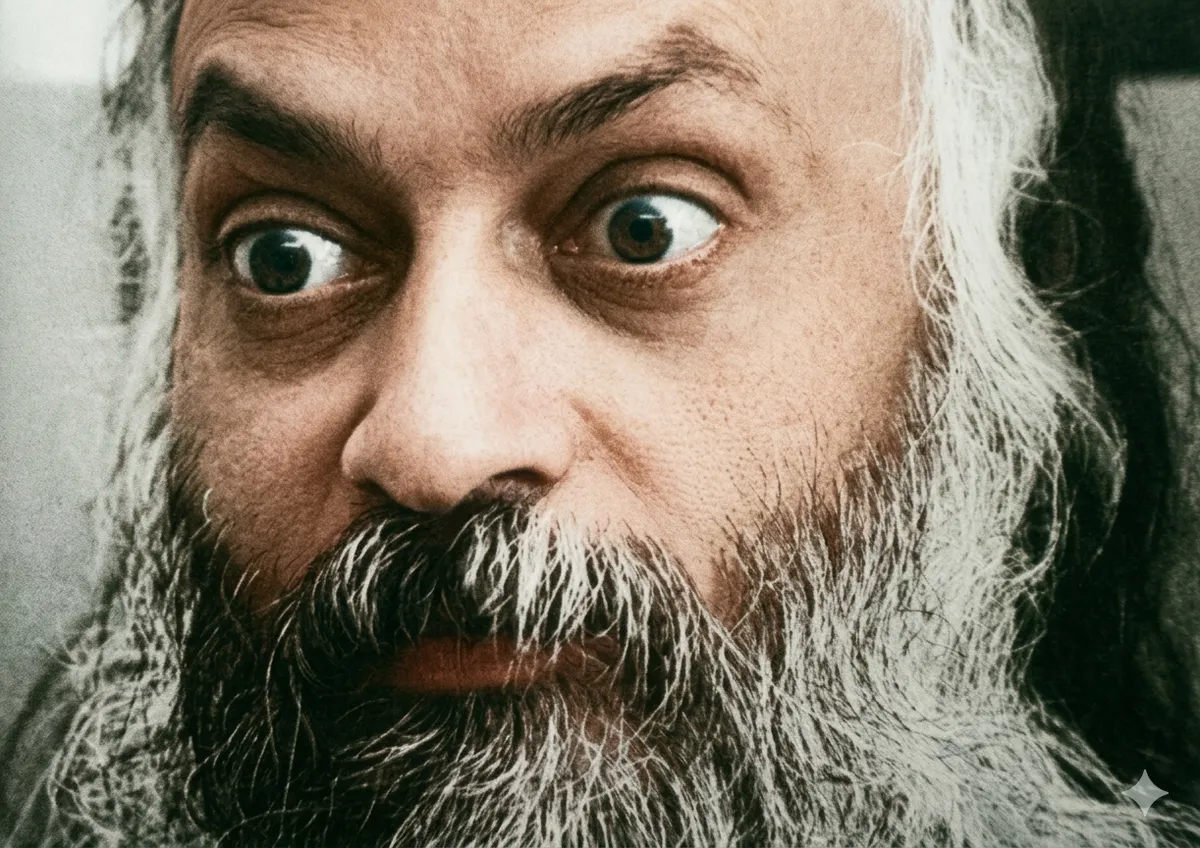
"Jas Panihar Dhare Sir Gagar" delves deep into Osho's compelling vision of spirituality and rebellion. At its heart, the series explores the dichotomy between the eternal, untethered dharma and the rigid, ossified religious structures that stem from it. Osho provocatively articulates that true rebellion arises from aligning with the eternal truth rather than with temporal conventions or traditions, which he likens to mere ash contrasted against the fiery essence of living spirituality. He elucidates how once vibrant spiritual truths solidify into dogmatic religions, losing their essence and evolving into lifeless institutions. Through evocative imagery and poignant analogies, Osho challenges listeners to recognize and release the attachment to the decaying remnants of past spiritual movements. He asserts that authentic dharma transcends religious labels and points towards the universal, unconditioned reality. Osho encourages a courageous dissolution of the old and an embrace of the dynamic, ever-living truth. This series, with its profound insights, calls for an introspective examination of the inherited spiritual beliefs and an audacious return to the living essence of dharma, emphasizing renewal over preservation and living experience over static belief. Through this exploration, Osho invites a transformative engagement with spirituality as a constantly evolving and revolutionary force.
-
Chapter 1
Who am I? The true answer rises from within; the Master’s burning gaze (Kabir & Dharamdas) strips false comforts so the inner lotus can bloom.
-
Chapter 2
True discipleship is total surrender: wandering to other masters is student curiosity or ego, secrecy breaks trust—surrender births the guru and true belonging.
-
Chapter 3
True wealth is inner surrender: trade the ego for Satnam as Dharmdas did—give what is not (your ego/ignorance) and receive the Nam, fearlessly sharing the divine.
-
Chapter 4
Approach the Divine both as emperor—without demands—and as beggar—empty of ego; union happens when no desire and an open emptiness coincide.
-
Chapter 5
When life turns futile, death-awareness can destroy ego or launch awakening; meet a living Guru like Kabir to guide the pilgrim from despair to inner riches.
-
Chapter 6
True dharma rebels against dead tradition; worshipping scripture's ash preserves the corpse and blocks the living truth so new Buddhas cannot arise.
-
Chapter 7
Bhakti is self-annihilation: surrender the 'I' through helpless love, tears and Guru's grace; see the Red Beloved within and let ego fall away.
-
Chapter 8
Freedom is not asserting the 'I' but its dissolution: surrender or awake awareness dissolves the ego, ending bondage so desire falls away as God decides.
-
Chapter 9
Longing for darshan: absolute surrender, stillness and holy madness open God; love is both lock and key—stake everything, let the Guru carry you across.
-
Chapter 10
Wanting God is ego's conquest; thirst is a humble, passive opening that invites grace. Lose the 'I', burn in longing, and union with the Divine can occur.
-
Chapter 11
Love's quarrel with the Divine, a sulking Beloved shows depth; anger and tears purify attachments; wakeful surati and the Satguru open the path to union.