
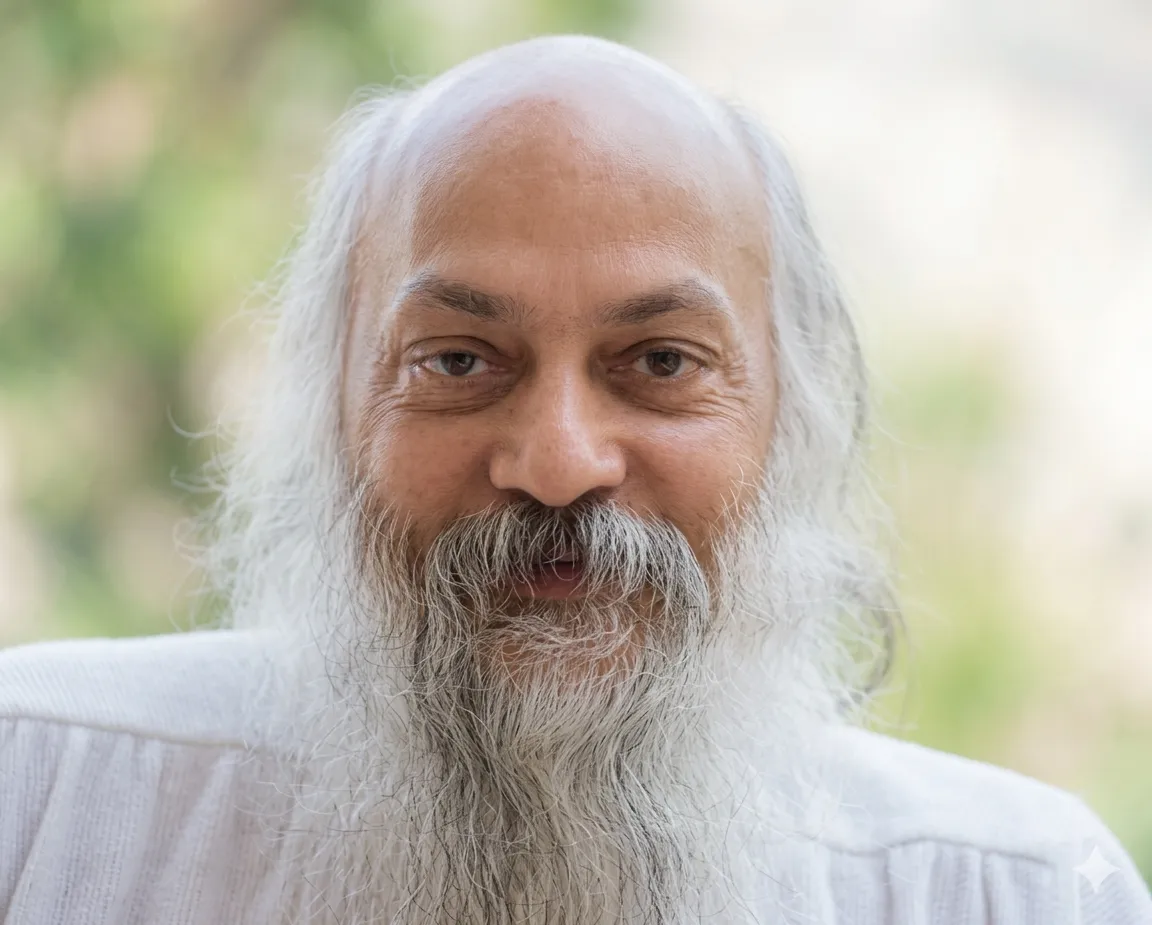
Osho's original Hindi beside Osho Live's English translation, matched passage by passage.
सहज ही खयाल में न आ सके, सहज ही समझ में न आ सके, ऐसा यह सूत्र कई अर्थों में बहुत असाधारण अभिप्राय को लिए हुए है। पहली तो बात यह, साधारणतः सोचते हैं हम, मानते हैं ऐसा कि सत्य अगर ढंका होगा तो अंधकार से ढंका होगा। पर यह सूत्र कहता है कि ज्योति से, प्रकाश से ढंका है सत्य। हे प्रभु, तू उस प्रकाश के पर्दे को अलग कर ले।
It does not easily occur in the mind, it does not easily come into understanding — in many senses this sutra carries a most extraordinary import. First, ordinarily we think, we believe, that if truth is veiled it will be veiled by darkness. But this sutra says: truth is veiled by light, by radiance. O Lord, remove the curtain of that light.
यह बहुत ही, बहुत ही गहरी जिसने खोज की हो सत्य के आयाम में, उसकी प्रतीति है। जिन्होंने केवल सोचा होगा, वे सदा कहेंगे कि अंधकार में ढंका है सत्य। लेकिन जिन्होंने जाना है, वे कहेंगे, प्रकाश में ढंका है सत्य। और अगर अंधकार मालूम होता है, तो वह प्रकाश का आधिक्य है।
This is the realization of one who has gone very, very deep in the dimension of truth. Those who have only thought will always say that truth is veiled in darkness. But those who have known will say: truth is veiled in light. And if darkness appears, it is the excess of light.
प्रकाश के आधिक्य में आंखें अंधी हो जाती हैं। प्रकाश बहुत हो तो अंधकार जैसा हो जाता है। आंखों की कमजोरी के कारण। सूरज को देखें। आंख खोलें सूरज की तरफ। थोड़ी देर में अंधकार हो जाएगा। इतना ज्यादा है प्रकाश, आंखें झेल नहीं पातीं, इसलिए अंधकार हो जाता है।
In an excess of light the eyes go blind. If there is too much light it becomes like darkness — because of the weakness of the eyes. Look at the sun. Open your eyes toward the sun. In a short while, there will be darkness. The light is so much, the eyes cannot bear it, therefore darkness happens.
तो जिन्होंने दूर-दूर से जाना, सोचा है, वे तो कहेंगे, अंधकार में छिपा है सत्य। प्रभु का मंदिर अंधकार में छिपा है। लेकिन जिन्होंने जाना है, वे कहेंगे कि प्रकाश में छिपा है। हे प्रभु, तू प्रकाश के इस पर्दे को अलग कर ले।
So those who have known from afar, have thought from a distance, they will say: truth is hidden in darkness, the temple of the Lord is hidden in the dark. But those who have known will say: it is hidden in light. O Lord, remove this curtain of light.
और प्रकाश के आधिक्य के कारण ही अंधकार का भ्रम पैदा होता है। आंखें हमारी कमजोर हैं इसलिए। पात्रता हमारी कमजोर है इसलिए। जैसे-जैसे सत्य की तरफ यात्रा बढ़ती है, वैसे-वैसे प्रकाश बढ़ता जाता है। जो लोग भी ध्यान में थोड़ी सी गति कर रहे हैं, वे जानते हैं कि जैसे-जैसे, जैसे-जैसे ध्यान गहरा होता है, प्रकाश बढ़ता चला जाता है।
And it is precisely because of the excess of light that the illusion of darkness arises — because our eyes are weak, because our capacity, our worthiness, is weak. As the journey toward truth advances, light goes on increasing. All who have made even a little progress in meditation know that as meditation deepens, light goes on increasing.
आज इटालियन साधिका वीतसंदेह ने मुझे आकर कहा कि इतना प्रकाश हो गया है भीतर कि ऐसा लग रहा है, भीतर से किरणें आ रही हैं और पूरा शरीर जल रहा है। जैसे भीतर कोई सूरज बैठा है। बाहर से नहीं आ रही है गर्मी, भीतर से आ रही है। और प्रकाश इतना ज्यादा है कि रात सोना मुश्किल हो गया है। आंख झपती है, तो प्रकाश ही प्रकाश है।
Today the Italian sadhika Vitsandeh came and told me: so much light has arisen within that it feels as if rays are coming from inside and the whole body is aflame. As if a sun is seated within. The heat is not coming from outside, it is coming from within. And the light is so much that it has become difficult to sleep at night. The moment the eyes close, there is only light, only light.
जैसे ही कोई ध्यान में गहरा उतरेगा, प्रकाश घना और गहरा होने लगेगा, तीव्र और प्रखर होने लगेगा। और एक ऐसी घड़ी आती है कि जब प्रकाश का आधिक्य इतना हो जाता है कि करीब-करीब महा गहन अंधकार मालूम होने लगता है। ईसाई फकीरों ने उस क्षण को--सिर्फ ईसाई फकीरों ने ही उस क्षण को ठीक नाम दिया है--उसे उन्होंने कहा है, डार्क नाइट आफ दि सोल, आत्मा की अंधकारपूर्ण रात्रि। लेकिन अंधकारपूर्ण रात्रि है वह प्रकाश के आधिक्य के कारण।
As soon as anyone goes deep into meditation, the light begins to grow dense and profound, intense and blazing. And there comes a moment when the excess of light becomes so great that it begins to appear almost like a supremely profound darkness. The Christian mystics have given a precise name to that moment — they alone have named it exactly — they have called it the Dark Night of the Soul. But that dark night is due to an excess of light.
और जब इतना प्रकाश हो जाता है कि भीतर लगता है कि अंधेरा हो गया है प्रकाश के ज्यादा होने के कारण, उस क्षण में की गई प्रार्थना है, हे प्रभु, इस प्रकाश के पर्दे को हटा ले। ताकि मैं इसके पीछे छिपे सत्य के मुख को देख सकूं।
And when there is so much light that inwardly it seems like darkness because of its abundance, the prayer uttered in that instant is: O Lord, remove this curtain of light, so that I may see the face of the truth that lies hidden behind it.
और उचित ही है कि सत्य के मुख के आसपास इतना प्रकाश आधिक्य हो कि आंखें अंधी और अंधेरी हो जाएं। उचित यही है, सम्यक भी यही है कि प्रकाश के वर्तुल के भीतर ही सत्य छिपा हो। और अंधकार अगर मालूम पड़ता हो, तो वह हमारी भ्रांति हो। सत्य के आसपास कैसे अंधकार हो सकता है? और अगर सत्य के आसपास भी अंधकार हो सकता है, तो फिर इस जगत में प्रकाश कहां हो सकेगा? सत्य के आसपास अंधकार टिकेगा कैसे? सत्य के निकट अंधकार के टिकने की कोई संभावना, कोई उपाय नहीं। सत्य है जहां वहां तो प्रकाश ही होगा। लेकिन हमें अंधकार जैसा मालूम हो सकता है, इतना आधिक्य हो जाए.।
And it is fitting that around the face of truth such a preponderance of light should be gathered that the eyes go blind and dark. It is fitting, it is right, that truth be veiled within a circle of light. And if darkness appears, let it be our illusion. How can there be darkness around truth? And if even around truth there can be darkness, then where in this world could there be any light? How could darkness possibly endure near truth? There is no possibility, no way, for darkness to remain near truth. Wherever truth is, there will be only light. Yet, to us it may appear as darkness if its abundance becomes too great.
अगर सूफी फकीरों से पूछें, तो वे कहते हैं कि जब उतरते हैं उस जगह तो एक सूरज--नहीं, काफी नहीं इतना कहना, हजार सूरज भी काफी नहीं--अनंत सूर्य एक साथ जलने लगे भीतर, इतना आधिक्य हो जाएगा कि अंधकार छा जाएगा। लेकिन सत्य के आसपास अंधकार हो नहीं सकता। सत्य छिपा है प्रकाश में। और स्मरण रखें, अंधकार में आंख खोलनी आसान है, प्रकाश के आधिक्य में आंख का खोलना अति कठिन है। अमावस की रात में आंख खोलने में कौन सी बाधा है? लेकिन सूर्य सामने पड़ जाए तो आंख खोलने में बड़ी कठिनाई है।
If you ask the Sufi fakirs, they say: when we descend to that place, a single sun — no, saying one sun is not enough, a thousand suns are not enough — infinite suns begin to burn within at once, and such abundance overflows that darkness spreads. But darkness cannot be near truth. Truth is hidden in light. And remember, it is easy to open one’s eyes in darkness, and extremely difficult to open them in an excess of light. On the new moon night, what obstacle is there to opening the eyes? But when the sun stands before you, opening the eyes becomes very difficult.
जो सत्य के निकट जाएंगे, अंतिम संघर्ष प्रकाश से होगा, अंतिम संघर्ष अंधकार से नहीं। अंतिम संघर्ष, प्रकाश की इतनी बाढ़ आ जाती है कि आंख खोलनी मुश्किल हो जाती है। उस पीड़ा के क्षण में यह सूत्र कहा गया है।
Those who go near truth, their final struggle will be with light, not with darkness. The final struggle — there is such a flood of light that opening the eyes becomes difficult. In that moment of anguish this sutra is spoken.
उस पीड़ा के क्षण में यह प्रार्थना है कि हे प्रभु, हटा ले इस प्रकाश को, ताकि मैं तेरे सत्य मुख को देख सकूं।
In that painful hour this prayer is uttered: O Lord, remove this light, so that I may behold Thy true face.
स्वाभाविक है कि कोई कहे, अंधकार से ले चल मुझे दूर, अंधकार से बाहर ले चल। लेकिन प्रकाश को हटा ले!
Naturally one would say: lead me away from darkness, take me out of the dark. But — remove the light!
और दूसरी बात है कि प्रकाश के लिए जो शब्द प्रयोग किया है--वह प्रकाश ऐसा भी नहीं है कि हटाने का मन होता हो। स्वर्ण जैसा है, बहुत प्रीतिकर भी है। वही कठिनाई है। इतना प्रीतिकर है कि यह भी मन नहीं होता कि यह प्रकाश हट जाए। और जब तक यह प्रकाश न हटे, तब तक सत्य का दर्शन नहीं हो सकता। इसलिए दूसरी बात भी समझ लें।
And there is something more: the very word that has been used for light — that light is not such that one would want it removed. It is like gold, very pleasing. That is precisely the difficulty. It is so delightful that even the desire does not arise for it to be removed. And until this light is removed, the vision of truth cannot be. So understand the second point as well.
अशुभ को छोड़ना बहुत आसान है, जब शुभ को छोड़ने की घड़ी आती है तब असली कठिन घड़ी आती है। लोहे की जंजीरों को छोड़ने में कौन सी अड़चन है? लेकिन जब स्वर्ण की जंजीरें छोड़नी पड़ती हैं तब कठिनाई होती है। क्योंकि स्वर्ण की जंजीरों को जंजीरें मानना ही मुश्किल होता है। वे आभूषण मालूम होती हैं। असाधुता को छोड़ना बहुत आसान है, लेकिन अंतिम घड़ी में जब साधुता भी बंधन हो जाती है और उसे भी छोड़ देना पड़ता है, तब असली कठिनाई आती है। और आखिरी घड़ी में शुभ भी छोड़ देना पड़ता है, क्योंकि उतनी पकड़ भी परतंत्रता है। और सत्य के समक्ष उतनी परतंत्रता भी बाधा है। वहां चाहिए परम स्वातंत्र्य।
It is very easy to renounce the inauspicious; when the hour comes to renounce the auspicious, then the real difficulty comes. What obstacle is there in throwing away iron chains? But when the chains are of gold, then the difficulty arises, because even to call them chains becomes difficult. They appear as ornaments. To abandon wickedness is very easy; but in the final hour when even virtue becomes a bondage and it too must be let go, then the real difficulty arises. In the last moment even the auspicious has to be discarded, because even that much clinging is dependence. And before truth, even that dependence is a barrier. There one needs the supreme freedom.
इसलिए यह भी मजे की बात है कि ऋषि अंधेरे से खुद लड़ लिया है, लेकिन प्रकाश को कहता है परमात्मा से कि तू दूर कर दे। अंधेरे से खुद लड़ लेंगे, अड़चन नहीं है बहुत। लेकिन जब प्रकाश से लड़ने की घड़ी आएगी तब बहुत अड़चन मालूम होती है--प्रकाश से और लड़ना! और प्रकाश को अलग करने की बात ही पीड़ा देती है। प्रकाश इतना सुखद है, इतना स्वर्गीय है, इतना शांतिदायी है, इतना उत्फुल्ल करता है, इतना प्राणों को भर जाता है अमृत से, उसे हटाने की बात ही पीड़ा देती है।
Therefore it is also a matter of wonder that the rishi battled with darkness himself, but regarding light he says to God: You remove it. With darkness we will fight ourselves — there is not much obstacle there. But when the time comes to struggle with light, enormous hindrance is felt — to struggle with light! The very thought of removing light gives pain. Light is so pleasant, so heavenly, so peace-giving, so exhilarating, it fills the very life-breath with nectar — the very idea of removing it hurts.
इसलिए ऋषि कहता है, हे प्रभु, तू हटा ले। यह मैं हटा पाऊं--इसकी सामर्थ्य नहीं मालूम पड़ती। मेरा तो मन करेगा, इसी में डूब जाऊं।
Hence the rishi says: O Lord, You remove it. That I could remove it — I do not find the strength for that. My mind would wish to drown in it.
ध्यान रहे, प्रकाश का जब ध्यान में गहरा अनुभव हो तो प्रकाश से भी बचना पड़ेगा। उससे भी आगे है यात्रा। उसके भी पार जाना है। उसके भी ऊपर उठना है। अंधेरे से ऊपर तो उठना ही है, प्रकाश से भी ऊपर उठना है। और जब अंधकार और प्रकाश दोनों के ऊपर चेतना चली जाती है, तभी द्वैत के ऊपर अद्वैत का प्रारंभ होता है। तभी उस एक का दर्शन होता है जो न प्रकाश है और न अंधकार है। जो न रात है, न दिन है। न जीवन है, न मृत्यु। जो सदा सब द्वैत के पार है। उस अद्वैत की प्रतिष्ठा के पहले अंतिम संघर्ष प्रकाश के साथ होगा।
Remember, when the experience of light becomes deep in meditation, one has to be saved from the light too. Beyond it also lies the journey. One must go beyond it as well, rise above it as well. One must go above darkness — and above light, too. Only when consciousness goes beyond both darkness and light does nonduality begin beyond duality. Only then is there the vision of that One which is neither light nor darkness, neither night nor day, neither life nor death — that which is forever beyond all duality. Prior to the enthronement of that Advaita, the final struggle will be with light.
ऐसा भी समझ लें कि दुख को छोड़ना सदा आसान है, दुख से हम लड़ते हैं, लेकिन अगर सुख आ जाए, तो सुख से लड़ना बहुत मुश्किल है। करीब-करीब असंभव मालूम पड़ता है। सुख से कैसे लड़ पाएंगे? लेकिन अगर सुख ने भी पकड़ लिया तो भी मोक्ष संभव नहीं है। सुबह मैंने कहा कि सुख भी स्वर्ग ही बनाएगा, वह भी नए बंधन निर्माण कर जाएगा--सुखद, प्रीतिकर, बड़े मनोरम, मन को भाएं ऐसे, लेकिन फिर भी मुक्ति नहीं है।
Understand this too: to renounce pain is always easy — we fight with pain. But if happiness arrives, then to struggle against happiness is very difficult, almost impossible. How will one fight happiness? Yet if happiness too has caught hold of you, then also moksha is not possible. This morning I said: happiness will also only create a heaven, it too will forge new chains — pleasant, delightful, very charming to the mind — but still no liberation.
इस प्रकाश के पर्दे को हटा लेने के लिए, इस ज्योति से ढंके हुए तेरे मुख के दर्शन करने की जो आकांक्षा ऋषि ने की है, वह मनुष्य के मन की आखिरी दीनता की खबर है।
This longing of the rishi to have this curtain of light removed, to behold Thy face covered by radiance — it announces the final helplessness of the human mind.
मनुष्य का मन प्रकाश से नहीं मुक्त होना चाहता है। मनुष्य का मन सुख से नहीं मुक्त होना चाहता है। मनुष्य का मन स्वर्ग से नहीं मुक्त होना चाहता है। लेकिन उससे भी मुक्त तो होना ही है। इसलिए द्वार पर खड़ा है ऋषि। एक तरफ उसकी मनुष्यता है, जो कहती है कि प्रकाश आह्लादकारी है, नाचो, एक हो जाओ, डूब जाओ और लीन हो जाओ। और एक ओर उसके भीतर वह सत्य की जो अभीप्सा है, वह कहती है, इसके भी पार, इसके भी पार। ऐसी कठिनाई के क्षण में, ऐसे चुनाव के क्षण में, ऐसे डिसीसिव मोमेंट में कहा गया सूत्र है कि हे प्रभु, हटा ले अपने इस ज्योति के पर्दे को! इस सुख, इस स्वर्गीय रूप को हटा ले, ताकि मैं उसे देख लूं, जो निपट नग्न सत्य है, जो तू है!
The human mind does not want to be free from light. The human mind does not want to be free from happiness. The human mind does not want to be free from heaven. But one must be free from that too. Therefore the rishi stands at the gate. On one side is his humanity, which says: light is blissful, dance, merge, drown and be dissolved. And on the other side, the thirst for truth within says: beyond this too, beyond this too. In such moments of difficulty, in such moments of choice — a decisive moment — this sutra is uttered: O Lord, remove Thy veil of light! Remove this pleasant, this heavenly form, so that I may see that which is stark naked truth — which is Thou!
दुख में जो जीते हैं, उन्हें पता ही नहीं कि सुख का भी अपना दुख है। शत्रुओं में जो जीते हैं, उन्हें पता ही नहीं है कि मित्रों की भी अपनी शत्रुता है। नर्क में जो जीते हैं, उन्हें पता ही नहीं कि स्वर्ग की भी अपनी पीड़ा है। अंधकार में जो जीते हैं, उन्हें अनुमान ही कैसे हो कि एक दिन प्रकाश भी कारागृह बन जाता है। जहां तक द्वैत है वहां तक अमुक्ति है। जहां तक द्वैत है वहां तक बंधन है।
Those who live in sorrow do not even know that happiness has its own sorrow. Those who live among enemies do not even know that friends have their own enmity. Those who live in hell do not know that heaven has its own pain. Those who live in darkness cannot even imagine that one day light too becomes a prison. As long as there is duality there is non-liberation. As long as there is duality there is bondage.
पर क्या बचेगा प्रकाश भी जब हट जाएगा? अंधकार भी जब हट जाएगा तो सत्य का मुख होगा कैसा? बचेगा क्या?
But what will remain when even light is removed? When darkness too is removed, what will the face of truth be like? What will remain?
अधिकतम जो हम सोच सकते हैं, विचारणा जहां तक जाती है, जहां तक विचार के पंख उड़ान ले सकते हैं, जहां तक मन की सीमा है, अधिकतम जो हम सोच सकते हैं, वह लगता है कि सत्य का चेहरा अगर होगा तो प्रकाश जैसा होगा, आलोक होगा। क्यों ऐसा लगता है? एक-दो बात खयाल में ले लें।
At the utmost that we can think, as far as thought can go, as far as the wings of mind can take flight, as far as the mind’s boundary extends — at most we think: if truth has a face it will be like light, like radiance. Why does it seem so? Take one or two points to heart.
हमने अभी तक प्रकाश देखा नहीं है। आप कहेंगे, प्रकाश देखा नहीं है! प्रकाश देख रहे हैं। सुबह सूरज निकलता है और हम प्रकाश देखते हैं। और रात चांद आता है और चांदनी छा जाती है और हम प्रकाश देखते हैं। प्रकाश हमने देखा है। नहीं, फिर भी मैं आपसे कहता हूं, प्रकाश अभी आपने देखा नहीं है। अभी केवल प्रकाशित चीजें देखी हैं। जब सूरज निकलता है तब आप प्रकाश नहीं देखते हैं, सिर्फ प्रकाशित चीजें देखते हैं--पहाड़, नदी, झरने, वृक्ष, लोग। अभी यहां बिजली के बल्ब जल रहे हैं। आप कहेंगे, हम प्रकाश देखते हैं। आप प्रकाश नहीं देखते। बिजली का बल्ब दिखाई पड़ता है लोगों पर पड़ता हुआ। लोग जो प्रकाशित हैं, वे दिखाई पड़ते हैं। आब्जेक्ट्स दिखाई पड़ते हैं।
We have not yet seen light. You will say, how so? We are seeing light. In the morning the sun rises and we see light. At night the moon comes and moonlight spreads and we see light. We have seen light. No — still I say to you, you have not yet seen light. You have only seen illuminated things. When the sun rises, you do not see light, you only see illuminated objects — mountains, rivers, waterfalls, trees, people. Here electric bulbs are lit — you will say we see light. You do not see light. You see the bulb, you see people upon whom it falls. You see the objects that are illumined.
प्रकाश का अनुभव बाहर के जगत में होता ही नहीं। बाहर के जगत में केवल प्रकाशित चीजें दिखाई पड़ती हैं। और जब प्रकाशित चीजें नहीं दिखाई पड़ती हैं, तो हम कहते हैं, अंधकार है। इस कमरे में कब अंधकार हो जाता है? जब इस कमरे में कोई चीज दिखाई नहीं पड़ती है, तो हम कहते हैं, अंधकार है। और जब चीजें दिखाई पड़ती हैं, तो हम कहते हैं, प्रकाश है। प्रकाशित चीजों को देखा है हमने, सीधे प्रकाश को नहीं देखा है।
There is no experience of light in the outer world. In the outer world only the illumined things are seen. And when illuminations are not seen, we say there is darkness. When does darkness happen in this room? When nothing in this room is visible, we say it is dark. And when things are seen, we say there is light. We have seen illuminated things, not light itself.
अगर कोई भी चीज इस कमरे में न हो तो आपको प्रकाश दिखाई नहीं पड़ेगा। चीज से टकराता है प्रकाश, चीज का आकार दिखाई पड़ता है, तो आपको लगता है प्रकाश है। चीज अगर बिलकुल स्पष्ट दिखाई पड़ती है, तो आप कहते हैं, ज्यादा प्रकाश है। अस्पष्ट दिखाई पड़ती है, तो कहते हैं, कम प्रकाश है। नहीं दिखाई पड़ती है, तो कहते हैं, अंधकार है। बिलकुल अंदाज नहीं आता, तो कहते हैं, महा अंधकार है। लेकिन न तो आपने प्रकाश देखा है, न आपने अंधकार देखा है। अनुमान है हमारा कि जब चीजें दिखाई पड़ रही हैं तो प्रकाश होगा।
If there were nothing in this room at all, you would not see light. Light strikes objects, their shapes appear, and then you think there is light. If things appear very clearly, you say there is more light. If they appear dim, you say there is less light. If they are not seen at all, you say it is dark. If there is not even a hint, you say it is pitch dark. But you have seen neither light nor darkness. Our inference is: since things are seen, there must be light.
असल में प्रकाश इतनी सूक्ष्म ऊर्जा है कि बाहर उसके दर्शन नहीं हो सकते। प्रकाश के दर्शन तो भीतर ही होते हैं, क्योंकि भीतर कोई चीज नहीं होती, जिसको प्रकाशित किया जा सके। भीतर कोई आब्जेक्ट्स नहीं हैं जो प्रकाशित हो जाएं और उनको आप देख लें। भीतर जब प्रकाश का अनुभव होता है तो शुद्ध प्रकाश का, सीधे प्रकाश का, इमीजिएट, बिना किसी चीज के माध्यम के प्रकाश का ही अनुभव होता है। सिर्फ प्रकाश!
In truth, light is such a subtle energy that outside it cannot be directly seen. The vision of light happens only within, because inside there is nothing to be illumined. Inside there are no objects to be lit and then to be beheld by you. Inside, when light is experienced, it is pure light — immediate, direct, without any medium — only light!
और एक फर्क। बाहर जो भी हम देखते हैं, मैंने कहा, प्रकाशित चीजें देखते हैं और दूसरी बात प्रकाश का स्रोत देखते हैं और प्रकाशित चीजें देखते हैं। बीच में जो प्रकाश है, वह हम कभी नहीं देखते। सूरज दिखाई पड़ता है, यह बिजली का बल्ब दिखाई पड़ता है, इधर नीचे चमकती हुई प्रकाशित चीजें दिखाई पड़ती हैं। दोनों के बीच में जो प्रकाश है, वह दिखाई नहीं पड़ता। स्रोत दिखाई पड़ता है प्रकाश का। जिन चीजों पर पड़ता है, वे चीजें दिखाई पड़ती हैं।
And another difference: outside whatever we see — I said — we see illuminated things, and we also see the source of light and the illumined things. We never see the light in between. The sun is seen, this bulb is seen, and below here the shining objects are seen. The light between the two is not seen. The source of light is seen; the things upon which it falls are seen.
लेकिन भीतर जब प्रकाश दिखाई पड़ता है तो न तो वहां चीजें होती हैं और न वहां सोर्स होता है--सोर्सलेस लाइट। वहां कोई सूरज नहीं होता, जिसमें से प्रकाश आ रहा है। वहां कोई दीया नहीं जलता, जिसमें से प्रकाश आ रहा है। वहां सिर्फ प्रकाश होता है--सोर्सलेस, उदगमरहित। उदगमरहित प्रकाश। वस्तुएं-शून्य जगत। उस शून्य में जब प्रकाश पहली दफा दिखाई पड़ता है, तब अगर कबीर, तब अगर मोहम्मद, और तब अगर सूफी फकीर या बाउल फकीर या झेन फकीर नाचने लगते हैं और कहते हैं कि तुम जिसे प्रकाश कहते हो, वह अंधेरा है.।
But when light is seen within, there are neither things, nor is there any source — it is sourceless light. There is no sun from which light is coming. There is no lamp burning from which light is coming. There is only light — sourceless, without arising. Light without origin. A world void of objects. In that void, when for the first time light appears, then if Kabir, or Mohammed, or a Sufi fakir, a Baul fakir, or a Zen master begins to dance and says: that which you call light — that is darkness!
अरविंद ने लिखा है कि जब तक भीतर नहीं देखा था तब तक जिसे बाहर प्रकाश समझा था, भीतर देखने के बाद पता चला, वह अंधकार है। जब तक भीतर नहीं देखा था तब तक बाहर जिसे जीवन समझा था, जब भीतर देखा तो पता चला, वह मृत्यु है।
Aurobindo has written: until I had seen within, what I had understood outside as light — after seeing within, I knew, that is darkness. Until I had seen within, what I had taken as life outside — after seeing within, I knew, that is death.
भीतर जब प्रकाश--उदगमरहित, वस्तु-शून्य, निराकार, अंतस आकाश में प्रगट होता है, तो उसकी आभा को झेलना बड़ा कठिन है। सबसे बड़ी कठिनाई यह है कि मन होता है कि आ गई मंजिल, पहुंच गए।
When within, light — without origin, objectless, formless — arises in the inner sky, its effulgence is very hard to bear. The greatest difficulty is this: the mind feels — the goal has come, we have arrived.
साधक को इंद्रियां बड़ी भारी बाधाएं नहीं हैं। उनसे पार हो जाता है। विचार बड़ी बाधाएं नहीं हैं, उनसे पार हो जाता है। लेकिन जब भीतर के प्रीतिकर अनुभव के फूल खिलने शुरू होते हैं और जब भीतर सिद्धि के आनंद प्रगट होने शुरू होते हैं, तब पैर उठते ही नहीं। छोड़ने का मन नहीं होता। पार जाने की हिम्मत, पार जाने का साहस नहीं होता। लगता है, आ गई मंजिल।
For the seeker, the senses are not the great obstacles — one goes beyond them. Thoughts are not such great obstacles — one goes beyond them. But when the blossoms of inner, delightful experiences begin to open, when the bliss of inner siddhis begins to manifest, then feet will not lift at all. One does not want to leave. The courage to go beyond, the daring to go beyond, is not there. It feels — the destination has come.
उस क्षण में ऋषि ने कहा है, हे प्रभु! हटा ले इस प्रकाश को भी। मैं तो वही जानना चाहता हूं जो प्रकाश के भी पार है। अंधकार के पार मैं आ गया, प्रकाश के पार तू मुझे ले चल।
In that moment the rishi has said: O Lord! Remove even this light. I want to know only that which is beyond light as well. I have crossed beyond darkness — beyond light, You lead me.
और ध्यान रहे, अंधकार के पार तक जाने में संकल्प काम कर देता है, लेकिन प्रकाश के पार जाने में समर्पण काम करता है। अंधकार के पार जाने में संघर्ष काम कर देता है। हम भी जूझ सकते हैं। आदमी भी काफी सबल है अंधकार से लड़ने में। लेकिन जब प्रकाश से लड़ने की बात उठती है तो आदमी एकदम निर्बल है। नहीं है, न के बराबर है। वहां संकल्प काम नहीं करता, वहां समर्पण काम करता है।
And remember, to go beyond darkness resolve suffices; to go beyond light, surrender works. To go beyond darkness, struggle suffices — we can grapple. Man is quite capable of fighting darkness. But when it comes to battling with light, man is utterly powerless — almost not there. There resolve does not work; there surrender works.
यह सूत्र समर्पण का है। हार गया ऋषि। यहां तक तो आ गया, जहां कि परम प्रकाश प्रगट होता है। यहां तक उसने प्रार्थना नहीं की। यहां तक उसने प्रभु से नहीं कहा कि तू ऐसा कर दे। यहां तक वह अपने भरोसे चला आया। यहां तक आदमी आ सकता है।
This sutra is of surrender. The rishi is defeated. He has come up to the point where the supreme light manifests. Up to here he did not pray. Up to here he did not say to the Lord, You do it. Up to here he came on his own strength. Far this much a man can come.
संकल्प से जो चलते हैं, वे इससे आगे कभी न जा सकेंगे। समर्पण की जिनकी तैयारी है, सरेंडर की जिनकी तैयारी है--टोटल सरेंडर की--वे ही जा सकेंगे। इसे इस तरह कहें तो शायद जल्दी समझ में आ जाए। यहां तक ध्यान ले जाता है, यहां तक। प्रकाश के परम अनुभव तक ध्यान ले जाता है। लेकिन प्रकाश के पार प्रार्थना ले जाती है। उसके बाद ध्यान काम नहीं कर पाता। इसलिए जिन्होंने ध्यान नहीं किया और प्रार्थना कर रहे हैं, वे नासमझ हैं। वहां प्रार्थना की कोई भी जरूरत नहीं है। और जिन्होंने ध्यान कर लिया और ऐसा सोचा कि अब प्रार्थना की क्या जरूरत है, वे भी नासमझ हैं। क्योंकि ध्यान प्रकाश तक ले जाएगा, द्वार तक खड़ा कर देगा, लेकिन अंत में तो प्रार्थना की पुकार ही सहारा बनेगी। अंततः तो कहना पड़ेगा कि मैं तेरे हाथ में हूं, तू ले चल। यहां तक मैं आ गया।
Those who walk by resolve will never be able to go beyond this point. Those who are prepared for surrender — for total surrender — only they will go. Say it like this and perhaps it will be understood more quickly: up to here, dhyana takes you — up to here. Dhyana carries you to the supreme experience of light. Beyond light, prayer carries you. After that, meditation cannot function. Therefore those who have not meditated and are praying are foolish — there prayer has no use. And those who have meditated and think: now what need of prayer? — they too are foolish. Because meditation will bring you to light, will stand you at the gate, but in the end only the call of prayer will be the support. Finally you will have to say: I am in Thy hands — You lead me. I have come this far.
और ध्यान रखें, जो ध्यान की इस सीमा तक चला आता है, उसने पात्रता अर्जित कर ली। उसने पात्रता अर्जित कर ली कि अब अगर वह कह भी दे कि मैं नहीं जाता, तो ईश्वर उसे ले जाए। वह इस योग्य हुआ जहां से प्रभु की अनुकंपा शुरू हो। जहां से प्रभु की कृपा बरसे। आ गया उस जगह तक जहां तक आदमी आ सकता था। इससे ज्यादा परमात्मा भी, इससे ज्यादा परमात्मा भी आदमी से अपेक्षा नहीं कर सकता है। आखिरी घड़ी आ गई, आदमी की क्षमता का छोर आ गया। अब अगर परमात्मा भी इससे ज्यादा आदमी से मांग करे तो ज्यादती है। इससे ज्यादा का कोई सवाल भी नहीं है। प्रार्थना, अब प्रार्थना--अब तो सिर्फ इतना कहना कि तेरे हाथों में छोड़ते हैं, तू हटा दे इस पर्दे को।
And remember, the one who has gone this far in meditation has earned the worthiness. He has earned the worthiness that even if he were to say, I shall not go, God will take him. He has become eligible for the place where the grace of the Lord begins. Where His compassion rains. He has arrived at that point where man can come. More than this, even God cannot expect from man. The last hour has come — the far edge of human capacity. If God were to demand more than this from man, it would be injustice. There is no further question. Prayer — now prayer — now only to say this much: I leave it in Thy hands, remove this veil.
प्रार्थना ध्यान का अंतिम समापन है। समर्पण संकल्प की अंतिम निष्पत्ति है। जहां तक कर सकें, स्वयं करना। लेकिन जिस घड़ी ऐसा लगे कि अब न हो सकेगा, उस क्षण प्रार्थना को स्मरण कर लेना। उस क्षण प्रभु को पुकार लेना। उस क्षण कहना कि मैं जहां तक आ सकता था अपने कमजोर कदमों से, आ गया हूं। अब बस, अब मेरे वश के बाहर है, अब तू सम्हाल।
Prayer is the ultimate completion of meditation. Surrender is the final fruit of resolve. Do yourself, as far as you can. But the moment it seems now it will not be possible — in that moment remember prayer. In that moment call upon the Lord. Say in that moment: I have come as far as I could with my frail steps. Now enough. Now it is beyond my power — You take care.
इसीलिए ऋषि ने उस घड़ी में इस प्रार्थना को दोहराया है कि हे प्रभु, प्रकाश को तू हटा ले, अपने सत्य मुख को उघाड़ दे।
Therefore the rishi, in that hour, repeats this prayer: O Lord, remove the light, unveil Thy true face.
कैसा होगा सत्य? जब प्रकाश भी हट जाएगा तो सत्य कैसा होगा? इसे थोड़ा सा खयाल में ले लेना जरूरी है। कठिन है बहुत, गहन है बहुत, लेकिन फिर भी थोड़ा सा खयाल में ले लेना जरूरी है, वह कभी काम पड़ सकता है।
What will truth be like? When even light is removed, what will truth be like? Bring it a little into your imagination. It is very difficult, very profound, yet bring it a little into imagination — someday it may become useful.
कहा मैंने कि बाहर प्रकाशित वस्तुएं हैं और प्रकाश का उदगम स्रोत है। प्रकाश का कोई अनुभव नहीं होता बाहर। भीतर प्रकाश का अनुभव होता है, न उदगम स्रोत रह जाता है, न वस्तुएं रह जाती हैं। फिर अंततः प्रकाश भी खो जाता है। हमारे मन में खयाल आएगा कि जब प्रकाश खो जाएगा तो अंधेरा हो जाएगा। हमारा अनुभव यही है। हम कहेंगे कि ऋषि भी कैसी नासमझी की प्रार्थना कर रहा है। अगर प्रकाश का पर्दा हट गया तो फिर अंधेरा हो जाएगा, फिर प्रभु के चेहरे को देखेगा कैसे? लेकिन अंधकार के तो पार आ गई है बात। अब प्रकाश के हटने से अंधकार नहीं होगा। अंधकार तो छूट चुका बहुत पीछे। प्रकाश का पर्दा आ गया है। अब प्रकाश भी हट जाएगा तो फिर बचेगा क्या?
I said: outside there are illumined objects and the source of light. There is no experience of light itself outside. Inside, light is experienced — there is no source of arising, nor are there objects. Then ultimately even light slips away. The mind will think: if light slips away, darkness will come. That is our experience. We will say: what foolish prayer this rishi is making! If the curtain of light is removed, then there will be darkness — then how will he see the face of the Lord? But the matter has come beyond darkness. Now with the removal of light there will not be darkness. Darkness has been left far behind. The curtain of light has come. If even light is removed, then what will remain?
संध्या को जब सूरज डूब जाता है और अभी रात नहीं आई होती, जब प्रकाश का स्रोत खो जाता और अभी अंधेरे का अवतरण नहीं हुआ होता, वह जो बीच का पल है संध्या का, वैसा ही पल है। इसीलिए प्रार्थना और संध्या का जोड़ बन गया। इसलिए धीरे-धीरे लोग प्रार्थना को संध्या कहने लगे कि संध्या कर रहे हैं। और लोगों ने समझा कि संध्या कर लेनी है। जब सूरज डूबता है तब संध्या हो जाती है या जब सुबह सूरज नहीं उगा होता है तब संध्या होती है। संध्या की घड़ियां हो गईं। मिड प्वाइंट्स! दिन जा चुका, रात नहीं आई। रात जा चुकी, दिन आने को है। वह जो बीच की छोटी सी घड़ी है, जो गैप है, उसको हम संध्या कहते हैं। उसको हमने पूजा और प्रार्थना का क्षण बना लिया। लेकिन असली बात दूसरी है।
When in the evening the sun sets and night has not yet come, when the source of light has vanished and darkness has not yet descended — that middle moment of twilight — it is such a moment. Hence prayer and twilight became linked. Gradually people began to call prayer “sandhya,” saying we are doing sandhya. And people thought that one should perform sandhya when the sun sets, or when in the morning the sun has not yet risen — the hours of sandhya, the midpoints. Day has gone, night has not arrived. Night has gone, day is about to come. That small in-between hour, the gap — we call it sandhya. We made it the moment of worship and prayer. But the real thing is different.
असली बात यह है कि जब अंधकार भी खो चुका होता है और जब प्रकाश भी खो चुका होता है, तब संध्या का क्षण आता है अंतर-आकाश से। वहां संध्या आ जाती है। अंधेरा भी नहीं होता, प्रकाश भी नहीं होता--आलोक। भाषा-कोश में जाएंगे तो आलोक का अर्थ प्रकाश ही लिखा हुआ पाएंगे। वह गलत है। आलोक का अर्थ होता है: न प्रकाश, न अंधकार, ऐसा क्षण। भोर में सूरज नहीं निकला है, रात जा रही है, जा चुकी है। भोर के क्षण में वह आलोक का क्षण है।
The real thing is this: when darkness too has dissolved and when light too has dissolved — then the moment of sandhya arises from the inner sky. There sandhya arrives. There is neither dark nor light — alok. If you go to a dictionary you will find the meaning of alok given as light — that is wrong. Alok means: a moment where there is neither light nor darkness. At dawn, the sun has not risen, night is going, has gone — that moment of dawn is the moment of alok.
उदाहरण के लिए कह रहा हूं, ताकि आपके खयाल में आ जाए। क्योंकि भीतर के लिए तो और कोई खयाल दिलाने का उपाय नहीं है। जहां न अंधकार है, जहां न प्रकाश है, वहां आलोक रह जाता है। और जैसा मैंने कहा कि बाहर से भीतर जाते वक्त वस्तुएं खो जाती हैं, प्रकाश का उदगम खो जाता है, प्रकाश रह जाता है। वैसे ही जब प्रकाश और अंधकार खो जाते हैं और सिर्फ आलोक रह जाता है तो जानने वाला और जानी जाने वाली चीज दोनों खो जाते हैं। द्रष्टा और दृश्य खो जाते हैं। फिर ऐसा नहीं होता है कि ऋषि खड़ा है और सत्य को देख रहा है। फिर ऋषि सत्य हो जाता है। फिर सत्य ऋषि हो जाता है। फिर कोई जानने वाला और जानी गई चीज, कोई ज्ञाता और कोई ज्ञेय, कोई नोअर और कोई नोन, ऐसे दो सूत्र नहीं रह जाते, वे दोनों खो जाते हैं।
I give this example so that it may enter your imagination, because for the inner there is no other way to give a hint. Where there is neither darkness nor light, there alok remains. And as I said: in going from outside to inside, objects are lost, the source of light is lost, and light remains. In the same way, when light and darkness are lost and only alok remains, then the knower and the known both are lost. The seer and the seen are lost. Then it is not that the rishi stands apart and sees truth. Then the rishi becomes truth. Then truth becomes the rishi. The two strands do not remain — a knower and a known, a noer and a known — both are lost.
आलोक में अंधकार और प्रकाश भी खो जाते हैं और जानने वाला और जानी गई चीज भी खो जाती है। तब अनुभोक्ता नहीं रह जाता और अनुभव नहीं रह जाता--अनुभूति रह जाती है।
In alok both darkness and light are lost, and the knower and the known are lost. Then there remains no experiencer and no experience — only experiencing remains.
कृष्णमूर्ति अंग्रेजी में एक शब्द का उपयोग करते हैं, एक्सपीरिएंसिंग। एक्सपीरिएंस नहीं, अनुभव नहीं। क्योंकि अनुभव जहां होता है, वहां अनुभोक्ता, अनुभव करने वाला भी मौजूद होता है। और जिस चीज की अनुभूति होती है, वह भी मौजूद होता है।
Krishnamurti uses a word in English: experiencing, not experience. Because where there is experience, there the experiencer, the one who experiences, also exists, and that which is experienced also exists.
नहीं, न तो अनुभव करने वाला रह जाता है, न अनुभव जिसका हो रहा है, वह रह जाता है। अनुभूति ही रह जाती है। एक्सपीरिएंसिंग ही रह जाती है। ऋषि भी खो जाता है, परमात्मा भी खो जाता है। भेद गिर जाते हैं। प्रेमी खो जाता है, प्रेम-पात्र खो जाता है। भक्त खो जाता है, भगवान खो जाता है। यह परम मुक्ति का क्षण है। यहां ऐसा नहीं है कि हम कुछ जान लेते हैं, बल्कि ऐसा है कि हम पाते हैं, हम नहीं हैं। और हम यह भी पाते हैं कि कुछ जानने को भी नहीं है। ज्ञान ही रह जाता है।
No — neither the experiencer remains, nor that which is experienced remains. Only experiencing remains. Only experiencing — and nothing else. The rishi is lost, and God is lost. The distinctions fall. The lover is lost, and the beloved is lost. The devotee is lost, and God is lost. This is the moment of supreme liberation. Here it is not that we come to know something; rather we find that we are not. And we also find that there is nothing to be known. Only knowing remains.
इसलिए महावीर ने जिस शब्द का उपयोग किया है वह बहुत अदभुत है। महावीर ने कहा है, केवल-ज्ञान, ओनली नोइंग--दि नोअर इज़ नाट, दि नोन इज़ नाट, बट ओनली नोइंग। वह ज्ञाता भी खो गया, ज्ञेय भी खो गया, सिर्फ बचा ज्ञान। दोनों छोर खो गए। जैसा सूरज खो गया, मूल स्रोत, वस्तुएं खो गईं जिन पर प्रकाश पड़ता था। ऐसे ही जानने वाला खो गया, मूल स्रोत। जो जाना जाता है ज्ञेय, वह खो गया, वस्तु खो गई। जानना बचता है। केवल ज्ञान बचता है। मात्र जानना बचता है।
Therefore Mahavira has used a most astonishing word: keval-gyana — only knowing. The knower is not, the known is not — only knowing. The knower is lost, the known is lost — only knowledge remains. Both the poles have disappeared. Just as the sun — the original source — is lost, and the objects upon which light fell are lost; so the one who knows — the primal source — is lost, and the object of knowledge — the thing known — is lost. Knowing remains. Only knowing remains. Mere knowing remains.
इस जानने की दिशा में मैंने कहा, पहला कदम संकल्प का है, दूसरा कदम समर्पण का है। पहला कदम ध्यान का है, दूसरा कदम प्रार्थना का है। और दोनों कदम जो उठा लेता है, उसे फिर जानने को, पाने को, अनुभव करने को कुछ भी शेष नहीं रह जाता।
In the direction of this knowing I said: the first step is resolve, the second step is surrender. The first step is meditation, the second step is prayer. And the one who takes both steps — nothing remains to be known, to be attained, to be experienced.
पूषन्नेकर्षे यम सूर्य
प्राजापत्य व्यूह रश्मीन्समूह।
तेजो यत्ते रूपं कल्याणतमं तत्ते पश्यामि
योऽसावसौ पुरुषः सोऽहमस्मि।।15।।
पूषन्नेकर्षे यम सूर्य प्राजापत्य व्यूह रश्मीन्समूह। तेजो यत्ते रूपं कल्याणतमं तत्ते पश्यामि योऽसावसौ पुरुषः सोऽहमस्मि।।15।।
हे जगत्पोषक सूर्य! हे एकाकी गमन करने वाले! हे यम! हे सूर्य! हे प्रजापति-नंदन! तू अपनी किरणों को हटा ले। तेरा जो अतिशय कल्याणतम रूप है, उसे मैं देखता हूं। यह जो आदित्यमंडलस्थ पुरुष है, वह मैं हूं।।15।।
O nourisher of the world, O solitary traveler, O Yama, O Sun, O offspring of Prajapati — withdraw Thy rays. Thy most auspicious form — that I behold. That Purusha who abides in the solar orb — that am I. 15.
एक सूर्य है जिससे हम परिचित हैं। लेकिन जिसे हम सूर्य कहते हैं वैसे अनंत सूर्य हैं। और रात आकाश जब तारों से भर जाता है तो शायद ही हमें खयाल आता हो कि जिन्हें हम तारे कहते हैं वे सभी सूर्य हैं। बहुत दूर हैं, इसलिए छोटे दिखाई पड़ते हैं। हमारा सूर्य बहुत बड़ा सूर्य नहीं है। हमारा सूर्य सूर्यों के इस अनंत विस्तार में बहुत ही मध्यमवर्गीय सूर्य है। उससे बहुत बड़े सूर्य हैं। वैज्ञानिक अब तक जितनी गणना कर पाते हैं उससे अंदाज है कोई चार करोड़ सूर्यों का। वैज्ञानिक गणना से।
There is one sun we are familiar with. But what we call the sun — there are infinite suns like it. And when the night sky fills with stars, we scarcely remember that what we call stars are all suns — very far away, hence they look small. Our sun is not a very great sun. In the infinite expanse of suns, our sun is quite a middle-class sun. There are suns far larger. According to scientific calculations so far — some forty million suns, it is estimated. Scientific calculation.
संतों की अनुभूति तो अनंत सूर्यों की है। लेकिन इस सूत्र में जिस सूर्य की बात कही गई है, वह उस परम सूर्य की बात है, जिसे इन सब सूर्यों को भी प्रकाश मिलता है। वह उस परम सूर्य की बात है, जो कि प्रकाश का आदि-उदगम है। जहां से कि समस्त किरणों का जाल फैलता है। जहां से कि समस्त जीवन आविर्भूत होता है।
The saints’ experience is of infinite suns. But the sun spoken of in this sutra is that supreme Sun from which all these suns receive light — that supreme Sun which is the first origin of radiance, from which the entire net of rays spreads, from which all life arises.
यह भी खयाल में ले लें कि सूर्य किरणों से जीवन बहुत अनिवार्य रूप से बंधा है। अभी तो वैज्ञानिक बहुत चितिंत होते हैं, क्योंकि डर लगता है कि तीन-चार हजार वर्ष में हमारा सूर्य ठंडा हो जाएगा। उसने काफी विकीरण कर दिया, उसका रेडिएशन चुका। वह अब एक बुझता हुआ सूर्य है, जिसमें से रोज किरणें क्षीण होती चली जाएंगी। ज्यादा से ज्यादा चार हजार वर्ष वह और प्रकाश देगा, फिर एक दिन ठंडी राख हो जाएगा।
Bear in mind too that life is most vitally bound to the sun’s rays. Today scientists are anxious, fearing that in three or four thousand years our sun will grow cold. It has radiated much, its radiation is spent. It is now a sun that is burning out; its rays will diminish day by day. At most for four thousand years more it will give light, then one day it will become cold ash.
वहां सूर्य ठंडा हो जाएगा, तो यहां सब जीवन शांत हो जाएगा। क्योंकि समस्त जीवन सूर्य की किरणों पर ही यात्रा कर रहा है। चाहे फूल खिलता हो और चाहे पक्षी गीत गाता हो और चाहे मनुष्य के प्राण थिरकते हों, सारा जीवन सूर्य की किरणों से बंधा है।
When that sun cools, life here will fall silent, because all life is traveling upon the sun’s rays. Whether a flower blooms, or a bird sings its song, or the human heart throbs — the whole of life is bound to the sun’s rays.
यहां जिस सूर्य की बात की जा रही है, वह उस महासूर्य की बात की जा रही है, जिससे सब सूर्यों का जीवन भी बंधा है। यह महासूर्य बाहर की यात्रा और खोज से कभी भी मिलने वाला नहीं है।
The sun spoken of here is that great Sun to which the life of all suns is bound. This great Sun will never be found by outward journeying and search.
जैसा मैंने सुबह कहा, एक प्रगट ब्रह्म है--ये सारे सूर्य प्रगट ब्रह्म हैं--जिस महासूर्य की बात की जा रही है, वह अप्रगट ब्रह्म है। वह बीज ब्रह्म है। वह अप्रगट है। उस अप्रगट से ही, उस अप्रगट स्रोत से ही यह सारा प्रगट जीवन-विस्तार, यह सारा सगुण, यह साकार, यह सब फैलता और निर्मित होता है।
As I said in the morning: there is the manifest Brahman — all these suns are the manifest Brahman. The great Sun spoken of here is the unmanifest Brahman — seed Brahman — the unmanifest. From that unmanifest, from that source, this entire manifest spread of life — this saguna, this with-form — arises and is woven.
यहां ऋषि ने कहा है कि हे सूर्य, अपनी किरणों के जाल को तू सिकोड़ ले।
Here the rishi says: O Sun, draw in Thy net of rays.
इस किरणों के जाल के सिकोड़ने में बहुत सी बात कही गई हैं। क्योंकि किरणों के साथ जीवन का विस्तार है।
In the drawing in of rays many things are being said — for with rays is the expansion of life.
यहां ऋषि कहता है, मृत्यु को हम पार कर आए। हे सूर्य, तू अपने जीवन के विस्तार को भी सिकोड़ ले।
Here the rishi says: we have gone beyond death. O Sun, contract even Thy expansion of life.
जैसा मैंने कहा, अंधकार हम पार कर आए, अब तू प्रकाश भी सिकोड़ ले। इस सूत्र में ऋषि कहता है, जीवन के विस्तार को भी तू सिकोड़ ले। मृत्यु के मैं पार हुआ, अब जीवन के भी पार हो जाऊं।
As I said: we have gone beyond darkness — now You withdraw even light. In this sutra the rishi says: withdraw even the expansion of life. I have crossed death — now let me cross life too.
असल में सब द्वैत के पार होने की अभीप्सा है। क्योंकि जहां तक द्वैत है वहां तक हम कुछ भी पा लें, दूसरा सदा मौजूद है। हम कितना ही जीवन पा लें, मौत सदा मौजूद रहेगी। वह द्वैत है, वह उसी सिक्के का दूसरा पहलू है। हम ऐसा नहीं कर सकते कि एक रुपए के सिक्के के एक पहलू को बचा लें और दूसरे को फेंक दें। हम इतना ही कर सकते हैं कि एक पहलू को दबा दें और दूसरे को ऊपर कर लें। लेकिन नीचे दबा हुआ पहलू प्रतीक्षा कर रहा है। मौजूद है। हाथ में ही मौजूद है, कहीं गया नहीं है। ऐसा आप न कर सकेंगे कि एक पहलू फेंक दें और कहें कि दूसरे को हम बचा लें। हालांकि जिंदगीभर आदमी इसी नासमझी में पड़ा रहता है। एक पहलू को फेंकता है और एक को बचाता है। कहता है, दुख से छुड़ा लो भगवन, सुख मुझे दे दो। वह एक ही सिक्के के दो पहलू हैं। सुख को बचाता है, दुख उसके पीछे बच जाता है। कहता है, सम्मान मुझे दे दो, अपमान मुझसे ले लो। सम्मान को बचाता है, अपमान उसके साथ चला आता है। कहता है, मृत्यु मुझे नहीं चाहिए, मुझे जीवन चाहिए। लेकिन जीवन को मांगा कि मृत्यु पीछे खड़ी हो जाती है।
In truth the longing is to go beyond all duality. Because as long as duality remains, whatever we may attain, the other will always be present. However much life we gain, death will remain. It is dual — the other face of the same coin. You cannot save one side of a coin and throw away the other. You can at most press one side down and keep the other up. But the side pressed down waits — it is present, right there in your hand, it has gone nowhere. You cannot throw away one side and keep the other. Yet all life long man remains in this folly — he throws away one side and tries to keep the other. He says: free me from sorrow, O Lord, give me happiness. They are two sides of a single coin. He saves happiness, sorrow stays with it. He says: give me honor, take away dishonor. He saves honor — dishonor walks alongside. He says: I do not want death, I want life. But the moment he asks for life, death stands behind.
इस जगत में जिसने एक मांगा उसे दूसरा बिना मांगे मिल जाता है। या तो दोनों को राजी हो जाओ या दोनों को छोड़ने को राजी हो जाओ। जो दोनों को राजी हो जाता है, वह भी दोनों से मुक्त हो जाता है। जो दोनों को छोड़ने को राजी हो जाता है, वह भी दोनों से मुक्त हो जाता है।
In this world, whoever asks for one is given the other unasked. Either be reconciled to both, or be ready to drop both. The one who is reconciled to both — he too becomes free of both. The one who is ready to drop both — he too is free of both.
क्योंकि दोनों से राजी होने का अर्थ क्या होता है? जो मृत्यु और जीवन दोनों से राजी है, उसे मृत्यु में कोई वैराग्य न रहा और जीवन में कोई राग न रहा, मुक्त हो गया। जो सुख-दुख दोनों से राजी है, उसे सुख में क्या सुख रहा और दुख में क्या दुख रहा! दोनों से राजी होते, दोनों एक-दूसरे को काट देते हैं, निगेट कर देते हैं। दोनों से राजी होते, दोनों कटकर शून्य हो जाते हैं।
Because what does it mean to be reconciled to both? One who is reconciled to death and life both — for him there is no dispassion in death, and no attachment in life — he is free. One who is reconciled to both happiness and sorrow — what happiness remains in happiness, and what sorrow remains in sorrow? Being reconciled to both, they negate each other, they cancel out. Being reconciled to both, they are cut off and become zero.
या जो दोनों को छोड़ने को राजी है, जो कहता है, दुख भी छोड़ देता हूं, सुख भी छोड़ देता हूं। मन कहता है, दुख को छोड़ दो, सुख को बचा लो। मन को तोड़ना हो तो दो ही उपाय हैं, या तो दोनों से राजी हो जाओ या दोनों से ना-राजी हो जाओ। दोनों स्थितियों में कट जाती है--दोनों की जो पोलेरिटी है, दोनों की जो ध्रुवता है, दोनों का जो विरोध है। और दोनों विरोध एक साथ हैं, वे एक ही अस्तित्व के हिस्से हैं।
Or, the one who is ready to drop both, who says: I drop sorrow, I drop happiness. The mind says: drop sorrow, keep happiness. If you would break the mind, there are only two ways: either be reconciled to both or be unreconciled to both. In both states the polarity is cut — the two poles, their opposition, is destroyed. And those opposites are together — they are parts of a single existence.
इसलिए ऋषि कहता है, सिकोड़ ले अपनी सूर्य की किरणों को, सिकुड़ जाए उनके साथ ही सब जीवन।
Therefore the rishi says: draw in Thy rays, O Sun — and with them let all life contract.
और इस महासूर्य से ही सब कुछ निकलता है। इसलिए ऋषि की आकांक्षा अगर हम ठीक से समझें तो ऋषि की आकांक्षा यह है कि मैं उसे देखना चाहता हूं, जहां से सब निकलता है या जहां सब सिकुड़ जाता है। मैं मूल देखना चाहता हूं। मैं वह देखना चाहता हूं, जहां से सारी सृष्टि प्रगट होती है और जहां सारी प्रलय लीन होती है। मैं उस जगह को देखना चाहता हूं, जहां से सब आता और जहां सब विलीन हो जाता है। जहां से जीवन का यह विराट फैलाव होता और जहां से फिर सब महामृत्यु सिकोड़ लेगी। इसलिए सूर्य को यम भी कहा है। वह भी ध्यान देने की बात है।
And from this great Sun everything issues forth. So if we rightly understand the rishi’s longing, it is this: I want to see That from which all arises, and where all contracts. I want to see the source. I want to see that place from where the whole creation manifests, and where the entire dissolution subsides; the place from where all comes and where all is absorbed. From where life’s vast expansion occurs, and where the great death will contract all back. Therefore the Sun is also called Yama. That too is noteworthy.
यम तो मृत्यु का देवता है। सूर्य तो जीवन का! लेकिन ध्यान रहे, जहां से जीवन आता है, वहीं से मृत्यु आती है। मृत्यु कहीं और से नहीं आ सकती। जहां से जीवन आता है, वहीं से मृत्यु आती है। क्योंकि दोनों अलग नहीं हो सकते। ऐसा नहीं होता है कि मृत्यु कहीं और से आए और जीवन कहीं और से आए। अगर ऐसा होता तो हम जीवन को बचा लेते, मृत्यु को छोड़ देते। सूर्य को ही यम भी कहा है।
Yama is the god of death. The Sun is of life. But remember — from where life comes, from there death comes. Death cannot come from elsewhere. From where life comes, from there death comes — because they cannot be separate. It is not that death comes from somewhere else and life from somewhere else. If that were so, we would save life and discard death. Thus the Sun is also called Yama.
यम शब्द और भी अर्थों में उपयोगी है। जिन्होंने मृत्यु को यम कहा, बड़े अदभुत लोग थे। यम का अर्थ होता है, नियमन करने वाला, दि कंट्रोलर। बड़े मजेदार लोग थे। मृत्यु को जीवन का नियमन करने वाला कहा है। अगर मृत्यु जीवन का नियमन न करे तो बड़ी अव्यवस्था हो जाए, अराजकता हो जाए। मृत्यु आकर सब उपद्रव को शांत करती चली जाती है। मृत्यु विश्राम है। जैसे दिनभर के श्रम के बाद रात आ जाती है और रात की गोद में आदमी सो जाता है विश्राम में।
The word Yama is useful in other senses too. Those who called death Yama were astonishing people. Yama means the regulator — the controller. These were delightful people — they called death the regulator of life. If death did not regulate life, great disorder, anarchy would ensue. Death comes and quiets all the turmoil. Death is rest. As after the labor of the day, night comes and in the lap of night one sleeps at rest.
कभी आपने खयाल किया, दस-पांच दिन नींद न आए तो बड़ा अनियमन हो जाएगा। चित्त बड़ा भ्रांत हो जाएगा। उद्विग्न हो जाएगा। अराजक हो जाएगा। दस दिन नींद न आए तो आप विक्षिप्त हो जाएंगे। रात आकर आपकी विक्षिप्तता को बचा जाती है। रात आकर व्यवस्था दे जाती है, सुबह आप फिर ताजे होकर जागकर खड़े हो जाते हैं।
Think: if for ten days sleep does not come, there will be great disorder. The mind will be confused, agitated, anarchic. If sleep does not come for ten days you will go insane. Night comes and saves you from insanity. Night comes and restores order; in the morning you rise fresh again.
गहरे अर्थों में, विस्तीर्ण अर्थों में, पूरे जीवन के उपद्रव के बाद, पूरे जीवन की दौड़-धूप के बाद मृत्यु रात का विश्राम है। वह फिर नियमन दे देती है। वह फिर जीवन के सब शूल, जीवन की सब चिंताएं, जीवन के सब उपद्रव, जीवन के सब भार छीन लेती है। फिर नई सुबह, फिर नया जीवन! इसलिए मृत्यु के देवता को कहा है यम। वह जीवन को नियमित करता रहता है। वह न हो तो जीवन विक्षिप्त हो जाए। मृत्यु जीवन की शत्रु नहीं है। यम का अर्थ हुआ कि मृत्यु जीवन की मित्र है। और जीवन पागल हो जाए, अगर मृत्यु न हो तो। जीवन विक्षिप्त हो जाए, अगर मृत्यु न हो तो।
In the deeper, wider sense, after the uproar of an entire life, after all its running about, death is the rest of night. It restores order. It steals away all the thorns, all the worries, all the disturbances, all the burdens of life. Then a new morning, a new life! Therefore the god of death is called Yama — he continually regulates life. Without him life would go mad. Death is not life’s enemy. Yama means death is life’s friend. And life would go insane if there were no death — life would become deranged if there were no death.
इसे अगर और आयामों में भी फैलाकर देखेंगे तो बहुत हैरान हो जाएंगे। क्योंकि इसमें बड़े अर्थों के फूल खिल सकते हैं। अगर सुख मिल जाए इतना कि दुख कभी न मिले, तो भी आदमी पागल हो जाए। यह बात अजीब लगेगी। यह बात समझ में नहीं पड़ेगी। लेकिन सुख अगर मिल जाए अमिश्रित, जिसमें दुख बिलकुल न हो, तो सुख विक्षिप्त कर जाएगा।
If you spread this into other dimensions you will be astonished — great flowers of meaning can blossom here. If a man were given so much happiness that sorrow never came, he would go insane. This will seem strange; it will not be understood easily. But if unmixed happiness were given, in which there is absolutely no sorrow, that happiness would derange.
इसलिए बड़े मजे की बात है कि दीन, दरिद्र, दुखी समाजों में लोग कम पागल होते हैं। सुखी, समृद्ध समाजों में लोग ज्यादा पागल होते हैं। आज जमीन पर अमरीका सबसे बड़ा पागलखाना है। दीन, दरिद्र से दरिद्र मुल्क भी इतने पागल पैदा नहीं करता, जितना अमरीका पैदा कर देता है। क्या बात होगी?
Hence a curious fact: in poor, deprived, suffering societies fewer people go mad. In happy, prosperous societies more go mad. Today, on the earth, America is the largest madhouse. The poorest countries do not produce as many mad people as America alone produces. What might be the reason?
दुख का भी अपना नियमन है। असल में गुलाब में जब फूल लगते हैं, तो हमें लगता होगा कि कांटे बड़े दुश्मन हैं। लेकिन सब कांटे फूलों की सुरक्षा हैं, नियमन हैं। जीवन विरोध के द्वारा नियमन करता है। पोलेरिटी के द्वारा, विपरीत के द्वारा जीवन संतुलन करता है।
Sorrow has its regulation too. In truth, when a rose blooms, we may think thorns are its enemies; but all the thorns are the rose’s protection — its regulation. Life regulates by opposition. Through polarity, through the opposite, life balances itself.
कभी आपने नट को देखा है रस्सी पर चलते वक्त? तो एक बहुत मेटाफिजिकल सत्य, एक बहुत पारलौकिक सत्य नट के रस्सी पर चलते वक्त दिखाई पड़ सकता है। लेकिन हम तो कुछ देखते नहीं। नट को तो देखा होगा। नट जब रस्सी पर चलता है, तो आपने खयाल किया कि पूरे वक्त हाथ में डंडा लिए दोनों तरफ झूलता रहता है। लेकिन आपने खयाल न किया होगा कि जब वह बाएं झूलता है, तब क्यों झूलता है बाएं? बाएं झूलता है कि कहीं दाएं गिर न जाए। जब दाएं गिरने को होता है, तब बाएं झुकता है। और जब बाएं गिरने को होता है, तब दाएं झुकता है। बाएं गिरने का डर दाएं झुककर संतुलित कर लेता है। दाएं गिरने का डर बाएं झुककर संतुलित कर लेता है। विपरीत झुकना पड़ता है संतुलन के लिए।
Have you seen the acrobat walking on the rope? A very metaphysical, very transcendental truth can be seen in the acrobat walking on the rope — but we do not see. You must have seen a rope-walker. When he walks, he carries a pole and sways it to both sides. But perhaps you have not noticed: why does he sway to the left? He sways left so that he does not fall to the right. When he is about to fall to the right, he leans to the left. And when he is about to fall to the left, he leans to the right. The fear of falling left is balanced by leaning right; the fear of falling right is balanced by leaning left. One must lean into the opposite for balance.
जीवन का संतुलन होता है मृत्यु से। सुख का संतुलन होता है दुख से। प्रकाश का संतुलन होता है अंधकार से। चैतन्य का संतुलन होता है पदार्थ से। इसलिए अदभुत लोग होंगे, मैंने कहा, जिन्होंने मृत्यु को यम कहा। निश्चित ही मृत्यु के साथ उनकी कोई शत्रुता न रही। उन्होंने मृत्यु के सत्य को पहचान लिया। उन्होंने कहा कि हम जानते हैं कि तू जीवन का नियमन करने वाली है, तू न हो तो बहुत मुश्किल हो जाए।
The balance of life is by death. The balance of happiness is by sorrow. The balance of light is by darkness. The balance of consciousness is by matter. Therefore those who called death Yama were extraordinary. Surely they had no enmity with death — they recognized its truth: we know you regulate life; without you it would be very difficult.
थोड़ा सोचें। दो-चार सौ साल किसी घर में ऐसा हो जाए कि कोई न मरे, तो उस घर में से किसी को पागलखाने न भेजना पड़ेगा, पागलखाने को उसी घर में ले आना पड़ेगा। इधर बूढ़े विदा होते हैं, उधर बच्चे आते हैं। और नट की तरह एक संतुलन चल रहा है। पूरे समय एक संतुलन हो रहा है।
Think a little: if in a house, for two or four hundred years, nobody died, you would not need to send anyone to the madhouse — the madhouse would have to be brought into that house. Here the old depart, there the young arrive — and like the acrobat a balance goes on. All the while balance is being maintained.
तो कहता है ऋषि, हे महासूर्य! हे यम! जीवन को देने वाले, मृत्यु से जीवन को संतुलित करने वाले! तू अपनी सब किरणें सिकोड़ ले। तू अपने जीवन को भी सिकोड़ ले, तू अपनी मृत्यु को भी सिकोड़ ले। मैं तो उस तत्व को जानना चाहता हूं, जो जीवन और मृत्यु दोनों के पार है। जो न कभी जन्मता और न कभी मरता है। मैं तो उस मूल उदगम को जानना चाहता हूं या उस मूल विलय, अंतिम विलय को। या तो उस प्रथम क्षण को जानना चाहता हूं, जब कुछ भी नहीं था और उस कुछ भी नहीं से सब पैदा हुआ। और या उस अंतिम, अल्टीमेट क्षण को जानना चाहता हूं, जब सब कुछ फिर लीन हो जाएगा, कुछ भी नहीं होगा। उस शून्य को जानना चाहता हूं, जिससे जन्मता है सब, या उस शून्य को जानना चाहता हूं, जिसमें लीन हो जाता है सब। तू सिकोड़ ले अपने सारे जाल को।
So the rishi says: O great Sun, O Yama! Giver of life, and balancer of life by death — draw in all Thy rays. Draw in Thy life, and draw in Thy death as well. I want to know that principle which is beyond both life and death — that which is never born and never dies. I want to know the primal origin, or the primal dissolution — either that first moment when there was nothing and from that nothing all arose, or that ultimate moment when all will be absorbed and nothing will remain. I want to know that shunya from which all is born, or that shunya into which all is dissolved. Draw in Thy entire net.
निश्चित ही, यह बाहर किसी सूर्य से की गई प्रार्थना नहीं है। यह तो भीतर उस जगह पहुंचकर की गई प्रार्थना है, जहां अंतिम, अंतिम पड़ाव आ जाता है। जहां से छलांग लगती है। जहां से शून्य में छलांग लगती है। जहां से अनादि, अनंत में छलांग लगती है। उस घड़ी की गई प्रार्थना है--हे आदित्य, सिकोड़ ले अपना सब।
Certainly this is not a prayer uttered to some outer sun. This prayer is offered upon arriving within at that place where the very last stop comes — from where the leap occurs, from where the jump into the void takes place, the jump into the beginningless, the infinite. In that hour this prayer is offered: O Aditya, gather back all of Yours.
बड़े साहस की जरूरत है इस प्रार्थना के लिए। आखिरीसाहस की जरूरत है। क्योंकि जहां जीवन और मृत्यु सिकुड़ जाएंगी और जहां उस महासूर्य की सभी किरणें सिकुड़ जाएंगी, वहां मैं बचूंगा? वहां मैं भी नहीं बचूंगा। लेकिन ऋषि की अभीप्सा यह है कि मैं बचूं, न बचूं, यह सवाल नहीं है, मैं तो वह जानना चाहता हूं, जो सदा ही बच रहता है। सबके नष्ट हो जाने पर भी जो बच रहता है, उसे ही मैं जानना चाहता हूं। मैं भी नष्ट हो जाऊंगा, तब जो बच रहता है, उसे ही मैं जानना चाहता हूं।
Great courage is needed for this prayer — the ultimate courage. Because where life and death contract, where all the rays of that great Sun are drawn in — will I remain there? I too will not remain there. But the rishi’s longing is: whether I remain or not is not the question — I want to know That which forever remains, even when everything is destroyed. Even when I am destroyed, That which remains — I want to know That.
कहना चाहिए कि जगत में अनेक-अनेक युगों में, अनेक-अनेक लोगों ने सत्य की खोज की है। लेकिन जैसी खोज इस जमीन के टुकड़े पर, जैसी आत्यंतिक, अल्टीमेट खोज और जैसे आखिरी साहस का परिचय इस जमीन के टुकड़े पर कुछ लोगों ने दिया है, वैसा बहुत मुश्किल से समानांतर परिचय कहीं भी दिया जा सका है। बहुत खोज करने पर भी मैं वैसे लोग नहीं खोज पाता हूं, जो अपने को खोकर सत्य पाने को राजी हों।
It should be said that in many ages, many people have searched for truth upon this earth; but the kind of search, the ultimate search, the kind of final courage some few people on this piece of earth have shown — it is hard to find parallels. However much I search, I do not find such people elsewhere — who are ready to lose themselves to attain truth.
सारे जगत में सत्य के खोजी हुए हैं, लेकिन एक शर्त बचाकर, मैं बचा रहूं और सत्य को जान लूं। लेकिन जब तक मैं बचा रहूंगा, तब तक मैं संसार को ही जानूंगा, क्योंकि मैं संसार का हिस्सा हूं। और अगर उन खोजियों से कोई कहे--अगर कोई अरस्तू से कहे, अफलांतू से कहे या हीगल या कांट से कहे--कि तुम अपने को खोओगे तभी सत्य को जान सकोगे, तो वे कहेंगे, ऐसे सत्य को जानने की जरूरत क्या है? जब हमीं न बचेंगे तो सत्य को जानकर भी क्या करना है?
Throughout the world truth-seekers have been, but with one condition preserved: I must remain, and know truth. But as long as I remain, I will only know the world — because I am part of the world. And if one were to say to those seekers — if someone were to say to Aristotle, to Plato, or to Hegel, or to Kant — that only by losing yourself will you know truth, they would say: what need to know such a truth? If we ourselves do not remain, then what is the point of knowing truth?
न, एक शर्त के साथ उनकी खोज है। एक कंडीशन के साथ, हम बचें और सत्य को जान लें। इसलिए जितने खोजियों ने स्वयं को बचाकर सत्य को जानने की कोशिश की है, उन्होंने सत्य को नहीं जाना, सत्य को फेब्रीकेट किया। उन्होंने सत्य को बनाया। इसलिए हीगल बड़ी से बड़ी किताबें लिखे या कांट बड़े से बड़े, गहरे से गहरे सिद्धांतों की बात करे। वह चूंकि मैं को खोने की कोई तैयारी नहीं है, उनके सिद्धांतों की, उनके बड़े से बड़े शास्त्रों की कोई कीमत, कोई मूल्य नहीं है। अगर कांट और हीगल से पूछें कि उनका इस उपनिषद के ऋषि के बाबत क्या खयाल है, तो वे कहेंगे, पागल है! क्योंकि अपने को खोकर, अपने को खोकर सत्य को पाकर क्या करना है?
No — their search is with a condition: we must remain and know truth. Therefore, all who tried to know truth while preserving the self did not know truth, they fabricated truth. They manufactured it. So whether Hegel writes the largest books, or Kant speaks the greatest, deepest doctrines — since there is no readiness to lose the ‘I’, their doctrines, their greatest shastras, have no value. If you were to ask Kant and Hegel their opinion of this rishi of the Upanishad, they would say: he is mad! For what use is it to gain truth by losing oneself?
लेकिन ऋषि की पकड़ गहरी है। वह कहता है कि मैं हूं असत्य का ही हिस्सा, मैं हूं संसार का ही हिस्सा। अगर मैं चाहता हूं कि बाहर से तो संसार हट जाए और सत्य आ जाए और मेरे भीतर मैं पूरी तरह मौजूद रहूं, तो मैं असंभव कामना कर रहा हूं, इंपासिबल। संसार जाएगा तो पूरा जाएगा--बाहर भी, भीतर भी। यहां बाहर पदार्थ खो जाएगा, यहां भीतर मैं खो जाएगा। यहां बाहर आकृतियां खो जाएंगी, यहां भीतर भी आकार खो जाएगा। बाहर भी शून्य होगा, भीतर भी शून्य होगा। इसलिए अगर सत्य को खोजना है तो स्वयं को खोने की तैयारी अनिवार्य शर्त है।
But the rishi’s grasp is deeper. He says: I am a part of the untruth, I am a part of the world. If I wish that the outer world should go and truth should come, and within me the ‘I’ should remain completely intact — I am desiring the impossible. If the world goes, it will go totally — outside and inside. Here outside matter will be lost, here inside the ‘I’ will be lost. Outside forms will go, inside form too will go. Outside there will be shunya, inside there will be shunya. Therefore if truth is to be sought, the readiness to lose oneself is an indispensable condition.
सब सिकोड़ ले महासूर्य--सब--अनकंडीशनली, बेशर्त। जो भी तेरा फैलाव है, पूरा तू वापस ले ले। अपने सारे विस्तार को सिकोड़ ले। तू अपने बीज में लौट जा, तू अपने महा अंग में लौट जा, तू वापस लौट जा वहां, जहां कुछ भी नहीं था। ताकि मैं उसे जान लूं, जिससे सब आता है।
Draw in everything, O great Sun — everything — unconditionally, without condition. Whatever Thy spread is, take it back wholly. Contract Thy entire expansion. Return into Thy seed, return into Thy great limb, return to where there was nothing at all — so that I may know That from which all comes.
यह अल्टीमेट जंप है, आत्यंतिक छलांग है। इस छलांग का साहस जब कोई जुटाता है, तब परम सत्य के साथ एक हो जाता है। बिना स्वयं मिटे परम सत्य के साथ कोई एकता संभव नहीं है।
This is the ultimate jump, the final leap. When someone gathers the courage for this leap, he becomes one with the supreme truth. Without self-effacement, no union with the supreme truth is possible.
इसलिए पश्चिम का दार्शनिक खोजता है सत्य को, तो उसके सत्य मानवीय सत्य से ज्यादा नहीं हो पाते, ह्यूमन ट्रुथ्स। आदमी की ही खोजबीन होते हैं। एक्झिस्टेंशियल नहीं, अस्तित्वगत नहीं, मानवीय। पूरब का संत जब खोजने निकलता है, तो उसके सत्य मानवीय नहीं, उसके सत्य अस्तित्वगत हैं, एक्झिस्टेंशियल हैं। वह अपने को डुबाकर। वह कहता है, सागर को किनारे खड़े होकर क्या जानेंगे! हम तो डूबकर जानेंगे।
Therefore, when the Western philosopher seeks truth, his truths do not go beyond human truths. They remain human investigations — not existential, not of the very fabric of existence. When the Eastern sage sets out to seek, his truths are not human, they are existential. He plunges his very being. He says: what will we ever know standing on the shore of the ocean? We shall know by drowning.
पर डूबने में भी हम पूरे कहां डूबते हैं! सागर अलग रह जाता है, हम अलग रह जाते हैं।
But even in drowning, we do not drown wholly — the ocean remains separate, we remain separate.
तो ऋषि कहते हैं कि अगर ऐसा है, तो हम नमक के पुतले होकर डूब जाएंगे। लेकिन हम सागर को ऐसा जानेंगे--सागर होकर। एक हो जाएंगे सागर के साथ। उसके खारेपन के साथ खारे हो जाएंगे। उसके पानी के साथ पानी हो जाएंगे। उसकी लहरों के साथ लहर बन जाएंगे। उसकी अनंत गहराई के साथ अनंत गहराई हो जाएंगे। एक हो जाएंगे उसके साथ तभी, तभी जानेंगे। उसके पहले जानना नहीं हो सकता। उसके पहले एक्वेनटेंस हो सकता है, नालेज नहीं; उसके पहले परिचय हो सकता है, ज्ञान नहीं। तट के किनारे खड़े होकर परिचय हो सकते हैं। ज्ञान तो डूबकर होता है। इस डूबने की आकांक्षा इस सूत्र में है।
So the rishis say: if that is so, then we shall drown as images of salt — and we shall know the ocean by being ocean. We shall become one with the ocean. We shall be salty with its salt, we shall be water with its water, we shall be wave with its waves. With its infinite depth we shall be infinite depth. Only by becoming one with it shall we know — before that there can only be acquaintance, not knowledge; acquaintance on the shore, knowledge only by drowning. The longing for such drowning is in this sutra.
आज के लिए इतना ही। अब हम सागर में डूबने की तैयारी करें।
Enough for today. Now let us prepare to drown in the ocean.
दो-तीन बातें आपसे कह दूं, दो-तीन बातें खयाल में ले लें। एक तो कोई भी व्यक्ति देखने के लिए भीतर न रहे। अपनी ईमानदारी से चुपचाप बाहर हो जाएं। देखने वाले बिलकुल भीतर न रहें।
Let me say two or three things to you — keep two or three points in mind. First, let no one remain inside merely as a watcher. With honesty, quietly step aside. Let the onlooker not remain inside at all.
दूसरी बात, नीचे जो मित्र हैं, वे सब खड़े रहेंगे। तो जिन्हें तीव्रता से करना है, वे नीचे रहेंगे। जिनको बैठकर करना है, वे ऊपर आ जाएंगे।
Second, the friends below shall all remain standing. Those who want to work with intensity will remain below. Those who wish to do it sitting may come up.