
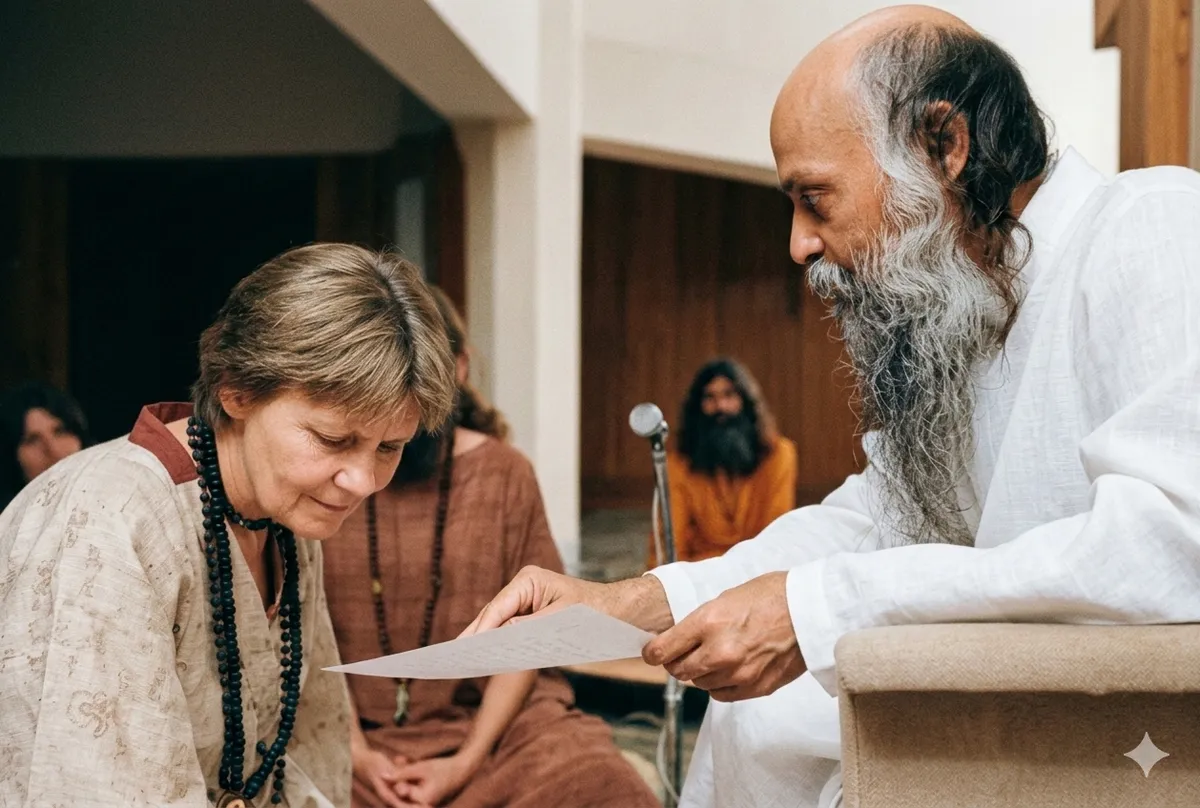
Osho's original Hindi beside Osho Live's English translation, matched passage by passage.
इस सूत्र को सुनकर आधुनिक मन को बहुत धक्का लगेगा। चाह होगी कि यह सूत्र न होता तो अच्छा था। आज का विचार इस सूत्र को बड़ी कठिनाई पाएगा समझने में।
Hearing this sutra, the modern mind will feel a jolt. One will wish this sutra were not there. Contemporary thought will find it very difficult to understand.
कृष्ण ने कहा है, क्योंकि हे अर्जुन, स्त्री, वैश्य, शूद्र आदि तथा पाप योनि वाले भी जो कोई भी हों, वे भी मेरी शरण होकर परम गति को प्राप्त होते हैं।
Krishna has said: for, O Arjuna, even women, Vaishyas, Shudras, and those born in sin—whoever they may be—taking refuge in me, attain the Supreme State.
बहुत अजीब मालूम पड़ेगा। बहुत कड़वाहट भी मालूम पड़ेगी। स्त्री को, वैश्य को, शूद्र को, पाप योनि को समझने में हमें कई तरह की कठिनाइयां हैं।
It will seem very strange. There will also be a taste of bitterness. We have many difficulties in understanding what is meant by woman, by Vaishya, by Shudra, by “sinful womb.”
पहली कठिनाई कि हमने इन शब्दों से जो कुछ समझा है, वह इन शब्दों से अभिप्रेत नहीं है। और इन शब्दों का हमारे मन में जो अर्थ है, वह कृष्ण का अर्थ नहीं है। तो इन शब्दों की ठीक से व्याख्या में प्रवेश करना जरूरी होगा, तभी इस सूत्र को समझा जा सके।
The first difficulty is that what we have understood by these words is not what is intended by them. The meanings these words carry in our minds are not Krishna’s meanings. So it is necessary to enter into a right exposition of these words; only then can this sutra be understood.
मनुष्य की आत्मा तो एक है, लेकिन उसके मन अनेक हैं। और मनुष्य की परम स्थिति तो एक है, लेकिन उसकी बीच की स्थितियां भिन्न-भिन्न हैं। मनुष्य आत्यंतिक रूप से तो समान है, लेकिन अलग-अलग स्थितियों में बहुत असमान है।
Man’s Atman is one, but his minds are many. Man’s ultimate state is one, but the intermediate states are diverse. Essentially man is the same, yet in differing states he is profoundly dissimilar.
मनुष्य का विभाजन जो भारतीय बुद्धि ने किया है, वह पहला विभाजन है स्त्री और पुरुष में। लेकिन ध्यान रहे, स्त्री से अर्थ है स्त्रैण। स्त्री से अर्थ स्त्री ही हो, तो यह वचन बहुत बेहूदा है। स्त्री से अर्थ है स्त्रैण। और जब मैं कहता हूं, स्त्री से अर्थ है स्त्रैण, तो उसका अर्थ यह है कि पुरुषों में भी ऐसे व्यक्ति हैं, जो स्त्री जैसे हैं, स्त्रैण हैं; स्त्रियों में भी ऐसे व्यक्तित्व हैं, जो पुरुष जैसे हैं, पौरुषेय हैं। पुरुष और स्त्री प्रतीक हैं, सिंबालिक हैं। उनके अर्थ को हम ठीक से समझ लें।
The first division the Indian intelligence made was into woman and man. But remember, by woman is meant the feminine. If by woman one meant merely the female, this saying would be quite crude. By woman is meant the feminine. And when I say woman means the feminine, I mean that among men too there are those who are like women—feminine; and among women there are personalities who are like men—virile. Man and woman are symbols, symbolic. We must understand their meaning rightly.
गुह्य विज्ञान में, आत्मा की खोज में जो चल रहे हैं, उनके लिए स्त्रैण से अर्थ है ऐसा व्यक्तित्व, जो कुछ भी करने में समर्थ नहीं है; जो प्रतीक्षा कर सकता है, लेकिन यात्रा नहीं कर सकता; जो राह देख सकता है, लेकिन खोज नहीं कर सकता। इसे स्त्रैण कहने का कारण है।
In the esoteric science, for those walking in the search of the soul, the feminine means a personality that is not capable of doing anything; one who can wait, but cannot journey; who can watch the path, but cannot search. That is why it is called feminine.
स्त्री और पुरुष का जो संबंध है, उसमें खोज पुरुष करता है, स्त्री केवल प्रतीक्षा करती है। पहल भी पुरुष करता है, स्त्री केवल बाट जोहती है। प्रेम में भी स्त्री प्रतीक्षा करती है, राह देखती है। और अगर कभी कोई स्त्री प्रेम में पहल करे, इनिशिएटिव ले, तो आक्रामक मालूम होगी, बेशर्म मालूम होगी। और अगर पुरुष प्रतीक्षा करे, पहल न कर सके, तो स्त्रैण मालूम होगा।
In the relationship of man and woman, man undertakes the search; woman only waits. The initiative too is taken by the man; the woman only keeps watch. Even in love, the woman waits, watches the way. And if ever a woman takes initiative in love, she seems aggressive, shameless. And if a man merely waits, unable to take initiative, he appears effeminate.
लेकिन विगत पांच हजार वर्षों में, गीता के बाद, सिर्फ आधुनिक युग में कार्ल गुस्ताव जुंग ने स्त्री और पुरुष के इस मानसिक भेद को समझने की गहरी चेष्टा की है। जुंग ने इधर इन बीस-पच्चीस पिछले वर्षों में एक अभूतपूर्व बात सिद्ध की है, और वह यह कि कोई भी पुरुष पूरा पुरुष नहीं है और कोई भी स्त्री पूरी स्त्री नहीं है। और हमारा अब तक जो खयाल रहा है कि हर व्यक्ति एक सेक्स से संबंधित है, वह गलत है। प्रत्येक व्यक्ति बाइ-सेक्सुअल है, दोनों यौन प्रत्येक व्यक्ति में मौजूद हैं। जिसे हम पुरुष कहते हैं, उसमें पुरुष यौन की मात्रा अधिक है, स्त्री यौन की मात्रा कम है। ऐसा समझें कि वह साठ प्रतिशत पुरुष है और चालीस प्रतिशत स्त्री है। जिसे हम स्त्री कहते हैं, वह साठ प्रतिशत स्त्री है और चालीस प्रतिशत पुरुष है।
But in the past five thousand years, after the Gita, only in the modern age has Carl Gustav Jung made a deep effort to understand this mental difference between woman and man. In these last twenty–twenty-five years Jung has established an unprecedented insight: no man is wholly male and no woman wholly female. Our old notion—that each person belongs to a single sex—is wrong. Every person is bisexual; both sexes are present in each individual. The one we call a man has a greater proportion of the male principle and less of the female. Think of him as sixty percent male and forty percent female. The one we call a woman is sixty percent female and forty percent male.
लेकिन ऐसा कोई भी पुरुष खोजना संभव नहीं है, जो सौ प्रतिशत पुरुष हो; और ऐसी कोई स्त्री खोजनी संभव नहीं है, जो सौ प्रतिशत स्त्री हो। यह है भी उचित। क्योंकि प्रत्येक व्यक्ति का जन्म स्त्री और पुरुष से मिलकर होता है। इसलिए दोनों ही उसके भीतर प्रवेश कर जाते हैं। चाहे स्त्री का जन्म हो, चाहे पुरुष का जन्म हो, दोनों के जन्म के लिए स्त्री और पुरुष का मिलन अनिवार्य है! और स्त्री-पुरुष दोनों के ही कणों से मिलकर, जीवाणुओं से मिलकर व्यक्ति का जन्म होता है। दोनों प्रवेश कर जाते हैं। जो फर्क है, वह मात्रा का होता है। जो फर्क है, वह निरपेक्ष नहीं है, सापेक्ष है।
But it is not possible to find any man who is one hundred percent male, nor any woman who is one hundred percent female. And this is fitting, for every person is born of both woman and man. Thus both enter within. Whether a female is born or a male, their conception requires the union of woman and man; and out of the particles—the germs—of both, the person is formed. Both enter. The difference is one of proportion. It is not absolute; it is relative.
इसका अर्थ यह हुआ कि जो व्यक्ति ऊपर से पुरुष दिखाई पड़ता है, उसके भीतर भी कुछ प्रतिशत मात्रा स्त्री की छिपी होती है; जो स्त्री दिखाई पड़ती है, उसके भीतर भी कुछ मात्रा पुरुष की छिपी होती है। और इसलिए ऐसा भी हो सकता है कि किन्हीं क्षणों में स्त्री पुरुष जैसा व्यवहार करे और किन्हीं क्षणों में पुरुष स्त्री जैसा व्यवहार करे। ऐसा भी हो सकता है कि किन्हीं क्षणों में जो भीतर है, वह ऊपर आ जाए; और जो ऊपर है, नीचे चला जाए।
This means the person who outwardly appears male hides within some percentage of the feminine; and the woman who appears outwardly female hides within some measure of the masculine. Therefore it can happen that in certain moments a woman behaves like a man, and in certain moments a man behaves like a woman. It can also happen that in some moments what is within comes to the surface, and what is on the surface goes within.
आप पर एकदम से हमला हो जाए, घर में आग लग जाए, तो आप कितने ही बहादुर व्यक्ति हों, एक क्षण में अचानक आप पाएंगे, आप स्त्री जैसा व्यवहार कर रहे हैं। रो रहे हैं, बाल नोंच रहे हैं, चिल्ला रहे हैं, घबड़ा रहे हैं! अगर एक मां के बच्चे पर हमला हो जाए, तो मां भी खूंख्वार हो जाएगी, और ऐसा व्यवहार करेगी, इतना कठोर, इतना हिंसात्मक, जैसा कि पुरुष भी न कर पाए। यह संभावना है, क्योंकि भीतर एक मात्रा निरंतर छिपी हुई है। वह किसी भी क्षण प्रकट हो सकती है।
If you are suddenly attacked, if the house catches fire, then however brave you may be, in a single instant you may find yourself behaving like a woman—crying, tearing at your hair, shouting, panicking! If a child is attacked, even a mother will become ferocious; she will behave with such hardness, such violence, as even a man may not. This is possible because a certain proportion remains hidden within. It can manifest at any moment.
जुंग ने स्त्री और पुरुष के नए अर्थ को फिर से प्रकट किया है। कृष्ण का भी अर्थ वही है। जब वे कहते हैं, स्त्रियां भी मुझे उपलब्ध हो जाती हैं, तो उनका अर्थ यह है कि वे, जो एक कदम भी नहीं चलते हैं, मात्र प्रतीक्षा करते हैं, वे भी मुझे पा लेते हैं अर्जुन! जिनके मन में आक्रमण ही नहीं है; परमात्मा की खोज में भी जो आक्रामक, एग्रेसिव नहीं हो सकते, वे भी मुझे पा लेते हैं। जो इंचभर भी नहीं चलते, सिर्फ मेरा स्मरण ही करते हैं, सिर्फ अनन्य भाव से मुझे पुकारते ही हैं, जो बदले में कुछ भी चुकाने को तैयार नहीं होते, जो मुकाबले में कुछ भी दांव पर नहीं लगाते, अगर मैं उनके दरवाजे पर भी खड़ा हूं, तो वे दरवाजे तक उठकर भी नहीं आते, मुझे ही उन तक जाना पड़ता है, वे भी मुझे पा लेते हैं।
Jung has revealed new meanings of the feminine and the masculine. Krishna’s meaning is the same. When he says, women too attain me, he means: those who do not move a single step—who only wait—Arjuna, they too attain me. Those who have no aggression in their minds; who cannot be aggressive even in the search for the Divine; they too attain me. Those who do not walk even an inch, who only remember me, call to me with exclusive love, who are not ready to pay anything in exchange, who put nothing at stake in return—if I myself stand at their door, they will not even rise and come to the threshold; I must go to them—such ones too attain me.
स्त्रैण से अर्थ है, ऐसा मन, जो कुछ भी करने में समर्थ नहीं है; ज्यादा से ज्यादा समर्पण कर सकता है; ग्राहक मन, रिसेप्टिविटी, द्वार खोलकर प्रतीक्षा कर सकता है।
By feminine is meant a mind that is not capable of doing anything; at most, it can surrender; a receptive mind—receptivity—that can open the door and wait.
अगर हम स्त्री के मन को ठीक से समझें, तो वह किसी ऐसे प्रतीक में प्रकट होगा, द्वार खोलकर दरवाजे पर बैठी हुई, किसी की प्रतीक्षा में रत; खोज में चली गई नहीं, प्रतीक्षा में। और पुरुष अगर दरवाजा खोलकर और किसी की प्रतीक्षा करते दीवाल से टिककर बैठा हो, तो हमें शक होगा कि वह पुरुष कम है। उसे खोज पर जाना चाहिए।
If we rightly understand the mind of the woman, it will appear in an image: a door opened, she sits at the threshold, absorbed in waiting for someone; not gone out in search—waiting. And if a man opens the door and, leaning against the wall, waits for someone, we will suspect he is less than a man. He should go out on the search.
जिसकी प्रतीक्षा है, उसे खोजना पड़ेगा, यह पुरुष चित्त का लक्षण है। जिसकी खोज है, उसकी प्रतीक्षा करनी होगी, यह स्त्री चित्त का लक्षण है। स्त्री और पुरुष से इसका कोई संबंध नहीं है।
That which is awaited must be sought—this is the mark of the masculine mind. That which is sought must be waited for—this is the mark of the feminine mind. This has nothing to do with biological male and female.
कृष्ण कहते हैं, जो स्त्रैण हैं, वे भी अर्जुन, मुझे पाने में समर्थ हो जाते हैं।
Krishna says: those who are feminine, Arjuna, even they become capable of attaining me.
फिर कहते हैं, वैश्य और शूद्र भी। ये दो शब्द भी समझ लेने जैसे हैं।
Then he says: the Vaishya and the Shudra too. These two words also need to be understood.
मैंने कहा, हमारे मन अलग-अलग हैं, हमारी आत्माएं एक हैं। और मन के अलग-अलग होने के कारण हमारे शरीर भी अलग-अलग हैं। क्योंकि शरीर मन के द्वारा ही निर्मित होता है, शरीर को हम पाते हैं मन के द्वारा ही।
I said our minds are different, our souls are one. And because minds differ, our bodies too are different—for the body is fashioned by the mind; we receive the body through the mind.
चार प्रकार के व्यक्तित्व भारत ने विभाजित किए हैं, ब्राह्मण, क्षत्रिय, वैश्य और शूद्र। इन चारों का भी कोई संबंध आपके जन्म से नहीं है। इन चारों का भी गहरा संबंध आपके व्यक्तित्व के ढांचे से है। हमने यह भी कोशिश की थी कि व्यक्तित्व का ढांचा और जन्म की व्यवस्था में ताल-मेल हो जाए। हमने अकेले ही इस जमीन पर यह प्रयोग किया था कि जन्म में और व्यक्तित्व के ढांचे में कोई एक इनर हार्मनी, एक आंतरिक संबंध खोज लिया जाए। हम थोड़ी दूर तक सफल भी हुए थे। लेकिन वह प्रयोग पूर्ण रूप से सफल नहीं हो पाया। वह टूट गया। टूट जाने के कारण थे, उनकी मैं आपसे पीछे बात करूं। पहले आपको यह कह दूं कि ये चार शब्द व्यक्तित्व के प्रतीक हैं। चार तरह के व्यक्तित्व होते हैं।
India divided personalities into four types: Brahmin, Kshatriya, Vaishya, and Shudra. These four have no relation to your birth. They are deeply related to the structure of your personality. We also attempted to bring harmony between the structure of personality and the arrangement of birth. On this earth alone we made this experiment—to discover an inner harmony, an inward relation, between birth and the structure of personality. For a little way we succeeded; but the experiment did not succeed fully. It broke down. There were reasons for its breaking; I will speak of them later. First, understand that these four words are symbols of personality. Four types of personality exist.
शूद्र हम उस व्यक्ति को कहते हैं, जो शरीर के इर्द-गिर्द जीता है। शरीर से ज्यादा जिसे अस्तित्व में कुछ भी दिखाई नहीं पड़ता। शरीर ही जिसका परमात्मा है। शरीर सुख में रहे, तो वह प्रसन्न है; शरीर दुख में हो जाए, तो वह दुखी है। शरीर की मांग पूरी हो जाए, तो सब मांगें समाप्त हो गईं; शरीर की मांग पूरी न हो, तो उसके जीवन में व्यथा और संताप है। उसके व्यक्तित्व का केंद्र शरीर है।
Shudra we call that person who lives around the body. Beyond the body he sees nothing in existence. The body itself is his God. If the body is comfortable, he is pleased; if the body suffers, he is miserable. If the body’s demands are fulfilled, all demands are fulfilled; if the body’s demands are not fulfilled, his life is anguish and torment. The center of his personality is the body.
बहुत अनूठी बात भारतीय शास्त्रों ने कही है कि सभी व्यक्ति जन्म से शूद्र होते हैं! एक अर्थ में सही है। सभी व्यक्ति जन्म से शरीर के इर्द-गिर्द होते हैं, बाकी ऊंचाइयां तो क्रमशः पानी पड़ती हैं। ध्यान रहे, सभी व्यक्ति शरीर से शूद्र जैसे पैदा होते हैं, यह दुर्भाग्य नहीं है। दुर्भाग्य तो यह है कि अधिक लोग शूद्र ही मरते हैं, अधिक लोग मरते क्षण में भी शरीर के पास ही होते हैं।
A very unique statement the Indian scriptures have made: all persons are Shudra by birth! In one sense, it is true. Everyone is born around the body; the higher elevations are gained gradually. Remember, all are born Shudra-like with regard to the body—this is not a misfortune. The misfortune is that most people die Shudras; even at the moment of death most remain near the body.
ध्यान रहे, अगर आपके भीतर से शूद्र विलीन हो गया हो, तो मृत्यु की आपको पीड़ा नहीं होगी; क्योंकि मृत्यु की पीड़ा शरीर के मरने की पीड़ा है। और जिसके भीतर से शूद्र विलीन हो गया है, उसका शरीर का दृष्टिकोण ही बदल गया! अब वह भलीभांति जानता है कि शरीर मैं नहीं हूं।
Remember, if the Shudra has dissolved within you, then death will not be anguish to you; for the pain of death is the pain of the body dying. And for one in whom the Shudra has vanished, his very outlook regarding the body has changed—he knows well now, “I am not the body.”
संक्षिप्त में कहें, तो जो ऐसा मानता है कि मैं शरीर ही हूं, वह शूद्र है। मैं शरीर ही हूं, सब कुछ शरीर है, शरीर पर मैं समाप्त हो जाता हूं। शरीर ही मेरा जन्म है, शरीर ही मेरा जीवन, शरीर ही मेरी मृत्यु है। शरीर के पार मैं नहीं हूं, शरीर से भिन्न मैं नहीं हूं। शरीर में मैं समाप्त हूं, शरीर मेरी सीमा है, यह शूद्र का अर्थ है।
In brief, one who takes himself to be only the body is a Shudra. “I am only the body; all is the body; at the body I end. The body is my birth, the body my life, the body my death. Beyond the body I am not; other than the body I am not. I am finished in the body; the body is my limit”—this is the meaning of Shudra.
शूद्र को इसलिए निम्नतम कहा है। निम्नतम कहने का कारण? कारण इतना ही कि शूद्र होना सिर्फ जीवन की बुनियाद है, और भवन उठाया जा सकता है। और भवन न उठे, तो बुनियाद बेकार है। शरीर पर ही कोई समाप्त हो जाए, तो उसका जीवन व्यर्थ गया। लेकिन हमारी दृष्टि ही शरीर पर है।
The Shudra is called lowest for this reason only: being Shudra is but the foundation of life, and upon it the mansion can be raised. If the mansion is not raised, the foundation is useless. If one ends with the body alone, his life is wasted. But our gaze remains fixed on the body.
तो कृष्ण कहते हैं कि शूद्र भी, जो केवल अपने को शरीर में ही जिलाए रखते हैं, शरीर के आस-पास ही घूमते रहते हैं; वे भी अगर अनन्य भाव से मेरा स्मरण कर लें, तो अर्जुन, वे भी मुक्त हो जाते हैं।
Krishna says that even the Shudra—who keeps himself alive only in the body, who keeps circling around the body—even he, if with exclusive love he remembers me, Arjuna, is liberated.
कृष्ण, बिलकुल निम्नतम जो चित्त की दशा हो सकती है, उसके लिए भी कह रहे हैं कि उस दशा में भी, उस अंधकार में पड़ा हुआ भी अगर मेरा स्मरण करे, तो प्रकाश की किरण उस तक भी पहुंच जाती है। खाई में पड़ा है, गहन अंधकार में पड़ा है कोई, चारों ओर अंधकार है, लेकिन अगर मुझे स्मरण करे, तो मेरी किरण वहां भी पहुंच जाती है। स्मरण ही मेरी उपस्थिति बन जाती है। शूद्र को भी, वे कहते हैं, यह हो जाएगा।
Krishna is saying that even in the lowest possible state of mind, if one remembers me while sunk in that darkness, then a ray of light reaches even there. He is lying in a pit, in dense darkness—on all sides darkness; yet if he remembers me, my ray reaches there too. Remembrance itself becomes my presence. Even for the Shudra, he says, it will happen.
वैश्य दूसरी कोटि है। शूद्र उसे कहते हैं, जो शरीर के आस-पास जीता है। वैश्य उसे कहते हैं, जो मन के आस-पास जीता है। इसलिए शूद्र की जो भी वासनाएं हैं, आकांक्षाएं हैं, बहुत सालिड, बहुत स्थूल होंगी। वैश्य की जो कामनाएं और वासनाएं और आकांक्षाएं हैं, वे मानसिक होंगी, सूक्ष्म होंगी।
The Vaishya is the second category. The Shudra lives around the body; the Vaishya lives around the mind. Therefore the Shudra’s passions and desires will be very solid, very gross. The Vaishya’s desires and passions and longings will be mental, subtle.
वैश्य धन के लिए जीएगा। धन सूक्ष्म बात है; और धन से मिलने वाला रस मन को मिलने वाला रस है। वैश्य यश के लिए जीएगा, पद के लिए जीएगा। उनसे मिलने वाला रस, मन के लिए मिलने वाला रस है। और वैश्य धन के लिए, पद के लिए, प्रतिष्ठा के लिए शरीर को भी गंवाने को तैयार हो जाएगा। शूद्र पद के लिए, धन के लिए, प्रतिष्ठा के लिए शरीर को गंवाने को तैयार नहीं होगा। शरीर उसके लिए मौलिक मूल्य है। शरीर के लिए वह सब कुछ कर सकता है। लेकिन वैश्य शरीर को गंवाने को तैयार हो जाएगा।
The Vaishya will live for wealth. Wealth is a subtle thing; and the juice that comes from wealth is juice for the mind. The Vaishya will live for fame, for rank. The savor that comes from them, the mind relishes. And for wealth, for rank, for status, the Vaishya will even be ready to lose the body. The Shudra will not be ready to risk the body for these. For him the body is the basic value. For the body he can do anything. But the Vaishya will be prepared to sacrifice the body.
एक लिहाज से शूद्र शरीर से स्वस्थ होगा, वैश्य अस्वस्थ होने लगेगा। एक लिहाज से शूद्र के पास प्रकृति के संपर्क का द्वार बहुत स्पष्ट होगा, संवेदनशील होगा; वैश्य प्रकृति के साथ संवेदना खोने लगेगा। लेकिन प्रकृति से संवेदना उसकी कम होगी, लेकिन परमात्मा की तरफ वह एक कदम ऊपर उठ जाएगा। क्योंकि शरीर से आत्मा तक जाने में बीच में मन के पड़ाव को पार करना जरूरी ही है। मन से गुजरना ही पड़ेगा। शूद्र को आत्मा की यात्रा में किसी न किसी क्षण वैश्य होना ही पड़ेगा।
In one respect the Shudra will be physically healthier; the Vaishya will begin to be unhealthy. In one respect the Shudra will have a clear and sensitive door to nature; the Vaishya will begin to lose sensitivity to nature. But as his sensitivity to nature lessens, he takes one step upward toward the Divine. For from body to soul the midway station of mind must be crossed—one has to pass through mind. In his journey to the soul, at some point the Shudra must become a Vaishya.
सभी शूद्र की तरह जन्मते हैं; कुछ लोग वैश्य तक पहुंच जाते हैं और समाप्त हो जाते हैं। वह भी पड़ाव है, मंजिल नहीं है। मन मूल्यवान हो जाएगा शरीर से ज्यादा, और मन के रस शरीर के रस से ज्यादा कीमती मालूम पड़ने लगेंगे। भोजन उतना मूल्यवान नहीं रहेगा अब, कामवासना उतनी मूल्यवान नहीं रहेगी, जितना मन के रस मूल्यवान हो जाएंगे। पद है, प्रतिष्ठा है, यश है, गौरव है, गरिमा है, ये ज्यादा मूल्यवान होने लगेंगे।
All are born like Shudras; some reach as far as the Vaishya and stop there. That too is a station, not the destination. The mind becomes more valuable than the body, and the juices of the mind begin to seem more precious than the juices of the body. Food will no longer be so valuable, nor sex as valuable, as the mind’s savors will become. Rank, status, fame, glory, dignity—these will begin to be more valuable.
कृष्ण कहते हैं, वैश्य भी अगर मुझे स्मरण करें, तो वे भी मुझे उपलब्ध हो जाते हैं, अर्जुन! वे जो अभी मन में ही घिरे हैं और आत्मा तक जिनका कोई कदम नहीं उठा है, वे भी अगर मुझे स्मरण करें, तो उन तक भी मेरी किरण पहुंच जाती है।
Krishna says: the Vaishya too, if he remembers me, Arjuna, attains me; those who are still enclosed in the mind and have not taken a step toward the soul—if they remember me, my ray reaches them too.
तीसरी कोटि है क्षत्रिय की। क्षत्रिय का अर्थ है, जो शरीर और मन दोनों के पार उठकर आत्मा में जीना शुरू करे। शूद्र और वैश्य की कोटि को भारत ने नीचा माना है। वह एक पलड़ा है, दो वर्गों का। क्षत्रिय और ब्राह्मण को श्रेष्ठतर माना है, वह दूसरा पलड़ा है। जो आत्मा में जीने की चेष्टा करे। शरीर का भी मूल्य नहीं है, मन का भी मूल्य नहीं है, सिर्फ आत्मगौरव का ही मूल्य है।
The third category is the Kshatriya. Kshatriya means one who rises beyond both body and mind and begins to live in the soul. India considered the Shudra and the Vaishya as the lower side of the balance—two classes in one pan. The Kshatriya and the Brahmin were esteemed higher—the other pan—those who strive to live in the soul. The body has no value, the mind has no value; only the glory of the Self has value.
इसलिए क्षत्रिय धन पर भी लात मार देगा, शरीर पर भी लात मार देगा, मन की भी चिंता छोड़ देगा, लेकिन आत्मगौरव उसके लिए सबसे ज्यादा कीमती हो जाएगा। वह उसके आस-पास ही जीएगा। आत्मगौरव के लिए वह सब कुछ गंवा सकता है, लेकिन आत्मगौरव नहीं गंवा सकता है।
Therefore the Kshatriya will kick away wealth, will kick away the body, will drop concern for the mind; but self-respect, the honor of the Self, will be dearest to him. Around that he will live. For the sake of self-respect he can lose everything, but he cannot lose self-respect.
चौथी कोटि है ब्राह्मण की। ब्राह्मण से अर्थ है, जो आत्मा से भी पार हट जाए और ब्रह्म में जीए। उसके लिए अब न शरीर का कोई मूल्य है, न मन का कोई मूल्य है, न आत्मा का कोई मूल्य है, उसके लिए सिर्फ परमात्मा ही मूल्यवान रह गया।
The fourth category is the Brahmin. Brahmin means one who goes even beyond the soul and lives in Brahman. For him now neither body has value, nor mind has value, nor even soul has value—only the Divine remains of worth.
ये चार टाइप हैं, इनका जाति से फिलहाल कोई संबंध न जोड़ें। ये चार मनस-प्रकार हैं।
These are four types; for the moment, join them to no caste. These are four mind-types.
कृष्ण कहते हैं कि पहले दो प्रकार वाले लोग भी मुझे उपलब्ध हो जाते हैं, तो बाद के दो प्रकार वाले लोगों का क्या कहना! अगर वे मेरा स्मरण करें, तो वे मुझे उपलब्ध हैं ही।
Krishna says: if even the first two types attain me, what need then to speak of the latter two! If they remember me, they are certainly capable of attaining me.
अगर मन के प्रकार की तरह समझें, तो इस सूत्र में कोई कठिनाई न रह जाएगी। लेकिन भारत ने यह प्रयोग भी किया था। कि ये जो मन के प्रकार हैं, इनको जन्म से जोड़ने की एक अभूतपूर्व चेष्टा की थी। असफल गया वह प्रयोग, लेकिन बड़ा प्रयोग था। और इतना बड़ा था कि सफल होना संभव नहीं मालूम पड़ता था। जितनी बड़ी बात हो, उतनी असफलता की संभावना ज्यादा हो जाती है। और जब कोई बहुत बड़ी बात असफल होती है, तो बड़े गड्ढे में गिरा जाती है।
If we understand in terms of types of mind, there will be no difficulty in this sutra. But India also made an experiment: that these mind-types be linked to birth through an unprecedented effort. The experiment failed, yet it was a great experiment. And so great that success did not seem likely. The greater the undertaking, the greater the possibility of failure; and when something very great fails, it throws us into a very deep pit.
हमने एक अनूठा प्रयोग किया था। वह प्रयोग यह था कि न केवल व्यक्ति का मन अलग-अलग है, न केवल उसकी चेतना के ढांचे अलग-अलग हैं, क्या यह नहीं हो सकता कि प्रत्येक चेतना के ढांचे के व्यक्ति को जन्म भी इस भांति मिले कि वह जन्म से ही अपने ढांचे के अनुकूल पैदा हो सके?
We made a unique experiment. It was this: not only are people’s minds different, not only are their structures of consciousness different—could it be that each kind of consciousness be given such a birth that from birth itself it may be born in accord with its structure?
एक व्यक्ति मरता है, तो उसकी आत्मा भटकती है नए जीवन की तलाश में। हर कहीं आकस्मिक जन्म नहीं होता। आत्मा खोजती है अपने अनुकूल, अपने अनुकूल गर्भ को खोजती है। और जब अपने अनुकूल गर्भ मिलता है, तो जन्म लेती है।
A person dies, then his soul wanders in search of a new life. Birth does not happen accidentally anywhere. The soul seeks what is suitable to it; it seeks a suitable womb. When a suitable womb is found, it takes birth.
तो जन्म की घटना में दो घटनाएं घटती हैं, मां और पिता का गर्भ निर्माण करना और उस निर्मित गर्भ में एक चेतना का प्रवेश। वह चेतना का प्रवेश उस चेतना के अपने समस्त कर्मों का फल है। उसके अनुकूल वह खोजती है। यह खोज बहुत सचेतन नहीं है, कांशस नहीं है, अनकांशस है।
Thus two events occur in the incident of birth: the father and mother create the womb, and into that womb a consciousness enters. The entry of that consciousness is the fruit of its own past actions. In accord with that it seeks. This seeking is not very conscious; it is unconscious.
अनकांशस खोज का मतलब यह है कि जैसे हम पानी को बहाते हैं, तो वह गड्ढे को खोज लेता है। भाषा में हम कहेंगे, पानी गड्ढे को खोज लेता है। लेकिन पानी कोई सचेतन रूप से खोजता नहीं, सिर्फ स्वभाव अनुसार वह गड्ढे की तरफ बहता है, जहां नीचाई है, वहां बहता है। पानी ऊपर की तरफ नहीं बह सकता, गड्ढे की तरफ बह सकता है। इसलिए जो सबसे बड़ा गड्ढा है, वहां पहुंच जाता है। कमरे में जहां गड्ढा है, पानी पहुंच जाता है। यह खोज अचेतन है। पानी के स्वभाव से हो जाती है।
Unconscious seeking means: as when we let water flow, it finds the hollow. In our language we say the water seeks the depression. But water does not consciously seek; simply by its nature it flows toward the hollow, toward the low. Water cannot flow upward; it flows toward the depression. Therefore it reaches the deepest hollow. In a room, wherever there is a hollow, water collects. This seeking is unconscious; it happens by the nature of water.
ठीक ऐसे ही, प्रत्येक आत्मा अचेतन खोज करती है। जहां उसके अनुकूल गर्भ होता है, वहीं गड्ढा बन जाता है, वहीं आत्मा प्रवेश कर जाती है। भारत ने यह कोशिश की कि क्या यह नहीं हो सकता कि शूद्र आत्माओं के लिए हम एक वर्ग ही नियत कर दें, जहां शूद्र आत्माएं पैदा हो जाएं! क्या यह नहीं हो सकता कि ब्राह्मण आत्माओं के लिए हम ब्राह्मण का एक वर्ग ही नियत कर दें, जहां ब्राह्मण आत्माएं पैदा हो जाएं!
Just so, each soul seeks unconsciously. Wherever the suitable womb is, there a hollow is created; there the soul enters. India attempted this: could it be arranged that for Shudra souls we fix one class in which Shudra souls are born? Could we not fix a class for Brahmin souls where Brahmin souls are born?
यह बड़ा कठिन प्रयोग था, बहुत मुश्किल प्रयोग था। शायद भविष्य में बायोलाजी कुछ इस तरह के प्रयोग करना शुरू करे। लेकिन वे किसी दूसरे ढांचे पर होंगे। क्योंकि विज्ञान अब यह कह रहा है कि हम इस बात की कोशिश जरूर करेंगे आज नहीं कल, कि ज्यादा सुंदर लोग पैदा किए जा सकें, और निर्णायक बना जा सके कि ज्यादा सुंदर व्यक्ति पैदा हों। विज्ञान यह भी कह रहा है कि अब यह कठिनाई नहीं रही कि हम अगर पुरुष पैदा करना चाहें, तो पुरुष पैदा करें; और स्त्री पैदा करना चाहें, तो स्त्री पैदा करें। विज्ञान अब यह भी कह रहा है कि हम यह भी तय कर लेंगे कि जो बच्चा पैदा हो, उसका बुद्धि अंक, उसका आई.क्यू. कितना हो, यह हम पहले तय कर लेंगे। हम यह भी तय कर लेंगे कि उसके शरीर का रंग कैसा हो, उसकी उम्र कितनी हो। हम ये सारी बात तय करेंगे।
It was a very difficult, arduous experiment. Perhaps in the future biology will begin such experiments, but along other lines. For science is now saying that sooner or later we will attempt to produce more beautiful people, to decide that more beautiful persons be born. Science is also saying that the difficulty no longer remains: if we choose to produce a male, we can; if we choose a female, we can. Science says we will decide in advance the child’s intelligence quotient, his IQ. We will also decide his skin color, his lifespan. We will determine all this.
यह तय करेंगे, तो हमें ब्रीडिंग को नियत करना पड़ेगा। फिर हर कोई, हर किसी से संबंध नहीं बना सकेगा। तब संबंध हमें सीमित करने पड़ेंगे, ताकि वे ही लोग संबंधित हों, जो नियमानुसार एक व्यक्ति को जन्म दे सकें।
To determine this we will have to regulate breeding. Then not everyone will be able to relate with anyone; relations will have to be restricted, so that only those associate who, according to rule, can produce a particular kind of person.
ठीक वैसे ही प्रयोग भारत ने किसी और दिशा से किए थे, और समाज को चार हिस्सों में बांट दिया था। इन चार हिस्सों में बांटने का प्रयोजन यह था कि शूद्र शूद्र से ही विवाह करे; और यह पीढ़ी दर पीढ़ी ब्राह्मण ब्राह्मण से ही विवाह करे। तो पचास पीढ़ियों के गुजरने के बाद, यह दो ब्राह्मणों का जो विवाह होगा और इन ब्राह्मणों से जो गर्भ निर्मित होगा, वह निर्मित गर्भ किसी ब्राह्मण आत्मा को आकर्षित करने में ज्यादा संभव होगा, बजाय किसी और गर्भ के। यह बिलकुल वैज्ञानिक है और तर्कयुक्त है। अगर यह हो सकता है, तो यह बिलकुल तर्कयुक्त है।
In just this way India had made experiments along another direction and divided society into four parts. The purpose of dividing into these four was that Shudras should marry Shudras, and generation after generation Brahmins should marry Brahmins. Then, after fifty generations, the union of two Brahmins and the womb thus produced would be far more likely to attract a Brahmin soul than any other womb. This is entirely scientific and logical. If it can be done, it is reasonable.
यह प्रयोग एक महत प्रयोग किया गया। हर प्रयोग के खतरे भी होते हैं। खतरा हुआ। यह प्रयोग तो संभव नहीं हो सका; समाज चार हिस्सों में बंट गया। यह प्रयोग तो टूटा; लेकिन समाज चार शत्रुओं के हिस्सों में टूट गया। और धीरे-धीरे शूद्र व्यक्तित्व का विचार न रहा, जाति का लक्षण हो गया। और तब कोई आदमी ब्राह्मण पैदा हो गया, तो चाहे वह बिलकुल शूद्र के व्यक्तित्व का हो, तो भी सिर पर बैठ गया। और तब कोई अगर शूद्र घर में पैदा हुआ और अगर वह ब्राह्मण की योग्यता का था, तो भी उसे किसी मंदिर में पूजा की जगह न मिली! यह खतरा हुआ।
This grand experiment was made. Every experiment carries dangers. The danger occurred. The experiment did not succeed; society was split into four parts. The experiment collapsed; but society broke into four hostile camps. And slowly the notion of Shudra as a personality vanished; it became a caste-mark. Then if someone was born a Brahmin, even if he had the personality of a Shudra, he sat on people’s heads. And if someone was born in a Shudra’s house yet had the capacity of a Brahmin, he was not given place to worship in any temple. This peril arose.
हर प्रयोग का खतरा है। वैज्ञानिकों ने अणु बम की खोज की, तब सोचा नहीं था कि अणु बम का परिणाम हिरोशिमा और नागासाकी होगा। तब उन्होंने सोचा था कि अणु की ऊर्जा हमारे हाथ में लग जाएगी, तो हम सारी जमीन को खुशहाल कर देंगे; कोई भूखा नहीं होगा, कोई गरीब नहीं होगा। इतनी बड़ी शक्ति हमारे हाथ में लगेगी कि हम सारे जीवन को रूपांतरित कर डालेंगे; पृथ्वी स्वर्ग हो जाएगी।
Every experiment has its danger. When scientists discovered the atomic bomb, they did not think its result would be Hiroshima and Nagasaki. They thought that once atomic energy is in our hands we would make the whole earth prosperous—no one would be hungry, no one poor. Such a great power would come into our hands that we would transform all of life; the earth would become a paradise.
लेकिन यह नहीं हुआ। यह हो सकता था, लेकिन यह नहीं हुआ। हुआ--हिरोशिमा और नागासाकी कब्रगाह बन गए! एक लाख आदमी एक क्षण में जलकर राख हो गए। और अभी सारी दुनिया के पास अणु बम और हाइड्रोजन बम इकट्ठे हैं। किसी भी दिन पूरी दुनिया राख की जा सकती है!
But that did not happen. It could have happened, but it didn’t. What happened was that Hiroshima and Nagasaki became graveyards—one hundred thousand people burned to ash in a single instant. And now the whole world has piled up atomic and hydrogen bombs; any day the entire world can be turned to ash.
आइंस्टीन मरते वक्त कहकर मरा है कि हमने सोचा भी नहीं था कि इतनी महान ऊर्जा का ऐसा महान दुरुपयोग हो सकेगा। लीनियस पालिंग ने, जो कि अणु की खोज में बड़े वैज्ञानिकों में एक था, आखिरी वक्त सारी दुनिया के वैज्ञानिकों से अपील की कि अब दुबारा कोई बड़ी शक्ति आदमी के हाथ में खोजकर मत देना! क्योंकि हम खोजते हैं पता नहीं किसलिए और आदमी उसका क्या उपयोग करता है!
Einstein, dying, said: we had never imagined that such a great energy could be so greatly misused. Linus Pauling, who was among the great scientists in the exploration of the atom, in his last years appealed to the scientists of the whole world: never again place a great power in man’s hands! For we search—we do not know for what—and man uses it who knows how.
इस मुल्क में इस मुल्क के मनीषियों ने भी एक बहुत अदभुत सूत्र खोजा था। और वह सूत्र यह था कि प्रत्येक आत्मा को हम उसके जीवन के चुनाव में भी मार्ग-निर्देश कर सकें। आत्मा ऐसे ही भटककर कहीं भी, किसी भी तरह पैदा न हो। हम उसे सुनिश्चित मार्ग दे सकें, व्यवस्थित मार्ग दे सकें; ताकि ज्यादा से ज्यादा उपयोग थोड़े से थोड़े जीवन का किया जा सके।
और अगर एक व्यक्ति पिछले जन्म में ब्राह्मण था, समझें, और उसने ब्राह्मण की एक ऊंचाई पाई। लेकिन इस बार जन्म की खोज करते वक्त उसे एक शूद्र के घर में ही योग्य मौका मिला, वह शूद्र के घर पैदा हो जाता है। तो उसे ब्राह्मण की पूरी शिक्षा नहीं मिल सकेगी, उसे ब्राह्मण का पूरा वातावरण नहीं मिल सकेगा। हो सकता है, वह पचास वर्ष का हो जाए, तब इस योग्य हो, जिस योग्य का वह ब्राह्मण के घर में पैदा होकर पांच वर्ष में हो जाता! ये पैंतालीस वर्ष उसके व्यर्थ खो जाएंगे।
भारत ने एक जीवन की गहरी इकॉनामिक्स की चिंता की थी, समय कम से कम उपयोग में लाया जा सके और अधिक से अधिक परिणाम हो सकें; और व्यक्ति में जो गहनतम छिपा है, वह प्रकट हो सके। उसे मां-बाप भी, परिवार भी, वातावरण भी, सब कुछ ब्राह्मण का मिल सके। शूद्र को शूद्र का मिल सके, वैश्य को वैश्य का मिल सके। इसलिए जातियां विभाजित हुईं।
In this land too the sages discovered a very marvelous principle: that each soul be guided even in its choice of life; that the soul not wander and be born anywhere in any manner; that we be able to give it a definite and ordered pathway, so that with the least time the greatest result be attained, and the deepest hidden within the person be brought to flower. That his parents, his family, his environment—all be Brahmin-like if he is Brahmin; that the Shudra receive what is fitting to the Shudra, the Vaishya to the Vaishya. That is why castes were divided.
लेकिन यह महान प्रयोग नहीं हो सका। जिन्होंने किया था, वे खो गए। और जिनके हाथ में यह महान प्रयोग दे गए, उन्होंने केवल समाज को विभाजित करके शोषण का एक उपाय किया।
But this great experiment could not succeed. Those who made it passed away; those into whose hands they left it used it merely to divide society and to create an instrument of exploitation.
तब शूद्र शोषित हो गया। तब ब्राह्मण छाती पर बैठ गया। तब क्षत्रिय ने तलवार हाथ में ले ली और लोगों के ऊपर प्रभुसत्ता कायम कर ली। और तब वैश्य धन इकट्ठा करके बैठ गया। और इन चारों वर्गों ने एक-दूसरे के साथ गहरी शत्रुता ठान ली। जो फायदा होता, वह तो नहीं हुआ, नुकसान यह हुआ कि शूद्र के घर अगर कोई पैदा हो गया, तो उसके विकास का उपाय ही न रहा।
Then the Shudra was exploited. Then the Brahmin sat on people’s chests. Then the Kshatriya took the sword in hand and established lordship over people. Then the Vaishya gathered wealth and sat upon it. And these four classes entered deep enmity with one another. The benefit did not arise; the harm was that if someone was born in a Shudra’s house, there remained no means for his development.
पांच हजार साल में, अगर डा. अंबेदकर को छोड़ दें, तो शूद्रों में एक भी बुद्धिमान आदमी पैदा नहीं हो सका। और ये डाक्टर अंबेदकर भी हमारी वजह से पैदा नहीं हुए। यह एक आदमी है, जिसको ब्राह्मण की हैसियत का कहा जा सके। इसलिए ब्राह्मणों से नाराज भी थे वे। ब्राह्मणों से नाराज होना बिलकुल स्वाभाविक था, क्रोध स्वाभाविक था।
In five thousand years—if we leave aside Dr. Ambedkar—not one truly eminent mind arose among the Shudras. And even Dr. Ambedkar did not arise because of our arrangement. He alone is one who could be called of Brahmin stature; thus he was angry with the Brahmins. To be angry with the Brahmins was natural; his indignation was natural.
पांच हजार वर्षों में शूद्रों की कितनी प्रतिभाएं खो गईं, इसका हमें कोई पता नहीं है! प्रयोग गलत निकल गया, गलत आदमियों के हाथों में पड़ गया। और कितने शूद्र जैसे ब्राह्मण हमारे मुल्क की छाती पर छाए चले गए और कितना गहन नुकसान पहुंचा गए, उसका भी अब हिसाब लगाना मुश्किल है।
How many talents among the Shudras were lost in these five thousand years—we have no idea. The experiment turned wrong, fell into the wrong hands. And how many Shudra-like Brahmins spread across our country’s breast and caused how deep a harm—now it is difficult even to reckon.
यह मैंने इसलिए कहा, ताकि आपको कृष्ण का अर्थ साफ हो सके। कृष्ण के समय में यह महान प्रयोग गतिमान था, यह प्रयोग चल रहा था, इस प्रयोग की आधारशिलाएं रखी जा रही थीं। कृष्ण को पता भी नहीं है कि इस प्रयोग का क्या परिणाम आज हो गया!
जो लोग हिरोशिमा के पहले मर गए अणु बम बनाकर, उनको पता भी नहीं है। वे इसी खुशी में मरे हैं कि वे मनुष्य-जाति को एक महान शक्ति देकर विदा हो गए हैं। अभागे तो वे वैज्ञानिक थे, जिन्होंने अपने हाथ से अपने सामने आदमीयत को जलते हुए देखा--अपनी ही खोज का यह परिणाम!
कृष्ण ने जब यह सूत्र कहा था, तब मनुष्य के प्रकार का यह महान प्रयोग गतिमान था, स्वस्थ था, विकसित हो रहा था, अंकुरित हो रहा था, सड़ नहीं गया था।
I have said all this so that Krishna’s meaning may be made clear to you. In Krishna’s time this great experiment was in motion—healthy, evolving, sprouting; it had not yet decayed.
कृष्ण कहते हैं, शूद्र हो, कि वैश्य हो, कि स्त्री हो, कोई भी हो, वे भी मेरी शरण को पाकर परम गति को उपलब्ध हो जाते हैं।
Krishna says: whether Shudra, or Vaishya, or woman—whoever—they too, taking my refuge, attain the Supreme Goal.
यहां कोई निंदा का स्वर नहीं है; यहां केवल तथ्य की सूचना है। सिर्फ इस तथ्य की कि जो शरीर के पास जी रहे हैं, वे भी; जो मन के पास जी रहे हैं, वे भी; वे भी शरण आकर मुझे पा लेते हैं।
Here there is no tone of disparagement; there is only a statement of fact. Only this fact: those who live near the body—also; those who live near the mind—also; they too, coming into refuge, attain me.
शरण आने का मूल्य समझाया जा रहा है। आप क्या हैं, यह मूल्यवान नहीं है; आप कौन हैं, यह मूल्यवान नहीं है; अच्छे हैं, बुरे हैं, यह मूल्यवान नहीं है। शरण जाने की क्षमता आपकी है, तो आप परमात्मा को उपलब्ध हो जाएंगे। ऐसी शर्त कृष्ण कहते हैं, शरण, सरेंडर की, उसके सामने समर्पण कर देने की, अपने अहंकार को उसके सामने छोड़ देने की।
The value of refuge is being explained. What you are is not important; who you are is not important; whether good or bad is not important. If the capacity to go into refuge is yours, you will attain the Divine. Such is Krishna’s condition: refuge—surrender—placing one’s ego before That.
पुण्यशील ब्राह्मणजन और राजऋषि भक्तजनों का तो परमगति को प्राप्त होना सुनिश्चित है। अगर वे भी अपने को शरण में लगा पाएं। इसलिए तू सुखरहित ओर क्षणभंगुर इस लोक को प्राप्त होकर निरंतर मेरा ही भजन कर।
For the meritorious Brahmins and the royal-sage devotees it is assured to attain the Supreme Goal—if they too can place themselves in refuge. Therefore, having come into this joyless and fleeting world, keep ceaselessly in my remembrance alone.
केवल मुझ परमात्मा में अनन्य प्रेम से अचल मन वाला हो, और मुझ परमेश्वर को ही निरंतर भजने वाला हो। और मेरा श्रद्धा, भक्ति और प्रेम से विह्वलतापूर्वक पूजन करने वाला हो, मुझ परमात्मा को प्रणाम कर। इस प्रकार मेरे शरण हुआ तू आत्मा को मेरे में एकीभाव करके मुझ को ही प्राप्त हो सकेगा।
Be one-pointed in me, the Paramatman, with exclusive love; worship me, the Supreme, unceasingly. And with faith, devotion, and love, worship me in an ecstasy of longing; bow to me, the Paramatman. Thus taking my refuge, unifying your soul in me, you will be able to attain me alone.
यहां तीन-चार बातें खयाल में लेने जैसी हैं।
There are three or four points here to keep in mind.
पहली बात, कृष्ण कहते हैं, सुखरहित और क्षणभंगुर लोक में!
First, Krishna says: in a joyless and fleeting world.
जहां हम जी रहे हैं, वहां सुख का आभास बहुत होता है, सुख मिलता नहीं। मिलता है दुख, आभास होता है सुख का। हाथ में आता है दुख, आशा बनती है सुख की। दूर से दिखाई पड़ता है सुख, पास पहुंचकर उघड़ जाता है और पता चलता है, दुख ही है। दूर से सुख दिखाई पड़ता था। दूरी की भूल है। दूर से जैसा दिखाई पड़ता है, वैसा पास पाया नहीं जाता।
Where we live there is a great appearance of joy, yet joy is not found. What is found is suffering; the appearance is of happiness. Into the hand comes suffering; hope is formed of joy. From afar happiness is seen; when we come near it is stripped bare and we discover it is suffering. From afar happiness seemed; it was the error of distance. What is seen from afar is not found to be so when near.
इसलिए कृष्ण कहते हैं, सुखरहित संसार में!
Therefore Krishna says: in a joyless world.
ध्यान रहे, कृष्ण यह भी कह सकते थे, इस दुख से भरे संसार में। यह नहीं कहा। ज्यादा उचित होता, ज्यादा जोर वाला होता, कहते कि इस दुख भरे संसार में। लेकिन कृष्ण ने यह नहीं कहा कि इस दुख भरे संसार में। बुद्ध ने कहा है, यह संसार दुख है। कृष्ण ने कुछ दूसरा शब्द उपयोग किया है, और ज्यादा विचारपूर्वक है।
Remember, Krishna could have said as well: in this sorrow-laden world. He does not say that. It would have been stronger to say: in this world full of suffering. But Krishna has not used that. Buddha has said: the world is sorrow. Krishna has used another word, and it is more considered.
कृष्ण ने कहा है, इस सुखरहित संसार में!
Krishna has said: this world is joyless.
क्यों? क्योंकि दुख तो पैदा ही इसलिए होता है कि हम इस जगत में सुख मान लेते हैं। इसलिए यह कहना कि जगत दुख है, ठीक नहीं है। हम सुख मानते हैं, इसलिए दुख पाते हैं। जगत दुख है, यह कहना ठीक नहीं है। क्योंकि अगर हम सुख न मांगें, तो जगत बिलकुल दुख नहीं देता। हम सुख मानते हैं, इसलिए दुख मिलता है। जगत दुख नहीं देता।
Why? Because sorrow arises only because we take this world to be happiness. To say “the world is sorrow” is not quite right. Because we assume happiness, therefore we receive sorrow. The world is sorrow—this is not right. If we do not demand happiness, the world gives no sorrow. We assume happiness; therefore sorrow arrives. The world does not give sorrow.
मैं आपसे आशा करता हूं कि मेरा सम्मान करेंगे, मेरा आदर करेंगे। फिर आप मेरा आदर न करें, सम्मान न करें, तो मुझे दुख हो। दुख आपने मुझे दिया नहीं। आपका कोई हाथ ही नहीं है। आप बिना नमस्कार किए निकल गए। आपको पता भी नहीं होगा कि आपने मुझे दुख दिया। लेकिन मुझे दुख मिला, बिना आपके दिए!
I expect you to honor me, to respect me. Then if you do not honor me, do not respect me, I suffer. You did not give me sorrow. You had no hand in it. You passed by without greeting. You may not even know you gave me sorrow. Yet I received sorrow—without you giving it.
यह दुख कहां से पैदा हुआ? यह दुख मेरी अपेक्षा से जन्मा। मैंने चाहा था नमस्कार हो, प्रणाम करें मुझे, आदर दें मुझे। नहीं दिया, मेरी अपेक्षा टूटी। टूटी हुई अपेक्षा दुख बन जाती है। बिखरा हुआ सुख, दुख बन जाता है। न मिला सुख, दुख बन जाता है।
From where did this sorrow arise? It was born from my expectation. I wanted your salutation, your bow, your respect. You did not give it; my expectation broke. A broken expectation becomes sorrow. Happiness shattered becomes sorrow. Happiness not received becomes sorrow.
तो जगत दुख है, यह कहना ठीक नहीं है। बुद्ध से कृष्ण का वचन ज्यादा गहन है। बुद्ध सीधा कहते हैं, जगत दुख है। ठीक नहीं है। कृष्ण कहते हैं, जगत सुखरहित है। वे यह कहते हैं कि जगत में कोई सुख नहीं है। और अगर कोई मनुष्य ऐसा जान ले कि जगत सुखरहित है, तो फिर उसे इस जगत में दुख नहीं हो सकता। उसे इस जगत में कोई दुख नहीं दे सकता।
So to say “the world is sorrow” is not quite right. Krishna’s word is deeper than Buddha’s. Buddha directly says: the world is sorrow. Not exact. Krishna says: the world is joyless. He says there is no happiness in the world. And if one truly knows the world is joyless, then in this world he cannot be made sorrowful. No one in this world can give him sorrow.
मुझे आप दुख देने में उसी सीमा तक समर्थ हैं, जिस सीमा तक मैं आपसे सुख मांगने में आतुर हूं। मेरे सुख मांगने की मात्रा ही आपकी क्षमता है मुझे दुख देने की। अगर मैं कुछ भी मांग नहीं रहा हूं, तो आप मुझे दुख नहीं दे सकते।
You are able to give me sorrow only to the extent that I am eager to receive happiness from you. The measure of my demand for happiness is the measure of your capacity to give me sorrow. If I am not asking anything, you cannot give me sorrow.
तो दुख स्वअर्जित है; जगत सुखरहित है और दुख स्वअर्जित है। इसलिए शब्द पर खयाल करें! कृष्ण कहते हैं, सुखरहित है जगत। दूसरी बात कहते हैं, क्षणभंगुर। एक-एक क्षण में नष्ट हो जाने वाला है।
Thus sorrow is self-earned; the world is joyless and sorrow is self-earned. Therefore attend to the word: Krishna says the world is joyless. And second he says: it is fleeting—perishable in every single instant.
हमें खयाल नहीं आता। हमें ऐसा लगता है कि जगत बहुत थिर है। हम सबको यही खयाल होता है कि हम एक थिर जगत में जी रहे हैं। लेकिन जगत प्रतिपल बदलता चला जाता है--प्रतिपल! लेकिन बदलाहट इतनी तीव्र है कि दिखाई नहीं पड़ती।
We do not become aware. It seems to us that the world is very stable. We all feel we are living in a stable world. But the world changes moment by moment—moment by moment! The change is so swift we do not see it.
नदी के किनारे खड़े हैं; नदी बही जा रही है, हम सोचते हैं वही नदी है। फिर भी नदी में तो दिखाई पड़ता है। पहाड़ के किनारे खड़े हैं, तब तो बिलकुल दिखाई नहीं पड़ता कि पहाड़ बहा जा रहा है। पहाड़ भी बह रहे हैं! उनके बहने का समय जरा लंबा है। नदी के बहने का समय जरा तीव्र है; इसलिए नदी दिखाई पड़ रही है। पहाड़ भी बह रहे हैं। क्योंकि कल जो पहाड़ थे, आज नहीं हैं; और आज जो पहाड़ हैं, कल नहीं थे। कल जो पहाड़ होंगे, उनका हमें अभी कोई पता नहीं है।
We stand on a riverbank; the river flows by, we think it is the same river. Even in the river it is visible. We stand by a mountain; then we do not see at all that the mountain is flowing. Mountains too are flowing! Their flow-time is just long. The river’s flow-time is swift; therefore it is seen. The mountains too are flowing, for the mountains of yesterday are not today; and the mountains of today were not yesterday; the mountains of tomorrow—we have no idea about them.
पहाड़ बह रहे हैं। वे भी बदल रहे हैं। उनका काल-माप बड़ा है। करोड़ों वर्ष में बदलते हैं। नदी घड़ी में बदल जाती है। बस काल-माप, टाइम पीरियड का फर्क है, बाकी पहाड़ भी बह रहे हैं।
Mountains flow. They too change. Their time-scale is vast. They change in millions of years. A river changes in hours. Only the time-measure differs; otherwise mountains too are flowing.
और अब तो वैज्ञानिक कहते हैं कि प्रत्येक चीज बह रही है। प्रत्येक चीज लयमान है, गतिमान है। प्रत्येक चीज दौड़ रही है। प्रत्येक चीज एक बहाव है। और यहां हर क्षण सब बदला जा रहा है। यहां कुछ भी एक क्षण से ज्यादा नहीं टिकता। बाहर भी कुछ नहीं टिकता, भीतर भी कुछ नहीं टिकता।
And now scientists say everything is flowing. Everything is rhythm, movement. Everything runs. Everything is a current. Here, in every instant, everything is changing. Here nothing stays even for a moment. Outside nothing stays; inside nothing stays.
आपने कभी खयाल किया है कि आपका मन एक क्षण भी वही नहीं रहता, जो एक क्षण पहले था। एक क्षण पहले सुख मालूम हो रहा था, और जरा भीतर झांककर देखें, सुख तिरोहित हो गया है! एक क्षण पहले दुख मालूम हो रहा था, दुख खो गया है! एक क्षण पहले चिंता मालूम हो रही थी, चिंता चली गई! एक क्षण पहले बड़े शांत थे, अशांत हो गए हैं! एक क्षण भी मन दोहरता नहीं, वही नहीं होता। दो क्षण भी मन एक जैसा नहीं रहता।
Have you noticed your mind does not remain the same for even a single instant as it was a moment before? A moment before you felt happy; just look within—happiness has vanished. A moment before you felt sorrow; sorrow is gone. A moment before you were anxious; the anxiety has passed. A moment before you were very quiet; now you are restless. Even for a moment the mind does not repeat itself. For two moments the mind is never the same.
भीतर मन बदल रहा है, बाहर संसार बदल रहा है। कोई चीज ठहरी हुई नहीं है। और जहां कोई भी चीज ठहरी हुई नहीं है, वहां हमारी ठहराने की आकांक्षा से दुख पैदा होता है। हम ठहराना चाहते हैं, हम हर चीज को ठहराना चाहते हैं। हम जगत के, जीवन के नियम के विपरीत कोशिश में लगते हैं। फिर हार जाते हैं। फिर दुखी होते हैं।
Within, the mind is changing; without, the world is changing. Nothing is at rest. And where nothing is at rest, our desire to make it rest creates sorrow. We want to fix, to fasten everything. We work against the law of life; then we are defeated; then we suffer.
एक आदमी जवान रहना चाहता है, तो जवान ही रहना चाहता है। उसे पता नहीं है कि उसके रहने की कोशिश भी उसको बूढ़ा कर रही है, रहने की कोशिश में भी जो समय और ताकत लगा रहा है, वह भी बूढ़ा, वह भी बूढ़ा होता जा रहा है! एक आदमी मरना ही नहीं चाहता है। वह जो कोशिश कर रहा है, उसमें ही मर जाएगा। जीवन के प्रवाह के विपरीत हम थिर को खोजना चाहते हैं। हम चाहते हैं, कुछ ठहर जाए।
A man wants to remain young—remain young. He does not know that even his effort to remain young is making him old; in the effort itself—the time and strength he expends—he too grows old, he too grows old. A man does not wish to die at all. In the very struggle he dies. Against life’s flow we seek the fixed. We want something to stay.
मैं किसी को प्रेम करता हूं, तो सोचता हूं, यह प्रेम बह न जाए, बचे, सदा बचे। सिर्फ कवियों की कविताओं में बचता है। और अक्सर उन कवियों की, जिनको प्रेम का कोई अनुभव नहीं है। सच तो यह है कि जिनको प्रेम का अनुभव है, वे कविता लिखने की झंझट में नहीं पड़ते। जिनको कोई अनुभव नहीं है, वे कविता से तृप्ति खोजते रहते हैं।
I love someone, then I think: may this love not flow away; may it remain, always remain. Only in the poems of poets does it remain; and often in those poets who have no experience of love. The truth is that those who truly know love do not get into the trouble of writing poetry. Those who have no experience seek satisfaction in poetry.
सिर्फ कविताओं में प्रेम अमर है। जीवन में कहीं भी अमर नहीं है। हो नहीं सकता। ऐसा नहीं कि प्रेमी का कोई कसूर है। नहीं, जीवन का नियम नहीं है। क्षणभंगुर है।
Only in poems is love immortal; in life nowhere is it immortal. It cannot be. Not that the lover is at fault. No—the law of life is not such. It is fleeting.
इसीलिए प्रेमी बड़ी मुश्किल में पड़ते हैं। जब प्रेम के बहाव में होते हैं और प्रेम अपनी ऊंचाई पर होता है, तो उनको लगता है कि शाश्वत है, इटरनल है। अब तो इसका कोई अंत नहीं होगा। उन्हें पता नहीं है कि शाश्वत तो बहुत दूर की बात है, कल का, सुबह का भी कोई भरोसा नहीं है।
That is why lovers fall into great difficulty. When they are in the flow of love and love is at its height, they think it is eternal. Now there will be no end to it. They do not know that eternal is far; of tomorrow, of the morning, there is no certainty.
और फिर कल सुबह जब गंगा बह जाती है, और हाथ से पानी की धाराएं गिर जाती हैं बाहर, और हाथ में कुछ नहीं रह जाता, तब बड़ी कठिनाई शुरू होती है। फिर अपने ही किए हुए वचन--कि चाहे मर जाऊं, लेकिन प्रेम करूंगा; चाहे कुछ भी हो जाए, प्रेम करूंगा। लेकिन प्रेम बह गया। क्योंकि प्रेम आपके वचनों को नहीं मानता। प्रेम जगत के नियमों को मानता है। उसके अपने नियम हैं। मैं कितना ही कहूं, मेरे कहने का कोई सवाल नहीं है। जीवन के नियम अपवाद नहीं करते।
And then when tomorrow morning the Ganga has flowed away, and the streams slip from the hand, and nothing remains in the hand, the real difficulty begins. Then the vows we ourselves made—“even if I die I will love; whatever happens I will love”—but love has flowed away. For love does not obey your vows; love obeys the laws of life. Love has its own rules. However much I say—my saying has no relevance. Life’s laws make no exceptions.
प्रेम बह जाएगा, तब फिर मुझे प्रेम का धोखा सम्हालना पड़ेगा। फिर मैं एक डिसेप्शन को पालकर रखूंगा। फिर मैं कहता रहूंगा कि प्रेम करता हूं और भीतर प्रेम नहीं पाऊंगा। और जारी रखूंगा। अपने को भी धोखा दूंगा, दूसरे को भी धोखा दूंगा। और तब प्रेम से पीड़ा निकलेगी, कष्ट आएगा, ऊब मालूम पड़ेगी, घबड़ाहट मालूम होगी, धोखा मालूम पड़ेगा। लेकिन अब मैं क्या कर सकता हूं! वचन जो मैंने दिया था, उसे खींचना पड़ता है।
Love will flow away; then I will have to maintain a deception about love. I will nurture a delusion. I will keep saying I love, and within I will not find love; yet I will continue. I will deceive myself and deceive the other. Then pain will arise from love; distress will come; boredom will be felt, suffocation will be felt, betrayal will be felt. But what can I do now! I must withdraw my vows.
प्रेम थिर नहीं हो सकता। कोई चीज थिर नहीं हो सकती। सिर्फ एक चीज थिर है, वह है परिवर्तन। सिर्फ एक चीज नहीं बदलती है, वह है बदलाहट। और सब बदल जाता है।
Love cannot be fixed. Nothing can be fixed. Only one thing is fixed: change. Only one thing does not change: change itself. All else changes.
तो कृष्ण कहते हैं, क्षणभंगुर है यह।
So Krishna says: it is fleeting.
और इस क्षणभंगुर में हम कोशिश करते हैं बचाव की, ठहराव की। उस लड़ने में ही हम मिट जाते हैं और नष्ट हो जाते हैं।
And in this fleetingness we try to save and to stay. In that very struggle we are destroyed.
ज्ञान का अर्थ होता है, जीवन के नियम को जानकर जीना। अज्ञान का अर्थ होता है, जीवन के नियम के विपरीत चेष्टा में लगे रहना। एक आदमी को पता ही नहीं है कि जमीन में गुरुत्वाकर्षण है, वह छलांग लगा-लगाकर आकाश छूने की कोशिश करते हैं, गिर-गिरकर हाथ-पैर तोड़ लेते हैं। नियम का उन्हें पता नहीं है कि जमीन खींच रही है, और जितने जोर से तुम उछाल मारोगे, उतने ही जोर से खींचे जाओगे। हाथ-पैर तोड़ लेंगे, तो शायद वह कहेंगे कि जीवन ने उनके साथ धोखा किया! जमीन को कितना कहा कि धरती माता है तू, और यह व्यवहार किया मां होकर!
Knowledge means to live knowing the law of life. Ignorance means to keep striving against the law of life. A man does not know there is gravity in the earth; he keeps leaping to touch the sky and breaks his limbs. He does not know the law—that the earth pulls; the harder you jump, the harder you will be pulled. He will break his limbs and perhaps say life deceived him. He had told the earth so much that she is Mother, and this is how a mother behaves!
नहीं, धरती माता का कोई लेना-देना नहीं है इसमें। आपको नियम का पता नहीं है। नियम के विपरीत आदमी दुख पैदा कर लेता है।
No—Mother Earth has nothing to do with it. You do not know the law. Against the law man creates sorrow.
तो कृष्ण कहते हैं कि क्षणभंगुर इस लोक में तू निरंतर मेरा ही भजन कर। क्योंकि तभी तू उसे पा सकेगा, जो कभी नहीं खोता है। बाकी तू कुछ भी पा लेगा, तो खो जाएगा। चाहे यश, चाहे कीर्ति, चाहे धन, चाहे राज्य--कुछ भी--इस संसार में तू कुछ भी पा लेगा, तो तू ध्यान रखना कि पा भी नहीं पाएगा कि खोना शुरू हो जाएगा।
Therefore Krishna says: in this fleeting world, keep ceaselessly in my remembrance. Only then will you attain That which is never lost. Whatever else you gain will be lost. Whether fame, glory, wealth, a kingdom—whatever—in this world whatever you gain, note this well: scarcely have you gained it when losing begins.
यहां हम जीत भी नहीं पाते हैं कि हार शुरू हो जाती है। पहुंच भी नहीं पाते हैं कि भटकना शुरू हो जाता है। मंजिल हाथ में आती नहीं कि छीनने वाले मौजूद हो जाते हैं। उसका कारण, जीवन क्षणभंगुर है।
Here we do not even win when loss begins. We do not reach when wandering begins. The moment the goal is in the hand, those who will snatch it appear. The reason: life is fleeting.
इसमें कुछ निराशा नहीं है। पश्चिम के लोगों ने पूरब के संबंध में निरंतर ऐसा सोचा है कि पूरब के लोग बिलकुल निराश हो गए हैं। इन्होंने जीवन की आशा छोड़ दी है। तभी तो ये कहते हैं, कोई सुख नहीं है, दुख ही दुख है। कोई आशा नहीं, कोई अपेक्षा नहीं है। कुछ नहीं होगा।
There is no pessimism in this. Westerners have continually thought about the East that Eastern people are utterly despairing—they have abandoned hope in life. Hence they say there is no happiness, only sorrow. No hope, no expectation—nothing will happen.
लेकिन पश्चिम के लोगों को ठीक खयाल नहीं है। पूरब के लोग निराशावादी नहीं हैं। लेकिन पूरब के लोग नासमझ भी नहीं हैं।
But Westerners have not understood rightly. Eastern people are not pessimists. But Eastern people are not foolish either.
अगर एक आदमी जमीन पर कूद-कूद कर हाथ-पैर तोड़ रहा है और मैं उससे कहूं कि पागल, तुझे पता नहीं कि जमीन का स्वभाव खींच लेना है! तो खींचने के खिलाफ तू जो भी कर रहा है, सोच-समझ के कर! अन्यथा हाथ-पैर टूट जाएंगे। और हाथ-पैर टूटें, तो जमीन को दोष मत देना, अपनी नासमझी को दोष देना। तो मैं निराशावादी नहीं हूं। मैं सिर्फ इतना ही कह रहा हूं कि जीवन से व्यर्थ लड़ने की कोशिश में मत पड़! उसमें तू टूट जाएगा। तब मैं यह भी कह रहा हूं कि यह शक्ति, जो तू जीवन से लड़कर नष्ट कर रहा है, यह शक्ति एक और दिशा में भी लगाई जा सकती है। और जो तू पाना चाहता है, वह पाया जा सकता है।
If a man is breaking his limbs by leaping on the ground, and I say to him, “Madman! Do you not know the nature of earth is to pull? Whatever you do against pulling—do it thoughtfully; otherwise your limbs will break. And if they break, do not blame the earth—blame your foolishness”—then I am not a pessimist. I am only saying: do not get into the futile struggle against life; there you will be broken. I am also saying: the energy you are wasting fighting life can be applied in another direction; and what you seek can be attained.
एक ऐसा प्रेम भी है, जो शाश्वत है; लेकिन वह परमात्मा का प्रेम है। वह पाया जा सकता है। आदमी-आदमी के प्रेम को शाश्वत करने की कोशिश मत कर! वह नहीं हो सकता। इसका कोई उपाय ही नहीं है। इसका कभी कोई उपाय नहीं हो सकेगा। लेकिन एक प्रेम है, जो शाश्वत भी है। आदमी-आदमी के बीच के प्रेम की परेशानी में मत पड़! और अगर आदमी-आदमी के बीच भी प्रेम करना है, तो आदमी के भीतर से भी परमात्मा को खोज। प्रेम उसको ही कर। आदमी को भी बीच का द्वार बना, जस्ट ए पैसेज, एक मार्ग। लेकिन उसके भीतर भी परमात्मा को देख।
There is also a love that is eternal—but it is love of the Divine. That can be attained. Do not try to make the love between human beings eternal—it cannot be. There is no way. There has never been a way. But there is one love that is eternal. Do not get entangled in the trouble of love between human beings; and if you must love between human beings, then seek the Divine even within the human. Love That alone. Make the human a doorway, just a passage. But within him, see the Divine.
इसलिए हमने चाहा था कि पति में परमात्मा देखा जा सके। क्योंकि अगर पति ही देखा जा सके, तो जिस प्रेम की आशा है, वह कभी संभव नहीं हो सकता। पश्चिम में प्रेम टूटेगा, विवाह भी टूटेगा, परिवार भी बिखरेगा। बिखरना ही पड़ेगा। वह एक ही आधार पर बन सकता था और थिर हो सकता था, कि किसी दिन पति में परमात्मा की झलक मिल जाए या पत्नी में कभी उस दिव्यता का बोध हो जाए। तो ही। जिस दिन किसी दिन पत्नी में मां दिखाई पड़ जाए गहरे में कहीं, पति में प्रभु दिखाई पड़ जाए गहरे में कहीं, उस दिन हम शाश्वत के नियम में प्रवेश कर गए।
Therefore we desired that God be seen in the husband. Because if only the husband is seen, the love hoped for can never be. In the West love will break, marriage will break, family will disperse—it must. It could be built and held firm only on one foundation: that some day a glimpse of the Divine be seen in the husband, or some day a sense of that divinity be felt in the wife. Only then. The day the wife appears as mother somewhere in the depths, the husband as the Lord somewhere in the depths, that day we have entered into the law of the Eternal.
ऐसा समझें, आज हमने जमीन के पार जाने के उपाय कर लिए, अब हम चांद पर जा सकते हैं। अब तक नहीं जा सकते थे। न जा सकने का कारण जमीन का गे्रविटेशन था। दो सौ मील तक जमीन का गुरुत्वाकर्षण पकड़े हुए है। दो सौ मील के भीतर कोई भी चीज फेंको, जमीन उसे खींच लेगी। और या फिर उसको इतनी तीव्र गति में रखना पड़ेगा, जैसे हवाई जहाज को रखना पड़ता है। इतनी तीव्र गति में रखना पड़ेगा कि यहां की जमीन खींच पाए, इसके पहले वह यहां की जमीन से आगे हट जाए। वहां की जमीन खींच पाए, उसके पहले आगे हट जाए।
Consider it like this: today we have found ways to go beyond the earth; we can go to the moon. Earlier we could not go. The reason we could not: earth’s gravitation. Up to two hundred miles the earth’s gravity holds you. Within two hundred miles throw anything—the earth will pull it back. Or else you must keep it at such velocity, as an airplane must be kept; such speed that before the earth’s pull takes hold it has moved beyond; and before the moon’s pull takes hold it has moved beyond.
तो या उसे तीव्र गति में रखना पड़ेगा, तो जमीन उसे नहीं खींच पाएगी। क्योंकि जमीन के खींचने में समय लगेगा। मेरा हाथ यहां है, जमीन के खिंचाव का असर पड़ा, तब तक हाथ आगे हट गया। यह खिंचाव बेकार चला गया। तब तक उस पर असर पड़ा, आगे हाथ हट गया। तो या तो हवाई जहाज की गति से घूमते रहो वर्तुलाकार, तो जमीन से बच जाओगे। लेकिन जमीन का कर्षण खींचता ही रहेगा।
Either keep it in such speed—then the earth cannot pull. Because pulling takes time; my hand is here—by the time the pull of the earth takes effect, the hand has moved forward. That pull is wasted; by the time it takes effect again, the hand has moved forward. Either keep circling at airplane speed in a spiral and you will escape the earth; but the earth’s attraction will keep pulling.
हां, दो सौ मील के पार अगर हम किसी भी चीज को फेंक दें, तो फिर जमीन खींचने में असमर्थ हो जाती है। दूसरा नियम शुरू हो गया। जमीन के घेरे के बाहर दो सौ मील की जमीन का फील्ड है, एनर्जी फील्ड है। उसके बाहर फिर जमीन नहीं खींचेगी। फिर एक छोटा-सा कंकड़ भी छोड़ दो, तो जमीन की ताकत उसे खींचने की नहीं है। फिर वह कंकड़ अनंत में घूम सकता है।
Yes—beyond two hundred miles, if we throw anything, the earth becomes unable to pull it. A second law begins. Outside the two-hundred-mile field—the earth’s energy field—the earth no longer pulls. Then even a small pebble, if released, the earth has not the strength to pull it back. That pebble can wander in the infinite.
ठीक ऐसे ही, जीवन के आंतरिक नियम भी हैं। जब तक हम क्षणभंगुर के घेरे में ही सब कुछ खोजेंगे, शाश्वत को खोजेंगे, तब तक हम क्षणभंगुर से खिंचते रहेंगे, टूटते रहेंगे, परेशान होते रहेंगे। वह स्थिर हमें उपलब्ध नहीं होगा, शाश्वत की प्रतीति नहीं होगी।
Just so there are inner laws of life. As long as within the orbit of the fleeting we seek the Eternal, we will keep being pulled by the fleeting, keep breaking, keep being troubled. The stable will not be available; the sense of the Eternal will not arise.
एक और दिशा भी है, आदमी के पार। जैसे जमीन के पार दो सौ मील के पार उठने की, ठीक ऐसे ही, आदमी के प्रेम, वस्तुओं के आकर्षण के पार, परमात्मा के प्रेम की तरफ उठने की भी एक आंतरिक दिशा है। उस दिशा में उठते ही सारे नियम दूसरे हो जाते हैं। यहां सब क्षणभंगुर है, वहां कुछ भी क्षणभंगुर नहीं है। यहां सब सुखरहित है, वहां सब दुखरहित है।
There is another direction too—beyond man. As beyond the earth there is a way beyond two hundred miles, just so beyond the love of man, beyond the attraction of objects, there is an inner direction toward love of the Divine. The moment you rise in that direction all the laws change. Here all is fleeting; there nothing is fleeting. Here all is joyless; there all is sorrowless.
मैं नहीं कहूंगा कि वहां सुख है। क्योंकि आप नहीं समझ पाएंगे। क्योंकि सुख तो आपने जाना नहीं कभी। अगर मैं कहूं, वहां सुख है, तो आपकी समझ में कुछ भी न आएगा। और अगर आएगा भी, तो वही सुख समझ में आएंगे, जो आप यहां जानना चाह रहे थे।
I will not say there is happiness there, because you will not understand. You have never known happiness. If I say there is happiness there, nothing will be understood; and if anything is, it will be the very happiness you sought here.
नहीं। मैं कहूंगा, यह संसार सुखरहित है; और वह संसार, परमात्मा का, दुखरहित है। दुखरहित इसलिए कि आप दुख को भलीभांति जानते हैं। आपका दुख वहां कोई भी नहीं होगा। स्वभावतः, आपका कोई भी सुख वहां नहीं होगा। क्योंकि आपके सब दुख इन्हीं सुखों से पैदा हुए हैं।
No—I will say: this world is joyless; that world—the Divine’s—is sorrowless. Sorrowless, because you know sorrow well. Your sorrows will not be there. Naturally, your happinesses will not be there either, for all your sorrows were born of these happinesses.
यह क्षणभंगुर है, वह शाश्वत है। यहां हर चीज क्षण में बदल जाती है, वहां कुछ भी कभी नहीं बदला है।
This is fleeting; that is eternal. Here everything changes in an instant; there nothing has ever changed.
निश्चित ही, जहां बदलाहट बिलकुल नहीं है, वहां समय नहीं हो सकता, वहां टाइम नहीं हो सकता। क्योंकि समय तो बदलाहट का माध्यम है। जहां भी समय होगा, वहां बदलाहट होगी। जहां बदलाहट नहीं होगी, वहां समय नहीं होगा।
Certainly, where there is no change at all there can be no time. Time is the medium of change. Where there is time there is change; where there is no change, there is no time.
यहां, जहां हम जीते हैं, वहां हम समय में जीते हैं। समय की प्रक्रिया को हम समझ लें, तो क्षणभंगुर का दूसरा अर्थ समझ में आ जाए।
Here, where we live, we live in time. Understand the process of time, and the other meaning of “fleeting” will be understood.
समय में, कभी आपने खयाल किया कि आपको वर्ष, माह, जीवन इकट्ठा नहीं मिलता, एक-एक क्षण एक-एक बार मिलता है! कभी आपने खयाल किया कि दो क्षण इकट्ठे आपके हाथ में कभी नहीं होते! एक क्षण, और जब वह छिन जाता है, तभी दूसरा आपके हाथ में उतरता है।
Have you noticed—life, years, months are never given to you in a heap; only one moment at a time! Have you noticed that two moments are never simultaneously in your hand? One moment—and when it slips away, only then does the next descend into your hand.
एक क्षण से ज्यादा आपके हाथ में कभी नहीं होता। कोई आदमी कितनी ही कोशिश करे कि दो क्षण मेरे हाथ में हो जाएं, तो नहीं हो सकते। एक ही क्षण हाथ में होता है। जब वह खिसक जाता है हाथ से, तब दूसरा आता है। अगर आपने रेत से चलती हुई घड़ी देखी है, तो एक-एक दाना रेत का गिरता रहता है। बस, एक दाना ही गुजरता है छेद से। जब एक गुजर जाता है, तब दूसरा दाना गुजरता है। दो दाने साथ नहीं गुजरते।
More than a single moment is never in your hand. However much one tries to have two moments in hand—it is not possible. Only one moment is in your hand. When it slips, the next comes. If you have seen an hourglass, grains of sand fall one by one; only one grain passes through the narrow hole. When one has passed, then the next passes. Two grains do not pass together.
समय का भी एक दाना हमें मिलता है, एक क्षण। क्षण समय का एटम है, आखिरी कण है। उसके आगे विभाजन नहीं हो सकता। एक क्षण हमें मिलता है। वह खोता है, तो दूसरा हाथ में आता है।
So too, we receive only one grain of time—a moment. A moment is the atom of time—the ultimate particle. Beyond it there can be no division. We receive one moment; when it is lost, then the next comes to hand.
इसका अर्थ हुआ कि हमारे पास एक क्षण से ज्यादा जिंदगी कभी नहीं होती! चाहे बच्चा हो, चाहे जवान हो, चाहे बूढ़ा हो; चाहे गरीब हो, चाहे अमीर हो; चाहे ज्ञानी हो, चाहे अज्ञानी हो--एक क्षण से ज्यादा जिंदगी किसी के पास नहीं होती।
This means we never have more than a moment of life—whether child, youth, or old; whether poor or rich; whether wise or ignorant—no one has more than a single moment of life at once.
क्षणभंगुर का यह भी अर्थ है कि पूरा जीवन क्षण से ज्यादा हमारे पास नहीं होता।
Fleeting also means this: that our whole life is never more than a single moment.
और क्षण कितनी छोटी चीज है आपको पता है? आपको पता नहीं होगा। जिसे हम सेकेंड कहते हैं घड़ी में, वह बहुत बड़ा है। बहुत बड़ा है। अब तक समय की ठीक-ठीक जांच-पड़ताल नहीं हो सकी; क्योंकि बड़ा सूक्ष्म मामला है समय का।
And do you know how small a moment is? You do not. The “second” we call in the clock is very large—very large. Exact investigation of time has not yet been possible, for the matter of time is very subtle.
लेकिन क्षण, आप ऐसा ही समझें, डेमोक्रीट्स या वैशेषिक भारत के आज से तीन-चार हजार साल पहले परमाणु की जो कल्पना करते थे, परमाणु का जो खयाल करते थे, तो उनका खयाल था कि परमाणु आखिरी टुकड़ा है, उससे ज्यादा नहीं टूट सकता। लेकिन फिर परमाणु भी टूट गया और अब इलेक्ट्रान हमारे हाथ में है। अब इलेक्ट्रान जो है, वस्तु का आखिरी टुकड़ा है। वह कितना बड़ा है, यह कहना मुश्किल है; वह कितना छोटा है, यह कहना मुश्किल है। और जो भी बातें कही जाती हैं, वे सब अंदाज हैं, अनुमान हैं।
But think of a “moment” as Democritus, or India’s Vaisheshika sages three or four thousand years ago imagined the atom—the idea of an indivisible unit. But even the atom broke; now the electron is in our hands. The electron is the ultimate particle of matter. How large it is, it is hard to say; how small, hard to say. Whatever is said is conjecture.
इसे ऐसा समझें कि एक पानी की बूंद--स्याही का ड्रापर होता है, आप स्याही के ड्रापर से एक पानी की या स्याही की बूंद गिरा लें। तो वैज्ञानिक कहते हैं, एक बूंद में जितने इलेक्ट्रांस हैं, अगर पूरी पृथ्वी के लोग--तीन अरब लोग हैं अभी--तीन अरब लोग उन इलेक्ट्रांस की गिनती करने लग जाएं, तो छह करोड़ वर्ष लगेंगे! एक पानी की बूंद में, जमीन पर जितने लोग हैं, तीन अरब लोग हैं अभी, अगर ये गिनती करने लग जाएं--खाएं न, पानी न पीएं, उठें न, सोएं न, बैठें न--कुछ भी न करें, चौबीस घंटे गिनती ही करें, तो छह करोड़ वर्ष! एक पानी की बूंद में उतने इलेक्ट्रांस हैं!
Understand it thus: take a drop from an ink-dropper—one drop of water or ink. Scientists say: in one drop, if all the people on earth—three billion at present—if three billion people begin counting the electrons in that one drop, it would take sixty million years! In a drop of water, if all the earth’s three billion people—doing nothing else, not eating, not drinking, not rising, not sleeping—counted day and night, sixty million years! That many electrons in one drop.
कहना मुश्किल है कि एक सेकेंड में कितने क्षण हैं, कहना मुश्किल है। इलेक्ट्रांस से तो छोटे किसी हालत में नहीं होंगे। बहुत बारीक है मामला। उतना बारीक हमारे पास होता है! हमें पता भी नहीं चल पाता। बारीक इतना है कि जब आपको पता चलता है, तब तक क्षण आपके हाथ से जा चुका होता है। पता चलने में जितना वक्त लगता है, उतने में वह जा चुका होता है। आपको पता लगता है कि आपको लगा, बारह बजकर एक मिनट, जब आपको पता लगता है, तो बारह बजकर एक मिनट अब नहीं रहा। क्षण सरक गए।
It is difficult to say how many moments there are in a second. They cannot be fewer than electrons. The matter is very subtle. What we have is that subtle. We do not even become aware. The moment is so fine that by the time you become aware, it has passed from your hand. The time it takes to become aware, it has gone. You feel “it is one minute past twelve”; by the time you feel it, one past twelve is no more. The moments have slipped.
इसका मतलब यह हुआ कि क्षण भी हमारे हाथ में है, यह भी हमें पता नहीं चल पाता। इतना छोटा है क्षण और इतना क्षणभंगुर है जीवन कि हमारे हाथ से कब गुजर जाता है, हमें इसका भी पता नहीं चलता। इस बदलती हुई, भागती हुई समय की धारा में जो जीवन के शाश्वत भवन बनाने की कोशिश करते हैं, वे अगर दुख में पड़ जाते हैं, तो कसूर किसका है?
This means even when the moment is in our hand, we do not know it. So small is the moment, and so fleeting is life, that we do not even know when it passes from our hand. In this changing, racing stream of time, those who try to build eternal mansions of life—if they fall into sorrow, whose fault is it?
तो कृष्ण कहते हैं, हे अर्जुन, इस क्षणभंगुर और सुखरहित संसार में तू मुझ को स्मरण कर। और स्मरण के लिए कुछ बातें कहते हैं।
Therefore Krishna says: O Arjuna, in this fleeting and joyless world, remember me. And for remembrance he says a few things:
अनन्य प्रेम से अचल मन वाला हो, मुझ परमेश्वर को निरंतर भज। श्रद्धा, भक्ति और प्रेम से विह्वलतापूर्वक पूजन कर। मुझ परमात्मा को प्रणाम कर। मेरे शरण हुआ, मेरे में एकीभाव करके मेरे को ही प्राप्त हो जाएगा।
With exclusive love become unwavering in mind; unceasingly worship me, the Supreme. With faith, devotion, and love, worship in an ecstasy of longing. Bow to me, the Paramatman. Taking my refuge, unifying in me, you will attain me alone.
इन सब बातों का सार तीन शब्दों में आपसे कहना चाहूं।
The essence of all this I would say in three words:
एक, दृष्टि संसार पर मत रखो। वहां कुछ भी हाथ में आएगा नहीं। निराश होने का कोई कारण नहीं; क्योंकि जहां कुछ हाथ में आ सकता है, वह बिलकुल किनारे ही है। संसार से बहुत दूर नहीं, बस जस्ट बाई दि कार्नर। एकदम किनारे, नुक्कड़ पर ही है। जरा मुड़ने की बात है और वह दिखाई पड़ जाएगा। संसार पर ध्यान मत दो; उसकी तलाश करो, जिसमें संसार बह रहा है, जिसमें संसार उठ रहा है, जिसमें संसार खो रहा है, जिसमें संसार बना है और जिसमें संसार लीन हो जाएगा। उसकी थोड़ी फिक्र करो। आदमी से आंख थोड़ी ऊपर उठाओ; आदमी के थोड़े पार देखो।
First, do not keep your gaze fixed on the world. Nothing there will come into your hand. There is no reason for despair, for That which can come into your hand is just by the corner—right at the bend. Just a turning, and it will be seen. Do not attend to the world; seek That in which the world flows, in which the world arises, in which the world is lost, in which the world is made and into which it will dissolve. Care a little for That. Lift your eyes a little beyond man; see a little beyond the human.
नीत्शे ने कहा है, अभागा होगा वह दिन, जिस दिन आदमी अपने से तृप्त हो जाएगा। और लगता है कि वह अभागा दिन हमारे आस-पास है कहीं। आदमी अपने से तृप्त मालूम पड़ता है।
Nietzsche has said: ill-fated will be the day when man becomes satisfied with himself. And it seems that ill-fated day is somewhere around us; man seems satisfied with himself.
धर्म का अर्थ है, आदमी का अपने से अतृप्त हो जाना, ए बेसिक डिसकंटेंट, एक आधारभूत प्राणों में असंतुष्टि, कि आदमी होना काफी नहीं है, और संसार पा लेना पर्याप्त नहीं है--कोई और खोज! वही खोज परमात्मा की तरफ उठाती है।
Religion means man becoming unsatisfied with himself—a basic discontent in the very breath: that to be man is not enough; to gain the world is not sufficient—another search! That very search raises one toward the Divine.
तो पहली बात, संसार से तृप्त मत हो जाना, संसार में खो मत जाना, डूब मत जाना, स्मरण रखना कि पार भी कोई है।
So first: do not become sated with the world; do not get lost in it, do not drown in it; remember—there is also a Beyond.
वे ठीक कहते हैं। उसका कोई भी पता नहीं है। उसका स्मरण कैसे करें?
He is right. We have no clue to it. How then to remember it?
बच्चा पैदा होता है। आपने कभी खयाल किया है, बच्चा पैदा होकर पहला काम क्या करता है? रोता है। इस बच्चे को रोने का भी कोई पता नहीं था। रोता क्यों है? शायद आपको खयाल में भी न हो! रोता इसलिए है, ताकि सांस ले सके; क्योंकि मां के पेट में उसे सांस नहीं लेनी पड़ती। मां की सांस से ही काम चलता है। मां के पेट में नौ महीने बच्चे के फेफड़े काम नहीं करते। पैदा होते से ही फेफड़ों को काम करना पड़ता है। पता कुछ भी नहीं है बच्चे को कि फेफड़े कैसे काम करें? कैसे श्वास लें? लेकिन एक बेचैनी है। उसका जो पता नहीं है, उसकी भी एक बेचैनी तो है। पूरा यंत्र मांग करता है, तो एक विह्वलता पैदा होती है।
A child is born. Have you ever noticed what the very first thing a newborn does is? He cries. The child had no idea how to cry—so why does he cry? You may never have thought of it. He cries so that he can breathe; for in the mother’s womb he does not need to breathe. The mother’s breath suffices. For nine months in the womb the child’s lungs do not function. The moment he is born, the lungs must begin to work. The child has no idea how lungs work, how to breathe. But there is a restlessness. Even about what he does not know, there is a certain urgency. The whole organism demands, and so a trembling arises.
कृष्ण ने उसी विह्वलता की बात कही है। रो उठता है, चीख उठता है। उसी चीखने में सांस भीतर-बाहर हो जाती है, हृदय की धड़कन शुरू हो जाती है। इसलिए अगर बच्चा न रोए, तो डाक्टर चिंतित हो जाते हैं, नर्सें घबड़ा जाती हैं, किसी तरह रुलाओ बच्चे को। अगर बच्चा नहीं रोया, तो गया! अगर बच्चा न रोए, तो उसका मतलब है कि वह बचेगा नहीं, मर जाएगा। मरा ही हुआ होगा। रो भी नहीं सकता, तो मरा ही हुआ है।
Krishna speaks of this very anguished yearning—vihvalta. The baby cries out, screams; in that very cry the breath begins to move in and out, and the heart’s beating starts. That is why, if the baby does not cry, doctors become anxious, nurses get flustered—somehow make the child cry. If the baby doesn’t cry, he’s gone. If he cannot cry, it means he will not live—he is as good as dead.
तो दूसरी बात आपसे कहता हूं, परमात्मा का तो आपको पता नहीं है, लेकिन एक बात तो आपको पता चल सकती है कि जिस जगत में आप जी रहे हैं, वहां कुछ भी नहीं है। तो फिर रो तो सकते हैं। जहां खोज रहे हैं, वहां कुछ भी नहीं मिल रहा है। उसका कोई पता नहीं है, माना मैंने। उसका कोई पता नहीं है, जो मिले। लेकिन जहां हैं, वहां कुछ भी नहीं मिल रहा है, तो छाती पीटकर रो तो सकते हैं! हृदयपूर्वक चीख तो सकते हैं! आंसू तो बह सकते हैं!
So let me say a second thing to you: You may not know God, but you can certainly know this—that in the world you are living in, there is nothing to be had. Then at least you can cry. Where you are searching, nothing is ever found. Granted, there is no clue to “him.” But where you stand, nothing is found—so you can beat your chest and weep! You can cry out from the heart! Tears can flow!
कृष्ण ने उसे ही विह्वलता कहा है। वह विह्वलता इस बात का ही सबूत है कि जो सामने है, उसमें कुछ मिलता नहीं; और तुम, जिनमें मुझे मिल सकता है, तुम दिखाई नहीं पड़ते! इस क्षण में जो पीड़ा पैदा होती है, उसका नाम विह्वलता है। जो है, वह पाने योग्य नहीं मालूम पड़ता; जो पाने योग्य है, उसका कोई पता नहीं है! तो मैं क्या करूं? लेकिन मैं रो तो सकता हूं।
Krishna calls this very thing vihvalta. This anguished yearning itself is the proof that in what lies before you there is no fulfillment; and you, in whom I could be found, you are nowhere to be seen. The pain that arises in this very moment is what we call vihvalta. What is, does not seem worth attaining; what is worth attaining has no address! Then what am I to do? But I can weep.
भक्तों ने रोने का अभूतपूर्व उपयोग किया है। भक्तों ने रोने को योग बना लिया है। रोने का उन्होंने वही उपयोग किया है, जो बच्चा मां से पैदा होकर करता है अनजान जगत में प्रवेश करने के लिए। भक्तों ने रोकर परमात्मा में प्रवेश करने के लिए वही उपयोग किया है। और जो व्यक्ति उस अनजान के लिए रुदन से भर जाता है और उसके प्राणों में आंसू भर जाते हैं, अचानक वह पाता है कि उसके हृदय ने नई श्वास लेनी शुरू कर दी है। वह किसी दूसरे लोक में प्रवेश कर गया है। कोई दूसरा जगत सामने खड़ा हो गया है। द्वार खुल गए हैं।
The devotees have made unprecedented use of tears. They turned crying into yoga. They used tears exactly as the child uses them to enter an unknown world when he leaves the mother’s womb. By weeping, the devotee enters the divine. And the person whose being fills with a sobbing for the unknown, whose very breath fills with tears, suddenly finds that his heart has begun to breathe anew. He has entered another realm. Another world stands before him. The doors open.
उन मित्र का पूछना ठीक है कि जिस भगवान को हम नहीं जानते, उसका स्मरण कैसे करें?
मत करो स्मरण! लेकिन जिसे तुम जानते हो, उससे पूरी तरह असंतुष्ट तो हो जाओ। जहां तुम खड़े हो, उस जमीन को तो व्यर्थ समझ लो। तो तुम्हारे पैर आतुर हो जाएंगे उस जमीन को खोजने के लिए, जहां खड़ा हुआ जा सके। जिस नाव पर तुम बैठे हो, उसे तो देख लो कि वह कागज की है। कोई फिक्र नहीं कि दूसरी नाव का हमें कोई पता नहीं है। और हमें कोई पता नहीं है कि कोई किनारा भी मिलने वाला है। हमें कोई पता ही नहीं है कि कोई और खिवैया भी हो सकता है। लेकिन यह नाव, जिस पर तुम बैठे हो, कागज की है या सपने की है, जरा नीचे इसकी तलाश कर लो।
The friend’s question is valid: How can we remember a God we do not know? Do not try to remember! But become utterly dissatisfied with what you do know. Regard the ground on which you stand as futile. Then your feet will grow eager to find the ground on which one can truly stand. Look well at the boat you are sitting in—see that it is made of paper. Never mind that you have no clue to another boat. Never mind whether there is a shore to be found. Never mind whether there is another helmsman. But at least examine the boat you are in—is it paper, is it dream? Look beneath it a little.
और जिस आदमी को पता चल जाए कि मैं कागज की नाव में बैठा हूं, पता है वह क्या करेगा? कम से कम चीखकर रोएगा, चिल्लाएगा तो! पता है कि कोई सुनने वाला नहीं है, तो भी मैं कहता हूं, वह चिल्लाएगा और रोएगा। कोई किनारा हो या न हो, और कोई निकट हो या न हो, उस एकांत निर्जन में भी उसका रुदन तो सुनाई ही पड़ेगा, उसके प्राण तो चिल्लाने ही लगेंगे, कि मैं कागज की नाव में बैठा हूं, अब क्या होगा? इस घटना से ही, इस विह्वलता से ही अचानक हृदय का एक नया यंत्र शुरू हो जाता है।
And the person who realizes, “I am sitting in a paper boat”—do you know what he will do? At the very least he will cry out and wail! Even if he knows no one is listening, still I say he will cry and wail. Whether there is a shore or not, whether anyone is near or not, even in that lonely wilderness his sobbing will be heard—his very life-breath will begin to cry, “I am sitting in a paper boat—what will happen now?” From this very event, from this very vihvalta, suddenly a new mechanism of the heart begins.
हृदय में दो यंत्र हैं। वैज्ञानिक से पूछने जाएंगे, तो वह कहेगा, फेफड़े के अतिरिक्त हृदय में और कुछ भी नहीं है; फुफ्फुस है। पंपिंग सेट के सिवाय वहां कुछ भी नहीं है। वह सिर्फ श्वास को फेंकने और खून को शुद्ध करने का काम करता है। एक पंपिंग की व्यवस्था है। वैज्ञानिक से पूछने जाएंगे, तो हृदय जैसी कोई भी चीज नहीं है, फेफड़ा है; फुफ्फुस है, लेकिन शब्द हम सदा हृदय का उपयोग करते हैं; हालांकि हमारे पास भी फुफ्फुस है अभी, अभी हृदय नहीं है।
हृदय उस फेफड़े का नाम है, जो दूसरे संसार में श्वास लेना शुरू करता है। यह फेफड़ा तो इसी संसार में श्वास लेता है, यही आक्सीजन और कार्बन डायआक्साइड के बीच चलता है। एक और भी आक्सीजन है, एक और प्राणवायु है, एक और प्राणवान जीवन है, जब वह शुरू होता है, तो इसी फुफ्फुस के भीतर एक और हृदय है, जिसमें नई श्वास और नई धड़कन शुरू हो जाती है। वह धड़कन अमृत की धड़कन है।
There are two instruments in the heart. Ask a scientist and he will say: aside from the lungs there is nothing in the heart; there is only the respiratory apparatus, a pumping device that expels air and purifies the blood. But we always use the word “heart”; though as yet we too have only lungs, not heart. Heart is the name I give to those same lungs when they begin to breathe in another world. These lungs breathe in this world, in the play between oxygen and carbon dioxide. But there is another oxygen, another life-breath, a more vital life. When that begins, then within these very lungs there is another “heart” in which a new breath and a new heartbeat begin. That heartbeat is the heartbeat of nectar.
तो दूसरी बात है, विह्वलता। और तीसरी बात है, समर्पण।
So the second point is anguished yearning; and the third is surrender.
पहली बात है, यह जो चारों तरफ है, यह व्यर्थ हो जाए, तो ही आंख उठेगी। आंख उठे, कुछ दिखाई न पड़े; जो था, वह छूट जाए; जो मिलने को है, वह मिले नहीं; बीच में आदमी अटक जाए, तो विह्वलता पैदा होगी; घबड़ाहट पैदा होगी; एक बेचैनी पैदा होगी। कीर्कगार्ड ने कहा है, एक ट्रेंबलिंग, एक कंपन पैदा होगा। एक चिंता पैदा होगी कि अब क्या होगा? जो नाव थी वह छूट गई, नई नाव पर पांव नहीं पड़े, अब तो लहर पर ही खड़े हैं, अब क्या होगा?
The first point is this: only when what surrounds you becomes futile will your eyes lift. When your eyes lift and nothing is seen; when what was is gone and what is to be found is not yet found; when you are stranded in between—then vihvalta arises; anxiety arises; a restlessness arises. Kierkegaard has called it a trembling. A worry takes hold: What now? The old boat has slipped away; my foot has not yet found the new boat; I am standing on a wave itself—what now?
इस विह्वलता में घटना घटेगी।
In this vihvalta, the event happens.
और तीसरी बात है, समर्पण। समर्पण का अर्थ है, जब उस नए हृदय की धड़कन शुरू हो जाए, तो समग्र भाव से, अत्यंत श्रद्धापूर्वक, पूरे ट्रस्ट से, भरोसे से उस नए जीवन में प्रवेश कर जाना। उस नए जीवन को सौंप देना अपनी बागडोर। कहना कि तू मुझे खींच ले।
And the third point is surrender. Surrender means: when that new heartbeat begins, then with your whole being, with utmost reverence, with full trust, enter that new life. Hand your reins over to it. Say, “You pull me.”
दो तरह से एक आदमी नाव में जाता है। एक तो नाव होती है, जिसमें हाथ से खेना पड़ता है। एक नाव होती है, जिसमें पाल लगा होता है। हवा बहती है पूरब की तरफ और पाल खोल देते हैं, तो हवा ही नाव को खींचकर ले जाती है।
A man goes in a boat in two ways. In one kind of boat you must row with your hands. In another there is a sail. The wind blows eastward, you unfurl the sail, and the wind itself carries the boat along.
ध्यान रहे, संसार का जो जगत है, वहां जिस नाव से हमें चलना पड़ता है, वहां खेना होता है; वहां प्रत्येक आदमी को मेहनत उठानी पड़ती है, पतवार चलानी पड़ती है। तब भी चलता नहीं कुछ, कहीं पहुंचते नहीं। पतवार चलती है बहुत, परेशान बहुत होते हैं, दौड़-धूप, पूरी जिंदगी डूब जाती है, किनारा-विनारा कभी मिलता नहीं। वही सागर की लहरें ही कब्र सिद्ध होती हैं। लेकिन मेहनत करनी पड़ती है। यहां इंचभर अगर आप रुके, तो डूब जाएंगे। कारण, पूरे वक्त लगे रहना पड़ता है बचने में। यहां क्षणभंगुर है सब। यहां पूरे वक्त लगे रहेंगे, तब भी डूबेंगे! लेकिन जितनी देर बचे रहे, उतनी देर बचे रहेंगे।
Mark this well: in the worldly realm, the boat in which we must travel is the rowing kind—you have to labor, to pull the oars. Even then nothing really moves, nowhere do you arrive. The oars move a lot; you get harried; all your life is spent running about—and no shore is ever reached. The very waves of the sea become your grave. Yet the labor must go on. Here, if you pause even an inch, you will sink. Everything here is fleeting. Even if you keep at it all the time, you will still drown—only you will stay afloat for as long as you keep struggling.
एक दूसरा लोक है, जिसकी मैं बात कर रहा हूं, जिसकी कृष्ण बात कर रहे हैं। उस लोक में आपको पतवार नहीं चलानी पड़ती। वहां पतवार लेकर पहुंच गए, तो आप मुश्किल में पड़ेंगे। वहां तो उस परमात्मा की हवाएं ही आपकी नाव को ले जाने लगती हैं। आपको सिर्फ छोड़ देना पड़ता है।
There is another realm of which I speak, of which Krishna speaks. There you do not need to row. If you arrive there carrying oars, you will be in trouble. There the winds of the divine themselves carry your boat. All you have to do is let go.
लेकिन जिसको पतवार चलाने की आदत है और कभी उस पाल वाली नाव में नहीं बैठा है, वह पाल वाली नाव में बैठकर बहुत घबड़ाएगा कि पता नहीं कहां जाऊंगा? क्या होगा, क्या नहीं? उतर जाऊं? क्या करूं? या पतवार भी चलाऊं?
But one who is habituated to rowing and has never sat in a sailboat will feel very anxious in a sailboat: Who knows where I’ll go? What will happen? Should I get out? What should I do? Or should I row anyway?
समर्पण का अर्थ है, तुम अपनी पतवार मत चलाना। वह तुम्हें जहां ले जाए, तुम वहीं चले जाना। छोड़ देना अपने को।
Surrender means: do not row your oars. Let him take you wherever he will. Let yourself be.
तो कृष्ण कहते हैं, ऐसा जो छोड़ देता है सब, वह मुझे उपलब्ध हो जाता है।
Krishna says: One who thus lets everything go becomes available to me.
इन दिनों में जो कुछ आपसे कहा है, मेरा कोई प्रयोजन नहीं है कि कोई सिद्धांत आपको साफ हो जाएं। सिद्धांतों के साफ होने से कुछ होता नहीं। कोई मार्ग साफ हो जाए, तो कुछ होता है। मार्ग भी साफ हो जाए, तो भी बहुत कुछ नहीं होता, जब तक कि चलने की उमंग और लहर न आ जाए। चलने की उमंग और लहर भी आ जाए, तो भी बहुत कुछ नहीं होता, जब तक कि उस अज्ञात पर भरोसा न आ जाए। तो फिर वह चलाता है और खे लेता है।
In these days, whatever I have said to you—my purpose is not to make any doctrine clear. Clarifying doctrines changes nothing. If a path becomes clear, something does happen. But even if the path is clear, not much happens unless the urge to walk arises. And even if the urge to walk arises, still not much happens unless trust in the unknown dawns. Then he moves you—and ferries you across.
इतने दिन इन बातों को इतनी शांति से सुना है, तो यह आशा की जा सकती है कि कोई बात इनमें से आपके जीवन में बीज बन जाए, कोई परिणाम ले आए। परिणाम तो कुछ आते हैं, लेकिन वे परिणाम अक्सर वैसे नहीं होते, जैसे आने चाहिए।
Having listened so quietly these days, one may hope that something among these words becomes a seed in your life and bears some fruit. Results do come—but often not the ones that should.
अनुभव करता हूं मैं, सुनते हैं आप मुझे, परिणाम एक आता है कि आप सोच-विचार में पड़ जाते हैं। वह कोई बहुत गहरा परिणाम नहीं है। या आपके मन में और अनेक प्रश्न उठ आते हैं और उनकी चर्चा में आप पड़ जाते हैं। वह भी कोई बहुत गहरा परिणाम नहीं है। ऐसे तो अनेक जीवन आदमी सोचकर, विचारकर, प्रश्न उठाकर, जवाब खोजकर व्यय कर सकता है। किए ही हैं हमने।
I notice it: you listen to me, and one “result” comes—you get lost in thinking. That is not a very deep result. Or many more questions arise in your mind and you get entangled in discussing them. That too is not very deep. In this way a person can spend many lifetimes thinking, arguing, raising questions and seeking answers. We have indeed done so.
कुछ चलें। एक कदम भी चलें, तो हजार कदमों की चर्चा करने से बेहतर है। परिणाम तो आते हैं, लेकिन हितकर नहीं मालूम होते।
Let us move a little. Even a single step is better than discussing a thousand. Results do come, but they seldom seem beneficial.
कल मैंने जिन मित्र के लिए कहा था कि वे मुझे मूर्ख सिद्ध करने के लिए यहां आना चाहते हैं, तो मैंने स्वीकार कर लिया कि मैं मूर्ख हूं, अब कोई सिद्ध करने की जरूरत नहीं है। तो आज वे मेरे ऊपर हमला ही कर दिए! उन्होंने कहा, जब विवाद से सिद्ध नहीं होना है, तो अब हमले से सिद्ध होना है!
Yesterday I spoke of that friend who wanted to come here to prove me a fool. So I accepted: I am a fool; now there is no need to prove it. Today he attacked me! He said, “If it cannot be proved by debate, then it will be proved by assault!”
परिणाम उन पर भी आया! जो मैंने कहा, उसका परिणाम आया। पर परिणाम यह आया कि अब विवाद की जगह हमला करना है।
A result came to him too! What I said produced a result—but that result was to replace debate with attack.
हमारा मन कैसे परिणाम लेता है! मैंने अगर स्वीकार ही कर लिया, तो बात समाप्त हो जानी चाहिए। लेकिन बात समाप्त नहीं हुई है। उनको और भी ज्यादा चेष्टा करनी पड़ेगी मुझे मूर्ख सिद्ध करने की। वह चेष्टा यह है कि मुझ पर हमला किए! उनको खयाल भी नहीं हो सकता कि वे क्या कर रहे हैं! खयाल ही होता, तो क्यों करेंगे!
See how our mind draws its conclusions! If I have already accepted, the matter should be finished. But it did not finish. He will now have to strive even harder to prove me a fool. That “striving” was to attack me! He cannot even imagine what he is doing. If he could, why would he do it?
जब आदमी मन के एक ढांचे में फंस जाता है, तो उसी में आगे बढ़ा चला जाता है। हर मन के ढांचे में आगे बढ़ने की तरकीब होती है, पीछे लौटने की तरकीब नहीं होती। पहले दिन वे चिल्लाकर व्यवहार किए। दूसरे दिन गाली देकर व्यवहार किए। आज हमला करके मारकर व्यवहार किए। वे एक ढांचे में फंस गए। तो अब वे ढांचे में बढ़ते चले जाएंगे। अब उनको कोई उपाय नहीं सूझेगा कि कैसे पीछे लौट जाएं!
When a person gets trapped in a mold of the mind, he keeps moving forward in that very mold. Every mental mold has a way to go forward, none to return. The first day he behaved by shouting. The second day by abusing. Today by attacking and hitting. He got trapped in a mold; now he will keep advancing in it. No way will occur to him for turning back.
उनका तो मैंने उदाहरण दिया। हम सब भी मन के ढांचों में फंसे हुए लोग हैं। और हमारे मन का ढांचा हमें आगे ही धकाए चला जाता है। तो जो हमने कल किया है, वही हमसे और आगे करवाए चला जाता है।
I gave his example. We too are people caught in the molds of mind. And our mind’s mold keeps pushing us forward. What we did yesterday, it compels us to do even more of tomorrow.
धार्मिक आदमी वही हो सकता है, जो मन के इस ढांचे को किसी जगह कहकर बाहर निकल सके कि बहुत चला तुम्हारे साथ, अब मैं लौटता हूं। अब बंद! अब तुम्हारा तर्क नहीं सुनूंगा; तुम्हारी व्यवस्था नहीं सुनूंगा; तुम्हारा हिसाब नहीं मानूंगा। बहुत माना। अब मैं हटता हूं, तुम्हारी लीक से ही हटता हूं।
A religious person can only be one who, at some point, can say to this mold of mind: “I have gone far enough with you—now I turn back. Now stop! I will no longer listen to your logic; I will not heed your arrangement; I will not accept your accounting. Enough. I step away—I step off your track.”
लीक से ही आप हट जाएं, तो शायद वह घटना घट सके, जिसकी कृष्ण अर्जुन से बात कर रहे हैं। और वह घटना न घटे, तो जीवन व्यर्थ है। और वह घटना न घटे, तो जीवन सार्थक नहीं है। और वह घटना न घटे, तो हम जीए भी, मरे भी, उसका कोई भी मूल्य नहीं है।
If you step off the track, perhaps the very event of which Krishna speaks to Arjuna can happen. And if that event does not happen, life is futile. If it does not happen, life has no meaning. If it does not happen, whether we live or die, it has no value.
आपके जीवन में यह मूल्य का फूल खिल सके, इस आशा से यह अध्याय पूरा करता हूं।
पांच मिनट आप बैठेंगे। कोई उठेगा नहीं। पांच मिनट कीर्तन में सम्मिलित होंगे, फिर हम विदा होंगे।
May this flower of value blossom in your life—with this hope I complete this chapter. Sit for five minutes. No one will get up. Join the kirtan for five minutes, and then we shall take leave.