
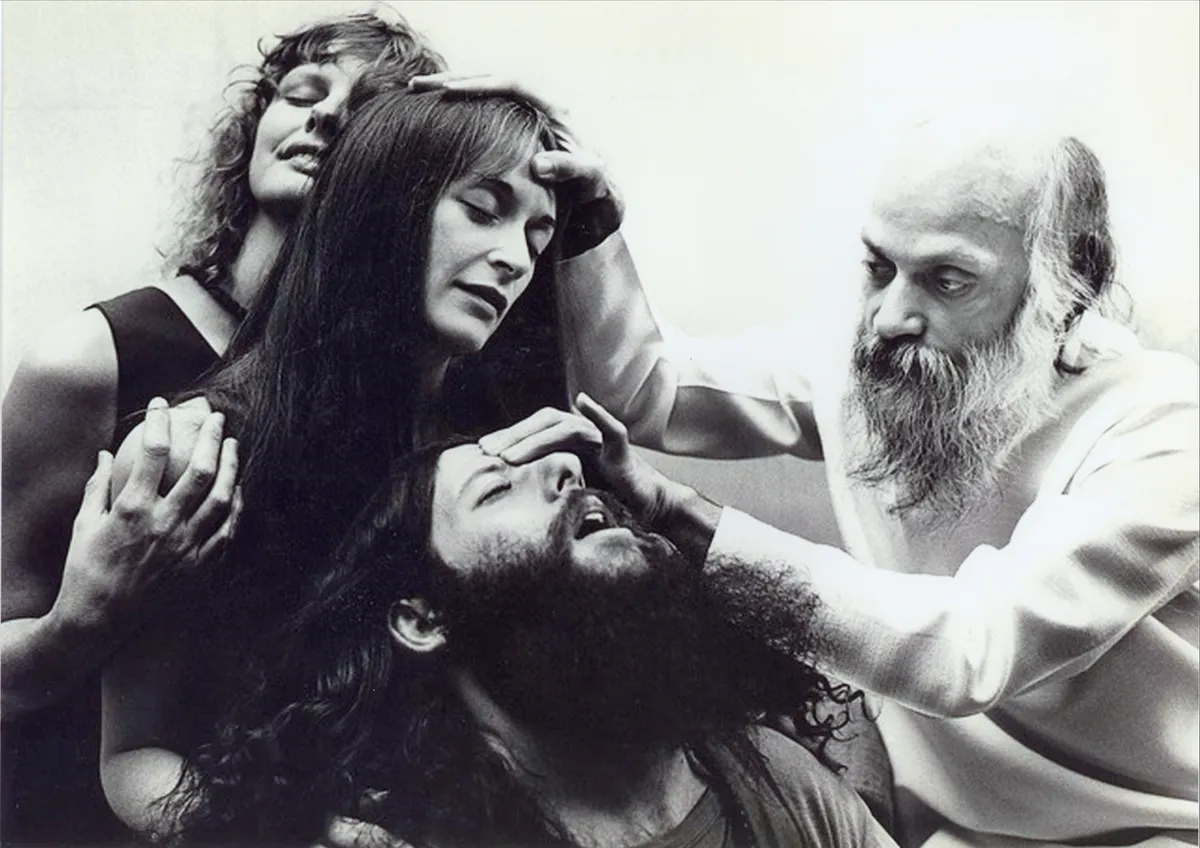
Geeta Darshan is a profound exploration of the spiritual teachings conveyed in the Bhagavad Gita, interpreted through the insightful lens of Osho's philosophy. Central to this discourse series is the concept of "dharma," described as an intrinsic, loving fidelity to life itself. Osho delves into the polarity of human approaches to existence: one characterized by negation and denial, often driven by ego, and the other by acceptance and trust, rooted in humility. Osho articulates Krishna's teachings on "ananya bhava," a form of boundless, undivided love and reverence. Here, love transcends personal relationships and individuality, transforming into prayer where duality dissolves and only unity remains. This perspective emphasizes a spiritual journey where relational boundaries dissolve in the experience of the divine, or "Paramatma," and invites a deeper engagement with life's essence. Osho's discourse presents a distinctive interpretation of the Gita, prompting a reflection on how one might move from the separateness experienced in worldly love to a state of unified consciousness, echoing Krishna's counsel to Arjuna to cultivate unwavering devotion and trust. Through Geeta Darshan, Osho offers a timeless guide to embracing life with open-hearted spiritual acceptance.
Vol 1 2
-
Chapter 1
Blindness is inner, not sensory: craving persists without eyes; surrender to the Unknown dissolves ego and allows truth to descend, not mere psychic feats.
-
Chapter 2
Arjuna's collapse reveals 'mine-ness' as the root of violence; true freedom comes by living the inner conflict and finding the witnessing third beyond I-and-mine.
-
Chapter 3
Arjuna's 'if'-bound longing blocks true happiness; despondency can be a doorway to yoga when it transforms, and Krishna guides toward inner freedom.
-
Chapter 4
The Gita is psychology, not spirituality—scriptures point but cannot convey the wordless experience; Arjuna’s dilemma exposes attachment and reason’s excuses.
-
Chapter 5
Arjuna's pity (daya) is egoic, not true compassion (karuna); Krishna psychoanalyses him—integrate the ego fully, then surrender it; is annihilation required?
-
Chapter 6
Egoless, thought-free consciousness doesn't stop action; surrendered action flows naturally. Forms perish; the formless existence remains eternal.
-
Chapter 7
Truth is the timeless sat beyond time; worldly life is transient asat—like dreams. Wakeful remembrance dissolves illusion; empty Being alone remains.
-
Chapter 8
Soul is unborn and unkillable; moral weight lies in inner attitude—delight in killing is sin. Metaphysical truth cannot justify Dyer, Auschwitz, Hiroshima.
-
Chapter 9
Soul is existence itself - impersonal, unborn and undying; incarnation is a voluntary play of losing and finding being; liberation becomes experientially known.
-
Chapter 10
Beneath the manifest world lies the unmanifest; by witnessing and turning inward, forgetting the 'other', one descends into the Self and realizes the One.
-
Chapter 11
Heaven lies in becoming one’s true dharma: seize decisive opportunities, transcend gain and loss so inner equanimity dissolves sin; realization’s forms differ.
-
Chapter 12
Zen and Sankhya assert knowing, not doing, leads to Self-realization; desireless action dissolves expectations, fear and the mind's fragmented conflicts.
-
Chapter 13
Action minus desire equals Karma Yoga: true liberation arises when acts overflow from inner fullness, not motivated by fruits—can action exist without desire?
-
Chapter 14
Act without craving: your right is action, not the fruit; trust and equanimity make action skillful and fruitful, while desire for results destroys presence.
-
Chapter 15
Delusion is the 'mine' that blinds; true dispassion transcends attachment and aversion—steadiness of wisdom arises when one is content within oneself.
-
Chapter 16
Samadhi is shown by unagitated wisdom: no craving for pleasure, calm in pain, anger and fear absent—inner craving dissolves by awareness, not by suppression.
-
Chapter 17
Desire starts with 'beautiful' and, through anger and moha, erodes memory and intelligence; the path back is becoming self-governed, free of likes.
-
Chapter 18
Purity is discovered, not manufactured: the innermost instrument (antahkaran) is already pure—turn inward, and the mind’s storms and cravings collapse by themselves.
Vol 3
-
Chapter 1
Knowledge or action? Osho: the truth is already present; Sankhya suits introverts, Yoga suits extroverts; don't renounce action—drop the sense of doer.
-
Chapter 2
Life itself is karma; actions cannot be abandoned—change the doer not the deed: drop ego, surrender to the Divine, or renunciation will become hypocrisy and inner division.
-
Chapter 3
Desire enslaves; first forge will to master senses, then surrender that will as yogic yajna—act selflessly and devas will support your freedom.
-
Chapter 4
When action becomes yajna and the heart gives rather than begs, divine forces grant all; asking contracts the heart—what happens when we ask for more?
-
Chapter 5
Flow with life's order; non-attachment is a practice that can mature into effortless attainment—first sadhana, ultimately siddhi, and be a blessing.
-
Chapter 6
Avatars act from completion: having attained all, they continue for others' sake; varna reflects psychological types, and sannyas can be taken early.
-
Chapter 7
Ego appears from names and childhood conditioning, fueled by fevers of lust, anger and greed; attachment melts when one surrenders doer‑ship to the Divine.
-
Chapter 8
Shraddha is not belief but absence of disbelief—trust born of life's mystery; reason limits, surrender frees one from karma and the bondage of action.
-
Chapter 9
Follow your swadharma: bloom your own seed rather than imitate others. Many rivers enter one ocean—distinct paths yet one dharma, one flowering.
-
Chapter 10
Knowing is already present; desire (vasana) veils it like smoke or dust. Transform desire into a guide, become witness, and remembrance of Self returns.
Vol 4
-
Chapter 1
Truth is timeless; yoga is the living path to it. Parampra preserves a faint lineage; a rajarshi is a sovereign seer resting in non-doing with humility.
-
Chapter 2
Change rests on the changeless: truth is eternal and enters only through friendship and inner openness; Arjuna’s doubt—how could Krishna teach before his birth?
-
Chapter 3
Life is a transcendental stream between birth and death; Krishna is our future. Exclusive refuge and 'austerity of knowledge' mean surrendered non‑duality.
-
Chapter 4
Yoga isn’t annihilated but hidden; surrender dissolves ego and responsibility; worship echoes back what you give, so become an instrument of the Vast.
-
Chapter 5
Action need not create doership; be a witnessing presence—life as lila without craving for fruits; worship the Divine by acting without attachment.
-
Chapter 6
Karma is spontaneous action; reaction is provoked. True akarma is inner silence from which deeds arise without a doer. On caste: follow your guna and inner nature.
-
Chapter 7
Thinning desire and resolve creates a mirror-like stillness where direct knowing dawns; freedom is acting without doership, joy sourced from the Self.
-
Chapter 8
Contentment and liberation come when expectations and ego dissolve: witness and transcend life's dualities, act unattached, realize all as Brahman.
-
Chapter 9
Yajna as inner fire: cast ego as seed and ghee as crafted goodness; two yajnas lead upward—yogis through practice, knowers by witnessing, both transcend symbols
-
Chapter 10
Surrender the senses into the inner yogic fire (yogagni): real sacrifice is inner alchemy, not flowers or sweets; true sannyas is meditative change.
-
Chapter 11
Swadhyaya-yajna: brutal self-study—bring repressed depths into light in solitude—then balance with japa (remembrance of the divine) so knowing itself liberates.
-
Chapter 12
Svadharma: let your unique self blossom by hearing the inner voice; through tapas and yoga—pranayama and disciplined intake—awaken the inner master.
-
Chapter 13
Life as yajna—emptied of ego and vasanas—turns us into satellites of the Divine, where true self-knowledge dissolves ignorance and death appears as departure.
-
Chapter 14
Desire is bondage; Jnana-yajna frees the chitta—drop vasanas, bow in humble service to receive Brahman’s voice (brahmaṇo mukhe); ask without guile.
-
Chapter 15
Knowledge dissolves moh - the ego's clinging to life and fear - revealing sat-chit-ananda so all beings are seen as one divine, freeing one from sin.
-
Chapter 16
Fire of knowledge consumes ignorance—the doer dies and karma crumbles like lines on water; knowing frees one from past and future doership now.
-
Chapter 17
Conquer the senses by knowing, not suppressing; true faith grows from knowledge though being a 'man of faith' (shraddhavan) is the first step toward it.
-
Chapter 18
Doubt destroys; cut it with the sword of Jnana. Act with equanimity as offering; let renunciation arise from wisdom to open Bhagavatprem and liberation
Vol 5
-
Chapter 1
An extrovert age demands nishkama karma—desireless action—rather than karma‑sannyas; sannyasins must act to transform society, while gurus awaken seekers.
-
Chapter 2
Energy freed from raga-dvesha becomes nishkama karma—action as joy. How to balance motivated work and desireless action? Osho: no balance; one replaces other.
-
Chapter 3
Seeing without thought: desireless action and renunciation both lead to the One. Discover if your nature turns inward or outward to choose meditation or prayer.
-
Chapter 4
Mastery is achieved by strengthening the Atman—purity, freedom from dependence and inner renunciation of doership, not mere bodily abstinence, lead to liberation.
-
Chapter 5
Knowing the one tattva makes you witness, not the doer; senses act while you remain free. Extroversion or introversion arise from cumulative past conditioning.
-
Chapter 6
Abandon 'mine' and act desirelessly: Nishkama Karma reverses karmic descent; heartfelt, wild kirtan and active 4-stage meditation unite extrovert and introvert.
-
Chapter 7
Paramatma is creator, not doer; presence catalyzes Prakriti—drop the ego, witness nature’s play; maya is hypnosis that veils knowing—become witness, not doer.
-
Chapter 8
Darkness is absence; self-ignorance is sleep. Awaken self-knowledge through resolve, courage and restraint to merge with the Divine—how to wake?
-
Chapter 9
Be steady between pleasant and unpleasant, witness impulses before they form; choiceless neutrality frees you to abide in Sachchidananda and become doubtless.
-
Chapter 10
Conquer kama and krodha by turning sexual energy inward - raise Kundalini to the Self and taste inner bliss; Sankhya prescribes non-doing and inner seeking.
-
Chapter 11
Freedom from lust and anger through inner revolution: still the mind, equalize breath and fix attention at the brow to transform urges into resolve.
Vol 6
-
Chapter 1
Krishna's sannyas: renounce desire for fruits while acting—inner surrender, not escape; act fully without craving, and action itself becomes joy
-
Chapter 2
Equanimity between polarities dissolves choice and sankalpa; choicelessness stills the mind and opens the formless. Methods differ by temperament.
-
Chapter 3
Yoga is the art of becoming your own friend: master the senses, stop sowing suffering, choose upward freedom and awareness—otherwise you become your own enemy.
-
Chapter 4
Steadiness beyond pleasure and pain: conquer the self by dropping identification with happiness; begin by resisting praise, know yourself, and remain a witness.
-
Chapter 5
Samatva: equanimity between friend and enemy arises when craving and doing cease; inner solitude — not loneliness — reveals the Divine, enabling selfless love.
-
Chapter 6
Begin where you are: practical supports—asana, seat, kusa, deerskin, pure ground, nose-tip gaze and brahmacharya—form an outer circuit to enter inner silence.
-
Chapter 7
Ceaseless remembrance begins when one true glimpse of the Lord roots in an aparigrahi, solitary mind; fearlessness and proper quietude let one enter the deathless.
-
Chapter 8
Balanced living - moderate food, sleep and effort - creates inner harmony for meditation. Right effort is appropriate action: enough, not excessive.
-
Chapter 9
Yoga cuts forgetfulness to reawaken the Divine within: remove obstacles through awakening energy, mantra-sound and steadfast attention to remember the Self.
-
Chapter 10
Yoga stills chitta by seeing life as suffering; chitta-vritti-nirodha means deep witnessing, not repression—understand vrittis to be freed into the Divine.
-
Chapter 11
Finding the Divine gives an inner taste of bliss that makes even the greatest sorrows merely outer storms; practice and tireless patience are required.
-
Chapter 12
Master the restless mind by breaking identification: witness to stillness to know the eternal, switch it on for the world and live in balanced freedom.
-
Chapter 13
Freedom from sin is turning the Atman from matter to the Paramatman: use without attachment, let rasa be a by-product, and practice inner return to attain bliss.
-
Chapter 14
Seeing Paramatma requires rising beyond the senses; Krishna speaks as 'Vasudeva' pedagogically so Arjuna can grasp the formless by starting with form.
-
Chapter 15
See the Formless in every form—make the first remembrance 'He is' in all beings; bhajan and yoga is living equality by likeness, sparking compassion.
-
Chapter 16
Mind feels like restless wind, yet restlessness implies the possibility of stillness; through Abhyasa (practice) and Vairagya (dispassion) habits can change.
-
Chapter 17
Vairagya arises when one sees all pleasures as futile; abhyasa is the practiced reverse path - stabilizing dispassion to return consciousness to the self.
-
Chapter 18
Mastering the mind makes Yoga simple; rare souls can leap without discipline—Osho explores Tantra, doubt, Krishna’s humility, and Arjuna’s fear of losing both world and God.
-
Chapter 19
Consciousness is imperishable; noble intent never leads to downfall. Krishna reassures Arjuna that even failed striving plants seeds of heaven or yogic rebirth, so let go.
-
Chapter 20
Nothing is lost: spiritual effort accumulates across lives; small causes can trigger sudden awakening (broken pot, one foot of earth), so grace completes work.
-
Chapter 21
Yoga transcends visible asceticism, scripture and desire—inner scientific transformation and shraddha (trust) open one to Divine grace and true freedom.
Vol 7
-
Chapter 1
Dharma is doubtless, self-effacing devotion: attachment to God means total nonattachment to persons; āsakta-manā is being inwardly bound to the Divine, not the ego.
-
Chapter 2
Divine ever-present; mind seeks absence and ego blocks surrender, so few strive and rarer still attain—why only one among millions reaches the Divine?
-
Chapter 3
The seen are beads; the unseen the hidden thread—apara and para differ as pedagogical stages: apparent reality aids the seeker toward the indivisible Truth.
-
Chapter 4
Krishna's pointers reveal Purushatva, the formless source and eternal cause; true courage and tapas arise only when kama is transmuted by Dharma.
-
Chapter 5
Paramatma transcends Prakriti: seek the Whole, not the parts; surrender to the Lord frees you from the gunas and ego, transforming action into being.
-
Chapter 6
Humanity splits into those who remember Paramatma and self-destroying mudhas; true wisdom is bhajan—turn inward beyond fear, greed and maya.
-
Chapter 7
Becoming one within by shedding fragmented faces and desires lets you know and become the Divine; Krishna's four devotees expose true and false devotion.
-
Chapter 8
Shraddha—absence of unbelief—matters more than belief; Krishna nurtures desire-driven devotion, as divine energy acts through all gods' ordained deeds.
-
Chapter 9
Abandon fleeting petitions and small desires; like Nachiketa, ask only for the imperishable—seek the Formless Satchidananda beyond form and surrender into bliss.
-
Chapter 10
Purify mind of desire and hatred, surrender into refuge, and learn to see the Divine in rain, sorrow and even darkness—can you meet God everywhere?
Vol 8
-
Chapter 1
Relentless questions block the Answer; only a questionless mind can receive Brahman. Discover swabhava (one's true nature) beyond karma to abide.
-
Chapter 2
Brahman is changeless void; matter is transient change. Make remembrance a living, smokeless flame, cultivate continuous awareness, not a last-moment trick.
-
Chapter 3
Remembrance must be continuous like breath: unite heart and intellect, offer every act as worship so worldly action becomes meditation and union with Divine.
-
Chapter 4
The dying moment is decisive: through bhakti (feeling) not thought, center awareness at the brow to enter Omkar; drop desire for moksha yet keep joyous effort.
-
Chapter 5
Restrain the senses by turning attention inward: dissolve tendencies, let energy return to become inner richness and reach the supreme—How to truly close the doors?
-
Chapter 6
Suffering arises from desire, time and rebirth; inner transformation through timeless meditation frees one from samsara - Krishna: no rebirth for the realized.
-
Chapter 7
Time is a dreamlike mirror; the single moment is the atom that frees you from vasana and the cosmic birth–death cycle—live the moment to transcend time.
-
Chapter 8
Everything moves; rest is the Akshara—the unmoving pin within. Turn inward toward the axle and attain Param gati by single-pointed devotion.
-
Chapter 9
Life often resembles a walking corpse; true liberation comes by dying in a pure present moment - transcending past and future so rebirth is impossible.
-
Chapter 10
Uttarayan: surrender leads to lasting moksha; Dakshinayan: willful downward sadhana creates smoky pleasures and karmic return—true freedom is desireless.
-
Chapter 11
Know both downward and upward paths: transcending opposites leads to choiceless centeredness (yoga-yukta) where rituals, morals and Vedas fall away.
Vol 9
-
Chapter 1
Life appears as matter or Paramatma depending on our seeing; true knowledge is lived experience, born when fault-seeing falls and faith opens the heart.
-
Chapter 2
Shraddha—the soul’s magnetic attraction—transcends logic and births radical transformation; the formless pervades the manifest, graspable only by surrender.
-
Chapter 3
Existence is ordered, not accidental; the Paramatma is the invisible inner link and life is divine Leela—attachment, not action, is what binds the soul.
-
Chapter 4
Divine as catalytic presence: creation unfolds by God’s mere being; glimpse comes in creative trance and by becoming present in the act of creation.
-
Chapter 5
Vain hope, vain action, vain knowledge enslave; true freedom grows from inner knowing, right action and choosing the daivi current—will you change course?
-
Chapter 6
Many paths lead to one Paramatman: discover your swadharma — whether knowledge, devotion or action — and make worship inward remembrance, not inherited ritual.
-
Chapter 7
Dharma is the sustaining root; God is the hidden ground - past, future, Omkar. Melt the ego, surrender doership, seek the unmanifest beneath appearances.
-
Chapter 8
Mind fragments the One into parts and opposites; only in no-mind does unity and bliss appear—Krishna’s sat/asat shows life and death, heaven and hell are one.
-
Chapter 9
Mind’s duality fragments life; only desireless upasana dissolves that split so the One is seen. Surrender ends asking and lets the Divine care for yoga‑kshema.
-
Chapter 10
Every worldly desire conceals the longing for Paramatma; turn wealth, power and fear of death into the search for the eternal, break repetition, awaken.
-
Chapter 11
Offer not what God gave but your one true possession—the sense 'I am the doer.' Act fully yet surrender doer‑ship; pure mind and desireless love free you to merge with the Divine.
-
Chapter 12
Inner being, not outward conduct, defines a sadhu; single‑hearted resolve and steady bhakti—built by small fulfilled vows—transforms even the wicked into dharmatma.
-
Chapter 13
Even the lowliest attain the Divine through single-pointed remembrance, anguished yearning and surrender; the world is joyless and fleeting—seek the Beyond.
Vol 10
-
Chapter 1
Life is an unknowable mystery; supreme truths demand inner transformation and faith—vanish like a river to merge with the ocean and know the unborn Self.
-
Chapter 2
All is the One: decide wholly, still the mind, and awaken beyond dream and anger; know essence, stop fragmentation, and see the Divine even in pain.
-
Chapter 3
Recognize God’s sovereign splendor (aishwarya) by cultivating sensitivity and still meditation; when ego falls, God’s yoga‑shakti meets the seeker.
-
Chapter 4
Break the running mind through navel-centered, childlike meditation; surrender then arises naturally and true intelligence (buddhi-yoga) dawns.
-
Chapter 5
Arjuna woos testimony instead of direct seeing: true surrender is not belief borrowed from others but a personal, fearless direct experience of the divine.
-
Chapter 6
Arjuna's radical honesty: distinguish belief from knowing; God is self-luminous and known only by becoming divine; asks Krishna how to contemplate him.
-
Chapter 7
Scripture should increase thirst, not satiate; words point to an inner journey—only becoming the truth ends longing, not endless explanation.
-
Chapter 8
Symbols point to the unknowable; begin with pictures, move from body to senses to mind to consciousness. Let go of pointers and cultivate continuous awareness.
-
Chapter 9
Krishna as many symbols: life and death unite; creation and destruction are one. Drop ego as doer, tune to Om/japa to bridge to the Vast and be free.
-
Chapter 10
Krishna as presence in all beings—peepal, Narada, Kapila: wisdom blooms where intelligence flowers; stop doing, surrender into remembrance to awaken.
-
Chapter 11
Kama is creative root: transform sexual energy inward into Kama Deva; acceptance and inner alchemy, not repression, turns desire into liberation.
-
Chapter 12
Purity is unbroken flow—be like the wind: unattached, transparent; wield power without becoming it; seek self-knowledge (Brahmavidya) over mere action
-
Chapter 13
Time is imperishable; become one with its flow, accept birth and death as Krishna’s act; surrender ego and resistance to taste the divine in life’s celebration.
-
Chapter 14
Life is a gamble of future-hung desires; freedom comes by dropping the future, living presentness, entering silent meditation to discover the Divine within
-
Chapter 15
God is not distant but existence itself; searching won't find him—stop thinking and plunge into experience. Majesty radiance and peak moments reveal the Divine.
Vol 11
-
Chapter 1
Effort readies the vessel but cannot win the Divine; only humble surrender opens grace—Arjuna's daring plea: 'If possible, let me see you directly.' A warning.
-
Chapter 2
Intellect and senses can't prove the Infinite; only the inner 'divine eye'—born through total surrender, often catalyzed by a Master—reveals the Source.
-
Chapter 3
Geeta Darshan reads the Gita as a call to awake action: act without attachment, witness ego, transform desire through meditation — how to be enlightened?
-
Chapter 4
The Gita's source: if mere literature Vyasa is author; if a real inner event Krishna and Arjuna are the origin, Sanjaya relays it, Vyasa records it.
-
Chapter 5
Duality sustains the world; transcending it requires choiceless surrender. Arjuna's vision reveals God as both life and death—when opposites meet, they negate.
-
Chapter 6
Arjuna saw Mahabharata's warriors in Krishna's mouth, teaching that choosing destiny frees the present from restlessness; life is lila, a purposeless play.
-
Chapter 7
Accepting the Divine requires dying to the ego; Arjuna's fear is annihilation. Preparation is to live as if 'I am not' and become the instrument.
-
Chapter 8
Accept destiny: consent to both pleasure and pain; drop the doer and the struggle. Acceptance dissolves sorrow and restlessness, revealing the divine within.
-
Chapter 9
Prayer is thanksgiving, not asking: abandon the beggar-mind and craving; stop the mind’s chase, sink into present absorption, dissolving self into the Vast.
-
Chapter 10
No one can see his own death; death happens outwardly while awareness remains. Learn to die by watching sleep, and see God's Whole transcend part/whole logic.
-
Chapter 11
Can a simple, childlike person attain God? True spiritual simplicity is mature childlikeness—conscious innocence, not the ignorant, violent, complex childhood.
-
Chapter 12
Seeking God is paradoxical: effort brings only fatigue; when the seeker disappears, the divine shines within; love must deepen, then even images dissolve.
Vol 12
-
Chapter 1
Devotion and formlessness meet in surrender: love’s blind reversal dissolves the ego, granting immediate union beyond intellect and the path of Arjuna’s choice.
-
Chapter 2
Form and formless both lead to the one; choose the path that suits you, drop desires to pray, and turn attention inward to meet the Divine now.
-
Chapter 3
Formless seekers face solitude and ego; surrendering in devotion brings quick deliverance. Drop the I, pray now; prayer awakens awareness to dissolve sin.
-
Chapter 4
Surrender by dissolving the ego lets the Divine enter; exhaust doubt until faith ripens, for feeling precedes intellect and inner thirst is the only true proof of God.
-
Chapter 5
Find God by inner awakening: first love, then disciplined sadhana, then selfless karma; do not flee the world - surrender, bhav and egolessness make union.
-
Chapter 6
Surrender actions to the Divine by renouncing fruits; choose a path suited to your nature; cultivate joy, witnessing and equanimity as proofs of true karma-yoga.
-
Chapter 7
To be dear to the Divine, cultivate inner peace, selfless unlimited love and drop the mind/ego: dissolve thought in love or still the mind to meet the formless.
-
Chapter 8
Non-reactivity, desirelessness and inner-outer unity reveal the ever-present Divine; turn inward, drop beginnings and effort, the path is to change yourself.
-
Chapter 9
Freedom comes when hatred, desire and doership are dropped; devotion is receptive surrender—becoming a womb for God—and direct, lived experience frees.
-
Chapter 10
Surrender the ego, break old habitual chains with a three-stage experiment—release, silent receptivity, then expressive bliss—to be reborn into the divine.
-
Chapter 11
Regard praise and blame alike, drop ego and desire; clear repressed energy through catharsis before meditation; surrender yields effortless being.
Vol 13
-
Chapter 1
Suffering is self-made through identification with body and mind; freedom comes by recognizing oneself as the Knower distinct from the field, not blaming God.
-
Chapter 2
Kshetra and kshetrajna: separate the field (body, senses, even conditioned consciousness) from the true knower; drop all interpretations to realize non-duality.
-
Chapter 3
Absence of pride, ostentation and ego; simplicity, compassion and guru-devotion mark a knower - samadhi may seem like swoon outwardly yet is inner awareness.
-
Chapter 4
Equanimity arises by creating a gap, witnessing emotions and transforming restlessness into sadhana; solitude and single devotion lead to realization.
-
Chapter 5
Know only what ends questioning: the immortal; the Absolute is both manifest and unmanifest; true faith is inner experience, not fear-born belief.
-
Chapter 6
Paramatma embraces all opposites—within/outside, changing/unchanging; true knowing transcends intellect and arises by witnessing breath, feeling and direct experience.
-
Chapter 7
Knowledge must be tasted, not memorized; awaken Purusha by stopping superimposition on Prakriti; hypnosis or machines may aid but cannot replace true sadhana.
-
Chapter 8
Desires bind; Purusha (witness) enjoys Prakriti’s gunas so craving shapes births—knowing the Purusha frees one beyond action, paths, and rebirth.
-
Chapter 9
Purify the intellect to witness Purusha: whether by devotion, knowledge, action, or listening to a living master; drop doership and rest in non-doing.
-
Chapter 10
See the imperishable within the changing: abandon making eternal constructs, become witness to Prakriti and Purusha, and dissolve the ego through surrender.
-
Chapter 11
Inner Self is like untouched space—actions touch only body-mind; meditation, not mere understanding, is the soil that opens awakening and ends suffering.
-
Chapter 12
One Self witnesses all; disidentify from the seen to become the non-doer—silence and samadhi arise. Practice readies realization; last thought shapes rebirth.
Vol 14
-
Chapter 1
Arjuna's dilemma: dissolve the 'I' to act without doership—be master at desire's first stir or instrument at its last hour; seeing world as Maya frees you.
-
Chapter 2
The three gunas bind consciousness; balance (sattva) can trap by pride—true freedom needs going beyond them. Gita speaks to Arjuna’s living question.
-
Chapter 3
Three gunas bind consciousness; freedom comes by transcending attachment through alert awareness and treating the path as the destination so joy grows en route.
-
Chapter 4
Press down rajas and tamas; cultivate awareness—sattva arises and yields true service and samadhi; Krishna reveals many paths so the seeker must choose.
-
Chapter 5
Tamas dims life; cultivate sattva through right action and wholehearted surrender; Krishna uniquely balances sattva, rajas and tamas, and true surrender is the last act of freedom.
-
Chapter 6
Sattvic action brings happiness, knowledge and dispassion; rajas breeds sorrow, tamas breeds ignorance. Any guna can be transcended by its constructive aspect.
-
Chapter 7
Seeing all action as the play of the three gunas dissolves doership; by witnessing, through tamas, rajas and sattva, one attains the beyond of sat-chit-ananda.
-
Chapter 8
Beyond the three gunas is a witnessing consciousness: marks are outer, true freedom needs inner witnessing through sadhana, not chemical fixes.
-
Chapter 9
Abide as the witnessing Self: see pleasure, pain and the gunas without doership; let past momentum exhaust so the sat-chit-ananda within awakens.
-
Chapter 10
Unwavering single-pointed devotion and witnessing dissolve the fragmented ego; practices and doctrines only exhaust doubt so the doer falls, revealing truth.
Vol 15
-
Chapter 1
World is an inverted tree: the source is highest and life is a downward fall—true awakening is returning inward to the womb-root through regressive meditation.
-
Chapter 2
Cut the Peepal-like world-tree with dispassion, seek refuge in the Primal Person; stillness reveals the immutable root, freeing you from desire, ego and past.
-
Chapter 3
Supreme light is self-luminous consciousness; senses bind only through desire. Surrender arises by seeing yourself as zero or placing the center beyond you.
-
Chapter 4
Surrender, not assurance, transforms: certainty never comes, so leap where you feel a pull; exhaust the mind’s doubts or fully suffer them until surrender.
-
Chapter 5
Krishna’s vast ‘I’ aims to dissolve Arjuna’s ego by revealing the antaryami within; spiritual power is neutral—without a purified heart it becomes exploitative, as with Rasputin.
-
Chapter 6
Body, soul, and Supreme Purushottama: cultivate inward witnessing for peace rather than ego-building concentration; let scripture point you to a living master.
-
Chapter 7
Remember Purushottama at life's center so every act becomes worship; surrender must transform life—scriptures or mere listening won't replace inner readiness.
Vol 16
-
Chapter 1
Life contains two equal currencies—divine and demoniac; true transformation is turning demoniac energy into divine through fearlessness, purity, awareness, giving, sacrifice, simplicity.
-
Chapter 2
Divine wealth is egolessness: rejoice in others' joy, renounce clinging, cultivate non-anger and witness; silence, prayer and sant-hood transcend duality.
-
Chapter 3
Daivi vs asuri: truth, humility and nonviolence liberate; hypocrisy, pride, anger and ignorance bind. Radical transformation occurs only at an extreme.
-
Chapter 4
Demonic wealth binds; divine wealth frees: duty is that which increases bliss, mystery animates life, and civilization enables falling and rising.
-
Chapter 5
Demoniac people cling to insatiable desires and call the world false to deny value; freedom arises by witnessing desire, turning inward, and finding a teacher.
-
Chapter 6
Craving binds people to the demonic; true wealth arises from living fully in the present, yielding divine growth and moksha; devas mirror our inner light.
-
Chapter 7
Sadhana transcends good and evil: become a witness beyond karma, not by increasing virtue but by dropping the doer; true freedom comes from surrender to the law.
-
Chapter 8
Lust, anger and greed are gates to hell; shed desire and ego via inner surrender and prayer, use scripture or a living guru, and die to desire.
Vol 17
-
Chapter 1
Man exists because he seeks truth; awakening comes by standing in life's battlefield like Arjuna with Krishna, transforming tamas and rajas into sattva.
-
Chapter 2
Faith mirrors your inner guna balance—sattva, rajas, tamas. Balance them like a tripod through right timing and discipline to touch the One now.
-
Chapter 3
Drop clinging: scriptures and gurus can support but not be clung to; surrender occurs by witnessing the ego, and longing intensifies as God draws near.
-
Chapter 4
Doubt your doubt fully so trust can arise; transform tamas and rajas into sattva by purifying food, yajna and tapas and by neti‑neti self‑inquiry.
-
Chapter 5
Thirst must turn inward: seeking Krishna outside creates mirages; dissolve ego, drop name-and-form, and discover the Divine already within now
-
Chapter 6
Krishna’s presence, not scripture, ignites transformation: surrender ego, stop seeking and cultivate sattvic faith and practice so presence can awaken you.
-
Chapter 7
Threefold tapas of body, speech and mind must be sattvic; bowing, authenticity and inner taste awaken the Arjuna within; methods protect or trap the ego.
-
Chapter 8
Drop desire for the fruit: true austerity is nishkama sattva—act with supreme faith, surrender results to God, and balance inner and outer.
-
Chapter 9
True giving is sattvic when dutyful, discerning, anonymous and without expectation; surrender frees, beyond doubt and asking, the Divine is found.
-
Chapter 10
Om Tat Sat points to the beyond of I-thou; living moment-to-moment dissolves past/future ego and awakens the direct experience of interdependence.
-
Chapter 11
Om Tat Sat: true being is egoless is-ness; actions done without ego are 'sat'. The Mahabharata is an inner war—end it by self-acceptance and surrender.
Vol 18
-
Chapter 1
Words are Krishna’s rainbow-bubbles; leave the lake and seek the wordless moon. Moksha transcends dharma; sannyas is dropping craving or attachment to fruits.
-
Chapter 2
Decision arises from inner realization, not logic; act without attachment to fruits, let scripture and guru be living, surrender with trust.
-
Chapter 3
Surrender to enjoined duty through detached action; the true guru is a mirror full moon who brings borrowed light, guiding disciples from darkness to awakening.
-
Chapter 4
Renounce the doer: abandon desire for fruits, become instrument (nimitta) of the Divine; truth is one across scriptures—right listening awakens as it did Arjuna.
-
Chapter 5
Five causes drive karma; be the witness, an actor and instrument, not the doer. Live unsmeared; choose surrender or practice wisely and guard ego and laziness.
-
Chapter 6
Mind and body are two circles of action; transcend both as the witness beyond the gunas. Love and accept yourself; action then becomes desireless.
-
Chapter 7
Actions arise from tamas, rajas or sattva—stupor, restless drive, or mindful wakefulness; become a mere instrument, welcome silence and inner pains as healing.
-
Chapter 8
Tamas, rajas and sattva contrasted; seek understanding not consolation—live fully, surrender doership, test teachings in life; samadhi grows from inner ripeness.
-
Chapter 9
Krishna's three gunas reveal tamas, rajas and sattva; true understanding dissolves ego—one-hand clap sounds only when listening awakens not by method.
-
Chapter 10
Dharana shapes your life: tamasic, rajasic, or sattvic holdings determine bondage or freedom; patience, meditation and a true Master begin the real search.
-
Chapter 11
Three kinds of happiness—tamasic, rajasic, sattvic—must be understood and transcended: dissolve desire; patience and meditation bring non‑wanting and freedom.
-
Chapter 12
Inner surrender, not birth, defines true stature; duty flows from one’s nature, desire must fail before religion awakens, and sattvic sukha precedes the transcendent ananda
-
Chapter 13
Offer your natural work as worship by dropping doership; bowing enables discipleship—Nietzsche’s refusal shows why an unbowed ego bars the master’s help.
-
Chapter 14
Renounce fruit-desire and the sense of doer‑ship: life is acting, become the witness; spiritual practice is learning non‑doership, not escape.
-
Chapter 15
Para-bhakti is desireless devotion; surrender ego, offer actions without attachment, Krishna opens many doors—choose the path that resonates and be worthy.
-
Chapter 16
Surrender ego and accept God in His creation: transform samsara into moksha through choiceless acceptance, live sannyas in the world and let the Whole use you as it wills.
-
Chapter 17
Surrender the ego to the Divine; through total trust (not thinking) grace makes liberation effortless — Krishna’s pledge frees Arjuna from sin.
-
Chapter 18
Truth is supremely secret: tell it only to those with tapas, devotion and yearning; surrender brings instant enlightenment but needs readiness and patience.
-
Chapter 19
Daily recitation of the Gita opens ever-deep meaning; true listening needs faith, no fault-finding, and a fit speaker—address inquirers, not merely curious.
-
Chapter 20
Gita is a yoga-shastra: it cuts attachment and reunites you with Self; by Krishna's grace delusion falls away, and remembrance, surrender and right listening free you.
-
Chapter 21
Surrender harmonizes intellect and will: the Gita's remedy for an intellect-dominated age, urging ripening the ego so divine vision becomes inner, not borrowed.