
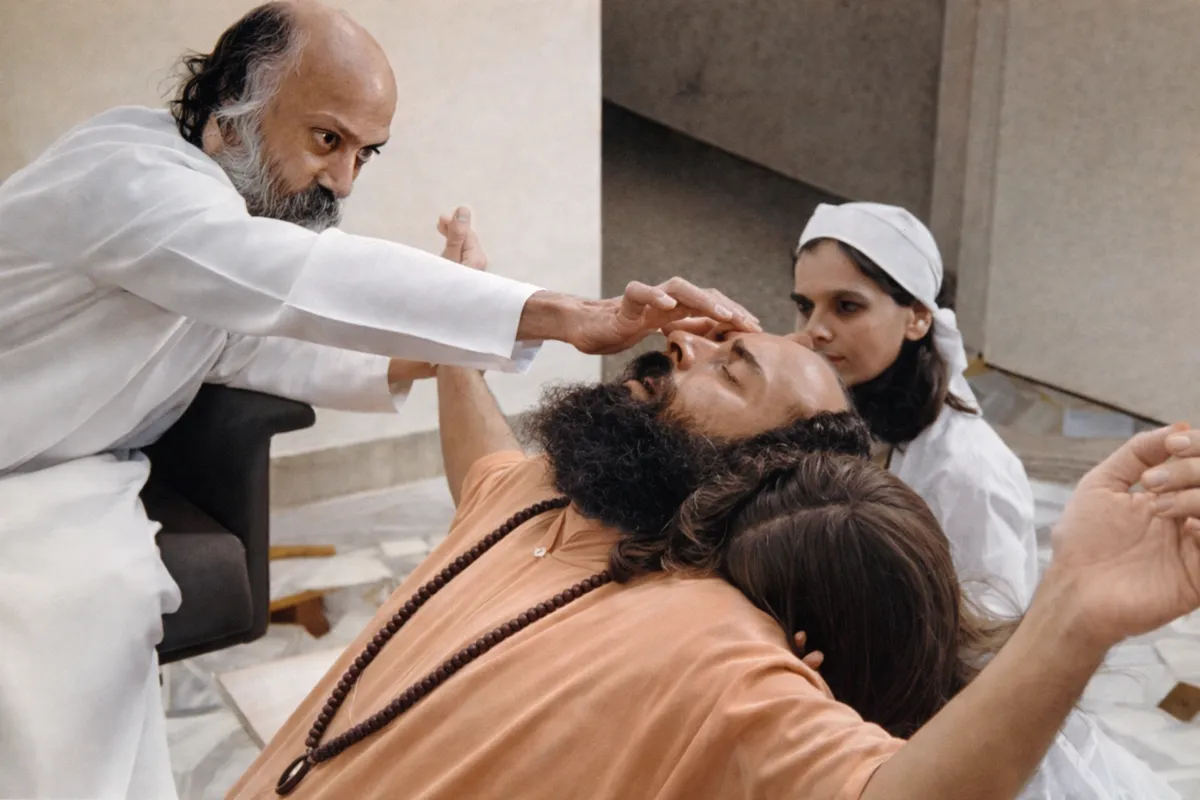
Osho's original Hindi beside Osho Live's English translation, matched passage by passage.
अब सूत्र:
और हे अर्जुन, जैसे श्रद्धा तीन प्रकार की होती है, वैसे ही भोजन भी सब को अपनी-अपनी प्रकृति के अनुसार तीन प्रकार का प्रिय होता है। और वैसे ही यज्ञ, तप और दान भी सात्विक, राजस और तामस, ऐसे तीन-तीन प्रकार के होते हैं। उनके इन न्यारे-न्यारे भेद को तू मुझसे सुन।
Now the sutra: “And, Arjuna, as faith is of three kinds, so too is food dear to each according to his nature of three kinds; likewise sacrifice, austerity, and charity are of three kinds—sattvic, rajasic, and tamasic. Listen from me to their distinct differences.”
श्रद्धा के शास्त्र को कृष्ण अर्जुन को समझा रहे हैं। वह शास्त्र सभी अर्जुनों को सर्व कालों में उपयोगी है, क्योंकि वह शास्त्र तुम्हारी ही व्याख्या और विश्लेषण है। और जब तक तुम अपनी ठीक से व्याख्या को न समझ पाओगे और ठीक से विश्लेषण को, तब तक तुम विज्ञान को न समझ पाओगे, जो तुम्हें त्रिगुणातीत बना दे, गुणातीत बना दे। इसलिए तुम्हें पहले इन तीनों गुणों की अलग-अलग व्यवस्था और तुम्हारे जीवन में इनके ढंग और ढांचे और इनकी शैली को समझ लेना जरूरी है। वह तुम्हारा सारा अस्तित्व है अभी।
Krishna is explaining to Arjuna the scripture of faith. That scripture is useful to all Arjunas in all times, because it is a diagnosis and analysis of you. Until you rightly understand your own diagnosis and analysis, you cannot understand that science which makes you trigunatita—beyond the three gunas. So first you must understand the distinct arrangements of these three qualities and how they pattern your life. For now, they compose your entire existence.
तो कृष्ण कहते हैं कि श्रद्धा न केवल तुम्हारी परमात्मा की तरफ यात्रा में भिन्न-भिन्न मार्ग पकड़ा देती है तुम्हें, श्रद्धा न केवल तुम्हारे आचरण को भिन्न-भिन्न कर देती है, महत्वपूर्ण बातों में ही नहीं, जीवन की क्षुद्रतम बातों में भी तुम्हारी श्रद्धा तुम्हें रंगती है। छोटे से छोटा तुम्हारी श्रद्धा की सूचना देता है।
Krishna says: faith not only chooses different paths toward the divine or shapes your conduct in important matters; even in the minutest things, faith colors you. The smallest things reveal your faith.
तो कृष्ण कहते हैं, भोजन भी इन तीन श्रद्धाओं के अनुसार तीन प्रकार का होता है। और लोग अपनी-अपनी श्रद्धा के अनुसार भोजन की रुचि रखते हैं।
Thus, food too is of three kinds according to these three faiths. People like food according to their nature.
तामसी वृत्ति का व्यक्ति है, तुम उसके भोजन का अध्ययन करके भी समझ सकते हो कि वह तामसी है। तामसी वृत्ति के व्यक्ति को बासा भोजन प्रिय होता है, सड़ा-गला उसे स्वाद देता है। घर का भोजन उसे पसंद नहीं आता। बाजार का सड़ा-गला, जिसका कोई भरोसा नहीं कि वह कितना पुराना है और कितना प्राचीन है। होटलों में दो-चार दिन पहले की सब्जी से बने हुए पकोड़े और समोसे उसे प्रिय होते हैं। बासा! सात्विक व्यक्ति को जो कूड़ा-करकट जैसा मालूम पड़े, जिसे वह अपने मुंह में न ले सके, उसी पर तामसी की लार टपकती है।
Observe a tamasic person’s food and you will know his tamas. He delights in stale food, in decayed, spoiled things. He dislikes fresh, simple home food; he prefers the questionable fare of the bazaar—no one knows how old. Pakoras and samosas fried from vegetables two or four days old—stale! What a sattvic person would consider garbage—something he couldn’t put in his mouth—at that the tamasic person drools.
मैंने सुना है कि मुल्ला नसरुद्दीन एक दिन होटल में गया। जाकर बैठ गया टेबल पर। और उसने कहा कि भोजन ले आओ। पहली ही दफा इस होटल में आया था। जब बैरा भोजन लेने जाने लगा, तो उसने कहा कि यहां सब ठीक-ठाक है न? बैरे ने उसे तृप्त करने को कहा कि महानुभाव, ठीक-ठाक पूछते हैं; बिलकुल आपके घर जैसा भोजन है!
नसरुद्दीन उठकर खड़ा हो गया। उसने कहा, क्षमा करें, घर के भोजन से बचने को तो यहां आए थे। तो फिर कोई और होटल जाना पड़ेगा।
I’ve heard that Mulla Nasruddin went to a restaurant, sat at a table and said, “Bring food.” It was his first time there. As the waiter turned to go, Mulla asked, “Everything here is all right?” To satisfy him, the waiter said, “Sir, it’s exactly like home food!” Nasruddin jumped up: “Then forgive me—I came to escape home food. I’ll have to find another place.”
तामसी व्यक्ति का भोजन हमेशा अतिशय होगा, वह ज्यादा खाएगा। वह इतना खाएगा कि नींद के अतिरिक्त और कुछ करने को शेष न बचे। इसलिए तामसी व्यक्ति भोजन करके ही सुस्त होने लगेगा। उसका भोजन एक तरह का नशा है।
The tamasic person’s eating is always excessive. He eats so much that nothing remains to do but sleep. For him, food is a kind of intoxication.
भोजन का एक नशा है। अगर तुम जरूरत से ज्यादा भोजन कर लो, तो भोजन अल्कोहलिक है। वह मादक हो जाता है, उसमें शराब पैदा हो जाती है। उसमें शराब पैदा होने का कारण है। जैसे ही तुम ज्यादा भोजन कर लेते हो, तुम्हारे पूरे शरीर की शक्ति निचुड़कर पेट में आ जाती है। क्योंकि उसको पचाना जरूरी है। तुमने शरीर के लिए एक उपद्रव कर दिया, एक अस्वाभाविक स्थिति पैदा कर दी। तुमने शरीर में विजातीय तत्व डाल दिए। अब शरीर की सारी शक्ति इसको किसी तरह पचाकर और बाहर फेंकने में लगेगी। तो तुम कुछ और न कर पाओगे; सिर्फ सो सकते हो।
Food can intoxicate. If you eat beyond need, food turns alcoholic; it becomes narcotic. The reason is simple: as soon as you overeat, your body’s energy is drawn down into the stomach—digestion becomes urgent. You have imposed an unnatural load; you have introduced an alien mass. Now the body’s energies are engaged in digesting and disposing of it. You can do nothing else—only sleep.
मस्तिष्क तभी काम करता है, जब पेट हलका हो। इसलिए भोजन के बाद तुम्हें नींद मालूम पड़ती है। और अगर कभी तुम्हें मस्तिष्क का कोई गहरा काम करना हो, तो तुम्हें भूख भूल जाती है।
The brain functions well only when the stomach is light. Hence you feel drowsy after eating. And if you are deeply engaged in mental work, hunger is often forgotten.
इसलिए जिन लोगों ने मस्तिष्क के गहरे काम किए हैं, वे हमेशा अल्पभोजी लोग हैं। और धीरे-धीरे उन्हीं अल्पभोजियों को यह पता चला कि अगर मस्तिष्क बिना भोजन के इतना सक्रिय हो जाता है, तेजस्वी हो जाता है, तो शायद उपवास में तो और भी बड़ी घटना घट जाएगी। इसलिए उन्होंने उपवास के भी प्रयोग किए। और उन्होंने पाया कि उपवास की एक ऐसी घड़ी आती है, जब शरीर के पास पचाने को कुछ भी नहीं बचता, तो सारी ऊर्जा मस्तिष्क को उपलब्ध हो जाती है। उस ऊर्जा के द्वारा ध्यान में प्रवेश आसान हो जाता है।
Those who have done deep work of the mind have been light eaters. Gradually they discovered: if the mind becomes so bright without food, perhaps fasting will open an even greater door. So they experimented with fasting and found that at a certain point, when there’s nothing left to digest, the energy available to the brain increases. That energy eases entry into meditation.
जैसे भोजन अतिशय हो, तो नींद में प्रवेश आसान हो जाता है। नींद ध्यान की दुश्मन है; मूर्च्छा है। भोजन बिलकुल न हो शरीर में, तो शरीर को पचाने को कुछ न बचने से सारी ऊर्जा मुक्त हो जाती है पेट से, सिर को उपलब्ध हो जाती है। ध्यान के लिए उपयोगी हो जाता है।
Excess food eases entry into sleep—sleep is the enemy of meditation, it is swoon. When there is no food in the system, nothing to digest, energy is freed from the belly and becomes available to the head—useful for meditation.
लेकिन उपवास की सीमा है, दो-चार दिन का उपवास सहयोगी हो सकता है। लेकिन कोई व्यक्ति उपवास की अतिशय में पड़ जाए, तो फिर मस्तिष्क को ऊर्जा नहीं मिलती। क्योंकि ऊर्जा बचती ही नहीं। इसलिए उपवास तो किसी ऐसे व्यक्ति के पास ही करने चाहिए, जिसे उपवास की पूरी कला मालूम हो। क्योंकि उपवास पूरा शास्त्र है। हर कोई, हर कैसे उपवास कर ले, तो नुकसान में पड़ेगा।
But fasting has limits. Two to four days can be supportive. If someone goes to extremes, mind may lack energy—because there’s nothing left to draw from. Therefore fast only under guidance from one who knows the art; fasting is a whole science. Otherwise you may harm yourself.
और प्रत्येक व्यक्ति के लिए गुरु ठीक से खोजेगा कि कितने दिन के उपवास में संतुलन होगा। किसी व्यक्ति को हो सकता है पंद्रह दिन, इक्कीस दिन का उपवास उपयोगी हो। अगर शरीर ने बहुत चर्बी इकट्ठी कर ली है, तो इक्कीस दिन के उपवास में भी उस व्यक्ति के मस्तिष्क को ऊर्जा का प्रवाह मिलता रहेगा। रोज-रोज बढ़ता जाएगा। जैसे-जैसे चर्बी कम होगी शरीर पर, वैसे-वैसे शरीर हलका होगा, तेजस्वी होगा, ऊर्जावान होगा। क्योंकि बढ़ी हुई चर्बी भी शरीर के ऊपर बोझ है और मूर्च्छा लाती है।
लेकिन अगर कोई दुबला-पतला व्यक्ति इक्कीस दिन का उपवास कर ले, तो ऊर्जा क्षीण हो जाएगी। उसके पास रिजर्वायर था ही नहीं; उसके पास संरक्षित कुछ था ही नहीं। उनकी जेब खाली थी।
A master will gauge, person by person, what length of fast keeps balance. A person with much stored fat may benefit from fifteen or twenty-one days; as fat decreases, the body becomes lighter, more brilliant, more energetic, for excess fat burdens and dulls. But a thin person attempting twenty-one days will become depleted; there was no reserve.
दुबला-पतला आदमी बहुत से बहुत तीन-चार दिन के उपवास से फायदा ले सकता है। बहुत चर्बी वाला आदमी इक्कीस दिन, बयालीस दिन के उपवास से भी फायदा ले सकता है। और अगर अतिशय चर्बी हो, तो तीन महीने का उपवास भी फायदे का हो सकता है, बहुत फायदे का हो सकता है। लेकिन उपवास के शास्त्र को समझना जरूरी है।
A thin person may benefit from three or four days. An obese person may benefit even from twenty-one, forty-two, even three months in extreme cases—but again, understand the science.
तुम तो अभी ठीक विपरीत जीते हो, दूसरे छोर पर, जहां खूब भोजन कर लिया, सो गए। जैसे जिंदगी सोने के लिए है। तो मरने में क्या बुराई है! मरने का मतलब, सदा के लिए सो गए।
Right now you live at the opposite extreme: eat heavily and sleep—as if life were for sleeping; then what’s wrong with dying? Death is sleep forever.
तो तामसी व्यक्ति जीता नहीं है, बस मरता है। तामसी व्यक्ति जीने के नाम पर सिर्फ घिसटता है। जैसे सारा काम इतना है कि किसी तरह खा-पीकर सो गए। वह दिन को रात बनाने में लगा है; जीवन को मौत बनाने में लगा है। और उसको एक ही सुख मालूम पड़ता है कि कुछ न करना पड़े। कुल सुख इतना है कि जीने से बच जाए, जीना न पड़े। जीने में अड़चन मालूम पड़ती है। जीने में उपद्रव मालूम पड़ता है। वह तो अपना चादर ओढ़कर सो जाना चाहता है।
The tamasic person does not live; he dies. He drags through life—the aim seems to be: somehow eat, drink, and sleep. He turns day into night, life into death. His only pleasure is to do nothing—escape the burden of living. A blanket over the face—that’s his ideal.
ऐसा व्यक्ति अतिशय भोजन करेगा। अतिशय भोजन का अर्थ है, वह पेट को इतना भर लेगा कि मस्तिष्क को ध्यान की तो बात दूर, विचार करने तक के लिए ऊर्जा नहीं मिलती। और धीरे-धीरे उसका मस्तिष्क छोटा होता जाएगा; सिकुड़ जाएगा। उसका तंतु-जाल मस्तिष्क का निम्न तल का हो जाएगा।
Such a person overeats. By stuffing the belly, he deprives the brain not only of meditative power, but even of the energy to think. Gradually his brain shrinks; its neural web regresses.
अभी कुछ दिन पहले बंगला देश में ढाका में एक आदमी पकड़ा गया, जो मरे हुए मुरदों की लाश ही खाकर जी रहा था वर्षों से। उनकी लाश को फाड़ लेता और उनके कलेजे को खा जाता और सोया रहता। और मरघट पर ही नौकर था, कब्रिस्तान पर, इसलिए किसी को संदेह भी न हुआ। और मुसलमान तो जलाते नहीं। तो वे दबाकर गए। घर के लोग घर नहीं पहुंच पाए कि वह कब्र से खोद लेता आदमियों को, फाड़ देता--हाथ से, नाखूनों से--और कच्चा कलेजे को चबा जाता। मरे हुए आदमी का कलेजा!
Recently in Dhaka, Bangladesh, a man was caught who for years had survived by eating corpses. He ripped bodies open, devoured their livers, and slept. He worked as an attendant at a graveyard, so no one suspected. And in burial, bodies are not burned—families would barely leave before he dug them up and tore them—by hand, by nails—chewing the raw liver of the dead!
कृष्ण को अगर इस आदमी की खबर होती, तो वे कहते, यह तमस का आखिरी लक्षण है। इससे पार और जाना मुश्किल है। मरा हुआ आदमी! बासा भोजन ही नहीं, बासा आदमी! जिसमें सड़ने की प्रक्रिया शुरू हो गई।
Krishna would say: this is the last symptom of tamas; beyond this there is hardly farther to go. Not just stale food—stale humans, already in decomposition!
और वह कोई भोजन न करता। जरूरत न थी। कभी-कभी लाश न आती, तो जरूर वह गांव में आता। और वह भी इसी तलाश में आता, कोई भिखमंगा मर गया हो, कोई आवारा मर गया हो, जिसकी लाश को कोई लाने वाला न हो! तो वह बड़ी सेवा-भाव दिखलाता मुरदों को ले जाने में, आवारा मुरदों को। अस्पतालों में चला जाता, कि किसी की लाश का कोई लेने.। सब लोग समझते थे, बड़ा सेवाभावी आदमी है!
He ate nothing else. When no corpses came, he would go hunting for them—beggars who had died, unknown drifters—showing “service” in carrying them. He went to hospitals seeking unclaimed bodies. People thought him very charitable.
लेकिन धीरे-धीरे लोगों को संदेह हुआ कि वह भोजन वगैरह कब करता है? कहां करता है? तो किसी ने छिपकर देखने की कोशिश की तो पाया कि वह तो बड़ा खतरनाक आदमी है।
पकड़ा गया। उसकी जांच-पड़ताल हुई। तो पाया गया, उसका मस्तिष्क बिलकुल सिकुड़ गया है; उसका बुद्धिमाप बिलकुल नीचे गिर गया है। जिसको आई.क्यू. कहते हैं मनोवैज्ञानिक, इंटेलिजेंस कोसिएंट, बुद्धि अंक, वह बिलकुल नीचे गिर गया है। उससे नीचे बुद्धि-अंक का आदमी खोजना मुश्किल है।
तो ध्यान के लिए तो शक्ति मिलना मुश्किल ही है, विचार तक के लिए नहीं मिलती। शांत होना तो दूर है, अभी अशांत होने लायक तक शक्ति मस्तिष्क में नहीं जाती। मस्तिष्क खो ही जाता है। वह आदमी शरीर की तरह जी रहा है।
When suspicion arose—when does he eat?—they watched and found how dangerous he was. He was caught and examined; his brain had shrunk, his IQ had fallen to the lowest measurable. Lower is nearly not found. For such a one, there is not enough energy for thought, much less for meditation. He lives like a body.
तामसी आदमी शरीर की तरह जीता है। इसे सूत्र समझ लें। उसकी श्रद्धा शरीर में है, मुरदे में, मृत्यु में है, जीवन में नहीं। तुम उसके चेहरे पर मौत को लिखा हुआ पाओगे। तुम उसके चेहरे पर एक कालिमा पाओगे। तुम उसके व्यक्तित्व के आस-पास मृत्यु की पदचाप सुनोगे।
A tamasic person lives as a body. Remember this sutra. His faith is in body, in the dead, in death—not in life. Death is written on his face; there is a darkness around him; you can hear death’s footfall near his personality.
वैसा आदमी अगर तुम्हारे पास बैठेगा, तो तुम्हें जम्हाई आने लगेगी। वैसा आदमी तुम्हारे पास बैठेगा, तो तुम भी शिथिलगात होने लगोगे। तुम्हें भी ऐसा लगेगा कि नींद मालूम पड़ती है। वैसा आदमी अपने चारों तरफ तरंगें पैदा करता है तमस की।
If such a person sits near you, you begin to yawn; your limbs grow dull; sleepiness comes. He radiates waves of tamas.
जहां भी तुम्हें कहीं ऐसा लगे कि कोई आदमी ऐसा कर रहा है, हट जाना तत्क्षण; क्योंकि वह आदमी तुम्हें चूसता है। वह तुम्हारी ऊर्जा के लिए गड्ढे का काम करता है। वह खुद तो गड्ढा हो ही गया है। उसका शिखर तो खो गया है। वह तुम्हारे शिखर को भी चूस लेता है।
Wherever you feel this from someone, move away at once; he will drain you. He is a pit, and will suck your summit into his pit.
तामसी व्यक्ति ज्यादा भोजन करेगा और गलत तरह का भोजन करेगा, जिससे बोझ बढ़े, जिसे पचाना मुश्किल हो, जो अपाच्य हो, जो ज्यादा देर पेट में रहे, जल्दी पच न जाए। शाक-सब्जी उसे पसंद न आएंगी। फल उसे पसंद न आएंगे। शाकाहारी होने में उसे मजा न मालूम होगा।
A tamasic person overeats and chooses the wrong foods—heavy, indigestible, that linger in the stomach. He will dislike vegetables and fruits; vegetarian food does not appeal.
एक डाक्टर थे; मैं वर्षों जबलपुर था, वे मेरे सामने ही रहते थे। ऐसे भले आदमी थे, बंगाली थे। बस, मछलियां ही उनका एक राग-रंग थीं। कभी मेरी तबियत को कुछ गड़बड़ होती, तो वे मुझे देखते थे।
एक बार मुझे बुखार आया, वे देखने आए, तो मैंने उनसे पूछा कि मेरे भोजन में कोई तबदीली तो नहीं करनी है? तो वे हंसने लगे, कि आपका भोजन? यह भी कोई भोजन है? घास-पात! इसमें बदलाहट की अब क्या जरूरत है और! आप तो पहले ही से मरीज का भोजन कर रहे हैं, बीमार आदमी का। भोजन हम करते हैं।
I knew a doctor in Jabalpur, a good man, a Bengali. Fish was his abiding passion. Once, when I had a fever and he came to see me, I asked, “Should I change my diet?” He laughed, “Your diet? Is that even diet? Grass and leaves! What change is needed? You already eat a patient’s diet. We eat food.”
उनके चेहरे पर भी मछलियों की गंध थी। उनके घर जाना बहुत मुश्किल मालूम पड़ता था। मगर मेरा भोजन उनके लिए घास-पात मालूम होगा, स्वभावतः। फल, शाक, सब्जी, यह कोई भोजन है? यह इतना सुपाच्य है कि निद्रा पैदा नहीं करता। और भोजन की परिभाषा यही है तामसी व्यक्ति को कि उससे तमस बढ़े, मूर्च्छा बढ़े, नींद आ जाए, खो जाए वह, शरीर में खो जाए, आत्मा का बिलकुल पता न चले, बुद्धि में कोई प्रखरता न रहे, शरीर में डूब जाए, शरीर की अंधकारपूर्ण रात्रि में डूब जाए।
Even his face smelled of fish; visiting his home was difficult. Naturally my food seemed “grass” to him: fruits and vegetables—“Is that food?” It is so light that it does not induce sleep. For a tamasic person, the definition of food is that it increases stupor, brings swoon and sleep—so he can sink in body and lose all trace of soul, no sharpness remains in intelligence, drowned in the body’s dark night.
तमस शब्द का अर्थ होता है, अंधकार। तो अंधकार में डूबने की प्रवृत्ति होगी उसकी। उसे दिन पसंद न आएगा। उसे रात पसंद आएगी। वह निशाचर होगा, तमस से भरा हुआ व्यक्ति निशाचर होगा। दिन में सोएगा, रात जागेगा।
Tamas means darkness. He will be drawn to darkness—to night. He will be nocturnal: sleeping by day, awake at night.
रात तुम उसको क्लब में देखोगे, ताश खेलते देखोगे, जुआ खेलते देखोगे, शराब पीते देखोगे। दिन तुम उसे घर्राटे लेते देखोगे। जब सारी दुनिया जागेगी, तब वह सोएगा।
कृष्ण ने योगी की परिभाषा की है कि योगी तब जागता है जब सारी दुनिया सोती है, तब भी जागता है। या निशा सर्वभूतानां तस्यां जागर्ति संयमी--जब सब सोए हैं, तब भी योगी जागता है।
भोगी, उसकी परिभाषा उन्होंने नहीं की, वह मैं कर देता हूं, कि जब सब जागते हैं, तब वह सोता है। तमस उसका लक्षण है, अंधकार उसका प्रतीक है। रात जरा उनमें जीवन मालूम पड़ता है।
At night you’ll see him in clubs, cards, gambling, drinking; by day you’ll hear his snoring. Krishna defines a yogi as one who is awake when all sleep—yogis stay awake even then: “yā niśā sarva-bhūtānāṁ tasyāṁ jāgarti saṁyamī.” The indulgent one I will define: when all are awake, he sleeps. Tamas is his mark; darkness is his symbol. At night alone he feels alive.
जैसे-जैसे तमस बढ़ता है किसी संस्कृति में, उसकी रात घटने लगती है। बारह, दो बजे रात तक राग-रंग चलता है। पश्चिम में तमस बढ़ा, तो लोग रात को दो बजे तक जग रहे हैं। वही जीवन मालूम पड़ता है। पश्चिम से यहां लोग मेरे पास आते हैं। वे कहते हैं कि भारत में कोई रात्रि का जीवन नहीं, नाइट-लाइफ बिलकुल नहीं है।
थोड़ी-बहुत बंबई में है। बाकी भारत के अगर गांव में जाएंगे, तो रात्रि-जीवन जैसी कोई चीज ही नहीं है। न कोई नाइट क्लब है, न कोई रात का उपद्रव है, न बिजली है, लोग सांझ हुई कि विश्राम को चले गए।
As tamas increases in a culture, its night lengthens—entertainments run till midnight, two a.m. In the West tamas has grown; people are up till two. They call that “life.” Western visitors say, “India has no night-life.” A bit in Bombay, otherwise in villages there is none: no night clubs, no nighttime frenzy, often no electricity—by dusk people rest.
भारत की उलटी संस्कृति थी। यहां लोग सुबह जल्दी उठते थे, तीन बजे। अब पश्चिम में लोग तीन बजे तक जग रहे हैं। यहां तीन बजे उठते थे। उठने का वक्त आ गया। प्रकृति के साथ एक तल्लीनता थी। जब सूरज जाग रहा है, तब तुम जागो। जब सूरज डूब गया, तब तुम डूब जाओ। लयबद्धता थी।
India’s older culture ran opposite: rise at three in the morning. Now in the West they’re awake till three; here people rose at three. When the sun rises, you rise; when it sets, you set—aligned with nature.
तामसी वृत्ति का व्यक्ति प्रकृति से लयबद्धता छोड़ देता है। वह अपने में बंद हो जाता है। वह अपना अलग ही ढांचा बना लेता है। वह टूट जाता है इस विस्तार से। तो जब पक्षी गीत गाते हैं, तब वह गा नहीं सकता। जब सूरज उगता है, तब वह जाग नहीं सकता।
The tamasic person loses alignment with nature, closes into himself, builds a private pattern, cut off from the vast. When birds sing, he cannot; when the sun rises, he cannot wake.
विंसटन चर्चिल ने लिखा है.।
वे निश्चित ही तामसी रहे होंगे, उनकी शक्ल-सूरत से भी तामसी मालूम पड़ते हैं। जीवन का सारा ढंग भी तामसी है। वे दस बजे सुबह के पहले कभी सोकर नहीं उठे। सिर्फ एक बार उठे। लेकिन एक बार उठकर उन्हें जो दुख अनुभव हुआ, फिर उन्होंने दोबारा ऐसी भूल नहीं की।
लिखा है विंसटन चर्चिल ने कि बस, एक दफा! बहुत सुनी थी बकवास कि सुबह बड़ा सुंदर; एक दफा उठकर देख लिया। दिनभर उदासी बनी रही। और दिनभर सब चीजें अस्तव्यस्त हो गईं और गड़बड़ हो गईं। और सांझ जल्दी नींद आने लगी। दिनभर ही नींद आती रही। बस, फिर दोबारा उन्होंने भूल नहीं की!
वे दस बजे तक सोए रहते। रात कितनी ही देर तक जग जाएं। अब ऐसे व्यक्ति में तमस तो हो ही जाएगा।
Winston Churchill wrote… surely he was tamasic—his face and his lifestyle. He never rose before 10 a.m.—except once. He writes, “I’d heard so much nonsense about the beauty of morning; I got up once to see. I remained gloomy all day; everything was upset; by evening I felt sleepy early; all day I felt sleepy. I never repeated that mistake.” He slept till ten, awake late at night—tamasic indeed.
लार्ड वेबल ने वाइसराय के संस्मरणों में लिखा है कि चर्चिल ने, लार्ड वेबल जब भारत आया और यहां से रिपोर्ट भेजी गांधी के संबंध में और आंदोलन के संबंध में, तो चर्चिल ने एक तार किया। तार बड़ा अजीब है। वेबल को तार किया, व्हाय दिस गांधी इज़ स्टिल अलाइव? व्हाय नाट ही इज़ डेड यट? यह गांधी अभी तक जिंदा क्यों है? यह अभी तक मर क्यों नहीं गया? बस, इतना ही तार किया।
ये तामसी व्यक्ति के लक्षण हैं। चर्चिल का चले, तो गांधी को मरवा दे। मगर भाव तो है भीतर मारने का, मिटाने का, नष्ट करने का। यह किस तरह का तार है कि गांधी अब तक जिंदा क्यों हैं? जैसे--वेबल ने लिखा है अपने संस्मरणों में--कि जैसे मैं जिम्मेवार हूं गांधी के जिंदा रहने के लिए! या मेरा कोई कसूर है! अब गांधी क्यों जिंदा हैं, इसके लिए मैं क्या करूं? जब तक जिंदा हैं, जिंदा हैं।
लेकिन तुम इससे बहुत प्रसन्न मत होना। क्योंकि जो काम चर्चिल जैसा तामसी न कर सका, वह एक हिंदू ने कर दिया। तो हिंदू भी बड़ी गहरी अंधेरी रात में मालूम होते हैं। चर्चिल ने तो सिर्फ सोचा; गोडसे ने कर दिया, एक हिंदू ब्राह्मण ने। हिंदू भी अब कोई सत्व-प्रधान जाति नहीं मालूम पड़ती। मुसलमान न कर सके, अंग्रेज न कर सके, जिनको करना खेल था; हिंदू ने किया। बड़ी मजे की बात है।
ताकत अंग्रेजों के हाथ में थी, गांधी को मारने में क्या अड़चन थी! कोई अड़चन न थी। किसी को पता भी न चलता। जेल में, बीमारी में, दवा देकर मार सकते थे। लेकिन जैसे ही गांधी बीमार पड़ते थे, अंग्रेज तत्क्षण उनको जेल के बाहर कर देते थे कि कहीं यह मर जाए बुड्ढा, तो कोई न कोई संदेह करेगा कि हमने मार डाला, कि हम पर यह जिम्मा न आए। कोई यह कहने को न हो कि हमने इसको मारा।
मुसलमान न मार सके, जिन्हें मारना हाथ का खेल है। फिर हिंदुओं ने मारा और अपने ही राज्य में मारा। गांधी के ही शिष्य हुकूमत में थे और न बचा सके। और जो लोग खोज-बीन करते हैं, उनको शक है कि उनका भी हाथ था, शिष्यों का भी हाथ था। मारने में साथ न दिया हो, लेकिन बचाने में जरा हिचक की। वह भी साथ है। कोई जरूरी थोड़े ही है कि गोली से ही मारो, तब तुम किसी को मारते हो। उतनी देर को पुलिस वाले को हटा लो या उतनी देर को बिजली की लाइट बंद करवा दो, तो भी मारते हो।
Lord Wavell notes in the Viceroy’s memoirs that Churchill once cabled him after Wavell reported on Gandhi and the movement: “Why is this Gandhi still alive? Why not dead yet?” What kind of cable is that? As if Wavell were responsible for Gandhi’s being alive! But do not feel too pleased about Churchill’s darkness. What he could not do, a Hindu did—Godse killed Gandhi. So Hindus too seem sunk in a deep night. Churchill only thought it; Godse did it—a Hindu Brahmin. Hindus are no longer a sattva-pradhan people. Muslims could not, the British could not, who had the power; Hindus did. And in their own state, with Gandhi’s disciples in power—and they could not save him. Those who research suspect even the disciples’ hands—not in pulling the trigger, but in hesitating to save. You need not kill with a bullet; remove the guard for a moment, switch off the lights, and you kill.
तमस का भरोसा मृत्यु में है। वह खुद भी मरता है, दूसरे को भी मारता है।
Tamas trusts death—he dies himself and makes others die.
तामसी वृत्ति का व्यक्ति इस तरह जीता है, इस तरह भोजन करता है, जैसे भोजन से कोई जीवन के सोपान नहीं चढ़ने हैं, कि भोजन से कोई सात्विक ऊर्जा लेनी है; बस, इस तरह कि किसी तरह ढो लेना है, जीवन एक बोझ है। तामसी वृत्ति का व्यक्ति आत्मघाती होता है। ज्यादा भोजन करेगा, गलत भोजन करेगा, व्यर्थ चीजें खाएगा। और खाने में उसका केंद्र होगा। भोजन उसका केंद्र होगा जीवन का। उसके वर्तुल में वह घूमेगा। वही सब कुछ है।
The tamasic person lives and eats as though food were not a ladder of life, as though no sattvic energy is to be drawn from it, but only to haul the burden somehow. He is suicidal—he eats too much, eats wrongly, eats the useless; food becomes his center; he revolves around it.
राजस प्रकृति का व्यक्ति भिन्न तरह के भोजन में रस लेता है। ऐसे भोजन में, जिससे ऊर्जा मिले, गति मिले, दौड़ मिले। क्योंकि राजस प्रकृति का व्यक्ति महत्वाकांक्षी है, उसे दौड़ना है। वह मांसाहारी होगा। इसलिए सारे क्षत्रिय मांसाहारी हैं।
The rajasic person delights in different food—food that gives energy, movement, speed—because he is ambitious; he must run. He will be non-vegetarian; hence all kshatriyas are meat-eaters.
और तुम सोचते हो कि शूद्र को लोग चूंकि बासा भोजन देते हैं, इसलिए वे करते हैं। इससे उलटी बात कहीं ज्यादा सच है। वे बासा भोजन चाहते हैं, इसलिए शूद्र हैं। हजारों साल में उनकी आत्माएं छन-छनकर शूद्र की योनि में पहुंच गई हैं। उनको बासा, फेंका, व्यर्थ हो गया, उच्छिष्ट भोजन प्रिय है। वह आत्माओं ने रास्ता खोज लिया है।
And don’t think that shudras are fed stale food and so they eat it; more truly, they want stale food, hence they are shudras. Over millennia, souls have filtered into the shudra womb because they prefer stale, discarded leftovers; souls seek their own ways.
हिंदुओं ने जो वर्ण की व्यवस्था की, वह बड़ी वैज्ञानिक है। वह कितनी ही विकृत हो गई हो, पर उसके पीछे बड़ा गहरा विज्ञान है। उन्होंने तीन खंड कर दिए! और ध्यान रखना मौलिक खंड तीन ही होंगे। क्योंकि अगर तीन ही गुण हैं, तो चार वर्ण नहीं हो सकते। तो चौथा जो वर्ण है वैश्य का, वह वर्ण नहीं है, वह खिचड़ी है। मेरे देखे, वह वर्ण नहीं है।
The Hindu varna scheme, however distorted now, had deep science behind it. There are three fundamental divisions—because there are only three gunas. A fourth cannot be fundamental. Vaishya is not a basic varna; it is a mixture.
शूद्र का अर्थ है, तमस-प्रधान। शूद्र का अर्थ है, जो भोजन के लिए जी रहा है। जो जीने के लिए भोजन नहीं करता, जो जीता ही भोजन करने के लिए है, तमस से घिरा हुआ। वह थोड़ा-बहुत कर लेगा, जितने से भोजन मिल जाए। शूद्र आलसी होगा, वह ज्यादा काम नहीं करेगा। क्योंकि करना क्या है काम से! बस, आज का भोजन मिल गया, काफी है। इसलिए शूद्र दरिद्र रहेगा।
और ऐसा नहीं कि हिंदुस्तान में ही वह दरिद्र है, वह जहां भी होगा। क्योंकि शूद्र तो भीतर का गुण है, जाति से उसका कोई संबंध नहीं है। सारी दुनिया में शूद्र हैं, वे इतना कमा लेते हैं, जितना खा लें। बस, इससे ज्यादा वे फिर हाथ नहीं हिलाते। भोजन मिल गया, शराब मिल गई, वे सो गए; बात खतम हो गई। कल का कल देखेंगे। वे दरिद्र रहेंगे, दीन रहेंगे और भोजन के आस-पास उनकी सारी वृत्ति घूमती रहेगी।
Shudra means tamas-pradhan—living to eat rather than eating to live. He will work only enough to get food; he is lazy, does little; hence remains poor. Not only in India—everywhere. Shudra is an inner quality, not a caste. The world over there are shudras: they earn enough to eat, then stop. Food, a drink, sleep—done; tomorrow is tomorrow. Poor, humble, revolving around food.
क्षत्रिय है राजस। सैनिक, महत्वाकांक्षी लोग, दौड़ है जिनके जीवन में, कुछ पाना है, बड़ी महत्वाकांक्षा का उन्मेष हुआ है, वे दूसरे तरह का भोजन पसंद करेंगे, जो ऊर्जा दे; ऊर्जा दे और बोझिलता न दे; ऊर्जा दे और सुस्ती न दे; शक्ति दे और नींद न दे। क्योंकि नींद आ जाएगी तो महत्वाकांक्षा कैसे पूरी करेगा? कौन पूरी करेगा?
राजस व्यक्ति सोने में अड़चन अनुभव करता है। तामस व्यक्ति गहरी नींद सोता है, जोर से घुर्राता है। राजस व्यक्ति को अक्सर नींद की तकलीफ हो जाएगी; वह सो न पाएगा। उसको अक्सर अनिद्रा की बीमारी सताएगी।
वह दौड़ कोई भी हो, चाहे वह दौड़ धन की कर रहा हो, चाहे पद की कर रहा हो, राजनीति में लगा हो या किसी और उपद्रव में लगा हो, लेकिन उसे दुनिया को कुछ करके दिखलाना है। उसको अहंकार प्रकट करना है कि मैं कुछ हूं, मैं कोई साधारण व्यक्ति नहीं हूं, असाधारण। उसे हस्ताक्षर करने हैं इतिहास पर, उसे लकीर छोड़नी है अपने पीछे, कि लोग हजारों साल तक याद रखें कि कोई था, कोई मूल्यवान था। ऐसा व्यक्ति तामसी भोजन नहीं करेगा।
Kshatriya is rajas—soldierly, ambitious; he must achieve, show the world something, carve his signature into history, be remembered as someone exceptional. He will not eat tamasic food.
तुम चकित होओगे जानकर, अगर तुम हिटलर के भोजन के संबंध में जान लो, तो तुम बहुत हैरान होओगे। हिटलर न तो शराब पीता था, न सिगरेट पीता था, न अति भोजन करता था। शाकाहारी था। और इतना दुष्ट सिद्ध हुआ। महत्वाकांक्षी था। यह सब तो व्यवस्था महत्वाकांक्षा के लिए थी, ताकि ऊर्जा तो उपलब्ध हो, लेकिन सुस्ती न आए।
You may be surprised to learn that Hitler neither drank nor smoked, did not overeat—he was a vegetarian—yet proved so evil. He was ambitious. His regimen sustained ambition: energy available without inducing dullness.
तो दुनिया में सारे क्षत्रिय अल्पभोजी होंगे। इसलिए क्षत्रियों की देहयष्टि देखने में सुंदर होगी। जापान के समुराई, या भारत के क्षत्रिय, जिनको लड़ना है युद्ध के मैदान पर, वे कोई बड़े-बड़े पेट लेकर युद्ध के मैदान पर नहीं जा सकते। उनके पास सिंह जैसे पेट होंगे, सिंह जैसी छाती होगी। अल्पभोजी होंगे, तभी सिंह जैसा पेट हो सकता है। मांसाहारी होंगे, लेकिन अल्पभोजी होंगे।
Thus kshatriyas are light eaters; bodies appear handsome. Japanese samurai, Indian kshatriyas—those who must fight cannot go to battle with big bellies; they’ll have lion-like abdomen and chest—possible only for light eaters. They may eat meat, but little.
और यह जानकर तुम हैरान होओगे कि जिन्हें अल्प भोजन करना हो, उनके लिए मांसाहार जमता है। क्योंकि मांस पचा-पचाया भोजन है। थोड़ा-सा ले लिया, काफी शक्ति देता है। अगर शाक-सब्जी खानी हो, तो थोड़ी-सी शाक-सब्जी खाने से काफी शक्ति नहीं मिल सकती; काफी शाक-सब्जी खानी पड़ेगी, तब मिलेगी। इसलिए तो शाकाहारी जानवर दिनभर चरते रहते हैं।
गाय बैठी है, चर रही है। घास चरती है। इससे ज्यादा शुद्ध अहिंसक और शाकाहारी खोजना मुश्किल है। महावीर भी इसको नमस्कार करेंगे। इसलिए तो हिंदुओं ने इसको गौ माता मान लिया; शुद्ध शाकाहारी है। इसकी आंखें देखो, कैसी हल्की और शांत! मगर चरती है दिनभर।
बंदर बैठे हैं, चर रहे हैं अपने-अपने झाड़ पर। दिनभर चलता है यह क्रम। क्योंकि सब्जी से या पत्तियों से या फलों से बहुत थोड़ी ऊर्जा मिलती है, मात्रा उसकी बहुत कम है।
You may be surprised: for those who eat little, meat “fits”—it is pre-digested nutrition; a small amount gives much strength. Vegetables require larger quantities; that’s why herbivores graze all day: cows, monkeys—constantly eating; fruits and leaves yield little energy per volume.
इसलिए तुम देखोगे कि दिगंबर जैन मुनि हैं, उनके बड़े-बड़े पेट हैं। यह होना नहीं चाहिए। क्योंकि ये तो उपवासी लोग हैं। इनके बड़े-बड़े पेट क्यों हैं? ये एक ही बार भोजन करते हैं। इनके बड़े-बड़े पेट क्यों हैं?
इनको एक ही बार में इतना करना पड़ता है कि चौबीस घंटे के लायक ऊर्जा मिल जाए। इसलिए काफी कर लेते हैं। पेट बड़े हो जाते हैं।
हिंदू संन्यासी का पेट बड़ा है, वह समझ में आता है, कि वह खीर-पकवान पर जीता है। लेकिन जैन संन्यासी का पेट क्यों बड़ा है? शाकाहारी शरीर है; अति भर लेता है।
Hence you see Digambara Jain monks with big bellies—though they fast and eat once a day. Because they must take enough at one time to last twenty-four hours, they overfill; the belly grows.
अगर दुनिया में ठीक शाकाहार कभी हुआ प्रचलित, तो लोग कम से कम तीन या चार या पांच बार भोजन करेंगे; थोड़ा-थोड़ा, लेकिन फैलाकर करेंगे। क्योंकि शाकाहार थोड़ी-सी मात्रा देता है। बड़ी शुद्ध मात्रा देता है, लेकिन वह मात्रा थोड़ी है। और थोड़ी मात्रा का काम पूरा हो जाए जब चार घंटे बाद, तब फिर थोड़ी मात्रा। एक फल ले लिया, चार घंटे बाद दूसरा फल ले लिया। एक ग्लास दूध ले लिया, चार घंटे के बाद फिर थोड़ी सब्जी ले ली। मात्रा थोड़ी, लेकिन लंबे फैलाव पर होनी चाहिए। नहीं तो पेट खराब हो जाएगा।
If the world ever embraces true vegetarianism, people will eat three, four, or five times a day—small amounts, spaced out. Vegetarian food is pure but lower in caloric density; rhythm must change or digestion suffers.
राजसी व्यक्ति अक्सर मांसाहारी होंगे, लेकिन अल्पाहारी होंगे। तामसी व्यक्ति अत्यधिक भोजन करेगा। राजसी व्यक्ति उतना भोजन नहीं करेगा। उसे बहुत करना है, दौड़ना है, लड़ना है, जीना है। क्षत्रिय उसका वर्ग है।
Rajasic people are often non-vegetarian but light eaters. Tamasic eat excessively; rajasic eat less—there’s much to do, to run, to fight, to live. Their class is kshatriya.
फिर ब्राह्मण का वर्ग है, सत्व। ध्यान रखना, तामसी व्यक्ति अति भोजन करेगा; राजसी व्यक्ति जरूरत से कम करेगा; सत्व को उपलब्ध व्यक्ति सम्यक भोजन करेगा। न तो तामसी की भांति ज्यादा और न राजसी की भांति कम। उसका भोजन संतुलित होगा, संगीतपूर्ण होगा। वह उतना ही करेगा, जितना जरूरी है। वह वही करेगा, जितना आवश्यक है। उससे न रत्तीभर ज्यादा, न रत्तीभर कम।
इसलिए बुद्ध और महावीर दोनों ने सम्यक आहार पर जोर दिया है। वह सत्व का लक्षण है। जब बीमार होगा, उपवास कर लेगा। क्योंकि बीमारी में भोजन घातक है। जब स्वस्थ होगा, थोड़ा ज्यादा लेगा; जब उतना स्वस्थ न होगा, थोड़ा कम लेगा; उसका मापदंड रोज बदलता रहेगा। उसका प्राण हमेशा दिशासूचक यंत्र की तरह बताता रहेगा उसे कि कब कितना.। कभी वह थोड़ा ज्यादा लेगा, कभी थोड़ा कम लेगा।
Then the brahmin—sattva. Remember: tamasic overeat; rajasic eat less than needed; sattvic eat rightly—balanced, musical; neither a bit more nor a bit less. Hence Buddha and Mahavira emphasized “right food.” When ill, he will fast; when healthy, he may take a little more; when slightly unwell, a little less—the measure varies by day, like a compass pointing the way.
सत्व को उपलब्ध व्यक्ति अनुशासन से नहीं जीते। तामसी व्यक्ति सदा ज्यादा लेगा, राजसी व्यक्ति सदा कम लेगा। सात्विक व्यक्ति संतुलित लेगा। लेकिन उसका संतुलन रोज बदलेगा। थोड़ा इसे समझ लेना चाहिए।
क्योंकि संतुलन रोज बदलना है, जिंदगी रोज बदल जाती है। तुम पैंतीस साल के हो; अभी तुम जितना भोजन करते हो, चालीस साल में उतना करोगे तो नुकसान होगा। पचास साल में उतना करोगे, तो भयंकर बीमारी हो जाएगी। पैंतीस साल पर जीवन-ऊर्जा उतरनी शुरू हो जाती है। अब मौत की तरफ यात्रा शुरू हो गई। आखिरी शिखर छू लिया। सत्तर साल में मरना है, तो पैंतीस साल में शिखर आ गया। अब उतार शुरू हुआ।
जैसे-जैसे उतार शुरू हुआ, सात्विक व्यक्ति का भोजन कम होता जाएगा। उसकी नींद भी कम होती जाएगी, भोजन भी कम होता जाएगा। सात्विक व्यक्ति मरते समय नींद से भी मुक्त हो जाएगा, भोजन से भी मुक्त हो जाएगा। सात्विक व्यक्ति की मृत्यु उपवास में होगी, अनिद्रा में होगी। तामसी व्यक्ति अक्सर नींद में मरेंगे। राजसी व्यक्ति संघर्ष में मरेंगे। सात्विक व्यक्ति उपवास में, शांति में, संगीत में मृत्यु को लीन होगा।
Sattvic people do not live by rigid rule. Tamasic always take more; rajasic always take less; sattvic take what is balanced—and balance shifts daily, as life shifts. At 35, what you eat now will harm you at 40; at 50, it will make you ill. At 35 the life-force crests; then begins the descent toward death. As the descent begins, the sattvic person’s food and sleep both decrease. He becomes free even of food and sleep—dying in fasting and wakefulness. Tamasic often die in sleep; rajasic die in struggle; sattvic merge in peace, fasting, and music.
ब्राह्मण सात्विक का वर्ग है। सात्विक व्यक्ति जीने के लिए भोजन करता है, भोजन करने के लिए नहीं जीता। और सात्विक व्यक्ति के जीवन में कोई महत्वाकांक्षा नहीं है, कोई एंबीशन नहीं है। इसलिए वह किसी दौड़ के लिए ऊर्जा इकट्ठी नहीं करता। वह उतनी ही ऊर्जा चाहता है, जो आज जीवन के फूल के खिलने में सहयोगी हो जाए। वह कल की उसकी कोई दौड़ नहीं है, उसका कोई भविष्य नहीं है।
Brahmin is the sattvic class. He eats to live, not lives to eat; he gathers no energy for a race, for he has no ambition. He wants only enough for today’s flower to bloom—no future race.
सात्विक व्यक्ति का भोजन अत्यल्प होगा, शुद्धतम होगा, मौलिक रूप से शाकाहारी होगा। कभी उसके शरीर पर इतना बोझ न होगा भोजन का कि मस्तिष्क को नुकसान पहुंचे। हां, बहुत बार वह भोजन लेगा ही नहीं, ताकि ऊर्जा शुद्ध हो जाए, शांत हो जाए और ध्यान में लीन हो जाए।
His food is minimal, purest, fundamentally vegetarian; never so heavy as to harm the brain. Often he will not eat at all, so that energy is purified, stilled, and meditation deepened.
संसार में जितने लोगों ने भी परम समाधि पाई है, वे सभी लोग उपवास के प्रेमी थे। महावीर, बुद्ध, जीसस, मोहम्मद, सभी ने उपवास किया है। और सभी ने उपवास की ऊर्जा का लाभ लिया है।
परम समाधि का क्षण उपवास के क्षण में ही आता है। तब विचार भी बंद हो जाते हैं; शरीर से भी संबंध बहुत दूर का हो जाता है; और ऊर्जा इतनी शुद्ध होती है, इतनी पवित्र होती है, इतनी कुंआरी होती है, कि उस पर सवार होकर कोई भी समाधि की उत्तुंग अवस्था को उपलब्ध हो जाता है।
All who attained supreme samadhi loved fasting: Mahavira, Buddha, Jesus, Mohammed—all fasted, and took its energy into meditation. The moment of nirvikalpa samadhi arises in a fasting state. Then thoughts cease; the body’s link grows distant; energy becomes so pure, so virgin, that it carries one to the utmost peak.
भोजन करते हुए सविकल्प समाधि संभव है। भोजन करते हुए निर्विकल्प समाधि संभव नहीं है। अगर निर्विकल्प समाधि कभी भी संभव होती है, तो वह ऐसे ही क्षणों में संभव होती है, जब तुम्हारी स्थिति उपवास की है। यह भी हो सकता है, तुम उपवास न कर रहे हो।
जैसे जिस रात बुद्ध को ज्ञान हुआ है, उस रात उन्होंने भोजन लिया था, उपवासे वे नहीं थे। रात उन्होंने भोजन लिया था, सुबह वे ज्ञान को उपलब्ध हुए।
लेकिन सुबह आते-आते शरीर की अवस्था उपवास की हो जाती है। अंग्रेजी का शब्द अच्छा है नाश्ते के लिए, ब्रेकफास्ट। उसका मतलब होता है, उपवास तोड़ना। शरीर की अवस्था उपवास की हो जाती है। छह घंटे में, जो तुमने खाया है, वह लीन होने लगता है। आठ घंटे में करीब-करीब लीन हो जाता है। आठ घंटे और बारह घंटे के बीच उपवास की अवस्था आ जाती है, तब भोजन किया, नहीं किया बराबर होता है।
जिनको भी जब भी कभी ज्ञान उपलब्ध हुआ है, ऐसी ही घड़ी में हुआ है, जब शरीर उस अवस्था में था, जिसको हम उपवास कहें। भोजन नहीं। शरीर भोजन नहीं पचा रहा था। भोजन जो किया था, वह पच गया था या किया ही नहीं था। शरीर बिलकुल सम्यक हालत में था। कोई काम नहीं चल रहा था। शरीर का कारखाना बिलकुल बंद पड़ा था। तभी तो सारी ऊर्जा मिल पाती है ध्यान को और ध्यान गति कर पाता है।
Savikalpa samadhi is possible while eating; nirvikalpa is not. If it happens, it happens in a fasting condition. It may be that you are not “fasting,” yet the body is in a fasting state: the night Buddha was enlightened, he had eaten. By morning the body was in fasting state—breakfast breaks a fast. In six to eight hours digestion subsides; between eight and twelve, the fasting condition arrives. Then whether or not you eat is almost equal. Whenever enlightenment has happened, it has been in such a condition: the body not digesting; the factory idle; all energy available for meditation.
ये तीन वर्ण--शूद्र का, क्षत्रिय का, ब्राह्मण का--तमस, रजस, सत्व के वर्ण हैं। वैश्य का वर्ण तीनों का जोड़ है। तो वैश्य में तीनों तरह के लोग तुम पाओगे। शूद्र भी पाओगे, क्षत्रिय भी पाओगे, ब्राह्मण भी पाओगे। वैश्य मिश्रित वर्ग है। और तुमसे मैं यह बता दूं कि वैश्य दुनिया का सब से बड़ा वर्ग है।
ब्राह्मण तो कभी-कभी तुम्हें एकाध मिलेगा। जितने लोग ब्राह्मण की तरह जाने जाते हैं, उनको तुम ब्राह्मण मत समझ लेना। वे ब्राह्मण घर में जन्मे हैं। जन्म से कोई ब्राह्मण नहीं होता। ब्राह्मण तो ब्रह्म को जानने से कोई होता है। जिनके जीवन के तीनों गुण संयुक्त हो गए, सम-स्वर हो गए, समवेत हो गए और जिन्होंने तीनों के पार एक को जान लिया, वे ही ब्राह्मण हैं। या उस जानने के मार्ग पर गतिमान हैं, वे ब्राह्मण हैं। ब्राह्मण के घर में पैदा होने से कोई ब्राह्मण नहीं होता।
The three varnas—shudra, kshatriya, brahmin—map tamas, rajas, sattva. Vaishya is the sum of all three; you’ll find all types there. Vaishya is mixed—and the world’s largest class. True brahmins are rare. Don’t mistake birth for brahminhood; one becomes a brahmin by knowing Brahman—when the three gunas harmonize and one knows the One beyond. Birth does not make a brahmin.
दुनिया में सब से बड़ा वर्ग वैश्य का है; सौ में से पंचानबे प्रतिशत लोग वैश्य हैं। शूद्र भी धंधा कर रहा है। वह भी धन इकट्ठा करने में लगा है। क्षत्रिय भी धन इकट्ठा कर रहा है। हो सकता है, सैनिक का धंधा कर रहा है क्षत्रिय। लेकिन धन ही इकट्ठा कर रहा है। ब्राह्मण भी हो सकता है पुजारी का धंधा कर रहा है, पुरोहित का धंधा कर रहा है, पंडित का धंधा कर रहा है, लेकिन धंधा ही कर रहा है। पंचानबे प्रतिशत लोग वैश्य हैं दुनिया में। चार प्रतिशत लोग शूद्र हैं दुनिया में, गहन तमस में पड़े हैं। और एक प्रतिशत मुश्किल से लोग ब्राह्मण हैं।
Ninety-five percent of people are vaishyas; four percent shudras sunk in tamas; one percent at most are brahmins.
अगर तुम इन तीनों गुणों को ठीक से अपने भीतर समझोगे, अपने आचरण में, व्यवहार में, वस्त्र में, भोजन में, उठने-बैठने में, सब तरफ से तुम धीरे-धीरे तमस को कम करोगे, रजस को कम करोगे, ताकि उन दोनों की ऊर्जा सत्व को मिल जाए, वे बराबर समतुल हो जाएं, तराजू एक-सा हो जाए, पलड़े एक तल पर आ जाएं, तो तुम्हारे भीतर ब्राह्मण का जन्म होगा।
कोई ब्राह्मण के घर में पैदा नहीं होता; ब्राह्मण तुम्हारे भीतर पैदा होता है। तुम ब्राह्मण में पैदा नहीं होते। ब्रह्म का बोध ब्राह्मण का लक्षण है।
If you truly understand these three within—your conduct, behavior, clothing, food, ways of sitting and rising—and gradually reduce tamas and rajas so their energies feed sattva, bringing the scales to balance, the brahmin is born within you. No one is born into brahminhood; brahminhood is born within you. The knowing of Brahman is the mark of a brahmin.
और जैसा भोजन के संबंध में सच है, वैसे ही यज्ञ, तप और दान भी तीन ही तरह के होंगे। सभी कुछ तीन तरह का होगा।
As with food, so with yajna (sacrifice), tapas (austerity), and dana (charity): all are of three kinds.
तामसी व्यक्ति यज्ञ करेगा, तो इसलिए करेगा कि जो उसके पास है, वह खो न जाए।
इसे ठीक से समझ लो। तामसी व्यक्ति हमेशा इस चिंता में रहेगा कि जो उसके पास है, वह खो न जाए; उसे वह पकड़कर रखता है। वह अगर यज्ञ करेगा, तो इसलिए कि जो उसके पास है, वह बचा रहे।
A tamasic person performs yajna to prevent loss—ever anxious to hold on to what he has.
राजसी को इसकी चिंता नहीं है, जो उसके पास है। उसको चिंता है, जो उसके पास नहीं है, वह उसे मिल जाए। इसलिए अगर राजसी यज्ञ करेगा, तो इसलिए, ताकि जो नहीं है, वह मिल जाए। वह कुछ पाने के लिए यज्ञ करेगा। तामसी बचाने के लिए यज्ञ करेगा।
A rajasic person is not worried about what he has; he worries about what he lacks—so he sacrifices to obtain what is not yet his.
और सात्विक व्यक्ति अगर यज्ञ करेगा, तो सिर्फ उत्सव के लिए। न कुछ बचाने के लिए, न कुछ पाने के लिए; जो मिला ही हुआ है, जो सदा मिल ही रहा है, उसके अहोभाव, उसके आनंद के लिए, उसके उत्सव के लिए। उसका यज्ञ एक नृत्य है; उसका यज्ञ एक गीत है, परमात्मा की तरफ गाया गया। उसका यज्ञ एक धन्यवाद है।
A sattvic person offers yajna only as celebration—neither to save nor to gain, but out of gratitude for what ever-is. His sacrifice is a dance, a song to the divine, a thanksgiving.
तामसी जाएगा मंदिर में, तो कहेगा कि जो मेरे पास है, छीन मत लेना। राजसी जाएगा, तो कहेगा कि जो मेरे पास नहीं है, उसे मेरे लिए जुटा। सात्विक जाएगा मंदिर में, तो धन्यवाद देने कि जो है, वह जरूरत से ज्यादा है। जो चाहिए, उससे बहुत ज्यादा है। मैं धन्यवाद देने आया हूं।
The tamasic goes to the temple to say, “Don’t take away what I have.” The rajasic says, “Grant me what I don’t have.” The sattvic goes to say, “Thank you; what is, is more than enough. I have come to give thanks.”
प्रार्थना तीनों की अलग-अलग होगी। ऐसे ही तीनों का तप अलग-अलग होगा। ऐसे ही तीनों का दान भी अलग-अलग होगा।
Their prayers differ; so do their austerities and their charity.
तामसी अगर दान देगा, तो वह इसीलिए देगा कि वह जो उसने लूट-खसोट की है, वह बचे। लाख रुपया चोरी करेगा, दस रुपया दान करेगा। लाख रुपया बचा लेगा सरकार से टैक्स में, तो हजार रुपए का एक ट्रस्ट खड़ा कर देगा। वह यह दिखाना चाहता है कि दानी आदमी कहीं टैक्स बचाने वाला हो सकता है? कभी नहीं। वह चाहेगा कि समाज में खबर फैले कि वह बड़ा दानी है। अखबार में फोटो छपवाएगा कि अस्पताल बना दिया।
The tamasic gives charity to protect his loot. He steals a hundred thousand, donates ten. He evades a million in taxes, founds a thousand-rupee trust. He wants society to think, “Can a generous man be a tax-dodger?” He wants his photo in the paper opening a hospital.
अभी तो मैं देखकर चकित हुआ। किसी ने यहां पूना में दस लाख रुपया दान दिया किसी अस्पताल को। चकित हुआ देखकर मैं यह कि अखबारों ने शायद यह खबर छापी न होगी, तो इसका विज्ञापन छपा अखबार में। विज्ञापन! एडवरटाइजमेंट! कि इतना-इतना दान फलां-फलां परिवार ने अस्पताल को दिया है। यह भी उसी परिवार की तरफ से छपा हुआ विज्ञापन!
दान का विज्ञापन करेगा। क्योंकि उससे उसको कुछ छिपाना है, कुछ बचाना है, कुछ ढांकना है। जो है, वह खो न जाए, इसलिए वह थोड़ा-सा दान भी देगा। ताकि परमात्मा भी ध्यान रखे, समाज भी ध्यान रखे, लोग भी खयाल रखें। चोर अक्सर दानी होते हैं। मगर उनका दान तामसी होता है। वे देते हैं इसलिए, ताकि किसी को खयाल न आए कि इन्होंने इतना छीना होगा।
Recently in Poona someone donated a million to a hospital. Perhaps the newspapers didn’t cover it, so they published an advertisement themselves announcing the donation! Tamas advertises its charity—to cover and save something else. Thieves are often “charitable,” but their charity is tamasic: they give so no one suspects how much they have grabbed.
राजसी भी दान देगा। वह दान देगा इसलिए, ताकि जो नहीं मिला है, वह मिले। उसका दान ऐसा है, जैसे कि मछली को पकड़ने वाला कांटे पर आटा लगाता है। वह कोई मछली को आटा देने के लिए नहीं, मछली को पकड़ने के लिए है। वह दान देता है, ताकि उसकी महत्वाकांक्षा के लिए रास्ता बने।
The rajasic also gives—to get what he doesn’t have. His charity is like bait on a hook: not to feed the fish, but to catch it. He gives to pave the way for ambition.
अब किसी को कल्पना भी नहीं थी.। महात्मा गांधी का पूरा आंदोलन भारत के धनपतियों के दान से चला। गांधी ने कभी सोचा भी न होगा कि धनपति यों ही नहीं देता। वे सारे धनपति हावी हो गए कांग्रेस पर। दान उन्होंने दिया था, फिर उन्होंने खूब उसका भोग भी लिया। अब भी वे देते हैं।
अब यह बड़े मजे की बात है, चाहे इंदिरा को इलेक्शन लड़ना हो, तो उन्हीं से पैसा मिलना है। चाहे मोरारजी को लड़ना हो, तो उन्हीं से पैसा मिलना है। और चाहे जयप्रकाश को पूर्ण क्रांति करनी हो, उनको भी उन्हीं से पैसा मिलना है।
पूंजीपति बड़ा कुशल है। वह सबको देता है। जो भी आएगा, उससे ही वसूल कर लेगा। वह कोई फिक्र नहीं करता। उसका कोई पक्ष नहीं है। महत्वाकांक्षी का क्या पक्ष! उसको कोई मतलब नहीं है कि तुम जनसंघी हो, कि तुम कम्युनिस्ट हो, कि तुम कांग्रेसी हो, कोई मतलब नहीं है। तुम कोई भी हो, लो रुपया।
ध्यान रखना, अगर कभी ताकत में आओ, तो भूल मत जाना। और भूलोगे कैसे? क्योंकि ताकत में आना ही थोड़े ही काफी है। फिर ताकत में बने रहने की जरूरत है। तब फिर पैसा चाहिए।
बहुत कठिन है धनपति से बच जाना। क्योंकि हर एक को वही देगा। सब को वही दे रहा है। इसलिए मजे का खेल यह है कि राजनीतिज्ञ करीब-करीब शतरंज के मोहरे हैं। खेलने वाले कोई और ही हैं। उनके चेहरे भी दिखाई नहीं पड़ते कि कौन खेल रहा है।
No one imagined that Gandhi’s entire movement was funded by industrialists. Gandhi likely never realized that a capitalist never gives for nothing; they later dominated Congress. Still today they fund everyone—Indira, Morarji, even Jayaprakash. Capital knows its craft; it funds all sides and collects later. Politicians are chess pieces; the players’ faces are unseen.
बिड़ला के पास, हिंदुस्तान आजाद हुआ, तब केवल तीस करोड़ रुपए थे। अब तीन सौ तीस करोड़ रुपए हैं। यह कैसे हुआ? बिड़ला ने गांधी को अपने घरों में ठहराया सब जगह। जिंदगीभर गांधी बिड़ला के घरों में ठहरे। मरे भी बिड़ला के घर में। सारे राजनीतिज्ञ बिड़ला से पलते-पुसते रहे। तीस करोड़ की संपत्ति तीन सौ तीस करोड़ हो गई। और बढ़ती चली जाती है।
और दान की कोई कमी नहीं है। कितने मंदिर बिड़ला बनाते हैं। हर जगह मंदिर बनता है, सब तरह का दान करते हैं। उससे कोई अंतर नहीं पड़ता। असल में वह दान तो आटा है, जो कांटे पर लगाया जाता है।
When India was freed, Birla had 30 crores; now 330. How? Gandhi lived in Birla houses, died in one; politicians suckled there. Wealth multiplies, charity abounds—temples everywhere—yet it is bait on a hook.
तो राजसी भी दान देता है, वह उसको पाने के लिए देता है, जो उसके हाथ में नहीं है। तामसी देता है उसको बचाने के लिए, जो उसके पास है।
So the rajasic gives to get what he lacks; the tamasic gives to protect what he has.
सात्विक व्यक्ति दान देता है अहोभाव से, प्रेम से; न कुछ बचाने को है, न कुछ पाने को है। जो है, वह बांटने को है। जो है, उसमें दूसरे को भी साझीदार बनाना है। वह इतना आनंदित है कि तुम्हें अपने आनंद में भी मित्र बनाना चाहता है, कि तुम आओ। जो भी है उसके पास--रूखा-सूखा है तो, बहुत बहुमूल्य है तो, झोपड़ा है तो, महल है तो--वह तुम्हें बुलाता है कि निकट आओ, जो मेरे पास है, हम बांटें, हम साझीदार बनें। वह भी दान देता है, लेकिन उसका दान बेशर्त है।
The sattvic gives from gratitude and love—nothing to save, nothing to gain. Whatever is, is to be shared. He invites you into his joy: whether he has dry bread or great riches, a hut or a palace, he calls you near: “Come share.” His charity is unconditional.
तीनों पर ध्यान रखना। अपने भीतर धीरे-धीरे खोज करना। यह विश्लेषण का सूत्र है कि तुम तामसी हो, कि राजसी हो, कि सात्विक हो। और किसी को धोखा देना नहीं है, इसलिए ठीक-ठीक जांच-परख करना।
विश्लेषण ठीक कर लोगे, तो उससे तुम्हारा रास्ता साफ होगा। और तब धीरे-धीरे तुम ऊर्जा को रूपांतरित कर सकते हो। जो ऊर्जा तमस में जा रही है, उसे रजस में ला सकते हो। जो ऊर्जा रजस में जा रही है, उसे सत्व में ला सकते हो।
शास्त्र की परिणति है, जब तीनों की ऊर्जाएं समतुल हो जाएंगी, वे तीनों एक-दूसरे को काट देते हैं चेतना गुणातीत हो जाती है। गुणातीत हो जाते ही तुम भी कह सकोगे, अहं ब्रह्मास्मि! मैं ब्रह्म हूं!
Watch all three. Search within. This is the analytical key to see whether you are tamasic, rajasic, or sattvic. Deceive no one—least of all yourself. If your analysis is right, your path becomes clear. Then you can transmute energy: draw energy from tamas into rajas, from rajas into sattva. The culmination of the shastra is when the three energies balance and nullify one another—consciousness becomes gunatita. And then you too can say, “Aham Brahmasmi—I am Brahman.”
आज इतना ही।
Enough for today.
संदेह पर संदेह करें, तभी संदेह पूरा होता है। अभी संदेह की यात्रा पूरी नहीं हुई। एक संदेह करने को बाकी रह गया है। वह है, संदेह पर संदेह। और यह आश्चर्य की बात है कि जो लोग हर चीज पर संदेह करते हैं, वे संदेह पर संदेह क्यों नहीं करते? दीया तले अंधेरा रह जाता है। जिस दिन तुम संदेह पर भी संदेह कर सकोगे, उसी दिन श्रद्धा का सूत्रपात हो जाएगा।
Doubt your doubt; only then is doubt complete. Your journey of doubt is not yet complete. One doubt remains to be doubted—that is, doubt itself. It is surprising that people who doubt everything never doubt their doubt. Darkness remains under the lamp. The day you can doubt doubt itself, that very day the seed of trust will sprout.
संदेह को दबाने से श्रद्धा नहीं आती; संदेह को पूरा कर लेने से ही आती है। संदेह के विपरीत नहीं है श्रद्धा, संदेह से आगे है, संदेह से ऊपर है। संदेह की यात्रा को भरपूर पूरा कर लो; उसे अधूरा मत छोड़ना। उससे अगर बचकर चले, अधूरा छोड़ा, कुछ बचा रहा, तो वह लौट-लौटकर श्रद्धा को खंड करेगा, भग्न करेगा।
Suppressing doubt does not bring trust; completing doubt does. Trust is not the opposite of doubt; it is beyond and above doubt. Fulfill the journey of doubt; don’t leave it unfinished. If you avoid it, leave it half-done, something will remain inside and it will keep returning to fragment and shatter trust.
जो भी अनुभव अधूरा रह जाएगा, वह अनेक-अनेक रूपों में वापस लौटता है। अनुभव को पूरा किए बिना कोई उपाय नहीं है। डरो मत।
Any experience left incomplete returns in many forms. There is no way but to complete it. Don’t be afraid.
मैं उन आस्तिकों जैसा नहीं हूं, जो तुमसे कहते हैं, संदेह मत करो। मैं तुमसे कहता हूं, पूरा संदेह कर लो। क्योंकि मेरी श्रद्धा संदेह से टूटती नहीं, नष्ट नहीं होती। श्रद्धा विराट है। तुम्हारे संदेह से श्रद्धा को कोई भी भय नहीं है। तुम कर ही डालो उसे पूरा। और तुम पाओगे, जैसे-जैसे संदेह पूरा होता है, वैसे-वैसे एक जीवंत प्रकाश श्रद्धा का तुम्हारे भीतर आना शुरू हो जाता है।
I am not like those believers who tell you, “Don’t doubt.” I say to you, doubt totally. My trust is not broken or destroyed by doubt. Trust is vast; it has no fear of your doubt. Go through it to the end. You will find that as doubt is completed, a living light of trust begins to arise within you.
संदेह कोई बड़ी महत्वपूर्ण बात नहीं है। संदेह है इसलिए, क्योंकि तुम भयभीत हो। संदेह भय का लक्षण है। कैसे भरोसा करें? कहीं दूसरा धोखा न दे दे! कहीं दूसरा कोई चालबाजी न करता हो! कहीं कोई षड्यंत्र न चल रहा हो तुम्हारे चारों तरफ! कोई तुम्हें धोखा देने, डुबाने की, मिटाने की कोशिश में न लगा हो!
Doubt is not something great. Doubt exists because you are afraid. It is a symptom of fear. How to trust? The other might deceive you, trick you; perhaps there is a conspiracy all around; perhaps someone is out to cheat you, drown you, erase you.
संदेह का अर्थ है, भयभीत आदमी की सुरक्षा। जितना भयभीत आदमी होता है, उतना संदेह करता है; जितना कायर आदमी होता है, उतना ज्यादा संदेह करता है। इसलिए संदेह कोई बहुत बलशाली बात नहीं है; वह तो कमजोर का लक्षण है।
Doubt means a frightened person’s security system. The more cowardly a person is, the more he doubts. So doubt is not a sign of strength; it is a sign of weakness.
पर तुम संदेह कर लो और संदेह करके तुम देख लो ठीक तरह कि संदेह से कोई सुरक्षा नहीं होती। संदेह से भला तुम दूसरे से बच जाते हो, लेकिन संदेह ही तुम्हें खा जाता है। तुम दूसरे से संदेह कर लेते हो, तो हो सकता है, दूसरा तुम्हें नुकसान न पहुंचा सके।
लेकिन दूसरा नुकसान क्या पहुंचा सकता था? हो सकता था, तुम्हारी जेब काट लेता; पांच पैसे लेने थे, वहां दस पैसे ले लेता। हो सकता था, तुम सड़क के भिखारी हो जाते, अगर तुम लोगों पर भरोसा करते। और अभी तुम महल में बैठे हो। लेकिन तुम यह भूले जा रहे हो कि संदेह तुमसे कुछ छीने ले रहा है, जो बहुत मूल्यवान है। रक्षक भक्षक हुआ जा रहा है। वह तुमसे तुम्हारी आत्मा छीने ले रहा है; वह तुमसे तुम्हारी परमात्मा की संभावना छीने ले रहा है। बचा रहे हो दो कौड़ी, खो रहे हो सब कुछ।
But go ahead and doubt—and by doubting see clearly that doubt offers no safety. You may save yourself from the other, but doubt itself will devour you. By doubting another, perhaps the other won’t be able to harm you. But what real harm could the other do? He might pick your pocket—take ten where five were due. You might have ended up a beggar on the street had you trusted people—and now you sit in a palace. But you are forgetting that doubt is stealing from you something infinitely more precious. The protector is becoming the predator. It is robbing you of your soul, of your possibility of the divine. You save a few pennies and lose everything.
जब तुम पूरा संदेह करोगे, तब तुम्हें यह भी दिखाई पड़ेगा। तब तुम संदेह से भी सावधान हो जाओगे, कि संदेह भी कुछ छीने ले रहा है, मिटाए डाल रहा है।
When you complete doubt, you will see this too. You will become alert to doubt itself—that doubt also snatches and erases.
जीवन में जो भी मूल्यवान है, संदेह सभी को मिटा देता है। तुम प्रेम नहीं कर सकते संदेह के साथ। तुम मित्रता नहीं कर सकते संदेह के साथ। संदेह करने वाले का कहीं कोई मित्र होता है? कैसे हो सकता है? कहीं संदेह करने वाला किसी को प्रेम कर सकता है? कैसे कर सकता है? संदेह की दीवाल सदा बीच में खड़ी रहेगी।
Whatever is valuable in life, doubt destroys it. You cannot love with doubt. You cannot be a friend with doubt. Does a doubter have any friend? How could he? Can a doubter love anyone? How? The wall of doubt will always stand in between.
संदेह करने वाला डरा हुआ, कंपता हुआ जीएगा। संदेह नरक है। उसमें तुम भयभीत ही रहोगे; उसमें कभी तुम अभयपूर्वक खड़े न हो सकोगे। न तुम्हारे जीवन में मित्रता की गंध आएगी, न प्रेम का प्रकाश आएगा। तुम्हारा जीवन कीड़े-मकोड़े की तरह होगा। संदेह से छिपे हो अपनी खोल में, डरे हो, कंप रहे हो, बाहर निकल नहीं सकते, फैल नहीं सकते।
A doubter lives frightened, trembling. Doubt is hell. In it you will remain afraid; you will never be able to stand fearless. The fragrance of friendship will not come into your life, nor the light of love. Your life will be like that of an insect—hidden by doubt inside your shell, afraid, shaking; you cannot come out, cannot expand.
कछुए को देखा है! भयभीत हो जाता है, तो सब हाथ-पैर सिकोड़कर भीतर छिप जाता है। ऐसे ही तुम सिकुड़ गए हो अपनी देह में, जैसे कछुआ अपनी देह में छिप जाता है। और देह में जो छिप गया है, वह कैसे परमात्मा को जानेगा? वह कैसे स्वयं को जानेगा?
Have you seen a tortoise? When it is frightened, it pulls in its limbs and hides within. You too have contracted into your body like that. And one who has hidden in the body—how will he know the divine? How will he know himself?
भयभीत के लिए कोई ज्ञान नहीं है। भयभीत लाख उपाय करे, तो भी ज्ञान को न जान सकेगा। ज्ञानियों ने अभय को ज्ञान का पहला कदम माना है। जो व्यक्ति अभय को उपलब्ध हो जाता, उसके ही जीवन में सुबह होती है, अन्यथा रात घिरी रहेगी। रात संदेह की है, सुबह श्रद्धा की।
For the frightened, there is no knowing. Try as he may, he will not know. The wise have taken fearlessness as the first step of knowing. In the life of the one who attains fearlessness, dawn begins; otherwise night surrounds. Night belongs to doubt; dawn to trust.
रात से पार हो जाओ; रात के अंधेरे को छिपाकर मत बैठे रहो। बहुत-से लोग यही कर रहे हैं। संदेह तो मौजूद है और ऊपर से श्रद्धा कर लिए हैं, इससे बड़ी दुविधा में पड़ गए हैं। ऊपर-ऊपर श्रद्धा है, भीतर-भीतर संदेह है। हाथ जोड़कर मंदिर में खड़े हैं; हाथ झूठे जुड़े हैं, क्योंकि हृदय में संदेह सरक रहा है। प्रार्थना कर रहे हैं, आकाश की तरफ चेहरा उठाया हुआ है। बस, चेहरा ही उठा है, आत्मा नहीं उठी है। क्योंकि भीतर तो संदेह है। पक्का है नहीं कि परमात्मा है।
Go beyond the night; don’t sit covering the darkness of night. Many are doing just this: doubt is present and on top they have put on trust. Thus they fall into great dilemma. Outwardly there is trust; inside, doubt. They stand in the temple with folded hands; those hands are falsely folded, because doubt slithers in the heart. They pray with faces lifted to the sky; only the face is raised, not the soul—because within there is doubt. They are not certain that God is.
लोग कहते हैं, पिता कहते हैं, मां कहती है, पूर्वज कहते हैं, शास्त्र कहते हैं, गुरु कहते हैं; जब इतने कहते हैं, तो होगा। लेकिन तुम्हारी कोई प्रतीति नहीं है, तुम्हारा कोई भरोसा नहीं है। और जब इतने लोग कहते हैं, तो पूजा कर लेनी ठीक ही है। कौन झंझट में पड़े; कहीं हो ही। कहीं बाद में पता चले कि है।
People say so—father says, mother says, ancestors say, scriptures say, the guru says; when so many say, he must be. But you have no inner certainty, no personal trust. And since so many say, better to perform worship—why take a risk? Maybe he exists; later it might turn out that he does.
तो तुम बड़ी कुशलता कर रहे हो। तुम परमात्मा के साथ भी गणित से चल रहे हो। तुम्हारा प्रेम भी हिसाब-किताब है। तुम्हारी प्रार्थना भी खाते-बही में लिखी है। तुम कर क्या रहे हो?
तुम यह कर रहे हो कि कहीं मरने के बाद पता चला कि परमात्मा है, तो यह तो कह सकूंगा कि मैंने श्रद्धा की थी, मंदिर गया था, मस्जिद-गुरुद्वारा, तेरी पूजा-प्रार्थना की थी।
So you are being clever. You are doing arithmetic even with God. Your love is bookkeeping; your prayer is entered in the ledger. What are you doing? You are arranging so that if after death it turns out that God is, at least you can say: I had faith; I went to temple, mosque, gurudwara; I worshipped and prayed.
लेकिन परमात्मा न तुम्हारी पूजा-प्रार्थना से राजी होता है, न तुम्हारे मंदिर-मस्जिद जाने से। जिस दिन श्रद्धा का मंदिर तुम्हारे भीतर उठता है, जिस दिन श्रद्धा का कलश तुम्हारे भीतर उठता है, बस उसी दिन परमात्मा राजी होता है। उसके पहले तो तुम कुछ और कर रहे थे। तुमने न तो प्रेम किया, न तुमने परमात्मा को चाहा, न पुकारा।
But God is not pleased by your worship and prayers, nor by your going to temples and mosques. The day the temple of trust rises within you, the day the pitcher of trust is raised within, only that day is God pleased. Before that you were doing something else. You neither loved, nor desired God, nor called out to him.
झूठी है तुम्हारी श्रद्धा, अगर संदेह के ऊपर तुमने उसको रंग-रोगन की तरह लगा लिया है। किससे छिपा रहे हो? किससे बचा रहे हो? अगर संदेह है, तो मैं कहता हूं, उसे तुम मवाद की तरह समझो, उसे निकल जाने दो। उसके निकल जाने से तुम स्वस्थ हो जाओगे।
Your faith is false if you have painted it over your doubt like a cosmetic. Whom are you hiding from? Whom are you protecting against? If there is doubt, I say, consider it like pus—let it drain. When it drains, you will be healthy.
झूठे आस्तिक मत बनना। सच्चा नास्तिक झूठे आस्तिक से बेहतर है। कम से कम सच्चा तो है, कम से कम यह तो कहता है कि मुझे भरोसा नहीं है, तो मैं कैसे प्रार्थना करूं? इतनी प्रामाणिकता तो है। कहता है, मैंने किसी परमात्मा को जाना नहीं, तो मैं कैसे हाथ जोडूं? किसके लिए हाथ जोडूं? मुझे कोरे आकाश के अतिरिक्त कोई दिखाई नहीं पड़ता। मंदिर जाता हूं, तो पत्थर की मूर्तियां दिखाई पड़ती हैं।
Do not become a false theist. A true atheist is better than a false theist. At least he is true; at least he says, “I have no trust—how can I pray?” There is that much authenticity. He says, “I have known no God—how can I fold my hands? For whom should I fold them? I see nothing but empty sky. When I go to the temple, I see stone statues.”
झुकने की झूठी बात नास्तिक नहीं कर पाता। और मैं तुमसे कहता हूं, नास्तिक ही कभी ठीक अर्थों में आस्तिक हो पाते हैं। झूठे आस्तिक तो झूठे ही बने रहते हैं। आस्तिक तो होना ही मुश्किल है उनके लिए, अभी वे नास्तिक भी नहीं हुए!
An atheist cannot perform a false bowing. And I tell you, only atheists ever become theists in the true sense. False theists remain false. It is difficult for them to ever become theists—they have not even become atheists yet!
नास्तिकता यानी संदेह, आस्तिकता यानी श्रद्धा। नास्तिक आस्तिक के विपरीत नहीं है, जैसे संदेह श्रद्धा के विपरीत नहीं है। आस्तिक नास्तिक के आगे है, जैसे श्रद्धा संदेह के आगे है। जहां संदेह समाप्त होता है, वहां श्रद्धा शुरू होती है। जहां नास्तिकता समाप्त होती है, वहां आस्तिकता शुरू होती है। लेकिन नास्तिकता से गुजरना जरूरी है।
Atheism means doubt; theism means trust. The theist is not the opposite of the atheist, just as trust is not the opposite of doubt. The theist is beyond the atheist, as trust is beyond doubt. Where doubt ends, trust begins. Where atheism ends, theism begins. But one must pass through atheism.
दुनिया में इतना अधर्म है, वह इसीलिए है कि यहां झूठे धार्मिक हैं। यहां सच्चे नास्तिक भी नहीं हैं। यहां प्रार्थना भी पाखंड है। यहां प्रेम भी ऊपर की बकवास है। यहां पूजा भी ढोंग है। यहां सारा व्यवहार पाखंड है, हिपोक्रेसी है, धोखा है।
There is so much irreligion in the world because there are false religious people. There are not even true atheists here. Here prayer is hypocrisy; love is empty babble; worship a sham; the whole conduct hypocrisy—hoax and pretense.
और तुम जानते हो भलीभांति। क्योंकि तुम तो जानोगे ही कि तुमने जब हाथ जोड़े थे, तो भीतर तुम्हारी आत्मा नहीं जुड़ी थी। और तुमने जब सिर झुकाया था, तो तुम नहीं झुके थे। और जब तुमने कहा था कि हां, भरोसा करता हूं, तब तुम्हारी बुद्धि तो कह रही थी; तुम्हारा हृदय अनम्य था, नहीं झुका था, जरा भी पिघला नहीं था। ऊपर-ऊपर तुमने श्रद्धा ओढ़ी थी, वस्त्रों की भांति थी; आत्मा तो तुम्हारी संदेह से भरी थी।
And you know it well. You know that when your hands were folded, your soul was not. When you bowed your head, you did not bow. When you said, “Yes, I trust,” your intellect said it; your heart remained unmelted, unbent, not even slightly softened. On the surface you wore trust like clothing; within, your soul was full of doubt.
मैं तुम्हें आस्तिक बनने को नहीं कहता। क्योंकि आस्तिक तो तुम बन कैसे सकोगे? वह तो ऊपर की सीढ़ी है। कम से कम नास्तिक तो बन जाओ। पहली सीढ़ी तो पार कर लो। ऊपर की सीढ़ी तो अपने आप आ जाती है। जिस दिन नीचे की सीढ़ी पूरी होती है, अचानक द्वार खुल जाता है, ऊपर की सीढ़ी आ गयी।
I do not tell you to become theists—how could you? That is the upper step. At least become atheists. Take the first step. The upper step comes on its own. The day the lower step is complete, suddenly the door opens and the upper step appears.
संदेह करो, परिपूर्ण आत्मा से संदेह करो। संदेह मार्ग है। लेकिन अधूरे में मत रुक जाना; संदेह पूरा कर लेना। जिस दिन तुम संदेह पूरा करोगे, एक नई विधा खुलती है, वह है, संदेह पर संदेह। और संदेह पर संदेह ही संदेह को काट देता है, जैसे कांटे को कांटा निकाल लेता है। संदेह ही संदेह को काट देता है। और जिस दिन दोनों कांटे बाहर हो जाते हैं, अचानक तुम पाते हो कि श्रद्धा की बाढ़ आ गई।
Doubt—doubt with your whole being. Doubt is a path. But don’t stop halfway; complete it. The day you complete doubt, a new art opens: doubt your doubt. And doubt-your-doubt cuts doubt, as a thorn removes a thorn. Doubt itself cuts doubt. And when both thorns are pulled out, suddenly you find a flood of trust has come.
और जब श्रद्धा की बाढ़ आती है, तो उसका यह अर्थ नहीं होता कि तुम परमात्मा में भरोसा करते हो; उसका इतना ही अर्थ होता है कि तुम भरोसा करते हो। उसका यह अर्थ नहीं होता कि तुम मंदिर की मूर्ति में भरोसा करते हो; उसका इतना ही अर्थ होता है कि भरोसा पैदा हुआ। अब मस्जिद में भी भरोसा है, मंदिर में भी भरोसा है; कुरान में भी, वेद में भी; चोर में भी, साधु में भी।
And when the flood of trust comes, it does not mean that you trust in God; it means that you trust. It does not mean you trust the idol in the temple; it means trust has arisen. Now there is trust in the mosque and in the temple; in the Koran and in the Vedas; in the thief as well as in the sage.
बड़ी प्रकांड क्रांति है श्रद्धा की। उससे बड़ी कोई क्रांति नहीं है। तुम श्रद्धा करते हो। अब तुम जानते हो कि संदेह कर-कर के देख लिया, कुछ पाया नहीं, कुछ बचा नहीं, सिर्फ गंवाया; कौड़ियां इकट्ठी कीं, हीरे खो दिए। अब तुम पूरी तरह बदल जाते हो। अब तुम कहते हो, कौड़ियां जिनको ले जानी हों, वे ले जाएं। हम कौड़ियों को पकड़ने में अब हीरों को न खोएंगे। अब तुम कहते हो, हम श्रद्धा का हीरा बचाएंगे।
Trust is a vast revolution—the greatest. You trust. Now you know: we tried doubting—got nothing, saved nothing; only lost. We collected cowries and lost diamonds. Now you are totally transformed. Now you say: let those who want the pennies take them; we will not lose diamonds to clutch pennies. Now you say: we will save the diamond of trust.
जिसको मीरा या कबीर कहते हैं, ऐ री मैंने राम-रतन धन पायो। वह श्रद्धा का नाम है, राम-रतन धन। अब सब भ्रम टूट गया, सब संदेह टूटा; राम-रतन धन पाया। मिला है, कोहिनूर हीरा मिल गया, अब कौन कंकड़-पत्थर बीनता है!
What Meera or Kabir sing—“I have found the treasure of Ram”—that is trust, the Ram-ratan-dhan. Now all delusion is broken, all doubt gone; the treasure found. The Kohinoor has been found—who will go on gathering pebbles!
और जब तुम्हारी आस्तिकता नास्तिकता का अतिक्रमण होगी, ट्रांसेंडेंस होगी, और जब तुम्हारी श्रद्धा संदेह को पूरा जीने से आएगी, तब तुम्हारी श्रद्धा को कोई भी न तोड़ सकेगा। तोड़ने की संभावनाएं तो तुम पहले ही पार कर चुके। अब तुम्हारी नास्तिकता दोबारा नहीं आ सकती। तुम उसे जी लिए, तुमने उसे चुका दिया, तुम उसे मरघट तक पहुंचा आए, तुम उसे चिता पर जला आए। अब वह बची ही नहीं, राख हो गई। अब तुम्हारी आस्तिकता को कोई डांवाडोल न कर सकेगा। हजार नास्तिक इकट्ठे हों और हजार-हजार तर्क दें, तो भी आस्तिक का रोआं नहीं कंपता।
And when your theism is a transcendence of atheism, when your trust comes from having lived doubt to completion, no one will be able to break your trust. The possibilities of breaking you you have already crossed. Your atheism cannot return. You have lived it, paid it, carried it to the cremation ground, burnt it on the pyre. It is gone—ash. Now no one can shake your theism. If a thousand atheists gather and offer thousands of arguments, not a hair of the theist will tremble.
लेकिन अभी तो तुम डरे हुए हो। और तुम जिन धर्मों में पले हो, पाले गए हो, वे धर्म तक डरे हुए हैं। वे तुम्हें समझाते हैं कि नास्तिक को सुनना मत, कान बंद कर लेना।
But right now you are afraid. And the religions in which you were raised are themselves afraid. They instruct you: “Do not listen to the atheist; close your ears.”
तुमने एक आदमी की कहानी सुनी होगी, घंटाकर्ण की, कि उसने अपने कानों में घंटे लटका लिए थे। क्योंकि वह राम का भक्त था और गांव के लड़के शैतानी करते थे, आवारा लड़के। और धीरे-धीरे पूरा गांव उसका मजा लेने लगा। तो लोग उसके कान के पास आकर कृष्ण का नाम ले देते।
You must have heard the story of a man, Ghantakarna, who hung bells from his ears. He was a devotee of Ram, and the village boys were mischievous; gradually the whole village began to tease him. People would come close and utter Krishna’s name in his ear.
पुरानी कहानी है, नहीं तो मोहम्मद का लेते। वह और घबड़ा जाता। कृष्ण से भी घबड़ाता था। क्योंकि वह राम का भक्त था और कृष्ण का नाम पड़ जाए, गलत नाम पड़ गया! श्रद्धा बड़ी कमजोर रही होगी। इतनी छोटी श्रद्धा कि राम में चुक जाए और कृष्ण तक भी न पहुंचे।
It is an old story; otherwise they might have used Mohammed’s name. He panicked even at Krishna’s name. Because he was a devotee of Ram, and the name of Krishna entering his ear—a wrong name! His trust must have been very weak, so tiny that it ends with Ram and cannot even reach Krishna.
ऐसी छोटी श्रद्धा से कहीं पार होओगे? ऐसी छोटी डोंगी से भवसागर पार करना चाहते हो? महायान चाहिए। श्रद्धा ऐसी चाहिए कि सब मंदिर-मस्जिद समा जाएं। राम, कृष्ण, बुद्ध, सब उसमें पड़ जाएं और छोटे हो जाएं और श्रद्धा का आकाश बड़ा हो, सबके लिए खुली जगह हो। हजार-हजार राम उठें और करोड़-करोड़ कृष्ण, तो भी श्रद्धा के आकाश में कमी न पड़े।
With such a tiny trust will you ever cross? Do you want to cross the ocean of becoming with such a small dinghy? A great vessel is needed. Trust must be such that all temples and mosques are contained in it. Ram, Krishna, Buddha—let them all fall into it and become small, and let the sky of trust be vast, open for all. Let thousands of Rams arise and millions of Krishnas—still, the sky of trust does not shrink.
श्रद्धा कोई आंगन थोड़े ही है तुम्हारा कि उसके आस-पास चारदीवारी है। श्रद्धा खुला आकाश है, नीला आकाश है, जिसकी कोई सीमा नहीं।
Trust is not your courtyard with four walls; it is open sky, blue sky, without limit.
घंटाकर्ण घबड़ा गया कि यह रोज-रोज गांव मजाक करता है; इनकी तो मजाक है, मेरी जान मुसीबत में है। ऐसा दुश्मन का नाम सुन-सुनकर भ्रष्ट हो जाऊंगा। और कृष्ण का नाम सुनते ही से श्रद्धा डगमगाती है कि पता नहीं, कृष्ण ठीक हों।
Ghantakarna panicked: every day the village makes fun; for them it’s a joke, for me a crisis. Hearing the enemy’s name again and again, I will be corrupted. At the sound of Krishna his faith wobbled: who knows, perhaps Krishna is right.
अब कृष्ण और राम बड़े विपरीत प्रतीक हैं। सत्य में दोनों समाए हैं, क्योंकि सत्य में सभी विरोधाभास समा जाते हैं। लेकिन अगर तुम राम और कृष्ण को सीधा-सीधा सोचो, तो बड़े विपरीत हैं।
Ram and Krishna are very opposite symbols. In truth both are included in the Real, for in truth all contradictions are reconciled. But if you think of them simply, they are very opposite.
कहां राम, मर्यादा! और कहां कृष्ण, इनसे ज्यादा अमर्यादा तुम कहीं खोज पाओगे! कहां राम, एक पत्नी व्रती। और कहां कृष्ण, जिनकी गोपियों की कोई संख्या नहीं; जो दूसरों की स्त्रियां भी चुरा लाए। कहां राम, जिनके वचन का भरोसा किया जा सकता है। कहां कृष्ण, जिनके वचन का कोई भरोसा नहीं किया जा सकता। कहें कुछ, करें कुछ! कहा था कि युद्ध में भाग न लेंगे। फिर युद्ध के मैदान पर उतर पड़े। धोखा दे दिया; वचनभंग हो गया। कहां राम.!
Where is Ram—propriety, restraint! And where is Krishna—could you find anyone more unrestrained? Ram, vowed to a single wife; Krishna, with innumerable gopis—even “stealing” others’ wives. Ram, whose word you can rely on; Krishna, whose word you cannot. He says one thing, does another. He said he would not participate in the war, then entered the battlefield—broke his word. Where is Ram!
तुम सोच सकते हो राम को कि स्त्रियों के कपड़े चुराकर झाड़ पर बैठे हैं! असंभव है। यह बात ही सोच में नहीं आती। लेकिन कृष्ण को कोई अड़चन नहीं है। कृष्ण को कोई अड़चन ही नहीं है, कोई मर्यादा नहीं है, कोई नियम नहीं है। कृष्ण पूरे अराजक, राम अनुशासित। वह मर्यादा पुरुषोत्तम हैं। और कृष्ण को अगर नाम देना हो, तो वह अमर्यादा पुरुषोत्तम हैं। कोई नियम नहीं मानते, कोई व्रत नहीं मानते, कोई संयम नहीं मानते। वे बाढ़ की तरह हैं। राम तो नहर हैं, सीमा में बंधे, लकीर में चलते हैं। कृष्ण तो गंगा में आई बाढ़ हैं, सब कूल-किनारा तोड़ देते हैं।
Can you imagine Ram stealing women’s clothes and sitting atop a tree? Impossible—even to think. But Krishna has no difficulty. He has no hindrance, no limitation, no rule. Krishna is pure anarchy; Ram is disciplined—Maryada Purushottam. If you were to give Krishna a title, it would be Amaryada Purushottam—the supreme beyond bounds. He follows no rule, no vow, no restraint. He is like a flood. Ram is like a canal—confined within banks, moving by line. Krishna is like the Ganga in flood, breaking all shores.
तो स्वाभाविक था कि घंटाकर्ण घबड़ाता हो कृष्ण के नाम से। यह घबड़ाने वाला है। सभी धार्मिकों को घबड़ाना चाहिए इस नाम से। यह नाम खतरनाक है। यह तो अराजक नाम है। इससे बड़ा कोई अनार्किस्ट कभी हुआ? इससे बड़ा कोई अराजकतावादी नहीं हुआ। इससे ज्यादा समाज, तंत्र, व्यवस्था, राज्य का कोई विरोधी नहीं हुआ।
So naturally Ghantakarna would be frightened by the name of Krishna. It is a fearsome name. All the religious should fear this name. It is dangerous—anarchic. Has there ever been a greater anarchist? A greater opponent of society, system, order, state?
तो इन दोनों का कोई तालमेल तो नहीं बैठता। लेकिन खुले आकाश में दोनों साथ-साथ हैं। और जिन्होंने खुला आकाश देखा है, वे कहते हैं, ये दोनों ही एक के ही अवतार हैं। राम--आंशिक, सीमा-बद्ध। कृष्ण--पूर्ण, सीमा तोड़कर।
लेकिन जो राम में सीमा में प्रकट हुआ है, वही कृष्ण की असीमा में प्रकट हुआ है। जो गंगा का जल नहर में बह रहा है, वही बाढ़ में आया है। और स्वभावतः, बाढ़ का जल खतरनाक है; सभी के काम का नहीं है। खेतों को उजाड़ देगा, घरों को मिटा देगा।
इसलिए कृष्ण के साथ तो खतरे का संबंध है। काम तो नहर से ही लिया जाएगा; वह सींचेगी, खेतों को भरपूर करेगी, लोगों की प्यास बुझाएगी। राम की उपयोगिता है। कृष्ण के साथ तो जिनको खतरे का अभियान करना हो, वे जाएं। लेकिन अधिक लोग तो कृष्ण के साथ न जा सकेंगे। अधिक लोगों को तो राम के साथ ही जाना पड़ेगा।
There is no matching the two. Yet in the open sky they are together. Those who have seen the open sky say they are both incarnations of the same One. Ram—partial, bounded; Krishna—total, beyond bounds. That which manifests within limits as Ram manifests beyond limits as Krishna. The water that flows as a canal is the same that comes as flood. Naturally floodwater is dangerous—not for all. It will ravage fields and houses. Work is done by the canal—it irrigates fields, quenches thirst. Ram has utility. With Krishna there is danger—a call to adventure. Few will go with Krishna; most will have to go with Ram.
घंटाकर्ण घबड़ा गया होगा कि यह तो अराजकतत्व लोग चिल्लाने लगे। और इनकी तो मजाक है, मेरी जान मुसीबत में है। इनका खेल है और मैं मर मिटूंगा। ये मेरी श्रद्धा को डगमगाते हैं। तो उसने दोनों कान में घंटे बांध लिए। घंटे बजते रहते, लोग लाख चिल्लाएं कृष्ण का नाम, आवाज भीतर न पहुंचती।
So Ghantakarna must have panicked: these anarchic fellows shout the name; for them it’s a game, for me life-and-death. They shake my faith. So he tied bells to his ears. The bells kept ringing, and whatever people shouted—“Krishna!”—did not reach within.
जैसा मैं देखता हूं, ऐसा किसी आदमी ने कभी किया हो या न किया हो, लेकिन सौ में से निन्यानबे आस्तिकों के कानों में घंटे लटके देखता हूं। वे घंटाकर्ण हैं; वे डरे हुए लोग हैं। भीतर भी भय है, बाहर भी भय है। संदेह से पीड़ित हैं। और नास्तिक की बात से डरते हैं। नास्तिक उन्हें कंपा देता है, घबड़ा देता है, क्योंकि उनके भीतर ही संदेह है। नास्तिक उन्हें जगा देता है, उकसा देता है। जैसे किसी ने राख को हिला दिया हो और अंगारा बाहर आ गया। ऐसा नास्तिक उन्हें उकसा देता है। वे डरते हैं; वे दूसरे का शास्त्र नहीं पढ़ते; वे दूसरे की किताब नहीं सुनते; वे दूसरे का वचन नहीं सुनते। वे अपने गुरु की ही सुनते हैं। और कानों में घंटे लटकाए हुए हैं।
As I see it, whether anyone ever did this or not, I see bells hanging in the ears of ninety-nine out of a hundred theists. They are Ghantakarnas—frightened. Fear within, fear without. Afflicted by doubt. They fear the atheist; the atheist makes them tremble and panic because doubt is within. The atheist stirs it up—like someone who stirs the ashes and the ember flares. The atheist provokes them. They are afraid; they don’t read others’ scriptures; they don’t listen to others’ books; they don’t hear others’ words. They listen only to their own guru—bells hanging in their ears.
जैन हिंदू की सुनने नहीं जाता; हिंदू जैन की सुनने नहीं जाता; मुसलमान गीता नहीं पढ़ता, हिंदू कुरान नहीं पढ़ता। बड़ा डर है। कैसी आस्तिकता है? नपुंसक आस्तिकता है।
A Jain does not go to listen to a Hindu; a Hindu does not go to listen to a Jain; a Muslim does not read the Gita; a Hindu does not read the Koran. Such fear! What kind of theism is this? It is a eunuch’s theism.
आस्तिक तो विराट है, वह सब को सुन सकता है; कोई उसे हिला नहीं सकता। लेकिन यह तो तभी होगा, जब तुम नास्तिकता को पार कर चुके होओ। अगर नास्तिकता भीतर रह गई, तो डर रहेगा।
A theist is vast; he can hear everything; no one can shake him. But this will happen only when you have gone beyond atheism. If atheism remains within, fear will remain.
ऐसा ही समझो कि एक छोटा बच्चा है; खेल-खिलौनों में इसको रस है। इसका शरीर तो बड़ा हो गया, लेकिन इसकी बुद्धि बचकानी रह गई। अब यह सम्हालकर चलता है कि कहीं खेल-खिलौने दिखाई न पड़ जाएं! क्योंकि दिखाई पड़ जाएं, तो यह लोभ संवरण न कर सकेगा। और तब बड़ी हंसी होगी कि लोग कहेंगे, जवान आदमी और तू गुड़िया लिए फिर रहा है!
तो इसने गुड़ियों को छिपा दिया है घर में। दूसरे भी गुड़िया लिए इसके आस-पास घूमें, छोटे बच्चे भी, तो यह घबड़ाता है। क्योंकि इसका रस तो अभी भी गुड़िया में है। अभी भी यह चाहता है कि गुड़िया का विवाह रचा ले। अब भी यह चाहता है कि फिर खेल खेल ले। भीतर यह बचकाना रह गया है; भीतर का बच्चा समाप्त नहीं हुआ। यह प्रौढ़ हुआ ही नहीं है; सिर्फ शरीर से दिखाई पड़ रहा है, ऊपर से दिखाई पड़ रहा है। भीतर! भीतर बाल-बुद्धि है।
Understand it like this: a small child is attached to toys. His body has grown, but his mind remains childish. Now he moves carefully lest toys appear before him—for if he sees them he will not be able to resist; then people will laugh: a grown man carrying a doll! So he hides dolls at home. If other children pass around him with dolls, he panics—because his taste is still for dolls. He still wants to arrange the doll’s marriage, still wants to play. Inside he remains a child; the inner child has not ended. He has not matured; only the body looks mature on the outside. Inside—the mind of a child.
तुम भीतर तो नास्तिक हो, संदेह से भरे हो और ऊपर से तुम आस्तिक हो। तुम्हारी प्रौढ़ता सही नहीं है। तुम डरे हुए हो, कहीं कोई यह न कह दे कि ईश्वर नहीं है; क्योंकि तुम्हें भी शक तो है ही। कहीं कोई यह न कह दे कि पत्थर की मूर्ति को क्या पूज रहे हो? यहां क्या है? डरे तो तुम हो ही।
Inside you are atheists, full of doubt; on the surface you are theists. Your maturity is not real. You are afraid someone may say, “There is no God,” because you suspect it yourself. Someone may say, “What are you worshipping these stone statues? There is nothing here.” You are already scared.
दयानंद के जीवन में घटना है। उस घटना को इस भांति तो कभी समझा नहीं गया है। घटना है कि वे पूजा को बैठे हैं। उन्होंने जो मिष्ठान्न चढ़ाए हैं मूर्ति के सामने, एक चूहा ले भागा। एक चूहा! हो सकता है गणेशजी की मूर्ति रही हो। और चूहा तो उनका वाहन है। या शंकरजी की मूर्ति रही हो; वे गणेशजी के पिता हैं; थोड़ा दूर का संबंध है चूहे से।
चूहा मिष्ठान्न ले भागा। दयानंद के मन में संदेह पैदा हो गया कि जो भगवान अपनी रक्षा चूहे से नहीं कर सकता, वह मेरी रक्षा क्या करेगा? उन्होंने मूर्ति-वूर्ति फेंक दी। उसी दिन से वे अमूर्तिवादी हो गए। उस चूहे के द्वारा मिठाई का ले जाना ही आर्यसमाज का जन्म है; उसी दिन आर्यसमाज पैदा हुआ।
There is an incident in Dayanand’s life; it has not been understood this way. He was sitting to worship. In front of the idol to which he had offered sweets, a mouse carried one away. A mouse! Perhaps it was Ganeshji’s image—the mouse is his vehicle—or Shankarji’s, Ganesh’s father, distant kin to the mouse. The mouse ran off with the sweet. A doubt arose in Dayanand’s mind: if the God who cannot protect himself from a mouse—how will he protect me? He threw away the idol. From that very day he became an iconoclast. The mouse carrying off the sweet is the birth of the Arya Samaj; that very day the Arya Samaj was born.
लेकिन थोड़ा सोचने जैसा है कि मूर्ति में दयानंद का भरोसा था क्या? अगर भरोसा था, तो एक चूहा भरोसे को तोड़ सकता है? तो चूहा दयानंद से ज्यादा बड़ा महर्षि मालूम होता है।
एक चूहा दयानंद की श्रद्धा को तोड़ दिया। श्रद्धा थी? अगर श्रद्धा होती, तो कौन तोड़ सकता है? श्रद्धा थी ही नहीं, पहले स्थान पर। ऐसे ही झूठी पूजा चल रही थी। लेकिन दयानंद को यह दिखाई नहीं पड़ा कि मेरी श्रद्धा झूठी थी। दयानंद को दिखाई पड़ा, मूर्ति व्यर्थ है। इसे थोड़ा सोचने जैसा है।
But it is worth pondering: did Dayanand have any trust in the idol? If he had, could a mouse break it? Then the mouse seems a greater sage than Dayanand! A mouse broke Dayanand’s faith. Was there faith? If there had been, who could break it? There was no faith in the first place—only false worship going on. But Dayanand did not see, “My faith is false.” He saw, “The idol is useless.” This needs reflection.
अगर दयानंद निश्चित ही आत्म-खोजी होते, तो उनको यह दिखाई पड़ता कि एक चूहे ने श्रद्धा तोड़ दी। मेरे पास श्रद्धा ही नहीं है। और हो सकता है, वह शरारत गणेशजी की ही रही हो कि चूहा ले जा मिठाई, इसकी झूठी श्रद्धा तोड़।
लेकिन उस दिन से वे मूर्ति-विरोधी हो गए। वे मूर्ति के प्रेमी कब थे? उनका मूर्ति-विरोध तो समझ में आता है। लेकिन वे प्रेमी कब थे, यह मेरी समझ में नहीं आता। प्रेमी इतनी जल्दी छोड़ देता है प्रेम? प्रेम इतना कमजोर और कच्चा धागा है? प्रेम कोई कच्चे कांच की चूड़ी है? कि ऐसे चूहा गिरा दे और तोड़ दे!
If Dayanand had truly been a seeker of the self, he would have seen: a mouse has broken my faith. I have no trust. Perhaps it was Ganesha’s own mischief: “Mouse, take the sweet and break this false faith.” But from that day he became anti-image. When was he ever a lover of images? His opposition to images is understandable; but when was he their lover? That I cannot understand. Does a lover leave love so quickly? Is love such a weak, brittle thread? A glass bangle that a mouse can drop and break?
अगर दयानंद की जगह सच में कोई आस्तिक हुआ होता, तो उसने गणेशजी में तो भगवान देखा ही था, चूहे में भी भगवान देखा होता। श्रद्धा का आकाश बड़ा है। और उसने कहा होता, अरे, चूहा भगवान! तो तुम मिठाई ले चले। तो जिसको चढ़ाई थी, पहुंच गई। हम तो सोचते थे, मूर्ति मुरदा है। लेकिन मूर्ति मुरदा नहीं है। मूर्ति ने चूहे की तरफ से हाथ फैलाया और मिठाई ले ली।
Had there been a true theist in Dayanand’s place, he would have seen God in Ganesha and in the mouse as well. The sky of trust is vast. He would have said, “Ah, God in the form of a mouse! So you are taking the sweet. The one to whom it was offered has received it. We thought the idol was dead; it is not. Through the mouse the idol stretched out a hand and took the sweet.”
अगर श्रद्धा होती, तो ऐसा दिखता। और तब यह मुल्क आर्यसमाज के दुर्भाग्य से बच जाता। लेकिन वह नहीं हो सका। चूहा आर्यसमाज को पैदा करवा गया। संदेह था भीतर।
If there were trust, it would appear like this. Then this country would have been spared the misfortune of the Arya Samaj. But it did not happen. The mouse gave birth to the Arya Samaj. Doubt was inside.
दयानंद तर्कवादी हैं, आस्तिक नहीं हैं। और कभी आस्तिक नहीं हो पाए। तर्क ही रहा; श्रद्धा कभी न हो पाई। तर्क का ही सब जाल रहा। मरते दम तक भी श्रद्धा पैदा नहीं हो सकी। वे पहले कदम पर ही चूक गए।
Dayanand is rationalist, not theist—and he never became a theist. Only reasoning remained; trust never happened. It was a web of logic. Till his dying breath, trust did not arise. He missed the first step.
उस दिन उन्हें तय करना था कि मेरी नास्तिकता अभी मरी नहीं है, मेरा संदेह अभी मरा नहीं, अभी मैं पूजा के योग्य नहीं। उन्होंने समझा कि यह शंकरजी या गणेशजी पूजा के योग्य नहीं। जानना था कि मैं अभी पूजा का अधिकारी नहीं। अभी इस मंदिर में प्रवेश के मैं योग्य नहीं हुआ; अभी मुझे श्रद्धा खोजनी पड़ेगी।
That day he needed to decide: my atheism has not yet died; my doubt has not died; I am not yet worthy of worship. He concluded that Shankarji or Ganesha are unworthy of worship. What should have been known is: I am not yet qualified to worship; I am not yet worthy to enter this temple; I must first discover trust.
अगर ठीक आंख होती, तो चूहे ने बता दिया होता कि तुम्हारी श्रद्धा ऊपर-ऊपर है, पतले कागज की तरह चढ़ी है; भीतर संदेह विराजमान है तुम्हारे मंदिर में। चूहा कुछ पैदा कर सकता है जो तुम्हारे भीतर नहीं?
Had his vision been right, the mouse would have revealed: your faith is superficial, pasted on like thin paper; within, doubt sits enthroned in your temple. Can a mouse produce anything that is not already within you?
सब संदेह चूहों की तरह तुम्हें कुतर देते हैं, क्योंकि तुम्हारी श्रद्धा कपड़ों जैसी है, वह तुम्हारी आत्मा नहीं है। इसलिए फिर तुम डरते हो कि कहीं कोई ऐसी बात न कह दे, जिससे तुम्हारी श्रद्धा डगमगा जाए।
All your doubts gnaw at you like mice because your faith is like clothing; it is not your soul. Therefore you fear that someone may say something which will shake your faith.
मैं ग्वालियर की महारानी के घर मेहमान था। उन्होंने पहले मुझे कभी सुना नहीं था। पता नहीं किस भूल-चूक से मुझे बुला लिया। सुनकर वे घबड़ा गईं, बहुत बेचैन हो गईं। साधारण श्रद्धालु जन, जिनकी श्रद्धा में कोई बल नहीं है, कोई बुनियाद नहीं है। शिष्टाचारवश, उनकी आने की भी हिम्मत मेरे पास न रही। उनके ही महल में मैं मेहमान हूं, लेकिन शिष्टाचारवश.। शिष्टाचार वाली महिला हैं।
वे दूसरे दिन मुझे मिलने आईं और कहा कि मेरी हिम्मत नहीं रही आने की आपके पास। जो सुना, उससे मैं तो घबड़ा गई। आप तो हमारी श्रद्धा नष्ट कर देंगे!
I was once a guest at the palace of the Maharani of Gwalior. She had never heard me before. Somehow, by some miscalculation, I had been invited. After hearing me, she panicked, became very uneasy—a commonplace devotee whose faith has no strength, no foundation. Out of courtesy, she did not have the courage to avoid me; I was her guest. The next day she came and said, “I no longer dared come to you. What I heard frightened me. You will destroy our faith!”
मैंने कहा, जो श्रद्धा तुम्हारी मेरे बोलने से नष्ट हो जाए, उसका तुम मूल्य कितना आंकती हो? शब्दों से जो श्रद्धा मिट जाए, वह पानी के बबूलों जैसी कमजोर होगी। शब्द हवा में बने बबूले हैं। मैंने कुछ कहा, तुम्हारी श्रद्धा टूट गई! श्रद्धा है या मजाक कर रखा है?
I said, “What value do you place on a faith that my words can destroy? A faith that dissolves in words must be as weak as bubbles in water. Words are bubbles in air. I said something and your faith broke? Is that faith, or have you made a joke of it?”
उन्होंने कहा, जो भी हो, लेकिन अब आप और कुछ मत कहें। मेरा लड़का भी आपसे मिलने आना चाहता था। लेकिन मैंने उसे रोक दिया। क्योंकि वह तो अभी जवान है। हो सकता है, आप उसको बिलकुल डगमगा दें।
She said, “Whatever it is, now please say no more. My son wanted to come to meet you too, but I stopped him. He is still young. Perhaps you will completely unsteady him.”
अब यह मां न तो यह देख पा रही है कि इसकी श्रद्धा दो कौड़ी की है। और न यह देख पा रही है कि जिस दो कौड़ी की श्रद्धा पर यह अपने बेटे को बचा रही है, उसका कितना मूल्य हो सकता है! उससे तुम नाव बनाओगे? उससे तुम भवसागर पार करोगे?
This mother cannot see that her faith is worth two pennies; nor can she see what value there is in trying to protect her son with such a two-penny faith. Will you make a boat out of it? Will you cross the ocean of becoming with it?
सोना आग से गुजरता है, तो डरता नहीं; कचरा गुजरता है, तो डरता है। कचरा जलेगा।
Gold does not fear passing through fire; trash does—trash will burn.
मैं तुमसे कहता हूं कि संदेह से गुजरकर जो बच जाए, वही श्रद्धा है। संदेह में जो मर जाए, तुम उसे कचरा समझना, वह सोना था ही नहीं। अच्छा हुआ मर गया। संदेह को धन्यवाद देना। क्योंकि संदेह ने तुम्हें कचरे को बचाने से बचाया, कचरे को सम्हालने से बचाया, नहीं तो तुम कचरे को तिजोड़ी में रखे बैठे रहते।
I tell you: that which survives passing through doubt is trust. That which dies in doubt—know it as trash; it was never gold. Good that it died. Thank doubt—because doubt saved you from preserving trash, from guarding it; otherwise you would have kept trash locked in your safe.
इस अस्तित्व में कुछ भी व्यर्थ नहीं है; श्रद्धा भी सार्थक है, संदेह भी सार्थक है। जो जानता है, वह संदेह को भी स्वीकार करता है। लेकिन संदेह पर ही अ
टक नहीं जाता, आगे जाता है। संदेह महत्वपूर्ण है, सब कुछ नहीं है। एक अंग और है जीवन का, जो श्रद्धा है।
In this existence nothing is useless; trust is meaningful, doubt is meaningful. One who knows accepts doubt too. But he does not get stuck in doubt; he goes beyond. Doubt is important, but not all. There is another limb of life—trust.
जैसे दो पंखों से पक्षी उड़ता है, जैसे दो पैरों से तुम चलते हो, जैसे दो आंखों से तुम देखते हो, ऐसे ही संदेह और श्रद्धा दोनों आंखें हैं, दोनों से देखा जाता है। और संदेह की आंख से जब तुम सब देख लेते हो--सबका मतलब है, जब संदेह भी देख लेते हो--तब दूसरी आंख खुलती है। अब तुम श्रद्धा के योग्य हुए, पात्र बने।
As a bird flies with two wings, as you walk with two legs, as you see with two eyes—so too, doubt and trust are the two eyes; with both one sees. And when, through the eye of doubt, you have seen everything—and by everything I mean, when you have seen doubt too—then the second eye opens. Now you are worthy of trust, a fit vessel.
संदेह तुम्हें निखारता है, संदेह तुम्हें जलाता है, शुद्ध करता है। संदेह सहयोगी है, मित्र है।
Doubt refines you; it burns and purifies you. Doubt is a collaborator, a friend.
नास्तिकता मेरे लिए आस्तिक की दुश्मन नहीं है। नास्तिकता मेरे लिए आस्तिक की तैयारी है; वह आस्तिक का विद्यापीठ है। वहां आस्तिक निर्मित होता है। और जब कोई धर्म संदेह से डरने लगता है, तब समझ लेना कि वह धर्म मुरदा है।
For me, atheism is not the enemy of the theist; atheism is the preparation for the theist—the university where the theist is forged. And when a religion starts fearing doubt, know that that religion is dead.
जब महावीर जिंदा होते हैं, तो वे संदेह से भयभीत नहीं करते अपने शिष्यों को। वे कहते हैं, लाओ तुम्हारे संदेह; पूछो, प्रश्न उठाओ; जो भी तुम्हारे भीतर छिपा है, प्रकट करो; क्योंकि मैं मौजूद हूं, जला दूंगा।
When Mahavira is alive, he does not make his disciples afraid of doubt. He says, “Bring your doubts; ask, raise questions; whatever is hidden within, bring it out—for I am present; I will burn it.”
बुद्ध जब जिंदा होते हैं, तो वे किसी के होंठ को बंद नहीं करते, होंठ को सीते नहीं। वे कहते हैं, पूछो, जिज्ञासा करो, संदेह करो! क्योंकि कैसे तुम आगे बढ़ोगे! मैं मौजूद हूं, मैं तुम्हें तुम्हारे संदेह के पार ले चलूंगा।
When Buddha is alive, he does not stitch anyone’s lips closed. He says, “Ask, inquire, doubt! How else will you move ahead? I am present; I will take you beyond your doubt.”
यही मैं भी तुमसे कहता हूं। तुम्हारे पास जितने संदेह हों, सब ले आओ।
I say the same to you. Bring all your doubts.
तुम्हारा कोई संदेह श्रद्धा का दुश्मन न है, न हो सकता है। संदेह जैसी चीज कहीं श्रद्धा की दुश्मन हो सकती है! संदेह तो अंधेरे जैसा है।
None of your doubts is an enemy of trust—nor can it be. How can something like doubt be the enemy of trust? Doubt is like darkness.
तुमने देखा, अंधेरा कितना ही घना हो, एक छोटे-से दीए को भी बुझा नहीं सकता है। अंधेरे की ताकत क्या? तुमने कभी सोचा यह कि अंधेरा गिर पड़े पहाड़ की तरह और छोटे-से दीए को बुझा दे। असंभव! सारी पृथ्वी पर अंधकार भरा हो और तुम्हारे घर में एक छोटा दीया जलता हो, तो अंधकार उसे बुझा नहीं सकता। अंधेरे की, अंधकार की ताकत क्या?
Have you seen? However dense the darkness, it cannot blow out even a small lamp. What strength has darkness? Have you ever thought that darkness might collapse like a mountain and extinguish a little lamp? Impossible. The whole earth may be filled with darkness; if a small lamp burns in your home, darkness cannot put it out. What power has darkness?
लेकिन अगर झूठा दीया जला हो, जला ही न हो, आंख बंद करके तुम सोच रहे हो कि दीया जला है, तो फिर दीया बुझाया जा सकता है। जो जला ही नहीं है, वह बुझ जाएगा; वह बुझा ही हुआ था। आंख बंद करके तुम सपना देख रहे थे।
But if a false lamp is “burning”—not really burning—and with closed eyes you think it is lit, then it can be “blown out.” That which was never lit will go out—it was always out; with closed eyes you were dreaming.
दयानंद को जिस दिन चूहे ने डगमगा दिया, खाक दयानंद रहे होंगे! उस दिन वे किसी अंधेरे में दीए के होने की कल्पना कर रहे थे। वह चूहे ने फूंक मार दी, दीया बुझा दिया।
On the day the mouse made Dayanand wobble—what kind of Dayanand could he have been! That day he was imagining a lamp in darkness; the mouse blew and put it out.
और फिर उनकी चूहे पर ऐसी श्रद्धा हो गई कि वह कभी न मिटी। फिर दोबारा उन्हें कभी संदेह चूहे पर न आया, न अपने पर आया। जिंदगीभर फिर उसी भरोसे में रहे, वह जो उस दिन उदघाटन हो गया; जैसे वह कोई बुद्धत्व था। और आर्यसमाजी सोचते हैं कि उस दिन बड़े ज्ञान की घटना घट गई जगत में।
Then such faith in the mouse arose in him that it never left. He never again doubted the mouse, nor himself. All his life he lived in that same certainty, that “revelation” of that day—as if it were Buddhahood. And the Arya Samajis think a great event of knowledge happened that day.
दयानंद पंडित थे, पंडित ही रहे। और चूहे से जिस श्रद्धा का भ्रम टूट गया था, उस संदेह को मिटाने के लिए उन्होंने कभी फिर कुछ न किया। फिर वे तर्कनिष्ठ ही बने रहे। कितना ही विचार उन्होंने वेदों का किया, उपनिषदों का किया, लेकिन उस सब विचार में तर्क ही आधार रहा।
Dayanand was a pundit—remained a pundit. And for the doubt that the mouse exposed, he never did anything to dissolve it. He remained logic-bound. Whatever study he did of the Vedas and Upanishads, the basis remained logic.
इसलिए तुम आर्यसमाजियों को पाओगे बड़े कुतर्की। उनसे बकवास करोगे, तो मुश्किल में पड़ोगे, बकवासी हैं। क्योंकि पूरा ही आंदोलन बकवासियों का है। उसका धर्म से कोई लेना-देना न रहा।
Therefore you will find Arya Samajis great sophists. Argue with them and you will be in trouble—they are blatherers. The whole movement is of blatherers; it has nothing to do with religion.
धर्म का तर्क से कोई संबंध नहीं है। धर्म का संबंध श्रद्धा से है। और अगर तुम संदेह से भरे हो, तो तुम धर्म से भी जो संबंध बनाओगे, वह भी तर्क का होगा। तब तुम सिद्ध करोगे तर्क से कि वेद सही हैं। और तब ऐसे-ऐसे तर्क उठाओगे.। लेकिन वेद सही हैं, यह तुम्हारे हृदय की श्रद्धा का आविर्भाव न होगा; यह तर्क ही होगा। और तर्क से ही तुम अपने को समझाते रहोगे।
Religion has nothing to do with logic; religion has to do with trust. And if you are full of doubt, then even your relationship with religion will be through logic. You will prove by argument that the Vedas are true; you will conjure arguments. But “the Vedas are true” will not be the flowering of trust in your heart; it will be logic. And by logic you will go on persuading yourself.
तर्क का अर्थ ही यह है कि संदेह भीतर मौजूद है, जिसे तुम तर्क से झुठला रहे हो। श्रद्धा का कोई तर्क नहीं है। श्रद्धा स्वयं-सिद्ध है। यह उसका स्वभाव है। इसके लिए किसी प्रमाण की कोई जरूरत नहीं है। वह स्वतः प्रमाण है, सेल्फ-एविडेंट है, वह कोई गवाह नहीं मांगती।
The very meaning of logic is that doubt is present within, which you are trying to refute by logic. Trust has no logic. Trust is self-evident—such is its nature. It needs no proof; it is self-proved; it asks for no witness.
इसलिए तुम आस्तिक को गलत कर ही नहीं सकते। क्योंकि जिस ढंग से तुम उसे गलत कर सकते हो, उस ढंग से सही होने का वह दावा ही नहीं करता। उसके सही होने का दावा ही और है।
Therefore you cannot refute a theist—because the manner in which you could refute him is not the manner in which he claims to be right. His claim is of another order.
वह यह नहीं कहता कि मैंने किन्हीं प्रमाणों से जान लिया कि परमात्मा है। वह कहता है कि मैंने देख लिया। वह कहता है कि मैं हो गया। वह कहता है, मैंने चख लिया। अब तुम लाख कहो कि परमात्मा नहीं है, मैं कैसे मानूं! मेरी प्यास बुझ गई और तुम कहते हो, पानी है नहीं। और मैं देखता हूं कि तुम प्यास में तड़प रहे हो। और तुम कहते हो, पानी है नहीं। और मेरी प्यास बुझ गई। मैं कैसे मानूं कि परमात्मा नहीं है! तुम्हें मैं दुख में देखता हूं और तर्क में देखता हूं, संदेह में देखता हूं। मेरा दुख मिट गया, मेरे भीतर आनंद बरस गया। मैं कैसे मानूं कि आनंद नहीं है!
He does not say, “By proofs I have known that God is.” He says, “I have seen. I have become. I have tasted.” You may say a thousand times that there is no God—how can I agree? My thirst is quenched and you say there is no water. I see you writhing in thirst and you say there is no water. My thirst has been quenched—how can I agree there is no God! I see you in suffering, in argument, in doubt. My suffering has ended; bliss has showered within me. How can I agree there is no bliss!
तुम किसी और को डिगा सकते हो। जिसके भीतर आनंद न बरसा हो, तुम उसमें संदेह पैदा कर सकते हो। मुझमें तुम संदेह पैदा नहीं कर सकते। कोई उपाय ही न रहा। एक ही उपाय है कि किसी भांति अगर तुम मेरा आनंद छीन लो, तो शायद संदेह पैदा हो सके।
लेकिन कोई किसी का आनंद कहीं छीन सकता है? तुम मेरा शरीर मुझसे छीन सकते हो, मेरी आत्मा तो नहीं छीन सकते! तुम मुझे मार डाल सकते हो, लेकिन भीतर तो कोई है, जहां शस्त्र छिदते नहीं, जहां आग जाती नहीं, उसे तुम छू भी न पाओगे। तो शरीर को काट देने से कुछ प्रमाणित न होगा, बल्कि मैं जो कहता था वही प्रमाणित होगा, कि मैं फिर भी हूं। तुम मेरे शरीर को काटकर भी इतना ही सिद्ध कर पाओगे। जो मेरी श्रद्धा थी, उसी को सिद्ध कर पाओगे।
You can unnerve someone else, in whom bliss has not showered; you can plant doubt in him. In me you cannot plant doubt; there is no way. There is only one way: somehow, if you could snatch away my bliss, then perhaps doubt could arise. But can anyone snatch anyone’s bliss? You can take my body from me—but not my soul. You can kill me—but within there is a place where weapons do not pierce, where fire does not go—you will not even touch it. Cutting my body will prove nothing; rather, you will prove what I was saying—that I still am. By cutting my body, you will only prove my trust.
श्रद्धा को खंडित करने का उपाय नहीं है, क्योंकि वह अनुभव है। इसलिए मैं कहूंगा, संदेह को पूरा करो। इतना पूरा करो कि संदेह पर संदेह आ जाए। फिर संदेह लड़खड़ाकर खुद ही गिर पड़ता है। उसके गिर जाने पर, उसके गिर जाने पर ही पहली दफा श्रद्धा का उन्मेष होता है, तुम्हारे भीतर तरंग उठती है।
There is no way to demolish trust, because it is an experience. Therefore I say: complete doubt—so completely that doubt turns upon doubt. Then doubt staggers and falls of its own accord. When it falls, only then, for the first time, does the sprouting of trust happen; a wave arises within you.
श्रद्धा एक अनुभव है, बुद्धि की मान्यता नहीं। श्रद्धा कोई मान्यता, धारणा नहीं है, एक अनुभव है। जैसे प्रेम, ऐसी ही श्रद्धा है।
Trust is an experience, not an intellectual assent. Trust is not a belief or a dogma; it is an experience—as love is.
तुम्हारा लड़का है, वह एक लड़की के प्रेम में पड़ गया है। तुम लाख समझाते हो कि नासमझ, पहले गौर से तो देख, इसका बाप चरित्रवान नहीं है। वह लड़का कहता है, बाप से लेना-देना क्या? तुम कहते हो, इसके घर में पैसा नहीं है। वह कहता है, पैसे के थोड़े ही मैं प्रेम में पड़ा हूं! तुम कहते हो, इसके कुल का तो विचार कर। वह लड़का कहता है, कुल से थोड़े ही विवाह करके आना है। बाप कहता है, यह लड़की काली-कलूटी है, दुबली है, बीमार है; हजार तर्क खोजता है। लेकिन वह लड़का कहता है, मेरी आंख से जरा देखने की कोशिश करें। मुझे इससे सुंदर कोई दिखाई ही नहीं पड़ता।
Your son falls in love with a girl. You explain endlessly: “Fool, first look carefully—her father lacks character.” The boy says, “What has that to do with it?” You say, “There is no money in that house.” He says, “I am not in love with money.” You say, “Consider her lineage.” He says, “I am not going to marry the lineage.” The father says, “She is dark, thin, sickly”—he finds a thousand arguments. But the boy says, “Try to see through my eye. To me, none is more beautiful.”
प्रेम के लिए तुम किसी भी तर्क से खंडित नहीं कर सकते। और अगर कर लो, तो समझना प्रेम था नहीं। अगर लड़का मान जाए कि बात तो ठीक है, घर में धन नहीं है, दहेज क्या खाक मिलेगा! तो वह लड़का प्रेम में था ही नहीं। असल में वह लड़का लड़का ही नहीं है। वह लड़का होने के पहले बाप हो गया। यह जिंदगी से चूकेगा। यह बूढ़ा हो चुका है।
Love cannot be refuted by any argument. And if it can be, know that it was not love. If the boy agrees—“You are right, there is no money; what dowry will we get?”—then he was never in love. In fact he is not even a boy—he became a father before being a boy. He will miss life; he is already old.
सिर्फ बूढ़ा आदमी सोचता है पैसे की। जवान आदमी पैसे की सोचे, उसकी जवानी संदिग्ध है। जवान को भरोसा होना चाहिए--दहेज पर थोड़े ही, अपने पर--कि कमा लेंगे, पैदा कर लेंगे। लेकिन जवान आदमी भी सोचता है, दहेज कितना? वह जवान न रहा। वह गणित में पड़ गया; वह हिसाब लगा रहा है; वह तर्क की दुनिया में उलझ गया; उसे प्रेम का कोई पता ही नहीं है।
Only an old man thinks of money. If a young man thinks of money, his youth is suspect. A young man should have trust—not in dowry, but in himself—that he will earn, he will create. But if even a young man thinks, “How much dowry?” he is no longer young. He has fallen into arithmetic, into accounting, into the world of logic; he has no inkling of love.
और श्रद्धा तो महा प्रेम है; वह तो प्रेम है अस्तित्व के साथ; वह तो बड़ा पागलपन है। और पागलों को कहीं तुम तर्क से समझा सकते हो?
And trust is the great love—love with existence; a great madness. Can you make the mad understand by logic?
दयानंद जैसे लोग पागल कभी हुए नहीं। कभी नाचे नहीं मस्ती से। बस बैठकर तर्क जुटाते रहे, टीकाएं लिखते रहे वेद की और सिद्ध करते रहे कि वेद भगवान है।
People like Dayanand were never mad. They never danced in ecstasy. They just sat piling arguments, writing commentaries on the Vedas, proving that the Vedas are God.
और भगवान को सिद्ध करने का कोई उपाय नहीं है। न वेद को सिद्ध करने का कोई उपाय है। सिद्ध करने की बात ही संदेह की दुनिया की बात है। भगवान सिद्ध है; श्रद्धा का आविर्भाव होते ही दिखाई पड़ता है; आंख खुलते ही उसका सूरज उगा हुआ मिलता है। बस, आंख खोलने की बात है।
But there is no way to prove God, nor to prove the Vedas. Proving belongs to the world of doubt. God is; with the arising of trust he is seen—the moment the eye opens, his sun is found already risen. It is a matter of opening the eye.
अंधे को कोई तर्क देने की जरूरत नहीं कि प्रकाश है; उससे इतनी ही प्रार्थना करनी है कि आंख खोल ले। और वह कहता है, अभी आंख कैसे खोलूं! भीतर बहुत सपने देख रहा हूं; बड़ा मजेदार सपना चल रहा है। तो हम उससे कहते हैं, खूब देख ले। जितना बन सके, सपना देख ले। इतनी गौर से सपने को देख कि तुझे खुद ही दिखाई पड़ जाए कि यह सपना है। तो धीमा-धीमा मत देख; पूरी प्रगाढ़ता से देख, गौर से देख, आंख गड़ाकर देख। क्योंकि जब तेरा सपना भीतर टूटेगा, आंख तू खोलेगा, तभी तुझे सूरज का प्रकाश अनुभव हो सकता है।
You do not need to give a blind man arguments that there is light; you only need to pray to him to open his eyes. And he says, “How can I open my eyes now? Inside I am seeing many dreams; a very enjoyable dream is going on.” Then we say to him, “See it well. As much as you can, see the dream—see it so intently that you yourself see it is a dream. Do not look dimly—look with full intensity, with your eyes fixed. Because when your inner dream breaks and you open your eyes, only then can you experience the light of the sun.”
अपनी ओर तुम देखोगे, तो सुबह दूर दिखाई देगी ही। कारण यह नहीं है कि तुमने अपनी ओर देखा, कारण यह है कि तुम अभी जानते ही नहीं कि अपनी ओर कैसे देखें। और जिसको तुम समझ रहे हो अपनी ओर देखना, वह अहंकार की ओर देखना है, वह अपनी ओर देखना नहीं है। और अहंकार तो अंधकार है।
If you look toward yourself, the dawn will appear distant—inevitably. The reason, however, is not that you looked at yourself, but that you don’t yet know how to look within. What you are calling “looking at myself” is looking at the ego; that is not looking at yourself. And the ego is darkness.
अगर अपनी ही ओर देख लो, तो वहीं तो सुबह हो जाती है। पर जिसको तुम समझ रहे हो अपना होना, वह तुम्हारी भ्रांति है। तुम समझ रहे हो कि किसी का बेटा हूं, कि किसी का बाप हूं, कि किसी का पति हूं, कि किसी की पत्नी हूं, कि गरीब हूं, कि अमीर हूं, कि सुंदर हूं, कि कुरूप हूं, रुग्ण हूं, स्वस्थ हूं, जवान हूं, बूढ़ा हूं। ये सब अहंकार की ही परिभाषाएं हैं। तुम नहीं हो यह।
If you truly look at yourself, the dawn happens right there. But what you take to be your “self” is your delusion: “I am someone’s son, someone’s father, someone’s husband or wife; I am poor, I am rich; I am beautiful, I am ugly; I am sick, I am healthy; I am young, I am old.” These are all definitions of the ego. They are not you.
इन सब से जो गुजरता है, वह हो तुम। जो कभी बच्चा होता है, कभी जवान हो जाता है, कभी बूढ़ा हो जाता है। न तुम बचपन हो, न तुम जवानी हो, न तुम बुढ़ापा हो। वह जो इन तीनों से गुजरता है, वह हो तुम। जो कभी गरीब और कभी अमीर, और कभी सुखी और कभी दुखी, और कभी दीन और कभी दानी, कभी भिखारी और कभी सम्राट--दोनों के बीच जो जाता है, वह हो तुम। कभी जन्मते हो, कभी मरते हो। लेकिन जो न कभी जन्मता है और न कभी मरता है, जो जन्म में जन्मता भी है, मरने में मरता भी है, फिर भी न तो जन्मता है और न मरता है, वह हो तुम।
You are the one who passes through all of these. Sometimes a child, sometimes young, sometimes old. You are neither childhood nor youth nor old age. You are that which passes through all three. Sometimes poor, sometimes rich; sometimes happy, sometimes unhappy; sometimes humble, sometimes charitable; sometimes beggar, sometimes emperor—you are that which goes between the two. Sometimes you are born, sometimes you die. But that which is never born and never dies—though it appears in birth as if being born and in death as if dying—yet is neither born nor dies: that is you.
लेकिन उस तरफ तुम नहीं देख रहे हो। तुम देख रहे हो अहंकार की तरफ। तुम देख रहे हो अपने परिचय की तरफ, जो लोग तुमसे कहते हैं, तुम हो। कोई तुमसे कहता है कि तुम बड़े सुंदर हो, और तुमने मान लिया। कोई तुमसे कहता है कि सुंदर नहीं हो, और तुम पीड़ित हो गए। तुम लोगों के मंतव्य इकट्ठे कर रहे हो अपने संबंध में। तुमने सीधा अपने को देखा ही नहीं।
But you are not looking that way. You are looking at the ego, at your identifications, at what others tell you you are. Someone says you are very beautiful and you believe it. Someone says you are not, and you are hurt. You are collecting other people’s opinions about yourself. You have never looked directly at yourself.
Drop all opinions. Others see you from the outside. Only you can see yourself from within. Why collect their seeing?
सब मंतव्य हटा दो। क्योंकि दूसरे तुम्हें बाहर से देखते हैं। तुम तो स्वयं को भीतर से देख सकते हो। दूसरों के देखने को क्या इकट्ठा कर रहे हो!
यह तो ऐसा ही पागलपन हुआ कि मैं घर के भीतर बैठा हूं और पड़ोसियों से पूछने जाता हूं अपने घर के संबंध में। तो उनमें से कोई कहता है कि तुम्हारा मकान बहुत सुंदर है। उन्होंने बाहर से ही मकान देखा। रंग-रोगन अच्छा है। उन्होंने बाहर से ही मकान देखा। या कोई पसंद नहीं करता बाहर की दीवालों को और कहता है, चूना झड़ने लगा है; मकान गंदा हुआ जा रहा है। उनमें से भीतर के कक्षों को तो किसी ने भी नहीं देखा। वहां तो केवल मैं ही देखता हूं।
It’s as absurd as sitting inside your house and going to the neighbors to ask about your house. One says, “Your house is beautiful”—they’ve only seen the exterior, the paint. Another dislikes the outer walls and says the whitewash is peeling, it’s getting shabby—no one has seen the inner rooms. Only I can see that.
तुम्हारे भीतर तुम्हारे अतिरिक्त कोई भी नहीं जा सकता। भीतर का अर्थ ही है, जहां तुम ही जा सको और कोई न जा सके। जहां तक दूसरा जा सकता है, वहां तक बाहर की सीमा है। बाहर का मतलब ही इतना है, जहां दूसरे जा सकते हैं। भीतर यानी जहां केवल तुम जा सकते हो। तुम्हारी प्रेयसी भी नहीं जा सकती। तुम्हारा निकट मित्र भी नहीं जा सकता। जिस मित्र के लिए तुम मरने को तैयार हो, वह भी नहीं जा सकता। जहां तुम ही जा सकते हो।
No one but you can enter your within. “Within” means where only you can go and no one else can. Wherever another can go, that is the boundary of the “outside.” Outside simply means the realm where others can enter. Inside means where only you can enter. Not even your beloved can enter there. Not even your closest friend, for whom you would die, can enter. Only you can.
और जरा गौर से देखो! तुम्हारा शरीर भी जहां नहीं जा सकता, क्योंकि वह भी बाहर है। तुम्हारे विचार भी जहां नहीं जा सकते, क्योंकि वे भी सतह पर हैं। सिर्फ तुम, तुम्हारी शुद्धि में जहां जा सकते हो। उस निर्विचार शुद्धि को जिस दिन तुम देखोगे, उस खुले आकाश को जहां कोई विचार का बादल भी नहीं है, उस दिन तुमने अपनी तरफ देखा।
And look carefully: even your body cannot go there, because it too is outside. Your thoughts cannot go there; they are on the surface. Only you, in your purity, can enter there. The day you see that thought-free purity, that open sky without a single cloud of thought—that day you have looked toward yourself.
उस दिन सभी गुरु तुम्हें सही मालूम पड़ेंगे। अभी तुम्हें गुरु गलत मालूम पड़ेंगे। उनकी बात सुनोगे, तो लगेगा, सुबह करीब है। परमात्मा मिला ही हुआ है, जरा एक कदम उठाना है। जरा-सी बात है। आंख में छोटी-सी किरकिरी पड़ी है, उसको निकाल देना है। कोई बहुत बड़ा मामला नहीं है। गुरुओं की बात सुनोगे, तो लगेगा कि अब पहुंचे, अब पहुंचे; किनारे पर ही हैं, जरा-सा ही हाथ फैलाना है, जरा-सा मुड़ना है।
Then all the masters will seem right to you. For now, they seem wrong. Hearing them, it feels as if morning is near; God is already here—just one step is needed. A tiny thing: a speck in the eye—remove it. Nothing big. Listening to masters, you feel: almost there, at the very shore; just a small turn, a small reach of the hand.
लेकिन जब तुम अपनी तरफ देखोगे, तो अंधकार भयंकर मालूम होगा, रात घनी मालूम होगी, अमावस, जिसका कोई अंत नहीं मालूम होता। सुबह आएगी कैसे? भरोसा नहीं बैठता।
But when you look “toward yourself,” a terrible darkness seems to engulf you, a dense night, a new-moon night with no end in sight. How will morning come? Trust does not settle.
तुमने अपने गलत होने की तरफ देखा। तुमने अपने स्वभाव की तरफ न देखा, तुमने अपने संग्रह की तरफ देखा। तुमने स्मृतियों की तरफ देखा, तुमने अपने बोध की तरफ न देखा। साक्षी-भाव को न देखा, द्रष्टा को न देखा, दृश्य को देखते रहे। और दृश्य के संग्रह का नाम अहंकार है। तो स्वभावतः ऐसा होगा। तो क्या करो तुम?
You have looked at your wrongness, not your nature. You looked at your heap of acquisitions, your memories; you did not look at awareness, at the witness. You kept looking at the seen; the collection of the seen is called ego. Naturally it will be so. Then what to do?
एक काम तो यह है कि पहचानने की कोशिश करो कि तुम कौन हो? और उस सबको काटते जाओ, जो तुम नहीं हो। जो अप्रासांगिक है, उसे काटो। उपनिषद इस प्रक्रिया को नेति-नेति कहते हैं, दि मेथड ऑफ इलिमिनेशन। जो भी तुम्हें लगता है, गौण है, जिसके बिना तुम हो सकते हो, उसे काटो; वह तुम नहीं हो।
First, begin to discern who you are—and cut away whatever you are not. Eliminate the irrelevant. The Upanishads call this process neti-neti—the method of elimination. Whatever seems secondary, without which you can still be, discard it; that is not you.
तुम्हारे पास धन है, तो तुम अकड़कर चलते हो; इस अकड़ को छोड़ो। क्योंकि धन के बिना भी तुम हो सकते हो; धन अनिवार्य नहीं है। कल सरकार बदल जाए, या इसी सरकार की बुद्धि बदल जाए, कल कम्युनिस्ट आ जाएं, तो धन चला जाएगा, तुम रहोगे। जिसके बिना तुम रह सकते हो, वह तुम नहीं हो। अन्यथा तुम बचते कैसे?
You have wealth, so you strut; drop the strut. Without wealth you can remain; wealth is not essential. Tomorrow the government may change—or this government’s mind may change—if communists come, the wealth may go, and you will remain. Whatever you can remain without is not you. Otherwise how would you survive?
रूप है, सौंदर्य है। आज है, कल नहीं हो सकता है। चेचक निकल आए, बीमार हो जाओ, शरीर रुग्ण हो जाए, चमड़ी पर कोढ़ फैल जाए। तो वह रूप तुम नहीं हो। क्योंकि फिर भी तुम रहोगे। शरीर जब कृश हो जाएगा, चेचक के दाग चेहरे पर पड़ जाएंगे, कोई तुम्हारी तरफ न देखेगा, कोई देखेगा भी तो ऐसे देखेगा जैसे दया कर रहा हो, कोई तुम्हारे सौंदर्य का गुणगान न करेगा, फिर भी तुम तो तुम ही रहोगे। छोड़ो! जिसके बिना तुम हो सकते हो, उसको अपने हिसाब में मत लो।
Beauty, form—today it is, tomorrow it may not be. Smallpox may scar you; illness may ravage the body; leprosy may spread. Then that “beauty” is not you, for you remain even then. When the body withers, when pockmarks cover the face, when no one looks at you—or if they do, it’s with pity; when no one praises your beauty—still, you remain you. Drop it. Do not include anything you can be without in your accounting of being.
मैं यह नहीं कह रहा हूं कि तुम जाकर और चेचक की बीमारी मोल ले लो। मैं यह भी नहीं कह रहा हूं कि जाकर अस्पताल में बीमार पड़ जाओ। मैं यह भी नहीं कह रहा हूं कि अपने धन को सरकार को दे दो कि दान कर दो। मैं यह कुछ नहीं कह रहा हूं। मैं सिर्फ इतना कह रहा हूं कि जिसके बिना तुम हो सकते हो, उसको तुम अपने होने के हिसाब में मत लो; वह तुम्हारा होना नहीं है। वह तुमसे बाहर-बाहर है। है तो ठीक, नहीं है तो ठीक। तुम उस पर निर्भर नहीं हो। वह तुम्हारी बुनियाद नहीं है।
I am not saying go and contract smallpox. I am not saying go fall ill in a hospital. I am not saying donate your wealth to the government. I am only saying: whatever you can be without, do not count as your being; it is not your essence. It is outside you. If it is there—fine; if not—fine. Do not depend on it. It is not your foundation.
धीरे-धीरे ऐसा इलिमिनेट करो, नेति-नेति कहो, यह भी नहीं, यह भी नहीं। हटते जाओ, हटते जाओ। एक घड़ी ऐसी आती है चैतन्य की, जहां तुम पाओगे, अब और हटना संभव नहीं है। यह मैं हूं। क्योंकि अगर यह भी हट गया, तो मैं ही नहीं बचता। प्याज के छिलके की तरह छीलते जाओ अपने तादात्म्य को। एक-एक छिलके को अलग करते जाओ। जिस दिन वही बच जाए.।
Slowly eliminate—neti-neti—“not this, not that.” Keep putting aside. A moment of consciousness comes when you see: now there is nothing more to drop. This I am. Because if this too goes, I myself am not. Peel the onion of identification, layer by layer. The day only that remains...
क्या बचेगा? आखिर में क्या बचेगा? उसी को हमने आत्मा कहा है, चैतन्य कहा है, होश कहा है, भान, बोध, बुद्धत्व, और हजार नाम हैं।
What will remain in the end? That which we have called atman, consciousness, awareness, knowing, Buddhahood—there are a thousand names.
क्या बचेगा भीतर? आखिरी, जब सारे प्याज के छिलके छीलकर तुम फेंक दोगे, नेति-नेति, सारी प्याज नेति-नेति हो जाएगी, तब तुम पाओगे, बस एक चीज बची, कांशसनेस, होश बचा, भान बचा, चैतन्य बचा। इसको तुम न काट पाओगे। क्योंकि इसको काटकर फिर तुम नहीं बच सकते; इसको छोड़कर फिर तुम नहीं बच सकते; फिर तुम गए।
What will remain within when all the onion’s skins are peeled away by neti-neti? You will find one thing remains: consciousness, awareness, wakefulness. You cannot cut that off; cut that and you cannot remain. Leave that and you cannot remain—you are gone.
जिसके न होने से तुम न हो जाओगे, वही है तुम्हारा होना। उसको खोजते रहो। यही ध्यान की प्रक्रिया है। सतत खोजते रहो। और गलत से, व्यर्थ से, असार से--जो तुम्हारा स्वभाव नहीं, जो पर-भाव है--उससे अपने को तोड़ते चले जाओ। जैसे-जैसे यह पर-भाव छूटेगा, स्वभाव उभरेगा, जैसे-जैसे पर-भाव से संबंध शिथिल होंगे, वैसे-वैसे स्वभाव पंख फैलाएगा। तुम पाओगे, एक मुक्ति फलित होने लगी।
That without which you would not be—that is your being. Seek that. This is the process of meditation. Keep seeking it; keep breaking away from the false, the futile, the inessential—whatever is not your nature but an acquired attribute. As the alien drops, the native nature emerges; as ties to the alien loosen, nature spreads its wings. Freedom begins to blossom.
आखिर में बच रहता है, सच्चिदानंद। तुम होते हो परम चैतन्य; तुम होते हो परम सत्य; तुम होते हो परम आनंद; वह स्वभाव है।
In the end what remains is sat-chit-ananda: you are supreme consciousness; you are supreme truth; you are supreme bliss. That is your nature.
सारे धर्म की प्रक्रिया बस नेति-नेति में समाई है। इन दो शब्दों से ज्यादा कुछ भी नहीं चाहिए; न यह, न वह; काटते जाओ। कैंची लेकर अपने पीछे पड़ जाओ।
The whole religious process is contained in neti-neti. Nothing more than these two words is needed: not this, not that—keep cutting. Chase yourself with the scissors.
अगर तुमने हिम्मत से खोज की, तो धीरे-धीरे तुम पाओगे कि अब तुम्हारी दृष्टि अपनी तरफ हुई। अभी तुम किसी और की तरफ देख रहे थे और सोचते थे, अपनी तरफ देख रहा हूं।
If you search with courage, your gaze will gradually turn the right way. Until now you were looking elsewhere and thought you were looking at yourself.
ठीक से समझो, अपनी तरफ तुम देखोगे कैसे? जिसकी तरफ भी तुम देखोगे, वह दूसरा होगा। अपनी तरफ तुम देखोगे कैसे? कौन देखेगा? किसको देखेगा? वहां तो देखने वाला और दृश्य एक ही हो जाता है। इसलिए अभी तुम जिसकी भी तरफ देख रहे हो कि तुम कहते हो कि मैं पुरुष हूं, धनवान हूं, जवान हूं, पंडित हूं, ज्ञानी हूं, इतनी डिग्रियां हैं, जिसको भी तुम देख रहे हो, यह तुम नहीं हो। काटते जाओ।
Understand exactly: how will you look at “yourself”? Whatever you can look at will be the other. How will you look at yourself? Who will look? At what? There the seer and the seen become one. That is why whatever you look at now—“I am male, wealthy, young, learned, knowledgeable, these degrees...” whatever you are looking at—that is not you. Keep cutting.
एक दिन तुम अचानक पाओगे, ऐसी घड़ी आ गई, जिसको योगी कहते हैं, संगम। ऐसी घड़ी आ गई, जहां दृश्य, द्रष्टा और देखने वाला एक ही बचा। अब तुम बांट नहीं सकते। तुम यह नहीं कह सकते कि मैं देख रहा हूं। तुम यही कह सकते हो कि मैं ही देख रहा हूं, मैं ही देखने वाला हूं, मैं ही दिखाई पड़ रहा हूं। त्रिपुटी आ गई; तीन मिल गए। सत्व, रज, तम, तीनों समतुल हो गए। और तुम तीनों के पार--गुणातीत। जीवन का सूरज उग गया। सुबह करीब है।
One day, suddenly, you find a moment arrives that yogis call the confluence—sangam. A moment arrives where the seen, the seeing, and the seer are one. You cannot divide them. You cannot say, “I am seeing.” You can only say, “I myself am the seeing, I myself am the seer, I myself am what is seen.” The triad collapses; the three gunas—sattva, rajas, tamas—become balanced. And you go beyond them—gunatita. The sun of life rises. Morning is near.
जब मैं तुम्हारी तरफ देखता हूं, तो तुमसे कहता हूं, सुबह करीब है। अपनी तरफ ही देखकर नहीं कह रहा हूं कि सुबह करीब है, तुम्हारी तरफ भी देखकर कह रहा हूं कि सुबह करीब है। लेकिन जब मैं तुम्हें गौर से देखता हूं, तो पाता हूं, तुम अपनी तरफ नहीं देख रहे हो। तुम कहीं और देख रहे हो। वहां अंधेरी रात है। वहां अनंत अमावस है, जिसका न कोई आदि है और न अंत। वहां तुम अंधेरे में भटकते ही रहोगे।
When I look at you, I tell you: morning is near. I do not say it only by looking at myself; looking at you I also say: morning is near. But when I look closely at you, I see you are not looking toward yourself. You’re looking elsewhere—there it is night, an endless new-moon night without beginning or end. There you will keep wandering in darkness.
आंख को लौटाना है अपनी तरफ। बस, जरा-सी बात है। बहुत बड़ी मालूम पड़ती है। कितना जाल धर्मों का खड़ा है उतनी सी छोटी-सी बात पर! वह तुम्हारी वजह से बड़ी मालूम पड़ती है। क्योंकि तुम अंधेरे में ही रहे हो। और तुम्हारा अंधेरे पर इतना भरोसा हो गया है कि तुम मान ही नहीं सकते कि सुबह हो सकती है।
Turn the eye back upon itself. That’s all—a small thing. It looks big only because you have lived in darkness. Your trust in darkness has become so fixed that you cannot believe morning is possible.
मेरे पास लोग आते हैं। कल ही रात कोई मुझसे कह रहा था कि बड़ा आनंद अनुभव हो रहा है। कहीं यह कल्पना तो नहीं है?
People come to me. Only last night someone said, “I’m feeling great bliss—could this be imagination?”
तुम दुख में इतने रहे हो कि अगर ध्यान की थोड़ी-सी किरण भी टूटती है और आनंद का थोड़ा-सा सुर बजता है, तो तुम्हें भरोसा नहीं आता। तुम्हें शक होता है।
You have lived so long in sorrow that when even a faint ray of meditation breaks through and a subtle music of joy sounds, you cannot trust it. You suspect it.
जिस सज्जन ने मुझे यह कहा; मैंने उनसे पूछा, तुम जब दुख में थे, तब तुमने कभी सोचा कि यह कहीं कल्पना तो नहीं? उन्होंने कहा, यह तो खयाल कभी नहीं आया!
I asked that gentleman, “When you were in suffering, did it ever occur to you that perhaps it was imagination?” He said, “That thought never occurred.”
जब दुख में थे, तब यथार्थ; तब शक भी पैदा न हुआ कि कहीं यह दुख कल्पना तो नहीं है! लेकिन अब थोड़ी-सी ध्यान में गति बढ़ी है, थोड़ी नाव किनारे से हटी है, थोड़ी पतवार उठी है, तो संदेह पैदा हो रहा है कि कहीं यह आनंद कल्पना तो नहीं है।
In suffering, it was “reality.” Not even a doubt arose that perhaps the suffering was imagined. But now that a little movement in meditation has begun, the boat has loosened from the shore, the oars have lifted, doubt arises: “Could this joy be imaginary?”
वह मन कह रहा है, लौट आओ किनारे पर। कहां जा रहे हो? यह सागर सब कल्पना है। अपनी पुरानी जगह ठीक; वह पुराना तादात्म्य ठीक। किसकी खोज में निकले हो? यह आत्मा-परमात्मा सब कल्पना है, लौट आओ! दुख सच है, नर्क सच है, स्वर्ग कल्पना है; शैतान सच है, परमात्मा कल्पना है।
Mind says, “Come back to the shore. Where are you going? This ocean is all fantasy. Your old spot is fine; your old identification is fine. What are you out to find? Self and God—mere imagination. Come back! Suffering is real, hell is real; heaven is imagination; the devil is real, God is imagination.”
संदेह का अर्थ है, गलत श्रद्धा। संदेह का अर्थ है, गलत पर श्रद्धा। और जब तुम गलत पर श्रद्धा रखते हो, तो संदेह मिटेगा कैसे? इसलिए संदेह तुम्हें गलत से नहीं छूटने देना चाहता, क्योंकि वहां तो संदेह बचा रह सकता है। सही का आविर्भाव होगा, संदेह की मृत्यु हो जाएगी। तो संदेह उठता है मन में कि कहीं यह कल्पना तो नहीं।
Doubt means misplaced faith—faith in the wrong. And when you have faith in the wrong, how will doubt be dissolved? Doubt does not want to let you slip out of the wrong, because there doubt can survive. If the right dawns, doubt dies. Hence the mind wonders, “Isn’t this imagination?”
मैं तुमसे कहता हूं, सच्चिदानंद कसौटी है। तुम इस पर कस लेना। अगर कोई भी चीज आनंद दे, वह परमात्मा के करीब है, तभी आनंद देगी। अगर किसी चीज में यथार्थ का बोध हो, किसी चीज में भीतरी गरिमा हो सत्य होने की, ऐसी गहरी प्रतीति होती है कि इस पर संदेह भी करना मुश्किल हो जाए, तो जानना कि वह परमात्मा के करीब है। और जिससे भी चैतन्य बढ़ता हुआ मालूम पड़े, रोशनी बढ़ती मालूम पड़े भीतर, तो समझना कि वह परमात्मा के करीब है।
I tell you, sat-chit-ananda is the touchstone. Test everything on it. If anything brings bliss, it is closer to the divine, that is why it brings bliss. If anything carries the feel of truth, an inner dignity of reality—a certainty so deep that doubting it becomes difficult—know that it is close to the divine. And whatever increases consciousness, whatever brightens the inner light—know that it is near the divine.
सच्चिदानंद निकष है। तुम उस पर कसते रहना। और जो-जो इससे विपरीत मालूम पड़े, समझना कि उतनी ही दूर है। इस कसौटी को लेकर अगर तुम चले, तो एक दिन मंजिल पर पहुंच जाओगे।
Sat-chit-ananda is the assay. Keep testing by it. Whatever runs contrary, know it is that much farther. If you travel with this touchstone, one day you will arrive.
और मैं फिर कहता हूं, मंजिल दूर नहीं; एक कदम का फासला है। इसलिए तुमसे कहता हूं, चलने का सवाल नहीं है, छलांग भी ले सकते हो। एक कदम चलने में क्या सार है? यह तो छलांग से भी हो सकता है।
And again I say: the goal is not far—it is a single step away. So I say, there is no need to “walk”; you can leap. What is a single step? A leap will do.
इसलिए दुनिया में एक अनूठी घटना भी घटती है, छलांग भी घटती है। कुछ लोग छलांग से परमात्मा को उपलब्ध हो जाते हैं। जिनको समझ आ जाती है, दिखाई पड़ जाती है बात, खयाल पकड़ जाता है, जिनका संदेह मर चुका होता है, जो भरोसे को उपलब्ध हो जाते हैं, एक छलांग में, एक इशारे में, एक आवाज में, और तुम बाहर आ जाते हो। हजारों-हजारों जन्मों की रात टूट जाती है।
Therefore, in this world a unique phenomenon happens—there are leaps. Some attain the divine in a jump. For those who truly see, whose doubt has died, who have found trust—a leap, a gesture, a single call—and you are out. The night of thousands of births shatters.
सुबह करीब है। अपनी तरफ भी देखकर कहता हूं, तुम्हारी तरफ भी देखकर कहता हूं, सुबह करीब है। लेकिन तुम अपनी तरफ नहीं देख रहे हो, यह भी मुझे दिखाई पड़ता है।
Morning is near. Looking toward myself I say it; looking toward you I say it. But I also see that you are not looking toward yourself.
उसी के लिए सारे ध्यानों का आयोजन है कि तुम अपनी तरफ देखने में समर्थ हो जाओ। समर्थ तुम हो सकते हो। कितनी ही कठिन मालूम पड़े यह बात, असंभव नहीं है। और जिस दिन हो जाएगी, उस दिन तुम हंसोगे और तुम कहोगे, कठिन भी नहीं थी। तुम हंसोगे भी और रोओगे भी। तुम रोओगे कि इतने दिन कैसे यह संभव रहा कि मैं भटकता रहा! और तुम हंसोगे कि जो इतने करीब था कि हाथ भर बढ़ाने की बात थी।
All the meditations are arranged only for this: to make you capable of looking within. You can become capable. However difficult it seems, it is not impossible. And the day it happens, you will laugh and say: it wasn’t even difficult. You will both laugh and weep—weep that you wandered so long when it was so near; laugh that it was but a matter of stretching out your hand.
जब जरा गर्दन झुकाई.
दिल के आईने में है तस्वीरे-यार
जब जरा गर्दन झुकाई देख ली।
“Dil ke aaine mein hai tasveer-e-yaar— jab zara gardan jhukai, dekh li.” In the mirror of the heart is the Beloved’s image— when I just bent my neck a little, I saw it.
उतनी ही। मगर गर्दन सख्त हो गई है; लकवा लग गया है। हजारों साल से झुकी नहीं है, तो तुम भूल ही गए हो, कैसे झुकाएं। थोड़ी मालिश करो। ध्यान वही मालिश है। सामायिक कहो, पूजा कहो, प्रार्थना, अर्चना, नमाज, थोड़ी-सी मालिश है गर्दन पर। थोड़ी गर्दन झुक जाए, लोचपूर्ण हो जाए, बस। और तुम देख लोगे, तस्वीरे-यार सदा भीतर है।
Only that much. But the neck has grown stiff, paralyzed. It hasn’t bowed for thousands of years; you have forgotten how. Give it a little massage. Meditation is that massage—call it samayik, worship, prayer—a little massage to the neck. Let it bend a little, become supple—and you will see, the Beloved’s image has always been within.
तुम्हारा प्रेमी तुम्हारे भीतर है। तुम्हारी खोज तुम्हारे भीतर है। खोजने वाले में छिपी है मंजिल। कहीं परमात्मा बाहर होता, तो मुश्किल होता, कठिन होता; वह तुम्हारे भीतर ही है।
Your lover is within you. Your quest is within you. The goal hides in the seeker. Had God been outside, it would have been difficult; He is within you.
थोड़ा रुको, बैठो, काटो नेति-नेति से अपने गलत तादात्म्य को। और अचानक तुम पाओगे, सूरज उग आया। उगा ही था। कभी डूबा ही न था; रात कभी हुई न थी। बस, तुमने आंखें बंद कर रखी थीं।
Pause a little, sit, and cut false identifications by neti-neti. Suddenly you will find the sun has risen. In fact it had risen; it never set; night never was. You had only kept your eyes shut.