
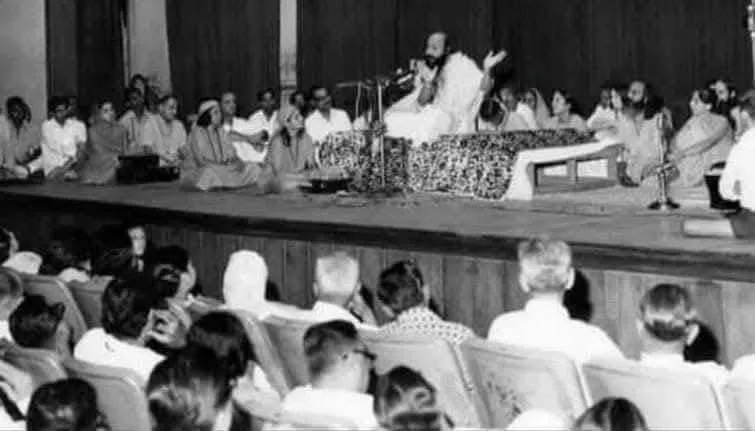
Osho's original Hindi beside Osho Live's English translation, matched passage by passage.
अब सूत्र:
हे भारत, कृष्ण ने कहा, सभी मनुष्यों की श्रद्धा उनके अंतःकरण के अनुरूप होती है तथा यह पुरुष श्रद्धामय है, इसलिए जो पुरुष जैसी श्रद्धा वाला है, वह स्वयं भी वही है। उसमें सात्विक पुरुष देवों को पूजते हैं और राजस पुरुष यक्ष और राक्षस को तथा अन्य जो तामस पुरुष हैं, वे प्रेत और भूतगणों को पूजते हैं।
मनुष्यों की श्रद्धा उनके अंतःकरण के अनुरूप होती है.।
Now, the sutra: O Bharata, Krishna said: The faith of all men conforms to their inner nature, and man is made of faith. As a man’s faith is, so is he. Men of sattva worship the gods; men of rajas worship yakshas and rakshasas; and those of tamas worship ghosts and spirits.
तुम्हारा अंतःकरण तमस से भरा हो, तो तुम्हारी श्रद्धा सात्विक नहीं हो सकती। क्योंकि श्रद्धा तो तुममें उगती है; तुम्हारे अंतःकरण की भूमि में ही वह बीज टूटता है; तुम्हारी भूमि ही उसे रसदान देती है, पुष्टि देती है; वह पौधा तुम्हारा है। तो तुम्हारा अंतःकरण कैसा है, वैसी ही तुम्हारी श्रद्धा होगी। अपने अंतःकरण की ठीक-ठीक पहचान तुम्हारी श्रद्धा की पहचान बन जाएगी।
The faith of human beings matches their inner state.
If your inner being is full of tamas, your faith cannot be sattvic. Faith sprouts within you; the seed breaks open in the soil of your heart; your soil nourishes and strengthens it; that plant is yours. So the nature of your inner being determines your faith. Knowing your inner being accurately becomes knowing your faith.
इस सूत्र में कृष्ण साधक के लिए बड़ी महत्वपूर्ण बातें कह रहे हैं। एक तो यह जानना जरूरी है कि तुम्हारा अंतःकरण कैसी दशा में है। ऐसा मत सोचना कि जो लोग तामसिक हैं, वे बिलकुल तामसिक हैं। शुद्ध तामसिक व्यक्ति हो ही नहीं सकता। शुद्ध तामसिक वृत्ति का व्यक्ति हो ही नहीं सकता। क्योंकि इन तीन के जोड़ के बिना कोई भी नहीं हो सकता।
In this sutra Krishna is saying very important things for the seeker. First, you must know the condition of your inner being. Don’t imagine that tamasic people are purely tamasic. A purely tamasic person cannot exist. A person of purely tamasic disposition cannot exist—because without a mixture of the three no one can exist.
इसलिए जब हम कहते हैं तामसी, तो हमारा मतलब सापेक्ष होता है, रिलेटिव होता है। हमारा मतलब होता है कि तामसी ज्यादा, राजसी कम, सात्विक कम। तमस का अनुपात ज्यादा है, इतना ही अर्थ होता है। कोई व्यक्ति पूर्ण तामसी नहीं हो सकता, क्योंकि वह तो टूट जाएगा। होने के लिए तीन ही आवश्यक हैं।
So when we say tamasic, we mean it relatively. We mean tamas is more, rajas less, sattva less—the proportion of tamas is higher, that’s all. No one can be totally tamasic; he would fall apart. To be, all three are necessary.
इसलिए कोई व्यक्ति अगर तामसी होता है, तो समझो सत्तर परसेंट तामसी है, उनतीस परसेंट राजसी, एक परसेंट सात्विक। पर एक परसेंट सात्विक भी होना जरूरी है। नहीं तो, जैसे तीन पैर की तिपाई में से एक पैर निकाल लो, तिपाई फौरन गिर जाए; ऐसा व्यक्ति जी नहीं सकता, जिसका एक पैर गिर गया हो।
So if a person is tamasic, understand: perhaps seventy percent tamas, twenty-nine percent rajas, one percent sattva. But even one percent sattva is necessary. Otherwise, remove one leg of a three-legged stool and it collapses immediately; a person whose one leg is gone cannot live.
तुम तिपाई हो; वे तीनों गुण चाहिए; मात्रा कम-ज्यादा हो सकती है। यह हो सकता है कि एक टांग बिलकुल पतली हो तिपाई की, धागे जैसी हो, मगर उतनी जरूरी है। एक टांग बहुत मोटी हो, हाथी-पांव की बीमारी हो गई हो, यह हो सकता है। लेकिन टांगें तीन ही होंगी। तुम्हारी मुर्गी तीन टांग से ही चलती है; उससे कम में न चलेगा।
You are a tripod; you need all three legs. The proportions may vary. One leg may be extremely thin, thread-like—but it is still necessary. Another leg may be very thick, elephantine—that can be. But there will be three legs. Your chicken walks on three legs; with less it won’t walk!
तामसिक वृत्ति का व्यक्ति गहन तमस से भरा होता है, लेकिन दूसरे तत्व भी मौजूद होते हैं।
A tamasic person is filled with deep inertia, but the other elements are present.
यह पहली बात समझ लेना कि कोई पूर्ण तामसी नहीं है; कोई पूर्ण राजसी नहीं है; कोई पूर्ण सात्विक नहीं है। शुद्धतम व्यक्ति में भी, बुद्ध में भी, जब तक उनकी देह नहीं छूट जाती, तमस की टांग रहेगी। पतली होती जाएगी; उलटा हो जाएगा अनुपात; तुम्हारी तमस की टांग हाथी-पांव है; बुद्ध की तमस की टांग, समझो मच्छड़ की टांग है। पर रहेगी; उतना अनुपात रहेगा। जब तक शरीर है, तब तक तीनों रहेंगे।
First understand this: no one is purely tamasic; no one purely rajasic; no one purely sattvic. Even in the purest, in a Buddha, until the body is dropped, the leg of tamas remains. It keeps thinning; the ratio reverses. Your tamas leg is elephant-foot; Buddha’s tamas leg is like a mosquito’s leg—yet it remains. As long as there is a body, the three remain.
इसलिए बुद्ध ने निर्वाण की दो अवस्थाएं कही हैं। पहला निर्वाण, जब समाधि उपलब्ध होती है, लेकिन शरीर बचता है। वह पूर्ण निर्वाण नहीं है। जीवनमुक्त हो गया व्यक्ति, जंजीरें टूट गईं, लेकिन कारागृह मौजूद है। कैदी न रहा, जंजीरें नहीं हैं हाथ-पैर पर, यह भी हो सकता है कि जेलर प्रसन्न हो गया हो इस व्यक्ति से और इसने उसको कैदियों के ऊपर सुपरिनटेंडेंट या सुपरवाइजर बना दिया हो। बाकी है कारागृह के भीतर; अभी दीवालें मौजूद हैं। इतना प्रसन्न हो गया हो जेलर इसकी सात्विकता से कि इसको बाहर-भीतर आने की भी सुविधा हो गई हो; सब्जी खरीदने बाहर चला जाता हो; इसके भागने का डर न रहा हो। लेकिन इसे भी लौट आना पड़ता है। कभी-कभी घर के लोगों से भी मिल आता हो, गपशप भी कर आता हो, लेकिन फिर भी लौट आना पड़ता है।
Hence Buddha spoke of two nirvanas. The first nirvana is when samadhi is attained but the body remains—this is not complete nirvana. The person is liberated while alive—the chains are broken, but the prison stands. The prisoner is no more; the shackles are gone; it may even be that the jailer is pleased with this person’s sattva and has made him a kind of supervisor over other prisoners. He remains within the prison; the walls still exist. The jailer might be so pleased that he allows him to go in and out to buy vegetables; there is no fear he will run away. Still, he must return. Sometimes he even goes home and chats with family—but still he must return.
अभी इसकी नाव भी शरीर के किनारे से ही बंधी रहेगी। इसकी स्वतंत्रता बढ़ गई, बहुत बढ़ गई। यह करीब-करीब ऐसा स्वतंत्र हो गया है, जैसा कि कारागृह के बाहर के लोग हैं; लेकिन करीब-करीब, एप्रॉक्सिमेट। जरा-सी बात तो अभी अटकी है, अभी शरीर से बंधा है। इसको हम जीवनमुक्त कहते हैं, क्योंकि यह निन्यानबे प्रतिशत मुक्त है। कुछ बचा नहीं, सब हो गया है। सिर्फ शरीर के गिरने की बात है।
For now his boat remains tied to the bank of the body. His freedom has increased—a lot. He is almost as free as those outside the prison—but almost. A little thing is still pending: he is tethered to the body. We call him jivanmukta, liberated in life, because he is ninety-nine percent free. Nothing remains—everything is done. Only the falling of the body is left.
इसलिए बुद्ध ने कहा, जब शरीर गिर जाता है, तब महापरिनिर्वाण, तब महासमाधि लगती है। जीवनमुक्त तब मोक्ष को उपलब्ध हो जाता; तब मुक्तत्व उसका स्वभाव हो जाता। अब दीवाल भी गिर गई, अब कारागृह न रहा; जंजीरें भी टूट गईं।
Therefore Buddha said: when the body falls, then comes the great parinirvana, the great samadhi. The jivanmukta then attains moksha; freedom becomes his nature. Now the walls have fallen, the prison is no more; the chains are shattered.
रजस से भरे व्यक्ति में भी तमस होता है, सत्व होता है। तीनों सभी में होते हैं। और तीनों सभी में होते हैं, इससे ही क्रांति की संभावना है। नहीं तो मुश्किल हो जाए। अगर कोई व्यक्ति पूरा ही तामसी हो, सौ प्रतिशत, चौबीस कैरेट तामसी हो, तो फिर कुछ नहीं किया जा सकता; कोई उपाय न रहा। यह तो करीब-करीब लाश की तरह पड़ा रहेगा, कोमा में रहेगा, बेहोश रहेगा, क्योंकि होश के लिए भी थोड़ा रजस चाहिए। यह तो हाथ-पैर भी न हिलाएगा; यह तो आंख भी न खोलेगा; इसका तो जीना भी जीना न होगा; यह तो मुरदे की भांति होगा; जीते जी मुरदा होगा। नहीं, इसकी फिर कोई संभावना क्रांति की न रह जाएगी।
In a rajasic person too there is tamas and sattva. All three are present in everyone. That all three are present is precisely what makes transformation possible. Otherwise it would be difficult. If someone were one hundred percent tamasic—twenty-four carat tamas—then nothing could be done. He would lie like a corpse, in a coma, unconscious—because even awareness requires some rajas. He wouldn’t move his limbs; he wouldn’t open his eyes; his living would not be living—he would be like a living corpse. There would be no possibility of revolution.
दूसरे तत्व मौजूद हैं, उनसे ही क्रांति का द्वार खुला है, उन्हीं के सहारे एक से दूसरे में जाया जा सकता है। जैसे तुम अंधेरे कमरे में बैठे हो, लेकिन छपरैल से, खपड़ों की संध से एक छोटी-सी सूरज की किरण भीतर आ रही है। सब घना अंधकार है, पर एक छोटी किरण अंधकार में उतर रही है। वही द्वार है। तुम उसी किरण के सहारे चाहो तो सूरज तक पहुंच जाओगे, चाहे वह दस करोड़ मील दूर हो। तुम उसी का किरण का अगर मार्ग पकड़ लो, तो तुम सूरज के स्रोत तक पहुंच जाओगे। वह गहन अंधकार पीछे छूट सकता है; यात्रा संभव है। इसलिए तीनों तत्व सभी में हैं, पहली बात समझ लेनी जरूरी है।
The presence of the other elements opens the door to transformation; on their support one can go from one to another. Like sitting in a dark room where a thin ray of sunlight slips in through a crack in the tiles. Thick darkness everywhere, but a tiny ray enters the dark. That is the doorway. If you wish, you can travel along that ray to the sun itself, even if it is millions of miles away. If you catch hold of that one ray, you can reach the source of the sun. The deep darkness can be left behind; the journey is possible. So all three elements are present in everyone—this is the first thing to grasp.
दूसरी बात समझ लेनी जरूरी है कि तीनों तत्वों का अनुपात भी सदा थिर नहीं रहता। रात तमस बढ़ जाता है, दिन में रजस बढ़ जाता, संध्याकाल में सत्व बढ़ जाता है। इसलिए हिंदुओं ने संध्याकाल को प्रार्थना का क्षण समझा।
The second thing: the proportion of the three is never static. At night tamas increases; during the day rajas increases; at twilight sattva increases. Hence Hindus understood twilight to be the time for prayer.
सुबह, जब रात जा चुकी और सूरज अभी नहीं उगा, वही ब्रह्ममुहूर्त है। उसको ब्रह्ममुहूर्त कहने का कारण है भीतर की गुण-व्यवस्था से। रात जा चुकी, पृथ्वी जाग गई, पक्षी बोलने लगे, वृक्ष उठ आए, लोग नींद के बाहर आने लगे, सारी पृथ्वी पर तमस का जाल सिकुड़ने लगा। सूरज करीब है क्षितिज के, जल्दी ही उसका किरण-जाल फैल जाएगा, जल्दी ही सब उठ बैठेगा, रजस पैदा होगा। सूरज के उगते ही काम-धाम की दुनिया शुरू होगी। अभी सूरज नहीं उगा, अभी रजस उगने को है। अभी रात गई, तमस जा चुका, मध्य की छोटी-सी घड़ी है, वह संध्या है।
In the morning, when the night has gone and the sun has not yet risen—that is the brahmamuhurta. It is called brahmamuhurta because of the inner economy of the gunas. Night has passed, the earth is awakening, birds have begun to call, trees have risen, people are emerging from sleep; the net of tamas is shrinking across the earth. The sun is near the horizon; soon its net of rays will spread; soon everything will rise—rajas will be born. With sunrise, the world of work commences. The sun has not yet risen—rajas is about to arise. Night has gone—tamas has departed. This small middle interval is sandhya, the juncture.
संध्या का अर्थ है, बीच का काल, मध्य की घड़ी। उस मध्य की घड़ी में सत्व का प्रमाण ज्यादा होता है। वह दोनों के बीच की घड़ी है। इसलिए उस क्षण को ध्यान में लगाना चाहिए। क्योंकि अगर ध्यान सत्व से निर्मित हो, तो दूरगामी होगा। उस सत्व को अगर तुम ध्यान बनाओ, तो धीरे-धीरे तुममें सत्व बढ़ता जाएगा।
Sandhya means the in-between time, the middle moment. In that middle moment the quotient of sattva is higher—it is the junction of the two. Therefore you should use that time for meditation. If meditation is born of sattva, it will be far-reaching. If you make that sattva into meditation, gradually sattva within you will increase.
ऐसे ही सांझ को सूरज डूब गया, रजस का व्यापार बंद होने लगा, सूर्य ने समेट ली अपनी दुकान, द्वार-दरवाजे बंद करने लगा। रात आने को है, आती ही है, उसकी पहली पगध्वनियां सुनाई पड़ने लगीं। मध्य का छोटा-सा काल है, वह संध्या है।
Likewise in the evening, the sun has set, the rajas-business is closing down; the sun has folded up shop, closing doors. Night is coming; the first footfalls of night are audible. There is a small middle hour—that is sandhya.
दुनिया के सभी धर्मों ने मध्य के काल चुने हैं। क्योंकि उस मध्य के काल में, जब दो तत्वों के बीच की थोड़ी-सी संधि होती है, तो सत्व का क्षण महत्वपूर्ण होता है।
All religions have chosen the middle times. Because at that juncture, when the two are briefly conjoined, the sattva-moment is significant.
तुम्हारे भीतर हो सकता है पचास प्रतिशत या साठ प्रतिशत तमस हो, तीस या चालीस प्रतिशत रजस हो, एक प्रतिशत सत्व हो, तो उस मध्यकाल में वह एक प्रतिशत प्रमुख होता है। और उसका अगर तुम उपयोग कर लो, तो ब्रह्ममुहूर्त का तुमने उपयोग कर लिया।
Within you it may be that fifty or sixty percent is tamas, thirty or forty percent rajas, one percent sattva—at that middle time that one percent becomes dominant. And if you use it, you have used the brahmamuhurta.
इसलिए हिंदुओं के लिए तो प्रार्थना शब्द संध्या का पर्यायवाची हो गया। वे जब प्रार्थना करते हैं, तो वे कहते हैं, संध्या कर रहे हैं। वे भूल गए हैं कि उसका अर्थ क्या था!
Hence for Hindus the very word “prayer” became synonymous with sandhya. When they pray they say, “We are doing sandhya.” They have forgotten what it meant!
इस्लाम में भी नियम है, सूरज उगने के समय, सूरज डूबने के समय, सूरज जब मध्य आकाश में हो, तब--ऐसी सूरज की पांच घड़ियां उन्होंने चुनी हैं। लेकिन दो घड़ियां वहां भी मौजूद हैं, सुबह और सांझ। उन घड़ियों में सत्व तेज होता है। रात्रि तमस तेज हो जाता है, दिन रजस तेज हो जाता है।
In Islam too there is a rule—at sunrise, at sunset, when the sun is at the zenith—five solar times were chosen. But two are there as well: morning and evening. In those hours sattva is intense. At night tamas grows; in the day rajas grows.
तो तुम्हारे भीतर चौबीस घंटे अनुपात एक-सा नहीं रहता। इसलिए तो भिखारी सुबह-सुबह तुमसे भीख मांगने आते हैं। उस वक्त सत्व की थोड़ी-सी छाया होती है; तुम शायद दे सको। भिखारी दिनभर के बाद भीख मांगने नहीं आते। क्योंकि वे जानते हैं, रजस से थका आदमी चिड़चिड़ा हो जाता है, नाराज होता है। भिखारी को देखकर ही गुस्से में भर जाएगा; देने की जगह छीनने का मन होगा।
So within you the proportion does not remain the same through twenty-four hours. That is why beggars come to ask in the early morning. At that time there is a little shade of sattva—you might give. Beggars don’t come to beg late in the day. They know a man tired from rajas becomes irritable, angry. At the mere sight of a beggar he’ll be enraged—he’ll want to snatch rather than give.
सुबह-सुबह तुम उठे हो और एक भिखारी द्वार पर आ गया है, इनकार करना जरा मुश्किल होता है। तुम्हीं हो, सांझ को भी तुम्हीं रहोगे, दोपहर भी तुम्हीं रहोगे। लेकिन सुबह जरा इनकार अटकता है, एकदम से कह देना नहीं, संभव नहीं मालूम होता। भीतर से कोई कहता है, कुछ दे दो। सत्व प्रगाढ़ है।
Early morning you wake and a beggar arrives at your door—saying no is a bit difficult. It is still you; in the evening it will still be you; at noon still you. But in the morning refusal sticks in your throat—an emphatic no feels wrong. Something inside says, “Give something.” Sattva is deep.
जो आदमी समझदार है, वह अपनी जीवन-विधि को इस तरह से बनाएगा कि वह इन गुणों का ठीक-ठीक उपयोग कर ले। अगर तुम्हें कोई शुभ कार्य करना हो, तो संध्याकाल चुनना; तो तुम्हारी गति ज्यादा हो सकेगी। अगर कोई अशुभ कार्य चुनना हो, तो मध्य-रात्रि चुनना, तो तुम्हारी गति ज्यादा हो सकेगी। हत्यारे, चोर, सब मध्य-रात्रि चुनते हैं।
One who is intelligent will structure his life to take precise advantage of these gunas. If you want to do something auspicious, choose the twilight; your progress will be greater. If something inauspicious, choose midnight; your momentum will be greater. Murderers, thieves, all choose midnight.
सुबह भोर के क्षण में तो चोर को भी चोरी करना मुश्किल हो जाएगा, हत्यारे को भी हत्या करना मुश्किल हो जाएगा, उसकी जीवन-धारा भिन्न होगी। भरी दोपहर में सब दफ्तर और दुकानें खुलती हैं दुनिया की; ग्यारह बजे, वह रजस का व्यापार है। बाजार धूम में होता है, जब सूरज आकाश में होता है। फिर सब क्षीण हो जाता है। रात्रि लोग क्लबघरों में इकट्ठे होते हैं, शराब पीने, नाचने। वेश्याओं के घर-द्वार पर दस्तक देते हैं। तमस प्रगाढ़ है।
At dawn even a thief will find it difficult to steal; a murderer will find it hard to kill—the current of his life will be different. At high noon the world’s offices and shops open—eleven o’clock—the business of rajas. The market is in full swing when the sun is high. Then it all wanes. At night people gather in clubs, to drink, to dance. They knock at the doors of prostitutes—tamas is dense.
तुम कभी-कभी हैरान होओगे, सुबह जिसको तुमने भोर में प्रार्थना करते देखा, दोपहर में बाजार में तुम लोगों को लूटते देखोगे उसी आदमी को, उसी आदमी को रात तुम वेश्याघर में शराब पीते पाओगे। तुम बड़े हैरान होओगे कि बात क्या है! यह आदमी वही है?
Sometimes you are astonished: a man you saw praying at dawn, the same man you see at noon cheating people at the market, and at night you find him in a brothel drinking. You’re amazed—“What’s going on? Is this the same man?”
तुम सोचोगे, इसकी प्रार्थना झूठी है। जरूरी नहीं। प्रार्थना सही रही हो। तुम सोचोगे, यह दुकान पर जो तिलक-चंदन लगाकर बैठता है, वह सब बकवास है। जब इसने तिलक-चंदन लगाया था, तब तिलक-चंदन का भाव रहा हो; झूठ मत समझना। तिलक-चंदन हटा नहीं, क्योंकि तिलक-चंदन तो चमड़ी पर लगा है। भीतर के तमस, रजस, सत्व का रूपांतरण हो गया।
You think his prayer is false. Not necessary. The prayer may have been true. You think the tilak and sandal paste he applies in his shop is all humbug. When he put it on, the feeling of tilak-sandal may have been genuine; don’t assume it was always false. The tilak does not fade—because the tilak is on the skin; what changes is the inner play of tamas, rajas, sattva.
तो दुकान पर यह आदमी बैठकर हरि बोल, हरि बोल भी करता रहता है और जेब भी काटता रहता है। जरूरी नहीं कि इसका हरि बोल सदा ही झूठ होता हो; कभी-कभी किन्हीं क्षणों में बिलकुल सच होता है। और यही आदमी रात वेश्याघर चला जाता है।
So he sits in the shop saying “Hari bol, Hari bol” while he picks your pocket. It is not necessary that his “Hari bol” is always false; sometimes, in certain moments, it is utterly true. And the same man goes to the brothel at night.
तुम भरोसा नहीं कर पाते, क्योंकि तुम्हें पता नहीं है, आदमी एक नहीं है, तीन है। हर आदमी के भीतर कम से कम तीन आदमी हैं। तेरह होंगे, वह दूसरी बात है। मगर तीन तो हैं ही। कहावत है, जब कोई आदमी बिलकुल भ्रष्ट हो जाता है, तो लोग कहते हैं, तीन तेरह हो गए। तीन तो हैं ही, लेकिन अब तेरह हो गए; अब मामला ही खराब हो गया, अब सब खंड-खंड हो गया।
You cannot trust it because you don’t know: a person is not one, he is three. In every person there are at least three persons. If there are thirteen, that’s another matter. But three there are at minimum. There’s a saying: when a person becomes completely corrupt, people say, “Three became thirteen.” Three are there, but now they’ve become thirteen—now the matter is bad; it’s all fragmented.
ठीक से अगर तुम अपने जीवन का निरीक्षण करो, तो तुम बहुत-सी बातें समझ पाओगे। प्रत्येक समझपूर्वक जीने वाले आदमी को अपने जीवन की निरंतर निरीक्षणा करते रहनी चाहिए और देखना चाहिए, किन क्षणों में शुभ प्रगाढ़ होता है। उन क्षणों का शुभ के लिए उपयोग करो। और उन क्षणों को जितना बढ़ा सको, बढ़ाओ। तुम्हारी भोर जितनी बड़ी हो जाए, उतना अच्छा। तुम्हारी संध्या जितनी लंबी हो जाए, उतना अच्छा। और जो तुमने शुभ क्षण में पाया है, उसकी सुवास को दूसरे क्षणों में भी खींचने की कोशिश करो। तो ही रूपांतरण होगा; नहीं तो रूपांतरण न होगा।
If you observe your life carefully, you will understand many things. Anyone who wants to live consciously should continually observe his life and note in which moments the auspicious becomes strong. Use those moments for the auspicious—and lengthen them as much as possible. Let your dawn be as long as possible; let your twilight be as long as possible. And the fragrance you gain in auspicious moments—try to draw it into the other hours too. Only then will transformation happen; otherwise it will not.
फिर दिन के चौबीस घंटे में ही यह बदलाहट होती है, ऐसा नहीं; जीवन की हर घड़ी में! बच्चे में सत्व का अनुपात ज्यादा होता है, क्योंकि वह जीवन की भोर है। जवान में रज का अनुपात ज्यादा होता है, क्योंकि वह जीवन की आपा-धापी, बाजार है। बूढ़े में रजस और सत्व दोनों क्षीण हो जाते हैं, तमस बढ़ जाता है; क्योंकि वह मौत का आगमन है। मौत यानी पूर्ण तमस में गिर जाना।
This change of proportion happens not only across a day; it happens across life. In a child sattva is greater—because it is life’s dawn. In youth rajas is greater—because it is the bustle, the marketplace of life. In old age both rajas and sattva wane and tamas increases—because death approaches. Death means falling into complete tamas.
अब यह बड़े मजे की बात है, लेकिन सभी बूढ़े दूसरों को शिक्षा देते हैं। वे बच्चों को भी चलाने की कोशिश करते हैं। होना उलटा चाहिए कि बूढ़े बच्चों के पीछे चलें। सांझ भोर का पीछा करे। इसलिए तो दुनिया उलटी है। यहां नाव नदी पर नहीं है; यहां नदी नाव पर है। बूढ़े बच्चों को चला रहे हैं; गलत हो रहा है। सांझ सुबह को चलाए, गलत हो जाएगा। बूढ़ों को बच्चों का अनुसरण करना चाहिए, क्योंकि बच्चे निर्दोष हैं।
Now, a curious fact—yet all old people like to instruct others. They even try to direct children. It should be the other way around: the old should follow the children. Evening should follow the dawn. The world is upside down. Here the river sits on the boat instead of the boat on the river. The old drive the children—this is wrong. Evening directing morning is wrong. The old should follow the children, because children are innocent.
जीसस ने कहा है, जो बच्चों की तरह भोले-भाले होंगे, वे ही मेरे प्रभु के राज्य में प्रवेश कर सकेंगे।
Jesus said: Only those who are as simple and guileless as children will enter my Father’s kingdom.
बूढ़ा आदमी तो चालाक हो जाता है। हो ही जाएगा, जीवनभर का अनुभव, जीवनभर की दांव-पेंच, कलाएं, राजनीति, चालबाजियां--धोखे जो दिए, धोखे जो खाए--सब का अनुभव। बूढ़ा आदमी निर्दोष हो, बड़ा मुश्किल है; हो जाए, तो संत।
An old person becomes cunning—how could he not? A lifetime of experience—ploys, arts, politics, tricks—deceptions given and received—so much experience. For an old person to be guileless is difficult; if he is, he is a saint.
बच्चा निर्दोष होता है, लेकिन संत नहीं। सभी बच्चे निर्दोष होते हैं, वह स्वाभाविक है। वह कोई गुण नहीं है। क्योंकि बच्चों का संतत्व सब खो जाएगा। चौदह वर्ष के होंगे, कामवासना जगेगी, रजस पैदा होगा। सब भूल जाएंगे, सब निर्दोषता बच्चों की खो जाएगी।
A child is innocent, but not a saint. All children are innocent—naturally so. That is no earned virtue. A child’s saintliness will be lost. At fourteen sex will awaken; rajas will arise; all will be forgotten; the innocence of childhood will be lost.
तुमने कभी सोचा, सभी बच्चे जब पैदा होते हैं, तो सुंदर मालूम होते हैं। कोई बच्चा कुरूप नहीं होता। और सभी लोग बड़े होते-होते कुरूप हो जाते हैं। शायद ही कोई आदमी सुंदर बचता है। क्या मामला है?
Have you noticed? All babies look beautiful when they are born—not one is ugly. And almost everyone becomes ugly growing up—it is rare for someone to remain beautiful. What is the matter?
बच्चे सत्व को उपलब्ध होते हैं। अभी आ रहे हैं सीधे परमात्मा के घर से। अभी वह सुवास उनके शरीर को घेरे है। अभी-अभी पैदा हुए, भोर का क्षण है, ब्रह्ममुहूर्त। बच्चे यानी ब्रह्ममुहूर्त। अभी प्रार्थना गूंज रही है; अभी मंदिर की घंटियां बज रही हैं; अभी तिलक ताजा है; अभी हाथों में लगे चंदन में गंध है; अभी-अभी आते हैं मूल स्रोत से, उत्स से। खो जाएंगे कल।
Children are in sattva; they have just come straight from God’s house. That fragrance still envelops their body. Freshly born—the dawn moment, the brahmamuhurta. Children are a brahmamuhurta. The prayer is still ringing; the temple bells are still sounding; the tilak is fresh; the sandalwood’s fragrance is on the hands—they have just come from the source. Tomorrow it will be lost.
अगर दुनिया कभी समझदार होगी, तो बूढ़े बच्चों का अनुसरण करेंगे, उनसे सीखेंगे। उनका बालपन संतत्व की कीमिया है। और जब कोई बूढ़ा आदमी बच्चे जैसा हो जाता है, तो इस जगत में अनूठी घटना घटती है। जब कोई बूढ़ा आदमी बच्चे जैसा हो जाता है, तो इस जगत में अपूर्व सौंदर्य घटता है।
If ever the world becomes wise, the old will follow the children and learn from them. Their childlikeness is the alchemy of sainthood. And when an old person becomes childlike again, a unique event happens in this world. When an old person becomes like a child, an incomparable beauty dawns.
ऐसे बूढ़े आदमी के सौंदर्य की तुम कोई तुलना नहीं कर सकते; कोई जवान आदमी इतना सुंदर नहीं हो सकता। क्योंकि जवानी में बड़ा तनाव है, बेचैनी है, दौड़ है, उपद्रव है, आपा-धापी है। कैसे कोई जवान इतना सुंदर हो सकता है? तूफान है, आंधी है। बुढ़ापे में सब शांत हो गया। आंधी जा चुकी; तूफान विदा हो गया। तूफान के पीछे के क्षण हैं, जब सब शांत हो जाता है और एक सन्नाटा घेर लेता है।
No youthful beauty compares to the beauty of such an old person. Because youth carries tension, restlessness, running, commotion, hustle. How can a young person be that beautiful? There is a storm, a gale. In old age all becomes quiet—the storm has passed; the gale has bid farewell. These are the moments after the storm, when everything is still and a deep silence pervades.
अगर बूढ़े आदमी ने बचपन को फिर से पुनरुज्जीवित कर लिया, तो वह संत हो जाता है। नहीं तो वह महान तामसी हो जाता है। इसलिए बूढ़े आदमी बहुत तामसी हो जाते हैं। उनका जीवन करीब-करीब मुरदे जैसा हो जाता है। चिड़चिड़े, नाराज, हर चीज उनके लिए की जाए, कुछ करने को तैयार नहीं! हर चीज की अपेक्षा और हर चीज से शिकायत। कोई चीज तृप्त नहीं करती। सारा जगत असार मालूम पड़ता है; व्यर्थ मालूम पड़ता है। और आकांक्षा मरती नहीं, महत्वाकांक्षा जगी रहती है। मांग कायम रहती है। करना कुछ नहीं है, मांग भारी है।
If an old person reanimates childhood, he becomes a saint. Otherwise he becomes profoundly tamasic. That is why old people become very tamasic. Their lives become almost corpse-like—irritable, angry, demanding that everything be done for them, unwilling to do anything themselves! Expectation from everything and complaint about everything. Nothing satisfies. The whole world seems insubstantial, futile. Desire does not die; ambition remains lit. The demand endures; the doing is gone.
तो जीवन में भी घड़ियां बदलती हैं, जब अनुपात बदल जाता है। और जीवन का ही सवाल नहीं है। अनुपात रोज भी बदल जाता है। परिस्थिति भी अनुपात को बदल देती है।
So within life, the hours change and the proportions shift. And not only across life—the proportions shift day by day. Circumstances also change the proportions.
तुम दोपहर बड़ी दौड़ में थे। अचानक एक शुभ-संवाद किसी ने दे दिया, तत्क्षण भीतर की मात्रा में भेद हो जाता है। किसी ने शुभ-संवाद दे दिया, तुम्हारी दौड़ ठिठक गई; किसी ने खुशी की एक खबर दे दी, तुम प्रसन्न हो गए, तुम्हारे भीतर की मात्रा बदल गई। तुम भोर में बड़े सात्विक थे और किसी ने खबर दी कि कोई मर गया; उदासी छा गई, तमस ने घेर लिया।
At noon you were in a great rush. Suddenly someone brings you good news—at once the inner proportions change. A happy message halts your rush; joy arises; the inner ratio shifts. You were very sattvic at dawn; someone informs you that someone died—sadness descends, and tamas envelops.
तो प्रति क्षण परिस्थिति भी बदलती है। लेकिन ये सारी बातें तुम्हें अपने भीतर ठीक से स्वाध्याय करनी चाहिए, ताकि तुम इनका ठीक-ठीक उपयोग कर सको। और जो व्यक्ति अपने अनुपात को न तो परिस्थिति से प्रभावित होने देता है, न समय की धारा से प्रभावित होने देता है, न जीवन की अवस्थाओं से प्रभावित होने देता है, वही व्यक्ति साधक है।
So at every moment circumstances alter things. You should study all this within yourself carefully so that you can use it rightly. And the person who does not allow his inner ratio to be determined by circumstance, or by the flow of time, or by the stages of life—that person is a seeker.
इसलिए साधना बड़ी कठिन मालूम पड़ती है। जो भरी दोपहरी में ऐसा होता है, जैसे ब्रह्ममुहूर्त में कोई हो; जो बुढ़ापे में ऐसा होता है, जैसे बचपन में कोई हो; तब साधना का सूत्र शुरू होता है।
That is why sadhana seems so difficult: one who is in blazing noon as if in brahmamuhurta; who is in old age as if in childhood—that is where sadhana begins.
पहले ठीक से निरीक्षण करो। फिर निरीक्षण को ठीक से सोचकर अपने जीवन की गति को बदलो। और गति बदलनी है इस भांति कि अति न हो जाए। तीनों की मात्रा समान हो जाए।
First observe correctly. Then, thinking it through, change the rhythm of your life. And change it in such a way that there is no excess. Let the three proportions become equal.
एक तिहाई हो तमस, वह जरूरी है। इसलिए चौबीस घंटे में आठ घंटे सोना जरूरी है; वह एक तिहाई तमस है। उससे कम सोओगे, नुकसान होगा; उससे ज्यादा सोओगे, नुकसान होगा। आठ घंटा सोना जरूरी है। आठ घंटा जीवन की दौड़-धूप जरूरी है। रजस, भागो-दौड़ो; महत्वाकांक्षा का विस्तार है। उसको भी अनुभव करो। क्योंकि गैर अनुभव के गुजर गए, तो पकोगे नहीं, पार न होओगे, अतिक्रमण न होगा। आठ घंटा व्यापार, व्यवसाय, दौड़-धूप। आठ घंटा सत्व--प्रार्थना, पूजा, ध्यान। ऐसा एक तिहाई, एक तिहाई जीवन को बांट दो।
One-third tamas—necessary. Therefore in twenty-four hours, eight hours of sleep are necessary—that is one-third tamas. Sleep less and there will be harm; sleep more and there will be harm. Eight hours are needed. Eight hours are needed for the hustle of life—rajas; running, striving; the expansion of ambition. That too must be experienced—because if unexperienced, you will not ripen; you will not go beyond. Eight hours for trade, work, bustle. Eight hours for sattva—prayer, worship, meditation. Divide your life into one-third, one-third, one-third.
अगर तुम्हारा सारा समय एक तिहाई, एक तिहाई की मात्रा में बंट जाए, तुम धीरे-धीरे पाओगे, यह अनुपात थिर हो जाता है। तब न तो रात में यह बदलता, न दिन में बदलता; न जवानी में, न बुढ़ापे में। यह अनुपात धीरे-धीरे, धीरे-धीरे थिर हो जाता है। इस थिरता का नाम ही सत्व की उपलब्धि है। क्योंकि जब तीनों समान होते हैं, तब तुम्हारे भीतर एक संगीत बजने लगता है अनजाना, जिसे तुमने पहले कभी नहीं सुना।
If your whole time is divided in that proportion, gradually you will find the ratio stabilizes. Then it won’t swing with night or day, with youth or old age. This steadiness is what I call the attainment of sattva. Because when all three balance, a music begins in you—unknown, never heard before.
इसलिए मैं कहता हूं, हिमालय मत भागना, क्योंकि वह कोशिश है चौबीस घंटे सत्व में जीने की। वह भी अतिशय है। इसलिए मैं संन्यासी को भी कहता हूं, घर में रहना। आठ घंटा संन्यासी, आठ घंटा दुकानदार। आठ घंटा निद्रा में पड़े हैं, न संन्यासी, न दुकानदार। विश्राम भी तो चाहिए, संन्यास से भी, दुकान से भी!
Therefore I say: don’t run to the Himalayas—because that is an attempt to live twenty-four hours in sattva. That too is an excess. So I tell the sannyasin as well: live at home. Eight hours a sannyasin, eight hours a shopkeeper. Eight hours in sleep—neither sannyasin nor shopkeeper. Rest is needed—from sannyas too, from the shop too!
चौबीस घंटे संन्यासी बनने की कोशिश में भारत ने बहुत गंवाया। कि न तो वे संन्यासी संन्यासी हो पाए, क्योंकि वे हो नहीं सकते। उन्होंने कोशिश की कि तिपाई के दो पैर तोड़ दें और एक ही पैर पर खड़े हो जाएं; लंगड़ा गए। तो भारत का संन्यास बुरी तरह लंगड़ा गया और बुरी तरह धूल-धूसरित होकर गिरा। गरिमा पैदा नहीं हुई। संन्यासी संतुलित न रहा।
In trying to be a sannyasin for twenty-four hours, India has lost much. Those sannyasins did not become true sannyasins—because they cannot. They tried to break off two legs of the tripod and stand on one—and became lame. India’s sannyas became badly crippled and fell in the dust; grandeur did not arise; the sannyasin lost balance.
और तुम तोड़ नहीं सकते दूसरे दो पैर, क्योंकि जिंदा रहने के लिए जरूरी हैं। पीछे के द्वार से वे प्रवेश कर गए। तो संन्यासी बाहर से दिखाएगा, उसकी कोई धन में उत्सुकता नहीं है, और भीतर से धन जोड़ेगा। बाहर से दिखाएगा, उसकी कोई महत्वाकांक्षा नहीं है, लेकिन विस्तार में मन लगा रहेगा। बाहर से दिखाएगा कि मेरे जीवन में कोई तमस नहीं है, लेकिन भीतर भयंकर तमस घिरा रहेगा।
And you cannot break the other two legs—because they are essential for living. They sneak back in by the back door. The sannyasin shows outwardly that he has no interest in wealth, while inwardly he hoards money. Outwardly he shows no ambition, but the mind remains stretched on expansion. Outwardly he shows there is no tamas in his life, but inside a terrible inertia gathers.
भाग नहीं सकते, जीवन के नियम के विपरीत नहीं चल सकते। जीवन के नियम का उपयोग करो। समझदार वह है, जो जीवन के नियम का उपयोग करके जीवन के पार उठ जाता है। नासमझ वह है, जो जीवन के नियम को तोड़ने की कोशिश करके बाहर होना चाहता है। वह और उलझ जाता है।
You cannot run away; you cannot go against the law of life. Use the law. The wise one uses the law of life to rise beyond life. The foolish one tries to break the law to get out—and only gets more entangled.
संन्यास एक कला है संतुलन की।
Sannyas is an art of balance.
हे भारत, सभी मनुष्यों की श्रद्धा उनके अंतःकरण के अनुरूप होती है। यह पुरुष श्रद्धामय है, इसलिए जो पुरुष जैसी श्रद्धा वाला है, वह स्वयं भी वही है।
O Bharata: The faith of all human beings accords with their inner being. Man is made of faith; therefore, as a person’s faith is, so is he.
तुम्हारी श्रद्धा ही तुम हो। अगर तुम्हारी श्रद्धा आलस्य की है, तो तुम्हारा जीवन आलस्य की कहानी होगा। अगर तुम्हारी श्रद्धा रजस की है, महत्वाकांक्षा की है, दौड़ की है, तुम्हारा जीवन एक दौड़-भाग होगा। अगर तुम्हारी श्रद्धा सत्व की है, शांति की है, शून्य की है, शुभ की है, तो तुम्हारे जीवन में एक सुवास होगी, जो स्वर्ग की है, जो इस पृथ्वी की नहीं है। तुम्हारी श्रद्धा ही तुम हो।
Your faith is you. If your faith is in laziness, your life will be a story of laziness. If your faith is in rajas, in ambition and running, your life will be rush and race. If your faith is in sattva, in peace, in emptiness, in the auspicious, your life will carry a fragrance of heaven—not of this earth. Your faith is you.
अपनी श्रद्धा को ठीक से पहचान लो, क्योंकि न पहचानने से बड़ी जटिलता बढ़ती है। आदमी तो होता है आलसी, अंतःकरण आलसी। और आकांक्षा करता है उन सुखों को पाने की, जो राजसी को मिलते हैं। तुम मुश्किल में पड़ोगे। तुम्हारी श्रद्धा तुम हो। आदमी तो होता है राजसी, दौड़-धूप में पड़ा। और चाहता है, वह शांति मिल जाए, जो सात्विक को मिलती है। यह हो नहीं सकता।
Recognize your faith rightly, because not recognizing it creates great complexity. A man may be lazy at heart, yet crave the pleasures that come to the rajasic—then you’ll be in trouble. Your faith is you. Or a man may be rajasic, caught in hustle, yet want the peace that comes to the sattvic—this cannot be.
मेरे पास, एक राजनीतिज्ञ हैं, वे कभी-कभी आते हैं। वे कहते हैं, शांति चाहिए। तुम्हें शांति मिल नहीं सकती। इसमें किसी का कसूर नहीं है। राजनीति की दौड़-धूप, तुम शांत हो कैसे सकते हो! और तुम अगर शांत हो गए, तो जिस दौड़-धूप में तुम लगे हो कि किस तरह मंत्री, किस तरह मुख्यमंत्री, किस तरह यह हो जाएं, वह हो जाएं--यह फिर कौन करेगा? तुम अगर शांत हो गए, तो यह भी शांत हो जाएगी।
A politician comes to me sometimes. He says, “I want peace.” You cannot have peace. It’s nobody’s fault. In the frenzy of politics, how will you be peaceful? And if you do become peaceful, who will do the very running you are now obsessed with—how to become a minister, a chief minister, how to get this and that? If you become peaceful, that too will become peaceful.
तो मैंने उनसे कहा, तुम दो में चुन लो। मैं तुम्हें शांत कर सकता हूं, लेकिन तब राजनीति जाएगी; यह दौड़-धूप न रह जाएगी; यह पागलपन न रह जाएगा। और अगर तुम्हें यह पागलपन पूरा करना है, तो शांति की बात मत करो। मेरे पास आओ ही मत। तो उन्होंने कहा, ऐसा करता हूं, एक दो साल का समय दें। दो साल और कोशिश कर लूं।
So I said to him, “Choose between the two. I can make you peaceful—but then politics will go; this madness will go.” And if you want to complete this madness, don’t talk of peace. Don’t come to me.” He said, “I’ll do this: give me two years. Let me try two more years.”
मंत्री वे हो गए हैं एक राज्य में, अब मुख्यमंत्री होने की चेष्टा है। एक दो साल! फिर तो शांत होना ही है!
He has become a minister in a state; now he wants to become chief minister. “Two years! After that I must be peaceful!”
यह आदमी शायद ही शांत हो पाए, क्योंकि दो साल में कुछ पक्का है कि मुख्यमंत्री हो जाओ? और मुख्यमंत्री होकर केंद्रीय मंत्रिमंडल में जाने की आकांक्षा न उठे, इसका कुछ पक्का है? दौड़ के लिए तो सदा दौड़ कायम रहती है। और की आकांक्षा तो सदा और की बनी रहती है।
He is unlikely ever to become peaceful. In two years is it certain he will be chief minister? And having become chief minister, will no ambition arise to enter the central cabinet? For running, the running remains; for “more,” the desire remains “more.”
वे कभी नहीं आएंगे। क्योंकि जिसे आना है, वह अभी आता है। जिसको समझ आ गई, वह अभी आता है। जो कहता है, कल आएंगे, उसको समझ नहीं है, तभी तो कल के लिए टाल रहा है। कल का किसको भरोसा है? और जो आज कल के लिए टाल रहा है, वह कल भी कल के लिए टालेगा। उसकी कल पर टालने की आदत हो जाएगी।
He will never come. One who is going to come, comes now. One who understands, comes now. He who says “tomorrow,” does not understand—that’s why he postpones. Who knows about tomorrow? And the one who postpones to tomorrow will postpone tomorrow to tomorrow. He will form the habit of postponing to tomorrow.
अपनी श्रद्धा को ठीक से पहचानो और अपनी श्रद्धा से भिन्न मत मांगो। अगर भिन्न मांगना है, तो अपनी श्रद्धा को रूपांतरित करो। अन्यथा तुम बड़ी बिगूचन में पड़ जाओगे; भीतर बड़ा बेबूझ हो जाएगा; एक पहेली हो जाओगे।
Know your faith rightly; and do not ask contrary to your faith. If you must ask for something different, then transform your faith. Otherwise you will be badly tangled inside; you will become a riddle to yourself.
सभी लोग पहेली हो गए हैं। लोग ऐसा सुख चाहते हैं, जो राजसी को मिलता है; और ऐसी शांति चाहते हैं, जो सात्विक को मिलती है; और ऐसा विश्राम चाहते हैं, जिसको आलसी भोगता है। बड़ी मुश्किल है; वे सभी एक साथ चाहते हैं। कुछ भी उपलब्ध नहीं होता।
People have become riddles. They want pleasures that belong to the rajasic; peace that belongs to the sattvic; and rest that belongs to the lazy—all at once. Impossible; nothing gets attained.
भीतर को ठीक से पहचानो, क्योंकि तुम्हारी श्रद्धा ही तुम्हारा जीवन है।
Know your inside rightly—because your faith is your life.
जो पुरुष जैसी श्रद्धा वाला है, वह स्वयं भी वही है। और अगर तुमने ठीक से भीतर को पहचाना, तो तुम जल्दी ही यह समझ जाओगे कि तृप्ति किसी एक से नहीं हो सकती। उन तीनों का संयोग चाहिए। और तीनों के संयोग में ही तृप्ति फलती है, परितोष झरता है। और तीनों के संयोग से ही एक की प्रतीति शुरू होती है। और तीनों का संयोग धीरे-धीरे-धीरे तुम्हें उस एक की तरफ ले जाता है, जो गुणातीत है।
“As a person’s faith is, so is he.” And once you truly see within, you will quickly understand that fulfillment cannot come from just one; the confluence of all three is required. Only in the union of the three does contentment flower; only then does satisfaction rain down. And from the union of the three, the sense of the One begins to dawn. This threefold harmony slowly leads you to the One who is beyond the gunas.
पाना तो उसे ही है, जो त्रिगुण के बाहर है। उस एक की ही खोज करनी है। तीनों पैरों को तुम एक ही अनुपात का बना लो, एक ही बल का, और तुम पाओगे कि तिपाई सध गई। तिपाई सध गई, कि सब सध गया। अब तुम तिपाई पर पैर रख सकते हो और एक की तरफ यात्रा शुरू हो सकती है।
What you have to attain is That which is beyond the three. That One is to be sought. Make the three legs equal in proportion and strength, and you will find the tripod has steadied. When the tripod is steady, all is steady. Now you can place your foot on the tripod and begin the journey to the One.
जो सात्विक हैं, वे देवों को पूजते हैं.।
“Those who are sattvic worship the gods.”
ये प्रतीक हैं। इन्हें भी खयाल में ले लो। जो सात्विक है, उसके मन की पूजा सत्व की तरफ होती है, स्वभावतः। क्योंकि तुम जो हो, और तुम जो होना चाहते हो, उसी का तुम्हारे मन में आदर होता है।
These are symbols—keep them in mind. One whose inclination is sattvic naturally venerates what is sattvic. You respect what you are and what you wish to become.
अगर तुम राजनेता आता है और उसके स्वागत के लिए स्टेशन पर पहुंच जाते हो, तो भला तुम राजनीति में न हो, लेकिन उसके स्वागत की खबर बताती है कि तुम राजसी हो। मौका न मिला होगा तुम्हें उपद्रव में पड़ने का, जिंदगी में उलझन होगी; पत्नी है, बच्चे हैं, काम-धंधा है और तुम नहीं पड़ पाते; लेकिन दर्शन करने तुम राजनीतिज्ञ का पहुंच जाते हो। तुम्हारी श्रद्धा! कि फिल्म अभिनेता आया है, उसके पास भीड़ लगा लेते हो--तुम्हारी श्रद्धा। कि संन्यासी आया, और तुम उसके दर्शन को पहुंच जाते हो--तुम्हारी श्रद्धा। तुम्हारी श्रद्धा ही तुम्हें संचारित करती है।
If you go to the station to welcome a politician, even if you’re not in politics, the fact you go to welcome him shows you are rajasic. You may have had no chance to plunge into that turmoil—wife, children, livelihood prevent it—but you go to have the darshan of the politician—your faith! Or a film star comes and you throng—your faith. Or a sannyasin arrives and you go for darshan—your faith. Your faith moves you.
सात्विक पुरुष देवों को पूजते हैं, दिव्यता को पूजते हैं।
The sattvic worship the devas—the divine.
दिव्यता का अर्थ है, जिनके जीवन में संगीत बजने लगा तीनों की एकता का। अभी वे एक को उपलब्ध नहीं हुए हैं; अभी यात्रा बाकी है; लेकिन बड़ा पड़ाव आ गया, तिपाई सध गई। उनके जीवन में स्वर्ग का संगीत बजने लगा। बाकी तो प्रतीक हैं कि स्वर्ग में देवता रहते हैं। ऐसा स्वर्ग कहीं नहीं है। यहीं जमीन पर तुम्हारे आस-पास रहते हैं। लेकिन तुम्हारी सत्व की श्रद्धा होगी, तो दिखाई पड़ेंगे। सत्व की श्रद्धा न होगी, तो दिखाई न पड़ेंगे। क्योंकि श्रद्धा आंख है।
Divinity means those in whose lives the music of the three in harmony has begun. They have not yet attained the One; the journey remains; but a great milestone has been reached—the tripod is steady. In their life the music of heaven sounds. The rest is symbolic: that the gods dwell in heaven. There is no such heaven somewhere else. They live right here around you. But you will see them only if you have the eye of sattva. Without that eye you will not see—because faith is the eye.
तुम्हारे पास ही, हो सकता है कि तुम्हारे पड़ोस में कोई रहता हो; हो सकता है, तुम्हारे घर में रहता हो; हो सकता है, तुम्हारी पत्नी में हो; हो सकता है, तुम्हारे पति में हो। लेकिन सत्व की आंख होगी, तो दिखाई पड़ेगा। नहीं होगी, तो नहीं दिखाई पड़ेगा। अगर पति सात्विक हो जाए और पत्नी की आंख सत्व की न हो, तो उसे कुछ और दिखाई पड़ेगा।
Right next to you, perhaps your neighbor; perhaps in your own house; perhaps in your wife; perhaps in your husband. If you have the eye of sattva, you will see. If not, you won’t. If a husband becomes sattvic and the wife lacks that eye, she will see something else entirely.
मेरे पास कई स्त्रियां शिकायत लेकर आती हैं कि आप बरबाद मत करो, हमारे पति को मत उलझाओ इस ध्यान में। अभी तो बाल-बच्चे बड़े हो रहे हैं। और अभी तो काम-धंधा शुरू ही हुआ है। और अगर वे ध्यान में उलझ गए, तो क्या होगा?
Many women come to complain: “Don’t ruin our husbands; don’t entangle them in meditation. The children are still growing. Livelihood has just started. If he gets absorbed in meditation, what will happen?”
पति में अगर सत्व पैदा हो रहा है, तो पत्नी को दिखाई नहीं पड़ता। क्योंकि उसकी श्रद्धा अभी रजस की है; वह कहती है, अभी थोड़े और गहने चाहिए। वह पति के ध्यान की कुर्बानी के लिए राजी है, अपने और थोड़े गहनों की कुर्बानी के लिए राजी नहीं है। वह कहती है, अभी तो मकान बहुत छोटा है; थोड़ा मकान तो बड़ा हो जाने दो। अभी बैंक में बैलेंस है ही क्या! बुढ़ापे में क्या होगा? अगर कल पति को कुछ हो जाए, तो हम क्या करेंगे?
If sattva is arising in the husband, the wife doesn’t see it. Her faith is still rajasic—“We need a few more ornaments.” She is ready to sacrifice the husband’s meditation, not her ornaments. “The house is still too small—let it get bigger. There is hardly any balance in the bank—what will happen in old age? If something happens to him tomorrow, what will we do?”
न तो पति की आत्मा से कोई मतलब है, न पति के जीवन से कोई मतलब है। अगर पति को कुछ हो जाए, इसकी चिंता है। तो बैंक में बैलेंस होना चाहिए, चाहे पति रहे, चाहे जाए। श्रद्धा रजस की है।
No concern with the husband’s soul, no concern with his life. Only worry if something happens to him—so there must be a bank balance, whether the husband remains or goes. Faith in rajas.
तो पति ध्यान करने बैठे, तो पत्नियां बाधा डालती हैं। अगर पत्नी में श्रद्धा पैदा हो जाए सत्व की, तो पति बेचैन हो जाता है। पति मेरे पास आते हैं, वे कहते हैं, यह आपने क्या कर दिया! एक उपद्रव खड़ा कर दिया। अब पत्नी को ज्यादा रस नहीं है कामवासना में। वह ध्यान में लगी रहती है! हम कहां जाएं? हमारी कामवासना तो मर नहीं गई! तो कृपा करें। अभी तो मैं जवान हूं, वे कहते हैं। ये तो बुढ़ापे की बातें हैं। पचास साल के बाद आप इसको सिखाते ध्यान, तो ठीक था।
So when a husband sits to meditate, wives obstruct. If the wife begins to develop faith in sattva, husbands become restless. They come to me and say, “What have you done! You’ve created upheaval. Now my wife has less interest in sex—she sits in meditation! What should I do? My sexuality hasn’t died! Please help. I’m still young.” These are old-age things, they say. “Better to teach her meditation after fifty.”
जो श्रद्धा होती है, वह दिखाई पड़ता है। ध्यान जैसी घटना घट रही हो, उसमें भी सौभाग्य नहीं मालूम पड़ता। पत्नी शांत हो रही है, इसमें भी पीड़ा लगती है।
You see only in accordance with your faith. Even when an event like meditation is happening, you don’t feel blessed. The wife is becoming peaceful and the husband feels pain.
तुम चकित होओगे, लोगों ने मुझसे आकर कहा है, पत्नियों ने कहा है कि पति अब क्रोध नहीं करते, इससे हमें हैरानी होती है। वे पहले क्रोध करते थे, तो ठीक था। अब ऐसा लगता है कि उन्हें उपेक्षा हो गई है। अक्रोध में उपेक्षा दिखती है। अक्रोध में एक घटना नहीं दिखती कि इस आदमी के जीवन में एक फूल खिला है, हम आनंदित हों। अक्रोध में दिखता है कि इस आदमी को अब रस नहीं रहा; इसलिए हम गाली भी दें, तो यह सुन लेता है। क्योंकि इसको कोई मतलब ही नहीं है। उपेक्षा से भर गया है यह आदमी।
You’ll be astonished—people have told me, wives have said, “My husband doesn’t get angry anymore—it unsettles me. Earlier when he used to get angry, it was fine. Now it seems he’s become indifferent. In his non-anger we feel neglected.” They don’t see that a flower has blossomed in this man’s life—we should rejoice. They see only that “Now he doesn’t care; even if we abuse him he listens because nothing matters to him. He has become indifferent.”
और ध्यान रखना, लोग उपेक्षा पसंद नहीं करते; चाहे गाली दो, वे उसके लिए भी राजी हैं; कम से कम इतना रस तो रखते हो कि गाली देते हो। उपेक्षा बहुत काटती है। तटस्थ हो गए! उदासीन हो गए! पत्नी घबड़ाती है कि यह तो हाथ के बाहर चला आदमी। ऐसे उदास होते-होते एक दिन घर से भाग जाएगा; फिर हम क्या करेंगे? वह चाहती है कि पति नाराज हो, लड़े, मारे-पीटे, तो भी चलेगा, ध्यान न करे।
Remember, people don’t like indifference. They would rather you abuse them—at least there is enough interest to abuse! Indifference hurts. “He’s out of my hands now. Becoming so detached, one day he’ll run away from home—what will I do?” She prefers that he be angry, quarrel, even beat her—just don’t meditate.
सत्व की श्रद्धा हो, तो ही सत्व दिखाई पड़ता है।
Only with the eye of sattva does sattva become visible.
देवता का अर्थ है, जिनके जीवन में संतुलन आ गया; जिनके जीवन में सत्व ने ऐसी संतुलन की सुगंध दे दी कि जो अब करीब-करीब मुक्ति के किनारे खड़े हैं। स्वर्ग वह सीमा है, जहां से आदमी मोक्ष में छलांग मार ले। थोड़े अटके हैं; अटकाव यह है कि उनको अभी संगीत से ही रस पैदा हो गया है; इसको भी छोड़ने की हिम्मत करनी पड़ेगी। यह सोने की जंजीर है; बड़ी प्यारी लगती है।
Deva means one whose life is balanced; one in whom sattva has given the fragrance of equilibrium so that he now stands on the shore of liberation. Heaven is that boundary from where one can leap into moksha. He’s held back a little—the hold is that he has fallen in love with the music itself; he must dare to let go even of that. It is a golden chain—very sweet.
इसलिए हम देवताओं को मुक्त पुरुष नहीं कहते। और जब कोई बुद्ध पुरुष पैदा होते हैं, तो हमारे पास कथाएं हैं कि देवता उन्हें सुनने आते हैं कि हमें मुक्ति का मार्ग दें। उनको आना पड़ेगा, क्योंकि अब वे सत्व के सुख से बंध गए हैं। स्वर्ग भी बंधन है। बड़ा प्यारा बंधन है, बड़ी मिठास है उसमें, लेकिन है कांटा। कितनी ही मीठी पीड़ा देता हो, उसे भी निकाल देना होगा।
Hence we do not call the gods liberated. And whenever a Buddha is born, our stories say the gods come to listen—asking for the path to liberation. They must come—now they are bound by the joy of sattva. Heaven too is bondage—sweet bondage, but a thorn nonetheless. However sweet the pain, it must be plucked out.
जिनकी सत्व की श्रद्धा है, वे देवों को पूजते हैं। वे जहां भी दिव्यता को पाएंगे, वहां उनका सिर झुक जाएगा।
Those whose faith is sattvic worship the devas. Wherever they encounter divinity, their heads bow.
जिनकी राजस श्रद्धा है, वे यक्ष और राक्षसों को पूजते हैं.।
“Those whose faith is rajasic worship yakshas and rakshasas.”
राक्षस का अर्थ है, जिसके जीवन में रजस प्रगाढ़ हो गया। सत्व और तम दोनों दब गए, बस रजस प्रगाढ़ हो गया।
Rakshasa means one in whom rajas has become intense—sattva and tamas have been suppressed, only rajas is powerful.
बड़े राजनेता यानी राक्षस। तुम उस तरह सोचते नहीं अब, क्योंकि तुम इन प्रतीकों का अर्थ भूल गए। तुम सोचते हो, रावण राक्षस था। किसलिए? सफल से सफल राजनीतिज्ञ था! स्वर्ण की लंका बसा दी थी। और क्या चाहिए सफल राजनीतिज्ञ के लिए? तुम्हारे सफल राजनीतिज्ञ मिट्टी के घर भी तो नहीं बसा पाते हैं लोगों के लिए; भूखा मरता है समाज। लेकिन लंका में स्वर्ण का बसा दिया था नगर। और कैसा सफल राजनीतिज्ञ चाहिए?
Great politicians are rakshasas. You don’t think in those symbols anymore because you’ve forgotten their meanings. You think Ravana was a rakshasa. Why? He was the most successful politician! He built a golden Lanka. What more does a successful politician want? Your successful politicians can’t even provide mud huts for the people; society starves. But he built a city of gold. How much more successful can a politician be?
रावण सफल से सफल राजनीतिज्ञ था; कुशल से कुशल कूटनीतिज्ञ था; प्रगाढ़ शक्तिशाली था। दौड़ उसकी महान थी। कथा तो यह है कि अगर उसे न हटाया गया होता स्वयंवर से, तो उसने सीता को जीत लिया होता; राम खाली हाथ घर वापस लौटे होते। उसे हटाया गया। डर था। क्योंकि वह इतना कुशल राजनीतिज्ञ था और इतना शक्तिशाली था कि एक सिर नहीं था उसके; उसके दस सिर थे। सभी राजनीतिज्ञों के होते हैं। एक चेहरा नहीं, दस!
Ravana was the consummate politician; a cunning strategist; immensely powerful. His drive was vast. The story goes that had he not been removed from Sita’s swayamvara, he would have won her; Rama would have returned empty-handed. He was removed. There was fear—because he was such a master politician, and so powerful, that he did not have one head but ten! All politicians have ten heads. Not one face—ten.
सभी राजनीतिज्ञ दशानन हैं। उनका कुछ पक्का नहीं है कि वे कौन-सा चेहरा तुम्हें दिखा रहे हैं। जब जैसी जरूरत हो, वे वैसा चेहरा दिखाते हैं। जब वोट मांगनी हो, तो मुस्कुराते हैं--एक चेहरा। जब वोट मिल गई, तब वे ऐसा देखते हैं, जैसे तुम्हें पहचानते ही नहीं--दूसरा चेहरा। जब वे ताकत में हैं, तब एक चेहरा; जब वे ताकत में नहीं, तब उनके कैसे हाथ जुड़े हैं और सिर झुका है, कि आपके चरणों के सेवक हैं। दशानन! उनके दस चेहरे हैं। और एक काटो, तत्क्षण दूसरा पैदा हो जाता है। इसलिए राजनीतिज्ञ को मारना मुश्किल है।
All politicians are Dashanan. You can never be sure which face they are showing you. As needed, they show that face. When they need votes, they smile—one face. When the votes are won, they act as if they don’t even recognize you—another face. In power—one face; out of power—another: hands folded, head bowed, “We are your servants.” Ten faces! Cut one off and another springs up. That is why killing the politician is difficult.
स्वयंवर भरा था, तो कथा यह है कि यह देखकर देवताओं ने कि रावण बाजी मार ले सकता है.। कई कारण थे; एक तो वह शिव का भक्त था।
At the swayamvara, the story says, seeing that Ravana might carry the day… There were many reasons: he was also a devotee of Shiva.
तुम राजनीतिज्ञों को सदा पाओगे किसी न किसी का भक्त। कोई जा रहा है सत्य साईंबाबा। कोई नहीं तो दिल्ली में बहुत ज्योतिषी बैठे हैं, उनकी ही भक्ति में लगा है। हनुमान चालीसा पढ़ रहा है, इलेक्शन जीतना है!
You will always find politicians as someone’s devotee. If not someone, then at least many astrologers in Delhi—they devote themselves there. Reciting Hanuman Chalisa—because they must win elections!
इस रावण ने अपने सिर चढ़ा-चढ़ा कर, कहते हैं, शिव को भी राजी कर लिया था। शिव का भक्त था और वह धनुष भी शिव का था। यह तोड़ देता; और यह आदमी बलशाली था।
This Ravana had even propitiated Shiva by offering his heads, they say. He was a devotee of Shiva, and that bow was Shiva’s. He would break it. And he was a strong man.
तो कथा यह है कि देवताओं ने यह देखकर कि यह तो खतरा हो जाएगा। और राम तो विनम्र व्यक्ति हैं, वे आगे आकर खड़े भी न होंगे; यह रावण तो उछलकर खड़ा हो जाएगा और धनुष तोड़ देगा। राम को शायद मौका ही न मिले; शायद कोई पूछे ही न कि राम भी आए थे। और राम तो पीछे खड़े रहेंगे। राम के होने का अर्थ ही है कि जो पीछे खड़ा रहे; जिसको आगे आने की दौड़ न हो; जो महत्वाकांक्षी न हो।
So the gods, seeing this, conspired. “This will be dangerous. Rama is a humble person; he won’t step forward. Ravana will leap up and break the bow. Rama may not even get a chance; perhaps no one will ask if Rama had come. Rama, by his very being, stands behind; he does not push to the front; he is not ambitious.”
लक्ष्मण भी ज्यादा महत्वाकांक्षी था राम से। वह दो-चार दफा उठ आया बीच-बीच में। और उसने कहा कि भाई, अगर मुझे आज्ञा दें, तो अभी इस धनुष-बाण को तोड़ दूं। उसको रोकना पड़ा, कि तू बैठ; तू थोड़ा तो ठहर। वह भी तोड़ने को बहुत तत्पर था। वह भी महत्वाकांक्षी था; वह भी राजनीतिज्ञ था।
Lakshmana was more ambitious than Rama. He jumped up a couple of times. “Brother, if you permit, I’ll break that bow right now.” He had to be restrained: “Sit! Wait a bit.” He too was eager to break it. He too was ambitious—he was a politician.
रावण को हटाया। देवताओं ने जोर से शोरगुल किया आकर स्वयंवर के आस-पास, कि रावण तू यहां क्या कर रहा है? लंका में आग लग गई है! और जब लंका में आग लगी हो.।
Ravana was removed. The gods made a loud racket around the swayamvara: “Ravana, what are you doing here? Lanka is on fire!” When Lanka is burning…
यह भी बड़ा सोचने जैसा है। राजनीतिज्ञ प्रेम की कुर्बानी दे सकता है; राजधानी में आग लगी हो, इसकी कुर्बानी नहीं दे सकता। भागा लंका की तरफ; भूल गया सीता और सब और यह प्रेम और यह सब उपद्रव। क्योंकि राजनीतिज्ञ प्रेम की कुर्बानी दे सकता है, पद की कुर्बानी नहीं दे सकता। इसलिए तुम राजनीतिज्ञों को हमेशा पाओगे कि अगर उनको पत्नी का त्याग करना पड़े, वे तैयार हैं। अगर विवाह न कर पाएं, तो तैयार। लेकिन उनका स्वयंवर पद से है।
This too is worth pondering. A politician can sacrifice love, but not his capital. He ran to Lanka—forgot Sita, love, all the show. A politician can sacrifice love, but not his post. That’s why you will find politicians ready to abandon their wives; even ready to never marry. Their real swayamvara is with power.
अन्यथा रावण ने कहा होता, हो जाए; जल जाए लंका। अगर सच में ही प्रेम होता सीता के प्रति। लेकिन हृदय होता ही नहीं राजनीतिज्ञ के पास, प्रेम कहां से होगा! वह तो जीतने आया था। इसको भी एक जीत बनाने आया था। इसको भी, अपने जीत के जो हजार चांद थे, उसमें एक चांद और जोड़ देना था, कि सीता को भी जीत लाया। जैसे लोग ट्राफी जीत लाते हैं। सीता एक ट्राफी थी, जिसको वह बैंड-बाजे बजाकर लंका में ले जाता और कहता कि देखो, इसको भी जीत लाया। रानियां उसके पास और भी बहुत थीं। कुछ रानियों की कमी न थी। कोई सीता से सुंदर कम थीं, ऐसा भी न था। भरा-पूरा रनिवास था। कोई सीता से लेना-देना न था। अन्यथा वह कहता कि ठीक।
Otherwise Ravana should have said, “Let Lanka burn.” If he truly loved Sita. But a politician has no heart—where would love come from! He had come to win. This too was a conquest—to add another trophy to his thousand wins: “I won Sita.” Like people bring home trophies—Sita was a trophy he would parade to Lanka: “Look, I won this too.” He had many queens already—no shortage. It’s not that they were less beautiful than Sita. A full harem. Sita was nothing in particular to him. Otherwise he would have said, “Fine.”
भाग गया। वह देवताओं की साजिश थी; सत्व का षड्यंत्र था कि इस राजसी व्यक्ति को हटा लिया जाए। सीता राम के योग्य थी, राम के लिए थी। सत्व का सत्व से मिलन हो सके, इसलिए देवताओं ने व्यवस्था की।
He ran. It was a divine conspiracy—a sattvic plot—to remove this rajasic man. Sita was worthy of Rama, meant for Rama. Let sattva unite with sattva—the gods arranged it.
यह रावण राक्षस है। इससे तुम यह मत समझना कि राक्षस कोई जाति है मनुष्यों की। राक्षस गुण है; वह राजनीतिज्ञ का नाम है; पद-लोलुप का नाम है।
This Ravana is a rakshasa. Don’t think rakshasa is some species of human. Rakshasa is a quality; the name of the politician; one mad for position.
राजस पुरुष यक्ष और राक्षसों को पूजते हैं.।
“Men of rajas worship yakshas and rakshasas.”
वे उनको पूजते हैं, जिनके पास शक्ति है, या जिनके पास पद है, या जिनके पास धन है। कुबेर यक्ष है। कुबेर का अर्थ है, जिसके पास सब से बड़ा धन है सारे जगत में। जो खजांची है स्वर्ग के दे
वताओं का, ट्रेजरर, कुबेर, वह यक्ष है। तो या तो धन की पूजा है या पद की पूजा है। लेकिन दोनों ही पूजा के पीछे शक्ति की पूजा है।
They worship those who have power—or position—or wealth. Kubera is a yaksha. Kubera means the one who has the greatest wealth in the world—the treasurer of the gods. So either worship of wealth or worship of post. But behind both is worship of power.
अगर ऐसा व्यक्ति देवी-देवताओं की भी पूजा करता है, तो भी शक्ति के लिए ही करता है। वह मांगता है, और दो शक्ति! ऐसी शक्ति दो कि सब को पराजित कर दूं! मैं पराजित न हो पाऊं, अपराजेय हो जाऊं! राजस शक्ति की मांग करता है।
Even if such a person worships gods and goddesses, he does it for power. He asks for more power. “Give me such power that I defeat everyone! Let me be unassailable!”
और अन्य जो तामस पुरुष हैं, वे प्रेत और भूतगणों को पूजते हैं।
“And others, who are tamasic, worship ghosts and spirits.”
फिर तीसरा वर्ग है तमस से भरे लोगों का। उनकी आकांक्षा इतनी ही है कि उनका आलस्य अखंडित रहे। कोई उन्हें जगाए न; उनकी आकांक्षाएं कोई और पूरा कर दे; वे पड़े रहें। वे अपनी मूर्च्छा में सोए रहें, वे शराब पीए रहें, वे नींद में डूबे रहें, वे प्रमाद में रहें; कोई और पूरा कर दे उनकी जरूरतों को। तो भूत और प्रेत।
The third category—those filled with tamas. Their ambition is simply that their laziness remain undisturbed. No one should awaken them; their desires should be fulfilled by others; they should lie there. Let them remain in their stupor—drunk, asleep, negligent; let someone else fulfill their needs. Hence ghosts and spirits.
भूत-प्रेत से अर्थ है, ऐसे लोग जो खुद भी तमस-प्रधान हैं, ऐसी आत्माएं जो खुद भी तमस-प्रधान हैं। वे इनकी पूर्ति करती रहती हैं। इस तरह के लोग हैं। तुम्हें वेश्या के घर ले जाने वाला एक एजेंट भी होता है, वह भूत-प्रेत है। तुम्हें धन की ओर लगाने वाला, जुआ खिलाने वाला भी होता है। तुम्हें लाटरी में दांव लगाने की उत्सुकता पैदा करवाने वाला, टिकट बेचने वाला भी होता है। वे तुम्हारे आलस्य को बढ़ाते हैं। वे कहते हैं, हम कर देंगे; तुम मजे से सोए रहो, तुम जरा-सा इतना सहारा दे दो, सब ठीक हो जाएगा।
Ghosts and spirits means entities themselves tamas-predominant. They keep fulfilling these people’s cravings. Such types exist. The agent who takes you to the brothel is a ghost-spirit. The one who hooks you on money and gambling. The one who sells you lottery tickets, exciting you to wager. They increase your laziness. “We’ll do it for you—just give a little support and all will be well.”
ठीक वैसी ही व्यवस्था आत्माओं की भी है। जैसे ही शरीर छोड़ती हैं आत्माएं.। तीन तरह की आत्माएं हैं, क्योंकि तीन तरह के गुण हैं। प्रेत को तुम राजी कर सकते हो।
A similar economy exists among disembodied souls too. As soon as souls leave the body… there are three kinds—because there are three gunas. You can propitiate spirits.
तुममें से बहुत-से प्रेत को ही राजी करने को उत्सुक हैं। कोई तुम्हें ताबीज दे दे, जिससे बीमारी ठीक हो जाए; कोई तुम्हें भभूत दे दे, जिससे खजाना मिल जाए। तुम्हारी आकांक्षा ऐसी है, तुम्हें कुछ न करना पड़े, तुम ऐसे आलस्य में पड़े रहो, खजाने तुम्हारी तरफ आते जाएं। प्रेत उत्सुक कर लेते हैं ऐसे लोगों को। वे जीवित भी हैं, शरीर में भी हैं, और शरीर के बाहर भी हैं।
Many of you are eager to propitiate spirits. Someone should give you a talisman so that your illness goes away; someone should give you sacred ash so that a treasure appears. Your desire is to do nothing, to remain lazy while treasures move toward you. Spirits seduce such people. They exist in bodies—and outside bodies too.
तुम्हारी श्रद्धा तुम्हें ले जाती है। तुम जाते हो साधु-संतों के पास, लेकिन हो सकता है, तुम साधु-संतों के पास जा ही न रहे हो। तुम्हारी श्रद्धा पर निर्भर है। हो सकता है, तुम साधु के पास जा रहे हो कि उसके पास जाने से धन की वर्षा हो जाएगी।
Your faith takes you. You go to sadhus and saints—but it may be you’re not going to them at all. It depends on your faith. You might be going to a sadhu in the hope that going to him will make money rain down.
एक आदमी, मैं दिल्ली से बंबई आ रहा था, हवाई जहाज पर मुझे मिल गए। मेरे पास ही बैठे थे। उन्होंने कहा कि बड़ी कृपा हो गई, यह मौका मिल गया, संयोग। बस, आपका आशीर्वाद चाहिए। मैंने कहा कि ठीक; इसमें भी क्या कोई नहीं करता है, आशीर्वाद देने में।
A man met me on a flight from Delhi to Bombay—he sat next to me. “Great grace, what a chance encounter! Just need your blessing.” I said, “Fine; blessing costs nothing.”
पंद्रह दिन बाद वे जबलपुर पहुंचे मुझसे मिलने। पैर पर गिर पड़े; और कहने लगे, गजब हो गया आपके आशीर्वाद से। मैंने कहा, क्या हुआ? मुझको मत फंसाना। वह आशीर्वाद मैंने तुम्हें दिया, यह भी पक्का नहीं है। सिर्फ न कहना भद्दा लगेगा, इसलिए मैं चुप रहा। हुआ क्या?
Fifteen days later he came to Jabalpur to see me. Fell at my feet. “Amazing! By your blessing—” I said, “What happened? Don’t implicate me. I’m not even sure I blessed you. I kept quiet only to avoid rudeness. What happened?”
उसने कहा, अब आप कुछ भी कहो। मैं मुकदमा जीत गया। दस लाख रुपए मुकदमे में जीतने से मिल रहे हैं। और सच बात यह है कि जीतना मुझे था नहीं; नियमानुसार मुझे हारना चाहिए था। वह दावा मेरा गलत था; लेकिन आपकी कृपा! मैंने कहा कि तुम मुझे मत फंसाओ!
“I won my court case. I will get ten lakh rupees. And truth is I shouldn’t have won; by law I should have lost. My claim was false. But your grace!” I said, “Don’t entangle me!”
अब यह आदमी आशीर्वाद मांग रहा है; एक गलत मुकदमा है, वह जीतने की आकांक्षा है। यह आदमी संत के पास पहुंच ही नहीं सकता। यह जहां भी जाएगा, इसकी श्रद्धा ही इसको खराब करती रहेगी।
This man is asking for blessing for a false case—to win. Such a person cannot reach a saint. Wherever he goes, his faith will corrupt his going.
लोग मुझसे आशीर्वाद तब से मांगते हैं, तो मैं पूछता हूं, पहले बता दो, तुम्हारा इरादा क्या है? तुम किसी भूत-प्रेत की तलाश में तो नहीं हो? नहीं तो पीछे तुम मुझे फंसाओगे।
Now when people ask me for blessings, I first ask, “Tell me your intention. Are you looking for a ghost or a spirit? Otherwise later you’ll implicate me.”
क्या है तुम्हारी आकांक्षा? किसलिए आशीर्वाद चाहते हो? तुम क्या मांगते हो, वह तुम्हारे अंतःकरण की श्रद्धा से उपजता है।
What do you seek? The ask emerges from your inner faith.
कृष्ण कहते हैं, ऐसे तीन तरह के लोग हैं। तुम जरा अपनी खोज करना, तुम किस तरह के हो।
Krishna says there are three types. Search and see which you are.
तुम्हें भीड़ दिखाई पड़ेगी साईंबाबा के पास। वह भीड़ उनकी है, जो भूत-प्रेत की तलाश कर रहे हैं। क्योंकि ऐसे ही लोग चमत्कृत हो सकते हैं इस बात से कि हाथ से घड़ी निकल आई। तुम किसी जादूगर को खोज रहे हो, मदारी को खोज रहे हो कि संत को खोज रहे हो? कि हाथ से राख गिर गई और हाथ बिलकुल खाली था; कि हाथ से शंकरजी की पिंडी निकल आई। तुम पागल हो गए हो! और कितनी ही पिंडी निकल आएं शंकरजी की, क्या होगा?
और कितनी घड़ियां निकालते हैं! और बड़े मजे की बात है, स्विस मेड घड़ियां निकलती हैं। दो ही उपाय हैं। या तो बाजार से खरीदी जाती हैं। नहीं तो स्वर्ग मेड होतीं! स्विस मेड! और या फिर भूत-प्रेत लगा रखे हैं, जो चोरी करके ले आते हैं। दोनों हालत में नाजायज बात है।
सब घड़ियां बाजार से खरीदी जा रही हैं।
साईंबाबा एक घर में बंबई मेहमान होते थे, पारसी घर में। वह महिला मेरे पास आई। और उसने कहा, मेरी आंखें खुल गईं। लेकिन अब मैं दूसरों को समझाती हूं, वे मेरी सुनते नहीं। मेरे ही घर में रुकते थे और मैंने ही दूसरे पारसियों में उनका नाम प्रचारित किया। और जिनमें मैंने नाम प्रचारित किया, वे भी मेरी अब नहीं सुनते हैं।
मैंने पूछा, हुआ क्या? उसने कहा, बड़ी उलझन की बात हो गई। पिछली बार जब वे जाने लगे, तो एक बैग भूल से छूट गया; उसमें सात सौ घड़ियां थीं। तब मेरी आंख खुली कि घड़ियां कहां से निकलती हैं! अब मैं लोगों को समझाती हूं, तो साईंबाबा ने उन लोगों को कह दिया है कि मेरे विपरीत अशुभ शक्तियां काम कर रही हैं। उन्होंने उसका मन भ्रष्ट कर दिया है। अशुभ शक्तियां, शैतान काम कर रहा है। और उसी शैतान ने वह बैग और घड़ियां घर में रख दीं, ताकि उसकी श्रद्धा उठ जाए। और लोग मानते हैं कि साईंबाबा ठीक कह रहे हैं और यह बुढ़िया गलत कह रही है।
लोगों की श्रद्धा, लोग मानना चाहते हैं, इसलिए मानते हैं। लोग चमत्कार चाहते हैं, क्योंकि उनकी वासना चमत्कार से ही तृप्त हो सकती है। आलसी हैं। घड़ी पानी हो सौ रुपये की, तो कौन-सी मुश्किल है! थोड़ी-सी मेहनत करो और सौ रुपये की घड़ी मिल जाती है। उसके लिए सत्य साईंबाबा के होने की कोई आवश्यकता ही नहीं है। लेकिन आलसी उतनी मेहनत भी नहीं करना चाहता। वह चाहता है, कोई पैदा कर दे घड़ी।
फिर भरोसा भी आता है कि जो घड़ी पैदा करता है, अगर चाहे तो घड़ियाल भी पैदा कर सकता है। जो इतनी सी चीज पैदा कर देता है, वह बड़ी भी चीज पैदा कर सकता है। है तो चमत्कारी, अब कृपा की जरूरत है। तो आज घड़ी पैदा की, कल घड़ियाल पैदा करेगा; आज जरा-सी राख दी, कल देखना अमृत दे देगा। आकांक्षा बढ़ती चली जाती है।
तुम जब तक मांगते हो, तब तक तुम संत के पास न आ सकोगे।
देवों की पूजा वे लोग करते हैं, जो धन्यवाद देने आते हैं; जो अहोभाव प्रकट करने आते हैं; जो कहते हैं, इतना मिला है वैसे ही कि उसका धन्यवाद देने आए हैं। संतों के निकट वे ही लोग पहुंच पाते हैं, जो सिर्फ अहोभाव प्रकट करने आते हैं। नहीं तो तुम राजसी पुरुषों के पास पहुंचोगे या तुम तामसी पुरुषों के पास पहुंचोगे।
कहां तुम जाते हो, ठीक से पहचानना। अगर तुम्हें हिंदुस्तान भर के तामसी इकट्ठे देखने हों, तो सत्य साईंबाबा के पास मिल जाएंगे। अलग-अलग खोजने की जरूरत नहीं है। तुम अकारण कहीं नहीं जाते हो। तुम्हारी श्रद्धा ही तुम्हें कहीं ले जाती है।
If you want to see India’s tamasic people gathered in one place—go to Sathya Sai Baba. You will find them there. No need to search separately. You never go anywhere without cause. Your faith takes you.
आज इतना ही।
Enough for today.
भगवान कोई व्यक्ति नहीं जिसको भक्त जैसी पुलक और आनंद का अनुभव हो सके। भगवान तो पूरा ही अस्तित्व है। इसलिए पुलक और आनंद की घटना तो घटती है, लेकिन वहां कोई अनुभव करने वाला नहीं है। जैसे भक्त के छोटे-से हृदय में आनंद गूंज जाता है, वैसा कोई हृदय परमात्मा का नहीं है, जहां आनंद गूंज जाए। परमात्मा तो पूरा अस्तित्व है, इसलिए पूरा अस्तित्व ही पुलक से भर जाता है। इतना फर्क है।
God is not a person who could experience thrill and bliss the way a devotee does. God is the whole of existence. So the event of thrill and bliss does occur—but there is no experiencer there. Just as joy resounds in the small heart of the devotee, there is no such heart in the Divine in which joy could resound. The Divine is the whole of existence; therefore the entire existence becomes suffused with thrill. That is the difference.
पुलक तो घटेगी ही, क्योंकि भटका हुआ घर लौट आया। दूर गया पास आ गया। खो गया था, वापस मिल गया। अस्तित्व की तरफ जिसकी पीठ थी, उसने मुंह कर लिया। तो आनंद की घटना तो घटेगी ही। लेकिन भगवान कोई व्यक्ति नहीं है, वहां कोई व्यक्ति के भीतर छिपा हुआ हृदय नहीं है। इसलिए जैसा अनुभव भक्त को होगा, वैसा कोई अनुभव करने वाला भगवान में नहीं है। वह तो परम शून्यता है।
The thrill will certainly happen, because the one who had wandered returns home; the far-off comes close; the lost is found again; the one who had his back turned to existence turns his face toward it. So the happening of bliss is inevitable. But God is not a person; there is no heart hidden inside a person there. Thus, though the devotee has an experience, in God there is no experiencer. He is the ultimate emptiness.
पुलक होगी; वह पुलक बादलों में सुनी जाएगी; वह पुलक नदियों में गूंजेगी; वह पुलक फूलों से खिलेगी; वह पुलक चांद-तारों में ज्योति देगी। लेकिन कोई हृदय नहीं है, जो अनुभव करेगा। या तुम ऐसा कहो--वह भी कहना ठीक है--कि हृदय ही हृदय है; सारा अस्तित्व उसका हृदय है। सारा अस्तित्व एक सिहरन से, एक आनंद की मधुर घड़ी से भर जाएगा।
There will be a tremor of joy; it will be heard in the clouds; it will echo in the rivers; it will blossom through the flowers; it will give radiance to the moon and the stars. But there is no heart there that experiences. Or you can say this—this too is right—that it is heart through and through: the whole existence is its heart. The entire existence will be filled by a shiver, by a sweet moment of joy.
इसे भक्त ही जान पाएगा; तुम न पहचान पाओगे। तुम्हें भक्त का आनंद तो दिखाई पड़ेगा, क्योंकि भक्त तुम्हारे जैसा ही व्यक्ति है। उससे तुम्हारा थोड़ा तालमेल है। वह कितना ही भिन्न हो गया हो, उसकी यात्रा बदल गई हो, उसने परमात्मा की तरफ मुंह कर लिया हो, तुमने पीठ कर रखी है, तो भी वह तुम्हारे जैसा है, व्यक्ति है। उसके हृदय में कुछ घटेगा; आंसू बहेंगे, तो तुम आंसुओं को पहचान सकते हो। वह नाचने लगेगा, तो तुम नाच को समझ सकते हो। उसके चेहरे पर अहोभाव की छाया पड़ेगी, तो पूरा न समझ सको, तो भी थोड़ा तो समझ ही लोगे। वह भाषा तुमसे परिचित है। लेकिन परमात्मा में जो पुलक घट रही है, वह तुम न देख पाओगे; वह तुम न समझ पाओगे।
Only the devotee will know it; you will not recognize it. You can see the devotee’s joy, because the devotee is a person like you. You have a little tuning with him. However different he may have become, however his journey has changed and he has turned toward the Divine while you have turned away, still he is a person like you. Something will happen in his heart; tears will flow—you can recognize tears. He will begin to dance—you can understand a dance. A shadow of wonder will fall upon his face—even if you cannot understand it fully, you will grasp a little. That language is familiar to you. But the thrill that is happening in the Divine—you will not see it; you will not understand it.
इसलिए तो बहुत-सी कथाएं हैं, जो कथाएं जैसी मालूम होने लगी हैं; वे सत्य घटनाएं हैं। कि बुद्ध को परम ज्ञान हुआ और वृक्षों में फूल खिल गए, बिना ऋतु के। ये फूल दूसरों ने देखे हों, यह संदिग्ध है। ये फूल बुद्ध ने ही देखे होंगे। ये फूल साधारण फूल न थे, जो रोज ऋतु में खिलते हैं और गिरते हैं। ये तो वृक्ष के अंतर्भाव के फूल थे। इन्हें तुम बाजार में न बेच सकते थे, इन्हें तुम तोड़ भी न सकते थे, इन्हें तुम देख भी न सकते थे। ये तो अदृश्य के फूल थे, जो बुद्ध को दिखाई पड़े होंगे।
Hence there are many stories that, having become stories, now appear like fables; yet they are true events. That when Buddha attained supreme enlightenment, flowers bloomed on the trees out of season. Whether others saw those flowers is doubtful. Buddha must have seen them. They were not ordinary flowers that bloom and fall with the season. They were the inner blossoms of the tree. You could neither sell them in the marketplace, nor pluck them, nor even see them. They were flowers of the invisible which appeared to Buddha.
कहते हैं, मोहम्मद को जब ज्ञान हुआ, तो रेगिस्तान की तपती दुपहरियों में बादल उन्हें छाया देने लगे। मगर ये बादल किसी और को दिखाई न पड़े होंगे। ये बादल जो छतरियां बन गए और मोहम्मद के ऊपर मंडराने लगे, यह मोहम्मद ने ही खबर की होगी औरों को। तुम्हारी आंखें इतनी सूक्ष्म घटना को न देख पाएंगी।
It is said that when Mohammed attained knowledge, clouds began to give him shade in the scorching afternoons of the desert. But those clouds were perhaps visible to no one else. Those clouds that became parasols and hovered above Mohammed—Mohammed himself must have told others about them. Your eyes cannot see such a subtle event.
वस्तुतः कोई बादल बने भी, यह भी जरूरी नहीं है। लेकिन छाया मोहम्मद को मिलने लगी, यह पक्का है। तपती दुपहरी में भी सूरज जलाता नहीं, भयंकर रेगिस्तान में भी कंठ में प्यास नहीं जगती, ऐसी शीतलता मोहम्मद को मिलने लगी। एक संवाद शुरू हो गया अस्तित्व के साथ।
In truth, even that clouds formed is not necessary. But that shade began to fall upon Mohammed—this is certain. Even in the blazing noon the sun did not burn him; even in the fearsome desert a thirst did not arise in his throat—such coolness began to be given to Mohammed. A dialogue began with existence.
निश्चित ही, जब तुम प्यार से भरोगे अस्तित्व के प्रति, तो अस्तित्व भी अपने प्यार को तुम्हारी तरफ लुटाएगा। अस्तित्व जड़ नहीं है, यही तो मतलब है कहने का कि अस्तित्व परमात्मा है।
Surely, when you are filled with love toward existence, existence will pour its love upon you. Existence is not inert—that is precisely what it means to call existence God.
अगर जड़ होता, तो तुम रोओ, तो पत्थर रोएगा नहीं; उसमें कोई संवेदना नहीं है। तुम हंसो, तो पत्थर हंसेगा नहीं। पत्थर से कोई प्रत्युत्तर न मिलेगा। यही तो मतलब है पत्थर होने का।
If it were inert, you might weep but a stone would not weep; it has no sensitivity. You might laugh but a stone would not laugh. No response will come from a stone. That is what it means to be a stone.
तो हम कभी कहते हैं कि उस आदमी का हृदय पाषाण है। उसका क्या मतलब होता है? इतना ही मतलब होता है। कहीं पाषाण के हृदय होते हैं! इतना ही मतलब होता है कि उसमें से प्रतिसंवेदन नहीं उठता। वह तुम्हें दुखी देखकर दुखी न होगा। तुम्हारी गीली आंखें उसके हृदय को गीला न करेंगी। तुम्हारा नाच उसे छुएगा नहीं। तुम्हारे भाव तुम्हारे ही रहेंगे; वह कोई प्रत्युत्तर न देगा। उसका हृदय पाषाण है।
So we sometimes say, “That man’s heart is of stone.” What do we mean? We don’t mean that stones have hearts! We mean simply this: no resonance arises within him. Seeing you unhappy, he will not be unhappy. Your wet eyes will not moisten his heart. Your dance will not touch him. Your feelings will remain only yours; he will give no response. His heart is stone.
इस अस्तित्व को परमात्मा कहने का अर्थ है कि यहां पाषाण कुछ भी नहीं है। पाषाण झूठा शब्द है। यहां पत्थर भी आंदोलित होते हैं। क्योंकि सभी तरफ सचेतन, सभी तरफ चैतन्य का विस्तार है।
To call this existence God means that here nothing is stone. “Stone” is a false word. Even rocks are stirred here, because on all sides there is sentience, consciousness expanding on every side.
तो प्रतिसंवेदना होगी। लेकिन इतनी सूक्ष्म है वह घटना कि भक्त ही जान पाएगा कि भगवान को क्या हो रहा है; साधारणजन न पहचान पाएंगे। क्योंकि वे करीब-करीब अंधे हैं, बहरे हैं। न तो उनके पास कान हैं उस अमृत-नाद को सुनने के; न उनके पास आंखें हैं उस अरूप को देखने की।
There will be responsiveness. But it is so subtle that only the devotee will know what is happening in God; ordinary people will not recognize it. They are almost blind and deaf. They have neither the ears to hear that nectar-sound, nor the eyes to see that formless.
इसलिए तुम्हें मीरा नाचती हुई दिखाई पड़ेगी और तुम्हें मीरा थोड़ी पागल भी मालूम पड़ेगी। क्योंकि जिसके साथ वह नाच रही है, वह तुम्हें दिखाई नहीं पड़ता। मीरा तो अपने कृष्ण के साथ नाच रही है। वह कृष्ण कोई व्यक्ति नहीं है। हवाओं के झोंके में भी वही कृष्ण हैं; हवा छूती है मीरा को, तो कृष्ण के हाथ ही छूते हैं। और मैं तुमसे कहता हूं कि निश्चित जब तुम्हारे पास मीरा का हृदय होगा, तो हवा तुम्हें और ढंग से छुएगी। छूने-छूने में कितना फर्क है!
So you will see Meera dancing—and you will think her a little mad. For the one with whom she is dancing is not visible to you. Meera is dancing with her Krishna. Krishna is not a person. In the gusts of wind it is Krishna; when the breeze touches Meera, it is Krishna’s hands that touch her. And I tell you this: when you have Meera’s heart, the wind will touch you differently. There is such a difference in touching!
राह से तुम चलते हो और एक आदमी से शरीर छू जाता है; फिर तुम्हारी प्रेयसी तुम्हें छूती है या तुम्हारी मां तुम्हारे सिर को छूती है या तुम अपने बेटे को छूते हो। दोनों छूना एक-से हैं। अगर हम शरीरशास्त्री से पूछें कि जांच करके बताओ कि दोनों तरह के स्पर्श में कोई फर्क है?
वह कोई फर्क न बता पाएगा। वह कहेगा, दोनों स्थितियों में चमड़ी चमड़ी को छूती है। थोड़े-से ताप का आदान-प्रदान होता है। गरमी एक शरीर से दूसरे शरीर में थोड़ी-सी जाती है। बस, इतना ही। मां छुएगी, तो भी यही होता है। राह पर चलता राहगीर छू लेगा, तो भी इतना ही होता है। कोई प्रेम से थपथपाएगा, तो भी यही होता है। कोई क्रोध से मारेगा, तो भी यही होता है। जहां तक शरीरशास्त्री की पकड़ है, दोनों एक-सी घटनाएं हैं।
You walk along the road and someone’s body brushes yours; then your beloved touches you, or your mother touches your head, or you touch your child. Is the “touch” in both cases the same? If we ask a physiologist to examine whether there is any difference between the two kinds of touch, he will not be able to tell a difference. He will say: in both cases skin touches skin; a little exchange of temperature happens; a little warmth moves from one body to another. That’s all. If a mother touches, this is all that happens. If a passerby brushes you, this is all that happens. If someone pats you with love, this is all that happens. If someone strikes you in anger, this is all that happens. As far as the physiologist’s grasp goes, these are the same events.
हवा का झोंका तुम्हें भी छूता है, मुझे भी छूता है; मगर तुम्हें ऐसे ही छूता है जैसे राह पर कोई अजनबी से धक्का लग गया। मीरा को भी छूता है, लेकिन वह प्रेमी का हाथ है। उस झोंके में कुछ आया है। उस झोंके में सिर्फ स्पर्श नहीं है, स्पर्श के पीछे छिपा हुआ राज है, एक भाव-दशा है।
A gust of wind touches you, it touches me; but it touches you as if some stranger jostled you on the road. It touches Meera—and it is the lover’s hand. In that gust something has come. There is not only touch there; behind the touch a secret is hidden, a state of feeling.
वृक्षों में फूल तुम्हें भी खिलते हैं; तुम भी देख लेते हो उनके रंग-रूप को। मीरा भी देखती है, लेकिन वहां वृक्षों में उसका प्रेमी ही खिल रहा है। आषाढ़ आता है, मोर नाचते हैं। तुम भी देख लेते हो; पर मीरा के लिए उसका कृष्ण ही नाचता है। असल में मीरा के लिए सारा अस्तित्व कृष्ण-रूप हो गया। इसलिए अब जो भी होता है, वह कृष्ण में ही हो रहा है। और पूरी भाषा बदल जाती है, पूरे अर्थ बदल जाते हैं।
Trees blossom for you too; you also see their colors and forms. Meera sees them too—but in those trees, her Beloved is what is blooming. The monsoon arrives; peacocks dance—you see that too; but for Meera, it is her Krishna who dances. For Meera, the whole existence has taken on the form of Krishna. So now whatever happens, happens in Krishna.
अगर मनोवैज्ञानिकों को कहो कि मीरा के पदों का विश्लेषण करो, तो तुम बहुत धक्का खाओगे। क्योंकि मनोवैज्ञानिक जो बातें कहेंगे, उनका तुम्हें भरोसा भी न आएगा। चाहे भरोसा न आए, लेकिन तुम्हारा भी भीतर भरोसा वही है।
जब मीरा कृष्ण की बात कहती है और कहती है, सेज सजा ली है, फूल बिछा दिए हैं; अब तुम आओ। तो मनोवैज्ञानिक कहेगा, यह तो कुछ काम-दमन मालूम पड़ता है; यह तो सेक्स सप्रेशन है। यह तो कृष्ण में पति को ही खोज रही है। ऐसा लगता है, राणा से मन नहीं भर पाया। ऐसा लगता है, कुछ बात चूक गई; काम अतृप्त रह गया। वह जो शरीर की वासना थी, वह प्रकट नहीं हो पाई, वह दब गई। और अब वही शरीर की वासना नए भ्रम बन रही है। तो कृष्ण को पति मान रही है, सेज सजा रही है।
If you tell psychologists to analyze Meera’s songs, you will be shocked. Because what the psychologists will say—you yourselves will find hard to trust; whether or not you trust them, inwardly your own trust is often the same. When Meera speaks of Krishna and says, “I have prepared the bridal bed, I have strewn flowers; now you come,” the psychologist will say, “This looks like sexual repression; this is sex-suppression. She is seeking the husband in Krishna. It seems her mind was not fulfilled with Rana; something missed; desire remained unsatisfied. The bodily passion did not find expression; it was repressed; and now the same bodily passion is spinning new illusions. So she imagines Krishna as husband, prepares the bed.”
यह सेज का सजाना और बुलाना, यह कामवासना मालूम पड़ेगी मनसविद को। वह तो मनोवैज्ञानिकों ने अभी मीरा पर कृपा नहीं की है। उनको मीरा का ज्यादा पता नहीं है, क्योंकि मनोविज्ञान का जन्म पश्चिम में हो रहा है। यहां भी मनोवैज्ञानिक हैं, लेकिन वे अधकचरे हैं और वे, पश्चिम में जो होता है, उनके पीछे चलते हैं। वे सीधे कुछ करते नहीं।
This adorning of the bed and the inviting—this will appear to the psychologist to be sexual desire. Psychologists have not yet bestowed their grace on Meera; they do not know much about her, because psychology is being born in the West. There are psychologists here too, but half-baked; they walk behind whatever happens in the West; they do nothing directly.
लेकिन उन्होंने जीसस की काफी खोज-खबर ली है। और मीरा जैसी स्त्रियां पश्चिम में हुई हैं, उनकी उन्होंने काफी खोज-खबर ली है। संत थेरेसा हुई है पश्चिम में। मनोवैज्ञानिकों ने उसका विश्लेषण किया है। वह ठीक मीरा है पश्चिम की। और उसके प्रतीक तो सब कामवासना के हैं। करोगे भी क्या! मनुष्य के पास जितने भी मधुर शब्द हैं, सभी कामवासना के हैं। जब वह परम मधुरिमा घटती है, तो कौन से शब्दों का उपयोग करोगे?
But they have pried a lot into Jesus. And women like Meera have appeared in the West; they have probed them deeply. Saint Teresa arose in the West; psychologists have analyzed her. She is Meera of the West. And her symbols are all of sexuality. What else will you do! The sweetest words humanity has are words of sexuality. When the supreme sweetness happens, what language will you use?
दो ही तरह की भाषाएं हैं तुम्हारे पास। या तो बाजार की भाषा है; वह बहुत ही क्षुद्र है। उस भाषा में तो परमात्मा को पकड़ा नहीं जा सकता। और या फिर दो प्रेमियों की एकांत की भाषा है। वह जरा कम क्षुद्र है, लेकिन है तो क्षुद्र ही; क्योंकि वे प्रेमी भी बाजार के ही रहने वाले लोग हैं।
और जब मीरा जैसी घटना घटती है या थेरेसा जैसी, तो वह क्या करे? भाषा कहां से लाए? तुम्हारे बाजार की भाषा का उपयोग करे, तो बिलकुल ही व्यर्थ मालूम होती है। क्या कहे कि परमात्मा के झोंके में लाखों रुपये आ गए! क्या कहे कि पूरा रिजर्व बैंक उलटा दिया परमात्मा के झोंके में!
वह भी भद्दा लगेगा; वह भी कुछ सार्थक न मालूम पड़ेगा। तुम उसे भी न पकड़ पाओगे। ज्यादा से ज्यादा इतना ही होगा कि इनकम टैक्स आफिसर मीरा के पीछे पड़ जाएंगे कि कहां हैं? वे करोड़ों रुपये कहां हैं?
You have only two kinds of language. Either the language of the marketplace—very petty; in that language God cannot be grasped. Or the private language of two lovers: a little less petty, but still petty—because those lovers also belong to the marketplace. And when an event like Meera’s or Teresa’s happens, what should she do? Where will she find a language? If she uses your marketplace language, it appears utterly futile. What should she say—that in the gust of God millions of rupees arrived? Should she say the Reserve Bank was overturned by the gust of God? That too would sound crude; it would not seem meaningful. You would not grasp it. At most the income-tax officer would begin to chase Meera, “Where are they? Where are those millions?”
दूसरी भाषा प्रेम की है, जो प्रेमी एक-दूसरे से बोलते हैं। वह बड़ी निजी है। लेकिन उसमें कामवासना की धुन पकड़ में आती है। तड़पते हैं प्रेमी, राह देखते हैं; मिलन होता है, अहोभाव से भरते हैं। वही भाषा समझ में आती है। मीरा उसका उपयोग करती है; थेरेसा ने भी उसका उपयोग किया है।
The other language is love—the language lovers speak to one another. It is very intimate. But its music carries the cadence of sexuality. Lovers ache; they wait; when union happens, they are filled with awe. That language is comprehensible. Meera uses it; Teresa has also used it.
पश्चिम के मनोवैज्ञानिकों ने बड़ी छीछालेदर की है थेरेसा की। वही वे मीरा के साथ करेंगे। उनको मीरा का पता नहीं है। वे कहते हैं, यह तो कामवासना है। वे तो हर चीज में कामवासना खोज लेते हैं; क्योंकि दूसरी तो किसी चीज का पता ही नहीं है।
Western psychologists have made a mockery of Teresa. The same they will do with Meera. They do not know Meera. They say, “This is sexual desire.” They find sexuality in everything; because of anything else they know nothing.
यह सेज सजी है, पिया घर नहीं आए। ये फूल बिछा रखे हैं; मैं तुम्हारी राह देखती हूं। तुम आओ, सुहागरात के लिए तैयारी है। अब यह सारी भाषा तो प्रेम की है। या तो हम कहेंगे कि मीरा का मन कामवासना से ग्रस्त है, इसलिए परमात्मा के नाम पर वही वासना निकल रही है। या हम समझेंगे, मीरा पागल है। क्योंकि हम मीरा की बिछी हुई सेज देख सकते हैं, पड़े हुए फूल देख सकते हैं, मीरा बैठकर रोती है, किसी की प्रतीक्षा करती है, यह भी देख सकते हैं। लेकिन वह कभी आता है? कभी आया है? कभी आएगा? उसकी हम द्वार पर दस्तक भी नहीं सुनते।
“This bed is prepared; the beloved has not come home. These flowers are strewn; I wait for you. Come, I am ready for the wedding night.” All this language is of love. Either we will say Meera’s mind is obsessed with sexuality and therefore that same desire is surfacing in the name of God. Or we will think Meera is mad. Because we can see Meera’s prepared bed, the flowers spread out; we can see Meera sitting and weeping, waiting for someone. But does he ever come? Has he ever come? Will he ever come? We do not even hear a knock at the door.
मीरा को फिर हम कभी रोते भी देखते हैं कि उसका विरह हो गया है और कभी नाचते भी देखते हैं कि मिलन हो गया। न तो हमें विरह के क्षण में कोई उसके घर से जाता दिखाई पड़ता, और न मिलन के क्षण में कोई घर आता दिखाई पड़ता।
At one time we see Meera weeping—her separation has happened; at another time we see her dancing—union has happened. In the moment of separation we see no one leaving her house; in the moment of union we see no one arriving.
मीरा पागल है। लोग खूब हंसे होंगे मीरा पर। इसलिए तो मीरा कहती है, सब लोक-लाज खोई। इज्जत सब चली गई। राणा ने जो बार-बार मीरा को जहर के प्याले भेजे, वह इसीलिए कि उसकी भी इज्जत इसके पीछे डूबती थी।
Meera is mad. People must have laughed a lot at Meera. That is why Meera says, “I have lost all regard for public opinion.” All respect was gone. Rana sent Meera cups of poison again and again, because his own honor was drowning behind hers.
यह किस प्रेमी की बात कर रही है? यह किस कृष्ण के पीछे दीवानी है? लोग इसको तो पागल समझते या रुग्ण समझते या मनोविकार से ग्रस्त समझते। पति भी मुश्किल में पड़ा हुआ था।
“Of which lover does she speak? For which Krishna has she gone insane?” People would have taken her to be mad, or diseased, or afflicted by mental disorder. The husband too was in difficulty.
हमने जहर तो आते देखा, हमने मीरा को जहर पीते भी देखा, लेकिन मीरा पर हमने उस जहर का असर होते नहीं देखा। तब जरा हम बेचैन हुए। यह तो अनूठी बात है। यह कैसे असर न हुआ?
We saw the poison arrive; we even saw Meera drink the poison; but we did not see the poison have any effect on Meera. Then we were a little uneasy: this is strange. How did it not affect her?
अगर तुम मनसविद से पूछोगे, उसके पास इसके लिए भी व्याख्या है। वह कहता है, यह भी आत्म-सम्मोहन है। अगर मीरा को पक्का भरोसा है कि यह जहर नहीं है या परमात्मा की कृपा से यह अमृत हो जाएगा, तो इस भरोसे के कारण ही जहर शरीर में प्रवेश नहीं कर पाता। मनोवैज्ञानिक उसके लिए भी कुछ न कुछ तो व्याख्या खोजेगा!
If you ask a psychologist, he has an explanation for this too. He says this is autosuggestion. If Meera has firm faith that it is not poison, or that by God’s grace it will turn into nectar, then by that very faith the poison cannot enter the body. A psychologist will find some explanation for everything!
हम परमात्मा से बचने को इस तरह आतुर हैं कि हम सब मान सकते हैं, व्यर्थ से व्यर्थ बात मान सकते हैं, परमात्मा को नहीं मान सकते।
We are so eager to escape God that we can accept anything, however nonsensical—but cannot accept God.
मनोवैज्ञानिक कहता है कि यह तो मन का इतना प्रगाढ़ रूप से भाव है कि यह जहर नहीं है, इसलिए शरीर में जहर प्रवेश नहीं करता, मन के कारण ही। कोई कृष्ण थोड़े ही जहर को अमृत में बदल रहे हैं!
The psychologist says, “This is an intensely concentrated mental state—‘this is not poison’—and so the poison does not enter the body; it is because of the mind. Some Krishna is not turning poison into nectar!”
जहर भी अमृत में बदल जाए, तो भी हम अंधे हैं; तो भी हम कोई व्याख्या अपनी ही खोज लेंगे। इतनी बड़ी घटना भी हमें तृप्त नहीं कर पाएगी। उसका कारण है, हमें वह कृष्ण दिखाई नहीं पड़ता। और अनदेखे को हम कैसे मान लें? इतने मूढ़ हम कैसे हो जाएं?
Even if poison turns into nectar, we remain blind. We will still find a self-made explanation. Such a great event will not satisfy us. The reason is: we do not see that Krishna. And how can we accept the unseen? How foolish should we become?
घटना तो घटती है। जब भक्त भगवान को मिलता है, तो जितनी पुलक भक्त में घटती है, अगर तुम मुझ से ठीक पूछो, तो उससे अनंत गुना पुलक भगवान में घटती है। घटनी ही चाहिए; क्योंकि अनंत गुना है भगवान भक्त से। भक्त तो एक बूंद है, भगवान तो एक सागर है। अगर बूंद इतनी नाचती है, तो तुम सोचो, सागर कितना नाचता होगा!
But the event does happen. When the devotee meets God, the thrill that happens in the devotee—if you ask me exactly—infinitely greater thrill happens in God. It must happen, because compared to the devotee God is infinite. The devotee is a drop; God is an ocean. If a drop dances so much, imagine how the ocean must be dancing!
लेकिन वह कोई व्यक्ति नहीं है। यह सारी समष्टि वही है। इसलिए वह सब रूपों में नाचता है, सब रूपों में हंसता है, सब रूपों में पुलकित होता है। हरियाली में और हरा हो जाता है। रंग में और रंगीन हो जाता है। इंद्रधनुष में और गहरा हो जाता है। लेकिन वह दिखाई पड़ता है उसी को, जिसके हृदय में अहोभाव भरा है, जो नाच रहा है आज। उसे परमात्मा साथ ही नाचता हुआ दिखाई पड़ता है।
But he is not a person. This entire totality is that. So he dances in all forms, laughs in all forms, is thrilled in all forms. In greenery he becomes greener; in color he becomes more colorful; in the rainbow he becomes deeper. But he is visible only to the one whose heart is full of awe today, the one who is dancing today. To him the Divine appears dancing right along.
यही तो अर्थ है कि सोलह हजार गोपियां नाचती हैं और प्रत्येक गोपी को लगता है कृष्ण उसके साथ नाच रहे हैं। कृष्ण अगर व्यक्ति हों, तो एक ही गोपी के साथ नाच सकते। कृष्ण कोई व्यक्ति नहीं हैं। कृष्ण तो एक तत्व का नाम है। वह तत्व सर्वव्यापी है। जब तुम नाचते हो और तुम नाचने की क्षमता जुटा लेते हो, तब तुम अचानक पाते हो कि सारा अस्तित्व तुम्हारे साथ नाच रहा है।
This is the meaning of the story that sixteen thousand gopis dance, and each gopi feels Krishna is dancing with her. If Krishna were a person, he could dance with only one gopi. Krishna is not a person. Krishna is the name of a principle. That principle is all-pervading. When you dance—and you gather the capacity to dance—you suddenly discover that the whole existence is dancing with you.
फिर अस्तित्व बहुत बड़ा है, वह दूसरों के साथ भी नाच रहा है। इसलिए भक्त को कोई ईर्ष्या पैदा नहीं होती। अन्यथा तुम सोच सकते हो कि सोलह हजार स्त्रियों ने क्या गति कर दी होती कृष्ण की! अगर यह बात साधारण संसार की बात हो, जैसा कि इतिहासविद मानते हैं.।
और यह कठिन नहीं है; सोलह हजार स्त्रियां हो सकती हैं; उस जमाने में हुआ करती थीं। अभी निजाम हैदराबाद मरा, तब उसकी पांच सौ स्त्रियां थीं। बीसवीं सदी में अगर पांच सौ हो सकती हैं, तो सोलह हजार कोई ज्यादा तो नहीं हैं। सिर्फ बत्तीस गुनी। कोई बहुत बड़ा गणित नहीं है। आज से पांच हजार साल पहले सोलह हजार स्त्रियां हो सकती थीं। सम्राटों के पास होती थीं। जितनी सुंदर स्त्रियां होतीं, वे सब इकट्ठी कर लेते पूरे राज्य से। यह कठिन नहीं है।
Then existence is vast; it is dancing with others too. Therefore the devotee feels no jealousy. Otherwise you might think what condition those sixteen thousand women would have brought upon Krishna—if this were a worldly matter, as historians think. And it is not difficult: there could have been sixteen thousand women; in those days, there were. When the Nizam of Hyderabad died recently, he had five hundred women. If in the twentieth century there can be five hundred, sixteen thousand are not that many—only thirty-two times more; not a great arithmetic. Five thousand years ago it was possible. Emperors had them; they gathered all the beautiful women of the kingdom. This is not difficult.
लेकिन सोलह हजार स्त्रियां! अगर तुम्हें एक भी स्त्री का अनुभव है, तो तुम समझ सकते हो। कृष्ण की हत्या कर दी होती, अगर कृष्ण कोई व्यक्ति हैं। सोलह हजार स्त्रियां कितनी भयंकर ईर्ष्या से न भर गई होतीं। और कृष्ण एक के साथ नाच सकते, कोई एक राधा हो जाती और बाकी पिछड़ जातीं। उपद्रव खड़ा होता। लेकिन कोई ईर्ष्या पैदा न हुई।
But sixteen thousand women! If you have experience of even one woman, you can understand. They would have murdered Krishna—if Krishna were a person. How terribly filled with jealousy those sixteen thousand would have been! And Krishna could dance with one—one could become Radha—and the rest would be left behind. Uproar would have arisen. But no jealousy arose.
यह बड़ी मीठी कथा है कि गोपियों में कोई ईर्ष्या पैदा न हुई। उनका विरह भी साथ-साथ था, उनका मिलन भी साथ-साथ था। क्योंकि कृष्ण कोई व्यक्ति नहीं हैं, तत्व की बात है। सारा अस्तित्व है; जहां भी तुम नाचो, अस्तित्व तुम्हें घेरे हुए है। कृष्ण के हाथ तुम्हारे गले में पड़े हैं। आलिंगन है--हवा में, धूप में।
It is a very sweet tale that no jealousy arose among the gopis. Their separation too was together; their union too was together. Because Krishna is not a person; it is a matter of a principle—the whole existence. Wherever you dance, existence surrounds you. Krishna’s arms are around your neck. The embrace is there—in the wind, in the sunlight.
सब तरफ से कृष्ण तुम्हें घेरे हुए हैं। वे तुम्हारे साथ नाचने को तैयार हैं। बस, तुम्हारे पैरों के उठने की कमी है। तुम जरा नाच सीख लो, परमात्मा नाचने को राजी है। तुम जरा हंसना सीख लो, परमात्मा हंसने को राजी है। तुम रोओगे, तो अकेले रोओगे; तुम हंसोगे, तो सारा अस्तित्व तुम्हारे साथ हंसेगा। क्योंकि परमात्मा रो नहीं सकता। इसे थोड़ा समझ लो।
From all sides Krishna surrounds you. He is ready to dance with you. Only your feet are not rising. Learn to dance a little; the Divine is willing to dance. Learn to laugh a little; the Divine is willing to laugh. If you weep, you will weep alone; if you laugh, the whole existence will laugh with you. Because the Divine cannot weep. Understand this a little.
परमात्मा दुखी नहीं हो सकता। इसलिए जब मैं कहता हूं कि जब भक्त आनंदित होता है, तो पूरा अस्तित्व आनंदित होता है। लेकिन तुम यह मत सोचना कि जब भक्त रोता है, तो पूरा अस्तित्व रोता है। पूर्ण रोना जानता ही नहीं। पूर्ण की कोई पहचान ही रोने से, रुदन से, उदासी से नहीं है। पूर्ण का कोई संबंध ही दुख-पीड़ा से नहीं है।
The Divine cannot be unhappy. Therefore when I say: when the devotee rejoices, the whole existence rejoices—do not think that when the devotee weeps, the whole existence weeps. The Whole does not know how to weep. The Whole has no identity with crying, with lamentation, with sadness. The Whole has no relationship with pain and sorrow.
कहावत है कि जब तुम हंसते हो, तब सारा अस्तित्व तुम्हारे साथ हंसता है। जब तुम रोते हो, तब तुम अकेले रोते हो। रोना निजी है, व्यक्तिगत है।
There is a saying: when you laugh, the whole existence laughs with you; when you weep, you weep alone. Weeping is private, personal.
इसलिए तो जब तुम रोना चाहते हो, तो तुम अकेले होना चाहते हो। द्वार-दरवाजा बंद कर लेते हो। तुम नहीं चाहते कोई आए। तुम नहीं चाहते कि पत्नी भी भीतर आए। तुम चाहते हो, अकेला छोड़ दो, बिलकुल अकेला छोड़ दो। क्योंकि रोना निजी घटना है।
That is why when you want to weep, you want to be alone. You close the doors and windows. You don’t want anyone to come. You don’t even want your wife to enter. You want to be left alone, utterly alone—because weeping is a private event.
लेकिन जब तुम हंसते हो, तब तुम पास-पड़ोस के लोगों को बुला लेते हो। जब तुम हंसते हो, तब तुम निमंत्रण भेज देते हो। जब तुम आनंद में होते हो, तब तुम भोज का आयोजन कर लेते हो, कि आएं मित्र, पड़ोसी, संबंधी; हम सब साथ ही नाचें, हम सब साथ ही प्रसन्न हों।
But when you laugh, you call the neighbors. When you laugh, you send invitations. When you are in joy, you arrange a feast: “Come, friends, neighbors, relatives; let us all dance together; let us all rejoice together.”
प्रसन्नता निजी नहीं है, फैलती है, विस्तीर्ण होती है। दुख निजी है, सिकुड़ता है, सड़ता है। तुम अकेले ही दुखी रह जाते हो। और अचानक तुम पाते हो कि सारे जगत से तुम्हारा तालमेल टूट गया। जितने तुम ज्यादा दुखी हो, उतना ही परमात्मा से दूर। या उलटा चाहो तो उलटा कहो, जितने तुम परमात्मा से दूर, उतने ज्यादा दुखी। वे दोनों एक ही बातें हैं। जितने तुम परमात्मा के पास, उतने तुम सुखी। दूसरी बात भी सही है, जितने तुम सुखी, उतने तुम परमात्मा के पास।
Joy is not private; it spreads, it diffuses. Sorrow is private; it shrinks, it festers. You remain alone in sorrow. And suddenly you find your tuning with the whole world is broken. The more unhappy you are, the farther you are from God. Or, if you prefer the reverse, say it the other way: the farther you are from God, the more unhappy you are. Both statements are the same. The nearer you are to God, the happier you are. And the other is also true: the happier you are, the nearer you are to God.
इसलिए मेरी शिक्षा आनंद की है। मैं तुम्हें उदास नहीं बनाना चाहता कि तुम आंखें बंद करके ध्यान लगाकर उदास होकर, मुरदा होकर बैठ जाना लंबे चेहरे करके; कि तुम कोई बहुत बड़ा काम कर रहे हो, कि तुम जैसे परमात्मा पर कोई अनुग्रह कर रहे हो, कि तुम्हारी बड़ी कृपा है कि घंटे भर तुम चेहरा बनाकर, हाथ में माला लेकर और पत्थर की तरह बैठे रहते हो। नहीं, पत्थर बहुत हैं। तुम्हारे और पत्थर होने की जरूरत नहीं है। तुम नाचो।
Therefore my teaching is of joy. I do not want to make you gloomy—closing your eyes, meditating, sitting sad and corpse-like with a long face—as if you were doing some great work, as if you were conferring a favor upon God, as if you were being very gracious by sitting for an hour with a rosary in hand like a stone. No. There are plenty of stones. There is no need for you to become another stone. Dance.
मेरे पास लोग आते हैं, वे कहते हैं, ये आपके ध्यान कैसे हैं? क्योंकि हम तो यही सोचते थे कि आंख बंद करके पद्मासन जमाकर और शांत होकर बैठ जाना है। नाचना! संगीत! यह ध्यान कैसा?
People come to me and say, “What kind of meditations are these of yours? We always thought meditation meant closing the eyes, fixing oneself in lotus posture, and sitting quietly. Dance! Music! What kind of meditation is that?”
मैं उनसे कहता हूं कि तुमने कभी परमात्मा को ऐसा बैठा देखा है उदास? चारों तरफ देखो, पक्षी गीत गा रहे हैं, हवा नाच रही है, वृक्षों की पुलक का क्या कहना! समारंभ चल रहा है, उत्सव चल रहा है। तुम इसके भागीदार होना चाहते हो? नाचो! नाचो कि मोर फीके पड़ जाएं। गाओ कि पक्षी चुप होकर सुनने लगें। पुलकित हो उठो कि हवाएं झेंप जाएं। तभी तुम परमात्मा के निकट आओगे। जो आनंदित है, वह निकट आ जाता है; जो निकट आ जाता, वह महा आनंद से भर जाता। जैसे-जैसे तुम निकट आते हो, वैसे-वैसे तुम पाते हो कि यह उत्सव तुम्हारा नहीं है, यह उत्सव तो सब का है।
I tell them: have you ever seen God sitting like that, gloomy? Look all around—birds are singing, the wind is dancing, and what to say of the thrill of the trees! A celebration is afoot, a festival is on. Do you want to be a participant? Dance! Dance so that the peacocks turn pale. Sing so that the birds fall silent to listen. Be so thrilled that the winds feel shy. Only then will you come near to God. The one who is joyful comes near; the one who comes near is filled with great bliss. As you come nearer, you realize this celebration is not yours; it belongs to all.
धर्म उत्सव है। और मंदिर दुष्टों के हाथ में पड़ गए हैं; वे उदास लोगों के हाथ में पड़ गए हैं। कुछ कारण हैं।
Religion is celebration. And the temples have fallen into the hands of the wicked; they have fallen into the hands of the gloomy. There are reasons for this.
उदास लोग आक्रामक हो जाते हैं। और आक्रामक लोग बकवासी हो जाते हैं। आक्रामक लोग दूसरों पर कब्जा करने लगते हैं। आक्रामक लोग दूसरों को रास्ता बताने लगते हैं। जो उदास हैं, वे दूसरों को उदास करने में रस लेने लगते हैं।
Gloomy people become aggressive. And aggressive people become blusterers. Aggressive people begin to dominate others. They begin to tell others the way. Those who are gloomy start taking delight in making others gloomy.
लेकिन महावीर उदास नहीं हैं, न बुद्ध उदास हैं। कृष्ण तो बिलकुल ही नहीं; उनके होंठों पर बांसुरी रखी है। लेकिन मैं तुमसे कहता हूं, बुद्ध के होंठों पर भी बांसुरी रखी है। अदृश्य है, तुम्हें दिखाई नहीं पड़ती। मैंने देखी है, इसलिए कहता हूं।
But Mahavira is not gloomy; nor is Buddha gloomy. Krishna certainly is not—his flute rests upon his lips. And I tell you, a flute rests upon Buddha’s lips as well. It is invisible; you do not see it. I have seen it; therefore I say so.
जब भी कोई बुद्ध हुआ है, होंठ पर बांसुरी जरूर रही है; दिखाई पड़े, न दिखाई पड़े। कृष्ण की बांसुरी दिखाई पड़ती है; बुद्ध की बांसुरी दिखाई नहीं पड़ती। लेकिन उस बोधि-वृक्ष के नीचे भी वेणु बज रही है, गीत उठ रहा है। बुद्ध को तुमने शांत बैठे देखा है। वह तुम्हारी भ्रांति है। तुम अगर गौर से देखते, तो तुम उस भीतर के नाच को देख लेते। जब भी कोई परमात्मा को पाया है, नाचा है। और जब भी कोई नाचा है, तो परमात्मा तो नाच ही रहा है, वह तत्क्षण तुम्हारे साथ हो जाता है; उसकी गलबहियां तुम्हारे कंधों पर पड़ जाती हैं।
Whenever someone has become a Buddha, a flute has certainly been at his lips—whether seen or unseen. Krishna’s flute is visible; Buddha’s flute is not. But under that bodhi tree too, the venu is playing, the song is rising. You have seen Buddha sitting silently—that is your illusion. If you had looked attentively, you would have perceived that inner dance. Whenever someone has found God, he has danced. And whenever someone has danced—God is already dancing—he at once becomes one with you; his arms fall around your shoulders.
लेकिन परमात्मा कोई व्यक्ति नहीं है, इसे खयाल रखना। परमात्मा यानी समष्टि।
But remember, God is not a person. God means the totality.
कभी जरूरी होता है कि चुप होने से ही सहायता की जा सकती है। कभी बोलकर सहायता की जा सकती है। कभी बोलकर नुकसान होगा। कभी चुप रहने में ही सहायता पहुंचेगी। कभी संदेश शब्दों में दिया जा सकता है; और कभी संदेश शब्दों में दिया नहीं जा सकता।
फिर कभी तुम तैयार होते हो, जो तुमने पूछा है, उसके लिए। और कभी तुम तैयार नहीं होते, और तुमने असमय में पूछ लिया होता है। और असमय में कुछ भी नहीं दिया जा सकता।
तुम्हें पता न हो, गुरु को पता होता है कि तुम जो मांग रहे हो, अभी उसके लेने के हकदार नहीं हो। अभी देना व्यर्थ होगा। अभी हीरे-मोती तुम्हें दे दिए जाएंगे, तुम कंकड़-पत्थरों में मिला लोगे। अभी तुम्हें हीरे-मोती का बोध नहीं है; अभी पारखी पैदा नहीं हुआ।
Sometimes only silence can truly help. Sometimes help can be given by speaking. Sometimes speaking will cause harm. Sometimes only remaining silent will help. Sometimes the message can be given in words; and sometimes it cannot be given in words. Sometimes you are ready for what you have asked, and sometimes you are not; you have asked out of season. And out of season, nothing can be given. You may not know, but the Master knows that you are not yet worthy to receive what you are asking for. To give it now would be futile. If diamonds and pearls were handed to you now, you would mix them with pebbles and stones. As yet you have no sense for diamonds and pearls; the discerner has not been born.
कभी इसलिए गुरु चुप रह जाता है कि अभी तुम तैयार नहीं हो। तुमने असमय में प्रश्न पूछा। और तुम्हारी जिद्द हो जाती है कि तुम उस प्रश्न में अटक जाते हो, तुम बार-बार पूछते हो। तुम लाख बार पूछो, तो भी असमय में उत्तर नहीं दिया जा सकता। तुम्हें पता न हो समय का, तुम्हें पता न हो परिपक्वता का, गुरु को तो पता है। वह उसी दिन उत्तर देगा, जिस दिन तुम तैयार हो जाओगे। तुम्हारे लाख पूछने का सवाल नहीं है। तुम न भी पूछो, जिस दिन तुम तैयार होगे, उत्तर दिया जाएगा। तुमने कभी न भी पूछा हो, तो भी।
Sometimes the Master remains silent because you are not ready. You have asked your question out of season. And then you become stubborn—you get stuck on that question and you keep asking it again and again. Ask a hundred thousand times; even then, an out-of-season answer cannot be given. You may not know the timing, you may not know maturity, but the Master does. He will answer on the very day you are ready. It is not a matter of how many times you ask. Even if you do not ask, on the day you are ready, the answer will be given—even if you have never asked at all.
तुम्हारी तैयारी पर उत्तर निर्भर करेगा; तुम्हारी जिज्ञासा पर निर्भर नहीं है बात। और तुम्हारी जिज्ञासा और तुम्हारी तैयारी में अक्सर तालमेल नहीं होता। तुम पूछते आकाश की हो, तुम खड़े होते जमीन पर हो। तुम पूछते प्रेम की हो, चित्त कामवासना से भरा होता है। अगर कुछ भी कहा जाएगा, तो तुम कामवासना के अर्थों में ही समझोगे। तुम पूछते परमात्मा की हो, आकांक्षा पद-प्रतिष्ठा की बनी होती है। परमात्मा भी तुम्हारे लिए एक तरह की पद-प्रतिष्ठा है। परम पद होगा, लेकिन है पद ही। परम संपदा होगी, लेकिन है संपदा ही।
The answer depends on your preparedness; it does not depend on your curiosity. And often there is no harmony between your curiosity and your preparedness. You ask of the sky while you stand on the earth. You ask about love while your mind is full of lust. If anything is said, you will interpret it in terms of lust. You ask about God while your ambition remains fixed on position and prestige. God too becomes for you a kind of status—supreme perhaps, but still status; supreme wealth perhaps, but still wealth.
जरूरी नहीं है कि तुम जब पूछो, तब तुम तैयार हो। गुरु उत्तर देता है तुम्हारी तैयारी से। इसलिए बहुत बार चुप रह जाएगा। चुप रह जाने में उसकी अनुकंपा है। क्योंकि गैर-समय में दिया गया उत्तर घातक हो जाता है। तुम समझोगे कि तुमने उत्तर पा लिया। और उत्तर तुम्हें मिला नहीं, क्योंकि अभी तो प्रश्न ही पैदा न हुआ था। तुम इस उत्तर को कंठस्थ कर लोगे। तुम इस उत्तर को दूसरों को भी देने लगोगे।
It is not necessary that you are ready whenever you ask. The Master answers according to your readiness. Therefore, many times he will remain silent. In his silence is his compassion. Because an answer given at the wrong time becomes harmful. You will think you have received the answer, when in fact you have not, because the real question had not yet been born in you. You will memorize that answer by rote. You will begin to pass it on to others.
तुम्हें खुद भी कुछ पता नहीं है। तुम्हारी प्यास ही अभी न थी और पानी दे दिया गया। तुम उसे पीओगे कैसे? प्यास होगी, तो पीओगे; कंठ सूखेगा, तो पीओगे। और यह पानी तुम्हें मिल गया, तुम करोगे क्या? तुम दूसरों के गले में जबरदस्ती उतारोगे। तुम्हें ज्ञान मिल जाए असमय में, तो तुम पंडित हो जाओगे, ज्ञानी नहीं।
You yourself know nothing. You had no thirst, and water was given. How will you drink it? When the throat is parched, then you drink. If this water falls into your hands before there is thirst, what will you do with it? You will try to force it down others’ throats. If knowledge comes to you out of season, you become a pundit, not a knower.
तो गुरु बहुत बार चुप रह जाता है। वह तुम से यह कह रहा है कि रुको, जल्दी मत करो। तुम लाख बार पूछो, इससे कोई फर्क नहीं पड़ता। क्योंकि सवाल तुम्हारा है, तुम्हारे पूछने का नहीं है। गुरु तुम्हें देखता है; तुम क्या पूछते हो, यह गौण है। तुम न भी पूछो, तो भी वह तुम्हें देखता रहता है। तुम्हें जब जिस चीज की जरूरत है, वह कहेगा।
So often the Master remains silent. He is saying to you: Wait, do not hurry. Ask a thousand times—it makes no difference. Because the issue is you, not your asking. The Master looks at you; what you ask is secondary. Even if you do not ask, he goes on looking at you. When you need something, he will speak.
फिर बहुत बार तुम तैयार भी होते हो, लेकिन तुम्हारा प्रश्न ही ऐसा होता है, जिसका उत्तर शब्दों में नहीं हो सकता, तब वह चुप रह जाता है। चुप रह जाने का मतलब यह नहीं है कि उसने उत्तर नहीं दिया; चुप रह जाने का मतलब है कि उसने चुप रहकर उत्तर दिया। चुप रहना एक उत्तर है।
And many times you may be ready, but your question is such that its answer cannot be given in words. Then he is silent. Silence does not mean no answer was given; silence means the answer has been given through silence. Silence is an answer.
एक नए नाटककार ने बर्नार्ड शॉ को अपना नाटक देखने आमंत्रित किया। बर्नार्ड शॉ गया। पर शुरू से उसने कोई एक-दो मिनट तो देखा और आंख बंद करके वह घर्राटे लेने लगा। वह नाटककार बगल में बैठा बड़ा पीड़ित हुआ कि यह आदमी आया न आया बराबर। और इससे तो बेहतर न आता। यह भी कोई बात हुई! यह कोई शिष्टाचार हुआ! लेकिन बूढ़े बर्नार्ड शॉ को उठाना भी ठीक नहीं। और वह आदमी जरा तेज और नाराज प्रकृति का था। इसलिए वह नाटककार नया-नया था, कुछ बोला भी नहीं कि ठीक है, अब जो हुआ; आया यही बहुत।
A new playwright invited Bernard Shaw to see his play. Shaw went. After watching for a minute or two, he closed his eyes and began to snore. The playwright, sitting beside him, was very distressed: “It would have been better if he hadn’t come at all. What manners are these!” But it was not right to wake the old Bernard Shaw, and Shaw had a somewhat irascible nature. So the new playwright said nothing: “Well, whatever happened—at least he came.”
पूरा नाटक हो जाने पर बर्नार्ड शॉ ने आंख खोली; उठकर चलने लगा। उस नाटककार ने पूछा, और आपका मंतव्य? आपने कुछ कहा नहीं! बर्नार्ड शॉ को चुप देखकर उस नाटककार ने कहा, मंतव्य आप देंगे भी कैसे? आप पूरे वक्त सोए रहे। बर्नार्ड शॉ ने कहा, सोए रहना मंतव्य है। कूड़ा-कर्कट है, सब बेकार है। सोए रहना मंतव्य है। मैंने कह दिया, जो कहना था। जान होती, तो मैं जागा रहता। जान ही न थी। मुरदा नाटक। घर्राटे ही ज्यादा बेहतर थे। मंतव्य मैंने दे दिया।
When the play ended, Shaw opened his eyes and got up to leave. The playwright asked, “And your comments? You said nothing!” Seeing Shaw silent, he said, “How could you comment? You slept the whole time.” Shaw replied, “Sleeping was my comment. It’s rubbish—worthless. Sleeping was my comment. I have said what I needed to say. If there had been life in it, I would have stayed awake. There was no life. A dead play. My snores were better. I gave my verdict.”
कभी सोना भी मंतव्य होता है, कभी चुप रहना उत्तर होता है। गुरु जो भी करे! बोले, तो गौर से सुनना। न बोले, तो और भी गौर से सुनना। क्योंकि बोलने को तो तुम कम गौर से सुनोगे, तो भी सुन लोगे; न बोलने को तो बहुत गौर से सुनोगे, तो ही सुन पाओगे। और जब तुम एक ही प्रश्न बहुत बार पूछते चले जाओ और गुरु हर बार चुप रह जाता हो, तब तो बात बहुत साफ है कि वह एक ही उत्तर बार-बार दोहरा रहा है और तुम बार-बार चूकते जा रहे हो।
Sometimes sleeping is a verdict; sometimes silence is an answer. Whatever the Master does—if he speaks, listen attentively. If he does not, listen even more attentively. For when he speaks, even if you listen with less attention, you will still hear. But if he does not speak, only with great attention will you be able to hear. And when you keep asking the same question again and again and the Master remains silent each time, then it is very clear that he is repeating the same answer again and again—and you are missing it again and again.
गुरु के पास होना एक कला है, जो खोती गई है। बड़ी बारीक कला है। पूरब के मुल्कों ने उसे विकसित की थी, वह धीरे-धीरे क्षीण हो गई और खो गई। वह सूक्ष्मतम संवाद है दो व्यक्तियों के बीच। और शिष्य को जिद्द नहीं होनी चाहिए के मेरे प्रश्न का उत्तर मिले। उसे तो जो मिले उसमें अनुकंपा माननी चाहिए, तो ही उसकी पात्रता बढ़ेगी।
Being with the Master is an art that has been lost. It is a very subtle art. The Eastern lands had developed it; slowly it has withered away and been lost. It is the subtlest communion between two beings. And the disciple should not insist, “My question must be answered.” He should accept whatever comes as grace—only then does his receptivity grow.
पश्चिम से लोग आते हैं, उनको गुरु-शिष्य के संबंध का कोई भी बोध नहीं है, इसलिए बड़ी अड़चन खड़ी होती है। एक लेखिका पश्चिम से आई। बड़ी लेखिका है, कई किताबें लिखी हैं, सो उपद्रव भी बहुत है उसके मन में, विचारों का बड़ा जाल है। उसने कुछ पूछा। मैं टाल गया। वह बड़ी नाराज वापस लौटी। वह कहकर गई संन्यासियों को कि मेरे प्रश्न का उत्तर नहीं मिला। मैं नाराज जा रही हूं। मैं बड़ी आतुरता से प्रश्न का उत्तर पाने आई थी।
People come from the West with no understanding of the Master-disciple relationship, so great obstacles arise. A woman writer came from the West—an important writer, with many books to her name; so there is a lot of commotion in her mind, a whole web of thoughts. She asked something. I sidestepped. She went back very angry. She told the sannyasins, “My question was not answered. I am leaving upset. I had come with great eagerness to get the answer to my question.”
थोड़ा समझने की कोशिश करो। जब तुम्हारे प्रश्न का उत्तर नहीं मिलता, तो तुम्हें चोट किस कारण लगती है? उत्तर नहीं मिला, इसलिए; या तुम्हारे प्रश्न का उत्तर नहीं मिला, इसलिए।
Try to understand: when your question is not answered, what hurts you? That an answer was not given—or that your question was not answered?
और बड़े मजे की बात है कि दस दिन वह यहां थी; दस दिन एक भी दिन ऐसा नहीं था, जिस दिन मैंने उसके प्रश्न का उत्तर न दिया हो। एक भी दिन ऐसा नहीं था, जिस दिन उसके प्रश्न का उत्तर न दिया हो। सीधा नहीं दिया। वह चाहती थी कि मैं उसके प्रश्न का उत्तर सीधा दूं, ताकि वह पकड़ पाए कि उसके प्रश्न का उत्तर मिला।
And the amusing part is, she was here for ten days; not a single day went by when I did not answer her question. Not one. I did not answer it directly. She wanted a direct answer in such a way that she could grasp: “My question has been answered.”
प्रश्न मूल्यवान नहीं है, अहंकार मूल्यवान है। दस दिन मैंने निरंतर उसके प्रश्न का उत्तर दिया है, बहुत बहानों से दिया है। लेकिन वह उसकी पकड़ में न आया। प्रश्न उसका था ही नहीं मूल्यवान। प्रश्न अगर मूल्यवान होता, अगर प्यास लगी होती, तो रोज जो मैं पानी बहाए जा रहा था, उसने पी लिया होता।
The question was not valuable; the ego was valuable. For ten days I answered her question continuously, in many ways. But it never came within her grasp. Her question was not valuable. If the question had been valuable—if there had been thirst—she would have drunk the water I kept pouring every day.
लेकिन नहीं, प्रश्न तो मूल्यवान था ही नहीं। प्यास तो लगी ही न थी। प्रश्न तो एक बौद्धिक खुजलाहट की तरह था; कोई प्यास नहीं थी। एक खुजलाहट थी दिमाग में। और चाहती थी कि सीधा, जब वह पूछे, जिस भाषा में पूछे, उसको मैं उत्तर दूं। गहरे में आकांक्षा थी, उसको उत्तर दूं, उसके अहंकार को ध्यान दूं, उसका अहंकार तृप्त हो।
But no, the question itself had no value. There was no thirst. The question was a kind of intellectual itch, not a thirst. A little irritation in the head. And she wanted me to answer directly, in the very language in which she asked. Deep down the desire was: answer me, pay attention to my ego, let my ego be satisfied.
वह भूल मैं नहीं कर सकता। यहां मैं अहंकार तोड़ने को बैठा हूं। यहां अहंकार सजाने और संवारने का काम नहीं चल रहा है। यहां तो जो मिटने को राजी हैं, उनके ही टिकने की सुविधा है। यहां जो किसी तरह अपने को बचा रहे हैं, वर्षा होती रहेगी और वे प्यासे लौट जाएंगे।
That mistake I cannot make. I am here to break the ego, not to decorate and polish it. Only those who are ready to dissolve can remain here. Those who somehow cling to themselves—let it rain, they will still go back thirsty.
शिष्य का अर्थ ही है, जिसने गुरु के हाथों में छोड़ दिया। वह जवाब दे, तो ठीक; वह न दे, तो और भी ठीक। वह बुलाए, उसकी कृपा; वह हटाए, और बड़ी कृपा। गुरु तभी गुरु है, जब शिष्य ने इतना छोड़ दिया हो कि उसकी आज्ञा सब हो जाए। वह कह दे, चुप रहो जिंदगीभर, तो वह चुप रह जाए; फिर पूछे ही न। इसलिए श्रद्धा मूल्यवान है।
A disciple means one who has placed himself in the Master’s hands. If he answers—good; if he does not—better still. If he calls you—his grace; if he pushes you away—even greater grace. One is a Master only when the disciple has surrendered so totally that the Master’s will becomes all. If he says, “Remain silent your whole life,” he remains silent and never asks again. Therefore faith is essential.
लेकिन जैसा कि कृष्ण ने कहा, श्रद्धा तीन तरह की होगी। इस संबंध में भी समझ लेना जरूरी है।
But as Krishna has said, faith is of three kinds. This too must be understood.
जब तुम पूछते हो, तब भी तुम्हारी श्रद्धा तीन तरह की होती है। एक तरह का पूछने वाला आता है, उसकी श्रद्धा तामसी है। तामसी श्रद्धा का अर्थ है कि वह चाहता है, गुरु सब करके दे दे; उसे कुछ करना न पड़े। वह सोया रहे, घर्राटे ले; और गुरु ध्यान करे, समाधि लगाए। और जब भोजन पक जाए, तो वह चबाने तक को राजी नहीं है। वह चाहता है कि तुम्हीं चबाकर भी दे दो। कोई तरकीब अगर हो कि ध्यान-समाधि को इंट्रावेनस इंजेक्शन की तरह दिया जा सके, तो वह कहेगा, बस, तुम लगा दो इंजेक्शन, लटका दो बोतल समाधि की, भर दो मुझे समाधि से। अब मुझसे तो हाथ-पैर भी नहीं हिलाया जाता!
Even when you ask, your faith is of three kinds. One kind of questioner comes with tamasic faith. Tamasic faith means he wants the Master to do everything; he himself need not do anything. He will sleep and snore, and the Master should meditate and enter samadhi. And when the food is cooked, he is not even willing to chew. He wants you to chew it for him as well. If there could be a way to deliver meditation and samadhi as an intravenous injection, he would say, “Just hang the bottle of samadhi and fill me with it. I can’t even move my hands and feet now!”
एक तामसी व्यक्ति की श्रद्धा है, जो गुरु के पास आता है कि गुरु सब करे। और वह समर्पण भी करता है, तो इसीलिए करता है कि लो, अब सम्हालो। और वह सोचता है कि बड़ी अनुकंपा कर रहा है गुरु पर कि समर्पण कर दिया।
A tamasic person’s faith is such: he comes to the Master so that the Master will do everything. And even his surrender is for the sake of dumping responsibility: “Here, now you take over.” He thinks he is doing the Master a great favor by surrendering.
तुम्हारे पास था क्या समर्पण करने को? तुम्हारा अंधकार! तुम्हारी नींद! तुम्हारा अज्ञान! तुम समर्पण क्या कर रहे हो?
What did you have to surrender? Your darkness! Your sleep! Your ignorance! What are you surrendering?
मेरे पास लोग आते हैं उस वर्ग के। वे कहते हैं कि सब आप पर समर्पित; अब आप ही जानो; अब आप जो करो। और अगर मैं उनको कहूं कि उठकर जरा इधर बैठ जाओ, तो वे नाराज हो जाते हैं। अगर मैं उनको कहूं कि जरा जाओ, मकान के चार चक्कर लगा आओ, तो वे नाराज होते हैं। वे कहते हैं, सब आप पर ही छोड़ दिया, अब आप हमसे यह क्यों करवा रहे हैं? जब आप पर ही छोड़ दिया, तो आप ही चक्कर लगाओ। जब सभी छोड़ दिया, हम बचे ही नहीं.! मगर यह छोड़ने का अर्थ होता है? यह तामसी की श्रद्धा है। वह छोड़ता है इसलिए, ताकि करने की झंझट से बचे।
People of this sort come to me. They say, “We have surrendered everything to you; now you decide; do as you will.” But if I say to them, “Please get up and sit over there,” they become annoyed. If I say, “Go take four rounds of the building,” they get upset. “We have left everything to you—why are you making us do this? If we have left everything to you, you take the rounds! We have left it all; nothing is left of us!” Is this what surrender means? This is tamasic faith. He surrenders only to avoid the bother of doing.
फिर राजसी की श्रद्धा है। वह भी कहता है, छोड़ दिया, लेकिन छोड़ नहीं पाता। वह जारी रखता है; वह अपना करना जारी रखता है। वह कहता है, सब छोड़ दिया। छोड़ नहीं पाता। क्योंकि वह छोड़कर खाली नहीं बैठ सकता। वह कहता है, कुछ बताओ। वह हमेशा चाहता है, कुछ करने को बताओ। अगर तुम उससे कहो कि कुछ करने का नहीं है; बस, वहीं संबंध छूट जाता है। ध्यान अक्रिया है, संबंध छूट गया।
Then there is rajasic faith. He too says, “I have surrendered,” but he cannot let go. He keeps on doing, he keeps his own activity going. “I’ve surrendered everything,” he says, but he cannot surrender—because he cannot sit idle after letting go. He wants something to do. He is always asking, “Give me something to do.” If you tell him, “There is nothing to be done,” then the relationship breaks. Meditation is non-action; the relationship breaks.
तामसी मानने को राजी है कि ध्यान अक्रिया है। अक्रिया का मतलब है अकर्मण्यता, उसकी भाषा में। अक्रिया अकर्मण्यता नहीं है। अक्रिया तो क्रिया का सूक्ष्मतम रूप है, श्रेष्ठतम रूप है। वह तो नवनीत है क्रिया का। वह तो सूक्ष्मतम क्रिया है। अक्रिया का मतलब न करना नहीं है। अक्रिया का मतलब है इस भांति करना कि करने और न करने में फर्क न रह जाए। इस भांति उठना कि उठने वाला भीतर न हो, कर्ता न रहे। इस भांति चलना, जैसे कि शून्य चल रहा हो। कहीं भनक न पड़े, आवाज न हो, पगध्वनि न आए।
A tamasic person agrees that meditation is non-action—but in his language non-action means laziness. Non-action is not laziness. Non-action is the subtlest, the highest form of action. It is the very quintessence of action. Non-action does not mean doing nothing. Non-action means to act in such a way that the difference between doing and not-doing disappears. To rise in such a way that within, no one is rising—no doer remains. To walk in such a way that it is emptiness that walks—no hint, no sound, no footfall.
अक्रिया का अर्थ है, करना तो सब, लेकिन कर्ता न रह जाए। तो फिर कौन क्रिया कर रहा है? फिर परमात्मा ही कर रहा है। जिस दिन तुम्हारा कर्ता मिट जाता है और परमात्मा ही तुम्हारे भीतर कर्ता बन जाता है। करते तुम बहुत हो, लेकिन अब क्रिया नहीं होती। क्योंकि तुम ही नहीं, तो क्रिया कैसी होगी! अब तुम बांस की पोंगरी हो; अब तुम नहीं गाते, गीत उसके हैं; तुम सिर्फ मार्ग देते हो, बस इतना।
Non-action means: do everything, but let the doer be absent. Then who acts? Then God acts. The day your doer dissolves and God becomes the doer within you—you may do much, but now it is no longer action, because you are not there; how can there be action? Now you are a hollow bamboo flute; you do not sing—his songs flow through you; you only provide the passage.
लेकिन आलसी, तमस श्रद्धा से भरा आदमी बिलकुल राजी है अक्रिया के लिए। लेकिन अक्रिया का उसका अर्थ है, अकर्मण्यता। वह कहता है, बिलकुल ठीक। यह जमती है बात। हम लेटे जाते हैं। वह ध्यान का अर्थ समझता है, नींद। वह ध्यान का अर्थ समझता है, कुछ न करना।
But the lazy man, full of tamas, agrees completely with non-action—except his meaning is idleness. “Perfect! This suits me,” he says. “I’ll just lie down.” He takes meditation to mean sleep. He thinks meditation means doing nothing.
अगर राजसी श्रद्धा वाले व्यक्ति को कहो, अक्रिया, तो वह उसे जमती नहीं। अगर समझ में भी आ जाए थोड़ी, तो वह कहता है, अक्रिया करने के लिए क्या करें? अक्रिया करने के लिए क्या करें? कुछ करना बताओ, ताकि अक्रिया सध जाए! अक्रिया का मतलब ही है न करना, कर्ता को छोड़ देना। वह कर्ता को नहीं छोड़ पाता।
If you tell a rajasic person about non-action, it doesn’t suit him. Even if he understands a little, he asks, “What should I do to practice non-action? Tell me something to do so that non-action can be achieved!” But non-action means not doing; it means dropping the doer. He cannot drop the doer.
मेरे पास उस तरह के लोग आते हैं। उनको अगर मैं कहता हूं, तुम शांत बैठो.। और राजसी व्यक्ति को मैं निरंतर कहता हूं कि तुम शांत बैठो; क्योंकि वही उसको रजस के बाहर ले जाएगा। तामसी को कहता हूं, नाचो, कूदो, उछलो; कुछ क्रिया करो, ताकि तुम तमस के बाहर आओ। तुम जहां हो; वहां से बाहर ले आना है।
राजसी को मैं कहता हूं, कुछ मत करो, शांत बैठ जाओ। वह कहता है, यह न चलेगा। थोड़ा आलंबन; मंत्र कर सकते हैं? वह कह रहा है कि शांत हम बैठ नहीं सकते। राम-राम, राम-राम, अगर इतना भी सहारा हो, तो चलेगा। हम इसी को पगलापन बना देंगे; भीतर राम-राम, राम-राम इतने जोर से करेंगे कि सारा राजस इसमें लग जाए। कुछ करने को बता दो; माला फेरें? गीता का पाठ करें? योगासन करें? उपवास करें? करने की भाषा उसको समझ में आती है। न करने की बात उसको समझ में नहीं आती।
People of that type come to me. If I say, “Sit silently”—and I say this again and again to the rajasic, because it will take him beyond rajas—he says, “That won’t work. Give me some support. Can I chant a mantra?” He is saying, “We cannot sit silently. If we at least have the prop of ‘Ram, Ram’—that would work. We’ll turn even that into a kind of frenzy: inside we’ll chant ‘Ram, Ram’ so loudly that all our rajas gets poured into it. Give us something to do—should we turn the rosary? Recite the Gita? Practice asanas? Fast?” The language of doing is what he understands. The language of non-doing he cannot grasp.
सत्व की श्रद्धा वाला ही ठीक से समझ पाता है कि अक्रिया क्या है। अक्रिया अकर्मण्यता नहीं है। अक्रिया अकर्म भी नहीं है। अक्रिया अकर्ता भाव है। अक्रिया बड़ी सूक्ष्म क्रिया है, शुद्धतम क्रिया है। इतनी शुद्ध है कि वहां कर्ता की मौजूदगी से अशुद्धि पैदा होती है, इसलिए कर्ता शून्य है।
Only one with sattvic faith can truly understand what non-action is. Non-action is not laziness. Non-action is not inaction. Non-action is the state of non-doership. It is a very subtle action, the purest action. So pure that the presence of the doer would create impurity—therefore the doer is absent.
जैसे हवाएं बहतीं, आकाश में बादल तिरते, ऐसा ही सत्व को उपलब्ध या सत्व की श्रद्धा का व्यक्ति तिरता है, बहता है; नदी बहती है, ऐसा बहता है। लेकिन कोई भाव नहीं होता कि मैं बह रहा हूं। सागर पहुंच जाता है, लेकिन कोई यात्रा नहीं होती। यह नहीं सोचता कि सागर जा रहा हूं।
As the winds blow, as clouds drift in the sky, so does the one with sattva drift and flow—the river flows to the ocean. But there is no feeling of “I am flowing.” He reaches the ocean, but there has been no journey. He does not think, “I am going to the ocean.”
तुमने गंगा को देखा, टाइम-टेबल हाथ में लिए, नक्शा फैलाए, कि सागर जा रही हूं! न कोई टाइम-टेबल है, न कोई नक्शा है। इसीलिए तो ठीक समय पर पहुंच जाती है। अगर टाइम-टेबल हो, उसी में वक्त लग जाएगा। और सब गड़बड़ हो जाएगा।
Have you seen the Ganges with a timetable in her hand, a map spread out, “I am going to the ocean”? There is no timetable, no map. That is precisely why she arrives at the right time. If there were a timetable, time would be wasted in the timetable itself—and everything would go wrong.
एक स्टेशन पर मैं बैठा था कोई आठ घंटे से, ट्रेन लेट होती गई, लेट होती गई। पहले दो घंटा लेट थी, फिर चार घंटा, फिर छह घंटा। मैंने जाकर स्टेशन मास्टर को पूछा कि समझ में आता है, दो घंटा लेट थी। लेकिन क्या ट्रेन पीछे की तरफ जा रही है! चार घंटा हो गई, अब छह घंटा, अब आठ घंटा--मामला क्या है? अगर ऐसे ही चला, तो आएगी कैसे? फिर मैंने उसको कहा कि फिर यह टाइम-टेबल छापने की जरूरत क्या है?
उसने कहा, साहब, अगर टाइम-टेबल न हो, तो कैसे पता चलेगा कि कितनी लेट है? यह बात मुझको भी जंची। टाइम-टेबल का एक ही उपयोग है, उससे पता चलता है कि गाड़ी कितनी लेट है।
I was once sitting at a station for eight hours; the train kept getting later: first two hours, then four, then six. I went to the station master and said, “I can understand two hours late. But is the train going backwards? Four hours, then six, now eight—what’s going on? If it goes like this, how will it ever arrive? And then, what is the use of printing a timetable?” He said, “Sir, if there were no timetable, how would we know how late the train is?” This made sense to me too. The only use of the timetable is that it lets us know how late the train is.
गंगा पहुंच जाती है,समय पर। न कोई नक्शा है, कहां से जाना है। कोई लिए जाता है।
The Ganges arrives—on time. No map of where to go. Something carries her.
अनंत तुम्हें लिए ही जा रहा है। तुम नाहक ही शोरगुल मचाते हो। उस शोरगुल में तुम्हें देर हो जाती है, उससे तुम्हारा अनंत से संबंध टूट जाता है।
The Infinite is carrying you too. You make a racket for no reason. In that noise, you are delayed; in that noise your connection with the Infinite breaks.
अक्रिया का अर्थ है, मैं जाने वाला नहीं हूं; मैं तेरे हाथ में हूं, तू ले जाने वाला है। इसका यह मतलब नहीं है कि मैं कुछ न करूंगा। इसका मतलब है, तू जो करवाएगा करूंगा। इसका यह अर्थ नहीं कि अब तू कर; हम आराम करेंगे। इसका अर्थ है कि अब जो तू करवाएगा, हम करेंगे। न हमारा अब कोई आराम है और न हमारा अब कोई कर्म है। जब तू आराम करवाएगा, तब आराम करेंगे। जब तू कर्म करवाएगा, तब कर्म करेंगे। लेकिन हर घड़ी तू ही होगा, हम न होंगे।
Non-action means: I am not the one who will go; I am in your hands—You are the one who will take me. It does not mean I will do nothing. It means: whatever You make me do, I will do. It does not mean: now You do it while I rest. It means: now whatever You have me do, I will do. There is now neither my rest nor my action. When You give rest, there will be rest; when You give action, there will be action. But each moment it will be You, not me.
यह हमारे न हो जाने की कला ही शिष्य होने की कला है। और तब बिना कुछ किए बहुत होता है। तब बिना मांगे बहुत मिलता है। तब बिना भटके यात्रा पूरी हो जाती है। बिना चले मंजिल भी मिलती है। तुम नाहक ही चल रहे हो; उस श्रम से तुम व्यर्थ ही दबे जा रहे हो।
This art of “not being” is the very art of being a disciple. And then much happens without your doing. Then much is received without your asking. Then the journey is fulfilled without wandering. The goal is found without travelling. You are moving needlessly; under the burden of that effort, you are being crushed in vain.
शिष्य का अर्थ है, छोड़ा जिसने गुरु के हाथों में कि अब वह जो करवाएगा, करेंगे। और यह श्रद्धा तीन तरह की होगी। अगर यह सत्व की श्रद्धा हो, तो ही क्रांति घटेगी। आलस्य की हो, चूक जाओगे। रजस की हो, चूक जाओगे।
A disciple is one who has placed himself in the Master’s hands: whatever he has me do, I will do. And this faith too is of three kinds. Only if it is sattvic will the revolution happen. If it is tamasic, you will miss. If it is rajasic, you will miss.
पूरब से जो लोग आते हैं.भारत से जो लोग मेरे पास आते हैं, उनकी श्रद्धा अक्सर तमस की होती है। पश्चिम से जो लोग आते हैं, उनकी श्रद्धा अक्सर रजस की होती है। क्योंकि पूरब में शिक्षा बड़ी प्राचीन है आलस्य की, भाग्य की। उसको हमने अपना तमस बना लिया है। बड़े अच्छे शब्दों के जाल में हमने अपने आलस्य को, अकर्मण्यता को छिपा लिया है।
Those who come from the East—from India—often have tamasic faith. Those who come from the West often have rajasic faith. Because the East has a very ancient training in laziness, in fate; we have turned it into our tamas. In a fine web of words we have hidden our laziness and our inaction.
पश्चिम की सारी शिक्षा है रजस की, दौड़ो, पाओ; घर बैठे कुछ न मिलेगा; करना पड़ेगा। वे दौड़ने में इतने कुशल हो गए हैं कि जब उन्हें मंजिल भी मिल जाती है, तो रुक नहीं पाते; तब वे आगे की मंजिल बना लेते हैं। वे दौड़ते ही रहते हैं।
All the West’s training is rajasic: run, achieve; nothing will come sitting at home—you must do. They have become so skilled at running that even when they reach a goal they cannot stop; they create a further goal. They go on running.
पूरब सो रहा है, पश्चिम भाग रहा है। तामसी सोता है, राजसी भागता है। दोनों चूक जाते हैं। सोया हुआ इसलिए चूक जाता है कि वह मंजिल तक चलता ही नहीं है। और भागने वाला इसलिए चूक जाता है कि कई बार मंजिल पास आती है, लेकिन वह रुक नहीं सकता। वह जानता ही नहीं कि रुके कैसे। एक जानता नहीं कि चले कैसे, एक जानता नहीं कि रुके कैसे।
The East is sleeping; the West is running. The tamasic sleeps; the rajasic runs. Both miss. The sleeper misses because he never walks to the goal. The runner misses because often the goal draws near but he cannot stop. One does not know how to walk, the other does not know how to stop.
सत्व का अर्थ है, संतुलन। सत्व का अर्थ है, जानना कब चलें, जानना कब रुकें। जानना कि कब जीवन में गति हो, और जानना कि कब जीवन में विश्राम हो। जिसने ठीक-ठीक विश्राम जाना और ठीक-ठीक कर्म जाना, वह सत्व को उपलब्ध हो जाता है, सम्यकत्व को उपलब्ध हो जाता है। सम्यक गति और सम्यक विश्राम, ठीक-ठीक जितना जरूरी है, बस उतना, उससे रत्तीभर ज्यादा नहीं। इस ठीक की पहचान का नाम ही विवेक है।
Sattva means balance. Sattva means to know when to move and when to be still; to know when life needs motion and when it needs rest. One who knows right rest and right action attains to sattva, to rightness. Right motion and right repose—just as much as is needed, not a fraction more. The recognition of this “just right” is called discernment.
और तुम अपने भीतर जांच करना; अक्सर तुम पाओगे, अति है। या तो एक अति होती है, नहीं तो दूसरी अति होती है। निरति चाहिए, अति से मुक्ति चाहिए। श्रम भी करो, विश्राम भी करो। दिन श्रम के लिए है, रात्रि विश्राम के लिए है। और दोनों के बीच अगर एक सामंजस्य सध गया, तो तुम पाओगे, तुम न दिन हो और न तुम रात हो; तुम तो दोनों का चैतन्य हो, दोनों का साक्षीभाव हो। वही सत्व में अनुभव होगा।
Examine within yourself: you will often find excess. If not one excess, then the other. What is needed is non-excess—freedom from extremes. Work, and also rest. Day is for work; night is for rest. If a harmony arises between the two, you will find that you are neither day nor night; you are the consciousness of both, the witnessing of both. That is what is experienced in sattva.
हो ही न सकते थे; बात ही संभव न थी। उद्धव थे ज्ञानी, और ज्ञान कब प्रेमियों को समझा पाया है? कृष्ण ने मजाक किया होगा। ज्ञानी को भेजकर मजाक किया। ज्ञानी कभी प्रेमी को नहीं समझा सकता; क्योंकि ज्ञानी के पास होते हैं शब्द कोरे। पंडित थे उद्धव; बड़े पंडित होंगे; कुशल होंगे समझाने में। लेकिन उन्होंने जिनको समझाया होगा तब तक, वे गोपियां नहीं थीं, जिनको प्रेम का रस लग गया था।
He couldn’t possibly have; it wasn’t even within the bounds of possibility. Uddhava was a man of knowledge—and when has knowledge ever managed to make lovers understand? Krishna must have been joking. He played a joke by sending a man of learning. A knower can never make a lover understand—because a knower carries only bare words. Uddhava was a pandit; he must have been a great pandit, skillful at expounding. But whoever he had managed to convince before, those were not gopis touched by the nectar of love.
पंडित तभी तक तुम्हें सार्थक मालूम होगा, जब तक तुम्हें प्रेम का रस नहीं लगा। प्रेम के काटे को पंडित नहीं झाड़ सकता। पंडित उन्हीं को झाड़ सकता है, जो प्रेम के काटे नहीं हैं। पंडित उनके काम का है, जिनकी प्यास ही नहीं जगी। पंडित उनको बड़ा महापंडित मालूम होता है, कितनी जानकारी लाता है! लेकिन जिसको प्यास जग गई, और प्रेम की भनक पड़ गई, और जिसके हृदय में कोई धुन बजने लगी अज्ञात की, पंडित कूड़ा-कर्कट है। उद्धव व्यर्थ थे।
A pandit will only seem meaningful to you until the taste of love touches you. The thorn of love cannot be pulled out by a pandit. A pandit can only handle those who aren’t pricked by love’s thorn. He is useful to those in whom thirst hasn’t even awakened. To them he seems a great, great scholar—so much information he brings! But the moment thirst arises, the moment even a hint of love is heard, the moment an unknown melody begins to play in the heart, the pandit is rubbish. Uddhava was futile.
मेरी जो समझ है, वह यह है कि उन्होंने उद्धव को गोपियों को समझाने भेजा ही नहीं था; उद्धव को समझने भेजा था गोपियों को। ऐसा किसी ने कभी कहा नहीं, लेकिन मेरी यही समझ है। वह उद्धव को मूर्ख बनाया, उसको अकल दी, कि तू जरा जा! यहां तू बड़ा पंडित हुआ जा रहा है। क्योंकि जिनको तू समझा रहा है, उनको प्रेम का रस ही नहीं लगा है, उनकी प्यास ही नहीं जगी है। तो तू ज्ञान की बातें कर, वे सिर हिलाते हैं। जब प्रेमी मिलेगा, तब तुझे अड़चन आएगी, तब तेरी ज्ञान की बातें जरा भी काम न आएंगी। जिसको प्यास लगी है, तुम पानी का शास्त्र समझाओगे, क्या फल होगा? वे कहेंगे, पानी चाहिए।
My understanding is this: Krishna did not send Uddhava to explain things to the gopis; he sent him so that the gopis could teach Uddhava. No one has ever said this, but this is how I see it. He fooled Uddhava to give him some sense: “Go and see!” Here you are strutting around as a big pandit. Because those you are lecturing haven’t tasted love, their thirst hasn’t arisen. So you talk of knowledge and they nod. But when you meet a lover, then you’ll be in a fix; your talk of knowledge will be useless. If a man is thirsty and you explain the science of water, what good will it do? He’ll say, “I need water.”
गोपियों ने कहा, कृष्ण चाहिए, तुम किसलिए आए हो? उद्धव बड़े बुद्धू बने। जाना ही नहीं था, अगर थोड़ी अकल होती। लेकिन पंडित में अकल होती ही नहीं। पंडित से ज्यादा बेअकल आदमी नहीं होता। जाना ही नहीं था; पहले ही हाथ जोड़ लेना था, कि गोपियों के? मैं जाने वाला नहीं। क्योंकि वहां हम व्यर्थ ही सिद्ध होंगे।
The gopis said, “We need Krishna—what have you come for?” Uddhava made a grand fool of himself. He shouldn’t have gone, if he had even a little sense. But pandits do not have sense. No one is more lacking in sense than a pandit. He shouldn’t have gone; he should have folded his hands right at the start: “Gopis? I’m not going. I’ll only prove useless there.”
वे कृष्ण को मांगती थीं, उद्धव को नहीं। संदेशवाहक नहीं चाहिए; चिट्ठी-पत्री लाने से क्या होगा! बुलाया था प्रेमी को, आ गया पोस्टमैन! इनसे क्या लेना-देना है? उन्होंने उद्धव को बैरंग भेज दिया वापस।
They were asking for Krishna, not Uddhava. They didn’t want a messenger; what use is someone carrying letters! They had called the lover—what came was the postman! What have they to do with him? They sent Uddhava back, postage due.
वह उद्धव को समझाने के लिए ही कृष्ण ने खेल किया होगा। इतना तो पक्का था कि गोपियां नहीं समझाई जा सकतीं; कृष्ण तो समझते हैं कि नहीं समझाई जा सकतीं। कृष्ण से कम पर वे राजी न होंगी।
Krishna must have staged the whole thing just to teach Uddhava. He knew for certain the gopis could not be preached to; Krishna knows they cannot be persuaded. They will not settle for anything less than Krishna.
प्रेमी का अर्थ है, परमात्मा से कम पर जो राजी न होगा। तुम परमात्मा के संबंध में समझाओ, प्रेमी कहेगा, क्यों व्यर्थ की बातें कर रहे हो? परमात्मा के संबंध में नहीं जानना है उसे। उसे परमात्मा को जानना है।
A lover means one who will not settle for anything less than God. Tell a lover about God and he will say, “Why all this useless talk?” He doesn’t want to know about God—he wants to know God.
परमात्मा के संबंध में वेद क्या कहते हैं, उपनिषद क्या कहते हैं, शास्त्रों में क्या लिखा है, क्या नहीं लिखा है! वह कहेगा, बंद करो यह बकवास। मुझे परमात्मा चाहिए। परमात्मा मिल गया, तो मुझे वेद मिल गए। परमात्मा ही मेरा वेद है।
What do the Vedas say about God, what do the Upanishads say, what do the scriptures write and not write—he will say, “Stop this nonsense. I want God.” If God is found, the Vedas are found. God is his Veda.
लेकिन पंडित कहता है, वेद भगवान! पंडित वेद को भगवान बतलाता है। प्रेमी को भगवान ही वेद है। और बड़ा फर्क है; जमीन-आसमान का फर्क है। तुम मांगते हो भगवान को, वह ले आता है वेद की पोथियों को। वह कहता है, सब इसमें लिखा है।
But the pandit says the Veda is God! The pandit declares the scripture to be God. For the lover, God himself is the Veda. And there is a vast difference—earth and sky apart. You ask for God; he brings you piles of scriptures. He says, “It’s all written here.”
यह ऐसे ही है, जैसे कोई भूखा मर रहा हो और तुम जाकर पाक-शास्त्र का ग्रंथ सामने रख दो और कहो कि सब तरह के भोज-मिष्ठान्न, सब इसमें लिखे हैं। वह तुम्हारे पाक-शास्त्र को उठाकर फेंक देगा भूखा आदमी। हां, भरा पेट होगा, तो विश्राम से बैठकर पाक-शास्त्र को पढ़ेगा। लेकिन भूखे को पाक-शास्त्र का क्या अर्थ है?
It is like someone dying of hunger and you place a cookbook in front of him: “All kinds of foods and sweets are written here.” The starving man will throw your cookbook away. Yes, with a full belly he might sit leisurely and read a cookbook. But for the hungry, what meaning has a cookbook?
जिसको परमात्मा की भूख लग गई है, वेद व्यर्थ है, उपनिषद बकवास है, गीता असार है। वह परमात्मा को चाहता है; उससे कम पर वह राजी नहीं है। और गोपियां न केवल परमात्मा को चाहती थीं, बल्कि उनको परमात्मा का स्वाद भी लग गया था; वे परमात्मा को जान भी चुकी थीं।
For one who has become hungry for God, the Vedas are pointless, the Upanishads blather, the Gita tasteless. He wants God; he will not settle for less. And the gopis not only wanted God, they had already tasted God; they had known God.
हां, जिसने न जाना हो परमात्मा को, उसको प्यास भी लगी हो, तो शायद थोड़ी-बहुत देर पंडित उसको भरमा ले। क्योंकि उसके पास कोई कसौटी तो नहीं है अनुभव की। इसलिए अज्ञानी को पंडित भरमा लेता है। लेकिन जिसको ध्यान की जरा-सी भी भनक आ गई, फिर पंडित उसको नहीं भरमा सकता।
Yes, one who hasn’t known God, in whom thirst has just arisen—perhaps for a little while the pandit might mislead him. Because he has no yardstick of experience. So the ignorant one can be led astray by the pandit. But one who has even a faint inkling of meditation—the pandit cannot fool him.
ये गोपियां कृष्ण के साथ नाच चुकी थीं; वह उनकी स्मृति में संजोया हुआ मंदिर था। वह स्मृति भूलती नहीं थी, बिसरती नहीं थी। वह तो निशि-वासर, दिन-रात भीतर कौंधती रहती थी। एक दफा जिसने चख लिया कृष्ण का साथ, नाच लिया कृष्ण के साथ वृक्षों के तले पूर्णिमा की रातों में, अब इसे पंडित धोखा नहीं दे सकता, भरमा नहीं सकता।
These gopis had danced with Krishna; it was a temple enshrined in their memory. That memory did not fade, did not disappear. Day and night it flashed within. Once you have tasted being with Krishna, danced with him under the trees on full-moon nights, no pandit can cheat you, no pandit can make you waver.
उद्धव खूब समझाए होंगे; ज्ञान की बातें की होंगी। गोपियों ने उनकी जरा भी न सुनी। बल्कि गोपियां नाराज हुईं कि कृष्ण ने यह कैसा मजाक किया! यह बरदाश्त के बाहर है। और प्रेमी परमात्मा से नाराज हो सकता है, सिर्फ प्रेमी! पंडित कभी नहीं नाराज हो सकता। पंडित तो डरता है। प्रेमी थोड़े ही डरता है, प्रेम तो अभय है।
Uddhava must have explained a lot—spoke words of knowledge. The gopis didn’t listen at all. In fact, they were upset: “What kind of joke is this Krishna has played! This is beyond endurance.” And a lover can be angry with God—only a lover! A pandit can never be angry. A pandit is afraid. The lover does not fear; love is fearless.
गोपियां नाराज हुईं। यह मजाक बरदाश्त के बाहर है। इस उद्धव को किसलिए भेजा? इससे क्या लेना-देना है? आना हो, कृष्ण आ जाएं; कम से कम पंडितों को तो न भेजें। परमात्मा चाहिए, शास्त्र नहीं; ज्ञान नहीं, अनुभव चाहिए। गोपियां बहुत नाराज हुईं। प्रेमी नाराज हो सकते हैं।
The gopis were angry. “This joke is intolerable. Why send this Uddhava? What have we to do with him? If he wants to come, Krishna should come himself. At least don’t send pandits. We want God, not scriptures; not knowledge—experience.” The gopis were very upset. Lovers can be angry.
मैंने यहूदी फकीर झुसिया का जीवन पढ़ा है। वह प्रार्थना करने जाता--बड़ा फकीर था; बड़े उसके भक्त थे; अनूठा आदमी था--वह जब यहूदी मंदिर में प्रार्थना करता, तो कभी-कभी लोगों से कह देता, अब तुम बाहर हो जाओ; सुनने वालों से। इस परमात्मा के बच्चे को ठीक करना ही पड़ेगा। तुम बाहर हो जाओ। एक सीमा है बरदाश्त की।
लोग बाहर हो जाते, तब उसका झगड़ा शुरू होता। वह परमात्मा से सीधी-सीधी बातें करता। झगड़ा ऐसा होता कि मौका आ जाए, तो मार-पीट हो जाए। अगर गांव में कोई भूखा मर रहा है, तो वह गुस्से में आ जाता। वह कहता कि तेरे रहते यह कैसे हो रहा है? तेरा प्रेमी भूखा मर रहा है, यह हम बरदाश्त नहीं कर सकते। हम तेरी सब पूजा-पत्री बंद कर देंगे।
I have read of a Jewish fakir, Jhusiya. He used to go to pray—he was a great fakir; many devotees; a unique man. When he prayed in the synagogue he would sometimes say to the people, “Now all of you go outside, listeners. I have to set this God’s child right.” People would step out; then his quarrel with God would begin. He spoke to God directly. Such a quarrel that if the chance arose, they might come to blows. If someone in the village was dying of hunger, he would be furious: “How is this happening under your watch? Your lover is dying hungry—this we cannot tolerate. We will stop all your worship and rituals.”
कहते हैं, झुसिया जैसा आदमी यहूदी परंपरा में नहीं हुआ। कैसा उसका गहन प्रेम रहा होगा कि परमात्मा से लड़ने को राजी है। कलह हो जाए; कई दिन तक मंदिर ही न जाए फिर वह। कि पड़ा रहने दो उसको वहीं; कोई पूजा मत करो, कोई प्रार्थना मत करो। जब हमारी नहीं सुनी जा रही है, हम भी क्यों उसकी सुनें!
They say no one like Jhusiya happened in the Jewish tradition. Imagine how deep his love must have been if he was ready to fight with God. A quarrel—then for several days he wouldn’t go to the temple at all. “Let him be; no worship, no prayer. If our plea is not heard, why should we hear his!”
झुसिया ने कहा है अपनी प्रार्थनाओं में कि देख, तू एक बात ठीक से समझ ले; हमें तेरी जरूरत है, वह पक्का; तुझे भी हमारी जरूरत है! इसलिए तू यह मत समझ कि तू हम पर कोई अनुग्रह कर रहा है। हमारे बिना तू भगवान न होगा। भक्त के बिना भगवान कैसे होगा? माना कि हम भक्त न होंगे, वह भी ठीक। लेकिन तू भी भगवान न होगा। जितनी हमें तेरी जरूरत है, उतनी तुझे हमारी जरूरत है। इसका सदा खयाल रख; इसको भूल मत जा।
In his prayers Jhusiya said, “Look, understand one thing well: we certainly need you—that’s sure; but you also need us! So don’t imagine you are bestowing some favor on us. Without us, you won’t be God. How will there be a God without a devotee? Granted we might not be devotees—that’s fine—but then you won’t be God either. As much as we need you, you need us. Always keep this in mind; don’t forget it.”
प्रेमी लड़ सकता है, प्रेमी ही लड़ सकता है; भय नहीं है। पंडित तो डरता है, कंपता है। पंडित तो देखता है, कहीं क्रियाकांड में कोई भूल न हो जाए; कि शास्त्र में जैसी विधि लिखी है, वैसी पूरी होनी चाहिए। उसमें कहीं भूल-चूक न हो जाए। पता नहीं परमात्मा नाराज हो जाए।
A lover can fight; only a lover can. There is no fear. A pandit trembles, is afraid. He worries lest he commit some mistake in the ritual, that the procedure as laid down in the scriptures be followed exactly; that no error occur. Who knows—God might get angry!
इसने परमात्मा को जाना नहीं। परमात्मा कहीं नाराज होता है? यह पहचाना ही नहीं। यह मूढ़ है। इसे पता ही नहीं कि परमात्मा नाराज होता ही नहीं। नाराज होने जैसी घटना परमात्मा में घटती ही नहीं। और उस घड़ी में, जब कोई झुसिया जैसा भक्त परमात्मा को कहता होगा कि बंद कर देंगे तेरी प्रार्थना, तो परमात्मा नाचता होगा कि जरूर कोई प्रेमी मौजूद है।
He hasn’t known God. Does God ever get angry? He hasn’t recognized at all. He is a fool. He does not know God does not get angry; anger never happens in God. And in that very moment when a devotee like Jhusiya says to God, “We’ll stop your prayer,” God must be dancing—“Certainly, a lover exists somewhere!”
गोपियां बहुत नाराज हुईं उद्धव पर। और उन्होंने उनको बैरंग ही भेज दिया कि तुम जाओ; तुम्हें किसने बुलाया? और वे खूब हंसी उद्धव पर, उनकी ज्ञान की बातों पर। पंडित खूब बुद्धू बना होगा। पंडित सदा ही प्रेमी के पास आकर मुश्किल में पड़ जाएगा। यह कथा बड़ी प्रतीकात्मक है।
The gopis were very angry at Uddhava. They sent him back “postage due”: “Go! Who invited you?” And they laughed a lot at Uddhava and his wise talk. The pandit must have been made a complete fool. A pandit will always be in trouble in the presence of a lover. This story is profoundly symbolic.
पंडित कभी भी सफल नहीं हो सकता प्रेमी के सामने। अगर वह सफल होता दिखाई पड़ता है, तो उसका कुल कारण इतना है कि प्रेमी मौजूद नहीं है; परमात्मा को कोई खोज नहीं रहा है। इसलिए पंडित तुम्हें सब तरफ सिंहासनों पर बैठे दिखाई पड़ते हैं।
A pandit can never succeed before a lover. If he seems to succeed, it only means that a lover is not present; no one is seeking God. That is why you see pandits seated on thrones everywhere.
तुम जिस दिन परमात्मा को खोजोगे, उसी दिन पंडित सिंहासनों से नीचे उतर जाएंगे; उनकी कोई जगह नहीं है। तब तो तुम उसे सिंहासन पर विराजमान करोगे, जो ज्ञान नहीं, अनुभव दे सकता है; जो तुम्हें परमात्मा के संबंध में नहीं बताता, जो तुम्हें परमात्मा बता सकता है। उसको ही हमने गुरु कहा है।
The day you start seeking God, that very day the pandits will climb down from their thrones; they will have no place. Then you will enthrone only one who can give not knowledge but experience; who does not tell you about God but can give you God. That one we have called the guru.
इसलिए कबीर कहते हैं, गुरु गोविंद दोई खड़े, काके लागूं पांय। दोनों सामने खड़े हैं। बड़ी मुश्किल में पड़ गए हैं कबीर, किसके पैर लगूं? क्योंकि अगर परमात्मा के पैर लगूं, उचित न होगा। अगर गुरु के पैर लगूं, तो भी अड़चन मालूम पड़ती है। परमात्मा सामने खड़े थे, पहले मैं गुरु के पैर लगा! पद बड़ा मधुर है और उसके दो अर्थ हो सकते हैं।
Hence Kabir says: Guru and Govind both stand before me—whose feet should I touch? Both stand before him. Kabir is in great difficulty: whose feet should I touch? For if I touch God’s feet, it won’t be right. And if I touch the guru’s feet, even that seems awkward. God stood before me, yet first I touched the guru’s feet! The verse is very sweet and has two possible meanings.
गुरु गोविंद दोई खड़े, काके लागूं पांय।
बलिहारी गुरु आपकी, जो गोविंद दियो बताय।।
Guru Govind dou khade, kake laagoo paay. Balihari guru aapki, jo Govind dio batay.
इसके दो अर्थ संभव हैं। एक अर्थ तो यह है कि शिष्य को अड़चन में पड़ा देखकर गुरु ने गोविंद की तरफ इशारा कर दिया कि तू गोविंद के पैर लग।
Two meanings are possible. One is that seeing the disciple in a dilemma, the guru gestured towards Govind, “Touch Govind’s feet.”
यह अर्थ से मैं राजी नहीं। यह मुझे जंचता नहीं। मुझे तो दूसरा अर्थ जंचता है। वह दूसरा अर्थ कभी किया नहीं गया। वह दूसरा अर्थ मुझे यह लगता है कि--
I don’t agree with that meaning; it doesn’t sit well with me. I prefer the second meaning, which, as far as I know, no one has offered. The second meaning seems to me to be this:
गुरु गोविंद दोई खड़े, काके लागूं पांय।
मुश्किल में पड़ गए हैं कबीर। किसके पैर पडूं? दोनों सामने खड़े हैं। तब वे गुरु के पैर पर गिर पड़े, क्योंकि उन्होंने जाना, सोचा--
Guru and Govind both stand before me—whose feet should I touch? Kabir is in a bind. Whose feet shall I touch? Both stand before him. Then he fell at the guru’s feet, because he understood, thought:
बलिहारी गुरु आपकी, जो गोविंद दियो बताय।।
तुमने ही गोविंद बताया, नहीं तो गोविंद को हम देख ही कैसे पाते! इसलिए तुम्हारे पैर पहले छू लेते हैं।
Blessed am I to have a guru who pointed out Govind to me. You are the one who revealed Govind; otherwise how could I have ever seen Govind! Therefore I touch your feet first.
गुरु का अर्थ है, जिसने जाना हो और जो तुम्हें जना दे। जिसने देखा हो और जो तुम्हें दिखा दे। जिसने चखा हो और जो तुम्हें चखा दे। शब्द यह न कर पाएंगे।
Guru means one who has known and can make you know; who has seen and can make you see; who has tasted and can make you taste. Words cannot do this.
गुरु भी शब्दों का उपयोग करता है, लेकिन निशब्द की तरफ ले जाने के लिए; शास्त्र का सहारा लेता है, तुम्हें कभी बेसहारा कर देने के लिए; समझाता है, तुम्हारे मन को उस घड़ी में ले जाने के लिए, जहां सब समझ-नासमझ छूट जाती है। इसलिए गुरु के लिए शब्द अंत नहीं है, केवल साधन है। पंडित के लिए शब्द सब कुछ है, साधन भी, साध्य भी; उसके पार कुछ भी नहीं है।
A guru also uses words, but only to lead you to the wordless; he takes the support of scripture only to leave you ultimately without any support; he explains only to take your mind to that space where both understanding and non-understanding fall away. Therefore, for the guru, words are not the end—they are only a means. For the pandit, words are everything—the means and the end; beyond them there is nothing.
उद्धव हारे। पंडित सदा हारता रहा है। और कृष्ण ने बिलकुल ठीक ही किया उद्धव को भेजकर, जो फजीहत करवाई। उससे उद्धव को कुछ समझ आ गई हो तो अच्छा, नहीं तो अभी तक भटक रहे होंगे।
Uddhava lost. The pandit has always lost. And Krishna did exactly right by sending Uddhava and getting him into a mess. If Uddhava learned something from it, good. Otherwise, he is probably still wandering.