
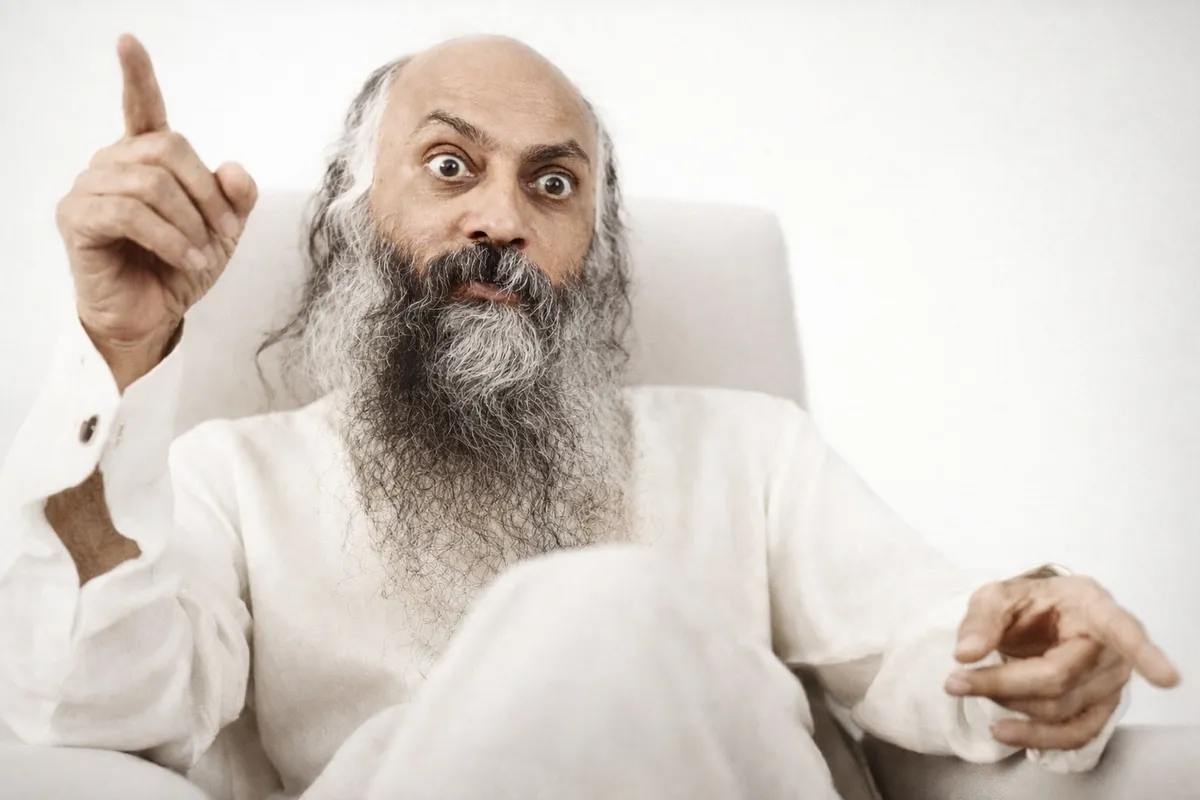
Osho's original Hindi beside Osho Live's English translation, matched passage by passage.
अब हम सूत्र को लें।
Now, let us take the aphorism:
और जो निरंतर आत्म-भाव में स्थित हुआ, दुख-सुख को समान समझने वाला है; तथा मिट्टी, पत्थर और स्वर्ण में समान भाव वाला और धैर्यवान है; तथा जो प्रिय और अप्रिय को बराबर समझता है और अपनी निंदा-स्तुति में भी समान भाव वाला है; तथा जो मान और अपमान में सम है एवं जो मित्र और वैरी के पक्ष में भी सम है, वह संपूर्ण आरंभों में कर्तापन के अभिमान से रहित हुआ पुरुष गुणातीत कहा जाता है।
And he who is constantly established in the sense of the Self, who regards pleasure and pain alike; who is even-minded toward clod, stone, and gold, and is patient; who sees the pleasant and unpleasant as the same and remains equal in praise and blame; who is equal in honor and dishonor, and equal toward friend and foe—he is called the one who, in all undertakings, is without the pride of doership; he is said to be beyond the gunas.
एक-एक शब्द को समझें।
Let us understand each word.
Who is constantly established in the sense of the Self…
जो निरंतर आत्म-भाव में स्थित हुआ.।
जो निरंतर एक ही बात स्मरण रखता है कि मैं हूं अपने भीतर। जो अपनी छवियों के साथ तादात्म्य नहीं जोड़ता; जो दर्पणों में दिखाई पड़ने वाले प्रतिबिंबों से अपने को नहीं जोड़ता; बल्कि जो सदा खयाल रखता है उस होश का, जो भीतर है। और जो सदा याद रखता है कि यह होश ही मैं हूं; मैं हूं यह चैतन्य; और इस चैतन्य को किसी और चीज से नहीं जोड़ता, ऐसी भाव-दशा का नाम आत्म-भाव है।
One who unceasingly remembers one thing: I am within. One who does not identify with his images; who does not link himself with the reflections seen in mirrors; who keeps remembering the awareness within, and remembers that this awareness is what I am; I am this consciousness, and I will not connect this consciousness with anything else—such a state is called the sense of the Self (atma-bhava).
मैं सिर्फ चेतना हूं। और यह चेतना किसी भी चीज को कितना ही प्रतिफलित करे, उससे मैं संबंध न जोडूंगा। यह चेतना कितनी ही किसी चीज में दिखाई पड़े.।
I am only consciousness. Whatever this consciousness reflects, I will not relate myself to it. However this consciousness appears in any object…
रात चांद निकलता है; झील में भी दिखाई पड़ता है। आप झील में देखकर अगर उसको चांद समझ लें, तो मुश्किल में पड़ेंगे। अगर डुबकी लगाने लगें पानी में चांद की तलाश में, तो भटक ही जाएंगे। और दुख तो निश्चित होने वाला है; क्योंकि थोड़ी ही हवा की लहर आएगी और चांद टुकड़े-टुकड़े हो जाएगा।
At night the moon rises; it appears in the lake as well. If you look in the lake and take it to be the moon, you will be in difficulty. If you dive into the water to search for the moon, you will be lost. And sorrow is certain—because a slight breeze will come and the moon will shatter into pieces.
तो जहां भी हम जिंदगी को देखते हैं, वहां हर चीज टूट-फूट जाती है। क्योंकि हम प्रतिबिंब में देख रहे हैं।
Wherever we look at life, things break and scatter, because we are seeing reflections.
मुल्ला नसरुद्दीन एक रात एक कुएं के पास से गुजर रहा है। रमजान के दिन हैं। और उसने नीचे कुएं में झांककर देखा। वहां चांद का प्रतिबिंब दिखाई पड़ा। गहरा कुआं है। हवा की कोई लहर भी वहां नहीं है, तो चांद बिलकुल साफ दिखाई पड़ रहा है।
Mulla Nasruddin was passing by a well one night during Ramadan. He peered into the well; the moon’s reflection was there. It was deep; there was no ripple, so the moon was perfectly clear.
अकेला था। मरुस्थल का रास्ता था। आस-पास कोई दिखाई भी नहीं पड़ता था। नसरुद्दीन ने कहा, यह तो बड़ी मुसीबत हो गई। यह चांद यहां कुएं में उलझा है। और जब तक यह आकाश में दिखाई न पड़े, लोग मर जाएंगे भूखे रह-रहकर। रमजान का महीना है। इसे बाहर निकालना एकदम जरूरी है। यहां कोई दिखाई भी नहीं पड़ता जो सहायता करे।
He was alone; desert road; no one around. Nasruddin said, “This is a big problem—the moon is stuck in this well! Until it shows in the sky, people will die fasting. It’s Ramadan; it is absolutely necessary to pull it out. And there’s no one to help.”
तो बेचारे ने ढूंढ-ढांढ कर रस्सी कहीं से लाया। रस्सी का फंदा बनाकर नीचे डाला। कुएं में चांद को फंसाने की रस्सी में कोशिश की। चांद तो नहीं फंसा, कुएं के किनारे पर कोई चट्टान का टुकड़ा होगा, वह फंस गया। उसने बड़ी ताकत लगाई। खींच रहा है। बड़ी मुश्किल में पड़ा है। और अकेला है। कहता है, कोई और है भी नहीं कि कोई साथ भी दे दे। और चांद वजनी मालूम पड़ता है। और चांद भी हद्द कर रहा है कि बिलकुल रस्सी को पकड़े हुए है और उठ भी नहीं रहा है।
He searched out a rope somewhere, made a loop, lowered it to snare the moon. The moon didn’t get caught; some rock edge on the well did. He hauled with great force—struggling alone. “There’s no one to help! And the moon seems heavy—and stubbornly clinging to the rope, not coming up!”
बड़ी ताकत लगाने से रस्सी टूट गई। मुल्ला भड़ाम से कुएं के नीचे गिरा। सिर में चोट भी आई। एक क्षण को आंख भी बंद हो गई। फिर आंख खुली, तो देखा, चांद आकाश में है। मुल्ला ने कहा, चलो भला हुआ। निकल तो आए। अब लोग नाहक रमजान में भूखे तो न रहेंगे। सिर में थोड़ी चोट लग गई; कोई हर्ज नहीं। रस्सी भी टूट गई; कोई हर्ज नहीं। लेकिन चांद को कुएं से मुक्त कर लिया।
With a great heave the rope broke—Mulla crashed to the bottom, hurt his head, blacked out for a moment. When he opened his eyes, the moon was in the sky. Mulla said, “Well, thank God! It’s out now. People won’t go hungry in Ramadan for nothing. A little head injury—no matter. Rope broke—no matter. But we freed the moon from the well.”
जिस दिन आप आत्म-भाव में स्थित होंगे, उस दिन आपको भी ऐसा ही लगेगा कि जहां से हम अब तक अपने को खोज रहे थे, वहां तो हम थे भी नहीं। जहां से हम रस्सियां बांधकर, योजनाएं करके, साधनाएं साधकर और आत्मा को पाने की कोशिश कर रहे थे, वहां तो हम थे भी नहीं। चांद तो सदा आकाश में है। वह किसी कुएं में उलझा नहीं है। लेकिन कुओं में दिखाई पड़ता है।
The day you are established in the Self, you too will feel that where we were trying to find ourselves till now, we were never there. Where we tied ropes, made plans, did practices to attain the soul—we were not there. The moon is always in the sky; it is never entangled in a well—though it appears in wells.
आत्म-भाव का अर्थ है कि हम चांद को आकाश में ही देखें, कुओं में नहीं। आत्म-भाव का अर्थ है कि मेरी चेतना मेरे भीतर है। और किसी और वस्तु से बंधी नहीं है, कहीं भी छिपी नहीं है। मैं कहीं और नहीं हूं, मुझमें ही हूं। इसलिए सब तलाश कहीं और की व्यर्थ है। और सब तलाश दुख में ले जाएगी; विफलता परिणाम होगा। क्योंकि वहां वह मिलने वाली नहीं है।
Atma-bhava means: see the moon in the sky, not in the wells. It means: my consciousness is within me, not bound to anything else, not hidden anywhere else. I am nowhere else; I am in me. Therefore all search elsewhere is futile and will lead to sorrow; failure is certain—because it will not be found there.
या इसको अगर आप सफलता कहते हों कि रस्सियां बांधकर, चांद को खींचकर और जब सिर फूटे और ऊपर आपको आकाश में दिखाई पड़ जाए, अगर आप समझते हों कि आपने चांद को मुक्त कर लिया, तो ऐसी ही स्थिति बुद्ध को हुई होगी।
Or if you call it success—to tie ropes, tug at the moon, and when your head splits and you look up to see it in the sky—if you think you freed the moon, then something like this happened to Buddha.
बुद्ध से कोई पूछता है, जब उनको ज्ञान हो गया, कि आपको क्या मिला? तो बुद्ध कहते हैं, मिला कुछ भी नहीं। इतना ही पता चला कि कभी खोया ही नहीं था।
When Buddha attained enlightenment, someone asked, “What did you gain?” Buddha said, “I gained nothing—only saw that nothing had ever been lost.”
नसरुद्दीन कहता है, चांद को निकाल लिया; मुक्त कर दिया आकाश में। बुद्ध कहते हैं, कुछ भी मिला नहीं, क्योंकि कभी खोया नहीं था। और जो मैंने जाना है, वह सदा से मेरे भीतर था। सिर्फ मेरी नजरें बाहर भटक रही थीं, इसलिए उसे मैं पहचान नहीं पा रहा था। अगर तुम पूछते ही हो, तो मैंने कुछ खोया जरूर है, अज्ञान खोया है। लेकिन पाया कुछ भी नहीं है। क्योंकि ज्ञान तो सदा से ही था। वह मेरा स्वभाव है।
Nasruddin says, “We pulled the moon out; freed it into the sky.” Buddha says, “I gained nothing, because nothing had ever been lost. What I came to know had always been within me. Only my eyes were wandering without, hence I could not recognize it. If you must say, I lost something: I lost ignorance. But I gained nothing—for knowledge was always my nature.”
Established in the Self, he regards pleasure and pain alike…
आत्म-भाव में स्थित हुआ, दुख-सुख को समान समझने वाला.।
जो भी आत्म-भाव में स्थित होगा, उसे दुख-सुख समान हो जाएंगे; समता उसकी छाया हो जाएगी।
Whoever is established in the Self—pleasure and pain become equal; equanimity becomes his shadow.
हमें दुख और सुख अलग-अलग क्यों मालूम पड़ते हैं? इसलिए अलग-अलग मालूम पड़ते हैं कि जो हम पाना चाहते हैं, वह हमें सुख मालूम पड़ता है। और जिससे हम बचना चाहते हैं, वह दुख मालूम पड़ता है। हालांकि हमारे सुख दुख हो जाते हैं और दुख सुख हो जाते हैं, फिर भी हमें बोध नहीं आता। जिस चीज को आप आज पाना चाहते हैं, सुख मालूम पड़ती है। और कल पा लेने के बाद छूटना चाहते हैं और दुख मालूम पड़ती है।
Why do we see pleasure and pain as different? Because that which we want appears as pleasure; that which we want to avoid appears as pain. Even though our pleasures become pains and pains become pleasures, still we do not become aware. What you want today appears as pleasure, and tomorrow after getting it you want to drop it and it appears as pain.
मुल्ला नसरुद्दीन एक चर्च के पास से गुजर रहा है। उसकी पत्नी भी साथ है। उस चर्च में बड़ी तैयारियां हो रही हैं। बड़े फूल लगाए गए हैं। और बड़े दीए जलाए गए हैं। और द्वार पर लाल दरी बिछाई गई है। कोई स्वागत-समारंभ का इंतजाम हो रहा है। तो पत्नी पूछती है कि नसरुद्दीन, इस चर्च में? क्या होने वाला है?
उस चर्च में एक विवाह की तैयारी हो रही है। नसरुद्दीन कहता है, इस चर्च में? एक तलाक की तैयारी हो रही है। एक तलाक का प्रारंभ!
Mulla Nasruddin was passing with his wife by a church. Big arrangements were on—flowers, lamps, red carpet at the door—some welcoming ceremony. The wife asked, “Nasruddin, in this church—what’s going to happen?” A wedding was being prepared. Nasruddin said, “In this church? The beginning of a divorce!”
विवाह तलाक का ही प्रारंभ है। सब सुख दुख के प्रारंभ हैं। लेकिन दुख थोड़ी देर में पता चलेगा, पहले सब सुख मालूम होगा। जिसको हम पकड़ना चाहेंगे, उसमें सुख दिखाई पड़ेगा। और जिसको हम छोड़ना चाहेंगे, उसमें दुख दिखाई पड़ेगा।
Marriage is the beginning of divorce. Every pleasure is the beginning of pain. But pain takes a while to be seen; at first everything looks like pleasure. Whatever we grasp appears pleasant, whatever we want to release appears painful.
आत्म-भाव में स्थित व्यक्ति को न तो कुछ पकड़ने की आकांक्षा रह जाती है, न कुछ छोड़ने की, इसलिए सुख-दुख समान हो जाते हैं। इसलिए सुख-दुख के बीच जो भेद है, वह कम हो जाता है, गिर जाता है। सुख और दुख में उसका कोई चुनाव नहीं रह जाता।
For one established in the Self, there remains no craving to grasp anything and no urge to avoid anything—therefore pleasure and pain become equal; the distinction between them drops. He has no choice between them.
समान का अर्थ है, कोई चुनाव नहीं रह जाता। दुख आता है, तो स्वीकार कर लेता है। सुख आता है, तो स्वीकार कर लेता है। दुख आता है, तो पागल नहीं होता। सुख आता है, तो भी पागल नहीं होता। न उसे सुख उद्विग्न करता है, न दुख उद्विग्न करता है। जैसे सुबह आती है, सांझ आती है; ऐसे सुख आते-जाते रहते हैं, दुख आते-जाते रहते हैं। वह दूर खड़ा, अछूता, अस्पर्शित बना रहता है।
Equal means: no choosing. If pain comes, he accepts it; if pleasure comes, he accepts it. He does not go mad at pain, nor at pleasure. Neither disturbs him. As morning comes and evening comes, so pleasures come and go, pains come and go. He stands afar, untouched.
आत्म-भाव में स्थित हुआ, दुख-सुख को समान समझने वाला है। मिट्टी, पत्थर और स्वर्ण में समान भाव वाला है। धैर्यवान है। तथा जो प्रिय और अप्रिय को बराबर समझता है। निंदा-स्तुति में समान भाव वाला है।
Established in the Self, equal in pleasure and pain; equal toward clod, stone, and gold; patient; equal toward the pleasant and unpleasant; equal in praise and blame.
सभी द्वंद्व जिसके लिए समान हो गए हैं। चाहे प्रेम के, अप्रेम के; चाहे स्वर्ण के, मिट्टी के; चाहे मित्र के, शत्रु के; स्तुति के, निंदा के; जिसके लिए सभी भाव समान हो गए हैं। जो विपरीत को विपरीत की तरह नहीं देखता। जो पहचान लिया है कि सुख दुख का ही छोर है; और जो समझ लिया है कि स्तुति में निंदा छिपी है। आज स्तुति है, कल निंदा होगी। आज निंदा है, कल स्तुति हो जाएगी। मित्रता और शत्रुता के बीच जिसको फासला नहीं दिखाई पड़ता; जिसे दोनों एक ही चीज की डिग्रीज मालूम पड़ती हैं।
All dualities have become equal for him—love and non-love; gold and clay; friend and foe; praise and blame. He does not see the opposite as opposite. He has recognized that pleasure and pain are two ends of the same thing; that praise hides blame, today praise—tomorrow blame; today blame—tomorrow praise. Between friendship and enmity he sees no gap; both are degrees of the same thing.
यह उसी को होगा, जो आत्म-भाव में स्थित हुआ है। उसे यह द्वंद्व साफ दिखाई पड़ने लगेगा, द्वंद्व नहीं है। यह मेरे ही चुनाव के कारण द्वंद्व पैदा हुआ है।
This comes only to one established in the Self. He sees clearly that the duality is created by his own choosing.
बुद्ध ने कहा है, मैं कोई मित्र नहीं बनाता हूं, क्योंकि मैं शत्रु नहीं बनाना चाहता हूं।
Buddha said, “I make no friends—because I do not want to make enemies.”
मित्र बनाएंगे, तो शत्रु बनना निश्चित है। आधा नहीं चुना जा सकता। और हम आधे को ही चुनने की कोशिश करते हैं। इससे हम कष्ट में पड़े हैं। अगर मित्र को चुनते हैं, तो शत्रु को स्वीकार कर लें। सुख को चुनते हैं, तो दुख को भी स्वीकार कर लें।
If you make friends, enemies are certain. You cannot choose half. We try to choose halves; hence our misery. If you choose friend, accept enemy also. If you choose pleasure, accept pain too.
पर यह स्वीकृति, यह तथाता उसी को संभव है, जो अपने में स्थित हुआ हो; जो भीतर खड़े होकर देख सके--दुख को, सुख को, दोनों को--निष्पक्ष भाव से। भीतर खड़ा हुआ व्यक्ति देख पाता है निष्पक्ष भाव से। भीतर खड़ा हुआ व्यक्ति तराजू की भांति हो जाता है, जिसके दोनों पलड़े एक सम स्थिति में आ गए; जिसका कांटा आत्म-भाव में थिर हो गया।
But such acceptance, suchness, is possible only for the one established in himself—who can stand within and see pain and pleasure both impartially. Standing within, he becomes like a scale whose two pans are in perfect balance, whose pointer is steady in atma-bhava.
तथा जो मान-अपमान में सम है। मित्र और वैरी के पक्ष में भी सम है। संपूर्ण आरंभों में कर्तापन के अभिमान से रहित हुआ पुरुष गुणातीत कहा जाता है।
Equal in honor and dishonor; equal toward friend and foe. He who, in all undertakings, is free of the pride of doership is called beyond the gunas.
कुंजी है, आत्म-भाव में स्थित होना। जो आत्म-भाव में स्थित है, द्वंद्व में सम हो जाएगा। जो आत्म-भाव में स्थित है, वह कर्तापन से मुक्त हो जाएगा। उसे ऐसा नहीं लगेगा कि मैं कुछ कर रहा हूं। भूख लगेगी, पर वह भूखा नहीं होगा।
The key is to be established in the Self. One who abides in the Self becomes equal in the dualities. One who abides in the Self is freed from doership. He does not feel, “I am doing anything.” Hunger will arise, but he will not be hungry.
बड़ी मीठी कथा है कृष्ण के जीवन में। जैन शास्त्रों में उस कथा का उल्लेख है।
There is a sweet story in Krishna’s life—mentioned in Jain scriptures.
कृष्ण की पत्नी ने, रुक्मिणी ने कृष्ण से पूछा कि एक परम वैरागी नदी के उस पार ठहरा है। वर्षा के दिन हैं, नदी में पूर है। और कोई भोजन नहीं पहुंचा पा रहा है। आप कुछ करें। तो कृष्ण ने कहा, तू ऐसा कर कि जा और नदी के किनारे नदी से यह प्रार्थना करना--कथा बड़ी मीठी है--नदी से यह प्रार्थना करना कि अगर वह वैरागी, जो उस पार ठहरा है, वह संन्यस्त वीतराग पुरुष सदा का उपवासा हो, तो नदी मार्ग दे दे।
Krishna’s wife Rukmini said, “A supreme renunciate is lodged across the river. It is the rainy season; the river is in flood; no food can reach him. Do something.” Krishna said, “Do this: go to the riverbank and pray to the river—this story is very sweet—pray: ‘If that renunciate across the river is a lifelong faster, then O river, give way.’”
रुक्मिणी को भरोसा तो न आया, लेकिन कृष्ण कहते हैं, तो कर लेने जैसी बात लगी। और हर्ज क्या है; देख लें। और शायद यह हो भी जाए, तो एक बड़ा चमत्कार हो।
तो वह सखियों को लेकर बहुत-से मिष्ठान्न और भोजन लेकर नदी के पास गई। उसने नदी से प्रार्थना की। भरोसा तो नहीं था। लेकिन चमत्कार हुआ कि नदी ने रास्ता दे दिया। कहा इतना ही कि उस पार जो ठहरा संन्यस्त व्यक्ति है, अगर वह जीवनभर का उपवासा है, तो मार्ग दे दो।
नदी कट गई। अविश्वास से भरी रुक्मिणी, आंखों पर भरोसा नहीं, अपनी सहेलियों को लेकर उस पार पहुंच गई। उस वीतराग पुरुष के लिए भोजन वह इतना लाई थी कि पचास लोग कर लेते। वह अकेला संन्यासी ही उतना भोजन कर गया।
Rukmini wasn’t convinced, but since Krishna said so, she thought, “Let me try; no harm—maybe a miracle will happen.” With her companions she carried many sweets and foods to the river and prayed. She had no faith—but a miracle! The river parted at once. She said only, “If that renunciate across is a lifelong faster, give way.” The river split. Full of disbelief, Rukmini reached the other shore. The feast she had brought for that dispassionate ascetic could feed fifty people. The lone ascetic ate it all.
भोजन के बाद यह खयाल आया कि हम कृष्ण से यह तो पूछना भूल ही गए कि लौटते वक्त क्या करेंगे। क्योंकि नदी अब फिर बह रही थी। और अब पुरानी कुंजी तो काम नहीं आएगी। क्योंकि यह आदमी आंख के सामने भोजन कर चुका। और थोड़ा-बहुत भोजन नहीं कर चुका। निश्चित ही, जीवनभर का उपवासा रहा होगा। पचास आदमियों का भोजन उसने कर लिया! लेकिन अब पुरानी कुंजी तो काम नहीं आएगी। और अब कृष्ण से पूछने का कोई उपाय नहीं। तो एक ही उपाय है, इस वीतराग पुरुष से ही पूछ लो कि कोई कुंजी है वापस जाने की!
After the meal, it struck her: “We forgot to ask Krishna how to return! The river is flowing again. The old key won’t work now—this man ate before our eyes, and not a small amount! Surely he cannot be a lifelong faster. The old key is useless. And we can’t ask Krishna. There is only one way: ask the ascetic for a key to get back!”
तो उसने कहा कि तुम किस कुंजी से यहां तक आई हो? तो उन्होंने कहा कि कृष्ण ने ऐसा कहा था, लेकिन वह तो अब बात बेकार हो गई। उस संन्यासी ने कहा कि वह बात बेकार होने वाली नहीं है। कुंजी काम करेगी। तुम नदी से कहो कि अगर यह संन्यासी जीवनभर का उपवासा हो, तो मार्ग दे दे।
He asked, “By what key did you come?” She said, “Krishna told us—but now it’s useless.” The ascetic said, “It’s not useless; it will work. Tell the river: ‘If this ascetic is a lifelong faster, give way.’”
पहले ही भरोसा नहीं आया था। अब तो भरोसे का कोई कारण भी नहीं था। अब तो स्पष्ट अविश्वास था। लेकिन कोई दूसरा उपाय भी नहीं था। इसलिए नदी से प्रार्थना करनी पड़ी। और नदी ने मार्ग दिया।
Earlier she hadn’t believed; now there was not even any reason to believe—on the contrary, there was clear disbelief. But there was no other way. So she prayed—and the river gave way.
करीब-करीब होश खोई हुई हालत में रुक्मिणी कृष्ण के पास पहुंची। और उसने कहा, यह हद हो गई। यह बिलकुल भरोसे की बात नहीं है। क्योंकि हमने अपनी आंख से देखा है संन्यासी को भोजन करते हुए। उसके जीवनभर के उपवासे होने का कोई सवाल नहीं रहा।
In a near-stupor Rukmini reached Krishna and said, “This is beyond belief. We ourselves saw the ascetic eat. The claim that he is a lifelong faster cannot stand!”
कृष्ण ने कहा कि वही तुम नहीं समझ पा रही हो। भूख शरीर को लगती है, ऐसा जो जान लेता है, फिर भोजन भी शरीर में ही जाता है। ऐसा जो जान लेता है, उसका उपवास कभी भी खंडित नहीं होता।
Krishna said, “That is exactly what you could not understand. Hunger belongs to the body. Once one knows this, then food also goes only into the body. Knowing this, his fast is never broken.”
जिसको भूख ही न लगी हो, उसको भोजन करने का सवाल नहीं है। हम भोजन करते हैं, करते मालूम पड़ते हैं। कर्तापन आता है, क्योंकि भूख हमें लगती है, हमारी है।
If hunger is not yours, eating is not yours. We feel “I eat, I do” because hunger seems ours.
इस प्रयोग को थोड़ा करके देखें। कल से स्मरण रखें कि भूख लगे, तो वह शरीर की है। प्यास लगे, तो शरीर की है। पानी पीएं, तो शरीर में जा रहा है। प्यास बुझ रही, तो शरीर की बुझ रही है। भूख मिट रही, तो शरीर की मिट रही है। भोजन करते समय, भूख के समय, प्यास के समय, पानी पीते समय, स्मरण रखें।
Try a small experiment. From tomorrow, remember: when hunger arises, it is the body’s; when thirst arises, it is the body’s. When you drink, it goes into the body; when thirst is quenched, it is the body’s thirst that is quenched; when hunger is satisfied, it is the body’s hunger that is satisfied. While eating, in hunger, in thirst, while drinking—keep this remembrance.
अगर इस स्मरण को आप थोड़े दिन भी रख पाएं, तो आपको एक अनूठा अनुभव होगा। और वह अनुभव यह होगा कि आपको साफ दिखाई पड़ने लगेगा कि मैं सदा का उपवासा हूं। वहां कभी कोई भूख नहीं लगी। कोई भूख पहुंच नहीं सकती वहां। चेतना में भूख का कोई उपाय नहीं है।
If you can keep this remembrance even for a few days, you will have a unique experience: it will become clear that you are a perpetual faster. There, no hunger has ever happened; no hunger can reach there. In consciousness there is no way for hunger.
अमेरिका में एक व्यक्ति बड़ी अनूठी खोज में लगा हुआ है। उसकी खोज भरोसे योग्य नहीं है, लेकिन खोज के परिणाम बड़े साफ हैं। और उस व्यक्ति का कहना यह है कि एक समय था मनुष्य जाति के इतिहास में जब कोई भोजन नहीं करता था।
जैन शास्त्रों में ऐसे समय का उल्लेख है। जैनों के जो पहले तीर्थंकर हैं आदिनाथ, उन्होंने ही भोजन और कृषि और अन्न की खोज की। उसके पहले कोई भोजन नहीं करता था। लोग भूखे नहीं होते थे।
In America there is a man engaged in a strange research. His conclusions are not easy to trust, but his results are clear. He says there was a time in human history when no one ate food. Jain scriptures mention such a time: their first Tirthankara, Adinatha, introduced food and farming. Before that, no one ate; people did not feel hunger.
यह बात कहानी की मालूम पड़ती है। लेकिन जो आदमी अमेरिका में खोज कर रहा है, उसके बड़े वैज्ञानिक आधार हैं। और वह कहता है कि भोजन सिर्फ एक लंबी आदत है। और वह यह कहता है कि भोजन से शरीर को शक्ति नहीं मिलती। भोजन से ज्यादा से ज्यादा शरीर में जो शक्ति पड़ी है, उसको गति मिलती है। ऐसे ही जैसे कि पनचक्की चलती थीं। तो पानी चक्की के पंखे पर से गिरता था; पंखा घूमता था। पंखा तो मौजूद है, सिर्फ गिरता हुआ पानी पंखे को घुमा देता था।
इस वैज्ञानिक का कहना है कि शरीर में शक्ति मौजूद है। सिर्फ यह भोजन का शरीर में जाना और शरीर के बाहर मल होकर निकलना, यह सिर्फ शरीर के भीतर जो पंखे बिना चले पड़े हैं, उनको चलाता है। इससे कोई शक्ति मिलती नहीं। और आदमी बिना भोजन के रह सकता है।
This sounds like a story. But that American researcher has scientific grounds. He claims eating is merely a long habit, and that food does not give the body energy; at most, it sets in motion the energy already present, like water falling on the paddles of an old mill—it turns the paddles, but the paddles are there already. He says the body has energy; food entering and being excreted simply keeps certain inner paddles moving; no new energy is gained. A person could live without eating.
और ऐसी घटनाएं हैं, जहां कुछ लोग बिना भोजन के रहे हैं चालीस-पचास साल तक भी। उनका वजन भी नहीं गिरा। उनके शरीर में कोई रोग भी नहीं आया। बल्कि वे बहुत स्वस्थ लोग रहे हैं।
अभी बवेरिया में एक स्त्री है, थेरेसा न्यूमेन। उसने तीस साल से भोजन नहीं किया है। रत्तीभर वजन नीचे नहीं गिरा है। और तीस साल से वह कभी बीमार नहीं पड़ी। न कोई मल-मूत्र का सवाल है। उसकी सारी अंतड़ियां सिकुड़ गई हैं। पेट ने सारा काम बंद कर दिया है। लेकिन उसका शरीर परिपूर्ण स्वस्थ है। और जितनी उसकी उम्र है, उससे कम उम्र मालूम होती है। क्या कारण होगा?
There are cases where some people lived without food for forty or fifty years—their weight did not drop, they never fell ill; they remained very healthy. In Bavaria today there is a woman, Therese Neumann—she has not eaten for thirty years; not an ounce of weight lost; never sick in those thirty years; no question of excretion either; her intestines have shrunk, the stomach shut down, yet her body is perfectly healthy and she appears younger than her years. What could be the reason?
इस बात की संभावना है कि हो सकता है भोजन मनुष्य जाति की सिर्फ एक गलत आदत हो। और किसी दिन आदमी भोजन से मुक्त किया जा सके।
It is possible that eating is merely a wrong habit of humankind, and one day humans may be freed from food.
एक बात निश्चित है कि शरीर को भला जरूरत हो या आदत हो, लेकिन भीतर जो चेतना है, उसको न तो जरूरत है और न आदत है। वह भीतर की चेतना परम ऊर्जा से भरी है। उसकी ऊर्जा का स्रोत शाश्वत है। उसको ऊर्जा रोज-रोज ग्रहण नहीं करनी पड़ती।
One thing is certain: whether the body needs it or it is only a habit, the consciousness within needs neither. That inner consciousness is filled with supreme energy; its source is eternal; it does not have to receive fuel day by day.
इसलिए हम उसे सच्चिदानंदघन परमात्मा कह रहे हैं। उसकी ऊर्जा मूल स्रोत से जुड़ी है। वह स्रोत शाश्वत है। वह कभी समाप्त नहीं होता। इसलिए उसमें रोज ईंधन डालने की जरूरत भी नहीं है।
That is why we call it satchidanandghan Paramatma. Its energy is connected to the original source—eternal, inexhaustible—hence it needs no daily refueling.
चेतना के लिए भोजन की कोई भी जरूरत नहीं है। शरीर के लिए हो या न हो, यह बात विवाद की हो सकती है। समय, भविष्य तय करेगा। लेकिन चेतना के लिए तो कोई भी जरूरत नहीं है। वह चेतना उपवासी है।
Consciousness has no need of food. Whether the body needs it or not may be debated; time will tell. But for consciousness there is no need at all. Consciousness is a faster.
ऐसा भाव अगर बनने लगे, निर्मित होने लगे, तो आप में से कर्तापन धीरे-धीरे अपने आप गिर जाएगा। और जब भी आप किसी चीज का आरंभ करेंगे, किसी भी चीज की पहल करेंगे, तो आप जानेंगे यह शरीर के गुण इसकी पहल कर रहे हैं, मैं इसकी पहल नहीं कर रहा हूं।
If this feeling begins to form, doership will slowly fall away. Whenever you begin anything, you will know: the body’s qualities are initiating this, not I.
शरीर को जितनी जरूरत होगी, आप दे देंगे। ज्यादा भी नहीं देंगे, कम भी नहीं देंगे। अभी हम दो ही काम करते हैं, या तो कम देते हैं या ज्यादा देते हैं। क्योंकि ठीक कितना देना, इसका हमें पता ही नहीं चल पाता। हम इतने जुड़े हैं, हमारा संबंध इतना जुड़ गया है शरीर से कि हम निष्पक्ष नहीं हो पाते। हम से ज्यादा निष्पक्ष तो जानवर हैं।
You will give the body what it needs—neither more nor less. Right now we do only two things: either too little or too much—because we don’t know what is just enough. We are so entangled with the body we cannot be impartial. Animals are more impartial than we are.
अगर कुत्ते को पेट में खराबी हो, तो वह भोजन नहीं करेगा, आप लाख उपाय करें। लेकिन आपको कितनी ही बीमारी हो, कितनी ही खराबी हो, आप भोजन करेंगे। शायद बीमारी में और ज्यादा कर लें, कि जरा ताकत की जरूरत है। कोई जानवर यह भूल नहीं करेगा। क्योंकि जानवर जानता है कि बीमारी में भोजन करने का मतलब है कि शरीर को और काम देना। शरीर पर बीमारी का काम है। उतना ही काम काफी है। उसको नया काम देना खतरनाक है।
If a dog has an upset stomach, he won’t eat, whatever you try. But however ill you are, you will eat—perhaps even more in illness, “for strength.” No animal will make this mistake, because animals know that to eat in illness is to give the body extra work. The body already has the work of illness; that is enough; to give it new work is dangerous.
शरीर को भोजन न दिया जाए, तो बीमारी जल्दी समाप्त हो जाती है। क्योंकि शरीर खुद बीमारी को निकालने में लग जाता है। शरीर की पूरी ताकत एक तरफ बहने लगती है, बीमारी खतम करने में। आप भोजन देकर ताकत पचाने में लगा देते हैं। तो भोजन बीमारी को बढ़ाएगा, कम नहीं कर सकता।
If no food is given, the illness ends sooner, because the body devotes itself to expelling the disease; the whole energy flows to ending it. You, by feeding, make the body expend energy in digestion; food will increase disease, not reduce it.
कोई जानवर राजी नहीं होगा। साधारण-सा कुत्ता, जिसको हम बहुत समझदार नहीं कहते, वह भी भोजन नहीं करेगा। भोजन तो करेगा ही नहीं, घास-पात खाकर वमन कर देगा। जो पेट में पड़ा है, उसको भी निकाल देगा। ताकि खाली हो जाए; ताकि शरीर की पूरी ऊर्जा पचाने में नष्ट न हो, बीमारी से लड़ने में लग जाए।
No animal will agree; even an ordinary dog we don’t consider very “intelligent”—he won’t eat; he will eat grass and vomit—to empty the stomach, so that energy is not wasted digesting but is available to fight illness.
और शरीर के पास नैसर्गिक व्यवस्था है बीमारियों से लड़ने की। वह सब बीमारियों के पार उठ सकता है। और अगर आधुनिक आदमी नहीं उठ पाता, तो उसका कारण यह है कि वह शरीर की ऊर्जा को तो भोजन में ही लगाए रखता है।
The body has a natural arrangement to combat disease. It can overcome all illness. If modern man cannot, the reason is he keeps the body’s energy engaged with food.
हम निष्पक्ष नहीं हो पाते, बीमारी में ज्यादा खा लेते हैं। हमें कभी पता भी नहीं चलता; ठीक हमारा, जिसको पता चलने का बोध कहना चाहिए, वह भी क्षीण हो गया है। हमें पता ही नहीं चलता कि कितना खाना, कब खाना, कब नहीं खाना, उसका हमें कोई बोध नहीं रहा है। कोई नैसर्गिक हमारी प्रतीति नहीं रही है कि कितना खाना, कितना नहीं खाना; कब कुछ करना और कब नहीं करना; कहां रुक जाना।
We cannot be impartial; we eat more in illness. Our natural discernment has weakened; we don’t sense how much to eat, when to eat, when not to eat. We have no intuitive feel: how much, how little; when to act and when not; where to stop.
उस सबका कारण इतना है कि हम इतने ज्यादा जुड़ गए हैं शरीर के साथ कि दूर खड़े होने से, दूर से देखने पर जो निष्पक्षता होती है, वह नष्ट हो गई है। साक्षीभाव उस निष्पक्षता को ले आएगा। आत्म-भाव उस निष्पक्षता को ले आएगा। आप दूर खड़े होकर देख सकेंगे।
All because we are too joined to the body; the impartiality that comes from standing at a distance is lost. The witness brings that impartiality; atma-bhava brings it. You will be able to stand apart and see.
और ध्यान रहे, बहुत-सी समस्याएं सिर्फ इसलिए नहीं हल हो पातीं कि आप दूर नहीं हो पाते।
Remember: many problems remain unsolved only because you cannot step back.
आपके पास कोई दूसरा आदमी आए और अपनी कोई समस्या कहे, तो आप जो सुझाव देते हैं, वह हमेशा सही होता है। वह दूसरे की समस्या है। आप दूर से खड़े होकर देखते हैं। वही समस्या आप पर आ जाए, फिर आपकी बुद्धि काम नहीं करती। जो दूसरे को सलाह देने में काम कर रही है, वह खुद को सलाह देने में काम नहीं कर पाती। वैसे ही जैसे एक सर्जन अपनी पत्नी का आपरेशन कर रहा हो। सर्जन अपनी पत्नी का आपरेशन करने को राजी नहीं होगा। जब तक कि मार डालने की इच्छा न रखता हो। क्योंकि वह जानता है, पत्नी से इतनी निकटता है, हाथ कंपेगा। वह निष्पक्ष नहीं हो पाएगा। तो सर्जन अपने मित्र को कहेगा कि तू आपरेशन कर।
If someone comes to you with a problem, the advice you give is almost always right—because it is his problem; you see from a distance. If the same problem comes to you, your intelligence does not work. Like a surgeon—he won’t agree to operate on his own wife, unless he wishes to kill her, because he knows the closeness will make his hand tremble; he cannot be impartial. He will ask a friend to operate.
निष्पक्षता न हो, तो सब चीजें कंप जाती हैं। निष्पक्षता हो, तो हम अडिग बने रहते हैं; बोध साफ होता है; चीजें स्पष्ट दिखाई पड़ती हैं; धुआं नहीं होता।
Without impartiality, everything trembles; with it, you remain steady; understanding is clear; things appear distinct, without haze.
जितना आत्म-भाव बढ़ेगा, जितना आप अपने को शरीर से अलग और चेतना के साथ एक मानेंगे, देखेंगे, समझेंगे, ठहरेंगे, उतना ही आप पाएंगे कि चीजें उतनी ही होती हैं, जितनी जरूरी हैं।
As atma-bhava grows, as you see and abide as consciousness apart from the body, you will find things happen only as much as needed.
जरूरत पर रुक जाना, जरूरत से आगे इंचभर न जाना। तो फिर आपके लिए कोई बंधन नहीं है। क्योंकि तब शरीर के चलने योग्य शरीर को देते रहेंगे आप। शरीर अपनी गतिविधि पूरी कर लेगा और समाप्त हो जाएगा। जिस दिन शरीर की गतिविधि पूरी हो जाएगी, जैसे दीए का तेल चुक गया, वैसे ही दीया बुझ जाएगा। और इस शरीर के दीए के बुझते ही आपके जीवन में महासूर्य का उदय होगा। इस दीए पर आंखें बंधी हैं, इसलिए सूरज को देखना मुश्किल है।
Stopping at need; not going an inch beyond. Then there is no bondage for you. You will give the body what it needs to function; the body will complete its activity and end. The day its activity completes—like the lamp whose oil runs out—the lamp will go out. With the going out of this bodily lamp, the great sun will arise in your life. Bound to this little lamp, your eyes cannot see the sun.
कृष्ण कहते हैं, आत्म-भाव में स्थित हुआ, संपूर्ण आरंभों में कर्तापन के अभिमान से रहित हुआ पुरुष गुणातीत कहा जाता है।
ऐसा जो व्यक्ति है, ऐसी जो चेतना है, वह गुणों के अतीत है। और गुणातीत हो जाना परम सिद्धि है।
Krishna says: one established in the Self, free of the pride of doership in all undertakings, is called beyond the gunas. Becoming gunatita is the supreme attainment.
आज इतना ही।
Enough for today.
इस संबंध में कुछ बहुत मूलभूत बातें समझ लेनी जरूरी हैं।
In this regard, a few very fundamental things need to be understood.
पहली, साधारणतः हम ऐसा मानते रहे हैं, सुनते रहे हैं कि जो व्यक्ति वीतरागता को, ज्ञान की पूर्णता को उपलब्ध हो जाएगा, उसकी समस्त वृत्तियां क्षीण हो जाएंगी। यह ठीक भी है और गलत भी। ठीक तब है, जब उस व्यक्ति का शरीर गिर जाए। और यह अंतिम शरीर होगा। वीतरागता को उपलब्ध व्यक्ति का यह शरीर अंतिम होगा। इसके बाद नए शरीर को ग्रहण करने का कोई उपाय नहीं है। क्योंकि वासनाओं के बीज, मूल बीज भस्म हो गए। तो नया जन्म तो नहीं होगा।
First, ordinarily we have believed and heard that when a person attains dispassion, the fullness of knowing, all his tendencies become attenuated. This is both right and wrong. It is right when that person’s body falls—and that will be the last body. For one who has attained dispassion, this body is the final one. After this there is no possibility of assuming a new body, because the seeds of craving, the root-seeds, have been burnt to ash. So there will be no new birth.
इसलिए यह बात ठीक है कि वीतराग पुरुष की समस्त प्रवृत्तियां शून्य हो जाती हैं। लेकिन यह बात किसी और अर्थ में गलत भी है। क्योंकि वीतरागता के बाद भी इस देह में कुछ दिन रहना होगा। बुद्ध चालीस वर्षों तक इस देह में थे। ज्ञान की उपलब्धि के बाद भी शरीर को भूख लगेगी, प्यास भी लगेगी। शरीर रुग्ण भी होगा। शरीर विश्राम भी चाहेगा। शरीर को आक्सीजन की भी जरूरत होगी। जब तक शरीर है, तब तक शरीर की सारी अपनी प्रकृति के अनुकूल जरूरतें होंगी।
Therefore it is right to say that the dispassionate person’s tendencies become zero. But in another sense it is also wrong. Because even after dispassion, one has to remain in this body for some days. Buddha remained in this body for forty years. Even after enlightenment the body will feel hunger; it will feel thirst. The body will fall ill. The body will want rest. The body will need oxygen. As long as the body is, all the needs appropriate to the body’s nature will be.
और ये जो तीन गुण हैं, सत्व, रज, तम, ये तीन भी शरीर के गुण हैं। जैसे भूख-प्यास शरीर को लगेगी, वैसे ही सत्व, रज, तम की प्रक्रियाएं भी जारी रहेंगी। फर्क जो हो जाएगा, वह यह कि भूख लगते समय भी बुद्ध जानते हैं कि यह भूख मुझे नहीं लगी है, यह भूख शरीर को लगी है। प्यास लगते समय भी जानते हैं कि इस प्यास का मैं साक्षी हूं, भोक्ता नहीं हूं, कर्ता नहीं हूं।
And these three gunas—sattva, rajas, tamas—are also qualities of the body. Just as hunger and thirst are felt by the body, in the same way the processes of sattva, rajas, and tamas continue. The difference will be that even when hunger arises, the Buddha knows, “This hunger has not arisen in me; it has arisen in the body.” Even when thirst arises, he knows, “I am the witness of this thirst; I am neither the enjoyer nor the doer.”
लेकिन शरीर को तो प्यास लगेगी ही। शरीर को तो भूख लगेगी ही। शरीर के जो भी गुणधर्म हैं, वे जारी रहेंगे। शुद्धतम रूप में जारी रहेंगे। उनमें चेतना के जुड़ जाने से जो विक्षिप्तता पैदा होती है, वह खो जाएगी। इसलिए प्रवृत्ति जारी रहेगी।
But the body will indeed feel thirst; the body will indeed feel hunger. Whatever properties belong to the body will continue—now in their purest form. With consciousness disentangled from them, the agitation that used to be created disappears. Hence the tendencies continue.
बुद्ध भी चलते हैं, उठते हैं, समझाते हैं, बोलते हैं, सोते हैं, भोजन करते हैं, जागते हैं। सारी क्रियाएं जारी हैं। लेकिन इन क्रियाओं के कारण वे बंधते नहीं हैं; वह चीज टूट गई है। इन क्रियाओं से उनका कोई तादात्म्य नहीं है। ये क्रियाएं उनके आस-पास हो रही हैं; बीच का केंद्र इनसे मुक्त हो गया है। चेतना इनसे अस्पर्शित और अछूती रह जाती है।
Buddha walks, stands, explains, speaks, sleeps, eats, wakes. All actions continue. But through these actions he does not get bound; that has been broken. He has no identification with these actions. They are happening around him; the center within is freed of them. Consciousness remains untouched and unstained.
इसलिए जो जन्मों-जन्मों में व्यक्तित्व के आधार बने होंगे, वे आधार काम करेंगे। इस शरीर के गिर जाने तक शरीर सक्रिय होगा। लेकिन यह सक्रियता वैसी ही हो जाएगी, जैसे आप साइकिल चला रहे हों और पैडल चलाना बंद कर दिया हो, फिर सिर्फ पुरानी गति और मोमेंटम के कारण साइकिल थोड़ी दूर चलती चली जाए। बाहर से देखने वाले को तो ऐसा लगेगा कि अगर आपने साइकिल चलानी बंद कर दी है, तो साइकिल रुक क्यों नहीं जाती है!
Therefore the foundations of personality laid over births and births will function. Until this body falls, the body will remain active. But that activity becomes like this: you are riding a bicycle and you stop pedaling, and then due to the old speed and momentum the bicycle goes a little further. To the onlooker it will seem that if you have stopped pedaling, why does the bicycle not stop?
आप पैडल चलाने बंद कर दिए हैं, लेकिन आप मीलों से साइकिल चला रहे हैं, तो एक गति चकों ने ले ली है, वह गति अपनी निर्जरा करेगी। अब आप बिना पैडल मारे भी बैठे हैं साइकिल पर, साइकिल चलती चली जाएगी। यह जो चलना होगा, इसको आप नहीं चला रहे हैं। अब यह साइकिल ही चल रही है। इसमें आप कर्ता नहीं हैं। आप सिर्फ साक्षी हैं। आप साइकिल पर बैठे हैं और साइकिल चल रही है। और एक अनूठा अनुभव होगा कि मैं नहीं चला रहा हूं, साइकिल चल रही है। और साइकिल इसलिए चल रही है कि पीछे मैंने उसे चलाया था।
You have stopped pedaling, but you have been cycling for miles; the wheels have taken on a speed; that speed will run itself out. Now, even while you sit without pressing the pedals, the bicycle will keep moving. This movement that happens now—you are not making it happen; now the bicycle itself is moving. In this you are not the doer; you are only the witness. You sit on the bicycle and the bicycle is moving. And there will be a unique experience: that I am not moving it; the bicycle is moving. And the bicycle is moving because earlier I moved it.
तो जन्मों-जन्मों में आपने शरीर को चलाया है। और जन्मों-जन्मों में आपने अपने गुणों को गति दी है। सब गुणों का मोमेंटम हो गया है, सब गुणों ने अपनी गति पकड़ ली है। अब वे चलते जाएंगे। जब तक गति क्षीण न हो जाए, तब तक आपका शरीर चलता रहेगा। लेकिन यह चलना वैसा ही है, जैसे बिना पैडल चलाए साइकिल चल रही हो।
Through births and births you have moved the body. And through births and births you have given speed to your qualities. All qualities have acquired momentum; they have caught their motion. Now they will go on. Until the motion is depleted, your body will go on. But this going-on is like the bicycle moving without pedaling.
पर बाहर से देखने वाले को तो यही लगेगा, साइकिल चल रही है, इसलिए आप चला रहे होंगे। उसका लगना भी ठीक है। लेकिन आप जानते हैं कि अब आप चलाना छोड़ दिए हैं। अब आप सिर्फ प्रतीक्षा कर रहे हैं कि साइकिल रुक जाए।
To the onlooker it will seem: the bicycle is moving, therefore you must be moving it. His seeming is also fine. But you know that now you have stopped moving it. Now you are simply waiting for the bicycle to stop.
यह जो भीतर की भाव-दशा है, इसे हमें पहचानने में कठिनाई होती है, क्योंकि हम हमेशा गति दे रहे हैं। और हमें खयाल में भी नहीं आता कि बिना गति दिए जीवन कैसे चलेगा।
This inner state of feeling is hard for us to recognize because we are always supplying momentum. It doesn’t even occur to us how life can move without pushing it.
लेकिन जीवन चलता है। थोड़े दिन चल सकता है। उन थोड़े दिन का मजा ही और है। आपने पतवार उठाकर रख ली है, और नाव अपनी गति से बही चली जाती है। न आपकी अब आकांक्षा है कि नाव चले.।
But life does move. It can move for a few days. And the joy of those few days is of another kind. You have lifted the oar and set it aside, and the boat flows on in its own current. You no longer have any longing that the boat should move…
और ध्यान रहे, आप यह भी कह सकते हैं कि अगर चलाना बंद कर दिया है, तो आप ब्रेक भी लगाकर साइकिल से उतर सकते हैं! आप छलांग लगाकर कूद सकते हैं! जब चलाना ही बंद कर दिया है, तो अब साइकिल पर बैठे रहने का क्या प्रयोजन है?
And remember, you may say: if you have stopped pedaling, you can apply the brakes and get off the bicycle! You can jump off! If you have stopped pedaling, then what is the point of remaining seated?
इसे थोड़ा समझ लेना जरूरी है। क्योंकि जब तक किसी चीज को रोकने की आकांक्षा बनी रहे, उसका अर्थ है कि चलाने की आकांक्षा का विपरीत रूप मौजूद है। जब आकांक्षा पूरी ही जाती है, तो न चलाने का मन रह जाता है, न रुकने का मन रह जाता है। क्योंकि ब्रेक लगाने का तो एक ही अर्थ होगा कि बुद्ध और महावीर को आत्महत्या कर लेनी चाहिए। और कोई अर्थ नहीं हो सकता। अब कोई प्रयोजन तो रहा नहीं शरीर का, इससे छलांग लगा जानी चाहिए। लेकिन जीवन में ब्रेक लगाने का तो एक ही अर्थ है कि आप आत्महत्या कर लें, आत्मघात कर लें।
This needs to be understood a little. For as long as the urge to stop something remains, it means that the urge to drive it is present in its opposite form. When desire itself ends, neither the wish to make it go remains, nor the wish to make it stop. Because to apply the brake would mean only one thing: that Buddha and Mahavira should commit suicide. There can be no other meaning. Now the body has no further purpose—so one should jump out of it? But in life, applying the brake can have only one meaning: that you commit suicide, self-slaughter.
ध्यान रहे, आत्मघात करने वाला व्यक्ति जीवन से मुक्त नहीं हुआ है। जीवन से बंधे होने के कारण लोग आत्मघात करते हैं। यह उलटा दिखाई पड़ेगा। लेकिन जो लोग आत्मघात करते हैं, उनका निरीक्षण करें। उनके आत्मघात का कारण यह नहीं है कि वे जीवन से मुक्त हो गए हैं। उनके आत्मघात का सदा ही यही कारण है कि जीवन से उन्होंने जो चाहा था, वह जीवन उन्हें नहीं दे पाया। वे जीवन से मुक्त नहीं हुए हैं, जीवन से निराश हो गए हैं। और निराश उसी मात्रा में होते हैं हम, जिस मात्रा में हमने आशा बांधी हो। किसी ने सोचा हो कि जीवन में स्वर्ग मिलने वाला है और वह न मिले, तो दुख होता है। और वैसा व्यक्ति आत्मघात कर लेता है।
Remember, the person who commits suicide has not become free of life. People commit suicide because they are bound to life. This will look upside-down. But observe those who commit suicide. The reason for their suicide is not that they have become free of life. Their constant reason is that life has not given them what they wanted from it. They are not liberated from life; they are disappointed with life. And we become disappointed precisely to the extent that we had tied ourselves with hopes. Someone thought heaven would be found in life, and if it is not found, there is sorrow—and such a person commits suicide.
ज्ञानी को न तो आकांक्षा है कि जीवन चले, न रुकने का कोई सवाल है। क्योंकि न चलने से कुछ मिलने की आशा है, न रुकने से कुछ मिलने की आशा है। न तो वह सोचता है कि जीवन में चलता रहूं, तो मुझे कोई स्वर्ग मिलने वाला है। न वह सोचता है कि रुक जाने से कोई स्वर्ग मिलने वाला है। वह जानता है कि स्वर्ग तो मैं हूं। चलने और रुकने से उसका कोई भी संबंध नहीं है।
The enlightened one has neither the desire that life should continue, nor any question of stopping it. Because he has no expectation of getting anything from moving, nor any expectation from stopping. He does not think, “If I keep going in life, some heaven will be obtained for me.” Nor does he think, “By stopping, some heaven will be obtained.” He knows, “I myself am heaven.” It has nothing to do with moving or stopping.
तो अगर वह कोशिश करके ब्रेक भी लगाए, तो समझना कि अभी पैडल मार रहा है। क्योंकि ब्रेक लगाना भी पैडल मारने का ही हिस्सा है। वह कुछ कर रहा है। अभी कर्तापन उसका नहीं गया है। साक्षी नहीं हुआ। अभी ब्रेक लगा रहा है। कल पैडल लगा रहा था; अब वह ब्रेक लगा रहा है। लेकिन अभी साइकिल से उसका कर्तापन जुड़ा हुआ है।
So if he even tries to apply the brake, understand that he is still pedaling. Because applying the brake is also part of pedaling. He is still doing something. His doership has not gone. He has not become a witness. He is still applying the brake. Yesterday he was pressing the pedal; now he is pressing the brake. But his doership is still connected to the bicycle.
और साक्षीपन का अर्थ हुआ कि अब वह कुछ भी नहीं कर रहा है। अब जो हो रहा होगा, वह जानता है कि प्रकृति से हो रहा है। वही कृष्ण कह रहे हैं।
And witnessing means that now he is not doing anything at all. Now whatever is happening, he knows it is happening through nature. That is what Krishna is saying.
कृष्ण कह रहे हैं कि जिस दिन कोई जान लेता है कि गुण ही गुण में बर्त रहे हैं, मैं पृथक हूं, मैं कुछ भी नहीं कर रहा हूं, मैं करने वाला ही नहीं हूं, जिस दिन ऐसा द्रष्टा-भाव गहन हो जाता है, उसी दिन व्यक्ति गुणातीत अवस्था को उपलब्ध हो जाता है। उसी दिन वह सच्चिदानंदघन हो जाता है, उसी क्षण।
Krishna says that the day one comes to know that the gunas are acting upon the gunas, and “I am separate; I am not doing anything; I am not the doer”—on the day such seeing becomes deep, that very day one attains the state beyond the gunas. That very day one becomes sat-chit-ananda-ghan, in that very moment.
रुकने की वासना भी चलने की वासना का हिस्सा है। रुकना भी चलने का एक ढंग है; क्योंकि रुकना भी एक क्रिया है। तो ऐसा व्यक्ति जिसकी प्रवृत्ति खो गई है.।
Even the desire to stop is a part of the desire to go. Stopping too is a way of going, because stopping is also an action. So, about the person whose propensity has disappeared…
ध्यान रहे, हम तो हमेशा विपरीत में सोचते हैं, इसलिए कठिनाई होती है। हम सोचते हैं, जिसकी प्रवृत्ति खो गई है, वह निवृत्ति को साधेगा। निवृत्ति भी प्रवृत्ति का एक रूप है। कुछ करना भी कर्ता-भाव है; और कुछ न करने का आग्रह करना भी कर्ता-भाव है। अगर मैं कहता हूं कि यह मैं न करूंगा, तो इसका अर्थ यह हुआ कि मैं मानता हूं कि यह मैं कर सकता था। यह भी मैं मानता हूं कि यह मेरा कर्तृत्व है; चाहूं तो करूं, और चाहूं तो न करूं।
Remember, we always think in opposites; hence the difficulty. We think that the one whose propensity has gone will cultivate renunciation. But renunciation too is a form of propensity. To do something is the sense of doership; and to insist on doing nothing is also the sense of doership. If I say, “This I will not do,” it means that I accept that I could do it. I also accept that it is my doership: if I want, I can do it; if I want, I can refrain.
लेकिन साक्षी का अर्थ है कि न तो मैं कर सकता हूं, और न न कर सकता हूं। न तो प्रवृत्ति मेरी है, न निवृत्ति मेरी है। प्रवृत्ति भी गुणों की है और निवृत्ति भी गुणों की है। गुण ही बर्त रहे हैं। वे ही चल रहे हैं; वे ही रुक जाएंगे। तो जब तक चल रहे हैं, मैं उन्हें चलता हुआ देखूंगा। और जब रुक जाएंगे, तब मैं उन्हें रुका हुआ देखूंगा। जब तक जीवन है, तब तक मैं जीवन का साक्षी; और जब मृत्यु होगी, तब मैं मृत्यु का साक्षी रहूंगा। कर्ता मैं न बनूंगा।
But witnessing means: neither can I do, nor can I not do. Neither is activity mine, nor is inactivity mine. Activity too belongs to the gunas and inactivity too belongs to the gunas. It is the gunas alone that are acting. They alone are moving; they alone will stop. So as long as they are moving, I will watch them moving. And when they stop, I will watch them stopped. As long as there is life, I am a witness of life; and when there is death, I will remain a witness of death. I will not become the doer.
इसलिए निवृत्ति को आप मत सोचना कि वह वास्तविक निवृत्ति है। अगर उसमें कर्ता का भाव है, तो वह प्रवृत्ति का ही शीर्षासन करता हुआ रूप है। वह उसका ही उलटा रूप है। कोई दौड़ रहा था कर्ता-भाव से, कोई खड़ा है कर्ता-भाव से; लेकिन कर्ता-भाव मौजूद है।
Therefore do not think of inactivity as real inactivity. If there is the sense of doership in it, it is just activity standing on its head—its inverted form. Someone is running with the sense of doership; someone is standing still with the sense of doership—but the sense of doership is present.
बुद्ध ने कहीं कहा है कि न तो मैं प्रवृत्त हूं अब और न निवृत्त; न तो मैं गृहस्थ हूं अब और न संन्यस्त; न तो मैं कुछ पकड़े हूं और न मैं कुछ छोड़ता हूं।
Buddha has said somewhere: “I am now neither involved nor withdrawn; I am neither a householder now nor a renunciate; neither am I holding anything nor am I abandoning anything.”
इसे ठीक से खयाल में ले लें, क्योंकि जीवन के बहुत पहलुओं पर यही अड़चन है।
Take this well to heart, because in many aspects of life this very snag arises.
हम सोचते हैं कि कुछ कर रहे हैं, इसको न करें। हमारा ध्यान क्रिया पर लगा है, हमारा ध्यान कर्ता पर नहीं है। क्योंकि करने में भी मैं कर्ता हूं; न करने में भी मैं कर्ता हूं।
We think: “We are doing something—let us not do it.” Our attention is on the act; our attention is not on the doer. Because in doing, I am the doer; and in not-doing, I am still the doer.
सारी चेष्टा द्रष्टा पुरुषों की यह है कि कर्ता का भाव मिट जाए। मैं होने दूं, करूं न। जो हो रहा है, उसे होने दूं; उसमें कुछ छेड़छाड़ भी न करूं। जहां कर्म जा रहे हों, जहां गुण जा रहे हों, उन्हें जाने दूं। मैं उन पर सारी पकड़ छोड़ दूं।
All the endeavor of the seers is that the sense of doership should dissolve. Let me allow it to happen; let me not do. Let what is happening, happen; let me not meddle in it at all. Wherever actions are going, wherever the gunas are going, let them go. Let me drop all my grip on them.
इसीलिए संतत्व अति कठिन हो जाता है। साधुता कठिन नहीं है। क्योंकि साधुता निवृत्ति साधती है। वह प्रवृत्ति के विपरीत है। वह गृहस्थ के विपरीत है। वहां कुछ करने को शेष है, विपरीत करने को शेष है। कोई हिंसा कर रहा है, आप अहिंसा कर रहे हैं। कोई धन इकट्ठा कर रहा है, आप त्याग कर रहे हैं। कोई महल बना रहा है, आप झोपड़े की तरफ जा रहे हैं। कोई शहर की तरफ आ रहा है, आप जंगल की तरफ जा रहे हैं। वहां कुछ काम शेष है।
That is why true saintliness becomes very difficult. Asceticism is not difficult, because asceticism cultivates inactivity. It is the opposite of activity. It is the opposite of the householder. There remains something to be done—the opposite thing remains to be done. Someone is committing violence; you are practicing nonviolence. Someone is collecting wealth; you are renouncing. Someone is building a palace; you are moving toward a hut. Someone is moving toward the city; you are moving toward the forest. There something remains to be done.
मन को काम चाहिए। अगर धन इकट्ठा करना बंद कर दें, तो मन कहेगा, बांटना शुरू करो। लेकिन कुछ करो। करते रहो, तो मन जिंदा रहेगा। इसलिए मन तत्काल ही विपरीत क्रियाएं पकड़ा देता है।
The mind wants work. If you stop collecting wealth, the mind will say, “Start distributing.” But do something. Keep doing, so the mind stays alive. Therefore the mind immediately catches hold of opposite actions.
स्त्रियों के पीछे भागो। अगर इससे रुकना है, तो मन कहता है, स्त्रियों से भागो। मगर भागते रहो। क्योंकि मन का संबंध स्त्री से नहीं है, भागने से है। या तो स्त्री की तरफ भागो, या स्त्री की तरफ पीठ करके भागो, लेकिन भागो। अगर भागते रहे, तो कर्तापन बना रहेगा। अगर भागना रुका, तो कर्तापन रुक जाएगा।
Run after women; and if you are to stop that, the mind says, “Run away from women”—but keep running. Because the mind’s concern is not with woman; it is with running. Either run toward woman, or run with your back toward woman—but run. If you keep running, the sense of doership will remain. If running stops, the sense of doership will stop.
तो मन ऐसे समय तक भी दौड़ाता रहता है, जब कि दौड़ने में कोई अर्थ भी नहीं रह जाता है।
So the mind keeps us running even up to the point where there is no meaning left in running at all.
मैंने सुना है कि मुल्ला नसरुद्दीन अपने चिकित्सक के पास गया। तब वह बहुत बूढ़ा हो गया था। नब्बे वर्ष उसकी उम्र थी। जीर्ण-शीर्ण उसका शरीर हो गया था। आंखों से ठीक दिखाई भी नहीं पड़ता था। हाथ से लकड़ी टेक-टेक बामुश्किल चल पाता था।
I have heard that Mulla Nasruddin went to his physician. By then he had become very old—his age was ninety. His body had become decrepit. He could barely see. With a stick in his hand he could only just manage to walk.
अपने चिकित्सक से उसने कहा कि मैं बड़ी दुविधा में और बड़ी मुश्किल में पड़ा हूं। कुछ करें। चिकित्सक ने पूछा कि तकलीफ क्या है? नसरुद्दीन ने कहा कि संकोच होता है कहते, लेकिन अपने चिकित्सक को तो बात कहनी ही पड़ेगी। मैं अभी भी स्त्रियों का पीछा करता हूं। इतना बूढ़ा हो गया हूं, अब यह कब रुकेगा? मैं अभी भी स्त्रियों का पीछा कर रहा हूं। आंखों से दिखाई नहीं पड़ता, पैरों से चल नहीं सकता; लेकिन स्त्रियों का पीछा करता हूं!
He said to his doctor, “I am in great dilemma and in great difficulty. Do something.” The doctor asked, “What is the trouble?” Nasruddin said, “I feel embarrassed to say it, but one must tell one’s doctor everything. I still chase women. I have become so old—when will this stop? I am still chasing women. I cannot see, I cannot walk—but I chase women!”
उसके चिकित्सक ने कहा, नसरुद्दीन, चिंता मत करो। यह कोई बीमारी नहीं है। यह तुम्हारे स्वस्थ होने का प्रतीक है कि अभी भी तुम जिंदा हो नब्बे साल में! इससे तुम्हें दुखी नहीं होना चाहिए।
His physician said, “Nasruddin, don’t worry. This is no illness. This is a sign that you are still healthy—even at ninety you’re alive! You should not be unhappy about this.”
नसरुद्दीन ने कहा कि वह मेरा दुख भी नहीं है। तुम फिर गलत समझे। तकलीफ यह है कि मैं स्त्रियों का पीछा तो करता हूं, लेकिन यह भूल गया हूंकि पीछा क्यों कर रहा हूं। आई चेज वीमेन, बट आई कांट रिमेंबर व्हाय। तकलीफ मेरी यह है कि मुझे अब याद नहीं पड़ता कि मैं किसलिए पीछा कर रहा हूं। और अगर स्त्री को पकड़ भी लिया, तो करूंगा क्या! यह मुझे याद नहीं रहा है।
Nasruddin said, “That is not my trouble either. You have again misunderstood. The difficulty is that I do chase women, but I have forgotten why I am chasing. I chase women, but I can’t remember why. That’s my trouble: I no longer remember what I’m chasing for. And even if I catch a woman, what would I do? I don’t remember that.”
जिंदगी में आपकी बहुत-सी क्रियाएं एक न एक दिन इसी जगह पहुंच जाती हैं, जब आप करते रहते हैं, और अर्थ भी खो जाता है, स्मृति भी खो जाती है कि क्यों कर रहे हैं। लेकिन पुराना मोमेंटम है, गति है। पहले दौड़ता रहा है, दौड़ता रहा है। अब दौड़ने का अर्थ खो गया; मंजिल भी खो गई; अब प्रयोजन भी न रहा। लेकिन पुरानी आदत है, दौड़े चला जा रहा है।
In life many of your activities one day reach the same place where you keep on doing, and both the meaning and the memory of why you are doing are lost. But the old momentum is there—the speed is there. Previously you have been running and running. Now the meaning of running is lost; the goal is lost; now no purpose remains. But the old habit is there; you go on running.
शरीर के साथ, शरीर के गुणों के साथ यही घटना घटती है। रस्सी जल भी जाती है, तो उसकी अकड़ शेष रह जाती है। जली हुई, राख पड़ी हुई लकड़ी में भी उसकी पुरानी अकड़ का ढंग तो बना ही रहता है।
With the body and with the body’s qualities, this same event occurs. Even if the rope is burnt, its stiffness remains. In a piece of wood burnt to ash, the imprint of its old rigidity still remains.
अब आप जाग भी जाते हैं, होश से भी भर जाते हैं, तो भी गुणों की पुरानी रेखाएं चारों तरफ बनी रहती हैं। और उनमें पुरानी गति का वेग है, वे चलती रहती हैं। फर्क यह पड़ जाता है कि अब आप उनको नया वेग नहीं देते। यह क्रांतिकारी मामला है। यह छोटी घटना नहीं है।
Even if you awaken, even if you are filled with awareness, the old lines of the gunas remain all around. And the force of their old momentum is there; they keep moving. The difference is: you no longer give them new momentum. This is a revolutionary matter; not a small happening.
आप उनको नया वेग नहीं देते। आप उनमें नया रस नहीं लेते। अब वे चलती भी हैं, तो अपने अतीत के कारण। और अतीत की शक्ति की सीमा है। अगर आप रोज वेग न दें, तो आज नहीं कल पुरानी शक्ति चुक जाएगी। अगर आप रोज शक्ति न दें.।
You no longer give them new momentum. You no longer take new relish in them. Now even if they move, they move because of their past. And the past’s power has a limit. If you don’t give it daily momentum, then today or tomorrow the old power will be exhausted. If you don’t give it daily strength…
आप पेट्रोल भरकर गाड़ी को चला रहे हैं। जितना पेट्रोल भरा है, उतना चुक जाएगा और गाड़ी रुक जाएगी। रोज पेट्रोल डालते चले जाते हैं, तो फिर चुकने का कोई अंत नहीं आता। आपने तय भी कर लिया कि अब पेट्रोल नहीं डालेंगे, तो पुराना पेट्रोल थोड़ी दूर काम देगा; सौ-पचास मील आप चल सकते हैं।
You are running a car by filling it with petrol. The petrol that has been filled will be used up and the car will stop. If you keep pouring petrol every day, then there will be no end to its running out. Once you decide that you will no longer put petrol, the petrol already in the tank will carry you a short distance; you can go a hundred, a hundred and fifty miles.
बुद्ध को चालीस वर्ष में ज्ञान हो गया, लेकिन जन्मों-जन्मों में जो ईंधन इकट्ठा किया है, वह चालीस वर्ष तक शरीर को और चला गया। उस चालीस वर्ष में शरीर अपने गुणों में बर्तेगा, बुद्ध सिर्फ देखने वाले हैं।
Buddha attained enlightenment at forty, but the fuel he had accumulated over births and births kept the body going for another forty years. During those forty years the body functioned in its qualities; Buddha was only the watcher.
द्रष्टा और भोक्ता, द्रष्टा और कर्ता, इसके भेद को खयाल में ले लें, तो अड़चन नहीं रह जाएगी। अगर आप कर्ता हो जाते हैं, भोक्ता हो जाते हैं, तो आप नया वेग दे रहे हैं। आपने ईंधन डालना शुरू कर दिया। अगर आप सिर्फ द्रष्टा रहते हैं, तो नया वेग नहीं दे रहे हैं। पुराने वेग की सीमा है, वह कट जाएगी। और जिस दिन पुराना वेग चुक जाएगा, शरीर गिर जाएगा; गुण वापस प्रकृति में मिल जाएंगे, और आप सच्चिदानंदघनरूप परमात्मा में।
Keep in mind the distinction between the seer and the enjoyer, the seer and the doer, then there will be no difficulty. If you become the doer, the enjoyer, you are giving new momentum—you have begun to add fuel. If you remain only the seer, you are not giving new momentum. The old momentum has a limit; it will be cut off. And the day the old momentum is used up, the body will fall; the gunas will merge back into nature; and you into the sat-chit-ananda-ghan form of the Supreme.
दर्पण में आप अपना चेहरा देखते हैं। दर्पण जड़ है, लेकिन आपके चेहरे का प्रतिबिंब बनाता है। चेहरा देखकर आप खुश होते हैं और आप कहते हैं, यह मैं हूं। वह जो दर्पण में आपको दिखाई पड़ रहा है, उसे देखकर आप कहते हैं, यह मैं हूं! कितना सुंदर हूं! कितना स्वस्थ हूं!
You see your face in a mirror. The mirror is inert, yet it forms your reflection. You see the face and feel happy; you say, “This is me.” What appears in the mirror makes you exclaim, “This is me—how beautiful I am! How healthy I am!”
आपके शरीर में जो प्रकृति काम कर रही है, वह जड़ है, लेकिन दर्पण की तरह है। उसमें आप अपना प्रतिबिंब पकड़ते हैं। और दर्पण में तो आपको पता चलता है कि प्रतिबिंब है, लेकिन अगर दर्पण सदा ही आपके साथ जुड़ा रहे; उठें, बैठें, कुछ भी करें, दर्पण साथ ही हो; सोएं, कहीं भी जाएं, दर्पण साथ ही हो; तो आपको यह भूल जाएगा कि दर्पण में जो दिखाई पड़ रहा है, वह मेरा प्रतिबिंब है। आपको लगने लगेगा, वह मैं हूं।
In your body, nature is at work; it is inert—but it functions like a mirror. In it you catch your own reflection. And in a mirror you still know it is only a reflection. But if the mirror were always attached to you—standing, sitting, whatever you did the mirror was always there; sleeping, traveling, it never left—you would forget that what appears there is only a reflection. You would begin to feel, “That is me.”
यही घटना घट रही है। आप अपने प्रकृति के गुणों में अपने प्रतिबिंब को पा रहे हैं। और प्रतिबिंब को सदा पा रहे हैं। एक क्षण को भी वह प्रतिबिंब हटता नहीं वहां से। निरंतर उस प्रतिबिंब को पाने के कारण एक भी क्षण उसका अभाव नहीं होता। इस सतत चोट के कारण यह भाव निर्मित होता है कि यह मैं हूं। यह भाव इसलिए हो पाता है कि चेतना समर्थ है सत्य को जानने में। चेतना चूंकि समर्थ है सत्य को जानने में, इसलिए चेतना समर्थ है भ्रांत होने में।
Exactly this is happening. You are finding your reflection in the qualities of your nature. And you find that reflection continuously. Not for a single moment does it withdraw. Because it never ceases, because the impact is constant, the idea arises, “This is me.” This feeling is possible because consciousness has the capacity to know truth. Precisely because consciousness can know the true, it is also capable of being deluded.
हमारे सभी सामर्थ्य दोहरे होते हैं। आप जिंदा हैं, क्योंकि आप मरने में समर्थ हैं। आप स्वस्थ हैं, क्योंकि आप बीमार होने में समर्थ हैं। आपसे ठीक हो सकता है, क्योंकि आप गलत करने में समर्थ हैं। इसे ठीक से समझ लें।
All our capacities are double-edged. You are alive because you are capable of dying. You are healthy because you are capable of falling ill. You can do right because you are capable of doing wrong. Understand this well.
हमारी सारी सामर्थ्य दोहरी है। अगर विपरीत हम न कर सकते हों, तो सामर्थ्य है ही नहीं। जैसे किसी आदमी को हम कहें कि तुम ठीक करने के हकदार हो, लेकिन गलत करने की तुम्हें स्वतंत्रता नहीं है। तुम्हें सिर्फ ठीक करने की स्वतंत्रता है। तो स्वतंत्रता समाप्त हो गई। स्वतंत्रता का अर्थ ही यह है कि गलत करने की भी स्वतंत्रता है। तभी ठीक करने की स्वतंत्रता का कोई अर्थ है।
Every capacity we have is two-sided. If you could not do the opposite, it would not be a real capacity. Suppose we told a person, “You have the right to do right, but you have no freedom to do wrong. You have freedom only to do the right.” Freedom would be finished. Freedom means there is freedom to do wrong as well; only then does the freedom to do right have any meaning.
चेतना स्वतंत्र है। स्वतंत्रता चेतना का गुण है। वह उसका स्वभाव है। स्वतंत्रता का अर्थ है कि दोनों तरफ जाने का उपाय है। मैं भ्रांति भी कर सकता हूं। मैं गलत भी कर सकता हूं। और गलत कर सकता हूं, इसीलिए ठीक को खोजने की सुविधा है।
Consciousness is free. Freedom is its quality—its very nature. And freedom means there are paths in both directions. I can err. I can go wrong. And because I can go wrong, there is the possibility of searching for what is right.
ये दो उपाय हैं, या तो मैं अपने को जान लूं, जो मैं हूं; यह सत्य का जानना होगा। और या मैं अपने को उससे जोड़ लूं, जो मैं नहीं हूं; यह असत्य के साथ एक हो जाने का मार्ग होगा। ये दोनों मार्ग खुले हैं।
There are two ways: either I know myself as I am—that is the knowing of truth; or I join myself to what I am not—that is the way of becoming one with the false. Both paths are open.
सभी का मन होता है कि यह स्वतंत्रता खतरनाक है। यह न होती, तो अच्छा था। लेकिन आपको पता नहीं कि आप क्या सोच रहे हैं। आपको पता नहीं है, आप क्या मांग रहे हैं।
Everybody thinks, “This freedom is dangerous—were it not there, it would be better.” But you do not know what you are thinking, what you are asking.
हर आदमी सोचता है कि मैं सदा ही स्वस्थ होता और कभी बीमार न होता, तो बहुत अच्छा। लेकिन आपको पता नहीं। आप जो मांग रहे हैं, वह नासमझी से भरा हुआ है। अगर आप कभी भी बीमार न होते, तो आपको स्वास्थ्य का कोई पता ही नहीं चलता। और अगर आप दुखी न हो सकते होते, तो सुख की कोई प्रतीति नहीं हो सकती। कैसे होती सुख की प्रतीति? और सत्य अगर आपको मिला ही होता हाथ में और असत्य की तरफ जाने का कोई मार्ग न होता, तो वह सत्य दो कौड़ी का होता, उसका कोई मूल्य आपको कभी पता नहीं चलता। सत्य का मूल्य है, क्योंकि हम उसे खो सकते हैं।
Everyone wishes, “If only I were always healthy and never fell ill—it would be wonderful.” But you are unaware. What you are asking is full of foolishness. If you could never fall ill, you would never come to know health. And if you could not be unhappy, there would be no experience of happiness. How would the sense of joy arise? And if truth were already in your hand and there were no way to move toward untruth, that truth would be worthless—you would never know its value. Truth has value because we can lose it.
मनोवैज्ञानिक कहते हैं कि जगत में प्रेम की संभावना है, क्योंकि प्रेम खो सकता है। और मनोवैज्ञानिक कहते हैं कि जिस दिन हम आदमी को अमर कर लेंगे और आदमी की मृत्यु बंद हो जाएगी, उसी दिन जीवन में जो भी महत्वपूर्ण है, सब खो जाएगा। सब महत्वपूर्ण मृत्यु पर टिका है।
Psychologists say love is possible in the world because love can be lost. And they say that the day we make man immortal—when death stops—on that very day all that is significant in life will be lost. Everything meaningful is poised upon death.
आप प्रेम कर पाते हैं, क्योंकि जिसे आप प्रेम करते हैं, वह कल मर सकता है। अगर आपको पता हो कि शाश्वत है सब, न कोई मर रहा है, न कोई मरने का सवाल है, प्रेम तिरोहित हो जाएगा। मृत्यु के बिना प्रेम का कोई उपाय नहीं। मृत्यु के बिना मित्रता व्यर्थ हो जाएगी। मृत्यु है, इसलिए मित्रता में इतनी सार्थकता है। मृत्यु न होगी, तो जीवन की सारी जिन चीजों को हम मूल्य दे रहे हैं, कोई मूल्य नहीं है। विपरीत से मूल्य पैदा होता है।
You can love because the one you love may die tomorrow. If you knew that everything is eternal—no one dies, no one can die—love would evaporate. Without death, there is no way for love. Without death, friendship becomes meaningless. Because there is death, friendship has such depth. If there were no death, all the things to which we give value would have no value. Value arises from the opposite.
इसलिए सुबह जब फूल खिलता है, उसका सौंदर्य सिर्फ खिलने में ही नहीं है, इस बात में भी छिपा है कि सांझ वह मुरझा जाएगा। और अगर फूल कभी न मुर्झाए, तो वह प्लास्टिक का फूल हो जाए। और अगर बिलकुल ही--वह प्लास्टिक का फूल भी नष्ट होता है--अगर फूल सदा के लिए हो जाए, तो उसकी तरफ देखने का भी कोई अर्थ नहीं रह जाएगा।
So when a flower opens in the morning, its beauty lies not only in its blossoming. Hidden within the beauty is also this fact: by evening it will wither. And if it never withered, it would become a plastic flower. And if—even beyond that—it never perished at all, then looking at it would have no meaning.
जीवन की सारी रहस्यमयता विपरीत पर निर्भर है। सत्य का मूल्य है, क्योंकि असत्य में उतरने का उपाय है। और परमात्मा में जाने का रस है, क्योंकि संसार में आने का दुख है।
All the mystery of life depends on the opposite. Truth has value because there is a way into untruth. Going to the divine has savor because the world brings sorrow.
लोग मुझसे पूछते हैं, आखिर परमात्मा संसार बना ही क्यों रहा है? संसार है ही क्यों?
People ask me, “Why on earth is God creating the world? Why is there a world at all?”
अगर संसार न हो, तो परमात्मा का कोई भी रस नहीं है। परमात्मा अपने से विपरीत को पैदा कर रहा है, ताकि आप उसे खो सकें और पा सकें। और जिसे हम खो सकते हैं, उसे पाने का आनंद है। जिसे हम खो ही नहीं सकते, वह हमारे सिर पर बोझ हो जाएगा।
If there were no world, God would have no flavor, no relish. God creates his opposite so that you can lose him and find him. And there is joy in finding only that which can be lost. What cannot be lost becomes a burden on our head.
अगर परमात्मा कुछ ऐसा हो कि जिसे आप खो ही न सकें, तो आप जितने परमात्मा से ऊब जाएंगे, उतने किसी चीज से नहीं। परमात्मा से ऊबने का कोई उपाय नहीं है, क्योंकि क्षण में आप उसे खो सकते हैं। और जिस दिन आप संसार से ऊब जाएं, उसी क्षण परमात्मा में लीन वापस हो सकते हैं।
If God were such that you could never lose him, you would be more bored with God than with anything else. But there is no way to be bored with God, because in a single instant you can lose him. And the moment you are bored with the world, in that very instant you can dissolve back into God.
अगर इस बात को ठीक से समझ लें, तो जीवन की बहुत-सी समस्याएं साफ हो जाएंगी।
If you understand this rightly, many of life’s problems will become clear.
पहला बुनियादी सिद्धांत है कि मनुष्य की आत्मा स्वतंत्रता है, परम स्वातंत्र्य है, टोटल फ्रीडम। यह जो परम स्वातंत्र्य है चेतना का, इसको ही हमने मोक्ष कहा है। जो इसे जान लेता है, वह मुक्त है। जो इसे नहीं जानता, वह बंधा हुआ है।
The first basic principle is that the human soul is freedom—absolute freedom, total freedom. This total freedom of consciousness is what we have called moksha, liberation. One who knows this is free; one who does not is bound.
लेकिन वह बंधा इसीलिए है कि वह बंधना चाहता है। और तब तक बंधा रहेगा, जब तक बंधन इतना दुख न देने लगे कि उसे तोड़ने का भाव न आ जाए, उससे छूटने का भाव न आ जाए, उससे उठने का भाव न आ जाए।
But he is bound because he wants to be bound. And he will remain bound until the bondage becomes so painful that the impulse to break it, to be free of it, to rise beyond it, arises.
और इस जगत में कोई भी घटना असमय नहीं घटती; अपने समय पर घटेगी। समय का मतलब यह है कि जब आप पक जाएंगे, तब घटेगी। जब फल पक जाएगा, तो गिर जाएगा। जब तक कच्चा है, तब तक लटका रहेगा। जिस दिन आपका दुख भी पक जाएगा संसार के साथ, उस दिन आप तत्क्षण टूट जाएंगे और परमात्मा में गिर जाएंगे।
And in this world nothing happens untimely; it will happen in its own time. Time means: when you have ripened, it will happen. When the fruit ripens, it falls. As long as it is unripe, it hangs on. The day your suffering with the world ripens, that day you will at once break away and fall into the divine.
अगर आप अटके हैं, तो इसलिए नहीं कि आपकी साधना में कोई कमी है। आप अटके हैं इसलिए कि आप दुख को भी पूरा नहीं भोग रहे हैं। आप पकने के भी पूरे उपाय नहीं होने दे रहे हैं।
If you are stuck, it is not because there is some lack in your spiritual practice. You are stuck because you are not fully undergoing your suffering. You are not allowing yourself to ripen.
समझ लें कि एक फल जो धूप में पकता हो, वह फल अपने को छाया में छिपाए हुए है कि धूप न लग जाए। और फिर वह सोच रहा है, मैं कच्चा क्यों हूं! आप ऐसे ही फल हैं, जो सब तरफ से अपने को छिपा भी रहे हैं, बचा भी रहे हैं। उससे ही आप बचा रहे हैं, जिसकी पीड़ा के कारण ही आप मुक्त हो सकेंगे।
Think of a fruit that needs the sun to ripen, but hides itself in the shade so the sun won’t touch it—and then wonders, “Why am I unripe?” You are just such a fruit—hiding and protecting yourself on every side. And you are protecting yourself precisely from that pain by which you can become free.
इसलिए मैं निरंतर कहता हूं, संसार में पूरे जाओ, ताकि तुम संसार के बाहर आ सको। बाहर जाने का एक ही उपाय है कि तुम पूरे भीतर चले जाओ; वहां कुछ और जानने को शेष न रह जाए।
Therefore I say again and again: go into the world totally so that you can come out of it. The only way out is to go all the way in—until nothing more remains there to be known.
दुख से छूटने की एक ही व्यवस्था है, एक ही विधि है। बाकी सब विधियां बहाने हैं। और वह विधि यह है कि तुम दुख को पूरा भोग लो। तुम उसमें पक जाओ। तुम अपने ही आप गिर जाओगे।
There is only one arrangement, one method, to be free of suffering: suffer it completely. Ripen in it. You will fall by yourself.
कृष्ण यही कह रहे हैं कि अर्जुन, तू व्यर्थ ही परेशान हो रहा है। गुण अपनी गति से चल रहे हैं। गुण अपनी गति से पक रहे हैं। और जहां से तू भागना चाहता है, वहां से भागकर तू कभी मुक्त न हो सकेगा। क्योंकि तू छाया खोज रहा है। इस युद्ध से भागकर तू बचा लेगा अपने को उस महापीड़ा से गुजरने से, जो कि मुक्ति का कारण बन जाएगी। तू इस युद्ध से गुजर जा। तू इस युद्ध को हो जाने दे। तू रोक मत। तू डर भी मत। तू संकोच भी मत ले। तू निर्भय भाव से इसमें प्रवेश कर जा। और जो घटना तेरे चारों तरफ इकट्ठी हो गई है, उसको उसकी पूर्णता में तेरे भीतर बिंध जाने दे। यह आग पूरी जल उठे। तू इसमें पूरी तरह राख हो जा। उस राख से ही तेरे नए जीवन का अंकुरण होगा। उस राख से ही तू अमृत को जानने में समर्थ हो पाएगा।
This is what Krishna is saying: “Arjuna, you are unnecessarily troubled. The gunas are moving in their own rhythm. The gunas are ripening in their own course. Where you wish to flee from, by fleeing you will never be free—because you are seeking shade. By running away from this war you will save yourself from passing through that great agony which would become the cause of liberation. Pass through this war. Let this war happen. Do not stop it. Do not be afraid. Do not hesitate. Enter it fearlessly. Allow what has gathered around you to pierce you in its totality. Let this fire burn completely. Be wholly reduced to ash in it. From those ashes the sprout of your new life will emerge. From those ashes you will become capable of knowing the immortal.”
जो भी, जो भी जीवन में है, वह अकारण नहीं है। दुख है, संसार है, बंधन हैं, वे अकारण नहीं हैं। उसकी उपादेयता है। और बड़ी उपादेयता यह है कि वह अपने से विपरीत की तरफ इशारा करता है।
Whatever is in life is not without cause. Suffering, the world, bondage—they are not causeless. They have utility. And their great utility is that they point toward their opposite.
आपकी चेतना बंध सकती है, क्योंकि आपकी चेतना स्वतंत्र हो सकती है। और यह आपके हाथ में है। और जब मैं कहता हूं, आपके हाथ में है, तब आपको ऐसा लगता है, तो फिर मैं इसी वक्त स्वतंत्र क्यों नहीं हो जाता? आप सोचते ही हैं कि आप इसी वक्त स्वतंत्र क्यों नहीं हो जाते! लेकिन उपाय आप सब कर रहे हैं कि आप बंधे रहें।
Your consciousness can be bound because your consciousness can be free. And it is in your hands. And when I say “in your hands,” you think, “Then why don’t I become free right now?” You do think, “Why don’t I become free this very moment!” But you are doing everything to remain bound.
एक मित्र मेरे पास आए। कहते थे, मन बड़ा अशांत है; शांति का कोई उपाय बताएं। मैंने उनसे पूछा कि शांति की फिक्र ही न करें, पहले मुझे यह बताएं कि अशांत क्यों हैं? क्योंकि मैं शांति का उपाय बताऊं और आप अशांति का आयोजन किए चले जाएं, तो कुछ हल न होगा। और उससे और असुविधा होगी। वैसी हालत हो जाएगी कि एक आदमी कार में एक्सीलरेटर भी दबा रहा है और ब्रेक भी लगा रहा है।
A friend came to me. He said, “My mind is very restless; please give me some method for peace.” I asked him not to worry about peace first: “Tell me why you are restless. If I give you a method for peace while you keep arranging for restlessness, nothing will be resolved. It will only create more discomfort—like a man who presses the accelerator and the brake at the same time.”
इसीलिए कार में इंतजाम करना पड़ा--क्योंकि आदमी का स्वभाव परिचित है हमें--कि उसी पैर से एक्सीलरेटर दबाएं और उसी से ब्रेक। क्योंकि आपसे डर है कि आप दोनों काम एक साथ कर सकते हैं। आप एक साथ दोनों काम कर सकते हैं, एक्सीलरेटर भी दबा दें और ब्रेक भी दबा दें। तो कठिनाई खड़ी हो जाए। तो ब्रेक दबाने के लिए एक्सीलरेटर से पैर हट आए।
That is why cars are designed—because we know human nature—so that you use the same foot for the accelerator and the brake. We fear you might try to do both at once. If you could press both together, trouble would arise. So to press the brake, your foot must come off the accelerator.
लेकिन मन के साथ हम ऐसा नहीं कर पा रहे हैं। मन के साथ हमारी हालत ऐसी है कि हम दोनों काम एक साथ करना चाहते हैं।
But with the mind we do not manage this. With the mind we try to do both things at once.
उन मित्र से मैंने पूछा कि तकलीफ क्या है? किस वजह से अशांत हैं? तो उन्होंने कहा, अशांति का कारण यह है कि मेरा लड़का मेरी मानता नहीं।
I asked that friend, “What is the trouble? Why are you restless?” He said, “The cause of my unrest is that my son does not obey me.”
किसका लड़का किसकी मानता है? इसमें लड़का कारण नहीं है। इसमें आप मनाना क्यों चाहते हैं? लड़का अपना जीवन जीएगा। मैंने उनसे पूछा, आपने अपने बाप की मानी थी?
Whose son obeys whom? The son is not the cause here. Why do you want him to obey? The son will live his own life. I asked, “Did you obey your father?”
कौन अपने बाप की मानता है? लड़का और रास्तों पर चलेगा, जिन पर बाप कभी नहीं चला। लड़का और दूसरी दुनिया में जीएगा, जिसमें बाप कभी नहीं जीया। लड़के और बाप के समय में भेद है, उनके मार्गों में भेद होगा। उनकी परिस्थितियों में भेद है, उनके विचारों में भेद होगा। लड़का अगर जिंदा है, तो बाप से भिन्न चलेगा। लड़का अगर मुर्दा है, तो बाप की मानकर चलेगा।
Who obeys his father? A son will walk paths the father never walked. He will live in a different world from the one his father lived in. There is a difference of time between father and son; their paths will differ. Their circumstances differ; their ideas will differ. If the son is alive, he will go differently than the father. Only if the son is dead will he live by the father’s dictates.
अब बाप का दुख यह है कि लड़का अगर मुर्दा है, तो वह परेशान है। अगर लड़का जिंदा है, तो वह परेशान है। लड़का मुर्दा है, तो वह समझता है कि न होने के बराबर है।
Now the father’s misery is this: if the son is dead inside, he is disturbed; if the son is alive, he is disturbed. If the son is dead, he thinks the boy is as good as nonexistent.
आपको खयाल में नहीं है, अगर लड़का बिलकुल आप जैसा कहें, वैसा ही करे, तो भी आप दुखी हो जाएंगे। आप कहें बैठो, तो वह बैठ जाए। आप कहें उठो, तो उठ जाए। आप कहें बाएं घूमो, तो बाएं घूम जाए। आप जो कहें उसको रत्ती-रत्ती वैसा ही करे, तो आप सिर पीट लेंगे। आप कहेंगे, यह लड़का क्या हुआ, एक व्यर्थता है। इससे तो होता न होता बराबर है। इसके होने का कोई अर्थ ही नहीं है। होने का पता ही भिन्नता से चलता है।
You do not realize: if the son were to do exactly what you say—sit when you say sit, stand when you say stand, turn left when you say left, obeying your every word to the letter—you would beat your head and say, “What kind of son is this? He is useless—better not to have him at all.” The fact of being is known by difference.
तो आप इसलिए दुखी नहीं हैं, मैंने उनसे कहा कि लड़का मानता नहीं है। आप मनाना क्यों चाहते हैं कि माने? आपका दुख आपके कारण आ रहा है। आप अपने अहंकार को थोपना चाहते हैं। और मेरे पास आप शांति की तलाश करने आए हैं। लड़के को अपने मार्ग पर चलने दें, अशांति फिर कहां है?
So you are not unhappy because, as you say, “the son does not obey.” Why do you want him to obey? Your misery comes from you. You want to impose your ego. And you have come to me seeking peace! Let the son walk his way—where then is the unrest?
तब उनका घाव छू गया। तब उन्होंने कहा, आप क्या कह रहे हैं! अगर उसको मार्ग पर चलने दें, तो सब बर्बाद कर देगा। सब धन मिटा डालेगा।
Then his wound was touched. He said, “What are you saying! If I let him go his way, he will ruin everything—waste all the wealth.”
मैंने उनको पूछा, आप कब तक धन की सुरक्षा करिएगा? कल आप समाप्त हो जाएंगे और धन मिटेगा। आपका लड़का मिटाए, कोई और मिटाए; धन मिटेगा। धन मिटने को है। तो आपका दुख लड़के से नहीं आ रहा है। आपका दुख धन पर जो आपकी पकड़ है, उससे आ रहा है। आप मरेंगे दुखी। क्योंकि मरते वक्त आपको लगेगा, अब धन का क्या होगा! कोई न कोई मिटाएगा।
I asked him, “How long will you guard your wealth? Tomorrow you will be gone—and it will be spent. Your son will spend it, or someone else will. Wealth is to be spent. So your misery does not come from your son; it comes from your grip on wealth. You will die unhappy, because at the last moment you will think, ‘What will happen to my wealth now!’ And someone or other will indeed spend it.
इसलिए धनी न सुख से जी पाता है, न सुख से मर पाता है। मरते वक्त यह भय लगता है कि मैंने जिंदगीभर कमाया, अब इसको कोई मिटा देगा। और कोई न कोई मिटाएगा आखिर।
इस जगत में जो भी बनाया जाता है, वह मिटता है। इस जगत में कोई भी ऐसी चीज नहीं, जो न मिटे। आपका धन अपवाद नहीं हो सकता। तो आप दुखी इसलिए हो रहे हैं कि आपका धन कोई न मिटा दे; अशांत इसलिए हो रहे हैं। और शांति की कोई तरकीब खोजते हैं।
“In this world, whatever is made is unmade. There is nothing that does not perish. Your wealth will not be an exception.” So you are unhappy because you fear someone may squander it; you are restless for that—and at the same time you seek some trick for peace.
मान लें कि धन तो मिटने वाली चीज है; मिटेगी। और लड़के अपने मार्गों पर जाएंगे। और पिता लड़कों को पैदा करता है, इसलिए उनके जीवन का मालिक नहीं है। फिर मुझे कहें कि दुख कहां है।
Accept that wealth is perishable—it will be spent. Accept that sons will go their own way. And that a father, because he gives birth, is not therefore the owner of his son’s life. Then tell me, where is the misery?
अशांति के कारण खो जाएं, तो आदमी शांत हो जाता है। शांति के कारण खोजने की जरूरत ही नहीं है। शांति मनुष्य का स्वभाव है। अशांति अर्जित करनी पड़ती है। हम अशांति अर्जित करते चले जाते हैं और शांति की पूछताछ शुरू कर देते हैं।
If the causes of restlessness are dropped, man becomes peaceful. There is no need to search for peace. Peace is man’s nature. Restlessness has to be acquired. We keep acquiring restlessness and then begin inquiring about peace.
अशांति के साथ जो इनवेस्टमेंट है, वह भी हम छोड़ना नहीं चाहते। जो लाभ है, वह भी हम लेना चाहते हैं। और शांति के साथ जो लाभ मिल सकता है, वह भी हम लेना चाहते हैं। और दोनों हाथ लड्डुओं का कोई भी उपाय नहीं है।
We also do not want to forsake our investment in restlessness. We want the profits that come from it. And we also want the profits that may come with peace. But there is no way to have sweets in both hands.
यह जो संसार के साथ हमारा जोड़ है, गुणों के साथ, शरीर के साथ, हमारा तादात्म्य है, उसमें भी हमें लाभ दिखाई पड़ता है, इसलिए है। हमने जानकर वह बनाया हुआ है। हम अपने को समझाए हुए हैं कि ऐसा है। फिर संतों की बातें सुनते हैं, उससे भी लोभ जगता है कि हमको भी यह गुणातीत अवस्था कैसे पैदा हो जाए! तो हम पूछना शुरू करते हैं, क्या करें? कैसे इससे छूटें?
Our link with the world—with the gunas, with the body, our identification—is there because we see a gain in it. We have created it knowingly. We have convinced ourselves that it is so. Then we hear the words of saints, we feel tempted: “How can we attain the state beyond the gunas?” So we begin to ask, “What should we do? How to be free of this?”
मजा करीब-करीब ऐसा है कि जिसको आप पकड़े हुए हैं, आप पूछते हैं, इससे कैसे छूटें? आप पकड़े हुए हैं, यह खयाल में आ जाए, तो छूटने के लिए कुछ भी न करना होगा, सिर्फ पकड़ छोड़ देनी होगी।
The fun is almost like this: you are holding on to something and asking, “How can I let go of it?” If it dawns on you that you are the one holding on, then to be free you need do nothing—just release your grip.
इस शरीर के साथ आप अपने को एक मान लेते हैं। आप पकड़े हुए हैं। आप इस शरीर को सुंदर मानते हैं। इस शरीर के साथ भोग की आशा है। इस शरीर से आपको सुख मिलते हैं, चाहे वे कोई भी सुख हों--चाहे संभोग का सुख हो, चाहे स्वादिष्ट भोजन का सुख हो, चाहे संगीत का सुख हो--इस शरीर के माध्यम से आपको मिलते हैं। वे सब सुख हैं। अगर वे सुख आपको अभी भी सुख दिखाई पड़ रहे हैं, तो शरीर के साथ आप पकड़ कैसे छोड़ सकते हैं! क्योंकि इसके द्वारा ही वे मिलते हैं। अंत तक पकड़े रहते हैं।
You take yourself to be one with the body—you are holding on. You consider this body beautiful. You expect enjoyment through this body. The pleasures you get—whatever they are: sex, delicious food, music—they come through the medium of the body. They are all pleasures. If they still appear to you as pleasures, how will you let go of the body? Because it is through the body that they are obtained. So you hold on to the very end.
एक बड़ी महत्वपूर्ण कहानी है। अमेरिकी अभिनेत्री मर्लिन मनरो मरी, तो एक कहानी प्रचलित हो गई कि जब वह स्वर्ग के द्वार पर पहुंची, तो सेंट पीटर, जो स्वर्ग के द्वारपाल हैं, ईसाइयों के स्वर्ग के द्वारपाल हैं, उन्होंने मनरो को देखा। वह अति सुंदर उसकी काया।
There is a well-known story. When the American actress Marilyn Monroe died, a story began to circulate: when she reached the gate of heaven, Saint Peter—the gatekeeper of the Christian heaven—saw Monroe, her extraordinarily beautiful figure.
सेंट पीटर ने कहा, एक नियम है स्वर्ग में प्रवेश का। स्वर्ग के द्वार के बाहर एक छोटा-सा पुल है, उस पुल पर से गुजरना पड़ता है। उस पुल के नीचे अनंत खाई है। उस खाई की ही गहराई में नरक है। उस पुल पर से गुजरते समय अगर एक भी बुरा विचार आ जाए--बुरे विचार का मतलब, शरीर से बंधा हुआ विचार आ जाए--तो तत्क्षण व्यक्ति पुल से नीचे गिर जाता है और नरक में प्रवेश हो जाता है।
Saint Peter said, “There is a rule for entering heaven. There is a small bridge outside the gate; you must cross it. Below the bridge there is a bottomless abyss. In the very depths of that abyss lies hell. While crossing that bridge, if even one bad thought arises—‘bad’ meaning a thought tied to the body—you immediately fall from the bridge into hell.”
मनरो और सेंट पीटर दोनों उस पुल से चले। और घटना यह घटी कि दो-तीन कदम के बाद सेंट पीटर नीचे गिर गए। मनरो जैसी सुंदर स्त्री को चलते देखकर कुछ खयाल सेंट पीटर को आ गया होगा!
Monroe and Saint Peter started across the bridge. And what happened? After two or three steps, Saint Peter fell down! Seeing such a beautiful woman walking, some thought must have occurred to him!
स्वर्ग के द्वार पर खड़े होकर भी अगर शरीर से सुख लेने का जरा-सा भी खयाल आ जाए, तो तादात्म्य हो गया। जिस चीज से हमें सुख लेने का खयाल होता है, उसी से तादात्म्य हो जाता है।
Even at the very gate of heaven, if even the slightest thought of taking pleasure from the body arises, identification has happened. We become identified with whatever we imagine will give us pleasure.
शरीर से सुख मिल सकता है, जब तक यह खयाल है, तब तक आप जुड़े रहेंगे। जिस दिन आपको यह समझ में आ जाएगा कि शरीर से मिलने वाला हर सुख केवल दुख का ही एक रूप है; जिस दिन आप यह खोज लेंगे कि शरीर से मिलने वाले हर सुख के पीछे दुख ही छिपा है; सुख केवल ऊपर की पर्त है; सिर्फ कड़वी जहर की गोली के ऊपर लगाई गई शक्कर से ज्यादा नहीं; उसी दिन तादात्म्य टूटना शुरू हो जाएगा।
As long as the idea persists that pleasure can be had from the body, you will remain attached. The day you understand that every pleasure through the body is only another form of pain—the day you discover that behind every bodily pleasure pain is hidden; that pleasure is only the top layer, no more than sugar coating over a bitter poison pill—on that very day identification will begin to crack.
यह पूछना कि कैसे जड़ त्रिगुणों से चैतन्य का तादात्म्य संभव हो पाता है?
You ask how the identification of consciousness with the inert three gunas is possible?
इसीलिए संभव हो पाता है कि आप स्वतंत्र हैं। चाहें तो तादात्म्य बना सकते हैं, चाहें तो हटा सकते हैं। जब तक आप सोचते हैं कि सुख बाहर से मिल सकता है, तब तक यह तादात्म्य नहीं छूटेगा। जिस दिन आप जानेंगे, सुख मेरे भीतर है, मेरा स्वभाव है, उस दिन यह तादात्म्य छूट जाएगा।
It is possible precisely because you are free. If you wish, you can create identification; if you wish, you can drop it. As long as you believe happiness comes from outside, this identification will not fall away. The day you know, “Bliss is within me—it is my nature,” that day the identification will dissolve.
अभी तो हम परमात्मा की भी खोज करें, तो भी शरीर से ही करनी पड़ती है। अभी तो हम पूछते हैं, परमात्मा को भी खोजें, तो कैसा आसन लगाएं? किस भांति खड़े हों? कैसे पूजा करें? कैसे पाठ करें? कहां जाएं--हिमालय जाएं, कि मक्का, कि मदीना, कि काशी, कि जेरुसलम--कहां जाएं? कैसा भोजन करें? कैसे बैठें? कैसे उठें? ताकि परमात्मा को पा लें!
Even when we search for God, for now we try to do it through the body. Even then we ask: “What posture should I take? How should I stand? How to worship? What scriptures to recite? Where should I go—Himalaya, Mecca, Medina, Kashi, Jerusalem? What should I eat? How should I sit, how should I rise—so that I may find God?”
हमारी शरीर के साथ जोड़ की स्थिति इतनी गहन हो गई है कि हम परमात्मा को भी शरीर से ही खोजना चाहते हैं। हमें खयाल ही नहीं है कि शरीर के अतिरिक्त भी हमारा कोई होना है। और यह खयाल भी तभी आएगा, जब शरीर से हमें सब तरफ दुख दिखाई देने लगें।
Our linkage with the body has become so deep that we want to search for God through the body. We have no inkling that beyond the body there is a deeper being of ours. And that inkling will come only when, on every side, the body begins to show us suffering.
बुद्ध ने निरंतर, सुबह से सांझ, एक ही बात कही है अपने भिक्षुओं को कि जीवन दुख है। और सिर्फ इसलिए कही है, ताकि तुम परम जीवन को जान सको। जब तुम्हें यहां दुख ही दुख दिखाई देने लगे, तो इस दुख से छूटने में जरा भी बाधा नहीं रह जाएगी।
Buddha said one thing again and again, from morning till night, to his monks: life is suffering. He said it for one reason only—so that you may come to know the supreme life. When you see only suffering here, then there will be no obstacle at all to being free of it.
जहां दुख है, वहां से मन हटने लगता है। और जहां सुख है, वहां मन की सहज गति है।
Where there is suffering, the mind begins to withdraw. And where there is pleasure, the mind moves naturally.
आप! आपकी तरफ इशारा कर रहे हैं कृष्ण। वह जो चैतन्य है आपका, जहां से आप मुझे सुन रहे हैं; जहां से आप मुझे देख रहे हैं; वह जो आपके भीतर बैठी हुई जगह है, खाली जगह है, शून्य है।
You! Krishna is pointing toward you. To that which is your consciousness, from where you are hearing me; from where you are seeing me; to that inner seat within you, the empty space, the void.
एक तो मैं हूं यहां, बोल रहा हूं। और एक आप हैं, जो सुन रहे हैं। आपके कान नहीं सुन रहे हैं। कान तो केवल शब्दों को वहां तक ले जा रहे हैं, जहां आप सुन रहे हैं। एक तो मैं हूं, जो यहां बैठा हूं। और आप मुझे देख रहे हैं। आपकी आंखें मुझे नहीं देख रही हैं। आंखें तो केवल मेरे प्रतिबिंब को वहां तक ले जा रही हैं, भीतर आपके, जहां आप देख रहे हैं।
One is me here, speaking. And one is you, listening. Your ears are not listening; the ears only carry the words to where you are listening. One is me, sitting here, and you are seeing me. Your eyes are not seeing me; the eyes only carry my reflection to that within you where you are seeing.
वह जो भीतर छिपा है सारी इंद्रियों के बीच में; वह जो केंद्र है सारी इंद्रियों के बीच में; जो स्वयं कोई इंद्रिय नहीं है। वह जो चेतना का केंद्र है भीतर, जहां से सारा होश है, जिसके कारण इंद्रियां चारों तरफ देख रही हैं, पहचान रही हैं, उसकी तरफ इशारा है। वह सच्चिदानंदघन परमात्मा है।
That which is hidden within, amidst all the senses; that which is the center among all the senses, which itself is not a sense; that inner center of consciousness from which all awareness arises, because of which the senses look out and recognize—Krishna is pointing to that. That is satchidanandghan Paramatma.
यह शब्द समझ लेने जैसा है। सच्चिदानंद, सत चित आनंद, तीन बड़े महत्वपूर्ण शब्दों से बना है।
Understand the word. Satchidananda—sat, chit, ananda—is made of three very important words.
सत का अर्थ होता है, जिसकी ही एकमात्र सत्ता है। बाकी सब चीजें स्वप्नवत हैं। वस्तुतः जो सत्य है, जिसका एक्झिस्टेंस है, वह सत। बाकी आप जो चारों तरफ देख रहे हैं, वह कोई भी वास्तविक नहीं है। सब बहता हुआ प्रवाह है; स्वप्न की लंबी एक धारा है। कल्पना से ज्यादा उसका मूल्य नहीं है। और आप देख भी नहीं पाते कि वहां चीजें बदल जा रही हैं। वहां किसी चीज की सत्ता नहीं है। परिवर्तन ही वहां सब कुछ है। जिसकी वास्तविक सत्ता है, वह कभी रूपांतरित नहीं होगा।
Sat means that whose being alone is real; all else is dreamlike. In truth, that which has existence is sat; whatever else you see around you is not truly real. Everything is a flowing stream, a long current of dream—worth no more than imagination. You don’t even notice how things there are changing. Nothing there has any real being; change is all there is. That which truly is will never be transformed.
भारतीय मनीषियों का सत्य का एक लक्षण है, और वह यह कि जो कभी रूपांतरित न हो; जो सदा वही रहे, जो है। जो कभी बदले न, जिसके स्वभाव में कोई परिवर्तन न हो; जिसके स्वभाव में थिरता हो, अनंत थिरता हो, वही सत्य है। बाकी सब चीजें जो बदल जाती हैं, वे सत्य नहीं हैं। बदलने का मतलब ही यह है कि उनके भीतर कोई सब्स्टेंस, कोई सत्व नहीं है। ऊपर-ऊपर की चीजें हैं, बदलती चली जाती हैं।
Indian seers gave one hallmark of truth: that which never transforms, which forever remains what it is; which never changes, whose nature admits no alteration, in whose nature is stillness—eternal stillness—that is truth. Whatever changes is not truth. To change means there is no substance within it. Surface things that keep changing.
जो सदा अपरिवर्तित खड़ा है! आपके भीतर एक ऐसा केंद्र है, जो सदा अपरिवर्तित खड़ा है। आप बच्चे थे, तब भी वह वैसा ही था। आप जवान हो गए, तब भी वह वैसा ही है। वह जवान नहीं हुआ; आपकी देह ही जवान हुई। यह जवानी गुणों का वर्तन है। कल आप बूढ़े हो जाएंगे, तब भी वह बूढ़ा नहीं होगा। यह बुढ़ापा भी आपके शरीर के गुणों का वर्तन होगा।
There is within you a center that stands forever unchanged. When you were a child, it was the same. You grew young; it is the same. It did not become young; only your body did. Youth is a play of qualities. Tomorrow you will grow old; still it will not become old. That old age too will be a play of bodily qualities.
एक दिन आप पैदा हुए, तब वह पैदा नहीं हुआ। और एक दिन आप मरेंगे, तब वह मरेगा नहीं। वह सदा वही है। वह जन्म के पहले भी ऐसा ही था; और मृत्यु के बाद भी ऐसा ही होगा। वह आधार है। उस पर सब चीजें आती और जाती हैं। लेकिन वह स्वयं निरंतर वैसा का वैसा बना है।
One day you were born; it was not born. One day you will die; it will not die. It is forever the same. It was as it is even before birth, and it will remain so after death. It is the base. Upon it all things come and go, but it remains incessantly as it is.
उस मूल आधार को कहते हैं सत।
That fundamental base is called sat.
दूसरा शब्द है, चित। वह मूल आधार केवल है ही नहीं, बल्कि चेतन है, होश से भरा है। होश उसका लक्षण है। उसे कुछ भी उपाय करके बेहोश नहीं किया जा सकता। जब आप बेहोश हो जाते हैं, तब भी वह बेहोश नहीं होता। सिर्फ आपके गुण बेहोश हो जाते हैं। जब आपको कोई शराब पिला देता है, तो चित में तो शराब डाली नहीं जा सकती। शराब तो शरीर में ही डाली जाती है। जब आपको मार्फिया दिया जा रहा है, तब भी; क्लोरोफार्म सुंघाया जा रहा है, तब भी; जो भी हो रहा है, वह शरीर में हो रहा है; शरीर के गुणधर्मों में हो रहा है। वह जो भीतर चित है, उसको बेहोश करने का कोई उपाय नहीं है।
The second word is chit. That base is not only there; it is conscious, filled with awareness. Awareness is its hallmark. No device can make it unconscious. Even when you pass out, it does not. Only your qualities become unconscious. Alcohol is not poured into chit; it is poured into the body. When you are given morphia, chloroform—whatever is happening is happening in the body, in the body’s properties. That inner chit has no way of being rendered unconscious.
तांत्रिकों में तो बड़ी पुरानी साधनाएं हैं, जिनमें जहर का, शराब का, सब तरह के नशे--गांजा, भांग, अफीम--सबका उपयोग किया जाता है। और उपयोग इसलिए किया जाता है, ताकि इस बात की परख आ जाए कि कैसे ही नशे का तत्व हो, कैसा ही मादक द्रव्य हो, वह केवल शरीर को छूता है, मुझे नहीं। और तब तक तांत्रिक नहीं मानता कि आप स्थितप्रज्ञ हुए, गुणातीत हुए, जब तक कि आपको सब तरह के जहर न दे दिए जाएं, और आप होश में न बने रहें। अगर आप होश खो दें, तो वह मानता है, अभी आप गुणातीत नहीं हुए। होश बना ही रहे, भीतर के होश की धारा न टूटे।
In Tantra there are very old practices using poisons, alcohol, all kinds of intoxicants—ganja, bhang, opium. They are used to test and verify that whatever the intoxication, it touches only the body, not me. A tantrika will not accept that you are steadfast, beyond the gunas, until you are given every kind of poison and you remain aware. If you lose awareness, he says you have not gone beyond the gunas. Awareness must remain unbroken, the inner stream of wakefulness must not snap.
आपके भीतर के होश की धारा भी नहीं टूटती। किसी के भीतर की धारा नहीं टूटती। लेकिन आप भीतर की धारा से परिचित ही नहीं हैं। भीतर तो कोई जागा ही रहता है। वह उसका स्वभाव है। चितता, कांशसनेस, उसका स्वभाव है।
That inner stream in you never breaks. In no one does it break. But you are unfamiliar with it. Inside, someone is always awake—by its very nature. Consciousness is its nature.
लेकिन आप अपने को माने हुए हैं शरीर। इसलिए जब शरीर बेहोश होता है, तो आप समझते हैं, आप बेहोश हो गए। यह आपकी मान्यता है। इस मान्यता के कारण आप समझ लेते हैं कि बेहोश हो गए। आप बेहोश होते नहीं।
But you have taken yourself to be the body. So when the body becomes unconscious, you conclude you are unconscious. That is your belief. Because of that belief you conclude you have passed out. You do not pass out.
अगर आप हिप्नोसिस से परिचित हैं, तो आपको पता होगा कि हिप्नोसिस का सारा खेल इतना ही है कि हिप्नोटाइजर जो आपसे कहे, आप उसको मान लें। अगर आप मान लें, तो वैसा ही होना शुरू हो जाएगा। मान्यता तथ्य बन जाती है।
If you know hypnosis, you will know the whole trick is simply that whatever the hypnotist suggests, you believe. If you believe, it begins to happen. Belief becomes fact.
अगर हिप्नोटिस्ट कहता है कि आपके हाथ में उसने एक अंगारा रख दिया है.। आप आंख बंद किए पड़े हैं और आपके हाथ में उठाकर एक रुपए का सिक्का रख देता है। कहता है, अंगारा रख दिया जलता हुआ। आप घबड़ाकर फेंक देंगे रुपया, क्योंकि आप मान लेते हैं कि अंगारा है। बड़े आश्चर्य की बात तो यह है कि आप न केवल फेंक देते हैं, बल्कि आपके हाथ में फफोला भी आ जाता है; जब कि वहां कोई अंगारा नहीं था। आपके हाथ ने बिलकुल वही व्यवहार किया, जो आपने मान लिया।
If the hypnotist says he has placed a live coal in your hand while your eyes are closed, then puts a coin there and says, “A burning coal,” you will fling the coin away in panic—because you accepted it as a coal. The astonishing thing is you will not only fling it; a blister will form on your palm, though there was no coal. Your hand behaves exactly as you believed.
हिप्नोसिस पर बड़ा काम पश्चिम में हो रहा है। और उससे एक बात पता चलती है कि आदमी की चेतना मान लेने से ग्रसित हो जाती है। आपको पानी पिलाया जाए सम्मोहित अवस्था में और कहा जाए, शराब है। आप बेहोश हो जाएंगे, नशा आ जाएगा।
In the West much work is being done on hypnosis. It shows that human consciousness gets possessed by what it accepts. Give water in the hypnotic state and say it is alcohol; you will become intoxicated and pass out.
अभी कुछ प्रयोग तो ऐसे हुए हैं, जो कि बिलकुल अविश्वसनीय हैं। जिन पर कि आदमी के बस की बात ही समझ में नहीं आती।
हारवर्ड यूनिवर्सिटी में एक मरीज पर वे हिप्नोसिस का प्रयोग कर रहे थे। उसे बेहोश करके कहा गया कि उसके खून में ब्लड शुगर बढ़ रही है--सम्मोहित करके। जब उसे सम्मोहित किया गया, तो उसका खून लिया गया। उसकी जांच की गई। उसकी नार्मल ब्लड शुगर है।
ब्लड शुगर बड़ा मामला है। जब तक उसको बहुत शक्कर न खिलाई जाए, ग्लूकोज का इंजेक्शन न दिया जाए, तब तक उसके ब्लड में शुगर जा नहीं सकती। न उसे ग्लूकोज दिया जा रहा है, न शक्कर दी जा रही है, न कुछ। सिर्फ सजेशन दिया जा रहा है, सुझाव, कि तेरे खून में शुगर बढ़ रही है।
और उसके खून में शुगर बढ़ी। और थोड़ी-बहुत नहीं, पांच सौ तक उसके खून में शुगर बढ़ी। सिर्फ सुझाव से! खून में कुछ डाला नहीं गया है। जैसे-जैसे सुझाव गहन होने लगा, वैसे-वैसे खून में शुगर की मात्रा बढ़ती चली गई।
Some experiments are almost unbelievable. In Harvard University they hypnotized a patient and suggested that his blood sugar was rising. He was hypnotized, blood drawn, tested—normal sugar. Blood sugar is a big matter; unless he eats a lot of sugar or is injected with glucose, the blood sugar cannot go up. No glucose was given, no sugar, nothing—only suggestion that his blood sugar is rising. And it rose—up to five hundred—only by suggestion. As the suggestion deepened, so did the sugar level rise.
इस चैतन्य की एक क्षमता है कि यह जो भी मान ले, वैसी घटना घटनी शुरू हो जाएगी। यह हमारी मान्यता है कि मैं शरीर हूं, इसलिए हम शरीर हो गए हैं।
Such is a capacity of consciousness: whatever it accepts, events begin to happen accordingly. Our belief that “I am the body” is why we have become the body.
मनोवैज्ञानिक कहते हैं कि जिन बच्चों को बचपन से कहा जाए, तुम मूढ़ हो, वे मूढ़ हो जाएंगे। न मालूम सैकड़ों बच्चों को हम अपने हाथ से मूढ़ बना देते हैं। लाखों बच्चे इसलिए मूढ़ रह जाते हैं कि घर में मां-बाप उनको मूढ़ कह रहे हैं; स्कूल में शिक्षक उनको मूढ़ कह रहे हैं। उनको बार-बार यह सुझाव मिलता है, और उनको बात जंच जाती है। जब सभी कह रहे हैं, तो बात ठीक होगी ही। यह एक तरह का सम्मोहन है। फिर वे मूढ़ ही रह जाते हैं।
Psychologists say that children who are told from childhood, “You are stupid,” become stupid. We make hundreds of children stupid with our own hands. Millions remain dull because at home parents say they are dull; in school teachers say so. The suggestion is repeated, it sinks in—“If everyone says it, it must be true.” This is a kind of hypnosis. Then they remain dull.
जिन बच्चों को बचपन से खयाल मिलता है कि वे बड़े प्रतिभाशाली हैं, टैलेंटेड हैं, गुणवान हैं, उनमें वैसी वृत्ति पैदा होने लगती है। वे जो मानने लगते हैं, वैसे हो जाते हैं। मान्यता आपका जीवन बन जाती है।
Children who from childhood receive the idea that they are talented, gifted, virtuous—such tendencies begin to grow in them. They become what they take themselves to be. Belief becomes your life.
तो आपको खयाल है कि रात आप सो जाते हैं, इसलिए आपको लगता है, आप सोए। सिर्फ शरीर सोता है, आप कभी नहीं सोते। यह सिर्फ धारणा है आपकी और बचपन से समझाया जा रहा है, इसलिए आप सो जाते हैं। आपको लगेगा कि सिर्फ धारणा ऐसे कैसे हो सकती है!
You think you sleep at night, so you feel you slept. Only the body sleeps; you never sleep. It is only your assumption, taught since childhood, therefore it seems so. You may wonder how belief alone can do this!
अमेजान में अभी तक आदिवासियों में जब भी स्त्री को बच्चा होगा, तो पति भी रोएगा, छाती पीटेगा, चिल्लाएगा। एक खाट पर पत्नी, एक खाट पर पति! प्रसव-पीड़ा दोनों को होती है।
Among Amazon tribes, when a woman goes into labor, the husband too cries, beats his chest, screams. One cot for the wife, one for the husband! Both undergo labor pains.
हजारों साल से यह होता रहा। और जब पहली दफा ईसाई मिशनरी अमेजान पहुंचे, तो उनको विश्वास भी नहीं आया कि यह क्या पागलपन है। यह आदमी जरूर बन रहा होगा। क्योंकि हमें खयाल ही नहीं है कि जब स्त्री को बच्चा पैदा हो रहा है, इससे पति को प्रसव-पीड़ा का क्या संबंध है!
लेकिन जब जांच-पड़ताल की गई, तो वे बड़े चकित हुए कि वस्तुतः पीड़ा होती है। पति को पीड़ा होती है। क्योंकि अमेजान में यह विश्वास है कि बच्चा पति और पत्नी दोनों का कृत्य है। इसलिए अकेली पत्नी को क्यों पीड़ा हो! दोनों का हाथ है उसमें, आधा-आधा दोनों का बच्चा है, इसलिए दोनों कष्ट पाएंगे जब प्रसव होगा। और जांच से पता चला है कि शरीर में वास्तविक पीड़ा होती है। जैसे स्त्री के शरीर में सारा खिंचाव और तनाव होता है, वैसे ही पुरुष के शरीर में खिंचाव-तनाव होता है।
This has been happening for thousands of years. When Christian missionaries first reached the Amazon, they could not believe this madness—“The man must be faking.” We have no idea what the husband has to do with the wife’s labor pains! But investigation showed the pain was real: the husband felt it. Because in the Amazon there is a belief that the child is the act of both husband and wife; why should the wife alone suffer? It is half-and-half; when labor comes both will suffer. Examination showed real bodily strain and tension in the man matching the woman’s.
अब यह सिर्फ मान्यता की बात है। क्योंकि उनकी धारणा है, इसलिए होता है।
It is a matter of belief. Because they believe it, it happens.
जितने सभ्य मुल्क हैं, वहां स्त्रियों को बच्चा पैदा करने में कष्ट होता है। सिर्फ सभ्य मुल्कों में! असभ्य मुल्कों में नहीं होता। ठेठ आदिवासियों में बिलकुल नहीं होता।
बर्मा में ऐसी जातियां हैं, स्त्रियां काम करती रहेंगी खेत में, बच्चा हो जाएगा। कोई दूसरा भी नहीं है। दाई, और नर्स, और अस्पताल का तो कोई सवाल ही नहीं है। बच्चा हो जाएगा, उसको उठाकर वे टोकरी में रख देंगी और वापस काम पर लग जाएंगी। सांझ को अपने बच्चे को लेकर घर आ जाएंगी। बर्मा के उन जंगलों में खयाल ही नहीं है कि स्त्री को पीड़ा होती है। इसलिए पीड़ा नहीं होती।
In “civilized” lands women suffer pain in childbirth—only in civilized lands. In uncivilized, they do not; among primal tribes not at all. In Burma there are tribes where women keep working in the fields; the child is born; there is no midwife, no nurse, no hospital. The baby arrives, she puts the child in a basket and returns to work, and at dusk goes home with the child. In those Burmese forests there is simply no notion that a woman must suffer pain; hence, there is no pain.
आप जो कुछ भोग रहे हैं, उसमें अधिक तो आपकी मान्यताएं हैं।
Much of what you undergo is mostly your beliefs.
यह जो भीतर छिपा हुआ परमात्मा है, इसका दूसरा लक्षण है चित। यह कभी बेहोश नहीं हुआ है, और कभी सोया नहीं है। वह उसका स्वभाव नहीं है। इसलिए अगर आप अपने को बेहोश मानते हैं, नींद में मानते हैं, सम्मोहित मानते हैं, तो वह आपकी मान्यता है। मान्यता के अनुसार काम जारी रहेगा।
The inner hidden God has a second characteristic: chit. It has never become unconscious, nor slept. That is not its nature. So if you take yourself to be unconscious, sleeping, hypnotized—that is your belief. According to the belief, functioning will continue.
धर्म की पूरी खोज इतनी ही है कि मान्यताएं सब टूट जाएं और जो सत्य है, वह प्रकट हो जाए। जैसा है वैसा प्रकट हो जाए, और जो हमने मान रखा है, वह हट जाए।
The whole search of religion is that beliefs drop and what is true reveals itself—as it is; and what we have assumed falls away.
तीसरा तत्व है, आनंद। सत चित आनंद। यह तीसरी बात भी ज्ञानियों की अनुभूत खोज है कि वह जो भीतर छिपा हुआ तत्व है, वह सत भी है, चित भी है, और वह परम आनंद भी है। सुख पाने की कोई जरूरत नहीं है उसको; वह स्वयं आनंद है। और अगर आप दुखी हो रहे हैं और सुख की तलाश कर रहे हैं, तो वह आपकी भ्रांति है।
The third element is ananda. Sat, chit, ananda. This third too is the realized discovery of the wise: that the inner hidden element is sat, it is chit, and it is supreme bliss. It needs no pleasures; it is itself bliss. If you are miserable and seeking pleasure, that is your delusion.
मनुष्य का स्वभाव आनंद है। इसलिए जिस दिन हम अपने स्वभाव से परिचित हो जाएंगे, सच्चिदानंद से मिलना हो जाएगा।
Man’s nature is bliss. The day we become acquainted with our nature, we meet satchidananda.
और इस सच्चिदानंद को परमात्मा कहा है। परमात्मा कहीं कोई बैठा हुआ व्यक्ति नहीं है, जो जगत को बना रहा है। परमात्मा आपके भीतर छिपा हुआ तत्व है, जो आपके भीतर खेल रहा है, आपके जीवन को फैला रहा है। और यह आपका ही हाइड एंड सीक है, लुका-छिपौव्वल है। जिस दिन आप सजग हो जाएंगे, जिस दिन आप बाहर की दौड़ से थक जाएंगे, ऊब जाएंगे, कहेंगे, बंद करो खेल.।
And this satchidananda has been called God. God is not some person sitting somewhere making the world. God is the element hidden within you, playing within you, unfolding your life. It is your own hide-and-seek. The day you become alert, the day you are tired of running outside and say, “Stop the game”…
जैसे बच्चे नदी की रेत में घर बनाते हैं, लड़ते हैं, झगड़ते हैं। बुद्ध बहुत बार इस दृष्टांत को लेते रहे हैं कि नदी के किनारे बच्चे घर बना रहे हैं। रेत के घर हैं, वे कभी भी गिर जाते हैं। कोई बच्चे की लात लग जाती है; कोई बच्चा जोर से खड़ा हो जाता है; वे मकान गिर जाते हैं। तो बड़ा झगड़ा हो जाता है। मार-पीट भी हो जाती है कि तूने मेरा मकान गिरा दिया! इतनी मेहनत से मैंने बनाया था।
As children build houses of sand on the riverbank, fight and quarrel—Buddha often used this parable: children on the riverbank are building houses. Sand-houses that fall at any moment: a child’s kick, someone stands too hard and they collapse. Then a big quarrel, even a fight: “You broke my house! I made it with such effort.”
फिर सांझ होने लगती है, सूरज ढलने लगता है। कोई नदी के किनारे से चिल्लाता है कि बच्चो, घर जाओ। तुम्हारी माताएं तुम्हें याद कररही हैं। वे बच्चे, जिनके घर को जरा चोट लग गई थी, किनारा झड़ गया था, रेत बिखर गई थी, लड़ने को तैयार हो गए थे, वे अपने ही घरों पर कूदकर, घरों को मिटाकर असली घरों की तरफ भाग जाते हैं। सांझ होने लगी; सूरज ढलने लगा; मां की आवाज आ गई। जिन घरों के लिए लड़े थे, मार-पीट की थी, उन घरों को खुद ही कूदकर मिटा देते हैं।
Then evening descends, the sun is setting, someone from the bank calls, “Children, go home; your mothers are calling.” The very children whose houses were damaged, who were ready to fight—now they jump on their own sand-houses, demolish them, and race toward their real homes. Evening came; the sun sank; the mother’s call. For those very houses for which they fought and struck each other, they themselves leap upon them and erase them.
बस, ऐसा ही है, बुद्ध कहते थे कि जो भी हम बना रहे हैं अपने चारों तरफ, रेत के घर हैं; हमारा खेल है।
Just so, Buddha would say: whatever we are building around us are sand-houses—our play.
कोई हर्ज भी नहीं है। आप रस ले रहे हैं, बना रहे हैं। आपकी तकलीफ यह है कि आप पूरा रस भी नहीं ले पाते। पूरा बना भी नहीं पाते। पूरा बना लें, तो मिटाने का भी मजा आ जाए। सांझ को जब मिटाएंगे, तो कुछ मिटाने को भी तो चाहिए। कुछ बना हुआ होगा, तो मिटा भी लेंगे। लेकिन कभी बना ही नहीं पाते पूरा और सांझ कभी आ नहीं पाती; दोपहर ही बनी रहती है। अधूरा ही अधूरा बना रहता है।
No harm either. You are savoring it, building it. Your trouble is you cannot fully savor it; you cannot even complete it. If you complete it, the erasing will also be fun. In the evening when you erase, there should be something to erase! But you never manage to complete it, and evening never quite arrives; the noon lingers. Everything remains half-done.
संसार में पूरी तरह उतर जाएं; जो भी खेल खेलना है, पूरी तरह खेल लें। खेल खेलते-खेलते ही यह होश आ जाएगा कि अब बहुत हो गया।
Enter the world wholly; whatever game you play, play it totally. While playing, awareness will dawn that “Enough now.”
आपको भी कई दफा दिखाई पड़ता है कि अब बहुत हो गया। आपको भी बहुत दफा खयाल में आने लगता है कि यह मैं क्या कर रहा हूं! यह कब तक जारी रखूंगा! फिर आप अपने को भुला लेते हैं। यह तो खेल छोड़ने की बातें ठीक नहीं हैं। खेल मिटाने का मामला हो जाएगा। और जिंदगी एक व्यवस्था से चल रही है, उसे क्यों तोड़ना! फिर आप चलाने लगते हैं।
Often you too glimpse, “Now this is too much.” It comes to you many times—“What am I doing? How long will I keep this up?” Then you make yourself forget—“Such talk of quitting the game is not right; it will break the arrangement of life.” And you resume.
ये जो झलकें आपको आती हैं, वे झलकें इसी बात की हैं कि यह खेल वस्तुतः खेल है। और वास्तविक घर कहीं और छिपा है। जब यह बिलकुल ही व्यर्थ दिखाई पड़ने लगेगा, ऊब और दुख इसमें घने हो जाएंगे, तब आप अपने पीछे झांक सकेंगे।
These glimpses tell you the game is indeed a game. The real home is hidden elsewhere. When this appears utterly futile, when weariness and sorrow thicken, then you will glance back into yourself.
वह जो पीछे छिपा है, कृष्ण बार-बार उसी को सच्चिदानंदघन परमात्मा कह रहे हैं। आपकी तरफ ही इशारा है। वह सबके भीतर छिपा है। सबका वही केंद्र है।
That which is hidden behind—Krishna again and again calls that satchidanandghan Paramatma. It is a pointing toward you. It is hidden within all; it is everyone’s center.