
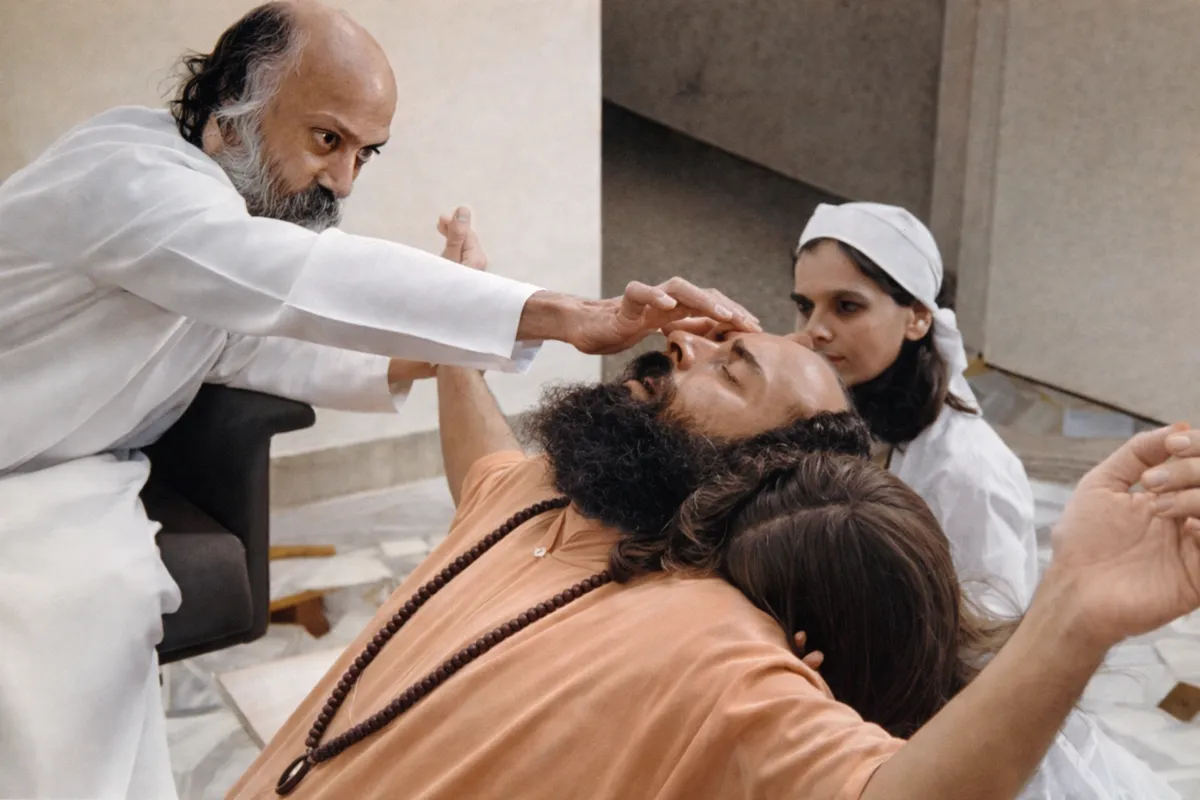
Osho's original Hindi beside Osho Live's English translation, matched passage by passage.
सूत्र:
और हे अर्जुन, रजोगुण और तमोगुण को दबाकर सत्वगुण होता है अर्थात बढ़ता है तथा रजोगुण और सत्वगुण को दबाकर तमोगुण बढ़ता है; वैसे ही तमोगुण और सत्वगुण को दबाकर रजोगुण बढ़ता है।
जिस काल में इस देह में तथा अंतःकरण और इंद्रियों में चेतनता और बोध-शक्ति उत्पन्न होती है, उस काल में ऐसा जानना चाहिए कि सत्वगुण बढ़ा है।
Sutra: And, O Arjuna, by pressing down rajas and tamas, sattva arises—grows; and by pressing down rajas and sattva, tamas grows; likewise, by pressing down tamas and sattva, rajas grows. When, in this body and in the inner organ and the senses, consciousness and the power of discernment arise, then know that sattva has increased.
तो सत्वगुण का एक ही लक्षण है, चेतनता। जब आप होश से भरे हैं, तब जानना कि सत्वगुण बढ़ा है। सत्वगुण चाहिए हो, तो जितना ज्यादा आप होशपूर्वक हो सकें, उतना शुभ है। जो भी आप करें, क्षुद्र से क्षुद्र या बड़े से बड़ा काम, वह होशपूर्वक हो, उसमें कांशसनेस हो, उसे करते वक्त आप जागे हुए करें, सो न जाएं। जितनी जागरूकता की मात्रा बढ़ेगी, उतना आपके भीतर सत्वगुण ज्यादा हो जाएगा; उतने आप साधु, उतने आप सात्विक हो जाएंगे।
So sattva has only one mark: consciousness. When you are filled with awareness, know that sattva has increased. If you want sattva, then the more consciously you can live, the better. Whatever you do—be it the smallest or the greatest—do it consciously; let there be consciousness in it; do it while awake, not asleep. As the measure of awareness increases, sattva will grow within you; you will become that much saintly, that much sattvic.
यह बड़े मजे की बात है। क्योंकि कृष्ण जैसा कह रहे हैं, ऐसा आमतौर से धार्मिक लोग नहीं समझते हैं। धार्मिक लोग समझते हैं, अच्छे काम करो, तो सात्विक हो जाएंगे। कृष्ण लेकिन अच्छे काम को कुछ जगह नहीं दे रहे हैं। कृष्ण कहते हैं, होशपूर्वक! चाहे करो और चाहे न करो, लेकिन होशपूर्वक रहो, तो सात्विकता पैदा होगी।
This is a very delightful point. Because Krishna is saying something that religious people generally do not understand. Religious people think, “Do good deeds, and you will become sattvic.” Krishna, however, gives no place to good deeds. Krishna says, “Be conscious!” Whether you do or don’t do, if you are aware, sattva arises.
तो एक आदमी खाली भी बैठा हो और होश से भरा हो, तो सात्विक होगा। और एक आदमी समाज की सेवा कर रहा हो, मरीजों की अस्पताल में देखभाल कर रहा हो और होशपूर्वक न हो, तो सात्विक नहीं होगा। आप अपनी जान भी दे दें सेवा में, लेकिन होश न हो, तो आप सात्विक नहीं होंगे। और आप कभी जिंदगी में किसी की सेवा न किए हों, आलस्य में बैठे रहे हों, लेकिन भीतर आलस्य के होश जगा रहा हो, तो आप सात्विक होंगे।
So a man may be sitting idle and be full of awareness—he will be sattvic. And a man may be serving society, tending patients in a hospital, but if he is not aware, he will not be sattvic. You may even lay down your life in service; but without awareness you will not be sattvic. And you may not have served anyone in life, you may have been sitting in laziness; yet if awareness of laziness was lit within, you will be sattvic.
इसका यह मतलब नहीं है कि सात्विक आदमी अच्छे काम नहीं करेगा। सात्विक ही अच्छे काम कर सकता है। लेकिन सात्विकता अच्छे काम करने से नहीं आती; अच्छे काम सात्विकता से आते हैं।
This does not mean that the sattvic man will not do good deeds. Only the sattvic can truly do good. But sattva does not come from doing good; good deeds flow from sattva.
तो जो जितना जागा हुआ है, वह उतना प्रेमपूर्ण होगा। वह उतना करुणामय होगा, वह उतना तत्पर होगा कि किसी का दुख मिटा सके, तो मिटाने की कोशिश करे। यह सेवा पैदा होगी उसकी जागरूकता से; उसकी जागरूकता का परिणाम होगी।
The more awakened one is, the more loving he will be, the more compassionate he will be, the more ready to remove another’s suffering if he can—service will arise from his awareness; it will be the outcome of his awareness.
लेकिन इससे बड़ी भ्रांति पैदा हुई है। इससे ऐसा लगता है कि जो सेवा कर रहा है, वह सात्विक हो गया। इस भ्रांति को गांधी ने इस देश में काफी जोर दिया। अच्छा काम करो। समाज का, देश का, दरिद्र का, दीन का कुछ हित करो, कल्याण करो, यही साधुता का लक्षण है। सेवा धर्म है, गांधी ने कहा।
But a great misunderstanding has arisen: it appears that whoever serves has become sattvic. Gandhi strongly reinforced this error in this country: do good works—benefit society, the nation, the poor, the destitute; service is religion, he said.
शब्द बड़े अच्छे हैं। और जिनके पास बहुत गहरी परख नहीं है, उन्हें बिलकुल ठीक लगेंगे। लेकिन बिलकुल विपरीत हैं। धर्म सेवा है; लेकिन सेवा धर्म नहीं है। धार्मिक व्यक्ति से सेवा उठेगी; लेकिन कोई सेवा को ही साध ले, तो धार्मिक हो जाएगा, इस भूल में पड़ने की कोई भी जरूरत नहीं है। इसका परिणाम भी सामने है, लेकिन फिर भी मुल्क जागता नहीं।
The words are beautiful. And for those without deeper discrimination, they seem perfectly right. But they are exactly inverted. Religion is service; but service is not religion. Service will arise from the religious person; but to cultivate service in itself and think one becomes religious—there is no need to fall into this illusion. The result is before us, yet the nation does not awaken.
गांधी ने जितने सेवक पैदा किए थे, वे सब शोषक सिद्ध हुए। जिनको उन्होंने तैयार किया था सब कुछ छोड़ देने के लिए, त्याग के लिए, वे सत्ताधिकारी हो गए और उन्होंने सब कुछ पकड़ लिया। छोड़ने की तो बात ही अलग हो गई।
As many servants as Gandhi produced, all proved to be exploiters. Those he had trained to give up everything, to renounce, became power-holders and grabbed everything. The talk of renouncing vanished.
जैसे ही मुल्क से सत्ता बदली, जो सेवक था, वह अचानक शासक हो गया। तो सेवक था, शायद मजबूरी थी इसलिए। अब कोई सेवक बनने को तैयार नहीं। या अब भी अगर कोई सेवक बनता है, तो साधन की तरह, क्योंकि शासक तक जाने का रास्ता सेवक होने से गुजरता है।
The moment power shifted in the country, the servant suddenly became the ruler. Perhaps service had been compulsion. Now no one is ready to be a servant. Or if someone still serves, it is as a means—because the road to rulership passes through being a servant.
अगर आपकी गर्दन दबानी हो, तो पैर दबाने से शुरू करना चाहिए। धीरे-धीरे आप आश्वस्त हो जाते हैं कि आदमी पैर ही दबा रहा है, कोई खतरा नहीं है। जैसे ही आप आश्वस्त होते हैं, वह आदमी आगे बढ़ता चला जाता है। जब तक आपकी गर्दन तक आता है, तब तक आप सोए होते हैं; तब दबाने में कोई अड़चन नहीं रह जाती। सीधे गरदन को ही दबाना कोई शुरू करे, तो आप भी चौंक जाएंगे। आप भी कहेंगे, यह किस तरह की सेवा है?
If you want to press someone’s neck, start by pressing his feet. Gradually he becomes assured: the man only presses feet—no danger. As soon as he is assured, the man advances. By the time he reaches the neck, you are asleep—then there is no hindrance to pressing. If someone started with your neck, you would be startled; you would say, “What kind of service is this?”
शासक बनना हो, तो पैर दबाने से शुरू करना आसान पड़ता है। सेवा भी सत्ता में पहुंचने का उपाय हो जाती है। इस मुल्क में हुई। सभी जगह होगी। लेकिन भ्रांति सेवकों में नहीं थी; सेवकों को जो समझाया गया, उस मूल सूत्र में थी।
If you want to be a ruler, starting with foot-massage is easy. Service, too, becomes a device to reach power. It happened in this country. It will happen everywhere. But the error was not in the servants; it was in the root formula taught to them.
सेवा धर्म नहीं है, यद्यपि धर्म सेवा है।
Service is not religion, though religion is service.
तो जो व्यक्ति जितना सचेतन हो जाएगा भीतर, उसके जीवन से जो भी होगा, वह शुभ होगा। फिर जरूरी नहीं है कि वह सेवा करे ही। क्योंकि रमण ने किसी की कोई सेवा नहीं की ज्ञात में। कोई नहीं कह सकता कि उन्होंने किसी का पैर दबाया, कोढ़ी की मालिश की। रमण बिलकुल खाली बैठे रहे। प्रत्यक्ष में तो कोई सेवा रमण ने नहीं की। अप्रत्यक्ष में की। लेकिन वह तो केवल वे ही देख सकते हैं, जिनको अप्रत्यक्ष देखना आता हो।
So, the more a person becomes awakened within, whatever flows from his life will be auspicious. It is not necessary that he must serve in the visible sense. Ramana, as far as we know, did not serve anyone. No one can say he pressed someone’s feet or massaged a leper. Ramana sat utterly silent. In the visible sense he did no service. In the invisible, he did. But only those can see it who know how to see the invisible.
अगर सेवकों में गिनना हो, तो गांधी को, विनोबा को गिना जा सकता है। रमण को कोई भूलकर नहीं गिनेगा। सेवा कहीं दिखाई नहीं पड़ती। लेकिन जो भी व्यक्ति धर्म को उपलब्ध हो जाता है, उससे कल्याण तो होता ही है।
If we count “servers,” Gandhi or Vinoba may be counted. Ramana would not be counted, even by mistake. No visible service is seen. But whoever attains religion, welfare flows from him.
कुछ हैं जो स्थूल कल्याण में लगते हैं, कुछ हैं जो सूक्ष्म कल्याण में लग जाते हैं। उनकी मौजूदगी कल्याण का महास्रोत हो जाती है। उनके आस-पास से गुजरने वाले लोग, जहां तक उनकी हवाएं उनकी खबर को ले जाती हैं, उनके अस्तित्व की सुगंध को ले जाती हैं, वहां-वहां तक न मालूम कितने जीवन रूपांतरित होते हैं।
Some engage in gross, visible welfare; some in subtle welfare. Their very presence becomes a vast source of benediction. Those who come near, as far as their winds carry the news of their being, the fragrance of their existence, countless lives are transformed.
निश्चित ही वे किसी के शरीर की बीमारी दूर करने नहीं जाते। लेकिन शरीर से गहरी बीमारियां हैं। और शरीर को बिलकुल स्वस्थ कर दिया जाए, तो भी वे बीमारियां नहीं मिटती हैं। उन बीमारियों को दूर करने का अपरोक्ष, अप्रत्यक्ष आयोजन उनकी मौजूदगी से होता रहता है। लेकिन वह सूक्ष्म कला है; सभी उसमें कुशल नहीं हो सकते।
Certainly they do not go about removing someone’s bodily illness. But there are diseases deeper than the body. And even if the body is made perfectly healthy, those diseases do not vanish. Arrangements for removing those diseases happen indirectly through their presence. But that is a subtle art; not all can be skilled in it.
बुद्ध का शिष्य है, महाकाश्यप। बुद्ध ने सभी शिष्यों को भेजा कि जाओ, बहुजन हिताय बहुजन सुखाय, लोगों को समझाओ, लोगों को जगाओ। लेकिन महाकाश्यप को कभी नहीं भेजा। सारिपुत्र को भेजा, मौदगल्यायन को भेजा। और सैकड़ों शिष्य थे, उनको भेजा कि तुम जाओ, लोगों को जगाओ; लोगों को ज्ञान दो, ध्यान दो; लोगों को करुणा का सूत्र दो; लोगों को सजग बनाओ। लेकिन महाकाश्यप को कभी नहीं भेजा।
There was Buddha’s disciple, Mahakashyapa. Buddha sent all his disciples: “Go—bahujan hitaya, bahujan sukhaya—benefit and awaken people.” But he never sent Mahakashyapa. He sent Sariputta, sent Maudgalyayana, sent hundreds: “Go—awaken people; give them knowledge, meditation; give them the sutra of compassion; make them alert.” But he never sent Mahakashyapa.
आनंद एक जगह बुद्ध से पूछता है, आपने सब को भेजा, लेकिन कभी आप महाकाश्यप को आज तक नहीं कहे कि तू कहीं जा, कुछ कर! बुद्ध ने कहा, महाकाश्यप का होना ही करना है। उसे कहीं भेजने की जरूरत नहीं। वह जहां है, उसके होने से काम हो रहा है। वह बैठा है झाड़ के नीचे, तो भी काम हो रहा है। उस रास्ते से जो लोग गुजर जाएंगे, वे भी उसके कणों को ले जा रहे हैं।
Ananda once asked Buddha, “You sent everyone, but you have never told Mahakashyapa to go somewhere and do something.” Buddha said, “Mahakashyapa’s being is his doing. He need not be sent anywhere. Wherever he is, his very being is doing the work. Even if he sits under a tree, the work goes on. Those who pass by that path carry his particles with them.
वह महाकाश्यप, अगर हम ठीक से समझें, तो इनफेक्शस है। वह जिस बुद्धत्व को उपलब्ध हुआ है, वह बुद्धत्व संक्रामक है; वह उसकी मौजूदगी से फैलता है। उसे सक्रिय रूप से सीधे-सीधे काम में नहीं लग जाना होता है।
“That Mahakashyapa, if we understand rightly, is infectious. The Buddhahood he has attained is contagious; it spreads through his presence. He need not plunge into active, direct work.”
बड़ी गहरी चेतनाएं चुपचाप भी करती रहती हैं। निर्भर करेगा इस बात पर कि किस तरह का व्यक्ति है। अगर अंतर्मुखी व्यक्ति ज्ञान को उपलब्ध होगा, सत्व को उपलब्ध होगा, तो वह चुप हो जाएगा, मौन हो जाएगा, शांत हो जाएगा। उसकी मौजूदगी से काम होगा, उसके प्रभाव अप्रत्यक्ष होंगे, पर बड़े गहरे होंगे, दूरगामी होंगे।
Deep consciousnesses work silently too. It will depend on the kind of person. If an introvert attains knowledge, attains sattva, he will become quiet, silent, still. Work will happen through his presence; his effects will be indirect, but very deep and far-reaching.
अगर बहिर्मुखी व्यक्ति होगा और सत्व को उपलब्ध हो जाएगा, तो उसके प्रभाव विस्तीर्ण होंगे, स्थूल होंगे, बहुत लोगों की सेवा उससे होगी, लेकिन बहुत दूरगामी नहीं होगी। विस्तीर्ण होगी, लेकिन गहरी नहीं होगी। मरीज उससे ठीक होंगे, किसी को जमीन भूमि-दान करवाएगा; किसी को धन, किसी को मंदिर बनवाएगा; कहीं धर्मशाला खुलवाएगा; कहीं गरमी में प्याऊ डलवाएगा; पर उसका काम ऊपर-ऊपर होगा। उससे लाभ होगा, लेकिन वह लाभ स्थूल होगा।
If an extrovert attains sattva, his effects will be expansive, gross, and many will receive service from him; but they will not be very far-reaching. They will be broad, but not deep. Patients will be healed, someone will be led to donate land, someone money, somewhere a temple will be built, somewhere a rest-house opened, a water-stand put up in summer; but his work will be on the surface. It will be beneficial, but the benefit will be gross.
रमण न तो प्याऊ खुलवाते, न भूदान करवाते, न मंदिर बनवाते। पर उनका प्रभाव दूरगामी है। सदियों तक जो लोग भी उनकी तरफ अपने मन को ट्यून करने में सफल हो जाएंगे, वे उनसे प्रभावित होंगे, आंदोलित होंगे, रूपांतरित होंगे। पर वह अदृश्य की घटना है; सभी को दिखाई नहीं पड़ सकती।
Ramana neither installed water-stands, nor led land-donation, nor built temples. Yet his impact is far-reaching. For centuries to come, those who succeed in tuning their minds to him will be influenced, stirred, transformed by him. But that is an event of the invisible; not everyone can see it.
सत्व जब पैदा होता है, तो शुभ आचरण में अपने आप आता है।
When sattva is born, auspicious conduct arises on its own.
हे अर्जुन, रजोगुण और तमोगुण को दबाकर सत्वगुण पैदा होता है।
O Arjuna, by pressing down rajas and tamas, sattva is born.
इस प्रक्रिया को समझ लेना चाहिए कि ये गुण कैसे काम करते हैं। रजोगुण और तमोगुण को दबाकर सत्वगुण पैदा होता है। ये तीनों गुण सभी के भीतर मौजूद हैं। कोई गुण बाहर से लाना नहीं है। तीनों गुण भीतर मौजूद हैं। और तीनों गुणों में जो ऊर्जा काम करती है, वह भी मौजूद है। वह ऊर्जा एक है। ये तीन गुण हैं, वह ऊर्जा एक है।
One must understand this process—how these gunas operate. By pressing down rajas and tamas, sattva arises. All three gunas are present within everyone. No guna is to be imported from outside. All three are within. And the energy that powers the three is also within—the energy is one; the gunas are three.
जैसे समझें कि आपके घर में एक मात्रा का जल है, और घर में से तीन छेद हैं, जिनसे वह जल बाहर जा सकता है। आप चाहें तो एक ही छेद से उस जल को बाहर भेज सकते हैं; तब धारा बड़ी हो जाएगी। आप चाहें तो तीनों छिद्रों से उस जल को बाहर भेज सकते हैं; तब धाराएं क्षीण हो जाएंगी। आप चाहें तो एक से ज्यादा, दूसरे से कम और तीसरे से और कम जल को भेज सकते हैं।
Imagine your house has a fixed amount of water, and three holes through which that water can flow out. You can send all the water through one hole—then the stream will be strong. You can let it flow through all three—then the streams will be feeble. Or you can send more through one, less through the second, and still less through the third.
आपकी जीवन-ऊर्जा की धारा आपके पास है। और यह तीन गुणों का यंत्र आपके पास है। जब आप बिना किसी साधना के जीते हैं, तो सिर्फ परिस्थितियां ही निर्धारक होती हैं कि किस गुण से आपकी ऊर्जा बहेगी--परिस्थितियां, आप नहीं।
The current of your life-energy is with you. And this three-guna mechanism is with you. When you live without any discipline or practice, circumstances alone determine through which guna your energy will flow—circumstances, not you.
और ध्यान रहे, प्रत्येक व्यक्ति प्रतिपल बदलता रहता है। सुबह हो सकता है तमोगुणी रहा हो, और दोपहर को रजोगुणी हो जाए, और शाम को सत्वगुणी मालूम पड़े। लेकिन परिस्थितियां निर्धारक होती हैं।
And remember, a person changes moment to moment. In the morning he may be tamasic; at noon he may turn rajasic; by evening he may appear sattvic. But circumstances are the determinant.
समझ लें कि आप सुबह ही उठे और पा रहे हैं कि चित्त आलस्य से भरा है, उठने का कोई मन नहीं, दिनभर बिस्तर में ही पड़े रहें। और तभी पता लगा कि मकान में आग लग गई। तमोगुण तत्क्षण विदा हो जाएगा। आप एकदम रजोगुणी हो जाएंगे। एकदम से तम के द्वार से जो ऊर्जा बह रही थी, वह खींच ली जाएगी। और पूरी की पूरी ऊर्जा रज के द्वार से प्रवाहित होने लगेगी। क्योंकि मकान में आग लगी है; आग बुझाना जरूरी है।
Suppose you wake in the morning and find the mind full of laziness—no desire to rise—want to lie in bed all day. And just then you hear the house is on fire. Tamas will depart instantly. At once you will become rajasic. The energy that was flowing through the door of tamas is withdrawn; the whole of it begins to flow through the door of rajas—because the house is on fire; it needs to be put out.
उस वक्त आप नहीं कह सकते कि मैं आलस्य में हूं। अभी मेरा मन नहीं उठने का। आप भूल ही जाएंगे कि नींद भी कोई तत्व है जीवन में, कि बिस्तर में पड़े रहने में भी कोई रस हो सकता है। छलांग लगाकर बिस्तर से उठेंगे, जैसा आप कभी नहीं उठे थे। लेकिन यह घटना घट रही है परिस्थितिवश।
At that time you cannot say, “I am lazy. I don’t feel like getting up.” You will forget that sleep is an element in life, that there is any taste in lying in bed. You will leap up as you never have. But this is happening due to circumstances.
बाहर आकर आपको पता चले कि अफवाह थी; किसी ने ऐसे ही चिल्ला दिया कि मकान में आग लगी है। कहीं कोई आग नहीं लगी। आप वापस अपने बिस्तर में लौट आएंगे। रजोगुण तमोगुण में प्रविष्ट हो गया। वह जो ऊर्जा जगकर सक्रिय होना चाहती थी, वह फिर विश्राम को उपलब्ध हो गई।
You come out and discover it was a rumor; someone just shouted “Fire!” There is no fire. You return to bed. Rajas slips back into tamas. The energy awakened for activity now settles into rest again.
बाहर की परिस्थिति आपको चौबीस घंटे चला रही है। इसलिए अगर आपमें भरोसा करने वाले लोग आपके चारों तरफ हों.। आप चोर हैं, और आपके पास आठ-दस लोग हों, जो आपको मानते हों कि आप साधु हैं, तो हो सकता है कि उनकी मान्यता के कारण आपकी धारा सत्वगुण से बहने लगे। क्योंकि वे बारह आदमी आपके अहंकार को बढ़ा रहे हैं। वे कह रहे हैं कि आप महासाधु हैं। अब आप चोरी करना भी चाहें, तो आपका अहंकार बाधा देता है कि कम से कम मुश्किल से तो जिंदगी में बारह आदमी मिले, जो साधु मानते हैं, अब दो-चार पैसे की चोरी के लिए साधुता को खोना उचित नहीं मालूम होता।
Outer circumstances are driving you twenty-four hours. This is why, if you have people around you who believe in you… Suppose you are a thief, and you have eight or ten people who believe you are a saint; their belief can make your stream flow through sattva—because twelve people are inflating your ego. They say you are a great saint. Even if you want to steal, your ego prevents you: “Rarely have twelve people believed me a saint. For a few coins, it is not worth losing sainthood.”
ऐसा हुआ। मैं एक साधु का जीवन पढ़ता था। एक झेन फकीर हुआ। वह चोर था साधु होने के पहले। एक महल से चोरी करके भागा। पुलिस उसके पीछे है; लोग उसको पकड़ने आ रहे हैं। कोई उपाय न देखकर, कोई मार्ग न देखकर, वह एक बुद्ध मंदिर में प्रवेश कर गया। सुबह कोई चार बजे रात का समय था। कोई भिक्षु सोया था, उसके कपड़े टंगे थे। उसने भिक्षु के कपड़े पहन लिए और मंदिर में हाथ-पालथी मारकर बुद्धासन में बैठ गया। नमो बुद्धाय, नमो बुद्धाय का मंत्र जाप करने लगा।
It happened. I read the life of a Zen mendicant. He was a thief before he became a monk. He ran after stealing from a mansion. The police were after him. Seeing no way out, no path, he entered a Buddha temple. It was around four in the morning. A monk was asleep; his robe was hanging. He put on the robe and sat in lotus before the image, chanting, “Namo Buddhaya, Namo Buddhaya.”
सिपाही भागे हुए मंदिर के पीछे आए। वे उसका पीछा कर रहे थे। लेकिन वहां एक साधु बैठा है, नमो बुद्धाय का पवित्र मंत्र गूंज रहा है। वहां कोई चोर नहीं। वे सिपाही उसके चरणों में झुके; उसको नमस्कार किए; और कहा, साधु महाराज, यहां कोई चोर तो नहीं आया?
The policemen chased him to the temple. They were on his heels. But there sat a monk, and the sacred mantra was resounding. There was no thief. The policemen bowed at his feet, saluted him, and asked, “Reverend sir, has a thief come here?”
जब वे उसके चरणों में झुके, तब उसे बड़ी हैरानी हुई। और एक क्रांति हो गई। उसे लगा कि मैं एक झूठा साधु! और झूठी साधुता में इतना बल--झूठी साधुता में--कि जो मेरी हत्या करने मेरे पीछे लगे थे, वे मेरे चरणों में झुक गए! अगर झूठी साधुता में इतना बल है, तो सच्ची साधुता में कितना बल होगा!
When they bowed at his feet, he was astonished—and a revolution happened. He thought, “I am a fake monk! And yet the fake monk has so much power that those who were to kill me fell at my feet! If false sainthood has such power, how much will true sainthood have!”
उसने उन सिपाहियों से कहा कि चोर आया था, लेकिन अब तुम उसे खोज न पाओगे। वह चोर मर चुका।
He told the policemen, “A thief came, but now you will not find him. The thief is dead.”
वे सिपाही बोले, हम समझे नहीं! आप रहस्य की बातें न करें। हम सीधे-सादे लोग। हम समझे नहीं आपका मतलब! चोर कहां है? कैसे मर गया?
They said, “We don’t understand! Don’t speak in mysteries—we are simple men. Where is the thief? How did he die?”
उस साधु ने कहा, मैं ही था वह चोर, लेकिन अब मैं मर चुका हूं। और वह चोर अब तुम्हें कहीं भी नहीं मिलेगा। वह नहीं है अब। तुमने मेरे चरणों में झुककर उसकी हत्या कर दी। तुम गोली से उसे नहीं मार सकते थे, लेकिन तुमने उसे मार दिया। और जब झूठी साधुता में इतना अर्थ हो सकता है, तो मैं अब उस साधुता की तलाश करूंगा, जो सच्ची है।
The monk said, “I was that thief; but now I am dead. You will not find that thief anywhere. He is no more. By bowing at my feet, you killed him. You could not have killed him with a bullet—but you have killed him. And if false sainthood holds such meaning, I will now seek the true.”
वह एक बड़ा झेन फकीर हो गया। वह सदा यह घटना लोगों से कहा करता था कि मैं कोई साधु बनने नहीं आया था, परिस्थिति ने सत्व का उदय कर दिया। नमो बुद्धाय! सुबह का सूना मंदिर; मंदिर की दीवारों में गूंजता नमो बुद्धाय का मंत्र; मूर्ति के पास से उठती हुई धूप; सुगंधित वातावरण; सिपाहियों का आना और मेरे चरणों में झुक जाना--मेरी सारी ऊर्जा सत्व से बह गई। एक क्षण को मुझे सत्व का अनुभव हुआ कि साधुता का सुख, साधुता की सुगंध, साधुता का फूल क्या है।
He became a great Zen master. He would often tell this story: “I had not come to be a saint—circumstance brought the rise of sattva. ‘Namo Buddhaya!’ The empty temple at dawn; the mantra echoing in the walls; incense rising by the image; the fragrant air; the policemen coming and bowing at my feet—my entire energy flowed through sattva. For a moment I had the taste of what saintliness is—the joy, the fragrance, the flower of it.”
आप पूरे समय बदल रहे हैं। इसलिए अच्छे आदमी के पास आप अच्छे आदमी हो जाते हैं। बुरे आदमी के पास आप बुरे आदमी हो जाते हैं। अगर सक्रिय लोगों के बीच में पड़ जाएं, तो आप सक्रिय हो जाते हैं। अगर आलसियों के बीच में पड़ जाएं, तो आपको नींद आने लगती है।
You keep changing all the time. With a good man, you become good; with a bad man, you become bad. Fall among the active, and you become active; among the lazy, and sleep overtakes you.
आपने खयाल नहीं किया होगा। अगर यहां इतने लोग बैठे हैं; इनमें से दो-चार लोग जम्हाई लेना शुरू कर दें आपके पास, तो ज्यादा देर नहीं लगेगी कि आप जम्हाई शुरू कर देंगे। एक आदमी जम्हाई ले कि पास वाले को खुजलाहट शुरू हो गई! उसके गले से जम्हाई उठने लगी। नींद! वह जो आलसी आपके पास बैठा है, उसने नींद आपको पकड़ा दी।
You may not have noticed: if here a few people near you start yawning, it won’t be long before you begin to yawn. One man yawns, and the neighbor begins to itch; a yawn starts rising in his throat—sleep! The lazy fellow sitting beside you infects you with sleep.
मुल्ला नसरुद्दीन के जीवन में एक उल्लेख है। बाजार से गुजरता था, साग-सब्जी, फलों की दुकानें थीं। एक दुकान पर उसे बड़े मधुर आम रखे हुए दिखाई पड़े। पैसे उसके पास नहीं थे। मगर मन जकड़ गया। तो वह कोई उपाय सोचने लगा। वहीं सामने दुकान के सड़क के उस तरफ बैठकर कुछ उपाय सोचने लगा।
There is an incident in Mulla Nasruddin’s life. He was passing through a market—shops of greens, vegetables, fruits. On one shop he saw exquisitely sweet mangoes. He had no money, but his mind was seized. He began to think of a plan. He sat across the street, thinking.
तभी दुकानदार ने अपनी लोमड़ी, जो उसने एक लोमड़ी पाल रखी थी, उसे दुकान के बाहर लाया और लोमड़ी से कहा कि बैठ और दुकान का ध्यान रखना। और किसी भी तरह का कोई आदमी पास आए और संदिग्ध मालूम पड़े, तो आवाज देना। मैं जरा खाना खाने भीतर जाता हूं।
Just then the shopkeeper brought out his pet fox and said to it, “Sit here and mind the shop. If anyone suspicious comes near, give a cry. I’m going inside to eat.”
नसरुद्दीन ने सोचा कि बड़ी मुश्किल है। आदमी को भी धोखा देना आसान है। यह लोमड़ी को धोखा देना और मुश्किल है। पास ही पहुंचे कि वह आवाज कर देगी। तो उसने क्या किया? वह जहां बैठा था, वहां से धीरे-धीरे पास सरकने लगा। आंख उसने बंद कर लीं और झोंके खाने लगा। लोमड़ी ने देखा इस आदमी को सोते हुए; उसकी भी आंखें झपने लगीं। धीरे-धीरे नसरुद्दीन देखता जाता; जब लोमड़ी बिलकुल सो गई, तब उसने आम उठा लिया। तब नसरुद्दीन आम खाकर छुप रहा। उसने सोचा कि देखें, अब मालिक क्या करता है आकर!
Nasruddin thought, “This is hard. Deceiving a man is easy; deceiving a fox is harder. If I go near, it will cry out.” So what did he do? From where he sat, he began to slide closer slowly. He closed his eyes and started nodding as if dozing. The fox saw a man sleeping; its eyes too began to droop. Nasruddin kept peeking; when the fox fell fast asleep, he took a mango, ate it, and hid. He thought, “Let’s see what the owner does now!”
मालिक आया और उसने लोमड़ी को जगाया, उसने कहा, कुछ भूल हो गई। आम कम मालूम पड़ते हैं। क्या गड़बड़ है? कहानी कहती है कि लोमड़ी ने कहा कि यहां तो कोई पास आया नहीं। सिर्फ एक आदमी था, जो सो रहा था। मालिक ने कहा कि मैंने तुझे कहा था कि कोई भी तरह की क्रिया आस-पास हो और कुछ भी संदेह मालूम पड़े, आवाज करना। सोना भी एक क्रिया है। और तुझे सचेत हो जाना चाहिए था।
The owner came, woke the fox, and said, “Something is wrong. The mangoes seem short. What’s the trouble?” The story says the fox replied, “No one came near. Only a man was there, sleeping.” The owner said, “I told you: any kind of activity around—if anything suspicious, cry out. Sleeping is also an activity! You should have been alert.”
आपके पास कोई सोने लगे, तो आपके भीतर प्रवाह शुरू हो जाता है।
If someone starts sleeping near you, a current begins within you.
मेरा अनुभव है। मैं यहां बोल रहा हूं। अगर एक आदमी खांसने लगे--हो सकता है, उसकी खांसी वास्तविक हो--दूसरे लोग संक्रामक हो जाते हैं। खांसी सुनते ही उनको खयाल आ जाता है कि वे भी खांसना जानते हैं! खांस सकते हैं; उनके पास भी गला है। फिर कठिन हो जाता है, रोकना कठिन हो जाता है। और ऐसा नहीं कि यह सचेतन हो रहा है। यह बिलकुल अचेतन है।
आप देखें, सड़क पर एक भीड़ चली जा रही है; आंदोलनकारी हैं; कोई घेराव कर रहा है; कोई हड़ताल कर रहा है। आप घूमने निकले थे, आप तेजी से चलने लगते हैं उनके साथ। उनका जोश आपको पकड़ जाता है। वे नारे लगा रहे हैं, आपका भी दिल होने लगता है। वे कहीं आग लगा रहे हैं, आप भी खड़े हो जाते हैं; सहयोगी भी हो जाते हैं!
एक बहुत बड़े मनोवैज्ञानिक ने, जर्मनी में जो नाजीवाद की घटना घटी, उस पर एक किताब लिखी: दि साइकोलाजी ऑफ फैसिज्म। वैज्ञानिक था विलहेम रैक। बड़ी अदभुत किताब है, फैसिज्म का मनोविज्ञान। वह भीड़ का मनोविज्ञान है। और हिटलर बड़ा कुशल था। इस बात को जानता था कि भीड़ कैसे काम करती है।
I have this experience here as I speak. If one person starts coughing—it may be a real cough—others become contagious. Hearing the cough, they remember they too know how to cough! They can cough; they also have a throat. Then it becomes difficult to refrain. And it isn’t happening consciously—it’s completely unconscious.
हिटलर अपनी सभाओं में.।
शुरू-शुरू में जब उसको कोई मानने वाला भी नहीं था, कुल सात आदमी उसकी पार्टी के मेंबर थे। और सातों ही फिजूल लोग थे। एक भी आदमी कीमत का नहीं था। निकाले गए लोग, बेकार लोग, जिनके पास कुछ काम-धाम नहीं था, उन्होंने हिटलर को नेता मान लिया था। लेकिन उन सात के बल पर इस जमीन का सबसे शक्तिशाली साम्राज्य स्थापित करने की कोशिश हिटलर ने की।
वह उन सात बेकार आदमियों को लेकर सभाओं में चला जाता। दूसरों की सभा हो रही है। वह सात आदमी बिठा देता। वे सात आदमी जगह-जगह से शोरगुल करके डिस्टरबेंस शुरू कर देते। और हिटलर खुद हैरान हुआ कि सात आदमी थे, लेकिन सत्तर क्यों गड़बड़ कर रहे हैं! उसके तो सात ही आदमी थे। सात सत्तर को गड़बड़ करवा देते हैं। सत्तर सात सौ को पकड़ लेते हैं। फिर वे जो मौलिक सात हैं, उनकी तो कोई चिंता करने की जरूरत नहीं। भीड़ ने ले लिया मामला।
फिर इसका उपयोग वह अपनी सभाओं में--जब उसने अपनी सभाएं शुरू कीं, तो उसके पास पचास आदमी थे। दस हजार लोगों की सभा हो, उसके पचास आदमी पचास जगह बैठे रहते। पक्का पता होता कि किस वाक्य के बाद वे पचास आदमी ताली बजाएंगे। जैसे ही हिटलर का इशारा होता, वे पचास आदमी ताली बजाते। पांच हजार आदमी उनका साथ देते। धीरे-धीरे बाकी लोग भी साथ देने लगे। वे पचास आदमी पांच हजार लोगों से तालियां बजवाने लगे। तब हिटलर को सूत्र साफ हो गया कि भीड़ कैसे चलती है।
जो भी चारों तरफ हो रहा है, परिस्थिति बन जाती है और उसमें आप बह जाते हैं। हिंदू मस्जिद में आग लगा रहे हैं। मुसलमान मंदिर तोड़ रहे हैं, आग लगा रहे हैं। इनमें से एक-एक मुसलमान को अलग से पूछो कि क्या सच में तू मंदिर में आग लगाना चाहता है? वह कहेगा कि नहीं। एक-एक हिंदू से पूछो कि तुझे क्या मिलेगा? यह धर्म है कि तू मस्जिद को जला दे या किसी की हत्या कर दे? वह कहेगा, नहीं। लेकिन भीड़ में, वह कहता है, भीड़ में मैं था ही नहीं। भीड़ कुछ कर रही थी, मैं उसका हिस्सा हो गया। भीड़ पकड़ लेती है आपको।
आप जरा देखें! अगर दस मिलिट्री के जवान सड़क पर कवायद कर रहे हों, थोड़ी देर उनके पीछे चलकर देखें! आपको पता नहीं, कब आप लेफ्ट-राइट करने लगे। आपके पैर उनसे मिलने लगेंगे, तब ही आपको खयाल आएगा, यह मैं क्या कर रहा हूं!
Watch: if ten soldiers are drilling on the street, walk behind them a bit—you won’t know when you begin to left-right. Your feet start matching theirs. Then you realize, “What am I doing!”
मन अनुकरण करता है। परिस्थिति मन को अनुकरण की सुविधा दे देती है।
The mind imitates. Circumstances provide the mind the convenience to imitate.
अभी भी आप चौबीस घंटे एक गुण में नहीं होते। इसीलिए मंदिरों का उपयोग है, मस्जिदों का उपयोग है। क्योंकि वहां हमने कोशिश की है सत्व की हवा पैदा करने की। दिनभर जो तमोगुणी भी रहा हो, रजोगुणी भी रहा हो, वह भी घंटेभर आकर मंदिर में बैठ जाए, तो सत्व की थोड़ी हवा उसमें पैदा हो सकती है।
Even now, you are not in one guna for twenty-four hours. That’s why temples and mosques are useful—because we’ve tried there to create an air of sattva. Even one who has been tamasic or rajasic all day, if he sits in a temple for an hour, a gentle breeze of sattva can arise in him.
सत्संग का इतना ही अर्थ है, जहां थोड़ी देर को सत्व की हवा पैदा हो जाए और आपकी ऊर्जा सत्व से बहने लगे। आप दिनभर कुछ भी कर रहे हों, लेकिन यह स्वाद आपको आने लगे, तो शायद धीरे-धीरे यह स्वाद आपके चौबीस घंटे पर भी फैल जाए। इसमें आपको आनंद मालूम होने लगे और दूसरी चीजें फीकी मालूम होने लगें, तो शायद आप जिंदगी को बदलने का उपाय भी कर लें।
That is the meaning of satsang: where for a little while the air of sattva is created and your energy begins to flow through sattva. Whatever you’ve been doing all day, if you get this taste, perhaps it will gradually spread over your twenty-four hours. If you begin to find joy in it and other things taste flat, perhaps you will also find a way to change your life.
लेकिन ये घटनाएं घटती हैं परिस्थिति से। और जब तक परिस्थिति से घटती हैं, तब तक कोई बड़ा मूल्य नहीं है। बड़ा मूल्य तो तब है, जब आपके संकल्प से घटें। तब आप मालिक हुए। तब भीड़ कुछ भी कर रही हो, आप निज में हो सकते हैं। सारी भीड़ सो गई हो और आप जागना चाहें, तो जाग सकते हैं। सारी भीड़ उपद्रव कर रही हो, हत्या कर रही हो, हिंसा कर रही हो, तो भी आप अपने को भीड़ के प्रभाव से बचा सकते हैं।
But as long as these events happen by circumstance, they have no great value. The great value is when they happen by your resolve. Then you are the master. Whatever the crowd is doing, you can remain in yourself. The whole crowd may fall asleep, but if you choose to be awake, you can be. The whole crowd may be rioting, killing, violent; still you can save yourself from the crowd’s influence.
और जो व्यक्ति भीड़ के प्रभाव से अपने को बचा लेता है, वही व्यक्ति मालिक है। उसमें आत्मा पैदा हुई। वह आत्मवान हुआ। उसके पहले कोई आत्मा नहीं है। उसके पहले सब हम प्रभावित होकर चल रहे हैं।
And the one who saves himself from the influence of the crowd—that person is the master. In him, the soul is born. Before that there is no soul; before that we all move under influence.
और चारों तरफ से हमें प्रभावित किया जा रहा है। और हमें पता भी नहीं चलता कि हम किस भांति पकड़ लिए गए हैं भीड़ के द्वारा, और भीड़ हमें लिए जा रही है। एक बड़ा प्रवाह है, उसमें हम तिनके की तरह बहते हैं।
From all sides we are being influenced. And we don’t even notice how we are caught by the crowd and carried off—a great current in which we float like straws.
हे अर्जुन, रजोगुण और तमोगुण को दबाकर सत्वगुण पैदा होता है।
O Arjuna, by pressing down rajas and tamas, sattva is born.
इसलिए अगर भीतर सत्वगुण पैदा करना हो, तो रजोगुण और तमोगुण की जो वृत्तियां हैं, आलस्य की और व्यर्थ सक्रियता की.।
Therefore, if you want to give birth to sattva within, then the tendencies of rajas and tamas—of laziness and of futile hyperactivity…
विश्राम बुरा नहीं है; आलस्य बुरा है। फर्क क्या है? विश्राम का मतलब है, आवश्यक, जिससे शरीर ताजा हो, मन प्रफुल्लित हो। विश्राम का अर्थ है, जो श्रम के लिए तैयार करे। इस परिभाषा को ठीक से समझ लेना।
Rest is not bad; laziness is bad. What is the difference? Rest means what is necessary so the body becomes fresh, the mind becomes cheerful. Rest means that which prepares you for work. Understand this definition well.
विश्राम का अर्थ है, जो श्रम के लिए तैयार करे। विश्राम का प्रयोजन ही यही है कि अब हम फिर श्रम करने के योग्य हो गए। वह जो श्रम ने हमें तोड़ दिया था, थका दिया था, हमारे स्नायु खराब हो गए थे, जीवकोष्ठ टूट गए थे, वे फिर पुनरुज्जीवित हो गए। विश्राम ने हमें फिर से नया जीवन दे दिया। अब हम फिर श्रम करने के योग्य हैं।
Rest means that which prepares you for work. The very purpose of rest is that now we are again fit to work. Labor had broken and tired us; nerves were frayed; the cells damaged—they rejuvenated. Rest gave us new life; now we are fit to work again.
जिस विश्राम के बाद आप श्रम करने के योग्य न हों, वह आलस्य है। उसका मतलब है, विश्राम के द्वारा आप और विश्राम के लिए तैयार हुए जा रहे हैं। विश्राम और विश्राम में ले जा रहा है, तब खतरा है।
If after rest you are not fit to work, that is laziness. It means rest has prepared you only for more rest. When rest leads to more rest—then there is danger.
ठीक यही बात श्रम के बाबत भी लागू है। श्रम वही सम्यक है, जो आपको विश्राम के योग्य बनाए। अगर कोई ऐसा श्रम है, जो आपको विश्राम में जाने ही नहीं देता, तो वह विक्षिप्तता हो गई। वह फिर श्रम न रहा। ठीक श्रम के बाद आदमी सो जाएगा। बिस्तर पर सिर रखेगा और नींद में उतर जाएगा। ठीक श्रम के बाद।
Exactly the same applies to work. Work is right only if it makes you fit for rest. If there is a kind of work that never lets you enter rest, that is derangement. It is no longer work. After true work, a man will sleep. He will lay his head on the bed and drop into sleep. After true work.
एक किसान है। दिनभर उसने श्रम किया है खेत पर। सांझ घर आता है, खाना खाता है; और सिर रखता है बिस्तर पर, और सो जाता है। यह श्रम है।
A farmer works in the fields all day, comes home at dusk, eats, lays his head on the bed, and sleeps. That is work.
एक दुकानदार है। उसने भी दिनभर श्रम किया है। लेकिन वह जब बिस्तर पर सिर रखता है, तो विश्राम नहीं आता, नींद नहीं आती; मन में हिसाब चलता रहता है। कितने रुपये कमाए; कितने गंवाए; क्या हुआ; क्या नहीं हुआ--वह जारी है। उसका मतलब हुआ कि दुकानदार के श्रम में कहीं कुछ भूल है। वह सिर्फ श्रम नहीं है, शायद लोभ की विक्षिप्तता है।
A shopkeeper has also worked all day. But when he lays his head on the bed, rest does not come; sleep does not come; the mind keeps up its accounts—how many rupees were earned, how many lost, what happened, what did not happen—it goes on. This means there is some mistake in the shopkeeper’s work. It is not just work; perhaps it is the derangement of greed.
किसान के श्रम में वह भूल नहीं है। वह सिर्फ शायद भोजन के लिए है। लोभ की नहीं, जरूरत के लिए है। वह जो किसान है, वह निन्यानबे के चक्कर में नहीं है। वह सिर्फ श्रम कर रहा है। कल की रोटी जुट गई, काफी है। वह जो दुकानदार है, वह कल की रोटी की उतनी फिक्र नहीं कर रहा है। वह रोटी तो उसने बहुत पहले जुटा रखी है। वह कुछ महल बना रहा है लोभ के।
The farmer’s work has no such mistake. It is perhaps simply for food; not for greed, for need. That farmer is not caught in the ninety-nine loop. He is simply working. Tomorrow’s bread is arranged—enough. The shopkeeper is not concerned so much about tomorrow’s bread; he arranged that long ago. He is building some palace in greed.
यह निन्यानबे के चक्कर की कहानी आपको याद होगी। इसे ठीक से समझ लेना चाहिए।
You will remember the story of the “ninety-nine.” Understand it well.
एक सम्राट सो नहीं पाता था रात। और उसका जो नाई था, जो रोज उसकी मालिश करता और उसकी हजामत करता, वह कभी-कभी हजामत करते-करते भी सो जाता था। वह जो नाई था, वह कभी-कभी रात उसके पैर दबाते-दबाते भी सो जाता था। वह आया था पैर दबाने, इसको सुलाने, सम्राट को। सम्राट तो जागता ही रहता और वह नाई धीरे-धीरे दबाते-दबाते सो जाता।
An emperor could not sleep at night. His barber, who massaged him and shaved him, sometimes would fall asleep even while shaving; sometimes while pressing the emperor’s legs at night. He had come to put the emperor to sleep; but the emperor remained awake and the barber, pressing, dozed off.
उस सम्राट ने कहा कि तेरे पास कुछ कला होनी चाहिए! तू भी गजब का आदमी है। सुलाने हमें आया था और खुद तू सो रहा है! उस नाई ने कहा, मैं गैर पढ़ा-लिखा आदमी, मुझे कुछ कला नहीं आती।
The emperor said, “You must have some art! Strange man—you came to put me to sleep and you sleep yourself!” The barber said, “I am uneducated; I have no art.”
सम्राट ने अपने वजीर से पूछा कि इसमें क्या राज होना चाहिए? वजीर बुद्धिमान था। उसने कहा कि राज है। कल देखेंगे। कल आपको जवाब दे दूंगा।
The emperor asked his prime minister, “What could be the secret?” The minister was wise. “There is a secret,” he said. “We will see. I’ll answer you tomorrow.”
रात वह नाई के घर में निन्यानबे रुपयों की भरी हुई एक थैली फेंक आया। रातभर नाई सो नहीं सका, क्योंकि वह जो एक रुपया कम था! उसने सोचा कि कल कुछ भी कर के एक रुपया जोड़ देना है; सौ हो जाएंगे! गजब हो गया। कभी सोचा नहीं था कि सौ अपने पास हो जाएंगे। एक ही कमाता था वह रोज। रोज खा लेता था। रात सो जाता था।
That night he dropped at the barber’s house a bag filled with ninety-nine rupees. The barber could not sleep all night—because one rupee was missing! He thought, “Tomorrow I must do anything to add one more; then it will be a hundred! Amazing. I never imagined I would have a hundred. I used to earn one a day, eat it, and sleep at night.”
दूसरे दिन सुबह बिलकुल आंखें उसकी लाल; रात बिना सोए हुए आया। पैर भी उसने दबाए सम्राट के, तो सम्राट को लगा, आज कुछ फर्क है। उसमें जान न थी। क्योंकि विश्राम न हो, तो कोई श्रम के लिए तैयार नहीं हो सकता। उसने पूछा, मामला क्या है? नाई ने कहा, समझ में मेरे भी नहीं आता; लेकिन रात मैं सो नहीं सका।
Next morning his eyes were bloodshot from a sleepless night. He pressed the emperor’s legs and the emperor felt a difference—no vigor. Without rest, no one is ready for work. “What’s the matter?” asked the emperor. The barber said, “I don’t understand, but I couldn’t sleep last night.”
सम्राट ने कहा, इसमें कुछ वजीर का हाथ तो नहीं है? वजीर ने तुझ से कुछ कहा तो नहीं? उसने कहा, किसी ने कुछ कहा नहीं। लेकिन जब आप पूछते हैं, तो कल रात मुझे घर में एक निन्यानबे रुपये की थैली पड़ी मिल गई। उससे मैं मुसीबत में पड़ गया हूं। सो नहीं सका। सम्राट ने कहा, मैं समझ गया। वह वजीर चालाक है। उसने तुझे निन्यानबे के चक्कर में डाल दिया। इसी चक्कर में मैं हूं। बस, अब बात साफ हो गई।
The emperor said, “Does the minister have a hand in this? Did he say anything to you?” “No one said anything,” replied the barber. “But since you ask—last night I found at home a bag with ninety-nine rupees. I am in trouble because of it. I could not sleep.” The emperor said, “I understand. The minister is clever. He has put you in the ninety-nine loop. That’s the loop I’m in. Now it’s clear.”
वह जो दुकानदार है--या कोई भी, जो किसी चक्कर में है, लोभ के, वासना के--वह श्रम नहीं कर रहा है। उसका श्रम ऊपर-ऊपर है; भीतर कुछ और चल रहा है। वह और जो चल रहा है, वह उसका पागलपन है। वह पागलपन उसे विश्राम न करने देगा। और जब विश्राम न होगा, तो सम्यक श्रम पैदा नहीं होता। और तब एक दुष्टचक्र पैदा होता है। दोनों गलत हो जाते हैं।
That shopkeeper—or anyone caught in any loop of greed or desire—is not really working. His work is on the surface; inside something else is going on. That something else is his madness. That madness will not allow rest. Without rest, right work cannot arise. Then a vicious circle begins—both go wrong.
सत्वगुण के पैदा होने का अर्थ है, रजोगुण और तमोगुण को ध्यान में रखना है। तमोगुण का उतना ही उपयोग करना है, जिससे विश्राम मिले, आलस्य पैदा न हो। और रजोगुण का उतना ही उपयोग करना है, जिससे जीवन की जरूरत पूरी हो, लोभ पैदा न हो। बस, फिर आपके भीतर सत्व की प्रक्रिया शुरू हो जाएगी।
The arising of sattva means keeping an eye on rajas and tamas. Use tamas only so much that it gives rest, not laziness. Use rajas only so much that life’s needs are fulfilled, not greed. Then the process of sattva will begin within you.
यही अर्थ है, तमोगुण और रजोगुण को दबाकर सत्वगुण पैदा होता है अर्थात बढ़ता है। तथा रजोगुण और सत्वगुण को दबाकर तमोगुण बढ़ता है। वैसे ही तमोगुण और सत्वगुण को दबाकर रजोगुण बढ़ता है।
This is the meaning of “by pressing down rajas and tamas, sattva arises—increases. And by pressing down rajas and sattva, tamas increases. Likewise, by pressing down tamas and sattva, rajas increases.”
आप अपने भीतर दो को दबा सकते हैं; तीसरा मुक्त हो जाता है। जिसे भी मुक्त करना हो, उसको छोड़कर बाकी दो को दबाना शुरू कर देना चाहिए।
Within you, you can press down two; the third is set free. Whichever you want to set free, press down the other two.
हम सारे लोग सत्वगुण को दबाते हैं। अच्छाई, शुभ हम दबाते हैं। जहां तक बच सकें, उससे बचते हैं। अगर शुभ करने का कोई मौका हो, शांत होने का कोई मौका हो, सत्व में उतरने की कोई सुविधा हो, तो हम उसको चूकते हैं।
We all press down sattva. We suppress the good, the auspicious. As far as possible, we avoid it. If there is an opportunity to do something auspicious, to be quiet, to descend into sattva, we miss it.
अगर कोई कहे कि आओ, एक घंटा चुपचाप शांति से बैठें, तो हमें व्यर्थ लगता है। हम कहेंगे, कुछ करो। ताश ही खेलें। बैठने से क्या होगा! कुछ करें।
If someone says, “Come, sit silently for an hour,” it seems pointless. We say, “Do something. Let’s at least play cards. What will sitting do? Let’s do something.”
झेन फकीर जापान में बैठना सिखाते हैं। वे कहते हैं साधु को, तू बैठना सीख जा बस! पर बैठने में दो बातों का खयाल रखना पड़ता है। झेन फकीर, जो गुरु होता है, वह हाथ में एक डंडा लेकर घूमता रहता है। दो बातें खयाल रखनी पड़ती हैं। तमोगुण दबाना पड़ता है और रजोगुण दबाना पड़ता है। दोनों एक साथ दबाना पड़ता है। वह डंडा लेकर घूमता है। वह कहता है, बैठे तो रहो, लेकिन सो मत जाना। सोकर आप धोखा नहीं दे सकते। क्योंकि आपका सिर हिलने लगेगा। जैसे ही सिर हिला कि डंडा आपके सिर पर होगा। वह गुरु डंडा मारेगा फौरन। और एक बार सिर हिले तो आठ डंडा मारने की आज्ञा है। तो वह आठ बार आपके सिर पर डंडा मारेगा, बेरहमी से। भीतर तक तमोगुण को झटका लग जाए!
Zen masters in Japan teach sitting. They say to the monk, “Learn to sit—that’s all!” But two points must be kept in mind while sitting. The Zen master walks with a stick. Two things to remember: tamas must be suppressed and rajas must be suppressed—both together. He walks with the stick and says, “Sit, but don’t fall asleep.” You cannot deceive by sleeping—your head will begin to nod. As soon as it nods, the stick will land on your head. The master strikes at once. And if the head nods once, eight blows are permitted. He will strike your head eight times mercilessly—so tamas receives a jolt within!
न तो सोने देगा, और न कुछ करने देगा। कि आप ऐसा हिलने लगें, तो भी डंडा पड़ जाएगा। क्योंकि हिलने का मतलब हुआ कि रजोगुण शुरू हो गया। कि आप ऐसा पैर खुजाने लगें, तो भी डंडा पड़ जाएगा। आपको कुछ करने भी नहीं देगा और सोने भी नहीं देगा। दोनों के बीच में, वह कहता है, बैठने की कला है; दोनों के बीच जो रुक जाए, वह झेन की अवस्था में आ गया, ध्यान की अवस्था में आ गया।
He will neither let you sleep, nor let you do anything. If you start fidgeting, again the stick will fall—because fidgeting means rajas has begun. If you start scratching your leg, the stick will fall. He won’t let you do anything, and he won’t let you sleep. Between the two lies the art of sitting. The one who stops between these two enters the Zen state—the state of meditation.
तो छह घंटे, आठ घंटे, दस घंटे, बारह-बारह घंटे तक धीरे-धीरे साधक को सिर्फ बैठना होता है।
Six, eight, ten, even twelve hours—gradually the seeker has to just sit.
थोड़ी देर सोचें, छह घंटे सिर्फ बैठे हैं! न कुछ कर सकते हैं और न सो सकते हैं। क्या होगा?
Think a little: for six hours you are only sitting. You can neither do anything nor sleep. What will happen?
पहली तो वृत्ति यह होगी कि कुछ करो। उस करने की वृत्ति से बहुत कुछ पैदा होता है। खयाल आएगा कि पैर में खुजलाहट हो रही है। इसमें अपना क्या हाथ है! पैर तो खुजला ही सकते हैं। या कोई चींटी चल रही है। ये सब बातें आना शुरू होंगी। और ये सब झूठ हैं।
The first tendency will be: do something. From that urge much is born. You will feel an itch in the leg—“What can I do? Legs do itch!” Or “An ant is crawling.” Such things begin to arise—and they are all untrue.
अगर आप तैयार हैं बैठे रहने को, तो चींटी भी चलती रहे, तो कोई फर्क नहीं पड़ेगा। और आप तैयार नहीं हैं, तो आप चींटी कल्पित कर लेंगे। वहां जब आप पाएंगे, तो वहां कोई चींटी नहीं है! थोड़ी-बहुत देर अगर आपने रोकने की कोशिश की कि कुछ न करें, तो नींद पकड़ने लगेगी।
If you are ready to sit, even if an ant crawls, it will make no difference. And if you are not ready, you will imagine the ant. When you look, there will be no ant! If you restrain yourself a little from doing, drowsiness starts to catch you.
हमारी ऊर्जा दो हिस्सों में बहती है, या तो तमोगुण या रजोगुण। रजोगुण से बचाएं, तो तमोगुण। तमोगुण से बचाएं, तो रजोगुण। और दोनों से बचाएं, तो तीसरे द्वार से पहली दफा झरना फूटेगा।
Our energy flows in two halves—either tamas or rajas. If you avoid rajas, tamas comes. If you avoid tamas, rajas comes. And if you avoid both, then, from the third door, for the first time the spring bursts forth.
झेन का सारा सूत्र कृष्ण के इस एक सूत्र में समाया हुआ है। झेन फकीर जो कर रहे हैं, वह इसी सूत्र का प्रयोग है। बैठे रहें; न तो तंद्रा आए, और न क्रिया पकड़े। अक्रिया में अतंद्रित!
The entire Zen device is contained in this one sutra of Krishna. What the Zen masters are doing is the application of this sutra. Sit; let neither torpor come, nor activity seize you. Non-doing, yet undrowsy!
तो आपकी चेतना कहां जाएगी? चेतना को कहीं तो जाना ही है, क्योंकि चेतना एक गति है, ऊर्जा है। जब नींद भी नहीं बन सकती और कर्म भी नहीं बन सकती, तो चेतना ध्यान बन जाती है, होश बन जाती है।
Where will your consciousness go? It has to go somewhere; consciousness is movement, energy. When it can be neither sleep nor activity, then consciousness becomes meditation, becomes awareness.
इसलिए जिस काल में इस देह में तथा अंतःकरण और इंद्रियों में चेतनता और बोध-शक्ति उत्पन्न होती है, उस काल में ऐसा जानना चाहिए कि सत्वगुण बढ़ा।
Therefore: When, in this body and in the inner organ and the senses, consciousness and the power of discernment arise, then know that sattva has increased.
और हे अर्जुन, रजोगुण के बढ़ने पर लोभ और प्रवृत्ति अर्थात सांसारिक चेष्टा तथा सब प्रकार के कर्मों का स्वार्थ-बुद्धि से आरंभ एवं अशांति अर्थात मन की चंचलता, विषय-भोगों की लालसा, ये सब उत्पन्न होते हैं।
And, O Arjuna, when rajas increases, greed and worldly striving, initiation of all actions with self-interest, and unrest—the mind’s restlessness, craving for sense-pleasures—all these arise.
रजोगुण के ये लक्षण हैं।
These are the marks of rajas.
सत्वगुण का लक्षण है, बोध, अवेयरनेस, जागरूकता। रजोगुण का लक्षण है, लोभ, सांसारिक चेष्टा, कु
छ पा लें संसार में। सब प्रकार के कर्मों का स्वार्थ-बुद्धि से आरंभ। मुझे कुछ मिले लाभ, ऐसे किसी कर्म में उतरने की वृत्ति। अशांति, मन की चंचलता, विषय-भोगों की लालसा, ये सब उत्पन्न होते हैं।
The mark of sattva is awareness, consciousness, wakefulness. The marks of rajas are greed, worldly striving—“Let me get something in the world,” the tendency to enter any act for profit to me, restlessness, the mind’s chanchalata, craving for pleasures. All these arise.
अगर रजोगुण से छूटना हो, तो इन सबसे छूटना जरूरी है। और छूटने का एक ही अर्थ है, इनको सहयोग मत दें। जब लोभ उठे, तो उसे देखते रहें। उसको कोआपरेट मत करें। उसको साथ मत दें। लेकिन हम साथ देते हैं।
If you want to be free of rajas, you must be free of these. And freedom has only one meaning: do not cooperate with them. When greed arises, keep watching it. Do not cooperate. Do not go along with it. But we do go along.
सुना है मैंने कि नसरुद्दीन एक रात, अचानक आधी रात उठा और पत्नी से बोला, जल्दी चश्मा ला। पत्नी उसे जानती थी। कुछ बिना पूछताछ--उससे पूछताछ करने का कोई सार भी नहीं था--उसने चश्मा उठाकर दे दिया। उसने चश्मा लगाया। आंख बंद करके फिर से लेट रहा।
I have heard that one night Nasruddin suddenly awoke at midnight and said to his wife, “Quick—bring my glasses.” She knew him well; there was no point in questioning. She handed him the glasses. He put them on, closed his eyes, and lay down again.
फिर थोड़ी देर बाद उठा और उसने कहा कि तूने देर कर दी। सब गड़बड़ हो गया। एक सपना देख रहा था और सपने में एक देवदूत मुझे रुपए दे रहा था। ठीक सौ-सौ के नोट थे। मुझे शक पैदा हो गया कि नोट असली हैं कि नकली, इसलिए तुझसे चश्मा मांगा। और भी एक झंझट थी कि वह नौ नोट दे रहा था और मैं कह रहा था दस दे। उसी दस की झंझट में नींद खुल गई। और फिर आंख बंद करके चश्मा लगाकर मैंने कई बार कहा कि अच्छा भाई, नौ ही दे दे। मगर वहां कोई नहीं है। सपना खो गया। सब नष्ट कर दिया। इतनी देर लगा दी चश्मा उठाने में।
After a little while he got up and said, “You were late. Everything is spoiled. I was seeing a dream in which an angel was giving me money—crisp hundred-rupee notes. I began to suspect whether they were genuine or fake, so I asked you for the glasses. And there was another hassle—he was giving nine notes and I was insisting on ten. In that quarrel my sleep broke. Then, with eyes closed and glasses on, I said many times, ‘All right—give me nine!’ But there was no one. The dream was lost. You ruined everything by delaying with the glasses.”
सपने में भी अगर नौ मिल रहे हों, तो दस का मन होता है। वह मन तो वही है, जो जाग रहा है। वही सपने में सो रहा है। और ऐसा नहीं था कि दस दे रहा होता देवदूत, तो कोई मन रुक जाता। मन कहता, जब मिल ही रहे हैं, तो थोड़े और मांग लो!
Even in the dream, if nine are coming, the mind wants ten. It is the same mind that is awake which sleeps in the dream. And it is not that if the angel had given ten, the mind would stop—mind would say, “Since they are coming, ask for a few more!”
मन भिखमंगा है; लोभ उसका स्वभाव है। इसको अगर आप सहयोग देते चले जाते हैं, तो रजोगुण बढ़ेगा। क्योंकि जितना लोभ बढ़ेगा, उतना कर्म में उतरना पड़ेगा। लोभ को पूरा करना हो, तो दौड़-धूप करनी ही पड़ेगी। फिर जितना लोभ बढ़ेगा, उतनी अशांति बढ़ेगी। क्योंकि मिलेगा? नहीं मिलेगा? कैसे मिलेगा? ये सब चिंताएं मन को पकड़ेंगी। और कैसे मिल जाए? क्या तरकीब लगाएं? झूठ बोलें; बेईमानी करें; चोरी करें; क्या करें, क्या न करें; यह सब आयोजन करना होगा। अशांति बढ़ेगी। और मन को बहुत दौड़ाना पड़ेगा। चंचलता बढ़ेगी। रजोगुण इन सारी वृत्तियों को भीतर जन्म देगा। और ये सारी वृत्तियां आपकी सारी ऊर्जा को रजोगुण के द्वार से प्रकट करने लगेंगी।
Mind is a beggar; greed is its nature. If you keep cooperating with it, rajas will grow. The more greed grows, the more you will have to enter activity. To fulfill greed, you must run about. As greed grows, unrest will grow: “Will I get it? Won’t I get it? How will I get it?” All these worries will seize the mind. “How to get it? What trick to use? Lie? Cheat? Steal? What to do, what not to do?” All this arrangement will be needed. Unrest will grow. The mind will be driven hard. Restlessness will grow. Rajas will give birth to all these tendencies within. And these tendencies will make all your energy manifest through the door of rajas.
रजोगुण का अंतिम चरण विक्षिप्तता है। वे जो पागल होकर पागलखानों में बैठे हैं, वे रजोगुण की साकार प्रतिमाएं हैं। उन्होंने इतना दौड़ा दिया मन को कि लगाम वगैरह ही टूट गई। फिर अब वह रोकना भी चाहे, तो रोकने का साधन ही नहीं है। वह बढ़ता ही चला गया। घोड़े सब भागने लगे। लगामें टूट गईं। कहां ले जाने लगे; रास्ते से हट गए। फिर कोई हिसाब न रहा।
The final stage of rajas is derangement. Those who sit in madhouses—maniacs—are the embodied images of rajas. They drove the mind so hard that the reins broke. Now even if they want to stop, there is no means to stop. It kept increasing. The horses bolted; the reins snapped; where they take you, off the road—there is no reckoning.
पागल हो जाने का अर्थ है कि आपके पास नियंत्रण की कोई क्षमता न रही। मन इतना लोभ से भर गया कि उसने सब नियंत्रण तोड़ दिए।
To go mad means you have lost all capacity to control. The mind became so full of greed that it broke all control.
रजोगुण अगर पूरा बढ़ जाए, तो विक्षिप्तता अंतिम फल है। अगर तमोगुण पूरा बढ़ जाए, तो मृत्यु अंतिम फल है। सत्वगुण पूरा बढ़ जाए, तो समाधि अंतिम फल है।
If rajas grows to the full, the final fruit is derangement. If tamas grows to the full, the final fruit is death. If sattva grows to the full, the final fruit is samadhi.
फिर जो आपको खोजना हो। अगर मृत्यु खोजनी हो, तो आलस्य को साधें। तंद्रा मृत्यु का ही प्राथमिक चरण है। फिर पड़े रहें मिट्टी के ढेर बनकर। जल्दी ही मिट्टी के ढेर हो जाएंगे।
Then seek what you want. If you want death, cultivate laziness. Torpor is only the preliminary stage of death. Lie there like a heap of earth—you will soon be a heap of earth.
विक्षिप्तता खोजनी हो, तो लोभ को बढ़ाएं। फिर कोई सीमा न मानें। असीम लोभ में दौड़ते चले जाएं। जल्दी ही आप पागलखाने में होंगे।
If you want derangement, increase greed. Accept no limits; run in boundless greed. You will soon be in an asylum.
और अगर इन दोनों को दबा दें, दबा दें अर्थात इन दोनों के साथ सहयोग अलग कर लें, तो आपके भीतर सत्व उदय होगा। सत्व महासुख है। और सत्व शुभ में ले जाएगा। सत्व धीरे-धीरे शांति में ले जाएगा। सत्व धीरे-धीरे ध्यान में ले जाएगा।
And if you press these two down—press down means withdraw cooperation—sattva will arise within. Sattva is great bliss. Sattva leads to the auspicious. Sattva gradually leads into peace. Sattva gradually leads into meditation.
और सत्व के भी पार जिस दिन आप उठने लगेंगे.। और सत्व उस जगह पहुंचा देता है, जहां से पार उठना आसान है। जब सब विकार छूटने लगते हैं, सिर्फ सत्व का शुद्ध विकार रह जाता है, तो उसे छोड़ने में बहुत कठिनाई नहीं होती।
And when you begin to rise beyond even sattva… Sattva brings you to the place from which going beyond is easy. When all impurities are dropping and only the pure impurity of sattva remains, it is not difficult to drop it.
यह करीब-करीब ऐसा ही है, जैसे दीया जलता है। तो पहले तो वह जो अग्नि की शिखा है, वह तेल को जलाती है। फिर जब तेल जल जाता है, तो बत्ती को जलाती है। फिर जब बत्ती भी जल जाती है, तो खुद जलकर शून्य हो जाती है।
It is almost like a lamp. First the flame burns the oil. When the oil is finished, it burns the wick. When the wick is also burnt, it burns itself into emptiness.
सत्वगुण अग्नि जैसा है। पहले रजोगुण, तमोगुण को जलाएगा। जब वे दोनों जल जाएंगे, तो खुद को जला लेगा। और जब सत्वगुण भी जल जाता है, जब उसकी भी राख हो जाती है, तब जो शेष रह जाता है, वही स्वभाव है। उसे कृष्ण ने गुणातीत अवस्था कहा है।
Sattva is like that fire. First it burns rajas and tamas. When they are burnt, it burns itself. And when sattva too is burnt to ashes, what remains is your nature. Krishna calls that the state beyond the gunas—gunatita.
आज इतना ही।
That’s all for today.
निश्चय ही कृष्ण जानते हैं अर्जुन का भविष्य; व्यक्ति की तरह नहीं, मनुष्य की तरह। वह जो अर्जुन नाम का व्यक्ति है, उसका भविष्य नहीं जाना जा सकता। लेकिन वह जो अर्जुन के भीतर छिपी हुई चेतना है, उसका भविष्य जाना जा सकता है।
Certainly Krishna knows Arjuna’s future—but not as the future of a person, not of the man called Arjuna. The future of the personality cannot be known. But the future of the consciousness hidden within Arjuna can be known.
इस अर्थ में तो कृष्ण जैसा व्यक्ति सभी का भविष्य जानता है, आपका भी। क्योंकि वह जो भीतर छिपा हुआ बीज है, उसका अंतिम परिणाम मोक्ष है। वही भविष्य है। वह सभी का भविष्य है।
In that sense, a being like Krishna knows everyone’s future—yours too. Because the seed hidden within will ultimately flower as liberation. That is the future. It is everyone’s future.
नदी बहती है; वह चाहे गंगा हो, चाहे यमुना हो, चाहे गोदावरी हो, चाहे नर्मदा हो, भविष्य ज्ञात है कि वे सागर में गिरेंगी। हर नदी सागर में गिरेगी। लेकिन प्रत्येक नदी अलग-अलग मार्गों से बहेगी, अलग-अलग पर्वतों को तोड़ेगी, अलग चट्टानों में मार्ग बनाएगी। प्रत्येक नदी का मार्ग तो अलग-अलग होगा, लेकिन अंत एक होगा।
A river flows—whether it is the Ganga, the Yamuna, the Godavari, or the Narmada. The future is known: they will all reach the ocean. Every river will arrive at the sea. But each will take a different course, cut through different mountains, carve a way through different rocks. The routes differ, the end is one.
मनुष्य का भविष्य ज्ञात है। जैसे बीज का भविष्य ज्ञात है कि वह वृक्ष होगा, वैसे ही मनुष्य का भविष्य ज्ञात है कि वह अंततः परम स्थिति को उपलब्ध हो जाएगा। वही अर्जुन के संबंध में भी ज्ञात है। लेकिन अर्जुन का जो व्यक्तित्व है अज्ञान से भरा हुआ; अर्जुन का जो व्यक्तित्व है अनंत संदेहों, अविश्वासों, शंकाओं, समस्याओं से भरा हुआ; वह जो रुग्ण चित्त है, उस रुग्ण चित्त का कोई भविष्य किसी को भी ज्ञात नहीं है। उस रुग्ण चित्त की यात्रा अनेक ढंग से हो सकती है। इसलिए कृष्ण अनेक मार्गों की बात कर रहे हैं।
The future of man is known. Just as the seed’s future is to become a tree, so the human future is to finally attain the supreme state. This is true of Arjuna as well. But Arjuna’s personality is stuffed with ignorance, riddled with doubts, disbeliefs, questions, problems—his mind is sick. No one can know the future of that sick mind. Its journey can take many turns. That is why Krishna speaks of many paths.
पहली तो बात यह खयाल में ले लें। अर्जुन भी बहुत तरह से यात्रा कर सकता है। विकल्प अनेक हैं। अगर प्रत्येक व्यक्ति के लिए एक ही मार्ग होता, सुनिश्चित, तब तो कोई अर्थ न था कृष्ण का इतने मार्गों की बात करने का। लेकिन एक व्यक्ति भी बहुत-सी संभावनाएं लिए हुए है। और हर संभावना का द्वार खुला छोड़ देना जरूरी है, ताकि अर्जुन चुनाव कर सके। और चुनाव के लिए जरूरी है कि सभी मार्ग स्पष्ट हों, अन्यथा भ्रांति हो सकती है। हर मार्ग उसकी परिपूर्णता में स्पष्ट हो जाए, तो अर्जुन का बोध स्वयं ही उस मार्ग को पकड़ने लगेगा, जो मार्ग उसके अनुकूल है।
First, understand this: even one person can travel in many ways. There are many possibilities. If there were only one fixed path for each person, what need was there for Krishna to speak of so many? But a single person carries many potentialities. All their doors must be left open so that Arjuna can choose. And for choice to be true, every path must be made clear; otherwise there will be confusion. When each path is shown in its fullness, Arjuna’s own awareness will begin to gravitate toward the path that fits his nature.
आपके सामने चुनाव होने चाहिए पूरे। अगर एक भी मार्ग आपके सामने न रखा जाए, तो भी आप कुछ चुनेंगे। और यह भी हो सकता है कि जो मार्ग आपके सामने नहीं था, वही आपके लिए निकटतम मार्ग होता।
The choices before you must be complete. Even if one path is not shown to you, you will still choose something—and it may be that the path not placed before you was the closest to your being.
फिर कृष्ण अर्जुन के लिए मार्ग नहीं चुन रहे हैं। सिर्फ अर्जुन को मार्ग दिखा रहे हैं। चुनाव अर्जुन को स्वयं ही करना है।
Secondly, Krishna is not choosing a path for Arjuna. He is only showing the paths. The choice Arjuna must make himself.
इसे खयाल में ले लें। अंतिम चुनाव सदा आपका है। गुरु इशारे कर सकता है, स्पष्ट कर सकता है, लेकिन चुनाव सदा आपका है।
Keep this in mind: the final choice is always yours. A master can point, can clarify; but the choosing is always yours.
बहुत-से लोग इस भ्रांति में होते हैं। कोई गुरु आपके लिए चुन नहीं सकता। आपको चुनना पड़ेगा। गुरु सारे मार्ग स्पष्ट कर देगा। उन सारे स्पष्ट मार्गों के बीच निर्णय आपको लेना है। और अगर आप यह तय करते हैं कि गुरु ही हमारे लिए चुने, यही आपका निर्णय है, तो यह निर्णय भी आपका है। अंतिम निर्णायक आप हैं।
Many people live in the delusion that a master can choose for them. No one can. You will have to choose. The master will clarify all the paths; among those lucid paths you must decide. And even if you decide, “Let the master choose for me,” that too is your decision. Ultimately, you are the final arbiter.
अगर आप सारे मार्गों के संबंध में समझकर--क्योंकि यह भी एक मार्ग है कि गुरु आपके लिए चुने--यही निर्णय लेते हैं कि गुरु हमारे लिए चुने, तो आपने गुरु को तो चुना। गुरु आपके लिए चुने, यह भी आपने चुना। और अंतिम निर्णायक सदा आप हैं। आत्मा से अंतिम निर्णय नहीं छीना जा सकता।
If, after understanding all the paths—including the path of surrendering your choice to the master—you decide, “The master will choose for me,” then it is you who has chosen the master; it is you who has chosen that he should choose. The ultimate decision-maker is always you. The soul’s final decision cannot be taken away.
इसलिए जो परम गुरु है, वह सारे मार्ग स्पष्ट कर देगा। वह कुछ भी छिपाकर न रखेगा।
Therefore the supreme master makes all paths clear. He keeps nothing hidden.
बुद्ध ने जगह-जगह बार-बार कहा है कि मेरी मुट्ठी खुली हुई है। उसमें मैंने कुछ भी छिपाया नहीं है। अनेक बार बुद्ध के शिष्यों को लगा है कि बुद्ध जितना कह रहे हैं, पता नहीं वे पूरा कह रहे हैं जो उन्होंने जाना है या कुछ छिपा रहे हैं।
आनंद उनसे एक दिन पूछ रहा है कि आपने सब कह दिया जो जाना है या आपने कुछ छिपाया है?
बुद्ध ने कहा, मेरी मुट्ठी खुली हुई है। मैंने कुछ भी नहीं छिपाया। लेकिन इसका यह मतलब नहीं है कि मैंने जो-जो दिखाया है, वह तुम्हें दिखाई पड़ने लगा है। क्योंकि तुम्हारी आंखें पूरी खुली हुई नहीं हैं। मुट्ठी भी पूरी खुली हो, तो भी तो देखने वाले की आंख पूरी खुली होनी चाहिए।
Buddha said again and again, “My fist is open. I have hidden nothing.” Many times his disciples wondered if he was really saying everything he had known, or holding something back. One day Ananda asked, “Have you said it all, or have you kept anything concealed?” Buddha replied, “My fist is open. I have hidden nothing.” But that does not mean that what I have shown you has begun to be seen by you. Your eyes are not fully open. Even if the fist be completely open, the viewer’s eyes must also be fully open.
कृष्ण की मुट्ठी बिलकुल खुली हुई है। उन्होंने सारे मार्ग अर्जुन के सामने रख दिए हैं, सब विकल्प स्पष्ट कर दिए हैं; और अर्जुन को इस चौराहे पर खड़ा कर दिया है कि वह चुनाव कर ले। उन्होंने प्रत्येक मार्ग की पूरी प्रशंसा कर दी है। प्रत्येक मार्ग का पूरा विश्लेषण कर दिया है। किसी मार्ग के साथ पक्षपात भी नहीं किया कि सभी मार्गों में एक श्रेष्ठ है। ऐसा अगर उन्होंने कहा होता, तो उसका मतलब होता कि वे अर्जुन को बेच रहे हैं मार्ग। कोई चीज अर्जुन को बेचना चाहते हैं। स्पष्ट नहीं, सीधे नहीं, परोक्ष मार्ग से अर्जुन को राजी करना चाहते हैं कि तू इसे चुन ले।
Krishna’s fist is utterly open. He has placed all the paths before Arjuna, clarified all the alternatives; and he has brought Arjuna to this crossroads to choose. He has praised each path fully. He has analyzed each path in depth. He has shown no favoritism by declaring one path superior to all others. Had he done so, it would have meant he was selling Arjuna a path—trying, not overtly but covertly, to persuade him to pick a particular one.
इसलिए कृष्ण ने सभी मार्गों की जो गरिमा है, वह प्रकट कर दी है, बिना किसी एक मार्ग को सब मार्गों के ऊपर रखे। चुनाव के लिए अर्जुन पूरा स्वतंत्र है। पहला तो इस कारण।
So Krishna has revealed the dignity of every path, without placing any one above the rest. Arjuna is completely free to choose. That is the first reason.
और दूसरा इस कारण भी, एक बहुत पुरानी अरबी कहावत है कि इसके पहले कि आदमी सही जगह पर पहुंचे, उसे बहुत-से गलत दरवाजे खटखटाने पड़ते हैं। इसके पहले कि कोई आदमी ठीक द्वार पर आ जाए, उसे बहुत-से गलत दरवाजों में भी खोजना पड़ता है।
And there is a second reason too. An old Arabic saying goes: before a man reaches the right door, he must knock on many wrong ones. Before one arrives at the right gate, one has to search among many wrong doors.
असल में गलत में जाना भी ठीक पर आने के लिए अनिवार्य अंग है। भूल करना भी ठीक हो जाने की प्रक्रिया का हिस्सा है।
In truth, going wrong is a necessary part of coming right. Error is a part of the process of becoming correct.
यह थोड़ा जटिल है। क्योंकि हम सोचते हैं, जो ठीक है, जो साफ है, वह हमें दे दिया जाए। लेकिन आप समझ नहीं पा रहे हैं। आध्यात्मिक जीवन कोई वस्तु की भांति नहीं कि आपके हाथ में दे दें। आध्यात्मिक जीवन वस्तु नहीं है, एक ग्रोथ, एक विकास है।
This is a little paradoxical, because we wish to be handed what is right and clear. But you don’t understand—spiritual life is not an object to be placed in your hand. It is not a commodity; it is a growth, a development.
और ध्यान रहे, जब भी किसी को विकसित होना हो, तो उसे गलत से भी गुजरना पड़ता है, भ्रांत से भी गुजरना पड़ता है; भटकना भी पड़ता है। भटकाव भी आपको प्रौढ़ता लाता है। जो व्यक्ति भूल करने से डरता है, वह ठीक तक कभी भी नहीं पहुंच पाएगा। डर के कारण वह कदम ही नहीं उठाएगा। भय के कारण वह पंगु हो जाएगा, रुक जाएगा।
Remember: whenever anyone has to grow, they must pass through error, through confusion, through wandering. Wandering makes you mature. He who is afraid of making mistakes will never arrive at the right. Fear will keep him from taking a step; fear will paralyze him.
डर तो सदा है कि गलती हो जाए। और अगर जीवन में डर न हो गलती होने का, तो जीवन में कोई रस ही न हो; जीवन एक मुर्दा चीज हो। सिर्फ मरे हुए आदमी भूल नहीं करते। जिंदा आदमी तो भूल करेगा। और जितना जिंदा आदमी होगा, उतनी ज्यादा भूल करेगा।
There is always the fear of going wrong. And if there were no risk of error in life, life would have no flavor; it would be dead. Only the dead do not err. The living will err—and the more alive a person is, the more mistakes he will make.
एक ही बात खयाल रखने की है कि जिंदा आदमी एक ही भूल दुबारा नहीं करेगा। बहुत भूलें करेगा; लेकिन एक ही भूल दुबारा नहीं करेगा। और जितनी ज्यादा भूलें कर सकें आप, जितनी नई भूलें कर सकें, उतने आप प्रौढ़ होंगे। हर भूल सिखाती है। हर भूल भूलों को कम करती है। हर भूल से आप सही के करीब सरकते हैं।
Only one thing to remember: a living person does not repeat the same mistake twice. He will make many mistakes, but never the same one again. The more new mistakes you can make, the more mature you become. Every mistake teaches. Every mistake reduces future mistakes. With each mistake you move closer to what is right.
तो एक तो जैसा साधारणतः आलसी मन की आकांक्षा होती है कि गुरु कुछ बना-बनाया, रेडीमेड, हाथ में दे दे। तो आपकी झंझट बच गई। झंझट क्या बच गई! आपके विकास की सारी संभावना ही समाप्त हो गई।
But the lazy mind longs for a master to hand over something ready-made—so your trouble is saved. Saved? All possibility of growth is finished.
आप कैसे बढ़ेंगे? आपका बीज कैसे अंकुरित होगा? आप कैसे वृक्ष बनेंगे? तूफान से डरते हैं, हवाओं से डरते हैं, वर्षा से डरते हैं, धूप भी आएगी, सब होगा। उन सबके बीच आप टिक सकें, इसकी सामर्थ्य, इसका साहस चाहिए।
How will you grow? How will your seed sprout? How will you become a tree? There will be storms, winds, rains, burning suns—everything. You need the strength, the courage to stand in the midst of all that.
कोई आपका हाथ पकड़कर और परमात्मा तक पहुंचा दे, तो आप तो मुर्दा होंगे ही, वह परमात्मा भी मुर्दा होगा जिस तक आप पहुंचेंगे। तो कोई आपका हाथ पकड़कर कहीं पहुंचा नहीं सकता।
If someone can hold your hand and escort you to God, then you will be dead—and that God too will be dead to whom you are taken. No one can take you anywhere by holding your hand.
अर्जुन की भी आकांक्षा यही है कि कृष्ण सीधा क्यों नहीं कह देते! जिम्मेवारी खुद ले लें। सीधी बात कह दें। हां और न में वह भी उत्तर चाहता है।
हम सभी हां और न में उत्तर चाहते हैं। कई बार मेरे पास लोग आ जाते हैं; वे कहते हैं, आप सीधा हां और न में हमें कह दें। ईश्वर है या नहीं? आप हां या न में कह दें। जैसे ईश्वर कोई गणित का सवाल है या तर्क की पहेली है कि हां और न में उसका जवाब हो सकता हो!
This is Arjuna’s longing too: “Why doesn’t Krishna just say it straight? Take the responsibility himself. Give me a yes-or-no answer.” We all want answers in yes or no. Many come to me and say, “Please tell us plainly in yes or no. Is there a God or not? Say yes or no.” As if God were a mathematical problem or a logical puzzle with a yes-or-no answer!
ईश्वर तक वही पहुंचेगा, जो न से भी गुजरे, हां से भी गुजरे और जो दोनों के पार हो जाए। और उस घड़ी में आ जाए, जहां न तो हां कहना सार्थक मालूम पड़े, न न कहना सार्थक मालूम पड़े। वही पहुंच पाएगा।
Only he will reach God who has passed through both no and yes—and gone beyond both. Who comes to that moment where neither yes nor no seems meaningful—that one arrives.
जो सोचे कि न कहने से बच जाऊं, सिर्फ हां कह दूं, उसकी आस्तिकता लचर और कमजोर होगी। जो आस्तिकता न की अग्नि से नहीं गुजरी है, वह कचरा है; उसमें से कचरा तो जल ही नहीं पाया, सोना तो निखर नहीं पाया।
He who thinks, “Let me avoid no and just say yes,” will have a feeble faith. Faith that has not passed through the fire of no is rubbish; the dross has not burned away, the gold has not been refined.
और जो नास्तिकता सिर्फ न पर रुक गई और हां तक नहीं पहुंची, उस नास्तिकता में कोई प्राण नहीं है। क्योंकि न में कोई प्राण नहीं होते। प्राण तो हां से आते हैं। वह नास्तिकता सिर्फ बौद्धिक होगी; उससे जीवंत आंदोलन, भीतर की क्रांति, रूपांतरण संभव नहीं है।
And a no that stops at no without ever reaching yes has no life in it, because there is no life in no. Life comes with yes. Such atheism will remain intellectual; it will not spark a living movement, an inner revolution, a transformation.
हां और न दोनों से गुजरकर जो दोनों के पार हो जाता है, वह पहली दफा धार्मिक होता है। लेकिन वह धार्मिकता बड़ी विराट है।
He who passes through both yes and no and goes beyond them for the first time becomes religious. But that religiosity is vast.
अर्जुन की आकांक्षा है कि कृष्ण कुछ कह दें सीधा सूत्र, फार्मूला। वह खुद विकसित नहीं होना चाहता। कोई भी विकसित नहीं होना चाहता।
Arjuna wants Krishna to give him a direct formula. He does not want to grow. No one wants to grow.
मेरे पास लोग आते हैं, वे कहते हैं, आप कुछ कर दें कि मन शांत हो जाए। अशांत तुमने किया, जन्मों-जन्मों में। मेरा उसमें जरा भी हाथ नहीं। शांत मैं करूं! यह हो नहीं सकता। और जो कहता है कि ऐसा करेगा, वह आपको धोखा दे रहा है। और वह आपको और इस जीवन को भी अशांति में बिताने का उपाय किए दे रहा है।
People come to me and say, “Do something so that the mind becomes quiet.” You have made it unquiet—over many lives. I have had no hand in that. I should make it quiet? That cannot be. And whoever promises to do so is deceiving you—and arranging for you to spend this life too in restlessness.
अगर यह हो सकता है कि कोई और आपके मन को शांत कर दे, तो ध्यान रखना, वह शांति बहुत कीमत की नहीं है। क्योंकि कोई आपको अशांत कर सकता है फिर। उस शांति के आप मालिक नहीं हैं, जो दूसरे ने आपको दी है। वह छीनी भी जा सकती है। और ऐसी शांति का क्या मूल्य, जो छीनी जा सके! ऐसे अध्यात्म का क्या मूल्य है, जो कोई दे और कोई ले ले! जिसका दान हो सके, जिसकी चोरी हो सके!
If someone else can quiet your mind, remember, that peace is not worth much—because someone else can disturb it again. You will not be the master of that peace which another has given you. It can be taken away. What is the worth of a peace that can be snatched? What is the worth of a spirituality that someone can give and someone can take away? Which can be donated, which can be stolen?
सिर्फ आपके भीतर जो विकसित होता है, वह छीना नहीं जा सकता।
Only what grows within you cannot be taken.
इसलिए कृष्ण हां और न में उत्तर नहीं दे रहे हैं। कृष्ण सारे विकल्प सामने रखे दे रहे हैं। उससे अर्जुन और भी बिगूचन में पड़ गया; और भी उलझन में पड़ा जा रहा है। उसने जितने प्रश्न उठाए थे, कृष्ण ने उनसे ज्यादा उत्तर दे दिए हैं। उसने जो पूछा था, उससे बहुत ज्यादा कृष्ण दिए दे रहे हैं। उससे वह और डांवाडोल हुआ जा रहा होगा। उसकी बेचैनी और बढ़ रही होगी। वह वैसे ही उलझा है और इतनी बातें और उलझा देंगी।
Therefore Krishna does not answer in yes and no. He places all the alternatives before Arjuna. This intensifies Arjuna’s confusion; his questions were many, and Krishna has given even more answers than he asked for. He will be more unsettled. His restlessness will increase. He was already entangled, and so many things will entangle him more.
मेरे पास लोग आते हैं; वे कहते हैं, हम आपको नहीं सुने थे, तभी ठीक थे। आपको सुनकर हम और भी उलझ गए हैं। आप इतनी बातें कहे चले जा रहे हैं! आप हमें कुछ साफ-साफ कह दें; निश्चित कह दें। और वही करने को हमें बता दें।
People come to me and say, “We were better off before we listened to you. Listening to you has tangled us more. You say so many things! Please tell us something clear and definite—and tell us exactly what to do.”
आपको पता नहीं, आप अपनी आत्महत्या मांग रहे हैं। आप जीने से डरे हुए हैं। आप मरे-मराए सूत्र चाहते हैं। कोई कृष्ण, कोई बुद्ध आपके साथ आपकी आत्मघाती वृत्ति में सहयोग नहीं दे सकता है।
You do not see that you are asking for your own suicide. You are afraid of living. You want prefabricated formulas. No Krishna, no Buddha can cooperate with your suicidal tendency.
अर्जुन चाहे और बेचैन हो जाए, कोई हर्जा नहीं है। क्योंकि आप ठीक से बेचैन हो जाएं, तो आप चैन के मार्ग को खोजने में तत्पर हो जाएंगे। शायद और उलझ जाए, कोई हर्जा नहीं है। भय क्या है? इस और उलझन से सुलझाने की जो चेष्टा होगी, उससे आपका भीतरी विकास होगा, अंतःप्रज्ञा जगेगी। संघर्ष से ही उस भीतर की अंतःप्रज्ञा का जन्म है।
Let Arjuna become more restless—there is no harm. If you become truly restless, you will become eager to find the path of repose. Even if he gets more tangled, no harm. What is there to fear? From the effort to untangle this increased complexity, your inner growth will happen, your inner wisdom will awaken. From struggle is born inner insight.
तो कृष्ण सब उपस्थित किए दे रहे हैं, और अर्जुन पर छोड़े दे रहे हैं कि वह चुने। वे सूत्र भी उसे दे रहे हैं वे, जिन्हें अर्जुन चुने, तो भटकेगा; जिनसे उसके स्वधर्म का कोई मेल नहीं है। वे सूत्र भी दे रहे हैं, जिन्हें अर्जुन चुन ले, तो वह मार्ग पर चल पड़ेगा। लेकिन कृष्ण बिलकुल बिना पक्षपात के दोनों बातें कहे दे रहे हैं।
So Krishna lays everything out and leaves the choice to Arjuna. He gives the formulas by which, if Arjuna chooses them, he will get lost—those that do not accord with his swadharma. He also gives those by which, if he chooses, he will be on the path. But Krishna speaks both, utterly without bias.
कृष्ण सिर्फ कह ही नहीं रहे हैं, कहते वक्त वे देख भी रहे हैं, अर्जुन का निरीक्षण भी कर रहे हैं; अर्जुन को जांच भी रहे हैं, वह किस तरफ झुकता है! क्यों झुकता है!
He is not only speaking; as he speaks, he is also watching—observing Arjuna, testing him: which way does he lean, and why?
गुरु के लिए यह भी जानना जरूरी है कि शिष्य कहां-कहां झुक सकता है; क्या-क्या चुन सकता है। क्या गलत की तरफ उसकी वृत्ति हो सकती है? या कि सही के प्रति उसका सहज झुकाव है।
For the master it is essential to know where the disciple could lean; what he might choose; whether he can tend toward the wrong, or whether he has a natural inclination toward the right.
कृष्ण अगर बोल ही रहे होते, तो भी एक बात थी। पूरे समय अर्जुन कृष्ण के सामने जैसे एक प्रयोगशाला की टेबल पर लेटा हो, जहां उसका डिसेक्शन भी हो रहा है, जहां उसके शरीर के टुकड़े-टुकड़े तोड़े जा रहे हैं, जहां उसके मन को तोड़ा जा रहा है। और कृष्ण की गहरी आंखें उसको देख रही हैं कि वह क्या कर रहा है! उसके ऊपर क्या प्रभाव पड़ते हैं! जब कृष्ण कुछ कहते हैं, तो उसके चेहरे पर क्या आकृति आती है! उसके भीतरी प्रभामंडल में क्या घटनाएं घटती हैं! उसके आस-पास चेहरे का जो प्रकाश-वर्तुल है, उस पर कौन से रंग फैल जाते हैं!
If Krishna were only talking, that would be one thing. But throughout, Arjuna is before him like a body on a laboratory table—being dissected; his mind being taken apart. Krishna’s deep eyes are watching: what is happening to him? What impact do the words have? What expression comes to his face? What events happen in his inner aura? What colors spread over the halo around his face?
यह एक गहरा निदान है, जहां अर्जुन ठीक एक्सरे के सामने खड़ा है। और जहां उसका रोआं-रोआं जांचा जा रहा है। अर्जुन को शायद इसका पता भी न हो। अर्जुन शायद सिर्फ सोच रहा हो कि मेरे प्रश्नों के उत्तर दिए जा रहे हैं। कोई गुरु सिर्फ आपके प्रश्नों के उत्तर नहीं देता। प्रश्नों के उत्तर के माध्यम से आपको परखता है, जांचता है, तोड़ता है, पहचानता है। आपके झुकाव देखता है।
It is a profound diagnosis: Arjuna stands as if before an X-ray; every hair is being examined. Arjuna himself may not know this. He may think only his questions are being answered. No master merely answers your questions. Through the answers he tests you, probes you, breaks you open, recognizes you. He watches your leanings.
मेरे पास लोग आते हैं। कोई मेरे पास कुछ दिन पहले आया, उसने कहा कि जो भी आप कहें, मैं करने को राजी हूं। वह यह कह रहा है, लेकिन उसका पूरा व्यक्तित्व इसका इनकार कर रहा है। उसके चेहरे पर यह कहते वक्त कोई प्रसन्नता का भाव नहीं है, कोई आनंद की झलक नहीं है। वह धोखा दे रहा है। उसके कहने पर भरोसा करने का कोई कारण नहीं है। वह कहने के लिए कह रहा है, शायद औपचारिक। शायद उसका यह मतलब भी नहीं है। शायद उसने ठीक से सोचा भी नहीं है कि वह क्या कह रहा है कि जो आप कहेंगे, वह मैं करूंगा!
Someone came to me recently and said, “Whatever you say, I am ready to do.” He was saying this, but his whole being was denying it. As he said it, there was no joy on his face, no glimmer of delight. He was deceiving. There was no reason to trust his words. He was speaking formally, perhaps without meaning it, perhaps without thinking what it means to say, “Whatever you say, I will do.”
यह बहुत बड़ा वक्तव्य है। और बड़े निर्णय की सूचना है। और संकल्पवान व्यक्ति ही ऐसा आश्वासन दे सकता है।
It is a tremendous statement—possible only to a resolute person.
और इसके कहने के बाद ही वह व्यक्ति मुझे कहता है कि कोई मुझे रास्ता बताएं, क्योंकि मैं कोई निर्णय नहीं ले पाता। और संकल्प मेरा बड़ा कमजोर है। सुबह तय करता हूं, दोपहर बदल जाता हूं।
And immediately after saying it he added, “Please show me a path, because I cannot make decisions. My resolve is weak. I decide in the morning and change by noon.”
उसे पता नहीं कि वह क्या कह रहा है। और जब वह कहने लगा कि सुबह तय करता हूं, दोपहर बदल जाता हूं, संकल्प की कमी है, निर्णय पक्का नहीं है, तब उसके चेहरे पर ज्यादा आभा है, ज्यादा प्रसन्नता है। अब वह सच के ज्यादा करीब है। पहले वक्तव्य के समय वह जैसे बेहोश था; होश में नहीं बोला था।
He didn’t know what he was saying. And when he spoke of deciding in the morning and changing by noon, of lacking resolve and firmness—then his face was brighter, more at ease. Now he was closer to the truth. His earlier statement was as if in a trance; he was not conscious.
मैंने उससे कहा कि तू अपना पहला वक्तव्य फिर से दोहरा। क्योंकि अगर दूसरी बात सही है, तो तू पहले कैसे कह सकता है मुझे आकर कि जो आप कहेंगे वह मैं करूंगा? यह तो बहुत बड़ा निर्णय है। क्योंकि हो सकता है कि मैं कहूं, तू खिड़की के बाहर कूद जा।
I said, “Repeat your first statement. Because if the second is true, how can you come and say you will do whatever I say? That is a very big decision. I might tell you to jump out the window.”
नहीं, वह आदमी बोला कि नहीं-नहीं; आप ऐसा कैसे कह सकते हैं! आप ऐसा कभी नहीं कह सकते।
“No!” he said. “How could you say that? You would never say such a thing.”
कृष्ण अर्जुन के सामने सारी बातें रख रहे हैं। और सारी बातों का अर्जुन पर क्या परिणाम हो रहा है, क्या प्रतिक्रिया हो रही है, वह कैसे संवेदित हो रहा है; कब आनंदित होता है; कब दुखी होता है; कब विषाद से भरता है; कब झुकता है; कब अकड़ा रह जाता है; उस सब की जांच भी चल रही है।
Krishna is laying everything out before Arjuna, and watching the effects: when he is delighted, when he is pained, when he fills with gloom, when he inclines, when he stiffens. All this examination is going on.
इसके पहले कि अर्जुन पहुंचे निर्णय पर, कृष्ण को पता चल जाएगा कि वह क्या निर्णय ले रहा है। उसके मन का कांटा पूरे वक्त डोल रहा है; निर्णय के करीब पहुंच रहा है। और यह मन अगर सिर्फ चेतन ही होता, तो अर्जुन इसे पहले समझ लेता। यह मन अचेतन भी है। उसे अर्जुन नहीं समझ पाएगा। लेकिन उसे कृष्ण समझ पाएंगे।
Before Arjuna comes to a decision, Krishna will already know what it is. The needle of Arjuna’s mind is oscillating the whole time, moving toward a conclusion. Were the mind only conscious, Arjuna would know it first. But the mind is unconscious too. Arjuna will not grasp that; Krishna will.
अर्जुन जैसे ही निर्णय के करीब पहुंचने लगेगा, उसके मन का कांटा ठहरने लगेगा, उसके चारों तरफ की आभा और सुगंध और व्यक्तित्व बदलने लगेगा। और इसके पहले कि वह कहे कि मैं निर्णय पर आ गया, कि तुमने मेरे सारे संदेह दूर किए, कि मेरी निष्पत्ति मुझे उपलब्ध हो गई, कृष्ण इसके पहले जान लेंगे।
As soon as Arjuna nears his decision, the needle of his mind will steady; his aura, his fragrance, his very presence will change. Before he says, “I have decided, my doubts have gone, my conclusion has come to me,” Krishna will already know.
ध्यान रहे, आपके गहरे अचेतन में जो घटता है, उसको आपको भी पता लगाने में समय लग जाता है। कई दफे तो वर्षों लग जाते हैं।
Remember, what happens in your deep unconscious takes time even for you to notice—sometimes years.
आज ही एक युवती ने मुझे आकर कहा; किसी के घर में मेहमान है। जिसके घर में मेहमान है, वह आदमी उस युवती को लगता है, कुरूप है। आकर्षण तो नहीं, विकर्षण पैदा होता है। उसे देखकर ही उसको घबड़ाहट होती है। उससे बात करने का मन नहीं होता। वह पास बैठे, तो बेचैनी और सिकुड़ाव पैदा होता है। उस व्यक्ति से एक रिपल्शन है, एक गहरा विकर्षण है। उस युवती ने मुझे आकर कहा, लेकिन कल रात उसके मन में उस व्यक्ति के प्रति प्रेम का भाव उठने लगा। और उससे वह बहुत घबड़ा गई है।
Just today a young woman came to me. There is a guest in the house where she is staying. She finds him repulsive—no attraction, only aversion. Just to see him makes her uneasy. She does not want to speak to him. If he sits nearby, she tightens up. But last night, feelings of love for that man began to arise in her, and she was terrified.
सुबह मेरे पास रोती हुई आई और उसने कहा कि मैं बहुत घबड़ा गई हूं, क्योंकि उस व्यक्ति को तो मैं देख भी नहीं सकती। वह कुरूप है; भद्दा है; घृणोत्पादक है; वीभत्स है। रात लेकिन मेरे मन में उसको प्रेम करने का भाव उठने लगा। तो मैं अपने मन से घबड़ा गई हूं कि यह भाव मेरे मन में कैसे उठा!
She came to me in the morning crying, saying, “I am very frightened, because I cannot even look at that person. He is ugly, coarse, disgusting, grotesque. But last night feelings of loving him began to arise. I am frightened of my own mind: how could such a feeling arise?”
यह भाव अचानक नहीं उठ गया। कुछ भी अचानक नहीं उठता। यह भाव अचेतन में संगृहीत हो रहा होगा। आते-आते, जैसे बीज टूटता है, अंकुर जमीन तक आते-आते समय लगता है, ऐसे अचेतन से चेतन तक खबर आने में समय लगता है।
It did not arise suddenly. Nothing arises suddenly. Feelings gather in the unconscious. Like a seed sprouting under the earth, it takes time for the shoot to break the surface. News from the unconscious to the conscious takes time.
और शायद यह जो उसका भाव है विकर्षण का कि यह व्यक्ति आकर्षक नहीं है; घृणा पैदा होती है; यह शायद सिर्फ रक्षा का उपाय है। वह जो भीतर से अंकुर आ रहा है इस व्यक्ति के प्रति आकर्षण का, उससे अपने को बचाने के लिए कवच है। चेतन मन ने एक कवच बना लिया है। जिससे हम बचना चाहते हैं, उसके प्रति हम बुरे भाव ले लेते हैं।
And perhaps the aversion she feels—“He is unattractive, he fills me with disgust”—is only a defense. A shield erected by the conscious to protect itself from the shoot of attraction rising within. We adopt negative attitudes precisely toward what we are trying to avoid.
असल में बुरे भाव हम तभी लेते हैं, जब हम आकर्षित हो जाते हैं। विकर्षण कभी पैदा नहीं होता; पहले आकर्षण पैदा होता है। घृणा कभी पैदा नहीं होती; पहले प्रेम पैदा होता है। शत्रु कोई पहले नहीं बना सकता; पहले तो मित्र बनाना ही होगा, तब ही हम किसी को शत्रु बना सकते हैं।
In truth, we take on negative feelings only when attraction has arisen. Repulsion does not come first; attraction comes first. Hatred does not come first; love comes first. No one can make an enemy before a friend; you must first befriend, then only can enmity arise.
लेकिन कई बार ऐसा होता है कि किसी आदमी को देखकर ही हमें लगता है कि शत्रुता का भाव मालूम होता है; उसका मतलब है कि उस आदमी को देखते ही पहले अचेतन में मित्रता का भाव पैदा हो गया।
It often happens that on seeing someone we feel instant enmity—this means that at the unconscious level a feeling of friendship arose at first sight.
शत्रुता सीधी पैदा नहीं हो सकती, वह मित्रता के बाद ही पैदा हो सकती है। और घृणा भी सीधी पैदा नहीं होती, वह प्रेम के बाद ही पैदा हो सकती है। इसीलिए घृणा, शत्रुता नकारात्मक हैं, निगेटिव हैं। निगेटिव कभी सीधा पैदा नहीं होता; पहले पाजिटिव चाहिए।
Negatives do not arise directly; they arise out of positives. That is why hatred and enmity are negative. The negative cannot come first; the positive is needed beforehand.
क्या आप सोच सकते हैं कि कोई आदमी जन्मे ही नहीं और मर जाए! मरने के पहले जन्म जरूरी है। क्योंकि मृत्यु नकारात्मक है। मृत्यु होगी किसकी?
Can you imagine someone dying who was never born? Before death, birth is necessary—death is negative. Whose death would it be?
अगर प्रेम पैदा नहीं हुआ, तो घृणा होगी कैसे पैदा? और अगर आकर्षण पैदा नहीं हुआ, तो विकर्षण का कोई उपाय नहीं है। अगर कोई मरे, तो मान लेना चाहिए कि वह जन्म गया होगा। बिना जन्मे तो कोई मर नहीं सकता। मृत्यु जन्म का आखिरी छोर है। विकर्षण आकर्षण का आखिरी छोर है। आकर्षण पहले अचेतन में पैदा हो जाएगा, तो हम उससे बचने के लिए विकर्षण की परिधि बना लेंगे।
If love has not arisen, how can hatred arise? If attraction has not arisen, how can repulsion arise? If you see someone dead, know that he must have been born. Death is the far edge of birth. Repulsion is the far edge of attraction. Attraction arises in the unconscious; then to protect ourselves we draw a circle of repulsion.
अब वह भीतर की चोट चेतन तक आ गई, तो अब घबड़ाहट पैदा हो गई है। अब डर पैदा हो गया है।
Now that inner impact has reached the conscious, fear has arisen.
आपके भीतर भी क्या पैदा होता है, इसको आपको भी पता लगाने में कभी-कभी वर्षों लग जाते हैं। लेकिन अर्जुन के भीतर क्या हो रहा है, इसको पता लगाने में कृष्ण को वर्षों नहीं लगेंगे। कृष्ण के लिए अर्जुन पारदर्शी है, ट्रांसपैरेंट है।
It can take you years to discover what is arising within you. But Krishna will not need years to see what is arising within Arjuna. To Krishna, Arjuna is transparent.
इसलिए ज्ञानी के पास अज्ञानी को एक तरह का भय लगता है। वह भय बिलकुल स्वाभाविक है। आप ज्ञानी के पास जाने से बचते भी हैं, डरते भी हैं। उस भय और बचाव के पीछे कारण है। क्योंकि जो-जो आपके भीतर छिपा है, जो-जो आपने छिपा रखा है, जिसे आपने अपने से ही छिपा रखा है, जिसे आप भूल ही चुके हैं कि आपके भीतर है, वह भी ज्ञानी की आंख के सामने उभरने लगेगा और प्रकट होने लगेगा। आप अपने को छिपा न पाएंगे।
That is why the ignorant feel a certain fear in the presence of the wise. The fear is natural. You avoid going near the enlightened because all that you have hidden—even from yourself—begins to surface before their eyes. You cannot hide.
और कोई आपको आर-पार देख ले, तो बेचैनी अनुभव होगी। कोई आपकी आंखों में उतरकर आपको भीतर तक पकड़ ले, तो आप बहुत चिंता में पड़ जाएंगे। क्योंकि आप आश्वस्त नहीं हैं अपने रूप से। और आप निर्भय रूप से अपने को स्वीकार भी नहीं किए हैं। बहुत-सा हिस्सा अस्वीकृत है, जिसको आपने अपने ही तलघरों में छिपा रखा है। वह आप भी जानते हैं कि गंदा है। उसे कोई जान ले, उसे कोई उघाड़ दे, उसे कोई पहचान ले; आप छिपाए हुए हैं।
आपने अपने असली चेहरे को न मालूम कहां छिपा रखा है। आपने कुछ मुखौटे पहन रखे हैं।
If someone can see you through and through, you will feel uneasy. If someone enters your eyes and grasps you within, you will be worried. You are not assured of your own face; you do not accept yourself without fear. Much of you is disowned, hidden away in your basements. You know it is dirty. If someone sees it, exposes it, recognizes it—you are in trouble. You have hidden your real face and put on masks.
कृष्ण इन सारी चर्चाओं के बीच अर्जुन को बहुत-बहुत ढंग से उघाड़ रहे हैं। वे उसकी भीतरी प्रतिक्रियाओं को, संवेदनाओं को पकड़ रहे हैं। वे उसके मन के कांटे को देख रहे हैं कि वह किस तरह डांवाडोल होता है, वह कहां जा रहा है। और इसके पहले कि अर्जुन निर्णय पर आए.।
Amidst all this dialogue Krishna is exposing Arjuna in many ways. He is catching his inner responses and sensitivities. He is watching the needle of his mind—how it swings, where it is headed. And before Arjuna comes to a decision…
और वह निर्णय क्रांतिकारी होगा। क्योंकि जब संशय गिरता है और असंशय श्रद्धा पैदा होती है, तब एक महान आनंद का क्षण जीवन में उपस्थित होता है। जब सारी अश्रद्धा टूट जाती है और परम आस्था का उदय होता है, तो यह एक जन्म है, एक महाजन्म है, अंधकार के बाहर, प्रकाश में। सारा भटकाव समाप्त हुआ। मंजिल आंखों के सामने आ गई। अब कितनी ही दूर हो, चलने की ही बात है। लेकिन मंजिल पर कोई शक न रहा।
And that decision will be revolutionary. When doubt drops and doubtlessness, shraddha, arises, a great moment of joy arrives in life. When all distrust falls and supreme trust dawns, it is a birth, a great birth—out of darkness into light. All wandering ends. The goal stands before the eyes. However far it may be, now it is only a matter of walking; there is no doubt about the destination.
और जब ऐसी घड़ी आती है, तो गुरु, इसके पहले कि शिष्य को पता चले, जान लेता है। क्योंकि शिष्य का पूरा आभामंडल, उसका पूरा व्यक्तित्व बदलने लगता है। जहां वह अशांत था, वहां शांत होने लगता है। जहां वह बेचैन था, वहां एक चैन की हवा उसके चारों तरफ पैदा हो जाती है। जहां वह दौड़ रहा था, अब ठहर गया। जहां लगता था, जीवन व्यर्थ है, कुछ सार नहीं, वहां लगता है कि परम निधि उपलब्ध हो गई; कोई खजाना मिल गया, जो कभी भी चुकेगा नहीं। जहां कंपन था भय का, वहां अभय की थिरता आ जाती है।
When such a moment comes, the master knows it before the disciple does—because the disciple’s aura, his entire being, begins to change. Where there was restlessness, peace begins. Where there was anxiety, a breeze of ease arises around him. Where he was running, he now stands still. Where life felt meaningless, now it feels that the supreme treasure has been found—one that will never be exhausted. Where there was trembling with fear, a steadiness of fearlessness appears.
जैसे तूफान अचानक शांत हो गया हो और दीए की लौ थिर हो गई हो और जरा भी न कंपती हो, ऐसे शिष्य के भीतर की चेतना ठहर जाती है। इसे वह खुद पहचाने इसमें देर लगेगी, कई कारणों से। एक तो इस कारण भी कि यह अनुभव उसके लिए पहला है। इसको रिकग्नाइज करने का, इसकी प्रत्यभिज्ञा का उसके पास कोई उपाय नहीं है। यह वह पहली दफा जान रहा है। अगर इसने इसके पहले भी जाना होता, तो वह तत्क्षण पहचान लेता कि क्या हो रहा है।
As if the storm has suddenly stilled and the flame of the lamp stands steady without a flicker—so the inner consciousness of the disciple becomes still. He himself may take time to recognize it, for several reasons. First, because it is a new experience. He has no prior reference to recognize it. If he had known it before, he would recognize at once what is happening.
इसलिए कई बार तो ऐसा हुआ है कि कोई साधक अगर अकेले में इस क्षण के करीब भी आ जाता है, तो चूक जाता है। इसलिए गुरु बड़ा अपरिहार्य हो जाता है। क्योंकि वह पहचान ही नहीं पाता कि क्या हो रहा था। वह मंजिल के बिलकुल करीब आकर भी रास्ता मुड़ सकता है उसका। वह एक कदम पर, और मंदिर के भीतर हो जाता, कि वह बाएं मुड़ गया। उसे पता नहीं था कि एक ही कदम पर मंदिर करीब है।
This is why it has often happened that if a seeker comes near this moment while alone, he misses. Hence the necessity of the master. He cannot recognize what was happening. He may turn off the path even at the very threshold. One step further and he would be inside the temple, but he turns left. He did not know that the temple lay one step ahead.
गुरु पास हो, तो यह भटकाव बचा सकता है। वह फिर एक परिस्थिति पैदा कर देगा, जिससे कदम दाएं मुड़े, बाएं न मुड़ जाए। मोड़ नहीं सकता पैर को, लेकिन विकल्प उपस्थित कर सकता है।
If the master is near, this wandering can be prevented. He will create a situation so that the foot turns right, not left. He cannot move your feet, but he can present the alternatives.
तो कृष्ण इन अठारह अध्यायों में क्रमशः बहुत-से विकल्प मौजूद कर रहे हैं। यह एक सूक्ष्म प्रक्रिया है, जिसमें अर्जुन को वे मार्ग दिखा रहे हैं। अर्जुन कैसा चल रहा है, कहां चल रहा है, वह उन्हें बोध है। वह जैसे-जैसे कदम उठाता है, वैसे-वैसे वे नई बातें, नए तत्व और नए जीवन के द्वार उसके सामने खोलते हैं। आहिस्ता-आहिस्ता, जैसे कोई छोटे बच्चे को किसी अनजान रास्ते पर ले जा रहा हो, वैसे कृष्ण अर्जुन को ले चल रहे हैं।
So, across these eighteen chapters Krishna is gradually presenting many options. It is a subtle process of showing Arjuna the ways. Krishna knows how Arjuna is moving, where he is going. As Arjuna lifts a foot, Krishna opens a new door, reveals a new element, a new vista of life—slowly, gently, as one leads a small child along an unfamiliar path.
और कठिनाई इसलिए बढ़ जाती है कि छोटे बच्चे का तो हाथ पकड़कर भी हम ले जा सकते हैं। आत्मिक जीवन की राह पर किसी पर कोई जबरदस्ती नहीं की जा सकती। दूसरे की स्वतंत्रता को परिपूर्ण रूप से सुरक्षित रखकर ही काम करना पड़ता है।
The difficulty increases because, with a small child, we could still hold his hand and lead him. On the inner path no compulsion is possible. One must work while preserving the other’s freedom completely.
इसलिए गुरु का काम अति दुरूह है। अनुशासन भी देना है उसे और स्वतंत्रता को कायम भी रखना है। तुम्हें मिटाना भी है और तुम्हारी गरिमा को नष्ट नहीं होने देना है। तुम्हारा गौरव जरा भी न छू पाए, और तुम्हारा अहंकार बिलकुल नष्ट हो जाए। तुम्हारा कचरा तो जल जाए, लेकिन तुम्हारे सोने में कण भी न खोए।
Therefore the work of the master is supremely arduous. He must give discipline while preserving freedom. He must dissolve you without damaging your dignity. Your glory must remain untouched, yet your ego must be utterly destroyed. Your trash must burn away, but not a speck of your gold be lost.
इसलिए कृष्ण अर्जुन की आंतरिकता का भविष्य जानते हैं। कृष्ण, अर्जुन इस क्षण में, मौजूद क्षण में कैसा डांवाडोल हो रहा है, उसका मन किन दिशाओं में भटक रहा है, उसे भी देख रहे हैं। वे क्या कह रहे हैं, उसके प्रति अर्जुन के क्या उत्तर और क्या संदेह उठ रहे हैं, वे भी उनके सामने हैं। लेकिन वे एक व्यूह रच रहे हैं।
Thus Krishna knows the future of Arjuna’s interiority. He also sees how, in this very moment, Arjuna wavers, in which directions his mind strays. He also sees the responses and doubts that arise in Arjuna to what he says. And he is weaving a formation.
एक तो महाभारत का व्यूह था, जो अर्जुन ने रचा है। और एक उससे भी बड़े युद्ध का व्यूह कृष्ण अर्जुन के आस-पास रच रहे हैं। बिना धकाए अर्जुन को परम मंदिर में प्रविष्ट करवा देना है। और अर्जुन को पता भी न चले कि किसी ने उसे किसी भी तरह से जबरदस्ती की है।
There was one formation on the battlefield that Arjuna arranged. Krishna is creating a formation around Arjuna for an even greater war—to usher him into the supreme temple without pushing him, and without Arjuna feeling that any force has been used.
ध्यान रहे कि अगर मोक्ष में आप जबरदस्ती भेज दिए जाएं, तो मोक्ष नरक हो जाएगा। नरक में भी आप अपनी चेतना से और अपने चुनाव से जाएं, तो नरक भी स्वर्ग हो सकता है। क्योंकि स्वतंत्रता अंतिम बात है। स्वतंत्रता से कोई नरक में भी चला जाए, तो भी सुखी होगा। और परतंत्रता से कोई स्वर्ग में भी चला जाए, तो दुखी हो जाएगा।
Remember: if you are forced into liberation, liberation will become hell. And if you go to hell by your own awareness and your own choice, even hell can become heaven—for freedom is the ultimate thing. With freedom, even hell can be bliss. With bondage, even heaven will be misery.
परमात्मा के पास आपको अपनी निजता से ही पहुंचना चाहिए। तो गुरु इशारे कर सकता है; परोक्ष व्यवस्थाएं दे सकता है; परिस्थितियां पैदा कर सकता है। लेकिन सीधा आपको घसीट नहीं सकता।
You must reach the divine by your own innermostness. The master can hint; he can create indirect arrangements; he can engender circumstances. But he cannot drag you there.
प्रमाद के प्रति जागरूकता!
Awareness of heedlessness!
करने से प्रमाद दूर नहीं होगा। छिप सकता है। जैसे कोई आलसी आदमी बैठा है। हम आमतौर से उससे क्या कहें कि उसका आलस्य टूट जाए! हम कहें कि कुछ करो।
By doing, heedlessness will not go; it can only hide. A lazy man is sitting. Ordinarily, what do we tell him so that his laziness breaks? We say, “Do something.”
ध्यान रहे, आलस्य है तम; हम उसे कुछ काम में लगा सकते हैं। लेकिन काम में लगाना होगा रज। तो तमोगुणी को रजोगुणी बनाना बहुत कठिन नहीं है। वह निष्क्रिय बैठा है, उसे सक्रियता में जुटाया जा सकता है। असली सवाल तमोगुणी से रजोगुणी बन जाने का नहीं है। असली सवाल, चाहे आप रजोगुणी हों, चाहे तमोगुणी हों, सत्वगुणी बनने का है। और सत्वगुणी बनने का एक ही उपाय है कि आप जागरूक हों। जो भी स्थिति है, उसके प्रति जागरूक हों।
Remember, laziness is tamas; you can put him to work—that is rajas. So to turn a tamasic person into a rajasic one is not very difficult. He is sitting inactive; he can be pushed into activity. But the real question is not becoming rajasic from tamasic. The real question, whether you are rajasic or tamasic, is to become sattvic. And there is only one way to become sattvic: be aware. Whatever the state, be aware of it.
एक आलसी आदमी बैठा है, तो हम उससे कहेंगे कि तू अपने आलस्य के प्रति सजग हो जा। भीतर से तू जान, पहचान, और देख। आलस्य को छिपा मत। और आलस्य को युक्तियां खोजकर ढांक मत। तर्क मत खोज। आलस्य को उसकी नग्नता में देख। और कुछ भी मत कर, सिर्फ देख।
A lazy man is sitting; we would tell him, “Become alert to your laziness. From within, know it, recognize it, watch it. Don’t hide laziness. Don’t cover it with devices and excuses. Don’t look for arguments. See laziness in its nakedness. And do nothing—just watch.”
अगर दर्शन की यह क्षमता, साक्षीभाव का यह उपाय आलस्य पर लागू हो जाए, तो यह व्यक्ति सत्व में सरक जाएगा।
If this capacity to see, this device of witnessing, is applied to laziness, the person will slide into sattva.
और यही हम कहेंगे रजोगुणी को भी, जो सक्रियता में डूबा हुआ है। उससे भी हम कहेंगे कि तू अपनी सक्रियता के प्रति सजग हो जा; तू अपने कर्म का जो पागलपन है, उसके प्रति जाग जा; होश से भर। तो रजोगुणी भी होश के माध्यम से सत्व में प्रवेश करता है। होश सत्व का द्वार है।
And we will say the same to the rajasic person, who is drowned in activity: “Become aware of your activity—wake up to the madness of your doing; be filled with alertness.” The rajasic too, through awareness, enters sattva. Awareness is the door to sattva.
और ध्यान रहे, रजोगुणी और तमोगुणी तो एक-दूसरे के ही रूप हैं। एक शीर्षासन कर रहा है; एक पैर के बल खड़ा है। एक सक्रियता में पागल है। और एक निष्क्रियता में डूबा हुआ मूर्च्छित पड़ा है। दोनों मूर्च्छित हैं। जो आलस्य में पड़ा है, वह इसलिए मूर्च्छित है कि उसके चारों तरफ एक निद्रा का वातावरण है। और जिसको हम सक्रिय देखते हैं, वह भी मूर्च्छित है, क्योंकि क्रिया भी मूर्च्छा लाती है। अगर आप जोर से किसी क्रिया में लग जाएं, तो स्वयं को भूल जाते हैं।
And remember, the rajasic and the tamasic are only forms of each other. One is doing a headstand; another is standing on one leg. One is mad in activity, and one is sunk, fallen into inertia. Both are unconscious. The one who is lying in laziness is unconscious because an atmosphere of sleep surrounds him. And the one we see active is also unconscious, because activity too brings stupor. If you throw yourself intensely into an activity, you forget yourself.
अक्सर ऐसा होता है कि जब तक कोई राजनीतिज्ञ पदों पर होता है, तब तक बिलकुल स्वस्थ मालूम होता है। जैसे ही पदों से हटता है, कि बीमार होना शुरू हो जाता है। राजनीतिज्ञ पदों से हटकर ज्यादा दिन जिंदा नहीं रहते। पदों पर जिंदा रहते हैं। और न केवल जिंदा रहते हैं, बड़े स्वस्थ रहते हैं। और कई दफे चकित होना पड़ता है, क्योंकि इतने पागलपन के चक्कर में भी उनका स्वास्थ्य अनूठा मालूम पड़ता है।
It often happens that as long as a politician is in office, he looks perfectly healthy. The day he is removed, he begins to fall ill. Politicians, after losing office, do not live very long; they live as long as they are in office. And not only do they live, they appear quite healthy. Many times one is surprised—amid so much madness, they seem uniquely healthy.
लेकिन कारण है उसका। कारण उसका यही है कि उन्हें कभी अपना खयाल ही नहीं आता। काम में इस तरह डूबे हैं कि काम एक नशा है, एक शराब है।
But there is a reason. The reason is, they never get around to themselves. They are so drowned in work that work itself is an intoxication, a wine.
आप भी जब तक काम में लगे हैं, तब तक सोचते हैं कि कब विश्राम मिल जाए। लेकिन जिस दिन रिटायर हो जाएंगे, उस दिन अचानक पाएंगे कि दस साल उम्र आपकी कम हो गई।
You too, as long as you are immersed in work, keep thinking, “When will I get a rest?” But the day you retire, you suddenly find that ten years have dropped from your life.
मनोवैज्ञानिक कहते हैं कि जो आदमी अस्सी साल जीता, वह रिटायर होने के बाद सत्तर साल में मर जाएगा। दस साल, रिटायरमेंट जिस दिन होता है, उसी दिन उम्र से कम हो जाते हैं। क्योंकि नशा छिन जाता है। और जिंदगीभर का नशा था, काम-काम, सुबह से सांझ तक काम। अचानक एक दिन आप पाते हैं कि कोई काम नहीं बचा। नशा टूट जाता है।
Psychologists say, one who would have lived to eighty, after retirement will die at seventy. The day retirement happens, ten years vanish from the span—because the intoxication is snatched away. And it was a lifelong intoxication—work, work, work from morning till evening. Suddenly one day you find there is nothing left to do. The intoxication breaks.
काम भी एक नशा है। बहुत-से लोग इसीलिए काम में लगे रहते हैं कि काम में न लगें, तो वे बड़ी मुश्किल में पड़ जाएंगे। खाली नहीं बैठ सकते। कुछ हैं, जो खाली बैठ सकते हैं, काम में नहीं जा सकते। क्योंकि उनको लगता है, काम में गए तो उनकी नींद टूटती है। नींद में उन्हें सुख मालूम पड़ता है, बेहोशी का।
Work too is an intoxication. Many people stay engaged in work for the very reason that if they do not, they will be in great trouble. They cannot sit idle. Some are such that they can sit idle, and cannot go to work—because they feel that if they work, their sleep is disturbed. Sleep gives them a sense of pleasure—the pleasure of unconsciousness.
ये दोनों अलग-अलग तरह के लोग नहीं हैं। एक ही तरह के लोग हैं। सिर्फ एक-दूसरे से उलटे खड़े हैं। एक शीर्षासन कर रहा है और एक पैर के बल खड़ा है।
These are not two different kinds of people; they are one kind, facing opposite directions. One is doing a headstand; another is standing on one leg.
वह जो तामसी है, वह पड़ा रहता है अपनी नींद में, क्योंकि नींद उसे नशा है। जब भी वह काम में लगता है, तो नशा टूटता है। जो काम में लगा हुआ आदमी है, वह रात में सो भी नहीं सकता। रात में भी उसका मन काम करता है। उसको नींद मुश्किल है। उसका काम ही उसका नशा हो गया है।
The tamasic one lies in his sleep because sleep is his drug. Whenever he goes to work, the drug breaks. The man who is absorbed in work cannot sleep at night either. Even at night his mind works. Sleep is difficult for him. His work has become his drug.
इसलिए तमोगुणी को रजोगुणी में बदलने का कोई सार नहीं है। रजोगुणी को तमोगुणी में बदलने का कोई सार नहीं है। दोनों को ही सत्वगुणी में बदलने का सार है। और सत्वगुण में जाने का सूत्र है, होश। वह अभी हम कृष्ण के वचन में चलेंगे, तो खयाल में आ जाएगा।
Therefore there is no point in converting the tamasic into the rajasic; no point in converting the rajasic into the tamasic. Both are to be transformed into the sattvic. And the formula to enter sattva is awareness. As we go into Krishna’s words now, it will become clear.