
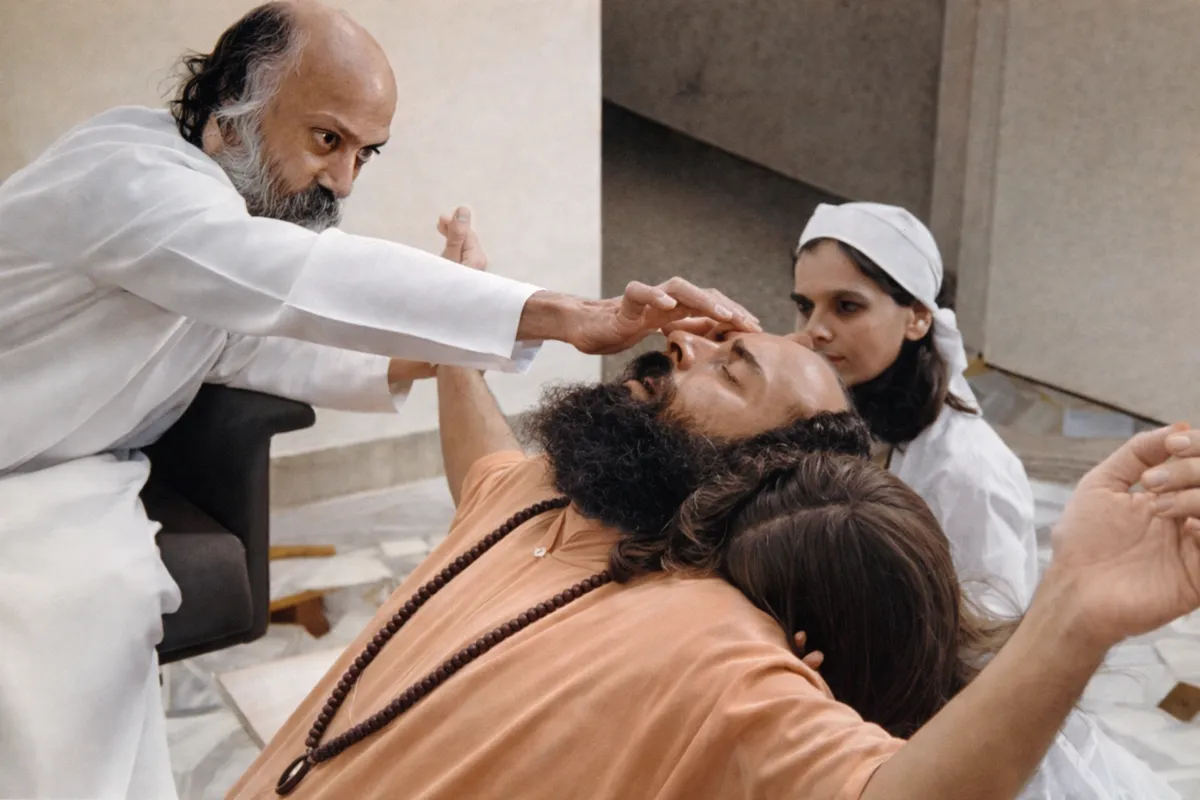
Osho's original Hindi beside Osho Live's English translation, matched passage by passage.
अब हम सूत्र को लें।
Now let us take the aphorism.
तथा पुत्र, स्त्री, घर और धनादि में आसक्ति का अभाव और ममता का न होना तथा प्रिय-अप्रिय की प्राप्ति में सदा ही चित्त का सम रहना अर्थात मन के अनुकूल तथा प्रतिकूल के प्राप्त होने पर हर्ष-शोकादि विकारों का न होना।
And the absence of attachment to son, wife, house, wealth, etc., and the lack of possessiveness, and the mind remaining the same in the face of pleasant and unpleasant—meaning that when things favorable or unfavorable occur, there is no disturbance like joy or sorrow.
इस संबंध में एक बात खयाल ले लेनी चाहिए। समता! दुख हो या सुख, प्रिय घटना घटे या अप्रिय, सफलता हो या असफलता, यश या अपयश, दोनों का बराबर मूल्य है। दोनों में से किंचित भी एक को वांछनीय और एक को अवांछनीय न मानना ज्ञानी का लक्षण है। समत्व ज्ञानी की आधारशिला है।
Keep one thing in mind here: equanimity. Whether there is pain or pleasure, whether what is dear happens or what is disagreeable, success or failure, fame or defame—both have equal value. To not consider even a bit of either as desirable or undesirable is the sign of the wise. Equanimity is the cornerstone of the wise.
लेकिन यह होगा कैसे? क्योंकि जब सफलता मिलती है, तो प्रीतिकर लगती है। कोई हम तय थोड़े ही करते हैं कि जब सफलता मिले तो हम खुश हों। हम सफलता मिलते ही खुश हो जाते हैं। यह हमें खुश होने के लिए कुछ करना थोड़े ही पड़ता है, यह हमारा कोई निर्णय थोड़े ही है।
But how will this happen? When success comes it feels pleasing. We don’t decide, “When success comes I will be happy.” We find ourselves happy. No effort is needed, no decision of ours.
जब प्रियजन घर आए, तो हम प्रसन्न हो जाते हैं। कोई प्रसन्न होने के लिए चेष्टा थोड़े ही करनी पड़ती है। और जब कोई गाली दे, अपमान करे, तो हम दुखी हो जाते हैं। दुखी होने के लिए हमें सोचना थोड़े ही पड़ता है। चुनाव का मौका कहां है? जो होता है, वह जब हो जाता है, तब हमें पता चलता है। जब हम दुखी हो जाते हैं, तब पता चलता है कि दुखी हो गए।
When a loved one returns home, we become glad—again, no effort. And when someone insults us, we are hurt—no thinking required. Where is the chance to choose? Things happen, and only then we know. When we are already sad, we come to know we are sad.
कृष्ण कहते हैं, समता। यह समता कैसे घटेगी? इसके घटने की प्रक्रिया है। वह प्रक्रिया खयाल में लेनी चाहिए।
Krishna says, equanimity. How is it to arise? There is a process—remember it.
कोई भी अनुभव भीतर पैदा हो, उसे अचेतन पैदा न होने दें। उसमें सजगता रखें। कोई गाली दे, तो इसके पहले कि क्रोध आए, एक पांच क्षण के लिए बिलकुल शांत हो जाएं। क्रोध को कहें कि पांच क्षण रुको। दुख को कहें, पांच क्षण रुको। पांच क्षण का अंतराल देना जरूरी है। तो आपके पास पर्सपेक्टिव, दृष्टि पैदा हो सकेगी। पांच क्षण बाद सोचें कि मुझे दुखी होना है या नहीं। दुख को चुनाव बनाएं। दुख को मूर्च्छित घटना न रहने दें। नहीं तो फिर आप कुछ भी न कर पाएंगे।
Whatever experience arises within, do not let it arise unconsciously. Bring awareness into it. If someone abuses you, before anger comes, become absolutely still for five moments. Say to anger, “Wait five moments.” Say to sorrow, “Wait five moments.” This interval is essential—to create perspective. After five moments ask, “Do I want to be sad or not?” Make sorrow a choice; don’t let it be a swoon. Otherwise you can do nothing.
गुरजिएफ ने लिखा है कि मेरे पिता ने मरते क्षण मुझे एक मंत्र दिया, उसी मंत्र ने मेरे पूरे जीवन को बदल दिया। मरते वक्त--गुरजिएफ तो बहुत छोटा था, नौ साल का था--पिता ने कहा, मेरे पास देने को तेरे लिए कुछ भी नहीं है। लेकिन एक संपत्ति मेरे पास है, जिससे मैंने जीवन में परम आनंद अनुभव किया। वह मैं कुंजी तुझे दे जाता हूं। अभी तो तेरी समझ भी नहीं है कि तू समझ पाए। इसलिए अभी जो मैं कहता हूं, तू सिर्फ याद रखना। किसी दिन समझ आएगी, तो उस दिन समझ लेना।
Gurdjieff wrote that his father gave him a mantra at the moment of death, which changed his life. Dying—Gurdjieff was only nine—his father said, “I have nothing material to give you. But I have one treasure, through which I have known supreme joy. I give you this key. Now you may not understand; just remember it. One day you will.”
तो गुरजिएफ के पिता ने कहा कि तू एक ही खयाल रखना, कोई भी प्रतीति, दुख की या सुख की, तत्क्षण मत होने देना। थोड़ी जगह। अगर कोई गाली दे, तो उससे कहकर आना कि चौबीस घंटे बाद मैं जबाब दूंगा। और चौबीस घंटे के बाद बराबर जवाब देना। अगर तुझे लगे कि छुरा भोंकना हो, तो चौबीस घंटे बाद छुरा भोंक देना जाकर। लेकिन चौबीस घंटे का बीच में अंतराल देना।
Gurdjieff’s father said: “Keep only this in mind—do not let any impression, whether of sorrow or joy, happen instantly. Leave a little space. If someone abuses you, tell him you will reply in twenty-four hours, and then reply precisely after twenty-four hours. If you feel like stabbing, stab after twenty-four hours. But keep the interval.”
गुरजिएफ ने लिखा है कि मेरी पूरी जिंदगी बदल दी इस बात ने। क्योंकि मरते बाप की बात थी। इसके बाद बाप मर गया। तो मन पर टंकी रह गई। और एक आश्वासन दिया था बाप को, तो पूरा करना था। तो किसी ने अगर गाली दी, तो मैं कहकर आया कि क्षमा करें। बाप को एक वचन दिया है, चौबीस घंटेभर बाद आपको जवाब दूंगा।
और चौबीस घंटेभर बाद न तो गाली का जवाब देने योग्य लगा, न गाली में कोई मूल्य मालूम पड़ा, बात ही व्यर्थ हो गई। चौबीस घंटे बाद जाकर गुरजिएफ कह आता कि आपने गाली दी, बड़ी कृपा की। लेकिन मेरे पास कोई जवाब देने को नहीं है।
Gurdjieff wrote: this changed my whole life. Because it was his dying father’s word; after that the father died, the command was engraved in the mind. If someone abused him, he would say, “Forgive me. I have given a pledge to my father—I will reply after twenty-four hours.” And after twenty-four hours it no longer seemed worth replying; the abuse had no value—the matter had become meaningless. He would go and say, “You abused me—thank you. I have nothing to reply.”
गाली का जवाब तो तत्काल ही दिया जा सकता है। ध्यान रखना, गाली की प्रक्रिया है, उसका जवाब तत्काल दिया जा सकता है। उसमें देरी की, कि आप चूके।
An abuse can be answered only instantly. Remember: the mechanism of abuse is such that its answer can only be immediate. Delay—and you have missed it.
डेल कार्नेगी ने अपने संस्मरणों में लिखा है कि एक स्त्री ने उसे पत्र लिखा। वह रेडियो पर बोला लिंकन के ऊपर। लिंकन की कोई जन्मतिथि थी, उस पर व्याख्यान दिया। और व्याख्यान में उसने लिंकन के संबंध में कुछ गलत तथ्य बोल दिए। तो एक स्त्री ने उसे पत्र लिखा कि जब तुम्हें लिंकन के संबंध में कुछ भी पता नहीं, तो कम से कम व्याख्यान देने की जुर्रत तो मत करो। वह भी रेडियो पर! सारे मुल्क ने सुना। और लोग हंसे होंगे। अपनी भूल सुधार करो और क्षमा मांगो। उसने बहुत क्रोध से पत्र लिखा था।
Dale Carnegie wrote in his memoirs that a woman wrote him a letter. He had spoken on Lincoln on the radio, on Lincoln’s birthday, and had made some factual errors. The woman wrote, “When you know nothing about Lincoln, at least don’t dare to lecture—on radio! The whole nation heard, people must have laughed. Correct your mistake and apologize.” It was a very angry letter.
डेल कार्नेगी ने उसी वक्त क्रोध से जवाब लिखा। जितना जहरीला पत्र था, उतना ही जहरीला जवाब लिखा। लेकिन रात देर हो गई थी, तो उसने सोचा, सुबह पत्र डाल देंगे। पत्र को वैसे ही टेबल पर रखकर सो गया।
सुबह उठकर डालते वक्त दुबारा पढ़ना चाहा। तो पत्र को दुबारा पढ़ा तो उसे लगा कि यह जरा ज्यादा है, इतने क्रोध की कोई जरूरत नहीं। वह गरमी कम हो गई, लोहा ठंडा हो गया। तो उसने सोचा, दूसरा पत्र लिखूं; यह उचित नहीं है। उसने दूसरा पत्र लिखा, उसमें थोड़ी-सी क्रोध की रेखा रह गई थी। तब उसे खयाल आया कि अगर रात के बारह घंटे में इतना फर्क हो गया, तो मैं बारह घंटे और रुकूं। जल्दी क्या है जवाब देने की! और देखूं कि क्या फर्क होता है।
बारह घंटे बाद पत्र को पढ़ा, तो उसे लगा कि यह भी ज्यादा है। उसने तीसरा पत्र लिखा। लेकिन तब उसने तय किया कि मैं सात दिन रोज सुबह-सांझ पत्र को पढूंगा और सातवें दिन पत्र को लिखूंगा--फाइनल।
सातवें दिन जो पत्र लिखा, वह प्रेमपूर्ण था, क्षमायाचना से भरा था। उसमें उसने लिखा कि आपने मेरी गलती दिखाई, उसके लिए मैं जितना अनुगृहीत होऊं, उतना कम है। और आगे भी कभी मेरी कोई गलती दिखाई पड़े, तो मुझे खबर देना। वह स्त्री उससे मिलने आई। और सदा के लिए मित्रता खड़ी हो गई।
Dale Carnegie drafted an equally venomous reply at once. But it was late; he thought he would mail it in the morning, and left it on the table. In the morning, before posting, he reread it and felt, “This is a bit much—no need for so much anger.” The heat had cooled. He wrote a second letter—still with a slight edge. Then he thought, “If twelve hours make such a difference, I’ll wait another twelve. What’s the hurry?” After twelve more hours he read it and felt even that was too much. He wrote a third. Then he decided: “I will read and revise morning and evening for seven days, and on the seventh day I’ll write the final.” On the seventh day he wrote a loving, apologetic letter: “You pointed out my mistake; I am deeply obliged. In future, if you notice any other error, please inform me.” The woman came to meet him—and a lifelong friendship was born.
क्या होता है--फासला। हम जल्दी में होते हैं। जो भी होता है, मूर्च्छा में कर लेते हैं। समता अगर चाहिए हो, तो फासला पैदा करने की कला सीखनी चाहिए। लेकिन हम होशियार लोग हैं। हम फासले में भी धोखा दे सकते हैं।
What happened? Distance. We act in haste; whatever happens, we do in a swoon. If you want equanimity, learn the art of creating a gap. But we are clever; we can cheat even with the gap.
मैंने सुना है, एक बाप ने देखा कि उसका बेटा एक दूसरे बच्चे को, पड़ोसी के बच्चे को दबाए हुए लान में, छाती पर बैठा हुआ है। तो उसने चिल्लाकर कहा कि मुन्ना, कितनी दफा मैंने तुझे कहा कि किसी से भी झगड़ने, मार-पीट करने के पहले सौ तक गिनती पढ़ा कर। तो उसने कहा, वही मैं कर रहा हूं। सौ तक गिनती पढ़ रहा हूं। लेकिन यह निकलकर भाग न जाए सौ तक गिनती जब तक मैं पढूं, इसलिए इसको दबाकर रखा हुआ है। सौ की गिनती पूरी होते ही इसे ठिकाने लगा दूंगा।
सौ की गिनती कही इसलिए थी कि फासला पैदा हो जाए। किसी को मारने के पहले सौ तक गिनती पढ़ना। मुन्ना होशियार है। वह उसको दबाकर बैठा है बच्चे को, कि अगर सौ तक गिनती हमने पढ़ी, तब तक यह निकल गया, तो मारेंगे किसको!
I’ve heard: a father saw his son pinning a neighbor’s child on the lawn, sitting on his chest. He shouted, “Munna, how many times have I told you: before fighting or hitting anyone, count to a hundred!” The boy said, “That’s exactly what I’m doing—counting to a hundred. But so he doesn’t run away while I count, I’m holding him down. As soon as I reach a hundred, I’ll fix him.”
तो आप भी ऐसी होशियारी मत करना। अन्यथा कोई सार नहीं है। फासला पैदा करना है इसलिए, ताकि समता आ जाए। फासला हो जाए, तो दुख दुख नहीं देता, और सुख सुख नहीं देता। सुख और दुख दोनों मूर्च्छित अनुभव हैं। तत्क्षण हो जाते हैं, मूर्च्छा में हो जाते हैं।
Counting to a hundred was prescribed to create a gap. Don’t do this kind of cleverness; otherwise there is no point. The gap is to bring equanimity. With distance, sorrow doesn’t hurt, and pleasure doesn’t intoxicate. Pleasure and pain are swoons—instant, mechanical.
जैसे कोई बिजली का बटन दबाता है, ऐसे ही आपके भीतर बटन दब जाते हैं। आप सुखी हो जाते हैं, दुखी हो जाते हैं। बिजली का बटन दबाने पर बिजली कह नहीं सकती कि मैं नहीं जलूंगी। मजबूर है, यंत्र है। लेकिन आप यंत्र नहीं हैं।
Like a light switch—inside you the button gets pressed: you are happy, you are sad. When a switch is pressed, electricity cannot say, “I won’t flow.” It is a machine. But you are not a machine.
जब कोई गाली दे, तो क्रोधित होना, तत्क्षण बिजली की बटन की तरह काम हो रहा है। आप यंत्र की तरह व्यवहार कर रहे हैं। रुकें। उसने गाली दी; ठीक। लेकिन आप अपने मालिक हैं। गाली लेने में जल्दी मत करें। किसी ने सम्मान किया, वह उसकी बात है। किसी ने आपकी खुशामद की, चापलूसी की, वह उसकी बात है। लेकिन आप जल्दी मत करें, और एकदम पिघल न जाएं। रुकें, थोड़ा समय दें। थोड़े फासले पर खड़े होकर देखें कि क्या हो रहा है।
If someone abuses you and you get angry at once, you are behaving like a machine—like a switch. Pause. He abused you—true. But you are your own master. Do not hurry to pick up the abuse. If someone honors you, that is his affair; if someone flatters you, that is his affair. Do not melt at once. Wait; give a little time. Stand at a small distance and watch what is happening.
और आप पाएंगे कि जितना आप फासला बढ़ाते जाएंगे, सुख-दुख समान होते जाएंगे। जितने करीब होंगे, सुख-दुख में बड़ा फासला है। जितने फासले पर होंगे, सुख-दुख का फासला कम होने लगता है। जब कोई व्यक्ति दूर से खड़े होकर देख सकता है, सुख और दुख एक ही हो जाते हैं। क्योंकि दूरी से दिखाई पड़ता है, सुख और दुख एक ही सिक्के के दो पहलू हैं। उस दिन समता उपलब्ध हो जाती है।
You will find that the more distance you create, the more pleasure and pain equalize. The closer you are, the greater the gap between them; the further you stand, the smaller it becomes. When one can look from afar, pleasure and pain become one—two sides of the same coin. That day equanimity is attained.
कृष्ण कहते हैं, समता ज्ञानी का लक्षण है। और मुझ परमेश्वर में एकीभाव से स्थितिरूप ध्यान-योग के द्वारा अव्यभिचारिणी भक्ति तथा एकांत और शुद्ध देश में रहने का स्वभाव और विषयासक्त मनुष्यों के समुदाय में अरति, प्रेम का न होना।
Krishna says: equanimity is the sign of the wise. And “by the steady practice of meditation-yoga, established in oneness with Me the Supreme, unwavering devotion; fondness for solitude and pure places; and a disinclination toward the company of sense-attached people.”
और मुझ परमेश्वर में एकीभाव। बड़े दंभ की बात है, मुझ परमेश्वर में एकीभाव! कृष्ण कहे ही चले जाते हैं कि मुझ परमेश्वर के साथ तू ऐसा संबंध बना।
“And established in one-ness with Me the Supreme.” A very proud-sounding statement—“with Me the Supreme!” Krishna keeps saying: establish such a relationship with Me, the Divine.
अहंकारी पढ़ेगा, तो बड़ी अड़चन में पड़ेगा। वह तो अर्जुन का बड़ा निकट संबंध था, बड़ी आत्मीयता थी, इसलिए अर्जुन ने एक भी बार नहीं पूछा कि क्या बार-बार रट लगा रखी है, मुझ परमात्मा में। उसने एक भी बार यह सवाल नहीं उठाया कि क्यों अपने को परमात्मा कह रहे हो? और क्यों अपने ही मुंह से कहे चले जा रहे हो कि मैं परमात्मा हूं?
वह इतना आत्मीय था, इतना निकट था, कि कृष्ण को जानता था कि यह घोषणा किसी अहंकार की घोषणा नहीं है। यह कहना सिर्फ अर्जुन को समर्पण के लिए राजी करने का उपाय है।
The egotist will stumble. Arjuna, because of deep intimacy and nearness, did not once ask, “Why this refrain—‘in Me the Divine’?” He did not even ask, “Why do you keep calling yourself God, and saying it with your own mouth?” He was so intimate that he knew: this declaration is not of ego; it is only a device to invite Arjuna into surrender.
मुझ परमेश्वर में एकीभाव से स्थितिरूप ध्यान-योग के द्वारा अव्यभिचारिणी भक्ति.।
“By the steady meditation-yoga, unwavering devotion…”
भक्ति अव्यभिचारिणी, इसे थोड़ा समझ लेना चाहिए। व्यभिचार का अर्थ होता है, अनेक के साथ लगाव। व्यभिचारिणी कहते हैं हम उस स्त्री को, जो पति को भी दिखा रही है कि प्रेम करती है, और उसके प्रेमी भी हैं, उनसे भी प्रेम कर रही है। और प्रेम एक खिलवाड़ है। क्षणभर भी कोई उसे एकांत में मिल जाए, तो उससे भी प्रेम शुरू हो जाएगा। मन में किसी एक की कोई जगह नहीं है।
Unwavering devotion—understand this a bit. Vyabhichar means attachment to the many. We call a woman vyabhicharini who shows love to her husband and also to her lovers—love as play. Whoever she meets in private for a moment, with him too love begins. There is no place in the mind for one.
व्यभिचार का अर्थ है, मन में एक की जगह नहीं है। मन खंडित है। बहुत प्रेमी हैं, बहुत पति हैं; उसका अर्थ है व्यभिचार। एक! तो मन अव्यभिचारी हो जाता है।
Vyabhichar means the mind has no place for one—it is fragmented. Many lovers, many husbands—that is vyabhichar. When the one remains, the mind becomes avyabhichari—undivided.
और बड़े मजे की बात है, समझने जैसी है, कि यह इतना जो जोर है एक प्रेमी पर, यह प्रेमी के हित में नहीं है। असल में प्रेम करने वाला अगर एक व्यक्ति को प्रेम करने में समर्थ हो जाए, तो उसके सारे खंड मन के इकट्ठे हो जाते हैं और वह एकीभाव को उपलब्ध हो जाता है।
जितने आपके प्रेम होंगे, उतने आपके खंड होंगे, उतने आपके हृदय के टुकड़े होंगे। अगर आपके दस-पांच प्रेमी हैं, तो आपके हृदय के दस-पांच स्वर होंगे, दस-पांच टुकड़े होंगे। आप एक आदमी नहीं हो सकते, दस प्रेम अगर आपके हैं; आप दस आदमी होंगे। आपके भीतर एक भीड़ होगी।
And the interesting thing is: this emphasis on the “one beloved” is not for the beloved’s sake. If the lover can love one person wholly, all the fragments of his mind begin to gather, and he attains a sense of oneness. The more your loves, the more your fragments—the more pieces your heart will have. If you have ten or five loves, you will have that many voices within. You cannot be one man if you have ten loves—you will be ten men. A crowd will be inside.
यह जो इतना जोर है अव्यभिचारिणी भक्ति पर, कि एक का भाव है तो एक का ही भाव रह जाए, इसका अर्थ यह है कि जितना ही एक का भाव रहने लगेगा, उतना ही भीतर भी एकत्व घनीभूत होने लगेगा; इंटीग्रेशन भीतर फलित हो जाएगा। इसलिए प्रेमी भी योग को उपलब्ध हो जाता है, और योगी प्रेमी हो जाता है।
The insistence on unwavering devotion—“if there is one, let only one remain”—means: as the sense of one deepens, inner unity intensifies; integration ripens within. Hence the lover attains yoga, and the yogi becomes a lover.
अगर कोई पूरे मन से किसी एक व्यक्ति को प्रेम कर सके, तो उस प्रेम में भी एकत्व घटित हो जाता है। भीतर इंटीग्रेशन हो जाता है; भीतर सारे खंड जुड़ जाते हैं। अनेक स्वर समाप्त हो जाते हैं। एक ही स्वर और एक ही भाव रह जाता है। उस एक भाव के माध्यम से प्रवेश हो सकता है अनंत में। अनेक को छोड़कर एक; और तब एक भी छूट जाता है और अनंत उपलब्ध होता है।
If someone can love one person with his whole being, oneness happens through that love. Inside, integration happens; fragments join. Many voices cease; one tone, one mood remains. Through that one tone one can enter the infinite. Leaving the many for the one—and then even the one drops, and the infinite is attained.
कृष्ण कहते हैं, अव्यभिचारिणी भक्ति!
Krishna says, unwavering devotion!
अनन्य रूप से मुझ एक में ही तू समर्पित हो जा। तेरे मन में यह खयाल भी न रहे कि कोई और भी हो सकता है, जिसके प्रति समर्पण होना है। अगर उतना-सा खयाल भी रहा, तो समर्पण पूरा नहीं हो सकता।
Devote yourself exclusively to Me alone. Let not even the thought remain that there might be someone else to whom surrender is due. If even that much thought lingers, surrender cannot be complete.
इधर मेरे पास अनेक लोग आते हैं। वे कहते हैं, हम इस गुरु के पास गए, फिर उस गुरु के पास गए, फिर उस गुरु के पास गए। वे गुरुओं के पास घूमते रहते हैं। उनकी यह व्यभिचारिणी मन की दशा उन्हें कहीं भी पहुंचने नहीं देती। उनसे मैं कहता हूं, तुम एक गुरु के पास रुक जाओ। वे कहते हैं, हमें पक्का कैसे पता लगे कि वही गुरु ठीक है, जब तक हम बहुतों के पास न जाएं! मैं उनसे कहता हूं कि वह गलत हो तो भी तुम एक के पास रुक जाओ। क्योंकि उसके गलत और सही होने का उतना बड़ा सवाल नहीं है, तुम्हारा एक के प्रति रुक जाना तुम्हारे लिए क्रांतिकारी घटना बनेगी। वह गलत होगा, वह वह जाने। उससे तुम चिंता मत लो। तुम उसकी फिक्र मत करो।
Many come to me and say, “We went to this guru, then that one, then another.” They keep moving among gurus. Their adulterous mental state never lets them arrive. I tell them: “Stay with one guru.” They ask, “How can we be sure he is the right one unless we go to many?” I say, “Even if he is wrong, stay with one. Whether he is right or wrong is not so important; your staying with one will be revolutionary for you. Whether he is right or wrong—that’s his matter. Don’t worry about it.”
कई बार ऐसा भी होता है कि गलत गुरु के पास भी ठीक शिष्य सत्य को उपलब्ध हो जाता है। यह बात उलटी मालूम पड़ेगी। लेकिन हम जानते हैं, हमने एकलव्य की कथा पढ़ी है। गलत गुरु का सवाल ही नहीं है; गुरु था ही नहीं वहां। वहां तो सिर्फ मूर्ति बना रखी थी उसने द्रोणाचार्य की। उस मूर्ति के सहारे भी वह उस कुशलता को उपलब्ध हो गया जो एकाग्रता है।
Many times it happens that with a wrong guru too, a true disciple realizes truth. It sounds upside down. But we know the tale of Ekalavya. There the question of a wrong guru does not even arise—there was no guru at all, only an idol of Dronacharya. And yet through that idol he attained the consummate skill of concentration.
कैसे यह हुआ? क्योंकि मूर्ति तो कुछ सिखा नहीं सकती। द्रोणाचार्य खुद भी इतना नहीं सिखा पाए अर्जुन को, जितना उनकी पत्थर की मूर्ति ने एकलव्य को सिखा दिया।
तो द्रोणाचार्य का कोई हाथ नहीं है उसमें। अगर कुछ भी है हाथ, तो एकलव्य के भाव का ही है। वह उस पत्थर की मूर्ति के पास इतना एकीभाव होकर रुक गया, इतनी अव्यभिचारिणी भक्ति थी उसकी कि पत्थर की मूर्ति के निकट भी उसे जीवंत गुरु उपलब्ध हो गया।
How? An idol cannot teach. Even Dronacharya himself could not teach Arjuna as much as his stone image taught Ekalavya. Dronacharya had no hand in it. If anyone did, it was only Ekalavya’s feeling and devotion. He stayed by that stone idol with such unity of feeling, such unwavering devotion, that near a stone idol he encountered a living guru.
और गुरु द्रोणाचार्य इस योग्यता के गुरु नहीं थे, जितना एकलव्य ने उनको माना और फल पाया। क्योंकि गुरु द्रोणाचार्य ने एकलव्य को धोखा दिया। और अपने संपत्तिशाली शिष्य के लिए एकलव्य का अंगूठा कटवा लिया।
And Guru Dronacharya was not of such caliber as Ekalavya took him to be and gained. For Dronacharya deceived Ekalavya—he had his thumb cut off to preserve his wealthy pupil’s primacy.
द्रोणाचार्य की उतनी योग्यता नहीं थी, जितनी एकलव्य ने मानी। लेकिन यह बात गौण है। द्रोणाचार्य की योग्यता थी या नहीं, यह सवाल ही नहीं है। एकलव्य की यह अनन्य भाव-दशा, और एकलव्य की यह महानता, कि इस गुरु ने जब अंगूठा मांगा, तब उसकी भी समझ में तो आ ही सकता था। आ ही गया होगा। साफ ही बात है। अंगूठा कट जाने पर वह धनुर्विद नहीं रह जाएगा।
और द्रोणाचार्य ने अंगूठा इसीलिए मांगा कि जब उसके निशाने देखे, और उसकी तन्मयता और एकाग्रता और उसकी कला देखी, तो द्रोणाचार्य के पैर कंप गए। उन्हें लगा कि अर्जुन फीका पड़ जाएगा। अर्जुन की अब कोई हैसियत इस एकलव्य के सामने नहीं हो सकती। थी भी नहीं। क्योंकि अर्जुन का इतना भाव द्रोणाचार्य के प्रति कभी भी नहीं था, जितना भाव एकलव्य का द्रोणाचार्य के प्रति था। और द्रोणाचार्य अर्जुन को तो उपलब्ध थे, एकलव्य को उपलब्ध भी नहीं थे।
Dronacharya was not as worthy as Ekalavya considered him—but that is secondary. Whether Dronacharya was worthy is not the point. The greatness was Ekalavya’s single-minded devotion. And when that guru asked for his thumb, Ekalavya must have understood—he surely did—that the moment the thumb is gone, he will not remain an archer. Dronacharya asked precisely because, seeing Ekalavya’s aim, absorption, and art, his legs trembled. He felt Arjuna would be eclipsed—indeed he was. Arjuna never had such devotion to Drona as Ekalavya had to Drona. And Drona was available to Arjuna, not even available to Ekalavya.
यह कथा बड़ी मीठी और बड़ी अर्थपूर्ण है। एकलव्य ने अंगूठा भी काटकर दे दिया। मैं मानता हूं कि उसकी धनुर्विद्या तो खो गई अंगूठा कटने से, लेकिन उसने भीतर जो योग उपलब्ध कर लिया अंगूठा काटकर.।
उस एकलव्य के लिए कृष्ण को गीता कहने की जरूरत नहीं पड़ी। वह अंगूठा काटने के क्षण में ही उस परम एकत्व को उपलब्ध हो गया होगा। क्योंकि जरा भी संदेह न उठा! ऐसी असंदिग्ध अवस्था में अगर परमात्मा उपलब्ध न हो, तो फिर कभी भी उपलब्ध नहीं हो सकता है। तो बाहर की कला तो खो गई, लेकिन वह भीतर की कला को उपलब्ध हो गया।
This tale is sweet and meaningful. Ekalavya cut off his thumb. I say his external archery was lost, but what yoga he attained within by cutting off that thumb! For Ekalavya, Krishna didn’t need to speak a Gita. In that moment of cutting the thumb he must have attained supreme unity. Not a shadow of doubt arose! In such undoubtingness, if the Divine is not attained, then never.
इसकी फिक्र छोड़ना; मैं लोगों को कहता हूं, इसकी फिक्र छोड़ो कि गुरु ठीक है या नहीं। तुम कैसे पता लगाओगे? तुम हजार के पास घूमकर और कनफ्यूज्ड हो जाओगे, तुम और उलझ जाओगे। तुम्हें कुछ पता होने वाला नहीं है। तुम जितनों के पास जाओगे, उतने खंडित हो जाओगे। तुम बेहतर है, कहीं रुकना सीखो। रुकने में खूबी है। बेहतर है, एक के प्रति समर्पित होना सीखो। समर्पण में राज है। वह किसके प्रति, यह इतना महत्वपूर्ण नहीं है।
So drop this worry: “Is the guru right?” How will you know? Roaming among a thousand you will only be more confused and fragmented. Better learn to stay. There is virtue in staying. Better learn to surrender to one. There is the secret in surrender. To whom—that is not so important.
और कई दफा तो ऐसा होता है कि गलत के प्रति समर्पण ज्यादा कीमती परिणाम लाता है। इसे थोड़ा समझ लें। क्योंकि ठीक के प्रति समर्पण तो स्वाभाविक है। आपकी कोई खूबी नहीं है उसमें। वह आदमी ठीक है, इसलिए समर्पण आपको करना पड़ रहा है। आपकी कोई खूबी नहीं है। लेकिन आदमी गलत हो और आप समर्पण कर सकें, तो खूबी निश्चित ही आपकी है।
Often surrender to the “wrong” brings more precious results. Understand: surrender to the right is natural; no virtue of yours in it—he is right, so you are compelled. But if a man seems wrong and you can surrender, the virtue is certainly yours.
तो कभी-कभी बहुत-से गुरु अपने आस-पास गलत वातावरण स्थापित कर लेते हैं। वह भी समर्पण का एक हिस्सा है। क्योंकि अगर उनके बाबत सभी अच्छा हो, तो समर्पण करने में कोई खूबी नहीं, कोई चुनौती नहीं है। वे अपने आस-पास बहुत-सा जाल खड़ा कर लेते हैं, जो कि गलत खबर देता है। और उस क्षण में अगर कोई समर्पित हो जाता है, तो समर्पण की उस दशा में अव्यभिचारिणी भक्ति का जन्म होता है।
Thus many gurus create around themselves a “wrong” aura—this too is part of surrender. If everything around them looked good, there would be no challenge in surrender. They erect a web of misleading signs. If someone surrenders amidst that, then unwavering devotion is born.
कृष्ण कहते हैं, एकांत और शुद्ध देश में रहने का स्वभाव और विषयासक्त मनुष्यों के समुदाय में अरति, प्रेम का न होना.।
Krishna says: fondness for solitude and pure places, and disinclination toward the company of those attached to sense-objects.
आप भीड़ खोजते हैं हमेशा। और अक्सर भीड़ खोजने वाला गलत भीड़ खोजता है। क्योंकि भीड़ खोजना ही गलत मन का लक्षण है।
दूसरे से कुछ भी मिल सकता नहीं। आप जरा सोचें, आप क्या करते हैं दूसरे से मिलकर? कुछ थोड़ी निंदा, पास-पड़ोस की कुछ अफवाहें। किसकी पत्नी भाग गई! किसके बेटे ने धोखा दिया! कौन चोरी कर ले गया! कौन बेईमान है! ये सारी आप बातें करते हैं। यह रस अकेले में नहीं आता, इसके लिए दो-चार लोग चाहिए, इसके लिए आप भीड़ खोजते हैं।
You always seek a crowd—and usually the wrong crowd. Because seeking crowds is itself a sign of a wrong mind. What do you do meeting others? A little slander, some neighborhood rumors—whose wife ran away, whose son cheated, who stole, who is dishonest. These are your topics. This juice does not come alone; you need two or four. Hence you seek crowds.
एक दिन चौबीस घंटे अपनी चर्चा का खयाल करें। आप कहां बैठते हैं? क्यों बैठते हैं? क्यों बातें करते हैं ये? क्या रस है इसमें? और अगर यह रस आपका कायम है, तो ज्ञान कभी उपलब्ध न होगा, क्योंकि यह सारा अज्ञान को बचाने की व्यवस्था कर रहे हैं आप।
For one day, watch all your conversations: where you sit, why you sit, why you talk, what taste is there. If this taste persists, knowledge will never arise—it is all a device to protect ignorance.
कृष्ण कहते हैं, ज्ञानी का लक्षण है, एकांत का रस। ज्ञानी ज्यादा से ज्यादा अकेले रहना चाहेगा।
Krishna says: a sign of the wise is the taste for solitude. The wise would rather be alone.
क्यों? क्योंकि अकेले में ही स्वयं का साक्षात्कार हो सकता है; और अकेले में ही भीड़ के प्रभाव और संस्कारों से बचा जा सकता है। और अकेले में ही आदमी शांत और मौन हो सकता है। और अकेले में ही धीरे-धीरे भीतर सरककर उस द्वार को खोल सकता है, जो परमात्मा का द्वार है।
Why? Because only in aloneness can one encounter oneself; only in aloneness can one be free of the crowd’s influence and conditioning; only in aloneness can one become quiet and silent; only in aloneness can one slip within and open the door that is the Divine’s.
दूसरे के साथ रहकर कोई कभी परमात्मा तक नहीं पहुंचता है। चाहे बुद्ध, चाहे महावीर, चाहे मोहम्मद, परमात्मा के पास पहुंचने के पहले एकांत में सरक गए थे। महावीर बारह वर्ष तक मौन हो गए थे। बुद्ध छह वर्ष तक जंगल में चले गए थे। मोहम्मद तीस दिन तक बिलकुल एकांत पर्वत पर रह गए थे। जीसस को तैंतीस वर्ष की उम्र में उनको फांसी हुई। ईसाइयों के पास केवल तीन साल की कहानी है, आखिरी तीन साल की। बाकी तीस साल चुप मौन साधना में गुजरे।
No one reaches the Divine while living in the crowd. Whether Buddha, Mahavira, or Muhammad—before arriving, they slipped into solitude. Mahavira was silent for twelve years. Buddha went to the forest for six. Muhammad remained on a mountain in utter solitude for thirty days. Jesus was crucified at thirty-three; Christians have only the last three years of his story—the previous thirty passed in silent practice.
यह जो मौन में सरक जाना है, एकांत का रस है, यह ज्ञानी का लक्षण है। भीड़ का रस, समूह का रस, क्लब, मित्र की तलाश खतरनाक है।
This slipping into silence, this taste for solitude, is a sign of the wise. The taste for crowds, for groups, clubs, the hunt for friends—is dangerous.
लेकिन आप यह मत सोचना कि क्लब ही सिर्फ क्लब है। लोग तो धर्म-कथाओं में भी इसीलिए चले जाते हैं। विशेषकर स्त्रियां तो इसीलिए पहुंच जाती हैं धर्म-कथाओं में कि वहां जाकर वे सब चर्चा कर लेती हैं, जिसका कि उन्हें मौका कहीं नहीं मिलता। सब जमाने भर की स्त्रियां वहां मिल जाती हैं। जमाने भर के रोग और कहानियां उन्हें वहां मिल जाते हैं। वहां वे सब चर्चा कर लेती हैं। कथा तो बहाना है।
Do not imagine only clubs are clubs. People go even to religious discourses for the same reason—especially women—to get a chance to discuss everything that they get no opportunity to elsewhere. All the ladies gather there; they get all the stories and ailments; they chat. The discourse is a pretext.
मंदिर में भी आप जा सकते हैं; हो सकता है, परमात्मा से मिलने न जा रहे हों। वहां भी आप गपशप करने जा रहे हों, जो लोग मंदिर आते हैं उनसे। यह भी हो सकता है, आप किसी गुरु के पास भी इसीलिए जाते हों कि थोड़ा आस-पास के उपद्रव की खबरें सुन आएं। लेकिन कुछ एकांत की तलाश न हो।
You can go to the temple too—not to meet God, but to gossip with those who come. You might even go to a guru for news of worldly intrigues, not for solitude.
ध्यान रखना जरूरी है कि आप अकेले ही सत्य से मिल सकते हैं, भीड़ को साथ लेकर जाने का कोई उपाय नहीं है। आपका निकटतम मित्र भी आपके साथ समाधि में नहीं जाएगा। आपकी पत्नी भी आपके साथ ध्यान में प्रवेश नहीं कर सकती। आपका बेटा भी आपके साथ भक्ति के जगत में नहीं प्रवेश करेगा। वहां आप अकेले होंगे। इसलिए अकेले होने का थोड़ा रस! और जब भी मौका मिल जाए, तो अकेले होने में मजा!
Remember: only alone can you meet Truth; there is no way to take the crowd along. Even your closest friend will not enter samadhi with you. Your wife cannot enter meditation with you. Your son cannot enter the realm of devotion with you. There you will be alone. Therefore savor aloneness; whenever you find a moment, enjoy being alone.
लेकिन हम तो घबड़ाते हैं। जरा अकेले हुए कि लगता है कि मरे। जरा अकेले हुए कि डर लगता है। जरा अकेले हुए कि लगता है, ऊब जाएंगे, क्या करेंगे!
But we panic. A little alone and we feel we’ll die; fear arises; “I’ll get bored—what will I do!”
एक बहुत मजे की बात है। आप अपने से इतने ऊबे हुए हैं कि आप अपने साथ थोड़ी देर भी नहीं रह सकते। और जब कोई आपके साथ ऊब जाता है, तो आप सोचते हैं, वह आदमी बुरा है। जब आप खुद ही अपने साथ ऊब जाते हैं, तो दूसरे तो ऊबेंगे ही।
A very interesting thing: you are so bored with yourself that you cannot abide with yourself even briefly. And when someone else gets bored with you, you think he’s a bad person. When you yourself are bored of yourself, others will surely be bored.
अकेले में थोड़ी देर खुद ही से बातें करिए। एक दिन ऐसा प्रयोग करिए। जापान में एक विधि है ध्यान की। वे साधक को कहते हैं कि जो भी तेरे भीतर चलता हो, उसको जोर-जोर से बोल। भीतर मत बोल, जोर-जोर से बोल। बैठ जा एकांत में और जो भी भीतर चलता हो, उसको जोर से बोल।
In solitude, talk a little with yourself. Try an experiment. In Japan there is a method of meditation: they tell the seeker, whatever is going on within, speak it aloud. Don’t speak inside—speak loudly. Sit alone, and whatever comes, speak it out.
आप घबड़ा जाएंगे, अगर भीतर जो जैसा है, उसको जोर से बोलेंगे। घंटेभर में आप कहेंगे कि मैं भी कहां का बोरियत पैदा करने वाला आदमी हूं!
लेकिन यही आप दूसरों से बोल रहे हैं। और जब दूसरे आपसे बोर होते हैं, तो आप समझते हैं, इनकी समझ नहीं है। जरा समझ का.मैं तो बड़ी ऊंची बातें कर रहा हूं और ये ऊब रहे हैं! लेकिन जब हर आदमी अपने से ऊबा है, तो ध्यान रहे, वह दूसरे को भी उबाएगा।
You will be shocked. In an hour you’ll say, “What a boring person I am!” Yet this is what you speak to others. When others get bored, you think they lack understanding: “I am saying very high things and they are bored!” But when everyone is bored with himself, remember he will bore others too.
और दूसरे आपकी कुछ देर तक बात सुनते हैं, उसका कारण आप जानते हैं? इसलिए नहीं कि आपकी बात में कोई रस है। बल्कि इसलिए कि जब आप बंद हो जाएं, तब वे बोलें। और कोई कारण नहीं होता। कि अब आप उबा लिए काफी, अब हमको भी उबाने दो।
इसलिए सब से ज्यादा बोर करने वाला आदमी वह मालूम पड़ता है, जो कि आपको मौका ही नहीं देता। और कोई कारण नहीं है। वह बोले ही चला जाता है। वह आपको अवसर ही नहीं देता। इसलिए आप कहते हैं, बहुत बोर करने वाला आदमी है। उसका केवल मतलब इतना है कि आप ही बोर किए जा रहे हैं! मुझको भी बोर करने का मौका दें। एक अवसर मुझे भी दें, तो मैं भी आपको ठीक करूं। लेकिन जो असली बोर करने की कला में कुशल हैं, वे मौका नहीं देते।
Why do others listen? Not because your words have any charm—but because after you finish, they will speak. The most boring person is the one who doesn’t give you a chance; he keeps talking. You say, “He’s so boring”—it only means you alone are being bored; give me my turn too!
आदमी अपने साथ इतनी ज्यादा पीड़ा अनुभव करता है, और सोचता है, दूसरों को सुख देगा। पति पत्नी को सुख देना चाहता है, पत्नी पति को सुख देना चाहती है। पत्नी सोचती है कि पति के लिए स्वर्ग बना दे, लेकिन अकेली घड़ीभर नहीं रह सकती, नरक मालूम होने लगता है। तो जब अकेले रहकर पत्नी को खुद नरक मालूम होने लगता है, तो यह पति के लिए नरक ही बना सकती है, स्वर्ग बनाएगी कैसे!
Man experiences so much pain with himself and still thinks he will give happiness to others. The husband wants to give heaven to the wife, the wife to the husband. She thinks she will make heaven for him, but she cannot remain alone even for an hour—she feels it is hell. If alone she feels hell, she will make only hell for her husband—how will she make heaven?
कोई किसी दूसरे के लिए स्वर्ग नहीं बना पाता, क्योंकि हम अकेले अपने साथ रहने को राजी नहीं हैं।
No one makes heaven for another because we are not willing to be with ourselves.
इस जमीन पर उन लोगों के निकट कभी-कभी स्वर्ग की थोड़ी-सी हवा बहती है, जो अपने साथ रहने की कला जानते हैं। इसे थोड़ा समझ लेना। जो आदमी एकांत में रहने की कला जानता है, उसके पास आपको कभी थोड़े-से रस की बूंदें मिल सकती हैं, कोई अमृत की थोड़ी झलक मिल सकती है। लेकिन जो अपने साथ रहना जानता ही नहीं, उसका तो जीवन से कोई संस्पर्श नहीं हुआ है।
On this earth, a little breeze of heaven sometimes blows around those who know the art of being with themselves. Understand this: the one who knows how to be in solitude—you may receive a few drops of nectar near him. But the one who cannot stay with himself has had no contact with life.
कृष्ण कहते हैं, शुद्ध देश में, एकांत में, अपने भीतर की शुद्धता में रहने का स्वभाव और विषयासक्त मनुष्यों के समुदाय में अरति.।
Krishna says: the habit of living in a pure place, in solitude—in the purity of your inner space—and disinclination toward the company of sense-attached people.
अगर कभी जाना भी हो किसी के पास, तो ऐसे व्यक्ति के पास जाना चाहिए, जो आपको संसार की तरफ न ले जाता हो। जो आपको संन्यास की तरफ ले जाता हो। जो आपको उठाता हो वस्तुओं के पार। जो आपको जीवन के परम मंदिर की तरफ इशारा करता हो। अगर जाना ही हो किसी के पास, तो ऐसे व्यक्ति के पास जाना चाहिए। अन्यथा भीड़ से, समूह से बचना चाहिए।
If you must visit someone, visit one who will not pull you toward the world, but toward renunciation—who lifts you beyond objects, who points to the ultimate temple of life. Otherwise, avoid crowds and groups.
तथा अध्यात्म-ज्ञान में नित्य स्थिति और तत्वज्ञान के अर्थ रूप परमात्मा को सर्वत्र देखना, यह सब तो ज्ञान है; और जो इससे विपरीत है, वह अज्ञान है; ऐसा कहा है। परमात्मा को सर्वत्र देखना, यह तो ज्ञान है। और इससे विपरीत जो है, वह अज्ञान है।
“And constant abiding in spiritual knowledge, and seeing the Supreme everywhere—this is knowledge; what is contrary is ignorance.” To see the Divine everywhere—that is knowledge; its opposite is ignorance.
बड़ा कठिन है परमात्मा को सर्वत्र देखना। अपने ही भीतर नहीं देख सकते, तो बाहर कैसे देख सकेंगे! पहले तो अपने ही भीतर देखना जरूरी है कि परमात्मा मौजूद है। चाहे कितना ही विकृत हो, कितना ही उलझा हो, बंधन में हो, कारागृह में हो, है तो परमात्मा ही। चाहे कितनी ही बेचैनी में, परेशानी में हो, है तो परमात्मा ही। अपने भीतर भी परमात्मा देखना शुरू करना चाहिए, और अपने आस-पास भी देखना शुरू करना चाहिए। धीरे-धीरे यह परमात्म-भाव ऐसा हो जाना चाहिए कि परमात्मा ही दिखाई पड़े, बाकी लोग उसके रूप दिखाई पड़ें। यह भाव-दशा बन जाती है। लेकिन अपने से ही शुरू करना पड़े।
It is very difficult to see the Divine everywhere. If you cannot see within yourself, how will you see outside? First see within that the Divine is present—even if distorted, entangled, bound in prison—He is the Divine nonetheless. In all your restlessness and troubles, it is still the Divine. Begin to see the Divine in yourself and around you. Gradually the God-sense should become such that only the Divine is seen, others only His forms. This mood can be cultivated, but it must begin with oneself.
और जैसे कोई पत्थर फेंके पानी में, तो पहले छोटा-सा वर्तुल उठता है पत्थर के चारों तरफ। फिर वर्तुल फैलता जाता है, और दूर अनंत किनारों तक चला जाता है। ऐसा पहली दफा परमात्मा का पत्थर अपने भीतर ही फेंकना जरूरी है। फिर वर्तुल उठता है, लहरें फैलने लगती हैं, और चारों तरफ पहुंच जाती हैं।
Like throwing a stone into a pond—first a small ripple forms around it; then the circles spread to the far shore. The first stone of Divinity must be thrown into your own depths; then the ripples spread and reach all around.
जब तक आप अपने में देखते हैं पाप, नरक, और आपको कोई परमात्मा नहीं दिखाई पड़ता, तब तक आपको किसी में भी दिखाई नहीं पड़ सकता। आप कितना ही मंदिर की मूर्ति पर जाकर सिर पटकें और आपको चाहे कृष्ण और राम भी मिल जाएं, तो भी आपको परमात्मा दिखाई नहीं पड़ सकता।
As long as you see sin and hell in yourself and no God, you cannot see God in anyone. Even if you bang your head before an idol and Krishna and Rama themselves appear, you will not see God.
जिस धोबी ने राम के खिलाफ वक्तव्य दिया, और जिसकी वजह से राम को सीता को निकाल देना पड़ा, वह राम के गांव का निवासी था; उसको राम में राम दिखाई नहीं पड़ा। उसको सीता में सीता दिखाई नहीं पड़ी। उसको तो सीता में भी दिखाई पड़ी व्यभिचारिणी स्त्री। वह खुद व्यभिचारी रहा होगा। जो हमारे भीतर होता है, वह हमें दिखाई पड़ता है।
The washerman who spoke against Rama—because of whom Rama sent Sita away—lived in Rama’s own city; he didn’t see Rama in Rama, nor Sita in Sita. He saw in Sita an adulteress. He himself must have been adulterous. What is within us is what we see.
तो राम भी पास खड़े हों, तो आपको गड़बड़ ही दिखाई पड़ेंगे। आपको तो कुछ अड़चन ही मालूम होगी। आपको लगेगा, कुछ न कुछ बात है।
Even if Rama stands before you, you will see something wrong; you’ll feel, “Something is fishy.”
एक मित्र ने थीसिस लिखी है, राम के ऊपर एक शोध-ग्रंथ लिखा है। और शोध-ग्रंथ में उन्होंने यह सिद्ध करने की कोशिश की है कि शबरी बूढ़ी स्त्री नहीं थी, जवान स्त्री थी। और राम का संबंध प्रेम का था शबरी से, भक्ति का नहीं था।
इन मित्र को मैं जानता हूं। वे कभी-कभी मुझसे मिलने आते थे। मैंने उनसे पूछा कि यह ठीक हो या गलत हो, मुझे कुछ पता नहीं। और इसमें मुझे कोई रस भी नहीं कि राम का शबरी से प्रेम था या नहीं। लेकिन तुम्हें शोध करने का यह खयाल कैसे पैदा हुआ? सच हो भी सकता है। मुझे कुछ पता नहीं कि राम का क्या संबंध था और न मेरी कोई उत्सुकता है कि किसी के संबंधों की जानकारी करूं। न मेरा कोई अधिकार है; न मैं कोई इंस्पेक्टर हूं, जो तय किया गया है कि पता लगाएं कि किसका किससे प्रेम है। यह शबरी और राम के बीच की बात है। लेकिन तुम्हें यह खयाल कैसे आया? तुम्हें खयाल तो अपने ही किसी अनुभव से आया होगा। और तुम्हारे देखने की दृष्टि से ही तो शोध पैदा हुई है; राम की घटना से पैदा नहीं हुई। क्योंकि राम पर तो बहुत लोग शोध करते हैं, लेकिन यह शोध किसी ने भी नहीं की है।
A friend wrote a thesis on Rama, trying to prove Shabari was not an old woman but a young one, and Rama’s relationship with her was of love, not devotion. I know this friend; he sometimes visited me. I asked him, “True or false—I don’t know, and I have no interest in peeping into anyone’s relationships. How did this idea occur to you? It may be true—I don’t know—and I am no inspector. This is between Rama and Shabari. But how did this thought arise? It must have come from your own experience and way of seeing. Many research Rama, but no one has researched this.”
इन सज्जन ने खोज-बीन की है कि सीता का निकालना, धोबी का तो बहाना था, राम सीता को निकालना ही चाहते थे।
राम के मन में क्या था, यह तो पता लगाने का कोई उपाय नहीं है। लेकिन जो आदमी यह खोज कर रहा है, इसके मन की स्थिति तो सोचने जैसी हो जाती है।
These gentlemen have “discovered” that Sita’s banishment— the washerman was just a pretext; Rama wanted to banish her anyway. What was in Rama’s mind we cannot know. But the state of the mind that researches such things—one can think about that.
आप जब तक अपने भीतर परमात्मा को न देख पाएं, तब तक राम में भी दिखाई नहीं पड़ेगा। और जिस दिन आप अपने भीतर देख पाएं, उस दिन रावण में भी दिखाई पड़ेगा। क्योंकि अपनी सारी पीड़ाओं, दुखों, चिंताओं, वासनाओं के बीच भी जब आपको भीतर की ज्योति दिखाई पड़ने लगती है, तो आप जानते हैं कि चाहे कितना ही पाप हो चारों तरफ, भीतर ज्योति तो परमात्मा की ही है। चाहे कांच पर कितनी ही धूल जम गई हो, और चाहे कांच कितना ही गंदा हो गया हो, लेकिन भीतर की ज्योति तो निष्कलुष जल रही है। ज्योति पर कोई धूल नहीं जमती, और ज्योति कभी गंदी नहीं होती।
हां, ज्योति के चारों तरफ जो कांच का घेरा है, वह गंदा हो सकता है। जब आप अपने गंदे से गंदे घेरे में भी उस ज्योति का अनुभव कर लेते हैं, तत्क्षण सारा जगत उसी ज्योति से भर जाता है।
Until you can see the Divine in yourself, you will not see Him even in Rama. And the day you see Him in yourself, you will see Him even in Ravana. For when, amidst your pains, anxieties, and desires, you experience the inner flame, you know: however much sin surrounds it, the flame is the Divine’s. However much dust on the glass chimney, the flame within burns pure. Dust never settles on the flame; the flame is never impure. Yes, the glass can be dirty. Once you experience that flame within your dirtiest casing, immediately the whole world fills with the same flame.
ज्ञानी का लक्षण है, परमात्मा का सर्वत्र अनुभव करना।
The sign of the wise is the experience of the Divine everywhere.
पांच मिनट रुकेंगे। बीच से कोई उठे न। कीर्तन पूरा हो जाए, तब जाएं।
We will pause for five minutes. Please do not get up in between. Leave only after the kirtan is complete.
मनुष्य का होना ही बेचैनी है। कम या ज्यादा, लेकिन ऐसा मनुष्य खोजना कठिन है, जो बेचैन न हो। मनुष्य बेचैन होगा ही।
To be human is to be restless. More or less, but it is difficult to find a human being who is not restless. Man will be restless.
नीत्शे ने कहा है कि मनुष्य ऐसे है, जैसे एक पुल, दो किनारों पर टिका हुआ, बीच में अधर लटका हुआ। पीछे पशु का जगत है और आगे परमात्मा का आयाम, और मनुष्य बीच में लटका हुआ है। वह पशु भी नहीं है और अभी परमात्मा भी नहीं हो गया है। पशु होने से थोड़ा ऊपर उठ आया है। लेकिन उसकी जड़ें पशुता में फैली हुई हैं। और किसी भी मूर्च्छा के क्षण में वह वापस पशु हो जाता है। और आगे विराट परमात्मा की संभावना है। उसमें से दिव्यता के फूल खिल सकते हैं।
Nietzsche has said that man is like a bridge, resting on two shores, hanging in mid-air. Behind is the world of the animal, ahead the dimension of the divine, and man is suspended in between. He is not an animal, and he has not yet become divine. He has risen a little above animality, but his roots still spread into it; in any moment of unconsciousness he slips back into the animal. And ahead lies the vast possibility of the divine; the flowers of divinity can blossom in him.
भविष्य है; वह भविष्य भी खींचता है। अतीत खींचता है, क्योंकि अतीत में हमारा अनुभव है, हमारी जड़ें हैं। और भविष्य भी खींचता है, क्योंकि भविष्य में हमारी संभावना और आशा है। और मनुष्य भविष्य और अतीत के बीच में एक तनाव है।
The past pulls—because in the past are our experiences, our roots. The future also pulls—because in the future are our possibilities and hopes. Man is a tension between past and future.
कोई जानवर इतना बेचैन नहीं है, जितना मनुष्य। पशुओं की आंखों में झांकें; कोई बेचैनी नहीं है, कोई अशांति नहीं है। पशु अपने होने से राजी है। कुत्ता कुत्ता है। बिल्ली बिल्ली है। शेर शेर है। और आप किसी शेर से यह नहीं कह सकते कि तू कुछ कम शेर है या किसी कुत्ते से भी नहीं कह सकते कि तू कुछ कम कुत्ता है। लेकिन आदमी से आप कह सकते हैं कि तू कुछ कम आदमी है। सभी आदमी बराबर आदमी नहीं हैं, लेकिन सभी कुत्ते बराबर कुत्ते हैं। कुत्ता जन्म से ही कुत्ता है। आदमी जन्म से केवल एक बीज है। हो भी सकता है, न भी हो।
No animal is as restless as man. Look into the eyes of animals: no restlessness, no disturbance. The animal is content with its being. A dog is a dog. A cat is a cat. A lion is a lion. And you cannot say to a lion that he is a little less of a lion; you cannot even say to a dog that he is less of a dog. But you can say to a man that he is somewhat less of a man. All dogs are equally dogs, but not all men are equally human. A dog is a dog from birth. Man, at birth, is only a seed. He may become; he may not.
आदमी को छोड़कर सभी पशु पूरे के पूरे पैदा होते हैं; आदमी अधूरा है। उस अधूरे में बेचैनी है। और पूरे होने के दो रास्ते हैं। या तो आदमी वापस नीचे गिरकर पशु हो जाए, तो थोड़ी राहत मिलती है। क्रोध में आपको जो राहत मिलती है, हिंसा में जो राहत मिलती है, संभोग में जो राहत मिलती है, शराब में जो राहत मिलती है, वह नीचे पशु हो जाने की राहत है। आप वापस गिरकर यह खयाल छोड़ देते हैं कि कुछ होना है। आप राजी हो जाते हैं, नीचे गिरकर।
Except for man, all animals are born complete; man is incomplete. And in that incompleteness is restlessness. There are two ways to become whole.
Either man falls back and becomes animal again—then there is a little relief. The relief you feel in anger, the relief in violence, in sex, in alcohol, is the relief of becoming animal again. Falling back, you drop the idea that there is something to become. You become content—by falling back.
लेकिन वह राहत बहुत थोड़ी देर ही टिक सकती है। वह राहत इसलिए थोड़ी देर ही टिक सकती है, क्योंकि पीछे गिरने का प्रकृति में कोई उपाय नहीं है। कोई बूढ़ा बच्चा नहीं हो सकता वापस। थोड़ी देर को अपने को भुला सकता है; बच्चों के खिलौनों में भी डूब सकता है थोड़ी देर को, गुड्डा-गुड्डी का विवाह भी रचा सकता है। और थोड़ी देर को शायद भूल भी जाए कि मैं बूढ़ा हूं। लेकिन यह भूलना ही है। कोई बूढ़ा वापस बच्चा नहीं हो सकता।
But that relief can last only a little while. It cannot last, because in nature there is no way to go back. An old man cannot become a child again. For a short while he can forget himself; he can drown himself in children’s toys, even arrange a doll’s wedding. For a little while he may forget that he is old. But it is only forgetting. No old man can become a child again.
और यह भूलना कितनी देर चलेगा? यह विस्मरण कितनी देर चलेगा? यह थोड़ी देर में टूट जाएगा। असलियत ज्यादा देर तक नहीं भुलाई जा सकती। और जैसे ही यह टूटेगा, बूढ़ा वापस बूढ़ा हो जाएगा।
And how long will this forgetting last? Soon it breaks. Reality cannot be forgotten for long. The moment it breaks, the old man is again old.
आदमी पशु हो सकता है। आप क्रोध में थोड़ी देर मजा ले सकते हैं, लेकिन कितनी देर? और जैसे ही क्रोध के बाहर आएंगे, पश्चात्ताप शुरू हो जाएगा। आप शराब पीकर थोड़ी देर को भूल सकते हैं, लेकिन कितनी देर? शराब के बाहर आएंगे और पश्चात्ताप शुरू हो जाएगा।
Man can become animal. In anger you can enjoy for a while—but how long? The moment you come out of anger, repentance begins. You can forget for a while in alcohol—but how long? When you come out of it, repentance begins.
जितनी भी मूर्च्छा की विधियां हैं, वे पशु होने के मार्ग हैं। आदमी, आदमी जैसा है, वैसा रहे, तो बेचैन है। या तो पीछे गिरे, तो चैन मिलता है। लेकिन चैन क्षणभर का ही होता है। जिनको हम सुख कहते हैं, वे पशुता के सुख हैं। और इसलिए सुख क्षणभंगुर होता है। क्योंकि हम पशु सदा के लिए नहीं हो सकते। पीछे लौटने का कोई उपाय नहीं है। आगे जाने का ही एकमात्र उपाय है।
All the methods of unconsciousness are paths back to the animal. As man is, if he remains as he is, he is restless. If he falls back, he gets peace—but only for a moment. What we call pleasures are the pleasures of animality. And therefore pleasures are fleeting—because we cannot be animals forever. There is no way back. The only way is forward.
और दूसरा उपाय है कि आदमी बेचैनी के बाहर हो जाए कि वह परमात्मा के साथ अपने को एक होना जान ले। उसके भीतर जो छिपा है, वह पूरा प्रकट हो जाए। मनुष्य अपना भविष्य बन जाए। वह जो हो सकता है, वह हो जाए। तो वैसी ही शांति आ जाएगी, जैसी गाय की आंख में दिखाई पड़ती है। इसलिए संतों की आंखों में अक्सर पशुओं जैसी सरलता वापस लौट आती है। लेकिन वह पशुओं जैसी है, पाशविक नहीं है।
And the second way is: man goes beyond restlessness by knowing himself one with the divine. That which is hidden within him becomes fully manifest. Man becomes his own future. He becomes that which he can be. Then the same kind of peace arises as you see in the eyes of a cow. Hence in the eyes of saints, a simplicity like that of animals often returns. But it is like the animals’, not bestial.
पशु भी शांत है। इसलिए शांत है कि अभी उसे बेचैनी का बोध ही नहीं हुआ। अभी विकास का खयाल पैदा नहीं हुआ। अभी आगे बढ़ने की आकांक्षा पैदा नहीं हुई। अभी आकाश को छूने और स्वतंत्रता की तरफ उड़ने के पंख नहीं लगे। अभी स्वप्न नहीं पैदा हुआ सत्य का। वह सोया हुआ है। जैसा सोया हुआ आदमी शांत होता है, ऐसा पशु भी शांत है।
The animal is peaceful too—peaceful because he has not yet become aware of restlessness; the idea of evolution has not arisen; the aspiration to move beyond has not been born; he has no wings yet to touch the sky and fly toward freedom; the dream of truth has not yet arisen. He is asleep. As a sleeping man is peaceful, so is the animal.
संत भी शांत हो जाता है। लेकिन स्वप्न पूरा हो गया, इसलिए। सत्य पा लिया, इसलिए। संत पूरा हो गया। अब वह अधूरा नहीं है। अधूरे में बेचैनी रहेगी।
तो आप अकेले बेचैन हैं, ऐसा नहीं है। मनुष्य ही बेचैन है। और इस बेचैनी का, पूछा है, क्या उपयोग करें? इस बेचैनी का उपयोग करें, वह जो भविष्य है उसको पाने के लिए; वह जो आप हो सकते हैं, वह होने के लिए। इस बेचैनी में मत उलझे रहें। और इस बेचैनी को ढोते मत रहें। इसका उपयोग कर लें।
The saint also becomes peaceful—but because the dream is fulfilled, because truth is attained. The saint is complete. Now he is no longer incomplete. In incompleteness, restlessness will remain. So you are not restless alone; man himself is restless. And the question is: what use to make of this restlessness? Use this restlessness to attain what the future holds; to become that which you can be. Do not remain entangled in restlessness. Do not go on carrying it—use it. We too use restlessness, but we tend to use it in two ways. Both are dangerous.
हम भी बेचैनी का उपयोग करते हैं, लेकिन हम उपयोग दो ढंग से करते हैं। दोनों ढंग से खतरा होता है। या तो हम बेचैनी का उपयोग करते हैं बेचैनी को निकाल लेने में। क्रोध में, हिंसा में, घृणा में, ईर्ष्या में, प्रतिस्पर्धा में, संघर्ष में हम बेचैनी को निकालने का उपयोग करते हैं। उससे बेचैनी समाप्त नहीं होगी, क्योंकि बेचैनी का वह कारण नहीं है।
Either we use restlessness to throw it out—in anger, in violence, in hatred, in jealousy, in competition, in struggle. We use it to unload our restlessness. That will not end restlessness, because it is not the cause.
जब तक आपके भीतर की मूर्ति नहीं निखरती, और जब तक आपके भीतर का स्वभाव प्रकट नहीं होता, और जब तक आप में छिपा हुआ बीज फूल नहीं बनता, तब तक आपकी बेचैनी दूर नहीं होगी। हां, थोड़ी देर को आप किसी पर बेचैनी उलीच सकते हैं। उस उलीचने में राहत मिलेगी। लेकिन आप अपनी शक्ति को व्यर्थ खो रहे हैं। जिस शक्ति से बड़ी यात्रा हो सकती थी, उससे आप केवल लोगों को और स्वयं को दुख दे रहे हैं। एक तो हम यह उपयोग करते हैं।
Until the inner image in you is polished, until your intrinsic nature is revealed, until the seed hidden within you becomes a flower, your restlessness will not go. Yes, for a little while you can pour your restlessness onto someone. You will feel relief in that venting. But you are wasting your power. With the very energy by which a great journey could have been made, you are only giving pain to others and to yourself. This is one way we use it.
और दूसरा हम यह उपयोग करते हैं कि जब हम बेचैनी को नहीं निकाल पाते और बेचैनी को नहीं फेंक पाते, तो फिर हम बेचैनी को भुलाने के लिए उपयोग करते हैं। तो कोई शराब पी लेता है, कोई सिनेमाघर में जाकर बैठ जाता है। कोई संगीत सुनने लगता है। हम कोशिश करते हैं कि यह जो भीतर चलता हुआ तूफान है, यह भूल जाए, यह याद में न रहे। यह भी समय और शक्ति का अपव्यय है।
And the second is this: when we cannot throw restlessness out and cannot get rid of it, then we use ourselves to forget it. Someone drinks, someone goes and sits in a cinema. Someone starts listening to music. We try to forget the storm moving within—to keep it out of mind. This too is a waste of time and energy.
एक तीसरा और ठीक मार्ग है। और वह यह है, इस बेचैनी को समझें, और इस बेचैनी को साधना में रूपांतरित करें। यह बेचैनी साधना बन सकती है। इसे भुलाने की कोई जरूरत नहीं है। और न इसे रुग्ण और हिंसा के मार्गों पर प्रेरित करने की जरूरत है। इस बेचैनी का आध्यात्मिक उपयोग हो सकता है। यह बेचैनी सीढ़ी बन सकती है। यह बेचैनी शक्ति है; यह उबलता हुआ ऊर्जा का प्रवाह है। इस प्रवाह को आप ऊपर की तरफ ले जा सकते हैं। छोटे-से प्रयोग करें।
There is a third and rightful way: understand this restlessness and transform it into sadhana—into practice. This restlessness can become practice. There is no need to forget it, nor to push it into diseased and violent pathways. This restlessness can have a spiritual use. It can become a ladder. It is power; it is a boiling current of energy. You can direct this current upward. Try small experiments.
आपको खयाल नहीं होगा। आपको क्रोध आ जाए, तो आप सोचते हैं, एक ही रास्ता है कि क्रोध को प्रकट करो। या एक रास्ता है कि क्रोध को दबा लो और पी जाओ। लेकिन पी लिया गया क्रोध आगे-पीछे प्रकट होगा। पी लिया गया क्रोध पीया नहीं जा सकता, वह जहर उबलता ही रहेगा और कहीं न कहीं निकलेगा। और तब खतरे ज्यादा हैं। क्योंकि वह उन लोगों पर निकलेगा, जिनसे उसका कोई संबंध भी नहीं था। और कहीं न कहीं उसकी छाया पड़ेगी और जीवन को नुकसान पहुंचेगा।
It may never have occurred to you. When anger comes, you think there is only one way—to express it. Or there is the way of suppressing it and swallowing it. But anger that is swallowed will surface sooner or later. Swallowed anger cannot really be swallowed; the poison will keep boiling and will come out somewhere. And then the danger is greater, because it will come out on those with whom it had no connection. Its shadow will fall somewhere and life will be harmed.
माइकलएंजलो ने लिखा है कि जब भी मुझे क्रोध पकड़ लेता है, तब मैं छैनी उठाकर अपनी मूर्ति को बनाने में लग जाता हूं; पत्थर तोड़ने लगता हूं। और लिखा है माइकलएंजलो ने कि मैं हैरान हो जाता हूं कि पांच-सात मिनट पत्थर तोड़ने के बाद मैं पाता हूं कि मैं हलका हो गया; क्रोध तिरोहित हो गया। किसी आदमी को तोड़ने की जरूरत नहीं रही।
Michelangelo has written that whenever anger seizes him, he picks up his chisel and begins to work on his sculpture—he starts breaking stone. He writes that he is amazed: after five to seven minutes of breaking stone he finds himself light; the anger has vanished. There is no longer any need to break a person.
मनोवैज्ञानिक कहते हैं कि जब आपको क्रोध आए, तो आप छोटे-से प्रयोग करें। और आप हैरान होंगे कि क्रोध नई यात्रा पर निकल सकता है। माइकलएंजलो मूर्ति बना लेता है क्रोध से। सृजनात्मक हो जाता है क्रोध।
Psychologists say that when you feel anger, try a small experiment. You will be surprised: anger can set out on a new journey. Michelangelo makes a statue out of anger—anger becomes creative.
मनोवैज्ञानिक कहते हैं कि आपको क्रोध आए, तो आप इतना ही करें कि जोर से मुट्ठी बांधें पांच बार और खोलें। और आपका क्रोध तिरोहित हो जाएगा। आप कहेंगे, इतना आसान नहीं है। लेकिन करके देखें। जितनी जोर से मुट्ठी बांध सकते हों, पूरी ताकत लगा दें, और खोलें, फिर बांधें और खोलें--पांच बार। और फिर लौटकर अपने भीतर देखें कि क्रोध कहां है! आप हैरान होंगे कि क्रोध हलका हो गया; या खो भी गया, या समाप्त भी हो गया।
Psychologists say: when anger comes, just clench your fists as hard as you can five times and then open them, and your anger will dissipate. You will say, It cannot be that easy. Try it. Put in your full strength—clench as hard as you can and open, then clench and open—five times. Then look back inside: where is the anger? You will be surprised—anger has become lighter, or has disappeared, or has ended.
जापान में वे सिखाते हैं बच्चों को कि जब भी क्रोध आए, तब तुम गहरी श्वास लो और छोड़ो। आप एक पंद्रह-बीस श्वास गहरी लेंगे और छोड़ेंगे, और आप पाएंगे कि क्रोध विलीन हो गया। न तो उसे दबाना पड़ा, और न किसी पर प्रकट करना पड़ा। और बीस गहरी श्वास स्वास्थ्य के लिए लाभपूर्ण है। वह सृजनात्मक हो गया।
In Japan they teach children: whenever anger arises, take deep breaths and let them out. Take fifteen or twenty deep inhalations and exhalations and you will find the anger has dissolved. You neither had to suppress it nor express it on someone. And twenty deep breaths are beneficial for health—anger has become creative.
जो बंधे हुए रास्ते हैं, वे ही आखिरी रास्ते नहीं हैं। अध्यात्म, जीवन की समस्त बेचैनी का नया उपयोग करना सिखा है। जैसे जब आपको क्रोध आए, तो आप आंख बंद कर लें और क्रोध पर ध्यान करें। मुट्ठी बांधकर भी शक्ति व्यर्थ होगी। श्वास लेंगे, तो थोड़ा-सा उपयोग होगा स्वास्थ्य के लिए। मूर्ति बनाएंगे, तो थोड़ा-सा सृजनात्मक काम होगा।
The fixed roads are not the last roads. Spirituality teaches a new use for all the restlessness of life. For example, when anger comes, close your eyes and meditate on the anger. Clenching fists still wastes energy; breathing gives a little benefit to health; making a statue does a little creative work.
लेकिन क्रोध जब आए, तो आंख बंद करके क्रोध पर ध्यान करें। कुछ भी न करें, सिर्फ क्रोध को देखें कि क्रोध क्या है। क्रोध का दर्शन करें। साक्षी बनकर बैठ जाएं। जैसे कोई और क्रोध में है और आप देख रहे हैं। और अपनी क्रोध से भरी प्रतिमा को पूरा का पूरा निरीक्षण करें।
But when anger arises, close your eyes and pay attention to the anger. Do nothing—just see what anger is. Contemplate anger. Sit as a witness—as if someone else is angry and you are watching. Observe your anger-filled image in its entirety.
थोड़े ही निरीक्षण में आप पाएंगे, क्रोध समाप्त हो गया, क्रोध विलीन हो गया। जैसा मुट्ठी बांधने से विलीन होता है, पत्थर तोड़ने से विलीन होता है, वैसा निरीक्षण से भी विलीन होता है।
In a short while of observing you will find anger has ended; it has dissolved. Just as it dissolves by clenching the fists or by breaking stone, so too it dissolves by observation.
लेकिन निरीक्षण से जब विलीन होता है क्रोध, तो क्रोध में जो शक्ति छिपी थी, वह आपकी अंतर-आत्मा का हिस्सा हो जाती है। जब मुट्ठी से आप क्रोध को विलीन करते हैं, तो शक्ति बाहर चली जाती है। जब आप पत्थर तोड़ते हैं, तो भी बाहर चली जाती है। लेकिन जब आप सिर्फ शुद्ध निरीक्षण करते हैं, सिर्फ एक विटनेस होकर भीतर रह जाते हैं कि क्रोध उठा है, मैं इसे देखूंगा। और कुछ भी न करूंगा; इस क्रोध के पक्ष में, विपक्ष में कुछ भी न करूंगा, सिर्फ देखूंगा। यह भी न कहूंगा कि क्रोध बुरा है। यह भी न कहूंगा कि क्रोध नहीं करना चाहिए। यह भी न कहूंगा कि मुझे क्रोध क्यों होता है। मैं सिर्फ देखूंगा। जैसे आकाश में एक बादल जा रहा हो, ऐसे भीतर क्रोध के बादल को देखूंगा। जैसे रास्ते से कोई गुजर रहा हो, ऐसे भीतर से गुजरते क्रोध को देखूंगा। सिर्फ देखूंगा, कुछ करूंगा नहीं।
But when anger dissolves through observation, the power that was hidden in anger becomes part of your inner being. When you dissolve anger by clenching your fists, the energy goes out. When you break stone, it goes out there as well. But when you simply observe—remain inside as a pure witness: anger has arisen, I will watch it, and I will do nothing; I will take neither the side of anger nor oppose it, I will only watch. I will not even say anger is bad. I will not say one should not be angry. I will not say, Why do I get angry? I will just watch. As a cloud passes in the sky, I will watch the cloud of anger within. As someone passes along a road, I will watch the anger passing within. Just watch—do nothing.
और आप चकित हो जाएंगे। कुछ ही क्षणों में, देखते ही देखते, क्रोध शांत हो गया है। और वह जो क्रोध की शक्ति थी, वह आपको भीतर उपलब्ध हो गई है।
And you will be astonished: in a few moments, before your very eyes, anger has become still. And the power that was anger’s is now available within you.
ज्ञानी जीवन की समस्त बेचैनी को, निरीक्षण और साक्षी के द्वारा अंतर्यात्रा के उपयोग में ले आता है। वह फ्यूल बन जाती है, वह ईंधन बन जाती है। और इसलिए कई बार ऐसा हुआ है कि महाक्रोधी क्षणभर में आध्यात्मिक हो गए हैं।
The wise one brings all of life’s restlessness into the service of the inner journey through observation and witnessing. It becomes fuel. That is why many times it has happened that the greatly angry have become spiritual in a moment.
हमने वाल्मीकि की कथा सुनी है। ऐसी बहुत कथाएं हैं। और हमें हैरानी होती है कि इतने क्रोधी, हिंसक, हत्यारे तरह के व्यक्ति क्षणभर में कैसे आध्यात्मिक जीवन में प्रवेश कर गए? राज, उसका रहस्य यही है।
We have heard the story of Valmiki. There are many such stories. And we are surprised: how did such angry, violent, murderous types enter spiritual life in a single instant? The secret is this.
असल में अगर आपके पास क्रोध की शक्ति भी नहीं है, तो आपके पास ईंधन भी नहीं है, आप उपयोग क्या करिएगा? इसलिए साधारण क्रोधी आध्यात्मिक नहीं हो पाता। खयाल करना। साधारण कामवासना से भरा व्यक्ति आध्यात्मिक नहीं हो पाता। साधारण दुष्टता से भरा व्यक्ति आध्यात्मिक नहीं हो पाता। उसके पास जो कुछ भी है, उसमें वह कुनकुना ही होसकता है, उबल नहीं सकता। उसके पास शक्ति क्षीण है।
In fact, if you do not even have the energy of anger, you have no fuel—what will you use? Therefore the mediocre angry person does not become spiritual—note this. The ordinarily lustful person does not become spiritual. The ordinarily wicked person does not become spiritual. With whatever he has, he can be only lukewarm; he cannot boil. His energy is feeble.
इसलिए आप घबड़ाना मत। अगर बेचैनी ज्यादा है, सौभाग्य है। अगर कामवासना प्रगाढ़ है, सौभाग्य है। अगर क्रोध भयंकर है, बड़ी परमात्मा की कृपा है। इसका अर्थ है कि आपके पास ईंधन है। अब यह दूसरी बात है कि ईंधन से आप यात्रा करेंगे कि घर जला लेंगे। इसमें जल मरेंगे या इस ऊर्जा का उपयोग करके यात्रा पर निकल जाएंगे, यह आपके हाथ में है।
So do not be alarmed. If restlessness is great—it is good fortune. If lust is intense—it is good fortune. If anger is terrible—it is great grace. It means you have fuel. Now, whether with that fuel you travel or burn your house down—whether you perish in it or use that energy to set out on a journey—this is in your hands.
परमात्मा ने जो भी दिया है, वह सभी उपयोगी है। चाहे कितना ही विकृत दिखाई पड़ता हो, और चाहे कितना ही खतरनाक और पापपूर्ण मालूम पड़ता हो, जो भी मनुष्य को मिला है, उस सबकी उपयोगिता है। और अगर उपयोग आप न कर पाएं, तो आपके अतिरिक्त और कोई जिम्मेवार नहीं है।
Whatever God has given is useful. However distorted it may appear, however dangerous or seemingly sinful, whatever man has been given has its utility. And if you cannot make use of it, none but you is responsible.
कुछ लोग हैं, जिनको अगर खाद दे दिया जाए, तो घर में ढेर लगाकर गंदगी भर लेंगे। उनका घर दुर्गंध से भर जाएगा। और कुछ लोग हैं, जो खाद को बगीचे में डाल लेंगे। और उसी खाद से फूल निकल आएंगे, और उनका घर सुगंध से भर जाएगा। जो खाद को ही सम्हालकर बैठ जाएंगे, वे भगवान को गाली देंगे कि हम पर यह किस भांति का अभिशाप है कि यह खाद हमारे ऊपर डाल दिया है! जो जानते हैं, वे खाद से फूल निर्मित कर लेते हैं।
There are people who, if given manure, will heap it up in the house and fill it with filth—their home will be filled with stench. And there are people who will spread the manure in the garden, and from that very manure flowers will emerge, and their home will be filled with fragrance. Those who sit hoarding the manure will abuse God: What kind of curse is this, that you dumped this muck on us! Those who know turn manure into flowers.
फूलों की जो सुगंध है, वह खाद की ही दुर्गंध है। फूलों में जो रंग है, वह खाद का ही है; वह सब खाद ही रूपांतरित हुआ है।
The fragrance of flowers is the very stench of manure transformed. The colors in the flowers are manure itself; all of it is transformed manure.
मनुष्य के पास क्रोध, घृणा, हिंसा खाद है; अध्यात्म का फूल खिल सकता है। अगर आप थोड़े-से साक्षी को जगाने की कोशिश करें। साक्षी-भाव माली बन जाता है।
In man, anger, hatred, violence are manure; the flower of spirituality can bloom—if you make a small effort to awaken the witness. The witnessing state becomes the gardener.
तो बेचैनी से घबड़ाएं मत, अशांति से घबड़ाएं मत। भीतर पागलपन उबलता हो, भयभीत न हों। उसका उपयोग करें। उसके साक्षी होना शुरू हो जाएं। और जब भी कोई चीज भीतर पकड़े, तो उसको अवसर समझें, कि वह ध्यान का एक मौका है, उस पर ध्यान करें।
So do not be frightened by restlessness; do not be frightened by agitation. Even if madness is boiling within, do not be afraid. Use it. Become its witness. And whenever anything seizes you within, take it as an opportunity for meditation—meditate on it.
लेकिन हम उलटा करते हैं। जब क्रोध आ जाए, तो हम राम-राम जपते हैं। हम सोचते हैं कि हम ध्यान कर रहे हैं। राम-राम जपना तो सिर्फ डायवर्शन है। वह तो क्रोध उबल रहा है, आप अपने मन को कहीं और लगा रहे हैं, ताकि इस क्रोध में न उलझना पड़े। यह तो इस तरह राम-राम जपकर आप सिर्फ अपने को थोड़ी देर के लिए बचा रहे हैं, मस्तिष्क को हटा रहे हैं।
But we do the opposite. When anger comes, we chant Ram-Ram. We think we are meditating. The chanting of Ram is only a diversion. Anger is boiling within, and you are occupying the mind elsewhere so that you do not have to get entangled with the anger. By chanting Ram-Ram like this you are only saving yourself for a little while, shifting the mind.
लेकिन क्रोध वहां पड़ा है, वह बदलेगा नहीं। आपके हटने से नहीं बदलेगा; आपके जम जाने से और देखने से बदलेगा। आप पीठ कर लेंगे, तो क्रोध और घाव बना देगा भीतर, और जड़ें जमा लेगा। आप अपनी दोनों आंखें क्रोध पर गड़ा दें। और यह क्षण है कि आप होशपूर्वक क्रोध को देख लें।
But the anger remains there; it will not change by your turning away. It will change by your standing your ground and seeing it. If you turn your back, anger will make deeper wounds within and lay down roots. Fix both your eyes on anger. This is the moment to consciously see anger.
कामवासना मन को पकड़े, तो भागें मत। घबड़ाएं मत। राम-राम मत जपें। कामवासना को सीधा देखें। सीधा साक्षात्कार जरूरी है वासनाओं का। लेकिन आदमी को भागना सिखाया गया है। उसको कहा गया है, जहां भी कुछ बुरा दिखाई पड़े, भाग खड़े होओ।
When lust seizes the mind, do not run. Do not panic. Do not chant Ram-Ram. Look lust straight in the face. A direct encounter with the passions is necessary. But man has been taught to run. He has been told, wherever something bad appears—run away.
लेकिन भागोगे कहां? बुरा तुम्हारे भीतर है, वह तुम्हारे साथ चला जाएगा। अपने से भागने का कोई भी रास्ता नहीं है। अगर बुराई कहीं बाहर होती, तो हम भाग भी जाते। वह हमारे भीतर खड़ी है, उसको बदलना पड़ेगा। इस खाद का उपयोग करना पड़ेगा। और इसका उपयोग करना बहुत कठिन नहीं है।
But where will you run? The bad is within you; it will go with you. There is no way to run away from yourself. If evil were outside somewhere, we could run. It stands within—we will have to change it. We will have to use this manure. And using it is not very difficult.
कठिनाई सिर्फ दो हैं। एक, कि हम पहले से ही दुर्भाव बनाए बैठे हैं। जो आदमी खाद का दुश्मन बना बैठा है, वह खाद का उपयोग न कर पाएगा। हम पहले से ही माने बैठे हैं, क्रोध बुरा है, घृणा बुरी है, सब बुरा है। और उस सबसे हम भरे हैं। बुरे की जो धारणा है, वह देखने नहीं देती। बुरे की जो धारणा है, वह निष्पक्ष विचार नहीं करने देती। बुरे की जो धारणा है, वह समझने के पहले ही भागने और लड़ने में लगा देती है।
There are only two difficulties. One: we have already formed ill will. The person who has made manure his enemy will not be able to use it. We already believe anger is bad, hatred is bad—everything is bad—and we are full of all that. The notion of “bad” does not allow seeing. The notion of “bad” does not allow impartial thought. The notion of “bad” sets us to running and fighting before understanding.
तो एक तो धारणाएं छोड़ें। निर्धारणापूर्वक देखना शुरू करें। तथ्य उन्हीं के सामने प्रकट होते हैं, जो बिना धारणा के उन्हें देखते हैं। जो धारणा से देखते हैं, वे तो अपनी ही धारणा को परिपुष्ट कर लेते हैं।
So first drop your notions. Begin to look without preconception. Facts reveal themselves only to those who look at them without any notion. Those who look through notions merely confirm their own notions.
दूसरी बात, भागने की आदत छोड़ें। पूरी पृथ्वी पर हमें पलायन सिखाया गया है, भागो, बचो। भागने से कोई भी कभी जीत को उपलब्ध नहीं होता। तो क्रोध आ गया है, तो आप रेडियो खोल लेते हैं। मन में कामवासना उठी है, तो रामायण पढ़ने लगते हैं। घृणा मन में उठ गई है, हिंसा का भाव आता है, तो मंदिर चले जाते हैं।
Second, drop the habit of running away. Across the whole earth we have been taught escape: run, protect yourself. No one ever attains victory by running. So anger comes—you switch on the radio. Lust arises—you start reading the Ramayana. Hatred arises, the feeling of violence comes—you go to the temple.
भागें मत। भागने से कुछ भी न होगा। वह जो छिपा है भीतर, वह मजबूत होता रहेगा। न तो उसे मंदिर मिटा सकता है, न रामायण मिटा सकती है। कोई भी उसे मिटा नहीं सकता। सिवाय आपके साक्षात्कार के कोई उसे मिटा नहीं सकता। आपको उसे आंख गड़ाकर देखना ही पड़ेगा। अपने भीतर जो है, उसका नग्न दर्शन जरूरी है।
Do not run. Nothing will happen by running. That which is hidden within will keep growing stronger. Neither the temple can erase it, nor the Ramayana. No one can erase it—except your direct seeing. You will have to stare it down. What is within requires a naked seeing.
लेकिन भागने वाला दर्शन नहीं कर पाता। और भागने वाला धीरे-धीरे कमजोर हो जाता है। और जितना भागता है, उतने ही शत्रु उसका पीछा करते हैं। क्योंकि वे शत्रु बाहर नहीं हैं। वे आपके साथ हैं, आपमें ही हैं। आपके हिस्से हैं।
But the runner does not see. And the runner slowly becomes weak. The more he runs, the more his enemies pursue him—because those enemies are not outside. They are with you; they are in you. They are your parts.
दो बातें, एक तो पक्ष छोड़ें। पक्ष के कारण बड़ी कठिनाई है।
Two things: first, drop taking sides. Taking sides creates great difficulty.
मैंने सुना है कि आक्सफोर्ड युनिवर्सिटी में एक फुटबाल मैच हो रहा था। और दो दल थे। प्रोटेस्टेंट ईसाई, उनका एक दल था; और कैथोलिक ईसाई, उनका एक दल था। हजारों लोग देखने इकट्ठे हुए थे, प्रोटेस्टेंट और कैथोलिक दोनों ही, क्योंकि दोनों के दल थे। और मामला सिर्फ फुटबाल का नहीं था, धर्म का हो गया था। जो जीतेगा.फुटबाल का ही सवाल नहीं है कि फुटबाल में जीत गया। अगर कैथोलिक पार्टी जीत गई, तो कैथोलिक धर्म जीत गया। और अगर प्रोटेस्टेंट पार्टी जीत गई, तो प्रोटेस्टेंट धर्म जीत गया।
I have heard that at Oxford University a football match was being played between two teams: Protestant Christians and Catholic Christians. Thousands gathered to watch—Protestants and Catholics both—because both had their teams. And it was no longer just about football; it became about religion. If the Catholics won, the Catholic religion won; if the Protestants won, the Protestant religion won.
तो भारी कशमकश थी, और भारी उत्तेजना थी, और दोनों दलों के लोग दोनों तरफ मौजूद थे अपने-अपने दल को प्रोत्साहन देने के लिए। और तब कैथोलिक दल ने बहुत अच्छा खेल लिया। विजय के करीब आते मालूम पड़े। एक आदमी उछल-उछलकर उनको प्रोत्साहन दे रहा था। वह इतनी खुशी में आ गया था कि अपनी टोपी भी उछाल रहा था। उसके पास के लोगों ने समझा कि यह कैथोलिक मालूम पड़ता है।
There was great tension and excitement, and supporters of both sides were present to cheer their own teams. The Catholic team played very well; victory seemed near. One man was leaping, cheering, tossing his hat in joy. Those nearby thought he must be a Catholic.
फिर हवा बदली और प्रोटेस्टेंट दल तेजी से जीतता हुआ मालूम पड़ने लगा। लेकिन वह जो आदमी टोपी उछाल रहा था, वह अब भी टोपी उछालता रहा और नाचता रहा।
Then the wind changed, and the Protestant team began to look like the winner. But the same man kept tossing his hat and dancing.
तब आस-पास के लोग जरा चिंतित हुए। तो पड़ोसी ने पूछा कि माफ करें, आप कैथोलिक हैं या प्रोटेस्टेंट? आप किसके पक्ष में नाच रहे हैं? किसकी खुशी में नाच रहे हैं? क्योंकि पहले जब कैथोलिक जीत रहे थे, तब भी आप टोपी उछाल रहे थे। तब भी बड़े आप आनंदित हो रहे थे। और अब जब कि कैथोलिक हार रहे हैं और प्रोटेस्टेंट जीत रहे हैं, तब भी आप आनंदित हो रहे हैं। तो आप किसके पक्ष में आनंदित हो रहे हैं?
People around him grew a little concerned. A neighbor asked, “Excuse me, are you Catholic or Protestant? On whose side are you dancing? In whose joy are you dancing? Because when the Catholics were winning, you were tossing your hat and rejoicing. And now that the Catholics are losing and the Protestants are winning, you are still rejoicing. So for whom is your joy?”
उस आदमी ने कहा, मैं किसी के पक्ष में आनंदित नहीं हो रहा हूं, मैं तो खेल का आनंद ले रहा हूं। जिस आदमी ने पूछा था, उसने अपनी पत्नी से कहा कि यह आदमी नास्तिक मालूम होता है।
The man said, “I’m not rejoicing for either side; I’m enjoying the game.” The one who asked told his wife, “This man seems to be an atheist.”
खेल का आनंद ले रहा हूं, उस आदमी ने कहा। बड़ी कीमत की बात कही। उसने कहा, मुझे इससे मतलब नहीं कि कौन जीत रहा है। लेकिन खेल इतना आनंदपूर्ण हो रहा है कि मैं उसका आनंद ले रहा हूं। मैं किसी पक्ष में नहीं हूं। तो उस आदमी को लगा कि यह नास्तिक होना चाहिए, क्योंकि जो कैथोलिक भी नहीं है और प्रोटेस्टेंट भी नहीं है.।
“I’m enjoying the game,” the man said—he spoke something of great value. “It doesn’t matter to me who wins. The game is so joyous that I am enjoying it. I am on no one’s side.” To that man it seemed he must be an atheist—because he was neither Catholic nor Protestant.
आप मन का थोड़ा आनंद लेना सीखें। लेकिन आप पहले से ही या तो कैथोलिक हैं या प्रोटेस्टेंट हैं। पहले से ही माने बैठे हैं और मन की शक्तियों का आनंद नहीं ले पाते हैं। पहले से ही मान लिया है कि क्रोध बुरा है, कामवासना पाप है, लोभ बुरा है। यह बुरा है, वह बुरा है; यह अच्छा है। सब माने बैठे हैं। पता आपको कुछ भी नहीं है। क्योंकि अगर आपको ही पता हो कि क्या बुरा है, तो बुरा फौरन बंद हो जाए। अगर आपको ही पता हो कि क्या भला है, तो भला आपकी जिंदगी में आ जाए। आपको कुछ पता नहीं है। सुना है; लोगों ने कहा है; हजारों-हजारों साल की हवा और संस्कार है। तो बस, आप उनको मानकर बैठे हैं। और उससे बड़ी अड़चन में पड़े हुए हैं।
Learn to enjoy the mind a little. But you have already become either Catholic or Protestant. You have already taken positions, and therefore you cannot enjoy the powers of the mind. You have already concluded: anger is bad, lust is sin, greed is bad. This is bad, that is bad; this is good. You have accepted it all. In truth, you know nothing. Because if you truly knew what is bad, the bad would stop at once. If you truly knew what is good, the good would enter your life. You know nothing—you have only heard; people have said it; it is the conditioning and air of thousands of years. You sit believing it, and because of that you are caught in a greater obstacle.
क्रोध बुरा है, यह मालूम है, और क्रोध होता है। इसलिए अड़चन दोहरी हो गई है। क्रोध का दुख तो भोगना ही पड़ता है, फिर क्रोध किया, इसका भी दुख भोगना पड़ता है। यह दोहरा दुख हो गया। क्रोध ही काफी था आदमी को परेशान करने के लिए। अब आप एक और दुश्मन खड़ा कर लिए कि क्रोध बुरा है। तो पहले क्रोध करें, उसका दुख भोगें; और फिर क्रोध किया, इसका दुख भोगें। कामवासना बुरी है, पहले कामवासना का दुख भोगें। और फिर कामवासना में उतरे, यह पाप किया, इसका दुख भोगें। और इस तरह जीवन और जटिल हो गया है।
You “know” anger is bad—and anger happens. So the obstacle becomes double. You have to suffer the pain of anger, and then you have to suffer the pain of having been angry. This is double suffering. Anger alone was enough to trouble a man. Now you have created another enemy: anger is bad. So first you get angry—suffer its pain; and then you suffer, “I got angry.” Lust is bad: first suffer the pain of lust, and then suffer, “I indulged in lust—sin.” In this way life has become more complicated.
कामवासना क्या है? क्रोध क्या है? मन की सारी ऊर्जाएं क्या हैं? इनका निष्पक्ष दर्शन सीखें। और आप बड़े आनंदित होंगे। और उस आनंद से ही आपके जीवन में बेचैनी बदलनी शुरू हो जाएगी और चैन निर्मित होने लगेगा।
What is lust? What is anger? What are the energies of the mind? Learn to see them impartially—and you will be greatly delighted. And from that delight, your restlessness will begin to change and peace will begin to be created.
दूसरी बात, भागना बंद कर दें।
Second thing, stop running away.
वैज्ञानिक कहते हैं कि दो ही उपाय हैं, या तो भागो या लड़ो। जिंदगी में यही है। अगर एक शेर आप पर हमला कर दे, तो दो ही उपाय हैं, या तो भागो या लड़ो। अगर लड़ सकते हो, तो ठीक। नहीं तो भाग खड़े होओ। दो ही उपाय हैं।
Scientists say there are only two strategies: either run or fight. That is how it is in life. If a lion attacks you, there are only two strategies: fight, or run. If you can fight, fine; if not, run. Two strategies.
बाहर की जिंदगी में अगर संघर्ष की स्थिति आ जाए, तो दो ही विकल्प हैं, लड़ो या भागो। लेकिन भीतर की जिंदगी में एक तीसरा विकल्प भी है, जागो। वह तीसरा विकल्प ही धर्म है।
In the outer life, if a situation of conflict arises, there are only two options: fight or flee. But in the inner life there is a third option: wake up. That third option is religion.
बाहर की जिंदगी में तो कोई उपाय नहीं है। दो ही मार्ग हैं। अगर शेर हमला कर दे, तो क्या करिएगा? या तो लड़िए या भागिए। दो में से कुछ चुनना ही पड़ेगा।
In the outer life there is no way around it—there are only two routes. If a lion attacks, what will you do? Either fight or run—you must choose one of the two.
लेकिन भीतर दो विकल्प की जगह तीन विकल्प हैं। या तो लड़ो, या भागो, या जागो। न लड़ो, और न भागो, सिर्फ खड़े होकर जाग जाओ। जो भी हो रहा है, उसे देख लो। जागते ही ऊर्जा रूपांतरित होती है। और बेचैनी आनंद की यात्रा पर निकल जाती है। वह नाव बन जाती है।
But within, instead of two options there are three: either fight, or run, or wake up. Do not fight, and do not run—simply stand and awaken. Whatever is happening, see it. The moment you awaken, energy is transformed. And restlessness sets out on the journey toward bliss; it becomes a boat.
पहली तो बात यह समझ लेनी चाहिए कि इसके पहले कि आप समाज के संबंध में सोचें, स्वयं के संबंध में सोचें। तत्क्षण लोग समाज के संबंध में सोचना शुरू कर देते हैं कि समाज में क्या होगा। पहली विचारणा तो यह है कि आप में क्या हो रहा है। दूसरी विचारणा समाज की हो सकती है।
First understand this: before you think about society, think about yourself. People immediately begin to think, “What will happen to society?” The first consideration is: what is happening in you. The second may be about society.
तो पहले तो यह ठीक से समझ लें कि जब तक जो आपके भीतर है, आप बाहर प्रकट नहीं करते, तो आप झूठे होते जा रहे हैं, आप झूठे हो गए हैं। एक कागज की प्रतिमा हो गए हैं। असली आदमी भीतर दबा है। और झूठा आदमी ऊपर आपकी छाती पर चढ़ा है। यह झूठा आपके लिए बोझ हो गया है। इस झूठ की पर्त बढ़ती चली जाती है। और जितनी इस झूठ की पर्त बढ़ती है, जिंदगी उतनी बुरी, बेहूदी, निराश, उबाने वाली हो जाती है। क्योंकि केवल स्वभाव के साथ ही रस का संबंध हो सकता है। झूठ के साथ जीवन में कोई रस, कोई अर्थ नहीं जुड़ पाता।
So first understand clearly: as long as you do not express outside what is within you, you are becoming false—you have already become false. You have become a paper effigy. The real person is suppressed inside, and the false one is sitting on top of you. This falsehood has become a burden. Layer upon layer of lie keeps accumulating, and the thicker these layers grow, the more life turns bad, vulgar, despairing, and boring. Because only with your own nature can there be any juice, any rasa. With falsehood no juice, no meaning can ever be joined to life.
तो पहले तो यह देखें कि आप भीतर जो है, उसे बाहर न लाकर आप झूठे हो गए हैं। और आप ही झूठे नहीं हो गए हैं, सभी झूठे हो गए हैं।
First, then, see this: by not bringing out what is within, you have become false. And it is not only you—everyone has become false.
इसलिए हमने एक समाज निर्मित किया है, जो झूठ का समाज है। जब व्यक्ति झूठा होगा, तो समाज भी झूठा होगा। और जब व्यक्ति का आधार ही झूठ होगा, तो समाज की सारी की सारी व्यवस्था झूठ हो जाएगी। फिर हम लाख उपाय करें कि समाज अच्छा हो जाए, वह अच्छा नहीं हो सकता। क्योंकि ईंट गलत है, तो मकान अच्छा नहीं हो सकता। इकाई गलत है, तो जोड़ अच्छा नहीं हो सकता।
That is why we have created a society that is a society of falsehood. When the person is false, society will be false. And when the very foundation of the person is falsehood, the entire social arrangement will become false. However many measures we try to make society good, it cannot become good—because if the brick is wrong, the house cannot be sound. If the units are wrong, the sum cannot turn out right.
तो पहले तो व्यक्ति को सहज, स्वाभाविक कर लेना जरूरी है। तो पहली तो बात यह खयाल रखें कि अगर समाज भी आप अच्छा चाहते हैं, तो उसके लिए सच्चा व्यक्ति जरूरी है। सच्चे व्यक्ति के बिना अच्छा समाज नहीं होगा। और अच्छाई अगर झूठ है, तो समाज ऊपर से कितना ही अच्छा दिखाई पड़े, भीतर सड़ता रहेगा। सड़ रहा है। सब अच्छी-अच्छी बातें ऊपर हैं। और सब बुरी-बुरी बातें नीचे बह रही हैं।
So first the individual has to be made simple, natural, spontaneous. If you want a good society, a truthful person is essential. Without truthful individuals there will be no good society. And if “goodness” itself is false, then however good society may look from the outside, within it will keep rotting. It is rotting. All the fine words are on the surface; all the ugly currents flow underneath.
ऐसा लगता है कि बुरी बातें तो हमारी आत्मा हो गई हैं और अच्छी बातें हमारे वस्त्र हो गई हैं। उन वस्त्रों से हम किसको धोखा दे रहे हैं? कोई उससे धोखे में नहीं आ रहा है, क्योंकि सभी भी वही धोखा कर रहे हैं।
It seems as if the bad things have become our soul, and the good things our garments. Whom are we deceiving with those garments? No one is being deceived, because everyone is playing the same trick.
दूसरी बात यह खयाल में ले लेनी जरूरी है कि समाज में अराजकता फैल सकती है, उसका कारण यह नहीं है कि सत्य से अराजकता फैलती है। उसका कारण यह है कि असत्य का अगर समाज हो, तो सत्य से अराजकता फैलती है। अगर सभी लोग झूठ बोलते हों, तो वहां कोई आदमी सच बोले, तो उससे अराजकता फैलेगी। जहां सभी लोग बेईमान हों, वहां कोई आदमी ईमानदार हो जाए, तो उससे अराजकता फैलेगी।
Second, understand this: if disorder spreads in society, the reason is not that truth creates disorder. The reason is that in a society of untruth, truth creates disorder. Where everyone lies, if someone speaks the truth, it will create disorder. Where everyone is dishonest, if someone becomes honest, it will create disorder.
आपने वह कहानी सुनी होगी कि एक सम्राट नग्न रास्ते पर निकला है, लेकिन एक आदमी ने उसे भरोसा दिलवा दिया है कि वह देवताओं के वस्त्र पहने हुए है। एक धोखेबाज आदमी ने उससे लाखों रुपए ले लिए, और उससे कहा है कि मैं तुझे देवताओं के वस्त्र ला दूंगा। और एक दिन वह देवताओं के वस्त्र लेकर आ गया है। और उसने सम्राट को कहा कि आप अपने वस्त्र उतारते जाएं, मैं देवताओं के वस्त्र निकालता हूं।
You must have heard the story: an emperor walks naked through the streets, but someone has convinced him he is wearing the garments of the gods. A swindler took lakhs from him and said, “I will bring you the clothing of the gods.” One day he “brought” those garments. He told the emperor, “Remove your clothes; I will reveal the garments of the gods.”
सम्राट ने अपनी टोपी निकाली। उसने पेटी में से खाली हाथ बाहर निकाला। सम्राट ने देखा कि टोपी तो हाथ में नहीं है। उसने कहा, तुम्हारा हाथ खाली है! उस आदमी ने सम्राट के कान में कहा कि मैं जब चलने लगा, तो देवताओं ने मुझ से कहा था, ये वस्त्र केवल उसी को दिखाई पड़ेंगे, जो अपने ही बाप से पैदा हुआ हो।
The emperor took off his cap. The swindler pulled an empty hand out of the chest. The emperor saw there was no cap. He said, “Your hand is empty!” The man whispered in his ear, “As I was leaving, the gods told me these garments are visible only to one who is born of his own father.”
उस सम्राट को तत्क्षण टोपी दिखाई पड़ने लगी। क्योंकि अब यह झंझट की बात हो गई। उसने कहा, अहा, ऐसी सुंदर टोपी तो मैंने कभी देखी नहीं! और उसने टोपी सिर पर रख ली, जो थी ही नहीं।
Instantly the cap became visible to the emperor—because now it was a delicate matter. He said, “Ah, I have never seen such a beautiful cap!” and placed the cap—which was not there—on his head.
लेकिन टोपी का ही मामला नहीं था। फिर उसके बाकी वस्त्र भी निकलते चले गए। दरबारी घबड़ाए; क्योंकि वह सम्राट नग्न हुआ जा रहा था। लेकिन जब आखिरी वस्त्र भी निकल गया, तब उस आदमी ने जोर से कहा कि दरबारियो, अब तुम्हें मैं एक और खबर बताता हूं। जब मैं चलने लगा, तो देवताओं ने कहा था कि ये वस्त्र उसी को दिखाई पड़ेंगे, जो अपने ही बाप से पैदा हुआ हो।
But it wasn’t just the cap. One by one the rest of the clothes, too, were removed. Courtiers grew anxious, because the emperor was becoming naked. When the last garment was off, the man proclaimed loudly, “Courtiers, let me tell you one more secret. When I left, the gods told me these garments are visible only to one who is born of his own father.”
सम्राट ने कहा कि कितने सुंदर वस्त्र हैं! दरबारी आगे बढ़ आए एक-दूसरे से वस्त्रों की तारीफ करने में। क्योंकि अगर कोई पीछे रह जाए, तो कहीं शक न हो जाए कि यह कहीं किसी और से तो पैदा नहीं हुआ। एक-दूसरे से बढ़-बढ़कर तारीफ करने लगे।
The emperor said, “How beautiful these garments are!” The courtiers rushed forward to outdo one another praising the clothes. For if anyone lagged behind, suspicion might arise about whether he was born of his own father. They praised more and more.
जो थोड़े डर भी रहे थे तारीफ करने में, क्योंकि राजा बिलकुल नग्न था, उन्होंने भी देखा कि जब इतने लोग तारीफ कर रहे हैं, तो गलती अपनी ही होगी। जब इतने लोग कह रहे हैं कि ऐसे वस्त्र कभी देखे नहीं, अदभुत, अलौकिक! तो शक अपने पर ही हुआ आदमियों को, कि इसका मतलब यही है कि मेरी मां मुझे धोखा दे गई! मैं अपने ही बाप का बेटा नहीं मालूम पड़ता। अब इसको बताने से क्या सार है! वह भी आदमी आगे बढ़कर तारीफ करने लगा।
Even those who were afraid to praise—since the king was completely naked—thought: “If so many are praising, the mistake must be mine.” When so many say, “Never have we seen such garments—wonderful, divine!” doubt arose about themselves: “It must mean my mother deceived me! I seem not to be my father’s son. What is the point in telling this?” And they, too, pressed forward to praise.
यह हालत सभी की थी। लेकिन उस बेईमान आदमी ने कहा कि देवताओं ने कहा है कि पहली दफा पृथ्वी पर ये वस्त्र जाते हैं, तो इनका जुलूस निकलना जरूरी है। रथ तैयार करवाएं, और राजधानी में जुलूस निकलेगा।
This was everyone’s condition. Then the swindler said, “When garments of the gods first come to earth, they must be taken out in a procession. Prepare the chariot; we shall take out a procession in the capital.”
राजधानी में हवा की तरह खबर फैल गई कि सम्राट को देवता के वस्त्र मिले हैं। लेकिन एक शर्त है। वे उसी को दिखाई पड़ते हैं, जो अपने ही बाप से पैदा हो।
Like the wind, the news spread through the capital: the emperor has received the garments of the gods. But there is one condition: they are visible only to one who is born of his own father.
लाखों लोग रास्तों के किनारे खड़े थे। सभी को वस्त्र दिखाई पड़ते थे। सिर्फ एक छोटा बच्चा, जो अपने बाप के कंधे पर बैठा हुआ था, उसने अपने बाप के कान में कहा, लेकिन पिताजी, राजा नंगा है! उसने कहा, चुप रह नासमझ। अभी तेरी उम्र नहीं है। जब तू बड़ा होगा, तो अनुभव से तुझे भी वस्त्र दिखाई पड़ने लगेंगे।
Hundreds of thousands lined the streets. Everyone could see the garments. Only one small child, sitting on his father’s shoulders, whispered in his father’s ear, “But father, the king is naked!” The father said, “Be quiet, silly boy. You are not old enough. When you grow up, with experience you too will begin to see the garments.”
वह लड़का अराजकता फैला रहा था। सारे नगर को, सबको वस्त्र दिखाई पड़ रहे थे। अगर सारा समाज झूठ को पकड़े हो, तो सत्य अराजकता लाता है। लेकिन ऐसी अराजकता स्वागत के योग्य है।
That child was spreading disorder. The entire city, everyone, could see the clothes. If a whole society is clinging to lies, truth brings disorder. But such disorder is worthy of welcome.
संन्यासी का अर्थ ही यही है कि वह समाज के झूठ को मानने को राजी नहीं है। संन्यासी अराजक है, असामाजिक है। वह यह कह रहा है कि तुम्हारे झूठ मानने को मैं राजी नहीं हूं। मैं उसी ढंग से जीऊंगा, जिस ढंग से मुझे ठीक लगता है। चाहे इसके लिए मुझे कुछ भी कष्ट झेलना पड़े। वह कष्ट तपश्चर्या है।
This is what “sannyasin” means: he refuses to accept society’s lies. The sannyasin is anarchic, asocial. He is saying, “I am not willing to accept your lies. I will live in the way that feels right to me—even if I have to endure any suffering for it.” That suffering is tapas, austerity.
आप यह मत सोचें कि सत्य की यात्रा पर कोई कष्ट न होगा। अगर ऐसा होता कि सत्य की यात्रा पर कोई कष्ट न होता, तो दुनिया में इतना झूठ होता ही नहीं। सत्य की यात्रा पर कष्ट है। इसीलिए तो लोग झूठ के साथ राजी हैं। झूठ सुविधापूर्ण है। सत्य असुविधापूर्ण है। झूठ में कनवीनिएंस है। क्योंकि चारों तरफ झूठ है।
Do not think that on the journey of truth there will be no hardship. If there were no hardship on the journey of truth, there would be no such abundance of falsehood in the world. The path of truth has hardship. That is exactly why people settle for lies. Lies are convenient; truth is inconvenient. Lies offer convenience, because lies are all around.
वह बाप अपने बेटे से क्या कह रहा था? वह यही कह रहा था कि उपद्रव खड़ा मत कर। यही सुविधापूर्ण है। जब सबको वस्त्र दिखाई पड़ रहे हों, तो अपने को भी वस्त्र देखना ही सुविधापूर्ण है। झंझट खड़ी करनी उचित नहीं है।
What was that father saying to his son? “Do not create trouble.” That is what is convenient. When everyone “sees” the garments, the convenient thing is to see them too. It is not wise to create a fuss.
यह जो कृष्ण का सूत्र है कि मन-वाणी की सरलता, सहजता, यह आपको खतरे में तो ले ही जाएगी। खतरे में इसलिए ले जाएगी, क्योंकि चारों तरफ जो लोग हैं, वे मन-वाणी से सरल नहीं हैं, जटिल हैं, छद्म, झूठ, चालाकी से भरे हैं। वे वही नहीं कहते हैं, जो कहना चाहते हैं। वे वही नहीं प्रकट करते हैं, जो प्रकट करना चाहते हैं। और ये इतनी परतें हो गई हैं झूठ की कि उनको खुद भी पता नहीं है कि वे क्या कहना चाहते हैं; उनको खुद भी पता नहीं है कि वे क्या करना चाहते हैं; उनको खुद भी पता नहीं है कि वे क्या कर रहे हैं।
This aphorism of Krishna—simplicity, straightforwardness of mind and speech—will indeed lead you into danger. It will lead you into danger because the people all around you are not simple in mind and speech; they are complex, pseudo, full of lies and cunning. They do not say what they mean to say. They do not express what they intend to express. And there are so many layers of untruth that they themselves no longer know what they want to say; they themselves do not know what they want to do; they themselves do not know what they are doing.
तो निश्चित ही, जब कोई व्यक्ति यह निर्णय और संकल्प करेगा कि मैं सरल हो जाऊंगा, तो अड़चनें आएंगी, कठिनाइयां खड़ी होंगी। उन कठिनाइयों के डर से ही तो लोग झूठ के साथ राजी हैं। साधक का अर्थ है कि वह इन कठिनाइयों को झेलने को राजी होगा।
So certainly, when someone takes the decision and resolves to become simple, obstacles will arise, difficulties will stand up. It is out of fear of those difficulties that people consent to live with lies. A seeker means one who is willing to endure those difficulties.
इसका यह अर्थ नहीं है कि आप जान-बूझ कर समाज में अराजकता फैलाएं। इसका यह भी अर्थ नहीं है कि आप जान-बूझ कर लोगों को परेशानी में डालें। इसका कुल इतना अर्थ है कि जब भी आपके सामने यह सवाल उठे कि मैं अपनी आत्मा को बेचूं और सुविधा को खरीदूं या सुविधा को तोड़ने दूं और आत्मा को बचाऊं, तो आप आत्मा को बचाना और सुविधा को जाने देना।
This does not mean you deliberately spread disorder in society. Nor does it mean you deliberately put people into trouble. It means only this: whenever the question arises before you—shall I sell my soul and purchase convenience, or let convenience break and save my soul?—choose to save the soul and let convenience go.
यह कोई जरूरी नहीं है कि आप चौबीस घंटे उपद्रव खड़ा करते रहें। लेकिन इतना खयाल रखना जरूरी है कि आत्मा न बेची जाए किसी भी कीमत पर। सुविधा के मूल्य पर स्वयं को न बेचा जाए, इतना ही खयाल रहे, तो आदमी धीरे-धीरे सरलता को उपलब्ध हो जाता है। और कठिनाई शुरू में ही होगी। एक बार आपका सत्य के साथ तालमेल बैठ जाएगा, तो कठिनाई नहीं होगी।
It is not necessary that you create an uproar twenty‑four hours a day. But it is necessary to take care that the soul is not sold at any price. Do not sell yourself for the sake of convenience. If you keep only this much in view, you will gradually attain simplicity. And the difficulty will be only at the beginning. Once you come into tune with truth, there will be no difficulty.
सच तो यह है, तब आपको पता चलेगा कि झूठ के साथ मैंने कितनी कठिनाइयां झेलीं और व्यर्थ झेलीं, क्योंकि उनसे मिलने वाला कुछ भी नहीं है।
In fact, then you will see how many difficulties you endured living with lies—and endured them uselessly, because nothing comes from them.
सत्य के साथ झेली गई कठिनाई का तो परिणाम है, फल है। झूठ के साथ झेली गई कठिनाई का कोई परिणाम नहीं है, कोई फल नहीं है। एक झूठ बोलो, तो दस झूठ बोलने पड़ते हैं। क्योंकि एक झूठ को बचाना हो, तो दस झूठ की दीवाल खड़ी करनी जरूरी है। और फिर दस झूठ के लिए हजार बोलने पड़ते हैं। और इस सिलसिले का कोई अंत नहीं होता। और एक झूठ से हम दूसरे पर पोस्टपोन करते जाते हैं, कहीं पहुंचते नहीं।
Difficulties endured for truth have a result, a fruit. Difficulties endured for lies have no result, no fruit. Speak one lie and you will have to speak ten more, because to protect one lie you must build a wall of ten lies. Then, for those ten, you will have to speak a thousand. And there is no end to this chain. From one lie we postpone to another; we never arrive anywhere.
सत्य के लिए कोई इंतजाम नहीं करना होता। सत्य के लिए कोई दूसरे सत्य का सहारा नहीं लेना पड़ता।
For truth no arrangements are needed. For truth you do not need the support of other truths.
वाइल्ड ने लिखा है कि झूठ बोलना केवल उन्हीं के लिए संभव है, जिनकी स्मृति बहुत अच्छी हो। जिनकी स्मृति कमजोर है, उन्हें भूलकर झूठ नहीं बोलना चाहिए। क्योंकि झूठ में बहुत हिसाब रखना पड़ेगा। एक झूठ बोल दिया, तो फिर उसका हिसाब रखना पड़ता है सदा। फिर उसी झूठ के हिसाब से सब बोलना पड़ता है।
Wilde has written that lying is possible only for those whose memory is very good. Those with weak memory should not lie, lest they forget—because with lies you have to keep elaborate accounts. Speak one lie and you must keep its account forever; then you must speak everything according to that lie.
तो वाइल्ड ने लिखा है कि मेरी चूंकि स्मृति कमजोर है, इसलिए मैं सत्य का ही भरोसा करता हूं। क्योंकि उसे बोलने में याद रखने की कोई जरूरत नहीं है।
So Wilde wrote, “Since my memory is weak, I rely only on truth—because to speak truth, there is nothing to remember.”
झूठ के लिए स्मृति तो मजबूत चाहिए। इसीलिए अक्सर ऐसा हो जाता है कि जो समाज अशिक्षित हैं, वहां झूठ कम प्रचलित होता है। क्योंकि झूठ के लिए शिक्षित होना जरूरी है। जो समाज असभ्य हैं, वे कम बेईमान होते हैं। क्योंकि बेईमानी के लिए जितनी कुशलता चाहिए, वह उनके पास नहीं होती। जैसे ही लोगों को शिक्षित करो, बेईमानी बढ़ने लगती है उसी अनुपात में। लोगों को शिक्षा दो, उसी के साथ झूठ बढ़ने लगता है, क्योंकि अब वे कुशलता से झूठ बोल सकते हैं। झूठ के लिए कला चाहिए। सत्य के लिए बिना कला के भी सत्य के साथ जीया जा सकता है। झूठ के लिए आयोजन चाहिए।
For lies, a strong memory is needed. That is why it often happens that in uneducated societies lies are less prevalent—because to lie, one needs to be educated. Societies that are “uncivilized” are less dishonest, because they do not possess the skill dishonesty requires. As soon as people are educated, dishonesty increases in the same proportion. Educate people and, along with it, lying increases—because now they can lie skillfully. Falsehood needs art; truth can be lived even without art. Falsehood needs planning.
हम जिस समाज में जी रहे हैं, वह सब आयोजित है। इस आयोजन के बीच से छूटना हो, तो कठिनाई शुरू में होगी, लेकिन कठिनाई अंत में नहीं होगी।
The society we live in is all organized. To slip out from amidst this organization will be difficult at first, but not in the end.
इस बात को ऐसा समझें कि असत्य के साथ पहले सुविधा होती है, बाद में असुविधा होती है। सत्य के साथ पहले असुविधा होती है, बाद में सुविधा होती है। जिनको हम संसार के सुख कहते हैं, वे पहले सुख मालूम पड़ते हैं, पीछे दुख मालूम पड़ते हैं। और जिनको हम अध्यात्म की तपश्चर्या कहते हैं, वह पहले कष्ट मालूम पड़ती है और पीछे आनंद हो जाता है।
Understand it this way: with untruth, there is convenience first, inconvenience later. With truth, inconvenience first, convenience later. What we call worldly pleasures seem sweet at first and bitter later. What we call spiritual austerity seems painful at first and becomes bliss later.
इसको सूत्र की तरह याद कर लें। पहली ही घटना को सब कुछ मत समझना, अंतिम घटना सब कुछ है।
Remember this as a formula: do not take the first event as everything; the final event is everything.
तो पहले अगर असुविधा भी हो, तो उसकी फिक्र न करके यही ध्यान रखना कि बाद में क्या होगा, अंतिम फल क्या होगा, अंतिम परिणाम क्या होगा। नहीं तो लोग जहर की गोली भी शक्कर में लिपटी हो तो खा लेते हैं। क्योंकि पहले स्वाद मीठा मालूम पड़ता है। पहले स्वाद से सावधान होना जरूरी है। अंतिम स्वाद को ध्यान में रखना जरूरी है।
So even if there is initial inconvenience, do not worry about it; keep in view what will happen later, what the final fruit will be, what the ultimate outcome will be. Otherwise, people swallow a poison pill if it is sugar‑coated—because the first taste is sweet. It is necessary to beware of the first taste. Keep the final taste in mind.
अंतिम प्रश्न।
The final question.
यह थोड़ा समझने जैसा है कि जब भी आपको समझने के लिए कुछ कहा जाता है, तत्काल आप दूसरों के संबंध में सोचना शुरू कर देते हैं। कृष्ण ने यह नहीं कहा है कि ज्ञानी का लक्षण यह है कि वह पता लगाए कि कौन दंभाचरण में है और कौन नहीं है। कृष्ण ने यह नहीं कहा है कि ज्ञानी इसका पता लगाने निकलता है कि कौन गुरु दंभी है और कौन गुरु दंभी नहीं है। कृष्ण ने कहा है कि तुम दंभाचरण में हो या नहीं, इसकी फिक्र करना।
It’s something to be understood that whenever you are told to understand something, you immediately start thinking in reference to others. Krishna has not said that the sign of the wise is that he finds out who is parading vanity and who is not. Krishna has not said that the wise man goes about discovering which guru is vain and which is not. Krishna has said: be concerned whether you yourself are caught in vanity or not.
लेकिन हम? हमें अपनी तो फिक्र ही नहीं है। हम जैसे निस्वार्थ आदमी खोजना बहुत कठिन है! हमें अपनी बिलकुल फिक्र नहीं है। हमें सारी दुनिया की फिक्र है। कौन सदगुरु दंभाचरणी है, इसका कैसे पता लगाएं! मुझे एक कहानी याद आ गई।
But us? We have no concern for ourselves at all. It’s very hard to find people as selfless as we are! We have absolutely no concern for ourselves. We worry about the whole world. “How do we detect which ‘true guru’ is vain?” A story comes to mind.
मैंने सुना, एक गांव में शराब के खिलाफ बोलने के लिए एक महात्मा का आगमन हुआ। उनका देश शराब के विपरीत सप्ताह मना रहा था। तो महात्मा ने बहुत समझाया, शराब के खिलाफ बहुत-सी बातें समझाईं। और फिर जोर देने के लिए उसने कहा कि तुम्हें पता है कि गांव में सब से बड़ी हवेली किसकी है? शराब बेचने वाले की। और पैसा उसका कौन चुकाता है? तुम। और तुम्हें पता है कि गांव में किसकी स्त्री सबसे ज्यादा कीमती गहने पहनती है? शराब बेचने वाले की। और उसका मूल्य तुम अपने खून से चुकाते हो।
I have heard: a saint arrived in a village to speak against alcohol. The country was observing a prohibition week. The saint explained a lot, many things against liquor. To drive it home he said, “Do you know who owns the biggest mansion in this village? The liquor-seller. And who pays for it? You. Do you know whose wife wears the costliest jewelry? The liquor-seller’s. And you pay for it with your blood.”
जब सभा पूरी हो गई, तो एक जोड़ा, पति-पत्नी, उसके पास आया और महात्मा के चरणों में सिर रखकर उन्होंने कहा कि आपकी बड़ी कृपा है। आपने जो उपदेश दिया, उससे हमारा जीवन बदल गया। तो महात्मा ने कहा कि बड़ी खुशी की बात है। क्या तुमने शराब न पीने का तय कर लिया? उन्होंने कहा कि नहीं, हमने एक शराब की दुकान खोलने का तय कर लिया है। आपने ऐसी हृदय को चोट पहुंचाने वाली बातें कहीं कि अब हम सोचते हैं, सब धंधा छोड़कर शराब ही बेचने का धंधा कर लें।
When the meeting ended, a couple came, bowed at his feet, and said, “Great grace of yours. Your teaching has changed our lives.” The saint said, “Wonderful. Have you decided to stop drinking?” They said, “No, we’ve decided to open a liquor shop. You spoke so piercingly to the heart that now we think we should leave all other businesses and sell alcohol!”
सुना है मैंने, एक गांव में एक बहुत बड़ा कंजूस धनपति था। उससे कभी कोई दान मांगने में सफल नहीं हो पाया था। और गांव में बड़ी तकलीफ थी। कोई प्लेग फैल गई थी। कोई बीमारी आ गई थी। तो मजबूरी की वजह से दान मांगने लोग उसके घर भी गए। उन्होंने दान की प्रशंसा में बहुत बातें कहीं। और उन्होंने कहा कि दान से बड़ा धर्म जगत में दूसरा नहीं है। और यह समय ऐसी असुविधा का है कि आप जरूर कुछ दान करें।
उस कंजूस ने कहा कि मुझे दान के संबंध में थोड़ा और समझाओ। जो चंदा मांगने आए थे, बड़े प्रसन्न हुए, क्योंकि यह बड़ा शुभ लक्षण था। क्योंकि पहले तो वह दरवाजा ही नहीं खोलता था। भीतर भी आ जाए कोई दान मांगने, तो तत्काल बाहर निकालता था। उसने कहा कि बैठो प्रेम से। मुझे जरा दान के संबंध में और थोड़ा समझाओ।
I’ve heard another: in a village there was a very miserly rich man. No one had ever succeeded in getting a donation from him. A plague had spread, people were suffering, so in desperation the fund-raisers went to his home too. They extolled charity at length: “There is no religion greater than charity, and in this dire time you must certainly give.” The miser said, “Teach me a little more about charity.” The fund-raisers were delighted—an auspicious sign, for usually he didn’t even open the door; and if anyone did get in, he immediately threw them out. He said, “Sit with love. Explain charity to me a little more.”
उन्होंने कहा, कुछ आशा है। यह पहला मौका था कि उसने दान मांगने वालों को इतने प्रेम से बिठाया। फिर तो उसने पानी वगैरह भी बुलाकर पिलाया। और कहा कि जरा और, मुझे दान के संबंध में पूरा ही समझा दो। वे समझे कि अब कोई दिक्कत नहीं रही। कहीं और दान मांगने न जाना पड़ेगा। सभी कुछ यह आदमी दे देगा। इसके पास इतना है कि यह अकेला भी काफी है गांव की बीमारी के मुकाबले में।
जब वे सारी बात कह चुके, तो उस कृपण कंजूस ने कहा कि मैं तुम्हारी बात से इतना प्रभावित हो गया हूं कि जिसका कोई हिसाब नहीं! तो उन्होंने कहा, अब आपका क्या इरादा है? दान मांगने वाले एकदम मुंह बा के बोले कि अब आपका क्या इरादा है? उसने कहा, इरादा क्या! मैं भी तुम्हारे साथ दान मांगने चलता हूं। जब दान इतनी बड़ी चीज है, तो मैं भी लोगों को समझाऊंगा।
They thought, “Now there’s no problem; we won’t have to go anywhere else—this one person has enough to meet the village’s needs.” When they had said everything, the miser said, “I am so moved by your words—beyond measure!” They asked, “So what do you intend?” He replied, “Intend? I will come with you to collect donations. If charity is such a great thing, I too will go and teach people.”
कृष्ण कह रहे हैं कि दंभाचरण ज्ञानी का लक्षण नहीं है। आप पूछ रहे हैं कि कई दंभाचरणी हैं, उनका कैसे पता लगाएं? कृष्ण का उनसे कुछ लेना-देना नहीं है। कृष्ण आपसे कह रहे हैं।
Krishna says vanity is not a mark of the wise. You ask how to detect the vain ones? Krishna has nothing to do with them. Krishna is speaking to you.
और आप दूसरे का पता लगाएंगे कैसे? पहले तो कोई जरूरत नहीं है। दूसरा अपने दंभ के लिए कष्ट खुद पाएगा; आप कष्ट नहीं पाएंगे। अपने दंभ के कारण दूसरा नरक में जाएगा; आपको नहीं जाना पड़ेगा। अपने दंभ के कारण दूसरे के स्वर्ग का द्वार बंद होगा; आपका द्वार बंद नहीं होगा। आप क्यों परेशान हैं? दूसरा दंभी है या नहीं, यह उसकी चिंता है। आप कृपा करें और अपनी चिंता करें। अपने पर थोड़ी कृपा करनी जरूरी है।
And how will you detect the other anyway? First, there is no need. Another will suffer for his own vanity; you will not. For his vanity he will go to hell; you need not. For his vanity his heaven’s door will close; not yours. Why be troubled? Whether another is vain or not is his concern. Have a little compassion—on yourself. It is essential to care for yourself.
फिर अगर आप पता लगाना भी चाहें, तो लगाने का कोई उपाय नहीं है। जब तक कि आप पूरी तरह दंभ-शून्य न हो जाएं, तब तक आप दूसरे में दंभ है या नहीं, इसका कोई पता नहीं लगा सकते। क्योंकि आपका जो दंभ है, वह व्याख्या करेगा। आपके भीतर जो दंभ बैठा है, वह व्याख्या करेगा। आपके भीतर जो अहंकार है, उसके कारण आप दूसरे में भी कुछ देख लेंगे, जो दूसरे में शायद न भी हो।
Even if you want to detect, there is no way—until you have become completely free of vanity. Until then you cannot know whether another has vanity or not. Because your own vanity will interpret. The ego sitting within you will interpret. Through your ego you will see in others things that perhaps are not there at all.
समझें ऐसा, कि अगर आप कृष्ण के पास खड़े हों दंभ से भरे हुए, तो आपको कृष्ण की बातें बहुत दंभपूर्ण मालूम होंगी। कृष्ण अर्जुन से कहते हैं, सब छोड़कर मेरी शरण आ। अब इससे ज्यादा अहंकार की और क्या बात हो सकती है! सब छोड़--सर्वधर्मान् परित्यज्य मामेकं शरणं व्रज--सब धर्म-वर्म छोड़, मेरे चरण में आ जा, मेरी शरण आ जा।
Understand this: if you stand before Krishna filled with vanity, Krishna’s words will sound very vain to you. Krishna says to Arjuna, “Abandon all and come to my refuge.” What could be more egotistical! “Abandon all—sarva-dharmān parityajya mām ekaṁ śaraṇaṁ vraja—leave all dharmas and come to my feet, surrender to me.”
अगर आप ईमानदारी से कहें; आप खड़े हों कृष्ण के पास, तो आप कहेंगे कि यह आदमी हद का अहंकारी है। इससे ज्यादा अहंकारी और कोई मिलेगा, जो अपने ही मुंह से अपने ही चरणों में आने का प्रचार कर रहा है!
If you speak honestly, standing before Krishna you would say, “This man is the ultimate egotist! Who else proclaims with his own mouth that people should come to his own feet!”
आपके भीतर दंभ हो, तो कृष्ण का यह वचन दंभपूर्ण मालूम होगा। और आपके भीतर दंभ न हो, तो कृष्ण का यह वचन करुणापूर्ण मालूम होगा। यह सिर्फ करुणा है कृष्ण की कि वे अर्जुन से कह रहे हैं, तू व्यर्थ यहां-वहां मत भटक। और यहां जोर चरणों का नहीं है, यहां जोर समर्पण का है। लेकिन दंभी आदमी को सुनाई पड़ेगा कि कृष्ण अपने पैरों का प्रचार कर रहे हैं कि मेरे पैरों में आ जा। कृष्ण सिर्फ इतना कह रहे हैं उससे कि तू झुकना सीख ले। पैरों में आना तो सिर्फ बहाना है। तू समर्पण की कला सीख ले, तू झुक जा।
If you have vanity within, Krishna’s words will sound proud. If you have no vanity within, the same words will sound full of compassion. It is only Krishna’s compassion that he says to Arjuna: “Don’t wander here and there in vain.” The emphasis is not on his feet; the emphasis is on surrender. But the vain man hears, “Krishna is advertising his feet—come to my feet.” Krishna is only saying: learn to bow down. Coming to the feet is just a device. Learn the art of surrender; bend.
लेकिन आपको दंभपूर्ण मालूम पड़ेगा। आपके भीतर का दंभ होगा, तो अड़चन देगा। इसलिए जब तक आपके भीतर का अहंकार न मिट जाए, तब तक आप न जान पाएंगे कि कौन अहंकार-शून्य है, और कौन अहंकार-शून्य नहीं है।
But to you it will sound proud. Your inner vanity will obstruct. Therefore, until your ego disappears, you will not know who is egoless and who is not.
पर इस चिंता में पड़ने की कोई भी जरूरत नहीं है। आप अपनी ही चिंता कर लें, पर्याप्त है। सदगुरुओं को सदगुरुओं पर छोड़ दें। उनका नरक-स्वर्ग उनके लिए है। उनकी तकलीफें वे भोगेंगे। न तो उनके पुण्य में आप भागीदार हो सकते हैं, न उनके पाप में। आप सिर्फ अपने में ही भागीदार हो सकते हैं। आप अकेले हैं। और दायित्व आपका आपके ऊपर है। समय मत खोएं, अवसर मत खोएं, शक्ति को व्यर्थ मत लगाएं।
And there is no need to be anxious about this. Take care of yourself—that is enough. Leave true masters to themselves. Their heaven and hell are theirs. Their pains they will bear. You cannot be a partner in their merit or their sin. You can only be a partner to yourself. You are alone. The responsibility upon you is yours. Do not waste time, do not waste opportunity, do not squander energy.
फिर सदगुरुओं के ढंग हैं अपने, उनकी अपनी व्यवस्थाएं हैं, जिनको पहचानना बड़ी जटिल बात है।
As for masters, they have their own ways, their own arrangements—which are very intricate to read.
मुसलमान फकीर हुआ, बायजीद। तो बायजीद, अक्सर नए लोग आते थे, तो उनके साथ बड़ा बेरुखा व्यवहार करता था। बड़ा बेरुखा, जैसे कि वे आदमी ही न हों। बायजीद बहुत विनम्र आदमी था। उससे विनम्र आदमी खोजना कठिन है। लेकिन नए आगंतुक लोगों से वह बड़ा बेरुखा और बड़ा बुरा व्यवहार करता था।
There was a Muslim fakir, Bayazid. When new people came, he often behaved very curtly with them—so curt, as if they weren’t human. Bayazid was a very humble man; you’d hardly find anyone more humble. Yet he was harsh and rude with newcomers.
उसके शिष्य उससे कहते थे कि तुम अचानक, जब भी कोई नए लोग आते हैं, तो तुम इतने सख्त क्यों हो जाते हो? हम तुम्हें जानते हैं भलीभांति, जैसे ही नए लोग जाते हैं, तुम एकदम पिघल जाते हो; तुम नवनीत जैसे कोमल हो। लेकिन तुम पत्थर जैसे कठोर क्यों हो जाते हो नए लोगों के लिए? और फिर नए लोग तुम्हारे संबंध में बड़ी बुरी धारणा ले जाते हैं। वे सारी जगह खबर करते हैं कि यह आदमी बहुत दुष्ट मालूम होता है, अहंकारी मालूम होता है, क्रोधी मालूम होता है।
His disciples asked, “Why do you become so hard whenever new people come? We know you well: as soon as the newcomers leave, you melt like butter; you are tender as cream. Why turn to stone for them? They carry away a bad impression: that you are wicked, proud, angry.”
तो बायजीद कहता था, इसीलिए, ताकि व्यर्थ की भीड़-भड़क्का मेरी तरफ न आने लगे। मेरे पास समय कम है, काम ज्यादा है। और मैं केवल चुने हुए लोगों के ऊपर ही काम करना चाहता हूं। मैं पत्थरों को नहीं घिसना चाहता, सिर्फ हीरों को निकालना चाहता हूं। जिसमें इतनी भी अकल नहीं है कि जो मेरे झूठे अहंकार को पहचान सके, उसके साथ मेहनत करने को मैं राजी नहीं हूं।
Bayazid said, “Precisely so—so that unnecessary crowds don’t gather around me. My time is little, my work is much. I want to work only on the chosen few. I’m not interested in polishing stones, only in finding diamonds. If someone doesn’t even have the sense to see through my feigned vanity, I’m not willing to labor with him.”
लेकिन कोई-कोई बायजीद का यह दंभ और क्रोध देखकर भी रह जाते थे। क्योंकि जो समझदार हैं, वे कहते थे कि पहला ही परिचय काफी नहीं है। थोड़ी निकटता से; थोड़ा रुककर; थोड़े दिन ठहरकर। जल्दी निर्णय नहीं लेना है। जो थोड़े दिन रुक जाते थे, वे सदा के लिए बायजीद के हो जाते थे। अगर आप गए होते, तो आप लौट गए होते।
But some would stay even after seeing Bayazid’s supposed pride and anger. The intelligent would say, “The first impression is not enough. Let me come nearer, stay a little, not judge in haste.” Those who stayed a few days became Bayazid’s forever. If you had gone, you might have turned back.
ऐसे फकीर हुए हैं, हमारे मुल्क में हुए हैं, जो बेहूदी गालियां देते हैं। उनमें कुछ परम ज्ञानी हुए हैं। आप उनके पास जाएंगे, तो वे मां-बहन की और भद्दी गालियां देंगे, जो आप कभी सोच ही नहीं सकते कि संत पुरुष देगा।
Such fakirs have been—also in our land—who hurl outrageous abuses. Among them some were supremely enlightened. Go to them and they will shower the vilest words, ones you could never imagine a saint would utter.
खुद रामकृष्ण गालियां देते थे। और कारण कुल इतना था कि जो इतनी जल्दी निर्णय ले ले, कि यह आदमी गलत है, क्योंकि गाली दे रहा है, इस आदमी के साथ मेहनत करनी उचित नहीं है। जो इतनी जल्दी निर्णय ले लेता है, वह ओछा आदमी है। उसके साथ मेहनत करने की कोई जरूरत नहीं है।
Ramakrishna himself would sometimes abuse. The reason was simply this: those who judge so quickly—“This man is wrong because he uses foul language”—are not worth working with. The one who judges in haste is a shallow person; there is no need to labor over him.
जो आदमी समझदार है, वह सोचेगा कि जब रामकृष्ण गाली दे रहे हैं, तो गाली में भी कोई मतलब होगा। थोड़ा रुकना चाहिए। जल्दी करने की जरूरत नहीं है। रामकृष्ण जैसा आदमी अकारण गाली नहीं देगा; अगर गाली दे रहा है, तो कोई प्रयोजन होगा, कोई मतलब होगा। तो जरा मैं रुकूं और निर्णय करने की जल्दी न करूं। जो रुक जाता, वह सदा के लिए रुक जाता। जो भाग जाता, वह सदा के लिए भाग जाता।
The intelligent person thinks: “If Ramakrishna is abusing, even the abuse must have a purpose. Let me wait. No need to hurry. A man like Ramakrishna will not abuse without cause; if he does, there is a purpose, a meaning. I will stay a while and not rush to judgment.” The one who stayed, stayed forever. The one who ran, ran forever.
सदगुरुओं के अपने ढंग हैं, अपनी व्यवस्थाएं हैं। कहना कठिन है कि वे किस लिए क्या कर रहे हैं। आप उस झंझट में पड़ना ही मत। अगर आपको गुरु खोजना हो, तो धैर्यपूर्वक, बिना निर्णय लिए निकट रहने की क्षमता जुटाना। और जितना बड़ा गुरु होगा, उतनी ज्यादा धैर्य की परीक्षा लेगा। क्योंकि उतनी ही बड़ी संपदा देने के पहले वह आपकी पात्रता को पूरी तरह परख लेना चाहेगा। कोई छोटा-मोटा गुरु होगा, तो आपकी कोई परीक्षा भी नहीं लेगा। क्योंकि उसको डर है कि कहीं भाग न जाओ। वह आपको फांसने ही बैठा है।
Masters have their own ways and arrangements. It is hard to say why they do what they do. Do not get into that tangle. If you want to find a master, cultivate the capacity to stay near with patience, without judging. And the greater the master, the more he will test your patience; because before giving a great treasure he will fully examine your worthiness. A small-time guru will not test you at all—he fears you may run away. He is there to ensnare you.
छोटा-मोटा गुरु तो ऐसा है, जैसे कि मछली को पकड़ने के लिए आटा लगाकर कांटे में बैठा हुआ है। वह बड़े प्यार से कहेगा, आइए बैठिए। आपको सिर आंखों पर लेगा। आपके अहंकार को फुसलाएगा। आप राजी होंगे। लगेगा कि बढ़िया बात है; यह आदमी ऊंचा है। कितना विनम्र है! कि मुझसे कहा, आइए बैठिए। जिसे कोई नहीं कहता, आइए बैठिए; इतने बड़े आदमी ने मुझसे कहा, आइए बैठिए!
The small-time guru is like a fisherman with a hook baited with dough. He will say with great sweetness, “Please come, please sit.” He will carry you on his eyelashes. He will stroke your ego. You will be pleased: “Wonderful! How high this man is! How humble! No one invites me to sit, and such a great man says to me, please sit!”
आपको शायद पता न हो; रूजवेल्ट जब अमेरिका का इलेक्शन जीता प्रेसिडेंट का। इलेक्शन जीतने के बाद उसने अपने पहले वक्तव्य में, किसी ने उससे पूछा कि आपके जीतने की जो विधियां आपने उपयोग कीं, उसमें खास बात क्या थी? तो उसने कहा, छोटे आदमियों को आदर देना। उसने दस हजार आदमियों को निजी पत्र लिखे थे। उनमें ऐसे आदमी थे, कि जैसे टैक्सी ड्राइवर था, जिसकी टैक्सी में बैठकर वह स्टेशन से घर तक आया होगा।
You may not know: when Roosevelt won the US presidency, someone asked what special method he had used in his campaign. He said, “Giving respect to small men.” He wrote ten thousand personal letters—to people like a taxi driver whose cab had once taken him from the station home.
रूजवेल्ट की आदत थी कि वह टैक्सी ड्राइवर से उसका नाम पूछेगा, पत्नी का नाम पूछेगा, बच्चे का नाम पूछेगा। वह टैक्सी ड्राइवर तो आगे गाड़ी चला रहा है; पीछे देख नहीं रहा है। लेकिन रूजवेल्ट नोट करता रहेगा, पत्नी का नाम, बच्चे का नाम; बच्चे की तबियत कैसी है; बच्चा किस क्लास में पढ़ता है। टैक्सी ड्राइवर फूला नहीं समा रहा है। पंडित नेहरू आपसे पूछ रहे हों तो.।
Roosevelt had a habit: he would ask a taxi driver his name, his wife’s name, his children’s names. The driver, focused on the road, couldn’t see him, but Roosevelt would note it all—how is your wife’s health, what class is your child in? The driver would be overjoyed—imagine Nehru asking you such things!
और फिर दो साल बाद एक पत्र आएगा टैक्सी ड्राइवर के नाम, कि तुम्हारी पत्नी की तबीयत खराब थी पिछली बार तुम्हारे गांव जब आया था, अब उसकी तबीयत तो ठीक है न? तुम्हारे बच्चे तो ठीक से स्कूल में पढ़ रहे हैं न? और इस बार मैं चुनाव में खड़ा हुआ हूं, थोड़ा खयाल रखना।
वह किसी भी पार्टी का हो, पागल हो गया। अब उसको दल-वल का कोई सवाल नहीं है। अब रूजवेल्ट से निजी संबंध हो गया। अब वह यह कार्ड लेकर घूमेगा।
Then, two years later, a letter would arrive: “Your wife was unwell when I came to your town last time, I hope she is fine now? The children doing well in school? This time I’m running—do keep me in mind.” Whatever party he belonged to, the driver was won over. Now it was personal. He would proudly carry the card around.
छोटे आदमी के अहंकार को फुसलाना राजनीतिज्ञ का काम है, संतों का काम नहीं है। संत आपके अहंकार को तोड़ना चाहते हैं, फुसलाना नहीं चाहते हैं।
Flattering the small man’s ego is the politician’s work, not the saint’s. The saint wants to break your ego, not to coax it.
तो रामकृष्ण गाली देते हैं; रूजवेल्ट कहता है, आइए बैठिए। वह फर्क है। पर कहना मुश्किल है कि संत का क्या प्रयोजन है। आप जल्दी मत करें। निर्णय सदा अपने बाबत लें, दूसरे के बाबत कभी मत लें।
So Ramakrishna abuses; Roosevelt says, “Please sit.” That’s the difference. But it’s hard to tell what a saint’s intent is. Do not be quick. Always make decisions about yourself; never about the other.
और संत तो खतरनाक हैं; उनके बाबत तो निर्णय लें ही मत। उनको उनके निर्णय पर छोड़ दें। अगर आपको कुछ लाभ उनसे लेना हो, तो धैर्यपूर्वक, बिना निर्णय के लाभ ले लें। निश्चित ही, अगर आपने धैर्य रखा, तो आप जिस गुरु के पास हैं, उस गुरु की वास्तविक प्रतिमा प्रकट हो जाएगी। अगर आपने जल्दी की, तो आप हो सकता है, कभी किसी बुद्ध के पास आकर भी किनारे से निकल जाएं और वंचित रह जाएं।
And saints are dangerous—about them, don’t decide at all. Leave them to their decision. If you want to benefit from them, do so patiently, without judging. Surely, if you keep patience, the true image of the guru you are with will reveal itself. If you hurry, it may happen that even if you come near a Buddha, you pass by the shore and remain deprived.