
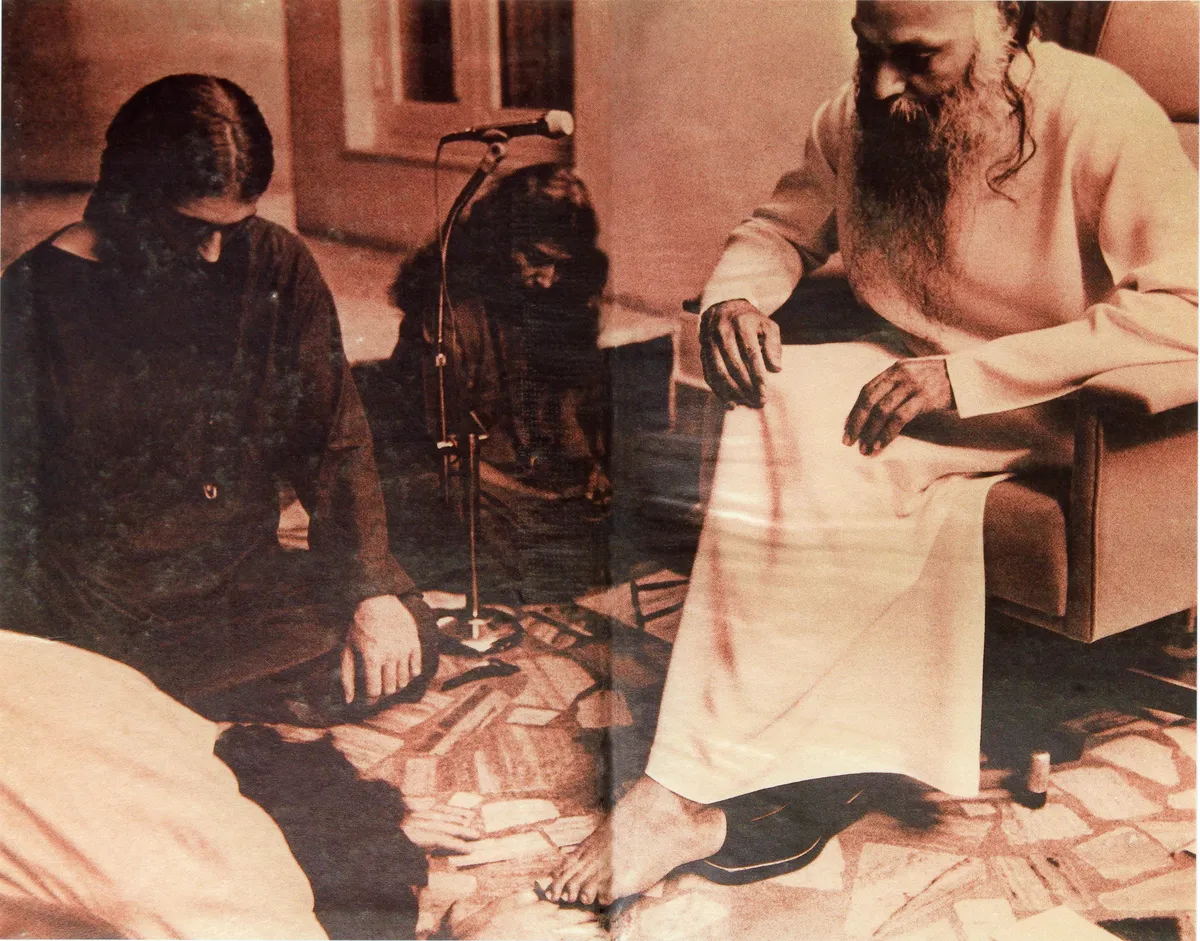
Osho's original Hindi beside Osho Live's English translation, matched passage by passage.
अब हम सूत्र को लें।
Now let us take the aphorism.
हे अर्जुन, अनादि होने से और गुणातीत होने से यह अविनाशी परमात्मा शरीर में स्थित हुआ भी वास्तव में न करता है, न लिपायमान होता है। जिस प्रकार सर्वत्र व्याप्त हुआ भी आकाश सूक्ष्म होने के कारण लिपायमान नहीं होता, वैसे ही सर्वत्र देह में स्थित हुआ भी आत्मा गुणातीत होने के कारण देह के गुणों से लिपायमान नहीं होता है।
O Arjuna, being beginningless and beyond the gunas, this imperishable Paramatma, though abiding in the body, in truth neither acts nor is tainted. Just as space, though all-pervading, is not stained because it is subtle, so the Self, though present throughout the body, is not stained by the body’s qualities because it is beyond the gunas.
जो मैं कह रहा था, यह सूत्र उसी की तरफ इशारा है।
What I was saying is exactly what this sutra points to.
हे अर्जुन, अनादि होने से और गुणातीत होने से यह अविनाशी परमात्मा शरीर में स्थित होता हुआ भी वास्तव में न करता है, न लिपायमान होता है।
O Arjuna, being beginningless and beyond the gunas, this imperishable Divine, though abiding in the body, in reality neither acts nor is tainted.
यही अत्यधिक कठिन बात समझने की है।
This is extremely difficult to understand.
हम देखते हैं आकाश, सबको घेरे हुए है। सब कुछ आकाश में होता है, लेकिन फिर भी आकाश को कुछ भी नहीं होता। एक गंदगी का ढेर लगा है। गंदगी के ढेर को भी आकाश घेरे हुए है। गंदगी का ढेर भी आकाश में ही लगा हुआ है, ठहरा हुआ है, लेकिन आकाश गंदगी के ढेर से गंदा नहीं होता। गंदगी का ढेर हट जाता है, आकाश जैसा था, वैसा ही बना रहता है।
We see space encircling all. Everything happens in space, yet nothing happens to space. A heap of filth lies somewhere; space surrounds even that heap. The heap stands in space, but space is not made filthy by the filth. The heap is removed and space remains as it was.
फिर एक फूल खिलता है। चारों तरफ सुगंध फैल जाती है। फूल के इस सौंदर्य को भी आकाश घेरे हुए है। लेकिन आकाश इस फूल के सौंदर्य से भी अप्रभावित रहता है। वह इसके कारण सुंदर नहीं हो जाता। फूल आज है। कल नहीं होगा। आकाश जैसा था, वैसा ही होगा।
Then a flower blooms; fragrance spreads all around. Space encloses that beauty too, but remains unaffected by it. Space does not become beautiful because of the flower. The flower is here today, gone tomorrow; space remains the same.
आकाश के इस गुण को बहुत गहरे में समझ लेना जरूरी है, क्योंकि यही आत्मा का गुण भी है।
It is necessary to understand deeply the property of space, because it is also the property of the Self.
आकाश सदा ही कुंवारा है। उसे कोई भी चीज छू नहीं पाती। ऐसा समझें, हम एक पत्थर पर लकीर खींचते हैं। पत्थर पर खींची लकीर हजारों साल तक बनी रहेगी। पत्थर पकड़ लेता है लकीर को। पत्थर लकीर के साथ तत्सम हो जाता है, तादात्म्य कर लेता है। पत्थर लकीर बन जाता है।
फिर हम लकीर खींचें पानी पर। खिंचती जरूर है, लेकिन खिंच नहीं पाती। हम खींच भी नहीं पाते और लकीर मिट जाती है। हम खींचकर पूरा कर पाते हैं, लौटकर देखते हैं, लकीर नदारद है। पानी पर लकीर खिंचती तो है, लेकिन पानी लकीर को पकड़ता नहीं। खिंचते ही मिट जाती है। खींचते हैं, इसलिए खिंच जाती है। लेकिन टिक नहीं पाती, क्योंकि पानी उसे पकड़ता नहीं। पत्थर पकड़ लेता है, हजारों साल तक टिक जाती है। पानी में क्षणभर नहीं टिकती; बनती जरूर है।
Space is ever virgin; nothing can touch it. Imagine drawing a line on a stone—the line remains for thousands of years; the stone grasps it and becomes one with it. Draw a line on water—it is drawn, yet not drawn. You draw it and it is already gone. Water allows the line to form, but does not hold it. On stone it forms and is held for ages; on water it forms but does not last.
आकाश में लकीर खींचें, वहां बनती भी नहीं। पानी पकड़ता नहीं, लेकिन बनने देता है। पत्थर बनने भी देता है, पकड़ भी लेता है। आकाश न बनने देता है और न पकड़ता है। आकाश में लकीर खींचें, कुछ भी खिंचता नहीं। इतने पक्षी उड़ते हैं, लेकिन आकाश में कोई पद-चिह्न नहीं छूट जाते। इतना सृजन, इतना परिवर्तन, इतना विनाश चलता है और आकाश अछूता बना रहता है, अस्पर्शित, सदा कुंवारा।
Draw a line in the sky—there, it does not even form. Water does not hold, but allows formation; stone allows and holds; sky neither allows nor holds. You draw, and nothing is drawn. So many birds fly, yet no footprints remain in the sky. So much creation, change, destruction goes on—and space remains untouched, unsmitten, ever virgin.
आकाश का यह जो गुण है, यही परमात्मा का भी गुण है। या ऐसा कहें कि जो हमें बाहर आकाश की तरह दिखता है, वही भीतरी आकाश परमात्मा है; इनर स्पेस, भीतर का आकाश परमात्मा है।
This is the quality of God as well. Or say: what appears outwardly as sky is inwardly the same sky—God; the inner space.
कृष्ण कहते हैं, यह जो भीतर छिपा हुआ चैतन्य है, इसे कुछ भी छूता नहीं। तुम क्या करते हो, इससे कोई फर्क नहीं पड़ता है। तुम क्या करते हो, क्या होता है, इससे तुम्हारे भीतर के आकाश पर कोई लकीर नहीं खिंचती। तुम भीतर शुद्ध ही बने रहते हो। यह शुद्धि तुम्हारा स्वभाव है।
Krishna says: this consciousness hidden within cannot be touched by anything. Whatever you do makes no difference to it. No line is drawn upon the inner sky by what you do or what happens. Within, you remain pure. That purity is your nature.
यह बड़ा खतरनाक संदेश है। इसका मतलब हुआ कि पाप करते हो, तो भी कोई रेखा नहीं खिंचती। पुण्य करते हो, तो भी कोई लाभ की रेखा नहीं खिंचती। न पाप न पुण्य, न अच्छा न बुरा--भीतर कुछ भी छूता नहीं। भीतर तुम अछूते ही बने रहते हो। खतरनाक इसलिए है कि सारी नैतिकता, सारी अनैतिकता व्यर्थ हो जाती है।
This is a dangerous message. It means that even if you sin, no line is drawn; even if you perform merit, no line of gain is drawn. Neither sin nor virtue, neither good nor bad—nothing touches the within. Inside, you remain untouched. Dangerous, because all morality and immorality seem to become futile.
भीतर की शुद्धि शाश्वत है। तुम्हारे करने से कुछ बनता-बिगड़ता नहीं। लेकिन तुम्हारे करने से तुम अकारण दुख पाते हुए मालूम होते हो। अगर तुम बुरा करते हो, तो तुम बुरे के साथ तादात्म्य बना लेते हो और दुख पाते हो। अगर तुम शुभ करते हो, तो शुभ के साथ तादात्म्य बना लेते हो और सुख पाते हो।
The inner purity is eternal. Nothing you do makes or mars it. But because of what you do, you suffer without cause. If you do evil, you identify with the evil and suffer. If you do good, you identify with the good and feel happiness.
लेकिन सुख-दुख दोनों तुम्हारी भ्रांतियां हैं। वह जो भीतर छिपा है, वह न सुख पाता है, न दुख पाता है। वह जो भीतर छिपा है, वह सदा एकरस अपने में ही है। न तो वह दुख की तरफ डोलता है, न सुख की तरफ डोलता है।
But both happiness and suffering are your illusions. That which is hidden within neither enjoys happiness nor suffers sorrow. It remains ever uniform in itself—neither leaning toward sorrow nor toward happiness.
वह भीतर कौन है तुम्हारे भीतर छिपा हुआ, उसकी खोज ही अध्यात्म है। एक ऐसे बिंदु को स्वयं के भीतर पा लेना, जो सभी चीजों से अस्पर्शित है।
Who is hidden within you? The search for that is spirituality: to find within oneself a point untouched by all things.
एक गाड़ी चलती है। गाड़ी का चाक चलता है, हजारों मील की यात्रा करता है। लेकिन गाड़ी के चाक के बीच में एक कील है, जो बिलकुल नहीं चलती, जो खड़ी ही रहती है। चाक चलता चला जाता है। चाक अच्छे रास्तों पर चलता है, बुरे रास्तों पर चलता है। चाक सुंदर और असुंदर रास्तों पर चलता है। चाक सपाट राजपथों पर चलता है, गंदगी-कीचड़ से भरे हुए जंगली रास्तों पर चलता है। वह जो कील है चाक के बीच में खड़ी, वह चलती ही नहीं; वह खड़ी ही रहती है।
A cart’s wheel turns and travels thousands of miles, but at the very center there is a pin that does not move—it stands still. The wheel rolls on; it moves over good roads and bad, over smooth highways and muddy jungle tracks. But the pin standing at the center does not move.
ठीक वैसे ही तुम्हारा मन सुख में चलता है, दुख में चलता है; तुम्हारा शरीर कष्ट में चलता है, सुविधा में चलता है; लेकिन भीतर एक कील है चैतन्य की, वह खड़ी ही रहती है, वह चलती ही नहीं।
Just so, your mind moves in happiness and sorrow; your body moves in pain and comfort, but within there is a pin of consciousness that stands still. It does not move.
अगर तुम शरीर से अपने को एक समझ लेते हो, तो बहुत तरह के कष्ट तुम्हारे दुख का कारण बन जाते हैं। अगर तुम मन से अपने को एक समझ लेते हो, तो बहुत तरह की मानसिक व्यथाएं, चिंताएं तुम्हें घेर लेती हैं; तुम उनसे घिर जाते हो। शरीर से अलग कर लो, शरीर में कष्ट होते रहेंगे, लेकिन तुम दुखी नहीं। मन से अलग कर लो, भावों के तूफान चलते रहेंगे, लेकिन तुम दूर खड़े उनको देखते रहोगे।
If you take yourself to be the body, many pains become causes of your suffering. If you take yourself to be the mind, mental agonies and anxieties surround you and you are caught. Separate yourself from the body—pains will occur in the body, but you will not be miserable. Separate yourself from the mind—storms of feelings will blow, but you will stand apart and watch.
शरीर और मन दोनों से पार खड़ा हो जाता है जो, उसे पता चलता है कि यहां तो कभी भी कुछ नहीं हुआ। यहां तो सदा ही सब वैसा का वैसा है। जैसा अगर सृष्टि का कोई पहला क्षण रहा होगा, तो उस दिन जितनी शुद्ध थी चेतना, उतनी ही शुद्ध आज भी है।
One who stands beyond both body and mind realizes that here, within, nothing ever happens. Here everything is ever as it is. As pure as consciousness was on the very first day of creation—if there ever was a first day—so pure it is today.
इसे हम ऐसा समझें कि आप एक नाटक में काम करते हैं। रावण बन गए हैं। बड़े बुरे काम करने पड़ते हैं। सीता चुरानी पड़ती है। हत्याएं करनी पड़ती हैं। युद्ध करना पड़ता है। या राम बन गए हैं। बड़े अच्छे काम करते हैं। बड़े आदर्श, मर्यादा पुरुषोत्तम हैं। लोग आदर देते हैं, सम्मान करते हैं। लेकिन जब आप नाटक छोड़कर घर आते हैं, तो न आप राम होते हैं, न रावण होते हैं। न तो रावण का होना आपको छूता है, न राम का होना आपको छूता है।
Understand it this way: you act in a play. You become Ravana; you must do wicked deeds—abduct Sita, commit killings, wage war. Or you become Rama—perform noble deeds, embody ideals, receive honor and respect. But when you return home from the play, you are neither Rama nor Ravana. Neither the being of Ravana touches you nor the being of Rama.
लेकिन कभी-कभी खतरा हो सकता है। कभी-कभी अभिनय भी छू सकता है। अगर आप अपने को एक समझ लें। अगर आप यह समझ लें कि मैंने इतने दिन तक राम का पार्ट किया, तो अब गांव के लोगों को मुझे राम समझना चाहिए। तो फिर झंझट हो सकती है।
But danger can arise: sometimes the acting can touch you—if you take yourself to be the role. If you think, “I played Rama so long; now the villagers should regard me as Rama,” then trouble begins.
ऐसा हुआ, अमेरिका में लिंकन का एक आदमी ने पार्ट किया एक साल तक। क्योंकि लिंकन की कोई शताब्दी मनाई जाती थी और उसकी शक्ल लिंकन से मिलती-जुलती थी, तो अमेरिका के सभी बड़े नगरों में उसे लिंकन का पार्ट करने के लिए जाना पड़ा। एक सालभर तक वह लिंकन की तरह चलता, लिंकन की छड़ी हाथ में रखता, लिंकन के कपड़े पहनता, लिंकन की तरह हकलाता, लिंकन की तरह बोलता, सब लिंकन की तरह करता।
It happened: in America a man played Abraham Lincoln for a year during a centenary. His face resembled Lincoln’s, so he went to all the big cities acting as Lincoln—walking like him, carrying his cane, wearing his clothes, stammering and speaking like him—everything in Lincoln’s manner.
सालभर लंबा वक्त था। वह आदमी भूल गया। सालभर के बाद जब वह घर आया, तो वह सीधा न चल सके, जैसा वह पहले चलता रहा था। कोशिश करे, तो थोड़ी देर सीधा चले, नहीं तो फिर वह लिंकन की तरह चलने लगे। बोले भी, तो लिंकन की तरह बोले। जहां लिंकन अटकता था, वहीं वह भी अटके।
A year is a long time. The man forgot. After a year, when he returned home, he could no longer walk as he used to. If he tried, he would manage for a bit, and then again he would walk like Lincoln. When he spoke, it was like Lincoln; he would stumble where Lincoln used to.
घर के लोगों ने कहा कि अब छोड़ो भी; अब बात खतम हो गई! लेकिन एक साल का नशा उस पर ऐसा छा गया--जगह-जगह सम्मान, स्वागत, सत्कार--कि उस आदमी ने कहा, क्या छोड़ो! मैं अब्राहम लिंकन हूं। तुम किस भ्रांति में पड़े हो? लोगों ने समझा, वह मजाक कर रहा है थोड़े दिन। लेकिन वह मजाक नहीं कर रहा था। वह अब्राहम लिंकन हो ही गया था।
The family said, “Now stop; it’s over!” But the intoxication of a year—honors, welcomes, ovations—so possessed him that he said, “Stop what? I am Abraham Lincoln. What delusion are you under?” People thought he was joking for a few days. He wasn’t. He had become Abraham Lincoln.
उसे बहुत समझाया-बुझाया। मित्रों ने कहा कि तुम पागल तो नहीं हो गए हो? लेकिन उसे पक्का भरोसा आ गया था। सालभर लंबा वक्त था। उसे जितना लोगों ने समझाया, उसकी मजबूती बढ़ती चली गई। वह लोगों से कहने लगा, तुम पागल तो नहीं हो गए हो? मैं लिंकन हूं। जितना ही लोगों ने कहा कि तुम नहीं हो, उतनी ही उसकी जिद्द बढ़ती चली गई। फिर तो यहां तक हालत पहुंच गई कि मनोवैज्ञानिकों के पास ले जाकर इलाज करवाना पड़ा।
They tried to explain; friends asked, “Haven’t you gone mad?” But his conviction grew. He began telling them, “Are you mad? I am Lincoln.” The more they denied, the more obstinate he became—until psychiatrists had to treat him.
तो मनोवैज्ञानिक ने कहा कि यह आदमी कितना ही बोल रहा हो, लेकिन भीतर तो यह गहरे में तो जानता ही होगा कि मैं लिंकन नहीं हूं। तो अमेरिका में उन्होंने लाइ डिटेक्टर एक छोटी-सी मशीन बनाई है; अदालत में काम लाते हैं झूठ पकड़ने के लिए। उस मशीन पर आदमी को खड़ा कर देते हैं। उससे पूछते हैं। जो बात वह सच बोलता है, तो उसके हृदय की धड़कन अलग होती है। आप भी जब सच बोलते हैं, तो धड़कन अलग होती है। जब आप झूठ बोलते हैं, तो एक धक्का लगता है। हृदय की धड़कन में फर्क हो जाता है।
किसी ने आपसे पूछा, आपकी घड़ी में कितने बजे हैं? आप कहते हैं, आठ। किसी ने पूछा कि सामने जो किताब रखी है, इसका क्या नाम है? आपने पढ़कर बता दिया। आपके हृदय में कहीं कोई झटका नहीं लगता। फिर किसी ने पूछा, आपने चोरी की? तो भीतर से तो आप कहते हैं कि की; और ऊपर से आप कहते हैं, नहीं की। तो रिदम, भीतर की लय टूट जाती है। वह लय का टूटना मशीन पकड़ लेती है कि आपके हृदय की गति में फर्क पड़ गया। ग्राफ टूट जाता है।
A psychologist thought, “Whatever he says, deep down he must know he isn’t Lincoln.” In America they have a lie-detector used in courts. They put a person on the machine and ask questions. When one speaks truth, the heart’s rhythm is one way; when one lies, there is a jolt and the rhythm alters. Someone asks the time—you say, “Eight.” Or the name of a book in front of you—you read and tell it. There is no inner jolt. But if someone asks, “Did you steal?” and inwardly you say “Yes,” while outwardly you say “No,” the inner rhythm breaks; the machine catches it; the graph jumps.
तो उस आदमी को, अब्राहम लिंकन को, बने हुए अब्राहम लिंकन को खड़ा किया गया लाइ डिटेक्टर पर। वह भी परेशान हो गया था। जो देखे, वही समझाए कि अरे, क्यों पागल हो रहे हो? होश में आओ। यह नाटक था। वह भी घबड़ा गया। उसने सोचा कि इससे कैसे छुटकारा हो!
So they put the Lincoln-actor on the lie-detector. He himself was troubled—everyone told him, “Why go mad? Come to your senses. It was just a play.” He was frightened: “How to get free?”
तो मनोवैज्ञानिक ने बहुत-से सवाल पूछे। फिर पूछने के बाद उसने पूछा कि क्या तुम अब्राहम लिंकन हो? तो उसने सोचा, यह झंझट खतम ही करो, कह दो कि नहीं हूं। तो उसने कहा कि नहीं, मैं अब्राहम लिंकन नहीं हूं। मनोवैज्ञानिक बड़ा खुश हुआ। लेकिन नीचे मशीन ने ग्राफ बताया कि यह आदमी झूठ बोल रहा है। इतना गहरा उसको खयाल चला गया है कि मैं अब्राहम लिंकन हूं। वह खुद ही मना कर रहा है। लेकिन उसका हृदय जानता है कि मैं हूं।
The psychologist asked many questions. Then he asked, “Are you Abraham Lincoln?” The man thought, “End this trouble—say no.” He said, “No, I am not Abraham Lincoln.” The psychologist was delighted. But the machine below showed he was lying. The idea that “I am Abraham Lincoln” had gone so deep that while he denied it, his heart knew, “I am.”
अब क्या करिएगा! एक साल का नाटक अगर ऐसी स्थिति बना देता हो, तो आपने शरीर के साथ बहुत जन्मों में नाटक किया है। कितनी-कितनी लंबी यात्रा है शरीर के साथ एक होने की। मन के साथ कितने समय से आप अपने को एक बनाए हुए हैं। इसलिए कठिनाई है। इसलिए तोड़ने में अड़चन मालूम पड़ती है। इतना लंबा हो गया है यह सब कि आप जन्मों-जन्मों से लिंकन का पार्ट कर रहे हैं। और अब कोई आपसे पूछता है, तो आप कितना ही कहें, मैं शरीर नहीं हूं, लेकिन भीतर.।
What to do? If a year’s role can create such a state, you have been playing the role of the body for countless births; such a long journey of being one with the body! You have been one with the mind for so long. That is why breaking is difficult. You have been playing Lincoln’s part for lifetimes. Now, even if asked and you say, “I am not the body,” within…
आपको लाइ डिटेक्टर पर खड़ा करके पूछा जाए कि क्या तुम शरीर हो? आप बड़े आत्म-ज्ञानी हैं। गीता पढ़ते हैं, कुरान पढ़ते हैं, कंठस्थ है। और आप रोज सुबह बैठकर दोहराते हैं कि मैं शरीर नहीं हूं। आप लाइ डिटेक्टर पर खड़े किए जाएं। आप कहेंगे, मैं शरीर नहीं हूं। वह डिटेक्टर कहेगा कि यह आदमी झूठ बोल रहा है। क्योंकि आपकी मान्यता तो गहरी है कि आप शरीर हैं। आप जानते हैं। आपके गहरे तक यह बात घुस गई है। इसे तोड़ने में इसीलिए कठिनाई है। लेकिन यह तोड़ी जा सकती है, क्योंकि यह झूठ है। यह सत्य नहीं है।
If you are placed on a lie-detector and asked, “Are you the body?” You may be a great self-knower—reciting the Gita, the Koran, repeating every morning, “I am not the body.” On the detector you will say, “I am not the body,” and the machine will say, “This man is lying,” because your deep conviction is that you are the body. You know it. It has sunk to your depths. Breaking it is difficult for this reason. But it can be broken—because it is false, not true.
आप पृथक हैं ही। आप कितना ही मान लें कि मैं पृथक नहीं हूं, आप पृथक हैं। आपके मानने से सत्य बदलता नहीं। हां, आपके मानने से आपकी जिंदगी असत्य हो जाती है।
You are separate as you are. No matter how much you believe otherwise, truth does not change. Yes, by your belief your life becomes untrue.
कृष्ण कहते हैं, यह जो भीतर बैठा हुआ स्वरूप है, यह सदा मौन, सदा शांत, शुद्ध, सदा आनंद से भरा है।
Krishna says, this inner nature is ever silent, ever peaceful, pure, and ever filled with bliss.
इसका हमने कभी कोई दर्शन नहीं किया है। और जो भी हम जानते हैं अपने संबंध में, वह या तो शरीर है या मन है। मन के संबंध में भी हम बहुत नहीं जानते हैं। मन की भी थोड़ी-थोड़ी सी परतें हमें पता हैं। बहुत परतें तो अचेतन में छिपी हैं, उनका हमें कोई पता नहीं है।
We have had no glimpse of it. Whatever we know about ourselves is either body or mind. And even of mind we know little—only a few layers; many layers are hidden in the unconscious.
साक्षी का अर्थ है कि मैं शरीर से भी अपने को तोडूं और मन से भी अपने को तोडूं। और जब मैं कहता हूं तोडूं, तो मेरा मतलब है, वह जो गलत जोड़ है, वही तोड़ना है। वस्तुतः तो हम जुड़े हुए नहीं हैं।
Witnessing means I loosen my identification with body and with mind. And when I say “loosen,” I mean only the false join has to be undone. In truth we are not joined.
इसलिए कृष्ण कहते हैं, हे अर्जुन, अनादि होने से और गुणातीत होने से यह अविनाशी परमात्मा शरीर में स्थित हुआ भी वास्तव में न करता है, न लिपायमान होता है। न तो यह कुछ करता है और चाहे किसी को लगता हो कि कुछ हो भी रहा है, तो भी लिप्त नहीं होता।
Therefore Krishna says: O Arjuna, being beginningless and beyond the gunas, this imperishable Divine, though abiding in the body, in reality neither acts nor is tainted. It does nothing—and even if something seems to be happening, it remains untainted.
कमल का पत्ता जैसे पानी में भी, पानी की बूंदें पड़ जाएं उसके ऊपर, तो भी छूता भी नहीं बूंदों को। बूंदें अलग बनी रहती हैं, पत्ते पर पड़ी हुई भी। जल छूता नहीं। वैसा यह अछूता रह जाता है। इसने कभी भी कुछ नहीं किया है।
Like a lotus leaf in water: droplets fall upon it, yet do not wet it. The drops remain separate even while resting on the leaf. Likewise this remains untouched. It has never done anything.
हम इसे कैसे मानें? हम तो सब चौबीस घंटे कुछ न कुछ कर रहे हैं। हम इसे कैसे मानें? हम यह कैसे स्वीकार करें कि यह भीतर जो है, यह सदा शुद्ध है। क्योंकि हम बहुत-से पाप कर रहे हैं, चोरी कर रहे हैं, झूठ बोल रहे हैं। यह कृष्ण की बात समझ में नहीं आती कि हम और शुद्ध हो सकते हैं! हम, जिन्होंने इतनी बुराइयां की हैं? न भी की हों, तो इतनी बुराइयां सोची हैं, करनी चाही हैं। कितनी बार हत्या करने का मन हुआ है, चोरी करने का मन हुआ है। यह मन हमारा, यह कैसे भीतर सब शुद्ध हो सकता है?
How to accept this? We are doing something twenty-four hours a day. How to accept that the inner one is ever pure, when we commit so many sins, thefts, lies? Krishna’s statement seems incomprehensible: how can we, who have done so much wrong—or even if not done, have thought of doing it so many times—how can the within be pure?
बाहर के आकाश को देखें! सब कुछ घटित हो रहा है और बाहर का आकाश शुद्ध है। भीतर भी एक आकाश है, ठीक बाहर के आकाश जैसा। बीच में सब घटित हो रहा है, वह भी भीतर शुद्ध है।
Look at the outer sky: everything happens, and the sky remains pure. Within there is also a sky exactly like the outer. In between, all happens—yet within remains pure.
इस शुद्धता का स्मरण भी आ जाए, तो आपकी जिंदगी में एक नया आयाम खुल जाएगा। आप दूसरे आदमी होने शुरू हो जाएंगे। फिर आप जो भी कर रहे हैं, करते रहें, लेकिन करने से रस खो जाएगा। फिर जो भी कर रहे हैं, करते रहें, लेकिन करने में से अकड़ खो जाएगी। फिर करना ऐसे हो जाएगा, जैसे सांप तो निकल गया और केवल सांप का ऊपर का खोल पड़ा रह गया है। जैसी रस्सी तो जल गई, लेकिन सिर्फ राख रस्सी के रूप की रह गई है।
Even the remembrance of this purity opens a new dimension in your life. You begin to become another kind of person. Then whatever you do, keep doing—but the relish of doing will be gone. Then whatever you do, keep doing—but the stiffness in doing will be gone. Doing becomes like this: the snake has slipped away and only the sloughed skin remains; the rope has burned and only the rope-shaped ash remains.
अगर आपको यह खयाल आना शुरू हो जाए कि मैं अकर्ता हूं, तो कर्म जारी रहेगा, जली हुई रस्सी की भांति, जिसमें अब रस्सी रही नहीं, सिर्फ राख है। सिर्फ रूप रह गया है पुराना। कर्म चलता रहेगा अपने तल पर, और आप हटते जाएंगे। जैसे-जैसे कर्म से हटेंगे, वैसे-वैसे लगेगा कि मैं अलिप्त भी हूं। कुछ मुझे लिप्त नहीं कर सकता।
If the idea arises in you, “I am non-doer,” actions will continue like the burned rope—no rope remains, only ash of its form. The outer form of action goes on, while you withdraw. As you withdraw from action, you feel, “I am unattached; nothing can stain me.”
एक घटना आपसे कहूं। एक बौद्ध भिक्षु हुआ बहुत अनूठा, नागार्जुन। नागार्जुन के पास एक युवक आया। और उस युवक ने कहा कि मैं भी चाहता हूं कि जान लूं उसको, जो कभी लिप्त नहीं होता। जान लूं उसको, जो अकर्ता है। जान लूं उसको, जो परम आनंदित है, सच्चिदानंदघन है। कोई रास्ता?
Let me tell you an incident. There was a very unique Buddhist monk, Nagarjuna. A young man came to him and said, “I want to know That which is never tainted; to know That which is non-doer; to know That which is supremely blissful—sat-chit-ananda. Is there a way?”
नागार्जुन बहुत अपने किस्म का अनूठा गुरु था। उसने कहा कि पहले मैं तुझसे पूछता हूं कि तुझे किसी चीज से लगाव, कोई प्रेम तो नहीं है? उस युवक ने कहा कि कोई ज्यादा तो नहीं है, सिर्फ एक भैंस है मेरे पास, पर उससे मुझे लगाव है। तो नागार्जुन ने कहा कि बस इतना काफी है। इससे काम हो जाएगा। साधना शुरू हो जाएगी।
Nagarjuna was an extraordinary kind of master. He asked, “First tell me: do you have any attachment, any love for something?” The youth said, “Not much—only a buffalo I have; I am attached to her.” Nagarjuna said, “That is enough. That will do. The practice can begin.”
उस युवक ने कहा कि भैंस से और साधना का क्या संबंध? और मैं तो डर भी रहा था कि यह अपना लगाव बताऊं भी कि नहीं! कोई स्त्री से हो, किसी मित्र से हो, तो भी कुछ समझ में आता है। यह भैंस वाला लगाव! मैंने सोचा था कि इसकी तो चर्चा ही नहीं उठेगी। लेकिन आपने पूछा.।
The youth said, “What has a buffalo to do with practice? I was even afraid to admit this attachment. If it were to a woman or a friend, it would be understandable—but a buffalo! I thought it better not to mention it. But since you asked…”
नागार्जुन ने कहा, बस, तू एक काम कर। यह सामने मेरी गुफा के जो दूसरी गुफा है, उसमें तू चला जा; और एक ही भाव कर कि मैं भैंस हूं। जो तेरा प्रेम है, उसको तू आरोपित कर। बस, तू अपने को भैंस का रूप बना ले। और तू लौटकर मत आना। जब जरूरत होगी, तो मैं आऊंगा। तू तो बस, इतना ही भाव कर, एक ही भाव कि मैं भैंस हूं।
Nagarjuna said, “Do this: go into the cave opposite mine and hold only one bhavana—one feeling—‘I am a buffalo.’ Project your love there. Assume the form of a buffalo. And don’t come back. When needed, I will come. Just this: only one feeling—‘I am a buffalo.’”
उस युवक ने साधना करनी शुरू की। एक दिन बीता, दो दिन बीता, तीसरे दिन उसकी गुफा से भैंस की आवाज आनी शुरू हो गई। नागार्जुन ने अपने शिष्यों से कहा कि अब चलने का वक्त आ गया। अब चलो, देखो, क्या हालत है।
The youth began his practice. One day passed, two, and on the third day buffalo sounds began to come from his cave. Nagarjuna said to his disciples, “Now it’s time to go. Come and see what the condition is.”
वे सब वहां अंदर गए। वह युवक दरवाजे के पास ही सिर झुकाए खड़ा था। दरवाजा काफी बड़ा था। बाहर निकल सकता था। लेकिन सिर झुकाए खड़ा था जैसे कोई अड़चन हो। भैंस की आवाज कर रहा था। नागार्जुन ने कहा कि बाहर आ जाओ। उसने कहा कि बाहर कैसे आ जाऊं! मेरे सींग दरवाजे में अड़ रहे हैं। आंखें उसकी बंद हैं।
They went inside. The youth stood near the door with head down, as if blocked. The doorway was big enough; he could have walked out. But he stood with bowed head as if something obstructed him, making buffalo sounds. Nagarjuna said, “Come out.” He said, “How can I come out? My horns are stuck in the doorway.” His eyes were closed.
नागार्जुन के बाकी शिष्य तो बहुत हैरान हुए। उन्होंने कहा कि सींग दिखाई तो पड़ते नहीं! नागार्जुन ने कहा कि जो नहीं दिखाई पड़ता, वह भी अड़ सकता है। जो नहीं है, वह भी अड़ सकता है। अड़ने के लिए होना जरूरी नहीं है, सिर्फ भाव होना जरूरी है। इसका भाव पूरा है।
The disciples were astonished: “We don’t see any horns!” Nagarjuna said, “That which is unseen can also obstruct. To obstruct, it needn’t exist—feeling is enough. His feeling is complete.”
नागार्जुन ने उसे हिलाया और कहा, आंख खोल। उसने घबड़ाकर आंख खोली, जैसे किसी गहरी नींद से उठा हो। तीन दिन की लंबी नींद, आत्म-सम्मोहन, सेल्फ हिप्नोसिस, तीन दिन तक निरंतर कि मैं भैंस हूं। जैसे बड़ी गहरी नींद से जगा हो। एकदम तो पहचान भी न सका कि क्या मामला है।
Nagarjuna shook him and said, “Open your eyes.” He startled awake as if from a deep sleep—three days of auto-hypnosis: “I am a buffalo.” Like waking from a profound sleep. For a moment he couldn’t even recognize what was happening.
नागार्जुन ने कहा कि घबड़ा मत। कहां हैं तेरे सींग? उसने सिर पर हाथ फेरा। उसने कहा कि नहीं, सींग तो नहीं हैं। लेकिन अभी अड़ रहे थे। उसने कहा, वह भी मुझे खयाल है। मैं तीन दिन से निकलने की कोशिश कर रहा हूं। और तुमने कहा था, निकलना मत। मैं तीन दिन से कोशिश करके भी निकल नहीं पा रहा हूं। वे सींग अड़ जाते हैं बीच में। बड़ी तकलीफ भी होती है। टकराता हूं; तकलीफ होती है।
Nagarjuna said, “Don’t be afraid. Where are your horns?” He felt his head. “No, there are no horns—but just now they were stuck.” “Yes,” said Nagarjuna, “I know. For three days you tried to get out and couldn’t. The horns got stuck; you felt pain as you bumped.”
तो नागार्जुन ने कहा, कहां हैं सींग? कहां है तेरा भैंस होना? नागार्जुन ने कहा कि तुझे अब मैं कुछ और सिखाऊं कि बात तू सीख गया? उसने कहा, मैं बात सीख गया। तीन दिन का मुझे मौका और दे दें।
“Where are the horns? Where is your buffalo-ness?” Nagarjuna asked. “Should I teach you something further, or have you learned the lesson?” He said, “I have learned. Give me three more days.”
नागार्जुन और उसके शिष्य वापस लौट आए। शिष्यों ने कहा, हम कुछ समझे नहीं। यह क्या वार्तालाप हुआ? नागार्जुन ने कहा, तीन दिन बाद!
Nagarjuna and his disciples returned. The disciples asked, “We don’t understand this dialogue.” Nagarjuna said, “After three days.”
तीन दिन तक वह युवक फिर उस कोठरी में बंद था। और जैसे तीन दिन उसने अपने को भैंस होना स्वीकार कर के भैंस बना लिया था, वैसे तीन दिन उसने अस्वीकार किया कि मैं शरीर नहीं हूं, मैं मन नहीं हूं। और तीन दिन बाद जब नागार्जुन और उसके शिष्य वहां पहुंचे, तो वह जो व्यक्ति उन्होंने देखा था, वहां सिर्फ रस्सी की राख रह गई थी, जली हुई।
For three more days the youth remained in the cell. As in the first three he accepted and became a buffalo, so in the next three he rejected: “I am not the body; I am not the mind.” After three days, when Nagarjuna and the disciples arrived, the person they had seen was gone; only the ash-shape of a rope remained—burned.
उस व्यक्ति ने आंख खोली और नागार्जुन ने अपने शिष्यों से कहा, इसकी आंखों में झांको। उन आंखों में जैसे गहरा शून्य था। और नागार्जुन ने पूछा कि अब तुम कौन हो? तो उस व्यक्ति ने कहा कि सिर्फ आकाश। अब मैं नहीं हूं। सब समाप्त हो गया। और जो मैं चाहता था जानना, वह मैंने जान लिया! और जो मैं चाहता था होना, वह मैं हो गया हूं।
The man opened his eyes. Nagarjuna said to his disciples, “Look into his eyes.” There was a deep void in them. Nagarjuna asked, “Who are you now?” He said, “Only space. I am no more. All has ended. And what I wanted to know, I have known; what I wanted to become, I have become.”
जो भी आप सोच रहे हैं कि आप हैं, यह आपकी मान्यता है। यह आटो-हिप्नोसिस है। यह आत्म-सम्मोहन है। और यह सम्मोहन इतना गहरा है, बचपन से डाला जाता है, कि इससे आपको खयाल भी नहीं है कभी कि यह अपनी ही मान्यता है, जो हम अपने चारों तरफ खड़ी कर लिए हैं।
Whatever you think you are is your belief—auto-hypnosis, self-suggestion. It is so deep, implanted since childhood, that you never suspect it is your own assumption constructed around you.
आपका व्यक्तित्व आपकी मान्यता है। इसलिए बहुत मजे की घटनाएं घटती हैं। अगर आप दुनिया की अलग-अलग संस्कृतियों का अध्ययन करें, तो आप चकित हो जाएंगे।
Your personality is your belief. Hence curious events occur. If you study different cultures, you will be amazed.
कुछ ऐसी कौमें हैं, जो मानती हैं, पुरुष कमजोर है और स्त्री ताकतवर है। वहां पुरुष कमजोर हो गया है और स्त्री ताकतवर हो गई है। जिन कौमों की ऐसी धारणा है कि पुरुष कमजोर है, वहां पुरुष कमजोर है। और स्त्री ताकतवर है, तो स्त्री ताकतवर है। वहां मर्दाना होने का कोई मतलब नहीं है। वहां जनाना होने की शान है। और वहां अगर कोई मर्द ताकतवर होता है, तो लोग कहते हैं कि क्या जनाना मर्द है! क्या शानदार मर्द है! ठीक औरत जैसा।
There are tribes that believe men are weak and women strong. There, men have become weak and women strong. Where the belief is “men are weak,” men are weak; where “women are strong,” women are strong. There, masculinity has no cachet; feminine traits are prized. If a man is strong, they say, “What a womanly man! How splendid—a man just like a woman!”
आप यह मत सोचना की औरत कमजोर है। औरत का कमजोर होना एक मान्यता है।
Do not think women are intrinsically weak; their weakness is a belief.
आप चकित होंगे जानकर कि अमेजान में एक छोटी-सी कौम है। जब बच्चा होता है किसी स्त्री को, तो पति को भी प्रसव की पीड़ा होती है। एक खाट पर पड़ती है स्त्री, दूसरी खाट पर लेटता है पति। और दोनों तड़पते हैं। आप कहेंगे, यह पति बनता होगा। क्योंकि आखिर इधर भी तो इतने बच्चे पैदा होते हैं!
नहीं; पति बनता बिलकुल नहीं। और जब पहली दफा ईसाई मिशनरियों ने यह चमत्कार देखा, तो वे बड़े हैरान हुए कि ये पति भी क्या ढोंग कर रहे हैं! पति को कहीं प्रसव पीड़ा होती है! पत्नी को बच्चा हो रहा है, तुम क्यों तकलीफ पा रहे हो? और पत्नी से भी ज्यादा शोरगुल पति मचाता है, क्योंकि पति पति है। पत्नी तो थोड़ा-बहुत मचाती है। पति बहुत उछल-कूद करता है। गिर-गिर पड़ता है, रोता है, पीटता है। जब तक बच्चा नहीं हो जाता, तब तक तकलीफ पाता है। बच्चा होते ही से वह बेहोश होकर गिर जाता है।
You will be surprised to know in the Amazon there is a small tribe where, when a woman goes into labor, the husband experiences labor pains too. One cot is for the woman; on another lies the husband, both writhing. You will say, “He must be acting.” No—he is not. When Christian missionaries first saw this, they thought, “What a charade! How can a husband have labor pains?” And the husband makes even more noise—because he is a man; the wife makes a little noise, the husband a lot—rolling, crying, beating his chest. Until the child is born he suffers, and as soon as it is born he faints.
तो पादरियों ने समझा कि यह भी एक खेल है। इन्होंने बना रखा है। बाकी इसमें कोई हो तो नहीं सकती सचाई। तो जब चिकित्सकों ने जांच की, तो उन्होंने पाया कि यह बात सच नहीं है। दर्द होता है। तकलीफ होती है। पेट में बहुत उथल-पुथल मच जाती है, जैसे बच्चा होने वाला हो। हजारों साल की उनकी मान्यता है कि जब दोनों का ही बच्चा है, तो दोनों को तकलीफ होगी।
The priests thought it was a game. But when physicians examined, they found it true: there is pain, great disturbance in the abdomen as if a child were to be born. It is the tribe’s age-old belief: since the child belongs to both, both must feel the pain.
और आप यह भी जानकर हैरान होंगे कि ऐसी भी कौमें हैं, इस मुल्क में भी ऐसी ग्रामीण और आदिवासी कौमें हैं, जहां स्त्री को बच्चा बिना तकलीफ के होता है। जैसे गाय को होता है, ऐसे स्त्री को होता है। वह जंगल में काम कर रही है, खेत में काम कर रही है, बच्चा हो जाता है। बच्चे को उठाकर खुद ही अपनी टोकरी में रखकर वृक्ष के नीचे रख देती है, और फिर काम करना शुरू कर देती है।
You will also be surprised that there are communities—even in this country among rural and tribal groups—where women give birth without pain. Like a cow: she is working in the field or forest, the child is born; she picks the child up, puts it in her basket under a tree, and resumes work.
हमारी स्त्रियां सोच भी नहीं सकतीं कि खुद को बच्चा हो, न नर्स हो, न अस्पताल हो, न डाक्टर हो; और खुद ही को बच्चा हो, और उठाकर टोकरी में रखकर और काम शुरू! काम में कोई अंतराल ही नहीं पड़ता। वह भी मान्यता है। स्त्रियों को जो इतनी तकलीफ हो रही है, वह भी मान्यता है। स्त्रियों को तकलीफ न हो, वह भी मान्यता है।
Our women cannot even imagine it: no nurse, no hospital, no doctor—and you deliver the child yourself, put it in a basket, and carry on working without a break! That too is belief. The pain our women feel is belief; the absence of pain is belief.
लोझेन करके एक फ्रेंच चिकित्सक है, उसने एक लाख स्त्रियों को बिना दर्द के प्रसव करवाया है। और सिर्फ करता इतना ही है कि वह उनको कहता है कि दर्द होता ही नहीं। यह समझाता है पहले, दर्द तुम्हारी भ्रांति है। उनको कान में मंत्र डालता है कि दर्द होता ही नहीं। सम्मोहित करता है; समझा देता है। एक लाख स्त्रियां बिना दर्द के.।
There is a French doctor—call him Lozan—who has conducted pain-free childbirth for a hundred thousand women. He merely tells them, “Pain does not occur,” explaining that pain is your illusion, and implants a suggestion in the ear—hypnosis. One hundred thousand women delivered without pain…
लोझेन का शिष्य है, वह और एक कदम आगे बढ़ गया है। वह कहता है कि दर्द की तो बात ही गलत है, जब बच्चा पैदा होता है, तो स्त्री के जीवन में सबसे बड़ा सुख होता है। और उसने कोई पांच सौ स्त्रियों को सुख करवाकर भी बता दिया। वे स्त्रियां कहती हैं कि जो समाधि का आनंद हमने जाना है बच्चे के होने में, वह तो कभी जाना ही नहीं।
वह भी उनको समझाता है कि यह परम अनुभव का क्षण है। बच्चा जब पैदा होता है, तो स्त्री के जीवन का यह शिखर है आनंद-अनुभव का। अगर इसमें वह चूक गई, तो उसे जीवन में कभी आनंद ही नहीं मिलेगा। उसका शिष्य समझाकर आनंद भी करवा देता है!
His disciple went a step further. He said, “Even the talk of pain is wrong. When the child is born the greatest joy arises in a woman’s life.” And he proved it with about five hundred women. They say, “The ecstasy we knew during childbirth—like samadhi—we have never known.” He explains that this is the supreme moment of a woman’s life. If she misses it, she may never know joy. And he induces joy!
आदमी बहुत अदभुत है। आदमी सेल्फ हिप्नोसिस करने वाला प्राणी है। वह अपने को जो भी मान लेता है, वैसा कर लेता है। आपकी सारी व्यक्तित्व की परतें आपकी मान्यताओं की परतें हैं। आप जो हैं, वह आपका सम्मोहन है।
Man is astonishing—a self-hypnotizing creature. He becomes what he believes himself to be. All the layers of your personality are layers of belief. What you are is hypnosis.
अध्यात्म का अर्थ है, इस सारे सम्मोहन को तोड़कर उसके प्रति जग जाना, जिसका कोई भी सम्मोहन नहीं है। यह सारा शरीर, यह मन, ये धारणाएं, यह स्त्री यह पुरुष, यह अच्छा यह बुरा, इस सबसे हटते जाना। और सिर्फ चैतन्य मात्र, शुद्ध चित्त मात्र शेष रह जाए, मैं सिर्फ जानने वाला हूं, इतनी प्रतीति भर बाकी बचे। तो उस प्रतीति के क्षण में पता चलता है कि वह जो भीतर बैठा हुआ आकाश है, वह सदा कुंवारा है। न उसने कभी कुछ किया और न कुछ उस पर अभी तक लिप्त हुआ है। वह अस्पर्शित, शुद्ध है।
Spirituality means breaking all this hypnosis and awakening to That which has no hypnosis. Withdrawing from body, mind, notions—woman and man, good and bad—until only pure consciousness remains; only the knowing remains. In that moment of pure knowing one sees that the inner sky is ever virgin—never having done anything, and nothing has ever stuck to it. It is untouched, pure.
पांच मिनट रुकें। कोई बीच से उठे न। कीर्तन पूरा करें और फिर जाएं।
Let us pause for five minutes. No one get up midway. Complete the kirtan and then go.
समझ काफी है, लेकिन समझ केवल सुन लेने या पढ़ लेने से उपलब्ध नहीं होती। समझ को भी भूमि देनी पड़ती है। उसके बीज को भी भूमि देनी पड़ती है। बीज में पूरी संभावना है कि वह वृक्ष हो जाए, लेकिन बीज को भी जमीन में न डालें, तो वह वृक्ष नहीं होगा।
Understanding is enough—but understanding does not become available merely by hearing or reading. Even understanding needs a ground; its seed also needs soil. A seed carries the entire potential to become a tree, but if you don’t put it in the earth, it will never become a tree.
ध्यान समझ के लिए भूमि है। समझ काफी है, उससे जीवन में क्रांति हो जाएगी। लेकिन समझ का बीज ध्यान के बिना टूटेगा ही नहीं।
Meditation is the soil for understanding. Understanding is sufficient; it will bring revolution to life. But without meditation, the seed of understanding will not crack open.
और अगर समझ आप में पैदा होती हो बिना ध्यान के, तो कृष्णमूर्ति को या मुझे सुनने का भी क्या प्रयोजन है! और मुझे वर्षों से बहुत लोग सुनते हैं, कृष्णमूर्ति को चालीस वर्षों से बहुत लोग सुनते हैं। अब भी सुनने जाते हैं। समझ अभी भी पैदा नहीं हुई।
And if understanding were born in you without meditation, then what would be the point of listening to Krishnamurti or to me? People have been listening to me for years; people have been listening to Krishnamurti for forty years. Even now they go to listen. Understanding still has not arisen.
चालीस वर्ष से जो आदमी कृष्णमूर्ति को सुन रहा है, अब उसको कृष्णमूर्ति को सुनने जाने की क्या जरूरत है अगर समझ पैदा हो गई हो? अब भी सुनने जाता है। और कृष्णमूर्ति चालीस साल से एक ही बात कह रहे हैं कि समझ पैदा करो। वह अभी चालीस वर्ष तक सुनकर भी पैदा नहीं हुई है। वह चार हजार वर्ष सुनकर भी पैदा नहीं होगी।
If someone has been listening to Krishnamurti for forty years, why does he need to go and listen now—if understanding has already arisen? And Krishnamurti has been saying the same one thing for forty years: “Bring about understanding.” It has not arisen even after forty years of listening; it will not arise even after four thousand.
न तो सुनने से समझ पैदा हो सकती है, न पढ़ने से समझ पैदा हो सकती है। ध्यान की भूमि में ही समझ पैदा हो सकती है। हां, सुनने से ध्यान की तरफ जाना हो सकता है। पढ़ने से ध्यान की तरफ जाना हो सकता है। और अगर समग्र मन से सुनें, तो सुनना भी ध्यान बन सकता है। और अगर समग्र मन से पढ़ें, तो पढ़ना भी ध्यान बन सकता है। लेकिन ध्यान जरूरी है।
Neither listening nor reading can produce understanding. Understanding can arise only in the soil of meditation. Yes, listening can turn you toward meditation. Reading can turn you toward meditation. And if you listen with your whole being, listening itself can become meditation. If you read with your whole being, reading itself can become meditation. But meditation is essential.
ध्यान का अर्थ समझ लें। ध्यान का अर्थ है, मन की ऐसी अवस्था जहां कोई तरंग नहीं है। निस्तरंग चैतन्य में ही समझ का जन्म होता है।
Understand the meaning of meditation. Meditation is a state of the mind in which there is no ripple, no wave. Only in a wave-less consciousness is understanding born.
यह निस्तरंग चैतन्य कई तरह से पैदा हो सकता है। किसी को प्रार्थना से पैदा हो सकता है। किसी को पूजा से पैदा हो सकता है। किसी को नृत्य से, कीर्तन से पैदा हो सकता है। किसी को सुनने से पैदा हो सकता है। किसी को देखने से पैदा हो सकता है। किसी को मात्र बैठने से पैदा हो सकता है। किसी को योग की क्रियाओं से पैदा हो सकता है। किसी को तंत्र की क्रियाओं से पैदा हो सकता है।
This wave-less consciousness can arise in many ways. For some, it may arise through prayer; for some, through worship; for some, through dance or kirtan; for some, through listening; for some, through seeing; for some, through mere sitting; for some, through yogic processes; for others, through tantric processes.
निस्तरंग चित्त बहुत तरह से पैदा हो सकता है। और जिस तरह से आपको पैदा होता है, जरूरी नहीं है कि दूसरे को भी उसी तरह से पैदा हो। तो आपको खोजना पड़ेगा कि कैसे निस्तरंग चित्त पैदा हो!
Wave-less mind can arise in many ways, and the way it arises for you need not be the same for another. You will have to discover how a wave-less mind arises in you.
निस्तरंग चित्त का नाम ही ध्यान है। तरंगायित चित्त का नाम मन है। वह जो उथल-पुथल से भरा हुआ मन है, उसमें कोई भी समझ पैदा नहीं हो सकती। क्योंकि वहां इतना भूकंप चल रहा है कि कोई बीज थिर नहीं हो सकता। अंकुरित होने के लिए अवसर ही नहीं है। इसलिए ध्यान पर इतना जोर है।
The name of wave-less mind is meditation. The name of a wave-tossed mind is “mind.” In that mind, full of turmoil and commotion, no understanding can take birth. There is such an earthquake going on that no seed can remain steady; there is no opportunity for sprouting. Hence the emphasis on meditation.
और अगर आप सोचते हों कि कृष्णमूर्ति का ध्यान पर जोर नहीं है, तो आप समझे ही नहीं। ध्यान शब्द का वे उपयोग नहीं करते हैं, क्योंकि उनको ऐसा खयाल है कि ध्यान शब्द बहुत विकृत हो गया है। लेकिन कोई शब्द विकृत नहीं होते। और केवल नए शब्द चुन लेने से कोई फर्क नहीं पड़ता है।
And if you think Krishnamurti does not emphasize meditation, then you have not understood. He does not use the word “meditation” because he feels it has been much corrupted. But no word is inherently corrupted, and choosing new words makes no difference.
कृष्णमूर्ति कहते हैं कि मुझे सुनते समय सिर्फ सुनो!
वह ध्यान हो गया। कोई भी क्रिया करते वक्त अगर सिर्फ क्रिया की जाए और उसके संबंध में सोचा न जाए, तो ध्यान हो जाएगा। चलते वक्त अगर केवल चला जाए और कुछ भी मन में न करने दिया जाए, तो ध्यान हो जाएगा। भोजन करते वक्त अगर भोजन किया जाए और मन में उसके संबंध में कोई चिंतन न किया जाए, तो भोजन करना ध्यान हो जाएगा। अगर आप अपने चौबीस घंटे को ध्यान में बदल लेते हैं, तो बहुत अच्छा है।
Krishnamurti says: When you listen to me, just listen. That is meditation. In performing any action, if only the action is done and nothing is thought about it, meditation happens. While walking, if you only walk and allow nothing to run in the mind, meditation happens. While eating, if you only eat and allow no thought about food to arise, eating becomes meditation. If you can turn your twenty-four hours into meditation, that is wonderful.
लेकिन लोग बहुत बेईमान हैं। एक घंटा न बैठने के लिए वे कहेंगे, चौबीस घंटे ध्यान क्यों नहीं किया जा सकता! और चौबीस घंटे वे ध्यान करने वाले नहीं हैं। और एक घंटा बैठना न पड़े, इसलिए चौबीस घंटे पर टालेंगे।
But people are very dishonest. To avoid sitting for an hour they say, “Why not meditate for all twenty-four hours?” And they are not going to meditate for twenty-four hours. To avoid sitting for an hour, they postpone it to the slogan of “twenty-four hours.”
अगर आप चौबीस घंटे ही ध्यान कर सकते हों, तो कौन आपको कहेगा कि घंटेभर करिए! आप मजे से चौबीस घंटे करिए। लेकिन चौबीस घंटे आप कर नहीं रहे हैं। और कर रहे होते, तो यहां मेरे पास पूछने को नहीं आना पड़ता।
If you can meditate for twenty-four hours, who would tell you to do it for just an hour! By all means, do it for twenty-four hours. But you are not doing it. If you were, you would not have to come to me to ask.
क्या जरूरत है मेरे पास आने की? ध्यान नहीं है, इसलिए कहीं जाना पड़ता है, सुनना पड़ता है, समझना पड़ता है। ध्यान हो तो आपके भीतर ही पौधा खिल जाएगा। आपके पास दूसरे लोग आने लगेंगे। आपको जाने की जरूरत नहीं होगी। अपनी समझ आ जाए, तो फिर किसी से क्या समझना है!
What need is there to come to me? It is because there is no meditation that you have to go somewhere, to listen, to try to understand. If meditation is there, the plant will bloom within you. Others will begin to come to you; you will not need to go anywhere. When your own understanding arises, what is there to understand from anyone else?
लेकिन आदमी का मन ऐसा है कि अगर कहो कि घंटेभर बैठो, तो वह कहेगा, घंटेभर बैठने की क्या जरूरत है? चौबीस घंटे ध्यान नहीं किया जा सकता!
मजे से करिए, लेकिन कम से कम घंटे से शुरू तो करिए। एक घंटा भी ध्यान करना मुश्किल है। चौबीस घंटा तो बहुत मुश्किल है। जब ध्यान करने बैठेंगे, तब पता चलेगा कि एक क्षण को भी ध्यान हो जाए, तो बहुत बड़ी घटना है। क्योंकि मन चलता ही रहता है।
But the human mind is such that if I say, “Sit for an hour,” it replies, “Why is there any need to sit for an hour? Can’t we meditate for twenty-four hours?” By all means do it, but at least begin with an hour. Even one hour of meditation is difficult; twenty-four hours is exceedingly difficult. When you sit to meditate, you will find that if even for a single moment meditation happens, it is a great event—because the mind goes on moving.
तो उचित है कि एक घंटा निकाल लें चौबीस घंटे में से अलग ध्यान के लिए ही, और अनुभव करें। जिस दिन एक घंटे में आपको लगे कि सधने लगी बात, घटने लगी बात, चौबीस घंटे पर फैला दें। फैलाना तो चौबीस घंटे पर ही है। क्योंकि जब तक जीवन पूरा ध्यानमय न हो जाए, तब तक कोई क्रांति न होगी। लेकिन शुरुआत कहीं से करनी पड़ेगी।
So it is reasonable to take one hour out of the twenty-four exclusively for meditation and experience it. On the day you feel that in that hour something has begun to ripen, something has begun to happen, then spread it over the twenty-four hours. Ultimately it has to be spread over the whole of life, because until life becomes entirely meditative, there will be no revolution. But you must begin somewhere.
और फिर एक घंटे ध्यान का परिणाम चौबीस घंटे पर होता है। ठीक वैसे ही जैसे एक घंटा कोई सुबह व्यायाम कर लेता है, तो चौबीस घंटे का स्वास्थ्य प्रभावित होता है। और आप यह नहीं कहते कि चौबीस ही घंटे व्यायाम क्यों न किया जाए! करें, तो ठीक है। जो आदमी चौबीस घंटे व्यायाम कर रहा है, उसको एक घंटे व्यायाम करने की कोई जरूरत भी नहीं है। जो चौबीस घंटे श्रम में लगा हुआ है, उसे और व्यायाम की क्या जरूरत है? कोई जरूरत नहीं है। लेकिन जो व्यायाम नहीं कर रहा है, उसे घंटेभर भी कर लेने से चौबीस घंटे पर परिणाम होगा।
And the result of one hour of meditation carries into the twenty-four hours—just as one hour of morning exercise affects the health of the whole day. And you don’t say, “Why not exercise for the entire twenty-four hours!” If you can, fine. A person laboring for twenty-four hours has no need of a separate hour of exercise. But one who is not exercising—if he even exercises for an hour, it affects his whole day.
ध्यान के लिए एक घंटा निकाल लेना इसलिए उपयोगी है कि आप उस समय को पूरा का पूरा ही ध्यान में नियोजित कर सकते हैं। एक दफा कला आ जाए, तो उस कला का उपयोग आप चौबीस घंटे कर सकते हैं। ध्यान एक कला है। फिर आप जो भी आप करें, वह ध्यानपूर्वक कर सकते हैं। और तब अलग से ध्यान करने की कोई जरूरत नहीं रह जाती।
Setting aside one hour for meditation is useful because in that time you can dedicate yourself to it wholly. Once the art is mastered, you can use it for the full twenty-four hours. Meditation is an art. Then whatever you do, you can do it meditatively. And then there is no need to meditate separately.
लेकिन जब तक वैसी घटना न घटी हो, तब तक कृष्णमूर्ति को सुनकर या किसी को भी सुनकर तरकीबें मत निकालें। हम इतने होशियार हैं तरकीबें निकालने में, कि जिससे हमारा मतलब सधता हो, वह बात हम तत्काल निकाल लेते हैं।
But until such a happening has occurred, do not try to invent clever shortcuts by listening to Krishnamurti or anyone else. We are so clever at contriving tricks that we instantly extract the point that serves our convenience.
कृष्णमूर्ति लोगों को कहते हैं, गुरु की कोई जरूरत नहीं है। उनके पास उसी तरह के लोग इकट्ठे हो जाते हैं, जो किसी भी गुरु के सामने झुकने में अहंकार की तकलीफ पाते हैं। वे इकट्ठे हो जाते हैं। वे बड़े प्रसन्न होते हैं। वे कहते हैं, जब कृष्णमूर्ति कह रहे हैं, तो ठीक ही कह रहे हैं कि गुरु की कोई जरूरत नहीं है।
Krishnamurti says there is no need for a guru. Around him gather exactly those people who find their ego pained by bowing before any guru. They feel delighted: “If Krishnamurti says so, it must be right—there is no need for a guru.”
लेकिन अगर गुरु की कोई जरूरत नहीं है आपको, तो कृष्णमूर्ति के पास किसलिए जाते हैं? क्या प्रयोजन है? सिर्फ कह देने से कि गुरु की जरूरत नहीं है, कोई फर्क पड़ता है? जब तक आप किसी से सीखने जाते हैं, तब तक आपको गुरु की जरूरत है। और बड़े मजे की बात यह है कि यह बात भी आपकी बुद्धि से पैदा नहीं हुई है कि गुरु की जरूरत नहीं है। यह भी किसी दूसरे ने आपको सिखाई है! यह भी आपने गुरु से ही सीखी है!
But if you don’t need a guru, why do you go to Krishnamurti? What is the point? Does anything change merely by saying, “No guru is needed”? As long as you go to learn from someone, you need a guru. And the amusing thing is that even this notion—that you don’t need a guru—did not arise from your own intelligence; someone taught you that too! You learned it from a guru!
मेरे पास लोग आते हैं, वे कहते हैं, कृष्णमूर्ति ऐसा कहते हैं, कृष्णमूर्ति ऐसा कहते हैं। वे कहते हैं, गुरु की कोई जरूरत नहीं है।
यह भी तुम्हारी बुद्धि का मामला नहीं है, यह भी तुम किसी गुरु से सीख आए हो! इसको भी सीखने तुम्हें किसी के पास जाना पड़ा है। इस साधारण-सी बात को सीखने भी किसी के पास जाना पड़ा है कि गुरु की कोई जरूरत नहीं है। परमात्मा को सीखने तुम किसी गुरु के पास नहीं जाना चाहते हो!
अड़चन कहीं और है। गुरु की जरूरत नहीं है, इससे तुम्हारा मन प्रसन्न होता है। प्रसन्न इसलिए होता है कि चलो, अब झुकने की कोई जरूरत नहीं है; अब कहीं झुकने की कोई जरूरत नहीं है।
People come to me and say, “Krishnamurti says this, Krishnamurti says that. He says there is no need for a guru.” That too is not your own intelligence; you learned it from some guru! Even to learn this simple thing—that a guru is not needed—you had to go to someone. For God you don’t want to go to any guru! The obstacle lies elsewhere. “No guru is needed” pleases your mind because then you need not bend anywhere; you need not bow anywhere.
तुमने बड़ी गलत बात निकाली। तुमने अपने मतलब की बात निकाल ली।
मेरे पास लोग आते हैं। मैं जो कहता हूं, उसमें से वे वे बातें निकाल लेते हैं, जो उनके मतलब की हैं और जिनसे उनको बदलना नहीं पड़ेगा। वे मेरे पास आते हैं कि आपने बिलकुल ठीक कहा। जंगल में जाने की, पहाड़ पर जाने की क्या जरूरत है! ज्ञान तो यहीं हो सकता है। बिलकुल ठीक कहा है।
You have extracted the bit that suits you. People come to me; from what I say, they pick out the parts that serve their purpose and let them avoid changing. They come saying, “You said exactly right: what need is there to go to forests and mountains? Realization can happen right here. Exactly right.”
तो मैं उनको पूछता हूं, यहीं हो सकता है; कब तक होगा, यह मुझे कहो। और यहीं हो सकता है, तो तुम यहीं करने के लिए क्या कर रहे हो?
उन्होंने मतलब की बात निकाल ली कि कहीं जाने की कोई जरूरत नहीं है। लेकिन जहां तुम हो, वहां तो तुम पचास वर्ष से हो ही। अगर वहीं ज्ञान होता होता, तो कभी का हो गया होता। लेकिन तुमने अपने हिसाब की बात निकाल ली।
Then I ask, “If it can happen right here, tell me when it will. And if it can happen here, what are you doing here to make it happen?” They have extracted the convenient part: that there is no need to go anywhere. But where you are, you have already been for fifty years. If realization were to happen there, it would have happened. But you have pulled out the point that suits you.
ध्यान कठिन है। न तो चिंतन, न मनन, न सुनना--श्रवण। इनमें कोई कठिनाई नहीं है। ध्यान बहुत कठिन है। ध्यान का अर्थ है कि कुछ घड़ी के लिए बिलकुल शून्य हो जाना। सारी व्यस्तता समाप्त हो जाए। मन कुछ भी न करता हो।
Meditation is difficult. Thinking, reflecting, listening—there is no difficulty in these. Meditation is very difficult. Meditation means becoming absolutely empty for a few moments; all busyness ends; the mind does nothing.
यह न करना बहुत कठिन है। क्योंकि मन कुछ न कुछ करना ही चाहता है। करना मन का स्वभाव है। और अगर आप न-करने पर जोर दें, तो मन सो जाएगा।
मन दो चीजें जानता है, या तो क्रिया और या निद्रा। आप या तो उसे काम करने दो और या फिर वह नींद में चला जाएगा। ध्यान तीसरी दशा है। क्रिया न हो और निद्रा भी न हो, तब ध्यान फलित होगा।
This not-doing is very difficult, because the mind wants to do something—doing is the mind’s nature. And if you force it into non-doing, the mind will fall asleep. The mind knows two things: either activity or sleep. Either let it work, or it will go into sleep. Meditation is the third state: there is no activity and there is no sleep. Then meditation fructifies.
कठिन से कठिन जो घटना मनुष्य के जीवन में घट सकती है, वह ध्यान है। और आप कहते हैं, हम चौबीस घंटे क्यों न करें! आप मजे से करें। लेकिन घड़ीभर करना मुश्किल है, तो चौबीस घंटे पर आप फैलाइएगा कैसे?
The most difficult event that can happen in human life is meditation. And you say, “Why not do it for twenty-four hours!” By all means do it. But if an hour is difficult, how will you spread it over twenty-four hours?
एक उपाय है कि आप साक्षीभाव रखें, तो चौबीस घंटे पर फैल सकता है। लेकिन साक्षीभाव आसान नहीं है। और जो आदमी घड़ीभर ध्यान कर रहा हो, उसके लिए साक्षीभाव भी आसान हो जाएगा। लेकिन जो आदमी घड़ीभर ध्यान भी न कर रहा हो, उसके लिए साक्षीभाव भी बहुत कठिन होगा।
There is one way: if you maintain the witnessing attitude, it can spread through the twenty-four hours. But witnessing is not easy. For one who meditates even for an hour, witnessing becomes easier. For one who does not meditate even for an hour, witnessing will be very difficult.
अति कठिन है यह खयाल करना कि मैं देखने वाला हूं। कोशिश करें! घड़ी अपने सामने रख लें। और घड़ी में जो सेकेंड का कांटा है, जो चक्कर लगा रहा है, उस सेकेंड के कांटे पर ध्यान करें। और इतना खयाल रखें कि मैं देखने वाला हूं, सिर्फ देख रहा हूं।
It is extremely difficult to keep the idea, “I am the watcher.” Try it! Put a clock in front of you and focus on the second hand that is sweeping around. Hold just this awareness: I am the watcher; I am only seeing.
आप हैरान होंगे कि पूरा एक सेकेंड भी आप यह ध्यान नहीं रख सकते। एक सेकेंड में भी कई दफा आप भूल जाएंगे और दूसरी बातें आ जाएंगी। चौबीस घंटा तो बहुत दूर है, एक सेकेंड भी पूरा का पूरा आप यह ध्यान नहीं रख सकते कि मैं सिर्फ द्रष्टा हूं। इसी बीच आप घड़ी का नाम पढ़ लेंगे। इसी बीच घड़ी में कितना बजा है, यह भी देख लेंगे। घड़ी में कितनी तारीख है, वह भी दिखाई पड़ जाएगी। इसी बीच बाहर कोई आवाज देगा, वह भी सुनाई पड़ जाएगी। टेलिफोन की घंटी बजेगी, वह भी खयाल में आ जाएगी, किसका फोन आ रहा है! अगर कुछ भी बाहर न हो, तो भीतर कुछ स्मरण आ जाएगा, कोई शब्द आ जाएगा। बहुत कुछ हो जाएगा।
You will be surprised—you cannot maintain this awareness for even a full second. Within a second you will forget many times and other things will intrude. Twenty-four hours is far away; you cannot remain only a witness even for one entire second. In between, you will read the clock’s brand name, you will notice the time, you will see the date. Outside, some voice will be heard; the telephone will ring—“Whose call might it be?” If nothing is outside, then inside some memory will arise, some word will appear. So many things will happen.
एक सेकेंड भी आप सिर्फ साक्षी नहीं रह सकते। तो अपने को धोखा मत दें। घड़ीभर तो निकाल ही लें चौबीस घंटे में, और उसको सिर्फ ध्यान में नियोजित कर दें। हां, जब घड़ी में सध जाए वह सुगंध, तो उसे चौबीस घंटे पर फैला दें। जब घड़ी में जल जाए वह दीया, तो फिर चौबीस घंटे उसको साथ लेकर चलने लगें। फिर अलग से बैठने की जरूरत न रह जाएगी।
Do not deceive yourself. Take an hour from the twenty-four and dedicate it only to meditation. Yes, when the fragrance begins to settle in that hour, then spread it over the twenty-four hours. When in that hour the lamp is lit, then carry it with you all day. Then there is no need to sit separately.
अलग से बैठने की जिस दिन जरूरत समाप्त हो जाती है, उसी दिन जानना कि ध्यान उपलब्ध हुआ। अलग से बैठना तो अभ्यास-काल है। वह तो प्राथमिक चरण है। वह तो सीखने का वक्त है। इसलिए ध्यान के जानकारों ने कहा है कि जब ध्यान करना व्यर्थ हो जाए, तभी समझना कि ध्यान पूरा हुआ।
The day the need to sit separately ends, know that meditation has been attained. Sitting separately is the practice phase, the primary stage, the time of learning. Hence the knowers have said: when doing meditation becomes useless, know that meditation is complete.
लेकिन इसको पहले ही मत समझ लेना, कि जब ज्ञानी कहते हैं कि ध्यान करना व्यर्थ हो जाए, तब ध्यान पूरा हुआ, तो हम करें ही क्यों! तो आपके लिए फिर कभी भी कोई यात्रा संभव नहीं हो पाएगी।
But don’t understand this prematurely—that since the enlightened say that when doing meditation becomes useless then meditation is complete, therefore why do it at all! For you, then, no journey will ever be possible.
अच्छा है अगर चौबीस घंटे पर फैलाएं। लेकिन मैं जानता हूं, वह आप कर नहीं सकते। जो आप कर सकते हैं, वह यह है कि आप थोड़ी घड़ी निकाल लें। एक कोना अलग निकाल लें जीवन का। और उसे ध्यान पर ही समर्पित कर दें। और जब आपको आ जाए कला, और आपको पकड़ आ जाए सूत्र, और आप समझ जाएं कि किस क्वालिटी, किस गुण को ध्यान कहते हैं। और फिर उस गुण को आप चौबीस घंटे याद रखने लगें, स्मरण रखने लगें; उठते-बैठते उसको सम्हालते रहें।
It is good if you spread it over twenty-four hours. But I know you cannot do that. What you can do is to take a little time out, carve out a corner of life, and dedicate it to meditation alone. And when the art is in your hands, when you have grasped the thread, when you understand what quality, what flavor is called meditation, then keep remembering that quality through the day; while getting up and sitting down, keep holding it.
जैसे किसी को कोई कीमती हीरा मिल जाए। वह दिनभर सब काम करे, बार-बार खीसे में हाथ डालकर टटोल ले कि हीरा वहां है? खो तो नहीं गया! कुछ भी करे, बात करे, चीत करे, रास्ते पर चले, लेकिन ध्यान उसका हीरे में लगा रहे।
Like someone who has found a precious diamond. He does all his work all day long, but again and again he puts his hand into his pocket to feel whether the diamond is there—has it been lost? He does everything—talks, chats, walks along the road—but his attention remains on the diamond.
कबीर ने कहा है कि जैसे स्त्रियां नदी से पानी भरकर घड़े को सिर पर रखकर लौटती हैं, तो गांव की स्त्रियां हाथ भी नहीं लगातीं, सिर पर घड़े को सम्हाल लेती हैं। गपशप करती, बात करती, गीत गाती लौट आती हैं। तो कबीर ने कहा है कि यद्यपि प्रत्यक्ष रूप से वे कोई भी ध्यान घड़े को नहीं देतीं, लेकिन भीतर ध्यान घड़े पर ही लगा रहता है। गीत भी चलता है। बात भी चलती है। चर्चा भी चलती है। हंसती भी हैं। रास्ता भी पार करती हैं। लेकिन भीतर सूक्ष्म ध्यान घड़े पर लगा रहता है और घड़े को वे सम्हाले रखती हैं।
Kabir has said that village women, returning from the river with water pots on their heads, do not touch the pots with their hands; they balance them on their heads. Chatting, gossiping, singing, they return. Kabir says that though outwardly they give no apparent attention to the pot, inwardly their subtle attention remains on it. The song goes on, the conversation goes on, the laughter goes on, they cross the road—yet inwardly a fine attention remains fixed on the pot and they keep it steady.
जिस दिन ऐसी कला का खयाल आ जाए, तो फिर आप कुछ भी करें, ध्यान पर आपका काम भीतर चलता रहेगा। लेकिन यह आपसे आज नहीं हो सकेगा।
The day the knack is remembered like this, then whatever you do, your inner work of meditation will continue. But you will not be able to do this today.
कृष्णमूर्ति की बुनियादी भूल यही है कि वे आप पर बहुत भरोसा कर लेते हैं। वे सोचते हैं, आप यह आज ही कर सकेंगे। उनसे भी यह आज ही नहीं हो गया है। यह भी बहुत जन्मों की यात्रा है। और उनसे भी यह बिना गुरु के नहीं हो गया है। सच तो यह है कि इस सदी में जितने बड़े गुरु कृष्णमूर्ति को उपलब्ध हुए, किसी दूसरे व्यक्ति को उपलब्ध नहीं हुए। और गुरुओं ने जितनी मेहनत कृष्णमूर्ति के ऊपर की है, उतनी किसी शिष्य के ऊपर कभी मेहनत नहीं की गई है।
Krishnamurti’s basic mistake is that he trusts you too much. He thinks you can do it today. It did not happen for him today either. This is a journey of many lives. Nor did it happen for him without gurus. In truth, in this century no one has had such great gurus as Krishnamurti had; and never has so much effort been invested by masters into a single disciple as was invested in him.
जीवन के उनके पच्चीस साल बहुत अदभुत गुरुओं के साथ, उनके सत्संग में, उनके चरणों में बैठकर बीते हैं। उनसे सब सीखा है। लेकिन यह बड़ी जटिलता की बात है कि जो व्यक्ति गुरुओं से ही सब सीखा है, वह व्यक्ति गुरुओं के इतने खिलाफ कैसे हो गया? और वह क्यों यह कहने लगा कि गुरु की कोई जरूरत नहीं है? और जिस व्यक्ति ने ध्यान की बहुत-सी प्रक्रियाएं करके ही समझ पाई है, वह क्यों कहने लगा कि ध्यान की कोई जरूरत नहीं है?
Twenty-five years of his life were spent at the feet of remarkable masters, in their company, at their feet. He learned everything from them. But it is a complex matter: how did the very person who learned everything from gurus become so opposed to gurus? And the one who understood through many meditative processes—why did he begin to say there is no need for meditation?
इसके पीछे बड़ी मनोवैज्ञानिक उलझन है। और वह उलझन यह है कि अगर गुरु को आपने ही चुना हो, तब तो ठीक है। लेकिन अगर गुरुओं ने आपको चुनकर आपके साथ मेहनत की हो, तो एक अंतर्विरोध पैदा हो जाता है।
Behind this lies a psychological tangle. The tangle is this: if you have chosen the guru, then it is all right. But if the gurus have chosen you and worked on you, then an inner contradiction is born.
कृष्णमूर्ति ने खुद नहीं चुना है। कृष्णमूर्ति को चुना गया है। और कुछ गुरुओं ने अथक मेहनत की है उनके साथ, ताकि वे ज्ञान को उपलब्ध हो जाएं।
Krishnamurti did not choose; he was chosen. And some gurus worked tirelessly with him so that he might attain realization.
यह बड़े मजे की बात है कि अगर आपको जबरदस्ती स्वर्ग में भी ले जाया जाए, तो आप स्वर्ग के भी खिलाफ हो जाएंगे। और अपने मन से आप नरक भी चले जाएं, तो गीत गाते, सीटी बजाते जाएंगे। अपने मन से आदमी नरक भी गीत गाता जा सकता है। और जबरदस्ती स्वर्ग में भी ले जाया जाए, तो वह स्वर्ग के भी खिलाफ हो जाएगा। और उन लोगों को कभी माफ न कर सकेगा, जिन्होंने जबरदस्ती स्वर्ग में धक्का दिया है।
It is an amusing thing that if you are dragged to heaven by force, you will turn against heaven. And if by your own will you go to hell, you will go singing and whistling. By his own will, a man can even sing on the way to hell. And if taken to heaven by force, he will turn against heaven and never forgive those who pushed him there.
कृष्णमूर्ति पर यह ज्ञान एक तरह की जबरदस्ती थी। यह किन्हीं और लोगों का निर्णय था। और अगर कृष्णमूर्ति अपने ही ढंग से चलते, तो उन्हें कोई तीन-चार जन्म लगते। लेकिन यह बहुत चेष्टा करके, बहुत त्वरा और तीव्रता से कुछ लोगों ने अथक मेहनत लेकर उन्हें जगाने की कोशिश की।
Krishnamurti’s awakening was, in a way, a compulsion. It was the decision of others. Had Krishnamurti gone in his own way, it might have taken him three or four lifetimes. But with great effort, urgency, and intensity, some people made tireless efforts to awaken him.
ठीक जैसे आप गहरी नींद में सोए हों और कोई जबरदस्ती आपको जगाने की कोशिश करे, तो आपके मन में बड़ा क्रोध आता है। और अगर कोई जबरदस्ती जगा ही दे, भला जगाने वाले की बड़ी शुभ आकांक्षा हो, भला यह हो कि मकान में आग लगी हो और आपको जगाना जरूरी हो, लेकिन फिर भी जब आप गहरी नींद में पड़े हों और कोई सुखद सपना देख रहे हों, तो जगाने वाला दुश्मन मालूम पड़ता है।
Just as when you are fast asleep and someone tries to wake you by force, great anger arises. Even if the one who wakes you has an auspicious intention—say the house is on fire and it is necessary to wake you—still, when you are in deep sleep and seeing a pleasant dream, the one who wakes you seems an enemy.
कृष्णमूर्ति को अधूरी नींद से जगा दिया गया है। और जिन लोगों ने जगाया है, उन्होंने बड़ी मेहनत की है। लेकिन कृष्णमूर्ति उनको अभी भी माफ नहीं कर पाए हैं। वह बात अटकी रह गई है। इसलिए चालीस साल हो गए, उनके सब गुरु मर चुके हैं, लेकिन गुरुओं की खिलाफत जारी है।
Krishnamurti was awakened out of incomplete sleep. Those who awakened him worked very hard. But Krishnamurti has not yet been able to forgive them. Something remained stuck there. So forty years have passed; all his gurus have died, but the opposition to gurus continues.
उनका अपना अनुभव यही है कि गुरुओं से बचना। इसलिए वे कहते हैं कि गुरुओं से बचना। क्योंकि उन पर जो हुआ है, वह जबरदस्ती हुआ है। ध्यान से बचना। क्योंकि कोई भी विधि कहीं कंडीशनिंग, संस्कार न बन जाए। क्योंकि उन पर तो सारी विधियों का प्रयोग किया गया है। इसलिए अब वे कहते हैं, सिर्फ समझो।
लेकिन समझना भी एक विधि है। और वे कहते हैं, केवल होश को गहराओ। लेकिन होश को गहराना भी एक विधि है।
His own experience is: guard yourself against gurus. Therefore he says: guard yourself against gurus—because what was done to him was done forcibly. Guard yourself against techniques—lest any method become conditioning and imprinting—because all methods were applied to him. Therefore he says now: only understand. But understanding too is a method. He says: only deepen awareness. But deepening awareness is also a method.
अध्यात्म के जगत में आप कुछ भी करो, विधि होगी ही। और गुरु को इनकार करो, तो भी गुरु होगा। क्योंकि अगर आप अपने ही तईं बिना गुरु और बिना विधि के उपलब्ध हो सकते हैं, तो आप हो ही गए होते।
In the realm of the spirit, whatever you do is a method. And if you deny the guru, still there will be a guru. Because if you could attain on your own without guru and without method, you would already have attained.
कृष्णमूर्ति की अपनी अड़चन और तकलीफ है। और वह अड़चन और तकलीफ एक अंधेरी छाया की तरह उनको घेरे रही है। वह उनके वक्तव्य में छूटती नहीं है।
Krishnamurti has his own obstruction and pain. That obstruction and pain encircle him like a dark shadow; it does not leave his discourse.
कोई पूछेगा कि अगर वे ज्ञान को उपलब्ध हो गए हैं, तो यह बात छूटती क्यों नहीं? यह भी थोड़ी-सी जटिल है बात।
Someone may ask: if he has attained enlightenment, why does this not drop? This too is a bit complex.
अगर कोई ज्ञान को उपलब्ध हो गया है, तो वह यह क्यों नहीं देख सकता कि मेरा यह विरोध गुरुओं का, मेरी प्रतिक्रिया है! मेरे साथ गुरुओं ने जो किया है, उनको मैं अब तक माफ नहीं कर पा रहा हूं! ध्यान का और योग का मेरा विरोध मेरे ऊपर ध्यान और योग की जो प्रक्रियाएं लादी गई हैं, उनकी प्रतिक्रिया है! जो आदमी ज्ञान को उपलब्ध हो गया, वह यह क्यों नहीं देख पाता?
और मैं मानता हूं कि कृष्णमूर्ति ज्ञान को उपलब्ध हो गए हैं। इसलिए और जटिल हो जाती है बात। अगर कोई कह दे कि वे ज्ञान को उपलब्ध नहीं हुए हैं, तो कोई अड़चन नहीं है। मैं मानता हूं, वे ज्ञान को उपलब्ध हैं। फिर यह प्रतिक्रिया, यह जीवनभर का विरोध छूटता क्यों नहीं है? इसका कारण आपसे कहूं। वह समझने जैसा है।
जब भी कोई व्यक्ति ज्ञान को उपलब्ध होता है, तो ज्ञान के उपलब्ध होने का क्षण वही होता है, जहां मन समाप्त होता है, जहां मन छूट जाता है और आदमी ज्ञान को उपलब्ध हो जाता है। लेकिन ज्ञान को उपलब्ध होने के बाद अगर उसे अपनी बात लोगों से कहनी हो, तो उसे उसी छूटे हुए मन का उपयोग करना पड़ता है। क्योंकि मन के बिना कोई संवाद, कोई अभिव्यक्ति नहीं हो सकती।
When someone attains enlightenment, the moment of attainment is the very moment when the mind ends—when the mind drops, and one is enlightened. But after enlightenment, if he has to speak to people, he has to use that very dropped mind. Without mind there can be no communication, no expression.
आपसे मैं बोल रहा हूं, तो मन का मुझे उपयोग करना पड़ेगा। जब मैं चुप बैठा हूं, अपने में हूं, तब मुझे मन की कोई जरूरत नहीं है। अपने स्वभाव में मुझे मन की कोई जरूरत नहीं है। लेकिन जब आपसे मुझे बात करनी है, तो मुझे मन का उपयोग करना पड़ेगा।
When I speak to you, I must use the mind. When I sit silent within myself, I have no need of mind. In my own nature, I have no need of mind. But when I have to speak to you, I must use it.
तो कृष्णमूर्ति का जिस दिन मन छूटा, उस मन की जो आखिरी विरोध की दशा थी, उस मन का जो आखिरी भाव था--गुरुओं के, विधियों के खिलाफ--वह मन के साथ पड़ा है। और जब भी कृष्णमूर्ति मन का उपयोग करके आपसे बोलते हैं, तब वही मन जो चालीस साल पहले काम के बाहर हो गया, वही काम में लाना पड़ता है। और कोई मन उनके पास है नहीं। इसलिए स्वभावतः उसी मन का वे उपयोग करते हैं। इसलिए जो वे नहीं कहना चाहें, जो उन्हें नहीं कहना चाहिए, वह भी कहा जाता है। वह उस मन के साथ है।
So the day Krishnamurti’s mind dropped, whatever the last state of that mind was—its final mood of opposition to gurus and methods—remained with that mind. Whenever Krishnamurti uses the mind to speak to you, that same mind—which was retired from service forty years ago—has to be brought into use. There is no other mind with him. Naturally he uses that mind. Therefore, even what he does not want to say, what he ought not say, gets said. It comes along with that mind.
ऐसा समझिए कि आपके पास एक पुरानी मोटर है, जिसको आपने रख दिया है। अब आप उपयोग नहीं करते हैं। आप पैदल ही चलते हैं। लेकिन चालीस साल से मोटर आपके घर में रखी है। लेकिन कभी आपको तेज चलना पड़ता है और पैदल चलने से काम नहीं आता, आप अपनी पुरानी मोटर निकाल लेते हैं। और खटर-पटर करते मुहल्ले भर के लोगों की नींद हराम करते आप अपनी गाड़ी को लेकर चल पड़ते हैं।
Imagine you have an old car that you have put away. You no longer use it; you walk. But for forty years the car has been standing in your house. Sometimes you need to go fast and walking won’t do; you bring out your old car—and with rattles and bangs that keep the whole neighborhood awake, you drive off.
करीब-करीब मन जिस दिन छूटता है, उसकी जो स्थिति रहती है, जब भी उसका उपयोग करना हो, उसी स्थिति में करना पड़ेगा। उसमें फिर कोई ग्रोथ नहीं होती। वह एक पुराने यंत्र की तरफ पड़ा रह जाता है भीतर। व्यक्ति की चेतना उससे अलग हो जाती है, यंत्र की तरह मन पड़ा रह जाता है। उसी मन का उपयोग करना पड़ता है। वह मन वही भाषा बोलता है, जिस भाषा में समाप्त हुआ था। वह वहीं रुका हुआ है।
Almost like this is the mind. The day it is dropped, its state at that moment remains. Whenever it is used again, it must be used in that same state. There is no further growth in it. It lies within like an old machine; the person’s consciousness becomes separate from it. That same mind has to be used. That mind speaks the language in which it ended; it remains halted there.
कृष्णमूर्ति चालीस साल से दूसरी दुनिया में हैं। लेकिन मन वहीं पड़ा हुआ है, जहां उसे छोड़ा था। वह पुरानी गाड़ी, वह फोर्ड की पुरानी कार वहीं खड़ी है। जब भी उसका उपयोग करते हैं, वह फिर ताजा हो जाता है। उसके लिए वह घटना उतनी ही ताजी है।
Krishnamurti has been in another world for forty years. But the mind lies where it was left. That old car—that old Ford—still stands there. Whenever he uses it, that event becomes fresh again. For that mind, the event is as fresh as ever.
गुरुओं ने जबरदस्ती उन्हें धक्के देकर जगा दिया है। वह मन अब भी प्रतिरोध से भरा हुआ है। वे ध्यान के विरोध में हैं, गुरुओं के विरोध में हैं। लेकिन अगर उनकी बात को ठीक से समझें, तो वह विरोध मन का ही है, ऊपरी ही है।
The gurus pushed him awake by force. That mind is still filled with resistance. He is against meditation and against gurus. But if you understand properly, that opposition is only of the mind; it is only on the surface.
अगर सच में ही कोई व्यक्ति गुरुओं के विरोध में है, तो वह किसी को शिक्षा नहीं देगा। क्योंकि शिक्षा देने का मतलब ही क्या है!
If someone is truly opposed to gurus, he will not teach anyone—because what would teaching mean?
तो कृष्णमूर्ति कितना ही कहें कि मैं कोई शिक्षा नहीं दे रहा हूं, लेकिन शिक्षा नहीं दे रहे हैं, तो क्या कर रहे हैं! वे कितना ही कहें कि तुम्हें कोई बात देने की मेरी इच्छा नहीं है, लेकिन चेष्टा बड़ी कर रहे हैं कि कोई बात दे दी जाए। और अगर श्रोता नहीं समझ पाते, तो बड़े नाराज हो जाते हैं। समझाने की बड़ी अथक चेष्टा है। बड़े आग्रहपूर्ण हैं, कि समझो! और कहे चले जाते हैं कि मुझे कुछ समझाना नहीं है; मुझे कुछ बताना नहीं है; मुझे कोई मार्ग नहीं देना है। लेकिन क्या? क्या कर रहे हैं फिर?
Krishnamurti may say as much as he likes that he is not teaching anything, but if he is not teaching, what is he doing? He may say, “I do not wish to give you anything,” yet he makes great effort to give something. And if the listeners do not understand, he becomes quite upset. There is tireless effort to make you understand; a great insistence—“Understand!” And he keeps saying, “I have nothing to explain; I have nothing to tell you; I have no path to give you.” But then what? What is he doing?
हो सकता है कि आप सोचते हों कि यही मार्ग है, कोई मार्ग न देना; यही शिक्षा है, कोई विधि न देना; यही गुरुत्व है, गुरुओं से छुड़ा देना। लेकिन यह भी सब वही का वही है। कोई फर्क नहीं है।
Perhaps you think this itself is the path—not giving a path; this itself is the teaching—not giving a method; this itself is the guruship—freeing you from gurus. But all of this is the same. There is no difference.
तो कृष्णमूर्ति की एक जटिलता है, मन उनका कुछ विरोधों से भरा पड़ा है। वह पड़ा हुआ है। और जब भी वे उसका उपयोग करते हैं, वे सारे के सारे विरोध सजग हो जाते हैं।
So Krishnamurti has a complexity—his mind is laden with certain oppositions. It lies there. Whenever he uses it, all those oppositions become alert.
लेकिन आप सावधान रहना। आप अपनी फिक्र करना। आप चौबीस घंटे ध्यान कर सकते हों, तो जरूर करना। और न कर सकते हों, तो कृष्णमूर्ति कहते हैं कि घंटेभर ध्यान करने से कोई फायदा नहीं है, इसलिए घंटेभर करना रोक मत देना।
But you be careful. Take care of yourself. If you can meditate for twenty-four hours, do it. And if you cannot, then do not stop doing an hour simply because Krishnamurti says that an hour of meditation is of no use.
सागर मिल जाए, तो अच्छा है, ध्यान का। न मिले, तो जो छोटा सरोवर है, उसका भी उपयोग तो करना ही। जब तक सागर न मिल जाए, तब तक सरोवर का ही उपयोग करना; तब तक एक बूंद भी पानी की हाथ में हो, तो वह भी जरूरी है। वह बूंद आपको जिलाए रखेगी और सागर का स्वाद देती रहेगी, और सागर की तरफ बढ़ने में साथ, सहयोग, शक्ति देती रहेगी।
If you can reach the ocean of meditation, wonderful. If not, then at least make use of a small lake. Until the ocean is found, keep using the lake. Until then, even a single drop of water in your palm is necessary. That drop will keep you alive; it will keep giving you the taste of the ocean; it will give you support, companionship, and strength to move toward the ocean.
अध्यात्म के संबंध में इससे ज्यादा गलत और कोई बात नहीं है। न तो आत्म-विश्वास वहां काम देगा, न लगन वहां काम देगी। इसे हम थोड़ा समझ लें।
Regarding spirituality, nothing could be more mistaken. Neither self-confidence will work there, nor will perseverance. Let us understand this a little.
आत्म-विश्वास का क्या अर्थ होता है? अपने पर भरोसा। अपने पर भरोसा अहंकार की ही छाया है। अध्यात्म में तो आसानी होगी, अगर आप सारा भरोसा ईश्वर पर छोड़ दें बजाय अपने पर रखने के। अध्यात्म में तो अच्छा होगा कि आप अपने को बिलकुल असहाय, हेल्पलेस समझें। वहां अकड़ काम न देगी कि मुझे अपने पर भरोसा है। वहां तैरने से आप नहीं पहुंच सकेंगे। वहां तो आप नदी की धार में अपने को छोड़ दें और कह दें कि तू ही जान।
What does self-confidence mean? Trust in oneself. Trust in oneself is a shadow of the ego. In spirituality everything becomes easier if, instead of trusting yourself, you leave all trust to God. In spirituality it is good to regard yourself as utterly helpless. There, bravado won’t work—“I trust myself.” You won’t reach by swimming; there you must surrender yourself to the river’s current and say, “You know best.”
जितनी आपके मन में यह अकड़ होगी कि मैं कर लूंगा, मैं कर के दिखा दूंगा, उतनी ही बाधा पड़ेगी अध्यात्म में। और जगह की बात मैं नहीं कहता। अगर धन पाना हो, तो आत्म-विश्वास बिलकुल जरूरी है। वहां अगर आप कहें कि परमात्मा पर छोड़ता हूं, तो आप लुट जाएंगे।
The more this inner stiffness—“I will do it, I will show it”—the greater the obstruction in spirituality. I am not speaking of other areas. If it is wealth you seek, then self-confidence is absolutely necessary. There, if you say, “I leave it to God,” you will be robbed.
संसार में कुछ भी पाना हो, तो अहंकार जरूरी है। ध्यान रखना, संसार अहंकार की यात्रा है। वहां आप भरोसा दूसरे पर मत करना; वहां तो अपने पर करना। वहां तो सभी तरह से अपने को केंद्र मानना, तो ही संसार में आप चल पाएंगे। वह उपद्रव की दुनिया है; वहां अहंकार बिलकुल जरूरी है।
To gain anything in the world, the ego is necessary. Remember, the world is a journey of the ego. There, don’t trust the other; trust yourself. There you must, in every way, take yourself as the center—only then can you move in the world. It is a domain of upheaval; there the ego is essential.
ठीक संसार से विपरीत यात्रा है अध्यात्म की। जो संसार में सहयोगी है, वही अध्यात्म में विरोधी हो जाता है। और जो संसार में सीढ़ी है, वही अध्यात्म में मार्ग का पत्थर, अवरोध हो जाता है। ठीक उलटा हो जाता है। इसलिए संसार में जो लोग सफल होते हैं, वे अहंकारी लोग हैं। जो बिलकुल पागल हैं, जिनको पक्का भरोसा है कि दुनिया की कोई ताकत उनको रोक ही नहीं सकती। वे पागल की तरह लगे रहते हैं और सफल हो जाते हैं।
Spirituality is the exact opposite journey of the world. What is supportive in the world becomes the opponent in spirituality. What is a ladder in the world turns into a stumbling stone on the spiritual path. It is precisely reversed. Hence, those who succeed in the world are ego-centered people—those a little mad, utterly convinced that no power in the world can stop them. They work like madmen—and they succeed.
सफल होने में अड़चन क्या है? अड़चन यही है कि उनसे बड़े पागल उनकी प्रतिस्पर्धा में न हों। और कोई अड़चन नहीं है। अगर उनसे भी बड़े पागल और उनसे भी अहंकारी उनकी प्रतिस्पर्धा में हों, तो वे उनको मात कर देंगे। लेकिन मात करने का और जीतने का एक ही उपाय है वहां, आप कितने अहंकार के पागलपन से जुटते हैं!
What is the obstacle to success there? Only that greater madmen should not be in competition with them. There is no other obstacle. If even bigger madmen, even more egoistic, compete with them, they will defeat them. There, the only way to win is: with how much insane intensity of ego do you throw yourself into it!
अध्यात्म में आपका अहंकार जरा भी सहयोगी नहीं है, बाधा है। वहां तो वही सफल होगा, जो कितनी मात्रा में अहंकार को छोड़कर चलता है।
In spirituality your ego is not even a little helpful; it is a hindrance. There, only the one who walks by dropping the ego—by whatever measure—will succeed.
जीसस ने कहा है, धन्य हैं वे लोग, जो इस संसार में अंतिम खड़े हैं। क्योंकि प्रभु के राज्य में उनके प्रथम होने की संभावना है।
Jesus has said: Blessed are those who stand last in this world, for in the kingdom of God they have the possibility of being first.
जो यहां अंतिम है, वह प्रभु के राज्य में प्रथम हो सकता है। अंतिम का क्या अर्थ है? अंतिम का अर्थ है, जिसे अहंकार का कोई भी रस नहीं है। प्रथम होने की कोई इच्छा नहीं है।
Who is “last”? One in whom there is no taste for ego. No wish to be first.
इसलिए हमारी सारी शिक्षा गैर-आध्यात्मिक है। क्योंकि वह प्रथम होना सिखाती है। हमारे सारे संस्कार अहंकार को जन्माने वाले हैं। हमारी सारी दौड़, प्रत्येक को मजबूत अहंकार चाहिए, इस पर खड़ी है। इसलिए फिर हम अध्यात्म की तरफ जाने में बड़ी अड़चन पाते हैं। क्योंकि वहां यही अवरोध है। वहां तो एक ही चीज सहयोगी है कि आप बिलकुल मिट जाएं।
Therefore our entire education is non-spiritual, because it teaches you to be first. All our conditioning gives birth to the ego. Our whole race stands upon each person needing a strong ego. Hence, we later find great obstacles in moving toward spirituality—because there the very same is the barrier. There is only one helpful thing: that you disappear completely.
आत्म-विश्वास का तो सवाल ही नहीं है। वहां आपको यह खयाल भी न रहे कि मैं हूं। मेरा होना भी न रहे। मैं एक खाली शून्य हो जाऊं। वहां मैं ऐसे प्रवेश करूं, जैसे मैं ना-कुछ हूं--असहाय, निरालंब, निराधार। न कुछ कर सकता हूं, न कुछ हो सकता है।
Self-confidence is out of the question there. Let not even the thought remain that “I am.” Let even my being not remain. Let me become an empty nothing. Let me enter as if I am a nobody—helpless, without support, without any props. I can do nothing; nothing can be done.
जिस घड़ी कोई व्यक्ति इतना निराधार हो जाता है, इतना निरालंब हो जाता है, इतना असहाय हो जाता है कि लगता है, मैं शून्य जैसा हूं, उसी क्षण परमात्मा उसके भीतर घटित हो जाता है। क्योंकि वह खाली हो गई जगह। जो अहंकार से भरा था भवन, अब खाली हो गया। अब वह बड़ा मेहमान उतर सकता है।
The moment a person becomes so without props, so unsupported, so helpless that he feels, “I am like a void,” in that very instant God happens within him—because space has been emptied. The house that was filled with ego is now empty; now the great guest can descend.
अभी तो आप अपने से इतने भरे हैं कि आपके भीतर परमात्मा को प्रवेश की कोई रंध्र मात्र भी जगह नहीं है। तो वहां कोई आत्म-विश्वास काम नहीं देगा।
Right now you are so full of yourself that there isn’t even a pinhole of space within you for God to enter. So there, no self-confidence will help.
इसका मतलब मैं यह नहीं कह रहा हूं कि आत्म-अविश्वास काम देगा। आप ध्यान रखना, आत्म-विश्वास काम नहीं देगा, इसका यह मतलब नहीं है कि आप अपने पर अविश्वास कर लें, तो काम देगा। नहीं, अविश्वास भी अहंकार है! आप तो केंद्र रहते ही हैं।
कोई कहता है, मुझे अपने पर विश्वास है। कोई कहता है, मुझे अपने पर विश्वास नहीं है। लेकिन अपना तो दोनों में मौजूद रहता है। एक कहता है कि मैं कमजोर हूं, एक कहता है कि मैं ताकतवर हूं। लेकिन दोनों कहते हैं, मैं हूं। जो कमजोर है, वह ताकतवर हो सकता है कल। जो ताकतवर है, वह कल कमजोर हो सकता है। उनमें कोई गुणात्मक फर्क नहीं है। वे एक ही चीज के दो रूप हैं।
This does not mean I am saying that self-distrust will help. Remember, to say self-confidence won’t help does not mean that if you start distrusting yourself it will help. No. Distrust too is ego! You remain the center all the same. One says, “I have confidence in myself.” Another says, “I have no confidence in myself.” But the “self” remains present in both. One says, “I am weak,” one says, “I am strong,” but both say, “I am.” The weak can become strong tomorrow; the strong can become weak tomorrow. There is no qualitative difference between them; they are two forms of the same thing.
असहाय का अर्थ है कि मैं हूं ही नहीं। कमजोर भी नहीं हूं। ताकतवर होने का तो सवाल ही नहीं है। मैं कमजोर भी नहीं। क्योंकि कमजोरी भी ताकत का एक रूप है। मैं हूं ही नहीं। इस भांति जो अपने को मिटा लेता है, वह अध्यात्म में गति करता है।
Helpless means: I am not at all. I am not even weak. The question of being strong does not arise. I am not even weak—because weakness too is a form of strength. I am not. One who effaces himself in this way moves in spirituality.
और वहां लगन का सवाल नहीं है। यहां संसार में लगन का सवाल है। यहां तो बिलकुल पागल लगन चाहिए। यहां तो बिलकुल विक्षिप्त की तरह दौड़ने की जिद्द चाहिए। यहां तो ऐसा दांव लगाने की बात चाहिए कि चाहे जिंदगी रहे कि जाए, मगर यह चीज मैं पाकर रहूंगा। जब कोई संसार में इस भांति दौड़ता है, तभी कुछ थोड़ी छीना-झपटी कर पाता है।
And there, perseverance is not the issue. In the world, perseverance is the issue. There you need a downright mad persistence, an insane insistence upon running. There you must stake your life—come what may, I will have this. Only when one runs in this manner in the world does he manage to snatch a few things.
अध्यात्म में लगन का कोई सवाल नहीं है। अध्यात्म में तो गति की जरूरत नहीं है, इसलिए लगन की जरूरत नहीं है।
In spirituality there is no question of perseverance. In spirituality there is no movement; therefore no perseverance is needed.
इसे हम ऐसा समझें कि संसार में कुछ पाना हो, तो दौड़ना पड़ता है। और अध्यात्म में कुछ पाना हो, तो खड़े हो जाना पड़ता है। संसार में कुछ पाना हो, तो छीनना-झपटना पड़ता है। अध्यात्म में कुछ पाना हो, तो मुट्ठी खोल देनी पड़ती है; कुछ झपटना नहीं, कुछ पकड़ना नहीं। संसार में कुछ पाना हो, तो दूसरों से झगड़ना पड़ता है। अध्यात्म में कुछ पाना हो, तो वहां कोई दूसरा है ही नहीं, जिससे झगड़ने का सवाल है।
Understand it like this: To gain something in the world, you have to run. To gain something in spirituality, you have to stand still. In the world, you must grab and snatch. In spirituality, you must open your fist; nothing to snatch, nothing to hold. In the world, you must quarrel with others. In spirituality, there is no “other” at all with whom to quarrel.
संसार में कुछ पाना हो, तो यहां लगन चाहिए। लगन का मतलब यह है कि बहुत तरफ ध्यान न जाए। जैसे हम तांगे में घोड़े को जोत देते हैं, तो उसकी आंखों पर दोनों तरफ चमड़े की पट्टियां बांध देते हैं, ताकि उसको चारों तरफ दिखाई न पड़े, सिर्फ सामने दिखाई पड़े। क्योंकि चारों तरफ दिखाई पड़ेगा, तो घोड़े को चलने में बाधा आएगी। इधर घास दिख जाएगा, तो इधर जाना चाहेगा। उधर पास में कोई जवान घोड़ी दिख जाएगी, तो उस पर आकर्षित हो जाएगा। कहीं कोई सामने ताकतवर घोड़ा हिनहिना देगा, तो लड़ने को तैयार हो जाएगा। पच्चीस चीजें खड़ी हो जाएंगी। ध्यान बंटेगा।
In the world, perseverance is needed. Perseverance means: do not let your attention go to many directions. When we harness a horse to a carriage, we tie leather blinders at both sides of its eyes so it does not see around, it sees only ahead. If it sees all around, it will be hindered. Grass here will attract it. A young mare there will attract it. A powerful stallion neighing will provoke it to fight. Twenty-five things will arise. Attention will scatter.
इसलिए घोड़े को हम करीब-करीब अंधा कर देते हैं। निन्यानबे प्रतिशत अंधा कर देते हैं। सिर्फ एक तरफ उसकी आंख खुली रहती है, सामने की तरफ। बस, उसको उतना ही रास्ता दिखाई पड़ता है।
So we make the horse almost blind—ninety-nine percent blind. Only one side of its vision is left open: forward. That much of the road it sees.
लगन का इतना ही मतलब होता है, घोड़े की तरह हो जाना। तांगे में जुते हैं! कुछ दिखाई नहीं पड़ता। बस, एक ही चीज दिखाई पड़ती है। उसको हम लगन कहते हैं। लगन का मतलब है कि अब कहीं चित्त नहीं जाता, बस एक चीज पर जाता है। इसलिए सब ताकत वहीं लग जाती है।
This is the meaning of perseverance: become like a horse in harness. See nothing. Only one thing. That is what we call perseverance—attention goes nowhere else, only to one object. Then all your energy converges there.
राजनीतिज्ञ है, वह लगन का आदमी होता है। उसे सिर्फ दिल्ली दिखाई पड़ती है, कुछ नहीं दिखाई पड़ता। उसे पार्लियामेंट का भवन भर दिखाई पड़ता है और उसे कुछ दिखाई नहीं पड़ता। बस, उसे दिल्ली.। दिल्ली उसके मन में रहती है। वह तांगे में जुते घोड़े की तरह है। उसको संसार में कुछ दिखाई नहीं पड़ता। बस, दिल्ली!
A politician is a man of perseverance. He sees only Delhi—and nothing else. He sees only Parliament House—and nothing else. Delhi is all that lives in his mind. He is like a horse harnessed to a carriage: nothing else is visible—only Delhi!
और वह जैसे-जैसे करीब दिल्ली के पहुंचने लगता है, वैसे-वैसे उसकी आंखें और संकीर्ण होने लगती हैं। फिर कैबिनेट दिखाई पड़ता है उसको, मंत्रिमंडल दिखाई पड़ता है। मंत्रिमंडल में पहुंच जाए, तो प्रधानमंत्री की कुर्सी भर दिखाई पड़ती है, फिर कुछ नहीं दिखाई पड़ता।
And as he approaches Delhi, his eyes grow even narrower. Then he sees the cabinet. If he enters the cabinet, then he sees only the prime minister’s chair—and nothing else.
यह क्रमशः अंधे हो जाने की तरकीब है। ऐसे वह क्रमशः अंधा होता जाता है। लेकिन जितना वह अंधा होता जाता है, उतनी ही शक्ति संकीर्ण दिशा में प्रवाहित होने लगती है। वह उतना ही सफल हो जाता है। दिल्ली की तरफ जाने के लिए आंख पर अंधापन होना जरूरी है, तो ही सफलता मिल सकती है।
This is a technique of gradually becoming blind. The more blind he becomes, the more his power flows into a narrow channel. He becomes that much more successful. To reach Delhi, a kind of blindness is necessary—only then can success come.
एक आदमी धन की खोज में है। वह सब छोड़ देता है फिक्र। न उसे प्रेम से मतलब, न पत्नी से, न बच्चे से, न धर्म से। उसे किसी चीज से मतलब नहीं है, उसे धन से मतलब है। उसे हर चीज में धन दिखाई पड़ता है। उठते, सोते, जागते उसके सारे सपने धन से भरे होते हैं, तब वह सफल हो पाता है। वह लगन का आदमी है।
A man in search of wealth drops all other concerns. He cares for neither love nor wife nor children nor religion. Nothing interests him but money. He sees money in everything. Waking, sleeping, his dreams are full of money. Then he succeeds. He is a man of perseverance.
पागल आदमियों को हम लगन के आदमी कहते हैं। एक चीज की तरफ जो पागल हैं, वे कुछ उपलब्ध कर लेते हैं। जो बहुत तरफ भागेंगे, निश्चित ही वे कुछ भी उपलब्ध नहीं कर पाएंगे। संसार में जो बहुत तरफ देखता है, वह कुछ भी उपलब्ध नहीं कर पाता है। इसके पहले कि वह तय करे कि क्या मैं पाऊं, जिंदगी हाथ से निकल गई होती है।
We call mad people “men of perseverance.” Those who are mad toward one thing achieve something. Those who run in many directions will certainly achieve nothing. In the world, the one who looks everywhere achieves nothing. Before he decides what to get, life has slipped from his hands.
लेकिन यही बात अध्यात्म के संबंध में नहीं है। अध्यात्म कोई लगन नहीं है। अध्यात्म तो सब तरह की लगन से छुटकारा है।
But this is not so in spirituality. Spirituality is not perseverance. Spirituality is freedom from all perseverance.
इसे हम ऐसा समझें, तीन तरह के आदमी हैं। एक आदमी, जो सब तरफ देखता है। इधर भी चाहता है दौडूं, उधर भी चाहता है दौडूं। सोचता है, डाक्टर भी हो जाऊं; वकील भी हो जाऊं; लेखक भी हो जाऊं; राजनीतिज्ञ भी हो जाऊं। जो भी कुछ हो सकता हूं, सब हो जाऊं। इस सब होने की दौड़ में वह कुछ भी नहीं हो पाता। या जो भी होता है, वह सब कचरा हो जाता है। वह एक खिचड़ी हो जाता है। उसके पास कोई व्यक्तित्व नहीं निखरता। वह एक कबाड़खाना हो जाता है, जिसमें सब तरह की चीजें हैं।
Understand it like this. There are three kinds of people. One, who looks everywhere: I want to run here and there; perhaps I will be a doctor; also a lawyer; also a writer; also a politician—whatever is possible, I want to be everything. In this running to be everything, he becomes nothing—or whatever he becomes is a mess. He becomes a hotchpotch. No personality ripens. He becomes a junkyard where all sorts of things are piled up.
दूसरा आदमी है, जो कहता है, बस मुझे एक चीज होना है। सब दांव पर लगाकर एक तरफ चल पड़ता है। एकाग्रता से लग जाता है। वह लगन का आदमी है। वह पागल आदमी है। वह एक चीज को पा लेगा।
The second type says: I want to be only one thing. He stakes everything and heads in one direction, with total concentration. He is a man of perseverance—a madman. He will get that one thing.
एक तीसरी तरह का आदमी है, जो न एक को पाना चाहता है, न सब को पाना चाहता है, जो पाना ही नहीं चाहता। यह तीसरा आदमी आध्यात्मिक है, जो कहता है, सब पाना फिजूल है। एक का पाना भी फिजूल है; सबका पाना भी फिजूल है। बहुत-बहुत जिंदगियों में बहुत चीजें खोजकर देख लीं, कुछ भी न पाया। अब खोजेंगे नहीं। अब बिना खोजे देखेंगे। अब बिना खोज में रुक जाएंगे। अब नहीं खोजेंगे। अब दौड़ेंगे नहीं। अब कहीं भी न जाएंगे। अब न तो सब तरफ देखेंगे, न एक तरफ देखेंगे। अब आंख को बंद कर लेंगे और वहां देखेंगे, जो भीतर है, जो मैं हूं। अब किसी तरफ न देखेंगे। अब सब दिशाएं व्यर्थ हो गईं।
The third type neither wants the one nor the many. He does not want to acquire at all. This third is the spiritual man. He says, “All acquiring is futile. To get the one is futile; to get the many is futile. Through many lives I have searched for many things and found nothing. Now I will not search. Now I will see without seeking. Now I will stop in searchlessness. I will not run anymore. I will go nowhere. I will neither look all around nor at one thing. I will close my eyes and look where the within is—what I am. I will look nowhere.” Now all directions have become meaningless.
इस घड़ी में, जब कोई चाह नहीं रहती, कोई लगन नहीं रहती, कुछ पाने का लक्ष्य नहीं रहता, कुछ विषय नहीं रह जाता पाने के लिए, कोई अंत नहीं दिखता बाहर, बाहर कोई मंजिल नहीं रह जाती, जब व्यक्ति की चेतना सब भांति खड़ी हो जाती है, उसकी सब प्रवाह-यात्रा बंद हो जाती है, तब एक नया द्वार खुलता है, जो भीतर है। जब बाहर जाना बंद हो जाता है चैतन्य का, तो चैतन्य भीतर जाता है। और जब सब तरफ दौड़ बंद हो जाती है, तो अपनी तरफ आता है, अपने में उतरता है, अपने में थिर होता है।
In that moment—when no desire remains, no perseverance remains, no goal remains, no object to attain remains, no end is seen outside, no destination remains outside—when a person’s consciousness in every way stands still and all its flowing stops, then a new door opens: the inner one. When the consciousness stops going outwards, it goes inwards. And when all outward running stops, it returns to itself, descends into itself, and becomes still in itself.
इसलिए अध्यात्म कोई लगन नहीं है। अध्यात्म कोई सफलता, कोई अहंकार की यात्रा, कोई ईगो ट्रिप नहीं है। इसलिए संसार में जो सूत्र काम देते हैं, उनका उपयोग आप अध्यात्म में मत कर लेना। बहुत लोग उनका उपयोग कर रहे हैं। करते हैं, इसलिए अध्यात्म में असफल होते हैं।
Therefore spirituality is not perseverance. Spirituality is not success, not an ego-trip. So do not use in spirituality the formulas that work in the world. Many people do—and they fail in spirituality.
जो संसार में सफलता का सूत्र है, वही अध्यात्म में असफलता का सूत्र है। और जो अध्यात्म में सफलता का सूत्र है, वही संसार में असफलता का सूत्र है। दोनों तरह की भूल करने वाले लोग हैं। और ऐसा नहीं कि थोड़े-बहुत लोग हैं। बहुत बड़ी संख्या में लोग हैं, जो दोनों तरह की भूल करते हैं।
What is the formula of success in the world is the formula of failure in spirituality. And what is the formula of success in spirituality is the formula of failure in the world. There are people making both kinds of mistakes. And not a few—very many.
जैसे, इस मुल्क में हमने अध्यात्म में सफलता पाने के कुछ सूत्र खोज निकाले थे। हमने उनका ही उपयोग संसार में करना चाहा। इसलिए पूरब संसार की दुनिया में असफल हो गया। गरीब, दीन, दरिद्र, भुखमरा, भीख मांगता हो गया। हमने, जो सूत्र अध्यात्म में सफल हुए थे, उनका उपयोग संसार में करने की कोशिश की। वह मूढ़ता हो गई। इसलिए हम आज जमीन पर भिखमंगे की तरह खड़े हैं।
For example, in this country we discovered certain keys for success in spirituality. We tried to use those very keys in the world. Therefore the East failed in the worldly domain—became poor, humble, destitute, starving, begging. We tried to use spiritual keys in worldly affairs—that turned into foolishness. Hence today we stand on the earth like beggars.
पश्चिम में संसार में जिन चीजों से सफलता मिल जाती है, उन्हीं की कोशिश अध्यात्म में भी करनी शुरू की है। उनसे कोई सफलता नहीं मिल सकती। पश्चिम अध्यात्म में असफल हो गया है।
In the West, people have begun to try in spirituality those very things which bring success in the world. They cannot bring success there. The West has failed in spirituality.
इसलिए एक बड़ी मजेदार घटना घट रही है।
पूरब का मन पश्चिम की तरफ हाथ फैलाए खड़ा है--धन दो, दवा दो, भोजन दो, कपड़ा दो। और पश्चिम के लोग पूरब की तरफ हाथ फैलाए खड़े हैं--आत्मा दो, ध्यान दो, मंत्र दो, तंत्र दो। यह बड़े मजे की बात है कि दोनों भिखमंगे की हालत में हैं। और इसलिए हमें बड़ी कठिनाई होती है।
Therefore a very amusing scene is unfolding. The Eastern mind stands with hands outstretched toward the West—give money, give medicine, give food, give clothes. And people in the West stand with hands outstretched toward the East—give soul, give meditation, give mantra, give tantra. It is very amusing that both are in the state of beggars. And so we face great difficulty.
अगर पश्चिम से युवक-युवतियां भारत की तरफ आते हैं, खोजते हैं, तो हमें बड़ी हैरानी होती है कि तुम यहां किस लिए आ रहे हो! हम तो यहां भूखे मर रहे हैं। हम तो तुम्हारी तरफ आशा लगाए बैठे हैं। तुम यहां किस लिए आ रहे हो? तुम्हारा दिमाग खराब है?
If young men and women from the West come to India seeking, we are very surprised: “What are you coming here for? We are dying of hunger here. We sit with hope turned toward you. What are you coming here for? Are you crazy?”
और जब हमारे मुल्क के युवक-युवतियां पश्चिम की तरफ जाते हैं, टेक्नालाजी सीखने, उनका विज्ञान सीखने, और अभिभूत होते हैं, और समर्पित होते हैं उन दिशाओं में, तो पश्चिम में भी चिंता होती है कि हम तो तुम्हारी तरफ खोजने आ रहे हैं कि कुछ तुम्हारे पास होगा। तुम यहां चले आ रहे हो! क्या, मामला क्या है?
And when the youth of our country go West to learn technology, to learn their science, and become overwhelmed and devoted in those directions, the West too grows anxious: “We are coming to you to search for something we hope you have. And you are coming here! What is the matter?”
मामला एक बुनियादी भूल का है। जो अध्यात्म में सफलता की कुंजी है, वही कुंजी संसार के ताले को नहीं खोलती। जो संसार के ताले को खोल देती है, वही कुंजी अध्यात्म के ताले को नहीं खोलती है। और अब तक कोई मास्टर-की नहीं खोजी जा सकी है--और खोजी भी नहीं जा सकती--जो दोनों तालों को एक साथ खोल देती हो।
The matter is a fundamental mistake. The key to success in spirituality does not open the world’s lock. The key that opens the world’s lock does not open spirituality’s lock. No master key has yet been found—and cannot be—that opens both locks at once.
अगर दोनों ताले खोलने हों एक साथ, तो दो कुंजियों की जरूरत पड़ेगी। उनकी प्रक्रिया अलग है। संसार में अहंकार आधार है, महत्वाकांक्षा, संघर्ष। अध्यात्म में निर-अहंकारिता, महत्वाकांक्षा से शून्य हो जाना, एक गहरी विनम्रता, कोई दौड़ नहीं, कोई पागलपन नहीं, कोई यात्रा नहीं। इसे खयाल रखेंगे।
If both locks are to be opened, two keys will be needed. Their processes are different. In the world, ego is the base—ambition, struggle. In spirituality, egolessness—becoming empty of ambition—a deep humility: no running, no madness, no journey. Keep this in mind.
तो जब आप संसार से घबड़ाकर अध्यात्म की तरफ मुड़ने लगें, तो संसार के ढंग अध्यात्म में मत ले जाना। उनको भी संसार के साथ ही छोड़ देना। वे ढंग वहां काम नहीं आएंगे। उस यात्रा में उनकी कोई भी जरूरत नहीं है। उन्हें आप छोड़ देना। वे बोझ बन जाएंगे।
So when, frightened by the world, you turn toward spirituality, do not carry the world’s methods into it. Leave them behind with the world. They will not work there. On that journey they are of no use. Drop them. They will become a burden.
अध्यात्म की शिक्षा में आपको संसार में सीखा हुआ कुछ भी काम नहीं आएगा। सिर्फ एक बात भर कि संसार व्यर्थ है, अगर इतना आपने सीख लिया हो, तो आप पीछे की तरफ मुड़ सकते हैं। लेकिन इस व्यर्थता में संसार के सारे अनुभव, सारे साधन, सारा ज्ञान, सब व्यर्थ हो जाता है।
In spiritual learning, nothing you learned in the world will be of use. Only one thing: that the world is futile. If you have learned at least that much, you can turn around. But in this futility, all worldly experience, all means, all knowledge—everything becomes futile.
संसार का एक ही उपयोग है अध्यात्म के लिए कि यह अनुभव में आ जाए कि वह पूर्णतया व्यर्थ है, तो आप भीतर की दुनिया में प्रवेश कर सकते हैं।
The only use of the world for spirituality is that it brings you to the experiential understanding that it is utterly futile; then you can enter the inner world.
एक आखिरी सवाल।
One last question.
इसे थोड़ा समझना पड़े।
This needs a little understanding.
पहली तो बात यह समझनी पड़े कि दुख और कष्ट का फर्क। अगर आपके पैर में कोई कांटा चुभाए, तो दो घटनाएं घटती हैं। एक घटना है, कष्ट। कष्ट का अर्थ है कि आप अनुभव करते हैं कि पैर में पीड़ा हो रही है। मैं जान रहा हूं कि पैर में पीड़ा हो रही है। आप जानने वाले होते हैं। पीड़ा पैर में घटित होती है, आप देखने वाले होते हैं। आप साक्षी होते हैं।
First, understand the difference between pain and suffering. If a thorn pricks your foot, two things happen. One is pain. Pain means you experience that there is hurt in the foot. I know there is hurt in the foot. You are the knower. The pain happens in the foot; you are the seer of it. You are the witness.
इसका यह मतलब नहीं कि आप साक्षी होंगे, तो कोई आपके पैर में कांटा चुभाए तो आपको पीड़ा नहीं होगी। इस भ्रांति में आप मत पड़ना। पीड़ा होगी। कष्ट होगा। क्योंकि कांटे का चुभना एक घटना है। लेकिन दुख नहीं होगा। इस फर्क को खयाल में ले लें।
This does not mean that if you are a witness and someone pricks your foot you will feel no pain. Do not fall into that illusion. There will be pain, because the prick of a thorn is an event. But there will be no suffering. Keep this distinction in mind.
दुख तब होता है, जब मैं कष्ट के साथ अपने को एक कर लेता हूं। जब मैं कहता हूं कि मुझे कोई कांटा चुभा रहा है, तब दुख होता है। पैर को कोई कांटा चुभा रहा है, मैं देख रहा हूं, तब कष्ट होता है।
Suffering happens when I become one with the pain. When I say, “A thorn is pricking me,” then suffering happens. When I say, “A thorn is pricking the foot—and I am seeing it,” then there is only pain.
इसलिए जीसस को भी जब सूली लगी, तो उनको कष्ट हुआ है। दुख नहीं हुआ।
That is why, even when Jesus was crucified, he had pain. He had no suffering.
कष्ट तो होगा। कष्ट तो घटना है। कष्ट का तो मतलब ही इतना है कि.। इसका तो मतलब हुआ, कोई मेरा पैर काटे, तो मुझे पता नहीं चलेगा कि मेरा पैर किसी ने काटा?
कोई मेरा पैर काटेगा, तो मुझे पता चलेगा कि पैर किसी ने मेरा काटा। वह एक घटना है। और पैर के काटने में जो पैर के तंतुओं में तनाव और परेशानी होगी, वह मुझे अनुभव में आएगी कि परेशानी हो रही है। अगर मैं ऐसा समझ लूं कि मैं कट रहा हूं पैर के कटने में, तो दुख होगा। दुख है कष्ट के साथ तादात्म्य, कष्ट के साथ एक हो जाना।
Pain will be there; pain is an event. Otherwise the meaning would be absurd—if someone cuts my foot, would I not even know my foot has been cut? If someone cuts my foot, I will know it. That is an event. And the strain and disturbance in the nerves of the foot will be felt as discomfort. But if I take it that “I am being cut” in the cutting of the foot, then suffering arises. Suffering is identification with pain—becoming one with it.
इसलिए ज्ञानी को दुख नहीं होगा; कष्ट तो होगा। और एक बात मजे की है कि ज्ञानी को आपसे ज्यादा कष्ट होगा। आप तो दुख में इतने लीन हो जाते हैं कि कष्ट का आपको पूरा पता ही नहीं चलता। ज्ञानी को तो कोई दुख होगा नहीं, इसलिए कोई लीनता भी नहीं होगी। वह तो सजग होकर देखता रहेगा। उसकी संवेदनशीलता बहुत गहन होगी, आपसे ज्यादा होगी। क्योंकि उसका तो मन बिलकुल दर्पण है! सब साफ-साफ दिखाई पड़ेगा।
Therefore the enlightened one will not have suffering; pain will be there. And here is the interesting thing: the enlightened one will feel more pain than you do. You get so absorbed in suffering that you never fully register the pain. The enlightened one has no suffering, so there is no absorption. He remains alert and keeps seeing. His sensitivity is very deep—deeper than yours—because his mind is like a mirror; everything is clearly seen.
आपको तो कष्ट दिखाई ही नहीं पड़ पाता, उसके पहले ही आप दुख में डूब जाते हैं। तो आपका तो पूरा चैतन्य धुएं से भर जाता है दुख के। इसलिए आपको कष्ट का ठीक-ठीक बोध नहीं हो पाता। आप तो रोना-धोना-चिल्लाना शुरू कर देते हैं। उसमें आप अपने को भुला लेते हैं।
You do not get to see the pain; before you can, you are already drowned in suffering. Your whole consciousness fills with the smoke of suffering, and so you cannot perceive pain precisely. You start crying, wailing, shouting—and in that you lose yourself.
लेकिन ज्ञानी न तो रो रहा है, न धो रहा है, न चिल्ला रहा है, न कोई धुआं है उसके भीतर। उसका मन तो पूरा, जो हो रहा है, उसे जान रहा है। वह कष्ट को उसकी पूर्णता में जानेगा।
But the enlightened one neither cries nor wails nor shouts; no smoke arises within. His mind simply knows what is happening. He will know pain in its totality.
आप कष्ट को पूर्णता में नहीं जान पाते हैं, क्योंकि दुख की छाया कष्ट को ढांक लेती है। शायद हमने इसीलिए दुख में डूब जाना आसान समझा है। वह कष्ट से बचने का एक उपाय है।
You never know pain in its fullness, because the shadow of suffering covers it. Perhaps that is why we have found it easy to drown in suffering—it is a device to avoid pain.
समझें, आपके घर में कोई मर गया; पत्नी मर गई। आप रोएं मत, साक्षी-भाव से बैठे रहें, तो आपको कष्ट का पूरा अनुभव होगा। वह आपके रोएं-रोएं में अनुभव होगा। आपके रग-रग में अनुभव होगा। आपके एक-एक कोष्ठ में वह पीड़ा अनुभव होगी। क्योंकि पत्नी का मरना सिर्फ पत्नी का मरना नहीं है, आपका कुछ अनिवार्य हिस्सा भी साथ में मर गया।
Suppose someone in your home dies—your wife dies. If you do not cry, if you sit in witnessing, you will experience the pain in its entirety. It will be felt in every hair, every fiber, every cell. Because the death of the wife is not merely the wife dying; some indispensable part of you dies with her.
पत्नी और आप अगर चालीस साल साथ रहे थे, तो बहुत दूर तक एक हो गए थे। आपके दोनों के शरीर ने बहुत तरह की एकता जानी थी। वह एकता एक-दूसरे के शरीर में व्याप्त हो गई थी। जब पत्नी मर रही है, तो सिर्फ पत्नी का शरीर नहीं मर रहा है, आपके शरीर में भी पत्नी के शरीर का जो अनुदान था, वह बिखरेगा, और विनष्ट होगा। वह जाएगा। बड़ा कष्ट होगा। रोएं-रोएं, रग-रग में पीड़ा होगी।
If you and your wife have lived together for forty years, you have become one in many ways. Your bodies have known many kinds of unity that have pervaded each other. When the wife is dying, not only is her body dying; what of her had entered and contributed to your body will disintegrate, be destroyed, and go. There will be great pain—pain in every fiber and nerve.
लेकिन आप छाती पीटकर रो रहे हैं, चिल्ला रहे हैं, और कह रहे हैं कि मेरी पत्नी मर गई। और लोग आपको समझा रहे हैं और आपको समझ में नहीं आ रहा है, इस सब में आप कष्ट से बच रहे हैं। यह तरकीब है। इस रोने-धोने में, आपको जो कष्ट अनुभव होता, जो उसकी तीव्रता छिद जाती छाती में भाले की तरह, वह नहीं छिदेगी। आप रो-धोकर वक्त गुजार देंगे, तब तक कष्ट विसर्जित हो जाएगा।
But when you beat your chest, cry out, and say, “My wife has died,” and people console you and you don’t understand them—in all this you are escaping pain. It is a trick. In that weeping and wailing, the intensity that would have pierced your chest like a spear does not pierce. You spend time in crying; by then the pain dissipates.
इसलिए बड़े होशियार लोग हैं। जब किसी के घर कोई मर जाता है, तो बाकी लोग आ-आकर उनको बार-बार रुलाते हैं। वह बड़ा कारगर है। वह करना चाहिए। फिर कोई बैठने आ गया। फिर आप रोने लगे। और दो-तीन दिन के बाद तो हालत ऐसी हो जाती है कि आपको अब रोना भी नहीं आ रहा है और कोई बैठने आ गया, तो आप रो रहे हैं!
That is why people are very shrewd. When someone dies, others keep coming and making the bereaved cry again and again. It works; it should be done. Someone comes to sit with you, and you start crying again. After two or three days the situation becomes such that you have no tears left, and if someone comes to sit, you cry anyway!
महीने, पंद्रह दिन में लोग आपको इतना थका देते हैं रुला-रुलाकर, कि अब आपका मन होने लगता है कि अब मरने से इतना कष्ट नहीं हो रहा है किसी के, जितना तुम्हारे आने से हो रहा है। अब तुम बंद करो। जब ऐसी घड़ी आ जाती है, तभी लोग आना बंद करते हैं।
Within fifteen days or a month, people tire you out by making you cry so much that you begin to feel, “The death did not hurt me as much as your coming does. Now please stop.” Only when that moment arrives do people stop coming.
इस बीच महीनेभर में जो कष्ट की महान घटना घटी थी, वह आपको दिखाई नहीं पड़ती। आप इस रोने की मूर्च्छा में सब विसर्जित कर जाते हैं।
Meanwhile, within that month the great event of pain that happened is not seen by you. In the stupor of crying you dissipate everything.
अगर आप साक्षी-भाव से बैठें, तो आपको लगेगा, पत्नी ही नहीं मर रही है, आप भी मर रहे हैं। जब भी कोई प्रिय मरता है, तो आप भी मरते हैं। क्योंकि आपका शरीर उससे न मालूम कितने-कितने रूपों में जुड़ गया था। आप एक हो गए थे। आपका कुछ टूट रहा है अंग, हाथ-पैर कट रहे हैं आपके। वह पूरा कष्ट आपको अनुभव होगा।
If you sit in witnessing, you will feel, “Not only is the wife dying; I too am dying.” Whenever someone dear dies, you too die—because your body had become connected with theirs in innumerable ways. You had become one. Some limb of yours is being torn; your hands and feet are being cut off. You will feel the full pain.
तब आपको बड़ी चीजें साफ होंगी। तब आपको यह भी पता चलेगा कि पत्नी के मरने से कष्ट नहीं हो रहा है। पत्नी के साथ जो मोह था, उस मोह के टूटने से कष्ट हो रहा है। यह सवाल पत्नी के मरने का नहीं है। चूंकि मैं भी मर रहा हूं! उसके साथ जुड़ा था, अब मेरा एक हिस्सा टूट जाएगा सदा के लिए और खाली हो जाएगा, जिसको शायद भरना संभव नहीं होगा। उससे दुख, उससे कष्ट हो रहा है।
Then great clarity will arise. You will see that it is not the wife’s death that is painful; it is the breaking of attachment to the wife that hurts. The question is not the wife’s dying. Because I am also dying! I was linked with her; now a part of me will break forever and remain empty—perhaps never to be filled again. That causes sorrow, that causes pain.
लेकिन कष्ट से बचने के लिए हमने बेहोश होने की बहुत-सी तरकीबें निकाली हैं। उसमें सब से गहरी तरकीब यह है कि हम आच्छादित हो जाते हैं कष्ट से, तादात्म्य कर लेते हैं और विचलित होने लगते हैं भीतर। उस विचलित अवस्था में बाहर का कष्ट गुजर जाता है और हम उसे सह लेते हैं।
But to avoid pain we have invented many ways of becoming unconscious. The deepest of these is to cover ourselves with the pain—to identify with it and become inwardly agitated. In that agitation the outer pain passes by and we endure it.
ज्ञानी को कष्ट बिलकुल साफ होगा। क्योंकि वह किसी तरह के दुख में नहीं पड़ेगा। उसके मन पर कोई भी कष्ट का बादल घेरकर उसे डुबाएगा नहीं। उसे कष्ट बिलकुल साफ होगा।
To the enlightened one, pain is utterly clear. Because he does not enter suffering of any kind. No cloud of pain surrounds and drowns him. Pain is crystal clear.
इसे हम ऐसा समझें कि आप बहुत विचारों से भरे बैठे हैं। रास्ते पर किसी के मकान में आग लग जाए और शोरगुल मच जाए, तो भी आपको पता नहीं चलता। लेकिन आप ध्यान में बैठे हैं बिलकुल शांत। एक सुई भी गिर जाए, तो आपको सुनाई पड़ेगी। एक सुई भी गिर जाए, तो आपको सुनाई पड़ेगी।
Understand it this way: if you are full of thoughts and a house on the street catches fire and there is a commotion, you may not even notice. But if you are sitting in deep meditation, utterly quiet, even a needle falling can be heard—yes, even a needle falling can be heard.
जैसे ही कोई व्यक्ति गहरे ध्यान को उपलब्ध होता है, तो जरा-सी चीज भी शरीर में हो जाए, तो उसे पता चलेगी। कष्ट उसे होगा। लेकिन दुख नहीं होगा। दुख के होने का अर्थ है कि वह कष्ट से अपने को जोड़े तभी होता है। जब आप कष्ट से अपने को न जोड़ें, तो दुख नहीं होता।
As one attains deeper meditation, even the slightest thing in the body is noticed. There will be pain—but no suffering. Suffering arises only when one links oneself to the pain. When you do not link yourself to the pain, suffering does not arise.
इसलिए ध्यान रखें, अध्यात्म की यात्रा पर चलने वाले कुछ लोग इससे उलटा काम करने लगते हैं। वे कोशिश करते हैं कि उनको कष्ट भी न हो। कष्ट न हो, तो उसकी तरकीब दूसरी है। उसकी तरकीब है, शरीर को धीरे-धीरे जड़ बनाना। चैतन्य को सजग नहीं करना, साक्षी को नहीं जगाना, शरीर को जड़ बनाना।
So be careful: some who walk the spiritual path do the opposite—they try to avoid pain itself. If you want pain not to be felt, there is another method: gradually make the body dull. Do not awaken consciousness; do not kindle the witness; dull the body.
अगर आप काशी जाते हैं, तो वहां आपको कांटों पर सोए हुए लोग मिल जाएंगे। आप बड़े चकित होंगे। आपको लगेगा, बेचारे कितने ज्ञान को उपलब्ध लोग! कैसा परम ज्ञान उपलब्ध हो गया कि कांटों पर पड़े हैं और कोई दुख नहीं हो रहा है!
If you go to Kashi you will find people sleeping on beds of thorns. You will be amazed: “How enlightened they must be! What supreme knowing, that they lie on thorns and feel no suffering!”
कोई ज्ञान को उपलब्ध होकर कांटों पर पड़ने की जरूरत नहीं है। लेकिन कांटों पर पड़ने का अभ्यास कर लिया जाता है। अभ्यास कर लेने के बाद कोई कष्ट नहीं होता है, क्योंकि शरीर जड़ हो जाता है। अगर आप एक ही जगह रोज सुई चुभाते रहें, तो आज जितनी तकलीफ होगी, कल कम होगी, परसों और कम होगी। आप रोज अभ्यास करते रहें। एक दो महीने बाद आप सुई चुभाएंगे और बिलकुल पता नहीं चलेगी। तो आप कोई ज्ञान को उपलब्ध नहीं हो गए, सिर्फ दो महीने में आपने शरीर को जड़ कर लिया। उस जड़ता के कारण अब आपको कष्ट भी नहीं होता।
No one needs to lie on thorns after attaining enlightenment. But one can practice lying on thorns. After practice, there is no pain because the body becomes dull. If you prick the same spot every day with a needle, today it hurts; tomorrow less; the day after, even less. Keep practicing: after a month or two you can prick and feel nothing. You have not become enlightened; you have just made the body dull in two months. In that dullness pain is no longer felt.
ध्यान रहे, दुख न होना तो एक क्रांतिकारी घटना है। कष्ट न होना, शरीर को मुर्दा बना लेने का प्रयोग है।
Remember, the absence of suffering is a revolutionary event. The absence of pain is the experiment of turning the body into a corpse.
तो आप चाहें तो शरीर को मुर्दा बना ले सकते हैं। बहुत से उपाय हैं, जिनसे शरीर जड़ हो जाता है। उसकी सेंसिटिविटी, संवेदना कम हो जाती है। संवेदना कम हो जाती है, तो कष्ट नहीं होता। कष्ट नहीं होता, तो दुख आपको होने का कोई कारण नहीं रहा। क्योंकि दुख होने के लिए कष्ट का होना जरूरी था। लेकिन आपने कष्ट का दरवाजा बंद कर दिया, तो अब दुख होने का कोई कारण नहीं रहा। लेकिन आप जरा भी नहीं बदले हैं। आप वही के वही हैं। आपकी चेतना नहीं बदली है। अगर आपको कष्ट पहुंचाया जाए नए ढंग से, तो आपको दुख होगा। क्योंकि भीतर कोई साक्षी पैदा नहीं हो गया है।
You can make the body corpse-like if you wish. There are many methods to dull the body, to reduce sensitivity. When sensitivity declines, pain does not occur. When there is no pain, there is no reason for suffering—for suffering requires pain first. But you have closed the door to pain; now there is no reason for suffering. Yet you have not changed at all. Your consciousness has not changed. If pain is inflicted in a new way, you will suffer—because no witness has arisen within.
यह धोखा है अध्यात्म का। शरीर को जड़ बना लेना, धोखा है अध्यात्म का। चैतन्य को और चैतन्य कर लेना असली अध्यात्म है। लेकिन जितना आप चैतन्य को और चैतन्य करेंगे, और साक्षी बनेंगे, उससे आपका कष्ट से छुटकारा नहीं हो जाएगा। सच तो यह है, आपको बहुत-से नए कष्ट पता चलने लगेंगे, जो आपको पहले कभी पता नहीं चले थे। क्योंकि पहले आप जड़ थे। अब आप और संवेदनशील हो रहे हैं। आपको और कष्टों का पता चलेगा।
This is a deceit in the name of spirituality: turning the body dull. True spirituality is making consciousness more and more conscious. But the more conscious you become, the more of a witness, the less you will escape pain. In truth, you will begin to notice many new pains you never knew before—because earlier you were dull. Now you are more sensitive; you will perceive more pains.
लेकिन कष्ट आपसे दूर होंगे। आप कष्टों से दूर होंगे। दोनों के बीच एक फासला, एक डिस्टेंस होगा। और आप देखने वाले होंगे। आप भोक्ता नहीं होंगे। बस, साक्षी जग जाए और भोक्ता खो जाए।
But the pains will be apart from you; you will be apart from them. There will be a distance between the two. You will remain the seer, not the sufferer. Let the witness arise, and the enjoyer-sufferer disappears.
तो आप यह मत सोचना कि जब कृष्ण के पैर में किसी ने तीर मार दिया, तो उन्हें कोई कष्ट न हुआ होगा। आपसे बहुत ज्यादा हुआ होगा। क्योंकि कृष्ण जैसा संवेदनशील आदमी खोजना बहुत मुश्किल है। कृष्ण कोई जड़ व्यक्ति नहीं थे, नहीं तो उनके होंठों से ऐसी बांसुरी और ऐसे गीत पैदा नहीं हो सकते थे। बहुत कोमल, बहुत संवेदनशील, बहुत रसपूर्ण थे।
So do not think that when an arrow pierced Krishna’s foot he felt no pain. He felt more than you would—because it is very hard to find a man as sensitive as Krishna. He was not a dull person; otherwise such flute-music and such songs could not have arisen from his lips. He was very delicate, highly sensitive, full of rasa.
तो जिसके होंठों से बांसुरी पर ऐसे गीत पैदा हुए और जिसके शरीर की कोमलता और सौंदर्य ने न मालूम कितने लोगों को आकर्षित किया और प्रेम में गिरा लिया, आप यह मत सोचना कि जब उसके पैर में तीर चुभा होगा, तो उसे कष्ट नहीं हुआ होगा। कष्ट तो पूरा होगा। आपसे बहुत ज्यादा होगा। लेकिन दुख बिलकुल नहीं होगा। वह देखता रहेगा, जैसे किसी और के पैर में तीर चुभा हो, ऐसा ही वह इसे भी देखता रहेगा। भीतर कुछ भी हलचल न होगी। भीतर जो थिर था, वह थिर ही रहेगा। भीतर जो चेतना जैसी थी, वैसी ही रहेगी। इस तीर से शरीर में फर्क पड़ेगा। शरीर खबर देगा, मन के तंतु कंपेंगे। मन तक खबर पहुंचेगी। लेकिन चेतना अलिप्त, असंग, निर्दोष, कुंवारी ही बनी रहेगी।
From whose lips those melodies on the flute blossomed, whose bodily grace and beauty drew and enamored so many—do not imagine that when an arrow pierced his foot he felt no pain. He felt it fully—more than you would. But there was no suffering at all. He would keep seeing it as if an arrow had pierced someone else’s foot; he would observe this too in the same way. Nothing would be disturbed within. That which was still within would remain still. Consciousness would remain as it is. The arrow would affect the body; the body would report it, the mind’s nerves would vibrate, the mind would receive the message, but consciousness would remain unattached, unentangled, immaculate, virgin.
यह हमारे खयाल में न होने से बड़ा उपद्रव हुआ है। इसलिए हम जड़ हो गए लोगों को आध्यात्मिक समझते हैं। और जड़ता पैदा कर लेने में न तो कोई कुशलता है, न कोई बड़े गुण की बात है। इसलिए अक्सर बहुत बुद्धिहीन लोग भी आध्यात्मिक होने की तरह पूजे जाते हैं। वे कोई भी जड़ता का काम कर लें।
Our failure to understand this has created much mischief. We consider dull people to be spiritual. But there is neither skill nor virtue in producing dullness. Hence very unintelligent people are often worshiped as if they are spiritual—just because they perform some feat of dullness.
एक गांव से मैं गुजरा। एक आदमी दस वर्षों से खड़े हुए हैं। और कोई गुण नहीं है, बस खड़े हैं। वे खड़ेश्री बाबा हो गए हैं! बस लोग उनके चरणों पर सिर रख रहे हैं। यह बड़ी भारी बात हो गई कि वे दस साल से खड़े हैं। रात भी वे दोनों हाथों का लकड़ियों से सहारा लेकर सो जाते हैं। उनके पैर हाथीपांव हो गए हैं। सारा खून शरीर का पैरों में उतर गया है। लोग समझ रहे हैं कि कोई अध्यात्म घट गया है।
I passed through a village. A man had been standing for ten years. No other quality—just standing. He had become “Khadeshri Baba”—the Standing Saint! People were placing their heads at his feet. Such a great thing: he has been standing for ten years! At night he sleeps supported by sticks under his armpits. His legs have become elephantine; the blood has pooled in them. People think spirituality has happened.
मैंने उनसे कहा कि खड़ेश्री बाबा को एक दफा बैठेश्री बाबा बनाकर भी तो देखो! अब वे बैठ भी नहीं सकते। सारा पैर जड़ हो गया है। अब तुम बिठाना भी चाहो, तो बिठाने का कोई उपाय नहीं है। यह शरीर की विकृति और कुरूपता है। इसको अध्यात्म से क्या लेना-देना है! और इस आदमी में और कुछ भी नहीं है।
I said, “Turn Khadeshri Baba into ‘Baitheshri Baba’—the Sitting Saint—just once and see!” Now he cannot even sit. The legs have become rigid. Even if you wanted to seat him, there is no way. This is the body’s deformity and ugliness. What has it to do with spirituality? And there is nothing else in this man.
मैंने उनसे पूछा, और कुछ? खड़े होने की बात मान ली। और कुछ क्या है? बोले कि यही क्या कम है! यह बड़ी भारी घटना है। दस साल से कोई आदमी खड़ा है!
I asked him, “Anything else? Let us accept the standing business—what else?” He said, “Is this little? This is a great event: a man standing for ten years!”
तो पैरों की जड़ता का नाम अध्यात्म नहीं है। पैर जड़ हो सकते हैं, किए जा सकते हैं। इसमें क्या अड़चन है! न तो यह कोई गुण है, और न कोई सम्मान के योग्य। लेकिन हम इस तरह की बातों को सम्मान देते हैं, तो जड़ता बढ़ती है। और जड़ता को हम पूजते हैं।
The dullness of legs is not spirituality. Legs can be made dull—what is the obstacle? It is neither a virtue nor worthy of respect. But when we honor such things, dullness spreads—and we end up worshiping dullness.
संवेदनशीलता पूजनीय है। लेकिन अकेली संवेदनशीलता पूजनीय नहीं है। अगर संवेदनशीलता के साथ साक्षी-भाव भी जुड़ जाए, तो वही क्रांतिकारी घटना है, जिससे व्यक्ति जीवन के परम तत्व को जानने में समर्थ हो पाता है।
Sensitivity is worthy of reverence—but sensitivity alone is not enough. If sensitivity is joined with the witnessing attitude, that is the revolutionary event by which one becomes capable of knowing life’s ultimate truth.