
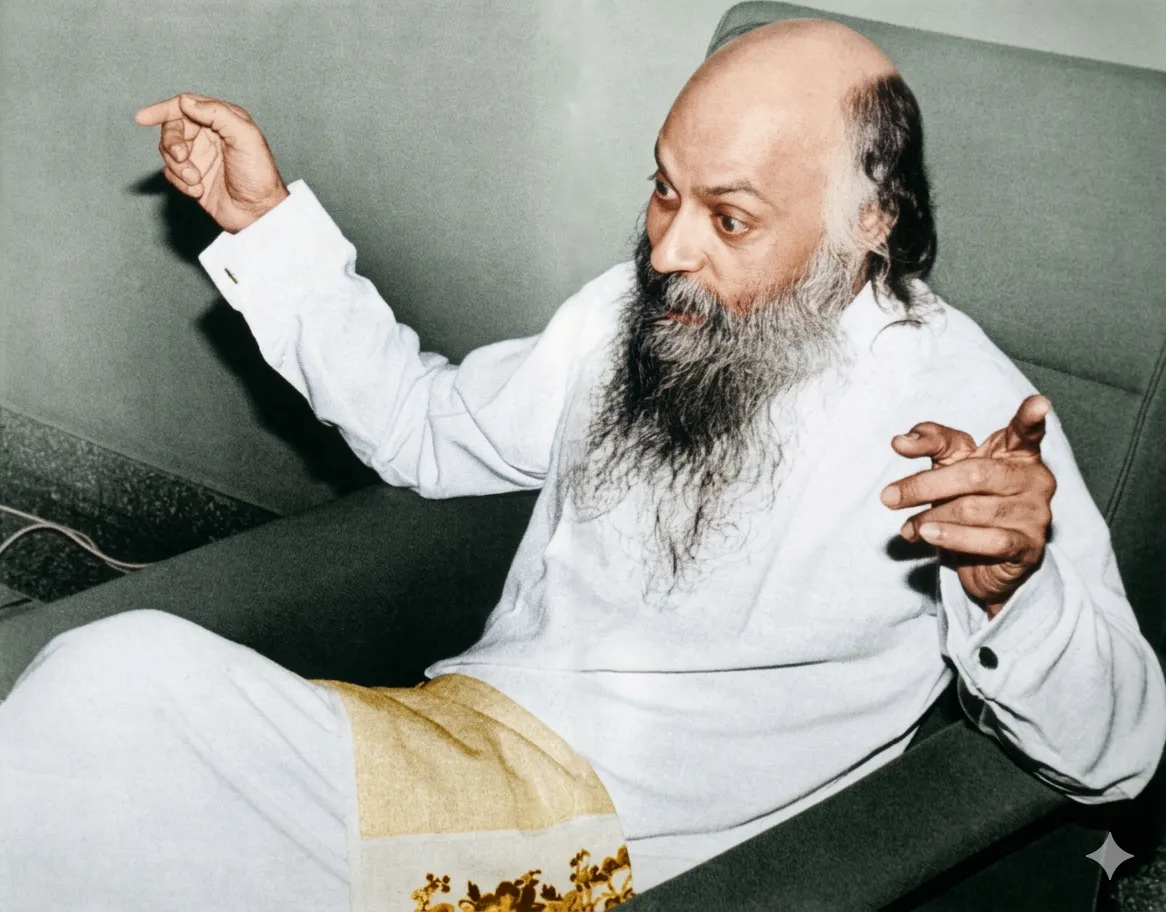
Osho's original Hindi beside Osho Live's English translation, matched passage by passage.
अध्यात्म की अत्यधिक उलझी हुई पहेलियों में एक पहेली से ये सूत्र शुरू होते हैं। वह पहेली है कि प्रभु बिना श्रम किए मिलता नहीं। और साथ ही जब मिलता है, तो जिसे मिलता है, उसे लगता है कि मेरे श्रम का फल नहीं, प्रभु की अनुकंपा है। जो उसे पा लेता है, वह जानता है कि जो मैंने किया था, उसका कोई भी मूल्य नहीं है। और जो मैंने पाया है, वह सभी मूल्यों के अतीत है। जिसे मिलता है, वह समझ पाता है कि यह प्रसाद है, ग्रेस है, अनुग्रह है। लेकिन जिसे नहीं मिला है, अगर वह यह समझ ले कि प्रभु प्रसाद से मिलता है, मुझे कुछ भी नहीं करना, तो उसे प्रसाद भी कभी नहीं मिलेगा।
Amid the most tangled riddles of spirituality, these sutras begin with a riddle: the Divine is not found without effort. And yet when the Divine is found, the one who finds realizes, “This is not the fruit of my effort; it is the grace of the Divine.” The one who attains knows that whatever he did has no value, and what he has received is beyond all value. The one who attains understands: this is prasad, grace, anugraha. But the one who has not attained—if he concludes, “It comes by grace; I need do nothing”—such a man will never receive grace.
मनुष्य श्रम करे; श्रम से परमात्मा नहीं मिलता; लेकिन मनुष्य इस योग्य हो पाता है कि प्रसाद की वर्षा उसे मिल पाती है। झील, गड्ढा, वर्षा को पैदा करने का कारण नहीं है। लेकिन वर्षा हो, तो गड्ढे में भर जाती है और झील उपलब्ध होती है। वर्षा पहाड़ पर भी होती है, लेकिन पहाड़ के शिखर रूखे के रूखे रह जाते हैं। वर्षा गड्ढे पर भी होती है, लेकिन गड्ढा भर जाता है, आपूरित हो जाता है। गड्ढे के किसी श्रम से नहीं होती है वर्षा, लेकिन गड्ढे का इतना श्रम जरूरी है कि वह गड्ढा बन जाए।
Man must exert himself; by exertion God is not attained; yet man becomes worthy to receive the shower of grace. A lake or a hollow does not produce rain. But when it rains, the hollow fills, and the lake becomes available. Rain falls on the mountain as well, but the mountaintop remains dry. The same rain falls on the hollow, and it fills to the brim. The hollow does not make the rain happen, yet the hollow must “work” at least this much—that it become a hollow.
कोई श्रम करके सत्य को नहीं पा सकता। क्योंकि सत्य इतना विराट है और हमारा श्रम इतना क्षुद्र कि हम उसे श्रम से न पा सकेंगे। और खयाल रहे कि जो हमारे श्रम से मिलेगा, वह हमसे छोटा होगा, हमसे बड़ा नहीं हो सकता। जिसे मेरे हाथ गढ़ लेते हैं, वह मेरे हाथों से बड़ा नहीं होगा। और जिसे मेरा मन समझ लेता है, वह भी मेरे मन से बड़ा नहीं हो सकता। जिसे मैं पा लेता हूं, वह मुझसे छोटा हो जाता है।
No one can attain truth by effort. Truth is so vast, our effort so small, we cannot reach it by effort. And remember: whatever can be obtained by our effort will be smaller than us, never greater. What my hands can shape can never be greater than my hands. What my mind can grasp can never be greater than my mind. Whatever I can “get” becomes smaller than me.
इसलिए श्रम से न कभी कोई सत्य को पाता है, न कभी कोई परमात्मा को पाता है, न कभी कोई मोक्ष को पाता है। और साथ ही यह भी खयाल रखें कि बिना श्रम के भी कभी किसी ने नहीं पाया है। यह पहेली है। श्रम से हम इस योग्य बनते हैं कि हमारा द्वार खुल जाए। खुले द्वार में सूरज प्रवेश कर जाता है। खुला द्वार सूरज को पकड़कर ला नहीं सकता। लेकिन खुला द्वार, सूरज आता हो, तो बाधा नहीं डालता है। मनुष्य का सारा श्रम बाधा को तोड़ने के लिए है।
Therefore, by effort no one has ever attained truth, nor God, nor liberation. And yet also remember: without effort, no one has ever attained either. This is the riddle. By effort we become capable of opening the door. Through the open door the sun enters. An open door cannot seize the sun and drag it in. But when the sun comes, the open door does not obstruct it. Man’s entire effort is to break the obstructions.
इस बात को खयाल में लें, तो यह सूत्र समझ में आएगा।
Keep this in mind, and this sutra will become clear.
इस प्रकार कृष्ण के विभूति-योग पर कहे गए वचन सुनकर अर्जुन बोला, मुझ पर अनुग्रह करने के लिए परम गोपनीय अध्यात्म-विषयक वचन आपके द्वारा जो कहा गया, उससे मेरा अज्ञान नष्ट हो गया है।
Thus, hearing Krishna’s words on the Yoga of Divine Splendor, Arjuna said: To show me grace, you have spoken to me the most secret truths of the spirit, by which my ignorance is destroyed.
इसमें पहला शब्द समझ लेने जैसा है, अनुग्रह। अनुग्रह का अर्थ होता है, जिसे पाने के लिए हमने कुछ भी नहीं किया। जिसे पाने के लिए हमने कुछ किया हो, वह सौदा है। उसमें अनुकंपा कुछ भी नहीं है। जिसे पाने के लिए हमने कुछ अर्जित की हो संपदा, वह हमारे श्रम का पुरस्कार है, उसमें कुछ प्रसाद नहीं है।
The first word to understand here is anugraha—grace. Its meaning is: that which we receive without having done anything to deserve it. What we receive because of our doing is a bargain. There is no compassion in a bargain. What we obtain by virtue of our acquired merits is a reward for effort; there is no “prasad” in it.
अर्जुन कहता है कि आपके अनुग्रह से मुझे जो कहा गया है! मेरी कोई योग्यता न थी, और मेरा कोई श्रम भी नहीं था, मेरी कोई साधना भी नहीं थी। मैं दावा कर सकूं, ऐसी मेरी कोई अर्जित संपदा नहीं है। फिर भी आपके अनुग्रह से मुझे जो कहा गया है!
Arjuna says, “What you have said to me is by your grace! I had no qualification, no effort, no practice. I possess no earned wealth that would justify a claim. Still, by your grace you have spoken to me!”
इससे यह अर्थ आप न लेना कि अनुग्रह की इस घटना में कृष्ण ने अर्जुन के साथ कुछ पक्षपात किया है। क्योंकि आपका भी कोई श्रम नहीं है, आपकी भी कोई साधना नहीं है, फिर यह कृष्ण अर्जुन को ही देने पहुंच गए! और आपके द्वार को खोजकर अब तक नहीं आए हैं! तो ऐसा लगेगा कि कुछ पक्षपात मालूम होता है।
Do not take this to mean Krishna played favorites with Arjuna. You may complain: “We too have no effort, no practice—why did Krishna go to Arjuna and not to our door?” It may look like partiality.
ध्यान रहे, जो योग्य है, उसे ही यह खयाल आता है कि मेरी कोई योग्यता नहीं। अयोग्य को तो सदा खयाल होता है कि मेरी बड़ी योग्यता है। जो पात्र होता है, वही विनम्र होता है। अपात्र तो बहुत उद्दंड होता है। अपात्र तो मानता है कि मैं योग्य हूं, अभी तक मुझे मिला नहीं। इसमें जरूर नियति, भाग्य, परमात्मा का कोई हाथ है। सब भांति मैं योग्य हूं और अगर मुझे नहीं मिला तो अन्याय हो रहा है।
Remember this: only the truly worthy feel, “I have no worth.” The unworthy always feel, “I am very worthy.” The true vessel is humble; the unfit are arrogant. The unfit insist, “I am worthy; if I have not received, destiny, fate, or God is at fault. I deserve in every way; if I don’t get it, injustice is being done.”
पात्र मानता है कि मैं अपात्र हूं। इसलिए नहीं मिला, तो दोषी मैं हूं। और अगर मिलता है, तो वह प्रभु की अनुकंपा है, अनुग्रह है। योग्यता का पहला लक्षण है, अयोग्यता का बोध। अयोग्यता का पहला लक्षण है, योग्यता का दंभ, योग्यता का अहंकार।
The worthy says, “I am unworthy. If I have not received, the fault is mine. And if I do receive, it is the Lord’s compassion, his grace.” The first mark of worthiness is the sense of unworthiness. The first mark of unworthiness is the pride of worthiness, the ego of merit.
इसलिए जिन्हें खयाल है कि वे पात्र हैं, वे ठीक से समझ लें कि उनसे ज्यादा बड़ा अपात्र खोजना मुश्किल है। और जिन्हें खयाल है कि उनकी कोई भी पात्रता नहीं है, उन्होंने पात्र बनना शुरू कर दिया है।
So those who believe they are worthy—let them know none are more unworthy. And those who feel they have no worth—know that their worthiness has begun.
अर्जुन पात्र था। इसलिए सहज भाव से कह सका कि मेरी कोई पात्रता नहीं, आपका अनुग्रह है।
Arjuna was worthy. Hence he could simply say, “I have no worth; it is your grace.”
अपात्र पर तो अनुग्रह भी नहीं हो सकता। उलटे रखे घड़े पर वर्षा भी होती रहे, तो घड़ा भर नहीं सकता। उलटा रखा हुआ घड़ा अपात्र है। क्यों उलटा घड़ा मैं कह रहा हूं? ताकि खयाल में आ सके कि पात्रता भीतर छिपी है, लेकिन उलटी है। और घड़ा सीधा हो जाए, तो पात्र बन जाए।
Grace cannot fall on the unfit. Even if rain falls upon an upturned pot, it will not fill. The pot turned upside down is unfit. Why do I say “upturned pot”? To show that worthiness lies within, but inverted. Straighten the pot, and it becomes a vessel.
पात्रता कहीं पाने भी नहीं जाना है; हम पात्रता लेकर ही पैदा होते हैं। ऐसा कोई मनुष्य ही नहीं है, ऐसी कोई चेतना ही नहीं, जो प्रभु को पाने की पात्रता लेकर पैदा न होती हो। फिर भी परमात्मा हमें मिलता नहीं। उसकी वाणी सुनाई नहीं पड़ती, उसके स्वर हमारे हृदय को नहीं छूते। उसका स्पर्श हमें नहीं होता, उसका आलिंगन नहीं मिलता। हम पात्र हैं, लेकिन उलटे रखे हुए हैं। और उलटे रखे होने की सबसे सुगम जो व्यवस्था है, वह दंभ है, वह अहंकार है। जितना ज्यादा बड़ा हो मैं का भाव, उतना ही पात्र उलटा होता है।
Worthiness is not to be acquired elsewhere; we are born with it. There is no human being, no consciousness, born without the capacity to receive the Divine. And yet we do not receive. We do not hear his voice; his song does not touch our heart; his touch is not felt; his embrace does not come. We are vessels, but turned upside down. The simplest way we keep ourselves inverted is conceit, ego. The bigger the “I,” the more inverted the vessel.
अर्जुन ने कहा कि आपका अनुग्रह है।
Arjuna said, “It is your grace.”
कठिन है, क्योंकि अर्जुन के लिए और भी कठिन है। अगर कृष्ण आपको मिल जाएं, तो कृष्ण से अभिभूत होना कठिन नहीं होगा। लेकिन अर्जुन के कृष्ण हैं मित्र, सखा, साथी। उनके कंधे पर हाथ रखकर, गले में हाथ रखकर अर्जुन चला है, उठा है, बैठा है, गपशप की है। कृष्ण में अनुग्रह को देख लेना, मित्र में, जो साथ ही खड़ा हो! और आज तो साथ भी नहीं, अर्जुन ऊंचा बैठा था और कृष्ण सारथी बने नीचे बैठे थे। आज तो केवल कृष्ण के सारथी होने की स्थिति थी। अर्जुन ऊंचा बैठा था। उस क्षण में भी अर्जुन अनुग्रह मान पाता है, इसके लिए अत्यंत निर-अहंकारी मन चाहिए। इतना विनम्र मन चाहिए, जो कि ऊपर बैठकर भी अपने को नीचे देख पाता हो। मित्र को भी जो परमात्मा की स्थिति में रख पाता हो।
Hard to say—harder still for Arjuna. If Krishna were to meet you, being overwhelmed by Krishna would not be difficult. But for Arjuna, Krishna is friend, companion. Arjuna has walked with his arm around Krishna’s neck, sat, joked, gossiped. To see grace in Krishna—the friend standing beside you! And today not even beside—Arjuna sat higher, and Krishna, his charioteer, below. In that very moment Arjuna can still call it grace—that demands an utterly egoless mind. Such humility as can see itself lower even when seated above. One who can place his friend in the place of God.
हमें परमात्मा भी मिले, तो हम मित्र की स्थिति में रखना चाहेंगे। संगी-साथी, साथ तल पर खड़ा कर लेना चाहेंगे। अर्जुन मित्र को परमात्मा की स्थिति में रख पाता है। और जो परमात्मा को इतने निकट देख पाता है, वही देख पाता है। दूर आकाश में बैठे हुए परमात्मा के लिए सिर झुकाना बहुत आसान है। पास-पड़ोसी में छिपे परमात्मा को सिर झुकाना बहुत मुश्किल है। पत्नी में, पति में, बेटे में, भाई में छिपे परमात्मा को सिर झुकाना बहुत मुश्किल है।
Even if God appeared to us, we would try to place him as a friend, as an equal, a companion. Arjuna places the friend in the place of the Divine. Only one who can see God so close can truly see him. To bow before a God seated in the distant sky is easy. To bow before the God hidden in your neighbor is difficult. To bow before the God hidden in your wife, your husband, your son, your brother—very difficult.
स्वभावतः, जो जितने निकट है, उसके साथ हमारे अहंकार का संघर्ष, प्रतिद्वंद्विता उतनी ही बड़ी हो जाती है। इसलिए यहूदी कहते हैं कि कभी भी कोई पैगंबर अपने गांव में नहीं पूजा जाता। न पूजे जाने का कारण है। क्योंकि इतना निकट है गांव के लिए पैगंबर, कि यह मानना मुश्किल है कि तुम हमसे ऊपर हो! असंभव है। इसलिए गांव में तो पैगंबर को पत्थर ही पड़ेंगे। पूजा मिलनी बहुत मुश्किल है।
Naturally, the closer someone is, the greater the clash and rivalry with our ego. Hence the Jews say: no prophet is ever worshiped in his own village. There is a reason—he is too close to the village. “How can you be above us?” Impossible! In his village the prophet will be stoned; worship is rare.
अर्जुन कृष्ण को कह सका कि तुम्हारा अनुग्रह है, मेरी कोई पात्रता नहीं है। यह उसकी पात्रता का सबूत है। यह धार्मिक जगत में प्रवेश करने वाले व्यक्ति की पहली योग्यता है, पहला लक्षण है।
Arjuna could say to Krishna, “It is your grace, I have no merit.” That is proof of his worthiness. It is the first qualification of one entering the religious realm.
मुझ पर अनुग्रह करने के लिए परम गोपनीय अध्यात्म-विषयक वचन अर्थात उपदेश आपके द्वारा जो कहा गया, उससे मेरा अज्ञान नष्ट हो गया है।
“To show me grace, you spoke the most secret spiritual truths—by which my ignorance is destroyed.”
दूसरी बात, परम गोपनीय अध्यात्म।
Second point: “most secret spiritual truths.”
अध्यात्म प्रेम से भी ज्यादा गोपनीय है। इसे थोड़ा हम समझ लें। आप जिसे प्रेम करते हैं, चाहते हैं, उसके साथ एकांत मिले। दूसरे की मौजूदगी खटकती है। दो प्रेमी किसी को भी मौजूद नहीं देखना चाहते, अकेले हो जाना चाहते हैं। क्यों? इतना अकेले की क्या तलाश है? अकेले में इतना क्या रस है? दूसरे की मौजूदगी क्या बाधा देती है?
Spirituality is more secret than love. Understand this. In love, the beloved longs for solitude. The presence of a third person disturbs. Two lovers want no one else there; they want to be alone. Why this thirst for the private? What is the relish in aloneness? What obstacle is the presence of another?
पहली बात, जिसके साथ हम गहरे प्रेम में हैं, उसमें हम लीन होना चाहते हैं और उसे अपने में लीन कर लेना चाहते हैं। जिसके साथ गहरे प्रेम में हैं, उसके साथ हम द्वैत को तोड़ देना चाहते हैं, अद्वैत हो जाना चाहते हैं। दो न रहें, एक ही रह जाए। लेकिन वह जो तीसरा मौजूद है, उसके साथ तो हमारा कोई प्रेम नहीं है। उसकी मौजूदगी अद्वैत को घटित न होने देगी।
First, in deep love we long to dissolve into the beloved and to absorb the beloved into ourselves. In deep love we want to break duality and become one. But the third, with whom we have no love, prevents that nonduality.
इसलिए प्रेमी एकांत चाहते हैं, प्राइवेसी चाहते हैं, अकेलापन चाहते हैं। वह तीसरे की जो मौजूदगी है, बाधा बन जाएगी और द्वैत बना रहेगा। वह मौजूद न हो, तो दो व्यक्ति लीन हो सकते हैं एक में। इसलिए प्रेम गोपनीय है, गुप्त है, सार्वजनिक नहीं है।
Hence lovers seek privacy, solitude. The third person’s presence becomes a barrier; duality remains. Without that presence, two can merge into one. Therefore love is secret, private, not public.
अध्यात्म और भी गोपनीय है। क्योंकि प्रेम में तो शायद दो शरीर ही मिलते हैं, अध्यात्म में गुरु और शिष्य की आत्मा भी मिल जाती है। और जब तक यह मिलन घटित न हो कि गुरु और शिष्य, प्रेमी और प्रेमिका की तरह आत्मा के तल पर एक न हो जाएं, तब तक अध्यात्म का संचरण, अध्यात्म का उपदेश, अध्यात्म का दान, असंभव है। इसलिए अध्यात्म गोपनीय है।
Spirituality is even more secret. In love at most bodies meet; in spirituality the souls of master and disciple meet. Until that meeting occurs—until master and disciple become one at the level of soul like lovers—spiritual transmission, spiritual teaching, spiritual gifting is not possible. Therefore spirituality is secret.
शरीर भी मिलते हैं तो गुप्तता चाहिए, तो जब आत्माएं मिलती हैं तो और भी गुप्तता चाहिए। इसलिए अध्यात्म छिपा-छिपाकर दिया गया है, चुपचाप दिया गया है, मौन में दिया गया है। कारण, इतना मौन, इतनी चुप्पी, इतना एकांत न हो, तो वह जो भीतर, दो का मिलन, संवाद है, वह असंभव है।
When even bodies need privacy, how much more when souls meet! Hence spirituality has been given in hiding, silently, in silence. Without such silence, hush, aloneness, that inner meeting, that dialogue of two becoming one, is impossible.
अर्जुन कहता है कि इतनी गोपनीय बात को आपने मुझ पर प्रकट किया, यह सिवाय अनुग्रह के और क्या हो सकता है!
Arjuna says, “That you revealed such secrecy to me—what could that be but grace!”
इस प्रकटीकरण में, इस अभिव्यक्ति में, इस गोपनीय मिलन में और भी एक बात विचारणीय है कि यह घटना घटती है युद्ध के मैदान पर। चारों तरफ बड़ा समूह है। और साधारण समूह नहीं, युद्ध को रत, युद्ध के लिए तत्पर। इस युद्ध के लिए तत्पर समूह में भी यह गोपनीयता घट जाती है। यह मिलन, यह कृष्ण का संवाद अर्जुन को सुनाई पड़ जाता है, यह कृष्ण अनुग्रह कर पाते हैं।
And there is yet another wonder in this revelation: it happens on a battlefield. A vast crowd is all around—not a trivial crowd but one eager for war. In that assembly ready for battle, this secrecy happens; this meeting; Krishna’s discourse is heard by Arjuna; Krishna can shower grace.
तो एक और बात खयाल ले लेनी चाहिए। और वह यह कि दो शरीरों को मिलना हो, तो भौतिक अर्थों में एकांत चाहिए। दो आत्माओं को मिलना हो, तो भीड़ में भी मिल सकती हैं। भौतिक अर्थों में एकांत का फिर कोई अर्थ नहीं है। इस भीड़ में भी दो आत्माओं का मिलन हो सकता है। क्योंकि भीड़ तो शरीर के तल पर है।
So another point: when bodies are to meet, physical solitude is needed. But when souls are to meet, they can meet even in a crowd. Physical solitude is no longer relevant. Amid the crowd, the souls of two can unite—for the crowd pertains to bodies.
यह बहुत विचार की बात रही है। जिन लोगों ने भी गीता पर गहन अध्ययन किया है, उन्हें यह मन में विचार उठता ही रहा है, यह प्रश्न जगता ही रहा है, कि युद्ध के मैदान पर, भीड़ में, युद्ध के लिए तत्पर लोगों के बीच, कृष्ण को भी कहां की जगह मिली गीता का संदेश कहने के लिए! पर यह बहुत सुविचारित मालूम पड़ता है।
Many who have studied the Gita deeply have always been puzzled: on a battlefield, among a crowd armed for war—where did Krishna find the space to deliver the Gita’s message? But it seems very well thought out.
अध्यात्म, शरीर की भीड़ के बीच भी एकांत पा सकता है। अध्यात्म, बाजार के बीच भी अकेला हो सकता है। और आध्यात्मिक मिलन युद्ध के क्षण में भी घट सकता है। क्योंकि युद्ध, बाजार, शरीरों की भीड़, सब बाहर हैं। अगर भीतर तत्परता हो, पात्रता हो, और अगर भीतर ग्रहण करने की क्षमता हो, लीन होने की, विनम्र होने की, डूबने की, चरणों में गिर जाने की भावना हो, तो अध्यात्म कहीं भी घटित हो सकता है--युद्ध में भी।
Spirituality can find solitude even in the crowd of bodies. In the marketplace it can be alone. Spiritual union can occur even in the moment of war. For war, the marketplace, the crowd of bodies—these are outside. If within there is readiness, worthiness, the capacity to receive, to dissolve, to be humble, to fall at the feet—then spirituality can happen anywhere—even in war.
इस बात को जिस अनूठे ढंग से गीता ने जगत को दिया है, कोई दूसरा शास्त्र नहीं दे सका। और इसलिए गीता अगर इतनी रुचिकर हो गई, और मन पर इतनी छा गई, तो उसका कारण है।
No other scripture has given this to the world as uniquely as the Gita. That is why the Gita so captivates.
उपनिषद हैं, वनों के एकांत में, मौन, शांति में, गुरु और शिष्य के बीच, बड़े ध्यान के क्षण में संवादित हैं। बाइबिल है, बहुत एकांत में चुने हुए शिष्यों से कही गई बातें हैं। लेकिन गीता घने संसार के बीच दिया गया संदेश है। और युद्ध से ज्यादा घना संसार क्या होगा? वहां भी अध्यात्म घटित हो सकता है, अगर पात्र सीधा हो। और वह जो गोपनीय है, अधिकतम गोपनीय है, जो सबके सामने नहीं कहा जा सकता, वह भी कहा जा सकता है, अगर पात्र शांत, मौन, स्वीकार करने को तैयार हो।
The Upanishads are dialogues in forest seclusion, in silence, peace, between master and disciple, in moments of great meditation. The Bible too speaks in solitude to chosen disciples. But the Gita delivers its message in the dense midst of the world. And what is denser than war? Even there spirituality can happen, if the vessel is upright. And that which is supremely secret, not to be spoken before all, can be said there too—if the vessel is quiet, silent, ready to receive.
फिर भौतिक अकेलेपन का अर्थ होता है, कोई और मौजूद नहीं। आध्यात्मिक अकेलेपन का अर्थ होता है, आप मौजूद नहीं।
Then physical aloneness means: no one else is present. Spiritual aloneness means: you are not present.
इसे ठीक से समझ लें।
Understand this well.
भौतिक भीड़ का अर्थ होता है, बहुत लोग मौजूद हैं। आध्यात्मिक एकांत का अर्थ होता है, शिष्य मौजूद नहीं।
Physical crowd means: many are present. Spiritual solitude means: the disciple is not.
गुरु तो गैर-मौजूदगी का नाम ही है, इसलिए उसकी हम बात ही न करें। गुरु का तो अर्थ ही है कि जो गैर-मौजूद हो गया। जो अब एब्सेंट है, जो उपस्थित नहीं है; जो दिखाई पड़ता है और भीतर शून्य है।
The master is a name for non-presence; of him let us not speak. The very meaning of guru is: one who has become absent, who is no longer present—who is visible yet empty within.
जब शिष्य भी गैर-मौजूद हो जाए, इतना डूब जाए कि भूल जाए अपने को कि मैं हूं, तो आध्यात्मिक एकांत घटित होता है। और उस एकांत में ही वे गोपनीय सूत्र दिए जा सकते हैं; किसी और तरह से दिए जाने का जिनका कोई भी उपाय नहीं है।
When the disciple too becomes absent—so dissolved that he forgets himself—then spiritual solitude happens. Only in that solitude can the secret sutras be given; there is no other way to give them.
तो अर्जुन ने कहा कि जो अत्यंत गोपनीय है, वह भी अनुग्रह करके तुमने मुझे कहा, उससे मेरा अज्ञान नष्ट हो गया है।
So Arjuna says: That which is supremely secret, you spoke to me in grace; by that my ignorance is destroyed.
इसे खयाल कर लें। अज्ञान का नष्ट हो जाना, यहां ज्ञान का पैदा हो जाना नहीं है। ज्ञान तो है अनुभव। अज्ञान तो नष्ट हो सकता है गुरु के वचन से भी। लेकिन नकारात्मक है। अर्जुन कह रहा है, मेरा अज्ञान नष्ट हो गया।
Consider this: the destruction of ignorance here is not the birth of knowledge. Knowledge is experience. Ignorance can be destroyed by the master’s words—but that is negative. Arjuna says, “My ignorance is destroyed.”
वह यह कह रहा है कि अब तक मेरी जो मान्यताएं थीं, वे टूट गईं। अब तक जैसा मैं सोचता था, अब नहीं सोच पाऊंगा। आपने जो कहा, उसने मेरे विचार बदल दिए। आपने जो मुझे दिया, उससे मेरा मन रूपांतरित हो गया; मैं बदल गया हूं। मेरा अज्ञान टूट गया। लेकिन अभी ज्ञान नहीं हो गया है। अभी बीमारी तो हट गई है, लेकिन अभी स्वास्थ्य का जन्म नहीं हुआ है। अभी नकारात्मक रूप से बाधाएं मेरी टूट गईं, लेकिन अभी पाजिटिवली, विधायक रूप से मेरा आविर्भाव नहीं हुआ है।
He is saying: “What I believed till now is broken. The way I used to think—I can no longer think. What you spoke has changed my mind. You have transformed me; my ignorance shattered. But knowledge has not yet happened. The disease is removed, but health is not yet born. The obstacles have broken negatively; but positively I have not yet arisen.”
यह काफी कीमती है, सोचने जैसा है। क्योंकि बहुत-से लोग इस तरह के अज्ञान मिटने को ही ज्ञान समझ लेते हैं। शास्त्र हैं, सदवचन हैं, सदगुरु हैं, उनके वचनों को लोग इकट्ठा कर लेते हैं; और सोचते हैं, ज्ञान हो गया; और सोचते हैं, जान लिया। क्योंकि गीता कंठस्थ है, वेद के वचन याद हैं, उपनिषद होंठ पर रखे हैं, तो ज्ञान हो गया।
This is precious. Many mistake the removal of ignorance for knowledge. People collect scriptures, wise sayings, the words of true masters, and think they have known—because the Gita is memorized, the Vedas remembered, the Upanishads on the lips—so knowledge is attained.
ध्यान रहे, अर्जुन कहता है, अज्ञान नष्ट हो गया। अब तक जो मेरी मान्यता थी अज्ञान से भरी हुई, वह टूट गई। लेकिन अभी ज्ञान नहीं हुआ है, क्योंकि ज्ञान तो तभी होता है, जब मैं अनुभव कर लूं।
Remember, Arjuna says: ignorance is destroyed. My belief soaked in ignorance has broken. But knowledge is not yet, for knowledge is only when I experience.
यह कृष्ण ने जो कहा है, इस पर भरोसा आ गया। और कृष्ण जैसे लोग भरोसे के योग्य होते हैं। उनकी मौजूदगी भरोसा पैदा करवा देती है। उनका खुद का आनंद, उनका खुद का मौन, उनकी शांति, उनकी शून्यता, छा जाती है, आच्छादित कर लेती है। उनकी आंखें, उनका होना, पकड़ लेता है चुंबक की तरह, खींच लेता है प्राणों को, भरोसा आ जाता है।
What Krishna said—trust has arisen in that. And such men as Krishna are worthy of trust. Their very being creates trust. Their own joy, their silence, their peace, their emptiness envelop you. Their eyes, their presence, like a magnet, draw your life-breath—faith arises.
लेकिन यह भरोसा ज्ञान नहीं है। यह भरोसा उपयोगी है हमारी भ्रांत धारणाओं को तोड़ देने के लिए। लेकिन भ्रांत धारणाओं का टूट जाना ही सत्य का आ जाना नहीं है।
But faith is not knowledge. Faith is useful to shatter false notions. Yet the shattering of false notions is not the arrival of truth.
पंडित ज्ञानी नहीं है। पंडित अज्ञानी नहीं है, पंडित ज्ञानी भी नहीं है। पंडित अज्ञानी और ज्ञानी के बीच है। अज्ञानी वह है, जिसे कुछ भी पता नहीं। पंडित वह है, जिसे सब कुछ पता है। और ज्ञानी वह है, जिसके पता में और जिसके अनुभव में कोई भेद नहीं है। जो जानता है, जो उसकी जानकारी है, वह उसका अपना निजी अनुभव भी है। वह उधार नहीं जानता। किसी ने कहा है, ऐसा नहीं जानता। खुद ही जानता है, अपने से जानता है।
The scholar is not the knower. The scholar is not ignorant, but he is not a knower either. He stands between. The ignorant knows nothing. The scholar knows everything. And the knower is one in whom knowing and experience are undivided—what he knows is his own. He does not know by borrowing. Not “someone said”; he knows himself.
अभी अर्जुन को जो जानकारी हुई, वह कृष्ण के कहने से हुई है। अभी कृष्ण ऐसा कहते हैं, और कृष्ण पर अर्जुन को भरोसा आया है, इसलिए अर्जुन कहता है कि मेरा अज्ञान टूट गया। लेकिन अभी मैं नहीं जानता हूं, अभी तुम कहते हो।
Arjuna’s present “knowing” has come because Krishna has spoken. Krishna says so, and Arjuna trusts Krishna; so Arjuna says, “My ignorance is destroyed.” But he has not yet known—Krishna has said, not he.
इसलिए अगर कृष्ण थोड़ा हट जाएं अलग, अर्जुन के संदेह वापस लौट आएंगे। इसलिए कृष्ण अगर खो जाएं, तो अर्जुन फिर वापस वहीं पहुंच जाएगा, जहां वह गीता के प्रारंभ में था। उसमें देर नहीं लगेगी। और अगर ईमानदार होगा तो जल्दी पहुंच जाएगा, अगर बेईमान होगा तो थोड़ी देर लगेगी। क्योंकि तब वह शब्दों को ही दोहराता रहेगा, घोंटता रहेगा। और अपने को समझाता रहेगा कि मुझे मालूम है, मुझे मालूम है।
Therefore, if Krishna were to step aside, Arjuna’s doubts would return. If Krishna were to disappear, Arjuna would soon land where he was at the start of the Gita. If he is honest, it will happen sooner; if dishonest, it may take longer—he will keep repeating words, convincing himself: “I know, I know.”
लेकिन अर्जुन ईमानदार है।
But Arjuna is honest.
और इस जगत में सबसे बड़ी ईमानदारी अपने प्रति ईमानदारी है। आप दूसरे को धोखा देते हैं, उससे कुछ बहुत बनता-बिगड़ता नहीं। अच्छा नहीं है, लेकिन कुछ बहुत बनता-बिगड़ता नहीं। थोड़ा पैसे का नुकसान पहुंचा देंगे, कुछ और करेंगे। लेकिन जो धोखा आप अपने को दे सकते हैं, उससे आपका पूरा जीवन मिट्टी हो जाता है। और हम धोखा देते हैं। सबसे बड़ा धोखा जो हम अपने को दे सकते हैं, वह यह है कि बिना स्वयं जाने हम मान लें कि हमने जान लिया है।
And the greatest honesty in this world is honesty toward oneself. Deceiving others does not change much—wrong, but not devastating. But the deceit you practice upon yourself—your whole life turns to dust. And we do deceive ourselves. The greatest self-deceit is to believe we have known without knowing.
अगर कोई आपसे पूछे, ईश्वर है? तो आप चुप न रह पाएंगे। या तो कहेंगे, है; या कहेंगे, नहीं है। यह न कह पाएंगे कि मुझे पता नहीं है। अगर आप यह कह पाएं कि मुझे पता नहीं, तो आप ईमानदार आदमी हैं। अगर आप कहें कि हां है, और लड़ने-झगड़ने को तैयार हो जाएं, और बिना कुछ अनुभव के, तो आप बेईमान हैं। अगर आप कहें, नहीं है; और तर्क करने को तैयार हो जाएं, बिना किसी अनुभव के, तो भी आप बेईमान हैं।
If someone asks you, “Does God exist?” you will not remain silent. You will say yes or no. You will not say, “I don’t know.” If you can say, “I don’t know,” you are honest. If you say, “Yes,” ready to fight over it without any experience—you are dishonest. If you say, “No,” and argue without experience—you are dishonest.
जिनको हम आस्तिक और नास्तिक कहते हैं, वे बेईमानी की दो शक्लें हैं। ईमानदार आदमी कहेगा, मुझे पता नहीं। मैं कैसे कहूं कि है, मैं कैसे कहूं कि नहीं है! कोई कहता है कि है, कोई कहता है कि नहीं है। कभी एक पर भरोसा आ जाता है, अगर आदमी बलशाली हो।
बुद्ध जैसा आदमी आपके पास खड़ा हो, तो भरोसा दिला देगा कि ईश्वर वगैरह कुछ भी नहीं है। यह बुद्ध की वजह से। महावीर जैसा आदमी आपके पास खड़ा हो, तो भरोसा दिलवा देगा कि ईश्वर वगैरह सब बकवास है। और कृष्ण जैसा आदमी पास खड़ा हो, तो आस्था आ जाएगी कि ईश्वर है। और जीसस जैसा आदमी पास खड़ा हो, तो आस्था आ जाएगी कि ईश्वर है। लेकिन आपका अपना अनुभव कोई भी नहीं है।
Those we call theist and atheist are two forms of dishonesty. The honest person says, “I do not know. How can I say yes or no?” One says yes, another says no. If the person is strong, trust arises. If someone like Buddha stands beside you, he will convince you there is no God. Because of Buddha. If Mahavira stands by you, he will convince you the talk of God is nonsense. If Krishna stands by you, faith will come that God is. If Jesus stands by you, faith will come that God is. But none of this is your experience.
लेकिन कृष्ण के कारण जो झलक आती है, वह भी उधार है। बुद्ध के कारण जो झलक आती है, वह भी उधार है। उधार झलकों से अज्ञान मिट जाता है, लेकिन ज्ञान अपनी ही झलक से पैदा होता है।
Even the glimpse that comes because of Krishna is borrowed. The glimpse that comes because of Buddha is borrowed. Borrowed glimpses dissolve ignorance, but knowledge arises only from your own glimpse.
इसलिए अर्जुन कहता है कि आपने जो मुझे कहा, उससे मेरा अज्ञान नष्ट हो गया है। क्योंकि हे कमलनेत्र, मैंने भूतों की उत्पत्ति और प्रलय आपसे विस्तारपूर्वक सुने हैं, आपका अविनाशी प्रभाव भी सुना। हे परमेश्वर, आप अपने को जैसा कहते हो, यह ठीक ऐसा ही है। ऐसा भी मैंने अनुभव लिया, ऐसा भी मुझे समझ में आया, कि आप जैसा कहते हो, ऐसा ही है, ऐसी मेरी श्रद्धा बनी।
Therefore Arjuna says: “What you told me has destroyed my ignorance. For, O Lotus-Eyed, I have heard from you in detail of the origin and dissolution of beings, and your imperishable power. O Supreme Lord, you are as you say you are—this I have also sensed; this I have understood; such is my faith.”
परंतु हे पुरुषोत्तम.।
“But, O Purushottama…”
और यह परंतु विचारणीय है। नहीं तो बात खतम हो गई। अर्जुन कहता है, जैसा आप कहते हो, ऐसा ही है। ऐसी भी मेरी श्रद्धा हो गई। अब बात खतम हो जानी चाहिए। जब श्रद्धा ही आ गई, तो अब लेकिन-परंतु का क्या अर्थ है! अब चुप हो जाओ। गीता समाप्त हो जानी चाहिए थी। यहां बात पूरी हो गई।
And this “but” is worth pondering. Otherwise the matter would end. Arjuna says, “You are as you say; my faith is born.” The matter should end. When faith has arisen, what place is there for but and however? Now be silent. The Gita should end here.
हम अगर होते, तो गीता यहां समाप्त हो गई होती। हम इसी जगह रुक गए हैं आकर। श्रद्धा आ गई है, मंदिर में पूजा कर लेते हैं, शास्त्र को सिर झुका लेते हैं, गुरु के चरण में फूल चढ़ा आते हैं। बात समाप्त हो गई। हमें शब्द याद हैं, सिद्धांतों का पता है, शास्त्र हमारे मन पर हैं। अब और क्या बाकी बचा है?
Had it been us, the Gita would end here. We stop at this point. Faith arrives; we worship at the temple, bow to the scripture, offer flowers at the master’s feet. The matter ends. We know the words, the doctrines; the scriptures have settled on our mind. What remains?
अभी कुछ भी नहीं हुआ। अभी नौका किनारे से भी नहीं छूटी।
Nothing has begun. The boat has not even left the shore.
इसलिए अर्जुन कहता है, परंतु हे पुरुषोत्तम, आपके ज्ञान, ऐश्वर्य, शक्ति, बल, वीर्य और तेजयुक्त रूप को प्रत्यक्ष देखना चाहता हूं। यह तो आपकी आंखों से जो आपने देखा है, वह मुझे कहा। यह मेरे कानों ने सुना है, लेकिन आपकी आंखों का देखा हुआ है। अब मैं अपनी ही आंख से देखना चाहता हूं, प्रत्यक्ष। और जब तक मैं न देख लूं, तब तक आप भरोसे योग्य हैं, भरोसा करता हूं। लेकिन जब तक मैं न देख लूं, तब तक ज्ञान का जन्म नहीं होता है।
Hence Arjuna says: “But, O Purushottama, I want to see directly your form endowed with knowledge, opulence, power, strength, valor and radiance. Until now what my ears have heard is what your eyes have seen. Now I want to see with my own eyes—directly. Until I see, you are trustworthy; I trust. But until I see, knowledge is not born.”
शब्द पर मत रुक जाना, शब्द पर रुकने वाला भटक जाता है। और सारी दुनिया शब्द पर रुकी है। कोई कुरान के शब्द पर रुका है, वह अपने को मुसलमान कहता है। कोई गीता के शब्द पर रुका है, वह अपने को हिंदू कहता है। कोई बाइबिल के शब्द पर रुका है, वह अपने को ईसाई कहता है। लेकिन ये शब्दों पर रुके हुए लोग हैं।
Do not stop at words; whoever stops at words goes astray. The whole world has stopped at words. Some on the words of the Quran—calling themselves Muslims. Some on the words of the Gita—calling themselves Hindus. Some on the words of the Bible—calling themselves Christians. These are people stopped by words.
दुनिया में सब संप्रदाय, शब्दों के संप्रदाय हैं। धर्म का तो कोई संप्रदाय हो नहीं सकता। क्योंकि धर्म शब्द नहीं, अनुभव है। और अनुभव हिंदू, मुसलमान, ईसाई नहीं होता। अनुभव तो ऐसा ही निखालिस एक होता है, जैसे एक आकाश है।
All sects in the world are sects of words. Religion can have no sect. Because religion is not words; it is experience. And experience is neither Hindu nor Muslim nor Christian. Experience is pure and one—like the single sky.
कृष्ण से बड़ी तरकीब से अर्जुन ने यह बात पूछी है। कहा कि आस्था पूरी है, आप जो कहते हैं; भरोसा आता है। आप कहते हैं, ठीक ही कहते होंगे। अब यह कहने की कोई भी गुंजाइश नहीं कि आप गलत कहते हैं। आपने मुझे ठीक-ठीक समझा दिया। जैसा आपने कहा है, वैसा ही है। लेकिन अब मैं अपनी आंख से देखना चाहता हूं।
Arjuna asks Krishna very skillfully. “My trust is complete in what you say; I believe you speak truly. There is no scope left to say you are wrong. You have explained well. Things are as you say. But now I want to see with my own eyes.”
और जो शिष्य अपने गुरु से यह न पूछे कि मैं अपनी आंख से देखना चाहता हूं, वह शिष्य ही नहीं है। जो गुरु के शब्द मानकर बैठ जाए और उन्हें घोंटता रहे और मर जाए, वह शिष्य नहीं है। और जो गुरु अपने शिष्य को शब्द घुटाने में लगा दे, वह गुरु भी नहीं है।
And the disciple who does not ask his master, “I want to see with my own eyes,” is no disciple. The one who sits swallowing the master’s words and dies with them is no disciple. And the master who keeps his disciple busy swallowing words is no master.
कृष्ण प्रतीक्षा ही कर रहे होंगे कि कब अर्जुन यह पूछे। अब तक की जो बातचीत थी, वह बौद्धिक थी। अब तक अर्जुन ने जो सवाल उठाए थे, वे बुद्धिगत थे, विचारपूर्ण थे। उनका निरसन कृष्ण करते चले गए। जो भी अर्जुन ने कहा, वह गलत है, यह बुद्धि और तर्क से कृष्ण समझाते चले गए। निश्चित ही, वे प्रतीक्षा कर रहे होंगे कि अर्जुन पूछे; वह क्षण आए, जब अर्जुन कहे कि अब मैं आंख से देखना चाहता हूं।
Krishna must have been waiting for this question. Until now the dialogue was intellectual. Arjuna’s questions were of the mind, of thought; Krishna refuted them by reason and logic. He must have been waiting for the moment when Arjuna would say, “Now I want to see.”
आमतौर से गुरु डरेंगे, जब आप कहेंगे कि अब मैं आंख से देखना चाहता हूं। तब गुरु कहेंगे कि श्रद्धा रखो, भरोसा रखो; संदेह मत करो। लेकिन ठीक गुरु इसीलिए सारी बात कर रहा है कि किसी दिन आप हिम्मत जुटाएं और कहें कि अब मैं देखना चाहता हूं। अब शब्दों से नहीं चलेगा। अब विचार काफी नहीं हैं। अब तो प्राण ही उसमें एक न हो जाएं, मेरा ही साक्षात्कार न हो, तब तक अब कोई चैन, अब कोई शांति नहीं है।
Ordinarily, masters become afraid when you say, “I want to see.” Then they say, “Have faith; don’t doubt.” But the true master speaks only so that one day you gather the courage to say, “Now I want to see. Words will not do. Concepts are not enough. Until my very life becomes one with it, until I have direct encounter, I will have no rest.”
तो अर्जुन ने कहा, हे कमलनेत्र, हे परमेश्वर, अब मैं आपके विराट को प्रत्यक्ष देखना चाहता हूं।
So Arjuna said, “O Lotus-Eyed, O Lord, now I want to behold your vastness directly.”
यह प्रश्न अति दुस्साहस का है। शायद इससे बड़ा कोई दुस्साहस जीवन में नहीं है। क्योंकि विराट को अगर आंख से देखना हो, तो बड़े उपद्रव हैं। क्योंकि हमारी आंख तो सीमा को ही देखने में सक्षम है। हम तो जो भी देखते हैं, वह रूप है, आकार है। हमारी आंख ने निराकार तो कभी देखा नहीं। हमारी आंख की क्षमता भी नहीं है निराकार को देखने की। हमारी आंख बनी ही आकृति को देखने के लिए है। तो विराट को देखने के लिए यह आंख काम नहीं करेगी।
This question is of utmost audacity—perhaps there is no greater boldness in life. For to see the vast with the eyes invites great upheaval. Our eyes are made to see limits. Whatever we see has form, shape. Our eyes have never seen the formless; they are not capable of seeing the formless. They are built to see form. These eyes will not work to see the Vast.
सच तो यह है कि इस आंख की तरफ से बिलकुल अंधा हो जाना पड़ेगा। यह आंख छोड़ देनी पड़ेगी। यह आंख तो बंद ही कर लेनी पड़ेगी। और इस आंख, इन दो आंखों से जो शक्ति बाहर प्रवाहित हो रही है, उस शक्ति को किसी और आयाम में प्रवाहित करना होगा, जहां कि नई आंख उपलब्ध हो सके।
In truth, regarding these eyes, one must become blind—set them aside. Close them. The energy flowing outward through them must be redirected into another dimension where a new eye becomes available.
जिससे मैं देख रहा हूं, इन आंखों के द्वारा.। ध्यान रहे, हम आंख से नहीं देखते; आंख के द्वारा देखते हैं। आंख से कोई नहीं देखता। आंख के द्वारा देखते हैं। आंख के पीछे खड़े हैं हम। आंख हमारी खिड़की है, उससे हम देखते हैं। इस खिड़की से तो विराट को देखा नहीं जा सकता, क्योंकि यह खिड़की ही विराट पर ढांचा बिठा देती है। यह खिड़की के कारण ही विराट पर आकार बन जाता है।
आप अपनी खिड़की से आकाश को देखते हैं। आकाश भी लगता है कि खिड़की के ही आकार का है। उतना ही दिखाई पड़ता है, जितना खिड़की का आकार है।
We do not see “with” the eye; we see through the eye. We stand behind the eye; the eye is our window. Through this window the Vast cannot be seen, for the window imposes a frame. You look at the sky through your window—the sky seems the size of the window.
तो इन आंखों से तो विराट देखा नहीं जा सकता। इसलिए बड़ी हिम्मत की जरूरत है, अंधा हो जाने की। इन आंखों से तो सारी शक्ति को खींच लेना पड़े। और उस दिशा में शक्ति को प्रवाहित करना पड़े, जहां कोई खिड़की नहीं है, खुला आकाश है, तब विराट देखा जा सके। उस घटना को ही हम तीसरा नेत्र, थर्ड आई, शिव नेत्र या कोई और नाम देते हैं। वह तीसरी आंख खुल जाए, वह दिव्य-च्रु, तो! उसके बिना परमात्मा के प्रत्यक्ष रूप को नहीं देखा जा सकता।
Through these eyes the Vast cannot be seen. Hence great courage is needed—to become blind to these eyes, to draw back their light and let it flow towards a dimension where there is no window, only open sky. Then the Vast can be seen. That event is what we call the third eye, the Shiva-eye, the divine eye. Without it the direct form of God cannot be seen.
तब जो भी हम देखते हैं, वह परोक्ष है। जो भी हम देखते हैं, वह अनेक-अनेक परदों के पीछे से देखते हैं। उसे सीधा नहीं देखा जा सकता। हमारे पास जो उपकरण हैं, वे ही उसे परोक्ष कर देते हैं। इन उपकरणों को छोड़कर, इंद्रियों को छोड़कर, आंखों को छोड़कर, किसी और दिशा से भी देखना हो सकता है।
Otherwise, whatever we see is indirect—seen through many veils. Our instruments themselves make it indirect. Leaving these instruments, these senses, these eyes—another way of seeing becomes possible.
तो पहला तो दुस्साहस, अंधा होने का। क्योंकि इन आंखों से ज्योति न हटे, तो तीसरी आंख पर ज्योति नहीं पहुंचती।
First audacity, then: to go blind to these eyes. If their light does not recede, light will not reach the third eye.
दूसरा दुस्साहस, विराट को देखना बड़ा खतरनाक है। जैसे कि कोई गहन गड्ढ में झांके, तो घबड़ा जाए; हाथ-पैर कंपने लगे; सिर घूम जाए। कभी किसी पहाड़ की चोटी पर किनारे, बहुत किनारे जाकर गड्ढ में झांककर देखा है? तो जो भय समा जाए, मृत्यु दिखाई पड़ने लगे उस गड्ढ में।
Second audacity: seeing the Vast is dangerous. Like peering into a deep abyss—your limbs tremble; your head spins. Have you ever gone to the edge of a high peak and looked down? The fear that seizes you—death looms in that abyss.
लेकिन वह गड्ढ तो कुछ भी नहीं है। परमात्मा तो अनंत गड्ढा है, विराट शून्य है, जहां सब आकार खो जाते हैं, जहां फिर कोई तल और सीमा नहीं है। जहां फिर दृष्टि चलेगी तो रुकेगी नहीं कहीं, कोई जगह न आएगी, जहां रुक जाए। वहां घबड़ाहट पकड़ेगी। परम संताप पकड़ लेगा। और लगेगा, मैं मिटा, मैं मरा, मैं गया। विराट के साथ दोस्ती बनाने का मतलब ही खुद को मिटाना है।
But that abyss is nothing. God is an infinite abyss—the vast void where all forms vanish, where there is no ground or boundary. Vision travels and never finds a place to rest. Panic seizes. A supreme terror grips you: “I am dissolving, dying, gone.” To befriend the Vast is to erase yourself.
तो पहला काम तो अंधा होना पड़े, तब वह आंख खुले। और दूसरा काम, मरने की तैयारी दिखानी पड़े, तब उस जीवन से संस्पर्श हो।
So first, become blind to these eyes so that the other opens. Second, prepare to die so that that life may touch you.
इसलिए कीर्कगार्ड ने, एक ईसाई रहस्यवादी संत ने कहा है कि परमात्मा को खोजना सबसे बड़े खतरे की खोज है--दि मोस्ट डेंजरस थिंग। है भी। सबसे बड़ा जुआ है। अपने जीवन को ही दांव पर लगाने का उपद्रव है। यह ऐसे ही है, जैसे बूंद सागर को खोजने जाए, तो मिटने को जा रही है। जहां सागर को पाएगी, वहां मिटेगी; फिर लौटना भी मुश्किल हो जाएगा। सीमा असीमा को खोजती हो; क्षुद्र विराट को खोजता हो; आकार निराकार को खोजता हो; तो मृत्यु की खोज है यह।
Hence Kierkegaard, a Christian mystic, has said: to seek God is to seek the greatest danger—the most dangerous thing. It is the greatest gamble—staking your life. Like a drop going to seek the ocean—it goes to its own dissolution. Where it finds the ocean, it disappears; return becomes difficult. The finite seeks the Infinite; the limited seeks the Limitless; the formed seeks the Formless—this is a quest for death.
इसलिए बुद्ध ने ईश्वर नाम ही नहीं दिया उसे। इसलिए बुद्ध ने कहा, वह है महाशून्य; ईश्वर नाम मत दो। क्योंकि ईश्वर नाम देने से हमारे मन में आकृति बन जाती है। हमने ईश्वर की आकृतियां बना ली हैं इसलिए। इसलिए बुद्ध ने कहा, ईश्वर की बात ही मत करो, वह है महाशून्य। इसलिए लोगों ने जब बुद्ध से पूछा कि क्या वहां परम जीवन है? बुद्ध ने कहा, जीवन की बात ही मत करो। वह है परम मृत्यु, वह है निर्वाण, सबका मिट जाना।
That is why Buddha did not use the name “God.” He said: it is the Great Void. Do not name it God—for the word God creates images. We made images of God. So Buddha said, don’t talk of God—speak of the Great Emptiness. When asked, “Is there supreme life there?” Buddha said, do not speak of life; it is supreme death, nirvana—the extinction of all.
बुद्ध के पास से भी लोग भाग खड़े होते थे। हमारे इस बड़े आध्यात्मिक मुल्क में भी बुद्ध के पैर न जम सके। और उसका कारण एक ही था। उसका कारण कुल इतना था कि बुद्ध के पास भी जाने में खतरा था। बुद्ध के पास भी वह खाई थी। बुद्ध के पास जाने का मतलब था कि वह परम शून्य.। बुद्ध में झांकना, बुद्ध से दोस्ती बनानी, उस परम शून्य के साथ दोस्ती बनानी थी। और बुद्ध आकृति की बात ही न करते; वे कहते, मिटना, समाप्त होना। सागर को खोजने की बात मत करो। वे कहते थे, बूंद मिटने की तैयारी रखती हो, तो सागर यहीं है।
Even in this great spiritual land, people fled from Buddha. His feet could not root here—for a reason: going to Buddha was dangerous. By him too stood the abyss. To look into Buddha was to befriend the Great Void. He would not talk of form; he spoke of disappearing, ending. Do not speak of finding the ocean, he said. If the drop is ready to vanish, the ocean is here.
तो कृष्ण से पूछा जा रहा है वह परम खतरनाक सवाल अर्जुन के द्वारा, कि मैं तुम्हें अपनी ही आंखों से देखना चाहता हूं, प्रत्यक्ष। यह खतरनाक सवाल है, इसलिए अर्जुन एक शर्त भी रख देता है। वह कहता है, इसलिए हे प्रभो! मेरे द्वारा वह आपका रूप देखा जाना शक्य है, ऐसा यदि मानते हों, तो योगेश्वर, आप अपने अविनाशी स्वरूप का मुझे दर्शन कराइए।
Arjuna asks Krishna the supremely dangerous question: “I want to see you with my own eyes—directly.” Dangerous—and so Arjuna adds a condition: “Therefore, O Lord, if you deem it possible that this form be seen by me, then, O Lord of Yoga, grant me the vision of your imperishable form.”
भय तो उसे पकड़ा होगा। वह जो कह रहा है, वह खतरनाक है। वह जो देखना चाहता है, वह मनुष्य की आखिरी आकांक्षा है। वह असंभव चाह है, इम्पासिबल डिजायर है।
Fear must have seized him. What he asks is perilous. What he wants to see is the ultimate longing of man—an impossible desire.
और मनुष्य उसी दिन पूरा मनुष्य हो पाता है, जिस दिन यह असंभव चाह उसे पकड़ लेती है। तब तक हम कीड़े-मकोड़े हैं। तब तक हमारी चाह में और जानवरों की चाह में कोई फर्क नहीं है।
And man becomes fully human the day this impossible desire seizes him. Till then we are insects. Our desires are no different than animals’.
हम भी धन इकट्ठा कर रहे हैं, जानवर भी परिग्रह करते हैं। थोड़ा करते हैं हमसे, तो उसका मतलब हुआ, हमसे थोड़े छोटे जानवर हैं। हम थोड़ा ज्यादा करते हैं। वे एक मौसम का करते हैं, तो हम पूरी जिंदगी का करते हैं। तो हमारा जानवरपन थोड़ा विस्तीर्ण है। वे भी कामवासना की तलाश कर रहे हैं--स्त्री पुरुष को खोज रही है, पुरुष स्त्री को खोज रहा है--हम भी वही कर रहे हैं। तो पशु में और हममें फर्क क्या है?
Animals hoard; we hoard—only a little more. They hoard for a season; we for a lifetime. They seek sex; we do too. Where is the difference?
Our passions are the same as the animals’—except one: the passion for the Divine, the longing for the Vast. No animal seeks the Vast. Until you seek the Vast, know that you have not crossed the animal’s boundary.
हमारी भी वासना वही है, जो पशु की है। लेकिन एक वासना है, परमात्मा की वासना, जो मनुष्य की ही है। कोई पशु विराट को नहीं खोज रहा है। और जब तक आप विराट को नहीं खोज रहे हैं, तब तक जानना कि पशु की सीमा का आपने अतिक्रमण नहीं किया।
मनुष्य विराट की खोज है, असंभव की चाह है।
Man is the search for the Vast—the longing for the impossible.
सभी पशु अपने को बचाने की कोशिश में लगे हैं। कोई भी पशु मरना नहीं चाहता, कोई पशु मिटना नहीं चाहता। सिर्फ मनुष्य में कभी-कभी कोई मनुष्य पैदा होते हैं, जो अपने को दांव पर लगाते हैं, अपने को मिटाने की हिम्मत करते हैं, ताकि परम को जान सकें। अकेला मनुष्य है, जो अपने जीवन को भी दांव पर लगाता है।
All animals try to save themselves; none wants to die. Only among humans do a few appear who stake themselves, dare to efface themselves, to know the Supreme. Only man wagers even his life.
जीवन को दांव पर लगाने का साहस, असंभव की चाह है।
The courage to stake your life is the longing for the impossible.
विराट को आंखों से देखने की वासना, यह अभीप्सा। अर्जुन को लगा होगा, पता नहीं मेरी योग्यता भी है या नहीं! यह शक्य भी है या नहीं! यह संभव भी है या नहीं! और मैं भी इस जगह आ गया हूं या नहीं, जहां ऐसा सवाल पूछ सकूं! यह सवाल कहीं मैंने जरूरत से ज्यादा तो नहीं पूछ लिया? यह सवाल कहीं मेरी सीमा का अतिक्रमण तो नहीं कर जाता? यह सवाल कहीं ऐसा तो नहीं है कि अगर कृष्ण इसे पूरा करें, तो मैं मुसीबत में पड़ जाऊं?
The desire to see the Vast with your eyes—this yearning. Arjuna must have wondered: “Do I have the capacity? Is it possible? Am I at the point to ask such a question? Have I asked beyond my limits? If Krishna grants this, will I be in trouble?”
इसलिए उसने कहा कि वह आपका रूप देखा जाना शक्य हो, संभव हो, योग्यता हो मेरी, पात्रता हो मेरी, ऐसा यदि आप मानते हों! क्योंकि यहां मेरी मान्यता क्या काम करेगी? जिसे हमने जाना नहीं है, उसके संबंध में हम पात्र भी हैं, यह भी हम कैसे जान सकते हैं? बिना किए पात्रता का कोई पता भी तो नहीं चलता। जो हमने किया ही नहीं है, वह हम कर सकेंगे या न कर सकेंगे, इसे जानने का उपाय, मापदंड भी तो कोई नहीं है।
Hence he says: “If it is possible for that form to be seen, if I have the capacity, the worth—if you deem it so! For what use is my own judgment? How can we know whether we are worthy of what we have never known? Without doing, there is no measure of capacity. What we haven’t done—how can we know whether we can?”
इसलिए शिष्य पूछता है, लेकिन उत्तर मिले ही, इसका आग्रह नहीं करता। और जो शिष्य इसका आग्रह करता है कि उत्तर मिलना ही चाहिए, उसे अभी पता ही नहीं है कि वह बचकानी बात कर रहा है।
Therefore the disciple asks—but does not insist upon an answer. The disciple who insists, “I must receive the answer,” is childish.
प्रश्न पूछा जा सकता है, लेकिन उत्तर तो गुरु पर ही छोड़ देना होगा। पता नहीं, अभी समय आया या नहीं! अभी फल पका या नहीं! अभी घड़ी पकी या नहीं! अभी उस जगह हूं या नहीं, जहां तीसरी आंख खुले सके! और अगर खुल भी सके, तो मैं झेल भी सकूंगा उस विराट को या नहीं!
The question may be asked, but the answer must be left to the master. Who knows if the time has come? Whether the fruit is ripe? Whether the hour is ripe? Whether I am at the place where the third eye can open? And even if it opens, will I be able to sustain the Vast?
विराट को देखना, उसे झेलना, उसे आत्मसात कर लेना, आग के साथ खेलना है। तो यह हो सकेगा मुझसे या नहीं, इसे ध्यान रखें।
To see the Vast, to endure it, to assimilate it, is to play with fire. Will I manage it? Keep this in mind.
अर्जुन ने बड़ी समझ की बात कही है कि आप ऐसा मानते हों तो, तो ही मुझे प्रत्यक्ष कराएं। अन्यथा मैं रुक सकता हूं। जल्दी नहीं करूंगा, धैर्य रख सकता हूं, प्रतीक्षा करूंगा। और जब समझें कि मैं योग्य हुआ.।
Arjuna speaks with great understanding: “If you deem it so, then grant me direct vision. Otherwise I can wait. I will not hurry; I can be patient; I will wait until you judge me ready…”
कई बार ऐसा हुआ है कि शिष्यों को वर्षों प्रतीक्षा करनी पड़ी। इसलिए नहीं कि गुरु को उत्तर पता नहीं था। इसलिए भी नहीं कि गुरु कुछ मजा ले रहा था, कि काफी समय व्यतीत हो जाए और आप उसकी सेवा-स्तुति करते रहें। सिर्फ इसलिए कि शिष्य जब तक इसके योग्य न हो जाए कि झांक सके अनंत गड्ढ में; विस्तारहीनता में झांक सके, जब तक इसके योग्य न हो जाए। नहीं तो होगा क्या? अगर अर्जुन थोड़ा भी कच्चा हो, तो पागल होकर वापस लौटेगा, विक्षिप्त हो जाएगा।
Many times disciples have had to wait for years—not because the master did not know the answer; not because the master enjoyed being served. Only because the disciple must become able to peer into the infinite abyss, the dimensionless expanse. Otherwise, if Arjuna is at all unripe, he will return mad, deranged.
अनेक साधक विक्षिप्त हो जाते हैं, जल्दबाजी के कारण; पागल हो जाते हैं। और साधारण पागल का तो इलाज हो सकता है। साधक अगर पागल हो जाए, तो मनोचिकित्सक के पास इलाज का कोई भी उपाय नहीं है। क्योंकि उसकी बीमारी शरीर की बीमारी नहीं है, उसकी बीमारी मन की भी बीमारी नहीं है, उसकी बीमारी मन के जो अतीत है, उससे संपर्क से पैदा हुई है। उसके इलाज का कोई उपाय नहीं है।
Many seekers become deranged—by haste. And a common madman can be treated. But if a seeker goes mad, no psychiatrist can help. His illness is not of the body or even of the mind; it arises from contact with what is beyond mind. There is no cure.
आपने उन फकीरों के संबंध में सुना होगा, जिनको हम मस्त कहते हैं, सूफी जिनको मस्त कहते हैं। मस्त का मतलब ही केवल इतना है कि अभी कुछ कच्चा था आदमी, और कूद गया। तो देख तो लिया उसने, लेकिन सब अस्तव्यस्त हो गया। उस अराजक में झांककर वह भी अराजक हो गया। सब अस्तव्यस्त हो गया। वापस लौटना मुश्किल हो गया। अगर वह वापस भी लौट आए, तो जो उसने देखा है, उसे भूल नहीं सकता। जो उसने जाना है, वह उसका पीछा करेगा। जो उसने अनुभव कर लिया है, वह उसके रोएं-रोएं में समा गया है। अब उससे छुटकारा नहीं है। और अब वह बेचैन करेगा। और अब उसे जीने नहीं देगा, और मुश्किल में डाल देगा।
You have heard of those fakirs whom Sufis call “mast.” Mast means simply this: the man was still a bit unripe and leapt. He did see—but everything became disordered. Gazing into the chaos, he too became chaotic. Returning is difficult. And even if he returns, he cannot forget what he saw. It will haunt him. It has penetrated every pore. There is no release; it will not let him live in peace; it will trouble him.
विक्षिप्तता घटित होती है, अगर साधक जल्दबाजी करे। और सभी साधक जल्दबाजी करने की कोशिश करते हैं। क्योंकि जो भी उसकी तलाश में है, प्यासा है; चाहता है, जल्दी पानी मिल जाए। लेकिन जल्दी मिला हुआ पानी हो सकता है जहर साबित हो। जल्दी जहर है।
Derangement happens if the seeker hastens. And all seekers are in a hurry. A thirsty one wants water quickly. But water obtained too quickly may be poison. Haste is poison.
हो सकता है, अभी प्यास ही न थी इतनी, और पानी का सागर ऊपर टूट पड़े, तो भी मुसीबत हो जाए। फिर हमारी आदत सागर के पानी को पीने की नहीं है। सागर का पानी मिल भी जाए, तो हम प्यासे मर जाएंगे। हम तो पानी, छोटे-छोटे कुएं, गड्ढे खोदकर, पीने की हमारी आदत है। वहीं हमारा तालमेल भी है। अचानक विराट का संपर्क अस्तव्यस्त कर जाता है। केआस!
Perhaps the thirst was not yet deep—and an ocean crashes over you—trouble. We are not used to drinking ocean water. Even if the ocean comes, we will die thirsty. We drink from wells, little pits; there is our rhythm. Sudden contact with the Vast disorganizes—chaos!
नीत्शे को ऐसा हुआ। यह जर्मन विचारक नीत्शे उसी हैसियत की चेतना थी, जिस हैसियत की बुद्ध, महावीर। लेकिन विक्षिप्त हो गया यह आदमी। और विक्षिप्त होने का एक ही कारण था। इस आदमी ने अति आग्रह किया अनंत में उतर जाने का; सब सीमाओं को तोड़कर--विचार की, शब्द की, शास्त्र की, सिद्धांत की, समाज की--सब सीमाओं को तोड़कर नीत्शे ने हिम्मत जुटाई अनंत में झांकने की, बिना गुरु के।
Nietzsche experienced this. He was a consciousness of the caliber of Buddha or Mahavira—yet he went mad. For one reason: he insisted excessively on plunging into the infinite—breaking all boundaries—of thought, word, scripture, doctrine, society—without a master.
कभी-कभी बुद्ध जैसा व्यक्ति बिना गुरु के भी वापस लौट आया है। लेकिन शायद पीछे अनंत जन्मों की साधना होगी। नीत्शे, ऐसा लगता है कि बिलकुल अपरिपक्व, उस विराट के आमने-सामने खड़ा हो गया।
Sometimes someone like Buddha has returned without a master—but perhaps with a background of infinite past practice. Nietzsche seems utterly unprepared, standing face to face with the Vast.
नीत्शे ने कहा है कि जैसे समय से हजारों मील ऊपर मैं खड़ा हूं। समय से हजारों मील ऊपर! कोई मतलब नहीं होता इसका। क्योंकि समय और मील का क्या संबंध? लेकिन मतलब एक है कि समय के बाहर खड़ा हूं। हजारों मील बाहर खड़ा हूं, और देख रहा हूं विराट अराजकता को।
He said: “I am standing thousands of miles above time.” It is senseless, for what is the relation between time and miles? But the meaning is: outside time—standing beyond—beholding the vast chaos.
उसके बाद नीत्शे फिर कभी स्वस्थ नहीं हो सका। उसके बाद जो भी उसने लिखा, उसमें हीरे हैं; ऐसे हीरे हैं, जो कि मुश्किल से मिलें; लेकिन सब हीरे विक्षिप्त मालूम पड़ते हैं। सब हीरे जैसे जहर में बुझाए गए हों। उसकी वाणी में झलक बुद्ध की है, और साथ में पागलपन भी है। कहीं-कहीं आकाश झांकता है विराट का, और सब तरफ पागलपन दिखाई पड़ता है।
After that, Nietzsche was never again healthy. What he wrote afterward contains diamonds—rare—but all diamonds appear deranged, as if dipped in poison. In his voice there is a glimpse of Buddha and alongside it madness. Here and there infinity peeks through, and all around is insanity.
क्या हुआ इसे? इसने कुछ देखा जरूर। लेकिन शायद अभी उचित न था देखना। समय के पहले देख लिया। नीत्शे पागल ही मरा।
What happened? He saw something—but he should not have seen yet. He saw before the time. Nietzsche died mad.
अर्जुन डरा होगा कि जो मैं पूछता हूं, छोड़ दूं कृष्ण पर ही। यदि शक्य हो, यदि आप समझें कि यह रूप देखा जाना शक्य है, तो अपने अविनाशी स्वरूप का मुझे दर्शन कराइए। अब मुझे कहिए मत कुछ, अब मुझे दिखाइए। अब मैं स्वाद लेना चाहता हूं। सुनना नहीं चाहता, हो जाना चाहता हूं। अनुभव! कि मैं भी वही जान सकूं, जो आप जानते हैं। और वही जान सकूं, जो आप हैं।
Arjuna must have feared: “I shall leave it to Krishna. If you deem it possible, if you think this form can be seen, then reveal your imperishable form to me. Now do not tell me; show me. I want to taste. Not to hear—to be. Experience! That I too may know what you know; that I may know what you are.”
इस प्रकार अर्जुन के प्रार्थना करने पर कृष्ण ने कहा, हे पार्थ, मेरे सैकड़ों तथा हजारों नाना प्रकार के और नाना वर्ण तथा आकृति वाले अलौकिक रूपों को देख।
Thus, on Arjuna’s prayer, Krishna said: “O Partha, behold my hundreds and thousands of supernal forms of many kinds, colors, and shapes.”
अर्जुन बिलकुल तैयार था। और उसकी रुकने की तैयारी लक्षण है। अधैर्य रुग्ण चित्त का लक्षण है। जो कहता है, मैं रुक सकता हूं, प्रतीक्षा कर सकता हूं, जब समझें कि योग्य हूं, तब तक राह देखूंगा, वह इसी वक्त योग्य हो गया। इतना धैर्य योग्यता है। जो कहता है, अभी दिखा दें, अभी करवा दें, अभी हो जाए, जल्दी हो जाए.।
Arjuna was perfectly ready. His readiness to wait is a sign. Impatience is the sign of a diseased mind. One who says, “I can wait, I will be patient; when you deem me worthy, I will keep watch,”—he becomes worthy this very moment. Such patience is worthiness. The one who demands, “Show me now; do it now, quickly…”
मेरे पास लोग आते हैं, वे कहते हैं, ध्यान कितने दिन करें तो परमात्मा का अनुभव हो जाए! कितने दिन! कितने जन्म पूछें, तो संगत मालूम पड़ता है। वे पूछते हैं, कितने दिन! मैं उनसे पूछता हूं, चौबीस घंटे करिएगा? कहते हैं, नहीं। आधा घंटा, पंद्रह मिनट रोज निकाल सकते हैं। पंद्रह मिनट भी सच में मौन हो जाइएगा? वे कहते हैं, कहीं एकाध क्षण को पंद्रह मिनट में हो गए तो हो गए, कुछ पक्का नहीं है। पर कितने दिन लगेंगे? और अगर मैं उनको कह दूं, एक साल, दो साल, तो ऐसा लगता है, यह उनके वश के बाहर की बात है। उनको लगता है, कोई उनको कहे कि ऐसा दस-पंद्रह दिन में हो जाएगा, तो भरोसा आता है।
People come to me and ask, “How many days must we meditate to experience God?” How many days! If they asked how many births, it would be more fitting. “How many days?” I ask, “Will you do it twenty-four hours?” They say, “No. Half an hour, fifteen minutes a day.” “Will you be truly silent for fifteen minutes?” “Perhaps a moment or two in those fifteen minutes, nothing certain. But how many days?” If I say, “A year, two years,” it seems beyond them. They look for someone to promise, “Ten or fifteen days,” and they believe.
इतना अधैर्य हो, तो फिर वही चीजें हम पा सकते हैं, जो दस-पंद्रह दिन में मिलती हैं। फिर वे चीजें नहीं पा सकते, जो जन्मों-जन्मों में मिलती हैं। फिर मौसमी पौधे लगाना चाहिए हमें। जो लगाए नहीं कि दो-चार दिन में फूल देना शुरू कर देते हैं। लेकिन बस मौसम में ही रौनक रहती है। फिर हमें उन वृक्षों की आशा छोड़ देनी चाहिए, जो सदियों तक लगते हैं। उनकी हमें आशा छोड़ देनी चाहिए। क्योंकि इतना अधैर्य हो, तो जड़ें गहरी नहीं जा सकतीं। और जड़ें जितनी गहरी जाएं, वृक्ष उतना ऊपर जाता है। जितना होता है वृक्ष ऊपर, उतना ही जड़ों में होता है नीचे। तो वह जो मौसमी पौधा है, उसकी कोई जड़ तो होती नहीं। उतना ही ऊपर होता है, उतनी ही देर टिकता है।
With such impatience, you can get only what comes in ten or fifteen days. Not what takes lifetimes. Plant seasonal saplings then—those that flower in days—but their charm is only for a season. Abandon hopes of trees that take centuries. With impatience roots cannot go deep. The deeper the roots, the higher the tree. Seasonal plants have no roots; they last as long as they bloom.
इसलिए बहुत लोग ध्यान सीखते हैं; बस, मौसमी पौधा होता है; दो-चार दिन टिकता है, फिर खो जाता है। दो-चार दिन कहते हुए सुने जाते हैं, बड़ी शांति मिल रही है। फिर दो-चार दिन के बाद उनका पता नहीं चलता। वह जो बड़ी शांति मिल रही होती है, वह मौसमी फूल था, उसकी कोई जड़ नहीं थी। अधैर्य की कोई जड़ें नहीं हैं। धैर्य चाहिए।
Thus many learn meditation like seasonal plants—two or four days of peace, then lost. For two or three days they say, “Great peace!” After that, they vanish. That peace was a seasonal flower—rootless. Impatience has no roots. Patience is needed.
और अर्जुन ने यह जो कहा कि अगर शक्य हो.। मुझे कुछ पता नहीं है। और मुझे पता हो भी नहीं सकता। जिस अनंत में मैं झांका नहीं हूं, उसमें झांक सकूंगा, यह मैं कैसे कहूं? आप ही तय कर लें।
And Arjuna’s “If it is possible…”—“I don’t know. I cannot know. How can I say I can gaze into the Infinite I have not yet seen? You decide.”
जो शिष्य गुरु पर छोड़ता है इतनी हिम्मत से--यह समर्पण है--वह इसी क्षण भी तैयार हो गया। इसलिए कृष्ण ने अर्जुन की योग्यता की बात ही नहीं की। उन्होंने तत्क्षण कहा कि ठीक है, तो तू मेरे अलौकिक रूपों को देख।
The disciple who can leave it to the master with such courage—this is surrender—becomes ready that very instant. Hence Krishna does not even discuss Arjuna’s worthiness. He immediately says, “Good—then behold my supernal forms.”
और हे भरतवंशी अर्जुन, मेरे में आदित्यों को, अदिति के द्वादश पुत्रों को, आठ वसुओं को, एकादश रुद्रों को, अश्विनी कुमारों को, मरुदगणों को देख और भी बहुत-से पहले न देखे हुए आश्चर्यमय रूपों को देख। और हे अर्जुन, अब इस मेरे शरीर में एक जगह स्थित हुए चराचर सहित संपूर्ण जगत को देख और भी जो कुछ देखना चाहता है सो देख।
“And, O Arjuna of the Bharatas, behold in me the Adityas—the twelve sons of Aditi—the eight Vasus, the eleven Rudras, the Ashvins, the Maruts—and many other marvels never seen before. And now, within this one body of mine, behold the entire universe with all that moves and does not move—and whatever else you wish to see.”
इसमें कुछ बातें समझ लेने जैसी हैं। पहली तो बात यह कि कृष्ण ने फिर योग्यता की बात ही न की। कृष्ण ने फिर शक्यता की बात ही न की। कृष्ण ने फिर यह सवाल ही नहीं उठाया इस संबंध में कि तू पात्र हो गया या नहीं, घड़ी आ गई या नहीं। कृष्ण ने कहा, देख।
A few things to grasp. First: Krishna no longer speaks of worthiness, possibility, eligibility, ripe hour. He simply says, “See.”
यही अर्जुन अगर गीता में थोड़ी देर पहले यह पूछता, तो कृष्ण दिखाने को इतनी सरलता से राजी नहीं हो सकते थे। तो अर्जुन ने क्या अर्जित कर लिया है इस बीच में, उस पर हम खयाल कर लें, तो वह आपको भी सहयोगी हो जाए, कि जिस दिन आप उतना अर्जित कर लें, उस दिन आपको भी परमात्मा क्षणभर नहीं रुकाता है, उसी क्षण दिखा देता है।
If Arjuna had asked this a little earlier, Krishna would not have agreed so easily. What has Arjuna acquired in the meantime? Note it—so that when you acquire it, the Divine will not delay even a moment—he will show you that very instant.
और ऐसा मत सोचना कि अर्जुन के पास तो कृष्ण थे, आपके पास तो कोई भी नहीं है। हर अर्जुन के पास कृष्ण है। और जब आप अर्जुन की इस घड़ी में आ जाते हैं, तब आप अचानक पाएंगे कि कृष्ण मौजूद है। आपको भी जो चला रहा है, वह कृष्ण ही है। आपका भी जो सारथी है, वह कृष्ण ही है। आपने न कभी उससे पूछा है, न कभी उसकी तरफ ध्यान दिया है, न कभी उसकी सुनी है।
Do not think: “Arjuna had Krishna; I have no one.” Every Arjuna has his Krishna. When you arrive at Arjuna’s inner moment, you will find Krishna present. The one who drives you is Krishna. Your charioteer is Krishna. You have never asked him, never looked toward him, never listened.
अगर हम आदमी को एक रथ समझ लें, तो आपका मन अर्जुन है; और आपके भीतर जो साक्षी चैतन्य है, वह कृष्ण है। आपके भीतर वह जो मन को भी देखने वाला है, वह जो विटनेस है, वह जो मन को भी जानता है, उसका द्रष्टा है, वह कृष्ण है।
If we take man as a chariot, your mind is Arjuna; within you the witnessing consciousness is Krishna. The one who even witnesses the mind—the witness—is Krishna.
लेकिन आपने अर्थात मन ने कभी उस तरफ देखा नहीं। और अगर वहां से कोई आवाज भी आई, तो कभी सुना नहीं। जिस दिन भी आप तैयारी पूरी कर लेंगे, कृष्ण को आप अपने निकट पाएंगे सदा-सदा। इसलिए उसकी फिक्र छोड़ दें। वह कृष्ण की चिंता है, वह आपकी चिंता नहीं है।
But you—the mind—never look there. Even if a voice rises from there, you do not listen. The day your preparation is complete, you will find Krishna ever near. Leave that worry. That is Krishna’s concern, not yours.
आपमें क्या हो जाए कि आप कहें कि परमात्मा, मुझे दिखा! और परमात्मा कहे कि देख! और बीच में एक क्षणभर का भी अंतराल न हो। अर्जुन ने इस बीच क्या कमाया है?
What must happen in you so that you can say, “God, show me!” and God says, “See!”—without even a moment between? What has Arjuna earned meanwhile?
गंवाने से शुरू करें। क्योंकि इस अध्यात्म के जगत में कमाई गंवाने से शुरू होती है। अर्जुन ने अपने संदेह गंवाए। अब उसका कोई संदेह नहीं है। अब वह कहता है, आप जो कहते हैं, ऐसा ही है, यह मेरी भी श्रद्धा बन गई।
Let us start with what he lost. In spirituality, earning begins by losing. Arjuna has lost his doubts. He no longer questions. He says, “What you say is so—this is my faith.”
अब तक वह पूछ रहा था, सवाल उठा रहा था, संदेह कर रहा था। वह कहता था, अगर ऐसा करूंगा, तो ऐसा होगा। अगर युद्ध में जाऊंगा, तो इतने लोग मरेंगे। अगर मर जाएंगे, तो इतना पाप लगेगा। तो संन्यास ले लूं, सब छोड़ दूं, विरक्त हो जाऊं? क्या करूं, क्या न करूं? और कृष्ण जो भी कहते थे, वह उस पर दस नए सवाल उठाता था। अब उसके कोई सवाल न रहे।
Till now he was asking, raising questions, doubting: “If I fight, so many will die; if they die, sin will accrue. So should I renounce? What should I do?” And for every answer Krishna gave, he raised ten more. Now he has no questions.
जिस दिन आपके भीतर कोई सवाल न रहे, आप समझना कि आपने कुछ कमाया। एक लिहाज से तो गंवाया, क्योंकि हम समझते हैं, सवाल ही हमारी संपत्ति है।
The day you have no questions within, know you have earned something. In one sense you have lost—for we think our questions are our wealth.
मेरे पास लोग आते हैं, वे एक सवाल पूछते हैं, मैं जवाब भी नहीं दे पाया कि वे दूसरा पूछते हैं! मैं जवाब दे रहा हूं, इसकी भी उन्हें फिक्र नहीं, उन्हें पूछने की ही फिक्र है! मैंने क्या जवाब दिया, यह भी मैं लौटकर उनसे पूछता हूं, तो वे कहते हैं, कुछ याद नहीं आता। उन्हें सवाल पूछने हैं। जैसे सवाल पूछना ही उनकी कुल जिंदगी है। और अगर उन्हें एक जवाब दें, तो उस जवाब में से कल वे दस सवाल फिर खोज कर आ जाते हैं। जवाब का वे एक ही उपयोग करते हैं, नए सवाल बनाने के लिए। बाकी उनके लिए कोई उपयोगिता नहीं है। जैसे उन्होंने यही काम चुन रखा है कि सवाल इकट्ठे कर लेने हैं!
People come with a question; before I answer, they ask the next! They do not care for the answer; they care for asking. If I later ask what I said, they say, “We don’t recall.” They only want to ask. If you give them one answer, they use it to manufacture ten more questions. As if their life’s work is to collect questions!
लेकिन क्या होगा सवालों से? और लाख सवाल भी आप पूछ सकते हों, तो भी लाख सवाल से एक जवाब भी तो बनता नहीं है। लाख सवाल भी जोड़ लें, तो एक जवाब नहीं बनता। और एक जवाब आपके पास आ जाए, तो लाख सवाल तत्क्षण विलीन हो जाते हैं, हवा में खो जाते हैं।
What will questions do? Even a million questions do not yield a single answer. But one answer dissolves a million questions like smoke.
इसलिए जो व्यक्ति उत्तर की तलाश में है, उसे पहले तो अपने सवाल खोने की तैयारी दिखानी चाहिए। यह जरा कठिन लगेगा। क्योंकि हम कहेंगे, यह तो बड़ी उलटी बात आप कह रहे हैं। उन्हीं का तो हमें जवाब चाहिए, जिनको आप छोड़ने को कह रहे हैं। अगर उनको छोड़ देंगे, तो फिर जवाब किस चीज का!
So one seeking an answer must first be ready to lose his questions. This sounds odd. “You ask us to drop the very things we seek answers to! If we drop them, what will the answer be for?”
बुद्ध के पास कोई जाए, तो वे यही कहते कि तेरे सवालों का जवाब हम दे देंगे, कुछ दिन तू सवालों को छोड़ने की फिक्र कर। और जिस दिन तू कहे कि अब मेरे भीतर कोई सवाल नहीं, हम उसी दिन तेरा जवाब दे देंगे।
When someone went to Buddha, he would say, “We will answer your questions. First, for a few days, leave your questions. The day you can say, ‘I have no questions,’ that day we will answer.”
तो एक युवक मौलुंकपुत्त ने बुद्ध से कहा कि लेकिन अभी क्या तकलीफ है आपको जवाब देने में? तो बुद्ध ने कहा, तू सवालों से इतना भरा है कि जवाब सुनेगा कौन? और सवाल तुझे इस तरह घेरे हुए हैं कि मेरा जवाब भीतर प्रवेश कैसे करेगा? और जब मेरा जवाब तेरे भीतर जाएगा, तो तेरे सवाल मेरे जवाब को तोड़कर हजार सवाल खड़े कर लेंगे और कुछ भी नहीं होगा।
A young man, Malunkyaputta, asked, “Why not answer now?” Buddha said, “You are so full of questions—who will listen? And your questions crowd you so that my answer cannot enter. And even if it does, your questions will attack it and splinter it into a thousand questions—nothing will happen.”
हमारे चारों तरफ सवालों की एक भीड़ है। उसमें रंचभर भी जगह नहीं है भीतर कि कुछ प्रवेश हो जाए। तो जो भी जवाब मिलता है, हमारे सवाल उस पर हमला कर देते हैं, उसे तोड़कर दस सवाल बना देते हैं; वापस लौटा देते हैं कि अब इनको पूछकर आओ। और भीतर हमारे कोई जवाब नहीं पहुंच पाता। हम बिना उत्तर के मर जाते हैं, क्योंकि हम सवालों से भरे हुए जीते हैं।
A throng of questions surrounds us; there is no space within for anything to enter. Whatever answer approaches is torn apart to make more questions and sent back: “Now ask these.” No answer reaches within. We die without answers because we live full of questions.
अर्जुन ने पहली तो कमाई यह कर ली कि अब उसके पास कोई सवाल नहीं है। वह यह कहने को तैयार हो गया है कि तुम जो कहते हो कृष्ण, ऐसा ही है। अब इसमें मुझे कुछ पूछना नहीं है।
Arjuna has earned this: he has no questions. He is ready to say, “What you say, Krishna, is so. I have nothing to ask.”
और जब पूछना न हो, तभी देखने की क्षमता पैदा होती है। जो पूछना चाहता है, वह अभी देखना नहीं चाहता, सुनना चाहता है। फर्क समझ लें। जो पूछता है, वह सुनना चाहता है कि कुछ कहो। प्रश्न का मतलब है, कुछ सुनाओ। प्रश्न का मतलब है, मेरे कान में कुछ डालो।
Only when there is nothing to ask does the capacity to see arise. One who asks wants to hear. Understand the difference. Asking means: “Say something.” A question means: “Put something in my ears.”
लेकिन सत्य कान के रास्ते से कभी भी गया नहीं है। अब तक तो नहीं गया है। और अभी तक कोई उपाय नहीं दिखता कि कान के रास्ते से सत्य चला जाए। सत्य जब भी गया है, आंख के रास्ते से गया है।
But truth has never traveled through the ears—not yet, and it seems it never will. Truth always comes through the eye.
इसलिए हम सत्य के जानने वाले को कहते हैं, द्रष्टा। श्रोता नहीं, द्रष्टा। इसलिए जिन्होंने जान लिया उनके ज्ञान को हम कहते हैं, दर्शन। श्रवण नहीं, देखा। इसलिए हम तीसरी आंख की खोज करते हैं, तीसरे कान की नहीं। कोई तीसरा कान है ही नहीं।
Hence we call the knower of truth a “seer,” not a hearer. Hence we call their knowing darshan—seeing—not hearing. Hence we seek the third eye, not a third ear. There is no third ear.
पूछते हैं जब आप, तो आप चाहते हैं, आपके कान में कुछ डाला जाए। सत्य उस रास्ते नहीं आता। और ध्यान रहे, कान का अनुभव सदा ही उधार होता है। सदा ही उधार है। आंख का अनुभव ही अपना हो सकता है। जब तक सवाल हैं, तब तक आप उन लोगों की तलाश कर रहे हैं, जो आपके कान को कचरे से भरते रहें। जिस दिन आपके पास कोई सवाल नहीं है, उस दिन आप उस आदमी की खोज करेंगे, जो आपको दिखा दे।
When you ask, you want someone to fill your ears. Truth does not come by that route. And note: hearing is always borrowed. Seeing can be your own. As long as there are questions, you will search for those who stuff your ears with debris. The day you have no questions, you will seek one who will make you see.
तो अर्जुन का यह कहना कि जो आप कहते हैं, ऐसा ही है, खबर देता है कि उसके सवाल गिर गए।
So Arjuna’s saying, “What you say is so,” signals his questions have fallen.
दूसरी बात। जिंदगी में एक तो हमारे रोजमर्रा की उलझनें हैं। अर्जुन जहां से यात्रा शुरू किया, वह रोजमर्रा की उलझन थी, युद्ध का सवाल था। क्षत्रिय के लिए रोजमर्रा की उलझन है। मारना, नहीं मारना; नैतिक, अनैतिक; क्या करें, क्या न करें; क्या उचित है, क्या करने योग्य है; वह उसकी चिंतना थी। सवाल तो शुरू हुआ था जिंदगी से। जिंदगी की सामान्य उलझन थी।
Second point. At first Arjuna’s journey began with life’s daily tangle—the question of war. For a kshatriya, it is routine: to kill or not; moral or immoral; what to do, what not; what is right. The inquiry was of life. That was his concern. Until now he was asking that.
हम सबको भी वही उलझन है कि यह करें या न करें? इसका क्या फल होगा? पुण्य होगा, पाप होगा? न करें तो अच्छा है कि करें तो अच्छा है? अंतिम परिणाम जन्मों-जन्मों में क्या होंगे? हम सब की भी चिंता यही है। मांसाहार करें या न करें? पाप होगा कि पुण्य होगा? धन इकट्ठा करें कि न करें? क्योंकि कहीं कोई गरीब हो जाएगा; तो हम पुण्य कर रहे हैं कि पाप कर रहे हैं? क्या करें? क्या उचित, क्या अनुचित? यही उसकी चिंतना थी। इसी से यात्रा शुरू हुई थी। अभी तक वह यही पूछता रहा था।
We too ask: “Shall I do this or not? What will be the result—virtue or sin? Eat meat or not? Gather wealth or not? If I do, some will become poor—am I doing sin or virtue?” These are our worries. This is not a spiritual inquiry.
Until now Arjuna asked moral questions, not spiritual. Now he raises another kind—the one beyond life. He says, “I want to see the Vast.” This is a different dimension.
लेकिन अचानक इस बात को कहने के बाद--कि अब जो आप कहते हैं, वैसा ही है, ऐसी श्रद्धा का मुझमें जन्म हुआ--वह एक दूसरा ही सवाल उठा रहा है, जो जीवन की उलझन का नहीं, जीवन के पार है। वह कह रहा है कि अब मैं विराट को देखना चाहता हूं। यह आयाम, यह डायमेंशन अलग है।
जब तक आप उन सवालों को पूछ रहे हैं, जिनका संबंध इस जीवन के चारों तरफ के विस्तार से है, तब तक आप दर्शन की यात्रा नहीं कर सकते। जिस दिन आप इस उलझन के थोड़ा पार उठते हैं और परम जिज्ञासा करते हैं कि इस जीवन का स्वरूप क्या है? उस दिन ही दर्शन की बात संभव हो सकती है।
As long as your questions concern the circumference of this life, philosophy cannot begin. The day you rise beyond these concerns and ask the ultimate inquiry—“What is the nature of life itself?”—that day philosophy begins.
लोग आते हैं मेरे पास। वे कहते हैं कि मन में बड़ी अशांति रहती है। मैं पूछता हूं, क्या कारण है? वे कहते हैं, नौकरी नहीं है। किसी को बेटा नहीं है। किसी का धंधा ठीक नहीं चल रहा; मन में बड़ी अशांति रहती है। उनके जितने भी कारण हैं अशांति के, उनमें एक भी कारण आध्यात्मिक नहीं है। नौकरी नहीं चलती है, इसलिए अशांति है। और आते हैं कि ध्यान से शायद शांति मिल जाए।
अगर ध्यान से नौकरी मिलती होती, तो शांति मिल सकती थी। ध्यान से नौकरी मिलेगी नहीं। अगर ध्यान से बच्चा पैदा हो सकता था, तो शायद शांति मिल जाती। अगर बच्चे पैदा होने से शांति मिलती हो तो। क्योंकि जिनको है, उनको बिलकुल नहीं है। वे कहते हैं, ये बच्चों की वजह से अशांति है।
People come to me and say, “My mind is very restless.” “Why?” “No job.” Someone else—no child. Someone’s business is poor—mind restless. None of their reasons are spiritual. They come hoping meditation will bring peace. If meditation brought jobs… Perhaps peace would come. If meditation could produce children… Perhaps peace. If children brought peace! Those who have them have none. They say children disturb their peace.
लोग मेरे पास आते हैं, वे कहते हैं, कब इस नौकरी से छुटकारा होगा? इसकी वजह से अशांति है। रिटायर हो जाएं। विश्राम मिल जाए, तो थोड़ा शांति से ध्यान करें। जो बेकार हैं, वे कहते हैं, नौकरी कब मिले! जो नौकरी में हैं, वे कहते हैं, बेकार कब हो जाएं कि थोड़ी शांति मिले।
Some ask, “When will I be free of this job? It disturbs me. After retirement I’ll meditate peacefully.” The unemployed ask, “When will I get a job?” Those employed say, “When will I be free so I can have peace?”
लेकिन इनकी कोई भी जिज्ञासा आध्यात्मिक नहीं है। इनका प्रश्न जिंदगी के रोजमर्रा काम से उलझा हुआ है। इस रोजमर्रा के काम से सत्य के दर्शन का कोई भी संबंध नहीं है। ये जो पूछ रहे हैं, यह धार्मिक जिज्ञासा ही नहीं है।
Not one question is spiritual. They are entangled in daily life. Truth’s vision has nothing to do with these. Such questions are not religious.
अब तक अर्जुन जो पूछ रहा था, वह नैतिक जिज्ञासा थी, धार्मिक नहीं। अब वह जो जिज्ञासा कर रहा है, वह धार्मिक है। अर्जुन भूल गया कि युद्ध में खड़ा है।
Arjuna’s initial questions were moral, not religious. Now his inquiry is religious. He forgets he is on a battlefield.
इसको खयाल में रखें। इस घड़ी आकर अर्जुन भूल पाया कि युद्ध में खड़ा है। इस घड़ी आकर वह भूल पाया कि प्रियजन सामने खड़े हैं और मैं इनको मारने को आया हूं। इस घड़ी युद्ध विलीन हो गया। वह जो चारों तरफ शस्त्र-अस्त्र लिए हुए योद्धा खड़े थे, वे खो गए, जैसे स्वप्न में चले गए हों। वे नहीं हैं अब। अब सिर्फ दो ही रह गए उस बड़ी भीड़ में--अर्जुन और कृष्ण। आमने-सामने खड़े हैं। भीड़ तिरोहित हो गई है।
Note it. In this moment Arjuna forgets he stands in war. He forgets his loved ones face him. The war vanishes. The warriors with weapons around him fade like a dream. They are not. Only two remain amid that crowd—Arjuna and Krishna—face to face. The crowd dissolves.
ऐसा नहीं कि भीड़ कहीं चली गई। भीड़ तो जहां है, वहीं है। पर अर्जुन के लिए अब उस भीड़ का कोई भी पता नहीं है। अर्जुन अब उस भीड़ के संबंध में नहीं सोच रहा है। यह संसार हट गया। अब अर्जुन एक सवाल पूछ रहा है कि जो आपने कहा, अनंत, जिस विराट लीला की आपने बात कही, जिस अमृत, अनंत धारा का आपने स्मरण दिलाया, मैं उसे देखना चाहता हूं। संसार खो गया। यह जिज्ञासा, यह जिज्ञासा धर्म की जिज्ञासा है।
Not that the crowd has gone anywhere. It is where it is. But for Arjuna, it is as if it is not. He is not thinking of it now. The world recedes. He asks now: “What you spoke of—the infinite play, the immortal flow—I want to see it.” The world is lost. This is religious inquiry.
भारत का अनूठा ग्रंथ ब्रह्म-सूत्र जिस वचन से शुरू होता है, वह बड़ा अदभुत है। वह वचन है, अथातो ब्रह्म जिज्ञासा, यहां से ब्रह्म की जिज्ञासा। और यहां से शुरू होता है, इसके पहले कुछ है नहीं। तो जो किताबों को पकड़ते हैं, वे सोचते हैं कि शायद इसका पहला हिस्सा खो गया है। अथातो ब्रह्म जिज्ञासा! इसका मतलब हुआ, यहां से ब्रह्म की जिज्ञासा। तो इसका मतलब है, यह किताब अधूरी है। आगे का हिस्सा कहां है? इस वाक्य से ऐसा ही लगता है कि यहां से ब्रह्म की जिज्ञासा, तो अभी आगे की बात, इसमें पहले कोई और भी बात रही होगी, इसका कोई पहला खंड खो गया है। नहीं तो अथातो ब्रह्म जिज्ञासा की क्या जरूरत है कहने की!
India’s unique Brahma Sutras begin with an amazing aphorism: Athato Brahma Jijnasa—Now, therefore, the inquiry into Brahman. From here begins inquiry; before this, nothing. Those who cling to texts think the first part is missing. “Now, therefore, inquiry into Brahman”—where is the earlier part? It seems the book is incomplete. It is not. It is complete.
इस किताब का कोई हिस्सा नहीं खो गया है। यह किताब पूरी है। यह वचन अधूरा लगता है, उसका कारण दूसरा है। जिससे यह कहा गया है और जिसने यह कहा है, आयाम की बदलाहट है। अब तक हो रही थी संसार की बकवास। अब गुरु ने कहा, अथातो ब्रह्म जिज्ञासा। अब छोड़ यह बकवास। अब हम यहां से ब्रह्म की चर्चा शुरू करें। या शिष्य ने यहां कोई सवाल उठाया होगा, जिससे आयाम बदल गया। जगत खो गया, स्वप्न हो गया, और ब्रह्म वास्तविक लगने लगा। इसलिए यहां से ब्रह्म की जिज्ञासा।
Why does it seem incomplete? Because of a change of dimension in the one addressed and the one speaking. Until now, worldly chatter; then the master says, “Now, therefore, the inquiry into Brahman.” Enough of this. Or the disciple asks a question that changes the dimension. The world dissolves like a dream; Brahman becomes real. Hence, “from here begins the inquiry.”
अर्जुन को यहां युद्ध खो गया, संसार मिट गया। और उसने पूछा कि अब मैं देखना चाहता हूं, क्या है अस्तित्व! सीधा, प्रत्यक्ष, आमने-सामने, सीधे देख लेना चाहता हूं। अब मैं आपको भी बीच में लेने को तैयार नहीं हूं।
For Arjuna, war vanishes, the world fades. He asks, “I want to see—what is existence?” Directly, face to face. “I do not even wish to keep you in between now.”
जिस दिन शिष्य कहता है गुरु से कि अब आप भी हट जाएं, अब मैं सीधा ही देखना चाहता हूं, उस दिन गुरु के आनंद का कोई पारावार नहीं है। जब तक शिष्य कहता रहता है, मैं तो आपके चरण ही पकड़े रहूंगा; चाहे आप नरक जाएं, तो मैं नरक चलूंगा; जहां जाएं, आपको छोड़ नहीं सकता; तब तक गुरु पीड़ित होता है। क्योंकि फिर यह एक नया मोह, एक नई आसक्ति, एक नया उपद्रव, एक नया संसार.।
The day a disciple says to the master, “Now you too step aside; I want to see directly,” the master’s joy knows no bounds. As long as the disciple says, “I will cling to your feet; if you go to hell, I go to hell; I cannot leave you,” the master is troubled—for this is a new attachment, a new bondage, a new world.
यहां अर्जुन क्या कह रहा है? बहुत डिप्लोमेटिकली, बहुत राजनैतिक ढंग से--क्षत्रिय था, होशियार था, कुशल था--बड़े शिष्ट ढंग से वह कृष्ण से क्या कह रहा है, आप समझें! वह यह कह रहा है कि हटो तुम अब, अब मुझे सीधा ही देख लेने दो। अब तुम्हारा रूप भी हटा लो। अब तुम्हारी आकृति भी विदा कर लो। अब तुम भी न हो जाओ। अब तुम्हारा दरवाजा भी हट जाए और मैं खुले आकाश को सीधा देख लूं।
What is Arjuna saying? Very diplomatically—he was a kshatriya, skillful, courteous—he is saying: “Step aside now. Let me see directly. Withdraw your form. Remove even your shape. You too be not. Let your door open and let me see the open sky.”
अथातो ब्रह्म जिज्ञासा। ऐसे ही क्षण में ब्रह्म की जिज्ञासा शुरू होती है। यहां संसार खो गया।
Athato Brahma Jijnasa—only in such a moment does inquiry into Brahman begin. Here the world is lost.
इसीलिए शंकर ने बहुत-बहुत आग्रह करके कहा है कि संसार माया है, स्वप्न है। इसलिए नहीं कि संसार स्वप्न है। बहुत वास्तविक है। अगर स्वप्न होता, तो शंकर समझाते किसको? लिखते-बोलते किसके लिए? स्वप्न के पात्रों के लिए? सिर खोलते उनके साथ? सिर खपाते, वाद-विवाद करते पूरे मुल्क में भटकते, स्वप्न के पात्रों के साथ? गांव-गांव खोजते? तब तो खुद ही पागल साबित होते।
संसार अगर सच में ही स्वप्न है, तो शंकर को फिर हिलना-डुलना ही नहीं था अपनी जगह से। फिर बोलने का कोई कारण नहीं था। किससे बोलना है? जब आप जाग जाते हैं सुबह और जानते हैं कि रात जो देखा, वह स्वप्न था, तब आप स्वप्न के पात्रों से कोई चर्चा करते हैं? उनको समझाते हैं कि सब झूठा था जो देखा। वे होते ही नहीं, समझाइएगा किसको?
Hence Shankara insists: the world is maya, a dream. Not because the world is literally a dream—it is very real. If it were a dream, whom would Shankara explain it to? Would he waste himself arguing with dream figures? If the world were truly a dream, Shankara need not move. Who would he speak to upon awakening? Do you explain your night’s dream to its characters?
नहीं। शंकर जब कहते हैं, जगत स्वप्न है, तब इसका एक डिवाइस, एक उपाय की तरह उपयोग कर रहे हैं। वे यह कह रहे हैं कि अगर तुम जगत को एक स्वप्न देख पाओ, थोड़ी देर के लिए भी, तो तुम्हारी आंख उस तरफ हट सकती है, जो जगत के पार है। जब तक तुम्हें जगत सत्य मालूम पड़ता है, तब तक तुम किसी और सत्य की खोज में निकलोगे ही कैसे! जब तक तुम्हारे चारों तरफ जिसने तुम्हें घेरा है, वह तुम्हें इतना वास्तविक मालूम पड़ता है कि जीवन इसी में लगा दें; इसी दुकान में, इसी दो-दो पैसे को इकट्ठा करने में, इसी मकान को खड़ा करने में, इन्हीं बच्चों को पालने-पोसने में, तुम्हें इतनी वास्तविकता लगती है कि अपने जीवन को इसमें तिरोहित कर दें, समाप्त कर दें, शहीद हो जाएं, तब तक तुम उठोगे कैसे? उस तरफ आंख कैसे उठाओगे जो सत्य है?
इसलिए अगर यह बात खयाल में आ जाए कि यह स्वप्न है, घड़ीभर को भी; यह बोध में गहरा उतर जाए कि चारों तरफ जो है, एक स्वप्न है, तो खोज शुरू हो जाती है कि सत्य क्या है! सत्य की खोज हो सके, इसलिए शंकर ने बड़े अनुग्रह से समझाया है लोगों को कि जगत स्वप्न है।
No. When Shankara says the world is dreamlike, it is a device. He says: if you can see the world as a dream—even for a while—your eyes can turn to what lies beyond. As long as the world seems so real that you spend your life in it—shopkeeping, hoarding pennies, building houses, raising children—you will not turn toward the real. If even for a moment the insight arises that this is a dream, the search begins: “What is truth?” So that search may begin, Shankara compassionately taught: the world is dreamlike.
लेकिन लोग बड़े मजेदार हैं। वे इस पर बैठकर विवाद करते हैं कि स्वप्न है या नहीं! स्वप्न है, तो किस प्रकार का स्वप्न है! और स्वप्न है, तो किसको आ रहा है! और स्वप्न है, तो ब्रह्म से स्वप्न का क्या संबंध है! यह स्वप्न ब्रह्म को आ रहा है कि आत्मा को आ रहा है! अगर ब्रह्म को आ रहा है, तो फिर यह वास्तविक हो गया। और अगर आत्मा को आ रहा है, तो यह आत्मा को शुरुआत इसकी कैसे हुई? लोग इसकी चर्चा में लग जाते हैं!
But people are amusing—they debate whether it is a dream, what kind of dream, whose dream. If Brahman dreams, then it is real; if the soul dreams, where did it begin? They entangle themselves!
अगर शंकर हों, तो वे अपना सिर पीटें। उन्होंने कहा था कि थोड़ी देर के लिए तुम अपने इस उपद्रव के प्रति आंख बंद कर सको। तो एक उपाय था कि तुम्हें कहा कि यह स्वप्न है। छोड़ो भी इसे। थोड़ा और तरफ भी देखो। आंख को थोड़ा मुक्त करो यहां से। देखने की क्षमता यहां से थोड़ी हटे, तो नई यात्रा पर निकल जाए।
If Shankara were there, he would beat his head. He only meant: close your eyes to your fuss for a while. Calling it a dream was a device to free your eyes so they can turn elsewhere. When the gaze loosens here, a new journey begins.
और निश्चित ही, जो उस नई यात्रा पर निकल जाता है, उसे लौटकर यह जगत स्वप्न मालूम पड़ता है। लेकिन स्वप्न इसलिए मालूम पड़ता है कि अब सापेक्ष रूप से उसने जो जाना है, वह इतना विराटतर सत्य है कि तुलना में यह बिलकुल फीका और मुर्दा हो गया है। उसे ठीक यह ऐसे ही स्वप्नवत हो जाता है, जैसे आपने कागज के फूल देखे हों, और फिर आपको असली फूल देखने मिल जाएं। और तब आप कहें कि ये कागज के फूल हैं। लेकिन जिन्होंने कागज के फूल ही देखे हों, उनको इसमें कुछ भी अर्थ न मालूम पड़े, क्योंकि फूल का मतलब ही कागज के फूल होता है, और तो फूल कोई होता नहीं!
जिस दिन हम विराट को देख पाते हैं, उस दिन सीमित स्वप्न जैसा फीका, मुर्दा, बेजान, अर्थहीन मालूम पड़ने लगता है। रिलेटिव, वह सापेक्ष दृष्टि है। वह हमने कुछ और जान लिया। जैसे कोई सूरज को देख ले, फिर घर में लौटकर मिट्टी के दीए को देखकर कहे कि यह बिलकुल अंधेरा है। अंधेरा है नहीं, क्योंकि घर में जो बैठा है, उसके लिए दीया ही सूर्य है। लेकिन जो सूरज को देखकर लौटा है, उसे दीए की ज्योति दिखाई भी नहीं पड़ेगी। इतने विराट को जिसने जाना है, दीए की ज्योति अब उसकी आंखों में कहीं पकड़ में नहीं आएगी। वह कहेगा, दीया यहां है ही नहीं। तुम अंधेरे में बैठे हो।
And indeed, one who embarks on that new journey returns to find the world dreamlike—because what he has now known is so vastly more real that by comparison the world fades, lifeless, empty. Relatively speaking. Like one who has seen the sun and returns to find the earthen lamp “dark.” Not dark in itself; to one sitting at home the lamp is sunlike. But the one returning from the sun will not even perceive the lamp’s light; he says, “There is no lamp—you sit in darkness.”
यह सूर्य की तुलना में है। सब शब्द सापेक्ष हैं।
It is in comparison with the sun. All words are relative.
अर्जुन को जिस क्षण यह बाहर का सारा जगत कृष्ण की तल्लीनता में स्वप्नवत हो गया, वह भूल गया कि मैं कहां खड़ा हूं।
For Arjuna, as he is absorbed in Krishna, the world becomes dreamlike. He forgets where he stands.
कभी आप भूले हैं एकाध क्षण को कि आप कहां खड़े हैं? कभी आप भूले हैं, एकाध क्षण को, अपनी पत्नी को, बच्चे को, घर को, दुकान को, मकान को? कभी एकाध क्षण को ऐसा हुआ है कि चौंककर आपको खयाल हुआ हो कि मैं कौन हूं? कहां खड़ा हूं? क्या है मेरे चारों तरफ?
Have you ever forgotten, even for a moment, where you are? Forgotten wife, child, home, shop, house? Has it ever happened that suddenly you are startled: “Who am I? Where am I? What is around me?”
अगर ऐसा कोई क्षण आपको आ जाए, तो समझना कि उसके बाद अथातो ब्रह्म जिज्ञासा, उस क्षण के बाद ब्रह्म-सूत्र शुरू होता है। लेकिन वह क्षण हमें आता ही नहीं। हमें सब पता है कि मैं कौन हूं। नाम का पता है। पते का पता है। अपने घर का, बैंक बैलेंस का, सब पता है। कौन कहता है कि नहीं पता है!
If such a moment comes, know: after it—Athato Brahma Jijnasa—the Brahma Sutras begin. But that moment does not come. We know everything—name, address, home, bank balance. Who says we don’t?
अर्जुन इस घड़ी में ऐसी जगह आ गया, जहां उसे कुछ भी पता नहीं रहा। वह भूल ही गया कि युद्ध होने के करीब है। थोड़ी ही देर में शंख बजेंगे, युद्ध में कूद जाना पड़ेगा। वह नीति-अनीति, वह क्षुद्र सब प्रश्न, सब खो गए। अभी थोड़ी देर पहले उसे बड़े महत्वपूर्ण मालूम पड़ते थे। वह मरना-जीना, अपने-पराए, वे सब खो गए। अब उसके लिए एक ही बात महत्वपूर्ण मालूम पड़ती है, यह अस्तित्व क्या है? एक्झिस्टेंस, यह होना ही क्या है? तो कृष्ण को कहता है, तुम भी हट जाओ। मुझे आमने-सामने सीधा हो जाने दो। मैं एक दफा सीधा ही देख लूं, क्या है।
In this moment Arjuna arrives where he knows nothing. He forgets war is about to begin, conches will soon blow. The petty questions of right-wrong, life-death, mine-thine—all gone. Only one thing matters: what is this existence? So he says to Krishna, “You too step aside. Let me see face to face.”
यह योग्यता उसने अर्जित की गीता के इस क्षण तक। जब जीवन की क्षुद्रता प्रश्न नहीं बनती, तभी जीवन का विराट, जिज्ञासा बनता है। जिसने हमें चारों तरफ घेर रखा है अभी और यहां, समय के घेरे में, जब अचानक हमें उसका पता भी नहीं चलता, तो वह जो समय के पार है, हमें आच्छादित कर लेता है। जब क्षुद्र को हम भूलते हैं, तो विराट की स्मृति आती है।
This is what he has attained by this moment in the Gita. When the petty no longer questions you, the Vast becomes your inquiry. When what encircles you here and now in time suddenly loses your attention, what lies beyond time envelops you. Forget the petty and the Vast is remembered.
सब उपाय धर्म के क्षुद्र को भूलने के उपाय हैं। कहो उसे प्रार्थना, कहो ध्यान, कहो पूजा, कहो जप; जो भी नाम देना हो, दो। लेकिन क्षुद्र को भूलने के उपाय हैं। और क्षुद्र भूल जाए, तो हम उस किनारे पर खड़े हो जाते हैं, जहां से नौका विराट में छोड़ी जा सकती है। थोड़ी देर को भी क्षुद्र भूल जाए, तो कुछ हो सकता है; कोई नए तल पर हमारा होना, कोई नई दृष्टि, कोई नया हृदय हम में धड़क सकता है। कोई नया स्वर, जो भीतर निरंतर बजता रहा है; सनातन है। लेकिन हमारे लिए नया है, क्योंकि हम पहली दफा सुनेंगे। वह चारों तरफ की भीड़, आवाज, शोरगुल, बंद हो जाए क्षणभर को, तो वह भीतर की धीमी-सी आवाज, सनातन आवाज, हमें सुनाई पड़ने लगती है।
All religious practices are methods to forget the petty—call them prayer, meditation, worship, japa—whatever you like. When the petty is forgotten, you stand at the shore where the boat can be launched into the Vast. Even a short forgetfulness—and something can happen: a new plane of being, a new vision, a new heart begins to beat within you. A new sound that has been sounding within eternally—but new to you, for you will hear it for the first time. When the outer noise and clamor cease even for a moment, that soft inner sound—the eternal sound—begins to be heard.
अर्जुन भूल गया है। संसार का विस्मरण, युद्ध का विस्मरण, परिस्थिति का विस्मरण, उसके लिए ब्रह्म की जिज्ञासा बन गई है। और कृष्ण ने उससे एक बात भी नहीं कही। कहा कि देख।
Arjuna has forgotten. The forgetting of world, of war, of circumstance becomes for him the inquiry into Brahman. And Krishna does not say a single extra word; he says, “See.”
यह भी थोड़ा सोच लेने जैसा है कि क्या अर्जुन को अब कुछ करना नहीं है। कृष्ण कहते हैं, देख। और अर्जुन देखना शुरू कर देगा! क्या हुआ होगा? यह बहुत बारीक है। और जो अध्यात्म में गहरे उतरते हैं, उन्हें समझ लेने जैसा है। या उतरना चाहते हैं कभी, तो इसे सम्हाल-सम्हालकर रख लेने जैसा है।
This too is worth pondering: has Arjuna nothing more to do? Krishna says, “See,” and Arjuna begins to see! What happened? Subtle, very subtle—and to be understood by those who go deep in the spiritual, or who wish to—treasure it.
वह जो तीसरी आंख है, दो प्रकार से सक्रिय हो सकती है। या तो साधक चेष्टापूर्वक अपनी दोनों आंखों की ज्योति को भीतर खींच ले, आंख को बंद करके। वर्षों की लंबी साधना है, आंखों को निर्ज्योति करने की। क्योंकि आंख से हमारी जो चेतना बह रही है बाहर, उसे आंख बंद करके भीतर खींच लेने की। इसको कबीर ने आंख को उलटा कर लेना कहा है। मतलब है कि धारा जो बाहर बह रही थी, वह भीतर बहने लगे।
The third eye can be activated in two ways. One: the seeker, by deliberate effort, draws back the light of the two eyes—closing them. Years of practice to de-energize the eyes. Our consciousness that streams out through the eyes is withdrawn inward. Kabir calls it “turning the eyes inward”—the outward-flowing current becomes inward.
आपने कृष्ण की प्रेयसी राधा का नाम सुना है। आपको खयाल न होगा, वह धारा का उलटा शब्द है। कृष्ण के समय के जो भी शास्त्र हैं, उनमें राधा का कोई उल्लेख नहीं है। राधा के नाम का भी कोई उल्लेख नहीं है। बहुत बाद में, बहुत बाद की किताबों में राधा का उल्लेख शुरू हुआ। जिन्होंने उल्लेख शुरू किया, वे बड़े होशियार लोग थे। उन्होंने एक प्रतीक में बड़ा रहस्य छिपाकर रखा। लेकिन लोगों ने फिर राधा की मूर्तियां बना लीं। और फिर लोग कृष्ण और राधा बनकर मंच पर रास-लीला करने लगे!
You have heard the name of Krishna’s beloved, Radha. You may not have noticed: Radha is the reverse of dhara—flow. In scriptures of Krishna’s time there is no mention of Radha. Much later, in later texts, the name appears. Those who introduced it were wise—they hid a great secret in a symbol. But people made Radha’s statues and staged dances as Krishna and Radha! The device was lost.
राधा एक यौगिक प्रक्रिया है। वह जो जीवन की धारा बाहर की तरफ बह रही है, जिस दिन उलटी हो जाती है, उस दिन उस धारा का नाम राधा हो जाता है। सिर्फ शब्द को उलटा कर लेने से।
Radha is a yogic process. When the life-current that flows outward turns back, that reversed current is named Radha—simply by reversing the word.
वह जो आंख से हमारी जीवन-धारा बाहर जा रही है, जब भीतर आने लगती है, तो वह राधा हो जाती है। और भीतर हमारे छिपा है कृष्ण, मैंने कहा, साक्षी। वह साक्षी, जो हमारे भीतर छिपा है, जब हमारी जीवन-धारा उसकी राधा बन जाती है, उसके चारों तरफ नाचने लगती है, बाहर नहीं जाती; भीतर, और रास शुरू हो जाता है। उस रास की बात है।
When the life-current streaming out through the eyes turns within, it becomes Radha. Within us Krishna is hidden—the witness. When our life-current becomes his Radha—circling him, dancing around him, not going out but in—then the rasa begins. That rasa is spoken of—the supreme joy, the ecstasy, the dance within.
और हम नौटंकी कर रहे हैं, मंच वगैरह सजाकर। ऊधम करने के बहुत उपाय हैं। उपद्रव करने के बहुत उपाय हैं! और आदमी हर जगह से उपद्रव खोज लेता है। और अपने को भरमा लेता है, और सोचता है, बात खतम हो गई।
We stage farces on platforms. There are many ways to be noisy; man finds ways everywhere—and deceives himself, thinking the matter is finished.
राधा हमारी जीवन-धारा का नाम है, जब उलटी हो जाए, वापस लौटने लगे स्रोत की तरफ। अभी जा रही है बाहर की तरफ। जब जाने लगे भीतर की तरफ, अंतर्यात्रा पर हो जाए, तब, तब जो रास भीतर घटित होता है, परम रास, वह जो परम जीवन का अनुभव और आनंद, वह जो एक्सटैसी है, वह जो नृत्य है भीतर, उसकी बात है।
Radha is the name of our life-current when it reverses, returning to the source. Now it flows outward; when it flows inward, the inner journey begins. Then the inner rasa happens—the supreme life’s ecstasy, the inner dance.
तो एक तो उपाय है कि हम चेष्टा से, श्रम से, योग से, तंत्र से, साधन से, विधि से, मेथड से, सारी जीवन चेतना को भीतर खींच लें। एक उपाय है साधक का, योगी का।
So one way is effort: yoga, tantra, method—drawing all life-consciousness inward. This is the way of the seeker, the yogi.
एक दूसरा उपाय है भक्त का, समर्पित होने वाले का, कि वह समर्पण कर दे। जिस व्यक्ति की अंतर्धारा भीतर की तरफ दौड़ रही हो, उसको समर्पण कर दे।
Another way is the way of the devotee, the surrendered one: surrender to one whose inner current already flows within.
तो जैसे अगर आप एक चुंबक के पास एक साधारण लोहे का टुकड़ा रख दें, तो चुंबक की जो चुंबकीय धारा है, जो मैग्नेटिक फील्ड है, वह उस लोहे के टुकड़े को भी मैग्नेटाइज कर देता है, उस लोहे के टुकड़े को भी तत्काल चुंबक बना देता है। ठीक वैसे ही अगर कोई व्यक्ति उस व्यक्ति की तरफ अपने को पूरी तरह समर्पित कर दे, जिसकी धारा भीतर की तरफ जा रही है, तो तत्क्षण उसकी धारा भी उलटी होकर बहने लगती है।
Place an iron piece near a magnet—the magnetic field magnetizes the iron; it too becomes a magnet. So if someone wholly surrenders to one whose current flows inward, his current too turns inward instantly.
अर्जुन ने न तो कोई साधना की अभी। अभी साधना करने का उपाय भी नहीं। अभी तो यह चर्चा ही चलती थी। और अचानक अर्जुन ने कहा कि अगर आप समझें मुझे योग्य, समझें शक्य, अगर यह संभव हो, आपकी मर्जी हो, तो दिखा दें। और कृष्ण ने कहा, देख।
Arjuna has done no practice—not possible yet. There has only been this dialogue. Suddenly Arjuna says, “If you deem me worthy, if it is possible, by your will—show me.” And Krishna says, “See.”
इन दोनों शब्दों के बीच में जो घटना घटी है, वह मैग्नेटाइजेशन की है। वह अर्जुन का यह समर्पण भाव कि आप जो कहते हैं, वह ठीक ही है; मैं तैयार हूं; अब मेरा कोई विरोध नहीं, अब मेरा कोई असहयोग नहीं; अब मैं सहयोग के लिए राजी हूं; अब मेरी समग्र स्वीकृति है! कृष्ण ने कहा, देख।
Between these two words a happening has occurred: magnetization. Arjuna’s surrender—“What you say is true; I am ready; no more opposition; no more noncooperation; I am ready to cooperate; I wholly consent.” Krishna says, “See.”
इन दोनों के बीच जो घटना घटी, उसका कोई उल्लेख गीता में नहीं है, हो भी नहीं सकता। उसका क्या उल्लेख हो सकता है! वह घटना यह घटी कि समर्पण के साथ ही, वह जो कृष्ण की भीतर बहती हुई धारा थी, अर्जुन की धारा उसके साथ भीतर की तरफ लौट पड़ी। कृष्ण खो गए और अर्जुन ने देखना शुरू कर दिया।
Between these, the Gita says nothing; it cannot say anything—what could be said? The happening was this: with surrender, Krishna’s inward-flowing current drew Arjuna’s current inward. Krishna vanished—and Arjuna began to see.
इस देखने की बात हम कल करेंगे।
We will speak of this seeing tomorrow.
लेकिन पांच मिनट उठेंगे नहीं। पांच मिनट कीर्तन करें। वह मेरा प्रसाद है। फिर जाएं। कोई भी उठेगा नहीं। अपनी जगह बैठकर ताली बजाएं। अपनी जगह बैठकर कीर्तन में सहयोगी हों, और फिर जाएं।
But do not rise for five minutes. For five minutes, kirtan. That is my prasad. Then go. No one will get up. Sit where you are and clap. Sit where you are, join the kirtan, and then go.