
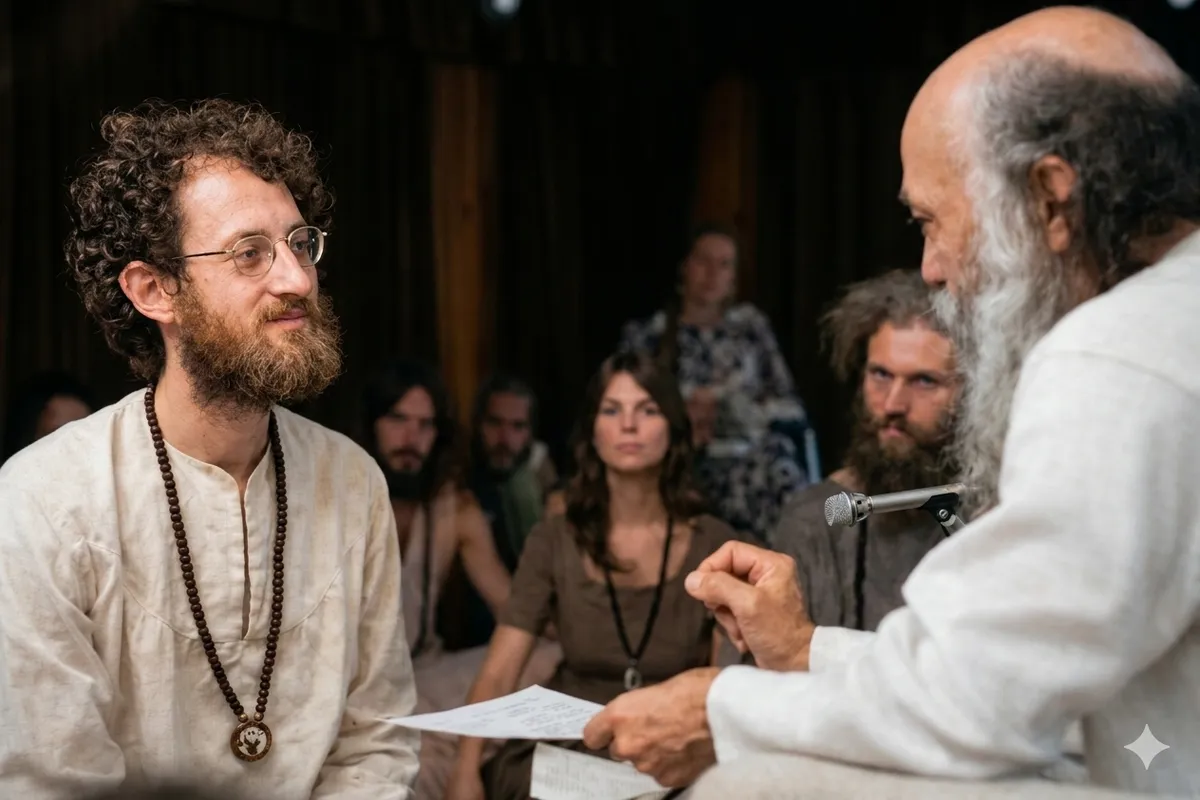
Osho's original Hindi beside Osho Live's English translation, matched passage by passage.
परसों रात्रि शिव पर बोलते हुए मैंने आपसे कहा था कि मृत्यु के वे प्रतीक हैं, विनाश की शक्ति वे हैं। साथ ही प्रेम और काम भी उनके जीवन में उतना ही गहरा है।
The night before last, while speaking on Shiva, I told you that he is the very symbol of death, the power of dissolution. And yet, love and eros are just as deep in his being.
एक मित्र को चोट लगी होगी इस बात से, तो उन्होंने मुझे पत्र लिखा है कि यह आपने ठीक नहीं किया। हमारे पूज्य देव को, महादेव को आपने काम और प्रेम से संयुक्त किया। कल उनका पत्र मिला था, मैं कल चुप रह गया, क्योंकि आज यह सूत्र आने को था। उन्होंने यह भी लिखा है कि शंकर ने तो, शिव ने तो कामदेव को भस्म कर दिया था। कैसे आप उनमें काम की बात कहते हैं? तो पहले उन्हें थोड़ा-सा उत्तर दे दूं और फिर इस सूत्र को समझाने में लगूं।
A friend must have been hurt by this; he wrote me a letter: “You did not do well. You linked our revered Lord, Mahadeva, with love and desire.” His letter reached me yesterday. I kept silent yesterday because today this sutra was to come. He also wrote: “But Shankar, Shiva, burned Kama to ashes! How can you speak of desire in him?” Let me answer him briefly, and then turn to today’s sutra.
काम को भी भस्म तभी किया जा सकता है, जब काम हो; नहीं तो काम को भस्म नहीं किया जा सकता। भस्म भी हम उसे ही कर सकते हैं, जो मौजूद हो। और मजे की बात तो यह है कि काम को केवल वही भस्म कर सकता है, जिसमें काम इतना प्रगाढ़ हो कि अग्नि बन जाए। छोटे-मोटे काम की वासना वाला आदमी काम को भस्म नहीं कर पाता। काम की भी लपट चाहिए।
Desire can be burned only if desire exists; otherwise, what is there to burn? We can reduce to ash only what is present. And here’s the strange thing: only the one in whom desire is so intense that it becomes fire can burn it. A man with a weak, petty craving cannot burn desire. Even desire needs a flame.
और यह दृष्टि, कि काम के होने से कोई देवता अपमानित हो जाता है, अपनी ही नासमझी पर निर्भर है। क्योंकि कृष्ण इस सूत्र में कहते हैं कि जीवन की उत्पत्ति का कारण कामदेव मैं हूं। उन मित्र को बड़ी तकलीफ होगी। तब तो शिव ने जिसको भस्म किया होगा, वे कृष्ण हैं! और उनको तो भारी पीड़ा होगी कि कृष्ण अपने ही मुंह से कहते हैं कि मैं कामदेव हूं।
And this notion—that the presence of desire demeans a deity—rests on one’s own misunderstanding. For Krishna says in this very sutra: as the origin of life, I am Kama, the god of love. That friend will be in deep trouble now. Then it must have been Krishna whom Shiva burned! And he will be even more pained that Krishna himself declares, “I am Kama.”
लेकिन सत्यों को समझना हो, तो पीड़ाओं की तैयारी चाहिए। और जो सत्य को समझने की हिम्मत न रखते हों, उन्हें उस तरफ आंख ही बंद कर लेनी चाहिए। उस तरफ प्रयास ही नहीं करना चाहिए।
But to understand truth, one must be willing to be hurt. If you don’t have the courage to face truth, then better close your eyes to it. Don’t even venture in that direction.
कुछ मौलिक बातें आपसे कहूं, तब यह सूत्र आपकी समझ में आ सके। यह सूत्र कठिन मालूम पड़ेगा। इसलिए नहीं कि कठिन है, इसलिए कि हमारी बुद्धि न मालूम कितनी व्यर्थ की धारणाओं से भरी है। और न मालूम कितनी निंदाएं और न मालूम कितने विक्षिप्त खयाल हमारे मन को घेरे हुए हैं।
Let me say a few fundamental things, then this sutra will become clear to you. It will seem difficult—not because it is difficult, but because our intelligence is crammed with so many useless notions, so many condemnations, so many deranged ideas.
जीवन की समस्त उत्पत्ति काम से ही है। जगत की सृष्टि भी काम से ही है। सृजन का सूत्र ही काम है। अगर ब्रह्मा ने भी जगत को उत्पन्न किया, तो शास्त्र कहते हैं, कामना पैदा हुई। काम का जन्म हुआ ब्रह्मा में, तो ही उत्पन्न होगा कुछ। इस जगत में जब भी कुछ पैदा होता है, तो पैदा होने का सूत्र ही काम है।
All arising in life is through kama. The creation of the world is through kama. The formula of creation is kama. Even if Brahma created the world, the scriptures say: a longing arose. Kama was born in Brahma, and only then could creation happen. Whenever anything is born in this world, the seed is kama.
और ऐसा नहीं है कि बच्चे ही जब पैदा होते हैं, तभी काम की शक्ति काम आती है। नहीं, कुछ और भी पैदा होता है--एक कविता पैदा होती है, एक चित्र पैदा होता है, एक मूर्ति निर्मित होती है--जहां भी कोई व्यक्ति कुछ सृजन करता है, तो उसके भीतर जो ऊर्जा, जो शक्ति काम में आती है, वह काम ही है। उत्पत्ति मात्र काम है। सृजन मात्र काम है।
And it’s not only when children are born that this power of kama functions. Something else is born too—a poem is born, a painting is born, a sculpture is shaped. Wherever anyone creates anything, the energy, the power that comes into play is kama. All origination is kama. All creativity is kama.
इसलिए जो लोग इस सत्य को बिना समझे काम से शत्रुता में लग जाएंगे, उनका जीवन निष्क्रिय, और उनका जीवन सृजनहीन, और उनका जीवन एक लंबी मृत्यु हो जाएगी। काम से ही सब उत्पन्न होता है।
So those who, without understanding this truth, set themselves against kama end up with a life that is inert, barren, a long slow death. Everything arises out of kama.
लेकिन इसका यह अर्थ नहीं कि काम में ही सब समाप्त हो जाता है। काम के पार जाया जा सकता है। लेकिन वह पार जाना भी काम के ही मार्ग से होता है; वह सृजन भी कामवासना के ही मार्ग से होता है।
But that does not mean everything ends in kama. One can go beyond kama—but one goes beyond by passing through kama; that higher creation too proceeds along the very path of kama, transformed.
कामवासना क्या है और यह कामदेव की धारणा क्या है?
What is kamavasana—sexual craving—and what is the meaning of Kama Deva?
शायद पूरी पृथ्वी पर हिंदू धर्म अकेला धर्म है, जिसने काम को भी अपनी जीवन-दृष्टि में समाहित किया है। यह बड़े साहस की बात है। क्योंकि सामान्यतया धर्म काम के विरोधी हैं। और हम सोच भी नहीं सकते कि कोई ईसाई परम पुरुष कह सके कि मैं कामदेव हूं। हम सोच भी नहीं सकते कि कोई जैन धारणा इस बात की स्वीकृति दे सके ईश्वर को कहने की कि मैं कामदेव हूं। यह असंभव है, सोचना भी असंभव है। लेकिन कृष्ण इसे सहजता से कह रहे हैं। और बड़े साहस की बात है।
Perhaps among all the religions of the earth, Hinduism alone has had the courage to include kama in its vision of life. That takes great daring. Ordinarily, religions are hostile to sex. We cannot even imagine a Christian supreme being saying, “I am Kama Deva.” We cannot imagine any Jain doctrine permitting God to say, “I am Kama Deva.” It is impossible—impossible even to think. But Krishna says it with natural ease. It is an act of great courage.
साहस की इसलिए है कि हम केवल कामवासना के एक ही रूप से परिचित हैं। और इसलिए जब भी कामवासना का खयाल भी हमारे मन में आता है, तो जो चित्र हमारे सामने मौजूद होता है, वह हमारी ही कामवासना के अनुभव का है। हमें कामवासना के दूसरे रूप का कोई पता ही नहीं है।
Courage—because we know only one form of sexual desire. So whenever the thought of sex arises, the image that appears is drawn from our own experience. We know nothing of the other form.
एक ही ऊर्जा है मनुष्य के भीतर, उसे हम कोई भी नाम दें। अगर वही ऊर्जा नीचे की तरफ प्रवाहित होती है, तो कामवासना और सेक्स बन जाती है। और वही ऊर्जा अगर ऊपर की तरफ प्रवाहित होने लगती है, तो अध्यात्म, कुंडलिनी, हम जो भी नाम देना चाहें। वही ऊर्जा; शक्ति वही है; सिर्फ आयाम, दिशा बदल जाती है।
There is only one energy in a human being—call it by any name. If it flows downward, it becomes kamavasana, sex. If the same energy begins to flow upward, it becomes spirituality, kundalini—call it what you will. It is the same energy; only its dimension, its direction changes.
नीचे की ओर गिरती हो वही शक्ति, तो वासना हो जाती है; ऊपर की ओर उठती हो वही शक्ति, तो आत्मा हो जाती है। नीचे की ओर गिरती हो, तो दूसरों को पैदा करती है; ऊपर की ओर उठने लगे, तो स्वयं को जन्म देती है। नीचे की ओर बहना हो उसे, तो किसी और को आधार बनाना पड़ता है; ऊपर की ओर बहना हो, तो स्वयं ही आधार होना पड़ता है। नीचे की ओर बहती हो काम-ऊर्जा, तो जननेंद्रिय के मार्ग से प्रकृति में लीन हो जाती है; और अगर ऊपर की ओर बहने लगे, तो सहस्रार से लीन होकर ब्रह्म में लीन हो जाती है।
Falling downward, that very energy is lust; rising upward, that very energy is soul. Falling downward, it gives birth to others; rising upward, it gives birth to oneself. Flowing downward, it must rely on another; flowing upward, it stands on its own ground. Flowing down, sexual energy merges into nature through the genital gate; flowing up, it merges into the Absolute through the sahasrar.
काम-ऊर्जा दो स्थानों से विलीन होती है। या तो जननेंद्रिय से, जो कि पहला चक्र है; और या सहस्रार से, जो अंतिम चक्र है। ये दो छोर हैं आपके व्यक्तित्व के। काम-केंद्र से आप प्रकृति से जुड़े हैं और सहस्रार से आप परमात्मा से जुड़े हैं। लेकिन शक्ति एक ही है।
Sex-energy dissolves at two points: either through the genitals—the first chakra—or through the sahasrar—the last chakra. These are the two poles of your being. Through the sex-center you are linked to nature; through the crown you are linked to the Divine. But the power is one.
लेकिन हमारी हालत ऐसी है कि जिस आदमी को आग का एक ही परिचय हो, घर जल जाने का, वह सोच भी नहीं सकता कि आग रोटी भी पकाती है; और वह सोच भी नहीं सकता कि रात के अंधेरे में आग प्रकाश भी देती है; और वह सोच भी नहीं सकता कि ठंड से मरते हुए आदमी के लिए आग जीवन भी हो जाती है। जिसका एक ही अनुभव हो कि उसने आग से मकान को जलते और बरबाद होते देखा हो, उसे आग के दूसरे रूपों का कोई भी पता नहीं होता।
Our condition is like a man who knows fire only as the force that burned his house down—he cannot imagine that fire also bakes bread; he cannot imagine that in the night fire gives light; he cannot imagine that for one dying of cold, fire becomes life. If the only experience you have of fire is destruction, you will know nothing of its other faces.
हम कामवासना के एक ही रूप को जानते हैं, जिससे हम अपनी जीवन-शक्ति को क्षीण होते देखते हैं। हम एक ही रूप को जानते हैं, जिसके कारण हमारे जीवन में सारी विपत्तियां और सारे उपद्रव खड़े होते हैं। हम एक ही रूप को जानते हैं, जिससे हमारे आस-पास संसार निर्मित होता है। हम एक ही रूप जानते हैं, जिससे क्रोध, लोभ, भय, ईर्ष्या, वैमनस्य, सबका जन्म होता है। हम कामवासना का अधोगामी रूप ही जानते हैं।
We know only one form of sex—the form through which our life-energy seems to be drained. We know only the form that breeds turmoil and disruption. We know only the form that builds the world around us, and from which anger, greed, fear, envy, hostility are born. We know the descending face of desire.
इसलिए अगर कोई कहे कि कृष्ण भी कामदेव हैं, तो हमें बहुत घबड़ाहट होती है। क्योंकि काम का जो रूप हम जानते हैं, वह सोचकर भी हमें घबड़ाहट होती है। हम तो चाहेंगे कि कृष्ण कामवासना के बिलकुल ऊपर हों, बिलकुल दूर हों, उनको छू भी न जाए। यह हमारा ही अनुभव है, जिसके कारण हम ऐसा सोचते हैं।
So if someone says that Krishna too is Kama Deva, we panic. Because the face of kama we know is itself frightening to recall. We want Krishna to be far above and far away from sex—untouched. That is merely our experience speaking.
लेकिन कृष्ण जब कहते हैं, मैं कामदेव हूं, तो वे कामवासना के दूसरे रूप को भी समाहित कर रहे हैं। वह दूसरा रूप ही हमारी दृष्टि में नहीं है, इसलिए हमें अड़चन और कठिनाई होती है। जैसे काम की शक्ति, सेक्स एनर्जी बाहर की तरफ बहती है, नीचे की तरफ बहती है, दूसरे शरीरों की तरफ बहती है--यह बहाव का एक ढंग है।
But when Krishna says, “I am Kama Deva,” he is including the other face of sex as well. We have no vision of that other face, hence the difficulty. Just as sexual energy can flow outward, downward, toward other bodies—this is one mode of flow—
और ध्यान रहे, दुनिया में ऐसा कोई भी बहाव नहीं है, जो विपरीत न बह सके। अगर मैं चलकर आपके पास आ सकता हूं, तो लौटकर आपसे दूर भी जा सकता हूं। ऐसा कोई भी रास्ता नहीं है, जो एक ही तरफ चलता हो। जिस रास्ते से चलकर आप यहां तक आए हैं, उसी से चलकर आप अपने घर वापस लौट जाएंगे। कोई ऐसा दरवाजा नहीं है, जिससे आप बाहर आते हों और उसी से आप भीतर न जा सकते हों। हर द्वार, हर मार्ग, हर प्रवाह दो आयामों में होता है, दो दिशाओं में होता है। आप पीछे लौट सकते हैं।
Remember, there is no flow in the world that cannot also run the other way. If I can walk to you, I can also walk away. There is no path that goes only one way. The same road by which you came will take you home. There is no door through which you can come out and not go in. Every door, every path, every current has two directions. You can turn back.
कामवासना का हम एक ही द्वार जानते हैं और एक ही रूप, दूसरे की तरफ प्रवाहित होने वाला। और ध्यान रहे, जब भी कोई दूसरे की तरफ प्रवाहित होता है, तो परतंत्र हो जाता है। इसलिए कामवासना गहरे में हमारे लिए एक परतंत्रता है। इसलिए जो लोग भी स्वतंत्र होना चाहते हैं, मुक्त होना चाहते हैं, उनका संघर्ष कामवासना से शुरू हो जाता है।
We know only one door of sex, one mode—flowing toward the other. And understand: whenever we flow toward the other, we become dependent. Hence, sex is a deep enslavement for us. Those who desire freedom, liberation, begin their struggle with sex.
इस दुनिया में गहरी से गहरी गुलामी सेक्स की गुलामी है। दूसरे आदमी पर निर्भर होना पड़ता है। दूसरा अपने से भी ज्यादा महत्वपूर्ण हो जाता है। दूसरे के इर्द-गिर्द चक्कर काटना पड़ता है, परिक्रमा करनी पड़ती है। एक गहरी गुलामी है।
The deepest slavery in this world is the slavery of sex. One must depend on another. The other becomes more important than oneself. You circle around the other, perform circumambulations. It is a deep bondage.
इसलिए जो लोग भी मुक्ति की दिशा में चलते हैं, उनका मन अगर वितृष्णा से भर जाता हो कामवासना से, तो आश्चर्य नहीं है; तर्कयुक्त है, स्वाभाविक है। लेकिन शत्रुता से भर जाने से कुछ भी न होगा। और लड़ने से भी कुछ न होगा।
So it is no surprise that those who set out toward liberation become filled with disgust for sex; it is logical, natural. But filling with hostility will achieve nothing. Fighting will not help.
मजे की बात है! अगर मुझे स्त्री आकर्षित करती है या पुरुष आकर्षित करता है या कोई मुझे आकर्षित करता है, तो लड़ने वाला, जो मुझे आकर्षित करता है, उससे भागेगा। लेकिन मैं कहीं भी भाग जाऊं, जो मेरे भीतर आकर्षित होता था, वह मेरे साथ ही रहेगा।
Here’s the irony: if a woman attracts me, or a man attracts me, the fighter will run away from the one who attracts him. But wherever I run, that in me which is attracted will run with me.
मैं एक स्त्री को छोड़कर भाग सकता हूं, एक पुरुष को छोड़कर भाग सकता हूं, लेकिन जो भी मेरे भीतर प्रवाहित होता था नीचे की ओर, वह मेरे साथ ही चला जाएगा। वह अ को छोड़ देगा तो ब पर आकर्षित होगा, ब को छोड़ देगा तो स पर आकर्षित होगा। और मैं यह भी कर सकता हूं कि सबको छोड़कर निपट जंगल में बैठ जाऊं, तो मेरी कल्पना में ही मैं उन सबको पैदा करना शुरू कर दूंगा, जो मेरे आकर्षण के बिंदु बन जाएंगे।
I can run away from a particular woman or a particular man, but the stream within me that was flowing downward will come along. If I drop A, it will be drawn to B; drop B, it will seek C. And I may leave everyone and sit alone in the jungle, and then my imagination will manufacture those very figures that become points of attraction.
स्त्रियों को छोड़कर भाग जाने से कोई स्त्रियों से मुक्त नहीं होता। स्त्रियों के बीच रहकर कभी मुक्त हो भी जाए, भागकर तो मुक्त होना बहुत मुश्किल हो जाता है। क्योंकि जिससे हम भागते हैं, वह हमारा पीछा करता है कल्पना में।
No one becomes free of women by running away from women. Sometimes one may become free by remaining among them; by running, it becomes even harder. What we flee pursues us in imagination.
और ध्यान रहे, कोई भी स्त्री वस्तुतः इतनी सुंदर नहीं है, जितनी कल्पना में सुंदर हो जाती है। न कोई पुरुष इतना सुंदर है, जितना कल्पना में सुंदर हो जाता है। कल्पना कहीं फ्रस्ट्रेट ही नहीं होती; कल्पना को कहीं विषाद का क्षण ही नहीं आता! वास्तविक अस्तित्व में तो हम सब विषाद को उपलब्ध हो जाते हैं।
And remember, no woman in reality is as beautiful as she becomes in imagination. No man is as beautiful as he becomes in imagination. Imagination is never frustrated; in imagination there is no moment of disenchantment. In factual existence, we are all disenchanted.
जो शरीर कल बहुत सुंदर मालूम पड़ता था, दो दिन बाद साधारण मालूम पड़ने लगेगा। चार दिन बाद उससे ही घबड़ाहट होने लगेगी। पंद्रह दिन के बाद उससे भागने का मन भी होने लगेगा। लेकिन कल्पना में ऐसा क्षण कभी नहीं आता। कल्पना बड़ी सुगंधित है। कल्पना के शरीरों से न पसीना बहता है। न कल्पना के शरीरों से दुर्गंध आती है। न कल्पना के शरीर झगड़ते हैं, लड़ते हैं। कल्पना के शरीर तो आपकी ही कल्पनाएं हैं, आपको कभी भी दुख नहीं देते। लेकिन वास्तविक शरीर तो दुख देंगे। वास्तविक व्यक्ति तो दुख देंगे। वास्तविक व्यक्तियों के बीच तो कलह और संघर्ष होगा।
The body that looked very beautiful yesterday will seem ordinary in two days. In four days it will begin to irritate. In fifteen days you may want to run. But in imagination, that moment never comes. Imagination is supremely fragrant. Imaginary bodies do not sweat. They have no odor. They do not quarrel or fight. Imaginary bodies are your own make; they never hurt you. Real bodies will hurt. Among real people there will be conflict and strife.
इसलिए जो लड़ने में लग जाएगा, वह भागेगा। लेकिन जो समझने में लगेगा, वह अपनी धारा को बदलेगा, भागेगा नहीं। दूसरे से भागने का कोई प्रयोजन नहीं है। मेरी ही शक्ति जो दूसरे की तरफ प्रवाहित होती है, वह मेरी तरफ प्रवाहित होने लगे, यह है सवाल।
So the one who fights will flee. The one who understands will change the direction of his stream; he won’t run. There is no point in running from the other. The question is: can the very power that flows toward the other begin to flow toward oneself?
और जब काम की ऊर्जा अपनी तरफ बहनी शुरू होती है, स्व की तरफ बहनी शुरू होती है, पर की तरफ नहीं, तब हमें कामवासना का वास्तविक अर्थ और प्रयोजन पता चलता है। तब हमें पता चलता है कि जिसे हमने जहर समझा था, वह अमृत हो जाता है। और तब हमें पता चलता है कि जिसे हमने परतंत्रता समझा था, वही हमारी स्वतंत्रता बन जाती है। और तब हमें पता चलता है कि जिसे हमने नर्क का द्वार समझा था, वही हमारी मुक्ति का द्वार भी है।
When the energy of kama begins to flow toward oneself, toward the Self and not toward the other, then the real meaning and purpose of desire are revealed. Then what we took to be poison turns into nectar. Then what we took to be bondage becomes our freedom. Then what we took to be the gate of hell becomes the door of our liberation.
जब कृष्ण कहते हैं, मैं कामदेव हूं, तो इस सारी दृष्टि को सामने रखकर कह रहे हैं।
When Krishna says, “I am Kama Deva,” this entire vision stands behind it.
काम की ऊर्जा हमारी शक्ति का नाम है। हम जो भी हैं, काम की ऊर्जा के संघट हैं। अगर हमारी ऊर्जा बाहर बहती रहे, तो बिखर जाती है, दूर फैलती चली जाती है। अगर यही ऊर्जा भीतर आने लगे, तो संगठित होने लगती है, इंटीग्रेट होने लगती है, क्रिस्टलाइज होने लगती है, केंद्रित होने लगती है। और धीरे-धीरे जब सारी बाहर जाने वाली ऊर्जा स्वयं पर ही आकर इकट्ठी हो जाती है, तो जो क्रिस्टलाइजेशन, जो सेंटरिंग, जो केंद्रीयता हमारे भीतर पैदा होती है, वही हमारी आत्मा का अनुभव है।
Kama is simply the name of our power. Whatever we are is a condensation of kama-energy. If our energy keeps flowing out, it scatters, diffuses farther and farther. If the same energy starts flowing inward, it begins to gather, to integrate, to crystallize, to center. Slowly, as all the outward-flowing energy turns back and collects upon itself, the crystallization, the centering, the nucleus that arises within us is the experience of the soul.
जिस व्यक्ति की कामवासना बाहर भटकती जाती है, उसका अनुभव संसार का अनुभव है, आत्मा का अनुभव नहीं। और जिस व्यक्ति की ऊर्जा भीतर इकट्ठी होती जाती है, संगठित होती चली जाती है, अंततः एक ऐसा बिंदु निर्मित हो जाता है वज्र की भांति, जो बिखर नहीं सकता। उस अनुभव के साथ ही हम पहली दफा आत्मा के जगत में प्रवेश करते हैं या ब्रह्म के जगत में प्रवेश करते हैं। लेकिन वह भी सृजन है, अपना ही सृजन। वह भी जन्म है, अपना ही जन्म।
The person whose sexual desire wanders outward experiences the world, not the soul. The person whose energy gathers inward, organizes, and eventually becomes a point like a diamond that cannot be shattered—at that moment we first enter the realm of the soul, or the realm of the Absolute. That too is creation—self-creation. That too is birth—self-birth.
बुद्ध के पास जब कोई भिक्षु आता था, तो वे उससे पूछते थे, तेरी उम्र कितनी है? एक भिक्षु आया बुद्ध के पास और बुद्ध ने उससे पूछा, तेरी उम्र कितनी है? उसने कहा, केवल चार दिन!
When a monk came to Buddha, he would ask, “How old are you?” A monk came; Buddha asked, “How old are you?” He said, “Only four days.”
उम्र उसकी कोई सत्तर वर्ष मालूम होती थी। बुद्ध थोड़े चौंके, और लोग भी चौंके। बुद्ध ने दुबारा पूछा कि कहीं कुछ भूल-चूक सुनने-समझने में हो गई है, तेरी उम्र कितनी है? उस आदमी ने कहा कि मैं पुनः कहता हूं, मेरी उम्र है चार दिन। बुद्ध ने कहा, तुम कोई व्यंग्य करते हो? मजाक करते हो?
He looked about seventy. Buddha was startled, others too. Buddha asked again, “Perhaps we misheard—how old are you?” He said, “I repeat: I am four days old.” Buddha said, “Are you being sarcastic? Joking?”
उसने कहा कि नहीं, चार दिन पहले ही आपको सुनते क्षण में मुझे अपने होने का पहली दफा पता चला, वही मेरा जन्म है। उसके पहले तो मैं था ही नहीं। संसार था, मैं नहीं था। मैं तो अभी चार दिन पहले पहली दफे हुआ हूं। और अभी बहुत कमजोर हूं, एक छोटे शिशु की तरह हूं। अभी आपके सहारे की मुझे जरूरत है। अभी आपकी छाया की मुझे जरूरत है। अभी मैं बिखर सकता हूं। अभी बहुत कोमल तंतु हूं। लेकिन जन्म मेरा अभी चार दिन पहले हुआ है।
He replied, “No. Only four days ago, on hearing you, for the first time I knew I am. That is my birth. Before that I was not. The world was; I was not. I became only four days ago. I am still very weak, like a newborn. I need your support, your shade. I might scatter. I am very tender. But my birth was four days ago.”
उस दिन बुद्ध ने कहा था, भिक्षुओ, आज से हमारे भिक्षुओं की उम्र को नापने की यही व्यवस्था होगी। तुम अपनी उस उम्र को छोड़ देना, जब तुम नहीं थे। तुम उसी उम्र को गिनना, जब से तुम हुए हो। जिस दिन तुम अपने को जानो, उसी दिन को समझना तुम्हारा जन्म। माता-पिता ने तुम्हारे जिसको जन्म दिया था, वह तुम नहीं हो।
Then Buddha said, “Monks, from today this will be our way of counting a monk’s age. Drop the age when you were not. Count only from when you became. The day you know yourself—that day is your birth. What your parents gave birth to is not you.”
माता-पिता एक शरीर को जन्म देते हैं। लेकिन स्वयं को जन्म देना हो, तो स्वयं ही देना पड़ता है। यह जन्म घटित होता है, जब काम की ऊर्जा भीतर की ओर प्रवाहित होनी शुरू होती है।
Parents give birth to a body. To give birth to oneself—one must give it oneself. This birth happens when sexual energy begins to flow inward.
यह सारा जगत आज विक्षिप्त है। मनसविद कहते हैं--फ्रायड या जुंग या एडलर--वे कहते हैं कि यह सारी विक्षिप्तता का निन्यानबे प्रतिशत कारण कामवासना है। वे ठीक ही कहते हैं। लेकिन उनका निदान तो ठीक है, उनका इलाज ठीक नहीं है। उनकी डायग्नोसिस बिलकुल सही है, लेकिन वे जो दवाएं बताते हैं, वे ठीक नहीं हैं।
The whole world today is neurotic. The psychologists—Freud, Jung, Adler—say that ninety-nine percent of this neurosis stems from sexual desire. They are right. Their diagnosis is exact; their cure is not. The diagnosis is perfect; the medicine is wrong.
उनका खयाल है, यह सारा मनुष्य इतना पीड़ित है, यह अतिशय कामुकता के कारण। इतनी कलह और इतनी ईर्ष्या और इतना संघर्ष और इतना लोभ, इस सबके भीतर अगर हम प्रवेश करना शुरू करें, तो निश्चित ही केंद्र पर कामवासना मिलेगी। तो फ्रायड कहता है कि यह कामवासना को ठीक से तृप्त करने का उपाय न हो, तो आदमी विक्षिप्त होता चला जाएगा। तो कामवासना को ठीक से तृप्त होने का उपाय होना चाहिए।
They think humanity is so tormented because of excessive sexuality. If we probe all this strife, jealousy, conflict, greed, we will indeed find sexual desire at the center. So Freud says: if there is no proper way to satisfy sex, man will become increasingly deranged; therefore there must be proper means for satisfaction.
यह भी थोड़ी दूर तक ठीक है। लेकिन कामवासना को तृप्त करने के कितने ही उपाय किए जाएं, आदमी कामवासना की तृप्ति से कभी भी शांत नहीं होता। हो नहीं सकता। कामवासना को रूपांतरित किए बिना आदमी कभी भी शांत नहीं हो सकता। एक ट्रांसफार्मेशन चाहिए।
This is partially true. But however many means you create, man will never find peace through sexual gratification. He cannot. Without transforming the sex-energy, man cannot know peace. A transformation is needed.
यह कामवासना जो बाहर की तरफ दौड़ती है, इसकी कितनी ही तृप्ति का उपाय किया जाए, कोई तृप्ति उपलब्ध नहीं होती। बल्कि एक और नया खतरा पश्चिम में फ्रायड को मानकर फलित हुआ है। और वह यह कि पचास साल पहले, फ्रायड के पहले पश्चिम में खयाल था लोगों को कि कामवासना तृप्त हो जाएगी, तो लोग बड़े शांत, संतुष्ट हो जाएंगे। क्योंकि अगर उसी की अतृप्ति से बेचैनी है, तो तृप्ति से शांति हो जाएगी।
This outward-racing sexual desire—no matter how much you satisfy it—you will not be satisfied. In the West, embracing Freud has led to a new danger. Fifty years ago, before Freud, people believed: if sex is satisfied, people will become calm and content. Since unrest comes from frustration, satisfying it will bring peace.
लेकिन आज अमेरिका में उसे तृप्त करने की सर्वाधिक सुविधाएं उपलब्ध हो गई हैं, संभवतः पृथ्वी पर कहीं भी नहीं थीं। सब तरह की स्वतंत्रता, एक परमिसिव सोसाइटी, सब तरह से मुक्त करने वाला समाज पैदा हो गया है। लेकिन अनूठा अनुभव हुआ। अतृप्तियां पुरानी अपनी जगह हैं, और एक नई अतृप्ति पैदा हो गई है। वह है, कामवासना की व्यर्थता का बोध। पुरानी अतृप्ति में कम से कम एक आशा थी कि कभी कहीं कोई कामवासना तृप्त होगी, तो मन शांत हो जाएगा। अब वह भी आशा न रही। अतृप्ति पुरानी अपनी जगह खड़ी है, एक नई अतृप्ति, और ज्यादा गहरी, कि यह कामवासना ही बिलकुल व्यर्थ है, फ्यूटायल है। इसमें कुछ होने वाला नहीं है।
But today, in America, there are more facilities for sexual satisfaction than perhaps anywhere ever. A permissive society, all kinds of freedom. And yet a strange thing has happened. The old frustration remains—and a new frustration has arisen: the sense of the futility of sex. At least the old frustration carried a hope that perhaps, somewhere, someday, if sex is fulfilled, the mind will be at peace. Now even that hope is gone. The old discontent stands where it was, and a new one, deeper: sex itself is utterly futile. Nothing comes of it.
आज पश्चिम का आदमी ऐसी बेचैनी में है, जिसकी हम कल्पना भी नहीं कर सकते। वह रहेगा, क्योंकि फ्रायड का वक्तव्य अधूरा है। फ्रायड के साथ बुद्ध को और कृष्ण को और महावीर को भी जोड़ना अनिवार्य है। फ्रायड का निदान बिलकुल ठीक है, लेकिन फ्रायड का उपचार ठीक नहीं है।
Today the Western man is in a restlessness we cannot even imagine. It will persist because Freud’s statement is incomplete. Freud must be joined with Buddha, Krishna, and Mahavira. Freud’s diagnosis is absolutely correct; his treatment is not.
कृष्ण या बुद्ध या महावीर कामवासना को रूपांतरित करने की व्यवस्था देते हैं। और जब कामवासना रूपांतरित होती है, तो फिर उसको कामवासना न कहकर हम कामदेव कहते हैं।
Krishna, Buddha, Mahavira offer the method of transforming sexual desire. When sex is transformed, we cease to call it sexual desire; we call it Kama Deva.
इस फर्क को आप समझ लें।
Understand this distinction.
जब तक कामवासना नीचे की तरफ बहती है, तब तक कामवासना एक राक्षस की तरह होती है, एक दानव की तरह। चूसे चली जाती है आदमी को। पीए चली जाती है। उसकी सारी शक्तियों को खींचे चली जाती है। उसे रुग्ण और दीन और दरिद्र किए चली जाती है। खोखला कर देती है भीतर से। सब सत्व खिंच जाता है, फिंक जाता है, और आदमी धीरे-धीरे एक चली हुई कारतूस की तरह हो जाता है। मरने के पहले ही आदमी मर जाता है।
So long as desire flows downward, it is like a demon—a rakshasa. It sucks a man dry, drinks him up, drains his powers, renders him sickly, poor, hollow. His essence is bled out; he becomes like a spent cartridge—dead before dying.
बूढ़े आदमी को खालीपन का अनुभव होता है, जैसे भीतर कुछ भी नहीं है। वह खालीपन कुछ और नहीं है, कामवासना ने सारी शक्तियों को अपशोषित कर लिया है। जवान आदमी को भरापन मालूम पड़ता है। वह भरापन भी कुछ नहीं है, वह भरापन भी कामवासना का ही भराव है। बूढ़े और जवान आदमी में उतना ही फर्क है, जितना भरी हुई कारतूस में और चल गई कारतूस में है। और कोई ज्यादा फर्क नहीं है। न तो जवान भरा हुआ है, न बूढ़ा खाली है। भ्रांति उस ऊर्जा की वजह से हो रही है। भरे आदमी तो केवल वे ही हैं, जिनकी काम-ऊर्जा ऊपर की तरफ प्रवाहित होनी शुरू होती है। उन्हीं के लिए फुलफिलमेंट है, उन्हीं के लिए आप्तता है।
The old feel an inner emptiness—as if nothing remains within. That emptiness is nothing but sex having absorbed all the energies. The young feel a fullness—that fullness too is nothing but the bulge of sex. The difference between the young and the old is only that between a loaded cartridge and a fired one. Neither is the young truly full, nor the old truly empty; the illusion comes from energy’s state. Truly full are only those whose sex-energy has begun to flow upward. Only for them is there fulfillment.
जिस दिन कामवासना ऊपर की तरफ प्रवाहित होती है, उस दिन कामदेव हो जाती है। इसलिए शायद हम अकेली कौम हैं जमीन पर, जिन्होंने कामवासना को भी देवता की स्थिति दी है। उसको भी देव कहने की हिम्मत जुटाई है। लेकिन वह रूपांतरित है; ऊपर उठ गया है। दूसरे से संबंध छूट गया है। शक्ति अपने ही भीतर प्रवाहित होने लगी है, अपने ही अंतस्तल में। अंतर्यात्रा पर निकल गई है।
The day desire flows upward, it becomes Kama Deva. Perhaps we are the only people on earth who have dared to grant even sexual desire the status of a deity. But it is transformed—risen up. The link to the other has been severed. The power now streams within, on an inner journey.
कृष्ण कहते हैं, मैं कामदेव हूं; समस्त जीवन के सृजन का मूल आधार मैं हूं।
Krishna says, “I am Kama Deva; the root of all creation is in me.”
और कामदेव कहने की क्या जरूरत! वे कोई और देवताओं का नाम भी ले सकते थे। देवों में कामदेव का ही नाम लेने का प्रयोजन भी है। क्योंकि कामदेव के ऊपर जो उठ जाए.। मैंने पहले आपसे कहा, काम-राक्षस। ऐसा हम करें शब्द का प्रयोग, नीचे की तरफ बहती काम-ऊर्जा। फिर कामदेव, ऊपर की तरफ बहती हुई काम-ऊर्जा। कामदेव के भी ऊपर जो उठ जाए, वह देवताओं से पार हो जाता है।
And why invoke Kama Deva specifically? He could have named some other god. There is a purpose to choosing Kama Deva among the gods. Because the one who rises beyond Kama Deva—
Let us use terms I proposed: kama as demon—the downward flow; Kama Deva—the upward flow. Whoever rises even above Kama Deva goes beyond the gods.
बाहर की तरफ बहती ऊर्जा, काम-राक्षस। भीतर की ओर बहती हुई ऊर्जा, कामदेव। और कहीं भी बहती हुई ऊर्जा नहीं, ठहरी हुई ऊर्जा; न बाहर, न भीतर, समस्त गति को खो दिया हो ऊर्जा ने; ठहर गई ऊर्जा; थिर हो गई ऊर्जा; जैसे कि दीए की लौ ठहर जाए, हवा का कोई झोंका न हो; उस स्थिति में आदमी कामदेव के भी ऊपर उठ जाता है।
Outward-flowing energy: the demon of lust. Inward-flowing energy: Kama Deva. Neither outward nor inward—completely still; energy loses all movement, becomes steady like a lamp-flame in windless air—then a man goes beyond Kama Deva as well.
इसलिए साधक को पहले दूसरे की परेशानी रहती है कि दूसरा खींचता है। फिर अंतिम परेशानी आती है कि स्वयं का खिंचाव है। उसके भी पार जाकर, द्वंद्व के पार आदमी हो जाता है।
Thus, for the seeker, the first trouble is the other who pulls. The last trouble is one’s own pull. Crossing even that, one goes beyond duality.
जो व्यक्ति कामदेव के पार हो जाता है, वह देवताओं के पार हो जाता है। इसलिए हमने, बुद्ध को जब ज्ञान हुआ, तो कथाएं कहती हैं कि समस्त देवता उनके चरणों में सिर रखकर मौजूद हुए। क्या हो गया बुद्ध को कि देवता उनके चरणों में सिर रखें! क्योंकि देवता, कितने ही ऊपर हों, कामदेव के ऊपर नहीं होते। लेकिन जब कोई व्यक्ति बुद्धत्व को उपलब्ध होता है, तो वह काम के अंतिम रूप से ऊपर चला जाता है। फिर देवता भी नीचे पड़ जाते हैं। फिर देवता भी बुद्ध को नमस्कार करने आते हैं।
The one who goes beyond Kama Deva goes beyond the gods. Hence, when Buddha became enlightened, the stories say all the gods came to lay their heads at his feet. What had happened that gods should bow? Because gods—however high—are not beyond Kama Deva. But when someone attains Buddhahood, he goes beyond the final form of kama; then even the gods are below. They come to worship him.
बुद्ध को अंतिम क्षण में, या महावीर को अंतिम क्षण में, या जीसस को अंतिम क्षण में, जो आखिरी संघर्ष है, जो आखिरी पार होना है, वह काम ही है। काम के जो पार हो गया, वह देवत्व के पार हो गया। वह फिर भगवत्ता में सम्मिलित हो गया।
For Buddha, for Mahavira, for Jesus, the last struggle, the final crossing, is always kama. The one who crosses kama crosses godhood and enters divinity itself.
तीन कोटियां हैं। मनुष्य हम उसे कहें, जिसकी कामवासना नीचे की ओर बहती है। देव हम उसे कहें, जिसकी कामवासना ऊपर की ओर बहती है या भीतर की ओर बहती है। भगवान हम उसे कहें, जिसकी कामवासना बहती नहीं--न बाहर न भीतर, न नीचे न ऊपर। ये तीन कोटियां हैं।
There are three categories. Call human the one whose desire flows downward. Call god the one whose desire flows upward, inward. Call God the one in whom desire does not flow—neither out nor in, neither down nor up. These three categories.
इसलिए बुद्ध को हम भगवान कहते हैं। भगवान कहने का कुल कारण इतना है कि अब वे देव के भी पार हैं।
Hence we call Buddha “Bhagavan”—because he has gone beyond the gods.
कृष्ण कहते हैं, मैं देवताओं में कामदेव हूं। अगर देवताओं में ही मुझे खोजना हो, तो तुम काम में खोजना। क्योंकि काम ही सृजन का मौलिक आधार है। जगत में जो भी घटता है, सुंदर, शुभ, सत्य, वह सब काम की ऊर्जा का ही प्रतिफलन है। चाहे कोई गीत पैदा होता हो सुंदर, चाहे कोई चित्र बनता हो सुंदर, और चाहे कोई व्यक्तित्व निर्मित होता हो सुंदर, वह सब काम-ऊर्जा का ही फैलाव है। इस जगत में जो भी सुंदर है और शुभ है, वह सब काम की ऊर्जा की ही लहरें हैं।
Krishna says, “Among the gods I am Kama Deva. If you must seek me among the gods, find me in kama. For kama is the fundamental base of creation. Whatever in this world is beautiful, auspicious, true, reflects kama-energy—whether a song arises, a painting appears, or a beautiful personality is formed—it is all the unfoldment of sex-energy. Whatever is beautiful and auspicious here are waves of kama-energy.”
हमने ही अकेले पृथ्वी पर ऐसे मंदिर बनाए, खजुराहो, कोणार्क, जहां हमने भीतर परमात्मा को स्थापित किया और भित्ति-चित्रों पर काम के अनूठे-अनूठे चित्र खोदे। असंगत मालूम पड़ता है। खजुराहो के मंदिर में प्रवेश करें, तो घबड़ाहट मालूम होती है। मंदिर, जहां प्रभु को स्थापित किया है भीतर, उसकी भित्ति, उसकी दीवालों पर संभोग के, मैथुन के, काम के चित्र खुदे हैं, मूर्तियां निर्मित हैं! और ऐसी मूर्तियां पृथ्वी पर किसी ने कभी नहीं बनाईं। बाप बेटी के साथ मंदिर में प्रवेश करने में घबड़ाता है। भाई भाई के साथ जाने में डरेगा। बेटा मां के साथ मंदिर में जाने में भयभीत होगा। इस भय और डर के कारण शायद हम कहेंगे कि ये मंदिर ठीक नहीं बने, गलत बने हैं।
We alone, on this earth, built temples like Khajuraho and Konark—where the deity is installed within, and on the walls are carved extraordinary images of sexual union. It seems incongruous. Enter Khajuraho and there is a tremor: a temple wherein the Lord resides, and on its walls are sculptures of intercourse! No one on earth has made such sculptures. A father feels awkward to enter with his daughter. Brothers feel fear to go together. A son hesitates to enter with his mother. Because of this fear we may say these temples are not right, were wrongly built.
गांधी जी के एक भक्त थे, पुरुषोत्तमदास टंडन। उनका सुझाव था गांधी जी को कि इन मंदिरों पर मिट्टी ढांककर इनको दाब देना चाहिए। गांधी जी को भी बात तो जंचती थी कि ढांक दिए जाएं ये मंदिर; ये भारतीय संस्कृति को विकृत करते हुए मालूम पड़ते हैं।
Purushottam Das Tandon, a devotee of Gandhi, once suggested to Gandhi that these temples should be covered over with clay and buried. The idea appealed to Gandhi too—cover them up; they seem to distort Indian culture.
जिनको भारतीय संस्कृति का कोई पता नहीं है, उन्हीं को ऐसा लगेगा। लेकिन नहीं हो सका वह, क्योंकि खजुराहो जगत-ख्याति का मंदिर है और भारत का टूरिज्म का बड़ा धंधा खजुराहो और कोणार्क जैसे मंदिरों पर निर्भर है। अगर बाहर से पर्यटक देखने न आते हों इन मंदिरों को, और इन मंदिरों की जगत-ख्याति न हो, तो हमने जरूर इन पर मिट्टी ढांक दी होती, इनको पूर दिया होता, इनको मिटा दिया होता।
Only those who know nothing of India’s culture would feel so. But it could not be done, because Khajuraho is world-famous; India’s tourism trade depends much on temples like Khajuraho and Konark. If foreign tourists did not come to see them, and if the temples were not renowned, we would certainly have buried them.
इतना हमें क्यों डर लगता है? मां अपने बेटे के साथ इस मंदिर में जाने में भयभीत क्यों होती है? क्योंकि हम जीवन के तथ्यों को स्वीकार नहीं करते। हम जीवन के तथ्यों को झुठलाते हैं; हम बेईमान हैं। जीवन की सीधी सचाइयों के प्रति हम बहुत बेईमान हैं। नहीं तो बात ही क्या है? जब कोई मां बनती है किसी बेटे की, तभी क
ाम-ऊर्जा के कारण बनती है। जब कोई बाप बनता है किसी बेटे का, तो काम-ऊर्जा के कारण बनता है।
Why do we feel so afraid? Why is a mother fearful to take her son into such a temple? Because we do not accept the facts of life. We deny them; we are dishonest toward the straightforward truths of life. Otherwise, what is the issue? A mother becomes a mother only through sex-energy. A father becomes a father only through sex-energy.
लेकिन काम-ऊर्जा के प्रति हमने इस तरह के छिपाव खड़े किए हैं कि हम दुनिया में बात ही नहीं होने देते। जो मौलिक है सत्य, उसको हम ऐसे छिपाते हैं, जैसे वह घटता ही नहीं है। उस घबड़ाहट के कारण ये मंदिर हमें प्रवेश करने में डर पैदा करवाते हैं।
But we have constructed such screens of concealment around sex that we will not allow even a word to be spoken. We hide what is fundamental as though it never happens. Because of this panic these temples scare us at the threshold.
यह मंदिर बहुत सत्य है। सत्य, नग्न रूप से सत्य है। और विचार करके इसे निर्मित किया गया है। दीवाल के बाहरी हिस्सों पर कामवासना के चित्र हैं। और मंदिर इस बात का प्रतीक है कि जब तक तुम्हारा मन दीवाल के बाहर के चित्रों में लीन हो, तब तक भीतर प्रवेश नहीं हो सकेगा। जिस दिन तुम्हें बाहर मंदिर की दीवाल पर खुदे हुए मैथुन के गहन चित्र जरा भी आकर्षित न करें, उसी दिन तुम भीतर आना, उसी दिन तुम परमात्मा के मंदिर में प्रवेश कर सकोगे।
These temples are deeply true—nakedly true. They were built with deliberate thought. On the outer walls are scenes of sexual passion. And the temple is a symbol: as long as your mind is absorbed in the images on the outer wall, you cannot enter within. The day the deeply erotic carvings on the outer wall no longer attract you, that day you may enter; that day you can step into the temple of the Divine.
संसार इस मंदिर के बाहर खुदे हुए चित्रों की परिधि है। और जब तक किसी का मन कामवासना में डोल रहा है, तब तक वह मंदिर में प्रवेश नहीं हो सकता। और कामवासना में डोलने के दो ढंग हैं। या तो कामवासना के लिए डोल रहा हो, या कामवासना से भयभीत होकर डरकर डोल रहा हो।
The world is the circumference of those carvings on the outer wall. As long as a person sways with sexual desire, he cannot enter the shrine. And there are two ways of swaying with sex: either you are drawn toward it, or you are frightened, repelled, and flutter around it in fear.
जो आदमी इस मंदिर के पास जाता है और आंखें गड़ाकर इन चित्रों को देखने लगता है, वह भी उनसे उलझा है; और जो इन चित्रों को देखकर आंखें नीची करके दुबककर अंदर घुस जाता है, वह भी इन्हीं चित्रों से उलझा हुआ है। जो आदमी इन चित्रों के पास से ऐसे गुजर जाता है, जैसे चित्र हों ही न, वही आदमी मंदिर में प्रवेश के योग्य है। कामवासना से जो पार नहीं जाता, वह मंदिर में प्रवेश नहीं पा सकता है।
The person who stands there and stares with fixed eyes is entangled; and the one who, on seeing these images, drops his gaze and slips in timidly is also entangled. Only the one who passes by as though there were nothing there is fit to enter the temple. Without going beyond sex, one cannot enter.
लेकिन कामवासना का विरोध करके कोई कभी पार नहीं गया है। इस जगत में समझने के अतिरिक्त पार जाने का कोई भी उपाय नहीं है। लड़ते हैं नासमझ, जानते हैं समझदार। और जानना ताकत है। ज्ञान शक्ति है।
बेकन ने कहा है, नालेज इज़ पावर। सभी अर्थों में सही है। जहां भी ज्ञान है, वहीं शक्ति है। और जिस चीज का हमें ज्ञान है, हम उसके मालिक हो सकते हैं। और जिसका हमें ज्ञान नहीं है, हम उससे चाहे भयभीत हों, चाहे पराजित हों, चाहे उसके गुलाम रहें, चाहे उससे डरकर भागते रहें, हम उसके मालिक कभी भी न हो सकेंगे।
But no one has ever gone beyond by opposing sex. In this world there is no way beyond except understanding. Fools fight; the wise know. And knowing is power. Knowledge is power, as Bacon said—true in every sense. Where there is knowing, there is power. Over what we know, we can be master; what we do not know will frighten and defeat us, enslave us, send us fleeing—we can never master it.
आकाश में बिजली कौंधती है, आज हम उसके मालिक हो गए हैं। वैसे ही ठीक कामवासना और भी बड़ी बिजली है, जीवंत बिजली है, उसके भी मालिक होने का उपाय है। लेकिन मालिक केवल वे ही हो सकते हैं, जो उसके प्रति भी सदभाव रखकर चलें।
Lightning flashes in the sky—today we have mastered it. In the same way, sex is an even greater, living electricity; there is a way to master it. But only those can be master who approach it with goodwill.
जब कृष्ण कहते हैं, मैं कामदेव हूं, तो सदभाव रखा जा सकता है। तब कोई विरोध, तब कोई निंदा का सवाल नहीं है। तब यह भी शक्ति परमात्मा की है, और इस शक्ति का कैसे अधिकतम उपयोग हो सके, और कैसे यह शक्ति जीवन के लिए मंगलदायी हो जाए, और कैसे यह शक्ति हमारी मृत्यु का कारण न बने, वरन परम जीवन में प्रवेश का द्वार हो जाए, इसकी दिशा में मेहनत की जा सकती है।
When Krishna says, “I am Kama Deva,” goodwill becomes possible. Then there is no question of condemnation. Then this too is God’s power, and we can work toward making the utmost use of it—how it may become auspicious for life, how it may not cause our death but become a door into supreme life.
सिर्फ अकेले हिंदुस्तान ने एक विज्ञान को जन्म दिया जिसका नाम तंत्र है। एक पूरे विज्ञान को जन्म दिया, जिसके माध्यम से काम की ऊर्जा ऊर्ध्वगामी हो जाती है। और जिसके अंतिम प्रयोगों से काम-ऊर्जा थिर हो जाती है, उसका प्रवाह समाप्त हो जाता है।
Only India gave birth to a science called Tantra—a complete science by which sexual energy becomes upward-moving. In its final experiments sex-energy becomes still, its flow ceases.
कृष्ण कहते हैं, मैं कामदेव हूं।
Krishna says, “I am Kama Deva.”
लेकिन इसका यह अर्थ नहीं है कि कोई कामवासना में पड़ा रहे। काम को भी दिव्य बनाना है, तभी यह कृष्ण के कामदेव की बात समझ में आएगी। उसे भी दिव्यता देनी है।
But that does not mean one should wallow in lust. Kama must be divinized—only then will Krishna’s statement be understood. We must give it divinity.
हमारा तो काम पशुता से भी नीचे चला जाता है; दिव्यता तो बहुत दूर की बात है। पशुओं की कामवासना में भी एक तरह की स्वच्छता है। और पशुओं की कामवासना में भी एक तरह की सरलता है, एक निर्दोष भाव है। आदमी की कामवासना में उतना निर्दोष भाव भी नहीं है। आदमी की कामवासना, लगती है, पशुओं से भी नीचे गिर जाती है! क्या कारण होगा?
Our kama often falls below even animality—divinity is far away. Even in animals there is a certain cleanliness, simplicity, innocence in sex. In humans, even that innocence is missing. Human sex seems to fall below the animals. Why?
क्योंकि पशुओं की कामवासना उनकी शुद्ध शारीरिक घटना है। और आदमी की कामवासना शारीरिक कम और मानसिक ज्यादा है। मानसिक होने से विकृत है। मानसिक होने से विकृत है, सेरिब्रल होने से विकृत है। एक आदमी संभोग में उतरे, यह निर्दोष हो सकता है। लेकिन एक आदमी बैठकर और संभोग का चिंतन करे, यह विकृत है, यह बीमार है।
Because animal sex is purely physiological. Human sex is less bodily and more mental. Being mental, it is distorted—cerebral, it becomes perverse. A man entering into lovemaking may be innocent; a man sitting and brooding on sex is perverse, sick.
तीन संभावनाएं हैं। या तो कामना, काम की शक्ति, प्रकृत हो, नेचुरल हो। अगर नीचे गिर जाए, तो विकृत हो जाए, अननेचुरल हो जाए। अगर ऊपर बढ़ जाए, तो संस्कृत हो जाए, सुपरनेचुरल हो जाए। प्रकृत कामवासना दिखाई पड़ती है पशुओं में, पक्षियों में। इसलिए नग्न पक्षी भी हमारे मन में कोई परेशानी पैदा नहीं करता। लेकिन कुछ लोग इतने रुग्ण हो सकते हैं कि नग्न पशु-पक्षी भी परेशानी पैदा करें।
There are three possibilities. Kama can be prakrit—natural. If it falls below, it becomes vikrit—unnatural, perverse. If it rises above, it becomes sanskrit—transfigured, super-natural. Natural sex is visible in animals and birds. Hence a naked bird does not disturb us. Some people are so sick that even naked animals disturb them.
अभी मैंने सुना है कि लंदन में बूढ़ी औरतों के एक क्लब ने एक इश्तहार लगाया हुआ है। और उसमें कहा है कि सड़क पर कुत्तों को भी नग्न निकालने की मनाही होनी चाहिए।
I’ve heard that in London a club of elderly ladies posted a notice: it should be forbidden to take naked dogs into the streets.
अब बूढ़ी स्त्रियों को सड़क पर नग्न कुत्तों के निकलने में क्या एतराज होगा? इस एतराज का संबंध कुत्तों से कम, इन स्त्रियों से ज्यादा है। इनके मन में कहीं कोई गहरा विकार है। वही विकार प्रोजेक्ट होता है।
What objection can elderly ladies have to naked dogs? The objection relates less to dogs and more to the ladies. There is some deep disturbance within; it is projected.
हम बच्चे को देखते हैं नग्न, तो तकलीफ नहीं होती। बड़े आदमी को नग्न या बड़ी स्त्री को नग्न देखते हैं, तो पीड़ा क्या होती है? वह पीड़ा कोई विकार है। वह नग्न व्यक्ति में है, ऐसा नहीं; वह हमारे भीतर है।
A naked child does not trouble us. But a naked man or woman does—why? That trouble is a sickness; it is not in the naked person, it is in us.
आदिवासी हैं, उनकी स्त्रियां अर्द्धनग्न हैं, करीब-करीब नग्न हैं, लेकिन किसी को कोई विकार पैदा होता मालूम नहीं होता। और हमारी स्त्रियां इतनी ढंकी हुई हैं, जरूरत से ज्यादा ढंकी हुई हैं, बल्कि इस ढंग से ढंकी हुई हैं कि जहां-जहां ढांकने की कोशिश की गई है, वहीं-वहीं उघाड़ने का इंतजाम भी किया गया है। हमारा ढांकना उघाड़ने की एक व्यवस्था है। हम ढांकते हैं, लेकिन उस ढांकने में बीमारी है। इसलिए जो-जो हम ढांकते हैं, उसे हम दिखाना भी चाहते हैं। तो ढांकने से भी हम दिखाने का इंतजाम कर लेते हैं।
Among tribals, women are half-naked, almost naked, yet no one seems to be disturbed. Our women are covered to excess—indeed covered in a way that wherever we cover we also contrive to reveal. Our covering is a strategy of exposure. We cover, but with disease; hence whatever we cover, we also want to show. By covering, we arrange to show.
हमारी ढंकी हुई स्त्री भी रुग्ण मालूम पड़ेगी। एक आदिवासी नग्न स्त्री भी रुग्ण मालूम नहीं पड़ेगी। वह प्रकृत है, पशुओं जैसी प्रकृत है।
Even our covered woman seems pathological. A naked tribal woman does not. She is natural, like the animals.
एक और नग्नता भी है। एक पशुओं की नग्नता है, एक हमारी नग्नता है--कपड़ों में ढंकी। एक महावीर की नग्नता भी है। महावीर भी नग्न खड़े हैं। लेकिन उनकी नग्नता से किसी को कोई बेचैनी नहीं मालूम पड़ेगी। और अगर बेचैनी मालूम पड़े, तो जिसे मालूम पड़ती है, वही जिम्मेवार होगा। महावीर की नग्नता फिर बच्चे जैसी हो गई, फिर इनोसेंट हो गई। अब महावीर की नग्नता में, आदमी के ढंके होने से ऊपर जाने की स्थिति आ गई। अब ढांकने को भी कुछ न बचा। अगर हम महावीर से पूछें कि आप नग्न क्यों खड़े हैं? तो वे कहेंगे, जब ढांकने को कुछ न बचा, तो ढांकना भी क्या है!
There is another nakedness. Animals have one nakedness; we have another—clothed nakedness. And there is the nakedness of Mahavira. Mahavira stands naked. Yet his nakedness does not agitate anyone; if it does, the responsibility lies with the onlooker. Mahavira’s nakedness has become like that of a child—innocent. He has gone beyond the need to cover. There is nothing left to cover. If we asked him, “Why do you stand naked?” he would say, “When there is nothing to hide, what is there to hide?”
हम ढांक क्या रहे हैं? हम अपने शरीर को नहीं ढांक रहे हैं। अगर बहुत गौर से हम समझें, तो हम अपने मन को ढांक रहे हैं। और चूंकि शरीर कहीं खबर न दे दे हमारे मन की, इसलिए हम शरीर को ढांके हुए बैठे हैं। लेकिन जब कोई डर ही न रहा हो, शरीर की तरफ से कोई खबर मिलने का उपाय न रहा हो, क्योंकि मन में ही कोई उपाय न रहा हो, तो महावीर नग्न होने के अधिकारी हो जाते हैं।
What are we hiding? Not the body. Look closely: we are hiding the mind. We fear the body might betray the mind, so we cover the body. When there is no fear—no possibility of the body reporting the mind because the mind holds nothing to report—then Mahavira has the right to be naked.
तीन संभावनाएं हैं। अगर कामवासना विकृत हो जाए, जैसी कि आज जगत में हो गई है.एकदम विकृत मालूम पड़ती है, और चारों तरफ से घेरे हुए है हमें। चाहे आप फिल्म देख रहे हों, तो भी कामवासना अनिवार्य है। चाहे आप अखबार पढ़ रहे हों, चाहे आप किताब पढ़ रहे हों, चाहे कहानी पढ़ रहे हों, और यह तो छोड़ दें, अगर आप साधु-संतों के प्रवचन भी सुन रहे हों, तो भी कामवासना अपना निषेधात्मक रूप प्रकट करती रहती है।
If sex becomes perverse, as it has today—completely distorted, surrounding us on all sides—whether you watch a film, read a newspaper, a book, a story—and leave aside all that—even if you listen to the sermons of saints, sex keeps appearing in its negative form.
यह बहुत मजे की बात है कि मैंने बहुत-सी किताबें देखी हैं उन लोगों की भी जिन्होंने पोर्नोग्राफी, जिन्होंने अश्लील साहित्य लिखा है, और स्त्री-पुरुषों के अंगों की नग्न चर्चा की है। उन साधु-संतों की किताबें भी मैंने देखी हैं, जिन्होंने स्त्री-पुरुषों के अंगों की चर्चा की है निंदा के लिए। लेकिन बड़े मजे की बात है, कोई पोर्नोग्राफर इतने रस से चर्चा नहीं कर पाता, जितने साधु-संत कर पाते हैं। इतना रस नहीं मालूम पड़ता। कोई अश्लील लिखने वाला इतने रस से चर्चा नहीं करता।
It is a curious fact. I have seen many books by writers of pornography who discuss the naked parts of men and women. I have also seen books by sadhus who discuss the same parts in order to condemn. Strangely, no pornographer writes with as much relish as the saints do. Such relish! No obscene writer lingers with such juice.
यह विकृत रस है। भीतर दमन है, भीतर दबाया है, जबरदस्ती की है, वह पीछे से निकलता है।
This is perverted relish. Inside there is repression; what is suppressed forces its way out from the back.
झेन कथा है एक। दो फकीर, एक बूढ़ा और एक युवा, एक नदी के पास से गुजरते हैं। बूढ़ा फकीर आगे है; भिक्षु है बौद्ध। एक युवा लड़की खड़ी है नदी के किनारे। और वह उस बूढ़े से कहती है कि मुझे नदी के पार जाना है, और मैं डरती हूं। और उस बूढ़े का मन हुआ कि हाथ से सहारा देकर नदी पार करा दे। लेकिन यह सोचा उसने कि हाथ का सहारा दे दे, कि भीतर वासना पूरी तरह खड़ी हो गई। वह घबड़ा गया। लड़की से नहीं, अपने से घबड़ा गया। आंखें नीची कर लीं और नदी पार हो गया।
A Zen story: Two monks, one old and one young, come to a river. The elder walks ahead. A young woman stands on the bank and says, “I need to cross, I am afraid.” The elder feels like offering his hand, but the moment he thinks to touch her, desire rears up within; he panics—not at her, but at himself. He lowers his eyes and crosses alone.
नदी के उस पार जाकर उसे खयाल आया कि मैं तो बूढ़ा आदमी हूं और मेरा अपने ऊपर संयम है, इसलिए लड़की का हाथ मैंने नहीं पकड़ा। हमारे सब संयम इसी तरह के कमजोर हैं। लेकिन मेरे पीछे जो युवा संन्यासी आ रहा है, कहीं वह इस भूल में न पड़ जाए, जिसमें मैं पड़ा जा रहा था, पड़ते-पड़ते बचा, बाल-बाल बचा। लौटकर उसने देखा, तो उसकी तो छाती बैठ गई। वह युवा संन्यासी उस लड़की को कंधे पर बिठाकर नदी पार कर रहा है!
On the other side he remembers, “I managed because I am old and have some control, but the young monk behind me—what if he makes the mistake I almost made?” He turns—and his heart sinks. The young monk is carrying the girl on his shoulders across the river!
उस लड़के ने, उस युवा संन्यासी ने लड़की को किनारे के पार उस तरफ छोड़ दिया। फिर वे दोनों अपने आश्रम की तरफ चलने लगे। मीलभर का रास्ता, बूढ़े ने एक शब्द भी नहीं बोला। आग जल रही है उसके भीतर। द्वार पर मोनेस्ट्री के, आश्रम के द्वार पर उसने रुककर उस युवक से कहा कि याद रखो, तुमने जो पाप किया है, वह मुझे गुरु को जाकर बताना ही पड़ेगा।
On the far bank the young monk sets her down. They walk toward the monastery—about a mile—the elder says nothing, fire burning within. At the gate he stops the youth: “Remember, I will have to report your sin to the Master.”
उस युवक ने पूछा, कौन सा पाप! कैसा पाप! उस बूढ़े ने कहा, उस लड़की को कंधे पर बिठालना। वह युवा संन्यासी हंसने लगा। उसने कहा, मैं तो उसे कंधे से नदी के उस पार उतार भी आया, आप उसे अभी भी कंधे पर लिए हुए हैं! यू आर स्टिल कैरीइंग हर। अभी भी आप उसे खींच रहे हैं!
“What sin?” asks the youth.
“Carrying that girl on your shoulders.”
The young monk laughs. “I set her down on the other bank. You are still carrying her. You are still carrying her.”
चाहे सिनेमागृह में जाएं, तो एक रूप है वासना का। और मंदिर में जाकर चर्चा सुनें, तो यह खींचने वाला रूप है वासना का। लेकिन सब तरफ वासना घेरे हुए है। सब तरफ वासना घेरे हुए है। यह तो रुग्ण मालूम होती है अवस्था; पशु से भी नीचे गिर गई अवस्था मालूम पड़ती है।
Whether you go to the cinema—that is one shape of lust—or you go to a temple to hear a sermon—that is lust in the form of “carrying.” Sex surrounds us everywhere. It seems a pathological condition—fallen below the animal.
इससे ऊपर उठा जा सकता है। लेकिन उठने के लिए पहली ध्यान रखने की बात जरूरी जो है, वह यह है कि जो भी इससे लड़ने लगेगा, वह ऊपर नहीं उठ पाएगा। क्योंकि जिससे हम लड़ते हैं, उसमें हमारा रस निर्मित होता है। आप अपने मित्र को भी भूल सकते हैं; शत्रु को भूलना इतना आसान नहीं है। मित्र को भूल जाने में इतनी कठिनाई नहीं है, मित्र भूल ही जाते हैं, समय भुला देता है। लेकिन शत्रु! शत्रु को भुलाना बहुत मुश्किल है।
We can rise above. But the first thing to remember: whoever starts fighting sex will not rise. What you fight gains your juice. You can forget a friend; forgetting an enemy is not easy. Friends are forgotten by time; enemies linger.
जिससे आप लड़ते हैं, उससे चौबीस घंटे लड़ना पड़ता है। और एक बड़ी कीमिया की बात है भीतरी कि जिससे आप बहुत दिन तक लड़ते हैं, आप उसके जैसे ही हो जाते हैं। किसी से भी लड़कर देखें आप। अगर दो-चार साल किसी दुश्मन से आपकी दुश्मनी चल जाए, तो चार साल के बाद आप पाएंगे कि आप अपने दुश्मन जैसे हो गए।
What you fight, you must fight twenty-four hours. And there is a great inner alchemy: fight long enough and you become like your enemy. Try it. If your enmity lasts a few years, you will find you have become like him.
दो मित्र भी इतने एक से नहीं होते, जितने दो शत्रु अंत में एक से हो जाते हैं। क्योंकि जिससे लड़ना पड़ता है, उसकी ही तरकीबें काम में लानी पड़ती हैं। और जिससे लड़ना पड़ता है, उसी की भाषा काम में लानी पड़ती है। और जिससे लड़ना पड़ता है, उसका सत्संग भी करना पड़ता है। और जिससे लड़ना पड़ता है, चौबीस घंटे चेतना में उसका भाव बन
Two friends are never as alike as two enemies eventually become. To fight, you must adopt his methods, his language, his company. He occupies your consciousness constantly.
Thus those who fight sex become mentally promiscuous. Inner debauchery begins; their dreams turn perverse.
ा रहता है।
इसलिए कामवासना से लड़ने वाले लोग एक बहुत मानसिक व्यभिचार में पड़ जाते हैं। भीतर व्यभिचार चलने लगता है। उनके सपने विकृत हो जाते हैं।
अगर हम साधुओं के सपने देखें, तो हम बहुत घबड़ा जाएं। वैसे सपने कारागृहों में बंद अपराधी भी नहीं देखते हैं। सपने! अगर हम सपनों में प्रवेश कर सकें, तो हमें बहुत घबड़ाहट होगी। अच्छे आदमी बुरे सपने देखते हैं। बुरे आदमी इतने बुरे सपने नहीं देखते। कोई कारण नहीं है देखने का। बुरा वे दिन में ही कर लेते हैं; रात में करने को बचता नहीं। अच्छा आदमी जो दिनभर रोक लेता है.। कभी आपने उपवास किया हो, तो रात में आपको राजमहल में भोजन का निमंत्रण मिलेगा ही; जाना ही पड़ेगा। वह जो आपने दिन में रोक लिया है, वह रात सपने में आपका मन पूरा करेगा।
आप यह मत सोचना कि सपना है, इसका क्या मूल्य?
If we observed the dreams of sadhus, we would be frightened. Even prisoners do not see such dreams. Good men see bad dreams. Bad men do not see such bad dreams—there is no need; they do their badness by day. The good man represses by day—if you have ever fasted, at night you will certainly receive an invitation to dine at a royal feast. What you held back by day, the mind will fulfill by night.
सपना भी आपका है, किसी और का नहीं है। और सपना आपसे पैदा होता है। जैसे आपसे कर्म पैदा होता है, वैसे ही स्वप्न भी आपसे पैदा होता है। अगर मैं एक आदमी की हत्या करता हूं दिन में, तो मैं उतना ही जिम्मेवार हूं, जितना मैं हत्या करने का सपना देखूं तब। अदालत मुझे नहीं पकड़ेगी, वह दूसरी बात है। लेकिन सपना भी मुझमें ही पैदा होता है, जैसे कर्म मुझमें पैदा होता है। कर्म भी मेरा है, स्वप्न भी मेरा है।
Don’t think: it’s only a dream, what does it matter? The dream is yours. It arises from you. As actions arise from you, so do dreams. If I kill someone by day, I am as responsible as if I dream of killing by night. The court won’t prosecute me for the dream, but that is another matter. The dream is born in me just as the deed is. The deed is mine; the dream is mine.
और मजा यह है कि कर्म तो मैं किसी दूसरे से भी करवा सकता हूं, सपना मैं किसी दूसरे से नहीं दिखवा सकता। मैं किसी की हत्या करवाना चाहूं तो एक आदमी को भी रख सकता हूं, लेकिन मेरा सपना मैं ही देख सकता हूं, दूसरा नहीं देख सकता; नौकर नहीं रखे जा सकते। इसका मतलब यह हुआ कि कर्म से भी गहरा संबंध सपने का मुझसे है। सपने के लिए तो मैं निपट जिम्मेवार हूं। और कोई जिम्मेवार नहीं है।
And note: a deed I can have someone else do; a dream I cannot outsource. I could hire someone to kill, but no one can dream my dream. No servant can be hired. Thus the dream has a deeper link to me than the deed. For the dream I am utterly responsible.
यह जो हमारे चित्त की रुग्णता पैदा होती है, वह है दमन, संघर्ष, वैमनस्य, शत्रुता, अज्ञान से भरा हुआ।
This sickness in our psyche is repression, struggle, hostility, ignorance.
कामवासना कामदेव बन जाती है, अगर हम शांत, मौन, प्रेम से उस ऊर्जा को समझने की कोशिश करें, जो हमारे भीतर वासना बन गई है। और फिर उसे ऊपर उठा ले जाने का विज्ञान है। उसको बदलने का इंच-इंच शास्त्र है। फिर हम उसे बदलना शुरू करें।
Sexual desire becomes Kama Deva if, with silence, love, and friendliness, we try to understand the energy that has become lust within us. Then there is a science to lift it upward—an inch-by-inch scripture for transformation. Begin to change it.
कभी दो-चार छोटे प्रयोग करें, आप चकित हो जाएंगे। जब भी आपको कामवासना उठे, तब आप अपना ध्यान तत्क्षण सहस्रार के पास ले जाएं। आंख बंद कर लें, और अपने ध्यान को दोनों आंखों को ऊपर ले जाएं और अनुभव करें कि आपकी चेतना खोपड़ी के छप्पर से लग गई है। एक सेकेंड, और आप अचानक पाएंगे कि वासना तिरोहित हो गई। जब भी वासना उठे, तब तत्क्षण अपनी चेतना को खोपड़ी के पास ले जाएं, और आप पाएंगे, वासना तिरोहित हो गई। कितनी ही प्रगाढ़ वासना उठी हो, एक क्षण में विलीन हो जाएगी। क्योंकि वासना को चलने के लिए आपकी चेतना के सहयोग की जरूरत है।
Try a few small experiments; you will be astonished. Whenever sexual desire arises, immediately bring your attention to the sahasrar. Close your eyes, draw your awareness upward toward the space above the eyes, and feel your consciousness touch the inner roof of the skull. One second—and you will suddenly find the desire has vanished. Whenever lust arises, take your awareness to the skull-cap, and you will see it dissolve. However intense, in a single moment it disappears—because desire needs the cooperation of your awareness to move.
और जो लोग इस तरह जीना शुरू कर देते हैं, कि उनकी चेतना धीरे-धीरे-धीरे सतत ऊपर की ओर प्रवाहित रहने लगती है, उनमें वासना पैदा होनी बंद हो जाती है। और अंततः चेतना की डोर को पकड़कर वासना की ऊर्जा ऊपर चढ़ने लगती है। और जिस दिन वासना ऊपर चढ़ती है, उस दिन जीवन में जैसे आनंद का अनुभव होता है, वैसा हजारों संभोगों में भी नहीं हो सकता। क्योंकि हर संभोग शक्ति को खोना है और हर समाधि शक्ति को पाना है।
Those who begin to live this way—whose awareness slowly, steadily flows upward—find that desire stops arising. Eventually, holding the thread of awareness, the energy of desire climbs upward. And the day it rises, the bliss that floods your life is such as thousands of orgasms cannot give. Every orgasm is a loss of power; every samadhi is a gain.
नीचे उतरना, अपनी चेतना के तल को भी नीचे गिराना है। ऊपर उठना, अपनी चेतना के तल को भी ऊपर उठाना है। और जितने हम ऊपर उठते हैं और जितने हम हल्के होते हैं, उतने गहन आनंद में प्रवेश होता है।
To move down is to lower the plane of consciousness. To move up is to raise it. The higher we rise and the lighter we become, the deeper the bliss.
जिस दिन कोई व्यक्ति अपनी खोपड़ी के पार भी अपनी चेतना को ले जाने में समर्थ हो जाता है, उस दिन उसे अनंत आनंद की उपलब्धि होती है।
The day someone can take his awareness beyond the skull itself, he attains infinite bliss.
इसे हम ऐसा समझ सकते हैं, जब कोई व्यक्ति अपनी ऊर्जा को काम-केंद्र से नीचे गिराता है, तब उसे सुख का आभास होता है; और जब कोई व्यक्ति अपनी काम-ऊर्जा को सहस्रार से आकाश में तिरोहित करता है, तब उसे आनंद का अनुभव होता है।
Understand it this way: when a person lets energy fall from the sex-center downward, he tastes pleasure; when he lets sex-energy dissolve into the sky through the sahasrar, he experiences bliss.
इसलिए कृष्ण कहते हैं, मैं कामदेव हूं। समस्त जन्म, समस्त सृजन मेरे ही द्वारा है। मैं ही हूं।
Therefore Krishna says, “I am Kama Deva. All birth, all creativity is through me. I alone am.”
यह जीवन को स्वीकार करने का अदभुत सूत्र है।
This is an astonishing sutra of life-affirmation.
अल्बर्ट श्वीत्जर ने संभवतः इस सदी का हिंदू धर्म के ऊपर सबसे गहरा क्रिटिसिज्म, सबसे गहरी आलोचना लिखी है। अल्बर्ट श्वीत्जर इस सदी के दो-चार विचारशील लोगों में एक था। और उसके विचार का मूल्य है, और उसकी आलोचना विचारणीय है। उसने कहा है कि हिंदू धर्म लाइफ निगेटिव है, जीवन को अस्वीकार करता है, जीवन का निषेध करता है, जीवन का शत्रु है, जीवन को स्वीकार नहीं करता।
Albert Schweitzer—one of the few thoughtful men of this century—wrote perhaps the deepest criticism of Hinduism. His thought has weight, and his critique deserves consideration. He said Hinduism is life-negative—denies life, is hostile to life.
निश्चित ही श्वीत्जर को कुछ भूल हो गई है। और श्वीत्जर की भूल का कारण है। क्योंकि श्वीत्जर गांधी को पढ़कर समझता है कि वे हिंदू धर्म के प्रतीक हैं। श्वीत्जर महावीर और बुद्ध को पढ़कर समझता है कि वे हिंदू धर्म के प्रतीक हैं। श्वीत्जर को अगर हिंदू धर्म समझना है, तो उसे कृष्ण को पढ़ना चाहिए। न तो महावीर और न बुद्ध और न गांधी, ये हिंदू धर्म के प्रतीक नहीं हैं। और इनको पढ़ने से ऐसा वहम पैदा हो सकता है, ऐसा भय पैदा हो सकता है कि जीवन का निषेध है, जीवन का विरोध है। कृष्ण को पढ़ने पर पता चलेगा कि जीवन का इतना समग्र स्वीकार कहीं और संभव नहीं है।
Certainly Schweitzer erred—and he had reasons. He takes Gandhi as the symbol of Hinduism; he takes Mahavira and Buddha as symbols. If he wishes to understand Hinduism, he should read Krishna. Not Mahavira, not Buddha, not Gandhi—these are not the symbols of Hinduism. Reading them, one may get the illusion that Hinduism is life-denying. Reading Krishna, one discovers that nowhere else is life accepted so totally.
कृष्ण कहते हैं, मैं कामदेव हूं।
Krishna says, “I am Kama Deva.”
काम की जहां स्वीकृति हो गई, वहां जीवन स्वीकार हो जाता है। और जहां काम की अस्वीकृति हुई, वहां जीवन का अस्वीकार हो जाता है।
Where kama is accepted, life is accepted. Where kama is rejected, life is rejected.
बड़े मजे की बात है। श्वीत्जर ईसाई है। ईसाइयत ज्यादा जीवन निषेधक है। ईसाइयत में जीवन का ज्यादा विरोध है। ईसाइयत में काम, सेक्स पाप है। मूल पाप है, महापाप है। और श्वीत्जर ईसाई है और फिर वह देख पाता है कि हिंदू धर्म जीवन निषेधक है, तो वह गांधी को समझने चल पड़ता है, तो भूल होगी। भूल इसलिए होगी कि गांधी पर जो प्रभाव हैं जीवन निषेध के, वे रस्किन और टाल्सटाय के द्वारा ईसाइयत से आए हुए प्रभाव हैं।
एक बहुत मजे की घटना पश्चिम में घटी है कि पश्चिम ने जीवन के विरोध का सबसे बड़ा प्रयोग किया था ईसाइयत के द्वारा। ईसाइयत में भयंकर विरोध है। हम राम के साथ सीता को खड़ी कर सकते हैं, और राम को भगवान मान सकते हैं। हम कृष्ण के साथ गोपियां नाचती हों, तो बिना एतराज किए कृष्ण को भगवान मान सकते हैं। ईसाइयत नहीं मान सकती। ईसाइयत तो मानती ही है कि कामवासना ही इस जगत में पाप का कारण है। इसलिए कामवासना से हट जाना है। और हट जाने का मतलब गहरा दमन है।
It is amusing—Schweitzer is a Christian. Christianity is far more life-denying. In Christianity, sex is sin—the original sin, the great sin. Sexual desire is the cause of the Fall. So turn away from sex—meaning deep repression.
दो हजार साल में ईसाइयत ने पश्चिम में कामवासना का इस बुरी तरह दमन किया कि आज उस दमन का प्रतिफल पश्चिम में आ रहा है। जब कोई चीज बहुत दबाई जाती है, तो उसका प्रतिकार और रिएक्शन और प्रतिक्रिया शुरू हो जाती है। ईसाइयत ने जिस चीज को खूब दबाया था जोर से, आज वह जोर से फैलकर पैदा हो गई है। आज पश्चिम में जो वासना का खुला खेल है, उसमें जिम्मेवार पश्चिम के आज के लोग कम और दो हजार साल के वे लोग ज्यादा हैं, जिन्होंने वासना को बिलकुल दबाने का पागलपन से भरा हुआ आग्रह किया।
Over two thousand years, Christianity repressed sex in the West so fiercely that now the backlash has arrived. What is suppressed strongly rebounds. What Christianity pressed down with fanatic insistence has exploded. Today’s sexual license in the West is less the doing of contemporary people than of those who for two millennia demanded total repression.
श्वीत्जर की आलोचना अनुचित है। लेकिन उसके कारण हैं, क्योंकि ऐसे लोग भारत में जरूर हुए हैं, जो जीवन निषेधक हैं। लेकिन भारत की मूल धारा जीवन निषेधक नहीं है। भारत की मूल धारा जीवन को उसकी समग्रता में स्वीकार करती है, उसकी पूर्णता में स्वीकार करती है। जीवन जैसा है, भारत उसको अंगीकार करता है और फिर अंगीकार के द्वारा उसे रूपांतरित करता है।
Schweitzer’s criticism is misplaced, though understandable. There have been Indians who were life-denying, but the main current of India is not. India accepts life in its wholeness, as it is—and then transforms it through acceptance.
इस भेद को ठीक से समझ लें। आप किसी चीज से लड़ सकते हैं बदलने के लिए, आप किसी चीज को स्वीकार कर सकते हैं बदलने के लिए। स्वीकार करके जो बदलाहट है, वह गहरी होती है। लड़कर जो बदलाहट है, वह गहरी नहीं होती। क्योंकि जिससे आप लड़ते हैं, उसे आप समझ ही नहीं पाते। समझने के लिए मैत्री चाहिए। कामवासना से भी मैत्री चाहिए।
Understand the difference well. You can fight something to change it; you can accept something to change it. Change through acceptance is deep; change through struggle is not. What you fight, you do not understand. Understanding requires friendship—even with sexual desire.
कृष्ण कहते हैं, मैं कामदेव हूं। वे यह कहते हैं कि यह पूरा जीवन मुझसे ही पैदा होता है। यह जीवन का सारा खेल मेरा ही खेल है। और यह सब दिव्य हो सकता है। इसलिए अपने को इससे संयुक्त करते हैं।
Krishna says, “I am Kama Deva.” He is saying: this entire play of life is my play. And it can all become divine. So he joins himself to it.
सर्पों में वासुकि हूं, नागों में शेषनाग, जलचरों में वरुण देवता हूं, पितरों में पित्रेश्वर तथा शासन करने वालों में यमराज हूं।
Among serpents, I am Vasuki; among nagas, Shesha; among aquatic beings, Varuna; among the ancestors, their lord; and among rulers, I am Yama.
यह प्रतीक बहुत कीमती है; वैसा ही, जैसा कामदेव, वैसा ही यमराज। इसे हम थोड़ा समझ लें।
This symbol is precious; as meaningful as Kama Deva is Yama. Let us understand it.
शासन करने वालों में यमराज, मृत्यु का दूत, मृत्यु का शासक! शासन करने वालों में कृष्ण को कोई और न सूझा! बड़े शासक हो गए हैं। पृथ्वी ने बड़े शासक देखे हैं। स्वर्ग भी शासकों को जानता है। लेकिन कृष्ण को यमराज क्यों शासकों में श्रेष्ठ मालूम पड़ा? कुछ कारण हैं।
Among rulers, Yama—the lord of death! Of all rulers, Krishna did not think of anyone else? The earth has seen great rulers; heaven too knows rulers. Why does Krishna consider Yama supreme among rulers? There are reasons.
एक, इस जगत में मृत्यु के सिवाय और कुछ भी निश्चित नहीं है। इस जगत में अगर कोई एक चीज सुनिश्चित है, एब्सोल्यूटली सर्टेन, तो वह मृत्यु है। बाकी सब चीजें अनिश्चित हैं। हो भी सकती हैं, न भी हों। मृत्यु होगी ही। मृत्यु न हो, ऐसा सोचा भी नहीं जा सकता।
First, in this world, nothing is certain except death. If there is one absolutely certain fact, it is death. Everything else is uncertain. It may be or may not be. Death will be. It is unthinkable that it will not.
जीवन में बाकी सब हेजार्ड है, सब अनिश्चित है। जीवन में सब ऐसा है, जैसे कोई कागज की नाव समुद्र की लहरों पर कहीं भी डोल रही हो। कहीं भी जा सकती है; पूरब भी जा सकती है, पश्चिम भी जा सकती है; बड़ी लहरों पर, छोटी लहरों पर। यह नाव कहीं भी डोल सकती है। तरंगों के हाथ में सब अनिश्चित है। एक बात सुनिश्चित है कि यह नाव कागज की डूबेगी। उतनी बात निश्चित है। और वह निश्चय बदला नहीं जा सकता। मृत्यु सर्वाधिक सुनिश्चित तथ्य है।
Everything else in life is a hazard, a gamble. Life is like a paper boat bobbing on the sea—it can go anywhere, east or west, on big waves or small. Everything is in the hands of the waves. One thing is certain: a paper boat will sink. That much is fixed. Death is the most certain fact.
इसलिए कृष्ण कहते हैं, शासकों में मैं यमराज हूं। क्योंकि उसके शासन में जरा भी शिथिलता नहीं है, जरा भी अपवाद नहीं है। सब चीजों में अपवाद हो सकता है; उसके शासन में अपवाद नहीं है। उसका शासन निरपवाद है। कानून वहां पूरा है, उसमें रत्तीभर फर्क नहीं है।
Therefore Krishna says, “Among rulers I am Yama.” In his rule there is not a trace of slackness, no exception. In everything else there may be exceptions; in his rule, none. His rule is exceptionless; the law is complete—no variation by a hair.
दूसरी बात, एक आदमी अमीर हो सकता है, एक गरीब हो सकता है। एक आदमी बुद्धिमान हो सकता है, एक आदमी बुद्धिहीन हो सकता है। एक आदमी सुंदर हो सकता है, एक आदमी असुंदर हो सकता है। हम चेष्टा करके कल सारी संपत्ति बांट दें, सभी आदमियों के पास बराबर संपत्ति हो जाए, तब भी दो बराबर संपत्ति वाले आदमियों का सुख बराबर नहीं होता। हम संपत्ति बांट दें, तो हम संपत्ति को भूल जाएंगे, सौंदर्य पीड़ा देने लगेगा। बुद्धि पीड़ा देगी। कोई ज्यादा बुद्धिमान होगा, कोई कम बुद्धिमान होगा।
Second, one person may be rich, another poor. One intelligent, another dull. One beautiful, another ugly. Even if we tried to divide all wealth equally, even then the happiness of two equally rich men will not be equal. If we even things economically, beauty will torment us; intelligence will torment us. One will be more intelligent, another less.
जीवन में समानता असत्य है, होती ही नहीं। सोशलिज्म एक सपना है, जो कभी पूरा नहीं होता, और न कभी पूरा हो सकता है। लेकिन एक सुखद सपना है। देखने में मजा आता है। समाजवाद कभी पूरा नहीं हो सकता है जीवन में, क्योंकि जीवन असमानता है। सब तरह से जीवन असमान है। दो व्यक्ति जरा भी समान नहीं हैं। प्रकृतिगत एक-एक व्यक्ति अलग-अलग असमान है। सिर्फ जगत में एक ही सोशलिज्म निश्चित है, वह मृत्यु का समाजवाद है। मृत्यु के समक्ष सब समान है।
Equality in life is untrue—it does not exist. Socialism is a dream—pleasing to dream, never fulfilled. Life is inequality. Two persons are not alike at all. Only one socialism is certain: the socialism of death. Before death, all are equal.
जीवन में सब असमान है, मृत्यु के समक्ष सब समान है। गरीब और अमीर, बुद्धिमान और मूढ़, सुंदर और असुंदर, सफल और असफल, स्त्री और पुरुष, बच्चे और बूढ़े, काले और गोरे, नीग्रो और अंग्रेज, कोई भी--मृत्यु इस जगत में अब तक पाई गई एकमात्र सोशलिस्टिक डिक्टेटरशिप है, एकमात्र समाजवादी तंत्र उसी के पास है। वहां सब समान है।
In life all are unequal; before death all are equal. Poor and rich, wise and foolish, beautiful and ugly, successful and failed, woman and man, child and old, black and white, Negro and Englishman—death is the only socialist dictatorship found on earth. There, all are equal.
मृत्यु सबको समान कर देती है। उसका शासन पक्षपात नहीं मानता। अमीर यह नहीं कह सकता कि थोड़ी देर रुक, क्योंकि मैं अमीर हूं। अभी थोड़ी देर से आना, क्योंकि इस वक्त मेरी पार्टी हुकूमत में है! अभी फुरसत नहीं मिलने की, क्योंकि अभी मैं मिनिस्टर हूं। नहीं, यह कोई भी उपाय नहीं है। गरीब भिखारी हो कि सम्राट हो, हारा-पराजित आदमी हो कि विजेता हो, मृत्यु के समक्ष पक्षपात नहीं है।
Death equalizes. Its rule knows no favoritism. The rich cannot say, “Wait a while, I am rich.” “Come later; my party is in power.” “No time now; I am a minister.” No. Beggar or emperor, loser or victor—death shows no partiality.
इसलिए कृष्ण कहते हैं, शासकों में मैं यमराज। न कोई पक्षपात है, न कोई अनिश्चितता है; न कोई भेद-भाव है, न कोई अपवाद है। मृत्यु अनूठी घटना है।
Thus Krishna says, “Among rulers I am Yama.” No favoritism, no uncertainty; no discrimination, no exception. Death is a unique phenomenon.
और मुझे ऐसा लगता है कि अगर हम किसी दिन सच में ही सफल हो जाएं पूर्ण समाजवाद लाने में--हो नहीं सकते--हो जाएं, सब कुछ समान कर दें, तो यह पृथ्वी मरघट के जैसी लगेगी, जिंदगी के जैसी नहीं। क्योंकि अगर हम सब समान करने में सफल हो जाएं, तो जिंदगी मौत जैसी मालूम पड़ेगी। मौत ही समान हो सकती है। जिंदगी के होने का ढंग ही असमानता है, इनइक्वालिटी। चेष्टा करके हम कुछ-कुछ इंतजाम कर सकते हैं, लेकिन वे इंतजाम झूठे होंगे।
And I feel: if someday we truly succeeded in bringing absolute socialism—which we cannot—if somehow we equalized everything, the earth would feel like a cremation ground, not a living world. For if we equalized all, life would look like death. Only death can be equal; the way of life is inequality. We can contrive arrangements, but they will be false.
वे इंतजाम ऐसे ही होंगे, जैसे यहां बैठे सारे लोगों के चेहरे पर मैं नीला रंग पोत दूं, तो एक अर्थ में समानता आ गई कि सभी के पास नीले चेहरे हैं। लेकिन उस नीले रंग के पीछे चेहरों की पृथकता कायम रहेगी। और उस नीले रंग के पीछे भी कोई सुंदर होगा और कोई कुरूप होगा, और कोई बूढ़ा होगा और कोई जवान होगा। बस, नीला रंग भर एक थोपा हुआ ऊपर से समान हो जाएगा।
They will be like smearing blue paint on everyone’s face—then, in one sense, there is equality: everyone has a blue face. But behind the blue, the faces remain different. Behind the blue, one will be beautiful, another ugly, one old, one young. The blue is a veneer.
हम आर्थिक समानता दुनिया पर थोप सकते हैं, लेकिन भीतर सब असमान होगा। असल में समानता एक थोपी हुई चीज है, क्योंकि व्यक्ति न समान पैदा होते, न समान जीते; बस समान मरते हैं।
We can impose economic equality, but within, all will remain unequal. Equality is an imposition; individuals are neither born equal nor live equal—only die equal.
मृत्यु का शासन इस अर्थ में, शायद किसी भी और शासन से तुलना नहीं किया जा सकता।
In this sense death’s rule is incomparable.
कृष्ण ने कहा कि तथा शासन करने वालों में मैं यमराज हूं।
Krishna says, “Among rulers I am Yama.”
तो मुझसे पक्षपात नहीं चाहा जा सकता, इसका अर्थ हुआ यह। इसका अर्थ हुआ कि जो परमात्मा से पक्षपात मांग रहे हैं, वे पागल हैं। पक्षपात नहीं मिल सकता। जो परमात्मा से प्रार्थनाएं कर रहे हैं कि उनके लिए अपवाद बना दिया जाए, वे गलती पर हैं। कोई अपवाद नहीं हो सकता।
So do not expect favoritism from me. Those who ask God for partiality are mad. Those who pray that an exception be made for them are mistaken. There can be no exceptions.
हम सब इसी कोशिश में लगे हैं कि परमात्मा हमारे लिए अपवाद हो। सबके साथ कुछ भी करे, हमें छोड़ दे। सबके पाप माफ करे न करे, हमारे माफ कर दे। हम ऐसे हिसाब में लगे हैं कि सबको तो उनके पापों का दंड ठीक से मिले और हमारे पाप हमें क्षमा कर दिए जाएं, क्योंकि हम गंगास्नान कर आए हैं! या हम रोज पूजा करते हैं, कि हम रोज माला फेरते हैं। हम कुछ रिश्वत दे रहे हैं। हम एक नारियल चढ़ा देते हैं। हम फूल रख आते हैं परमात्मा के चरणों में। हम कुछ रिश्वत दे रहे हैं। हम उसे फुसला रहे हैं कि मेरे साथ कुछ जरा अपनेपन का खयाल करो। मुझ पर कुछ पक्षपात करो। कुछ मेरे साथ अपवाद करो। सबके नियम मुझ पर मत लगाना।
We are all busy trying to get God to make an exception for us. Let him do as he likes with others—spare me. Let others be punished for their sins; forgive mine. We are in the business of bribing—bath in the Ganga, daily worship, counting beads. Bribes. We flatter him: be partial to me, make an exception. Do not apply the same rules to me.
नहीं, यह कुछ भी नहीं हो सकता। कृष्ण कहते हैं, शासन करने वालों में मैं यमराज हूं। नियम पूरा होगा, पूरा किया जाएगा। नियम बिलकुल तटस्थ है।
No—none of that. Krishna says, “Among rulers I am Yama.” The law will be fulfilled, fully and impartially.
महावीर ने तो बड़ी मजे की बात की है। महावीर ने इसीलिए कहा कि नियम चूंकि इतना तटस्थ है, परमात्मा की कोई जरूरत नहीं है, नियम काफी है। महावीर ने परमात्मा की जरूरत ही अस्वीकार कर दी। उन्होंने कहा, परमात्मा की कोई जरूरत नहीं।
थोड़ा सोचने जैसा है। महावीर ने कहा कि नियम इतना शाश्वत है, इतना अचल है कि नियम काफी है। परमात्मा की बीच में क्या जरूरत है? नियम अपना काम करता रहेगा। जो बुरा करेगा, वह बुरा पाएगा। जो पहाड़ से कूदेगा, वह नीचे टकराकर मर जाएगा। जो जमीन की कशिश का खयाल नहीं रखेगा, उसके पैर टूट जाएंगे। जो भोजन नहीं करेगा, वह मर जाएगा। जैसे ये नियम शाश्वत हैं, वैसे ही जीवन का अंतरस्थ नियम भी शाश्वत है।
इसलिए महावीर ने कहा, भगवान को, परमात्मा को बीच में क्यों रखना! क्योंकि परमात्मा को बीच में रखने से अड़चन होगी। अड़चन यह होगी कि या तो परमात्मा यह कहेगा कि नियम तो पूरा होगा, मैं कुछ भी नहीं कर सकता हूं। तब वर्चुअली उसका होना न होना बराबर है। और अगर परमात्मा को होना है, तो वह कहेगा, कोई फिक्र नहीं, तू मेरा भक्त है, तो तुझे मैं माफ किए देता हूं, दूसरे को माफ नहीं करूंगा; तो अन्याय होगा।
तो महावीर ने कहा, परमात्मा को बीच में रखने से उपद्रव होगा, क्योंकि परमात्मा और नियम, दो के बीच तकलीफ होगी। अगर परमात्मा नियम बदल ही नहीं सकता, तो उसका होना न होना बराबर है। और अगर वह नियम बदल सकता है, तो जिंदगी बिलकुल बेकार है। क्योंकि उसका मतलब यह हुआ कि जो सच बोलता है, वह भी नर्क में पड़ सकता है, अगर परमात्मा उसके पक्ष में न हो। और जो झूठ बोलता है, वह भी स्वर्ग में जा सकता है, अगर परमात्मा उसके पक्ष में हो।
Mahavira went further: because law is so impersonal, there is no need for God; law is enough. He dispensed with God. Why introduce God? If God cannot change the law, his presence or absence is the same. If he can change it, life becomes meaningless—truthful men could go to hell if God is not on their side, liars to heaven if he is.
इसलिए महावीर ने तो कहा, नियम काफी है। पर महावीर ने नियम को ही परमात्मा मान लिया।
So Mahavira said: law is sufficient. He made law itself the divine.
कृष्ण भी वही कह रहे हैं। कृष्ण कह रहे हैं कि तू खयाल रखना अर्जुन, मैं शासन करने वालों में यमराज हूं। न कोई अपवाद हो सकता है, न कोई भेद हो सकता है, न कोई रियायत हो सकती है, न कोई सुविधा हो सकती है। नियम तो पूरा लागू होगा। और उतनी ही सख्ती से लागू होगा, जैसे मौत लागू होती है। उसमें कोई भेद-भाव नहीं किया जा सकता। नियम का अर्थ ही खो जाता है, जब उसमें भेद-भाव किया जाता है।
Krishna says the same in his way: “Remember, Arjuna, among rulers I am Yama.” No exceptions, no bias, no concession. The law applies as surely as death. Its meaning is lost the moment favoritism enters.
तो कृष्ण कहते हैं, यमराज हूं मैं। मृत्यु की तरह सुनिश्चित मेरा शासन है।
Thus Krishna says, “I am Yama. My rule is as certain as death.”
और हे अर्जुन, मैं दैत्यों में प्रह्लाद और गिनती करने वालों में समय हूं। पशुओं में मृगराज, पक्षियों में गरुड़ हूं।
And, O Arjuna, among daityas I am Prahlada; among those who count I am Time; among beasts the lion, among birds Garuda.
ये दो छोटे प्रतीक और समझ लेने जैसे हैं।
Two more small symbols to understand.
मैं दैत्यों में प्रह्लाद हूं! प्रह्लाद जन्मा तो दैत्यों के घर में। लेकिन घर में जन्मने से कुछ भी नहीं होता। घर बंधन नहीं है। प्रह्लाद दैत्य के घर में जन्मता है और परम भक्ति को उपलब्ध हो जाता है। शायद दैत्यों के घर में जो नहीं जन्मे हैं, वे भी इतनी भक्ति को उपलब्ध नहीं हो पाते। प्रह्लाद जैसा भक्त खोजना बिलकुल मुश्किल है।
“I am Prahlada among the daityas.” Prahlada was born in a demon’s house—but birth in a house is nothing. A house is not a prison. Prahlada is born among demons and attains supreme devotion. Perhaps those not born among demons fail to reach such devotion. It is hard to find a devotee like Prahlada.
यह बड़े मजे की बात है। दैत्य के घर में जन्मा हुआ बच्चा परम भक्त हो गया; और सदगृहस्थों, सज्जनों और देवताओं के घर में जन्मे बच्चे भी प्रह्लाद के मुकाबले एक नहीं टिक पाते। इससे कुछ बातें निकलती हैं।
It is marvelous: a child born in a demon’s house becomes the supreme devotee; and the children of respectable, virtuous families cannot stand alongside him. What follows?
एक, आप कहां पैदा होते हैं, किस परिस्थिति में, यह बेमानी है, इररेलेवेंट है। लेकिन हम सब यही रोना रोते रहते हैं कि परिस्थिति ऐसी है, क्या करें? परिस्थिति ही ऐसी है, मैं कर क्या सकता हूं? और अभी तो इस सदी में यह रोना इतना भयंकर हो गया है कि अब किसी को कुछ करने का सवाल ही नहीं है।
First, where you are born, in what circumstances, is irrelevant. Yet we all weep that circumstances are such—what can we do? “Circumstances compel me.” In this century, this complaint has become so intense that no one is responsible for anything.
एक आदमी चोर है, तो इसलिए चोर है, क्योंकि परिस्थिति ऐसी है। और एक आदमी हत्या करता है, तो मनोवैज्ञानिक कहते हैं, वह क्या कर सकता है! उसकी बचपन से सारी अपब्रिंगिंग, उसका पालन-पोषण जिस ढंग से हुआ है, उसमें वह हत्या ही कर सकता है! सब कुछ परिस्थिति पर निर्भर है।
A man steals—because circumstances made him. A man commits murder—psychologists say, “What could he do? His upbringing made it inevitable.” Everything depends on circumstance.
मार्क्स ने कहा है, आदमी तय नहीं करता समाज को, समाज तय करता है आदमी को। आदमी निर्माण नहीं करता परिस्थितियों का, परिस्थितियां निर्माण करती हैं आदमी का।
Marx said man does not shape society; society shapes man. Man does not create circumstances; circumstances create man.
ध्यान रखें, धर्म और धर्म के विरोध में जो भी धारणाएं हैं, उनके बीच यही फासला है। धर्म कहता है, आदमी निर्माण करता है सब कुछ, परिस्थिति का और अपना। और धर्म के विपरीत जो धारणाएं हैं, वे कहती हैं, आदमी कुछ निर्माण कर नहीं सकता, परिस्थितियां सब निर्माण करती हैं, अपना भी और आदमी का भी।
Note: between religion and its opposing doctrines the divide is this. Religion says man creates everything—his circumstances and himself. Anti-religious thought says man creates nothing; circumstances create all, including the man.
इसलिए मार्क्स कहता है, परिस्थिति बदलो, तो आदमी बदल जाएगा। इसलिए सारी दुनिया में कम्युनिज्म परिस्थिति बदलने की कोशिश में लगा है कि आदमी बदल जाए।
Thus Marx says, change the circumstances, and man will change. Hence communism tries to change circumstances so man will change.
धर्म कहता है, परिस्थिति कितनी ही बदलो, आदमी नहीं बदलेगा। आदमी को बदलो, तो परिस्थिति बदल जा सकती है। आदमी ज्यादा कीमती है, चेतना ज्यादा मूल्यवान है। परिस्थिति जड़ है। आदमी मालिक है।
Religion says: no matter how much you change the circumstances, man won’t change. Change the man, and circumstances will change. Consciousness is the value; circumstances are inert. Man is the master.
और इसलिए कृष्ण कहते हैं, राक्षस दैत्यों के घर में पैदा हुआ, दैत्यों में प्रह्लाद मैं हूं।
So Krishna says: among demons I am Prahlada.
सारी परिस्थिति विपरीत थी। सारी परिस्थिति विपरीत थी। वहां भक्त होने का कोई उपाय न था। उपाय ही न था, और प्रह्लाद इतना गहरा भक्त हो सका।
All circumstances were adverse—no scope to be a devotee—and yet Prahlada reached such depth.
दूसरी बात आपसे कहता हूं, जब विपरीत परिस्थिति हो, तब ऊपर से जो विपरीत दिखता है, उसका अगर उपयोग करना आता हो, तो वह अनुकूल हो जाता है। असल में विपरीत परिस्थिति बन जाती है चुनौती। अगर प्रह्लाद को कहीं अच्छे आदमी के घर में पैदा कर देते, तो शायद इतना बड़ा भक्त न हो पाता। और कभी-कभी ऐसा भी होता है कि अच्छे आदमियों के बच्चे इसीलिए बिगड़ जाते हैं कि अच्छे आदमी अच्छे होने की चुनौती नहीं देते, बुरे होने की चुनौती देते हैं।
Another point: when circumstances are adverse, if one knows how to use the adverse, it becomes favorable. The adverse turns into a challenge. If Prahlada had been born in a good man’s house, he might not have become such a great devotee. Often, children of good men go astray precisely because good men, by their goodness, pose the challenge of rebellion.
गांधी का बड़ा लड़का मुसलमान हो गया था, गांधी की वजह से। आदमी अच्छे थे, एकदम अच्छे थे। लेकिन अच्छे होने पर इतना आग्रह था कि उनके बड़े लड़के हरिदास के मन में यह आग्रह गुलामी जैसा मालूम होने लगा। यह मत खाओ, वह मत पीयो। इतने वक्त सोओ, इतने वक्त उठो। सारी जिंदगी जकड़ दी।
वह जकड़न इतनी भारी हो गई कि उस पूरे के पूरे को तोड़कर हरिदास भाग खड़ा हुआ। जैसे प्रह्लाद भाग खड़ा हुआ अपने बाप से, वैसे हरिदास भाग खड़ा हुआ अपने बाप से। हरिदास अब्दुल्ला गांधी हो गया, मुसलमान हो गया। मांस खाने लगा, शराब पीने लगा। कसम खा ली कि ब्रह्ममुहूर्त में उठना ही नहीं, चाहे कुछ भी हो जाए। नींद भी खुल जाए, तो भी नहीं उठना। रात देर से ही सोना है, इसका नियम बना लिया। वह जो-जो गांधी ने थोपा था, उस-उस के विपरीत चला गया।
Gandhi’s elder son became a Muslim—because of Gandhi. Gandhi was good, utterly good. But his insistence on goodness was so suffocating that Haridas felt enslaved. “Don’t eat this, don’t drink that. Sleep at this time, rise at that time”—life shackled. He snapped the whole thing—like Prahlada fled his father, Haridas fled his, became Abdullah Gandhi; ate meat, drank wine; swore never to rise at brahmamuhurta even if he woke, and to sleep late each night. Whatever Gandhi imposed, he took the contrary path.
ध्यान रखना आप, आपका बहुत अच्छा होना कहीं आपके बच्चों के लिए विपरीत चुनौती न हो जाए। इसलिए अच्छे घरों में अच्छे बच्चे पैदा नहीं हो पाते। बुरे घरों में अक्सर अच्छे बच्चे पैदा हो पाते हैं। अच्छे घरों में अच्छे बच्चे पैदा नहीं हो पाते। अच्छे बाप अच्छे बच्चे पैदा करने में बड़े असमर्थ सिद्ध होते हैं।
Beware: your excessive goodness may become a contrary challenge for your children. Hence good homes often fail to produce good children; bad homes often do. Good fathers prove unable to raise good sons.
उसका कुल रहस्य इतना है कि वे इतने जोर से अच्छाई थोपते हैं कि अगर बच्चा बुद्धू हो तो ही मान सकता है, और बुद्धू हो तो बहुत आगे नहीं जाता। थोड़ा बुद्धिमान हो, रिबेलियस हो जाता है, बगावती हो जाता है। उसका भी अपना अहंकार है, अपनी अस्मिता है। अगर बहुत ज्यादा दबाव डाला, तो एक सीमा के बाद या तो आदमी टूट ही जाता है, तो मिट जाता है; और या फिर भाग खड़ा होता है, विपरीत यात्रा पर निकल जाता है।
The secret is only this: they impose goodness so forcefully that only a fool will comply—and the fool won’t go far. A slightly intelligent child becomes rebellious. He too has his ego, his identity. Press too hard and beyond a point he either breaks and is lost, or bolts and runs the other way.
शायद प्रह्लाद के लिए भी सहयोगी हुआ पिता का होना। इससे जो मैं मतलब निकालना चाहता हूं, वह यह कि आप कभी यह मत कहना कि परिस्थिति बुरी है, इसलिए मैं अच्छा नहीं हो पा रहा हूं। सच तो यह है कि परिस्थिति बुरी हो, तो अच्छे होने की संभावना ज्यादा होनी चाहिए, क्योंकि चुनौती है।
Perhaps even for Prahlada, the father’s opposition proved helpful. What I mean is: never say “the circumstances are bad, that is why I cannot be good.” In truth, when circumstances are bad, the possibility of being good is greater—there is a challenge.
हां, अगर कोई आदमी मुझसे कहे कि परिस्थिति इतनी अच्छी है कि मैं अच्छा नहीं हो पा रहा, तो मुझे तर्कयुक्त मालूम पड़ता है। ठीक कह रहा है। बेचारा क्या कर सकता है? परिस्थिति इतनी अच्छी है, अच्छा हो भी कैसे सकता है!
If someone tells me: circumstances are so good I cannot be good—I find it logical. Poor fellow—what can he do? Circumstances are so good—how could he be good!
लेकिन जब कोई आदमी कहता है कि परिस्थिति बुरी है, इसलिए अच्छा नहीं हो पा रहा है, तो वह सिर्फ अपनी नपुंसकता, अपनी इंपोटेंस घोषित कर रहा है। उसका मतलब यह है कि वह कुछ भी नहीं हो सकता। जब परिस्थिति इतनी विपरीत है, तब भी अगर तुम अकड़कर खड़े नहीं हो सकते उसके विरोध में, तो तुम कभी भी खड़े नहीं हो सकोगे।
But when someone says: circumstances are bad, so I cannot be good—he declares his impotence. It means he can never be anything. If, when challenged, you cannot stand up, you will never stand.
इसका यह मतलब हुआ कि जिसके पास समझ हो, वह विपरीत परिस्थिति को भी अनुकूल बना लेता है। और जिसके पास नासमझी हो, वह अनुकूल परिस्थिति को भी खो देता है।
It means: the one with understanding can turn adversity to advantage; the one without understanding wastes even favorable conditions.
कृष्ण कहते हैं, मैं प्रह्लाद हूं दैत्यों में।
Krishna says, “I am Prahlada among the daityas.”
प्रह्लाद से ज्यादा खिला हुआ, शांत और मौन और निर्दोष फूल कहां है? लेकिन दैत्यों के बीच में! पर ऐसे यह उचित ही है। कमल भी खिलता है, तो कीचड़ में! और कमल यह नहीं चिल्लाता फिरता कि कीचड़ में मैं कैसे खिलूं, बहुत गंदी कीचड़ नीचे भरी पड़ी है! कमल खिल जाता है। उसी कीचड़ से रस खींच लेता है, उसी कीचड़ से सुगंध खींच लेता है। उसी कीचड़ से रंग खींच लेता है। और उस कीचड़ के पार हो जाता है। न केवल उस कीचड़ के पार हो जाता है, बल्कि उस पानी के भी पार हो जाता है जिससे प्राण पाता है। खिलता है खुले आकाश में।
Where is there a flower more serene, silent, innocent than Prahlada? Yet among demons. But that is fitting. The lotus too blossoms in mud. It does not run around shouting, “How can I bloom in filth?” It draws nourishment from the very mud—fragrance and color—and rises beyond it, even beyond the water that sustains it, and blooms in the open sky.
हम सोच भी नहीं सकते कि कमल और कीचड़ में कोई बाप-बेटे का संबंध है, कमल और कीचड़ में कोई उत्पत्ति और जन्म का संबंध है। कमल और कीचड़ को एक साथ रखिए, समझ में भी नहीं आएगा कि इन दोनों के बीच कोई सेतु, कोई श्रृंखला है।
लेकिन कीचड़ ही कमल है। और हर कीचड़ से कमल हो सकता है। कीचड़ के लिए बैठकर जो रोता रहता है, वह नाहक ही अपने आलस्य के लिए कारण खोज रहा है। कीचड़ से कमल हो जाते हैं। और जिंदगी में जहां भी कीचड़ हो, समझ लेना कि यहां भी कोई न कोई कमल खिल सकता है। कोई भी कीचड़ हो, समझ लेना, कमल खिल सकता है। यह कमल के खिलने का अवसर है।
We cannot imagine a father-son relation between lotus and mud—between their birth and origin. Place them together—they seem unrelated. Yet the mud is the lotus; from any mud, a lotus can be. Those who sit and weep for mud are simply seeking excuses for their laziness. Wherever there is mud, know a lotus can bloom. Any mud indicates the possibility of a lotus—it is an opportunity.
लेकिन हम सब ऐसे लोग हैं, हम खिलना ही नहीं चाहते। खिलने में शायद श्रम मालूम पड़ता है, मेहनत मालूम पड़ती है। हम जो हैं, वही रहना चाहते हैं। इसलिए हम इस तरह के तर्क खोज लेते हैं, जिन तर्कों के आधार से हम जो हैं, वही बने रहने में सुविधा मिलती है।
हम कहते हैं, क्या कर सकते हैं, परिस्थिति अनुकूल नहीं है! सब तरफ विरोध है, सब तरफ प्रतिकूलता है, बढ़ने का कोई उपाय नहीं है। इसलिए हम नहीं बढ़ पा रहे हैं। ऐसे तो हम शिखर पर पहुंच सकते थे, सुमेरु पर्वत के शिखर पर बैठ सकते थे, लेकिन परिस्थिति ही नहीं है।
But we do not want to bloom—perhaps blooming feels like labor. We want to remain as we are. So we find arguments that let us remain as we are: “Circumstances are not right. There is opposition everywhere. No way to grow.” Otherwise we would be on the summit of Meru—but circumstances!
परिस्थिति कभी भी नहीं होगी। परिस्थिति कभी भी नहीं थी। जो परिस्थिति के पार नहीं उठ सकता, वह किसी भी परिस्थिति में इसी रोने को लेकर बैठा रहेगा।
Circumstances will never be right. They never were. The one who cannot rise above circumstance will carry this lament forever.
कृष्ण कहते हैं, मैं प्रहलाद हूं दैत्यों में।
Krishna says, “I am Prahlada among the daityas.”
जहां ईश्वर का नाम लेने की भी मनाही थी, वहां प्रहलाद केवल नाम के ही सहारे ईश्वर को पा लिया। इसे थोड़ा समझें, क्योंकि हमें तो कोई मनाही नहीं है। जितनी मौज हो लें, रोज अपनी कुर्सी पर बैठ जाएं और ईश्वर का नाम लेते रहें।
Where even uttering God’s name was forbidden, Prahlada attained God through nothing but the name. Understand this, for we have no such ban. We can lounge on our chairs and chant God’s name every day.
बड़े मजे की बात है! प्रहलाद ईश्वर के नाम से पा लिया। और आप काफी लेते रहते हैं। लोग अपने बच्चों का नाम ईश्वर पर इसीलिए रख लेते हैं--किसी का नाम राम, किसी का नारायण--कि दिनभर बुलाते रहें। लेकिन बुलाने का परिणाम यह होता है कि नारायण को चांटा भी लगाना पड़ता है, गाली भी देनी पड़ती है। ये सब परिणाम होते हैं, और कुछ नहीं होता।
It is amusing—Prahlada attained through the name; we chant plenty. People name their children after God—Ram, Narayan—so they can call the name all day long. The result is that Narayan gets slapped and abused. This is the result—nothing else.
नाम तो लोग रखते थे भगवान पर बच्चों का इसलिए कि दिन में अकारण ही, अनायास ही, बिना वजह के भगवान का नाम आ जाए। लेकिन जो फल होता है, वह कुल इतना ही होता है कि नारायण नाहक पिटते हैं, नाहक गाली खाते हैं! और धीरे-धीरे जब नारायण को गाली देने की भी क्षमता आ जाती है, तो फिर असली नारायण भी मिल जाएं, तो गाली ही निकलेगी। आदतें हैं।
Names were given so that the divine name would rise unbidden through the day. But the fruit is that Narayan gets beaten and cursed. And when the habit of cursing Narayan sets in, if the real Narayan appears, abuse will slip out. Habits.
लेकिन प्रहलाद को तो कोई अवसर भी न था, भगवान के नाम के लेने की मनाही थी। उस बीच वह आदमी भगवान के नाम के ही सहारे जीवन को इतनी उत्कृष्टता पर ले जा सका, इसका कारण क्या होगा?
Prahlada had no scope; God’s name was forbidden. Yet he lifted his life to such heights on that name alone. Why?
इसका कारण यह है कि जीवन की जो डायनेमिक्स, जीवन का जो गत्यात्मक रूप है, वह हम नहीं समझते हैं। अगर आपको भी बंद कर दिया जाए एक कोठरी में और सख्त मनाही कर दी जाए कि राम का नाम मत लेना, तब आपके हृदय की बहुत गहराई से राम का नाम आएगा। क्योंकि यह आपकी स्वतंत्रता की घोषणा होगी। और आपको बिठाया जाए और कहा जाए कि लो राम का नाम! जैसा कि मां-बाप बिठाल रहे हैं बच्चों को ले जा ले जाकर कि लो राम का नाम! बच्चे जबरदस्ती ले रहे हैं, कहीं कोई गहराई पैदा नहीं होती। कहीं कोई गहराई नहीं पैदा होती। जीवन की गत्यात्मकता बड़ी उलटी है।
Because we do not understand the dynamics of life. If you are locked in a room and strictly forbidden to utter “Ram,” then from the depths of your heart the name will arise—your declaration of freedom. If you are seated and told, “Take the name”—as parents coerce their children—then it is taken under compulsion; no depth happens. Life’s dynamics are very contrary.
सुना है मैंने कि मुल्ला नसरुद्दीन को बचपन से ही उसके घर के परिवार के लोग उलटी खोपड़ी मानते थे। अगर उसकी मां को कहना हो कि भोजन कर लो, तो कहना पड़ता था कि आज उपवास करो! अगर उसकी मां को कहना पड़ता हो कि बाहर खेलने मत जाओ, तो कहना पड़ता था कि आज बाहर ही खेलो; भीतर मत आओ! जो भी करवाना हो, उससे उलटी आज्ञा देनी पड़ती थी।
I’ve heard: from childhood Mulla Nasruddin was considered contrary-headed. If his mother had to say, “Eat your food,” she had to say, “Fast today.” If she wanted him not to play outside, she had to say, “Stay outside; don’t come in.” Whatever she wanted, she gave the reverse order.
नसरुद्दीन बड़ा हो गया। यह आज्ञा उलटी जारी रही। फिर वह अठारह साल का जिस दिन हुआ, उस दिन उसका बाप और नसरुद्दीन दोनों अपने गधों को लेकर नदी पार हो रहे थे छोटे-से पुल से। नसरुद्दीन का जो गधा था, उस पर शक्कर लदी थी और शक्कर का झोला बाईं तरफ बुरी तरह झूल रहा था। और ऐसा लगता था कि अब बोरा गिरा, नदी में अब गिरा--बाईं तरफ। बाप को बोरा हटवाना था दाईं तरफ। तो बाप ने कहा, बेटे नसरुद्दीन, बोरा दाईं तरफ गिर रहा है, बाईं तरफ जरा सरका दे। उलटी खोपड़ी था!
Nasruddin grew up; the reversed orders continued. On his eighteenth birthday, he and his father were crossing a small bridge with their donkeys. Nasruddin’s donkey carried sugar; the sack was dangerously tilting to the left, about to fall. The father wanted to shift it to the right. To get him to move it right, he said, “Son, the sack is falling to the right; move it to the left.” Contrary-headed!
लेकिन उस दिन नसरुद्दीन ने बाईं तरफ ही सरका दिया। बोरा तो गिरा, बोरे के साथ गधा भी नदी में गिर गया। बाप ने कहा कि नसरुद्दीन, यह कैसा उलटा चरित्र! आज तूने यह क्या किया! नसरुद्दीन ने कहा, आपको पता नहीं, मैं अठारह साल का हो गया, अडल्ट! अब मैंने बचपन की आदतें बदल दी हैं। अब मैं समझ जाऊंगा कि तुम जो कह रहे हो, उससे उलटा नहीं करूंगा; तुम्हारा जो मतलब है भीतर, उसका उलटा करूंगा। अब मैं अडल्ट हो गया हूं। तुम जो कह रहे हो, उसका उलटा, तुमने बचपन में मुझे काफी धोखा दे लिया। अब मैं समझ गया हूं। अब तुम्हारा जो मतलब है भीतर, उसका उलटा करूंगा। अब तुम जरा सोच-समझकर आज्ञाएं देना।
That day Nasruddin shifted it left; the sack fell, and with it the donkey. The father exclaimed, “What kind of reverse character is this? Today you did this?” Nasruddin said, “You don’t know—I’ve turned eighteen, I’m an adult. I’ve changed my childhood habits. Now I’ll not do the opposite of what you say; I’ll do the opposite of what you mean. You fooled me long enough. Now I’ll oppose your meaning. Think carefully before giving orders.”
आदमी का डायनेमिक्स, आदमी के जीवन की गति जो है, वह पोलेरिटीज में होती है, ध्रुवीयता में होती है, वैपरीत्य में होती है। हम सब विपरीत की तरफ झुकते चले जाते हैं।
Human dynamics move in polarities, in opposites. We tend to lean toward the forbidden.
यह प्रह्लाद की घटना विचारणीय है। इसलिए अपने बच्चों पर अच्छाई जबरदस्ती मत थोपना। नहीं तो बच्चे बुराई की तरफ हट जाएंगे। इसलिए बहुत डेलिकेट है मामला। इतना ही डेलिकेट, जैसी नसरुद्दीन के बाप को मुसीबत हुई। इसका यह मतलब नहीं है कि आप बुराई थोपना बच्चे पर। बहुत डेलिकेट है, नाजुक है। अच्छाई थोपना मत। और अच्छाई को खिलने में सहयोग देना, थोपना मत। बुराई की इतने जोर से निंदा मत करना कि बुराई में रस पैदा हो जाए। निंदा से रस पैदा होता है। बुराई का इतना निषेध मत करना कि निमंत्रण बन जाए।
Prahlada’s story is telling. Do not impose goodness on your children; they will veer toward evil. The matter is delicate. It does not mean you impose evil. It is delicate: do not force goodness; help it to blossom. Do not vilify evil so much that it gains flavor; condemnation gives it juice. Do not deny it so harshly that it becomes an invitation.
किसी दरवाजे पर लिख दो कि यहां झांकना मना है, फिर कोई महात्मा भी वहां से बिना झांके नहीं निकल सकता। झांकना ही पड़ेगा। और अगर महात्मा चले गए बिना झांके, तो फिर किसी बहाने उनको लौटना पड़ेगा। और अगर हिम्मत न पड़ी कि कहीं भक्तगण देख न लें कि वहां झांककर देखते हो, जहां झांकना मना है, तो रात सपने में वे जरूर वहां आएंगे। उस पट्टी को झांकना ही पड़ेगा। वह मजबूरी, वह आब्सेशन हो जाता है।
Write on a door: “Do not peek here,” and even a saint will not pass without peeking. If he manages to pass, he will return on some pretext. And if he fears devotees might see him peeking where it is banned, he will certainly go there in a dream at night. The injunction becomes an obsession.
बुराई को आब्सेशन मत बना देना। भलाई को इतना मत थोपना कि उसके विपरीत भाव पैदा हो जाए।
Do not turn evil into an obsession. Do not force goodness so much that it breeds its opposite.
इसलिए बच्चे को बड़ा करना एक बहुत डेलिकेट बात है, बहुत नाजुक बात है। और अब तक आदमी सफल नहीं हो पाया है। बच्चे को ठीक से बड़ा करने में आदमी अभी भी असफल है। अभी भी शिक्षा की सारी व्यवस्थाएं गलत हैं। क्योंकि बहुत नाजुक मामला है। और उस नाजुकपन को समझने में बड़ी कठिनाई है। बड़ी से बड़ी कठिनाई तो यह है कि हमें इस बात का खयाल ही नहीं है कि आदमी के भीतर गति कैसे पैदा होती है?
Thus raising a child is very delicate. Humanity has not yet succeeded. Our systems of education are still wrong—because the matter is subtle. The greatest difficulty is that we do not understand how movement arises within a person.
यह प्रहलाद के भीतर जो गति पैदा हुई, यह प्रह्लाद के पिता की वजह से पैदा हुई। और चूंकि वह दैत्यों के घर में पैदा हुआ था, इसलिए जब विपरीत चला, तो ठीक दैत्यों से उलटा सारे भक्तों को पार कर गया।
The movement that arose in Prahlada arose because of his father. Born among demons, he went the opposite way and surpassed all devotees.
कृष्ण कहते हैं, मैं प्रहलाद हूं दैत्यों में।
Krishna says, “I am Prahlada among the daityas.”
और गिनती करने वालों में समय हूं, टाइम।
And among those who count I am Time.
यह आखिरी बात हम खयाल में ले लें।
Take this last point to heart.
समय के कुछ लक्षण हैं। एक, कि आपको एक क्षण से ज्यादा कभी नहीं मिलता; कभी नहीं। आपके हाथ में एक क्षण ही होता है, बस। जब एक क्षण निकल जाता है, तब दूसरा मिलता है। जब दूसरा निकल जाता है, तब तीसरा मिलता है। आपके हाथ में दो क्षण एक साथ कभी नहीं होते।
Time has certain features. First: you are never given more than one moment—ever. Only one moment is in your hand. When one moment passes, the next arrives. When the next passes, a third arrives. You never hold two moments at once.
समय भी बड़ा कैलकुलेटर है। समय से ज्यादा ठीक गिनती करने वाला कोई भी नहीं दिखाई पड़ता। एक-एक व्यक्ति को एक-एक क्षण से ज्यादा कभी नहीं मिलता; कोई इसमें धोखा नहीं दे सकता। कोई कितना ही बड़ा महायोगी हो, और कोई कितना ही बड़ा धनी हो, और कोई कितना ही बड़ा ज्ञानी हो, कितना ही बड़ा वैज्ञानिक हो, वह समय को डिसीव नहीं कर सकता कि उससे दो क्षण एक साथ ले ले। बस, एक ही क्षण हाथ में आता है।
Time is the supreme calculator. None counts as precisely as time. Each person receives only one moment at a time—no one can cheat it. However great a yogi, however wealthy, however wise or scientific—no one can deceive time to hand over two moments at once. Only one moment comes into your hand.
कभी आपने रेत की घड़ी देखी है? रेत की घड़ी में से रेत का एक-एक दाना नीचे गिरता रहता है। उसमें तो कभी भूल हो सकती है, क्योंकि आदमी की बनाई हुई घड़ी है और रेत के दाने छोटे-बड़े भी होते हैं। तो कभी कोई दो दाने भी गिर सकते हैं। लेकिन समय की घड़ी में से कभी भी दो दाने नहीं गिरते। एक ही क्षण आपके हाथ में होता है, नपा-तुला। और पूरी जिंदगी!
Have you seen an hourglass? The sand falls grain by grain. In that, errors can occur—grains vary. Two grains may fall together. But in time’s glass, never do two grains fall. Only one moment—measured exactly. And a whole life!
तो कृष्ण कहते हैं कि मैं समय हूं गिनती करने वालों में।
So Krishna says, “Among calculators I am Time.”
इससे ज्यादा सूक्ष्म गिनती किसी की भी नहीं है। और हिंदू दृष्टि से एक-एक व्यक्ति के क्षण गिने हुए हैं। कोई भी व्यक्ति अपने गिने हुए क्षण से ज्यादा नहीं जी सकता। हिंदू हिसाब से जिंदगी की सीमा पिछली जिंदगी के कर्मों से नियत होती है। मैंने जो पिछले जन्म में किया है, वह मेरी इस जिंदगी के समय को तय करता है। मैं समय तो तय कर चुका हूं।
None counts more subtly. In the Hindu view, each person’s moments are counted. No one can live beyond his allotted span. The limit of life is fixed by past karma. What I did in past lives determines the time of this life—I have already fixed it.
इसलिए ऐसा भी होता है, जैसे बुद्ध को ज्ञान हुआ, तब वे उस स्थिति को पहुंच गए कि उसके बाद जीने का कोई भी कारण न था। कोई भी कारण नहीं था। बुद्ध को जीने का क्या कारण! कोई वासना न रही, तो जीने का कोई कारण न रहा। लेकिन चालीस साल जीना पड़ा।
Thus when Buddha attained enlightenment, he reached a state where there was no reason to live further. No reason. What was there for Buddha? Nothing to do, nothing to attain. He had attained all. Yet he lived forty more years.
बुद्ध से किसी ने पूछा कि आप अब क्यों जी रहे हैं? क्योंकि न कुछ आपको करना है, न कुछ पाना है। जो पाना था पा लिया, जो करना था कर लिया। अब कुछ भी बचा नहीं शेष। आप पूर्ण हो गए, तो अब आप क्या कर रहे हैं?
Someone asked Buddha, “Why are you living now? You have nothing to do or gain. You are complete. What are you doing?”
तो बुद्ध ने कहा कि वह पिछले जन्म में जो उम्र पा ली है, उसे पूरा करना पड़ेगा। वह चालीस साल मुझे जीना पड़ेगा। क्योंकि समय न तो एक क्षण कम करता है, और न एक क्षण ज्यादा, वह मुझे पूरा करना पड़ेगा। तो चालीस साल अब मैं जीऊंगा।
Buddha said, “The age I accrued in past lives, I must complete. The forty years must be lived. Time neither adds nor subtracts a moment. I will live forty years.”
यह जीना वैसे ही है जैसे कि आपने साइकिल पर पैडिल मारा, फिर आप पैडिल रोक दिए, लेकिन साइकिल थोड़ी दूर आगे चली जाएगी। मोमेंटम! इतनी देर जो आपने साइकिल को पैडिल मारा, साइकिल ने थोड़ी शक्ति अर्जित कर ली। अब आप पैडिल न भी मारें, तो साइकिल एकदम से नहीं रुकेगी, थोड़ी दूर चली जाएगी।
This living is like pedaling a bicycle and then stopping—the cycle still rolls on a bit. Momentum. The pedaling gave energy; even after you stop, it doesn’t halt instantly.
बुद्ध कहते हैं कि अब मैं जो अर्जित कर लिया हूं जन्मों-जन्मों में, वह चालीस साल की गति अभी काम करेगी, यह शरीर का यंत्र चलता रहेगा। उसमें क्षणभर कम-ज्यादा नहीं किया जा सकता।
Buddha says: what I have accrued over lifetimes—forty years of momentum—will play out; this bodily mechanism will continue. Not a moment more or less.
इसलिए कृष्ण कहते हैं, गिनती करने वालों में मैं समय हूं। न क्षण ज्यादा हो सकता है, न कम हो सकता है। न एक क्षण से ज्यादा किसी को मिल सकता है, न एक खोए हुए क्षण को वापस पाया जा सकता है। समय का गणित बिलकुल पक्का है।
Therefore Krishna says, “Among reckoners I am Time.” Not a moment more, not less. No one can gain two moments at once, nor recover one lost. Time’s arithmetic is exact.
यह कुछ कारण से कृष्ण कह रहे हैं अर्जुन से। ये प्रतीक ऐसे ही नहीं चुन लिए हैं। अर्जुन को यही खयाल है कि इनको मैं मार डालूंगा, ये जो दुश्मन इकट्ठे हैं। कृष्ण कह रहे हैं, मैं समय हूं गिनती करने वालों में। एक क्षण पहले तू किसी को मार नहीं सकता और एक क्षण ज्यादा जिलाने का कोई उपाय नहीं है। जो मरेंगे, उनका समय चुक गया था। जो बचेंगे, उनका समय बचा था। तू केवल निमित्त है। इससे ज्यादा तू नहीं है।
Krishna says this to Arjuna for a reason. These symbols are not randomly chosen. Arjuna thinks, “I will kill these enemies.” Krishna says, “Among reckoners I am Time.” You cannot kill a moment earlier, nor extend a life by a moment. Those who will die—their time is up. Those who will live—their time remains. You are only an instrument, nothing more.
आज इतना ही।
Enough for today.
पांच मिनट रुकें। कीर्तन में सम्मिलित हों और फिर जाएं।
Sit for five minutes. Join the kirtan, and then go.