
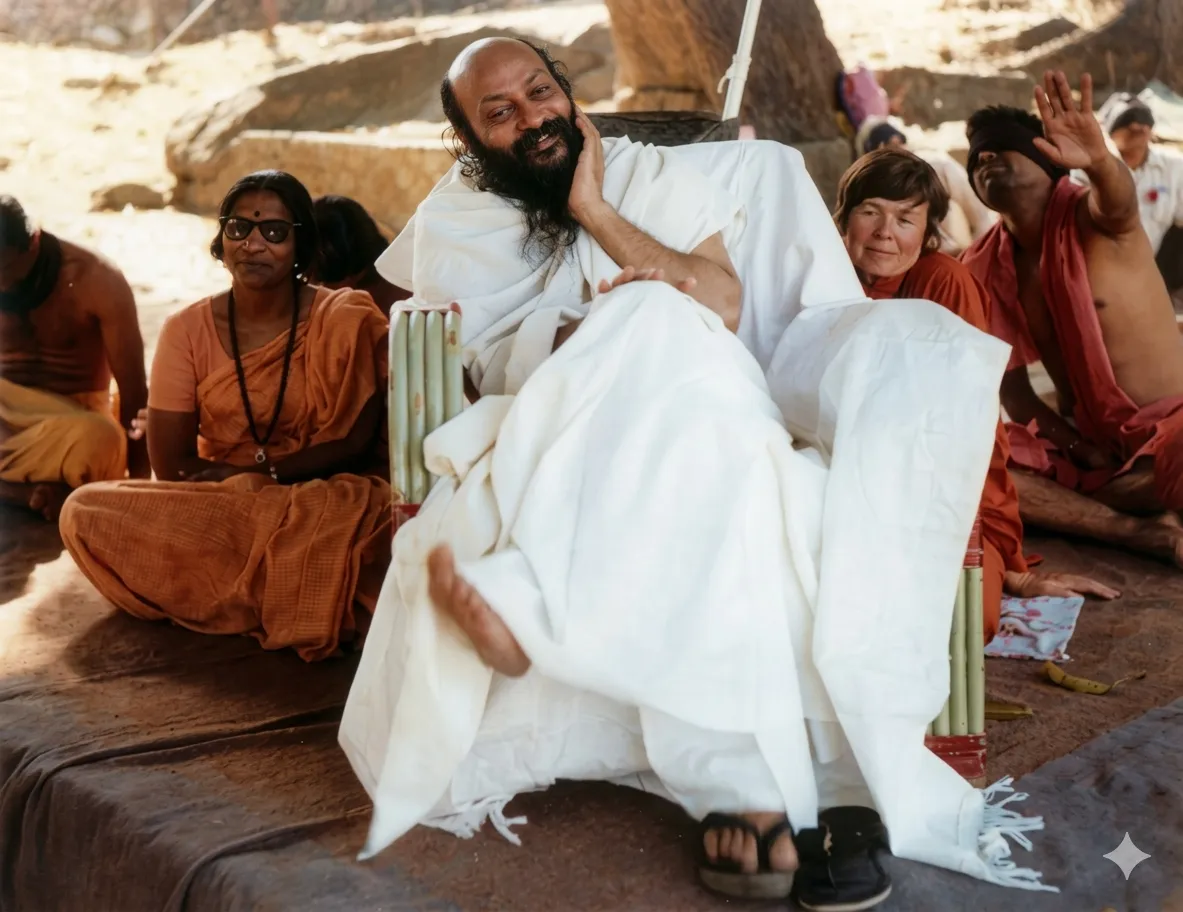
Osho's original Hindi beside Osho Live's English translation, matched passage by passage.
एक तीसरे द्वार से कृष्ण और प्रतीकों का भी उपयोग करते हैं, वृक्षों में पीपल!
A third doorway too—Krishna uses symbols. Among trees, the peepal!
पीपल बहुत विशेष वृक्ष है। हिंदुओं की मान्यता के अनुसार ही नहीं, वनस्पतिशास्त्र के अनुसार भी। और वनस्पतिशास्त्र के अनुसार ही नहीं, अब तो मनोविज्ञान के अनुसार भी। सारे वृक्ष रात्रि में कार्बन डाइआक्साइड छोड़ते हैं, सिर्फ पीपल को छोड़कर। पीपल भर रात में कार्बन डाइआक्साइड नहीं छोड़ता है।
The peepal is a very special tree. Not only according to Hindu understanding, but botanically as well. And not only botanically—now even psychology hints at it. Most trees release carbon dioxide at night; the peepal is the exception. Throughout the night it does not emit carbon dioxide.
इसलिए किसी भी वृक्ष के नीचे रात रुकना हानिकर है, सिर्फ पीपल को छोड़कर। किसी भी वृक्ष के नीचे रात रुकने का अर्थ घातक हो सकता है। कार्बन डाइआक्साइड की मात्रा बढ़ जाए, तो मृत्यु भी घटित हो सकती है। इसलिए रात्रि वृक्षों के नीचे रहने की मनाही है। लेकिन पीपल के वृक्ष के नीचे रात भी रहा जा सकता है। पीपल इस अर्थ में अनूठा है। चौबीस घंटे उससे जीवन निःसृत होता है।
That is why, under any tree, staying the night is harmful—except under a peepal. To spend a night beneath most trees can even prove fatal if carbon dioxide accumulates. So there is a prohibition against sleeping under trees at night. But beneath a peepal, one can remain even through the night. In this sense the peepal is unique—life seems to flow from it twenty-four hours a day.
मनोविज्ञान के हिसाब से अब एक बहुत अनूठी बात का पता चला है। मनसविद और शरीरशास्त्री दोनों ही निरंतर इस खोज में रहे हैं कि मनुष्य की चेतना का केंद्र कहां है। शरीर में सारी ग्रंथियों की खोज-बीन की गई है। मस्तिष्क में जिन ग्रंथियों के पास चेतना की निकटता मालूम पड़ती है, उन ग्रंथियों में जो रसस्राव है, बहुत चकित करने वाली बात है कि मस्तिष्क में जिस कारण बोध और चेतना निर्मित होती है, या जिसके अभाव में आदमी बेहोश हो जाता है, उस रासायनिक तत्व की सर्वाधिक उपलब्धि पीपल वृक्ष में है। मनुष्य के भीतर जो बुद्धि है, उस बुद्धि के प्रकट होने के लिए जिस रासायनिक प्रक्रिया की जरूरत है और जिन रासायनिक तत्वों की मस्तिष्क में जरूरत है, उनकी सर्वाधिक मात्रा पीपल में उपलब्ध है।
From psychology, too, something remarkable has come to light. Mind-scientists and physiologists have long searched for the center of human consciousness. They have investigated all the glands in the body, especially those in the brain that appear to be near awareness. The astonishing finding is this: the chemical element whose secretion correlates with wakefulness and awareness in the brain—and whose absence brings about unconsciousness—exists in the peepal in the highest concentration. The chemistry necessary for the flowering of intelligence in the human brain—the needed elements and processes—are found most abundantly in the peepal.
कॉलिन विल्सन ने मजाक में ही लिखा है, लेकिन विचारपूर्ण है बात। उसने लिखा है कि बुद्ध का बुद्धत्व जिस वृक्ष के नीचे हुआ--वट-वृक्ष, वह पीपल की जाति का ही वृक्ष है--उस वृक्ष के नीचे बुद्ध का बुद्धत्व घटित होना, किसी गहरे अर्थ में वृक्ष से भी संबंधित हो सकता है। क्योंकि चैतन्य की प्रक्रिया जिस रासायनिक संभावना से बढ़ती है, वह वट या पीपल, उस तरह के वृक्षों में सर्वाधिक है।
Colin Wilson, half in jest but thoughtfully, once wrote that Gautam Buddha’s enlightenment occurred under the banyan—the bodhi tree, of the same family as the peepal—and that, in some deep sense, Buddha’s enlightenment may have been related to the tree itself. The chemical possibilities that support the flowering of consciousness seem to be richer in the banyan and the peepal than in other trees.
तो बोधि-वृक्ष, सिर्फ बुद्ध के नीचे बैठने से बोधि-वृक्ष कहलाए, ऐसा नहीं। बोधि-वृक्ष सारे वृक्षों में सर्वाधिक बुद्धि की संभावना वाला वृक्ष भी है।
So the bodhi tree is not called bodhi merely because Buddha sat beneath it. Among trees, it is the one with the greatest potential for intelligence.
कृष्ण कहते हैं, वृक्षों में मैं पीपल हूं।
Krishna says, Among trees I am the peepal.
इसका अर्थ यह हुआ कि अगर हम परमात्मा की खोज करने जाएं वृक्षों में भी, तो जहां भी बुद्धिमत्ता की छोटी-सी किरण हो, उसी से हमें खोज करनी पड़ेगी। जहां भी बुद्धिमत्ता है, वहीं ईश्वर है। अगर वृक्ष में भी बुद्धिमत्ता की कोई किरण है, तो वहीं ईश्वर है।
This means: even if we were to seek the divine among trees, we would have to begin wherever we find a small ray of intelligence. Wherever there is intelligence, there is God. If there is even a glimmer of intelligence in a tree, there too is God.
वर्षों तक विज्ञान ऐसा सोचता था कि बुद्धि केवल आदमी में है, लेकिन वह बात भ्रांत सिद्ध हुई। बुद्धि पशुओं में भी है। उसकी मात्रा भिन्न होगी, उसका ढंग और होगा। उसे हम न समझ पाते हों, यह भी हो सकता है, क्योंकि हमसे पशुओं की बुद्धि का कोई संवाद नहीं है। लेकिन अब तो विज्ञान यह भी स्वीकार करता है कि पौधों में भी बुद्धि है। और पौधों के पास भी स्मृति है, मेमोरी है। और पौधे भी स्मृति को संरक्षित रखते हैं। शायद शीघ्र ही हम ये सारे रास्ते खोज लेंगे, जिनसे पौधों की स्मृति को भी खोला जा सके।
For years science held that intelligence exists only in human beings. That proved mistaken. Animals too have intelligence, though its quantity and expression differ. We may not understand it—there may be no direct dialogue between animal intelligence and ours—but it is there. And now science even accepts intelligence in plants. Plants have memory; they can retain and preserve impressions. Perhaps soon we will discover the pathways by which plant memory can be read.
तो बोधि-वृक्ष के नीचे अगर बुद्ध को ज्ञान उत्पन्न हुआ हो, तो इस बोधि-वृक्ष को बुद्ध के इस ज्ञान के होने की घटना की भी स्मृति है। और वह वृक्ष तो अब तक बचाया जा सका है। बोधि-वृक्ष, जिसके नीच बुद्ध को ज्ञान हुआ, अब तक सुरक्षित है। क्या उस वृक्ष के अंतस्तल में, बुद्ध के जीवन में जो घटना घटी उस वृक्ष के नीचे, वह जो महाप्रकाश हुआ, उसकी कोई स्मृति संरक्षित है?
If Buddha awakened under the bodhi tree, then the tree too may carry the memory of that event. That very tree has been preserved to this day. Does its innermost being hold some trace of the great illumination that occurred beneath it?
अब वैज्ञानिक कहते हैं कि वृक्षों की भी, पौधों की भी स्मृति है। उनका भी बोध है और उनकी भी संवेदनशीलता है। इतना ही नहीं, वे कहते हैं.। और इस पर अब काफी प्रयोग किए जा चुके हैं, रूस में, अमेरिका में, दोनों जगह। अब ऐसे यंत्र भी निर्मित हुए हैं, जो यह बता सकें कि वृक्ष की भावदशा क्या है।
Scientists now say plants have memory and awareness. They are sensitive. Not only this—there have been many experiments, in Russia and in America. Instruments have been built that can register the emotional state of a plant.
जैसे आप बैठे हों और अचानक एक आदमी छुरा लेकर आपके सिर पर खड़ा हो जाए, आप भयभीत हो जाएंगे। आपके रोएं-रोएं में भय का संचार हो जाएगा। तो अब वैज्ञानिक यंत्र उपलब्ध हैं, जो आपके पास लगे होंगे, वे तत्काल खबर दे देंगे कि आप भय से कंप रहे हैं। आपके भीतर भय दौड़ रहा है। क्योंकि जब आपके भीतर भय दौड़ता है, तो आपके शरीर की विद्युत, आपके शरीर की बिजली, एक खास ढंग से कंपित होने लगती है। वह कंपन पास के विद्युत यंत्रों में पकड़ा जा सकता है। जब आप प्रेम से भरे होते हैं, तब भी आपके भीतर दूसरे तरह के कंपन होते हैं। जब आप आनंद से भरे होते हैं, तो तीसरे तरह के कंपन होते हैं।
If you’re sitting and someone suddenly stands over you with a knife, you are flooded with fear—every fiber of your being vibrates with it. Today we have instruments that, attached to your body, will immediately signal that fear. Whenever fear arises, the bioelectric currents of your body begin to oscillate in a particular way; nearby instruments can pick up those vibrations. When you are filled with love, there is another pattern; when you are blissful, a third.
यह आश्चर्य की बात है, अचानक ही यह घटना घट गई। अचानक ही, एक वैज्ञानिक को ऐसे ही खयाल आया कि आदमी तो कंप जाता है, क्या पशु भी इसी तरह, उनके भीतर भी कुछ इसी तरह की स्थिति बनती होगी? तो उसने पशुओं पर प्रयोग किए। पशु भी इसी तरह भयभीत होते हैं, प्रेम से भरते हैं, क्रोध से भरते हैं। उसे खयाल आया, क्या पौधे में भी यह संभव होगा?
Then something astonishing happened. A scientist wondered: if a human being trembles, do animals, too? He experimented—animals fear, love, rage, just as we do. Then he thought: could this be possible in plants?
तो उसने अपने कमरे में लाकर एक गमला रखा पौधे का, छुरा उठाकर आया पौधे के पास कि पौधे को अब काटे, तो पता चले कि पौधे को कटते वक्त भीतर क्या होता है। लेकिन वह चकित हुआ, जब वह छुरा पास लाया, तभी उसके यंत्र ने बताया कि पौधे के प्राण भीतर वैसे ही भय से कंप रहे हैं, जैसे आदमी के प्राण भय से कंपते हैं। छुरा मारा नहीं है अभी। अभी सिर्फ छुरा लेकर वह खड़ा है। तब तो स्वीकार करना पड़ेगा कि पौधे के पास भी हमारे जैसी ही संवेदनशीलता, हमारे ही जैसी आत्मा है।
He brought a potted plant into his room, took up a knife, and approached it to see what its inner condition might be at the moment of cutting. He was shocked: as soon as he brought the knife close, before he even cut, his instrument showed the plant trembling with fear—just as a human being trembles. He had not yet struck—he was merely standing there with a knife. One must accept then that plants possess a sensitivity and a soul akin to ours.
और भी आकस्मिक रूप से एक घटना घटी कि वह जिस पौधे के ऊपर छुरा लेकर खड़ा था, उसके पास रखे दूसरे पौधे में भी भय का संचार हो गया। और तब तो उसने बहुत-से प्रयोग किए। और उसने पाया कि अगर आप एक पौधे को भी जाकर बगीचे में नुकसान पहुंचाते हैं, तो आपके चारों तरफ जितने पौधे आस-पास होते हैं, वे सब भी दुखी और पीड़ित हो जाते हैं; वह पौधा तो होता ही है।
An even more unexpected event occurred. The plant that was threatened reacted in fear—and so did a second plant placed beside it. Many experiments followed. He found that if you harm even a single plant in a garden, all the plants around it become distressed. The one being harmed, of course; but the neighbors too suffer.
तब तो इसका यह अर्थ हुआ कि पौधे की संवेदनशीलता शायद आदमी की संवेदनशीलता से भी ज्यादा शुद्ध है। क्योंकि आपके पास में कोई मारा जा रहा हो, तो जरूरी नहीं है कि आप दुखी हों; खुश भी हो सकते हैं, सुखी भी हो सकते हैं। लेकिन उस वैज्ञानिक के प्रयोगों में ऐसा कभी उसने नहीं पाया कि एक पौधे को काटा जा रहा हो, या काटे जाने की स्थिति बनाई जा रही हो, तो पास का कोई भी पौधा प्रसन्न हुआ हो। वे सभी एक साथ दुखी हो जाते हैं।
What does this imply? That the sensitivity of plants may be purer than that of human beings. If someone near you is being killed, it isn’t necessary that you feel sorrow—you may even feel happy. But in the scientist’s experiments, he never found a single neighboring plant that became pleased when another was being cut or threatened. They all became sad together.
आदमी में ऐसा पाना मुश्किल है। अगर हिंदू मारा जा रहा हो, तो मुसलमान खुश हो सकता है। मुसलमान मारा जा रहा हो, हिंदू खुश हो सकता है। मित्र मारा जा रहा हो, तो दुख होता है; दुश्मन मारा जा रहा हो, तो हम प्रसन्न भी हो सकते हैं। उस वैज्ञानिक के प्रयोगों से यह पता चला है कि पौधों में ऐसा दुर्भाव नहीं है, ऐसी ईर्ष्या और ऐसी शत्रुता-मित्रता का विभाजन नहीं है।
It is hard to find such unanimity in human beings. If a Hindu is killed, a Muslim may be pleased; if a Muslim is killed, a Hindu may be pleased. If a friend dies, we grieve; if an enemy dies, we may rejoice. The experiments showed that plants harbor no such malice, no partition of jealousy, enmity, and friendship.
यह पूरा जीवन ही आत्मा से व्याप्त है। हम पहचान पाते हों, न पहचान पाते हों; हम समझ पाते हों, न समझ पाते हों; क्योंकि हमारी समझ की बड़ी छोटी-सी सीमा है। आदमी की समझ आदमी के बाहर काम नहीं पड़ती। सच तो यह है कि एक आदमी की समझ भी दूसरे आदमी के काम नहीं पड़ती। और एक आदमी की समझ भी दूसरे आदमी को समझने में असमर्थ हो जाती है।
Life is saturated with soul. Whether we recognize it or not; whether we understand it or not—for our understanding is very small. A human being’s understanding hardly suffices even for another human being. In truth, one person’s understanding often fails to comprehend another person.
हम सब राबिन्सन क्रूसो हैं अलग-अलग। दूसरे तक भी पहुंचना मुश्किल होता है। आपको मैं खुश देखता हूं, तो भी मैं आपकी खुशी नहीं समझ पाता कि आपके भीतर क्या हो रहा है। आपकी मुस्कुराहट देखता हूं, आपके चेहरे पर आ गई झलक देखता हूं, लेकिन आपके भीतर कौन-सा सुख घटित हो रहा है, कैसे सुख की तरंग आपके भीतर बह रही है, उसका मैं कोई अनुभव नहीं कर पाता; अनुमान लगाता हूं। वह अनुमान झूठा भी हो सकता है। क्योंकि आप अभिनय कर रहे हों, यह भी हो सकता है।
We are all Robinson Crusoes, isolated on our islands. Even reaching another person is difficult. I see you happy, but I cannot know what is happening within you. I see your smile, the light upon your face, but I cannot experience the wave of joy moving inside you; at best I infer. And inference can be false—you may be acting.
हममें से अधिक लोग अभिनय कर रहे हैं। उससे बड़ी जटिलता पैदा होती है। हर आदमी को अपने दुख का पता होता है और दूसरे आदमी की झूठी हंसियों का पता होता है, झूठी मुस्कुराहटों का। तो हर आदमी सोचता है, मुझसे ज्यादा दुखी कोई भी नहीं। सारे लोग कितने प्रसन्न मालूम हो रहे हैं! हर आदमी सोचता है, सारे लोग प्रसन्न हैं, सारी दुनिया खुश मालूम होती है, मैं ही एक दुखी हूं, मैं ही एक परेशान हूं! यह परमात्मा मुझसे ही नाराज क्यों है!
Most of us are acting. That makes everything more complicated. Each person knows his own suffering and sees only the false smiles of others. So each concludes: no one is more miserable than I am; everyone else seems so cheerful! The whole world appears happy—only I am troubled. Why is God angry with me alone?
उसे पता नहीं कि वह भी जब दूसरों के सामने मुस्कुराता है, जब सुबह उससे कोई रास्ते पर पूछता है कि कैसे हो, तो वह कहता है, बहुत अच्छा हूं, मजे में हूं, तब उसे पता भी नहीं कि भीतर उसके न कोई मजा होता है, न बहुत अच्छे की कोई खबर होती है; लेकिन उस दूसरे आदमी को वहम पैदा होगा कि बहुत मजे में है, बहुत अच्छा है। यह औपचारिक वक्तव्य था।
He forgets that he too smiles when others ask him how he is. “Very well, I’m fine,” he says, even when nothing inside is fine. The other is deceived into thinking, “How well he is!” It was a formal statement.
हमारे चेहरे औपचारिक हैं, फार्मल हैं, दूसरों को दिखाने के लिए हैं। भीतर वैसी बात नहीं है। हमारा दुख भी जरूरी नहीं कि सच्चा हो। हमारा सुख भी जरूरी नहीं कि सच्चा हो। लेकिन हम दूसरों के चेहरे ही देख सकते हैं, उनकी आत्मा को नहीं देख पाते। हम अंदाज लगा सकते हैं कि ऐसा ही हमें होता है। किसी आदमी की आंख से आंसू गिर रहे हों, तो हम अनुमान लगाते हैं, इनफरेंस करते हैं कि जब दुख होता है, तो मेरे आंसू बहते हैं। उसको भी दुख हो रहा होगा। यह जरूरी नहीं है। यह आवश्यक नहीं है। यह अनुमान है।
Our faces are formal, for display. Inside, it is otherwise. Our sorrow may not be true; our joy may not be true. We can only see another’s face; we cannot see into their soul. When we see tears we infer: when I am sad, I weep; therefore he must be sad. Not necessary. It is an inference.
एक आदमी की समझ भी दूसरे के प्राणों में प्रवेश नहीं कर पाती--दूसरे आदमी की, जो कि ठीक हमारे जैसा ही है। तो अगर आदमी की समझ पशुओं में प्रवेश न कर पाए, तो कोई आश्चर्य नहीं है।
One person’s understanding cannot enter another’s life-breath—another person who is just like us. So if our understanding fails to enter animals, it is no surprise.
इसलिए दुनिया के बहुत-से धर्मों ने पशुओं में आत्मा ही नहीं मानी, इसलिए पशुओं को काटने में कोई अड़चन नहीं पाई। समझा कि पशु शायद आदमी के लिए ही बने हैं कि उनको काटो; वे आदमी का भोजन हैं! उसका कुल कारण इतना था कि पशुओं के पास आत्मा के होने का जो ढंग है, उससे हमारा कोई संबंध नहीं जुड़ पाता। हमारे और पशुओं के बीच कोई संवाद नहीं हो पाता। हमारी और उनकी भाषा कहीं मिल नहीं पाती। उनके संकेत हमारी समझ में नहीं आते। और इसलिए स्वभावतः, पशु हमारे लिए यंत्रवत मालूम होता है।
Hence many religions denied animals a soul and felt no obstacle in killing them—assuming animals were made for man’s use. The whole reason was only this: the manner in which soul manifests in animals does not connect with us. There is no common language, no dialogue. Their signals elude us. So animals appear as mechanisms.
फिर पौधे तो और भी दूर हो जाते हैं। इसलिए पौधों को तो कोई कठिनाई हम सोच ही नहीं सकते कि उनको पीड़ा होती होगी, कि दुख होता होगा, कि सुख होता होगा, कि वे भी कभी आनंदित होकर समाधिस्थ होते होंगे, कि कभी वे भी नाचते होंगे किसी खुशी में, और कभी उनके प्राणों से भी आंसू बहते होंगे। उनके आंसू का ढंग हमें पता नहीं, उनकी मुस्कुराहट हमें पता नहीं, उनकी भाषा का कोई संकेत भी हमारे पास नहीं है।
Plants are even farther. We cannot imagine their pain, their sorrow or joy; that they too might be blissful and absorbed; that they might dance in happiness; that tears might flow from their life-breath. We do not know the mode of their tears, nor their smile, nor any token of their tongue.
लेकिन इस मुल्क में हमने और-और रास्तों से भी मनुष्य इतर अस्तित्व में प्रवेश करने की कोशिश की है। महावीर इतने अभिभूत हो गए थे समस्त जीवन, जहां-जहां भी अस्तित्व है, वहां-वहां जीवन है, इससे; कि उन्होंने अपने साधुओं को कहा है कि गीली जमीन पर भी मत चलना। क्योंकि गीली जमीन पर अगर घास का अंकुर भी हो गया हो, तो उस अंकुर पर भी पैर पड़ जाना हिंसा है। उन्होंने कहा है कि कच्चे फल को तोड़कर मत खाना। क्योंकि कच्चा फल जब तोड़ा जाता है, तो वृक्ष के प्राणों में वैसी ही पीड़ा होती है, जैसे कोई आपका हाथ तोड़ ले। जब वृक्ष से फल पक जाए और गिर जाए, तभी।
But in this land, we attempted entry into non-human existence by other routes. Mahavira became so overwhelmed by the pervasive presence of life—wherever being is, there is life—that he told his monks: do not even walk on wet ground, for a blade of new grass might be sprouting, and to step upon it is violence. Do not pluck unripe fruit, for to tear an unripe fruit from the tree causes pain to the tree as if one tore your hand away. Let the fruit ripen and fall of itself.
महावीर की अहिंसा शायद आने वाले पचास वर्षों में पुनर्स्थापित हो सके। क्योंकि विज्ञान जो खोज कर रहा है पौधों के भीतर संवेदना की, वह महावीर को सही सिद्ध कर जाएगी कि वे ठीक कहते थे; कि वहां भीप्राण इतना ही है, जितना हमारे भीतर। वहां भी संवेदना इतनी ही है, जितनी हमारे भीतर। वहां भी आत्मा इतनी ही है, जितनी हमारे भीतर।
Mahavira’s ahimsa may be reinstated within the next fifty years. For science’s discoveries regarding plant sensitivity will vindicate him: there too is life as much as within us; there too is sensitivity; there too is soul.
कृष्ण कहते हैं, वृक्षों में मैं पीपल हूं।
Krishna says, Among trees I am the peepal.
आपको तो अंदाज नहीं होगा, लेकिन जो लोग--बहुत कम लोग जमीन पर वृक्षों के साथ मेहनत किए हैं--जिन्होंने पता लगाने की कोशिश की कि वृक्षों में सबसे ज्यादा प्रतिभा कहां है। तो उन सबके नतीजे पीपल जाति के वृक्षों के करीब आते हैं। पीपल बहुत प्रतिभावान, बहुत प्रज्ञावान वृक्ष है। वृक्षों में प्रज्ञा सर्वाधिक उसमें प्रकट हुई है।
You may not know this, but those few who have worked intimately with trees, who have tried to discover where the greatest talent resides among them, arrive near the peepal’s family. The peepal is highly gifted, very wise. Among trees, wisdom flowers most fully there.
इसलिए पीपल की पूजा ऐसे ही आकस्मिक शुरू नहीं हो गई थी। वह पीपल के भीतर जो प्रज्ञा की संभावना है, उसके कारण शुरू हो गई थी।
That is why the worship of the peepal did not start accidentally. It began because of the potential for wisdom within it.
कई बार जब विज्ञान खो जाते हैं, तो हमारे हाथ में अंधविश्वास रह जाते हैं। आज भी हम पीपल के नीचे अपने परमात्मा को स्थापित करते हैं, मूर्ति को निर्मित करते हैं। आज भी हम पीपल की पूजा करते हैं, आज भी पीपल को नमस्कार कर लेते हैं, उसको सिर झुका लेते हैं। लेकिन शायद हमें पता कुछ भी नहीं कि हम क्या कर रहे हैं और क्यों कर रहे हैं! और अगर पता न हो, तो हमारे नमस्कार में कोई भी अर्थ नहीं रह जाता।
When science is lost, superstition remains in our hands. Even today we seat our deities beneath a peepal, install their images there. We still bow to the peepal. But we hardly know what we are doing or why. Without knowing, our reverence is empty.
पीपल को नमस्कार का एक ही अर्थ है कि प्रज्ञा कहीं भी हो, नमस्कार के योग्य है। पीपल में हो, तो भी।
To bow to the peepal means: wherever there is wisdom, it is worthy of reverence—even in a tree.
लेकिन हम तो अगर मनुष्य भी हमारे पड़ोस में प्रज्ञावान हो, तो उसको भी नमस्कार करने में पीड़ा अनुभव करेंगे। और पीपल को हम नमस्कार कर लेंगे! और अगर पड़ोसी में भी प्रज्ञा हो, उसमें भी ज्ञान का जन्म हुआ हो, तो भी हमारा सिर उसके सामने नहीं झुकेगा। तो साफ है कि हमें पता नहीं कि पीपल को नमस्कार करते वक्त हम क्या कर रहे हैं। पीपल को नमस्कार करते वक्त कौन-सा विज्ञान काम कर रहा है, कौन-सा स्मरण काम कर रहा है, उसका हमें कोई भी बोध नहीं है।
Yet if a wise human being lives next door, we feel pain at the thought of bowing, even as we bow to a peepal! Even if our neighbor has awakened to knowledge, our head will not bend. Clearly, when we bow to the peepal we do not know what we are doing; what science, what remembrance is at work there is unknown to us.
अगर वृक्षों में भी प्रज्ञा स्थापित होती हो, अगर उनमें भी कहीं बुद्धि का फूल खिलता हो, तो भी हमारा सिर झुकेगा, यह भाव है। लेकिन आदमी में अगर प्रज्ञा का फूल खिले, तो हमारा तो सिर वहां भी झुकने को राजी नहीं होता। अहंकार बाधा डालता है।
The feeling is: if wisdom flowers even among trees, we shall bow there too. But when wisdom flowers in a person, still our head refuses to bow. Ego obstructs.
और मजे की बात यह है कि जो आदमी पीपल के सामने आसानी से झुक सकता है, वह आदमी के सामने आसानी से न झुक सकेगा। क्योंकि पीपल के सामने झुकने में ऐसा हमें खयाल ही नहीं होता है कि हम किसी के सामने झुक रहे हैं। आदमी के सामने झुकने में पता चलता है, हम किसी के सामने झुक रहे हैं।
And the irony: the one who can easily bow before a peepal cannot easily bow before a living person. Before a tree, it doesn’t feel as if we are bowing before someone; before a person, it does.
इसलिए पत्थर की मूर्ति के सामने सिर रख देना आसान है, जिंदा आदमी के सामने सिर रखना बहुत कठिन है। इसीलिए जब गुरु मर जाते हैं, तो मूल्यवान हो जाते हैं। जब जिंदा होते हैं, तब मूल्यवान नहीं होते। क्राइस्ट मर जाएं, तो ईश्वर हो जाते हैं। जिंदा हों, तो सूली पर लटकाए जाते हैं! बुद्ध जिंदा हों, तो हम पत्थर मारते हैं। और मर जाएं, तो हम उनकी इतनी प्रतिमाएं बनाते हैं कि सारी पृथ्वी को उनकी प्रतिमाओं से भर देते हैं! क्या होगा कारण? क्या होगा राज इसके भीतर?
Hence it is easy to place your head before a stone image; very hard to place it before a living man. That is why when a master dies, he becomes valuable. Alive, he is not. Let Christ die, and he becomes God; alive, he is hung upon a cross! While Buddha is alive, we throw stones; once he dies, we raise so many statues that we cover the earth with them. Why? What is the secret?
अगर जीसस हमारे सामने खड़े हों, तो ठीक हमारे ही जैसा आदमी सामने होता है। सिर झुकाने में हमें पीड़ा मालूम पड़ती है; कष्ट होता है; अहंकार को चोट लगती है। लेकिन क्राइस्ट मौजूद न हों, बुद्ध खो गए हों, महावीर मौजूद न हों, कृष्ण मौजूद न हों, तो हमें कोई अड़चन नहीं होती, क्योंकि सामने कोई भी नहीं होता।
If Jesus stands before us, he looks just like us. Bowing hurts—we feel wounded in our pride. But when Christ is no longer present—when Buddha, Mahavira, Krishna are no more—then nothing stands before us.
लेकिन ध्यान रहे, मुर्दा गुरु कितना ही बड़ा हो, उससे उतना लाभ नहीं लिया जा सकता, जितना छोटे से छोटे जिंदा गुरु से लिया जा सकता है।
Remember, however great a dead master may be, he cannot help you as much as even a small living master.
लेकिन जिंदा गुरु के सामने झुकना बहुत मुश्किल बात है। और यह हालत यहां तक पहुंच गई है कि अब अगर किसी गुरु को आपको अपने चरणों में झुकाना हो, तो उसे एक ही काम करना चाहिए, उसे कहना चाहिए, कोई मेरा पैर न छुए। कोई मेरे सामने न झुके। बल्कि अच्छा तो यह हो कि वह आपके चरणों में झुके, तो आपको लगे कि हां, यह आदमी ठीक है।
But bowing before the living is difficult. It has come to this: if a guru wishes people to bow at his feet, he need only say, “No one should touch my feet; no one should bow.” Better still, he bows to you—then you feel, “Yes, this man is right.”
एक मित्र मुझे मिलने आए थे। उन्होंने कहा कि मैं कृष्णमूर्ति से बहुत प्रभावित हुआ। मैंने कहा, कारण क्या है प्रभावित होने का? तो उन्होंने कहा, जब मैं उनके पास मिलने गया और उनके सामने बैठकर बात करने लगा, तो उन्होंने हाथ मेरे घुटने पर रख लिया और वे अपना हाथ मेरे घुटने पर सहलाते हुए मेरे पैर पर भी ले गए।
यह उन्होंने किसी प्रेम के क्षण में किया होगा। लेकिन उनको भी पता नहीं होगा कि इस आदमी के अहंकार को रस आया; इस आदमी के अहंकार को मजा आया।
A friend came to me and said he was deeply impressed by Krishnamurti. I asked why. He replied, “When I sat with him, he placed his hand on my knee and gently stroked it, even down to my foot.” He must have done it in a moment of affection. But he did not realize how much delight it gave this man’s ego.
इधर मैंने देखा है कि कृष्णमूर्ति के पास, जिनको हम गहनतम अहंकारी कहें, उन लोगों की भीड़ इकट्ठी हो गई है। और उसका कुल एक कारण है। उसका कुल एक कारण है कि कृष्णमूर्ति कहते हैं, न मैं गुरु हूं, न मैं अवतार हूं, न मैं शिक्षक हूं, न मैं तुम्हें सिखाने वाला हूं। मैं तो कुछ भी नहीं हूं। लोग चालीस-चालीस साल से उनको सुन रहे हैं। चालीस साल से निरंतर उनसे सीख रहे हैं। लेकिन यह सुनकर उनके मन को बड़ी तृप्ति मिलती है कि नहीं, कृष्णमूर्ति किसी के गुरु नहीं हैं। इसका गहरा मजा यह है कि मैं किसी का शिष्य नहीं हूं।
Lately I see around Krishnamurti a crowd of those we might call the deeply egoistic. The reason is simple. He says, “I am not a guru, not an avatar, not a teacher. I teach no one. I am nothing.” People have listened to him for forty years—learning constantly from him—yet their minds are soothed by the assurance that he is no one’s guru. Why? Because then I am no one’s disciple.
यह बहुत मजे की बात है। कृष्णमूर्ति जीवनभर अहंकार से मुक्त होने की बात करते हैं। ठीक बात करते हैं। लेकिन जो वर्ग उनके आस-पास इकट्ठा होता है, वह गहन अहंकार वाले लोगों का वर्ग है। उसको मजा आता है। उसे लगता है कि बिलकुल ठीक है।
It is delightful. Krishnamurti speaks of freedom from ego all his life—rightly so—but the class gathered around him is the highly ego-centered class. They enjoy it. It feels absolutely right.
यह वर्ग महावीर और बुद्ध के पास इकट्ठा कभी भी नहीं होगा। यह वर्ग कृष्ण के पास नहीं जा सकता। क्योंकि कृष्ण कहेंगे, सर्व धर्मान परित्यज्य मामेकं शरणं व्रज--सब छोड़, सब धर्म-वर्म छोड़ और मेरी शरण आ। यह वर्ग कहेगा, क्या आप कह रहे हैं? आपकी शरण और हम आएं! आपमें ऐसा क्या है? आप हैं कौन?
Such a class would never gather around Mahavira or Buddha, nor around Krishna. For Krishna says, “Abandon all dharmas and come to me alone for refuge.” This class protests: “Who are you to say that? Why should we come to your refuge? Who do you think you are?”
यह वर्ग जो कृष्णमूर्ति के पास इकट्ठा है, यह कृष्ण के पास इकट्ठा नहीं हो सकता। लेकिन मजे की बात यह है कि इस वर्ग को कृष्ण के पास पहुंचने से ही लाभ होगा। इस वर्ग को कृष्णमूर्ति के पास लाभ नहीं हो सकता। जो वर्ग कृष्ण के पास इकट्ठा है, वह अगर कृष्णमूर्ति के भी पास हो, तो उसको लाभ हो सकता है।
This very class that crowds around Krishnamurti cannot gather around Krishna. Ironically, only Krishna could help them; Krishnamurti cannot. Those who gather around Krishna could profit from Krishnamurti as well.
आप मेरा मतलब समझे?
Do you see?
अगर विनम्र आदमी कृष्णमूर्ति के पास भी इकट्ठे हों, तो उनको लाभ हो सकता है। लेकिन अहंकार वाले आदमी के अहंकार को तो और पुष्टि मिल जाती है।
If humble people gather around Krishnamurti, they can benefit. But the proud have their pride fortified.
यह हमारी सदी ईश्वर को इनकार करने की सदी है। इसलिए नहीं कि हमको पता चल गया है कि ईश्वर नहीं है। बल्कि इसलिए कि हमारी सदी इस पृथ्वी के इतिहास में सबसे ज्यादा अहंकारग्रस्त, सबसे ज्यादा ईगोसेंट्रिक, अहंकार-केंद्रित सदी है। हम ईश्वर को भी बर्दाश्त नहीं कर सकते। हमसे ऊपर कोई ईश्वर हो, इसको भी हम बर्दाश्त नहीं कर सकते।
Ours is a century of denying God—not because we have discovered there is no God, but because this is the most ego-ridden century in human history. We cannot tolerate even the idea that someone stands above us.
पश्चिम में एक विचार चलता है, ह्यूमनिस्ट, मानवतावादियों का। वे कहते हैं, मनुष्य के ऊपर और कोई भी सत्य नहीं है। मनुष्य आखिरी सत्य है।
लेकिन जब कोई कहता है, मनुष्य आखिरी सत्य है, तो उसका अर्थ है कि अब प्रगति का कोई उपाय न रहा। जब कोई कहता है, मनुष्य आखिरी सत्य है, तो उसका अर्थ है कि अब ऊपर आंखें उठाने की कोई जगह न रही। उसका अर्थ है कि अब हम जो हैं, अब हम वही होने को आबद्ध हैं। अब इसमें कोई क्रांति, इसमें कोई विस्फोट, इसके पार जाने का अब कोई उपाय नहीं है।
In the West there is humanism: “Man is the ultimate truth.” But to say man is the ultimate truth is to declare that there is nowhere to look beyond; no further evolution; no going beyond what we are.
अपने से श्रेष्ठतर की तरफ जो आंख है, वह पार जाने का उपाय है, द्वार है। और जिस दिन आदमी स्वयं के पार जाना बंद कर देता है, उसी दिन आदमी सड़ जाता है, नष्ट हो जाता है।
The eye turned toward what is higher is the door beyond. The day man refuses to go beyond himself, that day man begins to rot.
नीत्शे ने कहा है, जिस दिन आदमी की प्रत्यंचा पर, जिस दिन आदमी के धनुष पर दूर और आदमी के पार जाने का बाण नहीं चढ़ेगा, उसी दिन आदमी समाप्त हो जाएगा।
Nietzsche said: the day man’s bow no longer lifts an arrow aimed beyond man, that day man ends.
सदा अपने से पार जाना है। लेकिन पार जाना तभी संभव है, जब पार जाने वाली किसी बात के प्रति हमारा समर्पण हो।
Always go beyond yourself. But this is possible only when there is surrender toward something beyond.
ये हिंदू बहुत अदभुत लोग थे एक अर्थ में, कि अगर पीपल में भी उन्हें कोई पार जाने वाली चीज दिखाई पड़ी, प्रज्ञा की कोई झलक मिली, कोई लौ, कोई छोटा-सा दीया वहां भी दिखाई पड़ा, तो उन्होंने वहां भी अपना सिर जमीन पर रख दिया।
These Hindus were wondrous in one sense: if they found even in a peepal some hint of transcendence, some flicker of intelligence, a little flame—they placed their head upon the ground there too.
कोई जरूरत नहीं है आदमी को पीपल के सामने झुकने की। क्या है जरूरत? और पीपल की क्या है सामर्थ्य कि आदमी को अपने सामने झुका ले! आदमी चाहे तो काटे और सारे पीपल पृथ्वी से अलग कर दे। लेकिन असहाय पीपल के सामने भी, जिसको काटकर हटाया जा सकता है, जब आदमी ने सिर झुकाया, तो कुछ गहरा कारण था। और वह गहरा कारण यह था कि समस्त वृक्षों में पीपल के पास एक अपनी तरह की बुद्धिमत्ता है। उस बुद्धिमत्ता से संबंध भी जोड़ा जा सकता है।
What need is there for a man to bow to a peepal? What power has a peepal to make a man bow? Man could cut them all down. Yet he bowed before a helpless tree that could be felled—a deep reason was at work. Among trees, the peepal holds a unique intelligence. One can relate to it.
यूनानी चिकित्सा के जन्मदाता लुकमान ने एक लाख वनस्पतियों के गुणधर्म लिखे हैं। बड़ी चकित करने वाली बात है। क्योंकि लुकमान के पास न तो कोई प्रयोगशाला थी, न कोई रासायनिक उपाय थे, न यंत्र थे, जिनके माध्यम से एक लाख वनस्पतियों के गुणधर्म जाने जा सकें। लुकमान तो गांव-गांव भटकने वाला फकीर था। एक झोली के सिवाय उसके पास कुछ भी न था, जिसमें उसका भिक्षा का पात्र होता। इस लुकमान को एक लाख वनस्पतियों के गुणधर्मों का पता चलना, बड़ी हैरानी की बात है। और इसके पहले किसी को भी पता न था, इसलिए किसी दूसरे से पता चला हो, इसका उपाय नहीं है।
Luqman, father of Greek medicine, wrote the properties of a hundred thousand plants. Astonishing! He had no laboratory, no chemical methods, no instruments. Luqman was a wandering fakir with only a begging bowl. How did he learn the properties of a hundred thousand plants? No one before him knew them; he could not have copied from others.
लुकमान ने खुद जो कहा है, वह भरोसे की बात नहीं थी। लेकिन अब उस पर भरोसा आ सकता है। इसलिए मैं अक्सर कहता हूं कि हमें जल्दी गैर-भरोसा नहीं करना चाहिए, क्योंकि हो सकता है, बाद की खोज-बीन हमारे संदेहों को गिरा दे।
What Luqman said was not believable. But now it can be. This is why I say: do not distrust too quickly; later discoveries may overturn your doubts.
लुकमान ने कहा है कि मैंने तो पौधों से ही पूछ लिया कि तुम्हारा गुणधर्म क्या है! और तो मेरे पास कोई उपाय न था। मैं तो पौधों के पास ही आंख बंद करके ध्यानस्थ होकर बैठ जाता था। उसी से पूछ लेता था कि तू किस बीमारी में काम आ सकता है, तू मुझे बता दे! पौधा जो बता देता, वह मैं लिख लेता था। ऐसे मैंने एक लाख पौधों से पूछ लिया।
Luqman said, “I asked the plants themselves. I had no other way. I would sit by them with eyes closed, meditative, and ask: ‘Tell me, in what disease are you useful?’ Whatever a plant told me, I wrote down. Thus I asked a hundred thousand plants.”
और बड़ी हैरानी की बात है कि लुकमान ने जिस पौधे का जो गुणधर्म कहा है, हमारी श्रेष्ठतम विज्ञान की प्रक्रिया भी उससे भिन्न गुणधर्म नहीं बता पाती है! वही गुणधर्म उस पौधे के हैं! उसी बीमारी पर वह काम आता है!
And the great wonder is: what Luqman stated about a plant’s properties, our finest science cannot refute; it confirms them.
तो इतिहासविदों को, चिकित्साशास्त्रियों को, सभी को हैरानी रही है कि कोई कारण तो दिखाई नहीं पड़ता है कि लुकमान को पता कैसे चला। लेकिन लुकमान जो कारण बताता है, वह भी मानने योग्य मालूम नहीं पड़ता। पौधे क्या बताएंगे!
लेकिन अभी अमेरिका में इस सदी में एक आदमी हुआ, कायसी। और कायसी की घटना ने सिद्ध किया कि लुकमान ने ठीक कहा होगा। क्योंकि कायसी को अचानक एक क्षमता उपलब्ध हो गई। कायसी बहुत बीमार था। और चिकित्सकों ने इनकार कर दिया। सब तरह की चिकित्सा हुई, वह ठीक नहीं हुआ, नहीं हुआ। ठीक नहीं हुआ। उन्होंने इनकार कर दिया।
कायसी इतना दुखी हो गया कि आत्मघात का सोचने लगा। एक दिन वह आत्मघात का सोचते-सोचते बेहोश हो गया। और बेहोशी में उसने जोर से चिल्लाकर कहा कि यह-यह दवा अगर मुझे दी जाए, तो मैं ठीक हो जाऊंगा। घर के लोगों ने वह दवा नोट कर ली। चिकित्सकों से पूछा। उन्होंने कहा, ऐसी दवा का हम नाम भी नहीं जानते! यह कौन-सी दवा है! और जब कायसी होश में आया, तो उसे भी कुछ पता नहीं था कि उसने कोई दवा का नाम लिया है।
Historians and physicians have been puzzled: no visible cause explains how Luqman knew. The cause he offers seems unacceptable—how could plants tell? Yet in twentieth-century America there was a man, Cayce. Edgar Cayce’s case suggests Luqman spoke truly. Cayce was very ill; doctors failed. He despaired, contemplated suicide. One day, brooding thus, he fell unconscious and shouted: “If I’m given such-and-such a medicine, I’ll be cured.” His family wrote it down. Doctors said they’d never even heard of it. When Cayce awoke, he remembered nothing.
दवा की खोज-बीन की गई। वह दवा मिल गई। लेकिन दवा ऐसी थी कि बीस साल पहले किसी ने स्विटजरलैंड में उसका पेटेंट करवाया था। लेकिन बनाई नहीं गई थी। फिर कभी बाजार में आई नहीं। सिर्फ पेटेंट था उसका। कभी बाजार में विज्ञापन नहीं हुआ। कभी चिकित्साशास्त्र की किताबों में उसका नाम नहीं आया। कभी किसी डाक्टर ने किसी मरीज को वह दी नहीं। किसी ने दवा बनाई थी। पेटेंट करवाई। और फिर वह कभी बाजार में नहीं आ सकी। वह आदमी मर गया, जिसने दवा बनाई थी। लेकिन उसका फार्मूला पेटेंट था।
They searched and found it—a drug patented in Switzerland twenty years earlier but never manufactured, never marketed, never mentioned in medical texts. The inventor died and the formula slept in a patent file.
उस नाम का कायसी को पता चलना एक चमत्कार था। कायसी अमेरिका में था और स्विटजरलैंड में वह पेटेंट हुआ था। वह दवा बनाई गई और कायसी उससे ठीक हो गया। तब तो कायसी के हाथ में एक सूत्र लग गया। फिर तो उसने अंदाजन एक लाख मरीजों को ठीक किया। इस सदी की यह सबसे बड़ी चमत्कारपूर्ण घटना थी। जैसे लुकमान वापस आ गया हो।
कायसी किसी भी मरीज को, उसका नाम, पता आप भेज दें। वह बेहोशी में, रोज बेहोश होगा, और रोज बेहोशी में वह जवाब दे देगा, कि यह-यह दवा! कायसी विद्यार्थी नहीं था चिकित्साशास्त्र का, दवाओं के नाम भी उसे पता नहीं थे। बीमारियों का उसे कोई अंदाज नहीं था। लेकिन बेहोशी में वह बोल देता था, यह-यह दवा उपयोग आएगी। और वह दवा सदा उपयोग में आती थी। और उस दवा से ऐसे मरीज ठीक हुए, जिनको चिकित्साशास्त्र ने ठीक करने की सामर्थ्य छोड़ दी थी।
That Cayce named it in America was a miracle. They produced it and he was cured. Then a method opened in his hands. He cured, by estimate, nearly a hundred thousand patients—one of the century’s most remarkable events, as if Luqman had returned. Send him a name and address; he would go into trance and prescribe. Cayce was not a medical student, knew no pharmacology. Yet his trance prescriptions worked—often for cases medicine had abandoned.
कायसी को क्या हो रहा था? रहस्यपूर्ण मामला है। कायसी भीतर चेतना के किस तल पर उतर रहा था? उसका भी कुछ साफ नहीं है। कायसी को खुद भी कोई पता नहीं था। कायसी खुद भी होश में आकर डरता था कि मैं नहीं जानता, कोई ठीक होगा या नहीं होगा। और यह दवा लेने से फायदा होगा या नुकसान होगा, इसकी मेरी कोई जिम्मेवारी नहीं है। क्योंकि बेहोशी में मैंने कहा है, उसकी क्या जिम्मेवारी? यह आप अपनी जिम्मेवारी पर ले सकते हैं!
What was happening to Cayce? What plane of consciousness did he descend to? He himself did not know; awake, he disclaimed responsibility: “I don’t know if this will help or harm. Take it on your responsibility.”
क्या कायसी और बीमारियों के बीच कोई अंतर्संबंध स्थापित हो जाता था? क्या कायसी और दवाओं के बीच कोई अंतर्संबंध स्थापित हो जाता था? कई बार तो कायसी कहता था, फलां वृक्ष की पत्तियां और फलां वृक्ष का फूल और यह-यह मिलाकर दे देने से ठीक हो जाएगा। और आदमी उसको दे देने से ठीक हो जाते थे। क्या कायसी को वनस्पतियों से कोई अंतर्संबंध स्थापित हो जाता था?
Sometimes he would say: “Leaves of such-and-such a tree, the flower of such-and-such—mix them like this.” People recovered. Did he establish an inner relationship with plants?
कायसी की घटना ने पुनर्विचार का मौका दिया कि शायद लुकमान ठीक कहता हो। और तब भारतीय आयुर्वेद के संबंध में भी बहुत-सी बातें साफ हो सकती हैं। क्योंकि भारतीय आयुर्वेद के पास भी जो ज्ञान उपलब्ध हुआ है, वह ज्ञान सिर्फ प्रयोगशाला से उपलब्ध हुआ हो, ऐसा नहीं मालूम पड़ता। उसमें बहुत-सा ज्ञान तो वनस्पतियों के साथ सीधे संबंध, अंतर्संबंध से उपलब्ध हुआ है।
Cayce’s phenomenon invites reconsideration that perhaps Luqman spoke truly. Much in Ayurveda also becomes clearer: its knowledge does not seem to have arisen solely from laboratory methods; much seems to have come through a direct, inner rapport with plants.
क्या कोई रास्ते हैं जिनसे हम वनस्पतियों से भी संबंधित हो सकते हैं? रास्ते हैं। आप अपने भीतर जितने गहरे उतरते हैं, उतने ही आप अस्तित्व में भी गहरे उतरते जाते हैं। आप अगर एक कदम नीचे उतरें, तो आप पशुओं से संबंधित हो सकते हैं। और एक कदम नीचे उतरें, तो आप वनस्पतियों से संबंधित हो सकते हैं। और एक कदम नीचे उतरें, तो आप खनिज पदार्थों से संबंधित हो सकते हैं। आप जितने अपनी गहराई में उतरते हैं, उतने ही आप अस्तित्व के गहरे तलों से संबंधित हो सकते हैं।
Are there ways to relate to plants? There are. The deeper you descend within yourself, the deeper you descend into existence. Descend one step and you can relate to animals; another step and you can relate to plants; another and you relate to minerals. The deeper you go within, the deeper you connect with the strata of being.
कृष्ण का यह कहना कि वनस्पतियों में मैं पीपल हूं, सिर्फ प्रतीक ही नहीं है; बहुत उदबोधक है।
Krishna’s statement—among plants I am the peepal—is not mere symbol; it is deeply evocative.
दूसरा प्रतीक कृष्ण कहते हैं, देवर्षियों में मैं नारद मुनि।
Another symbol: among the divine rishis I am Narada.
नारद एक अनूठा चरित्र हैं। शायद विश्व की किसी भी माइथोलाजी में नारद जैसा चरित्र नहीं है। अगर नारद को हम समझना चाहें, तो दो-तीन बातें समझें, तो खयाल में आए कि कृष्ण को नारद से अपना संबंध जोड़ने की क्या जरूरत पड़ी होगी!
Narada is a unique character; perhaps no mythology has anyone like him. To understand why Krishna links himself with Narada, remember a few things.
नारद पहली बात तो गंभीर व्यक्तित्व नहीं है; गैर-गंभीर व्यक्तित्व है। नारद के व्यक्तित्व में गंभीरता बिलकुल नहीं है। जीवन को एक खेल और नाटक से ज्यादा समझने की वृत्ति नहीं है। और जीवन को एक मनोरंजन, एक उत्सव, और वह भी बहुत गैर-गंभीर ढंग से।
First, Narada is not a serious personality; he is non-serious. There is no heaviness in him. He sees life as play and drama—more of a celebration, a festivity, carried in a non-serious way.
तो नारद के साथ कृष्ण का यह कहना कि देवर्षियों में मैं नारद हूं, कुछ बातों की सूचना है। एक तो यह सूचना है कि कृष्ण, जो गंभीर ऋषि हैं, उनके साथ अपने को नहीं जोड़ेंगे। नहीं जोड़ने का कारण है। गंभीरता भी एक तरह की बीमारी है। सीरियसनेस एक तरह की बीमारी है। और गहरी बीमारी है।
Krishna saying, “Among divine seers I am Narada,” signals something. He will not link himself to the grave rishis. Seriousness too is a kind of illness—a deep one.
गंभीर आदमी न तो हंस सकता है, न नाच सकता है, न जी सकता है। गंभीर आदमी जीता है मरा-मरा। गंभीर आदमी की जिंदगी एक क्रमिक मौत है। गंभीर आदमी होता है आत्मघाती, स्युसाइडल। गंभीरता उसके ऊपर होती है, जैसे मरघट उसके चारों तरफ हो, जिंदगी नहीं। और गंभीर आदमी न तो प्रार्थना कर सकता है, न पूजा कर सकता है। क्योंकि पूजा और प्रार्थना, सब जीवन के उत्सव से संबंधित हैं, जीवन की गंभीरता से नहीं।
The serious man cannot truly laugh, nor dance, nor live. He lives half-dead. His life is a gradual death. He is suicidal. Around him lies the aura of a cremation ground, not of life. He cannot pray, cannot worship—because prayer and worship belong to celebration, not to seriousness.
गंभीर ऋषि हुए हैं। लेकिन जो गंभीर ऋषि है, उसका अर्थ यह हुआ कि अभी जीवन के आधे हिस्से से ही उसने अपने को एक माना है, शेष आधे हिस्से से नहीं। जीवन की समग्रता से उसका संबंध नहीं है। जीवन के अधूरे हिस्से से उसका संबंध है। जो ठीक है, उससे उसका संबंध है; जो साफ-सुथरा है, उससे उसका संबंध है; जो उपयोगी है, उससे उसका संबंध है। लेकिन जो गैर-उपयोगी है, जो मात्र खेल है, जो मात्र मनोरंजन है, उससे उसका संबंध नहीं है।
There have been serious rishis; but such a one is identified with only half of life—the tidy, the proper, the useful. He knows nothing of the useless, the play, the sheer fun.
हम सोच भी नहीं सकते कि ऋषि झूठ बोल सके, लेकिन नारद बोल सकते हैं। हम सोच भी नहीं सकते कि ऋषि किसी को उलझाए, लेकिन नारद उलझा सकते हैं। हम सोच भी नहीं सकते कि ऋषि को इसमें कुछ रस आए, उलझाने में, लेकिन नारद को रस है। तो जो गंभीर हैं, वे तो नारद को ऋषि तक मानने को राजी न होंगे।
We cannot imagine a rishi telling a lie—but Narada can. We cannot imagine a rishi entangling people—but Narada does, and delights in it. The serious will not even accept Narada as a rishi.
मैं मुल्ला नसरुद्दीन की आपको न मालूम कितनी बार कहानियां कहता हूं। मुल्ला नसरुद्दीन सूफियों के लिए एक बड़े से बड़ा मिस्टिक है, बड़े से बड़ा रहस्यवादी है। अधिक लोग तो समझते हैं, वह एक मूढ़ है। कोई समझता है, वह एक जोकर है, एक लोगों को हंसाने वाला व्यक्ति है। लेकिन सूफी मानते हैं कि मुल्ला नसरुद्दीन एक गहरे से गहरा रहस्यवादी संत है। और वह है।
लेकिन जीवन को गंभीरता से लेना उसका ढंग नहीं है। और बहुत बार आपके ऊपर भी मजाक करना हो, तो वह अपने ऊपर मजाक करवाता है। और बहुत बार आपकी कोई कमजोरी प्रकट करनी हो, तो वह अपनी ही कमजोरी के द्वारा उसको जाहिर करता है। बहुत बार आप पर न हंसकर, वह खुद अपने को इस हालत में रख देता है कि आप उस पर हंसें। वह पूरी मनुष्य-जाति को एक कास्मिक जोक, एक विराट मजाक समझता है।
I often tell you tales of Mulla Nasruddin. To the Sufis, he is a great mystic. Most people think him a fool, a clown. But the Sufis know him as a profound saint. His way is not to take life seriously. Often, to expose your weakness, he exposes his own. Often, rather than laughing at you, he puts himself in a position where you laugh at him. He sees the whole of humanity as a cosmic joke.
नारद भी उसी तरह का व्यक्तित्व हैं, दूसरे पहलू से। नारद के लिए जगत एक मंच है, एक नाटक है। और कृष्ण का नारद को चुनना, कि देवर्षियों में मैं नारद हूं, कुछ बातों की सूचना देता है।
Narada is such a figure from another angle. The world is a stage to him. Krishna choosing Narada hints at this:
एक, कि जगत को एक खेल और एक नाटक से जो ज्यादा समझता है, वह आदमी धार्मिक नहीं है। यह बहुत कठिन मालूम पड़ेगा। क्योंकि धार्मिक आदमी जगत को बड़ी गंभीरता से लेता है, बड़ी गंभीरता से! धार्मिक आदमी जगत के प्रति बड़ा गणित का हिसाब रखता है, कैलकुलेटिंग होता है। धार्मिक आदमी मजाक में भी असत्य का उपयोग नहीं कर सकता। और धार्मिक आदमी एक-एक कदम सम्हलकर रखता है कि कहीं कोई भूल-चूक न हो जाए। धार्मिक आदमी हंसता है, तो भी सोचता है, हंसना कि नहीं हंसना!
Only the one who sees the theatricality of life is truly religious. This sounds difficult, because religious people take the world very seriously, calculating every step. Even in jest they cannot use a harmless untruth. Every step is measured lest a mistake be made. Even when they laugh, they ask whether they should laugh.
ईसाइयों ने तो मान रखा है कि जीसस कभी हंसे ही नहीं। कभी नहीं हंसे। मैं तो नहीं मान सकता कि यह बात सच होगी, लेकिन ईसाइयत ऐसा मानती है कि जीसस कभी हंसे नहीं। क्योंकि हंसना तो प्रोफेन, बहुत अपवित्र मालूम होता है। जीसस जैसा आदमी हंसे! नहीं।
तो ईसाइयों ने जीसस का जैसा चेहरा बनाया, उदास, जैसे सारी दुनिया का बोझ उनके ऊपर है। और ईसाई मानते भी हैं कि सारी दुनिया का पाप उन्होंने अपने ऊपर ले लिया, तो निश्चित ही भारी बोझ हो जाएगा! एक आदमी का पाप ही एक आदमी के ऊपर काफी बोझ है। और जीसस सारी दुनिया का पाप अपने ऊपर ले लिए हैं! और जीसस के द्वारा सारे जगत की मुक्ति का उपाय हो रहा है! तो भारी उपक्रम है, भारी बोझ है।
Christians even hold that Jesus never laughed. I cannot accept that, but their sensibility finds laughter profane. A man like Jesus laughing? No. Hence the face they give him is sad, bearing the weight of the world. They believe he took upon himself the sins of all—an enormous burden! One man’s sin is weighty enough; he bore the sins of all and redeemed the world—what a load!
लेकिन मैं मानता हूं कि जीसस को समझा नहीं जा सका। जीसस को समझना मुश्किल पड़ा है। खुद जीसस के व्यक्तित्व को हम ठीक से देखें, तो हमें पता चलेगा कि यह बात ठीक नहीं मालूम पड़ती है। जीसस जरूर हंसते रहे होंगे। क्योंकि जीसस अच्छे खाने से भी प्रेम करते थे, सुंदर स्त्रियों को भी पसंद करते थे, भोजन में शराब भी थोड़ी ले लेने में उन्हें कोई हर्ज न था। ऐसा आदमी न हंसा हो, यह माना नहीं जा सकता। लेकिन इनके आस-पास जरूर कुछ गंभीर लोग इकट्ठे हो गए होंगे।
But Jesus has not been understood. Looking closely at his life, this cannot be right. He must have laughed—he loved good food, appreciated beautiful women, had no objection to a little wine at table. Can such a man never have laughed? But serious people gathered around him.
एक मजे की बात है कि दुनिया में कुछ गंभीर लोग पैथालाजिकली बीमार हैं। और ऐसे लोग धर्म की तरफ बड़ी जल्दी आकर्षित होते हैं। उसका कारण है, क्योंकि जिंदगी में उनको कहीं कोई उपाय नहीं मिलता अपनी उदासी के लिए। तो बीमार तरह के लोग मंदिरों में, मस्जिदों में और चर्चों में इकट्ठे हो जाते हैं। जिंदगी तो हंसती मालूम पड़ती है, वहां उन्हें बिलकुल जिंदगी बेकार मालूम पड़ती है। जहां भी फूल खिलते हैं, वहां वे बिलकुल भाग खड़े होते हैं। जहां कोई हंसता है, प्रसन्न होता है, वहां से वे हट जाते हैं।
There are, strangely, pathological serious people who are quickly attracted to religion. They find nowhere in life a balm for their melancholy. So the sick and the disturbed gather in temples, mosques, churches. Life seems to mock them elsewhere; flowers repel them; laughter drives them away.
तो बीमारों और विक्षिप्तों के समूह कहीं न कहीं तो इकट्ठे होंगे। और धर्म उनके लिए बहुत सुगम उपाय है। क्योंकि धर्म के नाम पर उदास होना, एक रेशनलाइजेशन बन जाता है, एक बुद्धियुक्त बात बन जाती है। फिर उनकी उदासी को आप बीमारी नहीं कह सकते; उनकी उदासी तपश्चर्या हो जाती है। और उनके दुख को फिर आप यह नहीं कह सकते कि तुम नाहक दुखी हो। उनका दुख एक मेटाफिजिक्स, एक दर्शनशास्त्र बन जाता है। वे दुखी यूं ही नहीं हैं, बल्कि वे दुखी लोग इकट्ठे होकर सभी हंसने वालों को पापी कहेंगे।
These sufferers need somewhere to assemble, and religion is easy for them—under its name, sadness becomes respectable, rationalized. Their melancholy is no longer an illness; it becomes austerity. Their pain turns into metaphysics. They will call the joyful “sinners.”
और हालत यह है--यह सोचने जैसी है--कि दुखी लोग हमेशा मुखर होते हैं। पीड़ित और परेशान लोग बहुत बकवासी होते हैं। वे काफी बोलने वाले लोग होते हैं। वे अपने दुख को मुखर कर देते हैं, और वे दुख के आस-पास दर्शनशास्त्र खड़े कर लेते हैं। और जो हंसता है, उसे वे कंडेम, उसे वे निंदा कर सकते हैं।
And note this: the unhappy are always vocal. They speak a lot, spin philosophies around their pain, and condemn those who laugh.
अगर हम दुनिया के धर्मों का इतिहास देखें, तो बड़ी दुर्घटना मालूम पड़ती है। महावीर बहुत प्रसन्न आदमी मालूम पड़ते हैं। उनके रोएं-रोएं से प्रसन्नता की झलक है। उनके रोएं-रोएं से जो हवा उठती है, वह एक गहरे आनंद की है। लेकिन उनके आस-पास धीरे-धीरे जो वर्ग इकट्ठा होता है, वह बिलकुल ही रुग्ण है।
कृष्ण तो बांसुरी बजाते हुए मालूम पड़ते हैं। नाचते हुए मालूम पड़ते हैं। जिंदगी से उन्हें प्रेम है। जिंदगी एक उत्सव है। और जिंदगी अपने आप में एक आनंदपूर्ण खेल है। लेकिन बांसुरी बजाने वाले आदमी के आस-पास भी ऐसे लोग इकट्ठे होने लगते हैं, जो उदास हैं, रुग्ण हैं, जिंदगी से थके हैं, परेशान हैं। धीरे-धीरे ये लोग सख्ती से संगठन निर्मित कर लेते हैं। और सारे धर्म पैदा होते हैं आनंद से, और सारे धर्म दुखी लोगों के हाथ में पड़ जाते हैं।
Look at the history of religions: a mishap. Mahavira appears a joyous being; joy shines from every pore. Yet the crowd that gathers around him becomes morbid. Krishna plays the flute, dances, loves life, sees it as a festival. Still, around the flute-player gather the tired, the dreary, the afflicted. Gradually, such people organize rigidly. Religions are born in ecstasy and fall into the hands of the joyless.
धर्म जब भी पैदा होता है, तो किसी विराट आनंद से पैदा होता है; और जब भी धर्म संगठित होता है, तो गलत लोग उसे संगठित कर लेते हैं। असल में आनंदित आदमी तो संगठित होना भी नहीं चाहता। आनंदित आदमी तो अकेला भी काफी होता है। लेकिन दुखी आदमी समूह इकट्ठे करने लगते हैं। उदास आदमी समूह इकट्ठे करने लगते हैं।
Whenever religion is born, it springs from vast joy; whenever it is organized, the wrong people organize it. The joyous do not care to organize; they are content alone. The sad form groups.
कृष्ण का यह वक्तव्य बहुत विचारने जैसा है कि वे कहते हैं कि मैं देवर्षियों में नारद हूं।
Krishna’s declaration—among divine seers I am Narada—is worth pondering.
जिंदगी एक नाटक है। और वही है ऋषि, जो जिंदगी की पूरी नाटकीयता को समझ ले। जीवन एक खेल है, एक लीला है। उसे जो गंभीरता से लेता है, वह बीमार है। जिंदगी को जो हल्केपन से ले ले, खेल से ज्यादा मूल्य का न माने.।
Life is a play. He alone is a seer who understands its entire theatricality. Life is a game, a lila. To take it seriously is sickness. To hold it lightly, not valuing it beyond play—that is health.
इसे हम ऐसा समझें तो आसान हो जाए। एक आदमी धन इकट्ठा करता है, बड़ी गंभीरता से। एक-एक पाई-पाई जोड़ता है। वहीं जिंदगी लगी है उसकी। सभी कुछ यही है। अगर वह एक ढेर लगा लेगा धन का, तो उपलब्धि हो जाएगी जीवन की। बड़ी गंभीरता से धन इकट्ठा करता है। फिर पाता है कि सब व्यर्थ हो गया। जिंदगी तो हाथ से चली गई, ढेर रह ग
या मिट्टी का। तब वह इतनी ही गंभीरता से इसका त्याग भी करता है। तब वह इसे छोड़कर भागता है।
Consider an example. A man accumulates wealth with great seriousness. His life is invested in it. He imagines that if he piles up a mountain of money, life’s fulfillment will arrive. He toils with deadly gravity, then discovers it was futile. Life slipped away; the heap remained—of dust. Then he renounces with equal seriousness and runs from it.
तो मैं ऐसे साधुओं को जानता हूं, जिनके सामने आप पैसा रखें, तो वे आंख बंद कर लेंगे। मैं ऐसे साधुओं को जानता हूं, जो पैसा नहीं छुएंगे।
एक संन्यासी मुझे मिलने आए थे। उस दिन मुझे समय न था, तो मैंने कहा, कल सुबह आप मिलने आ जाएं। उन्होंने कहा, बड़ी मुश्किल है। उनके साथ एक सज्जन और थे। उन्होंने कहा कि अगर ये कल सुबह आने को राजी हों, तो मैं आ जाऊं। तो मेरी कुछ समझ में न पड़ा। मैंने कहा, इनकी क्या जरूरत है? आप अकेले आ जाएं! उन्होंने कहा, बात ऐसी है कि पैसा मैं खुद नहीं रखता। तो टैक्सी वगैरह को देने-लेने के लिए इनको, ये रखते हैं पैसा।
I know ascetics who close their eyes if you place money before them. Some will not touch it. One monk came to see me. I had no time that day, so I said, “Come tomorrow morning.” He said, “It will be difficult.” His companion explained, “If he agrees to come, he can, otherwise not.” I asked why. “He does not keep money,” the companion said. “He needs someone to pay the taxi.”
बड़े मजे की बात है। एक ही पाप को करने के लिए दो आदमियों की जरूरत पड़ रही है! पैसा दूसरा आदमी रखता है। वह साथ आए, तो वे आ सकते हैं, क्योंकि देने वगैरह के लिए! वे पैसा नहीं छूते!
Marvelous! Two men are required for one sin. One holds the cash. If he comes, the saint can come—he himself will not touch money!
कुछ पागल हैं जो पैसा ही छूते हैं, और किसी चीज को छूने में उन्हें कुछ रस ही नहीं आता! एक पागल ये दूसरे हैं; शीर्षासन किया हुआ पागल हैं। वे उलटा कहते हैं, हम छू नहीं सकते पैसा। लेकिन गंभीर दोनों हैं। पैसे के बाबत दोनों गंभीर हैं, सीरियस हैं। पैसा बड़ी कीमती चीज दोनों को मालूम पड़ती है। दोनों को! एक को लगता है, पैसा मोक्ष है; एक को लगता है, पैसा नर्क है। लेकिन पैसा सिर्फ पैसा है, ऐसा दोनों को नहीं लगता।
Some madmen touch nothing but money; others have done a headstand—equally mad—who refuse even to touch it. Both are serious. Both deem money immensely significant: one as heaven, the other as hell. Neither sees that money is only money.
नारद इस जिंदगी में इन दोनों तरह के आदमियों से अलग आदमी हैं। दोनों से अलग आदमी हैं। जिंदगी कोई गंभीर बात नहीं है। जैसे कोई रामलीला के मंच पर राम बन गया हो, और रावण बन गया हो।
तो रावण भी कोई रामलीला के मंच पर ऐसा नहीं समझता कि मैं कोई पाप कर रहा हूं। पाप एक ही है कि अगर वह खेल ठीक से न खेल पाए; अगर अभिनय ठीक से न कर पाए, तो एक ही पाप है। रावण होने में कोई पाप नहीं है। और न राम ही यह समझते हैं कि हम कोई बड़ा भारी पुण्य कर रहे हैं। एक ही पुण्य है कि अभिनय कुशलता से हो जाए। मंच के बाहर उतरकर बात समाप्त हो जाती है। इस झगड़े को घर तक ले जाने की कोई जरूरत भी नहीं पड़ती। मंच के पीछे भी ले जाने की कोई जरूरत नहीं है। जिंदगी को लेकिन हम गंभीरता से ले लेते हैं।
Narada stands apart from both. Life is not a serious matter. Think of a stage of the Ram Lila: someone plays Rama, someone Ravana. It is no sin to play Ravana; the only sin is to perform poorly. Nor is Rama doing great merit; the only merit is good acting. Offstage, it ends. There is no need to drag the quarrel home. But we take life seriously.
जिंदगी को जो अभिनय की तरह ले पाए, उसने गहनतम सत्य को जान लिया। फिर अतियों में चुनाव नहीं होता; फिर आदमी मध्य में चल सकता है। फिर उसे एक पागलपन छोड़कर दूसरे पागलपन में उतरने की जरूरत नहीं रहती। फिर वह दोनों पागलपन छोड़ सकता है, या दोनों पागलपन के बीच हंसते हुए गुजर सकता है।
Whoever can take life as acting has grasped the deepest truth. Then there is no choosing between extremes; one can walk the middle. No need to abandon one insanity for another; one can drop both and pass laughing between them.
नारद इस जिंदगी को एक खेल समझते हैं; एक मंच से ज्यादा नहीं। उसका कोई आत्यंतिक मूल्य नहीं है, कोई अंतिम मूल्य नहीं है। इसलिए नारद के लिए अभिनय है सब कुछ। कृष्ण के लिए भी वही बात है। कृष्ण के लिए भी जीवन एक अभिनय है। कृष्ण के लिए भी जीवन कोई गंभीर बात नहीं है।
Narada sees life as a game, a stage—without ultimate value. Acting is everything to him. So too for Krishna. Life is not a grave matter for him.
इसीलिए हमने इस मुल्क में कृष्ण को पूर्णावतार कहा। राम को हम पूर्णावतार नहीं कह सके। कारण है। राम थोड़े गंभीर हैं। मर्यादा है, तो गंभीरता होगी। गैर-गंभीर आदमी में मर्यादा नहीं हो सकती। गैर-गंभीर आदमी मर्यादा-तोड़क होगा। इसलिए राम को हमने अवतार कहा, लेकिन पूर्ण अवतार हम न कह सके। इसलिए हिंदू चिंतन की समझ बड़ी गहरी है। हमने अवतार कहा, हमने श्रेष्ठतम जगह पर राम को रखा। लेकिन फिर भी हमने कहा, वह अंश ही अवतार हैं।
That is why, in this land, Krishna is called the complete avatar. We could not call Rama complete—there is a reason. Rama is somewhat serious. Where there is maryada—code, propriety—seriousness follows. A non-serious man cannot be bound by maryada; he breaks it. So we called Rama an avatar, the loftiest place, yet still an amsha—partial.
पूर्ण अवतार तो हम कृष्ण को ही कह सके, क्योंकि कोई मर्यादा नहीं है। कृष्ण से ज्यादा मर्यादा-मुक्त व्यक्तित्व पृथ्वी पर हुआ ही नहीं। और अब शायद कभी हो भी न सके। क्योंकि उतना मर्यादा-मुक्त व्यक्ति पैदा हो, इसके लिए एक बड़ा मर्यादा-मुक्त समाज चाहिए। नहीं तो आप पहचान ही नहीं सकेंगे।
Krishna alone we could call purna—complete—for he is utterly beyond bounds. Perhaps there has never been, nor will there be, a more unbounded being. To recognize such a one requires a society with great freedom; otherwise you will not be able to see.
आप भला कहते हों कि हम कृष्ण के भक्त हैं। अभी चौपाटी पर खड़े होकर बांसुरी वगैरह बजाने लगें और दो चार सखियां नाचने लगें, आप पुलिस में खबर कर दोगे, कि यह आदमी भ्रष्ट किए दे रहा है! यह तो सारा आचरण समाप्त हो जाएगा। और यह तो नीति-नियम का क्या होगा? फासला लंबा है अब, इसलिए आपको अड़चन नहीं होती।
You may say you are Krishna’s devotees—but try standing on Chowpatty, play a flute, let a few gopis dance, and you will be reported to the police. “This man is corrupting morals!” The distance is now so great that you feel no discomfort at Krishna’s tales.
लेकिन जिन लोगों के बीच कृष्ण पैदा हुए थे, वे लोग भी बहुत अदभुत रहे होंगे। इस आदमी में भी वे कुछ देख सके। इस मर्यादा-मुक्त, मर्यादा-शून्य व्यक्तित्व में भी उन्हें कोई झलक मिल सकी। वे लोग भी साधारण न रहे होंगे।
Those among whom Krishna lived must themselves have been extraordinary to perceive something in such a boundaryless being. They were not ordinary.
कृष्ण को हमने कहा पूर्ण अवतार, इसलिए कि जीवन को उसकी समग्रता में उन्होंने किया है स्वीकार--समग्रता में। किसी चीज का कोई अस्वीकार नहीं है। जिसको हम आमतौर से बुरा कहें, कृष्ण के लिए उसका भी कोई अस्वीकार नहीं है।
We called Krishna a complete avatar because he embraced life in its totality—nothing rejected. What we ordinarily call “bad” is not rejected by Krishna either.
इसलिए जो लोग कृष्ण के जीवन में कंसिस्टेंसी खोजते हैं, संगति खोजते हैं, वे बड़ी मुश्किल में पड़ते हैं। और इसलिए कृष्ण को पूरा स्वीकार--कृष्ण जैसा आदमी होना तो कठिन है--कृष्ण को उनका पूरा का पूरा स्वीकार करने में भी हमारी हिम्मत नहीं होती।
Therefore those who seek consistency in his life find it hard. Even to accept Krishna wholly is difficult for us.
अगर हम सूरदास से पूछें, तो वे कृष्ण के बालपन को ही स्वीकार करते हैं। बाद की अवस्था में सूरदास जरा पीछे हट जाते हैं, झिझक जाते हैं। क्योंकि अगर बच्चा है और स्त्रियों से छेड़खानी कर रहा है, तो हम बर्दाश्त कर सकते हैं; समझ में आ जाता है; छोड़ा जा सकता है। लेकिन जवान! तो सूरदास को भी चिंता होती है कि यह बात तो थोड़ी आगे हो जाएगी!
केशव ने हिम्मत की है कृष्ण के युवा व्यक्तित्व को पकड़ने की, लेकिन लोग केशव को गाली देते हैं। और कृष्ण के भक्त कहते हैं, केशव ने सब खराब कर डाला। लोग तो यह कहते हैं कि केशव ने अपने ही विचारों को कृष्ण में डाल दिया। यह बात सच नहीं है। यह बात सच नहीं है। केशव ने तो कृष्ण के उस युवा व्यक्तित्व को उभारा है, जो सूर से बच गया। लेकिन केशव की भी तकलीफ वही है। वे भी एक ही हिस्से को, उनके युवा प्रेम की कथा को, उनके रास को ही उभार पाते हैं, बाकी हिस्से उनको भी मुश्किल हो जाते हैं।
Ask Surdas—he accepts only Krishna’s childhood. Later, he retreats, hesitates. Mischief by a child can be excused; by a youth, we worry. Keshav had the courage to portray Krishna’s youth, and devotees abuse him for it, accusing him of projecting his own ideas. That is untrue. Keshav brought forth what Surdas left out. But even Keshav emphasizes only the rapture of love, the rasa; other parts remain hard.
गांधी को कृष्ण से बहुत प्रेम था, गीता से बहुत प्रेम था। लेकिन एक बड़ी अड़चन थी उनको, कि उसमें हिंसा का मामला है। और उससे वे कभी संगति नहीं बिठा पाए। वे कहते थे कि गीता मेरी माता है, लेकिन वे कभी संगति नहीं बिठा पाए; वह सौतेली माता ही रही। संगति नहीं बिठा पाए इसलिए कि इस हिंसा का क्या होगा? गांधी की अहिंसा से इसका मेल कहां है? तो एक ही तरकीब थी--उसको मैं तरकीब कहता हूं--तो गांधी कहते थे, यह सिर्फ प्रतीक है युद्ध। यह वास्तविक युद्ध नहीं है। बुराई और भलाई के बीच प्रतीक है। इस भांति वे अपने को समझा लेते थे कि कृष्ण हिंसा को कोई सहारा नहीं दे रहे हैं।
Gandhi loved Krishna and the Gita, but he was troubled by violence. He could never reconcile it. He called the Gita his mother, but she remained a stepmother; he solved his dilemma by saying the war is symbolic, not real—a struggle between good and evil within. Then Krishna does not endorse violence.
लेकिन यह बात ठीक सच नहीं है। यह महाभारत प्रतीक नहीं है। यह महाभारत वास्तविक युद्ध है। इस वास्तविक युद्ध में हिंसा हुई है। उसी हिंसा से कृष्ण भागते हुए अर्जुन को रोक रहे हैं। उसी हिंसा से डरकर अर्जुन भाग रहा है। अर्जुन को अगर रास्ते में कहीं गांधीजी मिल जाते, तो सारी कथा दूसरी होती। कृष्ण मिल गए, इसलिए सारा का सारा मामला दूसरा हुआ। पूरा इतिहास और हुआ। गांधीजी कभी भी नहीं स्वीकार कर पाए मन में कि यह युद्ध और हिंसा का क्या हो।
But this is not true. The Mahabharata war is not a symbol; it is an actual war. Violence occurred. Arjuna shrinks from it; Krishna stops him from fleeing. Had Gandhi met Arjuna on the way, the story would have turned out otherwise. But Arjuna met Krishna; history took another route. Gandhi never made peace with the violence.
गांधीजी की तकलीफ कठिन थी। नब्बे परसेंट वे जैन थे और दस परसेंट हिंदू थे। गुजरात ऐसे भी नब्बे परसेंट जैन है, हिंदू हो तो भी। बचपन से गांधी के मन पर जो प्रभाव था, वह जैन का था, जैन साधु का, खासकर राजचंद्र का प्रभाव था। गांधी ने अपने तीन गुरुओं में राजचंद्र को गिनाया है। राजचंद्र को, रस्किन को, टाल्सटाय को, तीनों जैनी हैं। दो तो ईसाई हैं, लेकिन उनकी भी बुद्धि बिलकुल जैन है। यह प्रभाव था, और फिर गीता पर प्रेम था हिंदू का।
His difficulty was real. Ninety percent Jain, ten percent Hindu. Gujarat is Jain in sensibility even among Hindus. Gandhi was shaped by Jain influence—especially Rajchandra. Of his three teachers—Rajchandra, Ruskin, Tolstoy—two were Christians with Jain minds. And there was love for the Gita. Between these, an inner dissonance remained. He turned to symbolism to resolve it.
इसलिए मामला ऐसा हो गया कि इन दोनों के बीच सारी दुविधा खड़ी हो गई और असंगति मालूम पड़ती रही। इसलिए फिर उन्होंने एक रास्ता निकाल लिया कि यह प्रतीक युद्ध है। युद्ध कभी हुआ नहीं। और कृष्ण कैसे हिंसा की बात कर सकते हैं! यह तो बुराई को मारने की बात है।
लेकिन यह बात ठीक नहीं है। यह गांधीजी की अपनी व्याख्या है, खुद की दुविधा को हल कर लेने की।
कृष्ण के साथ यह कठिनाई सदा रही है। कृष्ण ने वायदा किया था कि मैं शस्त्र नहीं उठाऊंगा युद्ध में, और फिर शस्त्र उठा लिया। वचन भंग हो गया! कृष्ण जैसे आदमी से हम वचनभंग की आशा नहीं करते। जब कहा था कि शस्त्र नहीं उठाएंगे, तो नहीं उठाना था। फिर शस्त्र उठा लिया! इनकंसिस्टेंसी मालूम पड़ती है। असंगत है यह आदमी!
With Krishna there is always this difficulty. He vowed not to take up arms in the war—then he took them up; a broken word! We do not expect this from a Krishna. Inconsistency!
लेकिन हमारे सोचने का ढंग गंभीर है, इसलिए मालूम पड़ती है। कृष्ण के सोचने का ढंग गैर-गंभीर है। यह खेल की बात है। इसमें बहुत गंभीर कृष्ण नहीं हैं। इसमें गंभीर होने का उन्हें कोई प्रयोजन नहीं है।
We look with seriousness; thus it appears inconsistent. Krishna’s style is non-serious—it is play. He has no reason to be grave about it.
सुना है मैंने, मुल्ला नसरुद्दीन पर एक अदालत में मुकदमा चला और मजिस्ट्रेट ने पूछा कि तुम्हारी उम्र कितनी है? उसने कहा, चालीस साल। उस मजिस्ट्रेट ने कहा, लेकिन जहां तक मेरा खयाल है, पांच साल पहले भी तुम पर मुकदमा चला था, और तब भी तुमने कहा था चालीस साल! तो नसरुद्दीन ने कहा कि मैं अपने वचन पर दृढ़ रहना जानता हूं। मैं कोई ऐसा आदमी नहीं हूं कि ऐसे बदल जाऊं। जो एक दफा कह दिया, कह दिया!
I heard a story. Nasruddin was in court. “Your age?” asked the magistrate. “Forty,” said Nasruddin. “But five years ago, in this very court, you said forty!” “I am a man who stands by his word,” said Nasruddin. “I do not change so easily. What I once said, I have said.”
यह एक संगति है! कृष्ण में ऐसी संगति न खोजी जा सकेगी। कृष्ण पल-पल असंगत हैं। अगर एक ही कोई संगति है उनमें, तो वह यह है कि वह सब असंगतियों के बीच भी एक तालमेल है। अपनी असंगतियों में वे बिलकुल संगत हैं। और किसी चीज में संगत नहीं हैं।
This is one kind of consistency! You will not find such in Krishna. He is inconsistent from moment to moment. If there is any consistency, it is that amidst all his inconsistencies there is a harmony. He is consistent in his very inconsistency, and nowhere else.
यह जो विराट, यह जो बहुमुखी, बहुआयामी, बहुत दिशाओं में फैला हुआ व्यक्तित्व है, इसको हमने पूर्ण कहा। राम तक को हम अपूर्ण ही कहेंगे, आंशिक कहेंगे। राम गंभीर हैं, अति गंभीर हैं।
This vast, many-faceted, multidirectional being—we called him complete. Even Rama we called partial; he is serious.
कृष्ण का यह जो गैर-गंभीर, लीलामयी व्यक्तित्व है, उसके ही प्रतीक के लिए उन्होंने देवर्षियों में नारद को चुना।
Krishna’s non-serious, lila-filled being is signaled by his choosing Narada among the divine seers.
गंधर्वों में चित्ररथ, सिद्धों में कपिल मुनि हूं।
Among the gandharvas I am Chitraratha; among the siddhas I am Kapila.
कपिल के संबंध में थोड़ी-सी बातें खयाल में ले लेनी जरूरी हैं। कृष्ण को समझना आसान होगा।
A word about Kapila. It will make Krishna clearer.
जगत में दो निष्ठाएं हैं। एक निष्ठा का नाम है योग, और एक निष्ठा का नाम है सांख्य। यह बड़ा हैरानी का मालूम होगा, क्योंकि कृष्ण को हम योगेश्वर कहते हैं। यह फिर असंगत बात है। कृष्ण ने जो कपिल को चुना, कपिल का योग से कोई संबंध नहीं है। कपिल योग-विरोधी हैं।
There are two great paths in the world: Yoga and Sankhya. This will sound surprising, for we call Krishna Yogeshwara, the Lord of Yoga. Yet Kapila, whom he chooses, is anti-yoga.
दो निष्ठाएं हैं। एक है योग। योग का मानना है कि सत्य को, परमात्मा को पाना हो, तो कुछ करना पड़ेगा। कोई अभ्यास, कोई साधन, कोई साधना, कोई प्रक्रिया, कुछ क्रिया से गुजरना पड़ेगा। बिना क्रिया से गुजरे हुए उस परमात्मा तक नहीं पहुंचा जा सकता। क्योंकि आदमी है अशुद्ध, तो किसी आग से गुजरकर उसे शुद्ध होना पड़ेगा। माना कि छिपा है उसमें वह सत्य, लेकिन वह सत्य ऐसे ही है जैसे कि सोना मिट्टी से मिला हुआ पड़ा हो। उस मिट्टी को छानकर अलग करना पड़ेगा। जलाना पड़ेगा, सोने को आग में तपाना पड़ेगा, ताकि कचरा जल जाए और शुद्ध स्वर्ण निखर आए। कुछ करना पड़ेगा। योग का मानना है, बिना कुछ किए कुछ भी नहीं हो सकता।
Yoga says: to realize truth, to realize God, one must do something—practice, discipline, method, kriya. Without passing through action, you cannot reach. Man is impure; he must pass through fire to be purified. The truth is hidden in him like gold mixed with earth; the dross must be burned away, the pure gold brought forth. Without doing, nothing happens.
सांख्य का मानना इसके बिलकुल विपरीत है। सांख्य का मानना है कि कुछ करने का सवाल ही नहीं है, मात्र जानना काफी है। सिर्फ जानना काफी है, करने का कोई सवाल नहीं है। यह कोई सोना नहीं है, जो अशुद्ध हो गया है। आदमी परमात्मा है, सिर्फ विस्मृत हो गया स्वयं को। इसे कुछ शुद्ध नहीं होना है। आदमी शुद्ध परमात्मा ही है। कोई अशुद्धि उसमें नहीं हो गई। और सांख्य का कहना है, अगर परमात्मा भी अशुद्ध हो सके, तो फिर इस दुनिया में शुद्धि का कोई उपाय नहीं है। परमात्मा का तो अर्थ ही है कि जो अशुद्ध हो ही न सके। सिर्फ विस्मरण है यह, अशुद्धि नहीं है।
Sankhya says the opposite: there is nothing to do—only to know. No action is needed. Man is not impure gold; he is God who has forgotten himself. He needs no purification. If God could become impure, where would purity be found? God means that which cannot be tainted. It is forgetfulness, not impurity.
इस फर्क को ठ
ीक से समझ लें। यह विस्मरण है। आप एक नशे में हैं और भूल गए हैं कि आप कौन हैं। या आप नींद में हैं और कोई ने आपको चौंकाकर उठा दिया और आपको याद न आया कि आप कौन हैं। या आप अपने को कुछ और समझ बैठे हैं और आपने अपना तादात्म्य वही बना लिया और आपको खयाल में न रहा कि आप कौन हैं। यह सिर्फ एक विस्मरण है।
Understand the difference well. It is a lapse of memory. You are drunk and have forgotten who you are. You are half-asleep and, startled awake, you don’t recall yourself. Or you have identified with something else and lost the sense of who you are. It is a mere forgetting.
विवेकानंद कहते थे--पुरानी कथा है ईसप की, पंचतंत्र में भी है--कि एक सिंहनी छलांग लगाती थी एक पहाड़ी टीले से दूसरे टीले पर। वह गर्भिणी थी, और बीच छलांग में उसको बच्चा हो गया। नीचे भेड़ों का एक झुंड गुजरता था, वह बच्चा उस भेड़ों के झुंड में गिर गया। भेड़ों ने उसे बड़ा कर लिया। वह बच्चा बड़ा हो गया।
वह बच्चा था तो शेर का, लेकिन उस बच्चे को यही पता था कि मैं भेड़ हूं। भेड़ों के बीच बड़ा हुआ था, भेड़ों ने बड़ा किया था। कोई कारण भी नहीं था उसको पता चलने का कि वह सिंह है या शेर है या कुछ और है। लेकिन वह बड़ा होने लगा। भेड़ों से ऊपर निकल गया। फिर भी उसकी मान्यता तो भेड़ों की ही रही। भेड़ें यही सोचती थीं कि कुछ शरीर इसका थोड़ा लंबा हो गया। वह भी यही सोचता था। भेड़ों जैसा ही चलता था, भेड़ों के झुंड में ही घसर-पसर होता था। भेड़ें जहां मुड़ जातीं, भेड़ों का नेता, वहीं वह भी मुड़ जाता था। भेड़ों जैसी ही आवाज करता था।
Vivekananda told an old tale—from Aesop, also in the Panchatantra. A pregnant lioness leapt from one hillock to another; mid-leap her cub was born and fell among a flock of sheep below. The sheep raised him. He grew up among them. He was a lion’s cub, but he “knew” only that he was a sheep. He walked like sheep, bleated like them, turned where their leader turned. He grew bigger, taller, but the belief remained.
एक दिन मुसीबत में पड़ा। भेड़ों के इस झुंड पर एक दूसरे सिंह ने हमला किया। भेड़ें भागीं। वह दूसरा सिंह यह देखकर बड़ी मुश्किल में पड़ा कि भेड़ों के बीच में एक सिंह भी भाग रहा है! न तो भेड़ें उससे भयभीत हैं, न उस सिंह को ऐसा लगता है कि भेड़ों के साथ भाग रहा है! वह दूसरा सिंह बड़ी मुश्किल में पड़ गया।
उसने पीछा किया। बामुश्किल वह इसको पकड़ पाया। भेड़ बन गए सिंह को बामुश्किल पकड़ पाया। पकड़ा, तो वह जैसे भेड़ें मिमियाने लगें, वैसा मिमियाने लगा। उस दूसरे सिंह ने कहा कि तू यह कर क्या रहा है? वह दूसरा सिंह उसे पकड़कर नदी के किनारे ले गया और उसने कहा कि जरा अपने चेहरे को पानी में झांक और मेरे चेहरे को भी साथ में पानी में देख! उस भेड़ बन गए सिंह ने पानी में झांककर दोनों चेहरे देखे और उसके भीतर से सिंह की गर्जना निकल गई। वह सिंह हो गया।
One day a lion attacked the flock. The sheep fled. The attacking lion was astonished to see another lion fleeing with the sheep! Neither the sheep feared him, nor did this lion seem to know he was a lion. He pursued and caught him with difficulty. The “sheep-lion” bleated. The lion said, “What are you doing?” He dragged him to a riverbank and said, “Look at your face in the water—and mine.” The sheep-lion looked, saw both faces, and a roar burst from within. He became a lion.
सांख्य कहता है, आदमी ऐसे ही भ्रम में है। कुछ अशुद्ध नहीं हो गया है, सिर्फ पहचान खो गई। तो उस पहले सिंह को, भेड़ बन गए सिंह को शुद्ध नहीं होना पड़ा। न काट-पीट करनी पड़ी; न कोई आसन, न कोई ध्यान, कुछ भी नहीं करना पड़ा। सिर्फ इतना बोध, स्मरण, रिमेंबरिंग कि मैं कौन हूं। सारा काम हो गया।
Sankhya says: man is in just such a delusion. Nothing has grown impure; only recognition is lost. The sheep-lion needed no purifying, no austerity, no posture or meditation—only remembrance: Who am I?
कपिल सांख्य की दृष्टि के आधार हैं। यह बहुत मजे की बात है कि कृष्ण कहें कि मैं मुनियों में कपिल मुनि हूं। कृष्ण भी गहरे में तो यही मानते हैं और जानते हैं कि आदमी केवल भूल गया है, मात्र भूलने की दुर्घटना हुई है।
Kapila is the foundation of the Sankhya vision. It is wonderful that Krishna says, “Among the realized I am Kapila.” Deep within, he too holds and knows that man has merely forgotten—an accident of forgetfulness.
लेकिन ऐसे बहुत कम लोग हैं, जो पुनर्स्मरण कर सकें। यह भी तो हो सकता है कि जब उस दूसरे सिंह को यह खयाल आया कि एक सिंह भेड़ बना जा रहा है, तो वह इस सिंह को पकड़ भी ले--इस कथा में तो यह बात नहीं है--वह सिंह जाने से इनकार ही कर दे नदी तक। संभावना यही होनी चाहिए। कहानी वाले ने खयाल नहीं किया; ईसप ने या पंचतंत्र ने खयाल नहीं किया। संभावना तो यह होनी चाहिए कि वहीं बैठ जाए और इनकार कर दे जाने से। या चला भी जाए, तो आंख बंद कर ले घबड़ाहट से। पानी में देखे ही नहीं। तब फिर कुछ करना पड़े; तब इसको नदी तक घसीटना भी पड़े; तब शायद जबर्दस्ती इसकी आंखें भी खोलना पड़ें। तब ज्ञान काफी न हो, कुछ करना भी जरूरी हो जाए।
But few can simply remember. In the untold version of the tale, the lion might refuse to go to the river, sit down in protest, or shut his eyes in fear. Then something would have to be done: drag him to the river, force his eyes open. Knowledge alone would not suffice; some action would be necessary.
सौ में से निन्यानबे लोगों के लिए सांख्य का रास्ता सही मालूम हो, तो भी चलने योग्य मालूम नहीं हो सकता। निन्यानबे प्रतिशत लोगों को तो कुछ करना ही पड़ेगा। उस करने से ज्ञान नहीं होता, लेकिन उस करने से आदमी नदी के किनारे तक पहुंच जाता है। उस करने से स्मरण नहीं आता, लेकिन उस करने से आंख खुल जाती है और स्मरण की संभावना प्रबल हो जाती है। जो चाहे, वह तो इसी वक्त भी स्मरण कर ले।
For ninety-nine out of a hundred, even if Sankhya is true, it is not workable. They must do something. Doing does not produce knowledge—but it takes you to the riverbank. Doing does not bring remembrance—but it opens the eyes; it heightens the possibility. One who can, can remember right now.
सुना है मैंने, झेन फकीर हुआ, रिंझाई। जब वह अपने गुरु के पास गया, तो उसके गुरु ने उससे पूछा कि तू कुछ होने में उत्सुक है या कुछ करने में? अगर तू कुछ करने में उत्सुक है, तो मैं तुझे कुछ क्रियाएं बताऊं। तू दस-पांच साल क्रियाएं कर। और अगर तू होने में उत्सुक है, तो इसी वक्त भी हो सकता है।
There was a Zen master, Rinzai. He came to his teacher, who asked, “Are you eager to do or to be? If to do, I will give you methods—practice ten years. If to be, it can happen this very moment.”
रिंझाई ने कहा कि जब इसी वक्त हो सकता हूं, तो फिर इसी वक्त हो जाने की कोई व्यवस्था मुझे दें। कैसे मैं इसी वक्त हो जाऊं?
Rinzai said, “If it can happen now, show me how it can happen now.”
तो उसके गुरु ने कहा, जो कैसे पूछता है, वह क्रिया के लिए पूछ रहा है। तुझे दस-पांच साल क्रिया करनी पड़ेगी। जो पूछता है कैसे? इसका मतलब है क्रिया। क्या करूं? उसके गुरु ने कहा, तू हो सकता हो परमात्मा, इसी वक्त हो जा। और कुछ करने की जरूरत नहीं है। उसने कहा कि मैं कैसे हो जाऊं? आप कहते हैं, इससे मैं कैसे हो जाऊं!
तो उसके गुरु ने उसे क्रियाएं दीं, साधनाएं दीं। दस साल तक उसने निरंतर साधना की। और दस साल के बाद जब वह गुरु के सामने आया, तो उसने कहा कि अभी और करना है कि होना है? उसने कहा, अब काफी हो गया दस साल। मैं करने से थक भी गया। और करने से कुछ होता भी नहीं। तो उसके गुरु ने कहा, अगर तुझे यह समझ में आ गया हो कि करने से कुछ भी नहीं होता, तो तू अभी इसी वक्त हो सकता है। लेकिन कैसे मत पूछना!
और कथा यह कहती है कि जैसे ही गुरु ने हाथ ऊपर उठाया और कहा कि इसी वक्त हो सकता है, कैसे मत पूछना! रिंझाई ज्ञान को उपलब्ध हो गया।
The master said, “Whoever asks ‘how’ is asking for method. Then practice ten years.” After ten years, Rinzai returned. “Now,” asked the master, “more doing—or being?” “Enough,” said Rinzai. “I am tired. Doing produces nothing.” The master said, “If you have truly seen that doing produces nothing, you can be this very moment. But do not ask how.”
रिंझाई से बाद में लोग पूछते थे कि तुमने क्या किया उस क्षण में, जब गुरु ने अंगुली ऊपर उठाई! उसने कहा, किया कुछ भी नहीं। लेकिन दस साल कर-करके थक गया। परेशान हो गया। करना भी व्यर्थ है; सिर्फ स्मरण ही सार्थक है। उस क्षण में सारा करना मुझसे गिर गया, और मुझे याद आया कि मैं ईश्वर हूं। होने का क्या सवाल है! करने का क्या सवाल है! यह स्मरण आते ही सारे जीवन की धारा बदल गई। अंधेरे की जगह प्रकाश हो गया। शरीर की जगह आत्मा हो गई। सीमाओं की जगह असीम हो गया।
He lifted his hand and said, “Now.” And Rinzai awakened.
People asked later, “What did you do in that instant?” He said, “Nothing. Ten years of doing wore me out. In that moment, all doing dropped; I remembered I am God. Being—what question of being? Doing—what question of doing? With that remembrance, the whole current of life changed. Darkness gave way to light; body to soul; the limited to the limitless.”
लेकिन यह घटना मुश्किल से घटती है कभी; कभी लाख में एकाध आदमी को, कि कोई सुनकर हो जाता है। नहीं तो करने से गुजरना पड़ता है। वह करने से गुजरना जो है, उससे ज्ञान उत्पन्न नहीं होता। लेकिन हम उस जगह पहुंच जाते हैं, जहां ज्ञान सहज फलित हो सकता है।
Such events are rare—one in a million. Usually one must pass through doing. Doing does not give knowledge—but it brings you where knowledge can flower.
लेकिन कृष्ण ने ध्यान रखा है। उन्होंने कहा कि मैं कपिल मुनि हूं। आत्यंतिक सत्य तो यही है, परम सत्य तो यही है, परम दृष्टि तो यही है कि आपको कुछ भी करना नहीं है।
Krishna is careful. He says, “I am Kapila.” The ultimate truth is this: you have nothing to do.
लेकिन हमारी भी मुसीबत है। हम इस जगत में जो भी पाते हैं, करके ही पाते हैं। धन पाना हो, तो कुछ करके पाते हैं। यश पाना हो, तो कुछ करके पाते हैं। बिना किए न तो यश मिलता है, न बिना किए धन मिलता है। विद्या-बुद्धि, कुछ भी पाते हों, करके पाते हैं।
इस जगत में जो भी मिलता है, उसके लिए चलना पड़ता है, करना पड़ता है। इसलिए हमारी पूरी की पूरी समझ करने से बंध जाती है। हम यह सोच ही नहीं सकते कि कोई ऐसी चीज भी हो सकती है, जो न करें और मिल जाए। कुछ न करें, शांत बैठ जाएं, और मिल जाए। कुछ न करें, मौन हो जाएं, और मिल जाए।
Our difficulty is that in this world, whatever we get, we get by doing—wealth, fame, education. Our whole understanding is chained to doing. We cannot imagine that something might be had by not doing—by sitting quietly, by becoming silent.
लेकिन ऐसी भी एक चीज है और उसी चीज का नाम धर्म है--आत्मा कहें, भगवत्ता कहें, जो नाम देना चाहें। एक सत्य ऐसा भी है, जो आपके करने से नहीं मिलता।
Yet there is one such thing, and its name is religion—call it the soul, godliness, what you will. It does not come by doing.
और ध्यान रहे, जो आपके करने से मिलेगा, वह आपसे छोटा होगा। आप करके पाएंगे, वह आपसे बड़ा नहीं हो सकता। इसलिए परमात्मा करने से नहीं मिल सकता। क्योंकि अगर करने से मिलता हो, तो वह भी एक कमोडिटी, तो वह भी एक चीज, वस्तु होगी, जो आपने कर ली। तिजोड़ी में जैसे और चीजें रख दी हैं लाकर, वैसे ही एक दिन परमात्मा को भी लाकर रख दिए! वह आपकी मुट्ठी की चीज होगी, अगर आपके करने से मिल जाए। क्षुद्र हो जाएगी।
And remember, whatever comes by your doing is smaller than you. If you can “acquire” God, he becomes your commodity, locked away like all else in your safe—made petty by your action.
एक बात तय है कि आप जो भी करेंगे, वह आपसे बड़ा नहीं हो सकता। आप जो भी करके पाएंगे, वह आपसे छोटा होगा। अगर आपको अपने से बड़े को पाना है, तो करने से मिलने वाला नहीं है, खोने से मिलेगा। अपने को खोने से मिलेगा। अपने को छोड़ने से मिलेगा। कर्ता का भाव ही छोड़ देना पड़ेगा, कर्म भी छोड़ देना पड़ेगा। चुप बैठकर; शांत बैठकर।
It is certain: whatever you do cannot be greater than you. If you wish to find what is greater than you, it will not come by doing; it comes by losing—losing yourself, letting yourself go. Drop the doer and the deed. Sit silently. Be still.
एक ही है तीर्थयात्रा। जब कोई सब यात्राएं बंद कर देता है--शरीर की भी और मन की भी--तब तीर्थयात्रा शुरू हो जाती है। एक ही है मार्ग उस तक पहुंचने का कि जब कोई सब मार्ग छोड़ देता है, और अपने ही भीतर ठहर जाता है। एक ही है दिशा उसकी, जब कोई सारी दस दिशाओं को छोड़ देता है, और ग्यारहवीं दिशा में भीतर ठहर जाता है, कोई यात्रा नहीं करता। यह है सांख्य। और दो ही जगत की निष्ठाएं हैं, योग और सांख्य।
There is only one true pilgrimage: when all other pilgrimages cease—of body and of mind—then it begins. There is only one way to reach him: when all ways are abandoned and you come to rest within. There is only one direction to him: when all ten directions are dropped and you abide in the eleventh—within—traveling nowhere. This is Sankhya. These are the two great ways—Yoga and Sankhya.
कृष्ण कहते हैं, मैं सांख्य हूं, मैं कपिल हूं। समस्त मुनियों में, सिद्धों में, मैं कपिल हूं।
Krishna says, I am Sankhya, I am Kapila. Among the perfected ones, I am Kapila.
सिद्ध कहते हैं उन्हें, जिन्होंने पा लिया। पाने वाले दो तरह के लोग हैं, जिन्होंने कुछ कर-करके पाया, और जिन्होंने बिना किए पाया। कृष्ण कहते हैं, मैं वही हूं, जिन्होंने बिना किए पाया। करके पाया, तो उसका अर्थ है कि बड़ा गहन अंधकार रहा होगा। बड़ा गहन अंधकार रहा होगा। बड़ा गहन अहंकार रहा होगा, इसलिए कर-करके।
The perfected are of two kinds: those who attained by doing, and those who attained without doing. Krishna says, I am with those who attained without doing. If one had to do and do and do, it means a dense darkness, a deep ego, were there—hence all that doing.
बुद्ध के जीवन से एक घटना आपको कहूं, तो खयाल में आ जाए कि क्या है मतलब! बुद्ध ने महल छोड़ा, राज्य छोड़ा, छह वर्ष तक कठोर तपश्चर्या की। जो भी किया जा सकता था, वह सब किया। लेकिन हर करने के बाद पाया कि उपलब्धि नहीं हुई। जिस गुरु के पास गए, उसी गुरु को मुसीबत में डाल दिया, क्योंकि गुरु ने जो-जो कहा.।
गुरुओं को एक सुविधा रहती है उन लोगों की वजह से, जो केवल सुनते हैं और करते नहीं। उनसे बड़ी सुविधा रहती है। गुरु को अड़चन नहीं आती उन लोगों से, जो रोज सुनकर चले जाते हैं और कभी करते नहीं। क्योंकि वे झंझट नहीं देते।
यह बुद्ध जिस गुरु के पीछे पड़ गया, वही गुरु दिक्कत में आ गया। क्योंकि गुरु ने जो कहा, वही इसने करके दिखाया। और करने के बाद कहा कि अभी मुझे मिला नहीं! और इसके करने में तो इतनी निष्ठा थी, और इसका करना तो इतना वास्तविक था कि गुरु भी यह हिम्मत नहीं जुटा सकता था कहने की कि तुमने गलत किया या पूरा नहीं किया। गुरु से भी ज्यादा कुशल था इसका करना। तो गुरु हाथ जोड़ लेते। गौतम को कहते कि जो मैं जानता था, वह मैंने करवा दिया। अगर इससे नहीं होता, तो मुझे क्षमा करो, कहीं और जाओ!
Let me tell you a story from Buddha’s life; you will grasp the meaning. He left palace and kingdom and practiced severe austerities for six years. Whatever could be done, he did. After each practice he found: no attainment. He embarrassed every teacher he met, because he did exactly what they prescribed, with such totality that even they could not fault him. Then they folded their hands and said, “What I know I have given; if it does not work, forgive me. Go elsewhere.” They even begged him, “If you attain, let us know.” For beyond this they knew nothing.
अगर आप करने लगें, तो दुनिया में गुरुओं की संख्या एकदम कम हो जाए। एकदम! दुनिया में जो इतनी भीड़ है गुरुओं की, वह आपकी कृपा से है। जो-जो गुरु कहते हैं, अगर आप करके बता दें, तो गुरु भाग खड़े हों, क्योंकि उनको भी पता चल जाए कि कुछ हो नहीं रहा है। आप कभी करते नहीं, इसलिए गुरु की कभी परीक्षा नहीं हो पाती कि वह जो कह रहा है, वह हो भी सकता है या नहीं। वह कहे चला जाता है, क्योंकि कोई करने वाला भी नहीं आता।
If you start doing, the number of gurus in the world will drop at once. Their crowd exists by your courtesy—because you never test what they say.
बुद्ध से गुरुओं ने क्षमा मांगी। वह बड़ी महत्वपूर्ण है। उन्होंने कहा कि क्षमा करो। और अगर कभी तुम्हें मिल जाए, तो हमें भी खबर कर देना। लेकिन अब यहां से तुम जाओ! क्योंकि हम जो जानते थे, हम जो करा सकते थे, वह हमने करा दिया। और तुमसे ज्यादा योग्य शिष्य हमने कभी पाया नहीं। लेकिन मजबूरी है, इसके आगे हमें कुछ पता नहीं।
तो बुद्ध, जितने गुरु उस समय उपलब्ध हो सकते थे बिहार में, एक-एक गुरु के द्वार पर भटक लिए। छह साल में उन्होंने सब कर डाला, जो भी किसी ने कहा। कभी नहीं कहा कि इससे क्या होगा! किया पहले। और जब नहीं हुआ तो कहा कि कर लिया मैंने पूरा और हो नहीं रहा है।
छह साल के अथक श्रम के बाद वे उस जगह पहुंच गए, जहां सांख्य शुरू होता है, योग समाप्त हो जाता है। छह साल के बाद थककर एक दिन सुबह वे स्नान करने निरंजना नदी में उतरे। शरीर बिलकुल कृश हो गया है। उपवास लंबे किए हैं। अनाहार किया है। शरीर को तपाया है, सुखाया है, जलाया है। निरंजना से निकलते वक्त वे इतने अशक्त थे कि नदी की धार को पार न कर सके और तट पर चढ़ने में मुसीबत मालूम पड़ी। पैर जवाब दे गए। तो एक वृक्ष की जड़ को पकड़कर रुके रहे।
उस क्षण उन्हें खयाल आया कि शरीर को सताकर, गलाकर, सब करके कुछ पाया नहीं। और हालत यह हो गई कि इस छोटी-सी नदी निरंजना को मैं पार नहीं कर पाता हूं, और भवसागर को पार करने का विचार कर रहा हूं! यह नहीं होगा। किसी तरह नदी के बाहर निकले।
After six years, Buddha came to the place where Sankhya begins and Yoga ends. One morning he entered the Niranjana River to bathe. The body was emaciated by long fasting and self-torture. As he tried to climb the bank, he was too weak; he clutched a root to steady himself. In that moment a thought flashed: “By tormenting the body, I have gained nothing. I cannot even cross this little stream—and I aspire to cross the ocean of becoming? This will not do.” Somehow he came out.
तो जिस तरह छह साल पहले उन्होंने राज्य छोड़ दिया था, महल छोड़ दिया था, उस दिन उन्होंने करना छोड़ दिया। योग छोड़ दिया। त्याग छोड़ दिया। उस दिन उन्होंने सब जो छह साल में किया था, वह भी छोड़ दिया। भोग पहले छोड़ चुके थे, त्याग भी छोड़ दिया। धन की दौड़ पहले छोड़ चुके थे, धर्म की दौड़ भी छोड़ दी। उस दिन उन्होंने तय कर लिया कि अब कुछ करना ही नहीं है। अब मैं जो हूं, हूं। और नहीं हूं, तो नहीं हूं।
Just as six years earlier he had left the palace, that day he left doing. He renounced Yoga, renunciation itself. He dropped all he had done in six years. He had already dropped the pursuit of wealth; now he dropped the pursuit of religion. He decided: “I will do nothing now. I am what I am—and if I am not, I am not.”
मिला तो नहीं करने से। तो यह तो वे सोच ही नहीं सकते थे कि न करने से मिल जाएगा। जब करने से नहीं मिला, तो यह तो खयाल भी नहीं आ सकता था कि न करने से मिल जाएगा। इसका तो उन्हें भी पता नहीं था। छोड़ दिया। लेकिन एक बात तय हो गई कि अब कुछ करना नहीं है। अब जो है, ठीक है। स्वीकार है। जैसा भी हूं। अज्ञानी, तो अज्ञानी। अंधेरा, तो अंधेरा। पाप, तो पाप। जो भी है, जैसा भी है, स्वीकार है। अब मुझे कुछ पाना नहीं, कुछ खोजना नहीं।
He could not conceive that by not doing he would attain. He simply stopped. One thing became clear: no more doing. “As I am, so be it. Ignorant, then ignorant; dark, then dark; sinful, then sinful. Whatever is, is accepted. I have nothing to get, nothing to seek.”
ऐसी चित्त की दशा बड़ी अनूठी है। उस रात जब वे सोए, तो शायद जमीन पर इस तरह की शांति में बहुत कम लोग कभी-कभी सोते हैं। कोई तनाव ही न था। कुछ पाना नहीं था, तो कोई तनाव भी नहीं था। सुबह उठकर पाने की कोई आकांक्षा ही नहीं थी। सुबह हो तो ठीक, न हो तो ठीक। भविष्य मिट गया। उस रात, बुद्ध ने बाद में कहा है, कि मैं पहली दफा सोया, एक फूल की तरह, हल्का। कुछ नहीं था। न पीछा रहा; सब अतीत मिट गया; सब बेकार था। और सब भविष्य मिट गया, क्योंकि अब कुछ पाने की इच्छा न थी।
Such a state of mind is unique. He said later that that night he slept like a flower—weightless, unstrained. With nothing to gain, there was no tension. Morning or no morning—it made no difference. The future vanished. He slept in a peace known by very few.
सुबह पांच बजे भोर उनकी नींद खुली। जब भीतर कोई भी तनाव न हो, तो आंख निर्मल हो जाती है। जब भीतर कोई तनाव न हो, तो आंखों पर से सब धुआं खो जाता है। आंख शुद्ध हो जाती है, साफ हो जाती है, पारदर्शी हो जाती है। आंख खुली उनकी। भोर का आखिरी तारा डूब रहा था। उस तारे को डूबता हुआ वे देखते रहे, देखते रहे। तारा डूब गया, और उनको ज्ञान हो गया।
At dawn, around five, his eyes opened. When there is no inner strain, the eyes are clear, transparent. He saw the last star sinking. He watched as it disappeared—and he awakened.
बुद्ध को ज्ञान हुआ, योग भी छोड़ देने पर। क्योंकि योग भी एक तनाव है। क्रिया भी एक तनाव है। कुछ करते रहना भी एक तनाव है; एक बेचैनी है। तो बुद्ध ने कहा है कि मैंने पाया तब, जब पाने की भी इच्छा मेरे भीतर नहीं रही। मिला तब, जब मिलने की भी कोई भावना मेरे भीतर न थी।
Buddha awakened after dropping Yoga as well. Practice is a tension. Doing is restless. He said, “I found it when even the desire to find had left me. It came when even the urge to receive was absent.”
इसलिए बुद्ध तो एकदम से चौंक ही गए कि यह क्या हुआ! और यह कहां छिपा था इतने दिन तक, जो आज दिखाई पड़ गया! यह छिपा था अपनी ही क्रिया की ओट में।
यह छिपा था अपने ही कर्ता की ओट में। यह छिपा था, मैं कर रहा हूं कुछ, उस अहंकार की ही आड़ में। कोई करना न था। कोई कर्ता नहीं। कोई कर्म नहीं। मन बिलकुल शून्य हो गया। उस शून्य में खिल गया यह फूल।
He was startled: “What is this? Where had this been hiding?” It had been concealed behind his doing—behind the veil of the doer, the ego. There was no doing to be done, no doer to be kept, no deed to be performed. The mind became utterly empty—and in that emptiness the flower bloomed.
और जब बुद्ध से किसी ने पूछा कि आपको क्या मिल गया है कि आप इतने आनंदित हैं? तो बुद्ध ने कहा, मिला मुझे कुछ भी नहीं। जो मिला ही हुआ था, उसका पहली दफा पता चला है। जो मिला ही हुआ था, उसका पता चला है। मिला मुझे कुछ भी नहीं।
When people asked, “What have you gained?” Buddha said, “Nothing. What was always there—I saw it for the first time. I gained nothing.”
सांख्य का यही अर्थ है। सांख्य का यही अर्थ है कि जो मिलेगा, वह मिला ही हुआ है। जो जानेंगे कभी हम, वह मौजूद है अभी, इसी क्षण। उसे कहीं बाहर से पाना नहीं है। वह अशुद्ध भी नहीं है कि उसे शुद्ध करना है। सिर्फ लौटकर, शांत होकर, मौन होकर, उसे देखना है।
This is the meaning of Sankhya: what will be known is already present—here, now. It is not to be fetched from outside, nor is it impure to be purified. One has only to turn back, be still, be silent, and see.
कृष्ण कहते हैं, सिद्धों में मैं कपिल मुनि हूं।
Krishna says, Among the siddhas, I am Kapila.
और हे अर्जुन, घोड़ों में उच्चैःश्रवा नामक घोड़ा, हाथियों में ऐरावत नामक हाथी और मनुष्यों में मैं ही सम्राट हूं।
And, Arjuna, among horses I am Ucchaisravas, among elephants Airavata, and among men I am the emperor.
अर्जुन जिस तरह भी समझ सके, कृष्ण हर एक कोटि में जो भी श्रेष्ठतम संभावना है, उसकी तरफ इशारा कर रहे हैं। लेकिन एक बात कीमती समझ लेने जैसी है कि घोड़ा हो, कि हाथी हो, कि वृक्ष हो, कृष्ण के मन में कोई दुर्भाव नहीं है। कृष्ण को कहते हुए जरा भी ऐसा संकोच नहीं मालूम पड़ता है इसमें कि मैं घोड़ों में फलां घोड़ा हूं, हाथियों में फलां हाथी हूं। जरा भी संकोच मालूम नहीं पड़ता। अन्यथा इसे कहने की कोई जरूरत न थी।
Krishna is pointing Arjuna toward the highest possibility in every category—wherever Arjuna can understand. One precious thing to grasp: whether horse, elephant, or tree, there is no contempt in Krishna. He feels no embarrassment in saying, “Among horses, I am this; among elephants, I am that.” Otherwise, what need to say it?
कृष्ण के लिए निकृष्ट और श्रेष्ठ, छोटा और बड़ा, ऐसा कुछ भी नहीं है। कृष्ण कहते हैं, मैं सभी के भीतर हूं। लेकिन जिस कोटि में भी आभिजात्य प्रकट होता है, जिस कोटि में भी कोई व्यक्तित्व पूरी खिलावट को उपलब्ध होता है, वहां तू मेरी प्रतीति आसानी से कर सकेगा। अगर तू घोड़ों को ही समझना चाहता हो, तो घोड़ों में भी मैं हूं। अगर तू हाथियों को समझना चाहता हो, तो हाथियों में भी मैं हूं। अगर वृक्षों को समझना चाहता हो, तो वृक्षों में भी मैं हूं। और कहां आसानी होगी तुझे जानने को, उस तरफ मैं इशारा किए देता हूं।
अर्जुन ने कृष्ण से पूछा है कि मैं किस-किस भाव में आपको खोजूं? कहां-कहां खोजूं? कैसे देखूं? तो वे कहते हैं, कहीं भी। अगर घोड़े भी खड़े हों, तो वहां भी मैं मौजूद हूं। वहां भी तू देख लेना। तो मैं तुझे सूत्र दिए देता हूं। अगर हाथी खड़े हों, तो वहां भी मैं मौजूद हूं। तुझे सूत्र दिए देता हूं कि कहां तू मुझे खोज लेगा। अगर वृक्षों की पंक्ति हो, तो वहां भी मैं मौजूद हूं। तू जहां भी खोजना चाहे, मैं मौजूद हूं। ऐसी कोई जगह नहीं है, जहां मैं नहीं हूं। लेकिन जहां भी तू मुझे खोजेगा, वहां आसानी होगी तुझे कि तू श्रेष्ठतम को देख।
ऐसा है कि एक बीज पड़ा हो यहां और एक फूल भी पड़ा हो यहां; आपको बीज दिखाई नहीं पड़ेगा, फूल दिखाई पड़ेगा। हालांकि बीज भी कल फूल बन सकता है। लेकिन बीज दिखाई नहीं पड़ेगा, फूल दिखाई पड़ेगा। बीज में भी फूल है। और हाथियों में भी कृष्ण वैसे ही हैं, जैसे ऐरावत में। और पौधों में भी वैसे ही हैं, जैसे पीपल में। लेकिन पीपल में देखना आसान होगा, वहां व्यक्तित्व खिला हुआ है। ऐरावत में देखना आसान होगा, वहां व्यक्तित्व खिला हुआ है। फूल जहां है, वहां पहचान आसान होगी; बीज में पहचान मुश्किल होगी। इसलिए कृष्ण गिनाते जा रहे हैं कि कहां-कहां, कहां-कहां मैं खिल गया हूं।
For Krishna there is no higher and lower, no small and great. “I am within all,” he says. But wherever aristocracy appears—where a being comes to full flowering—there you can easily sense me. If you wish to approach through horses, I am there; through elephants, I am there; through trees, I am there. I indicate where it will be easiest for you to recognize me. Arjuna asked Krishna: In what moods, in what forms should I seek you? Where should I look? How should I see? And Krishna says: Anywhere. If there are horses standing, I am present there too. Look for me there as well. So I will give you a key. If there are elephants standing, I am present there too. I will give you a key so you can know where to find me. If there is a row of trees, I am present there too. Wherever you wish to search, I am present. There is no place where I am not. But wherever you seek me, it will be easier for you if you look to the most excellent there—you will more readily see the Supreme. It is like this: a seed lies here and a flower lies here; you will not notice the seed, you will notice the flower. Although the seed can become a flower tomorrow, still the seed will not be noticed, the flower will be. The flower is in the seed as well. And Krishna is in elephants just as he is in Airavata. And he is in plants just as he is in the peepal. But it will be easier to see in the peepal, for there the personality has blossomed. It will be easier to see in Airavata, for there the personality has blossomed. Wherever there is a flower, recognition will be easy; in the seed, recognition will be difficult. That is why Krishna keeps enumerating where I have blossomed.
और ऐसा आप मत सोचना कि मनुष्यों में ही खिलावट होती है। पशुओं में भी होती है, पौधों में भी होती है। और ऐसा भी आप मत सोचना कि मनुष्यों में ही श्रेष्ठ मनुष्य और निकृष्ट मनुष्य होते हैं। पौधों में भी होते हैं, पशुओं में भी होते हैं।
And do not think that blossoming happens only in human beings. It happens in animals and in plants too. And do not think that only among humans there are the higher and the lower. They exist among plants and animals as well.
बुद्ध ने अपने पिछले जन्म की एक कथा कही है, और उसमें कहा है कि पिछले एक जन्म में मैं हाथी था। उनके एक शिष्य ने पूछा कि आप हाथी थे! फिर आप मनुष्य कैसे हुए? ऐसा कौन-सा कृत्य था, जिससे आप हाथी के जीवन से यात्रा करके मनुष्य हो सके? तो बुद्ध ने जो कृत्य कहा है, वह समझने जैसा है। उस कृत्य के कारण वह हाथी विशेष हो गया।
Buddha told a story from a past life, and said that in one previous birth he was an elephant. A disciple asked, “You were an elephant! Then how did you become a human? What act was it by which you journeyed from an elephant’s life to a human birth?” And what Buddha said is worth understanding; because of that act the elephant became special.
बुद्ध ने कहा, जंगल में लगी थी आग। भयंकर थी आग। सारे पशु-पक्षी भागते थे। मैं भी भाग रहा था। एक वृक्ष के नीचे मैं सांस सम्हालने को रुका एक क्षण को, और मैंने एक पैर ऊपर उठाया कि आगे बढूं। तभी मैंने देखा कि एक झाड़ी से एक खरगोश भागकर आया और मेरे पैर के नीचे जो जगह थी, जो मेरे पैर उठाने से खाली हो गई थी, वहां आकर सिकुड़कर, सुरक्षा में मेरे पैर के नीचे बैठ गया।
Buddha said: There was a forest fire—terrible. All the creatures were running. I too was running. I stopped for a moment under a tree to catch my breath, and I lifted one foot to move on. Just then a rabbit darted out from a bush and came to the spot beneath my raised foot—the place that had become empty because I lifted it—and there he curled up, taking shelter under my foot.
फिर मेरे मन को हुआ कि अगर मैं पैर नीचे रखूं, तो यह खरगोश मर जाएगा। फिर मेरे मन को हुआ कि अपने को बचाने को तो मैं भाग रहा हूं, और इसको मार डालूं! तो जैसा मेरा बचना महत्वपूर्ण है, वैसा ही इसका बचना भी महत्वपूर्ण है। और फिर मुझे खयाल आया कि इतने भरोसे से मेरे पैर की छाया में जो आकर बैठ गया है, यह अब उचित न होगा कि उसके भरोसे को तोड़ दूं।
Then it occurred to me: if I put my foot down, this rabbit will die. I am running to save my own life—should I kill him? As my survival is important, so is his. And then it struck me that, having come with such trust into the shadow of my foot to sit, it would not be right to betray that trust.
तो मैं पैर को वैसा ही किए खड़ा रहा। आग निकट आती चली गई और अंततः मैं जलकर मर गया। उस दिन तो मुझे पता नहीं था कि इसका कोई फायदा होगा। लेकिन उस कृत्य के कारण ही मैं मनुष्य हुआ हूं। वह जो एक छोटा-सा कृत्य था, उसके कारण ही मैं मनुष्य हुआ हूं।
So I stood there with my foot raised as it was. The fire came closer and closer, and in the end I burned to death. That day I did not know that any benefit would come of it. But because of that act I became human. It was because of that one small act that I became human.
अगर हम पशुओं को भी गौर से देखें, तो आपको पता चलेगा, उनमें भी व्यक्तित्व है। श्रेष्ठ, निकृष्ट उनमें भी है। उनमें भी आपको ब्राह्मण और शूद्र मिल जाएंगे। अब तो हम आदमियों में भी मिटाने की कोशिश कर रहे हैं; लेकिन उनमें भी आपको ब्राह्मण-शूद्र मिल जाएंगे। वहां भी आपको लगेगा कि कोई वृत्ति और ही है।
If we look closely at animals, you will find they too have personality. The higher and the lower exist among them as well. Among them you will find Brahmin and Shudra. Now, even among humans we are trying to erase such distinctions; but among them too you will find Brahmin and Shudra. There too you will feel a wholly different disposition at work.
रमण महर्षि के आश्रम में जब भी रमण बोलते थे--जब भी वे बोलते थे--तो उनके सुनने वालों में एक गाय भी नियमित आती थी। यह वर्षों तक चला। दूसरों को तो खबर हो जाती थी, गाय को तो कोई खबर भी नहीं की जा सकती थी। दूसरों को पता होता कि आज रमण पांच बजे बोलेंगे। गाय को कैसे खबर होती! गाय को कौन खबर करने वाला था! लेकिन पांच बजे, दूसरे चाहे थोड़ी देर-अबेर पहुंचें, गाय ठीक समय पर उपस्थित हो जाती।
At Ramana Maharshi’s ashram, whenever Ramana spoke—whenever he spoke—a cow would come regularly to listen. This went on for years. Others would get word that Ramana would speak at five. But no one could send word to a cow! People might arrive a little early or late; the cow would arrive exactly on time.
जब गाय मरी, तो रमण ने कहा कि वह मुक्त हो गई। और रमण ने गाय के साथ वही व्यवहार किया, जो उन्होंने सिर्फ एक और व्यक्ति के साथ किया जीवन में और फिर कभी नहीं किया। जब उनकी मां मरी, तो जो व्यवहार उन्होंने किया, वही व्यवहार उन्होंने उस गाय के मरने पर किया। और दोनों की पूरी की पूरी अंत्येष्टि ठीक वैसे ही की; जैसी अपनी मां की की, वैसी उस गाय की की।
When the cow died, Ramana said she was liberated. And Ramana did for that cow what he did only for one other person in his life, and never again. When his mother died, whatever rites he performed, the very same rites he performed for that cow. He conducted the complete last rites for both—just as he did for his mother, so he did for the cow.
कोई ने रमण से पूछा कि आप यह क्या कर रहे हैं एक गाय के लिए! उन्होंने कहा, वह तुम्हें गाय दिखाई पड़ती थी। तुम आदमी दिखाई पड़ते हो, इससे ही आदमी नहीं हो जाते। वह गाय दिखाई पड़ती थी, इसलिए सिर्फ गाय ही नहीं थी। वह गायों में बड़ी श्रेष्ठ थी। उसने एक दूसरा आयाम छू लिया था। और वह मुक्त हो गई।
Someone asked Ramana, “What are you doing—for a cow?” He said, “She appeared as a cow to you. You appear as a human; that does not make you a human. She appeared as a cow; that does not mean she was only a cow. Among cows she was most excellent. She had touched another dimension. And she was liberated.”
तो कृष्ण का यह कहना कि घोड़ों में भी मैं हूं, कभी तो बहुत ऐसा लगेगा कि कैसी बात है! कुछ और प्रतीक कृष्ण को नहीं मिले! ये घोड़े और हाथी और वृक्ष, यह क्या बात है! लेकिन यह बहुत विचारपूर्वक है।
So when Krishna says, “Among horses I am…,” sometimes it may sound odd—what kind of symbols are these! Couldn’t Krishna find something else? Horses and elephants and trees—what is this about! But it is very deliberate.
अस्तित्व जहां भी है, वहीं परमात्मा है। लेकिन अर्जुन से उन्होंने कहा कि तू पहचान सकेगा अस्तित्व को जहां खिलता है फूल, बीज तुझे नहीं दिखाई पड़ सकते।
Wherever existence is, there the Divine is. But Krishna told Arjuna: you will be able to recognize Existence where the flower is in bloom; the seeds may not be visible to you.
आज इतना ही। फिर हम कल बात करेंगे।
That is all for today. We will talk again tomorrow.
लेकिन बैठें पांच मिनट। नाम-स्मरण में सम्मिलित हों और फिर जाएं।
But sit for five minutes now. Join in the remembrance of the Name, and then go.