
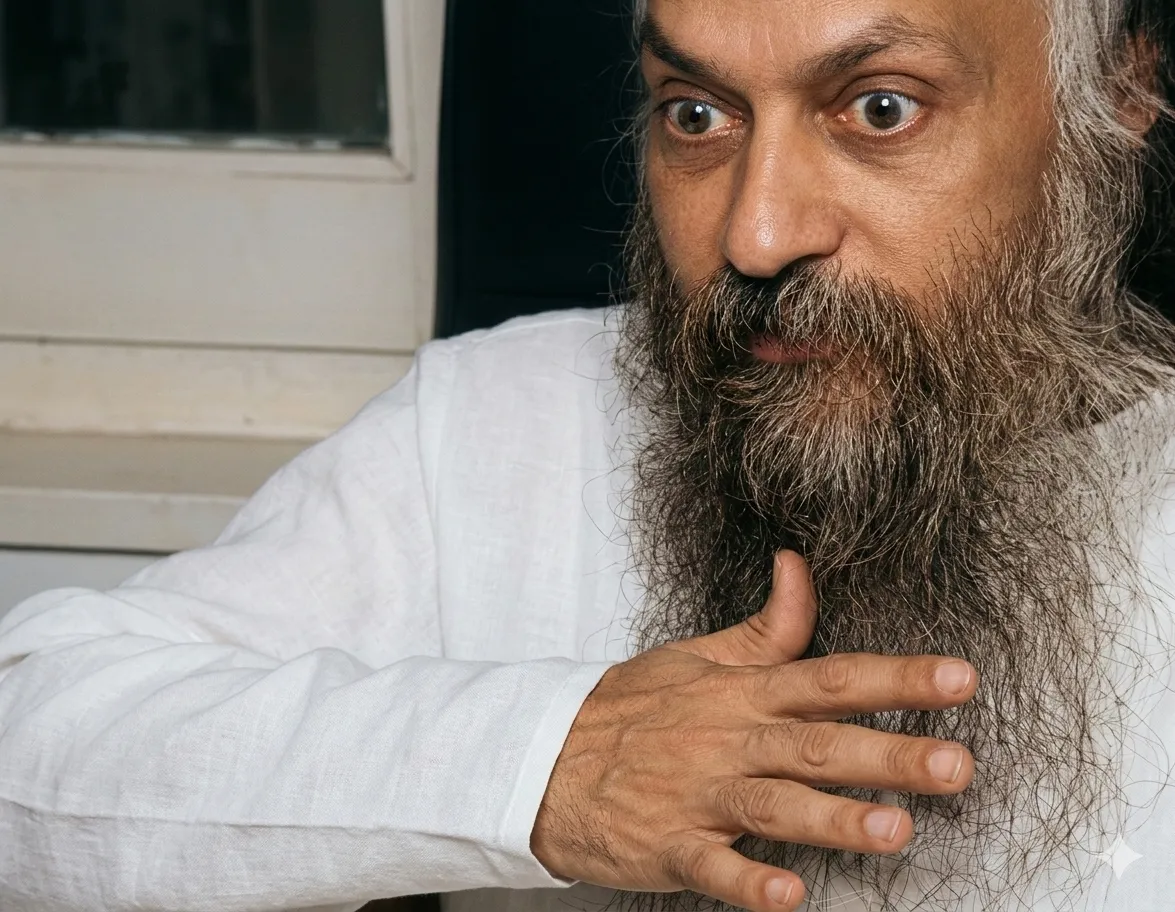
Osho's original Hindi beside Osho Live's English translation, matched passage by passage.
सूत्र-संदर्भ--
Sutra-context—
भगवान श्रावस्ती नगर के बाहर ठहरे थे। उनके निकट ही नदी-तट पर एक युवा वणिक भी ठहरा था। उसके पास पांच सौ गाड़ियां थीं, जो बहुमूल्य वस्त्रों और अन्य प्रसाधन-सामग्रियों से भरी थीं। वह श्रावस्ती में अपना सामान बेचकर खूब कमाई कर रहा था। उसके पास में ही भगवान ठहरे थे, लेकिन अब तक उसने उनकी ओर ध्यान भी नहीं दिया था।
The Buddha was staying outside the city of Shravasti. Nearby, on the riverbank, a young merchant too had halted. He had five hundred carts laden with precious fabrics and other luxury goods. He was making a fine profit by selling his wares in Shravasti. The Buddha was camped right beside him—and yet he had not paid any attention at all.
शायद दिखायी तो पड़े ही होंगे। हजारों भिक्षुओं का भी वहां निवास था; न दिखायी पड़े हों, ऐसा तो नहीं। लेकिन उसके मन से संगति नहीं थी। जो धन की यात्रा पर निकला हो, उसका ध्यान की तरफ ध्यान नहीं जाता। जो अभी महत्वाकांक्षा से भरा हो, उसे संन्यासी दिखायी नहीं पड़ता। जिसके मन पर संसार के मेघ घिरे हों, उसे निर्वाण का प्रकाश दिखायी नहीं पड़ता। आच्छादित अपने ही मेघों में रहा होगा।
Surely he must have seen. Thousands of bhikkhus were residing there; how could he not see? But his mind had no affinity with them. One who is on a journey toward wealth does not turn toward meditation. One still filled with ambition does not really see a sannyasin. One upon whose mind the clouds of the world have gathered cannot perceive the light of Nirvana. He must have remained covered by his own clouds.
भगवान पास ही ठहरे थे, लेकिन उसने ध्यान नहीं दिया था।
The Buddha stayed close by, but he did not notice.
या कभी-कभार अगर ध्यान चला भी गया हो, उसके बावजूद, तो सोचा होगा, पागल हैं। तो सोचा होगा, इन सबको क्या हो गया? तो सोचा होगा, लोग कैसी-कैसी व्यर्थ की बातों में उलझ जाते हैं। और हजार दलीलें दी होंगी अपने मन को कि मैं ही भला, मैं ही स्वस्थ, मैं ही तर्कयुक्त।
Or, if on occasion his attention did wander there, then even so he must have thought: they are mad. He must have thought: what has happened to all these people? He must have thought: how people get entangled in such pointless matters. And surely he offered his mind a thousand arguments—only I am sensible, only I am healthy, only I am logical.
एक दिन नदी पर टहलता हुआ वह भविष्य की बड़ी-बड़ी कल्पनाएं कर रहा था। सोचता था कि धंधा यदि ऐसा ही चलता रहा तो वर्षभर में ही लखपति हो जाऊंगा। फिर विवाह करूंगा। और अनेक सुंदरियों के चित्र उसकी आंखों में घूमने लगे। और ऐसा महल बनाऊंगा--वसंत के लिए अलग, हेमंत के लिए अलग, हर ऋतु के लिए अलग, और यह करूंगा और वह करूंगा। और जब ऐसे पूरे शेखचिल्लीपन में खोया था और कल्पनाओं के लड्डुओं का भोग कर रहा था, तब भगवान ने उसे देखा और वे हंसे।
One day, walking by the river, he was weaving large imaginations about the future. He thought: if the business goes on like this, within a year I shall be a man of lakhs—a millionaire. Then I will marry. And many images of beautiful women began to whirl in his eyes. And I will build a palace—one for spring, one for winter, one for each season; I will do this, I will do that. And while he was lost in the full Shekhchilli-like daydream, relishing the laddus of fancy, the Buddha saw him and he laughed.
भगवान बैठे हैं एक वृक्ष के तले, उनके पास ही भिक्षु आनंद बैठा है। अकारण, बिना किसी बात के, बिना किसी प्रगट आधार के भगवान को हंसते देखकर आनंद चकित हुआ। उसने पूछा, भगवान! आप हंसते हैं! न मैंने कुछ कहा, न आपने कुछ कहा, न यहां कुछ हुआ, अकारण क्यों हंसते हैं? किस कारण हंसते हैं? किस बात पर हंसते हैं? भगवान ने कहा, आनंद, उस युवा वणिक को देखते हो दूर नदी के तट पर? उसके चित्त की कल्पना-तरंगों को देखकर ही मुझे हंसी आ गयी। वह लंबी योजनाएं बना रहा है, किंतु उसकी आयु केवल सप्ताहभर की और शेष है। मृत्यु द्वार पर दस्तक दे रही है, पर उसे अपनी वासनाओं के कोलाहल के कारण कुछ भी सुनायी नहीं पड़ता। उसकी मूर्च्छा पर मुझे हंसी भी आती है और दया भी।
The Buddha sat beneath a tree; beside him sat the bhikkhu Ananda. Seeing the Blessed One laugh without any visible cause—no one had said anything, nothing had occurred—Ananda was astonished. He asked: Lord! You laugh! I said nothing, you said nothing, nothing happened here—why do you laugh without cause? For what reason? At what do you laugh? The Buddha said: Ananda, do you see that young merchant there, on the distant riverbank? Seeing the waves of imagination in his mind, I laughed. He is making long-term plans, but his remaining lifespan is only a week. Death is knocking at the door—but because of the clamour of his desires, he hears nothing. His unconsciousness brings me laughter…and compassion.
भगवान की आज्ञा ले आनंद उस युवक के पास गए और उसे सन्निकट मृत्यु से अवगत कराया। मृत्यु की बात सुनते ही वह थरथर कांपने लगा। खड़ा था, भयभीत होकर बैठ गया। अभी सुबह ही थी, शीतल हवा बहती थी, सब शांत था लेकिन उसके माथे पर पसीने की बूंदें झलक आयीं। भूल गया सुंदर स्त्रियों को, भूल गया संगमरमरी महल, भूल गया हेमंत, वसंत, भूल गया सब।
With the Buddha’s leave, Ananda went to the youth and warned him of the imminent death. The moment death was mentioned he began to tremble. He had been standing; frightened, he sat down. It was still morning; a cool breeze was blowing; all was quiet—and yet beads of sweat appeared upon his brow. He forgot the beautiful women; he forgot the marble palaces; he forgot winter and spring; he forgot everything.
मृत्यु सामने खड़ी हो, मृत्यु का एक दफे स्मरण भी आ जाए तो इस सारे जीवन से प्राण निकल जाते हैं, इस जीवन में कुछ अर्थ नहीं रह जाता है। इस जीवन में अर्थ तभी तक है, जब तक तुमने मृत्यु को नहीं देखा, जब तक तुमने मृत्यु का विचार नहीं किया, जब तक मृत्यु का बोध तुम्हें नहीं हुआ, तभी तक इस जीवन का खेल है। तभी तक इन सपनों को फुलाए जाओ, तैराए जाओ नावें कागज की, बनाए जाओ कागज के महल। लेकिन जैसे ही मृत्यु का स्मरण आ जाएगा, सब ढह जाता है।
When death stands before you—if the remembrance of death even flashes once—life is drained of its breath; this whole life becomes meaningless. Life has meaning only until you have not seen death, until you have not contemplated death, until the awareness of death has not dawned—only until then does this game of life persist. Only until then do you inflate these dreams; you set afloat paper boats; you build palaces of paper. But the moment the remembrance of death arrives, everything collapses.
बड़े उसके स्वप्न थे, अभी युवा था, बड़ी उसकी कामनाएं थीं, जीवेषणाएं थीं, बड़ा उसका संसार फैलाने का मन था, सब भूमिसात हो गया, सब खंडहर हो गया। जो भवन कभी बने ही नहीं, वे खंडहर हो गए। और जो सुंदर स्त्रियां उसे कभी मिली ही नहीं, वे तिरोहित हो गयीं। वे मन पर तैरते हुए इंद्रधनुष से ज्यादा न थे। मौत ने एक झपट्टा मारा और सब व्यर्थ हो गया।
His dreams were great; he was still young; his desires were immense—his urge to expand his world was large. All of it was levelled to the ground; all became ruins. Buildings that had never even been built became ruins. And the beautiful women he had never met disappeared. They were no more than rainbows floating on the mind. Death swooped once—and all became futile.
वह युवक बैठकर रोने लगा। आनंद ने उसे कहा--युवक, उठ, मौत पर बात समाप्त नहीं हो जाती, भगवान के चरणों में चल, मौत के पार भी कुछ है।
The youth sat down and began to weep. Ananda said to him: Young man, rise; with death, the matter does not end. Come to the feet of the Buddha. Beyond death there is still something.
जीवन मौत पर समाप्त नहीं होता। असली जीवन मौत के बाद ही शुरू होता है। और धन्यभागी हैं वे जिन्हें इस जीवन में ही मौत दिखायी पड़ जाए, तो वह दूसरा जीवन इसी क्षण शुरू हो जाता है। संन्यास का और कुछ अर्थ भी नहीं है। जीते-जी मौत की प्रतीति हो गयी, साक्षात हो गया। जीते-जी यह दिखायी पड़ गया कि मरना होगा, कि मृत्यु आती है। क्या फर्क पड़ता है, सात दिन बाद आती है, कि सात वर्ष बाद आती है, कि सत्तर वर्ष बाद आती है। मृत्यु है, यह तीर चुभ जाए हृदय में तो संसार व्यर्थ हो जाता है और संन्यास सार्थक हो जाता है।
Life does not end with death. Real life begins only after death. And blessed are those to whom death becomes visible while yet alive—for then that other life begins this very moment. Sannyas means nothing else. While living, the recognition of death happens; it is seen face to face. While living it becomes clear that one must die, that death comes. What difference does it make whether it comes after seven days, seven years, or seventy years? Death is—if this arrow pierces the heart, the world becomes futile and sannyas becomes meaningful.
आनंद ने उसे सम्हाला और कहा--हार मत, थक मत, मौत से कुछ भी मिटता नहीं। मौत से वही मिटता है जो झूठ था। मौत से वही मिटता है जो भ्रामक था। मौत से सिर्फ सपने मिटते हैं, सत्य नहीं मिटता। घबड़ा मत, उठ।
Ananda steadied him and said: Do not give up, do not tire. Nothing real is wiped out by death. Only the false perishes in death. Only illusions dissolve in death. Death erases only dreams—not truth. Do not be afraid—rise.
वह युवक भगवान के चरणों में आया।
The youth came to the feet of the Buddha.
मृत्यु सामने खड़ी हो तो बुद्ध के अतिरिक्त और कोई मार्ग भी तो नहीं। मृत्यु न होती तो शायद कोई बुद्धों के चरणों में जाता ही न। मृत्यु न होती तो मंदिर न होते, मस्जिद न होती, गुरुद्वारे न होते। मृत्यु न होती तो धर्म न होता। मृत्यु है तो धर्म का विचार उठता है। मृत्यु जगाती है, चेताती है, मृत्यु अलार्म का काम करती है, नहीं तो तुम्हारी मूर्च्छा बनी ही रहती।
When death stands before you, there is no path except the Buddha. Had there been no death, perhaps no one would ever have gone to the feet of the awakened ones. Had there been no death there would have been no temples, no mosques, no gurdwaras. Had there been no death, there would have been no religion. Because there is death, the thought of religion arises. Death awakens; death warns. Death functions as the alarm—otherwise your coma would continue.
जरा सोचो, एक ऐसा समय जब मृत्यु न होती हो। फिर कौन प्रार्थना करेगा? कौन ध्यान करेगा? किसलिए करेगा? मृत्यु अपूर्व है। मृत्यु अमंगल नहीं है, खयाल रखना, मृत्यु में मंगल छिपा है। अगर तुम मृत्यु को ठीक से समझ लो तो उसी से तुम्हारे जीवन में आमूल क्रांति हो जाएगी। मृत्यु दुश्मन नहीं है। जीवन भला दुश्मन हो, मृत्यु तो मित्र है, क्योंकि मृत्यु जगाती है, जीवन सुला देता है। जीवन में तो तुम सोए-सोए चलते रहते हो, मौत आती है, झकझोर देती है, झंझावात की तरह आती है। सब धूल झड़ जाती है--विचार की, वासना की--तुम चौंककर खड़े हो जाते हो, पुनर्विचार करना होता है, फिर से सोचना पड़ता है, फिर से जीवन के आधार रखने होते हैं; किसी दूसरे जीवन के आधार रखने होते हैं, जिसे मौत न मिटा सके। उस जीवन का ही नाम तो मोक्ष है, जिसे मौत न मिटा सके।
Imagine a time where there is no death. Who then would pray? Who would meditate? And for what? Death is extraordinary. Do not think of death as inauspicious; remember, the auspicious is hidden in death. If you rightly understand death, a total revolution will occur in your life. Death is not the enemy. If anything, life is the enemy; death is the friend—because death wakes you, life lulls you to sleep. In life you go on sleep-walking; death comes and shakes you like a tempest. All the dust—of thought, of desire—gets shaken off. You stand startled, and must reconsider—rethink—lay down the foundations afresh; foundations of another kind of life that death cannot erase. The name of that life is moksha—freedom—one which death cannot undo.
संसार और निर्वाण का इतना ही अर्थ है। संसार ऐसा जीवन जिसे मौत छीन लेती है, और निर्वाण ऐसा जीवन जिसे मौत नहीं छीन पाती है। संसार ऐसा जीवन जो आज नहीं कल हाथ से जाएगा ही। उसको बनाने में जितना समय लगाया, व्यर्थ गया। उसको बनाने में जितनी रातें और दिन खोए, व्यर्थ गए। एक ऐसा भी जीवन है जहां मृत्यु असमर्थ है, जहां मृत्यु का कोई प्रवेश नहीं है, वही निर्वाण का जीवन।
This is the sole meaning of samsara and Nirvana. Samsara is that life which death snatches away; Nirvana is that life which death cannot take. Samsara is that life which, if not today then tomorrow, will slip from your hands; the time invested in making it was wasted, the days and nights spent on it were wasted. There is also a life where death is powerless, where death has no entry—this is the life of Nirvana.
मृत्यु द्वार पर खड़ी हो तो अब युवक करता भी क्या! गया बुद्ध के चरणों में। अब तक तो पास रहकर भी हजारों योजन दूर था।
Now, with death at the door, what else could the youth do? He went to the feet of the Buddha. Till now he had been near, yet thousands of leagues away.
वहीं ठहरा था, एक ही नदी-तट पर दोनों ठहरे थे, लेकिन हम पास-पास भी होकर अपनी-अपनी दुनिया में अलग-अलग होते हैं। इससे कुछ बहुत फर्क नहीं पड़ता कि तुम मेरे पास बैठे हो। हमारे शरीर एक-दूसरे से सटे हों तो भी कोई फर्क नहीं पड़ता। निकटता, मात्र शारीरिक निकटता निकटता नहीं है। तुम हजारों कोस दूर हो सकते हो। तुम्हारी अपनी दुनिया हो सकती है, मेरी अपनी दुनिया। हम अपनी-अपनी दुनिया में रहते हैं। यहां जितने लोग हैं उतनी दुनियाएं हैं। और प्रत्येक व्यक्ति अपनी दुनिया से घिरा है। और अपनी दुनिया ही इतनी बड़ी है कि दूसरे की दुनिया देखने का अवसर कहां है!
They were staying on the same riverbank; yet we may be side by side and still remain apart—each in his own world. It makes no difference that you sit near me. Even if our bodies touch, it makes no difference. Proximity—mere physical proximity—is not closeness. You can be thousands of miles away. You may have your own world, I mine. We live in our separate worlds. Here, as many people as there are—so many worlds. Each one is encircled by his own world. And one’s own world is so vast—where is the opportunity to see another’s world?
अब तक तो बुद्ध के पास ही ठहरकर हजारों योजन दूर था। सुबह कभी सुनने न आया, सांझ कभी सुनने न आया, पास कभी आकर न बैठा, कुतूहल से भी न बैठा, जिज्ञासा तो छोड़ो, मुमुक्षा की तो बात ही मत करो, लेकिन कुतूहल तो हो सकता था कि क्या यहां हो रहा है! लेकिन जिसका मन उलझा हो वासना में, वह एक क्षण भी व्यर्थ नहीं खोना चाहता--वासना पूरी कर लो, उतनी देर में तो थोड़ा धन और निर्मित होगा, थोड़ा सामान और बिकेगा, थोड़ी तिजोड़ी और भरेगी, उतना समय व्यर्थ मत करो।
Till now, even while staying near the Buddha, he was thousands of leagues away. He never came in the morning to listen; he never sat in the evening to listen; he never came close; not even out of curiosity—leave aside inquiry or longing. But at least curiosity—‘What is happening here?’ Yet the one whose mind is entangled in desire does not wish to waste even a single moment—fulfil the desire first; in that time a little more money can be made, a little more goods can be sold, a little more will fill the strongbox—do not waste time.
जिनके मन में वासना प्रगाढ़ है, वे किसी को ध्यान करते देखकर कहते हैं, क्या पागलपन की बात कर रहे हो? क्यों समय गंवा रहे हो? समय धन है। समय से धन कमा लो, वे कहते हैं, टाइम इज मनी। उनके मन में एक ही भगवान है, धन। धन जितना कमा लो उतना ही सार है।
Those whose minds are thick with desire, when they see someone meditating, say: what madness! Why waste time? Time is money. Make money from time—they say ‘time is money.’ For them there is only one god: wealth. The more wealth you accumulate, the more meaningful life seems.
यह युवक निकलता रहा होगा उसी आम्रकुंज के पास से जहां बुद्ध ठहरे हैं, जहां वह अपूर्व दीया जल रहा था, लेकिन इसे रोशनी दिखायी न पड़ी थी। आंखें अंधी हों, सूरज भी निकले तो क्या फर्क पड़ता है। हजारों योजन दूर था। लेकिन आज अचानक मौत ने दूरी छीन ली।
This youth must have passed again and again by the mango grove where the Buddha stayed—the unique lamp was lit there—but he could not see the light. If the eyes are blind, what difference does it make if the sun rises? He was thousands of leagues away. But today, suddenly, death erased the distance.
तो खयाल रखना, कभी-कभी आशीर्वाद अभिशाप के रूप में आते हैं। इसलिए अभिशाप को भी एकदम ठुकरा मत देना। कौन जाने अभिशाप में ही वरदान छिपा हो। यह जो मौत आती थी करीब, इसी ने बुद्ध और इस युवक के बीच की दूरी छीन ली। यह युवक शायद अपने ही हाथ से तो कभी यह दूरी न मिटा पाता। कोई आशा नहीं दिखायी पड़ती, कोई आशा की किरण नहीं मालूम होती। यह युवक तो ऐसे ही जीता और ऐसे ही समाप्त हो जाता। इस मौत ने अपूर्व क्रांति कर दी। इस मौत ने उसके सब पुराने जाल को तोड़ दिया। सात दिन! बस केवल सात दिन! अब सात दिन में न तो महल बनाए जाते हैं, न सुंदरियां खोजी जाती हैं; न कोई अर्थ रहा। सिर्फ सात दिन के लिए कौन इतनी झंझट लेता!
So remember, sometimes blessings come in the form of curses. Do not reject a curse outright. Who knows—the boon may be hidden within the curse. It was death drawing close that erased the distance between the Buddha and this youth. Perhaps by his own efforts he could never have bridged that gap—no ray of hope is visible. He would have lived as he was living, and ended as he would have ended. Death created a unique revolution; it broke all his old nets. Seven days! Only seven days! In seven days neither palaces are built nor beauties found. There is no point. For just seven days, who will take up such hassles!
आदमी तो इस भ्रांति में जीता है कि हम सदा रहेंगे। सदा रहने की भ्रांति में ही तो हम सब कुछ करते हैं। हम दुनिया में ऐसे रहते हैं जैसे हमें जाना नहीं, इंच-इंच जमीन के लिए लड़ते हैं, रत्ती-रत्ती धन और पद के लिए लड़ते हैं। ठहरे धर्मशाला में हैं और इस तरह ठहर जाते हैं कि जैसे अपना घर है; अपना निवास है और सदा के लिए अपना निवास यहां होने को है।
Man lives under the illusion ‘I shall remain forever.’ It is under this illusion of permanence that we do everything. We live in the world as though we are not going anywhere—fighting for inches of land, for grains of wealth and position. We are halting in a wayside inn—and settle as if it were our own home; as if this were our permanent residence.
वह युवक अब तक तो हजारों योजन दूर था। अब तक उसने देखकर भी बुद्ध को देखा नहीं था। मृत्यु ने आंख की नींद छीन ली, तब भगवान का सत्य उसे प्रगट हुआ। संन्यास पहली दफा अर्थपूर्ण मालूम पड़ा। जैसे अंधे को आंखें मिलीं, जैसे बहरे को कान मिले, वह सुनने और देखने में पहली दफे समर्थ हुआ। जैसे अंधेरे में अचानक बिजली कौंध जाए, ऐसा सब उसे स्पष्ट हो गया। एक तलवार की धार की तरह पुरानी दुनिया कटकर अलग गिर गयी और नयी दुनिया बनाने का, अमृत की तलाश का गहन संकल्प उठा।
Till now the youth was thousands of leagues away. Until now he had looked—and yet not seen—the Buddha. Death snatched away the sleep of the eyes; then the Buddha’s truth became manifest to him. For the first time sannyas appeared meaningful. As if an eye were given to one who was blind, as if ears were given to one who was deaf—he became capable of hearing and seeing for the first time. As if lightning flashed suddenly in the dark—everything became clear. Like the edge of a sword, the old world was cut off and fell away—and a deep resolve arose to create a new world, to seek the nectar.
अगर मृत्यु है तो अमृत की तलाश करनी है, फिर कोई और जीवन का ढंग खोजना है, कोई और शैली चाहिए। अगर यह घर घर नहीं, धर्मशाला है, तो फिर अपने घर की तलाश पर निकलना होगा। और सात ही दिन बचे हैं! जल्दी करनी होगी।
If there is death, then nectar must be sought; another way of living must be found; another style is needed. If this house is not a home but a caravanserai, then one must set out in search of one’s own home. And only seven days remain—there is no time to waste.
मृत्युबोध धर्म का द्वार बन जाता है। उस युवक की चेतना-धारा अचानक बदल गयी। कुछ की कुछ हो गयी दिशा। कहां दौड़ा जा रहा था, धन, पद, प्रतिष्ठा! अचानक गंगा ने मोड़ ले लिया। अब गंगा उस दिशा में नहीं जा रही। उसने रास्ता नया ग्रहण कर लिया।
The awareness of death becomes a doorway to religion. The stream of that youth’s consciousness suddenly changed. The direction became altogether different. He had been rushing toward wealth, rank, prestige; suddenly the Ganges took a turn. It no longer flowed that way. It chose a new bed.
भगवान ने उससे कहा--प्रिय, बुद्धिमान को भविष्य के सपनों में नहीं उलझना चाहिए।
The Buddha said to him—Beloved, the wise should not be entangled in dreams of the future.
बुद्धिमान का लक्षण ही यही होता है कि वह भविष्य के सपनों में नहीं उलझता है। भविष्य के सपनों में जो उलझता है उसी को हम बुद्धू कहते हैं। बुद्धू का अर्थ होता है, जो नहीं है, जो अभी है नहीं, उसके संबंध में योजनाएं बना रहा है। बुद्धिमान का अर्थ होता है, जो है उसमें जी रहा है। बुद्धिहीन का अर्थ होता है, जो नहीं है, उसके सिर्फ सपने बना रहा है। बुद्धिहीन सपनों में जीता है, बुद्धिमान सत्य में जीता है। सत्य तो है; और सत्य का कोई भविष्य नहीं है, सत्य तो सिर्फ वर्तमान है--अभी और यहीं है। सत्य का कोई अतीत भी नहीं है।
This is the very mark of the wise—that he is not entangled in future dreams. One who gets entangled in dreams of the future—we call him a fool. Fool means one who makes plans about that which is not—about what does not yet exist. Wise means one who lives in what is. Unwise means one who only weaves dreams about what is not. The unwise lives in dreams; the wise lives in truth. Truth is. And truth has no future; truth is only the present—it is here and now. Truth has no past either.
ऐसा नहीं है कि सत्य कभी था और अब नहीं है, और ऐसा भी नहीं है कि सत्य कभी होगा और अभी नहीं है। सत्य तो बस है। यही तो शाश्वत का अर्थहोता है। सत्य शाश्वत है। एस धम्मो सनंतनो। धर्म शाश्वत है, सनातन है। सदा से है, सदा रहेगा। वर्तमान है सत्य। सत्य में सिर्फ एक ही समय होता है--वर्तमान। भविष्य सपने में है, आदमी की खोपड़ी में है। और अतीत भी स्मृति में है। दुनिया में अधिकतर लोग या तो अतीत में जीते हैं, या भविष्य में। शायद ही कोई कभी जागता है वर्तमान के इस मौजूद क्षण में।
It is not that truth once was and is no more; nor that truth will someday be and is not now. Truth simply is. This is what ‘eternal’ means. Truth is eternal. Esā dhammo sanantano. Dharma is eternal—Sanatana. The present is truth. In truth there is only one time—the present. The future is in dream—in the head. And the past is in memory. Most people live either in the past or in the future. Rarely does anyone awaken in the present moment that is.
तो बुद्ध ने कहा, बुद्धिमान को भविष्य के सपनों में नहीं उलझना चाहिए और न अतीत की स्मृतियों में डूबा रहना चाहिए। क्योंकि जो जा चुका, जा चुका, उसे जाने दो। और जो अभी नहीं आया, नहीं आया, उसको खींच-खींचकर सपने में मत लाओ। जो है, उसमें प्रगाढ़ रूप से जागो। जो है, उसमें जागने का नाम ही ध्यान है। अगर तुम एक क्षण को भी निर्विचार होकर जाग जाओ, तो जो है, उसकी तुम्हें प्रतीति होगी, साक्षात्कार होगा। और जो है, उसी का नाम ईश्वर है।
So the Buddha said: the wise should not be entangled in the dreams of the future nor be submerged in the memories of the past. What is gone is gone—let it go. And what has not yet come has not come—do not drag it in through dreaming. What is—wake to it intensely. Waking to what is is what we call meditation. If even for a single moment you awaken without thought, then what is will be realized, will be encountered. And what is—that alone is God.
विचार या तो अतीत के होते या भविष्य के, खयाल किया है तुमने कभी? अपने विचारों की परख करना, तो या तो विचार अतीत से आता है--किसी ने कभी गाली दी थी, कि किसी ने कभी सम्मान किया था, कि कभी कोई घाव मार गया था, कि कभी कोई अपमान कर गया था, कि कभी कुछ सुखद घटना घटी थी--या तो अतीत से आता है विचार; या भविष्य से आता है, कि जैसा सम्मान अतीत में हुआ था वैसा फिर भविष्य में हो, ज्यादा हो; जो सुख अतीत में जाने, वे और बड़े होकर मिलें, और वर्द्धमान हो जाएं, और जो-जो भूलें अतीत में हुईं, फिर न हों; जो-जो अतीत में दुखद था, वह कभी दुबारा न दोहरे, ऐसी भविष्य की योजना।
Thoughts are either of the past or the future—have you ever noticed? Observe your thoughts: either a thought arises from the past—someone once insulted you, or respected you; there was a wound once; someone once humiliated you; or some pleasant incident occurred—or it arises from the future: that the same respect that came in the past should come again, and more; that the pleasures tasted in the past should arrive enlarged; that the mistakes made in the past should not be made again; that the sorrows of the past should never repeat—such planning for the future.
भविष्य की योजना है क्या? तुम्हारा अतीत ही फिर-फिर दोहरने की योजना बना रहा है। तुम फिर उसे पुनरुक्त करना चाहते हो। थोड़े अच्छे ढंग से, थोड़ा सजाकर, थोड़े नए वस्त्र पहनाकर; कांटे कम कर देना चाहते हो, फूल बढ़ा देना चाहते हो; लेकिन वह तुम्हारा अतीत ही है सजा-बजा। अतीत की लाश को ही तुम नए-नए प्रसाधन कर रहे हो और उसी को तुम भविष्य कहते हो।
What is ‘planning for the future’? You are simply trying to repeat your past. You want to re-enact it—more cleverly, better decorated, in new clothes; to reduce the thorns, to increase the flowers—but it is your old past, dressed up. You are applying new cosmetics to the corpse of the past—and you call that the future.
विचार या तो अतीत के होते या भविष्य के, विचार वर्तमान में होता ही नहीं। विचार वर्तमान में हो ही नहीं सकता। इस अनूठी बात को खयाल में लेना, क्योंकि इसमें कुंजी छिपी है सारे ध्यान की, समाधि की। वर्तमान में विचार होता ही नहीं। जब भी तुम वर्तमान में होते हो तो विचार की तरंग नहीं हो सकती, या तो विचार की तरंग होगी तो तुम वर्तमान में नहीं होओगे। जैसे इसी क्षण अगर कोई भी विचार तुम्हारे भीतर नहीं उठता, तुम अवाक हो, चुप और सन्नाटे में हो और भीतर एक शून्य है, तो तुम वर्तमान में हो।
Thoughts are either of the past or the future; thought never is in the present. In the present thought cannot exist. Mark this unique fact—for here lies the key to all meditation, to Samadhi. In the present, thought does not occur. Whenever you are in the present, no wave of thought can arise—or, if a wave of thought is there, you are not in the present. If, in this very moment, not a single thought arises within you—you are wordless, silent, empty within—then you are in the present.
वर्तमान का जरा सा भी स्वाद परम आनंद से भर जाता है। और जब भी तुम्हें आनंद की कोई झलक मिलती है, तो वह वर्तमान में होने के कारण ही मिलती है। किस कारण तुम वर्तमान में हो गए, यह दूसरी बात है। कभी-कभी अनायास हो जाते हो वर्तमान में, तो सुख मिलता है।
A mere taste of the present fills one with supreme bliss. And whenever you catch a glimpse of joy, it is because you have somehow slipped into the present. By what cause you came into the present is secondary. Sometimes you become present unawares—and joy happens.
ध्यान, योग का इतना ही अर्थ है कि तुम सायास, जान-बूझ कर वर्तमान में होने का आयोजन करते हो। तुम अपने को पकड़-पकड़ कर वर्तमान में ले आते हो। मन तो भागता है अतीत की तरफ, भविष्य की तरफ। मन तो भगोड़ा है। वह तो यहां नहीं टिकता, और कहीं जाता है, और कहीं सदा, यहां नहीं। तुम उसे पकड़-पकड़ कर वापस ले आते हो। तुम उसे यहां बैठना सिखाते हो। मन को सिखाते हो कि आसन लगा यहां। यहीं रुक, कहीं मत जा।
This is the whole meaning of dhyana, of yoga—that you deliberately learn to arrange to be present. You catch yourself and bring yourself back to the present. The mind runs to the past or to the future. The mind is a runaway; it never stays here—always somewhere else. You keep bringing it back. You teach it to sit here. You teach the mind: make your seat here. Stay. Go nowhere.
ऐसे धीरे-धीरे-धीरे मन को भी स्वाद लग जाता है वर्तमान का। वही स्वाद मन की मृत्यु बन जाता है। क्योंकि वर्तमान में मन होता ही नहीं। और जो मन के पार है, वही बुद्धिमान है। जो मन के नीचे है, वह बुद्धिमान नहीं है।
Slowly, slowly, the mind also acquires the taste of the present. That very taste becomes the death of the mind—for in the present the mind is not. And one who is beyond mind—that one is wise. One who is beneath the mind—that one is not.
तो बुद्ध ने कहा, बुद्धिमान को भविष्य के सपनों में नहीं उलझना चाहिए। भविष्य में मौत के अतिरिक्त कुछ भी नहीं है।
So the Buddha said: the wise should not be entangled in dreams of the future. In the future there is nothing except death.
यह बड़ी अनूठी बात बुद्ध ने कही--भविष्य में मौत के अतिरिक्त और कुछ भी नहीं है। वर्तमान तो अभी है, वर्तमान ही जीवन है। जीवन वर्तमान में है, भविष्य में तो सिर्फ मौत होगी। कल सिर्फ मौत है और कुछ भी नहीं।
An extraordinary statement: in the future, apart from death, there is nothing else. The present is—life is in the present. Life is in the present; in the future, only death will be. Tomorrow is only death—nothing else.
तुमने खयाल किया, इस देश की भाषाओं में हमने जो शब्द चुने हैं, कल और काल, वे एक ही मूल से आते हैं। काल तो मौत का नाम है, और कल भविष्य का नाम है। एक और अनूठी बात है, हम बीते दिन को भी कल कहते हैं और आने वाले दिन को भी कल कहते हैं। बीता दिन मर चुका, आने वाला दिन मरा हुआ है। बीत गयी जो वह भी मौत थी, आ रही है जो वह भी मौत है, दोनों के मध्य में--जैसे तलवार की धार पर कोई खड़ा हो--ऐसा वर्तमान खड़ा है, ऐसा जीवन खड़ा है। इसलिए परमात्मा के मार्ग को लोगों ने खड्ग की धार कहा है। इन दो खड्डों के बीच में बड़ी पतली सूक्ष्म रेखा पर जीना है।
Have you noticed, in our language we use ‘kal’ both for yesterday and for tomorrow. ‘Kal’ and ‘kaal’ arise from the same root. ‘Kaal’ is the name of death; ‘kal’ is the name of the future. And another wonder: we call the day gone by ‘kal’ and the day to come ‘kal’ as well. The day gone by has died; the day coming is already dead. What has passed was death; what is coming is death; between the two—like standing upon the edge of a sword—stands the present, stands life. Hence the path of God has been called the razor’s edge. To live upon a fine, subtle line between two abysses.
यह भी तुमने खयाल किया कि काल मौत का भी नाम है और काल समय का भी नाम है। भाषाएं ऐसे ही नहीं बनतीं। भाषाओं में एक-एक संस्कृति का पूरा-पूरा अनुभव संजोया होता है। दुनिया में बहुत भाषाएं हैं, लेकिन किसी भाषा में मौत और समय का एक ही नाम नहीं है। सिर्फ इस देश की भाषा में मौत और समय के लिए एक ही नाम है। क्यों? क्योंकि इस देश के मनीषियों ने बार-बार यह अनुभव किया कि समय यानी मौत। इसलिए दोनों को एक नाम दिया है, ताकि याद रहे। वर्तमान समय का हिस्सा ही नहीं है। वर्तमान है जीवन।
Notice also that ‘kaal’ is the word for death and for time. Languages are not made haphazardly; they carry the distilled experience of a culture. In the languages of the world you will not find time and death bearing one and the same name. Only in this land is there one word for both. Why? Again and again the seers of this land experienced that time is death; so they gave both one name—so that we remember. The present is not a part of time. The present is life.
एक बात और खयाल ले लेना। हम आमतौर से सोचते हैं कि समय तीन खंडों में विभाजित है--अतीत, वर्तमान, भविष्य। यह बात गलत है। समय तो दो खंडों में विभाजित है--अतीत और भविष्य। वर्तमान समय का हिस्सा नहीं है। वर्तमान शाश्वत का हिस्सा है। वर्तमान से तो शाश्वत झांकता है। वर्तमान समय का भाग नहीं है। इसलिए जो वर्तमान में ठहर गया, वह शाश्वत में ठहर गया। उसने शाश्वत का अनुभव पा लिया। वर्तमान में ठहर जाने को हम समाधि कहते हैं। समाधान मिल गया। विचारों का उत्पात गया, विचार की समस्याएं गयीं, उलझनें गयीं।
Another thing: we commonly think time is divided into three parts—past, present, future. This is false. Time is divided into two—past and future. The present is not a part of time; the present belongs to the eternal. The eternal peeks through the present. The present is not the portion of time. Therefore, one who settles in the present settles into the eternal; he attains the experience of the eternal. Settling into the present is what we call Samadhi. The solution is found. The tumult of thought is gone; the problems born of thought disappear; the entanglements vanish.
तो बुद्ध ने कहा, बुद्धिमान को भविष्य के सपनों में नहीं उलझना चाहिए। भविष्य में मौत के अतिरिक्त कुछ भी नहीं है। न सुंदर स्त्रियां बचाएंगी और न धन और न पद और न तेरे संगमरमर के महल। मृत्यु के समय तो समाधि ही विजय लाती है। मृत्यु को समाधि से जीतकर अमृत की उपलब्धि करनी होती है।
Thus the Buddha said: the wise should not be entangled in dreams of the future. In the future there is nothing but death. Neither beautiful women will save you, nor wealth, nor position, nor your marble palaces. At the time of death only Samadhi is victorious. By conquering death through Samadhi one must attain the nectar.
एक ही चीज जीतती है समय को--समाधि। एक ही चीज जीतती है समय को--समय के पार का अनुभव, समय के बाहर की कोई किरण। समय निद्रा है। जागरण की किरण, होश की किरण समय को जीत लेती है। और जिसने समय को जीत लिया उसने मृत्यु को भी जीत लिया, क्योंकि वे दोनों एक ही हैं। वे एक-दूसरे के पर्याय हैं। समय का जोड़ मृत्यु है। समय मृत्यु के आने का ढंग है।
Only one thing conquers time—Samadhi. Only one thing conquers time—the experience beyond time, a ray from outside time. Time is sleep. A ray of awakening, a ray of awareness, conquers time. And one who has conquered time has conquered death—for the two are one. They are synonyms. The sum of time is death; time is the manner in which death arrives.
तुम जिस दिन पैदा हुए उसी दिन से मर रहे हो। हालांकि तुम इसको जीवन कहते हो। जिस दिन से पैदा हुए उस दिन से सिवाय मरने के और तुमने कुछ भी नहीं किया है। एक बात सतत हो रही है कि तुम मर रहे हो, मरते जा रहे हो। एक दिन बीता, एक दिन और मर गए। एक वर्ष बीता, एक वर्ष और मर गए। तुम हर वर्ष जन्म-दिन मनाते हो, उसे जन्म-दिन नहीं कहना चाहिए, उसे मृत्यु-दिन कहना चाहिए। क्योंकि जन्म तो उससे दूर होता जा रहा है, मृत्यु करीब आ रही है। एक वर्ष और मर जाता है, तुम उसको जन्म-दिन कहते हो? तुम एक वर्ष और मर चुके। अब तुम्हारी जिंदगी और थोड़ी बची। तुम्हारा और एक हिस्सा मर गया। अब तुम उतने जीवित नहीं हो जितने एक वर्ष पहले थे। जैसे ही बच्चा मां के पेट से पैदा हुआ, मरना शुरू हो गया। सत्तर साल लगेंगे मौत को आने में, धीरे-धीरे आती है, लेकिन समय मौत के आने का ढंग है। समय समझो कि मौत का वाहन है। समय के वाहन पर सवार होकर मौत आती है।
From the day you were born, you have been dying—though you call it life. From the day you were born, you have done nothing but die. One thing has been happening continuously—you are dying. One day passes—you died one day. One year passes—you died one year. You celebrate birthdays—do not call them birthdays; call them death-days. Birth recedes; death comes near. One more year dies—and you call it your birthday! You have died one more year. Now your life is a little less. A part of you has died. You are not as alive as you were one year ago. The moment the child leaves the mother’s womb, he begins to die. It may take seventy years for death to arrive; it comes slowly—but time is the vehicle of death. Know that time is the chariot of death; riding upon time, death comes.
तो समय तो मौत की सेवा में संलग्न है। और जब तक तुम समय में जीते हो, तब तक तुम मौत के अंतर्गत रहोगे, तब तक मौत का तुम पर कब्जा रहेगा।
Time serves death. So long as you live in time, you will remain under death’s dominion; death will possess you.
समाधि का अर्थ होता है, समय के पार हो जाना। इसलिए सारे शास्त्र, सारे जगत के शास्त्र एक बात कहते हैं, समाधि है समय के पार हो जाना। एक ऐसी चैतन्य की दशा, जहां समय बिलकुल मिट जाता है। समय होता ही नहीं, घड़ी चलती ही नहीं। न दिन होती न रात, न कुछ आता न कुछ जाता। कुछ हिलता भी नहीं, कंपन भी नहीं होता, सब ठहर जाता है।
Samadhi means going beyond time. Therefore all the scriptures of the world say one thing: Samadhi is to go beyond time. A state of consciousness where time utterly disappears—where the clock does not tick; there is no day or night; nothing comes, nothing goes; nothing moves, no vibration—everything is still.
जीसस से उनका एक शिष्य पूछता है, मरने के एक दिन पहले, कि आपके स्वर्ग के राज्य में खास बात क्या होगी? और जीसस ने जो उत्तर दिया वह बड़ी हैरानी का है। शिष्य ने तो सोचा भी न होगा कि ऐसा उत्तर मिलेगा। शिष्य ने सोचा होगा कि जीसस कहेंगे कि बड़ा महासुख होगा, आनंद होगा, शराब के चश्मे बहेंगे, सुंदर अप्सराएं उपलब्ध होंगी, कल्पवृक्ष होंगे, उनके नीचे तुम बैठना और मजे करना। आदमी पूछता ही इसी तरह की बातों के लिए है। लेकिन जीसस ने जो उत्तर दिया वह बड़ा अदभुत था। जीसस ने कहा, देयर शैल बी टाइम नो लांगर। वहां समय नहीं होगा। यह भी कोई उत्तर हुआ! शिष्य सुनकर तो ऐसे ही रह गया होगा कि यह भी कोई बात हुई; समय नहीं होगा, इसके लिए इतनी मेहनत करो! समय नहीं होगा, इसमें ऐसा क्या गुण है!
A disciple asked Jesus, one day before his death: what will be the special feature of your kingdom of heaven? And Jesus’ answer is astonishing. The disciple could not have imagined it. He must have expected Jesus to say: there will be great bliss, joy, fountains of wine, beautiful apsaras, wish-fulfilling trees; sit beneath them and enjoy. That is how men ask. But Jesus said something wondrous: there shall be time no longer. There shall be no time. Is that even an answer? The disciple must have been taken aback: no time? For this we should labour so much? What is so special about ‘no time’?
लेकिन सारे जागरूक पुरुषों ने एक बात कही है कि समाधि कालातीत, समय के पार। जीसस का उत्तर बिलकुल ही सौ प्रतिशत सही है। वहां समय नहीं होगा। और जहां समय नहीं है, वहां परमात्मा है। और जहां समय नहीं है, वहां आनंद है, सच्चिदानंद है। और जहां समय नहीं है, वहां अहंकार नहीं है। जहां समय नहीं है, वहां दुख नहीं है, क्योंकि वहां मृत्यु नहीं है। मृत्यु की छाया ही दुख है। जहां समय नहीं है, वहां कोई कंपन नहीं, कोई चिंता नहीं, वहां सब शांति है। वहां कोई अंधड़ नहीं चलते चिंताओं के। वहां परम मौन है। समय नहीं है, ऐसा कहकर जीसस ने समाधि का मौलिक लक्षण कह दिया; समाधि की परिभाषा कर दी।
But all awakened ones have said one thing: Samadhi is timeless—beyond time. Jesus’ answer is a hundred percent exact: there shall be no time. And where there is no time, there is God. Where there is no time, there is bliss—Sat-Chit-Ananda. Where there is no time, there is no ego. Where there is no time, there is no sorrow—because there is no death. The shadow of death is sorrow. Where there is no time, there is no vibration, no anxiety—complete peace. No storms of worry blow there. There is the ultimate silence. By saying ‘there shall be no time’ Jesus defined the essential mark of Samadhi.
तो बुद्ध ने कहा, मृत्यु को जीतना हो तो समाधि के अतिरिक्त और कोई मार्ग नहीं है।
Therefore the Buddha said: if death is to be conquered, there is no way other than Samadhi.
वह युवक भगवान के चरणों में ही रुक गया। उसने लौटकर भी वे पांच सौ गाड़ियां जो नदी-तट पर सामानों से भरी खड़ी थीं, उनकी तरफ फिर नहीं देखा।
The youth remained at the Buddha’s feet. He did not even turn back to look at those five hundred carts laden with goods standing on the riverbank.
कैसी क्रांति हुई! अभी एक दिन पहले वे गाड़ियां ही सब कुछ थीं, उनमें भरा हुआ सामान ही सब कुछ था; रात सो भी नहीं पाता था, वही चिंता पकड़े रहती थी, कोई चोर चोरी न कर ले, कोई नौकर धोखा न दे जाए; रात में उठ-उठ आता था, देख-देख आता था, चक्कर मार आता था। जिनके पास है, वे कहां सो पाते हैं! जिनके पास नहीं है, वे चाहे शांति से सो भी जाएं; जिनके पास है, वे तो सो ही नहीं पाते। रात कई बार अपनी वसनी को पकड़ लेता होगा, फिर देख लेता होगा कि कोई चोरी तो नहीं हो गयी, कोई झंझट तो नहीं हो गयी। रातभर गणित बिठाता होगा कि कल कैसी बिक्री करनी, कहां बिक्री करनी; उन गाड़ियों में ही उसका सारा संसार था।
What a revolution! Only a day ago those carts were everything; the goods loaded upon them were everything; at night he could not sleep—worry clung to him: a thief might steal, a servant might deceive; he would rise again and again in the night to check, to circle the wagons. Those who have—how can they sleep? Those who do not have may perhaps sleep in peace; those who have cannot sleep. Many times at night he would clutch his quilt, then go and see: has something been stolen, has some trouble occurred? All night he calculated: how to sell tomorrow, where to sell. His whole world was in those carts.
आज बात बदल गयी। बात बदलती है तो ऐसे ही बदलती है। आज सारी चाल बदल गयी, जीवन का ढंग बदल गया। अब तक उसने बुद्ध की तरफ न देखा था, अब जब बुद्ध की तरफ देखा तो गाड़ियों की तरफ न देखा। उसके नौकर-चाकर भी आए, उसके सेवक आए, उसके मुनीम आए। उन्होंने कहा, मालिक, आपको क्या हो गया है? आप लौट चलें, बाजार जाने का समय हो गया, ग्राहक प्रतीक्षा करते होंगे, धंधे के दिन हैं, आप यहां क्या कर रहे हैं? वह हंसता था। वह कहता था, तुम जाओ, तुम्हीं फिकर लो। तुम मुझे भूल जाओ, समझो कि मैं मर ही गया। समझो कि मैं नहीं हूं। तुम्हें जैसा करना हो कर लो, बांट लेना, मेरा अब कोई उस पर आग्रह नहीं रहा।
Today, all is changed. When change comes, it comes like this. His whole gait changed; the way of life changed. Until now he had not looked at the Buddha; now that he looked at the Buddha, he did not look at the carts. His servants came, his employees, his accountant. They said: Master, what has happened to you? Return—time to go to the market; customers are waiting; these are days of business; what are you doing here? He laughed. He said: you go. You worry. Forget me—consider me dead. Consider that I am no more. Do as you wish; divide it among yourselves. I have no insistence anymore.
खबर पहुंची होगी नौकर-चाकरों में कि मालिक मालूम होता है पागल हो गया, लगता है कि इस बुद्ध की बातों से सम्मोहित हो गया। किसके चक्कर में पड़ गया! बड़े चिंतित हुए होंगे, सब तरह समझाने-बुझाने का उपाय किया होगा। लेकिन जिसके द्वार पर मौत खड़ी हो, अब संसार का कोई
तर्क उसे जंचता नहीं। सात दिन बाद मरना ही है, सात दिन बाद ये गाड़ियां पड़ी ही रह जाएंगी और सात दिन बाद इन गाड़ियों में भरे सामान का क्या होगा? तो अभी हो जाए।
News must have spread among the servants: the master seems to have gone mad—seems to have been hypnotized by this Buddha. In whose spell has he fallen! They must have felt anxious, and they must have tried every manner of persuasion. But when death stands at the door, no worldly argument appeals. If I am to die in seven days, then in seven days these carts will anyway be lying here; what will become of the goods loaded upon them seven days later? Let it happen now.
जिसे मौत का ठीक-ठीक स्मरण हो जाता है उसके जीवन में क्रांति आती है। मौत बड़ी क्रांतिकारी घटना है। हमें तो याद नहीं आती मौत की। हम तो अगर कभी ज्योतिषी के पास जाते भी हैं तो यह नहीं पूछने जाते कि कब मरेंगे, यह पूछने जाते हैं कि कहीं मौत आसपास तो नहीं है! जरा दूर है, तो चलो! हम तो हाथ भी दिखाते हैं तो इसी आशा में कि लंबी उम्र। हमारी प्रार्थनाएं लंबे आयुष्य के लिए होती हैं। ताकि थोड़ी देर इन गाड़ियों में, इन सामानों में, इन महलों में, इस धन-संपत्ति में और थोड़े डूबे रहें। इस कीचड़ में थोड़े और डुबकियां लगा लें।
When the remembrance of death becomes precise, revolution enters life. Death is a great revolutionary event. We usually do not remember death. Even if we go to an astrologer, we do not go to ask when we will die—we go to ask whether death is anywhere near. If it is a little far, we are relieved. We show our palm hoping for long life. Our prayers are for long life—so that we can remain a little longer submerged in these carts and goods and palaces and wealth. So that we can take a few more dips in this mud.
नहीं, उस युवक ने कहा कि तुम जाओ, तुम आओ मत, बात खतम हो गयी; मैं वही आदमी नहीं हूं जो तुम्हारा मालिक हुआ करता था। वह आदमी मर गया। जिसको मरना ही है, वह मर ही गया। यह दूसरा ही आदमी है।
No—the youth said: you go; do not come back. It is over. I am not the man who used to be your master. That man is dead. One who must die is as good as dead. This is another man.
वह दिनभर बुद्ध के चरणों में बैठा रहता। रात बुद्ध सो जाते तो भी उनके चरणों में बैठा रहता।
He sat at the Buddha’s feet all day. When the Buddha slept at night, he still sat at their feet.
जिसकी मौत करीब आ रही है, उसके पास समय खोने को कहां है? जितना बुद्धत्व पी लो, उतना बेहतर। जिसकी मौत ने संदेश भेज दिया हो, अब सोने की भी फुर्सत कहां है? सो लेंगे फिर सात दिन के बाद जितना सोना होगा, अभी तो जाग लेना है। दिन भर बुद्ध को सुनता, रात भर बुद्ध को गुनता।
One whose death is approaching—where does he have time to lose? Drink as much Buddhahood as you can—so much the better. When death has sent the message, where is the leisure to sleep? Sleep will be possible enough after seven days—now one must wake. During the day he listened to the Buddha; during the night he pondered the Buddha.
वह युवक बुद्ध के चरणों में ही रुक गया, और सात दिनों बाद जब मरा तो स्रोतापत्ति-फल को पाकर मरा।
The youth remained at the Buddha’s feet; and after seven days, when he died, he died having attained srotapatti-phala.
स्रोतापत्ति-फल का अर्थ होता है, जो ध्यान की धारा में प्रविष्ट हो गया। जो उतर गया ध्यान की धारा में। जो जीवन के मूलस्रोत में उतर गया--स्रोतापत्ति। जीवन का मूल स्रोत ध्यान है। हम ध्यान से आए हैं और ध्यान में ही हमें जाना है। हम समाधि से उत्पन्न हुए हैं, हम समाधि की तरंग हैं और हमें समाधि में ही लीन हो जाना है। हम जिस सागर से आए हैं, उसी सागर में हमें फिर वापस मिल जाना है। इस भावबोध को कहते हैं स्रोतापत्ति। कि मैं लहर मात्र हूं, मेरा अलग कुछ होना नहीं है, मैं सागर के साथ एक हूं। और जिस सागर से आना हुआ है, उसी में वापस लौट जाना है। इसलिए मैं व्यर्थ के उधेड़बुन में न पडूं, मैं कोई चिंताएं न लूं--मैं हूं ही नहीं तो चिंता कैसी! मेरा होना अलग है ही नहीं। यह जो विराट लीला चल रही है, यह जो विराट अस्तित्व घूम रहा है, मैं इसकी एक तरंग हूं; फिर कैसी चिंता!
Srotapatti-phala means: one who has entered the stream of meditation. One who has stepped into the current of dhyana—into the very source of life. The root source of life is meditation. We have come from meditation, and into meditation we must return. We are born out of Samadhi, we are a wave of Samadhi; into Samadhi we must dissolve. From the ocean we have arisen; into that same ocean we must merge again. This recognition is called srotapatti: that I am only a wave; I have no separate existence; I am one with the ocean. And from that ocean whence I came, into that very ocean I must return. Therefore I should not get entangled in useless anxieties. I should not carry worries—if I am not, then where is the worry? There is no separate ‘I’ to worry. This vast play is going on—the great existence is revolving; I am only a ripple. Then what is there to worry about?
चिंता तो तभी पैदा होती है जब मैं सोचता हूं, मैं अलग-थलग, मेरे ऊपर जिम्मेवारी, मैं करूं तो ऐसा, मैं न करूं तो वैसा न हो जाए; मैं ऐसा करूं तो जीतूं, ऐसा करूं तो हार जाऊं; ऐसा करूं तो सम्मान मिले, ऐसा करूं तो अपमान मिले; इसमें सफलता, इसमें विफलता; इसमें हार, इसमें जीत; तो हजार चिंताएं होती हैं। कैसी जीत, कैसी हार! इस विराट के साथ हम एक हैं, ऐसी प्रतीति जिसको हो गयी उसको कहते हैं--स्रोतापत्ति।
Worry arises only when I think myself separate—isolated: responsibility upon me; if I do this, I win; if I do not, that will fail; if I do this, I will be honoured; if I do that, I will be dishonoured. Success here, failure there. A thousand worries. What success—what failure! One who has realized oneness with the vast whole is called a srotapanna.
वह युवक मरने के पहले स्रोतापत्ति-फल को पाकर मरा। वह युवक धन्यभागी था!
The youth died after attaining the fruit of srotapatti. Blessed he was!
मृत्यु के पहले ध्यान की धारा में जो प्रविष्ट हो जाते हैं, उनसे बड़ा और कोई धन्यभाग नहीं। क्यों? क्योंकि मृत्यु के पहले जिन्होंने ध्यान को जान लिया, फिर उनकी मृत्यु होती ही नहीं। शरीर ही मरता है, अहंकार ही मरता है, मन मरता है, लेकिन वे नहीं मरते। जिन्होंने मृत्यु के पहले ध्यान नहीं जाना, उनकी मृत्यु होती है, क्योंकि वे शरीर के साथ अपने को एक समझे बैठे हैं। जब शरीर मरता है तो वे समझते हैं, हम मरे। वे मन के साथ अपना तादात्म्य किए बैठे हैं, जब मन बिखरने लगता है और मन सूखे पत्तों की तरह वृक्ष से गिरने लगता है, तब वे चीत्कार करते हैं कि हम गए। उनकी पीड़ा इतनी सघन हो जाती है कि वे मूर्च्छित हो जाते हैं।
Those who enter the stream of meditation before death—there is no greater blessedness. Why? Because those who know meditation before death, they do not die. Only the body dies; only the ego dies; the mind dies—but they do not. Those who do not know meditation before death, they die—because they have remained identified with the body. When the body dies, they believe ‘I have died.’ They are identified with the mind—when the mind begins to scatter like dry leaves falling from a tree, they scream ‘I am going.’ Their pain becomes so intense that they fall unconscious.
लोग मूर्च्छित मरते हैं। शरीर को जाते देखकर, मन को जाते देखकर, उनका होश खो जाता है। पीड़ा इतनी सघन होती है इस टूटने की--इतने जुड़े थे; और इसी को जीवन जाना था, जीवन को जाते देखकर वे बेहोश हो जाते हैं--लोग बेहोश मरते हैं। इसलिए मरने का जो एक अमूल्य अनुभव है, वह चूक जाता है।
People die unconscious. Seeing the body departing, seeing the mind dissolving—their awareness is lost. The pain of this breaking is so intense—so attached they had been; this they called life; seeing life go, they faint. People die unconscious; thus the priceless experience of dying is missed.
काश, कोई होश में मर सके तो पता चलता है कि जो तुम्हारे भीतर बसा है, वह तो कभी मरता ही नहीं। देह मरती है, मन मरता है, तुम नहीं मरते। तुम शाश्वत हो, तुम सदा से हो। जो सदा से है, उसी के अंग हो। तुम्हारी मृत्यु हो भी नहीं सकती, कोई उपाय नहीं है।
If only one could die in awareness, one would know: that which abides within you never dies. The body dies, the mind dies—you do not die. You are eternal; you have always been. You belong to that which is ever. There can be no death for you—no way.
स्रोतापत्ति-फल को पाकर यह युवक मरा। शास्त्र कहते हैं, धन्यभागी था! क्योंकि मृत्यु के पहले ध्यान की धारा मिल जाए तो और क्या धन्यभाग! अभागे हैं वे, जो जीते तो हैं और ध्यान को कभी नहीं जान पाते। अभागे हैं वे, जो कभी स्रोतापत्ति को उपलब्ध नहीं होते। धन कमा लेते हैं, राज्य बना लेते हैं और भीतर दरिद्र के दरिद्र मर जाते हैं। मौत आती है तो बेहोश हो जाते हैं पीड़ा में, मौत को देख नहीं पाते। जिसने मौत को देख लिया, उसने जीवन के सार को देख लिया, क्योंकि मौत की स्थिति में जीवन की परिपूर्ण सार्थकता प्रगट होती है।
Having attained srotapatti-phala, this youth died. The scriptures say: blessed was he! If the stream of meditation is found before death—what greater benediction! Unfortunate are those who live and never know meditation. Unfortunate are those who never attain srotapatti. They amass wealth, they build kingdoms—and inside they die beggars. When death comes they faint with pain; they cannot look death in the face. One who has seen death has seen the essence of life—for in the state called death, life’s utter meaningfulness shines.
इसे ऐसा समझो, कि जैसे अंधेरी रात में तारे चमकते हैं, दिन में तो नहीं चमकते हैं। दिन में तुम आकाश की तरफ देखो, तारों का पता नहीं चलता है। तारे तो वहीं हैं, कहीं गए नहीं हैं--ऐसा मत सोचना कि तारे दिन में कहीं चले जाते हैं, रात फिर आ जाते हैं--तारे तो वहीं हैं, लेकिन दिन में दिखायी नहीं पड़ते, पृष्ठभूमि नहीं है। रोशनी को देखने के लिए अंधेरे की पृष्ठभूमि चाहिए। इसीलिए तो हम काले तख्ते पर सफेद खड़िया से लिखते हैं, ताकि दिखायी पड़ जाए। सफेद दीवाल पर नहीं लिखते; लिखेंगे तो सफेद दीवाल पर भी लिख जाएगा, लेकिन दिखायी न पड़ेगा।
Understand it thus: like stars glitter in the dark night—they do not glitter by day. Look into the sky by day—you do not see them. The stars are there; they have not gone anywhere—do not think the stars depart by day and return by night. They are present—but the background is not. To see light, the background of darkness is needed. That is why we write with white chalk upon a blackboard—so that it may be seen. We do not write upon a white wall; if we do, it will not be visible.
जीवन में जीवन का पता नहीं चलता, मौत की अंधेरी रात जब सब तरफ से घेर लेती है तो जीवन का तारा चमकता है। धन्यभागी हैं जो होश से मरते हैं। क्योंकि मौत की काली पृष्ठभूमि में, मौत के ब्लैकबोर्ड पर उभरकर आ जाता है जीवन, जीवन की किरण बिलकुल प्रगट होकर दिखायी पड़ती है। साफ-साफ दिखायी पड़ता है कि शरीर मरणधर्मा है, मन मरणधर्मा है, मैं नहीं। लेकिन इस मैं में अब कोई मैं-भाव भी नहीं होता। इसमें कोई अस्मिता नहीं होती, कोई अत्ता नहीं होती। इसलिए बुद्ध ने इस अवस्था को अनत्ता कहा है, अनात्मा कहा है। इसमें यह भी भाव नहीं होता कि मैं हूं। सिर्फ होना मात्र होता है। और होना इतना शुद्ध होता है कि उस पर कोई रेखा नहीं खींची जा सकती--क्या? कोई सीमा नहीं बनायी जा सकती है, कोई परिभाषा नहीं--अपरिभाष्य।
In life, life is not apparent; when the dark night of death encircles you from all sides, the star of life shines. Blessed are those who die alert. For against death’s blackboard, life emerges clearly—its ray becomes utterly evident. Clearly it is seen: the body is mortal, the mind is mortal—but not I. Yet in this ‘I’ now there is no ‘I-ness’ left; no asmitā, no atta. Therefore the Buddha called this state anatta—no-self. Not even the feeling ‘I am’ remains—only being is. And being is so pure that no line can be drawn upon it—no boundary, no definition—the indefinable.
शास्त्र कहते हैं, सुबह का भूला सांझ को भी घर आ जाए तो भूला हुआ नहीं कहाता है। यह सात दिन पहले घर आ गया। देर से आया, खूब देर करके आया, लेकिन देर से भी कोई आ जाए तो भी आ गया। सुबह का भूला सांझ भी घर आ जाए तो भूला नहीं कहाता। आ तो गए, देर से ही सही! भटककर ही सही, लेकिन आ तो गए! समय के पूर्व आ गए।
The scriptures say: if one who lost his way in the morning returns home by evening, he is not called lost. This one returned home seven days before. He came late—very late—but even if one comes late, one has come. He returned—late, yes; wandering, yes—but returned. He came before time ran out.
उस युवक की मृत्यु एक दर्शन बन गयी, एक साक्षात्कार। उस युवक ने मृत्यु का भी उपयोग कर लिया और अधिक लोग तो जीवन का भी उपयोग नहीं कर पाते हैं। मूर्च्छित हो तो जीवन भी असार है, जाग्रत हो तो मृत्यु भी असार नहीं है। और यह सब घट गया केवल सात दिनों में।
The youth’s death became a seeing—a direct encounter. He made use even of death—while most cannot make use even of life. Unconscious, even life is barren; alert, even death is not barren. And all this transpired in merely seven days.
तो ऐसा मत सोचना कि वर्षों मेहनत करें तब घटता है। और ऐसा भी मत सोचना की सात दिन में ही घट जाएगा। समय से इसका कोई संबंध नहीं है। त्वरा, तेजी, सघनता की बात है। इंटेंसिटी। त्वरा हो तो एक क्षण में भी घट जाता है, और त्वरा न हो तो जन्मों-जन्मों में भी नहीं घटता है।
So do not think it happens only after years of effort. Nor think it will happen in seven days. It has nothing to do with time. It is a question of urgency, of intensity. If there is urgency, it can happen in a single moment; if there is no urgency, it will not happen in lifetimes.
मेरे पास कभी कोई आ जाता है, पूछता है, ध्यान कितने दिन में लगेगा? मैं उससे कहता हूं, तुम पर निर्भर है। ध्यान पर निर्भर नहीं है। ध्यान कोई ऐसी जड़ बात थोड़े ही है कि इतने दिन में लगेगा। ध्यान तो तुम्हारी त्वरा पर निर्भर है। उससे मैं सदा ईसप की एक कहानी कहता हूं।
People come and ask me: how many days will it take for meditation to happen? I tell them: it depends on you—not on meditation. Meditation is not some inert commodity that will happen in so many days. Meditation depends on your urgency. I always tell them Aesop’s fable.
ईसप एक रास्ते से जा रहा है। बूढ़ा हो गया है। और एक युवक रास्ते पर आता है। वह भी उसके साथ हो लेता है। और वह युवक पूछता है कि नगर कितनी दूर है? मैं कितनी देर में पहुंच जाऊंगा। ईसप जैसे सुनता ही नहीं; जैसे बहरा हो। वह युवक जोर से पूछता है--सोचकर कि बूढ़ा शायद बहरा है--वह जोर से पूछता है कि आपने सुना नहीं, महानुभाव? मैं पूछता हूं, नगर कितनी दूर है? और हम कितनी देर में पहुंच जाएंगे? फिर भी ईसप ऐसे ही सुनता है जैसे अब भी नहीं सुना। यह देखकर कि यह महाबधिर है, वह युवक तो तेजी से आगे बढ़ जाता है। वह कोई पचास कदम आगे गया है कि ईसप ने चिल्लाया कि रुक भाई, एक घंटा लगेगा। वह युवक बोला, अचानक आप जिंदगी में वापस लौट आए! आप कहां चले गए थे, मैं दो बार पूछा, चिल्लाकर पूछा। उसने कहा कि जब तक तुम्हारी चाल न देख लूं, कैसे कहूं? गांव की दूरी, गांव में कब तक पहुंचोगे, तुम्हारी चाल पर निर्भर है। अब मैंने तुम्हारी चाल देख ली--तेज है चाल--घंटेभर में पहुंच जाओगे। मेरी बात पूछते हो, तो मुझे तो तीन घंटे लगेंगे; बूढ़ा आदमी हूं! समय की बात नहीं है, त्वरा की बात है।
Aesop was going along a road—he had become old. A youth came along and joined him. The youth asked: how far is the town? How long will it take me to reach? Aesop behaved as if he had not heard—as if deaf. The youth shouted—thinking the old man must be hard of hearing. He cried: did you not hear, sir? I am asking how far the town is, and how long it will take us to reach. Still Aesop did not respond. Seeing this great deafness, the youth strode ahead. Barely fifty steps had he gone when Aesop called out: stop, brother! About an hour. The youth said: suddenly you return to life! Where had you gone? Twice I asked—shouting! Aesop replied: until I see your gait, how could I answer? How long it will take you to reach depends on your pace. Now I have seen—your stride is swift—you will reach in an hour. As for me—it will take three hours; I am old. It is not a matter of time—it is a matter of urgency.
और यह सब घट गया केवल सात दिनों में।
And all this transpired in merely seven days.
त्वरा का प्रश्न है, समय का नहीं। समझ का प्रश्न है, समय का नहीं। साधना का प्रश्न है, समय का नहीं। वह अपूर्व घटना कभी तो एक क्षण में घट जाती है और कभी जन्मों-जन्मों भी नहीं घटती है। सब व्यक्ति पर निर्भर है। सब तुम पर निर्भर है। कितनी प्यास, कितना प्रयास, सब प्यास और प्रयास पर निर्भर है। कितना तुम अपने जीवन को दांव पर लगाते हो।
Urgency—not time. Understanding—not time. Practice—not time. That incomparable event sometimes happens in a single instant; sometimes it does not happen even in many lives. It depends wholly on the person—on you. How much thirst, how much effort—it all depends upon thirst and effort. How much of your life you stake.
उस युवक ने पूरा लगा दिया होगा। अब बचाने को कोई अर्थ भी न था, बचाने में कोई अर्थ भी न था। सात दिन बाद जीवन हाथ से छूट ही जाएगा। उसने पूरा ही दांव पर लगा दिया होगा। हम लगाते भी हैं दांव पर तो बड़ी कंजूसी से लगाते हैं। हम कभी ध्यान भी करते हैं तो कुनकुने-कुनकुने। कभी प्रार्थना भी करते हैं तो ऐसे ही कर ली। प्राण नहीं रखते। उस पर सारा जीवन निभर्र्र है, ऐसा भाव नहीं करते। हमारे भाव में सघनता नहीं होती। कर लिया! जैसे कर्तव्य था, कर लिया!
The youth must have staked all. There was no point in saving anything; what is the point of saving when after seven days life will slip away? He must have risked his all. Even when we risk, we risk with great miserliness. Even when we meditate, we do it lukewarm. Even when we pray, we do it just somehow. We do not place our very breath in it. We do not take it as if our whole life depends upon it. Our feeling lacks intensity. We ‘do’ it—as if a duty, done and over.
मैंने सुना है, एक धनपति धर्म में जरा भी उत्सुक न था। उसकी पत्नी उत्सुक थी। और वह उसे बार-बार कहती कि कभी तो मंदिर चलो, कभी तो सत्संग करो। वह कहता, कर लेंगे जी! कर लेंगे, अभी बहुत समय पड़ा है, जल्दी क्या है? पत्नी सुनती, चुप रह जाती, उसकी आंखें गीली हो जातीं। क्योंकि रोज सत्संग में वह सुनती थी, समय कहां है! समय कहां पड़ा है! यह गया, जा ही रहा है, पड़ा कहां है, प्रतिपल हाथ से खाली होता जा रहा है।
I have heard: a wealthy man had no interest in religion; his wife did. She would say again and again: come to the temple sometimes; attend satsang sometimes. He would say: we will—we will; there is plenty of time, what is the hurry? The wife listened and kept quiet—her eyes wet. For in satsang she heard daily: where is time? Where is it ‘plenty’? It is going—always going—where is it lying around? Each moment slips empty from the hand.
और एक-एक बूंद करके सागर रिक्त हो जाता है, तो यह तो छोटी सी जिंदगी है। यह कब चुक जाएगी, पता नहीं! तुम्हें पता ही न पड़ेगा और चुक जाएगी। तुम ऐसे ही बैठे रहोगे और चुक जाएगी। मौत जिस दिन द्वार पर आती है तो सभी लोग चौंकते हैं, क्योंकि वे सोचते ही नहीं थे कि आने वाली है। जब भी मौत द्वार पर आती है तो ऐसा लगता है असमय आ गयी। अभी कहां आना था!
Drop by drop the ocean empties; this little life—how soon it will be spent, who knows? You will not even notice and it will be gone. You will sit as you are sitting—and it will be gone. The day death arrives at the door, everyone starts—because no one had thought it would come now. Whenever death arrives, it seems ‘untimely’; not yet.
पत्नी रोती थी, लेकिन...। फिर पति बीमार पड़ा। तो पति ने कहा कि जल्दी से वैद्य को बुलाओ, दवा की जरूरत है, मुझे बहुत घबड़ाहट हो रही है। पत्नी ने कहा, छोड़ो जी; बहुत समय पड़ा है, बुला लेंगे! पति ने कहा, तू सुनती है कि नहीं? अभी बुला! उसकी पत्नी ने कहा, लेकिन जल्दी क्या है? जब धर्म कभी, तो दवा अभी क्यों? क्योंकि मैं तो सत्संग में सुनती हूं कि धर्म दवा है। जीवन का उपचार है। अगर वैद्य अभी बुलाना है तो सदगुरु को अभी नहीं बुलाना है? तुम तय कर लो। यह जिंदगी हाथ से जाती लगती है तो वैद्य अभी चाहिए और जीवन का सर्वस्व हाथ से जा रहा है तो भी तुम--धर्म अभी नहीं! दवा अभी और धर्म अभी नहीं!
The wife wept—but… Then the husband fell ill. He said: quickly call the physician; I need medicine; I am very anxious. The wife said: let it be; there is plenty of time—we will call him. He said: do you hear or not? Call him now! She replied: what is the hurry? If religion is for ‘sometime,’ why medicine ‘now’? For I hear in satsang that religion is the medicine—the real treatment. If the doctor must be called now, should not the Master be called now? You decide. If life seems to be slipping from your hands, the doctor is needed now—but when life’s all slips away, still you say: religion not now! Medicine now—but not religion now!
हमारे गणित ऐसे हैं। और अगर हम कभी कर भी लेते हैं धर्म के नाम पर कुछ, तो इसी में कर लेते हैं कि शायद कुछ हो, कभी काम पड़ जाए, चलो कर लो। कौन जाने परमात्मा हो, याद कर लो! लेकिन जिसने यह सोचकर याद किया कि कौन जाने परमात्मा हो, याद कर लो, वह याद कर ही न पाएगा। क्योंकि याद ऐसी मुर्दा, मरी-मरी, नपुंसक--यदि परमात्मा हो, शायद हो!
Such are our calculations. And even when we ‘do’ something in the name of religion, we do it with the attitude: perhaps it may help sometime—so do it. Who knows if God exists—remember Him anyway! But one who remembers with a ‘who knows’ can never remember. For that remembrance is dead, impotent—‘if God is, perhaps.’
एक नास्तिक को मैं भलीभांति जानता हूं। बड़ी किताबें लिखी हैं। कभी-कभी मेरे पास आते थे, तो वह कहते थे, और कुछ भी हो, मुझे कोई भरोसा नहीं दिला पाता कि ईश्वर है। कोई तर्क प्रमाणित नहीं होता। किसी तर्क से बात समझ में नहीं पड़ती।
I know a well-known atheist. He has written many books. Sometimes he would come to me and say: whatever it may be, no one can convince me that God is. No argument proves it. No logic makes sense.
फिर अचानक वह बीमार पड़े। हृदय का दौरा पड़ गया, उनके लड़के ने मुझे खबर की कि पिताजी बहुत बीमार हैं, आपकी याद करते हैं। तो मैं भागा गया। कमरे में गया तो वह आंख बंद किए राम-राम जप रहे थे! जब मैंने उनके ओंठ हिलते देखे और राम-राम धीरे-धीरे उनको जपते देखा तो मैं बहुत चौंका। मैंने उनका सिर हिलाया, मैंने कहा, कर क्या रहे हो? मरते वक्त सब खराब किए ले रहे हो? यह राम-राम! उन्होंने कहा, पता नहीं अब हो ही; कौन जाने, अब इस वक्त तो कर ही लूं! कौन जाने! मगर मैंने कहा, यह बेकार होगा। तुम अभी भी यह जान रहे हो कि है तो नहीं, मगर शायद!
Then suddenly he fell ill—heart attack. His son sent me word that father is very sick—he is remembering you. I ran. Entering the room, I saw his lips moving—‘Ram, Ram…’ Seeing him mutter ‘Ram, Ram’ I was shocked. I shook his head: what are you doing? Spoiling everything at the time of death? This ‘Ram, Ram’! He said: who knows—He might exist; at least now I should do it; who knows! I said: this will be useless. Even now you know He is not—but perhaps!
शायद से जो बात शुरू होती है, उस पर कोई दांव थोड़े ही लगाता है। निश्चय पर जो बात होती है, उस पर कोई दांव लगाता है। जो तुम्हारे प्राणों में गहरी प्रतिष्ठित हो जाती है, उस पर कोई दांव लगाता है। और जो दांव लगाता है, वही पाता है। अगर तुम चूकते हो तो याद रखना कि चूकते इसीलिए हो कि दांव नहीं लगाते हो।
What begins with ‘perhaps’—who stakes his all upon it? One puts one’s life only upon that which is rooted as certainty in one’s very being. And one who risks, receives. If you miss, remember: you miss because you do not risk.
मुझसे लोग आकर कहते हैं, हम ध्यान करते तो हैं लेकिन होता नहीं। ऐसा लगता है उनकी बात से जैसे कसूर ध्यान का है, कि लगाते तो हैं मगर लगता नहीं! जैसे ध्यान का ही कसूर होगा, उनका कसूर नहीं है।
People come and say: we do meditate, but it does not happen. As if the fault is meditation’s—that they apply it, but it does not ‘stick’! As if meditation is at fault, not they.
अगर नहीं लगता तो बात साफ है कि तुम लगाते नहीं। तुम्हारे जीवन में अभी यह बात इतनी महत्वपूर्ण नहीं हो गयी है कि तुम सब दांव पर लगा दो। यह तुम्हारे जीवन में अभी जीवन-मरण का प्रश्न नहीं बना है। यह तुम्हारी मुमुक्षा नहीं है। शायद कुतूहल से तुम सोचते हो शायद होता हो तो देख लें, शायद कुछ शांति मिले, शायद कुछ आनंद मिले; मिल जाएगा तो फिर आगे बढ़ेंगे। लेकिन जो ऐसा सोचकर जाता है, उसे मिलता ही नहीं।
If it does not happen, the matter is simple: you are not putting yourself into it. This has not yet become so important that you stake all. It has not yet become a life-and-death question. It is not your mumuḳṣā. Perhaps out of curiosity you think—maybe something happens, let us see; maybe some peace comes, maybe some joy—if we get that, we will proceed further. But one who goes with such thinking never receives.
इस युवक में यह क्रांति इसलिए घट सकी, क्योंकि सात दिन बाद मौत खड़ी थी, अब गंवाने को भी कुछ नहीं बचा था, कमाने को भी कुछ नहीं बचा था। उसने सब दांव पर लगा दिया--सर्वस्व, सौ प्रतिशत, उबल गया होगा। उस उबलने से ही वाष्पीभूत हो जाता है कोई।
In this youth, the revolution happened because death stood seven days away. There was nothing left to lose, nothing to gain. He staked everything—his all, one hundred percent—he must have boiled. From that boiling, one vaporizes.
उस युवक से ही भगवान ने ये गाथाएं कही थीं। ये गाथाएं समझने की कोशिश करना। समझना जैसे तुमसे ही कही हैं, क्योंकि मौत तो सभी की आनी है। और समझना कि ये जो योजनाएं इस युवक ने बनायीं, ये तुम भी बनाते हो। इस युवक को अपने से भिन्न मत मानना, यह तुम्हारा प्रतीक है। यही तुम कर रहे हो। बैलगाड़ियां न होंगी, बैलगाड़ियों में भरा सामान न होगा, तो गोदाम में भरा होगा। नदी-तट पर तुम न ठहरे होओगे, समय के तट पर तो ठहरे ही हो! शायद वे ही सुंदरियां तुम्हारे मन में न घूम रही होंगी जो उस युवक के मन में घूमती थीं, लेकिन कोई और सुंदरियां घूम रही होंगी। शायद वैसा ही महल तुम न बनाना चाहते होओ जैसा युवक बनाना चाहता था, लेकिन महल तो बनाना ही चाहते होओगे। इससे फर्क नहीं पड़ता।
It was to this youth that the Buddha spoke these gathas. Try to understand them. Understand them as if they are addressed to you—for death comes to all. And understand that the plans this youth made—these you also make. Do not regard him as other than you—he is your symbol. This is exactly what you are doing. Perhaps there are no bullock carts, no goods loaded on carts—but there are storerooms filled. Perhaps you are not camped upon a riverbank—but you are camped upon the bank of time. Perhaps the same women are not whirling in your mind as in his—but other beauties are. Perhaps you do not seek exactly the same palace he imagined—but you too want to build palaces. It makes no difference.
यह कहानी तुम्हारी कहानी है। इसे तुम ऐसे समझना जैसे तुम ही हो वह युवक। और मैं तुमसे कहता हूं कि तुम ही हो वह युवक। और यह भी मत सोचना कि तुम्हारी उम्र ज्यादा हो गयी, अब तुम युवक कैसे हो सकते हो। कुछ फर्क नहीं पड़ता, कामना सदा जवान रहती है। कामना कभी बूढ़ी होती ही नहीं। बूढ़ी हो जाए तो बुद्धत्व करीब आ जाए। कामना सदा जवान रहती है, बूढ़े से बूढ़े आदमी की जवान रहती है। इसलिए यह जो कथा है, कहती है, वह युवक था। वासना सदा युवा है। मरते दम तक युवा रहती है, बूढ़ी होती ही नहीं।
This story is your story. Understand it as if you yourself are that youth. And I tell you: you are that youth. Do not think that because you have grown old you cannot be a youth. It makes no difference; desire is forever young. Desire never grows old. If it grows old, Buddhahood draws near. Desire remains young—even in the very old.
मैंने सुना है, मुल्ला नसरुद्दीन एक गांव में से गुजर रहा है, और एक वेश्या को निकलते देखकर उसने सीटी बजायी। वेश्या ने भी कहा, शर्म नहीं आती, बाल सफेद हो गए। तो मुल्ला ने जल्दी से टोपी उठाकर बाल दिखाए, बाल काले थे, वेश्या भी हैरान हुई। उसने कहा कि कल ही तो मैंने देखे थे कि सफेद थे। तो तुमने रंग लिए? रंगने से क्या होगा? मुल्ला ने कहा, बाल मत देख, हृदय तो अभी भी काला है। बाल के सफेद होने से क्या होता है? हृदय अभी भी काला है।
I have heard: Mulla Nasruddin was passing through a village. Seeing a courtesan emerge, he whistled. She said: have you no shame? Your hair has turned white. Mulla quickly lifted his cap and showed his hair—black! She was astonished: yesterday I saw white—have you dyed them? What good is dyeing? Mulla said: do not look at the hair—the heart is still black. What does it matter that the hair turned white? The heart is still black.
वासना सदा जवान है।
Desire is forever young.
मुल्ला बैठा है अपने छज्जे पर और जल्दी से नौकर को आवाज देता है कि फजलू, मेरे दांत ले आ, जल्दी कर! फजलू भागा दांत लाता है, कहता है, इतनी जल्दी क्या है, अभी कुछ खा-पी भी नहीं रहे हो! उसने कहा कि नहीं, एक सुंदर स्त्री निकलती थी, सीटी बजाना चाहता हूं। अब दांत भी नहीं रहे, अब ये दांत भी नकली हो गए हैं, मगर सीटी तो असली है।
Mulla sits on his verandah and calls to his servant: Fazlu, bring my teeth—quick! The servant brings the false teeth and asks: why so fast? You are not eating or drinking. Mulla says: no—there goes a beautiful woman; I want to whistle. Now there are no real teeth; these teeth are false—but the whistle is real.
आदमी के बूढ़े होने से कुछ बूढ़ा नहीं होता। वासना तो जवान ही बनी रहती है। अस्थिपंजर रह जाते हैं, फिर भी वासना जवान रहती है। मौत दरवाजे पर खड़ी हो जाती है, फिर भी वासना जवान रहती है। इसलिए कथा कहती है, युवक। वह युवक था या नहीं, यह बात बड़ी नहीं है। उसकी उम्र कितनी थी यह कथा नहीं कहती है कुछ, कथा इतना ही कहती है, युवक था और वासनाओं में डूबा था।
Nothing becomes old by man becoming old. Desire remains youthful. A skeleton remains—and yet desire is young. Death stands at the door—and desire remains young. Hence the tale says: a youth. Whether he was young or not is not the question. The story says only this: he was young—and drowning in desires.
तुम्हारी कथा है यह। ये ही तुम्हारी वासनाएं, भविष्य के सपने--ऐसा करेंगे, वैसा करेंगे। जब तक आदमी संन्यस्त न हो जाए तब तक शेखचिल्ली होता ही है। शेखचिल्ली का अर्थ ही यह होता है कि वह बस पानी के बबूले उठाता रहता है और सोचता है कि संसार निर्मित कर रहा है। बबूले फूटते भी हैं तो भी अनुभव से कुछ सीखता नहीं।
This is your tale: your very desires; your dreams of the future—‘I will do this, I will do that.’ Until one becomes a sannyasin, one remains a Shekhchilli. Shekhchilli means one who blows bubbles upon water—and thinks he is building a world. Even when the bubbles burst, he learns nothing from the experience.
बुद्ध ने इस युवक को कहा कि सात दिन बचे हैं तेरी जिंदगी के और, अब तू सोच ले क्या करना है?
The Buddha said to this youth: seven days remain of your life—now decide what you will do.
स्वभावतः, तुम कहोगे, हमारी जिंदगी के सात दिन तो नहीं बचे!
Naturally you will say: in our life seven days do not remain!
कौन जाने, सात भी न बचे हों! या सत्तर बचे हों, इससे क्या फर्क पड़ता है। इससे कुछ भेद नहीं पड़ता है कि तुम कितने दिन जीओगे, एक बात तय है कि मौत होने को है। इस जीवन में मौत के अतिरिक्त और कोई बात सुनिश्चित नहीं है। और सब चीजें अनिश्चित हैं। धन मिलेगा, नहीं मिलेगा; पद मिलेगा, नहीं मिलेगा; चुनाव जीतोगे कि हारोगे, सब अनिश्चित है, मगर मौत निश्चित है। गरीब की होगी, अमीर की होगी; हारे की होगी, जीते की होगी, मौत निश्चित है। यह बड़ी अनूठी बात है कि इस जीवन में सिर्फ एक ही बात बिलकुल निश्चित है और वह मौत है। और सब बातें अनिश्चित हैं। हों भी, न भी हों।
Who knows—even seven may not remain. Or seventy may remain—what difference does it make? There is no difference how many days you will live; one thing is certain—death is to be. In this life nothing is certain except death. Everything else is uncertain. Wealth will come or not; position will come or not; you will win the election or lose—uncertain. But death is certain. For the poor and the rich; for the loser and the winner—death is certain. It is unique that in this life only one thing is utterly certain—and that is death; everything else is uncertain—may be, may not be.
इस निश्चित मौत की याद दिलाने को बुद्ध कह रहे हैं इस कथा में, कि उस युवक को उन्होंने कहा कि तेरे केवल सात दिन बचे हैं। इससे तुम सात दिन का हिसाब मत रखना। उन्होंने सिर्फ इतनी बात कही कि युवक तेरी मौत निश्चित है। निश्चित का खयाल करना, कि बुद्ध ने उसकी मौत निश्चित बता दी कि यह निश्चित हो रही है, यह होने वाली है, ये बस सात दिन बचे हैं।
To remind of this certainty, the Buddha says in this story that he told the youth: only seven days remain. Do not hold him to the arithmetic of seven days. He told only this: your death is certain. Stay with the certain—that it is approaching, it is to happen; only seven days are left.
तुम्हारी भी मौत निश्चित है! तब तुम इन सूत्रों को ठीक से समझ पाओगे।
Your death too is certain. Then you will understand these sutras rightly.
यावं हि वनथो न छिज्जति अनुमत्तोपि नरस्स नारिसु।
पटिबद्धमनो नु ताव सो बच्छो खीरपको’व मातरि।।
कहा उस युवक को कि ‘हे युवक! जब तक पुरुष की स्त्री के प्रति कामवासना अणुमात्र भी शेष रहती है, तब तक वह वैसे ही बंधा रहता है, जैसा दूध पीने वाला बछड़ा अपनी माता से बंधा रहता है।’
‘So long as even a particle of a man’s lust for woman remains, he is bound—like a calf bound to its mother by its thirst for milk.’
इस जगत में समस्त कामनाओं के मूल में कामवासना है। और सारी वासनाएं गौण हैं। धन की आकांक्षा गौण है। धन आदमी चाहता इसीलिए है कि धन के माध्यम से सुंदर स्त्री, सुंदर पुरुष पा सकेगा। पद भी चाहता इसीलिए है कि पद की आड़ में फिर वासना के खूब खेल खेले जा सकेंगे। आदमी तो स्वर्ग तक इसीलिए चाहता है कि अप्सराएं उपलब्ध होंगी और हूरें उपलब्ध होंगी और गिल्में उपलब्ध होंगे। अगर हम आदमी की सारी वासनाओं में गौर से झांके तो सारी वासनाओं के पीछे छिपी हुई हम कामवासना पाएंगे। कामवासना मूल वासना है, शेष वासनाएं उसी की शाखाएं-प्रशाखाएं हैं। स्वभावत, धनी हो तो ज्यादा स्त्रियां इकट्ठी कर सकता है। तुम पढ़ते ही हो कहानियां शास्त्रों में--राजाओं की हजारों स्त्रियां। गरीब आदमी तो एक ही स्त्री पाल ले तो मुश्किल में पड़ जाता है।
In this world, at the root of all cravings is sexual craving. Other desires are secondary. The desire for wealth is secondary—wealth is wanted so that through wealth one may obtain beautiful women or handsome men. Position is desired so that under its cover one may indulge the games of lust. Man even desires heaven so that apsaras, houris, ghilman will be available. If we peer deeply into man’s desires, behind them all we will find sexual craving. It is the basic craving; the rest are branches. Naturally, one who is rich can gather more women. You read in the scriptures the tales—kings with thousands of women. A poor man struggles to maintain even one.
पुराने दिनों में, कितनी स्त्रियां हैं किसकी, इसी से उसके धन का हिसाब लगाया जाता था। इसलिए बढ़-चढ़कर भी संख्या लिखी है। कृष्ण की सोलह हजार स्त्रियां! यह संख्या जरा बढ़-चढ़कर लगती है, नहीं तो कृष्ण पागल हो गए होते। यह संख्या कुछ जंचती नहीं। एक स्त्री पागल कर देने को काफी है, सोलह हजार, थोड़ा सोचो तो! सोलह हजार स्त्रियों का तो हिसाब भी रखना मुश्किल हो जाएगा। दस-पांच साल बीत जाएंगे तब एकाध स्त्री का नंबर फिर आएगा। तब तक तो भूल ही चुके होओगे कि यह कौन है और कहां से आ गयी! जरा सोचो तो कि सोलह हजार स्त्रियों में घिरे कृष्ण! कितने ही पूर्ण अवतार रहे हों, पागलखाने में पहुंच गए होते। सोलह रही होंगी।
In olden days a man’s wealth was measured by the number of his women—hence the numbers are exaggerated. Krishna is said to have sixteen thousand wives. That number seems excessive—otherwise even Krishna would have gone mad. One woman is enough to drive one mad—sixteen thousand! Think. Keeping track of them would be impossible. After ten or five years one woman’s turn would come again; by then you would have forgotten who she is and from where she appeared. Picture Krishna surrounded by sixteen thousand women—however full an avatar he may be, he would land in the madhouse. Sixteen perhaps—but sixteen thousand!
मगर क्यों सोलह हजार लिखी हैं? लिखी इसलिए हैं कि उन दिनों एक ही मापदंड था धनी का--कितनी स्त्रियां? जितनी ज्यादा हों, उतना धनी। स्त्री से धन नापा जाता था, स्त्री को धन कहा जाता था। एक स्त्री, तो आदमी गरीब। जरा पैसे वाला हुआ तो दस-पांच। और पैसे वाला हुआ तो सौ दो सौ। चाहे उन स्त्रियों से उसका संबंध भी न हो। चाहे उन स्त्रियों से उसका कोई नाता भी न हो। लेकिन स्त्रियां इकट्ठी कर लेना जरूरी था--जितना बड़ा रनिवास, उतना बड़ा साम्राज्य।
Why then such numbers? Because in those days there was one measure of wealth—how many women? The more, the wealthier. Wealth was measured in women; woman was a form of wealth. One woman—a man is poor. With some money—ten or five. With more—one or two hundred. Even if he had no relation with them—still it was necessary to collect them. The larger the harem, the larger the empire.
समय-समय पर आधार बदल जाते हैं। जैसे अमरीका में किसके पास कितनी कारें हैं, वह आदमी उतना धनी। तुम्हारे पास एक ही कार वाला गैरेज है, तुम गरीब आदमी हो। दो कार वाला गैरेज है, तुम जरा बड़े आदमी हो। किस ढंग की कार उपयोग करते हो? शेवरलेट, तुम गरीब आदमी; केडिलक, लिंकन, बड़े आदमी। समय-समय पर धाराएं बदल जाती हैं। लेकिन कोई न कोई मापदंड बना रहता है। अब अमरीका में स्त्री से भी ज्यादा बहुमूल्य लगता है कार हो गयी। अगर किसी आदमी से कहो कि एक सुंदर स्त्री चुननी है कि एक सुंदर कार, तो वह कहेगा, स्त्री तो फिर कभी चुन लेंगे, पहले कार। और कार है तो स्त्री चुनने में सुविधा होती है, यह बड़ा मजा है!
Times change; the basis changes. In America, how many cars a man owns—that is his wealth. If you have a single-car garage, you are poor; with two cars, you are bigger. What car do you drive? Chevrolet—you are poor. Cadillac, Lincoln—you are wealthy. Measures change with the times—but some measure remains. In America, more valued than woman seems the car. If you ask a young man to choose between a beautiful woman and a beautiful car, he will say: the woman we can choose later—first the car. And with the car, choosing the woman becomes easier—what a convenience!
मैंने सुना, एक युवक अपनी प्रेयसी को लेकर घर आया। उसके बाप ने लड़की देखी तो वह जरा दुखी हुआ। ढंग-ढौल की नहीं थी, शकल भी आकर्षक नहीं थी, बिलकुल घरेलू ढंग की थी। जब लड़की चली गयी तो उसने अपने बेटे से कहा कि मैं सोचता था कि तुझमें थोड़ी बुद्धि है, तू जरा ढंग से चुनेगा, सोचकर चुनेगा, यह कहां की लड़की चुन ली? उसने कहा, और क्या सोचते हो, वह पुराने ढंग की कार, फोर्ड का पुराना माडल, उसमें इससे बेहतर लड़की मिल सकती है?
I heard of a young man who brought his beloved home. His father saw the girl and was saddened—she had no grace, no attractive face—utterly homely. When she left, the father said: I thought you had a little wisdom—you would choose properly, think before choosing—what kind of girl have you chosen? The son replied: what else did you expect—with that old Ford model—could I get a better girl?
अमरीका में अब किस युवक के पास कितनी कीमती कार है, उस पर निर्भर करता है कि उसे कितनी सुंदर लड़की मिल सकेगी। हो सकता है कार के चुनाव में भी पीछे स्त्री का ही चुनाव हो। और इस बात को विज्ञापनदाता ठीक से समझते हैं। इसलिए कोई भी चीज बेचनी हो, सुंदर स्त्री को खड़ा करना पड़ता है।
In America, how expensive a car a young man has determines how beautiful a girl he can get. Perhaps even there, behind the car, lies the choice of the woman. Advertisers know this well. To sell anything, you must place a beautiful woman beside it.
देखते हैं, अब कार से कुछ लेना-देना नहीं, कार का विज्ञापन है और खड़ी है एक सुंदर स्त्री उस पर हाथ रखे हुए, प्रसन्नचित्त! उसमें एक लुभावना इशारा है कि अगर ऐसी कार तुम्हारे पास हुई, तो ऐसी स्त्री हो सकेगी। ऐसी स्त्री चाहिए हो तो ऐसी कार होनी चाहिए। कुछ कहा नहीं है विज्ञापनदाता ने, लेकिन एक इशारा कर दिया, अचेतन में एक बात डाल दी। स्त्री के सौंदर्य का उपयोग कार को बेचने में कर लिया। अब तो कोई भी चीज बेचनी हो तो स्त्री के सौंदर्य का उपयोग करना पड़ता है। सिगरेट बेचनी हो तो, शराब बेचनी हो तो, कुछ भी बेचना हो। क्योंकि आदमी गहरे में सिर्फ स्त्री को ही खरीदना चाहता है, और कुछ खरीदना नहीं चाहता। इसलिए जो भी चीज बेचनी हो, स्त्री से जोड़ दो। किसी तरह स्त्री से जोड़ दो। स्त्री बिकती है।
Look—an advertisement for a car has nothing to do with car mechanics; a beautiful woman stands with her hand upon it, radiant. There is an alluring hint: if such a car is yours, such a woman can be. If you want such a woman, you must have such a car. The advertiser says nothing explicit—but he plants a suggestion in the unconscious. Woman’s beauty is used to sell the car. Now, whatever you want to sell—you must use a woman. Cigarettes, liquor—anything. Because deep down, man wants only to buy the woman; he does not truly want to buy anything else. Therefore whatever you want to sell—link it to woman somehow. Woman sells.
यह अपमानजनक है बात। स्त्रियों को इसका विरोध भी करना चाहिए। ये विज्ञापन अशोभनीय हैं। ये विज्ञापन स्त्री को बाजार में बिकने वाली चीज बता रहे हैं। ये विज्ञापन स्त्री-जाति का सम्मान नहीं, अपमान है।
This is insulting; women should protest. Such advertisements are indecent—they show woman as a commodity on the market. These ads are not honour; they are insult to womanhood.
लेकिन गहरे में, सारी वासनाओं के गहरे में कामवासना है। कामवासना मौलिक वासना है, शेष वासनाएं अर्जित, सीखी हुई वासनाएं हैं। कहीं धन बहुत ज्यादा प्रभावशाली होता है--कहीं धन, कहीं पद, लेकिन कामवासना सभी संस्कृतियों में, सभी सभ्यताओं में, सभी कालों में प्रभावशाली होती है।
But deep down, behind all desires lies sexual desire. Sexual desire is the fundamental craving; other cravings are learned. In some cultures wealth is powerful; in others status. But sexual desire is powerful across all cultures, civilizations, and times.
तो बुद्ध उस युवक को पहली बात कहते हैं, ‘जब तक पुरुष की स्त्री के प्रति कामवासना अणुमात्र भी शेष रहती है, तब तक वह वैसे ही बंधा रहता है, जैसा दूध पीने वाला बछड़ा अपनी माता से बंधा रहता है।’
So the Buddha first says to the youth: so long as even a particle of lust for woman remains, man remains bound—like a milk-seeking calf bound to its mother.
और भी बात खयाल रख लेना। वह युवक सात दिन बाद मरने को है। जीवन में जो सबसे ब़ड़ा द्वंद्व है, वह कामवासना और मृत्यु का है। इसलिए बुद्ध का यह सूत्र बड़ा अर्थपूर्ण है; बड़ा अर्थगर्भित है।
And note something more. The youth is to die in seven days. In life the greatest polarity is between sexual desire and death. Therefore this sutra is full of meaning; laden with significance.
खयाल करो, जन्म होता है कामवासना से। तो जन्म तो जुड़ा है कामवासना से। और अब मृत्यु हो रही है, दूसरे छोर पर पहुंच गए हैं। तो काम और मृत्यु विपरीत हैं। अगर तुम मरते समय भी कामवासना से भरे रहे तो तुम मृत्यु को तो देख ही न पाओगे, नए जन्म का आयोजन कर लोगे, क्योंकि कामवासना नया जन्म लाती है। मरते वक्त भी आदमी अगर कामवासना से भरा रहा, तो मरते वक्त भी उसकी प्रगाढ़ आकांक्षा यही है कि जल्दी से जन्म ले लूं, जल्दी से जीवित हो जाऊं, जो-जो नहीं कर पाया फिर कर लूं। और इस तरह बार-बार जन्म होता रहेगा, जब तक जन्म की आकांक्षा नहीं मिट जाती। और जन्म की आकांक्षा तभी मिटेगी जब कामवासना अणुमात्र भी न रह जाए। फिर तुम मृत्यु को सीधा देख पाओगे। फिर तुम नए जन्म के बीज न बोओगे। फिर ही आवागमन से मुक्ति संभव है।
Remember—birth comes from sexual desire. Birth is joined to sex. Now death is happening—the other shore. Sex and death are opposites. If at the time of dying you remain filled with sexual desire, you will not be able to see death at all. You will set up the arrangements for a new birth—because sex begets birth. If at the time of dying a person is still full of sexual desire, his deep longing is: to be born quickly; to be alive again; to do what was not done—again. And thus birth after birth will go on—until the longing for birth is gone. And the longing for birth ends only when even a particle of sex does not remain. Then you can look directly into death. Then you will sow no seeds for a new life. Only then is liberation from the wheel possible.
‘शरद ऋतु के कुमुद को जिस तरह मनुष्य हाथ से सहज काट देता है, उसी तरह आत्मस्नेह को काट डाल। सुगत बुद्ध द्वारा उपदिष्ट निर्वाण के शांतिमार्ग को बढ़ाता जा।’
उच्छिंद सिनेहमत्तनो कुमुदं सारदिकं व पाणिना।
संति मग्गमेव बूहय निब्बानं सुगतेन देसितं।।
‘As a man snaps a lotus of autumn with his hand, so cut off love of self. Proceed upon the peace-path to Nirvana taught by the Sugata.’
जैसे शरद ऋतु का कमल होता है--सुंदर, कोमल--लेकिन एक झटके में हाथ से टूट जाता है। उसकी कोई मजबूती नहीं होती। दिखता बहुत सुंदर है, लेकिन एक झटके में टूट जाता है। ऐसा ही बुद्ध कहते हैं, जो आदमी के जीवन में वासना का सूत्र है, वह बड़ा कोमल है, सुंदर है, प्यारा है, मगर एक झटके में टूट जाता है। झटका देने की हिम्मत होनी चाहिए। और मौत जब पास खड़ी हो तो झटका देना आसान होता है। मौत जब पास खड़ी हो, तो झटका मौत ही दे रही है, तुम जरा मौत का सहारा ले लो, तो यह कामवासना का सुंदर कमल मुर्झा जाए।
Like the autumn lotus—lovely, delicate—yet it breaks at a single snap of the fingers; it has no strength. It looks beautiful, but with one jerk it is gone. So, says the Buddha, is the thread of lust in man’s life—delicate, beautiful, dear—but it breaks with a single jolt. One must have courage to give the jolt. And when death stands near, giving that jolt is easy. Death itself is giving the jerk; take death’s support—and this beautiful lotus of lust will wither.
‘शरद ऋतु के कुमुद को जिस तरह मनुष्य हाथ से सहज काट देता है, उसी तरह आत्मस्नेह को काट डाल।’
‘As a man snaps the autumn lotus, so cut off love of self.’
अब यह सोचना, यह कामवासना के कारण ही हम अपने प्रेम में पड़े हैं। अपने प्रेम में हम इसीलिए पड़े हैं कि दूसरे से प्रेम में पड़े हैं। और जब तक हमारा दूसरे से प्रेम भरा नहीं, पूरा नहीं हुआ, हम जागे नहीं, तब तक अपने से प्रेम जारी रहता है। स्वार्थ की सारी यात्रा दूसरे को भोगने की यात्रा है। और बुद्ध कहते हैं--उच्छिंद सिनेहमत्तनो--यह जो स्वयं की अत्ता से, अहंकार से, मैं, इससे जो बहुत तेरा प्रेम है, इसको उखाड़ डाल। इस अहंकार से जो तेरा तादात्म्य है, इसको उखाड़ डाल। मौत करीब आ रही है। अगर मौत के पहले तूने अपने अहंकार को उखाड़ डाला और अपने प्रति सारा प्रेम छोड़ दिया, तो फिर तेरा कोई जन्म न होगा। जन्म होता है अपने प्रति आसक्ति के कारण।
Understand: it is because of sexual desire that we are in love with ‘me.’ We are in love with ourselves because we are in love with the other. So long as our love with the other is not fulfilled and transcended, our love of self continues. The whole journey of self-interest is the journey of exploiting the other. The Buddha says: ucchinda sineham attano—uproot this love for the ego, this identification with ‘I.’ Death is near. If before death you uproot the ego and abandon all attachment to yourself, then there will be no more birth. Birth happens because of attachment to the self.
‘सुगत द्वारा उपदिष्ट निर्वाण के शांतिमार्ग को बढ़ाता जा।’
‘Proceed upon the peace-path to Nirvana taught by the Sugata.’
उठा कदम एक-एक! लंबी यात्रा है। लेकिन सुगत द्वारा उपदिष्ट मार्ग...सुगत बुद्ध का एक नाम है। बुद्ध को जो नाम हमने दिए हैं वे सब बड़े अपूर्व हैं। उनका एक-एक का अर्थ है। सुगत का अर्थ होता है, जो ठीक से गए। गत--गए, सुगत--ठीक से गए। जो इस तरह ठीक से गए कि फिर नहीं आए; जो दुबारा नहीं आए, उनको हम सुगत कहते हैं। जो इस संसार में दुबारा नहीं आते। जो ऐसे चले जाते हैं कि फिर आने का कोई उपाय नहीं रह जाता। जो अपने पीछे कोई सूत्र नहीं छोड़ जाते। जिनकी कोई भी जड़ नहीं बचती। जो गए सो गए। सुगत प्यारा शब्द है। जो सुगत हो गया, वह निर्वाण को उपलब्ध हो गया। यह बुद्ध का एक नाम है।
Take step after step. It is a long journey. Sugata is one of the names of the Buddha—each name is significant. ‘Gata’—one who has gone. ‘Sugata’—one who has gone rightly—so rightly that he never returns; one who does not come again to this world is called Sugata. One who goes in such a way that there remains no possibility of returning; who leaves behind no root; who, once gone, is gone. A sweet word—Sugata. One who is Sugata has attained Nirvana.
बुद्ध कहते हैं, ‘सुगत के द्वारा उपदिष्ट निर्वाण के शांतिमार्ग को बढ़ाता जा।’
The Buddha says: proceed upon the peace-path to Nirvana taught by the Sugata.
बुद्ध कहते हैं, मैं तो चला ही गया, इसलिए मैं तुझे सजग करता हूं, जगाता हूं। मैंने यह कमल आत्ममोह का तोड़ डाला एक झटके से। और मैंने भी जब तोड़ा था तो मौत ही मेरे सामने खड़ी हुई थी। मेरी भी मौत न थी वह, किसी दूसरे को मरा हुआ देखा था और मेरे मन में प्रश्न उठा था कि क्या सभी को मर जाना होगा, यह आदमी मर गया! और मेरे सारथि ने कहा था, हां, प्रभु! सभी को मर जाना होगा। मैंने पूछा था, क्या मैं भी मर जाऊंगा? और मेरे सारथि ने कहा था, कैसे कहूं, किस मुंह से कहूं, लेकिन झूठ तो बोल भी नहीं सकता, आपको भी मर जाना होगा। तब मैंने अपने रथ को, जो युवक-महोत्सव में भाग लेने जा रहा था, वापस लौटा लिया था। उस रात मैं घर से भाग गया था। क्योंकि जब मरना ही है, तो फिर क्या युवक-महोत्सव! फिर क्या राग-रंग!
He says: I have already gone—hence I awaken you. I snapped this lotus of self-delusion in one jerk. It was beautiful—but not strong. When I broke it, death too stood before me—not my death; I had seen someone else die, and a question arose in me: will everyone die? My charioteer said: yes, lord—everyone will die. I asked: will I too die? He said: how can I say it—how can I speak it—but I cannot lie: you too will die. I turned back the chariot that very day from the youth-festival. That night I fled the palace. For if death is certain—then what youth-festival? what revelry?
वहां नगर के सारे युवक और युवतियां इकट्ठे हुए थे, वह वर्ष का युवकों का उत्सव था, उस दिन रातभर पीना-पिलाना चलता था, नाच-गान चलता था, वह लौट आए थे। वह उसी दिन बूढ़े हो गए। उसी दिन मौत हो गयी।
In the city, all youths had gathered; it was the festival of the year. That night there would be drinking, dancing, singing. And I returned. That very day I became old. That day death happened.
तो बुद्ध ने कहा, मैं तो तोड़ चुका इस कमल को, बहुत सुंदर था, लेकिन मजबूत नहीं है। जरा हिम्मत हो तो टूट जाता है। और जब मौत पास खड़ी हो--और तेरे तो इतने पास खड़ी है, युवक! मैंने तो दूसरे की मौत में अपनी मौत देखी थी, तेरी मौत तो बिलकुल पास खड़ी है, तेरी ही मौत खड़ी है--तू तोड़ डाल इस आत्ममोह को! तू भी ठीक से गया हुआ हो जा! तू भी ऐसा जा कि फिर न लौटे!
So the Buddha said: I have snapped this lotus—it was very beautiful, but it is not strong. A little courage—and it breaks. And when death stands near—and for you, youth, it stands very near—your own death stands there—snap this attachment to self. Go rightly—so that you never return.
‘यहां वर्षा ऋतु में बसूंगा, यहां हेमंत में बसूंगा, यहां ग्रीष्म में बसूंगा, मूर्ख इस प्रकार सोचता रहता है। किंतु वह जीवन के अंतराय (विघ्न) को नहीं बूझता है।’
इध वस्सं वसिस्सामि इध हेमंत गिम्हसु।
इति बालो विचिंतेति अंतरायं न बुज्झति।।
‘Here I shall live during the rains; here I shall live in winter; here I shall live in summer’—the fool so thinks. He does not understand the obstacle that is life’s inescapable interruption.
पागल हैं, मूढ़ हैं वे, जो सोचते हैं, ऐसा भवन बनाएंगे; वसंत में इस भवन में रहेंगे, हेमंत में इस भवन में रहेंगे; ग्रीष्मकाल यहां बिताएंगे, शीतकाल वहां बिताएंगे, वर्षा वहां रहेंगे; मूढ़ हैं वे लोग जो समय की इस रेत पर भवन बनाने की सोचते हैं। इस समय की रेत पर कोई भवन कभी बन नहीं पाता, सब भवन गिर जाते हैं। और उन्हें बनाने में जीवन व्यर्थ चला जाता है। जिस जीवन से कुछ सार्थक मिल सकता था, वह जीवन ऐसे ही खो जाता है। नकार होकर खो जाता है। शून्य मात्र होकर रह जाता है। संपदा बिना पाए लोग मर जाते हैं।
Fools are those who think: I will build such-and-such a mansion; in spring I will live there; in winter I will live there; I will spend summer here, the rains there. Fools are those who plan to build mansions upon the sands of time. Upon the sands of time, no mansion ever stands; they all fall. And in building them, life is wasted. Life that might have yielded meaning is lost—becomes a mere cipher. People die without attaining the treasure.
और संपदा एक ही है--सुगत हो जाना। मौत खड़ी है अंतराय बनकर, मौत तुम्हारी किसी योजना को पूरी न होने देगी।
And the treasure is one—becoming Sugata. Death stands as antaraya—obstruction—death will not allow any of your plans to be fulfilled.
अंतराय शब्द बड़ा महत्वपूर्ण है, जैनों और बौद्धों दोनों ने इस शब्द का उपयोग किया है। अंतराय का अर्थ होता है, जो बीच में खड़ा है। जो तुम्हारी किसी योजना को पूरी न होने देगा। तुम धन कमाओ, पहले तो कमाने न देगा, अगर किसी तरह कमा लिया तो भोगने न देगा। कोई उपाय नहीं है धन के द्वारा सुख पाने का; नहीं मिले तो दुख और मिल जाए तो दुख। मृत्यु सबसे बड़ा अंतराय है। वह हर जगह खड़ा है। तुम कुछ भी करो, वह सभी चीजों को मटियामेट कर देता है। मूढ़ हैं वे, जो जीवन में खड़े अंतराय को नहीं देखते हैं।
‘Antaraya’ is an important word—used by both Jains and Buddhists. It means that which stands in between; that which will not let your plan be consummated. Earn wealth—first it will not let you earn; if somehow you earn, it will not let you enjoy. There is no way to obtain happiness by wealth—if you do not get it, sorrow; if you do, sorrow. Death is the greatest obstacle; it stands everywhere. Whatever you do, it will pulverize. Fools are those who do not see the obstacle standing in life.
‘सोए गांव को जिस तरह बढ़ी हुई बाढ़ बहा ले जाती है, उसी तरह पुत्र और पशु में लिप्त पुरुष को मृत्यु ले जाती है।’
तं पुत्तपसुसम्पत्तं व्यासत्तमनसं नरं।
सुत्तं गामं महोघो’व मच्चु आदाय गच्छति।।
‘As a rising flood sweeps away a sleeping village, so death carries away a man whose mind is clung to sons, to cattle, to possessions.’
जैसे सारा गांव सोया पड़ा हो और नदी में बाढ़ आ जाए, बड़ी बाढ़ आ जाए और सारे सोए गांव को बहाकर ले जाए, ऐसे ही सोए हुए लोग कामवासनाओं में, इच्छाओं में, तृष्णाओं में, मृत्यु की बाढ़ में बह जाते हैं।
As a whole village sleeps and the river floods—and a great flood carries the entire sleeping village away—so do people asleep in desires and cravings get swept away by the flood of death.
‘सोए गांव को जिस तरह बाढ़ बहा ले जाए, ऐसे ही पुत्र, धन, पशु में लिप्त पुरुष को मृत्यु ले जाती है।’
‘As the flood sweeps away a sleeping village, so death carries off the man attached to sons, to wealth, to cattle.’
जागो! तंद्रा छोड़ो! तृष्णा छूटे तो तंद्रा छूटती है। तृष्णा की शराब ही तुम्हें बेहोश बनाए हुए है। तुम लड़खड़ाकर चल रहे हो। तुम्हें समझ ही नहीं आ रहा, तुम कहां जा रहे हो? तुम्हें समझ नहीं आ रहा, तुम क्यों जा रहे हो? तुम रोज अपने आसपास मौत घटती देखते हो, लेकिन तुम्हें अपनी मौत की याद नहीं आती। जब भी कोई अरथी निकले, खयाल रखना, तुम्हारी ही अरथी निकलती है।
Awaken! Leave your stupor! When craving drops, stupor drops; the wine of craving keeps you unconscious. You are staggering; you know not where you go, or why. Each day you see death around you—and yet your own death does not come to mind. Whenever a bier passes by, remember—it is your own bier passing.
‘जब मृत्यु आती है तब पुत्र रक्षा नहीं कर सकते, न पिता और न बंधु लोग ही। जब वह आती है तब जाति वाले भी रक्षक नहीं हो सकते हैं।’
न संति पुत्ता ताणाय न पिता नापि बंधवा।
‘When death comes neither son can protect, nor father, nor relatives. When it comes, even one’s clan cannot save.’
अंतकेनाधिपन्नस्स नत्थि ञातिसु ताणता।।
कोई भी मौत में सहयोगी न होगा। बेटा बाप का सहयोग न करेगा, पत्नी पति का सहयोग न करेगी, पति पत्नी का सहयोग न करेगा, मौत में कोई अपना नहीं। तो फिर कोई अपना हो कैसे सकता है! कहावत है कि दुख में ही मित्र पहचाना जाता है। तो असली दुख तो एक है, मौत। और वहां कोई मित्र सिद्ध नहीं होता, सो पहचान लिए सब मित्र! ये सब मैत्री ऊपर-ऊपर है, ये सुख-सुविधा की बातें हैं, जब तुम मरोगे तो अकेले जाओगे, कोई साथ न जाएगा। कोई न कहेगा कि हम साथ आते हैं, पुरानी मैत्री है, पुराना प्रेम है।
No one will be your companion in death. Son will not help father; wife will not help husband; husband will not help wife. No one is yours in death. And if no one is yours in death—how can anyone be yours at all? It is said: in adversity, friends are known. The real adversity is one—death. There, no friend proves true. So you have recognized all your friends. All this friendship is on the surface—these are matters of convenience. When you die, you will go alone—no one will go with you. No one will say: I shall accompany you—our friendship, our love is old.
उपनिषद कहते हैं, कोई दूसरे को थोड़े ही प्रेम करता है, लोग अपने को ही प्रेम करते हैं। पति पत्नी को इसलिए प्रेम करता है कि पति अपने को प्रेम करता है और पत्नी सुख देती है, सुविधा देती है। पत्नी मर जाएगी तो पति दूसरी पत्नी का विचार करने लगेगा। क्यों मरेगा पत्नी के साथ! पत्नी के लिए थोड़े ही कोई प्रेम था, प्रेम तो अपने लिए था; पत्नी का तो उपयोग था।
The Upanishads say: no one loves another; people love only themselves. Husband loves wife because he loves himself and she provides comfort. If the wife dies, the husband begins to think of another. Why die with the wife? The love was not for the wife—love was for oneself; the wife was a utility.
यहां हम सब एक-दूसरे का उपयोग कर रहे हैं। कोई तुम्हारे लिए यहां नहीं जी रहा है। तुम बिलकुल अकेले हो। जिसे यह बात समझ में आ जाती है कि मैं बिलकुल अकेला हूं, यहां कोई संगी नहीं, कोई साथी नहीं, क्योंकि मौत तो सब संगी-साथी छीन लेगी। मौत ही जब तुम्हें अकेला कर देगी तो फिर जीवन के संग-साथ का कितना मूल्य है! दो घड़ी साथ चल लिए थे, रास्ते पर संयोग से मिलना हो गया था--नदी-नाव-संयोग। संयोग की बात थी कि तुम एक स्त्री के प्रेम में पड़ गए; संयोग की ही बात थी कि तुम एक बस में सफर करते थे, वह स्त्री मिल गयी; संयोग की बात थी कि तुम्हारे पड़ोस में रहती थी, संयोग की बात थी कि एक ही स्कूल में पढ़ने चले गए थे, संयोग की बात थी प्रेम हो गया, संयोग की बात थी तुम एक-दूसरे से बंध गए और एक-दूसरे के सुख-दुख के साथी अपने को मानने लगे। एक दिन संयोग टूट जाएगा। जैसे रास्ते पर चलते वक्त कोई मिल जाता है, दो घड़ी साथ चल लेते हैं, फिर रास्ते अलग हो जाते हैं।
मौत सबके रास्ते अलग कर देती है, मौत बड़ी उदघाटक है। मौत चीजों को साफ-साफ कर देती है। जैसी असलियत है वैसा प्रगट कर देती है। हम अकेले हैं, यहां अकेलापन मिटता ही नहीं, न प्रेम से, न मैत्री से, किसी चीज से नहीं मिटता; हम अकेले ही बने रहते हैं। हम चेष्टा कर लेते हैं मिटाने की, अकेलेपन को भुलाने की। लेकिन तुमने कभी खयाल नहीं किया! कभी तुम्हें याद नहीं आती किसी क्षण में कि हम बिलकुल अकेले हैं! पत्नी पास बैठी है और तुम अकेले हो। बेटा पास खेल रहा है और तुम अकेले हो। पिता पास बैठे हैं और तुम अकेले हो। परिवार में बैठे-बैठे कभी तुम्हें यह याद आयी या नहीं कि तुम बिलकुल अकेले हो, कौन किसका साथी है!
Here we all use one another. No one is living for you. You are utterly alone. One who understands that he is utterly alone—that there is no companion—because death will take away all companions—then how much value has the togetherness of life? Two people met by chance on the road, walked a while together; then their paths diverged. Death separates everyone—death is a great revealer. It makes things clear as they are. We are alone; this aloneness cannot be removed—neither by love nor friendship; you remain alone. You may try to forget it; but have you not noticed—even sitting with family, sometimes it occurs to you: I am utterly alone. The wife sits beside you—and you are alone. The son plays nearby—and you are alone. Your father sits close—and you are alone. Did it ever arise in your heart: who belongs to whom?
और इसका यह मतलब नहीं है कि बुद्ध यह कह रहे हैं कि पत्नी का कोई दोष है कि तुम्हें साथ नहीं दे रही है। पत्नी भी अकेली है। बुद्ध यह भी नहीं कह रहे हैं कि इसमें किसी का दोष है। ऐसा मत करना जाकर घर कि अपनी पत्नी को कहो कि तू मुझे प्रेम नहीं करती है, मैं अकेला हूं। अपने बेटे से कहो कि तू मुझे ठीक से प्रेम कर, क्योंकि मैं अकेला हूं।
This does not mean the Buddha blames the wife for not accompanying. The wife too is alone. He is not blaming anyone. Do not go home and tell your wife: you do not love me; I am alone. Or tell your son: love me more—for I am alone.
नहीं, वे लाख उपाय करें तो भी तुम अकेले हो। अकेला होना नियति है। इसे बदला नहीं जा सकता। इसे हम भुला सकते हैं, छिपा सकते हैं, मगर इससे छुटकारे का कोई उपाय नहीं। यह स्वाभाविक है। मृत्यु इस अकेलेपन को दिखा देती है।
No—however hard they try, you are alone. Aloneness is destiny; it cannot be changed. You can forget it, you can hide it—but there is no escape. It is natural. Death reveals this aloneness.
बुद्ध कहते हैं, कोई बचाएगा नहीं, कोई साथ आएगा नहीं, तो इन पर बहुत ज्यादा दारोमदार मत रखो, अभी से अकेले हो जाओ। जो मौत करेगी, उसे तुम अपने हाथ से कर दो। फिर मौत को कुछ भी न बचेगा तुमसे छीनने को। जो मौत छीनेगी, तुम स्वयं दे डालो। यही त्याग का अर्थ है। जो-जो मौत छीन लेगी, तुम स्वयं कह दो कि मेरा नहीं है। मौत छीनेगी तो अपमान होगा। तुम स्वयं दे डालो तो सम्मान है। संसारी और संन्यासी में इतना ही फर्क है। संसारी पकड़े रहता है, मौत उससे जबरदस्ती छीनती है। और संन्यासी भेंट कर देता है।
The Buddha says: none will save you, none will come; therefore do not place too much reliance upon them—be alone from now. What death will do, do it with your own hands. Then death will have nothing left to snatch. What death will take—offer it yourself. This is the meaning of renunciation. What death will seize—say yourself: it is not mine. If death snatches, it is an insult; if you offer, it is dignity. This is the difference between a worldly man and a sannyasin. The worldly clings; death wrests from him by force. The sannyasin offers.
मगर दोनों में बड़ा फर्क हो गया। जिसने भेंट किया, उस पर मौत का बस नहीं चलता। और जिससे छीना-झपटी करनी पड़ी मौत को, उस पर बस चल जाता है।
And then a great difference arises. One who offers—death has no hold on him. One from whom death must snatch—death holds sway over him.
‘इस बात को समझकर पंडित और शीलवान पुरुष को निर्वाण की ओर जाने वाले मार्ग की खोज में और सफाई में तुरंत चल देना चाहिए।’
एतमत्थवसं ञत्वा पंडितो सीलसंवुतो।
‘Understanding this, the wise and virtuous should immediately set about seeking and cleansing the path that leads to Nirvana.’
निब्बान-गमनं मग्गं खिप्पमेव विसोधये।।
बुद्ध कहते हैं, अब तू जाता है एक लंबी यात्रा पर, अकेला रहेगा, अभी से बीज बो डाल इस बात के कि खोजने योग्य तो निर्वाण है, कि खोजने योग्य तो अपने भीतर का अंतस्तल है; कि खोजने योग्य तो एक ही बात है, वह बात है सब भांति जीवन की वासना से मुक्त हो जाना, सब तृष्णा से मुक्त हो जाना। इस बात को समझकर पंडित और शीलवान पुरुष को निर्वाण की ओर जाने वाले मार्ग की खोज में लग जाना चाहिए और तुरंत अपने भीतर सफाई करने लगना चाहिए, ताकि उस मार्ग के संबंध में समझ गहरी हो सके।
The Buddha says: now you are to depart on a long journey; you will be alone. From now, sow the seeds of this understanding—that what is to be sought is Nirvana; what is to be sought is the innermost; what is to be sought is one thing only: freedom from all cravings, from all thirst. Understanding this, the wise and virtuous should set out in search of the path that leads to Nirvana—and immediately begin cleaning within, so that the understanding of that path may deepen.
मार्ग तो है, लेकिन हमारे मन साफ-सुथरे नहीं हैं, इसलिए दिखायी नहीं पड़ता।
The path is there—but our minds are not clean; therefore it is not visible.
खिप्पमेव विसोधये।
उसका विसोधन करना होगा, खोजना होगा, साफ-सुथरा करना होगा। शायद जन्मों-जन्मों की तृष्णा के कारण रास्ता टूट-फूट गया है। शायद जन्मों-जन्मों की वासना के कारण कूड़ा-करकट से रास्ता दब गया है। शायद जन्मों-जन्मों से तुम उस अपने भीतर के मार्ग पर गए नहीं, अवरुद्ध हो गया है, झाड़-झंखाड़ ऊग गए हैं, उस रास्ते को साफ करना चाहिए।
Khippameva visodhaye—cleanse it quickly. Search; tidy it. Perhaps for births and births, because of craving, the path has broken. Perhaps for births, because of desires, the path has been buried under rubbish. Perhaps for births you have not walked that inner path—so it is overgrown. Clear it.
ध्यान उस रास्ते को साफ करने की विधि है। और जब रास्ता साफ हो जाता है और तुम ध्यान के मार्ग से अपने भीतर अपने आखिरी केंद्र पर पहुंच जाते हो जिसके पार कुछ भी नहीं है, तो समाधि। ध्यान है मार्ग, समाधि है मंजिल।
Meditation is the method of clearing that path. And when the path is cleared, and by the way of meditation you arrive at your innermost center—beyond which there is nothing—then Samadhi. Meditation is the path; Samadhi is the goal.
मृत्यु को देखकर व्यक्ति को ध्यान में लग जाना चाहिए और समाधि को पाने की एक ही अभीप्सा बचे; सब उस पर दांव लगा देना चाहिए। धन्यभागी हैं वे, जो ध्यान की दिशा में चल पड़े, जो ध्यान की दिशा में उन्मुख हो गए! और उनके भाग्य का तो कहना क्या, जो समाधि को उपलब्ध हो जाते हैं!
Seeing death, one should plunge into meditation; only one longing should remain—to attain Samadhi. Stake all upon it. Blessed are those who move toward meditation—who turn in that direction. And as for those who attain Samadhi—what can be said of their fortune!
ये सूत्र तुमसे कहे गए हैं। ये सूत्र एक-एक तुमसे ही कहे गए हैं! यह संदर्भ तुम्हारा संदर्भ है। खयाल रखना, ऐसी घटना घटी या नहीं घटी, इसका कोई मूल्य नहीं है। मेरा इतिहास में कोई रस नहीं है। ऐसी घटना घटी या नहीं घटी, कुछ पागल इसी में लगे रहते हैं। इसी फिक्र में लगे रहते हैं कि सच में ऐसा हुआ कि एक युवक घाट पर पांच सौ बैलगाड़ियां लिए वासनाओं में उलझा था? सच में ऐसा हुआ, कब हुआ? किस तिथि में हुआ? फिर बुद्ध ने कैसे उसके विचार पढ़े? ऐसा हुआ? ऐसा हो सकता है? फिर सात दिन में वह समाधि को उपलब्ध हो गया, यह बात जंचती नहीं। इतनी वासनाओं में उलझा हुआ आदमी एकदम से रूपांतरित हो गया, यह बात हो कैसे सकती है?
These sutras have been spoken to you. Each one is for you. This context is your context. Do not get lost in whether such an event happened or not—history does not interest me. Some people waste themselves asking whether truly there was a youth at the river with five hundred bullock carts entangled in lusts; whether it really happened; on what date; how did the Buddha read his thoughts; could it be; could one attain Samadhi in seven days; how can a man so entangled with desire be transformed suddenly.
बहुत ऐसे लोग हैं जो इतिहास का विचार करते हैं, संभावना का विचार करते हैं, वे चूक जाते। ये कथाएं इतिहास नहीं हैं, ये कथाएं पुराण हैं। पुराण और इतिहास में फर्क है। इतिहास का मतलब होता है, जो हुआ; पुराण का अर्थ होता है, जो अभी भी हो रहा है। फर्क समझ लेना--इतिहास का मतलब है जो होकर चुक गया, पुराण का मतलब है जो सदा हो रहा है। यह कथा पुराण है।
Many such people ponder history and probability—and they miss. These tales are not history; they are purana. There is a difference. ‘History’ means what happened. ‘Purana’ means what is forever happening. History is that which has passed; purana is that which is ever. This is purana.
इस देश में हमने इतिहास तो लिखा ही नहीं। हमने इतिहास की बहुत फिकर नहीं की। इतिहास तो दो कौड़ी की बात है। इससे क्या मूल्य है कि किसी सुबह, फलां तिथि में, सोमवार के दिन, फलां वर्ष में, फलां संवत में, फलां व्यक्ति के साथ यह घटना घटी या नहीं घटी? इसका कोई मूल्य नहीं है। श्रावस्ती रही हो, न रही हो; नदी-तट रहा हो, न रहा हो; यह युवक वहां ठहरा हो, न ठहरा हो; इससे कुछ अंतर नहीं है। समय की नगरी के तट पर हम सब ठहरे हैं। समय की धार बही जा रही है। और हम रेत पर अपने-अपने भवन बनाने की योजनाएं कर रहे हैं।
In this land we hardly wrote history; we cared little for it. What value is there in whether on such and such a morning, on such and such a date, in such and such a year, with such a person, such an event happened? Shravasti may have been or not; a riverbank may have been or not; whether a youth lodged there or not—it does not matter. We are all camped on the bank of time; the current flows. Upon the sand we plan to build our mansions.
और सदा इस जगत में बुद्धपुरुष हैं, जो तुम्हें चेता रहे हैं, जगा रहे हैं। सदा बुद्धपुरुष हैं, जो तुम्हारे मन को पढ़ने में समर्थ हैं। सदा बुद्धपुरुष हैं, जो तुम्हें एक ही बात याद दिला रहे हैं कि मौत आती है, मौत आ रही है, यह मौत आ गयी, बस थोड़ी दूर और; अभी कुछ कर लो, देर तो हो चुकी है, लेकिन अभी भी कुछ कर लो तो बहुत देर नहीं हुई है।
And always there are Buddhas—awakened ones—who warn you, wake you. Always there are those capable of reading your minds. Always there are those who remind you of one thing: death comes, death is coming; it is almost here; do something now. It is already late—but if you do something now, it is not too late.
इसे मैं कहता हूं पुराण। पुराण का शाश्वत मूल्य है। इतिहास का कोई बड़ा मूल्य नहीं है। इतिहास तो कभी घटता है, मगर पुराण सदा घटता रहता है। पुराण का अर्थ है--पहले भी घटा, अभी भी घट रहा है, आगे भी घटेगा। इस पुराण का मतलब समझ लेना। जो कभी चुकता नहीं, पुरता नहीं, पुराण। घटता ही रहता, होता ही रहता। सदा ऐसा हुआ है, सदा ऐसा हो रहा है और सदा ऐसा होता रहेगा। इतिहास समय में घटता है, पुराण शाश्वत की तरफ इंगित करता है।
This is purana. Purana has eternal value; history has little. History happens once; purana happens forever. Purana means: it happened before, it is happening now, it will happen again. What never gets used up—purana. It goes on happening. History happens in time; purana points to the eternal.
जिस दिन तुम इन सूत्र-संदर्भों को इस भाव में समझोगे, तुम पाओगे, ये तुम्हारे लिए सीधे-सीधे दिए गए सूत्र हैं--ये तुम्हारे लिए हैं। यह तुम्हारी बीमारी का उपचार है। यह औषधि तुम्हारे लिए है।
The day you understand these sutra-contexts in this spirit, you will find they are given straight to you—they are for you. A treatment for your sickness. This medicine is for you.
नहीं तो अक्सर ऐसा होता है, किसी और को कहा बुद्ध ने, ढाई हजार साल पहले कहा बुद्ध ने, अब तो संगत भी नहीं है। फिर किसी को कहा था, उसके लिए संगत रहा होगा।
Otherwise, people think: the Buddha said it to someone else; he said it twenty-five hundred years ago—now it is no longer relevant. He said it to someone; it was relevant for him.
बुद्धपुरुष जो कहते हैं, वह एक गहरे अर्थ में सदा ही संगत होता है। परिस्थिति ऊपर से बदल जाती है, भीतर से आदमी नहीं बदलता। आदमी वही का वही है--वैसा ही रुग्ण, वैसा ही क्रुद्ध, वैसा ही कामी, वैसा ही लोभी, वैसा ही शेखचिल्ली। कोई फर्क नहीं हुआ। अगर बुद्ध आज फिर पैदा हों पच्चीस सौ साल के बाद, तो तुम्हें देखकर उन्हें पहचानने में जरा भी अड़चन न होगी, हालांकि तुम्हारे सामान देखकर अड़चन होगी। कार उन्होंने नहीं देखी थी, रेडियो उन्होंने नहीं देखा था, और टेलीविजन नहीं देखा था। तुम्हारा घर देखकर चौंकेंगे, तुम्हें देखकर जरा भी नहीं चौंकेंगे।
फर्क समझ लेना! तुम्हारा घर देखेंगे तो जरूर चौंक जाएंगे, रेडियो और टेलीविजन और बिजली और पंखा और फ्रिज और कार और सब देखकर चौंक जाएंगे, एक-एक चीज को पूछने लगेंगे, यह क्या है? यह कैसे हुई? यह कब हुई? यह हो भी कैसे सकती है! उन्होंने बैलगाड़ियां देखी थीं, हाथ से झलते पंखे देखे थे, बिजली का कोई पता न था, फ्रिज तो होते न थे, उन्होंने दूसरे तरह की दुनिया देखी थी। लेकिन आदमी...जब वह तुम्हारी तरफ देखेंगे, तो उन्हें जरा भी विस्मय न होगा, तुम वही के वही, वही युवक, श्रावस्ती के बाहर ठहरा, पांच सौ बैलगाड़ियों में सामान भरे। सोच रहा है, ऐसे महल बनाऊंगा, ऐसी सुंदरियां पालूंगा, ऐसी-ऐसी योजनाएं, ऐसी-ऐसी कामनाएं पूरी करूंगा। सालभर और ऐसा धंधा चल जाए, तो लखपति हो जाऊंगा।...तुम्हें देखकर जरा भी न चौंकेंगे।
What the awakened say remains relevant in a deeper sense. Outward circumstances change; inwardly man does not. He is the same—just as sick, just as angry, just as lustful, just as greedy, just as Shekhchilli. No difference. If the Buddha were born today after twenty-five hundred years, he would have no difficulty recognizing you—though he would be puzzled seeing your things. Cars he has not seen; radio and television and electricity—the fan, the fridge—these would startle him. Looking at your house he would be amazed. But looking at you—no surprise at all. You are exactly that youth, camped outside Shravasti with five hundred bullock carts filled with goods—thinking: such palaces I’ll build; such beauties I’ll keep; such and such plans, such desires to fulfil. Let the business run like this for a year—I will be a millionaire. Seeing you, he would not be surprised.
निश्चित ही वह युवक अगर सोचता तो सोचता, कब मेरे पास हजार बैलगाड़ियां हो जाएं। स्वभावतः। तुम बैलगाड़ियों की सोचोगे ही नहीं। बैलगाड़ी की दुनिया गयी। लेकिन आदमी? आदमी वही का वही। सिक्के बदल जाते हैं, लोभ नहीं बदला। वह युवक और तरह के सिक्के गिनता था, तुम और तरह के नोट गिनोगे, मगर गिनने वाला मन नहीं बदला। संग्रह करने वाला मन नहीं बदला। आदमी नहीं बदला है।
Certainly that youth must have thought: when will I have a thousand carts? Naturally. You will not think of bullock carts—the world of carts has gone. But man? The same. The coins have changed, not the greed. He counted one kind of coins; you count another kind of notes; but the mind that counts has not changed. The mind that hoards has not changed. Man has not changed.
आदमी तो बदलता ही एक चीज से है, वह है ध्यान। समय से नहीं बदलता। समय तो घूमता चला जाता है, आदमी वही का वही, चीजें बदल जाती हैं। वासना के विषय बदल जाते हैं, लेकिन वासना नहीं बदलती।
Man changes only by one thing—meditation. He does not change by time. Time goes round and round—man remains the same; only things change. The objects of desire change—but desire does not.
तुम्हें देखकर बुद्ध को जरा भी अड़चन न होगी। तुम्हें देखकर वह तत्क्षण पहचान लेंगे अपने पुराने परिचितों को। कोई भेद नहीं होगा। आदमी ठीक वैसा का वैसा है।
Seeing you, the Buddha would have no difficulty. At once he would recognize his old acquaintances. No difference. Man is just the same.
एक कहावत है कि सूरज के तले कुछ भी नया नहीं। और दूसरी कहावत है कि सूरज के तले सब कुछ नया है। दोनों कहावतें सही हैं। जहां तक बाहर की बातों का संबंध है, सूरज के तले सब कुछ नया है, कुछ भी पुराना नहीं है। जहां तक भीतर की बातों का संबंध है, सूरज के तले सब कुछ पुराना है, कुछ भी नया नहीं है। घर बदल गए, रास्ते बदल गए, साज-सामग्री बदल गयी, आदमी वही का वही है। परिस्थिति बदल गयी, मनःस्थिति वही की वही है।
It is said: under the sun there is nothing new. And also: under the sun everything is new. Both are true. As far as the outer is concerned—everything is new. As far as the inner is concerned—everything is old. Houses have changed, roads have changed, goods have changed—man is the same. Circumstance has changed; mind-state remains the same.
इसलिए ये जो संदेश हैं, ये कभी भी बासे नहीं पड़ते, पुराने नहीं पड़ते। इन्हें पुनरुज्जीवित किया जा सकता है। इनमें से फिर तुम्हारे लिए ज्योति जल सकती है, फिर दीया प्रगट हो सकता है। इनसे तुम्हें फिर राह मिल सकती है।
Therefore these messages never grow stale. They can be revived; from them a lamp can be lit again for you. From them you may find your way again.
अपनी राह खोजो इन सूत्रों के सहारे। सुगत ने ठीक ही कहा है। जो ठीक से जा चुके, वही ठीक कह सकते हैं। जो उलझे हैं इस संसार में, वे तो जो भी कहेंगे वह ठीक नहीं हो सकता। रुग्ण स्वयं हैं, उनका स्वयं का उपचार नहीं हुआ। जो ठीक से इस संसार से मुक्त हो चुके हैं, जो इस संसार पर तैर गए कमलवत, जिनका अब आने का कोई उपाय नहीं रहा है, जिनकी आखिरी जाने की विदा आ गयी, जो सागर के तट पर खड़े हैं और सागर में उतरने को हैं--सुगत--और फिर कभी न लौटेंगे, उनकी बात ध्यानपूर्वक सुनना। उससे तुम्हारे जीवन में क्रांति आ सकती है। तुम्हारा जीवन भी सांसारिक न होकर संन्यास का जीवन हो सकता है। और यह क्रांति भीतरी है, खयाल रखना। तुम चाहे घर में रहो, दुकान में रहो, इससे कुछ फर्क नहीं पड़ता। तुम्हें इतना दिखायी पड़ जाए कि इस जीवन में कुछ पाने योग्य नहीं, पाने योग्य कहीं भीतर है। और तुम उस भीतर की शोध में लग जाओ--विसोधये।
Seek your way by the support of these sutras. The Sugata has spoken rightly. Only one who has gone rightly can speak rightly. Those still entangled—whatever they say cannot be right. They are sick themselves—their own cure has not happened. Those who have become free of this world—who have floated upon it like a lotus—who cannot return—whose final farewell has arrived—who stand upon the shore of the ocean and are about to enter it—Sugata—and will not return; listen attentively to them. From that, revolution may strike your life. Your life too may become the life of sannyas instead of worldly bondage. And this revolution is inner. Whether you live in house or shop—it makes no difference. If only you see that in this life there is nothing worth gaining—that what is worth gaining lies within. Then set about the inner search—visodhaye.
और यह जो मार्ग बुद्ध ने कहा--एस मग्गो विसुद्धिया--यह मार्ग है विसोधन का, शुद्धि का।
And this is the path the Buddha declared—esa maggo visuddhiya—this is the path of purification—of cleansing.
आज इतना ही।
Enough for today.