
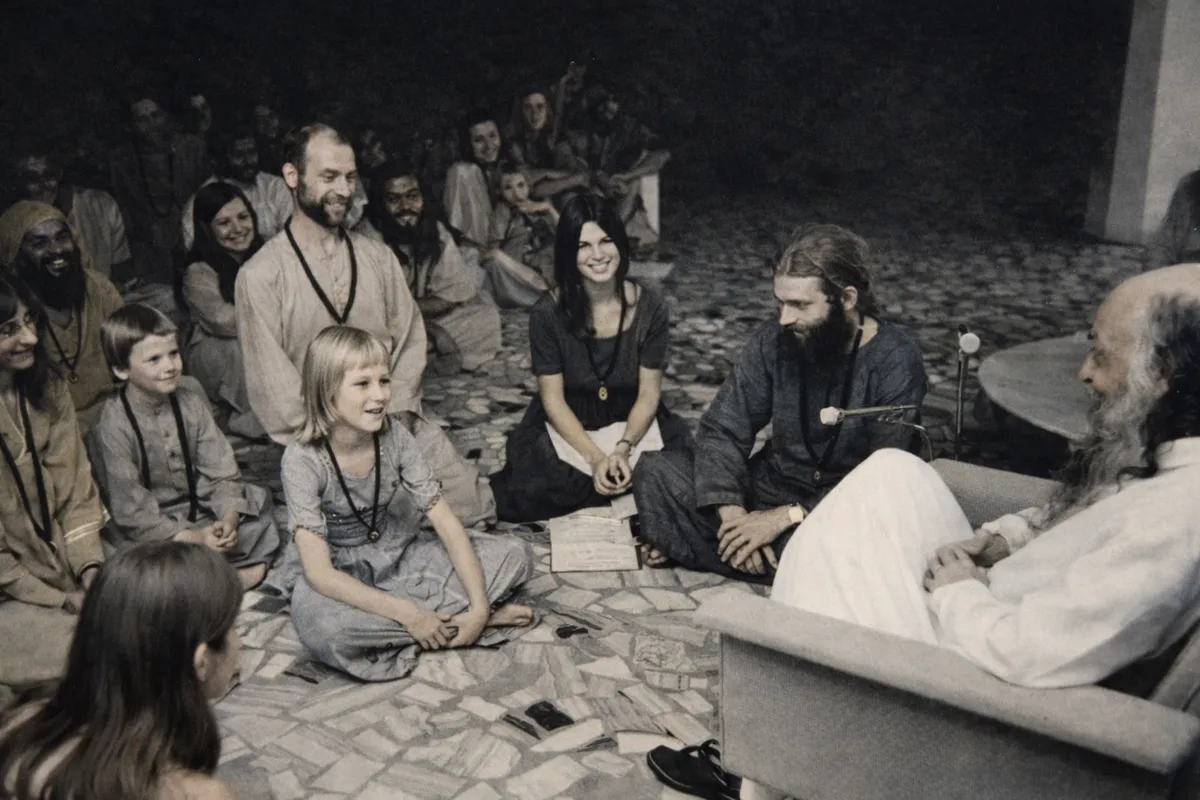
Osho's original Hindi beside Osho Live's English translation, matched passage by passage.
सूत्र-संदर्भ--पहला दृश्य:
Sutra-context — First scene:
भगवान जेतवन में विहरते थे। पास के किसी गांव से आए एक युवक ने संन्यास की दीक्षा ली। वह सबकी निंदा करता था। कारण हो तब तो चूकता ही नहीं था, कारण न हो तब भी निंदा करता था। कारण न हो तो कारण खोज लेता था। कारण न मिले तो कारण निर्मित कर लेता था। कोई दान न दे तो निंदा करता और कोई दान दे तो कहता--अरे, यह भी कोई दान है! दान देना सीखना हो तो मेरे परिवार से सीखो। वह अपने परिवार की प्रशंसा में लगा रहता। शेष सारे संसार की निंदा, अपने परिवार की प्रशंसा, यही उसका पूरा काम था। अपनी जाति, अपने वर्ण, अपने कुल, सभी की अतिशय प्रशंसा में लगा रहता। उसके अहंकार का कोई अंत न था। शायद इसीलिए वह संन्यस्त भी हुआ था।
The Blessed One was dwelling in Jeta’s Grove. A young man came from a nearby village and took initiation into sannyas. He condemned everyone. If there was a reason, he would not miss it; if there was none, he would still condemn. If no cause was at hand, he would hunt for one; if none could be found, he would manufacture one. If someone did not give alms, he would condemn; and if someone did give, he would say—Ah, is this what you call giving! If you wish to learn to give, learn it from my family. He would be forever praising his own family. The entire work of his life was to condemn the whole world and to praise his own family—his caste, his order, his lineage—lavishing extreme adulation upon them. There was no end to his ego. Perhaps it was for this very reason that he became a sannyasin.
एक बार कुछ भिक्षु उसके गांव गए तो पाया कि जैसे वह व्यर्थ ही दूसरों की निंदा करता था, वैसे ही व्यर्थ ही अपने कुल-परिवार की प्रशंसा भी करता था। उसके परिवार की तो कोई स्थिति ही न थी। वह तो अत्यंत हीनवृत्तियों वाले परिवार से आया था।
Once, when some bhikkhus went to his village, they found that just as he condemned others without cause, in the same way he praised his family without cause. In truth, his family had no standing at all. He came from a lineage given to very lowly tendencies.
भिक्षुओं ने यह बात भगवान को कही। भगवान ने कहा, हीनभाव ही श्रेष्ठता का दावेदार बनता है। जो श्रेष्ठ हैं, उन्हें तो अपने श्रेष्ठ होने का पता भी नहीं होता है। वही श्रेष्ठता का अनिवार्य लक्षण भी है। फिर यह भिक्षु न केवल इसी समय ऐसा करता घूमता है, पहले भी ऐसा ही करता था--और-और जन्मों में भी ऐसा ही करता था। जन्म-जन्म इसने ऐसे ही गंवाए हैं। जितनी शक्ति इसने दूसरों की निंदा और स्वयं की प्रशंसा में व्यय की है, उतनी शक्ति से तो यह कभी का निर्वाण का अधिकारी हो गया होता। उतनी शक्ति से तो न मालूम कितनी बार भगवत्ता उपलब्ध कर ले सकता था। भिक्षुओ, इससे सीख लो। दूसरों की निंदा, दूसरों का नहीं, अपना ही अहित करती है। यह दूसरों के बहाने अपनी ही छाती में छुरा भोंकना है। अपने पर दया करो और अपने अकल्याण से बचो, क्योंकि मनुष्य अपना ही शत्रु और अपना ही मित्र है।
The bhikkhus told the Blessed One of this. The Blessed One said, It is the inferiority-complex that claims superiority. Those who are truly superior do not even know that they are superior. That is the inevitable mark of true superiority. And this bhikkhu not only behaves so now, he behaved so before as well—he has behaved so in other births too. Birth after birth he has wasted his life in this way. With the energy he has squandered in condemning others and praising himself, with that very energy he could have long since become worthy of Nirvana. With that much power, who knows how many times he could have attained to godliness. Bhikkhus, learn from this. Condemning others harms not the other, but only oneself. It is merely stabbing your own chest under the pretext of others. Have compassion on yourself and save yourself from your own misfortune, for man is his own enemy and his own friend.
उस युवक ने अत्यंत क्रोध से पूछा, कोई दान न दे तो हम कैसा भाव रखें? कोई दुतकारे तो हम कैसा भाव रखें? और कोई हमें तो दान न दे और दूसरों को दान दे, तो हम कैसा भाव रखें? उस दिन उसने भगवान को भगवान कहकर भी संबोधित नहीं किया। मनुष्य की श्रद्धाएं भी कितनी छिछली हैं!
The young man, in great anger, asked, If someone gives no alms, what attitude should we hold? If someone abuses us, what attitude should we hold? And if someone gives to others and not to us, what attitude should we hold? That day he did not even address the Blessed One as “Blessed One.” How shallow are the devotions of men!
इस पृष्ठभूमि में भगवान ने आज की पहली दो गाथाएं कहीं।
Against this background, the Blessed One spoke today’s first two verses:
‘लोग अपनी श्रद्धा-भक्ति के अनुसार देते हैं। जो दूसरों के खान-पान को देखकर सहन नहीं कर सकता, वह दिन या रात कभी भी समाधि को प्राप्त नहीं कर पाएगा।’
“People give according to their faith and devotion. One who cannot bear seeing others’ food and drink—such a one, by day or by night, will never attain Samadhi.”
‘जिसकी ऐसी मनोवृत्ति उच्छिन्न हो गयी है, समूल नष्ट हो गयी है, वही दिन या रात कभी भी समाधि को प्राप्त करता है।’
“One whose such mental tendency is uprooted, cut off at the root, wholly removed—only he, by day or by night, attains Samadhi.”
ददाति वे यथासद्धं यथापसादनं जनो।
तत्थ यो मङ्कु भवति परेसं पानभोजने।
न सो दिवा वा रत्तिं वा समाधिं अधिगच्छति।।
Dadāti ve yathāsaddhaṁ yathāpasādanaṁ jano. Tattha yo maṅku bhavati paresaṁ pānabhojane. Na so divā vā rattiṁ vā samādhiṁ adhigacchati..
यस्स च तं समुच्छिन्नं मूलघच्चं समूहतं।
सवे दिवा वा रत्तिं वा समाधिं अधिगच्छति।।
Yassa ca taṁ samucchinnaṁ mūlaghacchaṁ samūhataṁ. So ve divā vā rattiṁ vā samādhiṁ adhigacchati..
पहले तो इस पृष्ठभूमि का ठीक-ठीक विश्लेषण समझें। कथा छोटी, सीधी- सादी है, पर अत्यंत मनोवैज्ञानिक है।
First understand this background clearly. The story is small, simple—yet profoundly psychological.
भगवान के पास एक युवक ने दीक्षा ली। और कथा कहती है कि शायद इसीलिए दीक्षा ली कि वह युवक अत्यंत अहंकारी था।
A young man took initiation with the Buddha. And the story says that perhaps he did so because he was intensely egotistical.
यह बात पहले समझ लेने जैसी है। लोग धन भी जोड़ते अहंकार के लिए और त्याग भी करते अहंकार के लिए। पहले अकड़कर चलते हैं कि कितना उनके पास है, फिर अकड़कर चलते हैं कि कितना उन्होंने छोड़ दिया। जितना उनके पास है, उसे भी बहुत-बहुत गुना करके बतलाते हैं। जो छोड़ा है, उसे भी बहुत-बहुत गुना करके बतलाते हैं। लेकिन हर हालत में आदमी अपने अहंकार को ही भजता है। मैं कुछ विशिष्ट हूं; मैं कुछ अनूठा हूं, अद्वितीय हूं; मैं कुछ अलग हूं, औरों जैसा नहीं हूं; मैं असाधारण हूं, सामान्य नहीं; इसी चेष्टा में आदमी लगा रहता है। कभी धन कमाकर, कभी बड़ी दुकान चलाकर, कभी किसी बड़े पद पर प्रतिष्ठित होकर, कभी सबको लात मारकर, लेकिन सबके पीछे मूल आधार एक ही है कि मैं कोई साधारण आदमी नहीं।
This is worth grasping first. People hoard wealth for ego, and they renounce for ego. At first they strut, proclaiming how much they possess; later they strut, proclaiming how much they have left behind. What they have, they multiply many times in the telling. What they have renounced, they multiply many times in the telling. But in every case man worships his ego alone. I am something special; I am unique, incomparable; I am different, not like others; I am extraordinary, not ordinary—man remains engaged in this endeavor. Sometimes by earning wealth, sometimes by running a great shop, sometimes by attaining a high post, sometimes by kicking everyone aside—but behind all this the fundamental base is one: I am no ordinary man.
आदमी साधारण से बड़ा डरता है। सोचो, यह भाव ही कि मैं साधारण हूं, छाती पर पत्थर जैसा रख जाता है। यह खयाल ही कि मैं असाधारण हूं, विशिष्ट हूं, कुछ अनूठा हूं, और तुम्हें पंख लग जाते हैं।
Man is greatly afraid of being ordinary. Consider it: the very feeling that I am ordinary weighs upon the chest like a stone. And the notion that I am extraordinary, unique—at once it gives you wings.
लेकिन अगर तुम असाधारण हो, तो सभी कुछ असाधारण है। पत्ते, फूल, पत्थर, चांद-तारे, सभी कुछ असाधारण है। और अगर सभी कुछ असाधारण है, तो फिर साधारण-असाधारण का भेद ही क्या! जिन्होंने जाना है, उन्होंने कहा है, न तो कोई साधारण है, न कोई असाधारण। अस्तित्व एक है, इसलिए कौन साधारण होगा, कौन असाधारण होगा।
But if you are extraordinary, then everything is extraordinary: leaves, flowers, stones, moon and stars—all is extraordinary. And if all is extraordinary, then what difference remains between ordinary and extraordinary? Those who have known have said: there is neither ordinary nor extraordinary. Existence is one—so who shall be ordinary and who extraordinary?
तो या तो कहो, सभी साधारण हैं, तब भी सच; या कहो, सभी असाधारण हैं, तब भी सच; लेकिन एक को साधारण और एक को असाधारण करने में भूल हो जाती है। कोटियां बांटीं कि भूल हो जाती है, वर्ग बांटे कि भूल हो जाती है, वर्ण बनाए कि भूल हो जाती है। कहा कि ब्राह्मण-शूद्र, भूल हो गयी; कहा कि ऊंचा-नीचा, भूल हो गयी; कहा कि शुभ-अशुभ, भूल हो गयी। जहां तक भेद है और जहां तक द्वंद्व है, वहां तक संसार है
So either say, all are ordinary—that too is true; or say, all are extraordinary—that too is true; but to make one ordinary and another extraordinary is the mistake. Divide into categories, and a mistake is made; draw classes, and a mistake is made; create varnas, and a mistake is made. To say Brahmin and Shudra is a mistake; to say high and low is a mistake; to say auspicious and inauspicious is a mistake. Wherever there is division and duality, there is the world.
तो एक आदमी कहता है कि देखो, मैं कितना बुद्धिमान; और एक आदमी कहता है, देखो मेरे पास कितना धन; और एक आदमी कहता है, देखो मेरे पुण्य, मैंने कितना पुण्य किया--इनमें कोई फर्क है? इनमें कोई भी फर्क नहीं। जब तक आदमी कहता है, देखो, मैं विशिष्ट, तब तक कोई फर्क नहीं है।
One man says, See how intelligent I am; another says, See how much wealth I have; another says, See my merit, how many virtues I have accrued—what difference is there between these? None at all. As long as a man says, See, I am special—there is no difference.
इस जगत में जो आदमी साधारण होने को राजी है, वही असाधारण है। जो यह कहने को राजी है कि मैं अति साधारण हूं, उसकी ही असाधारणता सुनिश्चित है। क्यों? क्योंकि प्रत्येक को असाधारण होने का खयाल है, इसलिए असाधारण का भाव तो बड़ा साधारण है। तुम अगर कुत्ते से पूछो, घोड़े से पूछो, पशु-पक्षियों से पूछो, अगर वे बोल सकते तो वे भी कहते कि तुम हो क्या! आदमी मात्र! असाधारण हम हैं। तुम पत्थर से पूछो, अगर पत्थर बोल सकता तो वह भी कहता कि तुम तो बस आदमी हो, आज हुए, कल गए, हम सदा रहते हैं, हम असाधारण हैं। कोई न कोई बात खोज ही लेगा जिसके कारण असाधारण की घोषणा हो सके। असाधारण की घोषणा में अहंकार है। साधारण होने के भाव में अहंकार विसर्जित हो गया।
In this world, the one who is willing to be ordinary—he alone is extraordinary. The one who is willing to say, I am utterly ordinary—his extraordinariness is assured. Why? Because everyone entertains the thought of being extraordinary; hence the feeling of being extraordinary is the most ordinary feeling of all. If you were to ask a dog, a horse, the animals and birds—if they could speak, they too would say, What are you? Merely human! Extraordinary—we are! Ask a stone—if the stone could speak, it would say, You are merely human: here today, gone tomorrow. We remain forever—we are extraordinary. Each will find some reason on which to declare extraordinariness. In the declaration of extraordinariness there is ego. In the feeling of being ordinary, ego is dissolved.
और मजा यह है कि साधारण होते ही तुम असाधारण हो जाते हो। क्योंकि साधारण होने की भावदशा बड़ी असाधारण भावदशा है। कभी कोई बुद्ध, कभी कोई कृष्ण, कभी कोई क्राइस्ट उस दशा को उपलब्ध होते हैं।
And the wonder is this: the moment you become ordinary, you become extraordinary. For the inner climate of ordinariness is a most extraordinary climate. Once in a while a Buddha, a Krishna, a Christ attains to that state.
यह कथा कहती है, उस युवक ने अहंकार के कारण ही शायद संन्यास लिया।
The story says that perhaps the young man took sannyas out of ego.
यदि कोई अहंकार के कारण ही संन्यास ले तो संन्यास व्यर्थ हो गया। अहंकार से जागकर कोई संन्यास ले तो संन्यास की सार्थकता है। कोई यह देखकर संन्यास ले कि अहंकार व्यर्थ है, दुख लाता है, नर्क है, और अहंकार को छोड़कर जागे, तो संन्यास है। नहीं तो संसार से संन्यासी हो गए, अहंकार वैसा का वैसा रहा, तो रोग पुराना रहा, नाम बदल लिया। भीतर तो पुराना ही कचरा रहा, ऊपर रंग-रोगन कर लिया। यह झूठ चल नहीं सकता। इस झूठ का कोई ज्यादा अर्थ नहीं है, यह प्रगट हो जाएगा।
If one takes sannyas out of ego, sannyas is wasted. If one takes sannyas out of awakening to ego, then sannyas finds its fulfillment. If one takes sannyas seeing that ego is futile, brings suffering, is hell—and awakening by dropping ego—then it is sannyas. Otherwise, if one withdraws from the world and becomes a sannyasin, but the ego remains intact, the old disease remains, only the name has changed. Inside all the old rubbish remains; only a coat of paint is applied on top. This lie cannot stand. It carries little meaning; it will be exposed.
इसलिए युवक संन्यासी तो हो गया, लेकिन पुरानी आदत न छूटी। पुरानी आदत थी अपने को विशिष्ट मानने की। अब अपने को विशिष्ट मानना हो, तो दूसरे कुछ भी नहीं हैं, यह सिद्ध करना जरूरी है। दूसरों की निंदा जरूरी है। अहंकार की छाया की तरह दूसरों की निंदा चलती है। दूसरे कुछ भी नहीं हैं, यह बताना ही पड़ेगा। यह रोज-रोज बताना पड़ेगा।
Thus the young man became a sannyasin, but the old habit did not leave him—the habit of considering himself special. And if one is to consider oneself special, then it becomes necessary to prove that others are nothing. Condemning others is necessary. Like a shadow of ego, the condemnation of others trails along. One must proclaim daily that others are nothing.
तो वह युवक निंदा करने में संलग्न रहता। और अब निंदा कर भी सुविधा से सकता था, क्योंकि संन्यासी था।
So the young man devoted himself to condemnation. And now he could do it more conveniently, for he was a sannyasin.
तुम जाओ मंदिरों में, आश्रमों में, तुम्हारे तथाकथित साधु-संन्यासी को सुनो, वह निंदा कर रहा है। वह उन चीजों की निंदा कर रहा है, जिनका तुम भोग करने में आतुर-उत्सुक हो। और शायद वह भी तुम्हें इसीलिए प्रभावित करता है कि उन्हीं बातों की निंदा करता है, जिनमें तुम्हारा रस है। तुम भी जानते हो कि तुम्हारा रस है। उसका भी रस है, नहीं तो निंदा कभी की खो गयी होती। जब कोई साधु-संन्यासी समझाता हो कि धन मिट्टी है, तो जानना कि उसे धन में अभी भी धन दिखायी पड़ता है। क्योंकि वह यह तो नहीं समझाता कि मिट्टी मिट्टी है। धन मिट्टी है!
Go to temples, to ashrams, listen to your so-called saints and sannyasins—how they condemn! They condemn precisely those things you are eager to enjoy. And perhaps they influence you for this very reason—that they condemn those very things in which your taste lies. You know your taste lies there. Theirs too lies there, otherwise their condemnation would have vanished long ago. When some saint or sannyasin explains that wealth is only dust—know well that he still sees wealth as wealth. For he never explains that dust is dust. He says, wealth is dust!
जब कोई साधु-संन्यासी समझाता हो कि स्त्री के शरीर में क्या है, हड्डी, मांस-मज्जा, मल-मूत्र, और कुछ भी नहीं है, जब वह तुम्हें ऐसा समझाता हो तो जान लेना, उसे अभी स्त्री का रूप आकर्षित करता है। वह तुम्हें नहीं समझा रहा है, तुम्हारे बहाने अपने को समझा रहा है। जब वह सांसारिक जीवन की निंदा करता हो, तो वह यह कह रहा है कि देखो, हम संन्यासी कैसे पवित्र, कैसे पुण्य को उपलब्ध! कैसे साधु, कैसे सरल! और देखो तुम अपना पाप और अपना नर्क! वह अपने को ऊपर रख रहा है। वह तुम्हें नीचे रख रहा है।
When a saint says, What is there in a woman’s body? Bones, flesh and marrow, filth and urine, nothing else—when he explains this to you, know that he is still attracted by the form of woman. He is not explaining to you—he is trying to explain to himself under the pretext of you. When he condemns worldly life, he is essentially saying, Look how pure we sannyasins are, how virtuous! How saintly, how simple! And look at your sin, your hell! He places himself above; he places you below.
वस्तुतः जब किसी व्यक्ति के जीवन में साधुता का प्रकाश होता है, तो वह तुम्हें नीचे नहीं रखता। वह तो कहता है, तुम भी भगवान हो, तुम भी आत्मवान हो, तुम भी वहीं हो जहां मैं हूं। मुझे पता चल गया, तुम्हें पता नहीं चला, इतना सा भेद है। यह भी कोई खास भेद है! तुम्हारी जेब में हजार रुपए पड़े हैं, मेरी जेब में हजार रुपए पड़े हैं, मुझे पता चल गया, मैंने जेब में हाथ डाल लिया, तुमने हाथ नहीं डाला; यह भी कोई बड़ा भेद है! हजार रुपए तुम्हारी जेब में भी पड़े हैं, तुम जब हाथ डाल लोगे, तभी उपलब्ध हो जाएंगे। न भी हाथ डालो तो भी उपलब्ध हैं ही।
In truth, when the light of saintliness dawns in someone’s life, he does not place you below. He says: You too are God, you too are Atman, you too are exactly where I am. I have come to know; you have not yet known—this is the only difference. Is this such a difference? You have a thousand rupees in your pocket; I have a thousand in mine. I came to know and slipped my hand into my pocket; you have not. Is that such a great difference? The thousand lie in your pocket too—whenever you put your hand in, they will be available. Even if you do not, they are still there.
जानने में फर्क हो सकता है, होने में कोई फर्क नहीं है। बोध में फर्क हो सकता है, अस्तित्व में कोई फर्क नहीं है। तुममें वही है जो बुद्ध में है, तुममें वही है जो कृष्ण में है, रत्तीभर कम नहीं; तुममें वही है जो मुझमें है, रत्तीभर कम नहीं। सिर्फ तुमने कभी अपनी गांठ खोलकर देखी नहीं। तुमने कभी अपने भीतर टटोला नहीं। बस टटोलने का फर्क है, जिस दिन टटोल लोगे उसी दिन हो जाएगा।
There can be a difference in knowing—not in being. There can be a difference in awareness—not in existence. In you is exactly what is in a Buddha, exactly what is in Krishna—not a grain less; in you is exactly what is in me—not a grain less. You simply have never untied your knot to see it. You have never explored within. It is only a difference of exploring; the day you explore, it will be there.
ऐसा नहीं कि तुम पापी हो। परमात्मा पापी कैसे हो सकता है! ऐसा नहीं कि तुम नारकीय हो, परमात्मा कैसे नारकीय हो सकता है! तुम हो तो परम अवस्था में, लेकिन तुम लौटकर अपनी तरफ देखते नहीं। तुम्हारी आंखें बाहर भटक रही हैं। बाहर भटकती आंखें भीतर के खजाने से अपरिचित रह जाती हैं, बस, इतना ही फर्क है। फिर अगर साधु को भी यह न दिखायी पड़े कि फर्क न के बराबर है, न कुछ है, तो फिर किसको दिखायी पड़ेगा?
It is not that you are sinners. How can Paramatma be a sinner! It is not that you are hellish—how can Paramatma be hellish! You are in the supreme state already—but you do not turn back to look at yourself. Your eyes wander outward. Eyes wandering outward remain unfamiliar with the inner treasure—that is all the difference. If even a saint cannot see that the difference is next to nothing, that it is nothing, then who will see it?
बुद्ध से किसी ने पूछा कि जब आप ज्ञान को उपलब्ध हुए, फिर क्या हुआ? बुद्ध ने कहा, फिर एक बात घटी--जिस दिन मैं ज्ञान को उपलब्ध हुआ, उसी दिन सारा संसार मेरे लिए ज्ञान को उपलब्ध हो गया। उस दिन से मैंने अज्ञानी नहीं देखा।
Someone asked the Buddha: When you attained enlightenment, then what happened? The Buddha said: Then one thing happened—the very day I attained enlightenment, the whole world attained enlightenment for me. From that day I saw no one as ignorant.
बुद्ध का सारा जीवन लोगों को यही समझाने में बीता कि तुम अज्ञानी नहीं हो। तुम जिद्द करते हो कि हम अज्ञानी हैं। और बुद्धों का सारा प्रयास यही है समझाना कि तुम नहीं हो; तुम्हारी भ्रांति तोड़नी है। तुम मालिक हो, तुमने गुलाम समझा हुआ है। तुम विराट हो, तुमने छोटे के साथ अपना संबंध बना लिया। आंखें आकाश की तरफ उठाओ, सारा आकाश तुम्हारा है, तुम आंखें जमीन पर गड़ाए खड़े हो। इससे यह नहीं होता कि आकाश तुम्हारा नहीं रहा, सिर्फ तुम्हारी आंखें छोटे में उलझ गयी हैं। मगर आंखों की क्षमता आकाश को भी समा लेने की है। कितने ही छोटे में उलझे रहो, जिस दिन आंख उठाओगे, उस दिन पूरा आकाश तुम्हारी आंखों में प्रतिबिंबित हो उठेगा।
The Buddha’s whole life passed in explaining to people: You are not ignorant. You insist, We are ignorant. And the entire effort of the Buddhas is to explain that you are not; to break your delusion. You are the master; you have imagined yourself a slave. You are vast; you have tied yourself to the small. Raise your eyes to the sky—all the sky is yours; yet you keep your eyes fixed in the dust. That does not mean the sky ceases to be yours—your eyes are entangled in the small. But the eye has the capacity to contain the sky as well. However entangled in the small, the day you raise your eyes, the whole sky will be reflected in them.
बुद्ध ने कहा, जिस दिन मैं ज्ञान को उपलब्ध हुआ, सारा संसार ज्ञान को उपलब्ध हुआ। आदमियों की तो छोड़ ही दो, पशु-पक्षी, पौधे, सब आत्मज्ञान को उपलब्ध हो गए। आत्मज्ञानी जब अपने खजाने को देखता है, उसी क्षण उसे दिखायी पड़ जाता है--सब खजाना लिए चल रहे हैं; सबके भीतर दीप्त है वह दीया, सबके भीतर रोशनी जल रही है। अजीब है हालत कि लोग अपनी रोशनी नहीं देखते और भागे चले जा रहे हैं रोशनी की तलाश में; भागे चले जा रहे हैं धन की तलाश में और धन भीतर पड़ा है, ऐसा धन जिसे तुम चुकाओ तो भी चुके नहीं। जिसे तुम उलीचो तो उलीच न पाओ। जिसे तुम फेंकते जाओ और बढ़ता चला जाए, ऐसा धन है। ऐसा परम धन भीतर पड़ा है।
The Buddha said: The day I attained enlightenment, the whole world attained enlightenment. Not only men—leave men aside—animals, birds, trees, all became self-realized. When the enlightened one looks into his treasure, in that very instant it is seen—everyone is carrying the same treasure; within everyone that lamp shines; within everyone the light is lit. It is a strange condition—that people do not see their own light and go on running in search of light; they keep running in search of wealth, while the wealth lies within—wealth such that even if you expend it, it does not deplete; pour it out and you cannot empty it; throw it away and it grows. Such wealth lies within.
बुद्धपुरुष तुम्हें पापी से पुण्यात्मा नहीं बनाते। तुमने अपने को देखा नहीं है, बस, तुम्हें अपने को देखने की सूझ, सीख देते हैं।
The enlightened one does not turn you from sinner into virtuous. He shows you yourself—because you have not looked at yourself; he gives you the knack, the learning to look within.
यह युवक सबकी निंदा में संलग्न रहता। कारण हो तब तो चूकता ही नहीं था--तब तो चूके ही कैसे। जिसको निंदा करनी है, वह कारण होगा तब तो चूकेगा ही नहीं। कारण नहीं होगा तब कारण निर्मित करेगा। जिसको निंदा नहीं करनी है, वह कारण तो निर्मित करेगा ही नहीं, जब कारण होगा, तब भी दया करेगा। तब भी वह कहेगा, तुम्हारी मर्जी! तुम्हें जैसा जीना हो, तुम जीओ, मैं कौन! मैं हस्तक्षेप करूं, ऐसा मैं कौन! मैं बाधा डालूं, मैं कहूं कि बुरा-भला, ऐसा मैं कौन! तुम्हारा जीवन है, तुम अपने जीवन के मालिक हो, तुमने जैसा उसे जीना चाहा है, तुम जीओ। निंदा नहीं होगी।
That youth remained engaged in condemning all. If there was a reason, he surely would not miss it—that is obvious: one who is bent on condemning will not miss a reason when it exists. If there was none, he would manufacture it. One who is not bent on condemning will not manufacture reasons, and even when there is a reason, he will be compassionate. He will say: It is your choice; live as you wish—who am I? Who am I to interfere? Who am I to obstruct, to call something good or bad? It is your life; you are the master of your life; live it as you choose. There will be no condemnation.
जीसस के पास एक स्त्री को लाया गया। गांव स्त्री के खिलाफ है, क्योंकि स्त्री ने व्यभिचार किया है। और पुरानी बाइबिल कहती है कि जो स्त्री व्यभिचार करे, उसे पत्थरों से मार डालना चाहिए। जीसस नदी के किनारे रेत पर बैठे हैं। सारा गांव इकट्ठा हो गया है और उन्होंने कहा, इससे, जीसस से पूछ लो, यह बहुत ज्ञान की बातें करता है। और इससे एक बात यह भी पता चल जाएगी कि पुराने धर्म के पक्ष में है या विरोध में। तो उन्होंने पूछा कि तुम क्या कहते हो? पुराने पैगंबरों ने कहा है कि जो स्त्री अनाचार करे, व्यभिचार में पड़े, उसे पत्थर मारकर मार डालना चाहिए; तुम क्या कहते हो? क्योंकि जीसस तो हमेशा ऐसा ही कहते थे, पुराने पैगंबरों ने ऐसा कहा है, लेकिन मैं ऐसा कहता हूं। तो अब तुम क्या कहते हो?
A woman was brought to Jesus. The village was against her because she had committed adultery; and in the old Bible it is written that a woman who commits adultery should be stoned to death. Jesus was sitting on the riverbank, upon the sand. The whole village gathered and said, Ask him—he speaks much of wisdom; and we will also see whether he is for the old religion or against it. They asked, What do you say? The old prophets have said: the woman who lapses into adultery should be stoned to death. What do you say? For Jesus would often say: The old prophets said thus, but I say unto you… So now, what do you say?
जीसस ने कहा कि पुराने पैगंबरों ने कहा है कि जो तुम्हें ईंट मारे, उसे तुम पत्थर मारना, और जो तुम्हारी एक आंख फोड़े, तुम उसकी दूसरी भी फोड़ देना। लेकिन मैं तुमसे कहता हूं कि जो तुम्हारे एक गाल पर चांटा मारे, तुम दूसरा गाल भी उसके सामने कर देना; और जो तुम्हारा कोट छीन ले, कमीज भी उसे दे देना; और जो तुमसे कहे, एक मील तक इस बोझ को ढोओ, तुम दो मील तक उसके साथ चले जाना; मैं तुमसे ऐसा कहता हूं।
Jesus said: The old prophets said that if someone throws a brick at you, throw a stone at him; if someone blinds one of your eyes, blind the other of his. But I say unto you: if someone slaps your cheek, offer the other also; if someone snatches your coat, give him your shirt too; if someone asks you to carry a load for one mile, walk two miles with him. I say this unto you.
तो उन्होंने कहा, अब तुम क्या कहते हो? पुराने पैगंबर कहते हैं, पत्थर मारकर इसे मार डालना। उन्होंने एक उपाय खोजा था जीसस को फांसने का। या तो जीसस कहेंगे, पुराने पैगंबर गलत कहते हैं, तो भी वे जीसस पर नाराज होते--तो एक तुम्हीं पैगंबर हो! अब तक सब नासमझ ही हुए! या जीसस कहेंगे, पुराने पैगंबर ठीक कहते हैं; तो हम कहेंगे, फिर क्या हुआ तुम्हारे उस प्रेम के सिद्धांत का कि कोई एक गाल पर चांटा मारे तो दूसरा सामने कर देना। पत्थर मारकर मार डालने को कहते हो? हत्या के लिए कहते हो? दोनों हालत में जीसस फंस जाएंगे। गांव बड़ा उत्सुक था। गांव का जो रबाई था, जो धर्मगुरु था, वह भी आगे खड़ा था आकर कि पूछो इस युवक से, यह क्या कहता है?
They said, Now what do you say? The old prophets say: stone her to death. They had devised a trap for Jesus. If he said, The old prophets are wrong, they would be angry—So you alone are a prophet! All until now were fools! Or, if Jesus said, The old prophets are right, they would say, What of your doctrine of love then, of turning the other cheek? You call for stoning—call for killing? In either case, Jesus would be caught. The village was eager; the rabbi, the religious teacher, stood in front, to ask this youth, What does he say?
और जीसस ने एक क्षण सोचा और कहा, आप पत्थर उठा लें--नदी का किनारा था, पत्थर तो पड़े ही थे, ढेर लगे थे, लोगों ने पत्थर उठा लिए--और जीसस ने कहा, अब मैं कहता हूं, जिस आदमी ने कभी व्यभिचार न किया हो, या व्यभिचार का विचार न किया हो, वह पहला पत्थर मारे। वे जो आगे खड़े बड़े-बुजुर्ग थे, धीरे-धीरे भीड़ में पीछे हट गए। धर्मगुरु भी भीड़ में भीतर सरक गया। धीरे-धीरे भीड़ छंट गयी, जीसस और वह स्त्री अकेले वहां छूट गए।
Jesus paused a moment and said, Pick up stones. It was the river edge—stones lay there in heaps. People picked up stones. Jesus said, Now I say: let the one who has never committed adultery—or never even thought of adultery—cast the first stone. Those elders standing in front slowly slipped back into the crowd. The rabbi too merged into the people. Slowly the crowd thinned, and Jesus and the woman were left alone.
वह स्त्री तो उनके पैरों में गिर पड़ी। उसने कहा, तुमने मुझे जीवनदान दिया, तुमने मुझे बचा लिया, अन्यथा आज वे मुझे मार डालते। लेकिन पाप तो मैंने किया है। उनसे तो मैं इनकार भी करती रही, तुमसे मैं इनकार भी कैसे करूं, पाप तो मैंने किया है। अब तुम मुझे जो सजा देना चाहो, दो।
The woman fell at his feet. She said, You have given me life; you have saved me; else today they would have killed me. But I have sinned. I denied it to them, but how can I deny it to you? I have sinned. Now whatever punishment you give me, I accept.
जीसस ने कहा, मैं तुझे सजा देने वाला कौन? यह तेरे और तेरे परमात्मा के बीच की बात है, मैं बीच में आने वाला कौन? अगर तुझे लग गया कि पाप है, तो अब मत करना; और अगर तुझे लगता हो कि पाप नहीं है, तो तेरी मर्जी! जो तुझे पाप न लगे तो जरूर करना। रही बात निर्णय की, तो तेरा परमात्मा और तेरे बीच निर्णय होगा, मैं कौन हूं बीच में!
Jesus said, Who am I to punish you? This is a matter between you and your God; who am I to come in between? If you feel it is sin, then do not do it again. And if you feel it is not sin, then it is your will—if it does not feel like sin to you, then certainly do it. As for judgment, it will be between your God and you; who am I in between?
उस स्त्री के जीवन में क्रांति घट गयी। क्रांति घट गयी इसीलिए कि इस आदमी ने निंदा नहीं की। इसने कहा, मैं कौन हूं! इस आदमी ने कोई वक्तव्य ही न दिया। इसने यह भी न कहा कि यह पाप है! इसने कहा कि तुझे पाप लगता हो तो छोड़ देना।
A revolution happened in the woman’s life—because this man did not condemn. He said, Who am I! He gave no pronouncement at all—not even that it is a sin. He said, If it feels like sin to you, leave it.
जब तुम्हें पाप लगता है तो छूट ही जाता है, छोड़ना भी नहीं पड़ता। दूसरे के कहने से कोई छोड़ता है! और निंदा तो करना ही मत, निर्णय तो लेना ही मत। दूसरे आदमी के हम मालिक नहीं हैं। उसकी स्वतंत्रता परम है, उसकी गरिमा परम है। उसके ऊपर निंदा का एक शब्द भी उठाना सिर्फ अपनी हीनता की घोषणा है।
When it feels like sin to you, it drops by itself; you do not even need to leave it. Who leaves anything at another’s bidding! Do not condemn—do not judge. We are not masters of another. His freedom is supreme, his dignity is supreme. To raise even a single word of condemnation against him is merely to declare one’s own inferiority.
लेकिन वह युवक कारण होता तब तो चूकता ही कैसे--कारण को खूब बढ़ा-चढ़ा लेता होगा--कारण न हो तब भी कारण खोज लेता था, निर्मित कर लेता था। कोई दान न दे तो निंदा करता कि देखो कृपण, देखो कंजूस, मरेगा पापी, नरकों में सड़ेगा, इसी धन की ढेरी पर सांप बनकर बैठेगा जब मरेगा--तो निंदा करता। और कोई दान देता, तो कहता, अरे, यह भी कोई दान है! दान देना सीखना हो तो मेरे परिवार से सीखो। यह क्या मुट्ठी-मुट्ठी दे रहे हो! अगर कोई किसी दूसरे को दान देता, तब तो वह बहुत ही निंदा करता। उसको देता तब भी नहीं छोड़ पाता था निंदा करना, लेकिन दूसरे को देता तब तो वह बहुत ही निंदा करता।
But that youth—if there was a reason, he would not miss it; if not, he would inflate one; if none, he would manufacture one. If someone did not give alms, he would condemn: See the miser, see the wretch, he will die a sinner, rot in hell, sit upon this heap of money as a snake when he dies—and he would condemn. And if someone gave alms, he would say, Ah, is this giving! If you want to learn giving, learn it from my family. What is this—fistfuls! And if someone gave to another, then he would condemn all the more. Even if given to him he would not restrain condemnation; if given to another, how much more he would condemn!
इसके साथ ही साथ उसका दूसरा काम था, अपने परिवार की प्रशंसा, अपनी जाति की प्रशंसा, अपने वर्ण की प्रशंसा।
Along with this, his other work was to praise his family, his caste, his order.
खयाल करना, तुम जब अपने देश की प्रशंसा करते, अपनी जाति की, अपने वर्ण की, अपने धर्म की, अपने कुल-परिवार की, तो तुम वस्तुतः क्या कर रहे हो? तुम प्रकारांतर से अपनी प्रशंसा कर रहे हो। जब तुम कहते हो, भारत देश धन्य है, तो तुम क्या कह रहे हो? तुम यह कह रहे हो कि मैं भारतवासी हूं। अगर तुम चीन में पैदा हुए होते तो तुम कभी न कहते, भारत देश धन्य है। तुम कहते, चीन देश धन्य है! तुम जहां पैदा होते, वही देश धन्य होता। यह देश की प्रशंसा नहीं है, यह बड़ी तरकीब से अपनी प्रशंसा है। यह आत्म-प्रशंसा है।
Take heed: when you praise your nation, your caste, your order, your religion, your lineage—what are you truly doing? By a roundabout way you are praising yourself. When you say, India is blessed, what are you saying? You are saying: I am Indian. If you had been born in China, you would never say, India is blessed. You would say, China is blessed. Wherever you were born—that land would be blessed. This is not praise of the country; it is a cunning device of self-praise. It is self-praise.
तुम कहते हो, हिंदू-कुल धन्य है! जैन से पूछो। वह कहता है, जैन-कुल धन्य है! बौद्ध से पूछो। वह कहता है, बौद्ध-कुल धन्य है। यह संयोग की बात है कि तुम जैन-घर में पैदा हो गए, इसलिए जैन-कुल धन्य हो गया। यह संयोग की बात है कि तुम हिंदू-घर में पैदा हो गए, इसलिए हिंदू-कुल धन्य हो गया। ये विष भरी बातें हैं। लेकिन इनको तुम इस तरह दोहराते हो कि तुमने जैसे विचार ही नहीं किया इन पर।
You say, The Hindu lineage is blessed. Ask a Jain. He says, The Jain lineage is blessed. Ask a Buddhist. He says, The Buddhist lineage is blessed. It is a mere accident that you were born in a Jain home—hence the Jain lineage became blessed. A mere accident that you were born in a Hindu home—hence the Hindu lineage became blessed. These are venomous assertions. But you repeat them as if you had never reflected on them at all.
अब यह बड़े मजे की बात है कि जो लोग निर-अहंकार की शिक्षा देते हैं, वे भी इन बातों में पड़े हैं। तुम जैन-मुनि से जाकर पूछो तो वह कहेगा, जैन-कुल में पैदा होना बड़े पुण्यों से होता है। बाकी आदमी कोई आदमी थोड़े! बाकी आदमी तो बस नाममात्र के आदमी हैं। जैन-कुल में पैदा होना बड़े पुण्यों से होता है, जन्म-जन्म के पुण्यों से होता है। अब यही आदमी रोज समझाता है निरहंकार; अहंकार छोड़ो; और बड़ी गहराई में अहंकार को पोषण दे रहा है।
The strange thing is that those who preach egolessness are themselves caught in these very notions. Go ask a Jain muni—he will say, To be born in a Jain family comes from great merits. Others are hardly human! They are humans in name only. To be born in a Jain family comes from merits accrued over many births. And this very man preaches egolessness daily; abandon ego—while at a deep level he nourishes ego.
तुम ब्राह्मण से पूछो, वह कहता है, ब्राह्मण होना कोई साधारण बात थोड़े! असाधारण बात है! तुम पुरुष से पूछो, पुरुष कहता है, पुरुष होने में धन्यता है, स्त्री होने में दुर्भाग्य है। शास्त्रों में लिखा है कि पहले तो मनुष्य होना बहुत दुर्लभ है, फिर पुरुष होना बहुत दुर्लभ है। फिर ब्राह्मण होना और भी दुर्लभ! फिर इस भारत देश में पैदा होना, यह तो धर्म-देश है, यहां तो सदा धर्म की धारा बहती रही, यहां पैदा होना और भी दुर्लभ है! बाकी सब तो मलेच्छ। मगर यही धारणा उनकी भी है। और तुम यह मत सोचना कि बड़े-बड़े मुल्कों की है, छोटे से छोटे मुल्क की भी धारणा यही है।
Ask a Brahmin—he says, To be a Brahmin is no ordinary thing! It is extraordinary! Ask a man—he says, To be male is a blessing, to be female is misfortune. The scriptures write that first of all it is very rare to be born human; then to be a man is very rare; then to be a Brahmin rarer still; and to be born in this land of India—the land of Dharma where the stream of Dharma has flowed always—this is rarer still! The rest are mlechchhas. But this is the notion of everyone. And do not think it belongs only to great nations; the smallest nation holds the same notion.
यह धारणा मनुष्य के अहंकार की है। दुनिया में तीन सौ धर्म हैं और सभी धर्मों के मानने वालों की यही धारणा है। और दुनिया में कितने देश हैं! और सभी देशों की यही धारणा है। और अब तो स्त्रियों ने भी घोषणा करनी शुरू कर दी है--और ठीक किया है, क्योंकि बहुत हो गया--अब पश्चिम में स्त्रियां घोषणा कर रही हैं कि स्त्री होना धन्यभाग है। पुरुष होने में क्या रखा है!
This notion belongs to man’s ego. There are three hundred religions in the world, and the adherents of all of them hold the same notion. And how many countries are there in the world! And all hold the same notion. And now even women have begun proclaiming—and rightly so, for enough is enough—that to be a woman is blessed; what is there in being a man!
पूरब के देशों में बूढ़ों के हाथों से शास्त्र लिखे गए, तो ब़ूढे कहते हैं, बूढ़ों का आदर करो। क्योंकि बूढ़ों ने शास्त्र लिखे। पश्चिम में जवान किताबें लिख रहे हैं, वे कहते हैं कि तीस साल के ऊपर के किसी आदमी का भरोसा ही मत करना।
In the East, scriptures were written by the old; so the old say, Respect the elders—because the elders wrote the scriptures. In the West, the young are writing books; they say, Don’t trust anyone over thirty.
मैं एक बड़ी मजेदार घटना कल पढ़ रहा था। जेरी रूबिन, जिसने इस बात का नारा दिया अमरीका में कि तीस साल के ऊपर के आदमी पर भरोसा मत करना, तीस साल के बाद आदमी बेईमान हो ही जाता है, वह यह भूल ही गया यह कहने में कि तीस साल के ऊपर उसको भी एक दिन होना पड़ेगा। जब उसने यह कहा था, तब वह छब्बीस साल का था। भूल ही गया होगा जोश-खरोश में।
I was reading a most amusing incident yesterday. Jerry Rubin, who raised this slogan in America—Don’t trust anyone over thirty; after thirty a man becomes dishonest—forgot that one day he too would be over thirty. When he said it, he was twenty-six—he must have forgotten in his heat and fury.
फिर वह बत्तीस साल का हो गया। अमरीका में उसके पीछे एक आंदोलन चला--इप्पी। और इप्पियों ने सारे अमरीका में तहलका मचा दिया कि तीस साल के ऊपर जितने लोग हैं, सब बेईमान हैं। फिर एक दिन ऐसा आया कि वह तीस साल के ऊपर हो गया।
Then he turned thirty-two. In America, a movement gathered behind him—the Yippies. The Yippies shook America, declaring that all people over thirty are dishonest. Then came a day when he too passed thirty.
एक दिन वह होटल से बाहर निकला, जहां ठहरा हुआ था, बाहर आया तो देखा कि उसकी कार में किसी ने आग लगा दी। वह बहुत हैरान हुआ कि किसने यह किया है! जब पास गया तो पता चला वहां एक तख्ती लगी है, उस पर लिखा है कि जेरी रूबिन, अब तुम तीस साल के ऊपर के हो गए, अब हमारे नेता नहीं रहे। जिनका उसने आंदोलन खड़ा किया था, वे ही उसके विरोध में हो गए, क्योंकि वह तीस साल के ऊपर हो गया। तब उसको पता चला--अभी मैं उसकी किताब पढ़ रहा था, उसने लिखा है कि तब मुझे पता चला कि तीस साल के ऊपर एक दिन मुझे भी होना पड़ेगा, तब मैं ही झंझट में पडूंगा।
One day he came out of the hotel where he was staying and saw that someone had set fire to his car. He was astonished—who did this? When he approached, he found a placard that read: Jerry Rubin, you are now over thirty—you are no longer our leader. Those whom he had raised in movement turned against him, because he crossed thirty. Then he realized—just now I was reading in his book—then I realized that one day I too would be over thirty and would be caught in the same trouble.
पश्चिम में युवक किताबें लिख रहे हैं, तो बूढ़ों का सम्मान नहीं। पूरब में बूढ़ों ने किताबें लिखीं तो युवकों का सम्मान नहीं। किसी दिन अगर बच्चे किताबें लिखेंगे तो जवानों का भी सम्मान नहीं रह जाएगा। पुरुषों ने किताबें लिखीं तो स्त्रियों का अपमान। स्त्रियां किताबें लिखती हैं तो पुरुषों का अपमान। आदमी किस-किस भांति अपने अहंकार की पूजा किए चला जाता है।
In the West, young men are writing books—so no respect for the old. In the East, the old wrote books—so no respect for the young. If one day children begin writing books, there will be no respect even for the youth. Men wrote books—so women were insulted. Women write books—and men are insulted. In how many ways man continues the worship of his ego.
हम जो हैं, हम प्रकारांतर से उसकी प्रशंसा करते हैं। इससे जागना। ये अहंकार के सूक्ष्म सहारे हैं। मत भूलकर कहना कि तुम हिंदू हो तो बड़ा कोई पुण्य हो गया। मत भूलकर कहना कि तुम ईसाई हो तो कोई बड़ा पुण्य हो गया। पुण्य तो उस दिन होगा, जिस दिन तुम न-कुछ हो जाओगे। उसके पहले कोई पुण्य नहीं हैं। न तुम्हारा कोई देश रहेगा, न कोई जाति रहेगी, न कोई कुल रहेगा, न स्त्री-पुरुष का भाव रहेगा, पुण्य तो उस दिन होगा। धन्यता तो उस दिन होगी, जिस दिन तुम्हारे ऊपर कोई रोग न रह जाएंगे, कोई तादात्म्य न रह जाएगा; तुम यह कह ही न सकोगे कि मैं हिंदू, कि मुसलमान, कि ईसाई, कि जैन, तभी तुम धन्य होओगे। उसके पहले तो धन्यता झूठी है।
We praise whatever we are. Awaken from this. These are subtle supports of ego. Do not mistakenly claim that to be a Hindu is some great merit, or that to be a Christian is some great merit. Merit will be on the day you become a nothing. Before that there is no merit. Then you will have no country, no caste, no lineage, no sense of male or female—merit will be then. Blessedness will be the day when no disease remains upon you, no identifications remain; when you cannot say: I am Hindu, I am Muslim, I am Christian, I am Jain—only then will you be blessed. Before that, all blessedness is false.
वह युवक शायद इसीलिए संन्यस्त भी हुआ था, ताकि वह कह सके कि देखो मैं संन्यस्त हूं! सारा जगत पापी है। संन्यास का मजा ही यही है। उससे तुम्हें बड़ी सुगम सुविधा मिल जाती है सारी दुनिया की निंदा करने की। संन्यस्त होते से ही तुम एकदम शिखर पर विराजमान हो जाते हो। एक क्षण पहले सड़क पर थे, एक क्षण बाद शिखर पर विराजमान हो जाते हो।
Perhaps that youth became a sannyasin for this very reason—so that he could say, Look, I am a sannyasin! The whole world is sinful. This is the joy of sannyas—that it grants you the easy convenience of condemning the whole world. Just by becoming a sannyasin you sit atop the peak. One moment earlier you were in the street; the next moment you are enthroned upon the summit.
तुम देखते हो, जब दीक्षाएं होती हैं, तो कितना शोर-शराबा, जुलूस निकलता और बड़ा उत्सव मनाया जाता कि कोई सज्जन दीक्षा ले रहे हैं। इसमें उत्सव की क्या बात है! मैं संन्यास देता हूं तो जरा भी आहट नहीं होने देता, क्योंकि आहट की क्या बात है! इसमें उत्सव की क्या बात है! उत्सव तो अहंकार की ही पूजा है। उत्सव का तो मतलब यह हुआ कि तुमने दीक्षा लेने वाले का खूब अहंकार पोषित कर दिया, अब यह अकड़कर चलेगा।
You see, when initiations are given there is so much noise, processions, great festival—that some gentleman is taking initiation. What is there to celebrate! When I give sannyas I do not allow even a ripple—what is there to make a stir about! Celebration is only the worship of ego. Celebration means you have richly nourished the initiate’s ego—now he will strut.
देखते हैं, जैन-मुनि हाथ जोड़कर किसी को नमस्कार नहीं करता। कर नहीं सकता, क्योंकि वह कहता है, मुनि और नमस्कार करे! गृहस्थों को, श्रावकों को, गैर-संन्यासियों को नमस्कार करे, मुनि! मुनि सिर्फ आशीर्वाद दे सकता है, नमस्कार नहीं कर सकता। यह तो हद्द हो गयी! और उनसे जिनसे कि निर-अहंकार की बात करते हैं, ये हाथ जोड़कर नमस्कार भी नहीं कर सकते। इन्हें दूसरे में सिर्फ गृहस्थ दिखायी पड़ रहा है, दूसरे में छिपा परमात्मा दिखायी नहीं पड़ता। ये सब अहंकार के ही नए-नए रूप हैं, नए-नए ढंग हैं।
See: a Jain muni does not fold his hands to greet another—he cannot. He says, A muni and offer namaskar! To householders, to shravakas, to the non-sannyasin—should a muni bow! A muni may only give blessings; he cannot bow. This is the limit! And these very people talk of egolessness, and they cannot even fold their hands in namaskar. They see in the other only a householder; they do not see the indwelling God. These are all new forms, new fashions of ego.
तो संन्यस्त हो गया युवक--कथा बड़ी मीठी है, कहती है कि शायद इसीलिए संन्यस्त हुआ कि यह अहंकार में एक और नया पंख लग जाएगा, एक नया रंग लग जाएगा।
So the youth became a sannyasin—the story is sweet; perhaps he took sannyas so his ego might sprout a new wing, a new color.
एक बार कुछ भिक्षु उसके गांव गए तो पाया कि वह व्यर्थ ही दूसरों की निंदा करता है, और व्यर्थ ही अपने कुल की प्रशंसा करता है। उसके कुल में तो कुछ था ही नहीं, कुछ खास बात ही न थी। वे तो साधारण लोग थे, साधारण से भी गए-बीते लोग थे। बड़े हीनकुल से वह आया था। बड़ी हीनवृत्तियों वाले कुल से आया था।
Once, some bhikkhus went to his village and discovered that he condemned others without cause and praised his clan without cause. There was nothing in his clan—nothing special. They were ordinary folk—worse than ordinary. He came from a very lowly family—with very lowly tendencies.
भिक्षुओं ने यह बात भगवान से कही।
The bhikkhus told this to the Blessed One.
पच्चीस सौ साल पहले बुद्ध ने जो वक्तव्य दिया, उस पर फ्रायड और जुंग को ईर्ष्या हो! एडलर परेशान होता अगर इस वक्तव्य का उसे पता चल जाता। क्योंकि एडलर ने अभी जो मनोविज्ञान विकसित किया है, उसका मौलिक आधार इनफिरिआरिटी कांप्लेक्स है, हीनता की ग्रंथि। वह कहता है, जो लोग जितने ही हीन होते हैं, उतने ही श्रेष्ठ होने का दावा करते हैं।
A statement the Buddha made twenty-five hundred years ago would make Freud and Jung envious! Adler would be perturbed if it were brought to his notice. For the fundamental basis of Adler’s psychology is the inferiority complex. He says: the more inferior people are, the more they claim superiority.
काश, उसे बुद्ध की यह कथा पता होती, तो उसे यह खयाल पैदा नहीं होता कि उसने कोई अनूठी बात खोज ली है। तुम अगर पुराने शास्त्रों में गहरे उतरो तो तुम चकित हो जाओगे, शायद कोई अनूठी बात खोजने को बची नहीं है। होना भी ऐसा ही चाहिए। कितने अनंत काल से आदमी सोचता रहा है! सब पहलू देख लिए गए हैं, सब पर्तें उलट ली गयी हैं, सब द्वार खोल लिए गए हैं।
Had he known this Buddha-story, he might not have fancied that he had discovered something unique. If you go deep into the old scriptures you will be amazed—perhaps nothing remains to be discovered as unique. And so it should be. From time immemorial man has been thinking; all angles have been seen, all layers turned over, all doors opened.
मगर वहां भी अहंकार का एक खेल चलता है। हर युग कहता है कि जो हमने खोजा, वह किसी ने नहीं खोजा। और हर आदमी कहता है कि जो मैं जानता हूं, वह कोई नहीं जानता। मैं मौलिक हूं। यह सदियों से आदमी सोचता रहा है। हजारों वर्षों से आदमी चिंतन करता रहा है। बड़े-बड़े मनीषी हुए। बचा कैसे होगा कुछ तुम्हारे लिए मौलिक होने को!
But even here the play of ego continues. Every age says: What we have discovered, no one discovered before. And every man says: What I know, none knows. I am original. For centuries man has been thinking. For thousands of years contemplation has continued. What could be left for you to be original about!
जैसे कृष्णमूर्ति के अनुयायी कहते हैं कि कृष्णमूर्ति जो कहते हैं, मौलिक है। तो उन्होंने अष्टावक्र नहीं पढ़ा। नहीं तो वे बड़े हैरान हो जाएंगे। कृष्णमूर्ति का एक भी वक्तव्य नहीं है जो अष्टावक्र के वक्तव्य से आगे जाता हो। खैर, कृष्णमूर्ति तो शास्त्र पढ़ते नहीं, उनकी जिद्द है कि वे पुराने शास्त्र पढ़ेंगे नहीं, चलो, उनको क्षमा किया जा सकता है। मगर उनके शिष्य, जो दावा करते हैं, उनको तो कम से कम इधर-उधर देखना चाहिए इसके पहले कि मौलिक होने का दावा हो।
Like the disciples of Krishnamurti who say that what Krishnamurti says is original—they have not read Ashtavakra. Otherwise they would be astonished. Not a single statement of Krishnamurti goes beyond the statements of Ashtavakra. Well, Krishnamurti does not read scriptures—he insists he will not read the old; all right, he may be forgiven. But his disciples, who make the claim, they should at least look around a little before declaring originality.
ऐसा एक वक्तव्य नहीं है जो आदमी दे सके, जो कि पहले नहीं दिया गया हो। यह हो सकता है कि समय ने बहुत धूल जमा दी हो, दूरी हो गयी हो, हम भूल भी गए हों। लेकिन जो भी आज है, वह कल भी था, परसों भी था, कल भी होगा, परसों भी होगा। हमारी मूढ़ता वैसी ही है जैसे गुलाब का एक फूल जो आज खिला है, वह खिलते ही से कहे, ऐसा फूल पृथ्वी पर कभी नहीं खिला। या सूरज आज ऊगा है, वह कहे कि ऐसा सूरज पहले कभी नहीं ऊगा। कि रात तारे आकाश में फैले हों और घोषणा कर दें कि ऐसी तारों-भरी रात पहले कभी नहीं हुई।
There is not a single statement man can make today that has not been made before. It may be that time has piled much dust, distance has grown, we have forgotten. But whatever is today was yesterday too, and will be tomorrow. Our folly is like that of a rose that blossoms today and announces: never has such a flower blossomed on earth. Or the sun, rising today, declares: never has such a sun risen before. Or the night, studded with stars, proclaims: never has there been such a starry night.
जो आज हो रहा है, वह सदा होता रहा है। आज अनूठा नहीं है। सूरज के तले नया कुछ भी नहीं है। हां, बहुत बार बातें खोजी जाती हैं, फिर खो जाती हैं। समय की धारा में भूल जाती हैं। फिर-फिर खोज ली जाती हैं। इसलिए हर खोज पुनर्खोज है। कोई खोज नयी नहीं है।
What is happening today has always been happening. Today is not unique. There is nothing new under the sun. Yes, often things are discovered and then lost—forgotten in the flow of time. They are rediscovered again. Hence every discovery is a rediscovery. No discovery is new.
बुद्ध ने कहा, हीनभाव ही श्रेष्ठता का दावेदार बनता है।
The Buddha said, It is the inferiority-complex that claims superiority.
एडलर का पूरा मनोविज्ञान इस वचन में आ गया। तुम देखना, आदमी के व्यक्तित्वों में झांकना, तो तुम पाओगे, जहां-जहां हीनता की ग्र्रंथि होती है वहां-वहां श्रेष्ठ होने का भाव पैदा होता है।
Adler’s entire psychology is contained in this one line. Look into the personalities of people and you will find—wherever there is an inferiority-complex, there the claim to superiority arises.
चोर सिद्ध करने की कोशिश करता है कि मैं चोर नहीं हूं। चोर बड़ी जोर से कोशिश करता है कि मैं चोर नहीं हूं। क्योंकि वह डरा हुआ है भीतर से, हूं तो चोर ही। सिद्ध तो करूंगा, नहीं सिद्ध कर पाऊंगा तो पकड़ लिया जाऊंगा। चोर अगर चुप रहे तो उसे डर लगता है कि मेरी चुप्पी कहीं मेरी चोरी का प्रमाण न बन जाए।
The thief tries to prove he is not a thief. He tries hard—because he trembles inside, I am a thief. I must prove otherwise; if I cannot, I shall be caught. If the thief remains silent, he fears his silence may become the proof of his theft.
झूठ बोलने वाला सिद्ध करता है कि मैं जो कह रहा हूं, वह सच है। जो लोग बहुत कसमें खाते हैं, समझ लेना कि वे झूठ बोलने वाले लोग हैं। नहीं तो कसमें नहीं खाएंगे। हर बात पर कसम, कि भगवान की कसम, कि तुम्हारी कसम। जो आदमी कसमें खाता है, यह झूठ बोलने वाला आदमी है। क्योंकि इसे सच अपने आप में काफी है, ऐसा नहीं मालूम पड़ता। इसे लगता है, कसम जोड़ो साथ में; अपने आप में तो कुछ है नहीं; कसम की बैसाखी लग जाए तो शायद झूठ थोड़ा चल जाए। सच बोलने वाला आदमी कसम नहीं खाएगा। कसम का मतलब ही होता है--झूठ का तुम्हें पता है, अब तुम झूठ को लीपा-पोती कर रहे हो। अब तुम किसी तरह से प्रमाण जुटा रहे हो कि सच हो जाए।
The liar tries to prove he speaks truth. Those who swear oaths—know that they are liars. Otherwise they would not swear. With every statement an oath—By God! By your life! The man who swears oaths is a liar, for he feels truth is not enough on its own. He thinks, Add the crutch of an oath; in itself it has no weight; with the crutch perhaps the lie will walk. One who speaks truth will not swear. An oath means—you know it is a lie, and now you are whitewashing it, trying somehow to furnish it with proofs of truth.
हीनभाव ही श्रेष्ठता का दावेदार बनता है।
It is the inferiority-complex that claims superiority.
तुमने दुनिया में देखा, अगर तुम बड़े-बड़े राजनीतिज्ञों की जीवन-कथा पढ़ो तो तुम बहुत चकित हो जाओगे। उन में कोई न कोई हीनता की ग्रंथि थी, इसीलिए वे पदों की तरफ भागे।
See in the world—if you read the lives of great politicians you will be amazed. In them there was some inferiority wound, and hence they ran toward positions.
नेपोलियन की ऊंचाई कम थी--पांच फीट दो इंच। मनोवैज्ञानिक कहते हैं, यही कारण था। वह हमेशा बेचैन था इस बात से कि उसकी ऊंचाई बहुत कम है। वह दुनिया को बताना चाहता था, मेरी ऊंचाई कितनी है! वह यह दिखाना चाहता था कि मेरे शरीर से मुझे मत तौलो। शरीर में क्या रखा है! मेरी असली ऊंचाई देखो, मेरे सिंहासन से देखो। उसने दुनिया का सबसे बड़ा सिंहासन बनवाया था, ताकि उसके ऊपर बैठकर वह दिखला सके। वह चाहता था, सारी दुनिया को जीत लूं, ताकि मैं बता सकूं कि मेरी ऊंचाई कितनी है।
Napoleon’s height was short—five feet two inches. Psychologists say: that was the cause. He was always restless that his height was too little. He wished to show the world how tall he was! He wished to say: Do not measure me by my body—what is there in the body! See my real height—see it from my throne. He had the world’s largest throne built so that, seated upon it, he could show. He wanted to conquer the whole world to prove how tall he was.
एक दिन वह घड़ी ठीक करना चाहता था--घड़ी जरा ऊंची लगी थी दीवाल पर और उसका हाथ नहीं पहुंच रहा था। तो उसका जो अंगरक्षक था, उसने कहा, रुकिए महानुभाव, मैं आपसे ऊंचा हूं, मैं ठीक कर दूंगा। उसने कहा कि चुप, भूलकर इस तरह का शब्द मत प्रयोग करना। मुझसे ऊंचा! मुझसे लंबा है, ऊंचा नहीं। उसने तत्काल सुधार करवा दिया। लंबाई और ऊंचाई में फर्क होता है। मुझसे लंबा तू जरूर है, लेकिन ऊंचा क्या है, ऊंचा कैसे होगा! मेरा अंगरक्षक और मुझसे ऊंचा!
One day he wanted to adjust a clock—hung a little high on the wall—and his hand could not reach. His bodyguard said, Wait, sir, I am taller than you; I will fix it. Napoleon said, Silence! Never use such words by mistake. Taller than me? Longer than me, not taller. He immediately corrected him. There is a difference between length and height. Longer than me you may be—but higher? How could you be higher! My bodyguard—higher than me!
नेपोलियन ने सिद्ध करने की कोशिश की।
Napoleon tried to prove.
कहते हैं कि लेनिन जब बैठता था तो उसके पैर बहुत छोटे थे--ऊपर का शरीर तो ठीक था, पर पैर बहुत छोटे थे--कुर्सी से लटक जाते थे, पैर उसके जमीन से नहीं लगते थे। इससे वह बड़ा पीड़ित था, वह छिपाकर बैठता था अपने पैरों को। और मनोवैज्ञानिक कहते हैं कि वह पैरों की कमजोरी ही उसकी दौड़ थी--कि जमाकर बता देगा पैर। ऐसे जमाकर बता देगा कि कोई भी उखाड़ न सके।
They say Lenin, when he sat, had very short legs—the upper body was fine but the legs short; his feet dangled from the chair and didn’t touch the ground. He was much pained by this; he hid his legs while sitting. And psychologists say that this weakness of legs was his drive—to plant his feet so firmly that no one could uproot him.
तुम इसे अगर खोजोगे तो पा लोगे, दूसरों में नहीं, अपने में भी पा लोगे। तुम अपने में भी पा लोगे कि कौन सी चीज तुम्हें बेचैन किए जा रही है। कौन सी बात तुम्हें घाव की तरह खटक रही है। उसी के कारण तुम दौड़ रहे हो। जिसके सब घाव भर गए, उसकी कोई पदाकांक्षा नहीं रह जाती, कोई महत्वाकांक्षा नहीं रह जाती। उसके जीवन से राजनीति विसर्जित हो जानी चाहिए। हो ही जाएगी।
If you search, you will find it in others—and in yourself as well. You will find in yourself what it is that is making you restless. What keeps pricking like a wound? Because of that you run. One whose wounds have all healed—his craving for position, his ambition, disappears. From his life politics must be dissolved—indeed it will dissolve.
राजनीति का अर्थ ही होता है, हीनग्रंथियों से पीड़ित लोगों की दौड़। राजनीति का अर्थ होता है, विक्षिप्तता। एक तरह का पागलपन।
Politics means the race of those afflicted with inferiority-complexes. Politics means derangement—a kind of madness.
धन की दौड़ भी एक तरह का पागलपन है। महत्वाकांक्षा ही पागलपन का सार है। सूत्र पागलपन का महात्वाकांक्षा है--कुछ होकर दिखा दूं। क्यों? क्या तुम नहीं हो? कुछ बनकर बता दूं। क्यों? क्या तुम जैसे हो वैसे परिपूर्ण, पर्याप्त नहीं हो?
The chase for wealth is also a kind of madness. Ambition is the essence of madness. The formula of madness is ambition—to become something. Why? Are you not? To become something—why? Are you not complete, sufficient as you are?
विन्सेंट वानगॉग--पश्चिम का बहुत बड़ा चित्रकार--बहुत कुरूप था। और मनोवैज्ञानिक कहते हैं, उसकी कुरूपता के कारण ही वह सौंदर्य का आराधक हो गया। और उसने बड़े सुंदर चित्र बनाए। सुंदरतम चित्र बनाए। वह चित्रों से सिद्ध करना चाहता था कि मेरी छोड़ो, मेरे हाथ के सौंदर्य को देखो। चेहरा उसका कुरूप था। कुरूप आदमी सौंदर्य में उत्सुक हो गया।
Vincent van Gogh—the great painter of the West—was very ugly. And psychologists say that because of his ugliness he became a worshiper of beauty, and painted very beautiful pictures—the most beautiful. He wanted to prove through his paintings: forget my face, look at the beauty in my hand. His face was ugly. The ugly man becomes interested in beauty.
तुमने कभी किसी सुंदर स्त्री को चित्र बनाते देखा? सुंदर स्त्री को कविता लिखते देखा?
Have you ever seen a very beautiful woman paint? A beautiful woman write poetry?
मैं एक घर में मेहमान था एक बार एक गांव में। वहां एक कवयित्री सम्मेलन हो रहा था। अखिल भारतीय कवयित्री-सम्मेलन! तो मेरे मित्र ने मुझे भी कहा, आप भी चलिए। सारे देश की महिला कवयित्रियां इकट्ठी हो रही हैं। मैंने कहा, तुम जाओ, सिर्फ एक बात मुझे बताना, उनमें कोई एकाध सुंदर भी है? उन्होंने कहा, क्यों, आप ऐसा प्रश्न क्यों उठाते हैं? मैंने कहा, तुम जाकर फिर मुझे बताना।
I was once a guest in a village. There a women’s poet-conference was being held—an All-India women’s poet-conference! My friend said, Come along; women poets from all over the country are gathering. I said, You go—just tell me one thing when you return: are any among them beautiful? He said, Why raise such a question? I said, You go and then report to me.
वह जब रात बारह बजे लौटे, मैं तो सो गया था, मुझे आकर उठाया, उन्होंने कहा कि मैं रातभर रख नहीं सकूंगा इस बात को, मुझे आपने हैरान कर दिया! उनमें एक भी सुंदर नहीं थी। मगर आपने यह प्रश्न क्यों पूछा? मैंने कहा कि प्रश्न मैंने इसलिए पूछा था कि सुंदर स्त्री कुछ और करती नहीं; सौंदर्य काफी है। असुंदर स्त्रियां कुछ करती देखी जाती हैं--समाज-सेविकाएं बन जाएंगी, कवयित्रियां बन जाएंगी, चित्रकार बनेंगी, क्योंकि सौंदर्य की कमी है, कुछ खटक रहा है। जो खटक रहा है, उसे किसी तरह भरना होगा। तो कुछ करके उसे भर लिया जा सकता है। कुछ और पैदा करके वह जो कमी है, वह पूर्ति हो जाएगी।
He came back at midnight—I had gone to sleep—and woke me: I cannot hold this till morning; you have startled me. There was not a single beautiful one among them. But why did you ask? I said, Because a beautiful woman does not do such things; beauty is enough. Unbeautiful women do such things—become social workers, poets, painters—because there is lack of beauty; something pricks. That which pricks must be filled somehow. Doing something, it can be filled. Creating something else, the deficiency is compensated.
मनोवैज्ञानिक कहते हैं कि जो कुछ दुनिया में आदमी ने किया है, वह आदमी का है, स्त्रियों ने कुछ खास नहीं किया। और जिस कारण को वे कहते हैं कि क्यों ऐसा हुआ, वह कारण सुनने और समझने जैसा है।
Psychologists say that whatever has been created in the world has been created by men; women have done little of note. And the reason they give is worth hearing and understanding.
मनोवैज्ञानिक कहते हैं कि स्त्रियां बच्चे पैदा कर लेती हैं, यह इतना बड़ा कृतित्व है--मां बनना--कि अब और क्या बनाना है! एक मूर्ति बनाने से क्या होगा, एक जिंदा मूर्ति पैदा कर दी। एक चित्र बनाने से क्या होगा, एक जिंदा तस्वीर पैदा कर दी, एक जिंदा चेहरा पैदा कर दिया। जीवित आंखें, चलता-फिरता बच्चा पैदा कर दिया। इससे बड़े सौंदर्य का और क्या जन्म होगा! स्त्रियां तृप्त हैं एक बच्चे को जन्म देकर।
They say: women give birth to children—that is such a great creativity—to be a mother—what else remains to be created! What will a statue matter compared to creating a living statue? What is a painting compared to bringing forth a living picture, a living face—living eyes, a moving, breathing child! What beauty exceeds this! A woman is satisfied by giving birth to a child.
पुरुष बड़ा बेचैन है। स्त्रियों के सामने वह अपने को जरा असहाय पाता है, वह किसी चीज को जन्म नहीं दे सकता। तो उसकी परिपूर्ति करता है--वह एक मूर्ति बनाएगा, एक चित्र बनाएगा, कविता लिखेगा, काव्य रचेगा--कुछ करके वह सृजनात्मक होता है, सिर्फ इसीलिए ताकि स्त्री के साथ प्रतिस्पर्धा कर सके, वह कह सके, मैंने भी कुछ बनाया है। और धीरे-धीरे उसने इतनी चीजें बना डाली हैं कि स्त्री बेचैनी अनुभव करती है, उसे लगने लगा कि मैं कुछ भी नहीं कर रही हूं, मुझसे कुछ नहीं हो रहा है, पुरुष ने इतना बना डाला!
Man is very restless. Before women he feels somewhat helpless; he cannot give birth to anything. So he compensates—he will make statues, paint pictures, write poems, compose epics—by doing something he becomes creative, only so that he may compete with woman, to say, I too have created something. And gradually he created so many things that women began to feel restless: I am doing nothing, nothing is happening through me; the man has created so much!
तुम चकित होओगे, जिन कामों में स्त्रियों को ही खोज करनी चाहिए, उनमें भी पुरुष ही खोज करता है। पाकशास्त्र भी पुरुष लिखते हैं, स्त्रियां नहीं लिखतीं। और दुनिया की बड़ी होटलों के जो बड़े से बड़े भोजन बनाने वाले लोग हैं, रसोइए हैं, वे पुरुष हैं, स्त्रियां नहीं हैं।
You will be surprised—those works in which women ought to have done research, even there men have done it. Even cookbooks are written by men, not women. And the great chefs of the great hotels of the world are men, not women.
क्यों? स्त्री तृप्त है। पुरुष अतृप्त है। कुछ बात खटक रही है, कुछ कम-कम है। कुछ खाली जगह है। तो कुछ करके इसे पूरा कर लेना है। कुछ भी करने से पूरा नहीं होता। क्योंकि कमी कैसे पूरी हो सकती है! कमी तो स्वीकार करने से विसर्जित होती है।
Why? The woman is content; the man is discontent. Something is pricking; something is missing—some empty space. So he tries to fill it by doing. But by doing it is never filled—how will a lack be filled? A lack dissolves only by accepting it.
इसीलिए जब तक कोई व्यक्ति धार्मिक जगत में प्रवेश नहीं करता, उसकी हीनता नहीं मिटती। वह लाख उपाय कर ले, धन इकट्ठा कर ले, पद इकट्ठा कर ले, प्रतिष्ठा बना ले, कमी नहीं मिटती।
Hence until one enters the religious dimension, the inferiority does not vanish. He may try a thousand devices; he may collect wealth, position, prestige—the lack does not disappear.
तो बुद्ध ने कहा, हीनभाव ही श्रेष्ठता का दावेदार बनता है। जो श्रेष्ठ हैं, उन्हें तो अपने श्रेष्ठ होने का पता भी नहीं होता है। वही श्रेष्ठता का अनिवार्य लक्षण भी है।
So the Buddha said, It is the inferiority-complex that claims superiority. Those who are truly superior do not even know they are superior. That is the inescapable mark of superiority.
साधु को पता चले कि मैं साधु, कि मैं साधु, कि मैं साधु, तो यह घाव है, यह असलियत नहीं।
If a saint knows: I am a saint, I am a saint—then it is a wound, not a reality.
तुमने कभी खयाल किया, स्वास्थ्य का तुम्हें कभी पता चलता है? बीमारी का पता चलता है। सिर में दर्द है तो पता चलता है। जब सिर में दर्द नहीं होता तब सिर का पता चलता है? अगर दर्द बिलकुल नहीं है तो सिर का पता चलेगा ही नहीं। पैर में कांटा गड़ा तो पैर का पता चलता है, कांटा नहीं है तो पैर का पता नहीं। जब तुम बीमार होते हो तब देह का पता चलता है।
Have you noticed—does one ever become aware of health? One becomes aware of illness. When there is a headache you are aware of the head; when there is no headache, are you aware of the head? If there is no pain at all, you will not feel the head at all. If a thorn pricks the foot, you are aware of the foot; if not, you are not aware. You become aware of the body when you are ill.
इसलिए आयुर्वेद में स्वास्थ्य की परिभाषा बड़ी महत्वपूर्ण है। एलोपैथी के पास वैसी कोई परिभाषा नहीं है। अगर तुम एलोपैथी से पूछो कि स्वास्थ्य की क्या परिभाषा है, तो वह कहता है, बीमारी न हो तो स्वास्थ्य। यह बड़ी नकारात्मक परिभाषा हुई। बीमारी से स्वास्थ्य की परिभाषा! बीमारी न हो! लेकिन आयुर्वेद कहता है, स्वास्थ्य का अर्थ है, देह का पता न चले, विदेह भाव रहे। यह बड़ी महत्वपूर्ण बात है, देह का पता न चले तो स्वास्थ्य। क्योंकि देह का पता बीमारी में चलता है। ठीक-ठीक स्वस्थ आदमी विदेह हो जाता है। इसलिए हमने जनक को विदेह कहा है। अगर परिपूर्ण स्वस्थ हो गए तो देह का बिलकुल ही पता नहीं चलेगा, कि देह है भी, कि मैं देह हूं, ऐसा भी पता नहीं चलेगा। सिर दर्द के कारण सिर का पता चलता है, कांटे के कारण पैर का पता चलता।
Hence Ayurveda’s definition of health is very significant. Allopathy has no such definition. If you ask allopathy what health is, it says, Absence of disease. This is a very negative definition—defining health via illness! The absence of illness! But Ayurveda says: Health means the body is not felt—vidheha-bhava prevails. This is significant—when the body is not felt, that is health. Because the body is felt in illness. One who is precisely healthy becomes bodiless. Hence we called Janaka “Videha.” If you are perfectly healthy, you will not feel the body at all—whether the body is or not, you will not feel that you are the body. The head is felt because of headache; the foot because of a thorn.
तुमने देखा, श्वास में तकलीफ हो तो श्वास का पता चलता, नहीं तो श्वास चल रही है वर्षों से, उसका पता ही नहीं चलता। पेट में पाचन होता है, इतना काम चलता है--खून बनता, मांस-मज्जा बनती--पता ही नहीं चलता। हां, जरा सी तकलीफ हो जाए तो पता चलता है।
You have seen—when there is difficulty in breathing, you notice the breath; otherwise the breath has been going on for years, unnoticed. In the stomach digestion happens—so much work goes on: blood is formed, flesh and marrow are formed—unnoticed. Yes, should a little trouble arise, we notice.
बुद्ध कहते हैं, श्रेष्ठता का यह अनिवार्य लक्षण है कि उसका पता न चले। साधु वही, जिसे साधु होने का पता न चले। सत्य उसी को मिला, जिसे मिलने का भी पता न चले। सहज हो।
The Buddha says: This is the inescapable sign of superiority—that one does not feel it. A saint is one to whom even his saintliness is not apparent. Truth is attained by him to whom even its attainment is not apparent. It is natural.
यह भिक्षु...बुद्ध सदा ऐसा कहते थे, जब भी किसी का प्रश्न उठता था तो वह सदा उसके अतीत जन्मों को भी खयाल में लाते थे। बुद्ध की अनिवार्य प्रक्रियाओं में वह भी एक प्रक्रिया थी। जब भी वह किसी आदमी को देखते, तो गौर से उसकी श्रृंखला को भी देखते। क्योंकि बुद्ध कहते, जो आज हो रहा है, उसके बीज कल रहे होंगे, उसके बीज परसों रहे होंगे। फसल आज कट रही है, तो आज ही थोड़े बीज बो होंगे, बीज तो जन्मों-जन्मों में बो होंगे। तो वे कहते कि यह भिक्षु न केवल ऐसा करता आज घूम रहा है, पहले भी ऐसा ही करता था। यह इसके जन्मों-जन्मों की आदत है। हर आदत के पीछे आदत होती है।
This bhikkhu… the Buddha would always say, whenever someone’s question arose, he would also bring into consideration his past lives. This was integral to the Buddha’s way. Whenever he looked at someone, he looked carefully into his chain as well. For the Buddha said: whatever is happening today must have had seeds yesterday, and the day before. The harvest is being reaped today—surely you did not sow the seeds today; they were sown across births. He would say: This bhikkhu not only behaves so today; he behaved so before. This is a habit of births upon births. Behind every habit lies habit.
हर आदत के पीछे पुरानी आदतें होती हैं। आदत के पीछे आदत का क्यू लगा होता है। तो हम जो भी कर रहे होते हैं, वह आज ही अचानक नहीं कर रहे होते हैं; उसके पीछे करने की बड़ी श्रृंखला होती है। इसलिए तुम अगर उसे आज ही बदलना चाहो, छोड़ना चाहो, तो न छोड़ सकोगे, जब तक तुम पूरी श्रृंखला को समझकर न छोड़ने को राजी हो जाओ।
Behind every habit there are older habits. Behind habit stands a queue of habits. Whatever we are doing today is not happening suddenly today; behind it is a long chain of doings. Hence if you wish to change it today, to leave it—you will not be able to unless you become willing to leave the entire chain after understanding it.
एक आदमी सिगरेट पी रहा है। हम उससे कहते हैं, छोड़ दो। वह भी जानता है कि बुरा है। और वह कहता है, छोड़ना भी चाहता हूं, छूटती नहीं। तुम श्रृंखला नहीं देख रहे हो। सिगरेट पीने के पीछे श्रृंखला होगी बहुत सी और बातों की। उन सारी बातों का जब तक बोधपूर्वक विश्लेषण न हो, जब तक यह जागरूक न हो जाए, तब तक सिगरेट न छूटेगी।
A man smokes cigarettes. We say to him, Quit. He knows it is bad, and he says, I wish to, but it does not leave me. You are not seeing the chain. Behind smoking there will be a chain of many other things. Unless all those things are consciously analyzed, unless this becomes luminous, the cigarette will not leave.
यह तो ऐसे ही है जैसे कोई आदमी फूल को काट दे और वृक्ष तो बना रहे। फिर फूल आ जाएगा। शायद पहले फूल से बड़ा फूल आ जाएगा, क्योंकि वृक्ष भी जवाब देगा। तुम पत्ता काट दो; पत्ते काटने से क्या होगा, एक पत्ते की जगह तीन पत्ते आ जाएंगे। तुम शाखा काट दो, वृक्ष बदला लेगा, वृक्ष दो शाखाएं पैदा कर देगा। आखिर उसको भी अपने अस्तित्व के लिए लड़ना पड़ता है! ऐसे जल्दी से मान ले हर किसी की कि एक आदमी शाखा काट गया और वह चुपचाप हो जाए और फिर शाखा न उगाए, तो क्या जीएगा, खाक जीएगा! संघर्ष करना होगा। वह दो शाखा पैदा करेगा कि काटने वाले को अब काटना हो तो दुगुनी मेहनत करनी पड़ेगी। दो काटो तो चार पैदा करेगा।
It is like cutting a flower while the tree remains—the flower will come again. Perhaps a larger flower than before, for the tree will respond. Cut a leaf—what will happen by cutting a leaf? In place of one, three leaves will appear. Cut a branch—the tree will take its revenge and produce two branches. After all, it must fight for its existence! Should it consent so easily that someone cuts a branch and it remains quiet and never grows one again—how will it live! It must struggle. It will produce two branches—so that if the cutter returns, he must work twice as hard. Cut two—four will grow.
इसीलिए तो माली जब वृक्ष को घना करना चाहता है तो काटता है। कलम करता है। क्योंकि जैसे-जैसे काटता है, वृक्ष घना होता जाता है। अगर तुम्हें बड़ा फूल चाहिए तो जिस वृक्ष पर सौ फूल लगते हैं, निन्यानबे काट दो, एक को छोड़ दो, तो वृक्ष सौ ही फूलों में जो रस बहाता वह एक में ही बहा देगा। वह जवाब देगा, वह कहेगा कि समझा क्या है!
Hence a gardener who wishes to make a tree dense, prunes. He makes cuttings—for as he cuts, the tree becomes denser. If you want a big flower—on a tree where a hundred flowers bloom—cut ninety-nine, leave one; the sap for the hundred will flow into the one. The tree will reply: What do you think!
अगर तुम्हारी कोई आदत है, तो उसके पीछे श्रृंखला है। उसकी जड़ें हैं, पत्ते हैं, डालें हैं, वृक्ष है। और जड़ें छिपी हैं भूमि के अंदर गर्भ में। ऐसे ही मनुष्य के पिछले जन्मों में मनुष्य की जड़ें छिपी हैं।
If you have a habit, behind it is a chain—roots, leaves, boughs, the whole tree. And the roots are hidden in the womb of the earth. In the same way, man’s roots are hidden in his past births.
तो बुद्ध सदा कहते थे कि आज ही ऐसा करता है, ऐसा नहीं, आज ही तो कैसे करेगा! अकस्मात कुछ भी नहीं होता, अनायास कुछ भी नहीं होता। सब चीजें सकारण हैं। उनके पीछे कारण की श्रृंखला है।
Thus the Buddha would always say: It is not only today that he behaves so—how could it be only today! Nothing happens suddenly; nothing is without cause. Behind everything is a chain of causation.
पहले भी ऐसा ही करता था। जन्म-जन्म इसने ऐसे ही गंवाए हैं। जितनी शक्ति इसने दूसरों की निंदा और स्वयं की प्रशंसा में व्यय की है, उतनी शक्ति से यह कभी का निर्वाण का अधिकारी हो गया होता। भिक्षुओ, इससे सीख लो। दूसरों की निंदा, दूसरों का नहीं, अपना ही अहित है।
He behaved so before as well. Birth after birth he has wasted himself in this way. With the energy he has spent on condemning others and praising himself, he would long since have become worthy of Nirvana. Bhikkhus, learn from this: condemning others is not harming them but harming yourself.
क्योंकि दूसरों की निंदा में तुम जो शक्ति व्यय कर रहे हो, उससे कुछ भी तुम्हारा लाभ होने वाला नहीं। और जो शक्ति गयी, गयी। व्यर्थ गयी। उसका कुछ सृजनात्मक उपयोग करो। जितनी बात तुम निंदा करने में व्यय कर रहे हो, उतने में भजन भी हो सकता था। उतनी ही शक्ति से ओंकार का नाद भी हो सकता था। जितनी देर तुमने गालियां दीं, उतनी देर जप भी हो सकता था। और जिस हाथ की ऊर्जा से तुमने किसी पर पत्थर फेंका, वही हाथ की ऊर्जा माला के मनके भी फेर सकती थी। ऊर्जा तो वही है। ऊर्जा में तो कोई भेद नहीं है।
For the energy you spend in condemning another brings you no benefit—and the energy gone is gone. Use it for something creative. With the time you spend in condemnation, bhajan could happen. With that very energy the sound of Om could resound. For the moments you hurled abuse, japa could have been. And with the energy in the hand that threw the stone, that same energy could have turned the beads of a mala. The energy is the same. There is no difference in the energy.
मैं एक उल्लेख पढ़ रहा था। एक मनोवैज्ञानिक एक मित्र से मिला और मित्र को अल्सर हो गया था। मित्र एक राजनीतिज्ञ है। अब राजनीतिज्ञ को अल्सर न हो यह बड़ी कठिन बात है! तो मनोवैज्ञानिक ने कहा, तुम ऐसा करो, निक्सन का तुम्हारा जो विरोध है, वही इस अल्सर का कारण है--वह निक्सन विरोधी था, वह निक्सन को उखाड़ने में लगा था--तो तुम एक काम करो कि तुम रोज रात एक तकिए पर बड़े-बड़े अक्षरों में निक्सन लिख लो, फोटो लगा दो निक्सन की, और मारो, अच्छी पिटाई करो। जब तुम्हारा मन भर जाए, तब सो गए। इससे काफी राहत मिलेगी। नहीं तो तुम्हारे भीतर घुमड़ता रहता है, घुमड़ता रहता है, घुमड़ता रहता है, वही अल्सर बन रहा है।
I was reading an account: a psychologist met a friend who had developed an ulcer. The friend was a politician—now for a politician not to have an ulcer is difficult indeed! The psychologist said, Do this—your opposition to Nixon is the cause of your ulcer—he was anti-Nixon, intent on unseating him—so every night write “Nixon” in big letters on a pillow, paste Nixon’s photo on it, and beat it soundly. When your heart is satisfied, go to sleep. You will get relief; otherwise the turmoil inside keeps churning and that becomes an ulcer.
वह राजनीतिज्ञ हंसा, उसने कहा, तुमने समझा क्या है? यह मुझे पता है कि तकिया निक्सन नहीं है। मैं तो असली निक्सन को जब तक न पीट लूं, तब तक तृप्ति नहीं हो सकती, अल्सर रहे कि जाए। तकिया तकिया है, तुम किसको धोखा दे रहे हो? तो उस मनोवैज्ञानिक ने कहा, फिर ऐसा, अगर ऐसा ही है तो फिर लकड़ी काटना शुरू कर दो।
The politician laughed. He said, Whom are you fooling? I know the pillow is not Nixon. Unless I beat the real Nixon, I cannot be satisfied—let the ulcer remain or go. A pillow is a pillow—whom are you deceiving? The psychologist said, Then start chopping wood.
यह बात आयी-गयी हो गयी। चार महीने बाद, संयोग की बात, उस राजनीतिज्ञ ने लकड़ी तो काटी भी नहीं, लेकिन चार महीने बाद किसी मित्र के साथ पहाड़ पर विश्राम को गया। और उस पहाड़ी स्थान पर जहां वे रुके थे, न बिजली का इंतजाम था, न कुछ। तो लकड़ियां काटनी पड़ीं। लकड़ियां काटकर ही घर को गरम भी करना, पानी भी उबालना, खाना भी बनाना, तो उसने लकड़ियां काटीं। वह एक महीने पहाड़ पर था, लकड़ियां काटता रहा। जब लौटकर आया और डाक्टरों को दिखाया तो उन्होंने कहा, चमत्कार! तुम्हारे अल्सर खो गए। तब उसे याद आया कि उस मनोवैज्ञानिक ने, मेरे मित्र ने कहा था कि फिर लकड़ियां काटने लगो।
The matter passed. Four months later, by coincidence, the politician went to the hills with a friend to rest. At the place they stayed there was no electricity, no arrangements. So they had to cut wood—only by cutting wood could they heat the house, boil water, cook food. He cut wood for a month. When he returned and the doctors examined him, they said, A miracle—your ulcers are gone. Then he remembered what his psychologist friend had said: Then start chopping wood.
तो लकड़ियां काटने से अल्सर कैसे खो गए। ऊर्जा तो वही है। अगर भीतर घुमड़ती रहे तो अल्सर बन सकती है, बाहर निकल जाए तो लकड़ी काट सकती है। तुम्हारे पास ऊर्जा एक ही है। इससे ही तुम गाली देते हो, इसी से तुम प्रभु-स्मरण करते हो। यही ऊर्जा धन की तलाश में जाती है, यही ऊर्जा ध्यान की तलाश करती है। यही ऊर्जा संसार बनती, यही ऊर्जा निर्वाण बन जाती।
So how did chopping wood heal the ulcer? The energy is the same. If it churns inside, it becomes an ulcer; if it flows outward, it becomes chopped wood. You have but one energy. With it you hurl abuse; with it you remember the Lord. With it you chase wealth; with it you seek meditation. With it the world is created; with it one attains Nirvana.
इसलिए बुद्ध ने कहा, इतनी शक्ति अगर इसने अपनी खोज में लगायी होती तो अब तक भगवत्ता को उपलब्ध हो गया होता, भगवान हो गया होता।
Therefore the Buddha said: With such power, had he invested it in his own search, by now he would have attained godliness—become a Buddha.
इससे कुछ सीख लो, अपने पर दया करो।
Learn from this—have compassion on yourself.
बुद्ध सदा कहते थे, अपने पर दया करो। वह नहीं कहते थे, दूसरों पर दया करो। दूसरों पर तुम कैसे दया करोगे, जब तक अपने पर ही दया नहीं की! जो आदमी अपने पर ही नाराज है, वह पूरे संसार से नाराज रहेगा। और जो आदमी अपने पर दया करता है, वह किसी पर नाराज न रहेगा। जिसने अपने को प्रेम करना सीख लिया, वह सारे संसार को प्रेम करना सीख लेगा।
The Buddha would always say, Have compassion on yourself. He did not say, Have compassion on others. How will you have compassion on others until you have compassion on yourself! One who is angry with himself will be angry with the whole world. One who has compassion for himself will not be angry with anyone. One who has learned to love himself will learn to love the whole world.
मैं भी तुमसे यही कहता हूं कि अपने को प्रेम करो, अपने पर दया करो। तुमने अपनी खूब हानि की है। और अक्सर तुम सोचते हो, दूसरों की हानि कर रहे हो, तभी तुम अपनी हानि कर रहे होते हो। तुमने जो-जो पत्थर दूसरों पर फेंके हैं, वे तुम्हारी छाती में ही चुभ गए हैं। और तुमने जो तीर दूसरों को मिटाने के लिए चलाए हैं, उन्हीं का विष तुम्हें खाए जा रहा है। तुमने जो गड्ढे दूसरों के लिए खोदे हैं, उन्हीं में तुम गिर गए हो। इस जगत में तुम जो गड्ढे दूसरों के लिए खोदते हो, वे अंततः तुम्हारी ही कब्र सिद्ध होते हैं।
I too say to you: love yourself, have compassion on yourself. You have harmed yourself greatly. And often when you think you are harming others, you are harming yourself. The stones you have thrown at others have pierced your own chest. The arrows you have shot to destroy others, their poison is devouring you. The pits you have dug for others—you have fallen into them. The pits you dig for others in this world end up being your own graves.
अपने पर दया करो और अपने अकल्याण से बचो। मनुष्य अपना ही शत्रु और अपना ही मित्र है। अगर तुम अपनी ऊर्जा का सम्यक उपयोग कर लो तो मित्र, असम्यक उपयोग करो तो शत्रु।
Have compassion on yourself, and save yourself from your own unwell-being. Man is his own enemy and his own friend. If you use your energy rightly, you are a friend; if you use it wrongly, you are an enemy.
उस युवक ने बड़े क्रोध से कहा, कोई दान न दे तो हम कैसा भाव रखें?
The youth said angrily, If someone gives no alms, what attitude should we hold?
उसको लगा होगा, यह क्या फिजूल बात कर रहे हैं! कोई दान न दे तो हम कैसा भाव रखें? जैसे कि दान देना दूसरों का कर्तव्य ही है। देना ही चाहिए।
He must have felt: What nonsense is this! If someone gives no alms, what attitude should we have—as though giving were the other’s duty, as though he must give.
तुमने देखा, कभी भिखारी दरवाजे पर आकर खड़ा हो जाता है, अगर न दो तो वह तुम्हें पापी समझता है। न दो, तो वह इस तरह जाता है जैसे तुम जैसा जघन्य अपराधी उसने कभी नहीं देखा। जैसे कि यह तो बड़ी कृपा थी उसकी कि उसने तुम्हारे द्वार पर भिक्षा मांगी। तुम पर बड़ा अनुग्रह किया था उसने। धीरे-धीरे लोग भिक्षा मांगने तक को, तुम पर अनुग्रह कर रहे हैं, ऐसी धारणा बना लेते हैं।
Have you seen—sometimes a beggar stands at your door; if you do not give, he considers you a sinner. If you do not give, he departs as though he has never seen a greater criminal—as if it was his great grace that he begged at your door. That he bestowed a favor upon you. Slowly people even in begging form the notion that they are obliging you.
कोई दान न दे तो हम कैसा भाव रखें? कोई दुतकारे तो हम कैसा भाव रखें? और कोई हमें दान न दे और दूसरों को दे तो हम कैसा भाव रखें? उस दिन उसने भगवान को भगवान कहकर भी संबोधित नहीं किया। मनुष्य की श्रद्धाएं भी कितनी छिछली हैं।
If someone gives no alms, what attitude should we hold? If someone rebukes us, what attitude should we hold? And if someone gives others but not us, what attitude should we hold? That day he did not even address the Blessed One as Blessed One. How shallow are men’s devotions!
जब तुम्हारे अनुकूल हो तुम्हारा गुरु तो भगवान, जब तुम्हारे प्रतिकूल पड़ जाए तो फिर कैसा भगवान! इधर मुझे रोज ऐसे मौके आते हैं। अगर मैं जो कहूं वह तुम्हारे अनुकूल पड़ता हो, तुम बड़े खुश! तुम मुझसे खुश नहीं, तुम इस बात से खुश कि तुम्हारे अहंकार के अनुकूल पड़ गयी कोई बात। और निरंतर मुझे ऐसी बातें कहनी पड़ेंगी जो तुम्हारे अहंकार के अनुकूल नहीं पड़ सकती हैं, नहीं पड़नी चाहिए। वह तो भूल-चूक से कोई बात तुम्हारे अहंकार के अनुकूल पड़ जाती है। संयोग की बात समझना। वह प्रयोजन नहीं था।
When the guru suits you, he is God; when he goes against you—what God! Such occasions come before me daily. If what I say suits you, you are pleased—not with me, but because something suited your ego. And I will have to say things that do not suit your ego, that should not suit your ego. If by mistake something suits your ego, know it to be a coincidence—that was not the purpose.
यहां इतने लोग बैठे हैं, तो किसी के अनुकूल पड़ जाती है। मगर प्रयोजन तो यही कि तुम्हारा अहंकार सब तरह से भस्मीभूत हो जाए। धूल-धूसरित हो जाए, खंडित हो जाए, ऐसा गिरे कि फिर कभी उठ न सके। निष्प्राण हो जाए। तो जब भी तुम्हें चोट लगती है तो नाराज हो जाते हो। तुम्हारी नाराजगी में फिर कौन गुरु! फिर कोई गुरु नहीं।
There are so many sitting here; something will suit someone. But the purpose is only this—that your ego be turned to ash, be dusted down, shattered in such a way that it cannot rise again—become lifeless. Whenever you are hurt, you grow angry. And in your anger, where is the guru! There is no guru.
उस दिन उसने भगवान को भगवान भी नहीं कहा। मनुष्य की श्रद्धाएं कितनी छिछली हैं!
That day he did not even say “Blessed One.” How shallow is human devotion!
इस पृष्ठभूमि में बुद्ध ने ये गाथाएं कहीं--
Against this background the Buddha spoke these verses—
‘लोग अपनी श्रद्धा-भक्ति के अनुसार देते हैं।’
“People give according to their faith and devotion.”
बुद्ध ने कहा, तुझे देना ही चाहिए किसी को, ऐसा नहीं है। उनकी जितनी श्रद्धा, उनकी जितनी भक्ति, उस हिसाब से देते हैं। उनके पास कितना है, उस हिसाब से देना चाहिए, यह भी सवाल नहीं है। तू कौन है इस तरह के सवाल उठाने वाला! किसी के पास करोड़ हैं और एक पैसा देता है, तो तू यह नहीं कह सकता कि यह कृपण है, क्योंकि करोड़ों रुपए हैं और एक पैसा देता है। एक पैसा दिया, इतना भी क्या कम है! इसके लिए भी अनुगृहीत होना चाहिए कि उसने एक पैसा भी दिया। न देता, तो कोई कानूनी अधिकार थोड़े ही है उसके ऊपर। एक पैसा भी दिया तो बहुत है।
The Buddha said: It is not that one must give to someone. As is their faith, as is their devotion, so do they give. It is not a question of how much they possess and thus how much they should give. Who are you to raise such questions! If someone has millions and gives a penny—you cannot say he is a miser, for he has millions and gives a penny. He has given a penny—this too is not small! You should feel obliged that he gave even a penny. If he had not given, you have no legal right over him. If he gave a penny, it is much.
बुद्ध के जीवन में एक उल्लेख है। वह एक द्वार पर भिक्षा मांग रहे हैं और उस द्वार का दरवाजा खुला और गृहिणी ने कहा, आगे हटो! तो वह आगे हट गए। पास का एक पड़ोसी ब्राह्मण यह देख रहा है। दूसरे दिन फिर उसी द्वार पर उन्होंने भिक्षा मांगी, और वह स्त्री अब तो बहुत ही गुस्से में आ गयी। वह कचरा साफ करके कचरा फेंकने जा रही थी, उसने सारा कचरा बुद्ध पर फेंक दिया और कहा कि तुझे कुछ बुद्धि नहीं है! समझ नहीं है! कल मैंने भगाया, फिर आ गया, अब यह ले! बुद्ध आगे बढ़ गए।
There is an account in the Buddha’s life: he begged for alms at a door; the door opened and the housewife said, Move on! He moved on. A neighboring Brahmin saw this. The next day he begged at the same door; the woman, now more angry, was taking out the garbage—she threw all the refuse upon the Buddha and said, Have you no sense! No understanding! Yesterday I shooed you away; today you came again—here, take this! The Buddha moved on.
अब उस ब्राह्मण को भी दया आयी इस पर। ऐसे दया कारण नहीं थी, आनी नहीं थी, क्योंकि ब्राह्मण तो बुद्ध पर बहुत नाराज थे। मगर उसे दया आयी कि बेचारा! मगर यह है क्या बात? कल इसने हटा दिया, मैंने सुना; और आज इस पर कचरा भी फेंक दिया, यह है कैसा आदमी!
और जब उसने तीसरे दिन फिर बुद्ध को उस दरवाजे पर खड़ा देखा तो वह घबड़ाया। उसने कहा, अब तो वह स्त्री कहीं अंगारा न फेंक दे, या कोई और तरह की चोट न कर दे। वह आया, उसने कहा कि महाशय! आपको समझ नहीं है? मैं तीन दिन से देख रहा हूं। पहले दिन उसने इनकार करके हटा दिया अपमानपूर्वक, आप चुपचाप चले गए, दूसरे दिन कचरा फेंका; आज आप फिर आ गए? कचरा फेंका तब आपको कुछ समझ में नहीं आया कि इससे कुछ मिलने वाला नहीं है?
The Brahmin felt pity—though for no real reason, for he was angry with the Buddha. But he felt pity—Poor man! Yet what is this? Yesterday she refused and insulted you, you walked away; the next day she threw garbage—and today you came again? Did you not understand that nothing is to be had here?
बुद्ध ने कहा, उससे ही तो खयाल आया कि चलो कुछ तो दिया, कचरा दिया! पहले दिन भी तो कुछ दिया था--नाराज हुई थी, वह भी तो कुछ देना है। अन्यथा नाराज होने का भी क्या कारण है! कुछ न कुछ लगाव होगा। नाराज ही सही, जो आज नाराज है, कल शायद न नाराज भी रह जाए। आदमी बदलते हैं।
The Buddha said, That is what made me think—She did give something—she gave garbage! The first day too she gave—she became angry; that too is a giving. Otherwise what cause is there for anger? There must be some connection. Angry, true—who is angry today may not be angry tomorrow. People change.
और वह ब्राह्मण तो चकित रह गया। उस स्त्री ने दरवाजा खोला, उसने भी चौंककर देखा! उसने कहा, भिक्षु, कल कचरा फेंका, तुम्हें समझ नहीं आया?
The Brahmin was astonished. The woman opened the door and was startled—She said, Bhikkhu, yesterday I threw garbage—did you not understand?
बुद्ध ने कहा, समझ में आया, इतनी मेहनत की कचरा फेंकने की, तो किसी दिन शायद कुछ मिल ही जाए। उस स्त्री की आंखों में आंसू आ गए। उस दिन वह भोजन ले आयी।
The Buddha said, I understood. Since you labored so much to throw garbage, perhaps some day something else will come. Tears welled in her eyes. That day she brought food.
तो बुद्ध कहते थे, कोई कुछ न भी दे तो भी धन्यवाद देना। क्योंकि किसी पर हमारा कोई अधिकार तो नहीं है। दिया तो धन्यवाद, नहीं दिया तो धन्यवाद। जो दे उसका भला, जो न दे उसका भला, ऐसी भावदशा चाहिए।
So the Buddha would say: even if one gives nothing—offer thanks. For we have no right over anyone. If given, give thanks; if not given, give thanks. Bless those who give, bless those who do not—this is the right attitude.
‘लोग अपनी श्रद्धा-भक्ति के अनुसार देते हैं। जो दूसरों के खान-पान को देखकर सहन नहीं कर सकता...।’
“People give according to their faith and devotion. One who cannot bear seeing others’ food and drink…”
और उस युवक से कहा कि अगर दूसरों को देते हैं, तो तुझे क्या परेशानी है? किसी को तो दिया! अगर तू दूसरों का खान-पान देखकर सहन नहीं कर सकता कि दूसरे को भोजन मिल गया, तुझे नहीं मिला, दूसरे को वस्त्र मिल गए, तुझे नहीं मिले, तो एक बात तू पक्की समझ कि दिन या रात तुझे कभी भी समाधि उपलब्ध न हो सकेगी। तू कभी समाधान को उपलब्ध न होगा, तेरे जीवन में कभी ध्यान की किरण न उतरेगी।
He said to the youth: if others are given, what disturbs you? Someone was given! If you cannot bear seeing another being fed while you are not, another clothed while you are not—then understand this for certain: by day or by night Samadhi will never be available to you. You will never attain contentment; the ray of meditation will never enter your life.
ध्यान की किरण उनके जीवन में उतरती है, जो सब भांति संतुष्ट हैं। जो कहते हैं, जो है, शुभ है। जैसा है, शुभ है। सुख में, दुख में, सफलता-असफलता में, हार-जीत में जो कहते हैं, जो है, ठीक है, शुभ है, उनके जीवन में समाधि फलती है।
The ray of meditation descends into the lives of those who are content in every way—who say, What is, is auspicious. As it is, it is auspicious. In pleasure and pain, success and failure, loss and gain—those who say, As it is, it is right, it is auspicious—in their lives Samadhi blossoms.
‘जिसकी ऐसी मनोवृत्ति उच्छिन्न हो गयी है, समूल नष्ट हो गयी है...।’
“One whose such mental tendency is uprooted, cut off at the root…”
असंतोष की मनोवृत्ति ।
The tendency of discontent.
‘वही दिन या रात कभी भी समाधि को प्राप्त करता है।’
“Only he, by day or by night, attains Samadhi.”
इस सूत्र में बहुमूल्य बात है। अगर तुम ध्यान को उपलब्ध होना चाहते हो तो संतोष की भूमि तैयार करो। ध्यान की खेती संतोष की भूमि में ही फलती है, लगती है। खूब सींचो संतोष से प्राणों को, ताकि असंतोष जड़ से नष्ट हो जाए।
This sutra holds a priceless truth. If you wish to attain meditation, prepare the soil of contentment. The crop of meditation grows only in the soil of contentment. Water your life well with contentment, so that discontent is destroyed from the root.
यस्स च तं समुच्छिन्नं मूलघच्चं समूहतं।
आमूल से उखाड़ दो असंतोष को।
Yassa ca taṁ samucchinnaṁ mūlaghacchaṁ samūhataṁ. Uproot discontent from the root.
सवे दिवा वा रत्तिं वा समाधिं अधिगच्छति।।
फिर दिन और रात न देखेगी समाधि, कभी भी आ जाएगी--कभी-कभी आ जाएगी, हर कभी आ जाएगी, ध्यान लगने लगेगा। पहले झलकें आएंगी, फिर लहरें आएंगी, एक दिन तुम पाओगे, बाढ़ आ गयी समाधि की--अधिगच्छति--फिर तो आकर तुम्हें ऊपर से पूरा का पूरा घेर लेगी, तुम्हें डुबा देगी।
So ve divā vā rattiṁ vā samādhiṁ adhigacchati.. Then Samadhi will not look for day or night—she will come anytime—sometimes now, sometimes then; meditation will begin to take hold. First there will be glimmers, then waves; one day you will find a flood of Samadhi has come—adhigacchati—she will surround you completely from above and drown you.
दूसरा दृश्य:
Second scene:
एक दिन कुछ उपासक भगवान के चरणों में धर्म-श्रवण के लिए आए। उन्होंने बड़ी प्रार्थना की भगवान से कि आप कुछ कहें, हम दूर से आए हैं। बुद्ध चुप ही रहे। उन्होंने फिर से प्रार्थना की, तो फिर बुद्ध बोले। जब उन्होंने तीन बार प्रार्थना की तो बुद्ध बोले। उनकी प्रार्थना पर अंततः भगवान ने उन्हें उपदेश दिया, लेकिन वे सुने नहीं। दूर से तो आए थे, लेकिन दूर से आने का कोई सुनने का संबंध! शायद दूर से आए थे तो थके-मांदे भी थे। शायद सुनने की क्षमता ही नहीं थी। उनमें से कोई बैठे-बैठे सोने लगा और कोई जम्हाइयां लेने लगा। कोई इधर-उधर देखने लगा। शेष जो सुनते से लगते थे, वे भी सुनते से भर ही लगते थे, उनके भीतर हजार और विचार चल रहे थे। पक्षपात, पूर्वाग्रह, धारणाएं, उनके पर्दे पर पर्दे पड़े थे। उतना ही सुनते थे जितना उनके अनुकूल पड़ रहा था, उतना नहीं सुनते थे जितना अनुकूल नहीं पड़ रहा था।
One day some upasakas came to the feet of the Blessed One to hear the Dharma. They fervently entreated him to speak—We have come from afar. The Buddha remained silent. They entreated again; then he spoke. When they entreated thrice, the Buddha spoke. At their entreaty the Blessed One finally gave them instruction—but they did not listen. They had indeed come from afar, but what has coming from afar to do with listening! Perhaps they were tired from their long travel. Perhaps they had no capacity to listen. Some began to doze while sitting; others began to yawn. Some looked here and there. Those who appeared to be listening were only appearing to listen—their minds were full of a thousand other thoughts. Prejudices, preconceptions, notions—layer upon layer of veils. They heard only what suited them; what did not suit them, they did not hear.
और बुद्धपुरुषों के पास सौ में एकाध ही बात तुम्हारे अनुकूल पड़ती है। बुद्ध कोई पंडित थोड़े ही हैं। पंडित की सौ बातों में से सौ बातें अनुकूल पड़ती हैं। क्योंकि पंडित वही कहता है जो तुम्हारे अनुकूल पड़ता है। पंडित की आकांक्षा तुम्हें प्रसन्न करने की है। तुम्हें रामकथा सुननी है तो रामकथा सुना देता है। तुम्हें सत्यनारायण की कथा सुनना है तो सत्यनारायण की कथा सुना देता है। उसे कुछ लेना-देना नहीं--तुम्हें क्या सुनना है? उसका ध्यान तुम पर है, तुम्हें जो ठीक लगता है, कह देता है। उसकी नजर तो पैसे पर है, जो तुम दोगे उसे कथा कर देने के बाद।
And with men of Truth, one in a hundred of their utterances will suit you. A Buddha is not a pundit. Out of a pundit’s hundred statements, a hundred will suit you—because a pundit says only what suits you. His ambition is to please you. If you want to hear the tale of Rama, he recites the tale of Rama. If you want to hear Satyanarayana, he recites Satyanarayana. He cares nothing for what you need to hear; his attention is on you—whatever pleases you, he says. His eye is on the money you will give him after he finishes the story.
लेकिन बुद्धपुरुष तुम्हें देखकर, तुम्हारा जो भाव है उसे देखकर--तुम जो चाहते हो उसे देखकर नहीं बोलते। बुद्धपुरुष, जिससे तुम्हारा कल्याण होगा।
But a man of Truth does not speak by seeing you and what you desire. He speaks what will bring your welfare.
बड़ा फर्क है दोनों में। सत्यनारायण की कथा से तुम्हारा कल्याण होगा कि नहीं होगा, इससे कुछ लेना-देना नहीं है पंडित को। किसका हुआ है! कितने तो लोग सत्यनारायण की कथा सुनते रहे हैं। और सत्यनारायण की कथा में न सत्य है, और न नारायण हैं, कुछ भी नहीं है। बड़े मजे की कथा है!
There is a vast difference between the two. Whether Satyanarayana’s tale will bring your welfare or not—what has a pundit to do with that? Whose welfare has it brought! How many have listened to Satyanarayana’s tale! And in the tale of Satyanarayana there is neither Satya nor Narayana—nothing at all. A delightful story indeed!
यह जो पंडित है, इसने लोगों को एक धारणा दे दी है कि सत्य तुम्हारे अनुकूल होता है। सत्य तुम्हारे अनुकूल हो ही नहीं सकता है! अगर तुम्हारे अनुकूल होता तो कभी का तुम्हें मिल गया होता। तुम सत्य के प्रतिकूल हो। इसीलिए तो सत्य मिला नहीं है। और जब सत्य आएगा तो छुरे की धार की तरह तुम्हें काटेगा। पीड़ा होगी।
This pundit has given people the notion that Truth conforms to you. Truth can never conform to you! If it could, you would have found it long ago. You are contrary to Truth—hence Truth has not been found. When Truth comes, it will cut you like a razor’s edge. There will be pain.
तो जो सुन रहे थे, वे भी बस सुनते से लगते थे। उनकी हजार धारणाएं थीं। वे अपनी धारणाओं के हिसाब से सुनने आए थे। उनके अनुकूल पड़ती है बात कि नहीं पड़ती। यह बुद्ध जो कहता है, इससे इनके सिद्धांत सिद्ध होते कि नहीं सिद्ध होते। अर्थात वहां कोई भी नहीं सुन रहा था। कोई शरीर से ही बस वहां मौजूद था, मन कहीं और था--दुकान में, बाजार में, हजार काम में।
So those who were listening were only appearing to listen. They had a thousand notions. They had come to listen according to their own doctrines—to see whether the Buddha’s words confirmed their beliefs. No one was truly listening. Some were present in body, but their minds were elsewhere—in the shop, the market, a thousand affairs.
यहां भी मैं देखता हूं, कुछ मित्र आ जाते हैं, जम्हाई ले रहे हैं, कोई झपकी भी खा जाता है। मैं कभी-कभी चकित होता हूं, आते क्यों हैं? कोई बीच से उठ जाता है। कभी-कभी हैरानी होती है कि इतनी तकलीफ क्यों की? इतनी दूर अकारण आए क्यों? लेकिन कारण है।
Even here I see: some friends come and yawn; some doze. Sometimes I am amazed—why come? Some get up midstream and leave. Sometimes I wonder—why so much trouble? Why come so far for nothing? But there is a reason.
लोगों की पूरी जिंदगी ऐसे ही जम्हाई लेते बीत रही है। उसी तरह की जिंदगी को वे लेकर यहां आते हैं, नयी जिंदगी लाएं भी कहां से! ऐसे ही सोते-सोते, झपकी खाते-खाते जिंदगी जा रही है। उसी जिंदगी में वे यहां भी सुनने आते हैं। वे नयी जिंदगी लाएं भी कहां से! कोई काम कभी जिंदगी में पूरा नहीं किया है, सब अधूरा छूटता रहा है, बीच में यहां से भी उठ जाते हैं, पूरी बात सुनने का बल कहां! इतनी देर थिर होकर बैठना भी मुश्किल है। डेढ़ घंटा भारी लगता है। हजार तरह की अड़चनें आने लगती हैं। हजार तरह के खयाल आने लगते हैं कि बाजार ही चले गए होते, इतनी देर में इतना कमा लिया होता, फलां आदमी से मिल लिए होते, वकील से मिल आए होते, अदालत में परसों मुकदमा है, ऐेसा है, वैसा है; हजार बात भीतर उठती रहती है। लेकिन कुछ आश्चर्य की बात नहीं है, यही तो चौबीस घंटे उनके भीतर चल रहा है। यहां अचानक आकर वे इसे एकदम छोड़ भी नहीं दे सकते हैं।
People’s entire lives pass in just such yawning. They bring the same life here—where will they bring a new life from? Nodding off, dozing—their life is going thus. In that very life they come here to listen. Where will they bring a fresh life from! Never in their life have they completed anything fully—everything remains incomplete. They get up midway from here too; the strength to sit still and listen through is not there. An hour and a half feels heavy. A thousand obstacles begin to appear. A thousand thoughts arise: I could have gone to the market; I could have earned so much; I could have met so-and-so; met the lawyer; the day after tomorrow is a court case; this, that—a thousand things well up inside. But nothing surprising—this is what goes on in them twenty-four hours. Coming here they cannot suddenly drop it.
आनंद ने यह दशा देखी।
Ananda observed this condition.
बुद्ध के भिक्षु आनंद ने यह दशा देखी कि पहले तो इन लोगों ने तीन बार प्रार्थना की, भगवान टालते रहे, टालते रहे, फिर बोले। अब इनमें से कोई सुन नहीं रहा है।
Ananda, the Buddha’s bhikkhu, saw: first these people entreated three times, the Blessed One kept deferring, then spoke; now none of them is listening.
आनंद को बड़ी हैरानी हुई, उसने कहा, भगवान, आप किससे बोल रहे हैं? यहां सुनने वाला तो कोई है ही नहीं। भगवान ने कहा, मैं संभावनाओं से बोल रहा हूं। जो हो सकता है, जो हो सकते हैं, उनसे बोल रहा हूं। मैं बीज से बोल रहा हूं। और मैं बोल रहा हूं इसलिए भी कि मैं नहीं बोला, ऐसा दोष मेरे ऊपर न लगे। रही सुनने वालों की बात, सो ये जानें। सुन लें, इनकी मर्जी। न सुनें, इनकी मर्जी। फिर जबर्दस्ती कोई बात सुनायी भी कैसे जा सकती है!
Ananda was astonished. He said, Blessed One, to whom are you speaking? There is no one here who is listening. The Blessed One said, I am speaking to possibilities. I am speaking to what can be, to those who can be. I speak to the seed. And I speak so that no blame may fall upon me—that I did not speak. As for listeners—that is their affair. Let them listen, if they wish. If not, that too is their wish. How can one make someone listen by force!
बुद्ध ने कहा, मैं संभावनाओं से बोल रहा हूं।
The Buddha said, I am speaking to possibilities.
बुद्ध का एक बड़ा शिष्य बोधिधर्म चीन गया तो नौ साल तक दीवाल की तरफ मुंह करके बैठा रहा। वह लोगों की तरफ मुंह नहीं करता था। अगर कोई कुछ पूछता भी तो दीवाल की तरफ ही मुंह रखता और वहीं से जवाब दे देता। लोग कहते कि महाराज, बहुत भिक्षु देखे, भारत से और भी भिक्षु आए हैं, मगर आप कुछ अनूठे हैं। यह कोई बैठक का ढंग है! कि हम जब भी आते हैं, तब आप दीवाल की तरफ मुंह किए रहते हैं। शायद बोधिधर्म ने पाठ सीख लिया होगा। उसने कहा है कि इसीलिए कि मैं तुम्हारा अपमान नहीं करना चाहता। क्योंकि जब मैं तुम्हारी आंखों में देखता हूं, मुझे दीवाल दिखायी पड़ती है। उससे कहीं मैं कुछ कह न बैठूं, सो मैं दीवाल की तरफ देखता रहता हूं।
A great disciple of the Buddha, Bodhidharma, went to China and sat for nine years facing a wall. He would not face people. If someone asked him something, he would keep his face to the wall and answer from there. People said, Sir, we have seen many bhikkhus; others too have come from India, but you are unique. Is this any way to sit—that whenever we come, you are facing a wall! Perhaps Bodhidharma had learned this lesson. He said: Precisely because I do not wish to insult you. When I look into your eyes I see a wall. Lest I say something on seeing that, I keep my face to the wall.
वह आदमी जरा तेज-तर्रार था। उसने कहा कि जब कोई आदमी आएगा, जिसकी आंखों में मैं देख सकूं और मैं पाऊं कि दीवाल नहीं है, तब मैं देखूंगा। उसके पहले नहीं।
He was a fierce man. He said: When a person comes whose eyes I can see and find there is no wall, then I will look at him. Before that, no.
नौ साल बैठा रहा। तब उसका एक पहला शिष्य आया--हुईकोजो। और हुईकोजो पीछे खड़ा रहा--चौबीस घंटे खड़ा रहा, हुईकोजो कुछ बोला ही नहीं। बर्फ गिर रही थी, उसके हाथ-पैर पर बर्फ जम गयी, वह ठंड में सिकुड़ रहा है, वह खड़ा ही रहा, वह बोला ही नहीं। चौबीस घंटे बीत गए और बोधिधर्म बैठा रहा, दीवाल की तरफ देखता ही रहा, देखता ही रहा। आखिर बोधिधर्म को ही पूछना पड़ा कि महानुभाव, मामला क्या है? क्यों खड़े हैं? क्या मुझे लौटना पड़ेगा? क्या मुझे लौटकर तुम्हारी तरफ देखना पड़ेगा? तो हुईकोजो ने कहा, जल्दी करो, नहीं तो पछताओगे। और हुईकोजो ने अपना एक हाथ काटकर उसको भेंट कर दिया। यह एक सबूत, कि मैं कुछ कर सकता हूं। और दूसरा सबूत मेरी गर्दन है।
He sat nine years. Then his first disciple came—Hui Ko. Hui Ko stood behind him—stood for twenty-four hours, said nothing. Snow was falling; snow gathered upon his hands and feet; he shivered in the cold—but he stood, and did not speak. Twenty-four hours passed—Bodhidharma sat, facing the wall. At last Bodhidharma had to ask, Sir, what is the matter? Why are you standing? Must I turn to look at you? Hui Ko said, Be quick—or you will repent. And Hui Ko cut off one arm and offered it to him: This is one proof—I can do something. The other proof is my neck.
कहते हैं, बोधिधर्म तत्क्षण घूम गया। उसने कहा, तो तुम आ गए। तुम्हारी मैं प्रतीक्षा करता था। तुम्हारे लिए ही दीवाल को देख रहा था।
They say Bodhidharma instantly turned and said, So you have come. I was waiting for you. I was looking at the wall only for you.
ऐसा अनुभव मुझे रोज होता है। आनंद की बात ठीक ही लगती है कि भगवान आप किससे बोल रहे हैं! यहां सुनने वाला तो कोई है ही नहीं। मैं भी संभावनाओं से बोल रहा हूं। जो हो सकता है, उससे बोल रहा हूं। जो हो गया है, उससे तो बोलने की जरूरत भी नहीं। वह तो बिन बोले भी समझ लेगा। वह तो चुप्पी को भी समझ लेगा। वह तो मौन से भी अर्थ निकाल लेगा। जो नहीं हुआ है अभी, उसी के लिए काफी चिल्लाने की, मकानों के मुंडेर पर चढ़कर चिल्लाने की जरूरत है। उसे सब तरफ से हिलाने की जरूरत है, शायद जग जाए। सौ में से कभी कोई एकाध जगेगा, लेकिन वह भी बहुत है। क्योंकि एक जग जाए तो फिर एक और किसी एक को जगा देगा। ऐसे ज्योति से ज्योति जले। ऐसे दीए से दीए जलते जाते हैं। और बोधि की परंपरा संसार में चलती रहती है।
I experience this daily. Ananda’s question seems apt—Blessed One, to whom are you speaking! No one here is listening. I too speak to possibilities. I speak to what can be. To those who have already become, there is no need to speak—they will understand even the unspoken; they will extract meanings from silence. Only for those who have not yet become is there the need to shout, to climb upon rooftops and shout. To shake them from all sides—perhaps they will awaken. If one in a hundred awakens, that too is much—for if one awakens, he will awaken another. Thus light births light; thus lamps are lit from lamps—and the tradition of Bodhi continues in the world.