
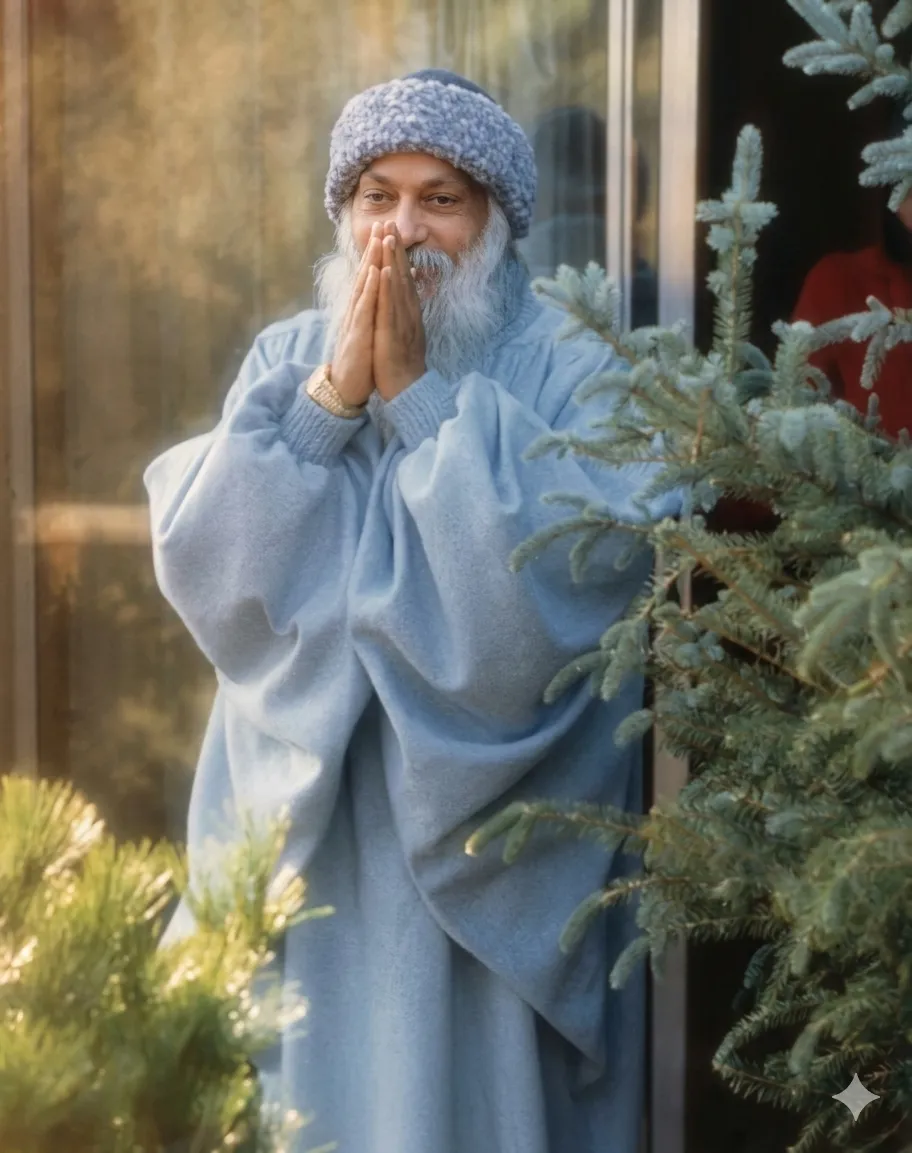
Osho's original Hindi beside Osho Live's English translation, matched passage by passage.
जब-जब भू के टुकड़े होते
जड़ जड़ता से पापों से
जब-जब नभ की गरिमा गिरती
अविवेकी अभिशापों से
जब-जब आंखें अंधी होकर
अपने पर रोया करतीं
जब-जब मन ही गल जाता है
सुलग रहे संतापों से
तब कोई मधुगायन गाता है:
असतो मा सदगमय।
Whenever earth breaks into shards into dead heaviness, into sins, whenever the sky’s dignity falls under the curses of the unwise, whenever eyes go blind and begin to weep for themselves, whenever the very mind melts down in smoldering agonies, then someone sings a honeyed song: Asato ma sadgamaya.
जब-जब कालिख पुत जाती है
दीवाली के माथे पर
दिशा-दिशा पर निशि छा जाती है
खो जाती है डगर-डगर
गलियां तो लुट जाया करतीं
सड़कों पर डाके पड़ते
घर-घर दीवाला हो जाता
हो जाता नीलाम नगर
तब कोई गायन गाता है:
तमसो मा ज्योतिर्गमय।
Whenever soot is smeared on Diwali’s forehead, night descends over every direction, paths are lost turn after turn; lanes are plundered, robbers fall upon the roads, house to house goes bankrupt, whole towns go to auction— then someone sings a song: Tamaso ma jyotirgamaya.
जब जीवन मरुथल बन जाता
मर जाता प्यासा प्यासा
जब अनब्याही रह जाती है
निर्धन क्वांरी अभिलाषा
लोहे की बेड़ी बन जाते
शीशे के कंगन-चूड़ी
हाथों से मेंहदी उड़ जाती
तज जाती आशा आशा
तब कोई गायन गाता है:
मृत्योर्माऽमृतंगमय।
When life becomes a desert, dying of thirst, thirsting; when poor, virgin longing remains unwed; when bangles of glass and bracelets turn into fetters of iron; when mehndi fades from the hands, and hope abandons hope— then someone sings a song: Mrityor ma amritam gamaya.
बुद्ध अनूठे हैं। ध्रुवतारे हैं। तारे तो बहुत, लेकिन ध्रुवतारा एक है। बुद्ध ध्रुवतारे जैसे हैं। उनके साथ मनुष्य की चेतना के इतिहास में एक नए अध्याय का सूत्रपात हुआ। कृष्ण ने जो कहा, वह पहले से कहा जाता रहा था। उसमें नया कुछ भी न था। क्राइस्ट ने जो कहा, वह पुराने की ही नयी व्याख्या थी। व्याख्या नयी थी, लेकिन सत्य पुराने थे। अति प्राचीन थे। महावीर ने जो कहा, उसे महावीर के पहले तेईस और तीर्थंकर दोहरा चुके थे। जोड़ा--बहुत जोड़ा--लेकिन नए का कोई जन्म न था। बुद्ध के साथ कुछ नए का जन्म हुआ। बुद्ध के साथ एक क्रांति उतरी मनुष्य की चेतना में। उस क्रांति को समझना जरूरी है, तभी हम बुद्ध के वचनों को समझ पाएंगे।
Buddha is unique. The pole star. Stars are many, but the pole star is one. Buddha is like the pole star. With him, a fresh chapter began in the history of human consciousness. What Krishna said had been said before. Nothing new was in it. What Christ said was but a new commentary on the old. The commentary was new, but the truths were ancient, most ancient. What Mahavira said had already been repeated by twenty-three Tirthankaras before him. Much was added—yes—but no birth of the new. With Buddha, something new was born. With Buddha, a revolution descended into human consciousness. To understand that revolution is essential; only then will we understand Buddha’s utterances.
ये वचन साधारण नहीं हैं, ये क्रांति के उदघोष हैं।
These utterances are not ordinary; they are proclamations of revolution.
तुम बुद्ध को औरों के साथ मत गिन लेना। हिंदुओं ने बुद्ध को अपने दस अवतारों में गिना है। बौद्ध भी सोचते हैं कि यह बुद्ध के प्रति बड़ा सम्मान हिंदुओं ने प्रकट किया, मैं नहीं सोचता। क्योंकि बुद्ध को दस अवतारों में गिनना बुद्ध के ध्रुवतारे पर चोट करनी है। बाकी जो हिंदुओं के नौ अवतार हैं, उनमें से किसी ने भी नए को कोई सूत्रपात नहीं दिया है, कोई क्रांति उनसे प्रारंभ नहीं होती। उन्होंने शाश्वत सत्य दोहराए हैं। वे बहुमूल्य पुरुष थे, पर अनूठे नहीं। उनसे परंपरा को बल मिला, लेकिन क्रांति का जन्म नहीं हुआ।
Do not count Buddha among others. Hindus have counted Buddha among their ten Avatars. Buddhists think this is a great honor Hindus have shown him. I do not think so. To count Buddha among ten Avatars is to strike at the pole star that he is. Of the other nine Avatars of the Hindus, none initiated the new; no revolution begins with them. They repeated the eternal truths. They were precious men, but not unique. Tradition gained strength from them, but no revolution was born.
इसलिए बुद्ध को किसी दस के साथ जोड़ना बुद्ध का अपमान है, सम्मान नहीं। बुद्ध अकेले हैं, न उन जैसा उनके पहले है कोई, न उन जैसा उनके बाद है कोई। उनके अकेलेपन में ही उनकी खूबी है। उनकी विशिष्टता यही है।
Therefore to join Buddha with any ten is an insult, not an honor. Buddha stands alone—none like him before, none like him after. His very aloneness is his beauty. That is his distinctiveness.
क्या क्रांति बुद्ध मनुष्य की चेतना में ले आए? समझें।
What revolution did Buddha bring into human consciousness? Understand this.
पहली बात, बुद्ध के साथ धर्म ने वैज्ञानिक होने की क्षमता जुटायी। बुद्ध के साथ धर्म वैज्ञानिक हुआ। बुद्ध के साथ विज्ञान की गरिमा धर्म को मिली। इसलिए यह आकस्मिक नहीं है कि आज विज्ञान के युग में जब राम फीके पड़ गए हैं और क्राइस्ट के पीछे चलने वाले भी औपचारिक ही क्राइस्ट का नाम लेते हैं, महावीर की पूजा भी चलती है, लेकिन बस नाममात्र को, कामचलाऊ, बुद्ध की गरिमा बढ़ती जाती है। जैसे-जैसे विज्ञान प्रतिष्ठित हुआ है मनुष्य की आंखों में, वैसे-वैसे बुद्ध की गरिमा बढ़ती गयी है। बुद्ध की गरिमा एक क्षण को भी घटी नहीं है। और तो सत्पुरुष पुराने पड़ गए मालूम पड़ते हैं, बुद्ध ऐसा लगता है कि अब उनका युग आया। या शायद अभी भी नहीं आया है, आने वाला है। पगध्वनि सुनायी पड़ती है कि बुद्ध का युग करीब आ रहा है। चाहे अलबर्ट आइंस्टीन हों, चाहे बर्ट्रेंड रसल, चाहे ज्यां पाल सार्त्र, चाहे कार्ल जैस्पर्स, पश्चिम के बड़े से बड़े विचारक भी, जो क्राइस्ट के सामने झुकने में बेचैनी अनुभव करते हैं, उनके सिर भी बुद्ध के सामने झुक जाते हैं।
First: with Buddha, religion gathered the capacity to become scientific. With Buddha, religion became scientific. With Buddha, religion received the dignity of science. It is not an accident that in this age of science—when Rama has faded, when even those who follow Christ take his name only formally, when Mahavira is worshiped but merely in name, perfunctory—Buddha’s prestige has continued to rise. As science has become honored in the eyes of humanity, so has Buddha’s glory increased. Not for a single moment has his stature diminished. Others seem to have grown old; Buddha seems to have his era arriving now—or perhaps not yet arrived, but approaching. The footsteps can be heard—Buddha’s age is near. Whether it is Albert Einstein, or Bertrand Russell, or Jean-Paul Sartre, or Karl Jaspers—the greatest thinkers of the West, who feel unease in bowing before Christ—their heads bow before Buddha.
बर्ट्रेंड रसल ने लिखा है कि मैं ईसाई घर में पैदा हुआ और ईसाई धारणा में पाला-पोसा गया, लेकिन उससे मैंने छुटकारा पा लिया। एक बड़ी अनूठी किताब लिखी है--व्हाय आई एम नाट ए क्रिश्चियन। मैं ईसाई क्यों नहीं हूं। और सारे तर्क दिए हैं कि जीसस का व्यक्तित्व अवैज्ञानिक है, इसलिए मैं ईसाई नहीं हो सकता। लेकिन बर्ट्रेंड रसल ने भी कहा है, बुद्ध के साथ बात कुछ और है। बुद्ध को इनकार करना मुश्किल है। क्योंकि बुद्ध ने अवैज्ञानिक कोई बात ही नहीं कही। बुद्ध ने एक शब्द नहीं उच्चारा जिसे तुम तर्क से खंडित कर सको। बुद्ध ने एक बात भी नहीं कही जो बुद्धि की कसौटी पर खरी न उतरती हो।
Bertrand Russell wrote: I was born in a Christian home and raised in Christian beliefs, but I freed myself from them. He wrote a unique book—Why I Am Not a Christian—giving every argument: the personality of Jesus is unscientific, therefore I cannot be a Christian. But even Bertrand Russell said, with Buddha the matter is different. It is difficult to deny Buddha. Because Buddha never uttered a single unscientific word. Not a word that you could refute by reason. Not a single statement that would fail at the touchstone of intelligence.
इसका यह अर्थ नहीं है कि बुद्ध बुद्धि पर चुक जाते हैं। बुद्ध बुद्धि के पार जाते हैं। लेकिन बुद्धि का सहारा लेकर जाते हैं, बुद्धि के विपरीत नहीं, विरोध में नहीं। यह बुद्ध की पहली क्रांति है।
This does not mean Buddha is exhausted by intellect. Buddha goes beyond intellect. But he goes beyond using the support of intellect—not against it, not in opposition to it. This is Buddha’s first revolution.
बुद्ध कहते हैं, बुद्धि की भी सीढ़ी बना लेंगे। इस पर चढ़ेंगे। सत्य बुद्धि के पार है, लेकिन बुद्धि-विरोधी नहीं है। एंटी इंटेलेक्चुअल नहीं है। सुपर इंटेलेक्चुअल है। इसलिए बुद्धि को छोड़ने की जरूरत नहीं है सत्य को पाने के लिए, बुद्धि को परिमार्जित, निखारने की जरूरत है। शुद्ध करने की जरूरत है। अगर बुद्धि शुद्ध न हो तो जहर है, शुद्ध हो जाए तो अमृत है। बुद्ध बुद्धिवादी हैं। यद्यपि उनकी बुद्धि बुद्धि के पार जो है उसकी तरफ इशारा करती है। इसलिए कोई बुद्धिवादी बुद्ध को इनकार नहीं कर सकता।
Buddha says: we will even make a ladder of intellect. We will climb upon it. Truth is beyond intellect, but it is not anti-intellectual. It is super-intellectual. Therefore, there is no need to abandon intellect to attain truth; there is a need to refine and polish intellect, to purify it. If intellect is impure, it is poison; if purified, it is nectar. Buddha is an intellectual—though his intelligence points beyond intelligence. Therefore, no intellectual can truly deny Buddha.
बुद्ध ने, जानते हो, भगवान की बात ही नहीं की, ईश्वर की बात ही नहीं की, परमात्मा का नाम ही नहीं लिया। नहीं कि बुद्ध को पता नहीं है। बुद्ध को पता न होगा तो किसको पता होगा! लेकिन नाम लेना भी अबौद्धिक मालूम पड़ता है। इसका प्रमाण नहीं जुटाया जा सकता। अगर कोई पूछे, कहां है ईश्वर, तो कैसे प्रमाण जुटाओगे? तो बुद्ध ईश्वर की बात छोड़ दिए, लेकिन अप्रामाणिक बात कहने की उन्होंने भूल नहीं की। ईश्वर के संबंध में चुप रह गए। ध्यान की बात कही। क्योंकि वे जानते हैं, जो ध्यान में उतरेगा वह एक दिन ईश्वर को जान ही लेगा, ईश्वर की बात ही क्या करनी! स्वाद ही ले लेगा, उस दिन डोल जाएगा, उस दिन मस्त हो जाएगा। लेकिन जब तक स्वाद नहीं लिया है, तब तक कहीं ऐसा न हो कि ईश्वर की बात करके ही रुकावट पड़ जाए।
Know this: Buddha did not talk of God at all, did not speak of Ishwar, did not even take the name of Paramatma. Not that Buddha did not know. If Buddha wouldn’t know—who would? But to take the name felt un-intellectual. There is no way to provide proof. If someone asks, where is God—how will you gather proof? So Buddha left the matter of God aside; he did not commit the mistake of speaking the un-verifiable. He remained silent about God. He spoke of meditation. Because he knew: one who descends into meditation will one day know God—what need to talk of God? He will taste, and that day he will be shaken, intoxicated. But until the taste comes, let it not happen that by talking of God we put a hurdle in the way.
तुमने देखा, बहुत लोग ईश्वर के कारण ही धार्मिक होने से रुके हैं। क्योंकि ईश्वर में ही भरोसा नहीं आता तो धार्मिक कैसे हों! बुद्ध ने नास्तिक को भी धार्मिक होने का मार्ग खोला, यह अपूर्व क्रांति है।
Have you noticed—many people are prevented from becoming religious precisely because of God? Since trust does not arise regarding God—how to be religious? Buddha opened the path of religion even for the atheist—an unprecedented revolution.
बुद्ध ने कहा, नास्तिक हो, ठीक है, भले हो, आओ। क्योंकि ध्यान करने में तो नास्तिक को भी क्या बाधा हो सकती है! और ध्यान रखना, जब बुद्ध कहते हैं ध्यान, तो उनका वही अर्थ नहीं होता जो दूसरों का होता है। जब मीरा कहती है ध्यान, तो उसका अर्थ होता है--कृष्ण पर ध्यान। किसी पर ध्यान। जब बुद्ध कहते हैं ध्यान, तो वे कहते हैं, जब तक कोई तुम्हारे चित्त में है तब तक ध्यान ही नहीं है। न कृष्ण, न राम, न अल्लाह। जब तक तुम्हारे चित्त में कोई है तब तक चित्त है। तब तक कैसा ध्यान? तो ध्यान का अर्थ है, चित्त से शून्य हो जाना, विचार से शून्य हो जाना। किस पर ध्यान, बात ही गलत है। ध्यान एक अवस्था है निर्विचार की। ध्यान एक अवस्था है जब तुम बिलकुल अकेले हो, एकाकी। अकेला तुम्हारा चैतन्य बचा। निर्विकार। जरा भी बादल न रहे, आकाश बचा, कोरा आकाश, निरभ्र आकाश, तब ध्यान। इस ध्यान को तो नास्तिक भी कर सकता है। इस ध्यान के लिए कोई भी श्रद्धा जरूरी नहीं है।
Buddha said: be an atheist—fine, good, come. For what obstacle can there be to meditation for an atheist? And remember: when Buddha says meditation, he does not mean what others mean. When Meera says meditation, she means meditation on Krishna—on someone. When Buddha says meditation, he says: as long as any object remains in your mind, there is no meditation. Neither Krishna, nor Rama, nor Allah. So long as someone is in your mind, mind remains—how can there be meditation then? Meditation means becoming empty of mind, empty of thought. On whom to meditate?—the very phrasing is wrong. Meditation is a state of no-thought. A state where you are utterly alone, solitary. Only your consciousness remains. Unstained. Not a wisp of cloud—only sky remains, bare sky, cloudless sky—that is meditation. This meditation even an atheist can do. For this meditation, no belief is required.
बुद्ध ने एक नया शब्द कहा--शोध। श्रद्धा नहीं, शोध। खोज। श्रद्धा का अर्थ होता है, खोजने के पहले मान लो। श्रद्धा का अर्थ होता है, मानना पहले, खोजना बाद में। लेकिन बुद्ध कहते हैं, अगर पहले मान ही लिया तो खोजोगे कैसे? फिर तो मान्यता ही बाधा बन गयी। खोज का तो अर्थ है, आंख खाली हो, कोई मान्यता न हो--न पक्ष, न विपक्ष। खोज का तो अर्थ होता है, इतना ही बोध हो कि मुझे पता नहीं और मैं पता करना चाहता हूं।
Buddha introduced a new word—research. Not faith, but research. Inquiry. Faith means: accept before you search. Faith means: believing first, searching later. But Buddha says: if you have already believed, how will you search? Belief becomes a barrier. Searching means: eyes empty, no pre-conception—neither for nor against. Searching means this much awareness: I do not know, and I want to know.
तुम अगर आस्तिक से पूछो, तो वह कहता है, ईश्वर है, मेरी श्रद्धा है। नास्तिक से पूछो, तो वह कहता है, ईश्वर नहीं है, यह मेरी श्रद्धा है। आस्तिक और नास्तिक दोनों श्रद्धालु हैं। एक ईश्वर के होने को मानता है, एक ईश्वर के न होने को। बुद्ध कहते हैं, दोनों धार्मिक न रहे। धार्मिक का तो अर्थ है कि आदमी कहेगा, मुझे पता नहीं है, मैं अंधेरे में खड़ा हूं। खोजना है। जब तक खोज न हो जाए, तब तक कैसे कहूं कि ईश्वर है या नहीं है! खोज हो जाएगी पूरी, तब कहूंगा। निष्पत्ति तो बाद में आएगी। यही तो विज्ञान की प्रक्रिया है। विज्ञान की प्रक्रिया के ये चरण हैं--पक्षपात रहितता, धारणा-शून्यता, अवलोकन--ऑब्जर्वेशन।
Ask a theist—he says: God is; it is my faith. Ask an atheist—he says: God is not; that is my faith. Theist and atheist—both are believers. One believes in God’s being; the other believes in God’s non-being. Buddha says: neither remains religious. Religious means one will say: I do not know; I stand in darkness. I must search. Until the search is complete, how can I say whether God is or is not? When the inquiry is complete, then I will say. The conclusion comes later. This is the method of science. Its stages are: impartiality, freedom from assumption, observation.
लेकिन अवलोकन तो हो ही नहीं सकता, अगर तुम पहले ही से मानकर चले हो। तब तो तुम वही देखते रहोगे जो तुम देखना चाहते हो। तब तो तुम्हारी आंखें तुम्हें वही दिखाती रहेंगी जो तुम देखना चाहते हो। असंभव है।
But observation is impossible if you have already assumed. Then you will keep seeing only what you want to see. Your eyes will keep showing you what you wish to see. Impossible otherwise.
मैंने सुना है कि मुल्ला नसरुद्दीन की पत्नी उससे बहुत परेशान हो गयी--शराब और शराब और शराब। कोई उपाय न दिखे उसे शराब से छुड़ाने का। तो उसे एक सूझ आयी। मुल्ला रात लौटता है शराब पीकर घर, तब करीब का रास्ता मरघट से होकर गुजरता है। तो रात के नशे में डर इत्यादि तो खो ही जाते हैं, नशे में किसका क्या होश कि मरघट है कि क्या? तो वह करीब के रास्ते ही से घर आता है। दिन में तो मरघट से नहीं निकलता। दिन में तो लंबे रास्ते से मधुशाला जाता है। लेकिन रात जब पी चुकता तो फिर वह कब्रों को ही टकराता हुआ, कब्रों पर ही गिरता हुआ घर लौटता। तो उसे एक सूझ आयी पत्नी को कि अब और तो कोई उपाय नहीं है, तो कुछ यह तरकीब की जाए।
I have heard: Mulla Nasruddin’s wife was fed up with him—drink, drink, and drink. No way seemed to free him of wine. She had an idea. At night he returns drunk; the shortcut home passes through a graveyard. In that drunkenness, fear disappears—who can be aware in drink of what is a graveyard and what is not? He comes by the near path. By day he never goes through the graveyard; by day he takes the long way to the tavern. But at night, after drinking, he staggers, collides with graves, falls over them, and comes home. So a plan dawned on the wife—no other way remained—some trick might be tried.
वह एक रात जाकर एक कब्र के पीछे छिप गयी। काला कपड़ा पहन लिया, मुंह पर कालिख लगा ली, भूत बनकर छिप गयी। कि शायद घबड़ा जाए, डर जाए, तो उसी डर में, घबड़ाहट की हालत में इससे वचन ले लेना जरूरी है। जब मुल्ला वहां से निकला लड़खड़ाता हुआ तो वह एकदम से कब्र के ऊपर से छलांग लगाकर उसके सामने कूदकर खड़ी हो गयी। एक क्षण को तो वह चौंका, फिर बोला, अरे! पत्नी खूब जोर से चिल्लायी कि घबड़ा जाए। मगर वह बोला, चिल्लाओ करो मत, पहचाना नहीं मैं कौन हूं, मुल्ला ने उससे कहा। उसकी पत्नी ने कहा, कौन हो? उसने कहा, मैं हूं मुल्ला नसरुद्दीन और तुम हो मेरे साले। अपनी बहन को भी भूल गए? तुम्हारी बहन से तो मेरी शादी हुई है। चेहरा कुछ पहचाना हुआ सा लगा तो उसने सोचा, हो न हो मेरी पत्नी का भाई है। आओ, हाथ मिलाओ और घर चलो, तुम्हारी बहन बड़ी खुश होगी।
One night she hid behind a grave. She wore black cloth, smeared soot on her face, hid like a ghost, thinking: he may get frightened, get shaken, and in that fear, in that condition of panic, I will extract a promise. When Mulla came reeling, she leapt from the top of a grave and stood before him. For a moment he started, then said: Ah! The wife screamed loudly to terrify him. But he said: shout if you must—but have you not recognized who I am? Mulla said to her. His wife asked: who are you? He said: I am Mulla Nasruddin, and you are my brother-in-law. Have you forgotten your sister? My marriage is with your sister. The voice sounded familiar, so he thought: must be my wife’s brother. Come, shake hands and come home—your sister will be so pleased.
धारणा पहले से हो, पहले से एक आकृति मन में हो तो उसी आकृति के सहारे तुम देखोगे। वह चीख-पुकार तो पत्नी की पहचानी हुई थी, कई दफे चीख चुकी, पुकार चुकी, इस तरह का विकराल रूप घर में भी रख लेती है--घर में पत्नियां बड़ा विकराल रूप रख लेती हैं, इसीलिए तो बाहर निकलते वक्त उनको साज-संवरने में बड़ी देर लग जाती है। क्योंकि घर तो वे चंडी होती है। तो वह तो यह रूप घर देख चुका था कई दफा, पहचाना हुआ रूप था। यद्यपि स्थान नया था, मरघट था, कालिख भी लगा ली थी मुंह पर, बाल बिखरा लिए थे, काले कपड़े पहन लिए थे, तो भी फर्क न पड़ा। पहचान गया।
If a preconception is already there—an image pre-formed—you will see by means of it. That scream and cry was the wife’s own, familiar—she had screamed many times, called many times; she sometimes took such a ferocious form at home—wives at home can take very ferocious forms; that is why when going out they take long to adorn themselves. At home they are chandi. He had seen that form many times—familiar. Though the place was new, the cremation ground; though soot was on the face, hair disheveled, black clothes—still, it made no difference. He recognized.
तुम्हारी आंख में जब कोई आकृति बसी हो तो तुम उसे खोज ही लोगे। हम वही सुनते हैं जो हमारी धारणा है। हम वही देखते हैं जो हमारी धारणा है। विज्ञान का अनिवार्य चरण है कि तुम निर्धारणा से जाओ। तुम पहले से खयाल लेकर मत जाना। शून्य मन जाओ, नग्न मन जाओ। तो अवलोकन होगा।
When an image is lodged in your eye, you will find it. We hear only what our belief is. We see only what our belief is. The essential step of science is to go un-prejudiced. Do not carry notions beforehand. Go with an empty mind, a naked mind. Then observation happens.
फिर परीक्षण करो। क्योंकि अवलोकन से कुछ नहीं होता। जो बात पहली दफे समझ में आ गयी हो, उसे कई तरफ से जांचो-परखो, बहुत प्रयोग करो, जब हर प्रयोग में एक ही नतीजा आए और कभी अपवाद न हो, तब कुछ रास्ता है, तो अनुभव होगा। अनुभव से निष्पत्ति होगी। श्रद्धा बाद में। श्रद्धा पहला कदम नहीं है विज्ञान में। पहला कदम संदेह, अंतिम कदम श्रद्धा।
Then test. Observation alone is not enough. What is understood the first time—test it in many ways, experiment much. If in every experiment the same result comes and no exception occurs, then there is some path—experience will arise. From experience, conclusion. Faith later. Faith is not the first step in science. The first step is doubt; the last step is trust.
जिसको तुम धर्म कहते हो, आमतौर से उसमें श्रद्धा पहला कदम और संदेह की तो कोई जगह ही नहीं है। इसलिए बहुत बुद्धिमान लोगों को मजबूरी में अधार्मिक रहना पड़ता है। क्योंकि यह बात उनकी पकड़ ही में नहीं आती। संदेह को कहां ले जाएं? है तो है! और अगर परमात्मा ने दिया है संदेह तो उसे काटकर कैसे फेंक दें? उसका कोई उपयोग होना चाहिए।
What you ordinarily call religion—there faith is the first step, and there is no place at all for doubt. Therefore very intelligent people are compelled to remain irreligious. It doesn’t fit them. Where to put doubt? It is there! And if Paramatma has given doubt, how to cut it off and throw it away? It must have some use.
इसलिए मैं कहता हूं, बुद्ध ने अनूठी बात कही। बुद्ध ने कहा, संदेह का उपयोग हो सकता है। संदेह को श्रद्धा की सेवा में लगाया जा सकता है। संदेह श्रद्धा के विपरीत नहीं है। संदेह के ही सहारे श्रद्धा खोजी जा सकती है।
So I say, Buddha uttered something unique. Buddha said: doubt can be used. Doubt can be put in the service of trust. Doubt is not the opposite of trust. By the very support of doubt, trust can be discovered.
यही तो विज्ञान करता है, संदेह के सहारे श्रद्धा खोजता है। और वैज्ञानिक जब एक निष्पत्ति पर पहुंचता है तो संदेह का कारण ही नहीं रह जाता। सब परीक्षण कर लिए, अवलोकन कर लिया, सब तरह से जांच-परख कर ली, ऐसा पाया। तथ्य। धारणा नहीं, तथ्य।
This is what science does—by the support of doubt it finds trust. And when a scientist reaches a conclusion, doubt has no reason to remain. All tests are done, observation completed, all manner of checking—thus found. Fact. Not a belief—fact.
बुद्ध का एक नाम है तथागत। उसका अर्थ होता है, जो जगत में तथ्य को लाया। जिसके द्वारा जगत में तथ्य आया। इसके पहले कल्पनाएं थीं, धारणाएं थीं, विश्वास थे। तथागत प्यारा शब्द है। उसके बहुत अर्थ होते हैं। उसका एक अर्थ यह भी होता है--आगत का अथर्र् होता है, आया; और तथा का अर्थ होता है, तथ्य--जिसके द्वारा तथा, तथ्य जगत में उतरा। जिसने सत्य को तथ्य के माध्यम से खोजने के लिए कहा। जिसने श्रद्धा की शोध संदेह के द्वारा करने को कहा। यह बड़ी कीमिया है कि हम संदेह का उपयोग श्रद्धा को पाने के लिए कर लें।
Buddha has a name—Tathagata. It means: the one by whom fact came into the world; by whom thusness entered the world. Before this there were imaginations, beliefs, faiths. Tathagata is a beloved word with many meanings. One meaning is this: aga-ta—come; tatha—suchness, fact—the one by whom the tatha, the fact, descended into the world. The one who said: seek truth through the medium of fact. The one who said: research into faith by means of doubt. This is a great alchemy—that we use doubt to attain trust.
केशर-कस्तूरी नहीं
मैली राख
कर सकती है पावन
कनक-रजत के जूठे पात्र
तुमने देखा, जूठे पात्र को साफ करना हो--
केशर-कस्तूरी नहीं
मैली राख
कर सकती है पावन
Saffron and musk cannot purify dirty ash can the soiled bowls of gold and silver
कनक-रजत के जूठे पात्र
स्वर्ण और चांदी के बने जूठे पात्रों को साफ करना हो तो राख का सहारा लेना पड़ता है। केशर-कस्तूरी से थोड़े ही पात्र शुद्ध होते हैं, राख से शुद्ध होते हैं। और राख क्या शुद्ध करेगी, तुम कहोगे, राख तो खुद ही शुद्ध नहीं है। ऐसा ही संदेह है। ऊपर से देखोगे राख, लेकिन अगर इसका उपयोग कर लो तो तुम्हारी आत्मा के रजत-कनक के पात्र इससे शुद्ध हो जाते हैं।
Have you seen—if you want to clean a soiled vessel— not saffron, not musk— dirty ash can purify the soiled bowls of gold and silver.
When soiled bowls of gold and silver have to be cleaned, you have to take the help of ash. Not saffron and musk—vessels are purified by ash. And you will say: what can ash purify? It is itself impure. Such is doubt. From above it looks like ash, but if you use it, your silver-and-gold bowl of the soul is cleansed by it.
बुद्ध ने संदेह को शुद्धि के लिए उपयोग कर लिया। और कलाकार वही है जो व्यर्थ का भी सार्थक उपयोग कर ले। गुणी वही है जो कांटे को भी फूल बना ले। काट देना कोई गुण नहीं है, उपयोग कर लेना, सृृजनात्मक उपयोग कर लेना गुण है।
Buddha used doubt for purification. And the artist is the one who can make a meaningful use of the seemingly useless. The truly capable is the one who can turn even the thorn into a flower. To cut off is no virtue; to use, creatively use—that is the virtue.
विज्ञान कहता है, निरपेक्ष रहो, कोई अपेक्षा लेकर सत्य के पास मत जाओ। आंखें खाली हों, ताकि तुम वही देख सको जो है। यथावत। तथावत। तुम अगर पहले से ही कुछ मानकर चल पड़े हो तो वही देख लोगे। तुम्हारी कल्पना का प्रक्षेपण हो जाएगा।
Science says: remain impartial; go to truth with no expectation. Let the eyes be empty—so that you can see what is. As it is. As-is. If you have assumed already, you will see only that. Your imagination will be projected.
मेरे एक मित्र थे--बूढ़े आदमी थे, अब तो चल बसे--महात्मा भगवानदीन। अनूठे व्यक्ति थे। एक महानगर में कुछ पैसे इकट्ठे करने गए थे--कहीं एक आश्रम बनाते थे। सीधे-साधे आदमी थे। बस एक अंडरवियर पहने रहते थे, कभी-कभी सर्दी इत्यादि में एक चादर भी डाल लेते थे। वह अंडरवियर पहने ही वे दुकानों पर गए। किसी ने चार आने दिए, किसी ने आठ आने दिए, किसी ने रुपया दिया। सांझ जब मुझे मिले, उन्होंने कहा, इतना बड़ा नगर है, कुल बीस रुपए इकट्ठे हुए!
I had a friend—an old man, now gone—Mahatma Bhagwandin. An unusual person. He went to a big city to collect some money—he was building an ashram somewhere. Simple, straightforward man. He wore only an underwear; sometimes in the cold a blanket on his shoulders. In that underwear he went to the shops. Someone gave four annas, someone eight, someone a rupee. In the evening when he met me, he said: such a big city—altogether twenty rupees collected!
मैंने कहा, आप पागल हो, यह कोई ढंग है? आपको महात्मा होना आता ही नहीं। मुझसे पूछा होता। यह जाने का ढंग ही नहीं। अब दो-चार दिन रुक जाओ, दो-चार दिन जाओ मत, लोगों को भूल जाने दो। उन्होंने कहा, क्यों फिर क्या होगा? मैंने कहा, देखेंगे।
I said: you are crazy—is this any way? You do not know how to be a Mahatma. You should have asked me. This is no way to go. Now wait two-three days, do not go; let people forget. He said: why—then what will happen? I said: we’ll see.
चार दिन बीत जाने के बाद अखबार में मैंने खबर दिलवायी कि बड़े महात्मा गांव में आए हैं--महात्मा भगवानदीन। और चार-छह मित्रों को कहा कि जरा डुग्गी पीटो, उनकी खबर करो गांव में। फिर पंद्रह-बीस मित्रों को इकट्ठा कर दिया, मैंने कहा, इनको साथ लेकर अब जाएं--उन्हीं दुकानों पर जाना जिनसे चार आने और आठ आने और बारह आने पाए थे।
After four days I had a notice placed in the newspaper: a great Mahatma has come to town—Mahatma Bhagwandin. And I told four-six friends: beat the drum, make announcements in the town. Then I gathered fifteen-twenty friends and said: now take him along—go to the same shops from where you got four annas and eight annas and twelve annas.
वह उन्हीं दुकानों पर गए, वे लोग उठ-उठकर चरण छुएं कि महात्माजी आइए, बैठिए, बड़ी कृपा की। अखबार में पढ़ा कि आप आए हैं। और बीस-पच्चीस आदमियों की भीड़! जिसने चार आने दिए थे उसने पांच सौ रुपए दिए, जिसने आठ आने दिए थे उसने हजार रुपए दिए। जब वह सांझ को लौटे तो बीस रुपए नहीं, बीस हजार रुपए इकट्ठे करके लौटे।
He went to those same shops; people rose and touched his feet: Mahatmaji, please come, sit—great grace. We read in the paper that you have come. And a crowd of twenty-five behind! The one who gave four annas gave five hundred rupees; the one who gave eight annas gave a thousand. That evening when he returned, not twenty rupees—twenty thousand rupees collected.
मैंने पूछा, कहो कैसी रही! लोग प्रचार को देते हैं, विज्ञापन को देते हैं। लोग तुम्हें थोड़े ही देते हैं, कि तुम चले गए अपना अंडरवियर पहनकर! चार आने दे दिए, यही बहुत! तुमसे अंडरवियर नहीं छीन लिया उन लोगों ने, भले लोग हैं। नहीं तो धक्का मारकर निकालते अलग और अंडरवियर छीन लेते सो अलग।
I asked: how was it? People give to publicity, to advertisement. They don’t give to you—you went in your underwear! They gave you four annas—too much! They didn’t strip you of your underwear—good people! Otherwise they would have pushed you out and snatched the underwear too.
मगर, वह कहने लगे, आश्चर्य की बात है, कि उन्हीं दुकानों पर गया और बुद्धुओं को यह भी न दिखायी पड़ा कि मैं पहले चार आने लेकर चला गया हूं!
But he said: the amazing thing is I went to the same shops, and the fools didn’t even see that I had already taken four annas from them!
देखता कौन है! वह चार आने तुम्हें थोड़े दिए थे, हटाने को दिए थे, कि जो भी हो, चलो हटो! फुर्सत किसको है? धारणा! जब धारणा हो मन में कि कोई महात्मा है तो फिर महात्मा दिखायी पड़ने लगता है। चोर हो तो चोर दिखायी पड़ने लगता है।
Who looks? Those four annas were not given to you—just to get rid of you: here, go! Who has time? Belief! When the belief is in the mind that someone is a Mahatma, then a Mahatma appears. If a thief, then thief is seen.
एक आदमी के घर बगीचे में काम करते वक्त उसकी खुर्पी खो गयी। तो उसने चारों तरफ देखा, एक पड़ोस का लड़का जा रहा था, बिलकुल चोर मालूम पड़ा, उसने कहा हो न हो यही शैतान खुर्पी ले गया। फिर दो-तीन दिन उसने उसकी जांच-परख की, जहां भी दिखायी पड़े तब गौर से देखे, बिलकुल चोर मालूम पड़े। चाल से चोर, आंख से चोर, हर तरह से चोर। और तीसरे-चौथे दिन अपने बगीचे में काम करते वक्त एक झाड़ी में पड़ी हुई वह खुर्पी मिल गयी। अरे, उसने कहा, खुर्पी तो यहीं पड़ी है! फिर उस दिन उस लड़के को देखा, वह एकदम भला सज्जन मालूम पड़ने लगा। न उसने खुर्पी उठायी थी, न उसे कुछ पता है कि क्या हुआ, लेकिन धारणा।
A man lost his hoe while working in his garden. He looked around—saw a neighbor’s boy passing by—looked exactly like a thief. He said: must be that devil who took the hoe. For two-three days he examined him; whenever the boy appeared, he watched—looked exactly like a thief: walk like a thief, eyes like a thief, everything like a thief. On the third or fourth day, while working in the garden, he found the hoe lying under a bush. Ah!—he said—the hoe was here! That day when he saw the boy, he seemed a complete gentleman. He had neither taken the hoe nor knew what happened—but belief.
जब तुम्हारी धारणा हो कि फलां आदमी चोर, तो तुम्हें चोर दिखायी पड़ने लगेगा। जब तुम्हारी धारणा हो कि फलां आदमी साधु, तुम्हें साधु दिखायी पड़ने लगेगा। ये सत्य को खोजने के ढंग नहीं। धारणा अगर पहले ही बना ली तो तुम तो असत्य में जीने की कसम खा लिए।
When your belief is that someone is a thief, you will see him as a thief. If your belief is that someone is a saint, you will see him as a saint. These are not ways to find truth. If you form belief beforehand, you have sworn to live in untruth.
तो बुद्ध ने कहा, कोई धारणा नहीं। कोई शास्त्र लेकर सत्य के पास मत जाना। सत्य के पास तो जाना निर्वस्त्र और नग्न, शून्य; दर्पण की भांति जाना सत्य के पास। तो जो हो, वही झलके। तो ही जान पाओगे।
So Buddha said: no belief. Do not take any scripture to truth. Go to truth naked, empty; go like a mirror—so that what is, is reflected. Only then will you know.
अब मैं तुमसे दूसरी बात कहना चाहता हूं कि विज्ञान से भी कठिन काम बुद्ध ने किया। क्योंकि विज्ञान तो कहता है, वस्तुओं के प्रति निरपेक्ष भाव रखना। वस्तुओं के प्रति निरपेक्ष भाव रखना तो बहुत सरल है, लेकिन स्वयं के प्रति निरपेक्ष भाव रखना बहुत कठिन है। बुद्ध ने वही कहा। विज्ञान तो बहिर्मुखी है, बुद्ध का विज्ञान अंतर्मुखी है। धर्म का अर्थ होता है, अंतर्मुखी विज्ञान। बुद्ध ने कहा, जैसे दूसरे को देखते हो बिना किसी धारणा के, ऐसे ही अपने को भी देखना बिना किसी धारणा के।
Now the second thing I want to say is that Buddha did something even more difficult than science. Science says: toward objects remain impartial. That is simple enough. But to be impartial toward oneself—very difficult. Buddha said precisely that. Science is extrovert; Buddha’s science is introvert. Religion means an inward science. Buddha said: just as you see others without preconception, see yourself also without preconception.
यह जरा कठिन बात है। करीब-करीब असंभव जैसी। क्योंकि हम अपने को तो बिना धारणा के देख ही नहीं पाते। हम तो सब अपनी-अपनी मूर्तियां बनाए बैठे हैं। हम सबने तो मान रखा है कि हम क्या हैं, कैसे हैं, कौन हैं। पता कुछ भी नहीं है, मान सब रखा है। इसीलिए रोज दुख उठाते हैं। क्योंकि कोई हमें गाली दे देता है तो हमें कष्ट हो जाता है। क्योंकि हमने तो मान रखा था कि लोग हमारी पूजा करें और लोग गाली दे रहे हैं। कोई पत्थर फेंक देता है तो हम क्रोधित हो जाते हैं, क्योंकि हमने तो मान रखा था कि लोग फूलमालाएं चढ़ाएंगे, लोग पत्थर फेंक रहे हैं। हमारी धारणाएं हैं अपनी। हमने मन में अपनी एक स्वर्ण-प्र्रतिमा बना रखी है। कल्पनाओं की, सपनों की, इंद्रधनुषी।
This is a bit difficult, almost impossible. Because we do not see ourselves without preconception. We have made our own idols. We have assumed what we are, how we are, who we are. Knowing nothing, we have assumed everything. This is why we suffer daily. Someone abuses us—we feel hurt. Because we had assumed people would worship us—and people are abusing. Someone throws a stone—we become angry. We had assumed people would place garlands—and they throw stones. Our notions! We have built a golden statue of ourselves in our minds—of imagination, of dreams, of rainbows.
बुद्ध कहते हैं, ये प्रतिमाएं भी छोड़ो। नहीं तो तुम आत्म-साक्षात्कार न कर सकोगे। तुम कौन हो, यह धारणा छोड़ो। हिंदू कि मुसलमान कि ईसाई कि जैन। तुम कौन हो, ब्राह्मण कि शूद्र कि क्षत्रिय? तुम कौन हो, साधु कि असाधु? ये सब धारणाएं छोड़ो। तुम निर्धारणा होकर भीतर उतरो। अभी तुम्हें कुछ भी पता नहीं है कि तुम कौन हो। और ये सब धारणाएं बहुत छोटी हैं। असाधु की धारणा तो व्यर्थ है ही, साधु की धारणा भी व्यर्थ है। क्योंकि जिसे तुम भीतर विराजमान पाओगे, वह स्वयं परमात्मा है। ये तुम कहां की छोटी-छोटी धारणाएं लेकर चले हो! इन छोटी-छोटी धारणाओं के कारण वह विराट नहीं दिख पाता। आंखें इतनी छोटी हैं, विराट समाए कहां? तुमने सीमाएं इतनी छोटी बना ली हैं, बड़ा उतरे कैसे? तो तुम अपने भीतर भी टटोलते हो तो बस धारणाओं में ही उलझे रहते हो।
Buddha says: drop these idols. Otherwise you will not arrive at self-realization. Drop the belief of who you are. Hindu, Muslim, Christian, Jain? Who are you—Brahmin, Shudra, Kshatriya? Who are you—virtuous, unvirtuous? Drop these beliefs. Go within un-prejudiced. As yet you know nothing of who you are. And these beliefs are very small. The belief of being unvirtuous is useless—so is the belief of being virtuous. Because whom you will find seated within is Paramatma himself. What tiny beliefs have you carried! Because of these little boundaries the Vast is not seen. Eyes so small—how will the Vast fit? You have set such narrow limits—how will the great descend? So even when you grope within, you remain entangled in beliefs.
बुद्ध ने कहा, भीतर भी ऐसे जाओ जैसे तुम्हें कुछ भी पता नहीं है। शांत, मौन, अपने अज्ञान को धारण किए भीतर जाओ। तब वही दिखायी पड़ेगा, जो है। और जो दिखायी पड़ेगा वही आंखें खोल देगा। ध्यानी आंख बंद करके ध्यान करने बैठता है, लेकिन जब ध्यान हो जाता है तो आंख ऐसी खुलती है कि फिर कभी बंद ही नहीं होती। फिर सदा के लिए खुली रह जाती है।
Buddha said: go within as if you know nothing at all. Silent, still, carrying your ignorance, go within. Then only what is will be seen. And what is seen will open your eyes. The meditator sits with eyes closed—but when meditation happens, the eyes open in such a way that they never close again. They remain open forever.
जिनको तुमने अपना विचार मान रखा है, कभी खयाल किया, वे क्या हैं? मैं हिंदू, मुसलमान, कि ब्राह्मण, कि शूद्र, कि अच्छा, कि बुरा, कि ऐसा, कि वैसा, ये तुमने जो मान रखे हैं विचार, ये तुम्हारे हैं? ये सब उधार हैं। मन तो एक चौराहा है, जिस पर विचार के यात्री गुजरते रहते हैं। तुम्हारा इसमें कुछ भी नहीं है।
Those ideas you have assumed as your own—have you ever thought what they are? I am Hindu, Muslim; Brahmin, Shudra; good, bad; such, such—are these your thoughts? All borrowed. Mind is a crossroads across which the travelers of thought are forever passing. Nothing of it is yours.
मैं एक घर में मेहमान था। दो बच्चे सीढ़ियों पर बैठकर बड़ा झगड़ा कर रहे थे। तो मैंने पूछा, मामला क्या है? जब मारपीट पर नौबत आ गयी तो मैं उठा और बाहर गया, मैंने कहा, रुको, बात क्या है? अभी तो भले-चंगे बैठे खेल रहे थे। उन्होंने कहा कि इसने मेरी कार ले ली। मैंने कहा, कहां की कार? तो उन्होंने कहा, आप समझे नहीं, आपको खेल का पता ही नहीं है। मैंने कहा कि खेल मुझे समझाओ। तो उन्होंने कहा, बात यह है कि रास्ते से जो कारें गुजरती हैं, जो पहले देख ले वह उसकी। अभी एक काली कार गुजरी, वह मैंने पहले देखी और यह कहता है कि मेरी! इससे झगड़ा हो गया है।
I was a guest in a home. Two children were quarreling on the steps. I asked: what’s the matter? When it came to blows I got up and went out: wait—what is it? A moment ago you were playing well. They said: he took my car. I asked: which car? They said: you don’t understand—you don’t know the game. Teach us the game, I said. They said: as the cars pass on the road—whoever spots one first, it’s his. A black car passed just now—I saw it first, and he says it was his! So we are fighting.
अब सड़क से कारें गुजर रही हैं और दो बच्चे लड़ रहे हैं कि किसकी और बंटवारा कर रहे हैं। कार वालों को पता ही नहीं है! कि यहां मुकदमे की नौबत आ गयी, मारपीट की हालत हुई जा रही है।
Cars are passing on the road; two children are fighting over whose they are, dividing them. The car owners have no idea that here it’s come to lawsuit and blows!
विचार भी ऐसे ही हैं। तुम्हारे मन के रास्ते से गुजरते हैं इसलिए तुम्हारे हैं, ऐसा मत मान लेना। तुम्हारा कौन सा विचार है? जैन-घर में पैदा हो गए, मां-बाप ने कहा तुम जैन हो--एक कार गुजरी। तुमने पकड़ी, कि मेरी। मुसलमान-घर में रख दिए गए होते तो मुसलमान हो जाते। हिंदू-घर में रख दिए गए होते तो हिंदू हो जाते। संयोग की बात थी कि तुम रास्ते के किनारे खड़े थे और कार गुजरी। यह संयोग था कि तुम जैन-घर में पैदा हुए कि हिंदू-घर में पैदा हुए। यह संयोगमात्र है, इससे न तुम हिंदू होते हो, न जैन होते हो। मगर हो गए। तुमने पकड़ ली बात।
Thoughts are just like that. They pass along the road of your mind—don’t assume they are yours. Which thought is yours? Born in a Jain home, parents tell you you are Jain—one car passes—you grab it: mine. Had you been placed in a Muslim home—you’d be Muslim. In a Hindu home—you’d be Hindu. It was a coincidence you stood by the roadside and a car passed. A coincidence you were born in a Jain home or a Hindu home. It is mere coincidence—by that you are neither Hindu nor Jain. But you became one—you grabbed the idea.
किसी ने समझा दिया ब्राह्मण हो, तिलक-टीका लगा दिया, जनेऊ पहना दिया। कैसे-कैसे बुद्धू बनाने के रास्ते हैं। और सरलता से तुम बुद्धू बन गए। और तुमने मान लिया कि बस मैं ब्राह्मण हूं। और तुम शूद्र को हिकारत की नजर से देखने लगे। और अपने पीछे तुमने अकड़ पाल ली। और फिर ऐसा ही तुमने गीता पढ़ी, और कुरान पढ़ी और बाइबिल पढ़ी और विचारों की श्रृंखला तुम्हारे भीतर चलने लगी, तैरने लगी, रास्ते पर ट्रैफिक बढ़ता चला गया और तुम सारे ट्रैफिक के मालिक हो गए। तुम्हारा इसमें क्या है? तुम्हारा इसमें कोई भी विचार नहीं है। और फिर तुमने यह भी देखा, विचार कितने जल्दी बदल जाते हैं। विचार बड़े अवसरवादी हैं, विचार बड़े राजनीतिज्ञ हैं। पार्टी बदलने में देर नहीं लगती। जब जैसा मौका हो।
Someone told you you’re a Brahmin—a tilak placed, a sacred thread hung. What devices to make fools—so simple you became one! And you assumed: I am a Brahmin. You began to look upon the Shudra with contempt. You grew pride. And then likewise you read the Gita, the Koran, the Bible—and a procession of thoughts began to float within you; the traffic on the road increased—and you became owner of the whole traffic. What is yours in this? Not a single thought. And then you saw—how quickly thoughts change. Thoughts are great opportunists, great politicians. It takes no time to change party—according to the occasion.
मुल्ला नसरुद्दीन अपने घोड़े को बांधकर एक दुकान पर सामान खरीदने गया है। जब वह लौटकर आया तो किसी ने घोड़े पर लाल पेंट कर दिया। घोड़े पर! तो बड़ा नाराज हुआ कि यह कौन आदमी है, किसने शरारत की? तो किसी ने कहा, यह सामने जो शराबघर है, उसमें से एक आदमी आया और उसने इसको पोत दिया। कोई पीए होगा।
Mulla Nasruddin tied his horse and went into a shop to buy goods. When he returned, someone had painted the horse red. He was furious: who did this mischief? Someone said: a man came from that tavern there and smeared it—must have been drunk.
तो मुल्ला बड़े क्रोध में भीतर गया, और उसने कहा कि किस नालायक ने मेरे घोड़े पर लाल रंग पोता है? हड्डी-हड्डी निकालकर रख दूंगा, कौन है, खड़ा हो जाए! जब आदमी खड़ा हुआ तो बड़ा घबड़ाया। कोई साढ़े छह फीट लंबे एक सरदार जी खड़े हो गए! मुल्ला थोड़ा सहमा। उसने कहा यह हड्डी वगैरह तो निकालना दूर है, अपनी हड्डियां बच जाएं तो बहुत है। उसने, सरदार ने कहा, बोलो, क्या विचार है? क्या कह रहे थे? किसलिए आए हो? मुल्ला ने कहा, अरे सरदार जी! मैं यह कहने आया हूं कि घोड़े पर पहली कोट तो सूख गयी, दूसरी कोट कब करोगे? बड़ी कृपा की घोड़ा रंग दिया, मगर पहली कोट बिलकुल सूख गयी है।
Mulla, in rage, went inside: which rascal painted my horse red? I’ll pull out every bone of yours—stand up! The man who stood up—six and a half feet, a Sardarji—Mulla shrank: pulling bones is far off—saving my own would be much! The Sardar said: speak—what’s on your mind? Why have you come? Mulla said: O Sardarji! I have come to say—the first coat on the horse is dry—when will you do the second? Great kindness you painted the horse, but the first coat is quite dry now.
ऐसे बदल जाते हैं विचार। विचार बड़े अवसरवादी हैं। विचारों का बहुत भरोसा मत करना, मन राजनीतिज्ञ है। और जो मन में पड़ा रहा, वह राजनीति में पड़ा रहता है। इसलिए मैं कहता हूं, धार्मिक आदमी राजनीतिज्ञ नहीं हो सकता। क्योंकि धार्मिक होने का अर्थ है, मन के पार गया। मन के पीछे जो चैतन्य है, उसमें विराजमान हुआ। विचारों की इस भीड़ से हटो। लेकिन जब तक तुम पकड़े रहोगे, कैसे हटोगे? विचारों की भीड़ ने ही तुम्हें बेईमान बनाया है, पाखंडी बनाया है, अवसरवादी बनाया है।
Thoughts change like that. They are opportunists. Don’t trust them; mind is a politician. And where the mind is, there is politics. Therefore I say: a religious man cannot be a politician. Because to be religious means to go beyond mind. To abide in the consciousness behind mind. Move away from this crowd of thoughts. But so long as you cling, how will you move away? This crowd has made you dishonest, a hypocrite, opportunistic.
मन रोग है। इससे अपने हाथ धो लो। बे-मन हो जाओ। समाधि का इतना ही अर्थ है, ध्यान का इतना ही अर्थ है कि किसी तरह मन से तुम्हारा तादात्म्य छूट जाए। और तुम रोज देखते हो कि यह मन तुम्हें कैसे-कैसे धोखे दिए जाता है और इस मन के द्वारा तुम दूसरों को धोखा दे रहे हो। और यह मन तुमको धोखा दे रहा है।
Mind is a disease. Wash your hands of it. Be mindless. Samadhi means only this; meditation means only this: in some way your identification with mind falls away. And you see daily how this mind deceives you in so many ways—and through it you deceive others, and it deceives you.
मैंने सुना है कि जंगल के जानवरों को आदमियों का एक दफे रोग लग गया। जंगल में दौड़ती जीपें और झंडे और चुनाव! जानवरों ने कहा, हमको भी चुनाव करना चाहिए। लोकतंत्र हमें भी चाहिए। बड़ी अशांति फैल गयी जंगल में। सिंह ने भी देखा कि अगर लोकतंत्र का साथ न दे तो उसका सिंहासन डांवाडोल हो जाएगा। तो उसने कहा, भई, हम तो पहले ही से लोकतंत्री हैं। खतम करो इमरजेंसी, चुनाव होगा। चुनाव होने लगा। अब बिचारे सिंह को घर-घर, द्वार-द्वार हाथ जोड़कर खड़ा होना पड़ा। गधों से बाप कहना पड़े।
I have heard: a disease of men once gripped the forest animals. Jeeps running through the forest, flags, elections! The animals said: we too should have elections. We too need democracy. Great unrest spread. The lion saw that if he did not side with democracy, his throne would wobble. He said: we have always been democrats—end the emergency, there will be elections. Elections began. The poor lion had to stand at every doorway with folded hands—calling donkeys father.
एक लोमड़ी उसके साथ चलती थी, सलाहकार, जैसे दिल्ली में होते हैं। उस लोमड़ी ने कहा, एक बात बड़ी कठिन है। आप अभी-अभी भेड़ों से मिलकर आए और आपने भेड़ों से कहा कि तुम्हारे हित के लिए ही खड़ा हुआ हूं। तुम्हारा विकास हो। सदा से तुम्हारा शोषण किया गया है, प्यारी भेड़ो, तुम्हारे ही लिए मैं खड़ा हुआ हूं। आपने भेड़ों से यह कह दिया है। और आप भेड़ों के दुश्मन भेड़ियों के पास भी कल गए थे और उनसे भी आप कह रहे थे कि प्यारे भेड़ियो, तुम्हारे हित के लिए मैं खड़ा हूं। तुम्हारा हित हो, तुम्हें रोज-रोज नयी-नयी जवान-जवान भेड़ें खाने को मिलें, यही तो हमारा लक्ष्य है। तो लोमड़ी ने कहा, यह तो ठीक है कि इधर तुमने भेड़ों को भी समझा दिया है, भेड़ियों को भी समझा दिया है। और अगर अब दोनों कभी साथ-साथ मिल जाएं, फिर क्या करोगे?
A fox walked with him as an advisor, as in Delhi. The fox said: one thing is difficult. You have just returned from meeting the sheep and told them: I stand for your interests—your development. You have always been exploited, dear sheep; for you alone I stand. And yesterday you went to the wolves, enemies of the sheep, and said to them: dear wolves, I stand for your interests. Let your well-being be—fresh young sheep to eat daily—that is our goal. The fox said: it is good you have managed the sheep and you have managed the wolves—but if both ever gather together, what will you do?
उसने कहा, तुम गांधी बाबा का नाम सुने कि नहीं? सुने, उस लोमड़ी ने कहा, गांधी बाबा का नाम सुने। तो उन्होंने कहा, गांधी बाबा हर तरकीब छोड़ गए हैं। जब दोनों साथ मिल जाते हैं तब मैं कहता हूं, मैं सर्वोदयी हूं, सबका उदय चाहता हूं। भेड़ों का भी उदय हो, भेड़ियों का भी उदय हो, सबका उदय चाहता हूं। जब अकेले-अकेले मिलता हूं तो उनका बता देता हूं, जब सबको मिला तो सर्वोदयी की बात कर देता हूं।
He said: have you heard of Gandhi Baba? I have, said the fox. Gandhi Baba left all devices. When both come together I say: I am a Sarvodayi—I desire the uplift of all. Let the sheep rise, and the wolves too—let all rise. When I meet them alone, I speak their part; when I meet all together, I talk Sarvodaya.
यह सर्वोदय शब्द भी सोचने जैसा है। पश्चिम में एक बहुत बड़ा विचारक हुआ, जान रस्किन। उसने एक किताब लिखी है--अनटू दिस लास्ट। अफ्रीका में महात्मा गांधी को किसी ने वह किताब भेंट की। उस किताब से वह बहुत प्रभावित हुए। उसका उन्होंने गुजराती में अनुवाद किया। तो किताब को क्या नाम दें? किताब का ठीक-ठीक नाम अगर अनुवाद करना हो तो होगा--अंत्योदय। उन्होंने नाम दिया--सर्वोदय। अनटू दिस लास्ट--यह जो आखिरी आदमी है, इसका विकास हो--तो अंत्योदय। अगर मैं अनुवाद करूं तो अंत्योदय करूंगा, सर्वोदय तो नहीं कर सकता। यह तो बेईमानी का शब्द है।
This word Sarvodaya is worth thinking about. In the West there was a great thinker, John Ruskin. He wrote a book—Unto This Last. In Africa, someone presented that book to Mahatma Gandhi; he was greatly influenced. He translated it into Gujarati. What to name the book? If one were to translate exactly, it would be Antyodaya. He gave the name—Sarvodaya. Unto This Last—let the uplift of the last man be—so Antyodaya. If I translate, I will say Antyodaya—not Sarvodaya. Sarvodaya is a dishonest word.
और अनटू दिस लास्ट का मतलब होता भी नहीं सर्वोदय। क्योंकि जो आगे खड़े हैं और जो पीछे खड़े हैं, अगर सबका उदय होता रहे साथ-साथ, तो जो आगे हैं वे आगे रहेंगे, जो पीछे हैं वे पीछे रहेंगे, फासला बराबर उतना का उतना रहेगा। जो आगे खड़ा है, उसे थोड़ा रोकना पड़ेगा ताकि पीछे वाला आगे बढ़े और साथ हो जाए। अंत्योदय ठीक अनुवाद होगा, लेकिन गांधीजी ने सर्वोदय शब्द चुना उसके लिए। क्योंकि गांधीजी को लगेगा, लगा होगा कि अगर अंत्योदय की बात करो, भेड़ों की तो बात हो गयी, लेकिन भेड़ियों का क्या? फिर बिड़ला और जमनालाल बजाज, इनका क्या? सर्वोदय बात ज्यादा राजनीतिज्ञ लगती है।
And Unto This Last does not mean Sarvodaya. Because if those ahead and those behind all rise together, the ones ahead will remain ahead, those behind will remain behind—the gap will remain the same. The one ahead must be held back a little so the one behind can come forward and be together. Antyodaya is the correct translation, but Gandhi chose Sarvodaya. Because he must have felt that if you speak of Antyodaya, you speak of sheep—what of the wolves then? What of Birla and Jamnalal Bajaj? Sarvodaya sounds more political.
यह शब्द कुछ नया नहीं है। एक जैन-दार्शनिक समंत भद्राचार्य ने हजारों साल पहले इस शब्द का प्रयोग किया है--सर्वोदय। लेकिन बड़े दूसरे अर्थ में। तब तो अर्थ ठीक था। समंत भद्राचार्य ने सर्वोदय शब्द का प्रयोग किया है महावीर के लिए कि तुम सर्वोदय-तीर्थ हो। क्योंकि तुम्हारे घाट से ब्राह्मण भी उतर जाता, शूद्र भी उतर जाता, क्षत्रिय भी उतर जाता, वैश्य भी उतर जाता। तुम्हारा तीर्थ सबके लिए है। यह तो ठीक था, यह धार्मिक अर्थ था सर्वोदय का। लेकिन गांधी ने उसे राजनीतिक अर्थ दिया और अंत्योदय को सर्वोदय में बदल दिया।
The word is not new. A Jain philosopher, Samantabhadra Acharya, used it thousands of years ago—Sarvodaya—but in a very different sense. Then the meaning was right, a religious meaning. He said to Mahavira: you are a Sarvodaya Tirth—you are a ford for all—for at your ghat the Brahmin may descend, the Shudra may descend, the Kshatriya, the Vaishya—your ford is for all. That was right. But Gandhi gave it a political meaning and changed Antyodaya into Sarvodaya.
लेकिन तुम एक मजे की बात देखोगे, पार्टी कोई भी हो, कांग्रेस हो--पुरानी कि नयी--कि जनता पार्टी हो, यहां तक कि समाजवादी भी, पार्टी कोई भी हो, लेकिन सब कहेंगे कि महात्मा गांधी के अनुयायी हैं हम। कुछ बात है गांधी बाबा में। समय पर काम पड़ते हैं। कुछ तरकीब है। तरकीब है--अवसरवादिता के लिए सुविधा है। तो शेर भी कहता है कि मैं जब दोनों को साथ-साथ मिल जाता हूं तब सर्वोदय की बात करता हूं।
But you will notice a funny thing: whichever party—Congress, old or new, Janata Party—even socialists—any party—but all say: we are followers of Mahatma Gandhi. There is something in Gandhi Baba—useful at the right time. A device—convenient for opportunism. So the lion says: when I meet both together I talk of Sarvodaya.
तुम अपने मन को जांचो। तुम बड़ी राजनीति मन में पाओगे। तुम चकित होओगे देखकर कि तुम्हारा मन कितना अवसरवादी है। जब जो तुम्हारे अनुकूल पड़ जाता है, उसी को तुम स्वीकार कर लेते हो। जब जिस चीज से जिस तरह शोषण हो सके, तुम वैसा ही शोषण कर लेते हो। जब जैसा स्वांग रचना पड़े, वैसा ही स्वांग रच लेते हो।
Examine your mind. You will find great politics. You will be astonished: how opportunistic your mind is. Whatever suits you, you accept. Whatever exploitation is possible by whatever means, you employ. Whatever masquerade suits the moment, you don.
अगर ऐसा ही चलता रहा यह स्वांग रचने का खेल तो आत्मबोध कभी भी न हो सकेगा। कितने तो स्वांग तुम रच चुके। कभी जंगली जानवर थे, कभी वृक्ष थे, कभी पशु-पक्षी थे; कभी कुछ, कभी कुछ; कभी स्त्री, कभी पुरुष; कितने स्वांग तुम रच चुके। अनंत-अनंत यात्रापथ पर। कितने विचारों के चक्कर में तुमने कितने स्वांग रचे। कितनी योनियों में तुम उतरे। और अभी भी चक्कर जारी है।
If this game of masquerade continues, self-knowing will never be. How many masks you have worn! Once wild animal, once tree, once bird or beast; once this, once that; once woman, once man—how many masks! On an endless road of journeys. How many thoughts have whirled you into how many disguises. How many wombs you have descended into—and the whirl still continues.
बुद्ध कहते हैं, जो मन से मुक्त हो गया वह आवागमन से मुक्त हो गया। क्योंकि मन ही तुम्हारे आवागमन को चलाता है। मन चलता है और तुम्हें चलाता है। मन का चलना रुक जाए तो तुम्हारा चलना भी रुक जाए। इस यात्रा का जो पहला कदम है, वह है मन के साथ तादात्म्य तोड़ लेना। मैं मन नहीं हूं, तो फिर मन के विचारों से क्या संबंध? तो न तो ईश्वर के संबंध में कोई विचार लेकर चलना, न आत्मा के संबंध में कोई विचार लेकर चलना, न शुभ-अशुभ के संबंध में कोई विचार लेकर चलना। विचार को पकड़कर चलने वाला निर्विचार तक कभी नहीं पहुंच सकेगा। विचार को छोड़ना है और निर्विचार में थिर होना है। यह महाक्रांति बुद्ध संसार में लाए।
Buddha says: one who is free of mind is free of coming and going. Mind runs, and makes you run. If the running of mind stops, your running stops. The first step of this journey is to break identity with mind. I am not the mind—then what relation with mind’s thoughts? Carry no thought regarding God, nor regarding the soul, nor regarding good and bad. The one who carries thought cannot reach no-thought. Drop thought and be established in no-thought. This is the great revolution Buddha brought into the world.
एक बात और, फिर हम सूत्रों में उतरें।
One more thing, then we will enter the sutras.
पश्चिम का एक बड़ा विचारक है, कार्ल गुस्ताव जुंग। उसने एक महत्वपूर्ण बात खोजी--नयी नहीं है, कहना चाहिए पुनः खोजी। क्योंकि इस देश को और पूर्वी मनीषा को यह तथ्य हजारों साल से ज्ञात है। कार्ल गुस्ताव जुंग ने यह खोजा कि कोई पुरुष सिर्फ पुरुष ही नहीं है, उसके भीतर स्त्री भी छिपी है। और कोई स्त्री सिर्फ स्त्री नहीं है, उसके भीतर पुरुष भी छिपा है।
A great Western thinker is Carl Gustav Jung. He discovered an important fact—not new; rather, rediscovered. For this land and Eastern wisdom have known it for thousands of years. Jung discovered: no man is only man—within him a woman is hidden. And no woman is only woman—within her a man is hidden.
यह स्वाभाविक भी है, वैज्ञानिक भी है। क्योंकि प्रत्येक का जन्म दो के मिलने से हुआ है--पुरुष और स्त्री के मिलने से। तुम्हारी मां और तुम्हारे पिता के मिलन से तुम पैदा हुए हो। तो कुछ तुम्हारे पिता का तुममें आया है, कुछ तुम्हारी मां का तुममें आया है। तो तुम न तो एकदम पुरुष हो सकते हो, न एकदम स्त्री हो सकते हो। सौ प्रतिशत पुरुष होता ही नहीं। और न सौ प्रतिशत कोई स्त्री होती है। भेद ऐसा होता है कि साठ प्रतिशत पुरुष, चालीस प्रतिशत स्त्री; तो तुम पुरुष। या तुम स्त्री--साठ प्रतिशत स्त्री और चालीस प्रतिशत पुरुष, तो तुम स्त्री। लेकिन भेद ऐसा ही होता है, थोड़ा सा।
This is natural, scientific. Every birth is from the meeting of two—man and woman. From the union of your mother and father you were born. Something of your father has come in you, something of your mother. You can be neither one-hundred-percent man nor one-hundred-percent woman. The difference is such that sixty percent man, forty percent woman—then you are male. Or sixty percent woman, forty percent man—then you are female. But the difference is slight.
प्रत्येक व्यक्ति के भीतर स्त्री छिपी है और प्रत्येक व्यक्ति के भीतर पुरुष छिपा है। मनुष्य द्विलिंगीय है, बायो-सेक्सुअल है। इस तथ्य को मैं क्यों तुमसे कहना चाहता हूं, क्योंकि इस तथ्य के सहारे कुछ बातें समझ में आ जाएंगी।
Within every person a woman is hidden; within every person a man is hidden. Man is bi-sexual. Why do I tell you this? Because with this key some things become clear.
पहली बात, तुम्हारे भीतर जो पुरुष छिपा है, उस पुरुष के कुछ लक्षण हैं। तर्क, सक्रियता, आक्रमण, हमला, पुरुष के लक्षण हैं। और तुम्हारे भीतर जो स्त्री छिपी है, उसके कुछ लक्षण हैं--प्रेम, स्वीकार, भावना, कल्पना, समर्पण। पुरुष का लक्षण है संकल्प, स्त्री का लक्षण है समर्पण। पुरुष का लक्षण है ज्ञान, स्त्री का लक्षण है भक्ति। पुरुष का लक्षण है सत्य की खोज पर जाना, स्त्री का लक्षण है सत्य के आने की प्रतीक्षा करना। ये दोनों तुम्हारे भीतर छिपे हैं।
First: the man hidden in you has certain traits—logic, activity, aggression, attack. The woman hidden in you has certain traits—love, acceptance, feeling, imagination, surrender. The man’s mark is resolve; the woman’s mark is surrender. The man’s is knowledge; the woman’s is devotion. The man’s is to go in search of truth; the woman’s is to await truth’s coming. Both are hidden within you.
तो तुम्हारे भीतर का पुरुष अगर बहुत सक्रिय हो जाए और वस्तु-जगत में भी अगर पुरुष को ही खोजे, तुम्हारा पुरुष अगर वस्तु-जगत में भी पुरुष को ही खोजे, तो तुम वैज्ञानिक बन जाओगे। इसलिए वैज्ञानिक कठोर तर्क से जीता है और कठोर सत्य की खोज करता है। एक सुंदर फूल लगा है। अगर वैज्ञानिक आएगा तो सौंदर्य नहीं देखेगा फूल में, वह देखेगा, किन रासायनिक द्रव्यों से मिलकर बना है फूल। उसमें जो कोमल तत्व है फूल में, उसे चूक जाएगा। जो कठोर तत्व है, उसको पकड़ लेगा।
If your inner man becomes very active and seeks the male even in the world of objects—if your masculine seeks the masculine—you become a scientist. The scientist lives by hard logic and searches for hard truth. A beautiful flower blooms—if a scientist comes, he will not see beauty; he will see of what chemical substances the flower is composed. He will miss the soft element in the flower; he will grasp the hard.
वैज्ञानिक पुरुष की पुरुष से मिलन की अवस्था है। इसलिए विज्ञान एक तरह की होमोसेक्सुअलिटी है, समलिंगीयता है। पुरुष पुरुष की खोज कर रहा है, जैसे पुरुष पुरुष के प्रेम में पड़ गया है। इससे खोज तो होती है, लेकिन बहुत सृजन नहीं होता, क्योंकि पुरुष और पुरुष के साथ कैसे सृजन हो सकता है!
Science is the meeting of man with man. In that sense science is a kind of homosexuality—male seeking the male. By this, search happens, but not much creation—for what creation is possible with man and man?
फिर एक दूसरी इससे विपरीत दशा है कि तुम्हारे भीतर की स्त्री सारे जगत में व्याप्त स्त्रैण-तत्व की खोज करे, तुम्हारे भीतर की कोमलता जगत की कोमलता की खोज करे। इससे काव्य का जन्म होता है, कला का।
तो तुम कवि को देखते हो, स्त्रैण हो जाता है--लंबे बाल बढ़ाए है, ढीले-ढाले कपड़े पहने है, रंग-बिरंगे कपड़े पहने है। और अगर तुम फूल दिखाओ तो उसको रासायनिक द्रव्य नहीं दिखायी पड़ेंगे। फूल का सौंदर्य, फूल का रंग, फूल की सुगंध, कोमल तत्व उसे दिखायी पड़ेंगे।
A second, opposite state: your inner woman seeks the feminine element pervading the world—your softness seeks the world’s softness—poetry is born, art is born. The poet becomes effeminate—long hair, loose garments, colorful clothes. Show him a flower—no chemical substances will he see; the beauty of the flower, its color, its fragrance—the soft will appear.
अगर तुम चांद दिखाओ तो वैज्ञानिक देखेगा चांद में पत्थर, पहाड़, झीलें, कुछ इस तरह की चीजें देखेगा। अगर कवि को तुम दिखाओ चांद तो उसे अपनी प्रेयसी का मुख दिखायी पड़ेगा, कि खिलता हुआ कमल दिखायी पड़ेगा, कि काव्य का जन्म होगा।
तो कवि है स्त्री-तत्व के द्वारा स्त्री-तत्व की खोज। वह भी होमोसेक्सुअलिटी है। क्योंकि दो स्त्रियों के प्रेम से फिर कुछ सृजन नहीं हो सकता। और धर्म, धर्म है हेट्रोसेक्सुअलिटी, एक स्त्री और एक पुरुष का मिलन।
Show the moon—a scientist sees rock, mountains, lakes. Show a poet—the face of his beloved appears, a blooming lotus, poetry is born. The poet is the feminine searching the feminine. That too is a kind of homosexuality—two women in love—again, what creation can be?
अब धर्म दो तरह के हो सकते हैं। तुम्हारे भीतर का पुरुष अस्तित्व में छिपी हुई स्त्री को खोजे, तो एक तरह का धर्म होगा। और तुम्हारे भीतर की छिपी स्त्री अस्तित्व में छिपे पुरुष को खोजे तो दूसरी तरह का धर्म होगा। इसी से भक्ति और ज्ञान का भेद है। भक्ति का अर्थ हुआ, तुम्हारे भीतर की स्त्री जगत में छिपे पुरुष को खोज रही है। राधा कृष्ण को खोज रही है। ज्ञान का अर्थ हुआ, तुम्हारे भीतर का छिपा पुरुष अस्तित्व में छिपी स्त्री को खोज रहा है।
Religion is heterosexuality—the meeting of a woman and a man. Religion can be of two kinds. Your inner man seeks the feminine hidden in existence—one kind of religion. Or your inner woman seeks the masculine hidden in existence—another kind. Hence the difference between bhakti and jnana. Bhakti means: your inner woman seeks the masculine—Radha seeks Krishna. Jnana means: your inner man seeks the feminine hidden in existence.
बुद्ध का धर्म ज्ञान का धर्म है। तुम्हारे भीतर का पुरुष जगत में छिपी स्त्री को खोज रहा है। बुद्ध का धर्म ज्ञान और ध्यान का धर्म है। नारद, मीरा, चैतन्य का धर्म भक्ति का, प्रेम का धर्म है।
Buddha’s religion is of knowledge—your inner man seeking the feminine hidden in existence. Buddha’s is the religion of jnana and dhyana. Narada, Meera, Chaitanya—their religion is of bhakti, of love.
तुमने कभी खयाल किया, हिंदू कभी भी जब कहते हैं तो ऐसा नहीं कहते-- कृष्ण-राधा नहीं कहते, कहते हैं--राधा-कृष्ण। राधा को पहले रखते हैं, कृष्ण को पीछे कर देते हैं। कहते हैं--सीताराम। सीता को पहले रख देते हैं, राम को पीछे रख देते हैं। क्या कारण होगा? यह अकारण नहीं है, कुछ भी अकारण नहीं होता, यह चुनाव है। इसमें बात जाहिर है कि हमारे भीतर का स्त्री-तत्व जगत में छिपे पुरुष-तत्व को खोज रहा है। इसलिए स्त्री पहले है। राधा पहले, कृष्ण पीछे।
Have you noticed? Hindus never say Krishna-Radha; they say Radha-Krishna. They put Radha first, Krishna after. They say Sita-Ram. Sita first, Ram after. Why? Not without reason—choice. It shows that our inner feminine seeks the masculine hidden in existence. So the feminine first—Radha first, Krishna behind.
ज्ञानी कुछ और ढंग से खोजता है। अगर सूफियों से पूछो कि परमात्मा का क्या रूप है, तो वे कहते हैं--प्रेयसी, परमात्मा प्रेयसी है। हिंदू भक्तों से पूछो तो वे कहते हैं, परमात्मा पुरुष है, प्रेयसी हम हैं। हम उसकी सखियां हैं, वह पुरुष। और सूफी कहते हैं कि हम पुरुष, वह हमारी प्रेयसी। प्रियतमा। इसलिए सूफियों की जो कविता है, उसमें पुरुष की तरह परमात्मा का वर्णन नहीं है, स्त्री की तरह वर्णन है, प्यारी, प्रियतमा की तरह।
The knower searches in another way. Ask the Sufis: what is the form of Parmatma? They say: the Beloved—Parmatma is the Beloved. Ask Hindu bhaktas—they say: Parmatma is male, we are the beloved; we are his companions, he the man. Sufis say: we are the man, she is our Beloved. Therefore Sufi poetry describes Parmatma not as male but as the dear one, the beloved, the priyatama.
फर्क खयाल में लेना। ये दो संभावनाएं हैं धर्म की। तुम्हारा पुरुष खोजे स्त्री को, या तुम्हारी स्त्री खोजे पुरुष को। बुद्ध का धर्म, तुम्हारे भीतर जो पुरुष है, तुम्हारे भीतर जो विचार, ज्ञान, विवेक; तुम्हारे भीतर तर्क, संदेह, उस सबको नियोजित करना है सत्य की खोज में।
Note the difference. Two possibilities of religion: your man seeks the woman, or your woman seeks the man. Buddha’s religion is to employ your inner man—your thought, knowledge, discrimination; your logic, your doubt—toward the search for truth.
अभी कल तक मैं दया की बात कर रहा था, वह ठीक इससे उलटी बात थी। वहां स्त्री खोज रही थी पुरुष को। तो तुम्हारा प्रेम, तुम्हारी कल्पना, तुम्हारी भावना, तुम्हारी अनुभूति, तुम्हारा हृदय लगेगा काम में।
Until yesterday I was speaking of compassion—that was the opposite—there the woman was seeking the man. Then your love, your imagination, your feeling, your heart will be used.
बुद्ध के साथ तुम्हारी बुद्धि लगेगी काम में। तुम्हारे हृदय की कोई जरूरत नहीं, हृदय को बाद दी जा सकती है। भावना, समर्पण इत्यादि की कोई जरूरत नहीं है। भावना और समर्पण वाला धर्म सुगम है, बहुप्रचारित है। बुद्ध ने धर्म को एक नया आयाम दिया, ताकि तुम्हारे भीतर जो पुरुष छिपा है, वह कहीं वंचित न रह जाए।
With Buddha, your intellect will work. Your heart is not needed; it can be kept aside. Feeling, surrender—no need. The religion of feeling and surrender is easy, much popularized. Buddha gave religion a new dimension so that the man hidden in you not be deprived.
तो तुम सोच लेना, अगर तुम्हारे भीतर संदेह की क्षमता है तो तुम श्रद्धा की झंझट में मत पड़ो। अगर तुम पाते हो संदेह में कुशल हो, तो श्रद्धा की बात भूलो। अगर तुम पाते हो कि तुम्हारे भीतर संकल्प का बल है, तो तुम समर्पण को छोड़ो। अगर तुम्हें लगता है कि तुम्हारे पास तलवार की धार की तरह बुद्धि है, तो तुम उसका उपयोग कर लो। उसी से पहुंच जाओगे। जो तुम्हारे पास हो, उसे ठीक से पहचान लो और उसका उपयोग कर लो।
So consider: if you have the capacity for doubt, do not get entangled in belief. If you find yourself skillful in doubt, forget belief. If you feel the power of resolve in you, drop surrender. If you feel you have a razor-sharp intellect—use it. By that too you will arrive. Recognize what you have, and use it rightly.
अब सूत्र!
Now the sutras.
कृष्ण ने गीता कही तो एक शिष्य को कही, ये सूत्र धम्मपद के अलग-अलग शिष्यों से अलग-अलग समयों में कहे गए हैं। ये बहुत शिष्यों को बहुत अलग-अलग स्थितियों में कहे गए हैं। और आज के जो सूत्र हैं, उन सब सूत्रों के पीछे छोटी-छोटी कथाएं हैं--कब कहे गए। वे कथाएं भी मैं तुम्हें याद दिलाना चाहूंगा, क्योंकि संदर्भ में ही तुम ठीक से समझ पाओगे।
Krishna spoke the Gita to one disciple; these sutras of the Dhammapada were spoken to different disciples at different times. They were spoken to many disciples in many differing situations. And today’s sutras all have little stories behind them—when they were spoken. I will remind you of those stories, for only in context will you understand rightly.
पहला सूत्र—
First sutra—
यो च पुब्बे पमज्जित्वा पच्छा सो नप्पमज्जति।
सो’ म लोकं पभासेति अब्भा मुत्तो व चंदिमा।।
Yo ca pubbe pamajjitvā pacchā so nappamajjati. So imaṃ lokaṃ pabhāseti, abbhā mutto va candimā.
‘जो पहले प्र्रमाद करके पीछे प्रमाद नहीं करता, वह मेघ से मुक्त चंद्रमा की भांति इस लोक को प्रकाशित करता है।’
He who first lives in heedlessness and later is heedless no more, illuminates this world like the moon freed from clouds.
तुमने एक वचन सुना होगा! पश्चिम के ईसाई फकीर कहते हैं कि प्रत्येक संत का अतीत है और प्रत्येक पापी का भविष्य है। एवरी सेंट हैज ए पास्ट एंड एवरी सिनर हैज ए फ्यूचर।
You have heard a saying—the Christian mystics say: every saint has a past, and every sinner a future. Every saint has a past and every sinner has a future.
यह बड़ी महत्वपूर्ण बात है। क्योंकि सभी संत अपने अतीत में पापी रहे हैं। और दूसरी बात और भी महत्वपूर्ण है कि प्रत्येक पापी का भविष्य है। क्योंकि कितना ही तुम पाप करो, तुम किसी भी दिन चाहो उसी दिन संत हो सकते हो। यह तुम्हारा निर्णय है, यह तुमने चुना है। तुम जैसे हो वैसा होना नियति नहीं है, यह तुम्हारा निर्णय है। तुम इसे बदल दे सकते हो। तो प्रत्येक पापी का भविष्य है और प्रत्येक संत का अतीत है।
This is very significant. All saints have been sinners in their past. And more significant: every sinner has a future. However much you sin, the day you choose you can be a saint. It is your decision—your choice. To be what you are is not fate—it is your decision. You can change it. So every sinner has a future, and every saint a past.
यह सूत्र कहता है, ‘जो पहले प्रमाद करके पीछे प्रमाद नहीं करता।’
This sutra says: he who first in heedlessness, and later no longer heedless.
पहले तो बड़ी भूलें कीं, निद्रा में जीआ, सोया-सोया रहा, प्रमाद किया, आलस्य किया, बेहोश रहा, मूर्च्छित रहा।
At first he made great mistakes, lived in sleep, remained somnambulant; was heedless, lazy, unconscious, in a swoon.
‘जो पहले प्रमाद करके पीछे प्रमाद नहीं करता।’
लेकिन जाग गया फिर, होश आ गया फिर।
He who first in heedlessness, and later no longer heedless—
who awakens, comes to awareness—
‘वह मेघ से मुक्त चंद्रमा की भांति इस लोक को प्रकाशित करता है।’
he illuminates this world like the moon freed from clouds.
वही है संत। संत का यह अर्थ नहीं है कि जिसने कभी भूलें नहीं कीं। ऐसे संत को खोजने निकलना ही मत। ऐसा संत होता ही नहीं। हो ही नहीं सकता। संत का अर्थ है, जिसने बहुत भूलें कीं, दिल खोलकर भूलें कीं--और खूब की होंगी तभी तो जागा, नहीं तो इतनी आसानी से जाग भी नहीं सकता था। इतनी की होंगी, इतनी की होंगी कि उनकी पीड़ा अब और झेलनी संभव न रही। इतनी की होंगी कि उनका कांटा चुभते-चुभते हृदय तक पहुंच गया। इतनी की होंगी कि रोआं-रोआं पीड़ा से भर गया, क्योंकि भूल करोगे तो पीड़ा तो झेलनी पड़ेगी।
That one is a saint. A saint is not one who has never erred. Don’t go searching for such a saint—none exists, cannot exist. A saint means one who has made many mistakes—made them wholeheartedly—and only then did he awaken; otherwise one doesn’t awaken so easily. So many were made that their pain could no longer be borne. The thorn reached the heart. Every fiber filled with pain—because if you err, you must suffer.
इसलिए मैं तुमसे एक बात कहता हूं--कान खोलकर सुनना--अगर पाप करना हो तो कुनकुने पाप मत करना। नहीं तो तुम करते रहोगे, करते रहोगे, करते रहोगे। जैसे सौ डिग्री पर पानी उबलकर भाप बनता है, ऐसा सौ डिग्री पर पापी संत बनता है। पाप ही करना हो तो पूरी शक्ति लगाकर कर लेना। ऐसा कंजूसी मत करना पाप करने में कि थोड़ा-थोड़ा कर रहे, फुटकर-फुटकर। थोक करना। तो संभावना है कि किसी दिन तुम जग जाओ। नहीं तो तुम कभी न जगोगे। क्योंकि अगर थोक किया तो थोक ही पश्चात्ताप भी होगा। अगर थोक किया तो पहाड़ टूट पड़ेगा पीड़ा का। उस पीड़ा के पहाड़ के टूटने में ही कोई जागता है, नहीं तो जागता नहीं।
Therefore I tell you—listen well—if you must sin, do not sin lukewarm. Otherwise you will go on doing it sparsely. As water boils at a hundred degrees and becomes vapor, so at a hundred degrees the sinner becomes a saint. If you must sin, do it with total energy. Don’t be miserly—do not do it by retail—do it wholesale. Then perhaps one day you will awaken. Otherwise you may never; because if you sin wholesale, repentance will be wholesale; a mountain of pain will fall—under the breaking of that mountain one awakens; otherwise not.
तुमने कभी देखा, रात तुम दुख-स्वप्न देखते हो, चलता जाता है दुख-स्वप्न! तुम्हें मारा जा रहा है, पीटा जा रहा है, सताया जा रहा है, दुष्ट तुम्हारी छाती पर बैठे हैं, तुम्हें पहाड़ के नीचे फेंक रहे, तुम गिर रहे, चलता रहता है। तुम जगना भी चाहते हो जग भी नहीं सकते, तुम करवट भी बदलते हो मगर हाथ नहीं हिलता, आंख खोलना चाहते हो आंख नहीं खुलती, ऐसा दुख-स्वप्न!
लेकिन वह भी टूटता तो है ही। मगर तुमने खयाल किया, कब टूटता है? जब आखिरी घड़ी आ जाती है, कि हिमालय ही तुम्हारी छाती पर गिर गया, फिर टूटता है। फिर तुम एकदम जागकर उठ आते हो। एक सीमा है, उसके बाद दुख-स्वप्न टूटता है। अगर दुख-स्वप्न भी धीमा-धीमा चलता रहे, होमियोपैथी की मात्रा में चलता रहे...एलोपैथिक डोज चाहिए पाप का, तो कोई जगता है। इसलिए बड़े पापी अक्सर क्षणभर में संत हो जाते हैं।
Have you noticed? At night you suffer nightmares; they go on. You are being beaten, tortured; evil sits on your chest; you are thrown from a mountain, you are falling—it continues. You even want to awaken but cannot; you try to turn over but cannot move your hand; you want to open your eyes but they won’t open—such a nightmare! But it breaks—when? When the last moment comes—when the Himalaya falls on your chest—then it breaks. There is a limit, after which the nightmare breaks. If it goes on mildly, homeopathic dose—sin needs an allopathic dose—then someone awakens. Therefore great sinners often become saints in a moment.
तुमने बाल्मीकि की कथा सुनी न? क्षण भर में, बाल्या भील क्षण भर में बाल्मीकि हो गया। पकड़ लिया एक ऋषि को, ऋषि जा रहे अपनी वीणा बजाते, भजन गाते, गीत गाते, पकड़ लिया लूटने के इरादे से। लुटेरा था बाल्या। बांध दिया एक वृृृक्ष से और कहा, दे दो जो कुछ हो। ऋषि के पास कुछ था भी नहीं, उसने कहा, यह वीणा है, अगर लेना हो ले लो। और मैं हूं, अगर मुझसे कुछ काम लेना हो, मुझसे काम ले लो, लेकिन मामला क्या है? यह तू कर क्या रहा है? तो बाल्या ने कहा, क्या कर रहा हूं? बच्चों का पेट भरना है। पत्नी है, बच्चे हैं, बूढ़े माता-पिता हैं। उसने कहा, ठीक है, तू एक बात तो उनसे पूछ आ कि जब इन सारे पापों का फल तुझे मिलेगा, वे इसमें सहयोगी होंगे? भागीदार होंगे?
You have heard the story of Valmiki—within a moment Balia the Bhil became Valmiki. He seized a Rishi, going with his veena, singing hymns. Balia was a robber. He tied him to a tree: give whatever you have. The Rishi had nothing—he said: here is this veena, if you want it take it. And here am I—if you can use me, use me—but what is the matter? Balia said: what?—I have to feed my children; wife and children, old parents. The Rishi said: good—go ask them this much—when you receive the fruits of these sins, will they share your lot? Will they be partners?
बाल्या थोड़ा चौंका। उसने कहा, महाराज, तरकीबें न निकालो भाग जाने की, मैं जाऊंगा इधर और तुम इधर नदारद हो जाओगे! तो ऋषि ने कहा, तू मुझे ठीक से बांधकर जा, या चाहे तो मैं तेरे साथ घर चला चलूं। देखा ऋषि की आंखों में, आदमी निष्ठावान था। सीधा-सरल था। बांध दिया, कहा, मैं अभी आया पूछकर।
Balia was startled. He said: Master, do not think up tricks to escape; if I go that way you will vanish! The Rishi said: tie me well and go—or I will come home with you if you wish. He looked into the Rishi’s eyes—the man was steadfast, straightforward. He tied him and said: I will be back after asking.
बाल्या घर गया। अपनी पत्नी से पूछा कि देख, रोज मैं चोरी करता, डाके डालता, लोगों को मारता, मार भी डालता कभी, यह तुम्हारे लिए कर रहा हूं। जब इसका फल मुझे मिलेगा, नर्क में जब मैं जलाया जाऊंगा, सड़ाया जाऊंगा, तब तुम इसमें भागीदार होओगे कि नहीं? तो उसकी पत्नी ने कहा, इसमें क्या भागीदारी? यह तुम्हारा काम है, पति हो तो तुम करते हो, मगर भागीदारी वगैरह इसमें कुछ नहीं है। तुम्हारा तुम जानो। हमें पता ही क्या कि तुम कहां से क्या करके लाते हो? और इसमें स्त्री को लेना-देना भी क्या है कि तुम पुण्य से कमाते कि पाप से, यह तुम जानो। बाल्या तो बहुत चौंका।
He went home. Asked his wife: daily I steal, plunder, hurt, sometimes kill—this I do for you. When its fruit comes to me, when I am burned in hell—will you share it? The wife said: share in this? This is your work—being husband you do it, but there is no sharing. It is your matter; how do I know whence you bring what you bring? And what has a woman to do with whether you earn by merit or sin—you know. Balia was shocked.
उसने अपने बूढ़े बाप से पूछा। बूढ़े बाप ने कहा, मैं वैसे ही बूढ़ा हो गया और परेशान हो रहा हूं और अब कहां की परेशानियों की बातें मेरे पास लाता है! और तू तो जब मरेगा तब मरेगा, मेरी मौत तो करीब आ रही है, यह साझेदारी नहीं होगी; हम नरक में पहले पहुंच जाएंगे। फिर हमें कुछ मतलब नहीं। तू पुण्य करके ला कि पाप करके ला, बूढ़े बाप की सेवा करेगा न! बूढ़े बाप की सेवा करने से जो पुण्य तुझे मिलना है वह मिलेगा, बाकी तू जो कर रहा है वह तू जान। उसने सबसे पूछा, कोई भागीदारी में राजी नहीं था। उसने कहा, यह भी खूब रही!
He asked his old father. The father said: I am old and suffering—why do you bring worries? And you will die when you will—I will die sooner—my death is near—there will be no partnership; we will reach hell earlier. It makes no difference to us—whether you earn by merit or sin—serve your old father and you will gain the merit due to that; the rest you know. He asked all—none agreed to share. He said: this is good indeed!
वह लौटकर आया, ऋषि को उसने छोड़ दिया, पैरों पर गिर पड़ा। उसने कहा कि प्रभु, मुझे कुछ ध्यान बता दो। हो गया बहुत! लेकिन मैं बड़ा पापी हूं और जल्दी परमात्मा का साक्षात्कार मुझे होगा इसकी आशा नहीं, लेकिन कोई फिकर नहीं। मैं जिस जिद्द से पाप करता था, उसी जिद्द से अब पुण्य करूंगा। और जिस जिद्द से नुकसान पहुंचाया है, उसी जिद्द से स्मरण भी करूंगा। हठी हूं, इतनी भर बात मुझमें गुण की है, कि जो करूंगा, पूरी तरह करूंगा। आप मुझे बता दो।
He returned, freed the Rishi, fell at his feet: give me a meditation. Enough! But I am a great sinner; I do not hope to realize Parmatma soon—but no worry. With the same stubbornness with which I sinned, I will now do virtue. With the same stubbornness with which I hurt, I will now remember. I am obstinate—that is my only virtue: whatever I do, I do totally. Show me.
बेपढ़ा-लिखा था बाल्या। ऋषि ने कहा, तो तू अब और तो क्या करेगा, राम-राम, राम-राम जप। वह जपता रहा, लेकिन थोड़ी ही देर में भूल गया राम-राम, तो मरा-मरा जपता रहा। राम-राम जोर से जपो तो मरा-मरा हो जाता है। जैसे कभी-कभी मालगाड़ी के डिब्बे एक-दूसरे पर चढ़ जाते हैं न, राम-राम-राम-राम तेजी से जपते रहो तो पक्का नहीं रह जाता कि रा पहले कि म पहले, एक-दूसरे पर चढ़ जाते हैं। तो वह मरा-मरा जपता रहा।
He was illiterate. The Rishi said: what else can you do—repeat Ram-Ram. He repeated, but soon forgot Ram-Ram—and went on repeating mara-mara. Chant Ram-Ram fast and it becomes mara-mara—sometimes like freight cars climbing over each other—the ra and ma climb over each other. He repeated mara-mara.
और जब ऋषि वापस आए, तो देखा कि वह तो ज्ञान को उपलब्ध हो गया-- अपूर्व उसकी आभा है। ऐसा तो ऋषि को भी नहीं हुआ था। उससे पूछा, तूने किया क्या पागल? तू तो पहुंच गया मालूम होता है, तू तो परमहंस हो गया। तेरे आसपास सुगंध है। तेरे आसपास ज्योति है। तूने किया क्या? उसने कहा, कुछ नहीं, वह जो आप मंत्र बता गए थे कि मरा-मरा जपते रहो, वह मैं जपता रहा। मगर दिल खोलकर जपा। हो गया।
When the Rishi returned, he saw that the man had attained—his aura was unique. Even the Rishi had not reached such. What did you do, madman? You have arrived. A fragrance surrounds you, a light surrounds you. What did you do? He said: nothing—the mantra you gave, to repeat mara-mara—I repeated. But I repeated with my heart. It happened.
ऋषि की आंख में आंसू आ गए। वह राम-राम जपते उनकी जिंदगी हो गयी है। मगर कुनकुना-कुनकुना जपते होंगे। ऐसा वीणा वगैरह बजाते होंगे, सुर-ताल का भी ध्यान रखते होंगे, हिसाब से जपते होंगे। मगर इसने बेहिसाब जपा। यह पहुंच गया।
Tears came to the Rishi’s eyes. He had been repeating Ram-Ram all his life—but lukewarm; playing veena, keeping melody—counted chant. This one chanted beyond measure. He arrived.
पापी अक्सर एक क्षण में क्रांति को उपलब्ध हो जाते हैं। कुनकुने जो जीते हैं, अभागे लोग वही हैं। या तो त्वरा से जीओ पापी की तरह, या त्वरा से जीओ पुण्यात्मा की तरह, तो ही तुम जानोगे कि जीवन का अर्थ क्या है। पाप की त्वरा जलाएगी, राख कर देगी तुम्हें। लेकिन उसी राख में से नया जीवन आविर्भूत होता है।
Great sinners often become revolutionized in a moment. The lukewarm—those are the unfortunate ones. Either live intensely as a sinner or live intensely as a virtuous one—only then will you know the meaning of life. The heat of sin will burn you to ash—and from that ash a new life arises.
बुद्ध कहते हैं, ‘जो पहले प्रमाद करके पीछे प्रमाद नहीं करता।’
Buddha says: he who first heedless, later no longer heedless—
जिसने पहले बहुत भूलें कीं, बहुत पाप किए, लेकिन एक दिन पापों का बोझ इतना हो गया कि अब इसको और ढोना संभव नहीं है, उसे उतारकर रख देता है।
who has sinned much—but one day the burden became too heavy; he drops it.
‘वह इस लोक को मेघों से मुक्त हो गए चंद्रमा की भांति प्रकाशित करता है।’
He illuminates this world like the moon freed from clouds.
देखा, रात कभी आकाश में मेघ घिर जाते तो चांद दब जाता है। बस ऐसे ही तुम्हारी दशा है। तुम भटके नहीं हो, केवल थोड़े से मेघों में घिर गए हो। चांद अब भी चांद है। उतना ही पवित्र जितना कभी था। तुम अब भी क्वांरे हो। तुम्हारा अंतरतम पापी हो ही नहीं सकता। वहां तक पाप पहुंचता ही नहीं। क्योंकि चांद को कितने ही मेघ घेर लें, और कितने ही काले-कजरारे मेघ हों, कोई फर्क नहीं पड़ता, चांद अछूता रहता है।
See—sometimes clouds gather in the sky and the moon is pressed down. So is your condition. You are not lost—your moon is encircled by clouds. The moon remains the moon—just as pure as ever. You are yet virgin. Your innermost cannot be sinful; sin cannot reach there. However many clouds encircle the moon—no difference; the moon remains untouched.
यह एक बहुत मौलिक घोषणा है कि तुम चांद जैसे शुद्ध और पवित्र हो। तुम्हारे ऊपर अगर मेघ घिर गए हैं, तो विचारों के, वासनाओं के। और वे भी इसलिए घिर गए हैं कि तुम बड़ी निद्रा में जी रहे हो। प्रमाद शब्द बौद्धों का अपना शब्द है। प्रमाद का अर्थ होता है, कोई आदमी ऐसे जीए जैसे नींद में। या कोई आदमी ऐसे जीए जैसे नशे में। चल भी रहा है, पक्का पता भी नहीं, क्यों चल रहा है। चल भी रहा है, पक्का पता नहीं, कहां चल रहा है। चल भी रहा है, पक्का पता नहीं, कहां जा रहा है, क्यों जा रहा है। चला जा रहा है।
This is a fundamental declaration: you are pure and sacred like the moon. If clouds have gathered, they are of thoughts and desires. And they have gathered because you live in deep sleep. Pramāda is the Buddhists’ own word. Pramāda means: a man lives as if in sleep. Or as if intoxicated. He walks—not knowing why. He walks—not knowing where. He walks—not knowing whence or whither. He just goes.
एक शराबी शराबघर से निकला, रास्ते पर आया। संयोगवशात एक पैर तो उसका नीचे पड़ गया सड़क पर और एक पड़ गया सड़क के पास की पटरी पर, अब बड़ा हैरान हुआ कि यह मामला क्या है, क्या मैं लंगड़ा हो गया? ये मेरे पांव नीचे-ऊंचे क्यों हो गए? लंगड़ा हो गया, यह सोचकर बेचारा सम्हल-सम्हल कर चलने लगा। मगर उसने पटरी की लीक पकड़ रखी। एक पैर पटरी पर और एक सड़क पर। एक पुलिस वाले ने उसे देखा, उसने कहा, इसे हुआ क्या है? क्योंकि बड़े धीरे-धीरे सरकता चला जा रहा है, बड़ी मुश्किल उठा रहा है। चलना कठिन हो रहा है। उस पुलिवाले ने आकर पूछा कि मामला क्या है? उसने कहा, मामला क्या है, मेरी ही समझ में नहीं आता, लगता है कि अचानक मैं लंगड़ा हो गया। एक पैर छोटा एक पैर बड़ा हो गया।
A drunkard left the tavern, came to the road. By chance one foot fell onto the road, the other onto the raised edge. He was amazed—what is the matter? Have I become lame? One foot low, one high? He thought he had become lame; carefully he began to walk. But he kept to the edge—one foot on the kerb and one on the road. A policeman saw him, wondered: what has happened? Slowly he was sliding along with great difficulty. The policeman asked: what’s the matter? He said: I don’t know; feels like I’ve suddenly become lame. One leg small, one leg big.
यह आदमी मूर्च्छित है। तथ्य इसे दिखायी नहीं पड़ते। ऐसी अवस्था को बौद्ध कहते हैं, प्रमाद।
This is a man in a swoon. Facts do not appear. The Buddhists call this state pramāda.
यह सूत्र बुद्ध ने एक विशेष घटना के समय कहा था, वह घटना भी समझ लेने जैसी है।
Buddha spoke this sutra at a particular event. That too is worth understanding.
बुद्ध के शिष्यों में एक भिक्षु थे, उनका नाम था, समंजनी। उन्हें सफाई का पागलपन था। क्योंकि बुद्ध ने कहा, स्वच्छ रहो, साफ-सुथरे रहो। वह उनको धुन पकड़ गयी। पागल तो पागल, वह ठीक बात में से भी गलत बात निकाल लेते। उनको ऐसी धुन पकड़ गयी कि चौबीस घंटे वह झाडू ही लिए रहते। इधर जाला दिखायी पड़ गया, उधर कचड़ा दिखायी पड़ गया, सफाई ही सफाई।
Among Buddha’s disciples there was a monk named Samanjani. He had a mania for cleanliness. Buddha had said: be clean, be tidy. It became an obsession with him. A madman takes even the right to wrong. He caught the fixation so strongly that twenty-four hours a day he carried a broom. A cobweb here, a speck there—only cleaning, cleaning.
कई स्त्रियों को यह रोग रहता है, सफाई ही सफाई। किसके लिए सफाई कर रही हैं, यह भी कुछ पक्का नहीं।
Many women have this disease—cleaning and cleaning. For whom they clean—even that is not clear.
मैं एक घर में कुछ दिन तक रहता था, बड़ा साफ-सुथरा घर था, ऐसा साफ- सुथरा घर मैंने देखा ही नहीं। घर कहना ही नहीं चाहिए उसको, इतना साफ-सुथरा था। उसमें रहने की सुविधा ही नहीं थी। वह महिला अपने पति को भी अपने बैठकखाने में नहीं बैठने देती थी, कि तुम उठो! अखबार भीतर चलकर पढ़ो! क्योंकि इधर बैठे रहे घंटेभर तो उसकी गद्दी खराब हो जाए। मेहमानों को वह पसंद न करती कि कोई घर में आएं, क्योंकि वह सफाई! बच्चे बैठकखाने में प्रवेश न कर सकते, क्योंकि सफाई!
I stayed in a house some days—so tidy I’ve never seen. It shouldn’t be called a home—it was so tidy there was no convenience to live. The lady wouldn’t let even her husband sit in the sitting room: get up! Read the paper inside! Sit an hour here and the cushion will be spoiled. She disliked guests—lest anyone come—because cleanliness! Children could not enter the sitting room—cleanliness!
मैं दो-चार दिन देखता रहा, मैंने उससे कहा कि सफाई तो बड़ी तू गजब की कर रही है। उसको मैंने यह कहानी कही थी जो मैं तुम्हें सुना रहा हूं बुद्ध की। मैंने कहा, यह तो ठीक है, मगर किसलिए? मेहमान आ नहीं सकते, पति बैठ नहीं सकता, बच्चे आ नहीं सकते, तुझे मैंने कभी बैठा देखा नहीं, बस तू सफाई में ही लगी है। वह दिन भर लिए है कपड़ा और बाल्टी और जगह-जगह घिस रही है। सफाई तो बुरी बात नहीं, उसने मुझसे कहा। मैंने कहा, नहीं, सफाई बुरी बात नहीं। लेकिन सफाई ही सफाई करते रहो...सफाई का प्रयोजन क्या है? कि साफ-सुथरे घर में रहो, मगर रहने का मौका भी चाहिए न! रहने का अवकाश चाहिए।
I watched two-three days. I told her the story I am telling you of Buddha. I said: cleanliness you are doing marvelously—but for whom? Guests cannot come, the husband cannot sit, children cannot enter; I have never seen you sit—you are only cleaning. All day with a cloth and bucket, scrubbing everywhere. Cleanliness is not a bad thing, she said. I said: no, it is not. But if you only keep cleaning...what is the purpose? To live in a clean house—but you need the leisure to live.
यह बुद्ध के भिक्षु थे समंजनी, बुद्ध की बात सुनकर कि स्वच्छ रहो, उनको पकड़ गयी। पागल रहे होंगे, दिमाग कुछ झक्की रहा होगा। उन्होंने कहा, ठीक! जब बुद्ध ने कहा तो फिर...तो वह झाडू लिए रहते दिनभर और दिनभर झाडू लगाया करते। कभी यहां गंदा, कभी वहां गंदा, उन्हें मौका ही न मिलता भीतरी सफाई का जिसके लिए भिक्षु हुए थे, जिसके लिए संन्यास लिया था।
This monk Samanjani heard Buddha’s word: be clean. It became an obsession. He must have been a bit touched. He said: fine! If Buddha has said—then he kept the broom in his hands all day; all day sweeping—this or that dirt. He had no time left for inner cleansing, for which he had become a monk.
एक दिन एक वृद्ध भिक्षु रेवत ने उन्हें कहा, आवुस, भिक्षु को सदा बाहर की सफाई ही नहीं करते रहना चाहिए। बाहर की सफाई ठीक है, तो कभी सुबह कर ली, सांझ कर ली, बाकी चौबीस घंटे यही काम! तो झाडू से तुम स्वर्ग नहीं पहुंच जाओगे! कुछ ध्यान भी करो, कुछ भीतर की सफाई भी करो। कुछ भीतर की झाडू उठाओ। कभी ध्यान किया करो, कभी शांत बैठा करो, कभी विश्राम में भीतर जाया करो, कुछ भीतर भी तो झांको। उससे ही असली सफाई होगी। भीतर कब झाडू मारोगे? उस बूढ़े फकीर ने पूछा। या कि जीवनभर ऐसा ही बिता देना है!
One day an old monk, Revata, said to him: Avuso, a bhikshu should not go on only doing outer cleaning. Outer cleaning is fine—do it morning and evening—but to do it the whole day? You won’t reach heaven by broom! Do some meditation too; take up the inner broom. Sometimes sit still; sometimes go within in rest; peek within—only then the real cleansing occurs. When will you sweep within? asked the old fakir. Or will you live your whole life like this?
बात चोट खा गयी। समंजनी को बोध हुआ। होश आया। बात तो उसे हास्यास्पद लगी कि मैं क्या करता रहा! कोई दस साल हो गए बुद्ध के पास, यही काम करते। जैसे नींद टूटी। तंद्रा की जैसे एक पर्त आंखों से गिर गयी। बाहर नहीं जैसे भीतर की आंख अचानक खुल गयी। जैसे सुबह कोई रात का सोया हुआ जागे और सपने खो जाएं।
The words struck. Samanjani became aware. The matter seemed laughable—what have I been doing! Ten years with Buddha—doing only this—as if the trance broke. A film of stupor fell from the eyes. Not outside, an inner eye suddenly opened. As when the night sleeper wakes and dreams disappear.
दूसरे दिन उसे झाडू न लगाते देखकर अन्य भिक्षु हैरान हुए। यह तो बात ही भरोसे की न थी कि समंजनी और झाडू न लगाएं। और दूसरे दिन देखा कि झाडू वगैरह उनके हाथ में भी नहीं है, तो उनको तो भरोसा ही नहीं आए, क्योंकि वह तो झाडू वाले ही भिक्षु की तरह प्रसिद्ध थे। झाडू वाले बाबा! उन्होंने पूछा, आवुस, समंजनी स्थविर, आज झाडू कहां? यह आपके स्वभाव में परिवर्तन कैसा? आप होश में तो हैं, तबीयत तो ठीक है न? कुछ बीमार इत्यादि तो नहीं हो गए। यह कैसा पतन! यह कैसा चरित्र का ह्रास! देखो इस जगह कूड़ा इकट्ठा हो गया है, उस जगह मकड़ी का जाला लगा है, लोग मजाक करने लगे।
The next day, seeing him not sweep, other monks were astonished. It was unbelievable that Samanjani would not sweep. And seeing the broom not in his hands, they could not believe, for he was famous as the sweeping monk—the baba with the broom. They asked: Avuso, Samanjani sthavira, where is the broom today? What is this change of nature? Are you in your senses? Is your health alright? Are you not sick? What a decline! What a fall of character! Look—garbage has collected here; there a spider’s web—people began to mock.
समंजनी हंसे और बोले, भंते, सोते समय मैं ऐसा करता था। सोते समय मैं ऐसा करता था, लेकिन अब जाग गया हूं। मेरा प्रमाद गया और अप्रमाद का मुझमें उदय हुआ है। सुबह-सांझ झाडू लगा दूंगा, उतना पर्याप्त है। शेष समय भीतर की सफाई। और ऐसा कहकर वह फिर ध्यान में लीन हो गए।
Samanjani smiled and said: Bhante, I did so while asleep. But now I have awakened. My heedlessness is gone; heedfulness has arisen in me. I will sweep morning and evening—that is enough. The remaining time is for inner cleansing. Saying this he again became absorbed in meditation.
भिक्षुओं ने यह बात जाकर बुद्ध को कही। बुद्ध ने कहा, हां भिक्षुओ, मेरा वह पुत्र प्रमाद के समय ऐसा करता था। लेकिन अब जाग गया है और उस व्यर्थ के विक्षिप्त व्यवहार से मुक्त हो गया है। तब बुद्ध ने यह गाथा कही।
The monks told Buddha. Buddha said: Yes, monks, my son did so while heedless. But he has awakened and is freed of that foolish, demented behavior. Then Buddha spoke this gatha.
यही गाथा आज का पहला सूत्र है—
This is today’s first sutra—
यो च पुब्बे पमज्जित्वा पच्छा सो नप्पमज्जति।
सो’ म लोकं पभासेति अब्भा मुत्तो व चंदिमा।।
Yo ca pubbe pamajjitvā pacchā so nappamajjati. So imaṃ lokaṃ pabhāseti, abbhā mutto va candimā.
‘जो पहले प्रमाद करके पीछे प्रमाद नहीं करता, वह मेघ से मुक्त चंद्रमा की भांति इस लोक को प्रकाशित करता है।’
He who first in heedlessness, and later no longer heedless, illuminates this world like the moon freed from clouds.
बुद्ध ने कहा, मेरा यह पुत्र। सच्चा पिता तो गुरु ही है। क्योंकि उससे आत्मा को जन्म मिलता है। बुद्ध ने कहा, मेरा यह पुत्र अब जाग गया है। बेहोश था, तब ऐसा मूर्च्छित व्यवहार चलता था। पागलपन का व्यवहार था वह। अब यह होश में आ गया है। तुम जाओ उसके पास बैठो। उसे गौर से देखो, यह वही आदमी नहीं है। यह चांद है जो मेघों से मुक्त हो गया है। इसका प्रमाद गया।
Buddha said: my son. The true father is the Guru—for from him the soul is born. Buddha said: my son has now awakened. While unconscious, such behavior ran—insane behavior. Now he has come to his senses. Go sit near him. Look well at him—he is not the same man. He is the moon freed from clouds. His heedlessness is gone.
दूसरा सूत्र--
Second sutra—
यस्स पापं कतं कम्मं कुसलेन पिथीयती।
सो’ म लोकं पभासेति अब्भा मुत्तो व चंदिमा।।
Yassa pāpaṃ kataṃ kammaṃ kusalena pithīyati. So imaṃ lokaṃ pabhāseti, abbhā mutto va candimā.
‘जिसका किया हुआ पाप उसी के बाद में किए हुए पुण्य से ढंक जाता है, वह मेघ से मुक्त चंद्रमा की भांति इस लोक को प्रकाशित करता है।’
He whose evil deed is covered by the virtue done after, illuminates this world like the moon freed from clouds.
पापों की चिंता मत करो। मेरे पास लोग आते हैं, वे कहते हैं, हमने पाप किए बहुत, उनको कैसे काटें?
Do not worry about sins. People come to me: we have committed many sins—how to undo them?
अब पीछे तो लौटना संभव नहीं। जो गया सो गया, जो हुआ सो हुआ। अब तो तुम कुछ ऐसा करो, कुछ ऐसी दिशा में अपनी जीवन-ऊर्जा को बहाओ कि संतुलन आ जाए। जैसे तुमने चोरी की, तो दान कर दो। पुण्य का और क्या अर्थ होता है? तुमने कभी पुण्य का ऐसा सोचा अर्थ? पुण्यात्मा होकर तुम अहंकारी मत बन जाना। क्योंकि पुण्यात्मा तो सिर्फ पश्चात्ताप है। उसमें गौरव का कुछ भी नहीं है।
You cannot go back. What is gone is gone. Now pour your life-energy in such a direction that balance is restored. If you have stolen—give in charity. What else is the meaning of virtue? Have you ever thought of virtue so? Do not become egotistic in being virtuous—for virtue is only repentance. There is no glory in it.
जैसे एक आदमी बीमार हुआ। ज्यादा भोजन करता था, रात देर तक जागता था, कामाचारी था, बीमार हुआ। तो अब दवा लेनी पड़ती, पथ्य पर जीना पड़ता, ठीक समय सोना पड़ता, सुबह व्यायाम करना पड़ता। तो ऐसा आदमी सड़क पर जाकर अपनी दवाइयों की बोतल दिखाकर लोगों को तो नहीं कहता कि देखो, मैं कैसा पुण्यात्मा, कैसी-कैसी दवाइयां पीता हूं, पथ्य से जीता हूं।
Like a man who falls ill. He overeats, wakes late, is licentious—falls ill. Now he must take medicines, live by diet, sleep on time, exercise in the morning. Such a man does not go out and show his bottles of medicine: look what a virtuous man I am—what medicines I drink; I live by regimen!
नहीं, ऐसा कुछ भी नहीं कहता। क्योंकि जो वह कर रहा है, वह तो जो पहले किया है, उसको अनकिया करने के लिए कर रहा है। अब इसका कोई मूल्य थोड़े ही है। किया था पाप, तो पुण्य। चोरी की, तो दान। क्रोध किया था, तो करुणा। लोभ किया था, तो सेवा।
No, he does not say so. Because what he does is to undo what he did before. It has no value of its own. If you did sin—then virtue. If you stole—then charity. If you were angry—then compassion. If you were greedy—then service.
कुछ करो। जो हो गया, उसको तो अनकिया नहीं किया जा सकता, वह तो गया। वह तो समय गया, वह हाथ के बाहर हो गयी बात। लेकिन तुम अभी अपनी ऊर्जा को ठीक दूसरी दिशा में झुका सकते हो। तो संतुलन आ जाएगा। जैसे आदमी तराजू तौलता है। एक पलड़े पर तुम चीजें रखते गए, रखते गए, रखते गए, वह पलड़ा जमीन से लग गया और दूसरा उठ गया ऊपर, अब क्या करो? समय का पलड़ा ऐसा है कि जो पलड़ा जमीन से लग गया वह तो तुम्हारे हाथ के बाहर हो गया, वह तो अतीत हो गया, अब उसमें से चीजें निकाल नहीं सकते। जो कर लिया, कर लिया। अब कैसे घटाओगे? तो पुण्य की प्रक्रिया का अर्थ इतना ही है कि वह तो तुम्हारे हाथ के बाहर हो गया, अतीत का पलड़ा तो तुम्हारे हाथ के बाहर हो गया, लेकिन भविष्य का पलड़ा तुम्हारे हाथ के भीतर है, इस पर पुण्य चढ़ाओ। धीरे-धीरे यह पलड़ा भारी होकर नीचे उतरेगा और पुराने पलड़े को बराबर ले आएगा, संतुलन हो जाएगा। और जहां तराजू मध्य में ठहर जाएगा, जहां तराजू का कांटा बताने लगेगा दोनों बराबर हो गए, उसी क्षण मुक्ति है।
Do something. What is done cannot be undone; time has passed; it is out of your hands. But you can now turn your energy in the opposite direction. Balance will come. Like a man weighing on scales—you piled on one pan until it touched the ground and the other went up. What to do? The past pan is out of your hands—past. You cannot remove from it. What is done is done. How to reduce? The meaning of the process of virtue is this: that pan is out of your hands, but the pan of the future is within your hands—pile virtue on it. Slowly this pan will grow heavy and come down, and the old will rise—balance will come. When the scale stands in the middle, when the pointer shows both equal—at that very moment is liberation.
मुक्ति, जहां कांटा मध्य में आ जाता है। जहां न तुम पापी रहे, न पुण्यात्मा। जहां न शुभ रहे, न अशुभ। न अच्छे, न बुरे। न सज्जन, न दुर्जन। उसी क्षण तुम पार हो जाते हो। उस अवस्था को बौद्धों ने कहा है, सम्यकत्व। समता आ गयी।
Liberation—where the pointer stands in the middle. Where you are neither sinner nor saint. Where neither auspicious nor inauspicious. Neither good nor bad. Neither gentleman nor rogue. In that very moment you go beyond. The Buddhists have called this state samyaktva—equipoise has come.
यह दूसरे सूत्र की घटना--
The story behind the second sutra—
भिक्षु अंगुलीमाल के देह छोड़ने पर अन्य भिक्षुओं ने पूछा, भंते, अंगुलीमाल मरकर कहां उत्पन्न हुए होंगे?
When the monk Angulimala left the body, other monks asked: Bhante, where might Angulimala be reborn?
यह जिज्ञासा स्वाभाविक थी, क्योंकि अंगुलीमाल बड़ा हत्यारा था। उसने एक हजार लोगों की हत्या की थी। उसने कसम ली थी कि एक हजार लोगों को मारकर उनकी अंगुलियों की माला बनाकर पहनूंगा। इसीलिए उसका नाम अंगुलीमाल पड़ गया था, क्योंकि अंगुलियों की माला उसने पहन ली थी। उसने एक हजार लोग मार डाले थे। वह बड़ा भयंकर हत्यारा था बुद्ध के समय का। नौ सौ निन्यानबे आदमियों को मार चुका था, और हजारवें की प्रतीक्षा कर रहा था। लेकिन दूर-दूर तक लोग चौंक गए थे। तो जिस जंगल में छिपकर अंगुलीमाल रहता था, वहां कोई जाता नहीं था। जाए ही नहीं कोई--उसकी मां नहीं जाने को राजी थी। क्योंकि लोगों को डर था, लोग जानते थे, वह मां तक को मार डालेगा। उसको तो एक हजार का व्रत पूरा करना है।
The curiosity was natural—Angulimala was a great killer. He had killed a thousand people. He had vowed to kill a thousand and wear a garland of their fingers. Hence his name, Angulimala. He had killed a thousand. He was a dreadful murderer of Buddha’s time. Nine hundred and ninety-nine he had killed; he was waiting for the thousandth. But far and wide people were alert—no one went into the forest where he hid. None would go—not his own mother; people feared he would even kill his mother. He had to complete his vow of a thousand.
बुद्ध उस रास्ते से गुजरते थे। तो लोगों ने कहा, आप न जाएं, भंते! वह आदमी खतरनाक है। वह सोचेगा ही नहीं आप कौन हैं, उसको तो...बिलकुल अंधा है। उसने नौ सौ निन्यानबे आदमी मार डाले हैं। राजा उससे कांपते हैं। सैनिक उससे डरते हैं। फौजें नहीं निकलतीं इस रास्ते से। क्योंकि वह किसी को भी मार डाले। वह एकदम पागल है। उसे होश है ही नहीं। आप मत जाएं।
Buddha was to pass that way. People said: do not go, Bhante! He is dangerous. He will not think who you are—he is blind. He has killed 999; he needs one more. Kings tremble before him. Soldiers fear him. Armies do not pass that way. He kills anyone. He is utterly mad. Do not go.
लेकिन बुद्ध ने कहा, अगर मुझे पता न होता तो शायद मैं न भी जाता, लेकिन अब पता है मुझे, वह बेचारा एक की प्रतीक्षा करता होगा! नौ सौ निन्यानबे आदमी मार डाले न, उसको हजार आदमी चाहिए, उसकी प्रतिज्ञा का क्या होगा, यह भी तो सोचो! तो मैं जाता हूं।
Buddha said: had I not known, perhaps I would not go—but now I know—the poor fellow must be waiting for one! He has killed 999—he needs the thousandth; think of his vow too! I go.
तो बुद्ध गए। उनके साथी-संगी भी पीछे छूट गए। ऐसे समय कौन साथ, कौन संगी! जब बुद्ध गए तो अकेले ही रह गए। अंगुलीमाल फरसे पर धार रखने लगा देखकर कि कोई आ रहा है। लेकिन वह भी बहुत चौंका। क्योंकि वर्षों से इस रास्ते पर कोई चलता ही नहीं। यह कौन नासमझ--उसको भी दया आने लगी--यह कौन नासमझ मरने आ रहा है! उसने गौर से देखा, गैरिक वस्त्र, अरे! उसने सोचा, कोई संन्यासी है। गया बिचारा काम से। इसे कुछ पता नहीं है। गांव के लोगों ने भी बताया नहीं मालूम होता है, ऐसा सोचने लगा। फरसे पर धार रखी।
Buddha went. His companions fell behind—at such a time who remains company? Buddha was left alone. Angulimala set his axe to the whetstone, seeing someone approaching. He too was surprised—no one walked that road for years. Who is this fool—he felt pity—who comes to die! He looked carefully—ochre robes—ah, a sannyasin. Poor fellow gone. He knows nothing. The villagers must not have told him, he thought. He sharpened the axe.
जैसे-जैसे बुद्ध करीब आने लगे वैसे-वैसे उसका भाव बदलने लगा, उसे दया आने लगी। उसने अपने मन में सोचा, अंगुलीमाल, तुझे हो क्या रहा है? ऐसी दया तुझे कभी नहीं आयी, तेरी मां भी आती तो भी तू काटने को तत्पर था। यह तो कौन है, अपनी क्या जान, क्या पहचान! लेकिन कुछ होने लगा। बुद्ध की मौजूदगी कुछ करने लगी। वे तरंगें बुद्ध की, वह शांति बुद्ध की, वह हवा बुद्ध की, वह सुगंध बुद्ध की कुछ करने लगी।
As Buddha came near his feeling changed—pity arose. Angulimala thought: what is happening to me? Such pity never arose; had my own mother come I was ready to cut—who is this, known or unknown! But something was happening—the presence of Buddha did something. Those waves of Buddha, that peace, that air, that fragrance.
जब वह थोड़ी दूर रह गए तो अंगुलीमाल चिल्लाया और उसने कहा कि रुक जाओ वहीं, अगर आगे बढ़े तो खतरा है। यह फरसा देखते हो? ये अंगुलियां देखते हो? मैं अंगुलीमाल हूं, मेरा नाम सुना? गर्दन काटकर अंगुलियों की माला बना लूंगा! और मेरा व्रत पूरा करना है मुझे, और कई सालों बाद तुम दिखायी पड़े हो, कोई और आता भी नहीं। मगर तुम्हें मैं एक मौका देता हूं। न-मालूम कैसे कमजोरी का क्षण है मेरा कि मैं तुम्हें एक मौका देता हूं, भाग जाओ। लेकिन और करीब मत आओ। मैं आदमी बुरा हूं। जरा भी आगे मत चलो।
When Buddha was still a little distance, Angulimala shouted: stop right there—step further and there is danger. See this axe? See these fingers? I am Angulimala—heard my name? I will cut your neck and make a garland of your fingers. I must complete my vow, and after years you have appeared—none else comes. But I give you a chance. Perhaps it is a weak moment in me—I give you a chance—run away. Do not come closer. I am a bad man. Do not step further.
बुद्ध ने कहा, पागल, मेरा चलना तो कई वर्ष हुए तब बंद हो चुका। जिस दिन मन गया, उस दिन सब चलन भी गया, सब चलना भी गया। अब कहां चलना! मैं तो ठहरा हुआ हूं। मैं तुझसे कहता हूं, तू चलना बंद कर। अंगुलीमाल ने कहा कि मैं सोच ही रहा था कि आदमी पागल होना चाहिए। तुम पागल हो, चल तुम रहे हो, चलते हुए को कहते हो कि चलता नहीं और मैं बैठा हुआ फरसे पर धार रख रहा हूं और मुझको तुम कहते हो कि चलते हो। तुम्हारा दिमाग खराब है, अब मैं समझा कि तुम कैसे चले आ रहे हो। बुद्ध ने कहा, ठीक है, मगर मैं तुझसे फिर कहता हूं, सोच ले, मैं रुका हुआ हूं, तू चल रहा है। तेरा मन अभी बहुत दौड़ता है, यहां-वहां दौड़ता है, इसलिए मैं कहता हूं, तू चलता है।
Buddha said: madman, my walking stopped years ago. The day the mind went, all movement went. Where to go now? I am stopped. I say to you—stop. Angulimala said: I was thinking a man must be mad—you are mad. You are walking, and say you are not; and I, who sit sharpening an axe—you say I am moving. Your mind is spoiled—now I understand how you come so far. Buddha said: fine. Still I say again—think—I am stopped; you are moving. Your mind runs here and there; therefore I say—you are moving.
खैर, बुद्ध पास आ गए। अंगुलीमाल ने कहा, अगर तुम जिद्दी हो तो मैं भी जिद्दी हूं। मुझे शक होता है कि हो न हो तुम गौतम बुद्ध हो, जिनकी मैंने खबरें सुनी हैं। क्योंकि जिन लोगों को मैंने मारा, उनमें से कई ने मुझे कहा कि ऐसा लगता है, सिवाय गौतम बुद्ध के तुझे कोई भी बदल न सकेगा। हो न हो तुम वही हो। मगर भूल जाओ, मैं भी अंगुलीमाल हूं। मैं मारकर रहूंगा। बुद्ध ने कहा, तू अपनी तैयारी कर ले, फरसे पर धार रख ले, मैं बैठा हूं। वे बैठ गए शांत। वह फरसे पर धार रखता है--क्योंकि कई साल से कोई आया नहीं तो फरसे पर जंग चढ़ गयी है।
Well—Buddha came near. Angulimala said: if you are obstinate, I too am obstinate. I suspect you are Gautama the Buddha of whom I have heard. For many whom I killed said to me: it seems only Gautama Buddha could change you. Perhaps you are he. But forget it—I am Angulimala. I will kill. Buddha said: prepare yourself; sharpen your axe. I am sitting. He sat in silence. Angulimala sharpened—since no one had come for years, the axe had rusted.
वह बार-बार देख लेता है इस आदमी को, बात क्या है, उसका दिल बड़ा पिघला जा रहा है! इस आदमी पर बड़ा प्रेम आया जा रहा है। इस आदमी की तरफ बड़ा लगाव हुआ जा रहा है। वह डर रहा है। थोड़ी देर करने लगा फरसे पर धार रखने में कि और थोड़ी देर जी ले, इस आदमी का साथ बड़ा प्यारा है। फिर मर जाएगा। फिर कब ऐसा आदमी मिलेगा? वह और देर लगाने लगा।
Again and again he looked at the man—what is it—his heart melted! Great love arose for this man; great attraction. He was afraid. He delayed the sharpening—let him live a little—this man’s company is so sweet. He will die; when will such a man come again? He delayed more.
बुद्ध ने कहा, मुझे लगता है तुम जरा देरी लगा रहे। फरसे पर धार रखो, अंगुलीमाल! तुम अपना काम करो, मुझे मेरा काम करने दो, ऐसे जल्दी से किसी के प्रभाव में नहीं आ जाते। अंगुलीमाल ने कहा, कि तुम आदमी कैसे हो, तुम मरने पर तत्पर हो, आत्महत्या करने की तुमने सोच रखी है? लेकिन उसका दिल बदल गया है। फरसे पर धार बेमन से रख रहा है।
Buddha said: I think you are delaying; sharpen your axe, Angulimala. Do your work; let me do mine. One does not come so quickly under someone’s influence. Angulimala said: what kind of man are you? You are ready to die, you intend suicide? But his heart had changed. He sharpened without heart.
फिर धार भी पूरी हो गयी। फिर उसने कहा, बोलो क्या विचार है? बुद्ध से पूछता है, अब क्या विचार है! बुद्ध ने कहा, विचार की संभावना कहां, विचार तो मैं छोड़ ही चुका, अंगुलीमाल। और तू जिसे मारेगा, वह मैं नहीं हूं। और जो मैं हूं, उसे कोई भी मार नहीं सकता। कौन फरसा मुझे छेद सकेगा?
When it was done he said: speak—what is your thought? Buddha said: there is no possibility of thought—I have dropped thought. And the one you will kill is not me. And the one I am—no one can kill. Which axe could pierce me?
अंगुलीमाल ने आंख में आंख डालकर देखा। इस आदमी को मारना असंभव है। लेकिन फिर भी जिद्द पुरानी, पुरानी आदत, वह अपना फरसा लेकर खड़ा हो गया। उसने कहा कि ठीक है, दो आदमियों की जिद्द अटकी है। तुम बुद्ध हो, मैं अंगुलीमाल हूं। इतनी जल्दी हार नहीं जाऊंगा। मगर यह क्यों मेरा दिल कमजोर हुआ जाता है? क्यों मेरी छाती बैठी जाती है, मैं तुमसे पूछता हूं। बुद्ध ने कहा, इसका कारण है। मारने में कुछ कला है ही नहीं, अंगुलीमाल, यह तो बच्चे कर सकते हैं। तू देख, यह सामने वृक्ष है, इसकी शाखा काटकर मुझे दे दे। तो उसने फरसे से शाखा काट दी। बुद्ध ने कहा, अब इसे तू वापस जोड़ दे। उसने कहा, यह कैसे हो सकता है! तो बुद्ध ने कहा, काटना-मारना तो बहुत आसान है। जोड़कर कोई आदमी महान बनता है। काटकर कोई महान बनता है? अब तू मेरी गर्दन काट दे, बात खतम हो गयी। मगर याद रख, जिन गर्दनों को जोड़ नहीं सकता, उन्हें काटने का तुझे हक नहीं है। और जोड़ तो कुछ बात हुई! तो दुनिया तुझे याद रखेगी।
Angulimala looked into his eyes. Killing this man is impossible. Yet the old obstinacy, the habit—he rose with his axe. He said: two obstinacies collide—you are Buddha, I am Angulimala. I will not be defeated so easily. But why does my heart go weak? Why does my chest sink? I ask you. Buddha said: there is a reason. There is no art in killing—children can do it. See—that tree—cut a branch and give me. He cut. Buddha said: now join it back. He said: how can that be? Buddha said: to cut and kill is easy. By joining, a man becomes great. Does anyone become great by cutting? Now cut my neck—the matter ends. But remember—necks you cannot join—you have no right to cut. Joining—that would be something—the world would remember you.
फरसा उसने फेंक दिया, वह बुद्ध के चरणों में गिर गया। वह अंगुलीमाल बुद्ध का भिक्षु हो गया। उसका भय ऐसा था कि जब खबर फैल गयी कि बुद्ध तो मारे नहीं गए उलटा अंगुलीमाल मारा गया, तो खुद सम्राट अजातशत्रु उसे देखने आया। क्योंकि अजातशत्रु तक के प्राण कंपते थे।
He threw the axe, fell at Buddha’s feet. Angulimala became a monk. His terror was such that when news spread—Buddha was not killed; instead Angulimala was killed—Emperor Ajatashatru himself came to see. His own life had trembled before Angulimala.
वह आया और उसने कहा कि भंते, मैंने सुना है अंगुलीमाल भिक्षु हो गया, विश्वास नहीं आता। अगर यह हो सकता है तो सब कुछ हो सकता है। यह मुझे विश्वास नहीं आता। मैं मान ही नहीं सकता, इसमें कुछ अफवाह है, झूठी बात है। बुद्ध ने कहा, आप मानें या न मानें, यह पास जो भिक्षु बैठा है, कौन है? वह बुद्ध के पास ही बैठा पंखा कर रहा था।
He came and said: Bhante, I heard Angulimala has become a monk—I cannot believe. If this is possible, anything is possible. There must be rumor—falsehood. Buddha said: whether you believe or not, this monk sitting near me—who is he? He sat by Buddha fanning him.
यह सोचकर ही कि यह अंगुलीमाल है, अजातशत्रु ने अपनी तलवार निकाल ली। उसने कहा यह खतरनाक आदमी है, कोई धोखाधड़ी की हो, बैठा हो बनकर भिक्षु और एकदम हमला कर दे। बुद्ध ने कहा, तू तलवार भीतर रख, तलवार की कोई जरूरत नहीं, अजातशत्रु! यह अंगुलीमाल वह अंगुलीमाल नहीं है। यह और ही हो गया है।
Just by thinking that this is Angulimala, Ajatashatru drew his sword: dangerous man! Perhaps he sits disguised and will attack. Buddha said: sheathe your sword—no need—Ajatashatru! This Angulimala is not that Angulimala—he has become other.
जब अंगुलीमाल गांव में भिक्षा मांगने गया--जैसा भिक्षु को जाना पड़ता था--तो गांव के लोगों ने दरवाजे बंद कर लिए, दुकानें बंद हो गयीं। लोग अपनी छतों पर चढ़ गए। और लोगों ने पत्थर इकट्ठे कर लिए। और कहते हैं, जब अंगुलीमाल बीच सड़क पर था तो लोगों ने उसे पत्थर मारे। कायर, कमजोर लोग! और अंगुलीमाल बीच सड़क पर खड़ा रहा और उसके सिर पर पत्थर गिरते रहे और लहू बहता रहा। और अभी तरु ने जो मंत्र पढ़ा न--बुद्धं शरणं गच्छामि, वह इसे दोहराता रहा। बुद्धं शरणं गच्छामि, संघं शरणं गच्छामि, धम्मं शरणं गच्छामि, ऐसा कहते-कहते ही वह गिर गया।
When Angulimala went begging as monks must, the villagers shut their doors; shops closed; people climbed onto roofs; they gathered stones; and as he stood in the street, they stoned him. Cowards, weaklings! And Angulimala stood in the middle; stones fell, blood flowed; and he kept repeating the mantra Taru recited now—Buddham sharanam gachchhami; Sangham sharanam gachchhami; Dhammam sharanam gachchhami. Repeating thus he fell.
बुद्ध को खबर मिली, वह आए। आखिरी घड़ी थी, बुद्ध ने उससे कहा, अंगुलीमाल, तेरा क्या भाव है? उसने कहा, आप और पूछते हैं! ठहरे हुए का क्या भाव? रुके हुए का क्या भाव? तेरे मन को कुछ हुआ अंगुलीमाल? अंगुलीमाल ने कहा, नहीं, कुछ भी नहीं हुआ; देखता रहा, साक्षी था। तो अंगुलीमाल ने कहा, होता भी क्या? मैं देखने वाला हूं, द्रष्टा हूं, यही तो आपने समझाया। बुद्ध उससे बोले, अंगुलीमाल, तू ब्राह्मण होकर मर रहा है। तू ब्रह्मज्ञान को उपलब्ध होकर मर रहा है। तू अर्हत को उपलब्ध हो गया, तू अरिहंत हो गया।
Buddha heard, came. It was the last moment. Buddha asked: Angulimala, what is your state? He said: and you ask? What state of the one who is still? What state of the stopped? Did anything happen to your mind, Angulimala? He said: nothing happened; I watched—was the witness. What could happen? I am the seer—that is what you taught. Buddha said: Angulimala, you die a Brahmin—you die having attained Brahma-knowledge. You have become an Arhat.
ऐसा जब अंगुलीमाल मर गया तो और भिक्षुओं ने पूछा बुद्ध को, भंते! अंगुलीमाल मरकर कहां उत्पन्न हुए? बुद्ध ने कहा, भिक्षुओ, मेरा वह पुत्र परिनिवृत्त हो गया, परिनिर्वाण को उपलब्ध हो गया है। अब उसका जन्म नहीं होगा। वह जन्म-मरण के पार हो गया है। अब वह वापस नहीं लौटेगा। भंते, भिक्षुओं ने कहा, इतने मनुष्यों को मार कर? भिक्षुओं को भरोसा न आया। ऐसा पापी परिनिर्वाण को उपलब्ध हो गया! हां भिक्षुओ, बुद्ध ने कहा, सोए-सोए उसने बहुत पाप किए, लेकिन जागकर पुण्यों से उसने उन्हें काट डाला। ऐसे वह शून्यभाव में डूबकर निर्वाण को उपलब्ध हो गया है। लेकिन भिक्षुओं ने फिर पूछा, भगवान! उसे तो ज्यादा समय भिक्षु हुए भी नहीं हुआ, उसने पुण्य किए कहां? बुद्ध ने कहा, कभी-कभी एक पुण्य का छोटा सा कृत्य भी अगर समग्रता से किया जाए तो सारे पापों को काट डालता है। नहीं उसे ज्यादा दिन लगे, नहीं ज्यादा दिन वह जीआ, लेकिन जब लोग उसे पत्थर मार रहे थे तब वह साक्षी बना रहा, यह सबसे बड़ा पुण्य-कृत्य है। कर्ता होने में पाप है, साक्षी होने में पुण्य है; ऐसी अपूर्व बात बुद्ध ने कही।
When he died thus, monks asked: Bhante, where was he reborn? Buddha said: monks, my son has attained parinibbana—parinirvana. He will not be reborn. He has gone beyond birth and death—he will not return. But the monks said: after killing so many? They could not believe—a sinner attaining parinirvana! Yes, monks, Buddha said, asleep he did many sins; but awakened, by virtue he cut them. He drowned in emptiness and attained nirvana. The monks asked again: Bhagwan, he had not been a monk long; where did he do virtue? Buddha said: sometimes a small virtuous act, if done in totality, cuts all sins. He did not live long—but when people stoned him, he remained a witness—that is the greatest virtuous act. In being a doer is sin; in being a witness is virtue—Buddha said this unprecedented thing.
और तब उन्होंने यह दूसरी गाथा कही--
Then he spoke the second gatha—
यस्स पापं कतं कम्मं कुसलेन पिथीयती।
सो’ म लोकं पभासेति अब्भा मुत्तो व चंदिमा।।
Yassa pāpaṃ kataṃ kammaṃ kusalena pithīyati. So imaṃ lokaṃ pabhāseti, abbhā mutto va candimā.
‘जिसका किया हुआ पाप उसके बाद में किए हुए पुण्य से ढंक जाता है, वह मेघ से मुक्त चंद्रमा की भांति इस लोक को प्रकाशित करता है।’
He whose evil deed is covered by the virtue done after, illuminates this world like the moon freed from clouds.
तीसरा सूत्र--
Third sutra—
अधं भूतो अयं लोको तनुकेत्थ विपस्सति
सकुंतो जालमुत्तो’ व अप्पो सग्गाय गच्छति।।
Andho bhūto ayaṃ loko, tanuk’ettha vipassati; Sakunto jālamutto va, appo saggāya gacchati.
‘यह सारा लोक अंधा बना है। यहां देखने वाला कोई विरला है। जाल से मुक्त हुए पक्षी की भांति विरला ही स्वर्ग को जाता है।’
This whole world has become blind. Here, one who truly sees is rare. Like a bird freed from the net, few go to heaven.
‘यह सारा लोक अंधा बना है।’
This whole world has become blind.
यहां लोगों के पास आंख नहीं, क्योंकि लोगों के पास ध्यान नहीं। ध्यान आंख है। ध्यान का चक्षु ही असली चक्षु है--उसको तृतीय नेत्र कहो, शिव नेत्र कहो, या जो भी नाम दो--अन्यथा आदमी अंधा है। जब तक तीसरी आंख न खुल गयी हो, जब तक भीतर देखने वाली आंख न खुल गयी हो, तब तक आदमी अंधा है।
People have no eyes—because they have no meditation. Meditation is the eye. The eye of meditation is the real eye—call it the third eye, the Shiva eye, or any name—otherwise man is blind. Until the third eye opens—until the inner eye that sees opens—man is blind.
यह सूत्र बुद्ध ने इस परिस्थिति में कहा--
Buddha spoke this sutra thus—
एक जुलाहे की बेटी गौतम बुद्ध के दर्शन को आयी। अत्यंत आनंद और अहोभाव से उसने बुद्ध के चरणों में सिर रखा। बुद्ध ने उससे पूछा, बेटी, कहां से आती हो? भंते, नहीं जानती हूं, वह बोली। उसकी अभी ज्यादा उम्र भी न थी। अठारह वर्ष की केवल। बुद्ध ने कहा, कहां जाओगी, बेटी? भंते, उसने कहा, नहीं जानती हूं। क्या नहीं जानती हो, बुद्ध ने पूछा। वह बोली, भंते, जानती हूं। जानती हो, बुद्ध ने कहा। वह बोली, कहां भगवान, जरा भी नहीं जानती हूं।
The daughter of a weaver came for Buddha’s darshan. With great joy and wonder she placed her head at Buddha’s feet. Buddha asked her: daughter, where do you come from? Bhante, I do not know, she said. She was only eighteen. Buddha said: where will you go, daughter? Bhante, she said, I do not know. What do you not know? Buddha asked. She said: Bhante, I do know. You know? said Buddha. She said: where, Lord? I do not know at all.
ऐसी बातचीत सुनकर अन्य उपस्थित लोग बहुत नाराज हुए। गांव के लोग, जुलाहे की बेटी को भलीभांति जानते हैं कि यह क्या बकवास कर रही है! और यह कोई ढंग है भगवान से बात करने का? यह कोई शिष्टाचार है? गांव के लोगों ने कहा कि सुन, पागल, यह तू किस तरह की बात कर रही है, होश में है? किससे बात कर रही है? डांटा-डपटा भी।
Hearing this conversation, the people present were annoyed. Villagers knew the weaver’s daughter—what nonsense is she babbling? Is this any way to speak to the Lord? Is this courtesy? Villagers rebuked her: listen, crazy girl—what are you saying? Are you in your senses? To whom are you speaking?
लेकिन भगवान ने कहा, पहले उसकी सुनो भी तो, गुनो भी तो वह क्या कहती है। बुद्ध हंसे, उन्होंने कहा, बेटी, इन सबको समझा कि तूने क्या कहा।
But the Lord said: listen to her first—consider what she says. Buddha laughed: daughter, explain to them what you have said.
तो उस युवती ने कहा, जुलाहे के घर से आ रही हूं, भगवान, यह तो आप जानते ही हैं। और ये गांव के लोग भी जानते हैं। लेकिन कहां से आ रही हूं, यह जन्म कहां से हुआ, मुझे पता नहीं। वापस जुलाहे के घर जाऊंगी, यह मैं भी जानती हूं, आप भी जानते हैं, ये गांव के लोग भी जानते हैं, यह कोई बात है! लेकिन इस जन्म के बाद जब मृत्यु होगी तो कहां जाऊंगी, मुझे कुछ पता नहीं है। इसलिए आपसे कभी मैंने कहा, जानती हूं--जब मैंने सोचा कि आप पूछ रहे हैं, कहां से आ रही है, जुलाहे के घर से? तो मैंने कहा, जानती हूं। जब आपने कहा, कहां जा रही है? मैंने सोचा कि पूछते हैं, कहां वापस जाएगी, जुलाहे के घर? तो मैंने कहा, जानती हूं। लेकिन फिर जब मैंने आपकी आंखों में देखा तो मैंने कहा, नहीं-नहीं, बुद्ध और ऐसा प्रश्न क्या खाक पूछेंगे! वह पूछ रहे हैं, कहां से आती है, किस लोक से? कहां तेरा जीवन-स्रोत है? तो मैंने कहा, नहीं भगवान, नहीं जानती हूं। फिर मैंने सोचा कि जब आप पूछते हैं, कहां जाती है, तो मैंने सोचा मरने के बाद कहां जाऊंगी--बुद्ध तो ऐसे ही प्रश्न पूछेंगे न--तो मैंने कहा, नहीं जानती हूं। इसलिए।
The young woman said: I come from the weaver’s house—this you know. And these villagers know. But from where do I come—whence this birth came—I do not know. I will return to the weaver’s house—this I know, you know, they know—what is there in it? But after this birth, when death comes—where I will go, I know nothing. So when you asked me where I come from, I thought you asked: from the weaver’s house?—I said I know. When you asked where I go, I thought you asked: back to the weaver’s house?—I said I know. But then I looked into your eyes and said: no—Buddha would not ask such questions. He is asking: from which realm do you come—what is your life-source? Then I said: Lord, I do not know. Then I thought when you ask where I go—you must be asking: where after death?—so I said I do not know. That is why.
तब बुद्ध ने यह गाथा कही--
Then Buddha spoke this gatha—
‘यह सारा लोक अंधा है। यहां देखने वाला विरला ही है। जाल से मुक्त हुए पक्षी की भांति विरला ही स्वर्ग को जाता है।’
This whole world has become blind. Here, a seer is rare. Like a bird freed from the net, rare indeed goes to heaven.
उस लड़की को उन्होंने कहा, तेरे पास आंख है। तू देख पाती है। ये गांव के लोग अंधे हैं। आंख वाला जब बोले तो अंधों की समझ में नहीं आता, क्योंकि आंख वाला ऐसी बातें करेगा जो अंधे मान ही नहीं सकते कि हो सकती हैं। आंख वाला कहेगा, प्रकाश; आंख वाला कहेगा, रंग; आंख वाला कहेगा, कैसा प्यारा इंद्रधनुष; और अंधा कैसे समझेगा?
He said to the girl: you have eyes. You can see. These villagers are blind. When one with eyes speaks, the blind cannot understand—he will speak of things the blind cannot even believe are possible. He will say light; he will say color; he will say the rainbow—how will the blind understand?
बुद्ध, कृष्ण, महावीर आंख वाले हैं, अंधे नहीं समझ पाते हैं। अंधे कुछ का कुछ समझ लेते हैं।
Buddha, Krishna, Mahavira are those with eyes; the blind cannot understand—they understand something else entirely.
‘हंस सूर्यपथ से जाते हैं। ऋद्धि से योगी भी आकाश में गमन करते हैं। धीरपुरुष सेनासहित मार को पराजित कर लोक से निर्वाण चले जाते हैं।’
हंसादिच्चपथे यंति आकासे यंति इद्धिया।
नीयंति धीरा लोकम्हा जेत्वा मारं सवाहिनिं।।
Hamsa sūrya-path se jate hain; by powers, yogis move in the sky. The steadfast, having conquered Mara with all his army, depart from the world into nirvana.
जैसे हंस आकाश में उड़ते हैं, ऐसा एक और आकाश है--अंतर का आकाश--जहां परमहंस उड़ते हैं। जैसे हंस आकाश में उड़ते हैं और दूर की यात्रा करते हैं, ऐसे परमहंस अंतर के आकाश में उड़ते हैं और निर्वाण में लीन हो जाते हैं, निर्वाण में चले जाते हैं।
Haṃsādiccapathe yanti, ākāse yanti iddhiyā. Nīyanti dhīrā lokamhā, jetvā māraṃ savāhiniṃ.
As swans go by the path of the sun across the sky, so by their powers yogis move in the inner sky. The steadfast, having conquered the Devil with all his host, depart from the world into nirvana.
यह गाथा बुद्ध ने एक बड़े अनूठे समय पर कही--
Buddha spoke this gatha at a most unusual time—
एक दिन तीस खोजी बुद्ध के पास आए। तीसों बुद्ध के भिक्षु हैं, बहुत लंबा पर्यटन करके आए हैं। भिक्षु आनंद द्वार पर पहरा दे रहा है और वे तीस खोजी बुद्ध से कमरे के भीतर बात कर रहे हैं। आनंद को बड़ी देर लग रही है कि बहुत देर हो गयी, बहुत देर हो गयी, बात चलती ही जा रही है, बुद्ध को वे सताए ही चले जा रहे हैं, अब निकलें भी, अब निकलें भी, समय मांगा था, उससे दुगुना समय हो गया! आखिर सीमा आ गयी उसके धैर्य की, वह उठा, उसने दरवाजे से झांककर देखा, बड़ा हैरान हुआ, वहां बुद्ध अकेले बैठे हैं। वे तीस आदमी वहां हैं ही नहीं। उसको तो--अपनी आंखें मींड़ीं--उसको भरोसा न आया, क्योंकि दरवाजा एक ही है, वह दरवाजे पर बैठा है, वे जा तो सकते नहीं, गए कहां?
One day thirty seekers came to Buddha—monks of his—returning from a long pilgrimage. Bhikshu Ananda was guarding the door while the thirty seekers were speaking inside with Buddha. To Ananda it seemed very long; they were troubling Buddha too long. Now they should come out. Finally his patience ended. He peeked in—was amazed: Buddha sat alone. Those thirty were not there. He rubbed his eyes—couldn’t believe it. The door was one; he was at the door—where could they go?
आनंद ने भगवान से पूछा, भंते, कुछ व्यक्ति आपसे मिलने आए थे, यह क्या चमत्कार! वे कहां हैं? बाहर तो निकले नहीं, क्योंकि मैं द्वार पर बैठा हूं। निकलने का कोई और द्वार है भी नहीं, इसलिए जा कहीं सकते नहीं। गए कहां? तो बुद्ध ने कहा, वे गए आनंद, वे आकाशमार्ग से चले गए। आनंद ने कहा, आप मुझे इस तरह की बातों में उलझाएं मत, पहेलियां न बूझें। आप सीधा-सीधा कहें, वे गए कहां? क्योंकि द्वार पर मैं बैठा हूं और मैं पूरा सजग हूं। तो बुद्ध ने कहा, आनंद, वे भीतर के आकाश से समाधि में उतर गए। इस अंतर-आकाश में उतरने के लिए किसी और द्वार से जाने की जरूरत नहीं है। अपने ही भीतर कोई चला जाए। उस समय आकाश में हंस उड़ रहे थे। तो बुद्ध ने कहा, देख आनंद, द्वार के बाहर देख, जैसे आकाश में हंस उड़ रहे हैं, ऐसे ही वे भी उड़ गए। आनंद ने पूछा, तो क्या वे उड़कर हंस हो गए? गए कहां? बुद्ध ने कहा, वे परमहंस हो गए हैं, आनंद।
Ananda asked: Bhante, some people had come to see you—what miracle is this? Where are they? They did not go out—I am at the door. There is no other door. Where have they gone? Buddha said: they have gone, Ananda—they have gone by the sky path. Ananda said: do not entangle me in such sayings—no riddles. Tell me plainly—where did they go? I sat at the door, fully aware. Buddha said: Ananda, they entered the inner sky—into Samadhi. To enter this inner sky there is no need to go out of any door. One goes within oneself. At that time swans were flying in the sky. Buddha said: see outside the door—as swans fly—so they have flown. Ananda asked: then did they become swans? Where did they go? Buddha said: they became paramhansas, Ananda.
और तब उन्होंने यह गाथा कही--
And then he spoke this gatha—
हंसादिच्चपथे यंति आकासे यंति इद्धिया।
‘जैसे सूर्यपथ से जाते आकाश में हंस...।’
नीयंति धीरा लोकम्हा जेत्वा मारं सवाहिनिं।।
Haṃsādiccapathe yanti, ākāse yanti iddhiyā. Nīyanti dhīrā lokamhā, jetvā māraṃ savāhiniṃ.
‘ऐसे ही धीरपुरुष शैतान की सारी सेना को मारकर--सेनासहित मार को पराजित कर--लोक से निर्वाण को चले जाते हैं।’
यह कथा बड़ी अदभुत है। झेन जैसी है। इसका मतलब कुल इतना है कि वे तीस ही व्यक्ति बुद्ध के पास बैठे-बैठे ध्यान में लीन हो गए, समाधिस्थ हो गए। वे इतनी गहरी समाधि में चले गए--नहीं कि उनके शरीर वहां नहीं थे, शरीर तो आनंद को भी दिखायी पड़ रहे होंगे, शरीर तो थे ही--मगर वे चले गए थे। बस शरीर ही थे। लाशें रखी थीं, पक्षी उड़ गया था। पक्षी जैसे वहां था ही नहीं। मूर्तिवत। वे समाधि में उतर गए थे। और इस समाधि में जो उतरता है उसी की आंख खुलती है।
As swans go by the sun’s path in the sky, so do the steadfast depart from the world into nirvana, having conquered Mara with all his host.
This story is wondrous—Zen-like. It means only this: those thirty sitting with Buddha sank into meditation—entered Samadhi. They went into such deep Samadhi—not that their bodies were not there; Ananda must have seen the bodies—but they were gone; only the bodies remained—corpses lay there; the bird had flown. They had descended into Samadhi. And for one who descends into Samadhi, the eye opens.
अंतिम सूत्र--
Final sutra—
पथव्या एकरज्जेन सग्गस्स गमनेन वा।
सब्बलोकाधिपच्चेन सोतापत्तिफलं वरं।।
‘पृथ्वी का अकेला राजा होने से--चक्रवर्ती होने से--या स्वर्ग के गमन से--देवता होने से--अथवा सभी लोकों का अधिपति बनने से भी स्रोतापत्ति-फल श्रेष्ठ है।’
Pathaviyā ekarajjena, saggassa gamanena vā; Sabbalokādhipaccena, sotāpattiphalaṃ varaṃ.
Better than sole sovereignty over the earth, better than going to heaven, better than lordship over all the worlds—is the fruit of entering the stream.
जो ध्यान की सरिता में उतर गया, उसको बौद्ध-भाषा में कहते हैं, स्रोतापन्न। वह स्रोत की तरफ चल पड़ा। हम तो ऐसे लोग हैं जो किनारे पर खड़े हैं। नदी में उतरते नहीं, बस किनारे पर खड़े हैं। नदी बही जा रही है, पीते तक नहीं, क्योंकि पीने के लिए झुकना पड़ेगा। उतरते नहीं, क्योंकि डरते हैं, कहीं गल न जाएं। क्योंकि जो झूठ हमने बना रखी है अपने जीवन में, वह निश्चित गल जाएगी। जो प्रतिमा हमने अपनी मान रखी है, वह बह जाएगी, तो घबड़ाहट है। और हमें भीतर का तो कुछ पता नहीं है, तो हम ध्यान की धारा में उतरते नहीं। ध्यान की धारा में जो उतरता है, उसे कहते हैं--स्रोतापन्न।
He who has entered the stream of meditation is called, in Buddhist language, sotāpanna—stream-enterer. He has set off toward the source. We stand on the bank; we do not enter the river; we stand on the shore. The river flows—we do not even drink, for to drink we must bend. We do not enter, out of fear we may dissolve. For the false image we have made will certainly dissolve. The idol we have assumed will be swept away—so we tremble. And we know nothing of the inner; thus we do not enter the current of meditation. He who enters the current is a sotāpanna.
दुनिया में दो तरह के लोग हैं। एक, जो जीवन में लक्ष्य की तरफ दौड़ रहे हैं। लक्ष्य का मतलब--धन पाना है, पद पाना है। स्रोतापन्न दूसरे तरह के लोग हैं, जो स्रोत की तरफ जा रहे हैं। जो लक्ष्य की तरफ नहीं जा रहे हैं, जिनकी सारी खोज यह है कि हम आए कहां से? उस मूलस्रोत को पकड़ लेना है। उसे पकड़ लिया तो सब पकड़ लिया। क्योंकि जहां से हम आए, अंततः वहीं जाना है। गंगा गंगोत्री में ही लौट जाती है। बीज वृक्ष बनता है और फिर बीज बन जाता है, वर्तुल पूरा हो जाता है। हम जहां से आए वहीं लौट जाना है--स्रोत, मूलस्रोत की तरफ।
There are two kinds of people. One—those who run toward goals in life. Goal means—wealth to be gained, position to be gained. Sotāpannas are the other kind—who go toward the source. They are not going toward a goal. Their whole search is: from where have we come? Seize the original source. If that is seized, all is seized. For whence we came—thither we must ultimately return. Ganga returns to Gangotri. The seed becomes the tree, and again the seed; the circle completes. Where we came from—thither to return—the source, the root-source.
यह गाथा बुद्ध ने एक विशेष अवसर पर कही।
Buddha spoke this gatha on a special occasion.
ये सारे अवसर बड़े प्यारे हैं, इसलिए मैं कह रहा हूं।
The occasions are all so lovely—hence I tell them.
एक बड़ा दानी था, उसका नाम था, अनाथपिंडक। वह अनाथों का बड़ा सहारा था। देता लोगों को, दिल खोलकर देता। उसके घर काल नाम का एक पुत्र था। अनाथपिंडक बुद्ध को सुनने जाता, लेकिन काल कभी बुद्ध को सुनने न जाता था।
There was a great donor, Anathapindika—support of orphans, gave with open heart. He had a son named Kala. Anathapindika would go to hear Buddha; Kala would never go.
काल शब्द भी बड़ा अच्छा! अनाथपिंडक का मतलब होता है, देने वाला, दान देने वाला, अनाथों को सनाथ कर दे जो। और काल का अर्थ होता है, समय, या मौत। न तो समय बुद्ध को सुनने जाना चाहता है और न मौत, क्योंकि दोनों बुद्ध से डरते हैं।
Kala—what a good name! Anathapindika means: the giver, who gives alms, who makes the orphan supported. And Kala means time—or death. Neither time wants to go to hear Buddha, nor death—for both fear Buddha.
समय तो क्षणभंगुर है, शाश्वत के पास जाने में घबड़ाता है। और मौत भी जीवन के सामने जाने में घबड़ाती है। तुम तो मौत के सामने जाने में घबड़ाते हो, बुद्धपुरुष के सामने मौत आने में घबड़ाती है। ये तो प्रतीक हुए नाम के।
Time is transient—fears going before the Eternal. Death fears going before Life. You fear going before death; before the Buddha, death fears going. The names are symbolic.
बाप लेकिन चाहता था कि बेटा जाए, बुद्ध को सुने। लेकिन बेटा सुनता नहीं था। तो बाप ने कहा, ऐसा कर, मैं तुझे सौ स्वर्णमुद्राएं दूंगा अगर तू बुद्ध के वचन सुनने जाए। इस लोभ में वह गया।
The father wanted the son to go, to hear. The son would not listen. The father said: do this—I will give you a hundred gold coins if you go to hear Buddha. For this greed he went.
तुम खयाल रखना, पहली दफे जब तुम धर्म की तरफ आते हो तो तुम लोभ में ही आते हो। लोभ किसी तरह का हो, कि चलो मन को थोड़ी शांति मिलेगी, अशांति से छुटकारा होगा, कि थोड़ा आत्मविश्वास बढ़ेगा, कि जीवन में सफलता शायद इस तरह से मिल जाए, कि दुकान तो चलती नहीं शायद ध्यान करने से चल जाए, क्योंकि लोग कहते हैं कि ध्यान करने से तो परमधन मिलता है, तो यह तो छोटा-मोटा धन है, यह तो मिल ही जाएगा, ऐसे ही हजार--कि बीमार रहती है तबियत शायद ध्यान करने से ठीक हो जाए; कि पति-पत्नी की बनती नहीं तो सोचते हैं, चलो ध्यान कर लें शायद बनने लगे, कुछ ऐसे लोभ से आदमी आता है।
Remember, the first time you come toward religion, you come out of greed. Some greed or the other—that the mind might find peace, freedom from anxiety; that self-confidence might grow; that success might come; that the shop is not running—by meditation perhaps it will, for people say by meditation one gets the supreme wealth—then this small wealth will be certain; that health is bad—perhaps meditation will heal; that husband and wife do not get along—let’s meditate, perhaps it will work; such greed.
तो गया बेटा, बुद्ध को सुना, लौटकर आया, आते ही उसने कहा कि सौ स्वर्णमुद्राएं? पीछे भोजन करूंगा, क्योंकि मुझे भरोसा किसी का नहीं। पहले स्वर्णमुद्राएं गिनवा लीं, तब भोजन किया। वह तो गया ही उसके लिए था। उसको बुद्ध को सुनने से मतलब थोड़े ही था! वह तो जब बुद्ध को सुन रहा होगा तब भी मुद्राएं गिन रहा होगा। सोच रहा होगा कि बाप देगा कि नहीं देगा, कि चालबाजी की है, कि ऐसे ही बहाना कर दिया है कि इसी बहाने भेज दिया।
So the son went, heard Buddha, returned, and said as he entered: the hundred gold coins? I will eat later—for I trust no one. First count out the coins—then food. He had gone only for that. He had nothing to do with Buddha. Even while hearing he must have been counting coins—thinking: will father give or trick me—has he made a pretext to send me.
दूसरे दिन बाप ने कहा कि अब हजार स्वर्णमुद्राएं दूंगा, लेकिन शर्त एक है कि सुनना काफी नहीं, जो सुनो उसे याद भी रखना और मेरे सामने आकर दोहराना। हजार स्वर्णमुद्राएं! तो बेटा गया। लेकिन वहां जाकर डुबकी खा गया।
The next day the father said: now I will give a thousand—but with one condition: hearing is not enough. Remember what you hear and recite it before me. A thousand! The son went—but there he sank.
वह याद रखने में गड़बड़ हो गयी। गौर से सुनना पड़ा, याद रखना था। ध्यान से सुनना पड़ा, गुन-गुनकर सुनना पड़ा कि एक भी बात चूक न जाए, नहीं तो बाप भी पक्का बाप है, वह एक हजार स्वर्णमुद्राओं में काट लेगा--इतना याद नहीं रहा। इतने गौर से सुना, ध्यान से सुना--भूल ही गया स्वर्णमुद्राओं को उस भाव में--डुबकी खा गया।
He had to remember—couldn’t afford to be careless. He had to hear attentively, hum along so as not to miss a single point; otherwise the father would deduct from the thousand—so much forgotten. He listened with such attention—so carefully—that in that mood he forgot the coins. He sank.
आया ही नहीं घर। सांझ हो गयी। बाप भागा आया कि मामला क्या है? वह आंख बंद किए बैठा था। अरे, बाप ने कहा, घर चल। उसने कहा, सुन लिया, अब कहां आना और कहां जाना? बाप ने कहा, हजार स्वर्णमुद्राएं तेरी प्रतीक्षा कर रही हैं। उसने कहा, वह अब आप ही सम्हालकर रख लो, और ये सौ भी जो कल दी थीं वापस ले जाओ।
He did not come home. Evening fell. The father ran—what is the matter? He sat with eyes closed. Come home, said the father. He said: having heard—where to come, where to go? The father said: a thousand gold coins await you. He said: keep them—and take back these hundred of yesterday.
बाप तो बड़ा हैरान हुआ, क्योंकि बुद्ध को बहुत सुनता था, उनकी बात मानकर दान भी करता था, लेकिन ऐसा नहीं सुना था जैसा इस बेटे ने सुन लिया।
The father was astonished—for he had heard Buddha all his life, obeyed him by giving—but he had never heard as this boy had heard.
अक्सर ऐसा होता है कि जवानी जो सुन सकती है, बुढ़ापा नहीं सुन सकता। युवा मन जो सुन सकता है, बूढ़ा मन नहीं सुन सकता। थक गया होता है। या, जानकारी की इतनी पर्तें इकट्ठी हो गयी होती हैं! ताजा मन जो सुन सकता है...।
It often happens—what youth can hear, old age cannot. What a fresh mind can hear, a tired mind cannot—the layers of information are too many. A fresh mind can hear...
बाप ने बहुत समझाया, लेकिन उसने कहा, अब छोड़ो पिंड, तुम यही तो चाहते थे, हो गया। बाप ने कहा, यह जरा ज्यादा हो गया। मैंने इतना चाहा था कि सुन लेगा, लौट आएगा, थोड़ा समझदार हो जाएगा, धार्मिक हो जाएगा, प्रतिष्ठित हो जाएगा, मगर यह जरा ज्यादा हो गया। तेरा क्या इरादा है? उसने कहा, अब क्या इरादा है, बात खतम हो गयी। अब हम बुद्ध के हैं। बात उतर गयी।
The father tried to persuade him. The boy said: let go, father—that is what you wanted—done. The father said: this is too much. I wanted him to hear, return, become sensible, religious, respectable—but this is too much. What is your intention? The son said: what intention—finished. We are Buddha’s now. The thing has descended.
बाप ने बुद्ध को कहा कि यह मामला क्या है? मैं जन्म से सुन रहा हूं और इस आदमी ने दो ही बार सुना है और यह भी किसी और कारण से सुना है, पैसा पाने के लिए। बुद्ध ने कहा, तुम्हारा बेटा अब तुम्हारा नहीं, मेरा हो गया। जिसने मुझे सुन लिया, मेरा हो गया। अब यह बेटा मेरा है, अब यह तुम दावा जाने दो। अब उसे तुम चक्रवर्ती की संपत्ति भी दो, तो भी लौटने वाला नहीं। तुम उसे देवलोक का सम्राट बना दो, इंद्र बना दो, तो भी लौटने वाला नहीं। तुम तीनों लोकों की सारी संपदा उसके चरणों में रख दो, तो भी लौटने वाला नहीं। तो बाप ने कहा, इसे हो क्या गया है? तो बुद्ध ने कहा, यह स्रोतापन्न हो गया। यह ध्यान की सरिता में उतर गया है।
The father said to Buddha: what is this? From birth I’ve heard you; this one heard twice—and that too for money. Buddha said: your son is no longer yours—he is mine. He who has heard me is mine. Now this son is mine. Even if you give him the wealth of a universal emperor, he will not return. Make him the emperor of heaven—Indra—he will not return. Place the wealth of the three worlds at his feet—he will not return. The father said: what has happened to him? Buddha said: he is a sotāpanna—he has entered the stream of meditation.
इस घड़ी बुद्ध ने यह गाथा कही--
At that moment Buddha spoke this gatha—
पथव्या एकरज्जेन सग्गस्स गमनेन वा।
सब्बलोकाधिपच्चेन सोतापत्तिफलं वरं।।
‘पृथ्वी का अकेला राजा होने से, या स्वर्ग के गमन से, अथवा सभी लोकों का अधिपति बनने से भी स्रोतापत्ति-फल श्रेष्ठ है।’
Pathaviyā ekarajjena, saggassa gamanena vā; Sabbalokādhipaccena, sotāpattiphalaṃ varaṃ.
Better than sole sovereignty over the earth, or going to heaven, or lordship over all the worlds—is the fruit of stream-entry.
इस स्रोतापन्न हो जाने को ही मैं संन्यास कहता हूं। तुममें से जिसने सुना हो, वह खयाल रखें इस घटना को। सुना, तो मेरे हुए। अगर सुनकर चले गए बिना मेरे हुए, तो सुना ही नहीं। स्मरण रखना। और जब तक तुम स्रोतापन्न न हो जाओ, जब तक तुम ध्यान की सरिता में डूबने न लगो, डुबकी न खाने लगो, तब तक सुना या न सुना सब बराबर है।
This becoming a sotāpanna is what I call sannyas. Those among you who have heard—remember this incident. If you have heard, you are mine. If you went away after hearing without becoming mine—you did not hear. Remember. And until you become sotāpanna, until you begin to dive into the stream of meditation, to take the plunge—heard or not heard are the same.
आज इतना ही।
Enough for today.