
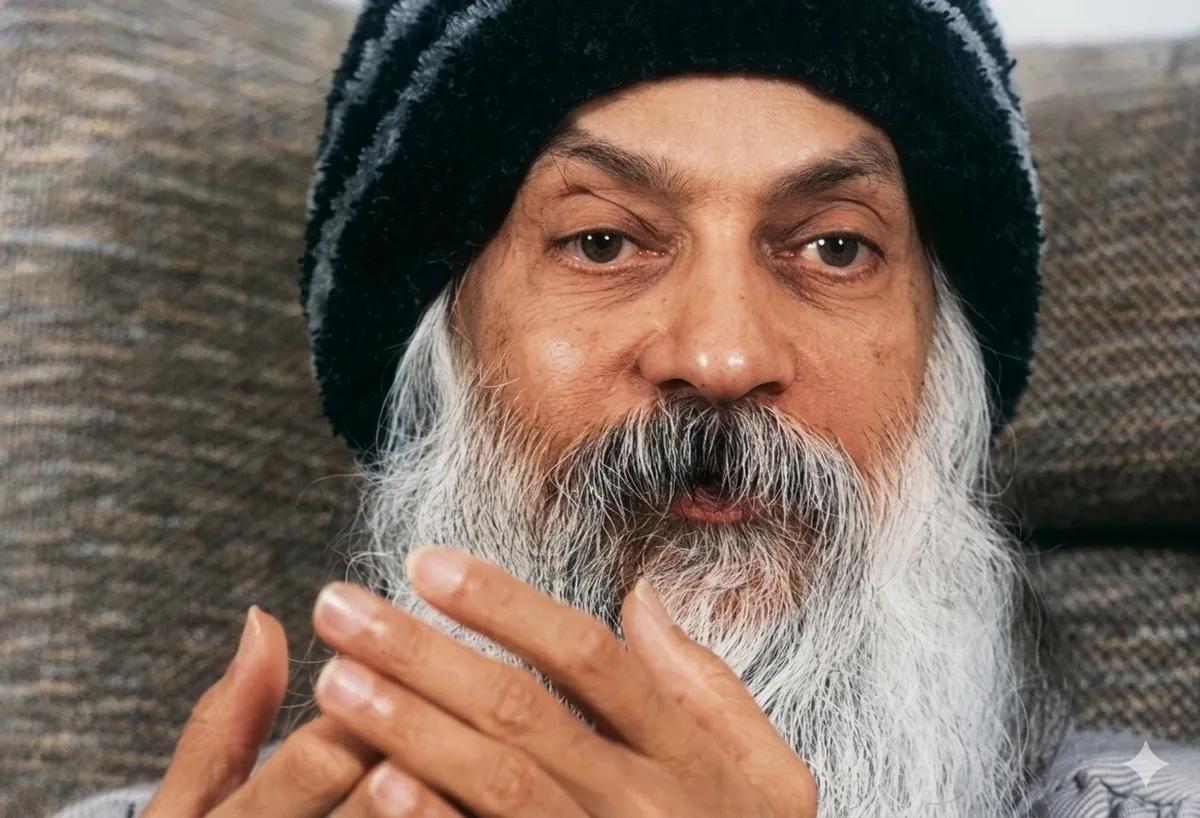
Osho's original Hindi beside Osho Live's English translation, matched passage by passage.
कहने की बहुत बात नहीं है। क्या तुम मुझे कहते हो, अप्रासंगिक है। मेरे निकट क्या तुम स्वयं को समझ लेते हो, वही महत्वपूर्ण है।
There isn’t much to say about names. What you call me is irrelevant. What matters is: in my nearness, what do you come to understand about yourself?
तुम मुझे अच्छे-अच्छे नाम दो, उससे कुछ लाभ न होगा। तुम स्वयं को पहचानो, उससे ही कुछ होने वाला है। मेरी स्तुति से नहीं कुछ, आत्मस्मरण से कुछ होगा। स्तुति में समय खराब मत करो। कितनी तो तुम स्तुति कर चुके, कितने द्वारों पर! कितने मंदिर-मस्जिदों में तुमने प्रार्थना नहीं की, नमाज नहीं पढ़े, झुके नहीं! क्या पाया? हाथ खाली के खाली हैं। अब भीतर झुको। अब जो तुम्हारे भीतर सोया है, उसे जगाओ। अब असली मंदिर में प्रवेश करो। मुझे क्या कहो, इसकी क्या चिंता करनी! कुछ भी कह लो। बिना नाम के भी चल जाएगा।
Give me fine names and it will help nothing. Recognize yourself—that alone will do something. Not by praising me, but by self-remembering will anything happen. Don’t waste time in eulogies. At how many doors have you already sung praises! In how many temples and mosques have you prayed, performed namaz, bowed down! What did you gain? Your hands are still empty. Now bend within. Awaken what sleeps inside. Enter the real temple. Why be anxious about what to call me? Call me anything—or dispense with names altogether.
अपनी तलाश करो। मैं कौन हूं, इसकी फिक्र नहीं, तुम कौन हो। अगर तुम स्वयं को जानो तो ही मुझे जान सकोगे। तुम्हारे उस आत्मबोध में ही मुझसे तुम्हारा सेतु बनेगा।
Seek yourself. Don’t bother about who I am—bother about who you are. Only if you know yourself will you be able to know me. In that self-knowing, a bridge between you and me is made.
लेकिन अक्सर आदमी की नजरें दूसरे पर जाती हैं। प्रेम भी तुमने किसी से किया, प्रार्थना भी किसी से करते हो। कब अपने पर लौटोगे? ये बुद्ध के सारे वचन जिन पर हम चर्चा कर रहे हैं, तुम्हें स्वयं पर लौटा देने की चेष्टा है। नहीं तो अक्सर ऐसा हुआ है कि खोजने वाला पहले तो खुद के कारण भटका, फिर जिनके सहारे पकड़ लिए, उनके कारण भटका। तुम किसी का भी सहारा पकड़ो, भटकोगे। क्योंकि दूसरे का सहारा पकड़ने का अर्थ ही यह है कि तुम जागने से बचना चाहते हो। तुम किसी और पर टालना चाहते हो। यह जीवन की संपदा ऐसी नहीं कि कोई और तुम्हें दे देगा।
But man’s gaze habitually goes outward—to the other. You have loved others, you pray to another. When will you return to yourself? All these sayings of Buddha that we are discussing are attempts to turn you back to yourself. Otherwise it often happens that the seeker first goes astray because of himself, and then, clinging to props, goes astray because of them. Any prop you clutch, you will stray. For to cling to another’s support means you want to avoid waking up. You want to shift it onto someone else. The treasure of life is not such that another can hand it to you.
इसलिए बुद्ध बार-बार कहते हैं, कोई और तुम्हें न जगा सकेगा, तुम्हीं को जागना होगा। तुमने दूसरों से काम लेना सीख लिया है। लेकिन एक काम ऐसा है जो तुम दूसरों से न ले सकोगे। वह काम है आत्म-जागरण का। वह है सत्य-साक्षात का। नहीं तो तुम बदलते रहोगे द्वार। एक द्वार पर न पाओगे, सोचोगे यहां कुछ भी नहीं।
That’s why Buddha says again and again: no one else can awaken you; you have to awaken yourself. You have learned to get work done by others. But there is one work that cannot be outsourced: self-awakening, the direct seeing of truth. Otherwise you will keep changing doors. At one door you won’t find it and will think, “There’s nothing here.”
मेरे पास लोग आते हैं। एक बूढ़े सज्जन आए। उन्होंने कहा, शिवानंद के आश्रम में था, कुछ न पाया। फिर अरविंद आश्रम में था, कुछ न पाया। फिर श्री रमण आश्रम में था, कुछ न पाया। अब आपके चरणों में आया हूं। मैंने कह, तुम जल्दी जाओ, इसके पहले कि तुम कुछ न फिर पाओ। तुम जल्दी करो, यहां से जाओ, अन्यथा तुम दूसरों से जाकर कहोगे--वहां भी हो आया, कुछ न पाया। तुम तो कुछ इस ढंग से बात कर रहे हो जैसे कुछ शिवानंद का कसूर है कि तुमने कुछ न पाया; कि जैसे अरविंद का कोई कसूर है कि तुमने कुछ न पाया। तुम चाहते क्या थे, कोई तुम्हें दे दे उठाकर सत्य? सत्य कोई वस्तु है? कोई तुम्हें दे दे, सत्य कुछ बाहर है? कि रमण आश्रम हो आया, कुछ न पाया। तुम कह क्या रहे हो? तुम कह रहे हो कि ये सब जगह व्यर्थ हैं, ढकोसला हैं। अपनी तरफ देखो। इतनी जगह हो आए, इतने घाट घूमे और प्यासे के प्यासे रह गए। अपनी तरफ देखो। तुमने शायद पीने का ढंग ही न जाना।
People come to me. An elderly gentleman came: “I was in Sivananda’s ashram—found nothing. Then in Aurobindo’s—found nothing. Then in Sri Raman’s—found nothing. Now I have come to your feet.” I said, “Go quickly—before you again find nothing. Hurry before you have to report elsewhere, ‘I went there too—found nothing.’ You speak as if Sivananda were to blame that you found nothing; as if Aurobindo were at fault that you found nothing. What were you hoping for—that someone would simply hand you Truth? Is Truth an object? Something outside to be given? ‘I went to Raman’s ashram—found nothing.’ What are you really saying? You are implying all these places are futile, mere pretension. Look to yourself. You went to so many places, wandered along so many ghats, and remained thirsty. Look to yourself. Perhaps you never learned how to drink.”
सरोवर के पास पहुंच जाने से थोड़े ही प्यास बुझती है। कहावत है--घोड़े को नदी ले जाया जा सकता है, पानी थोड़े ही पिलाया जा सकता है। नदी दिखायी जा सकती है, प्यास होगी तो पी लेगा। नहीं होगी प्यास तो लौट आएगा। इसलिए जो लोग घोड़ा रखते हैं, उनके नौकर जानते हैं भाषा। भाषा यह है--घोड़े को जाओ पानी दिखा लाओ। पिलाने की कोई नहीं कहता। कौन पिलाएगा पानी? दिखा लाओ। प्यास होगी तो घोड़ा पी लेगा। तुम इतनी जगह पानी देख आए और पीया न। प्यास ही झूठी मालूम पड़ती है। और या फिर तुम गलत तलाश में निकले थे। तुम सोचते थे, किसी और की जिम्मेवारी है।
Reaching a lake doesn’t quench thirst by itself. There’s a proverb: you can take the horse to the river, but you cannot make it drink. You can show it the river; if there is thirst, it will drink. If not, it will turn back. So those who tend horses have a saying: “Go and show the horse the water.” No one says, “Go and make it drink.” Who can make it drink? Show it. If it is thirsty, it will drink. You have seen water in so many places and you didn’t drink. Your thirst itself seems suspect. Or else your search was misguided—you thought it was someone else’s responsibility.
मेरे पास साफ कर लो बात। मेरी कोई जिम्मेवारी नहीं है। तुम्हें पाना होगा। मेरी उपस्थिति का लाभ ले सकते हो, लेकिन मेरी उपस्थिति की स्तुति करने की कोई जरूरत नहीं है। मेरी स्तुति से कुछ लाभ न होगा, समय व्यय होगा। परमात्मा भीतर छिपा है। मुझे तुम्हें क्या फायदा है कहने से? प्रभु कहो, विभु कहो, शंभु कहो, जो कहना हो कहो। न कहना हो, मत कहो। प्रभु भीतर छिपा है। मेरे इशारों को देखो। मेरी चिंता मत करो। मैं क्या कह रहा हूं, किस तरफ इशारा कर रहा हूं, उसको पहचानो। मेरे पीछे चलने से तुम मेरे अनुयायी न बनोगे, अपने भीतर उतरोगे तो मेरे अनुयायी हो। और अनुयायी कहने का तब कोई अर्थ नहीं रह जाता। ये सारे इशारे तुम्हारी तरफ हैं। कहीं ऐसा न हो किसी दिन तुम्हें रोना पड़े, कहना पड़े--
Make it clear with me: I have no responsibility. You must attain. You can take the benefit of my presence, but there is no need to sing my praises. Praise will not help—only waste your time. The Divine is hidden within. What use is it to you what you call me? Call me Prabhu, Vibhu, Shambhu—call me what you will; or don’t call me at all. The Lord is hidden within. Look at my pointers. Don’t concern yourself with me. See what I am saying, what I am pointing toward. By following behind me you won’t become my follower; by descending within yourself, you are my follower. And then the very word “follower” loses meaning. All these gestures are toward you. Lest the day come when you have to weep and say—
पाए-तलब भी तेज था मंजिल भी थी करीब
लेकिन निजात पा न सके रहनुमां से हम
Our stride was keen, the goal was close, yet we could not win release from the guide.
पांवों की ताकत भी तीव्र थी। चलने की क्षमता भी काफी थी।
पाए-तलब भी तेज था मंजिल भी थी करीब
और मंजिल भी सामने खड़ी थी। लेकिन मुश्किल यह हो गयी--
लेकिन निजात पा न सके रहनुमां से हम
लेकिन पथ-प्रदर्शक से मुक्त होना मुश्किल हो गया।
गुरु द्वार बने, दीवार न हो जाए। तुम्हें मुझ पर रुक नहीं जाना है, यह तुम क्या पागलपन की बात कर रहे हो कि त्रिकाल बस आपको ही नमता रहूं? तुम मुझे भी मुसीबत में डालोगे। त्रिकाल, कुछ सोचो तो! तुम मुझे भी अटकाओगे? त्रिकाल तक तुम नमोगे, तो मुझे भी वहीं खड़ा रहना पड़ेगा। ऐसे ही तुमने पत्थरों के भगवान बना लिए हैं। क्योंकि जिंदा भगवान तीन काल तक खड़ा न रहेगा तुम्हारे लिए। तुम्हारी कसरत से जिंदा को क्या प्रयोजन! इसलिए तुमने पत्थर की मूर्तियां गढ़ ली हैं। उनका भगवान से कुछ संबंध नहीं। तुम्हें मजा लेना है झुकने-उठने का। उठते रहो, झुकते रहो।
Your legs had strength. You had the capacity to walk. Your stride was keen, the goal was near—and the goal stood right before you. But the trouble became this: we could not get free of the guide. Let not the guru become a wall instead of a door. You are not to stop at me. What madness is this—“For three times I will keep bowing to you alone”? You’ll put me in a fix too. Three times—think a little! Will you keep me stuck too? If you bow for three times, I’d have to stand there as well. This is how you made gods of stone. For a living god will not stand there for all three times for your calisthenics. So you carved stone idols. They have nothing to do with God. You just enjoy the act of prostrating and rising. So keep rising, keep bowing.
यह त्रिकाल की बात ही क्यों उठती है? ऐसा लगता है, इस क्षण झुक नहीं पा रहे। तो फिर तीन काल भी काफी न होंगे। क्योंकि झुकने का संबंध समय से नहीं, झुकने का संबंध प्रतीति से है। झुकने का संबंध समय की लंबाई से नहीं है, समय की गहराई से है। एक क्षण में हो सकता है। एक पल में हो सकता है। दो पलों के बीच में जो थोड़ी सी जगह होती है, उसमें हो सकता है। झुकना तो भाव है।
Why bring up “the three times” at all? It seems you cannot bow in this very moment. Then even three times will not be enough. For bowing has nothing to do with the length of time; it has to do with depth of awareness. Not the length but the depth of the moment. It can happen in a single instant, in a flash—between two moments, in that tiny interval. Bowing is a feeling.
तीन काल! तुम सोचते हो कि तुम बड़ी ऊंची बात कह रहे हो। तुम यह कह रहे हो कि इस क्षण में तो नहीं हो रहा है, अगले क्षण का भी भरोसा नहीं है--आज तो हो ही नहीं रहा है, कल भी होगा इसका पक्का नहीं, तीन काल का समय चाहिए, तब शायद!
Three times! You think you are saying something lofty. You are really saying: it is not happening now; nor am I sure it will happen in the next moment—today it isn’t happening, tomorrow is not certain; give me the span of three times and maybe then!
झुकना हो अभी झुक लो। और झुकना कोई शारीरिक क्रिया नहीं है। झुकना भीतर की अंतस-दशा है। और झुकना किसी के प्रति नहीं होता। जो किसी के प्रति है वह असली झुकना नहीं है। झुकना तो तुम्हारी समझ है। किसी के प्रति नहीं। क्योंकि अगर किसी के प्रति झुके तो तुम कारण से झुकोगे। कारण से झुके, तो तुम झुके ही नहीं।
If bowing is to happen, bow now. And bowing is not a bodily action. Bowing is an inner state. Nor is bowing toward someone. Bowing “toward someone” is not real bowing. Bowing is understanding. If it is toward someone, there will be a reason. Bow for a reason and you have not truly bowed.
समझने की कोशिश करो। किसी के पास बहुत धन था, तुम झुके। इससे सिर्फ इतना ही पता चलता है कि तुम्हारी आकांक्षा बहुत धन पाने की थी, जो तुम पूरी न कर पाए, इस आदमी ने पूरी कर ली, झुकते हो। तुम अपनी आकांक्षा की पूर्ति की संभावना के लिए झुकते हो। जो तुम न हो सके, यह हो गया--झुकते हो। चाहते तुम भी ऐसे होना थे।
किसी को बड़े पद पर देखा, झुके। यही तुम्हारे भीतर का भी रोग था। तुम भी चाहते थे सिंहासन पर विराजो, न विराज पाए। लेकिन इस आदमी ने पा लिया, झुकने योग्य है। किसी के पास बहुत ज्ञान देखा, झुके। किसी के पास बहुत त्याग देखा, झुके। लेकिन जब भी झुके, कारण से झुके।
Try to understand. Someone has great wealth—you bow. That only shows your craving for wealth: what you could not achieve, this man has; you bow for the chance to fulfill your own desire. Someone sits on a high seat—you bow. It’s your own disease within. You too wanted to sit on the throne and could not; this person did, so he seems worthy of bowing. You see someone with great knowledge—you bow; with great renunciation—you bow. But whenever you bowed, you bowed for a reason.
जो कारण से झुका, वह झुका ही नहीं। क्योंकि अगर इतना ही धन तुम्हें मिल जाए, तो फिर तो तुम इस आदमी के आगे न झुकोगे। ऐसा ही पद तुम्हें मिल जाए, या इससे ऊंचा पद मिल जाए, फिर तो तुम न झुकोगे। तुम कहोगे, अब कारण ही न रहा। इतना ही ज्ञान मिल जाए, इतना ही त्याग तुम्हारे जीवन में भी फल जाए, फिर तो न झुकोगे। तुम कहोगे, अब प्रयोजन ही न रहा।
One who bows for a reason has not bowed. For if you were to obtain the same wealth, you would no longer bow before that man. If you were to get the same rank—or a higher one—you would no longer bow: “Now there is no reason.” If you were to have that knowledge, that renunciation, you would no longer bow: “Now there is no purpose.”
तो मैं तुमसे कहता हूं, तब भी तुम झुके न थे। तब भी अहंकार गिरा न था। उस झुकने में भी अहंकार ने अपने को सम्हाला था। उस झुकने में भी अहंकार ने आभूषण बनाए थे। अकारण झुको। तब सवाल नहीं कि मेरे प्रति झुको। राह चलते अजनबी के प्रति भी झुके हो, वृक्षों के प्रति भी झुके हो, पत्थरों के प्रति भी झुके हो, जिनके पास देने को कुछ भी नहीं, होने को कुछ भी नहीं। न धन है, न पद है, न प्रतिष्ठा है, न ज्ञान है, न त्याग है, न बुद्धत्व है, कुछ भी नहीं है। लेकिन अब तुम झुके हो। क्योंकि तुम्हें झुकने का मजा आ गया। अब तुम कारण से नहीं झुके हो, अब तुम रस से झुके हो। अब झुकना ही साध्य हो गया, साधन न रहा। अब कोई ऐसी घड़ी न आएगी जब तुम्हें न झुका हुआ पाया जा सके। अब तुमने झुकने की भीतरी कला सीख ली, बाहरी कारण न रहे, निमित्त न रहे।
So I say to you: even then you had not bowed. The ego had not fallen. Even in that bowing, ego protected itself. It fashioned ornaments out of bowing. Bow without reason. Then it’s not a question of bowing to me. Bow to a stranger on the road, to trees, to stones—even to those who have nothing to give, nothing to be. No wealth, no rank, no prestige, no knowledge, no renunciation, no Buddhahood—nothing at all. Yet you bow—because you have come to relish bowing itself. Now you are not bowing out of cause, you are bowing out of flavor. Bowing itself has become the end, not a means. Then no moment will come when you will be found unbowed. You have learned the inner art of bowing; the outer causes have fallen away.
इसलिए झुकने को किसी के प्रति मत बनाओ। झुकना हो, बस काफी है। नहीं तो मंदिर के सामने झुकोगे, तो मस्जिद के सामने अकड़कर निकलोगे। यह भी कोई झुकना हुआ! मेरे सामने झुकोगे तो किसी दूसरे के सामने अकड़कर निकलोगे। बदला कहीं ले लोगे तुम।
Therefore do not make bowing “toward someone.” If bowing is to be, that is enough. Otherwise you will bow before a temple and stiffen before a mosque. Is that bowing? You will bow before me and puff up before someone else—you will take your revenge somewhere.
इसलिए तो मंदिर के सामने जो झुकता है, मस्जिद के सामने अकड़कर निकलता है। वह यह कह रहा है, अब बहुत हो गया है झुकना, झुकना, अब यहां तो अकड़ लें। जो मस्जिद में झुकता है, वह मंदिर के सामने अकड़कर निकलता है। बदला तुम मंदिर से लेते हो मस्जिद का? अगर तुम झुके ही होते तो क्या मंदिर! क्या मस्जिद! क्या गुरुद्वारा! तुम झुके ही होते।
दुआ के वास्ते अब अर्श हाथ उठते नहीं अपने
तबीयत महवे-तस्लीम-ओ-रजा मालूम होती है
That is why the one who bows before the temple stiffens before the mosque. He is saying, “Enough of bowing and bowing—now here at least let me swagger.” The one who bows in the mosque stiffens before the temple. Do you take revenge on the temple for the mosque? If you were truly bowed, what temple? what mosque? what gurdwara? You would simply be bowed.
अर्श की बड़ी प्रसिद्ध पंक्तियां हैं। अब प्रार्थना के लिए तक हाथ नहीं उठते। उपासना में ऐसी मग्नता छा गयी है। याद ही नहीं रहती हाथ उठाने की बात। झुकने की याद नहीं रहती, ऐसे झुके हो। उपासना में ऐसे मग्न हो!
Arsh has famous lines: “Now, for prayer, my hands no longer rise; the heart seems lost in surrender and consent.”
So absorbed in worship that one forgets even to raise the hands. You don’t remember to bow—you are bowed. So immersed in devotion!
“Now, for prayer, my hands no longer rise; the heart seems lost in surrender and consent.”
दुआ के वास्ते अब अर्श हाथ उठते नहीं अपने
तबीयत महवे-तस्लीम-ओ-रजा मालूम होती है
तबीयत ऐसी डूब गयी है उपासना में, प्रार्थना में, किसे याद कब हाथ उठाना, कब फूल चढ़ाना, कब कुमकुम लगाना, किसे याद? झुके तो झुके।
The temperament is so drowned in worship, in prayer: who remembers when to raise hands, when to offer flowers, when to mark the forehead? Bowed is bowed.
झुकने की बात बाहर की नहीं है। भीतर की है। अंतर्भाव की है। तुम पूछते हो, तीन काल तक झुका रहूं। तुम तो मुसीबत में पड़ोगे, मुझे भी डाल दोगे। तुम्हें झुकना हो झुको, मुझे तो बख्शो!
Bowing is not an outer affair. It is inner—an inward mood. You ask to bow for three times. You will be in trouble, and you’ll put me in trouble too. If you must bow, bow—just spare me!
‘इसलिए कि मैं सतत आपके चरणों में नमूं।’
डर क्या है? सतत क्यों बनाना चाहते हो? यह क्षण काफी नहीं? इस क्षण का निपटारा इसमें कर लो। आने वाला क्षण आने वाले क्षण की फिकर कर लेगा। तुम कल का हिसाब क्यों रखते हो? तुम्हारा आज जरूर दीन-दरिद्र होगा। कल की बात ही तब उठती है, जब तुम आज प्रसन्न नहीं हो।
“Because I may bow at your feet continuously.” What is the fear? Why make it “continuous”? Is this moment not enough? Settle this moment within itself. The next moment will care for itself. Why keep accounts of tomorrow? Surely your today is poor. Talk of tomorrow arises only when today is not joyous.
इसे खोजो, तलाशो। जब कोई प्रसन्न होता है, सुख से भरा होता है, कल की बात ही नहीं उठाता। न बीते कल की उठाता है, न आने वाले कल की उठाता है। दोनों गए। दोनों गिरे उसकी नजर से। आज इतना भरा-पूरा है, ऐसे कमल खिले हैं प्राणों में, ऐसा नाच उठा है, ऐसे नृत्य की घड़ी आयी, कौन फिकर करता है कल थे भी कि नहीं, कल होंगे भी कि नहीं! आज होना इतना गहन है, इतना परिपूर्ण है, इतना तृप्तिदायी है, ऐसा गहन परितोष छा रहा है, कौन फिकर करता है!
Look into this. When one is happy, filled with bliss, one does not bring up tomorrow. Nor the yesterday. Both drop from view. Today is so full, so many lotuses have bloomed within, such dance has arisen—who worries whether there was a yesterday, whether there will be a tomorrow! Today’s being is so deep, so complete, so satisfying—who cares!
दुख में याद आती है बीते कल की, आने वाले कल की। बीते कल की, क्योंकि लगता है बहुत सुख थे कल, जो आज न रहे। आने वाले कल की, आशा बंधाते हो अपने को कि कोई फिकर नहीं, आज नहीं कल हो जाएगा। ये सब दुख के सोचने के ढंग हैं।
In sorrow we recall yesterday and tomorrow: yesterday—because it seems there were joys that are gone; tomorrow—because you console yourself, “No matter, if not today then tomorrow.” These are the thought-patterns of misery.
अपने भीतर ही खोजो, सुख के क्षण में समय खो जाता है। दुख के क्षण में समय घना हो जाता है।
Look within: in moments of joy, time disappears; in moments of sorrow, time grows dense.
सतत! किसलिए पूछते हो? यह क्षण पर्याप्त नहीं? आज का मिलना काफी नहीं? आज तुम मेरे पास हो, इससे तृप्ति नहीं? इससे पूरा मन नहीं भरता? तो फिर तुम कहीं चूक रहे हो मुझसे, क्योंकि मैं तो पूरा-पूरा उपलब्ध हूं, यहीं। मेरी तरफ से जरा भी कंजूसी नहीं है। तुम ही अपने पात्र को बचा रहे हो। मैं तो बरस रहा हूं, तुम अपना पात्र उलटा रखे बैठे हो। और कहते हो, सतत बरसते रहना। सतत भी क्या होगा, जो इस क्षण में नहीं होगा वह आने वाले क्षण में कैसे होगा? जो आज नहीं होगा, वह कल कैसे होगा? जैसे तुम आज चूके हो, वैसे ही तुम कल चूकोगे। चूकना तुम्हारी आदत हो गयी है।
“Continuously!” Why do you ask this? Is this moment not sufficient? Is today’s meeting not enough? Is your heart not filled by simply being with me now? Then you are missing me somewhere—for I am wholly, fully available—here. There is no stinginess on my side. You are holding back your vessel. I am showering; your bowl is turned upside down. And you say, “Keep showering continuously.” Even if it were continuous, what would it change? What does not happen in this moment—how will it happen in the next? What does not happen today—how will it happen tomorrow? As you missed today, so you will miss tomorrow. Missing has become your habit.
तुम बुद्धों से चूके, महावीरों से चूके, कृष्णों से चूके। तुम चूकते ही रहे हो। तुम कोई नए नहीं हो। तुम कुछ मुझे सुन रहे हो, ऐसा नहीं है। ऐसे ही तुम बुद्ध के पास भी बैठे रहे, ऐसे ही सोए-सोए। ऐसे ही उलटा पात्र रखे। ऐसे ही तुमने महावीर के पास भी समय गुजारा। ऐसे तुम जन्मों-जन्मों से यात्रा कर रहे हो। अभी भी तुम कहते हो, सतत। मन भरा नहीं? इतने भटकने के बाद और भटकने का मन है? इसी क्षण को पूरा हो जाने दो। इसी क्षण की बात करो। क्षण से बाहर मत जाओ। क्षण के बाहर गए, उलझन खड़ी हुई। इसी क्षण को सुलझा लो। फिर इसी सुलझाव से और सुलझाव भी निकलते आएंगे।
You missed Buddhas, you missed Mahavira, you missed Krishna. You have kept missing. You are not new. Don’t think you’re listening to me for the first time. You sat before Buddha like this too—dozing. Your bowl upside down. You whiled away time with Mahavira in the same way. For lifetimes you have been journeying thus. And still you say “continuously.” Is the heart still not filled? After so much wandering, do you still wish to wander? Let this very moment be complete. Speak of this moment. Step not outside the moment. Step outside, and entanglement begins. Settle this moment. From this settling, further openings will arise.
‘अब तो सुनो प्रार्थना मेरी!’
प्रार्थना किसी को सुनाने के लिए थोड़े ही है। किसी को सुनाने गए तो झूठ हो जाएगी। कठिन होगा तुम्हें सोचकर कि यह मैं क्या कह रहा हूं--प्रार्थना किसी को सुनाने के लिए नहीं है। यह तो अत्यंत एकांत में गुनगुनाने के लिए है।
“Now at least hear my prayer!” Prayer is not to be told to someone. If you set out to tell someone, it becomes false. It will be hard for you to hear this: prayer is not for someone else’s ears. It is something to hum in the utter privacy of your own being.
इसीलिए तो बुद्ध ने परमात्मा भी छीन लिया, नहीं तो तुम किसी न किसी को सुनाते ही रहोगे। और जब तुम सुनाने चलते हो, तब अतिशयोक्ति हो ही जाती है। जब तुम किसी को बताने चलते हो, तो जो नहीं होता वह भी बता देते हो, बढ़ा-चढ़ा कर बता देते हो। आदमी का स्वभाव ऐसा है। चिंदी का सांप हो जाता है।
That is why Buddha even took away God—otherwise you would keep on telling your prayer to someone or other. And when you set out to tell, exaggeration creeps in. When you set out to report, you include what is not; you embroider. That’s human nature. A shred becomes a serpent.
तुम जरा अपने को पकड़ो, जब तुम लोगों को सुनाने लगते हो तो कितना बढ़ा रहे हो, कितना जोड़ रहे हो, कितना मिर्च-मसाला डाल दिया? बढ़ती चली जाती हैं बातें। लोग एक-दूसरे को सुनाते चले जाते हैं। लेकिन यह दूसरे को सुनाने के मोह में झूठ हो जाता है।
Just watch yourself: when you start recounting to others, how much do you swell things, how much do you add, how much chili-masala do you sprinkle? It keeps growing and growing. People keep broadcasting to one another. But in the obsession to tell another, it turns false.
प्रार्थना तो सच्ची होनी चाहिए, किसी को सुनानी नहीं है। इन पक्षियों के गीत जैसी होनी चाहिए। अपने आनंद से गुनगुना रहे हैं। प्रदर्शन नहीं है कोई। न किसी की फरमाइश है। न आकांक्षा है, कोई सुने। सुन ले मौज उसकी। पक्षियों को कोई प्रयोजन नहीं है।
Prayer must be true; it is not to be performed for someone. It should be like the birds’ songs—hummed out of their own joy. No display. No request that someone listen. If someone hears, good for them. The birds have no purpose.
इन फूलों को देखो, वृक्षों पर खिले हैं। किसके लिए खिले हैं? अपने लिए खिले हैं। किसी की राह नहीं देख रहे हैं कि कोई निकले किनारे से और गंध से आंदोलित हो जाए। कोई निकले ठीक, कोई न निकले ठीक, वृक्षों को पता ही नहीं चलता। कोई आए ठीक, कोई न आए ठीक। निर्जन में भी वृक्ष ऐसे ही खिलते हैं, जहां से कोई भी नहीं निकलता।
Look at these flowers blooming on the trees. For whom do they bloom? For themselves. They are not watching the path, hoping that someone will pass by and be stirred by their fragrance. If someone passes, fine; if not, fine. The trees don’t even notice. Whether someone comes or not—fine either way. In the wilderness too, where no one passes, the trees bloom just the same.
तुम्हारी प्रार्थना भी ऐसी ही होनी चाहिए। किसी को सुनाने के लिए नहीं। प्रार्थना तो तुम्हारे आनंद की अभिव्यक्ति होनी चाहिए। और मांग तो प्रार्थना में रखना ही मत, अन्यथा प्रार्थना मर गयी। मांग छाती पर बैठी प्रार्थना की कि प्रार्थना मरी। इतना दिया है, उसके लिए धन्यवाद दो, मांगो मत।
लेकिन प्रार्थना में भिखारी खड़ा ही रहता है। प्रार्थना में प्रार्थी बना ही रहता है। प्रार्थी को हटाओ, अन्यथा प्रार्थना की दम घुट जाएगी। प्रार्थना दो ढंग से हो सकती है--अहोभाव की, धन्यवाद की; मांग की। मांगने की प्रार्थना गंदी हो जाती है। तुम कुछ भी मांगो, तुम्हारी मांग तुमसे बड़ी न होगी। तुम परमात्मा भी मांगो, तो भी तुम्हारा परमात्मा तुम्हारी धारणा का परमात्मा होगा।
Let your prayer be like that—not to be told to anyone. Prayer should be the expression of your joy. And put no demand into prayer, otherwise prayer dies. In prayer the beggar stands; remove the petitioner, otherwise you will choke prayer. Prayer can be of two kinds: of wonder and thanksgiving; or of asking. Asking makes it dirty. Whatever you ask, your asking cannot be bigger than you. Even if you ask for God, the “God” you get will be your own notion.
अगर तुम असीम को चाहते हो तो मांगो ही मत। मांग को हटा लो, क्योंकि तुम्हारी मांग सीमा ही बनाएगी। तुम कितना ही सोचोगे, सीमा ही बनेगी। तुम बड़े से बड़ा भी मांगोगे तो छोटा ही रहेगा। तुम बड़ा मांग ही नहीं सकते। मांग बड़े की हो ही नहीं सकती। मांगते ही चीजें छोटी हो जाती हैं।
If you want the Infinite, do not ask. Remove asking—because asking draws limits. However grandly you imagine, it will be a limit. However big you ask, it will still be small. You cannot ask the Great. The moment you ask, things become small.
खू-ए-वफा मिली दिल-ए-दर्द-आशना मिला
क्या रह गया है और जो मांगें खुदा से हम
“We have received the habit of fidelity, a heart acquainted with pain— what remains now to ask of God?”
खू-ए-वफा मिली
प्रेम निभाने की आदत मिली।
दिल-ए-दर्द-आशना मिला
पीड़ाओं से परिचित होने की क्षमता मिली हृदय को।
क्या रह गया है और जो मांगें खुदा से हम
We have received the knack of keeping love’s faith. We have received a heart intimate with pain. What remains that we should ask God for?
अब और मांगने को क्या बचा? प्रेम की क्षमता मिली, पीड़ा की क्षमता मिली, सब मिल गया। पीड़ा निखारेगी, पीड़ा गलत को काटेगी, पीड़ा व्यर्थ को जलाएगी, प्रेम सार्थक को उभारेगा, जगाएगा, बस हो गयी बात।
Love’s capacity—we have it. The capacity to suffer—we have it. What more is there to ask? Pain will refine you, cut away the false, burn the useless. Love will bring forth the essential, awaken it. Then the work is done.
पीड़ा यानी जो व्यर्थ है वह कट जाएगा। प्रेम यानी जो सार्थक है वह बच जाएगा और खिलेगा; खिलेगा, फूलेगा, हजार-हजार रंग-रूपों में प्रकट होगा। प्रेम मिला, पीड़ा मिली, अब और खुदा से मांगने को क्या रह गया?
Pain means: the futile will be cut away. Love means: the meaningful will remain and blossom—blossom and bloom, appearing in a thousand colors and forms. Love received, pain received—what remains to ask of God?
जिन्होंने ठीक से प्रार्थना की, उन्होंने पाया, अरे! मुझ अपात्र को इतना दिया, अकारण दिया! वे धन्यवाद देने गए हैं मंदिर और मस्जिद, मांगने नहीं गए।
Those who have truly prayed have found: Ah! To one as unworthy as me, so much has been given—without cause! They go to temple and mosque to give thanks, not to ask.
तुम जरा देखो भी, मैं तुम्हें क्या दे रहा हूं! तुम जरा अपने को जगाकर फिर से सोचो। तुम्हारे पात्र में क्या उंडेला है, जरा गौर तो करो। अमृत तुम्हें दे रहा हूं। तुम्हारे मांगे नहीं दे रहा हूं। तुम्हारी मांग के कारण तुम्हें न मिल रहा हो, यह हो सकता है। तुम्हारी मांग पात्र को गंदा कर रही हो और पात्र में पड़ा अमृत भी जहर हो जाता हो, यह हो सकता है। तुम जरा मांज डालो अपने पात्र को। मांग को हटा दो कि मांज लिया पात्र। मांगो मत। मिला ही हुआ है।
Just look a little: what am I giving you! Wake yourself up and consider again. What has been poured into your vessel? Take note. I am giving you nectar. Not what you ask for. It may be that your very asking prevents you from receiving. Your asking dirties the vessel, and even the nectar in it turns to poison—that can happen. Scrub your bowl. To remove asking is to cleanse the vessel. Don’t ask. It is already given.
कहीं ऐसा न हो कि तुम्हारी प्रार्थनाएं तुम्हारी वासनाओं के ही छिपे रूप हों। कहीं ऐसा न हो कि तुमने प्रार्थनाओं के सुंदर-सुंदर शब्दों में कुरूप वासनाओं को ढांक लिया हो, छिपा लिया हो।
Beware lest your prayers be nothing but your desires disguised. Beware lest under beautiful words you have draped your ugly cravings and hidden them.
आदमी बड़ा बेईमान है। और आदमी बड़ा आत्मवंचक है। फिर से तुम उघाड़कर अपनी प्रार्थनाएं देखो। जरा प्रार्थनाओं के ढक्कन हटाओ, नीचे झांको, क्या भरा है वहां? भला तुम कहो या न कहो, अगर वह भीतर है तो है। और प्रार्थना को गलत कर जाएगा। प्रार्थना होनी चाहिए शुद्ध, सहजस्फूर्त, तुम्हारी सरल निर्दोषता से उठी हुई। एक धन्यवाद का भाव अस्तित्व के प्रति कि मुझ अपात्र को कितना दिया है! किस कारण दिया है! प्रार्थना में आश्चर्य होगा।
Man is very devious; man is a great self-deceiver. Uncover your prayers again. Lift the lids and look underneath: what is filled there? Whether you say it aloud or not, if it is within, it is there—and it will spoil the prayer. Prayer should be pure, spontaneous—rising from your simple innocence. A feeling of gratitude toward existence: How much has been given to one so unworthy as me! For what reason has it been given! In prayer there will be wonder.
तुम्हारी प्रार्थना में कभी आश्चर्य होता है? तुम्हारी प्रार्थना में तुम कुछ मांग रहे हो--धन, पद, प्रतिष्ठा। इससे किसी तरह छूटे, छूटे क्या, इसको किसी तरह छिपाया, तो तुम मांगने लगते हो--मोक्ष, समाधि, कैवल्य। मगर मांग जारी रहती है। जहां तक मांग है, वहां तक संसार है। जहां तुम्हारी मांग गिरती है, वहीं निर्वाण है। वहीं मोक्ष है।
Do you ever feel wonder in your prayer? In your prayer you ask—wealth, rank, prestige. If, somehow, you manage to escape being caught in that, then you begin to ask for liberation, samadhi, kaivalya. But asking goes on. Wherever there is asking, there is the world. Where your asking drops, there is nirvana; there is liberation.
बुद्ध ने हटा लिया परमात्मा को, न रहेगा बांस, न बजेगी बांसुरी। न रहेगा कोई जिससे तुम मांग सको, न तुम्हारी ये व्यर्थ की प्रार्थनाएं चलेंगी। धर्म को परमात्मा से मुक्त किया, ताकि धर्म मांग से मुक्त हो जाए। तुम अकेला अपने को पाओ।
Buddha removed God—no reed, no flute. If there is no one to ask from, these wasteful prayers will cease. He freed religion from God so that religion may be freed from asking. So that you find yourself alone with yourself.
इक फरेब-ए-आरजू साबित हुआ
जिसको जौक-ए-बंदगी समझा था मैं
आकांक्षा का धोखा सिद्ध होती है अक्सर, जिसको तुमने उपासना की अभिरुचि समझी है।
“Often it proves to be a deceit of desire— what I had taken for a taste for worship.”
मंदिरों में जाते लोगों के हृदय में झांको, वे कुछ मांगने चले जा रहे हैं। बाजार में हार गए मांग-मांगकर, न मिला, अब मंदिर जा रहे हैं। आदमी से मांग-मांग कर हार गए, अब परमात्मा से मांगने जा रहे हैं। लेकिन मांगने जा रहे हैं। अभी मांग से नहीं छूटे। और जब तक तुम मांग से न छूटे, तब तक तुम्हें मंदिर की राह न मिलेगी। तब तक तुम कहीं भी जाओ, सब जगह तुम्हारा बाजार तुम्हारे साथ जाएगा। तुम्हारी मांग में ही तुम्हारा बाजार है। और तुम बाजार में भी मांग छोड़ दो, अचानक तुम पाओगे मंदिर वहीं आ गया। तुम जहां हो वहीं प्रगट हो गया।
Look into the hearts of those going to temples: they are going to ask. In the marketplace they were defeated by asking and asking; not getting, they now go to the temple—to ask God. But they go to ask. They are not yet free of asking. And until you drop asking, you will not find the way to the temple. Wherever you go, you will carry your bazaar with you. Your bazaar is in your asking. And if you drop asking even in the bazaar, suddenly you will find—the temple has appeared right there where you are.
तो सिखा लेंगे। अगर तुम्हें आता ही हो, तो ही मुश्किल होगी। न आता हो और पता हो कि नहीं आता, तो सिखा लेंगे। आता हो, अगर सच में ही आता हो, तब तो मेरे पास आने की कोई जरूरत नहीं। आने का सिर्फ खयाल हो कि आता है और आता न हो, तो सिखाना मुश्किल हो जाएगा।
Then we shall learn. If you already knew, that would be the difficulty. If you don’t know and you know that you don’t know, then we shall learn. If you truly did know, there would be no need to come to me. But if you merely entertain the notion that you know when in fact you don’t, that will make teaching difficult.
जिसने अपने अज्ञान को समझा, उसने ज्ञान को निमंत्रण दिया। जिसने कहा, नहीं आता, कोई अड़चन नहीं। उससे मेरा संग-साथ बन जाता है। किसको आता है मरना! जीना ही नहीं आता, मरना तो बड़ी दूर की बात है। जी रहे हो और जीना नहीं आता, मरना तो कैसे आएगा! मरना तो केवल उन्हीं को आता है जो जीना सीख लेते हैं, जो जीने को उसकी पराकाष्ठा में जी लेते हैं, जो जीवन को उसकी आत्यंतिक गहराई में जी लेते हैं। उनको मरना आता है। क्योंकि मरना जीवन की आखिरी ऊंचाई है। उसके पार फिर कोई शिखर नहीं। वह गौरीशंकर है जीवन का।
Whoever has recognized his ignorance has invited wisdom. Whoever says, “I don’t know,” presents no obstacle. With such a one, my companionship becomes possible. Who knows how to die! We don’t even know how to live—dying is a far-off matter. You are living without knowing how to live; how then will you know how to die? Only those know how to die who have learned to live—who have lived life to its pinnacle, in its ultimate depth. They know how to die, because dying is life’s final height. Beyond it there is no further peak. It is the Gaurishankar, the Everest of life.
तुम साधारणतः सोचते हो, मृत्यु जीवन का अंत है, ऐसा नहीं। यह तो तुम्हें जीना नहीं आया, इसलिए सोचते हो। समझो। जिसे जीना नहीं आया वह मौत से डरता है। डरेगा ही। दया का पात्र है बेचारा। क्योंकि जिसे अभी जीना नहीं आया, वह देखता है कि मौत चली आती है पास, हम अभी जीए भी नहीं। अभी हम सोचते ही रहे--कहां आशियां बने कहां न बने, बहार खतम हुई। घबड़ाहट आती है। डर लगता है। यह तो पैर अभी जमे भी न थे। अभी जी भरकर पी न पाए थे कि यह तो मधुपात्र के टूटने का, छूटने का वक्त आ गया। अभी ओंठ से लगा ही पाए थे कि किसी ने झटक लिया। मौत दुश्मन मालूम होती है।
Ordinarily you think death is the end of life. Not so. You think that because you haven’t learned to live. Understand. The one who has not learned to live is afraid of death—and he will be. He is to be pitied. Because one who has not yet lived sees death approaching and thinks, “But I haven’t lived yet!” We kept thinking: where shall we build a nest—here or there?—and spring was over. Panic arises. Fear comes. The feet had not yet found ground; the cup had not yet been drunk to the full when the time to drop it arrived. It had barely touched the lips and someone snatched it away. Death looks like an enemy.
क्यों? क्योंकि मौत समय को छीन लेती है। और जीने के लिए समय की जरूरत थी। अभी तो जी न पाए थे। अभी कल की जरूरत थी। आज तो तुम जीते नहीं, कल जीते हो, मौत कल को समाप्त कर देती है। मौत कहती है, बस खतम हुआ मामला। आज बस आज। अब कल नहीं। अब और कल नहीं। मौत भविष्य को छीन लेती है। और तो कुछ नहीं छीनती।
Why? Because death snatches away time. And time was needed in order to live. You did not live today; you live tomorrow. Death ends the tomorrows. Death says, “Enough. Finished. Only today. Now there is no tomorrow—no more tomorrows.” Death snatches away the future. It snatches nothing else.
तुम जरा सोचो, जीवन को नहीं छीनती मौत। जीवन तो जीया जा चुका, अब क्या मौत छीनेगी? जीवन तो अतीत हुआ। जीवन को तो छीन ही नहीं सकती जो अतीत हो गया। और जो वर्तमान है उसको तो मौत छीनेगी कैसे? वह तो आ ही गया। यहां मौजूद ही है। अब उसके न-होने का कोई उपाय नहीं। मौत सिर्फ भविष्य को छीन सकती है। जो आने वाला था, न आए।
Think a little: death does not snatch away life. The life already lived—what can death take of it? It has become the past. Death cannot touch the past. And how could it snatch the present? It has already arrived; it is here. There is no way for it not to be. Death can only snatch the future—what was to come need not come.
सिकंदर मर रहा था। तो उसने कहा, सारा साम्राज्य दे दूंगा, थोड़ी देर मुझे बचा लिया जाए--चौबीस घंटे बचा लिया जाए। मुझे मेरी मां से मिलना है। पास आ गया था अपनी राजधानी के, लेकिन अभी भी फासला था चौबीस घंटे का। चिकित्सकों ने कहा, असंभव है। उसने कहा, आधा राज्य देता हूं, पूरा देता हूं। चिकित्सकों ने कहा, अब तुम कुछ भी दो, असंभव है। चौबीस घंटे तो बहुत, एक सांस भी हम न बढ़ा सकेंगे। भविष्य पर हमारा कोई बस नहीं।
Alexander was dying. He said, “I will give my entire empire if you can prolong my life a little—save me for twenty-four hours. I must see my mother. I am near my capital, but still twenty-four hours away.” The physicians said, “Impossible.” He said, “Take half my kingdom, take it all.” The physicians replied, “Now no matter what you give, it is impossible. Twenty-four hours is too much; we cannot add even a single breath. Over the future, we have no power.”
सिकंदर रोने लगा और उसने कहा, अगर मुझे पता होता पहले, तो मैंने सांसें व्यर्थ न गंवायी होतीं। अगर एक सांस नहीं मिल सकती मेरे पूरे साम्राज्य से, और इसी साम्राज्य के लिए सब सांसें मैंने गंवा दीं, काश मुझे पहले पता होता!
Alexander began to weep and said, “If only I had known earlier, I would not have squandered my breaths. If one breath cannot be bought by my entire empire, and for this very empire I squandered all my breaths—if only I had known!”
लेकिन सिकंदर गलत कह रहा है। नहीं पता हो, ऐसा नहीं है। सारे शास्त्र यही दोहरा रहे हैं। एक धुन से यही दोहरा रहे हैं। सारे सदगुरु यही दोहरा रहे हैं, एक स्वर से यही दोहरा रहे हैं। सिकंदर ने न सुना हो, ऐसा नहीं है। सिकंदर को सत्संग की बड़ी रुझान थी। भारत भी आया तो संन्यासियों से मिला था। यूनान में भी अरस्तू का शिष्य था। सुकरात के शिष्य का शिष्य था। ज्ञानियों के पास बैठता था। न सुना हो, ऐसा नहीं है। लेकिन बहरा रहा होगा। सुने को अनसुना किया होगा, जैसा तुम कर रहे हो।
But Alexander is wrong. It is not that one does not know. All the scriptures repeat only this—again and again in a single tone. All the sages repeat only this—with one voice. It is not that Alexander had not heard. He was fond of satsang; even in India he met sannyasins. In Greece he was Aristotle’s pupil—the pupil of Socrates’ pupil. He sat at the feet of the wise. It is not that he had not heard; he must have been deaf to it. He must have heard and ignored it—just as you are doing.
मौत भविष्य को छीनती है। और जो जीया नहीं, उसका सारा जीवन भविष्य में है। वह सोचता है, कल जीएंगे। आज गया, कोई हर्जा नहीं। हजार चिंताएं थीं, उन्हें सुलझाने में लगे थे, कल जीएंगे। सब चीजों से निवृत्त होकर कल जीएंगे। आज मकान बना लेते हैं, कल जीएंगे। आज पत्नी ले आते हैं, कल जीएंगे। आज धन कमा लेते हैं, कल जीएंगे। ऐसा आदमी कल पर टालता है जीवन को। आज तैयारी करता है, जीने को कल पर टालता है। एक दिन मौत आती है--तैयारी तो कभी पूरी होती नहीं। हो नहीं सकती। आदमी का मन ऐसा है। कितना ही अच्छा मकान बनाओ, और अच्छा बनाया जा सकता है। कितनी ही सुंदर स्त्री ले आओ, कितना ही सुंदर पति खोज लो, और सुंदर खोजा जा सकता है।
Death snatches the future. And for the one who has not lived, the whole of life lies in the future. He thinks, “We will live tomorrow.” Today passed—no harm; there were a thousand worries to settle; we will live tomorrow. After finishing everything, we will live tomorrow. Today we will build the house; tomorrow we will live. Today we will bring home a wife; tomorrow we will live. Today we will make money; tomorrow we will live. Such a person keeps postponing life to tomorrow. Today he prepares; he postpones living to tomorrow. One day death arrives—preparations are never finished; they cannot be. The human mind is such that however good a house you make, it can be made better; however beautiful a woman you marry, however handsome a husband you find, a more beautiful one can be imagined.
मनुष्य की सबसे बड़ी पीड़ा यही है कि मनुष्य के पास कल्पना है। कल्पना के कारण वह श्रेष्ठतर का हमेशा सपना देख लेता है। सुंदरतम स्त्री--क्लियोपैत्रा-- तुम्हें मिल जाए, तो भी तुम सोचोगे कि आंख थोड़ी और काली हो सकती थी। कि आंख थोड़ी और मछलियों जैसी हो सकती थी। कि चेहरा और थोड़ा गोरा हो सकता था, कि और थोड़ा सांवला हो सकता था। कि और सब तो ठीक है, लेकिन बाल मेघों की घटाओं जैसे नहीं। कि और सब तो ठीक है, नाक थोड़ी लंबी है, कि थोड़ी छोटी है। मनुष्य के पास कल्पना है। कल्पना के कारण वह श्रेष्ठतर की सदा ही चिंतना कर सकता है। तुम जाकर ताजमहल में भी भूल-चूकें खोज सकते हो। अक्सर लोग यही करते हैं। ताजमहल में जाकर भूल-चूकें खोजते हैं--कहां कमी रह गयी? कहां...?
The greatest pain of man is that he has imagination. Because of imagination he always dreams of the better. Even if the most beautiful woman—Cleopatra—were to become yours, you would think her eyes could be a little darker; a little more fish-like; her face a shade fairer—or perhaps a little duskier; everything else is fine, but her hair is not like thunderclouds; everything else is fine, but the nose is a little long—or a little short. Man has imagination. Because of imagination he can always conceive of something superior. You can even go to the Taj Mahal and look for flaws. People often do just that—go to the Taj and search: where is the shortcoming? Where...?
ऐसा तो आदमी खोजना मुश्किल है जिसके पास कल्पना न हो। कल्पना ही तो सताती है, परेशान करती है। कल्पना कहती है और थोड़ा सुधार लो, फिर भोग लेना; और थोड़ा सुधार लो, फिर भोग लेना। दस हजार हैं, दस लाख हो जाने दो फिर भोग लेना। दस हजार तो जल्दी चुक जाएंगे। दस लाख कर लो। जब तक दस लाख हो पाते हैं, कल्पना चार डिग आगे बढ़ जाती है। वह करोड़ों की बात करने लगती है। कल्पना तुम्हारे साथ ठहरती नहीं। कल्पना सदा उड़ी-उड़ी है, तुमसे सदा आगे है। इसलिए कल्पना तुम्हें कभी इस हालत में नहीं आने देती कि तुम कह सको, अब तैयार हूं, भोग लूं। इसके पहले कि कल्पना थके, मौत आ जाती है। कल्पना कभी थकती ही नहीं। जैसे मौत और कल्पना में होड़ लगी है। मौत अभी तक कल्पना को थका नहीं पायी।
It is difficult to find a person without imagination. And imagination torments. It says, “Just a little more improvement, then enjoy; just a little more, then enjoy.” “There are ten thousand—let it be a million, then enjoy. Ten thousand will be finished quickly; make it a million.” By the time it becomes a million, imagination has moved four paces ahead; it begins to speak of crores. Imagination never stays with you; it always flies ahead. Therefore it never allows you to reach the condition where you can say, “Now I am ready to enjoy.” Before imagination tires, death arrives. Imagination never tires. It is as if there is a race between death and imagination. Death has not yet been able to exhaust imagination.
जिसकी कल्पना को मौत ने थका दिया, वही बुद्ध हो गया। जिसने जान लिया कि कल्पना से तो कभी भी पूर्ति होने वाली नहीं है, यह तो बढ़ती ही जाएगी, बढ़ती ही जाएगी। यह तो अमर-बेल है। बिना जड़ों के फैलती चली जाती है, फैलती चली जाती है। वृक्षों का रस सोख लेती है। खुद कुछ भी नहीं देती। चूस लेती है पूरे जीवन को। अमर-बेल है।
The one whose imagination has been exhausted by death—that one becomes a Buddha. The one who has seen that imagination can never be fulfilled; it will keep growing, growing—an immortal vine. Without roots it keeps spreading, sucking the sap of trees, giving nothing of its own—draining life completely. An immortal vine.
बड़ा प्यारा नाम दिया है बड़ी खतरनाक बेल को, अमर-बेल कहा है। अमर-बेल ठीक ही कहा है, क्योंकि मरती नहीं। वृक्ष मर जाते हैं, बेल नहीं मरती। एक वृक्ष मरता है, तब तक वह दूसरे वृक्ष पर सरक जाती है। वृक्षों से वृक्षों पर यात्रा करती रहती है, कभी मरती नहीं। उसके पास मरने का कोई कारण नहीं, क्योंकि जड़ें नहीं हैं। जड़ हो तो कोई चीज मरती है। जड़ सूख जाए, तो मर जाए। उसके पास जड़ नहीं है। बिना जड़ के है। हवा में चलती है। शोषण से जीती है। शोषण करने को यह वृक्ष नहीं होगा, दूसरा वृक्ष होगा। न उसमें पत्ते लगते, न फूल लगते, न फल लगते। बांझ है। कल्पना से बांझ तुमने कोई और चीज देखी? कुछ भी नहीं लगता। मगर लगने के सपने दिए चली जाती है।
A sweet name has been given to a very dangerous creeper—amar-bel, the immortal vine. Well named indeed, because it does not die. Trees die; the vine does not. When one tree dies it shifts to another. It travels from tree to tree and never dies. It has no reason to die, because it has no roots. What has roots can die; the roots may dry and it dies. The vine has no root; it moves in the air and lives by parasitism. If not this tree to exploit, there will be another. It bears neither leaves nor flowers nor fruit. It is barren. Have you seen anything more barren than imagination? Nothing grows, but it goes on giving you dreams of fruit.
जिस दिन तुम यह देख लोगे अमर-बेल है, उसी दिन तुम जागोगे। उस दिन तैयारी छोड़ोगे, तुम जीओगे। उस दिन तुम कहोगे कि आज तो जी लें, जितनी तैयारी है उतने से जी लें। माना कि आंगन टेढ़ा है, लेकिन कुछ नाच तो हो ही सकेगा। अब यह न कहें कि आंगन टेढ़ा है नाचें कैसे? चलो थोड़ा हम बच-बच कर नाच लेंगे, टेढ़ा सही। मगर नाच तो लें। क्योंकि आंगन कब होगा जब टेढ़ा न होगा? फिर नाचेंगे। तब गैर-टेढ़े आंगन में भी नाच लेंगे। लेकिन नाच तो लें। टेढ़े में सही।
The day you see that it is an immortal vine, that very day you will awaken. That day you will drop preparing and you will live. That day you will say, “Let us live today, with whatever preparation there is.” Granted the courtyard is crooked, but some dancing can be done. Let us not say, “The courtyard is crooked; how can we dance?” We will dance a little carefully—even if crooked. But let us dance. When will the courtyard be straight? Then we will dance too—but for now, let us dance.
भूख लगी है आज, रूखी-सूखी रोटी है, इसे तो आनंद से स्वीकार कर लें। अहोभाव से इसका भोजन कर लें। इसका तो खून बनने दें। फिर जब सजेंगे थाल तब...तब उन्हें भी स्वीकार कर लेंगे। कहीं ऐसा न हो कि रूखी-सूखी रोटी के अस्वीकार करने में तुम्हारी भूख ही मर जाए। ऐसा हुआ है। कहीं ऐसा न हो कि आंगन टेढ़ा है नाचें कैसे, तो जब तक आंगन सीधा हो तब तक तुम नाचना भूल जाओ, पैर टूट जाएं। और जिंदगीभर जो नाचा न हो वह कैसे नाचेगा!
We are hungry today; there is only dry coarse bread. Let us accept it with joy, eat it with gratitude. Let it become our blood. Later, when platters are laid, we will receive them too. Lest, in rejecting the coarse bread, your very hunger die. It happens. Lest, saying “The courtyard is crooked; how can I dance?”—by the time the courtyard is level you have forgotten how to dance, your legs have weakened. And one who has not danced throughout life—how will he dance then!
ऐसे मैं लोगों को जानता हूं, जो कहते हैं, एक दफा कमा लें।
I know people who say, “Let me earn just once.”
एक मेरे मित्र हैं। उन्होंने कहा, ठीक! जब पचपन साल का हो जाऊंगा--तब तक कमा लूं--फिर शांति से जीयूंगा। तुम्हारी मौज, मैंने कहा। फिर वे पचपन के भी हो गए, काम-धंधा भी छोड़ दिया, मगर बड़े अशांत हो गए। कहने लगे मुझे आकर कि यह तो बड़ी उलटी हो गयी बात। मैं तो सोचता था, शांति से जीयूंगा।
A friend of mine said, “All right. When I am fifty-five—till then I will earn—then I will live in peace.” “As you wish,” I said. He did turn fifty-five, and left business too—but he became very disturbed. He came to me and said, “It has gone all wrong. I thought I would live peacefully.”
मैंने कहा, पचपन साल का अशांति का अभ्यास, अब उससे छुटकारा कैसे पाओगे? आपा-धापी, दौड़-धूप, धन-दुकान-बाजार। होटल चलाते थे, बड़ी होटल थी। और होटल का उपद्रव! दिन-रात यात्रियों का आना-जाना! ठेठ बाजार में बैठे थे।
I said, “There is the practice of fifty-five years of restlessness—how will you be rid of it? Hustle-bustle, running, money, shop, market—he ran a big hotel. And what a nuisance a hotel is! Guests coming and going day and night; seated in the very marketplace.
अचानक पचपन साल के हुए, निर्णय के अनुसार छोड़ दिया--हिम्मत के आदमी हैं। लेकिन सालभर बाद वापस होटल में लौट जाना पड़ा। कहने लगे, मन नहीं लगता घर पर, होटल की याद आती है। और फिर यह भी कि घर में बैठकर कोई शांति भी नहीं मिलती, और अशांत हो गया। पत्नी से झंझट नहीं होती थी, झंझट होने लगी। झंझट होटल में ही हो जाती थी, घर निपटकर आते थे। अब घर ही बैठे हैं, झंझट की पुरानी आदत है।
पत्नी ने मुझे कहा, ये इस तरह व्यवहार करते हैं जैसे नौकर-चाकरों से। वही उनकी आदत है। जिंदगीभर होटल में नौकर-चाकरों के साथ जो व्यवहार किया, वही वे घर में करते हैं। पहले पत्नी को भी पता न चला था। थक-मांदे आते थे। अब वे घर में बैठे हैं, ताजे। पुराना उपद्रव सिर को घुमाता है, शांत न रह सके। पत्नी ने मुझे भी कहा कि आप इन्हें समझाओ कि किसी तरह ये वापस होटल जाएं। इनके पास बैठने में डर लगता है। कुछ भी बात करते हैं, तो झंझट निकाल लेते हैं। वापस लौट गए।
“Suddenly at fifty-five, in accordance with his decision, he quit—he is a man of courage. But a year later he had to return to the hotel. He said, ‘I can’t sit at home; the hotel pulls me. And at home too there is no peace; I have become more restless. There were no quarrels with my wife; now there are. Before, the quarrel was left at the hotel; I returned home finished with it. Now I sit at home, fresh, and the old turbulence spins my head; I cannot be quiet.’ The wife said to me, ‘Now he behaves with us as he did with servants. That’s his habit. The way he treated the hotel servants all his life—that he does at home.’ Earlier the wife had not noticed; he used to come home tired. Now he sits at home, fresh. The old habit of upheaval works; he cannot remain still. The wife said, ‘Please tell him to go back to the hotel. Sitting with him frightens me; whatever one says, he picks a quarrel.’ He went back.
तुम जिंदगीभर तैयारी करोगे, तैयारी में तुम जिंदगी खो रहे हो। तैयारी चलने दो। तैयारी रोकने को मैं नहीं कहता। लेकिन जिंदगी के भोग को मत रोको। तैयारी के लिए मत रोको। साथ-साथ चलने दो। ताकि अगर कभी तैयारी पूरी हो जाए, तो तुम भोग सको। न तैयारी पूरी हो, तो मौत आए तो तुम्हें मौत के सामने हाथ जोड़कर खड़ा न होना पड़े, तुम कह सको कि भोग लिया है, कुछ तैयारी के लिए रुका न था; तैयार हूं, ले चलो।
You will prepare all your life—and in preparing, you lose your life. Let preparation go on. I do not say stop preparing. I say, do not stop living for the sake of preparation. Let them go together. So that if preparation ever is complete, you can enjoy; and if it is not complete and death comes, you do not stand before it with folded hands ashamed, but can say, ‘I have lived; I did not delay for preparation. I am ready. Take me.’
जीवन को जीना तो पहली बात है। जिसने वह कला सीखी, वह मौत से नहीं डरता। और जिसने जीवन को ठीक से जीया, वह अचानक पाता है कि जब भी जीवन में सौंदर्य का, सत्य का, आनंद का, शांति का शिखर आता है, तो एक तरह की मौत घटती है। हर गहरा अनुभव मौत का अनुभव है।
Learning to live is the first thing. Whoever has learned that art does not fear death. And whoever has lived rightly discovers that whenever the peak of beauty, truth, bliss, peace comes in life—a kind of death happens. Every deep experience is an experience of death.
अगर तुमने किसी को प्रेम किया और गहरा प्रेम किया, तो तुम प्रेम की आखिरी गहराई में पाओगे एक तरह की मौत। तुम जो थे, मर गए। नया हो आया। नया जन्म हुआ। हर प्रेम नया जन्म है। तुमने अगर ध्यान लगाया, ध्यान की गहराई पायी, हर ध्यान नया जन्म है। ध्यान के बाद तुम पाओगे, जो गया था ध्यान में, वह लौटा नहीं। यह तो कोई और आ रहा है। यह तो अपरिचित। इससे तो कोई पहचान नहीं। यह तो अजनबी। मगर बड़ा नया और बड़ा ताजा और बड़ा क्वांरा। गयी धूल। हट गया पुराना उपद्रव। अतीत का जाल, कूड़ा-करकट, सब बह गया। अगर तुमने चित्र बनाया और डूबे चित्र के बनाने में, तो भी यही होगा।
If you have loved—loved deeply—at love’s furthest depth you will find a kind of death. The one you were—dies. The new arises. A new birth occurs. Every love is a new birth. If you have meditated and reached to its depths—every meditation is a new birth. After meditation you will find that the one who went in has not returned. Someone else is coming—unfamiliar; no recognition. A stranger—yet utterly fresh and virgin. The dust has gone; the old turbulence is gone; the past’s web, the junk—everything has been washed away. Even if you painted and were lost in painting, this will happen.
इसलिए कवि, चित्रकार, मूर्तिकार रोज-रोज नए हो जाते हैं। दुकानदार पुराना पड़ता जाता है। जो भी सृजनात्मक किसी कर्म में लगे हैं, जिनकी जीवन-ऊर्जा सर्जना बन रही है, वे रोज-रोज नए होते जाते हैं। क्योंकि रोज-रोज मरते हैं। सृजन का अर्थ ही रोज-रोज पल-पल मरना है। ताकि जीवन नया होता जाए। कभी पुराना न हो, कभी बासा न हो।
Thus poets, painters, sculptors become new day after day; traders grow stale. Whoever is engaged in any creative act, whose life energy becomes creation, becomes new day by day—because each day they die. Creation means dying moment to moment, so that life remains ever new—never old, never stale.
अगर जीवन को तुमने ठीक से जीया तो तुम बहुत बार जीवन के बीच पाओगे, मौत घटती है। तब मौत अपरिचित नहीं रह जाती। फिर भय क्या? और मौत जब भी घटती है तब इतना अपूर्व, अभिनव, अनुपम जीवन दे जाती है! फिर मौत से डरना क्या? फिर तो तुम उलटे प्रतीक्षा करते हो। तुम राह देखते हो कि कब बड़ी मौत आएगी, कब महामृत्यु आएगी, और कब सब कूड़ा-करकट बहा ले जाएगी। सब शैवाल बह जाएगा, नदी पूरी स्वच्छ होगी। अतीत से बिलकुल जड़-मूल से तोड़ देगी। जिसने जीवन को जीया, वह मरने की कला भी जीवन के जीने में ही सीख लेता है।
If you have lived rightly you will often find death happening amidst life. Then death is no stranger—why fear? And whenever death happens it bequeaths such a unique, unprecedented, incomparable freshness of life! Why fear death then? You even begin to wait for it: “When will the great death come—mahāmṛtyu—and carry off all the refuse? When will all the scum be swept away and the river run clear? When will it sever us from the past by the root?” Whoever has lived learns the art of dying in the very living.
कहते हो, ‘मरने से पहले मर जाना हमको नहीं आता।’
You say, “We don’t know how to die before dying.”
आ जाएगा। जरा साहस करे रहो, रुके रहो मेरे पास, आ जाएगा। मगर सूत्र है--जीवन को जीना।
You will. Just have a little courage—stay near me, and you will. But the key is: learn to live.
आखिरी जब मौत आती है, तब बहुतों को, जिन्होंने होश से, थोड़ी समझपूर्वक मरने की कला जानी है, जो थोड़ा सा जागे-जागे मरे, वे बहुत पछताते हैं।
When the final death arrives, many who have learned—even a little—the art of dying consciously, who died a bit awake, they regret deeply.
मौत ने आसरा दिया भी तो कब
जब मुसीबत के दिन गुजार आए
Death gave shelter—but when? Only after the days of trouble were spent.
तब उन्हें पता लगता है, अरे! इस मौत को हमने काश पहले ही थोड़ा बुला लिया होता। इसकी थोड़ी आतिथ्य, आवभगत की होती।
Then they realize, “Ah! If only we had invited this death earlier; offered it a little hospitality.”
मौत ने आसरा दिया भी तो कब
जब मुसीबत के दिन गुजार आए
Death gave shelter—but when? Only after the days of trouble were spent.
जब जवान थे तभी इसे बुलाया होता, तो जवानी में निखार आ जाता। जब प्रेम में थे तब इसे बुलाया होता, तो प्रेम में गहराई आ जाती। अगर यह मौत तुमने पुकारी होती संभोग के क्षण में, तो संभोग समाधि बन जाता।
Had we called it when we were young, youth would have been refined. Had we welcomed it when we were in love, love would have deepened. Had you invoked this death in the peak of sexual union, sex would have become samadhi.
मौत तुम्हें पुनर्जन्म देती है। फिर तुम्हें बार-बार छोटा बच्चा बनाती है। इसलिए ज्ञानियों ने कहा है, प्रतिपल मरो। टालो मत। मौत को इकट्ठा सत्तर साल के बाद मत टालो, रोज-रोज उपयोग कर लो। मौत उपलब्ध है, तुम भागे हो उससे, बच रहे हो उससे। मौत से भागने के कारण बहुत सी चीजें असंभव हो गयीं। आदमी ठीक से सो नहीं पाता, क्योंकि सोना भी छोटी सी मौत है।
Death gives you rebirth. It makes you a small child again and again. Hence the wise have said: die each moment. Don’t postpone. Don’t defer death to be collected at seventy years—use it daily. Death is available; you are avoiding it. Because of fleeing death, many things have become impossible. A man cannot sleep rightly—sleep too is a small death.
तुम देखो, पूरब में लोग ज्यादा गहरी नींद सोते हैं बजाय पश्चिम के। कारण, पूरब में लोगों को खयाल है, जन्मों के बाद फिर और जन्म हैं, फिर और जन्म हैं। लेकिन पश्चिम में खयाल है, बस एक ही जन्म है। मेरी समझ है कि जब तक पश्चिम में पुनर्जन्म की धारणा फैलती नहीं, तब तक लोग ठीक से न सो सकेंगे। क्योंकि नींद एक मौत है।
Observe: in the East people sleep more deeply than in the West. Because in the East people believe in many births; again and again one is born. But in the West the belief is: only one life. My understanding is that until the idea of rebirth spreads in the West, people will not be able to sleep rightly—because sleep is a death.
मैं एक आदमी को जानता हूं, जो बड़ी लंबी बीमारी से पीड़ित थे। बाद-बाद में वे सोने से डरने लगे। मैं उन्हें देखने गया था। मैंने पूछा कि यह क्या मामला है? तुम्हारे घर के लोग शिकायत करते हैं कि तुम सोने से डरने लगे। वे कहने लगे कि कहीं सोते-सोते मर न जाऊं! तो मैं जागा रहना चाहता हूं।
I knew a man suffering a long illness. Eventually he became afraid of sleeping. I went to see him. I asked, “What is this?” His family complained he feared sleep. He said, “What if I die in my sleep? I want to remain awake.”
तुमने देखा, किसी को सांप काट ले तो चिकित्सक उसे सोने नहीं देते। जगाए रखते हैं। चलाते हैं। क्योंकि अगर वह सो जाए तो फिर शायद वापस न जग सके। जहर और नींद का मेल हो जाए, तो शायद जग न सके, मौत घट जाए। उसे चलाते हैं। उसे जगाए रखते हैं। उसे हिलाते-डुलाते हैं। अगर चौबीस घंटे वह जागा रहे, तो जहर उसके शरीर से बाहर हो जाए। फिर कोई खतरा नहीं। जहर भीतर हो और नींद आ जाए, तो नींद मौत बन जाए।
You may have seen: when someone is bitten by a snake, physicians don’t let him sleep. They keep him awake, walking—because if he sleeps, he may not wake again; poison and sleep may combine and death happen. Keep him awake, moving; if he stays awake twenty-four hours, the poison will leave. If poison remains and sleep comes, sleep becomes death.
जिन देशों में धारणा है कि एक ही जीवन है, फिर कोई जीवन नहीं, उन देशों में नींद खोती जा रही है।
In countries that believe there is only one life, sleep is fading.
कभी-कभी इन चीजों पर सोचा करो, ध्यान किया करो। जिन देशों में यह धारणा है कि एक ही जीवन है, वहां से प्रेम समाप्त हो गया। क्योंकि प्रेम में भी मौत घटती है। इसलिए पश्चिम में प्रेम समाप्त हो गया, विवाह बरबाद हो गया, घर उजड़ गया। प्रेम के लिए मरने की हिम्मत चाहिए। प्रेम में मरने की हिम्मत चाहिए। जिनका एक ही जीवन है, इतनी हिम्मत नहीं जुटा पाते। घबड़ा गए हैं।
Think about these things sometimes; meditate on them. In countries that hold there is only one life, love has disappeared—because love too entails a death. Hence in the West love has ended, marriage is ruined, the home is destroyed. Love requires the courage to die in it. Those who have only one life cannot gather such courage; they panic.
पश्चिम से ध्यान खो गया, समाधि के सूत्र खो गए। कारण? मौत का डर बड़ा हो गया। जब एक ही बार जीवन है, तो मौत बड़ी बहुमूल्य हो गयी कि एक दफा मरे कि मरे, सदा के लिए मरे, अनंत काल के लिए मरे। पूरब में ऐसी घबड़ाहट नहीं है। लोग कहते हैं, कोई हर्जा नहीं, अभी मरे, फिर पैदा हो जाएंगे। होते रहे हैं, होते रहेंगे। आते रहे हैं, आते रहेंगे। यह तो जीवन-चक्र है, घूमता रहता है। यह धारणा तुम्हें तनाव से नहीं भरती। पूरब में लोग गहरी नींद भी सोते हैं, प्रेम में भी डुबकी लगा लेते हैं, कभी-कभी समाधि के शिखरों पर भी चढ़ जाते हैं।
Meditation too has been lost in the West, the keys of samadhi forgotten. Why? Fear of death has grown vast. If life is only once, death becomes extremely precious—die once and you are dead forever, for infinity. In the East such panic is absent. People say, “No harm—die now, be born again. We have been being born; we will be born again. It is a wheel turning.” This view does not fill you with tension. In the East people sleep deeply, dive into love, and sometimes climb the peaks of samadhi.
लुत्फ जो बेखुदी में था वो कहां
होश में आके हमने देख लिया
The delight that was in self-forgetfulness—where is it? We came to our senses, and we saw.
जरा बचपन की याद तो करो। भूल ही गए बिलकुल। कैसा मजा था बेखुदी में! जब तुम्हें अपनी याद भी न थी। जब अहंकार जगा न था। जब यह भी पता न था कि क्या जीवन है और क्या मौत है। जब हीरे और कंकड़-पत्थरों में कोई फर्क न था। जब तितलियों के पीछे दौड़ जाते थे। जब कंकड़-पत्थर रंगीन घर भर लाते थे। जब ओस की बूंदों में मोती दिखायी पड़ते थे। और जब हर चीज चमत्कृत करती थी, और हर चीज आश्चर्य से भर जाती थी। जरा याद तो करो।
Recall your childhood a little—you have forgotten entirely. What bliss was in not knowing! When you did not even know yourself; when the ego had not arisen; when you did not know what life is, what death is; when there was no difference between diamonds and pebbles; when you ran after butterflies; when you brought home colorful stones; when pearls appeared in dewdrops; when everything astonished and filled you with wonder—recall it.
अगर मरने की कला तुम सीख लो, तुम रोज सुबह पाओगे कि फिर तुम बच्चे हुए, फिर तितलियों ने पुकारा, फिर ओस ने आवाज दी, फिर चारों तरफ मोती बिखरे, फिर चांद-तारे रहस्यपूर्ण हो गए। क्या अर्थ होता है बचपन का? बचपन का अर्थ होता है, अबोध। जिसे अभी अहं-बोध नहीं हुआ। जिसने रोज-रोज मरने की कला सीख ली, उसने रोज-रोज बचपन को पाने का रस पा लिया। द्वार पा लिया।
If you learn the art of dying, each morning you will find you are a child again. Butterflies call again; the dew speaks again; pearls are scattered all around once more; moon and stars turn mysterious. What does childhood mean? Innocence—no self-consciousness yet. Whoever learns to die every day wins the taste and doorway to childhood day after day.
लुत्फ जो बेखुदी में था वो कहां
होश में आके हमने देख लिया
The delight that was in self-forgetfulness—where is it? We came to our senses, and we saw.
पूछते हो, ‘मरने से पहले हम से मरा न जाएगा।’
You ask, “Before death we cannot die.”
मरकर मरे, तो कौन सी कला होगी! मरकर तो सभी मर जाते हैं। कुत्ते-बिल्ली भी मर जाते हैं, आदमी भी मर जाते हैं। मरकर ही मरे, जब मौत ने मारा तब मरे, तब तुम्हारी क्या कुशलता होगी? तब तुम्हारा क्या मूल्य होगा?
If you die only when you are killed—what art is that! Everyone dies when they are killed—dogs and cats, men and women. If you die only when death slays you, what will be your mastery? What will be your worth?
अति महाबली वह भीम, सुना जाता जिसमें
था साठ हजार हाथियों का बल मूर्तिमान
वह लकड़ी एक न निज छाती से उठा सका
जब हुआ चिता पर उसके बल का इम्तिहान
That mighty Bhima, of whom it is told There dwelt the strength of sixty thousand elephants— He could not lift a single piece of wood off his chest When, upon the pyre, his strength was put to test.
आखिरी परीक्षा तो वहां होगी ही। लकड़ी की चिता पर जब चढ़ोगे, आग में जब उतरोगे फिर क्या करोगे? फिर तो बच न सकोगे। फिर तो बड़ी बिना इच्छा के मरना होगा। बड़ी जबर्दस्ती होगी। उसी जबर्दस्ती के कारण तो मौत भयानक मालूम होने लगती है। और जब मौत भयानक हो जाती है, तो सब चीजें भयानक हो जाती हैं। तब जिंदगी भी भयानक हो जाती है, क्योंकि जिस जिंदगी से अंततः मौत आती है, वह जिंदगी कैसे भयानक न होगी?
The final examination will come there. When you are laid on the pyre and lowered into the fire—what will you do then? You will not be able to escape. Then you must die against your will. Great compulsion! It is that very compulsion that makes death look terrifying. And when death is terrifying, everything becomes terrifying—life too, for from life death ultimately comes. How will life not look terrible when it leads to death?
एक आदमी मेरे पास आया। वह कहने लगा, बड़ा डर लगता है मुझे। खासकर अंधेरे में बहुत डर लगता है। रात को जब भांय-भांय होने लगती है, तो मुझे बहुत डर लगता है। मैंने कहा, भांय-भांय? सांय-सांय सुना है। फिर मैंने सोचा...। नहीं, वह आदमी बोला, मुझे भांय-भांय। सांय-सांय, मैंने उससे कहा, तुझे सुनायी पड़ता है कि भांय-भांय? उसने कहा, भांय-भांय। तो मैंने कहा, जरूर भय और सांय-सांय दोनों मिल गए हैं। भय और सांय मिल गया, तो भांय।
A man came to me saying, “I feel great fear—especially in the dark. At night, when there is that whoo-whoo emptiness, I am so afraid.” I said, “Whoo-whoo? I have heard soughing ‘saay-saay’.” Then I thought... He insisted, “I hear whoo-whoo—‘bhaay-bhaay’.” I said, “Ah, then fear—bhay—and saay-saay (the sough) have mixed, and it becomes bhaay!”
अगर तुम्हें रात के सन्नाटे में रस आए तो सांय-सांय सुनायी पड़ेगी। सांय-सांय का अर्थ ही संगीतपूर्ण है। सन्नाटा भी सन-सन की आवाज से बना। वह आवाज बाहर की नहीं है। वह तुम्हारे भीतर जब सब कोलाहल बंद हो जाता है, तुम्हारे भीतर की है। उसको जिन्होंने जाना है, उन्होंने उसे ओंकार कहा है। जानने वालों ने सांय-सांय को ओंकार कहा है। अनाहत नाद कहा है। वह शून्य की आवाज है। शून्य का संगीत है। नीरव स्वर है। लेकिन जो घबड़ा गए, उनको भांय-भांय मालूम होती है। जो ओंकार हो सकता था, वह भांय-भांय हो जाता है।
If in the night’s silence you can taste the savor, you will hear ‘saay-saay’—a musical soughing. That sough is formed of silence; it is not outside. It is within you when all inner clamor ceases. Those who have known it have called it Om—the unstruck sound. It is the music of the void, the sound of silence. But those who panic hear ‘bhaay-bhaay.’ What could have been Om becomes whoo-whoo.
तुम्हारी दृष्टि पर सब निर्भर है। अगर तुम मौत से डरे हो तो तुम जिंदगी से भी डरे रहोगे, क्योंकि जिंदगी ही आखिर मौत ले आती है। यह जिंदगी की सीढ़ी है जो मौत पर ले जाती है। यह जिंदगी का रास्ता ही है जो मरघट पर पहुंचा देता है। तुम कैसे जिंदगी को प्यार कर सकोगे? तुम कैसे जिंदगी को आलिंगन कर सकोगे? तुम कैसे नाच सकोगे जिंदगी के साथ? इसी से तो मौत आनी है। यही तो मौत लाने वाली है।
नहीं, तुम छिटके-छिटके रहोगे। तुम बचे-बचे रहोगे। तो ऐसे तुम जिंदगी भी गंवाओगे और मौत तो तुम गंवा ही दोगे। जब बेमन से मरना पड़ता है, तो मौत भी गंवा दी। बेमन से जीए, बेमन से मरे, सारा अवसर व्यर्थ गया।
Everything depends on your vision. If you fear death, you will fear life too—because life brings death. Life’s stairway leads to death’s door. How will you love life? How will you embrace it? How will you dance with it—when it brings death? You will remain aloof, holding back. Thus you will waste life, and of course you will waste death. Forced to die unwillingly, you even waste death. Lived unwillingly, died unwillingly—the whole opportunity is squandered.
मैं तुमसे कहता हूं, मन-भरपूर्वक जीओ। और अगर तुम्हें मरना है--मरना तो होगा ही--तो मनपूर्वक मरो। फिर मरने को भी साधना बना लो। फिर मरने को भी ऐसा जबर्दस्ती स्वीकार न करो। रोज-रोज उसका भी स्वाद लो कि जब मौत आए, तो तुम्हें पारंगत पाए। जब मौत आए, तो निष्णात पाए, तुम उठकर खड़े हो जाओ।
I say to you: live wholeheartedly. And if you must die—you must—then die wholeheartedly. Make dying also a sadhana. Don’t accept it as compulsion. Taste it day by day, so that when it arrives it finds you adept; when it comes, it finds you skilled—you rise to meet it.
मैंने एक फकीर के संबंध में सुना है--झेन फकीर के--कि जब वह मरने को हुआ, उसने कहा, मेरे जूते ले आओ। क्या करना है जूते का? चिकित्सक तो कहते हैं कि अब आप सुबह न होगी और समाप्त हो जाएंगे। और आप भी कहते हैं कि सूरज के उगने के पहले मृत्यु आ जाएगी। उसने कहा, वही तो मैं तैयारी कर रहा हूं। मरघट जाता हूं। मैं किसी के कंधे पर चढ़कर न जाऊंगा। जूते लाओ। मैं मौत को अपनी तरफ से चलकर मिलूंगा। यह मेरी जिंदगी का कौल रहा। वह उठा और उसने अपने जूते पहने, बूढ़ा आदमी है, लकड़ी टेकते हुए मरघट चला।
I have heard of a Zen fakir: when he was about to die he said, “Bring my shoes.” What will you do with shoes? The doctors said, “Before morning you will be gone.” He too said, “Before sunrise I will die.” He said, “That is what I am preparing for. I am going to the cremation ground. I will not ride on someone’s shoulder—bring the shoes. I will walk to meet death.” This had been the vow of his life. He rose, put on his shoes, and, old man that he was, walked with a staff to the burning ground.
हजारों की भीड़ उसके पीछे चली, लोगों ने कभी न देखा था कि कोई आदमी अपने पैर से चलकर जाता है। लोग सदा दूसरों के कंधों पर चढ़े जाते हैं। दूसरों को ले जाना पड़ता है। अपनी तरफ से कौन जाता है! मगर यह फकीर गया, इसने कहा, कब्र खोदो। इसने कब्र खोदने में हाथ भी बंटाया। वह उसमें लेट गया और कहते हैं, मर गया। आंख उसने बंद कर ली, उसने कहा, अब मैं जाता हूं, अलविदा! अब तुम मिट्टी फेंक सकते हो। उसने आंख बंद कर ली, वह मर गया।
Thousands followed; people had never seen a man go on his own feet. People always ride on others’ shoulders; others carry them. Who goes of his own accord! But this fakir went. He said, “Dig the grave.” He even lent a hand digging. He lay down in it and, they say, he died. He closed his eyes and said, “Now I go. Farewell! You may throw the earth.” He closed his eyes—and died.
यह...यह कुछ बात हुई! यह कुछ मरने का ढंग हुआ! यह कोई शैली हुई! इसमें कुछ सौंदर्य है! इस आदमी ने मौत को हरा दिया। मौत भी रह गयी होगी छाती मसोसकर कि इस आदमी को न मार पाए। यह स्वेच्छा से गया है।
Now that is something! A way of dying! A style—with beauty! This man defeated death. Even death must have wrung her hands—she did not slay him; he went of his own free will.
तुम जरा फर्क तो समझो जबर्दस्ती ले जाए जाने में और स्वेच्छा से जाने में।
Understand the difference between being dragged and going freely.
जब तुम जबर्दस्ती ले जाए जाते हो, तुम पकड़ रहे हो बिस्तर का कोना और मौत खींचती है। इसीलिए तो तुम्हारे मन में कल्पनाएं उठी हैं कि आते हैं यमदूत भैंसों पर सवार होकर--भांय-भांय! क्योंकि जिन्होंने जाना है, वे कहते हैं, परमात्मा हाथ फैलाता है। उससे मिलन होता है। और तुम कहते हो, भैंसों पर सवार होकर! तुम्हें और कोई सवारी न मिली! बैठे आ रहे हैं भैंस पर चढ़े। बड़ा पुराना ढंग मालूम पड़ता है, अब कहां यंत्र कहां से कहां पहुंच गए! यह तो बैलगाड़ी से भी गया गुजरा जमाना मालूम होता है, जब भैंस पर चढ़े आ रहे हैं। नहीं मगर, तुम्हारे भय ने भैंस खड़ी कर ली है। तुम्हारे भय ने यमदूतों को काला रंग दिया है।
When you are dragged, you grip the bed’s edge while death pulls. That is why you have conjured images of messengers of death riding buffalos—whoo-whoo! Whereas those who know say: the Divine opens His arms; there is union. And you say: they come riding buffalos! Could you find no other mount! Coming on a buffalo—it sounds so archaic; where have machines reached now! Worse than a bullock cart, this buffalo-mount! No—your fear has conjured the buffalo; it has painted the messengers black.
तुमने कठोपनिषद पढ़ा ही है। नचिकेता अपनी तरफ से चला गया तो मौत से भी अमृत के सूत्र लेकर लौटा। कहानी तो प्रतीक है। जबर्दस्ती जाते हो, उससे केवल इतनी ही खबर मिलती है--ठीक से जीए भी न। जीवन से भी मौत ही निकली तुम्हारे। और नचिकेता मौत से भी अमृत ले आया। मौत ने उसे जीवन देने के बहुत बहाने किए, कहा कि धन ले ले, राज्य ले ले, साम्राज्य ले ले, हाथी-घोड़े ले ले, सुंदर स्त्रियां ले ले; उसने कहा, इनको लेकर क्या होगा? एक दिन तो तुम आ जाओगे। फिर तुम छीन लोगे। तो जो छिन ही जाना है, उसकी बात न उठाओ। मुझे तो तुम वह दे दो जो कभी छिनता नहीं।
You have read the Kathopanishad. Nachiketa went of his own accord and returned even with the sutras of immortality from Death. The story is symbolic. If you go dragged, you learn only this much: “We did not even live properly” and that even from life you derived only death. But Nachiketa brought nectar from death. Death offered him life by many pretexts—“Take wealth, take kingdom, take empire; take elephants and horses; take beautiful women.” He said, “What will they do? One day you will come and snatch them away. So don’t speak of what will be snatched. Give me that which is never snatched.”
मौत ने बहुत तरकीबें लगायीं, सब तरह से समझाया--अगर मौत की बातें सुनोगे, तुम्हारा भी मन होने लगेगा: हम न हुए अन्यथा ले लेते, क्या-क्या मिल रहा था! और यह नासमझ नचिकेता आखिर बाल-बुद्धि बालक ही ठहरा--लेकिन नचिकेता ने कुछ भी न लिया। उसने कहा कि एक बात का जवाब देते चलो, यह तुम जो देने को कहते हो, अगर मैं ले लूं, तो कभी तुम छीनोगे या नहीं? मृत्यु ने कहा, जितना तुझे लंबा समय मांगना हो मांग ले, हजार साल जीना हो हजार साल जी, दस हजार साल जीना हो दस हजार साल जी, कितनी लंबी आयु मांगता है? उसने कहा, लंबी की बात मत उठाओ। एक दिन आओगे आखिर में कि नहीं? सौ साल बाद आओगे, हजार साल बाद आओगे, दस हजार साल बाद आओगे, आओगे न? बात खतम हो गयी। कुछ ऐसी बात बताओ जिस में तुम आओ ही न।
Death tried many devices, explained in every way—if you hear the temptations, you too might feel, “Had we been there, we would have taken them! So much was offered!”—but Nachiketa took nothing. He said, “Answer me one thing: all that you offer—if I take it, will you never come to take it away?” Death said, “Ask as long a life as you wish; live a thousand years, ten thousand years.” He said, “Don’t speak of length. Will you not come at last—after a hundred, a thousand, ten thousand years? You will. Then the matter is finished. Tell me something in which you never come.”
नचिकेता ने मृत्यु में से भी अमृत खोज लिया। लेकिन सूत्र इतना है कि अपनी स्वेच्छा से चला गया। एक बार भी ना-नुच न की। बाप नाराज हो गया। बाप ने यज्ञ किया है। वह बांट रहा है--जैसा बांटने वाले बांटते हैं। बेकार चीजें बांटते हैं। जिनकी कोई जरूरत नहीं रह गयी, वह बांट देते हैं। भेंट कर आते हैं। तुम भी करते हो यही। बाप बांट रहा है। गौवें बांट रहा है, जो न दूध देती हैं, जिनके हड्डी-पंजर निकल आए हैं। नचिकेता पास बैठा है, वह पूछता है, पिता! ये गाएं आप दे रहे हैं, इनको देने से पुण्य होगा? क्योंकि इनमें दूध तो निकलता ही नहीं! बाप नाराज होता है।
Nachiketa found nectar within death. But the one key is this: he went by his own will. Not once did he argue or protest. His father grew angry. The father had performed a sacrifice and was giving gifts—as givers do—things of no use. They give what they no longer need, and feel virtuous. You do the same. He was donating cows that gave no milk, all bones and hide. Nachiketa sat beside him and asked, “Father! These cows you are giving—will such gifts earn merit? They give no milk.” The father grew angry.
अक्सर बाप नाराज हो जाते हैं, क्योंकि अनुभव अक्सर क्वांरे निर्दोष बोध से नाराज हो जाता है। क्योंकि क्वांरा निर्दोष बोध अनुभव को जैसे ही उंगली उठता है, अनुभव को बेचैनी होती है। क्योंकि अनुभव बेईमान सिद्ध होता है।
Often fathers grow angry, because experience often resents virginal, innocent insight. For as soon as that innocent insight points its finger, experience feels exposed—dishonest.
यह बेटा यह कह रहा है कि पिताजी बड़ी बेईमानी कर रहे हैं, यज्ञ का नाम ले रहे हैं, ब्राह्मणों को दान कर रहे हैं, दान की वाह-वाह हो रही है, लेकिन ये गौवें दान योग्य नहीं हैं। यह मुझे पता है। इनमें से दूध तो निकलता ही नहीं। उसने देखा होगा घर में ये गौवें कई दिन से खड़ी हैं, उलटा इनको घास-फूस खिलाओ। कुछ निकलता तो है नहीं, ये पिता दान कर रहा है। इससे कैसे पुण्य होगा?
The boy was saying, “Father is being dishonest—calling it a sacrifice, showering gifts, receiving praise, but these cows are unfit to give.” He must have seen them standing useless at home—cared for at cost. Father now offers them to the Brahmins. How will virtue accrue?
बाप नाराज हो गए। बाप ने कहा, तू चुप भी रह। लेकिन बेटा चुप नहीं रह सकता, वह देख रहा है। उसने कहा कि आप सब दान दे रहे हैं, सब दान कर देंगे? जो भी आपका है दान कर देंगे? पिता ने कहा, हां, जो भी मेरा है दान कर दूंगा। मैं सर्वस्व-दानी होने वाला हूं। उसने कहा, मैं भी तो आपका हूं। मुझको दान कर देंगे? अब तो बाप का गुस्सा बहुत चढ़ गया। उसने कहा कि तुझे भी दान करूंगा और ब्राह्मणों को नहीं, मौत को दूंगा। लेकिन नचिकेता ने एक बार भी न कहा कि मुझे मौत को मत दें। कहते हैं, वह उठा और मौत के घर की तरफ चला गया। जब दे ही दिया, तो बात खतम हो गयी।
The father snapped, “Be quiet!” But the son could not stay quiet; he saw. He said, “You are giving everything—will you give all that is yours?” The father said, “Yes, all that is mine—I will give. I shall be a giver of all.” He said, “I too am yours—will you give me?” Now the father’s anger rose. “I will give you—to Death!” But Nachiketa did not say, “Don’t give me to Death.” It is said he rose and went to Death’s house. “If he has given me, the matter is finished.”
अक्सर मौत तुम्हारे घर आती है, नचिकेता मौत के घर गया। यह बड़ी प्रतीक की बात है। और जब मौत तुम्हारे घर आती है, तुम हमेशा मिल जाते हो, खयाल है! कहीं भी घर बनाओ, मौत वहीं आ जाएगी। कभी तुमने ऐसा देखा कि मौत आयी और तुम घर पर न थे। वह वहां आएगी ही नहीं। अगर तुम बाजार में थे, तो बाजार में आएगी। मंदिर में थे, तो मंदिर में आएगी। तुम यह तो नहीं कह सकते, यह कोई अलीह भी तो नहीं हो सकती कि हम घर पर नहीं थे। यह कोई अदालत तो नहीं है कि वहां तुम बहाना खोज लोगे। मौत जब भी आती है, सदा तुम्हें घर पर पाती है। पाएगी ही।
Usually death comes to your house; Nachiketa went to hers. That is a great symbol. And when death comes to your house, she always finds you. No matter where you build a house, she will come there. Have you ever seen that death came and you were not at home? If you were in the market, she came to the market; in the temple, she came to the temple. You cannot say, “Let there be an alibi; we were not home.” Whenever death comes, she always finds you at home—your true home.
नचिकेता मौत के घर गया, मौत न थी। मौत को पता ही नहीं था। यह कोई आने का वक्त ही न था। इसके आने का समय भी न आया था। यह तो अभी छोटा था। अभी तो यह निर्दोष था, अबोध था। अभी-अभी तो यह पैदा हुआ था, अभी तो जीवन के द्वार में प्रवेश ही हुआ था। इसका तो कोई सवाल ही न था, अभी रजिस्टर में इसका नाम न आया था। अभी क्यू में इसका नंबर न आया था। यह असमय पहुंच गया। मौत घर पर न थी।
Nachiketa went to Death’s dwelling—Death was not there. She had no idea; it was not his appointed time. He was still a child—innocent, newly born into life’s doorway. His name was not yet in the register, his number not yet in the queue. He had arrived before time. Death was not at home.
कहानी का मतलब यह है कि अगर मरने के लिए बैठे रहे, तो मौत तुम्हें पा लेगी। अगर अपनी तरफ से मरे, तो तुम मौत को न पा सकोगे। अगर तुम अपनी तरफ से मरे, फिर मौत से कोई मिलना नहीं है।
The meaning is: if you sit and wait to be killed, death will find you; if you die of your own accord, you will not find death at all. If you die voluntarily, there is no meeting with death.
मगर नचिकेता भी एक ही जिद्दी था, वह बैठा रहा तीन दिन। उसने कहा, कभी तो आएगी। जब आएगी तब मिल लेंगे, लेकिन बिना मिले नहीं जा सकते। पिता ने दे दिया, सो दे दिया। मौत से मिलकर ही आया। और जो भी मौत से मिलकर आ गया है, वह अमृत हो गया है। इसलिए कठोपनिषद बड़ा बहुमूल्य उपनिषद है। मौत की कला का उपनिषद है।
But Nachiketa was stubborn. He waited three days. “She will come sometime; when she comes, I will meet her. Having been given, I cannot go back without meeting.” And whoever has met death and returned becomes immortal. That is why the Kathopanishad is so precious—the Upanishad of the art of dying.
जानता हूं, तकलीफ होती है, यह सोचकर भी तकलीफ होती है कि मरना सीखें। मगर सीख लोगे, तो पछताओगे न। न सीखे, तो बहुत पछताओगे। फिर वैसे ही रोओगे जैसे सिकंदर रोया कि जिंदगी फिजूल गंवा दी। इतने बड़े सम्राज्य से एक श्वास भी वापस नहीं मिलती, इसका क्या अर्थ था?
I know—it hurts even to think of learning to die. But if you learn, you will not regret it. If you don’t, you will regret much—just as Alexander wept that life was squandered. “From such a vast empire, not a single breath can be bought—what was the meaning of it?”
जिंदगी उन्वान-ए-अफसाना भी है
तुझको ऐ दिल खुद तड़फ के उनको तड़फाना भी है
Life is the title of a tale— O heart, you must ache yourself and make the Beloved ache as well.
तुम जीने की आकांक्षा करते हो। इसीलिए तुम परमात्मा से दूर हुए जाते हो। तुम जितनी जोर से जीने की आकांक्षा करते हो, उतना ही तुम अपने को अलग तोड़े चले जाते हो। तुम मरना सीखो। इधर तुमने मरना सीखा कि उधर परमात्मा के हृदय में भी तुम्हारे लिए तरंगें उठीं।
You crave to live; that is why you go far from the Divine. The harder you cling to living, the more you separate yourself. Learn to die. The moment you learn to die, waves arise in the heart of the Divine for you.
जिंदगी उन्वान-ए-अफसाना भी है
तुझको ऐ दिल खुद तड़फ के उनको तड़फाना भी है
Life is the title of a tale— O heart, you must ache yourself and make the Beloved ache as well.
अक्ल वाले तो उठा सकते नहीं बार-ए-जुनूं
क्या कोई ऐ अहले-महफिल तुझमें दीवाना भी है
The rational cannot bear the burden of ecstasy— O people of the assembly, is there among you any mad lover?
जो बहुत बुद्धिमान हैं, वे तो यह पागलपन न कर पाएंगे। वे तो कहेंगे, कहां की बात कर रहे हो! मरने की? मरने से बचना है कि मरना सीखना है!
Those who are very clever will not manage such madness. They will say, “What are you talking about—dying? We must escape death, not learn it!”
अक्ल वाले तो उठा सकते नहीं बार-ए-जुनूं
यह जो दीवानगी है, इसका जो बोझ है, ये बुद्धि वाले तो नहीं उठा सकते।
क्या कोई ऐ अहले-महफिल तुझमें दीवाना भी है
The rational cannot bear the burden of ecstasy— O people of the assembly, is there among you any mad lover?
लेकिन अगर तुममें कोई दीवाने हों और मरना सीख लें, तो अंततः वे ही अक्ल वाले सिद्ध होते हैं।
But if there are any mad ones among you who learn to die, in the end they alone prove truly wise.
तुम्हारी अड़चन मैं समझता हूं। तुम्हें अभी जीना नहीं आया, और मैं तुम्हें मौत का पाठ सिखाऊं? लेकिन जीना मौत का ही पहला पाठ है। अगर तुम मौत को ही सीखना चाहते हो, तो ही तुम जीने को सीख सकोगे। क्योंकि जो दूसरा पाठ नहीं सीखना चाहता, वह पहले पाठ से भी बचेगा।
I understand your difficulty. You have not yet learned to live—and I am to teach you death? But living is the first lesson of dying. If you truly wish to learn death, only then will you learn to live. For whoever refuses the second lesson avoids the first too.
एक छोटा बच्चा अपने छोटे भाई को समझा रहा था कि देख, तेरे स्कूल जाने का वक्त आया, एक बात से बचना। उसी में हम फंसे। तू मत फंसना। जब स्कूल में सिखाने लगें--सी ए टी: कैट, बस वहीं रुक जाना, उसको मत सीखना--सी ए टी: कैट, बिल्ली, उसको मत सीखना। छोटे भाई ने पूछा, क्यों? उसने कहा, अगर वह सीखा तो बस, उसके बाद फिर शब्द बड़े और लंबे होते जाते हैं। फिर सीखते ही रहो, सीखते ही रहो, अब मेरी ही हालत देखो न! वहीं रुक जाना, तू पहला पाठ मत सीखना। अगर दूसरे से बचना हो। पहली क्लास में ही रुक जाना, अगर दूसरे में न जाना हो। बिल्ली पर रुक जाना--सी ए टी: कैट, बिल्ली। वहां से आगे मत बढ़ना। वही मत सीखना, बस यही कला है। हम चूक गए। हमें किसी ने बताया नहीं, वह हम सी ए टी: कैट सीख गए एक बार, बस फिर शब्द लंबे होने लगे। अब तो बढ़ते ही चले जाते हैं। अब तो कोई पारावार नहीं मालूम होता।
A little boy was advising his younger brother: “Look, your time has come to go to school. Avoid one thing—that’s where we got trapped. Don’t get trapped. When the teacher begins to teach ‘C-A-T: cat’—stop right there. Don’t learn it—‘C-A-T: cat.’” The younger asked, “Why?” He said, “Because once you learn that, the words keep getting bigger and longer. Then you keep learning and learning—look at me! Stop there; don’t learn the first lesson. If you don’t want to go to second grade, stay in the first; stop at ‘cat.’ That’s the art. No one told me; I learned ‘C-A-T: cat’ and then words kept getting longer—now there’s no end.”
यही हो रहा है। तुम अगर मौत से बचना चाहते हो, तुम जिंदगी को सीखने से बच जाते हो। जिंदगी मौत का पहला पाठ है। जीओ! दिल भरकर जीओ। जितनी त्वरा, तीव्रता से जी सको, जीओ। यह पहला पाठ है। और दूसरा पाठ और भी प्यारा है। जीने में इतना रस है, सोचो तो जरा, मरने में कितना न होगा! होने में इतना रस है, न होने में कितना न होगा! क्योंकि होने की तो सीमा है, न होने की कोई सीमा नहीं। होना तो छोटा है, न होना विराट है।
This is what happens. If you want to avoid death, you avoid learning life. Life is the first lesson in death. Live! Live with urgency, with intensity—as much as you can. That is the first lesson. And the second is even more lovely. If there is so much flavor in being, think how much there will be in non-being! Being is limited; non-being is limitless. Being is small; non-being is vast.
इसलिए तो बुद्ध उस परम कला को निर्वाण कहते हैं। निर्वाण यानी मरने की कला। निर्वाण यानी दीए का बुझ जाना। न हो जाना। इसलिए बुद्ध ने मोक्ष शब्द का भी उपयोग नहीं किया, क्योंकि मोक्ष से ऐसा लगता है, तुम जीए ही जाओगे। शरीर छूट जाएगा, मगर तुम रहोगे।
बुद्ध ने कहा, कुछ भी न रहेगा। तभी विराट होगा। जैसे बूंद सागर में गिरती है और शून्य हो जाती है। पर इधर शून्य हुई, उधर सागर हुई।
Therefore Buddha called the supreme art nirvana—the going out of the lamp, the art of dying. He did not even use the word “moksha,” for it suggests you will keep on being—body will drop, you will remain. Buddha said: nothing will remain; only then is the vast. As a drop falls into the ocean and is no more—here it is no more; there, it is the ocean.
सूफियों के पास जाओगे, तो सूफियाना होने लगोगे। उनकी हवा तुम्हें पकड़ लेगी। तुम उनके गीत गुनगुनाने लगोगे। उनके हृदय की धुन तुम्हें पकड़ लेगी। सूफियों के पास रहोगे, तो तुम सूफी होने लगोगे। जिनके पास रहोगे वैसे होने लगोगे। इसीलिए तो सत्संग का इतना मूल्य है।
Go to the Sufis, and you will begin to become Sufi-like. Their very air will seize you. You will find yourself humming their songs. The heartbeat of their hearts will catch you. Stay near Sufis, and you will start becoming a Sufi. You become like those you keep company with. That is why satsang is so valuable.
सत्संग का अर्थ है, जो तुम होना चाहो उस तरह के लोगों के पास रहना। बीमारियां ही नहीं संक्रामक होती हैं, स्वास्थ्य भी संक्रामक है। अगर स्वस्थ रहना चाहो, स्वस्थ लोगों का सत्संग खोजना। अगर सुंदर होना चाहो, सुंदर लोगों का सत्संग खोजना। अगर सत्य होना चाहो, सच्चे लोगों का सत्संग खोजना। अगर फूलों जैसा आनंद चाहिए हो तो फूलों के पास बैठना। बगीचों से निकलना। बगीचों से निकलने वाले आदमी के वस्त्रों को भी फूलों की गंध पकड़ लेती है।
Satsang means: stay close to the kind of people you wish to become. Not only disease is contagious; health is contagious too. If you want to be healthy, seek the company of the healthy. If you want to be beautiful, seek the company of the beautiful. If you want to be true, seek the company of the truthful. If you want joy like flowers, sit by the flowers; walk through gardens. Even the clothes of the one who passes through a garden catch the fragrance of blossoms.
सूफियों के पास अगर तुम अनजाने भी निकल जाओ, तो भी बचकर न जा सकोगे। आकस्मिक रूप से गुजर जाओ, तो भी बचकर न जा सकोगे। कुछ न कुछ उनका रंग पकड़ ही जाएगा। अब जहां रंग-गुलाल खेला जा रहा हो, वहां से तुम ऐसे भी निकल गए, तो भी कुछ न कुछ रंग-गुलाल तुम्हारे ऊपर पड़ जाएगा। कुछ तुम रंग जाओगे। और सूफी का तो अर्थ ही यही है, वह खुद तो अब बचा नहीं और उसके चारों तरफ की हवा तुम्हें भी मिटने के लिए बुलाती है। और जीवन में जो भी महत्वपूर्ण है, वह सब मिटने से पैदा होता है।
If you pass by the Sufis—even unknowingly—you will not escape untouched. Even if you happen to pass by, you won’t leave uncolored. Where colors and powders are being thrown, even if you merely walk through, some of that color will land on you; you will be tinged. And “Sufi” means exactly this: he himself is no longer there as a somebody, and the air around him invites you too to disappear. And whatever is truly important in life is born out of this disappearing.
कविता तब पैदा होती है, जब तुम नहीं होते। जो कविता तुम्हारे रहने से पैदा होती है, वह तो सब तुकबंदी है। उसका कोई मूल्य नहीं है। असली काव्य तो सूफियों के पास ही पैदा हुआ है। बाकी कविताएं तो ठीक हैं।
Poetry is born when you are not. The poetry that is born while you remain is only rhyme; it has no real worth. True poetry has arisen around the Sufis. The rest is fine, but…
इसलिए हमने पुराने भारत में अलग-अलग शब्द चुने थे। हमने कवियों की दो कोटियां चुन रखी थीं। एक को हम ऋषि कहते थे और एक को कवि कहते थे। ऋषि वह था, जो न होकर गाया। कवि वह था, तो होकर गाता रहा। कवि की सीमा है, ऋषि की कोई सीमा नहीं। सूफी यानी ऋषि। जो मिट गया। अब जो बचा नहीं। मस्ती ही बची है। आनंद बचा है। हर्षोन्माद बचा है। नृत्य बचा है। तुम जाओगे सूफी के पास तो उसका नाच तुम्हें घेर लेगा। उसका नाच तुम्हें भी नचाने लगेगा।
In ancient India we chose different words; we set two categories for poets. One we called rishi (seer), and the other kavi (poet). A rishi sang without being there; a kavi kept singing while remaining someone. The poet has limits; the seer has none. A Sufi is a rishi—one who has vanished. Only drunkenness remains. Bliss remains. Rapturous ecstasy remains. Dance remains. Go to a Sufi, and his dance will surround you. His dance will start making you dance.
इसलिए यह हो सकता है--अक्सर हुआ है--तुम्हारे पास कुछ भी न था और कभी तुम किसी आदमी के पास गए जहां कुछ आविर्भूत हुआ था, कोई अवतरण हुआ था, अचानक तुम्हारे भीतर कोई सोयी क्षमता जाग गयी। थी पड़ी, सोयी पड़ी थी, उसकी मौजूदगी में जाग गयी।
So this can happen—it has happened often—that you felt you had nothing, and then you came near someone in whom something had manifested, a descent had occurred; suddenly some sleeping capacity within you awoke. It was there, lying dormant; in his presence it woke up.
कहते हैं, कोई अच्छा संगीतज्ञ वीणा बजाए और एक खाली वीणा भी कमरे में रख दी जाए, तो खाली वीणा भी धीरे-धीरे अपने तारों को हिलाने लगती है। उससे भी स्वर-गूंज उठने लगती है। बिना छुए। सारा कमरा जब भर जाता है झंकार से, तो वीणा कैसे चुप रह सकती है? जरूर होता होगा। ऐसा होना ही चाहिए। झंकार वीणा को भी झंकृत कर देगी, जिसको कोई नहीं छू रहा है।
They say: if a fine musician plays the veena, and there is an idle veena lying in the room, that empty veena too slowly begins to quiver in its strings; tones start resonating from it—without anyone touching it. When the whole room is filled with resonance, how can a veena remain silent? It must be so; it has to be so. The resonance will set that veena vibrating too, though no one touches it.
सूफियों के पास होना, उनके पास होना जिन्होंने जाना है, जीया है; जो मस्त हुए, डूबे, मिटे, किसी और ही दुनिया में प्रवेश है। तुम भी उनके पास थोड़े पिघलोगे। तुम्हारी जड़ता थोड़ी कम होगी। तुम भी निर्भार होओगे। तुम भी उनके साथ में शायद उड़ने की हिम्मत जुटा लो। इतना ही अर्थ है। तो तुम्हारे भीतर जो क्षमता दबी पड़ी होगी, वह प्रगट होने लगेगी। अगर तुम मूर्तिकार होने को पैदा हुए थे, तो सत्संग तुम्हें मूर्तिकार बना देगा।
To be with Sufis—to be with those who have known, who have lived; who are intoxicated, drowned, dissolved—is to enter another dimension of existence. Near them you will also melt a little. Your rigidity will lessen. You too will feel weightless. Perhaps, in their company, you will gather the courage to fly. That is all it means. Then the capacities hidden in you will begin to manifest. If you were born to be a sculptor, satsang will make you a sculptor.
सत्संग सृजनात्मक है, यह मैं तुमसे कहना चाहता हूं। इसे तुम्हारे हृदय में बिठाना चाहता हूं। जो सत्संग सृजनात्मक नहीं है, वह मुर्दा है। अगर किसी संत के पास जाकर तुम भी मुर्दा हो जाओ, तो उसको मैं सत्संग नहीं कहता। वह तो मरे, तुम भी मरे। आप डुबंते ले डूबे जजमान। वह तो डूबे ही, तुम को भी डुबा लिया।
Satsang is creative—that is what I want to tell you, to place in your heart. Any satsang that is not creative is dead. If, going to a saint, you too become dead, I do not call that satsang. He is drowned, and he drowns you as well.
नहीं, जिस सत्संग में जाकर तुम सृजनात्मक हो जाओ, तुम्हारे भीतर जो स्वर सोए पड़े थे मुखर हो उठें। अगर तुम कवि हो सकते थे तो गीत प्रकट होने लगे, अगर नृत्य छिपा पड़ा था तुममें तो नाच उठ आए, अगर तुम मूर्तिकार हो सकते थे, मूर्तिकार हो जाओ, अगर तुम्हारे भीतर कोई वीणा सोयी थी तो बजने लगे।
No—true satsang makes you creative. The notes that lay asleep within you should find a voice. If you could have been a poet, songs should begin to appear. If dance lay buried in you, your feet should start to move. If you could have been a sculptor, become one. If a veena lay asleep within you, let it begin to play.
वास्तविक सत्संग तुम्हारी ऊर्जा को सृजनात्मक गति देगा, दिशा देगा, आयाम देगा। तुम वहां से मिटकर लौटोगे, मगर कुछ बड़े होकर लौटोगे। तुम वहां मिटोगे भी और तुम्हारा नया जन्म भी होगा।
Real satsang will give your energy a creative movement, a direction, a dimension. You will return from there dissolved, yet larger. There you will disappear—and there, too, you will be reborn.
सूफियों ने बड़े प्यारे गीत गाए हैं। और जिनके भीतर भी गीत की संभावना थी उनके गीत भी जगाए हैं। सूफी नाचे, और जिनमें भी थोड़ा-बहुत नाच कहीं पड़ा था दबा, उसको भी उभार लिया है। सूफी बड़ी सृजनात्मक प्रक्रिया है।
Sufis have sung very lovely songs—and in whomsoever there was a possibility of song, they have awakened those songs too. The Sufi dances, and in whomever a little dance was suppressed, he has brought it forth. Sufism is a deeply creative process.
इस देश में बहुत से असृजनात्मक ढंग प्रचलित हैं। जैन-मुनि बिलकुल असृजनात्मक हैं। उनका गुण-गौरव उनके असृजनात्मक होने में है। अगर तुम पूछो कि यह जैन-मुनि इतना प्रख्यात क्यों है, तो लोग बताएंगे, क्योंकि इसके...साल में यह छह महीने उपवास करता है। बड़ी नकारात्मक प्रशंसा हुई। छह महीने भोजन नहीं करता। कुछ न करने की प्रशंसा हुई। छह महीने नाचता है ऐसा नहीं, छह महीने भोजन नहीं करता। किसी की प्रशंसा है कि वे धूप में खड़े रहते हैं। बड़ी जड़तापूर्ण प्रशंसा हुई। यह धूप में खड़ा रहना कोई गुणवत्ता नहीं है। इससे कुछ उपलब्धि नहीं है। इससे कोई सिकुड़ सकता है, फैल नहीं सकता। इससे कोई मर सकता है, जीवन की उमंग नहीं आ सकती। कोई नहीं कहता कि ये गीत लिखते हैं, कोई नहीं कहता, ये मूर्ति बनाते हैं, कोई नहीं कहता, ये नाचते हैं। जीवन को विधायक दिशा चाहिए।
In this country, many non-creative modes have become prevalent. Jain monks are utterly non-creative. Their pride and prestige lie in their non-creativity. If you ask why a certain Jain monk is so renowned, people will tell you: because he fasts six months of the year. What a negative praise! “Six months he does not eat”—not “he dances for six months.” Someone is praised for standing in the scorching sun. What a praise of deadness! Standing in the sun is no quality; nothing is attained by it. One can shrink from it, not expand. One can die from it; life’s exuberance cannot arise from it. No one says: they write songs; no one says: they sculpt; no one says: they dance. Life needs an affirmative, creative direction.
नकारात्मकता के कारण धर्म भी बुरी तरह नष्ट हुआ। तो तुम अक्सर पाओगे, जो कुछ नहीं कर सकते वे साधु हो जाते हैं। क्योंकि साधु होने में कुछ न करने की ही महिमा है। कुछ नहीं कर सकते--दुकान भी न चली, बाजार में भी न बैठ सके, दफ्तर में काम भी न कर सके, काहिल और सुस्त थे, नौकरी-चाकरी भी न बनी, बुहारी भी न चला सके, जैन-मुनि हो गए। अब न करने में ही प्रतिष्ठा है। अब कोई नहीं पूछता, तुम्हारी प्रतिभा क्या है? तुम्हारे जीवन की ऊर्जा का कौन सा आविष्कार हो रहा है। कोई नहीं पूछता।
Because of this negativity, religion too has been badly ruined. You will often find that those who can do nothing become sadhus. For to be a sadhu, the glory is in not doing. Couldn’t run a shop; couldn’t sit in the marketplace; couldn’t work in an office; were lazy and sluggish; couldn’t hold a job; couldn’t even sweep a courtyard—so they became Jain monks. Now prestige lies in not doing. No one asks: What is your talent? What expression is your life-energy finding? No one asks.
अब तो बस यही बात काफी है कि उन्होंने संसार छोड़ दिया। कि वे खाली होकर बैठ गए मंदिर में। कि उपवास करते हैं। कि पांच घंटे सोते हैं। यह भी कोई बात हुई! पांच घंटे सोओ कि छह घंटे सोओ, कि सात घंटे, कि चार घंटे, इससे क्या हासिल? भोजन एक बार करो, कि दो बार, कि पांच बार, इससे क्या हासिल? इससे क्या मिलता है जगत को? तुम जगत को जैसा तुमने पाया था, उससे सुंदर न छोड़ पाओगे। और यह भी क्या संन्यास, यह भी क्या साधुता, जो जगत को वैसा का वैसा छोड़ जाए--बल्कि थोड़ा और कुरूप कर जाए!
It is enough that they “left the world,” that they sit empty in a temple, that they fast, that they sleep five hours. Is that anything! Whether you sleep five hours, or six, or seven, or four—what is gained? Whether you eat once, twice, or five times—what is gained? What does the world receive from this? You will not leave the world more beautiful than you found it—and what kind of renunciation, what kind of sainthood is it that leaves the world as it was, or a little uglier?
इसे थोड़ा सजाकर जाना। तुम्हारे पीछे थोड़े गीत गुनगुनाते रहें लोग, ऐसे जाना। तुम्हारे पीछे थोड़ी मुस्कुराहटों के फूल खिलते रहें, ऐसे जाना। धर्म सृजनात्मक हो, क्रिएटिव हो। तुम्हारी प्रशंसा तुम्हारे कुछ करने की प्रशंसा हो। तुम्हारी प्रशंसा तुम्हारे कुछ होने की प्रशंसा हो। तुम्हारा जीवन एक दान बने। तुम बांटो। जीवन में बहुत अंधेरा है, तुम थोड़े दीए जलाओ। लोग बहुत उदास हैं, तुम थोड़े गीत उठाओ। लोग थके-मांदे हैं, लोग सुस्त हो गए हैं, गिरे पड़ते हैं, तुम फिर से उनके पैरों को गति दो और नृत्य दो। लोगों की आंखों पर धूल जम गयी है, झाड़ो। उनकी आंखों को फिर वैसी आंखें दो कि फिर फूलों को देख सकें, फिर चांद-तारों को देख सकें। फिर जीवन रक्स में आए।
Adorn it a little before you go. Leave in such a way that behind you people keep humming a few songs. Leave in such a way that flowers of smiles keep blooming behind you. Let religion be creative—truly creative. Let your praise be praise for what you have done. Let your praise be praise for what you have become. Let your life be a gift. Give. There is much darkness in life—light a few lamps. People are very sad—raise a few songs. People are tired, weary, sluggish, fallen—give their feet movement again, give them dance. Dust has gathered on people’s eyes—dust them clean. Give them eyes again that can see flowers, that can see the moon and the stars. Let life come into dance again.
समझा तो ये समझा मैंने जाना तो ये जाना है
हर वीराना एक बस्ती है हर बस्ती एक वीराना है
देखने के ढंग पर निर्भर है।
हर वीराना एक बस्ती है हर बस्ती एक वीराना है
देखने के ढंग पर निर्भर है। अगर तुम नकारात्मक ढंग से देखो, तो हर बस्ती एक वीराना है। अगर तुम विधायक ढंग से देखो, तो हर वीराना एक बस्ती है।
Understood—this is what I have understood; known—this is what I have known: Every wilderness is a settlement; every settlement a wilderness. It depends on the way of seeing. Every wilderness is a settlement; every settlement a wilderness. It depends on the way of seeing. If you look negatively, every settlement is a wilderness. If you look affirmatively, every wilderness is a settlement.
जीवन को स्वीकार कर अहोभाव से देखना जरूरी है। तो तुम खिलोगे, अन्यथा मुर्झा जाओगे। और तुम खिलोगे तो ही तुम्हारी तृप्ति है। मुर्झा गए तो तृप्ति न हो सकेगी।
It is necessary to accept life and look at it with ahobhava—with that grateful “ah,” with wonder. Then you will blossom; otherwise you will wither. And only in blossoming is your fulfillment.
इधर मैं देखता हूं, साधु मेरे पास आ जाते हैं। पुराने ढंग-ढर्रे के साधु हैं। वे कहते हैं, साधु तो हो गए, लेकिन कुछ पाया नहीं। साधु होने से पाने का क्या संबंध है? मैं कहता हूं, कुछ पा लो, उससे साधुता निकलनी चाहिए। तुम कुछ पा लो, उससे साधुता निकलनी चाहिए। तुम कहते हो, साधु हो गए कुछ पाया नहीं। किसने कहा था कि साधु होने से तुम्हें कुछ मिल जाएगा? मिलने का साधु होने से क्या संबंध था? कुछ मिला होता, उससे साधुता निकलती। तुम कुछ खोजते, कुछ साधते, कुछ निखारते, अपने पत्थर को थोड़ा छांटते, मूर्ति बनाते, उससे साधुता निकली होती। तुमने सस्ती साधुता चाही। तुमने बड़ी सस्ती साधुता चाही।
पूछा है--
‘जब-जब हमने सूफियों को सलाम किया
तब-तब हम पर कविता का इलहाम हुआ
इस दौर में जब हम कुछ लिखने बैठे
यूं लगा कि मजहब अब इस्लाम हुआ’
Lately, I see sadhus come to me—sadhus of the old mold. They say, “We became sadhus, but we attained nothing.” What has being a sadhu to do with attaining? I say: attain something, and from that, saintliness should arise. Attain something, and from that, saintliness should arise. You say, “We became sadhus and attained nothing.” Who told you that by becoming a sadhu you would get something? What has attainment to do with becoming a sadhu? Had you found something, saintliness would have flowed from it. Had you sought, practiced, refined yourself, chiseling your stone a little, making a statue—saintliness would have arisen from that. You wanted cheap sainthood. You wanted a very cheap sainthood. It has been asked— “Whenever we saluted the Sufis…” “Each time, poetry’s inspiration descended upon us. In these times, whenever we sat to write, it felt as though our religion had now become Islam.”
संभव है। क्योंकि सूफी की भाषा इस्लाम की भाषा है। सूफी का ढंग इस्लाम का ढंग है। सूफी इस्लाम का सार है। तो अगर तुम सूफियों के पास रहे, तो तुम्हारी कविता में भी तुम्हें इस्लाम की सुवास आएगी, स्वाभाविक है। बच नहीं सकते।
Possible. Because the Sufi’s language is the language of Islam. The Sufi’s way is Islam’s way. The Sufi is the very essence of Islam. So if you’ve been close to Sufis, a fragrance of Islam will naturally waft through your poetry—you can’t escape it.
तुम अगर ज्यादा देर मेरे पास रह गए, तो मेरी भाषा तुममें रम जाएगी। मेरे बोलने का ढंग तुममें रम जाएगा। मेरी भाव-भंगिमाएं, मेरी मुद्राएं तुममें रम जाएंगी। अनजाने तुम उस तरह से बोलने लगोगे। अनजाने उन शब्दों का उपयोग करने लगोगे। तुम्हें पता भी न चलेगा, कब तुम्हारा हाथ मेरे हाथ की तरह भाव-मुद्रा बनाने लगा। यह चुपचाप हो जाता है।
If you stay around me long enough, my language will soak into you. My way of speaking will soak into you. My expressions and gestures will soak into you. Unknowingly you’ll begin to speak that way; unknowingly you’ll start using those words. You won’t even notice when your hand began to shape the same gestures as mine. It happens silently.
सूफियों का अपना ढंग है। बड़ा अनूठा ढंग है। अगर परमात्मा की बात करते हैं, तो शराब की बात करते हैं। दुनिया में कोई नहीं करता। अगर तुम सूफियों के पास रहे, तो फिर बिना शराब की बात किए काम ही न चलेगा। क्योंकि मस्ती की बात करनी है। अब इस जगत में शराब से ज्यादा और बेहतर कोई प्रतीक नहीं मिलता। आनंद की बात करनी है, दीवानगी की बात करनी है, तो शराबी से ज्यादा दीवाना यहां कोई दिखायी नहीं पड़ता। हालांकि वह शराब बड़ी और है। वह शराब कुछ ऐसी है कि उसे पीने वाला होश में आ जाता है। मगर है शराब। पीने वाला कुछ और ही दुनिया में जीने लगता है। यहां का नहीं रह जाता। पैर उसके जमीन पर नहीं पड़ते।
Sufis have their own way—very unique. When they speak of the Divine, they speak of wine. No one else in the world does quite that. If you have been with Sufis, then you won’t be able to manage without speaking of wine—because one has to speak of ecstasy. In this world, no better symbol than wine is found. One has to speak of bliss, of divine madness; and none here appears more mad than the drunkard. Though that wine is of another kind—such that the one who drinks it comes to his senses. Yet it is wine. The drinker begins to live in another world; he no longer belongs here; his feet no longer touch the ground.
हर चंद हो मुशाहिद-ए-हक की गुफ्तगू
बनती नहीं है बादा-ओ-सागर कहे बगैर
“Har chand ho mushāhida-e-Haqq ki guftagu, bantī nahin hai bāda-o-sāgar kahe baghair.”
A Sufi has said: Whenever I speak of the Truth, it simply won’t do without wine—what can one do!
किसी सूफी ने कहा है कि जब भी सत्य की बात करता हूं तो बिना शराब के कहते बनती ही नहीं, करो भी क्या!
हर चंद हो मुशाहिद-ए-हक की गुफ्तगू
जब भी परिपूर्ण सत्य की बात करो, चर्चा चलाओ!
बनती नहीं है बादा-ओ-सागर कहे बगैर
फिर प्याली, मधुपात्र, और मधुशाला, और मधुबाला सभी को ले आना पड़ता है।
बनती नहीं है बादा-ओ-सागर कहे बगैर
“Har chand ho mushāhida-e-Haqq ki guftagu…” Whenever you speak of the perfect Truth, start the discourse! “Bantī nahin hai bāda-o-sāgar kahe baghair…” Then you have to bring in the cup, the goblet, the tavern, and the wine-maiden—all of them. “Bantī nahin hai bāda-o-sāgar kahe baghair…”
वह सूफियों का ढंग है। इसलिए सूफियों के साथ अगर रहोगे, तो उनका ढंग भी पकड़ेगा।
That is the Sufi way. So if you live among them, their way will also rub off on you.
सूफियों को समझना मुश्किल हुआ। उमर खय्याम का अनुवाद किया फिट्जराल्ड ने, गलत समझा वह। उसने समझा, शराब यानी शराब। उसने समझा, साकी यानी साकी। उसने शब्दों के शाब्दिक अर्थ ले लिए। उमर खय्याम एक सूफी फकीर था। उमर खय्याम एक सिद्धपुरुष था। जब वह साकी की बात कर रहा है, तो वह परमात्मा की बात कर रहा है। जब वह शराब की बात कर रहा है, तो वह ध्यान की बात कर रहा है। जब वह मधुशाला की बात कर रहा है, तो वह मंदिर की बात कर रहा है।
Sufis have been hard to understand. Fitzgerald translated Omar Khayyam—and misunderstood him. He thought “wine” meant wine; “sāqī” meant the cupbearer. He took the words literally. Omar Khayyam was a Sufi fakir, a realized one. When he speaks of the sāqī, he is speaking of the Divine. When he speaks of wine, he is speaking of meditation. When he speaks of the tavern, he is speaking of the temple.
लेकिन फिट्जराल्ड को तो कुछ पता न था। ईसाइयों के पास वैसी कोई भाषा नहीं थी। तो उसने तो शराब को शराब समझा, मधुशाला को मधुशाला समझा। तो आज दुनिया में कई शराब की दुकानें हैं, जिनका नाम उमर खय्याम है। शराब की दुकान, और उमर खय्याम का नाम! और धीरे-धीरे ऐसा लगा कि यह उमर खय्याम बस पियक्कड़ होगा। था पियक्कड़, मगर परमात्मा का पियक्कड़ था। इसका कुछ लेना-देना नहीं उस शराब से, जिसको तुमने जाना है। इसने कुछ और ही शराब पी थी, जो एक दफे पी ली, तो बस पी ली। फिर नशा उतरता ही नहीं। चढ़ी तो चढ़ी। फिर उतरती नहीं। गिरे तो गिरे, फिर उठते नहीं।
But Fitzgerald had no idea. Christians had no such language. So he took wine as wine, the tavern as the tavern. Today there are liquor shops named “Omar Khayyam.” A liquor shop bearing Omar Khayyam’s name! And gradually it seemed Omar Khayyam must have been just a drunkard. He was a drunkard, yes—but drunk on God. It has nothing to do with the wine you know. He drank another kind of wine—once drunk, you are drunk forever. The intoxication never wears off; once it rises, it does not descend. If you fall, you fall—there is no getting back up.
दुनिया में शैलियां हैं। सूफियों की अपनी है, झेन फकीरों की अपनी है। अगर झेन फकीरों की भाषा तुम्हें नहीं आती तो तुम बड़ी अड़चन में पड़ोगे। तुम जाओ किसी झेन फकीर के पास, तुम पूछो, आत्मा को कैसे पाया जाए? हो सकता है, वह उठाकर डंडा मार दे। यह उसकी भाषा है। जो समझता है उसकी भाषा, वह सिर झुकाकर चरण छुएगा, कि बड़ी कृपा की, आपने जवाब दिया। तुम तो नाराज हो जाओगे। तुम तो पुलिस-दफ्तर की तरफ भागोगे कि यह आदमी कैसा है? हम पूछने गए कि सत्य कैसे पाया जाए! आत्मा कैसे पायी जाए! और इसने लट्ठ मार दिया।
There are styles in the world. Sufis have theirs; Zen masters have theirs. If the language of Zen is unfamiliar to you, you will be in trouble. You go to a Zen master and ask, “How is the soul attained?” He may pick up a staff and strike you. That is his language. One who understands it will bow and touch his feet: “Great compassion—you have answered.” You will be offended; you’ll run to the police station: “What kind of man is this? We asked how truth is realized, how the soul is attained—and he hit us with a club!”
तुम समझे नहीं। यह आदमी यह कह रहा है कि आत्मा पायी नहीं जाती, तुम पाए हुए हो। यह लकड़ी मारकर तुम्हें होश ला रहा है कि जागो। दिया एक झड़ापा जोर से कि जागो। यह तुम्हें होश में ला रहा है कि क्या सोयी-सोयी बातें कर रहे हो? नींद में हो? आत्मा को पाना है? आत्मा पायी ही हुई है! तो तुम न समझोगे। कठिनाई हो जाएगी। मुश्किल हो जाएगी।
You did not understand. He is saying the soul is not attained; you already are that. With a sharp blow he is trying to bring you to awareness: Wake up. With a jolt he says: Wake up! He is bringing you to your senses: What sleepy talk is this? Asleep? Attain the soul? The soul is already attained! You won’t understand; it will be difficult.
जापान को डेढ़ हजार साल धीरे-धीरे, धीरे-धीरे यह भाषा रमी, समझ में आयी। धर्म की भी वैसी ही भाषाएं हैं जैसी और भाषाएं हैं। अगर तुम समझते हो अरबी, तो समझते हो। नहीं समझते, तो नहीं समझते। ऐसे ही धर्म की भाषाएं हैं।
In Japan, over fifteen hundred years, slowly this language took root and became understood. Religion too has languages, just as other languages do. If you understand Arabic, you understand; if you don’t, you don’t. So it is with the languages of religion.
सूफी इस्लाम की गहरी भाषा है। खुद मुसलमान नहीं समझे। मंसूर को लटका दिया सूली पर। क्योंकि उसने कह दिया, अनलहक; अहं ब्रह्मास्मि; मैं ब्रह्म हूं। मुसलमानों ने लटका दिया। वह इस्लाम की गहरी से गहरी बात कह रहा था। वह कह रहा था, अब फासला बचा ही नहीं मुझमें और तुझमें। अब चाहे यह कहूं कि तू मैं है, या यह कहूं कि मैं तू है, एक ही बात है। अब दूरी न रही, अब हम एक हुए। अब बूंद सागर में गिर गयी। यह कहो कि बूंद सागर में गिर गयी, या यह कहो कि सागर बूंद में गिर गया, क्या फर्क पड़ता है! अलग-अलग न रहे। इस्लाम की गहरी से गहरी बात मंसूर ने की, मुसलमानों ने सूली लगा दी। मुसलमान भी न समझे इस्लाम की गहरी बात।
Sufism is Islam’s profound language. Even Muslims did not understand. They put Mansur on the gallows because he said, “Anal Haqq”—Aham Brahmasmi—“I am Brahman.” Muslims crucified him. He was speaking Islam’s deepest truth: There is no distance left between me and You. Now whether I say, “You are me,” or “I am You,” it is the same. Separation is gone; we are one. Now the drop has fallen into the ocean. Whether you say the drop fell into the ocean or the ocean fell into the drop—what difference does it make! They are no longer separate. Mansur spoke Islam’s deepest truth; Muslims put him on the gallows. Even Muslims did not understand Islam’s deepest truth.
यही बुद्ध के साथ हुआ। बुद्ध ने उपनिषदों की गहरी से गहरी बात कही। हिंदू न समझे। बुद्ध को उखाड़ फेंका। भारत में टिकने न दिया। उपनिषद और वेदों का जो सार था, वह बुद्ध ने कहा। बुद्ध से ज्यादा सारभूत उपनिषद किसी और से प्रगट नहीं हुए। लेकिन हिंदू न समझे।
The same happened with Buddha. Buddha spoke the deepest essence of the Upanishads. The Hindus did not understand; they uprooted him; they did not let him remain in India. The very essence of the Upanishads and the Vedas—that is what Buddha expressed. The Upanishads have never appeared more essential than through Buddha. But the Hindus did not understand.
होता ऐसा है कि एक भाषा में भी कई तल होते हैं। हिंदी है, तो गंवार भी हिंदी बोलता है--गंवार, गांव की। उसकी भी एक भाषा है। फिर शहर का आदमी भी हिंदी बोलता है, उसकी भी एक भाषा है। फिर पढ़ा-लिखा शहर का आदमी भी एक भाषा बोलता है, उसकी भी एक भाषा है। सभी हिंदी बोलते हैं। फिर यूनिवर्सिटी है, विश्वविद्यालय हैं, वहां के अध्यापक भी बोलते हैं, वे भी हिंदी बोलते हैं, पर उनकी और ही एक भाषा है। भाषा में भी आभिजात्य होता है, संपन्नता होती है।
It happens like this: within one language there are many levels. Take Hindi: a rustic speaks Hindi—village Hindi; that too is a language. Then a townsman speaks Hindi; another language. Then an educated townsman speaks Hindi; still another. All are speaking Hindi. Then there are the universities; the professors speak Hindi too—but theirs is another language altogether. Even within language there is aristocracy, there is richness.
वैसे ही धर्म की भी भाषा है। मोहम्मद ने जो भाषा बोली है, वह उस आदमी की है, जो आखिरी आदमी समझ ले। मंसूर ने जो भाषा बोली, वह इस्लाम की भाषा है, लेकिन उसकी है, जो शिखर पर चढ़ा हुआ सिद्धपुरुष ही समझे। हां, मंसूर ने जो बोला, मोहम्मद समझ सकते थे। लेकिन मुसलमान न समझे। क्योंकि मोहम्मद ने जो बोला था, वह साधारण आदमी समझ ले, तो साधारण आदमी के पास तो मोहम्मद की भाषा थी। उसने पकड़ ली थी, अब वह उसको छोड़ने को राजी न था। जब मंसूर बोला, तो यह बात इतनी आभिजात्यपूर्ण मालूम पड़ी, इतनी अरिस्ट्रॉक्रेटिक मालूम पड़ी, इतनी दूर की मालूम पड़ी, कि नहीं, उसको जंची नहीं। यह तो इस्लाम को खराब किए दे रहा है!
So too with the language of religion. The language Mohammed spoke was such that even the last person could understand. The language Mansur spoke is Islam’s language, but only one who has climbed to the summit, a perfected one, can understand it. Yes, what Mansur spoke, Mohammed could have understood. But the Muslims did not. Because what Mohammed spoke was for the common person to grasp; the common person had grasped it and was unwilling to let it go. When Mansur spoke, it seemed so aristocratic, so far-off, that it did not appeal. “He is ruining Islam!”
सूफी बड़ी गहरी भाषा है। जब तुम उनके पास रहोगे तो कुछ आश्चर्य नहीं कि तुम्हारी वाणी में भी इस्लाम की झलक आने लगे। हर्जा भी कुछ नहीं है, आने दो। इस्लाम बड़ा प्यारा है। जिसको धर्म से प्रेम है, उसे इस्लाम में भी, हिंदू में भी, बौद्ध में भी, जैन में भी, ईसाई में भी, यहूदी में भी, जरथुस्त्र में भी--सबमें--उसी एक के दर्शन होंगे। रूप अनेक हैं, लेकिन जिसके हैं वह एक है। भाषा अनेक हैं, पर जो प्रगट हो रहा है वह मनुष्य का हृदय एक है। गीत बहुत हैं, लेकिन जिसकी गुनगुन है वह एक है।
Sufism is a very deep language. If you are with them, it would be no surprise if an Islamic hue begins to appear in your speech. There is no harm—let it happen. Islam is very lovely. One who loves religion will behold the One in Islam, in Hinduism, in Buddhism, in Jainism, in Christianity, in Judaism, in Zoroastrianism—in all. The forms are many, but the One to whom they belong is one. The languages are many, but what is revealed is the one human heart. The songs are many, but the hum that sings them is one.
No harm—let Islam prevail. Speak the Sufi tongue; sing the Sufi song. If that is what feels dear to you, then do that.
कोई हर्जा नहीं, हो जाने दो इस्लाम को हावी। बोलो सूफी की भाषा, गाओ सूफी का गीत। अगर वही तुम्हें प्यारा लगता है, वही करो।
मेरे देखे जन्म से धर्म का निर्णय नहीं होता, नहीं होना चाहिए। तुम्हारा जहां मेल खा जाए। कुरान जम जाए तो कुरान ही तुम्हारा वेद है। वेद जम जाए तो वेद ही तुम्हारा कुरान है। जन्म से तुम हिंदू-घर में पैदा हुए, इससे परेशान मत होना। जन्म से क्या लेना-देना है धर्म का! धर्म तो तुम्हें खोजना होगा। जहां तुम्हारी संगति बैठ जाए, जहां तुम्हारा स्वर तालमेल खा जाए, जहां साज तुम्हें जगा दे और तुम नाचने लगो, गाने लगो। बस, जो भाषा तुम्हारी समझ में आ जाए, उसी भाषा में परमात्मा से बोलना। दूसरी भाषा को छोड़ देना, फिकर मत करना। सब भाषाएं उसकी हैं। क्योंकि उसकी कोई भी भाषा नहीं है। मौन उसकी भाषा है।
As I see it, religion is not, and should not be, decided by birth. Where you find harmony—that is yours. If the Qur’an resonates with you, then the Qur’an is your Veda. If the Veda resonates, then the Veda is your Qur’an. You were born in a Hindu home—don’t be troubled by that. What has birth to do with religion! Religion is what you must discover. Where your being finds companionship; where your note falls into rhythm; where an instrument awakens you and you begin to dance and sing—there. Whichever language you understand, speak to the Divine in that language. Leave the other languages—don’t worry. All languages are His, because He has no language at all. Silence is His language.
सब मार्ग धीरे-धीरे वहां ले आते हैं जहां मार्ग तो छूट जाते हैं, अकेले तुम रह जाते हो। तुम--वैसे तुम नहीं, जैसे तुम कल तक थे--तुम भी पीछे छूट जाता है, बस तुम्हारी शुद्धता रह जाती है। उस शुद्धता को कहो मोक्ष, कहो निर्वाण, कहो आत्मा, कहो परमात्मा, जो तुम्हारी मौज हो।
All paths gradually bring you to the place where the paths fall away and only you remain. You—not the “you” that you were till yesterday. The “you” too falls away; only your purity remains. Call that purity moksha, call it nirvana, call it the soul, call it the Supreme—whatever delights you.
आज इतना ही।
Enough for today.