
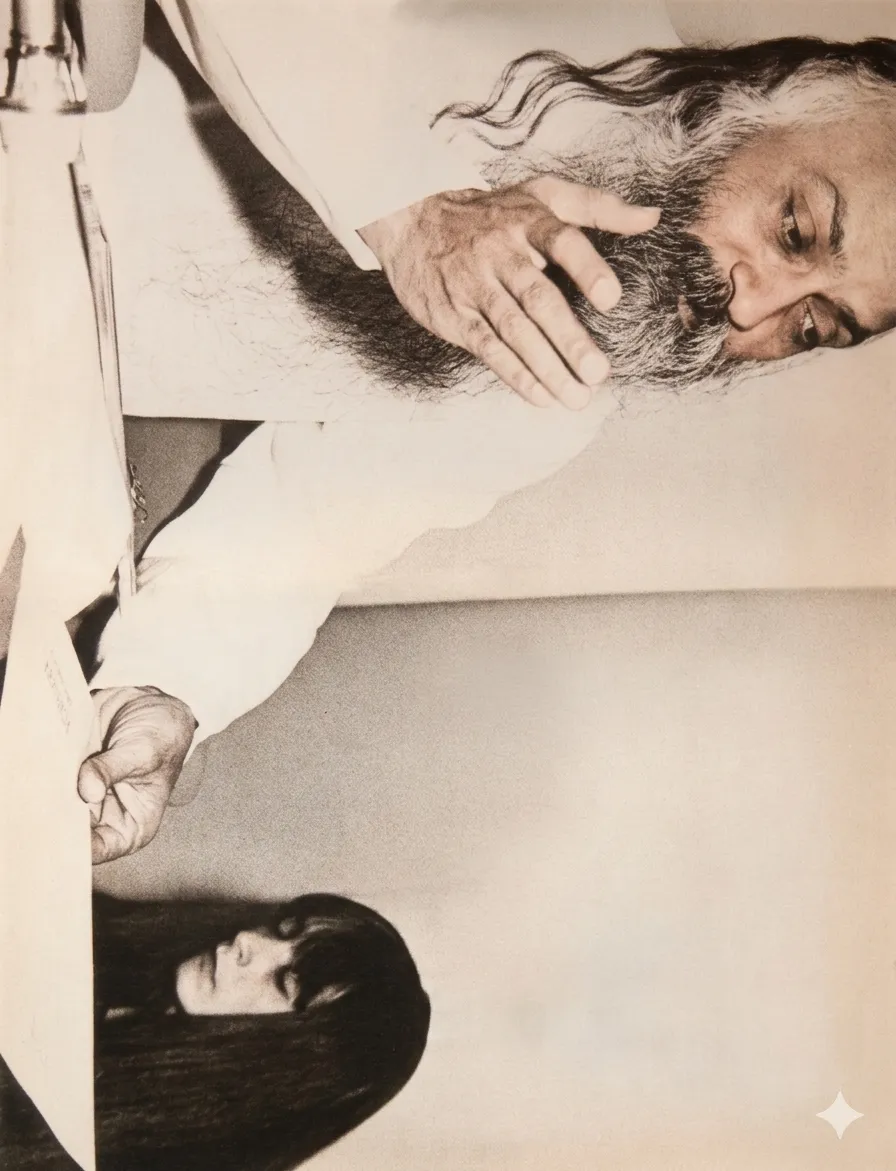
Osho's original Hindi beside Osho Live's English translation, matched passage by passage.
मनुष्य दो भांति से बोल सकता है: एक तो इसलिए कि मौन रहना कठिन है; एक इसलिए कि मौन से शब्दों का जन्म हो रहा है। दोनों बड़ी विपरीत दशाएं हैं।
Man can speak in two ways: one, because keeping silent is hard; and two, because words are being born out of silence. These two are utterly opposite states.
साधारणतः हम बोलते हैं, क्योंकि बिन बोले रहना कठिन है। न बोलें तो बेचैनी होती है, न बोलें तो समझ में नहीं आता कि क्या और करें? चुप्पी काटती है।
Ordinarily we talk because not talking is difficult. If we do not speak we feel restless; if we do not speak, we do not know what else to do. Silence bites.
और किसी दूसरे व्यक्ति की मौजूदगी में अगर चुप रह जाएं तो बड़ी बेचैन करने वाली स्थिति बन जाती है। चुप तो हम क्रोध में रहते हैं। चुप तो हम किसी का अपमान करना हो तो रहते हैं। चुप तो हम उदास होते हैं, तब रहते हैं। चुप के साथ हमने सारे गलत संयोग जोड़ रखे हैं। चुप्पी का विधायक, मौन का सार्थक आयाम खो ही गया है।
And in the presence of another person, if we fall silent, a very disquieting situation arises. We are silent in anger. We are silent when we want to insult someone. We are silent when we are sad. We have tied every wrong association to silence. Silence’s creative, meaningful dimension has been lost.
तुम किसी के घर जाओ और वह चुप रहे, चुप बैठा रहे, कुछ न बोले, तुम अपमानित अनुभव करोगे। बोलने में स्वागत है, बोलने में सत्कार है। मौन का सत्कार तो हमें समझ में भी नहीं आ सकता। क्योंकि हम शब्द ही समझ सकते हैं, निःशब्द को समझने की हमारी क्षमता नहीं है। तुम कुछ पूछो, कोई चुप रह जाए; तो तुम समझोगे, उत्तर नहीं दिया।
You go to someone’s house and he sits silently without saying a word—you will feel insulted. In speaking there is welcome; in speaking there is hospitality. We cannot even conceive of the reverence of silence. For we can only understand words; we have no capacity to understand the wordless. You ask something and someone remains silent; you will think he did not answer.
मौन भी उत्तर हो सकता है। और कुछ चीजों का तो केवल मौन ही उत्तर होता है। कुछ प्रश्न ही ऐसे हैं कि शब्द में कोई संभावना ही नहीं कि उनका उत्तर बन पाए। वस्तुतः जीवन के जितने महत्वपूर्ण प्रश्न हैं, सभी मौन में ही सुलझाए जाते हैं। लेकिन अगर कोई चुप रह जाए, मौन रह जाए, तुमने पूछा हो कुछ, तो तुम यही समझोगे कि तुम्हारे प्रश्न का सम्मान नहीं किया गया; या तुम समझोगे कि जो चुप रह गया, उसे कुछ पता ही न था।
Silence too can be an answer. And for some things only silence is the answer. There are questions for which there is no possibility whatsoever that words can become an answer. In truth, all the important questions of life are resolved only in silence. But if someone remains silent when you have asked, you will feel your question was not honored; or you will assume the one who kept silent knew nothing.
तो जिन्हें पता नहीं है, वे भी बोलते हैं। न बोलें तो पता चल जाएगा कि उन्हें पता नहीं। मूढ़ बहुत मुखर हैं। मूढ़ों की इस मुखरता से मन व्यर्थ के शब्दों से भर गया है। हम बोलते ही रहते हैं--दिन और रात, सोते और जागते; जैसे शब्द से कोई छुटकारा ही नहीं हो पाता।
So those who do not know—speak as well. If they do not speak it will be evident that they do not know. The foolish are very voluble. Through the loquacity of fools, the mind has been filled with futile words. We go on talking—day and night, asleep and awake—as if there were no way to be free of words.
और शब्द किनारा है; अगर तुम उससे उलझे रहे तो जीवन की मझधार से वंचित हो जाओगे; तो तुम जान ही न पाओगे कि जीवन की धारा क्या थी।
Yet words are only the bank; if you remain entangled in them, you will be deprived of life’s midstream—you will never know what the current of life was.
शब्द तो बाहर से पाया है, भीतर से नहीं आया है। जब तुम पैदा हुए थे, निःशब्द पैदा हुए थे। जब तुम अवतरित हुए थे, निष्कलुष, निर्विकार, निर्विचार आए थे; शब्द तो बाहर से आया। गंगा उतरती है तो किनारे लेकर नहीं उतरती, किनारे तो बाहर मिलते हैं।
Words are acquired from outside; they do not arise from within. When you were born, you were born wordless. When you descended, you came immaculate, unmodified, without thought; words came from the outside. When the Ganges descends, she does not bring banks with her; the banks are met outside.
सीमा बाहर से आती है, तुम तो असीम आते हो। तुम तो मौन आते हो, फिर शब्द का आंगन तुम्हारे चारों तरफ दीवाल उठाता है। कोई हिंदू है, क्योंकि हिंदू शब्दों की दीवाल है उसके पास; वेद की ईंटें लगी हैं उसकी दीवाल पर। कोई मुसलमान है, कोई ईसाई है, फर्क क्या है? शब्दों का फर्क है। निःशब्द में तो तुम समान हो, न कोई हिंदू है, न कोई ईसाई है, न कोई मुसलमान है। निःशब्द में तो कोई विशेषण नहीं है; वहां तो तुम शून्य, खाली हो; वही तुम्हारा असली होना है।
The limit comes from outside; you come limitless. You come in silence; then the courtyard of words raises walls all around you. Someone is a Hindu because he has the wall of Hindu words; the bricks of the Veda are set in his wall. Someone is a Mohammedan, someone a Christian—what is the difference? The difference is of words. In the wordless you are the same—neither Hindu nor Christian nor Mohammedan. In the wordless there are no adjectives; there you are shunya, empty. That is your real being.
जब तक तुमने जाना कि तुम हिंदू हो, मुसलमान हो, ईसाई हो, तब तक तुमने जाना ही नहीं कि तुम कौन हो, तब तक तुमने शब्द जाने। समाज तुम्हें शब्दों से भर देता है; इसी को हम शिक्षण कहते हैं। विद्यालय, विश्वविद्यालय शब्दों से भर जाते हैं।
Until you have known that you are Hindu, or Mohammedan, or Christian, you have not known who you are; you have known only words. Society fills you with words; this is what we call education. Schools and universities get filled with words.
धर्म निःशब्द का विद्यापीठ है। समाज तुम्हें शब्दों से भर देता है, धर्म तुम्हें फिर शब्दों से मुक्त करता है। इसलिए धर्म न तो हिंदू हो सकता है, न इस्लाम हो सकता है, न बौद्ध हो सकता है, न जैन हो सकता है। संप्रदाय हो सकते हैं, क्योंकि संप्रदायों का संबंध शब्दों से है; धर्म का संबंध निःशब्द से है।
Dharma is the university of the wordless. Society fills you with words; Dharma again frees you from words. Hence Dharma can be neither Hindu nor Islam nor Buddhist nor Jain. Sects can be, because sects are concerned with words; Dharma is related to the wordless.
समाज ने जो सिखाया, धर्म तुम्हें फिर भूलने की क्षमता देता है। समाज ने जो लकीरें खींचीं, धर्म उन्हें तुम्हें फिर पोंछ देने की कला सिखाता है। समाज अगर शिक्षण है, सीखना है, तो धर्म अनसीखना है, फिर कोरे होना है, फिर सीमाएं तोड़नी हैं, फिर गंगा को सागर होना है, किनारे छोड़ने हैं।
What society taught, Dharma gives you the capacity to forget. The lines society has drawn, Dharma teaches you the art of wiping them away. If society is learning, then Dharma is unlearning; to become blank again, to break the boundaries again, for the Ganges to become ocean, to leave the banks behind.
किनारों में होने की सुविधा है, क्योंकि किनारों के बीच होना साफ-साफ होता है। किनारों के बीच होने पर तुम दोनों तरफ सुरक्षित दुर्ग के भीतर होते हो, किनारे छूटते ही तुम अपने से भी छूट जाओगे। गंगा सागर में गिरकर गंगा तो न रहेगी, सागर हो जाएगी।
There is comfort in being between banks, because being confined by banks is clear and neat. Between banks you are safely within a fort on both sides. The moment the banks are dropped, you will drop out of yourself as well. Falling into the ocean, the Ganges will no longer remain the Ganges—she will become the ocean.
बुद्ध के आज के वचन इस दिशा में हैं।
The Buddha’s words today move in this direction.
‘निरर्थक पदों से युक्त हजार पदों से भी एक सार्थक पद श्रेष्ठ है, जिसे सुनकर मनुष्य उपशांत हो जाता है।’
“Better than a thousand verses composed of meaningless words is a single meaningful word that, on hearing, brings peace to a man.”
कौन से पद निरर्थक हैं? तुम्हारे भीतर शब्दों से ही जो शब्द पैदा होते हैं, वे निरर्थक हैं। तुम्हारे भीतर अगर निःशब्द से कोई शब्द पैदा होता है तो सार्थक है। सार्थक का अर्थ होता है: जिसे तुमने जन्माया; जिसे तुमने अपने प्राणों के अंतर्तम में जन्म दिया; जो तुमसे आया।
Which words are meaningless? Those inside you that are born only out of other words are meaningless. A word born out of the inner wordless is meaningful. “Meaningful” means: that which you have given birth to, which has been born from the innermost of your life-breath, which has come from you.
समाज कुछ डालता है, फिर उसी की प्रतिध्वनि तुमसे आती है; वह निरर्थक है। पहाड़ पर तुम जाते हो, आवाज करते हो, घाटियां और पहाड़ियां तुम्हारी आवाज को प्रतिध्वनित कर देती हैं; वह निरर्थक है। घाटियों ने कुछ भी कहा नहीं, उसमें कुछ अर्थ हो ही नहीं सकता। घाटियों ने कुछ कहा ही नहीं, घाटियों ने सिर्फ दोहराया। घाटियों ने पुनरुक्त किया। घाटियों ने तो वही लौटा दिया, जो उन तक फेंका गया था--भला विकृत किया हो, लेकिन सार्थक तो नहीं हो सकता।
Society puts something in, and then an echo comes back out of you—that is meaningless. You go to a mountain, shout, and the valleys and hills echo your shout; that is meaningless. The valleys have not said anything; how can there be meaning in it? The valleys said nothing; the valleys only repeated. The valleys sent back what was thrown at them—perhaps distorted—but it cannot be meaningful.
तो अगर समाज के शब्द तुम्हारे पास आकर सिर्फ घाटियों की तरह वापस लौट जाते हैं, तुम केवल प्रतिध्वनि मात्र करते हो, सार्थक नहीं हो सकती। सार्थक पद का अर्थ तो होता है: जो तुमसे जन्मे, जो तुम में भीतर न गया हो, बस भीतर से ही आया हो। सत्य के अनुभव से ही सार्थकता पैदा हो सकती है।
So if the words of society come to you and return like the valleys, you only echo them; they cannot be meaningful. A meaningful word is one that is born from you, that has not entered from outside, that has come only from within. Only from the experience of truth can meaningfulness be born.
बुद्ध कहते हैं, ‘निरर्थक पदों से युक्त हजार पदों से भी एक सार्थक पद श्रेष्ठ है, जिसे सुनकर मनुष्य उपशांत हो जाता है।’
The Buddha says, “Better than a thousand verses made of meaningless words is a single meaningful word that, on hearing, brings peace to a man.”
और जो उसकी उन्होंने परिभाषा की है कि कैसे तुम पहचानोगे, वह पहचान यह है कि जो शब्द शांति से आता है, वह तुम्हें भी शांत कर जाता है। जो शब्द भीतर के निःशब्द से आता है, वह तुम्हें भी क्षणभर को ही सही, निःशब्द की गूंज से भर जाता है, उपशांत कर जाता है। तुमने अगर कभी ऐसे व्यक्ति को सुना, जिसने जाना है, तो उसके शब्दों में तुम्हें शब्दों से कुछ ज्यादा मिलेगा। उसके शब्दों के आसपास शून्य भी सरकता मिलेगा। उसके होने में उसके शब्द पगे होंगे। उसके शब्दों में मिठास होगी किसी और ही लोक की। उसके शब्द तो बहाने होंगे।
And he has given the criterion—how will you recognize it? The criterion is this: the word that comes out of peace brings you to peace. The word that comes from the inner wordless fills you, even if only for a moment, with the resonance of the wordless; it makes you tranquil. If you have ever heard one who has known, then in his words you will find something more than words. Around his words you will sense emptiness moving. His being will soak his words. There will be a sweetness in his words from some other realm. His words are only pretexts.
उसकी चलती तो वह बिना शब्द के चला लेता। उसकी चलती तो तुमसे चुप ही रहकर कह देता; लेकिन चुप्पी तुम समझ न पाओगे। मजबूरी है, विवशता है, इसलिए शब्दों का उपयोग करना पड़ता है। लेकिन शब्दों का उपयोग शब्दों के लिए नहीं, शब्दों का उपयोग शून्य के लिए। उसके शब्द बड़े विरोधाभासी होंगे। वह कहेगा कुछ, कहना कुछ और ही चाहता है। कहता हुआ कुछ और मालूम पड़ेगा, कहना कुछ और ही चाहता था। इसलिए अगर तुमने सहानुभूति से न सुना तो तुम उसे न समझ पाओगे।
If it were up to him, he would manage without words at all. If it were up to him, he would speak to you just by being silent—but you would not understand silence. It is a compulsion, a helplessness, that words must be used. But the use of words is not for the sake of words; the use of words is for shunya. His words will be very paradoxical. He will say one thing—yet he wants to indicate something altogether different. What he says will seem one thing; what he wishes to convey is something else. Therefore if you do not listen with sympathy, you will not understand him.
सत्य को उपलब्ध व्यक्ति के वचनों को सुनने का ढंग है, शैली है, व्यवस्था है, कला है। उसके श्रवण को, सुनने को साधारण सुनना नहीं कहा जा सकता। इसलिए महावीर और बुद्ध ने उसके लिए अलग ही शब्द चुना है: सम्यक श्रवण, राइट लिसनिंग। सुनते तो सभी हैं, मगर ऐसे सुनने से काम न चलेगा। तुम्हें ऐसे सुनना पड़ेगा जैसे तुम मस्तिष्क से नहीं, हृदय से सुनते हो। तुम सोचते नहीं उसे सुनते समय, तुम सिर्फ सुनते हो। तुम गुनते नहीं, तुम सिर्फ उसे पीते हो। पीने की तरह सुनना होगा--बड़ी गहन सहानुभूति से। अगर तुम्हारे भीतर विवाद चले, विचार चले, तो जो कहा गया, वह चूक जाएगा। बड़ा नाजुक है, बड़ा बारीक है, बड़ा सूक्ष्म है; शब्द से भी ज्यादा सूक्ष्म है।
There is a way, an art, a discipline for listening to the utterances of one who has attained to truth. Such listening is not ordinary listening. Hence Mahavira and Buddha chose a different term for it: samyak shravan—right listening. Everyone listens, but such listening will not suffice. You will have to listen as you listen not with the head, but with the heart. While listening, you do not think—you only listen. You do not analyze—you only drink it in. You will have to listen as one drinks— with deep sympathy. If inside you there is argument, if thoughts are moving, then what is being said will be missed. It is very delicate, very subtle—subtler than the word.
लेकिन अगर ऐसा एक भी शब्द तुम अपने प्राणों में पड़ जाने दो तो तुम उपशांत हो जाओगे। तुम तत्क्षण पाओगे, शांति बरस गई। तुम तत्क्षण पाओगे, किसी और ही लोक की प्रभा ने तुम्हें घेर लिया। तुम पाओगे तुम्हारे पैर इस जमीन पर नहीं पड़ रहे, किसी और ही आकाश को छूने लगे। तुम उड़ने लगोगे, चलोगे नहीं।
But if you allow even a single such word to fall into your life-breath, you will be stilled. Instantly you will find that peace has showered. Instantly you will find that a radiance from another realm has surrounded you. You will find your feet are not touching this earth—you are touching some other sky. You will begin to fly; you will not walk.
उसके शब्दों में एक मदिरा होगी, जो तुम्हें अपरिचित, अजनबी मस्ती से भर जाएगी। फूलों की गंध तुम उसमें पाओगे, भौंरों की गुनगुनाहट पाओगे, लेकिन शास्त्रों का गुंजन नहीं। झरनों का कलरव तुम्हें उसमें सुनाई पड़ जाए भला, पक्षियों के गीत उसमें तुम्हें सुनाई पड़ जाएं भला, लेकिन प्रत्यय, धारणाएं, सिद्धांतों की झलक उसमें न होगी।
In his words there will be a wine that will fill you with an unfamiliar, unworldly ecstasy. You will find the fragrance of flowers in it, the humming of bees—but not the droning of scriptures. The babble of brooks you may hear in it, the songs of birds you may hear in it—but you will not find the glint of dogmas, doctrines, conclusions.
माना कि वह भी उन्हीं शब्दों को प्रयोग करने के लिए मजबूर है, जिनका तुम प्रयोग करते हो; वह भी उन्हीं शब्दों का प्रयोग करता है, जिनका प्रयोग शास्त्रों ने किया है; लेकिन उसका अंदाज और है। वह शास्त्रों के शब्दों का ही प्रयोग करने को मजबूर है, लेकिन उन शब्दों का कुछ ढंग, उन शब्दों को प्रयोग करने की कोई प्रक्रिया बुनियादी रूप से भिन्न है। वह तुम्हें कुछ समझाने को कम, तुम्हें कुछ बताने को शब्दों का उपयोग करता है। समझाने को कम, इशारा करने को ज्यादा। वह तुम्हें किन्हीं सिद्धांतों के लिए राजी नहीं कर लेना चाहता, किसी यात्रा के लिए आमंत्रण देता है।
Granted, he too is compelled to use the same words you use; he too uses the words used by the shastras. But his manner is different. He is compelled to use the words of scripture, yet the way he weaves them, the process of using them, is fundamentally different. He uses words less to explain and more to indicate. He does not wish to persuade you into any doctrine; he invites you into a pilgrimage.
बड़ा फर्क है। सिद्धांतों के लिए समझा लेना तो बड़ा सुगम है; तुम जैसे हो, जहां हो, वैसे ही रहोगे, सिद्धांत तुम्हारे लिए और आभूषण बन जाएंगे। तुम थोड़े और समझदार हो जाओगे। तुम्हारी नासमझी और थोड़े श्रृंगार कर लेगी। तुम्हारी मूढ़ता के चारों तरफ तुम और चांद-तारे लटका लोगे। तुम्हारा अज्ञान और थोड़ा छिप जाएगा; और वस्त्रों में, वसनों में छिप जाएगा। तुम बदलोगे नहीं।
There is a great difference. To argue you into doctrines is easy; you remain as you are, where you are, and the doctrines become new ornaments for you. You become a little more clever. Your stupidity acquires some adornment. Around your foolishness you will hang a few more stars and moons. Your ignorance will be hidden a little more—hidden inside garments and veils. You will not change.
बुद्ध पुरुष जब बोलते हैं तो तुम्हें मिटाने और तुम्हें नया जन्म देने को। वे तुम्हारी कब्र भी खोदते हैं और तुम्हारे लिए गर्भ का निर्माण भी करते हैं। उनके शब्द खतरनाक भी हैं, वे तुम्हें मारेंगे। और उनके शब्द अमृत जैसे भी हैं, क्योंकि वे तुम्हें पुनः जिलाएंगे। उनके शब्द में सूली भी है और पुनर्जीवन भी। अगर तुमने सुना तो उनका एक शब्द भी तुम्हें उपशांत कर जाएगा।
When a Buddha speaks, it is to dissolve you and give you new birth. He digs your grave and also prepares a womb for you. His words are dangerous—they will kill you. And his words are ambrosial—for they will bring you to life again. In his words there is the cross and there is resurrection. If you have listened, even a single word of his will make you peaceful within.
तो अगर तुम किसी तार्किक की बात सुनने जाओ तो तुम और उद्विग्न होकर लौटोगे; तुम और परेशान होकर लौटोगे। तुम वैसे ही परेशान थे, वह तुम्हें और परेशान कर जाएगा। यह भी हो सकता है, तुम उससे राजी भी हो जाओ, लेकिन तब भी तुम शांत न हो सकोगे। उससे राजी होने में भी बेचैनी होगी, परेशानी होगी, कांटे चुभते रहेंगे, जैसे कहीं कुछ गलत हुआ हैै। साफ भी नहीं होता कि क्या गलत हुआ है, लेकिन कहीं कुछ गलत हुआ है। क्योंकि शांति तो हृदय की बात है, मस्तिष्क की नहीं। उसने तो तुम्हारे मस्तिष्क को सहलाया। उसने तो तुम्हारे मस्तिष्क को भुलाया। उसने तो तुम्हारे मस्तिष्क में कुछ और विचार, कुछ और शब्द डाले। तुम वैसे ही बोझिल थे, तुम और थोड़े बोझ से भर गए।
If you go to hear a logician, you will return more agitated; you will come back more disturbed. You were disturbed already—he will disturb you further. It may even happen that you agree with him—and yet you will not be at peace. Even in agreeing with him there will be restlessness, discomfort; thorns will go on pricking, as if somewhere something has gone wrong. It will not be clear what has gone wrong—but something has. For peace belongs to the heart, not to the head. He has only stroked your head, beguiled your mind, inserted a few more thoughts and a few more words. You were burdened as it was; you have become a little more burdened.
लेकिन जब तुम किसी बुद्ध पुरुष का वचन सुनकर लौटते हो तो हो सकता है, तुम उससे राजी भी न होओ, लेकिन बेचैन न हो सकोगे। हो सकता है, तुम उसके पीछे चलने की तैयारी भी न दिखाओ, तब भी तुम पाओगे, जैसे कोई स्नान हो गया। जैसे धूल से भरे, यात्रा के थके, तुम किसी झरने में डुबकी लगा आए। पसीने से तरबतर थे, एक मेघ आया और बरस गया, सब शीतल हो गया। लेकिन सुनने की कला चाहिए।
But when you return after hearing the word of a Buddha, it may be you have not even agreed with him—yet you will not be able to remain restless. It may be you show no readiness to follow him—and still you will find as if you have bathed. Dust-laden, travel-weary, you dipped into some spring. You were drenched with sweat; a cloud came and showered—and all became cool. But the art of listening is needed.
तार्किक को सुनने के लिए कोई कला की जरूरत नहीं, क्योंकि उसके लिए तो समाज ही तुम्हें तैयार कर देता है। तर्क की भाषा के लिए तुम पूरी तरह निष्णात हो। सत्य की भाषा के लिए तुम्हारी कोई तैयारी नहीं है। सत्य की भाषा अनिवार्य रूप से विरोधाभासी होगी।
To listen to a logician no art is required, because society already trains you for that. For the language of logic you are completely groomed. For the language of truth, you have no preparation. The language of truth will of necessity be paradoxical.
उपनिषद कहते हैं, परमात्मा पास से भी पास, दूर से भी दूर। अगर इतना कहें, पास से भी पास, ठीक; अगर इतना ही कहें, दूर से भी दूर, तो भी ठीक; लेकिन एक ही वक्तव्य में विरोध है; पास से भी पास और दूर से भी दूर। तर्क के बाहर हो गई बात।
The Upanishads say: Paramatma is nearer than the nearest and farther than the farthest. If they say only, nearer than the nearest—fine. If they say only, farther than the farthest—fine. But in a single statement there is contradiction: nearer than the nearest and farther than the farthest. It goes beyond logic.
बुद्ध से पूछो, तुम जो भी पूछोगे बुद्ध से, सभी उत्तर विरोधाभासी आएंगे।
Ask Buddha—whatever you ask him, the answers will come paradoxical.
सत्य का स्वभाव विरोधाभासी है। क्यों? क्योंकि सत्य इतना विराट है कि सभी विरोध उसमें समाए हैं। तर्क बड़ा छोटा है; उसकी साफ-सुथरी सीमा-रेखा है। सत्य की कोई सीमा-रेखा नहीं। सत्य सागर है, तर्क छोटे-छोटे पोखर हैं, डबरे हैं; उनकी सीमा-रेखा है। छोटी सी बुद्धि में सीमा-रेखा की बातें समा जाती हैं, समझ में आ जाती हैं। तुम से बड़ी बात है सत्य की; तुम उसे छू लो तो काफी; तुम उसे मुट्ठी में न बांध पाओगे।
Truth is essentially paradoxical. Why? Because truth is so vast that all opposites are contained within it. Logic is very small; it has a clean and tidy boundary line. Truth has no boundary line. Truth is the ocean; logic is a little pond, a puddle—with clear edges. The small intellect can grasp matters with boundaries—it can understand. Truth is larger than you. If you touch it, that is enough; you will not be able to enclose it in your fist.
बुद्ध ने कहा है, ‘निरर्थक पदों से युक्त हजार पदों से भी एक सार्थक पद श्रेष्ठ है।’
Buddha has said, “Better than a thousand verses filled with meaningless words is one meaningful word.”
कौन सा पद सार्थक है? ऐसे तो हम जो भी बोलते हैं, अगर भाषाशास्त्री से पूछोगे तो सभी सार्थक हैं। जो व्याकरण के नियमानुसार कहा गया, जिसने भाषा का कोई नियम, रीति उल्लंघन न की, वह सभी सार्थक है। सार्थकता व्याकरण में है, सार्थकता भाषा के नियमों में है।
Which word is meaningful? As we ordinarily speak, if you ask a linguist, all are meaningful. Whatever is said according to the rules of grammar, which violates no rule or custom of language, all that is meaningful. Meaningfulness lies in grammar; meaningfulness lies in the rules of language.
बुद्ध पुरुष इसे सार्थक नहीं कहते। बुद्ध पुरुष कहते हैं, सार्थकता बोलने वाले के अनुभव में है; व्याकरण के नियम पालन हों या न हों।
The enlightened do not call that meaningful. They say: meaningfulness lies in the experience of the speaker—let grammar be followed or not.
कबीर कोई व्याकरण नहीं जानते, लेकिन काशी में जितने भी पंडित थे उस समय, सब भी एक तरफ रख दिए जाएं तराजू पर और कबीर अकेले एक तरफ तराजू पर रख दिए जाएं, तो भी सारे पंडित मिलाकर कबीर के पलड़े को ऊपर न उठा सकेंगे; वे नीचे जमीन पर ही बैठे रहेंगे। पंडित अधर में ही अटके रहेंगे। पूरी काशी भी एक कबीर के पलड़े को ऊपर नहीं उठा सकती।
Kabir knew no grammar, but if all the pundits of Kashi in his time were placed on one side of the scale, and Kabir alone on the other, even then all the pundits together could not lift Kabir’s pan—their side would hang in midair. The whole of Kashi could not lift one Kabir.
एक कबीर पूरी काशी से ज्यादा हैं; हालांकि व्याकरण तो नहीं है, भाषा तो नहीं है। कबीर तो गंवार हैं, पढ़े-लिखे नहीं हैं।
One Kabir is more than the whole of Kashi; though there is no grammar, no learned language. Kabir is a rustic, unlettered.
कहा है कबीर ने: मसि कागद छुयो नहीं।
Kabir has said: Ink and paper I never touched.
कभी छुआ ही नहीं कागज-कलम। मगर जो कहा है, वेद के ऋषि भी झेंप जाएं, उपनिषद के स्रष्टा शर्माएं--एक गंवार की भाषा में। न कोई तुक है, न कोई व्यवस्था है, लेकिन फिर भी जो कहा है, वह जानकर कहा है। अर्थ भीतर से आ रहा है, अर्थ बाहर की किसी व्यवस्था से संयुक्त नहीं है। अर्थ भीतर के अनुभव से आ रहा है।
He never touched paper and pen. Yet what he said would make the seers of the Vedas blush; the creators of the Upanishads would feel shy—uttered in a rustic tongue. No rhyme, no arrangement—and still what is said is said with knowing. The meaning comes from within; it is not connected to any outer arrangement. The meaning arises from inner experience.
ऐसा समझो कि तुमने प्रेम के संबंध में बहुत से शास्त्र पढ़े हैं और फिर प्रेम के संबंध में तुम कुछ लिख दो, जरूर सार्थक मालूम होगा, होगा नहीं। सार्थक मालूम तो होगा, क्योंकि तुम जो भी लिखोगे, उसमें व्यवस्था होगी, संगति होगी, तर्कसरणी होगी; लेकिन सार्थक हो नहीं सकता, क्योंकि प्रेम तुमने जाना नहीं।
Suppose you have read many scriptures on love and then you write something on love—it will certainly appear meaningful, yet it will not be. It will appear meaningful because there will be order, coherence, a chain of reasoning—but it cannot be meaningful because you have not known love.
और अक्सर ऐसा होता है कि प्रेम को जो नहीं जानते, वे प्रेम के संबंध में बोलते हैं, लिखते हैं, गीत गाते हैं। ये प्रेम की कमी को पूरा करने के उपाय हैं। जिन्होंने प्रेम को जान लिया, वे शायद चुप भी रह जाएं; या अगर कुछ कहें तो शायद तुम्हारी समझ में न पड़े, बेबूझ मालूम पड़े, क्योंकि तुमने भी प्रेम तो जाना नहीं; जिसने जानकर कहा है, उसकी बात तुम्हें जंचेगी नहीं।
And often it happens that those who do not know love speak about love, write about love, sing songs of love. These are devices to cover the lack of love. Those who have known love may well fall silent; or if they say something, it may not appeal to your understanding, it may seem senseless—for you have not known love either; what is said from knowing will not suit your taste.
मैंने सुना है, एक नाव पड़ी थी एक नदी के किनारे और चार कछुए छलांग लगाकर उसमें बैठ गए। हवा तेज थी, उनके धक्के से नाव चल पड़ी, वे बड़े प्रसन्न हुए। लेकिन एक बड़ा दार्शनिक सवाल उठ आया कि नाव कौन चला रहा है? हम तो नहीं चला रहे।
I have heard: a boat lay by the bank of a river, and four turtles jumped in. The wind was strong; with their jolt the boat moved—they were delighted. But a great philosophical question arose: who is steering the boat? We are not.
एक कछुए ने कहा, नदी चला रही है। देखते नहीं? नदी की धार बही जा रही है, वही नाव को लिए जा रही है।
One turtle said, the river is steering it. Can’t you see? The current flows—it is carrying the boat.
दूसरे ने कहा, पागल हुए हो? यह हवा है, नदी नहीं, जो नाव को चला रही है।
The second said, are you crazy? It is the wind, not the river, that moves the boat.
बड़ा विवाद छिड़ गया। तीसरे ने कहा, यह सब भ्रम है--वह और भी बड़ा दार्शनिक रहा होगा--यह सब भ्रम है; न हवा चला रही है, न नदी चला रही है; न कोई चल रहा, न कहीं कोई जा रहा, यह सब सपना है; हम नींद में देख रहे हैं।
A great dispute broke out. The third said, this is all illusion—he must have been an even greater philosopher—this is all illusion; neither wind is steering, nor river is steering; no one moves, no one goes anywhere; it is all a dream; we are seeing in sleep.
चौथा लेकिन चुप रहा। उन तीनों ने चौथे की तरफ देखा और कहा, तुम कुछ बोलते क्यों नहीं? लेकिन चौथा फिर भी चुप रहा; उसने कहा, मुझे कुछ भी पता नहीं।
But the fourth remained silent. The three looked at him and said, why don’t you say something? Still he kept quiet; he said, I know nothing.
उसकी यह बात सुनकर वे जो तीनों आपस में लड़ रहे थे, सब साथी हो गए, और उस चौथे को उन्होंने धक्का देकर नदी में गिरा दिया कि बड़ा समझदार बना बैठा है। उसने बेचारे ने इतना ही कहा था कि मुझे कुछ पता नहीं, कौन चला रहा है। उसने बड़े गहरे अनुभव की बात कही थी। किसको पता है, कौन चला रहा है? पता हो भी कैसे सकता है।
Hearing this, the three who were fighting became comrades and pushed the fourth into the river: posing as a wise guy! All he had said was: I do not know who is steering. He had uttered a statement of deep experience. Who knows who steers? How could it be known?
वेद के ऋषियों ने कहा है, किसने बनाया इस जगत को, कौन कहे? कैसे कहे? किसको पता है? जिसने बनाया हो, शायद उसे पता हो, शायद उसे भी पता न हो। बड़ी अनूठी बात कही है: शायद उसे पता हो, शायद उसे भी पता न हो। क्योंकि बना लेने से ही कुछ पता चल जाता है, ऐसा तो नहीं।
The seers of the Vedas have said: Who made this world? Who can say? How can it be said? Who knows? He who made it—perhaps he knows; perhaps even he does not. They said something unique: perhaps he knows; perhaps even he does not. For does one necessarily know just because one has made?
एक मूर्तिकार मूर्ति बना लेता है; इससे क्या पता चल जाता है? उससे पूछो, वह कहेगा, एक भाव उठा, पता नहीं कहां से आया? क्यों आया? न आता तो भी कोई उपाय नहीं था। आ गया तो पकड़े गए उस भाव में, उस भाव ने पकड़ ली गर्दन और मूर्ति को बनाना पड़ा। कैसे बनी? किसने बनाई? उपकरण हो गया था। एक कवि से पूछो--जिसने गीत रचा हो--पूछो, कैसे बनाया? कहेगा, पता नहीं।
A sculptor carves a statue—what does he know thereby? Ask him; he will say: a mood arose—I don’t know from where. Why it came? Even if it had not, there was no way to force it. But when it came, the mood caught hold of me—caught me by the throat—and the statue had to be made. How it was made? Who made it? I became an instrument. Ask a poet who has composed a song—ask: how did you make it? He will say: I don’t know.
जिन्हें पता है, वे शायद कहें, पता नहीं; और जिन्हें पता नहीं है, वे निश्चित उत्तर देंगे कि पता है, क्योंकि इसी भांति वे अपने अज्ञान को ढांक सकेंगे।
Those who know, perhaps they will say: I do not know. And those who do not know will give definite answers that they do know—because that is how they cover their ignorance.
वे तीन कछुए आपस में लड़ते थे, लेकिन उनका विवाद खतम हो गया, जब इस चौथे कछुए ने शांत रहकर कहा कि मुझे पता नहीं। किसको पता है? उनके क्रोध की सीमा न रही। उन्होंने कहा कि बड़ा रहस्यवादी बनता है, बड़ा समझदार बनता है। इतनी समझदारी की बात कर रहा है, हमें पता नहीं, किसी को पता नहीं! धक्का मारकर नीचे गिरा दिया।
The three turtles fought among themselves; but their dispute ended when the fourth said quietly: I do not know. Their anger knew no bounds: posing as a mystic, pretending wisdom! Saying such a wise thing—that we do not know, no one knows! They pushed him in.
सत्य जब भी बोला गया है तो बाकी कछुओं ने उसे धक्का मारकर गिरा दिया है। सत्य को कभी स्वीकार नहीं किया गया। क्योंकि तुम कुछ पहले से ही स्वीकार किए बैठे हो, इसलिए सत्य से भी वंचित रह जाते हो और सत्य की अभिव्यक्ति के पास जो उपशांत होने की संभावना थी, उससे भी वंचित रह जाते हो। तुम पहले से ही माने बैठे हो कि तुम्हें पता है।
Whenever truth has been spoken, the remaining turtles have pushed the speaker down. Truth is rarely accepted. Because you have accepted something beforehand, you are deprived of truth and of the peace that the expression of truth could bring. You already presume that you know.
मेरे पास तुम हो, अपनी सब जानकारी अलग रख दो; गठरी में बांधकर नदी में डुबा आओ; तो तुम मुझे सुनते-सुनते उपशांत होने लगोगे। तुम्हें शायद कुछ करना भी न पड़े, शायद सुनते-सुनते ही तुम एक नए अर्थ से भर जाओ, आपूरित हो जाओ--हो ही जाओगे, हो ही जाना चाहिए; कोई कारण नहीं है, बाधा नहीं है कोई।
When you come to me, set aside all your information; tie it in a bundle and sink it in the river—and as you listen to me, you will begin to be stilled. Perhaps you will not have to do anything; perhaps just in the listening you will be filled with a new meaning—yes, you will be; you should be. There is no reason, no obstacle.
लेकिन अगर तुम अपनी जानकारी लेकर सुन रहे हो, तुम अपने शास्त्र को बचा-बचाकर सुन रहे हो, तुम अपने सिद्धांतों को पकड़े-पकड़े सुन रहे हो, तो तुमने सुना ही नहीं; तब तुम विवाद में रहे, संवाद न हो सका। संवाद हो जाए और एक सार्थक पद पड़ जाए तुम्हारे भीतर, बस, काफी है।
But if you listen carrying your information, protecting your scripture, clutching your doctrines, then you have not listened; you have remained in argument—the dialogue could not happen. If the dialogue happens and a single meaningful word falls within you—that is enough.
बुद्ध कहते हैं, ‘एक सार्थक पद श्रेष्ठ है हजारों पदों से भी।’
Buddha says, “One meaningful word is superior even to thousands of words.”
पर क्या है सार्थकता की उनकी परिभाषा? जो भीतर के अनुभव से आया हो, अनुभवसिक्त हो, जानकर आया हो; उधार न हो, नगद हो, तो ही सार्थक है।
But what is his definition of meaningfulness? It must come from inner experience—soaked in experience, spoken from knowing; not borrowed—cash, not credit.
ज्ञान की आराधना दिन का शयन है
Worship of knowledge is the sleep of day
क्लेश से निस्तार केवल कर्म से है
Freedom from affliction is only through karma
दर्शनों से सिद्धियां किसको मिली हैं
Who has gained siddhis from philosophies?
जीव का उद्धार केवल धर्म से है
The jiva’s deliverance is only through Dharma
दर्शनों से सिद्धियां किसको मिली हैं
Who has gained siddhis from philosophies?
कितना ही समझो, सोचो, विचार करो, शास्त्र पढ़ो, अध्ययन-मनन-चिंतन करो, दर्शनों से सिद्धियां किसको मिली हैं? कौन सिद्ध हुआ है शास्त्रों को पढ़कर? हां, जो सिद्ध हुए हैं, उनसे जरूर शास्त्र जन्मे हैं; वह बड़ी और बात है।
Understand as much as you will—think, reflect, study the shastras, contemplate—but who ever attained siddhis from philosophies? Who became accomplished by reading scriptures? Yes—wherever there were accomplished ones, from them the scriptures were born; that is quite another matter.
जीव का उद्धार केवल धर्म से है
The jiva’s deliverance is only through Dharma.
धर्म का क्या अर्थ है? धर्म का अर्थ है: अनुभव में आ जाए जो।
What does Dharma mean? Dharma means: that which comes into experience.
अभी तो तुम जिसे धर्म कहते हो वह भी धर्म नहीं है, दर्शन है। मेरे पास कोई आ जाता है, वह कहता है, मैं जैन-धर्म में मानता हूं। मैं कहता हूं, कहो जैन-दर्शन में; मत कहो जैन-धर्म में। क्योंकि जैन-धर्म का तुम्हें कहां पता? महावीर को था, तुम्हें कहां? जैन-दर्शन में, महावीर ने जो कहा, उसमें तुम मानते हो। महावीर ने किसी का कहा नहीं माना, महावीर ने जाना। तुम मानते हो, मान्यता दर्शन तक जाती है। मान्यता एक दृष्टि है, एक दृष्टिकोण है, अनुभव नहीं।
As yet what you call Dharma is not Dharma either—it is darshan, philosophy. Someone comes to me and says: I believe in Jain-Dharma. I say: say Jain-darshan—don’t say Jain-Dharma. For what do you know of Jain-Dharma? Mahavira knew; how do you? You believe in the doctrine of Mahavira—you take Mahavira’s words on belief. Mahavira did not believe in anyone; Mahavira knew. You believe; belief reaches only to a viewpoint—an opinion—not to experience.
और इसकी कसौटी यही है कि अगर तुमने सुनने की शर्त पूरी की तो तुम उपशांत हो जाओगे।
And the criterion is this: if you fulfill the condition of listening, you will become peaceful.
अनेक बार लोग मुझसे पूछते हैं, सदगुरु की पहचान क्या है? मैं कहता हूं, सदगुरु की तुम फिक्र मत करो, तुम सिर्फ सुनने की कला सीख लो। बस, सदगुरु तुम पहचान लोगे। सदगुरु छिपाएगा तो भी छिपा न सकेगा; तुम पहचान ही लोगे। तुम उसके पास आकर उपशांत होने लगोगे।
Many times people ask me: how to recognize the true Master? I say: do not worry about the satguru; just learn the art of listening. Then you will recognize the satguru yourselves. Even if he tries to hide, he will not be able to; you will recognize him. Coming near him you will begin to be stilled.
जैसे बगीचे के पास आकर शीतल हवाएं तुम्हें छूने लगती हैं, बगीचा दिखाई भी न पड़ता हो तो भी तुम जानते हो, करीब आने लगे बगीचे के। और करीब आते हो, फूल की गंध हवाओं में तिरने लगती है; अभी भी बगीचा दिखाई न पड़ता हो, रात अंधेरी हो, तो भी तुम जानते हो कि दिशा ठीक है। गंध बढ़ती चली जाती है, बगीचा करीब आता चला जाता है। लेकिन अगर तुम्हारे नासापुट खराब हों, अगर तुममें सूंघने की क्षमता खो गई हो, तब बड़ी मुश्किल होगी।
As when you come near a garden, cool breezes touch you; even if the garden is not yet visible you know you are coming close. Come closer and the fragrance of flowers begins to drift in the air; even then the garden may not be visible—the night is dark—yet you know the direction is right. The fragrance grows, the garden draws near. But if your nostrils are spoiled, if your capacity to smell has been lost, then it will be difficult.
तुम यह मत पूछो कि बगीचा कहां है, तुम यह पूछो कि नासापुट कैसे उपलब्ध हों? सूंघने की क्षमता कैसे उपलब्ध हो?
Do not ask where the garden is; ask how to regain the nostrils. How to regain the capacity to smell?
सदगुरु की पूछते हो कि सदगुरु को कैसे पहचानें? तुम कैसे पहचानोगे सदगुरु को? तुम इतना ही करो कि तुम सुनने में समर्थ, तुम इतना ही करो कि तुम सदगुरु को उपलब्ध हो सको, सदगुरु के लिए खुले रह सको; वह तुम्हारे द्वार पर दस्तक दे तो ऐसा न हो कि तुम सोए रहो और तुम्हें सुनाई न पड़े--बस, इतना काफी है।
You ask how to recognize the satguru. How will you? Do only this: become capable of listening; become available to the satguru; remain open for him. When he knocks at your door, do not remain asleep so that you do not hear—this much is enough.
जिसने सुनना सीख लिया, जिसे श्रवण की कला आ गई, उसे तत्क्षण समझ में आना शुरू हो जाएगा, कहां मिलती है उपशांति। तब वह चिंता न करेगा कि मंदिर जाऊं, कि मस्जिद जाऊं, कि जैन मुनि को सुनूं, कि हिंदू साधु को सुनूं, कि मुसलमान फकीर को सुनूं, इसकी चिंता न करेगा।
One who has learned to listen—who has mastered the art of shravan—immediately begins to recognize where peace begins to settle. Then he will not worry whether to go to temple or to mosque, whether to listen to a Jain muni or to a Hindu sadhu or to a Muslim fakir—this will not concern him.
ये चिंताएं नासमझों की हैं। फिर तो वह एक ही भाव करेगा, जहां उपशांत होता हूं, वहां जाऊं। फिर चाहे वह मुसलमान फकीर हो, चाहे जैन मुनि हो, चाहे बौद्ध भिक्षु हो, इससे कोई फर्क नहीं पड़ता।
These concerns are for the unwise. He will have only one concern: wherever I become peaceful, there I go. Then whether it is a Muslim fakir, a Jain muni, a Buddhist bhikkhu—what difference does it make?
फिर वह मस्जिद हो कि मंदिर, इससे क्या फर्क पड़ता है? असली कसौटी हाथ में आ गई कि जहां सब शांत होने लगता है, जहां हृदय की वीणा शांति के स्वर बजाने लगती है, जहां रोआं-रोआं पुलकित होने लगता है; जहां लगता है, धूल झड़ी, स्नान हुआ; जहां लगता है, ताजगी मिली; जहां लगता है, पोषण मिला; जहां लगता है, जीवंत होकर लौटे, ज्योति मिली--जैसे किसी ने तुम्हारे प्राणों के दीए को, ज्योति को उकसा दिया हो।
Then whether it is mosque or temple—what difference does it make? The real touchstone is at hand: where all starts becoming quiet; where the veena of the heart begins to play notes of peace; where every pore begins to thrill; where it feels dust has fallen away, a bath has happened; where freshness comes; where nourishment is felt; where you return more alive, with a lamp lit—as if someone has coaxed the flame of your life’s lamp.
‘हजार-हजार पद भी व्यर्थ हैं, एक सार्थक पद श्रेष्ठ है, जिसे सुनकर मनुष्य उपशांत हो जाता है।’
“Even thousands of words are futile; one meaningful word is supreme—on hearing which a man becomes peaceful.”
‘संग्राम में हजारों मनुष्यों को जीतने वाले से भी उत्तम संग्राम-विजेता वह है, जो एक अपने को ही जीत ले।’
“Superior even to him who, in battle, conquers thousands upon thousands of men is he who conquers only one—himself.”
पहली बात: उसे खोज लेना, जिसके पास कुछ अर्थ की संपदा हो। क्योंकि जब तक तुम्हें खजाना न दिखाई पड़े, तब तक तुम्हें अपने भीतर के खजाने की खोज, प्यास पैदा न होगी। हो भी कैसे? जब तक तुमने किसी को नाचते न देखा हो, तो नृत्य का भाव कैसे उठे? जब तक तुमने किसी को मस्ती में डोलते न देखा हो, तब तक मस्त होने की कामना कैसे उठे? जब तक तुमने किसी को शांति का, शून्य का अवतार अनुभव न किया हो, तब तक तुम्हारे भीतर शांत होने की कल्पना कैसे उठे? शांत होने की कल्पना कैसे पंख फैलाए?
First thing: find one in whose being there is the wealth of meaning. Because until you see the treasure, the thirst and search for your inner treasure will not arise. How could it? Until you have seen someone dance, how can the urge for dance arise? Until you have seen someone sway in ecstasy, how can the desire to be intoxicated arise? Until you have experienced someone as the very embodiment of peace, of shunya, how can a vision of peace spread its wings within you?
जिन लोगों के बीच तुम रहते हो, उन्हें तुम अपने से ज्यादा अशांत पाते हो। सुबह से अखबार पढ़ते हो, संसार भर के उपद्रव, चोरी, बेईमानी, हत्या, सब पढ़ते हो; पढ़-पढ़कर तुम्हें लगता है, इससे तो हमीं भले। अखबार पढ़ने का राज ही यही है; इतने रस से लोग पढ़ते हैं, उसका कुल कारण यही है कि पढ़कर ऐसा लगता है कि इससे तो हमीं भले।
Among those with whom you live, you find them more restless than yourself. From morning you read the newspaper; the world’s disturbances, thefts, dishonesty, murders—you read it all, and reading it you feel: we are better than these. The secret of newspapers is just this; people read with such relish only for this reason: reading them they feel—we are at least better than these.
जिस संसार में तुम्हें ऐसा लगता हो कि इससे तो हमीं भले, वहां तुम्हारी प्रगति नहीं हो सकती; वहां तुम्हारी गति नहीं हो सकती। ऊंट को पहाड़ के करीब आना होगा, तभी उसे पता चलेगा, अरे! मैं बहुत छोटा हूं।
In a world where you feel you are better than most, there can be no growth, no movement. The camel must come near the mountain; only then will he know—Ah! I am very small.
पृथ्वी पर जब भी कोई बुद्ध पुरुष चलता है तो जो भी उस पहाड़ के करीब आने की हिम्मत रखते हैं--हिम्मत रखनी पड़ती है, क्योंकि ऊंट को बड़ा डर लगता है पहाड़ के पास जाने में। यह बात ही माननी कि कोई मुझसे बड़ा हो सकता है, यह स्वीकार करना ही कठिन मालूम होता है। हम तो हजार उपाय करके, हजार सहारे लेकर माने रखते हैं कि हम बड़े हैं। ऐसी कहीं जगह, ऐसा कोई स्थान, जहां यह प्रतिमा खंडित हो जाए, जहां यह भाव गिर जाए, दुखदायी मालूम होता है; वहां हम जाते ही नहीं। चले भी जाएं, आंखें बंद कर लेते हैं, बचाकर निकल जाते हैं।
Whenever a Buddha walks the earth, those who dare to come near that mountain—dare they must, because the camel feels great fear going near the mountain. To accept that someone could be greater than I—that very acceptance seems hard. By a thousand devices, by a thousand supports, we keep believing we are great. Any place where this image might be shattered—where this feeling might fall—seems painful; we avoid going there. Even if we do go, we shut our eyes and hurry past.
तो पहली तो बात बुद्ध कहते हैं, जहां अर्थ का फूल खिला हो, ऐेसे किसी व्यक्ति के पास जाना। जाते ही लगेगा, तुम्हारा सारा जीवन व्यर्थ है। जिसके पास तुम्हें अपना जीवन व्यर्थ लगे, समझना कि वहां कोई सार्थकता खिली है; उसकी ही तुलना में तो तुम्हें व्यर्थता का बोध हुआ।
So first Buddha says: go to one in whom the flower of meaning has bloomed. Immediately you will feel your whole life is futile. Where, in whose presence, your life appears futile, know that there meaningfulness has flowered; only by comparison are you made aware of your futility.
ऐसा यह संसार है जैसे सेमर फूल
This world is like the semal flower
दिन दस के व्यवहार में झूठे रंग न भूल
In ten days’ traffic do not forget its false color
कबीर का वचन है। जैसे सेमर फूल बड़ा शुभ्र मालूम होता है, ऐसा यह संसार है। दिन दस के व्यवहार में--पर ज्यादा देर टिकता नहीं।
Kabir has said. Like the semal flower—so radiant the world appears. In ten days’ dealings—but it does not last long.
दिन दस के व्यवहार में झूठे रंग न भूल
In ten days’ traffic do not forget its false color
बिखर जाता है। हवा का जरा सा झोंका--और सेमर का फूल बिखरा; हजार खंडों में टूट जाता है, हजार दिशाओं में बह जाता है।
It scatters. A slight gust of wind—and the semal flower shatters; breaks into a thousand pieces and blows in a thousand directions.
जिस किसी व्यक्ति के पास आकर तुम्हें यह अनुभव में आ जाए कि मेरा जीवन व्यर्थ, क्षणभंगुर; मैंने अब तक जो कमाया, कमाया नहीं, गंवाया; अब तक जैसे मैं चला, चला नहीं, भटका; अब तक जिसको मैंने संपत्ति समझी, वह विपत्ति थी; और अब तक जिसको मैंने वरदान समझा, वह अभिशाप था; जिसे मैंने प्रेम जाना, वह प्रेम नहीं था; जिसे मैंने सत्य माना, वह सत्य नहीं था।
जब किसी व्यक्ति के पास आकर तुम्हें ऐसा अनुभव होने लगे तो घबड़ाकर भाग मत जाना। मन तो कहेगा, भाग चलो, हट चलो; हम अपने अंधेरे में बेहतर। मन तो कहेगा, यह और कहां की झंझट में पड़ते हो? यह यात्रा बड़ी मालूम पड़ेगी। मन तो कहेगा, जैसे चलते थे, परिचित रास्ता है, उसी पर चलते रहो। मन लकीर का फकीर है। मन नए के पीछे जाने में घबड़ाता है। लेकिन जब भी तुम कभी कोई सार्थक वचन सुनोगे तो नया ही मालूम होगा, ताजा मालूम होगा--सद्यस्नात! और उसी के कारण तो उपशांति मिलेगी। उसी ताजगी की वर्षा तुम पर होगी तो मन उपशांत होगा।
In the presence of one with whom you come to feel: my life is futile, fleeting; what I have accumulated I have not gained—I have lost; the way I have walked, I did not walk—I wandered astray; what I took as wealth was calamity; what I thought a boon was a curse; what I took as love was not love; what I assumed as truth was not truth—when such a feeling arises, do not panic and run away. The mind will say: run away—move away; we are better off in our darkness. The mind will say: why get into such trouble? This journey looks too much. The mind will say: continue as you were—the familiar road. The mind is a line-walker; it trembles to go after the new. But whenever you hear a meaningful word it will feel new, fresh—freshly bathed; and it is from that very freshness that peace will be received. When that shower of freshness falls upon you, the mind becomes tranquil.
साहस रखना। सदगुरु को खोजने की फिक्र मत करना, तुम सुनने की क्षमता रखना। और जब सुनने में कहीं तुम्हारे पास कोई सार्थकता का अनुभव आने लगे तो घबड़ाकर भागना मत। क्योंकि सदगुरु सार्थक दिखेगा तो तुम निरर्थक दिखोगे।
Be courageous. Do not worry about finding the satguru; develop the capacity to listen. And when, in listening, you begin to taste meaningfulness, do not run in fear. For where the Master appears meaningful, you will appear meaningless.
अब इसे थोड़ा ठीक से समझ लेना। अगर गुरु पर ध्यान रखोगे तो उपशांति मिलेगी। अगर अपने पर ध्यान करोगे तो बड़े अशांत हो जाओगे। जब भी कोई चीज सार्थक दिखाई पड़ेगी तो पृष्ठभूमि में बहुत कुछ व्यर्थ हो जाएगा।
Understand this a little. If your attention remains on the Master, you will find peace. If you bring the attention onto yourself, you will become very disturbed. Whenever something meaningful is seen, in the background much becomes meaningless.
तुम कंकड़-पत्थर बीने बैठे थे और मैंने तुम्हें बताया कि ये कंकड़-पत्थर हैं; मैंने तुम्हें हीरा दिखाया। तो तुम्हारे पास दो विकल्प हैं: या तो तुम कंकड़-पत्थर छोड़ो, हीरे की खोज में लग जाओ। अगर तुमने ऐसा चुना तो मन तत्क्षण शांत हो जाएगा कि जितने जल्दी छूटे उतना ही ठीक; जब छूटे तभी ठीक; जब जागे तभी सुबह; और दिन न खोए, सौभाग्य।
You were busy gathering pebbles and stones, and I told you they are pebbles; I showed you a diamond. Now you have two options: either drop the pebbles and go in search of the diamond—if you choose this, the mind will immediately be at rest: the sooner they are dropped the better; whenever they are dropped, it is right; whenever one wakes up, it is morning; do not lose the day—good fortune.
तुम दूसरा विकल्प भी ले सकते हो, जो कि साधारणतः सौ में से निन्यानबे लोग लेते हैं; वह यह कि तुम मुझ पर नाराज हो जाओ कि हमारे हीरे-जवाहरातों को कंकड़-पत्थर किए दे रहे हो। तुम सदा के लिए मेरे दुश्मन हो जाओ; तो तुम अशांत हो जाओगे।
Or there is the second option—chosen by the ninety-nine out of a hundred—that you become angry with me for calling your jewels pebbles. You become my enemy for life—then you will be disturbed.
और ध्यान रखना, अब तुम लाख उपाय करो, तुम्हारे कंकड़-पत्थर फिर से हीरे न हो सकेंगे। अब तुम बड़े अशांत हो जाओगे। अब तुम बड़ी पीड़ा में पड़ जाओगे। अब तुम लाख मानने की कोशिश करो कि ये हीरे-जवाहरात हैं, ये हीरे-जवाहरात अब न हो सकेंगे। तुम कितने ही नाराज होओ, कितने ही क्रोधित होओ, कितनी ही गालियां मेरी तरफ फेंको, अब ये हीरे-जवाहरात हीरे-जवाहरात नहीं हैं। कितने ही छाती से चिपटाओ, भ्रम टूटा सो टूटा। जो बात गई, सो बात गई; अब उसे लौटाया नहीं जा सकता।
And remember, now whatever you do, your pebbles will never again become jewels. You will become very restless; great pain will arise. However much you try to believe that these are jewels, they will not be. However angry you become, however enraged, however many abuses you throw at me—these jewels will not again become jewels. However you clasp them to your chest—the illusion broken is broken. What is gone is gone; it cannot be brought back.
जो झूठ तुम्हें एक बार भी दिखाई पड़ गया कि झूठ है, उसे फिर सत्य नहीं बनाया जा सकता। और जो सत्य तुम्हें एक बार भी झलक गया कि सत्य है, अब तुम उसे झुठला न सकोगे।
A falsehood that once you have seen as false can never again be made true. And a truth that once has flashed as truth—you will not be able to deny it.
तो ध्यान रखना, जिसके पास परम उपशांति मिल सकती है, उसके पास से तुम अशांत होकर भी जा सकते हो। अपने कारण तुम अशांत हो जाओगे।
So be aware: from where the supreme peace could be gained, you can also go away disturbed. Because of yourself, you will be disturbed.
अगर तुमने उपशांति का सूत्र पकड़ लिया, अगर तुम सार्थकता की खोज में संलग्न हो गए, अगर तुम्हारे भीतर यह भाव उठा कि जैसा प्रकाश इस व्यक्ति के जीवन में उठा है, ऐसा प्रकाश मेरे जीवन में भी हो, तो तुम आत्मविजय की यात्रा में संलग्न हुए।
If you catch the thread of peace, if you engage in the search for meaning, if the urge arises within you that the light that has arisen in this person’s life should arise in mine as well, then you have embarked upon the journey of self-victory.
‘संग्राम में हजारों मनुष्यों को जीतने वाले से भी उत्तम संग्राम-विजेता वह है, जो एक अपने को ही जीत ले।’
“Superior to the victor who conquers thousands of men in battle is he who conquers only one—himself.”
सब जीत आखिर में हार सिद्ध होती है। सब जीत! बेशर्त कहता हूं; सब जीत अंततः हार सिद्ध होती है। सब सफलताएं आखिर में विफलता के खड्ड में गिरा जाती हैं। और जिसे तुम जीवन कहते हो, वह बेचूक कब्र में जाकर पूरा होता है--बेचूक। उसका कोई और अंत नहीं है।
All victories prove, in the end, to be defeat. All victories—unconditionally I say it. All successes finally fall into the ditch of failure. And what you call life ends without fail upon the pyre—without fail. There is no other end.
ऐसा यह संसार है जैसे सेमर फूल
This world is like the semal flower
दिन दस के व्यवहार में झूठे रंग न भूल
In ten days’ traffic do not forget its false color
एक अपने को जीतना ही जीतना सिद्ध होता है। एक अपने को पाना ही पाना सिद्ध होता है, क्योंकि फिर उसे मौत नहीं छीन पाती। वही जीवन है, जिसे मौत न छीन पाए। फिर उसे चिता की लपटें नहीं जला पातीं। वही संपदा है, जिसे आग न जला पाए। फिर उस पद को कोई तुमसे छीन नहीं सकता। संसार की हवाएं उस सिंहासन से तुम्हें नीचे नहीं उतार सकतीं। वही पद है पाने योग्य, जो फिर छीना न जा सके। एस धम्मो सनंतनो। वही है शाश्वत धर्म, जिसके सामने मृत्यु हार जाती है।
Only conquering oneself proves to be conquest. Only attaining to oneself proves attainment, because death cannot snatch it away. That alone is life which death cannot take. That alone is wealth which fire cannot burn. That station alone is worth gaining which none can snatch from you. The winds of the world cannot dislodge you from that throne. That is the station to be gained—which cannot be taken away. Esa dhammo sanantano. That is the eternal Dharma before which death is defeated.
Not a madman’s tale
पागल की गल्प नहीं
अर्थरहित जल्प नहीं
Not a meaningless prattle
मानव के अंतर में
Within the human being
जो कुछ उत्तमतर है
Whatever is the nobler
उसके अभिव्यंजन का
जीवन यह अवसर है
Life is the occasion
For its expression
सुख में वह केवल जो
He is happy only who
इस तप में तत्पर है
Is intent on this tapas
यह जीवन या तो पागल के द्वारा कही गई कथा हो जाएगी। शेक्सपीयर का प्रसिद्ध वचन है: ए टेल टोल्ड बाई एन ईडीयट, फुल ऑफ फ्युरी एंड न्वाइज, सिगनीफाइंग नथिंग। एक मूर्ख के द्वारा कही गई कथा, शोरगुल बहुत, अर्थ कुछ भी नहीं। पागल की गल्प, अर्थरहित जल्प।
This life will either become a tale told by a madman. Shakespeare’s famous line: a tale told by an idiot, full of sound and fury, signifying nothing. A madman’s tale, meaninglessness.
साधारणतः तो जीवन ऐसा ही है--जैसे सेमर फूल। इधर खिला नहीं, इधर बिखरने की तैयारी हुई। इधर आया नहीं कि जाना शुरू हो गया। जन्म क्या हुआ, मौत में हुआ। सफलता का कदम ही विफलता का कदम बन जाता है।
Ordinarily life is just this—like the semal flower. No sooner does it bloom than it begins to scatter. No sooner has it come than it has begun to go. What is birth but entry into death? The very step of success becomes the step of failure.
इसे जरा गौर से देखो! यश क्या मिला, गालियां पड़ने लगीं। फूल क्या हाथ में लिया, कांटे चुभ गए। प्रेम क्या किया, घृणा की आंधियों को निमंत्रण दे दिया। सुख क्या मांगा, दुख बरसने लगा।
Look closely. Praise comes—and abuse begins. You take a flower in your hand—and thorns prick you. You make love—and you invite hurricanes of hate. You ask for happiness—and sorrow begins to shower.
थोड़ा जीवन को देखो! जो चाहते हो, उससे उलटा हो रहा है। जो मांगते हो, उससे उलटा हो रहा है। जो मानते हो, वैसा कभी होता ही नहीं; और जो होता है, उसको तुम देखते नहीं।
Look a little at life. What you want, the opposite happens. What you ask, the opposite arrives. What you believe—never happens; and what happens—you do not see.
तुम पागल हो। हजार बार सुख मांगकर दुख पाते हो, फिर भी यह नहीं देखते कि सुख की मांग में ही दुख का आना छिपा है। तुमने मांगा, तुमने पुकारा सुख को, सुनता है दुख, आता है दुख। तुम आवाज सुख को ही देते चले जाते हो, दुख आता ही चला जाता है। ऐसा लगता है कि सुख दुख का नाम है; सफलता विफलता का नाम है। और जिसे तुम जीवन कहते हो, वह मृत्यु का आवरण है।
You are mad. A thousand times you ask for happiness and get sorrow—and you do not see that in the very demand for happiness the coming of sorrow is hidden. You call out for happiness—sorrow hears and comes. You go on calling to happiness—and sorrow keeps coming. It seems happiness is the name of sorrow; success the name of failure. What you call life is the veil of death.
यह तुम्हें दिखाई पड़े, यह तुम्हें थोड़ा समझ में आए, तो इसमें चलना, इसमें जीवन की ऊर्जा को व्यय करना, इसमें अवसर को खोना, सब जैसे एक पागल कहानी कह रहा हो, जिसमें न कोई ओर-छोर है, न कोई सार-संगति है। मरते वक्त तुम ऐसा ही पाओगे कि यह सब जो घटा, एक दुख-स्वप्न था या सच में हुआ?
If this becomes visible to you, if you understand it a little, then to run in it, to spend life’s energy in it, to lose the opportunity in it—this is as if a madman were telling a story without head or tail, without sense or coherence. At the time of death you will find that all that happened was a painful dream—or did it really happen?
नहीं, लेकिन यह तुम्हारी भूल है; यह जीवन का स्वभाव नहीं है। यह तुम्हारे देखने का गलत ढंग है।
No, but this is your mistake—not the nature of life. It is your wrong way of seeing.
Not a madman’s tale
पागल की गल्प नहीं
अर्थरहित जल्प नहीं
Not a meaningless prattle
मानव के अंतर में
Within the human being
जो कुछ उत्तमतर है
Whatever is the nobler
उसके अभिव्यंजन का
जीवन यह अवसर है
Life is the occasion
For its expression
सुख में वह केवल जो
He is happy only who
इस तप में तत्पर है
Is intent on this tapas
अगर दिशा ठीक हो, दृष्टि साफ हो, तो अभी जो एक बेबूझ पहेली मालूम होती है, वह बड़ी सारपूर्ण हो जाती है।
If the direction is right, the vision clear—then what now appears an unintelligible riddle becomes profoundly meaningful.
मगर यह सार्थकता शुरू होगी, तुम्हारा हाथ स्वयं पर पड़ जाए तो; तुम अपनी विजय कर लो तो। जिसने अपने को जीता, उसका सारा जीवन संगतिपूर्ण हो जाता है। फिर यहां कोई असंगति नहीं रह जाती; फिर सारी चीजें अपने आप ठीक स्थान पर खड़ी हो जाती हैं। और हर चीज का उपयोग हो जाता है।
But meaningfulness begins when your hand falls upon yourself; when you conquer yourself. One who has conquered himself—his whole life becomes harmonious. Then there remains no discord; then all things fall into their right place. And everything is used.
तब यह जीवन एक व्यर्थ की दौड़-धूप नहीं होती, आत्म-अभिव्यंजना होती है। तब यह जीवन ऐसा ही दुख-स्वप्न नहीं होता--एक पीड़ा, एक निरर्थक श्रम--वरन सार्थक होने लगता है।
Then this life is no longer a futile running about—it becomes self-expression. Then this life is not a sorrow-dream—a pain, a meaningless labor—but begins to be meaningful.
जिसने भीतर की थोड़ी सी भी समझ पाई, जिसने भीतर अपने पैर गड़ाए, स्वभाव में जड़ें पकड़ीं, जिसने आत्मा को थोड़ा जाना, स्वयं को पहचाना, अपनी पहचान हुई, उस क्षण के साथ ही यह सारा संसार अपना रूप बदल लेता है।
One who has gained a little understanding within—who has planted his feet within, grown roots in his own nature, known the Atman a little, recognized himself—at that very moment the whole world changes its form.
ठीक उलटी कथा हो जाती है। अभी जीवन के पीछे मौत छिपी है, तब मौत के पीछे जीवन छिपा मिलता है। अभी हर फूल के पीछे कांटा छिपा है, तब हर कांटे के पीछे फूल मिलता है। अभी हर सुख के पीछे दुख मिलता है, तब हर दुख के पीछे सुख मिलने लगता है। तुम क्या बदले, सब बदल जाता है।
The story turns upside down. Now life hides behind death. Now behind every thorn a flower is found. Now behind every sorrow a joy begins to be found. You change—and everything changes.
ऐसा लगता है कि तुम अभी शीर्षासन कर रहे हो, तो सब उलटा दिखाई पड़ता है, क्योंकि तुम उलटे खड़े हो। तुम सीधे खड़े हो जाओ, सब सीधा हो जाता है। सारी बात तुम्हारे होने पर निर्भर है।
It is as if you are now standing on your head; thus all appears inverted—because you are inverted. Stand upright—and all is right. Everything depends on your way of being.
‘संग्राम में हजारों मनुष्यों को जीतने से भी उत्तम संग्राम-विजेता वह है, जो एक अपने को ही जीत ले।’
“Superior to conquering thousands in battle is he who conquers only one—himself.”
कठिनाई क्या है? अड़चन क्या है? बुद्धपुरुष चिल्लाते रहे शिखरों पर खड़े होकर, छप्परों पर खड़े होकर; अड़चन क्या है? क्यों हम सुनते नहीं? अड़चन कहीं कुछ भारी होनी चाहिए; इतनी भारी होनी चाहिए कि हम बुद्ध पुरुषों की फिक्र छोड़ देते हैं और अपना गोरखधंधा जारी रखते हैं।
What is the difficulty? What is the obstacle? The enlightened have cried from rooftops and mountaintops—what is the obstruction? Why do we not listen? The obstruction must be heavy indeed—so heavy that we set aside the enlightened and continue our petty business.
अड़चन यह है कि जिसे तुमने अभी समझा है कि तुम हो, इसे गंवाना पड़ेगा, अगर उसे पाना हो, जो कि तुम वस्तुतः हो। तुम्हारा नाम, तुम्हारा धाम, तुम्हारा पता-ठिकाना, तुम्हारी आइडेंटिटी, तुम्हारा तादात्म्य, सब झूठा है। जो भी तुमने जाना है, मैं हूं, वह तुम बिलकुल नहीं हो। तुमने जिसे अब तक आत्मा माना है, वह आत्मा है ही नहीं। ये भी खयाल तुम्हें दूसरों ने दे दिए हैं।
The obstruction is this: what you presently take yourself to be has to be lost, if you are to gain what you truly are. Your name, your dwelling, your address, your identity, your identifications—all are false. Whatever you have known as ‘I am’—that you are not at all. What you have thus far taken to be the soul is not the soul. These ideas too have been handed to you by others.
किसी ने कहा, तुम सुंदर हो, और तुमने अपने को सुंदर मान लिया। तुमने अपना चेहरा अभी देखा ही नहीं। किसी ने कहा, तुम बुद्धिमान हो, तुमने अपने को बुद्धिमान मान लिया। तुमने अपना चेहरा अभी देखा ही नहीं। फिर एक भूल दूसरी भूल में ले जाती है, फिर दूसरी भूल तीसरी भूल में ले जाती है, फिर भूलों का अंबार लग जाता है। और जो तुमसे कहते हैं, तुम सुंदर हो, उनका प्रयोजन कुछ और होगा।
Someone said, you are beautiful—and you believed you are beautiful. You have not yet seen your own face. Someone said, you are intelligent—and you believed you are intelligent. You have not yet seen your own face. Then one mistake leads to another, the second to a third; mistakes pile up. And those who tell you, you are beautiful—they have their own purposes.
मैंने सुना है, तीन उचक्के एक दुकान पर गए। भीड़ लगी थी, मिठाई की दुकान थी। उस गांव में सबसे जाहिर और प्रसिद्ध दुकान थी। वे भीड़ में तीनों खड़े हो गए। फिर एक ने कहा कि अब बड़ी देर हो गई रुपया दिए, न मिठाई आती है, न बाकी पैसे वापस लौट रहे हैं। उस दुकानदार ने आंख उठाई, उसने कहा, कैसा रुपया! झगड़ा-झांसा शुरू हो गया। वह आदमी कह रहा था कि मैंने आठ आने की मिठाई मांगी, तो आठ आने वापस चाहिए। न मिठाई मिली है, न आठ आने वापस मिले हैं। उसने कुछ रुपया वगैरह दिया नहीं था।
I have heard: three swindlers went to a sweet shop. It was the most famous and crowded shop in the village. They stood in the crowd. Then one said, it’s been a long time since I gave my money—neither the sweets come nor the change is returned. The shopkeeper lifted his eyes: what money! A quarrel started. The man insisted: I ordered sweets for eight annas; I should get eight annas back. No sweets have come, no change has come. In fact, he had given nothing at all.
दूसरे उचक्के ने कहा कि नहीं, यह हो ही नहीं सकता, क्योंकि यह दुकानदार बड़ा ईमानदार आदमी है। ऐसा कभी हुआ ही नहीं, तू गलती में है। बड़ा झगड़ा-झांसा मच गया। जब यह सब चल रहा था, तब उस दूसरे उचक्के ने कहा कि मियां लाला! कहीं इस झंझट में मेरा रुपया मत भूल जाना।
अब सेठ जरा मुश्किल में पड़ा कि अगर वह कहे कि तूने भी रुपया नहीं दिया, तो यह सारी भीड़ मेरे ही खिलाफ हो जाएगी कि तुम्हीं एक सेठिया सराफ, सारी दुनिया चोर-बेईमान! और यह आदमी तो बड़ा भला आदमी है, यह तो कह ही रहा है कि सेठ बड़ा भला आदमी है, ईमानदार है; यह कभी ऐसा कर ही नहीं सकता है।
The second swindler said, no, this cannot be. This shopkeeper is very honest—such a thing can never happen; you are mistaken. The quarrel grew. While this was going on, the second said: dear Lala, in this confusion don’t forget my rupee. Now the poor owner was in a fix: if he said you too gave nothing, the whole crowd would turn against him: you rich saraf—everyone else is a thief! And this man is saying you are honest—such a thing is impossible.
इसके पहले कि कुछ वह बोले, तीसरा उचक्का बोला कि यह तो ठीक है, इनका तो रुपये-रुपये का मामला है, मेरा पांच का नोट है। उस सेठ ने सोचा कि अब जल्दी ही हां कह देना ठीक है, नहीं तो यह पूरी भीड़ खड़ी है, कोई कुछ भी कहने लगे, कोई सौ का ही नोट बताने लगे। उसने कहा, भाई बिलकुल ठीक है; तुम तीनों ले लो, मुझसे भूल हो गई है।
Before he could speak, the third swindler said: that is fine—theirs is a matter of rupees; mine is a five-rupee note. The owner thought: better to say yes quickly, otherwise the whole crowd is here—anyone may claim anything, even a hundred-rupee note. He said: brothers, you three take your money—my mistake.
तुमने कभी गौर किया, जो तुमसे कहता है, तुम बड़े सुंदर, तुम बड़े बुद्धिमान, तुम बड़े तेजस्वी, तुम बड़े ईमानदार, उसके कुछ प्रयोजन होंगे, उसके कुछ अपने निहित स्वार्थ होंगे।
Have you ever noticed? Those who tell you: you are beautiful, you are intelligent, you are brilliant, you are honest—they have purposes, vested interests.
तुम चकित होओगे कि संसार में दूर जिनसे तुम्हारा कोई लेना-देना है, उनके स्वार्थ होंगे वह तो ठीक ही है, जो तुम्हारे बिलकुल निकट हैं, उनके भी स्वार्थ हैं।
मां भी अपने बेटे से कहती है कि तुझसे सुंदर कोई भी नहीं है। सभी मां ऐसा मानती हैं। उसमें भी स्वार्थ है। स्वार्थ यह है कि मेरा बेटा असुंदर हो कैसे सकता है? मेरा बेटा है। बेटे के सौंदर्य पर तो मां का सौंदर्य निर्भर है, क्योंकि फल से तो ही वृक्ष पहचाना जाता है। बाप कहता है, तुम बड़े बुद्धिमान, बड़े होशियार।
You will be surprised: even those nearest you have interests—not only those far away with whom you have dealings. The mother says to her son: none is more handsome than you. All mothers believe so. There is interest there. How can my son be ugly? He is my son. The tree is known by its fruit; the mother’s beauty rides upon the son’s beauty. The father says: you are very intelligent.
मेरे पास लोग आते हैं, वे अपने बच्चों की तारीफ करते हैं। मैं चकित होता हूं। अगर सबके बच्चे इतने अदभुत हैं तो यह दुनिया बड़ी अदभुत हो जाए, लेकिन ये सब, बाद में सब खो जाते हैं।
People come to me praising their children. I am amazed. If everyone’s children are so extraordinary, the world should be extraordinary; but later they all get lost.
बच्चे अदभुत होने ही चाहिए, इसमें मां-बाप का स्वार्थ है। ये उनके सबूत हैं, प्रमाण हैं। फिर जब ये बच्चे अदभुत सिद्ध नहीं होते तो मां-बाप पीड़ित, परेशान होते हैं। इसलिए तुम मां-बाप को कभी भी प्रसन्न न पाओगे। एक झूठ दूसरी झूठ में ले जाती है। कोई मां-बाप प्रसन्न नहीं होता, बच्चे कुछ भी बन जाएं।
Children must be extraordinary—there is parental interest. They are proofs, evidences. And when these children do not prove extraordinary, parents suffer and are tormented. That is why you will rarely find parents pleased—whatever their children become.
मैंने तो एक कहानी सुनी है कि एक यहूदी महिला मरी; उसके मन में सदा से एक ही प्रश्न था कि अगर स्वर्ग गई तो मुझे मरियम से--जीसस की मां से पूछना है एक सवाल। जब वह मरी, भाग्य से स्वर्ग पहुंची। उसने पहली ही बात जो पूछी दरवाजे पर, वह यह कि मुझे मरियम के पास जाना है, एक सवाल मुझे पूछना है। वह मरियम के पास ले जाई गई। मरियम ने कहा, मुझे पता है, यह सवाल तेरे मन में सदा से है; अब तू पूछ ही ले।
I have heard a story: a Jewish woman died; she had always one question in her mind—that if she reached heaven she would ask Mary, mother of Jesus. When she died, by fortune she reached heaven. At the gate the first thing she asked was: take me to Mary—I have a question. She was taken to Mary. Mary said: I know, this question has always been in your mind; now ask it.
उसने कहा कि सवाल मेरा यह है कि संसार में मैंने कभी किसी मां-बाप को...जब बच्चे पैदा होते हैं, तब उनके गुणगान करते सुना है सदा; बच्चे जब पैदा होते हैं तो किसी मां-बाप को मैंने उनकी निंदा करते नहीं सुना। जब बच्चे बड़े हो जाते हैं और जीवन में उतरते हैं तो सभी मां-बाप को उनकी निंदा करते सुना है, तब मैंने कभी प्रशंसा करते नहीं सुना। इससे मैं बड़ी बेचैन और परेशान रही हूं। तुमने तो कम से कम अपने बेटे की प्रशंसा की होगी। तुम्हारा बेटा तो जीसस!
She said: my question is this. When children are born, I have always heard parents praising them; I have never heard any parent condemn an infant. When children grow up and go into life, I have always heard parents condemn them; I have never heard praise. For this I have been very disturbed. At least you must have praised your son—your son is Jesus!
मरियम, कहते हैं, उदास हो गई; उसने कहा, हमने तो सोचा था डाक्टर बनेगा।
Mary, it is said, became sad and said: we had thought he would become a doctor.
मां-बाप भी तुमसे जो कह रहे हैं, वह तुम्हारा सत्य नहीं है, वे उनकी आकांक्षाएं हैं। बाहर भी लोग तुमसे जो कह रहे हैं, वह भी तुम्हारा सत्य नहीं है, उनकी सुविधाएं हैं। और इन्हीं सब के आधार पर तुम अपनी प्रतिमा निर्मित करते हो कि तुम कौन हो। ये बाहर के चीथड़े-थेगड़े इकट्ठे करके, अखबारों की कतरनें लगाकर, जोड़कर तुम अपनी प्रतिमा बना लेते हो।
Even what parents tell you is not your truth; it is their ambition. What others tell you outside is not your truth either; it is their convenience. Upon these scraps you build your image of who you are—patching together clippings from newspapers—you construct a portrait.
इस प्रतिमा के कारण ही तुम्हें भीतर जाने में अड़चन होने लगती है--कैसे इसको छोड़ो! इसमें पूरा जीवन न्योछावर किया है, कैसे इसे तोड़ो! और आत्मविजय के लिए इसका टूट जाना जरूरी है। क्योंकि तुम अपने को तभी जान सकोगे, जब तुमने दूसरों से जो भी अपने संबंध में सुना है, वह सब तुम छोड़ दो; तभी तुम अपना साक्षात्कार कर सकोगे सीधा-सीधा; अपने आमने-सामने हो सकोगे।
Because of this portrait you find it difficult to go within—how to drop it! A whole life has been poured into it—how to break it! And for self-conquest this breaking is necessary. Only then will you know yourself—when all you have heard from others about yourself has been left behind; only then will you be able to encounter yourself directly, face to face.
जाग उठेगी रूह तुम तो सो जाओगे
Your soul will awaken—you will fall asleep
सर चश्मए-जिंदगी में धो जाओगे
खो जाओगे जब मनाजिरे-फितरत में
At the fountainhead of life you will be washed away
Lost in the spectacles of nature
अपने से बहुत करीब हो जाओगे
You will become very close to yourself
तुम टूटोगे एक तरफ और दूसरी तरफ तुम्हारा स्वभाव प्रकट होगा। इधर तुम खोने लगोगे, उधर तुम अपने पास होने लगोगे।
You will break on one side—and on the other your nature will be revealed. Here you will be lost—there you will come home.
खो जाओगे जब मनाजिरे-फितरत में
Lost in the spectacles of nature
अपने से बहुत करीब हो जाओगे
You will become very close to yourself
जाग उठेगी रूह तुम तो सो जाओगे
Your soul will awaken—you will fall asleep
एक तरफ तो तुम सो जाओगे, गिर जाओगे, मिट जाओगे, दूसरी तरफ रूह जागने लगेगी।
On one side you will sleep, fall, vanish; on the other, the ruh will awaken.
दांव पर लगाना होगा अपने को पूरा-पूरा। सस्ता सौदा नहीं होने वाला है।
You will have to stake yourself utterly. It will not be a cheap bargain.
तुम मुफ्त चाहते हो आत्मा। कभी-कभी तुम कुछ-कुछ छोड़ते भी हो आत्मा के लिए--कुछ दान करते हो, कुछ मंदिर बनाते हो, कुछ मस्जिद खड़ी करते हो--उससे भी काम नहीं होगा। आत्मा को पाने की एक ही शर्त है कि तुम अपने को गंवाने को राजी हो जाओ।
You want the soul for free. Sometimes you even give up a little for the soul—you donate a little, build a temple, raise a mosque—but that will not do. There is only one condition to attain the soul: that you agree to lose yourself.
जो अपने को गंवाने को राजी है, उसी को मैं संन्यस्त कहता हूं। उसी को बुद्ध ने भिक्खु कहा है। भिक्खु का अर्थ है: जो अपने होने की सारी संपदा को गंवाने को राजी है, भिखारी होने को तैयार है। जो कहता है, मैं कुछ भी न पकडूंगा। अब तक जो संपदा मानी, अपना तादात्म्य समझा, वह छोड़ता हूं। न-कुछ होने की तैयारी भिक्षु होना है।
One who is ready to lose himself—that one I call sannyasin. That is whom Buddha called bhikkhu. Bhikkhu means: one who is ready to lose all the wealth of his being, ready to be a beggar; who says: I will clutch nothing. What I have taken as wealth, my identifications—I drop. The resolve to be nothing—that is to be a bhikkhu.
‘इन इतर प्रजाओं को जीतने की बजाय अपने आप को जीतना श्रेष्ठ है। अपने को दमन करने वाला और नित्य अपने को संयम करने वाला जो पुरुष है, उसकी जीत को न देवता, न गंधर्व और न ब्र्रह्मा सहित मार ही अनजीता कर सकते हैं।’
“It is better to conquer oneself than other peoples. The victory of the man who has subdued himself and who is constantly mastering himself cannot be undone—neither by gods, nor gandharvas, nor Brahma, nor even Mara.”
सारे संसार को भी कोई जीत ले तो भी कुछ जीत नहीं होती। इन हारे हुए लोगों को जीत लेने में सार भी क्या हो सकता है? इन मरे हुए लोगों को जीत लेने में सार भी क्या हो सकता है? यह तो ऐसे ही है कि कोई जाए और मरघट पर झंडा गाड़ दे; क्या सार है?
Even if one conquers the whole world, it is no victory. What meaning is there in conquering these defeated people? What meaning in conquering these dead ones? It is like going to a cremation ground and planting a flag—what meaning?
यह मरघट है, जिसको तुम संसार कहते हो। और जिनको तुम जीतने चले हो, ये मरे हुए लोग हैं। और मजा यह है कि तुमने अभी अपने को नहीं जीता और तुम दूसरे को जीतने चल पड़े। तुम जीत भी कैसे पाओगे? तुम जबरदस्ती किसी की छाती पर बैठ सकते हो, जीत न पाओगे। दूसरे की छाती पर बैठ जाना अनिवार्य रूप से दूसरे का हार जाना नहीं है। दूसरे की छाती पर तुम्हारा बैठ जाना अनिवायर्र् रूप से तुम्हारी जीत नहीं है। संसार में जिसे हम जीत कहते हैं, वह जबरदस्ती है। जबरदस्ती भी कहीं जीत हो सकती है?
This is a cremation ground that you call the world. And those you go to conquer—they are the dead. And the irony: you have not yet conquered yourself, and you set out to conquer others. How will you conquer? You can sit on someone’s chest by force—but you will not conquer. Sitting on another’s chest is not necessarily his defeat. Sitting on another’s chest is not necessarily your victory. What we call victory in the world is compulsion. Can compulsion be victory?
जिन्होंने अपने को जीता, उस जीत के साथ ही बहुतों के ऊपर भी उनकी जीत का जादू फैल जाता है; दूर-दूर तक उनका जादू फैल जाता है। जिनको भी फिर स्वयं को जीतना है, वे उनके जादू में आ जाते हैं। और मजा यह है कि जबरदस्ती नहीं है कोई।
Those who conquered themselves—their victory spread like magic over multitudes; far and wide their spell spread. All those who wished to conquer themselves fell under their magic. And the wonder is—there is no compulsion there.
बुद्ध के चरणों में कितने लोग आकर झुके। सिकंदर ने भी बहुत लोगों को चरणों में झुकाया, लेकिन वे झुके नहीं थे, झुकाया था।
How many came and bowed at the feet of the Buddha! Alexander too forced many to bow—but they had not bowed; they were made to.
जब तुम किसी को झुका लेते हो, तब जरा गौर से देखना, वह तो अकड़ा ही खड़ा है; सिर्फ देह झुकती है। जब कोई अपने से झुकता है, स्वेच्छा से, तभी झुकता है। प्रेम में और सिर्फ प्रेम में ही जीत होती है; और तो कोई जीत नहीं है।
When you force someone to bow, watch carefully—he stands stiff within; only the body bends. When someone bows of himself, voluntarily—only then does he bow. Only in love is there victory; no other victory exists.
लेकिन अपने को जीता हो तभी प्रेम की संभावना है। जिसने अपने को जीता हो, वही प्रेम को देने में समर्थ हो पाता है। बहुत उसके पास आकर हार जाते हैं। और मजा यह है कि उस हार में वे सब अपनी विजय का पहला कदम उठाते हैं। हार भी जीत की तरफ पहला कदम होती है।
But only one who has conquered himself can love. Only one who has conquered himself is capable of giving love. Many come to him and are defeated. And the wonder is—that in that defeat, they take the first step toward their own victory. Defeat before him becomes the first step toward victory.
हारना हो तो बुद्धों से हारना; क्योंकि उससे ही तुम जीतने की तरफ आगे बढ़ोगे। हारना हो तो उनसे हारना जिन्होंने अपने को जीत लिया हो; तो तुम भी जीत की यात्रा पर निकल जाओगे।
If you must be defeated, be defeated by the Buddhas—for from that you will move toward victory. If you must be defeated, be defeated by those who have conquered themselves—then you too will set out upon the journey of conquest.
‘इन इतर प्रजाओं को जीतने की बजाय अपने आप को जीतना श्रेष्ठ है। अपने को दमन करने वाला और नित्य अपने को संयम करने वाला जो पुरुष है, उसकी जीत को न देवता, न गंधर्व और न ब्रह्मा सहित मार ही अनजीता कर सकते हैं।’
“It is better to conquer oneself than other peoples. The victory of the man who has subdued himself and who is constantly mastering himself cannot be undone—neither by gods, nor gandharvas, nor Brahma, nor even Mara.”
एक ही जीत है, जिसे कोई दूसरा अनजीता नहीं कर सकता; जिसे कोई दूसरा हार में नहीं बदल सकता; बाकी तो सब जीतें कोई दूसरा हार में बदल सकता है। जो दूसरे के द्वारा हार में बदली जा सकती है, वह जीत का धोखा है, जीत नहीं। जो किसी के भी द्वारा हार में नहीं बदली जा सकती, वही जीत है; वही शाश्वत जीत है।
There is only one victory that none can undo; the rest—anyone can turn them into defeat. A victory that can be turned into defeat by another is a deception, not victory. The one that none can turn into defeat—that alone is victory; the eternal victory.
What is the key?
सूत्र क्या है?
‘अपने को दमन करने वाला।’
“One who subdues himself.”
बुद्ध के समय में दमन शब्द के अर्थ बड़े दूसरे थे, अब वैसे नहीं हैं। फ्रायड के बाद दमन का अर्थ पूरा का पूरा बदल गया। अब दमन एक निंदित शब्द है। बुद्ध के समय में दमन का गुण-धर्म और था।
In Buddha’s time the word ‘subdue’ (daman) had a very different meaning than now. After Freud, the meaning has changed. Today ‘repression’ is a condemned word. In Buddha’s time ‘daman’ had another quality.
बुद्ध क्या अर्थ करते थे दमन का? वे यही अर्थ करते थे, जो हम आज शांत का करते हैं, दान्त का--वही अर्थ था उन दिनों। जिसके भीतर की सभी वासनाएं शांत हो गई हैं, जिसने अपनी वासनाओं को शांत कर लिया। दमन, दम; शांति की प्रक्रिया का नाम था।
What did Buddha mean by ‘daman’? Exactly what we mean today by ‘shant’ and ‘dant’—one whose passions have become quiet, one who has made his desires peaceful. Daman—from ‘dam’—was the name of the process of pacifying.
अब इस शब्द का उपयोग खतरनाक है, क्योंकि फ्रायड की खोजों के बाद इस शब्द ने एक नया अर्थ ले लिया है, वह है रिप्रेशन का: जिसने अपनी वासनाओं को दबा लिया। अब दमन का अर्थ होता है: दबा लेना, तब दमन का अर्थ होता था: मुक्त हो जाना। इस भेद को खयाल में रखना।
Today to use this word is dangerous, for after Freud’s discoveries it has a new meaning: repression—one who has pressed down his passions. Now ‘daman’ means suppression; then it meant freedom. Keep this distinction in mind.
फ्रायड ने जो दमन का अर्थ किया है, उस अर्थ में दमन खतरनाक है, बहुत खतरनाक है। क्योंकि तुम जो भी दबा लोगे, वह बार-बार प्रगट होगा। तुम जो भी दबा लोगे, उसमें रस और बढ़ जाएगा, घटेगा नहीं। तुम जो भी दबा लोगे, उसको करने की और इच्छा हो जाएगी।
In Freud’s sense, repression is dangerous—very dangerous. For whatever you repress will reassert itself again and again. Whatever you push down will gain more juice, not less. Whatever you suppress, the desire to do it grows stronger.
मैं कल एक कविता पढ़ता था अज्ञेय की--
Yesterday I was reading a poem of Agyeya—
बापू ने कहा, विदेश जाना
Bapu said: if you go abroad
तो और जो करना हो सो करना
Do whatever else you will
गौ-मांस मत खाना।
But do not eat beef.
बापू ने कहा, विदेश जाना
Bapu said: if you go abroad
तो और जो करना हो सो करना
Do whatever else you will
गौ-मांस मत खाना।
But do not eat beef.
अंतिम पद निषेध का था
The last line was prohibition
स्वाभाविक था उसका मन से उतरना
Naturally it slipped from the mind
बाकी बापू की मानकर
करते रहे और सब करना
बाकी बापू की मानकर
The rest we obeyed
करते रहे और सब करना
And did everything else
सिर्फ एक बात, वह जो गौ-मांस की थी, वही भर न कर पाए।
Only that one thing—of beef—we could not avoid.
जिस बात को भी रोका जाएगा, जिस बात का भी निषेध किया जाएगा, उसी में आकर्षण, महत आकर्षण पैदा हो जाता है। तुम से अगर कहा, यह मत करना, कि तुम्हारे मन में तत्क्षण करने की भावना उठने लगती है। सुनते ही, मत करना, तुम्हारे भीतर कोई गहन अहंकार उठ आता है कि करके रहेंगे।
अगर तुम न करोगे तो तड़फोगे कि कैसे करें? अगर करोगे तो अपराध का भाव मालूम होगा। यह तो मुक्ति का उपाय न हुआ। किया तो फंसे, क्योंकि अपराध और ग्लानि मालूम होगी कि गलत किया, पाप किया। न किया तो फंसे रहे, क्योंकि करने की आकांक्षा प्रज्वलित होती रही, ईंधन पड़ता रहा। यह तो दोनों तरफ फंस गए। यह तो कहीं कोई बचाव न रहा। फ्रायड दमन का यही अर्थ करता है। इस अर्थ में दमन शब्द रोग है; उससे बचना।
Whatever is forbidden becomes attractive—immensely attractive. If you are told: do not do this—the urge to do it arises immediately. Upon hearing ‘do not’—a deep ego rises: we will do it. If you do not do it—you will writhe: how to do it? If you do it—you will feel guilty. This is not the way to freedom. Do it—and you are caught in remorse and sin. Do not do it—and you are caught in the burning desire to do it. Caught both ways—no escape. Freud defines repression thus. In this sense repression is a disease—avoid it.
लेकिन बुद्ध या पतंजलि जब दमन का उपयोग करते हैं, तो उन दिनों दमन का बड़ा और अर्थ था। उसका अर्थ था: वासनाओं को समझना, वासनाओं का साक्षी होना, वासनाओं को देखना, उनकी समझ पैदा करना। उनकी प्रज्ञा और प्रत्यभिज्ञा से धीरे-धीरे वासनाएं शांत हो जाती हैं, दान्त हो जाती हैं, दम को उपलब्ध हो जाती हैं, सक्रिय नहीं रह जातीं।
But when Buddha or Patanjali use ‘daman’, in those days it meant something else: to understand desires, to be the witness of desires, to watch them—to bring insight to them. Through prajna and through recognition, desires slowly become peaceful, docile—available to ‘dam’—no longer active.
किसी दूसरे ने अगर तुमसे कहा कि मत करो, इससे लाभ न होगा। जब तुम्हीं समझोगे जीवन के प्रगाढ़ अनुभव से न करने की बात; क्योंकि कर-कर के तुम जलोगे, कर-कर के तुम दुख पाओगे; उस दुख से ही जब बोध उठेगा और समझोगे कि यह न करने जैसा है--इसलिए नहीं कि शास्त्र कहते हैं, इसलिए नहीं कि सदगुरु कहते हैं, बल्कि इसलिए कि सारा जीवन तुम से कहता है, तुम्हारा अनुभव तुम से कहता है।
If someone else tells you ‘do not do’—there will be no benefit. When you yourself, from deep experience of life, come to the point of not doing—because doing, again and again, you have been burned; doing, again and again, you have suffered—only out of that suffering, when understanding arises, will you see: this is not to be done. Not because the shastras say so; not because the satguru says so; but because your whole life says so—your own experience says so.
इस फर्क को ठीक से समझ लेना। जब तुम्हारा अनुभव तुमसे कहता है, तुम्हारे भीतर कोई द्वंद्व पैदा नहीं होता। जब तुम्हीं अपने से कहते हो कि यह बात व्यर्थ है, करने योग्य नहीं--लेकिन तुम्हारे अनुभव से आनी चाहिए यह बात। किताब पढ़कर, शास्त्र पढ़कर भी तुम कह सकते हो कि नहीं, यह करने योग्य नहीं। तब तुम तत्क्षण भीतर पाओगे, द्वंद्व खड़ा हो रहा है। एक मन करना चाहता है, एक मन न करना चाहता है। अगर द्वंद्व पैदा हो तो समझना कि तुम फ्रायड वाले दमन के चक्कर में पड़ रहे हो। अगर द्वंद्व पैदा न हो, तुम्हारा अनुभव, तुम्हारी समझ कहे, करने योग्य नहीं और छूट जाए, तो ही बुद्ध के अर्थों में दमन हुआ।
Understand the difference. When your own experience says so—no conflict arises within. When you yourself say: this is futile, not worthy of doing—but this must come from your experience. You can also read it in a book and say: not to be done. Then immediately you will find a conflict within—one mind wants to do, one mind wants not to. If conflict arises, know you are falling into Freud’s repression. If there is no conflict—your own understanding says ‘not worthy’ and it drops—then, in Buddha’s sense, daman has happened.
‘अपने को दमन करने वाला और नित्य अपने को संयम करने वाला जो पुरुष है...।’
“One who subdues himself and who is nitya—constantly—mastering himself...”
यह बड़ी अनूठी सूक्ति है; इसे तुम जरा गहरे से समझना।
This is a unique sutra; understand it deeply.
‘और नित्य अपने को संयम करने वाला जो पुरुष है...।’
“And who is constantly mastering himself...”
धम्मपद पर बहुत टीकाएं लिखी गई हैं, लेकिन कोई भी टीका ने इस सूक्ति के परम मूल्य को नहीं समझा। सूक्ति का परम मूल्य छिपा है नित्य शब्द में--
‘नित्य अपने को संयम करने वाला जो पुरुष है...।’
Many commentaries have been written on the Dhammapada, but no commentary seems to have grasped the supreme value of this sutra. The supreme value lies hidden in the word ‘nitya’—
“Who constantly masters himself...”
व्रत लेकर संयम मत करना। व्रत का मतलब होता है, आज कसम खाते हो, कल संयम करने की। नित्य संयम का अर्थ होता है: कल जीवन को देखेंगे और जीवन जहां ले जाएगा, जो बोध देगा, उसके अनुसार चलेंगे। प्रतिपल तुम्हारा संयम हो, बासा न हो।
Do not practice restraint through vows. A vow means: you swear today to be restrained tomorrow. Nitya—constant—means: tomorrow we will watch life as it actually is, and wherever life leads, whatever understanding dawns, we will move accordingly. Let restraint be moment-to-moment—fresh, not stale.
जिनको तुम मुनि, साधु-संन्यासी कहते हो, उनका सब संयम बासा है। कसम ले ली थी कभी, अब उस कसम को पाल रहे हैं, क्योंकि कैसे उस कसम को तोड़ें? अहंकार आड़े आता है। यह संयम बासा है। ये कल की पकाई रोटी आज खा रहे हैं।
What you call monks, sadhus, sannyasins—their restraint is stale. They took a vow once; now they keep that vow—how can they break it? The ego comes in the way. This is stale restraint—eating yesterday’s cooked bread today.
बुद्ध कहते हैं, रोज ताजा संयम; यह बड़ी अनूठी बात है। इसका मतलब है: रोज-रोज जीना, प्रतिपल जीना, होशपूर्वक जीना। होश ही संयम है। व्रत नहीं, होश। नियम की प्रतिज्ञा नहीं, नियम का बोध।
Buddha says: restraint fresh every day—this is unique. It means: living every day anew, moment-to-moment, with awareness. Awareness is restraint. Not a vow, but awareness. Not a pledge to rules, but the understanding of law.
ऐसा मत कहना कि कसम खाता हूं, अब क्रोध न करूंगा। यह तो दमन बन जाएगा फ्रायड के अर्थों में। क्योंकि कल अगर क्रोध आएगा, फिर तुम क्या करोगे? आज कसम खा ली कि कल क्रोध न करेंगे, कल क्रोध आएगा तो तुम क्या करोगे?
Do not say: I swear I will never be angry. That will become repression in Freud’s sense. Because when anger comes tomorrow, what will you do? Today you swear not to be angry tomorrow—when anger comes tomorrow what will you do?
और तुम यह नहीं कह सकते कि कसम खाने से न आएगा, क्योंकि कसम खाने से क्रोध के आने-जाने का क्या लेना-देना, क्या संबंध है? सच तो यह है कि तुम कसम ही इसलिए खा रहे हो कि तुमको भी पता है कि कल आएगा। नहीं तो कसम क्यों खाते? कसम किसके लिए खाते? कल अगर आना ही नहीं है तो बात ही खतम हो गई, कसम क्यों खाते?
Nor can you say that because you swore it will not come—for what has swearing to do with the coming or not coming of anger? The truth is—you swear precisely because you know it will come. Why else swear? For what are vows needed? If it were not going to come, the matter was finished—why swear?
तुम भी डरे हो, तुम भी जानते हो अपने को भलीभांति--अपने स्वभाव को, अपनी आदतों को, अपने अतीत को। तुम जानते हो कि कल यह फिर होगा; कसम खा लो, कसम को अटका दो बीच में; शायद कसम रोकने में सहयोगी बन जाए। फिर कल क्रोध आएगा तो तुम दमन करोगे।
You too are afraid; you too know yourself well enough—your nature, your habits, your past. You know it will come tomorrow; you put the vow in between—perhaps the vow will help to prevent it. Then when anger comes, you will repress it.
बुद्ध कहते हैं, आज क्रोध आया, समझो, जागो, ध्यान करो; इस क्रोध को बोधपूर्वक विसर्जित होने दो। यह क्रोध अंधेरे में विसर्जित न हो जाए, अन्यथा फिर आएगा। इसको सम्यकरूपेण विदा दो। इसको द्वार-दरवाजे पर लाकर नमस्कार करके विदा दो। इसको होशपूर्वक विदा दो।
Buddha says: if anger comes today—understand it, awaken, be aware; allow this anger to be dissolved in awareness. Do not let it dissolve in darkness, or it will return again. Bid it farewell properly. Bring it to the door and bow it out. Bid it farewell consciously.
कसम मत खाओ, सब कसमें अंधेरे में हैं। बेहोश आदमी कसम खाते हैं, होश से भरा आदमी कभी कोई कसम नहीं खाता। कसम का सवाल क्या है? होश पर्याप्त है। सब कसमें होश में पूरी हो जाती हैं। फिर कल अगर क्रोध आएगा तो जो होश आज साधा था, उसको कल फिर साधेंगे। धीरे-धीरे होश को बढ़ाएंगे, होश को साधेंगे; क्रोध विसर्जित हो जाएगा।
Do not take vows—all vows are in the dark. Unconscious people take vows; one who is full of awareness never takes any vow. What is the question of vows? Awareness is enough. All vows are fulfilled in awareness. If anger comes tomorrow—the awareness you practiced today, practice again tomorrow. Slowly strengthen awareness; practice awareness—anger will dissolve.
होशपूर्ण व्यक्ति क्रोध करता ही नहीं; क्रोध के लिए बेहोशी अनिवार्य शर्त है।
An aware person does not get angry; unawareness is the essential condition for anger.
मुझे ऐसा कहने दो: क्रोध के लिए बेहोशी अनिवार्य शर्त है और कसम के लिए भी बेहोशी अनिवार्य शर्त है। कसम बेहोश आदमी खाते हैं और बेहोश आदमी ही क्रोध करते हैं। बेहोश आदमी ही कामवासना में पड़ते हैं और बेहोश आदमी ही ब्रह्मचर्य का नियम लेते हैं। बेहोशी में दमन होने लगता है।
Let me say it this way: unawareness is the essential condition for anger, and unawareness is the essential condition for vows as well. Unconscious people take vows; and unconscious people get angry. Unconscious people fall into lust; and unconscious people take the rule of brahmacharya. In unawareness, repression begins.
बुद्ध कह रहे हैं, ‘नित्य अपने को संयम करने वाला जो पुरुष है...।’
Buddha says: “Who constantly masters himself...”
मैं बड़ा चकित होकर देखता रहा हूं, क्यों धम्मपद के ऊपर चिंतन, स्वाध्याय करने वाले लोग इस नित्य शब्द को चूकते चले गए। यह इतना साफ है, इसमें कुछ कहने की जरूरत नहीं है, बिलकुल सीधा है।
I have wondered: why do those who study and contemplate the Dhammapada miss this word ‘nitya’? It is so clear—there is hardly need to comment; it is straightforward.
“Constantly mastering himself...”
‘नित्य अपने को संयम करने वाला...।’
ताजा, रोज-रोज, फिर-फिर होशपूर्वक जीने वाला। कल की बासी प्रतिज्ञा नहीं, आज की ताजी प्रज्ञा; आज का होश।
Fresh, daily—again and again—living with awareness. Not yesterday’s stale pledge, but today’s fresh prajna—today’s awareness.
‘...जो पुरुष है, उसकी जीत को न देवता, न गंधर्व, न ब्रह्मा और न मार ही अनजीता कर सकते हैं।’
“...such a man’s victory cannot be undone by gods, or gandharvas, or Brahma, or even Mara.”
कोई उसकी जीत को अनजीता नहीं कर सकता। जिसकी जीत की बुनियाद होश में रखी गई है, उसकी जीत की बुनियाद को कोई भी कभी उखाड़ नहीं सकता।
No one can undo his victory. The foundation of his victory is set in awareness—no one can ever uproot that foundation.
हृदय नग्न तो सात पटों के भी आवरण वृथा हैं
If the heart is naked, seven veils are futile
वसन व्यर्थ यदि भलीभांति आवृत भीतर का मन है
Garments are useless if the inner mind is well covered
कितने तुम अपने को ढांको, सात वस्त्रों में ढांक लो, और अगर भीतर नंगापन है तो रहेगा।
Wrap yourself as you will—even in seven robes—if within there is nakedness, it will remain.
वसन व्यर्थ यदि भलीभांति आवृत भीतर का मन है
Garments are useless if the inner mind is well covered
फिर तुम नग्न भी खड़े हो सकते हो--अगर भीतर का नंगापन ही न रहा--तो भी तुम नग्न नहीं हो।
Then you can stand naked—and still you will not be naked—if the inner nakedness is gone.
मुझे ऐसा कहने दो: महावीर नग्न खड़े होकर भी नग्न नहीं हैं, और तुम कितने ही वस्त्रों में अपने को ढांक लो, नग्न ही रहोगे।
Let me say: Mahavira, standing naked, is not naked; and you—cover yourself with countless garments—you will remain naked.
‘जो महीने-महीने सौ वर्ष तक हजारों रुपयों से यज्ञ करे और यदि परिशुद्ध मन वाले पुरुष को मुहूर्तभर भी पूज ले, तो सौ वर्ष के हवन से वह मुहूर्तभर की पूजा श्रेष्ठ है।’
“Even if month after month, for a hundred years, one should perform sacrifices by the thousands with wealth—if one honors for a moment a man of pure mind, that moment of honor is better than a hundred years of sacrifice.”
‘जो महीने-महीने सौ वर्ष तक हजारों रुपयों से यज्ञ करे...।’
“Even if month after month, for a hundred years, one should perform sacrifices...”
बुद्ध यज्ञ की सम्यक दिशा की तरफ इशारा कर रहे हैं। यज्ञ बुद्ध के समय में बड़ा प्रचलित था। अग्नि को जलाओ, आहुतियां डालो, घी जलाओ, अन्न फेंको; न मालूम कितने तरह के यज्ञ प्रचलित थे। हिंसक यज्ञ प्रचलित थे--अश्वमेध करो, गोमेध करो, नरमेध भी यज्ञ होते थे, जिनमें आदमियों को भी चढ़ाओ। भयंकर हिंसा यज्ञ के नाम से चलती थी।
Buddha points to the true direction of yagna. In his time yagna was widespread: light the fire, offer oblations, burn ghee, throw grains—countless kinds of sacrifice. Also violent sacrifices—ashvamedha, gomeda, even narmedha—human beings were offered. Terrible violence paraded in the name of sacrifice.
बुद्ध की क्रांतियों में से एक क्रांति यह भी थी कि उन्होंने कहा, अगर यज्ञ ही करना है तो अपने को चढ़ाओ। और अपने को ही चढ़ाना है तो बाहर की अग्नि में चढ़ाने से क्या होगा? खोजो सदगुरु की अग्नि। कहीं कोई पावन जहां अंतर्शिखा जलती हो, वहां झुको, वहां चढ़ा दो अपने को, वहां जलो जाकर। अगर जलना है तो परवाने बनो। खोजो कोई शमा।
Among Buddha’s revolutions was this: if you must sacrifice, then offer yourself. And if you are to be offered, what will be gained by offering yourself in an outer fire? Seek the fire of the satguru. Where there is a sanctified flame within—there bow; there offer yourself; there go and burn. If you are to burn—become the moth. Find the lamp.
‘जो महीने-महीने सौ वर्ष तक हजारों रुपयों से यज्ञ करे और यदि परिशुद्ध मन वाले पुरुष को मुहूर्तभर भी पूज ले, तो सौ वर्ष के हवन से वह मुहूर्त भर की पूजा श्रेष्ठ है।’
“Even if month after month, for a hundred years, one should perform sacrifices with thousands of rupees—and if one, for a muhurta, honors a man of pure mind—that muhurta is superior to a hundred years of oblation.”
एक क्षण भर को! मुहूर्त तो क्षण से भी छोटा है--दो क्षणों के बीच में जो खाली जगह है, उसका नाम मुहूर्त--जरा सा है, बड़ा संकीर्ण है। लेकिन मुहूर्त यानी वर्तमान। एक क्षण गया, वह अतीत का हो गया। जो अभी आ रहा है, वह आया नहीं, भविष्य का है। दोनों के बीच में जो है, वही मुहूर्त।
For a single moment! Muhurta is even shorter than a moment—the empty space between two moments is called muhurta—tiny, very narrow. But muhurta means the present. One moment has gone—past. The one coming—has not yet come—future. Between the two is muhurta.
वर्तमान में ही सत्संग हो सकता है सदगुरु से। अतीत के गुरु काम न आएंगे, भविष्य के गुरु काम न आएंगे; जो अभी है, जो यहां है, जो है, वही काम आ सकता है। मुहूर्त भर को भी उसको पूज ले तो सैकड़ों वर्षों की पूजा से श्रेष्ठ है। क्योंकि उस पूजा में तुम झुके, उस पूजा में तुम जले, उस पूजा में तुम गए।
Only in the present can satsang with the satguru happen. Gurus of the past will not help; gurus of the future will not help. The one who is now, who is here, who is—only he can help. If for a muhurta you honor him—that is superior to hundreds of years of sacrifice. Because in that worship you bowed, in that worship you burned, in that worship you were gone.
इसको हम कहें: आत्ममेध यज्ञ। हो चुके थे बहुत नरमेध, अश्वमेध, गोमेध; बुद्ध और महावीर ने आत्ममेध--अपने को मिटा देने का...।
Call it: the atma-medha yagna. There have been enough narmedhas, ashvamedhas, gomeds; Buddha and Mahavira taught atma-medha—the annihilation of the self.
मिट ही जाओगे। तुम मिटोगे तो ही पूजा हो पाएगी। अगर तुम बने रहे तो पूजा न हो पाएगी। किसी बुद्ध पुरुष के चरण में झुकने का अर्थ ही यह है कि तुम बिलकुल झुके, तुम गए। एक मुहूर्तभर को भी अगर तुम न हो गए, तो पूजा हो गई।
You will have to be annihilated. Only then is worship possible. If you remain, worship cannot be. To bow at the feet of a Buddha means you bow totally—you are gone. Even for a muhurta if you are not—worship has happened.
निचले हर शिखर पर देवल
On every lower peak there is a temple
ऊपर निराकार तुम केवल
Above—only the formless You
बाकी सब मंदिर तो नीची-नीची चोटियों पर हैं। कितनी ही ऊंची मालूम पड़ती हों चोटियां--बद्री हो कि केदार--लेकिन सब देवल नीची-नीची चोटियों पर हैं।
निचले हर शिखर पर देवल
All other shrines are on lowly peaks—however high they seem—Badrinath or Kedarnath—yet all temples are on small summits.
On every lower peak there is a temple
ऊपर निराकार तुम केवल
Above—only the formless You
और जब कभी तुम किसी सत्पुरुष के पास आ जाओगे तो तुम आंख ऊपर उठाते जाओगे, उठाते जाओगे, लेकिन ओर-छोर न पाओगे।
And when you come near a true man, you will raise your eyes and raise your eyes—and never find the end.
ऊपर निराकार तुम केवल
Above—only the formless You
ऐसे निराकार आकाश के नीचे झुक जाने का नाम: आत्ममेध।
To bow beneath such a formless sky is atma-medha.
ऐसा मुहूर्तभर को हो जाए, बस एक बार हो जाए, तो तुम फिर लौट न सकोगे। क्योंकि जिसने उस झुकने का आनंद जान लिया, वह फिर उठेगा नहीं।
If even for a muhurta this happens—just once—then you will never return. For one who has tasted the bliss of such bowing will not rise again.
नहीं कि शरीर न उठेगा; शरीर तो उठेगा, चलेगा, काम करेगा, लेकिन भीतर कुछ झुका ही रहेगा--झुका ही रहेगा; फिर भीतर कोई कभी न उठेगा।
Not that the body will not rise; the body will rise, will walk, will work—but within something will remain bowed—remain bowed; inside, no one will ever rise again.
पूजा का एक क्षण, एक मुहूर्त शाश्वत हो जाता है।
One moment of worship—one muhurta—becomes eternal.
एस धम्मो सनंतनो।
Esa dhammo sanantano.
आज इतना ही।
Enough for today.