
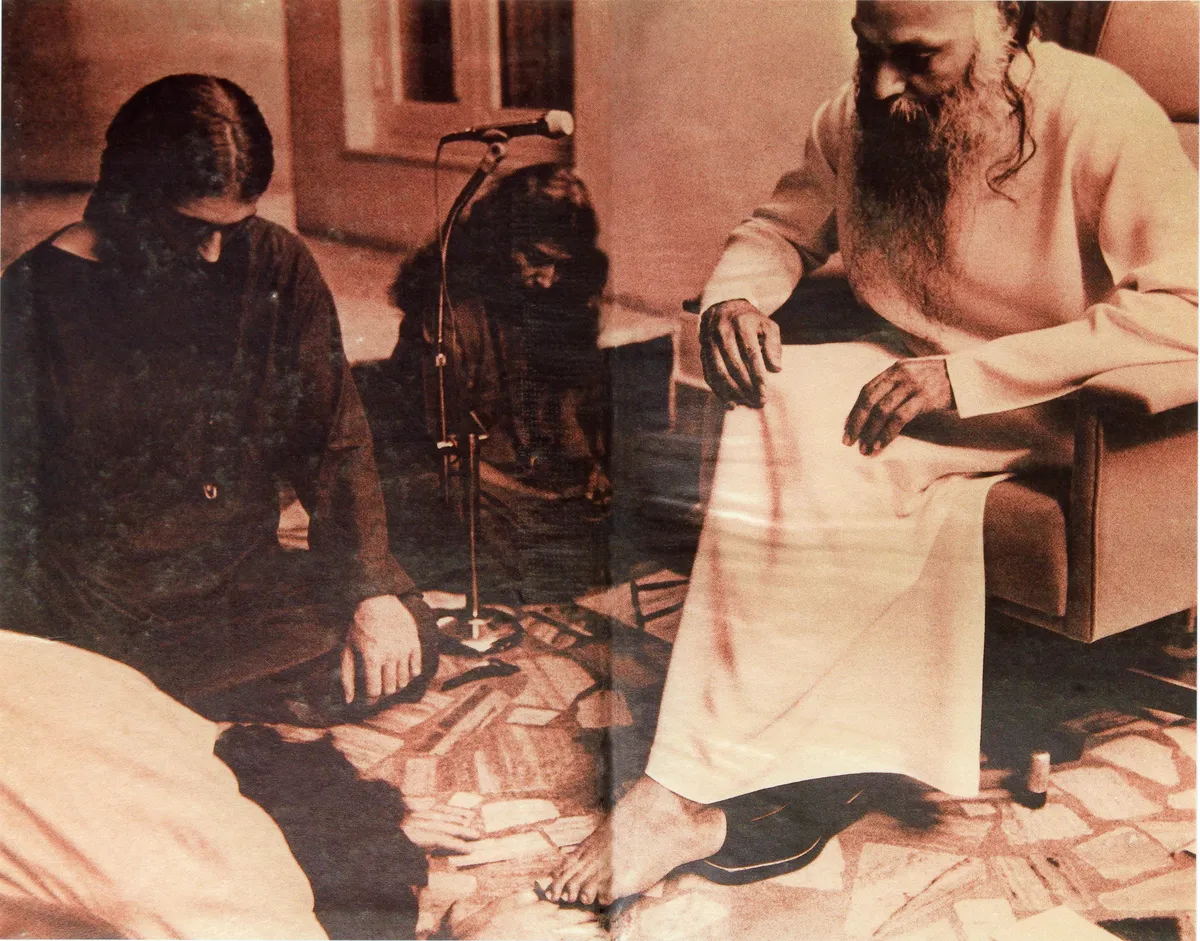
Osho's original Hindi beside Osho Live's English translation, matched passage by passage.
संसार तो एक बाजार है; स्वयं को छोड़कर सभी कुछ वहां मिलता है। जो पाने योग्य है, उसे छोड़कर सभी कुछ वहां पाया जा सकता है। जिसे पाकर और पाने की सब चाह चली जाती है, बस उसी को तुम वहां न पा सकोगे। बहुत कुछ वहां मिलता है, सभी कुछ वहां मिलता है, लेकिन जो भी वहां मिलता है, उससे और पाने की चाह बढ़ती चली जाती है। जल कुछ ऐसा मिलता है कि प्यास घटती नहीं, जलन बुझती नहीं, तृप्ति आती नहीं; जैसे जल नहीं, प्यास की आग में संसार घी बनकर पड़ता चला जाता है।
The world is a marketplace; everything is available there—except yourself. Everything can be found there except that which is worth finding. That by which, once attained, all desire to attain disappears—you will not find that there. Much is found there, everything is found there, but whatever is found there only goes on increasing the hunger to find more. A kind of water is found there such that the thirst never lessens, the burning is never cooled, fulfillment never comes; as if it were not water at all, but the world itself keeps falling like ghee into the fire of thirst.
और मनुष्य का मन ऐसे है, जैसे छोटा सा बच्चा बाजार में आया हो, मेले में आया हो, और हर चीज को खरीदने के लिए ठिठक जाता है; और हर चीज को खरीदने के लिए रोने लगता है, तड़फने लगता है, परेशान होने लगता है। और यह बच्चा सारी चीजें भी खरीद ले और सांझ होते-होते, दुकानें बंद होते-होते अपने घर बहुत सा खेल-खिलौना लेकर आ जाए तो भी खेल-खिलौने ही हैं; उनका कोई मूल्य नहीं है। उनसे आशा तो बंधती है, बड़ी आशा बंधती है, लेकिन आशा कभी पूरी नहीं होती। दो-चार दिन बाद बच्चा पाता है कि जिन खेल-खिलौनों के लिए इतना ठिठका, इतना रोया, इतना परेशान हुआ, उसने खुद ही उन्हें छोड़-छाड़ कर कोनों में डाल दिया है। खुद ही उन्हें बाहर फेंक आया है।
And the human mind is such as if a small child has come into the bazaar, into the fair—and at every stall he halts to buy, and for every little thing he begins to cry, to writhe, to get restless. And even if this child were to buy up all the things, and by evening, as the shops close, return home with a pile of toys—still, they are only toys; they have no value. They create hope—great hope—but the hope is never fulfilled. After two or four days the child finds that for the very toys over which he had halted, for which he had cried so much, suffered so much—he himself has thrown them aside into the corners, he himself has tossed them out.
लेकिन मन एक पुनरुक्ति है। बार-बार तुम वही करते हो, फिर भी जाग नहीं आती। और एक बच्चा होता तो ठीक है, तुम्हारे भीतर वासनाओं की बड़ी बचकानी भीड़ है। हर इंद्रिय की न मालूम कितनी वासनाएं हैं। हर इंद्रिय पर्त दर पर्त वासना ही वासना है। पूरे जन्म बीत जाते हैं, हाथ कुछ भी लगता नहीं। और इतनी समझ भी नहीं लगती कि जहां हम खोजते थे, वहां मिलने को ही कुछ भी न था।
But the mind is a repetition. You go on doing the same again and again, yet no awakening comes. And if it were one child, that would be one thing, but within you there is a great childish crowd of desires. Who knows how many desires each sense has? Layer upon layer each sense is desire alone. Whole lifetimes pass, nothing comes into your hands. And there is not even enough understanding to see that there was never anything there where we were searching.
जिसे यह दिखाई पड़ने लगा, जो दुकानों की तरफ से उपेक्षा से गुजरने लगा, जिसके भीतर धीरे-धीरे अपने को खोजने की तलाश पैदा हुई, जिसे यह खयाल आया कि जब अपने को ही नहीं पाया तो और कुछ पाकर करूंगा भी क्या? यह बोध जन्मा कि सब पाने के पहले अपने को पा लेना जरूरी है, तो बुनियाद बनेगी, तो आधार पड़ेगा। तो ही जीवन का भवन खड़ा हो सकता है। अपने को बिना पाए रेत पर बनाते हैं हम भवन को। अगर गिर-गिर जाए तो कसूर किसका है?
When this begins to be seen, when one starts to pass by the stalls with indifference, when slowly a longing arises within to search for oneself; when the thought occurs: When I have not yet found myself, then what will I do by finding anything else?—when this understanding dawns: before gaining everything, it is necessary to gain oneself; then there will be the foundation, then the ground will be laid. Only then can the mansion of life be raised. Without finding oneself, we build on sand. If it collapses again and again, whose fault is it?
बुद्ध के आज के सूत्र इंद्रियों की दौड़, मन की व्यर्थ वासनाओं की अभिलाषा; और कैसे उन वासनाओं के कोई पार होता है, उस संबंध में हैं।
Today’s sutras of Buddha are about the running of the senses, the longing for the vain desires of the mind; and how the far shore of those desires is crossed.
जवानी, हुस्न, गमजे, अहद, पैमां, कहकहे, नगमे
रसीले होंठ, शर्मीली निगाहें, मरमरी बांहें
यहां हर चीज बिकती है, खरीददारो
बताओ क्या खरीदोगे?
भरे बाजू, गठीले जिस्म, चौड़े आहनी सीने
बिलखते पेट, रोती गैरतें, सहमी हुई आहें
Youth, beauty, wiles, pledges, promises, laughter, songs— Honeyed lips, shy glances, arms like marble— Here, everything is for sale, O buyers— Tell me, what will you buy? Full biceps, knotted bodies, broad iron chests— Wailing bellies, weeping honor, trembling sighs— Here, everything is for sale, O buyers— Tell me, what will you buy?
यहां हर चीज बिकती है, खरीददारो
बताओ क्या खरीदोगे?
सभी कुछ बिक रहा है--सिर्फ एक तुम को छोड़कर।
सभी कुछ दुकानों में सजा है--सिर्फ एक तुम को छोड़कर।
सभी कुछ बाजार में उपलब्ध है--सिर्फ एक तुम हो कि बाजार में तुम उसे न पा सकोगे। सिर्फ एक तुम हो कि तुम उसे बाहर कहीं भी न पा सकोगे। सिर्फ एक तुम हो, जो बाजार के बाहर हो। सिर्फ एक तुम हो, जो कमोडिटी नहीं; अन्यथा सब चीजें बाजार में हैं, अन्यथा सभी चीजें अर्थशास्त्र हैं। सिर्फ एक तुम हो, जो अर्थशास्त्र के हिस्से नहीं।
Everything is being sold—save only you. Everything is arrayed in the shops—save only you. Everything is available in the market—only you cannot be found there. You alone cannot be found anywhere outside. You alone are outside the marketplace. You alone are not a commodity; otherwise all things are in the market; otherwise everything is economics. You alone are not a part of economics.
इसलिए मार्क्स ने--कम्यूनिजम के जन्मदाता ने--तुम्हें स्वीकारा ही नहीं; उसने कहा, आदमी के पास कोई आत्मा नहीं है। क्योंकि जो बाजार में न बिक सके, वह उसकी समझ के बाहर है। वस्तुएं समझ में आती हैं, आत्मा समझ में नहीं आती। क्योंकि जिसका मूल्य हो सके, उसकी ही समझ हो सकती है! आत्मा का क्या मूल्य है?
Therefore Marx—the founder of communism—did not accept you; he said man has no soul. For that which cannot be sold in the market lies outside his understanding. Objects can be understood; the soul cannot be understood. For only that whose price can be fixed can be grasped! What price has the soul?
मार्क्स ने जीवन के सारे पहलुओं पर बड़ी ठीक-ठीक दृष्टि दी है, लेकिन सारी दृष्टि भ्रांत हो गई, क्योंकि बुनियाद गलत हो गई। सिर्फ एक बात को इनकार कर गया--आत्मा। आत्मा को उसे इनकार करना ही पड़ेगा। वह शुद्ध अर्थशास्त्री है, इकोनामिस्ट है। आत्मा को जगह नहीं है वहां।
Marx gave a very precise view on all the aspects of life, but the whole vision was confounded, because the foundation went wrong. Only one thing he denied—the Atman. He had to deny the Atman. He is a pure economist. There is no place for the soul there.
अर्थ के पार है धर्म। बाजार के पार हो तुम। जहां वस्तुओं की दौड़ समाप्त होती है, वहीं अपनी खोज शुरू होती है।
Beyond meaning stands dharma. Beyond the market are you. Where the race of objects ends, there begins the search for one’s own.
और जब तक तुम वस्तुएं मांगते रहोगे--फिर चाहे वे वस्तुएं तुमने जाकर मंदिर में परमात्मा से ही क्यों न मांगी हों, तुम बाजार की ही मांग कर रहे हो। फिर वे वस्तुएं चाहे तुमने स्वर्ग में ही क्यों न मांगी हों, न मांगी हों इस पृथ्वी पर, इससे भेद नहीं पड़ता। बाजार कहीं के भी हों, जमीन के हों कि इंद्रपुरी के हों, इससे क्या भेद पड़ता है? बाजार बाजार है।
And so long as you go on asking for objects—even if you go and ask for them of God in the temple—you are still asking of the market. Even if you ask for them in heaven, not upon this earth, it makes no difference. What difference does it make where the markets are—on earth or in Indra’s city? A market is a market.
जब तक तुम्हारी समझ में एक बहुत बुनियादी खयाल नहीं आ गया है कि जानने योग्य मैं हूं, पाने योग्य मैं हूं, खोजने योग्य मैं हूं; फिर शेष सब खोज लेंगे इसके बाद। अपना तो ठीक-ठीक पता हो जाए कि मैं कौन हूं? कहां से हूं? क्या हूं? मालिक का तो पता लगा लूं, फिर मालकियत भी खोज लेंगे। सम्राट की तो थोड़ी पहचान कर लें, फिर साम्राज्य भी खोज लेंगे।
Until a very fundamental idea has dawned upon you that the knower to be known is I, the worthy to be attained is I, the one to be sought is I; after that, all else can be sought. Let at least my address be known with precision—who am I? From where am I? What am I? Let me find the master; then ownership can be found too. Let the emperor be recognized a little; then the empire can be found as well.
और मजे की बात यह है कि जिसने स्वयं को पाया, वह इस पाने में ही सभी कुछ पा लेता है, सभी खोज पूरी हो जाती है।
And the wonder is this: the one who found himself, in that very finding finds all, all searching comes to completion.
महावीर ने कहा है: एक को पाने से सब पा लिया जाता है। एक को जानने से सब जान लिया जाता है।
Mahavira has said: By finding the One, all is found. By knowing the One, all is known.
लेकिन इस एक से हम बचते रहते हैं। कारण है; कारण बड़ा उलझा हुआ है। कारण बड़ा दुरूह है, बेबूझ है, पहेली जैसा है। कारण यह है कि यह एक हमें मिला ही हुआ है, इसलिए हम इसे पाने की कोशिश नहीं करते। पाने की कोशिश तो स्वभावतः उसी के लिए होती है, जो हमें मिला हुआ नहीं है। आंख उसी को देखती है, जो हमारे पास नहीं है। दूर पर नजर जाती है, पास से चूक जाती है।
But we keep avoiding this One. There is a reason; the reason is quite entangled. The reason is arduous, puzzling, like a riddle. The reason is that this One is already given to us, therefore we do not try to attain it. The endeavor naturally arises only for that which is not already in our possession. The eye sees that which we do not have. The gaze goes afar, it misses what is near.
और तुम अपने इतने पास हो कि तुम्हारे और तुम्हारे बीच में कोई फासला ही नहीं है। तुम तुम हो; मिले ही हुए हो, इसीलिए चूकते जा रहे हो। यह जो दुर्घटना घटी है कि मछली पूछती है, सागर कहां है; यह जो दुर्घटना घटी है कि आदमी अपनी खबर ही भूल जाता है, विस्मरण ही हो जाता है कि मैं भी हूं; वह इसीलिए घटी है कि तुम पहली तो बात, मिले ही हुए हो।
And you are so near to yourself that there is no distance between you and you. You are you; already given—and hence you keep missing. This strange accident has occurred: the fish asking, ‘Where is the ocean?’ This accident has occurred that man forgets news of himself, it becomes sheer oblivion that ‘I also am’; it has happened because, first, you are already given.
दूसरी बात: तुम मौजूद हो। तुम्हारा स्वभाव ही तुम हो। यह इतने निकट है, यह इतने करीब है कि देखने के लिए जगह चाहिए, फासला चाहिए। अगर आंख बहुत करीब आ जाए किसी चीज के तो देख नहीं पाती; थोड़ी दूरी चाहिए।
Second: you are present. Your very nature is you. It is so close, so near that seeing requires a space, a gap. If the eye comes too close to a thing, it cannot see; a little distance is needed.
मुल्ला नसरुद्दीन एक गवाही के लिए अदालत में गया था। किसी ने गोली चलाकर किसी को मार दिया था। उससे न्यायाधीश ने पूछा कि तुम कितनी दूर थे? उसने कहा, यही कोई दो मील के करीब। न्यायाधीश ने कहा, दो मील! तुम्हें कितनी दूर से दिखाई पड़ता है? उसने कहा, ठीक-ठीक नहीं कह सकता, चांद-तारे मुझे दिखाई पड़ते हैं। हिसाब आप कर लो। चांद-तारे दिखाई पड़ते हैं!
Mulla Nasruddin went to court as a witness. Someone had fired a shot and killed someone. The judge asked, ‘How far were you?’ He said, ‘About two miles or so.’ The judge said, ‘Two miles! From how far can you see?’ He said, ‘I cannot say exactly—yet the moon and stars are visible to me. You do the math. I can see the moon and stars!’
असल में दिखाई पड़ने के लिए दूरी चाहिए। जैसे-जैसे चीजें निकट आने लगती हैं, धुंधली होने लगती हैं। राह पर गुजरती स्त्री दिखाई पड़ती है, अपनी पत्नी दिखाई नहीं पड़ती। जो दूसरे के पास है, दिखाई पड़ता है, जो अपने पास है, नहीं दिखाई पड़ता। जिस मकान में तुम रहते हो, वह दिखाई नहीं पड़ता, पड़ोसी जिसमें रहता है, वह दिखाई पड़ता है--दूरी चाहिए।
In truth, for seeing, distance is needed. As things come nearer and nearer, they begin to blur. A woman passing on the road is seen; one’s own wife is not seen. What belongs to another is seen; what belongs to oneself is not seen. The house you live in is not seen; the house the neighbor lives in is seen—distance is required.
अब यह बड़ा मुश्किल है; तुम से तुम्हारी दूरी कैसे हो? कोई उपाय नहीं कि तुमसे तुम्हारी दूरी हो जाए। इसलिए धीरे-धीरे हम उसको विस्मरण ही कर देते हैं, जो हम हैं। खोया नहीं है हमने स्वयं को, विस्मरण किया है।
Now this is the great difficulty: how can there be distance between you and you? There is no way to create a distance between you and yourself. Therefore, slowly we go on forgetting that which we are. We have not lost ourselves; we have only forgotten.
इसलिए धर्म पाने की कला नहीं है, सिर्फ स्मरण की कला है, याद की कला है। खोया कभी भी नहीं है; विस्मरण हुआ है। सुध भूल गई है, सुरति खो गई है। तुम नहीं खो गए हो, सिर्फ याद खो गई है।
Therefore religion is not an art of attaining, it is only the art of remembering. Never was it lost; it has only been forgotten. The memory has slipped, the remembrance is lost. You are not lost—only the memory is lost.
जो मिला ही है, इसे पाने के लिए क्या करना पड़ेगा?
What must be done to attain that which is already attained?
जो मिला ही है, इसे पाने के लिए वस्तुतः कुछ करना नहीं है; जो नहीं मिला है, उसे पाने की दौड़ अगर थोड़ी देर को रुक जाए, बस काफी है। विधायक रूप से इसे पाने के लिए कुछ भी नहीं करना है, यह मिला ही हुआ है। सिर्फ तुम इसे भूलने के लिए इसकी तरफ पीठ किए जो-जो कर रहे हो, वह रुक जाए, तो तुम सन्मुख हो जाओ। विमुख होना रुक जाए तो तुम सन्मुख हो जाओ।
To attain what is already given, in truth, nothing has to be done; it is enough if, for a while, the race for what has not been gained comes to a stop. Positively, there is nothing to do to attain it—it is already given. Only that which you are doing with your back turned toward it, so as to forget it—if that stops, you will be face-to-face. If turning away stops, you will be turned toward it.
इसलिए सारे बुद्ध पुरुष इंद्रियों की, वासनाओं की दौड़ से तुम्हें छूटने को कहते हैं। इसका कारण यह नहीं है कि इंद्रियों की वासनाओं में कुछ खराबी है; कुछ भी नहीं है वहां, सपना है; न कुछ खराबी है, न कुछ भलाई है; वहां कुछ है ही नहीं--ख्वाब है, कल्पना है।
Hence all the awakened ones tell you to be free of the race of the senses and of desires. Not because there is some inherent evil in the senses and desires; there is nothing there—dream it is; neither evil nor good; there is nothing there at all—just fantasy, mirage.
लेकिन तुम्हें बड़ी गलत बातें समझाई गई हैं। तुम्हें यह समझाया गया है कि इंद्रियों में कुछ खराबी है, इसलिए उनसे मुक्त हो जाओ। इंद्रियों में कुछ भी खराबी नहीं है, सिर्फ धोखा है, मृृग-मरीचिका बस, ज्यादा से ज्यादा। दिखाई पड़ता है कि दूर सरोवर है, है नहीं। उस दिखाई पड़ने वाले सरोवर में कोई भी खराबी नहीं है, सिर्फ भ्रमजाल है। इसलिए जिन्होंने जाना, उन्होंने इसे माया कहा है।
But you have been taught very wrong things. You have been told that the senses are bad, therefore be free of them. There is nothing bad in the senses—only deception, mirage at most. It appears there is a lake in the distance—there is not. In that seen lake there is no defect; it is only a web of illusion. Therefore those who have known have called it maya.
माया का अर्थ होता है: जो मालूम होती है और है नहीं। अब जो है ही नहीं, उसमें खराबी क्या होगी? खराबी होने के लिए तो होना जरूरी है।
Maya means: that which seems to be, but is not. Now, that which is not at all—what defect can it have? For defect to be, being is necessary.
इंद्रियों में कुछ खराबी नहीं है। अगर तुमने इंद्रियों में खराबी देखकर उन्हें छोड़ा तो तुम कभी छोड़ ही न पाओगे। क्योंकि तुम खराबी मानकर चले, इसका अर्थ है कि तुमने इंद्रियों के यथार्थ को स्वीकार कर लिया कि वे हैं। तुम अगर बाजार से डरकर भागे तो बाजार की याद तुम्हें सताती रहेगी; फिर पहाड़ तुम्हें बाजारों से मुक्त न कर पाएंगे। हिमालय की भी वैसी सामर्थ्य नहीं। तुम जहां भी जाओगे, बाजार तुम्हारे साथ ही रहेगा। और ध्यान रखना, कल्पना के बाजार और भी मधुमय मालूम होते हैं, और भी मधुर, और भी मदिर।
There is nothing wrong in the senses. If you abandon the senses seeing defect in them, you will never be able to abandon them. For if you proceed by assuming a defect, it means you have accepted the senses as real. If you flee the market out of fear, the memory of the market will keep haunting you; then even the mountains will not be able to free you from markets. Even the Himalayas do not have such power. Wherever you go, the market will go along with you. And remember, markets of imagination seem even more honey-sweet, more delicious, more intoxicating.
एक तो सभी बाजार कल्पना के हैं। बाहर के बाजार ही कल्पना के हैं। जब तुम आंख बंद करके उन कल्पना के बाजारों को देखते हो तो उनमें और हजार रंग जुड़ जाते हैं, हजार सुगंधें आ जाती हैं।
Indeed, all markets are of imagination. The outer markets themselves are of imagination. When you close your eyes and see those imagined markets, thousands more colors join them, a thousand fragrances arrive.
इसलिए तो एक मजे की घटना घटती है रोज, पर तुम पकड़ नहीं पाते, कि जो चीज तुम्हारे पास नहीं होती, बड़ी सुंदर मालूम होती है, हाथ में आते ही उतनी सुंदर नहीं रह जाती। जिस महल के लिए तुम वर्षों तड़फे थे, बन जाने पर अचानक तुम थके से खड़े रह जाते हो। अब क्या करना है? जिस कार के लिए तुम पागल होकर दौड़े थे, पोर्च में आकर खड़ी हो जाती है, तुम भी थके से खड़े रह जाते हो; अब क्या करना है? जो सौंदर्य मालूम पड़ा था, जो सुख की आशा बंधी थी, हाथ में आते ही खोने लगती है। मृग-मरीचिका दूर से ही दिखाई पड़ती है, पास आने पर मिट जाती है।
Hence a delightful incident happens daily, but you don’t notice: what you do not yet have appears very beautiful; as it comes into your hand it is no longer so beautiful. For the palace you yearned for over years—when it is built, suddenly you stand there exhausted. Now what to do? The car for which you ran madly—when it is parked in the porch, you too stand there tired; now what to do? The beauty that was glimpsed, the hope of pleasure that was kindled—on coming into the hand begins to evaporate. The mirage appears only from afar; as you come near it vanishes.
तो पहला सूत्र तो यह खयाल रखो कि देखने के लिए दूरी जरूरी है; पास जो है, वह भूल जाता है।
So the first sutra: remember that distance is necessary to see; what is near is forgotten.
दूसरा सूत्र याद रखो कि जैसे-जैसे चीजें पास आती हैं, वैसे ही पता चलता है, कौन सत्य है, कौन झूठ है! पास आने पर ही सचाई और झूठ का निर्णय होता है। जो झूठ है, वह पास आते-आते खोने लगता है, बिखरने लगता है। जो सच है, वह पास आते-आते बढ़ने लगता है।
The second sutra: as things come near, it is revealed what is true and what is false! Only from nearness is the decision of truth and untruth made. What is false begins to dissolve as it comes near. What is true begins to grow as it comes near.
इमर्सन ने कहा है कि महापुरुष वही है, जिसके पास आने पर वह और भी बड़ा होता चला जाए। दूर से तो हजारों महापुरुष मालूम होते हैं; पास आने की बात है। पास आने पर जो छोटा होने लगे, समझना कि महापुरुष होना मृग-मरीचिका थी। पास आने पर जो और बड़ा होने लगे, तुम जैसे-जैसे पास आओ, उसका शिखर इतना ऊंचा उठने लगे कि तुम्हारी आंखें भी वहां तक न पहुंच पाएं; जब तुम उसके बिलकुल निकट आकर खड़े हो जाओ तो वह तुम्हारी दृष्टि से बहुत दूर, अनंत आकाश में उठ जाए, तो ही जानना कि महापुरुष है।
Emerson has said: The great man is he who grows even greater as you come near. From afar, thousands seem great; the matter is of coming near. If, upon coming near, he begins to shrink, know that his greatness was a mirage. If, upon coming near, he becomes yet greater—as you draw close, his summit rises so high your eyes cannot reach—when you stand absolutely close to him and he rises far beyond your sight, into the infinite sky—then know he is a great one.
पास आने पर ही सत्य का पता चलता है।
Only on coming near does truth become known.
इंद्रियों में कुछ खराबी नहीं है; इंद्रियां सपने देखने के ढंग हैं। सारा मन ही स्वप्न देखने का यंत्र है; स्वप्न देखने की बड़ी कुशल व्यवस्था है। और इसे ऐसा नहीं है कि तुम नहीं जानते हो; तुम जानते हो, लेकिन जानना नहीं चाहते हो। तुम डरते हो कि कहीं यह बात गहरी होकर भीतर बैठ न जाए।
There is nothing wrong in the senses; the senses are ways of dreaming. The whole mind is a mechanism for dreaming; an arrangement supremely skillful for dream-seeing. And it’s not that you do not know this; you do, but you do not want to know it. You are afraid lest this understanding settle deep within.
ऐ नासेहो! बेफायदा समझाते हो मुझको
मैं खूब समझता हूं मगर दिल से हूं नाचार
O counselors! You explain to me in vain— I understand well, yet my heart is helpless.
कोई समझाए भी तो तुम यही कहते हो: समझता तो मैं हूं, व्यर्थ मेहनत मत करो मुझे समझाने की, मगर मैं मजबूर हूं, दिल से मजबूर हूं।
Even if someone explains, you say: I understand, don’t waste effort explaining to me—but I am helpless, helpless from the heart.
यह बात झूठ है। जो समझता है, वह बाहर हो जाता है।
This is false. The one who understands, steps out.
मेरे पास लोग आते हैं; वे कहते हैं, हम जानते हैं, क्रोध व्यर्थ है, फिर भी हो जाता है। मैं उनसे कहता हूं, तब तुम जानो कि अभी तुमने जाना नहीं। क्योंकि ऐसा कभी होता ही नहीं। जो जान लिया जाए, वह जीवन बन जाता है। जो जानकर भी जीवन न बने, वह जाना ही नहीं गया। तुम वहां भी अपने को धोखा दे रहे हो। मन ने तुम्हें वहां भी भरमाया, भटकाया।
People come to me and say: I know anger is futile, yet it happens. I say to them: then know that you have not yet known. For it never happens thus. What is known becomes life. What, though known, does not become life—was not known at all. There too you are deceiving yourself. The mind has deluded you there as well.
मैं खूब समझता हूं मगर दिल से हूं नाचार
ऐ नासेहो! बेफायदा समझाते हो मुझको
I understand well, yet my heart is helpless— O counselors! You explain to me in vain.
तुम यह भी समझ लेते हो कि तुम समझते हो; यह समझने से बचने की तरकीब हुई। तुम यह भी मान लेते हो कि जान लिया; यह जानने के बीच तुमने दीवाल खड़ी कर ली। यह सच है कि बहुत मौके आए थे जानने के, यह बात सच है; लेकिन उन मौकों को तुम चूकते गए हो। उन मौकों के कारण ही तुमको यह भ्रम होता है कि तुमने जान लिया, माना।
You also understand that you understand; this becomes a trick to avoid understanding. You also accept that you have known; between this acceptance and knowing you erected a wall. It’s true many moments to know had come; this is true. But you kept missing those moments. Because of those moments, you harbor the illusion that you have known, accepted.
कितनी बार तुमने क्रोध किया, कितनी बार कामवासना से भरे, कितनी बार घृृणा ने पकड़ा, कितनी बार हिंसा तुम्हारे हृदय में उठी, बहुत-बहुत मौके आए; वे जानने के मौके थे, तुम जान नहीं पाए। जान लेते तो फिर उनका आना बंद हो जाता। जाना नहीं, जागे नहीं कि क्रांति शुरू हुई। क्रांति फिर ठहरती नहीं।
How many times you were angry, how many times filled with lust, how many times hatred seized you, how many times violence arose in your heart—so many opportunities came; they were opportunities to know, you did not know. Had you known, their coming would have ceased. You did not know, you did not awaken—for when the revolution begins, it does not halt.
ज्ञान को जीवन में बदलने के लिए कोई कृत्य नहीं करना पड़ता।
To turn knowledge into life, no act has to be done.
ज्ञान की परिभाषा यही है: जो अपने आप कृत्य बन जाए। जो ज्ञान कृत्य न बने, जिसे बनाना पड़े, वह ज्ञान ही नहीं; वह किसी से उधार ले लिया होगा। वह तुम्हारी समझ नहीं, तुम्हारी दृष्टि नहीं, वह किसी और की दृृष्टि होगी।
This is the definition of knowledge: that which of itself becomes action. That so-called knowledge which does not become action, which has to be made to become action, is not knowledge; it has been borrowed from someone. It is not your understanding, not your vision; it must be someone else’s vision.
बुद्ध का पहला सूत्र है:
‘सारथी द्वारा दान्त किए गए घोड़े के समान जिसकी इंद्रियां शांत हो गई हैं, वैसे अहंकाररहित, अनास्रव पुरुष की देवता भी स्पृहा करते हैं।’
Buddha’s first sutra is: ‘Like a horse well-trained by its charioteer, the one whose senses have become serene—such an ego-less, anāsrava man is longed for even by the gods.’
एक-एक शब्द को गौर से समझना, क्योंकि उनके साथ बड़ी गलत व्याख्याएं जुड़ी रही हैं। और करीब-करीब गलत व्याख्याएं इतनी प्राचीन हो गई हैं कि जाने-अनजाने, हम सभी उनकी गिरफ्त में आ गए हैं।
Understand each word carefully, for many wrong interpretations have clung to them; and almost all such wrong interpretations have become so ancient that knowingly or unknowingly, we all are caught by them.
‘सारथी द्वारा दान्त किए गए घोड़े के समान।’
‘Like a horse well-trained by the charioteer.’
अगर तुम बौद्ध भिक्षुओं से पूछो तो वे कहेंगे, जैसे सारथी घोड़े को दमन कर देता है, जैसे सारथी घोड़े पर लगाम बांध देता है, जैसे सारथी कोड़े से घोड़े को मजबूर कर देता है, ऐसे ही जिस व्यक्ति ने अपनी इंद्रियों को दमन किया है, कोड़ों से मारा है, सारथी की तरह लगामों से बांधा है, हजार तरह के कष्ट दिए हैं ताकि इंद्रियां झुक जाएं, तप किया है--ऐसा वे अर्थ करेंगे। चूक हो रही है।
If you ask Buddhist monks, they will say: as a charioteer subdues a horse, as he puts a bit and bridle on it, as he compels it with the whip, so the person who has subdued his senses—whipped them, bound them with reins like a charioteer, given them a thousand kinds of torments so that the senses bow down, who has done tapas—thus they will interpret. The mistake begins.
तुम फिर से किसी सारथी को घोड़े को शिक्षण देते देखो। अगर सारथी कुशल है तो कोड़ा सिर्फ दिखाता है, मारता नहीं। अगर मारता है तो सारथी नहीं है। अगर सारथी और भी कुशल है तो सिर्फ कोड़ा पास ही रखता है, दिखाता भी नहीं। जो दिखाता है, वह अभी भी कुशलता के मार्ग पर जा रहा है। अगर सारथी और भी कुशल है तो कोड़े की सिर्फ अफवाह फैलाता है, साथ भी नहीं रखता।
Look once more at a charioteer training a horse. If the charioteer is skilled, he only shows the whip, he does not strike. If he strikes, he is no charioteer. If he is more skilled, he will only keep the whip near, he will not even show it. The one who shows it is still on the way to skill. If he is yet more skillful, he will only spread the rumor of a whip, he will not even keep one.
घोड़े को ठीक-ठीक सारथी प्रेम करता है, मित्रता बनाता है, थपथपाता है, स्नान करवाता है, घोड़े से मैत्री साधता है, घोड़े और अपने बीच एक अंतर्संवाद की स्थिति बनाता है, घोड़े की भाषा समझने की कोशिश करता है, अपनी भाषा घोड़े को समझाने की कोशिश करता है।
A true charioteer loves the horse, befriends it, pats it, bathes it, enters into friendship with it, creates an inner dialogue between horse and himself, tries to understand the horse’s language, tries to make the horse understand his language.
जर्मनी में एक बहुत प्रसिद्ध घोड़ा था। हंस उस घोड़े का नाम था। उससे ज्यादा प्रसिद्ध घोड़ा दुनिया में दूसरा कभी नहीं हुआ; कुछ ही वर्ष पहले मरा। उस घोड़े की सारे जगत में ख्याति हो गई थी। दूर-दूर से उसके लोग दर्शन करने आते थे। क्योंकि उस घोड़े ने एक अदभुत चमत्कार दिखलाना शुरू किया था; और वह यह कि वह कुछ गणित के सवाल हल करने लगा था। तुम उससे पूछो, दो और दो कितने? तो वह अपने पैर से टाप मारकर चार चोट कर देता।
In Germany there was a very famous horse. Its name was Hans. No other horse in the world ever became so famous; it died only a few years ago. That horse became renowned throughout the world. People came from far and wide to see it. Because that horse had begun to display a marvelous miracle: it would solve arithmetic problems. Ask it, ‘What is two plus two?’ and it would strike its hoof four times.
बहुत दिन तक यह बात चली। लेकिन एक वैज्ञानिक ने कोई तीन वर्ष मेहनत की उसके साथ और तब वह पकड़ पाया कि मामला क्या था। घोड़ा कुछ बुद्धिमान नहीं था, घोड़े को कुछ पता ही नहीं था संख्या का और गणित का। लेकिन सारथी और घोड़े के बीच एक अंतर्संवाद बन गया था। तो वह सारथी पास खड़ा रहता। घोड़ा सिर्फ इतना जानता था कि सारथी जब सिर झुकाता, तब वह टाप रोक देता; इससे ज्यादा कुछ जानता नहीं था। लेकिन उसने सारी दुनिया के बड़े-बड़े बुद्धिमानों को धोखा दे दिया।
For a long time this continued. But a scientist worked with it for about three years and finally caught what the matter was. The horse was not intelligent; the horse knew nothing of numbers and arithmetic. But between the charioteer and the horse an inner dialogue had arisen. The charioteer stood nearby. The horse only knew this much: when the charioteer bent his head, it should stop tapping; nothing more did it know. But it deceived even the greatest scholars of the world.
अब वह सिर झुकाना भी इतना बारीक था कि इस वैज्ञानिक को भी तीन साल लग गए यह बात पकड़ने में कि यह आदमी जरा सा सिर झुकाता है और घोड़ा टाप रोक देता है। जब तक वह सिर नहीं झुकाता, वह टाप मारता रहता है। हिसाब सारथी करता है, इशारा सारथी करता है, घोड़ा सिर्फ इशारा पकड़ता है। उसने बड़े-बड़े गणित के सवाल हल किए। वह सदा ठीक-ठीक उत्तर देता।
That bending of the head was so subtle that the scientist too took three years to catch that this man gives the slightest tilt of the head and the horse stops tapping. Until he tilts, the horse keeps tapping. The charioteer did the calculation, the charioteer signaled, the horse merely caught the signal. It solved big arithmetic problems. It always gave the correct answer.
और यह वैज्ञानिक भी पकड़ न पाता, एक बार गलती हो गई; सारथी से गणित में गलती हो गई, इसलिए घोड़े से गलती हो गई। गलती के कारण सारथी थोड़ा अचकचा गया, क्योंकि घोड़ा झंझट में पड़ा जा रहा है। इससे थोड़ा खयाल उसको आया कि जरूर करता कुछ है सारथी, घोड़ा सिर्फ अनुगमन कर रहा है।
And even this scientist would not have caught it, but once the charioteer made an error in arithmetic; therefore the horse erred. Because of the mistake, the charioteer got a little flustered, because the horse was getting into trouble. From that came the clue that certainly the charioteer does something, the horse merely follows.
जो कुशल सारथी है, वह घोड़े से प्रेम निर्मित करता है। घोड़े की भाषा जाननी जरूरी है, अगर घोड़े की मालकियत करनी हो। मार-पीटकर जो घोड़े के ऊपर सवार हो जाता है, वह कोई सारथी थोड़े ही है, वह तो हिंसा से सवार हो गया है।
The skilled charioteer creates love with the horse. The horse’s language must be known, if you are to truly master the horse. The one who mounts the horse by beating and abusing it is no charioteer—he has only mounted through violence.
अब यह मैं तुमसे कहना चाहता हूं कि दुनिया में दो तरह से लोग अपनी इंद्रियों पर सवार हो सकते हैं: एक वे, जो जबरदस्ती कोड़े मारकर, निरीह इंद्रियों को सताकर, निर्दोष इंद्रियों के साथ हिंसा का व्यवहार करके, भूखा मारकर, रतजगा करवाकर, उपवास-अनशन से, हजार तरह के कष्ट, धूप में खड़े होकर, कांटों पर लेटकर, इंद्रियों के साथ हिंसा करने के द्वारा इंद्रियों को वश में करते हुए मालूम पड़ते हैं। इंद्रियां वश में होती नहीं, केवल जड़ हो जाती हैं, मृतवत हो जाती हैं।
Now this is what I want to tell you: there are two ways people can seem to be mounted over their senses. One, by forcing—by whipping, by tormenting helpless senses, by treating innocent senses with violence, by starving the body, keeping vigil, fasting, hunger-strike, by a thousand kinds of tortures—standing in the sun, lying on thorns—by acts of violence against the senses, they appear to have brought the senses under control. The senses do not truly come under control; they only become dull, inert, corpse-like.
इसलिए तुम अपने त्यागियों में जीवन की उत्फुल्लता न देखोगे, जो होनी चाहिए। जो कि भोगी में दिखाई पड़ती है, उतनी उत्फुल्लता भी तुम्हारे त्यागी में दिखाई नहीं पड़ती। तुम्हारे भोगी में भी कभी-कभी नृत्य की भनक आती है, वह भी तुम्हारे त्यागी में नहीं आती।
Therefore in your renouncers you will not see the exuberance of life that should be present. The exuberance you see even in the indulger—you will not see even that much in your renouncer. Even in the indulger, sometimes there is a hint of dance; even that does not appear in your renouncer.
त्यागी तो नाचता हुआ होना था। जिसे जीवन का परम आनंद मिला हो, जिसे जीवन का सत्य मिला हो, उसकी तो गंध बदल जानी थी; उसके पास तो फूल ही फूल खिल जाने थे। जिसके जीवन में परमात्मा झांका हो, उसके जीवन में तुम कैसी उदासी देखते हो? कैसी मुर्दगी देखते हो? जैसे कब्रिस्तान चारों तरफ हो उसके। जैसे लाशों से घिरा बैठा हो--बैठा है घिरा, अपनी ही लाश से; बैठा है मरा, अपनी ही लाश से। इंद्रियां मार डालीं, मालकियत नहीं हुई। परमात्मा नहीं मिला है, संसार खो गया है।
A renouncer should have been dancing. The one who has attained the supreme bliss of life, the one who has found the truth of life—his very fragrance should have changed; flowers should blossom all around him. In whose life the divine has peeped—what gloom do you see about his life? What deadness do you see? As if a graveyard surrounds him. As if he sits ringed with corpses—he sits ringed by his own corpse; he sits dead by his own corpse. The senses have been killed, mastery has not happened. Paramatman has not been found; the world has been lost.
इसे मैं फिर दोहरा दूं। संसार का खो जाना ही परमात्मा का मिलना नहीं है, यद्यपि परमात्मा का मिलना जरूरी रूप से संसार का खो जाना है। संसार खो गया है, संसार छोड़ दिया है, जबरदस्ती की है, लेकिन परमात्मा इसके हृदय की खिड़की से झांका नहीं। अन्यथा जैसे सूर्योदय हो, ऐसी इसके भीतर कोई ज्योति तुम्हें दिखाई पड़ती। इसके शब्द-शब्द में गीत होता, इसके उठने-बैठने में एक और ही हवा होती, किसी और ही लोक की खबर होती। इसका व्यक्तित्व गाता हुआ होता, जैसे एक मस्ती छाई हो। बिन पीए जैसे पूरी मधुशाला पी गया हो। एक खुमार, ऐसा कि जिसकी गहराई न आंकी जा सके; एक ऐसी मस्ती, जिसको समझने-समझाने का कोई उपाय न पाया जा सके; ऐसी अतर्क्य खुशी, जिसका बाहर कोई कारण न दिखाई पड़ता हो; जो भीतर से ही आती हो और भर-भर जाती हो। तुम इस व्यक्तित्व में झरने पाते। लेकिन वैसा कहीं दिखाई नहीं पड़ता।
Let me repeat: the loss of the world is not the finding of God—though the finding of God necessarily implies the world is lost. The world has been lost, the world has been renounced, force has been applied—but the divine has not peeped through the window of the heart. Otherwise, like sunrise, some inner light would be visible in him. Every word of his would be a song; in his rising and sitting there would be a breeze from another realm, news of another world. His personality would sing, as if a drunkenness had descended. As if, without drinking, he had drunk the whole tavern. An intoxication whose depth cannot be gauged; such a ecstasy for which no way of explanation can be found; a non-logical joy whose cause is not visible outside; which wells up from within and overflows. In such a personality you would find springs cascading. But you do not see that anywhere.
कभी कोई बुद्ध, कभी कोई महावीर में दिखाई पड़ा है, लेकिन उनके पीछे चलने वाले में दिखाई नहीं पड़ता। कहीं कोई चूक हो रही है। चूक यही हो रही है कि जो बुद्धों ने कहा है, उसकी बड़ी गलत व्याख्या हो गई है। और गलत इसलिए हो गई है कि जो सरल था, जो हम कर सकते थे, वह हमने कर लिया है। यह बहुत ही आसान है। घोड़े के ऊपर कोड़े बरसा देने से आसान और क्या होगा? बड़ी तृप्ति मिलती है।
Sometimes it is visible in some Buddha, in some Mahavira—but not in those who follow them. Somewhere a mistake is happening. The mistake is that what the Buddhas have said has been grievously misinterpreted. It has been misinterpreted because we did what was easy to do. This is very easy. What can be easier than to rain whips upon the horse? It gives great satisfaction.
लोग दुष्ट हैं। अभी दूसरों के साथ दुष्ट हैं, वही दुष्टता अपने पर लगा देने में बड़ी देर नहीं लगती। अभी दूसरों को सताने में मजा लेते हैं, फिर इसी प्रक्रिया को अपने पर थोप लेने में कोई ज्यादा अड़चन नहीं आती। प्रक्रिया तो सधी-सधाई है, सिर्फ थोड़ी सी दिशा बदलनी होती है। हिंसा औरों के साथ बंद हो जाती है, अपने साथ शुरू हो जाती है।
People are vicious. First they are vicious toward others; then it takes no time to turn the same viciousness upon themselves. The method is already learned—only a slight change of direction is needed. Violence toward others stops; it begins toward oneself.
तुम अपने मंदिरों में, अपनी मस्जिदों में, अपने गुरुद्वारों में न मालूम किस-किस तरह के हिंसक लोगों की पूजा कर रहे हो। तुम जरा गौर से देखो, वे कर क्या रहे हैं? जो तुमने दूसरों के साथ किया है, वही वे अपने साथ कर रहे हैं। तुम दूसरों पर क्रोधी हो, वे खुद पर क्रोधी हैं।
In your temples, in your mosques, in your gurudwaras, you are worshipping who knows what kinds of violent people. Look a little closely: what are they doing? What you have done to others, they are doing to themselves. You are angry with others; they are angry with themselves.
तुम्हारे क्रोध का पता चल जाता है, क्योंकि दूसरा क्यों बरदाश्त करे? उनके क्रोध का पता नहीं चलता, क्योंकि वहां कोई दूसरा है नहीं, खुद ही हैं। अपने को कोई सताए तो शिकायत भी किससे करे? शिकवा भी क्या हो? अपने को ही सताए तो कहने किससे जाए? और जब इस सताने के आधार पर पूजा मिल जाती हो, चरणों में फूल चढ़ने लगते हों, सिर झुकने लगते हों, तो अहंकार को मजा आ जाता है।
Your anger is noticed, because why would another tolerate it? Their anger is not noticed, because there is no other there—only themselves. If one torments oneself, who is there to complain to? What grievance can be filed? If one torments oneself, to whom can one go? And when on the basis of this torment worship is received, flowers are laid at one’s feet, heads bow down—then the ego gets a great taste.
अहंकार ही हिंसा का सूत्र है।
Ego is the very formula of violence.
तुम दूसरों के प्रति भी हिंसा से भर जाते हो, जहां तुम्हारे अहंकार को चोट लगती है। इसे समझ लेना। दूसरों के प्रति तुम हिंसा करते हो तभी, जब तुम्हारे अहंकार को चोट लगती है। अपने प्रति हिंसा करने वाले आदमी के अहंकार को बड़ा रस आने लगता है, बड़ा भरने लगता है अहंकार। लोग पूजा देते हैं, श्रद्धा देते हैं, सम्मान देते हैं। तुमने कभी खयाल किया...।
You become violent toward others where your ego is hurt. Understand this. You become violent toward others only when your ego is wounded. The man who is violent toward himself—his ego begins to relish and swell. People give worship, give reverence, give respect. Have you ever thought…
एक जैन मुनि मुझे मिलने आए थे; उन्होंने मेरी कुछ बातें सुनी होंगी, कुछ किताबें पढ़ी होंगी, उनको जमीं। सोच-विचारशील आदमी मालूम पड़ते थे। कहने लगे, छोड़ देना चाहता हूं यह। समझ में आया है कि अभी तक सिर्फ अपने को सताता रहा हूं। और अब कठिनाई हो गई है, जब से आपकी बात समझ में आनी शुरू हुई है, तब से यह एक नई बेचैनी शुरू हो गई है कि यह मैं क्या कर रहा हूं? इसे छोड़ देना चाहता हूं।
A Jain muni came to meet me. He must have heard some of my words, read some books; they had struck him. He seemed a thoughtful man. He said, ‘I want to leave this. It has dawned on me that till now I have only been tormenting myself. Now a difficulty has arisen—ever since your words began to make sense, a new restlessness has started: What am I doing? I want to give this up.’
तो मैंने कहा, पूछना किससे है? इसे लेते वक्त मुझसे नहीं पूछा था, इसे छोड़ते वक्त मुझसे पूछने की क्या जरूरत है?
So I said, ‘Whom is there to ask? You did not ask me when you took it up; why ask me when you leave it?’
उन्होंने कहा, पूछना जरूरी है, क्योंकि मैं पचास साल का हुआ; अभी जो मेरे चरणों में सिर रखते हैं, वे मुझे घर में बर्तन साफ करने की नौकरी भी देने को राजी न होंगे। मुझमें कोई और योग्यता नहीं है, बस यही एक योग्यता है--अपने को सताने की, उपवास करने की, व्रत करने की, नियम करने की; यही एक योग्यता है। यही मेरी पूजा और श्रद्धा का आधार है। यह मैं छोड़ देता हूं तो जो मेरे चरणों में सिर रखते हैं, आज सब कुछ लुटाने को तैयार हैं मेरे लिए, वे मुझे घर में बर्तन साफ करने की भी नौकरी न देंगे; इसलिए पूछना जरूरी है।
He said, ‘I must ask, because I am fifty; those who now bow at my feet would not be willing to give me even a job washing dishes in their homes. I have no other skill; only this one skill—to torment myself, to fast, to take vows, to follow rules. This is my only skill. This is the basis of my worship and reverence. If I drop it, those who now bow their heads at my feet—who are ready to give up everything for me—would not even give me the job of washing dishes. Hence I must ask.’
उस दिन मुझे खयाल आया कि तुम जिनकी पूजा कर रहे हो, तुमने कभी सोचा कि अगर वे अपने को सताना बंद कर दें, तो तुम उनमें पूजा योग्य कुछ भी पाओगे? उनके जीवन में कोई सृजन है? उनके जीवन में स्रष्टा की कोई झलक है? वे सुंदर गीत बना सकेंगे, मूर्तियां रच सकेंगे, चित्र बना सकेंगे, कोई आविष्कार कर सकेंगे, चिकित्सक हो सकेंगे, शिक्षक हो सकेंगे--क्या हो सकेंगे? उनके जीवन में और कुछ भी नहीं है।
That day it occurred to me: have you ever thought that if these you worship were to stop tormenting themselves, would you find anything worship-worthy in them? Is there any creativity in their life? Any glimpse of the Creator in their life? Could they compose beautiful songs, sculpt statues, paint pictures, invent something, be physicians, be teachers—what could they be? There is nothing else in their life.
तब मुझे दिखाई पड़ना शुरू हुआ; तब मैंने गौर से देखना शुरू किया तो मुझे लगा कि जीवन में जो लोग किसी भी भांति सफल नहीं हो पाते, जीवन की प्रतिस्पर्धा में जो कहीं भी टिक नहीं पाते, जो सभी तरह से प्रतिभाहीन हैं, वे ही तुम्हारे संन्यासी बन गए हैं। इतना तो कोई भी कर सकता है। खुद को सताने में कोई प्रतिभा की जरूरत है? मूढ़ से मूढ़ व्यक्ति यह कर सकता है।
Then it began to be visible to me; when I started to look closely, it seemed that those in life who cannot succeed in any way, who cannot stand in the competition of life anywhere, who are devoid of all talent—those are the ones who become your sannyasins. Anyone can do at least this. Does self-torment require any talent? Even the most foolish can do it.
वस्तुतः तो सिर्फ मूढ़ ही कर सकता है; जिसमें थोड़ी बुद्धि हो, वह करेगा कैसे? क्या उसे यह दिखाई न पड़ेगा--जो दूसरे के साथ करना गलत है, वह अपने साथ करना सही कैसे हो सकता है?
In fact, only the foolish can do it; the one with a little intelligence—how will he do it? Will he not see that what is wrong to do to another, how could it be right to do to oneself?
जीसस का प्रसिद्ध वचन है कि तुम दूसरों के साथ वही करना, जो तुम चाहते हो कि दूसरे तुम्हारे साथ करें।
Jesus has a famous saying: Do unto others as you would that they do unto you.
इसके साथ ही मैं एक वचन और जोड़ देना चाहता हूं: तुम अपने साथ भी वही करना, जो तुम मानते हो कि दूसरे के साथ करना उचित है। जो दूसरे के साथ करना तक अनुचित है, वह अपने साथ तो करना अनुचित होगा ही। हिंसा को तुम आत्म-हिंसा मत बना लेना। और अक्सर हिंसा आत्म-हिंसा सरलता से बन जाती है।
With it I want to add another: Do unto yourself only that which you deem right to do unto others. That which is improper even to do to another is surely improper to do to oneself. Do not turn violence into self-violence. And often violence becomes self-violence very easily.
इसलिए इस सूत्र के जो अर्थ किए गए हैं, वे अर्थ बुनियादी रूप से गलत हैं। उन अर्थों में ऐसा भाव है कि जैसा घोड़े को मार-पीटकर कोई बस में ले आए, ऐसे ही तुम अपने को मार-पीट करके बस में ले आना।
Therefore the meanings given to this sutra are fundamentally wrong. In those meanings there is the feeling: as someone who beats and forces a horse brings it under control, so you too should beat yourself into control.
यह संभव नहीं है; यह असंभव है। इंद्रियों को समझना होगा, शरीर को समझना होगा, शरीर की भाषा को समझना होगा। तुम शरीर में बसे हो। तुम्हें शरीर में रहना है। तुम्हें शरीर का उपयोग करना है। भोग के लिए ही नहीं, तुम्हें ध्यान के लिए भी शरीर का उपयोग करना है।
This is not possible; this is impossible. You will have to understand the senses, the body—you will have to understand the language of the body. You dwell in the body. You have to live in the body. You have to use the body—not only for indulgence, you have to use the body for meditation too.
इस घोड़े को मार मत डालना। इस घोड़े को ऐसा न करना कि खाना खिलाना बंद कर दो, ताकि इतना दीन-हीन हो जाए कि तुम जहां चलाओ, वहीं चले। क्योंकि इसकी ऊर्जा ही खो जाए, इसमें कोई शक्ति ही न रहे।
Do not kill this horse. Do not do this: stop feeding it so that it becomes so weak and wretched that wherever you point it must go—because its very energy is gone, no strength is left in it.
यह शरीर तो शक्तिशाली हो; क्योंकि इसी शरीर की तरंगों पर यात्रा करनी है। यह शरीर संसार में ही नहीं लाता, यही शरीर परमात्मा में भी ले जाता है। इसी शरीर से उसके द्वार भी खुलेंगे। यह शरीर मंदिर है।
Let this body be powerful; for upon the waves of this very body the journey has to be made. This body not only brings you into the world—this very body takes you into the divine. Through this body his doors will open. This body is a temple.
इसलिए मैं इस सूत्र की व्याख्या करता हूं: एक कुशल सारथी घोड़े के साथ दोस्ती बांधता है, गहरी मैत्री स्थापित करता है, प्रेम का हाथ फैलाता है। धीरे-धीरे... और प्रेम का हाथ कौन नहीं समझता? घोड़े भी समझ लेते हैं। प्रेम का हाथ कौन नहीं समझता? प्रेम के हाथ को समझने के लिए बुद्धिमानी की जरूरत नहीं, केवल हृदय धड़कता हो, बस काफी है। प्रेम के हाथ को शरीर भी समझ लेता है।
Therefore I interpret this sutra thus: a skillful charioteer makes friends with the horse, establishes deep friendship, extends the hand of love. Slowly… And who does not understand the hand of love? Horses too understand. Who does not understand the hand of love? To understand the hand of love, no cleverness is needed—only a beating heart is enough. Even the body understands the hand of love.
तुमने कभी यह खयाल किया? शरीर शास्त्र की भाषा न समझे, प्रेम की भाषा समझ लेता है। अगर कोई तुम्हारे हाथ पर हाथ प्रेम से रखे तो क्या तुम्हें समझने में देर लगती है?
Have you ever noticed? The body may not understand the language of physiology, but it understands the language of love. If someone places a hand upon your hand with love—do you take time to understand?
कभी मां अपने बेटे को चांटा भी मार देती है, चांटा तो वही है, लेकिन भीतर हाथ में प्रेम की ऊर्जा है। फिर कोई और उसे चांटा मार देता है, चांटा वही है, भौतिकशास्त्र कुछ भेद न कर पाएगा; दोनों में एक ही घटना घटी है, लेकिन बेटे के हृदय में व्याख्या बड़ी भिन्न है। मां के प्रति वह क्रोध से नहीं भरता, शायद और भी गहरे अनुग्रह से भर जाता है। उसने मारा, वह प्रेम के ही कारण। किसी दूसरे ने मारा, वह प्रेम के कारण नहीं। हाथ की ऊर्जा बदल जाती है। हाथ की उष्मा बदल जाती है।
Sometimes a mother even slaps her child; the slap is the same, but within the hand is the energy of love. Then some other person slaps—the slap is the same; physics would not find any difference; the same event has occurred in both cases—yet the interpretation within the child’s heart is very different. Toward the mother he does not fill with anger, perhaps he fills with even deeper gratitude. She struck—out of love alone. The other struck—not out of love. The energy of the hand changes. The warmth of the hand changes.
शरीर भी भाषा समझता है। तुमने कभी खयाल किया? किसी व्यक्ति के पास बैठकर, अचानक प्रफुल्लता तुम्हारे भीतर सरकने लगती है, सुबगने लगती है। किसी दूसरे व्यक्ति के पास बैठकर, अचानक तुम दीन-हीन मालूम होने लगते हो। कुछ तुम्हारे भीतर सिकुड़ने लगता है। किसी व्यक्ति के पास आते ही, जैसे सुबह करीब आ जाए; और किसी दूसरे व्यक्ति के पास आते ही, जैसे सुबह दूर हो जाए। किसी व्यक्ति के पास आते ही, जैसे फूल खिलने लगें, और किसी व्यक्ति के पास आते ही, जैसे सब मुर्झा जाए।
The body too understands language. Have you noticed? Sitting near some person, suddenly a blossoming begins to move within you, to spread its fragrance. Sitting near another, you suddenly feel wretched. Something within you begins to shrink. Near one person it is as if the morning comes close; near another it is as if the morning moves far away. Near one, flowers begin to open; near another, all wither.
शरीर की भाषा है। शरीर की भाषा को समझना होगा। शरीर की भाषा को जिसने समझना शुरू किया, वही सारथी है। शरीर से लड़ना नहीं है, यह तो पागलपन है। जिसकी तुम सवारी कर सकते हो, जो तुम्हें दूर-दूर की यात्रा पर ले जाता है, उसके साथ संघर्ष में उतर जाना निपट अज्ञान है।
The body has a language. The body’s language must be understood. The one who has begun to understand the language of the body—he is the charioteer. Do not fight with the body—that is sheer madness. To enter into conflict with that which can be your mount, which can take you on a journey far and wide—is utter ignorance.
‘सारथी द्वारा दान्त किए गए घो़ड़े के समान।’
‘Like a horse well-trained by its charioteer.’
दान्त का अर्थ, सारथी के प्रेम में शांत हो गए घोड़े के समान। सारथी के प्रेम, सारथी की समझ, सारथी के अनुग्रह में घोड़ा जैसे दान्त हो जाता है, झुक जाता है, स्वीकार कर लेता है। क्योंकि एक बात सारथी की समझ में आ जाती है घोड़े को कि घोड़ा जितना अपने को चाहता है, उससे भी ज्यादा सारथी चाहता है। एक बात समझ में आ जाए घोड़े को कि जो मैं करूंगा, उसमें शायद भूल भी हो जाए, सारथी जो करेगा, उसमें भूल न होगी। सारथी मुझसे ज्यादा समझदार है--बस, पर्याप्त है। घोड़ा शांत होकर पीछे चलने लगता है।
Well-trained means: calmed in the charioteer’s love. In the charioteer’s love, in his understanding, in his kindness the horse becomes well-trained, bends, accepts. Because one thing becomes clear to the horse: that the charioteer loves the horse even more than the horse loves itself. Let one thing be understood by the horse: that what I may do, mistakes might be made; what the charioteer will do, mistakes will not be made. The charioteer is wiser than I am—enough. The horse then quietly follows behind.
जैसे छोटा बच्चा अपने पिता का हाथ पकड़ लेता है और साथ चल पड़ता है; यह जानता है कि मैं भटक जाऊं, पिता न भटकेंगे। वे ज्यादा जानते हैं, जीवन उन्होंने ज्यादा देखा, रास्ते उन्होंने ज्यादा पहचाने हैं। हाथ पकड़ लिया, बात भूल जाती है। फिर वह मस्ती से चलता है। भला पिता परेशान हो, चिंतित हो कि कहीं भूल न जाए, भटक न जाए, लेकिन बेटे को अब कोई चिंता नहीं है। वह और हजार बातें करता है, लेकिन भटकने की कोई चिंता नहीं।
Like a small child who grasps his father’s hand and walks along. He knows: I may stray, father will not stray. He knows more, he has seen more of life, recognized more of the ways. Once the hand is taken, the matter is forgotten. Then the child walks in merriment. The father may worry and be concerned lest he stray—but the son now has no concern. He does a thousand other things, but does not worry about straying.
जिस दिन तुम्हारा शरीर और तुम्हारे बीच मैत्री का संबंध बन जाता है, जिस दिन तुम कुशल हो जाते हो शरीर की भाषा समझने में और शरीर को अपनी भाषा समझाने में, उस दिन शरीर तुम्हारे पीछे चलने लगता है; उस दिन इंद्रियां यहां-वहां नहीं भागतीं, तुम्हारे पीछे चली आती हैं। जैसे गड़रिए के पीछे उसकी भेड़ें चली आती हैं, ऐसी तुम्हारी इंद्रियों का समूह तुम्हारे पीछे चला आता है। और यह बड़े आनंद का अनुभव है, जब तुम्हारी इंद्रियां तुम्हारे पीछे आती हैं।
The day a relationship of friendship is formed between your body and you, the day you become skillful in understanding the language of the body and in making it understand your language—that day the body begins to follow you; that day the senses cease running here and there, they come along behind you. As the shepherd is followed by his flock, so the multitude of your senses comes behind you. And it is a great bliss when your senses follow you.
अभी तो ऐसा है, सभी इंद्रियां सभी दिशाओं में भाग रही हैं। तुम कभी एक के पीछे भागते हो, कभी दूसरे के पीछे भागते हो, कभी तीसरे के पीछे भागते हो। तुम्हारा सारा जीवन आपाधापी के सिवाय और कुछ भी नहीं। अंत में तुम पाओगे कि दौड़-धूप बहुत हुई, हाथ कुछ भी न लगा। अंत में तुम पाओगे, जहां खड़े थे, वहीं समाप्त हो गए।
Right now it is otherwise; each sense is running in a different direction. Now you chase one, then another, then a third. Your whole life is nothing but hustle and bustle. In the end you will find that there was much running around—and nothing in hand. In the end you will find you ended where you started.
आए भी लोग, बैठे भी, उठ भी खड़े हुए
मैं जा ही ढूंढ़ता तेरी महफिल में रह गया
People came, sat, then rose and went away— I kept looking for a place; in your assembly I remained behind.
तुम जगह ही खोजते हुए--कहां खड़े हों, कहां बैठें--एक इंद्रिय के पीछे भागे, दूसरी के भागे, तीसरी के भागे। तुम इस बिबूचन में, इस विडंबना में ही रहे।
Busy just finding a seat—where to stand, where to sit—you chased one sense, then another, then a third. In this entanglement, this irony, you remained.
आए भी लोग, बैठे भी, उठ भी खड़े हुए
कोई बुद्ध आता है--आता भी है, बैठता भी है, उठ भी खड़ा होता है; जीवन का सार भी ले लेता है, जीवन का निचोड़ ले लेता है; और आगे की यात्रा पर निकल जाता है। और तुम!
People came, sat, then rose and went away— A Buddha comes—he comes, he sits, he rises; he takes the very essence of life, the very quintessence—and moves on upon the further journey. And you!
मैं जा ही ढूंढता तेरी महफिल में रह गया
मरते वक्त जीवन हाथ से जब चूक जाए, तब कहीं ऐसा न हो कि तुम्हारे मन में भी यही खयाल रह जाए--
I kept looking for a place; in your assembly I remained behind— When, at the time of death, life slips from your hands, do not let it be that this is all that remains in your mind—
आए भी लोग, बैठे भी, उठ भी खड़े हुए
यह रह जाएगा, अगर इंद्रियों के पीछे दौड़ते रहे।
People came, sat, then rose and went away— This is what will remain, if you keep running after the senses.
मेरी बात थोड़ी कठिन मालूम होगी। मैं तुमसे कहता हूं: इंद्रियों के पीछे मत दौड़ना। मैं तुमसे यह भी कहता हूं: इंद्रियों को मार-पीटकर अपने पीछे मत कर लेना। क्योंकि जिस व्यक्ति ने मार-पीटकर इंद्रियों को पीछे कर लिया है, वह भला लगे देखने में कि इंद्रियां उसके पीछे चल रही हैं, सच नहीं है यह। वह इंद्रियों के पीछे लगा रहेगा। क्योंकि पूरे वक्त जिसको मार-पीटकर पीछे किया है, उसका खयाल रखना पड़ेगा--भाग न निकले।
My words will seem a little difficult. I tell you: do not run after the senses. I also tell you: do not bring the senses behind you by beating and abusing them. Because the person who has driven the senses behind him by beating—he may look good, as if the senses are following him, but it is not true. He will remain occupied with the senses. For all the time he will have to keep watch over that which he has beaten into submission—lest it bolt.
तुम्हारे साधु-संन्यासियों को गौर से देखना; तुमसे भी ज्यादा भयभीत! कंप रहे हैं, डर रहे हैं। कोई इंद्रिय छिटक न जाए। कोई वासना निकल न जाए यहां-वहां।
Look closely at your sadhus and sannyasins; they are more frightened than you! Trembling, fearful. Lest some sense break ranks; lest some desire dart here or there.
इतने प्राण जहां कंपते हों, इतना जहां भय हो, वहां परमात्मा का प्रवेश हो सकेगा? बुद्ध ने कहा है, महावीर न कहा है, अभय उसके आगमन का द्वार है। तो इतने भय में वह आ सकेगा?
Where there is so much trembling of life, so much fear—can the divine enter there? Buddha has said, Mahavira has said, fearlessness is the door for his coming. Then can he come into so much fear?
नहीं, वह आता है तब, जब तुम मस्ती से गीत गाते चलते हो। तुम अपनी बांसुरी बजाते चलते हो और इंद्रियां तुम्हारे पीछे चलती हैं।
No—he comes when you walk along singing in merriment. You play your flute and the senses follow behind.
कृष्ण का प्रतीक इसी तरफ इशारा है। लोग बड़ी गलती कर लिए हैं और गलत अर्थ कर लिए हैं। कृष्ण का बांसुरी बजाना और गोपियों का उनके चारों तरफ नाचना--रास की जो कल्पना है, वह यही है। इंद्रियां गोपियां हैं और जब आत्मा की बांसुरी बजने लगती है, वे चारों तरफ नाचने लगती हैं। रास शुरू हो जाता है।
The symbol of Krishna points in this direction. People have made great mistakes and wrong meanings. Krishna’s flute and the gopis dancing around him—the imagination of rasa means just this. The senses are the gopis, and when the flute of the Atman begins to sound, they dance all around. The rasa begins.
कहते हैं, कृष्ण की सोलह हजार गोपियां थीं--सोलह हजार वासनाएं। यह तो सिर्फ प्रतीक संख्या है। इसका अर्थ होता है, हजार-हजार; बहुत वासनाएं हैं--सोलह हजार--लेकिन अगर भीतर की बांसुरी बजने लगे, कृष्ण का आविर्भाव हो, तब वे सभी गोपियां बन जाती हैं; वे सोलह हजार तुम्हारे आसपास नाचने लगती हैं।
They say Krishna had sixteen thousand gopis—sixteen thousand desires. It is only a symbolic number. It means thousands upon thousands—many desires—sixteen thousand. But if the inner flute begins to play, if Krishna appears within, then all the gopis are born; all those sixteen thousand begin to dance around you.
सभी परम पुरुषों के पास रास बना है। और जहां रास न बने, समझना कहीं कोई चूक हो गई। मैं तुमसे कहता हूं, कृष्ण के पास ही गोपियां नहीं नाचती थीं, मैंने उन्हें बुद्ध के पास भी नाचते देखा है; अब भी देखता हूं। यह सदा ही होगा, यह होना ही चाहिए। इसके अतिरिक्त कोई उपाय नहीं है। जब आत्मा मस्ती के गीत गाती है, इंद्रियां सराबोर होकर नाचने लगती हैं।
Around all supreme persons the rasa forms. And where the rasa does not form, know that somewhere a mistake has been made. I tell you: not only around Krishna do the gopis dance—I have seen them dance around Buddha too; I still see it. This will always be so; it must be so. There is no other way. When the soul sings songs of ecstasy, the senses, drenched, begin to dance.
इंद्रियां तुम्हें तभी तक भटकाती हैं, जब तक तुम कोरे हो और आनंद से शून्य हो। इसलिए इंद्रियां तुम्हें भटका पाती हैं। क्योंकि वे छोटा-मोटा सुख का जो तुम्हें आश्वासन देती हैं, वह अभी तुम्हें सुख मालूम पड़ता है। जब तुम भीतर आनंद से भरे होते हो, जब तुम उन्हें इतना आनंद दे पाते हो, जब तुम उन पर आनंद की वर्षा कर पाते हो, तब इंद्रियां कहां जाती हैं? बाजार छूट जाता है।
The senses mislead you only so long as you are empty and devoid of bliss. Hence the senses are able to tempt you. Because the little pleasures they promise you still appear to you as pleasure. When you are filled within with bliss, when you can shower that much bliss upon them—then where will the senses go? The market falls away.
और जब इंद्रियां तृृप्त होकर तुम्हारा पीछा करती हैं, अनुगमन करती हैं, तुम्हारे साथ नाचती हुई चलती हैं, तब जिंदगी, जिंदगी बनी; तब यात्रा, धर्म-यात्रा बनी; तब कारवां परमात्मा की तरफ चला।
And when the senses, satisfied, follow behind you, accompany you dancing—then life becomes life; the journey becomes a pilgrimage; the caravan moves toward the divine.
‘सारथी द्वारा दान्त किए गए घोड़े के समान जिसकी इंद्रियां शांत हो गई हैं।’
‘Like a horse well-trained by its charioteer, whose senses have become serene.’
इंद्रियां शांत ही तब होती हैं, जब उन्हें इतना मिल जाता है, जितना उन्होंने कभी सोचा ही न था; और कोई उपाय नहीं है। तुम जबरदस्ती शांत करने की कोशिश कर रहे हो। तुम इसी तरह हो, जैसे कि कोई मां अपने बच्चे को डरा-धमका कर बैठा दे एक कोने में डंडा बताकर कि बैठ वहां कोने में; हिलना-डुलना नहीं। देखा? वह बैठा रहता है दबाए अपने को, मुंह लाल हो जाता है, आंसू बह रहे हैं, हिलता-डुलता नहीं। लेकिन भीतर देखो, तूफान उबल रहा है।
The senses become serene only when they receive so much as they never even imagined; there is no other way. You are trying to force serenity. You are just like a mother who, by threatening, makes her child sit in a corner with a stick: ‘Sit there in the corner—do not move.’ You see? He sits suppressing himself, his face red, tears flowing, not moving. But look within—storms are boiling.
ऐसे ही तुम्हारे साधु-संन्यासी हैं; बैठे हैं नर्क-स्वर्ग के डर से, भय से--कोई डंडा सामने लिए खड़ा है, हिल-डुल नहीं सकते--लेकिन भीतर जरा उनके देखो, भीतर वे भी अपने देखने में डरते हैं, शांत नहीं हुआ है कुछ भी। क्योंकि शांति तो आनंद की छाया है।
So it is with your sadhus and sannyasins; they sit from fear of heaven and hell—someone stands before them with a stick, they cannot move—but look within them a little; they even fear to look within, nothing has been calmed. Because peace is the shadow of bliss.
शांति का अर्थ है: तृप्ति। शांति का अर्थ है: पा लिया जो पाना था; पा लिया जो सोचा था; पा लिया ज्यादा, जितना चाहा था। स्वप्न भी जिसके न देख सकते थे, वह भी पा लिया।
Peace means: contentment. Peace means: what was to be gained has been gained; what was thought of has been gained; even more than was desired has been gained; even what could not have been dreamed of has been gained.
मेरे ख्वाबों के दरीचे से ये झांका किसने
नींद की झील पे ये किसने कमल फैलाए
Who peeked through the lattice of my dreams? On the lake of sleep who spread these lotuses?
जैसे ही आनंद की किरण उतरती है, कमल ही कमल फैल जाते हैं। तुम आनंदित होते हो, शांति तुम्हारे चारों तरफ घनीभूत हो जाती है। आनंदित व्यक्ति का लक्षण है शांति। शांति को सीधा मत चाहना, शांति परिणाम है।
The instant a ray of bliss descends, lotuses upon lotuses spread. You become blissful, peace condenses all around you. The mark of the blissful is peace. Do not desire peace directly; peace is a result.
मेरे पास लोग आते हैं; वे कहते हैं, शांत होना है। मैं कहता हूं, पहले मस्त तो हो लो। वे कहते हैं, मस्ती वगैरह से हमें कुछ लेना-देना नहीं, हमें शांत होना है। मैं उनसे कहता हूं, पहले नाच तो लो। वे कहते हैं, आप भी क्या बातें कर रहे हैं? हम शांत होने आए हैं। उनको मैं कैसे समझाऊं कि शांति जो है, वह कोई सीधा लक्ष्य नहीं है।
People come to me; they say, we want to be peaceful. I say, first be ecstatic. They say, we have nothing to do with ecstasy—we want peace. I say to them, first dance. They say, what are you saying? We have come to be peaceful. How can I make them understand that peace is not a direct goal.
शांति का अर्थ है: तृप्ति, परितृप्ति, परितोष। शांति का अर्थ है: ऐसी गहन तृप्ति कि अब वासना की कोई लहर नहीं उठती।
Peace means: fulfillment, saturation, contentment. Peace means: such deep fulfillment that now not a single ripple of craving rises.
जैसे जब भूख लगी हो तो कैसे शांत होओगे, कहो? जब भूख लगी हो, कैसे शांत होओगे? जब पेट में आग जलती हो, कैसे शांत होओगे? जब प्यास लगी हो और कंठ जलता हो और चारों तरफ रेगिस्तान हो, कैसे शांत होओगे?
As when you are hungry—how will you be peaceful, tell me? When hunger burns in the belly—how will you be peaceful? When thirst has come and the throat burns, and all around there is desert—how will you be peaceful?
लेकिन जब कंठ को जल मिल जाए, क्षुधा शांत हो तो एक परितोष छा जाए। ऐसी ही भीतर की भी क्षुधा जब शांत होती है और भीतर की अतृप्ति जाती है, आनंद बरसता है, तब शांति आती है।
But when the throat receives water, when hunger is appeased, a contentment envelops. So too, when the inner hunger is appeased, when the inner discontent disappears, when bliss showers—then peace comes.
बुद्ध के पास शांति है जरूर, क्योंकि भीतर कोई नाच उठा है। बुद्ध के पीछे चलने वाले चूक गए बात; उन्होंने समझा, शांत होना है।
Buddha certainly has peace, because within something has begun to dance. Buddha’s followers missed the point; they thought one has to be peaceful.
खयाल रखना, परिणाम को कभी भी लक्ष्य नहीं बनाया जा सकता; परिणाम तो परिणाम है।
Remember: a result cannot be made into a goal; a result is a result.
जैसे समझो कि सौ डिग्री तक पानी गर्म होता है तो परिणाम में भाप अपने आप बन जाती है। अब अगर तुम भाप बनाने की सीधी ही कोशिश में लग जाओ और यह भूल ही जाओ कि सौ डिग्री तक पानी के गर्म हुए बिना भाप नहीं बनती तो तुम मुश्किल में पड़ जाओगे। तुम बड़ी अड़चन में पड़ोगे। भाप बनेगी कैसे? भाप परिणाम है। कारण मौजूद कर दो, परिणाम अपने आप घट जाता है।
Consider: when water is heated to a hundred degrees, as a result steam is born of itself. If you set about making steam directly and forget that without water reaching a hundred degrees steam cannot be made, you will get into trouble—great difficulty. How will steam be made? Steam is a result. Provide the cause; the result happens by itself.
आनंद की सौ डिग्री जब पूरी होती है, जब आनंद का अहोभाव होता है, तब शांति होती है। अशांति क्या है, इसे समझने की कोशिश करो। अशांति यही है कि कहीं कोई तृप्ति नहीं। अशांति यही है कि जहां भी जाते हैं, भूख मिटती नहीं, प्यास मिटती नहीं। अशांति यही है कि जो भी करते हैं, कुछ फल हाथ लगता नहीं; इसलिए अशांत हैं।
When the hundred degrees of bliss are reached, when there is an oh of ecstasy—then peace happens. Understand what unrest is. Unrest is that nowhere is there fulfillment. Unrest is that wherever you go, hunger does not fade, thirst does not quench. Unrest is that whatever you do, no fruit comes into the hand—therefore unrest.
अगर ऐसे में शांत हो गए तो बड़ी कठिनाई होगी; फिर तो तुम खोज से वंचित ही रह जाओगे। परमात्मा की बड़ी अनुकंपा है कि तुम्हें शांत नहीं होने देता। शांत तो तुम तभी हो सकोगे, जब मंजिल आ जाए। शांत तो तुम तभी हो सकोगे, जब आनंद की खोज हो जाए।
If in such a state you become peaceful, there will be great difficulty; you will be deprived of the search. It is the great compassion of the divine that he does not let you be peaceful. You will be peaceful only when the goal arrives. You will be peaceful only when bliss is found.
यह अशांति शुभ है, इसे मिटाने की कोशिश मत करना; इसे समझने की कोशिश करना। यह अशांति सूचक है। यह तो खबर देती है कि तुम चूक रहे हो। यह तो इंगित करती है, यह तो थर्मामीटर है। यह तो बताती है भर कि तुम चूक रहे हो कहीं। कहीं जीवन गलत जा रहा है। प्यास कहीं जा रही है और जिस जल को तुम खोज रहे हो, वह जल नहीं है। जो जल तुम सोचते हो मिल गया, वह जल नहीं है। प्यास बढ़ती जा रही है, आग बढ़ती जा रही है, तुम अशांत होते जा रहे हो।
This unrest is auspicious—do not try to erase it; try to understand it. This unrest is a signal. It brings news that you are missing somewhere. It points; it is a thermometer. It says only this much: you are missing somewhere. Somewhere life is going wrong. The thirst is going somewhere and the water you seek is not water. That which you think is found is not water. Thirst is increasing, the fire is increasing, you are becoming more and more restless.
यह केवल इस बात की खबर है, कहीं और खोजो; किसी और दिशा में खोजो। चल चुके बाहर, भीतर चलो। कर चुके बहुत याद संसार की--आओ जिक्रे-यार करें--परमात्मा की याद करो। बहुत खोज चुके दूसरे में, बहुत खोद चुके दूसरे में, कुछ भी न पाया; जल आता नहीं। चलो, अब अपने में खोदें।
It only gives this news: seek elsewhere; seek in another direction. You have traveled outside—turn within. You have remembered the world so much—come, let us speak of the Beloved—remember the divine. You have searched too much in the other, dug too much in the other, found nothing; no water comes. Come now, let us dig within.
एक यात्रा व्यर्थ जा रही है, इसलिए तुम अशांत हो। यात्रा सार्थक होने लगे, तत्क्षण शांति आनी शुरू हो जाती है। दिशा में चल भी पड़ो तो तत्क्षण तुम पाओगे, ठंडी हवाएं आने लगीं, सुवासित हवाएं आने लगीं। उस दिशा में मुड़ते ही शांति पंख फैलाने लगती है।
A journey is going vain—hence you are restless. As soon as the journey begins to be meaningful, peace begins immediately to arrive. Only turn in the right direction—at once you will find cool breezes beginning to blow, scented winds beginning to come. The moment you turn toward that direction, peace begins to unfurl its wings.
‘सारथी द्वारा दान्त किए गए घोड़े के समान जिसकी इंद्रियां शांत हो गई हैं।’
‘Like a horse well-trained by its charioteer, whose senses have become serene.’
शांत की नहीं गई हैं, हो गई हैं। शांत कीं, चूके; शांत हुईं, पाया।
Not made serene, have become serene. If you make them serene, you will miss; if they have become serene, you have attained.
करने और होने का फर्क खयाल में रखना। करना तो जबरदस्ती भी हो सकता है--जबरदस्ती ही होता है--होना जबरदस्ती नहीं होता। तुम सिर्फ आयोजन जुटाओ, तुम सिर्फ कारण पूरे कर दो, तुम परिस्थिति बनाओ, एक दिन अचानक हो जाता है। होना सदा प्रसादरूप है। तुम्हारे करने से हो, ऐसा नहीं; तुम्हारे करने से नहीं होता, तुम सिर्फ व्यवस्था जुटा देते हो, तुम द्वार खोलकर खड़े हो जाते हो; फिर सूरज उगता है, भीतर चला आता है। तुम इतना ही कर सकते हो कि द्वार खोलकर खड़े रहो।
Keep in mind the difference between doing and happening. Doing can be by force—it is by force. Happening is not by force. You need only arrange, only provide the causes, create the situation; one day suddenly it happens. Happening is always grace. Not that it happens because of your doing; it does not happen from your doing—you only prepare the arrangement, you stand with the door open; then the sun rises and enters within. This much you can do: stand with the door open.
तुम सौ डिग्री तक पानी को गर्म कर दो, ईंधन जुटा दो, आग जला दो। फिर सौ डिग्री पर पानी अपने से भाप बन जाता है। फिर तुम्हें पानी को खींच-खींच कर भाप नहीं बनाना पड़ता।
Heat the water to a hundred degrees—gather fuel, light the fire. At a hundred degrees the water turns into steam by itself. You do not have to drag water into becoming steam.
तुम पौधों को पानी दे दो, धूप दे दो, खाद दे दो, फिर तुम्हें खींच-खींच कर फूल बाहर निकालने नहीं पड़ते; वे अपने से उमगते आते हैं। फूल पैदा नहीं किए जाते, पैदा होते हैं। हां, फूल पैदा होने के लिए व्यवस्था तुम जुटा दो, बस। माली फूल पैदा नहीं करता, फूल पैदा हो सकें, इसके लिए जरूरी व्यवस्था जुटाता है। खाद डालता है, भूमि तैयार करता है, पानी सींचता है और प्रार्थना करता है। क्या कर सकता है और? प्रार्थना करता है कि खिलें फूल, अभीप्सा करता है कि खिलें फूल, प्रतीक्षा करता है कि खिलें फूल। व्यवस्था पूरी कर देता है, किसी दिन फूल खिलते हैं। उस दिन माली यह न कहेगा कि मैंने खिलाए।
Give plants water, sunlight, manure—then you do not have to pull and tug flowers out; they swell forth of themselves. Flowers are not manufactured; they are born. Yes, that they may be born—this arrangement you can make. The gardener does not create flowers; he only prepares the conditions in which they may be born. He adds compost, prepares the soil, waters, and prays. What more can he do? He prays: May the flowers bloom; he longs: may the flowers bloom; he waits: may the flowers bloom. He completes the arrangements; one day flowers blossom. That day the gardener should not say: I made them bloom.
फूल तो सदा परमात्मा ही खिलाता है। फूल तो सदा अस्तित्व से खिलते हैं, हम सिर्फ आयोजन करते हैं।
Flowers are always bloomed by the divine. Flowers always blossom from existence; we only do the arranging.
अगर तुम किसी बड़े चिकित्सक से पूछो तो वह यही कहेगा कि हम दवा देते हैं, मरीज को आराम देते हैं, स्वास्थ्य नहीं देते; सिर्फ इंतजाम कर देते हैं। स्वास्थ्य तो अपने से ही आता है। स्वास्थ्य के मार्ग की बाधाएं अलग कर देते हैं, लेकिन स्वास्थ्य को खींचकर तो कोई भी नहीं ला सकता। सिर्फ बीच में कोई अड़चन न रहे, कोई द्वार बंद न रहे, कोई शिला, कोई चट्टान अटकी न रहे, वह हम हटा देते हैं; फिर हम प्रतीक्षा करते हैं।
If you ask a great physician, he will say: We give the medicine, we give the patient rest; we do not give health—we only arrange. Health comes of itself. We remove the obstacles from the path of health, but no one can drag health in. We only ensure that no obstacle remains in between, no door stays closed, no rock remains stuck—we remove these; and then we wait.
इसलिए ठीक-ठीक चिकित्सक सदा प्रार्थनापूर्ण होता है। और जो प्रार्थनापूर्ण होता है, वही ठीक चिकित्सा कर पाता है। क्योंकि स्वास्थ्य सिर्फ बीमारी का अलग हो जाना नहीं है, बीमारी के अलग हो जाने पर कुछ घटता है अनहोना; उतरता है कुछ पार से। स्वास्थ्य की कोई व्याख्या नहीं है, स्वास्थ्य की कोई परिभाषा नहीं है। ज्यादा से ज्यादा हम इतना ही कह सकते हैं कि बीमार तुम न रहो तो तुम तैयार हो स्वास्थ्य के लिए; फिर शेष सब उसके हाथ में है।
Therefore the true physician is always prayerful. And the one who is prayerful only he can truly heal. Because health is not merely the absence of disease; when disease disappears, something descends from beyond. Health has no definition; health has no complete explanation. At most we can say: if you are not ill you are ready for health; beyond that, all is in his hands.
‘जिसकी इंद्रियां शांत हो गई हैं।’
‘Whose senses have become serene.’
और ध्यान रखना, बड़ी महत्वपूर्ण सूचना बुद्ध इसके बाद देते हैं।
And remember, Buddha gives a very important indication after this:
‘सारथी द्वारा दान्त किए गए घोड़े के समान जिसकी इंद्रियां शांत हो गई हैं, वैसे अहंकाररहित...।’
‘Like a horse well-trained by its charioteer, whose senses have become serene—such a one, ego-less…’
जिसने शांत की हैं, वह कभी अहंकाररहित हो ही नहीं सकता। उसको शांत करने का अहंकार पकड़ लेता है कि मैंने इंद्रियां शांत कर दीं। मैं त्यागी, मैं आत्मविजयी, मैं यह, मैं वह। जिसने इंद्रियों को शांत कर दिया जबरदस्ती, जिसने त्याग कर दिया जबरदस्ती, वह हिसाब गुनता रहता है भीतर, कितने लाख छोड़ दिए। पहले गिनता था, इकट्ठे करता था; अब छोड़ दिए तो भी गिनता है; गिनती जारी रहती है। कितने उपवास कर लिए, हिसाब रखता है।
The one who has made them serene can never be without ego. The ego of having made them serene will catch hold of him: I have quieted the senses. I am renunciate, I am self-victorious, I this, I that. The one who has forced the senses into quiet, who has renounced by force—he keeps accounts within of how many millions he has renounced. Previously he counted what he accumulated; now, having renounced, he still counts; the counting continues. How many fasts undertaken—keeps accounts.
अगर परमात्मा ऐसे कभी मिला तो अपने पूरे खाते-बही यह सामने रख देगा कि देखो। इसके मन में धन्यवाद शायद ही हो, शिकायत भला हो; यह कहेगा, इतना किया और तुमने इतनी देर लगा दी? न्याय नहीं मालूम होता। और लुच्चे-लफंगे और बेईमान सब मजा कर रहे हैं।
If the divine were to be found in such a way—he would set his account-book before him: look! He would scarcely have gratitude in his mind—more likely complaint: I did so much and you have taken so long? Does not seem just. And the rascals and rogues and cheats—are enjoying themselves.
मेरे पास पुराने ढब के संन्यासी आ जाते हैं, वे यही मुझे सदा कहते हैं कि यह क्या है? अन्याय हो रहा है। साधु पुरुष दुख पा रहे हैं, असाधु मजा कर रहे हैं।
Old-style sannyasins come to me; they always say this to me: What is this? Injustice is happening. The virtuous are suffering, the unvirtuous are enjoying.
मैं उनसे कहता हूं, अगर तुम साधु हो तो तुम ही मजा कर रहे होओगे; कोई असाधु मजा कर नहीं सकता। वह असाधु कैसे मजा कर लेगा? अगर असाधु मजा कर रहा है तो तुम नाहक चूक रहे हो, तुम असाधु हो जाओ। साधु का अर्थ ही यह है कि वह आखिरी मजा ले रहा है।
I say to them: if you are virtuous, then you alone would be enjoying; the unvirtuous cannot enjoy. How will the unvirtuous enjoy? If the unvirtuous are enjoying, then you are missing for nothing—become unvirtuous. The meaning of the virtuous is that he enjoys the ultimate joy.
मैं साधु को परम भोगी कहता हूं। जिनको तुम भोगी कहते हो, वे बड़े त्यागी हैं। परमात्मा को छोड़ रहे हैं, कूड़ा-करकट इकट्ठा कर रहे हैं। इनको तुम भोगी कहते हो? परम धन को छोड़ रहे हैं, ठीकरे इकट्ठे कर रहे हैं; इनको तुम भोगी कहते हो? समाधि को छोड़ रहे हैं, संभोग को पकड़े बैठे हैं; इनको तुम भोगी कहते हो? ये त्यागी हैं, ये महात्यागी हैं; इनकी पूजा करो, इनकी अर्चना करो, आरती के थाल सजाओ, इनकी रथ-यात्राएं निकालो। ये बड़ा त्याग किए हैं। कौड़ी पकड़ी है, हीरे छोड़े हैं; इनसे बड़ा और क्या त्याग होगा?
I call the virtuous the supreme indulger. Those whom you call indulgers are great renouncers. They are leaving God and gathering garbage. You call them indulgers? They are leaving the supreme treasure and collecting shards; you call them indulgers? They are leaving Samadhi and clinging to sex; you call them indulgers? These are renouncers, great renouncers; worship them, adore them, prepare platters for their aarti, take out their chariot processions. They have done great renunciation—held tight a cowrie, dropped diamonds; what greater renunciation could there be?
जिनको तुम त्यागी कहते हो, अगर वे सच में त्यागी हैं, तो वे महाभोगी हैं। उन्होंने कौड़ी छोड़ी, हीरा पाया; इसमें त्याग क्या? व्यर्थ छोड़ा, सार्थक पाया; इसमें त्याग कहां?
Those whom you call renouncers—if they are truly renouncers—they are supreme indulgers. They dropped the cowrie, found the diamond—where is renunciation in that? Abandoned the worthless, found the worthy—where is renunciation there?
बुद्ध का सूत्र बड़ा महत्वपूर्ण है, ‘वैसे अहंकाररहित...।’
Buddha’s sutra is very important: ‘such a one is ego-less…’
बुद्ध पुरुष एक-एक शब्द भी तभी बोलते हैं, जब उसमें बड़ी गहरी सार्थकता हो। साधना अगर तुमने की तो अहंकार पकड़ेगा। अगर समझ जगाई तो समझ के जागने में अहंकार खो जाता है। इसलिए मैं समझ को ही एकमात्र साधना कहता हूं।
Buddhas speak even a single word only when it carries deep significance. If you practice, the ego will seize you. If you awaken understanding, the ego disappears in that very awakening. Therefore I call understanding the only sadhana.
क्रोध को समझो, क्रोध चला जाएगा। और पीछे, खाली जगह में यह अहंकार न छूट जाएगा कि मैं अक्रोधी हूं। क्रोध को तभी गया हुआ मानना, जब पीछे यह बात न रह जाए कि मैं अक्रोधी हूं। लोभ को तभी गया हुआ मानना, जब पीछे यह भाव न रह जाए कि मैं अलोभी हूं। भोग को तभी गया हुआ मानना, जब भीतर यह भाव न बने कि मैं त्यागी हूं। अगर विपरीत भाव बन जाए, चूक हो गई।
Understand anger—and anger will go. And behind it, in the empty space, let not the ego remain—‘I am non-angry.’ Consider anger gone only when behind it there remains not even the thought: I am non-angry. Consider greed gone only when the feeling does not remain: I am non-greedy. Consider indulgence gone only when the feeling does not arise within: I am a renouncer. If the opposite feeling arises, the mistake has been made.
इसलिए तो तुम त्यागियों, संन्यासियों के चेहरे पर अकड़ देखते हो। भारी अकड़ है, उन्होंने बड़ा किया है। स्वभावतः, जब कोई करता है तो अकड़ होती है। तुमने क्या किया है? कुछ भी नहीं। उन्होंने बड़ा त्याग किया है, धन-दौलत छोड़ी, घर-द्वार छोड़ा, उन्होंने कुछ किया है; उनकी अकड़ स्वाभाविक है।
Therefore you see arrogance in the faces of your renouncers and sannyasins. Heavy stiffness—they have done something great. Naturally, when anyone does something there is stiffness. What have you done? Nothing. They have done great renunciation; left wealth, home—they have done something. Their stiffness is natural.
जैन मुनि किसी को नमस्कार नहीं करते। कैसे करें नमस्कार! ज्यादा से ज्यादा आशीर्वाद दे देते हैं; वह भी उनकी बड़ी कृपा है। नमस्कार नहीं कर सकते किसी को, हाथ नहीं जोड़ सकते किसी को। त्यागी और भोगी को हाथ जोड़े? त्यागी और साधारणजन को हाथ जोड़े? असंभव!
Jain munis do not bow to anyone. How can they bow! At most they grant blessings—that too is their great grace. They cannot bow to anyone, cannot fold hands to anyone. Should the renouncer bow to the indulger? Should the renouncer bow to the ordinary? Impossible!
यह किस भांति का त्याग हुआ? कहीं चूक हो गई।
What kind of renunciation is this? Somewhere a mistake happened.
तो बुद्ध कहते हैं, ‘वैसे अहंकाररहित...।’
So Buddha says: ‘such a one is ego-less…’
जिसके जीवन में त्याग आता है समझ से; जिसने घोड़े को समझा है; शांत हुआ घोड़ा, शांत किया नहीं; वही कुशल सारथी है।
Where renunciation arises out of understanding; where he has understood the horse; the horse has become serene, not made serene—only he is the skillful charioteer.
‘वैसे अहंकाररहित, अनास्रव पुरुष की देवता भी स्पृृहा करते हैं।’
‘Such an ego-less, anāsrava man is longed for even by the gods.’
वैसे व्यक्ति से तो देवता को भी, देवताओं को भी ईर्ष्या होगी, प्रतिस्पर्धा होगी। देवताओं को भी!
Even the gods will feel envious of such a person, will feel competitive—even the gods!
बुद्ध ने कहा है कि जब कोई बुद्धत्व को उपलब्ध होता है तो देवता उसके चरणों में सिर झुकाने आते हैं। क्योंकि देवता कितनी ही ऊंचाई पर हों सुख के, लेकिन सुख भी बंधन है। भोग की कितनी ही सूक्ष्मता हो, इंद्रियों का जाल मौजूद है।
Buddha has said: When someone attains Buddhahood, the gods come to bow their heads at his feet. For however high the gods may be in their pleasures, pleasure too is a bondage. However subtle the enjoyments may be, the net of the senses is present.
तो जब कोई ऐसी दशा को उपलब्ध होता है, जहां इंद्रियां बिलकुल ही शांत हो गई हैं, जहां मालकियत पूरी हो गई, जहां आदमी दुख के ही पार न गया, सुख के भी पार गया, जहां आनंद बरसा, जहां शांति घनीभूत हुई, जहां सब तरह की उत्तेजना क्षीण हो गई, जहां अब कोई तरंगें नहीं उठतीं, मन निस्तरंग हुआ, चेतना ऐसे हो गई, जैसे झील पर कोई लहर न हो, ऐसी अवस्था जहां भी घटती है, सारा अस्तित्व ही नमस्कार करता है। सारा अस्तित्व ही ईर्ष्यालु होता है। कौन न ऐसा होना चाहेगा!
So when someone attains such a state where the senses are absolutely serene, where mastery is complete, where man has gone beyond not only sorrow but beyond happiness as well, where bliss showers, where peace condenses, where all kinds of excitation have subsided, where no waves now arise—the mind is wave-less, consciousness becomes as a lake without a ripple—where such a state occurs, the whole existence bows. The whole existence becomes jealous. Who would not want to be such!
देखती है मुझे हैरानी से तारों की निगाह
उस बुलंदी पे उड़ा जाता है तौसन मेरा
With astonishment the eyes of the stars gaze at me— To such a height my colt flies.
ऐसी घड़ी आती है चैतन्य की, जब कि उन ऊंचाइयों पर उड़ती है चेतना कि जहां तारे भी ईर्ष्या से, हैरानी से चौंककर खड़े रह जाते हैं।
Such a moment comes to consciousness when it flies at such heights that even the stars stand startled with jealous eyes.
देखती है मुझे हैरानी से तारों की निगाह
उस बुलंदी पे उड़ा जाता है तौसन मेरा
With astonishment the eyes of the stars gaze at me— To such a height my colt flies.
‘सुंदर व्रतधारी, तादि पृथ्वी के समान नहीं क्षुब्ध होने वाला और इंद कील के समान अकंप होता है, ऐसे पुरुष को कर्दम-रहित जलाशय के समान संसार नहीं होता है।’
‘Fair-vowed, unshaken like the earth, and like the axle-pin immovable—such a man finds the world like a pool unstained by mud.’
‘सुंदर व्र्रतधारी...।’
‘Fair-vowed…’
क्या कारण पड़ा होगा बुद्ध को सुंदर भी जोड़ने में? व्रतधारी कहने से काम न चलता था? बात तो काफी हो जाती थी: व्रतधारी।
Why did Buddha feel the need to add ‘fair’? Would it not have sufficed to say ‘vowed’? The matter would have been complete: vowed.
लेकिन बुद्ध को सुंदर जोड़ना पड़ा है। क्योंकि व्रत भी असुंदर हो जाते हैं अगर अहंकार उनके पीछे पलता हो। अहंकार प्रत्येक वस्तु को कुरूप कर जाता है। व्रतों का भी एक सौंदर्य है, लेकिन वह तभी, जब व्रत घटते हों, घटाए न जाते हों। जब सारथी कोड़ा मारकर घोड़े को न चलाता हो। सारथी का इशारा समझकर घोड़ा चलता हो, तब सौंदर्य है। सारथी के पीछे-पीछे चलता हो; सारथी को कहना भी न पड़ता हो और पीछे चलता हो, ऐसा प्रेम बन गया हो सारथी और घोड़े के बीच।
But Buddha had to add ‘fair.’ Because vows too become ugly if ego feeds upon them. Ego makes every thing ugly. Vows too have a beauty—but only when vows happen, not when they are made. When the charioteer is not driving the horse by the whip, when the horse moves by understanding the charioteer’s hint, then there is beauty. When the horse walks behind the charioteer; when the charioteer need not even speak and yet the horse follows—such love has arisen between horse and charioteer.
शरीर पीछे आता हो छाया की तरह। शरीर छाया है आत्मा की। इसे समझना। जैसे शरीर की छाया बनती है--जब तक तुम्हें आत्मा का पता नहीं है, तब तक तुम्हारे लिए शरीर है और शरीर की बनती छाया है--जिस दिन तुम्हें आत्मा का पता चलेगा, उस दिन तुम पाओगे, अरे! आत्मा है; आत्मा की छाया शरीर है; आत्मा की छाया की छाया बाहर पड़ रही है। जिस दिन तुम्हें भीतर का पता चलेगा, शरीर छाया की तरह तुम्हारे पीछे चलने लगता है। छाया को चलाना तो नहीं पड़ता। तुम कोड़े तो नहीं चलाते कि छाया पीछे आए; छाया आती है। जब तक तुम्हें अपना पता नहीं है, तभी तक अड़चन है।
The body follows behind like a shadow. The body is the shadow of the soul. Understand this. Just as a shadow of the body falls—until you know the soul, for you there is the body, and the shadow of the body falls outward. The day you come to know the inner, that day you will find: Ah! There is the soul; the body is the shadow of the soul; the shadow of the soul’s shadow is falling outside. The day you come to know the within, the body begins to follow you like a shadow. One does not have to drive the shadow. You do not use a whip to bring the shadow along; the shadow comes. Until you know yourself, there is the difficulty.
‘सुंदर व्रतधारी...।’
‘Fair-vowed…’
कौन है सुंदर व्रतधारी? जिसके व्रत समझ से आविर्भूत हुए, प्रज्ञा से आविर्भूत हुए; जिसने जीवन को जाना, देखा, पहचाना, समझा, जीया; जो जीवन में परिपक्व हुआ; जिसका फल पका और गिरा; कच्चा नहीं टूटा; जिसके जीवन में व्रत आए हैं।
Who is fair-vowed? The one whose vows have arisen from understanding, from prajna; who has known life, seen it, recognized it, understood it, lived it; who has ripened in life; whose fruit ripened and fell—did not break off unripe; in whose life vows have arrived.
तुम कभी-कभी व्रत ले लेते हो। तुम जाकर मंदिर में व्रत ले लेते हो कि ब्रह्मचर्य का व्रत लेता हूं। तुम व्रत क्यों लेते हो? अगर तुम्हें समझ आ गई है तो व्रत की कोई जरूरत नहीं, तुम ब्रह्मचर्य को उपलब्ध हो गए हो। अगर समझ नहीं आई तो व्रत तुम अपने ऊपर जबरदस्ती करने को ले रहे हो, ताकि भय रहे कि मंदिर में व्रत लिया है, समाज के सामने व्रत लिया है, किसी साधु पुरुष के सामने व्रत लिया है; अब कैसे तोड़ें?
You sometimes take vows. You go to a temple and take the vow of brahmacharya. Why do you take vows? If understanding has come, a vow is not needed—you have attained to brahmacharya. If understanding has not come, then your vow is taken to force yourself, so that fear remains that the vow was taken in the temple, in front of society, before a holy man; now how to break it?
तुम किसलिए व्रत लेते हो? मेरे देखे गलत लोग ही व्रत लेते हैं। ठीक लोग व्र्रत में जीते हैं, लेने का कोई सवाल नहीं। लेने का मतलब ही यह है कि तुम अपने भीतर द्वंद्व पैदा कर रहे हो। तुम कहते हो, बहुत क्रोध किया, अब जाकर कसम खा लेते हैं, अब क्रोध न करेंगे।
Why do you take vows? In my view, wrong people take vows. Right people live in vow; there is no question of taking. Taking means you are creating a conflict within. You say: much anger has happened, now let us go and take an oath—we will not be angry any more.
लेकिन यह कसम की जरूरत क्यों है? क्या अभी भी क्रोध करने की संभावना है? क्या तुम सोचते हो कल तुम फिर भी क्रोध करोगे, अगर कसम न लो? तो कसम लेने से कल आने वाला क्रोध कैसे रुकेगा? कसमों से क्रोध के रुकने का क्या लेना-देना है? अगर कसमों से क्रोध रुकते होते तो सभी के रुक सकते थे। सभी कसम ले लेते; कसम लेने में क्या बनता-बिगड़ता है?
But why is the oath needed? Is there still the possibility of anger? Do you think tomorrow you will still be angry if you do not take an oath? Then how will tomorrow’s anger stop because of an oath? What has an oath to do with anger? If oaths could stop anger then everyone’s anger could stop. Everyone could take an oath; what is lost in taking an oath?
नहीं, तुम अपने साथ एक खेल खेल रहे हो। क्रोध किसलिए आता है? जब भी अहंकार को चोट लगती है, क्रोध आता है। अब तुम उसी अहंकार का उपयोग क्रोध को दबाने के लिए कर रहे हो। तुम कहते हो, जाकर समाज के सामने, समूह के सामने, व्रत ले लेंगे खड़े होकर कि अब हम क्रोध न करेंगे। अब यह तुम्हारे अहंकार की अकड़ होगी। कि अगर तुमने क्रोध किया तो लोग कहेंगे, अरे! गिरते हो? पतित होते हो?
No—you are playing a game with yourself. Why does anger arise? Whenever the ego is hurt, anger arises. Now you are using that very ego to suppress anger. You say: we will stand before society, before the group, and take a vow that we will not be angry. Now it will be your ego’s stiffness. If you get angry, people will say: Ah! You fall? You are fallen?
एक आदमी संन्यासी हो जाता है, मुनि हो जाता है, तो लोग जुलूस निकालते हैं, शोभायात्रा निकालते हैं, बड़ा उत्सव मनाते हैं। यह तरकीब है। यह तरकीब है कि अब लौटना मत; नहीं तो जूते पड़ेंगे। क्योंकि यह शोभायात्रा का उलटा हो जाएगा।
A man becomes a sannyasin, a muni; people take out processions, festivals. This is a device. A device that now you must not return—otherwise shoes will rain upon you. Because the procession will be reversed.
मेरे पास संन्यासी आते हैं, मैं उनको चुपचाप दे देता हूं। वे कहते हैं, आप कुछ इसके लिए उत्सव वगैरह नहीं करते?
Sannyasins come to me; I give it to them quietly. They say: you do not do any celebration for this?
मैंने कहा, इसलिए ताकि भागने की तुम्हें सुविधा रहे। तुम कल छोड़ना चाहो तो कोई अड़चन न आए। मैं तुम्हारे संन्यास को अहंकार नहीं बनाना चाहता। यह तुम्हारी मौज है। तुमने लिया, तुम छोड़ना चाहो, तुम छोड़ सकते हो। यह कोई व्रत नहीं है, यह कोई कसम नहीं है, यह तुम्हारा बोध है। अगर बोध ही खो गया और फिर कसम ही हाथ में रह गई तो क्या करोगे।
I say: so that you have the convenience of escaping. If you wish to leave tomorrow, no obstacle should arise. I do not want to make your sannyas into an ego. It is your joy. You took it; you may leave it—you can leave it. It is not a vow, not an oath; it is your understanding. If understanding is lost and only the oath remains, what will you do then?
विनोबा जी ने एक नवविवाहित युवक और युवती को ब्रह्मचर्य का व्रत दिलवा दिया। मैं उस आश्रम में मेहमान था तो वे दोनों मेरे पास आए। उन्होंने कहा, हम बड़ी मुश्किल में पड़ गए हैं; हम बड़ी कठिनाई में पड़ गए हैं। तोड़ें तो कठिनाई; क्योंकि लगता है, यह तो पाप होगा, भयंकर पाप होगा। न तोड़ें तो कठिनाई; क्योंकि चौबीस घंटे सिवाय कामवासना के और कोई विचार नहीं है। रात हम दो अलग कमरों में सोते हैं। मैं अपनी तरफ से ताला लगा लेता हूं और चाबी खिड़की से दूसरी तरफ फेंक देता हूं, ताकि रात कहीं मैं वासना के ज्वर में ताला खोलकर पहुंच न जाऊं। तो चाबी पत्नी के पास रहती है, वहां ताला नहीं है, वह खोल नहीं सकती। ताला मेरी तरफ रहता है, वहां चाबी नहीं है।
Vinoba made a newly-wed youth and maiden take a vow of brahmacharya. I was a guest at that ashram, so the two came to me. They said: we have fallen into great difficulty; we are in great trouble. To break it is a difficulty—because it feels like it would be a sin, a terrible sin. Not to break it is a difficulty—because for twenty-four hours there is no thought except sex. At night we sleep in two separate rooms. I lock the door on my side and throw the key through the window to the other side, so that at night, in the fever of lust, I may not open the lock and go over. So the key stays with the wife on that side; there is no lock there—she cannot open. The lock remains on my side; there is no key there.
मगर यह ब्रह्मचर्य हुआ? असुंदर हो गया व्रत। इस ब्रह्मचर्य से शांति आएगी तुम सोचते हो? पागलपन आएगा। ये दोनों के दोनों पागल हो जाएंगे--ये पागल हो ही गए हैं। अहंकार की अड़चन आ रही है अब। अब वे कहते हैं कि व्रत ले लिया है, सब के सामने व्रत ले लिया, तालियां बजीं। हम खड़े हुए तो बड़े हम प्रसन्न हुए कि कोई महान कार्य कर रहे हैं; अब इसको तोड़ें कैसे? अब अहंकार बाधा बन रहा है। अब रात भर सो नहीं सकते। अब बेचैन हैं। अभी युवा हैं, स्वाभाविक है; गलती उनकी नहीं; गलती होगी तो विनोबा की है।
But is this brahmacharya? The vow has become ugly. Do you think peace will come from this brahmacharya? Madness will come. These two will go mad—they already are mad. Ego is obstructing now. They say: we have taken a vow; taken it before all; there was applause. When we stood, we were very pleased that we were doing some great act. Now how to break it? Now ego is the obstacle. Now they cannot sleep the whole night. Now they are restless. They are young—it is natural; it is not their fault; if there is fault, it is Vinoba’s.
जो स्वाभाविक है, उसको समझ से जाने दो; जल्दी मत करो। जीवन में जल्दी बड़ी घातक है। अधैर्य क्या है! परमात्मा पर भरोसा रखो। जैसे वासना आई है, वैसे ही वासना चली भी जाती है। तुम जरा साक्षीभाव रखो। देखो, भरपूर देखो हर चीज को। वासना है तो उसे भी देखो; जरूर कुछ उपयोग होगा उसका; अन्यथा होती ही नहीं। अकारण कुछ भी नहीं है। और देखने के बाद ही तुम्हारी ही अंतर्बोध की दशा बनेगी कि व्यर्थ है; फिर कसम लेने का क्या सवाल उठेगा?
Let that which is natural be known through understanding; do not be in haste. Haste in life is very harmful. What is impatience? Trust in Paramatman. As desire has arisen, so too desire passes. Be a witness. Watch, fully watch everything. If there is desire, watch it too; surely it has some use, otherwise it would not be. Nothing is without cause. And only after watching will your inner sense be formed: it is futile; then what question is there of taking an oath?
तो मेरे देखे, गलत लोग कसम लेते हैं, ठीक लोग कसम लेते नहीं। ठीक को कसम की जरूरत नहीं है। गलत झंझट में पड़ जाता है।
So in my view, wrong people take oaths; right people do not take them. The right have no need of oaths. The wrong gets entangled.
‘सुंदर व्रतधारी...।’
‘Fair-vowed…’
लेकिन इसका बौद्ध भिक्षुओं से अर्थ पूछना, तो वे बिलकुल और करते हैं। वे कहते हैं, जिन्होंने व्रत लिया, वे सुंदर हैं--सुंदर व्रतधारी। उसका यह अर्थ नहीं करते, जो मैं कर रहा हूं। वे कहते हैं, जिन्होंने व्रत लिया वे सुंदर हैं; जिन्होंने व्रत नहीं लिया, वे असुंदर हैं। सुंदर हैं व्रतधारी; व्रतहीन असुंदर हैं।
But if you ask the Buddhist monks, they make a wholly different meaning. They say: those who have taken vows are fair—fair-vowed. They do not make the meaning I am making. They say: those who have taken vows are fair; those without vows are ugly. Fair are the vowed; vowless are ugly.
अब तुम समझ लेना; दोनों में से जो तुम्हें चुनना हो, चुन लेना। मैं यह कहता हूं कि सुंदर व्रतधारी तभी है, जब व्रत जीवन की समझ से आया हो; लिया न गया हो, आया हो, उतरा हो, बोध बना हो; फिर कोई लेने की जरूरत ही नहीं है। तुम उसे जीयोगे, क्योंकि उससे विपरीत जीना असंभव हो जाएगा। जो व्यर्थ हो गया उसे कैसे जीयोगे? लेकिन कसम क्यों लोगे?
Now you can decide—choose whichever you wish. I say: fair-vowed is only that one whose vow has come from the understanding of life; not taken, but arrived; descended; become a knowing. Then there is no need to take anything. You will live it—for to live the opposite will become impossible. How will you live what has become futile? But why will you take an oath?
तुम रोज सुबह घर का कचरा-कूड़ा साफ करके फेंक देते हो। तुम जाकर कसम लेते हो मंदिर में कि रोज घर साफ करेंगे, कचरा-कूड़ा बाहर फेंकेंगे? कचरा-कूड़ा है, इसे तुम फेंकोगे नहीं तो करोगे क्या? इसका अगर तुम व्रत लेने जाओगे तो लोग हंसेंगे। लोग कहेंगे, मामला क्या है, दिमाग खराब हुआ? कचरा-कूड़ा फेंकना ही पड़ता है, इसमें व्रत क्या है?
Every morning you clean the garbage from the house and throw it out. Do you go to the temple to take an oath that every day we will clean the house, we will throw out the garbage? If it is garbage, you will throw it out—what else will you do? If you go to take a vow for this, people will laugh. They will say: what is the matter—are you crazy? Garbage has to be thrown—what vow is there?
व्रत तो तुम तभी लेते हो, जब तुम कहते हो, सोने का त्याग करेंगे। अब समझना; अगर सोना कचरा-कूड़ा हो गया तो व्रत लेने की जरूरत नहीं; तब सुंदर व्रत का जन्म होगा। तुम सुंदर व्रतधारी हो जाओगे। व्रतधारी रहोगे, व्रत लेने वाले नहीं। व्रत धारण करोगे, मगर वह धारणा अंतर से जन्मेगी। किसी बाहर, किसी के सामने, किसी के अनुमोदन, किसी की तारीफ-प्रशंसा का सवाल नहीं है। इसके लिए कोई बाहर प्रमाण-पत्र लेने की जरूरत नहीं है, तुम्हारी अंतःप्रज्ञा काफी प्रमाणपत्र है। चुपचाप तुम अपनी समझ को जीयोगे। धीरे-धीरे तुम्हारे जीवन में एक सौंदर्य बजने लगेगा। तुम्हारी बीन बजने लगेगी।
You take vows only when you say: we will renounce gold. Now understand: if gold has become garbage then no need for vows—then the birth of a fair vow happens. You become fair-vowed. You will remain vowed, but not vow-takers. You will bear vow, but that bearing will be born from the inner. There is no question of any outside, anyone’s presence, anyone’s approval, anyone’s praise. There is no need for any outside certificate—your inner wisdom is certificate enough. Silently you will live your understanding. Slowly a certain beauty will begin to play in your life. Your reed will begin to sing.
‘सुंदर व्रतधारी, तादि पृथ्वी के समान नहीं क्षुब्ध होने वाला।’
‘Fair-vowed, unshaken like the earth.’
पृथ्वी जैसे अक्षुब्ध बनी रहती है, थिर बनी रहती है, ऐसा थिर होता है। कोई भी चीज उसे क्षुब्ध नहीं कर पाती।
Like the earth remains unshaken, steady—so he becomes steady. Nothing whatsoever can agitate him.
‘और इंद कील के समान अकंप होता है।’
‘And like the axle-pin immovable.’
जिस कील पर पृथ्वी घूमती है--सारी पृथ्वी घूमती रहती है, लेकिन कील तो ठहरी रहती है। जैसे गाड़ी के चाक में कील होती है, सारा चाक घूमता रहता है, गाड़ी चलती रहती है, कील ठहरी रहती है। जीवन चलता रहता है, चाक चलता रहता है, लेकिन भीतर सब ठहरा रहता है।
Upon which pin the earth turns—the whole earth goes on turning, but the pin remains still. Like the pin in the hub of a wheel—the whole wheel goes on turning, the cart moves, but the pin remains still. Life goes on, the wheel goes on turning—but within everything remains still.
अब जिनको तुम त्यागी कहते हो, वे ऐसे हैं, जिन्होंने चाक का त्याग कर दिया, कील ही रह गए। कील का क्या मजा, जो चाक में न हो! कील कील ही कहां, जो चाक में न हो! यात्रा ही टूट गई। फिर अगर कील न घूमती हो तो न घूमने का सार क्या? गाड़ी चलती रहे, चाक घूमता रहे, कील न घूमे। कील घूमेगी तो गाड़ी बिखर जाएगी, गिर जाएगी, टूट जाएगी, चाक गिर जाएगा, चल न पाएगा।
Now, those whom you call renouncers are such as have renounced the wheel, remaining only the pin. What joy is there in the pin if it is not in the wheel? Is it even a pin if not in the wheel? The journey itself is broken. If the pin does not turn, what meaning is there in its not turning? Let the cart move, the wheel turn—and the pin not turn. If the pin turns, the cart will collapse, fall apart; the wheel will fall off, cannot run.
सब घूमने वाली चीजें किसी न घूमने के सहारे चलती हैं। गति का आधार अगति है। इस सारे संसार के घूमने का आधार उस परमात्मा में है, जो नहीं घूमता। इस तुम्हारे सारे शरीर के घूमने का आधार उस चैतन्य में है, जो ठहरा हुआ है। यह तुम्हारे मन के सारे परिभ्रमण का आधार उस आत्मा में है, जो कभी नहीं घूमती--इंद कील है; उसकी पहचान चाहिए।
All turning things run through the support of something not turning. The base of motion is motionlessness. The base of the whole world’s turning is that Paramatman who does not turn. The base of your whole body’s turnings is that consciousness which is still. The base of your mind’s entire wandering is that Atman which never moves—the axle-pin; it needs to be recognized.
चाक को रोकने की जरूरत नहीं है, चाक को चलने दो, मजे से चलने दो, तुम कील के साथ अपना तादात्म्य कर लो। तब तुम संसार में होते हो और संसार तुम में नहीं होता। तब तुम हजार रास्तों पर चलते हो, लेकिन कोई रास्ता तुम्हें विकृत नहीं कर पाता। तब तुम कितनी ही यात्रा करो, यात्रा तुम्हारे जीवन में व्याघात नहीं बनती।
There is no need to stop the wheel—let the wheel go on, joyously; you identify yourself with the pin. Then you are in the world and the world is not in you. Then you walk a thousand paths, but no path can distort you. Then however much you travel, travel does not become an obstruction in your life.
सुंदर व्रतधारी ऐसा ही व्यक्ति है, जो संसार में हो और संसार जिसमें न हो--कमलवत।
Fair-vowed is such a person, who is in the world while the world is not in him—like the lotus.
‘पृथ्वी के समान नहीं क्षुब्ध होने वाला, इंद कील के समान अकंप होता है।’
‘Unshaken like the earth; like the axle-pin immovable.’
तुम तब तक कंपित होते ही रहोगे, जब तक तुम्हारी कोई मांग है। जब तक तुम्हारी कोई आकांक्षा है, जब तक तुम कुछ बाजार से खरीदना चाहते हो, तब तक तुम कंपित होते ही रहोगे।
You will go on trembling until you have some demand. So long as you have any craving, so long as you want to buy something in the market, you will keep trembling.
तुमने कभी देखा, उसी बाजार से तुम कई बार निकलते हो, अलग-अलग मौकों पर, अलग-अलग ढंग से निकलते हो। कभी तुम निकलते हो फुरसत से तो हर खिड़की, हर द्वार के सामने, हर दुकान के सामने रुककर एक नजर डाल लेते हो--क्या है! कहां क्या बिक रहा है! कहां क्या हो रहा है! न भी खरीदना हो तो भी खरीदने की आकांक्षा पैदा करते हुए बाजार से गुजरते हो।
Have you noticed—you pass through the same market many times, at different times, in different moods. Sometimes you pass with leisure—then at every window, every door, every shop you stop and take a glance—what’s there! What is being sold! What is happening! Even if you do not want to buy, you pass through the market creating a desire to buy.
कभी तुमने देखा कि तुमने उपवास किया हो तो उसी बाजार से गुजरते हो, लेकिन अब जूते की दुकानें नहीं दिखाई पड़तीं, अब सिर्फ मिठाई की दुकानें दिखाई पड़ती हैं। तुम बदल गए, सड़क वही है। अब तुम्हें वही दिखाई पड़ता है, जो तुम्हारी मांग है; जो तुम्हारी अतृप्ति है।
Have you noticed—when you pass through the same market after fasting, the shoe-shops no longer show up—only the sweetmeat shops appear. You have changed, the street is the same. Only that appears to you which is your craving; which is your dissatisfaction.
कभी तुमने देखा, उसी बाजार से निकलते हो, घर में आग लग गई, भागे चले जा रहे हो। कुछ भी नहीं दिखाई पड़ता। बाजार वही है, दुकानें लगी हैं, न अब जूते की दुकान दिखाई पड़ती है, न कपड़े की, न मिठाई की; कुछ नहीं दिखाई पड़ता। रास्ते पर कोई जय राम जी भी करे तो भी सुनाई नहीं पड़ता। कोई कुछ कहे, समझ में नहीं आता। बाजार में इतना शोरगुल मचा हुआ है, तुम उसमें से ऐसे निकल आते हो, जैसे कुछ भी नहीं छूता--घर में आग लगी है। यह कोई फुरसत का वक्त थोड़े ही है! कल अगर कोई आदमी तुमसे कहेगा कि रास्ते पर मिले थे, तो तुम पहचान न पाओगे, तुमयाद न कर पाओगे। याद भी न बनी। इतनी भी लकीर न छूटी।
Have you noticed—you pass through the same market and your house has caught fire—you are running. Nothing shows up. The market is the same, the shops are there—but now no shoe-shop appears, no cloth-shop, no sweetshop; nothing appears. Even if someone greets you on the road, you don’t hear. Someone says something—you don’t understand. There is so much noise in the market, and you pass through as if nothing touches you—your house is on fire. This is not a leisure hour! If someone tells you tomorrow, ‘We met on the way,’ you will not recognize him, you will not remember. Not even a line remained.
यास की बस्ती में इक छोटी सी उम्मीदे-विसाल
अजनबी की तरह से फिरती है घबराई हुई
In the settlement of hope wanders a little hope of union— Like a stranger, it roams about, frightened.
यह जो आकांक्षाओं का संसार है, इसमें कुछ पाने की आशा, किसी से मिलने की आशा, कुछ भोग की आकांक्षा, एक अजनबी की तरह फिरती है घबराई हुई।
This world of desires—in it the hope to gain something, to meet someone, to enjoy something—like a stranger it wanders, frightened.
इसलिए तुम इतने कंपित हो, इतने परेशान हो। भीतर तुम कंप ही रहे हो पूरे समय। जब तक वासना है, तब तक कंपन होगा। अगर अकंप होना हो--और अकंप हुए बिना, होना होने जैसा नहीं है--तो यह जो वासना भटकाती है एक अजनबी की तरह, द्वार-द्वार पर भिखारी की तरह भटकाती है, इस वासना के स्वरूप को समझ लेना होगा। इस वासना के स्वरूप को खूब गहरी आंख से देखना होगा। इसे आंख गड़ाकर देखना, इसके आर-पार देखना, तुम वहां कुछ भी न पाओगे। तुमने अब तक देखा ही नहीं, इसलिए तुम उलझे हो; देखते ही तुम मुक्त हो जाओगे।
Therefore you are so tremulous, so troubled. Within you are trembling all the time. So long as there is desire, there will be trembling. If you would be immovable—and without becoming immovable, being is not like being—then you must understand the nature of desire, which wanders like a stranger, makes you wander like a beggar door to door. Look at this desire with eyes sunk deep. Fix your gaze upon it, look through and through—there you will find nothing at all. You have not yet looked; that is why you are entangled. The moment you see, you will be free.
और जब तक तुम इससे मुक्त नहीं होते, तब तक तुम उसे न देख सकोगे, जो तुम्हारे भीतर छिपा बैठा है; जो तुम हो। नजर एक ही तरफ हो सकती है--या बाहर, या भीतर। या तो घर के भीतर आओ, या घर के बाहर; तुम दोनों जगह साथ-साथ न हो सकोगे।
And until you are free from this, you cannot see that which is hidden within you, which you are. The gaze can be only in one direction—either outside, or inside. Either come inside the house, or be outside—you cannot be both at once.
आईने की तरह गाफिल खोल छाती के किवाड़
देख तो कौन बारे तेरे कासाने के बीच
Like a mirror, O unaware one, open the doors of your chest— See who sits within your clay dwelling.
कौन तेरे हृदय के मंदिर में कैसा सौभाग्य लिए छिपा बैठा है।
Who, with what benediction, sits hidden in the temple of your heart.
आईने की तरह गाफिल खोल छाती के किवाड़
Like a mirror, O unaware one, open the doors of your chest—
मगर यह फुरसत कब मिले? तुम्हारे हाथ तो कहीं और हजारों किवाड़ों को पकड़े खड़े हैं। न मालूम कितने किवाड़ों पर तुम्हारे हाथ दस्तक दे रहे हैं। फुरसत कहां?
But when will such leisure arise? Your hands are busy knocking upon a thousand other doors. At how many doors are your hands knocking! Where is leisure?
मेरे पास लोग आते हैं, उनसे मैं कहता हूं, कुछ ध्यान करो। वे कहते हैं, समय कहां? फुरसत कहां?
People come to me; I say to them, do a little meditation. They say, where is the time? Where is leisure?
ठीक ही कहते हैं। फुरसत कहां है? समय कहां है? वे कहते हैं, जब समय मिलेगा, तब करेंगे। मैं उनको कहता हूं, कभी भी न मिलेगा। क्योंकि जिंदगी जैसे-जैसे हाथ से जाने लगेगी, वैसे-वैसे तुम और भी तड़फकर और भी घबड़ाकर दौड़ने लगोगे चारों तरफ। और विक्षिप्त होकर...अभी तक कुछ मिला नहीं।
They speak rightly. Where is leisure? Where is time? They say, when we get time, we will do it. I tell them, you will never get it. Because as life begins to slip from your hands, so will you begin to run more and more, more frantically—here and there. And demented… so far nothing has been found.
आए भी लोग, बैठे भी, उठ भी खड़े हुए
मैं जा ही ढूंढता तेरी महफिल में रह गया
People came, sat, then rose and went away— I kept looking for a place; in your assembly I remained behind.
तो जैसे-जैसे बुढ़ापा करीब आएगा, तुम्हारा पागलपन बढ़ेगा। तुम और घबड़ाकर भागने लगोगे। मौत करीब आने लगेगी। मौत दस्तक देगी तुम्हारे द्वार पर, तब तुम न मालूम कितने करोड़ों द्वार पर दस्तक देते फिर रहे होओगे।
So as old age comes near, your madness will increase. You will run, more panicked. Death will come near. Death will knock upon your door; and you will be knocking upon who knows how many million doors.
मौत इसीलिए घटती है कि तुम्हें कभी घर में नहीं पाती। जिस दिन मौत तुम्हें घर में पा लेती है, उसी दिन घटती नहीं; उसी दिन तुम अमृत को उपलब्ध हो जाते हो। मौत आ जाती है और तुम नहीं मरते--पर अपने घर में तुम्हें पाए तभी।
Death occurs for this very reason: it never finds you at home. The day death finds you at home, death does not happen; that very day you attain the immortal. Death comes—and you do not die. But only if it finds you in your own home.
‘सम्यक ज्ञान के द्वारा विमुक्त, उपशांत अर्हत का मन शांत होता है, उसकी वाणी शांत होती है, उसका कर्म शांत होता है।’
‘By right knowledge liberated, the pacified arhat’s mind is at peace; his speech is at peace; his action is at peace.’
जैसे ही आनंद भर जाता है भीतर, सब शांत हो जाता है। मन शांत होता है, वाणी शांत होती है, कर्म शांत हो जाता है।
As soon as bliss fills within, everything becomes peaceful. The mind becomes peaceful, the speech becomes peaceful, the action becomes peaceful.
इसे समझना। मन शांत होता है, इसका क्या अर्थ? इसका अर्थ होता है: मन का जब उपयोग करना हो, तभी गतिमान होता है; जब न उपयोग करना हो, तब शून्य रहता है, शांत रहता है।
Understand this. ‘The mind becomes peaceful’—what does it mean? It means: the mind moves only when it is to be used; when it is not to be used, it remains empty, still.
बुद्ध भी बोलेंगे तो बोलेंगे तो मन से ही; लेकिन जब नहीं बोलते, तब मन नहीं होता है। जैसे तुम जब नहीं चलते तो पैर बैठे रहते हैं, चलते नहीं। असल में उनको, जब तुम नहीं चला रहे हो, पैर कहना ठीक नहीं; क्योंकि पैर तो वही हैं, जो चलते हैं। जब चलते हैं, तभी पैर हैं। जब चल ही नहीं रहे तो पैर क्या कहना! नहीं के बराबर हैं। नहीं हैं, ऐसा कहना भी ठीक नहीं; क्योंकि चलना हो तो चल सकते हैं। शांत हैं।
Buddha too will speak—but when he speaks he will use the mind; but when he does not speak, then mind is not there. Just as when you are not walking the legs are sitting, not moving. In truth, when you are not moving them, it is not even proper to call them legs; because legs are those that walk. Only when they walk are they legs. When they are not walking—why call them legs? They are as good as not. Not there—is also not right; because if walking is needed, they can walk. They are at peace.
मन शांत होता है बुद्ध पुरुषों का; इसका अर्थ हुआ कि खाली बैठे हों तो चलता नहीं। तुम्हारा मन, खाली बैठे हो तब और भी चलता है और भी भागता है। तुम लाख उपाय करो रोकने के, रुकता नहीं। जितना रोकना चाहो, और दौड़ता है, और भागता है, और बेचैनी बढ़ती है। बहुत लोग हैं, जो चाहते हैं, मन शांत हो जाए। लेकिन जब तक वासनाओं की समझ नहीं आई, मन शांत होगा ही नहीं।
The mind of the awakened ones is peaceful; this means that if they sit empty, it does not run. Your mind—when you sit empty—it runs even more, runs further. You try a hundred tricks to stop it—it does not stop. The more you try to stop, the more it runs, the more it races, the greater the restlessness. Many want the mind to become peaceful. But until the desires are understood, the mind will not be peaceful.
मन इसलिए दौड़ रहा है, मन कहता है, क्या कर रहे हो? शांत करने की बात कर रहे हो, अभी कुछ मिला तो नहीं। अभी कुछ पाया नहीं, अभी शांत कैसे हो जाएं? मिलते ही शांत हो जाता है। उसकी झलक मिलते ही शांत हो जाता है।
The mind runs because it says: what are you doing? Talking of making peace—nothing has yet been gained. Nothing has yet been attained—how can we be peaceful? The moment it gets a glimpse, it becomes peaceful.
तो मैं तुमसे यह नहीं कहता कि तुम मन को शांत करने की कोशिश करो, मैं तुमसे कहता हूं, तुम उसकी झलक पाने की कोशिश करो। विधायक करो तुम्हारी प्रक्रिया को। मन से मत लड़ो, मन को चलने दो। उपेक्षा करो। ठीक है चले। तुम थोड़ी सी उसकी झलक पाने की सीधी कोशिश में लगो। किसी दिन झलक मिल जाएगी, उसी क्षण तुम पाओगे, मन एकदम सन्नाटे से भर गया। उस घड़ी में तुम चलाना चाहोगे तो न चलेगा। उसकी मौजूदगी में--सत्य कहो उसे, परमात्मा कहो, निर्वाण कहो, आत्मा कहो--उसकी मौजूदगी में मन एकदम शांत हो जाता है। तुम मन को शांत करने की निरर्थक कोशिश में मत लगे रहना; वह शांत होगा ही नहीं। वह शांत तभी होता है, जब मालिक आ जाता है।
So I do not say to you: try to quiet the mind. I say: try to get its glimpse. Make your process affirmative. Do not fight the mind—let it run. Neglect it. All right—let it run. You put your effort directly into getting the glimpse. One day the glimpse will be had. In that very moment you will find the mind filled with silence. In that moment, even if you want it to move, it will not. In his presence—call it truth, call it Paramatman, call it nirvana, call it Atman—in his presence the mind becomes utterly silent. Do not get involved in the futile effort to silence the mind; it will never be silenced. It is silenced only when the master arrives.
जैसे किसी स्कूल की क्लास में छोटे बच्चे नाच-कूद रहे हैं, शोरगुल मचा रहे हैं, शिक्षक प्रविष्ट हुआ, शांति छा जाती है, सन्नाटा हो जाता है। सब अपनी जगह बैठ गए, किताबें उठा लीं, पढ़ने-लिखने लगे, ऐसा दिखलाने लगे कि जैसे कोई शोरगुल था ही नहीं; कहीं कोई बात ही न थी।
As in a schoolroom little children are dancing, leaping, raising a ruckus—the teacher enters—silence spreads, hush falls. All sit in their places, pick up their books, begin to read and write, and even act as if no noise at all had been there—as if nothing had happened.
बस, सम्राट को भीतर बुला लो! मालिक जरा सा आ जाए, सब शांत हो जाता है।
Just invite the emperor within! Let the master arrive a little—everything becomes peaceful.
‘सम्यक ज्ञान के द्वारा...।’
‘By right knowledge…’
कौन से ज्ञान को सम्यक ज्ञान कहते हैं बुद्ध? जो ज्ञान शास्त्र से मिले, वह मिथ्या; जो ज्ञान जीवन से मिले, वह सम्यक। जो ज्ञान जीवन से मिले, वही ज्ञान। जो ज्ञान और किसी ढंग से मिल जाए, वह ज्ञान का धोखा, आभास, उधार। ठीक ज्ञान वही है, जो जीवन का निचोड़ हो।
Which knowledge does Buddha call right knowledge? The knowledge that comes from scriptures is false; the knowledge that comes from life is right. The knowledge that comes from living is the only knowledge. That which comes otherwise is a deception of knowledge, a semblance, a borrowing. True knowledge is that which is the distilled essence of life.
‘सम्यक ज्ञान के द्वारा विमुक्त, उपशांत अर्हत का मन शांत हो जाता है, उसकी वाणी शांत हो जाती है।’
‘By right knowledge liberated, the pacified arhat’s mind becomes peaceful, his speech becomes peaceful.’
बोलता है अर्हत--तत्व को उपलब्ध व्यक्ति--लेकिन उसके बोलने में भी न बोलने की गंध होती है। बोलता है, शब्दों का उपयोग करता है, लेकिन उसके शब्द निःशब्द से आते हैं।
The arhat speaks—the one who has attained the essence—but even in his speaking there is the fragrance of not speaking. He speaks, uses words—but his words arise out of the wordless.
दो तरह से बोला जा सकता है: या तो तुम्हारे भीतर बहुत ज्यादा शब्द भरे हों, उन शब्दों को तुम बाहर निकालो; जैसा कि साधारणतः हम बोलते हैं। भीतर कुछ गूंज रहा है, क्या करें, उसे निकालना जरूरी है! तो लोग एक-दूसरे पर अपना कचरा फेंकते रहते हैं।
There are two ways to speak: one, your inside is stuffed with many words—you throw them out; this is how ordinarily we speak. Something echoes inside—what to do, it must be let out! So people go on throwing their trash upon each other.
एक ऐसी भी घड़ी है बोलने की, जब तुम्हारे भीतर बोलने को कुछ भी नहीं है; जब तुमने शून्य को जाना; और जब शून्य को तुम समझाना चाहते हो; जब तुम शून्य को ही समझाने के लिए शब्द का उपयोग करते हो; जब शब्द के सहारे और शब्द की नाव पर तुम शून्य को भरकर भेजते हो।
There is also a moment of speaking when there is nothing to say within; when you have known the emptiness; and when you want to explain that very emptiness; when you use words only to explain the empty; when, upon the boat of words, you send the birds of emptiness.
फर्क तुम्हें समझ में आ जाएगा। क्योंकि दोनों तरह के शब्दों का गुणधर्म बदल जाता है। अगर तुम शांत व्यक्ति के शब्द सुनोगे तो सुनते-सुनते तुम शांत होने लगोगे। अगर अशांत व्यक्ति के पास तुम कुछ भी न कहे, चुपचाप भी बैठ जाओगे, तो भी अशांत होने लगोगे; उसकी अशांति तरंगायित होने लगेगी।
You will know the difference. For the quality of both kinds of words changes. If you listen to the words of a peaceful person, little by little you too will become peaceful through listening. If you sit even silently near a restless person, you will become restless; his restlessness will begin to ripple into you.
‘उसकी वाणी शांत होती है, उसका कर्म शांत होता है।’
‘His speech is peaceful, his action is peaceful.’
करता है वह। अगर बुद्ध चालीस साल जीए बुद्धत्व को पाने के बाद तो कुछ न कुछ किया ही--चले, उठे, बैठे, समझाया, जगाया लोगों को, झकझोरा, एक हवा पैदा की कि उस हवा में कुछ कलियां खिल जाएं, कुछ बीज फूट जाएं, अंकुरित हों--लेकिन न करने जैसा है। उठता है और उठता नहीं। चलता है और चलता नहीं। बोलता है और बोलता नहीं।
He acts. If Buddha lived forty years after attaining Buddhahood, then he must have done something—walked, stood, sat, explained, awakened people, shook them—created a breeze in which some buds might flower, some seeds sprout—yet it is as if not doing. He rises and does not rise. He walks and does not walk. He speaks and does not speak.
झेन फकीर बड़े मजे की बात कहते हैं। वे कहते हैं कि यह बुद्ध कभी पैदा ही नहीं हुआ। बुद्ध के भक्त हैं वे, बुद्ध की पूजा करते हैं मंदिर में, लेकिन कहते यह हैं कि बुद्ध कभी पैदा ही नहीं हुआ। कहते यह हैं कि यह आदमी अगर पैदा भी हुआ तो कभी बोला नहीं। अगर यह बोला भी तो इसने कभी कुछ कहा नहीं।
Zen mystics say a very delightful thing. They say: This Buddha was never born. They are devotees of Buddha; they worship him in the temple—yet they say this man was never born. They say: Even if he was born, he never spoke. Even if he spoke, he never said anything.
ठीक ही कहते हैं। क्योंकि जब बुद्ध पैदा होते हैं तो बुद्ध शुद्धोधन के घर पैदा नहीं होते, महामाया की कोख से पैदा नहीं होते; बुद्ध तो उस दिन पैदा होते हैं, जिस दिन महामाया और शुद्धोधन के द्वारा पैदा हुआ बेटा मर जाता है; जिस दिन गौतम सिद्धार्थ मर जाता है, जिस दिन वह अहंकार, वह सीमाओं में बंधा हुआ रूप समाप्त हो जाता है। बुद्ध का जन्म तो समाधि में होता है। समाधि यानी महामृत्यु।
They say it rightly. Because when Buddhas are born, they are not born in Shuddhodana’s house, not from Mahamaya’s womb; Buddhas are born the day the son born of Mahamaya and Shuddhodana dies; the day Gautam Siddhartha dies; the day that ego, that form bound within limits ends. The birth of the Buddha happens in Samadhi. Samadhi means the great death.
तो ठीक कहते हैं झेन फकीर, कि यह आदमी कभी पैदा नहीं हुआ। क्योंकि यह आदमी ऐसा है, यह घटना ऐसी है कि मौत में ही घटती है, जन्म में नहीं घटती।
So the Zen mystics are right to say that this man was never born. Because this man is such, this event is such, that it happens only in death, not in birth.
इसे थोड़ा समझना।
Understand this a little.
जन्म तो हम सबका हुआ है, हममें से सौभाग्यशाली हैं वे, जो समाधि की मृत्यु को उपलब्ध हो जाएंगे। मरेंगे हम सब, सौभाग्यशाली हैं वे, जो स्वयं मृत्यु में प्रविष्ट हो जाएंगे। मौत सबकी आएगी, लेकिन वह दुर्घटना होगी। अगर तुम मौत में अपनी स्वेच्छा से प्रविष्ट हुए, अगर तुमने अपने होने को अपने हाथ से मिटा डाला, पोंछ डाला, अगर तुमने अपने अहंकार को अपने हाथ से उतारकर रख दिया और तुमने ना-कुछ होने की हिम्मत की, तो महामृत्यु घटेगी।
We have all been born; fortunate are those among us who will attain the death of Samadhi. We will all die—fortunate are those who will enter death consciously. Death will come to all—but for most it will be an accident. If you enter death by your own will—if you erase your being by your own hand, wipe it out; if you remove your ego by your own hand and dare to be nothing—the great death will occur.
बुद्धत्व का जन्म तो महामृत्यु में होता है, इसलिए बुद्ध का जन्म हुआ, यह कहना गलत। बुद्ध का कभी जन्म होता ही नहीं, मृत्यु ही होती है; उसी मृत्यु में से आविर्भाव होता है। और फिर बुद्ध कुछ बोले हों, यह कहना ठीक नहीं। क्योंकि बुद्धत्व का सारा स्वभाव अबोल का है, मौन का है, शून्य का है, शांत का है।
The birth of Buddhahood happens in the great death; therefore to say Buddha was born is wrong. There is never birth of a Buddha—there is death, and from that death the appearance. And then to say Buddha said anything is not right. Because the very nature of Buddhahood is unspeaking, silent, empty, peaceful.
ठीक कहते हैं झेन फकीर। फिर भी पूजा करते हैं इस आदमी की, जो नहीं हुआ। पूजा करते हैं इस आदमी की, इसके शास्त्रों का वाचन करते हैं रोज मंदिर में, जिसने कभी कुछ नहीं कहा। इसके वचनों का मूल्य ही इसीलिए है कि इसके पास कहने को कुछ भी नहीं था, सिर्फ शून्य था। शब्दों का सहारा लेकर शून्य के पक्षी उड़ाए। शब्दों की सीमा बांधकर शून्य के फूल खिलाए।
The Zen mystics say it rightly. Yet they still worship this man who never happened. They recite his scriptures daily in the temple—of one who never said anything. The value of his words is precisely because he had nothing to say—only emptiness. He used the support of words to launch the birds of emptiness. He bounded the field of words and caused the flowers of emptiness to bloom.
शब्दों की सीमा जरूरी पड़ती है, क्योंकि तुम शब्द ही समझ पाओगे, तुम शून्य न समझ पाओगे।
The boundary of words is necessary, because you can only understand words; you cannot understand emptiness.
मैं तुम्हारी तरफ शून्य फेंकूं--फेंक रहा हूं--वह तुम्हारी झोली में नहीं पड़ता। शून्य को पकड़ने की झोली तुम्हारी तैयार नहीं। शून्य की झोली अर्थात ध्यान, वह तैयार नहीं। शब्द फेंकता हूं, तुम्हारी झोली में पड़ जाते हैं। शब्द की मछलियां तुम्हारे जाल में अटक जाती हैं। शून्य की मछलियां तुम्हारे जाल से बाहर सरक जाती हैं।
If I throw emptiness toward you—I am throwing it—it does not fall into your bag. The bag to catch emptiness is not ready. The bag for emptiness means meditation—it is not ready. I throw words; they fall into your bag. The fish of words get caught in your net. The fish of emptiness slip through your net.
लेकिन शब्द की इन मछलियों में अगर तुमने गौर किया, अगर इन शब्द की मछलियों में तुमने खोजा, अगर शब्द की इन मछलियों में तुमने झांका, तो कहीं-कहीं अटके हुए शून्य को भी तुम पाओगे।
But in these fish of words, if you attend, if you search in them, if you peer into these fish of words—then here and there you will also find emptiness caught.
जैसे आंगन में भी आकाश है, छोटे से घड़े में भी आकाश है, ऐसे शब्द में भी शून्य है। वह शून्य ही तुम्हें मिल जाए, इतना ही शब्द का उपयोग है।
As there is sky even in a courtyard, as there is sky even in a small pot, so there is emptiness in a word. That emptiness alone might be found—this much is the use of words.
बुद्ध पुरुष, अर्हत पुरुष, सम्यक ज्ञान को उपलब्ध व्यक्ति करते हैं, लेकिन उनका करना कर्ता के भाव से शून्य है। वहां करने वाला कोई भी नहीं है।
Awakened ones, arhats, those who have attained right knowledge—act, but their action is empty of the sense of doer. There, no one is acting.
बुद्ध ने कहा है, मैं चलता हूं, लेकिन चलने वाला कोई भी नहीं है। मैं बोलता हूं, लेकिन बोलने वाला कोई भी नहीं है। मैं भोजन करता हूं, लेकिन भोजन करने वाला कोई भी नहीं है।
Buddha has said: I walk—but there is no one walking. I speak—but there is no one speaking. I eat—but there is no one who eats.
यह जरा अड़चन की बात है, तर्क के बाहर हो जाती है; समझ में नहीं आती। समझने की जरूरत भी नहीं है। ध्यान रखना, धर्म वहीं शुरू होता है, जहां तुम समझ के ऊपर उठने के लिए राजी हो जाते हो। जब तक समझ है, तब तक कुछ और होगा। समझ की सीमा जहां आती है, वहीं से धर्म की सीमा शुरू होती है।
This is a bit awkward for logic; it slips beyond understanding. It does not need to be understood. Remember, religion begins where you are ready to be lifted beyond understanding. So long as there is understanding, there will be something else. Where the boundary of understanding comes—that is where the boundary of religion begins.
हम जानते थे अक्ल से कुछ जानेंगे
जाना तो यह जाना कि न जाना कुछ भी
We thought with intellect we would know something— This is what we knew: that nothing was known.
समझने की बहुत बात नहीं है, जागने की बात है। सोचने की बात नहीं है, होश लाने की बात है। इसलिए पर्दा नहीं है सत्य के ऊपर कि तुम्हारे सोचने में कुछ कमी है--तुम तो जरूरत से ज्यादा सोच ही रहे हो--पर्दा इसीलिए है कि तुम बहुत सोच रहे हो और आंखें विचारों से भरी हैं; और निर्विचार आंख ही देख सकती है।
It is not a matter of understanding, but of awakening. Not a matter of thinking, but of bringing awareness. Therefore there is no veil upon truth because you lack thinking—you are already thinking too much. The veil is because you are thinking too much and your eyes are filled with thoughts; and only thoughtless eyes can see.
सम्यक ज्ञान का अर्थ है: ऐसा ज्ञान, जो सोचने से नहीं मिलता, विचारने से नहीं मिलता; ऐसा ज्ञान, जो निर्विचार होने से फूट पड़ता है--झरने की तरह, जैसे कोई चट्टान हटा दी हो, दबा झरना प्रगट हो गया हो।
Right knowledge means: that knowledge which is not gained by thinking, by reasoning; that knowledge which bursts forth by becoming thoughtless—like a spring, as if a rock has been removed and the hidden spring appears.
आह पर्दा तो कोई मान-ए-दीदार नहीं
अपनी गफलत के सिवा कोई दरो-दीवार नहीं
Ah! There is no veil that is the meaning of seeing— Other than our own heedlessness there is no door or wall.
सत्य पर कोई पर्दा नहीं है। पर्दा है तो अपनी गफलत का है, अपनी बेहोशी का है। वह अपनी ही आंख पर है।
There is no veil upon truth. The veil is of our own heedlessness, our own unconsciousness. It is upon our own eyes.
सत्य तो नग्न खड़ा है तुम्हारे सामने, तुम आंखें बंद किए खड़े हो। या आंखें भी खुली हैं तो आंखों पर बड़े पर्दे हैं विचारों के, बेहोशी के। विचार एक प्रकार की बेहोशी है, जिसमें तुम खोए रहते हो--सपना है, जागते-जागते देखा गया।
Truth stands naked before you—you stand with eyes closed. Or even if the eyes are open, there are great veils of thoughts, of stupor upon them. Thought itself is a kind of stupor in which you remain lost—a dream seen while awake.
बुद्ध को समझना हो तो समझ से काम न चलेगा, समझ को हटाना पड़ेगा; फिर से नासमझ होना पड़ेगा; फिर से लौटना पड़ेगा बचपन की तरफ; फिर से बचपन जैसा निर्दोष भाव, फिर से बच्चों जैसा खाली मन, फिर से जिज्ञासा से भरी आंखें--ज्ञान से भरा हुआ मस्तिष्क नहीं--फिर से उत्फुल्लता, फिर से एक ताजगी।
To understand Buddha, understanding will not do; understanding will have to be set aside. You will have to become simple again; to return to childhood again; once more the innocence of children; again a mind empty like a child’s—not a head filled with knowledge; again exuberance, a freshness.
अगर तुम अपने बचपन को फिर लौटा लाओ--जीसस ने कहा है, जो बच्चों की तरह होंगे, वे ही मेरे प्रभु के राज्य में प्रवेश कर सकेंगे--अगर तुम अपने बचपन को फिर लौटा पाओ तो ही तुम बुद्ध पुरुषों के वचन समझने में समर्थ हो सकोगे।
If you can bring your childhood back—Jesus has said: those who are like children alone shall enter the kingdom of my Father—if you can bring your childhood back, then alone will you be able to be capable of understanding the words of the awakened.
धम्मपद पर बहुत टीकाएं हैं, लेकिन अक्सर पंडितों की हैं, शास्त्रज्ञों की हैं। उन टीकाओं में मूल बात खो जाती है। टीकाएं कुछ खोल नहीं पातीं, जो पहले ही बंद था, उसे और बंद कर जाती हैं। टीकाओं के ऊहापोह में वह दीया, जो बुद्ध ने जलाया, उसे देखना और भी मुश्किल हो जाता है।
There are many commentaries on the Dhammapada—but mostly by pundits, by scholars. In those commentaries the essential is lost. The commentaries cannot open what was already closed; they close it further. In the turmoil of commentaries, the lamp that Buddha lit becomes yet harder to see.
मैं कोई टीका नहीं कर रहा हूं। यह कोई बुद्ध के वचनों की व्याख्या नहीं है। यह जैसा मैं देखता हूं, मेरी दृृष्टि को ही कह रहा हूं; बुद्ध तो बहाना हैं। जैसे खूंटी पर कोई कोट को टांग देता है, ऐसे मैं बुद्ध पर अपने को टांग रहा हूं। इससे बुद्ध का कुछ लेना-देना नहीं है।
I am not making a commentary. This is not an explanation of Buddha’s words. This is as I see—only my vision I am saying; Buddha is an excuse. As someone hangs a coat upon a peg, I am hanging myself upon Buddha. It has nothing to do with Buddha.
और इसलिए मैं तुमसे कहता हूं, इसीलिए ये वचन बुद्ध के बहुत करीब हैं। इनको मैंने सोच-विचारकर नहीं तुमसे कहा है, इनके सत्य को मैंने अलग से जाना है। धम्मपद को पढ़कर मैंने धम्मपद के सत्य को नहीं जाना; सत्य को मैंने जाना है, फिर धम्मपद में देखा। धम्मपद मुझे गवाह मालूम पड़ा।
And therefore I say to you—precisely for this reason these words are very close to Buddha. I have not thought them out and then told you; I have known their truth separately. I did not know the truth of the Dhammapada by reading the Dhammapada; I knew the truth, and then I saw it in the Dhammapada. The Dhammapada appeared to me as a witness.
सरल होओ थोड़े; समझ से काम न होगा। समझ बड़ी नासमझी है। होशियारी में चूकना मत। शास्त्रों को थोड़ा हटाओ, थोड़ी सरलता से, खाली आंखों से--तर्क जाल से नहीं--देखो; और सम्यक दृष्टि बहुत दूर नहीं है।
Be simple a little; understanding will not do. Cleverness is great folly. Do not stumble in cleverness. Put the scriptures aside a little; with a little simplicity, with empty eyes—not with the net of logic—look; and right vision is not far.
जिस जगह सदियों के सिजदे रहे नाकामयाब
उस जगह इक आह तकमीले-इबादत हो गई
Where prostrations of centuries remained unsuccessful— At that very place one sigh became the completion of worship.
जहां सैकड़ों वर्ष तक की प्रार्थनाएं व्यर्थ हो जाएं, कभी-कभी वहां सरल हृदय से उठी एक छोटी सी आह, प्रार्थना की पूर्णता बन जाती है।
Where prayers of hundreds of years are in vain—sometimes, there, a small sigh arising from a simple heart becomes the fulfillment of prayer.
आज इतना ही।
Enough for today.